Category: News

  • Supreme Court lets Trump administration use revamped federal voter eligibility database for now

    Supreme Court lets Trump administration use revamped federal voter eligibility database for now

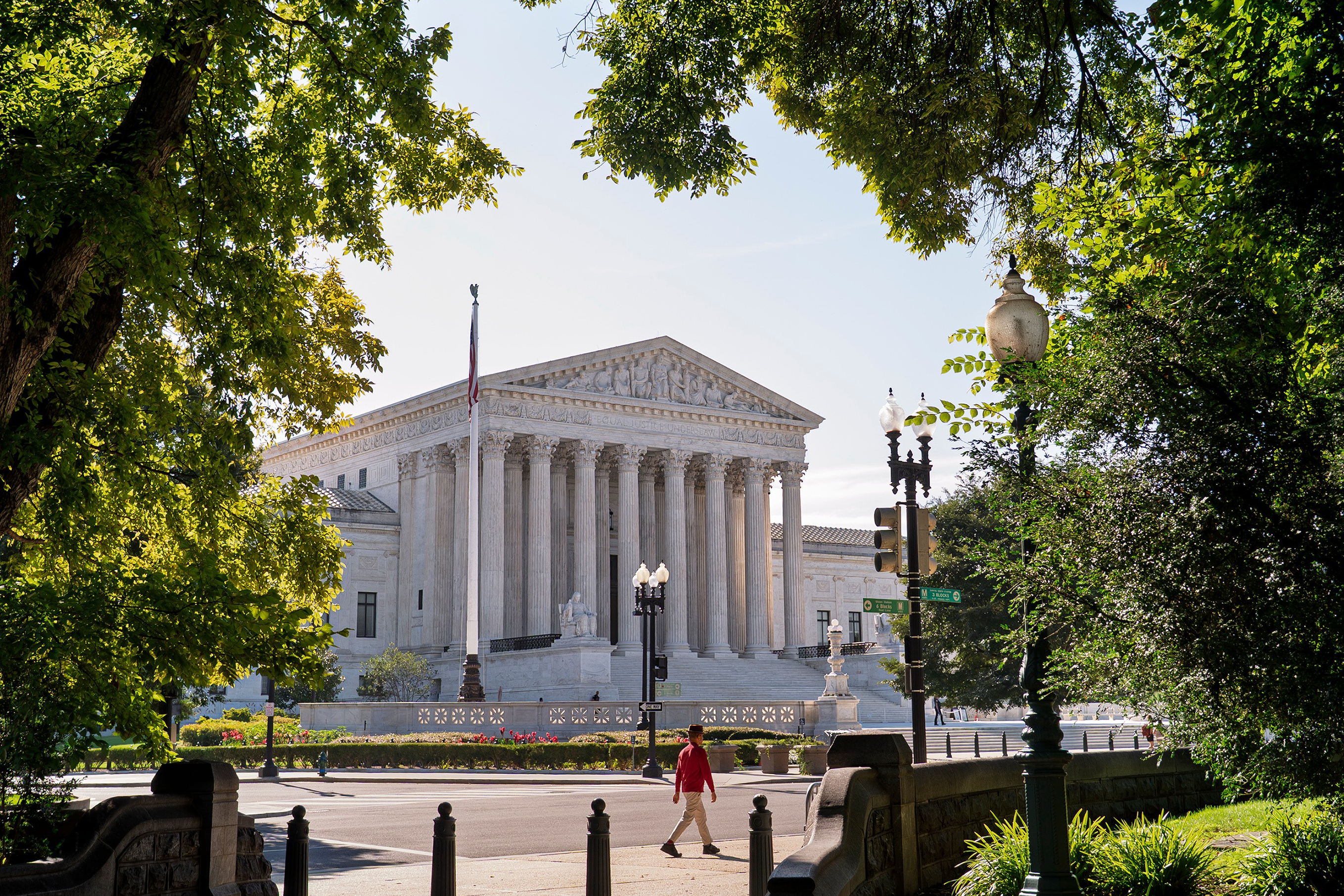
    NEW YORK — The Supreme Court on Friday lifted restrictions on a controversial federal voter database before November’s elections, granting President Donald Trump a temporary win in his aggressive campaign against noncitizen voting.

    The court’s three liberal-leaning justices publicly dissented from the decision.

    The emergency order allows states, for now, to use the Department of Homeland Security program, called Systematic Alien Verification for Entitlements, or SAVE, in their efforts to verify the eligibility of voters on their rolls.

    States’ use of the SAVE program is voluntary. The immediate impact on the upcoming midterms is likely limited because existing law blocks most states from systematically purging voters from their rolls within 90 days of an election, said David Becker, an election law expert who leads the Center for Election Innovation and Research.

    He said since the program is voluntary and DHS itself has admitted the data is not perfect, “states may find this to be a useful tool used along with other tools to keep their lists up-to-date.”

    The court’s order puts on hold a federal judge’s June ruling that had deemed the Republican administration’s recently revamped version of SAVE illegal. U.S. District Court Judge Sparkle L. Sooknanan had blocked the use of the tool, saying it violated Americans’ privacy rights and could result in voters being wrongly removed from the rolls.

    A federal appeals court let her order stand.

    But the Supreme Court majority found that a 1996 law explicitly allows DHS to get information about citizenship and immigration from other federal agencies. The federal government also has “an obligation to respond” to states seeking to verify citizenship.

    “The order below prevents the Federal Government from using the program it believes is best suited to the task,” the majority wrote in the unsigned order.

    Justice Ketanji Brown Jackson dissented, joined by Justices Elena Kagan and Sonia Sotomayor. The database has long been seen to fall under federal privacy laws, she wrote, and there are real risks that legitimate voter registrations could be mistakenly revoked.

    “The harm caused by burdening or disenfranchising even a few lawful voters outweighs the nonexistent harm that the Government experiences when it is prevented from taking an action that it likely lacks the authority to take,” Jackson wrote.

    The plaintiffs and counsel team in the case called the ruling “profoundly disappointing” and said it puts “millions of Americans at risk of being unlawfully targeted by the administration’s unreliable voter purge database” before the midterms.

    “However, this case is not over,” their statement read. “The D.C. district court ruled that the expanded SAVE program violated multiple laws. We will be doing everything in our power to protect Americans’ voting and privacy rights by ensuring that the district court decision stands.”

    The White House did not immediately respond to a message seeking comment.

    The SAVE program was created under an immigration law mandating that DHS help federal, state, and local agencies prevent government benefits from going to noncitizens. The Trump administration last year moved to significantly expand its search abilities. Since then, at least 67 million registrations have been scanned through the program, but critics worry it could end up purging valid voters from the rolls.

    Some registrants have already been wrongly flagged. In Travis County, Texas, for example, officials said they investigated 97 voters flagged by SAVE as apparent noncitizens and found that at least 10% of them — and likely up to 21% — were U.S. citizens. The county urged the Supreme Court to reject the administration’s appeal, while the state of Texas submitted its own brief defending the database.

    Even though the use of the SAVE program has been blocked for months, the administration said in court filings that DHS officials have continued using Social Security Administration data “in certain cases to verify information and help determine whether illegal voting may have occurred.”

    DHS in August launched its own investigation to find noncitizen voters on state rolls, according to a federal whistleblower statement that said the effort is rushed, filled with errors and potentially violates state laws. DHS has defended that investigation as being conducted “diligently and professionally.”

    The effort to create a national voter list is among numerous steps Trump has taken during his second term to try to overhaul the way elections are run. Most of those steps have been blocked by various courts, in part because the Constitution gives states and Congress the authority to set election rules, but provides no such power to the president. In mid-September, the Supreme Court rejected a bid from Trump to restrict mail ballot procedures before the midterms.

    Research shows that noncitizen voting, which is already illegal and punishable as a potential felony that could lead to deportation, is exceptionally rare. But Trump has remained fixated on the idea that massive numbers of noncitizens are voting in U.S. races.

  • Welcome to the home stretch | PA 2026 Newsletter

    Welcome to the home stretch | PA 2026 Newsletter

    📅 There are 39 days until Election Day.

    Welcome to the heart of election season.

    Pennsylvania is — once again — at the center of the political universe, and our team is set to bring you the latest as we cover the final stretch of the campaigns from Philadelphia to Washington, D.C. and across Pennsylvania. We’re focusing on the competitive U.S. House races, the battle for the governor’s mansion, and legislative districts across the Keystone State as Democrats fight for control in Harrisburg and in Congress.

    🎤 I’m Sam Janesch, The Inquirer’s national political reporter. I’ll be your host this week as we dig into how Pennsylvania’s always-newsworthy Democratic senator is inserting himself into a campaign season where he’s not even on the ballot. We also have a first look at an unusual new spending effort on behalf of U.S. Rep. Brian Fitzpatrick, who is fighting to keep his seat as the last Republican representing the region in Congress, and new insight into Gov. Josh Shapiro’s polling and money advantages.

    In this edition:

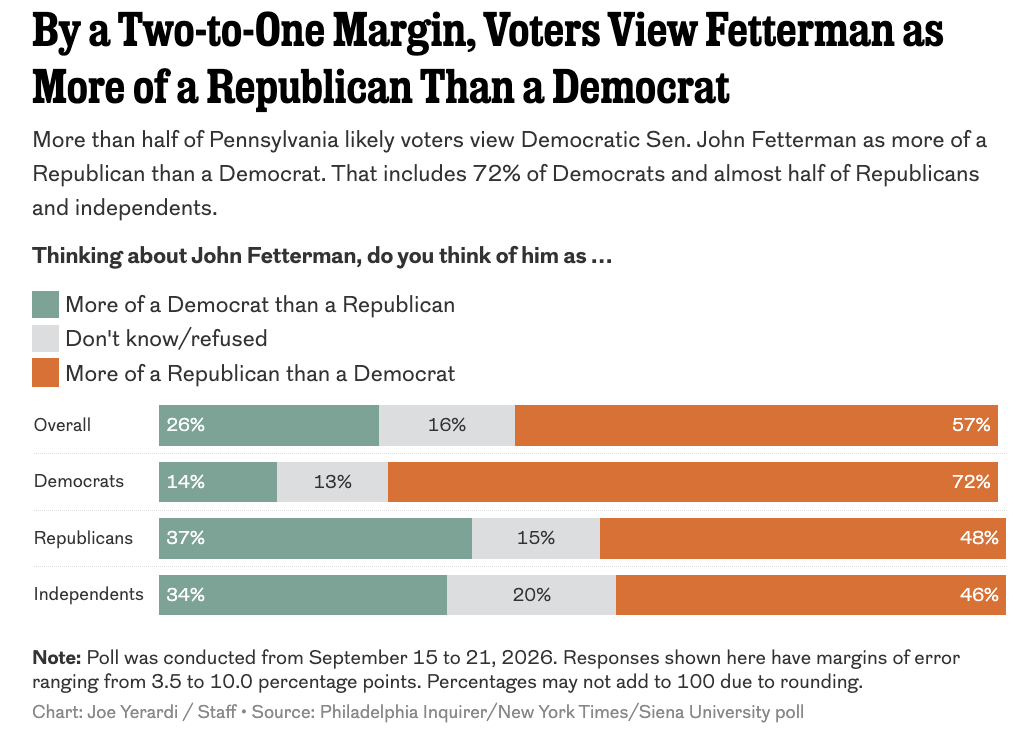
    🗳️ A Democrat in name only: For the first time, a plurality of likely Pennsylvania voters view U.S. Sen. John Fetterman negatively.

    🗳️ Close to home: Fitzpatrick is the least loyal House Republican to President Donald Trump, but he’s still overwhelmingly aligned with the president and his party.

    🗳️ Is this thing on?: Republican Stacy Garrity remains largely unknown in the state, even to a quarter of GOP voters, as Democratic Gov. Josh Shapiro’s lead continues to grow.

    — Sam Janesch, Michelle Baruchman, Fallon Roth, Gillian McGoldrick (pa2026@inquirer.com)

    The latest

    • Pennsylvania voters are giving President Donald Trump worse grades on economic issues as the midterms near. And as gas prices hit $4.55 in Philadelphia, even his 2024 supporters are unhappy.
    • Shapiro has raised $60 million for his reelection, but any leftover money can’t be directly transferred to a 2028 presidential campaign — not that he has declared his candidacy for one, anyway.
    • Only one Pennsylvania Republican received a video shoutout from Trump in his Truth Social endorsement dump last week — and it’s the candidate with perhaps the longest shot of winning. Trump called Garrity “really special,” while slamming Shapiro as a governor who “does not have what it takes.” Meanwhile, U.S. Rep. Ryan Mackenzie is still counting on Trump’s support to help him win in the Lehigh Valley.
    • Outside the midterm elections, another type of political campaign was underway to free convicted former Philadelphia labor leader John Dougherty, widely known as Johnny Doc, from prison. But it was a group of Republicans, including Trump, who ultimately aided the longtime Democratic power broker’s release.

    Data dive

    📊 U.S. Sen. John Fetterman has come a long way from the Bernie Sanders-loving, progressive populist that made him a political sensation starting about a decade ago — at least according to the Pennsylvania voters who elevated him to national prominence.

    Four years after his election to the U.S. Senate, a majority of the state’s likely voters think of him as a Republican, according to a new poll conducted by Siena University on behalf of The Inquirer and the New York Times.

    Our polling data shows nearly three-quarters of Democrats think of Fetterman as a Republican. About half of Republicans feel the same way.

    Even though Fetterman has said he will not change parties, that perception could have major implications. Democrats need to net at least four seats to capture the Senate majority starting in January. If they win a slim majority, Fetterman’s wildcard nature could be a roadblock as the party looks to act as a check on Trump in the final two years of his term.

    Democrats in Washington aren’t sweating it. Well, at least not publicly.

    “No,” U.S. Sen. Kirsten Gillibrand, a New York Democrat and chair of the Democratic Senatorial Campaign Committee, said quickly when The Inquirer asked her this week if she or her colleagues are concerned about Fetterman’s role in a narrow majority.

    “I’m very grateful that Sen. Fetterman is serving in the U.S. Senate as a Democrat, and I think he will continue to do so,” Gillibrand said.

    Campaign scrapple

    📺 Exclusive: A top environmental organization is throwing $250,000 toward new digital ads and a mail program supporting Fitzpatrick as he fends off a challenge from Democrat Bob Harvie in the swingy Bucks County-based congressional district that could prove key to flipping party control of the House this fall.

    Fitzpatrick is the only House GOP candidate currently receiving ad support from EDF Action Votes, a super PAC that supports the goals of the Environmental Defense Action Fund.

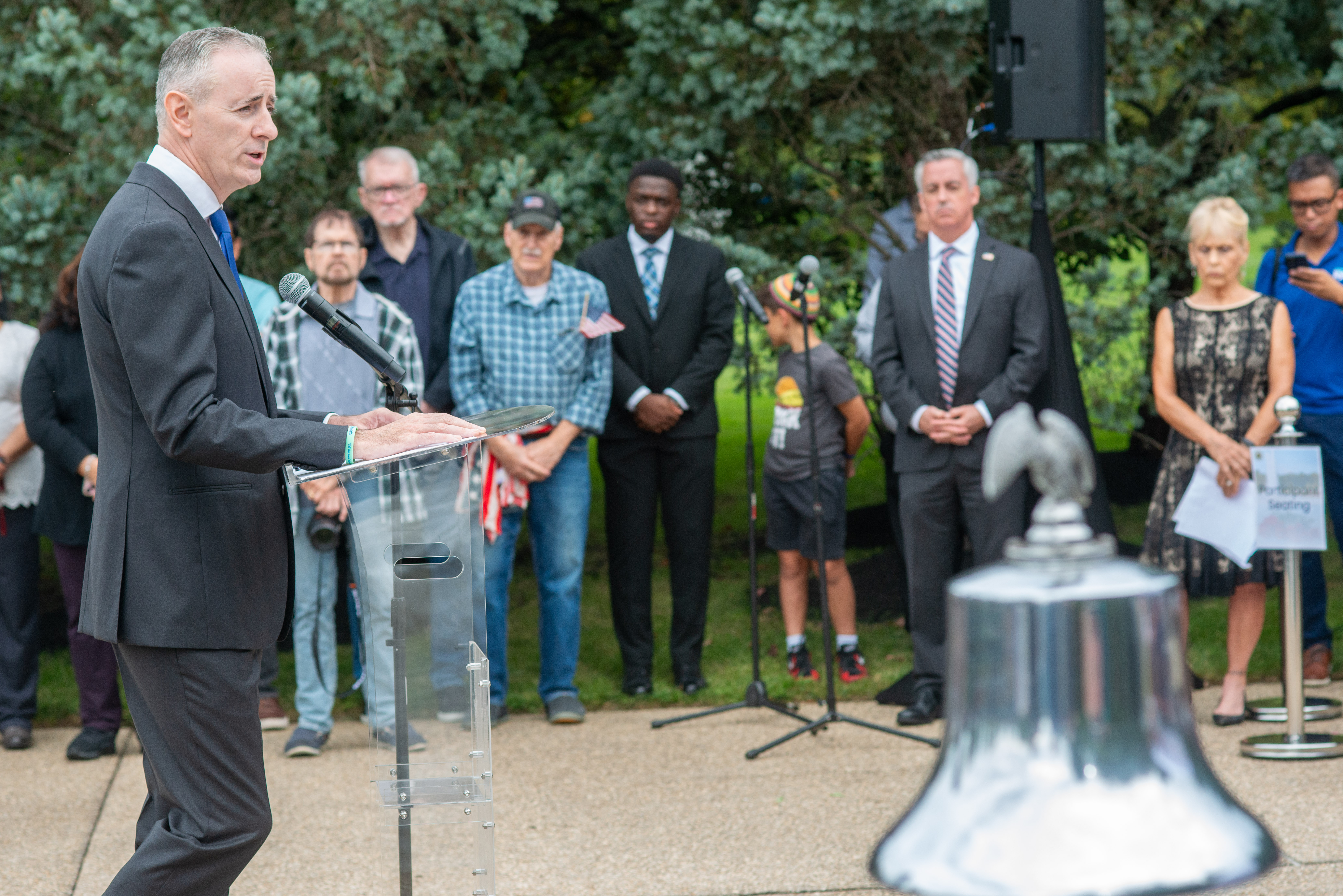
    US Rep Brian Fitzpatrick speaks during the Garden of Reflection remembrance ceremonies as his opponent, Bob Harvie (3rd from right) listens Friday, September 11, 2026 at Garden of Reflection in Yardley, Pennsylvania.William Thomas Cain / For The Inquirer

    Historically Democratic-aligned groups, like environmental orgs and labor unions, have felt comfortable continuing — or offering new — support for Fitzpatrick despite a national political landscape that has become increasingly unfavorable for Republicans. The Bucks County lawmaker has been known to separate himself from his conference and is the least loyal House Republican to Trump and his party.

    But, according to our recent analysis, he’s still on the president and the GOP’s side most of the time.

    👀 What we’re watching

    🔴 The Pennsylvania Republican Party’s state committee will meet in Pittsburgh this weekend. The committee cleared the field for Garrity as the party’s nominee by endorsing her last September. But since then, she’s struggled across the board — with fundraising, in polls, and more. Politics reporter Michelle Baruchman will be there, hoping to hear from attendees about the party’s outlook heading into November.

    📩 Mail ballots have already begun hitting mailboxes across Pennsylvania, with nearly 14,000 already returned.

    📬 A total of 999,280 mail or absentee ballots have been requested as of Thursday, Sept. 24, according to Pennsylvania Department of State data.

    • The breakdown:

    Quote of the week

    Shapiro, Pennsylvania’s incumbent Democratic governor, is up 21 points over Garrity, according to a new poll conducted by The Inquirer, the New York Times, and Siena University. He also announced a $13.3 million haul this summer and $31 million spent — far outpacing Garrity’s $1.8 million total raised and $1.5 million spent since June.

    As Levy says, Shapiro is highly favored to win in November, with Cook Political Report shifting the race to “Solid Democrat,” just two years after Trump won the state.

    👋 All this election news, and can you believe we still have more than a month to go? You can follow The Inquirer politics team’s coverage here, and we’ll see you in your inbox next Friday.

    By submitting your written, visual, and/or audio contributions, you agree to The Inquirer’s Terms of Use, including the grant of rights in Section 10.

  • New Jersey Lt. Gov. Dale Caldwell resigns after investigation found sexual harassment and other wrongdoing

    New Jersey Lt. Gov. Dale Caldwell resigns after investigation found sexual harassment and other wrongdoing

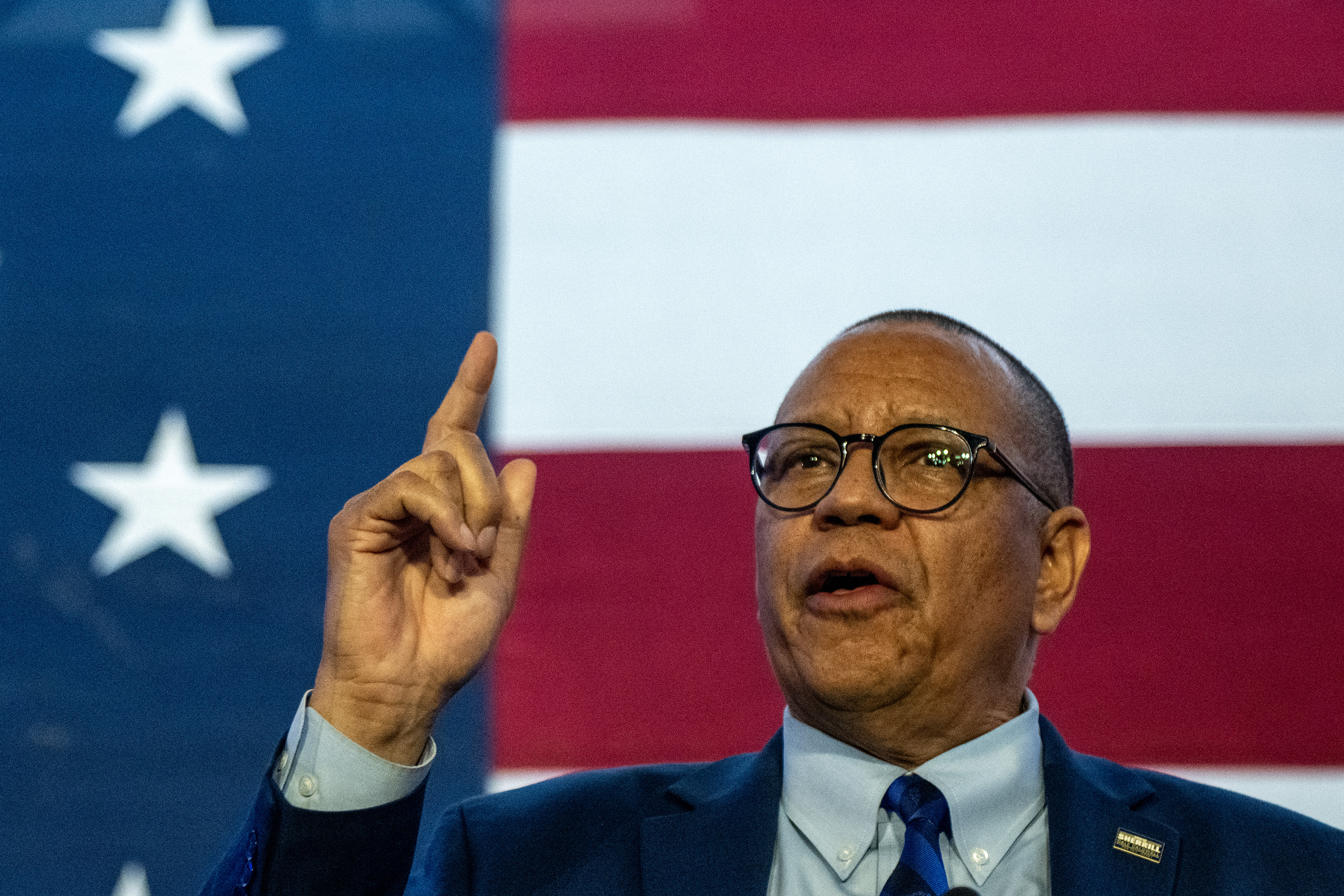
    New Jersey Lt. Gov. Dale Caldwell has resigned after investigators found “credible evidence” of sexual harassment and other wrongdoing.

    Gov. Mikie Sherrill announced his resignation at a news conference Friday afternoon after calling for him to step down while releasing the investigative report Thursday evening.

    “His decision will allow us to move forward with important work serving the people of our state,” said Sherrill, who was inaugurated with Caldwell by her side in January.

    “I will move swiftly and thoughtfully in choosing a new lieutenant governor who will represent my administration and the people of New Jersey with honor and integrity.”

    The governor released a 61-page report from a monthlong investigation conducted by an outside law firm late Thursday afternoon. The report said Caldwell made inappropriate comments to women and violated ethics rules. Caldwell, a minister, is the former president of Centenary University.

    Sherrill called for him to resign by Friday, but it was unclear whether he would listen. Caldwell denied the investigation’s findings through his attorney, who argued Caldwell was not given an opportunity to meaningfully address the accusations in the report or provide his own witnesses.

    Sherrill emphasized Friday that she wanted to “make sure everyone was treated fairly and justly” and called the investigation thorough and impartial.

    “After I received the report and the facts were clear, I took action right away,” Sherrill said, in what may have been a nod to earlier criticism that she didn’t confirm the investigation while it was underway. “Let me be clear: all credible allegations of misconduct must be fully investigated and addressed. In my administration, we are committed to doing what is right, not what is politically expedient.”

    The investigation found Caldwell hit on a female staffer’s friend, and when she turned him down, he told the staffer that ambitious women like them needed a man in a position to help them, “but you young women are looking for young sperm.”

    Caldwell denied making the comments, “but we did not find his denial credible,” the report said.

    Replacing Caldwell

    Sherrill did not have the power to fire Caldwell, so his resignation prevents potential impeachment proceedings in Trenton. The governor has 45 days to pick his replacement.

    In the meantime, New Jersey Senate President Nicholas Scutari will lead the state in her absence. Sherrill traveled to campaign for Democrats in congressional races in other states earlier in the summer, leaving Caldwell in charge. But she stopped after the investigation became public knowledge.

    Sherrill said she spoke to Caldwell on Thursday and texted with him on Friday, and that he resigned to let her administration continue with its agenda amid “all of the attacks from the federal government on affordability, voting rights.”

    Caldwell’s attorney, Thomas Calcagni, said in a statement late Friday that his client continues to dispute the allegations in the report and would be exploring “all legal remedies” to contest its findings.

    “We continue to forcefully challenge the report. Dr. Caldwell’s resignation, submitted to put an end to the targeted campaign to discredit his character, does not in any way diminish our outrage concerning the investigative process and its specious findings,” Calcagni said.

    As fragments of the allegations leaked out over the weeks, some of Caldwell’s friends and allies shared messages of support about his character and record of service. And while he did not speak publicly as news of the investigation surfaced, a May letter he wrote to the ethics commission forcefully denying the claims — and alleging racism — was leaked to media.

    On Friday, a group of self-described Black “faith, civic, and community leaders” commended his decision to resign.

    “By choosing to step down and ending this controversy, he has put the interests of the people of New Jersey and the work of our state ahead of himself,” the group said in a statement, which included U.S. Rep. Bonnie Watson Coleman (D., Mercer), New Jersey Democratic Committee Chair LeRoy Jones, among others.

    Democratic state legislators remained largely quiet before Caldwell announced his resignation, but many were relieved to see Caldwell step down.

    Assemblymember Anthony Angelozzi, a Burlington County Democrat, said he was “appalled” with the findings of the report.

    “The idea of using your government position for personal benefit and harassing women, as someone who has staff members who are female and a daughter, I wouldn’t want to put any woman in a compromised position like that,” he said.

    Assemblymember Balivir Singh floated another Burlington County Democrat, State Sen. Troy Singleton, as an ideal replacement for Caldwell.

    “You look for a person with integrity … and I would think my senator is the best,” Singh said.

    As lieutenant governor, Caldwell served a dual role as the state’s top election official. With his resignation less than 40 days before the midterm election, Sherrill appointed Acting Comptroller Shirley Emehelu to serve as secretary of state on an acting basis.

    “For months at this point, the Department of State team has been hard at work preparing for the upcoming elections in partnership with local and county election officials. I will make sure their work proceeds as planned,” Emehelu said.

    The investigation into Caldwell was conducted by former Attorney General Christopher Porrino — who worked under former Republican Gov. Chris Christie — and his law firm. The probe had been going on since at least May.

    Road crews had begun removing Caldwell’s name from state signs on I-95 as of Friday, but the scandal is still likely to dominate New Jersey politics for the foreseeable future.

    Christine Giordano Hanlon, chair of the New Jersey GOP, called Sherrill’s handling of the investigation a “failure.”

    “Caldwell’s resignation is not accountability for everything that happened before it,” she said. “There are many more questions that will need to be answered.”

    ‘Long-term concerning behavior’ outlined in report

    Sherrill said the report “lays out a pattern and practice of long-term concerning behavior.” She said her decision shows the “culture change” she has pushed for in Trenton.

    “What was so important to me was to make sure that if there are substantiated claims of sexual harassment and ethics violations, that I, as the leader of the government, handle that,” she said.

    “There has been a culture in Trenton, probably since the birth of our nation, to sweep this under the rug,” she said. “You can speak to numerous people who’ve worked in the statehouse for decades who felt this day would never come, that allegations would never be taken seriously, action would never be taken, and victims would just have to either quit their job or move on.”

    According to the report, less than a month after being spoken to and given training on workplace conduct and ethics, and four days after he was told about the investigation, Caldwell tried to get a promotion for a state employee he was dating.

    Caldwell’s attorney said the lieutenant governor forwarded the employee’s resume and did not disclose the two had a personal relationship.

    The report also details comments Caldwell allegedly made about wanting a “first lady.” One staffer said he asked her to find him someone and another recalled him suggesting that he would need a wife in order to run for governor and to let him know if she comes across someone suitable. Caldwell admitted to making comments to staffers about wanting a “first lady” but said he wasn’t serious and other people in the office made similar kinds of jokes, the report said.

    He also repeatedly made comments about staffers having “executive appearance,” which came across to some staffers as a judgment on women’s physical attractiveness. Caldwell said the term was about how both men and women carry themselves, not physical appearance, the report said.

    Caldwell repeatedly brought personal guests to ticketed events without clearing it with the ethics officer and without paying for the extra tickets, a practice that continued even after warnings, attending an ethics training, and being told about the investigation, the report said. His attorney said when Caldwell “learned that reimbursement was appropriate in one particular situation, he reimbursed $175 for the event.”

    He was also accused of providing his business card to women he wanted to date, but he said in his May letter that he gives his business card to more men than women.

    “I have never asked anyone out on a date, ‘hit on,’ or pursued anyone romantically while conducting official business as Lieutenant Governor and Secretary of State,” he said at the time.

    Staff writers Susan K. Livio, Sarah Nicell, and Lacey Latch contributed reporting.

  • Man convicted of murder in West Philadelphia shooting that left three dead, injured several others

    Man convicted of murder in West Philadelphia shooting that left three dead, injured several others

    A man who fired shots during a gun battle in West Philadelphia that left three men dead and wounded several others two years ago was convicted of murder this week.

    Tahir Shoatz, 30, was found guilty of third-degree murder in the death of Sekayi Robinson, 23, as well as attempted murder, aggravated assault, simple assault, four counts of reckless endangerment, and three firearms offenses, following a bench trial in Common Pleas Court.

    But Judge Roxanne Covington on Thursday acquitted Shoatz of murder in the deaths of brothers Akil Jones, 33, and Rashie Jones, 29, concluding that he did not fire the shots that killed them on July 21, 2024.

    That night, gunfire shattered a block party on the 1200 block of North Alden Street, where more than 100 people had gathered, prosecutors said. In addition to the three killings, six people were injured by bullets — including Shoatz, who was shot in the abdomen, shoulder, and knee, and his co-defendant in the case, Amir Jones, who was struck by two bullets on his left side.

    Covington also acquitted Shoatz of 15 other charges, including attempted murder, aggravated assault, simple assault, and other offenses.

    The mass shooting stemmed from an argument between Akil Jones and Shoatz that turned physical when Shoatz reached for a handgun at his waistband, Assistant District Attorney Cydney Pope said during the trial. Amir Jones — who is the brother of Akil and Rashie Jones — intervened in the fray to help his brother, Pope said, seconds before the first shot rang out.

    Prosecutors initially charged Jones with three counts of murder and four counts of aggravated assault, as well as multiple counts of reckless endangerment and firearms offenses. But they dismissed the murder and aggravated assault charges against him at the start of the trial.

    And on Thursday, Covington acquitted Jones of the remaining charges against him.

    The prosecution’s case relied heavily on surveillance and police body-worn camera footage that captured the shooting and its aftermath. Pope said the footage showed multiple shooters, including Shoatz, Amir Jones, Robinson, and another man. Police recovered 41 bullet casings and fragments from the scene, she said, and determined Rashie Jones had also fired a gun.

    After watching the footage several times, the judge said “it is clear” that the other man — whom prosecutors said has not been identified by police — killed Akil Jones. But it was unclear who shot Rashie Jones, she said, because “that is never seen on video.”

    Shoatz’s attorney, Robert Gamburg, contended that Shoatz had been disarmed by Amir Jones during the brawl, then shot multiple times. “He was a victim in this case,” Gamburg said. “He has always been a victim.”

    Shoatz is scheduled to be sentenced in December.

  • Atlantic City’s top cannabis official was charged in a scheme to solicit bribes from a weed business

    Atlantic City’s top cannabis official was charged in a scheme to solicit bribes from a weed business

    Atlantic City’s top cannabis official is facing federal charges for a scheme to solicit cash bribes from a dispensary owner in exchange for fast-tracking their license and avoiding city fees.

    Kashawn “Kash” McKinley, 42, commonly referred to as “A.C.’s Weed Czar” for his role overseeing the city’s legal marijuana industry, was charged with honest services fraud and two counts of soliciting bribes, U.S. Attorney in New Jersey Robert Frazer announced Thursday.

    In a statement, Atlantic City officials said that Mayor Marty Small Sr. had been apprised of the case and that McKinley had been suspended without pay pending the outcome of the case. Small “believes in the justice system, and Kashawn McKinley is innocent until proven guilty, like any other American,” according to the statement, which said the mayor promised transparency around the proceedings.

    A public defender assigned to McKinley declined to comment.

    As the director of Atlantic City’s constituent services, McKinley solicited more than $20,000 in cash and marijuana from the cannabis business owner, according to federal prosecutors. In exchange, McKinley assisted the owner, who was not identified by the U.S. Attorney’s Office, in opening a dispensary and resolving certain fees owed to Atlantic City.

    The would-be dispensary owner contacted McKinley in late 2022 for guidance on opening a cannabis business in Atlantic City, prosecutors said. At McKinley’s direction, the duo first met in a parking lot of a defunct Atlantic City restaurant where McKinley told the owner that in exchange for $20,000, he could “help” resolve any issues with opening the dispensary in town, according to prosecutors.

    “We all need to eat,” McKinley allegedly told the dispensary owner at the time.

    The dispensary owner would go on to pay McKinley the $20,000 over the next few months in two installments. Soon after, the owner’s license was approved by the local oversight board, where McKinley is a member.

    Two years after opening, the dispensary owner contacted McKinley in 2025 about the more than $25,000 in fees and taxes the owner owed to Atlantic City for operating the dispensary.

    Prosecutors say that McKinley’s solution to the fees was to reclassify the dispensary from a standard mercantile license down to a “micro” license, which would result in the business needing to pay only $2,500 in annual fees and taxes.

    As part of the reclassification scheme, prosecutors say, McKinley allegedly directed the dispensary owner to orchestrate the assault of a person who McKinley said was “disrespecting” another public official. When McKinley was later shown what prosecutors say appeared to be a photograph of the injured victim, McKinley allegedly “expressed pleasure” and assured the dispensary owner that they “don’t have to worry about nothing” in relation to the disputed city fees.

    Throughout McKinley and the dispensary owner’s exchanges, the weed official would ask for “care packages,” which prosecutors believe to mean bribe payments and samples of weed.

    Since McKinley and the owner were able to reclassify the dispensary down to a micro business license in January, the owner was owed a $25,000 refund from Atlantic City for previously paying the standard license fees. McKinley requested half of that refund from the dispensary owner, according to prosecutors. In March, the dispensary owner gave McKinley a $6,000 kickback from the refund, prosecutors said.

    McKinley’s fraud charge carries a maximum sentence of 20 years in prison and a fine of up to $250,000. Each bribery charge carries a 10-year maximum prison sentence and a fine of up to $250,000.

  • Pennsylvania invests $5 million in its popular ‘dark sky’ state park

    Pennsylvania invests $5 million in its popular ‘dark sky’ state park

    In an area of Pennsylvania known as “God’s Country,” hours from the glowing lights of Philadelphia, Pittsburgh, and Buffalo, Cherry Springs State Park is a refuge for stargazers.

    On Thursday, Pennsylvania’s Department of Conservation and Natural Resources announced the completion of $5.2 million in improvements there, everything from new parking to a larger amphitheater, and “headlight-blocking mounds to prevent light shining into the astronomy field.”

    “This park comes alive after dark, and we have a responsibility to conserve that experience for the future,” DCNR Secretary Cindy Adams Dunn said there Thursday.

    DCNR, in a news release, said the goal of the project was to redesign how visitors “moved through the park at night, reduced artificial light, and expanded facilities to support astronomy, education, and large events.”

    The small state park in Coudersport, Potter County, some 250 miles northwest of Philadelphia, is designated as an International Dark Sky Park by DarkSky International, a nonprofit that claims to be the “worldwide authority combating light pollution.”

    A sign welcomes visitors to Potter County. MUST CREDIT: Justin Merriman/For The Washington PostJustin Merriman

    Despite being relatively small at 82 acres and far from cities — it’s almost four hours from Pittsburgh and a bit more from Philadelphia — the park has become wildly popular with astronomers, campers, and social media influencers. The campground is generally booked out every season, with professional and amateur stargazers alike staring up at the Milky Way, particularly on moonless nights.

    During the COVID-19 pandemic, when parks and other outdoor spaces were inundated with visitors, Cherry Springs saw the biggest crowds. Between March and September of 2020, the park saw 26,745 visitors, a 231% increase over the same time period a year earlier.

    Potter County has just 16,453 residents, and the economy there relies heavily on tourism, much of it during the spring, summer, and fall for camping, stargazing, leaf peeping, and hunting.

    The county has taken steps to keep things dark, too, urging home and business owners to implement downward-casting lights, timers, and low-wattage bulbs to preserve the stargazing opportunities.

    Cherry Springs has multiple stargazing events in October.

    Department of Conservation and Natural Resources (DCNR) Secretary Cindy Adams Dunn announced the completion of $5.2 million in new improvements at Cherry Springs State Park, an International Dark Sky Park in Potter County.Jon Ferreras
  • A Baltimore middle school teacher traveled to Chester County to sexually assault a teenage boy, DA says

    A Baltimore middle school teacher traveled to Chester County to sexually assault a teenage boy, DA says

    A Baltimore public school teacher regularly traveled to Parkesburg for the better part of two years to sexually assault a teenage boy he met online, Chester County prosecutors said Friday.

    Rogie Legaspi, 56, sometimes took the boy out of school to assault him, unbeknownst to his parents, and also forced him to have sex with another man in what District Attorney Chris de Barrena-Sarobe described as “the pinnacle definition of child sex trafficking.”

    “Teachers have a special place in our society. We trust them not only to watch our children when we send them to school, but to mold them,” de Barrena-Sarobe said at a news conference Friday. “To teach them life lessons, not just math problems. And this defendant, this man, shattered that trust.”

    Legaspi has been charged with child trafficking, involuntary deviate sexual intercourse, statutory sexual assault, and related crimes.

    He remained in custody in lieu of $5 million bail. He is being represented by the county Public Defender’s Office, which declined to comment on his case.

    Legaspi has been employed by the Baltimore the Baltimore City Public School District since 2008, and most recently taught seventh grade science at Hamilton Elementary/Middle School in Baltimore.

    In a letter sent to parents last week, Hamilton principal Natasha Pouncey said Legaspi has been placed on administrative leave, and that there were no allegations that his criminal conduct involved a student in the district.

    Days before Legaspi’s arrest on Sept. 18, several concerned parents asked the district why he had not shown up to school, unaware that he had been taken into custody two states away.

    Investigators in Chester County learned of the alleged abuse in June after a report was filed on behalf of the 15-year-old victim through the state Department of Human Services’ ChildLine system.

    In an interview with county detectives, the boy said he befriended Legaspi through social media, and they exchanged cellphone numbers, according to the affidavit of probable cause for the teacher’s arrest.

    Legaspi began driving up to Chester County twice a month starting in 2024, when the boy was 13.

    During those visits, the affidavit said, Legaspi would fondle the boy and force him to have sex.

    Legaspi paid the boy $50 or $100 to “act like he enjoyed it,” the document said, and he often filmed the sexual encounters and send the footage to the boy.

    Authorities said the sexual assaults took place in Legaspi’s car, as well as various hotels in Chester and Lancaster Counties.

    During one of those assaults, in December, Legaspi coerced the boy to have sex with another man at the Comfort Inn in Gap, and filmed the encounter, the affidavit said. He also pressured the boy to have sex with other men, according to the affidavit.

    In announcing the charges Friday, de Barrena-Sarobe underscored the importance for parents to monitor their children’s social media usage.

    “You are giving the world access to your child when you give them a phone or you let them have a social media profile,” he said. “And so, you need to restrict the world’s access to your children, and you need to make sure that you are instilling that value in your child from an early age.”

    Legaspi is scheduled to appear before a district judge for a preliminary hearing Oct. 19.

  • Supreme Court lets Trump administration use revamped federal voter eligibility database for now

    Supreme Court lets Trump administration use revamped federal voter eligibility database for now

    NEW YORK — The Supreme Court on Friday lifted restrictions on a controversial federal voter database before November’s elections, granting President Donald Trump a temporary win in his aggressive campaign against noncitizen voting.

    The emergency order allows states, for now, to use the Department of Homeland Security program, called Systematic Alien Verification for Entitlements, or SAVE, in their efforts to verify the eligibility of voters on their rolls. But because existing law blocks most states from systematically purging voters from their rolls within 90 days of an election, the immediate impact on the upcoming midterms is likely limited.

    States’ use of the SAVE program is voluntary.

    The court’s order puts on hold a federal judge’s June ruling that had deemed the Republican administration’s recently revamped version of SAVE illegal. U.S. District Court Judge Sparkle L. Sooknanan had blocked the use of the tool, saying it violated Americans’ privacy rights and could result in voters being wrongly removed from the rolls.

    A federal appeals court declined to pause Sooknanan’s ruling, prompting the administration’s appeal to the Supreme Court.

    The SAVE program was created under an immigration law mandating that DHS help federal, state and local agencies prevent government benefits from going to noncitizens. The Trump administration last year moved to significantly expand its search abilities. Since then, at least 67 million registrations have been scanned through the program, but critics worry it could end up purging valid voters from the rolls.

    Some registrants have already been wrongly flagged. In Travis County, Texas, for example, officials said they investigated 97 voters flagged by SAVE as apparent noncitizens and found that at least 10% of them — and likely up to 21% — were U.S. citizens. The county urged the Supreme Court to reject the administration’s appeal, while the state of Texas submitted its own brief defending the database.

    Even though the use of the SAVE program has been blocked for months, the administration said in court filings that DHS officials have continued using Social Security Administration data “in certain cases to verify information and help determine whether illegal voting may have occurred.”

    DHS in August launched its own investigation to find noncitizen voters on state rolls, according to a federal whistleblower statement that said the effort is rushed, filled with errors and potentially violates state laws. DHS has defended that investigation as being conducted “diligently and professionally.”

    The effort to create a national voter list is among numerous steps Trump has taken during his second term to try to overhaul the way elections are run. Most of those steps have been blocked by various courts, in part because the Constitution gives states and Congress the authority to set election rules, but provides no such power to the president. In mid-September, the Supreme Court rejected a bid from Trump to restrict mail ballot procedures before the midterms.

    Research shows that noncitizen voting, which is already illegal and punishable as a potential felony that could lead to deportation, is exceptionally rare. But Trump has remained fixated on the idea that massive numbers of noncitizens are voting in U.S. races.
  • Jenkintown changes homecoming plans after canceling football season

    Jenkintown changes homecoming plans after canceling football season

    Jenkintown School District will hold homecoming festivities around a coed varsity soccer team game next week after ending the football season early over low participation.

    School leaders announced a new homecoming schedule on Friday, days after the football season cancellation.

    The homecoming soccer game will start at 11 a.m. on Oct. 3 at the Jenkintown stadium, and homecoming court celebrations will be at halftime. Snack shack proceeds will benefit the senior class.

    This coming week will be spirit week for Jenkintown’s upper grades, principal Tom Roller wrote in the announcement to families, ending in a pep rally on Friday.

    The teams postponed the match originally planned for Tuesday, according to the charter school’s soccer schedule.

    “We appreciate [MaST] Community Charter agreeing to change our game with them so that we could play a Homecoming match,” Roller wrote. “We hope that our community comes out to support our Homecoming court and our Varsity Soccer squad.”

    This suburban content is produced with support from the Leslie Miller and Richard Worley Foundation and The Lenfest Institute for Journalism. Editorial content is created independently of the project donors. Gifts to support The Inquirer’s high-impact journalism can be made at inquirer.com/donate. A list of Lenfest Institute donors can be found at lenfestinstitute.org/supporters.

  • Andy Kim and Cory Booker call on N.J. lieutenant governor to resign after report finds evidence of sexual harassment

    Andy Kim and Cory Booker call on N.J. lieutenant governor to resign after report finds evidence of sexual harassment

    New Jersey’s two senators in Washington echoed Gov. Mikie Sherrill’s call for Lt. Gov. Dale Caldwell to resign just hours after she released a report that said he sexually harassed a woman and made advances to others even after he was warned to stop.

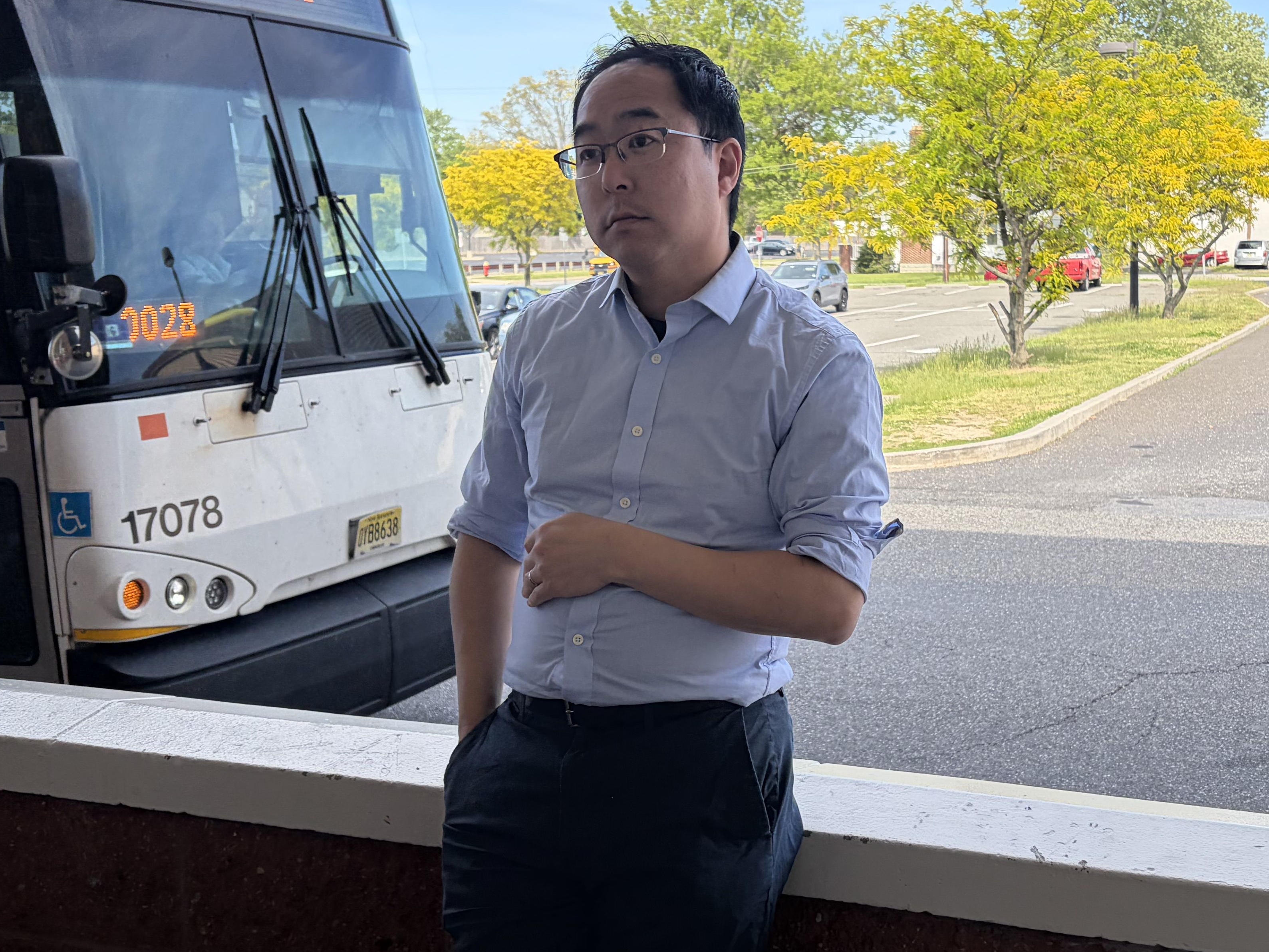
    Sen. Andy Kim, a Burlington County Democrat, said in a statement on social media that the lieutenant’s governor was “unacceptable” based on the findings in the 61-page report based on a months-long investigation by an outside law firm.

    “New Jerseyans deserve to have public servants who work to earn and keep their trust, not undermine it,” Kim said.

    “The Lt. Governor should resign immediately,” he added.

    Sherrill’s office released the documents Thursday evening in her first acknowledgement of the investigation into Caldwell, who has denied the findings of the report.

    Sherrill said Caldwell “engaged in serious, repeated violations of state policy and failed to uphold the responsibilities of his office.”

    The governor called on Caldwell to step down from his post as her No. 2 by Friday, but statements from his attorneys show no indication he plans to adhere to that request. He’ll likely face increasing pressure over the course of the day.

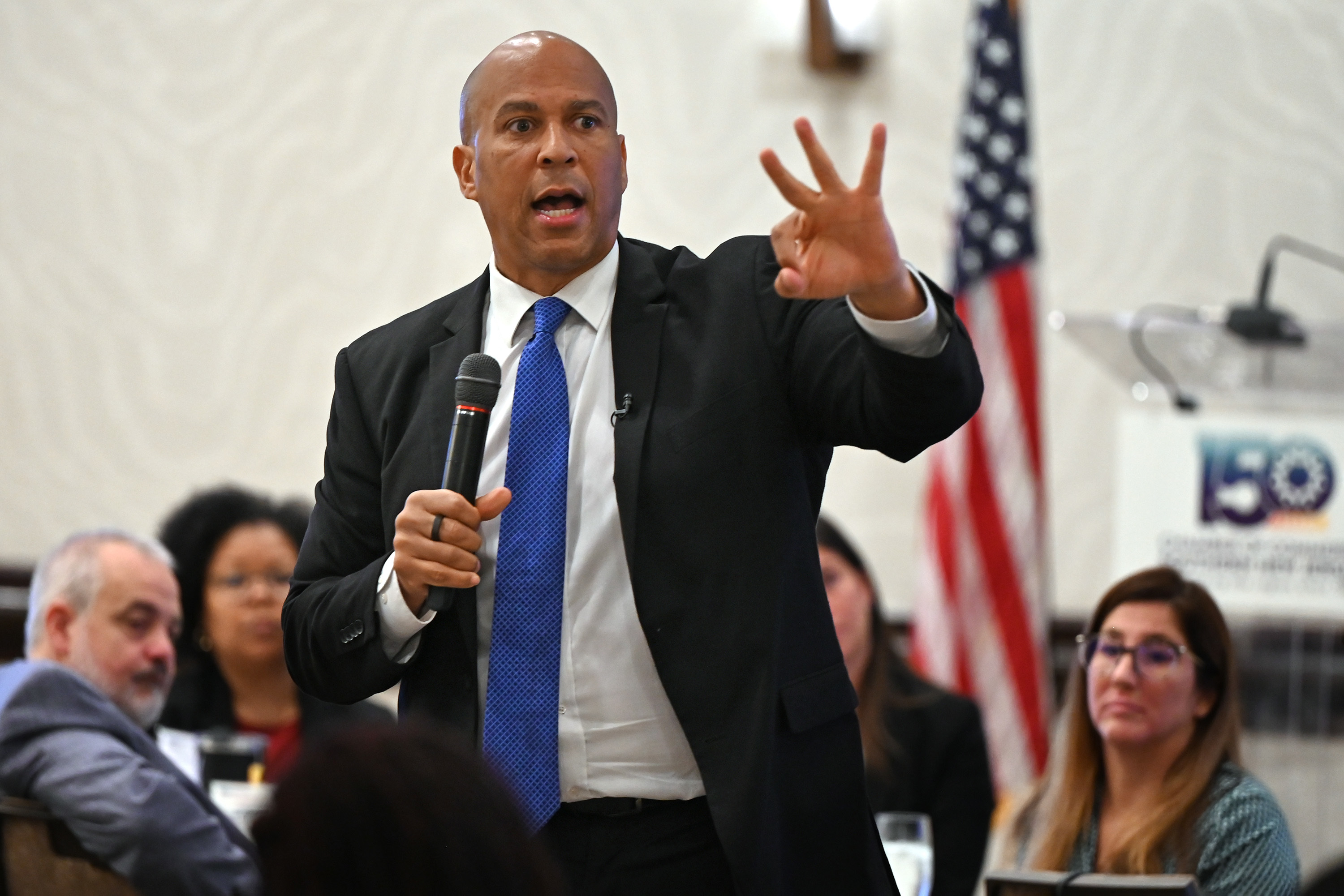
    USE AS DESIRED: U.S. Sen. Cory Booker addresses members of the Chamber of Commerce of Southern New Jersey in Mt.Laurel Aug. 29, 2023.Tom Gralish / Staff Photographer

    Sen. Cory Booker, a Newark Democrat, said Caldwell should resign “for the sake of our state” in a statement on social media.

    “Governor Sherrill is absolutely right the conduct described in the investigative report is totally unacceptable,” he said.