Category: News

  • How Philly distributed an estimated 1 million meals to kids this summer — and kept them busy

    How Philly distributed an estimated 1 million meals to kids this summer — and kept them busy

    Michella Crosby first noticed it a couple of years ago: The children surrounding her block in West Philadelphia were hungry — and a little bored — during the summer break.

    Once a kid in need of a meal, often getting one at her local armory, Crosby decided to do something to make sure no child went unfed.

    The 74-year-old block captain signed up to run a Playstreet last summer. Through the city-run Playstreets program, and with the support of neighbors, she closed off her block to traffic on weekdays and distributed free, nutritious lunches to children, no questions asked.

    “This is survival,” Crosby said in her second summer running a Playstreet. “We have to live. We have to be able to take care of our children.”

    Crosby is just one part of the more than 500 churches, camps, schools, recreation centers, and Playstreets in Philadelphia that offer children under 18 opportunities to do everything from crafting to sports and unstructured play during the summer. These sites have the added benefit of feeding children for free.

    The meals were paid for through the Summer Food Service Program, a federal program with funds administered by Pennsylvania.

    Providing children with a free, federally approved breakfast and lunch is a benefit many families only speak about in whispers, according to program operators. At many sites, all children are handed meals, even if they don’t need them or come with their own snacks. Coordinators say this method of meal distribution makes it so no one feels less-than for lining up during breakfast or lunch.

    This summer, the city was projected to distribute more than a million meals. A final count of meal sites will not be available until the end of the year, according to the city.

    The Inquirer visited several of these meal sites to get a glimpse of the many purposes these hubs serve and the people who make it all possible.

    Holy Innocents School summer camp

    The gymnasium is abuzz on a Tuesday with approximately 70 children ages 4 to 14.

    The pre-K children are the first to boldly rush the plastic folding table featuring a spread of small cardboard boxes topped with pints of milk.

    “There’s a line behind you,” an instructor gently reminds a little boy skipping past his classmates.

    The child spins around, offering a sheepish grin, and joins the friends he had zoomed past, giggling with glee.

    Almost every child in the room attends Holy Innocents School during the school year, said Dee D’Aulerio, director of the free all-day summer camp in Juniata Park.

    A calendar of the meals made by Nutrition Development Services for about 150 kids at Holy Innocents Catholic Church in Philadelphia, Pa., on Tuesday, July 28, 2026.Tyger Williams / Staff Photographer

    “Historically, they did have to pay a fee, but now that we’re free, it really eases the burden on the families who pay tuition to take something off their plate,” she said.

    In rapid succession, D’Aulerio personally hands every child a box that includes a ham and cheese sandwich, celery sticks, and potato salad.

    Most look past the celery, donating their untouched containers to the “share table,” where a milk crate is already overflowing with applesauce containers.

    One of the middle school boys walks up to the share box and grabs a handful of sandwiches. He tosses one to a friend and keeps the rest.

    “The kids can help themselves if they’re still hungry after eating; they’re also able to take things home with them, too,” no questions asked, D’Aulerio said. “That’s a big help, especially if there are multiple children in the family.”

    100 block of Dewey Street

    Michella Crosby won’t admit it, but she is kind of the linchpin of her block, according to her neighbors.

    She had been block captain for a decade and a member of the nonprofit ACHIEVEability, which aims to break the “generational cycle of poverty,” for 16 years. She is the person neighbors go to for help applying to city programs that can lower their tax bills.

    Michella Crosby waits for children to stop by mid-August to pick up a free meal.Ximena Conde

    Last year, she started to tackle hunger in the neighborhood.

    Two children run up to Crosby’s house around 2 p.m. on a Friday, cracking open a blue cooler full of chocolate milk and apple juice. They are not from the 100 block of North Dewey Street, but they are near-daily visitors.

    “Got something to eat?” the boy asks, knowing the answer is yes.

    “I want two juices!” the girl says, pointing at a doll she is swinging around. “It’s for the baby.”

    “I got your applesauce,” Crosby says to the boy as he inspects the ham sandwich lunch. The boy is in a picky eating stage, Crosby notes.

    There were no Playstreets when she was coming up, so Crosby would head to the local armory. She only wishes she could do more for the modern-day latchkey kids who live in neighboring blocks. This summer, she has gotten faint knocks on the weekend of kids asking for food. Playstreets, however, only runs during the week.

    “As much as I would love to, I can’t give away my refrigerator,” she said, as a neighbor greets her from across the street.

    Still, she considers this summer a success, grateful that children feel safe enough to come to her for food and a chat. Their continued presence has persuaded her to continue the program.

    “As long as there’s a need for children to be fed, I’m going to do it,” she said.

    Kingdom Restoration Ministries

    Eight children were already digging into crispy grilled cheese sandwiches, fried chicken, corn, and fruit cups when Peace McClain, 35, walked into Kingdom Restoration Ministries in Olney with two of his own.

    A lunch of grilled cheese sandwiches and fried chicken is served at Kingdom Restoration Ministries in late July.Ximena Conde

    McClain keeps his kids busy with beach trips and other activities during the summer breaks, but worries they are missing out on an experience he remembers fondly: hanging out with friends freely on his block.

    “I remember summertime, going outside, and going to get free lunch from the block captain,” McClain said.

    Still, safety concerns keep McClain from letting his children too far out of his sight.

    The half-day camp he saw advertised on utility poles across the neighborhood felt like a good compromise.

    “I wanted to give them the experience to come in and meet these people because they don’t get to walk around,” McClain said.
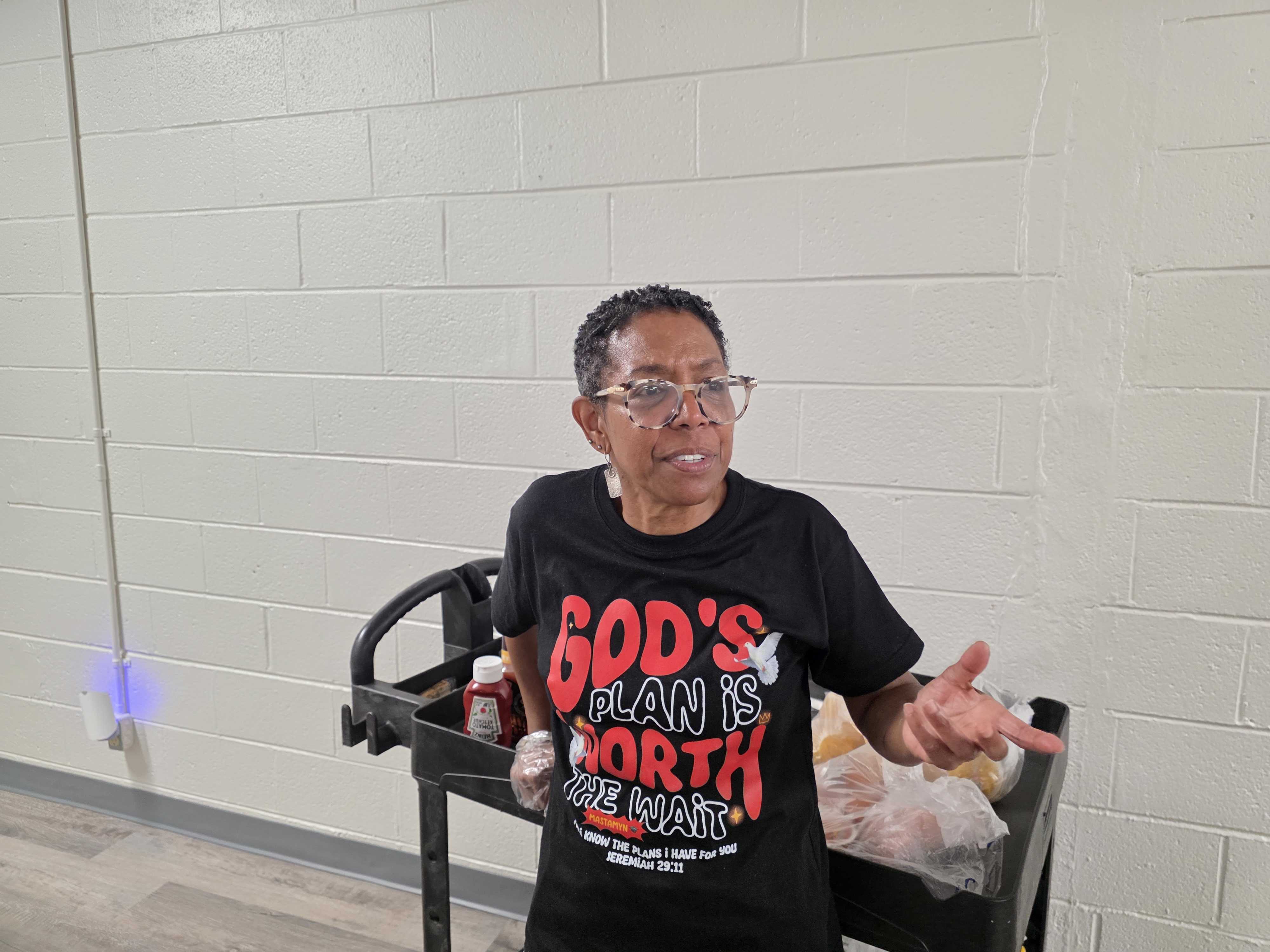
    Velvet Howard gets ready to serve a lunch of grilled cheese sandwiches and fried chicken at Kingdom Restoration Ministries.Ximena Conde

    Velvet Howard, 70, who is officially retired but is the camp supervisor for the summer, tells McClain how the camp works.

    In its first year, the camp offers half-day summer programming for children on Tuesdays and Wednesdays with breakfast and lunch included — all free. No preregistration is required, so the number of children in attendance fluctuates based on families’ summer plans. And while many of the children in attendance have some connection with the church, it is not required.

    (Left to right) Peace McClain picks up his children, Peace and Payton, from Kingdom Restoration Ministries in late July. The family was drawn by the possibility of having the children mingle safely with neighborhood kids their age, and the nutritious lunch was a bonus.Ximena Conde

    Lunchtime is almost over by the time Howard finishes answering McClain’s questions, but she encourages Peace, 10, and Payton, 8, to stick around, grab a bite, and mingle with the time left.

    “The staff was super nice here and it was really fun,” Payton said when reporting back to her father, noting she would come back. “And they had really good food.”

    The intersection of food insecurity and summer childcare

    More than 100,000 Philadelphia youth experience food insecurity, according to Laura Crandall, Philadelphia’s director of food security initiatives. In addition, close to 87,000 children under 18 live below the poverty line, according to the most recent data from the U.S. Census Bureau.

    Worries that many of these children lose access to reliable meals during the summer have long existed. But recent cuts to the Supplemental Nutrition Assistance Program, a result of the One Big Beautiful Bill Act, have exacerbated concerns.

    An estimated 45,000 SNAP recipients in Philadelphia could see benefits cut this year, according to the Pennsylvania Department of Human Services.

    As the social safety net tightens for families, summer camp enrollment has only grown more competitive.

    “Prior to the pandemic, we were already seeing that the options for families during the summer was decreasing,” said Erinn Hill, director of child nutrition programs for Catholic Charities of Philadelphia’s Nutritional Development Services, which sponsored 192 meal sites in the city this summer.

    “Camps and other programs were getting smaller, shorter, or closing. As of now, the number of sites is still not back to pre-pandemic levels.”

    The nonprofit CBS Food Program, which provides meals to Kingdom Restoration Ministries, responded to the mounting interest by delivering food to 41 partner locations in Philadelphia, close to double the number of sites it worked with last summer.

    Even so, some city partners worry food insecurity is only spreading amid the rising cost of groceries.

    At least two site operators, who asked not to be named to avoid getting in trouble, said seniors in their communities are increasingly coming to summer meal sites for food, which they are supposed to save for kids. In areas where the kids do not want the meals, operators will sometimes look the other way and let seniors take the leftovers.

    “We just can’t let our neighbors go hungry,” one site operator said.

  • Could GLP-1s help with alcohol use disorder? A Philly VA doctor is leading a national trial to find out.

    Could GLP-1s help with alcohol use disorder? A Philly VA doctor is leading a national trial to find out.

    A Philadelphia Veterans Affairs doctor is leading a national trial testing whether GLP-1 drugs could help patients with alcohol use disorder.

    The treatments, which work by mimicking a natural hormone in the body, have skyrocketed in popularity in recent years for diabetes and weight loss. People have also reported unexpected benefits for other conditions, from heart issues to kidney disease. GLP-1s may even help reduce cravings for addictive substances, including alcohol, opioids, and nicotine, early studies suggest.

    While some of the additional health effects have been well-studied, others, like alcohol use disorder, still need a robust trial to assess safety and efficacy.

    The upcoming trial will take place at 18 VA sites around the country, including Philadelphia, with the goal of recruiting 622 participants.

    “The driving force has been really the groundswell of anecdotal and observational data from folks,” said David Oslin, the psychiatrist leading the national trial.

    Recruitment for the trial starts this week and will likely take two years. Half of participants will be randomly selected to receive the treatment for six months, while the other half will receive a placebo with no active drug.

    Participants will not know whether they received the intervention — a study design that’s considered the gold standard for medical research.

    Alcohol use disorder affects roughly 28 million people nationwide. While there are many options to treat it — including psychosocial treatment, peer support groups, and medications — uptake is low.

    Fewer than 10% of people with alcohol use disorder receive any treatment in a given year. Oslin hopes GLP-1s, should they prove safe and effective, could improve that statistic.

    “The impact is potentially very big in the sense that this is a drug that people seem comfortable prescribing and using,” he said.

    He anticipates publishing the results in about three years.

    The Inquirer spoke with Oslin, who also serves as the chief of behavioral health at the Philadelphia VA, about the trial in an interview lightly edited for length and clarity.

    David Oslin serves as the chief of behavioral health at the Philadelphia VA Medical Center and a professor of psychiatry at the University of Pennsylvania. He is leading the national trial.Courtesy of the VA
    What inspired the trial?

    Anecdotally, folks that have been receiving the GLP-1s for something else — diabetes or weight loss — had noticed a decline in use of alcohol.

    There have subsequently been three small clinical trials in the U.S. that have been published. They wouldn’t be sufficient to define efficacy from an FDA perspective, but they’re certainly encouraging.

    Each of them have their own little pitfalls. One of them is small — 40 subjects — so we wouldn’t want to change clinical practice based on that. But they certainly point us in the direction that we need a large trial, and this trial was designed specifically with FDA requirements in mind.

    How is this trial different?

    Semaglutide is already FDA-approved. What you would want to be able to do is change the existing label to add the indication of alcohol use disorder.

    The FDA has a number of requirements for trials in this domain for alcohol use disorder. One is that the duration be a minimum of six months, and we are doing that. The other is that it be a sufficient sample size to test a hypothesis. For our trial, we are hoping to enroll 622 veterans over the course of the next couple of years. That would be sufficient to answer the question of, ‘Is there efficacy and is there safety?’

    What is the theory behind how GLP-1s could treat alcohol use disorder?

    We know that GLP-1s have three main effects on the body.

    One effect is to induce the pancreas to release more insulin. The second effect is that it slows down the stomach’s emptying when you eat. The third effect is on GLP-1 receptors in our brain. Those receptors actually respond to reward, and the natural effect of GLP-1s is to indicate that you’re full or that you don’t need any more to eat or drink.

    These medicines will have the effect of reducing your desire to want to drink more. They don’t take away your pleasure or your ability to enjoy life, but they will reduce excessive eating and excessive drinking — that’s the hypothesis that is driving the study.

    (function() { var l = function() { new pym.Parent( ‘he1ozempic__graphic’, ‘https://media.inquirer.com/storage/inquirer/ai2html/he1ozempic/index.html’); }; if(typeof(pym) === ‘undefined’) { var h = document.getElementsByTagName(‘head’)[0], s = document.createElement(‘script’); s.type = ‘text/javascript’; s.src = ‘https://pym.nprapps.org/pym.v1.min.js’; s.onload = l; h.appendChild(s); } else { l(); } })();

    Who can participate in the study?

    They have to be a veteran getting their healthcare through the VA. They have to be between 18 and 80. They have to be drinking sufficiently enough to meet criteria for moderate to severe alcohol use disorder. You also can’t be on insulin and can’t be taking another medication for diabetes.

    The 18 sites would take any veteran and screen them, and if they’re not appropriate for the trial, we would get them into the right care for their needs.

    How could having a GLP-1 as an option improve uptake?

    A lot of folks that have alcohol use disorder will not seek treatment in a specialty care setting. They don’t think of their symptoms as being that severe. So they’ll talk to their primary care doctor.

    We need treatments that primary care providers are comfortable delivering. The current medicines are not medicines that they often prescribe, so they’re not used to using them. Meanwhile, they’re prescribing GLP-1s for diabetes and weight loss, so they clearly are comfortable prescribing them.

    There’s a lot of potential here that this could become a front-line treatment for folks, and we could reach many more people to get them in treatment. We need to establish the safety and efficacy first.

    How big of an impact could that have?

    The early clinical trials show that the effect of the treatment is actually larger than our current treatments, which would be really great if that’s replicated. It really could shepherd in a new era of being able to treat more people than we’ve been able to treat in the past.

    Is there anything else you would like to share?

    We want to really make sure that these compounds are safe in this population. I know that you can get these compounds pretty much anywhere these days, and I would discourage people from doing that when we don’t know that they’re safe and efficacious.

    Alcohol use disorder is a devastating illness, and people should feel comfortable reaching out for help. Even if they can’t get into the study, the VA is here to assist them in that journey and try to find them a path to sobriety and a better life.

    Veterans who need support can contact the Veterans Crisis Line 24/7. You don’t need to be in immediate crisis or enrolled in VA care to reach out. Dial 988 and press 1, visit VeteransCrisisLine.net/Chat, or text 838255 to connect with trained responders who can help with next steps.

    Those interested in participating in the clinical trial in Philadelphia can call: 215-823-5800 extension 203404.

  • Trump says U.S. and Canada have reached last-minute deal to delay 50% U.S. tariffs on Canadian imports

    Trump says U.S. and Canada have reached last-minute deal to delay 50% U.S. tariffs on Canadian imports

    WASHINGTON — President Donald Trump said Tuesday he was delaying 50% U.S. tariffs on $20 billion worth of Canadian imports after the two countries reached a last-minute deal hours before the sanctions were to go into effect.

    The announcement, which Trump made on his social media platform, buys time for more negotiations and avoids, for now, another strain in already tense relations between the historic allies.

    “I have paused the 50% Tariffs against Canada, that were scheduled to kick in tomorrow morning for a three day period, based on the fact that Canada and the U.S.A., subject to the finalization of documents, have a DEAL!” Trump posted on Truth Social less than two hours before the 12:01 a.m. Wednesday deadline.

    If they had gone into effect as scheduled at 12:01 a.m. Wednesday, Trump’s import taxes would have hit Canadian products ranging from hockey sticks to tongue depressors.

    But the political impact would likely have been bigger than the economic one. Canada had threatened to retaliate against any new tariffs with levies of its own, aggravating a trade fight between countries that sold each other $880 billion worth of goods and services last year.

    Canadian officials did not immediately respond to requests for comment Tuesday night.

    Canadian Prime Minister Mark Carney and Trump had spoken twice by phone in the past two days about the ongoing negotiations, including a call Tuesday afternoon, Carney’s office said, underscoring the last-minute push for a deal.

    Both countries had reason to step back from the brink. Nearly 72% of Canada’s goods exports last year went to the United States. And the Trump administration would be taking a risk by imposing a hefty new tariff — paid by U.S. importers who try to pass along the cost to consumers via higher prices — ahead of November’s midterm elections. U.S. voters are already frustrated with the high cost of living.

    “I don’t think either side really wants these tariffs to come into effect,’’ Ryan Majerus, a partner at King & Spalding and a former U.S. trade official, said before the delay was announced. “There’s a pretty strong push on both sides to find an off-ramp here.’’

    Trump’s approach to dealing with Canada marks an extraordinary departure from the traditionally cooperative relationship between the two countries. Trump has hit Canadian goods with tariffs — in a push to bring manufacturing back to the U.S. — and has repeatedly made inflammatory comments about turning Canada into America’s 51st state.

    Trump has made tariffs the centerpiece of his second-term economic agenda. Last year, he imposed double-digit import taxes on almost every country, justifying them by declaring the longstanding U.S. trade deficit a national emergency. The Supreme Court in February ruled that he’d overstepped his authority, striking down those tariffs and setting the stage for the federal government to pay refunds to importers.

    So Trump has looked for other legal authority to impose tariffs.

    To hit Canada, he reached back to the Great Depression, invoking Section 338 of the Tariff Act of 1930 to threaten 50% tariffs on products that account for about 5% of Canadian exports to the United States.

    Nearly a century ago, with the U.S. and world economies in collapse, Congress passed the 1930 tariff law, imposing taxes on imports from around the world. Known as the Smoot-Hawley tariffs, named for their congressional sponsors, they are notorious among economists and historians for limiting world commerce and making the Great Depression worse.

    Section 338 tariffs have never been used before.

    Section 338 authorizes the president to impose tariffs of up to 50% on imports from countries that have discriminated against U.S. businesses. No investigation is required to justify the levies. Nor is there any limit on how long the tariffs can stay in place.

    The U.S. is renegotiating a North American trade pact — the US-Mexico-Canada Agreement — that Trump strong-armed America’s neighbors into accepting in his first term. The threat of Section 338 tariffs gives the United States leverage to seek fresh concessions from Ottawa.

  • Byron Donalds and David Jolly will compete to replace Ron DeSantis as Florida governor

    Byron Donalds and David Jolly will compete to replace Ron DeSantis as Florida governor

    ORLANDO — U.S. Rep. Byron Donalds won the Republican nomination for Florida governor and former Rep. David Jolly picked up the Democratic nod in Tuesday’s primaries, setting the stage for a fall campaign to replace outgoing Gov. Ron DeSantis and decide the state’s future political direction.

    November’s election will test President Donald Trump’s grip on his adopted state and Democrats’ ability to resurrect Florida as a national political battleground. Florida has moved notably to the right since Trump’s victory in 2016, though Democrats hope to regain ground from his slumping popularity ratings.

    DeSantis, a leading conservative figure who has both clashed and collaborated with Trump over the years, is barred from running for a third consecutive term.

    Also Tuesday, progressive state Rep. Angie Nixon won the Democratic nomination for a U.S. Senate special election, defeating retired Army Lt. Col Alexander Vindman, a onetime National Security Council official who testified in Trump’s first impeachment in 2019.

    Nixon, who was heavily outspent by Vindman, will face Sen. Ashley Moody, winner of the Republican nomination, in November to fill the last two years of Marco Rubio’s Senate term. Rubio left the seat to become Trump’s secretary of state last year.

    Donalds could be a historic figure in Florida

    Donalds would be Florida’s first Black governor if he wins in November. He defeated a former DeSantis running mate, Lt. Gov. Jay Collins, political newcomer James Fishback and others Tuesday.

    The 47-year-old congressman Donalds told his supporters at a Universal Studios resort hotel that he’d heard from Republican rivals who pledged their help in winning the general election.

    “The primary is over,” Donalds said. “Tonight we put aside our differences. Tonight we are one united Republican Party.”

    Donalds described Trump’s backing as important but not determinative.

    “Obviously, he has the strongest following of anybody in our party,” he said. However, he added, “you can’t just sit back and think the president’s endorsement is going to carry you.”

    Donalds has promised to push tax cuts, overhaul Florida’s insurance regulations to lower consumer costs and seek greater price transparency from healthcare providers.

    The Democrats’ candidate for governor, Jolly, is a former Republican congressman who switched parties last year. He did not shy away from his partisan history as he addressed supporters Tuesday night.

    “To my Democratic friends, thank you for welcoming me into the party,” he said.

    Jolly’s speech detailed a platform that balances between both political parties: an embrace of capitalism and a lean government, but one that “needs to do its part to fill the gaps,” such as with education and housing.

    “As an old-school Republican, I talk about ending the culture wars not to celebrate some progressive platform,” he said, “but because I still believe in the old school Republican, Libertarian policy that government should simply stay out of your life, and stay out of your bedroom.”

    It’s the second time in a row that Democrats have nominated a onetime Republican for governor.

    Four years ago, they backed former Gov. Charlie Crist, only to see him lose by nearly 20 percentage points to DeSantis.

    Rich Chamberlin, a retiree in Port St. Lucie, said he supported Jolly in Tuesday’s primary, spurred on by attack ads against him.

    “I saw anti-Jolly ads. I said ‘OK, if they are against him, then I must be for him,’” Chamberlin said, adding it didn’t matter to him that Jolly was once a Republican.

    A progressive gets Democratic nomination for Senate

    Florida voters haven’t sent a Democrat to the U.S. Senate since 2012, and this year’s race was always going to be an uphill climb.

    Moody, a former state attorney general, was appointed by DeSantis to fill Rubio’s seat last year after he became Trump’s secretary of state. She’s now running to finish the last two years of his term.

    Moody will face Nixon, a progressive state lawmaker who scored an upset victory over the Army veteran Vindman. Nixon would be Florida’s first Black U.S. senator if elected in November.

    “Rep. Nixon ran a strong campaign,” Vindman posted on social media. “I will be standing by her side in the fight against Ashley Moody. I hope you’ll join me.

    Wasserman Schultz wins in a new plurality Black district

    In U.S. House primaries, Tuesday’s biggest contest saw longtime Democratic U.S. Rep. Debbie Wasserman Schultz defeat former U.S. Rep. Sheila Cherfilus-McCormick and others in a redrawn South Florida district.

    Wasserman Schultz, who is white, urged voters in the new, plurality Black district to help her return to Washington for a 12th term. Cherfilus-McCormick had sought a comeback after resigning earlier this year under a pending federal indictment and threat of House ethics sanctions.

    Wasserman Schultz entered a new district after DeSantis’ successful push for new congressional maps intended to boost Trump’s midterm election prospects.

    Her four Black primary opponents — including Cherfilus-McCormick — had argued that the district should have a Black representative. But the voters went with a candidate who touted long experience from serving in Congress since 2005.

    Surrounded by her campaign staff Tuesday night, Wasserman Schultz tearfully thanked voters for having confidence in her. She said she wanted to “make all of you proud, to make sure that the people we spoke to all across this district know that I will fight so they can pay their rent.”

    Republican Rep. Cory Mills is ousted by a challenger

    Former television news reporter Ryan Elijah won the Republican nomination for Florida’s 7th Congressional District, ousting the scandal-plagued Mills.

    A two-term congressman, Mills has denied allegations of domestic violence against a former girlfriend and other controversies.

    But Florida Republicans including DeSantis had abandoned Mills ahead of the primary and the congressman was not included on Trump’s final list of Florida endorsements. Elijah advances to the general election in a central Florida district that is considered reliably Republican.

  • 9-year-old girl critical but stable after North Philly hit-and-run

    A 9-year-old girl was hospitalized in critical but stable condition after she was struck by a hit-and-run driver Tuesday night in North Philadelphia, police said.

    The girl was hit on Germantown Avenue not far from Erie Avenue shortly before 8:30 p.m., police said.

    She was transported by medics to St. Christopher’s Hospital for Children, where she was being treated for a broken foot, at least one broken rib, and skin abrasions, police said.

    The striking vehicle was possibly a Toyota RAV4 with two flat tires, police said.

  • The Cheltenham school board has appointed Chris McGinley as interim superintendent

    The Cheltenham school board has appointed Chris McGinley as interim superintendent

    The Cheltenham school board on Tuesday appointed Chris McGinley as its interim superintendent, approving a contract for the veteran administrator through the end of the 2026-27 school year.

    McGinley, who previously led Cheltenham and Lower Merion schools before joining Temple University in 2014, takes over immediately. He replaces Brian Scriven, who resigned as superintendent earlier this month amid community uproar after charges were announced against four football coaches and six players in connection with two assaults in a high school locker room in 2025.

    McGinley, who first came to Cheltenham as an assistant superintendent in 1999, led efforts in the district aimed at closing its achievement gap, and partnered with the University of Pennsylvania to establish the Center for Equity and Excellence, a regional consortium of school districts working to close their own gaps.

    “At a time when the district is focused on rebuilding public trust and ensuring the safety of all students at all district schools, we believe that Dr. McGinley is uniquely qualified to lead our schools during the upcoming school year,” Cheltenham board president Leah Mulhearn said in a statement Tuesday night.

    McGinley was approved unanimously at a special meeting Tuesday, according to district spokesperson Kevin Kaufman.

    Chris McGinley, newly installed interim superintendent, speaks as solicitor Edward Diasio and board member Daniel Schultz listen Tuesday at the Cheltenham Administration Building in Elkins Park.William Thomas Cain / For The Inquirer

    He will be paid $1,500 per business day “for time actually worked” under the contract approved by the board, which specifies that McGinley is not an employee and will not receive benefits.

    Cheltenham has not said what it will pay Scriven, who had received a new five-year contract from the board in December. Kaufman said last week that a separation agreement would be negotiated and approved at a future board meeting.

    McGinley served as assistant superintendent in Cheltenham from 1999 to 2003. He then became superintendent and led the district until 2006. Two years later, he was named superintendent in Lower Merion, where he worked until leaving to become a professor at Temple in 2014.

    In 2017, McGinley was appointed by then-Philadelphia Mayor Jim Kenney to the School Reform Commission, a state-controlled governing body that oversaw the Philadelphia School District. When the SRC dissolved the following year, Kenney named McGinley to the new Philadelphia school board; he served until 2020.

    He recently left Temple, where he had worked as policy, organizational, and leadership studies department chair in the university’s College of Education and Human Development.

    McGinley began his career in Philadelphia as a special-education teacher, and worked in the district as an elementary and middle school principal, a regional superintendent, and an executive director of leadership development.

  • 78-year-old man killed in North Philly triple shooting

    A 78-year-old man was killed in a triple shooting late Tuesday afternoon in North Philadelphia, police said.

    Just before 4:50 p.m., police responded to reports of a shooting on the 2200 block of Ridge Avenue and found three victims, Chief Inspector Scott Small said.

    Police took all three to Temple University Hospital.

    The 78-year-old man, who was shot once in the back, was pronounced dead at 5:15 p.m., Small said. The man’s identity was not released.

    A 71-year-old man who was shot twice in the back and a 31-year-old man who was shot several times in the lower back and once in a leg were initially listed in critical condition, Small said. Their conditions were later upgraded to stable.

    Small said surveillance video shows a light-colored SUV-type vehicle traveling south on Ridge and stopping in the middle of the block. Four individuals then get out and start firing guns toward the victims.

    More than 50 spent shell casings were found at the scene, Small said.

    A store was struck twice by gunfire, shattering a front glass window, and a parked car also was hit, Small said.

    The shooters got back in their vehicle and fled south on Ridge.

    Investigators are checking with multiple businesses on the street for more video, Small said.

  • Trump’s ballroom is rising at breakneck speed: 20 hours a day, 7 days a week

    Trump’s ballroom is rising at breakneck speed: 20 hours a day, 7 days a week

    WASHINGTON — With the fate of his ballroom tied up in court, President Donald Trump is racing against the clock.

    He has enlisted a team of 250 workers to push ahead with construction 20 hours a day, seven days a week to complete as much work as quickly as possible. This week, there are plans to install 1 million pounds of rebar and pour 3,000 cubic yards of concrete for a project that is now two-thirds complete, the administration said in a court filing.

    Now, with the matter pending before the Supreme Court, the Trump administration is making a practical appeal to the justices: The ballroom is simply too far along to be stopped now.

    “His strategy clearly is to change the reality on the ground so that instead of preserving the status quo, those who rightly invoke the law against what he’s doing are put in a position of having to undo something that is already a fait accompli,” said Laurence H. Tribe, an emeritus university professor of constitutional law at Harvard.

    For years, Trump has argued that the White House should have its own ballroom, saying it was a matter of prestige on the world stage. A ballroom, he said, would allow officials to hold big events for special guests without needing to erect a tent on the South Lawn.

    In recent months, as preservationists and other critics have tried to halt or at least slow down the project, Trump has offered a new justification: national security. Essentially, Trump is treating the ballroom and the military bunker underneath it as one and the same.

    The bunker — officially known as the Presidential Emergency Operations Center, or PEOC — was built during World War II beneath what was once the East Wing, which Trump tore down last year to make way for his ballroom.

    Now, he speaks about the two projects in the same breath.

    After an armed man rushed the White House Correspondents’ Association dinner in April, for example, Trump said on social media that the mayhem had proved the need for “the Militarily Top Secret Ballroom currently under construction at the White House.”

    Trump demolished the East Wing last October without seeking any approvals or submitting construction or demolition plans to Congress. While he did bring the project before two review panels whose leaders he had appointed, Trump has continued to change the plans from the designs they authorized.

    Several federal court rulings have found that the president exceeded his authority by moving ahead without congressional approval, but the decisions have been paused pending appeals — which means the construction can go on at least until Friday, when an appeals court order to halt the aboveground construction goes into effect.

    The case is also pending before the Supreme Court.

    Last week, the Trump administration told the Supreme Court the president was adding flashy golden seals on the outside of the ballroom, a design element that was never submitted to the Commission of Fine Arts.

    Joshua Fisher, the director of White House management and administration, told the court that a concrete-and-steel superstructure had already been built that stretches five stories deep and 70 feet high.

    Fisher said 80% of the rebar for the project had been placed, and the concrete poured.

    He said $335 million of the $400 million needed for the project had been raised from private donors. He estimated the construction was 65% complete.

    Fisher said that the ballroom’s columns were being carved by renowned Italian artists, and that the building would be sturdy enough to withstand a nuclear blast.

    “Given the current progress, the superstructure is beyond the point of return,” Fisher wrote. He added that even if the Supreme Court ordered the plans for the building altered or the building taken down, “there would be no way to do so.”

    The message was clear: The ballroom cannot be undone.

    But in a filing Tuesday, the preservationists challenging the project told the justices that the administration was trying to “outrun judicial review” by suggesting that it was too late to stop the construction.

    “They tell this court that because the ballroom is being built with the type of concrete used ‘in nuclear power plants,’ it will soon be ‘virtually impossible to deconstruct,’” according to the filing.

    Lawyers for the National Trust for Historic Preservation in the United States, a nonprofit chartered by Congress to guard America’s historic buildings, said the administration had intentionally accelerated construction “in an effort to put their illegal ballroom” beyond judicial intervention.

    They have pointed to the Constitution and several federal laws that state Congress must approve such a project. One federal law says, “A building or structure shall not be erected on any reservation, park or public grounds of the federal government in the District of Columbia without express authority of Congress.”

    Lower court judges have sided with the preservationists, ruling that Congress must first sign off on the expansion and renovation of the White House complex.

    “Efforts to foil judicial review and arrogate Congress’ exclusive powers should not be rewarded with a stay that allows petitioners to complete a ballroom they lacked any authority to commence in the first place,” said the trust’s lawyers, led by Thaddeus A. Heuer.

    In its filing Tuesday, the trust suggested that the Supreme Court temporarily halt the aboveground work and then quickly schedule oral arguments for October or November to formally decide whether the project can proceed. If the justices do not press pause now, the trust said, the project is on track to be substantially finished this fall and it will be too late.

    D. John Sauer, the solicitor general, has argued that the ballroom is inextricably linked to the broader national security needs of the White House complex. He said the structure is built with hardened concrete, steel, and rebar; protective missile-resistant columns, roofs, and beams; droneproof ceilings and roofs; and bullet-, ballistic- and blastproof glass. It includes bomb shelters, state-of-the-art hospital and medical facilities, protective partitioning between all areas of the building, top secret military structures and equipment, military-grade venting, a single integrated air-conditioning and heating system, sniper nests, and a drone port on top.

    Sauer has also pushed back on the assertion in the unfavorable appeals court ruling that Trump is a temporary tenant, not the owner, of the White House. “The president of the United States of America is not a tenant, but rather the sole, elected head of the executive branch,” he wrote, adding that other presidents had taken steps to renovate the White House.

    The Supreme Court’s conservative majority has often been receptive to the Trump administration’s efforts to expand presidential power, but it has also ruled against some of Trump’s signature initiatives. The justices are expected to issue an order before the appeals court ruling that would halt construction takes effect Friday.

    Kimberly Wehle, a law professor at the University of Baltimore, said that Trump had been pushing to expand the powers of the presidency for years, and that attempting to construct a massive new building on White House grounds without lawmakers’ approval is his latest step.

    “It’s so symbolic that he literally bulldozes the White House and says, ‘What are you going to do about it?’” she said. “They’re making this general generic argument that ‘I’m the president, so it’s national security, I can do whatever I want.’ That is a very steep, slippery slope into unlimited power in the presidency.”

    This article originally appeared in the New York Times.

  • Weitzman Jewish history museum vandalized with antisemitic graffiti

    Weitzman Jewish history museum vandalized with antisemitic graffiti

    The Pennsylvania Human Relations Commission on Tuesday condemned an incident last week of antisemitic vandalism of a sculpture at the Weitzman National Museum of American Jewish History.

    On Thursday evening, “an individual scrawled a hateful message on the museum’s iconic OY/YO sculpture. This marks the second act of vandalism within a year, following spray-painted graffiti on the building, plaza, and an Israeli flag in August 2025,” the commission said in a statement.

    State Rep. Tarik Khan (D., Philadelphia) was in the area early Friday morning when he saw the vandalism, which he described as written in black marker on the side of the OY/YO sculpture at the southeast corner of Fifth and Market Streets. The three accusatory words appeared directed at Jews in general.

    Khan said he quickly called 911.

    “It was like a kick to the stomach,” Khan said Tuesday in a phone interview.

    Khan said he had heard from Jewish acquaintances that they feel unsafe with the increasing acts of antisemitism in Pennsylvania and nationwide. Noting that he is a Muslim, he recalled the surge in anti-Muslim sentiment after 9/11.

    “We have to acknowledge what is happening,” Khan said.

    The Weitzman Museum said in a statement: “At a time of heightened antisemitism and hatred directed at Jews in America and around the world, incidents like this are deeply troubling — but they will not intimidate us or change who we are.”

    A spokesperson for the Philadelphia Police Department could not be reached for comment.

    “This repeated act of hate represents not only an assault on the Jewish community but an attack on the core values of respect and dignity that define our Commonwealth,” Curtis Jones Jr., interim chair of the Pennsylvania Human Relations Commission, said in a statement.

    “Pennsylvania will not tolerate hate in this state and the PHRC will continue to foster inclusion and eradicate hatred in all its forms,” said Jones, who is also a member of Philadelphia City Council.

    Less than a year ago, an Israeli flag that was displayed on the west-facing side of the museum was vandalized with red paint. A South Jersey man was charged with ethnic intimidation and related offenses. The case is still pending, court records show.

    “Criticism of Israel is not antisemitism. Blaming Jewish people for the Israeli government’s actions is,” Khan wrote in a Saturday post on Facebook.

    Before he witnessed the vandalism on Friday, Khan already was set to cohost a community forum in East Falls on Sept. 15 featuring Raymond Polak, a Holocaust survivor.

    “This is a time we need to reach out to each other,” Khan said.

    The Sept. 15 event, which is free and open to the public, will be held from 6 to 8 p.m. at the Fallser Club, 3721 Midvale Ave.

    Raymond Polak, a Holocaust survivor, will be the featured speaker at a community fourm co-hosted by State Rep. Tarik Khan on Sept. 15 in East Falls.State. Rep. Tarik Khan
  • In a major shift, Gov. Josh Shapiro restricts data center development in Pennsylvania

    In a major shift, Gov. Josh Shapiro restricts data center development in Pennsylvania

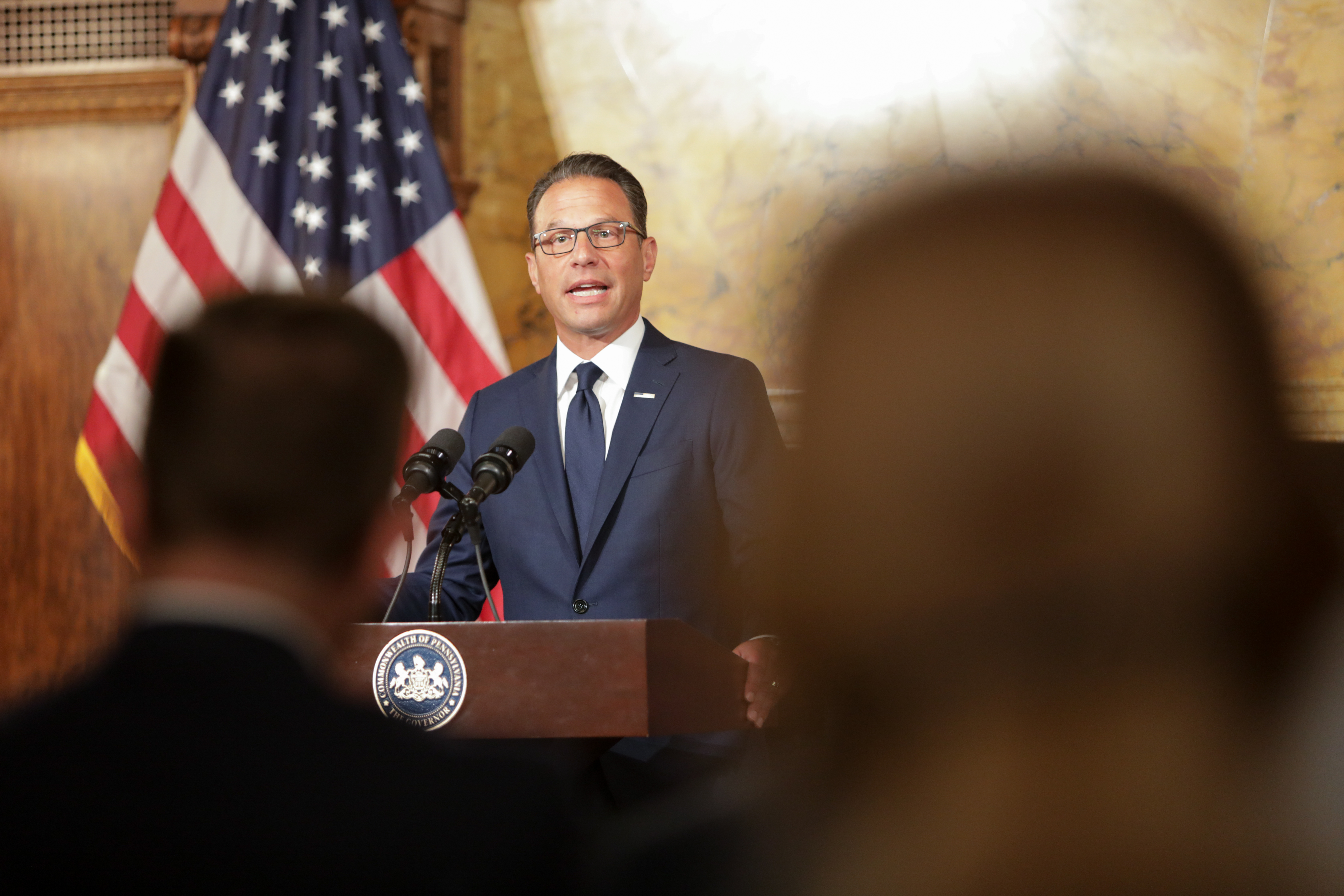
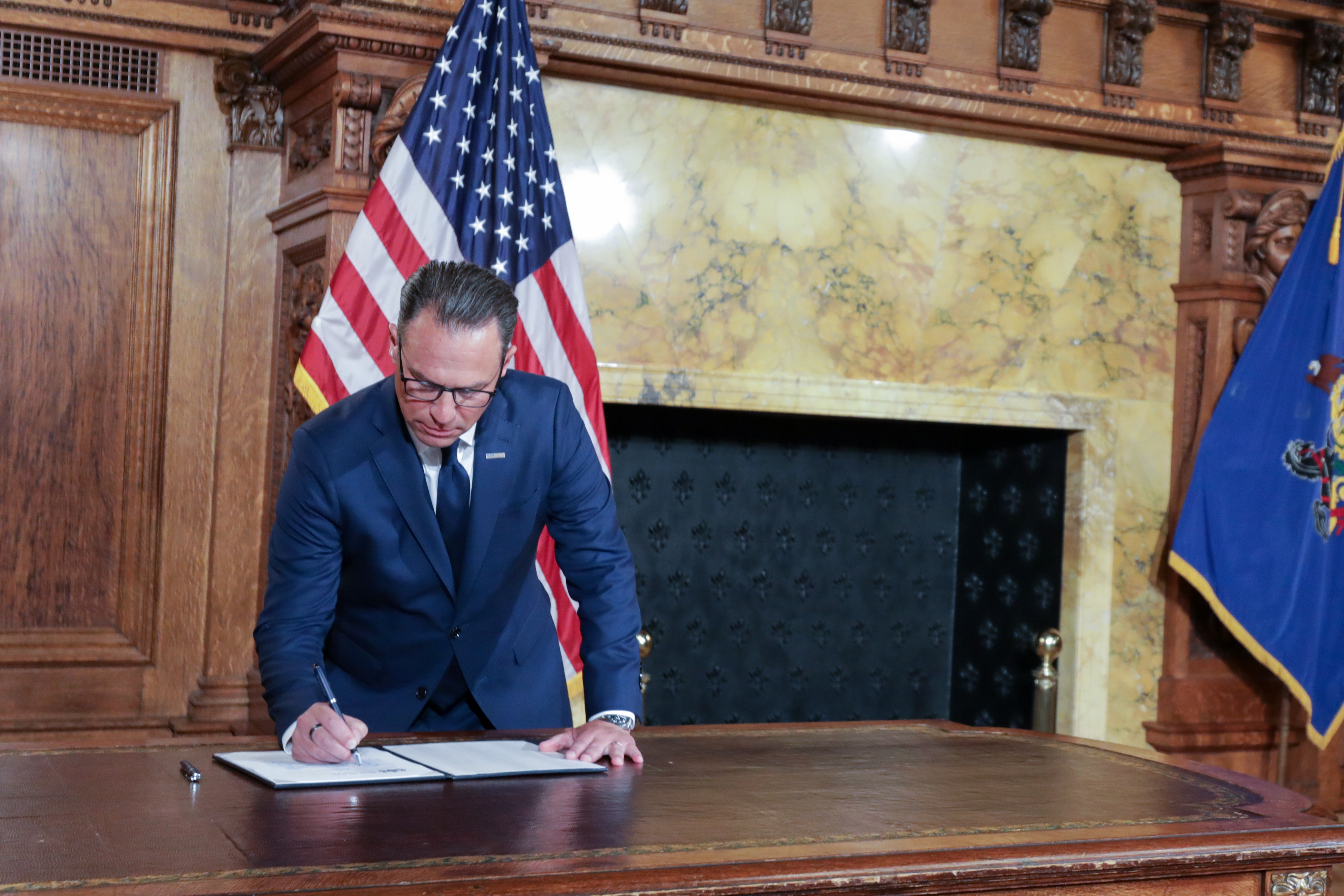
    HARRISBURG — Gov. Josh Shapiro signed a sweeping executive order on Tuesday dramatically restricting data center development in Pennsylvania, marking a major shift from his initial embrace of the increasingly unpopular projects.

    Shapiro, a first-term Democrat running for reelection and a rumored 2028 presidential contender, had been an early champion of data center development in the state, including a $20 billion commitment from Amazon to build at least two data centers in Bucks and Luzerne Counties.

    Now he is taking a hard-line stance against the burgeoning data center industry he once courted, as proposed projects draw increasing bipartisan backlash across Pennsylvania.

    The far-reaching executive order does not include a moratorium on data center development. However, the order requires local approval for projects to receive state permits, which in effect may block many developments from moving forward.

    Shapiro used his executive powers Tuesday to push through his previously proposed Governor’s Responsible Infrastructure Development standards, which were initially pitched as voluntary incentives for data center developers to receive tax breaks, but failed to receive support from the GOP-controlled state Senate. All projects will be required to follow GRID’s environmental, economic, and transparency requirements in order to move forward.

    “I have no other choice than but to take this executive action to protect the good people of Pennsylvania from these predatory developers and from these projects that would negatively impact our communities,” Shapiro said after signing the order.

    Shapiro’s order also:

    • Removes all data center developments, including those by Amazon, from the fast-track permitting program, and no data centers will be considered for the program moving forward.
    • Requires data center projects to sign legally binding agreements to certain transparency and environmental requirements in GRID, such as water conservation standards and early and transparent public notification of proposed projects ahead of key local approvals. Companies must follow GRID guidelines to access the state’s existing sales tax break for data centers.
    • Prohibits any state agency from signing a nondisclosure agreement related to a data center project.
    • Instructs the Pennsylvania Department of Environmental Protection to publish a publicly accessible map of current permitting information for all proposed data center projects.
    • Mandates that the projects bring their own electricity generation and pay all costs associated with increased energy usage.
    • Requires a community-benefit agreement that includes promises to hire and train local employees, as well as developer investments in schools or infrastructure.
    • Underscores Pennsylvania’s unique state constitutional rights to clean air, pure water, and environmental preservation — a focus of many residents who oppose data center projects.

    ‘On notice’

    Pennsylvania has become a top target for data center projects, due to its key placement near some of the nation’s largest metropolitan areas, its energy production potential, and its vast rural areas.

    But data centers have become increasingly unpopular in the year since Shapiro championed the Amazon deal as one promising that the future of artificial intelligence “is going to run right here through the Commonwealth of Pennsylvania.”

    In a June poll conducted by Quinnipiac University, 76% of registered Pennsylvania voters said they would oppose a data center in their communities. Only 24% of voters said they approve how Shapiro is handling data centers in Pennsylvania, including 40% of Democrats — a drop from his 51% overall favorability in the same poll.

    His past support for data centers emerged as a potential liability to his reelection campaign and his 2028 prospects.

    A yard sign protests the proposed data center on New Elm Street near the Closed Cleveland-Cliffs steel mill photographed on Thursday, June 4, 2026 in Conshohocken, Pa.

    Shapiro delivered remarks in Harrisburg before signing the order, touching on his visit to Archbald, a rural town in Northeastern Pennsylvania set for widespread data center development. The governor also outlined his opposition to controversial projects in Shapiro’s home county, Montgomery County, that he had recently denounced.

    “Archbald and Montco are just two examples of dozens of communities being overrun and overwhelmed by developers who don’t give a damn about us and think they can have their way,” Shapiro said. “Today, I’m formally putting them on notice.”

    Shapiro took specific issue with the more than 100 speculative projects across the state, which include some from real estate developers who are seeking building approvals without determining or disclosing the company for which they would be storing the data.

    The Data Center Coalition — the leading data center group representing Amazon, Microsoft, and other top developers — said in a statement that distinguishing between real, company-led projects and proposals is important and that rules should not be “changed midstream” for “verified and responsible data center projects.”

    “Companies have made plans, communities have prepared for economic opportunities, and workers are ready to build the next generation of digital infrastructure right here in Pennsylvania,” said Dan Diorio, the executive vice president for state policy and government affairs at the Data Center Coalition.

    Diorio previously told The Inquirer that Shapiro’s GRID standards were “extensive” compared with the 37 other states that offer sales tax exemptions.

    Shapiro’s administration appeared prepared to face legal challenges from the deep pockets of the data center industry or property developers. The order includes a severability clause, something not traditionally used in executive orders, that says if any parts of the order are “held to be invalid,” the rest of the order still stands.

    Shapiro has previously said his position on data centers has evolved. But his order Tuesday is perhaps his most dramatic shift: He has gone from consulting Amazon and the data center industry on his GRID principles earlier this year to pulling the tech giant and others from the state’s fast-track permitting program and requiring community-benefits agreements for the projects to move forward.

    Gov. Josh Shapiro signs an executive order restricting data centers in Pennsylvania during a ceremony in the Capitol in Harrisburg, Pa., Tuesday August 18, 2026.Kalim A. Bhatti / For The Inquirer

    The Amazon projects currently underway in Pennsylvania have already passed through the first phase of permitting, and will be required like all other projects to follow the requirements moving forward, a spokesperson for Shapiro said.

    An Amazon spokesperson did not respond to a request for comment Tuesday.

    There are six data center projects under construction in Pennsylvania, and 10 have received at least one state-level permit approval, Shapiro’s office previously told The Inquirer.

    Shapiro and the General Assembly have been under pressure by anti-data center activists to enact guardrails on the massive projects, with many arguing that Pennsylvania moved too quickly and sacrificed the state’s safety in favor of Big Tech. Pennsylvania lawmakers nearly unanimously supported ending the sales tax exemption for the projects, but failed to implement a measure during the spring legislative session.

    At the news conference Tuesday, Shapiro invited representatives from the Pennsylvania Association of Township Supervisors — the main group representing the local governments at the forefront of pushing for data center restrictions — in addition to advocacy groups including the Pennsylvania Utility Law Project and the National Resources Defense Council. The groups praised Shapiro’s plan.

    Though Shapiro’s order was widely lauded by Democratic state lawmakers and environmental groups, it was met with criticism from some of his detractors, including his Republican challenger for governor in November, Treasurer Stacy Garrity.

    Garrity’s first TV ad featured Shapiro’s support for data centers, and on Tuesday she said in a statement that Shapiro is “trying to gaslight the people of Pennsylvania into not believing what they’ve seen with their own eyes for the past 13 months.” (Garrity’s position on data centers has also changed since the June 2025 announcement, which she lauded at the time; she has since said Pennsylvania needs to put a “pause” on all data center development.)

    Megan McDonough, the state director for advocacy organization Food and Water Watch, said in a statement that “Shapiro knows that he’s been acting out of accordance with what Pennsylvanians actually need,” but that the order falls short.

    “Shapiro is feeling our heat because Pennsylvanians have made it impossible for him to ignore us,” she said. “The only solution to addressing AI data centers’ many woes is by placing a mandatory moratorium on all new data center development.”