Category: News

  • There’s less wildfire smoke for now, but the fire season is far from over

    There’s less wildfire smoke for now, but the fire season is far from over

    Amid a summer marked by hazy skies in parts of the country, there is currently less wildfire smoke blowing across the United States and Canada compared to recent weeks.

    In Oregon and Washington state, where much of the smoke has originated, 51 active fires had burned through 2.52 million acres as of Tuesday – down from a peak of 2.83 million acres on Aug. 12. Although skies are still smoky across portions of the Pacific Northwest and northern Rockies, not much is blowing east of there.

    But this lull in smoke coverage and slight decrease in fire activity could be short-lived.

    “We already have the most active fire season in recorded history for the Pacific Northwest,” climate scientist Daniel Swain said in a live stream broadcast Tuesday.

    From Thursday into the weekend, a disturbance from the Pacific Ocean is forecast to track toward and across Oregon and Washington state as well as British Columbia and Alberta in Canada, leading to stronger winds and the potential for dry lightning.

    “We’re expecting an increase in fire risk in the Pacific Northwest as we get another heat wave followed by yet more dry lightning. So, unfortunately that isn’t the most favorable pattern for the Pacific Northwest,” Swain said.

    In the United States and Canada, national wildland fire-preparedness levels remained at 5 — the highest on the scale — which indicates national firefighting resources are in high use and emergency measures may be needed to sustain operations.

    How bad this fire season has been

    So far this year, nearly 7.3 million acres of land have burned across the United States. That’s about 36 percent higher than the annual average between 1983 and 2025.

    In Canada, about 10.2 million acres have now burned, roughly 46 percent higher than the 25-year average.

    And since July, about 26 percent of the Northern Hemisphere land area — covering around 10.3 million square miles — has at some point experienced moderate or greater concentrations of black carbon, the soot particles released by wildfires.

    Across the Pacific Northwest, weather from late August into September looks drier than normal and occasionally windy.

    The Post’s El Niño tracker shows that this region may experience extremely dry conditions into the fall, suggesting that the period of heightened wildfire risk — and the potential for widespread smoke blowing across the U.S. — is far from over.

  • ‘No serious dispute’ that Comey’s seashell post could be read as a Trump threat, prosecutors say

    ‘No serious dispute’ that Comey’s seashell post could be read as a Trump threat, prosecutors say

    WASHINGTON — The Department of Justice is defending its prosecution of former FBI Director James Comey, saying “there is no serious dispute” that a social media post of seashells he made last year could be understood as a threat against President Donald Trump.

    Prosecutors also called into question Comey’s account that he had found the seashells in the numerical arrangement of “86 47” while walking on a beach in North Carolina and suggested that his May 2025 post on Instagram was an effort to generate attention for a forthcoming novel about a social media personality whose words inspire his fans to attack his foes.

    The arguments in motions late Tuesday represent the government’s most detailed explanation of its indictment and were filed in response to wide-ranging defense efforts to dismiss the case on grounds including that it constitutes a vindictive prosecution and that Comey’s post did not amount to a true threat. Comey’s lawyers contend that investigators in the case misled judges, submitted documents containing false statements, withheld key facts, and repeatedly came up empty in their efforts to prove that Comey intended a physical threat or knew that the number 86 could suggest violence.

    The entry for “86” from Merriam-Webster, the dictionary used by The Associated Press, says its meaning is “to throw out,” “to get rid of” or “to refuse service to.” Trump, a Republican, is the 47th president.

    The Justice Department maintains that the post constituted a real threat

    Federal prosecutors maintain that the photo of the seashells, which Comey said he found on the beach, constituted a threat against Trump. Comey deleted the post shortly after he put it up, saying he did not know that anyone interpreted the numbers as a call to violence. His lawyers have said that the slogan has long meant to “get rid of” or “eject” and has been featured on thousands of items sold online and regularly displayed at protests.

    But the department sought in its filings to place the post against the backdrop of assassination plots or attempts against Trump in the months before and after Comey’s post. Prosecutors say that two minutes before the post was made, Comey’s wife texted him a screenshot of a definition of “86” that said “to get rid of or refuse service.”

    “There is no serious dispute that an objective viewer of Comey’s post could read it to mean ‘Kill President Trump,’” prosecutors wrote.

    The photo was posted days before Comey was set to release a novel he wrote titled “FDR Drive,” in which a prosecutor pursues a far-right social media personality who has called out his adversaries by name and inspired violence against them by his fans, the department said.

    After the Instagram post provoked an outcry, according to the government’s filings, Comey’s publishing agent observed in a text message to him that he had “gone viral.” Comey responded that that was “not my intention, but I’ll be OK if it sells books.” The agent replied, ”Music to an agent’s ears.”

    Prosecutors also asserted there was “reason to doubt” Comey’s account of having come upon the seashells while on a walk, saying they were located 4 miles (6 kilometers) “down from the beach from beachfront property where Comey was staying, in an area separated from the ocean by a sand dune.” They said there was “no evidence that anyone else arranged, photographed, or even saw the shells.”

    Comey has called the case vindictive, but prosecutors deny that

    Comey’s lawyers have called the indictment, which was filed months after an earlier and unrelated case against him was dismissed, part of a Trump retribution campaign targeting one of the president’s vocal critics. Trump fired Comey as head of the FBI in 2017 as Comey was overseeing an investigation into potential ties between Trump’s 2016 presidential campaign and Russia. Trump since then has called for him and other perceived adversaries to be jailed.

    But the Justice Department denied allegations of vindictiveness, saying the decision to indict Comey was made by the U.S. attorney in the area and did not stem from a directive from the president or the attorney general.

    To bolster their claims that Comey was unjustly targeted, defense team argued that investigators struggled to develop compelling evidence from witnesses that Comey had intended the post as a threat, but they concealed that from federal magistrates as they applied for warrants to search digital accounts associated with Comey and his wife

    For instance, defense lawyers have said, the FBI searched an internal database of information about open and closed investigations for any indication of an association between Comey and the term “86” but found inconclusive results. An FBI agent also requested a review of the FBI file for the case against reputed mobster John Gambino, which Comey worked on as a young prosecutor, but found no references to the term “86.”

    Investigators also interviewed a key government cooperator in the case, Salvatore “Sammy the Bull” Gravano, who said he did not recall ever discussing the term “86” with Comey or hearing it in connection with the trial.

    The latest filings made clear that the administration was standing behind the premise of the case.

    “No Government theory was disproved at that time, or now. No intentionally false omission exists, much less one made with reckless disregard for the truth,” prosecutors wrote. “The evidence still supports that Defendant acted at least recklessly by consciously disregarding a substantial risk that his coded message of “8647” that he sent to his 200,000 or so Instagram followers, and the millions of secondary social media users who would view this as threatening violence against the President of the United States.”

  • With limited options, Trump tries economic pressure on Iran — again

    With limited options, Trump tries economic pressure on Iran — again

    BERLIN — Iran has survived harsh U.S. sanctions since 1979. It is betting it can endure even more.

    In the 47 years since the Islamic Revolution, the United States has taken step after step to isolate the country with only a brief reprieve after the 2015 Iran nuclear deal, which President Donald Trump excoriated and abandoned in 2018.

    Trump promised “maximum pressure” then, and now, with limited military options, threatens even more. Treasury Secretary Scott Bessent warned last week of “never before seen” measures — perhaps, analysts suggest, secondary sanctions on countries like China that buy Iranian oil, or further penalties on financial transactions.

    Iran is more likely to step up attacks on U.S. allies in the Persian Gulf than to surrender its hold on the Strait of Hormuz, analysts said. “Iran’s economy is in serious trouble, but it is not collapsing,” said Danny Citrinowicz, an Israeli expert on Iran. “More importantly, the regime is likely to escalate before it capitulates.”

    U.S. and international sanctions and economic pressure did help lead to the 2015 nuclear deal, when the supreme leader then, Ayatollah Ali Khamenei, authorized negotiations to limit Iran’s nuclear program in return for frozen assets and sanction relief.

    Since Trump withdrew from the deal and imposed more sanctions, Iran has adjusted to a high level of economic disruption, developing sophisticated smuggling routes and new markets, particularly for oil. For now, Iran insists on maintaining effective control of the strait while the U.S. Navy continues to blockade it. A few ships are slipping through, but traffic is down more than 90% from before the war.

    Iran’s economy is badly damaged, hurting ordinary people, but its leaders have shown, through brutal crackdowns on protest and dissent, that they are relatively unconcerned with public opinion.

    Having survived what it once feared — an Israeli-American war against it — a more military-minded and authoritarian Islamic Republic has itself doubled down. Esmail Baghaei, the spokesperson for the Foreign Ministry, said Monday that new measures would have “no effect on Iran’s position.”

    Economic pressure will only succeed if “our resilience is greater than that of the Iranian regime, and it’s not clear that’s a good bet,” said Suzanne Maloney, an Iran expert and director of foreign policy at the Brookings Institution. “Iran’s economy has been shaped by U.S. economic pressure.”

    The oil economy

    Iran’s economy is suffering, without question, but gradually, while the regime keeps a stranglehold on any popular protest.

    Since the war began in earnest in February, the Iranian economy and its industrial sector have been contracting in tandem for the first time in eight years, said Esfandyar Batmanghelidj, CEO of the Bourse & Bazaar Foundation, a research organization based in London.

    Iran will face more challenges, from higher inflation to weakness in the job market, he said. “But it won’t lead to a different political outcome.”

    Some Iranian leaders, to be sure, are deeply concerned with the economic disaster and support a more rapid diplomatic deal with Washington. But the leadership appears united in retaining effective control over the strait as its best leverage and deterrent against another war.

    Iran has adapted to U.S. and international sanctions by increasing its ties to Russia and China. It sells most of its oil at a discount to China, which has ignored international sanctions against the purchase of Iranian oil. It also uses small, independent Chinese refineries, known as “teapots,” that are less exposed to U.S. sanctions.

    Iran has developed smuggling networks and a “shadow fleet,” transferring its oil to other ships that can easily disguise its origin. And it has built up its industrial sector and cut back sharply on imports and its use of the dollar, using foreign banks and bartering oil for goods.

    Since the war and the U.S. blockade, Iran has been storing oil onshore and in a variety of older tankers, while shipping some of it by road and rail and reducing output on some wells. When the memorandum of understanding with the United States was signed in June and the U.S. blockade was temporarily lifted, Iran used the period of calm assiduously.

    Iran had oil already outside the strait to sell before the blockade, and at the outset of the agreement it exported another 80 million barrels before Washington reimposed sanctions and the blockade, easing the pressure on storage, said Brett Erickson of Obsidian Risk Advisors.

    Before the war, Iran was exporting about 1.8 million barrels a day. Now, given the increase in the oil price because of the conflict, Iran is ahead of what it budgeted for oil sales for this year, he said.

    The exchange rate for the Iranian rial against the dollar is bad, but the speed of depreciation is slowing, as is inflation. If Washington is relying on economic pressure, “you wouldn’t want slower inflation and a lower rial exchange rate than before the war,” Erickson said.

    For the policy to succeed, “we need to push them down quickly, not wait nine more years to collapse them,” he added. “A dagger hurts but doesn’t lop off the head of the enemy.”

    A battle of economic wills

    Iran is gambling that the closure of the strait will put more pressure on Trump to blink first and negotiate a deal that Iran can accept. Iran is counting on increasing economic anxiety from the United States’ allies to push Trump back to the table.

    The global economy is missing millions of barrels of oil a day and strategic stockpiles, including in Europe and the United States, are badly diminished. Ukraine continues to damage Russia’s refineries, further cutting the amount of oil on the market.

    Regionally, key energy producers including Qatar, Bahrain, Iraq and Kuwait are badly hurt by the closure of the strait, and Saudi Arabia, Qatar and Oman have argued in Washington against further military escalation, given Iran’s ability to strike their energy infrastructure.

    “In a battle of economic wills it’s very uncertain the West will win,” Maloney said.

    Trump defends the war as necessary to ensure that Iran can never build a nuclear weapon. But after he abandoned the 2015 nuclear deal, Iran tried to pressure the world with enhanced enrichment that brought it to the edge of being a nuclear-capable military power, even as it denied ever seeking a bomb.

    That assurance died with the former supreme leader. His son and successor, Ayatollah Mojtaba Khamenei, appears ready for open-ended confrontation with the United States and is considered by U.S. intelligence to be more flexible about creating a nuclear weapon. In Iran, said Vali Nasr, an Iran expert and professor at the Johns Hopkins School of Advanced International Studies, trust in Trump is minimal and the 2015 deal is considered “a four-letter word.”

    Now, Trump is offering Iran very little in exchange for opening the Strait of Hormuz, with no U.S. commitment to unfreeze its assets or lift sanctions. “There is no reasonable deal for Iran on the table,” Nasr said.

    “The choice is between total surrender and fighting it out,” he added. “And they have bet that the only way to get a better deal is to accept costs now and hold the global economy’s and Trump’s feet to the fire.”

  • Voters in a Chesco township will be asked whether to expand their board in November amid data center backlash 

    East Whiteland voters will decide this November whether they should add more elected officials to represent them, after residents’ staunch opposition to a controversial 1.5 million square-foot data center project propelled them to petition for a larger board of supervisors.

    In a quick but forceful flurry, residents collected at least 500 signatures to get a question on the Nov. 3 general election ballot asking voters if they want two more elected officials. If the ballot issue is approved, it would bring the number from three to five members on the board of supervisors.

    The impetus for the question was the township’s handling of a proposed data center project, expected to be constructed at the former 79-acre Cyprus Foote Mineral Co. property, a Superfund site on the line between East and West Whiteland Townships.

    The project loomed large as township resident Jessica Larkin collected signatures for the referendum. She had to be “careful to clarify” that the question was not just on the data center, she said.

    “It’s connected, though, because this board and the overall township management is all connected to how these projects get pushed through and approved, and I think that the conversations, while it did start with the data center, did kind of just bring us to general approach in the future of the township,” she said.

    Board members are elected at-large and serve six year terms. They appoint township staff and members of the boards and commissions within the township, plus hear conditional use applications, levy taxes, and more.

    In a letter to fellow residents, Larkin wrote that “a township the size of East Whiteland would benefit from having five supervisors.”

    “A larger board has the potential to provide a broader range of perspectives, more balanced representation, and additional voices to help guide decisions affecting our growing community,” the letter continued.

    The township and supervisors board chairman did not immediately respond to a request for comment on the ballot question and its impetus.

    The data center project, which secured early approvals from township leadership in 2018 and 2024, stoked renewed ire from residents when its developers, Green Fig LLC and Sentinel Data Centers, requested to expand the project earlier this year. (The proposal has ultimately changed shape several times.)

    The community turned out in large numbers to oppose the data center’s expansion — and mere existence. They made lawn signs and posters, spoke for hours during public comment, protested outside meetings, and showed up in such large numbers that they even shut meetings down. Alongside other residents opposing projects in their communities, they traveled to Harrisburg to call on Gov. Josh Shapiro and lawmakers to institute a moratorium on data center construction.

    Earlier this week, amid increasing opposition among Pennsylvanians to the projects, Shapiro signed a sweeping executive order that requires local approval for projects to receive state permits, which could block many developments from moving forward.

    Larkin, 44, a resident of the township for more than a decade, lives about a mile away from the site of the planned data center. She started attending meetings on the proposal, she said, and it was “just eye-opening to see how the process worked, and to learn how these projects get approved.”

    “Ultimately, after attending several meetings and watching residents passionately oppose the project, it felt like we could use a little bit more representation,” she said.

    Along with a team of other residents, Larkin, in less than two weeks, collected enough signatures to meet the county’s early August deadline to put the referendum on the ballot.

    For local elected officials, data center projects have proved to be thorny. They hesitate to vote the projects down immediately. In the absence of state leadership earlier this year, a smattering of municipalities have, in recent months, charged township staff to pen ordinances to get ahead of any proposed projects so they have some level of control over where they go.

    In East Whiteland, construction of the data center remains fraught, with concerns of construction unfolding on a contaminated parcel prompting a temporary work stoppage and a pending request to make changes to the plans.

    Even if it has grown beyond just the data center, Larkin hopes residents see the need for more elected officials.

    “There’s close to 15,000 residents, and there’s so many talented people that spoke up at these meetings,” Larkin said. “And I just would love to see more representation and more involvement at this level and with this consideration in terms of developing our township.”

    This suburban content is produced with support from the Leslie Miller and Richard Worley Foundation and The Lenfest Institute for Journalism. Editorial content is created independently of the project donors. Gifts to support The Inquirer’s high-impact journalism can be made at inquirer.com/donate. A list of Lenfest Institute donors can be found at lenfestinstitute.org/supporters.

  • 8 takeaways and surprises from Florida, Wyoming, and Alaska primaries

    8 takeaways and surprises from Florida, Wyoming, and Alaska primaries

    Many of the highest-profile elections on Tuesday night went just as expected. But across the country and down the ballot in four states, there were some surprises.

    In a onetime battleground state that has shifted firmly to the right, Florida Democrats took dueling approaches as they attempt to win statewide for the first time since 2018. They picked a democratic socialist to run for Senate and a former Republican to run for governor.

    GOP voters picked one House incumbent to succeed Gov. Ron DeSantis, a Republican, and ousted another mired in scandal whom DeSantis declined to support.

    A Democrat is locked in a tight race for a special election for a heavily Republican Pennsylvania state House district, and President Donald Trump’s pick for Wyoming governor lost to a state lawmaker.

    Here’s a rundown from Tuesday’s elections.

    Scandal in Washington topples a GOP incumbent in Florida

    Of eight Florida House incumbents who faced primary challenges, only one lost: Republican Cory Mills.

    Mills, a two-term lawmaker from the Daytona Beach area, faces mounting allegations of sexual misconduct, domestic abuse, and campaign finance violations. The House Ethics Committee said it authorized more than 20 subpoenas as it investigates him.

    As DeSantis stayed out of the race, Trump stopped publicly backing Mills, and some of Mills’ House GOP colleagues endorsed a challenger. Primary voters in his district followed suit: They picked former news anchor Ryan Elijah by a margin of 13 percentage points, signaling voter distaste for incumbents’ scandals.

    In a Truth Social post Wednesday morning, Trump endorsed Elijah.

    “I told Congressman Cory Mills of Florida, a friend of mine, to get out of the Race, but he wouldn’t listen,” Trump wrote. “He thought he could win, so who can blame him? We now have a great candidate, Ryan Elijah, running in his place! Ryan stands for EVERYTHING MAGA, and is respected by ALL.”

    Democrats pick a former Republican and a new DSA member

    Democrats haven’t won statewide in Florida since 2018, and they face long odds this year. A pair of wild cards who won over primary voters will try to reverse the party’s losing streak.

    David Jolly, a Republican turned independent Trump critic turned Democrat, beat challengers from the left to take on Rep. Byron Donalds (R) in the governor’s race.

    He’ll be on the ballot alongside Angie Nixon, a progressive state lawmaker from Jacksonville who recently joined the Democratic Socialists of America but had not been endorsed by the group or any of its chapters. Facing Alexander Vindman, a key witness in Trump’s first impeachment trial, she overcame a massive disadvantage in fundraising and spending. She will face Sen. Ashley Moody (R), who is in her second year in Congress after being appointed to fill the seat left open when Marco Rubio became secretary of state.

    Donalds and Moody will be heavily favored. Although this election will herald the end of DeSantis’ ironfisted leadership in Florida, he has managed to turn the former swing state into a conservative bastion.

    Florida House Democrats hold on for now

    DeSantis’s move to redraw the state’s congressional map and give the GOP a boost scrambled the field for many House races.

    But some of the incumbents whose districts were splintered managed to hang on: Rep. Debbie Wasserman Schultz (D), who faced criticism for shifting to run in a predominantly Black seat, beat four Black candidates.

    Rep. Jared Moskowitz (D), a moderate, ran in a new district, a battleground where he defeated a democratic socialist. He will now face a self-described “America First” mayor.

    As in that race, Democrats are expected to fight for other seats that were redrawn to favor Republicans: In Tampa, Rep. Kathy Castor (D) is facing former state lawmaker Mike Beltran, while an empty seat in southern Florida pits restaurant franchisee Casey Askar (R) against Pia Dandiya (D), a tech executive and former teacher.

    The GOP’s best flip opportunity is likely to come in the Orlando area, where the Republican primary to take on Rep. Darren Soto (D) was too close to call early Wednesday.

    Another loss for Trump in a governor’s race

    The power of Trump’s endorsement took another blow after his preferred candidate in Wyoming’s gubernatorial primary, Megan Degenfelder, lost to state Sen. Eric Barlow.

    Degenfelder, the state’s superintendent of public instruction, secured Trump’s endorsement before she even announced her campaign. But Barlow had years of experience in party leadership in the state legislature, as well as the cash advantage.

    Gubernatorial candidates in Iowa, Minnesota, South Carolina, and Georgia also lost GOP primaries despite Trump’s backing.

    Mixed results for Wyoming’s right wing

    In a deep red state like Wyoming, political fights are usually about how far right Republicans should go.

    State Rep. Rachel Rodriguez-Williams, chair of the ultraconservative Wyoming Freedom Caucus, accused Barlow of being insufficiently conservative during his time as House speaker and opposed his gubernatorial run. Others in Wyoming’s right flank did well on Tuesday.

    Rep. Harriet Hageman, Trump’s pick for the open Senate seat vacated by the retiring Sen. Cynthia Lummis, won her race handily. Secretary of State Chuck Gray, aligned with the Freedom Caucus, won the crowded primary for the state’s sole House seat, vacated by Hageman, a conservative who unseated the fierce Republican Trump critic Liz Cheney in 2022.

    A surprising showing for Democrats in Pennsylvania

    In a Pennsylvania special election, Democrat Brandon Dukes held a narrow lead over Republican Scott Timko in a state House district that Trump carried by 18 percentage points in 2024. The race remained uncalled early Wednesday morning.

    The district includes parts of Butler County close to the site where Trump was shot at during a campaign rally two years ago. Tuesday’s winner will complete the months left in the term of a lawmaker who stepped down. Dukes and Timko are also competing in November for a full term.

    While special elections generally have low turnout, Tuesday’s contest could be an early sign of shifting political sentiments in the swing state. Pennsylvania is home to several battleground congressional districts in the fight for control of the U.S. House.

    Democrats have won or overperformed expectations in special elections in the past year, including an upset in a Florida state legislative district that includes the president’s Mar-a-Lago estate.

    AIPAC makes a difference

    The force of the American Israel Public Affairs Committee was on display in a California special election where the pro-Israel lobby’s last-minute intervention may have thinned the margin between two Democrats competing for the seat vacated by Eric Swalwell (D).

    AIPAC’s super PAC, the United Democracy Project, swooped in and spent millions of dollars on advertising in the final two weeks of the race. The election was too close to call Tuesday despite state Sen. Aisha Wahab, a critic of Israel, finishing with a double-digit lead over her opponent, Melissa Hernandez, in the primary.

    AIPAC’s involvement in races has become controversial, including in Michigan, where Democratic Senate nominee Abdul El-Sayed turned its super PAC’s massive spending against him into a rallying cry for his supporters. Tuesday’s outcome showed that despite its polarizing brand, AIPAC still wields power in congressional races.

    Alaska sets up competitive Senate showdown

    Sen. Dan Sullivan (R) and former representative Mary Peltola (D) advanced to the general election in Alaska’s Senate race.

    The state’s unusual ranked-choice system means two additional candidates who finished lower in the primary will also make the general election ballot. But it remained unclear Wednesday morning who the final two candidates will be.

    Sullivan is one of Democrats’ biggest targets this year in their bid to retake control of the Senate. Peltola, who was previously the state’s sole House member, was recruited by Senate Minority Leader Chuck Schumer (New York) and has been an adept fundraiser.


  • Viral French musician Plumes serenades animals at the Philly Zoo

    Viral French musician Plumes serenades animals at the Philly Zoo

    Loris Assadian, a French singer-songwriter and animal advocate known professionally known as Plumes, is globally recognized and celebrated for his distinctive sound and special connection with animals.

    Videos of him playing his flamingo-pink guitar for farm and zoo animals have captivated millions of viewers worldwide, including former President Barack Obama, who talked about Assadian earlier this summer during the final month of The Late Show with Stephen Colbert.

    Also count Megan Paier, of Cherry Hill, among the many fans of his calming musical moments. A member and volunteer docent at the Philadelphia Zoo, she thought it would be great after watching his reels on Facebook if he came here. “The way animals respond to him just warms the heart,” she said.

    Assadian warms up before stepping to the tortoise environment.Tom Gralish / Staff Photographer

    So she reached out in March, DMing him. “What do I have to lose?”

    He got back to her right away.

    She asked how much it would cost, and he told her he didn’t accept any money, he just needed his expenses covered.

    He visited the zoo Tuesday — after running up the Rocky steps — and serenaded the tortoises ahead of sessions on Thursday and Friday, when he will play for other animals. Most tickets are already sold out.

    Assadian serenades Abrazzo, a Western Santa Cruz Galapagos tortoise estimated to be around 97 to 100 years old.Tom Gralish / Staff Photographer

    Assadian began performing for animals three years ago in France when he played Beatles songs for some local cows.

    His appearance in Philly is the first at any U.S. zoo, and only his second visit to the United States (he went to Alaska last month).

    Elizabeth Gibbons and her 2-year-old daughter Opal watch as the tortoises listen.Tom Gralish / Staff Photographer

    Elizabeth Gibbons, of Kennett Square, is an “oh my gosh, a huge fan” and was excited to see he was coming to Philadelphia but disappointed she wouldn’t be able to be there.

    She was at the zoo on Tuesday with 2-year-old daughter Opal and a mothers group from West Chester when she saw him opening his guitar case and teared up.

    Megan Paier, the docent, noticed and got Assadian to take a selfie with her.

    Before he plays, Assadian always talks with the animals’ caretakers to learn about their personalities and behavior. He keeps his own body language neutral, avoids sudden movements, and doesn’t expect or force interaction.

    Assadian’s mother, Valerie, his social media videographer, records him with Abrazzo, a Western Santa Cruz Galapagos tortoise estimated to be around 97 to 100 years old.Tom Gralish / Staff Photographer

    Beyond social media popularity, Assadian’s acoustic sessions serve as genuine behavioral enrichment for animals. Last year, he partnered with the Université de Nanterre for a scientific study at the Branféré animal park to evaluate music’s direct impact on animal behavior.

  • Americans are destroying license-plate cameras as surveillance backlash grows

    Americans are destroying license-plate cameras as surveillance backlash grows

    Adam Heimerman kept seeing the surveillance cameras on his way to work as a river guide in East Tennessee, and the sight rankled him.

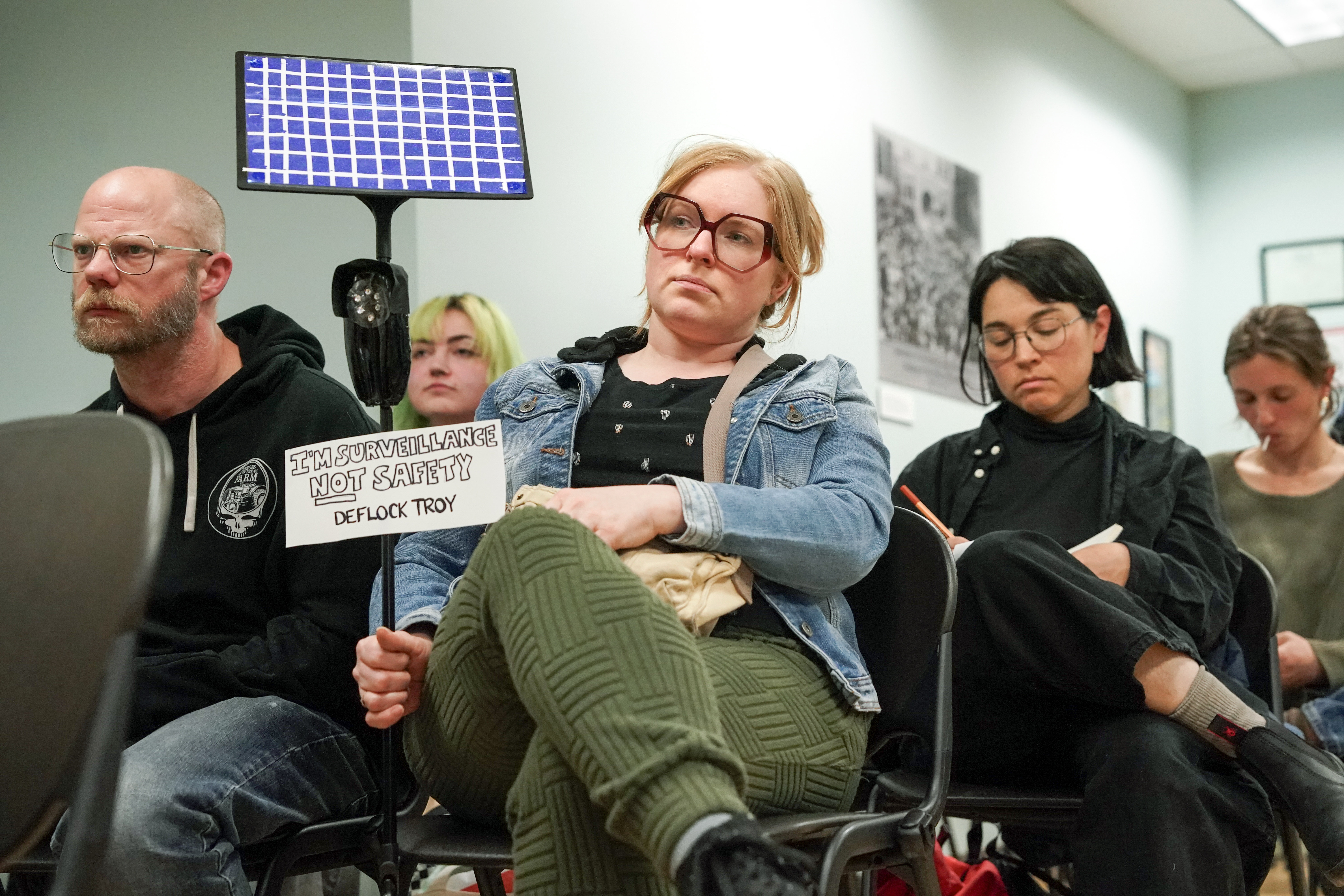
    More than 130,000 of the automatic license-plate readers now dot the country, according to the crowdsourced tracker DeFlock.org. The artificial intelligence-assisted devices have been embraced by law enforcement as powerful investigative tools but widely denounced by the public over privacy concerns.

    For Heimerman, who’s 37 and running as an independent candidate for Congress, the cameras were one more sign that the United States was becoming a police state, he said in an interview. Then in July, the Blount County Sheriff’s Office alleges, Heimerman shot four of the cameras — including one near a church where worshipers sat inside.

    Heimerman declined to discuss specifics of his case, but he said he believes there’s widespread frustration over local governments that keep using the cameras despite community pushback. That has fueled a wave of recent vandalism across the country, he said.

    “When people act out in a manner that we’re witnessing, things have gotten bad and they no longer feel like they’re being heard,” Heimerman said. “People are tired of being told to sit down and be quiet and write a letter.”

    “How-to” videos have spread online that demonstrate how to disable the cameras from collecting footage using wire cutters and heavy gloves. People from an array of backgrounds — college students, computer engineers, a U.S. Air Force engineer — have been accused of vandalizing the devices.

    Cameras were recently damaged in communities around Detroit. In Winona, Minn., all eight of the city’s readers were cut down and stolen.

    Flock Safety, one of the largest players in technological surveillance, is often the target of the ire. The company operates cameras in more than 6,000 communities across the country that record 20 billion plate scans a month. Critics concerned about the information the devices collect and store say the cameras aren’t just tracking license plates, but people’s personal movements as they visit places like gun ranges, doctor’s offices, or marijuana purveyors.

    That criticism cuts “across partisan lines,” said Eleni Manis, the research director of the Surveillance Technology Oversight Project, a nonprofit that fights government surveillance.

    “As Americans we drive where we want and when we want,” Manis said. “Tracking ruins that for all of us. And that’s partly why this has gotten under everyone’s skin.”

    Flock, which did not return requests for comment, has defended its product and said that it has been used to solve countless crimes, including helping to uncover the identity of the mass shooter at Brown University last year.

    But misuse is rampant, a Washington Post report this month found. Authorities have charged or accused at least 50 law-enforcement officers of using license-plate readers for unauthorized purposes, including to stalk their exes. U.S. Immigration and Customs Enforcement officers have also accessed Flock’s nationwide database through local partners to conduct immigration searches.

    Last week, the company announced it was enacting major changes to prevent abuse by law enforcement, including requiring officers to label searches with criminal case numbers and reducing the amount of days data is stored from 30 to seven.

    Community backlash against the cameras has been fierce, with 100 jurisdictions around the country pausing or canceling contracts in recent months, according to data compiled by DeFlock.org.

    Despite that, some have turned to vigilantism — spray painting the devices red, ramming their pole mounts with pickup trucks, and slapping on stickers to block the camera lenses.

    Online videos even suggest the tools one might need to rip down cameras or disrupt their feeds with green laser pointers.

    A number of prominent influencers have applauded the vandalism, including right-wing pundit Tucker Carlson.

    Rick Wilson, the co-founder of the anti-Trump Lincoln Project political action committee, recently described in detail on a podcast the kind of “cheap green laser pointer” that can easily be purchased online to interfere with devices.

    “There are a lot of tools for citizens to express their discomfort of these things that are knowable and available,” Wilson said in an interview. “I’m not suggesting that people break the law. I’m suggesting that you are not helpless against a surveillance state that does not have your best interests in mind.”

    Carlson has portrayed the vandals as grassroots heroes fighting back against government overreach.

    “It’s not drug-addicted kids,” Carlson said on his podcast recently. “It’s sober, decent patriot Americans who believe the promises of their country. Flock was not part of the country they signed up for. No one asked their permission to steal their images and to spy on their conversations. They don’t think that makes them safer. They understand that it’s to strip them of their most basic humanity.”

    Last month, when a 20-year-old from West Virginia was arrested and charged with defacing Flock cameras, a host of Facebook commenters rushed to his defense, offering fake alibis.

    “He was saving my neighbors dog from a fire all day couldn’t be him,” one Facebook user wrote.

    “That man is innocent,” wrote another. “I saw him serving at a soup kitchen at the time of the incident.”

    In that case and others, images of the alleged vandals were captured on the very cameras they sought to deface, a fact law enforcement has been quick to point out.

    In a February news release announcing destruction of property charges against a 24-year-old in Michigan, the Waterford Police department noted, “Ironically, Detectives discovered one of the [cameras] had captured an image of the vehicle and license plate driven by the suspect at the time the cameras were damaged.”

    “[No] one is entitled to maliciously destroy property of another, including that of the Waterford Police Department,” the statement said.

    Heimerman, the congressional candidate and lifelong East Tennessee resident, said he’s running to represent the state’s 2nd District because he is worried that the needs of ordinary citizens are getting lost amid rampant corporate greed. His Republican opponent, Rep. Tim Burchett, earlier this month introduced legislation to ban federal money from being spent on the cameras.

    Heimerman, who vaguely recalls voting for Barack Obama, said he has written his own name in for president on the ballot for decades. A GoFundMe organized for his legal defense has raised over $13,000.

    Heimerman says he’s grateful for the attention his case has received, hoping it means that people are “waking up” to the need to pay attention to what local government is doing, not just those at the federal level.

    “It kind of brings a highlight to how much a boiling point we are at,” he said. “People are fed up.”

  • Montco will move its 9/11 memorial to Norristown ahead of the 25th anniversary of the attack

    Montco will move its 9/11 memorial to Norristown ahead of the 25th anniversary of the attack

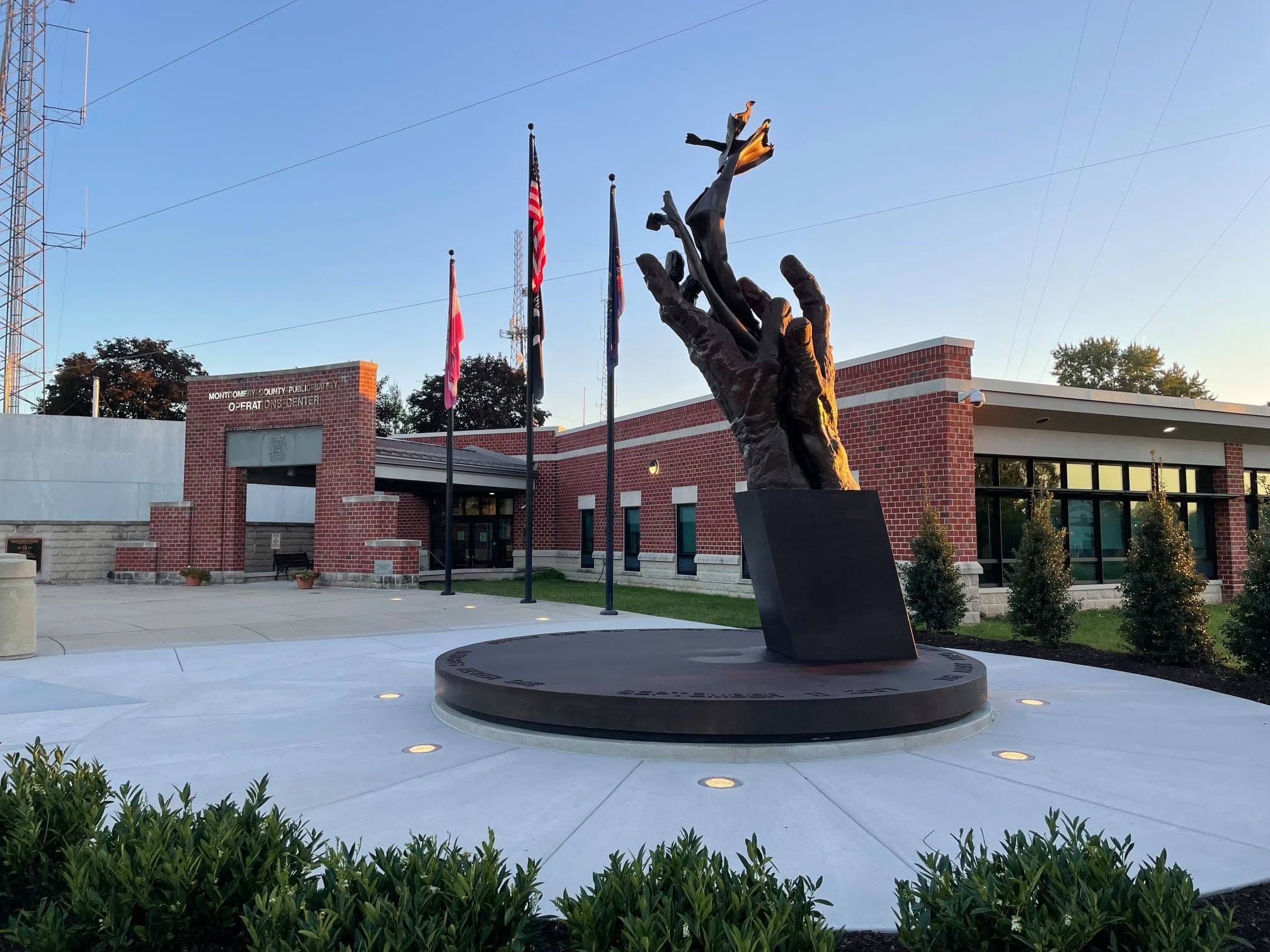
    Montgomery County will move its 9/11 memorial to Elmwood Park in Norristown on Sept. 1 in advance of the 25th anniversary of the terrorist attack.

    The goal is to make the memorial more accessible for county residents and visitors than it is at its current location at the county’s emergency operations center in Eagleville, Jamila H. Winder, chair of the Montgomery County Board of Commissioners, said in a statement.

    The monument, which was commissioned by the Montgomery County Board of Commissioners in 2003, was created by sculptor Sassana Norton, who used an I-beam from the North Tower of the World Trade Center in the 18-foot monument honoring victims and first responders. It was erected at the Montgomery County Courthouse in September 2005 and then moved to the Eagleville campus in 2021 due to courthouse construction.

    Members of the public are invited to watch the procession of the memorial starting at 9 a.m. on Sept. 1. The monument will travel from Eagleville through Lower Providence and West Norriton Townships to Elmwood Park in Norristown. The procession will be accompanied by a Norristown Police Department motorcycle escort as well as other first responders and representatives from across the county.

    A rededication ceremony will be held at 10 a.m. on Sept. 11 at Elmwood Park.

    “Norristown is proud to host the County’s 9/11 Memorial in Elmwood Park,” Rashaad Bates, president of Norristown Municipal Council, said in a statement. “We are honored to provide a permanent home where residents can gather to remember, reflect, and pay tribute to those whose lives were forever changed on September 11.”

  • Fired historical commission strikes out on its own | Inquirer Chester County

    Fired historical commission strikes out on its own | Inquirer Chester County

    Hi, Chester County! 👋

    After being fired, all six members of Westtown Township’s historical commission are striking out on their own. Also this week, Oxford will disband its police department, future development at a contaminated Kennett Square site could be on the horizon, plus, what to know about the mysterious drone sightings over Wallace Township.

    If someone forwarded you this email, sign up for free here.

    Axed Westtown historical commission members form their own society

    All six former members of Westtown Township’s historical commission — who were fired last month amid disagreements with local officials over historic preservation — have formed their own independent society.

    Known as the Westtown-Brandywine Historical Society, the group’s mission is to protect local buildings and history, similar to what they did before. “I feel like we’ve continued without missing a beat,” one member said, adding she was crushed when they were dismissed.

    In just a few short weeks, the group has already planned several events, including historical tours of Oakbourne Mansion and Park and a discussion about the Darlington Inn. They believe the inn should be preserved, and their stance is why they think they were let go.

    The Inquirer’s Brooke Schultz explores how the group formed so quickly and what’s ahead for them.

    📍 Countywide News

    💡 Community News

    • Oxford’s borough council voted Monday to disband its police department and join the Southern Chester County Regional Police Department and Commission amid budgetary constraints. The change will go into effect next year. The borough will hold a town hall with the regional department’s police chief tomorrow.
    • Kennett Square’s council moved future development at the defunct National Vulcanized Fiber site one step closer to reality this week despite pushback, agreeing to advertise an ordinance that would allow for housing and businesses at the contaminated 22-acre former industrial property.
    • With limited housing inventory and a growing population, Kennett Square has decided to cap how many short-term rentals are allowed within the borough. Current units will be grandfathered in.
    • For the past month or so, the West Brandywine Police Department has been investigating drone sightings in Wallace Township, where one has been spotted repeatedly flying over homes and roads for several hours at night. Inquirer columnist and area resident Sabrina Vourvoulias offers her take.
    • West Chester’s 12-and-under East Side Little League team has punched its ticket to the Little League World Series, which gets underway today in Williamsport, Pennsylvania. The team, representing the Mid-Atlantic region, is slated to compete Friday.
    • Several Phillies players sported one-of-a-kind cleats for last week’s Field of Dreams game in Iowa, which were created by Downingtown company NXT LVL Customs.
    • Longtime Phoenixville borough manager E. Jean Krack is planning to retire this coming spring after 18 years in the role. Council is working on plans to hire his successor.
    • Willistown Township is hosting a meeting tomorrow at 7 p.m. at General Wayne Elementary School to discuss the potential settlement agreement for Rock Hill Farm. A judge recently overturned a township ruling denying the property could be developed into luxury homes.
    • East Vincent Township’s planning commission is slated to continue discussions tomorrow at 6:30 p.m. about AQ Dev, LLC’s conditional use application to build 53 single-family homes at 446 Stony Run Rd.
    • West Brandywine Township is holding a conditional use hearing Tuesday at 7 p.m. for Imaging Associates’ and Toll Brothers’ proposed age-restricted community at 500 Hibernia Rd.
    • Nordstrom Rack is opening tomorrow at Main Street at Exton.
    • Leaves and Lore, a new fantasy-focused independent bookstore at 118 N. High St. in West Chester, is opening its doors on Saturday.

    🍽️ On our Plate

    🎳 Things to Do

    🏒 Flyers Community Caravan: Gritty is heading to Exton as part of a multi-stop tour that also includes the team’s in-arena host and Flyers alums. ⏰ Wednesday, Aug. 19, 5:30-7:30 p.m. 💵 Free 📍 Miller Park, Exton

    🍻 Summer Pop-Up Biergarten: Locust Lane Craft Brewery and Turk’s Head Wines will be pouring drinks, while food trucks Philly Hots! and Cousins Maine Lobster will dish up food. ⏰ Thursday, Aug. 20, 5-8 p.m. 💵 $10 in advance, $15 at the door 📍 Historic Sugartown, Malvern

    🎸 Tell Me Lies: The Fleetwood Mac tribute group will perform some of the band’s most iconic hits. ⏰ Friday, Aug. 21 and Saturday, Aug. 22, 7:30 p.m. 💵 $51-$61 📍 Uptown! Knauer Performing Arts Center, West Chester

    📚 Philadelphia Book Crawl: Several Chesco bookshops — Forage Books in Kennett Square, Wellington Square Bookshop in Exton, and Reads & Company in Phoenixville — are participating in the region-wide event. ⏰ Saturday, Aug. 22, times vary 💵 Pay as you go 📍 Locations vary

    🏡 On the Market

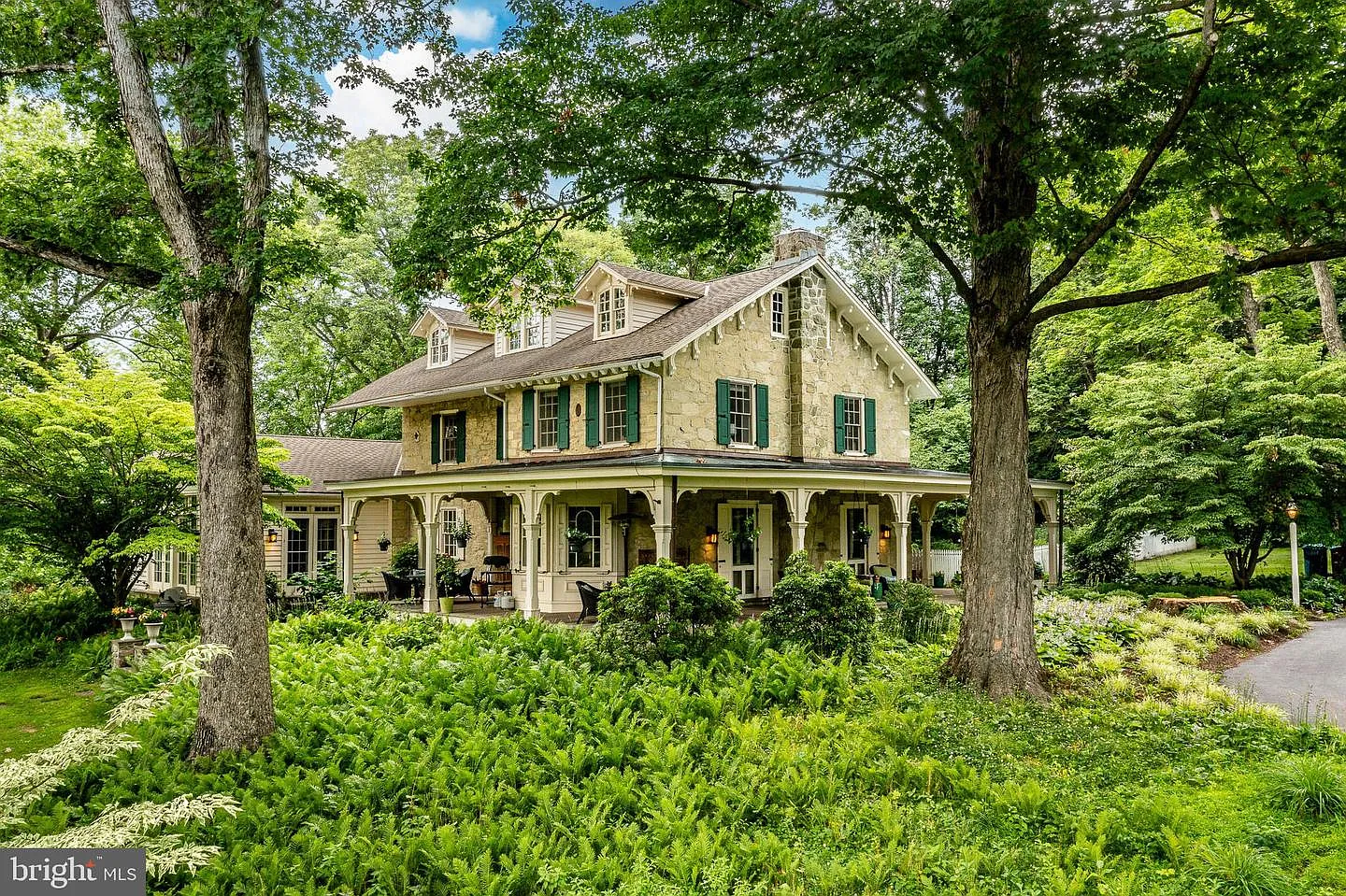
    A serene West Chester estate with a pool and two-story wine cellar

    The home sits on six acres.Virtual Vista | Courtesy of Holly Gross Group

    Built in the 1800s, this stone West Chester estate — known as Fernbank Farm, and already under contract — features a number of original architectural details. Among its most unique is a former ice house that’s been converted into a two-story wine cellar that can hold 1,500 bottles and also has a tasting room. Other features in the six-bedroom home include a library and sunroom, in addition to outdoor living spaces such as covered wraparound porches, gardens, and a heated pool.

    See more photos of the property here.

    Price: $3.3M | Size: 5,397 SF | Acreage: 6

    📈 Chester County market report

    • Median listing price: $599,900 (down $17,100 from June) 📉
    • Median sold price: $610,000 (down $18,500 from June) 📉
    • Median days on the market: 34 (up six days from June) 📈

    This Chester County market report is published on a monthly basis. Above is data for July from realtor.com.

    🗞️ What other Chester County residents are reading this week:

    By submitting your written, visual, and/or audio contributions, you agree to The Inquirer’s Terms of Use, including the grant of rights in Section 10.

    This suburban content is produced with support from the Leslie Miller and Richard Worley Foundation and The Lenfest Institute for Journalism. Editorial content is created independently of the project donors. Gifts to support The Inquirer’s high-impact journalism can be made at inquirer.com/donate. A list of Lenfest Institute donors can be found at lenfestinstitute.org/supporters.

  • Inside a couple’s ‘peaceful retreat’ of a home | Inquirer Cherry Hill

    Inside a couple’s ‘peaceful retreat’ of a home | Inquirer Cherry Hill

    Hey there, Cherry Hill! 👋

    Allow me to introduce myself: I’m Laura Smythe, your new newsletter writer. I’ve been moonlighting in your inbox here and there over the last couple months alongside my colleague Lisa Dukart, but it’s a treat to formally meet you. I’m excited to pick up the baton from Lisa, who will continue to write and edit other Inquirer Local newsletters.

    One thing about me — I love reader feedback. You can let us know what’s on your mind by taking our survey or emailing us at cherryhill@inquirer.com.

    Now, time for the news.

    After half a century living in Delran, a couple shares their journey of starting fresh in Cherry Hill, and offers a glimpse inside their two-bedroom, two-bathroom abode in an amenity-filled community. Also this week, we take a look at the two-year redevelopment a Cherry Hill firm will undertake for Battleship New Jersey, a local banana trend benefiting a nearby café, and another retailer opening at the mall this weekend.

    — Laura Smythe (cherryhill@inquirer.com)

    If someone forwarded you this email, sign up for free here.

    After 50 years in Delran, this couple downsized to a Cherry Hill apartment

    Family photos and souvenirs from decades of travels decorate Fred and Barbara Zucker’s two-bedroom, two-bathroom apartment. The 1,150-square-foot abode, which also includes a den and a west-facing balcony, is part of Cherry Hill’s sprawling Plaza Grande community.

    Downsizing from a home in Delran, the couple sold off the bulk of their 50-years’ accumulation of belongings, and took to Raymour & Flanigan to outfit their new digs.

    The complex also offers indoor and outdoor swimming pools, a sauna, and massage rooms. But Plaza Grande’s family-like feeling is their favorite amenity, the couple says. It’s not uncommon to find Barbara in the kitchen cooking up a treat for a neighbor in need of some TLC.

    “Our home is a peaceful retreat for us,” she said. “It is sort of like summer camp.”

    The Inquirer takes a closer look at what “another day in paradise” is like at Plaza Grande.

    💡 Community News

    • Cherry Hill-based architectural and engineering firm PS&S is leading a $24.25 million redevelopment project at Battleship New Jersey in neighboring Camden, which will include a new visitor center, double the parking, and a new private event space on the ship’s main deck, among other upgrades. The Inquirer’s Sarah Nicell has the details.
    • Expecting to drive on Kresson Road or Kenilworth Avenue this week? You might need to alter your routes as roadwork continues.
    • Timberland will host its grand opening event at the Cherry Hill Mall this weekend, including a ribbon cutting at the 1,800-square-foot store on Friday at 9:30 a.m. and giveaways for shoppers. It’s one of a number of new spots the mall is expected to add in the coming months.
    • Registration is now open for the township’s lineup of fall class offerings, from oil pastels and pre-ballet for kids to soapmaking and woodworking for adults.

    🍽️ On Our Plate

    • The banana trend taking over Philadelphia’s food scene is also ripe among sweet-treat seekers in Cherry Hill. A banana pudding matcha latte is among the top-selling beverages at Ensōra, the Barclay Farms Shopping Center café’s owner, Michele Lin, told us. She said they make a small batch of banana pudding every day — folding fresh whipped cream between the pudding and layering in Biscoff cookies — that consistently sells out. Ensōra also offers a cookie butter banana pudding version of its pandan mochi waffles, and Lin is considering bringing back a banana bread latte later this year, as customers still request the now-phased-out spring special.
    • Cherry Hill is among the New Jersey expansion plans for LaScala’s Fire, the semicasual Italian concept from restaurateur Rob LaScala.

    🎳 Things to Do

    📽️ Oscar Movie Marathon: The library’s screenings of Oscar-winning and -nominated films continues with Hamnet today, Sentimental Value tomorrow, and Sinners on Friday. ⏰ Wednesday, Aug. 19 through Friday, Aug. 21, 2 p.m. 💵 Free 📍 Cherry Hill Public Library

    🦞 Seafood Night: Indulge in a seafood buffet, complete with a raw bar. ⏰ Wednesday, Aug. 19, times vary 💵 $49 for children, $99 for adults 📍 Randall’s Restaurant

    🤠 Country Music Skate Night: Don your cowboy hat and head to the rink for a themed skate night. ⏰ Thursday, Aug. 20, 6-9 p.m. 💵 $6 admission 📍 Hot Wheelz

    🎒 Skool Days: Wear your college gear to this themed day party, complete with old-school tunes. ⏰ Saturday, Aug. 22, 2-7 p.m. 💵 $19.03 📍 Vera

    🏡 On the Market

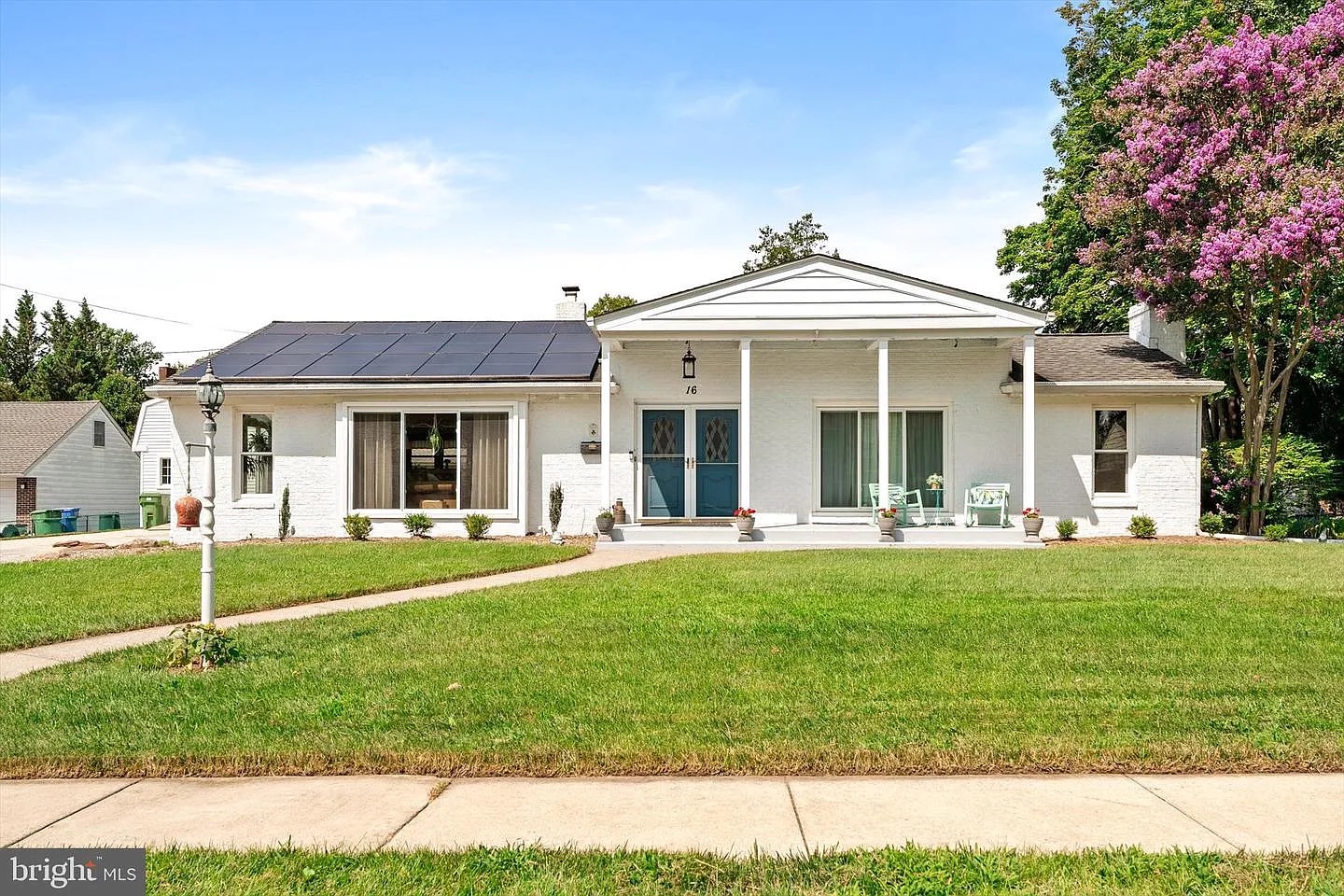
    A ranch with a sunroom and covered front porch

    16 Saint Martins Rd, Cherry Hill, NJ 08002
    16 Saint Martins Rd, Cherry Hill, NJ 08002@photos_by_daniel_james | REMAX Welcome Home

    This three-bedroom, three-bathroom home in the Colwick neighborhood includes a double-door main entrance, fireplace, new carpet, and bamboo flooring in the dining area. In ranch style, the home intertwines with the outdoors via a covered front porch and a sunroom, which opens onto a brick patio. The backyard also has a koi pond, gazebo, and hot tub.

    See more photos of the home here.

    Price: $529,745 | Size: 2,338 SF | Acreage: 0.36

    📈 Cherry Hill market report

    • Median listing price: $529,600 (up $4,600 from June) 📈
    • Median sold price: $540,000 (up $25,000 from June) 📈
    • Median days on the market: 34 (up three days from June) 📈

    This Cherry Hill market report is published on a monthly basis. Above is data for July from realtor.com.

    🗞️ What other Cherry Hill residents are reading this week:

    By submitting your written, visual, and/or audio contributions, you agree to The Inquirer’s Terms of Use, including the grant of rights in Section 10.

    This suburban content is produced with support from the Leslie Miller and Richard Worley Foundation and The Lenfest Institute for Journalism. Editorial content is created independently of the project donors. Gifts to support The Inquirer’s high-impact journalism can be made at inquirer.com/donate. A list of Lenfest Institute donors can be found at lenfestinstitute.org/supporters.