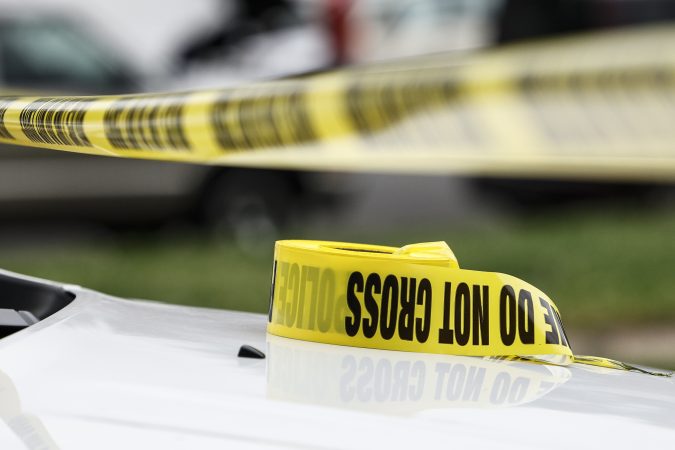
Local police and fire responded to a house explosion in Sellersville, Bucks County, on Monday that left the property in ruins and white debris scattered in a broad blast radius.
Hilltown Police Department, which serves Sellersville, said the reports of the explosion on Highview Road came in sometime around 9 a.m.
Hilltown Police Chief Christopher Engelhart told Fox29 that a contractor was on site at the time of the explosion and was taken to an area hospital for treatment. His injuries and condition, however, were not immediately clear, though Engelhart said the worker was expected to survive.
The blast resulted in a flood of support from neighboring fire and police departments.
Silverdale Volunteer Fire Company, Sellersville Fire Department, Hilltown Police, Hilltown Township Volunteer Fire Company, Souderton Fire Company, and Telford Fire Company were among the crews on site.
The source of the blast is under investigation.
Properties on Highview Road are spaced out with lots of green space between, and aerial footage from local television stations shows the debris was largely contained within the home’s property line.
The three-bedroom “contemporary designer farmhouse” sits on a three-acre lot, according to a previous real estate listing. The home garnered media coverage from publications such as Elle Decor and Philadelphia magazine in 2022 after interior designer Ghislaine Viñas listed the renovated property for sale.
The decision rejected a Republican-led attack on laws in more than half the states and the District of Columbia that permit mailed ballots to arrive and be counted some number of days after the election, provided they are postmarked by Election Day. The outcome spares officials the headache of changing their ballot rules just a few months before the 2026 midterm congressional elections.
In just over half those states, the more forgiving deadlines apply only to ballots cast by military and overseas voters.
The legal challenge was part of Trump’s broader attack on most mail balloting, which he has said breeds fraud despite strong evidence to the contrary and years of experience in numerous states. Trump has repeatedly claimed that his loss to Joe Biden in 2020 resulted from fraud even though more than 60 court decisions and his own attorney general said that argument had no merit.
The court heard arguments in March in a case from Mississippi pitting the state against Trump’s Republican administration and the Republican and Libertarian parties. At issue was whether federal law sets a single Election Day that requires ballots to be both cast by voters and received by state officials.
The federal appeals court in New Orleans struck down a Mississippi law allowing ballots to be counted if they arrive within five business days of the election and are postmarked by Election Day.
A 39-year-old man was stabbed during a fight on a SETPA bus in West Philadelphia early Monday, authorities said.
The incident began around 2:44 a.m. when two men got on theL1 Owl bus at 15th and Market Streets and began fighting, police said.
The bus driver flagged down a nearby Philadelphia police officer for assistance.
After an unsuccessful attempt to separate the men, the officer deployed a Taser on the 39-year-old man, whom police did not identify.
While taking him into custody, the officer saw that the man had been stabbed. He was taken to Jefferson Hospital, where he remained in stable condition late Monday morning.
Investigators are looking for a the second person they said was involved in the fight and fled the scene.
Officers recovered a knife. Police gave no motive for the stabbing which remains under investigation.
WASHINGTON — Americans have grown less proud of their country’s history or the way its democracy works over the past decade, according to a new AP-NORC poll.
Americans’ pride in the U.S. on several key attributes has dropped since 2017 — including the nation’s military and its political influence around the globe — according to the survey from the Associated Press-NORC Center for Public Affairs Research. This poll was conducted in April, as the United States and Iran fought over the Strait of Hormuz in a prolonged war that started with the U.S. and Israel launching strikes on Iran.
New Gallup polling also finds that only 53% of U.S. adults are “extremely” or “very” proud to be an American, the lowest reading in the trend dating back to 2001.
The findings point to a broad decline in patriotic sentiment over a tumultuous period that included most of President Donald Trump’s first term, the COVID-19 pandemic and rising inflation that contributed to a backlash against President Joe Biden. That timeframe also covers Trump’s return to the White House, where he’s taken more aggressive actions on immigration and issues abroad.
Much of the falling positivity comes from Democrats, who have become increasingly disenchanted with the country since Trump’s first term.
At the same time, most U.S. adults say that being an American is “extremely” or “very” important to their identity, highlighting an enduring connection, even as some become increasingly critical of the country’s past or the government’s current actions.
American pride declines on the armed forces, democracy
Americans’ pride in the way democracy works in the U.S. has declined 14 percentage points, falling from 42% in February 2017 to 28% now.
In addition, Americans’ pride in their armed forces has dropped 19 percentage points since 2017, and pride in the U.S.’s history has declined 14 percentage points. In each case, the drop is largely driven by Democrats, with some movement among independents as well.
Karla Galdamez — a 48-year-old Democrat who used to teach U.S. history — believes America has regressed under the Trump administration. While the Californian is not proud of Trump, she is pleased with how far the U.S. has come in 250 years.
“It’s a country that really wanted to be different and really wanted to be better,” she said. ”Despite some of the very ugly history that we have of segregation and slavery … if you look at the trajectory of the last 250 years, we’ve done nothing but get better and move toward a more egalitarian nation.”
Only 14% of Democrats and 28% of independents say they are “extremely” proud to be an American, according to Gallup’s new poll, compared with 70% of Republicans.
The AP-NORC poll found that Republicans are especially likely to be proud of the nation’s armed forces. About 9 in 10 Republicans say the military makes them “extremely” or “very” proud, compared with about 6 in 10 U.S. adults.
Samantha Fulks, a 40-year-old in San Antonio, Texas, says she’s proud to be an American and doesn’t hide it. The Texas Republican showcases that pride with an American flag in her front yard — as well as Trump flags in the back yard — and she plans to wear red, white, and blue on the Fourth of July. Fulks comes from a military family, and while she believes the country’s involvement in Iran is unnecessary, she remains a proud supporter of the military.
“I still support our troops no matter what they do,” Fulks said.
Being an American matters more for identity among Republicans, older adults
Matt Stafford, a 39-year-old in Massachusetts, is proud of being an American, even if the U.S. political system frustrates him.
He has a bald eagle tattooed on his back to represent the United States, its freedoms, and “all the things we’re supposed to stand for as a country.” But despite that national pride, he often finds himself frustrated by politicians on both sides. Stafford — a centrist who identifies as “politically homeless” — wants Democrats and Republicans to come together to look out for their constituents in middle America.
“I love America, but our biggest problem is how we’re pushing both sides — like the left and the right — to the extremes,” he said.
For many Americans, their partisanship is often intertwined with their national identity. The poll finds that Republicans are much likelier than Democrats or independents to say being an American is “extremely” or “very” important to their personal identity.
Younger people are also much less likely than older people to say being an American is highly important to their personal identity. About three-quarters of Americans ages 60 and older say being an American is highly important to them, compared with only about one-third of U.S. adults under 30.
Race or ethnicity matters more to Black Americans
The AP-NORC survey found that the vast majority of Black Americans — 73% — say their race or ethnicity is “extremely” or “very” important to how they see themselves, higher than the share that say that about being an American.
Vincent Harris, a 60-year-old in California, says his identity as a Black man rises above other attributes for him because of how Black men are treated in America.
“A lot of people are scared of Black men just because we are Black and we are male. And that’s crazy,” Harris said. “People don’t even take you for who you are as a person; they just look at your race.”
About half of Hispanic Americans say their race or ethnicity is highly important to them, compared with 22% of white Americans.
Black and Hispanic adults are also more likely than white adults to say their family’s ancestry or country of origin is highly important to their personal identity.
Harris, who identifies as a gay man, says being an American is “a wonderful thing” because of the freedoms that Americans have, despite the obstacles he’s had to overcome.
“It’s great to be an American — regardless of race, gender, sexual orientation, religion, or whatever. As long as you have that freedom of choice as an American, that’s a great thing,” Harris said. “Right now, I wouldn’t live in any other country in the world. I’m here. I love it.”
The 2026 FIFA World Cup — which includes six games in Philadelphia — has taken the U.S. by storm. The excitement generated by the tournament reflects how, in contemporary American society, soccer has become a feature of everyday life.
Parents drive their kids to and from soccer practices and fork out large sums of money for travel games. At the professional level, Major League Soccer (MLS) and the National Women’s Soccer League (NWSL) are thriving. The U.S. women’s national team has won a record five Olympic gold medals and four World Cup titles. Even European soccer has taken off with American fans: this year, the English Premier League (EPL) season opener between Chelsea and Manchester City drew close to 2 million viewers in the U.S.
The meteoric rise of soccer in the U.S., however, is a recent phenomenon. While Americans have played the game for centuries, it struggled to take off in the U.S. A number of factors drove soccer’s struggle to catch on, including ideas about masculinity and Americanness, a lack of infrastructure and the failure to build robust college soccer programs. Yet, in the 21st century, immigration, demographic shifts, technological changes and the rapid growth of youth soccer have transformed the landscape. Soccer has moved from a fringe and unpopular sport to become one of the most popular sports in America — even ahead of baseball according to one poll.
In 1869,Rutgers beat Princeton 6-4 in the first American collegiate soccer game. By the early 20th century, teams like Fall River Football Club had become established enough to play against European teams including the Glasgow Rangers and Sparta Prague.
Bethlehem Steel, based in Bethlehem Pa., was one of the most dominant teams in the early 20th century. It built what was widely regarded as the first soccer specific stadium in the U.S. and went on to win a record five U.S. Open Cups.
Although the game seemed to be taking root — especially after the formation of the American Soccer League (ASL) in 1921 — it was predominately an amateur sport, even as professional soccer took off in Europe.
The ASL hit rough shoals in its earliest days: only three of the initial clubs returned for a second season. Financial struggles were quite common in the league, and crowds were sparse.
In the early 20th century, the near absence of soccer on American college campuses entrenched its status as a fringe sport. Other sports like baseball and basketball were taking off on campuses at the time, a signal of what sports young people were interested in playing. The problem was compounded by the lack of a national administrative structure, which ensured that almost no organized soccer took place beyond high school.
Soccer also suffered from the lack of physical infrastructure. While sports like baseball and basketball developed at the professional level in the U.S. — including the construction of stadiums and arenas — soccer was forced to rely on baseball stadiums for games. For instance, Grand Avenue Baseball Ground in St. Louis, hosted four U.S Open Cups between 1929 and 1948 while also serving several Major League Baseball teams. Soccer in 20th century America simply wasn’t a robust enough business to justify the construction of multimillion-dollar stadiums.
These challenges and tribulations plaguing soccer had a significant impact on sport’s growth in the U.S.
At the college level, the game remained on the periphery of the American sports landscape. In 1939, only eight universities and colleges had men’s soccer teams and there were no interregional matches or postseason tournaments. It would take another 20 years before the National Collegiate Athletic Association sponsored a postseason soccer championship.
Meanwhile, American football remained dominant on college campuses. Commenting in a New York Times article on soccer, an official from an unnamed American university argued that it was a good sport and must be played “in addition to football but should not supplant the latter game.”
Soccer was stuck in neutral, even after two rival professional leagues, the National Professional Soccer League and the United Soccer Association, merged to form the North American Soccer League (NASL) in 1968.
In 1975, the arrival of Edson Arantes do Nascimento — better known as Pelé — was supposed to change everything. Following sustained lobbying from New York Cosmos General Manager Clive Toye and intervention by U.S. Secretary of State Henry Kissinger, the superstar agreed to bring his talents to the U.S.
Hopes, however, for a soccer revolution never truly materialized. While Pelé drew huge crowds to his games, his proclamation that soccer had “finally arrived in the United States” proved to be only hype. A decade after his heralded arrival, the NASL actually collapsed due to ballooning costs — leaving the U.S. without any serious professional league for several years.
Made By History sponsors. FOR USE ON MADE BY HISTORY STORIES ONLY.Inquirer Staff
No one was quite sure precisely why the most popular global sport couldn’t break through in the U.S. Some observers wondered if the problem was that the sport simply wasn’t American.
The game ran afoul of American ideas of masculinity, which were primarily associated with aggression and capacity for violence, both of which were celebrated aspects of football. Dick Young, the former sports columnist for the New York Daily News once described soccer as “a game for commie pansies.”
While sports like baseball and basketball weren’t as violent as football, they had the built in infrastructure — stadiums, robust college programs, big money television deals — and cultural cachet from a century of being in the top tier of American sports. Soccer lacked these advantages, and its inability to overcome the deep seated stigmas about the game kept the sport on the margins of the American sports landscape throughout the late 20th century.
In the 21st century however, everything has shifted. The structural barriers holding soccer back began to erode, starting with youth leagues. Youth soccer grew in prominence, including the development of travel leagues. This growth, in turn, produced a pipeline of talent for professional soccer teams. Highly skilled American players like Christian Pulisic and Weston McKennie have become global superstars.
Major League Soccer, which launched in 1993 as part of the U.S. bid for the 1994 World Cup, was initially treated as a retirement league for star players with declining skills. Yet, the emergence of this homegrown talent pipeline created a pool of exciting young players for MLS teams.
Immigration has also bolstered soccer, both in terms of generating interest in the MLS and in expanding the talent pool. Reforms to immigration policy in 1965 created opportunities and demographic shifts that peaked in the early 2000s. Scholar Maurico Espinoza-Quesada argues that the majority of immigrants coming to the U.S. in the 21st century were primarily from “soccer-crazed countries in Latin America, Europe and Africa.”
Tapiwa Gumunyu, a Zimbabwean immigrant living in Ohio, has attended several Columbus Crew matches with his family. Such matches have become social events for the relatively small Zimbabwean community living between Ohio and Kentucky. Similar trends can also be observed among Latin American communities that have brought their global soccer zeal to different cities across the US.
MLS clubs have recognized the potential business opportunities offered by immigrant communities. The Seattle Sounders, for one, have tried to grow their fanbase by broadcasting their games in Spanish. Ric Jensen, a scholar of sport fandom and management, argues that MLS clubs regularly recruit “well-known Hispanic players to maximize sponsorship dollars” and expand their fanbase among Hispanics.
Looking at the U.S. men’s national team, it’s also hard to ignore the impact that immigrants and their descendants have had on the growth of soccer in America. The U.S. has benefited immensely from players who would otherwise play for different countries altogether. Folarin Balogun could have played for England and Nigeria. Haji Wright was eligible to play for Ghana but like Balogun, chose to play for the U.S.
The popularity of the game among immigrant communities has undoubtedly played a major role in elevating the MLS and injecting a generation of talented players and passionate fans into the local game.
The popularity of soccer in the U.S. has also extended to foreign leagues — and technology has played a role in this shift. The internet and social media have created an interconnected world that allows fans to engage in rivalries and subcultures across previously unprecedented distances. There is now a generation of Americans who passionately identify as die hard “Culers” (Barcelona fans) or “Gooners” (Arsenal fans) despite never having set foot in Spain or England.
One recent poll even suggested that soccer had surpassed baseball to become the third most popular sport in the U.S. Given how quickly soccer has grown, it seems possible that after decades of false starts, the sport may finally soon come to rival football and basketball atop the American sports landscape.
Abraham Seda is an assistant professor of history at Lafayette College. He is currently writing a book on boxing and colonialism in Rhodesia.
Made by History takes readers beyond the headlines with articles written and edited by professional historians. Opinions expressed do not necessarily reflect the views of The Inquirer.
The push to lift Collingswood’s ban of chickens has been an ongoing effort for years.
But after new leadership joined and reshuffled the board of commissioners, a small group of residents thinks this could be their year to finally get the green light to have backyard chickens.
Advocates have been showing up at board meetings lately. And most recently, they provided proposed language for the board to use in a future ordinance to support it during its last working meeting earlier this month.
In the past, commissioner and former Mayor Jim Maley has said he would not support a backyard chicken pilot program. Meanwhile, Deputy Mayor Amy Henderson Riley said she suspects this effort has better chances than the ones before.
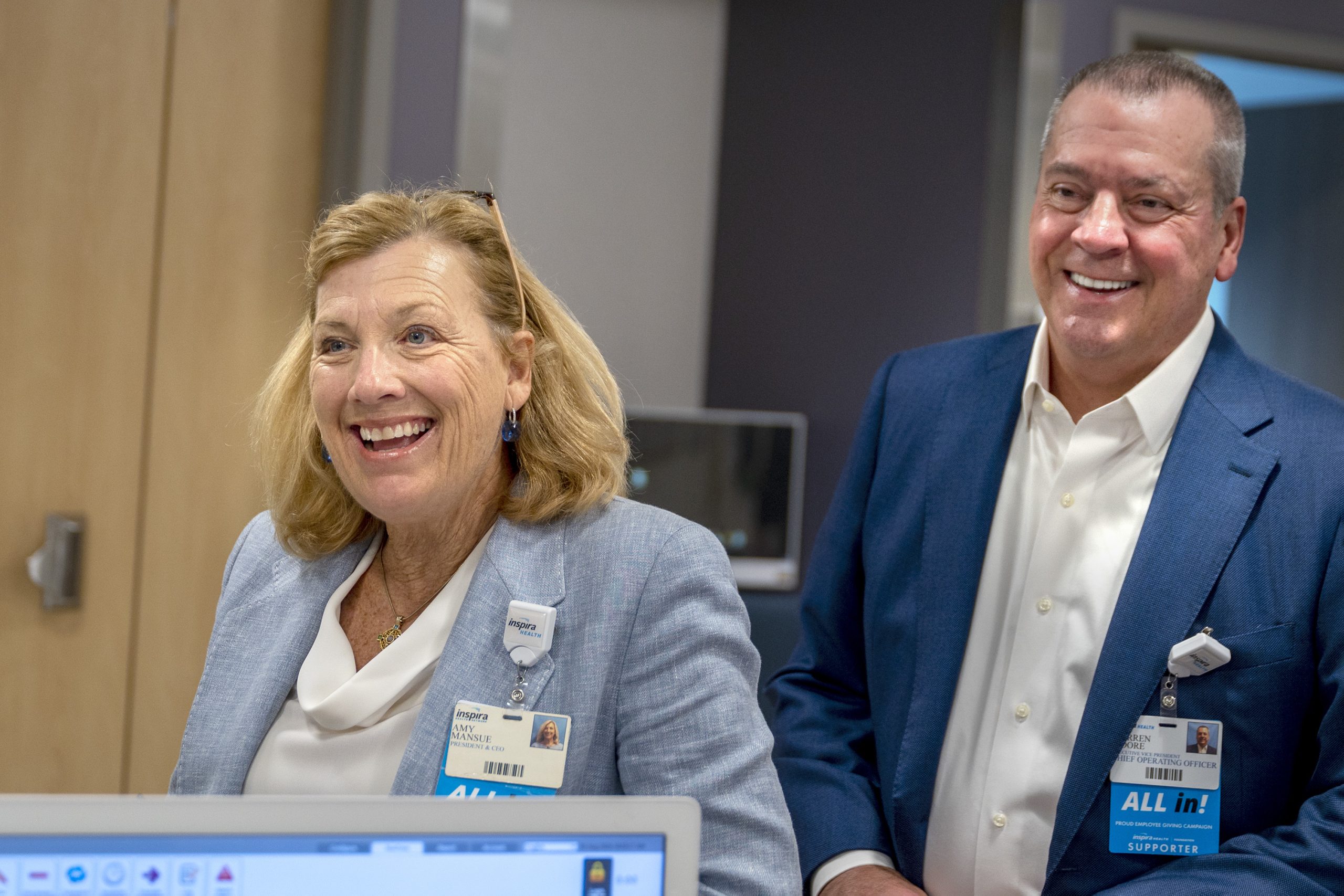
During a panel discussion in Cherry Hill last week, Inspira Health Network CEO Amy Mansue said New Jersey hospitals could lose about $3.6 billion from Medicaid changes through 2032.
According to Mansue, these changes will force hospitals to alter the way they operate to bring expenses in line.
That high-figure estimate does not include the costs that hospitals absorb from the growing number of uninsured people who show up to emergency departments because they don’t have the money for a doctor’s visit.
Almost 69,000 people’s individual coverage from New Jersey’s Affordable Care Act marketplace have already lapsed, and thousands more are expected to lose their Medicaid coverage when new requirements go into effect next year.
🎤 Allow me to pass the mic to South Jersey politics reporter Aliya Schneider.
Gov. Mikie Sherrill visited the SoccerFest26 fan fest at the Wiggins Waterfront in Camden on Friday afternoon.
“These are kind of heavy times, they’re kind of dark times; there’s a lot of conflict going on,” Sherrill said in brief remarks on stage in front of a scarce crowd during her Friday afternoon visit. “But what I love about soccer is, it doesn’t matter where you’re from, doesn’t matter who you voted for, it doesn’t matter who you pray to. We all come together as a world.”
Officials credited Sherrill for including South Jersey in World Cup festivities. Former Gov. Phil Murphy’s administration planned to hold a large fan fest in North Jersey but Sherrill’s administration canceled that plan and instead organized regional celebrations.
Her Camden visit came just days before the state budget deadline on Tuesday. The governor agreed on a budget framework with legislative leaders a week before the deadline, but the details remained unclear.
“I’m getting a little more concerned,” she told reporters on Friday. “And so I know they [legislators] are hard at work and I’m going to keep reminding them of the constitutional deadline.”
A 50-year-old man was shot and killed Thursday night in Camden. It’s the city’s third fatal shooting victim this month after a homicide-free summer last year.
Members of Rock-Life Jeepers organized a nearly two-mile Jeep parade Friday night to support Xavier Taylor, the 12-year-old boy from Maple Shade who remains in critical condition after being struck by a baseball. The parade began in Pyne Poynt Park in Camden and ended at Cooper University Hospital where Xavier is receiving care, 6abc reports.
Pennsylvania Attorney General Dave Sunday on Friday announced a lawsuit against a wedding photographer who allegedly scammed customers for at least $75,000. The photographer was the subject of so many complaints that couples in Pennsylvania and New Jersey made their own Facebook group.
Thirsty Turtle Tavern will open its doors today in Barrington at the former location of Chuck Lager America’s Tavern, according to South Jersey Food Scene.
This story from Friday was missing an active link, so here it is again: The latest edition of The Inquirer’s Price Point shows what kind of house you can buy for $405,000 in Magnolia.
The players amble into the auditorium on acloudy May morning to run through their schemes and formations and make last-minute adjustments to the roster. Some are already in uniform — waistcoats and breeches — fueling up on Wawa coffee and bagels. Others scroll aimlessly on iPhones or finish off their cigarettes outside the Free Quaker Meeting House near Independence Hall. They discuss contingencies, ready their gear, and buckle their latchet shoes tight.
“Get out there and have fun,” their coach, Historic Philadelphia’s director of storytelling Johanna Dunphy, says as she sends her proud-chested team of historical reenactors off for their preseason opener.
This is the start of the team’s Super Bowl run: the lead-up to the nation’s Semiquincentennial. The cast of Ben Franklins, John Adamses, and Betsy Rosses — actors who have spent months and uprooted their lives to learn about and live as colonial America’s key characters — will be at the front lines of the 250th birthday celebrations, which began with the cast’s opening day on May 23 and reach a fever pitch on July 4. They will become de facto historians, guides, entertainers, and ushers to an expected crush of tourists, all while anchoring how the country’s earliest days are memorialized and whose stories get to be told.
“Fly!” Dunphy says with gusto as the performers shuffle out of the modest redbrick building.
This set of actors is part of Historic Philadelphia’s Once Upon a Nation program — a series of performances staged throughout the summer and beyond in Philadelphia’s historic district and at Valley Forge. It’s Once Upon a Nation’s 21st season, but this year is expected to be one of its biggest ever, with the most actors, plays, scripts, and events.
And, with tourism agencies expecting this summer’s events to draw upward of one million visitors, it’s almost certain to be the program’s largest audience.
“Philadelphia is ready for you,” Amy Needle, Historic Philadelphia CEO, told the players on the last day of the preseason. “And I know you’re ready for them.”
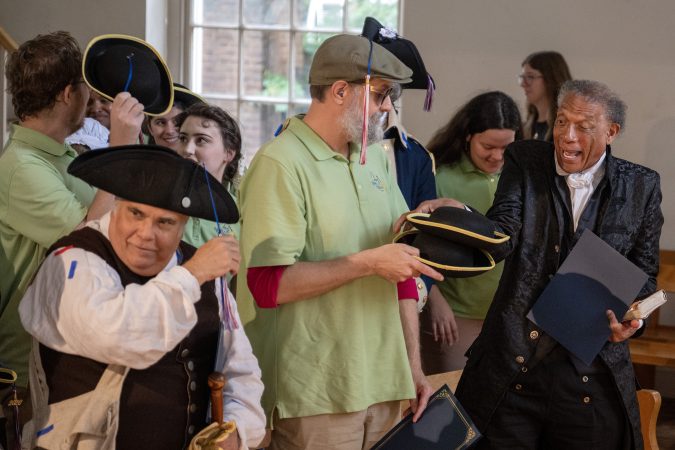
Shecky Perlman as Ben Franklin, and other historical reenactors receive their diplomas on May 21, 2026, after weeks of intensive, immersive training at the Benstitute. Tom Gralish / Staff Photographer
Fourmonths to game day
Actors, mostly local, file in and out of Jason Greenplate’s office on a chilly January afternoon. Greenplate, program manager for Once Upon a Nation, and his colleagues are seeking the strongest possible players who have the passion, the look, and the improvisational skills to take on the characters and become “history makers” — what Historic Philadelphia calls its reenactors.It’s essential for these coaches to choose players who are not only capable of taking on these roles but are also willing to challenge their own understanding of history.
Spencer Salusky, a 23-year-old fresh William & Mary graduate, walks through the door.
As a draft prospect, Salusky is an impressive pick. He can execute even the most complex of plays (tricky lines and blocking), and his stats (body measurements and head shape) are optimal.
“He kind of looks like John Adams,” Greenplate thinks.
After conferring with his peers, Greenplate chooses Salusky tobecome Once Upon a Nation’s next John Adams, and, one by one, 19 more actors are cast as history makers and storytellers, those who are stationed at the city’s historic sitesin green polos to offer context to visitors. They join the existing 30 company members returning from prior years.
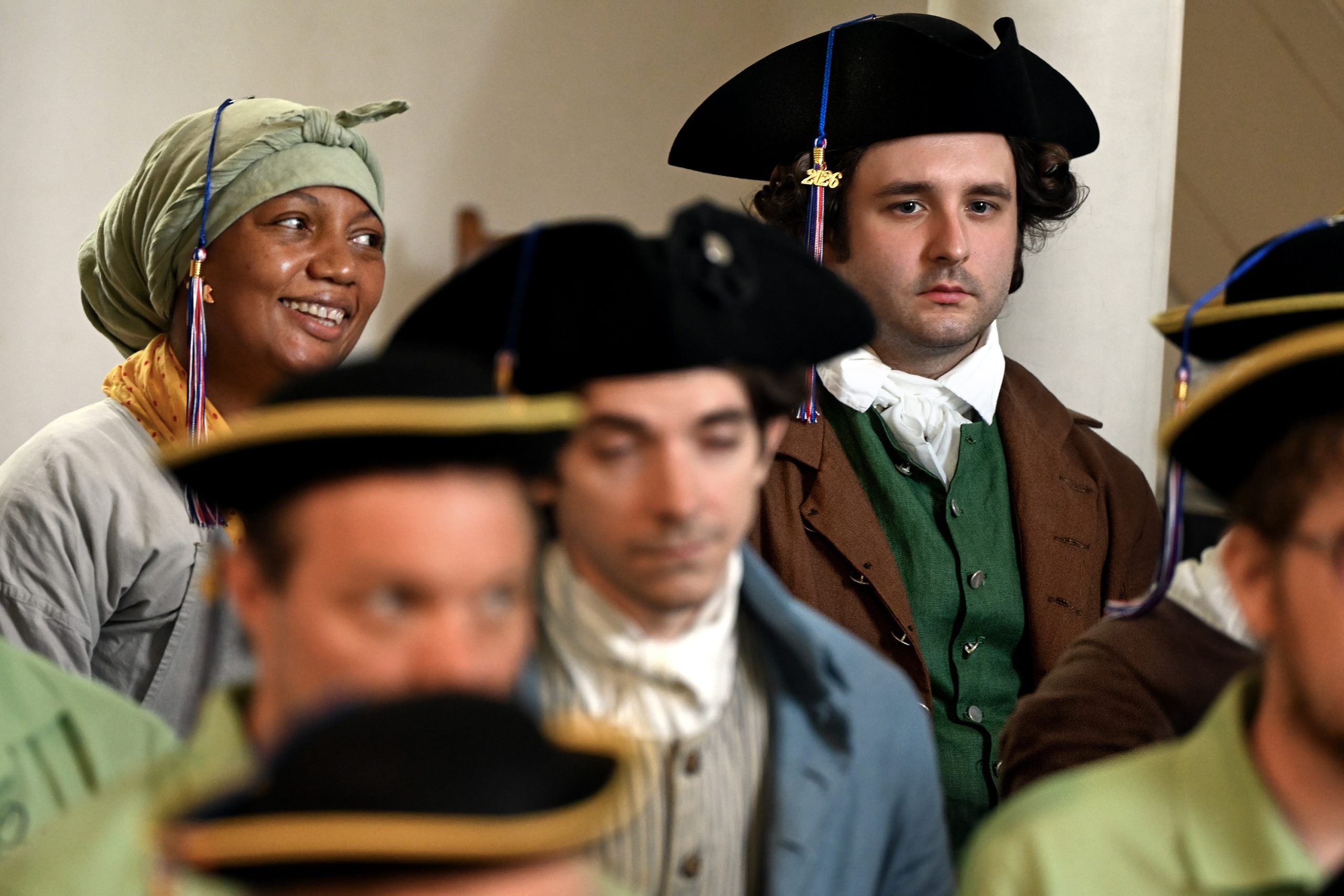
Courtney Mitchell, who portrays Margaret Woodby (left), and Spencer Salusky (right) as John Adams, join other historical reenactors at graduation on May 21, 2026, after weeks of intensive, immersive training at the Benstitute.Tom Gralish / Staff Photographer
Three months to game day
The actors soon begin their training. For Salusky, that looks like receiving a large packet full of biographical information about John Adams — where he was born, his wife’s name, and his perspective on slavery — from Doug Thomas, director of history makers.
Thomas is a player-coach, a star in his own right who can seamlessly transition to the coaches’ box. Like Deion “Prime Time” Sanders, Thomas is a Swiss Army knife on the field, having played every position in the game of historical reenacting, from William Penn and Patrick Henry to Francis Scott Key, and has been doing the work for nearly 30 years. But what makes him truly elite is his position as Mount Vernon’s George Washington.
Out in the field, the players might be blindsided by a granular question from a tourist, an offensive remark from a passerby, or incessant badgering from a child. On the stage — where the history makers also perform a series of scripted plays — they must be prepared to embrace their characters’ conflicting motivations, shifting attitudes on political issues, and complex interpersonal relationships.
Thomas is equipped to help them tackle it all.
He guides them in studying their characters, trains them on redirecting conversations with visitors toward topics they’re knowledgeable about, and teaches them improvisational techniques. He also prepares them to embody the voice, posture, and behavior of historical figures.
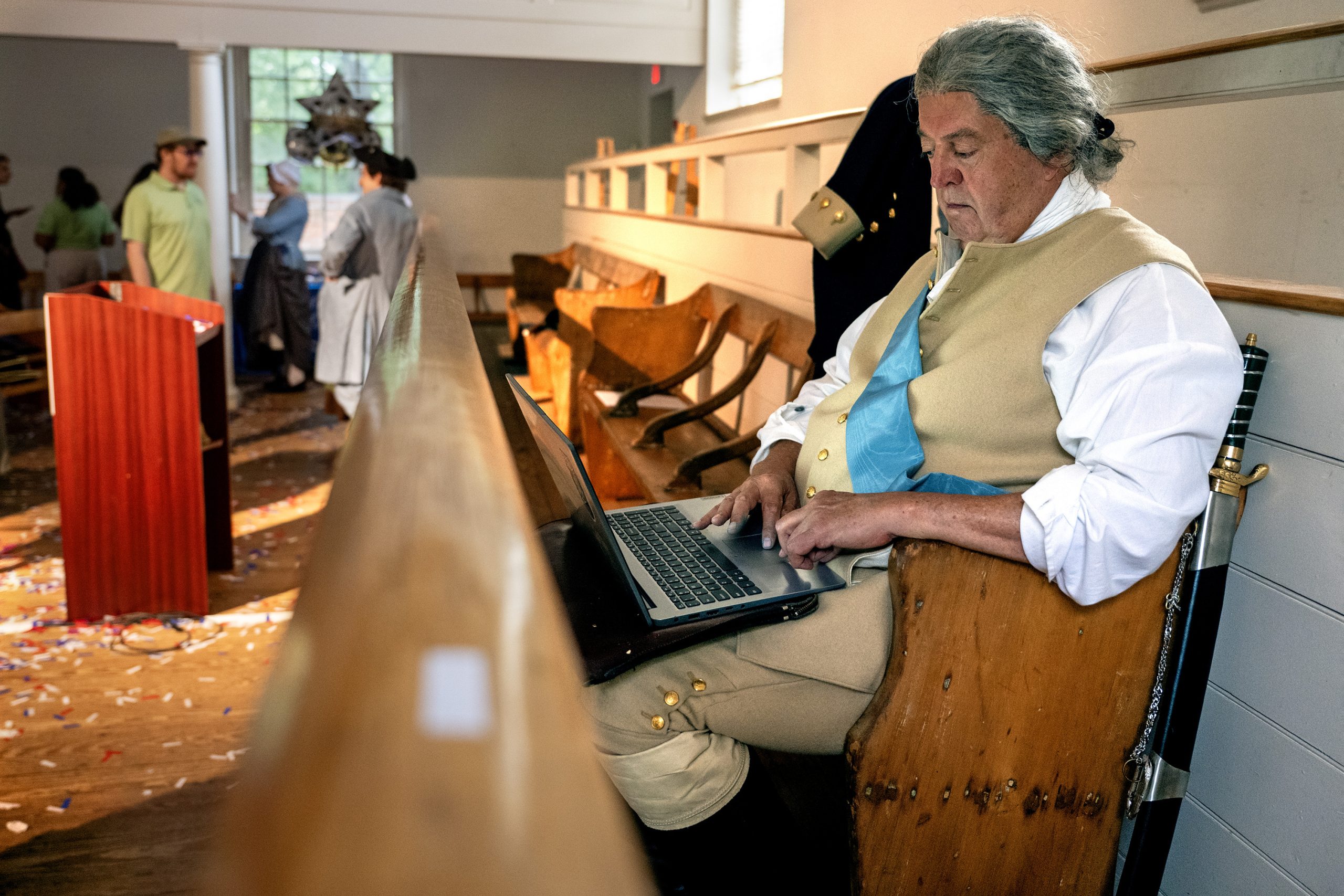
Jim Fryer as George Washington checks in on his laptop on May 21, 2026, after the graduation of dozens of historical reenactors after weeks of intensive, immersive training at the Benstitute.Tom Gralish / Staff Photographer
Three days to game day
“Adams,” Thomas says, summoning Salusky during a rehearsal for Cocktails and Congress, a marquee performance in the Once Upon a Nation repertoire.
On a scorching 95-degree afternoon that foreshadows what the players can expect during the steamy home games to come, Thomas scans the script, glasses poised atop silky black hair that grazes his shoulders. He directs Salusky’s attention to a moment in the dialogue: “Slavery is like a great cancer.”
He cautions the actor to be careful with how he utters that line. Adams is torn about slavery at this point in his life, Thomas explains.
“He doesn’t like it, he doesn’t support it, but also he does realize very practically what eliminating slavery would do to the economy,” Thomas tells Salusky.
Salusky contemplates the note, sitting on a Meeting House pew with a mechanical pencil tucked behind his ear.
“Adams is evolving,” Thomas tells him. But “he’s a practical man.”
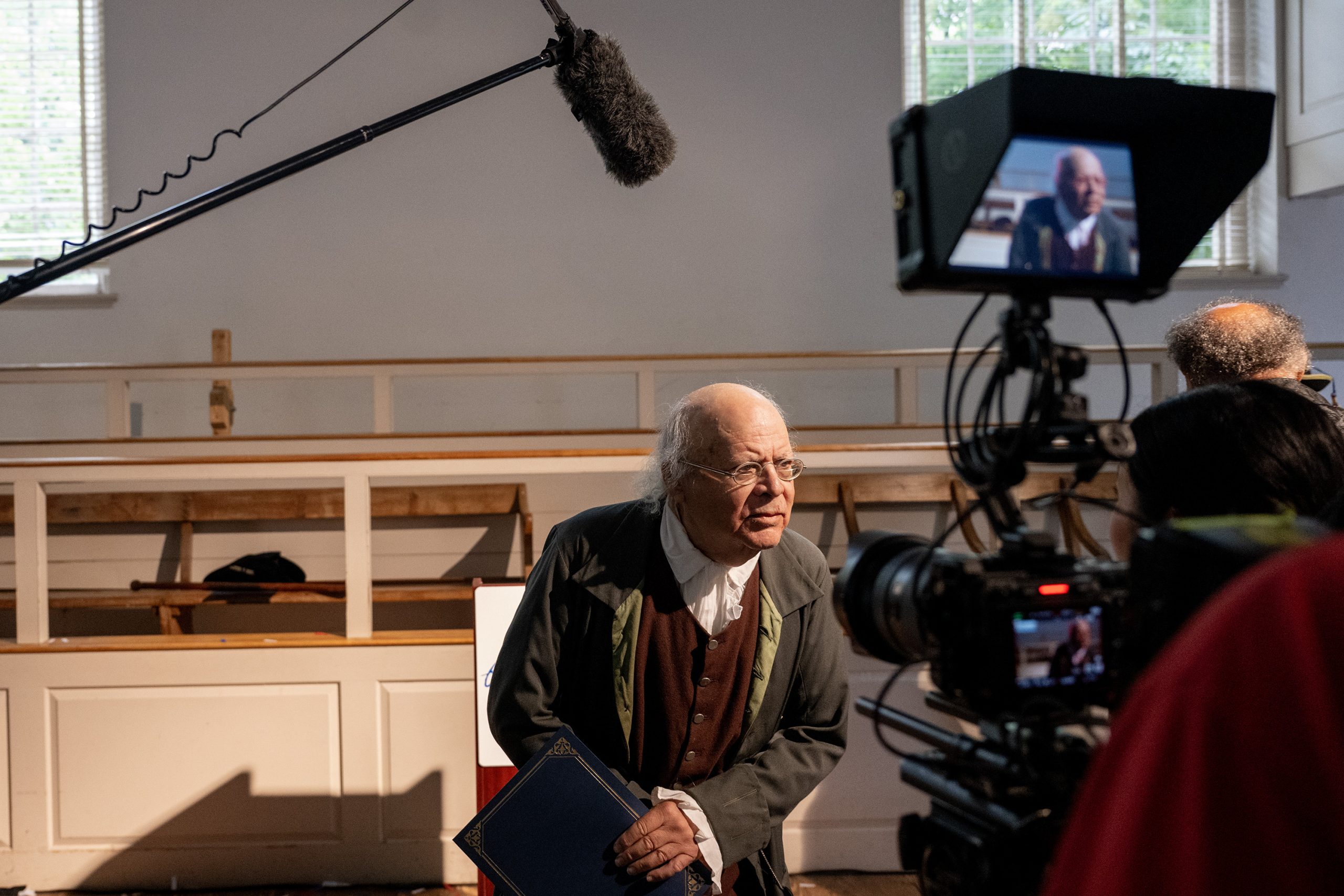
Shecky Perlman as Ben Franklin, ready for his close-up, on May 21, 2026, as he is interviewed by a documentary film crew, as dozens of historical reenactors graduate after weeks of intensive, immersive training at the Benstitute. Tom Gralish / Staff Photographer
Two days to game day
Even with centuries of primary and secondary sources, and extensive research, there are still gaps in what’s known about 18th-century American life that the actors and program coordinators must contend with. There’s a trove of information on John Adams, for example, but the documented lives of women and people of color are far less complete, like that of Hannah Till, an enslaved cook for George Washington at Valley Forge, who purchased her freedom. What’s known about Till is often centered on her enslavers.
West Philadelphia actor Miranda Thompson, who portrays Till as well as Sarah, a fictional composite character in Cocktails and Congress, relies on more general information about how women of color lived during the colonial era to inform her performance. “You just want to get it right,” Thompson, 43, says. “You want to give truth to who that person was. … I feel like if I’m grounded and honest within that interpretation, I think that I’ve done it justice.”
For historian Sandra Mackenzie Lloyd, who authored many of the Once Upon a Nation scripts and founded the Benstitute — the immersive training program the actors undergo — the American story is about “more than the dead white dudes.”
“It’s not a straight line,” Lloyd says. “We are people who have been through many difficult periods and ups, downs. This is a country that was created by people from many places with different beliefs, and that’s historic, and it’s contemporary.”
Organizers were intentional about the stories and figures they chose to platform this summer, centering diverse and layered voices in the narrative of the nation’s founding, including those of Black Americans whose stories have been omitted in the retellings of the story of 1776.
“Our history is being erased, voting rights [are being erased], certain books are banned,” Thompson says. “Representation matters … to know that we were there, and we played an important role.”
Prominently featuring Black history during the 250th, she says, is also an opportunity to dismantle racist, archaic stereotypes about enslaved people through authentic storytelling and connection.
“You can change a person’s mind,” Thompson says. “We’re human, we can always change our minds.”
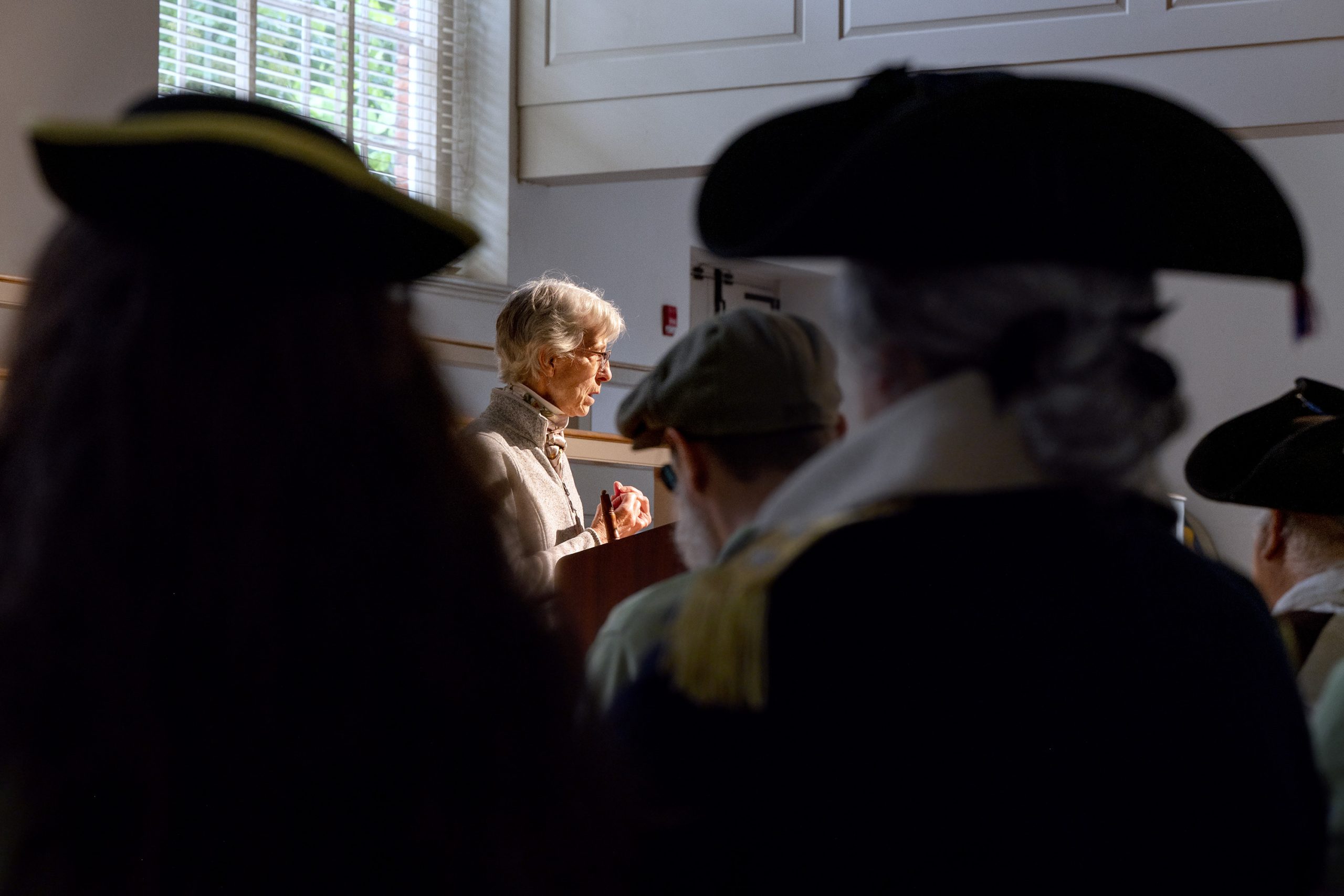
Historian Sandra Mackenzie Lloyd, founder of the Benstitute, delivers the commencement address on May 21, 2026, as dozens of historical reenactors graduate after weeks of intensive, immersive training.Tom Gralish / Staff Photographer
One day to game day
Preparations for the reenactors include not only character work, but also tourism and hospitality training. They learn how to guide someone to the best cheesesteak or nearest toilet while staying in character and using period-appropriate vernacular. The actors also learn how to beat the heat in wool frocks and petticoats and stay safe.
“Make sure to hydrate, hydrate, hydrate,” Dunphy, the storytelling director, tells her team during a morning gathering at the Meeting House before they hit the streets in costume, and a set of volunteer fake tourists heads out to test the reenactors’ skills before they’re faced with real tourists.
She points them to a packet in their supply bags full of powder to pour into their water for extra hydration.
“Drink this,” she instructs them.
Most importantly, Dunphy reminds both the history makers and the storytellers what to do if they’re out in the field and feeling unsafe.
“History makers, please remember this: If a storyteller says, ‘Have you seen John Adams?’ Don’t be cute. That is a plea for help; they need you to stay with them. It is not a joke. They need you to stay,” she says. “Things can turn on a dime.”
And, as this is live performance, things often don’t go according to plan.
During an April news conference at which a Betsy Ross and a Benjamin Franklin from the company stood onstage beside Gov. Josh Shapiro, a giant poster reading “America 250 PA” fell forward, scraping Franklin’s behind.
Carol Spacht, the Betsy Ross at the event, acted quickly.
“This is such an exciting announcement that the world is falling apart over it,” she exclaimed after the poster came down, gesticulating with a scroll clasped in her hand before turning to the Benjamin Franklin reenactor, Bill Robling.
“Quite all right, Dr. Franklin?” she asked as he nodded. “We’re sturdy at our age. 250 years does that.”
At a recent event at Reading Terminal Market, Salusky, as John Adams, had to navigate how to handle tourists approaching him, thinking he was Benjamin Franklin.
“As John Adams, how do I react to people thinking I’m Ben Franklin. Well, he was a mentor of his. He really admired him, found him annoying, but would still be a little flattered,” Salusky says. “It’s kind of just like in-the-moment problem-solving.”
Over the course of their four months of training, the actors finally reach a place of feeling ready for anything … mostly.
“Speaking in 18th-century tongue continuously, I am nervous about that,” Thompson says. “I want to portray it real.”
Cause for celebration
Before the actors are on their own on the Philly streets, they and their mentors celebrate the completion of their Benstitute training with a graduation ceremony at the Free Quaker Meeting House.
Graduates file in, some in polos and slacks and some in costume, all wearing red, white, and blue tassels dangling from the center of their mob caps and other historical hats. They sit in the pews, players awaiting the game-time whistle, as their coaches offer them final words of encouragement before they put their drills to the test and tackle the real world, beginning with their season’s opening day — their fervor not letting up until they run through the proverbial tunnel onto the championship field for July 4.
“History is not just about buildings, artifacts, and famous moments. It is about people — their choices, their struggles, their disagreements, their courage, their hopes for the future,” says Steven Sims, superintendent of Independence National Historical Park. “Long after visitors leave Philadelphia, they may not remember every date they heard or every building they toured, but many will remember how someone made them feel connected to history. Many will remember you.”
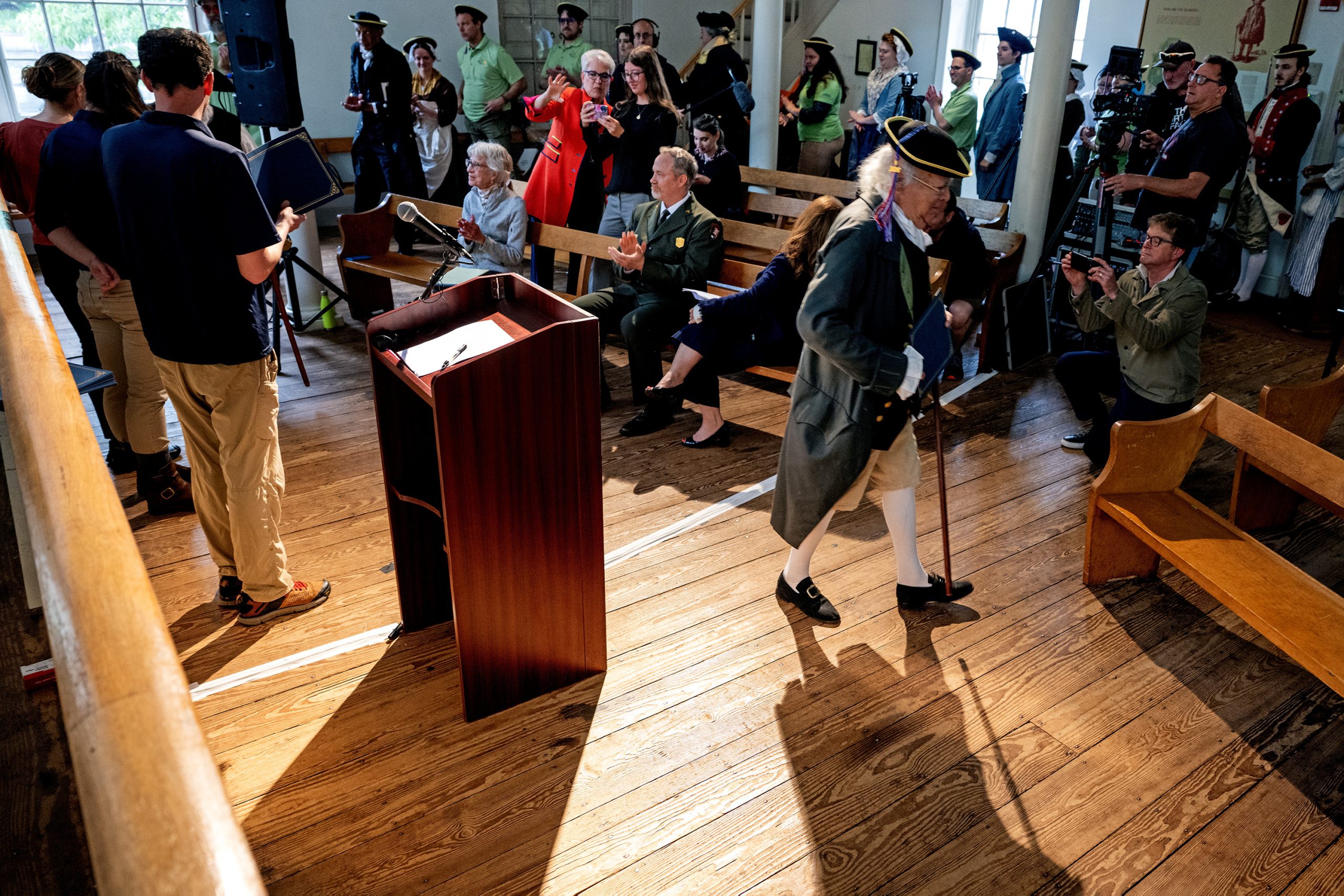
One by one, the reenactors and storytellers cross the stage, graciously accept their diplomas, smile for photos, and return to their seats.
“Class of 2026, please stand up,” says Amy Needle, the Historic Philadelphia CEO.“Change your tassels. Congratulations! George Washington?”
“Class of 2026,” aWashington reenactor calls. “Hip hip.”
“Huzzah,” they respond.
“Hip hip,” he repeats.
“Huzzah!” they conclude as audience members deploy tiny silver confetti cannons and red, white, and blue rain down upon them.
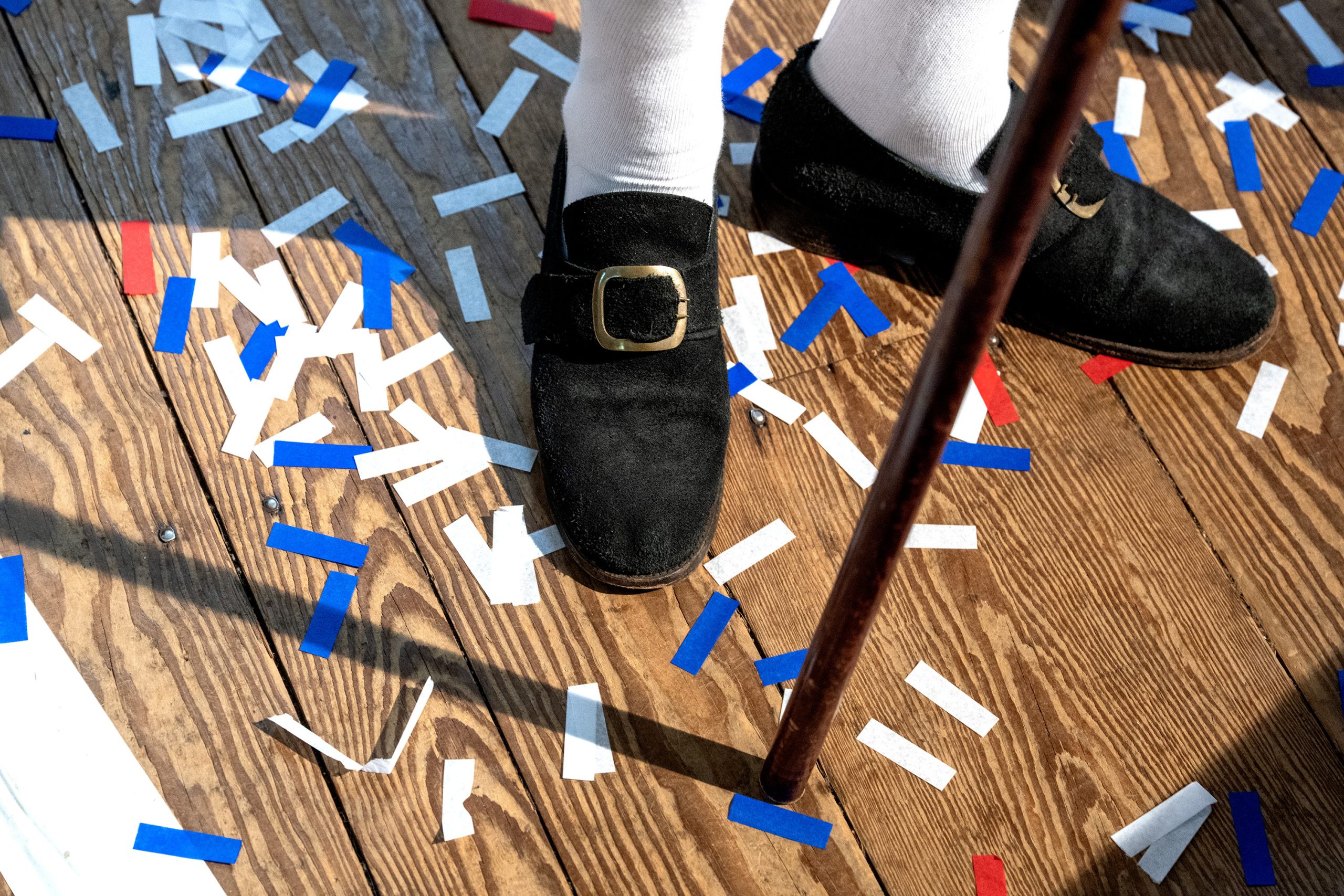
Shecky Perlman as Ben Franklin, his cane and feet, Thursday, May 21, 2026, among the confetti as dozens of historical reenactors graduate after weeks of intensive, immersive training at the Benstitute.Tom Gralish / Staff Photographer
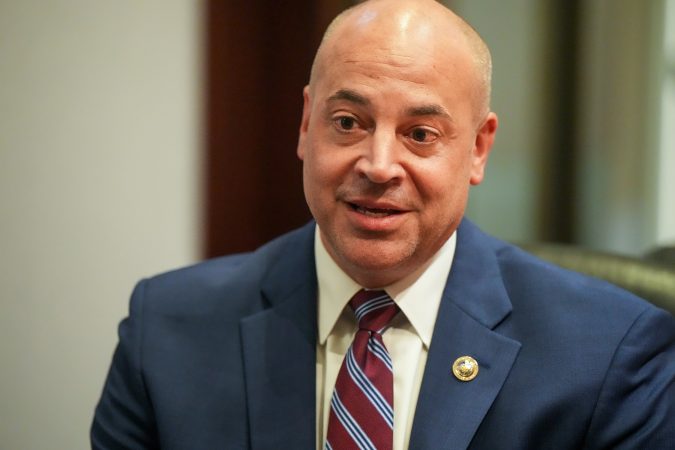
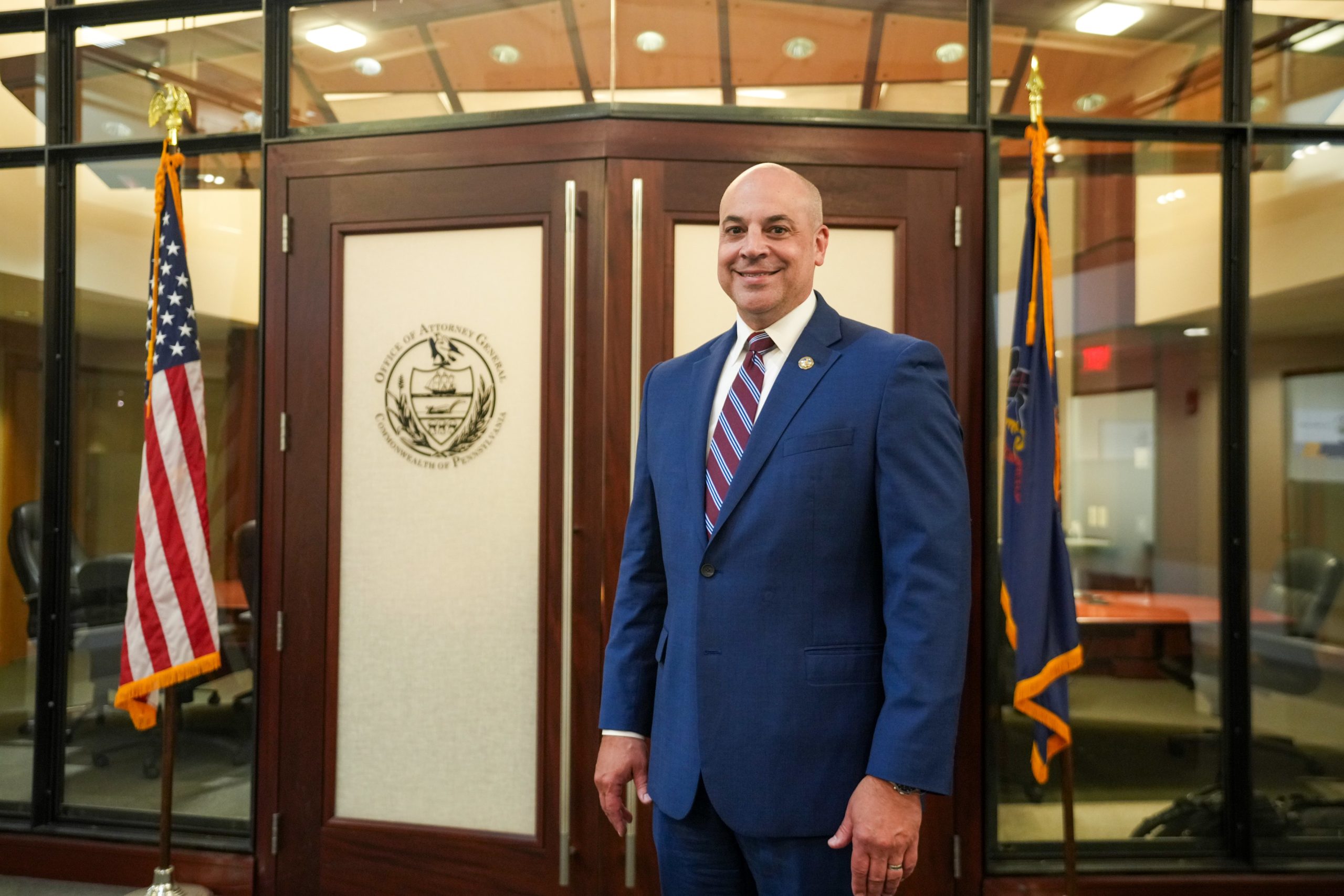
Attorney General Dave Sunday has spent 18 months as the state’s chief law enforcement officer, overseeing a sprawling office that handles criminal prosecution, civil litigation, consumer protection services, civil rights enforcement, and more.
In that time, the 51-year-old Republican and Harrisburg native says, he has taken on issues ranging from the opioid crisis to illegal crime guns. And last week, the Pennsylvania Supreme Court handed his office broad authority to review the efforts of Philadelphia prosecutors to overturn murder convictions they have called unjust, a signature initiative of District Attorney Larry Krasner’s office.
In a recent interviewat his Philadelphia office, Sunday talked about that and more.
What is your reaction to the Supreme Court ruling on the work of District Attorney Larry Krasner’s Conviction Integrity Unit?
Obviously, it’s an unprecedented ruling.
Oftentimes, the best outcome is through the adversarial process. We work with the Philly DA’s office in a lot of different areas, and I viewed this ruling as any other that provides me with instructions on a way on which I have to run my office.
Moving forward, the ruling requires your office to review any post-conviction concession that Krasner’s office aims to pursue. How will that work?
There are questions. How many times will we have to intervene? What will that do to staffing? Will we have the logistics and resources to do it appropriately? I think that process will unfold over the next month or so.
There’s no other real comparison for this ruling, and so what I can say very simply is this: It is absolutely crucial that there is a voice for the families of victims, and at the same time, I think it’s crucial to make sure that we protect the rights of individuals who are charged with crimes and convicted of crimes.
That balance is found in applying the law and the facts to the issue. That’s something we will enthusiastically do.
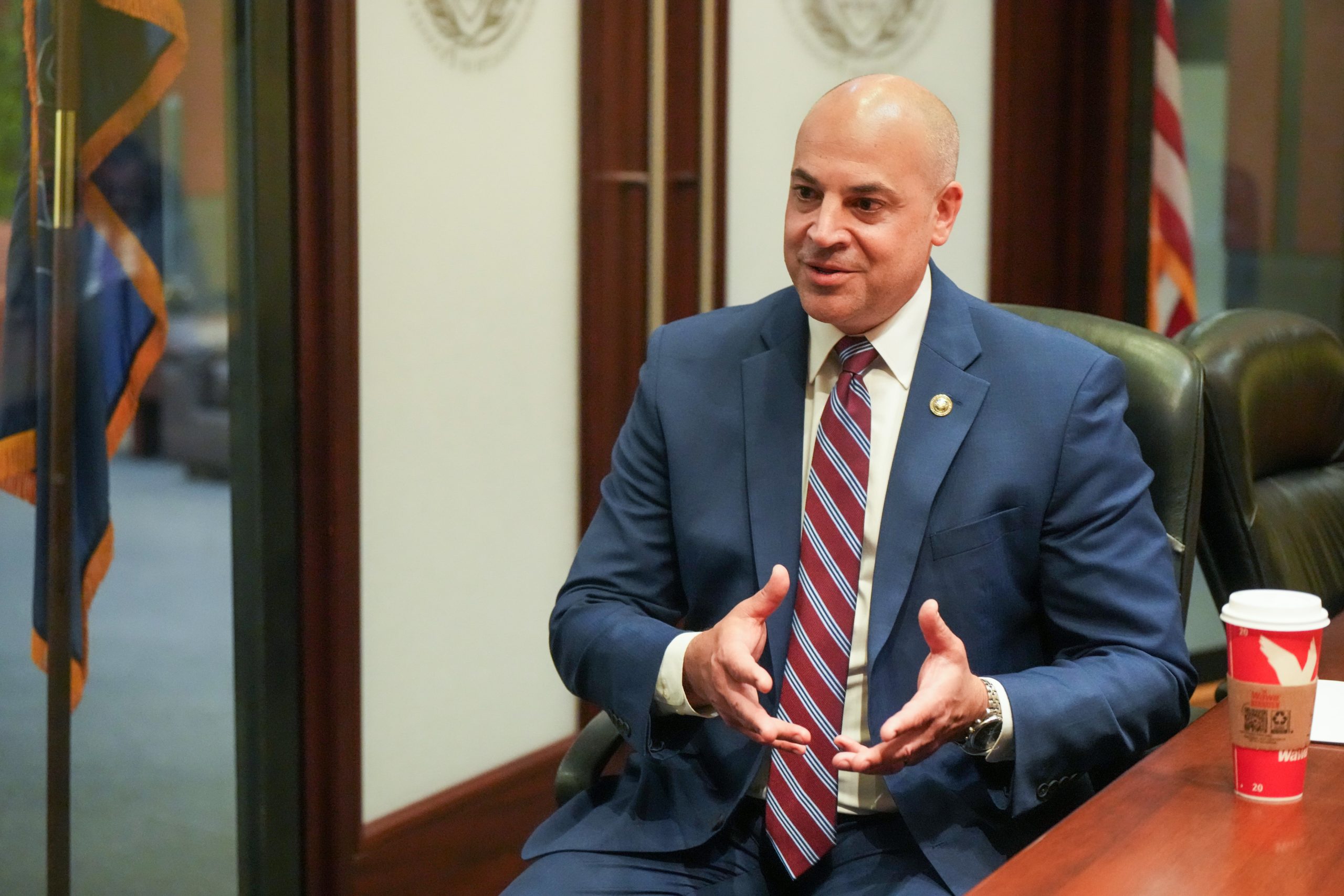
.Assistant General David Sunday, in Philadelphia, June 23, 2026.Jessica Griffin / Staff Photographer
Since Krasner first took office, his prosecutors have supported efforts to overturn around 115 convictions. Given the Supreme Court’s findings, do you now question whether some of those overturned convictions should be reconsidered?
Well, we have to look at the legal process there. For individuals who the court has already ruled in a manner in which they’re out of prison, those cases are done.
But with cases that are still going through the appellate process, individuals that are incarcerated, those are situations where we’re going to have to take a look at it. I mean, this is very serious, and when the Pennsylvania Supreme Court rules in this manner — not just the ruling itself, but the verbiage — I, as attorney general, take that extremely seriously.
We will do our job, and we’ll do our duty, and we’ll review it, but it’s also important to understand that this isn’t a quest to prove someone wrong. It’s a quest to ensure that all parties are zealously advocated for.
Krasner has strongly opposed the ruling. He’s likened this issue to the struggles of the Civil Rights Movement and said that the decision undermines the votes of those who elected him to office. What is your response to that?
I don’t think that it benefits anyone for criminal justice leaders to editorialize a lot of the work we do.
It’s critical that the citizenry knows and understands that their case will be dealt with by applying the facts to the law — and I know that’s not the most exciting answer, but there are things that are in my control and there are things that aren’t in my control, and his reaction to anything is completely out of my control.
The last thing individuals who live in the community want to hear are elected officials yelling at each other. They want to see outcomes.
Earlier this year, justices ruled that mandatory life sentences without parole for those convicted of second-degree murder are unconstitutional. What are your thoughts on that?
Third-degree murder, second-degree murder, those are cases where the acts resulting in the crime are vastly different case to case. As a prosecutor, I’ve tried horrific second-degree murder cases — one was an in-home burglary where an individual was left face down on the ground, duct-taped, and they ultimately died from positional asphyxiation, which really is torture.
At the same time, there are second-degree murder cases where you have multiple codefendants, and — this case is highlighted a lot — one of the codefendants pulls a gun out, kills an individual, and all those codefendants, because they were acting in concert and furthering some conspiracy, they’re all guilty of second-degree murder and they’re in for life.
So there are second-degree murder cases where the individuals should have an opportunity for parole, and at the same time, there are cases that are absolutely horrific, where individuals should spend the rest of their lives in prison.
The important place we’re in now is the legislative process, moving forward to ensure that the punishment is commensurate with the harm caused in the crime.
Violent crime has fallen dramatically from its pandemic-era highs in Philadelphia and across the state. Should the attorney general’s office get some credit for that?
There is no one individual or agency that can take credit for these outcomes. We’re with our federal partners, we work with everybody.
After I was elected, some of the very first calls I made were to the Philadelphia mayor and the police commissioner, and I made it very clear that we’re partners. I’m excited, let’s go. And that’s what we’ve done.
The Attorney General’s Gun Violence Task Force is a huge part. We do everything we can every day to go after gun traffickers, illegal straw purchasers. We’ve removed more than 500 crime guns off the streets [statewide] in 2025.
In addition to that, our Bureau of Narcotics works every day in Philadelphia. Last year, we removed 56 million doses of fentanyl from the streets, and a large portion of that was in the city.
The Commonwealth Court struck down a decades-old law that banned Pennsylvanians from using their Medicaid benefits to pay for abortions, and last month, your office appealed. Why?
A lot of people don’t understand the role of the AG in a lot of issues. In Pennsylvania, we have the Commonwealth Attorneys Act, the rules that dictate the job, and one of the rules in there is that the attorney general shall defend the constitutionality of statutes in Pennsylvania.
I have irritated the entire political spectrum, because I am defending statutes whether you like them or not. That’s literally my job. What a lot of people don’t understand is that the [Medicaid] law is part of the Abortion Control Act — the same law that allows abortions to occur up to six months of pregnancy, the very same law.
In that law is a subsection that also says that government funds cannot be used for abortions — so I’m defending the abortion law in Pennsylvania, just like I would any other section of that law.
Critics say that by appealing the ruling and prolonging this issue, you are denying Pennsylvanians of what the court called a “fundamental right to reproductive autonomy.” How do you respond?
Just like every law we defend — every single one — there are people that like it and don’t like it, and they will have commentary. I certainly respect their absolute right to have that commentary.
What I will say is, this decision has nothing to do with that. It is the job of the attorney general to defend the statute.
.Assistant General David Sunday, in Philadelphia, June 23, 2026.Jessica Griffin / Staff Photographer
What would you say has set your tenure apart from your predecessor, Gov. Josh Shapiro, and his appointed successor, Michelle Henry?
Very simply, I came into this job as a prosecutor. I ran on public safety. I wasn’t a legislator, so when I look at the office, I view it as a place where you follow the facts in the law, and you fight hard to keep people safe.
With that being said, I have hyper-focused on issues impacting citizens. We have huge crises in Pennsylvania that need to be addressed, specifically the mental health crisis.
When I came into office, I saw our prisons are full of people that have mental and behavioral health challenges. Individuals go to jail solely because they have a mental health crisis, and what I want to see are people getting treatment.
What we did was create a new initiative that gives police a toolbox, so when they come into contact with someone in a mental health crisis [who is committing a low-level criminal offense], they can get that person into treatment [if the person chooses to do so]. At the same time, that person can be charged, and the police have the flexibility to hold that charge.
This is brand-new, and we have nine counties that are already signed up and are rolling. We have five more lined up and ready to roll over the next few months.
President Donald Trump held a rally in Pennsylvania on Tuesday, and he was joined by some of the state’s other top Republican officials, such as Stacy Garrity. Is that an event you would have liked to attend?
In all candor, I have events that have been scheduled for months and months, and the reality is, a lot of these [presidential] events pop up pretty quickly.
On Tuesday, I had an event with the first elected attorney general in Pennsylvania, LeRoy Zimmerman. I was with him at a fireside chat, talking about what the AG’s office has looked like, and how it’s changed over the last 30 years.
A man was shot and killed at a West Philadelphia neighborhood bar early Sunday, according to police and media reports.
The victim was an employee of a bar in the 1200 block of North 52nd Street in the Carrol Park neighborhood, which recently held a grand opening, NBC10 reported.
The station said the shooting resulted from a quarrel with another employee over the duties involved in closing the bar.
Police said they responded to reports of the shooting just before 4 a.m. They took the victim to Penn Presbyterian Medical Center, where he was pronounced dead at 4:28 a.m.
The man’s identity was being withheld until his family could be notified. The suspect fled the scene. No arrests have been made,
The case remains under investigation.
Any information can be given to the Philadelphia Police Department’s Homicide Unit at 215-686-3334, or anonymously to 215-686-TIPS (8477).
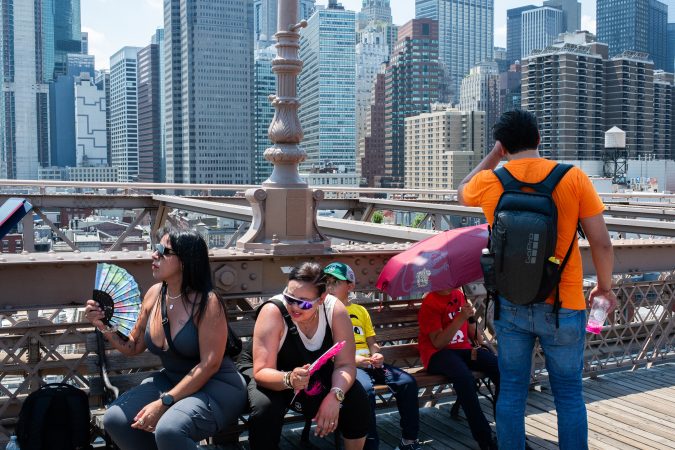
A dangerous and prolonged heat wave is expected to build across central and eastern parts of the United States this week, with forecasters warning that temperatures could soar into the triple digits and reach record-breaking levels in some areas into the Fourth of July holiday weekend.
From the Midwest to the East Coast, temperatures are forecast to reach the 90s to low 100s, said Marc Chenard, a meteorologist at the Weather Prediction Center.
Parts of the East, particularly across the mid-Atlantic and the Northeast, could see temperatures climb above 100 degrees.
“Washington, D.C., will almost certainly exceed 100 on at least one or two days,” Chenard said. “And Philadelphia and New York City are also currently forecast to go over 100.”
He said daily records could be broken on Thursday and Friday in Washington, New York City, and Philadelphia.
Philadelphia could tie its record high of 104 degrees for the month of June.
The heat wave was expected to begin to take hold starting on Sunday across portions of the Plains, where temperatures were expected to rise into the 90s. The heat was expected to reach into the Great Lakes region, including Chicago, and toward the Gulf Coast on Tuesday.
By Wednesday, much of the East Coast is expected to be experiencing the extreme heat.
The high temperatures will be accompanied by high humidity, making conditions feel even more oppressive.
The National Weather Service said that heat index values — a measure of what the temperature feels like to the human body, when humidity is considered with the air temperature — could reach 110 degrees, and locally up to 115.
Little relief is expected during the nights, with temperatures remaining unusually high after sunset.
Chenard said minimum temperatures were forecast to stay in the 70s, while some cities in the East could remain even warmer, particularly during the middle of the week, which could lead to numerous record-high low temperatures.
“Areas like New York City, Philadelphia, and Washington, D.C., could have a low for one or two nights that doesn’t get below 80,” he said. “Chicago could be close to 80 on Tuesday or Wednesday morning, too.”
The hot and humid conditions are expected to last through much of the Fourth of July weekend.
Chenard said the longevity of the heat was being driven by a “pretty persistent” sprawling area of high pressure, often referred to as a heat dome.
Toward the end of the holiday weekend, the heat dome was expected to shift west, back toward the Plains, allowing for cooler conditions in the East but also for the chance of thunderstorms.