Category: News

  • Supreme Court rules constitutional privacy protections apply to cellphone users location history

    WASHINGTON — The Supreme Court held Monday that constitutional privacy protections extend to cell phone location information, ruling in the case of a bank robber whose identity was discovered through a geofence warrant.

    Justice Elena Kagan wrote for the 6-3 court that people don’t forfeit expectations of privacy even when they opt into Google’s location history.

    “A cellphone user is not to be viewed as sharing private information with third parties — which then can be freely passed on to the government — just by doing the ordinary things cellphone users do,” Kagan wrote.

    Justice Samuel Alito wrote in dissent that Okello Chatrie had no expectation of privacy in information he voluntarily turned over to Google.

    The decision is the court’s latest effort to apply a constitutional provision ratified in 1791 to technology the nation’s founders could not have envisioned.

    Police obtained a geofence warrant after a bank robbery in a suburb of Richmond, Va., and used it to locate cell phones that were near the bank around the time it was robbed in May 2019.

    One of those phones belonged to Chatrie, who had eluded the police until they turned to the powerful technological tool.

    The warrant kick-started the investigation. After determining that Chatrie was among those near the Call Federal Credit Union in Midlothian at the time, police obtained a search warrant for his home. They found nearly $100,000 in cash, including bills wrapped in bands signed by the bank teller.

    Chatrie pleaded guilty to robbing the bank and was sentenced to nearly 12 years in prison. His lawyers argued on appeal that none of the evidence should have been used against him.

    They challenged the warrant as a violation of his privacy because it allowed authorities to gather the location history of people near the bank without having any evidence they had anything to do with the robbery. Prosecutors argued that Chatrie had no expectation of privacy because he voluntarily opted into Google’s location history.

    The Supreme Court did not decide Monday whether the search complied with the Fourth Amendment, which bans unreasonable searches and seizures. It sent the case back to a lower court for more work.

    A federal judge had ruled that the search violated Chatrie’s rights, but allowed the evidence to be used because the officer who applied for the warrant reasonably believed he was acting properly.

    The federal appeals court in Richmond upheld the conviction in a fractured ruling. In a separate case, the federal appeals court in New Orleans ruled that geofence warrants “are general warrants categorically prohibited by the Fourth Amendment.”

  • Float builders are transforming history into colorful, sequin-filled displays for the Semiquincentennial parade

    Float builders are transforming history into colorful, sequin-filled displays for the Semiquincentennial parade

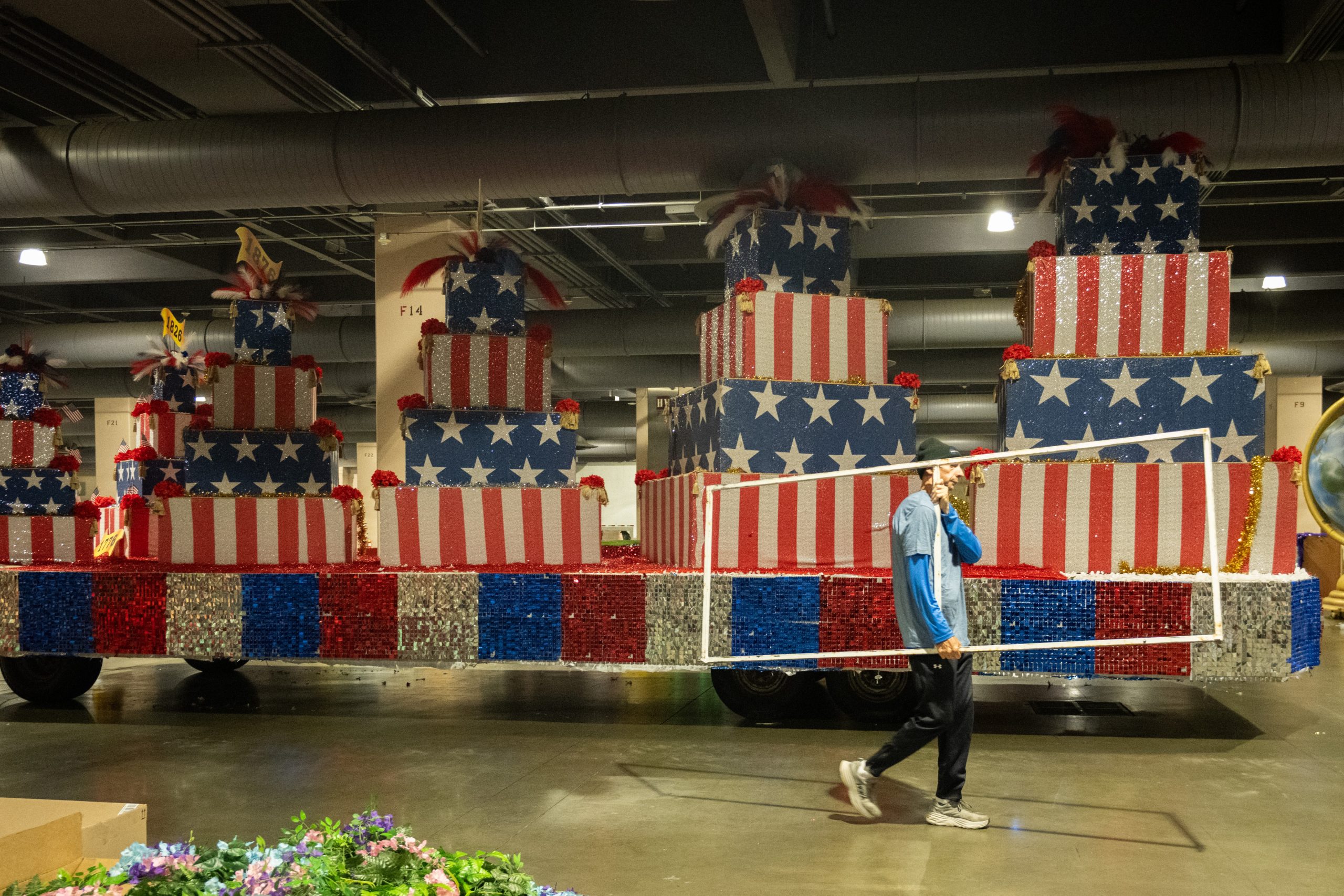
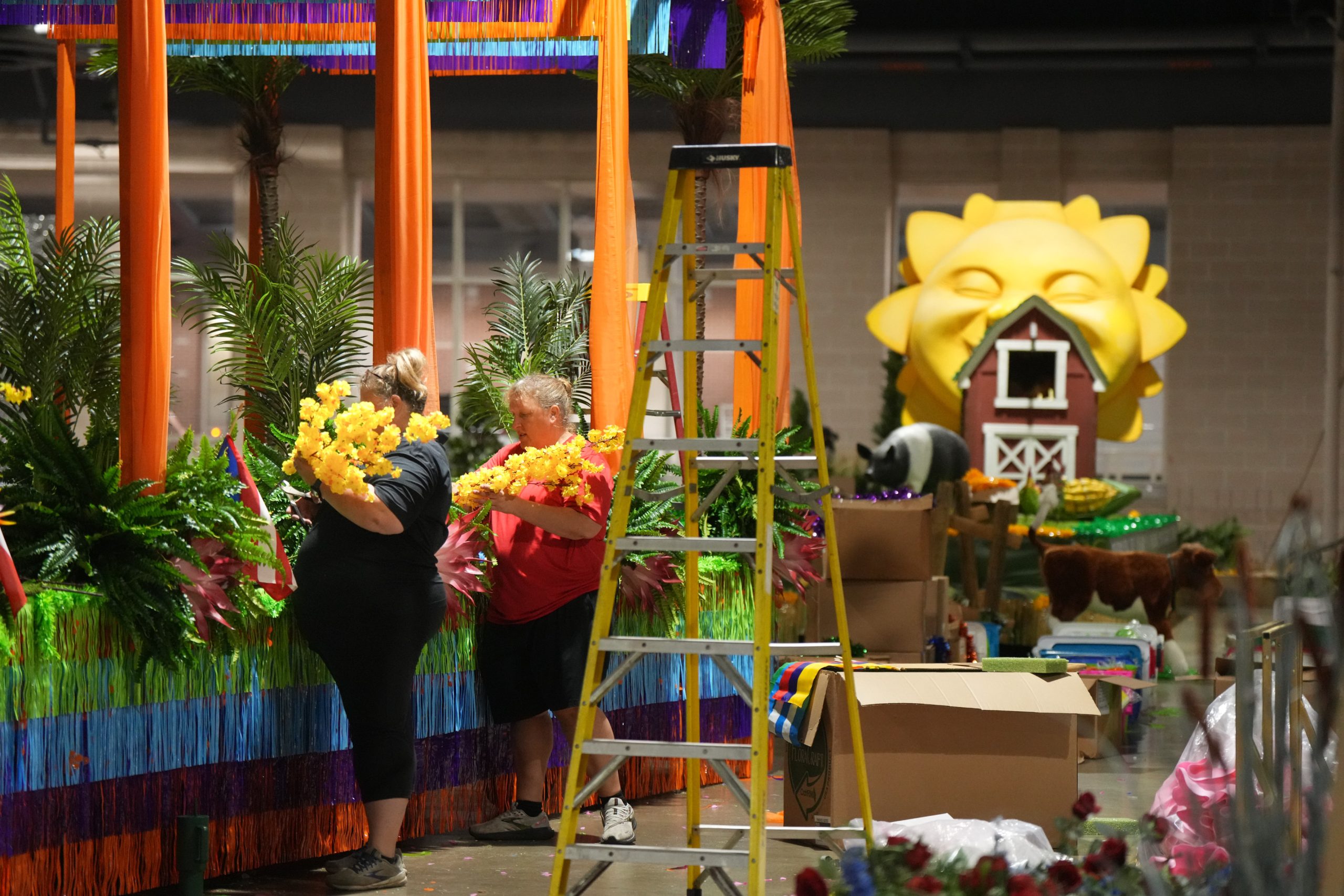
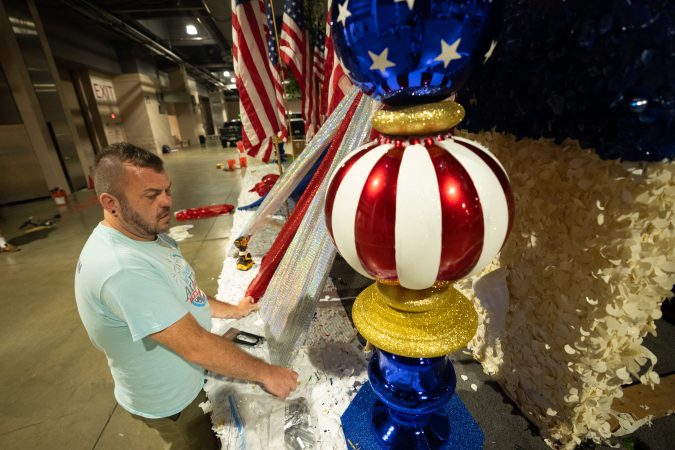
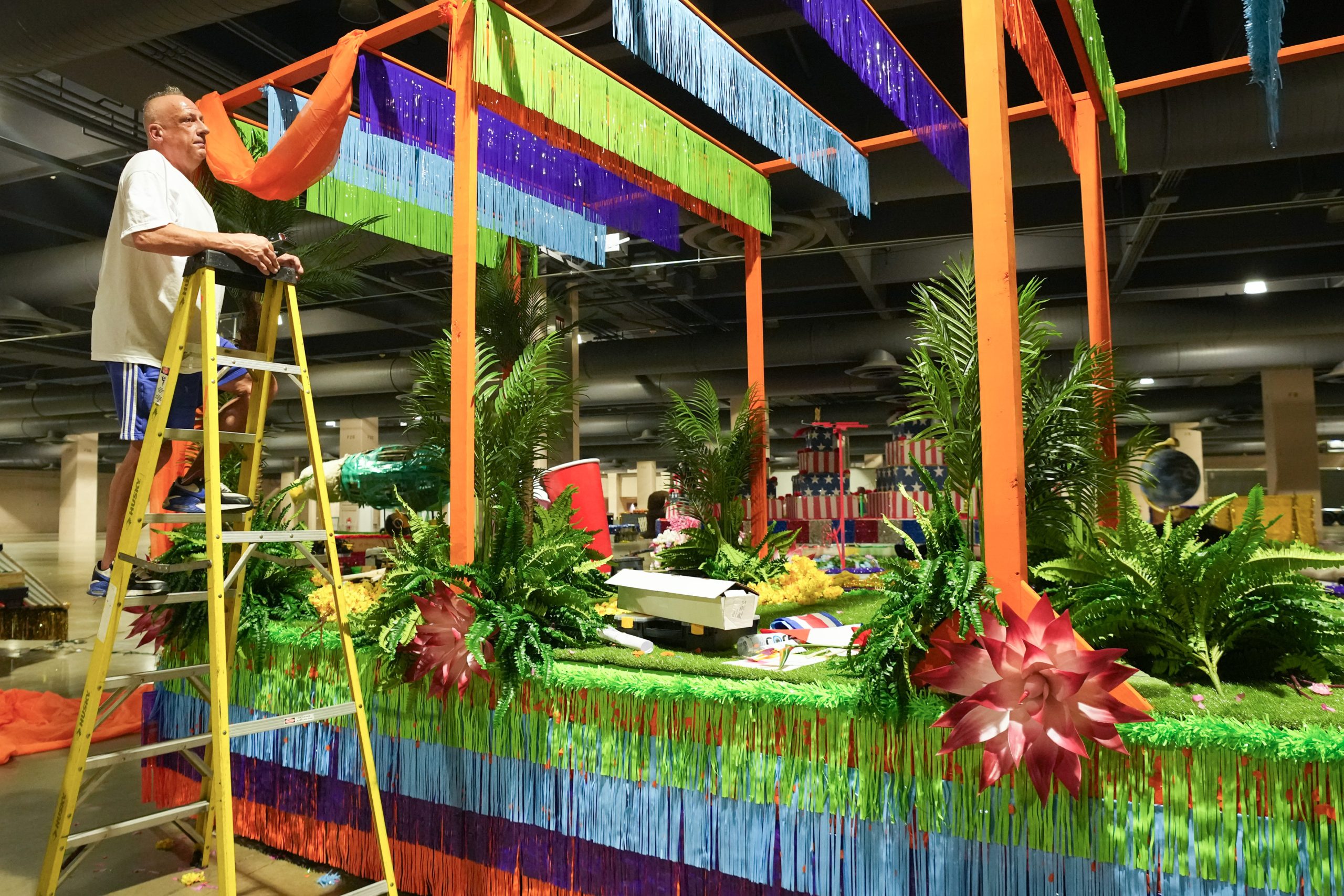
    In the dull glow of the overhead Convention Center lights, Todd Marcocci and a band of craftspeople stood next to large wheeled platforms, some housing floral gazebos, others a recreation of a Pennsylvania farm. Sweat dripping from his brow, Marcocci intently drilled palm tree crowns into the base of a platform dedicated to Central and South America.

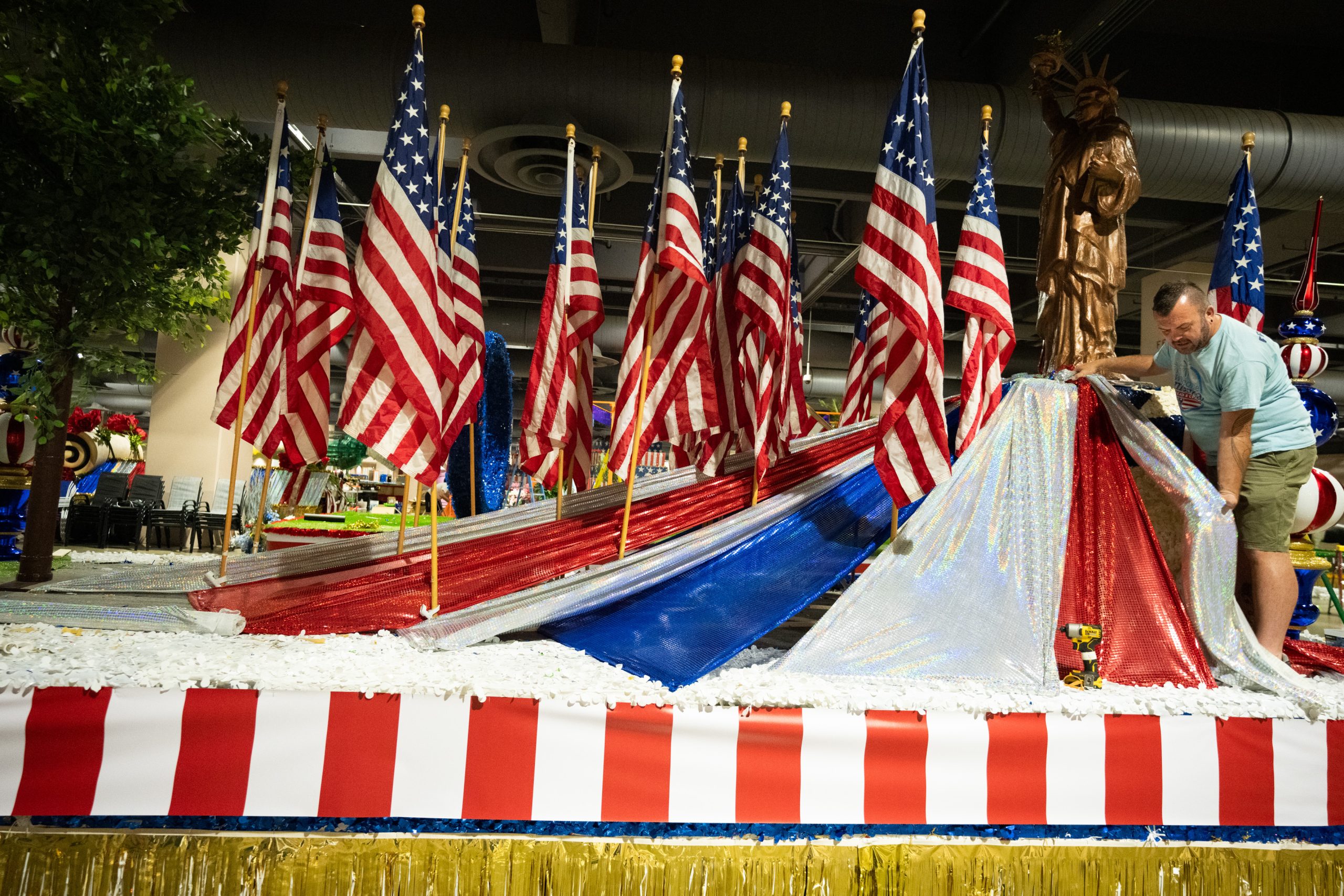
    With just days until Philadelphia’s Semiquincentennial parade, Marcocci, alongside his crew and John Shaw of Shaw Parades, is assembling 19 parade floats to commemorate the United States’ 250th birthday.

    Todd Marcocci works on a float back stage with the crews of Friday’s parade and festival.Jessica Griffin / Staff Photographer

    The “Salute to Independence” Semiquincentennial Parade is scheduled to begin at noon Friday nearwhere the Declaration of Independence was signed in 1776, which Marcocci reminded himself of while he designed a historical parade.

    “I told all the groups who signed on for the parade that we’ll be lining up in the footsteps of the Founding Fathers,” Marcocci said. “We’ll walk through history.”

    In the halls of the Pennsylvania Convention Center, where float builders worked on Monday, larger-than-life recreations of Martin Luther King Jr. and Harriet Tubman awaited placement on a platform celebrating the Civil Rights movement.

    Mike Oyer works backstage on the floats.Jessica Griffin / Staff Photographer

    The next float over was bathed in white sequins, where a giant “peace dove” sculpture accompanied by a globe would rest. A few paces over sat a 6-foot-tall Wawa smoothie and coffee cups, and right by that were multiple United States-themed layered birthday cakes marking the various anniversaries of the country.

    Shaw worked a blade saw, slicing through two-by-fours to construct the float frames that Marcocci and Co. were painstakingly deciding the minutiae of, such as how many American flags or sequins can be threaded through a float.

    Annie Woods (left) and Johanna Gelber working on the floats.Jessica Griffin / Staff Photographer

    Shaw, whose parade float company has passed down through four generations, said Philly Fourth of July parades usually average seven floats. “This year it’s almost tripled,” he said. “Todd designs everything in his head, and then we collaborate back and forth to come up with the plan to actually make these ideas work.”

    Mayor Cherelle L. Parker will be on board the “One Philly — A United City” float, which features a large sculpture in the shape of the number 1 and a butterfly-and-floral gazebo symbolizing the city’s commitment to a clean and green city, Marcocci said.

    Jeremy Williams, works on a float back stage.Jessica Griffin / Staff Photographer

    A Liberty Bell float will commemorate some of the Founding Fathers and Betsy Ross with an Independence Hall backdrop. Another celebrates Philadelphia Pride with prominent LGBTQ figures and pride flags atop a vibrant rainbow platform.

    “The most important thing for me is that people, whether they’re watching on TV at home across the nation or here in person, is that they see themselves in our parade,” Marcocci said of representing the diversity of America’s history.

    Philadelphia’s Semiquincentennial Parade on Friday starts at noon at Fifth and Chestnut Streets, passing such historical landmarks as Independence Hall before heading to Sixth and Market Streets and then west on Market to circle City Hall before ending at Broad and Chestnut Streets after a heat emergency was declared, cutting short the route that was to continue to Logan Circle and loop around before heading back to City Hall.

    Fan zones are at Sixth and Market Streets , 11th and Market, and the northeast side of City Hall, where a bar is available for those 21 and over.

    Television coverage is on NBC10.

  • Supreme Court rules mail-in ballots arriving after Election Day can be counted

    The Supreme Court on Monday upheld a Mississippi law that allows officials to tally mail-in ballots postmarked by Election Day that arrive later, a decision that keeps voting procedures in place in several states as the midterm elections loom.

    In an ideologically mixed 5-4 ruling, the justices turned aside a challenge by Republicans and Libertarians, who argued federal law preempts a Mississippi statute that allows the counting of such ballots that arrive up to five days after polls close.

    The decision could make less likely similar legal challenges in 14 states that allow the counting of ballots that arrive days or weeks after polls close, and others that allow military members to return ballots later. Most states require mail-in ballots to be received by Election Day.

    Justice Amy Coney Barrett delivered the opinion for the majority, which included Chief Justice John G. Roberts Jr. and the court’s three liberals. Barrett said federal election law did not address when ballots should be received.

    “The election-day statutes say nothing about ballot receipt, and we cannot add to the words Congress chose,” Barrett wrote.

    The ruling came over the objections of four of the court’s conservatives. Justice Samuel A. Alito Jr. wrote the opinion for the group, which included Justices Clarence Thomas, Neil M. Gorsuch, and Brett M. Kavanaugh.

    “Not only is today’s decision inconsistent with statutory text, legal context, historical practice, and precedent; it also threatens to produce lamentable consequences,” Alito wrote. “The majority’s holding spawns a slurry of troubling election-law questions and risks further undermining Americans’ confidence in election integrity.”

    President Donald Trump and some Republican allies have falsely argued that voter fraud is rampant in mail-in balloting. Trump partly blamed his loss in the 2020 presidential election on mail-in votes and unsuccessfully called on states to stop tallying them during the contest.

    Trump called the ruling a “tremendous loss” in a post on Truth Social. He called on Congress to pass the Save America Act, which tightens voter identification laws.

    Republicans in a number of states have launched legal challenges to mail-in voting, which has grown in popularity since the onset of the coronavirus pandemic. One study found about 1 in 3 voters voted by mail in 2024, but the practice is more widespread in Democratic-leaning states.

    Conservatives in Congress also have introduced legislation to limit mail-in voting.

    In March, Trump issued an executive order telling the Postal Service to send ballots only to voters who appear on lists of citizens created by states in conjunction with the federal government. A federal judge in Massachusetts blocked that provision of the executive order last week, saying states — not the president — are responsible for setting election rules.

    Despite his criticism of mail-in voting, Trump voted by mail in a special election in Florida earlier this year.

    In the case decided by the high court, the Republican National Committee, the Mississippi Republican Party, a state voter, and a county election commissioner had sued Mississippi in 2024, claiming it was illegal to count mail-in ballots that arrive after polls close because federal law sets elections for a specific day. The Libertarian Party later filed a similar suit.

    The cases were consolidated by a federal judge, who allowed groups of veterans and retirees to intervene in the suit on behalf of Mississippi. The judge dismissed the case, but the U.S. Court of Appeals for the 5th Circuit reversed that ruling. Mississippi then appealed to the Supreme Court.

    During arguments in March, Paul D. Clement, an attorney for the conservatives, told the justices that casting and counting ballots at the same time has long been “intertwined.” He said allowing mail-in ballots to be counted after Election Day could increase fraud and undermine faith in elections, particularly if the winning candidate was not the one ahead when polls closed.

    “The losers are going to doubt the result, full stop,” Clement said. “That is bad for our system.”

    Mississippi Solicitor General Scott G. Stewart countered that existing law required only that voters fill out their ballots by Election Day. He said mail-in voting has a long history in the United States, pointing to field voting that occurred during the Civil War.

    “States have allowed it for over a century, and Congress has respected it,” Stewart said.

    This term has been an active one for the justices on voting and election issues. In January, the court allowed a Republican congressman from Illinois to challenge the state’s mail-in balloting laws, finding candidates have inherent standing to sue over election rules.

    The case brought by Rep. Mike Bost (R., Ill.) also argues that federal law prohibits ballots from being counted after Election Day. The case was sent back to the lower courts.

    The justices also severely limited a key section of the Voting Rights Act, which has cleared the way for a number of Republican-controlled states in the South to carve up districts held mostly by Black Democrats ahead of the midterm elections. Hundreds of other minority officeholders could be redistricted out of their seats in state and local boards.

    The court has yet to rule in a case challenging limits on spending coordinated between political parties and candidates that is being pushed by the Republican Party. Striking down the spending limits could give Republicans a big money boost in November.

    Fourteen states provide grace periods for all mail ballots, and another 16 provide them for military and overseas voters. Republican-led states have been steering away from ballot grace periods recently, with Kansas, North Dakota, Ohio, and Utah eliminating them last year, according to Voting Rights Lab.

    RNC Chairperson Joe Gruters said Republicans would push Congress to pass legislation requiring ballots in all states to be returned by Election Day.

    “Democrats are inviting chaos at the ballot box by allowing elections to drag on for days and weeks after voters cast their ballots,” he said in a statement.

    Voting rights advocates praised the decision, saying they feared the court could reverse long-standing policies on when ballots are due.

    “Good news rarely comes out of this Supreme Court, but today’s ruling is a win for our democracy,” NAACP President Derrick Johnson said. Virginia Kase Solomón, president of Common Cause, said the decision was correct because voters “shouldn’t lose their voice because of mail delays outside their control.”
  • Joe Frazier statue moves to the base of the Philadelphia Museum of Art

    Joe Frazier statue moves to the base of the Philadelphia Museum of Art

    “Smokin’” Joe Frazier is finally in his new home, just in time for the 250th birthday of the United States.

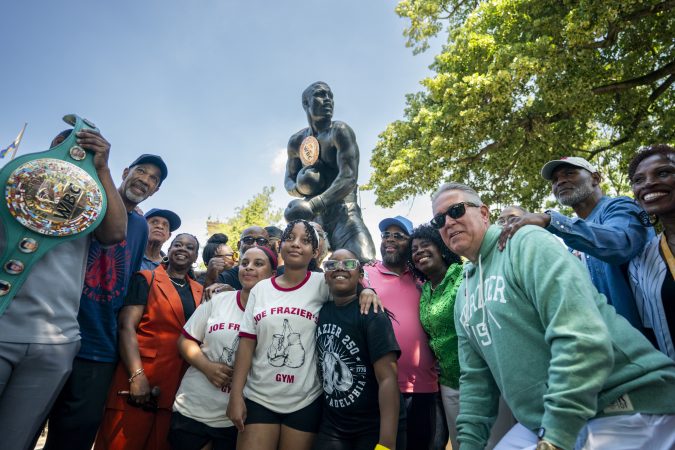
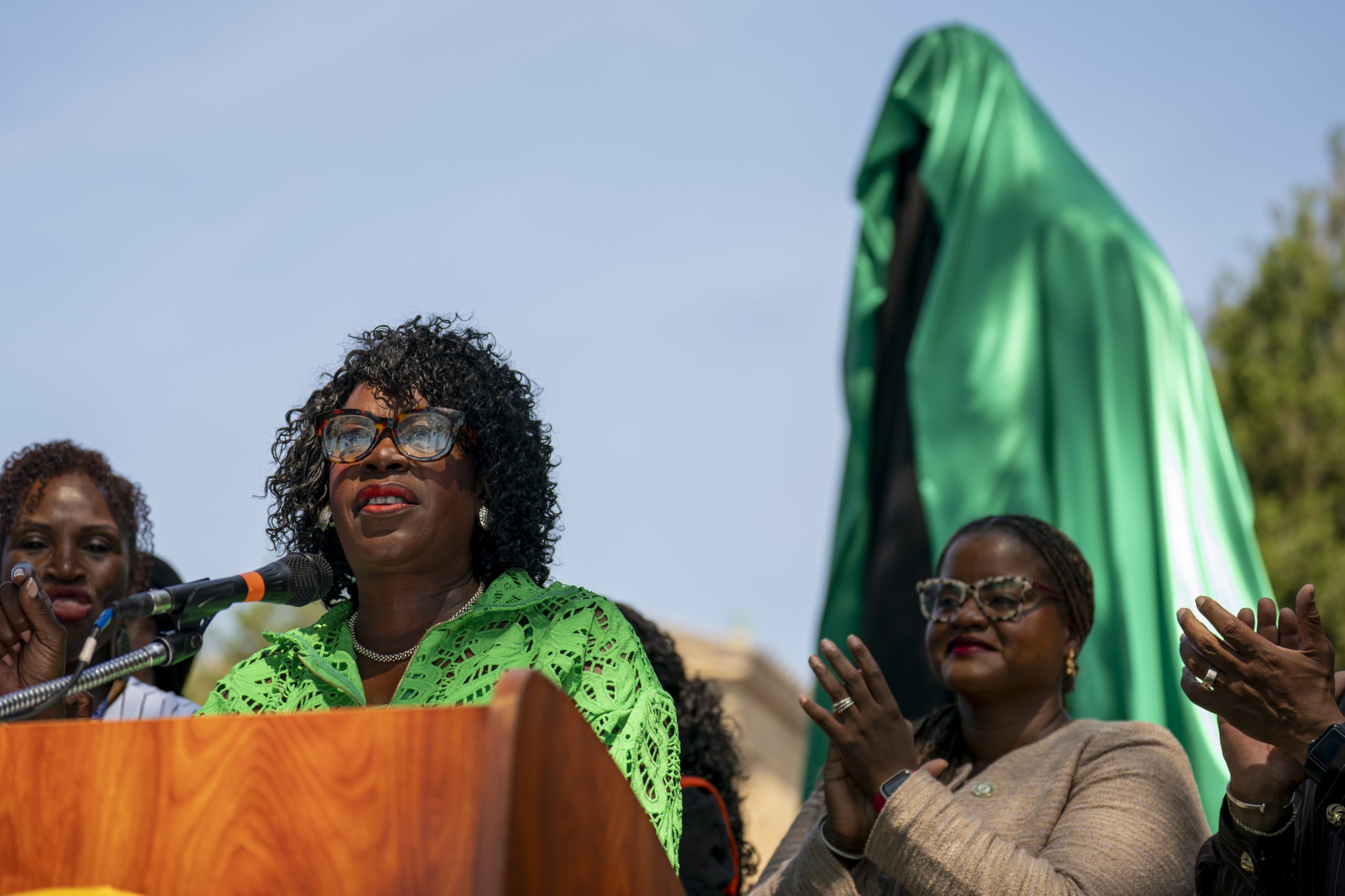
    City officials, alongside Frazier’s family, friends, and fans, on Monday unveiled the real-life heavyweight boxing champion’s statue at the base of the Philadelphia Museum of Art. Intended to be the statue’s new location in perpetuity, the spot was occupied by a monument to fictional boxer Rocky Balboa for two decades.

    “During this 250th celebration in the birthplace of democracy, we will forever remember that the city got right what it had gotten wrong for a long, long time,” Mayor Cherelle L. Parker said. “Now, Joe Frazier is attached, and connected to, and will permanently be here at our Philadelphia Museum of Art.”

    Monday’s unveiling was the culmination of months of planning. The Philadelphia Art commission in February approved a plan to move the statue from by Creative Philadelphia, the city’s office for the creative sector. Chief cultural officer Valerie V. Gay said Monday’s event was something of a “soft launch” for the statue’s new home, as a granite base will be installed in the future, along with more formal interpretive panels.

    Mayor Cherelle L. Parker speaks at the unveiling of the statue of former heavyweight boxing champion Joe Frazier at its new home outside the Art Museum. Jessica Kourkounis / For The Inquirer

    “Today, we did not want to wait,” Gay said.

    Frazier’s statue, after all, lived at the South Philadelphia sports complex for more than 10 years. Created by sculptor Stephen Layne, the statue was unveiled outside what is now Stateside Live! in 2015, four years after Frazier’s death in 2011 following a battle with liver cancer. Frazier, the undisputed heavyweight champion in 1970-1973, is probably best remembered for his three battles against Muhammad Ali in the 1970s.

    The city’s statue of Rocky had called the base of the Art Museum’s famed steps home since 2006. The monuments’ moves are part of a larger shuffling of statues at the Art Museum that began in March, when the Rocky statue was moved inside the museum for the first time as part of the ongoing exhibition Rising Up: Rocky and the Making of Monuments.

    That Rocky statue will be installed at the top of the Art Museum steps in the fall, when the statue of the Italian Stallion currently there will be returned to actor Sylvester Stallone’s private collection. Stallone, Parker said, was supportive of the Frazier statue’s new location.

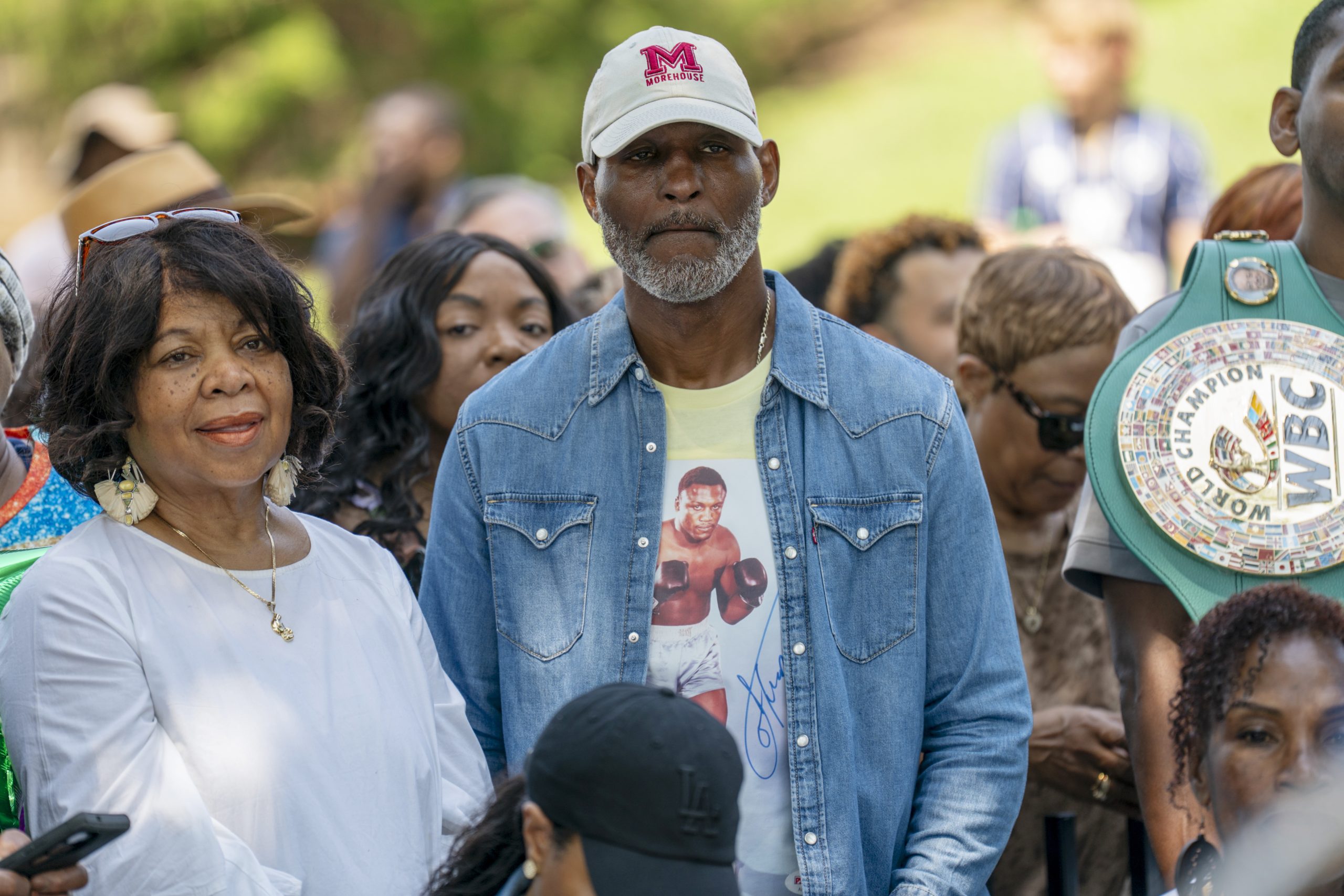
    Dozens of the boxer’s supporters attended on Monday, including Philadelphia boxer Bernard Hopkins who held world championships in two weight classes, promoter Joe Hand Jr., and Frazier’s daughter Jacqueline Frazier-Lyde. Frazier-Lyde, a retired boxer and current Municipal Court judge, said the the color of the shroud covering her father’s statue — green —was fitting.

    “My mother’s favorite color was green, because we’re from the South and we love green, because it represents life,” she said. “My father, Joe Frazier, liked it because it was the color of money.”

    Boxing legend Bernard Hopkins at the unveiling of the new home for the statue of heavyweight boxing champion Joe Frazier.Jessica Kourkounis / For The Inquirer

    To the end, the statue’s new location wasn’t the end of efforts in the boxer’s memory. Parker also announced plans for a capital campaign to restore the former Joe Frazier’s Gym on Broad Street above Glenwood Avenue in North Philadelphia. Now a discount furniture store, the building is a legendary location in Philadelphia boxing history, having served as a training location for not just Frazier but other famed fighters and community members.

    Parker said plans were underway to establish a way to accept donations for that effort via the Philadelphia City Fund. The amount of funds targeted be raised was not immediately clear.

    “It’s important to show the world who we are,” Gay said. “Joe Frazier was a humble underdog whose determination and grit inspires us all. What could be more [a] more Philadelphia story than that?”

  • Supreme Court rejects Trump’s push to toss $5 million verdict in E. Jean Carroll sexual abuse case

    WASHINGTON — The Supreme Court on Monday rejected a push by President Donald Trump to throw out a jury’s $5 million finding that he sexually abused the writer E. Jean Carroll at a New York City department store in the mid-1990s and later defamed her.

    The high court declined to take up the case in a brief, unexplained order, as is typical. There were no noted dissents. Trump also plans to appeal another $83.3 million verdict awarded to Carroll by a different jury after a second defamation trial, his lawyers have said.

    The decision comes as the court hands down its biggest opinions, including a ruling that expands Trump’s firing power over the federal bureaucracy with the exception of the Federal Reserve.

    Trump called the decision to pass on the Carroll case “surprising” in a social media post, and he said he would continue to fight the defamation claims. “This Case is really against the United States of America, and all it stands for,” he wrote.

    Trump’s lawyers had argued that allegations leading to the verdict were propped up by “highly inflammatory” evidentiary rulings, including those that allowed the testimony of two other women who accused Trump of sexual abuse decades ago. Trump has denied all three women’s allegations.

    Trump’s attorneys argued the judge broke federal evidence rules in the case. They framed it as a distraction from Trump’s unique duties as president, though the verdict came before his return to the White House.

    “This mistreatment of a President cannot be allowed to stand,” Attorney Justin D. Smith wrote in court documents. Trump, a Republican, has since nominated Smith to be an appeals court judge. His lawyers called the case “Liberal Lawfare” in a statement on Monday.

    Carroll’s lawyers had urged the justices to pass on the case. They argued that the women’s testimony was relevant because the allegations were similar and that Judge Lewis Kaplan’s decisions were in line with others around the country. “This question is not worthy of review,” wrote attorney Roberta Kaplan, who is not related to the judge.

    Monday’s decision affirms the jury’s verdict will stand, she said in a statement Monday. “His multiple efforts to appeal that verdict have all failed and today’s ruling ends his quest to avoid accountability for his actions,” she said.

    Carroll, a longtime advice columnist and former TV talk show host, testified at a 2023 trial that Trump turned a friendly encounter in spring 1996 into a violent attack in the dressing room at Bergdorf Goodman, a luxury retailer across the street from Trump Tower in Manhattan. The jury also found Trump liable for defaming Carroll when he denied her allegation in 2022.

    The Associated Press does not identify people who say they have been sexually assaulted unless they come forward publicly, as Carroll has done.

    Trump has successfully fended off other hefty court judgments, including a New York civil fraud penalty of over $500 million thrown out by a New York appeals court. The Supreme Court also granted him broad immunity from criminal prosecution in 2024, though it later narrowly rejected his bid to halt sentencing in his New York hush money case.

  • U.S. and Iran pause strikes but disagree over next steps on talks

    DUBAI, United Arab Emirates — The United States and Iran on Monday separately announced they will send delegations to Qatar this week, though Tehran insisted it has not agreed to meet with the U.S. “at any level” after attacks across the Persian Gulf over the weekend challenged negotiations to end the war.

    U.S. President Donald Trump said the Islamic Republic had requested a meeting with U.S. counterparts and that they planned to convene Tuesday in Doha, Qatar.

    But one of Iran’s senior negotiators denied talks had been scheduled. And the spokesperson for Iran’s Foreign Ministry said Tehran was sending its delegation to Qatar, a key mediator in the negotiations, to discuss terms of the interim deal without involving the U.S.

    The U.S. president has tried to preserve a fragile interim deal, but hostilities mounted in recent days in the Strait of Hormuz, through which a fifth of the world’s oil had been shipped before war began. After four days of trading strikes, both sides appeared to pause their attacks Monday.

    The U.S. and Iran agreed to an interim deal earlier this month that calls for Tehran to dilute its stockpile of enriched uranium. It also waives U.S.-backed sanctions on the country, opens the Strait of Hormuz, and gives each side 60 days to hammer out broader agreements.

    Confusion mounts over next round of Iran-U.S. talks

    After Trump said Monday morning on social media that the U.S. and Iran planned to meet, White House press secretary Karoline Leavitt told Fox News’ Fox & Friends that special envoy Steve Witkoff and Jared Kushner, the president’s son-in-law, were flying to Qatar.

    Pakistan, also a key mediator, had said talks between Iran and the U.S. would resume Tuesday.

    But Kazem Gharibabadi, a senior negotiator for Iran, said in comments published by Iranian state media that no talks had been confirmed. And Esmail Baghaei, spokesperson for Iran’s Foreign Ministry, said that its delegation was traveling to Qatar this week to discuss the planned release of frozen Iranian assets and other issues related to the deal.

    “There are no negotiation meetings with the U.S. side at any level scheduled in the coming days,” Baghaei said. “The fact that U.S. representatives are traveling to Qatar has no connection with the visit of the Iranian delegation.”

    Increased tension in waterway

    During the war that began Feb. 28, Iran’s attacks and threats stopped cargo ships and tankers from moving through the Strait of Hormuz, creating a global energy crisis.

    In recent days, Iran has twice attacked vessels in the strait — including a tanker filled with Qatari crude — following efforts to open Oman’s territorial waters to both inbound and outbound traffic from the Persian Gulf.

    The attacks drew retaliatory American airstrikes and raised concerns that negotiations to reach a formal end to the war could be disrupted. Iran launched drone and missile attacks targeting Bahrain and Kuwait on Sunday.

    The strait has long been considered an international waterway despite its location in Iran and Oman’s territorial waters.

    The Trump administration was operating Monday on the understanding that the U.S. and Iran are standing down after the recent back-and-forth strikes and that vessels can move freely through the Strait of Hormuz, said a U.S. official who requested anonymity to discuss the sensitive negotiations.

    Iran’s president, U.S. official say $6 billion coming to Iran

    The U.S. official also said that Qatar planned to release $6 billion in frozen Iranian assets that would be used to purchase U.S. food products for the Iranian people.

    Iranian President Masoud Pezeshkian had announced the expected release of funds earlier Monday in comments published by the state-run IRNA news agency. He called it “a great victory for the Iranian people.”

    Pezeshkian, a reformist within Iran’s theocracy, is the highest-ranking official within Iran to reference the release of the funds held by Qatar, a key mediator along with Pakistan in the negotiations.

    Oman, Iran discuss possible fees for transiting the strait

    Oman’s foreign minister, Badr Albusaidi, said Monday that Oman and Iran are considering charging service-related fees for commercial ships transiting the Strait of Hormuz.

    Albusaidi said services could include water safety measures, pollution prevention, navigational assistance, and preparedness for incidents such as fires. He told Radio Monte Carlo while visiting France that there are “successful examples” of similar services being provided in compliance with maritime law.

    Albusaidi said Oman does not support imposing transit fees on ships.

    “This is internationally forbidden,” he said, “and we are abiding by these rules.”

    Iran, France clash over clearing mines from strait

    An Iranian official warned France against “provocations” Monday after French President Emmanuel Macron posted on X that France and others were coordinating efforts to clear mines from the Strait of Hormuz.

    Kazem Gharibabadi, an Iranian deputy foreign minister, said on X that under the interim deal “demining is carried out solely by Iran and by no other country.”

    Macron’s post came after he greeted Sultan Haitham bin Tariq of Oman ahead of high-level diplomatic talks in Paris.

    Oman and France called for “free, unconditional, and unrestricted navigation” in the Strait of Hormuz, in a joint statement issued Monday after the Paris meeting. Both parties said they “agreed to work collaboratively with all stakeholders to support freedom of navigation going forward and conduct joint demining operations.”

    Lebanon’s president says it will deploy troops

    Lebanese President Joseph Aoun said Monday that Lebanon is determined to deploy troops along its entire southern border as part of a framework agreement with Israel signed Friday. He made the remark while meeting with Adm. Brad Cooper, the top U.S. military commander in the Middle East.

    The deal was rejected by the Iran-backed Hezbollah militant group, which triggered the latest war with Israel on March 2 when it fired rockets across Lebanon’s southern border and into northern Israel.

    The Israel-Lebanon deal calls for Hezbollah to be disarmed before Israel will withdraw its troops from southern Lebanon. Israel agreed to withdraw initially from a couple of “pilot zones” where the Lebanese army would then deploy, but no details have been shared about how that will work in practice.

    Hezbollah officials have warned that attempts to implement the plan could lead to civil war.

  • America 250 celebrations bring extraordinary security challenge to Washington

    WASHINGTON — Federal law enforcement authorities in Washington, D.C., are preparing for one of their largest and most complex security operations as the nation’s capital gears up to celebrate the 250th anniversary of the nation’s freedom.

    With rising political violence, including recent incidents near the White House, and a president who enjoys being at the center of public pomp yet has repeatedly faced attempts on his life, a major security challenge awaits.

    “It comes as no surprise to you that D.C. on a normal day is a target-rich environment,” said Darren B. Cox assistant director in charge of the FBI’s Washington Field Office at a recent news conference detailing the security preparations. “We are prepared for any threats.”

    Hundreds of thousands of people are expected to visit Washington in the coming weeks for the festivities.

    The throngs will be joined by thousands of law enforcement officers and agents and 5,000 National Guard troops, along with military-style vehicles and other hardware they don’t often see on the streets of America.

    Authorities are preparing for a major security operation

    The largest crowds are expected July 4, with multiple events happening simultaneously, including the Great American State Fair, a showcase for each state and a signature attraction of the celebrations that stretches across the National Mall.

    The annual fireworks display that night is designated a National Security Special Event for the first time by the Department of Homeland Security, granting it the highest classification for federal security coordination.

    For visitors, that means strict ID requirements, long lines, and magnetometers, similar to air travel security. Snipers are also expected to be deployed at some events.

    Flights at Ronald Reagan Washington National Airport, which is across the Potomac River from Washington, will be suspended longer than in other years because of the scope of the celebrations — from noon on July 4 until the next day. Other America 250 events that include flyovers or parachute jumps could prompt more flight disruptions.

    The FBI, Secret Service, U.S. Capitol Police, U.S. Park Police, and D.C. National Guard have all been involved in security coordination for the events. At the news conference earlier this month, equipment that could be deployed to guard the city was on display, including BearCat armored SWAT vehicles, Mine-Resistant Ambush Protected, known as MRAPs, as well as communication vans and FBI diving boats.

    “Our protective model is meant to adjust to any type of direct or indirect threats that we come across,” said Tara McLeese, special agent in charge of the Secret Service Washington Field Office. “I can assure you that we have no lack of imagination as to the potential threats out there.”

    Brig. Gen. Leland Blanchard II, interim commander of the D.C. National Guard, said the planning had been underway for months and included rehearsals.

    Blanchard said the guard members would continue the roles they have served the last 10 months as part of a deployment to the city President Donald Trump says is meant to fight crime. Blanchard highlighted that guard members, including military police officers, would be helping with duties like traffic and crowd control as well as responding to emergencies around the events.

    Trump, who has already attended several events leading up to July 4, including the kickoff rally last week launching the Great American State Fair, has said on Truth Social that he would hold a rally on the National Mall.

    Speaking at a news conference Monday updating the upcoming security preparations, Cox reiterated that “at this time we are not tracking any credible threats related to the July 4th event, but we always remain vigilant.”

    Recent violence has shaped the threat picture

    The festivities come at a fraught moment, with recent political violence creating a complex threat environment for authorities. One man, Cole Tomas Allen, has been charged with attempting to assassinate the president after he sprinted past security at the White House Correspondents’ Association dinner in April. Allen has pleaded not guilty.

    In the following weeks, two men on two separate occasions opened fired at Secret Service officers, the service said. Each incident happened in the vicinity of the White House.

    More recently, the FBI announced it had thwarted a planned attack targeting Trump’s UFC cage-fighting show at the White House. Several suspects have been arrested in that case.

    Security was already enhanced on the National Mall ahead of the launch of festivities, as Trump claimed without providing evidence that vandals had damaged the Reflecting Pool that he had recently renovated.

    Matt Dallek, a political scientist at George Washington University who studies extremism, said Trump posed a unique security challenge because he is “both an accelerant and a target of political violence.”

    The nation’s bicentennial offers a historical parallel

    Observers draw some parallels to the 1976 bicentennial. The nation was coming off Watergate and Vietnam, and 10 months before the celebration there were two assassination attempts against then-President Gerald Ford.

    “There was a lot of sourness in the country in ’76, a lot of cynicism about the direction of the country,” Dallek said. But both Ford and his democratic opponent Jimmy Carter understood the threat political divisions posed and “were looking to bring down the level of vitriol.”

    Angelyn Spaulding Flowers, professor of homeland security and administration of justice at the University of the District of Columbia, said the amount of security was unparalleled for the city, citing the ongoing and open-ended National Guard presence that has flooded Washington with additional security patrols for months.

  • Uber driver pleads no contest in the rape of a Villanova student inside her dorm room

    Uber driver pleads no contest in the rape of a Villanova student inside her dorm room

    An Uber driver pleaded no contest Monday in the rape of a Villanova University student inside her dorm room in 2024.

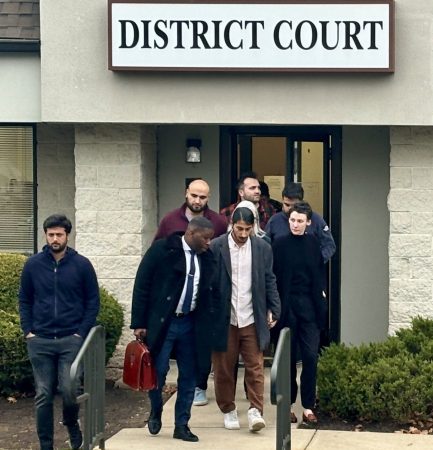
    Mirvan Dinler, 27, was set to begin his trial before Delaware County Court Judge Mary Alice Brennan when he instead entered the no-contest plea to rape of an unconscious victim. Prosecutors said Dinler attacked the woman after driving her home from a bar in North Philadelphia and walking her to her dorm room as she drifted in and out of consciousness.

    Semen found on a comforter and towel inside the dorm room were found to be a match to Dinler’s DNA, according to Assistant District Attorney Danielle Gallaher. And surveillance footage taken from cameras outside of the dorm building showed Dinler escorting her inside, arm-in-arm, because she was too intoxicated to walk on her own, the prosecutor said.

    In agreeing to plead no-contest, Dinler did not admit guilt but did not dispute the prosecution’s statement of the facts in the case.

    Gallaher said she would seek a prison term of three to six years at sentencing in October.

    Dinler’s attorney, Shaka Johnson, did not return a request for comment Monday. Previously, Johnson said there were “glaring, glaring cracks” in the woman’s account of what happened that night.

    The woman, who was a senior at Villanova at the time, testified at a preliminary hearing that she woke up, drunk and disoriented, as Dinler raped her in September 2024. She said she was too terrified to fight back or call out for help.

    Earlier that evening, she said, she had been drinking with friends on campus before the group headed to Warehouse on Watts, a bar in North Philadelphia.

    The woman said she did not drink regularly, but on that night had three glasses of wine and two shots of liquor. After arriving at the bar in the city, she said she felt dizzy and ill, and decided to return home.

    “I knew I wasn’t feeling good, and I didn’t want my friends to have to babysit me,” she said.

    The woman ordered an Uber, and Dinler arrived in his Toyota Prius to pick her up, she said.

    Her memory was spotty, she said, until waking up to find that Dinler was raping her.

    After the assault, she said, Dinler returned to the dorm and loudly banged on her door, demanding that she pay a cleaning fee because she had vomited in his car during the ride.

    Gallaher, the prosecutor, said there was evidence that Dinler, using the victim’s phone with her permission, sent a $150 payment to a friend of his through Venmo. That person then transferred the money to Dinler’s bank account.

  • Venezuelans search more earthquake ruins as aftershock rattles rescuers in disaster zone

    LA GUAIRA, Venezuela — With the window for finding survivors shrinking fast, Venezuelans combed Monday through more ruins of buildings toppled by last week’s powerful back-to-back earthquakes, and a 4.6 magnitude aftershock rumbled through the disaster zone in the northern state of La Guaira.

    Relief organizations say the first 72 hours after a natural disaster is the most crucial time period for rescues, though survival can be extended if people have access to food and water. Five days after the twin quakes struck northern Venezuela, attention turned to the humanitarian crisis that was taking shape in devastated regions.

    The death toll stood at more than 1,700 people, according to the government.

    Major questions loomed about whether the cash-strapped government under acting President Delcy Rodríguez — who came to power in January after the Trump administration seized former President Nicolás Maduro — will be able to coordinate the effort needed to care for thousands of people who have been left homeless.

    Facing criticism that authorities have done too little, too slowly, the government has promoted its rescue efforts on social and state-run media. On Monday, it shared footage of Rodríguez inspecting a school-turned-shelter for displaced people in the hard-hit northern town of Catia La Mar and of survivors being lifted out of the ruins to applause.

    But such bright spots are rare at the quake’s epicenter, where families keep vigil at search sites.

    “We have to stay strong, even without food, without sleep,” said Ana Rada, watching as civil defense workers looked for her brother. “Until I see the body, I still have hope.”

    Aftershock rattles rescuers

    Following a weekend of smaller aftershocks, Monday’s temblor struck near the epicenter of last week’s quakes — 17 miles north of Caraballeda on Venezuela’s Caribbean coast — and measured 4.6 magnitude, according to the United States Geological Survey. Colombia’s geological survey put the magnitude at 5.1.

    Jorge Rodríguez, the leader of the Venezuelan National Assembly, said there were no immediate reports of additional damage, but the aftershock sent residents in the capital of Caracas screaming into the streets.

    “Here we are again, back in the street. I don’t know when we’ll have a moment of true peace,” said Concepción Hernández, 51, who evacuated her apartment building in the Chacao municipality of Caracas.

    The Caracas Metro said it would temporarily suspend service Monday to inspect infrastructure following the aftershock.

    Questions over extent of U.S. help

    The disaster has raised expectations for the Trump administration, considering its takeover of Venezuela’s oil industry earlier this year.

    In a briefing with reporters, a senior State Department official said 300 first responders sent from the U.S. are working on the ground — alongside dozens of other international rescue teams — and two dozen C-17 military transport planes arrive every day with supplies. Financial support from the U.S. now exceeds $300 million.

    The American military is also assisting with some repairs, including damage to the port in La Guaira to enable the arrival of more relief supplies by sea. Another team is helping to manage air traffic after the quakes destroyed part of the control tower at Simón Bolívar International Airport in Caracas, said the official, who spoke on condition of anonymity because he was not authorized to speak publicly.

    It seemed unlikely, however, that the Trump administration would grant temporary legal protections to Venezuelans as previous administrations have done for people from disaster-stricken countries already in the U.S. Such action was taken after earthquakes in 2010 in Haiti and 2001 in El Salvador.

    Venezuelans have been a major focus of the Trump administration’s immigration crackdown, with officials revoking temporary legal protections for hundreds of thousands of Venezuelans and stepping up deportation flights.

    Rescuers included a miner deported from the U.S.

    Among the rescuers digging through the rubble Monday in La Guaira was miner Jean Sosa, who said he was deported from the U.S. in January over a missed immigration court hearing and returned to Caracas last month, dazed by an odyssey that he said began in shackles at an Arizona immigration detention center. The journey involved traveling by bus through five countries after immigration agents left him in southern Mexico without his passport, phone, or wallet.

    Since arriving Wednesday in La Guaira to visit family and friends, Sosa has raced to pull people from the rubble in the absence of national rescue teams.

    “I’m not involved in politics, but I believe many people could have been saved if there had been equipment and support from top authorities from the very beginning,” he told the Associated Press, wearing a helmet and a black T-shirt splotched with dust in the port city where he said he had already rescued 20 people alive.

    Those rescues heartened him, he said, and gave him hope for more despite the lack of supplies. “We’re working without gloves, without equipment, borrowing supplies, improvising bandages and whatever else we can.”

    Government, U.N. offer vastly different numbers of people affected

    The full scale of the damage remained unclear. Jorge Rodríguez, who is the brother of the acting president, said that as of Monday, a total of 15,866 people had been affected, while the number of damaged or collapsed buildings had reached 855.

    A preliminary assessment by NASA estimated that the earthquake damaged or destroyed 58,870 buildings. The assessment relied on radar imagery from the European Space Agency’s Sentinel-1 satellites, which can detect changes to infrastructure.

    The United Nations has said that up to 6.8 million of Venezuela’s nearly 30 million residents may be affected, which could mean being displaced or losing access to essential services such as electricity and water.

    Because of the chaos and poor cell phone service, many Venezuelans have turned to non-governmental digital databases to report their loved ones as missing. More than 50,000 people were reported missing on one such database, though it is unclear how many have been found.

  • Three men have been shot near Hunting Park Rec Center over the last month in what appear to be linked crimes, officials say

    Three men have been shot near Hunting Park Rec Center over the last month in what appear to be linked crimes, officials say

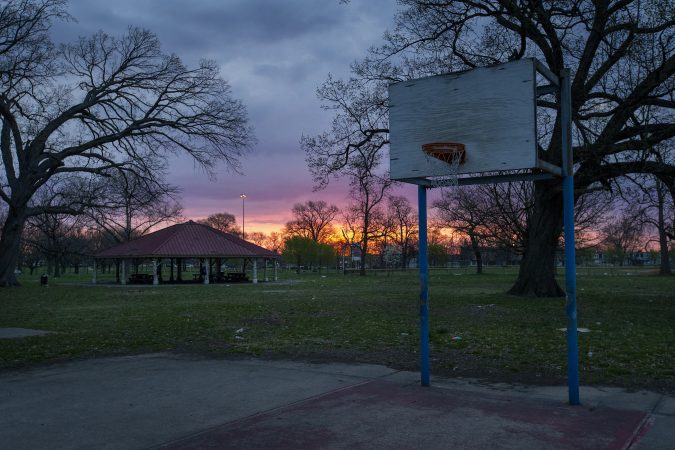
    Philadelphia police are investigating whether three men shot near the Hunting Park Recreation Center in the last month — two of them fatally and just six days apart — were targeted by the same gunman, according to law enforcement sources.

    The two men killed this month were found partially undressed and shot in the torso inside the large North Philadelphia park, said the sources, who spoke on the condition of anonymity to discuss an ongoing investigation. A third man was shot in late May and survived.

    Police believe the same person was involved in both killings, the sources said, and are looking into whether the men had met the suspect through a dating app.

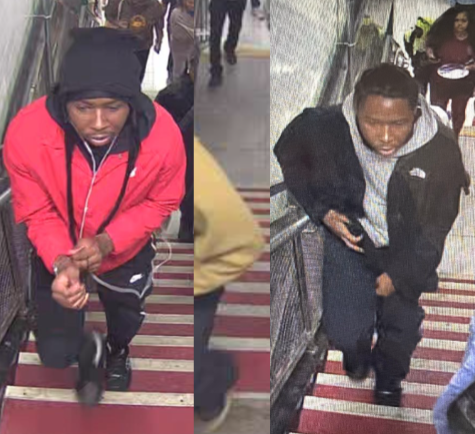
    Deputy Police Commissioner Frank Vanore said investigators have identified a person of interest interest in the case, a man in his late teens or early 20s, after capturing his image on surveillance footage as he entered and exited a Broad Street Line station.

    The man — whom investigators did not identify — is considered armed and dangerous, Vanore said at a news conference Monday.

    Philadelphia police said this man is a person of interest in the shooting deaths of two men near the Hunting Park Recreation Center in separate incidents within the last 10 days.Courtesy of Philadelphia police

    “All three incidents are perpetrated very similarly, in the same geographic area,” he said. “We’re believing now that they’re all connected and being done by the same person.”

    On June 20, officers responded to the park, at 1101 W. Hunting Park Ave., shortly after 10 p.m. and found Martin Higgins, 45, on the bleachers of the baseball field, suffering from a gunshot wound to the torso. He died at the scene, police said.

    Then, on June 26, police responded and found another man just before 11 p.m. suffering from multiple gunshot wounds near the basketball courts. Police have not yet identified the man but said he was 29-years-old.

    Police now believe a third shooting last month is linked to the gunman.

    In that May 29 incident, a 55-year-old man was shot in the elbow and torso in the park just before 10 p.m. The victim later told investigators that a man wearing all black who appeared to be in his 20s approached and told him that he was being robbed, according to Vanore.

    Vanore said investigators had yet to determine a motive tying the cases together, though they believe robbery is the motivation behind the shooting that was not fatal.

    Asked whether the victims had met the suspect on a dating app — a detail law enforcement sources said they are investigating — Vanore declined to comment, citing the ongoing investigation.

    “If that is [part of the case], that’s something we’ll have to develop moving forward,” he said. “But at this point we know that this individual appears to be preying on people.”

    Higgins’ relatives could not be immediately reached for comment Monday. An obituary shared online said he was a graduate of Temple University’s business school and worked as an inspector for the city’s Community Life Improvement Program.

    “Marty was known for his passion for clothing, style, and self-expression,” the obituary said. He had a “kind heart, generous spirit, and unwavering support for those he loved” and “was the person who showed up when someone needed him, always making time for family and friends no matter what was going on in his own life,” his family wrote.

    He was one of six children and was an uncle to many nieces and nephews.

    Meanwhile, as investigators continue to search for the gunman, they are asking anyone with information about the crimes to contact the homicide unit at 215-686-3334 or submitting an anonymous tip at 215-686-TIPS (8477).