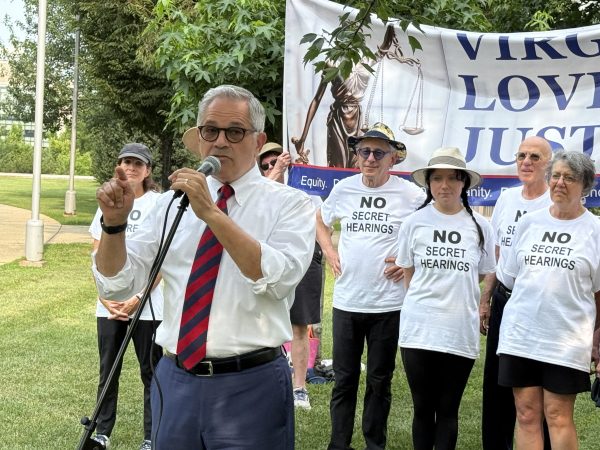
WASHINGTON — Philadelphia District Attorney Larry Krasner, thumbing his nose at national Republicans on the morning after they subpoenaed him, rallied protesters on Capitol Hill on Thursday as one of his counterparts in Virginia, who had also been compelled by a subpoena from the U.S. House Judiciary Committee, prepared to testify behind closed doors.
Taunting both Rep. Jim Jordan (R., Ohio), the committee chair, and President Donald Trump outside the building where the committee meets, Krasner railed against Republicans generally and the ongoing legal maneuvers he said are intended to ensure progressive prosecutors like him “roll over and play dead.”
“Jim Jordan, can you hear me?” he asked as he stood before a crowd of mostly Virginians outside the Rayburn House Office Building. “Why don’t you come out here? We miss you. We haven’t seen you, and apparently, you don’t like us when we’re with you in public.”
The monthslong war of words escalated on Wednesday, when Jordan ordered Krasner’s office to produce documents about its handling of immigration issues. The Republican-led committee requested the documents in May as it accused the district attorney — as well as Philadelphia Police Commissioner Kevin Bethel and Sheriff Rochelle Bilal — of protecting criminal immigrants through sanctuary policies.
Republicans have similarly targeted multiple jurisdictions, including Arlington County and the city of Falls Church, in Virginia’s Washington suburbs.
The committee subpoenaed the area’s top prosecutor, Parisa Dehghani-Tafti, in March for documents related to protests outside the home of deputy White House chief of staff Stephen Miller. After a back-and-forth in which Dehghani-Tafti requested a public hearing, the committee wrote in a July 1 letter that it was compelling her to appear to answer questions about “politicized interference in a doxxing investigation and your preferential treatment of illegal immigrants accused of criminal conduct in your district.”
“I’m here because I respect the law, and I’m here because I upheld the rule of law,” Dehghani-Tafti said Thursday as she walked by the gathering of about 75 people, some of whom wore shirts and held signs reading “No Secret Hearings.”
Krasner said the committee was afraid to conduct the questioning in a public setting because Dehghani-Tafti, whom he described as a top-notch prosecutor and communicator, would “wreck them.”
“And they are not just trying to do it to her,” Krasner said. “They’re trying to do it to a whole bunch of us — pretty much anybody who they see as standing in their way.”
Krasner did not otherwise address his own subpoena while speaking in Washington.
Asked for comment, a spokesperson for the committee said Thursday: “We look forward to Mr. Krasner’s compliance with the subpoena.”
In an interview after his speech, Krasner said it was important for him and other local prosecutors, some of whom were in attendance Thursday, to join together to show that “none of us are backing down.” He said that he has the same legal representation as Dehghani-Tafti to deal with the situation, and that if he was compelled to testify he would answer the committee’s answers truthfully.
“I’d be shocked if these cowards wanted a public hearing,” Krasner said. “Not because I’m so important, but because the questions are so stupid, and the truth harms them so much.”
In a private setting, he said, the committee can control any transcripts or videos and decide when and how to make them public. He compared the situation to “Putin’s Russia,” mocked Jordan for not completing law school, and repeatedly called Trump the “criminal-in-chief.”
Krasner also alleged that part of the reason he and others are being targeted is because of their ability to prosecute state-level crimes, for which Trump does not have the power to pardon. That includes potential crimes related to Jeffrey Epstein, the convicted sex offender and former Trump associate who died in 2019.
“Make no mistake, Epstein class, we are coming for you,” Krasner said in shouting distance from federal lawmakers. “We’re coming for you now, or we’re coming for you later.”
Epstein’s private islands were in the U.S. Virgin Islands and his mainland home was in Florida, outside Krasner’s jurisdiction in Philadelphia.
Late Thursday afternoon in Philadelphia, Krasner said he was in the process of complying with the subpoena.
“It encompasses an infinite number of documents, many of which they’re not entitled to have, but there’s little doubt they’re entitled to have some of them, and what the law requires is what we’re going to do,” he said. “It is very likely that sooner or later we’re going to turn over some documents.”
He derided Jordan as “the criminal-in-chief’s little helper” and accused the House committee of being on a “silly mission” to try to show fault with how honest prosecutors are handling immigration issues in their jurisdictions.
“If they want to mess with Philly, they’re going to come through me,” Krasner said. “My job is to protect Philadelphians. I’m going to do that. We’re not going to have ICE agents or federal agents murdering people on the streets of Philadelphia with no consequence.”
This month ICE agents fatally shot two men in six days during traffic stops in Texas and Maine.
The House committee gave Krasner a July 29 deadline to provide the documents it requested. In a letter Wednesday, Jordan said Krasner’s “refusal to cooperate” included “bizarre and baseless demands and conditions.”
“The Committee has no obligation to entertain your unreasonable demand because as federal courts have explained, it is exclusively the prerogative of the Committee to determine how and in what manner it conducts its oversight,” Jordan wrote.
Staff writer Jeff Gammage contributed to this article.
BERLIN — No one starts a war expecting it to last forever.
Yet, since Vietnam, American presidents have repeatedly gotten into conflicts that seem like they could last forever, at least until the next president — or the one after that — decides that the expense and political pain are not worth it, declares victory and goes home.
On Iran, President Donald Trump may have fallen into the same trap.
He campaigned for office vowing to end wars, not start them, and to never get involved in a forever war, let alone one in the Middle East. And yet he risks doing so in Iran, his critics say.
The war that Israel and the United States began with such force has alternated between moments of negotiation and military strikes. They have failed to reach Trump’s stated goals of regime change or ending Iran’s nuclear program, while the war has created a new, seemingly intractable problem, bottling up the Strait of Hormuz.
With diplomacy at a dead end, at least for now, a frustrated Trump finds himself back at war, the ceasefire broken, the strait blocked. The memorandum of understanding he said “achieves everything we set out to accomplish” — despite wildly divergent interpretations of it — is in tatters after less than a month.
“Both sides looked to the memorandum of understanding as the continuation of the war by other means, not as a bridge to peace,” said Ali Vaez, Iran project director for the International Crisis Group.
Without a long-term strategy to produce a sustainable settlement, he said, there’s a risk of creating “the circumstances for a forever war.”
The idea of the “forever wars” began with 9/11 and the “global war on terror,” pulling the United States into long military engagements, with troops on the ground, in both Afghanistan and Iraq. Those conflicts, which began by toppling hostile regimes before turning into counterinsurgency campaigns, ended either inconclusively or in defeat after considerable expenditure and loss of life.
Powerful leaders with powerful militaries are prone to fall into “the short-war fallacy,” said Lawrence D. Freedman, emeritus professor of war studies at King’s College, London, who last year wrote an article, “The Age of Forever Wars.” “They think they can win quickly and not suffer adverse consequences,” he said.
Like Trump in Iran and Russian President Vladimir Putin in Ukraine, “they fail to appreciate the limits of military power and so set objectives that can be achieved, if at all, only through prolonged struggle,” Freedman said.
And even the most sophisticated military forces are not enough, if there’s no strategy to turn battlefield superiority into lasting political and diplomatic success. Trump faces the added challenge of trying to win using only air and sea power, without politically unpalatable use of ground troops on Iranian soil.
The Persian Gulf war of 1991 was quick and succeeded in its aims, because President George H.W. Bush had a limited political objective — drive Saddam Hussein out of Kuwait. That was a lesson lost on his son, President George W. Bush, in the second war against Iraq, which ended up enhancing Iran’s power in the region. In Afghanistan, after the younger Bush drove out the Taliban, he and his successors tried vainly to remake the society, but when Washington tired of the effort, the Taliban returned.
There is an argument, sometimes made by Trump himself, that he went to war in Iran to finally end what he considered a 47-year war between the United States and Iran, which began with the fall of the Shah of Iran in 1979 and the taking of more than 60 American hostages.
The U.S.-Iran “forever war,” argued Vali Nasr, a professor at the Johns Hopkins School of Advanced International Studies, is just another round of a conflict that has sometimes blown hot and sometimes resulted in agreement, like the 2015 nuclear deal Trump tore up in 2018.
Aaron David Miller, a senior fellow at the Carnegie Endowment for International Peace, said Trump, urged by Israel, has also inserted himself in a parallel “forever war” — the one between Israel and Iran, which is being played out with Iran’s proxies in Lebanon, the Palestinian territories, and Yemen.
Trump still has the ability to sell this unpopular war to his base as a victory of some kind and go home. But to the surprise of many, he seems to be doubling down, albeit with no clear path to a diplomatic settlement. And his commitment to keep the Strait of Hormuz open, while Iran insists on maintaining control, could mean a very long U.S. military engagement, even with the help of allies.
Still, the Iran war is different, especially compared to Afghanistan and the second war against Iraq. In both of those wars, thousands of U.S. troops were on the ground for long periods and ended up fighting militias and terrorists opposed to new governments propped up by the United States — not fighting a state like Iran.
And unlike the case in Vietnam, Iraq, or Afghanistan, Iran can inflict economic pain on the United States by blocking access to the Strait of Hormuz, which gives the government in Tehran more effective leverage and is a prime reason it will refuse to give up control.
There will be no return to the situation before the war, said Suzanne Maloney, director of foreign policy at the Brookings Institution. As in Iraq, American assumptions and misperceptions changed the balance of power in the region, she said, and now the days of the Strait of Hormuz fully free for transit are probably over.
There can be “a new normal,” she said, “but with a much higher American force posture in the region” given Iran’s ability to hit ships whenever it pleases.
Because Washington’s stakes in this war are simply smaller than those for Iran, said Nasr, who worked on the Afghan war, “the pace begins to slow, while the other side is willing to keep the same level of intensity.” As the United States began to withdraw from Afghanistan, as from Vietnam, “the balance began to shift.”
But a negotiated end to the war in Iran still feels far away. Both sides have proved they can’t even stick to a minimal framework agreement that defers all the substantive issues to the future, Vaez said. If they can’t even do that, he added, “that could remove the last barrier between episodic confrontation and a forever war.”
The Pennsylvania Department of Environmental Protection has declared a statewide code red air quality day due to Canadian wildfire smoke blowing into the Philadelphia region.
The poor air quality prompted the start time for the Phillies-Mets game to be moved an hour earlier. A Phillies game was postponed in June 2023 due to air quality issues caused by wildfire smoke.
A heat advisory is also in effect in Philadelphia, where the heat index could reach 100 degrees. There’s also the potential for an isolated thunderstorm this evening between 4 p.m. and 11 p.m.
// Timestamp 07/16/26 7:00pm
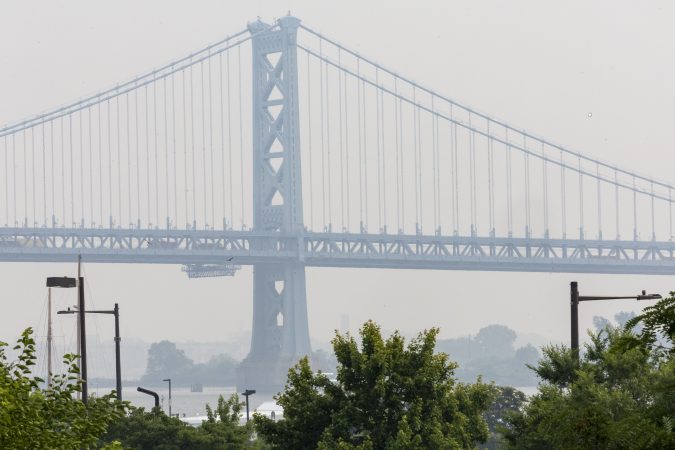
Suffocating dome of smoke descends over Philly region
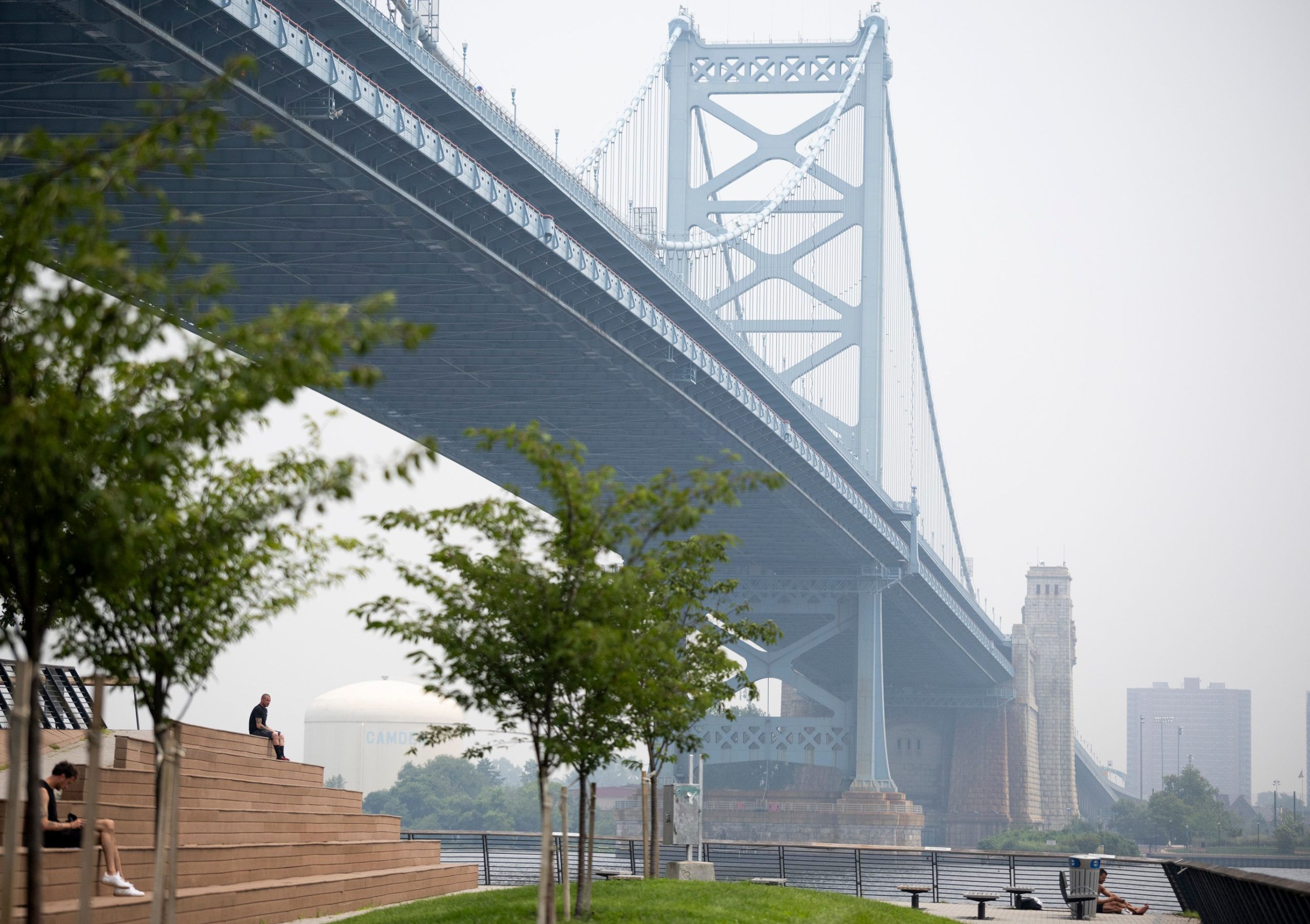
John Burns Jr., of Grays Ferry Philadelphia, Pa., sitting out at Cherry Street Pier with the wildfire smoke from Canada in Philadelphia, Pa., on Thursday, July 16, 2026.Tyger Williams / Staff Photographer
The polluted campfire-like vaporfrom Canadian wildfires plummeted air quality Thursday, lowered visibility enough that flights were delayed at Philadelphia International Airport, and prompted cancellation of a concert at Cooper River Park in Camden County.The Phillies moved Thursday night’s game up one hour due to air quality concerns.
The smoke, which was expected to blanket the region at least through Friday, originated from fires burning in Western Ontario, said Sarah Johnson, a meteorologist at the National Weather Service’s Mount Holly office.
It was swept in by winds that mixed to keep it closer to the ground.
“It’s just a factor of the winds at all levels kind of working together,” Johnson explained.
It is difficult to pinpoint when the air quality might return to normal, she said. Those forecasts come from state environmental protection departments and are usually no more than 48 hours out.
What to know about the wildfire smoke in Philly and its health impacts
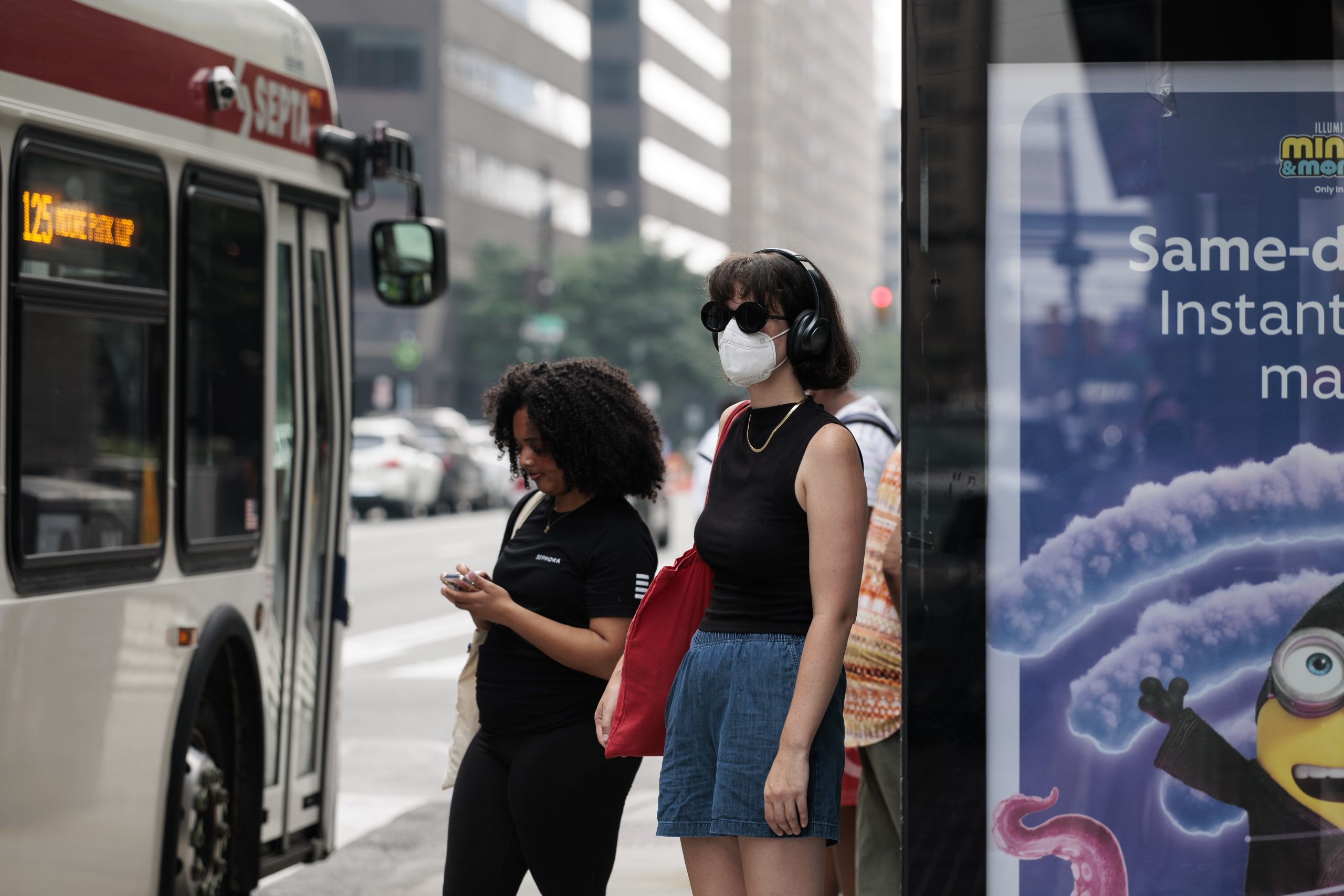
Penn State graduate student Ray Boone waits for the bus with a face mask on because of the air quality, on Thursday, July 16, 2026 at 17th Street and JFK Boulevard in Philadelphia. The Pennsylvania Department of Environmental Protection has declared a statewide Code Red air quality day due to Canadian wildfire smoke blowing into the Philadelphia region.Monica Herndon / Staff Photographer
As Canada grapples with hundreds of active wildfires, the rest of North America is feeling the impactsstruggles with air quality alerts.
In Philadelphia and elsewhere, the air quality score is considered unhealthy, particularly for the most sensitive people.
Whether you are planning on going out or staying home, here’s what three experts had to say about staying healthy and what precautions are needed:
Pennsylvania DEP issues statewide code purple alert for Friday
Air quality is expected to continue to deteriorate Friday, with the Pennsylvania Department of Environmental Protection issuing a code purple alert for the entire state as smoke from wildfires in Canada and Minnesota continue to blanket the area.
A code purple alert indicates “very unhealthy” air quality conditions, which could effect the general population. It is the second-highest step on the U.S. Environmental Protection Agency’s color scale, with only maroon — which indicates a “hazardous” air quality — outranking it.
Department officials advised all residents to limit their time and exertion levels outside. Sensitive groups — including children, elderly people, and people with respiratory illnesses — are advised to avoid outdoor activities altogether.
Friday’s code purple alert is one step above Thursday’s code red.
The state DEP advised that residents and businesses should avoid using gas-powered lawn and garden equipment, and not burn leaves or trash to help keep fine particulate pollution levels down amid the alert.
The Phillies’ game against the New York Mets will begin an hour earlier than initially scheduled, due to air quality concerns.
Now, the game will start at 6:10 p.m., the Phillies announced Thursday afternoon. Gate opening times, however, will stay the same, with third base and left-field entrances opening at 5:10 p.m., and all other gates opening a half hour later.
Thursday’s game was initially scheduled to start at 7:10 p.m., and will kick off a three-game series against the Mets at Citizens Bank Park.
In 2023, the Phillies postponed a game against the Detroit Tigers over air quality issues from Canadian wildfires.
Air quality is ‘potentially pretty dangerous’ for sensitive groups
Thursday’s smoky air is not just overshadowing Philadelphia’s summer sky; it’s also clouding your lungs.
The city’s air quality score is in the red stage, according to the Philadelphia Department of Public Health. It is not as hazardous as the maroon level, but the air is still considered unhealthy — particularly for more sensitive populations.
“It’s potentially pretty dangerous air quality to individuals who are fragile,” said Dr. Michele Columbo, the allergy and immunology chief at Main Line Health. “They can have difficulty breathing, dry cough, wheezing, tightness in the chest, and even feel light-headed because of high heat.”
You might not consider yourself “fragile,” but Columbo said people 65 or older, folks with asthma or any kind of lung issues, individuals with cardiovascular disease, children, and pregnant women are the most affected by the current air conditions.
While most of the city is continuing daily life as normal, Columbo cautions people in the sensitive category against staying outside for more than a couple of minutes at a time, and even encourages rescheduling outdoor activities.
Children in particular are at risk because they breathe faster than adults. And pregnant people in the third trimester may already be experiencing difficulty breathing without the added contaminants to their lungs.
Folks falling in this category should stay inside, where setting the air-conditioning to recirculation can help, Columbo said. For people who can’t avoid going outside, wear an N-95 mask, he added.
Columbo also urged patients with chronic respiratory problems to make sure to carry and use their inhalers when outside.
A statewide code red air emergency and heat advisory is not stopping global EDM phenomenon Deadmau5 from headlining FIFA Fan Festival in Lemon Hill Thursday night.
As air quality reaches unhealthy levels, according to five monitoring stations across the city, and the heat index could read 100 degrees, Fan Fest officials said the festivities and Deadmau5 performance would go on as scheduled.
“We encourage the public to take proper precautions if attending Fan Fest today,” said Melissa Ferdinand of Philadelphia Soccer 2026, the host city committee that runs the festival.
The festival opens from 5 p.m. to 9 p.m., with Deadmau5 taking the stage at 7 p.m. The Ghosts N Stuff producer posted to Instagram three hours ago that he was en route to Philly, and just so happened to bump into his contemporary and global DJ icon, Zedd, Thursday morning.
Wildfire smoke not dampening some tourists’ time in Philly: ‘It’s much worse out west’
Julie and Bill Guise, 66 and 72, respectively, basked in the somewhat cool breeze billowing from a giant fan inside the President’s House complex at around 1 p.m. hoping to get relief from the oppressive air. The Flagstaff, Ariz., residents, however, were unaware of what exactly was causing it.
“We couldn’t figure out what it was,” Bill Guise said of the haze in the atmosphere.
It wasn’t out of lack of familiarity with wildfire smoke. It was the opposite. Their region of the country is so often affected by this kind of smoke, and at much closer range, that this level of smokiness didn’t even register to them as wildfire-related.
The couple was in town visiting their son, a jazz bassist and University of the Arts graduate. While the smoky air is uncomfortable for them, as is the general humidity that the desert-dwellers are unaccustomed to, they said it’s unlikely to change their plans for the day.
“We have such limited time here and so many things to do,” Bill Guise said.
The couple was meeting with their son later at Valley Green Inn for dinner and planning on seeing a play tomorrow morning at Penn’s Landing. They don’t plan on letting the haze get in the way.
“It’s much worse out west,” Julie Guise added, likening the western smoke, when it’s extra bad, to sitting next to a campfire.
For father-daughter duo David and Brayden DeMaria, this level of smoke is somewhat of a reprieve from what they were experiencing in Syracuse, N.Y., before they traveled down to Philly.
“We left yesterday morning and it was, like, orange leaving the house,” Brayden DeMaria, 19, said standing outside Independence Hall around 1:30 p.m. “The color of the sky is completely different.”
The two came to town for Wednesday’s Tame Impala concert (though they were mostly there for the opener, Djo) and will return home later today. They planned on packing the day with finishing their trip to Independence Hall, thrifting, and then hitting up Franklin Fountain for ice cream.
Deteriorating air quality appears to be heading toward Philly
Air quality is deteriorating rapidly in Central and Western Pennsylvania this afternoon as smoke from Canadian wildfires pours across the U.S. border, data from government air sensors show.
Air sensors in Centre County recorded an air quality index of 345 at 1 p.m., or hazardous, the highest and most dangerous level tracked by the Environmental Protection Agency. Other sensors in Lycoming and Bradford Counties recorded AQIs above 200, or very unhealthy.
Under these conditions, according to the EPA, the entire population is at risk for adverse health effects with prolonged exposure.
The worst conditions appeared to be gradually drifting southeast across Pennsylvania Thursday afternoon. Forecasts show the thickest smoke reaching the Philadelphia region late Thursday into Friday morning.
(function () {window.addEventListener(‘message’, function (e) { var message = e.data; var els = document.querySelectorAll(‘iframe[src*=”‘ + message.id + ‘”]’); els.forEach(function(el) { el.style.height = message.height + ‘px’; }); }, false); })();
Flights delayed into Philadelphia due to low visibility
The Federal Aviation Administration issued a ground delay on flights headed into Philadelphia International Airport Thursday due to low visibility caused by wildfire smoke.
According to FlightAware, 148 flights have been delayed heading into PHL Thursday. Currently, the posted delay is 66 minutes and scheduled to remain in place until 11:59 pm.
There are currently no delays on planes departing PHL.
Travelers are encouraged to check with their airlines for the latest flight information, as the impact of Canadian wildfires is expected to linger across the Philadelphia region Friday.
Concert featuring Beach Boys co-founder canceled due to poor air quality
The poor air quality across the Philadelphia region is beginning to impact events scheduled to take place outdoors.
A concert featuring Al Jardine, co-founder of the Beach Boys, scheduled to take place at Cooper River Park in Pennsauken, N.J., at 8 p.m. on Thursday has been canceled, organizers announced.
The show has been rescheduled for Tuesday, Aug. 4.
There has yet to be any announcements regarding Thursday night’s Phillies game against the New York Mets at Citizens Bank Park, which is scheduled to begin at 7 p.m.
Temple doc says smoke-filled air has a ‘uniquely toxic profile’
Eric Balaban, a pulmonary and critical care fellow at Temple University, was hesitant but still went running Thursday morning, even as smoke from Canadian wildfires smothered the region.
“If I didn’t have an addiction to running, I would not have gone. And I would recommend other people not to run. Do as I say, not as I do,” he said with a laugh.
But exposure to the smoke is a serious matter, Balaban said. He said that smoke that travels “carries a uniquely toxic profile that poses severe health risks to both healthy individuals and vulnerable populations.”
Balaban said the smoke, which has traveled hundreds of miles, undergoes what’s known as “photochemical aging,” meaning it interacts with oxygen, heat, and sunlight to help generate high levels of ground-level ozone and highly irritating aerosols.
That’s in addition to the ground-level ozone also produced by weather conditions such as on Thursday.
Ground-level ozone is a pollutant that forms when nitrogen oxides and volatile organics emitted by vehicles, power plants, and industry react in sunlight, especially during hot days. It can cause airways to constrict, leading to shortness of breath, so it can especially affect those with asthma, emphysema, and chronic bronchitis.
Balaban also explained that the fine particulate matter (PM2.5) within the smoke is small enough to cross from the lungs directly into the bloodstream, bringing a body-wide exposure that can increase the risk of heart attacks and strokes, in addition to causing acute chest tightness, shortness of breath, and dizziness in otherwise healthy people.
Those risks are amplified for those with preexisting conditions like asthma or COPD, he said.
He suggests people replace home air-conditioning filters to improve indoor air quality and, if they have existing conditions, to make sure they have extra respiratory medications and inhalers on hand.
Balaban emphasized the world is undergoing an environmental crisis with climate change, and encouraged the public to address the “root cause” of it through civic action.
“We have opportunities to mitigate and prevent these environmental catastrophes from happening, but it is something that we need to agree to do together,” he said.
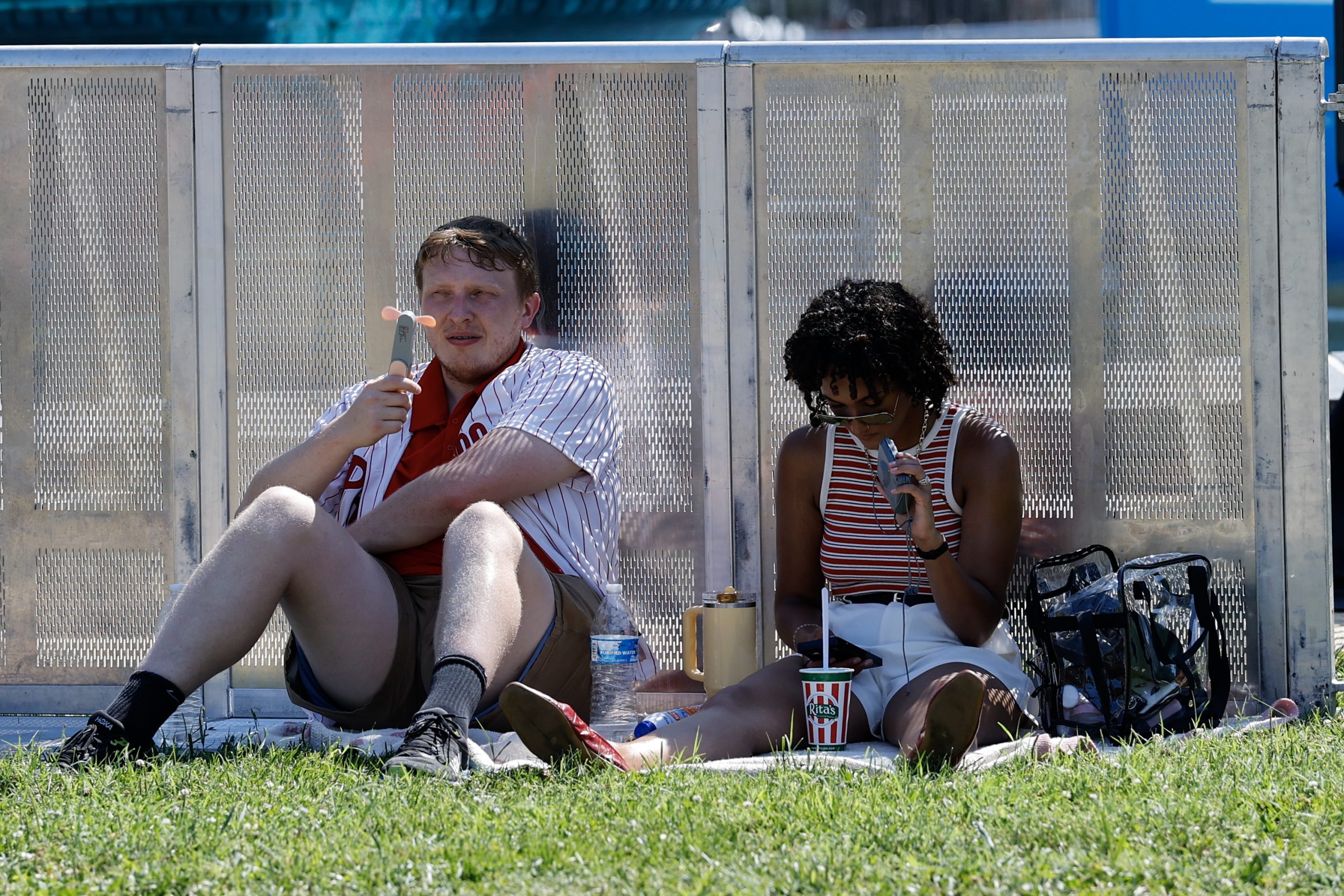
People try to beat the heat with a hand fan in limited shade in Center City.Yong Kim / Staff Photographer
Ruth McDermott-Levy, a professor at Villanova University’s school of nursing, says that not only has air quality become a risk today for those already with health issues, but for everyone.
“All of us are at risk today,” McDermott-Levy said. “Certainly there are groups of people at greater risk, from pregnant women, children, older people, and those with cardiac and respiratory illnesses. But we’re at an unhealthy level for everyone.”
She has previously written an article about the impact of wildfire smoke on health. This newest round of wildfires from Canada, as well as the second heat dome to descend on the area in as many weeks, indicates climate change, she said.
Wildfire smoke is particularly damaging, she said. Wildfires carry not only smoke from burning trees, but from buildings it sweeps up, and pollutants already in the air. That can include pollution coming into Philadelphia from Boston and New York, McDermott-Levy said.
“Wildfire smoke is among the most toxic air pollution that we have,” she said.
She said that pollution not only can penetrate the human bloodstream, but also settles on crops and livestock.
She suggested that those with tickets to tonight’s Phillies game reconsider going, especially children whose lungs are still developing. A Phillies-Tigers game was postponed in 2023 because of Canadian wildfire smoke, but no announcements have been made regarding Thursday’s game.
Meanwhile, high heat and sunlight combine with gases in the air to produce more ground-level ozone.
“This is climate change and we are living it,” she said.
Philly health officials urge residents to limit outdoor activities
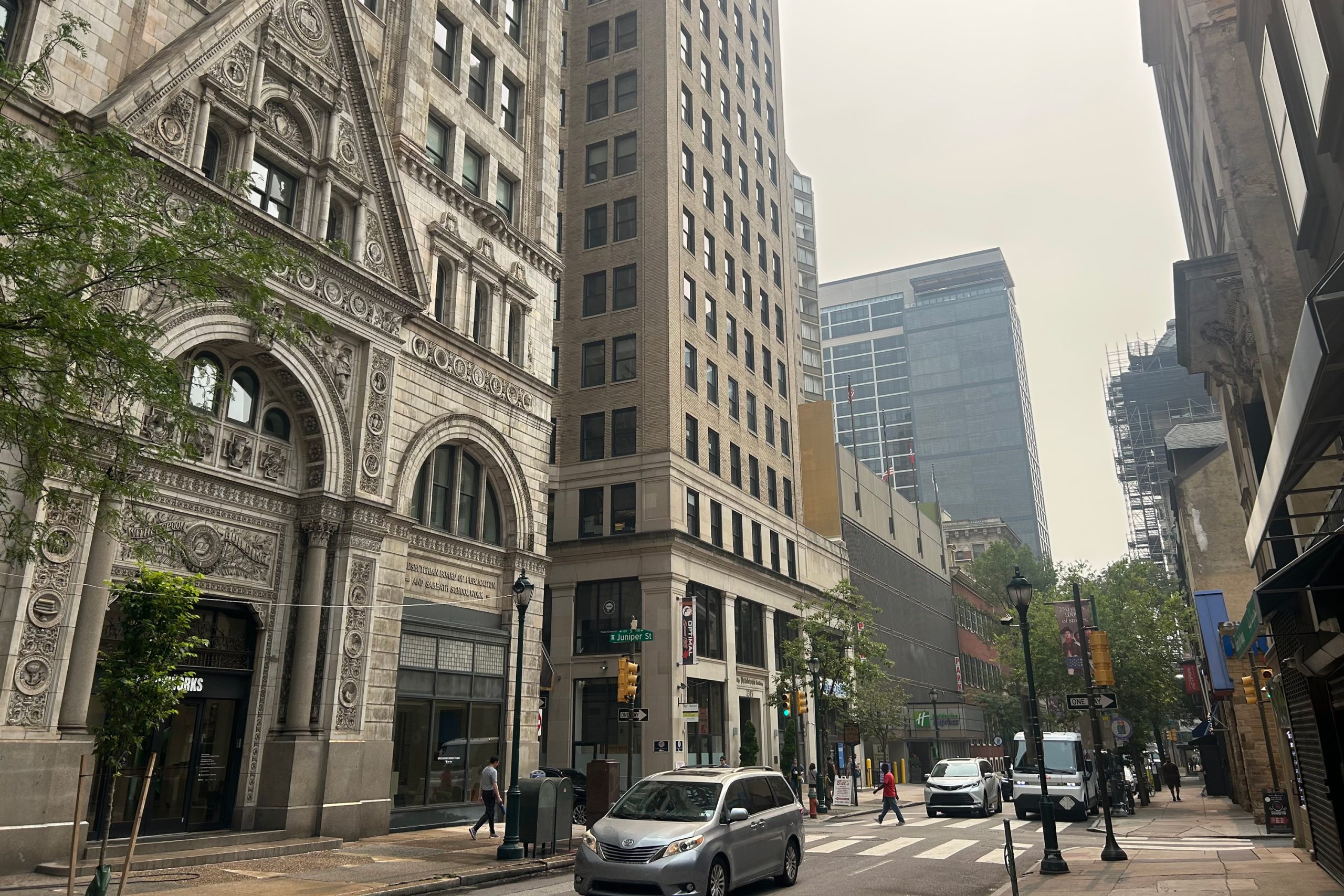
Hazy conditions in Center City Philadelphia Thursday, caused by wildfires in Canada.Denali Sagner / staff
With Philadelphia under a Code Red Air Quality Alert, city officials are urging residents to limit their time outdoors.
“Today is not the day to start your marathon training plan,” Palak Raval-Nelson, commissioner of the city’s Department of Public Health, said in a statement.
As of 11 a.m., Philadelphia’s Air Quality Index was 182, solidly in the middle of the “unhealthy” range, which means conditions are bad enough for members of the general public to experience health effects.
Especially at risk are residents with heart or lung conditions, who should take “extra special care” outdoors Thursday, Raval-Nelson said. Children, older adults, pregnant women, and people with weakened immune systems are also at higher risk.
People experiencing symptoms including trouble breathing, heart palpitations, nausea, or dizziness are encouraged to seek immediate medical attention.
Despite the warning, city services will operate normally. Employees working outdoors are being encouraged to take frequent breaks and should consider wearing a mask, the city said.
Most Philly Parks and Recreation activities will operate normally
City pools will be open Thursday and won’t have restrictions based on air quality.Jessica Griffin / Staff Photographer
The wildfire smoke will not disrupt most Philadelphia Parks and Recreation facilities or activities on Thursday, according to spokesperson Ra’Chelle Rodgers.
The city’s pools and parks will not have restrictions based on air quality, she said. Summer camps may cancel some trips, outdoor sports or other activities on a case-by-case basis, but will otherwise remain open and move indoors.
The department is following the city’s health guidance on air quality, and instructing leaders to monitor the situation and use their best judgment, Rodgers said.
Poor air quality threatens the Phillies-Mets game in South Philly
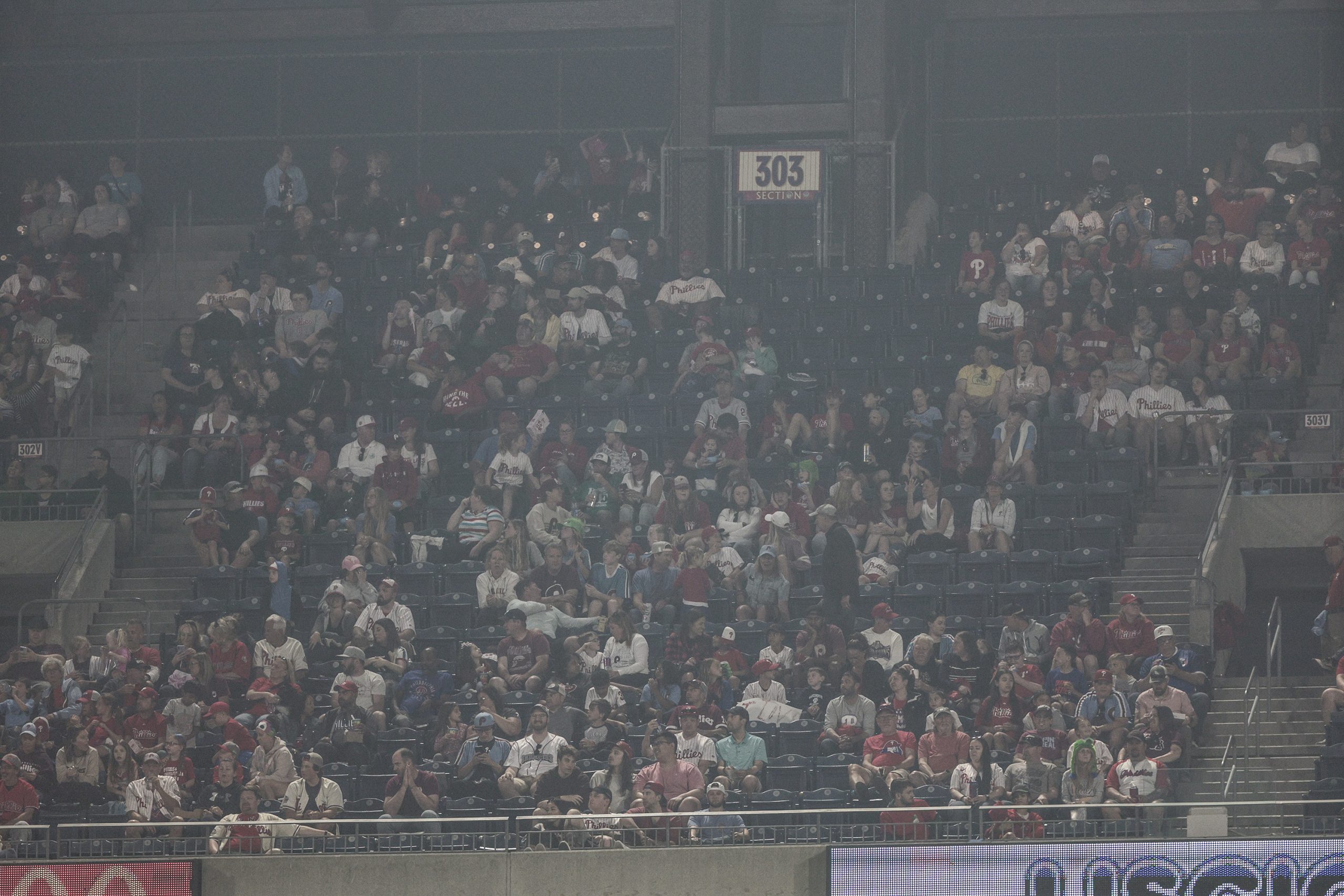
The Phillies were forced to play in smoky conditions in June 2023, ultimately forcing the team to postpone a game.Steven M. Falk / Staff Photographer
Wildfire smoke from Canada is creating air quality issues in Philadelphia, threatening to derail the Phillies’ return to the diamond.
The Phillies are scheduled to kick off a three-game series against the New York Mets Thursday at Citizens Bank Park beginning at 7 p.m., but the game could be postponed if conditions in the city don’t improve.
As of 9:30 a.m., Philadelphia’s Air Quality Index was 181, solidly in the middle of the “unhealthy” range, which means conditions are bad enough for members of the general public to experience health effects.
Air quality levels are expected to fluctuate during the day, but issues are forecast to linger through tonight and potentially into Friday, according to Paul Fitzsimmons, lead meteorologist at the National Weather Service’s Mount Holly office.
“I think this evening there still will be air quality issues the Philly area and surrounding areas” Fitzsimmons said. “It’s tough to say exactly how bad they will be.”
The Phillies did not respond to a request for comment. The team isn’t scheduled to play Friday, so shifting the game back a day wouldn’t create much of a scheduling headache.
It wouldn’t be the first time the Phillies were impacted by smoke. In June 2023, the team postponed a game against the Detroit Tigers due to air quality issues stemming from Canadian wildfires.
The Phillies-Mets game is the only MLB matchup on the schedule Thursday, as the league restarts following the All-Star break. MLB games scheduled Friday in Toronto, Boston, and New York City, which are all experiencing air quality issues.
The Washington Spirit defeated Gotham FC in National Women’s Soccer League action Wednesday night at Citi Field in New York City, and players said the smoky air had an impact.
Air quality is expected to improved for Sunday’s men’s World Cup final between Spain and Argentina, which will be played at MetLife Stadium in East Rutherford, N.J.
Smoke in Philly could linger into Friday afternoon
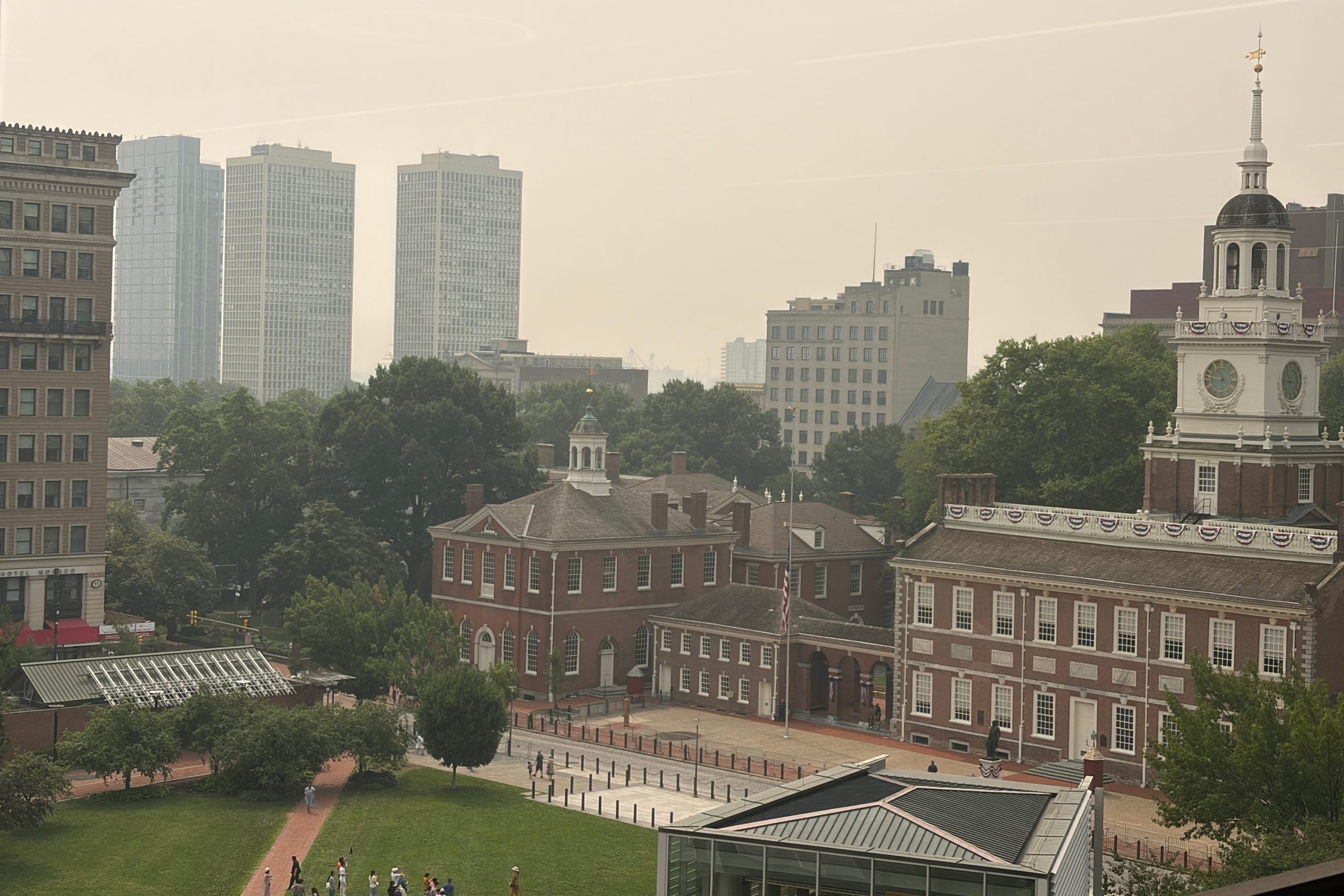
Hazy skies at Independence Hall and across Center City Philadelphia Thursday.Michelle Myers / staff
The smoke we’re experiencing in Philadelphia is from fires burning in western Ontario and the impact could be felt through at least Friday afternoon, said Sarah Johnson, a meteorologist at the National Weather Service’s Mount Holly office.
The smoke had been lingering high in the atmosphere since Tuesday, but changing wind patterns caused it to mix closer to the ground by late Wednesday afternoon, she said.
“It’s just a factor of the winds at all levels kind of working together,” Johnson explained.
Visibility in the immediate Philadelphia area has dropped to between three to five miles. Visibility of beyond six miles is typical for a sunny, smoke-free day.
Visibility worsens farther north, Johnson said. In the Poconos and Central New Jersey, for example, it has dropped to around one to two miles. Reading is at two miles.
Johnson said that conditions are similar to, but not quite as severe yet, to June 2023 when smoke from Canadian wildfires were so bad they caused the Phillies to postpone a game against the Detroit Tigers.
It’s difficult to pinpoint when the air quality might return to normal, she said. Those forecasts come from state environmental protection departments and are usually no more than 48 hours out.
But she expects the haze to persist through Thursday and Friday, and that air quality could potentially deteriorate further overnight.
“Getting the exact visibility is still pretty challenging when we’re talking about smoke, more than several hours out,” Johnson cautioned.
Air quality in Philly ‘unhealthy’ due to wildfire smoke
You might want to skip that morning run or wait a few days to mow the lawn.
Smoke from hundreds of Canadian wildfires has descended over the Philadelphia region, casting a haze, causing a campfire-like smell, and producing poor air quality.
The Air Quality Index by the U.S. Environmental Protection Agency is in the unhealthy range for Center City, Northeast Philadelphia, Chester, Norristown, and Camden. The index ranges from 0 to 500. Unhealthy is from 151 to 200. Center City was the highest in the area at 184, as of 7:30 a.m.
(function () {window.addEventListener(‘message’, function (e) { var message = e.data; var els = document.querySelectorAll(‘iframe[src*=”‘ + message.id + ‘”]’); els.forEach(function(el) { el.style.height = message.height + ‘px’; }); }, false); })();
The index measures a range of pollutants, including really fine particulate matter, known as PM2.5; carbon monoxide; sulfur dioxide; and nitrogen dioxide.
The National Weather Service has issued an air quality alert until midnight Thursday.
And the Pennsylvania Department of Environmental Protection has issued a Code Red Air Quality Action Day for fine particulates. An Air Quality Action Day means that air quality within the region may approach or exceed unhealthy standards.
Code red means that young children, elderly people, and those with respiratory problems, such as asthma, emphysema, and bronchitis, are especially vulnerable and should avoid outdoor activities. Everyone else should reduce prolonged or heavy exertion.
In addition, the NWS has issued a heat advisory until 8 p.m. Thursday with the heat index to hover near 100.
Code red air quality alert has been issued for the Philly area
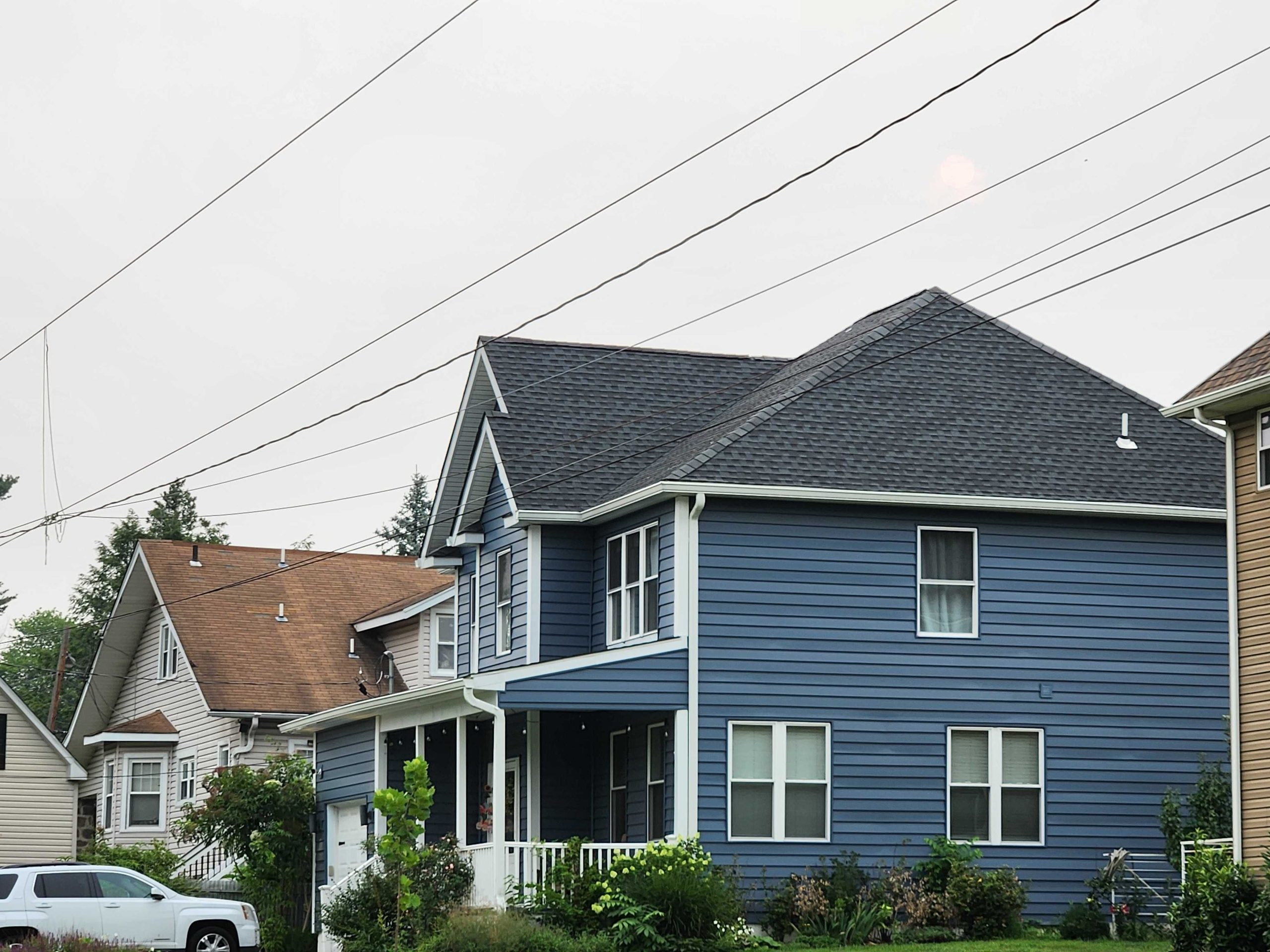
The sun tries to peek through the clouds and wildfire smoke from Canada over houses in Ridley Park Thursday.Torin Sweeney / Staff
Smoke from Canadian wildfires began enveloping the region Thursday, creating a haze, a faint smell of charcoal, and a potential danger for people with respiratory issues.
The National Weather Service has issued a code red air quality day for Philadelphia and surrounding counties through midnight. That means air quality across the region is forecast to approach or exceed unhealthy standards.
By daybreak, air quality was tumbling to unhealthy levels in Philadelphia and a broad swath of Pennsylvania and New Jersey, according to an Inquirer analysis of dozens of public sensors.
Early Thursday morning, the amount of fine particulate matter in the air, measured by the Environmental Protection Agency in a metric called the Air Quality Index, or AQI, had risen sharply.
Air with an AQI above 150 is considered unhealthy to breathe with prolonged exposure for most individuals, according to the EPA. In air quality alerts issued by the National Weather Service, forecasters recommended avoiding prolonged outdoor exposure, and particularly avoiding common activities like exercise.
It was unclear when the smoke would dissipate across the region, but the National Weather Service said it could linger into Friday.
This map shows air quality in the Northeastern U.S.
(function () {window.addEventListener(‘message’, function (e) { var message = e.data; var els = document.querySelectorAll(‘iframe[src*=”‘ + message.id + ‘”]’); els.forEach(function(el) { el.style.height = message.height + ‘px’; }); }, false); })();
Canadian wildfire photos: How things look elsewhere
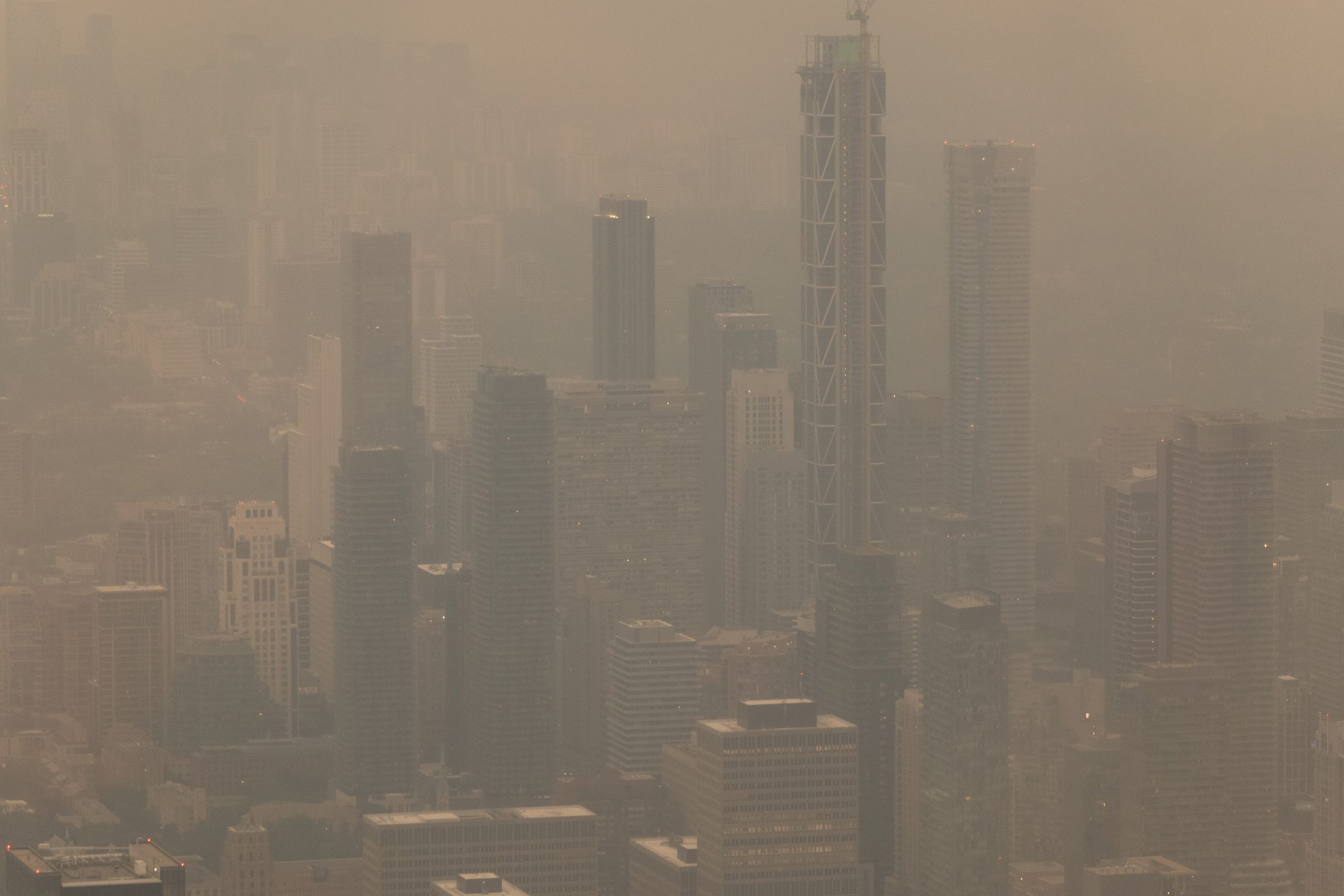
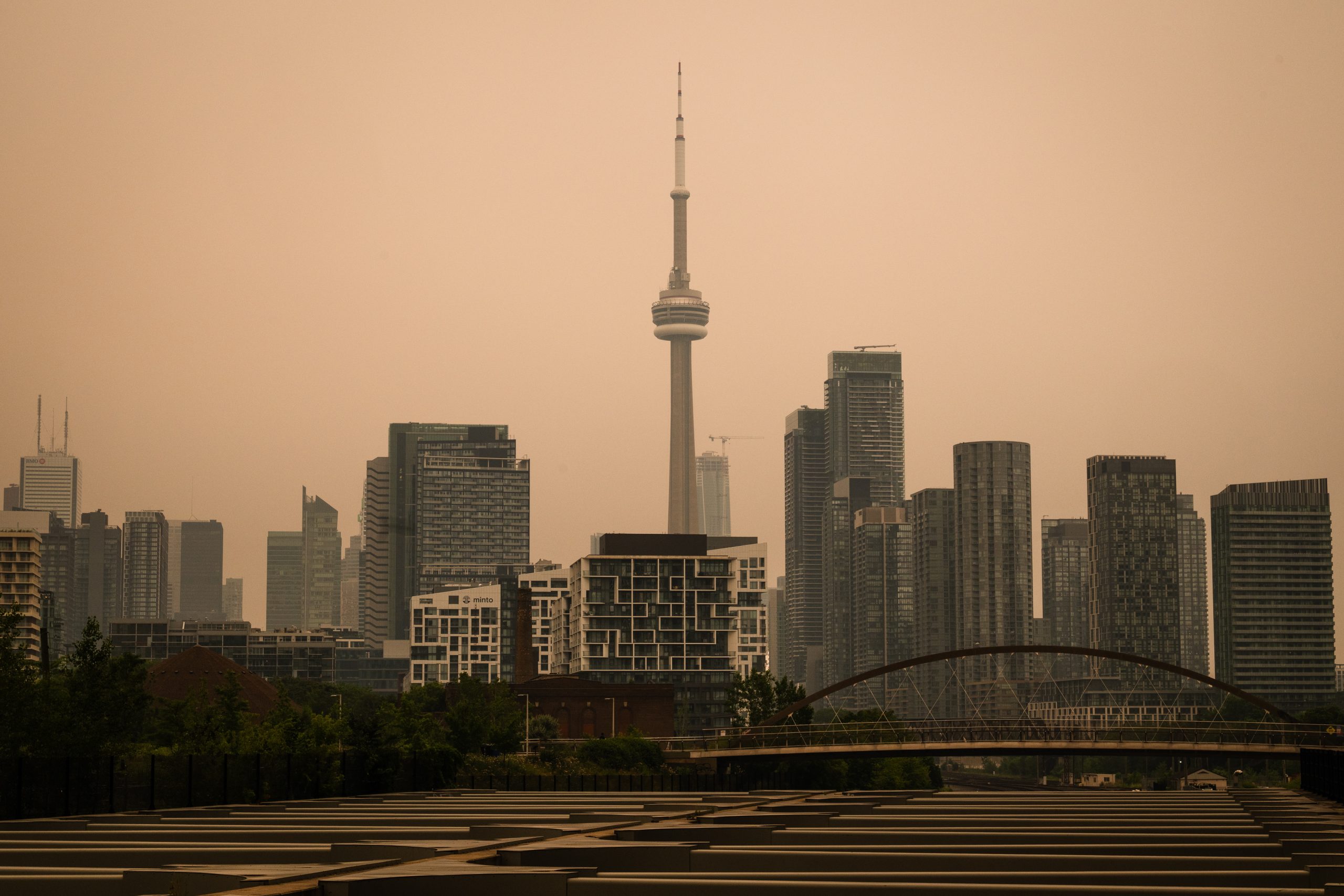
Julian McTaggart is playfully pushed into Vermont’s West River as smoke from Canadian wildfires creates an orange haze over the area.Kristopher RadderWildfire smoke blankets downtown Toronto Wednesday after wildfires swept across Ontario.IAN WILLMSThe CN Tower is pictured in Toronto as wildfire smoke fills the city.Laura Proctor
Speaking to an applauding audience at the Richard M. Nixon Library on June 27, Vice President JD Vance favorably compared himself to the 37th President, “a young Senator, Vice President, writes some best-selling books, is hated by the media, it kind of sounds like JD Vance.”
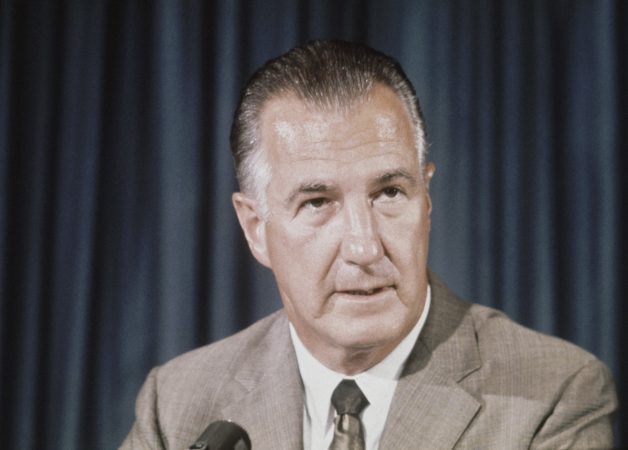
But in actuality, it’s not Nixon who Vance resembles. It’s Nixon’s vice president, Spiro Agnew. Agnew, a dour-faced hatchet man, was known as “Nixon’s Nixon.” Our current dour political hatchet-wielder is Trump’s Agnew.
Vance and Agnew share similar resumes. Both were elevated to the national ticket well ahead of their times to appeal to particular electoral constituencies and took on remarkably comparable foes during their vice-presidential terms.
Like Vance, Agnew came from humble beginnings. The son of a Greek immigrant father and Virginia-born mother, his family owned a diner in Baltimore. Before joining the military and serving in World War II, he Americanized his foreign sounding first name to “Ted” and returned from combat to attend law school on the GI Bill. In 1966, Agnew won the Maryland governor’s race.
Despite scant political experience, Agnew came to the attention of influential Nixon adviser Pat Buchanan, who recognized that there was national political appeal to the governor’s tough response to rioting in Baltimore following the assassination of Martin Luther King Jr. Agnew had pointedly criticized what he charged was the weak response of local Black leaders to civil disorder. Given that he wasn’t unacceptable to any of the feuding wings of the GOP — unlike many more prominent figures — this was enough for Nixon to make Agnew his running mate.
Once on the ticket, the Nixon campaign deployed Agnew to counter the alarming momentum of third-party candidate, segregationist and former Alabama Gov. George Wallace. On a campaign swing through North Carolina and Florida, Agnew rallied the crowd with “speeches that sounded not unlike Wallace texts,” the New York Times reported. In 1969 Wallacequipped, “I wish I had copyrighted my speeches. I would be drawing immense royalties from Mr. Nixon and especially Mr. Agnew.”
Agnew struggled in his first few months in the national spotlight and became known more for campaign trail gaffes than for policy positions.
Even so, Agnew successfully connected with nervous white suburbanites, primarily in the Midwest and South, who feared civil rights, mistrusted the metropolitan elite and wanted the anti-Vietnam War protesters put in their place. This group of voters — who Nixon later referred to as “the silent majority” — became Agnew’s biggest supporters.
Agnew’s penchant for gaffes and awkwardness continued after he and Nixon entered office. At a ceremony welcoming President Nixon home from a European trip in March 1969, Agnew slipped on an icy tarmac and smashed his nose. He then stepped up to the mic “bleeding profusely,” according to White House aide H.R. Haldeman.
Yet, Agnew’s response to his (literal) stumbles helped him to connect even more with anxious white Americans. He refused to stand by and let well educated elites or the news media mock him. Instead, the vice president lambasted them as “an effete corps of impudent snobs” and “the nattering nabobs of negativism,” respectively. Agnew started delivering blistering speeches with the help of Buchanan and his fellow White House speechwriter William Safire, excoriating precisely those forces who anxious white Americans loathed.
In November 1969 in Des Moines, Agnew made what a poll of leading scholars considered one of the 50 most significant American speeches of the 20th century. The vice president publicly called out the media, what he dubbed “this little group of men who not only enjoy a right of instant rebuttal to every Presidential address, but, more importantly, wield a free hand in selecting, presenting, and interpreting the great issues in our nation.” It would launch a more than half-century-long GOP crusade against mainstream journalists.
In other speeches, Agnew hammered universities for what he described as the coddling of student radicals, calling them ”circus tents [and] psychiatric centers for overprivileged, under-disciplined, irresponsible children of the well to do blasé permissivists.” Agnew warned, “The criminal left is not a problem to be solved by the Department of Philosophy or the Department of English — it is a problem for the Department of Justice.”
By the 1972 election, Nixon loathed the pugnacious Agnew and regularly disparaged him privately. He questioned his vice president’s intelligence, judgment and loyalty. Nixon, according to Haldeman, felt “Agnew doesn’t really have it” and had become convinced that “he can’t do the job” of president, should it come to that. The president even contemplated replacing Agnew on the ticket with Texas Gov. John Connally.
Yet, he demurred, because Nixon recognized how popular the vice president was with his “silent majority” base. Observers initially touted Agnew as a front-runner in the 1976 Republican presidential sweepstakes. Instead, however, the vice president’s political career crashed and burned.
Made By History sponsors. FOR USE ON MADE BY HISTORY STORIES ONLY.Inquirer Staff
In 1973, 10 months before Watergate ended Nixon’s presidency, Agnew pled no contest to tax evasion, stemming from unreported bribes he had received while governor of Maryland. Agnew slunk away from public life, disbarred and disgraced, to an odd final chapter of his life that included writing a steamy novel, lobbying for tin pot dictators and engaging in antisemitic conspiracy-mongering.
A half century after Agnew left office, Vance is having a very similar vice presidency.
He, too, comes from working class roots. The vice president grew up as James David Hamel in a working-class household in an Ohio Rust Belt town. There, he experienced poverty and domestic instability. Like Agnew, he served in the military, went to law school and spent only two years as an elected official — in Vance’s case, two years in the Senate — before being chosen as the GOP’s vice presidential nominee.
Just as Pat Buchanan sold Agnew to Nixon as a Silent Majority kindred spirit, pundit Tucker Carlson promoted Vance to Trump as a fellow America Firster. Like the former Maryland governor, Vance joined the Republican ticket in part because he could speak to “blood and soil” Americans.
Additionally, like his predecessor, Vance has experienced verbal stumbles. In 2021, anticipating a future Kamala Harris run for the presidency, he claimed that America was run “by a bunch of childless cat ladies who are miserable at their own lives and the choices that they’ve made, and so they want to make the rest of the country miserable too.”
In 2025, the vice president broke the national championship trophy in a ceremony with the Ohio State University football team. That year, the newly converted Catholic also earned gentle but firm pushback from Pope Francis for Vance’s jaw-dropping misinterpretation of the Church’s message on immigrants.
Trump has also deployed Vance as an attack dog, going after the same universities and media outlets Agnew regularly tangled with. Even before he was elected to the Senate, Vance told the National Conservatism Conference that “if any of us want to do the things we want to do for our country and the people who live in it, we have to honestly and aggressively attack the universities in this country.” As vice president, he has frequently targeted the media, charging that journalists have a “political bias” and cannot be trusted.
And like Nixon before him, Trump doesn’t seem 100% sold that his vice president is the rightful heir to his political legacy. Most recently, Trump talked about his decision to have Vance serve as the lead negotiator to end the war with Iran by throwing him under the bus, saying, “If it works out, I’m going to take the credit. If it doesn’t work out, I’m blaming JD.”
Vance’s post vice presidential chapter has not yet been written but it is a good bet that he will run for president in 2028.
If he decides to seek the top job, he will run, not as a Richard Nixon Republican, but as a Spiro Agnew one. Nixon’s Watergate cover-up and general paranoia overshadowed a more moderate side: the diplomatic achievements, support for environmental protections and the creation of Title IX.
Agnew, by contrast, was an emblem of the pugilistic, populist politics that Vance has made his calling card. Those, and not substantive policy achievements, constitute Agnew’s historical legacy. Vance’s is likely to be the same.
Chuck Holden is a professor of history at St. Mary’s College of Maryland. Zach Messitte is the former president of Ripon College where he was also a professor of Political Science. Jerald Podair is professor of history and Robert S. French professor of American studies emeritus at Lawrence University. They are the co-authors of Republican Populist: Spiro Agnew and the Origins of President Donald Trump’s America (University of Virginia Press, 2019)
Made by History takes readers beyond the headlines with articles written and edited by professional historians. Opinions expressed do not necessarily reflect the views of The Inquirer.
Are we even still talking about pizza down the Shore? Just on the Ocean City boardwalk alone, there are so many other intriguing options: lobster rolls, Greek nachos, pierogis, birria tacos, smash burgers, Korean corn dogs, japchae, acai bowls.
But, like the rhythm of the tides that everyone should be checking before deciding where to put their chairs (see more on that below), the Shore conversation invariably turns to pizza.
In Ocean City, where people can, genuinely, be found walking down the boardwalk with whole pies under their arms, I have tried to settled the big debate: Manco’s, Preps, or, new this year, Alex’s? Or is there a wild card?
The big three feature the ringed sauce that is Ocean City’s signature. I liked my slice this week at Preps better than at a previous outing, so if you like a thicker cheese-forward slice, yet three solid rings of sauce, Preps is for you. I’m no Manco’s hater, and I am typically happy at the Ninth Street counter with a slice and a diet soda, but this time, at 12th Street, I was underwhelmed. Maybe it was just too hot out. Maybe it was that the hose-applied ring of sauce left too much of the slice near the crust sauce-free. Meanwhile, Alex’s, hailing from Roxborough, is a similar style, but crispier. The sauce on my slice was a bit well done. Maybe it had sat in the oven too long? It didn’t sing. I agree with others, including Craig LaBan in this summer’s Shore food review, that Alex’s standout is its smash burger.
The best slice I tried came from this shop in that famous 600 block of the boardwalk, shared with the former home of Wonderland Pier. That was a New York-style slice straight out of my childhood. Tangy, saucy, fresh cheese, just a hint of oil, charred yet foldable. Nicely done, Roma! If a big hotel will keep business humming at Roma, I say reason enough.
📮 What’s the most unusual thing you’ve eaten down the Shore? What do you wish there was more of (fresh seafood shacks)? And, OK, what’s your go-to pizza? Let me know what you think by replying to this email and I’ll include your most interesting responses in a future newsletter. And check out LaBan’s full Shore dining report here.
Have ideas or news tips about the Shore or this newsletter? Send them to me here.
🌞 It’s heating up again, with a dreaded west wind and some weekend showers in the forecast. (Not to mention some air quality concerns from Canadian wildfires). But you never know.
🏀 Jalen Brunson, the de facto mayor of Margate, was photographed outside the Other Lucy Grille near the Elephant with his arm in a sling. This caused an uproar in New York media and beyond.
👩🏽🎨 Visit the new MudGirls Studios on Arctic Avenue in Atlantic City. MudGirls is a nonprofit whose mission is “empowering disadvantaged women through the making of functional ceramic art and architectural tiles.”
Shore snapshot
Spectacular sunsets are an almost everyday occurrence in Strathmere. Monday, June 29, 2026.Vernon Ogrodnek / For The Inquirer
🧠 Trivia time
Which two beach towns had boardwalks that were destroyed in the Great Hurricane of 1944 and never rebuilt?
A. Margate and Ventnor
B. Beach Haven and Stone Harbor
C. Ocean City and Margate
D. Wildwood and Wildwood Crest
If you think you know the answer, email us here. First one gets a shout out.
👙 Ask Down the Shore
Tony Santini asks: I have been doing the Shore my entire life. I still pack an outfit for every day and an outfit for every night. Am I weird? Do other people do this or do they just throw stuff in a suitcase and wear the same things over and over because they are “on vacation down the shore?”
So this topic came up when I wrote about the Shore’s ultimate beach bum, Bruno Battaglia, who logged countless hours on Ventnor’s Newport Avenue beach and mentioned to me that he does, in fact, notice (and judge) when people wear the same bathing suit day after day.
But let’s face it, the Shore, not to mention the entire state of New Jersey, is nothing if not casual (just look at those lines to get into happy hour at classy places like Dock’s and the Knife and Fork). So I appreciate Tony’s effort to keep things elevated. But I think the majority is falling into the “throw stuff in a suitcase” camp. Plus, they need room for the sheets the rentals don’t provide down the Shore.
Does an early setup mean nobody can sit in front of you when the tide goes out? What about when the tide is coming in, do you have to go to the back of the line or just scrunch closer and closer? Is it just a free-for-all on a narrow beach? We asked our Shore Line text group (join here!).
We sit back, and like to have a line of vision to our kids but it never fails that people are gonna sit in front of you but I feel like that’s just the nature of the beast.
Ok to sit in front of others as long as you are willing to move behind others as the tide rolls in.
We try to get the sweet spot of finding the closest possible high tide placement that way we never have to move and those that grabbed the low tide real estate either head out with the incoming tide or relocate behind us.
Tide clock is a must.
I always try to put my chair where I won’t blocking anyone’s view of the ocean. I would hope others would do the same for me.
My favorite memories come from working as a teenager for my grandfather, Lou Segal, at his North Carolina Ave. parking lot, just down the street from the Chalfont Haddon Hall: Lou, stout and ruddy-cheeked, deploying his incredible people skills on customers, friends and fellow merchants; Uncle Sid’s artistic talents displayed in his incomparable pencil-drawings on the interior walls of the shanty; Ray Martain, the perpetual prognosticator who regaled everyone with his mispronounced “trassic” [traffic] predictions; pre-dawn SOS breakfasts at Frank Burns’ Flying Dutchman on South Carolina Ave. and lunch runs to Kornblau’s on Pacific Ave. for their juicy corned-beef sandwiches. But the topper was the fleet of gleaming white Oldsmobile convertibles racing back and forth across the city during “Pageant Week.” Their annual arrival meant that Grandpop could raise the price for parking from $2.50 to $5.00!
Send us your Shore memory! In 200 words, tell us how the Shore taps into something deep for you, and we will publish them in this space during the summer.
By submitting your written, visual, and/or audio contributions, you agree to The Inquirer’s Terms of Use, including the grant of rights in Section 10.
Good morning, South Jersey. Hot temperatures will continue, so don’t forget to drink water today. The state has experienced an uptick in heat-related deaths from last year, according to New Jersey Monitor.
After winning a prestigious all-expenses-paid scholarship, a Haddonfield High School student has a blank check to attend any college he wants in the country.
P.S. Thank you for your continuing support. We want your thoughts! Tell us your opinion of the newsletter by taking our survey or replying to this email.
Luke Patterson will start his final year at Haddonfield Memorial High School with one less thing to consider: how to pay for college.
The student won an all-expenses-paid merit scholarship from the Calvin Coolidge Presidential Foundation. The award will cover Patterson’s tuition, room and board, and other related expenses for any college he wants to attend in the U.S.
He’s among five students nationwide selected, and the first one to ever win from South Jersey.
Four years ago, a K-9 working for the Gloucester County Fire Marshal’s Office and another dog died after an official allegedly left them in a hot vehicle.
On July 8, Gloucester County received notice that the Attorney General’s Office closed the state investigation into the incident with no criminal charges attached.
That was one day after the Salem County Prosecutor’s Office charged a sergeant for a May incident in which the official allegedly left two K-9s in a work vehicle.
Now, a Gloucester County commissioner is using the more recent case to renew interest in the 2022 case and push for justice.
Camden might need federal aid from FEMA to deal with the aftermath of intense flooding from earlier this month, but New Jersey is still trying to get aid for a snowstorm that President Donald Trump denied. Sen. Andy Kim, a South Jersey Democrat, is among the group of senators accusing the president of “significant partisan disparity” in federal disaster aid.
According to the New York Times, data centers are projected to add billions in electricity costs in 13 states, including New Jersey.
The state will roll out a pilot over about four weeks that will distribute Supplemental Nutrition Assistance Program benefits through chip-enabled EBT cards. The move aims to prevent EBT skimming.
The Burlington County Superintendent of Elections Office will host multiple outreach events throughout the rest of the summer to encourage voter registration and educate residents on how voting machines work. The first one is today at the Cinnaminson Library.
🤠 Stampede Rodeo and Bull Riding: The event is a two-day affair full of bull riding, barrel racing, and roping. Enjoy food vendors, live music, and a beer garden. ⏰ Friday, July 17, and Saturday, July 18, 7 p.m. 💵 $25 for adults, $12 for children under 12 if you buy tickets online ahead of time📍 Miller Farms Arena, 134 N. Grove St., Berlin.
🎉 South Jersey Caribbean Festival: This 26th annual free family event features live music and dance performances, food and craft vendors, and community resources. ⏰ Saturday, July 18, 2-8 p.m. 💵 Pay-as-you-go📍Wiggins Waterfront Park, 2 Riverside Dr., Camden.
⚽ SoccerFest26 World Cup Final Watch Party & Community Soccer Tournament: Start your morning with the tournament among recreational teams from across the region. In the afternoon, cheer with fans at the viewing party for the World Cup Final. ⏰ Sunday, July 19, 10 a.m- 5 p.m. 💵 Pay-as-you-go 📍 South Delsea Drive Park, 152 Delsea Dr. South, Glassboro.
The owner of South Jersey’s Tideline added the Liquid Asset to her drink menu with a eye-popping price tag. It consists of tequila, an ice cube, a red chili pepper — and a speedboat. How much is it?
🏠 Ogling: A rebuilt Shore home after a couple spent years designing it. (Is your house a Haven? Nominate your home by email — and send some digital photographs — at properties@inquirer.com.)
Thank you for starting your morning with The Inquirer. I’ll be off for a couple of days, but my editor Julie will step in to take over Friday and Monday, so there will not be a gap in your news roundups. See you soon! ☀️
By submitting your written, visual, and/or audio contributions, you agree to The Inquirer’s Terms of Use, including the grant of rights in Section 10.
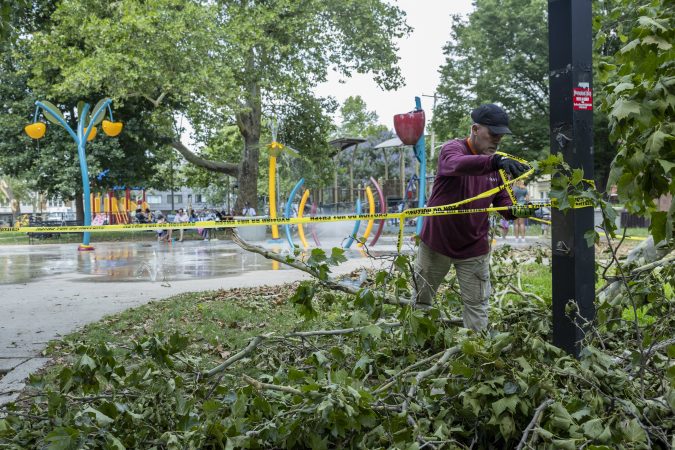
New JerseyGov. Mikie Sherrill and Philadelphia Mayor Cherelle L. Parker are assessing whether they’ll need to ask the federal government for help following recent storms in Philadelphia and Camden as President Donald Trump rejects more disaster aid from blue areas.
Sherrill and Parker have both signaled they anticipate seeking federal emergency aid, but first they need to see if there’s enough damage to qualify. New Jersey is still trying to get aid for a snowstorm that took place just one month into Sherrill’s term — a request that Trump denied — and Pennsylvania has faced several Federal Emergency Management Agency request rejections in recent years.
Sen. Andy Kim, a South Jersey Democrat who serves as the ranking member on the subcommittee that oversees FEMA, recently led a group of senators accusing the Trump administration in a letter of a “significant partisan disparity” in federal disaster aid.
“Right now, there’s no predictability with this administration, and that’s just scary when you’re dealing with disaster response,” Kim said in an interview Wednesday.
Here is what to know about federal emergency aid at this moment.
How does FEMA aid work?
First, local officials work to assess the extent of the damage after a storm and report it to the county, which works with the state to assess the damage. If the disaster has caused more harm than the local and state government can address, the governor can request the president declare a major disaster. That’s required to unlock public FEMA aid.
Individuals can only apply directly for FEMA aid if the president approves individual assistance as part of a disaster declaration.
Residents should report damage to their insurance companies and begin the claims process as soon as possible and report damage to the Office of Emergency Management, said Joseph Walsh, a sergeant first class with New Jersey’s Office of Emergency Management.
“There are technical things we need to meet,” Sherrill said during her visit to Camden after the storm. “I think we probably will, but we’re collecting that now.”
Sean Higgins, a Sherrill spokesperson, said in a statement Wednesday that the governor’s team “has been working around the clock to ensure communities have the support they need and we will ensure that New Jersey applies for any and all help that we qualify for.”
In Philadelphia, Dominick Mireles, the city’s director of emergency management, said earlier this week thatthe city is figuring out the “financial price tag” of the damage, a process that will continue in the coming weeks. Then the city will determine what may be needed — and what it’s eligible to receive — from state and federal resources.
“This might be something above and beyond what we can navigate on our own,” Mireles said.
Camden Mayor Victor Carstarphen shows New Jersey Gov. Mikie Sherrill visuals of the recent storm in Camden on a tablet on Tuesday.Tyger Williams / Staff Photographer
Has Trump denied FEMA aid to Pennsylvania and New Jersey?
New Jersey is in the process of appealing a FEMA rejection for Winter Storm Hernando from February of this year, Walsh said.
The rejection was part of a $227 million denial in disaster aid requests from four Democratic-led states, along with New York, Rhode Island, and Massachusetts. Higgins said more than $84 million of that pool represented costs from New Jersey municipalities and counties.
“Without that aid, our local governments will be stuck with the costs of an unprecedented snowstorm that didn’t care about political boundaries. … Sherrill will continue to fight for every dime that New Jerseyans are owed, regardless of political party,” Higgins said in a statement.
FEMA data also show a 2018 rejection for a severe storm and flooding event in New Jersey during Trump’s first term. Walsh said the state requested aid for several counties even though the damage did not meet the threshold for federal assistance.
The data show that Pennsylvania faced denials from the Trump administration during his first term for awinter storm in March 2017 and storms and landslides fromFebruary to April2018, following a close2016 win for Trump in Pennsylvania during Democrat Tom Wolf’s gubernatorial administration.After losing the 2020 election to former President Joe Biden, Trump on Nov. 18 rejected requests for aid in Philadelphia and surrounding counties for the August 2020Tropical Storm Isaias.
Pennsylvania’s appeal for the 2017 storm was rejected for not meeting the “severity and magnitude” for a disaster declaration, and an appeal for the 2018 incidents were rejected for being “separate and distinct” and not meeting the required threshold, according to documents from the Pennsylvania Emergency Management Agency.
The state did not appeal the rejection for damage from Isaias.
The commonwealth also faced rejections during Biden’s administration following flooding in July and September 2023, and a snowstorm in November 2024 after Trump flipped back Pennsylvania.
Sen. Andy Kim and other Democratic senators have asked for a meeting with FEMA to discuss disaster assistance.Alejandro A. Alvarez / Staff Photographer
What is Andy Kim accusing Trump of?
Kim said Wednesday that Trump has been treating government money like “his own personal slush fund.”
“These are about families that are struggling, and you can’t punish them because of political retribution,” the senator said.
He was joined by 16 members of the Senate Democratic caucus in writing a letter last month to Russell Vought, the director of the federal Office of Management and Budget, citing a Politico report that said Trump’s second administration rejected disaster aid for Democratic-run states at the highest rate in the 47 years that FEMA has existed.
Trump has approved 23% of disaster declaration requests from states with a Democratic governor and two Democratic senators, compared with 89% of requests from states with a Republican governor and two Republican senators so far during his second term, and Democratic-led states also had longer wait times to find out the decision, the report said.
“To be clear, this reporting suggests that in the wake of disasters, as President, President Trump, who has the sole authority to grant or deny this assistance, may be punishing Americans who live in states with Democratic Senators and Governors, by denying access to disaster relief funding,” the senators said in the letter.
FEMA did not respond to a request for comment on the letter. White House spokesperson Abigail Jackson has previously told news outlets that “there is no politicization” in Trump’s disaster relief decisions and that he “provides a more thorough review of disaster declaration requests than any Administration has before him.”
The senators contendedthere are specific approval criteria and called for more transparency on the administration’s process.
In response to their letter,the budget office told the senators to talk to FEMA, so they sent the letter to FEMA to ask for a meeting and are awaiting a response, Kim’s office said Wednesday.
President Donald Trump has touted FEMA funding for states with candidates he supports.Julia Demaree Nikhinson
In the meantime, the president has attempted to use the agency to advance his agenda.
A report by House Democrats found the Trump administration improperly diverted resources from FEMA by sending staffers to help with immigration enforcement, Trump’s hallmark policy.
His administration also recently threatened to withhold FEMA terrorism prevention money for states that don’t run their elections the way the president wants them to.
During his first term, Trump opposed disaster funding for Puerto Rico and said he wanted more aid to go to Texas and Florida, according to news reports.
Recently, Trump touted FEMA funding for states with candidates he supports.
But the administration’s efforts haven’t always succeeded.
Pennsylvania and New Jersey were part of a lawsuit against the Trump administration for cutting certain FEMA funding meant for preventing harm from natural hazards through infrastructure upgrades. That program, called Building Resilient Infrastructure and Communities (BRIC), has since been reinstated. As a result, Pennsylvania was awarded nearly $838,000 for recovery from the 2024 Tropical Storm Debby.
Trump signed BRIC into law during his first term, but during his second term FEMA criticized it for being too “focused on ‘climate change’” under Biden.
Kim said he has advocated for the program’s expansion to help prevent damage from major weather events before they happen.
“This is not a shock that Camden had the flooding that it did,” he said. “We’ve known for a long time that their drainage and sewage and other types of efforts to mitigate flooding are just not to the level that is needed for the people there.”
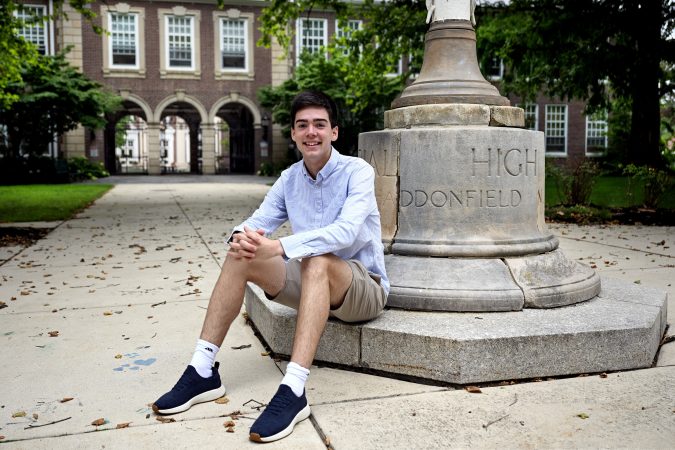
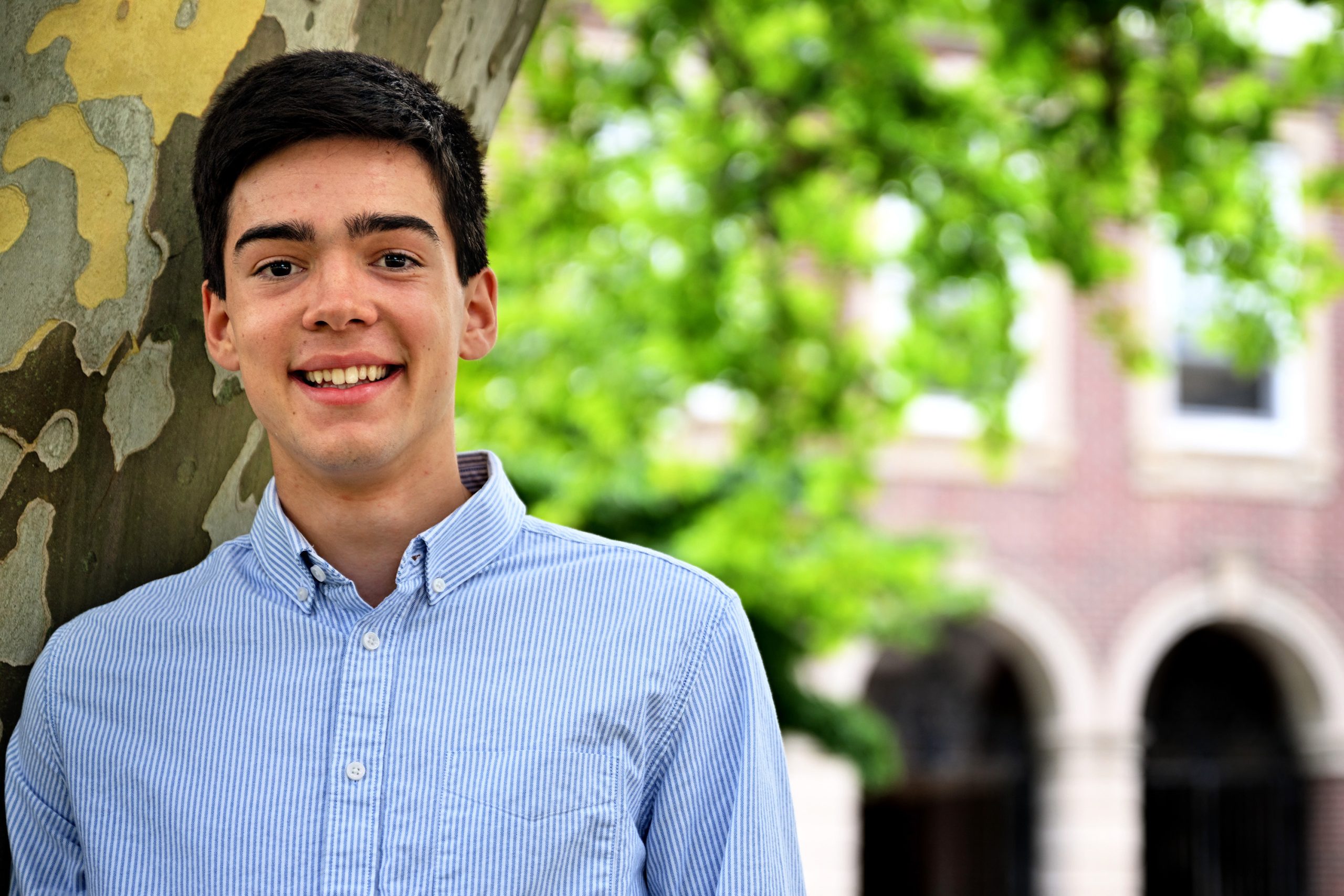
As he prepares for his senior year at Haddonfield Memorial High School, Luke Patterson has a big decision to make: What college to attend? He has a blank check to go anywhere.
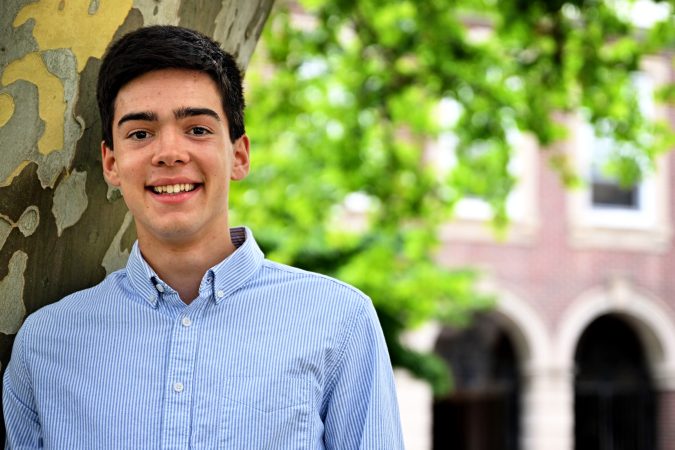
Patterson, 17, was awarded an all-expenses-paid merit scholarship from the Calvin Coolidge Presidential Foundation. The four-year award will cover tuition, room and board, and related expenses for him to attend any college in the United States.
He was among five students nationwide selected from among 4,200 applicants, said Matthew Denhart, the foundation’s president. He is the first recipient from South Jersey since the foundation began awarding the scholarships in 2016, he said.
“It doesn’t matter to us where they go,” Denhart said in an interview. “The sky is the limit.”
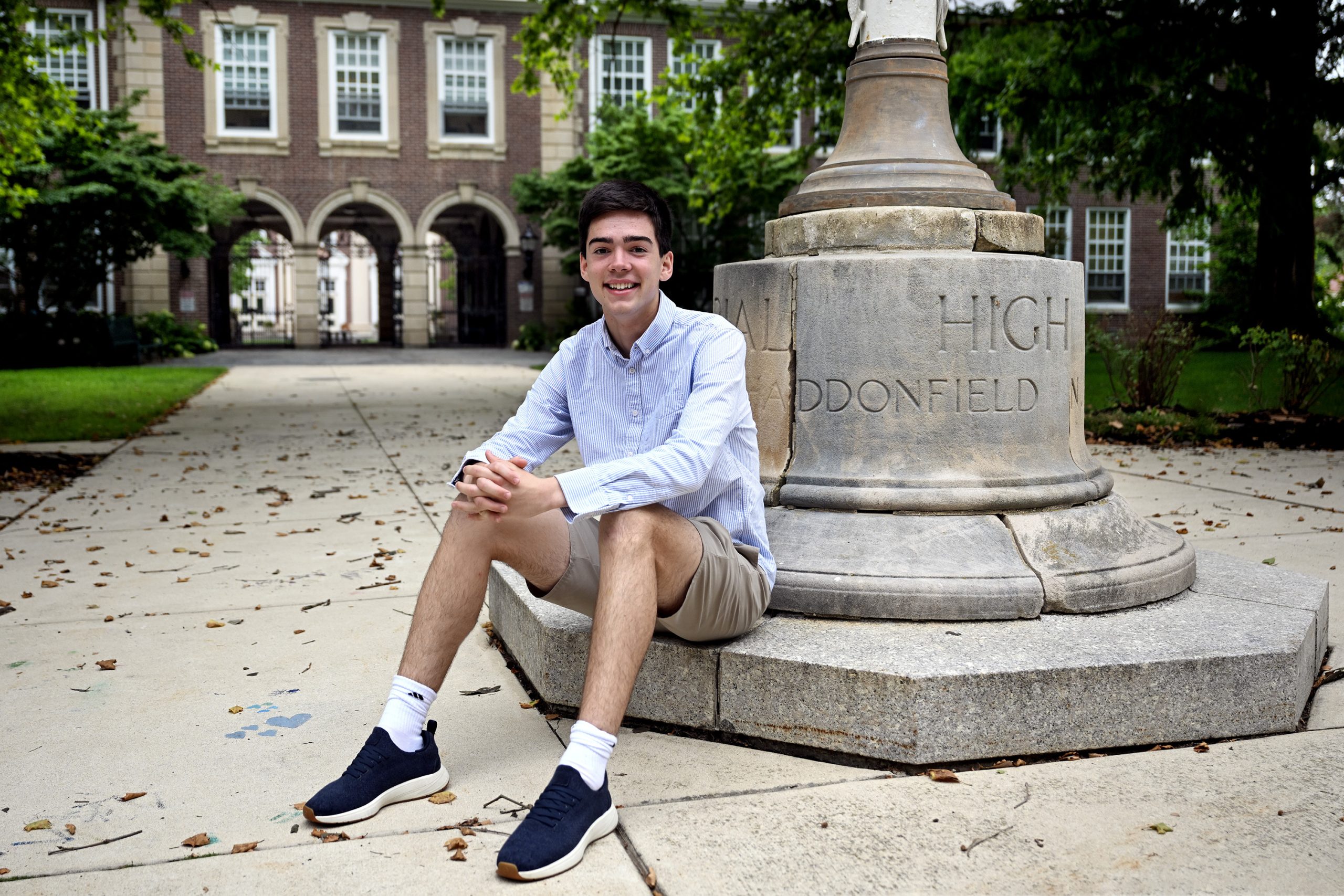
Haddonfield Memorial High School rising senior Luke Patterson poses at the school Tuesday, July 7, 2026. He has been awarded a Coolidge Scholarship, a prestigious, highly competitive full-ride merit award that pays for four years of tuition, room, board, and expenses at any accredited U.S. college or university.Tom Gralish / Staff Photographer
Patterson learned about the scholarship last year when he noticed a track teammate reading Coolidge’s autobiography. The teammate was reading the book to apply for the scholarship.
In order to apply, Patterson was also required to read Coolidge’s autobiography and study policies during his administration, write several essays and get recommendation letters. Applicants must demonstrate humility and a commitment to public service, qualities endeared by Coolidge.
He then traveled to Plymouth Notch, Vermont, Coolidge’s birthplace and where the foundation is located, for a final interview. He fielded questions from a panel chaired by the state’s former governor, James H. Douglas.
“I expected to be nervous, but I actually felt pretty comfortable,” he said. The foundation requests that recipients do not disclose details about the interview process.
Said Denhart: “Luke was just a real star.”
At Haddonfield High, which enrolls about 870 students in grades 9 through 12, Patterson is an honors student, participates on the track and cross country teams, and writes for the school newspaper, covering school board meetings.
Patterson also is a member of the Anti-Bias Club and serves as historian of the Student Council, and has been tapped to help spearhead a project this school year to create a timeline for the school’s 100th anniversary, Principal Tammy McHale said.
“Where good things are happening, Luke is around it,” McHale said.
Haddonfield Superintendent of Schools Chuck Klaus (right) happens to pass by as Haddonfield Memorial High School rising senior Luke Patterson is at the school Tuesday, July 7, 2026. Patterson has been awarded a Coolidge Scholarship, a prestigious, highly competitive full-ride merit award that pays for four years of tuition, room, board, and expenses at any accredited U.S. college or university.Tom Gralish / Staff Photographer
English teacher David Scorsolini noted in a recommendation letter that Luke had demonstrated humility in his world literature class, one of the scholarship’s requirements. Patterson showed respect for his classmates and their perspectives, he said.
“It takes a great deal of humility to read, and more importantly, to listen. Luke listens,” Scorsolini wrote in an email.
Patterson credits his teachers for preparing him to apply for the scholarship. He was surprised when he got a call that he had been selected.
“I was completely shocked,” he said. “Over the next days, I realized how many doors this opens.”
It will ease the financial burden on his parents, who also have a younger daughter, Clara, he said.
“I’m just really proud of all that he has done,” said his mother, Ellen Patterson. “Obviously, the scholarship is amazing.”
The foundation launched the scholarship program to better educate young people about Coolidge, considered one of the least-known presidents, Denhart said.
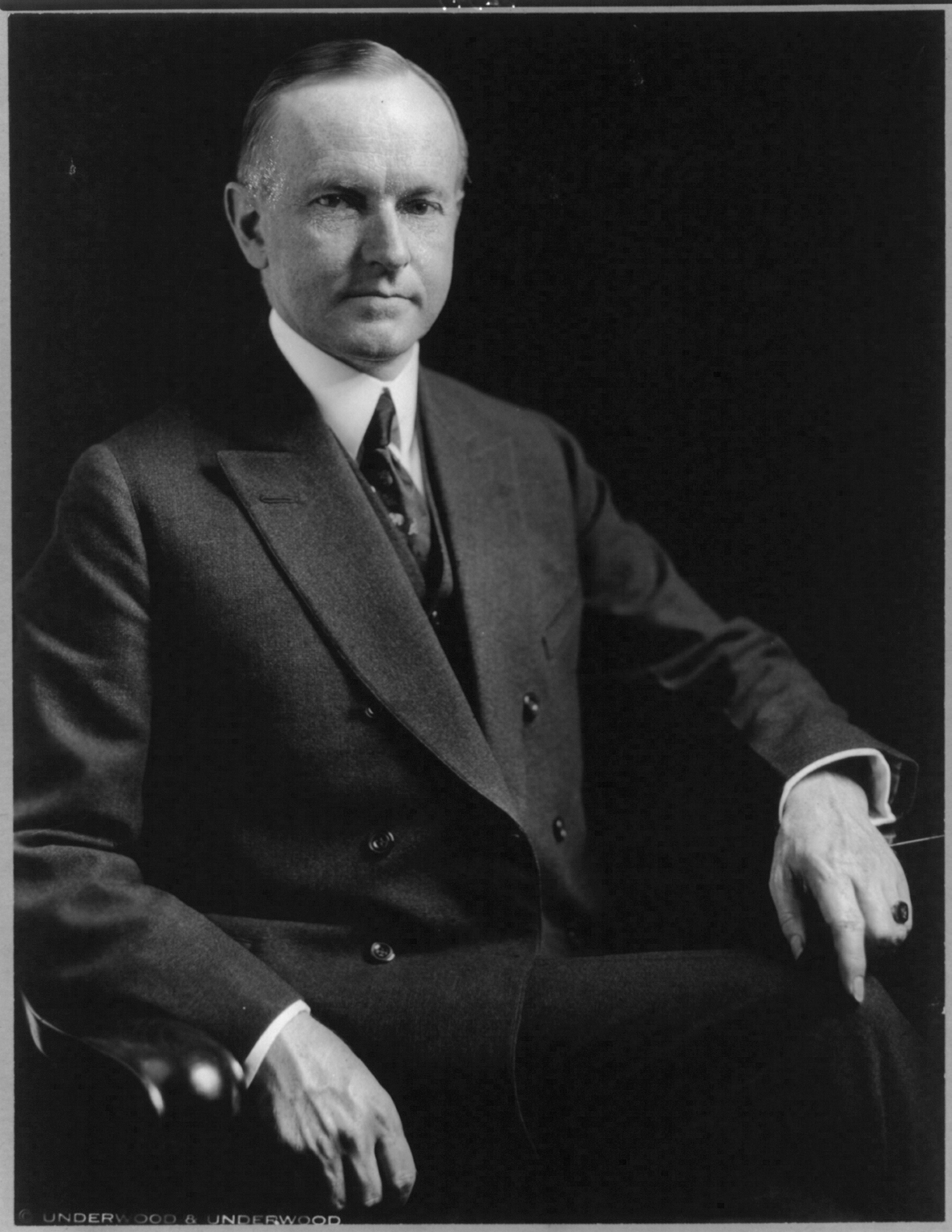
Calvin Coolidge’s seated portrait, June 6, 1924.Library of Congress
The program seeks students who embody the principles and ideas that defined Coolidge’s term as the 30th U.S. President. Coolidge was known for his humility as well as his support for political bipartisanship, public education, and local self-government.
This is the 11th class of scholars sponsored by the foundation, Denhart said, and since 2016, nearly 50 students have passed through the program. The foundation also awards smaller scholarships to its top 100 finalists.
The scholars are not expected to follow the politics of Coolidge, a Republican who had a reputation as a small-government conservative, Denhart said. They study his history and public policies and debate at an annual seminar, he said.
Patterson said he plans to spend the summer finalizing his college choices and writing essays. He is undecided about a possible major.
“The really cool thing about the scholarship is that it opens up all kinds of possibilities,” Patterson said.
He is considering joining an ROTC program and possibly becoming a U.S. Air Force pilot.
Patterson wants to encourage underclassmen to consider applying for the scholarship. His advice:
“Don’t be afraid to put yourself out there. You never know what might happen,” he said.
New Jersey and Pennsylvania are the latest states to tackle a growing and nationwide crisis: EBT skimming.
New Jersey isrolling out a roughly four-week pilot to distribute Supplemental Nutrition Assistance Program benefits through chip-enabled EBT cards this summer, the New Jersey Department of Human Services announced Monday.
Cumberland, Essex, and Mercer Counties, as well as anyone in the statewho has lost a card and is in need of a replacement, will be the first to get the new cards that do away with outdated magnetic stripe technology, which is vulnerable to scammers looking to steal people’s benefits.
“The new chip cards provide enhanced security to help prevent that kind of loss in the first place, keeping benefits in the hands of the people who need them,” Human Services Commissioner Stephen Cha said.
Next door, Pennsylvania has also moved forward with a chip card transition, setting aside $7 million in the latest budget for the change, which is due no later than Jan. 1, 2028. The federal government would cover the other $7 million needed for the transition as part of the current breakdown of how administrative costs are to be split.
The next steps are being worked out, and that will determine a distribution timeline, according to the Pennsylvania Department of Human Services. Implementation of the chip cards is slated to take six to eight months.
The switch to chip cards is seen as long overdue among government watchdogs and advocates of those whose benefits have been stolen. By sticking an inconspicuous contraption onto a point-of-sale terminal, scammers can copy magnetic strip card information and spend benefits in different states. The onus of protecting the benefits has largely fallen on recipients, who are required to download apps onto their phones that allow them to lock their cards until the moment they are ready to pay for their groceries.
“This is a basic security measure that will prevent our clients from losing millions of SNAP dollars to international organized criminals, and we hope that Pennsylvania can implement this change quickly,” said Louise Hayes, a supervision attorney at Community Legal Services, which has advocated for Pennsylvania to adopt chip cards.
Help for victims of this kind of fraud has also been limited, leaving churches and food pantries to step in. Stolen benefits were being reimbursed between October 2022 and December 2024, but that ended when Congress did not extend funding.
“Having benefits stolen, with no means to replace them, only adds further strain to already stretched households,” said Natasha Johnson, assistant commissioner of the New Jersey Division of Family Development.
With the federal government no longer replacing stolen benefits, states believe EBT skimming has gone underreported in recent years.
Exact numbers of thefts in New Jersey were not immediately available.
In Pennsylvania, there were at least 5,100 skimming cases in the first five months of 2026, accounting for $2.5 million in stolen benefits, according to the Pennsylvania Office of State Inspector General, which investigates the reports and seizes the skimming devices.
In February 2025, California became the first state to begin replacing the magnetic stripe cards. Oklahoma embarked on a chip card pilot this year and Massachusetts announced in April its own plans for a pilot. This week, New York Gov. Kathy Hochul announced new chip cards would be distributed in the state in early 2027.
Like other states with plans to adopt EBT chip cards, New York hopes to see instances of skimming radically decline with the overhaul.
Staff writer Gillian McGoldrick contributed to this article.
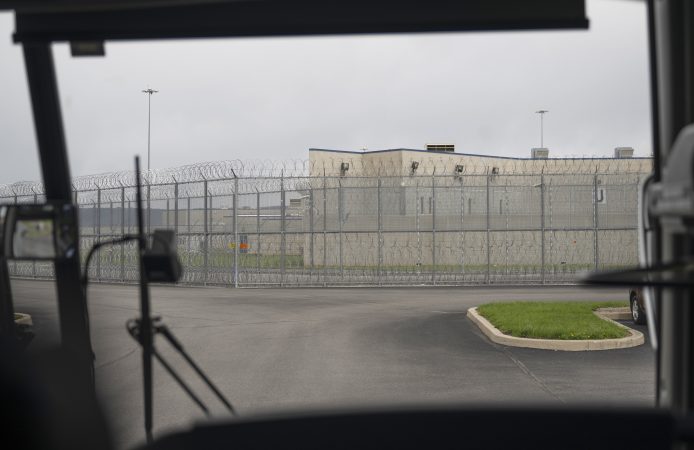
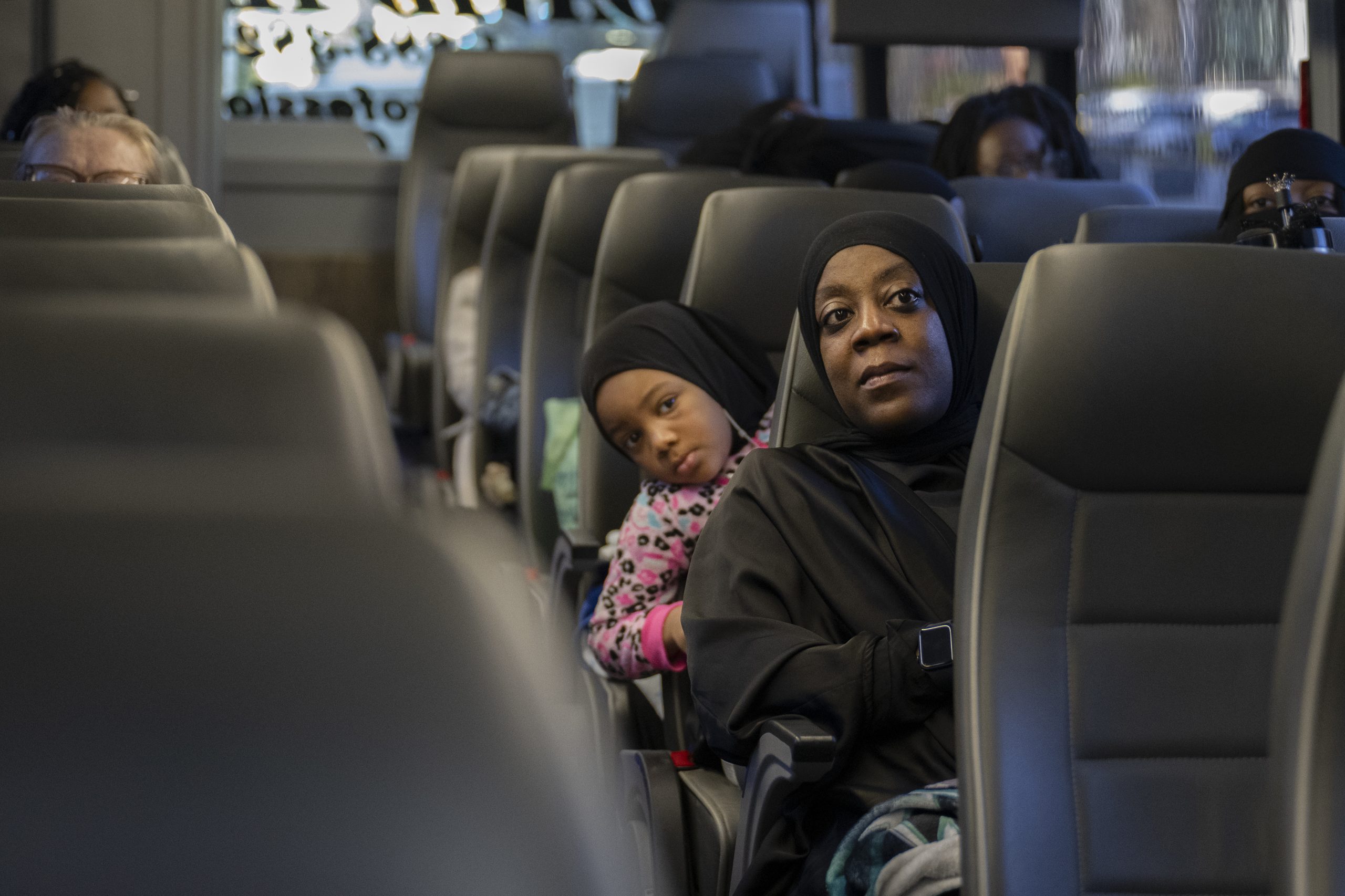
A bus program that shuttles families to Pennsylvania’s far-flung state prisons will soon resume a full schedule of trips after lawmakers approved $600,000 for the service in the state budget, restoring a level of operation the program had not seen since before the pandemic.
The funding followed months of behind-the-scenes lobbying by the Pennsylvania Prison Society, the nonprofit that runs the program. The organization said the money will allow buses to travel to every state prison every other month, a substantial expansion from the patchwork of limited pilot routes it has operated in recent years with short-term funding. The money will also allow the society to add departures from Pittsburgh for the first time, beginning next year.
For nearly two decades, the buses have carried thousands of relatives to prisons scattered across rural Pennsylvania, many of them hours away and virtually impossible to reach without a car. Advocates say restoring the service will preserve those family connections while expanding access to people in Western Pennsylvania.
“Keeping your family whole is really challenged by incarceration,” said Claire Shubik-Richards, the prison society’s executive director. “This program keeps families connected.”
Still, the funding covers only one year, meaning advocates will likely have to fight for it again next budget season. “This is a victory for today,” Shubik-Richards said, “but we always need to be working to ensure that it can go forward into the future.”
The program had operated continuously with funding from the Pennsylvania Department of Corrections. But during the pandemic, the prison system suspended in-person visits and stopped paying for the bus program. When visits resumed, the money for the buses did not.
For Yvonne Newkirk, 72, the service had become a lifeline. She began riding the buses about a dozen years ago to visit her daughter, Stacey, at the state prison in Muncy, three hours from her West Philadelphia home. Stacey Newkirk, 55, is serving a life sentence for third-degree murder, and her mother said she took the bus to visit her six times a year — every route offered to that prison.
When the service was suspended, Newkirk said, she relied on relatives to drive her. The trips required them to take time off work, and Newkirk paid for gas, tolls, and their lost wages — far more than the bus fare she had once paid.
Newkirk said she was overjoyed to learn the service had been funded for another year. She has not told her daughter yet. Instead, she said, she plans to share the news in person later this month on one of the program’s trips. “I know she’s just going to be really ecstatic,” she said.
Her daughter, she said, often tells her not to visit so frequently because of the long journey.
“But at my age, I told her, ‘I’m going to come as much as I can because there’s going to be one point in time where I will not be able to make it up there,’” Newkirk said.
Four trips from Philadelphia to prisons are scheduled for the fall. Shubik-Richards said service will expand gradually, with the first Pittsburgh routes expected in early 2027.
Families take a three-and-a-half-hour bus ride to visit their love ones at SCI Benner in Bellefonte, Pennsylvania. Jose F. Moreno / Staff Photographer
Even with funding secured, the expansion poses logistical hurdles. The society must find a coach company willing to operate the Pittsburgh routes, a task its staffers say has become difficult as the number of bus operators has shrunk and costs have risen.
The bus trips also create challenges inside the prisons. On bus-visit days, visitation resources are largely devoted to the program’s families — dozens of visitors at once.
Kirstin Cornnell, the prison society’s family and community support director, said she is working with prison officials to schedule trips on days with lighter visitation and determine the most “responsible way to scale up.”
While the prison system has faced staffing shortages, its spokesperson, Maria Bivens, said Thursday that “existing resources” would be used to make the program work.
Pennsylvania prisons facilitated more than 1 million visits last year — most of them virtual, she said. “While research has shown that video visits provide the same recidivism-reducing benefits as in-person visitation,” she said, ”this program eliminates a barrier to in-person visitation for families who lack the resources, reliable transportation, or ability to travel long distances to correctional facilities.”
Lawmakers carved the $600,000 from a larger appropriation to the Pennsylvania Commission on Crime and Delinquency. Advocates called it a hard-fought win during a budget season marked by intense scrutiny of state spending.
Two of the program’s strongest supporters, State Reps. Jordan Harris (D., Philadelphia) and Emily Kinkead (D., Pittsburgh), said in interviews that they backed the funding because maintaining family ties improves public safety. Research has found that incarcerated people with strong family connections are less likely to commit violence in prison or return after release, they said.
Harris, the House Appropriations Committee chairman, said the consequences of incarceration extend beyond the person convicted.
“It also affects their family,” he said.
He added that the program helps preserve relationships and gives people returning home the support they need to successfully reenter their communities.
“While I make no apologies for a crime that may have been committed, that doesn’t mean that we dehumanize that person,” he said. “It doesn’t mean that person’s family doesn’t still feel the brunt of that pain. And it doesn’t mean that we still shouldn’t allow children to have relationships with their parents who may be behind bars.”