Category: News

  • Pa. state lawmakers found common ground on this data center policy — but still couldn’t reach a deal

    Pa. state lawmakers found common ground on this data center policy — but still couldn’t reach a deal

    HARRISBURG — Democratic and Republican lawmakers in Pennsylvania’s divided state government rarely agree.

    But this month, there was one issue upon which nearly all of them found common ground: ending tax breaks for data centers.

    Despite the rare consensus as Harrisburg looks to add guardrails to the state’s data center boom, no legislation was passed to end the favorable tax treatment for the projects. After approving the $50.8 billion state budget last week, Pennsylvania’s lawmakers went home for the summer, each blaming the other party for the inaction.

    But new regulations could be coming soon, Gov. Josh Shapiro said.

    The governor — who has adamantly stood by his proposal to condition tax breaks for data center projects based on their compliance with environmental and transparency standards — said he plans to take executive action on regulating Pennsylvania data centers in the coming weeks.

    “I am now exploring everything I can through executive authority since the Senate Republicans refused to act,” Shapiro said Tuesday at an unrelated event in Philadelphia, declining to share details or a timeline for his plans.

    Lawn sign along Crooked Lane in King of Prussia, Wednesday, May 27, 2026. Some residents are standing in opposition to building a data center in their community.Alejandro A. Alvarez / Staff Photographer

    The state’s current tax incentive for data center development is projected to cost Pennsylvania nearly $2 billion in lost revenue over the next five years.

    The current benefit was approved by the legislature in 2021. Developers who generate a certain dollar value of investment are exempt from the state sales tax rate of 6% for equipment, including materials used to construct the data center building.

    According to a February report from the state, 12 projects currently receive the exemption.

    Proponents of the tax break have said it helps keep Pennsylvania economically competitive. Opponents say such a benefit is no longer necessary for an industry that is expanding rapidly.

    “I am not going to get into hypotheticals,” Shapiro said Tuesday when asked whether he would sign a bill that would eliminate the tax benefit, something industry groups have loudly opposed.

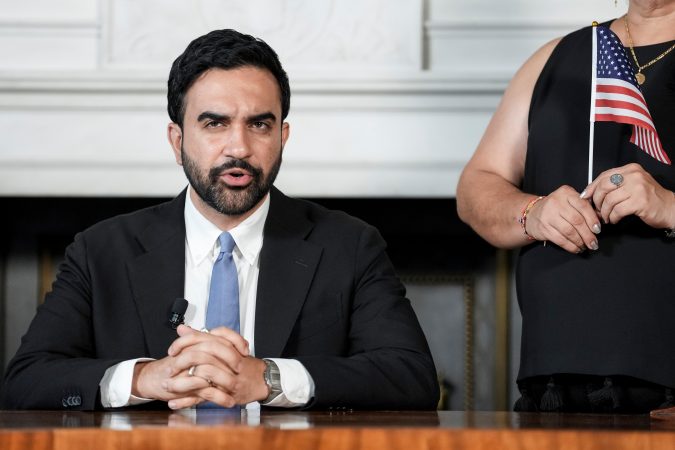
    Gov. Josh Shapiro, flanked by fellow state Democrats, signs the 2026-2027 Pennsylvania state budget in Harrisburg, Pa. on Sunday, July 12, 2026.Gillian McGoldrick / Staff

    Shapiro has championed his proposal for data centers, which incentivizes tax breaks for projects that adhere to a series of requirements. He has not publicly endorsed other data center regulation bills passed by the Democratic-controlled House. The governor’s plan passed the House in June with a vote of 134-68, but was not put up for a vote in the Republican-controlled Senate.

    And as public opinion has soured on data center development, lawmakers in Harrisburg have become more skeptical. This year, all but five Pennsylvania state legislators expressed support for bills that would remove tax breaks for data centers.

    According to an Inquirer review, 197 out of 202 House members voted for a bill that would have repealed the tax benefit. In the Senate, 44 out of 50 members voted in favor of a bill that included a provision to eliminate the tax exemption. The remaining six senators expressed support in interviews for getting rid of the tax break, though they said they voted against the bill because of unrelated provisions included within the legislation, including an expansion of the Educational Improvement Tax Credit Program.

    Though the state’s final budget took no action on the tax exemption, it included a provision requiring data centers with electric outputs larger than 10 megawatts to submit information about their energy and water usage to the state.

    Several other data center regulations that received bipartisan support in recent weeks were also absent from the final spending package, including attempts to enact a local or statewide moratorium on new development.
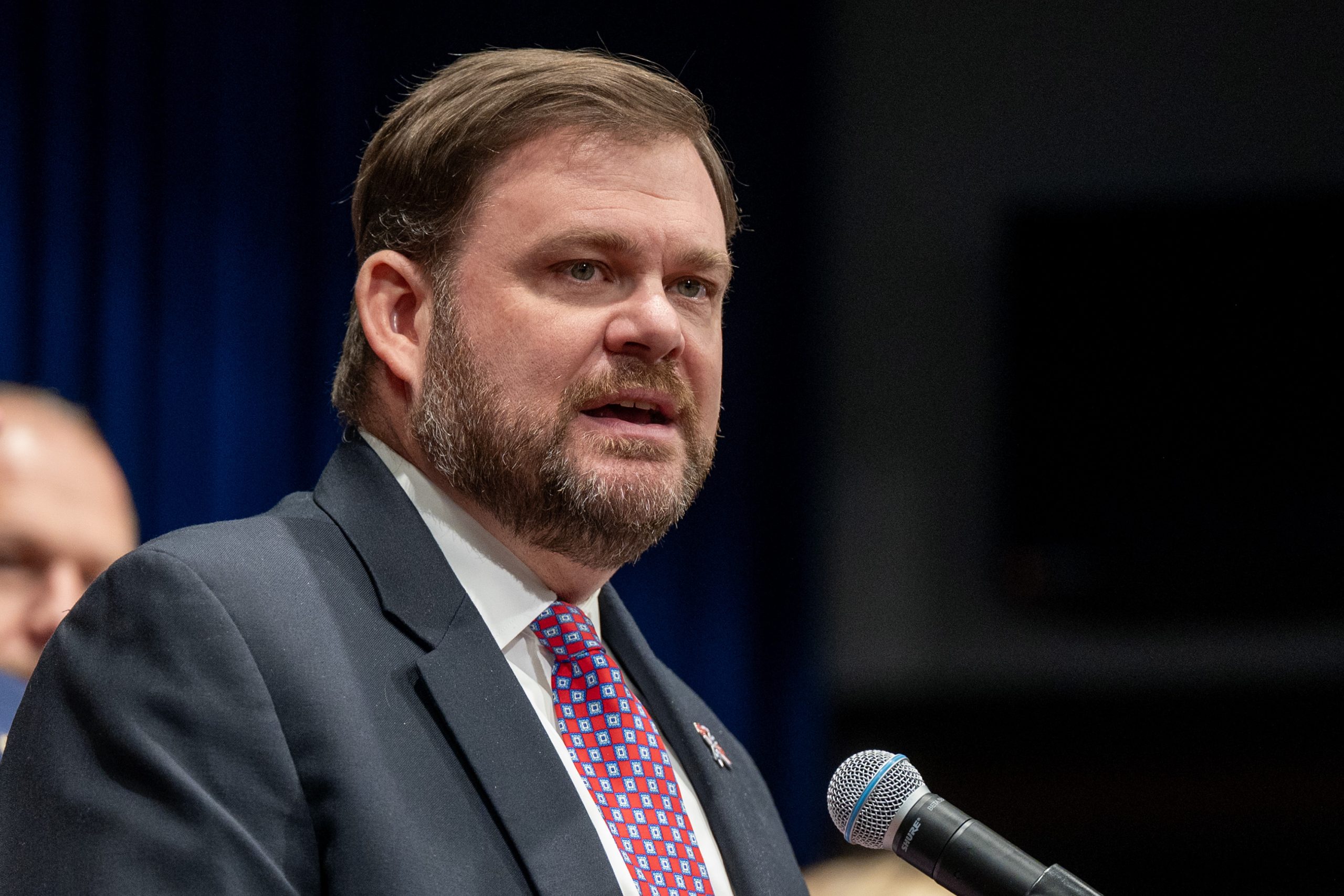
    State Senate Majority Leader Joe Pittman (R., Indiana) during a press conference at the Capitol in Harrisburg Feb. 3, 2026.Tom Gralish / Staff Photographer

    House Democrats and Senate Republicans were quick to blame each other for failing to reach a deal on removing the tax exemption.

    During separate news conferences after the budget passed, Senate Majority Leader Joe Pittman (R., Indiana) and House Majority Leader Matt Bradford (D., Montgomery) each said it was the other party’s fault that a tax benefit repeal was left out.

    Pittman said that Democrats “shredded” a Republican-backed bill into “something that nobody could recognize,” adding in an email that Senate Republicans would also “continue to examine” the proposal backed by Shapiro.

    Bradford, placing the blame on Pittman, said he is “obviously unbelievably disappointed by the Republican leader in the Senate stating that he has no interest in doing anything on data centers,” adding that he was proud of the state House for advancing a number of data center regulation proposals.

    Beth Rementer, a spokesperson for the House Democrats, said in a statement that “Senate Republicans still have an opportunity outside the budget negotiation process to vote on all the bills we passed to hold big tech accountable.”
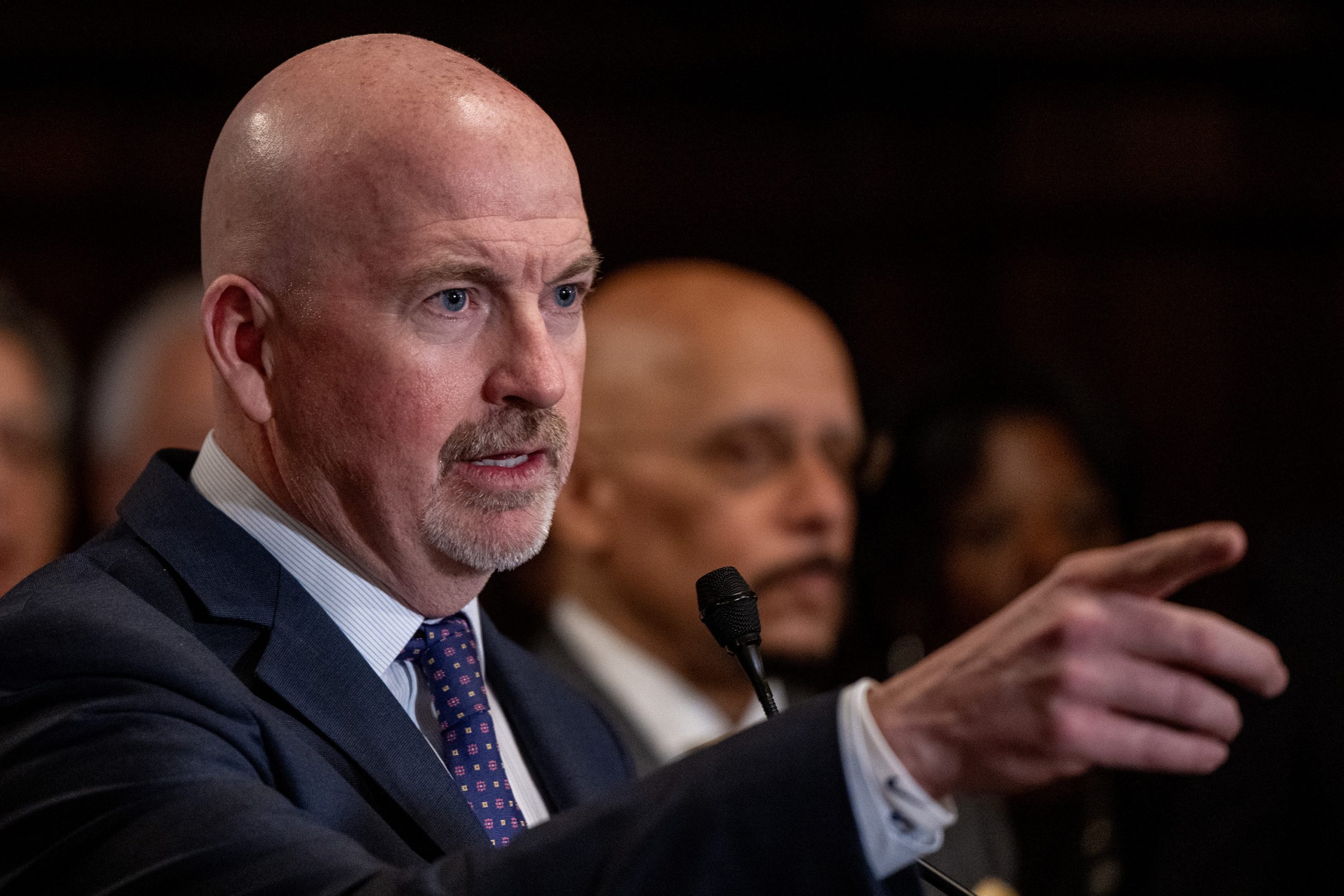
    State Rep. Matt Bradford (D., Montgomery County) during a press conference at the Capitol in Harrisburg Feb. 3, 2026.Tom Gralish / Staff Photographer

    The Pennsylvania Chamber of Business and Industry and the Pittsburgh Building Trades Council lobbied legislators to keep the tax break. In a June memo to state House members, the Pennsylvania chamber wrote that a repeal of the tax benefit “threatens to place Pennsylvania at a competitive disadvantage and sends a troubling signal to current and prospective investors that the Commonwealth is willing to change the rules after the fact.”

    The legislature quietly deferred action on other topics, like funding mass transit and regulating skill games, as part of this year’s budget negotiations. But the data center debate spilled into the public arena.

    In an interview, State Sen. Katie Muth (D., Montgomery) — one of four senators who voted against approving the original tax exemption in 2021 — said she suspected the legislative back-and-forth about the tax break gave lawmakers a chance to record their vote on a hot-button issue among their constituents.

    She said that many legislators who voted to repeal the tax break did so for “show, so everybody can send out mailers.” In addition to Shapiro, half the state Senate and all members of the state House are up for election in November.

    Lawmakers could revisit the topic come fall when they reconvene. And Shapiro said it is on his agenda, too.

    “I think the legislature should have acted,” Shapiro said. “Given the fact that the legislature refuses to act, we’re going to look at our executive authority and determine what the best steps are.”

    Ethan Young is an intern with the Pennsylvania Legislative Correspondents’ Association. He can be reached at ethanmyoung@gmail.com.

  • Arizona primary takeaways: Trump’s picks prevail and a House Democrat survives

    Arizona primary takeaways: Trump’s picks prevail and a House Democrat survives

    Arizona voters on Tuesday gave President Donald Trump the candidates he wanted in primary elections and sent a mixed message to the Democratic establishment, choosing candidates for governor and the U.S. House that set up key races this fall.

    Three Republicans who questioned or attempted to overturn the results of the 2020 presidential contest won nominations for offices with influence over certifying 2028 election results in the pivotal swing state.

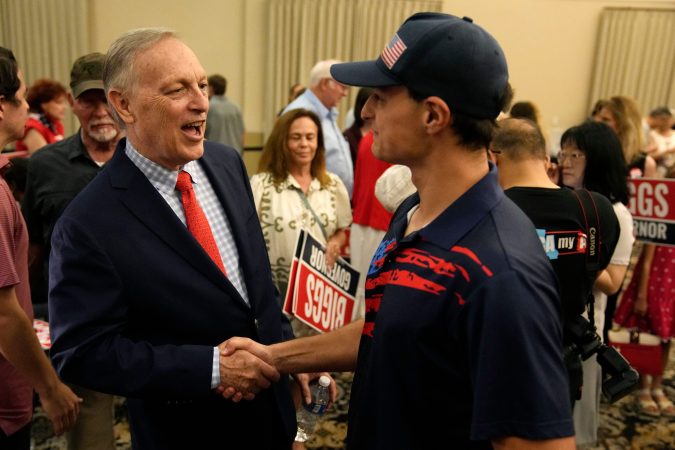
    While Trump’s MAGA brand has stumbled in Arizona in recent years — as demonstrated by the failure of Kari Lake to win either governor or Senate races — voters went with the president’s choice of Rep. Andy Biggs for the GOP nomination for governor over the more traditional conservatism of Rep. David Schweikert.

    On the Democratic side, one candidate favored by the national party held off a challenge from the left.

    Here are some takeaways from the Arizona primaries, which tee up contests that could help determine control of the House in November’s midterms:

    Trump-favored Biggs will carry Republican banner for governor

    Biggs beat Schweikert for the chance to run this fall against Democratic incumbent Gov. Katie Hobbs, who was unopposed in her primary.

    As chairman of the hard-right House Freedom Caucus from 2019 to 2022, Biggs has made a name as a prominent Trump supporter and MAGA activist who questioned the legitimacy of the 2020 presidential election. That hasn’t always played well in Arizona, and his staunch opposition to abortion sets up a stark contrast with Hobbs in the general election.

    Arizona voters passed a constitutional amendment in 2024 that made abortion legal until the point of fetal viability, but many Republicans who control the state legislature continue to favor restrictions.

    Hobbs, who promotes herself as a bipartisan politician, has said in interviews that she expects a close contest with Biggs. The nonpartisan Cook Political Report, the election analysis site, rates the state as leaning Democratic.

    Election deniers win key spots

    Election denial is on the Arizona ballot this fall, with Republicans’ choice of Biggs for governor, state Senate President Warren Petersen for attorney general and state Rep. Alexander Kolodin for secretary of state.

    Petersen has long made unfounded claims of fraud in the 2020 presidential election and, earlier this year, gave the FBI files from a 2021 state Senate investigation into claims of election irregularities in Maricopa County as part of Trump’s ongoing effort to question the results. That county investigation had confirmed that Democrat Joe Biden was the victor.

    Kolodin is a lawyer who was sanctioned by the State Bar of Arizona and placed on probation for his role in filing the “kraken” lawsuit in 2020 that sought to prevent the state’s presidential electors from casting their ballots for the victor, Biden. The suit made false claims about election irregularities and was thrown out by a federal judge.

    Kolodin has continued seeking to restrict voting in his role as a state lawmaker, introducing legislation to limit early voting. As secretary of state, he would be in charge of running Arizona’s elections, with the swing state poised to play a significant role in the 2028 presidential contest.

    He defeated Gina Swoboda, former head of the state Republican Party, for the nomination and will challenge incumbent Democrat Adrian Fontes this fall.

    Biggs was among Republicans in the House who voted against certifying the 2020 election, which Trump lost. Trump attempted to pressure Arizona’s governor at the time, Republican Doug Ducey, into overturning the state’s election results, but Ducey resisted.

    Former NFL player could join the House

    Jay Feely, a former NFL kicker for the Arizona Cardinals, won the Republican nomination for Arizona’s 1st Congressional District. If he wins this fall, Feely would join a select list of former NFL players who made the transition to Congress. Rep. Burgess Owens (R., Utah), a former safety who won a Super Bowl with the Oakland Raiders in 1981, is currently serving. Former Rep. Colin Allred (D., Texas), once a linebacker for the Tennessee Titans, is seeking a comeback this fall after giving up his seat to run for Senate in 2024.

    Feely played for seven teams over a career of some 13 years, then reported on NFL and college games as a television announcer until 2025. He earned Trump’s endorsement with a campaign based on what his website calls “faith, freedom and the fight to take back our country.”

    Cook Political Report rates the open seat as a toss-up, though, and Democrats have the affluent Scottsdale-based district high on their list of possible flips to help them retake control of the House.

    Establishment-backed Democrat lagging in swing seat

    Former state lawmaker Amish Shah is leading in the race to be the Democratic nominee for the 1st District seat over the candidate favored by the House Democratic campaign arm, retired broadcast journalist and former Republican Marlene Galán-Woods. The Associated Press has not called the race as of Wednesday morning.

    Some grassroots Democrats preferred Shah, an emergency-room doctor who beat Galán-Woods for the nomination in 2024, then lost the general election to Schweikert.

    Galán-Woods is the widow of Arizona’s former GOP Attorney General Grant Woods, who had been a confidant of the late Sen. John McCain (R., Ariz.) and renounced the Republican Party once Trump came to power. Galán-Woods says she switched around the same time. “I have always been pro-choice, pro-democracy, pro-climate. My values have never changed. What changed was the Republican Party,” she said in a 2024 debate.

    The Democratic Congressional Campaign Committee, the official campaign operation of House Democrats, and other party stalwarts such as EMILY’s List went to bat for Galán-Woods, who had a narrow fundraising lead over Shah as of July 1.

    Galán-Woods would be the third DCCC-backed candidate to lose a contested House primary this year, including Jasmeet Bains in California and Joe Baldacci in Maine, as Democratic voters have expressed frustrations with their party’s establishment.

    Challenger from the left fails to unseat incumbent Democrat

    While left-wing challengers have had success against more centrist Democrats in some parts of the country, the trend didn’t hold in Arizona’s 4th Congressional District. Incumbent Rep. Greg Stanton easily won his primary against challenger Kai Newkirk, a self-described democratic socialist.

    Newkirk won the endorsement of several national left-wing groups and attacked Stanton for supporting military aid to Israel, opposing Medicare-for-all and accepting corporate political donations.

    Stanton, who has represented the district since 2019 and is a former mayor of Phoenix, far outraised Newkirk. The district includes parts of Phoenix, Tempe, and Mesa, and has become more conservative since a 2022 redistricting.

  • Excavation begins at Olney house at center of missing women case

    Excavation begins at Olney house at center of missing women case

    Breaking concrete, beeping trucks, and the hum of heavy machinery signaled movement Wednesday in the monthlong investigation into two missing persons last seen at a house on the 400 block of West Chew Avenue in Olney.

    With that cacophony of construction sounds, the Philadelphia Police Department and the FBI began a planned excavation at the home of Eugene Albert Horsch, 44, who faces charges of carrying illegal firearms and fake federal law enforcement credentials following a June arrest. Horsch’s dilapidated twin home on West Chew Avenue has since been connected to the disappearances of at least two women in the last 10 years.

    Authorities said they would excavate a portion of Horsch’s property with assistance from the Philadelphia Water Department. Investigators, officials said, were intent on unearthing and examining a pipe under the house as part of a widening probe.

    Workers and police investigators dig and inspect a hole while removing pipes and debris at the entrance to the home of Eugene Albert Horsch on West Chew Avenue.Jose F. Moreno / Staff Photographer

    “The general scope of the dig is to excavate and remove a pipe that will be subsequently examined by FBI and PPD forensics for any evidence that may be present,” Sgt. Eric Gripp, a police department spokesperson, said Monday.

    That effort began in earnest before 9 a.m. Wednesday morning, with crews digging up what was once a small, overgrown garden in front of Horsch’s home, as well as the sidewalk and street in front of the property. Trucks and tents cropped up throughout the morning as investigators walked the block. Periodically, investigators inserted a white pole into the earth, measuring the depth of a hole.

    Later in the morning, workers pulled a piece of pipe from the ground and took it inside the home.

    Wednesday’s excavation was the latest development the case that began June 19, when Horsch was arrested near Independence Mall with drugs, guns, and other weapons, as well as a counterfeit U.S. Drug Enforcement Administration badge. A woman was with him at the time, and she was carrying a fake ID in the name of Blair Tonzelli, who was last seen at Horsch’s home in 2022.

    Workers and police investigators dig and inspect a hole while removing pipes and debris at the entrance to the home of Eugene Albert Horsch.Jose F. Moreno / Staff Photographer

    Since then, investigators have discovered a swath of evidence, authorities have said. Among the items found at the West Chew Avenue home were vats of chemicals, a 55-gallon drum with connections to water lines in the house’s basement, and what police sources called “a significant amount” of blood.

    Forensic testing is continuing, and it has not yet been announced whether the blood is human. Horsch does not currently face charges involving violent crimes.

    Additionally, authorities have found other fake IDs in Tonzelli’s name, as well as the missing woman’s bank card. Investigators have also said that Amy McHale, the ex-wife of Horsch’s late father, Raymond Horsch, was last seen at the Olney home in 2016, according to the woman’s family.

    It was unclear Wednesday if investigators had linked any evidence to the disappearances of Tonzelli or McHale.

    Workers and police investigators dig and inspect a hole while removing pipes and debris at the entrance to the home of Eugene Albert Horsch on Wednesday.Jose F. Moreno / Staff Photographer

    The midweek excavation surprised some neighborhood residents. Cheri Smith lives two blocks from the site of the investigation, but still felt its effects. Smith, who has lived nearby for two decades, said she has felt unsettled since news of the investigation broke last month, and has seen little communication among police, the city, and neighbors.

    “It’s a shame what happened,” Smith said. “It would be nice if they notified us that this work is going to be happening, but the city is going to do what they are going to do.”

    Laurenza Moise said that when she arrived Wednesday to open her braiding business, the corner of Fifth Street and Chew Avenue had already been blocked off. Since the investigation began, she said, she has seen a reduction in business.

    “When they close the street, my business goes down, and there’s no parking for customers,” Moise said. “What can I do other than mind my business?”

  • France recorded 5,700 more deaths than usual during its historic June heat wave

    France recorded 5,700 more deaths than usual during its historic June heat wave

    PARIS — France recorded at least 5,700 more deaths than usual during a historic heat wave last month, the public health agency said Wednesday, sharply increasing its estimates of the feared toll from record-shattering temperatures.

    Public Health France said regions hit by the heat from June 17 to July 2 recorded 21,674 deaths from all causes. But without a heat wave, those same regions would have been expected to have seen far fewer deaths, or 15,910, based on statistical modeling using data from previous years, it said.

    The difference between expected and actual deaths — a total of 5,764 — are therefore considered to be “excess” deaths during the heat wave, the agency said.

    It said the excess mortality, with 36% more deaths that would normally have been expected, was the highest from any heat wave since 2003. A historic heat wave that year caused an estimated 15,000 deaths in France.

    France registered its hottest-ever days on June 24 and June 25 this year — with a national average of 86 degrees — as well as record heat at night and peak temperatures that soared well above 104 in many places.

    Just over half of the unexpected deaths occurred during and in the immediate wake of that hottest period, over three days from June 25 to June 27, the public health agency said.

    “This unprecedented episode, characterized by its early onset, intensity, and duration, exposed nearly the entire population to extreme heat during a period when school and work activities were still in full swing,” the agency noted.

    All told, across Europe, extreme temperatures that hit exceptionally early and hard this year saw well over 10,000 more deaths at the height of the heat wave than would normally have been expected, according to figures that are still emerging across the continent.

    In France, the Paris region appears to have been hardest hit, recording 1,999 unexpected deaths — around 80% more than would otherwise have been anticipated without a heat wave, the French health agency said.

    Funeral service directors in Paris said they struggled to find places to store bodies before burial or cremation, with some mortuaries saying they were full and having to turn bodies away.

    Nearly half of the more than 21,600 people who died passed away in hospitals, which wrestled with surges of patients suffering from heat-related ailments. About a third died at home and the rest were mostly deaths in care homes for older people, the agency said.

    The latest estimated death toll, which the agency said will be updated later in the year with more complete data, was sharply higher than initial figures it had given. It had previously reported around 2,000 additional deaths from all causes for the week of June 22 to June 28, the peak in France of the heat wave that also broke temperature records in many other parts of Europe.

    Experts caution that it takes awhile for a full picture to emerge, and that many heat-related deaths will never formally be recorded as such. For example, a heart attack, which can be triggered by extreme heat exposure, especially in people who are older or have underlying health issues, may be listed on a death certificate simply as a heart attack.

  • Utz, the Pa. snack maker, is going private again as part of $2.9 billion deal

    Utz, the Pa. snack maker, is going private again as part of $2.9 billion deal

    Six years after going public, Utz Brands, the Pennsylvania producer of potato chips, pretzels, and other snacks, is set to become a private company again in a $2.9 billion deal with a German acquirer.

    When the latest deal is done, Utz’s founding families, the Rices and Lissettes, will own 50% of the company, and Intersnack Group, a snack maker in Europe and the Pacific, will own the other half, according to a Tuesday news release.

    “Intersnack shares our vision for Utz, and their marketing, manufacturing, and technology capabilities will be invaluable as we continue to invest in our brands,” Utz CEO Howard Friedman said in a statement.

    Since 1921, Utz has produced its trademark chips and other snacks from Hanover, York County, about 120 miles west of Philadelphia. Today, Utz also makes Zapp’s kettle chips, Jax cheese curls, On The Border tortilla chips and dips, and TGI Fridays bagged snacks.

    Utz still makes chips at its original Hanover plant, as well as at a network of facilities nationwide. Its snacks are distributed to grocery stories, convenience stores, and restaurants across the country.

    A display of Utz chip packets at Earl’s in Kaimuki, Hawaii.Kiki Aranita

    The company generated about $1.4 billion in net sales in 2025, a slight increase from the prior year, according to earnings reports.

    Intersnack plans to pay $14.25 per share in cash for all publicly traded Utz stock, according to the release, and to finance the deal with a combination of cash, financing, and rollover and reinvestment from the Rice and Lissette families. Utz stock surged after the deal was announced Tuesday.

    “We have long admired Utz’s brands, its heritage and the strength of its team,” Johan van Winkel, executive chairman of Intersnack Group, said in a statement. “We see a tremendous opportunity to partner and build on Utz’s strong foundation and help shape the future of snacking in North America.”

    The transaction is expected to close later this year, according to Tuesday’s news release. When it does, Dylan Lissette, who married into the Utz family, would become Utz executive chair.

    The deal would take Utz off the New York Stock Exchange and make it no longer required to publicly disclose its earnings.

    Utz became a publicly traded company in 2020 in a merger that valued the company at more than $1 billion.

    By going private again, Utz would join its longtime competitor, Herr’s, a fellow family-owned snack-maker based in Nottingham, Chester County.

  • Modeling agent who introduced women to Jeffrey Epstein found dead in France

    Modeling agent who introduced women to Jeffrey Epstein found dead in France

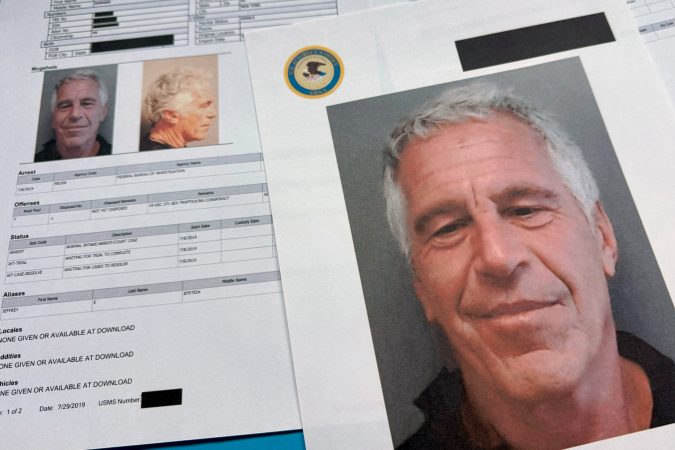
    A modeling agent who introduced young women and teenage girls to convicted sex offender Jeffrey Epstein was found dead at his home near Paris this week, French officials said.

    The body of Daniel Siad, 69, was discovered Monday at his home in Colombes, a suburb of Paris, Marie-Céline Lawrysz, deputy public prosecutor at the Nanterre Judicial Court, said in a statement Wednesday. She said an investigation was opened that evening into the cause of death.

    For roughly a decade, Siad corresponded with Epstein about young women and teenage girls, sometimes describing them by their ages and nationalities and then offering to send Epstein photos, according to emails that were included in the expansive Epstein files released by the Justice Department.

    In a 2009 email, Siad described a woman from Latvia who was 5 feet 8 inches tall: “she is 20 years old but she looks younger,” Siad wrote to Epstein.

    In a 2014 email, Siad discussed a 15-year-old French girl whose parents were excited for her to start modeling. He also mentioned 16- and 17-year-olds.

    “This busyness I feel like fisherman some time I cache quick , some time no fish,” Siad wrote to Epstein.

    In an interview last month with CNN, Siad pushed back on the suggestion that he should not have introduced aspiring models to Epstein because it was public knowledge that the financier was a convicted sex offender. Siad maintained that Epstein, who was released from jail in 2009 after serving 13 months of an 18-month sentence, was a “free man” and had always been “very professional” with him.

    “I never doubt that because I never heard anything from anyone who I introduced [to Epstein], who came back to me that they had a bad – a bad situation with him,” Siad told CNN.

    In the same interview, Siad said he regretted meeting Epstein.

    “Yes. I feel – it’s like a nightmare,” Siad told the network. “… He was such a powerful person. And how can I not trust him?”

    The expansive Epstein files released by the Justice Department exposed the financier’s cozy relationships with high-profile and powerful associates, leading to cascading resignations and public shaming.

    But a review of the files by The Washington Post also revealed how Epstein cultivated a network of lesser-known associates – including those from the modeling industry – who offered to bring women into his orbit in the years after he was released from jail.

    The emails were often crude and sexualized, even if the purpose of the introduction was not explicitly stated. A Swedish modeling scout, for example, messaged about his efforts to find teenage girls for Epstein. A Russian model told Epstein by email that another woman would “be very easy” if he told her that she too had potential to become a model. Others sent messages to Epstein describing models he could meet, promising to send photos.

  • Mamdani says New York doesn’t have authority to arrest Netanyahu, urges feds to act

    Mamdani says New York doesn’t have authority to arrest Netanyahu, urges feds to act

    New York Mayor Zohran Mamdani, who pledged repeatedly during his mayoral campaign to arrest Israeli Prime Minister Benjamin Netanyahu, said Tuesday that he does not have the power to do so.

    In a video posted on X, Mamdani said his administration had reviewed “every avenue available” under the law to determine whether New York authorities have the power to execute an arrest warrant if Netanyahu travels there. But, they concluded, “it is clear that we do not have the independent legal authority to enforce this.”

    He described Netanyahu as the “architect of a horrific genocide against the Palestinian people” for his role in the war in the Gaza Strip and has said he should be tried for war crimes under a 2024 warrant by the International Criminal Court.

    Mamdani called on the federal government — which does have the legal authority to enforce the ICC’s warrant — to arrest Netanyahu, who is expected to travel to New York in September for the United Nations General Assembly.

    President Donald Trump shut down the idea of Netanyahu’s arrest in a Monday post on Truth Social, saying the Israeli prime minister “will not be arrested, in any way, shape, or form, while in the United States of America.”

    The ICC issued an arrest warrant for Netanyahu in 2024, accusing him and his former defense minister Yoav Gallant of war crimes and crimes against humanity stemming from Israel’s military operations in Gaza. The court’s decision obliges 124 countries to arrest the Netanyahu if he enters their territory, but neither Israel nor the United States is a signatory to the court’s key statute that requires this.

    Netanyahu has rejected the allegations, calling them absurd, and accused the court of being a biased and discriminatory political body. On Tuesday his office described the ICC as a “kangaroo court that has no jurisdiction over Americans or Israelis” and the arrest warrant as “bogus.”

    “Under Prime Minister Netanyahu’s leadership, Israel has taken unprecedented wartime measures to minimize harm to civilians while confronting Hamas,” it said.

    Israel’s ambassador to the United Nations, Danny Danon, also hit back at Mamdani’s comments. “Zohran Mamdani, ENOUGH,” he wrote on X. “Enough with the attacks on Jewish organizations. Enough with the outreach to the Iranian regime. You were elected to serve New Yorkers, not Hamas’ propaganda. Do your job!” he wrote.

    Trump and his predecessor Joe Biden have criticized the ICC for the warrant. Both administrations have supported Netanyahu during the war in Gaza, which Israel launched after the Oct. 7, 2023, attacks on Israel by Hamas militants, who killed some 1,200 people and took 251 hostage.

    Israel’s retaliatory strikes have killed more than 73,000 Palestinians, according to Gaza’s Health Ministry, which does not differentiate between civilians and combatants but says the majority of casualties are women and children.

    Mamdani’s continued opposition to Netanyahu comes despite criticism from some Democrats after he said last week that he was in “active conversation” with his legal department to determine whether the Israeli leader could be arrested.

    The mayor’s stance also underscores a shift in the Democratic Party that has seen some members show a greater willingness to criticize Israel or turn U.S. support into a campaign issue. A Washington Post-Ipsos poll conducted earlier this month found while most Americans say the U.S. should reduce or end military support for Israel, the figure rises to 74% among Democrats.

  • James Woolsey, CIA director under Bill Clinton, dies at 84

    James Woolsey, CIA director under Bill Clinton, dies at 84

    R. James Woolsey Jr., a Rhodes scholar and lawyer who led the CIA and the rest of America’s intelligence community for two troubled years during the Clinton administration, as the nation’s spy services struggled to adapt to the post-Cold War era, died Tuesday at his home in Washington. He was 84.

    The cause was a stroke, said his wife, Conchita Sarnoff Woolsey. She added that Mr. Woolsey had been in declining health in recent years as a result of “Havana syndrome,” the mysterious ailment that hundreds of American spies and diplomats have reported experiencing around the world.

    The malady’s symptoms, which the government refers to as anomalous health incidents, include dizziness, memory problems, and other neurological impairments. Mr. Woolsey began experiencing the condition following an incident in Washington in 2017 and in Istanbul the following year, according to his wife.

    “We have traveled the world trying to find a cure and a treatment,” she said, “which sadly we never found.”

    As the director of Central Intelligence in 1993 and 1994, Mr. Woolsey spent much of his time fighting to shore up morale and protect the nation’s intelligence agencies from sharp budget and staffing cutbacks, as Congress sought a so-called “peace dividend” following the collapse of the Soviet Union.

    His tenure was upended by the FBI’s arrest in 1994 of Aldrich H. Ames, a senior CIA counterintelligence official who had spied for nine years for Moscow in what was then the worst known security breach in agency history.

    CIA traitor Aldrich H. Ames in 1994. He was convicted of selling secrets to the Soviets. Michael S. Williamson

    Members of the House and Senate intelligence committees were openly critical when Mr. Woolsey declined to dismiss or demote anyone at the CIA, and instead reprimanded 11 current and former agency officials. Rather than focusing on individuals at fault, he highlighted a pattern of widespread inattention, citing a “systemic failure” in the agency’s inability to catch Ames, who was blamed for the deaths of at least 10 intelligence agents.

    Mr. Woolsey sought to transform the agency’s culture. He was known among some staff as “the vacuum cleaner,” the Washington Post reported at the time, and told senior aides he always wanted to know more than anyone else in the room. He typically began his day reading classified cables at home at 4:30 a.m., and then arrived at CIA headquarters by 7:30 for meetings and briefings.

    But he could be argumentative, even abrasive, and his relations with the White House became so strained that by the time he resigned after 23 months on the job, he complained that he could not get an appointment with the president.

    White House aides said that Clinton had lost faith in his ability to overhaul CIA operations and reshape its priorities.

    Still, the president praised Mr. Woolsey in a statement at the time, calling him “a staunch advocate of maintaining an intelligence capability that is second to none.”

    Robert James Woolsey Jr., an only child, was born in Tulsa on Sept. 21, 1941. His father, a lawyer, was drafted into the Army and fought in the Battle of the Bulge during World War II. His mother was a homemaker.

    Mr. Woolsey attended Stanford University, graduating with high honors and membership in Phi Beta Kappa in 1963. He was awarded a Rhodes scholarship to study at the University of Oxford in England, and then attended Yale Law School, where he was managing editor of the law review and was awarded his degree in 1968.

    Mr. Woolsey served in the Army and came to Washington in the early 1970s, as a military aide to arms control negotiator Paul Nitze. He later served as general counsel to the Senate Armed Services Committee under Sen. John C. Stennis (D., Miss.).

    A so-called “defense Democrat,” Mr. Woolsey was undersecretary of the Navy from 1977 to 1979, during the Carter administration. He later found positions under two Republican presidents, Ronald Reagan and George H.W. Bush, as a part-time, delegate-at-large to strategic arms talks and as chief negotiator of a European arms treaty.

    When not in government, he worked for the Washington law firm Shea & Gardner, where he sometimes represented defense contractors and companies whose interests required that he register with the Justice Department as a foreign lobbyist.

    A trim man with a bald head and thin glasses, Mr. Woolsey was little known to the public when Clinton, soon after taking office in January 1993, named him to lead an intelligence community still trying to find its footing more than a year after the Cold War had ended.

    From the start, he was put on the defensive, forced to justify the need for a strong CIA in a post-Soviet world.

    “Yes, we have slain a large dragon,” he said at his Senate confirmation hearings. “But we live now in a jungle filled with a bewildering variety of poisonous snakes.” He said the CIA should focus on terrorist groups and arms proliferation, as well as adversaries such as Iran and North Korea.

    Mr. Woolsey was initially seen as a politically savvy expert on national affairs. In his first year, he held more than 150 meetings with members of Congress, mostly to discuss his shrinking budget.

    He told the Los Angeles Times in 1994 that despite his efforts, the number of spy satellites had been “substantially reduced,” the civilian staff had been cut by one-fourth, and the military workforce had been cut by one-third.

    “There’s a lot of slimming down that’s taking place,” he said.

    Mr. Woolsey angered one group of senators when he sternly lectured them, pointer in hand, and demanded they not only reverse the cuts but add to his budget. He clashed repeatedly with Sen. Dennis DeConcini (D., Ariz.), who chaired the Intelligence Committee and, after Ames was arrested, charged that Mr. Woolsey acted more like a civil liberties lawyer than the head of a covert agency that had failed to keep its secrets.

    Congress also was unhappy with Mr. Woolsey’s opposition to the creation of a congressionally mandated presidential commission to look at the CIA’s future role, and to Congress’s efforts to resolve a CIA and FBI turf battle over responsibilities for counterintelligence.

    After leaving the CIA, Mr. Woolsey served on corporate boards and foundations and remained active in national security circles, including as a partner at Booz Allen Hamilton. He served as a senior adviser on Donald Trump’s transition team before resigning in January 2017, reportedly amid frustrations over the incoming president’s views on national security.

    To the surprise of some of his former colleagues, he also published a 2021 book, Operation Dragon: Inside the Kremlin’s Secret War on America, in which he and coauthor Ion Mihai Pacepa, a top Cold War defector from Romania, claimed that the assassination of President John F. Kennedy was rooted in a KGB plot sponsored by no less than Nikita Khrushchev, the Soviet leader.

    Mr. Woolsey’s marriage to Suzanne Haley, a former official of the National Academy of Sciences, ended in divorce. Mr. Woolsey was later married to Nancye Miller, a lobbyist, until her death in 2019. The following year, he married Conchita Sarnoff, an advocate for victims of trafficking, who had written a book about Jeffrey Epstein after covering his crimes in a series of articles for the Daily Beast.

    In addition to his wife, survivors include three sons from his first marriage, Robert, Daniel and Benjamin Woolsey; two stepchildren, Cristina and Nicholas Sarnoff; and 10 grandchildren.

    Mr. Woolsey had a wry sense of humor. Long after he left the CIA, he happily reminded interviewers about the pilot who stole a small airplane and crash landed on the South Lawn of the White House. The pilot was killed, but Mr. Woolsey found a punch line.

    “Remember the guy who in 1994 crashed his plane onto the White House lawn?” he told an interviewer in 2002. “That was me trying to get an appointment to see President Clinton.”

  • A Philadelphia charter is suing the district again, trying to block a nonrenewal vote

    A Philadelphia charter is suing the district again, trying to block a nonrenewal vote

    The president of Philadelphia Montessori Charter School, two parents, and two students sued the Philadelphia School District in federal court Tuesday, alleging civil rights violations over what they say is an “unlawful and fundamentally unfair charter renewal process.”

    Separately, the Southwest Philadelphia school also asked Commonwealth Court judges this week to bar the school board from taking a nonrenewal vote against it. That vote is now scheduled for a special meeting on Thursday.

    The federal suit was filed in Philadelphia against the district, the school board, and Peng Chao, the district’s chief of charter schools.

    Board president Reginald Streater in May directed the charter office to prepare notices of nonrenewal for Philadelphia Montessori and another charter, Global Leadership Academy Charter School Southwest at Huey. Streater and other members of the board cited concerns about academics, operations, personnel, and finances at both schools.

    The federal suit was filed by Christopher Smith, the president of Philadelphia Montessori’s board of trustees, parents Donnaye Noland and Maria C. Rios, and their children, students at the school. The parties also asked a federal judge for an emergency order stopping the board from taking any action around nonrenewal until the case is heard.

    “This case is not about educational policy or the wisdom of charter schools,” the suit reads. “It is about whether a public school district may employ an arbitrary, internally developed, and concededly flawed evaluation process to recommend the closure of a public charter school serving predominantly Black or African American students and a significant population of students with disabilities, notwithstanding its own acknowledgment that the process lacks transparency, consistency and objective standards.”

    Wanda Motley Odom, a spokesperson for the school board, said that the board does not comment on pending litigation, but that the filing “does not change our agenda for Thursday’s action meeting, or the board’s responsibility to carry out its statutory duty to consider matters properly before it. The board is reviewing the filing, and will continue to act in accordance with applicable law.”

    U.S. District Judge Joshua D. Wolson has scheduled a Wednesday conference call on Philadelphia Montessori’s application for the federal emergency order.

    A Commonwealth Court judge will also hear arguments on the application for an injunction Wednesday.

    A charter nonrenewal vote does not mean a school closes, but it triggers a lengthy, formal nonrenewal hearing, and eventually a second board vote on nonrenewal.

    Schools remain open during the nonrenewal hearing process and can appeal nonrenewal decisions.

    Harm that can’t be undone

    Philadelphia Montessori, the only public Montessori school in the city, serves 250 students on its Island Avenue campus.

    At the board’s May meeting, officials flagged long-standing concerns about the school, including its underperforming both a similiar-schools group and the district as a whole in academics.

    They also cited personnel problems at the school.

    But Smith, Noland, and Rios say that students have “enrolled and remained at PMCS because traditional district placements were unsuccessful,” and that the methodology the district uses to evaluate charter schools “disproportionately disadvantages charter schools serving predominately Black or African American student populations by relying on metrics and comparator methodologies that produce racially disparate outcomes.”

    The suit not only seeks to halt the district from implementing the nonrenewal but also asks for compensatory damages for the student plaintiffs.

    Mark Seiberling, a lawyer for Philadelphia Montessori and the plaintiffs in the federal suit, said the school is not seeking special treatment, but equal treatment.

    “Once the school district initiates the nonrenewal process, the resulting harm to students, families, and the school community cannot be fully undone,” Seiberling said in a statement. “We look forward to presenting the evidence in court. Our clients simply seek a fair, transparent, and lawful renewal process that complies with the Constitution and federal civil rights laws.”

  • Tropical Storm Bertha expected to make landfall in Louisiana on Wednesday

    Tropical Storm Bertha expected to make landfall in Louisiana on Wednesday

    Tropical Storm Bertha, the second storm of the season in the Atlantic Ocean, was slowly approaching Louisiana early Wednesday.

    As of 5 a.m. Wednesday morning, the storm was about 110 miles southeast of New Orleans, had winds of 50 mph and was moving westward at around 5 mph.

    Bertha is forecast to make landfall in southeastern Louisiana on Wednesday, where 1 to 3 or 2 to 4 feet storm surge, dangerous rip currents, tropical-storm-force winds and slow-moving downpours are all possible.

    Tropical storm warnings spanned the coastline from the western Florida Panhandle to eastern Louisiana, while tropical storm watches covered portions of far southern Mississippi as well as some of Louisiana.

    Winds gusted up to 60 mph in the Florida Panhandle on Tuesday, as beaches were closed along the Gulf Coast and sandbags were distributed in some communities.

    Early Wednesday, a disorganized Bertha continued to battle harsh winds that were displacing most of its thunderstorm activity well offshore. However, conditions are expected to worsen — especially near the immediate coastline in Louisiana.

    “Bertha is expected to produce total rainfall amounts of 1 to 4 inches with isolated higher totals to 6 inches through Thursday along the central to the western Gulf Coast from western Florida to southern Texas. This rainfall may produce isolated flash flooding, especially in urban areas,” wrote the National Hurricane Center.

    By Thursday morning, Bertha will probably still be inching along the Louisiana coastline and moving toward Texas, where scattered downpours are expected into Thursday night — potentially including places such as Houston and Galveston.

    Bertha may ingest wildfire smoke

    In an unusual twist, wildfire smoke that’s drifting across the country, mostly from numerous fires in the Northwest, may contribute to Bertha’s weakening from Wednesday into Thursday.

    This cooler, drier air could also help minimize impacts from Bertha on Thursday across Texas, where deadly floods occurred last week.