Category: News

  • Germantown’s new visitor center aims to connect residents and others to the neighborhood’s history

    Germantown’s new visitor center aims to connect residents and others to the neighborhood’s history

    A new visitor center aims to root Germantown more firmly in its own history, showcasing it as the site of a major Revolutionary War battle and a place with important ties to religious freedom, abolition, and the Civil Rights Movement.

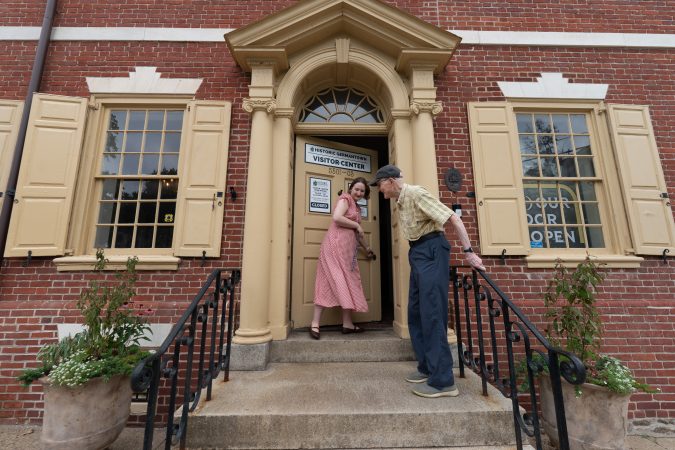
    The center opened in a two-story redbrick building at 5501 Germantown Ave. earlier this month. Owned by the Germantown Historical Society, it is intended to serve as a starting point for visitors and residents alike.

    The exhibitions were curated using a process of community conversations in which neighborhood residents shared what was important to them, said curator Kaila Temple. The main exhibit highlights major themes in Germantown’s history. Sections like “Activism and Advocacy” focus not only on the 1688 Germantown Quaker Petition Against Slavery, but also on a student protest in 1967 that was met with violent police opposition.
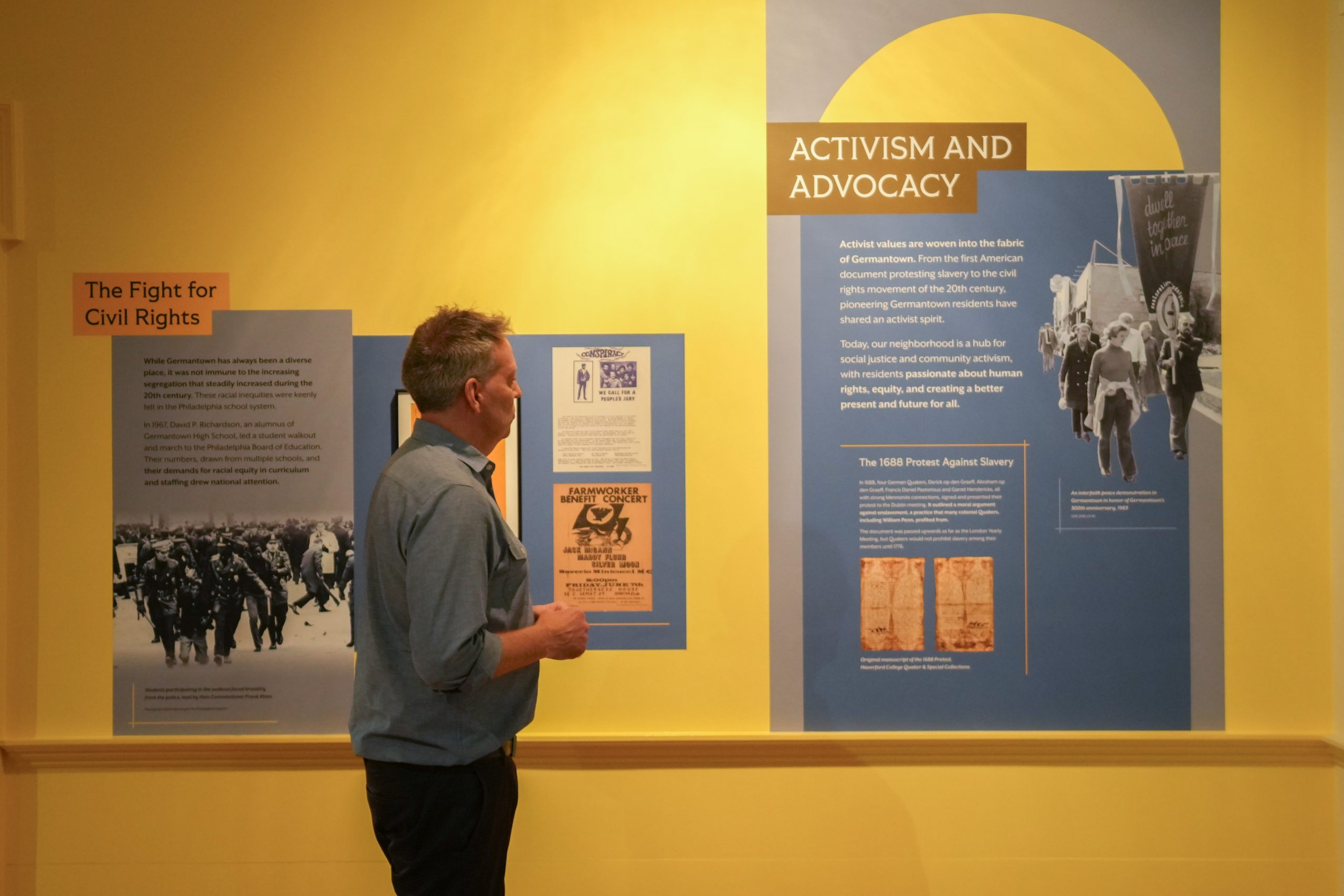
    Tuomi Forrest, executive director at the Germantown Historical, in the new exhibit.Jessica Griffin / Staff Photographer

    German immigrants first settled in Germantown in the late 16th century, fleeing Europe in search of religious freedom. Germantown played a central role in the American Revolution and later became the site of strong abolitionist advocacy, and robust student youth activism during the Civil Rights Movement.

    The visitor center hopes to both connect residents of Germantown with their local history and draw visitors from elsewhere. Visitors will be directed to visit the many historical sights in the area with maps available for walking tours. Director Tuomi Forrest hopes the visitor center can be a resource for neighbors and bring in more visitors from outside Philadelphia, citing those as “twin” goals.

    The visitor center received about 200 people the first week it opened and hopes for more. It recently collaborated with Neighborhood Jawnts Tour Series, a Philadelphia-based tourism effort, to bring in visitors from around the city.

    It has also worked closely with neighbors who want to learn more about their own homes and their ancestors. One neighbor found a wedding invitation from 1912 during home renovations and wrote to the center to ask for documents that would shine more light on who used to live in the home; another wanted more information of how his mid-1800s home came to be an institution for orphans; others ask to come to the center to do research on their ancestors.
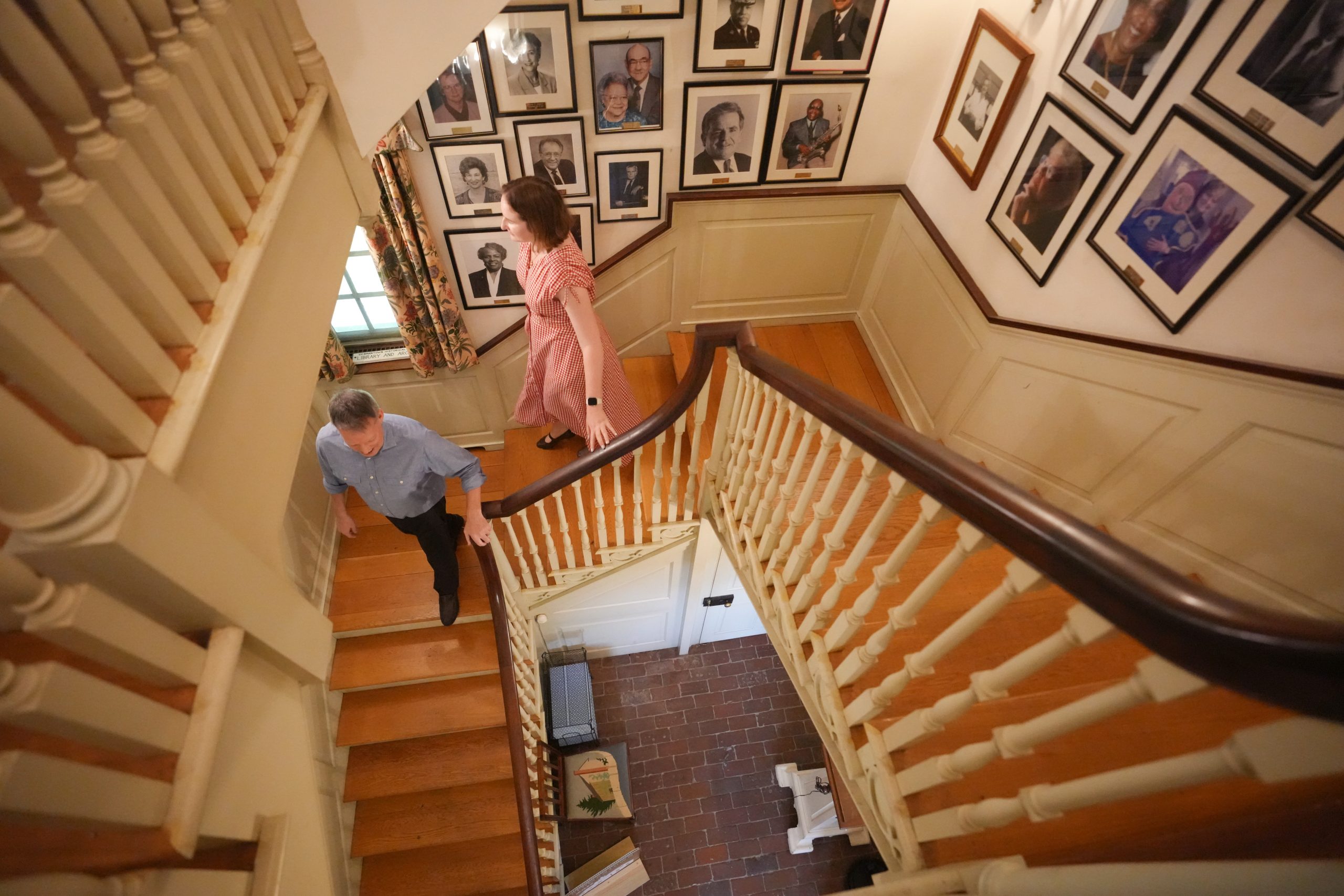
    Tuomi Forrest, executive director, and Kaila Temple, curator, at the Germantown Historical Society building.Jessica Griffin / Staff Photographer

    The square where the visitor center sits dates to 1703. George Washington lived across the street from it in 1793, and when Philadelphians wanted the federal government to stay locally, they touted the square as an asset.

    The Colonial Revival building where the visitor center is now housed was constructed in the 1790s and restored around the 1940s and ’50s.

    Visual markers of the Colonial Revival style, a result of the 1876 Centennial Exhibition’s reawakening of Americans’ desire to connect architecturally to their colonial past, still dominate the historical section of Germantown. Along Germantown Avenue, gray stone churches stand beside pale yellow, redbrick, and coral-colored houses.

    But the visual character of the historic section of Germantown that houses the new center is not uniform, especially as new developments begin to populate empty lots.

    A neighborhood ‘at an upswing’

    As the local visitor center leans into Germantown’s past, some nearby residents and businesses — many of whom were not aware of the new center — said they were concerned with the direction of their neighborhood’s future.

    Van Brooks, operations manager of a coffee shop kitty-corner from the visitor center, worries about development just down the street — a four-story apartment building that is visible from the window of a visitor center gallery. “A lot of folks in this neighborhood don’t want this space to exist here,” he said. He worries the modern, flat apartment complex will begin to gentrify the neighborhood.

    Nicholas Thaete, who has lived in Germantown for 46 years and runs an antique repair shop, says the neighborhood has gone through different periods. “It goes up and down. Right now, it is at an upswing,” he said.

    And yet, as Debbie Curry, who works in a nearby fabric store, remembered, Germantown used to have more commercial activity: “There was a time when there were a lot of department stores. … You didn’t have to go to Center City to do your shopping.” Curry, 66, grew up in Germantown but moved from the neighborhood when she married. She is happy something is finally being done about empty lots.

    “A lot of people thought for years that Germantown would see new development, but now it has,” Forrest said, standing in front of the visitor center.
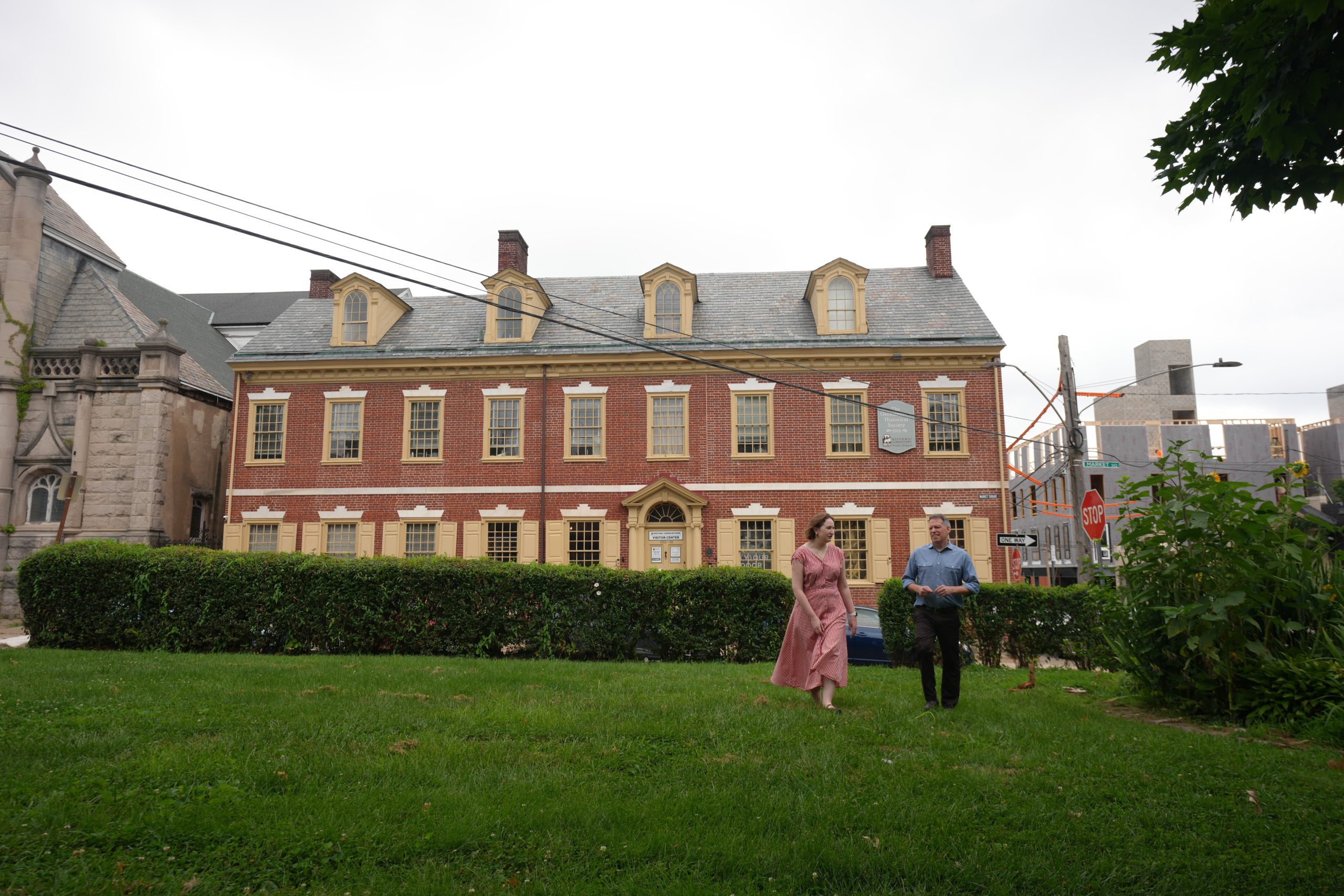
    Kaila Temple, curator of Collections at the Germantown Historical Society and Tuomi Forrest, executive director at GHS, outside the new Historic Germantown Visitor Center.Jessica Griffin / Staff Photographer

  • An off-duty Philly cop is a suspect in a Northampton County homicide

    An off-duty Philadelphia police officer is a suspect in a homicide in Northampton County, according to the Philadelphia Police Department.

    Police said Saturday that they are aware that the off-duty cop — identified as Kenroy Cummings — was involved in a shooting in Allen Township.

    Shortly before 2 p.m. Friday, Pennsylvania State Police responded to the report of a domestic incident on the 1200 block of Old Gate Road.

    At the scene, police discovered a 27-year-old man suffering from gunshot wounds. He soon died at a local hospital. After a brief car pursuit, the suspect returned to the scene, and surrendered to investigators.

    “The Philadelphia Police Department’s Internal Affairs Bureau has been notified and has initiated the appropriate administrative investigation,” said a department spokesperson.

    Pennsylvania State Police have not yet announced any charges in the investigation, or details on the victim. A coroner said Saturday that out of respect for the family’s privacy, the victim’s identity would not be released until after the autopsy.

  • How the lighthearted social media trend of teen takeovers took a serious turn

    How the lighthearted social media trend of teen takeovers took a serious turn

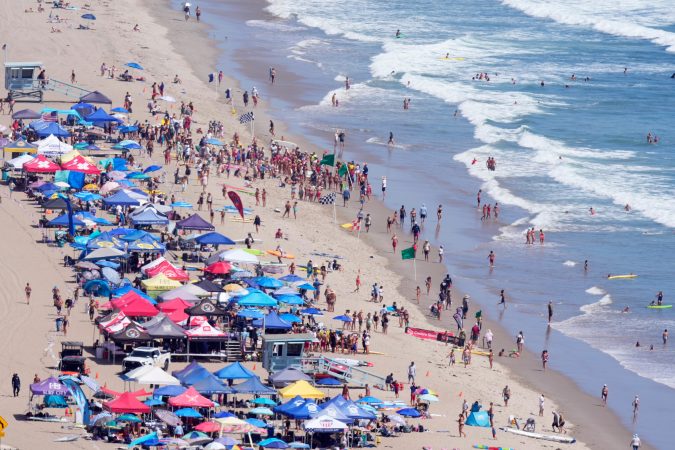
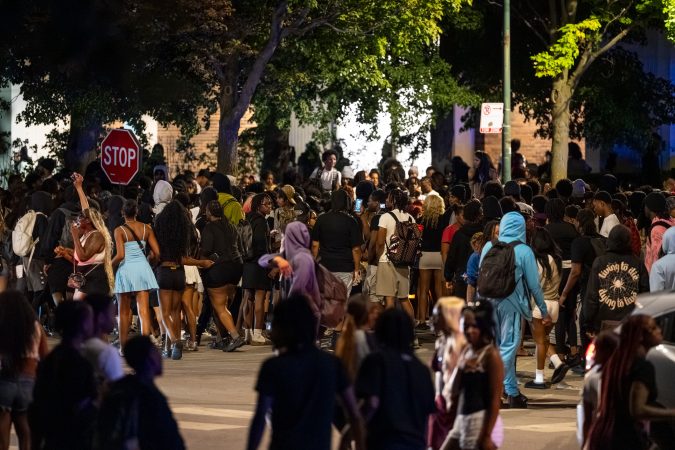
    When Damarion Spann, 18, saw an Instagram flier calling for a massive gathering on a beach near downtown Chicago, he immediately wanted to go. Thousands of others joined him that night on the sand, blasting music and dancing.

    The cultural trend of so-called teen takeovers has popped up across the U.S. in recent years, influencing local policing and national politics. The events, often hyped online and captured in videos on social media, have led to shootings, theft, and vandalism. City officials and police are concerned about an increase over the summer, and are under pressure to prevent similar gatherings or to punish those who participate.

    Over the July 4 holiday weekend, several thousand young people converged in two spots in Raleigh, N.C., police said. Nine people, including an adult who was not part of the gatherings, were shot and wounded.

    There were also takeovers in Pensacola, Fla., where a 19-year-old was shot and killed; and Newport Beach, Calif., where more than 400 were arrested after the police chief said teens launched “explosive mortars and other projectiles” at officers ordering them to disperse.

    But Spann and other teens say that the events are largely misunderstood. They point to formal curfews or limits on group size at malls and movie theaters that have made it harder for teens to gather, exacerbating a feeling of disconnection they trace back to remote learning during the coronavirus pandemic.

    How cities are tracking the social media trend

    Communities and police across the country are trying to identify organizers, fine parents of those involved, and impose curfews.

    In Detroit, officials say they “thwarted” 19 gatherings so far this year by monitoring time and location changes as young people coordinated across social media, said Teferi Brent, director of the Mayor’s Office of Neighborhood and Community Safety.

    “We have eyes on all the behaviors and activities of those who have expressed interest in trying to take over and we have done a good job of being way ahead of the curve and being able to prevent a lot of these things,” Brent said.

    Alderperson Jessie Fuentes, who chairs the Chicago City Council’s subcommittee on youth employment, said her office has tried to find solutions that don’t rely exclusively on police and instead coordinate with parents and community members to prevent conflict or crimes.

    Blue Island, a south Chicago suburb, has taken another tack: to fine parents or guardians and use the funds to cover cleanup after events. That might include debris left behind or other damages like cars dented from scores of teens clambering over them while fleeing police.

    Other places have taken harsher approaches, as in Florida, where state officials said prosecutors can apply racketeering laws, typically targeting criminal gangs or organized crime, if takeovers appear to be facilitated by “an organized network.”

    But some have pushed back on the idea that the threat of harsh legal punishment could prevent the gatherings in the first place.

    “What we know about adolescent brain development is that the stakes are not going to be what prevents a young person from engaging in risky behavior,” said Melissa Milchman, the executive director for the nonpartisan organization the Coalition for Juvenile Justice. Milchman added that mass arrests often ensnare those who are going for innocent fun without preventing others from breaking the law.

    Teens say there aren’t safe spaces for them to gather

    For Spann, the recent media attention on the events has largely failed to capture the appeal to young people.

    “You feel like a young person who has freedom, who’s not being held to something,” said Spann, who is Black. At the event he went to, he was able to catch up with people he hadn’t seen since 8th grade.

    He said that the events are a direct result of a cascade of school closures across Black neighborhoods over the past couple of decades in Chicago. To deter people from gathering even at basketball courts, where there were sometimes fights, officials have removed the nets. Spann said that his mom, who grew up in the same neighborhood, frequently talks about how much easier it used to be to hang out outside without a fear of gun violence.

    When Spann goes to malls in more affluent areas with his mostly Black group of friends, shoppers often stare and security guards question them. To avoid scrutiny, Spann and his friends sometimes sneak into outdoor shopping centers or areas downtown in smaller groups at staggered times.

    By contrast, in the same spaces, Spann said, “If I’m with my white friends, I feel like I belong.”

    Despite the physical dangers that come with takeovers and the threat of getting a ticket or even arrested, the allure is strong, according to Jeffrey Bernstein, a psychologist and author.

    “The kids still do it because they feel like it’s their second family,” which he said “really takes over as their primary sense of connection.”

    “They’re getting things from their peers that they can’t get from their parents.”

    Some cities have tried to meet that need head-on, instead of cracking down with law enforcement.

    In St. Louis, officers have started to bring some teens to community centers instead of jails so their parents can pick them up, and in Baltimore, officials have tried leaning on public schools to provide alternative programming. In Chicago, Spann received a $11,000 grant from the city and partnering nonprofits to host an event for his peers at the end of the summer, in an effort to give his community more places to gather.

    What cities are doing to address teen takeovers

    In April, Daveion Page, a 16-year-old in Detroit, was bored. He turned to his phone, creating a post on social media promoting a teen takeover. Hundreds of teens soon flocked to a site downtown and fights broke out by the end of the night. At another takeover in May, a 14-year-old was shot and wounded.

    After the Detroit event in April, Page told reporters that he didn’t intend for the takeover he organized to result in violence.

    “I just wanted to get out of the house, have fun, enjoy time with my family and my homeboys and my homegirls, too,” said Page, who was flanked by Detroit Mayor Mary Sheffield and other city officials at a news conference.

    He told city officials that young people might respond if there were more safe places to gather.

    Before the takeovers, there were already plans to use $1.5 million from the city’s budget for summer programming and to support violence prevention programs. In response to the takeovers, the city has launched an office of youth affairs, met and listened to students at schools, and created a youth advisory board comprised of teens and young adults.

    “We have brought them to the table and made them a part of our structure in regards to identifying what the needs and concerns are of the young people in the city,” Brent said.

    In Detroit, a late-night basketball league has formed as an alternative hangout spot for teens and young adults. Jerseys and sneakers are provided by the city.

    “This league just helps me find something to do,” Cameron Chandler, 21, said while playing basketball at the recreation center.

    He’s never participated in a takeover, but recently after practice, he stumbled on one near his home.

    “There were a lot of cops and some people got arrested,” Chandler said. “You just have to think, ‘that could easily be me.’”

  • More health workers strike as Ebola cases in Congo near 3,000, including over 1,300 deaths

    More health workers strike as Ebola cases in Congo near 3,000, including over 1,300 deaths

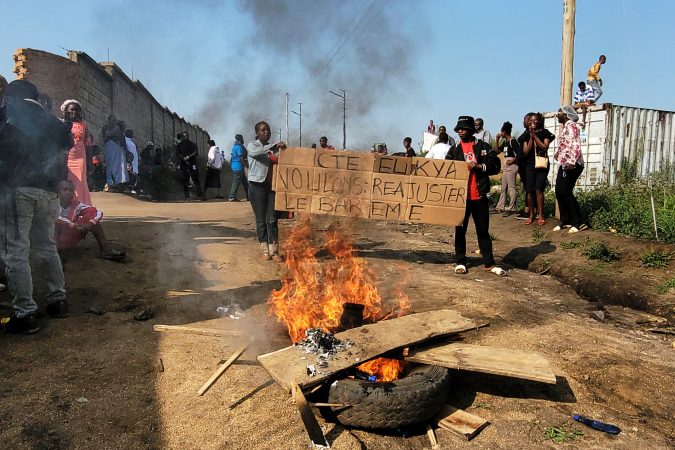
    BUNIA, Congo — Health workers at an Ebola treatment center in eastern Congo went on strike on Saturday, demanding their pay. The walkout disrupted care for patients in the epicenter of the country’s rapidly growing outbreak.

    The number of confirmed cases of Ebola in Congo has reached 2,973, including 1,309 deaths, according to government data released on Friday in what authorities say is the fastest-growing outbreak on record.

    The Elikya Ebola Treatment Center in Bunia, Ituri province, came to a standstill after doctors, nurses, and security staff stopped work.

    About a hundred health workers protested outside the treatment center on Saturday. They said the unpaid bonuses were undermining morale and disrupting patient care, and called on Congolese authorities to resolve the backpay so they could resume their work.

    “We need to be paid, because in the meantime the disease is spreading at the treatment center,” Martin Bolombi, one of the health workers on strike, said.

    “I’ve already had five people die who are still inside there. A solution must be found for us,” he added.

    In a statement issued Friday, staff said they had unanimously voted to strike until “concrete solutions” were found to resolve “two months of unpaid performance bonuses.”

    The strike comes a day after Congo’s Prime Minister Judith Suminwa came to Ituri, touring major treatment hubs in Rwampara and Mongbwalu, to assess the outbreak response. During her visit in Mongbwalu, she faced urgent demands from healthcare personnel protesting payment issues.

    Adelard Lufungula, operations manager for the Ebola response, said Saturday the payment issue is “being resolved,” with workers now paid via mobile money instead of cash, and that the backlog “should be cleared” in the coming days.

    Last week, health workers at Bunia General Hospital, the region’s largest medical center, had already gone on strike over unpaid salaries. Some told the Associated Press they had not received any payment since they started work at the onset of the outbreak.

    The World Health Organization says more than 100 healthcare workers have been infected since the beginning of the outbreak.

    The Central African nation has been battling the Ebola outbreak caused by the rare Bundibugyo virus since May 15. A total of 766 patients remain in isolation or in hospitals, while 540 have recovered so far, according to data from Congo’s Ministry of Health.

    The eastern province of Ituri accounts for nearly 90% of confirmed cases.

    The outbreak continues to spread faster than health officials can track despite an expanding response. A key challenge is that patient zero has yet to be identified in the outbreak, while displacement from armed conflict and illegal mining in the region have made it difficult to trace thousands who have come in contact with infected individuals.

    The response is also hampered by a funding gap, attacks on health centers, an ongoing conflict in eastern Congo, and mistrust among local communities.

    There is also a lack of approved vaccines or treatments for the Bundibugyo virus, unlike the more common Zaire virus, for which there is a vaccine and which was responsible for most of Congo’s past 16 outbreaks of the disease.

    Enrollment in a highly anticipated study of two possible Ebola treatments recently started in Ituri.

    WHO says the global risk of the outbreak spreading outside Central Africa is low, noting that Ebola spreads through direct contact with the bodily fluids of an infected person rather than through the air, making it much harder to spread than respiratory viruses.

  • McConnell faces growing questions about absence nearly six weeks after fall

    McConnell faces growing questions about absence nearly six weeks after fall

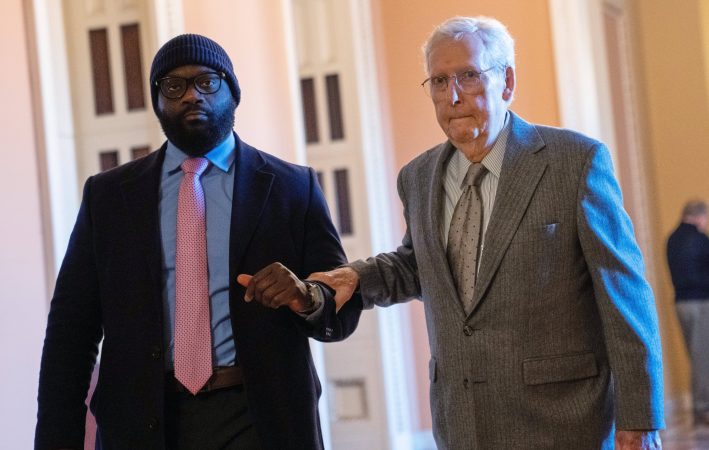
    Sen. Mitch McConnell (R., Ky.) is facing growing calls to be more transparent about his health nearly six weeks after he was hospitalized.

    McConnell, 84, has been absent from the Senate since he said he suffered a fall June 14. His office shared a photo of McConnell holding the Washington Post on July 12, and McConnell said in a statement that he had left the hospital and moved to a rehabilitation center — but he did not say when he planned to return, offering only that he would not “be able to return to the Senate floor to vote quite yet.”

    Those scant details have not quieted rampant rumors and online speculation about McConnell’s condition.

    Kentucky Gov. Andy Beshear (D) said last week that he had heard nothing from McConnell since he was hospitalized, despite sending a letter seeking an update on his condition. He urged McConnell to call into a news station for a few minutes or put out a short video to reassure his constituents.

    “When you’ve been in a hospital for a month and you’ve missed all the votes … you owe your boss, like anybody else out there who works, an explanation of what’s been going on and when you’ll get back,” Beshear said.

    Scott Jennings, a longtime McConnell ally who worked on some of his reelection campaigns, urged McConnell on Thursday to “routinely update his constituents on how he’s doing” and be transparent about the work he’s doing while recovering. He said he expected McConnell to share an update on how he’s doing in the coming days.

    “Truthfully, I think a little transparency on the front end here would have saved him a whole lot of grief,” Jennings told CNN’s The Arena with Kasie Hunt. “But that didn’t happen and they are where they are now.”

    David Popp, a McConnell spokesperson, said McConnell has continued to work during his absence.

    “The Senator continues to meet with staff regarding Senate and Kentucky business, including discussions on defense appropriations, foreign policy, the farm bill, constituent services, and constituent federal grant requests,” Popp said in a statement to the Washington Post. “As the Senator continues to improve in rehab, we will be sure to keep you updated.”

    McConnell said July 12 that he did not break any bones when he fell and did not suffer a heart attack, a stroke, a hemorrhage, or a concussion, but he has said little else about what happened to him.

    Popp referred to McConnell’s earlier statement when asked when McConnell might return to the Senate or whether he planned to attend Tuesday’s funeral for Sen. Lindsey Graham (R., S.C.), his longtime colleague, at Washington National Cathedral.

    McConnell said in his statement that “folks of my generation often hesitate to share the vulnerability that comes with growing older.”

    “Even in the public eye, I feel that same instinct — I can’t help it,” he said.

    McConnell spent 18 years as the Republican leader in the Senate before stepping down early last year. He remained in the chamber to serve the final two years of his term, which ends in January.

    Rep. Andy Barr (Ky.) won the Republican primary to succeed McConnell in May and is heavily favored to win his seat in November. The Senate is scheduled to be in session for only 10 more weeks during McConnell’s term as senators head home to campaign ahead of the midterm elections.

    McConnell’s absence has narrowed Republicans’ edge in the Senate, giving them an effective 52-47 majority as long as he is absent.

    Senate Majority Leader John Thune (R., S.D.) and Sen. John Barrasso (Wyo.), the No. 2 Senate Republican, said earlier this month that they had spoken with McConnell, but some other Republican senators have raised questions about McConnell’s absence.

    Earlier this month, Sen. Ron Johnson (R., Wis.) cast doubt on the legitimacy of the photo that McConnell shared of himself — only to dismiss his comments later, saying he was just repeating a rumor he had heard. (The Post reviewed the photo’s metadata and found it appeared it was taken July.)

    “It’s not fun watching anybody age,” Johnson told reporters. “We’re all hoping Mitch recovers fully and comes back. I haven’t talked to him, so I have no knowledge.”

    Last week, Sen. Josh Hawley (R., Mo.) wished McConnell a speedy recovery but also suggested he should disclose more about his condition.

    “At a certain point you do have an obligation to your constituents and the country to tell them what’s going on,” Hawley told Fox News, saying he felt “totally in the dark” about McConnell’s status.

    McConnell is hardly the first senator to be away for an extended stretch at a time while ailing or in recovery.

    Sen. John Fetterman (D., Pa.) was absent for two months in 2023 while seeking treatment for depression. Sen. Dianne Feinstein (D., Calif.) missed votes for nearly three months that year while battling shingles and faced calls to resign. She returned to the Senate but died months later.

    Sen. John McCain (R., Ariz.) did not vote during his final eight months in office before he died in 2018. And Sen. Mark Kirk (R., Ill.) did not vote for nearly a year after suffering a stroke in 2012. He released videos of himself relearning how to walk before returning to the Senate and served out the rest of his term.

    Lester Munson, Kirk’s chief of staff at the time, said Kirk was able to keep working even though he was not in the Capitol voting.

    Kirk worked with Sen. Bob Menendez (D., N.J.), for instance, on an amendment to a defense policy bill to tough sanctions on Iran. Senators in both parties — includes Sens. Dick Durbin (D., Ill.), Jon Tester (D., Mont.) and Joe Manchin III (D., W.Va.) and McConnell — stepped up to help Kirk’s office carry on, Munson said.

    “I think people kind of just assume — not really correctly — that if the senator’s in the hospital or something like that, that they can’t do their job,” Munson said. “That’s not entirely true. There’s obviously some things they can’t do … but a lot of other things continue to be carried on.”

    Kirk did not have to contend with social media speculation about his health and other online pressures in the same way that McConnell has, Munson said.

    The prediction market Polymarket, for instance, allows users to bet on whether McConnell will vote in the Senate by July 31. (The odds stood at 11% Friday evening.)

    McConnell is also much better-known than Kirk or other senators who have had extended absences from the chamber. His decades of service should earn him some grace while he recovers, Munson said.

    “As far as I’m concerned, this guy has given so much to the Senate over time and therefore so much to America, God bless him,” Munson said. “He’s got all the latitude in the world to deal with this problem.”

  • Once forgotten, Franklin Square is celebrating 20 years as a revitalized hub for Philly’s families and fun

    Once forgotten, Franklin Square is celebrating 20 years as a revitalized hub for Philly’s families and fun

    Birthday hats. Bubbles. Birds. Butterscotch Krimpets. A Benjamin Franklin reenactor singing “Happy Birthday.”

    That was the fanfare Saturday morning as Franklin Square, the once-forgotten green space at Sixth and Race Streets, celebrated a milestone: This July marks 20 years since the square’s dramatic revitalization, which transformed it from a dusty and dim outpost to a destination for family-friendly fun.

    The pomp and hordes of young children playing with sidewalk chalk, kazoos, and streamers amid the daylight remnants of the annual Philadelphia Chinese Lantern Festival were far removed from the Franklin Square of yore, when it was publicly described as part of the city’s “skid row.”

    “It did not look good,” Amy Needle, president and CEO of Historic Philadelphia Inc., said of Franklin Square’s image in the early aughts. “It was really neglected. … There was no reason to go there.

    “And I think we all saw the potential.”

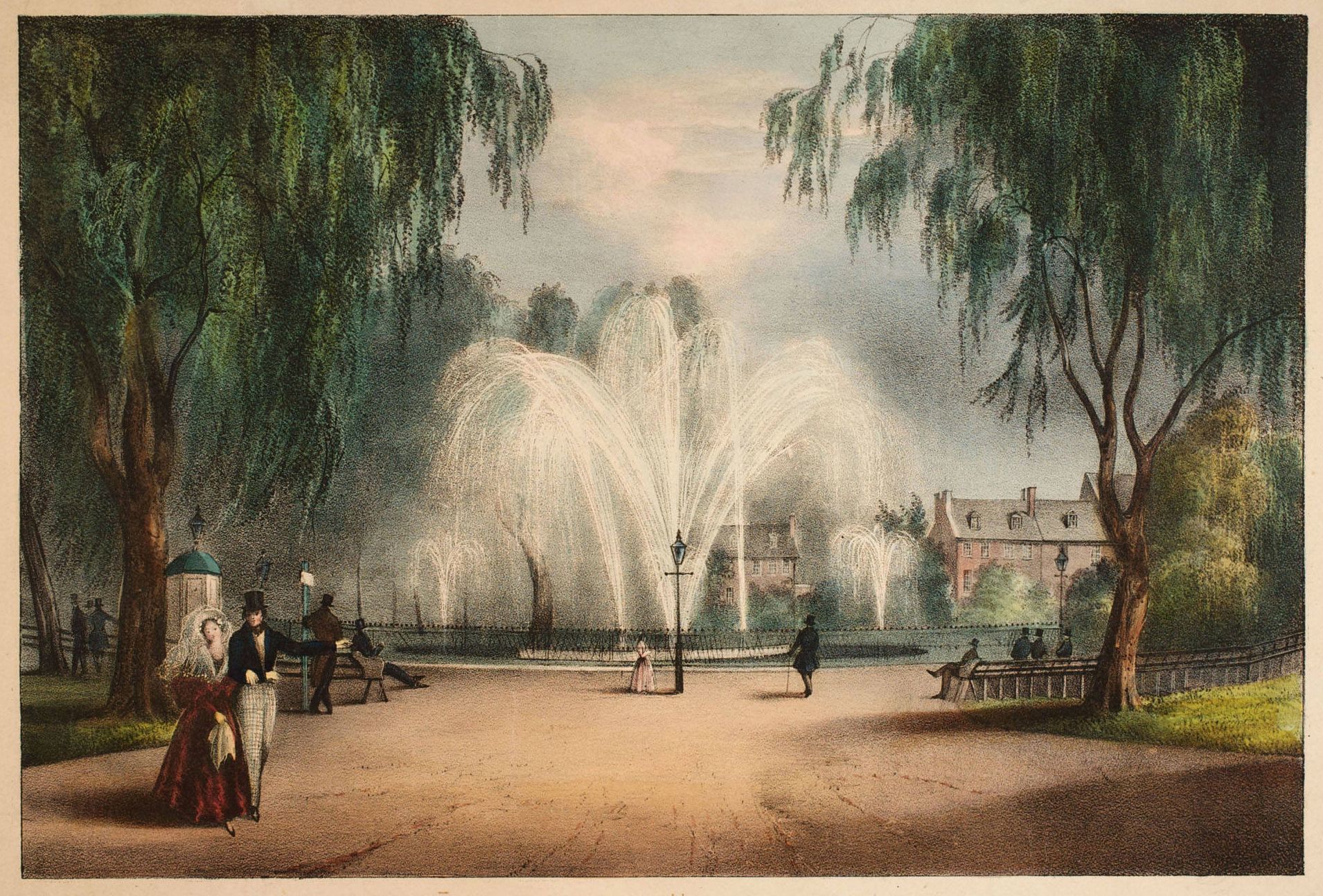
    Franklin Square (originally dubbed North East Publick Square and later renamed in honor of Benjamin Franklin) dates back to 1682, when William Penn designed Philadelphia. Penn anchored the city around a quintet of parks that would become Franklin Square, Washington Square, Rittenhouse Square, Logan Square, and Centre Square (City Hall).

    An undated watercolor of Franklin Square.Courtesy of Historic Philadelphia, Inc.

    While Franklin Square’s 7½ acres may have been heavily used by Philly’s earliest settlers because of its proximity to the Delaware River, its condition started to decline in the early 20th century, when broad swaths of homes on the park’s perimeter were razed to make way for the on-ramps to the Ben Franklin Bridge and, later, the Vine Street Expressway and I-95 feeder, according to The Inquirer’s archives. The park’s greenery was replaced by a brick desert, and the isolation and inaccessibility led to disarray.

    Famed urban theorist Jane Jacobs said of Franklin Square: It was “where the homeless, the unemployed and the people of indigent leisure gather amid the flophouses, cheap hotels, missions, [and] second-hand clothing stores.” Occasionally, tai chi groups and area daycares used the expansive lawns and shady respite, after brushing away debris and drug paraphernalia, according to Needle.

    “It was a dump,” recalled Keith Owens, 69, of Cherry Hill, who was visiting Saturday with his family. “I just remember it was not a place you went to.”

    By the early 2000s, a movement to reinvent the square gained traction, coinciding with the opening of the National Constitution Center, a new flood of tourists to the long-vacant “third block” of Independence Mall between Arch and Race Streets, and a residential housing boom. The effort, led by Historic Philadelphia and then-Gov. Ed Rendell, sought to to revamp Center City’s “most underutilized” square footage and enhance tourists’ trips between Old City destinations, The Inquirer wrote at the time.

    The rehab included fixing the 1800s fountain and installing lighting, new playground equipment, a carousel, and an 18-hole miniature golf course featuring Philadelphia iconography — landmarks that set Franklin Square apart from other, “passive” parks like Rittenhouse or Washington, according to Needle. Although the park is owned by the city, it is operated and maintained by Needle’s group.

    “We had to have attractions there and give people a reason to go there,” she said. “We wanted to create experiences.”

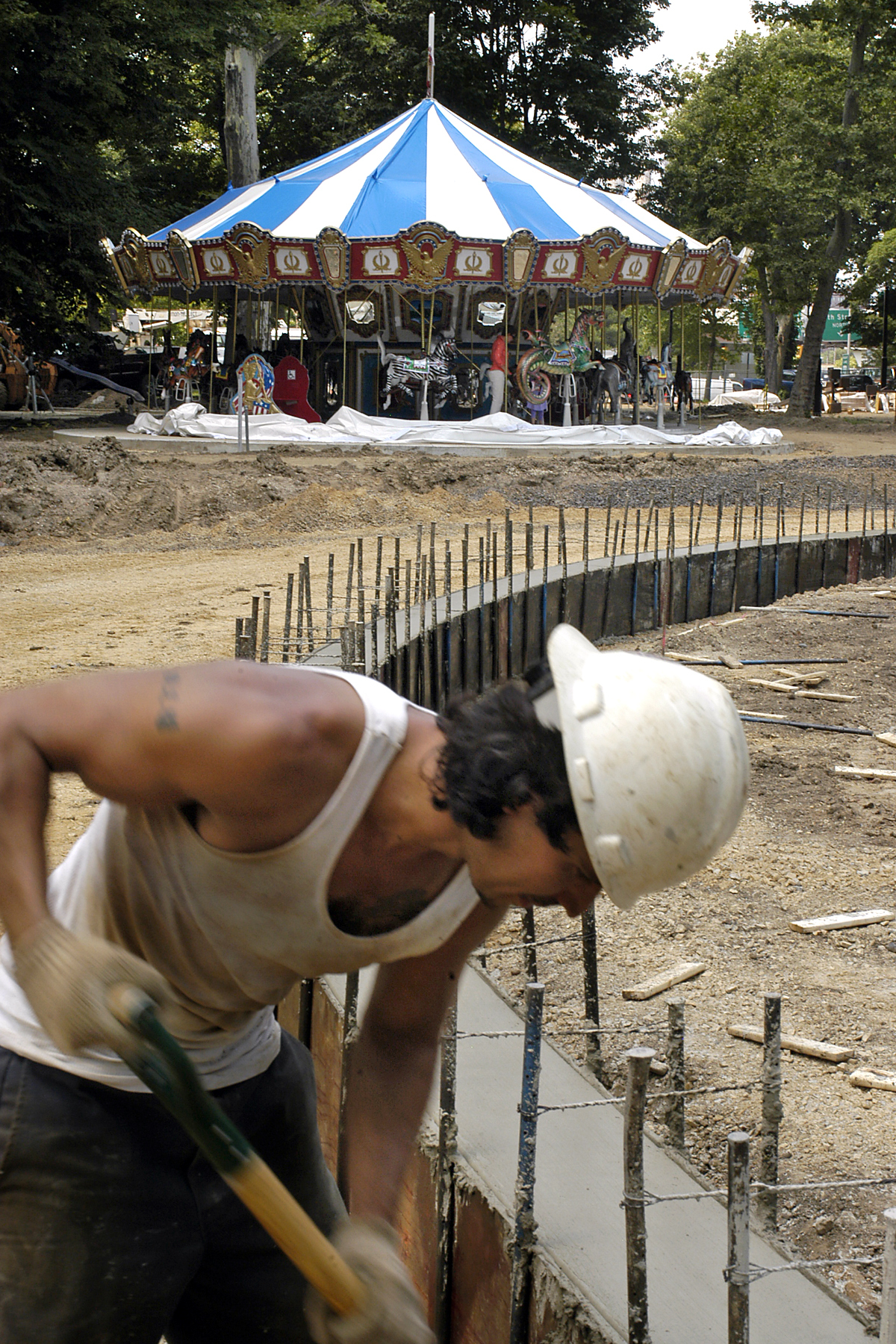
    Union mason (Local 592) Ronald Valenciano of Upper Darby works on fresh concrete around the new fountain being restored in Franklin Square on July 10, 2006, even as the brand-new Philadelphia Park Liberty Carousel (rear) is unveiled to the press. The fountain and carousel were two of the highlights of the renovated park, which will opening later this summer. Once the carousel-making capital of the world, Philadelphia will once again have working Merry-go-Round within city limits. The Philadelphia Park Liberty Carousel is one of the highlights of the new Franklin Square, which reopened later that summer.Tom Gralish / Staff Photographer

    In the years since, the square has added the cherished Chinese Lantern Festival and a Square Burger eatery; meanwhile, the adjacent PATCO station reopened after nearly 50 years, new apartment complexes are being erected, and the restrooms were renovated for the first time since the Bicentennial in 1976. Now, Historic Philadelphia is raising funds to redo the playground and recently received a $1 million boost from the state to do so.

    “I just feel like it’s exploding — every time we come back, there’s more stuff here,” attendee Brooke Duane said.

    “And the bathrooms, which are great.”

    Despite living in Chester County, Duane — who said she staged her maternity photos at the square and celebrated her nephew’s birthday there — finds herself routinely coming back.

    For 22-year-old Sabrina Owens, Franklin Square stands as a testament to the importance of investing in public spaces: “With so many diminishing third spaces … to know that this is here, and it’s such a revamped space, and it’s very welcoming, is very encouraging.

    “It’s a good sign for the city.”

    When asked about the Franklin Square of the future, Needle said she hopes it “continues to be a wonderful public space for people.”

  • Wisconsin’s capital city cancels signature events, grapples with fallout from police shooting

    Wisconsin’s capital city cancels signature events, grapples with fallout from police shooting

    MADISON, Wis. — A police shooting in Wisconsin’s progressive capital city this week put the spotlight on persistent and deep racial divisions, prompting cancellations and other changes to popular summertime events as protesters said they were determined to continue public pressure for change in Madison.

    Corey Ruiz, who is identified as Black or Latino in Wisconsin court records, was shot and killed by a Madison police officer on Wednesday after a brief scuffle at an intersection in the city’s most liberal neighborhood just yards away from a popular 52-year-old food co-op.

    It marks the third time since 2012 that Madison police have shot and killed someone in the same neighborhood. The shooting has sparked renewed calls for police reforms and forced the city to once again reckon with calls from the Black community to address racial justice issues.

    Pressure from protesters, and sympathy for their cause, has also led to the cancellation or disruption of many of Madison’s signature summertime events.

    “Our community has spoken loud and clear: this is NOT business as usual,” Black activist Clyde Mayberry posted on Facebook on Friday amid a string of cancellations. “Your decisions have helped ensure that this city continues to acknowledge the pain, the loss, and the call for accountability.”

    Protesters took to the streets hours after the shooting, disrupting a popular Wisconsin Chamber Orchestra outdoor concert at the state Capitol that attracts about 30,000 every week in the summer.

    The scene captures a familiar divide in Madison, a city that is more diverse than the state overall but still 70% white. Protesters, many of whom were Black, stood over white concert attendees sitting at tables near the stage that cost as much as $1,800 to rent for the night.

    Concert organizers canceled the event.

    Threats of a protest on Thursday led the city to postpone the grand opening of a new public market, just a few blocks away from where the shooting occurred. A popular neighborhood festival near the shooting called AtwoodFest, scheduled to begin on Saturday, was also canceled in the face of potential protests.

    “Our community and our Marquette neighbors witnessed another horrific officer-involved shooting just blocks from our festival grounds, leaving us in deep pain and justified anger,” organizers of the festival wrote. “In acknowledgment of what has happened far too often in our community and our country as a whole, this year’s AtwoodFest, themed ‘The Heartbeat of the Neighborhood,’ is canceled.”

    And on Saturday, the popular downtown farmers market that attracts about 20,000 people each week around the Capitol building shut down nearly four hours earlier than usual in solidarity with protesters.

    “We mourn with our community,” market organizers posted on social media. “And we agree — business cannot proceed as usual.”

    A handful of protesters showed up at the Capitol as vendors were breaking down their booths at around 10 a.m.

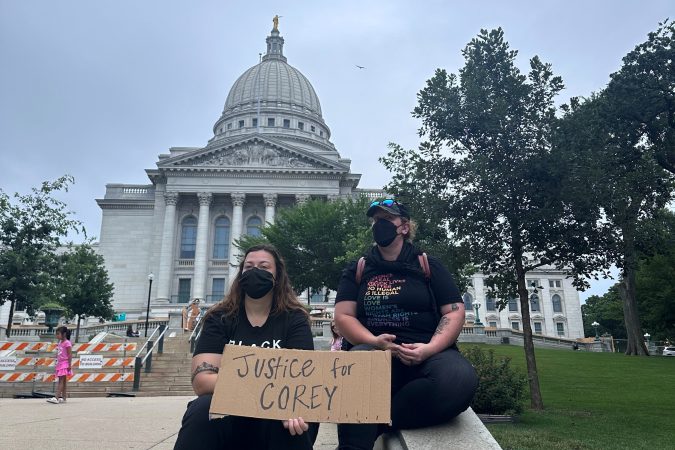
    “No one should be thinking this is just another Saturday,” said Reba Bergmann, who sat with Lilly Nimmer holding a sign that said “Justice for Corey.”

    “It’s not life as normal,” Nimmer said. “We should be more mad. We should stand up for what we believe in.”

    Charles Alt, 30, supported the decision to close down early.

    “It’s important to keep focus on the real tragedy, which is that someone got killed,” said Alt, who was shopping at the market. ”Missing some market time, that’s sad, but that’s not what’s important.”

    But Rodney Hathaway, who was visiting Madison from Milwaukee, was caught off guard by the market’s early closure.

    “It’s ridiculous,” he said. “This is peoples’ livelihoods. It’s just unfortunate. We have such a short summer season for these people to sell their wares.”

    Investigations into the shooting continue. Civil rights attorney Ben Crump, who represents the Ruiz family, said on Friday at a new conference in the Capitol that the officer who fired the shots should face criminal charges.

    Madison Police Chief John Patterson, who is white, has tried to calm tensions, even allowing protesters to overtake a news conference that he was leading along with the mayor inside the police department’s downtown headquarters on Thursday.

    Patterson took questions from angry protesters, one of whom held a sign just feet away from the chief that said “corrupt cops deserve to die too.” After one protester hurled an insult at Patterson, the chief calmly responded, “I appreciate you being here.”

  • France and Spain battle wildfires as more than 250,000 people are forced to flee homes

    France and Spain battle wildfires as more than 250,000 people are forced to flee homes

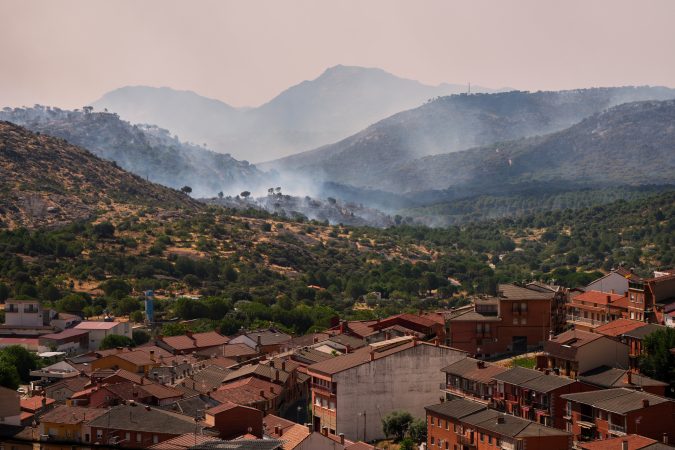
    LEGE-CAP FERRET, France — France sent a hulking military cargo plane to dump tons of flame retardants as it battled raging wildfires on Saturday and slashed the final stage of Tour de France to redeploy security personnel to the blazes that forced tens of thousands of people to flee their homes.

    The giant A400M transporter swooped in low, its long plume of ochre-colored retardant trailing over drought-hit woodlands in the southwest as fire crews on the ground fought flames that authorities feared could spread toward the wine region city of Bordeaux.

    Race organizers and the Paris police department announced a truncated 21st and final stage on Sunday for the three-week Tour, France’s most famous annual sporting event, reflecting the immense strain that two large fires in the southwest are causing for emergency services.

    Tour riders will race Sunday inside Paris, rather than starting from Thoiry, west of the capital, on a circuit of 55 miles — down by a third from the 82.5-mile route that had been planned. Part of the race’s security detail will instead “reinforce the response efforts in the areas affected by the wildfires,” according to the statement announcing the ”exceptional measures made necessary by the situation.”

    Including some 70,000 people evacuated in central Spain, wildfires in southern Europe this week have displaced more than 250,000 people.

    Shifting winds raise concerns for Bordeaux

    With winds expected to shift in a west-to-east direction on Saturday afternoon, potentially driving flames closer to Bordeaux, fire crews and authorities were digging trenches, using retardants, and taking other blaze-blocking steps, French Interior Minister Laurent Nunez said, predicting a “long and very difficult” battle.

    He said the fire was about 20 miles west of the city and lost some of its intensity overnight. The prefect of the Gironde region that includes Bordeaux said the blaze grew into “a firestorm” on Friday after igniting earlier this week and cautioned that it “remains dangerous” even though firefighters were making progress.

    The government mobilized soldiers to join fire crews and was rushing in 1.5 million face masks to protect against choking smoke.

    Authorities ordered people between the fire and Bordeaux to evacuate, including from parts of the city’s western suburbs and other towns and villages.

    Prime Minister Sébastien Lecornu described the fires as unprecedented and said the Gironde blaze became so strong on Friday that it had begun generating its own winds. Firefighting teams were being reinforced with the addition of hundreds of soldiers, and breathing masks to filter out potentially noxious smoke particles were being rushed to those exposed, Lecornu said.

    In Bordeaux, authorities took in thousands of evacuees, offering them food and shelter in an exhibition center, and the city’s mayor said it could be equipped to welcome as many as 10,000 people if that became necessary. The city’s airport said it remained open but that its bus and tram services were suspended.

    Evacuation orders were sent with special alerts to mobile phones, instructing people to leave, Gironde prefect Sophie Brocas said. She said the fire had destroyed about 140 homes in the region.

    The magnitude of the wildfires caught authorities off guard

    The French military A400M transport plane, specially converted for firefighting, was a heavyweight new tool in the battle. It joined at least 18 other water- and retardant-dropping aircraft and helicopters that Nunez said were deployed in the Gironde region, working in rotation in the smoke-filled skies.

    The virulence of the French and Spanish wildfires, fueled by high temperatures and the long-term effects of climate change, caught fire crews and authorities off guard.

    Firefighters in Spain said the blazes spread so fast and violently that they could not be tackled head on. In France, some people even fled by boat when flames swept through tourist towns on the Atlantic coast.

    “We’ve never seen anything like this,” said Javier Organista, a resident of El Tiemblo, west of Madrid, where fire charred a famed chestnut grove. “When we saw the flames coming into our town, surrounding us, leaving us with practically no way out, all the neighbors joined together to try to stop its advance.”

    “It’s just really sad,” he said.

    Climate change supercharges fires

    Spain deployed 2,600 firefighters, police, and other emergency personnel to two blazes west of Madrid, backed by 19 water-dumping aircraft and helicopters.

    France deployed 1,400 firefighters to the Gironde fire and hundreds of others to another wildfire further south in the Landes region. Dozens of firefighters suffered injuries, authorities said, but no deaths were reported in either country despite scenes of panic as townsfolk fled by car and police went door to door to tell people to leave.

    Successive heat waves that hit unusually early and hard this year, baking Europe with record-shattering high temperatures, have turned forests and scrublands into tinderboxes.

    Fires have burned 130,000 hectares of forest already this year in Spain, up from an annual average of 100,000 hectares over the past decade, Spanish Prime Minister Pedro Sánchez said Saturday as he visited a command post west of Madrid.

    He said more favorable weather Saturday offered “a window of opportunity” for fire crews to bring the blazes under control. Madrid’s regional government said the fires decreased in intensity as winds and temperatures dropped.

    Other European nations were helping, with Italy, Greece, the Netherlands, Portugal, Croatia, the Czech Republic, Sweden, Slovakia, Germany, and Switzerland already providing or expected to deploy water-dumping planes and helicopters to the Spanish and French fire fronts.

  • Heat dome expands across the central United States, creating dangerous conditions for millions

    Heat dome expands across the central United States, creating dangerous conditions for millions

    WASHINGTON — Dangerously hot weather will expand across much of the central United States this weekend and into next week, pushing temperatures above 100 degrees Fahrenheit from Dallas to North Dakota with roughly 70 million people facing heat advisories.

    A heat dome, where atmospheric conditions trap heat, will create sustained high temperatures and accumulating discomfort. Overnight low temperatures aren’t expected to come down enough for people to have much chance to recover, allowing heat stress to build as the bad weather lingers, forecasters said. The high humidity will make it feel even worse.

    A huge stretch of the country will endure the oppressive midsummer weather. It will stretch from the desert Southwest to the Gulf Coast, reaching up into the Midwest and Great Plains. Some records around the Denver area may be broken, forecasters said. Temperatures are expected to be 10 F to 15 F above what’s normal.

    “It looks like it is going to be pretty much stationary in that position as we go through the week,” said Bob Oravec, meteorologist with the National Weather Service.

    Places under a National Weather Service extreme heat warning included western Nebraska, where temperatures Saturday and Sunday were forecast to reach 108 F.

    At the Museum of the Fur Trade near Chadron, Neb., there were fewer visitors than usual for this time of year. Meanwhile, fur hats and pelts in the gift shop weren’t selling so hot.

    “I’m sure no one would be willing to wear it on a day like this,” said museum employee Hannah Lovelace. Loose-fitting, period-correct fabric shirts, on the other hand, remained popular sellers among folks headed to historical frontier reenactments called rendezvous, she said.

    The region’s heat was forecast to continue through the week, with temperatures topping 100 F even in normally moderate areas of Montana and Wyoming.

    There might be some relief in the central United States toward next weekend, but even that might be temporary, said Oravec.

    Some areas will be spared. The Mid-Atlantic and Northeast should avoid the extreme heat, as will much of the Pacific Northwest.

    This is the latest miserable stretch of weather during a summer that has already had a lot of it. The eastern United States endured an unbearably hot early July that forced communities to cancel Independence Day celebrations and disrupted the country’s 250th anniversary. Another heat wave in mid-July hit the Southwest and Great Plains. It’s not just the United States. A heat wave in June devastated Europe; France recorded at least 5,700 more deaths than usual during that period.

    This heat dome will be dangerous. Children and the elderly, along with those with medical conditions, are especially at risk of serious conditions including heat stroke. The basics are important: People should seek out air-conditioning or a cooling center and make sure they drink enough water and limit time under the direct sun.

    The weather will shift somewhat through the week with the worst pockets of heat becoming particularly severe across Texas and parts of the Gulf Coast by Wednesday.

    It can be difficult to know exactly how climate change contributes to particular events in real time. But rising carbon dioxide levels from burning fossil fuels makes it more likely that hotter weather becomes more frequent and extreme, according to Andy Pershing, chief program officer at Climate Central, a climate change communications nonprofit.

    “We are experiencing exactly what the climate models in the 1990s said we should experience now. That is more frequent, more severe heat waves, bigger temperature anomalies, more humidity, higher overnight temperatures,” Pershing said. “These are all part and parcel of the climate story.”

  • Israel detains over 70 suspects following deadly violence in the West Bank

    Israel detains over 70 suspects following deadly violence in the West Bank

    NABLUS, West Bank — Israel’s military said it detained over 70 suspects across the occupied West Bank overnight and on Saturday, a day after troops deployed across the territory following violence that left two Israeli soldiers and four Palestinian villagers dead.

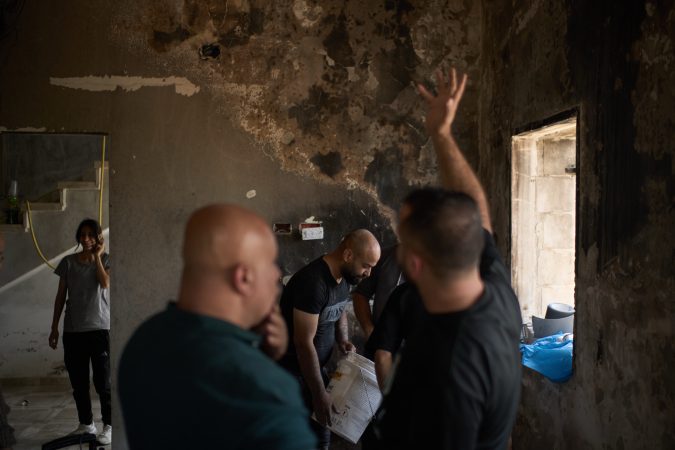
    Soldiers remained in the village of Tell, in the northern West Bank, where Friday’s clashes were centered. Palestinians described searches that included raids of a hospital in the city of Nablus, one of the territory’s most violent areas.

    Palestinians in the West Bank have faced violence as Israel’s hard-line government, dominated by settler leaders and supporters, has overseen a surge in settlement construction over the past four years. The international community overwhelmingly considers the Israeli settlement construction illegal and an obstacle to peace.

    Soldiers make arrest during raid at West Bank hospital

    “More than 50 armed soldiers and officers stormed the hospital, terrifying the patients,” Ghassan Barkat, director of Nablus Specialty Hospital, told journalists. He said soldiers on Friday detained, bound, and insulted staff and patients, raided hospital departments, and arrested a seriously injured man, Ali Hussein Ali Ramadan.

    “This should not happen in a healthcare institution,” said Barkat, adding that women and children were present.

    An Israeli military statement did not mention the hospital, but it said over 300 locations were searched and what it described as affiliates of the Hamas militant group, arms traffickers, “terrorists,” and others were detained.

    The circumstances of Friday’s events remained unclear, but Israeli media reports and interviews with local Palestinian officials suggested a group of settlers entered Tell and were confronted by residents fearful of an attack. The village is off-limits to Israelis as part of Area B under the 1993 Oslo Accords.

    The Palestinian Health Ministry said Israeli soldiers shot and killed four Palestinians in Tell, while the military reported the deaths of two soldiers, one of them a settler in a local defense squad. Two other Israelis and four more Palestinians were wounded, health officials said.

    The Israeli military on Saturday said it detained 11 suspects in Tell.

    Over 80 Palestinians were arrested across the territory, said Amin Shuman, president of the Palestinian higher commission for the affairs of prisoners, calling the arrests “an attempt to impose collective punitive measures and retaliatory policies” against Palestinian citizens after Friday’s events.

    More than 700,000 Israelis live in the occupied West Bank and east Jerusalem, territories captured by Israel in 1967 and sought by the Palestinians for an independent state along with the Gaza Strip.

    Israeli strikes kill at least 4 in Gaza

    Israeli strikes on Saturday killed at least four Palestinians and wounded at least 15 others across Gaza, according to Palestinian health officials.

    In the southern city of Khan Younis, an airstrike killed a man and a woman, whose bodies were taken to Nasser Hospital, the hospital said.

    In northern Gaza, a strike on a vehicle in the Jabaliya area killed one person and wounded two others, according to officials at Shifa Hospital, where the casualties were taken.

    A strike on a motorbike in Gaza City’s Sheikh Radwan neighborhood killed the director of the area’s police force, according to the Interior Ministry and Shifa Hospital.

    A strike in the central Gaza refugee camp of Nuseirat wounded three people, according to the Belgian field hospital, which received the casualties.

    And Israeli drones struck the vicinity of Al-Aqsa Martyrs Hospital in the central city of Deir al-Balah, wounding 10 people, the hospital said. Chaotic scenes unfolded as severely wounded men covered in blood were rushed into the hospital by bystanders.

    Israel’s military said it struck a member of Hamas’ military wing near Al-Aqsa hospital. The military did not immediately respond to a request for comment on the other strikes. Militants have carried out shooting attacks on troops, and Israel says its strikes are in response to that and other violations.

    While the heaviest fighting has subsided since a fragile ceasefire took hold in October following two years of war between Israel and Hamas, Israeli forces have carried out repeated airstrikes, killing at least 1,191 Palestinians, according to Gaza’s Health Ministry.

    The ministry, part of the Hamas-led government, maintains detailed casualty records that are seen as generally reliable by U.N. agencies and independent experts. It does not give a breakdown of civilians and militants but says women and children make up most of the dead.

    Five Israeli soldiers have been killed since the ceasefire.

    The Oct. 7, 2023, attack by Hamas-led militants on Israel killed some 1,200 people and saw 251 taken hostage, sparking the war. Israel’s retaliatory offensive in Gaza has killed more than 73,317 Palestinians, including those killed since the ceasefire, Gaza’s Health Ministry said.