Category: News

  • How Harvard’s epic fight with Trump is costing the university

    How Harvard’s epic fight with Trump is costing the university

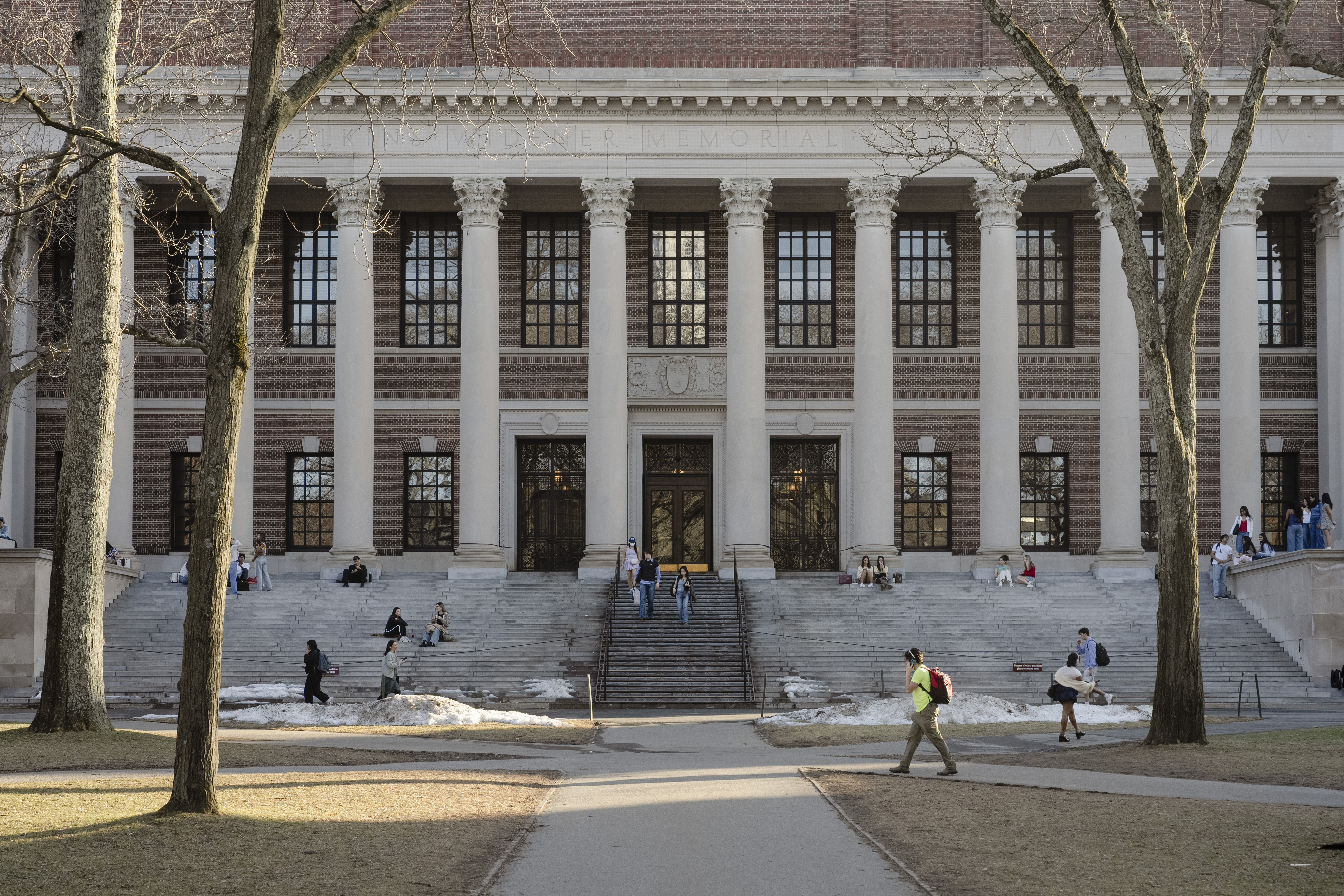
    One of Harvard University’s biggest federal funding streams is down sharply, according to a New York Times analysis of government data.

    The declines have persisted even after a federal judge forced the Trump administration to reverse drastic cuts to the university last year.

    The funding, from the National Institutes of Health, currently lags about 18% behind the average pace of grants during the Biden administration, the analysis shows.

    Last year, Harvard successfully sued the Trump administration, after the government announced it had frozen more than $2.2 billion in 2025, from multiple federal agencies.

    But unlike then, when Trump officials made a public spectacle out of announcing the cuts, the NIH is mainly delaying, reducing, or rejecting grant requests, often leaving researchers and university leaders in the dark about what is happening.

    The reduction appears to be the latest front in the Trump administration’s on-again, off-again war with Harvard and other elite universities. It is a new, more subtle tactic that is harder to fight in court, but that could be just as damaging if cuts and uncertainty build.

    The Trump administration has targeted a number of the nation’s elite universities, accusing them of tolerating antisemitism and pursuing racial diversity in ways that flout the law, among other criticisms. Harvard — the country’s wealthiest university — has been one of the most frequent targets of federal officials.

    As the Trump administration has pulled multiple levers to try to bring Harvard and other schools to heel, Harvard has often pushed back. It was the first institution to sue the Trump administration, has won in court on a number of occasions, and has not reached a settlement with the federal government, as other prominent schools have done.

    Now, however, the university faces cuts that may be harder to counter. Last September, a judge ruled that the administration had improperly cut off funding to Harvard when it ended all of its grants in 2025, finding that the government had violated Harvard’s First Amendment rights.

    But in the ruling, the judge suggested that there were lawful means the government could pursue if it wanted to restrict Harvard’s money, should it choose to.

    That is what is happening.

    Through June 30 of this fiscal year, which began Oct. 1, the NIH provided Harvard 309 awards worth a total of $200 million. The amount is down from an average of roughly 440 awards worth $246 million for the same nine-month period in 2021-2024, according to the latest data available.

    Harvard is still one of the largest recipients of NIH funding, though it is far behind the top grantees such as Johns Hopkins, the University of Michigan, and Yale University. Other major research universities have also seen reductions in NIH funding.

    Though NIH support has slowed compared with the Biden years, the 2026 awards are outpacing last year, when Harvard’s funding was frozen. By the same point in 2025, NIH funding to Harvard was stalled at 201 grants worth $94 million.

    In recent months, Harvard’s individual schools have laid off staff. The leadership of the university’s largest division, the Faculty of Arts and Sciences, reported in an email to the division on Aug. 14 that 165 of its staff positions had been eliminated in a layoff and restructuring. The job cuts were aimed at reducing a major deficit.

    Carrie Barbash, an organizer and former president of the Harvard Union of Clerical and Technical Workers, said the final number of layoffs may change as some staff members whose jobs were eliminated consider moving into some newly designed roles.

    The current grant slowdown is not taking place evenly across Harvard. The university’s Chan School of Public Health is heavily dependent on NIH funds and has seen nearly 25% less in grant funding this year, compared with the average amount from 2021 to 2024.

    The NIH has obligated $67 million across 63 awards to Chan through June of this fiscal year; the 2021-24 average for the same time period was $90 million across more than 100 awards.

    Nancy Krieger, a professor of social epidemiology at the Chan School, said that fallout from the funding slowdown goes beyond individual projects that lost grants. More than a year of federal cuts — and legal fights over the reductions — have “shaken any sense of stability as to whether the federal government is a reliable funder,” she said.

    The school is already cutting back, with layoffs and reductions in the number of slots for Ph.D. students. “It’s not just that you lost funding, it’s that you’re reducing the size of the cohort for the next generation of researchers that you’re training,” Krieger said. “What is the knowledge lost? And what are the myriad ripple effects for the economies of the cities and towns that depend on universities as major employers?”

    Harvard has also won some rounds in its fight with the administration. Harvard’s court victories protected much of its grant money and its ability to host international students.

    A federal judge on Aug. 13 dismissed a Trump administration lawsuit against Harvard that had accused the school of tolerating antisemitism and sought the ability to deny it grants.

    Harvard’s endowment continues to ride the stock market to record highs, and the university’s steadfastness under pressure has inspired supporters and alumni who do not want it to yield to President Donald Trump.

    While Yale is in talks to perhaps become the next elite school to settle with the administration, Harvard continues to hold out. Harvard is not believed to be engaged in any serious settlement talks at this time.

    “Harvard is fighting for principles, both legal and constitutional, and doing so on behalf of the entire system of colleges and universities,” said Lee Bollinger, the former president of Columbia University. “We should all be grateful.”

    Yet, as Bollinger noted, “any litigant will inevitably pay a high price.”

    The administration has pushed the fight to Harvard on several fronts. The university is still engaged in other litigation and appeals with the Trump administration; a loss in any major case could be devastating.

    The Trump administration continues to open fresh battles. The government is proposing new budget rules that would give the administration’s political appointees more power over grants.

    White House spokesperson Liz Huston blamed the ongoing battles between the university and the administration on Harvard’s “stubborn commitment to unlawfully discriminating on the basis of race and failing to properly protect its students.”

    “Unless Harvard comes to the table in good faith, the Trump administration will continue pursuing every available legal avenue to enforce federal civil rights laws,” she said.

    Facing the uncertainty caused by lawsuits, grant slowdowns, and other pressures from the administration, Harvard and other schools are likely to continue to retrench, said Tom Gerety, a former president of Amherst College.

    “The main thing you do in uncertainty is hunker down and say, ‘What cuts can we make right now?’” he said, noting that research universities are already trimming back on Ph.D. programs.

    Tighter research budgets will mean scientists are more likely to seek jobs outside the United States, he said, while those still at American schools may be less likely to take the unconventional big swings in their research that can lead to scientific breakthroughs.

    “This is going to hurt,” Gerety said, “and it’s going to hurt a lot more in 10 years than it does now.”

    The government has pursued appeals of federal court rulings that went Harvard’s way last year.

    The two sides, as well as a number of outside parties, filed briefs this summer over last fall’s decision in the funding case. The government is also appealing a June 2025 court decision blocking the administration’s effort to stop Harvard from hosting international students. Oral arguments in that case are scheduled for October.

  • Supreme Court chief justice allows work on Trump’s $400M White House ballroom to continue for now

    Supreme Court chief justice allows work on Trump’s $400M White House ballroom to continue for now

    WASHINGTON— Chief Justice John Roberts on Friday allowed the White House to continue construction on President Donald Trump’s $400 million ballroom project for now, as the Supreme Court considers the Trump administration’s emergency request to intervene in lawsuits over the project.

    The temporary order came hours before lower-court rulings would have forced a halt to aboveground construction of the project because Trump didn’t get congressional approval.

    It will remain in place until the Supreme Court issues a more durable decision, though the one-page document does not detail Roberts’ reasoning or indicate when another ruling will be handed down. Roberts signed the order because he oversees emergency appeals of cases filed in the capital.

    Ballroom case tests limits of presidential power

    The case is coming before the nation’s highest court as Trump, a Republican, exercises unparalleled assertions of presidential power and increasingly seeks to mold the capital in his own image.

    The administration has argued that the president has total authority to renovate the White House and other federal buildings as he sees fit and that the ballroom project must be completed due to national security concerns.

    When Trump first announced the plans for a new ballroom, he did not emphasize national security. He said the project would be funded by private donations, including from himself.

    The National Trust for Historic Preservation argues that Trump has no unilateral authority to undertake the work, which has included demolishing the East Wing. Lawyers for the preservation group accused the White House of trying to “outrun the courts” by accelerating construction.

    A spokesperson for the trust said Friday that the order from Roberts is not a final decision and the group is awaiting further action. The full Supreme Court will likely weigh in next on whether construction can continue for the potentially long duration of the lawsuit.

    Trump said his administration is grateful for Friday’s decision, writing in a social media post that the project is “under budget and ahead of schedule.”

    While litigation plays out, the ballroom is going up quickly

    The Trump administration says 65% of the work has already been completed on the planned 90,000-square-foot ballroom, where the East Wing stood before the president ordered its demolition.

    Crews are working 20 hours a day, seven days a week, on the project, where about $200 million in private donations has been spent or committed, according to court documents filed by the Justice Department.

    The work has proceeded against the backdrop of the litigation winding through the courts.

    In April, a district court judge ordered a stop to the aboveground construction of the planned ballroom. That ruling was briefly suspended, then upheld by an appeals court panel. U.S. District Judge Richard Leon in Washington allowed work to continue only belowground on bunkers and military installations. Leon was nominated by President George W. Bush, a Republican.

    Leon’s decision was upheld by an appeals court panel, as two judges appointed by Democratic presidents found the project was for Congress to decide and “not a matter for Executive self-help.” A third judge, appointed by Trump, found that the preservationist group challenging the project had no legal standing to sue.

    Solicitor General D. John Sauer picked up on that argument, calling the decision halting the work “extraordinary and unlawful.” He said the completion of the project was “vitally required by national security.”

    The Trump administration has scored a series of victories on the Supreme Court’s emergency docket, though the justices have ruled against some of the president’s signature policies after fuller review.

  • More rain is forecast for Saturday, with potential flooding into the night

    More rain is forecast for Saturday, with potential flooding into the night

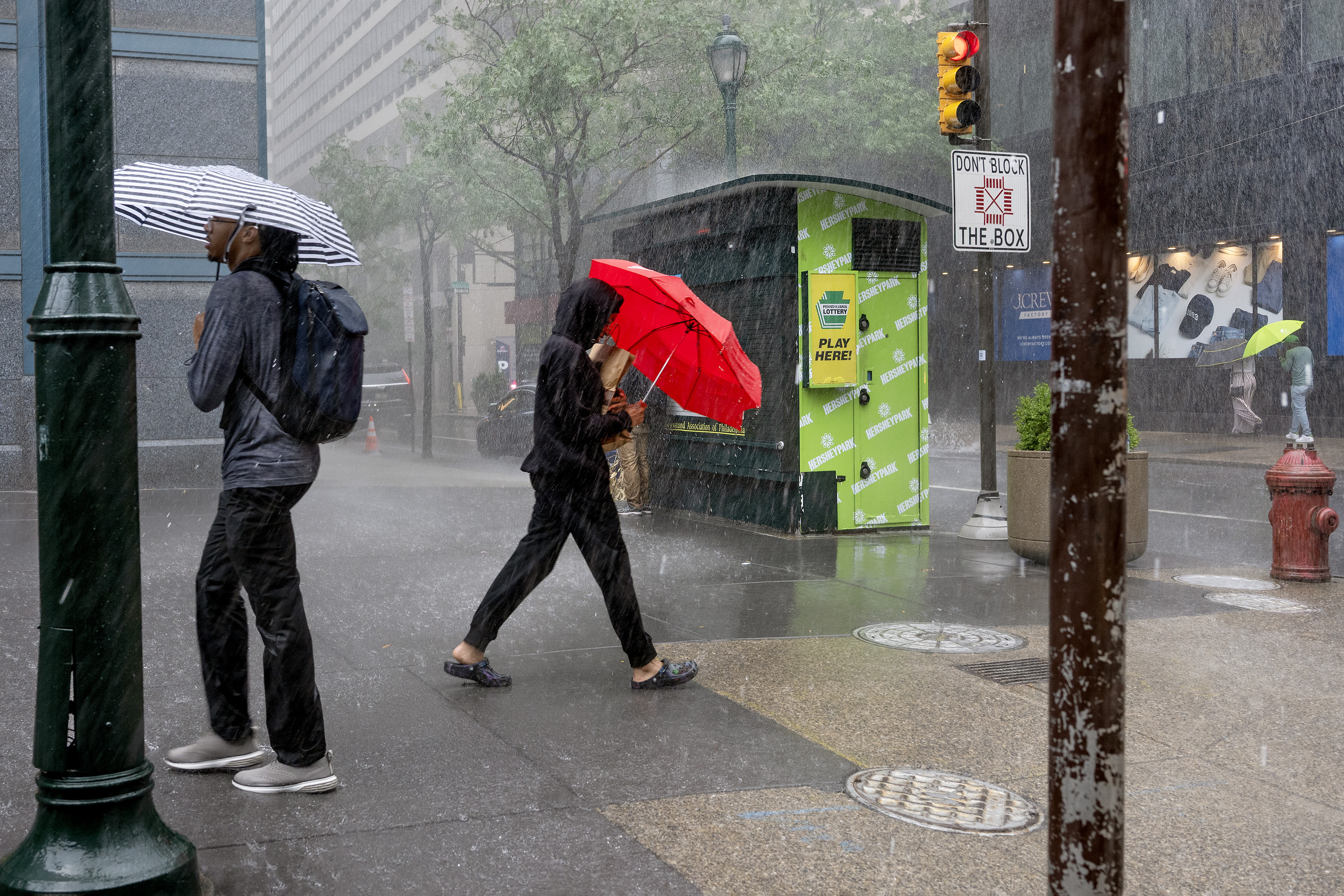
    Another round of rain showers is expected Saturday, with potential flooding into Saturday night, but it shouldn’t be as intense as last weekend.

    Multiple rounds of rain are possible Saturday, with most of the region expected to see up to an inch of precipitation, according to AccuWeather. A chance of thunderstorms will creep onto the horizon starting after 4 p.m.

    While the rain is expected to continue into the night with a chance of flooding on streams and ponds, there likely won’t be devastating flash floods, said AccuWeather meteorologist Matt Benz.

    “Certainly, just given the amount of rain that we’ve seen as of late, it doesn’t take a lot of rain to create flooding issues, so there could be some low-end flooding concerns tomorrow,” Benz said.

    Most areas across the region received over an inch of rain on Thursday, with some places getting more than three inches.

    “While a strong to severe thunderstorm can’t be ruled out completely, the threat for damaging winds/tornadoes/hail is much lower compared to what we saw Thursday,” weather service meteorologists said in a forecast discussion.

    Despite the above-normal precipitation over the summer months, the region had experienced 16 consecutive months of below-average precipitation totals leading up to June. Most of the Philadelphia region is classified abnormally dry, with parts of the suburbs in moderate drought, according to the U.S. Drought Monitor. Sunday’s rain ended the first seven-day period without measurable rain in Philly in two months.

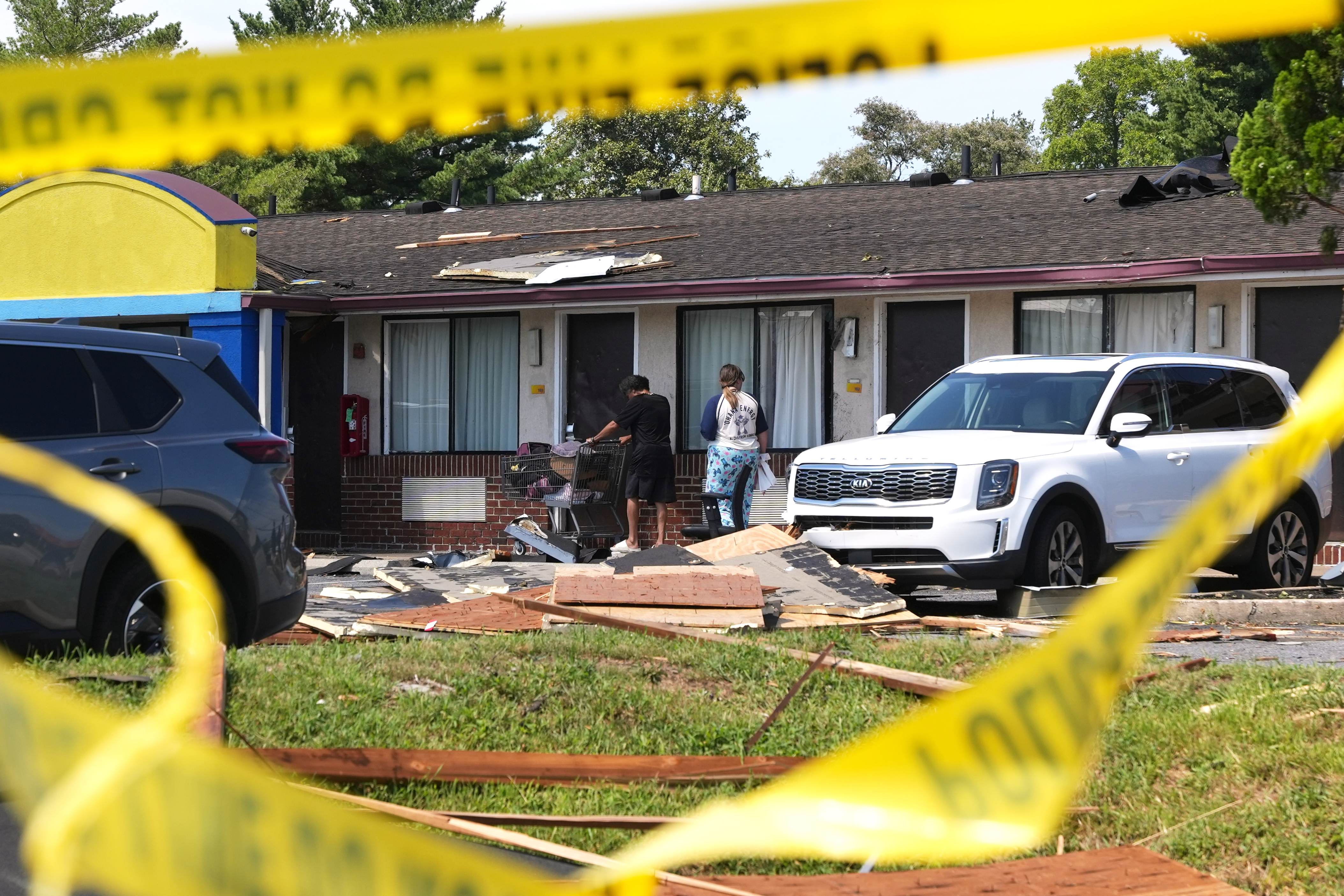
    In addition to Thursday’s rain, a tornado touched down in Dover, Del., toppling trees that closed streets and causing widespread power outages. Power has been restored, but crews were still clearing debris from affected areas in Dover.

    Sunday brings another chance of showers on and off throughout the day, especially in the afternoon. Benz advised residents to get their errands done in the morning on Saturday and Sunday to avoid showers.

    The forecast is similar for folks headed down the Shore, as Saturday brings an increased chance of rain showers in the afternoon and evening. Sunday should be drier in the morning, but beachgoers could see a chance for afternoon rain showers or thunderstorms, Benz said.

    Fair weather is expected to return early next week.

  • Trump administration moves to strip bar association’s power to accredit law schools

    Trump administration moves to strip bar association’s power to accredit law schools

    The Trump administration’s ongoing feud with the American Bar Association has come to a head, as the Education Department threatens to strip the organization of its power to oversee law school programs across the country.

    Career staffers at the department recently recommended the ABA lose the federal recognition needed to operate as an accreditor. In a report made public Friday, staffers at the department said the ABA, which accredits nearly 200 law schools, had failed to keep both sides of its house “separate and independent,” undermining its effectiveness as an accreditor.

    The association is both an accreditor for law schools and a trade group for legal professionals. As an accreditor, ABA oversees the quality of law school education and determines whether law schools not affiliated with a university can accept federal student aid.

    President Donald Trump and other Republican lawmakers have accused the ABA of having a liberal bias and promoting diversity, equity, and inclusion, pushing a political agenda in law schools. Conservatives have also criticized the ABA, which has accredited law schools since 1952, for having a monopoly on oversight of law school education.

    The Education Department declined to comment.

    David Barker, assistant secretary for postsecondary education, told the Wall Street Journal, which first reported the recommendation, “We have said many times that accreditation, in general, operates like a cartel. When there’s no competition, accreditors feel free to inject their own political preferences, their own ideologies into the work that they do.”

    The ABA’s accreditation council chairperson, Melissa Hart, told the Washington Post the council is confident it complies with the Education Department’s requirements for accreditors and federal laws.

    “The outcomes produced by Council-accredited law schools are unmatched, and we continue the important work of accrediting law schools as our recognition process proceeds,” she said in a statement.

    The Education Department last approved the association to accredit law schools in 2021, a five-year designation that is up for review next month.

    The federal government relies on accreditors, little-known but powerful organizations, to deem colleges worthy to participate in the federal student aid program and to review educational quality.

    The report comes as the Trump administration seeks to reshape college accreditation, a system it has accused of being captured by liberal politics. The Education Department has proposed regulations to encourage intellectual diversity and increase competition among accreditors. The proposed rule also calls on accreditors and trade associations to be separate to prevent conflicts of interest.

    Tensions have simmered between the ABA and the Trump administration on multiple fronts, including in court. Top Justice Department officials have repeatedly taken aim at the legal group.

    Then-Attorney General Pam Bondi wrote to the ABA last year that the group was biased in favor of Democrats and said the administration would not allow it to help vet judicial nominees.

    Also last year, Todd Blanche — then the Justice Department’s No. 2 official, who has since replaced Bondi as attorney general — said that the agency would no longer pay for its employees to travel to the ABA’s events or allow them to even attend such functions.

    The ABA has also sued the administration, including in a case challenging Trump’s campaign to crack down on prominent law firms.

    Trump issued executive orders last year taking aim at several firms that had hired his perceived enemies or took on cases he disliked. Four of the firms that were targeted sued to fight those orders, and all of them won court orders blocking Trump’s sanctions.

    The ABA filed its own lawsuit challenging Trump’s actions, saying it had to act to protect its members “and the rule of law itself.” The case is ongoing, and a judge earlier this year rejected the Trump administration’s effort to have the lawsuit thrown out.

    An independent advisory board will meet next month to consider the Education Department’s recommendation and decide the ABA’s fate as an accreditor. A senior Education Department official will then weigh in.

    “We look forward to the opportunity to address any misconceptions and clarify the record at our upcoming hearing,” Hart said. “We’re confident the Council will address any concerns the Department may have at that hearing.”

    If the advisory board votes that the government should withdraw its recognition of the ABA as an accreditor and that decision is upheld by a senior department official, the ABA can then appeal to Education Secretary Linda McMahon.

    If McMahon denies the appeal, law schools affiliated with a university could use their school’s accreditor, while unaffiliated schools will have to find a new accreditor.

  • Trump threatens suit over report he doesn’t like, aiming to intimidate a critic

    Trump threatens suit over report he doesn’t like, aiming to intimidate a critic

    President Donald Trump has opened a new front in his campaign to intimidate political foes, threatening a prominent liberal think tank with a $5 billion defamation lawsuit over a report concluding that his deployment of the National Guard to cities across the country has had little effect on reducing violent crime.

    The threats against the think tank, the Center for American Progress, were Trump’s latest effort to use the legal system to punish critics for voicing unflattering facts and opinions generally protected by the First Amendment. And while it is unclear how far any suit the president might ultimately file would get in court, it could force the organization to spend money fighting it off and make it even more of a target of his allies and supporters.

    On Monday, one of Trump’s personal lawyers, Alejandro Brito, wrote a letter to the center warning that he would file the suit if the group did not fully retract the report, which was published on its website July 13. The letter, viewed by the New York Times, was addressed to the group’s president and CEO, Neera Tanden, a longtime Democratic official who served as a senior adviser to President Joe Biden, and to several of its board members.

    Brito claimed that the report about the National Guard was full of malicious and false statements. He gave Tanden and members of her board until 5 p.m. Friday to retract it and apologize to Trump.

    Tanden pushed back, saying in a statement that the center would “neither cower nor bend in the face” of legal action. She also defended the report, asserting that while its findings might have been “inconvenient to the Trump administration,” they were “grounded in rigorous, evidence-based research and analysis.”

    “This threatened lawsuit’s attack on facts and evidence is baseless,” she added. “A fundamental protection of the First Amendment is to allow for the publication of facts and analysis that is contrary to the arguments and claims of any administration. A lawsuit is a transparent attempt to silence us.”

    Trump has often lashed out at scholars and commentators for reproaching or critiquing him in the news media. Since winning reelection, he has filed a flurry of lawsuits against news organizations like the BBC and the Times, claiming they defamed him. He has even filed suit against the Des Moines Register, arguing that a poll the paper published before the 2024 election indicating that he would lose the vote in Iowa amounted to consumer fraud and election interference.

    (The Times has filed its own suits against the administration, including two seeking increased access for its reporters at the Pentagon.)

    The president has repeatedly claimed that his administration is the most transparent in U.S. history. But he and his aides have used lawsuits and executive actions to go after law firms, universities, and television networks. They have also used criminal tactics such as search warrants and grand jury subpoenas in an effort to pry loose sensitive information from reporters.

    Many of these efforts have faltered once they reached court and faced judicial scrutiny. Brito himself has filed multiple failed suits on behalf of Trump. Last month, a federal judge in Florida referred Brito for potential disciplinary proceedings after ruling that a suit he filed for the president against the IRS amounted to an improper exercise in self-dealing.

    The Center for American Progress report accused Trump of seeking to take credit for a nationwide decline in violent crime that began before he returned to the White House. The report determined that there was “no evidence” that the National Guard deployments had affected the crime rate, adding that they were poised to cost taxpayers more than $1.7 billion if they continued through the end of 2026.

    The report asserted that the “primary goal” of the deployments was “never to stop crime.” Instead, it said they amounted to “a dangerous power grab by the Trump administration.”

    The team that put the report together used an analysis based on homicide, violent crime, and gun victimization data in cities where the National Guard was deployed — Washington, Los Angeles, and Memphis, Tenn. — over the period from January 2023 to this February.

    “This approach was employed to identify any statistical changes in crime trends associated with the deployment of the National Guard in specific cities,” its authors wrote.

    Trump referred to the report on social media last week after watching a television segment about the report, which he described as “another Radical Left SCAM.” In the post, he threatened to sue the center and several of its funders, including liberal financier George Soros, who has long served as a boogeyman for the administration.

    A week later, Brito’s letter arrived at the center, saying that the president would sue if Tanden and her colleagues did not retract the report, issue an apology, and give Trump unspecified financial compensation.

    The letter ended with an all-caps salutation: “PLEASE GOVERN YOURSELVES ACCORDINGLY.”

    On Friday, a lawyer for the center fired back in a letter of his own, deriding Trump’s accusations that he had been defamed.

    “This is utterly absurd,” the lawyer, Kevin H. Metz, wrote to Brito. “Truth is not and cannot be defamation.”

    Metz went on to say that the center welcomed the opportunity to make its case in court and receive more information on the National Guard deployments through the process of discovery.

    Other think tanks of various political stripes have rallied to the center’s side.

    “Independent organizations across the ideological spectrum must be free to express their analysis and opinions, and to challenge those in power without fear of political retaliation or legal intimidation,” said Peter Goettler, president and CEO of the libertarian Cato Institute. “Disagreements on matters of policy should be settled through open inquiry, evidence, and debate — not threats designed to silence criticism.”

    This article originally appeared in the New York Times.

  • Court cuts $50M judgment against Infowars’ Alex Jones over falsely labeling Newtown killings a hoax

    Court cuts $50M judgment against Infowars’ Alex Jones over falsely labeling Newtown killings a hoax

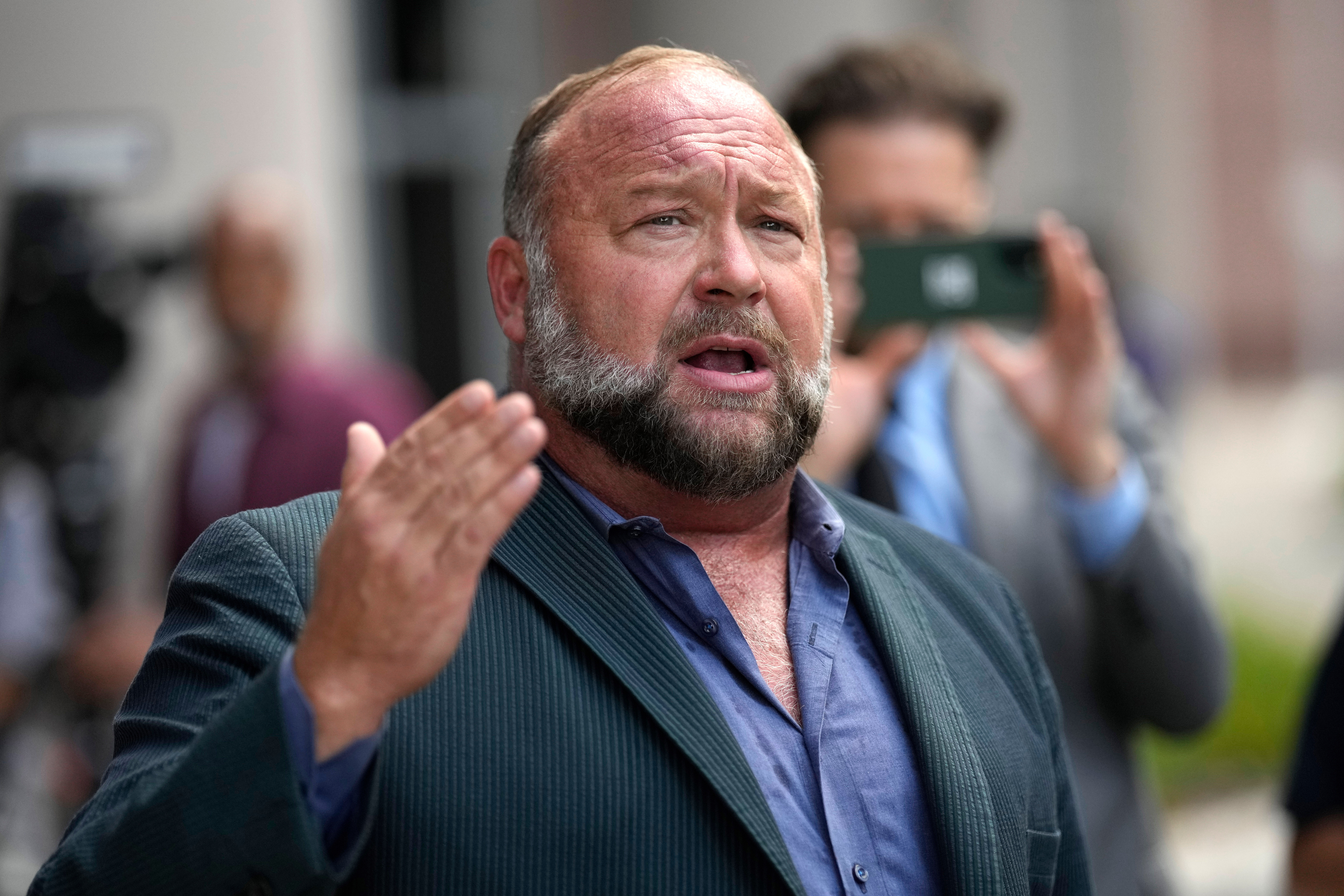
    AUSTIN, Texas — A Texas court on Friday slashed a $50 million judgment to $1.5 million against Infowars founder Alex Jones after he falsely claimed the 2012 Sandy Hook elementary school mass shooting was a hoax.

    The ruling does not affect a $1.25 billion judgment against Jones in Connecticut, but is a legal victory for him after he and his company, Free Speech Systems, were found liable for damages for claiming the mass shooting didn’t happen.

    Despite the multiple financial judgments against him in Connecticut and Texas, Jones has yet to make any payments as he appeals the amounts and the attempt to liquidate his company.

    The unanimous opinion by the Texas Third Court of Appeals found that Sandy Hook parents Neil Heslin and Scarlett Lewis did not show evidence that harassment inflamed by Jones’ hoax claims rose to a level that would allow them to exceed the state’s $750,000 cap on damages for each plaintiff.

    Heslin and Lewis’s 6-year-old son Jesse Lewis was among 20 children and six educators killed in the attack in Newtown, Conn. The lawsuit and the 2022 verdict against Jones marked the first time he was held financially liable for peddling lies about the massacre, claiming it was faked by the government to tighten gun laws.

    Jones, who portrayed the lawsuit as an attack on his First Amendment rights, conceded during the trial that the attack was “100% real” and that he was wrong to have lied about it.

    However, on his streaming show Friday, he called the Texas ruling “a gigantic victory for the First Amendment,” and said he will continue to appeal the case to the state Supreme Court to get the remaining damages thrown out.

    “I got lawyers who are good constitutional lawyers and they are not backing down,” Jones said.

    Mark Bankston, an attorney for Heslin and Lewis in Texas, shrugged off the appeals court ruling as “irrelevant” given that Jones still faces massive financial judgments.

    “The families care not at all about this irrelevant ruling which affects only two of the 19 claims they all share. Jones still faces over a billion dollars of liability, so this changes absolutely nothing. All it does it highlight the absurdity of Texas law,” Bankston said.

    Heslin and Lewis told jurors in the case that an apology wouldn’t suffice and called on them to make Jones pay for the years of suffering he has put them and other Sandy Hook families through.

    Jones’ trial attorney Andino Reynal had said immediately after the verdict that Jones would appeal the damages amount, and predicted it would be reduced to $1.5 million.

    Jones and his company have filed for bankruptcy, and those legal proceedings continue. The satirical website the Onion also moved to take over Jones’ Infowars platforms and turn his bullhorn of conspiracy theories into parody sites.

    Jones gave up the Infowars brand in April and moved to a new location, switching his shows to new websites and posting them on his personal X account. The Onion, meanwhile, has set up its own Infowars webpage on its website, running videos of shows parodying Jones.

  • Goodness Bowls is opening a headquarters and restaurant in a closed Conshohocken bridal shop

    Goodness Bowls is opening a headquarters and restaurant in a closed Conshohocken bridal shop

    A shuttered bridal shop in downtown Conshohocken will soon become the home of another family-run business with local roots.

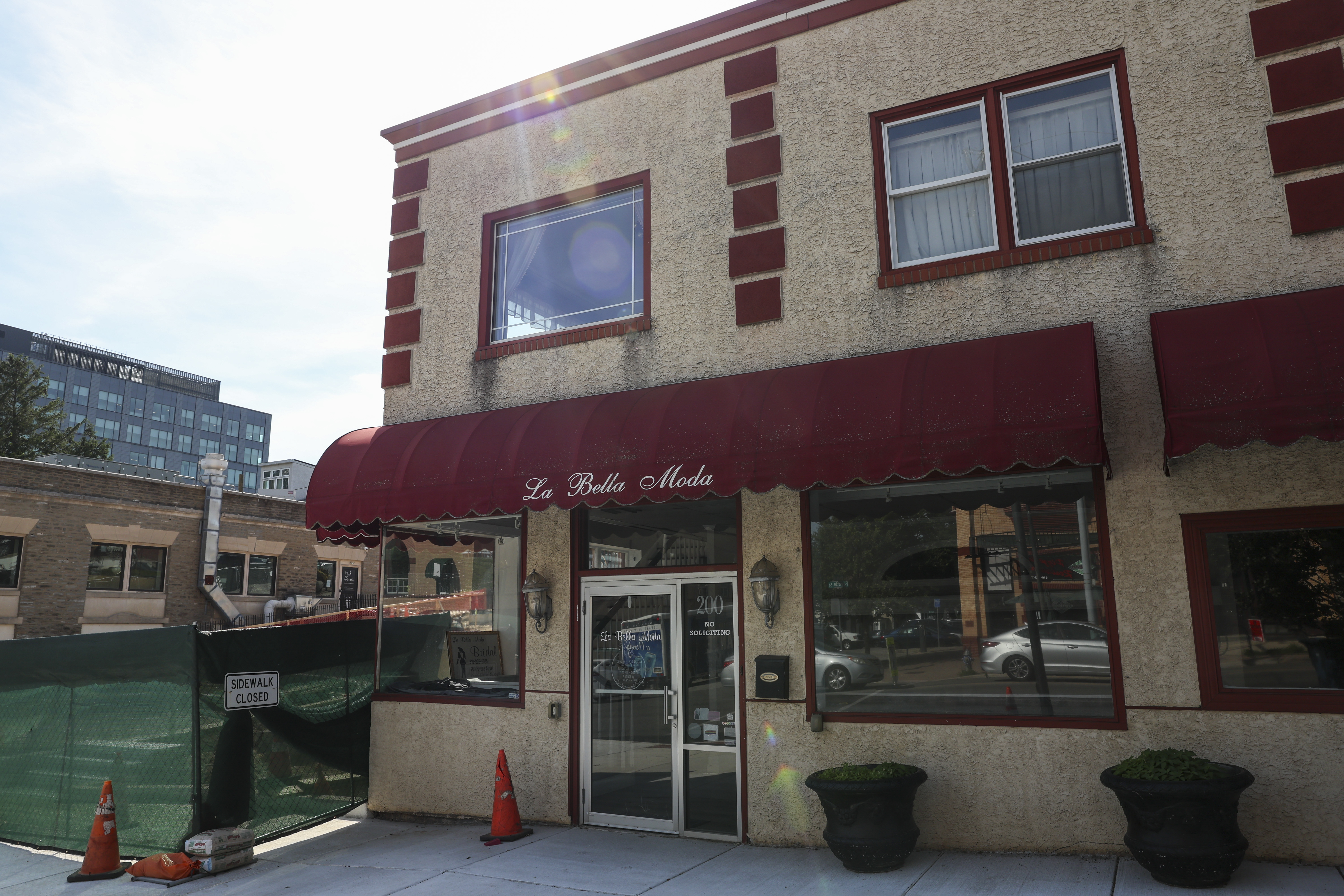
    Goodness Bowls, a “healthy-eats cafe” chain run by Montgomery County residents, has signed a lease for the former La Bella Moda bridal shop at 200 Fayette St., with the goal of opening a corporate headquarters there by early 2027. La Bella Moda closed in May after 45 years in business.

    “I always looked at La Bella Moda, and I thought, ‘God, that would be the perfect corner,’” said Susan Persichetti, Goodness Bowls’ cofounder and CEO. “ But I never thought they would close their doors.”

    In the coming months, the Goodness Bowl team plans to open a 1,500-square-foot restaurant on the first floor, according to company executives, and use 2,000 square feet upstairs for additional seating and its corporate offices. They declined to share the terms of the lease.

    The Conshohocken restaurant will be Goodness Bowls’ 10th location and its third corporate outpost. The rest of its cafes are franchised.

    The closed La Bella Moda, as seen in June.Monica Herndon / Staff Photographer

    The chain’s expansion comes as acai bowls — smoothie bowls loaded with toppings like fruit, granola, and peanut butter — and other more nutritious fast food have surged in popularity.

    Shops selling these bowls seem to be popping up everywhere. Over the past decade, Belmar, N.J.-based Playa Bowls has grown to more than 100 locations in 20 states, including more than a dozen spots in the Philly area. And the Juice Pod, founded in Avalon and now headquartered in Bryn Mawr, has expanded to more than two dozen cafes, most of which are in the region.

    A mother-daughter duo, Susan and Corinne Persichetti, opened the first Goodness Bowls in Avalon in 2019. Susan said her daughter Corinne — a former Division I field hockey player at Fairfield University and a health enthusiast — was the driving force behind the business.

    Susan Persichetti, cofounder and CEO of Goodness Bowls, with her daughter Corinne Persichetti, cofounder and chief operating officer.Courtesy Goodness Bowl

    Corinne created the cafe’s menu, which includes acai bowls, salads, wraps, and smoothies, and came up with its slogan, “Eat Good. Feel Good. Do Good.” Susan, meanwhile, crafted the shop’s coastal aesthetic and branding.

    For a couple years, Susan and Corinne ran the Avalon location in the summertime while working corporate jobs. In 2022, they opened a second location in Villanova, where they quickly found success. They realized there was demand for the Shore-inspired business in the Philadelphia suburbs, Susan said, and started franchising.

    Goodness Bowls currently has franchise locations in Narberth, Paoli, Collegeville, Spring House, Haddon Township, Sea Isle, and Scranton.

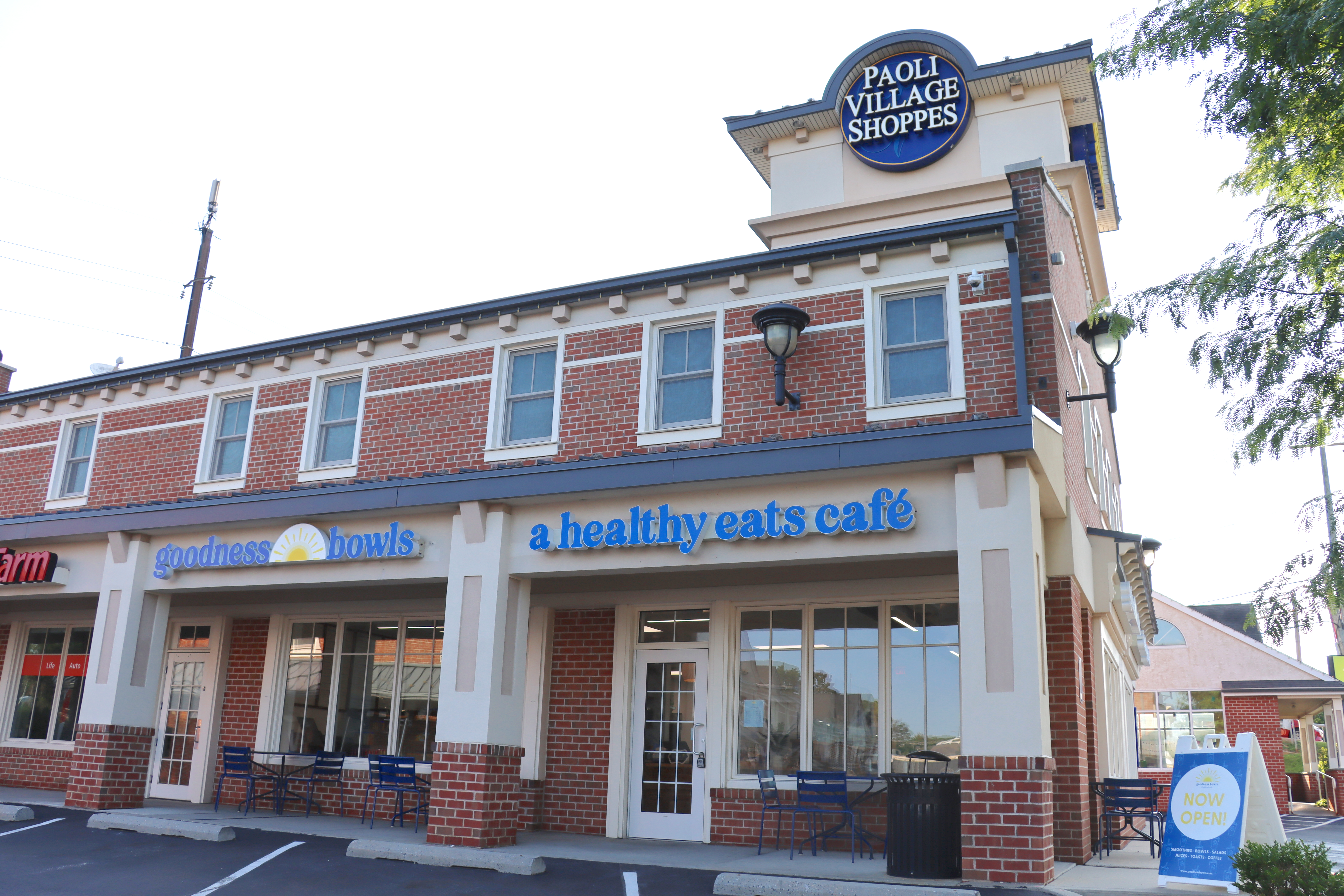
    The new Paoli location of Goodness Bowls.Courtesy Goodness Bowls

    In recent years, Goodness Bowls has also expanded their team, including by hiring a company president, Finn Loftus, who also lives in Montgomery County.

    Susan said she thinks the business has taken off because more consumers, especially women, are seeking out nutritious fast food.

    “People really are craving healthy options,” she said. “And they really want food that they’re able to get quickly.”

    Customers also say they are drawn to the bright cafes and friendly service, according to Susan.

    Goodness Bowls executives look at their move to Conshohocken as a homecoming, and are excited to be back in the borough where Susan raised Corinne and her other children.

    “We want to add to the community,” Susan said, by “keeping a small, family-owned business there on a really great corner that’s built such great traditions.”

  • A tornado touched down in Dover, Del., during Thursday’s storms

    A tornado touched down in Dover, Del., during Thursday’s storms

    A tornado touched down in Dover, Del., on Thursday amid severe weather and flooding, the National Weather Service confirmed.

    Debris from the tornado and widespread power outages closed one mile of Route 13 between Kings Highway and Lepore Drive in Dover for several hours, according to the Dover Police Department.

    Crews and first responders cleared debris, reopened roadways, and restored power to the affected areas.

    There were no reported injuries, “and we are extremely grateful for that,” said a Dover police spokesperson on social media.

    The weather service will conduct surveys to evaluate the damage and gather more information on the tornado.

    Dover Mayor Robin R. Christiansen lifted the city’s state of emergency at 6:10 a.m. Friday, while stressing to residents to avoid areas where debris may still be present and to yield to crews who are still working to clear affected areas.

    “A huge thank you to all of our City staff for the outstanding teamwork and dedication throughout this event. Your hard work and commitment are greatly appreciated,” Christiansen said on social media.

    Thursday’s storm brought fallen trees and downed wires in Chester County, and toppled trees blocked portions of heavily traveled Route 322 in Honey Brook, the weather service reported.

    Some streams overflowed, and flash flooding occurred in West Norriton and Lower Providence Townships in Montgomery County, making many streets impassable.

  • A settlement could preserve more of Chester County’s sprawling Rock Hill Farm — but still allow for development

    A settlement could preserve more of Chester County’s sprawling Rock Hill Farm — but still allow for development

    A proposed settlement with the developer who is seeking to turn the rolling, open Rock Hill Farm into housing could significantly preserve more of the land than initially planned, if township officials decide to accept it.

    During a public meeting Thursday, Willistown Township officials laid out for residents a potential settlement between the township and Rock Hill Farm Acquisition LLC, the developer who purchased the sprawling 222-acre parcel, and an adjacent 24-acre property, in 2021. Supervisors did not vote on the plans Thursday night; a vote will be held at a future, undetermined meeting.

    A Chester County judge last month sided with the developer, overturning the township’s September 2024 denial of plans to build more than a dozen homes on the property. The township appealed the ruling earlier this month.

    But under a proposed settlement, the developer would radically scale down the plan that was before the court, preserving roughly 166 acres of the larger tract, or 75% of the land, under a conservation easement. The land would be subdivided into 18 lots, down from roughly 24, with all but one lot proposed for residential development. The one non-residential lot would be conserved as open space. The lots vary from about four acres to up to 26 acres.

    “This is a good ‘best-case scenario’ for us,” said Molly Perrin, chairperson of Willistown’s board of supervisors. “It could get a lot worse than this. Ongoing litigation would almost ensure that.”

    A view of part of Rock Hill Farm, in Paoli, Tuesday, August 2, 2022. JESSICA GRIFFIN / Staff Photographer

    A conservation easement for the preserved land would be held by the Willistown Conservation Trust. The trust would maintain the protected woodland as private property, not public land.

    Separately, the developer has offered Willistown Conservation Trust the exclusive option to buy the adjacent 24-acre property, if the settlement agreement is approved by the township and court. The township would plan to buy it from the trust using designated open space funds, and preserve the property as open land. The board voted to approve the purchase in February, officials said.

    “We understand there are members of the community who feel very strongly that the entirety of the 222-acre parcel should be coJ. Brian O’Neillmpletely conserved with no future development,” Perrin said. “Municipalities cannot simply ban a property from being developed. It would be nice if we could, except that when that’s turned against us, we would all hate it.”

    The property, purchased by developer for $25.4 million, boasts rolling hills, meadows, woodlands and historically significant properties across its hundreds of acres.

    For years, it had been owned by a conservation-minded local family. When it sold to O’Neill, who originally planned to build up to 24 residential lots on the grounds with only roughly 52 acres of land preserved, it sparked a community battle.

    Rock Hill Farm in August 2022. JESSICA GRIFFIN / Staff Photographer

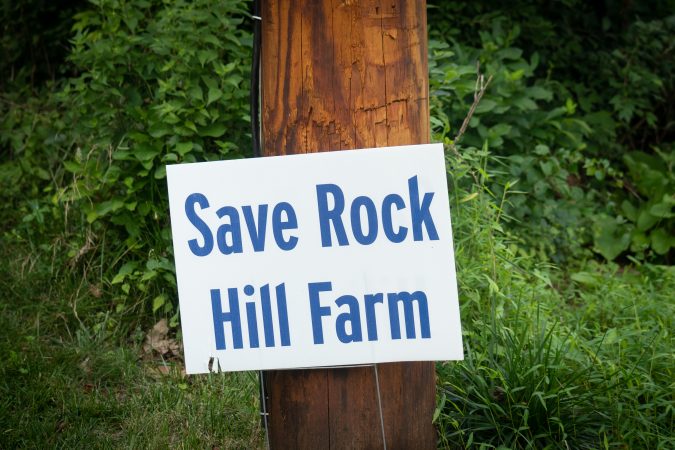
    Community members launched a “Save Rock Hill Farm” campaign in an effort to fend off the development, as other Chester County municipalities have successfully done when homebuilders have come knocking.

    At Thursday’s meeting, residents were relatively open to the proposed settlement.

    David Rawson, who lives in the township, thought it was a “far better plan than I thought anybody would be able to negotiate.”

    It’s the “best deal you’re going to get short of continuing to fight,” resident Joe Heenan told the board.

    “I’m not opposed to the fight,” he said, “but I think it’d be nice to have odds in the favor.”

    Others hoped more could still be done.

    Invoking President Franklin D. Roosevelt, Les Haggett, a leader of Save Rock Hill, noted, “Sometimes fear is the only thing we have to fear.”

    “I don’t think it’s the right time to settle,” he said. “My thought is, don’t be afraid. Don’t settle.”

    Supervisor Bill Shoemaker said the township was working to achieve the best possible plan. Though they feel their appeal is “based on good and solid reasons,” they thought that of their initial filing, too, he said.

    “The court is always a bit of a gamble,” he said. “So we have to consider very, very carefully what the best possible plan would be.”

    This suburban content is produced with support from the Leslie Miller and Richard Worley Foundation and The Lenfest Institute for Journalism. Editorial content is created independently of the project donors. Gifts to support The Inquirer’s high-impact journalism can be made at inquirer.com/donate. A list of Lenfest Institute donors can be found at lenfestinstitute.org/supporters.

  • West Chester limits where smoke shops can go, after seeing pushback when one opened in a neighborhood

    West Chester limits where smoke shops can go, after seeing pushback when one opened in a neighborhood

    West Chester will limit where future smoke and vape shops can open within the borough, after an innocuous corner store grandfathered into a residential neighborhood became a glowing, neon vape shop and brought pushback.

    Council voted unanimously Wednesday to amend its zoning ordinance to allow smoke and vape shops by conditional use only in the town center and commercial services district. The goal is to considerably limit where the shops can appear, after a resident came to council with concerns about the sale of a small corner store to a new owner who put in a vape shop. Its bright lights flooded the resident’s home, and it was right by school bus stops.

    The ordinance also defines smoke and tobacco shops as a retail store that primarily sells tobacco, CBD, THC, kratom, and vaping products. If at least 20% of the store’s display area is dedicated to the sale of smoking products, it’s considered a smoke shop.

    The measure also outlined parameters including limits on how close the shops can be to one another and requiring them to be more than 500 feet away from schools, public recreation facilities, day cares, school bus stops, libraries, and religious institutions. The shops can’t be permitted on a lot or within a building that is also residential. The shops can’t sell food.

    It also places restrictions on age, prohibiting those under the age of 18 from entering the shop without a parent or guardian, and requiring the business to verify ages. Anyone under 18 cannot be employed to work within the store.

    “It helps us kind of separate incompatible uses, preserve the quality of life, health, safety, and welfare of our residents, particularly the vulnerable populations,” said council member Lisa Kearns. “It also helps us make certain our business district remains diverse, and vape shops don’t take over our commercial areas or neighborhoods.”

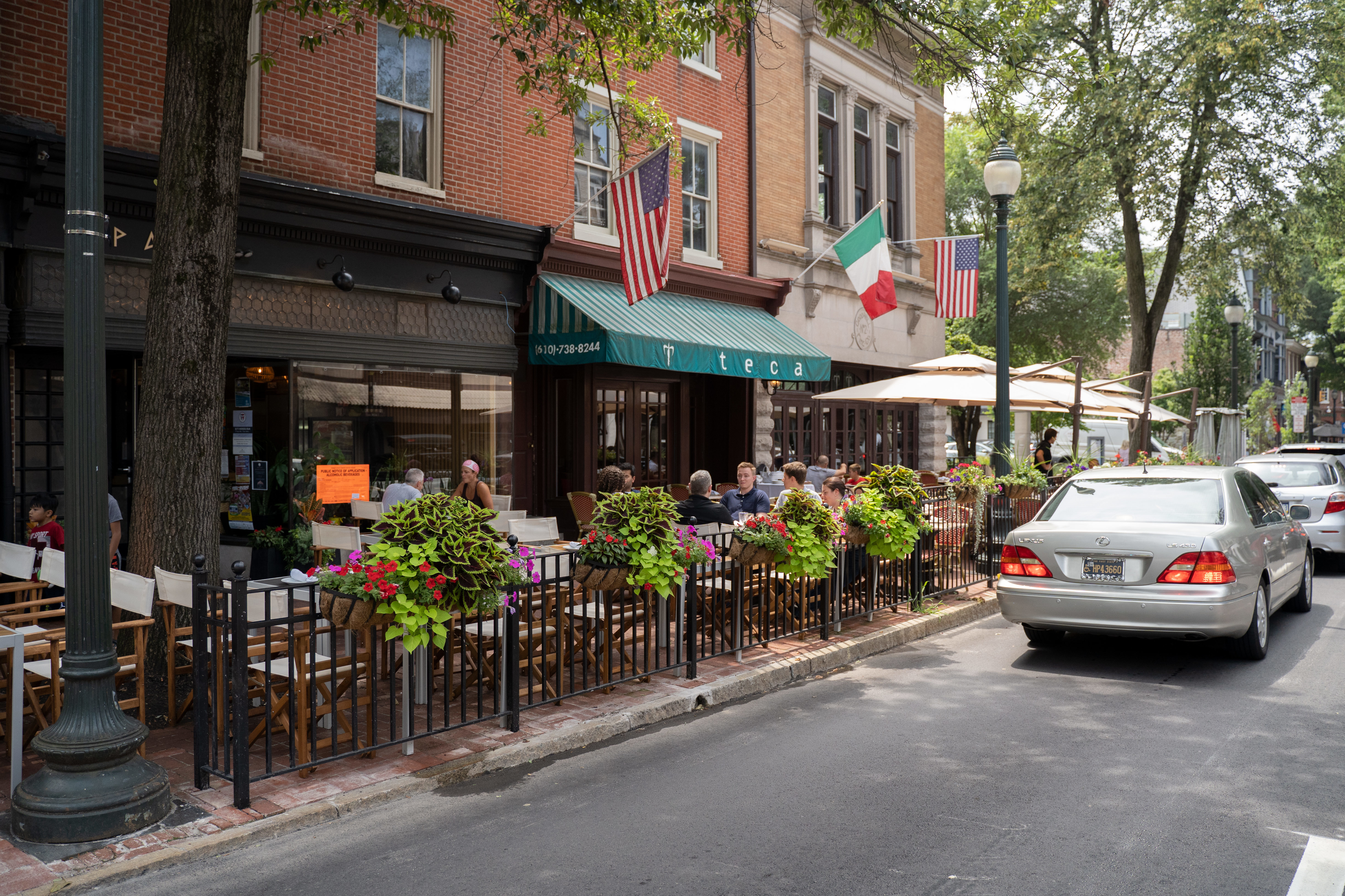
    West Chester’s town center has at least five smoke and vape shops and the updated zoning won’t affect any of the existing businesses. Instead, the ordinance will keep others from coming into the roughly handful of other retail locations that are in residential areas, officials said.

    “We in the borough are not trying to stifle business as much as we’re trying to create a balance so that families and residents can have the quality of life that they’re looking for,” said Nicole Scimone, council president.

    A suggestion from the borough’s planning commission to carve cigar shops out as a separate entity was ultimately not included, as the amendment would require months before it came back to council for approval. At Wednesday’s meeting, Kearns urged the borough to adopt the amendment because she would “hate to see another vape shop open up where we don’t want it to be between now and then.”

    Meanwhile, an ordinance seeking to regulate the sale of kratom — an herbal substance that can have effects similar to opioids and stimulants, according to the National Institutes of Health — was sent back to committee for further refinement. Kratom often appears in vape and smoke shops.

    The ordinance would have prohibited the sale and public use of kratom and 7-OH, the synthetic of kratom, in the borough. It wouldn’t have prohibited the use or possession.

    Supporters of the “leaf” version of the substance — which often appears as a supplement or a tea — opposed West Chester’s proposed ordinance and pressed council to tweak the language.

    Some council members felt they were overstepping in passing a measure.

    “I think this is a big lane violation, quite frankly. We are not the FDA,” said council member Brian Travis. “I asked point blank the chief of police if this even was on the radar. It’s not. Nothing’s come up. It’s not a problem right now locally, but we’re making it a problem.”

    Council member Bernie Flynn said that, after talking with two soon-to-be West Chester University students, neither had heard of it. It made him wonder how popular it really was.

    “I don’t think we should be in the business of telling adults what they can or cannot do,” he said.

    Several bills in the state legislature have been introduced regarding the sale and use of kratom. In July, the U.S. Drug Enforcement Administration announced it planned to temporarily place the chemical found in the synthetic kratom, 7-OH, in Schedule I of the Controlled Substances Act, alongside drugs like heroin and LSD. That won’t apply to the plant itself.

    This suburban content is produced with support from the Leslie Miller and Richard Worley Foundation and The Lenfest Institute for Journalism. Editorial content is created independently of the project donors. Gifts to support The Inquirer’s high-impact journalism can be made at inquirer.com/donate. A list of Lenfest Institute donors can be found at lenfestinstitute.org/supporters.