For two centuries, Strancally Castle’s towers and parapets have overlooked a bend in the Blackwater River and a swath of Irish land as it passed from one wealthy family to the next.
It now joins the holdings of Mark Zuckerberg, one of the 21st century’s most prominent landowners, along with a place on an artificial island in Miami Beach, a large house in Washington, and compounds in California and Hawaii.
A spokesperson for Zuckerberg, the 42-year-old billionaire CEO of Meta, confirmed this week that he had bought the castle, a Gothic-style estate in Waterford County, a region of southeastern Ireland with about 130,000 people. The castle was built around 1830 and renovated in the early 2000s.
The purchase does not appear to be listed in Ireland’s property price register. The Irish Times, which reported the news Thursday, estimated that the estate could be worth $23 million to $35 million.
Around the middle of the 19th century, the estate was valued at 61 pounds, according to an entry about the castle in a University of Galway archive of landed estates that also mentions it contained an art collection and a library.
“Mark and his family look forward to caring for this historic home and visiting when traveling to Ireland,” said Brian Baker, the spokesperson for Zuckerberg.
The castle was built for a former member of Parliament, John Keily, according to Ireland’s National Built Heritage Service, which describes the building as both “muscular” and “dour.”
The estate has never left private hands, leaving the public to glimpse its interior only in historical archives. An entry about Keily on “The History of Parliament” website says the house was designed “on a lavish scale; it took a brisk walk of 4½ minutes to reach the dining room from the kitchen.”
The castle was most recently owned by Michael Alen-Buckley, the chairperson of the investment firm RAB Capital, and his wife, Giancarla Alen-Buckley, a member of the family behind the luxury Rocco Forte Hotels group.
“We leave our home of twenty-five years fondly and are grateful for the opportunity we have been given to save and restore Strancally Castle,” the couple said in a statement. “We are delighted that Mark and his family intend to build on our stewardship by continuing to invest in maintaining and enhancing the property and grounds as their home.”
It is not clear how much time Zuckerberg or his family (he has three daughters with his wife, Priscilla Chan) will spend in Ireland, but his company has a significant presence there.
Like many major U.S. companies, Meta uses an office in Dublin as its European headquarters, and about 1,500 employees work there. Ireland has become a hub for multinational corporations, both for its relatively low corporate income tax rate — 15% for big companies — and its history of allowing corporations to shift profits out of the country into places like Bermuda, Grand Cayman, and the Isle of Man.
Ireland’s status as a base for several technological giants has made it a key player in enforcing European Union regulations and, increasingly, a center of protest against the companies and their data centers.
Asked for comment about Zuckerberg’s purchase, the Waterford City and County Council extolled the area’s attractions — wild coastlines and mountains, picturesque festivals and towns — and the history of the county and city.
“Founded by the Vikings in 914 AD, Waterford is Ireland’s Oldest City that has been shaped by centuries of history and today it is evident that the county’s remarkable architecture keeps its past vividly present,” the council said in an email.
“We hope that Mr. Zuckerberg and his family fully enjoy all that Waterford has to offer.”
Margo Howard was a reluctant columnist, despite the encouragement of her mother, Eppie Lederer, the wildly popular advice maven known as Ann Landers, and a succession of admiring editors.
She lacked ambition, she was quick to say, as well as journalistic training. (She had dropped out of Brandeis University to marry her first husband.) But she was mouthy — a “mouth on a trolley,” as her father put it — and possessed of a tart wit.
When she divorced that first husband, she thought that a job might be nice, if it wasn’t too taxing, and in 1970 she began producing a frothy, thrice-weekly column called “Margo” for the Chicago Tribune. She wrote of mores on college campuses (“Parietal rules are so relaxed they’re prone”), the conundrum of marriage (“Marriages are all quite happy. It’s the living together afterward that’s so tough”), and playground hierarchies, deploying the phrase “the nanny mafia” to describe the action, after which novelist Tom Wolfe’s lawyers threatened to sue, saying she had stolen the phrase from him.
David Reuben, author of Everything You Always Wanted to Know About Sex (But Were Afraid to Ask), the 1969 blockbuster, also threatened a lawsuit after she compared the book’s style to a cross between Helen Gurley Brown and Popular Mechanics. (“I was only nervous once,” she wrote of their interview. “When he removed his cuff links and rolled up his sleeves.”)
Ms. Howard was proud, she said much later, that soon all her columns had to pass muster with the paper’s lawyers before publication.
“You are the star in my crown and the thorn in my side,” her exasperated editor told her.
Ms. Howard died on July 13. She was 86. Her daughter Cricket Coleman confirmed the death but did not give a cause or location.
Over the decades, Ms. Howard dipped in and out of the news business, and marriage. After ditching the wealthy businessperson whom she described as her “starter husband” and who was the father of her three children, she went on to marry three more times. Husband No. 2 was an undertaker — when she left him after three years, she gave him the family dog as consolation, which upset the children — and No. 3 was actor Ken Howard, whom she married in 1977.
The couple fell in love after she interviewed him for a column, after which she gave up newspapering for a spell. It was a mostly happy union and lasted more than a decade.
No. 4, a keeper, was Ronald J. Weintraub, a cardiologist whom she referred to variously as Dr. Pussycat and Dr. Perfect.
In 2014, Ms. Howard published a memoir of her matrimonial adventures, Eat, Drink and Remarry: Confessions of a Serial Wife.
“Writing is what Margo does between husbands,” editor James Hoge once teased.
But Ms. Howard’s most significant relationship was with her mother. Her first book, Eppie: The Story of Ann Landers (1982), told of how the twin daughters of Russian-Jewish immigrants became celebrated (and often feuding) advice columnists.
Esther Pauline Lederer was first to the game, winning a contest in the 1950s to write the “Dear Ann Landers” column for the Chicago Sun-Times. Soon after, her deeply competitive sister, Pauline Esther Phillips, known as Popo, began writing her own advice column for the San Francisco Chronicle, “Dear Abby.” The rivalry, as depicted by Ms. Howard, was one-sided, with Phillips sniping, often in public, at her sister, and Lederer doing her best to rise above, and frequently cutting off contact altogether.
“She was a girl who kept on trucking,” Ms. Howard said, describing her mother to an interviewer in 2003. “She sucked it up.”
When Jules Lederer, Lederer’s husband of 35 years, left her for a much younger woman, she soldiered on, even buying him clothes and food once he was in his new apartment. It had been a drawn-out process: He had enlisted his daughter to deliver the news of his affair and plans for divorce months earlier.
Unlike her mother, Ms. Howard never forgave him, and they remained estranged until just before his death.
Ms. Howard’s second book, A Life in Letters: Ann Landers’ Letters to Her Only Child, published in 2003, a year after her mother’s death, chronicled their intimacy through the decades. Her mother’s vivid, salty style, peppered with the Yiddishisms she grew up with, is enticing, as are her passions, which included the Democratic Party and anti-war activism, as well as the happiness and intellectual growth of her precocious daughter.
“One of the good things she passed on to me was that it’s almost immaterial what happens to you — it’s how you deal with it that matters,” Ms. Howard told Alex Witchel of the New York Times in 2003. “She’d say, ‘When things go seriously haywire, take a nap and then get busy.’ I went into a depression when she died, so I had my nap. It was time to get busy.”
Margo Lederer was born on March 15, 1940, in Sioux City, Iowa. Her father was a salesperson turned businessperson who would go on to found Budget Rent A Car. He wooed her mother, then Esther Pauline Friedman, who was affianced to someone else, while she was shopping for wedding veils.
The family lived in eight cities by the time Margo was 7, including New Orleans and Eau Claire, Wis., before moving to Chicago, where she would later settle as an adult, after her first marriage.
Throughout her peripatetic journalism career, Ms. Howard fielded many offers to write an advice column, including a plea from her mother to take over as Ann Landers. “Honey, I don’t want to work that hard,” Ms. Howard responded.
But in 1998, when economist Herbert Stein quit after a few months of writing “Dear Prudence,” the pithy advice column he had pioneered (and written anonymously) for Slate, the publication’s editor, Michael Kinsley, offered the column to Ms. Howard. The effort required would be minimal, he promised; she would have to answer only four letters twice a week.
As she told Vanity Fair, “I’d had a big life: I’d been analyzed, I’d been married — certainly more than once — and I decided that I would write from my experience.”
Her tone was sassy and wise, and “Dear Prudence,” which she wrote for eight years, was a hit.
To Turned Off in Kansas, a reader whose boyfriend’s underwear was problematic, Ms. Howard replied:
Dear Turned,
He wears the baggy briefs underneath? I offer you two suggestions. Since things are going over his head, try under his nose. Write him a short love note saying it would mean a lot to you if he — forgive the pun — bagged his lucky underpants and only wore boxers. Alas, the alternative is to forget it. Would you think Prudie salacious if she were to suggest that it’s what’s inside the briefs or boxers that counts?
— Prudie, briefly
In addition to her daughter Cricket, Ms. Howard is survived by her husband, Weintraub; another daughter, Abra Coleman; a son, Adam Coleman Howard; and seven grandchildren.
NEW YORK — Philanthropist Nancy Kissinger, onetime foreign policy researcher and wife of former Secretary of State Henry Kissinger, has died. She was 92.
She died Thursday at her home in Kent, Conn., Robert Johnson, manager of the property, told the Associated Press. The cause of her death was not disclosed. Johnson said she will be buried next to her late husband at Arlington National Cemetery at a later date.
The daughter of a New York City lawyer, she met Henry Kissinger while working for New York Gov. Nelson Rockefeller. The couple wed in 1974.
She was described by one profiler as a brainy, Blass-bedecked blond. She was often seen at high fashion openings and was a strong presence on the New York philanthropy scene.
“Nancy Kissinger can pick up the phone and get right through to the CEO. Nobody keeps her waiting,” philanthropist Judy Peabody said after chairing a successful hospital charity event in 1989.
Michael Bloomberg — the billionaire founder of the Bloomberg financial-news empire, former New York City mayor, and a friend of the Kissingers — said in a social media post that Nancy Kissinger “was a powerhouse of ideas and insights that she put to work throughout her life in government and philanthropy — and as Henry’s most valued and trusted adviser.”
He added, “She was the ultimate diplomat — as wise as she was discreet — and I know how completely Henry admired and loved her. Diana and I were fortunate to call her a dear friend, and to see their extraordinary partnership in action over the decades. We will miss her greatly.”
Nancy Kissinger made headlines in 1982 when she tried to throttle a woman who harassed her and her husband with insulting questions at Newark Airport. The couple was going to Boston, where Henry Kissinger was to undergo bypass surgery.
The woman, a leafleter for a group affiliated with politician Lyndon LaRouche, accused Nancy Kissinger of choking both her throat and her free-speech rights. Nancy Kissinger said she only wanted to protect her husband from upset.
A judge acquitted Nancy Kissinger of assault and called her behavior “a spontaneous and somewhat human reaction to an offensive question.”
The Kissingers met in the mid-1960s when he was a consultant for Rockefeller and she was on the staff of Rockefeller’s Commission on Critical Choices for America.
Henry Kissinger had joined the Nixon administration and was secretary of state when he and the former Nancy Sharon Maginnes married on March 30, 1974, in a civil ceremony in Arlington, Va.
After leaving Washington, they returned to New York and lived in homes in Manhattan and Kent, Conn.
The daughter of an Episcopalian Park Avenue lawyer, Nancy Kissinger grew up with two brothers and a horse on an estate in White Plains.
She attended Good Counsel Academy, a Catholic girls school in White Plains, and the exclusive Master’s School in Dobbs Ferry, from which she graduated in 1951. She returned to the school to teach history for two years after graduating from Mount Holyoke in 1955.
Graduate studies at the University of California at Berkeley followed before she went to work for Rockefeller.
Saturday sees the return of the Philly Naked Bike Ride, which brings cyclists to a 12-mile route of bare-as-you-dare city riding for the event’s 17th edition.
This year, the ride is slated to kick off at 5 p.m. at the Dragon Boat Dock along Martin Luther King Drive, with a slightly different route than in previous years. For 2026, riders will head toward Eakins Oval and use the Benjamin Franklin Parkway to make their way around Logan Square to get to City Hall before heading to Rittenhouse Square and South Philly and making their way back north.
It all wraps up at the Iroquois statue on the Benjamin Franklin Parkway, a work created by artist Mark di Suvero that the city has owned for nearly two decades. The route’s finish stands just east of the Philadelphia Museum of Art, roughly two miles from its start.
That’s a slightly different route from 2025, which had riders start at Lemon Hill and end at the art museum itself. Lemon Hill also served as the ride’s starting point in 2023 and 2022.
The 2026 Philly Naked Bike Ride will start at the Dragon Boat Dock at 1233 Martin Luther King Jr. Dr.Philly Naked Bike Ride
Traditionally, pre-ride festivities like body painting sessions start a few hours before the ride.
Held annually with the exception of the pandemic year of 2020, the Philly Naked Bike Ride began in 2009 as a four-mile course that attracted roughly 400 riders. Now, it often brings out thousands of participants for the clothing-optional festivities. No fee or registration is required.
As per usual, this year’s event aims to promote cycling advocacy, body positivity, environmentalism, and safe cycling infrastructure. Nudity is not required to participate, organizers note online, and the ride is designed to be “safe and enjoyable for everyone.”
According to a code of conduct posted to the event’s website, organizers expect that participants not participate in “any form of sexual or physical harassment,” and refrain from any “unwelcome behavior.”
“Ultimately, one of the goals of the Philly Naked Bike Ride is to desexualize nudity and to encourage everyone to embrace nudity as a normal, enjoyable way of life,” the code of conduct reads. “Following this policy will help further this goal and teach all of us how to be better people in general.”
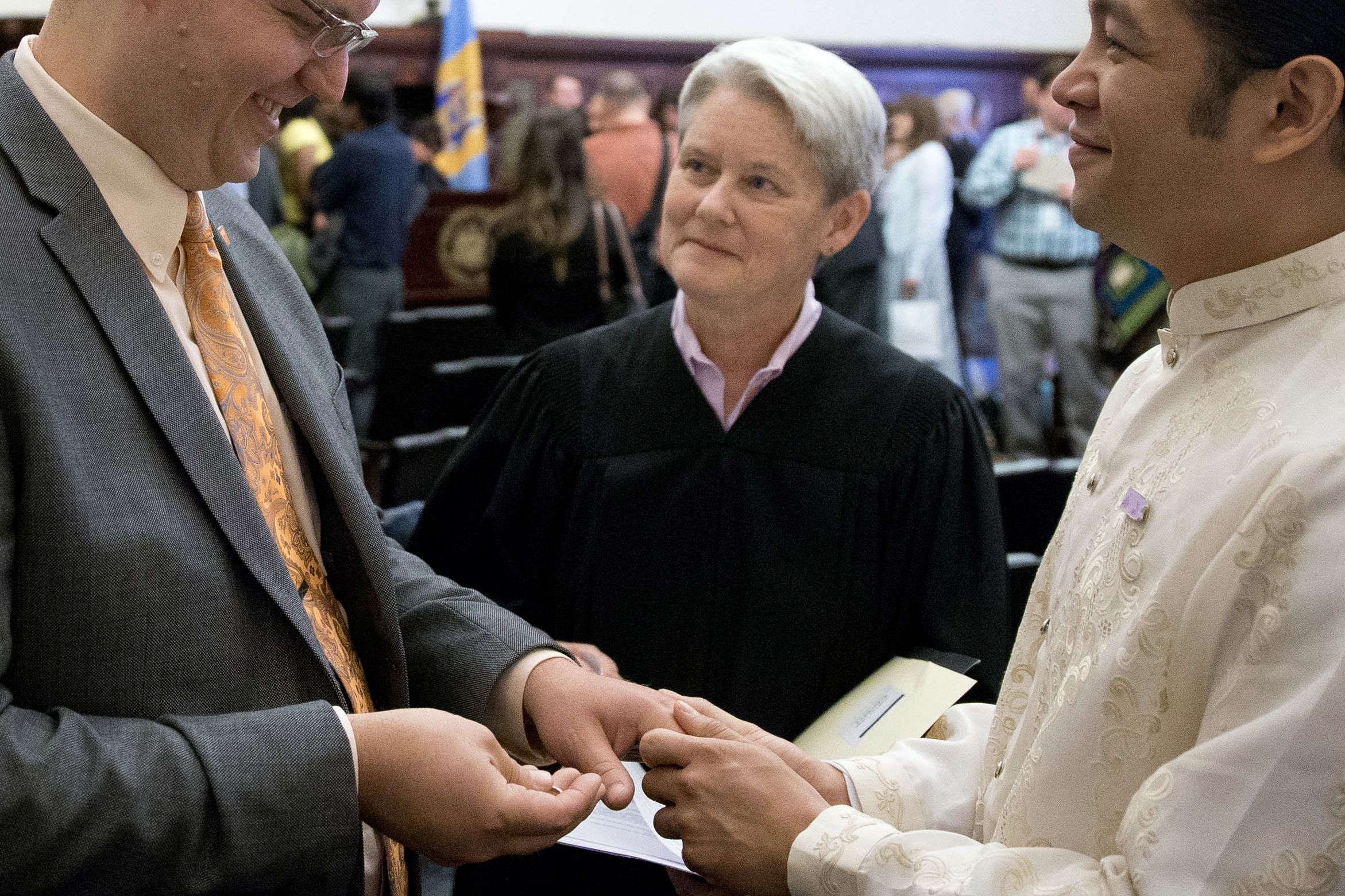
Barbara Ann McDermott, 71, a former Philadelphia judge who, for 40 years, spent nearly every workday inside the city’s criminal courthouse defending, prosecuting, and later presiding over some of the city’s most serious criminal cases, died Tuesday, Aug. 11, following a yearslong battle with a rare form of uterine cancer.
Judge McDermott spent nearly 14 years in Philadelphia’s Common Pleas Court — the majority of that time presiding over homicide cases — before retiring earlier this year.
She was known for running a tough and orderly courtroom, starting her day promptly and putting up with little fuss and few excuses from prosecutors, defense attorneys, police, and defendants alike.
Born and raised in Aliquippa, in Western Pennsylvania, Judge McDermott said in an interview this spring that, growing up, she was a tomboy who pushed the boundaries of her small, steel mill town. She delivered the local paper even when supervisors said the work was only for boys. When leaders of her local Catholic school balked at her request to start a girls basketball team — saying young women “weren’t strong enough” to play full-court — she found a coach who would let her.
She attended Seton Hill College, then an all-women’s university outside of Pittsburgh. There, she became passionate about pastoral theology and social justice, and led the student government association.
She initially thought she would follow local tradition and become a teacher or establish a chain of daycares, but then, she said, “I realized … I’ve been gifted with a brain. I want to do something more than the tradition.”
She took an interest in legal issues and attended Georgetown Law School. (She enjoyed pointing out that she was rejected by the University of Pennsylvania.)
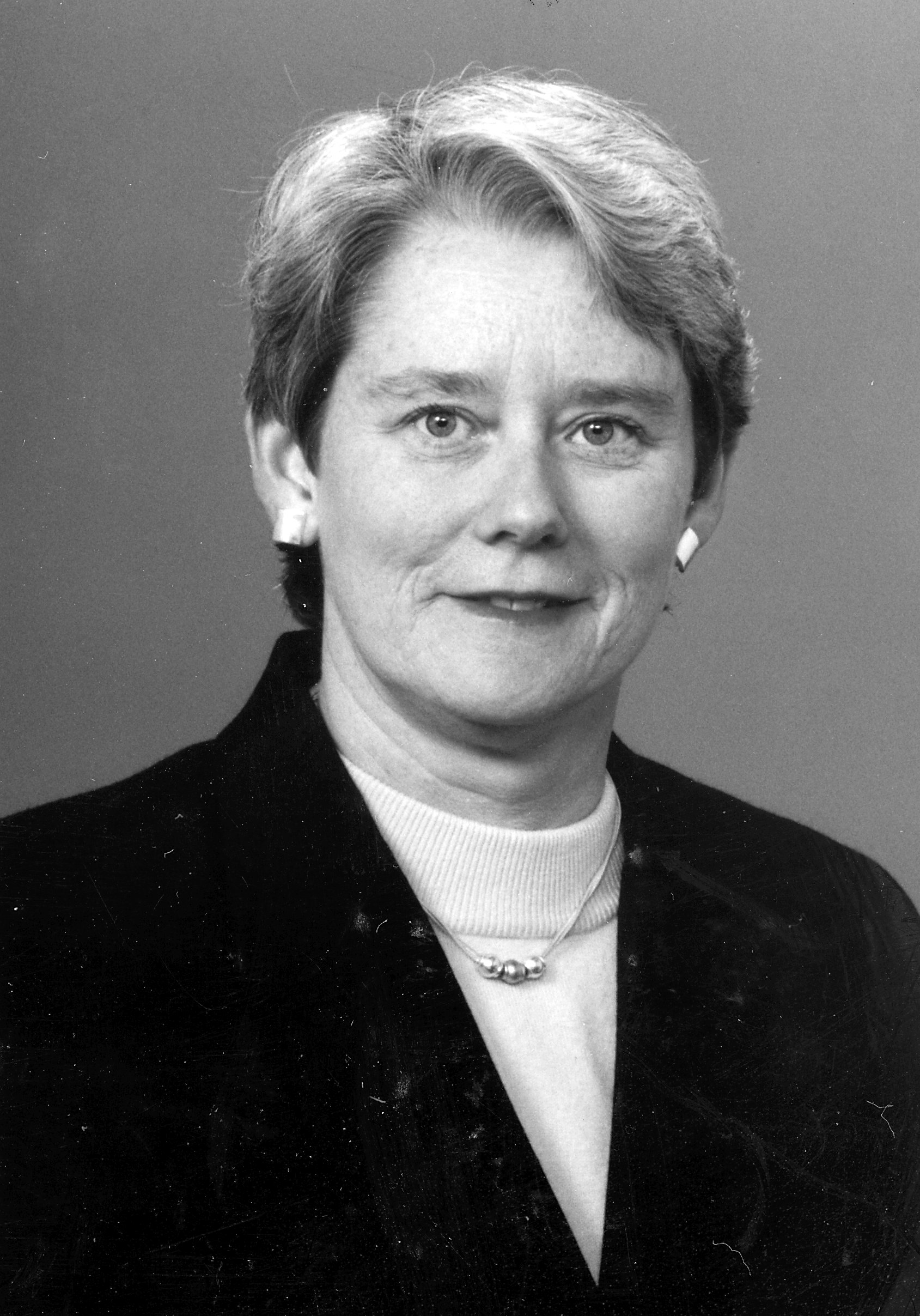
Barbara McDermott in 2001.Courtesy of Barbara McDermott
She first worked in the attorney general’s office, but longed to practice in Philly, where she said she was inspired by female judges like Lois Forer, Lisa Richette, and Juanita Kidd Stout.
“I wanted to practice around lawyers that were better, and I wanted to practice around a diverse bench,” she said.
She joined the Philly DA’s office in 1984 under Ron Castille’s leadership, but left after several years due to what she described as “disagreements,” including that she did not support the death penalty.
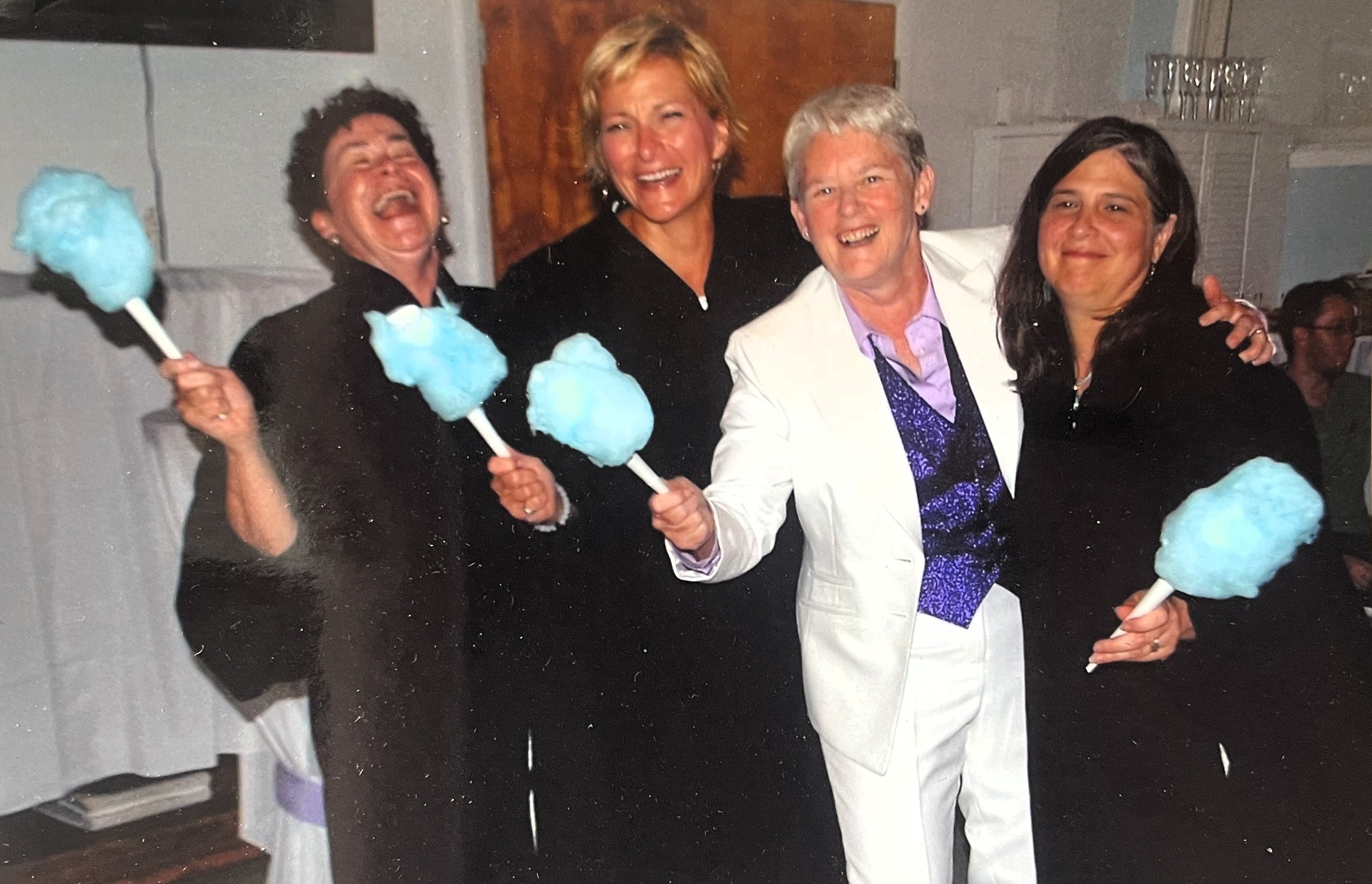
She started her own practice as a criminal defense attorney, and adopted two daughters, Nicole and Colette, in the early 1990s. She raised them alongside her partner — and, later, wife — of 37 years, Jeanne Buckley.
Buckley, in an interview with the Philadelphia Gay News, said she and Judge McDermotthad been introduced by friends at St. Vincent de Paul Catholic Church in Germantown, a service-oriented congregation they remained a part of through their life.
She told the outlet that, early in their relationship, they went to Rehoboth Beach, Del. There, Judge McDermott asked her to close her eyes and placed sparklers around her. This was what life would be like together, she said.
As their life together went on, Judge McDermott was later elected to Common Pleas Court, joining the bench in 2012. Soon afterward, she started overseeing homicide cases.
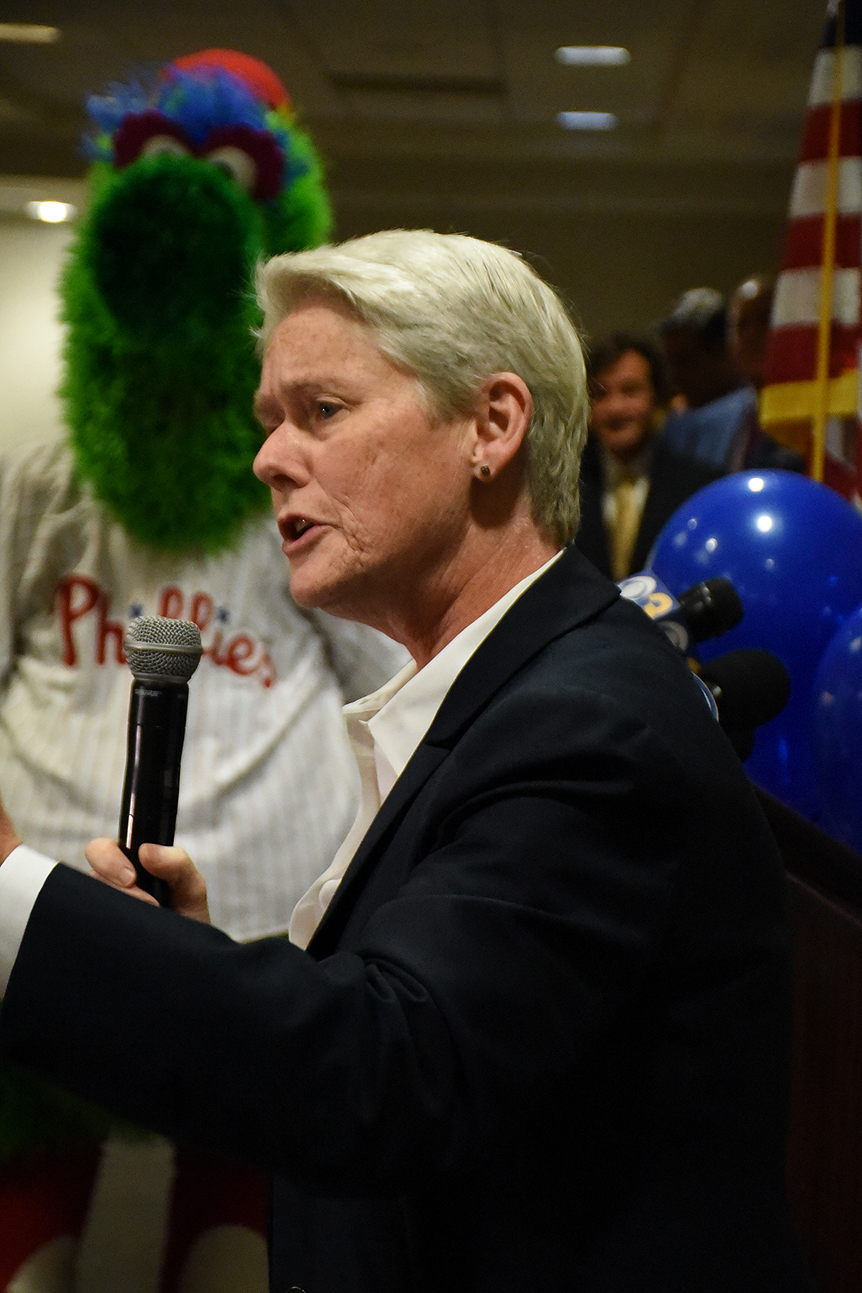
Barbara McDermott speaks at an event with the Phillie Phanatic in the background.Courtesy of Barbara McDermott
She presided over numerous resentencings of former juvenile lifers, in one case surprising both defense lawyers and prosecutors when she decided to exonerate one, Terrance Lewis, who had been found innocent by a federal magistrate judge but remained in prison on a procedural issue.
She said that work, seeing how people changed over time, was some of the most fulfilling of her career.
But she also drew criticism from some youth justice advocates who said she was unduly harsh in dealing with teenagers accused of violent crimes, denying requests to transfer their cases to juvenile court and imposing substantial state prison sentences.
Judge McDermott could be exacting from the bench. But her concern for how people experienced the courthouse and the justice system extended beyond the parties before her.
Colleagues called her a trailblazer for women and LGBTQ+ attorneys, and said she worked to get more female judges in leadership at the First Judicial District. She helped create a curriculum on how judges and court staff should treat transgender witnesses and victims. She also sought to improve conditions for jurors, and coordinated efforts to add a lactation booth to the criminal courthouse.
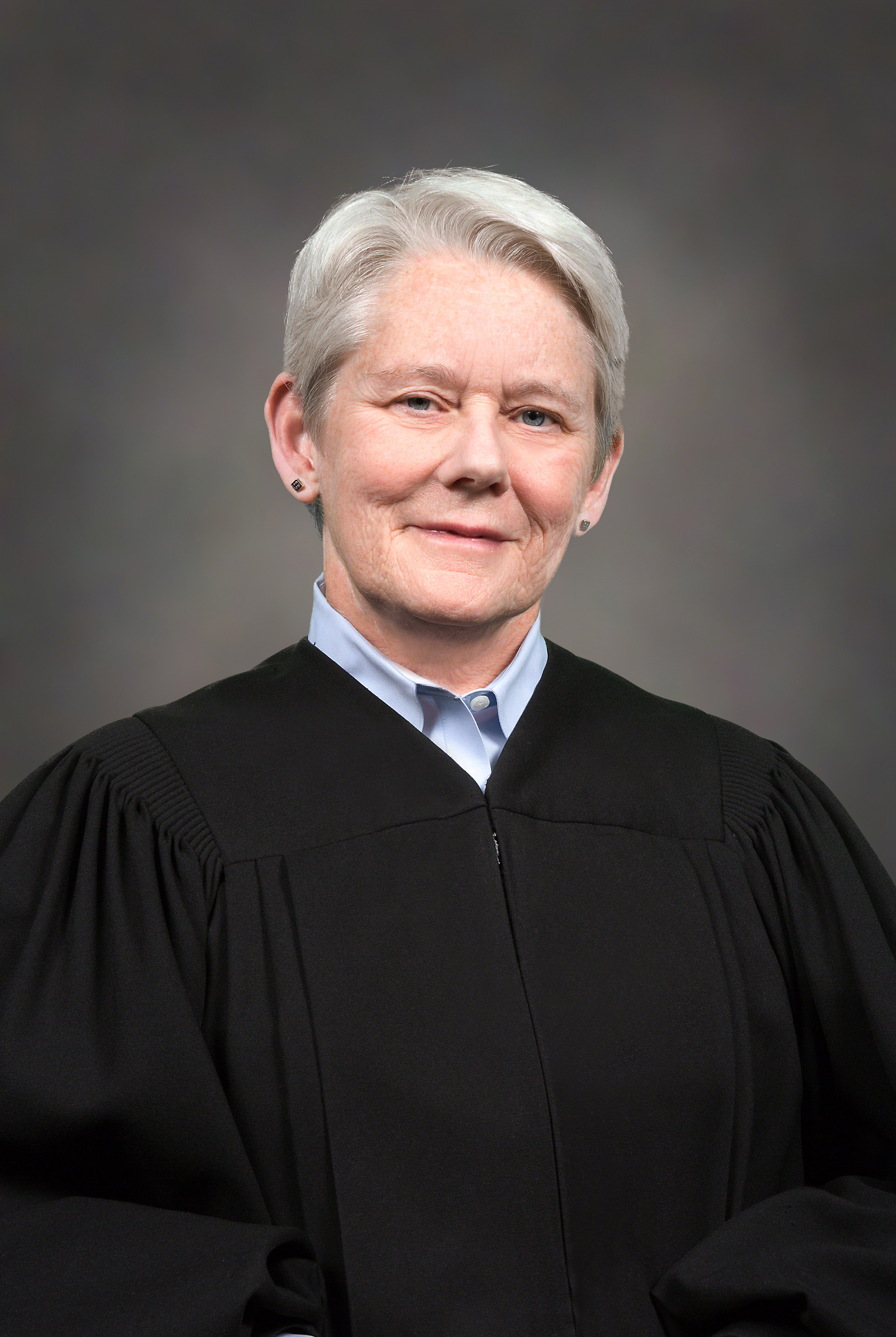
Barbara McDermott joined Philadelphia’s Court of Common Pleas in 2012.Anthony Leonardo
When she was fed up with how rundown the furniture was in the jury deliberation room, she brought in a sander and refinished the tables and chairs herself. A pungent smell took over her courtroom that “did linger longer than I thought,” she later joked.
Jury Commissioner Pat Martin said their work with jurors led to an unexpected friendship.
“I don’t know how or why,” he said. ”But I’m grateful.”
He particularly enjoyed her dry sense of humor.
“She took on people and didn’t care. She didn’t worry about the feathers that she ruffled,” he said.
Outside of court, she enjoyed volunteering, biking, camping, hiking, traveling, and spending time with her family and grandchildren, her family wrote.
Friend and retired Common Pleas Court Judge Ann Butchart recalled a time when she and her wife had plans to meet Judge McDermott and her wife for dinner. McDermottinvited them to go on a walk beforehand — which quickly became a challenging, miles-long hike.
“It’s getting darker and darker, and the hills are getting steeper and steeper,” she said. “We ended up at some hole in the wall in Roxborough.”
That was Judge McDermott, she said: “This very intense, very, very funny, very, very smart, and very, very determined woman.”
On the bench and in their friendship, she said, Judge McDermott was complex and honest, and rarely wavered in her positions.
Barbara McDermott, center right, with fellow judges at her wedding in 2014.Courtesy of Barbara McDermott
She pointed to a Latin saying: “Sometimes wrong, but never in doubt.”
“She was so fiercely certain of her decisions and her perspective and her positions on things,” she said. “It was challenging at times, but to see and live in that confidence is a pretty amazing place to be. She manifested that in every part of her life, including her approach to her illness.”
When Judge McDermott was diagnosed with a rare form of cancer several years ago, Butchart said, there was little research on the illness and many doctors were unsure about the best course of treatment.
“She challenged every doctor. She was certain that if an approach had been recommended, it wasn’t thorough enough, wasn’t complete enough, wasn’t the best,” she said. “I think personally it added a good year and a half to her life.”
Martin and Butchart said they will never forget the unveiling of her judicial portrait at the criminal courthouse. A ceremony that is typically stale and sleepy became a celebration of her life.
She asked her colleagues to perform a skit that featured “a day in the life” of her courtroom, 507.
Butchart said she and other judges wore sparkly collars on their robes, waved little flags, and sang a personalized song to the tune of “Gloria” by Laura Branigan.
When they finished, she said, Judge McDermott quipped that the song was not even original — they had sung that at her birthday.
They could only shake their heads and laugh.
“This was so vintage Barb,” Butchart said. “She never had an experience that she couldn’t have improved upon or found wanting in some way.”
And then, naturally, she gifted them shirts donning her portrait.
Judge McDermott, in the months before her death, said she embarked on a “World Tour” to see and thank the people who had touched her over the years. It reinforced, she said, that her life was a gift.
“You’ve had 70 years,” she said she told herself. “You’ve had a life.”
Judge McDermott is survived by her wife and daughters, three grandsons, six siblings, and 20 nieces and nephews.
A celebration of her life is to be held in mid-September.
The Philadelphia school board voted Thursday night to spend up to $7 million on rental space to house a district high school in Center City.
The four-year agreement — the district will pay $1.7 million annually for two years, then $1.8 million and $1.9 million in the final two years — covers classrooms and related spaces at 18 S. Seventh St., the longtime home of Constitution High School.
The move comes months after the district voted to close 17 schools, in part because it has 70,000 empty seats in schools across the city. The school system will also merge some schools — like Overbrook High and the Workshop School — as part of its $3 billion facilities master plan, to be enacted over the next decade, but it opted not to move Constitution High into any school with empty space.
Board members voted unanimously to pass the resolution, which noted the district “continues to work through the completion of the Facilities Master Plan to properly identify appropriate space for our students.”
Officials will “review the opportunities that may exist in the coming years that would cause us to re-evaluate the current necessary decision to remain at this location, which accommodates the needs of the students within this program. If the opportunity arises for the school district to consider relocation, the community and stakeholders will become aware and involved in this process.”
The facilities plan calls for Constitution to move in 2035-36 into the current Bodine High building in Northern Liberties. Bodine will eventually expand and move into the current Penn Treaty building, in Fishtown, and Constitution will then occupy the Bodine space.
Constitution, a citywide admissions school, has been located at its current building since the school opened in 2006 as part of Philadelphia’s small-schools boom. The school was designed with a civics focus, and deliberately located near the National Constitution Center.
The district has moved other schools out of rental properties. It relocated Science Leadership Academy, which had been in rental space near the Franklin Institute, into Benjamin Franklin High. District officials have pointed to that colocation as a model.
Charter renewals, but no mention of missing PSSAs or Kensington asbestos relocation
The board also voted Thursday night to renew two charters: YouthBuild Philadelphia Charter, on North Broad Street in North Philadelphia, and Inquiry Charter, on Belmont Avenue in West Philadelphia.
Both schools received five-year renewals.
YouthBuild’s renewal came with conditions: agreeing to submit a student attendance plan, tracking students’ daily attendance, and divulging supports offered; and promising to ensure the school’s suspension rate is at or below the district’s suspension rate.
No district official addressed two brewing matters: either the asbestos-related relocation of Kensington High students to the former Meehan Middle School building in the Northeast, more than seven miles away, or the district’s missing PSSA scores.
Earlier on Thursday, a Lincoln High parent and a Mayfair resident were attempting to block Kensington’s move to Meehan, a closed district school currently used as swing space to house school populations that need a temporary home.
Meehan shares a campus with Lincoln and Northeast Community Propel Academy, both of which are overcrowded. Parent Harold Brown and Peter McDermott, a former Philadelphia teacher who’s active in Mayfair civic life and city Democratic politics, say moving Kensington onto the campus will harm students.
They also say placing 400 Kensington students and 90 staff at Meehan violates a Community Benefits Agreement signed in 2019, when neighbors OK’d building Propel to ease overcrowding at other Northeast schools.
No mention was made, either, of the lack of data around Philadelphia students’ PSSA and Keystone exams.
District officials said they won’t release the scores of students’ spring tests — which district officials have access to — because of a delay in Harrisburg.
Though the district did receive preliminary student-level scores, and released limited data to some teachers and administrators in order to correctly roster a limited number of students, they have walled off the data from the vast majority of educators.
A district spokesperson said this week that they won’t be using PSSA scores for the school selection process that admits students to 37 magnet schools. Instead, students can take an alternate assessment the district declined to name or detail.
The scores are consequential in a district where officials frequently state their goal to become the fastest-improving large urban school system in the country. Philadelphia has posted academic gains during Superintendent Tony B. Watlington Sr.’s tenure and earned national attention for its post-pandemic improvement, but its students still generally struggle.
Citywide, 34% of students score at grade level in English and 23% in math, as judged by 2024-25 standardized tests.
Administration of this year’s PSSAs, given to students in third through eighth grades, was snarled by some technical glitches. It was the first year Pennsylvania required students to take the exams online.
Research shows that scores usually dip when tests move online.
Kristin Luebbert, a retired district teacher, urged the board and the district to release the scores.
“Obviously, the administration must have strong feelings about what they show,” Luebbert said of the scores. “At this point, we all know they’re out there, so you might as well release them.”
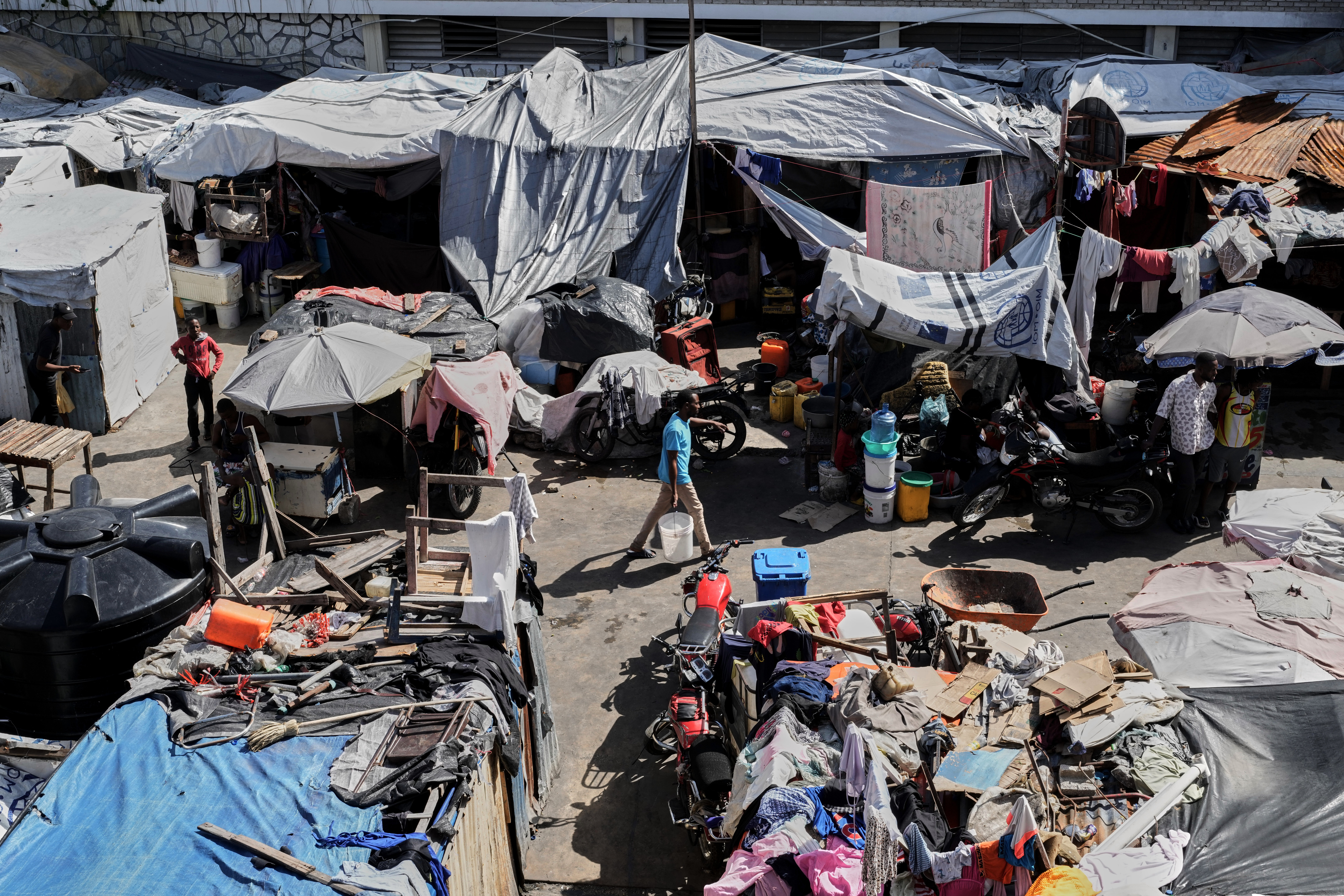
The first deportation flight to Haiti since the Trump administration ended humanitarian protections for 350,000 people living in the United States landed Thursday in the Caribbean nation, and activists say immigration arrests are beginning to ramp up.
The flight carrying 170 people, ranging in age from 19 to 71, landed in Cap-Haitien, on the northern coast of Haiti. Commercial flights from the U.S. have been blocked from landing in the Caribbean nation’s primary airport in the capital of Port-au-Prince due to gang activity and reports of aircraft being struck by gunfire.
The federal government has been sending deportees back to Haiti on monthly flights, but Thursday’s removal was among the largest that community leaders said they had seen during the second Trump administration.
Many of the passengers had been detained by U.S. Immigration and Customs Enforcement in the last three weeks, and at least one had recently lost temporary protected status, according to Guerline Jozef of the Haitian Bridge Alliance.
“People are losing TPS status and losing their asylum cases,” she said. “It’s become easier and easier to be taken and deported.”
The Department of Homeland Security did not respond to questions about the deportation flight.
For months, Haitians have been bracing for ICE to begin making arrests en masse, although the new enforcement push has unfolded slowly and quietly so far.
DHS has placed ankle monitors on Haitians who have lost their protected status. Arrests have also been made in communities home to large numbers of people from the violence-ridden Caribbean nation.
The U.S. Supreme Court cleared the way for the Trump administration to end humanitarian protections for Haitians in June, and in early August a federal judge took the final step in allowing the Trump administration to terminate the benefit for Haitians.
On Thursday, community leaders in Springfield, Ohio, said ICE arrested a well-known Christian pastor, Joubert Adrien. He was driving home when officers boxed in his vehicle at a gas station, the activists said. He had recently lost TPS, according to Vilés Dorsainvil of the Haitian Support Center.
The arrest has sent chills through Adrien’s congregation and the larger Haitian community, Dorsainvil added.
ICE officers have also been spotted making arrests over the last week in Springfield outside grocery stores and after traffic stops. Local residents and clergy members have been protesting the arrests, and a legal advocacy organization has been trying to help those detained.
Many Haitians in Springfield are now wondering if they will be the next to get arrested, community leaders said.
Springfield became a focal point during President Donald Trump’s 2024 campaign after he falsely claimed that Haitian residents there were killing and eating their neighbors’ pets.
The city includes a large number of the country’s middle class who worked as physicians, judges, and in other professions in Haiti, Dorsainvil said. They moved to Ohio after the country was plunged into chaos following the 2021 assassination of the country’s then-president, he said.
“That’s why they left Haiti,” said Dorsainvil, himself a former TPS holder. “They were not looking for work. They left because they were at risk.”
But in Springfield they have worked factory jobs, filled healthcare vacancies, continued their university studies, and started businesses. Now, instead of using their skills to benefit U.S. communities, Dorsainvil said, they face the possibility of being sent back to a place where they recently had urgent reasons to flee.
Dorsainvil said he is fielding dozens of calls each day from terrified neighbors who tell of ICE visits to their homes. He heard from a woman on Thursday who couldn’t find her husband on ICE’s detainee locator website and was panicking, believing that he could be on the deportation flight.
Deportees from the U.S. are especially vulnerable to kidnapping, extortion, and murder once they land in Haiti, Jozef said. Criminals think they have been given money by the Trump administration to self-deport or have savings from their time stateside, he said.
U.S. military personnel who served in Haiti recently testified in Congress on the country’s gang crisis and characterized the nation as a conflict zone.
Top Haitian government security officials have been kidnapped by armed groups. More than 1.4 million Haitians have been internally displaced and much of the population is going hungry.
“This isn’t a country where anyone should be deported right now,” said Savi Arvey of Human Rights First, an advocacy group tracking deportation flights. “We are gravely concerned this administration seems poised to intentionally take legal status from people in service of its mass deportation campaign and intentionally and knowingly deporting people to danger.”
TEL AVIV, Israel — A Palestinian teenager was killed Friday after Israeli settlers entered a village near the West Bank city of Hebron, local officials said, the latest in a surge of violence in the territory that has drawn international condemnation.
The rising settler violence against Palestinians in recent weeks has presented a mounting challenge for Israel’s military. It is responsible for maintaining law and order in the territory but has been hesitant to take forceful action against settlers.
The Health Ministry of the Palestinian Authority identified the victim as 17-year-old Kareem Shlaldeh. Palestinian and Israeli authorities offered differing accounts of events Friday.
Saad Shlaldeh, the mayor of the village, called Sair, said a large group of settlers had attacked the village around 10 a.m., killing one person and setting fire to property.
“These people are thugs and more,” he said in a phone interview, adding that his account was based on conversations with witnesses.
The Israeli military said soldiers were sent to the area of Sair following a report of Palestinians throwing rocks at Israeli civilians. The military added that the Israelis “were present in the area without advanced authorization.”
The statement said a “security official” had opened fire, causing “Palestinian casualties,” without clarifying whether the shooter was a soldier. Israeli civilians were also wounded in the incident, the statement added.
The events that led up to the settlers entering the village also remain unclear. Shlaldeh said he had no knowledge of Palestinians throwing rocks when asked about the Israeli military’s account.
Nabil Tharawa, 61, a resident of the area, said a second Palestinian was wounded and transferred to a hospital in Hebron. Khalid al-Sharif, an official at Ahli Hospital in Hebron, said a wounded person from Sair was brought to the emergency room.
The violence Friday came as tensions in the West Bank were running high after the Israeli government published a tender for the construction of houses in a West Bank settlement near Jerusalem. The project is referred to as E1.
Over the past day, 11 nations, including France, Canada, and Britain, issued a joined statement condemning Israel for the move. They said it “will undermine the prospect of the two-state solution by driving a wedge through the West Bank and harming the territorial contiguity of the Palestinian Territories.”
Much of the international community regards the West Bank as being a core part of any future Palestinian state.
For roughly two decades, the E1 plan wound its way through a bureaucratic Israeli zoning process. But intense international opposition, including from the Obama and Biden administrations, had mostly kept the project dormant.
That changed under the current Israeli government, the most right-wing in Israel’s history.
Ed Miliband, Britain’s foreign secretary, said the publication of the tender was “unacceptable and destructive” in a post on social media.
Gideon Saar, Israel’s foreign minister, fired back at Miliband, asserting that “the Jewish people have the right to live throughout the Land of Israel,” an apparent reference to all the land between the Mediterranean Sea and the Jordan River.
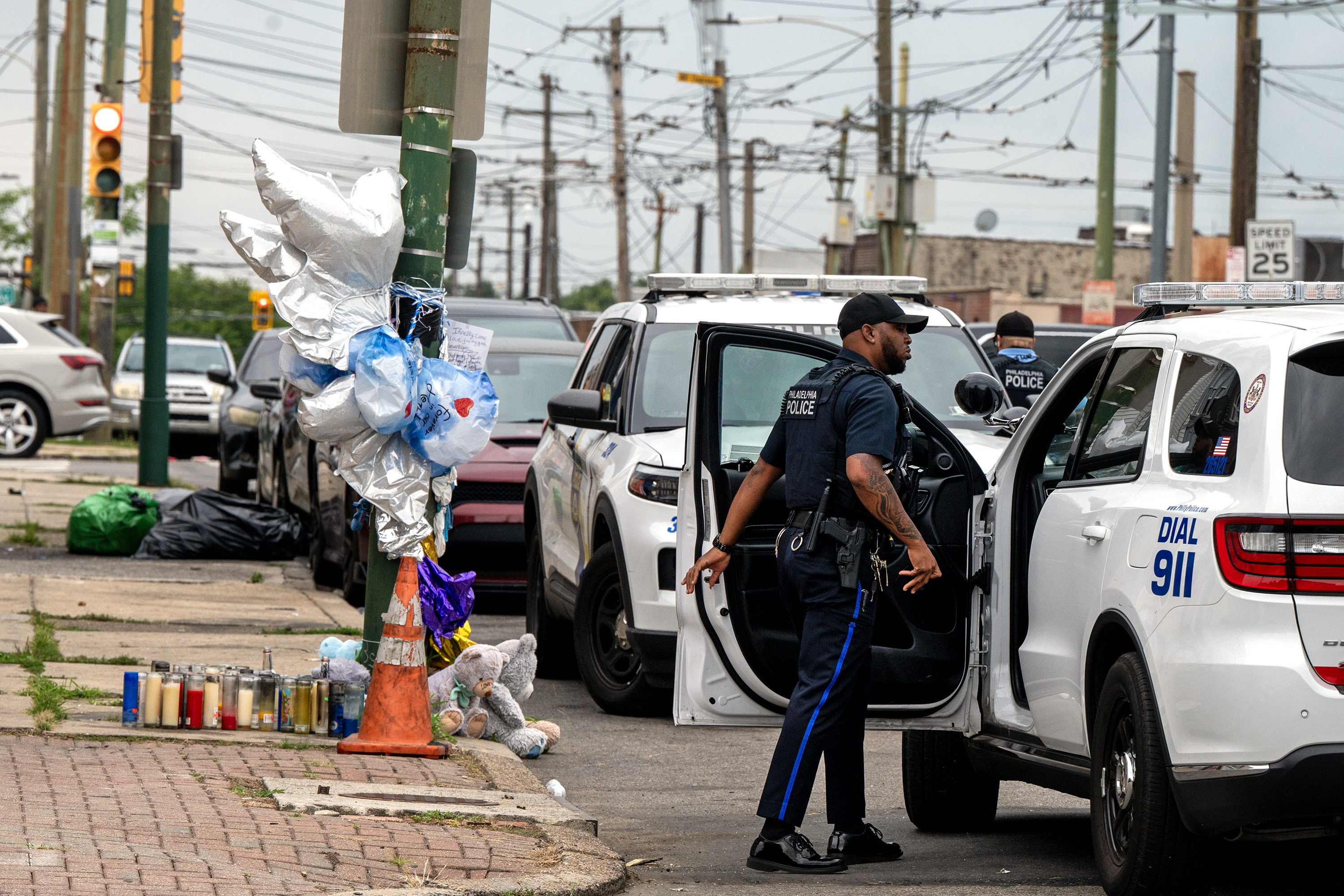
Seconds before an off-duty Philadelphia police officer was shot and killed outside a Southwest Philadelphia nightclub, he was involved in a confrontation with the man who police believe fired the fatal shot, according to a surveillance video under review by department investigators.
The video captures a previously unseen part of the encounter that preceded the Aug. 16 killing of Officer Alhassane Barry, 29. But it does not show the shooting itself, leaving critical questions unanswered.
Police spokesperson Sgt. Eric Gripp confirmed Friday that the department is reviewing the video as part of its investigation. But he declined to comment further, citing an “active homicide investigation.”
No charges had been filed against the alleged shooter as of Friday afternoon.
The newly surfaced video footage, which was obtained and reviewed by The Inquirer, appears to show Barry leaving Nipsey’s Hookah Lounge with the man police have identified as a suspect in the killing and a third man who has not been publicly identified.
Barry is seen in the video moving toward the alleged shooter, who is then struck twice in the head by the third man. The blows appear to knock him out of the camera’s view.
Barry and the third man then run in the same direction, also disappearing off screen.
A few seconds later, Barry comes back into view, falling onto the sidewalk outside the nightclub. He appears to be bleeding from a gunshot wound to his abdomen.
Police had said they responded to a report of gunfire shortly before 4 a.m. Aug. 16 on the 7200 block of Elmwood Avenue. Officers found Barry and a 35-year-old man suffering from gunshot wounds.
Both were taken to Penn Presbyterian Medical Center, where Barry was pronounced dead at about 8 a.m. The other man, who had been shot multiple times, was critically injured.
It was unclear Friday whether the 35-year-old victim was one of the men in the surveillance camera footage.
The footage comes as investigators try to determine what led to the shooting of the off-duty officer and whether the circumstances warrant criminal charges against the man police believe fired the fatal shot.
Two law enforcement sources with knowledge of the investigation said Friday that self-defense had become part of the discussion about whether charges would be appropriate. The sources, who were not authorized to speak publicly about the case, said the investigation had also not yet been referred by police to the Philadelphia District Attorney’s Office for review.
Police previously said that Barry, the other critically injured victim, and the suspected shooter had been inside the after-hours lounge before the shooting. The men exchanged words inside, Deputy Commissioner Frank Vanore said earlier this week, and the verbal confrontation continued after they went outside. Police said the altercation then became physical before the men were separated and the suspect opened fire.
The newly surfaced video appears to capture at least part of that physical confrontation. The video does not show what happened before the men exited the club. And because the shooting occurs off camera, it does not show the moments in which the man fired his gun.
Investigators recovered a firearm and eight spent 9mm shell casings at the scene.
Barry had been a Philadelphia police officer for two years and was assigned to the 12th District in Southwest Philadelphia. Before joining the department, he served for a decade in the Pennsylvania National Guard, including a two-year deployment to Egypt’s Sinai Peninsula, and left the Army as a sergeant, according to an Army spokesperson.
His killing prompted a funeral attended by more than 100 people at the Fouta Islamic Center of Philadelphia on Monday. Mourners and fellow officers remembered Barry as a young man devoted to public service.
UNITED NATIONS — The United States has demanded that Cuba open up to private investment, and Cuba has passed sweeping reforms to encourage just that. So Cuba’s U.N. ambassador says he wants to know why Washington keeps piling on sanctions that stymie the very economic opening it has sought for decades.
Ambassador Ernesto Soberón Guzmán, in an interview this week with the Associated Press, directed his question to U.S. Secretary of State Marco Rubio, the main architect of the Trump administration’s Cuba policy:
“What are you afraid of? If you are so convinced that the Cuban government is an incompetent government, why do you need to implement almost every two weeks new sanctions?”
The U.S. State Department responded to a request for comment with a quote from Rubio saying new sanctions will continue to be announced every couple of weeks to close off “escape valves that they’re trying to create in every mechanism.”
Then on Thursday, the U.S. imposed more economic penalties on Cuban industries, targeting state-owned mining, metal, and construction companies.
Cuba has been pushed to the brink by an oil blockade imposed by the United States in January on top of a decades-old embargo, coupled with the escalating sanctions. The moves by President Donald Trump’s administration, meant to put pressure on the government by depriving it of funding, have worsened already debilitating blackouts, cut workers off from public transport, crippled infrastructure, and deepened shortages in medicine and food in the Caribbean island nation.
Guzmán said the sanctions are the main obstacle to Cuba opening up its economy. He said the impact of the U.S. measures — specifically the shortage of electricity and lack of fuel to run a business or travel — has turned off investors and tourists, a major source of Cuba’s income.
Some companies have pulled out of Cuba, including the Spanish hotel chain Meliá, which relied on tourist revenue and cited “significant operational, legal, economic, and financial difficulties” in explaining its decision to leave.
”Literally, the United States has done everything imaginable to try to prevent foreign investors,” said William LeoGrande, a professor at American University and a leading expert on U.S.-Cuba relations. ”When they say, `Well, we want to see Cuba open up to foreign investment,’ they’re being disingenuous. … It’s not possible for them to succeed without some kind of sanctions relief.”
The goal of Trump’s Republican administration, he said, is “not just to open up Cuba economically but to overthrow the Cuban government — to change the nature of the Cuban political system.”
Cuba announces major economic shift
John Kavulich, president of the U.S.-Cuba Trade and Economic Council, said Cuba had to make changes when it lost its economic lifeline with the U.S. ouster in January of Venezuelan leader Nicolás Maduro.
“The result is the Cuban government in the last eight months made more commercial, economic, and financial changes to the country than they have as a group since the revolution,” he said.
Nonetheless, the Trump administration keeps ratcheting up sanctions, putting more pressure on Cuba, which is responding by making more changes, Kavulich said.
“But from our standpoint, there are two parts missing: One is Cuba implementing by regulation everything that it’s announced, and secondly, the Trump administration allowing U.S. companies to have more access to the Cuban marketplace while these changes are underway,” he said.
The changes announced by Cuban President Miguel Díaz-Canel in June aim to significantly shift Cuba’s economy and industry, which have been strictly controlled by the socialist government since the 1959 revolution.
They include more space for private businesses, imports and exports without the state as an intermediary, free hiring of personnel, authorization for private banks, investment by Cubans abroad, and opportunities for fast-food chains to establish themselves on the island.
Guzmán said there are opportunities for investments in real estate, solar farms, and energy to help ease the country’s electricity shortage, as well as in marinas and the tourism industry.
Christopher Hernandez-Roy, acting director of the Americas program at the Center for Strategic and International Studies, recalled that the last economic opening under President Barack Obama’s Democratic administration “was later throttled by the Cubans themselves, who feared that the opening went too far and appeared to threaten political control.”
Today, he said, it appears the Cubans really do want economic reforms and outside investment. Díaz-Canel’s economic reforms are not impossible, but U.S. sanctions “significantly constrain their prospects for success,” Hernandez-Roy said.
He noted the irony that U.S. pressure ”is helping push the Cubans toward greater economic liberalization out of necessity, while simultaneously limiting the resources and access necessary for those reforms to actually improve the economy.”
Rubio says Cuba’s leaders ‘don’t know what they’re doing’
In late June, after the reforms were announced, the U.S. slapped sanctions on five state companies, three linked to a business conglomerate run by Cuba’s Revolutionary Armed Forces. Best known as GAESA, it is believed to command nearly 40% of Cuba’s gross domestic product.
Rubio, a former U.S. senator from Florida whose parents were born in Cuba, did not appear to be impressed by the newly announced economic changes. He last month called Cuba “a failed state” with “a bad economic model.” He said Cuba’s leaders “don’t know what they’re doing” and “don’t know how to fix their economy.”
“I think the challenge that Cuba has faced for the last 15 years is they want to somewhat improve their economy, but they’re afraid that if they improve it too much they’ll lose political control over people,” he said.
The United States is prepared “to do what we can do to effectuate a positive change in Cuba because it directly impacts our national security” since it is only 90 miles from the U.S. mainland, Rubio said. “And we want Cuba to be prosperous. We want Cuba to be free.”
The Cuban ambassador said implementing the economic changes would be far easier without the sanctions, if American companies were involved in Cuba and if trade between the two countries was possible.
He said the good news is that talks are taking place between the United States and Cuba. He declined to give details of what he called “very sensitive conversations.”
“But the point here is that even when Cuba is changing a lot,” Guzmán said, “the U.S. government keeps the same policy of aggression towards the Cuban people.”