Category: News

  • Police in Montgomery County fatally shot a man while responding to a reported break-in, the DA says

    Police in Montgomery County fatally shot a man early Sunday morning while responding to a reported break-in at a home, according to county officials.

    Upper Pottsgrove Township Police were called about 12:30 a.m. to a possible attempted break in at a home on Snyder Road, the Montgomery County District Attorney’s Office wrote on Facebook. Upper Pottsgrove Township is about 35 miles northwest of Philadelphia.

    When police arrived, they found a man at the back of the residence and an “encounter ensued and police fired” at the man, killing him, the post said.

    It was not immediately clear what led to the gunfire or if the man was armed. His identity, and the names of the officers involved, have not been made public.

    The Montgomery County Detective Bureau is investigating.

    No additional information was immediately available.

  • After decades of free spending, Washington is facing some unpalatable choices

    After decades of free spending, Washington is facing some unpalatable choices

    Year after year, the federal government has spent more than it collected in taxes. Each annual shortfall increased the national debt, slowly at first and then by leaps, defying warnings of an inevitable reckoning.

    Now, the reckoning may be at hand.

    This week’s bond market sell-off brought government borrowing costs to their highest level in almost two decades and prompted an extraordinary Treasury Department intervention.

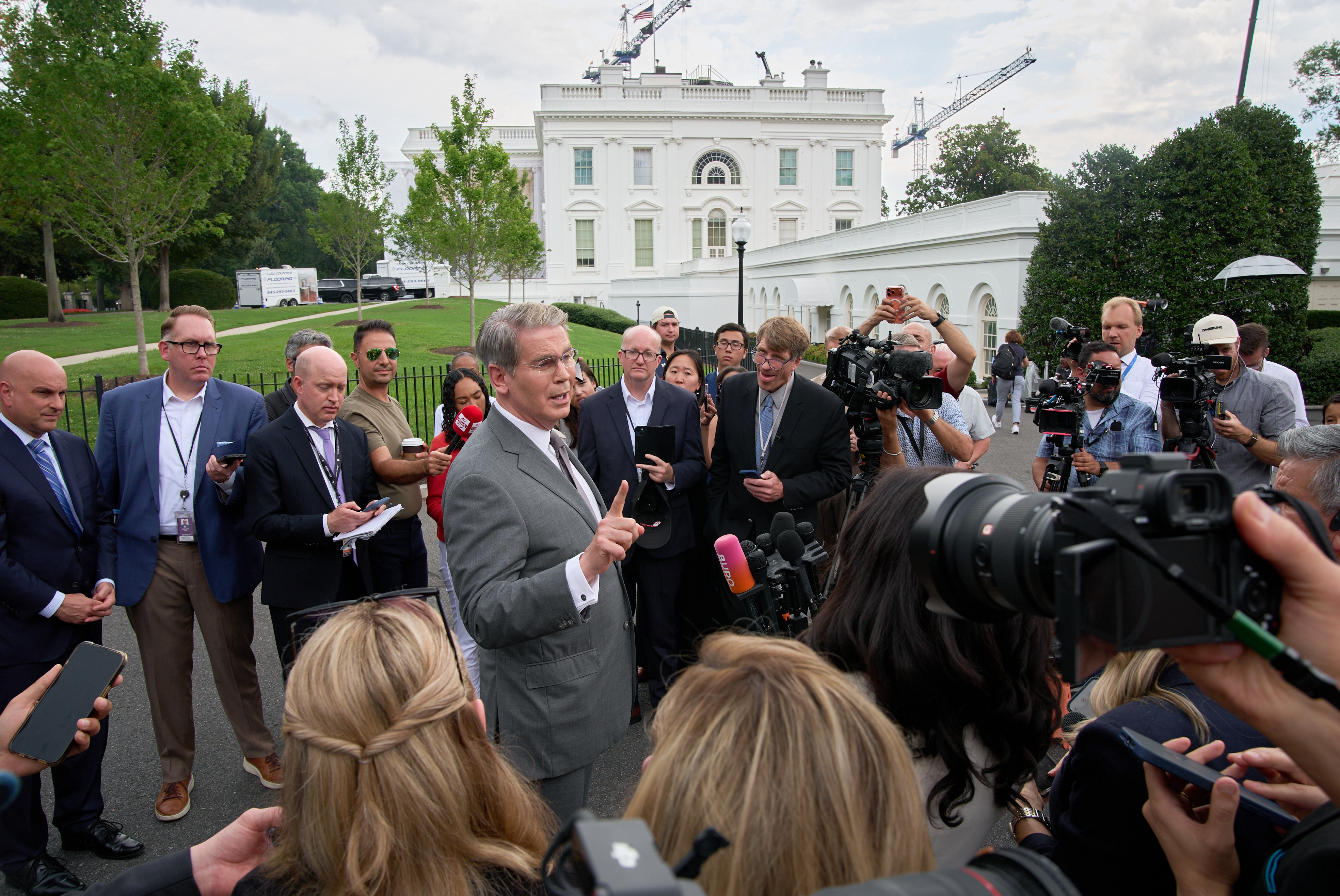
    On Friday, the yield on the 30-year Treasury bond topped 5.27%, up slightly from one day earlier, a sign that Treasury Secretary Scott Bessent’s plan to calm markets is not working. After decades of free spending, Washington may soon be compelled to make some long-deferred, and politically unpalatable, choices that will leave few Americans unscathed.

    “This is what the bond market is trying to signal: We’re going to have to make choices that hurt growth,” said Adam Abbas, who manages $4 billion in bonds for the Oakmark Funds. “We have two levers to do that: raise taxes or cut spending. Either option is not politically popular, and it will never be popular, but at some point we have to address the problem.”

    The problem is a $40 trillion national debt, along with crisis-level annual budget deficits that require significant new borrowing.

    When the Treasury Department woos investors for its bonds, it competes with other governments and corporations — notably the hyperscalers building the nation’s artificial intelligence infrastructure. All that competition for capital means investors can demand higher returns, or yields, from those that want their money.

    Fiscal watchdogs have warned for decades that rising U.S. debt will eventually trigger a crisis. As borrowing costs rise, debt becomes more expensive in what can become a vicious cycle, said Marc Goldwein, senior policy director for the nonpartisan Committee for a Responsible Federal Budget.

    “What I worry about is we’re on the verge of sort of a real debt spiral, which happens when your interest [bill] is growing faster than your economy,” Goldwein said.

    Fast-rising bond yields or interest rates often reverberate through the financial system in unexpected ways, exposing costly vulnerabilities. In 2023, for example, Silicon Valley Bank failed after rising bond yields blew a hole in its balance sheet.

    Today, potential weak spots in the financial system include some of the nation’s largest hedge funds, where borrowed money used for investments, or leverage, is “near all-time highs,” according to the minutes of the Fed’s July 28-29 meeting. Likewise, traditionally staid life insurers are holding riskier assets that would be difficult to unload quickly if they needed to raise cash during a crisis.

    Financial setbacks also could occur overseas in places like France or Japan, said Rebecca Patterson, former chief investment strategist for Bridgewater Associates and now a senior fellow at the Council on Foreign Relations.

    “When we’re thinking about what could cause a crisis in the U.S., don’t just think about what’s happening in the U.S. Think about other markets that could be vulnerable,” she said.

    Today’s fiscal pressures began building a quarter century ago after former President Bill Clinton and a Republican-controlled Congress balanced the budget four years in a row. The federal government actually began paying off its debt.

    That prompted Federal Reserve Chairman Alan Greenspan to give a speech in 2001 warning that eliminating the debt, and thus Treasury securities themselves, could disrupt financial markets. Even so, he expected it to happen.

    “Current forecasts suggest that under a reasonably wide variety of possible tax and spending policies, the resulting surpluses will allow the Treasury debt held by the public to be paid off,” Greenspan said.

    Instead, a series of policy choices and unforeseen crises swamped the nation’s fiscal progress beneath a tide of red ink.

    The problem has grown especially acute over the past decade. Between 1789 and 2016, the U.S. government borrowed a bit more than $19 trillion. Over the past 10 years, President Donald Trump and former president Joe Biden added an additional $20 trillion, doubling the national debt, and making debt service payments one of taxpayers’ largest annual burdens.

    The U.S. now spends more than $1 trillion each year paying interest on the national credit card, more than it devotes to Medicare, according to the nonpartisan Congressional Budget Office. As recently as 2010, the interest bill was less than one-fifth that amount.

    The rising U.S. debt load is part of a broader phenomenon. Global debt of all types hit a record $353 trillion earlier this year, more than three times the size of global output.

    Unlike the risky mortgage borrowing that triggered the 2008 financial crisis, recent years have featured governments as the biggest borrowers. Here and abroad, governments borrowed to repair their economies after the 2008 meltdown and borrowed again to get through the 2020 pandemic. Poorer nations in Africa and Asia have gone deeper into debt to finance higher energy and food bills following the wars in Ukraine and Iran.

    “The debt has transferred to governments. I don’t think this is only a U.S. story, by any means,” said Patterson.

    This week’s bond market drama returned long-term yields to the level they occupied for most of the 1990s. But there are important differences between that period and today. Debt was lower and growth was faster.

    In 1997, for example, when the yield on the 30-year bond was around 6%, the economy still managed to post growth that topped out at 6.8%, more than four times faster than the most recent quarter. Relative to the size of the economy, the national debt that year was less than half as big as today.

    “Demographics. Labor force growth is down because of aging, the recent departure of older workers, and diminished immigration. And Trump keeps throwing in supply-side shocks — tariffs, Iran wars. The supply-side is completely different now,” Douglas Holtz-Eakin, president of the conservative American Action Forum and a former director of the CBO, said via email.

    The only surefire way to restore order to bond markets would be credible action to reduce the nation’s yawning budget deficit, which the CBO estimates will hit a record $2.1 trillion this year.

    In a Thursday interview with CNBC, Bessent promised the Trump administration would soon announce “an increased” focus on the government’s finances, including an examination of potential changes on “both the revenue and the cost side.”

    But there is ample reason for skepticism. The administration’s initial attempt at overhauling government spending produced Elon Musk’s Department of Government Efficiency, which upended large swaths of the civil service while failing to back up exaggerated claims of savings.

    Despite that experience, Bessent said he expected “several hundred billion dollars” in savings from an anti-fraud task force led by Vice President JD Vance.

    The administration’s economic assumptions are also more optimistic than those of outside forecasters. Before the president’s signature tax legislation passed last year, the White House Council of Economic Advisers projected that this year’s deficit would be about $1.7 trillion.

    The CEA also assumes that the U.S. economy will grow at an average annual rate of 2.8%, notably faster than the CBO’s 2% forecast.

    Independent experts say some combination of higher taxes and cuts in popular entitlements such as Social Security and Medicare are unavoidable. But less than three months before November’s congressional elections, the administration’s promised fiscal consolidation “seems unlikely to be realized,” economists at Barclays told clients this week.

    Indeed, on Capitol Hill the debt issue so far has spurred little more than dutiful public statements.

    “Our reckless spending problem in Washington is immoral — it unfairly leaves our children and grandchildren to foot the bill — but it also is making our economic stability extremely fragile,” Sen. John Curtis (R., Utah) wrote Thursday on X. “The more we add to our debt, the greater the threat of disaster in the event of an economic shock.”

    Curtis is lead sponsor of a bipartisan bill to create a commission to propose ways to shrink the national debt to less than 100% of GDP by 2039. He also voted last year for the president’s tax legislation, which the CBO estimates will add $4.7 trillion to deficits over the next decade.

    Curtis’s office did not immediately respond to messages on Friday.

    Other lawmakers have proposed creating a commission to rescue Social Security, which is expected to run short of money to pay full benefits in 2032. If that happens, benefits are legally mandated to be slashed by 22%.

    Few expect early action. And Sen. Bill Cassidy (R., La.), a lead sponsor of one of the commission bills, said no one should expect such a commission to tackle problems beyond Social Security.

    “It’s easy to say, ‘fix everything at once,’ but we know that is not possible,” Cassidy said in an email. “Once we do this, it will prove that other areas of the debt can be addressed, but we should crawl before we walk.”

    As Congress tries to crawl and the Social Security trust fund’s depletion approaches, the bond market’s anxiety will grow, said Jason Fichtner, executive director of the LIMRA Retirement Income Institute and a former chief economist of the Social Security Administration.

    “I don’t see that meaning that the government defaults or goes bankrupt,” he said. “But I do think it means higher costs of living for everybody.”
  • U.S.-Canada breakdown shows limits of Trump’s aggressive trade strategy

    U.S.-Canada breakdown shows limits of Trump’s aggressive trade strategy

    The shocking collapse of U.S.-Canada trade talks is the latest sign that President Donald Trump’s bulldozer approach to remaking the nation’s trade relationships may be reaching its limits.

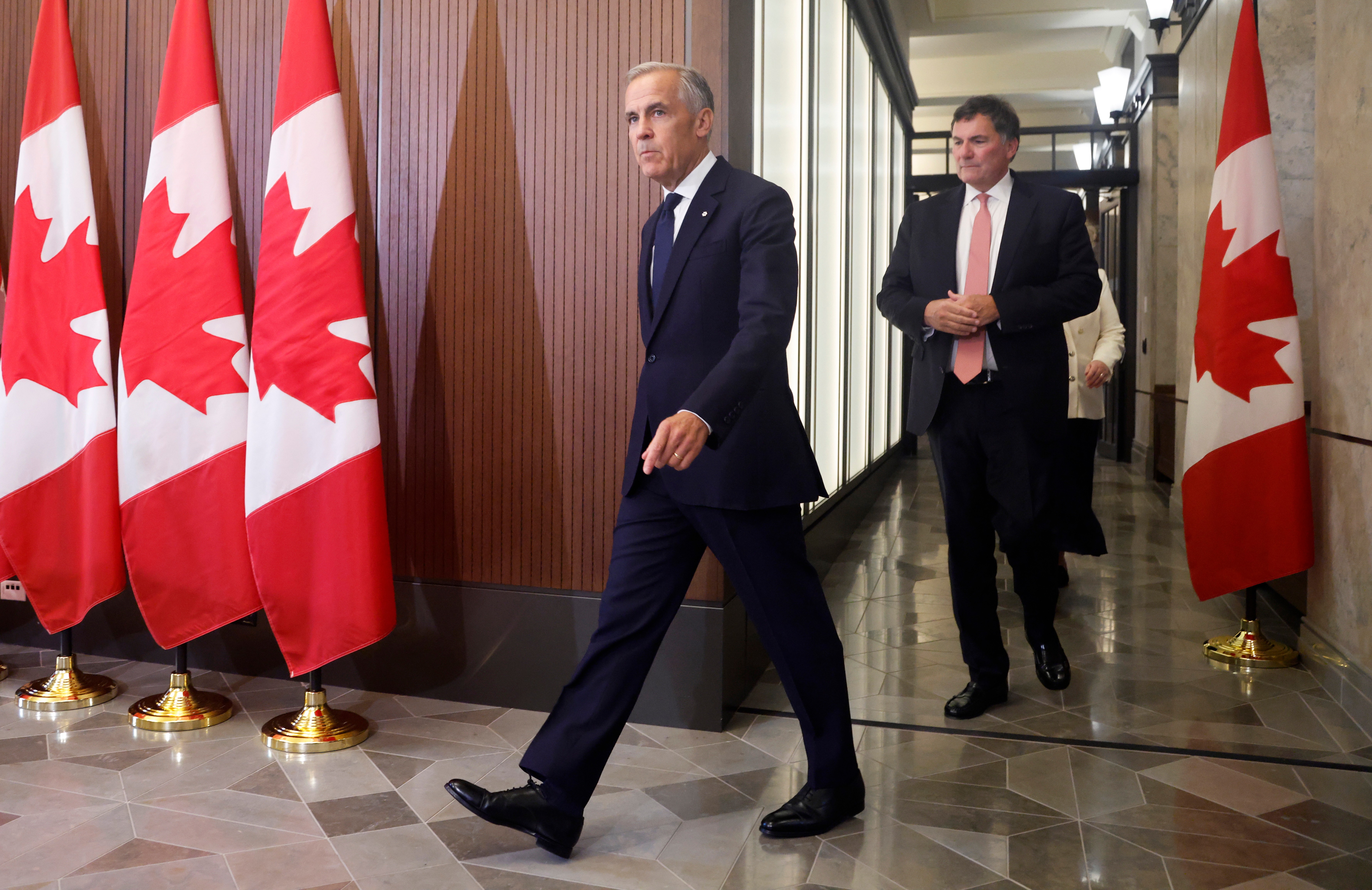
    The president tried in recent days to use an untested legal power to force Canada to swallow trade concessions. Instead, Canadian Prime Minister Mark Carney quit the negotiations rather than accept a lengthening list of U.S. demands.

    As a result, 50% U.S. tariffs took effect early Saturday on an array of Canadian products, including hockey sticks and Crown Royal whisky.

    As Carney prepared to walk away — a rare example of a foreign leader telling the president “enough” — Trump was retreating on another trade front. On Friday, after insisting for more than a year that tariffs do not affect consumer prices, he lifted tariffs on beef imports, saying the move would lead to lower grocery prices.

    The two developments, coupled with legal challenges to Trump’s tariffs, leave the president’s signature economic policy in a state of flux.

    “It’s a big setback for Trump’s trade policy. We’re at a juncture where other countries may be very closely watching how this plays out as they also are becoming increasingly frustrated with the demands the U.S. is placing on them in these largely one-sided trade agreements,” said Wendy Cutler, a former U.S. trade negotiator who is now senior vice president at the Asia Society Policy Institute.

    Indeed, the United States has negotiated 10 reciprocal trade agreements over the past year with nations such as Malaysia, Cambodia, and Argentina, along with other trade frameworks with the European Union, the United Kingdom, and Japan.

    Hearing of the concessions that the U.S. offered Canada, including reductions in tariffs on industrial metals, some trading partners may demand revisions to their deals, Cutler said.

    Administration officials have approached each bargaining round convinced of two things: Decades of U.S. trade policy hollowed out the nation’s manufacturing communities. And a muscular new approach, leveraging the appeal of the $32 trillion U.S. economy, can force other nations to give way and encourage the reindustrialization of the U.S.

    For the administration, trade negotiations are not a contest of equals. The talks start from the premise that U.S. negotiating partners must make concessions, opening their markets and in some cases promising to invest in the United States, simply to win a reprieve from unilateral U.S. trade barriers.

    Both Jamieson Greer, the president’s chief trade negotiator, and Treasury Secretary Scott Bessent have publicly complained that Canada and China are the only nations that retaliated for the tariffs that Trump imposed last year.

    The administration sees its actions as restoring fairness to an imbalanced global trade system, making such retaliation unjustified. But China’s tough stance last year, which included a temporary interruption of essential rare earth minerals, paid off. The president lowered his triple-digit tax on imports from China and reached a trade truce in an October meeting with Chinese leader Xi Jinping, who is due in Washington on Sept. 24 for more talks.

    The Canada negotiations were aimed at averting the new 50% tariffs, which Trump had threatened in July unless Carney dropped retaliatory measures imposed in response to earlier U.S. tariffs.

    On Tuesday, Trump delayed his initial deadline, posting on Truth Social that the two sides had reached “a DEAL” and needed three days to finalize the documents.

    The subsequent breakdown spotlighted tensions in the president’s strategy, including questions over the durability of any deal reached with the U.S. administration.

    After all, the U.S. and Canada, along with Mexico, already have a trade deal: the United States-Mexico-Canada Agreement (USMCA) of 2020, which Trump hailed at the time as “the largest, fairest, most balanced, and modern trade agreement ever achieved.”

    But this year, the president threatened to quit the deal and demanded sweeping changes to it, aimed at promoting more U.S. manufacturing. He also imposed tariffs on Canadian goods starting last year, a breach of the accord.

    On Saturday, speaking in Ottawa, Carney alluded to the difficulty of negotiating with a mercurial president.

    “We’ve recognized from the start that America has changed,” Carney said. “We recognize that sometimes, its signature is written in pencil.”

    Negotiating with the U.S. is also complicated by divisions within the administration. All top officials share Trump’s goal of spurring domestic manufacturing. But as Greer haggled with the Canadians this week, a split emerged over the U.S. trade representative’s willingness to reduce an existing 50% tariff on aluminum derivatives to 25% in return for Canadian concessions.

    At a White House meeting, White House trade adviser Peter Navarro and Commerce Secretary Howard Lutnick, whose department administers the national security tariffs, clashed with Greer, representing industry views that the higher aluminum tariffs were needed to encourage domestic manufacturing.

    “Navarro and Lutnick were both yelling at Greer saying: ‘What are you doing? This is stupid. You know, we’re not giving these things away,’” said one industry representative, who spoke on the condition of anonymity to describe the confidential talks.

    Late in the talks, the U.S. sought to exclude from tariff reductions heavy trucks produced in Ontario, such as the Ford F-350 and F-450, and the GM Silverado. Over time, that would have made it “more uneconomic” for the automakers to keep making the vehicles in Canada, Carney said. The administration also sought to restrict Canada’s right to sign trade deals with other countries, a key part of Carney’s strategy to reduce dependence on its increasingly unreliable southern neighbor.

    Trump’s undiplomatic style — including saying that Canada should surrender its sovereignty to become the 51st U.S. state — made it harder politically for the Canadian leader to accept a deal. Public opinion in Canada has turned fiercely anti-American.

    “A 160-year trading relationship has found its red line,” said Flavio Volpe, president of the Automotive Parts Manufacturers’ Association in Toronto. “Demanding that your closest trading partner mirror your trade policy with third countries is akin to asking them to surrender agency over foreign policy. This episode shows that doesn’t work, no matter the disproportionate market leverage of the USA.”

    Trump also has a general disregard for the $3.4 trillion worth of merchandise that the U.S. imports annually. Speaking in June about his North American neighbors, the president told reporters in the Oval Office: “We don’t need anything that Canada has, we don’t need anything that Mexico has, but they need everything that we have. … We don’t need their cars, we don’t need their lumber, we don’t need their energy, we don’t need anything that they have.”

    In fact, U.S. farmers rely on Canadian sources for nearly 80% of the potash fertilizer they use each year, according to the U.S. Geological Survey. Northern border states, including New York, Michigan, Vermont, Minnesota, and Maine, run on electricity produced by Canadian hydropower. And Midwestern refineries are optimized to process heavy sour crude oil from Canada, helping keep gas prices lower than they otherwise would be, according to the Federal Reserve Bank of Kansas City.

    Total U.S.-Canada trade each year exceeds $700 billion.

    The talks’ failure leaves businesses on both sides of the border burdened by a sudden jump in costs. Small businesses in the U.S. will face an especially sharp cash crunch, as they must pay tariffs before their customers pay them 30 or 60 days later, said Jason Miller, a professor of supply chain management at Michigan State University.

    “I expect a significant drop in a lot of these different import categories because importers simply can’t afford to bring them in. That may mean certain products not on the store shelves,” said Miller.

    In other cases, companies will struggle to find a domestic alternative to Canadian goods, especially for intermediate products such as packaging materials. So they will continue importing and pass along some of the 50% cost shock to their customers.

    On Saturday, Carney said Canada will retaliate on Sept. 8 for the new tariffs with its own trade measures. By delaying his response, he is leaving time for cooler heads to prevail, analysts said.

    “Then the parties come back to the table. North America is too integrated for it to unravel on the basis of a deal that was put together over 14 days,” said Dan Ujczo, a trade lawyer in Columbus, Ohio.

    If a deal had been reached this weekend, it would have paved the way for the official start of negotiations between the two nations over the proposed USMCA changes.

    Instead, the administration now must manage a cycle of retaliation and counterretaliation while perhaps facing a new courtroom fight over the legality of Trump’s 50% tariffs, which were imposed under a never-before-used 1930 trade law.

    Meanwhile, Trump’s 50% tariffs on goods ranging from hockey sticks to alcohol are expected to raise prices for American consumers less than three months before the Nov. 3 midterm elections, which have the potential to give Democrats control of Congress.

    Those elections, polls show, are expected to turn on voters’ frustration with the rising cost of living.

  • Jeffries and Kushner meet privately as midterm attacks fly

    Jeffries and Kushner meet privately as midterm attacks fly

    Rep. Hakeem Jeffries (D., N.Y.), the House minority leader, met privately in recent weeks with Jared Kushner, President Donald Trump’s son-in-law and top outside adviser, and discussed potential areas of common ground, according to five people with knowledge of the meeting.

    The rare engagement was held in a private space in New York City, offered up by a mutual friend of the two men, according to two people with knowledge of the meeting and a third who was briefed on it. They and others were granted anonymity to discuss a meeting about which they were not authorized to speak publicly.

    Through aides, neither man would comment on the session, which was described by one person with knowledge of it as a broad conversation on a range of topics. Still, its timing underscored that those around Trump were well aware of the likelihood of a Democratic-led House, and trying to foster as much of a working relationship as possible before any change. Jeffries is in line to be the speaker, were Democrats to win the majority.

    Democrats and the president have been savaging each other on the campaign trail with increasing fury as the midterm elections approach, and as Republicans are fighting to retain their thin House and Senate majorities.

    Trump has called Jeffries a “thug,” and at a May campaign event referred to him as a “low IQ” person who had inspired him to deride Democrats as the “Dumocrats.” Jeffries routinely suggests that Trump is not only extreme but corrupt, vowing that Democrats would “hold the crooks accountable” if they won control.

    The private get-together was described by one of the people as a catch-up for Kushner and Jeffries. The two men have stayed in touch since they worked together on a criminal justice bill midway through Trump’s first term.

    During the recent meeting, the pair discussed housing, immigration, and the high cost of living as potential areas of common ground. Kushner suggested that Jeffries should meet with the White House chief of staff, Susie Wiles, two people with knowledge of the meeting said.

    The likelihood of any compromises between the White House and Democrats on those issues seems remote.

    Trump this year refused to sign a bipartisan housing bill in part because he said it was “Warren centric,” referring to Sen. Elizabeth Warren of Massachusetts, its top Democratic champion. And he has repeatedly expressed openness to a deal with Democrats on immigration, only to back away from any such agreement. He successfully lobbied Republicans to abandon a bipartisan border-security bill in 2024.

    White House officials and an aide to Kushner did not respond to messages seeking comment.

    In a statement, Jeffries did not acknowledge the meeting, but suggested that the only way Democrats would cut deals with the administration would be if Republicans were willing to come their way on cost-of-living issues, his party’s top priority.

    “Throughout this Congress, Republicans have adopted a my-way-or-the-highway approach to governing that has failed the American people,” he said.

    He added: “In every conversation that we have with the Trump administration, we will continue to make it explicitly clear that the affordability crisis is not a hoax, and nothing short of transformational policy change is acceptable. We are fighting for an affordable America. The question is whether Republicans will join us.”

    Kushner, who worked as a senior West Wing adviser in the president’s first term, is no longer formally part of Trump’s government. He has been deeply involved in the president’s efforts to resolve the war with Iran that Trump began, to enforce a ceasefire in the Gaza Strip, and to bring an end to the Russian invasion of Ukraine. He and Jeffries also met last year, according to two people with knowledge of that conversation.

    The meeting came as nearly all polls revealed Republicans to be at a disadvantage in the midterms, and showed how members of Trump’s inner circle were digesting what a Democratic majority next year could look like.

    Should that happen, Jeffries would be under intense pressure from progressives to use his power as a check on Trump, including through aggressive oversight.

    Kushner is frequently consulted by a number of Trump’s advisers, and he has told people that if anything bipartisan is to get done with Congress, Jeffries is the most serious person among Democratic leaders. Wiles, he has said, is the most serious inside the West Wing.

    But with Republicans in control of both chambers, Trump has mostly steered around Congress in his second term, trampling its powers and prerogatives. He has faced little pushback from Republican leaders.

    Should Democrats win the House, Jeffries would have to balance the need to keep the government funded with Democratic calls to defy Trump at every turn, and possible pleas to impeach him for a third time.

    Jeffries and Trump have danced around questions about what their relationship could look like next year should Democrats take control.

    “I think he’s a nice guy,” Trump told Punchbowl News in a recent interview, when asked about Jeffries. “I’d probably get along with him very well.”

    Trump pointed to a meeting with Jeffries in the Oval Office last fall — the only one they have had in his second term — and described it as a positive one.

    In fact, during that meeting, which was billed as a bid to avert a government shutdown, the president positioned hats with a “Trump 2028” logo directly in front of Jeffries and Senate Minority Leader Chuck Schumer of New York, trolling the Democrats with the suggestion that he would run for a third term in violation of the Constitution.

    Afterward, Trump posted an AI-generated meme of a mustachioed Jeffries wearing a sombrero, drawing an angry response from the House minority leader, who called the image racist and dared Trump to insult him next time “to my face.”

    Soon after the meeting, the government shutdown began.

    This year, Jeffries has remained noncommittal about any plans to pursue a third impeachment of the president, and has not discussed publicly what oversight could look like if his party were to win the majority.

    “We’ve not ruled anything in and not ruled anything out in terms of accountability,” he told the New York Times in an interview last month, noting that his focus would be on forcing out major Trump officials.

    “We’ve got to make sure we continue to get rid of toxic Trump Cabinet secretaries,” he said. “Pete Hegseth, in my view, should be next on the list.”

    This article originally appeared in the New York Times.

  • Philly has 100-year-old stormwater infrastructure and 72,000 easily clogged inlets

    Philly has 100-year-old stormwater infrastructure and 72,000 easily clogged inlets

    Helplessly watching stormwater fill the basement is among the most frustrating experiences for Philadelphia homeowners. It is especially bad if you are waiting for the city’s help to do something about it.

    In West Mount Airy, Arielle Wolfson, 37, said roads by her home “become a river” when it storms. She and her wife live at the bottom of a hill near the intersection of Mount Pleasant Avenue and Cresheim Road, where five stormwater inlet drains are responsible for keeping rainfall from growing into rapids as it sloshes downward. But for years, only one of the drains has been fully functioning, Wolfson said. The others have been mostly sealed shut by city repaving projects that raised the level of the street, but not the inlets built into the curb.

    When ankle-deep water slopes down into an alleyway that connects Wolfson’s home and nearly 30 others, it often floods her basement. Every rainstorm is nerve-racking, she said, and her efforts to alert the city, the water department, and City Council members had not resulted in change beyond an occasional inlet cleaning.

    Kelsey Hensley, Wolfson’s wife, said their frequent flood calculus is: “Do we go out with some friends, or do we stay home to monitor the basement?”

    Flooding near the intersection of Mt. Pleasant Ave and Cresheim Road in Mount Airy after an early August storm. The water often flows down the hill and into the basements of dozens of residents because the street’s stormwater inlets are not functioning properly.Kelsey Hensley

    Their anxiety is common in Philadelphia, where the city’s century-old sewer and stormwater infrastructure struggles to handle modern surfaces and roofs, increased rainfall, and a Delaware River that has risen by roughly a foot since the sewer system was built. And after 16 consecutive months of lower-than-normal precipitation, regular rainfall returned to Philadelphia in July and August, and brought flooding along with it.

    Philly has about 72,000 stormwater inlets, and it does not take much to clog them up — ordinary objects like tree leaves, dirt, trash, and other street debris can all be culprits, according to the Philadelphia Water Department. Last year, residents submitted almost 3,000 requests to the city’s 311 line for inlet cleanings, an Inquirer data review found, and the city is asking for help.

    “Across the city, The Water Department regularly checks all sewer drains and clears those that are clogged. … If they are able, we encourage residents to take part in the cleanup process before a storm comes,” city spokesperson Sharon Gallagher said in an email.

    As the planet continues to warm, the stress on Philadelphia’s flood-prone system only figures to increase, leaving more residents like Wolfson with dread when clouds gather overhead. As she spoke to The Inquirer, an afternoon rainstorm had just passed through.

    “I’m going down to the basement every hour just making sure it’s OK. So just the anxiety that’s pervasive among me, my wife, and other community members, it’s pretty unbearable,” she said.

    A frustrating wait

    Despite having roughly one stormwater inlet for every 20 Philadelphia residents, the city has generally responded to 311 requests for clogged stormwater inlets quickly. Since Mayor Cherelle L. Parker came into office in 2024, the city has closed inlet cleaning requests in under four days on average.

    But 311 data may not capture the complete scope of the issue. Some residents may report their issues directly to the water department.

    Alessia Cognata (left, of Downingtown), 5, and Sofia Lubrano, 7, of Thornton play in the rain outside of Citizens Bank Park on Tuesday, July 1, 2025. The cousins were with their families, who decided to continue their tailgate party even after the Phillies game had been postponed because of heavy rain.Elizabeth Robertson / Staff Photographer

    And clogged inlets are just one part of the Philadelphia flooding experience. Mary Catherine Doyle, 56, has been in the middle of a Sisyphean ordeal at the hands of the water department’s slow, antiquated system of hard-copy paperwork.

    She and many of her neighbors along the 2900 block of Pennsylvania Avenue in Fairmount experienced significant basement flooding following storms on July 5. Doyle’s basement was ruined, she said; rainfall, debris, and sewage had destroyed her home office, bathroom, and furniture.

    Her insurance covered the cleanup, but her policy requires she install a backwater valve to prevent future flooding. The valves let wastewater out of homes, but seal to prevent other water from coming back up through pipes.

    The water department has a basement backup protection program where residents can apply for free backwater valve installation. Doyle and over 10 of her neighbors applied after the storm, but a contractor did not show up until Aug. 12.

    Doyle said the water department explained the delays at different points by telling her it lost her physical paperwork, was understaffed, or could not sign off on one approval until a commissioner returned from vacation.

    “I don’t understand where I’m living. I can buy a house in Arizona electronically, but I have to wait … days for someone to come here,” Doyle said.

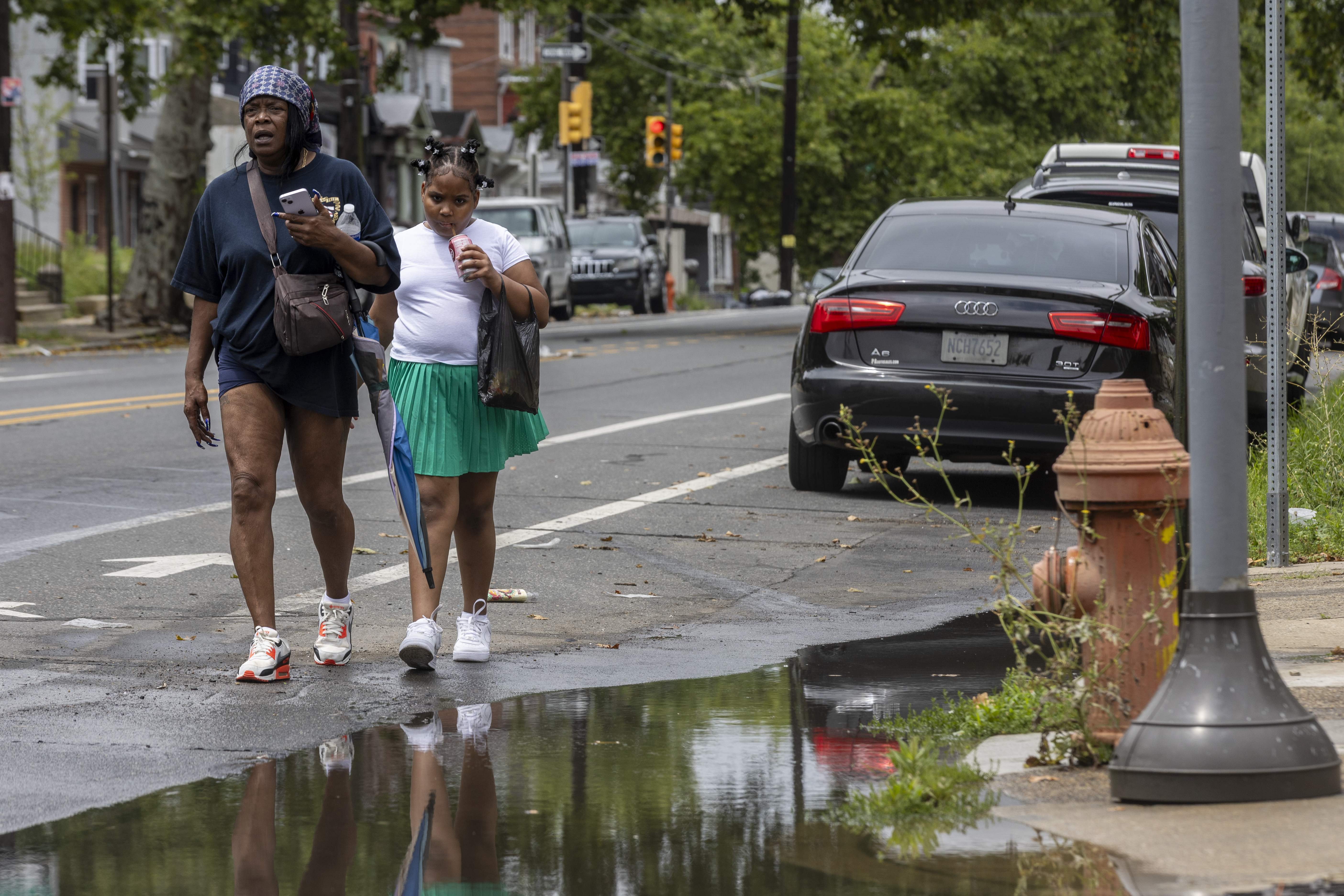
    A mother carries an umbrella while walking around a flooded sidewalk with her daughter by 15th and Erie in North Philadelphia during a flood watch on Monday, July 6, 2026.Aidan T. Gallo / Staff Photographer

    While the city’s water department is ready and willing to perform routine maintenance to prevent flooding, residents with more complex, systemic concerns often end up waiting for fixes while at the mercy of the atmosphere. Gallagher said the city is doing what it can to modernize the city’s flood infrastructure and ready itself for the demands of the future.

    “Teams are constantly working to design and construct additional projects that will increase capacity and help manage water from the increased intensity of seasonal storms,” she said.

    Luckily for Wolfson, she discovered earlier this month that the asphalt had finally been removed from the front of three of the closed inlets, plus some others further up on Cresheim Road.

    Wolfson and Hensley are happy there is finally some progress. But they wish the city would be more communicative and at least give them a timeline for the fix, they said, instead of relative silence or ambiguity.

    “You obviously want a city government to work for its citizens. … It’s extremely, extremely stressful,” Wolfson said. “It’s expensive, and it’s just frustrating because, in my mind, this is a pretty easily solvable issue.”

    Staff writer Joe Yerardi contributed to this article.

  • SEPTA’s bus route overhaul is here. Ready?

    SEPTA’s bus route overhaul is here. Ready?

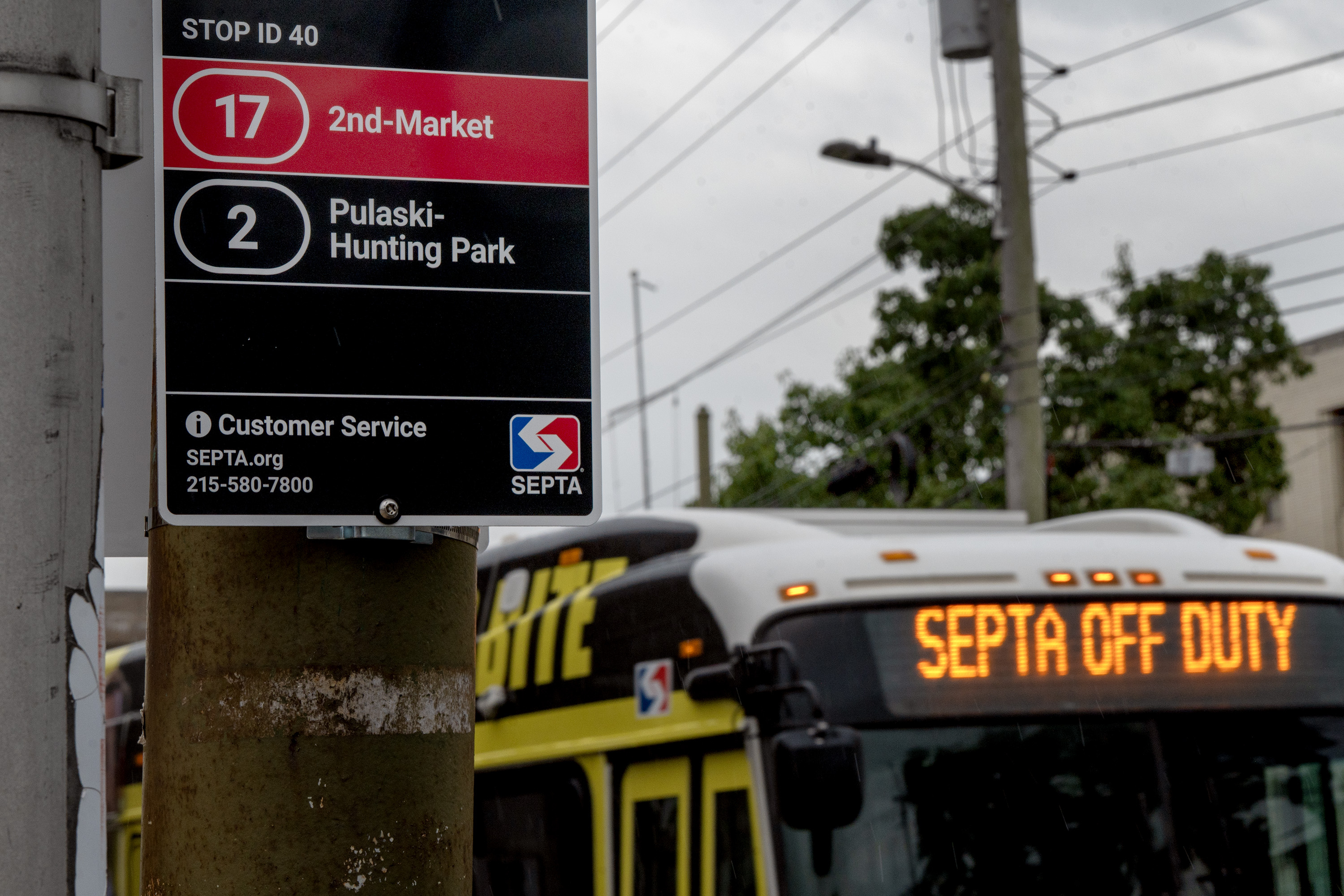
    SEPTA is eliminating seven bus routes, debuting two new ones, and adjusting more Sunday as the first phase of a bus network redesign gets underway.

    In all, riders will find changes to 30 routes, including more frequent service on those with high ridership, and buses coming less often on some lower-performing routes.

    Highlights include:

    • Routes 35, 47M, 62, 78, 80, 89, and 106 will disappear. SEPTA says they are less used or have nearby alternatives for passengers.
    • The new Route 72 will connect Frankford Transportation Center and Cedarbrook Plaza, running mostly along Cheltenham Avenue.
    • Route 76, the second new route, will travel between South Philadelphia’s Columbus Commons shopping center, anchored by Ikea and Lowe’s, and the intersection of Rising Sun and Olney Avenues.
    SEPTA is using this graphic to summarize bus-route changes at a glance for the first phase of the redesigned system.SEPTA

    This is the first comprehensive makeover of the bus network since 1968, when the authority took over bus service in the Philadelphia region from several private transit companies.

    SEPTA launched its bus system redesign efforts in earnest after ridership declined 13% from 2013 to 2019, a drop attributed to slow speeds, reliability problems, and competition from rideshare companies. And that was before the COVID-19 pandemic.

    Originally called Bus Revolution, SEPTA’s redesign was set to launch in 2025 but faced significant community pushback and coincided with the state funding crisis that halted many planned transit initiatives. It was officially shelved in November 2024.

    Along with the additions and subtractions, there are a few route extensions:

    • Route 45 will extend southward to serve the Navy Yard, the first time in a decade that a bus will serve the development seven days a week. There will be nine stops inside the Navy Yard for the 45. Currently, the route ends at Broad Street and Oregon Avenue. Route 17 will no longer stop at the Navy Yard on weekends.
    • Route 79, which ended at Snyder Avenue in South Philly, will cross the Schuylkill, go through Grays Ferry and University City, and end at 40th and Market Streets, where there is a stop on the L train, SEPTA’s new name for the Market-Frankford Line.
    • Route 53 is to be extended both east and west, to connect the Carpenter Regional Rail station on the Chestnut Hill West Line and the Richmond-Westmoreland Loop, via Aramingo Avenue. The 53 will no longer serve the Broad Street-Hunting Park Station on the B subway.

    SEPTA says it is redesigning the bus network to modernize an outdated route structure and enable more efficient travel.

    “We function as a network,” said Brandon Miller, manager of planning programs at the transit agency.

    The changes will require riders to transfer to other bus routes, as well as metro trains, more often than they do now. And discontinuing low-ridership routes while beefing up popular ones is a needed trade-off to strengthen the overall system, Miller said.

    Additional rounds of changes are scheduled for February and June 2027, with a fourth round in the fall.

  • A tornado touched down in Downingtown during Thursday’s severe storms

    A tornado touched down in Downingtown during Thursday’s severe storms

    A tornado touched down in Downingtown during a barrage of severe storms Thursday evening, the National Weather Service confirmed Saturday.

    The tornado landed in the Chester County borough at 5:40 p.m. Thursday, the weather service said in a statement, as major thunderstorms passed through the area.

    The twister was considered an EF-0, which is considered the least destructive on the Enhanced Fujita rating scale. The tornado touched down for less than a minute, according to the weather service, traveling just over a fifth of a mile along Quarry Road near the Quarry Crossings commercial development. Its winds reached speeds of 60 to 70 mph and brought down several tree branches, the weather service said.

    Downingtown’s tornado was one of three to land in the region on Thursday, according to the National Weather Service. A slightly more intense EF-1 tornado touched down in Dover, Del., at 6:09 p.m., while a tornado with an unknown Enhanced Fujita scale rating occurred at 4:41 p.m. in Estell Manor, in Atlantic County, N.J., about 19 miles inland from Ocean City.

    The tornado in Dover lasted roughly five minutes and traveled just over three miles with winds ranging from 100 to 110 mph, the weather service said. After landing in an open field, the twister caused “extensive damage” to the Dover Little League baseball diamonds at Schutte Park, the weather service said: Two scoreboards were crushed or knocked down, and several lighting fixtures were snapped.

    Then the tornado struck the Van Sant Generating Station — a power plant owned by the City of Dover located across from Schutte Park — before zigzagging through downtown Dover, where it downed trees. The tornado dissipated at the intersection of Kings Highway and North DuPont Highway after peeling the roof off a motel, the weather service said.

    The tornado in Estell Manor lasted approximately 30 seconds or less, according to the weather service, and landed in a wooded area across from the Great Egg Harbor River. There were no reports of associated damage.

    Thursday’s storms were the latest in a summer marked by intense wind and rain. The storms arrived in the Philly region just after 5 p.m. and set off a barrage of flash-flood warnings for Philadelphia, the Main Line, and sections of Delaware and New Jersey. Portions of Delaware and Chester Counties were also under tornado warnings.

    The downpours led to flash floods that made many streets impassable in the Montgomery County townships of West Norriton and Lower Providence, according to the weather service. And in Chester County, fallen trees cut off sections of heavily trafficked Route 322 in Honey Brook.

    The forecast for the rest of the weekend was looking similarly wet.

    “Multiple rounds of scattered showers and thunderstorms expected through tomorrow afternoon,” the National Weather Service at Mount Holly wrote Saturday on X, and forecasters “cannot rule out a few strong to severe thunderstorms” for Sunday.

  • An SUV struck and killed a man near La Salle University early Saturday

    A man was killed early Saturday when he walked onto the road and was struck by an SUV in the Logan section of Philadelphia, police said Saturday.

    The Philadelphia Police Department said it is investigating the fatal crash, which happened at 20th Street and Belfield Avenue. The Y-shaped intersection is located near La Salle University.

    Around 1:50 a.m., a white Jeep Cherokee driven by a 41-year-old man was traveling south on 20th Street, police said.

    The Jeep was attempting to go around a stopped vehicle when a pedestrian stepped into the roadway, police said. It struck the 36-year-old man, “causing critical injuries.”

    Fire department medics took the man to Jefferson Einstein Philadelphia Hospital, where he was pronounced dead.

    Police have not released the name of the driver or the pedestrian. The police crash investigation division is leading the inquiry into the circumstances around the incident.

  • Post-absence, N.J. Congressman Tom Kean Jr. hit the campaign trail and took a TV interview in vulnerable House race

    Post-absence, N.J. Congressman Tom Kean Jr. hit the campaign trail and took a TV interview in vulnerable House race

    With the midterm election nearing — and months of inactivity behind him — New Jersey U.S. Rep. Tom Kean Jr. hit the campaign trail Friday, speaking to a few dozen people at a breakfast fundraiser held at a private golf club.

    It was one of Kean’s first known campaign stops since he returned to Congress at the end of June following a long absence, which he said was due to depression. Though the congressman at times has sought to avoid media attention, he attracted just that as someone at the event called police on a New York Times reporter.

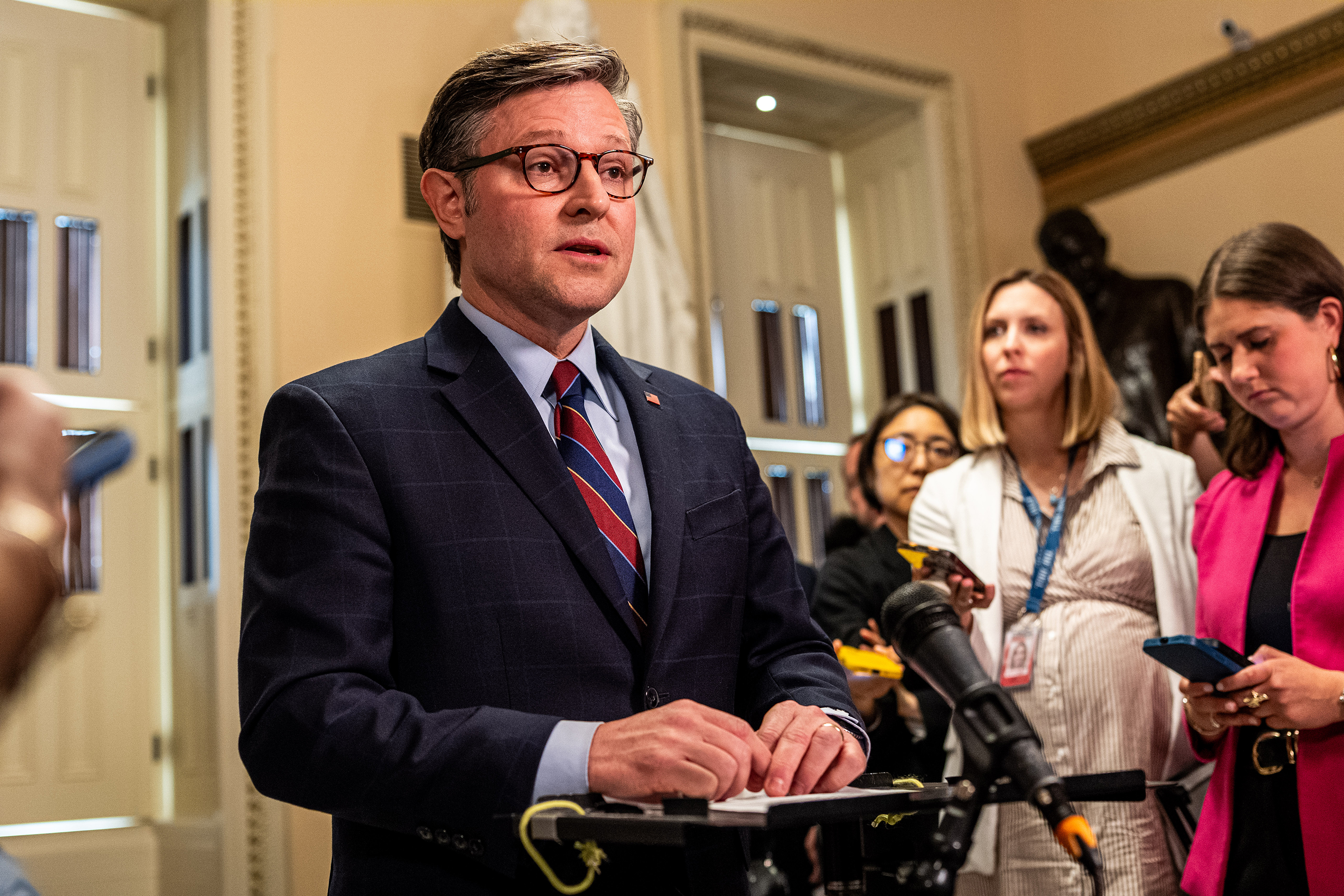
    Kean, a Republican, represents New Jersey’s 7th District, widely seen as a key race in the battle for control of the House of Representatives. House Speaker Mike Johnson (R., La.) attended the breakfast, seeking to boost support for the congressman.

    FILE — House Speaker Mike Johnson (R-La.) speaks to reporters in Washington on July 22, 2026. Johnson joined Rep. Tom Kean Jr. (R-N.J.) on his campaign trail on Friday, Aug. 21, 2026. A reporter for the New York Times, trying to cover Kean’s fundraising event in New Jersey, was blocked at the door. (Alex Kent/The New York Times)ALEX KENT

    Kean’s reelection bid got a late start: Beginning in March, he was absent from Congress for 116 days and missed about 140 votes. As calls for an explanation mounted, Kean stated in a speech on the House floor in June that he had been seeking treatment for depression.

    Friday at the Hawk Pointe Golf Club in northwestern New Jersey, Kean talked about his issues with WFMZ-69, an Allentown, Pa.-based TV station.

    “I’m feeling great,” Kean said. “I had to focus on my mental health. I had depression. I’m back, feeling stronger than ever. And I’ve been helping people throughout the entirety of the year.”

    Police called on New York Times reporter

    WFMZ and Fox News each had a reporter present at the country club, according to the New York Times. However, Kean spokesperson Harrison Neely barred a Times reporter, Tracey Tully, from entering the event.

    Tully reported that as she waited in the parking lot for a chance to interview Johnson or Kean, she was approached by a local police officer.

    “Someone apparently had called the police from inside the club to report that there was a trespasser — this reporter — on the premises,” Tully wrote, adding that New Jersey State Police and Johnson’s security detail were already outside the venue.

    A police officer spoke with people inside the event and told Tully that it was OK for her to remain in the parking lot, the report states.

    Kean’s Democratic challenger, former Navy pilot and healthcare executive Rebecca Bennett, weighed in Saturday morning by email.

    “Tom Kean Jr. is doing what he’s always done: serving his D.C. party bosses and prioritizing his stock portfolio while hiding from anyone who wants to hold him accountable, whether that’s the press or his constituents,” Bennett said.

    Messages and calls to Kean’s office and spokesperson were not returned Saturday. On social media, Kean shared his TV appearance along with a message saying Bennett is hiding behind a campaign script.

    An important race

    While Democrats face an uphill battle in winning a majority in the Senate, they hold more favorable odds of seizing the House, according to pollsters.

    With all 435 House seats up for reelection, few are seen as more competitive than Kean’s district. Political analysis sites Cook Political Report and Sabato’s Crystal Ball each rated the race as a “toss up.”

    In 2022, Kean ousted Rep. Tom Malinowski, the district’s Democratic incumbent, and won reelection in 2024. In 2025, Democrat Mikie Sherrill won the district by 2% in her successful bid for governor.

  • A trade war between Canada and the US further ruptures a once-close and durable alliance

    A trade war between Canada and the US further ruptures a once-close and durable alliance

    TORONTO — For decades, Canada built much of its prosperity on privileged access to the United States. Now, after the collapse of trade talks, one of the world’s closest and most durable alliances has been fundamentally altered, with both countries facing the risk of a full-scale trade war.

    Prime Minister Mark Carney acknowledged the break after last-ditch negotiations failed Friday, saying Canada had recognized that “America has changed” and that the countries would “not return to our old relationship.”

    The United States imposed 50% tariffs on about $20 billion worth of Canadian goods early Saturday. Carney said Canada would retaliate dollar for dollar beginning Sept. 8, targeting sectors including steel, dairy, appliances, agricultural equipment, pulp and paper, and electronics.

    Carney foreshadowed the shift at the World Economic Forum in Davos in January, declaring that the world was experiencing “a rupture, not a transition” and urging countries such as Canada to reduce their vulnerability to economic coercion by strengthening their economies at home and diversifying abroad.

    He said in Ottawa on Saturday that warning had been borne out. He accused the U.S. of using “economic integration as a weapon” and said its “signature was written in pencil.”

    “The collapse of the tariff talks points to the fact that the old Canada-U.S. relationship is over and, for many Canadians, it also confirms the perception that Canada can’t trust the Trump administration,” said Daniel Béland, a political science professor at McGill University in Montreal.

    The pressure from Republican President Donald Trump has gone well beyond tariffs.

    He has questioned Canada’s economic viability, repeatedly talked about making it the 51st U.S. state, and used trade measures to encourage production to move from Canada to the United States. That has angered many Canadians and fueled a sense of betrayal in a country that had long regarded the U.S. as its closest ally.

    Canadian travel to the U.S. remains sharply lower than before the dispute, with July return trips down nearly 29% by car and 27% by air from July 2024, Statistics Canada said.

    The failed negotiations underscored how far the relationship had shifted. Canada had been prepared to accept some U.S. tariffs for market access and greater certainty — a break from decades of policy aimed at eliminating trade barriers.

    For Canadians accustomed to preferential access under the 1989 Canada-U.S. Free Trade Agreement, NAFTA, and its successor, even reduced tariffs would mark a retreat from the old relationship.

    The collapse also puts Carney’s approach to Trump to the test.

    The prime minister’s “elbows up” posture — hockey shorthand for playing aggressively and refusing to be pushed around — has helped keep him popular at home. His decision to resist U.S. pressure could also resonate abroad with those impressed by his Davos call for countries to resist economic coercion and reduce dependence on great powers.

    Provincial and conservative leaders broadly backed Carney. Saskatchewan Premier Scott Moe said, “The old status quo is not possible,” while Ontario Premier Doug Ford praised Carney for rejecting what he called a bad deal for the auto, steel, and manufacturing sectors.

    Ford said Trump “is not to be trusted whatsoever.”

    Former Alberta Premier Jason Kenney said Canada was “not cravenly surrendering in the face of constant economic and political aggression.”

    Lana Payne, national president of Unifor, Canada’s largest private-sector union, accused Trump of trying to weaken Canada’s industrial base.

    “What we have seen from the U.S. administration, or Donald Trump, is this consistent attempt to try and destroy the industrial economy of Canada with tariffs that have been strategically designed to attack us,” Payne said.

    Economic risks of fighting back and a shift seen as perhaps lasting

    Nearly three-quarters of Canada’s goods exports go to the United States. The U.S. economy is roughly 10 times larger than Canada’s, limiting Ottawa’s ability to retaliate dollar for dollar without inflicting disproportionate damage at home.

    Royal Bank of Canada economists estimate the tariffs directly affect about 0.4% of Canada’s GDP because they cover only about 5% of Canadian exports to the U.S. The damage could grow if retaliation broadens, more sectors are targeted, or the dispute curbs investment and disrupts supply chains.

    Carney himself acknowledged the cost of retaliation, saying the Canadian measures would “raise costs and reduce choice for Canadians.” He said his government would announce additional assistance for affected businesses and workers.

    Béland said the countries were witnessing “the beginning of a full-scale trade war,” though he cautioned that the situation could change rapidly.

    The dependence is not one-sided.

    Carney said Canada supplies 99% of U.S. natural gas imports, 85% of its electricity imports, and 60% of its crude oil imports. Trump has focused much of his pressure on autos, steel, and aluminum, fueling resentment among Canadians who see the push as an effort to hollow out key industries.

    Goldy Hyder, president and CEO of the Business Council of Canada, said businesses still view the U.S. as Canada’s most important trading partner but increasingly see the shift as lasting beyond Trump.

    “There is a new trade and investment model, one that could well be kept in place by future U.S. administrations whether Democrat or Republican,” Hyder said.

    Canada looks beyond U.S. because ‘things will never be the same’

    The breakdown adds urgency to Carney’s push to diversify beyond the United States. He has traveled abroad seeking investment and new trade ties, aiming to attract $1 trillion Canadian (US$730 billion) by 2030 and to double non-U.S. investment over the next decade. Canada has signed more than 20 trade and security agreements across five continents in the past year.

    That made Washington’s effort to restrict Canada’s ability to negotiate trade agreements with other countries particularly significant.

    In July, Ottawa and Alberta advanced plans for a new Pacific Coast oil pipeline to give Canadian crude greater access to Asian markets and reduce reliance on U.S. buyers.

    The immediate question is how long the latest tariff confrontation will last.

    Béland said the deeper change probably will, partly because U.S. protectionism is likely to remain influential under future administrations.

    “The idea that things will return to ‘normal’ once Donald Trump leaves the White House is probably just wishful thinking,” Béland said. “It doesn’t mean the relationship might not improve in the future but that things will never be the same.”