Category: News

  • Amazon plans to start drone delivery in South Jersey

    Amazon plans to start drone delivery in South Jersey

    Autonomous drones may soon be delivering Amazon packages across South Jersey.

    Amazon representatives have told local officials and emergency responders that the e-commerce giant plans to start drone-delivery service out of its West Deptford facility this fall, according to West Deptford Mayor James Mehaffey and Mantua Township Police Chief William Murphy.

    The news comes days after Amazon announced a massive expansion of its Prime Air program, which already delivers packages via drone from launch sites in 11 U.S. cities, none of which are in the Northeast.

    By the end of the year, Amazon wants to expand its drone coverage area to nearly 500 cities and towns nationwide, the company said, allowing tens of millions of customers to get products flown to their doorsteps in 30 minutes to an hour.

    The announcement is the latest effort by Amazon to decrease delivery times and hold its edge as the world’s most popular online retailer — and the most lucrative company in terms of sales. In May, Amazon rolled out 30-minute ground delivery across Philadelphia.

    Amazon’s top rival, Walmart, recently announced its plans to offer drone delivery in Philadelphia.

    “We are always exploring new ways to get customers a wider selection at faster speeds,” Amazon spokesperson Smitha Rao said in a statement, in response to The Inquirer’s questions about the South Jersey meeting, which occurred last week.

    “We are currently working with local officials and exploring opportunities to expand our fast, reliable drone delivery service to reach customers in areas across the country.”

    Amazon is hiring for several West Deptford-based Prime Air positions, including flight monitor, ground manager, and a safety and compliance officer. The job listings were posted on the company’s online portal last month.

    The West Deptford warehouse opened in 2018 as the company’s fourth robotic fulfillment center, where robots and humans work together. It has also been the site of a walkout by employees who say they deserve better pay and working conditions.

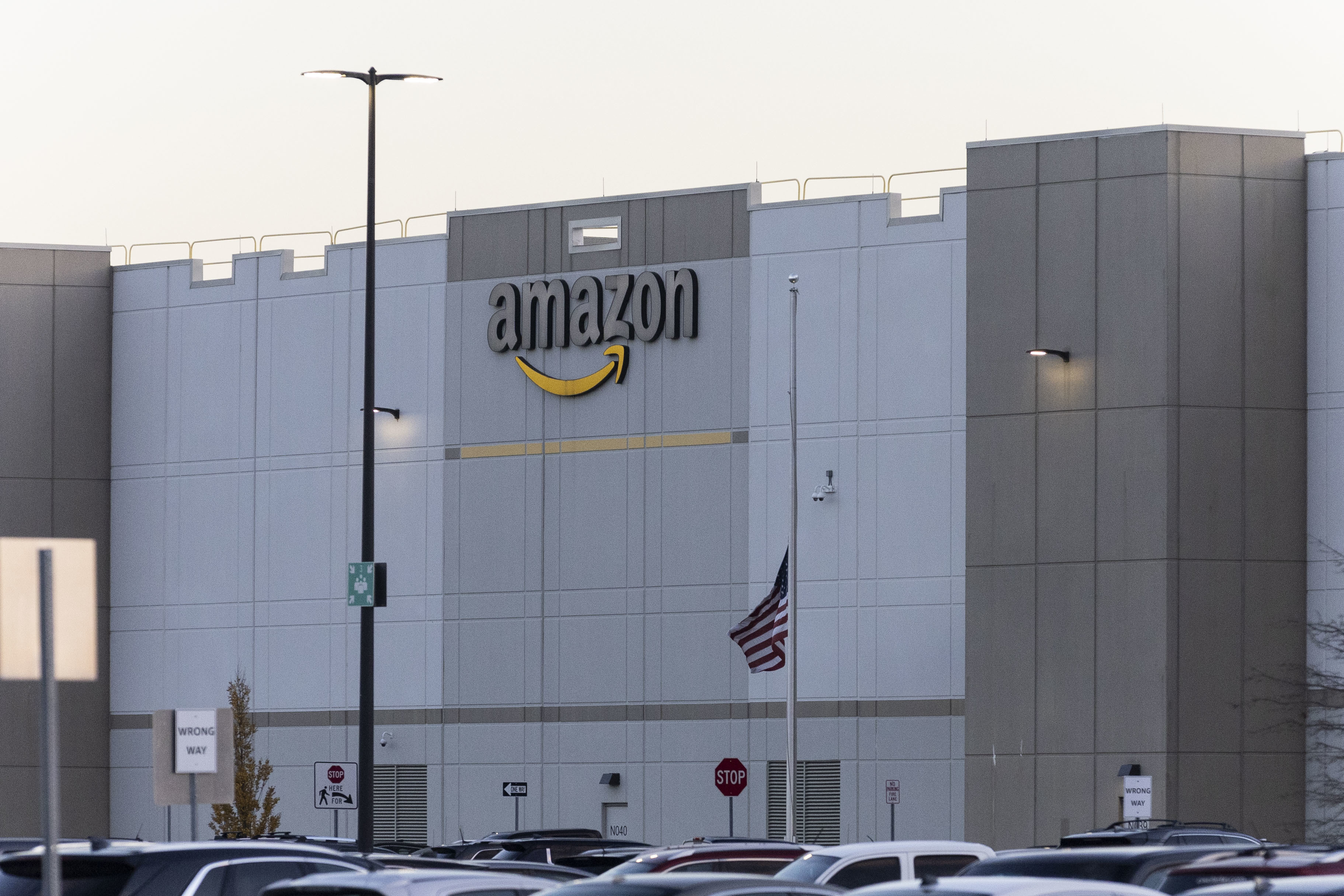
    According to local officials briefed on the Amazon plans, the company’s drones would fly out of the warehouse at 240 Mantua Grove Rd., a 650,000-square-foot facility that sits next to I-295 and is among the company’s largest in the region.

    The Amazon Fulfillment Center in West Deptford, seen in 2019, is among the region’s largest.TIM TAI / Staff Photographer

    The company’s drones can typically deliver to addresses within 175 square miles of each launch site.

    In a Facebook post from the Mantua Township Police Department account, Murphy shared a screenshot of the local drone-delivery radius that he said Amazon shared during the Zoom meeting. The photo indicated that drones from the West Deptford site would be able to reach places within about a 15-mile radius — from Bellmawr to Mullica Hill in New Jersey, as well as parts of Ridley Park, Darby, Glenolden, and South Philadelphia across the Delaware River.

    Amazon told local officials that the drones would operate from 15 minutes before sunrise to 15 minutes after sunset, according to Murphy, and be authorized to fly at altitudes below 400 feet, in accordance with Federal Aviation Administration regulations.

    The company plans to start drone delivery from West Deptford as early as October, according to Murphy and Mehaffey.

    Amazon’s drones can deliver groceries, cosmetics, medications, even iPhones — anything that weighs 5 pounds or less and fits in a large shoebox. Amazon says those characteristics apply to more than 60% of its most popular products.

    Boxed orders are sorted at the Amazon Fulfillment Center in West Deptford in 2019.TIM TAI / Staff Photographer

    Customers can browse drone-deliverable items the same way they search for any other Amazon products, according to the company, and select the best spot for a drone to leave the package.

    Amazon Prime members can get complimentary drone delivery on orders of $50 or more, or pay an extra $2.99 on orders under $50. Nonmembers can pay $4.99 for drone delivery.

    The drones are not monitored by humans in real time, according to Amazon. Instead, the devices use an autonomous system of cameras and sensors to navigate, avoid obstacles, and deliver the package safely.

    Some South Jersey residents said they have questions about those cameras, as well as the impact Amazon drones may have on their quality of life, safety, and environment. As of Sunday, more than 100 people had signed a petition asking for public hearings and written disclosures about Prime Air and its data practices before the drones start flying in the area.

    Amazon said in its expansion announcement that the drones’ cameras do not “track individuals or record movement.” The drones are electric, emit no exhaust, and make little noise, according to the company. The drones are quieter during drop-off than “an idling delivery truck,” Amazon said, and sound similar to a “window fan on low” while in flight. The company said people indoors cannot typically hear the drones outside.

    In areas where the drones are already flying, company spokesperson Rao said, “the response from customers using Prime Air has been overwhelmingly positive.”

    Mantua Township Mayor Bob Zimmerman told residents in a Facebook post that the Amazon drones were “forthcoming.”

    “Please understand that whether you are for, or against deliveries of this kind by drones, we have no say over the matter,” wrote Zimmerman, who did not return a request for additional comment.

    Amazon has not said whether it plans to fly drones from other warehouses in the Philadelphia area, and has not posted Prime Air job openings at other local sites.

    The company has dozens of facilities across the region, with larger warehouses in Carneys Point and Logan Townships in South Jersey, and near Wilmington. Officials in those areas did not return requests for comment.
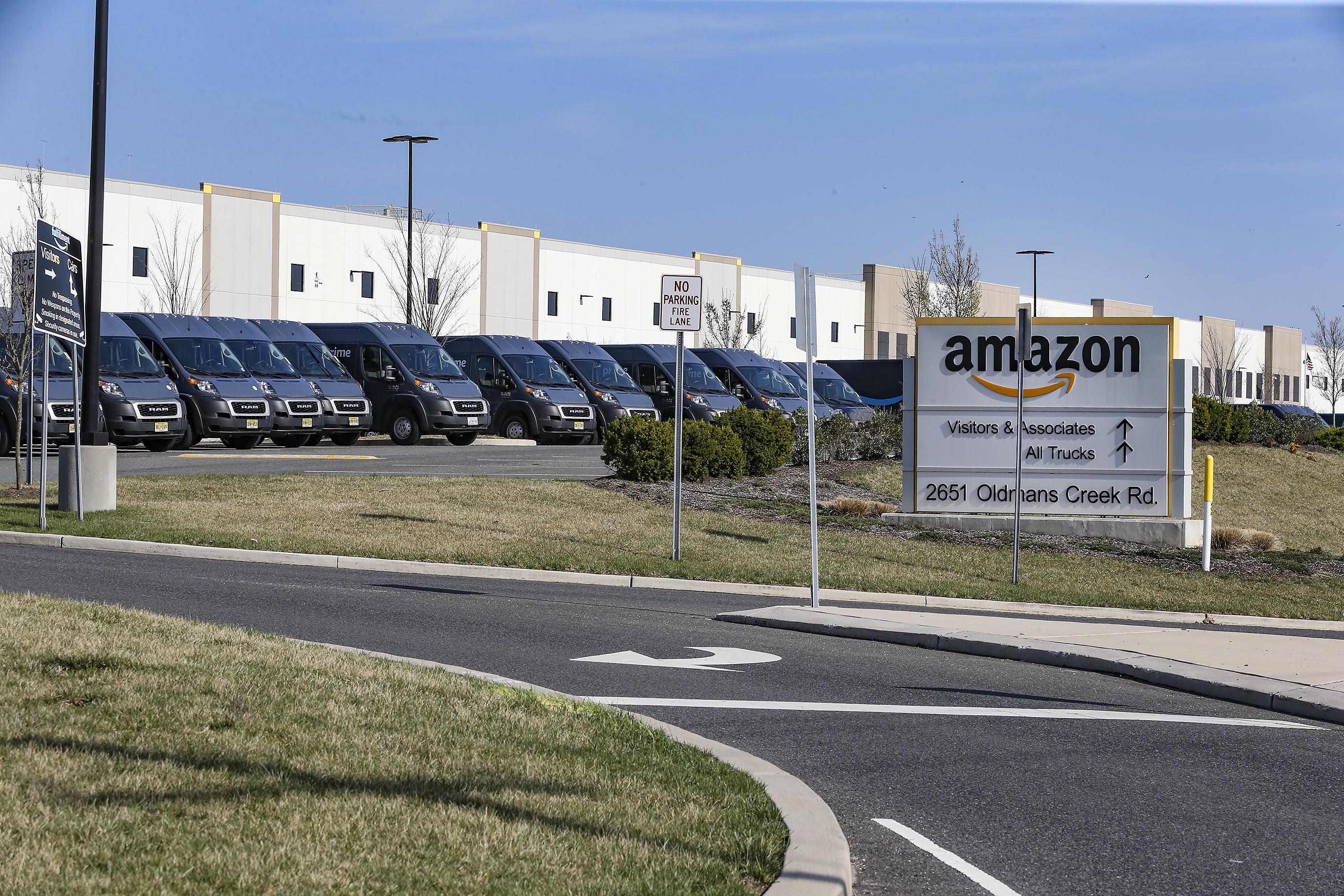
    Amazon’s Logan Township warehouse is pictured in 2021.STEVEN M. FALK / Staff Photographer

    Jason Bobst, township manager of West Norriton Township in Montgomery County, said the company has not been in touch about flying drones from its facility there.

    “We have not been approached by Amazon regarding drone delivery operations from its West Norriton facility, nor have we received any indication that Amazon is currently considering that location for drone delivery service,” Bobst said in an email.

    Bobst said township officials did have a preliminary conversation about Walmart looking to expand its drone delivery service in the area, but nothing formal has been presented.

    In recent weeks, food-delivery apps Uber Eats, Grubhub, and DoorDash also have unveiled similar plans, but have not started flying to Philly-area customers.

  • Pete Buttigieg returns to South Carolina as he weighs another White House run

    Pete Buttigieg returns to South Carolina as he weighs another White House run

    ORANGEBURG, S.C. — The last time Pete Buttigieg was giving a political speech in South Carolina, it was to mark a distant finish in the state’s primary that effectively ended his campaign for president.

    Returning this weekend as he mulls a second run for the White House, Buttigieg set out to reintroduce himself to the state and the Black voters he struggled to win in 2020. The results were encouraging.

    There was a standing ovation in a Black church in South Carolina when Buttigieg was credited for helping bring millions of federal dollars to the area for a project as President Joe Biden’s transportation secretary. A second ovation came as Buttigieg gave a speech warning of a country in “big trouble” while laying out his own vision for what should come next.

    “There is no such thing as again in real life. The only way out is through,” Buttigieg told the crowd of more than 200 people at an NAACP Freedom Fund Dinner. “If we recognize and embrace a future that is different from the past, we will do better.”

    The warm applause was a markedly different reception than six years ago, when a fourth-place showing in South Carolina helped derail Buttigieg’s presidential campaign while exposing his failure to connect with Black voters. The state is likely to have an even greater say in his political future as the first contest in the Democratic presidential primary in 2028.

    Starting the election calendar in South Carolina is intended in part to give Black voters a greater voice at the outset of the nominating process. For Buttigieg and other potential contenders, winning the support of this group that makes up a majority of South Carolina’s Democratic electorate is essential.

    “You need to demonstrate that you can win Black voters,” said Jaime Harrison, a former Democratic National Committee chairperson and South Carolina Democratic Party chairperson. “If you can’t win Black voters, you can’t be the nominee of our party.”

    2028 campaign is already coming to South Carolina

    Buttigieg insists he has made no final decision about whether to run for president again.

    “Right now, I’m totally focused on 2026,” he told reporters Saturday.

    But his South Carolina trip — a week after visiting another early-voting state, Nevada — had all the trappings of a potential presidential bid.

    He raised money Friday in Charleston with Nancy Lacore, a U.S. House candidate trying to flip a Republican-held seat. On Saturday morning, he spoke at a policy conference before traveling to Claflin University, a historically Black university in Orangeburg.

    Davina Perry, a third-year student at Claflin, said she came away from Buttigieg’s visit thinking he would be a “good candidate” if he ran.

    “Secretary Pete has definitely put himself on my radar for 2028 now, for sure,” Perry said. But, she added, “I do want to see more representation from people who look like me.”

    That evening, Buttigieg attended a dinner at a church in Orangeburg, a nearly three-quarters Black city with a deep history in the Civil Rights Movement. The crowd included local NAACP leaders, ministers, and elected officials. Buttigieg worked the room, giving hugs and taking photos.

    “He is responsible for the Railroad Corner,” said Orangeburg Mayor Michael Butler, referencing a project aimed at revitalizing the city’s downtown that received a $22.7 million federal grant. “Do I need to say any more? We need to stand and welcome the former secretary.”

    Buttigieg used the speech that followed to make a broader case about the direction of the country, arguing that Democrats cannot separate Americans’ economic frustrations from a political system he described as increasingly broken.

    “I have come to believe that the kitchen table cannot be improved unless we are also reforming the institutional and political floor on which that kitchen table sits.”

    Black voters will have the first say for Democrats in 2028

    For Buttigieg, the weekend offered signs of how much has changed since he came to South Carolina in 2020 as a 38-year-old Indiana mayor asking voters to take a chance on him. He points to what he delivered during four years in Biden’s cabinet, including specific projects in the state.

    But Buttigieg said he also came to South Carolina “to propose something” about the country’s future. Butler, Orangeburg’s mayor, liked what he heard.

    “His speech was what you talk about at the kitchen table. How America is going to survive all of this?” Butler said. “He brought hope to us.”

    South Carolina Democratic leaders say the close, personal engagement with candidates is exactly what they hoped for. Those involved in the push to make South Carolina first envisioned the living-room conversations and retail politics long associated with Iowa and New Hampshire.

    “You got to go listen. You got to go all over the place,” Harrison said. “You have to make meaningful investments. That’s how you win South Carolina.”

    Buttigieg is hardly alone in his early trip to the state.

    Other potential 2028 contenders, including California Gov. Gavin Newsom, Kentucky Gov. Andy Beshear, U.S. Rep. Ro Khanna of California, and U.S. Sen. Cory Booker of New Jersey have made trips to the state as what is expected to be a large Democratic field begins to take shape. Former Vice President Kamala Harris already has deep ties in the state.

    The electorate they will encounter has changed from 2020, when Biden’s victory in the state resurrected his presidential campaign and put him on a path to ousting Republican President Donald Trump.

    Four years later, Trump defeated Harris and returned to the White House, which Black leaders say has significantly hurt their community. Earlier this year, a Supreme Court decision weakened a core provision of the Voting Rights Act, threatening Black political representation across the South.

    “We must start our process where democracy must still be fought for, in the full view of the nation,” former interim DNC chairperson Donna Brazile said in a speech this year advocating for South Carolina to go first.

    Buttigieg addressed that anxiety directly Saturday night, describing efforts to weaken the Voting Rights Act as the culmination of a “multidecade effort.” He warned of a broader push “to demolish African American political power.”

    Harrison said Buttigieg’s trip this weekend was a “good start,” but that Buttigieg and all the other potential 2028 candidates have a long road ahead to prove themselves to the state’s voters.

    “It has to be a good start and then you got to continue,” Harrison said. “It can’t just be, ‘Oh, pop in and then I’m going to pop back out.’”

  • Zelensky details rift with Ukraine’s dismissed defense minister Fedorov

    Zelensky details rift with Ukraine’s dismissed defense minister Fedorov

    KYIV, Ukraine — Ukrainian President Volodymyr Zelensky said that he believes actions taken by dismissed Defense Minister Mykhailo Fedorov, including his involvement in mass protests and calls for an election, were misguided, as he publicly detailed their dispute for the first time.

    Zelensky also alluded to problematic decisions over defense spending and said that inaccurate information provided by the Defense Ministry contributed to an awkward encounter with U.S. President Donald Trump over the use of Starlink in Russia.

    Zelensky disclosed figures showing Ukraine’s growing shortage of Patriot air-defense missiles needed to counter Russian ballistic attacks, with deliveries from Western allies declining in the past three years even as Russian missile strikes intensified.

    He highlighted battlefield gains, however, saying Ukrainian forces have almost completely recaptured the Dnipropetrovsk region, with only about 4 square miles remaining under Russian control.

    The Ukrainian president made the remarks during a two-hour off-the-record meeting with reporters on Saturday, with a transcript released publicly on Sunday.

    Zelensky’s first public comments on Fedorov dismissal

    His comments ranged widely, covering the latest battlefield developments, efforts to counter Russian ballistic attacks, the state of peace negotiations, Ukraine’s budgetary challenges, and the political turmoil surrounding Fedorov’s dismissal.

    “I really had and still have a very positive attitude toward Mykhailo. We have been through a lot together. But I believe that he himself goes, or is pushed, into the wrong things,” he said.

    Fedorov, a popular minister credited with modernizing Ukraine’s armed forces and accelerating the military’s embrace of technology and drone warfare, was dismissed last month after reportedly falling out with the country’s top military commander. His removal triggered mass protests that lasted for weeks, but ultimately failed to force a reversal of the decision. Fedorov later called for an election.

    Zelensky said that he had offered Fedorov four different options to continue working in the government. Fedorov, he said, rejected all of them.

    The Ukrainian leader told journalists that he believes holding an election during the war would be a huge risk with the potential to “split Ukraine apart.”

    “I believe elections during a war like this would generally pose enormous risks. Holding elections right now would be a tsunami for the state that would split Ukraine apart,” he said.

    Zelensky said he had previously faced pressure to hold an election during the war, but no partners had come up with a plan for how a poll could be held safely, legitimately, and democratically.

    Inaccurate information led to uncomfortable White House encounter

    Zelensky appeared to link Fedorov to an awkward episode involving Starlink and Elon Musk. Zelensky said that earlier this year, the Defense Ministry had told him that SpaceX had agreed to allow Ukraine to use Starlink over Russian territory to carry out deep strike operations, subject to political approval.

    Acting on that, Zelensky said, he raised the issue directly with U.S. President Donald Trump. He told Trump that Musk had confirmed the proposed use. Zelensky said the two sides subsequently sought Musk’s confirmation and discussed financing for the project.

    But at a later meeting, Zelensky said, Trump told him that Musk had rejected the proposal and accused him of having misled the U.S. president. Musk considered the move a dangerous escalation, according to Zelensky.

    “He said that I had supposedly deceived him, because Musk had denied Ukraine the use of Starlink on Russian territory. I went back to our Ministry of Defense and they said that maybe it was so,” he said.

    Zelensky didn’t explicitly accuse Fedorov of lying. He said that the situation was among the reasons behind “some of the steps.”

    Zelensky also pushed back against protesters’ vilification of former army chief Gen. Oleksandr Syrskyi, who he dismissed, and current Defense Minister Maj. Gen. Yevhen Khmara, saying they had gone too far.

    “Maybe someone doesn’t like Syrskyi for one reason or another. But the slogans ‘Syrskyi is the devil, Khmara is the devil,’” he said. “Listen, this is too much. Do you understand? In principle, you can’t treat the military like this and tolerate it, especially when it was the military that made it possible for any peaceful protests to take place in the Ukrainian capital at all.”

    Pressure on defense budget but military successes

    Zelensky also described severe financial pressure on Ukraine’s defense effort. He said that the Defense Ministry faced a $27 billion budget shortfall after spending decisions earlier in the year brought forward funds originally intended for the second half of this year.

    Touching on a corruption inquiry that led Zelensky to fire one of his most senior officials this week, he said that anti-corruption investigators don’t believe that the president was involved. The investigators had named a deputy head of the presidential office among the suspects in a money-laundering case.

    “The heads of anti-corruption agencies have zero questions for me. They understand perfectly well that I am not involved in anything like that. And this is important to me,” he said.

    On the battlefield, Zelensky was optimistic. In addition to Ukraine almost completely regaining control of the Dnipropetrovsk region, he said that another operation was underway elsewhere and that its results were expected by the end of August.

    He also predicted that by the end of the year, Ukraine could reach parity between the territory occupied by Russia since the beginning of the year and the territory retaken by Ukrainian forces. Zelensky said that Russia had occupied about 380 square miles since the start of the year, while Ukraine had restored control over roughly 315 square miles.

    The president said that Russia’s principal objective remained the Konstantynivka-Sloviansk-Kramatorsk axis, and that Moscow was still demanding that Ukraine withdraw from the Donbas region as a condition for a settlement.

    Still struggling for access to Patriot missiles

    Zelensky said that Ukraine was receiving substantially fewer Patriot interceptor missiles even as Russian ballistic attacks are increasing.

    He said that Ukraine received 675 Patriot missiles in 2023, compared with 364 in 2025 and an expected 264 this year. Zelensky said that he wanted to secure 300 additional Patriot missiles for the coming winter, while Ukraine’s air force had requested 360.

    The shortfall is particularly serious, because the United States and European partners are struggling to expand production. Zelensky said that he hoped Ukraine could obtain even 5% or 10% of U.S. reserves and was able to pay for them.

    Zelensky said that Russia could eventually produce up to 1,300 ballistic missiles a year, compared with an estimated current capacity of 600.

    He said that Ukraine was also preparing alternatives to Starlink, including a European communications project, as Russia and China work on their own competing system.

    Other developments

    Debris from a Ukrainian drone hit two industrial facilities including a warehouse belonging to online retailer Ozon, local officials in Russia’s Orenburg region said Sunday.

    As well as shifting the war onto Russian soil through long-range drone strikes on oil facilities that have caused fuel shortages across Russia, Ukraine has unsettled the Russian public by striking warehouses of online retailers, including Russia’s biggest one, Wildberries, and competitors such as Ozon.

    One person was killed and six wounded in Ukrainian drone attacks on Russia’s Belgorod border region, local authorities said Sunday. A woman also died in a drone attack in the Tula region.

    Two women were killed and five other people were wounded when a Russian drone hit an electric train in Ukraine’s Kharkiv region, the Ukrainian national police said Sunday.

    Leaders from Nordic and Baltic nations arrived in Kyiv on Sunday, the eve of Ukraine’s Independence Day, in a show of solidarity from some of Ukraine’s closest partners before a larger “coalition of the willing” meeting.

    Leaders from Denmark, Estonia, Finland, Latvia, Lithuania, and Norway attended a flag-raising ceremony, as Ukraine marked Ukraine’s National Flag Day.

    “We feel we are not alone. Our allies are with us,” Ukrainian Foreign Minister Andrii Sybiha wrote on X on Sunday, noting that the leaders would hold bilateral and multilateral talks with Zelensky.

  • He was waiting for his son to return from the USS Lincoln. Then Border Patrol arrested him.

    He was waiting for his son to return from the USS Lincoln. Then Border Patrol arrested him.

    When Luis Manuel Aviles was arrested by immigration authorities, his son was entering his ninth month with the Navy on the USS Abraham Lincoln — a vessel that set a U.S. military record for uninterrupted time at sea, stirring concerns about supply shortages and deteriorating mental health among soldiers.

    Luis Manuel Aviles, 48, was arrested after leaving his house to take his car to the mechanic, according to his wife, Argelia Aviles. She said her husband, a repairperson in Key West, Fla., has a permit to work in the United States. Originally from Nicaragua, he has lived in the U.S. for 19 years.

    “He dedicates himself only to work so he can put food on the table at home. He is a good father. He loves his children with all his soul,” said Argelia, 47.

    Aviles’ arrest comes as the Trump administration rolls back immigration protections for military families to pursue its mass deportation agenda, detaining at least dozens of parents and spouses of active-duty U.S. troops.

    At least six family members have been deported and one self-deported, the AP found in the first accounting of such detentions, which the government does not track. One spouse, the wife of a U.S. soldier who spent more than a month in federal immigration detention, was removed from a deportation flight to Brazil after the AP’s reporting.

    One of the military’s most highly advertised immigration benefits is “military parole-in-place,” which allows the spouses, children, and parents of active-duty service members and veterans to obtain legal immigration status from within the country. Not everyone qualifies: those who overstayed visas or who already applied for legal status at the border, for example.

    The Department of Homeland Security said in a statement that Border Patrol agents arrested Luis Aviles on Saturday in Key West and that he will remain in ICE custody while the government seeks to deport him.

    “Having a family member in the military is not a free pass to violate our nation’s laws,” the department said Sunday, adding that the Trump administration “does not pick and choose which laws to enforce.”

    Aviles’ son, Joshua Aviles, said he has been working 12-hour shifts for more than 250 days without a break on the USS Lincoln, which has been deployed in the Middle East. The deployment has raised widespread concerns about the impact on service members who are away from land for long periods and about food shortages, as well as the increasing strain on the ship and its equipment.

    The Pentagon referred all questions to the Navy. The Navy didn’t immediately respond to an emailed request for comment on Sunday afternoon. Defense Secretary Pete Hegseth previously called conditions aboard the Lincoln “completely misrepresented.”

    Joshua Aviles wrote in a Facebook post Saturday that he was still on the USS Lincoln “fighting for a country that has given me everything” when he got a call about his father’s detention on Saturday morning.

    “This is heartbreaking for me. I don’t know how I can mentally continue working 12+ hour days knowing that my dad is somewhere, possibly treated like a criminal,” Joshua Aviles wrote.

    Katherine Delgado, 28, Joshua Aviles’ sister, said that Joshua joined the military in part because he thought it would improve his father’s chances of getting citizenship and so that he would “no longer be living in fear of being arrested.”

    She said being apart from Joshua, who she calls her “best friend” and her “ride-or-die,” has been devastating.

    “I spent weeks without knowing where he was,” Delgado said. Once she heard from him, and was told that he wasn’t getting enough food, she said, she has spent hundreds of dollars to send him care packages with food and hygiene products — some of which never arrived.

    Joshua is “supposed to come home soon,” Delgado said, referring to news that the ship her brother is on will soon be brought out of service in the Middle East. “And he’s going to come home without his father.”

    The son’s lengthy deployment has been challenging for Luis Aviles, according to his wife. He told her that he was looking forward to the deployment finally coming to an end. When six months passed and his son didn’t come back, Aviles was distraught, she said.

    “He was excited,” she said. “He wanted to hug his son, as he hadn’t seen him for nine months.”

  • Iran official says support for new sanctions would be an ‘act of war’

    Iran official says support for new sanctions would be an ‘act of war’

    The new head of Iran’s top security body warned Sunday that Tehran will see any country’s support for new U.S. economic measures against the Islamic Republic as an “act of war,” while Iran’s president defended a memorandum of understanding with the United States as the best way out of the stalled conflict.

    Treasury Secretary Scott Bessent on Monday is expected to announce the new measures after the U.S. vowed to impose an “unprecedented” level of economic warfare and isolation on a country that has lived for decades under sanctions. Also Monday, Pakistan’s army chief is expected to visit Iran as mediators try to revive talks.

    Meanwhile, attacks calmed on the Strait of Hormuz but posturing did not, as a recently created Iranian authority listed dozens of vessels it said will face restrictions on future transits.

    Iran’s security chief sharpens warning to neighbors

    The hard-line leader of Iran’s Supreme National Security Council, Mohsen Rezaei, issued his latest warning on X, with the comments quickly shared by Iranian state media.

    It came a day after Rezaei’s most extensive public comments since being named to the post this month.

    “If (Trump) wants to do something, we will retaliate in a seismic manner,” he had told the state broadcaster in an interview that aired late Saturday. He said Iran would target other oil-shipping routes from the Persian Gulf — alternatives to the Strait of Hormuz.

    Rezaei, a former Revolutionary Guard commander and military adviser to Supreme Leader Ayatollah Mojtaba Khamenei, was part of senior appointments widely seen as hardening Tehran’s political and military stance.

    Iranian president wants to move past ‘neither war nor peace’

    Iranian President Masoud Pezeshkian earlier Sunday said the memorandum of understanding signed in mid-June was the best way to move beyond a situation of “neither war nor peace,” adding that Tehran can’t attract investment nearly six months after the war began.

    “There is not a single provision in this agreement that amounts to capitulation,” Pezeshkian said in a speech published by state-run IRNA. “The supreme leader sets the policies, and we will follow that path.”

    The interim deal opened a 60-day period for talks aimed at ending the war and reaching an accord on Iran’s nuclear program. That period ended last week with no signs of compromise or extension.

    No attacks confirmed on the strait, but new restrictions

    There were no confirmed attacks in the Strait of Hormuz over the past 48 hours, a multinational coalition overseen by the U.S. Navy said Sunday, with shipping traffic still at reduced levels. The U.S. military said its blockade of Iranian ports had redirected 70 commercial ships and disabled three as of Sunday.

    Iran’s recently created Persian Gulf Strait Authority, sanctioned by the U.S., published a list of dozens of ships it said had violated arrangements for transiting the strait and would face future restrictions like fines or seizures. The strait had been considered an international waterway before the U.S. and Israel attacked Iran on Feb. 28.

    Iran and Oman, on the strait’s other side, are now discussing management of the waterway, which likely will include ships paying fees.

    Pakistan’s army chief will visit Tehran

    Pakistani Field Marshal Asim Munir will lead a delegation to Tehran on Monday, Iranian state television reported, citing Iran’s Foreign Ministry spokesperson, Esmail Baghaei.

    Two regional officials said the visit was part of Islamabad’s efforts to de-escalate tensions between the United States and Iran and urge them to return to the negotiating table. The officials spoke on condition of anonymity because they were not authorized to discuss the matter publicly.

    Iran executes man arrested during January protests

    The Iranian judiciary’s Mizan news agency reported the latest execution connected to nationwide protests early this year, saying Majid Adineh was arrested Jan. 9 in Mohammadshahr, west of Tehran.

    The judiciary said forensic examinations indicated the handgun found on him had been fired on Jan. 8 and 9. Mizan said Adineh had joined the unrest following calls by groups opposed to Iran’s government and alleged that he had received training from groups outside the country. He was convicted under Iran’s law imposing harsher penalties for espionage and cooperation with hostile states.

    Israeli settler arrested in beating of Palestinian amputee

    Police arrested a 16-year-old boy from the Israeli settlement of Avigayil in the beating of a 61-year-old Palestinian, Saeed Muhammad Ibrahim Rabah, outside his home in the occupied West Bank, a year after he lost a leg after being shot by a settler.

    Rabah told the Associated Press that the violence at his home in Khirbet al-Rakeez on Saturday was an effort to make families leave, but “we will remain, no matter what happens.”

    Separately, the West Bank Health Ministry said a 14-year-old in the Askar refugee camp in Nablus was shot dead by Israeli forces, who did not immediately comment. The uncle of Islam Maher Ajouri, Nehad Ajouri, called the shooting indiscriminate.

    And Israel’s military said it detained a suspect in a stabbing attack that wounded a 24-year-old Israeli man in the area of al-Auja in the West Bank. Israel’s emergency services said the man was in moderate condition.

    Airstrike in Gaza kills a 4-year-old child

    Four-year-old Mohammed Taha died after an Israeli airstrike hit a central Gaza house on Sunday and wounded at least five others, according to the Al-Aqsa Martyrs Hospital, which received the casualties.

    Israel’s military later said it struck and killed a Hamas commander in central Gaza. The hospital confirmed that the man named, Ismail Abu Ful, was killed.

    An Israeli strike in southern Gaza wounded at least seven people, including three children, according to health officials at Nasser Hospital. The military did not immediately comment.

    Defense Minister Israel Katz in a statement said he instructed the military to “act immediately and forcefully” to prevent launches of balloons, kites, or drones from Gaza toward nearby Israeli communities.

    Before the Oct. 7, 2023, attack by Hamas-led militants on Israel — when 1,200 people were killed and 251 taken hostage — burning kites and balloons were sent from Gaza into southern Israel, causing fires and other damage.

    Hamas in a statement Sunday accused Israel of “using children’s toys as a pretext” for attacks and further displacement of Gaza residents.

  • A twosome of naked events took over Philadelphia this weekend

    A twosome of naked events took over Philadelphia this weekend

    Philly bared it all this weekend.

    By sheer happenstance, a twosome of naked demonstrations took place Saturday across the city — a “free the nipple”-esque protest midday at Philadelphia City Hall followed by the annual Naked Bike Ride in the late afternoon.

    Beyond the shock and awe of scantily clad or not-at-all clad people, both events were acts of resistance, defiance, and free expression, and went deeper than, well, skin deep, attendees said.

    As hundreds lined up along Martin Luther King Drive for the 17th edition of the Naked Bike Ride, their bodies — with varying degrees exposure — were like flesh-toned picket signs. People painted themselves with phrases denouncing President Donald Trump and his administration’s targeting of immigrants, calling for a freed Palestine, and demanding enhanced bicycle safety measures. Mattie L., who was visiting from Savannah, Ga., wrote “Voting is Hot,” across his back.

    Rocket (right) puts glitter on Ari Tm of Fairmount for the Naked Bike Ride on Saturday, Aug. 22, 2026, in Philadelphia.Tyger Williams / Staff Photographer

    “Besides the bodies, the messages themselves add another reason for people to lock in what [we’re] saying and to really take it to heart,” said 35-year-old Mattie, who declined to give his last name, citing concern for his privacy.

    To riders, the bare-as-you-dare ride, which snakes 12 miles through the city, is an annual pro-environment, pro-bicycle safety and advocacy, and pro-self-love-intended counterpunch to fuel dependency, car-first American infrastructure, and body shaming.

    Biking in a car-centric city is itself an act of rebellion, said Emma K., a 28-year-old Temple University alum who now lives in New York City. Emma also declined to give her last name because of privacy concerns.

    “I cycle as a protest all the time,” she said. “There’s a lot for Philly to do to be safer to riders.”

    Dane Jorento, 65, of Drexel Hill, was drawn to the Naked Bike Ride because of “naked,” “biking,” and “protest.” Being unabashedly naked, Jorento said, is an act of radical vulnerability and self-acceptance.

    For Morningstar Hirst, who was part of the ride’s “street team,” the Naked Bike Ride was about showing off their new body post-top surgery, while “protesting and leaning into body positivity.”

    “I am all about freedom within one’s body and then mobility with that body — I think that this ride sums that up really quickly and really easily,” Hirst, 34, of West Philadelphia, said.

    “Every body is a wonderful body,” he added.

    Ryan Genova of Glenside chills during his fifth time attending the Naked Bike Ride on Saturday, Aug. 22, 2026, in Philadelphia.Tyger Williams / Staff Photographer

    It was a pure coincidence that the Naked Bike Ride aligned with the inaugural Go Topless Day in Philly earlier that day.

    Go Topless Day had a clear agenda: Roughly a dozen bare-chested picketers gathered in LOVE Park at noon, before marching around City Hall with a police escort, chanting, “free your breasts, free your mind,” to stir action around what protesters described as the legal hypocrisy that allows men to be shirtless in public but not women.

    “If men can go legally topless in a street, women should have the same right,” organizer Kasyo Perrier said. “Otherwise, we should force men to wear tops.”

    Chloe Theodosiou of Germantown gets a message of “Hands Off Equal Rights” written on their chest for the GoTopless Day Civil Rights March at LOVE Park on Saturday, Aug. 22, 2026, in Philadelphia.Tyger Williams / Staff Photographer

    Go Topless Day is a cause of the Raëlian Movement, a religious group that believes extraterrestrials created humanity. Core tenets of the Raëlian Movement are freedom and equality, explained Perrier, who is a Raëlian priest: “We’re created beautiful and and there’s no reason to be ashamed of our body.” (Go Topless Day, in its 19th year, is usually held around Aug. 26, Women’s Equality Day, marking women’s suffrage, according to Perrier.)

    “It is a gateway to self-love; it is a gateway to neighborly love when we stop making certain things taboo,” participant Chloe Theodosiou, 30, of Germantown, said of the cause.

    Not everyone felt so uninhibited. Tourists with cellphone cameras gawked, a woman with a stroller scoffed. A group of tweens giggled and shielded their eyes.

    One man gruffly remarked, “no one wants to see that.”

    “We’re all just shapes — just a bunch of circles and triangles,” Theodosiou remarked.

  • Londoners find ‘horrendous’ cracks in their homes after successive heat waves

    Londoners find ‘horrendous’ cracks in their homes after successive heat waves

    Londoners are facing historic levels of subsidence risk after five successive heat waves dried out the clay soil on which much of the city is built.

    Insurance claims tied to subsidence — a phenomenon associated with bouts of hot, dry weather that shrink the soil and destabilize the foundations on which buildings stand — hit a record last quarter, according to data provided by the Association of British Insurers. On average, households claimed £20,000 ($27,200) for the risk, more than in any previous quarter and a 15% jump from the same period in 2025, the ABI said.

    Laura Hughes, head of general insurance at the ABI, says the upward trend is likely to continue. “We expect to see more subsidence cases because of the hot weather,” she said in an interview.

    Londoners have taken to social media to express their dismay. On Reddit, people offered personal accounts telling of “horrendous cracking” in their homes, and “doors sticking” due to subsidence. One said it was “genuinely scary” to discover that their kitchen had moved as the foundations of the home shifted.

    Another Reddit user described the response of a structural engineer they contacted for help. “Before I could finish explaining he laughed and said, ‘You and 20,000 other people in southeast London’,” the person wrote.

    “It’s crazy, what’s happening now,” said Otso Lahtinen, chief executive of Geobear, an engineering firm that’s regularly called in to repair damage caused by subsidence. “It’s the new norm, and it seems it will happen more often in the next 20-30 years.”

    Data provided by Aviva Plc show that the areas of London that are most at risk are some of the U.K. capital’s most sought after, namely the boroughs of Westminster, as well as Kensington and Chelsea. While subsidence has been affecting homes in the British capital for decades, climate change is making it worse. London clay is especially sensitive to fluctuations in moisture, expanding when wet and contracting when dry.

    The threat of subsidence in the U.K. is concentrated in and around London as well as in parts of the southeast. In the four years through 2025, insurance payouts for subsidence damage soared roughly 90% to reach a record £297 million, according to data provided by the ABI.

    The most vulnerable properties are Victorian or Edwardian homes that were built directly onto the upper layers of London clay. By contrast, modern office buildings in the City of London and Canary Wharf have much deeper foundations and are therefore less exposed to such risks.

    Subsidence is part of a long list of heat-related challenges to which the U.K. is now struggling to adapt. Over the past months, extreme heat has forced schools to close, led bus drivers to go on strike, and seen banks relax in-office work requirements to protect staff from unbearably hot commutes. Most of England has been gripped by drought and the country’s hospitals have shown signs of buckling under the strain.

    London Mayor Sadiq Khan has warned that the city will need to turn to private investors to help fund the cost of dealing with the impact of rising temperatures. His office estimates that London now faces an annual bill as high as £36 billion into the 2050s in order to prepare the city for what climate change has in store.

    “The impact that climate change is having is undeniable,” said Hughes of the ABI.

    Subsidence can devalue a property by an average of 20%-25%, according to the Federation of Master Builders. In some cases, homeowners prefer to cover the cost themselves rather than wade through complicated claims processes. The traditional engineering fix for subsidence damage, known as underpinning, can cost anywhere from £20,000 to more than £100,000.

    The development represents a particular risk to insurers, with subsidence claims making up an ever larger chunk of the payouts they need to make to customers.

    The phenomenon poses “a significant challenge for U.K. home insurers,” says Cherry Chan, a partner at Deloitte. The consultancy has warned that UK home insurers risk losses in 2026 due in part to the trend.

    Along with flash floods and wildfires, subsidence is becoming “an increasingly material climate-related risk,” Chan said. It requires that insurers display “careful consideration in long-term exposure and risk management strategies.”

    Extreme weather patterns in 2026 “will not only impact more new claims in this year, but could cause claims deteriorations for unsettled subsidence claims reported in the past,” she added. That includes 2025, which was a so-called surge year for subsidence impacts.

    Fresh estimates from the British Geological Survey indicate that under what is known as the RCP 4.5 emissions scenario — reflecting a trajectory that closely aligns with current climate policies — 1.8 million properties, or about 5% of the U.K. total, are “highly likely or extremely likely” to be susceptible to shrink-swell subsidence by 2070. Under a higher emissions scenario, the figure rises to 4.2 million, or 11%, of British properties. Areas most at risk are densely-populated parts of London, Kent, and southeast of England.

    The development has the potential to lead to “increased insurance premiums, depressed house prices and, in some cases, engineering works to stabilize land or property, replacement of utility pipeworks and unstable transport infrastructure,” according to the BGS.

    Geobear, which tackles subsidence by injecting resin under buildings, says it’s received more homeowner inquiries this summer than ever before. It says insurance clients have confirmed a similar trend, with one telling Geobear it had received 180 claims on a single day, which is significantly more than normal.

    “It’s a pretty severe situation,” said Lahtinen, the CEO. “If you’re looking to trade, sell, or buy property, this is a trend you can’t ignore.”

  • Wildfire started by humans approaches Reno, Nevada, forcing thousands of evacuations

    Wildfire started by humans approaches Reno, Nevada, forcing thousands of evacuations

    The fast-growing Hawk Fire that was spreading toward neighborhoods and consumed some homes in northwest Reno, Nev., was caused by humans and was 0% contained Sunday, authorities said. At least six people were injured.

    Officials said at a news conference Sunday afternoon that 42,000 residents have been ordered evacuated, and the “GO NOW” zone reached the edge of the University of Nevada campus. An additional 45,000 people were in the evacuation warning zone, and encouraged to leave now and be prepared to stay away for several days to clear the roads for first responders.

    The fire had grown to 13,000 acres and was moving in different directions as the winds changed, complicating the fight.

    Authorities confirmed several structures have been destroyed in the fire and were assessing the totals.

    The injured included three civilians and three first responders, officials said.

    The fire has been burning across a rugged section of the Humboldt — Toiyabe National Forest where Peavine Mountain is ringed by homes and businesses on the Nevada side of the California state line, and some of these homes were consumed by the flames.

    Nevada Gov. Joe Lombardo declared a state of emergency in Washoe County and mobilized the Nevada National Guard to support aerial firefighting with two helicopter crews as well as 60 troops to help police safeguard evacuated neighborhoods.

    Nearly 10,000 customers were without power in Washoe County on Sunday. Portions of U.S. Route 395, a major north-south highway, were closed due to the fire. Reno has a population of more than 280,000 residents.

    Washoe County emergency officials opened the Reno-Sparks Convention Center to evacuees, but said they couldn’t bring their pets — small animals and large animals were to be left at two other locations.

    A family raced to grab possessions but lost their home

    Cari Kieffer said a video posted on social media showed her house entirely burned down, with only a scorched basketball hoop still standing.

    “I woke up this morning and just started crying — all my kids, they lost everything,” Kieffer said Sunday. “We lost all our stuff. Everything we own is gone.”

    Kieffer had been watching her son’s football game Saturday when she learned that their home on the outskirts of Reno was in the evacuation zone. An application the family used to track the fire’s progress had been lagging significantly behind its actual location, she said, so they thought firefighters had kept the blaze from their neighborhood.

    Instead, Kieffer, her husband, and their four children ages 3 to 16 raced to save their dogs and whatever possessions they could retrieve. Ash rained down and the wind blew like an oven blast from a wall of flames advancing down the hillside toward their neighborhood, she said.

    “I kept looking outside and the flames just kept getting closer and closer every time I looked,” Kieffer said. “I was like, we got to go like now.”

    Eyes watering and throat burning, Kieffer grabbed a handful of clothes, a Bible, her wedding photos, and her mother’s ashes. In the frenzy, as firefighters yelled at her family to leave immediately, she said she forgot her family’s birth certificates and was unable to salvage her childhood photos.

    The family drove to a friend’s home but had to evacuate again. They learned later Saturday evening that their own home was gone.

    A mountaintop home goes up in flames

    Jaida Hargrove’s grandfather, Rick Arrate, lived alone on Peavine Mountain, which overlooks Reno and Sparks. Firefighters used a bulldozer, cut down trees, and applied fire retardant in their attempt to contain the flames, Hargrove said.

    “They all thought it would be OK,” she said. “And then, in about 30 minutes, the winds just changed and it came way too fast.”

    Arrate and the firefighters were quickly forced off the mountain. “All he was able to take with him was his two golden retrievers,” Hargrove said.

    Arrate spent Saturday night with Hargrove’s parents, his next steps unknown.

    Separate GoFundMe crowdfunding campaigns were set up to assist Arrate and the Kieffer family.

    The fire wasn’t troubling to some at first

    The fire was so small Saturday morning that it wasn’t even a concern, said Tyler Duvall, who went camping over the weekend. By the next day, his house was in the evacuation zone and he couldn’t get back.

    “The wind really blew it up,” Duvall said, adding that he knows of some homes that burned about a mile from his place.

    Strong, gusty winds, low humidity, and dry vegetation are fueling its growth, according to Truckee Meadows Fire & Rescue in Reno.

    “Approximately 400 personnel are currently working on the incident, with resources coming together from local, state, and federal agencies, including ground crews and air resources,” the Truckee Meadows statement said.

    A Nevada transplant gets a rude welcome to Reno

    Retired police officer and firefighter Ted Melden has seen his share of Mother Nature’s fury since moving to Reno with his wife earlier this month from Chapin, S.C. So far, he’s experienced a hailstorm with flash flooding, two different power outages, and, now, the second wildfire incident in the region in two weeks.

    “Just another natural disaster,” Melden said.

    In the two years he lived in South Carolina, Melden said, Hurricane Helene knocked over trees in his yard, while a tornado did some damage in his neighborhood.

    For now, Melden hasn’t been ordered to leave his home, but he has his bags packed just in case.

    “This thing kicked off yesterday, and it just went,” Melden said in describing the wildfire’s fast movement. “I’m hoping they’ll get a good handle on it. You just have to roll with the flow and be ready. Always be prepared and have a full tank of gas.”

    Places just outside the evacuation zone are warned

    The University of Nevada’s Reno campus was just outside the evacuation zone Sunday morning. The university had an enrollment of about 24,000 students in fall 2025. University officials said they have established an emergency response plan should conditions change.

    The Reno-Tahoe International Airport also was outside the evacuation zone. Commercial flights at the airport were unaffected Sunday. The smaller Reno-Stead Airport was closed to general aviation traffic due to the Hawk Fire, but remained open to firefighting aircraft.

    Casinos in Reno offered discounts on hotel rooms to evacuees.

    “If you have been told to evacuate, please don’t wait!” Reno Mayor Hillary Schieve said in a statement posted on social media late Saturday night. “Structures have already been burned in this fire and your life is more important than a building.”

    Authorities also were keeping watch on a county detention facility that was several blocks from the outer edge of the evacuation warning area.

    Earlier this month, three wildfires fueled by hot, dry, and windy conditions north of Reno forced more than 13,000 residents from their homes, according to the Nevada National Guard. The largest of the three, the Bug Fire, burned nearly 150 square miles but now is almost fully contained.

  • Why polling chaos could create big problems for American politics

    Why polling chaos could create big problems for American politics

    WASHINGTON — When Mandela Barnes dropped out of the Wisconsin governor’s race two weeks before the Democratic primary, he declared, “It has become very clear who our nominee is going to be.”

    He meant Francesca Hong, who had a commanding lead in polls — not David Crowley, who ended up narrowly winning the nomination.

    Politicians like Barnes have relied on public and private surveys of voters’ views to guide their decisions for as long as pollsters have sought to measure public opinion. But in this year’s midterm contests, misleading polling has shaped campaign narratives, donor behavior, and news coverage like never before.

    Polls are traditionally used to measure public opinion, not mold it. But this year, several Democratic campaigns have seized on unreliable polls to push the perception that their candidates are surging to try to solidify support, attract donors, and scare off rivals.

    The rise of prediction markets has also created financial incentives for untrustworthy or even fake political polls at a moment when it has become even more expensive and difficult to conduct high-quality public opinion surveys.

    Some Republicans — particularly President Donald Trump — have for years pointed to dubious polling to advance their political goals, but the phenomenon has become far more acute in Democratic primaries this year. In recent weeks, questionable surveys have created confusion and warped perceptions of the results of key primaries for the party.

    In Michigan’s primary for Senate, polls fueled a widespread belief that Rep. Haley Stevens, a moderate Democrat, was a major underdog to Abdul El-Sayed, a progressive. After she voted on primary day, the first question she faced from reporters was about how El-Sayed built such a large polling lead. She ended up losing by just a percentage point.

    In Wisconsin’s primary for governor, polls that consistently showed Hong ahead by double digits created an air of inevitability around her nomination. When she lost, it was viewed as a stunning upset.

    “After seeing the polls, I think everybody would have called me the underdog,” Crowley said. “During this race, I had to be a little bit recklessly optimistic.”

    The polling world has also been rocked by recent revelations of made-up surveys and sketchy practices.

    Three purported polls of the Los Angeles mayor’s race, the Wisconsin primary for governor, and the Nevada governor’s race turned out to be entirely fake — a “short-term social experiment,” according to the website that released them. The fakery’s discovery, by the Los Angeles Times, came only after Mayor Karen Bass of Los Angeles posted approvingly about one of the polls, which showed her ahead.

    Another pollster acknowledged that in a survey of Florida’s primary for governor, it had shifted some respondents’ support from the candidate they had said they backed to another candidate because the initial results “did not align with our read of the race.” (None of the polls above were included in the New York Times’ poll trackers or coverage because they did not meet its basic transparency and professionalism standards.)

    All of this is happening at the dawn of the 2028 presidential primary season, when dozens of candidates are likely to be defined in part by polls that cement impressions and set narratives that may not be tethered to political reality.

    “Every candidate in 2028 will have their own cooked poll factory,” said Lis Smith, a Democratic strategist who was a senior aide on Pete Buttigieg’s 2020 campaign for president. “Polls now are not just a way of measuring the horse race. It’s a way for candidates and their allies to influence the horse race.”

    ‘Double digit down — it cannot be!’

    In Michigan, the last eight public polls of Democratic voters found El-Sayed leading Stevens by double digits.

    In an interview this past week, Stevens said she never believed the race was the blowout that the polls predicted. She won key late endorsements from figures including Gov. Gretchen Whitmer of Michigan, a popular Democrat.

    But the polling unquestionably shaped how the contest was perceived. El-Sayed, whose advisers privately predicted a big victory, was so confident that the weekend before the primary, he was pictured hanging out with social media influencers poolside at a party.

    Stevens sent the Times a memo about her experience dealing with polling that did not reflect the reality of the race.

    “At first the double digit down polls leading up to the election spooked me and potentially had the ability to paralyze,” she wrote. “But then after chewing on them,” she added, “I came to realize, NO WAY! Double digit down — it cannot be!”

    In the interview, she attributed the polling miss to an industry that has largely moved away from expensive “live caller” phone interviews with voters. Instead, most contemporary polling is done online or through texting, mediums likely to include more young people even though the voting electorate skews older. (Live-caller polls can be seriously flawed, too, and it is generally considered best to analyze surveys from a range of pollsters using a mix of methods.)

    “Sometimes we miss the plot with all the tweets and all the polls and all the prediction market stuff,” Stevens said. “In this American democracy, it is still about the people voting, and that remains the purest and most incredible thing, and it likely captures the least amount of our attention.”

    The odds of confusion: 100%

    The biggest new phenomenon influencing how campaigns are viewed is the spread of prediction market data.

    The day before Michigan’s primary, Kalshi gave El-Sayed a 97% chance of winning. The morning of Wisconsin’s primary, Polymarket gave Crowley a 3.6% chance of victory.

    While betting-market odds are often based on the wisdom of crowds and opaque measurements, they are amplified by powerful companies and reported on by legitimate news organizations that in some cases have financial partnerships with the prediction firms. CNN has such an arrangement with Kalshi and regularly shows the prediction market’s betting odds on television. The Wall Street Journal’s parent company has a partnership with Polymarket to display its odds within Journal content.

    Voters and donors now see those numbers, which can be manipulated by all manner of polling and news events, and use them as a proxy for how a candidate is faring.

    Sean Clegg, a senior adviser to Gov. Gavin Newsom of California, who is likely to run for president in 2028, said prediction markets had a growing influence on Democratic strategists, donors, and primary voters.

    “Momentum is everything and poll numbers move prediction markets, which influences strategic voting,” Clegg said. “The progressive subset of the political class is hyper online, and they are pushing these polling narratives like never before.”

    What can anyone do?

    The modern polling industrial complex is a Wild West in which numbers often circulate online with little regard to whether they come from reliable sources.

    “There is no polling cop,” John Anzalone, a prominent Democratic pollster who worked for former President Joe Biden, said of the proliferation of low-quality surveys that flood the market. The news media, he said, is “going to report on every poll that has a university or college on it,” regardless of its methods. “Bad in,” he said, “bad out.”

    Both good and bad polls have real-world consequences, driving decisions about messaging, spending, and even whether to stay in a race. This spring, Gov. Janet Mills of Maine suspended her Senate campaign weeks before the Democratic primary, after low polling numbers starved her of money. The decision left Graham Platner to win the nomination without significant opposition. He later dropped out after a rape allegation that he denied.

    The first 2028 Democratic presidential primary contest is set to be in South Carolina, where the electorate is dominated by older Black voters — the exact demographic that was most difficult to poll in both Michigan and Wisconsin.

    Scott Huffmon, the director of the state’s long-running Winthrop Poll, said that like many other pollsters, he had abandoned live-caller surveys. “We just can’t afford it,” he said.

    Polling problems may be less pronounced in the 2028 race, since presidential contests are easier to poll and produce more high-quality surveys. But the looming questions about how to accurately analyze the field in 2028 have left donors struggling with how to decide which candidates are worth the investment.

    Few methods besides polling will be able to gauge who has popular support before the primaries begin in January 2028. But usually by the time voting begins, the field has been winnowed as candidates run out of money or perceive themselves to be lacking voter support.

    “Given what’s happened over the last two weeks, the inaccurate polling really calls into question whether there’s any empirical value that donors can use to guide their giving,” said Shannon Hunt-Scott, a Democratic megadonor from California. “There’s going to be so many candidates and so many polls of variable quality. People will want to tout them and run around with them. The question is, will they have any real validity? You can’t know.”

    This article originally appeared in the New York Times.

  • The data center backlash bursts into the midterms

    The data center backlash bursts into the midterms

    The fight over data centers is suddenly at the epicenter of the midterm elections.

    One new ad in Texas begins with someone typing into a chatbot, “Why is my electric bill going up?” Another in Ohio blames one of the state’s Republican senators for a proliferation of data centers, calling them “a total scam.” And in top House battlegrounds in Michigan, Wisconsin, and Pennsylvania, the Democratic challengers are all running ads against the server warehouses powering the artificial intelligence boom.

    Data centers have become unlikely fault lines in the broader fight over an AI revolution that is remaking the global economy and threatening to disrupt the job market. Now politicians are racing to tap into the backlash — or inoculate themselves — as political strategists in both parties described the issue as an unusually fast-moving force that is already reshaping races for the House, the Senate, and governor’s mansions.

    “It’s very much a bottom up, organic movement,” said Anna Greenberg, a veteran Democratic pollster, who said that while people’s views on data centers were largely tied to how close they live to them, the facilities were also becoming symbols of the excesses of Silicon Valley.

    “Data centers are a physical manifestation,” she said. “Billionaires are building them, and it feeds into all of the Big Tech skepticism that is there. It’s very symbolic of everybody’s issues with AI.”

    There are signs that the emerging data center debate is scrambling the usual partisan divisions.

    So far, Democrats have chiefly been the ones racing to harness voter anger about data centers over rising electricity prices, water use, and mistrust of the tech sector. They aim to punish Republicans for cozying up to industry by approving many of these projects.

    But in recent weeks, a growing number of Republican candidates have scrambled to shield themselves from any fallout. They have voiced skepticism about data centers, despite President Donald Trump’s full-throated cheerleading for the AI industry and fears among party leaders in Washington that blocking construction of the centers could slow the economy and make the United States less competitive against China.

    Some Republicans are now using “data center” as an epithet, and casting themselves as the real opponents of corporate tax breaks and unfettered construction. Last week, Mike Rogers, the Republican nominee for Senate in the key swing state of Michigan, said that he supports a one-year moratorium on data center construction.

    Polls show a revolt brewing against data centers. A Gallup poll conducted in March showed 71% opposed local construction of the centers, and a summer survey from the Annenberg Public Policy Center of the University of Pennsylvania showed that the number of people opposing new data centers in their areas had risen by 12 percentage points since February and March.

    The fallout has been so swift that in some races, including the governor’s contests in Pennsylvania, Wisconsin, and Florida, both Democrats and Republicans are airing television ads about data centers.

    On Wednesday, a remarkable memo from the National Republican Senatorial Committee warned that data center politics was endangering Sen. Jon Husted (R., Ohio). His challenger, Sherrod Brown, the state’s former Democratic senator, has aired millions of dollars worth of ads, calling Husted “the face of data centers in Ohio.”

    “More than any other thing in this race, data centers are the anchor hanging around Husted’s neck,” the memo said.

    The one-page document, which was earlier reported by Axios, amounted to a desperate plea for the well-heeled industry to finance an advertising campaign — lest a Husted loss serve as “a cautionary lesson” for politicians elsewhere.

    Zac McCrary, a Democratic pollster, said that opposing data centers offered Democrats a rare chance to make inroads in rural areas and small towns that are resisting the developments.

    “It absolutely shakes up the snow globe on the partisan coalitions in a part of the world where Republicans have been dominant,” he said. “It’s one of the few issues today that does not immediately code as red or blue, left or right.”

    In Florida, Rep. Byron Donalds, the Republican nominee for governor, spent more than $2 million on one ad in his primary, vowing to “protect” the state from data centers that “jack up utility rates.” In the ad, he tried to cast that position as standing with Trump, whose administration sought to blunt some of the opposition earlier this year by proposing a “ratepayer protection pledge,” in which data centers promise not to drive up electricity costs.

    His Democratic opponent in the fall, David Jolly, said, “We don’t want crime or data centers in our neighborhoods” in one of his first ads of the general election.

    In a sign of how top-of-mind data centers have become, Donalds brought up the topic unprompted at an event this month in Naples, Fla. “Listen, I know people have concerns,” he said. “I’ve seen the polling. But leadership isn’t just looking at polling.”

    He then tried to thread the needle between selling the importance of artificial intelligence for the United States’ competitive future and addressing boiling anger at local data centers. “I don’t want it near your home, just like I don’t want it near my home,” Donalds said.

    Jolly’s position is less complicated. In an interview Thursday, he said Florida should impose a moratorium on data center construction until the full impacts could be studied.

    The fierceness of the mounting opposition has startled some in the tech sector.

    “This is a powder keg,” warned Chamath Palihapitiya, a public-facing venture-capital investor, in a post on the social platform X last week, responding to the dire warning in the NRSC memo. He wrote that the AI industry had “failed miserably in doing the basics” of selling itself.

    Political strategists and pollsters in both parties said that voters have linked the facilities to concerns over higher electricity prices, water use, the fate of farmlands, and general fears about the advent of artificial intelligence and Big Tech.

    “They didn’t do a good enough job explaining anything,” Ryan James Girdusky, a Republican political strategist and podcaster, said of the industry.

    In Texas, the Democratic candidate for Senate, James Talarico, and for governor, Gina Hinojosa, have held recent events about data centers, accusing their Republican rivals of pocketing data center donations while backing expansions.

    “Texans are mad,” Hinojosa said in an interview. “It is hard to convey what feels like an invasion by data centers with no rules, no laws to protect Texas. They’re popping up everywhere.”

    It was her advertisement that featured a chatbot being asked about the cause of rising electricity prices. The answer it provides? Blaming Republican Gov. Greg Abbott and data centers.

    Even before that ad, Abbott had been shifting his stance on data centers. Less than a year ago, Abbott bragged that Google’s $40 billion investment made Texas “the epicenter of AI development,” bringing both construction jobs and tax revenues.

    But this summer he announced new standards for data centers on water use and electricity and called to end some tax incentives. This month he directed the state’s utility commission to audit all data centers seeking permits before they could move forward.

    “Data center growth cannot come at the expense of Texans’ livelihoods,” said Catherine Frazier, a spokesperson for Abbott.

    Abbott is hardly the only politician pivoting.

    Gov. Josh Shapiro of Pennsylvania, a potential Democratic candidate for president in 2028, had been a booster of AI investments. In June 2025, Shapiro said he was “proud” of Amazon’s $20 billion data center investment, bragging it would be the largest private sector investment in the state’s history.

    On Tuesday, Shapiro signed an executive order imposing what he called the “strictest guardrails in the nation” to stop “predatory developers.”

    “I’ve heard loud and clear from the people of Pennsylvania,” said Shapiro, who is up for reelection this year.

    Now Shapiro has started airing a television ad attacking his Republican challenger, Stacy Garrity, as the “number one fan of data centers.” Garrity has her own ad hitting Shapiro for “data centers in our backyards,” but her campaign can afford only a small fraction of the airtime.

    Another Republican candidate for governor running on data center politics is Rep. Tom Tiffany of Wisconsin, who has attacked his Democratic rival as “Data Center David Crowley.” Crowley narrowly won the nomination over a democratic socialist, Francesca Hong, who had demanded a data center moratorium.

    Neither Crowley nor Tiffany has called for a moratorium.

    Crowley has preferred to let local communities decide, with a number of guardrails and restrictions. Tiffany, who called data centers “exciting new technology” just a few months ago, is now calling for a repeal of tax incentives.

    In Michigan, William Lawrence, a progressive activist, rode an anti-data center message to win the Democratic nomination for a key Michigan House seat this month and then immediately made a general election ad targeting Rep. Tom Barrett, the Republican incumbent, on the issue.

    Barrett campaigned Tuesday with House Speaker Mike Johnson in Michigan, who warned that, while “community concerns” needed to be accounted for, “a broad moratorium against data centers is kind of a dangerous prospect right now.”

    The next day Barrett began airing a new data center ad of his own, in which he claimed that “I stood up to my own party and voted against giving your tax dollars to data centers.”

    In an interview, Lawrence, who supports a moratorium, called the ad “outrageous” and said voters would not be satisfied with half measures. Data center opposition, he said, was “number one in terms of intensity” in the district.

    “It’s bringing together three-time Trump voters, anti-vaxxers, environmentalists, independents, nonvoters, people who are in our cities, people who are in the rural areas,” Lawrence said. “And it’s bringing together all these people because none of us trust Big Tech to do right by our communities.”

    This article originally appeared in the New York Times.