Category: News

  • Saudi-led coalition struck oil facilities west of Yemen’s capital, Houthi-run broadcaster says

    Saudi-led coalition struck oil facilities west of Yemen’s capital, Houthi-run broadcaster says

    CAIRO — A coalition of forces in Yemen led by Saudi Arabia carried out new airstrikes Tuesday on the Houthi rebel-held Yemeni capital of Sanaa, the Houthi-run broadcaster Al Masirah and residents said.

    The strikes marked a fresh escalation in the widening Middle East crisis and came shortly after a coalition spokesperson urged residents to evacuate the area for their safety. Witnesses reported hearing strong explosions in Sanaa hours after the coalition struck the al-Suhaba fuel facility west of the city.

    In a rare statement earlier, the coalition had urged civilians in the Houthi-controlled capital to leave the Yemeni Oil Company site, on a hill overlooking the capital, and nearby storage areas ahead of a possible strike.

    Houthi officials appeared to have anticipated the attack there. The oil company said its storage facilities were empty and that a Saudi strike would not affect oil reserves or supplies for residents. Still, witnesses in the city said lines of cars formed at some gas stations amid fears of a shortage.

    Shortly after the warning, Houthi military spokesperson Brig. Gen. Yahya Saree said on Telegram that any Saudi attack on Sanaa would be met with a “firm and painful” response in the Saudi capital, Riyadh.

    It was unclear whether the Tuesday strike was a signal of military escalation or a carefully measured response to recent deadly attacks on the Riyadh airport.

    The warning and the attack show “the Saudis’ aims of upping the ante and striking deep in the heart of Houthi-controlled territory while attempting to control the narrative by presenting themselves as more careful and humanitarian actors than the Houthis,” said Adam Baron, a fellow at the Washington-based New America institute.

    “It may be a warning — or it may be a sign of things to come,” he said.

    Fighting surged over control of key waterway

    Saudi Arabia is still scrambling to determine how its air defenses failed to intercept a barrage of missiles and drones fired by the Houthis, including an attack on Riyadh’s international airport on Saturday that killed at least 13 people and wounded over 300.

    The latest conflict between the Saudis and the Houthis began last month after the rebels seized key areas along the Bab el-Mandeb Strait, a critical waterway for the transport of Gulf oil and other goods at the southern end of the Red Sea off Yemen.

    The Saudi-led coalition, backing forces aligned with Yemen’s internationally recognized government, has been trying to retake them.

    Saudi Arabia’s cabinet on Tuesday warned the Houthis they would “face consequences” for their repeated attacks on the kingdom.

    “The Kingdom will not allow any threat to its security or to freedom of maritime navigation in the Red Sea and Bab al-Mandab Strait,” the cabinet said in a statement carried by Saudi state-owned Al-Ekhbariya television. The Bab el-Mandeb is another area key to the flow of oil out of the Persian Gulf.

    The fight for a major Yemeni city

    On Tuesday, Yemen’s interior ministry said in a statement on X that Houthi strikes over the past day on Taiz, a major city in the country’s southwest, had killed six people and injured 18 amid ongoing battles in the region.

    A commander with the Saudi-backed forces said rebels had fought through fierce resistance to reach the edges of Taiz, and some had entered the city. The fight was now critical for Taiz, which has long been a sought-after prize, he said.

    The commander, speaking on condition of anonymity to describe battlefield details, said rebel forces were surprisingly large, and bolstered by medium and short-range ballistic missiles.

    But he said the fighting was fiercest over control of the Kahboub mountains, which overlook Bab al-Mandab and Aden, seat of the internationally backed government. The commander said his forces have called for reinforcements.

    Earlier Tuesday, the Houthis renewed their warning against using Saudi airspace, Houthi-controlled media reported. Several airlines have suspended service to the kingdom because of the Houthi attacks on airports.

    In a statement published by the Houthi-controlled SABA news agency, the Houthi-run foreign ministry referred to Saudi Arabia as the “Kingdom of the Horn of Satan” and said the kingdom “must realize that security, stability, and sovereignty must belong to everyone; otherwise, no one will enjoy them.”

    Meanwhile, Egyptian Foreign Minister Badr Abdelatty called for the Houthis to immediately halt attacks on Saudi Arabia.

    “There is no justification for these attacks, and they cannot be accepted,” Abdelatty told Iran’s Foreign Minister Abbas Araghchi in a phone call Tuesday.

    Abdelatty also called for prioritizing diplomacy and a political solution to the conflict between Iran and the United States to avert “further escalation and instability” in the region, according to the Egyptian readout of the call.

    The Saudi-led coalition said earlier Tuesday that three drones had been intercepted north of Riyadh. The Associated Press couldn’t independently verify that claim.

    Saudi Arabia has been pushing for the U.S. military to provide more direct support in the fight against the Houthis.

    The U.S. has provided intelligence sharing, target identification, and planning for a Saudi-led offensive, but has held off on carrying out strikes against the Houthis.

    A U.S. intervention could prompt the Houthis to try to halt shipping through the Bab el-Mandeb.

  • Man killed on a Six Flags roller coaster was thrown from the ride and hit other patrons, police say

    Man killed on a Six Flags roller coaster was thrown from the ride and hit other patrons, police say

    MABLETON, Ga. — A 42-year-old man killed while riding a roller coaster at Six Flags over Georgia was thrown from his seat and struck other patrons before landing below the ride, police said Tuesday.

    Visitors to the Atlanta-area park watched in horror as he fell out of the coaster Monday, prompting Six Flags to temporarily close nine similar roller coasters nationwide.

    Investigators and park officials have not said how he ended up coming out of his seat.

    “It was horrific to watch,” said Summer Bates, who was at the park with her husband and three children. “One thing I think that will stick with us is the sound of his body coming down.”

    Bates said she and her family rode the Goliath roller coaster earlier in the day. The park’s tallest coaster, which towers over its entrance at 200 feet, has lap bar restraints that pull down over the riders’ legs and waist. There are no seat belts.

    “My older two children rode on the cart ahead of us,” she said. “I noticed they kept trying to push theirs down tighter. I assured them that they were OK. But once my husband, youngest child, and I loaded our cart and headed up the incline, I quickly understood why my older two were messing with theirs. It just didn’t feel secure and tight.”

    Witnesses describe seeing a man fly out of the roller coaster

    The man who died was 42-year-old Hassan Jihad Ibn Kariem, according to Cobb County police. Officials have not released any other information about those who were injured when they were struck by the man.

    Kariem worked as the information technology manager at a public charter school in Atlanta and before that was the school’s technology teacher, according to an online resume.

    Logan Conner said he was on Goliath with his fiancée when he saw the man come out of his seat.

    “The man started levitating in the air sideways,” he told NBC. “We made direct eye contact with him.”

    Britny Landry had been on the ride earlier Monday and was waiting in line to go again.

    “We just look, and I just see somebody fly out,” she told WAGA-TV. She said she wasn’t sure at first what she saw. “Maybe somebody had a bag or something.”

    Six Flags closes roller coasters elsewhere

    The park in Mableton, just northwest of Atlanta, already was scheduled to be closed Tuesday. One of Goliath’s other trains could be seen on the ride’s first hill Tuesday, seemingly where it stopped after the man fell from another train.

    Six Flags Entertainment Corp. said it temporarily shut down nine similar roller coasters at six of its theme parks in the U.S. and Canada. Those parks were already scheduled for seasonal midweek closures on Tuesday and Wednesday.

    The rides that were closed included a second coaster named Goliath at Six Flags Magic Mountain in Southern California; Raging Bull at Six Flags Great America in Illinois; Nitro at Six Flags Great Adventure in New Jersey; Fury 325 and Thunder Striker at Carowinds in North Carolina; and the rides Leviathan and Behemoth at Canada’s Wonderland in Ontario, Canada.

    Six Flags did not immediately respond Tuesday to questions asking why those specific rides were shut down or what would be done before they reopen.

    Georgia’s Office of Insurance and Safety Fire Commissioner, which oversees ride inspections, is “conducting an in‑depth and comprehensive review,” said Garrison Bennett, a spokesperson.

    Bolliger & Mabillard, the Swiss company that manufactured the coaster and many others worldwide, said it is “actively investigating the incident and will not comment further until we have a better understanding of what happened.”

    “We are deeply saddened by this tragic accident,” the company said in a statement. “Our thoughts are with the family and those affected.”

    Operating for two decades in Georgia, the Swiss-designed Goliath uses a steep drop to reach top speeds of 70 mph — focusing on sheer velocity and downhill plunges rather than turning riders upside down through loops or corkscrews.

    It’s far from the world’s tallest or fastest coaster.

    Other recent roller coaster deaths and safety claims

    The death is at least the seventh at the Georgia park since 1989, including two people who were in restricted areas and struck by roller coasters and two who died in auto accidents, according to the Doan Law Firm, which tallies amusement park accidents and represents victims.

    In 2006, a man died after likely having a heart attack on the Goliath coaster, the law firm said.

    The latest death comes less than two weeks after Six Flags Magic Mountain announced the retirement of its X2 roller coaster following lawsuits alleging riders suffered serious brain injuries. The California park settled one wrongful-death lawsuit with the family of a 22-year-old man who died after riding the coaster in 2022.

    Last year, a 32-year-old man died from blunt impact injuries after riding a high-speed roller coaster at the Universal Epic Universe theme park in Florida. His death was ruled accidental.

  • Why Philly was just ranked the worst big U.S. city for drivers

    Why Philly was just ranked the worst big U.S. city for drivers

    In news that surprises no one, Philadelphia was recently named the worst city for drivers.

    That’s according to a WalletHub survey released last week that compared the 100 most populated U.S. cities “across 30 key indicators of driver-friendliness.”

    The metrics did not take into account the actual friendliness of the drivers. Instead, they centered on more objective measures such as gas prices, time spent in traffic, and likelihood of getting into a crash.

    Philadelphia ranked 100 out of 100, just below Washington, and a few spots under New York (97) and Baltimore (92).

    Philly was weighed down by particularly poor rankings in WalletHub’s “traffic and infrastructure” category — which includes hours spent in traffic, average commute time, and quality of roads and bridges — and in the “safety” category, which includes the likelihood of accidents, traffic fatality rate, and seat belt use. The city fared slightly better when it came to “cost of ownership and maintenance” and “access to vehicles and maintenance.”

    The top three cities for drivers were Scottsdale, Ariz., where the costs of buying and parking a car are relatively cheap; Boise, Idaho, where drivers are least likely to have an accident; and Fort Wayne, Ind., which is inexpensive compared to other cities, according to the survey.

    “Living in one of the best cities to drive in can make owning and maintaining a car much cheaper,” WalletHub analyst Chip Lupo said in a statement. “The best cities for drivers also minimize commute times and traffic congestion, have accident rates well below the national average, and keep their roads in good condition.”

    Most U.S. consumers rely on cars to get around. Nationwide, drivers on average spend more than 360 hours, or the equivalent of 15 days, on the road each year, according to AAA.

    Philly drivers lose more time than others sitting in traffic. The region’s roads were the nation’s third most congested last year, according to the annual global traffic scorecard by transportation analytics firm INRIX.

    In 2025, Philly motorists lost 101 hours to traffic jams on average, an increase of 31% from 2024, according to the report. Only drivers in Chicago and New York fared worse.

  • Experts urge parents to prepare kids for possible livestreamed execution

    Experts urge parents to prepare kids for possible livestreamed execution

    This is not an article about politics, capital punishment, or whether the Fort Hood shooter deserves to be executed in public for his crimes.

    Instead, it’s focused on the unprecedented parental challenge of handling the near-certain prospect that children will hear of or see footage of the Dec. 3 U.S. execution by firing squad of Nidal Malik Hasan if the Trump administration follows through with plans to livestream the event.

    The danger stretches beyond the broadcast itself, because history shows graphic video from the event could be clipped, copied, and pushed into children’s social feeds even if the original stream is restricted.

    Experts suggest that grown-ups who care about children start by setting aside matters of politics and public policy — like the Nov. 3 U.S. midterm elections and the debate over capital punishment. Focus instead on how witnessing someone’s death by firing squad might land with young viewers — and how best to reassure and protect them.

    Here are some guidelines that might help.

    Keep empathy for kids in mind — and facts at hand

    Mis- and disinformation reach children, too. It’s important for parents to have credibility with them, especially because their real, unspoken question might be: Are we safe? Have in hand some basic facts about the case and state them gently.

    “It will be easier to have a position, share your family’s values, and discuss things with a potentially overwhelmed child once you’ve taken the time to gather accurate, up-to-date info and assess your child’s needs,” according to Common Sense Media, which advises parents on entertainment and technology.

    Trump approved Hasan’s execution by firing squad Dec. 3 at Fort Hood. A few days later, the Pentagon announced the event would be livestreamed.

    “People need to understand that there’s serious consequences for these types of things,” Defense Secretary Pete Hegseth told Real America’s Voice, a conservative outlet.

    Hasan, an Army psychiatrist, was convicted of killing 13 people there in 2009 when he walked into a medical building where soldiers were getting checkups and opened fire with a laser-sighted handgun. He said it was an effort to stop them from going to Afghanistan and killing his fellow Muslims. He made almost no effort to defend himself at trial. The U.S. military has not carried out the death penalty since 1961.

    The last widely recognized public execution took place on Aug. 14, 1936. Kentucky, the last state to permit them, outlawed the practice in 1938.

    Stay updated on the plans

    Also, experts suggest, parents should stay updated on how a livestreamed execution would unfold. Many questions remained unanswered, such as whether the moment of death and its aftermath will be shown, whether any age restrictions will apply, and whether there will be a broadcast delay or a threshold for stopping the feed.

    Be informed about the technology involved. While the government often uses YouTube to carry its livestreams, including those embedded within government websites, YouTube prohibits content that is “violent or gory” and “intended to shock or disgust viewers,” and doesn’t allow livestreams that show someone holding, handling, or transporting a firearm.

    YouTube does make exceptions in select cases for content it deems to be in an educational, documentary, scientific, or artistic context or that it determines to be in the public’s interest. In such cases, the content may be age-restricted. The company did not immediately respond to a request for comment regarding how its policies relate to the execution.

    But the danger to kids spills beyond the live broadcast to unexpected exposure on social media in the form of memes, for example.

    It’s unclear whether the Trump administration is considering children in its decision-making. Emails over two days asking White House spokespeople for thoughts from the president and first lady Melania Trump on the prospect of children seeing the execution went unanswered. Trump said that he’ll soon make a decision on the plan to livestream the event.

    Assume kids will at least hear about the execution, if not see it

    From the old-fashioned grapevine to social media, grisly news has a way of reaching school-aged children, experts agree. Consider their need for calm and age-appropriate guidance, they suggest.

    “With young kids, parents should keep it short and focus on reassurance over explaining the events,” said Jill Murphy, chief content officer at Common Sense Media. “Reassure them that they are safe. With teens, ask honestly what they have heard first, then ask whether they need to watch it.”

    Remember you are your child’s parent, not their friend — and don’t overexplain, advises David Rosenberg, chairperson of psychiatry and behavioral neurosciences at Wayne State University School of Medicine in Michigan. Answer the questions children ask, and don’t be afraid to assert parental authority by, for example, restricting or banning a child’s access to the footage.

    “It’s OK to say, ‘I don’t have all the answers. But here’s what we know, you’re safe, you’re secure, this is what we believe,’” Rosenberg said.

    “Where parents get into trouble is when they talk too much, and they usually do that because they’re anxious and insecure,” he added. ”What makes a child feel safest, or an adolescent, is can I count on my parents to be calm in challenging situations and give me the information I need?”

    Choosing to watch the footage, one physician said, doesn’t necessarily indicate a child is psychologically ready to do so.

    Timothy Lesaca, a Pittsburgh-area psychiatrist, cited a series of studies showing that repeatedly watching footage of events like the Boston Marathon bombings, at least part of an ISIS beheading video, and the Oklahoma City bombing can be linked to post-traumatic stress, if not PTSD, in adults and children. He argues that making Hasan’s execution public is a medical and public health issue.

    “Ongoing anxiety, trouble sleeping, or problems with daily life should be taken seriously,” Lesaca wrote in KevinMD.com, an online publication by physicians.

    Watch how this event interacts with existing conditions

    The people most at risk of negative long-term effects are those who already have clinical depression or anxiety, or who have already been exposed to other traumatic situations, Rosenberg said. That’s because repeat exposure to trauma can cause cumulative damage.

    The part of the brain that handles executive decision-making, emotional regulation, impulsivity, and empathy doesn’t finish developing until around age 24, and so parents should consider having proactive conversations even with their older children who may be away at college or living on their own, Rosenberg said.

    “We have to at least offer help in these circumstances to be the leaders, to be the decision-makers, to at least help them make informed decisions.”

  • A Main Line restaurateur has been charged with unlawfully sharing intimate photos of his ex-girlfriend

    A Main Line restaurateur has been charged with unlawfully sharing intimate photos of his ex-girlfriend

    A prominent Main Line restaurateur will face a Montgomery County judge on charges of unlawful dissemination of images and disorderly conduct after prosecutors said he copied intimate photos of his ex-girlfriend without her consent and sent them to her new boyfriend.

    Alessandro “Alex” Fiorello told his ex she was “just mad [she] got exposed” after she confronted him and likened him to a “[expletive] serial killer,” according to the affidavit of probable cause for his Sept. 2 arrest.

    Fiorello, 29, of Conshohocken, is the chef/owner of two suburban Italian restaurants — Alessandro’s Wood Fired Italian & Bar in Wayne, which opened in 2020, and Alessandro’s Pizzeria in West Chester, which opened last year. Fiorello’s third restaurant, Alessandro’s Enoteca, is set to open in Bryn Mawr this month.

    He waived his preliminary hearing last week during an appearance before a district judge. During that proceeding, prosecutors dropped two counts of harassment that Fiorello faced, as well as one count of stalking, court records show.

    His attorney, Michael Kotik, declined to comment on the case Tuesday.

    Conshohocken police said Fiorello’s ex-girlfriend contacted them in August to report that Fiorello had sent her new boyfriend intimate and explicit photos of her that he had taken from her cell phone without her permission while she and Fiorello were dating, the affidavit said.

    The woman told police Fiorello had gone through her cell phone in January while she was sleeping and duplicated the photos by taking pictures of them with his phone.

    She knew he had done this, she said, because Fiorello confronted her about the photos when she woke up. The couple broke up in May.

    Later, when the woman began dating someone else, Fiorello found her boyfriend on Instagram and sent him the images, the affidavit said.

    The criminal charges come at a time when Fiorello’s profile is on the rise as a young chef in a competitive restaurant scene.

    Workers’ compensation law firm Pond Lehocky Giordano invested around $1 million in Fiorello’s restaurant group earlier this year, according to the Philadelphia Business Journal. The law firm’s investment was set to fund the opening of Fiorello’s Bryn Mawr restaurant. Pond Lehocky Giordano did not immediately respond to request for comment.

    Fiorello was raised in Brooklyn and moved to Chester County as a teenager. He worked in kitchens from a young age, and at one point led his father’s restaurant, Fiorello’s Café in West Chester, as executive chef, according to his website.

    Correction: This story has been corrected to note the police department where Fiorello’s ex-girlfriend made her report.

    This suburban content is produced with support from the Leslie Miller and Richard Worley Foundation and The Lenfest Institute for Journalism. Editorial content is created independently of the project donors. Gifts to support The Inquirer’s high-impact journalism can be made at inquirer.com/donate. A list of Lenfest Institute donors can be found at lenfestinstitute.org/supporters.

  • Cyberattacks hit European supermarket chains and disrupt refrigeration systems

    Cyberattacks hit European supermarket chains and disrupt refrigeration systems

    PARIS — Cyberattacks have disrupted European supermarket chains, affecting refrigeration systems at hundreds of stores in France and forcing a major grocer to shut down websites serving customers in Europe and the United States.

    French Finance Minister Roland Lescure told Parliament on Tuesday that about 700 of the country’s 10,000 supermarkets were affected. He said there was no risk to France’s food supplies but acknowledged that the attack “touches the heart of our food security.”

    “It was a wake-up call for everyone,” he said.

    The Paris prosecutor’s office said Tuesday that its cybercrime unit was investigating the large-scale attack, including the extent of damage caused by spoiled food and reports of fires.

    French supermarket group Groupement Mousquetaires, which operates more than 4,000 stores across Europe, said 300 of its Intermarché and Netto stores were impacted. Some refrigerated and frozen food display cases remained out of service Tuesday.

    Dominique Schelcher, CEO of French grocery chain Cooperative U, said 80 of the company’s 2,000 stores were affected. Most managed to prevent disruptions to refrigeration, but some had to discard food, he said in a post on X.

    “Targeting equipment essential to the preservation of fresh products is an attack on the French food supply chain. It is unprecedented, extremely serious, and unacceptable,” Schelcher said.

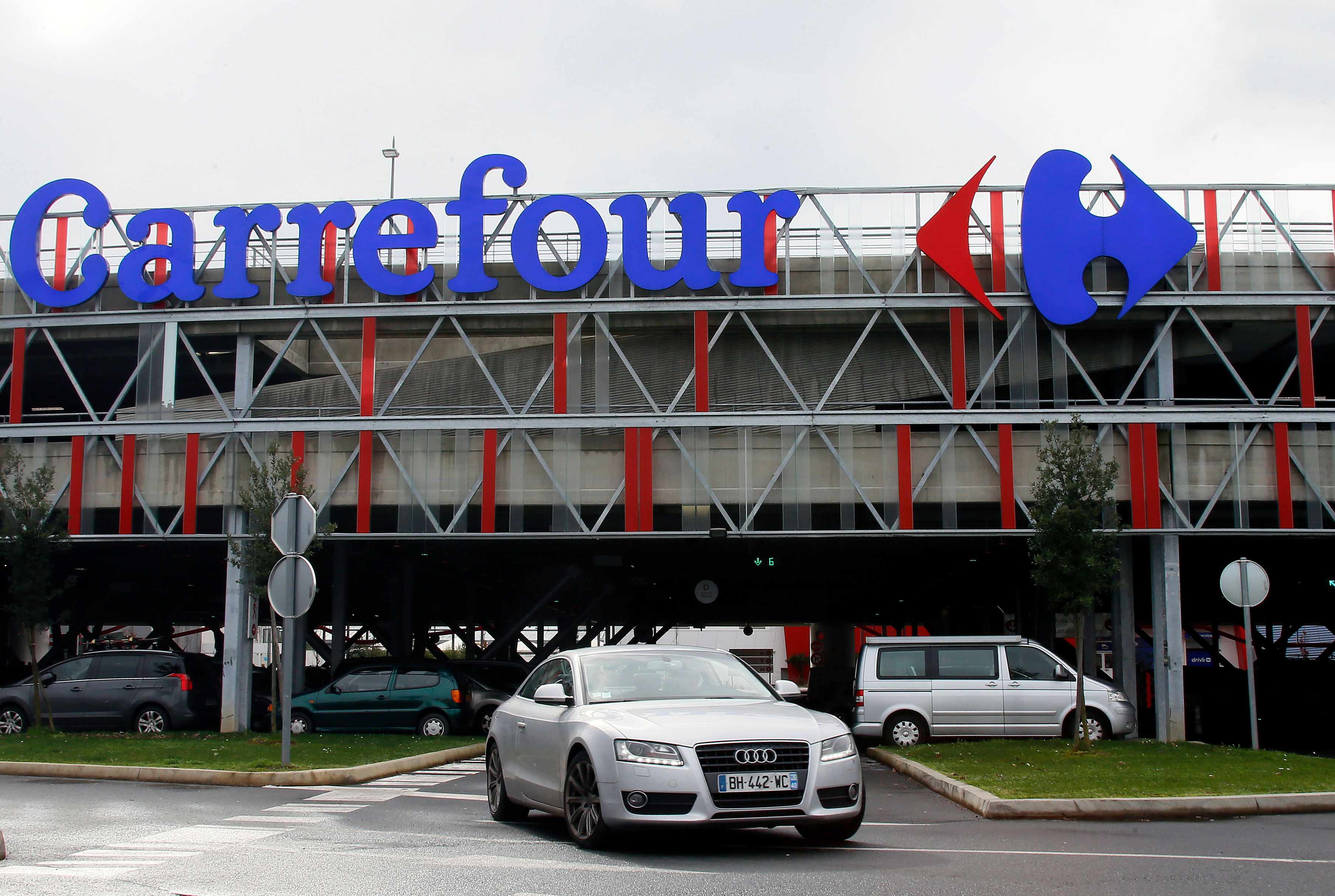
    Carrefour and Monoprix supermarkets were also impacted.

    Danish technology company Danfoss, which supplied the refrigeration management software, said Monday that most affected systems were older products that no longer received software or security updates.

    “Danfoss has long advised customers to keep supported systems updated with the latest firmware, as well as to operate behind a firewall,” the company said.

    Danfoss said it was working with affected customers to limit the damage.

    Separately, Dutch supermarket giant Ahold Delhaize said Tuesday it was working to restore systems it had shut down following what it described as a security issue. The company, which operates Albert Heijn in the Netherlands, Delhaize in Belgium, and Stop & Shop in the United States, declined to provide further details.

    Websites for several of its brands, including Stop & Shop, Food Lion, and Albert Heijn, remained offline Tuesday, although stores were open and serving customers.

    Ahold Delhaize said it had no evidence that customer or employee data had been stolen.

    “Protecting our infrastructure in the best interest of our customers, associates, and partners is a top priority,” the company said. “We apologize for any inconvenience this issue may have caused customers and partners.”

  • Japanese journalist arrested in Russia’s Sakhalin region on spying charges

    Japanese journalist arrested in Russia’s Sakhalin region on spying charges

    MOSCOW — A Japanese journalist suspected of spying has been arrested on Russia’s Sakhalin Island, the top Russian domestic security agency said Tuesday.

    The arrest comes amid a spike in tensions between Russia and Japan following Russian President Vladimir Putin’s August trip to the Kuril Islands, the Moscow-controlled Pacific archipelago that is claimed by both countries.

    The Federal Security Service, or FSB, said in a statement that the Japanese man, who worked for the Hokkaido Shimbun newspaper, was suspected of gathering information related to Russia’s defense capability on behalf of a Japanese intelligence agency.

    The FSB, the main successor agency to the Soviet KGB, said the Japanese man, whom it didn’t name, was arrested as he was preparing to leave Russia. The agency said the suspect was flown to Moscow where he was put behind bars.

    The FSB released a video showing masked agents in black outfits arresting the man in a hotel room and then escorting him to a plane bound for Moscow. He was then shown facing a judge at the Lefortovo District Court, who ordered him to be held in custody for two months pending the probe.

    Russia’s Sakhalin region includes Sakhalin Island and the four southernmost islands of the Kuril chain, which Japan calls the Northern Territories. Putin visited one of them, Iturup, in August.

    The Soviet Union took the Kuril Islands from Japan in the final days of World War II and the ongoing dispute has prevented the countries from signing a peace treaty formally ending their hostilities.

    Japan’s Prime Minister Sanae Takaichi said Putin’s visit, his first to the islands, was “incompatible with the Japanese position on the Northern Territories” and was “absolutely unacceptable.” She said it was a further blow to already-strained ties between the two countries over Ukraine.

    Moscow responded by summoning the Japanese ambassador to protest the “anti-Russia” statements by Takaichi and other Japanese officials, emphasizing that “Russia’s sovereignty and jurisdiction over the southern Kuril Islands are absolutely unshakable.”

    Decades of diplomatic efforts to negotiate a settlement haven’t produced any visible results. Moscow over the years has also bolstered its military presence on the Kurils in moves that appeared to underscore its firm stance in the dispute.

    In recent years, Russia has arrested a number of foreigners — mainly Americans — on various criminal charges and then released them in prisoner swaps with the United States and other Western nations.

    The largest exchange since the Cold War took place in August 2024, when Moscow freed journalists Evan Gershkovich and Alsu Kurmasheva, fellow American Paul Whelan, and Russian dissidents in a multinational deal that set two dozen people free.

  • Trump’s diesel deal with Putin draws criticism from a frustrated Congress

    Trump’s diesel deal with Putin draws criticism from a frustrated Congress

    WASHINGTON — The House speaker stood before Donald Trump during his first term at the White House and pointed a finger, declaring that with this president, “All roads lead to Putin.”

    The stark assessment years ago from Nancy Pelosi echoed anew after Trump’s surprise announcement last week that he struck a deal with Russian President Vladimir Putin to import tons of Russian diesel to the U.S. as a way to ease sky-high prices at the pumps for Americans ahead of the midterm elections.

    Trump’s diesel deal with Putin has been criticized by both Republicans and Democrats as fueling Russia’s war against Ukraine, violating existing U.S. laws, and drawing the U.S. closer to Russia. It joins a growing list of instances in which the Republican president has sided with Putin, often at the expense of Ukraine — and America’s own standing.

    “The harm to the Ukrainians is real,” said William Taylor, a former U.S. ambassador to Ukraine, now a senior fellow at the Atlantic Council, in an interview Monday.

    “And the cost to us, the United States, is high.”

    It’s not at all clear the Trump-Putin deal will deliver the supply boost the president is seeking to bring down prices. Energy experts have said the flow of Russian diesel is unlikely to lower prices in the U.S., which have escalated largely due to disruptions from the U.S. war against Iran. But the agreement underlines a message at home and abroad that Trump is an unreliable ally as Ukraine battles Russia.

    A bipartisan group of six senators urged Trump over the weekend to reverse course, saying the U.S. “should not provide Putin with a financial lifeline.” Trump, however, held fast to his deal with Putin and lashed out, blaming Ukrainian President Volodymyr Zelensky for America’s high diesel costs and asserting he should step aside — something Ukraine’s leader has no intention of doing.

    “Anything that could help our farmers, our ranchers, I like,” Trump said Monday outside the White House.

    Asked about Republican criticism of the Russia deal, Trump said they “can’t really be serious.”

    But a dozen senators weighed in with a letter to Trump on Tuesday. The six Republican and six Democratic senators said allowing Russian diesel into global markets would have a negligible impact on fuel prices while the revenue Russia gets will “undoubtedly finance its desired war of attrition” and advance its security cooperation with China, Iran, and North Korea.

    “It will also endanger service members operating overseas in support of Operation Epic Fury,” they wrote.

    Trump also insisted that an energy ceasefire is in place for Ukraine and Russia, despite Zelensky saying that Moscow continued to strike his country’s energy sites.

    An AP-NORC Center for Public Affairs Research poll published Oct. 1 found that Americans disapprove of Trump’s handling of the Iran war and blame him for higher prices.

    Congress voted to halt Russian imports, but Trump has other plans

    Congress swiftly approved legislation at the outset of the Russian invasion of Ukraine in spring of 2022 to ban the import of Russian energy products, which are widely viewed as providing the financial fuel for Putin’s military assault on Ukraine.

    The bill passed the House on an overwhelming 414-17 vote and the Senate without a single senator opposed. The law says the president can seek to lift the prohibition if an agreement has been reached to withdraw Russian troops from Ukraine and cease military activity. Such a proposal would need to be reviewed by Congress and to have been “accepted by the free and independent government of Ukraine.”

    “Trump is directly violating that law,” said Rep. Lloyd Doggett (D., Texas), the bill’s chief sponsor, in a statement Monday.

    He said Trump “illegally rewards his pal Putin while once again blaming Zelensky for not capitulating to Putin.”

    More recently, Congress last month approved a sweeping Russian sanctions bill, named after the late GOP Sen. Lindsey Graham, that would slap tariffs on countries that continue importing Russian oil. Trump signed the bill into law.

    The bulk of the law’s provisions go into effect Oct. 18, the end of the administration’s 30-day review period. But such action now appears to be in question since Trump’s diesel deal with Putin will allow the flow of Russian energy.

    In a letter to Treasury Secretary Scott Bessent and Secretary of State Marco Rubio, Senate leaders from both parties last week said the most urgent priority for the U.S. must be to tackle the “shadow fleet” of tankers that Moscow is using to transport oil and bypass America’s sanctions.

    But that was before Trump announced his deal with Putin, which he said would unleash hundreds of tons of diesel.

    Treasury did not immediately respond Monday to a request for comment.

    Republican Rep. Ashley Hinson, who faces a competitive race for the U.S. Senate against Democrat Josh Turek in Iowa, where $6 a gallon diesel prices have become an issue, said, “It makes me a little bit nervous anytime we’re talking about relieving a sanction on Russia.”

    Trump, Russia, and Pelosi’s stand

    Almost seven years ago this week, Pelosi stood before Trump and a roomful of U.S. officials during a heated White House meeting and leveled her accusation, suggesting the president’s policy favored Putin.

    The powerful House speaker led the first impeachment of Trump on corruption charges over his administration’s decision to withhold congressionally approved aid to Ukraine in 2019 as it faced Russian aggression at its border. Trump was later acquitted by the Senate.

    Since Trump’s return to the White House, he has seesawed between pressuring Zelensky to make concessions and showing frustration with Putin’s hard-line stance on the war. Trump often complains that he thought his good relationship with his Russian counterpart would have made it easier to end the war.

    A year ago, Trump reversed his long-held position that Ukraine would have to give up land and suggested it could win back all the territory it has lost to Russia — only later to call on Kyiv and Moscow to “stop where they are” and end the war.

    In July, Trump praised Zelensky and Ukraine for their wartime resilience. But by September, Trump was expressing frustration about strikes on Russian energy infrastructure.

    Trump insisted Monday the sides agreed to a ceasefire on the energy systems. “They agreed,” Trump said. “Because I said, ‘You agree.’”

    When pressed about the attacks by Russia, Trump said he’d have to take a look, “because there’s been violations on both sides.”

  • Trump hands victories to Putin, who offers more war in return

    Trump hands victories to Putin, who offers more war in return

    BERLIN — The wins for Russian President Vladimir Putin came in rapid succession from Washington.

    President Donald Trump proffered sanctions relief for Russian diesel fuel. He publicly called for Ukraine to get a new leader. And he pressured Kyiv to stop a strike campaign against Russian oil facilities that has damaged the Russian economy.

    Putin, in return, offered more war.

    Minutes after Trump announced the diesel deal, the Kremlin reiterated Putin’s stance that he would not negotiate with Ukraine at the moment, because he remained angry about Ukrainian strikes during last month’s Russian parliamentary election.

    The next day, Russia launched an attack on the Ukrainian city of Zaporizhzhia that killed 22 people, including four children. It was the latest in a near daily drumbeat of devastating Russian strikes, which have dramatically increased the civilian toll in Ukraine as Kyiv sorely lacks air-defense missiles.

    And Putin has signaled that he plans to escalate further, aiming to knock out Ukraine’s power and water infrastructure in what Ukrainians expect to be the worst winter of the war.

    Putin is reaping his victories as Trump’s own domestic political needs align with his long-standing inclination to tip the scales toward Russia. With the American president focused on trying to bring down fuel prices before a difficult midterm election, he is pushing Kyiv to trade away its leverage for nothing in return.

    Ukraine has said it would suspend its oil refinery strikes if Russia ceased attacks on Ukrainian energy facilities heading into the winter. But when Trump announced an “energy ceasefire” Sunday, he meant only a suspension of oil refinery strikes in both countries, the New York Times reported. Ukraine has only one major oil refinery, and Russian strikes took it largely out of service in 2022.

    Trump has promoted his energy deal with Putin as an example of how he is tackling the United States’ diesel challenge, which experts say is more attributable to the war with Iran. But it was seen as a betrayal by Ukrainian officials, undercutting years of Western efforts to starve the Russian war machine of cash.

    It may not even do much to lower diesel prices. Economists have said the amount of fuel discussed is not enough to move the needle significantly.

    “The U.S. president is focused on one thing, which is himself and his reading of the world,” said Alexander Gabuev, director of the Carnegie Russia Eurasia Center.

    That reading, Gabuev said, includes Trump’s stubborn denial that his own decision to go to war against Iran caused fuel prices to skyrocket.

    “In his picture of the world, the Gulf war doesn’t play a role in the current diesel crisis, and there needs to be a magical solution with someone he is predisposed to, who is Vladimir Putin.”

    Earlier this year, things were looking difficult for Putin. Expenditures on the war were rapidly expanding. Progress on the battlefield had slowed to a crawl. Global prices for oil, Russia’s top export, had slumped to around $60 a barrel.

    Then Trump launched the war in Iran, alongside Israel. Oil prices jumped to more than $100 a barrel. The vast use of air defense missiles by the United States and its Gulf allies in response to Iran’s attacks dried up the supply for Ukraine, leaving it increasingly vulnerable. With Trump looking for a way out, Russia’s long-standing relationship with Iran offered Putin a new calling card with Washington.

    As the Iran war accorded benefits to Russia, Ukraine tried to limit Moscow’s economic gains with increasingly effective strikes on oil refineries — the campaign that Trump is now demanding that Kyiv end.

    Kyiv’s systematic targeting of Russian oil infrastructure brought the war home to Russia as never before, causing lines at the pump across the country and forcing Russia, one of the world’s largest diesel suppliers, to suspend exports.

    As Ukrainian strikes decreased production, Russia’s tax revenue from oil and gas for the first three quarters of the year fell by 17% compared with the same period in 2025, even as fuel prices rose dramatically.

    Now, the diesel deal could pour billions of dollars into the Russian economy. An extended suspension of Ukrainian strikes on oil refineries, if Kyiv agrees to one under the intense American pressure, could generate much more money.

    The wins for Putin go beyond the diesel deal. Trump has also welcomed Russian ministers this year for Group of 20 events in North Carolina and Wisconsin, and he plans to host Putin in December at the G20 summit in Miami. His administration is also negotiating potential business deals with the Kremlin, in what Trump’s team has cast as inducements to a peace deal.

    The Russians want even more from the U.S. president, analysts say.

    When Trump returned to office in 2025, Moscow hoped that the United States would cut off all support for Ukraine and force President Volodymyr Zelensky into a capitulation largely on the Kremlin’s terms.

    Trump’s Oval Office blowup with Zelensky in March 2025 made it seem as if Moscow’s dream was within reach. The Trump administration’s decision to halt weapons donations to Ukraine and suspend intelligence sharing stoked hopes even further.

    But in the months since, U.S. intelligence sharing resumed. Trump brokered a deal for the Europeans to buy weapons from the United States for Ukraine. And U.S.-led peace negotiations fizzled as the Trump administration became distracted by the war in Iran.

    Fyodor Lukyanov, a Russian political scientist who advises the Kremlin, wrote last month that Ukraine would be left with little defense if the United States completely ceased its military support.

    “But Trump is unlikely to take that step,” Lukyanov wrote, “even if he were personally inclined to do so,” because a complete Ukrainian defeat would not win him any plaudits in the American political establishment.

    Such a move by Trump might also invite more aggressive actions from Congress, particularly after the midterms. The Senate recently passed a Russia sanctions bill, named in honor of Sen. Lindsey Graham of South Carolina, with a veto-proof margin, though Trump retains the power to waive its provisions on national security grounds and will need to do so to import Russian diesel.

    As Trump so far stops short of forcing Ukraine into a surrender, Putin is likely to continue his escalation, said Hanna Notte, an analyst at the James Martin Center for Nonproliferation Studies and the author of a new book on Russian foreign policy called We Will Outlast Them.

    She said of Putin, “It’s quite clear that his intention right now is to inflict a really, really nasty winter on the Ukrainians.”

    Although Russian forces remain largely stuck on the battlefield, Putin has long believed that he can achieve victory in Ukraine by outlasting Kyiv and what he sees as its fickle Western allies, analysts say. He believes they will eventually pull back their extensive support of Ukraine as their own domestic problems mount, analysts say.

    The French presidential election next year could usher in far-right leader Marine Le Pen, who has advocated halting financial assistance to Ukraine. Chancellor Friedrich Merz of Germany is also under pressure from a surging far-right party that has pressed for ending support for Ukraine. And both Britain and France are struggling under huge government debts that are far more expensive to service at current interest rates.

    “You could make the case that from the Kremlin’s perspective, the future looks better, more conducive to an outcome of the war that is closer to their terms,” said Sam Charap, a Russia analyst at the Rand Corp. “You have to change that perception of the future, diminish that optimism, to affect their calculus.”

    This article originally appeared in the New York Times.

  • A large majority of New Jersey residents support voter ID requirements, Rutgers-Eagleton poll finds

    A large majority of New Jersey residents support voter ID requirements, Rutgers-Eagleton poll finds

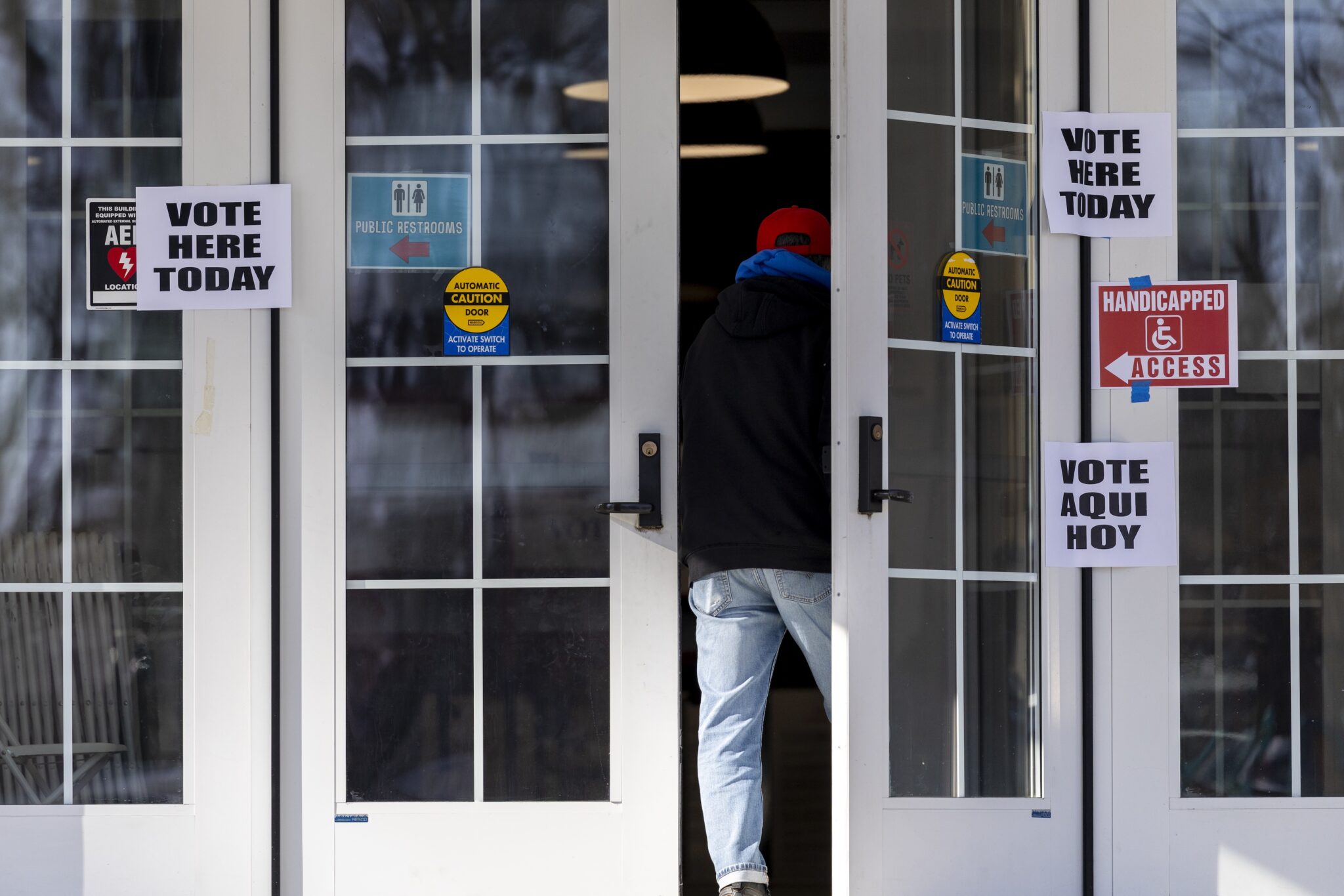
    Voter identification measures, including restrictive measures requiring proof of citizenship, enjoy broad support in the Garden State, a new Rutgers-Eagleton poll found.

    More than four in five New Jerseyans, 82%, said they support or strongly support a voter ID requirement that mandates voters prove eligibility by presenting a driver’s license or state ID when voting in person, while 71% said they back more severe requirements to mandate voters prove citizenship by providing a birth certificate or passport when registering to vote.

    The poll results come as Republicans in the New Jersey Legislature have renewed their push to pass voter ID legislation amid revelations from Gov. Mikie Sherrill’s administration that thousands of people who told the state Motor Vehicle Commission they were noncitizens were registered to vote anyway, and about 340 of them cast ballots.

    Sherrill (D) has said she has no issue with voter ID requirements, but the GOP measures have not advanced in the Democratic-controlled Legislature.

    Despite broad support for voter ID, majorities of voters expressed confidence in the security of New Jersey elections, the Eagleton poll says.

    Nearly three-fourths of New Jersey adults, 74%, said they were somewhat or very confident about the accuracy of in-person and early vote counts. A little under three in five, 59%, said the same about mail voting.

    Still, despite similar levels of support, the poll’s respondents were more likely to strongly support voter ID measures than they were to express strong confidence in voting results’ accuracy.

    “Majorities would both support these hypothetical voting requirements and are confident about how November’s election will be run, but the intensity behind those two views is not the same,” said Ashley Koning, director of Rutgers’ Eagleton Center for Public Interest Polling.

    Majorities expressed strong support for both voter ID requirements generally (63%) and a proof of citizenship requirement (51%), while only a plurality of voters (40%) said they were very confident in-person results would be accurate. Even fewer (29%) were confident mail votes would be counted accurately.

    The parties were split when asked whether they believed only eligible voters would cast ballots in New Jersey.

    Democrats overwhelmingly said they were very (59%) or somewhat confident (28%) that only the eligible would vote, while Republicans were more likely than not to doubt voter eligibility. Just 12% said they were very confident only eligible New Jerseyans would vote, compared to 28% who said they weren’t confident at all.

    “Republicans are the most emphatic about tightening the rules and the least sure the system is working as it stands,” Koning said. “Ninety-five percent strongly support an identification requirement, and 12% are very confident that only eligible voters will cast ballots. Those two numbers are telling the same story from opposite ends.”

    This story originally appeared on New Jersey Monitor.