Category: News

  • Krasner says ‘criminal’ police conduct tanked past murder case against man accused of killing Philly cop

    Krasner says ‘criminal’ police conduct tanked past murder case against man accused of killing Philly cop

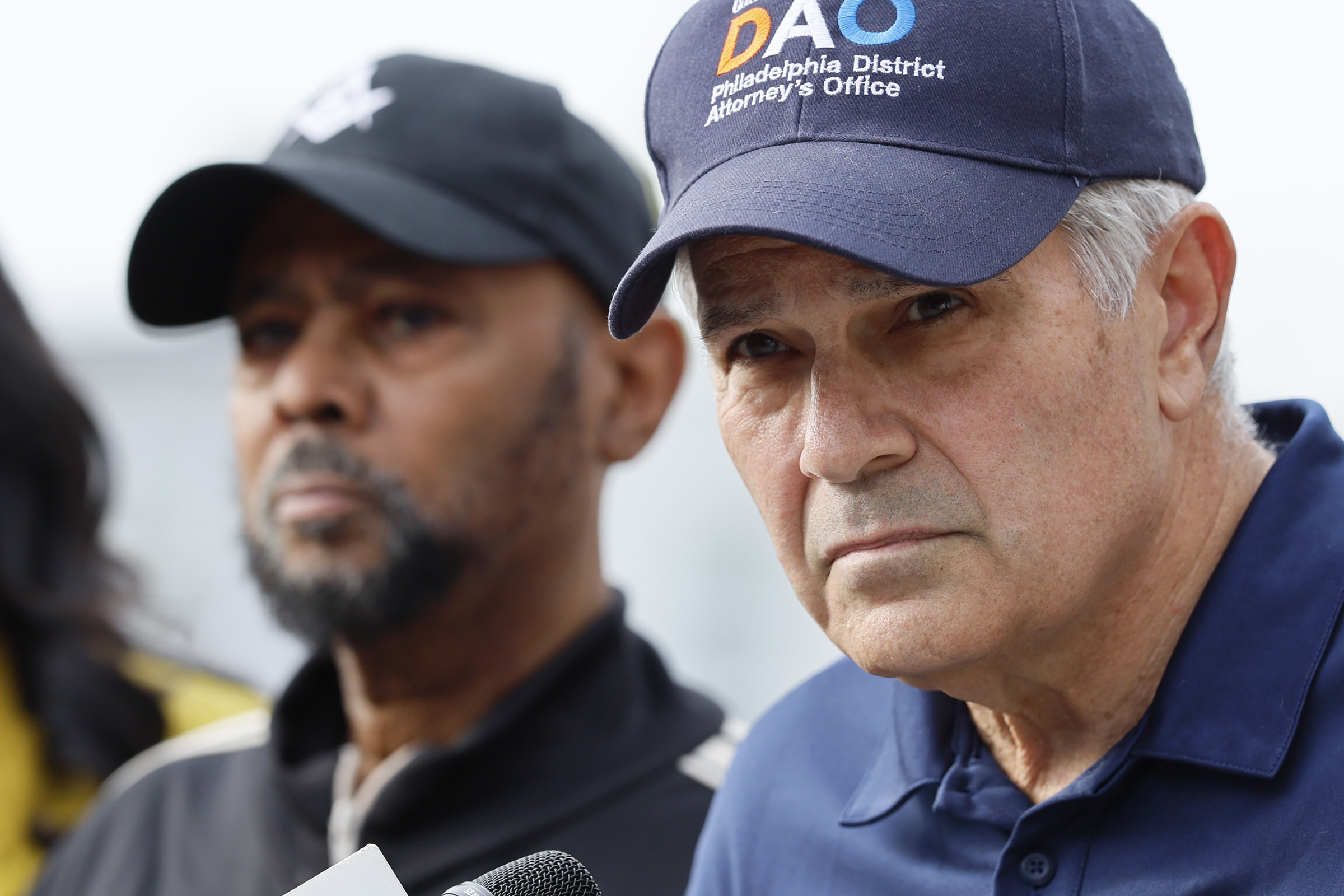
    District Attorney Larry Krasner said Tuesday that Eric Lewis, the man charged with killing a Philadelphia police officer and shooting at 10 others this weekend, was free to commit that crime because two other officers had botched an earlier murder case against him in a way that was “arguably criminal.”

    The startling allegation from the city’s top prosecutor, delivered in a YouTube video Tuesday morning, not only blamed a police officer and a homicide detective with sinking the case against Lewis at a 2023 trial — it also insinuated that their actions had allowed Lewis to remain free to kill Police Officer Shane Seiber three years later.

    Krasner did not make himself available to answer questions about the case, and his office did not respond to a list of detailed questions about it this week.

    His video statement did not indicate whether his office planned to investigate the officers — one of whom he said dated Lewis’ sister and gave false information to police — for actions he said could amount to obstruction of justice.

    Krasner’s explosive remarks, alongside documents in the case and its fallout obtained by The Inquirer, offered insight into an extraordinary set of circumstances: a police officer who the district attorney said sought to “torpedo” his testimony; a homicide detective who appeared to fail to investigate key aspects of the case; and a judge who was left so disturbed that he reported the conduct to the Philadelphia Police Department’s Internal Affairs Bureau.

    And it has left the mother of Christopher Williams, the man Lewis was accused of killing in August 2019, confused and seeking answers from Krasner’s office.

    “It’s overwhelming,” Darlene Brown said. “It’s information that we never knew.”

    The developments come just days after Seiber was killed in a shooting that has rocked the local law enforcement community. And the comments threatened to deepen tensions between the reform-oriented Krasner and many within the Philadelphia Police Department who for years have said his office has failed to hold defendants accountable.

    Krasner, in the video, insisted his staff was not to blame for the acquittal, saying they had done “everything humanly possible” to salvage a weak case and convict Lewis.
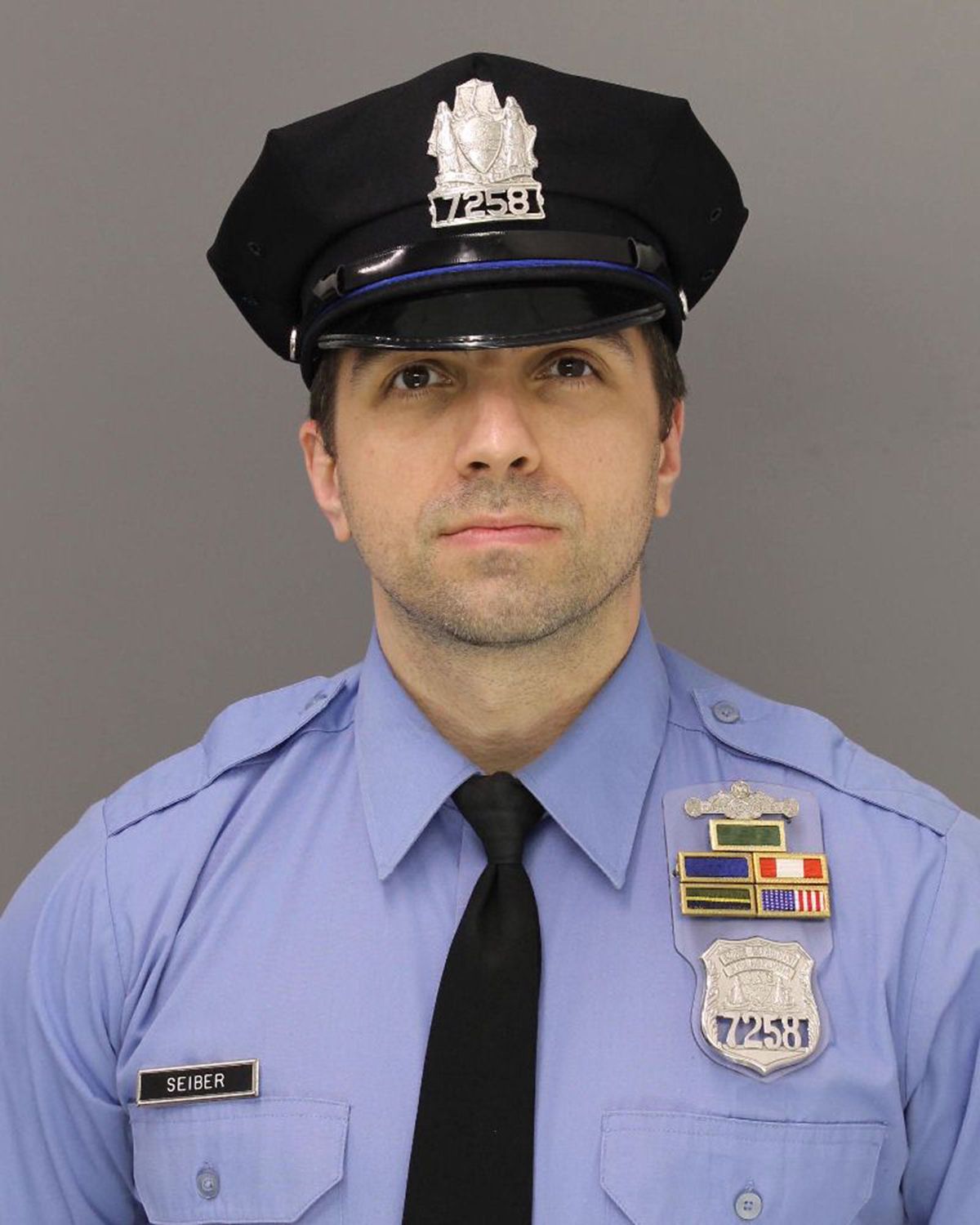
    Officer Shane Seiber.Courtesy of the Philadelphia Police Department

    Sgt. Eric Gripp, a spokesperson for the police department, said that the department was reviewing the records in the case, but that its focus remained on supporting the family of Seiber, the wounded officer, and the grieving police force.

    “There will be a time to address the full record, but it is not now. Assigning blame while families are grieving does nothing to advance accountability or support those affected. True leadership does not seek to assign fault in a moment like this. It stands with the families. And when the time comes, it holds itself to the same scrutiny it asks of others.

    “We will have more to say. Right now, these families deserve our attention, our support, and our respect,” he said.

    Lewis, 35, remained in custody Tuesday, charged with murder and related crimes in the fatal shooting of Seiber and the wounding of another officer on his porch early Saturday. Lewis went on to fire at nine other responding officers in a nearly hour-long standoff, police said, and was later arrested with three guns — one of which police said he had stolen from an officer he shot.

    Seiber, 40, a 10-year police veteran and married father of two, died hours after being struck. His 33-year-old partner, a nine-year veteran, was shot 12 times and remains hospitalized.

    The case has led to an outpouring of emotion from across the city, including from police officers who questioned why Lewis — who had been charged by Krasner’s office at least twice for violent crimes — was free to commit the shooting in the first place.

    Krasner’s comments served as something of a response to that, and stemmed from a case in which Lewis was charged with killing Williams, 32, in a road-rage shooting in West Philadelphia in 2019.
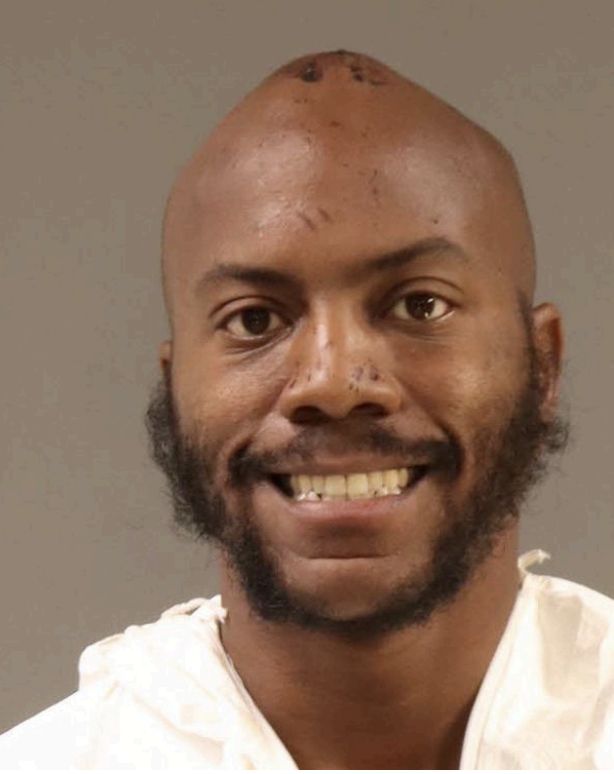
    Eric Lewis, charged with murder in the shooting death of police officer Shane Seiber, is shown in a Philadelphia Police Department photo.Philadelphia Police Department

    Prosecutors tried Lewis on charges of murder and related crimes during a two-day bench trial before Common Pleas Court Judge J. Scott O’Keefe in April 2023.

    O’Keefe, troubled by weaknesses in the police investigation and inconsistencies in testimony between a witness and homicide detectives, acquitted Lewis.

    The judge was so disturbed by the investigation that he contacted the police department’s internal affairs bureau, sending a letter to then-Deputy Commissioner Robin Wimberly.

    Krasner said he believed it was the only instance in O’Keefe’s career in which he had taken such action.

    O’Keefe declined to comment Tuesday.

    A ‘troubled’ investigation

    In the letter, a copy of which was obtained by The Inquirer, the judge said he found several aspects of the investigation problematic. One was that two different sets of evidence were recorded under the same property receipt number — a clerical error that O’Keefe said “clearly created a great deal of suspicion” about the investigation.

    Other issues revolved around the examination of evidence by then-Homicide Detective Laura Harris.

    O’Keefe said it did not appear that Harris, the lead detective, had done any investigation of an eyewitness’ version of events — a key issue since, according to the judge, the witness’ account was “impossible with the physical evidence and the medical examiner’s findings.”

    Another was that Harris said she had subpoenaed Lewis’ Facebook and Instagram records and turned them over to the district attorney’s office — but prosecutors insisted they never received those records, and Harris said she did not keep any copies.

    In addition, O’Keefe said in his letter, Harris filled out a search warrant to obtain Lewis’ cell phone records, which could have been a key piece of evidence to determine if he had been near the crime scene. But in court, Harris admitted she never actually got a judge to sign the warrant — and therefore never obtained the records.

    When she was confronted with that issue on the witness stand by Lewis’ defense attorney, Michael Diamondstein, Harris gave a one-word answer to explain why she had not followed through.

    “Oversight,” she said, according to a transcript of the trial.

    The transcript showed that Diamondstein, who declined to speak about the case this week, also pointed to inconsistencies in the statements made by the sole eyewitness in the case — a woman who was in the car with Williams during the shooting, and who later identified Lewis as the gunman to police and in court.
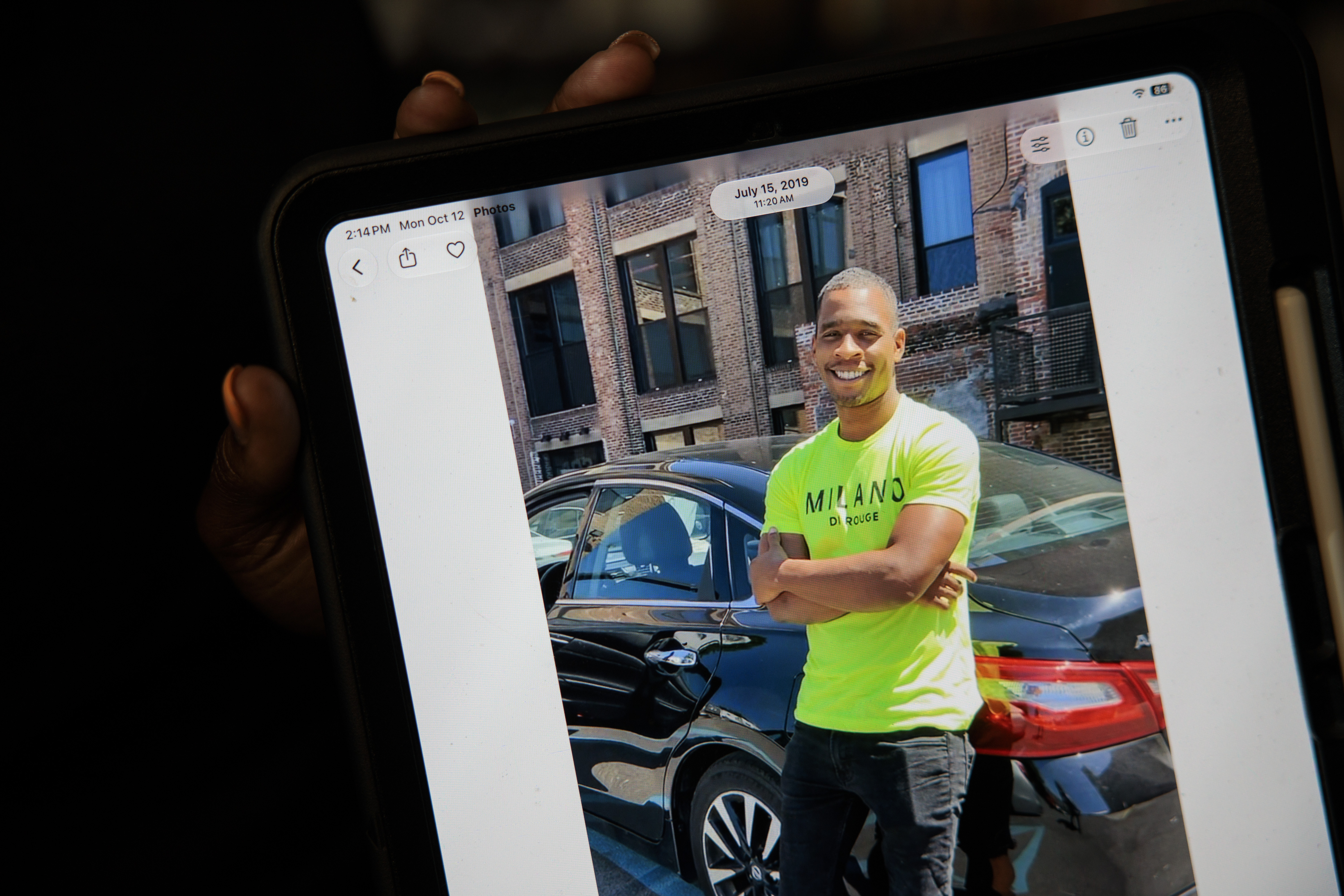
    An undated photograph of Christopher Williams, who was killed in 2019. Eric Lewis was charged with his murder, but acquitted in a 2023 trial.Monica Herndon / Staff Photographer

    The woman told investigators that she and Williams, driving a Jeep, had pulled onto Fallon Street around 1:15 a.m. on Aug. 31, 2019, but were blocked by a double-parked Nissan.

    Williams honked his horn, and an argument broke out with the people in the Nissan, she said, before a bald man walked up and shot Williams.

    During the shooting, she said, Williams reached around her hip to grab her black 9mm handgun to fire back. But the woman did not turn that gun over to police until hours later — and a forensic analysis later showed no gunpowder residue inside or on the weapon, suggesting it had been cleaned before it was handed over to police, Diamondstein said.

    Diamondstein also said the physical evidence in the case — including the location of Williams’ blood and the shell casings fired by her gun — did not line up with her story.

    Assistant District Attorney Erica Rebstock said the witness was traumatized by having just seen her friend get killed, and having been grazed by a bullet.

    Still, the prosecutor said, the witness “unequivocally identified” Lewis as the shooter. And the shooting took place directly in front of Lewis’ mother’s house.

    But the discrepancies, Diamondstein said, were severe. He again pointed to the testimony of Harris, the detective, and said she willfully ignored discrepancies in how the witness identified the shooters’ car as a Nissan Pathfinder — but Lewis owned a Nissan Xterra. Harris, he said, never tried to sort out those facts.

    “That was lies,” he said of Harris’ testimony. “That was intentional falsehood.”

    O’Keefe found Lewis not guilty.

    Harris declined to comment Tuesday. She was later disciplined for how she handled the case, Krasner said.

    Rebstock, the lead prosecutor who is now head of training at the district attorney’s office, did not respond to a request for comment.
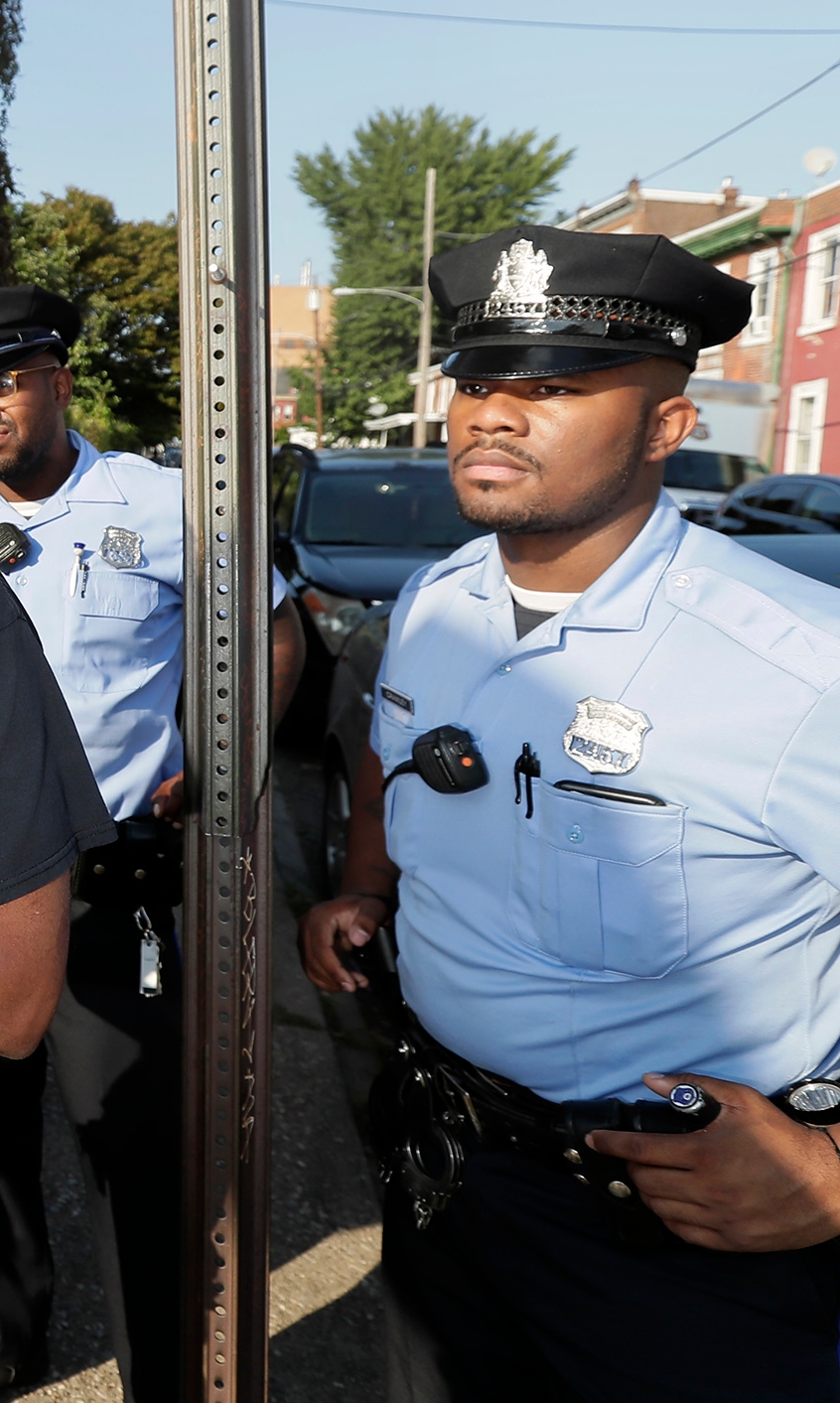
    Officer Naeem Crawley, of the 15th District, shown in a 2019 photograph in the Frankford section of the city. ELIZABETH ROBERTSON / Staff Photographer

    A cop dating Lewis’ sister

    Krasner said the investigation was “deeply flawed.”

    But the “worst example,” he said in his video, was the conduct of a police officer who was a potential witness against Lewis.

    That officer, Naeem Amir Crawley, had brought information to homicide detectives identifying Lewis as the gunman, according to a source familiar with the case who was not permitted to speak publicly about it.

    But Crawley, who records show joined the police department in 2018, was dating Lewis’ sister, Krasner said. Marriage records show the couple were married in February 2024.

    Because of that relationship, Krasner said, the officer tried “to torpedo his own testimony” by “making up a complete lie” about an alternate suspect who did not exist, and by giving “false information to law enforcement.”

    “It’s obstruction of the administration of justice. And it is frankly, well, outrageous, despicable, and tragic all at the same time,” Krasner said.

    Crawley did not testify at the trial or preliminary hearing. It was not immediately clear whether he had been subpoenaed to testify and failed to appear or whether prosecutors did not summon him to court.

    The officer was later fired, Krasner said.

    Crawley could not be reached Tuesday. Calls and texts to a number listed for him in public records were not returned, and he did not respond to a letter left for him at his home seeking comment on the case.

    His wife, Keilah Lewis, also did not return a call or text seeking comment.

    A mother seeking answers

    The questions surrounding Lewis’ earlier case reopened wounds for the family of the man he was previously accused of killing.

    Darlene Brown said she has no doubt that Lewis killed her son. And she resents, she said, how the case fell apart.

    “These kids didn’t have to be fatherless had they done their job back in 2023,” Brown said.

    “They had him in 2023,” she said. “They freed that murderer, and it took him three years to come back and do it again.”

    Brown, in an interview Tuesday, said Krasner’s video statement was the first she had heard anything about police misconduct potentially affecting her son’s case.

    Brown said her interaction with law enforcement was challenging from the start. The first detective assigned to the case was rude and did not return her calls, she said. She complained to police leadership and was assigned a new investigator and ended up having a good relationship with Harris, she said.
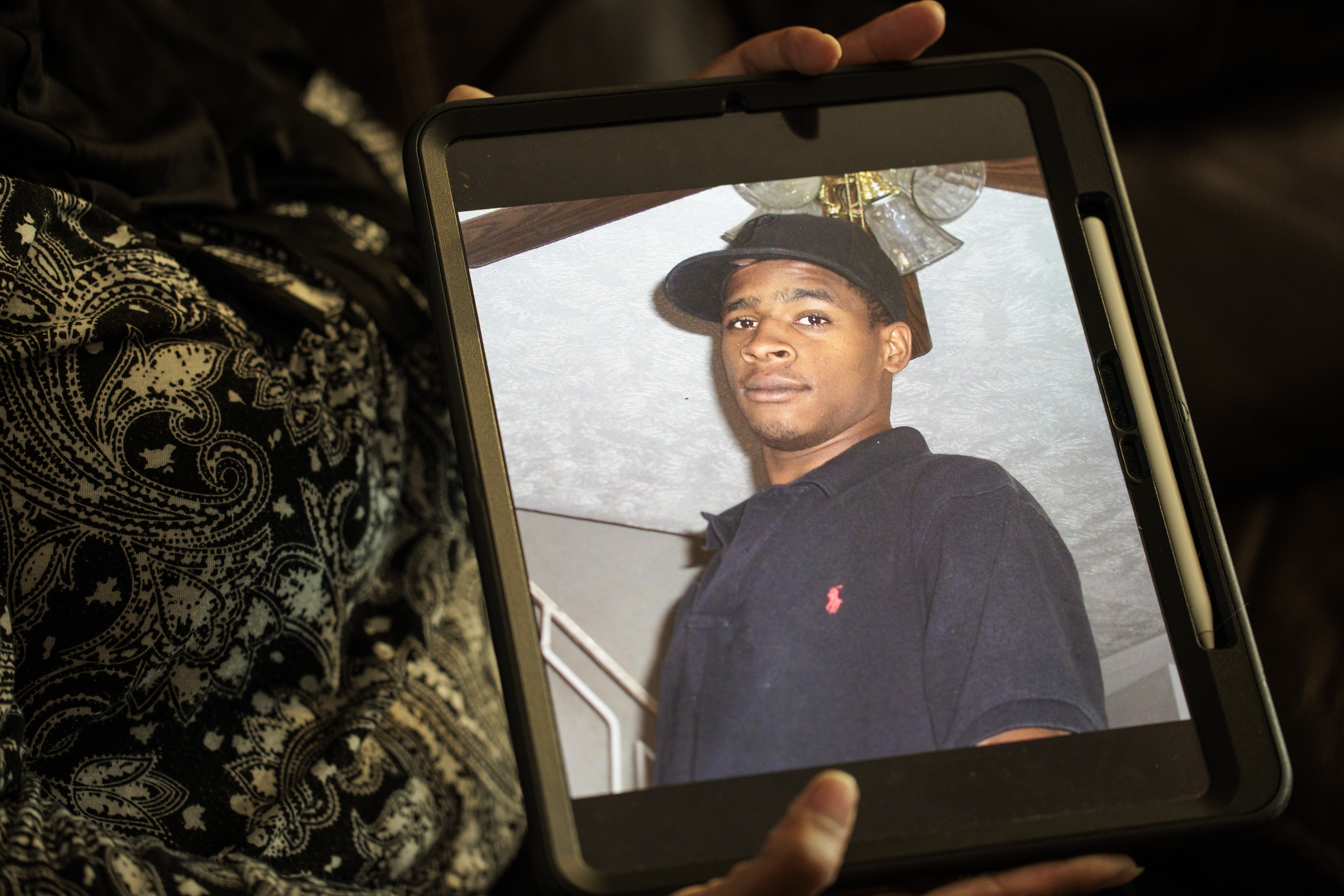
    Darlene Brown holds an iPad with an undated photograph of her son Christopher Williams on Monday. Williams was killed in 2019. Eric Lewis was charged with his murder, but acquitted in a 2023 trial.Monica Herndon / Staff Photographer

    But she was frustrated, she said, with how the case was handled by the district attorney’s office. The case was transferred between at least two prosecutors, she said, before another took it over before trial.

    She felt that the prosecutors were passive, she said, and after the acquittal, Rebstock apologized but did not offer an explanation for what went wrong.

    Brown said she called the district attorney’s office Tuesday but had not heard back.

    The entire ordeal, she said, has made her feel as if she is reliving the trauma of her son’s death all over again.

    “I need answers,” she said.

    Staff writers Jesse Bunch and Ryan W. Briggs contributed to this article.
  • Pope Leo is diagnosed with cancer, the day an award is presented in his name by Villanova’s president

    Pope Leo is diagnosed with cancer, the day an award is presented in his name by Villanova’s president

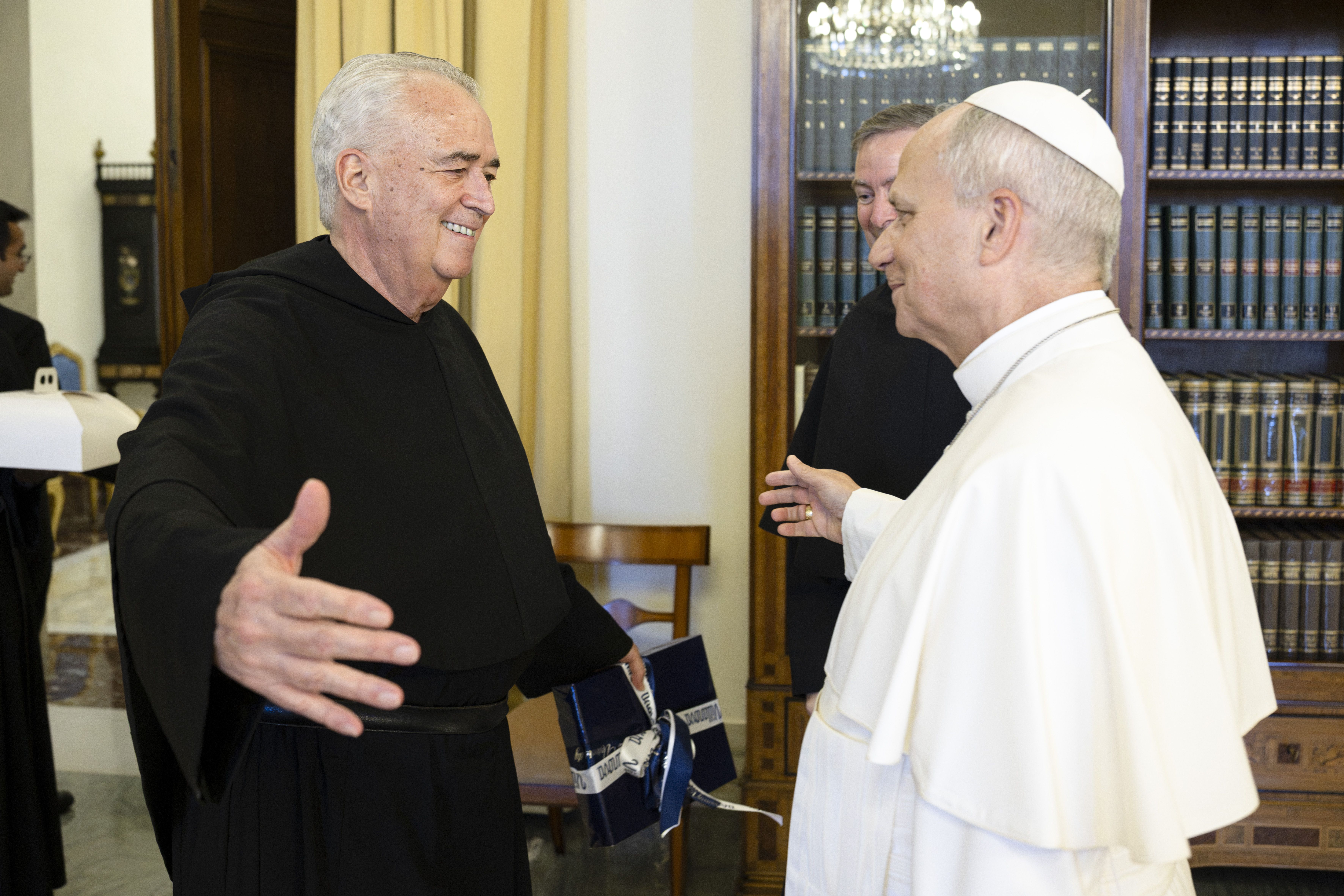
    Pope Leo XIV underwent surgery that confirmed he has lung cancer, the Vatican said Tuesday, the day his friend and Villanova University president the Rev. Peter M. Donohue presented the school’s inaugural sustainability medal at the pope’s summer residence.

    The 71-year-old pontiff had been scheduled to confer the medal, which is named after him, at Castel Gandolfo, the scenic hilltop town in Italy, but he checked into a hospital in Rome on Tuesday morning for an afternoon surgery to remove a small nodule from his lung.

    Later, the Vatican announced that doctors had removed the lower lobe of Leo’s right lung, and that the surgery confirmed he has lung cancer, the Associated Press reported.

    The tests confirmed a diagnosis of lung adenocarcinoma, the Vatican said in a medical bulletin after the surgery. It said the diagnosis had been suspected by preoperative tests.

    The statement made no mention of treatment going forward, and the Vatican said doctors were not currently speaking of chemotherapy or other therapies, the Associated Press reported.

    Before the cancer announcement, earlier news that the surgery had been successful reached one of the buses leaving Castel Gandolfo following the medal ceremony, drawing applause from the crowd.

    During his regular Sunday address in St. Peter’s Square in Vatican City, the pope said that doctors had detected a nodule “at a very early stage” that was “well localized.”

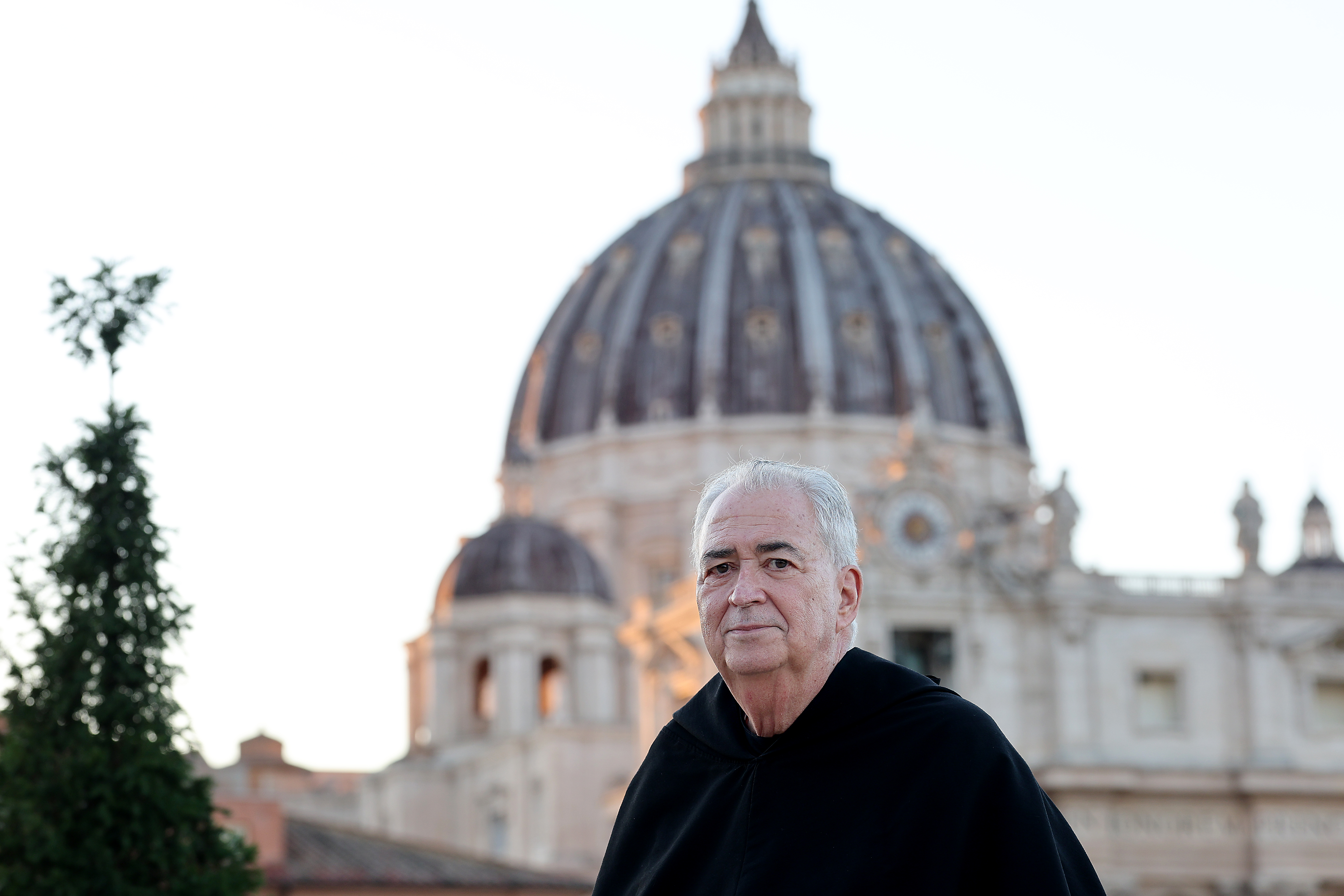
    The Rev. Peter M. Donohue, president of Villanova University, met with Pope Leo for an hour after a press event announcing the winner of the school’s first sustainability medal.Courtesy of Vatican Media

    Leo arrived at the hospital Tuesday morning, walking in and waving as dozens of well-wishers waited at the main entrance. The Vatican said he was expected to be hospitalized for at least a week, with his public appearances canceled until Oct. 20.

    “These are things that can be treated very well, if the words he used reflect the clinical situation,” said Lorenzo Spaggiari, director of thoracic surgery at the European Institute of Oncology in Milan, who is not involved in the pope’s care but knows the team at Gemelli.

    A churchman who saw Leo on Monday, Tokyo Cardinal Kikuchi Tsutomu, said Leo told him he felt fine and decided to have the surgery immediately so that he would not have to alter his forthcoming travel plans to Latin America.

    At Castel Gandolfo, around 350 people were attending the 2026 International Sustainability Conference, 90 of them from Villanova, to see the Pope Leo XIV Sustainability Medal be awarded to Cardinal Michael Czerny, who founded an HIV and AIDS treatment network in Africa and has directed the Institute for Human Rights of the Central American University in El Salvador.

    Cardinal Fabio Baggio, director general of the Laudato Si’ Centre for Higher Education, was to give the welcoming address, a Villanova spokesperson said. Donohue was to hand out the award. Prayers for Pope Leo’s health continued at the conference.

    The pope is the first pontiff born in the United States and a Villanova alumnus, having graduated from the university’s College of Liberal Arts and Sciences in 1977.

    While attendees were sad they would not be able to see Pope Leo present the medal, they said their primary concern was for the pope’s health.

    In a statement emailed by a spokesperson to the Inquirer Tuesday night, Archbishop of Philadelphia Rev. Nelson J. Pérez said he “learned with a grateful heart this afternoon that our Holy Father’s surgery was completed successfully and that the prognosis remains highly optimistic.”

    The archbishop added: “I ask all people throughout the Catholic Church of Philadelphia to express their love for Pope Leo through continued prayer for the intention of his health during his recovery. May God strengthen him and guide his care team through the intercession of Mary, Our Blessed Mother.”

    Staff writer Robert Moran contributed to this article, which contains information from the Associated Press.

  • Trump administration cuts refugees’ deadline to contest status termination, raising fears

    Trump administration cuts refugees’ deadline to contest status termination, raising fears

    MIAMI — The Trump administration is cutting the time refugees have to contest the termination of their status, a move critics say could put tens of thousands of people who fled persecution and wars in their home countries on a path to deportation.

    The new policy, which goes into effect Wednesday, reduces from 30 to 10 the number of days refugees have to challenge the revocation of their status. It is part of a broader effort by the Trump administration to restrict and transform a program that has served for decades as a pathway for refugees.

    The goal of the new policy, according to the document, is to “mitigate potential risks” associated with people who were admitted as refugees but were not eligible for refugee status.

    The policy does not say exactly how many people could be affected, but it specifically refers to refugees admitted during President Joe Biden’s administration, when it says there was an “alarming erosion of the integrity” of the refugee program. Refugee advocates dispute that claim.

    The Trump administration is already reviewing the cases of at least 185,000 refugees admitted during the Biden administration who still have pending green card applications.

    Welcoming refugees has been a matter of bipartisan consensus in the United States since Congress passed the Refugee Act with overwhelming support in 1980. That law made refugee applications some of the most rigorously scrutinized within the immigration system.

    Advocates, refugee resettlement groups condemn new policy

    Some maintain refugees will not have enough time to defend their status under the new policy.

    “These families did everything asked of them,” said Krish O’Mara Vignarajah, president of Global Refuge. “They submitted to interviews, background checks, and years of waiting abroad, only setting foot on U.S. soil once government officials approved their applications.”

    Now, she said, “the Homeland Security Department wants to revisit those decisions on a 10-day clock, a notice period wholly insufficient to find a lawyer, translate documents, or get records out of a country they were forced to flee.”

    HIAS, a major refugee aid group, warned that refugees who have fled violence, persecution and displacement will be at risk of being deported to the countries where they could face harm, persecution and torture.

    “They are trying to upend the core principle that refugee resettlement represents permanent protection,” said HIAS vice president Naomi Steimberg.

    Homeland Security did not immediately respond to a request for comment. The State Department referred questions to DHS.

    Refugee program has been transformed

    The Trump administration has drastically altered the refugee program and transformed it into a mechanism for resettling white South Africans in the country.

    In September, the government announced plans to limit the total number of refugees admitted to the country in 2027 to 17,500, the majority of whom are white South Africans.

    During his first administration, Trump slashed the number of refugees approved every year. The Biden administration built it back and set a goal of admitting 125,000 refugees during the final year of his term.

    Upon returning to the White House for his second term, Trump immediately suspended the refugee program, stranding people around the world who had been slated to come to the U.S. Later the administration reopened the program and limited it mostly to white South Africans.

  • Tupac Shakur murder conviction lands man 40 years to life in prison

    Tupac Shakur murder conviction lands man 40 years to life in prison

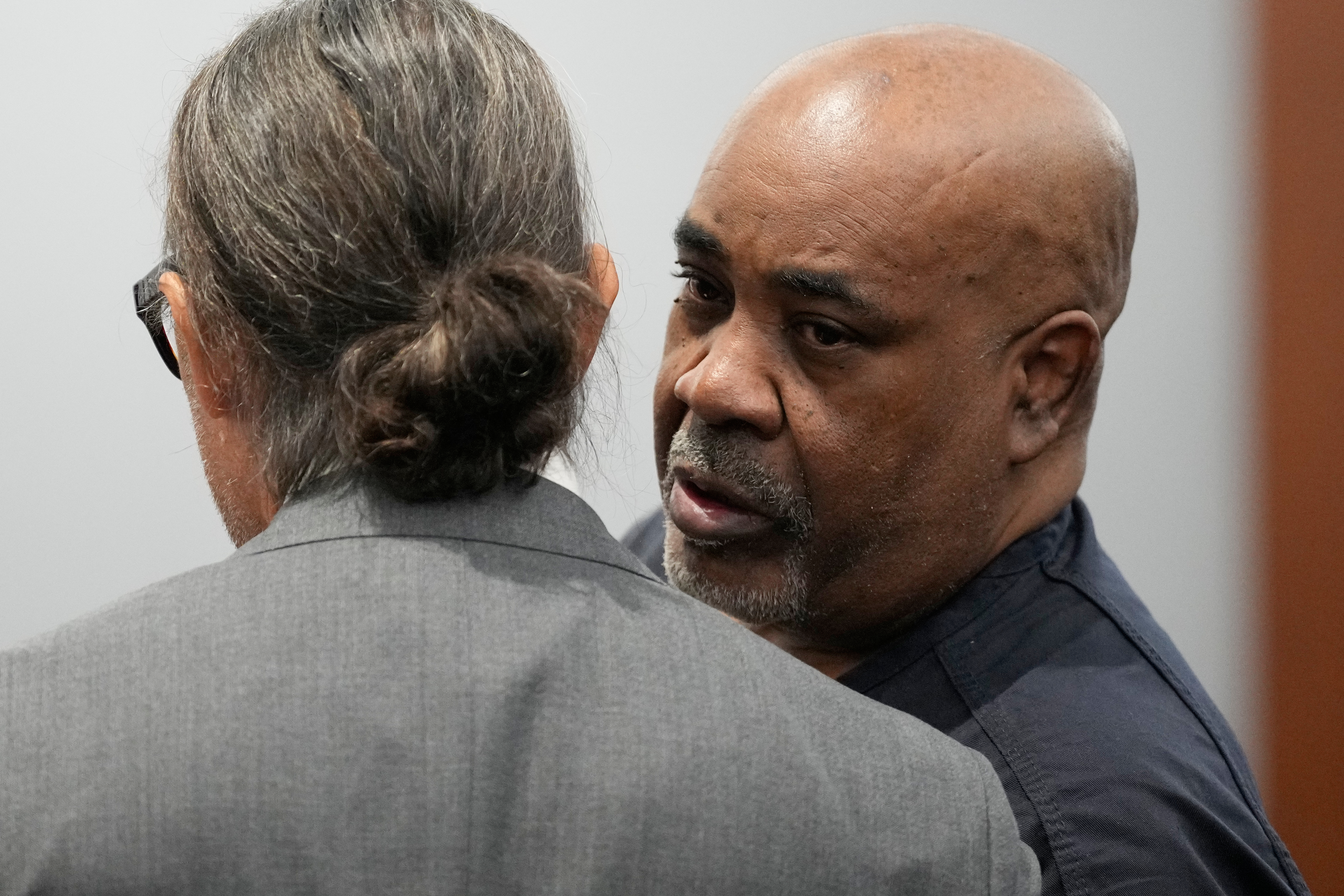
    A judge in Las Vegas on Tuesday sentenced a man to 40 years to life in prison after he was convicted of orchestrating the murder of rapper Tupac Shakur in a 1996 drive-by shooting.

    The murder of one of hip-hop’s most celebrated artists went unresolved for nearly 30 years until this past summer, when a jury found Duane Keith Davis guilty of arranging for the killing.

    At the three-week trial, prosecutors accused Davis, 63, of obtaining the gun used in the shooting and pursuing Shakur amid a gang war that had become entangled with a feud between East Coast and West Coast hip-hop labels.

    The prosecution prevailed in the case despite a dearth of physical evidence or direct witness testimony about the people responsible for the drive-by shooting — shortcomings that long stymied investigators.

    But for years, Davis had admitted to being involved in the killing, repeatedly taking responsibility in a memoir and in podcast interviews. After he was indicted on a murder charge in 2023, he said he had been making false confessions to profit from a connection to the notorious case.

    The sentence means Davis is likely to die in prison.

    “You don’t get to take a man from his family,” Judge Carli Kierny of Clark County District Court told Davis before handing down the sentence. “You don’t get to take his very life, his whole future from him and just walk away from it,” she added.

    “Especially when that man is Tupac Shakur,” she said. “The world never forgot about him and his death, and neither did Las Vegas.”

    Wearing prison clothes and shackles, Davis declined to address Shakur’s death when given an opportunity to speak.

    “I’m going to appeal this case for sure,” he said, and demanded that the government return items authorities had taken from his home, including photographs.

    The judge handed down the sentence after emotional testimony from two of Shakur’s siblings, who described the immense pain that the murder had caused for their family.

    “We lost something; our whole generation lost something huge,” said Sekyiwa Shakur, one of Shakur’s sisters, calling her brother the “promise of all of our grandparents.”

    The state’s strongest evidence against Davis was his own statements, including a 2008 recording of him admitting his involvement to the police and interviews tied to the release of his 2019 memoir. He later disavowed the memoir and said he lied to the police to avoid prosecution in a separate drug case.

    Known by the nickname Keffe D, Davis was depicted by prosecutors at trial as having been a powerful shot caller in California for the South Side Compton Crips, a gang that had ongoing hostilities with the Mob Piru Bloods. Suge Knight’s Death Row Records, which represented Shakur, relied on members of the Bloods for security, associating the label with an escalating gang war.

    In September 1996, members of the Bloods and Crips ended up in Las Vegas for a Mike Tyson prizefight. A night of revelry descended into violence after the fight, when Shakur and Knight participated in a group beating of Davis’ nephew, Orlando Anderson.

    According to prosecutors, that public attack fueled a brutal act of retaliation on the streets of Las Vegas.

    Later that night, Shakur was in a black BMW driven by Knight when a car pulled up alongside them and someone inside opened fire. Shakur, 25, was hit four times and died in a hospital days later. The murder weapon was never found, nor was the car that Davis and three other members of the Crips were said to have been riding in that night.

    Word soon spread in Compton that Anderson had been the person to open fire. But other accounts suggest it was Deandrae Smith, who had been sitting next to him in the back seat. Both men are now dead.

    Christopher Wallace, the rapper on the rival Bad Boy label known as the Notorious B.I.G., was gunned down only six months later, turning the shootings into twin tragedies in hip-hop that long languished on detectives’ desks without any convictions.

    “It took us 30 years,” Kierny told Davis at the sentencing hearing. “But at this time, you are going to face justice for what you did.”

    This article originally appeared in the New York Times.

  • RJ Mitte, ‘Breaking Bad’ actor and disability rights champion, dies at 34

    RJ Mitte, ‘Breaking Bad’ actor and disability rights champion, dies at 34

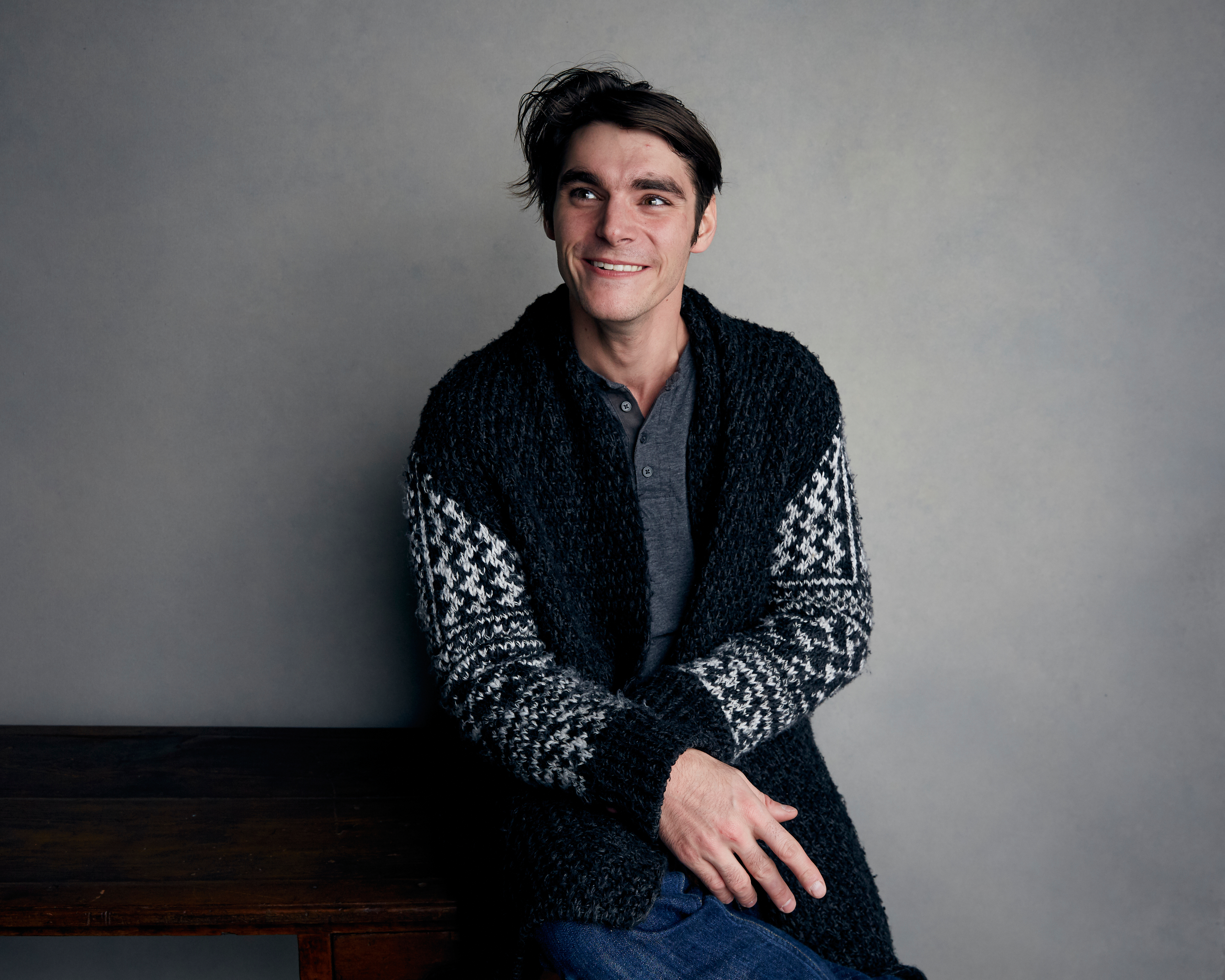
    LOS ANGELES — Actor and disability rights advocate RJ Mitte, who brought a lifetime of experience with cerebral palsy to fictional family struggles in an essential role on Breaking Bad, died Monday at age 34, authorities and his representatives said.

    Cameron County Justice of the Peace Cyndi Hinojosa told the Associated Press on Monday she declared Mr. Mitte dead at about 1:30 p.m. at what she believed was his home in Brownsville, Texas. She said she was unable to provide a cause, but an autopsy would be performed. Mr. Mitte’s representatives said Tuesday that he died by suicide.

    Mr. Mitte played Walter White Jr., the son of Bryan Cranston’s chemistry teacher-turned-meth dealer, on nearly every episode of the five-season AMC show, which won 16 Emmys and was recently ranked as the best of the 21st century in a New York Times poll.

    Cranston said he is in “deep despair” for the loss of his “sweet son.”

    “I met him when he was only 14 years old when he was cast as Walter White Jr., a part he played with such joy and enthusiasm,” Cranston said in a Facebook post Monday night. “Born with Cerebral Palsy, he never — ever — allowed that challenge to be an excuse for anything. He met the demanding shooting schedule head on with great determination.”

    Mr. Mitte told the AP in 2014 that his disability and the surrounding struggles with physical therapy, family problems, and exorbitant medical bills — all key subjects on the show — made him better at his job.

    “You develop a different mentality and you develop a different look at how the world sees you and how you see the world,” he said. “You’re able to use that. And I think it’s an asset instead of something that would hinder.”

    Mr. Mitte was born and raised in Jackson, Miss. He had small guest roles on sitcoms after moving to Los Angeles in 2006 to act before landing Breaking Bad in 2007. The show ran from 2008 to 2013.

    “That kid was pretty raw when we started shooting the pilot,” Cranston said in his post, “but little by little we watched him grow into a really fine actor.”

    “I loved him, and thoroughly enjoyed being with him throughout the years on the series, and after the spotlight on Breaking Bad dimmed,” Cranston added.

    In a statement announcing his death Monday, Mr. Mitte’s representatives said he “brought authenticity to the role and built a platform on disability awareness and inclusion.” The statement said he used “his platform to challenge stereotypes and promote greater representation.”

    Mr. Mitte’s later credits included the ABC Family series Switched at Birth and the superhero satire series Guardians of Justice.

    He was also a producer of several independent films.

    As an advocate, he served as an ambassador for United Cerebral Palsy and Shriners Children’s. He was also president of his own Mitte Foundation supporting philanthropic and community initiatives around disabilities.

  • One of the organizers of a sprawling NCAA point-shaving scheme was sentenced to six years in prison

    One of the organizers of a sprawling NCAA point-shaving scheme was sentenced to six years in prison

    One of the organizers of a scheme to secretly fix college basketball games to benefit professional gamblers was sentenced Tuesday to six years in federal prison — the first penalty imposed in a sprawling scandal that was unveiled in Philadelphia and attracted international attention.

    Jalen Smith, 30, of Charlotte, N.C., apologized for his actions during a sentencing hearing before U.S. District Judge Nitza I. Quiñones Alejandro, saying he was drawn to the prospect of easy money, and that he now recognizes his actions were wrong.

    “My decisions have consequences,” Smith said, “and I accept all of them.”

    Smith, a onetime basketball trainer, pleaded guilty earlier this year to bribery and wire fraud charges for working with other trainers and professional gamblers to recruit NCAA players to underperform in games.

    In exchange, prosecutors said, the players were paid bribes — often worth thousands of dollars — while Smith and his co-conspirators placed or coordinated large wagers on the outcomes they expected, such as by betting against players or teams to score a certain number of points.

    Smith was one of the scheme’s lead recruiters, prosecutors said, identifying players to participate, paying their bribe money, and delivering instructions and encouragement via text messages and FaceTime calls.

    He also pleaded guilty to illegally possessing a handgun that federal authorities found in his house while executing a search warrant related to the gambling case.

    Prosecutors said the gambling scheme — which began in the Chinese professional basketball league and expanded to include NCAA contests — affected at least 17 universities and 29 games, and caused gamblers to place more than $3 million in illicit bets.

    “This was an extremely serious, far-reaching, massive bribery [and] sports fixing case,” Assistant U.S. Attorney Louis D. Lappen said in court. “I don’t know that we’ve ever seen anything bigger than this anywhere.”

    Still, Smith said he didn’t make anywhere near the amount of money his coconspirators did. And his attorney, Rocco Cipparone, said Smith’s windfall over two years totaled around $75,000.

    “I was used as a pawn in this scheme,” Smith said in court.

    The U.S. Attorney’s Office announced charges against more than two dozen people in January. At the time, the case attracted widespread attention in part because it was one of several federal prosecutions nationwide to target alleged criminality in sports gambling.

    Betting on sports — once considered something of a taboo, and previously relegated to shady offshore operations or informal in-person groups — has exploded across the country in recent years, as many states have moved to legalize sports betting or so-called prediction markets.

    In this case, prosecutors said, the scheme began in 2022, when a group of “fixers” approached Antonio Blakeney — a former NBA player who went on to star on the Jiangsu Dragons in China — and offered him bribes in exchange for deliberately underperforming in future games.

    Smith was not involved in that part of the scheme, prosecutors said. But one of the operation’s masterminds was Shane Hennen, a former Philadelphia resident and well-known sports bettor. And once the scheme showed promise in China, prosecutors said, the leaders decided to try the same tactics in college games.

    That’s how Smith became involved, prosecutors said. He used his connections in the basketball world to recruit players — mostly from smaller schools — and kept them engaged with money and texts or calls promising future earnings.

    Sometimes that meant sending text messages before or even during games. In 2024, for example, Smith told a player on North Carolina A&T State University that his team needed to lose to Towson University by at least 10 points.

    “If it start looking shaky[,] tell 2 or 3 other [teammates] what it is and they paid too,” Smith wrote, according to prosecutors.

    More than half of the defendants charged in the scheme have pleaded guilty. Hennen, the former Philadelphia-based bettor who helped launch the operation, is scheduled to do so this week, according to court records.

    A trial for the remaining defendants, meanwhile, is scheduled to begin next year.

  • There’s a $10,000 treasure hunt going on in Philly right now

    There’s a $10,000 treasure hunt going on in Philly right now

    If you’re broke, bored at work, or interested in a challenge, there’s hidden treasure being cached at iconic Philadelphia locations this week, worth up to $10,000.

    The treasure hunt, which begins today, is organized by Stack’s Bowers Galleries, a longtime Philadelphia-based rare coin dealer, and the treasure-hunting account @findthecashphl. Philadelphia is one of four cities participating in “Treasure Hunt 2026,” a nationwide scavenger hunt with up to $40,000 in prizes hidden across four cities this October.

    According to a Stack’s Bowers news release, one certificate will be hidden outdoors in Philadelphia through Saturday. Clues are posted daily at 5:30 p.m. on Instagram at @StacksBowers_Philly, and more details are available at stacksbowers.com.

    Both Instagram accounts may already be offering up location clues in their posts, including the Rocky statue and City Hall. If you think you’ve figured it out, though, you’ll have to race there because @findthecashphl already has 180,000 followers.

    The first person to find the certificate each day can redeem it at the Stack’s Bowers gallery at 17th and Market Streets for a collectible coin or currency prize. The prizes, according to the company, range from an approximate retail value of $300 to a grand prize valued at around $3,500.

    Prizes offered up by Stack’s Bowers for the Philadelphia treasure hunt this week.Provided

    Last year, the Inquirer wrote about two brothers who started their own treasure hunting business called Veil Hunts. In those hunts, users subscribe to a website that offers clues, eventually narrowing the cache down to a specific site. Those treasures also included a code that was redeemed via email.

  • Elon Musk’s megaphone propels conspiracy theory about James Talarico

    Elon Musk’s megaphone propels conspiracy theory about James Talarico

    Elon Musk elevated a false conspiracy theory about Democratic Senate nominee James Talarico over the weekend, lifting a fringe claim concerning the Texan’s mental health to the forefront of users’ X feeds, where it garnered hundreds of thousands of impressions.

    “The Talarico campaign is hiding something big that voters ought to know about,” Musk wrote Sunday afternoon, replying to a post alleging that Talarico had been checked into the Lindner Center of Hope, a mental health facility in suburban Cincinnati. Musk’s reply amassed over 870,000 views, more than double the impression count of the post to which he was responding.

    The theory had been circulating online for days, fueled by Talarico’s absence from the campaign trail, which his team has consistently said was due to the flu. Texas Attorney General Ken Paxton promoted a “Tala-Freak-Out Tip Line” on Friday, which was still active as of Monday night. President Donald Trump weighed in, arguing the Democrat’s convalescence was too long to be the “flu bug.”

    Musk’s engagement with the theory gave it a much wider audience — and the flurry of attention ultimately prompted the treatment center in Mason, Ohio, to publicly refute the allegations.

    “Rep. James Talarico has never received treatment from Lindner Center of Hope,” the facility wrote in a statement posted to X, five hours after Musk’s initial posts on the subject. Talarico replied to the post Monday, saying he had “never even been to Ohio,” with a laughing emoji.

    A day earlier, he described the conspiracy theory as “the craziest thing I’ve ever heard” in an interview with MS NOW. Talarico’s spokesperson, JT Ennis, said the claims were a “lie designed to promote a pathetic conspiracy theory.”

    The episode demonstrates a key way that Musk is wielding political power in the midterms. He has retreated from the political spotlight after his public feud with Trump in 2025. He has taken a lower-profile approach to political spending this election cycle. He has used his formidable war chest to quietly back efforts to elect Republicans to office. The New York Times reported on Monday his midterm spending has swelled to at least $276 million since the beginning of July, making him the Republicans’ top individual donor.

    But on X, the social media platform he bought in 2022 and later folded into SpaceX, Musk continues to be outspoken about candidates and political issues — and his enormous audience acts as an influence machine, propelling a fringe claim into the political conversation with a single post.

    “You have someone … who is in bed with the political party, or an agenda, and is spreading falsehoods about an opponent who is gaining a tremendous amount of traction,” said Danielle Citron, a University of Virginia law professor who has spent more than a decade researching and writing about online abuse and has advised campaigns on the subject. “It is like a thumb on the scale that we haven’t really ever seen.”

    The Lindner Center of Hope and Musk did not respond to requests for comment.

    The theory surrounding Talarico originated in far-right circles, spreading further when right-wing influencer Nick Sortor posted an audio clip. The clip, which he claimed was a clinic employee stating that Talarico had recently been discharged, received 7.3 million views according to X. Sortor called for the Texas Democrat to quit the race.

    Talarico’s campaign said the candidate had been recovering from the flu, leading to a nine-day absence from the campaign trail. He appeared at an Austin music festival on Friday, even though the call that Sortor posted was recorded on Saturday night, according to phone logs posted by the caller.

    The conspiracy theories drove mentions of Talarico among key right-wing figures — including politicians and influencers — to their highest rate on record, a Washington Post analysis found.

    Until last week, Musk had posted relatively infrequently on Talarico — just twice in the past year. Since Wednesday, however, Musk has posted about Talarico at least a dozen times.

    One of Musk’s posts Sunday, a repost to his more than 240 million followers, put the onus on Talarico to clear the record: “If this was not true, Talarico’s campaign would immediately authorize the release of the records to clear him.”

    While Sortor’s audio clip led discussion to peak between 1 and 2 p.m. on Sunday, Musk weighed in as the matter was driving a significant level of conversation in right-wing circles — and it continued to hold traction for about eight hours afterward.

    Jared Holt, a senior researcher at Open Measures, a platform that measures the spread of online extremism and disinformation, said Musk’s elevation helped claims like Sortor’s proliferate.

    “His engagement with posts promoting the claims did boost them to wider audiences than they may have reached otherwise and likely served to legitimize them in the eyes of ideologically aligned users,” Holt said in an email.

    This kind of public attention can prove dangerous for ordinary figures suddenly lifted to the center of public fascination, he added. “The ecosystem where these claims spread has regularly elicited threats to schools, medical facilities, election offices, courts, and private businesses,” Holt said.

    Since buying the site formerly known as Twitter in 2022, Musk has regularly injected high-profile misinformation into users’ feeds.

    Late last year, Musk elevated allegations that members of the Somali-American community were involved in widespread fraud. Some rogue X users followed the posts from participants in the fraud claims to real life locations. Musk has also spread baseless theories about a volunteer in a Thai cave rescue, California wildfires, and other topics.

    In 2022, shortly after acquiring Twitter, Musk elevated a conspiracy theory about Paul Pelosi, the husband of former Democratic House speaker Nancy Pelosi, who was badly injured in an attack at the family’s San Francisco home after a hammer-wielding intruder broke in and struck him in the head repeatedly.

    The rapid spread of online theories can place political campaigns in a tricky situation. Zac Petkanas was Hillary Clinton’s rapid response director during the 2016 campaign, when online conspiracy theories alleged Clinton was secretly seriously ill and had to employ a body double to replace her on the campaign trail.

    “The way that it mattered [to Clinton’s campaign] was not that people believed Pizzagate or other conspiracy theories; it’s that it contributed to a narrative that she was potentially untrustworthy,” Petkanas said. “It was sort of a death by 1,000 paper cuts, and that was partly because people were really having to judge information coming off of the internet and realizing the scale at which misinformation could be weaponized. It’s 10 years later. People are much more inured to that.”

    Citron, the University of Virginia law professor, said actors take advantage of the short windows between campaigns and elections to spread falsehoods because they are unlikely to face consequences. If a claim is defamatory, for example, she said, the matter can take too long to resolve in the courts to have an impact on the race.

    “Given we’re within 30 days of an election, I think your lawsuit is not doing anything for you,” she said. “They know they’re in that chokepoint where you can tip an election. … It’s timed just right.”

  • In Ohio, some Trump voters question whether he’s still fighting for them

    In Ohio, some Trump voters question whether he’s still fighting for them

    YOUNGSTOWN, Ohio — President Donald Trump carried Ohio in three consecutive elections by promising voters in places like this former steelmaking powerhouse that he would revive American manufacturing and put blue-collar workers first.

    As he returned Monday to rally support for Republicans in the midterm elections, some onetime supporters questioned whether the president’s vision of American economic prosperity still includes them.

    The shift was on display at his rally at the Covelli Centre, where entire sections of the arena and upper levels sat mostly empty. Trump, who often brags about the size of crowds at his events, made no mention of the attendance on Monday night.

    As they pay more for groceries, struggle with high housing costs, and wince at prices at the gas pump, some former Trump voters say they feel a disconnect between their priorities and his. For some, that gap has widened as a new wave of proposed data centers in the area raises questions about who stands to benefit from the next chapter of American industrial growth.

    For William Akel, a 26-year-old resident of Niles, Ohio, just north of here, the president’s embrace of AI has become another reason to question his economic priorities.

    “I hate [AI and data centers] with a passion,” he said. “AI is going to take the jobs, and then what jobs are we going to have? Probably fixing the AI?”

    Akel, who works delivering soda to grocery stores, voted for Trump in 2020, saying he felt safe serving in the military during the president’s first term. But he backed Kamala Harris in 2024. He remains undecided about the upcoming midterms.

    “I think he’s just lost in the sauce,” Akel said of Trump. “He sees [AI] as a way to make more money. … They’re putting billions and billions into all that. Where’s it all coming from? You’ve got people starving here.”

    A few miles away, in Liberty, Ohio, Brian, a 54-year-old who voted for Trump in all three of his elections, voiced a similar discontent.

    “I’m extremely disappointed in him,” he said, speaking on the condition that only his first name be used because of concerns about his privacy during a politically contentious season. “I fell for it.”

    Sitting at the counter of the Yankee Kitchen Restaurant in Vienna, Ohio, he described losing his job of roughly 25 years as a welder and confronting a job market he called a “ghost town.” He watched steel plants and then auto plants shutter across the region, leaving some former factory workers stocking shelves at Walmart.

    Now, he plans to vote only in local races in the upcoming election, saying he cannot stand either party’s candidates for Senate or governor.

    He shares Akel’s doubts about data centers and Trump’s assurances that technology companies will cover the additional electricity costs associated with them.

    “We’re going to pay for all of this,” he said. “We always do.”

    Such feelings highlight a vulnerability for Republicans in the industrial Midwest. Trump’s first-term promises to champion forgotten workers appealed to blue-collar voters who historically supported Democrats. His second-term embrace of AI and the tech companies building it is testing whether voters still see him as an advocate of their economic interests, or those of the powerful he once criticized. Some of his supporters here also expressed concerns about the war with Iran, questioning why the United States is paying for another conflict in the Middle East while people experience economic hardship at home.

    During Monday’s rally, Trump didn’t acknowledge the economic hardship many people in the area feel, instead painting his second term as an economic boom and harshly attacking several immigrant nationalities, notably Somalis and Haitians.

    “All they do is kill each other in the streets. Then they come into the United States of America and they tell us how to run our country,” he said of Somalis, whom he blamed for violence and fraud.

    His attacks came on the same day federal agents raided the home of Rep. Ilhan Omar, a Somali American member of Congress from Minneapolis who Trump mocked.

    “She’s telling us about the constitution, and she comes from one of the worst countries anywhere on the planet,” he said.

    On the economy, he asserted that “after years of steel mills and factories closing across Ohio, our steel industry is roaring back to life.”

    And he repeated his frequent claim that he has brought $21 trillion in investment to the United States. That figure is trillions higher than the numbers the White House has announced, which are based in part on announcements that companies have made about future plans for projects that have not yet created jobs.

    He claimed to have drawn manufacturing back to the United States, including through “super intelligence,” the term he uses for AI. The crowd gave only a tepid response when he touted the technology.

    The White House pointed to a wave of companies announcing investments in Ohio, including Bayer, Honda, and Kreate. Many of the investments could bring jobs to the state, but positions have not yet been filled.

    Some of the largest investments the administration pointed to were in data centers, including Nvidia’s announcement that it would provide up to $105 billion to pay for a new artificial intelligence data center for OpenAI in Pike County, Ohio. The White House also highlighted a $20 billion investment from Damac Properties, which targets Ohio for significant data center expansion.

    Data centers have dominated the ads in the Ohio Senate race, where Democratic former senator Sherrod Brown is challenging the Republican incumbent, Sen. Jon Husted. The National Republican Senatorial Committee wrote in a memo obtained by the Washington Post in August that data centers are “the anchor hanging around Husted’s neck.”

    The dissonance was on display when Trump rallied for Husted on his last visit to Ohio nine days ago. The crowd at Butler High School in Vandalia, on the western side of the state, started out enthusiastic but grew much quieter as the president extolled the benefits of data centers.

    “We want them,” Trump said. “Look, there’s so much money to be made for Ohio, you can’t just turn them off. They’ll go to China.”

    Even many of Trump’s supporters here said in interviews that they do not want data centers in their backyards, citing concerns about higher electric bills and noise.

    Voters favor Brown over Husted to handle data centers by an 11-point margin, according to a recent New York Times and Siena University poll. Three percent of Ohio voters said it was the most important issue to them in the midterms — a small percentage but still higher than in any other state.

    Data centers have dominated local ads, as Brown’s allies have sought to paint Husted as “the face of data centers.”

    Some of Trump’s longtime supporters say the opposition to data centers reflects a lack of education.

    “You have got to have data centers,” said Mike Loychik, a 63-year-old resident of Niles. “Everything we do is data centers. Credit cards, Facebook, social media, ChatGPT.”

    Loychik plans to vote for Husted and Vivek Ramaswamy, the Republican candidate for governor.

    Trump did not tout data centers Monday. Instead he trumpeted Husted’s football career and made frequent comments about his athletic appearance, at one point saying he “looked at his ass.”

    He also heavily attacked Democrats, whom he repeatedly called “crazy.”

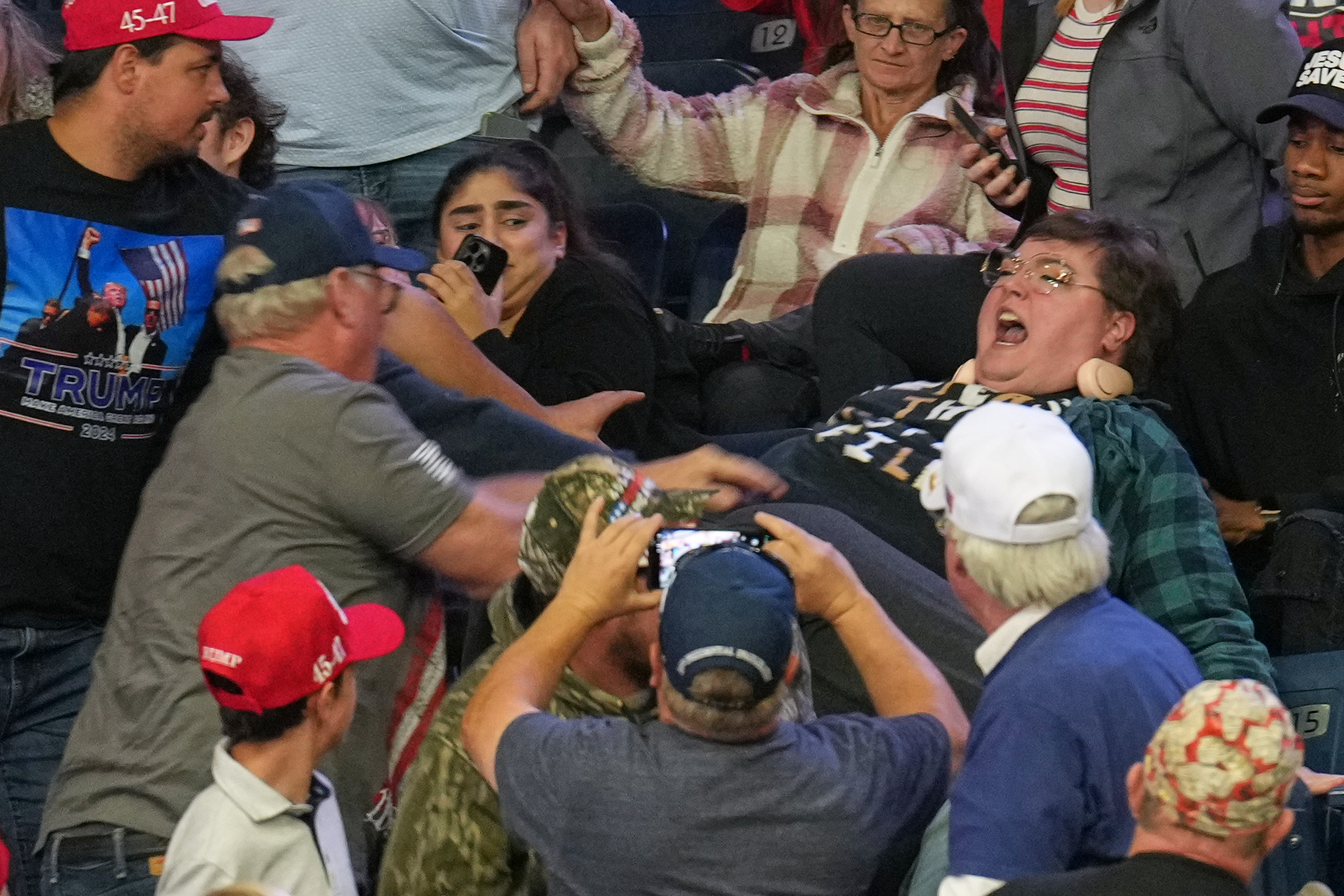
    The rally was interrupted multiple times by protesters, whom the president mocked. He called one man who got in a scuffle with security a “fat one” and suggested he should go on a diet.

    Loychik, who has attended about six Trump rallies, said Trump is doing the “best he can under the circumstances with the Iran war.”

    But even such a loyal Trump backer has concerns: He wished the president would talk more on the campaign trail about the issues bothering voters, including the price of gas, healthcare, and the military, he said.

    “He seems like he talks about himself more than the issues,” Loychik said. “So it’s kind of a turnoff right now.”

  • Marty Weinberg, retired attorney, former city solicitor, and longtime political power broker, has died at 89

    Marty Weinberg, retired attorney, former city solicitor, and longtime political power broker, has died at 89

    Marty Weinberg, 89, of Bala Cynwyd, longtime attorney and retired chair of the Obermayer Rebmann Maxwell & Hippel LLP law firm, onetime city solicitor and assistant district attorney, 1999 mayoral candidate, popular political strategist and behind-the-scenes power broker, former associate professor of law at Drexel University, mentor, and sports star at South Philadelphia High School, died Tuesday, Oct. 6, of pneumonia at Bryn Mawr Hospital.

    Born and reared in South Philadelphia, Mr. Weinberg earned his law degree at Temple University in 1961 and worked for four years as a city assistant district attorney and six years as an associate professor of law at Drexel. He joined the 1971 mayoral campaign of fellow South Philadelphian Frank Rizzo as deputy campaign manager and rose to campaign manager and Rizzo confidant for the 1975, 1983, and 1991 reelection bids.

    In 1971, a month before he was elected mayor, Rizzo told The Inquirer that Mr. Weinberg, then 34, was his go-to guy when he needed help. “I talk to everybody who comes in,” Rizzo said. “I listen for a while, and if I decide he’s goofy, I open the door and yell ‘Marty.’”

    As Rizzo’s city solicitor from 1972 to ’74, Mr. Weinberg negotiated labor contracts, litigated a ban on the sale of horse meat, reduced the number of city consultants, battled Tinicum Township over tax revenue from Philadelphia International Airport, and juggled other thorny legal and political issues. Former State Sen. Vincent J. Fumo told The Inquirer in 1976 that Mr. Weinberg was “the most personable and intelligent of the men around Rizzo.”

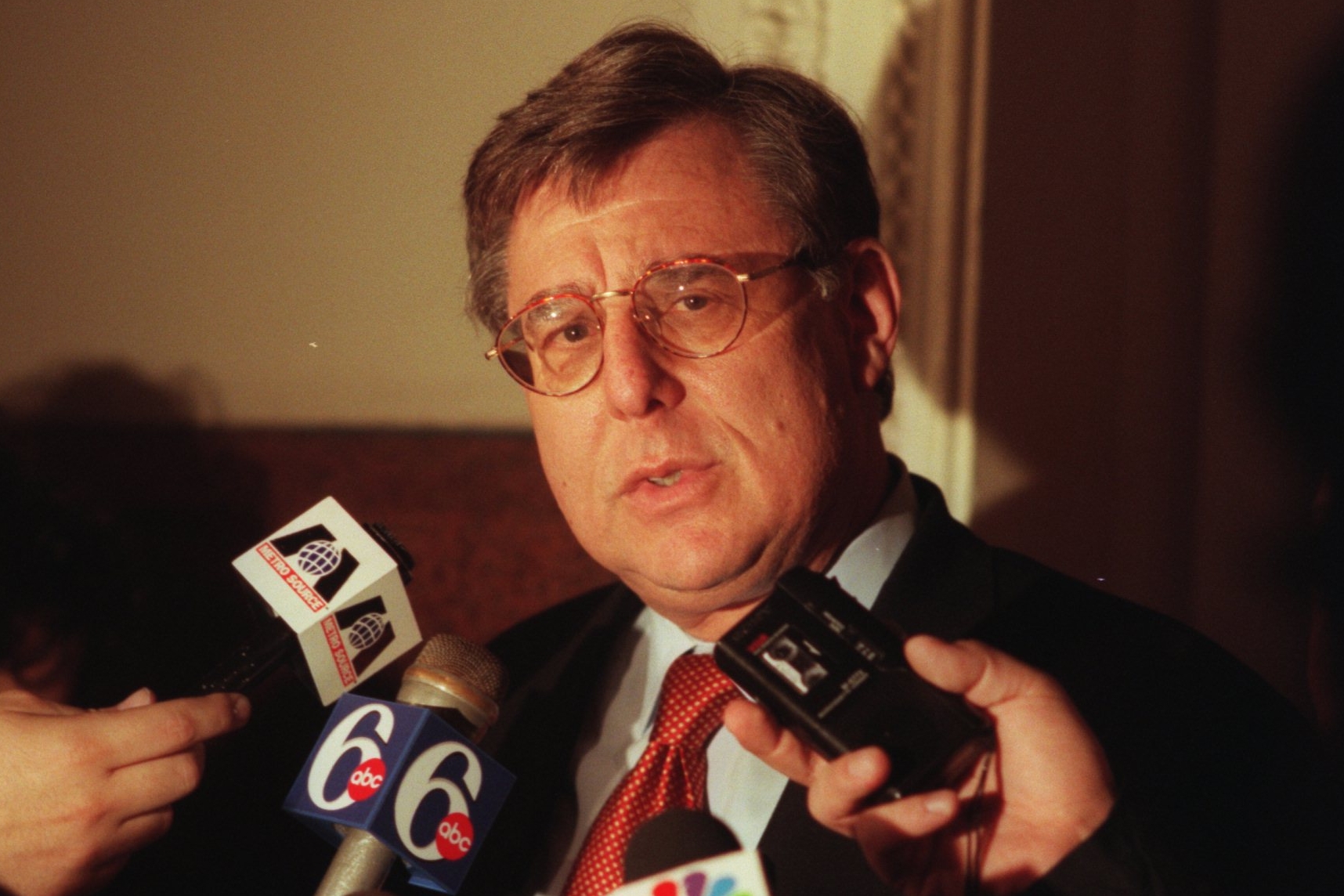
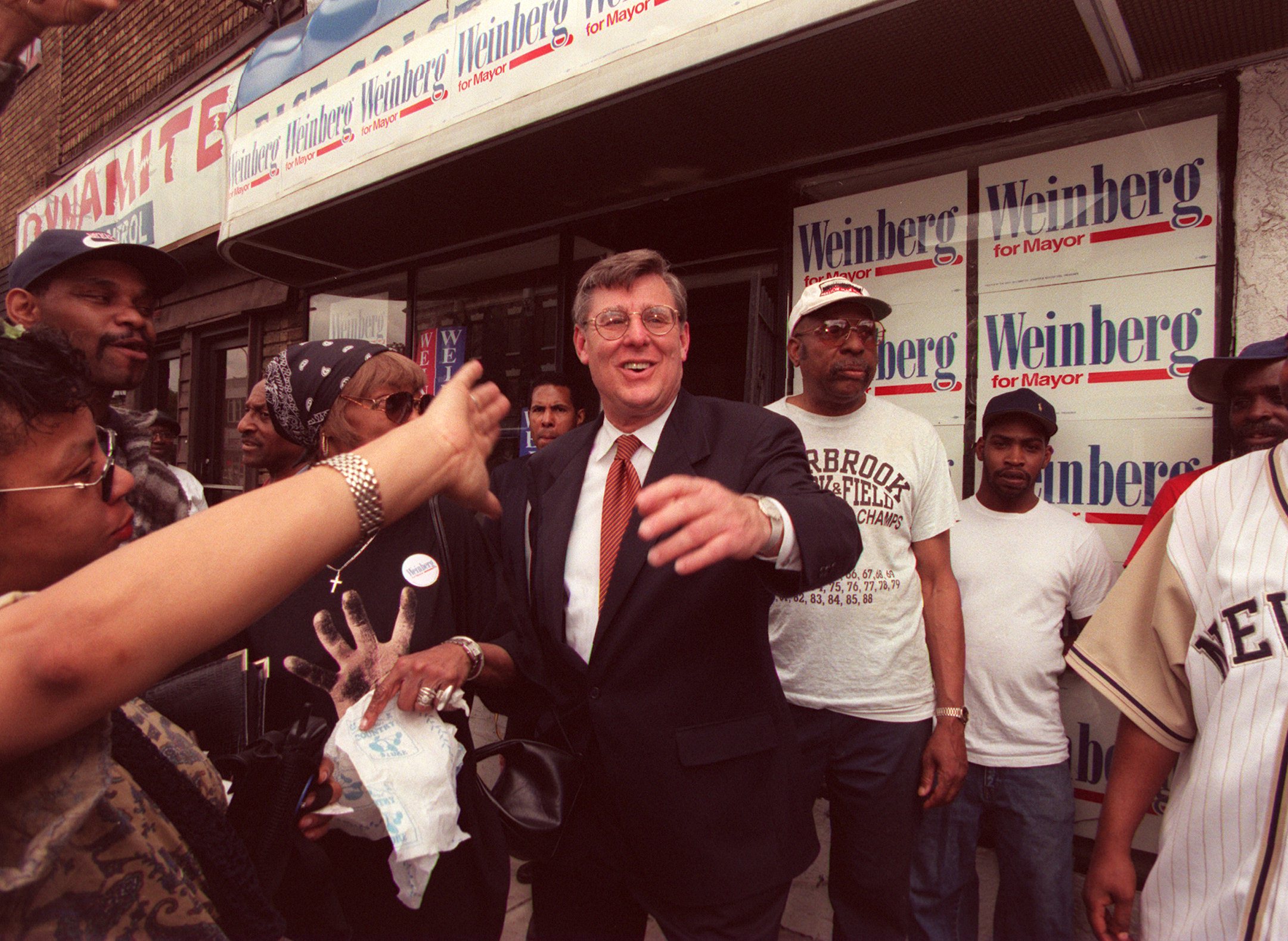
    Mr. Weinberg said he enjoyed campaigning for mayor in 1999. Ron Cortes / Staff Photographer

    In 1987, Rizzo told The Inquirer: “If anybody was to ask me who, next to my family, was my dearest friend, I’d have to say Weinberg. … I don’t think I could have been as successful as I have been in my political career without a Marty Weinberg.”

    Mr. Weinberg also served as chair of the Democratic City Committee from 1976 to 1980, was longtime counsel to the Philadelphia Gas Works, and was appointed by Gov. Tom Ridge to the state’s Court of Judicial Discipline in 1996.

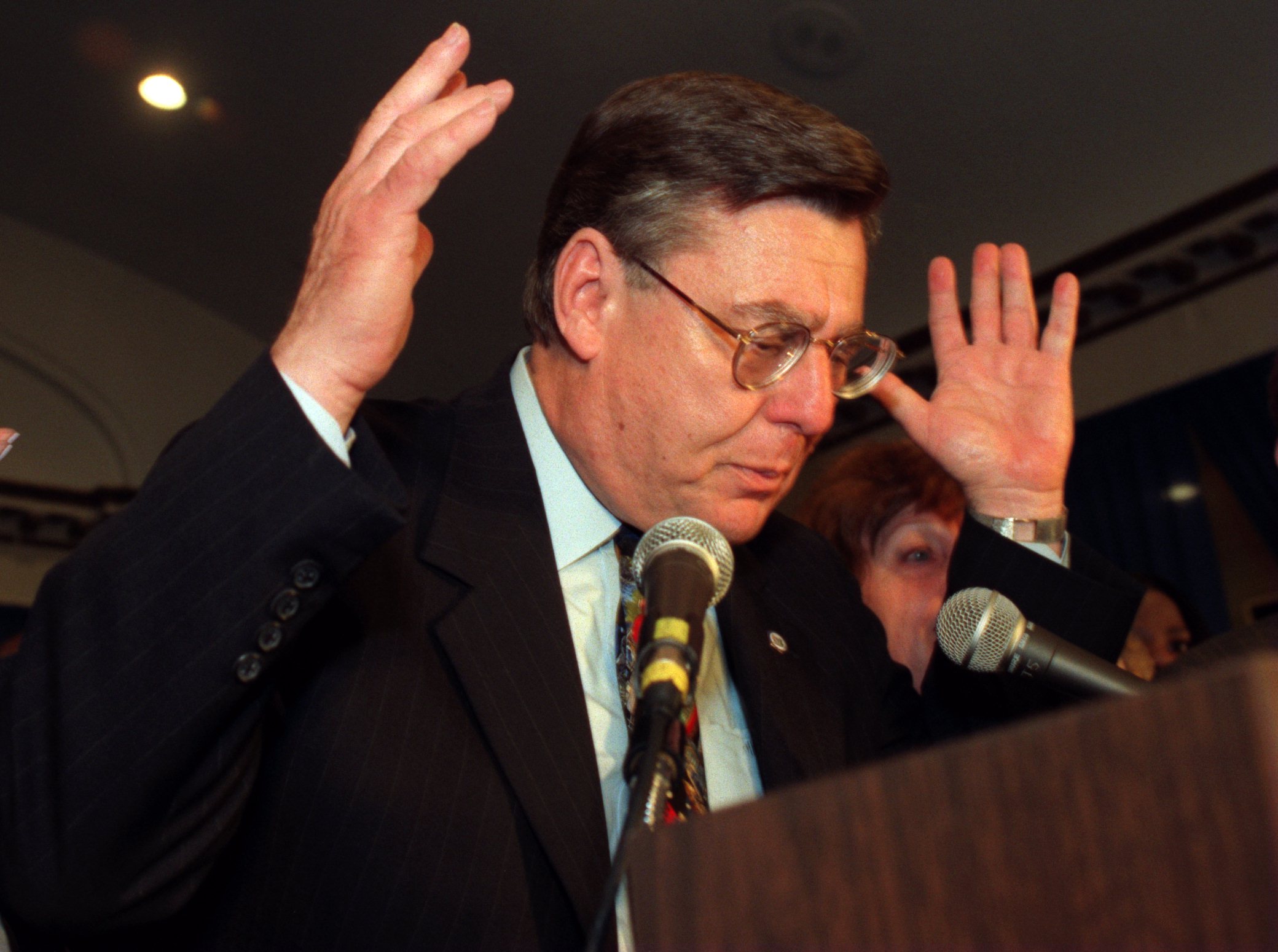
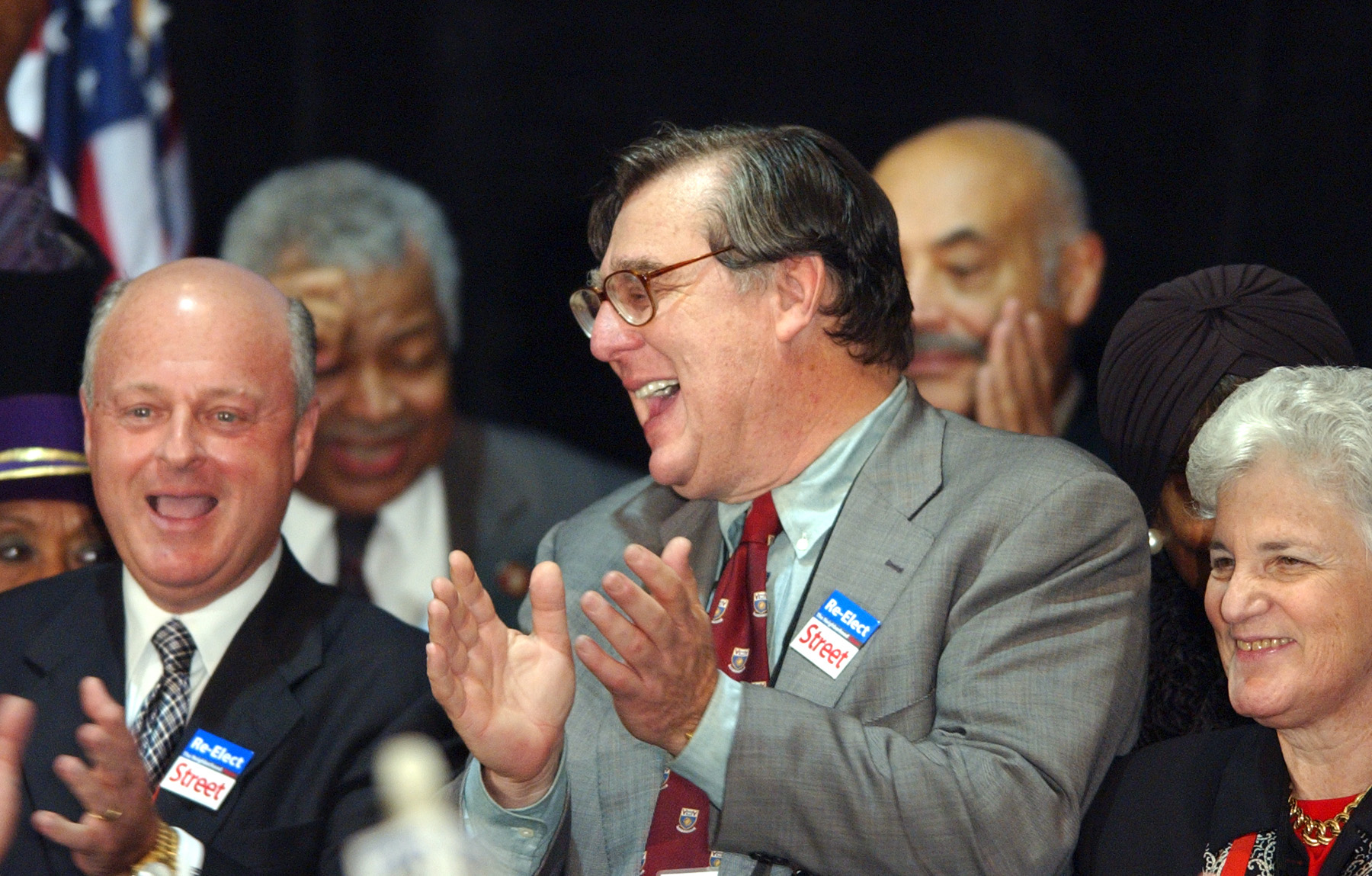
    He finished second to former Mayor John F. Street in the 1999 Democratic primary for mayor and told The Inquirer: “All my life I’ve wanted to be the mayor of the city. I thought I would be the best mayor.”

    He advised many candidates, both Democratic and Republican, during heated campaigns over six decades, and got entangled in various political intrigues and controversies. He considered but declined to run for the state Supreme Court in 2001 partly because, he told The Inquirer, political campaign strategy was his thing. “I think that’s what drives me more than anything else,” he said.

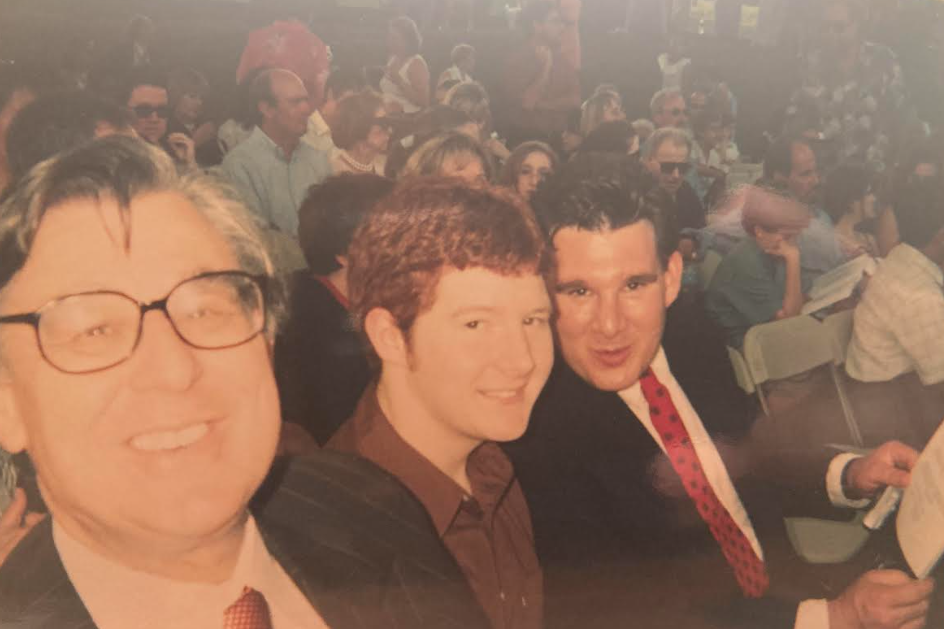
    Mr. Weinberg (below center) was a passionate and affable politician and attorney, colleagues said.

    Peter Tobia / Staff Photographer

    He joined Obermayer in 1974 and specialized in administrative and regulatory law. He was especially adept, his wife, Martha, said, “at bringing people together.”

    His caricature hung on the wall with other Philly notables at the old Palm Restaurant on Broad Street, and his name appeared in newspaper society pages nearly as often as political columns. He retired a few years ago.

    Mr. Weinberg graduated from South Philadelphia High School in 1955. He played second base on the baseball team and started a legendary triple play that helped clinch the 1954 city championship. He was the all-star captain of the 1954-55 basketball team, played against future Hall of Famer Wilt Chamberlain, and earned a basketball scholarship to Drexel.

    He was inducted into the Drexel Alumni Hall of Fame in 1994. “People said he was so honest,” his son, Bernard, said. “When he was running for mayor, people would see me and say, ‘You’re honest Abe’s son,’ referring, of course, to Abraham Lincoln. And I knew what they meant.”

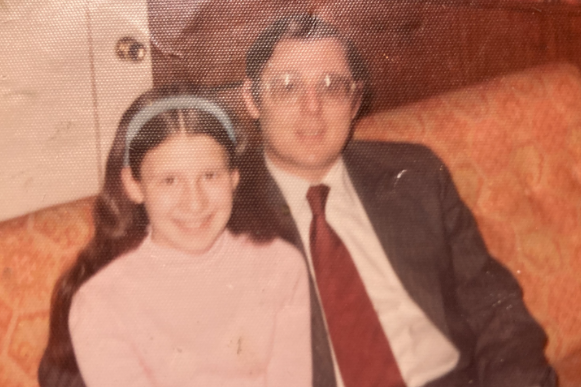
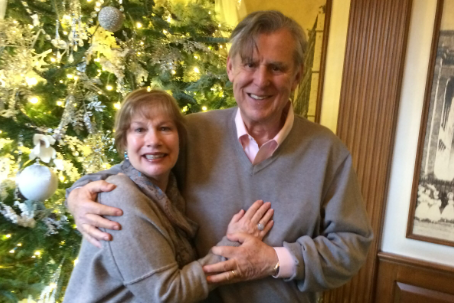
    Mr. Weinberg (below left) enjoyed time with his family. Courtesy of the family

    Martin Weinberg was born March 27, 1937. He grew up at Ninth and Shunk Streets in South Philadelphia, and was the youngest of three sons.

    His father, Emanuel, was a Democratic City Council member from 1957 to 1966, and Mr. Weinberg accompanied him often to political meetings, rallies, and the polls on Election Day. In 1975, Mr. Weinberg told The Inquirer that his father’s doctor told the elder Weinberg that he should quit politics, move to Arizona, and monitor his serious heart condition.

    Mr. Weinberg said: “My father said, ‘Hell, doc, I’d rather die a politician in Philadelphia than live another 10 years in Phoenix.’”

    Mr. Weinberg took ballet classes as a boy, he told The Inquirer, and earned a bachelor’s degree at Drexel in 1958. He married Carol Wenit, and they had a daughter, Barbara, and a son, Bernard. After a divorce, he married Mary Ellen Leonard. She died in 2005.

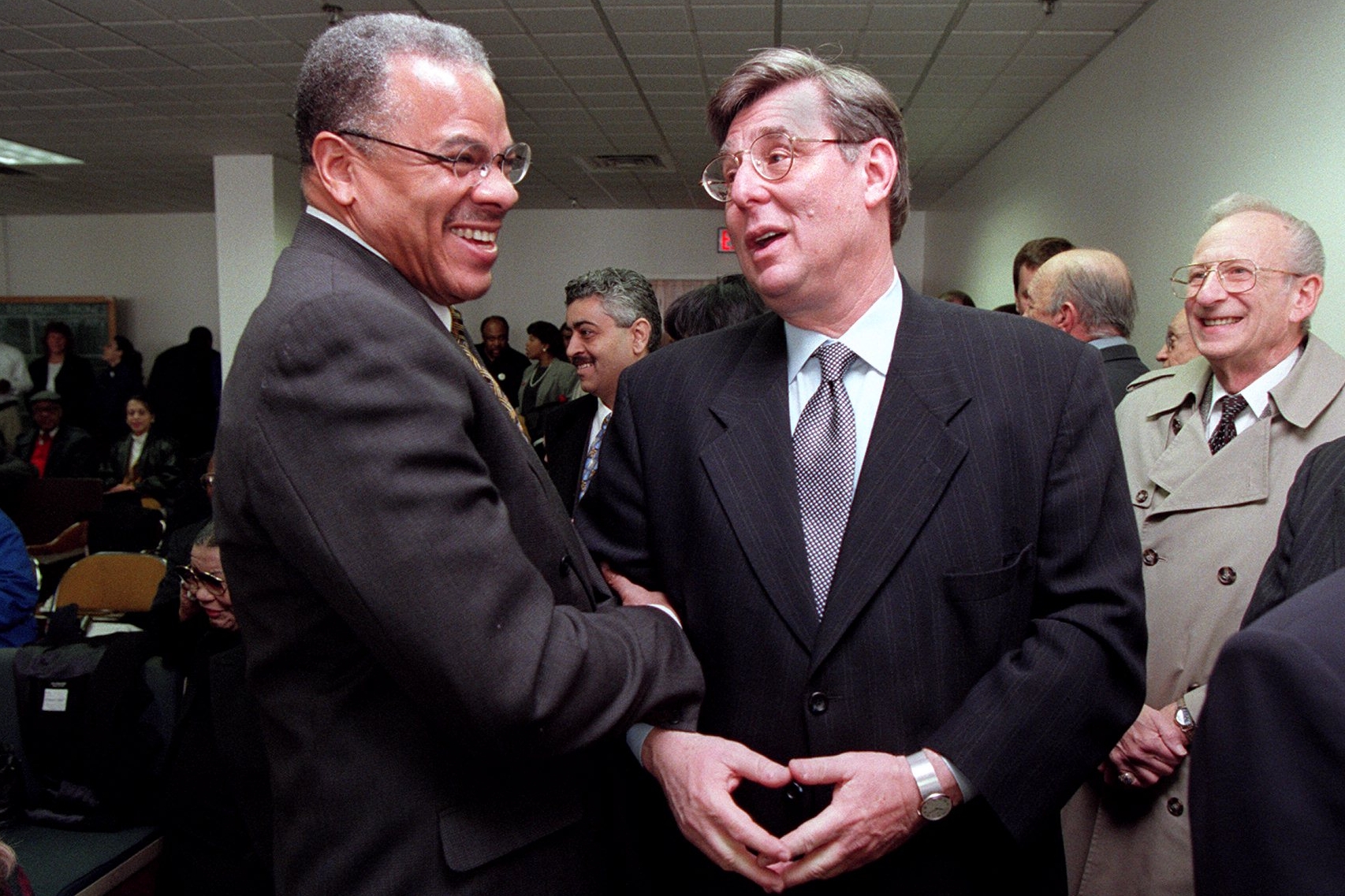
    Mr. Weinberg and his wife, Martha, married in 2010. Below, Mr. Weinberg (right) chats with fellow mayoral candidate John White in 1999.Courtesy of the family

    He married Sandra Schultz Newman in 2007, and that union was annulled seven months later. Newman died in February.

    Mr. Weinberg married Martha Shaw on Oct. 10, 2010, at 10:10 a.m., and they lived in Bala Cynwyd. He doted on his family and was a die-hard Phillies and Eagles fan.

    “He was a fiercely loving, loyal, and protective father,” his daughter said. “He always wanted to be there for us.”

    His wife said: “He loved to create memories that made good stories, and he was such a good storyteller. My mother called him a hoot. To me, he was larger than life.”

    In addition to his wife, children, and first former wife, Mr. Weinberg is survived by a daughter-in-law, Jaimie, two grandsons, six great-grandchildren, and other relatives. Two brothers died earlier.

    Private services were held earlier.

    Donations in his name may be made to the Tunnel to Towers Foundation, 2361 Hylan Blvd., Staten Island, N.Y. 10306.