Category: News

  • Trump ties disaster aid to votes as midterm fight heats up

    Trump ties disaster aid to votes as midterm fight heats up

    WASHINGTON — The White House is using federal disaster relief as leverage while Republicans fight to keep power in Washington, with President Donald Trump saying on one occasion that voting for Democrats could mean less money for states.

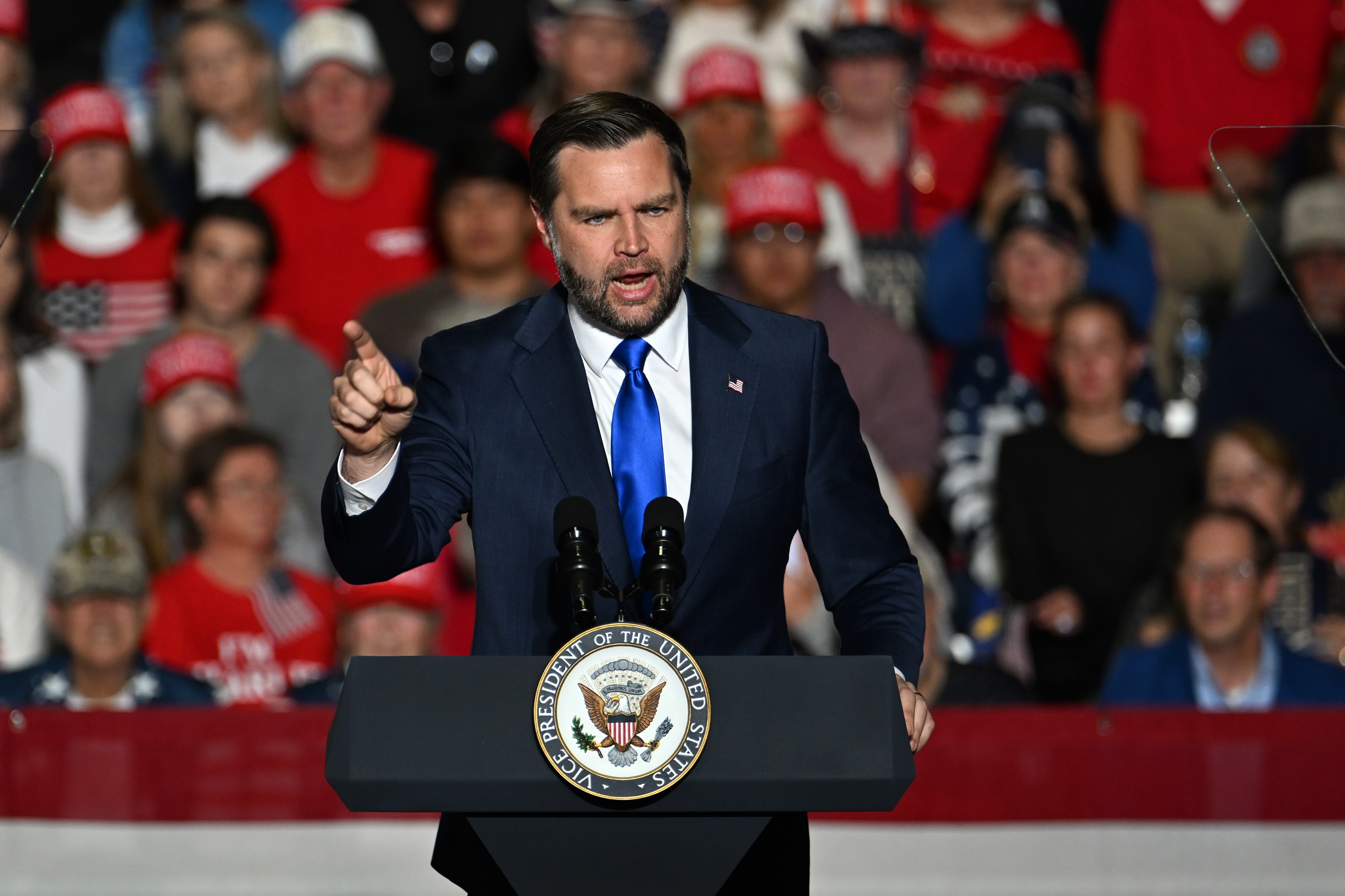
    During a Monday visit to western North Carolina communities still struggling to recover from Hurricane Helene two years ago, Vice President JD Vance promised more than $800 million in additional aid for the region.

    But weeks earlier, Trump had said he would withhold aid if Democrat Roy Cooper wins a hotly contested Senate fight in North Carolina.

    The president immediately said he was joking, but he has linked disaster assistance there and in other states to his support for Republican candidates. States that tend to vote for Democrats have faced a longer wait for aid and seen their requests rejected more often, according to analyses of federal disaster declarations during Trump’s second term.

    In a speech in Greenville, N.C., Tuesday night, Trump discussed Hurricane Helene, which he called a “water-cane” because of the volume of rain involved. The president blamed Cooper, the former governor, for failing to help clean up from Helene’s destruction.

    “It was a disaster,” Trump said. “I’ve never seen anything like it. I’ve been to some bad ones. This was one of the worst. Roy Cooper did nothing. And the only way it got fixed is when I became president on Jan. 20.”

    In response, Cooper’s campaign pointed to executive orders he issued while governor to speed up recovery from Helene. Jordan Monaghan, a campaign spokesperson, said hurricane victims “aren’t pawns” and that “hurricane recovery isn’t a joke.”

    Experts said the Trump administration is underscoring the dangers of politicizing the disaster aid system.

    “People are smart enough to know that if the president wants to take away some people’s disaster aid, they can take away your disaster aid, and that’s just a bad system,” said Sarah Labowitz, a senior fellow who studies disaster policy at the Carnegie Endowment for International Peace.

    On the stump and on social media, Trump often references disaster aid.

    In Ohio last month, he approved a federal disaster declaration a day before speaking at a rally for Sen. Jon Husted, a Republican who is running for reelection in a tight race with Democrat Sherrod Brown. The declaration allowed aid from the Federal Emergency Management Agency to flow to communities affected by severe storms in August.

    “You had some bad storms, and Jon and everybody wanted me to help, and I took care of it,” Trump said.

    In a social media post announcing a disaster declaration for Wisconsin this month, he did not name Gov. Tony Evers, a Democrat, who is stepping down in January. Instead, Trump said he had spoken about damage from July tornadoes and storms with Rep. Tom Tiffany, the Republican gubernatorial candidate “who has my Complete and Total Endorsement to be the next Governor of the Great State of Wisconsin.”

    At the same time, the administration is also planning to shrink the federal role in disaster aid, telling states to prepare to handle more of the expense and response on their own.

    Cameron Hamilton, the FEMA administrator, underscored the expectation when he spoke to state emergency managers at their annual meeting in Arkansas on Tuesday, according to two people who were there and spoke on the condition of anonymity because parts of the event were not open to the public.

    States should have budget reserves to handle immediate disaster response without FEMA when necessary, Hamilton said. And he called on them to help each other through what is known as mutual aid. It was not clear to many emergency managers what that might look like, since there is already a robust national mutual aid system known as the Emergency Management Assistance Compact that works closely with FEMA.

    While Hamilton told managers Tuesday that some changes to shift more disaster responsibility onto states could come in the next six months, he has also made clear that FEMA plans to give states more time and help to beef up their emergency management capacity.

    Federal disaster policy has been an especially urgent issue in North Carolina since Helene struck in September 2024. FEMA has paid out about $10.8 billion there, covering just 18% of the roughly $60 billion in storm damage, a significantly lower rate than with other hurricanes, according to a report the North Carolina Budget and Tax Center released last month.

    Voters there are widely frustrated with FEMA. Less than 10% of state residents reported feeling “very satisfied” with the government’s response after Helene, according to a poll by North Carolina television stations WRAL and WSOC this month.

    In western North Carolina, the figure was even lower, at 5%.

    “It’s really upsetting knowing we were kind of left to ourselves,” said Gina Heath, a 49-year-old mother of three who has been helping neighbors recover in the town of Marshall. She called it frustrating to have aid “that should have already come be dangled in front of our face like a carrot. It’s a slap in the face.”

    During a visit to Gastonia, N.C., last month, Trump said that he would only send more disaster aid to the state if Michael Whatley, a Republican, wins the Senate seat. He quickly added: “No, I’m only kidding. You’re getting it.”

    Cooper has since gained in polls, with analysts rating the race as likely to flip to Democrats.

    Western North Carolina was one of a handful of regions in the nation where Trump got a smaller share of votes in 2024 than in 2020. Campaign operatives said at the time that the only factor they could imagine affecting the vote was the devastating aftermath of Hurricane Helene, which hit that fall. Trump frequently criticized FEMA from the campaign trail and falsely accused the Biden administration of sending hurricane relief to immigrants in the U.S. illegally.

    FILE — President Donald Trump arrives for a campaign rally in Park City, Kan., on Monday, Oct. 19, 2026. Trump said here that the Agriculture Department would provide $8 billion in economic aid to farmers hurt by high diesel prices; payment rates will be announced next month, and farmers will receive money at a later date. (Doug Mills/The New York Times)DOUG MILLS
  • Joseph T. Cox, celebrated former headmaster of the Haverford School and decorated 30-year Army veteran, has died at 80

    Joseph T. Cox, celebrated former headmaster of the Haverford School and decorated 30-year Army veteran, has died at 80

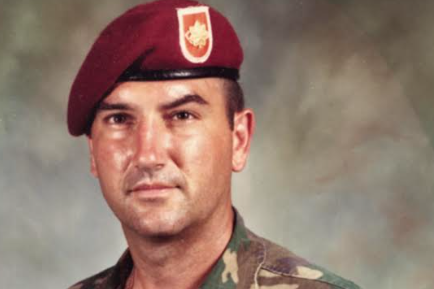
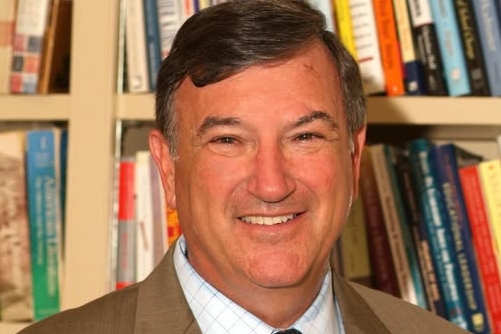
    Joseph T. Cox, 80, formerly of Haverford, celebrated former headmaster of the Haverford School, decorated 30-year Army veteran, former associate professor of English at the U.S. Military Academy in West Point, N.Y., author, poet, mentor, and volunteer, died Thursday, Oct. 8, of complications from dementia at Echo Lake assisted living center in Malvern.

    Born in Springfield, Mass., Dr. Cox joined the Army after college, served in Vietnam and stateside, rose to colonel, and taught English to cadets at West Point for more than 14 years. He joined the Haverford School in 1998 as its eighth headmaster and, until he retired in 2013, championed servant leadership, compassion, and enhanced student engagement at the all-boys school on Lancaster Avenue.

    “When I was a battalion commander, I had 660 young men to work with,” Dr. Cox told The Inquirer in 2011. “And then I came [to the Haverford School] and had 893 young men to work with. They have amazing character, and they make [the job] worthwhile.”

    A former Haverford student said recently on Facebook: “He had an incredible way of making sure every student knew they mattered.”

    At West Point, Dr. Cox coached the sprint football team and was officer representative to the men’s lacrosse team.Courtesy of the family

    In a tribute, former colleagues at the Haverford School praised his “extraordinary leadership, his unwavering dedication to Haverford, and the lasting impact he had on generations of Fords.”

    Dr. Cox lived on the school grounds at Haverford and taught senior English classes for several years. “I think my being in the classroom sends a message that teaching is the most important part of the school,” he told The Inquirer when he was hired.

    He went on to establish a student honor code and mentorship program, and a modern teacher evaluation process. He oversaw new campus construction and was a fixture at sports games and other events.

    He had the words respect, honesty, and courage stamped onto the football team uniforms, and was inducted into the school’s athletic Hall of Fame in 2013 for “special recognition.”

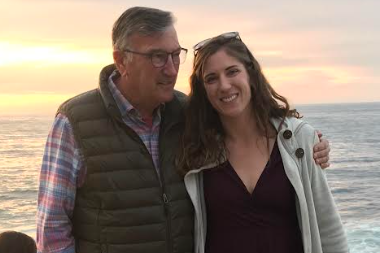
    Dr. Cox was close to his daughter, Ansley, and son, Matt. Courtesy of the family

    In 2011, a Haverford colleague praised his “forward thinking.” A student said then: “That’s his most important quality, his approachability.”

    In 2010, Haverford School donors established the Joseph T. Cox Servant Leadership Symposium. In 2013, they founded the Joseph T. Cox Leadership Scholarship Fund.

    He also served as president of the Pennsylvania Association of Independent Schools and secretary of the International Boys’ Schools Coalition. He was active with the Lafayette College Board of Trustees and the City Year Philadelphia education nonprofit.

    After Haverford, he mentored graduate students in the University of Pennsylvania’s School of Education and was headmaster briefly at the La Jolla Country Day Upper School in San Diego. At West Point, he also coached the sprint football team, was officer representative to the men’s lacrosse team, and founded a Big Brothers Big Sisters chapter.

    Dr. Cox and his wife, Kathy Stevenson, traveled the world together. Courtesy of the family

    Before West Point, Dr. Cox was a ranger and a paratrooper, and he commanded a battalion in the 101st Airborne Division in Kentucky. He earned the Legion of Merit and two Bronze Stars.

    A former West Point cadet said on Facebook: “The world was a better place because of Joe Cox’s leadership.”

    Dr. Cox was also a writer. His 282-page book, The Written Wars: American War Prose Through the Civil War, was published in 1995. His poetry appeared in journals, magazines, and elsewhere, and his 50-page collection, Garden’s Close, was published in 2002.

    He wrote several opinion essays for The Inquirer and said in 2011: “We need to develop an understanding of masculinity that respects the emotional lives of boys and men, recognizing their demonstrations of emotional depth as natural and, in the long run, healthy.”

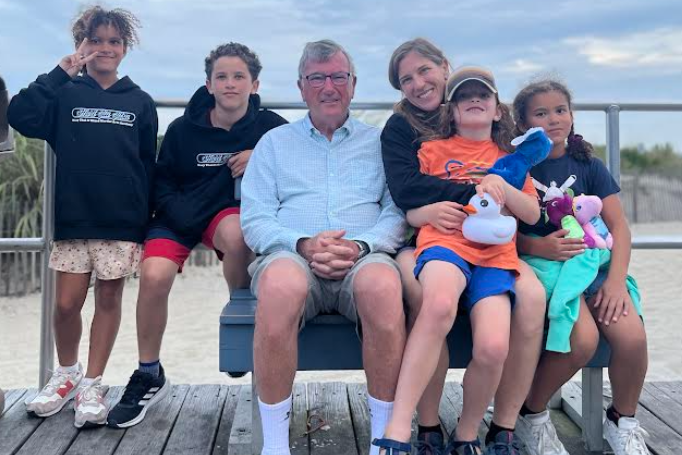
    Dr. Cox doted on his grandchildren.Courtesy of the family

    On Facebook, a friend called him “one of the greatest men I’ve ever known.”

    Joseph Thomas Cox was born July 31, 1946. He played track and field, and football at a technical high school in Massachusetts, and briefly considered work as an engineer.

    He earned a bachelor’s degree in English at Lafayette College in 1968 and, following his father, joined the Army on an ROTC commission as a lieutenant. Later, while serving in North Carolina, he earned a master’s degree and a doctorate in 19th-century American literature at the University of North Carolina.

    He married Joanne Shirk, and they had a son, Matt, and a daughter, Ansley. After a divorce, he married Kathy Stevenson, and they lived in Haverford, San Diego, Illinois, and Malvern.

    Dr. Cox “was extremely compassionate,” his son said. Courtesy of the family

    Dr. Cox enjoyed camping, hiking, fishing, and photography. He and his wife traveled often, and his home library was extensive.

    “He was extremely compassionate,” his son said. “He was a role model. He had standards. You knew what they were, and he would help you get there if you were willing to work.”

    In addition to his children and wife, Dr. Cox is survived by five grandchildren and other relatives. His former wife died earlier.

    A celebration of his life is to be at 2 p.m. Monday, Nov. 16, at the Haverford School, 450 Lancaster Ave., Haverford, Pa. 19041. He is to be interred later at Arlington National Cemetery in Virginia.

    Donations in his name may be made to the Joseph T. Cox Leadership Scholarship Fund, the Haverford School, 450 Lancaster Ave., Haverford, Pa. 19041, Attn: Palmer House.

  • Mighty Writers resumes services in Camden after furlough, but challenges remain in Philly

    Mighty Writers resumes services in Camden after furlough, but challenges remain in Philly

    Educational nonprofit Mighty Writers has restored programming at its Camden locations amid an ongoing organizational furlough, but the future of its operations in Philadelphia still faces challenges.

    The furlough that began in September prompted a pause on services, including food-distribution efforts, summer camp, and after-school and literacy programming at all Mighty Writers locations. Now, the organization has made “meaningful progress toward reopening,“ CEO and executive director Corinne Green said in a statement.

    That progress includes the full resumption of services at both Mighty Writers locations in Camden, which follows a $563,000 grant that is to be paid out over eight months. The award comes through the EMR Camden Community Benefits Fund, and is the largest corporate grant received in Mighty Writers’ history, Green said.

    Grant money, Mighty Writers said in a joint statement with EMR Advanced Recycling, a U.K.-based scrap metal recycler that has courted some controversy locally, will be used only for Camden-based programming. With it, Mighty Writers said, it has restored two after-school literacy academies, summer camp programming, and food-distribution services, and brought back six full-time staffers.

    “We have heard loud and clear the need for stable funding for organizations like Mighty Writers that provide such vital services to our neighbors, and we are proud to support their important grassroots work,” said Joe Balzano, CEO of EMR Metal Recycling USA.

    The fund, administered by the Community Foundation of South Jersey, was created last year following a large fire at the company’s Camden shredding facility, and is intended for community improvement initiatives. Camden last month sued EMR in connection with the fund, claiming it had not made good on more than $1 million in promised donations. Balzano previously told The Inquirer the company had met its obligations, and the case remains ongoing.

    Challenges in Philadelphia

    Across the river, most of Mighty Writers’ five Philadelphia locations will need new homes before they can resume services, following the end of a partnership with the Philadelphia Housing Authority. The PHA owns three buildings where the nonprofit operates in West Philadelphia and North Philadelphia — outposts known as MW West, MW North, and MW Hartranft.

    The authority, Green said, recently told Mighty Writers it wanted to “explore opportunities with other service providers.” The change resulted in layoffs for four Philadelphia staff members. The Mighty Market food-distribution effort, housed in MW West, is slated to operate through the end of 2026 before being relocated.

    “We are grateful for the opportunity to have served children and families within these communities over the past seven years,” Green said. “Although this chapter of our partnership is concluding, our commitment to these communities remains unchanged.”

    Green previously estimated Mighty Writers’ furlough could last about 12 weeks. Now, with the PHA partnership coming to an end, that timeline could be extended, she said.

    The authority said in a statement that it “decided to pause the partnership” while Mighty Writers “rebuilds and strengthens its financial stability.”

    “We congratulate Mighty Writers on securing new funding, wish them continued success, and look forward to the possibility of working together again in the future,” PHA spokesperson Nichole Tillman said. She added that new programming efforts have begun at most locations with other partners.

    Mighty Writers also plans to relocate its El Futuro location in South Philadelphia, and programming will not be restored there before any move, Green said. Conversations with new community partners and searches for new locations continue for all affected facilities.

    Its site in Northeast Philadelphia, however, has restarted enrollment and was slated to begin offering after-school programming this week, becoming the first location in the city to fully restore services since the furlough. Additionally, Mighty Writers’ food-distribution efforts in Kennett Square and Atlantic City are now running twice weekly.

    Alongside announcing the temporary pause on services last month, Mighty Writers also said it had furloughed 26 employees. Since then, 11 employees have been restored, including three full-timers in Philadelphia and two part-time workers in Kennett Square. Six other workers await recall, three resigned voluntarily, and six were laid off.

    Currently, Mighty Writers is accepting individual donations, and plans to hold its annual fundraising event, the Mighty Literacy Bash, next month. Founded in 2009, Mighty Writers said in a 2025 annual report that it served more than 5,800 students and made 110,000 family distribution visits.

    Though the organization faces challenges, Green said she remains optimistic about its future.

    “We have restored programs. We have secured new funding. We have welcomed employees back. We have developed new partnerships,” she said. “And we are actively building the infrastructure necessary to sustain our mission for years to come.”

  • A look inside Camden County’s $25 million investment to end homelessness by 2030

    A look inside Camden County’s $25 million investment to end homelessness by 2030

    On a quiet, wooded road in Blackwood, a long-awaited respite for homeless people opened its doors Friday, a $25 million investment in the county’s efforts to eradicate homelessness by the end of the decade.

    Built on a former off-road racing track at 15 County House Rd. in Camden County, the new Martin McKernan Supportive Housing Center has 60 transitional housing units and a bright and airy community room with tall ceilings and natural light pouring in.

    The project is a core feature of the county’s plan to reach “functional zero” homelessness by 2030 — achieved when the number of homeless people is not greater than the monthly housing placement rate.

    The Martin McKernan Supportive Housing Center in Blackwood is a $25 million investment in Camden County’s efforts to end homelessness by 2030.Courtesy of Camden County

    The deadline is not a state mandate but a goal the county set for itself, driven by the desire to help amid the pullback of federal funding for social safety net programs, according to Camden County Commissioner Director Louis Cappelli Jr.

    “It’s all about compassion,” Cappelli said. “Our mission has always been to help those most in need, and I think this is a huge leap forward towards meeting that objective.”

    The 45,000-square-foot building includes ADA-accessible units alongside a communal laundry, computer and mail rooms, a gym, and lounges for residents. Each room comes equipped with a small kitchen and bathroom and was constructed with trauma-informed design in mind, county officials said, with large windows and ligature-resistant furniture.

    Staffed 24-7 by the Volunteers of America Delaware Valley, the shelter will also include temporary offices for traveling service providers, county officials said, connecting residents with workforce development, physical and mental healthcare, substance use recovery resources, and more, in partnership with Cooper Norcross University Hospital and Thomas Jefferson University Hospital.

    “There’s not a service, really, that we’re not providing that these folks need,” Cappelli said.

    Rob Jakubowski, director of the Camden County division of community development, and Camden County Commissioner Director Louis Cappelli Jr walk through the new Martin McKernan Supportive Housing Center on Sept. 8.Courtesy of Camden County

    The shelter, its programs, and its services were designed utilizing insights the county gleaned from what has worked well at the Regan Center, a 23-bed emergency shelter also in Gloucester Township, Cappelli said.

    Since it opened in 2021, 80% of the nearly 300 people who have turned to the Regan Center for assistance have gone on to secure permanent housing, he said.

    “That’s a pretty extraordinary success rate, and we’re very confident we could duplicate that here,” Cappelli said.

    Unlike many state-funded shelters, the McKernan Center will not have a hard-and-fast deadline for when residents need to leave their transitional unit, said Rob Jakubowski, director of the Camden County Division of Community Development.

    Instead, the length of stay will be determined by social workers and healthcare professionals on a case-by-case basis, he said, prioritizing the needs of the individual as opposed to an “arbitrary deadline.”

    Jakubowski said residents will need to fulfill some requirements during their stay — mainly just taking an active role in their own wellness.

    “You always have to be working towards your next step. You’re not just coming for a free sandwich, you have to be meeting with your case manager,” he said. “And for everyone it’s different, but the ultimate goal is housing. Today it’s your ID, tomorrow it’s your Social Security card, but you always have to be meeting and participating in your own help.”

    The McKernan Center also does not require a traditional referral.

    Contractors were putting the finishing touches on the new transitional housing shelter on Sept. 8.Courtesy of Camden County

    “If you walked into a shelter right now, they’d say, ‘Who’s your referral?’ — meaning who’s paying for it,” Jakubowski said. “That’s not an obstacle anymore when it comes to the Camden County commissioners.”

    The majority of the $25 million construction was paid for by the county’s remaining federal COVID-19 relief funding that was set to expire at the end of the year, Cappelli said, with county bonds used to cover the rest of the construction budget.

    Cappelli said the county is prepared to shoulder most, if not all, of the financial burden for operation — estimated to cost over $2 million per year.

    The county will apply for grants to help offset costs, Cappelli said, “but we’re not real optimistic.”

    “We’re presuming we’re going to pay for all of these operations and that’s the way it’s going to be,” he said. “But it’s an investment in people who need the investment.”

    In Camden County, like elsewhere in the state and country, homelessness rates have been increasing since the pandemic, Cappelli said.

    During the point-in-time count in January 2025, 759 people in Camden County were experiencing homelessness — 140 of whom were determined to be chronically homeless. In comparison, Burlington County counted 1,550 homeless residents on the same night, while Gloucester County recorded just 162.

    The yearly count is a federally mandated effort used to provide a snapshot of sheltered and unsheltered people experiencing homelessness across the nation on a single night.

    A short walking path winds through the property and into the edge of the nearby woods, encouraging residents to commune with nature, county officials said.Courtesy of Camden County

    “There’s been significant cuts in federal aid, plus the economy is really difficult for a lot of folks right now,” Cappelli said. “And we need to stem the tide here and reverse what has been a trend in homelessness over the past few years.”

    The McKernan Center is just the latest addition to the range of programs and services the county has in place to address homelessness, including the Regan Center and a planned Multi-Agency Center in Camden that will help connect people with the services they need.

    In partnership with the Volunteers of America, the county also operates the Work Now program, which offers homeless people a day of paid work for the county while giving them the opportunity to engage in other services while they are at it, the goal being to ultimately secure permanent housing.

    “The philosophy of this board is that we need to help those most in need,” Cappelli said, whether the issue be homelessness, mental health, substance use, or something else. “We’re going through the communities, finding those who really need help, and we’re trying to help them.”

  • Congress demands information about VIP rewards from DraftKings, Fanatics, prediction markets and others

    Congress demands information about VIP rewards from DraftKings, Fanatics, prediction markets and others

    Three members of Congress on Thursday expanded their scrutiny of VIP gambler benefits by demanding answers about the scope of rewards programs offered by a half dozen companies, including DraftKings and Fanatics, and the prediction markets Kalshi and Polymarket.

    “As repeated stories from exploited gamblers and media reports have vividly documented, VIP programs are driving the gambling industry’s most susceptible customers into debt and addiction through rewards tied to waging ever increasing amounts of money,” the lawmakers — U.S. Sen. Richard Blumenthal (D., Conn.) and U.S. Reps. Paul D. Tonko (D., N.Y.) and Valerie P. Foushee (D., N.C.) — wrote in letters to the companies, which also included BetMGM and Caesars.

    The Democrats asked company officials, including Fanatics chief executive officer Michael Rubin, a former co-owner of the 76ers, to disclose by Nov. 5 how much revenue they derive from VIP customers, the types of perks and services they offer to those gamblers, and whether artificial intelligence is used to shape promotional offers to individual gamblers.

    “Fanatics Betting and Gaming received the request today and will respond in due course,” a spokesperson for the company said. “We appreciate the Members’ interest and welcome the opportunity to share information on the ways in which we work to protect our customers.”

    A DraftKings spokesperson said the company would “respond accordingly once we have had a chance to review” the letter from Blumenthal, Tonko, and Foushee.

    DraftKings said it would respond to the Congress members’ inquiry. Tiffany Hagler-Geard

    In an email, Kalshi sought to differentiate its prediction market from traditional gambling entities.

    “Unlike sportsbooks and casinos, we manage our top traders by volume; we don’t take their wins and losses into account,” a spokesperson wrote. “By definition, a VIP at a sportsbook or casino is a losing customer or someone they expect to lose. That’s because the gaming industry only makes money when people lose. We don’t do targeted promotions, offers, or bonuses when customers lose. We also do proactive outreach to clients when they join about how to use our responsible trading tools.”

    Representatives for BetMGM and Caesars could not be reached for comment.

    Since early August, the members of Congress have pressured another sportsbook, FanDuel, about its VIP program, citing reporting from The Inquirer that showed a FanDuel VIP account manager had sent a personalized video of Phillies star Bryce Harper to a gambler in the Philadelphia suburbs who had an addiction.

    Harper in July said that he had been paid to record the message through the video service Cameo, but that he did not know FanDuel would use it to reward a VIP bettor.

    In July, Bryce Harper wrote on Instagram that he had recorded a short video message for a FanDuel VIP gambler through the pay service Cameo, but didn’t know the man had an addiction.Yong Kim / Staff Photographer

    In response to the elected officials’ inquiries, a FanDuel executive in September said that the company had sent about 30 personalized videos of athletes and entertainers to its customers during the last two years. The company has declined to disclose further details about the videos.

    FanDuel has said that it will not eliminate its rewards program and that its VIP managers are trained to recognize and report signs of problem gambling. The Major League Baseball Players Association said it would support prohibiting players from promoting VIP programs in the future.

    Some of the sportsbooks and prediction markets contacted by Congress have separately figured into controversy surrounding new Sixers star LeBron James, who has previously promoted football bets for DraftKings, and in September signed a $15 million endorsement deal with Polymarket, prompting criticism from fans and fellow NBA players.

    James also sometimes commutes from New York to Philadelphia in a Fanatics-owned helicopter as part of a trading card partnership he has with the company. (NBA Commissioner Adam Silver said the helicopter arrangement is “perfectly appropriate.”)

    LeBron James in September signed a $15 million sponsorship deal with Polymarket, nearly quadruple his $4 million salary with the Sixers.Frank Franklin II

    Sportsbooks like DraftKings and FanDuel have been regulated by individual states since a 2018 U.S. Supreme Court ruling overturned a long-standing ban on sports betting.

    Prediction markets like Kalshi and Polymarket, however, are regulated by the federal Commodity Futures Trading Commission and are available in 50 states. The companies have insisted that their products are not gambling apps but rather a financial product similar to the stock exchange.

    The lawmakers’ letters note that the prediction markets do not refer to their customer rewards as VIP programs: Kalshi’s is known as Kalshi Platinum, while Polymarket’s has “maker” and “taker” rebate programs.

    In early September, New Jersey Attorney General Jennifer Davenport petitioned the Supreme Court to decide whether states should have the authority to regulate prediction markets as they do gambling.

    The federal lawmakers claimed that “prediction markets are actively flouting safeguards established by state gambling authorities and offering their products in states where sports betting is not legal.”

    The Inquirer will continue to report on issues related to the growth of gambling addiction — among teens and adults — across Pennsylvania. If you, or someone you know, would like to speak with a reporter, please contact David Gambacorta or William Bender at dgambacorta@inquirer.com and wbender@inquirer.com

  • European Union awards top rights prize to International Criminal Court days after Trump sanctions

    European Union awards top rights prize to International Criminal Court days after Trump sanctions

    BRUSSELS — The International Criminal Court and its embattled staff have won the European Union’s top human rights honor, the Sakharov Prize, an official said Thursday.

    The award came just days after the Trump administration announced sweeping new sanctions on the court, which is based in The Hague, Netherlands, as part of its campaign to dismantle the tribunal over investigations into the United States and its allies, including Israel.

    “The European Union is built on respect for multilateralism and international institutions, and this prize recognizes the important work of the court in upholding international law and justice,” European Parliament President Roberta Metsola said.

    Her announcement at the parliament in Strasbourg, France, was greeted with a standing ovation.

    The annual EU award, named after Soviet dissident and Nobel Peace Prize laureate Andrei Sakharov, was created in 1988 to honor individuals or groups who defend human rights and basic freedoms.

    A court under fire welcomes the award

    ICC President Tomoko Akane of Japan welcomed the award, saying that it “comes at a time when the court and its officials face unprecedented challenges.”

    “Against this backdrop, the Sakharov Prize carries particular significance, reaffirming the importance of independent judicial institutions and of those who work to uphold international law,” she said in a statement.

    The ICC opened in 2002 as a court of last resort to prosecute senior leaders it deems responsible for crimes that, according to its founding treaty, “deeply shock the conscience of humanity.” It has jurisdiction over war crimes, crimes against humanity, genocide, and the crime of aggression.

    The Trump administration’s sanctions cut the court’s access to U.S.-based financial services, technology companies, and even the use of U.S. dollars. They set a six-month timeline for U.S. companies and individuals that have business with the court to wind that business down.

    The EU considers options to respond

    In a statement after their summit last week, EU leaders said that the 27-nation bloc “deeply regrets” the Trump administration’s sanctions move and “urges the United States to reverse these latest measures.”

    They noted that the U.S. has delayed the full impact of the sanctions by six months, and that “this creates space for diplomacy,” and expressed hope that the measures can ultimately be reversed.

    Should diplomacy fail, however, the leaders insisted on “the EU’s readiness to take all necessary measures.”

    They tasked the European Commission “to take all appropriate initiatives” to help protect the ICC and mitigate the impact of the sanctions, “specifically towards EU companies so that they can continue providing services to the Court.”

    One possible retaliatory measure is the EU “blocking statute,” which could be used to protect European court staff, and possibly the Dutch-based court itself, by preventing European companies from complying with the U.S. measures.

    An award for when rights and justice come under attack

    The ICC and its officials were nominated for the prize by the Socialists and Democrats group in the European Parliament. The group, which unites center-left parties across Europe, said that it was “proud to have put forward their candidacy at a time when international justice is under attack.”

    The Sakharov winner is chosen by the European Parliament’s president and top EU lawmakers from among candidates nominated by the parliament’s various political groups. The assembly says the award is “the highest tribute paid by the European Union to human rights work.”

    Imprisoned Tanzanian opposition leader Tundu Lissu and Taraneh and Romina Rahimi — twins being held in prison for taking part in demonstrations against the Iranian government — were the others to make the EU shortlist.

    Last year’s prize went to journalists Andrzej Poczobut and Mzia Amaghlobeli, who were imprisoned in Belarus and Georgia, respectively. Metsola said at the time that “their courage has made them symbols of the struggle for freedom and democracy.”

    Several Sakharov laureates, including Nelson Mandela, Malala Yousafzai, Denis Mukwege and Nadia Murad, went on to win the Nobel Peace Prize. Venezuelan opposition leader María Corina Machado, who won the Nobel Peace Prize last year, picked up the Sakharov Prize in 2024.

  • Student protests spread across Europe, exposing bleak views of the future

    Student protests spread across Europe, exposing bleak views of the future

    MADRID — Young Spaniards and Portuguese have pitched tents in their countries’ capitals to protest high rents. French and Italian students have marched en masse for better school conditions in demonstrations marred by looters.

    Greeks protested for more university funding and young Albanians clashed with the police after joining broad anti-corruption demonstrations against a government they accused of impeding their prospects.

    These are among the young Europeans who have taken to the streets in recent days in at least eight countries across the continent. Their demands vary according to the context and the government, but a common thread unites them all: They fear for their future.

    “The no-future generation is back,” Sacha Cossi, 27, a concert stagehand, said Tuesday as he sat with a group of other young Spaniards under a low tarp in the tent encampment in central Madrid.

    Cossi said the tent city, there for weeks, reflected a continent-wide exasperation over low salaries and high rents, an impotence in the face of global warming and a general anxiety about job prospects and the potential disappearance of the generous welfare benefits enjoyed by previous generations.

    “We are tired of everything,” he said, adding: “Things keep changing in a way that doesn’t benefit us.”

    The protesters’ gloom reflects a continent that is struggling to find a way forward. Europe’s populations are aging, its debt is rising as governments struggle with growing expenses for pensions and other programs, and governments are reluctant to raise taxes. Immigration is polarizing electorates.

    There is widespread fear that Europe is failing to keep pace with the technological upheavals that are expected to define the near future, and it is caught in the middle of a contest between the world’s two great powers, the United States and China. Things seem less secure in the face of spreading Russian aggression, as President Donald Trump, who threatened to attack the territory of a European ally, Denmark, withdraws support for Ukraine.

    The malaise affects Europeans of all ages, but it is the continent’s young who face the bleakest long-term landscape. The public services and benefits that defined European society for decades are becoming increasingly unsustainable, with governments struggling to pay for pensions for the old, schools for the young, and housing, transportation, and healthcare needed by everyone. Military spending, which has increased as the U.S. reduces its defense commitment, has added extra stress on budgets.

    Governments of all ideological stripes — a right-wing leader in Italy, a left-wing one in Spain, a moderate in France — are all struggling to provide a plausible answer. Europe’s young increasingly feel left out of the picture.

    “There’s this sense of rejection, fatigue,” said Stella Salis, 22, a protester and university student in Padua, Italy.

    In terms of protester numbers and longevity, the movements are still not near the scale of the anti-austerity protests that spread across the world in the years that followed the 2008 financial crisis.

    But they are beginning to catch the world’s attention and spur talk among protesters of a transnational movement. French high school students helped energize teenage counterparts in Belgium, while protesters in Italy and Germany have begun using a slogan that originated in France.

    Salis said that she hoped that the protest movement was “starting to be in a phase that transcends national borders.”

    Yet in some countries, the unrest has emboldened the far right as much as it has galvanized the left, often overshadowing the protesters’ messages.

    Rioting in northern Italy last weekend led to dozens of arrests and gave Matteo Salvini, a government minister and hard-right leader, the pretext to announce that the government would dispatch 500 soldiers to “defend Milan,” from “criminals.” With his party slipping in the polls, Salvini seized on the unrest to promote his anti-immigration agenda, saying he hoped the rioting ended, “once and for all,” leftist calls to extend citizenship to children of immigrants before they reach the age of 18.

    In France, the far-right National Rally has had a field day presenting itself as the party best able to prevent a repeat of the lawlessness perpetrated in French cities last weekend.

    “In six months, the French people will be able to choose a different path: that of restored authority and security,” Marine Le Pen, the party’s candidate in the presidential election next spring, said in a speech Sunday.

    It was a message echoed that same day by her party president, Jordan Bardella. “We stand ready to restore order in the country,” Bardella said after emerging from a police station located near the epicenter of recent unrest.

    Yet whoever takes power across Europe in the coming months will have few easy offerings for young people. They will face excruciating decisions about what public services to fund with declining resources in an environment marked by economic headwinds, including inflation, rising bond yields, and soaring fuel prices.

    “My dream would be to have a job that I love,” said Salomé Regnaud, a 15-year-old student who has been protesting for better school conditions in France. “Not to have to look at my expenses every month and ask myself, ‘Will I be able to do this?’ or ‘Can I afford to buy that?’”

    It was a lament that had echoes from Portugal in the west to Albania in the east.

    “People say we don’t want to work? We do want to work, but with dignified conditions,” said Mourana Monteiro, 29, a psychologist in Lisbon who on Tuesday night joined a few thousand Portuguese to protest real estate speculation that has contributed to rising housing costs.

    She had been staying in a tent encampment since Saturday and looked forward to a teacher’s strike the following week. “What’s the point of working and then not being able to afford a house, pay our bills at the end of the month, have a family?” Monteiro asked.

    In Albania, students have joined a broader anti-government “Flamingo” movement. It is named for the bird habitat in an area where Jared Kushner, Trump’s son-in-law, won government approval for a major luxury tourism development that is opposed by environmental groups.

    Albanians in the anti-corruption movement are calling for the ouster of Prime Minister Edi Rama, who has in turn called them radical leftists, but the students have focused on protections for education.

    “We are a generation that has chosen not to remain silent, unlike our parents, who did not enjoy the same freedoms or the full right to freedom of expression,” said Redjan Shkëmbi, a 22-year-old actor, referring to the dictatorship that ruled the country until 1991.

    Shkëmbi joined the first protests in Zvernec nearly 150 days ago to call for more funding for the education system and public hospitals, and said his main motivation was to fight for a more transparent and democratic Albania.

    “We want a better country,” he said, “and we want to contribute to its future.”

  • Philly police commissioner blasts DA Krasner, calls comments over alleged cop killer’s past acquittal ‘unacceptable’

    Philly police commissioner blasts DA Krasner, calls comments over alleged cop killer’s past acquittal ‘unacceptable’

    Police Commissioner Kevin J. Bethel on Thursday said it was “absolutely unacceptable” for District Attorney Larry Krasner to have effectively blamed two police officers for sinking a prior murder case against the man now accused of fatally shooting Officer Shane Seiber.

    At a news conference Thursday alongside U.S. Attorney David Metcalf and other federal law enforcement partners, Bethel addressed Eric Lewis’ prior acquittal for the first time, condemning what he described as finger-pointing while the city’s law enforcement community was reeling from Seiber’s death.

    Bethel did not directly name Krasner, but his remarks appeared aimed squarely at the city’s top prosecutor, who last week released a YouTube video criticizing the conduct of a police officer and a homicide detective involved in Lewis’ earlier murder case and calling their behavior “arguably criminal.”

    Krasner said his prosecutors “did everything humanly possible” to convict Lewis, and insinuated not only that it was the officers’ fault Lewis was later acquitted, but also that their misconduct left Lewis free to kill Seiber, 40, and seriously wound Officer Hector Rodriguez III years later.

    Bethel said the statements were an unacceptable escalation at a moment of profound grief.

    “I’ve never seen that in my entire career, where when my family was suffering, when the city was suffering — and it wasn’t just about me and the Philadelphia Police Department — the community was suffering, my officers were suffering, and you stand up and you talk about something that is unnecessary?” Bethel said.

    The commissioner said he did not “want to turn this into a back-and-forth.”

    But “anyone who believes it was right” to levy that criticism in that moment should walk with him into the homes of grieving family members and answer their questions, he said.

    Commissioner Kevin Bethel (center) looks at David Metcalf, U.S. Attorney for the Eastern District of Pennsylvania..Monica Herndon / Staff Photographer

    The exchange — which came as Metcalf announced a series of federal gun and robbery crimes against Lewis, 35, that could send him to prison for life — marked Bethel’s most forceful public response yet in the aftermath of the crime that has shaken the city’s law enforcement community. Seiber was laid to rest on Tuesday. Rodriguez, 33, remains hospitalized.

    Krasner, who was not at the news conference, said in a statement Thursday evening that his remarks last week had been “intended to correct false information communicated to multiple media outlets by a senior-level law enforcement official who works directly for Police Commissioner Kevin Bethel.”

    He did not name the official.

    He said he welcomed the federal charges and would “continue to make outreach” to Bethel and Mayor Cherelle L. Parker “with hopes to work together in supporting our city and law enforcement colleagues through this difficult time, consistent with their One Philly agenda.”

    “Real leadership brings everyone to the table, a promise made to Philadelphia. For now, I will await their returned communication,” he said.

    Bethel’s comments Thursday were a notable departure from his usual posture toward Krasner. While the commissioner has privately expressed disagreements with the district attorney’s policies and statements, he has avoided public criticism and, instead, has sought to project a united front as the city works to reduce violent crime.

    Bethel acknowledged that shift Thursday.

    “I’ve been at this work almost for 40 years. Never once have I stood up in front of an audience and talked about my conflicts with the district attorney’s office. Never once have I presented the issues that I deal with on a daily basis and that my men and women have to endure,” he said.

    But the commissioner was outraged by Krasner’s video last week, according to a person familiar with his thinking who was not authorized to speak publicly, and decided Thursday he could no longer go without addressing it.

    Philadelphia District Attorney Larry Krasner during a community event last week.Bastiaan Slabbers / For The Inquirer

    Bethel said there was much to the earlier murder case against Lewis — a 2019 road-rage shooting in West Philadelphia that left Christopher Williams, 32, dead — that still needed to be reviewed.

    Lewis was identified as a suspect in Williams’ killing after then-Police Officer Naeem Crawley gave homicide detectives a tip that Lewis was the gunman.

    But Krasner said Crawley, who was later engaged to Lewis’ sister, then made up an alternative suspect, lied to prosecutors, and sought to “torpedo” his testimony before trial. The homicide detective in the case, Laura Harris, also failed to secure investigative records, including Lewis’ cell phone location data.

    Krasner said Harris “misled people” about the steps she took in the case and “filled out law enforcement paper falsely.” Harris declined to comment last week. Crawley did not respond to requests for comment.

    Bethel fired Crawley, he said. And while there is a time for police and prosecutors to review the shortcomings of that case, he said, it was not in the immediate aftermath of Seiber’s killing.

    Still, Bethel insinuated that it is also the job of Krasner’s prosecutors to ensure detectives acquire evidence for a successful trial.

    “Your duty is to work behind the scenes to make sure we do it effectively,” he said.

    DA Larry Krasner previously called Roosevelt Poplar, the president of the Fraternal Order of Police Lodge 5, a “heroic figure.”Elizabeth Robertson / Staff Photographer

    The Fraternal Order of Police Lodge 5 also issued a statement Thursday condemning Krasner’s statements — a similarly marked shift for union president Roosevelt Poplar, who has largely displayed a friendly relationship with Krasner, in stark contrast to his predecessor, John McNesby.

    “It is disgraceful that District Attorney Krasner would use the murder of a Philadelphia police officer as an opportunity to deflect responsibility and scapegoat the very officers who put their lives on the line every day to protect this city,” the union wrote.

    Krasner, the union said, “misrepresented the facts” of the prior case and “chose to spread misinformation, assign blame, and attack the Philadelphia Police Department” in the immediate aftermath of an officer’s slaying.

    Krasner said Thursday he has offered to meet with Poplar and his team to provide information on the case.

    At the end of the news conference Thursday, Bethel apologized to Metcalf for his comments, saying he did not want them to be a distraction. He said he trusts his federal partners to hold Lewis accountable.

    “This has been a very emotional week,” he said. “Yes, I am frustrated and I can get fired up, but I want to make sure that everyone knows in this room, that this is a relationship built on trust, on support … and the men and women of this police department appreciate everything they’re doing today.”

    Staff writer Chris Palmer contributed to this article.

  • Pa. students soon won’t be able to use cell phones in school. Here’s what to know about the ban.

    Pa. students soon won’t be able to use cell phones in school. Here’s what to know about the ban.

    Pennsylvania lawmakers this week passed a bill banning cell phones in schools, joining states across the country amid mounting backlash to technology in classrooms and social media addiction.

    Gov. Josh Shapiro, who previously called for a so-called bell-to-bell ban, is expected to sign the measure into law soon.

    “It’s time to get back to the basics in school and let our kids be kids,” the Democratic governor said in a post on X on Wednesday, after the House and Senate had passed the bill.

    The bill will require schools to bar kids from using cell phones throughout the school day, starting next fall. Here is what to know about the new rule and how schools are reacting:

    A ban on ‘mobile devices’

    Under the bill, both public and private K-12 schools will be required to prohibit students from using personal mobile devices from the start of the school day to the end.

    That applies to cell phones, but also to other internet-connected devices, like smartwatches, according to the bill.

    Thirty other states — including New Jersey — have already passed bell-to-bell cell phone bans, according to Education Week.

    Before the 2027-28 school year begins, Pennsylvania schools will have to adopt policies describing how they intend to prohibit students from using their phones.

    “For too long, access to a phone-free school day depended on which school a student attended,” Alex Bird Becker, a Wallingford-Swarthmore parent and coleader of PA Unplugged, a statewide advocacy group, said in a statement. “Once this law takes effect, every student in the Commonwealth will have freedom from addictive algorithms, from the first bell to the last.”

    Exceptions for medical and special needs

    The bill allows a number of exceptions for “limited use” of a phone:

    • Students who need phones due to a medical condition.
    • Students with individualized education plans or 504 plans that require phones as an accommodation.
    • Students who are English learners who use phones for translation.

    Teachers can also permit students to use phones “for instructional purposes,” if a school-issued device is inadequate or unavailable and the principal approves the use, according to the bill. Principals can also apply to their chief school administrators for exceptions.

    The law was supported by the Pennsylvania State Education Association, the state’s largest teachers union. President Aaron Chapin said the law “takes an essential step toward reducing distractions for students during class time and keeping lessons and teaching on track.”

    How schools are responding

    While most school districts already have policies related to cell phones in place, the bill will require many districts to restrict phones more than they already do. Many area high schools allow students to use their phones between classes and at lunch, which will be barred by the bill.

    At the 1,600-student Garnet Valley High School in Delaware County, “we don’t have the manpower” to have staff at three different entrances used by students, telling them to put their cell phones away, Superintendent Marc Bertrando said.

    Instead, he expected responsibility would fall to first-period teachers — and teachers throughout the day, given a lack of adequate supervision to enforce a ban in hallways between classes.

    While “you try to minimize conflict points with students,” Bertrando said, he anticipated more conflict as a result of the ban, “especially if we’re going to get down to the level of ‘Let me see that watch.’” He also predicted pushback from parents used to being able to reach their children directly during the school day. (The bill says schools must provide parents with a phone number or email address to be used for receiving messages during school.)

    Bertrando noted that Garnet Valley had worked to produce a policy supported by teachers, parents, and students that restricted, but did not entirely bar, cell phone use by middle and high school students during the school day.

    “To take that away from us is incredibly frustrating,” Bertrando said.

    The Pennsylvania School Boards Association believes “elected school boards should retain the flexibility to determine the approach that best serves their students and communities,” spokesperson Mackenzie Christ said.

    While Pennsylvania previously offered schools money to buy lockable cell phone pouches, few took the state up on the offer.

    A number of districts have been preparing for new restrictions. Lower Merion in Montgomery County, which has faced parental pressure to adopt a bell-to-bell ban, has said it would enact one in 2027-28, regardless of whether the state required it.

    The Philadelphia School District currently allows individual schools to set their own cell phone rules, though the system-wide policy says that district students “should not use cell phones or wearable devices in classrooms unless permitted by a school staff member, or permitted by this policy expressly. Each school shall create their own protocols that designate areas within the school and times of day where student use of cell phones” is permitted during school hours.

    That looks different in different buildings. Some schools require students to secure cell phones in lockers outside the building; others require students to place phones in sealed pouches. In some cases, students have access to phones in hallways and the cafeteria, but surrender phones when entering individual classrooms.

    Wanda Odom, a spokesperson for the Philadelphia school board, said the board “recognizes the impact excessive cell phone use can have on student learning and well-being.”

    “While current district policy allows schools to establish their own cell phone restrictions, the district will work with principals, educators, students, and families to inform the development of a districtwide policy for consideration and adoption by the board of education ahead of the 2027-28 school year, consistent with the new state legislation,” Odom said in an email Thursday.

    Staff writers Kristen A. Graham and Gillian McGoldrick contributed to this article.

  • Deportations climb under Trump but fall short of White House target, a new report finds

    Deportations climb under Trump but fall short of White House target, a new report finds

    WASHINGTON — President Donald Trump’s administration is on track to deport about 660,000 people over the past year, a new report released Thursday shows, as arrests ramp up across the country fueled by billions of dollars meant to supercharge his immigration agenda.

    The report by the Migration Policy Institute shows deportations increased from 620,000 during the first year of Trump’s second administration. The numbers fall short of previous highs in the early 2000s and fail to meet the Trump administration’s promise, made when it received the billions from Congress, that the money would allow for 1 million deportations annually.

    The report, based on publicly available data obtained through Freedom of Information Act requests, comes after the Trump administration in January 2025 stopped publicly releasing similar figures compiled by the Department of Homeland Security.

    Trump, a Republican, returned to power last year promising to stanch crossings at the southern border and crack down on immigration. His administration has pushed through restrictions on both legal and illegal immigration and launched high-profile arrest operations in its bid to force migrants out.

    More people being deported, but not at all-time highs

    The analysis found that the Department of Homeland Security carried out 980,000 deportations during the first 18 months of the second Trump administration.

    During the last fiscal year — when the Trump administration’s immigration enforcement mechanisms were shifting into high gear — an estimated 660,000 people were deported.

    According to MPI’s analysis, that’s a 26% increase from the yearly average from 2021 to 2024 during the administration of President Joe Biden, a Democrat, but well below the 1.86 million deportations recorded in 2000, under President Bill Clinton, another Democrat.

    Despite the surging arrests, the report details some of the challenges to the Trump administration reaching its deportation targets.

    Historically, many immigrants living in the U.S. without authorization were from Mexico and didn’t often seek asylum. But in recent years, migrants have come to the U.S. from a wide range of countries, which can make it more complicated to deport them. And immigration courts, which ultimately decide whether someone can be removed from the country, face more significant case backlogs.

    Voluntary departures are increasing, as are interior arrests

    The report said voluntary departures — when people give up their cases in immigration court and agree to leave the country — were at an “all-time high,” with 170,000 choosing to do so since Trump returned to office in January 2025. People who choose voluntary departure could one day return to the U.S. But some immigrant advocates and lawyers say that people give up their court fight and agree to leave simply to get out of U.S. Immigration and Customs Enforcement, or ICE, detention.

    The Trump administration was also increasingly deporting people it arrested in the country’s interior, the report said, reflecting how it was stepping up enforcement against migrants who have been in the country for a long time. In 2025, about 28% of the people deported were arrested inside the country, but by July of this year that had risen to 39%.

    Migrants arrested at the southern border still make up a large number of deportations, the report said — 69% of all deportations between Jan. 20, 2025, and July 31, 2026, were of people initially intercepted at the border.

    People in the country longer may have more opportunities to contest their removal while the government typically has greater authority to fast-track deportations for people arrested at the border.

    The analysis said most people deported have never been convicted of a crime, despite the Trump administration claiming to be targeting the “worst of the worst.” Previous data has showed the same.

    In response to the MPI report, White House spokesperson Lauren Bis said: “President Trump has delivered the largest reduction in illegal immigration in modern history.”

    Trump administration no longer regularly releases immigration data

    Homeland Security stopped releasing similar data when Trump took office, making it difficult to track one of his key campaign promises. Figures the Trump administration has released are inconsistent and unverifiable.

    The administration says it is transparent. On Tuesday, it released some of its own figures as part of a document boasting of its achievements on immigration, including that 1.2 million migrants have been deported or removed during Trump’s second term. The discrepancy could not immediately be reconciled.

    In the absence of regular data, analysts and activists interested in immigration trends have relied on information obtained through lawsuits or limited and sporadic information released by federal agencies to track deportation data.