Category: New Jersey News

  • Jersey Shore-set comedy ‘Wildwood’ in development at FX from ‘Derry Girls’ creator

    Jersey Shore-set comedy ‘Wildwood’ in development at FX from ‘Derry Girls’ creator

    A new comedy set at the Jersey Shore is in the works from Irish writer Lisa McGee, the creator behind the hilarious hit show Derry Girls.

    Called Wildwood, the series will follow a group of college girls visiting New Jersey from Ireland in the summer of 2000 with “no money, no visas, no plan, no clue,” according to Deadline.

    McGee’s Derry Girls became a whopping international hit after first airing on Britain’s Channel 4 in 2018 and later landing on Netflix.

    It follows a group of messy, raunchy, and zany teens — including Bridgerton star Nicola Coughlan — at an all-girls Catholic school in the 1990s during the Troubles conflict in Northern Ireland.

    A still from “Derry Girls.” (Netflix)Netflix / MCT

    The show was a semi-autobiographical story for McGee, who grew up in Derry and writes irreverent, cheeky young characters that make audiences cringe, cry, and laugh out loud. Her most recent project was the comical murder mystery How to Get to Heaven From Belfast, which premiered on Netflix in February.

    Described as a “spiritual successor” to Derry Girls, Wildwood marks McGee’s first U.S.-based project. It will be developed with 20th Television and FX following a reportedly competitive bidding process. McGee will serve as creator and executive producer.

    It’s not yet clear whether Wildwood will film in the eponymous beach town where it’s set, but FX — the longtime home of It’s Always Sunny in Philadelphia — is certainly no stranger to the region.

    The Jersey Shore remains a favorite for TV and film productions in recent years, from The Four Seasons (Ocean Grove and Point Pleasant) to Springsteen: Deliver Me from Nowhere (Asbury Park) to A Complete Unknown (Cape May).

  • More than 2,000 of N.J.’s ‘noncitizen voters’ could actually be citizens, Gov. Sherrill says

    More than 2,000 of N.J.’s ‘noncitizen voters’ could actually be citizens, Gov. Sherrill says

    About 2,000 New Jersey voters identified last week as noncitizens could actually be citizens after all, Gov. Mikie Sherrill said Tuesday, a week after her disclosure of a voter registration glitch put the state at the center of a heated national debate over election security.

    Sherrill announced last week that approximately 6,600 noncitizens had been registered to vote ahead of the 2024 election due to a software glitch with the New Jersey Motor Vehicle Commission’s automatic voter registration program. She said fewer than 400 of those people had voted and there is no evidence that they affected the results of any election. The finding came in the midst of a political fight over President Donald Trump’s claims of widespread voter fraud, including by noncitizens, and his aggressive push for an overhaul of the country’s election system.

    The first-term governor said Tuesday that the New Jersey Department of State’s Division of Elections has begun a process to remove more than 4,500 individuals who were registered because of the software error, but that the rest of the registrations will be referred to county election officials for further review “to ensure that any lawfully registered voters are not being disenfranchised.”

    “We are taking this extra step because our initial review indicates that a number of these individuals may be citizens,” she said in a statement. “That has been the case in other states where clerical and administrative voter registration errors have occurred, and we’re determined to get this right.”

    Her office announced the discovery a little more than one hour after celebrating New Jersey’s new John R. Lewis Voter Empowerment Act, which Sherrill signed July 2. Lewis was a civil rights leader who represented Georgia in Congress from 1987 until his death in 2020.

    The law, which is based on a federal proposal that former President Joe Biden unsuccessfully tried to pass, promotes equal opportunity to voting and voter outreach to communities that do not speak English proficiently, and prohibits intimidation, deception, violence, or restraint of voters or election workers.

    The law lays out a process for individuals who want to file a complaint over voting rights and requires public hearings for redistricting.

    If jurisdictions have a history of discrimination, the law requires approval from the attorney general before they can make changes to their election administration. It also gives the attorney general authority to enforce the law through litigation, investigations, and studies, and by representing the public in federal court.

    “Here in New Jersey, if your rights are violated, you have a right of action,” Sherrill said at Union Baptist Church in Trenton.

    Sherrill said New Jersey is the 10th state to enact the model, but the first to do so since an April Supreme Court ruling that weakened part of the Voting Rights Act as the court’s conservative majority ruled against a majority-Black district in Louisiana.

    Supporters of the bill said they had been advocating for it for four years in New Jersey.

    Sherrill’s Tuesday celebration at the church shows the governor is not shying away from the issue of voting rights even as the state becomes a talking point for Republicans who want enact new national restrictions — including requiring voters to provide proof of citizenship to register with documents like a birth certificate or passport.

    Sherrill opposes the national legislation, known as the SAVE America Act, which has been championed by Trump as a way to make elections more secure but which opponents warn could make it tougher to vote for millions of Americans.

    “Trump has only one concern: winning at any cost, and he’s willing to put the right to vote at risk,” Sherrill said Tuesday. “There’s no line he won’t cross, no rule he won’t break, no norm he won’t violate. But we will not stand idly by.”

    The former member of Congress will likely continue to have a role in the debate as Republicans ramp up their advocacy ahead of November’s midterm elections.

    U.S. Rep. Jeff Van Drew, a South Jersey Republican who was elected as a Democrat in 2018 before vowing his loyalty to Trump a year later, led a public letter with other House Republicans calling on Sherrill to answer a series of questions about the noncitizen voting issue. He questioned how she knows it was “just a software glitch and not a nefarious act.”

    Van Drew, who chairs the House Judiciary Subcommittee on Oversight, said he plans to hold hearings over the issue and is “absolutely exploring” the possibility of subpoenas, Politico reported.

    On Tuesday, Sherrill said Van Drew “has a very sordid history as far as elections go.” She said Van Drew’s campaign had hired a political operative who was a “known ballot harvester” — referring to Craig Callaway, who worked on Van Drew’s 2022 bid.

    Callaway, a former Atlantic City Council president, had previously served prison time for blackmail and bribes when Van Drew’s campaign hired him. In 2025 under former U.S. Attorney Alina Habba, Callaway pleaded guilty in connection with fraudulent mail-in ballots during the 2022 election, but Van Drew said he was not aware of any illegal activity and was not accused of wrongdoing.

    Sherrill said her administration hired the CSG law firm to conduct an independent investigation into the voting registration glitch. One of the firm’s main partners, Jeffrey Chiesa, served as attorney general under former Republican Gov. Chris Christie, who later appointed him to the Senate.

    “We have a bipartisan, independent investigation going on right now because we have nothing to hide,” Sherrill said.

  • South Jersey police officer will not be charged for killing a man with a knife

    South Jersey police officer will not be charged for killing a man with a knife

    A Haddon Township police officer will not be criminally charged for killing a man armed with a knife while responding to a reported burglary in 2024.

    A state grand jury voted Monday not to file charges against Officer Luke Falkenberg in the shooting death of Keith Edelin, 46, of Pennsauken. The grand jury finished deliberating on Monday after reviewing body-worn camera footage, 911 calls, and witness testimony, among other evidence.

    On Nov. 3, 2024, at 1:07 a.m., Falkenberg and three other township officers responded to a 911 call for an attempted burglary at an apartment complex on West Crystal Lake Avenue in the township’s Westmont section.

    In the released audio of the 911 call, a woman told the call taker that an unidentified man opened the door to her apartment. The woman said she closed it, but the man was still in the hallway.

    Upon arriving, Falkenberg and another officer found trails of blood in the lobby, elevator, and hallway carpets. As the two officers entered the apartment complex stairwell, they encountered Edelin on the top landing armed with a knife, prosecutors said.

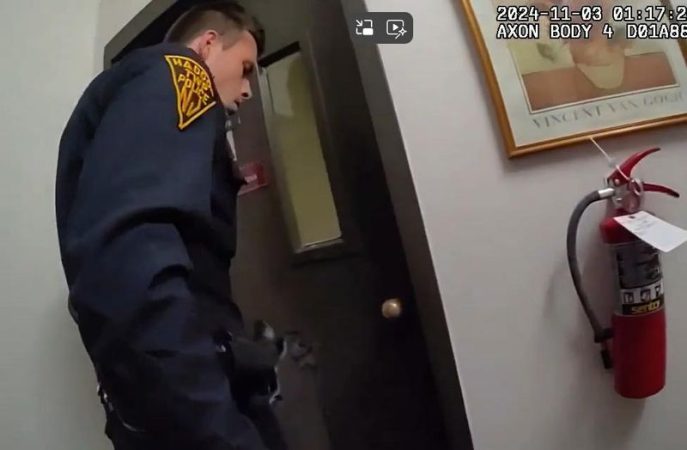
    According to video captured by police body-worn cameras, Falkenberg and his partner spoke with Edelin for two minutes, including several commands from Falkenberg to Edelin to “drop the knife.”

    “You’re hurt, let us help you,” Falkenberg can be heard saying in the footage released by the New Jersey Attorney General’s Office of Public Integrity and Accountability (OPIA). “Listen, man, I just want to help you. OK? That’s all I’m trying to do.”

    Eventually, Edelin advanced down the stairs toward Falkenberg, who was standing a few feet from Edelin. Falkenberg then fired his handgun four times, striking Edelin. Medical personnel took Edelin to Cooper University Hospital, where he was pronounced dead one hour later.

    The New Jersey Attorney General’s Office is required to conduct investigations into a person’s death that occurs during law enforcement encounters. These investigations must be presented to a grand jury to determine if criminal charges should be filed against an officer in question.

    According to the attorney general’s office, the investigation is still ongoing and no further information is available.

    Staff writer Robert Moran contributed to this article.

  • Cherry Hill joins a growing list of South Jersey municipalities to formally ban large-scale data centers

    Cherry Hill joins a growing list of South Jersey municipalities to formally ban large-scale data centers

    Cherry Hill just became the latest municipality in New Jersey to formally ban the development of large-scale data centers.

    The township council unanimously passed an ordinance Monday night that lists data centers as a non-permitted land use within the township’s borders.

    “We don’t think that Cherry Hill should be a guinea pig,” Cherry Hill Mayor David Fleisher said after the council meeting. “So while the technology is evolving, we wanted to be proactive and make sure that we eliminated a problem before it became one.”

    The ordinance also clarifies the difference between the now-forbidden data centers used for artificial intelligence or cloud storage and the small server rooms used by standalone businesses for file storage, which will still be permitted.

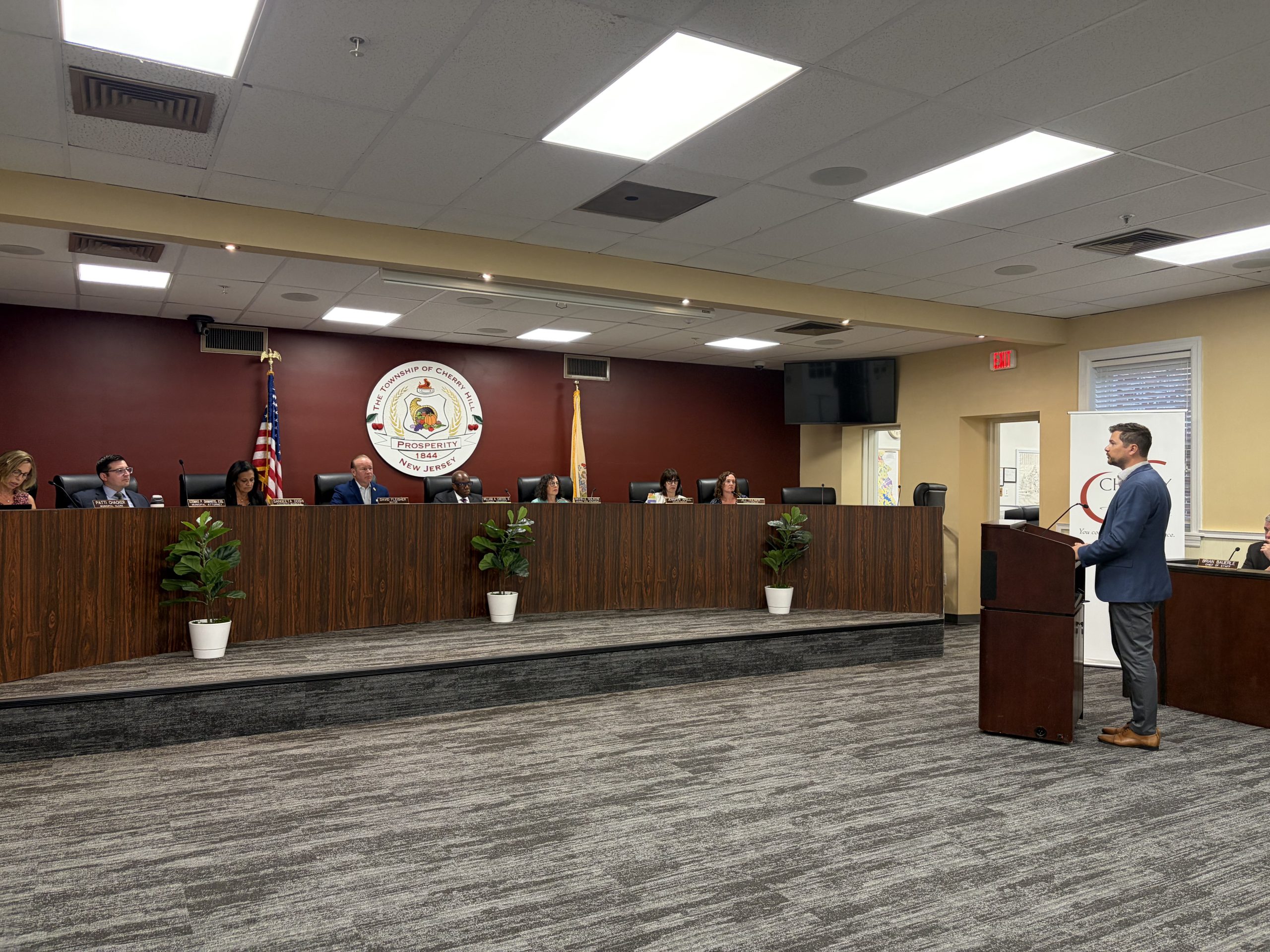
    Certified planner Christopher Dochney presents information about an ordinance banning data centers to the Cherry Hill Township Council on July 27, 2026.Lacey Latch

    The move is consistent with the goals outlined in Cherry Hill’s master plan, said Christopher Dochney, a certified city planner who worked with the township on the ordinance.

    This includes “maintaining Cherry Hill as a garden suburb, maintaining a desirable visual environment and attractive community, and wanting to preserve natural resources,” he said.

    It also aligns with the economic development portion of the plan, he said, which prioritizes job creation, job retention, and “providing an economic boon to the residents of Cherry Hill.”

    “[Data centers] consume a lot of land, they use a lot of water, they take up a lot of energy, and they also tend to be very big, ugly buildings,” Dochney said. “Things that are all directly inconsistent and contradictory to the stated goals of your master plan.”

    For a data center to be built in the future, a developer would need a land-use variance from the township’s zoning board — generally the most difficult land-use approval to obtain, he said.

    Up to this point, no data center developers have approached the township, “and we wanted to keep it that way,” Fleisher said.

    “As you see in some other towns, by the time an application is submitted, legally it might be too late,” he said. “And we didn’t want to find ourselves in that position.”

    Data center pushback in South Jersey

    Cherry Hill, the most populous municipality in Camden County, is the latest of a growing number of South Jersey towns to pass similar bans as debate around data centers continues across the country.

    This month, Burlington County’s Mansfield and Chesterfield Townships also approved bans after Medford Township did the same a month prior. Millville in Cumberland County banned large-scale data centers in May after promotions for a new 66-acre “Millville Energy & Data Center Campus” circulated online.

    Meanwhile, a massive data center in Vineland is set for completion by the end of the year.

    In Gloucester County, a real estate developer is suing Monroe Township for $300 million after the municipality issued a ban on data centers and subsequently denied its plans to build a 1 million-square-foot data center and a warehouse.

    With the restrictions on data centers now in place in Cherry Hill, Fleisher said he is not worried about potential legal action against the township.

    “We were very cautious to be very thoughtful and methodical about how we were going to address this,” he said. “We made sure we had the appropriate professionals go through the right process and have all the accurate information on the record before we took formal action.”

  • The Philly region is under a flood watch Tuesday and Wednesday with strong storms expected

    The Philly region is under a flood watch Tuesday and Wednesday with strong storms expected

    With over a half-foot of rain measured already, what has been Philadelphia’s wettest month since March 2024 is very likely to become significantly wetter.

    The National Weather Service has posted a flash flood watch effective from 8 a.m. Tuesday until 2 p.m. Wednesday for rain totals up to 3 inches, with downpours of 1 to 2 inches an hour possible.

    The national Storm Prediction Center on Tuesday morning listed a 15% chance of severe storms, those with wind gusts approaching 60 mph, for the entire region, with an outside shot of tornadoes. The Weather Prediction Center has a 40% chance of flooding downpours.

    Some appetizers — localized downpours — popped up Monday afternoon, prompting flood warnings for Philly and neighboring sections of Montgomery County, and parts of Gloucester and Atlantic Counties in New Jersey.

    Floodwaters swamped downtown Hammonton, Atlantic County, with “numerous” cars stranded on the roads, the weather service reported. The Pennypack Creek in Northeast Philly crested above “minor” flood stage.

    Moth-ball-size hail pelted Chestnut Hill, and hail twice that size was sighted in Williamstown, Gloucester County, and in the vicinity of Washington Crossing State Park on the Jersey side of the Delaware River.

    Storm coverage on Tuesday is expected to be far more extensive, and potentially more disruptive, with a “few tornadoes” possible, the weather service warned.

    Storm activity is likely to linger into Wednesday, said Mike Lee, meteorologist in the weather service’s Mount Holly office, with more showers in the forecasts for Thursday.

    What time the storms will arrive in Philly

    Late July still is very much the lottery-ball season for damaging downpours, and that again likely will be very much in evidence this week. Rainfall totals in the last 30 days have ranged from 137% of normal in Gloucester County to 79% of normal in Montgomery County, according to the Middle Atlantic River Forecast Center.

    Thunderstorms are possible as early as midmorning, but expect “repeated rounds” during the afternoon, said Matt Benz, senior meteorologist with AccuWeather Inc.

    The highest probability for severe storms, those with wind gusts near 60 mph, would be in South Jersey and Delaware, although they could nose into Philly, said the weather service’s Lee.

    The storms could continue well into the night, and additional rains are expected Wednesday afternoon.

    The rain totals again are likely to vary widely; however, a general 1 to 2 inches is expected across the region.

    Whatever happened to the drought?

    It hasn’t gone anywhere — yet.

    All of New Jersey and Chester County remain under state-declared drought warnings. In the latest interagency U.S. Drought Monitor update, conditions in the entire region remain from “abnormally dry” to severe drought.

    All that may change by week’s end.

    Through Sunday, officially 6.37 inches of rain habr been measured at Philadelphia International Airport this month. That is the highest monthly precipitation total since March 2024.

    July’s rains have ended a run of 16 straight months of below-normal precipitation in Philly.

    Said Benz: “It’s an old saying that all droughts end on a flood. That’s kind of what we’re seeing right now.”

  • Fallout from N.J.’s voter roll glitch | Inquirer South Jersey

    Good morning, South Jersey. Don’t forget your umbrella: More rain is expected to come our way.

    Roughly a week after Gov. Mikie Sherrill disclosed that thousands of noncitizens were improperly registered to vote in New Jersey, the fallout includes Republicans pushing for more federal power over elections while national Democrats reject suggestions of widespread voter fraud.

    And Burlington County’s new free bus shuttle mainly covers areas closest to Philadelphia and Camden.

    Plus, George E. Norcross is donating $100 million to Cooper University Health Care, and more news of the day.

    — Taylor Allen (southjersey@inquirer.com)

    P.S. Thank you for your continuing support. We want your thoughts! Tell us your opinion of the newsletter by taking our survey or replying to this email.

    If someone forwarded you this email, sign up for free here.

    Democrats aren’t changing their message

    New Jersey and Pennsylvania were among the four Democratic-led states where President Donald Trump claimed 250,000 noncitizens were registered to vote.

    It’s unclear how the Trump administration reached that figure, but it has sought to leverage last week’s disclosure of 6,600 noncitizens being registered to vote and nearly 400 casting a ballot in New Jersey as evidence of a widespread issue.

    As Trump seeks more power over state-run elections, national Democrats haven’t shifted their messaging.

    Instead, they are continuing to warn that changes Republicans want may make voting harder for many Americans.

    New Jersey and Pennsylvania are part of a lawsuit with other Democratic officials from across the country challenging the administration’s push to withhold money for disaster aid if they don’t share raw voter data.

    Reporter Michelle Baruchman has more.

    Burlington County’s draft bus route

    Burlington County’s new bus route slated to begin in September is expected primarily to cover places closest to Philadelphia and Camden. But it’ll also serve as a transfer destination.

    The South Jersey Transportation Authority has not posted details about the free Burlington County route, but The Inquirer obtained the draft brochure through a public records request.

    Documentation shows the 11-stop bus service connects Palmyra, Moorestown, Cinnaminson, Mount Laurel, and Maple Shade with the Pennsauken Transit Center in Camden County.

    Reporter Aliya Schneider has the story.

    What to know today

    • Political powerbroker George Norcross is gifting $100 million to Cooper University Health Care, where he serves as the longtime board chair. It’s Cooper’s largest donation ever, and among the biggest a nonprofit health system in New Jersey has ever received.
    • The founder of a Westville-based security company and his deputy director have been charged in separate indictments for allegedly stealing millions through embezzlement and other crimes, authorities announced Monday.
    • The vendor that Gov. Sherrill blamed for illegally registering thousands of noncitizens to vote has two other multimillion-dollar contracts with the state, according to New Jersey Monitor. Sherrill blamed this vendor last week for issues beyond the registration error.
    • The Gloucester County Shower Trailer will be available today at Glassboro Intermediate School from 10 a.m. to 2 p.m. It is open to anyone who needs a shower or clean laundry.
    • Jersey has seen the largest drop in its death rate in the country between 2015 and 2025, NJ Monitor reports.
    • Be aware of roadwork throughout Camden County this week, with most ongoing work occurring in Camden and Oaklyn.

    🗣️ Quote of the week

    Marie McCool, a Moorestown High School alumna, was named MVP of the inaugural Women’s Lacrosse League All-Star Game. She said the school program shaped her into who she is today.

    🧠 Trivia time

    What number will LeBron James wear for the Sixers?

    A) 22

    B) 23

    C) 25

    D) 32

    Think you know? Check your answer.

    What we’re…

    🏀 Wondering: Why LeBron James chose to commute from NYC instead of South Jersey?

    🍴 Touring: Craig LaBan’s guide to the best seafood down the Shore.

    🚶🏽‍♀️‍➡️ Exploring: Downtown Woodbury.

    And that’s been your morning news. I’ll be back in your inbox tomorrow. 📧

    By submitting your written, visual, and/or audio contributions, you agree to The Inquirer’s Terms of Use, including the grant of rights in Section 10.

  • New Burlington County shuttle bus will connect Philly suburbs with regional transportation options

    New Burlington County shuttle bus will connect Philly suburbs with regional transportation options

    A new free shuttle bus in Burlington County will be concentrated in a small slice of the county in some of the places closest to Philadelphia and Camden, according to a draft brochure for the service.

    But it’ll also serve as a transfer point for other residents in the area.

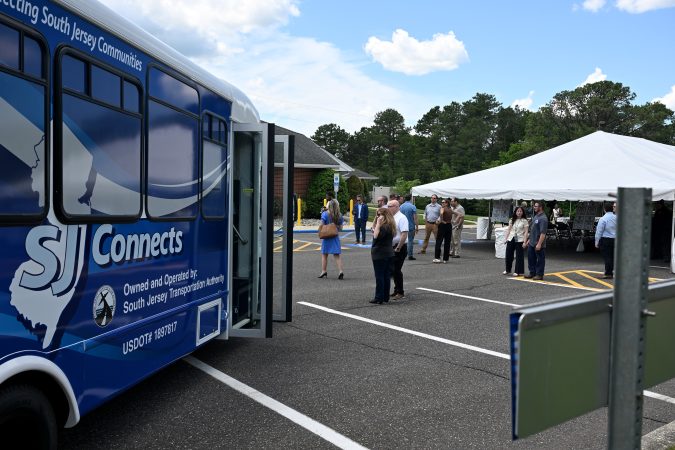
    SJ Connects, a free shuttle bus service run by the South Jersey Transportation Authority (SJTA), was granted $5 million under former Gov. Phil Murphy’s administration for an 18- to 24-month trial run to improve transit in the region. All of the service’s routes already began running except for Burlington County’s bus, which is expected to start service in September despite being included in a June 1 launch announcement.

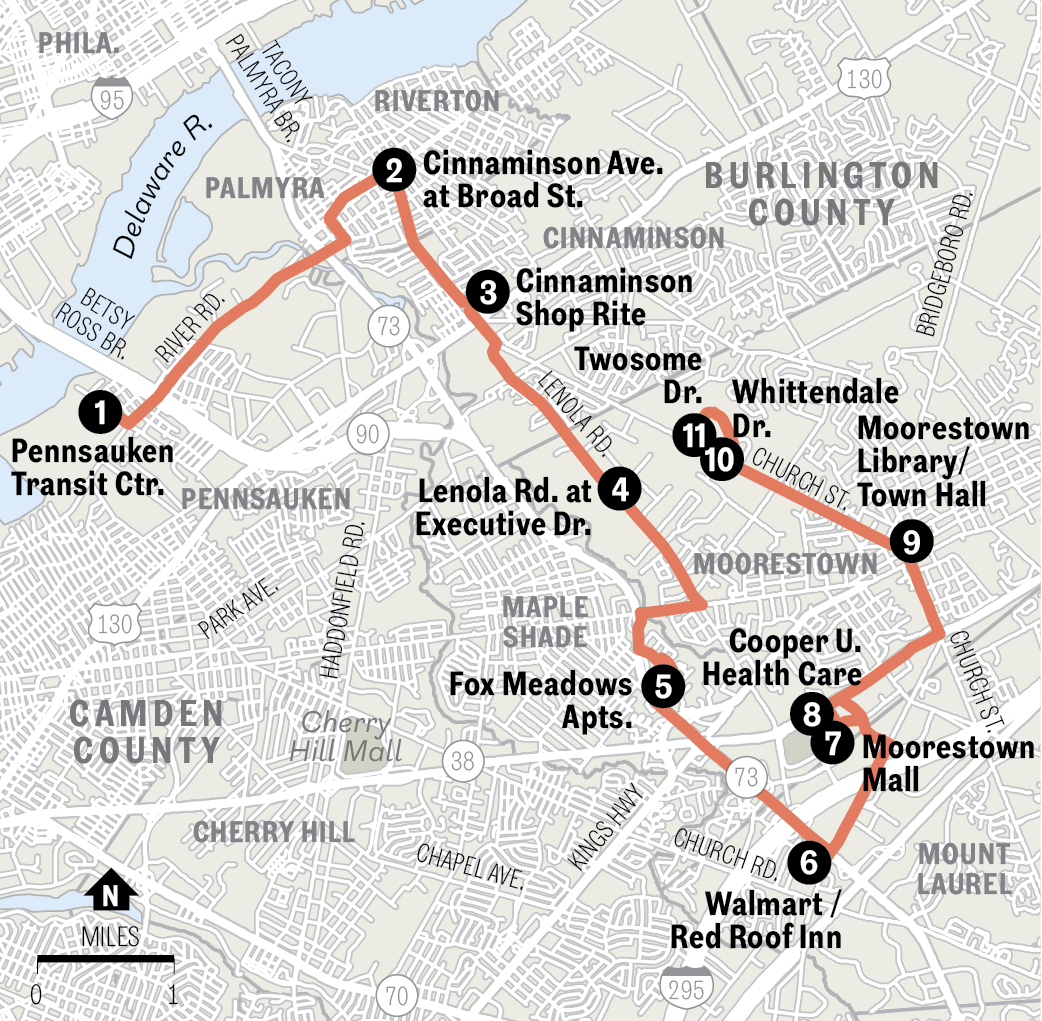
    The SJTA has not yet posted the details of the Burlington County route but The Inquirer obtained its draft brochure through a public records request. The document shows that the planned 11-stop route connects Burlington County’s Palmyra, Moorestown, Cinnaminson, Mount Laurel, and Maple Shade with the Pennsauken Transit Center in Camden County.

    While it will most directly service the residents who live along the route, the planned route will also connect with existing transportation centers in the area to serve as a transfer point for riders.

    Locally, the bus is slated to stop at Cooper University Health Care‘s Moorestown campus, Moorestown Library and Town Hall, Cinnaminson Shop Rite, Fox Meadow Apartments, and the Mount Laurel Walmart Supercenter.

    Stops at the Moorestown Mall and Pennsauken Transit Center will connect riders to NJ Transit buses that go to Philadelphia’s 30th Street Station, Trenton, Camden County municipalities such as Cherry Hill, Haddonfield and Gloucester City, and other Burlington County locations such as Mount Holly and Willingboro. It will also link riders with the RiverLine and Atlantic City Rail.

    (function() {
    var l2 = function() {
    new pym.Parent(‘BURLCO28-A’,
    ‘https://media.inquirer.com/storage/inquirer/projects/innovation/arcgis_iframe/BURLCO28-A.html’);
    };
    if (typeof(pym) === ‘undefined’) {
    var h = document.getElementsByTagName(‘head’)[0],
    s = document.createElement(‘script’);
    s.type = ‘text/javascript’;
    s.src = ‘https://pym.nprapps.org/pym.v1.min.js’;
    s.onload = l2;
    h.appendChild(s);
    } else {
    l2();
    }
    })();

    Dominic D’Amico, director of transportation services at the SJTA, said the agency designed the routes to connect with NJ Transit’s existing infrastructure and the region’s “eds and meds.”

    Some parts of Burlington County that are excluded from SJ Connects — such as Pemberton and Mount Holly — have access to a separate, existing system called the BurLINK shuttle, which is administered by the county and run by a private company.

    The new SJ Connects route is not slated to directly connect with BurLINK. But riders can transfer between the two services using the River Line, for example.

    Assembly member Andrea Katz, a Burlington County Democrat, said in an interview earlier this month that she hopes SJ Connects will expand further into her district in the future. The long-term viability for the program will likely depend on whether its advocates can convince Democratic Gov. Mikie Sherrill and legislative leaders that it’s worth funding in future state budgets.

    “We have very little down here in Burlington County, and in South Jersey as a whole, but folks still have those issues that they need a ride to the hospital, they need a ride to a grocery store,” Katz said. “They need to get access to these things, and we’re finally starting to see this expansion into South Jersey.”

  • George Norcross is donating $100 million to Cooper University Health Care

    George Norcross is donating $100 million to Cooper University Health Care

    George E. Norcross, longtime Cooper University Health Care board chair and political powerbroker, is donating $100 million to the South Jersey health system and its MD Anderson Cancer Center at Cooper, the nonprofit announced Tuesday.

    The gift, in honor of Norcross’ parents, is Cooper’s largest and among the largest ever to a nonprofit health system in New Jersey. It comes at a time when Cooper’s financial condition is stronger than it has been in decades and as the nonprofit pursues a $3 billion expansion in Camden.

    Cooper said it would add Norcross to its name but didn’t specify how.

    “For more than 50 years, our family has been dedicated to Cooper, and we are so proud to make this contribution to ensure that Cooper and the thousands of talented, committed professionals who make a difference every day for the people of Camden and South Jersey can continue the important work of investing in their future and in Camden’s continued renaissance,” Norcross said in the announcement.

    Norcross, chairman of insurance brokerage Conner Strong & Buckelew and a former owner of The Inquirer, was not available for an interview, a spokesperson said.

    The money will be used for investments in Camden and throughout Cooper’s South Jersey service area, which stretches to Cape May County since the acquisition of Cape Regional Health System two years ago. Priorities will be education and community programs that create jobs and training, Cooper said.

    Cooper had $2.9 billion in revenue last year and $144 million in operating profit. In June 2025, Standard & Poor’s raised Cooper’s credit rate to A+, its highest level ever and a substantial turnaround for a system that was near bankruptcy 25 years ago. The system has more than 14,000 employees.

    Norcross’ gift in context

    Norcross’ donation matches a $100 million gift in 2021 to St. Barnabas Medical Center in Livingston, now called Cooperman Barnabas Medical Center in honor of the donor, Leon Cooperman, a billionaire hedge fund manager.

    Holy Name Medical Center in Teaneck received a $75 million gift last year.

    The Norcross contribution to Cooper is bigger than gifts to other health systems in South Jersey.

    Virtua Health said last year that a $5 million pledge from the Marvin Samson Foundation was its largest gift ever. Marvin Samson, a local pharmaceutical entrepreneur, pledged the money for Virtua’s education and workforce development programs, Virtua said.

    Deborah Heart & Lung Center received a $5 million gift in 2019, which it called its largest ever. The specialty hospital in Browns Mills received $4 million in 2024.

    In Philadelphia, Comcast CEO Brian Roberts and his wife, Aileen, are giving Children’s Hospital of Philadelphia $125 million and will have their name on the nonprofit’s new $2.59 billion patient tower expected to open in late 2028, CHOP said last year. It was CHOP’s largest gift ever.

    Also last year, Penn Medicine received a $120 million gift from Catherine and Anthony Clifton and renamed its new, $1.6 billion Pavilion at the Hospital of the University of Pennsylvania the Clifton Center for Medical Breakthroughs.

    Norcross family ties to Cooper

    The Norcross family has deep ties to Cooper starting with Norcross’ father, George E. Norcross Jr., a labor leader who was on the Cooper Hospital board from 1976 to 1983. He died in 1998.

    Norcross III joined the Cooper board two years later and has been chair since 2006.

    Norcross’ mother, Anne Carol Conner Norcross, gave birth to four sons — George, John, Donald, and Philip — at Cooper. She devoted years of her life to helping seniors and underserved Camden residents, Cooper said. She died in 2016.

    Philip A. Norcross is vice chairman of Cooper’s board of directors and chairman of the Cooper Foundation. Alessandra “Lexie” Triem Norcross, George Norcross III’s daughter, is also on the Cooper Foundation board.

    Cooper’s expansion

    In addition to acquiring Cape Regional and embarking on a major expansion of its Camden campus, Cooper has been expanding its network of outpatient facilities in suburban South Jersey.

    It spent $150 million to open a three-story facility in a former Sears at Moorestown Mall in late 2023. In the year following the Cape Regional acquisition, Cooper added cardiology, oncology, and orthopedics specialists care to those offices in Cape May County.

    In June, Cooper said it plans to build a $300 million outpatient facility in Gloucester Township and expects to start seeing its first patients in specialties like cardiology, neurology, and oncology in 2029.

  • 2 executives with South Jersey security firm charged with stealing millions through embezzlement and bank fraud

    2 executives with South Jersey security firm charged with stealing millions through embezzlement and bank fraud

    The founder of a security company in South Jersey has been charged in connection with embezzling $3 million from his business and causing a $9 million loss for a bank, U.S. Attorney Robert Frazier announced Monday.

    Robert Cormier, 51, of Barrington, was arraigned on July 20 in Camden federal court before U.S. Magistrate Judge Elizabeth A. Pascal. He was charged in an indictment filed July 8 with embezzlement by bank agent, bank fraud, money laundering, income tax evasion, and failing to collect and pay over payroll taxes.

    Cormier was still in federal custody on Monday, according to court records. A federal defender representing Cormier could not be reached for comment.

    A second man, Richard Eisler, 38, of Clementon, who was the deputy director for the security company, was charged in a separate indictment in connection with embezzling over $2 million from the business.

    Eisler was charged with embezzlement by bank agent, money laundering, income tax evasion, and witness tampering. Eisler was arraigned on Friday in Camden federal court before Pascal and pleaded not guilty, court records show. Eisler was released on $100,000 unsecured bail.

    The lawyer representing Eisler could not be reached for comment Monday.

    In 2017, Cormier started Erigere Rapidus Solutions, Inc. (ERS), a security services business based in Westville, prosecutors said.

    According to several organizations that promoted him as a public speaker with a law enforcement background, Cormier is a retired U.S. Border Patrol agent. The Latin phrase “erigere rapidus” is the motto for a special operations group in the Border Patrol, an agency official posted on social media last year. Various translations say the Latin means “stand ready” or “rapid deployment” or something similar.

    On Monday, it was unclear if Erigere Rapidus Solutions was still operating as a business. The domain name used for the company’s website was available for sale.

    In late 2019, ERS entered into an agreement with a local bank to collect, count, transport, store, and deposit cash, prosecutors said.

    ERS employees, including Eisler, were responsible for picking up cash from various customers of the bank, counting and storing the cash, and providing daily reports about the cash to the bank.

    On a daily basis, ERS stored varying amounts of cash in its vault ranging from $1 million to $12 million, prosecutors said.

    The bank ended its relationship with ERS after determining that more than $8 million was missing from the vault, prosecutors said.

    Starting in 2020 until 2022, Cormier allegedly stole at least $3 million in cash out of the vault, prosecutors said.

    Cormier, who was the company’s chief operating officer, allegedly used the embezzled funds to cover business-related costs and to pay personal expenses for himself and his family members, including the installation of a deck and a pool, and household renovations, prosecutors said.

    He allegedly failed to report the extra income to the Internal Revenue Service and did not collect and pay over payroll taxes for employees of ERS, prosecutors said.

    From 2020 until late 2021, Eisler allegedly stole at least $2 million from the vault, prosecutors said.

    Eisler allegedly used the embezzled funds to pay personal expenses for himself and his family members, including the purchase of a Porsche 911, two Audis, two trucks, and a recreational vehicle, prosecutors said.

    He also allegedly used the money to pay for wedding rings, a wedding reception, and a roof for his residence, and to pay off an automobile loan, prosecutors said. Eisler allegedly failed to report the income to the IRS.

    Prosecutors also allege that Eisler attempted to obstruct the investigation by attempting to persuade a witness to lie to federal agents.

  • N.J. sees largest drop in death rate in the U.S.

    N.J. sees largest drop in death rate in the U.S.

    The nation’s death rate may have fallen to a historic low last year as many of the killers of young people such as drug overdoses, gun homicides and traffic accidents continued receding in 2025, according to new federal statistics.

    States have not shared equally in the success, though, according to a Stateline analysis of provisional data by state. And the low ebb may reflect the effects of past health care expansion efforts that are threatened by today’s Trump administration moves to curtail Medicaid expansion and cut funding for rural hospitals.

    Some states in the Northeast have seen death rates drop by the most between 2015 and 2025 — led by New Jersey (down 8.3%), Rhode Island (down 8%), New York (down 7.9%), Massachusetts (down 7.4%) and the District of Columbia (down 7.0%). Some experts credit states’ attention to health care, traffic issues and gun violence.

    New Jersey has taken the lead in decreases because of a long-term commitment to expanding health care to people with low incomes, said Stephen Crystal, director of Rutgers University’s Center for Health Services Research.

    Even before Medicaid expansion under the federal Affordable Care Act, New Jersey and Massachusetts, among other states, were pooling funds with hospitals to cover more low-income residents, Crystal said.

    “New Jersey has been doing this for a long time, and you’re seeing the effects in the lower mortality rates for the big killers,” he said.

    The state stands out for having less than half the national rate of firearm deaths, both suicide and homicide, as well as deaths from heart and kidney diseases caused by high blood pressure. The rate of traffic accident deaths is also well below the national rate.

    There’s also a more confrontational attitude toward speeding and less tolerance for guns in the Northeast, he said.

    “Here’s something that annoys a lot of New Jerseyans. The state troopers have the cojones to pull you over if you’re doing 90 on the turnpike. This is not the case in Wyoming,” Crystal said. “Also if you go out West where gun possession is very high, then the firearm suicide deaths become enormous.”

    Nationally most of the decrease between 2024 and 2025 came from young age groups. The things most likely to kill them dropped after spiking during the early pandemic, including drug overdoses, traffic accidents, gun violence and suicide, according to an analysis of death counts by Mary Pat Campbell, an actuary and life insurance analyst in New York state.

    Northeastern states have an advantage in tackling those problems based on wealth, she said.

    “There has been an increasing separation of mortality outcomes by socioeconomic status,” Campbell said, noting that traffic accidents are rarer in places like New Jersey partly because so many people commute on public transportation.

    “For New Jersey, a lot of it really is that there are a bunch of high-income people who have lower-than-average mortality, just like people on Long Island and the rich parts of Westchester [in New York state],” she added.

    Some states have not improved since 2015 in the provisional statistics analyzed by Stateline, which may change as the federal Centers for Disease Control and Prevention makes new age adjustments at the state level.

    New Mexico had an age-adjusted death rate 9% higher last year than 10 years ago, as drug overdose deaths continue to plague the state at more than twice the national rate.

    In June, New Mexico Democratic Gov. Michelle Lujan Grisham called for restitution from the federal government over allegations that U.S. Drug Enforcement Administration officials knowingly let fentanyl shipments into the state during multiple presidential administrations. In one case, a whistleblower alleged, agents stood by while 1.8 million fentanyl pills were trafficked in hopes of catching higher-ranking dealers and suppliers down the line.

    New Mexico also struggles with higher death rates from alcoholic liver disease and gun homicide. Neighboring Arizona, where the death rate is 5% higher than 10 years ago, also stands out for a high overdose death rate and a high gun suicide rate.

    Iowa and Oklahoma death rates are also up 5% from 2015. Iowa stands out for a higher-than-national rate of fall-related deaths, typical of an aging rural population with little day-to-day supervision. Oklahoma has a similarly high rate of fall-related deaths, as well as almost four times the national rate of deaths from high blood pressure and hardening of the arteries — both problems that can be controlled with medication.

    Iowa “recognizes fall-related deaths as a significant public health concern,” wrote a spokesperson for the state Department of Health and Human Services, Danielle Sample, in an e-mail statement. Those falls are associated with older age groups and possibly rural access to health care and preventive services, she said.

    The state has a falls prevention program that stresses exercise to maintain mobility and monitoring excessive medication that could cause dizziness, poor vision and unsafe home conditions.

    Almost two-thirds of the national death rate improvement for 2024 to 2025 came from people between the ages of 15 to 44, Campbell told Stateline.

    Improvements were especially large for young people 25 to 34, a group including younger Millennials and older Gen Z, a demographic hard hit by homicides and drug overdose deaths early in the pandemic, Campbell told Stateline. The rate for accidents, a category that includes drug overdoses, gun accidents and traffic accidents, dropped 6% in one year, and the homicide rate dropped 14%, she said.

    It’s hard to be sure how much death rates really changed between 2024 and 2025 because the methodology changed, Crystal noted, accusing the CDC of “grabbing for a good news headline” by reporting the apparently historic decrease prominently in a blog item.

    For 2025, the CDC used different methods to calculate rates, including more adjustments to 2020 census data used as a basis for age adjustment, noting in the report that the results could change and “should be interpreted with caution.”

    Asked about the issue, the CDC said in a statement to Stateline that “as this is a provisional report, we did not go in depth about the change in population denominators” and that it is “planning a brief report that will show the impact” of the changes on death rates and birth rate in new statistics.

    In any case, the Trump administration likely can’t claim credit for current decreases in death rates, which would reflect policy changes from years ago that slowly take effect, Crystal said.

    “This is not the time to see the effect of what Trump is doing now. It’s going to take five years,” Crystal said.

    One killer of young people has not dropped: The rate of gun suicide has increased 14% since 2015, according to the Stateline analysis. Suicide has affected Gen Z young people more than previous generations.

    Over the past 10 years, rates for Black and Hispanic people have increased while rates for other groups have gone down, according to the Stateline analysis.

    “As a country we are improving. We should celebrate that. But many segments of the population are left behind,” said Ali Mokdad, a professor of health metrics sciences at the University of Washington.

    Mokdad credited some medical advances for decreases in heart disease that came in spite of increased obesity.

    “That decline in cardiovascular disease was due to better controlled blood pressure,” Mokdad said. “Blood pressure medication, when it came out, was very expensive. Now blood pressure medication is so cheap you can get a three-month supply for less than the price of a cup of coffee.”

    This story originally appeared on New Jersey Monitor.