Category: New Jersey News

  • Atlantic County installs world’s first commercial microplastic filtration system

    Atlantic County installs world’s first commercial microplastic filtration system

    Winds whipped as a team from PolyGone Systems demonstrated what they and their Atlantic County partners say is the world’s first permanent installation of a machine designed to intercept microplastics at wastewater treatment plants.

    In this case, they trap the particles before they reach the ocean.

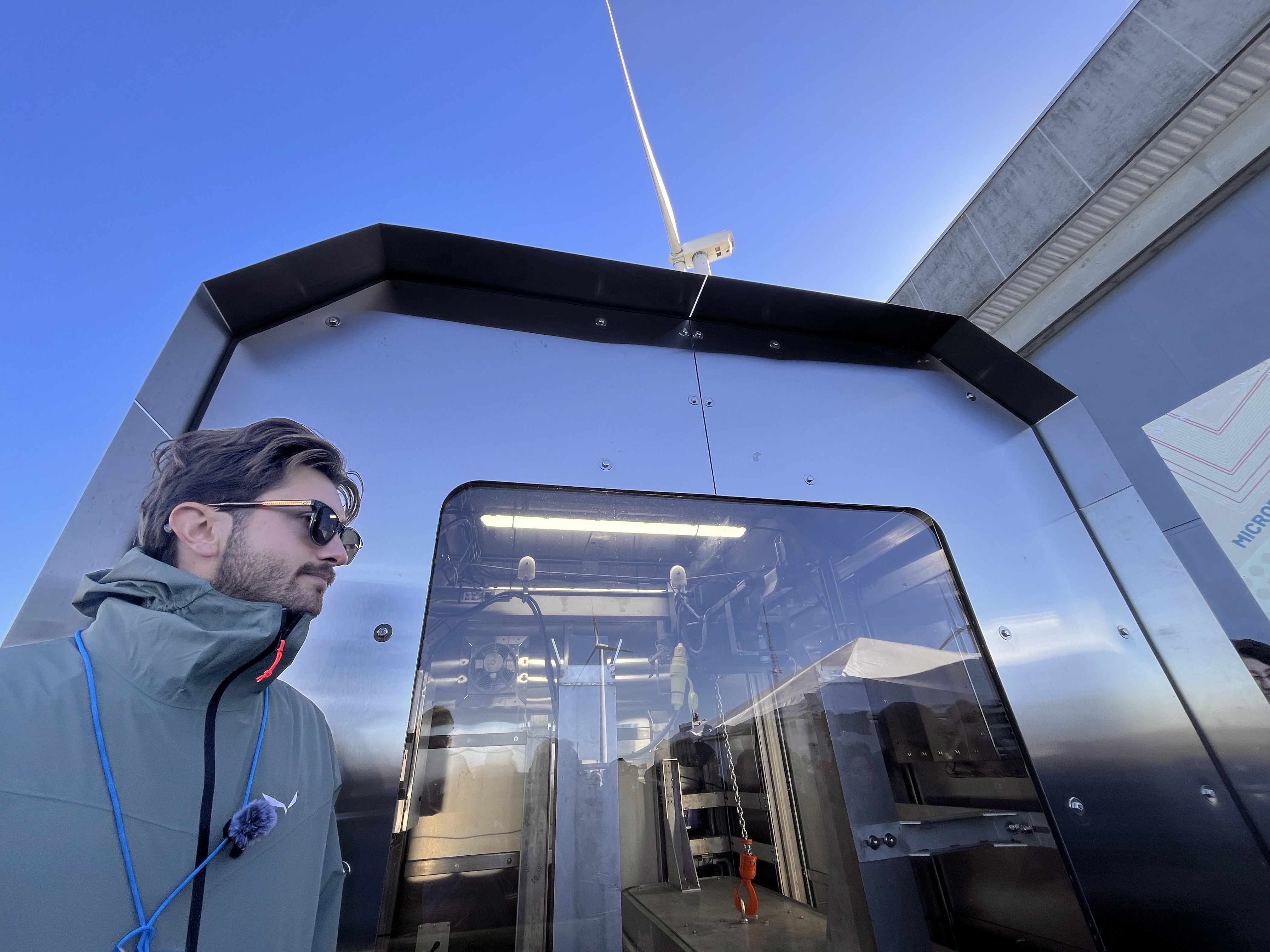
    Windmills, driven by those same winds, towered over the team’s stainless steel pod perched at the edge of the Atlantic County Utilities Authority’s (ACUA) wastewater treatment plant in Atlantic City.

    Inside the chamber, known as a PolyPod, manifolds clutching specialized filters dropped into water below, attracting microplastics before they are released into the nearby Atlantic Ocean.

    “Underneath that very simple, sleek design, there’s layers of engineering work,” said Yidian Liu, one of PolyGone’s founders.

    The ACUA was a pioneer with its land-based windmills installed two decades ago to generate power.

    The authority believes it is at the forefront again by installing the microplastics removal system in partnership with PolyGone Systems, which was founded in 2021 by Princeton University graduates Liu and Nathaniel Banks.

    From pilot to program

    Matthew DeNafo, president of the ACUA, said PolyGone had sent letters several years ago to treatment facilities about what it was trying to accomplish.

    The ACUA was one of the only organizations that responded positively, and it began a pilot project with PolyGone in 2024.

    That pilot project captured 580 million plastic particles a year from a facility that processes 40 million gallons of water per day, according to the ACUA.

    Tuesday marked the announcement that the pilot had moved into a full-time operation.

    The ACUA says the system will safeguard water quality for over 200,000 residents, beach visitors, and marine ecosystems along the New Jersey coast.

    Electric-generating windmills loom over churning waters of the Atlantic County Utility Authority’s wastewater treatment facility in Atlantic City.Frank Kummer

    Simple design

    DeNafo praised the unit’s simplicity.

    “This is really a self-contained unit passive where we’re not having to pump anything,” DeNafo said. “We’re not having to worry about a lot of moving parts.”

    The PolyPod is an enclosed filtration system built with silicone-carbon filters that attract microplastics — less than a grain of rice long — before they can make their way into the nearby Atlantic Ocean.

    The project was funded by a $2 million loan with principal forgiveness from the New Jersey Infrastructure Bank to improve water quality.

    The pod’s minimalist design stands out against the large concrete building and open tanks that filter out other contaminants and treat the water with chlorine.

    It represents the final filtering before treated wastewater is released into a holding pond before eventually being released into the ocean.

    Yueyu Yao, lead scientist for PolyGone, said the filters are silicone-based. They are designed to attract microplastics, unlike filters using carbon, mesh, or sand.

    “That’s how we’re able to get the smallest microplastics,” Yao said.

    She said the filters are capable of capturing 98% of microplastics, but the team will monitor the ACUA project to see what it captures.

    How it works

    Ariel Blumenberg, an electrical engineer at PolyGone, explained that the PolyPod works essentially like this:

    The automated unit, housed in weatherproof-stainless steel, sits directly over water flowing from the treatment facility into the holding pond, without requiring complex piping.

    Water flows naturally through the system, as a four-layer manifold drops the filter down into the wastewater flow.

    The silicone filters capture nano- and microplastics ranging from submillimeter in length up to about 5 mm, or the size of a grain of rice.

    An automated winch hoists up the filter once a day, or more frequently during storms for cleaning.

    Jets from a high-pressure wash dislodge trapped plastics. An evaporation unit reduces the extracted plastics so they can be safely incinerated or recycled.

    The filter, which needs to be replaced about once per year, is then redeployed back into the channel.

    “All this is done right here from this handy operator panel,” he said, motioning to a digital screen.

    The unit is built to last about 10 to 15 years.

    Doug O’Malley, director of the nonprofit advocacy group Environment New Jersey, was on hand to watch Tuesday’s demonstration, as were officials from various other utility authorities.

    “Every water department in the region, including the Philadelphia Water Department, should look at what PolyGone has done and figure out how to scale it,” O’Malley said.

  • Spirit Christmas is back already in South Jersey

    Spirit Christmas is back already in South Jersey

    Halloween is still more than a week away, but another holiday season has already begun at an old Best Buy outlet in Marlton.

    That’s where the Philadelphia region’s first Spirit Christmas store has opened to eager shoppers who want to get their hands on Santa costumes, Rudolph inflatables, or Frosty animatronics.

    Next month, the Egg Harbor-based Spirit — which also operates the popular Spirit Halloween stores — is set to open two more Christmas locations: one in a former Joann fabrics store at the Marple Crossroads shopping center in Springfield, Delaware County, and another in an old Bed Bath & Beyond at the Hamilton Commons in Hamilton, Atlantic County, just off the Atlantic City Expressway.

    All Joann and Bed Bath & Beyond stores closed in recent years amid the companies’ bankruptcies. Bed Bath & Beyond has since been acquired by Overstock.com, which added Bed Bath & Beyond products to 98 locations of the Container Store, including Cherry Hill and King of Prussia.

    The first Spirit Christmas pop-ups opened in 2024. At the time, the company converted 10 Spirit Halloween stores to Spirit Christmas locations and reopened them as the new concepts in mid-November. The first round of Spirit Christmas stores included locations in Marlton and Mays Landing.

    Spirit Christmas has opened more stores each season, with 30 locations in 2025 and an expected 44 outposts in 15 states this year.

    “The holidays are so much more than what’s under the tree,” Kym Sarkos, executive vice president of Spirit, said in a statement. “They’re about the traditions families return to year after year and the magic of creating new ones. Spirit Christmas was created to celebrate that feeling.”

    The Spirit Christmas footprint remains far smaller than that of Spirit Halloween. There are more than 1,500 Spirit Halloween stores across North America and more than two dozen in Philly, the collar counties, and South Jersey.

    By expanding its focus on Christmas stores, Spirit is cashing in on the most lucrative season. U.S. consumers are expected to spend more than $1 trillion this November and December, which would be a 4.2% increase from the same period last year, according to the National Retail Federation, the country’s largest retail trade group.

    The same group estimates that U.S. consumers will spend a record $13.5 billion on Halloween this year.

  • Benjamin W. Nero, celebrated groundbreaking Black orthodontist, has died at 89

    Benjamin W. Nero, celebrated groundbreaking Black orthodontist, has died at 89

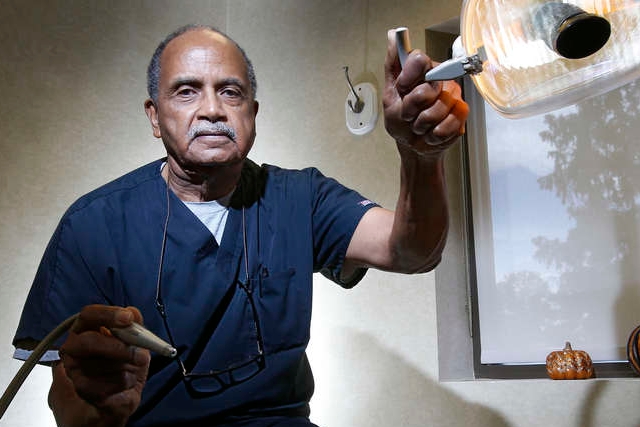
    Benjamin W. Nero, 89, of Riverside Township, Burlington County, award-winning first Black graduate of the University of Kentucky College of Dentistry, first Black dental school graduate in Kentucky, first Black intern to complete the orthodontic residency at the old Albert Einstein Medical Center, author, mentor, education advocate, philanthropist, and star quarterback, died Sunday, Sept. 27, of complications from a stroke at an assisted living center in Voorhees.

    In 1967, Dr. Nero became the first Black graduate at the Kentucky College of Dentistry and the first Black dental school graduate in the state. Three years later, he became the first Black intern to complete a challenging three-year residency at what is now Jefferson Einstein Philadelphia Hospital.

    In 1971, he purchased a Center City practice from Knowlton Atterbeary, one of the nation’s few Black orthodontists, and spent the next 50 years peering into mouths, affixing braces, and counseling thousands of dental patients. Like Atterbeary, Dr. Nero was the area’s only Black orthodontist for years, and he treated three generations of several families.

    “My daughter’s smile is attributed to Dr. Nero,” the mother of a former patient said online.

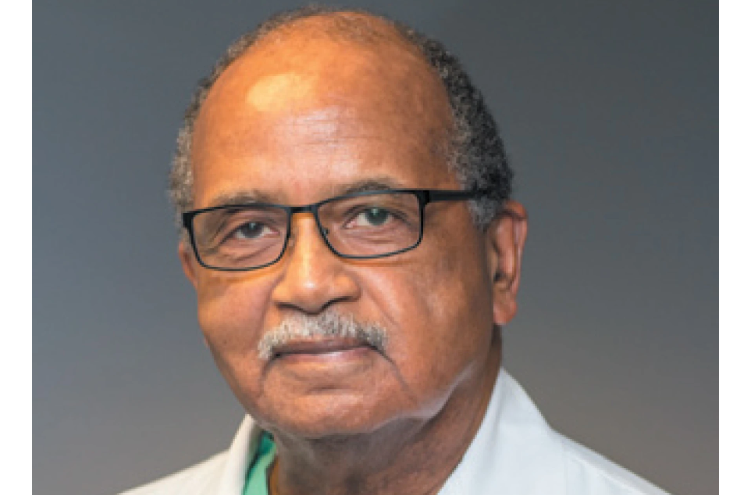
    Dr. Nero spoke often about his life and career at the University of Kentucky and elsewhere. University of Kentucky

    He enjoyed mentoring other dentists and students, and, affable and engaging, even steered some of his patients into dental school. “I am honored to think that I provided some of the inspiration for them to pursue dentistry as a career,” he said in a 2019 interview with the Kentucky College of Dentistry.

    Dr. Nero was a cofounder and onetime president of the New Era Dental Society, and he traveled to Haiti to provide dental care to underserved patients. In 2017, he won a Distinguished Alumni Award from the Kentucky College of Dentistry and was invited to lecture at what is now Kentucky State University as part of its Living Legends Series.

    Alumni at the Kentucky College of Dentistry created the Dr. Benjamin Nero Student Inclusive Excellence Award and the Drs. Nero and Biggerstaff Diversity Scholarship Endowment. Jeffrey P. Okeson, dean of the College of Dentistry, called Dr. Nero “an enduring source of inspiration to many within our profession.” Dental school classmate Jack Frick said: “He has made this planet a better place for his family, his patients, his friends, and the community.”

    Dr. Nero grew up picking cotton on a 51-acre farm in rural Mississippi. “I was the only guy in my class who hated for school to be out,” he told KUT-FM radio at the University of Texas at Austin in 2016. “As soon as school was out I had to go to the cotton field.”

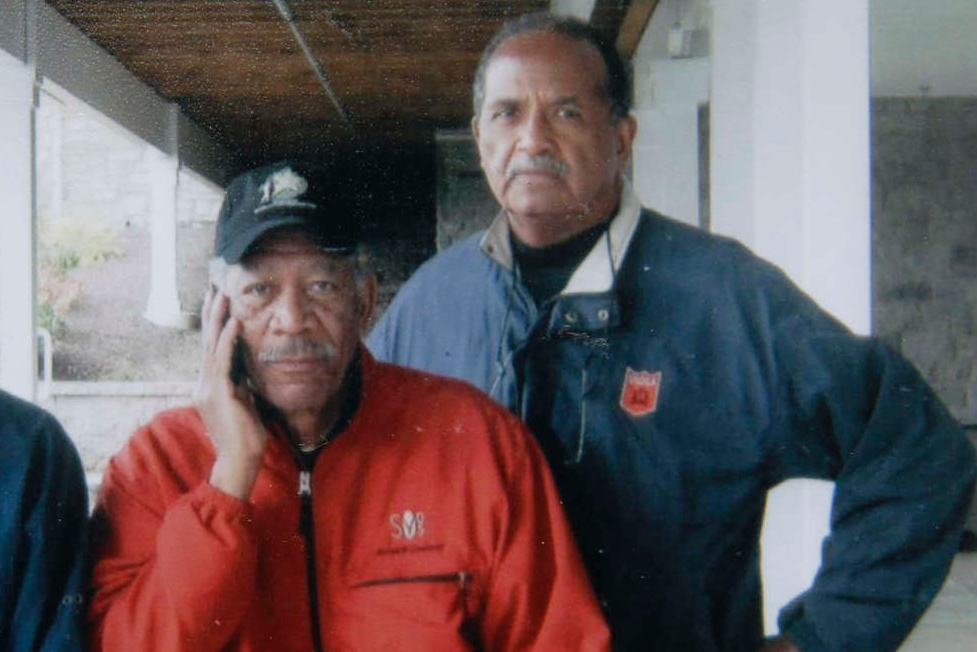
    Dr. Nero (right) met actor Morgan Freeman in high school. Michael Bryant / Staff Photographer

    He was the star quarterback and captain of the high school football team, and he led his segregated squad to a state championship game. He went on to be a star quarterback at Kentucky State and earned a degree in biology.

    He also earned a training camp tryout with the old Los Angeles Chargers pro football team in 1960. But he left the team, he said, after being told he couldn’t play quarterback because he was Black.

    He coauthored his 194-page memoir, That’s the Way It Was, with local journalists Claude Lewis and John Timpane in 2016, and it detailed his family history from enslavement in the 1800s to modern America. Actor Morgan Freeman, a high school classmate in Mississippi, wrote the forward to the book, and director Pilar Timpane made an award-winning short documentary, A House for My Mother, in 2025 that was based on the book.

    Dr. Nero said on Amazon.com: “I hope my story can serve as an inspiration for the younger generations to stay committed to their goals, never give up, and always strive to make the most of their talents.”

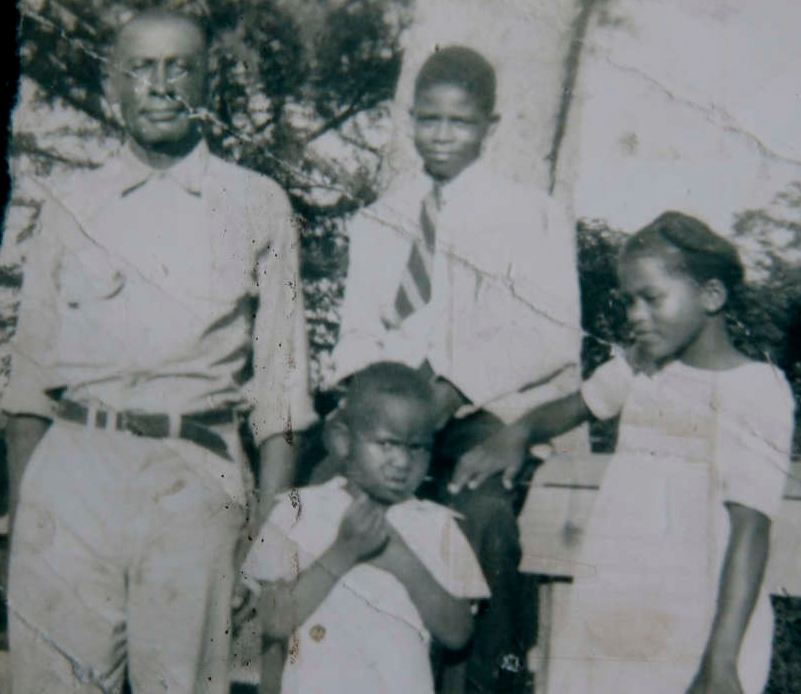
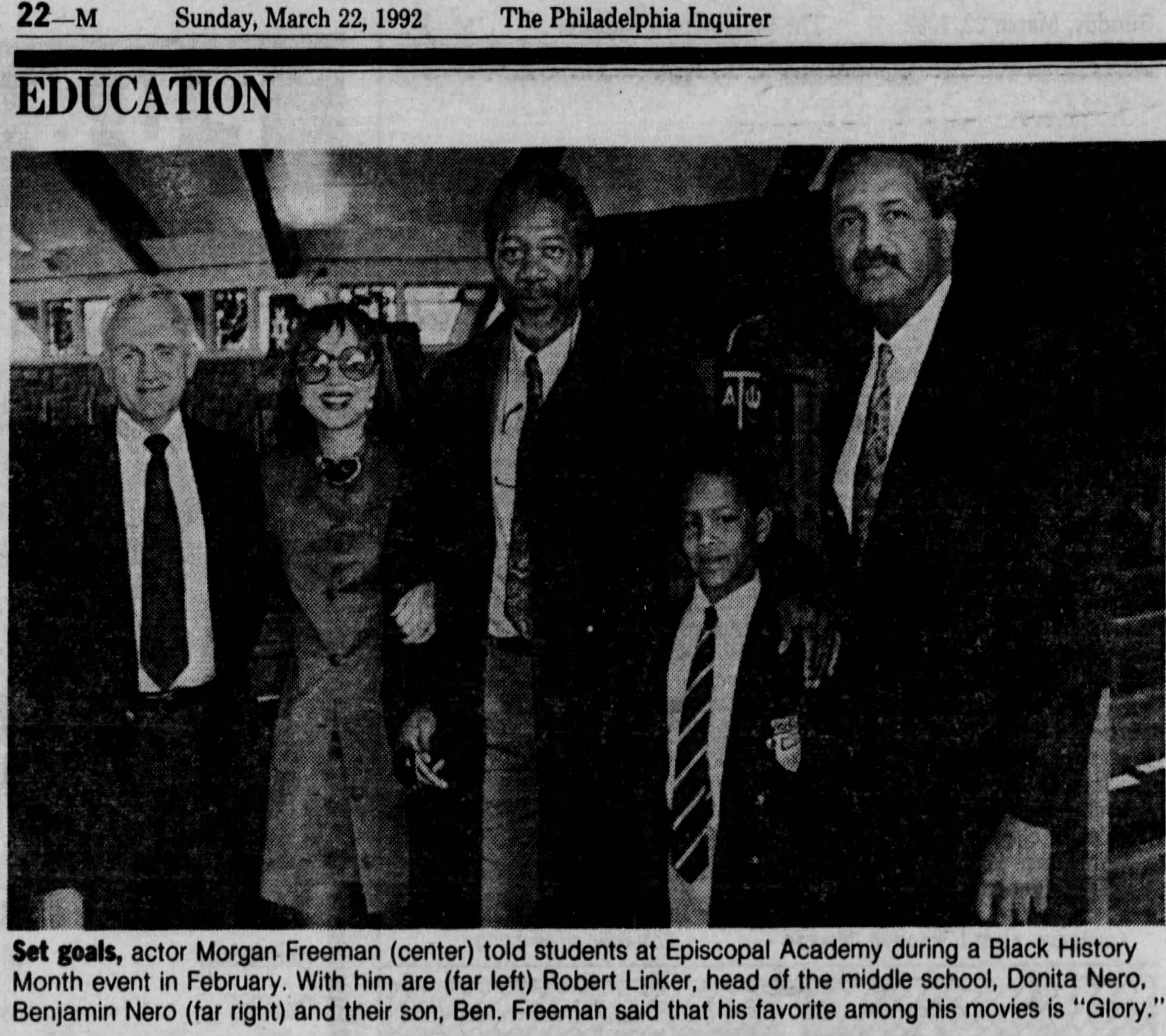
    Above, Dr. Nero (front center) stands with his father, older brother, and older sister in 1943. He was 6. Below, Dr. Nero (right) poses with his son, Benjamin Jr. (second from right), actor Morgan Freeman (center), and others in a 1992 photo that was published in The Inquirer.

    Dr. Nero’s book and career were featured in The Inquirer and other publications, and he appeared on a local TV show and at public speaking events. Friends called him “a special man” and “a noble spirit” in online tributes.

    John Moore, a fellow graduate of the Kentucky College of Dentistry, said: “I have always thought that it is too bad that there aren’t more people in the world like Ben.”

    Benjamin Williamson Nero was born Aug. 24, 1937, in Greenwood, Miss. His father taught Sunday school, and Dr. Nero embraced his own faith, took on student leadership roles at Broad Street High School, and graduated in 1956.

    “He was one of the favorites of teachers,” Freeman said in A House for My Mother.

    Dr. Nero studied chemistry and English as well as biology at Kentucky State. He acted in college theatrical productions and was active in civil rights protests and other campus events.

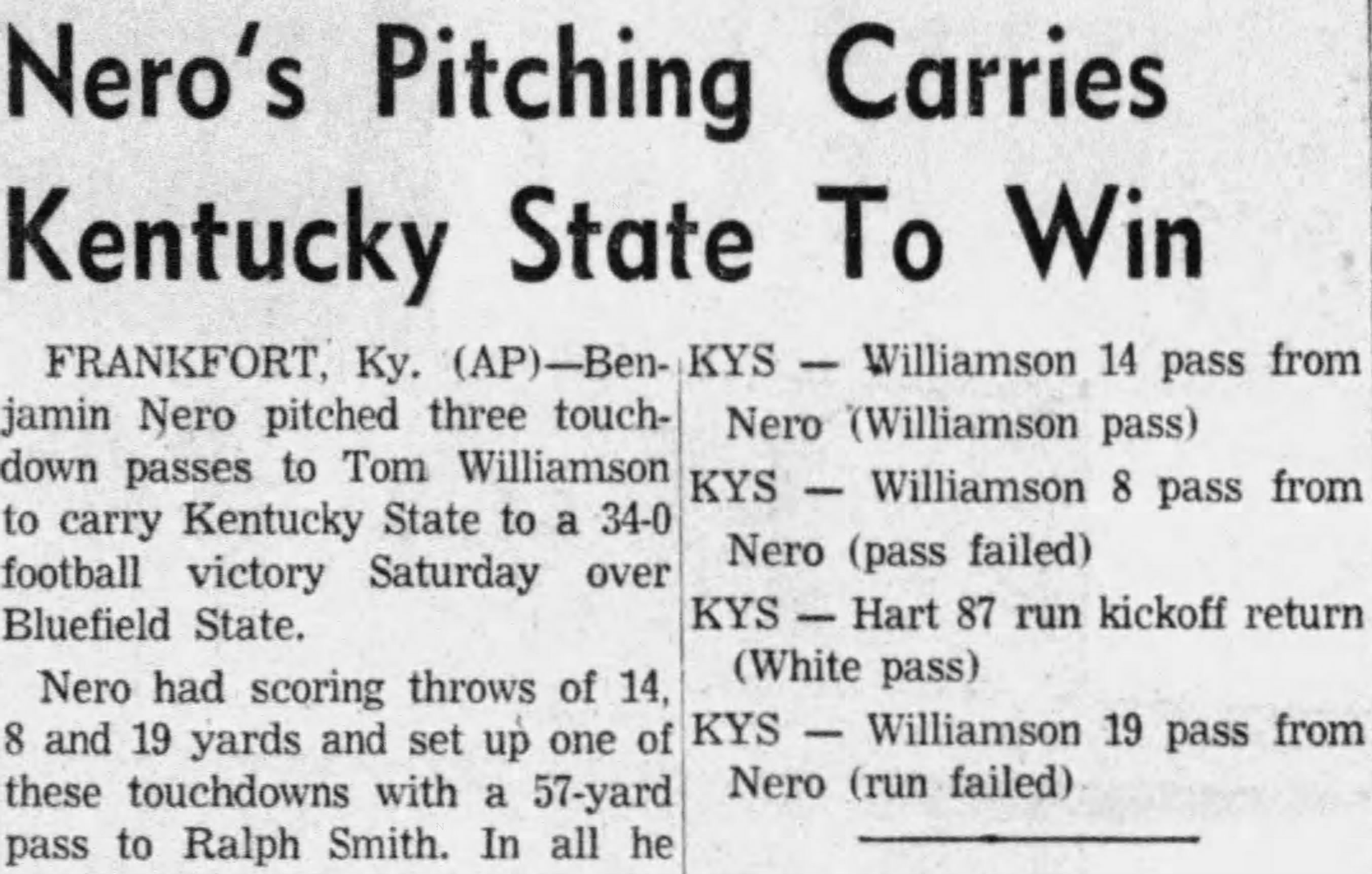
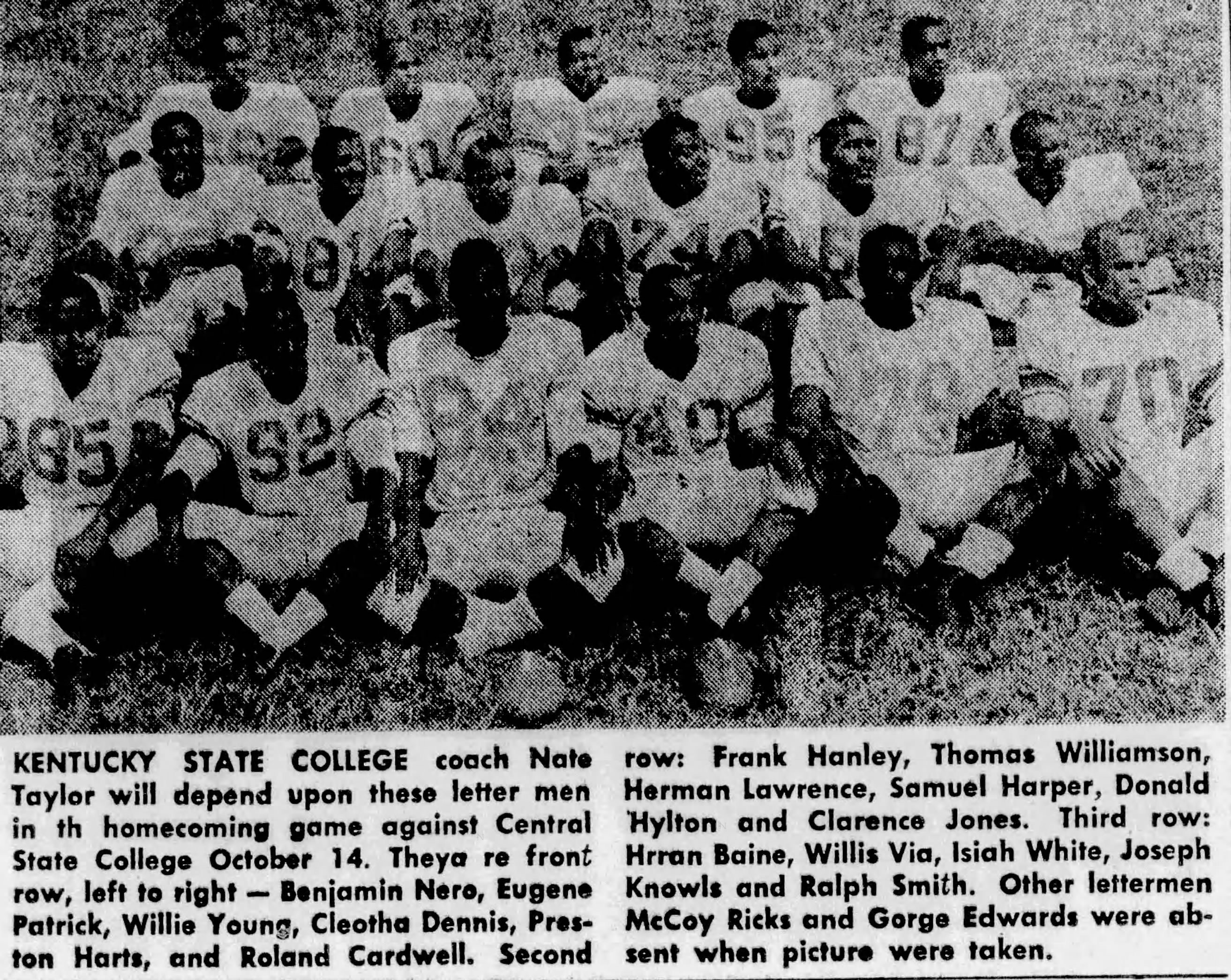
    Above, Dr. Nero made the headline of this 1960 story in the Messenger-Inquirer (Ky.) Below, he sits, front left, with the Kentucky State football team in a 1961 photo that appealed in the Louisville (Ky.) Defender.Newspapers.com.

    He married Donita White, and they had a son, Benjamin Jr., and lived in Gladwyne. After a divorce, he married Noella Folkes, and they lived in Riverside Township. He had previously been married and divorced twice.

    Dr. Nero enjoyed reading, traveling, and playing baseball, tennis, and golf with his son. He went to Eagles games for five decades and played baseball with Mike Schmidt and other Phillies at Dream Week workouts.

    He was warm and modest, his family said, and had an appealing sense of humor. They said: “He viewed himself not as self-made but as the beneficiary of people who had loved, taught, challenged, and carried him.”

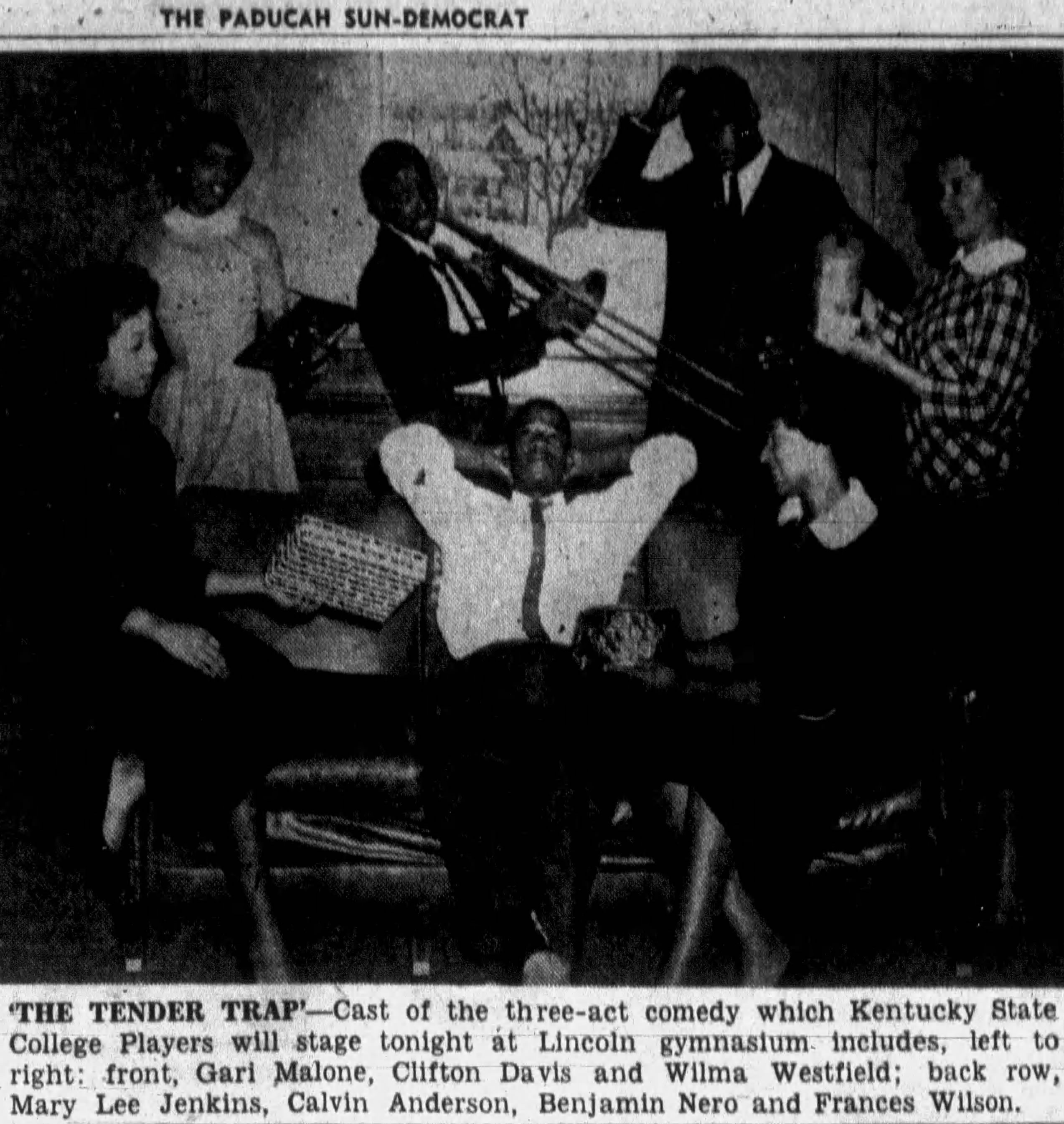
    Dr. Nero (above, rear second from right) performed in productions at what is now Kentucky State University. Dr. Nero’s memoir (below) was published in 2016.Newspapers.com

    His son said: “He was the strongest, coolest, smartest man in the world. He was a student of life and loved to learn. He was the best. The best.”

    In addition to his wife, son, and former wife, Dr. Nero is survived by other relatives. Four sisters and three brothers died earlier.

    Services were held earlier.

    Donations in his name may be made to the Drs. Nero and Biggerstaff Diversity Scholarship Endowment, Linda Epling, Director of Philanthropy, 770 Rose St., Lexington, Ky. 40536.

    Dr. Nero went to Eagles games for five decades and played baseball with Mike Schmidt and other Phillies at Dream Week workouts. Benjamin W. Nero
  • The Gaudreau brothers crash case trial | Inquirer South Jersey

    The Gaudreau brothers crash case trial | Inquirer South Jersey

    Good morning, South Jersey.

    A January trial date has been set for Sean Higgins, the driver accused of fatally striking hockey players Johnny and Matthew Gaudreau.

    And New Jersey legislators are calling for more state oversight of homeschooling after the death of a 9-year-old girl in Paulsboro.

    Plus, two Deptford neighbors have appeared on Wheel of Fortune less than a year apart, and more news of the day.

    — Taylor Allen (southjersey@inquirer.com)

    If someone forwarded you this email, sign up for free here.

    A set trial date

    The trial date for Sean Higgins, the driver charged with vehicular homicide in the 2024 deaths of Johnny and Matthew Gaudreau, is set for Jan. 4, New Jersey Superior Court Judge Michael Silvanio ruled Monday.

    Higgins is charged with two counts of second-degree reckless vehicular manslaughter, two counts of first-degree aggravated manslaughter, tampering with evidence, and fleeing the scene. The Gaudreaus died while biking on Aug. 29, 2024, in Oldmans Township, Salem County.

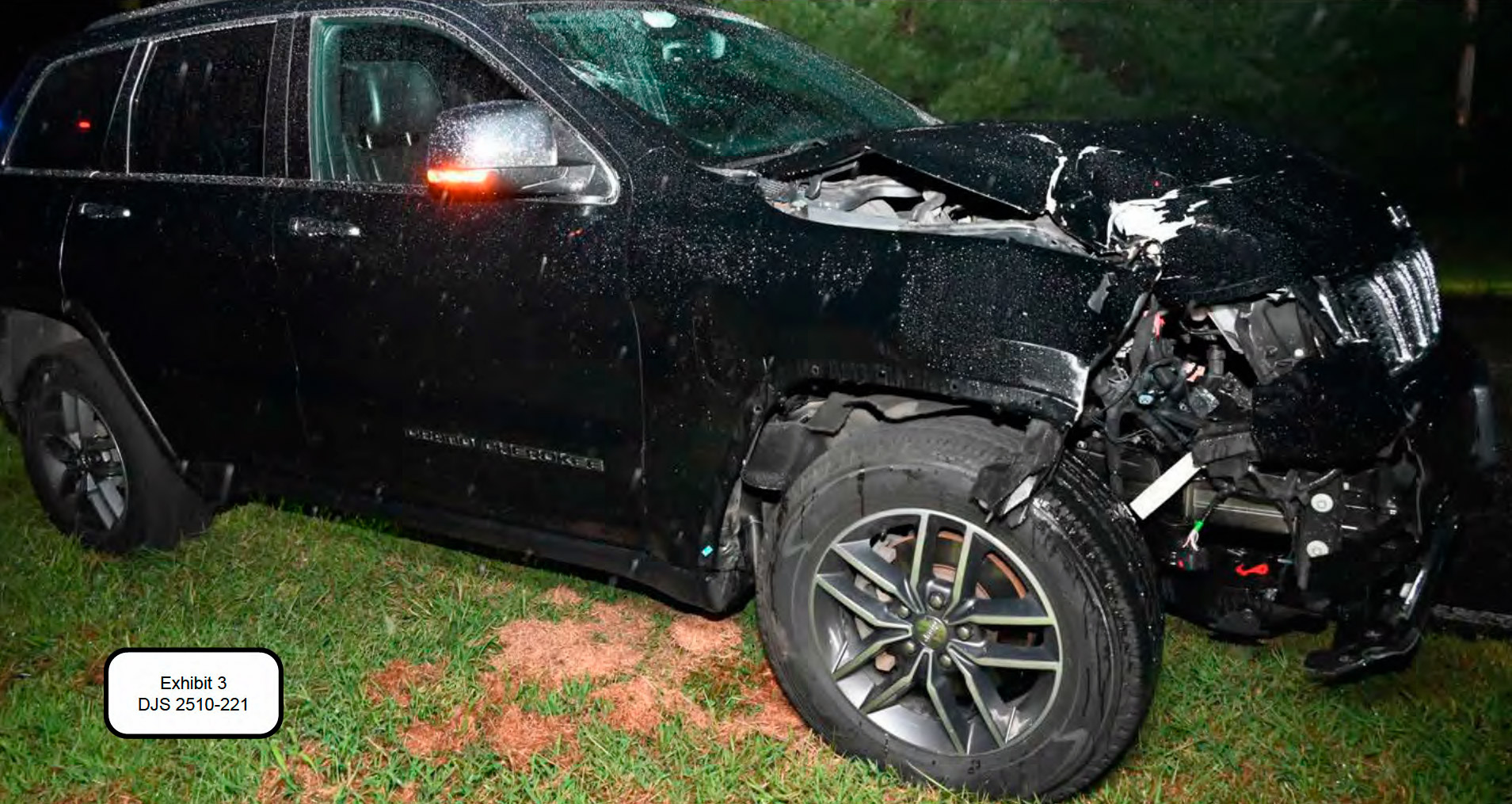
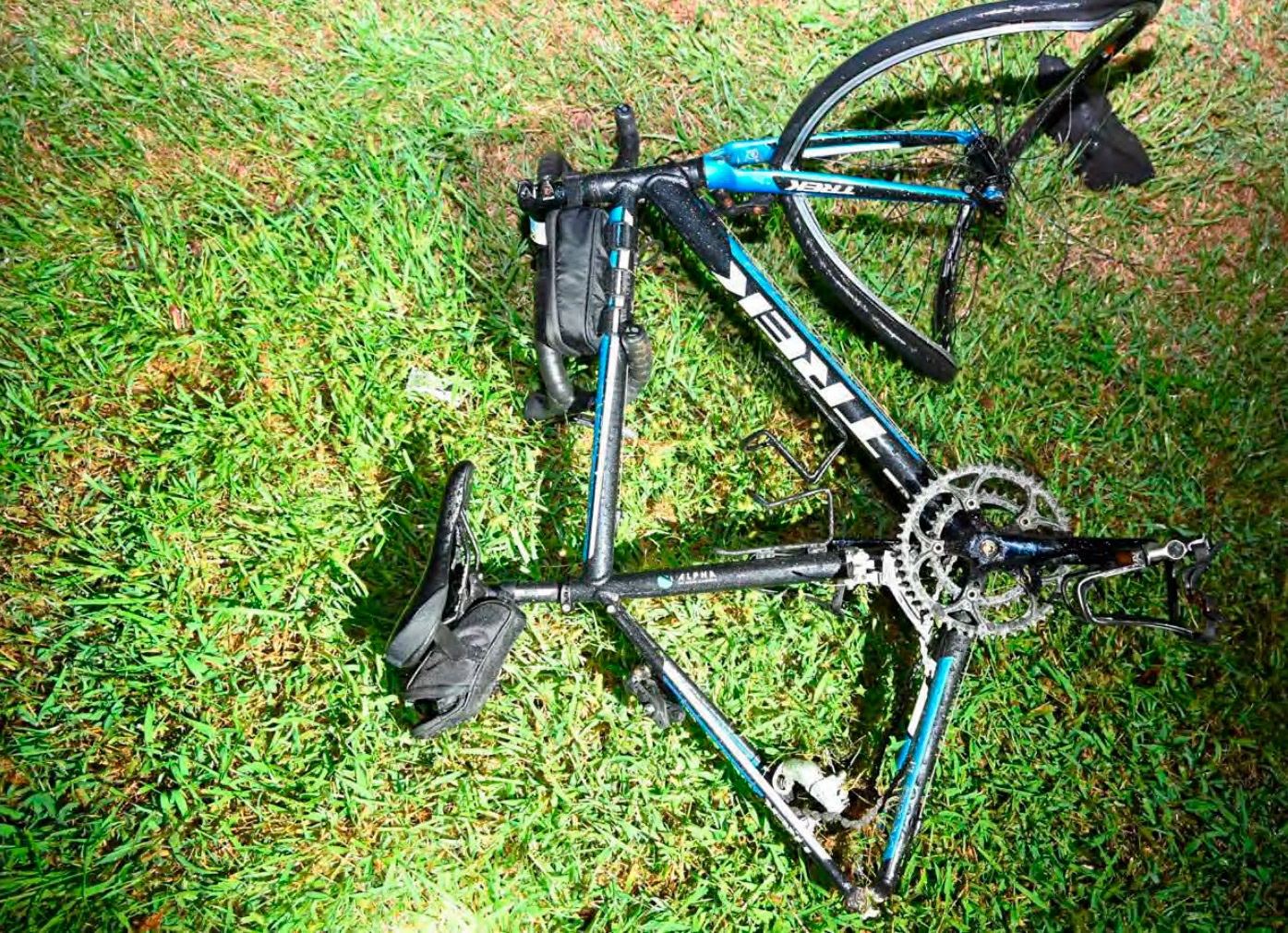
    Also, multiple documents are now available, including photographs of a damaged bicycle and the Jeep Cherokee from the crash site, after the defense filed a motion for their release in an effort to find evidence to help their arguments.

    Jury selection is set to begin in December, and the trial is expected to last three weeks.

    If found guilty, Higgins faces up to 91 years behind bars.

    Reporter Jesse Bunch has the story.

    ‘We don’t know how many other Mayas are out there’

    State Sens. John Burzichelli and Paul Moriarty are calling for more protections for homeschooled students.

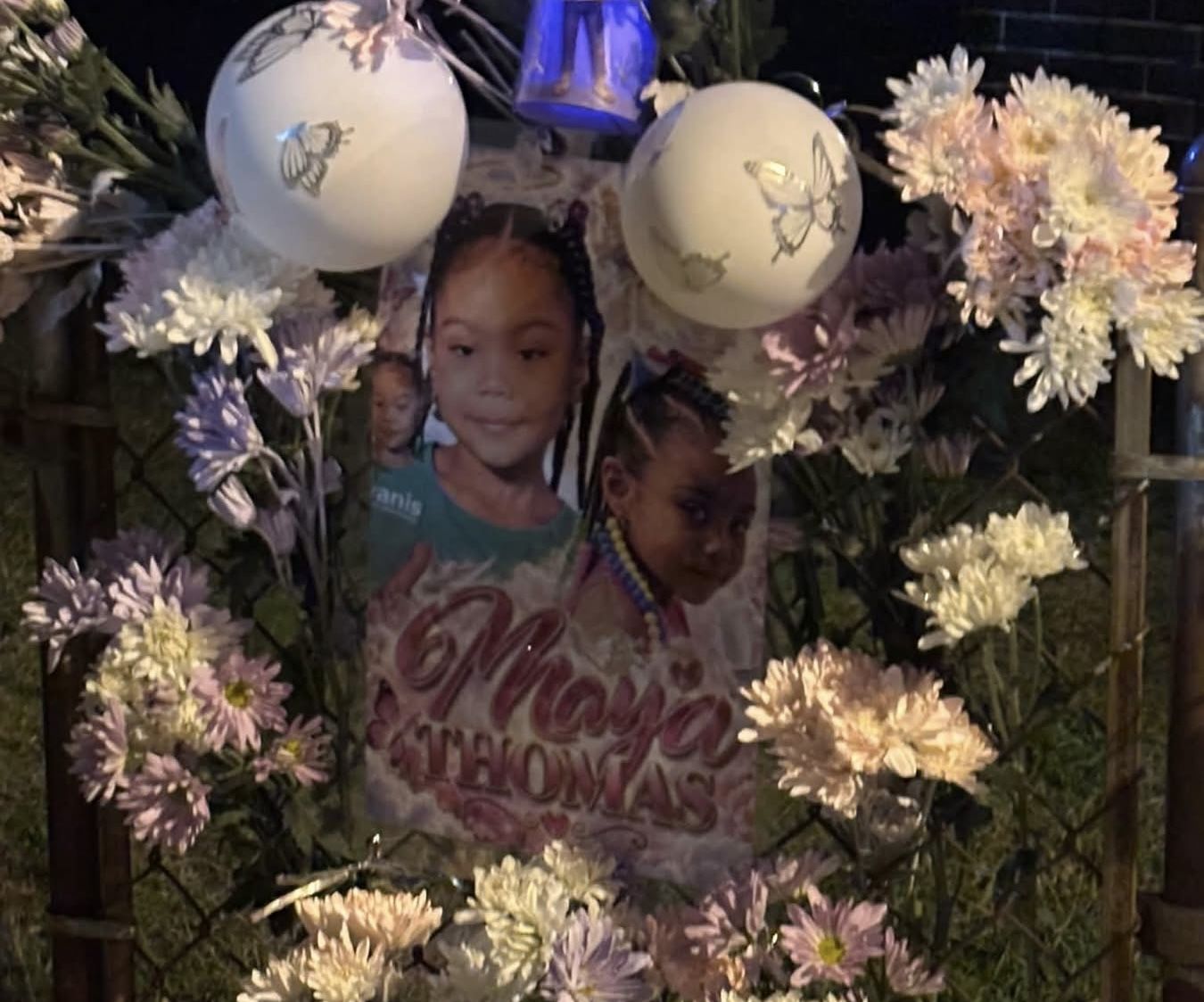
    It comes after 9-year-old Maya Thomas died last week in a Paulsboro home, where she allegedly faced “prolonged abuse.” Her mother and stepfather are charged with her murder.

    New Jersey parents don’t have to tell the state that they’re opting to homeschool their children. The state also doesn’t require reviews of curriculums, nor does it necessitate parents to have teaching qualifications.

    “We don’t know how many other Mayas there are out there that are suffering behind a barrier that has caused them to drop off the radar screen and become invisible,” Burzichelli said.

    Meanwhile, homeschool advocates worry that the association of Maya’s death with homeschooling could stigmatize parents who opt to teach at home.

    The Inquirer’s Sarah Nicell has more insight into the latest push to alter the state’s rules.

    What to know today

    🗣️ Quote of the week

    Perelman, originally from Randolph, is a 22-year-old student at the University of Pennsylvania and is among a new generation of bird-watching enthusiasts.

    🧠 Trivia time

    How tall is Big Rusty, Hainesport’s troll made of recycled trash?

    A) 35 feet

    B) 20 feet

    C) 15 feet

    D) 400 feet

    Think you know? Check your answer.

    What we’re …

    🦅 Providing: A timeline of everything we know about the lead-up to Jalen Hurts’ diagnosis.

    🏀 Meeting: The Sixers, by going through each player’s outlook ahead of tonight’s opener.

    🏠 Weighing: The cost comparison of renting vs. buying.

    And that’s been your roundup for this morning. I’ll have more news to share tomorrow. 📧

    By submitting your written, visual, and/or audio contributions, you agree to The Inquirer’s Terms of Use, including the grant of rights in Section 10.

  • Trial date set in Gaudreau brothers vehicular homicide case, as unseen photos of N.J. crash site become available

    Trial date set in Gaudreau brothers vehicular homicide case, as unseen photos of N.J. crash site become available

    The trial of Sean M. Higgins, the man charged with vehicular homicide and related crimes for fatally striking National Hockey League star Johnny Gaudreau and his brother, Matthew, as they biked in New Jersey is scheduled to begin in 2027.

    Higgins, 45, will appear in Salem County Court in January for the opening of what is expected to be a three-week proceeding, New Jersey Superior Court Judge Michael Silvanio said Monday. Jury selection begins in early December.

    The looming trial comes as Higgins’ defense team continues to push the state to produce evidence they say may potentially aid their arguments.

    In September, Higgins’ lawyers filed a motion compelling prosecutors to clarify whether there were additional documents tied to the official New Jersey State Police crash investigation, suggesting officers could have made notes that did not appear in the final report they received during discovery.

    Prosecutors objected, saying the notes were drafts that, if anything, reflected grammatical rather than substantive changes to information that could potentially be used in court.

    But the exchange nonetheless triggered the release of a trove of documents this month detailing how police reconstructed of the fatal Oldmans Township collision — including previously unseen photos captured from the crash site.

    An image of a damaged bicycle taken from the site of the fatal Gaudreau brothers collision.New Jersey court records

    Months after the fatal August 2024 crash, a grand jury indicted Higgins on two counts of second-degree reckless vehicular manslaughter, two counts of first-degree aggravated manslaughter, tampering with evidence, and fleeing the scene of a fatal crash.

    Prosecutors said Higgins had a blood-alcohol content over the legal limit when he attempted to pass an SUV on the right in his Jeep Grand Cherokee, striking Johnny, 31, and Matthew, 29, as they cycled home from their sister’s wedding rehearsal dinner.

    Police found Higgins about a quarter-mile from the County Route 551 crash scene, his damaged vehicle stalled. He told them he had consumed about a half-dozen beers that day, some behind the wheel.

    Higgins pleaded not guilty to the crimes. His attorney, Richard F. Klineberger III, argued that the Gaudreau brothers, themselves intoxicated, contributed to their own deaths by consuming alcohol that evening and cycling in the dark without rear safety lights.

    Silvanio rejected that argument last year when he denied Higgins’ request to dismiss or reduce the charges.

    It was not the last time such an effort would be made.

    In May, Silvanio again said the case would stand after rejecting a defense theory that prosecutors had misled the grand jury about Higgins’ blood alcohol content and that it may have actually been slightly below the legal limit.

    Klineberger, speaking Monday in Silvanio’s courtroom to discuss his latest motion, said the goal was to identify which state police notes contributed to the crash investigation and whether they reflected information that did not appear in the report.

    He also requested that prosecutors identify a man — likely an off-duty police officer — who appeared on a state police sergeant’s body-worn camera at the scene of the crash. The man relayed that the condition of the Gaudreau brothers did not “look good,” according to Klineberger’s recollection of the video.

    Prosecutors were insistent they had “nothing else left” to offer Klineberger’s team.

    “Everything that is in the final report from the officers, that’s what [witnesses are] going to be testifying to,” Assistant Prosecutor Michael Mestern said.

    Still, Mestern said prosecutors would check whether there were any additional notes and provide any such relevant documentation in the coming days.

    Judge Silvanio later asked Higgins if he understood that by going to trial, he would forfeit the right to accept a plea deal. The deal offered would see him admit guilt to two counts of aggravated manslaughter and one count of driving while intoxicated in exchange for 28 years in prison.

    Should Higgins be found guilty at trial, he faces up to 91 years in prison.

    Higgins said he understood. A trial date was set for Jan. 4.

  • Legislators want homeschooling oversight after death of 9-year-old girl allegedly abused in a South Jersey home

    Legislators want homeschooling oversight after death of 9-year-old girl allegedly abused in a South Jersey home

    New Jersey legislators are calling for changes to the state’s homeschooling rules after a 9-year-old girl died in a Paulsboro home.

    Maya Thomas died Oct. 13 after India Miller and Sean Scott, her mother and stepfather, called police to report that they suspected their daughter had been struck by a vehicle. Instead, an autopsy revealed “injuries not consistent with a vehicle crash” that suggested she had faced “prolonged abuse,” prosecutors said last week. Her parents were charged with murder, among other crimes.

    Lynn Miller, Maya’s maternal grandmother, who lives in Spokane, Wash., told NJ.com last week that Miller and Scott homeschooled Maya to hide her bruises.

    Maya lived across the street from Second Baptist Church and next to the playground at Loudenslager Elementary School, which she would have attended if she had not been homeschooled, local officials said.

    “It’s just heartbreaking when you think this 9-year-old child could see a beautifully manicured playground at the school,” said State Sen. John Burzichelli, a Democrat who represents Gloucester County.

    Burzichelli, a former mayor of Paulsboro, lives two blocks from the home where Miller and Scott allegedly abused Maya. He said he drives by the house every day, and he never saw anything suspicious. None of his neighbors have either, Burzichelli said, but there are now rumors.

    “Nothing, nothing, nothing, nothing, nothing,” Burzichelli said. “There are now some stories. Somebody saw her mother at the post office, saw [Maya] with her mother on another occasion. The child looked like maybe she had a bruise. But there weren’t enough interactions where that stuff could be registered.”

    Burzichelli and his colleague, State Sen. Paul Moriarty, are calling for more protections for children who do not go to school.

    New Jersey is one of 13 states that the Home School Legal Defense Association recognizes as having “low regulations” for homeschooling. Parents in New Jersey do not have to notify the state that they are homeschooling their children. It is unclear exactly how many children across the state are homeschooled.

    Parents who homeschool also do not need any teaching qualifications. No review or approval is required for curriculums set by parents, and local boards of education are not required to establish records for children who learn outside of school.

    Parents and guardians need only to give their children “equivalent instruction” to typical schooling, and previous state court cases have affirmed that the term applies only to academic lessons, not social development, according to the New Jersey Department of Education.

    “We don’t know how many others Mayas there are out there that are suffering behind a barrier that has caused them to drop off the radar screen and become invisible,” Burzichelli said. “That’s a 9-year-old child that had no one else to speak for her.”

    Homeschooling can be successful, Burzichelli said, so he does not want to upend New Jersey’s education rules. But it is currently too easy for children with no record to slip through the cracks, he said. If Maya had gone to school, Burzichelli said, a watchful teacher likely would have noticed her injuries.

    Burzichelli said his office is researching homeschooling rules implemented by other states and coordinating with leadership in the legislature to soon propose legislation to refresh the state’s alternative education statute.

    He is not certain yet which child protections New Jersey should take from other states, he said, but he wants to find a system that protects kids from flying under the radar, including a potential requirement for homeschooled children to meet with the school district annually and to ban guardians with criminal records from teaching children at home.

    This would not be the first time state legislators have tried to amend New Jersey’s homeschooling rules.

    Last year, after a Gloucester Township couple was charged with abusing their homeschooled teenager by locking her in a dog crate, both the New Jersey Assembly and Senate introduced bills that would have required children in home education programs and their parents to meet annually with a school district representative. Burzichelli was a sponsor, but the bill did not progress to a vote in either chamber.

    An identical bill was proposed in January but has not progressed. Another bill that followed the Gloucester Township case, proposed by Assemblyman Sterley Stanley, would have required registration and oversight of home education programs, but that didn’t get anywhere, either.

    Burzichelli said he wants to meet with homeschool advocates to make sure new legislation can move forward.

    “We don’t have the luxury of making this a war with people who may not be favorable to this,” Burzichelli said.

    The state’s homeschooling advocates say they worry conflating homeschooling and Maya’s killing could hurt parents who elect to teach from home.

    “Keeping a child home is not the same as homeschooling. Genuine homeschooling involves educating a child; a child being kept out of school does not, by itself, establish that homeschooling is taking place,” the New Jersey Homeschool Freedom Association wrote in a statement.

    The NJHFA instructed parents to call Burzichelli and Moriarty on Monday to “express [their concerns] that public statements connecting this tragedy to homeschooling risk stigmatizing thousands of responsible New Jersey homeschooling families.”

    Pamela Kerr, a New Jersey Homeschool Association board member, expressed similar sentiments in a social media message to The Inquirer.

    “Please be clear that Maya Thomas’ murder is a tragedy that has nothing to do with homeschooling,” Kerr wrote. “Abuse happens all too often. It happens to children who attend school. It happens to adults who go to work. Less frequently, it happens to children or adults who have been secluded from society and unlawfully restrained.”

    Kerr added that children who are homeschooled do not have to fear ongoing safety issues, like school lockdowns, and benefit from individualized attention. Kerr said the NJHA believes New Jersey’s current law “appropriately gives parents the opportunity and right to educate their children without undue interference.”

    Paulsboro Mayor John Giovannitti, who has worked in the borough’s school district for 39 years and now serves as an assistant principal, said the state should track children who learn at home.

    He also said those children should have access to Paulsboro’s counseling services and extracurricular programming to keep them as engaged in the community as possible.

    “A twice-a-year check to see how they’re doing, I don’t think it could hurt,” Giovannitti said. “It’s just, ‘Where is this kid? How are they doing?’”

  • Fondue restaurant The Melting Pot in Maple Shade is closing this weekend

    Fondue restaurant The Melting Pot in Maple Shade is closing this weekend

    After more than two decades of melted cheeses and chocolates, diners in South Jersey hoping to dip into an entirely fondue-based meal will have to look elsewhere after The Melting Pot closes its doors this weekend.

    The restaurant’s final day will be Oct. 25, franchisee Charlie LaRosa said through a spokesperson for the company.

    Eleven years after the popular eatery relocated from Center City to Maple Shade, LaRosa will not be renewing the lease at 584 Route 38 East and plans to retire.

    “This milestone marks the close of a meaningful chapter filled with memorable experiences, special celebrations, and lasting connections with guests and the community,” LaRosa said in the statement.

    Known for providing a one-of-a-kind dining experience, the restaurant chain founded in 1975 offers a wide range of options including a multi-course, interactive meal centered around fondue pots at each table.

    Today, the company has more than 90 locations worldwide where diners can enjoy their choice of a variety of melted cheeses with bread, vegetables, and fruit for dipping before they cook their own entrees — a mix of meat, seafood, and vegetables — in flavorful, simmering broth.

    The meals then typically conclude with a chocolate fondue desert accompanied by fruit, brownies, pound cake, and more.

    Following the restaurant’s closure in Maple Shade, only two Philadelphia-area Melting Pot locations will remain: King of Prussia and Wilmington, Del. The Melting Pot has one other New Jersey location in Red Bank, according to the company’s website.

    Melting Pot gift cards do not expire and are redeemable at all restaurant locations.

    While the fondue pots might be leaving the building, it appears that the restaurant won’t be empty for long.

    Istanbul Bay Premium Mediterranean Restaurant recently signed a lease for the 6,500-square-foot restaurant and plans to move in as soon as permits allow, said Emre Yucel, the restaurant’s leasing agent.

    Serving authentic Turkish cuisine, Istanbul Bay operates locations across New York and New Jersey, including a restaurant in Englishtown that opened this summer.

  • Two seniors play poker together in their Deptford 55+ community. Now, both are Wheel of Fortune alumni.

    Two seniors play poker together in their Deptford 55+ community. Now, both are Wheel of Fortune alumni.

    Curt Ostrow and Pete Lukach have a few things in common. They both live at Northgate at Heritage, a 55+ community in Deptford Township with about 400 homes. They play poker together at the clubhouse there.

    And on Monday night at 7:30 p.m. on 6abc, Lukach will become, like Ostrow, a Wheel of Fortune alumnus.

    Last November, Ostrow, 67, hosted a watch party at their shared Deptford community in Gloucester County to celebrate his appearance on the hit game show.

    Ostrow, who differentiated himself on the program as a playing card magician, made it to the final round but lost out on a Toyota Highlander. He left with $6,500, a free trip to Antigua, and a watch gifted to him by host Ryan Seacrest.

    “There were 100 people at the clubhouse like a football game,” said Ostrow, who just returned from his Antigua trip with his wife. “Every time I solved the puzzle, the place was going crazy.”

    Ostrow’s performance inspired Lukach, a longtime game show watcher and retired educator from North Jersey, to apply as a contestant himself. He once appeared on the syndicated version of Who Wants to be a Millionaire? and won $12,500.

    Lukach, 77, filmed his episode nine months after Ostrow appeared on the show.

    Pete Lukach, a Deptford resident, appeared on “Wheel of Fortune” on Oct. 19, 2026.Sony Pictures Television

    Lukach said he had two weeks in August to prepare before he had to be in front of the camera. He played handheld versions of Wheel of Fortune, read online tips, and watched a lot of past episodes.

    “I didn’t do as well as Curt, but I did OK,” Lukach said. “They consistently tell you, ‘Listen, this isn’t heart surgery. This is fun. You’ve gotten to the place where millions of people have applied to.’”

    Unlike Ostrow, Lukach doesn’t want to host a watch party at the clubhouse. Instead, he’ll gather with his grandchildren, sons, and daughters-in-law to see the show Monday night.

    Ostrow, who is currently being treated for two cancers, will be in the hospital preparing for a T-cell transplant when his neighbor’s episode debuts. But he said he plans to put the show on there.

    “Pete said I was a motivator for him to do it. Next thing I know, he called me. He’s going to be on,” Ostrow said. “There will be chemo in me around 6:30 or 7. But I’m going to put the TV on, and I’ll do my best to watch it.”

  • The Jersey Devil panic of 1909 | Inquirer South Jersey

    The Jersey Devil panic of 1909 | Inquirer South Jersey

    Good morning, South Jersey.

    More than a century ago, mass hysteria over the Jersey Devil absorbed the region because of a hoax as local newspapers — including The Inquirer — played into the gag.

    And former Gov. Chris Christie predicts a blue wave this upcoming midterm election.

    Plus, a former Mantua Township police officer was convicted of ‘computer crimes,’ and more news of the day.

    — Taylor Allen (southjersey@inquirer.com)

    If someone forwarded you this email, sign up for free here.

    How we covered the Jersey Devil panic

    The hysteria began on Jan. 16, 1909, after reports of peculiar hoofprints in the South Jersey snow began popping up.

    It wasn’t long before hundreds of local newspapers jumped on the intrigue.

    The Inquirer began reporting on subsequent run-ins, claiming that most of Gloucester County and portions of Camden County had seen the tracks near chicken yards or garbage cans. At one point, it reported the creature was a cross between a kangaroo and a mammoth bat.

    The fear quickly intensified. Schools and factories temporarily shut their doors, armed farmers attempted to track the creature for miles, and the myth with origins dating back to the 18th century started to become widespread.

    Eventually, the ruse fell apart after its reported capture and public display. That’s when people had the opportunity to see the Jersey Devil up close, and it turned out to be a painted kangaroo.

    Reporter Nick Vadala reveals the story of the man behind the scam.

    P.S. Read the article for the wild story, but stay for the opportunity to dig into our old archives.

    ‘We are ending an era’

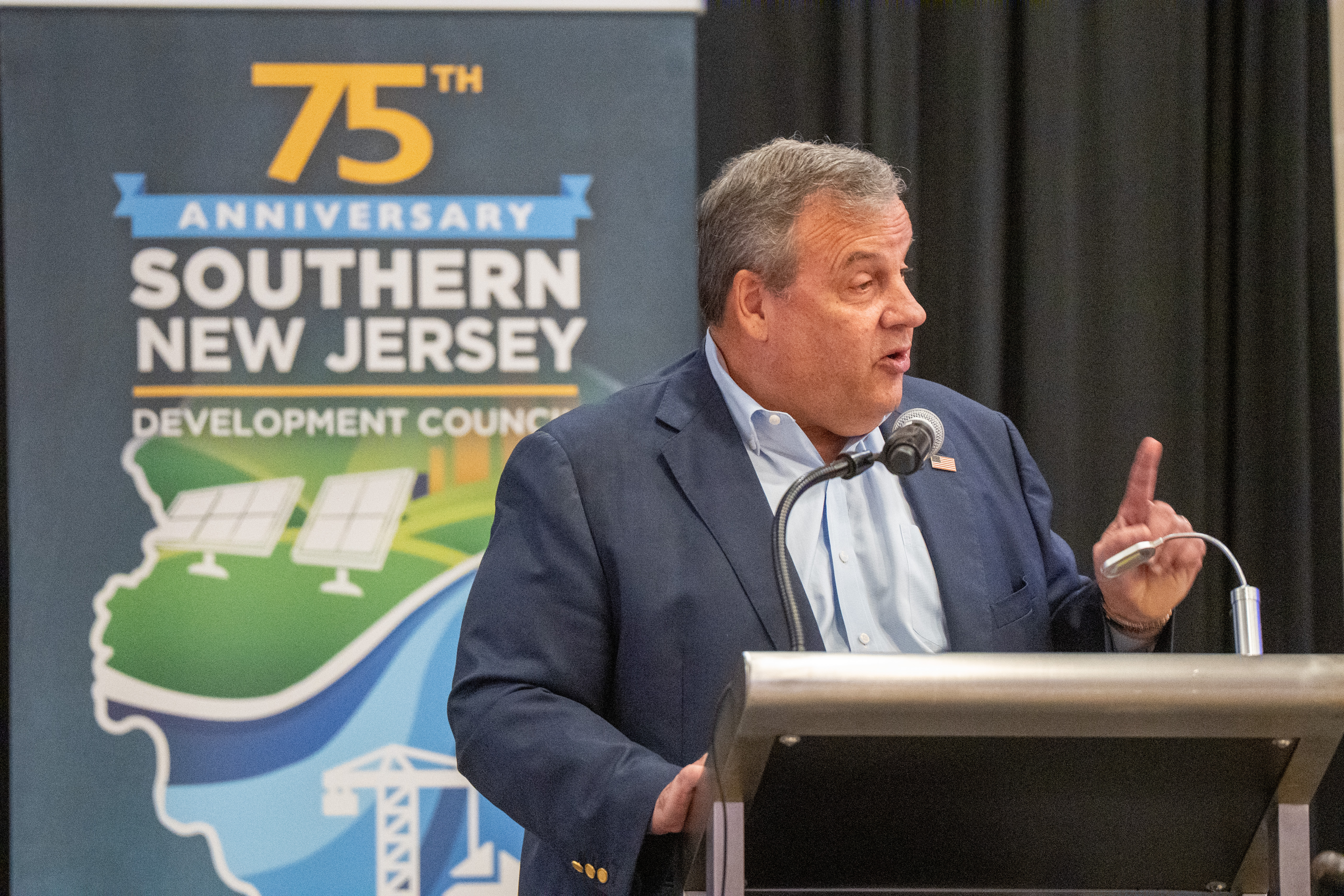
    While standing in front of 200 business leaders at a Southern New Jersey Development Council conference in Mount Laurel Friday, former Gov. Christie told the room that the upcoming November election will be designated as “the official end of the Donald Trump era.”

    Christie’s prediction comes as polls show Democrats are well-positioned to gain control of the House with possible wins in Pennsylvania and New Jersey.

    His comments also come after he said last month that he would consider a third run for president in 2028. He was a supporter of Trump in 2016 after ending his first run, but broke away in 2020 after Trump claimed the election that year was stolen from him.

    The Inquirer’s Susan K. Livio has more on Christie’s other predictions.

    What to know today

    • The Bucks County District Attorney’s Office recently announced that a state prosecutor in New Jersey is facing multiple charges for using AI to create and share child pornography.
    • Statewide, almost 9,000 students in New Jersey were involved in incidents that led to schools calling the police during the 2024-25 school year. Camden County Technical School in Camden, Kingsway Regional High School in Woolwich Township, and Williamtown High School in Monroe Township are among the 10 schools that notified the police the most that year, according to NJ.com.
    • A former Mantua Township police officer was found guilty Thursday on multiple charges after he used the department’s law enforcement databases to read and manipulate a report of an incident involving him, according to Gloucester County prosecutors.
    • The Voorhees planning board approved the plans for a super Wawa on the Voorhees-Berlin border on Route 73 last week, after a previous denial and a court case, 70and73 reports.
    • With the help of a $1.25 million grant, five Camden schools will have more resources for expanded programs.
    • A Evesham Township man transforms his lawn every year into the ‘Newman House,’ featuring his 30-year collection of Halloween decorations, 6abc reports.

    🧠 Trivia time

    Which South Jersey author wrote Silver Linings Playbook?

    A) Matthew Quick

    B) Pam Jenoff

    C) Melinda Leigh

    D) Daniel Nester

    Think you know? Check your answer.

    What we’re …

    📸 Viewing: Photos from Gov. Mikie Sherrill’s recent visit in Philly.

    🐦 Taking: A trip to Cape May National Wildlife Refuge to look out for some cool birds.

    💭 Wondering: Is it worth it to try to befriend standoffish neighbors?

    📬 Your South Jersey view

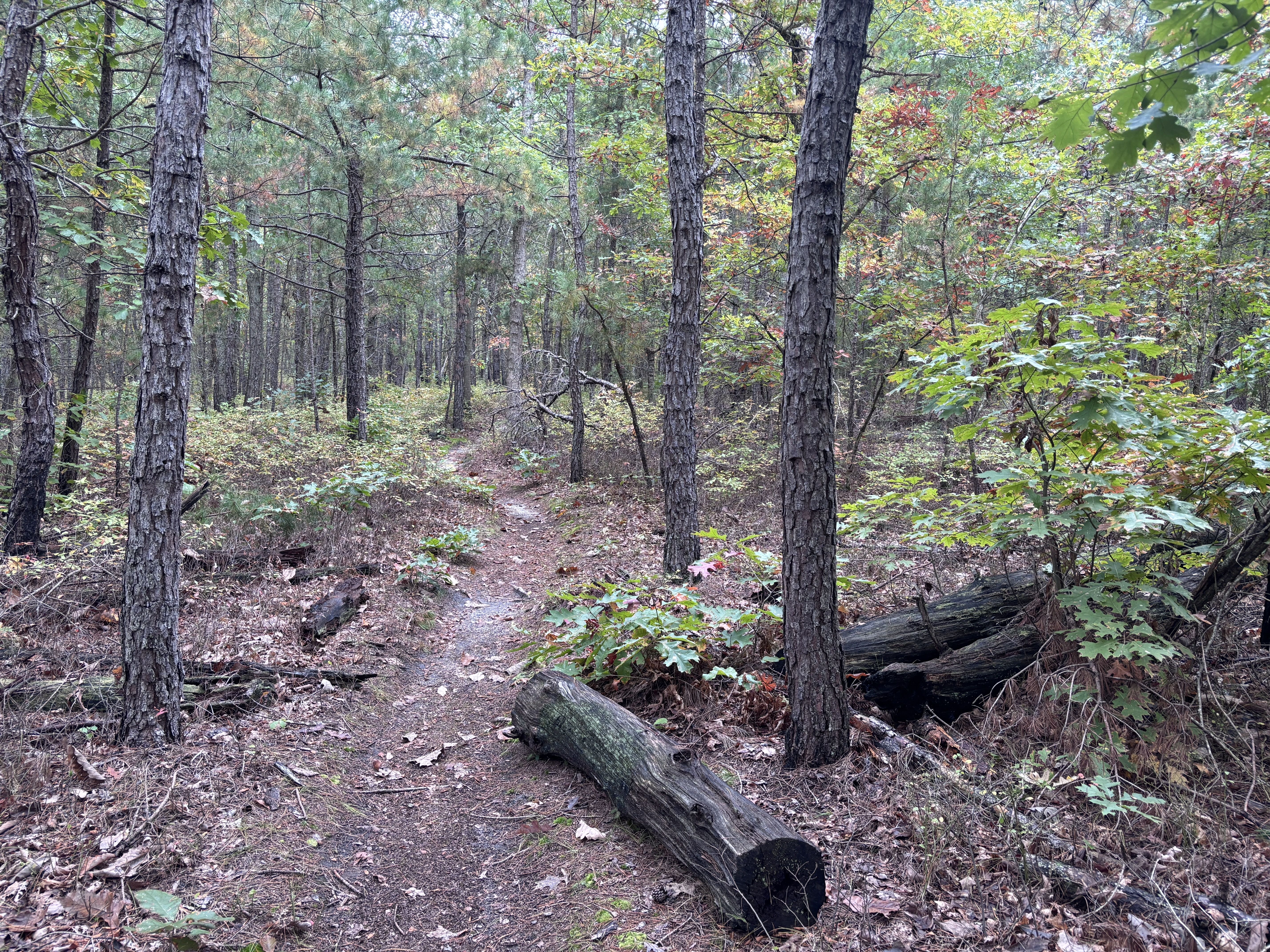
    A view along the Batona Trail in the Pinelands.Taylor Allen

    I had a classic fall day on Saturday, which included a quick hike along a portion of the Batona Trail in Southampton in the Pinelands.

    What does your community look like? What South Jersey memory would you like to share? Submit a photo and/or a brief description for a chance to be featured in the Monday edition of this newsletter.

    🗞️ What other South Jersey residents are reading

    And that’s all I have for you this morning. Thanks for starting it with The Inquirer.

    By submitting your written, visual, and/or audio contributions, you agree to The Inquirer’s Terms of Use, including the grant of rights in Section 10.

  • The Jersey Devil caused mass panic around Philly in 1909. A huckster brought the legend to life.

    The Jersey Devil caused mass panic around Philly in 1909. A huckster brought the legend to life.

    It started with mysterious hoofprints left in the South Jersey snow, and somehow ended with a painted kangaroo displayed for all to see at Ninth and Arch Streets in Philadelphia.

    In between, mass hysteria ensued. Hundreds of area newspaper reports detailed purported sightings of the beast — some unholy amalgamation of a horse, a collie, and a crane, with the ability to breathe fire and fly to boot. It was hungry, too, taking to fields and rooftops to stalk chickens and family pets in the quest to sate its appetite.

    Schools and factories temporarily closed as terror over the creature gripped the region. Armed farmers followed the beast’s tracks for miles, only to find the prints inexplicably had disappeared. And the legend of the Jersey Devil grew, its origins tracing back to the 18th century, when a woman known as Mother Leeds cursed her 13th child to become a demon that would haunt the region for eternity.

    This was the Jersey Devil panic of January 1909, one of the Philadelphia area’s great local hoaxes. But at the time, it was considered a threat. And, thanks in no small part to newspapers like The Inquirer playing into the gag, the Jersey Devil legend went viral enough to persist today.

    Here is how we covered it:

    https://www.newspapers.com/article/the-philadelphia-inquirer/208149996/

    Article from Jan 21, 1909 The Philadelphia Inquirer (Philadelphia, Pennsylvania) <!— –>

    Sightings begin

    The Jersey Devil panic began on Jan. 16, 1909, when reports surfaced of odd footprints in South Jersey. The Inquirer began covering the apparent rash of run-ins with the beast days later, claiming that seemingly all of Gloucester County and parts of Camden County had seen the tracks.

    Nearly all of the tracks were reportedly found coming or going from chicken yards or areas near garbage cans. Farmers set out hundreds of steel traps where the markings were spotted, and men armed with shotguns stood watch and waited for the creature to make an appearance.

    Several people even claimed they saw the beast itself. Most notable was Nelson Evans, a Gloucester City man who said he and his wife spotted it at about 2:30 a.m. on Jan. 17. Evans called it a kind of bird that stood about 3½ feet tall with a similarly sized wingspan, as well as the head of a collie with a horse’s face, the neck of a crane, wings, and four legs like a kangaroo.

    https://www.newspapers.com/article/the-philadelphia-inquirer/208150249/

    Article from Jan 20, 1909 The Philadelphia Inquirer (Philadelphia, Pennsylvania) <!— –>

    Even the Philadelphia Zoo allegedly got in on the act, with some reports indicating it offered a $10,000 reward for the creature’s capture — roughly $368,000 in today’s money. Inquirer coverage from the time makes no mention of such a sum, and reference to the reward does not appear in the minutes of any board of directors meeting from 1909, zoo spokesperson Maria Bryant said in late September. It remains unclear where that bit of trivia comes from, or if it ever happened.

    “Potentially discovering a new creature would be of great interest to all the scientists at the zoo in 1909, and as the closest zoological institution that could do this research, it would make sense to ask for the public’s help to support its mission,” Bryant said.

    https://www.newspapers.com/article/the-philadelphia-inquirer/208150739/

    Article from Jan 26, 1909 The Philadelphia Inquirer (Philadelphia, Pennsylvania) <!— –>

    Jersey Devil on display

    At one point, The Inquirer reported that the creature was a cross between a kangaroo and a mammoth bat, one of only two in the entire country (the location of the second beast, it appears, may be a secret lost to time). The animal, reports alleged, had been imported here from Europe by a local animal trainer, who said it had escaped from his home. It also apparently happened to be a vampire.

    On Jan. 23, the creature’s capture came quietly after a group of men reportedly took it into custody with a net in Fairmount Park, Inquirer reports indicate. The animal, reportedly a kangaroo-bat hybrid referred to as a “kangowing,” was found to be docile enough to hand-feed.

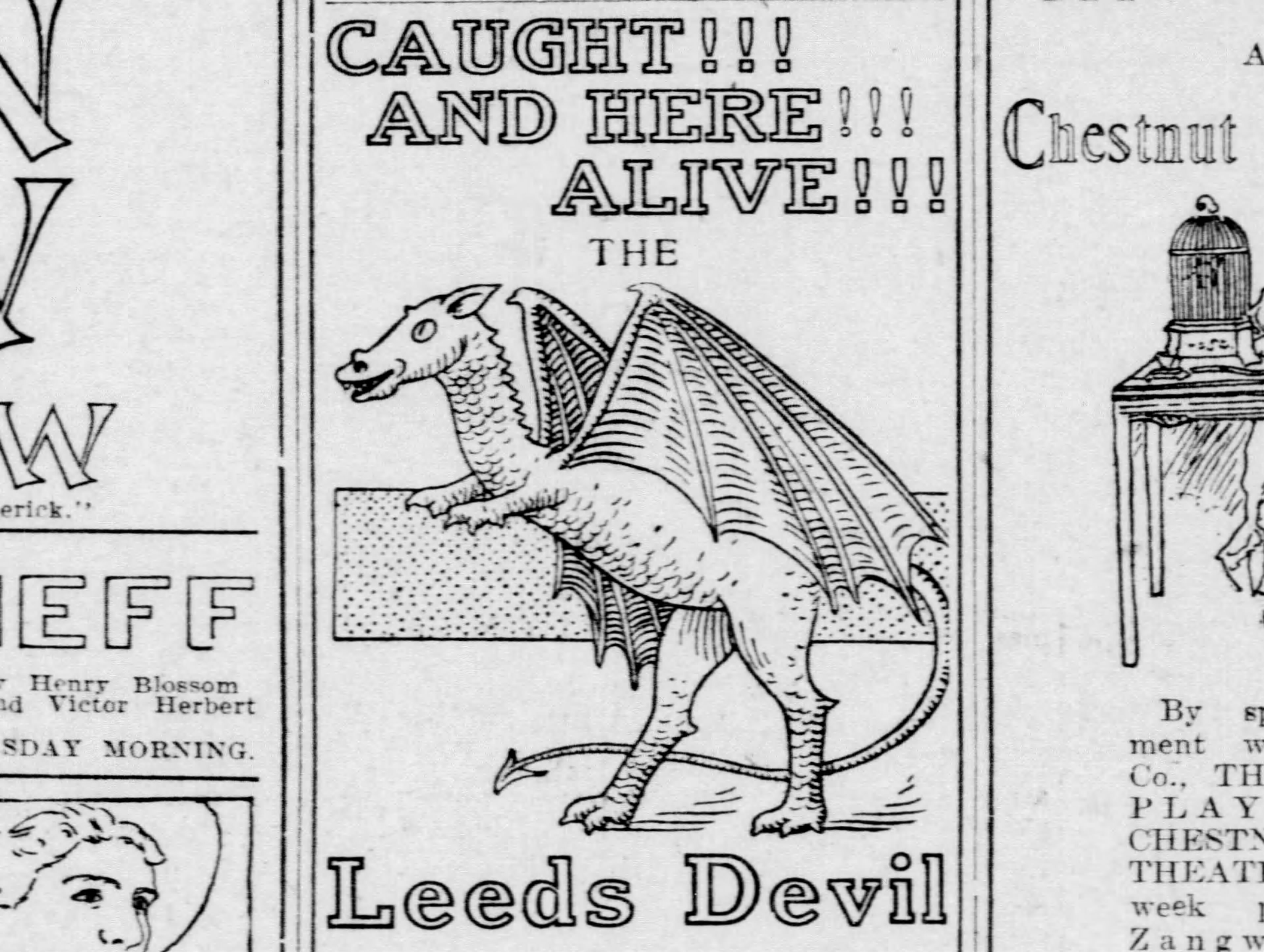
    With the cryptid secured, it went on to be displayed for the paying public at the Ninth and Arch Dime Museum, where it was alternately referred to as the Leeds Devil, the “Australian Vampire Devil,” and the “Australian Vampire-Dragon.”

    https://www.newspapers.com/article/the-philadelphia-inquirer/208150145/

    Article from Jan 22, 1909 The Philadelphia Inquirer (Philadelphia, Pennsylvania) <!— –>

    There, it was reportedly kept “securely chained in a massive steel cage” and attracted thousands of visitors during its exhibition, which lasted for weeks. In captivity, the creature could be seen “fuming and fretting, tugging and pulling at the chains” that bound him, and giving museum attendees a glimpse at the unknown.

    But inexplicably, having a paranormal creature available for all to see was not enough to keep the museum running, and it was gone by 1911, reports from the time indicate. And with so many people having seen the Jersey Devil up close, the story quickly fell apart, revealing itself as a hoax — though The Inquirer would not report on the details of the scam until about two decades later.

    https://www.newspapers.com/article/the-philadelphia-inquirer/208150329/

    Article from Jan 23, 1909 The Philadelphia Inquirer (Philadelphia, Pennsylvania) <!— –>

    The hoax revealed

    In 1929, The Inquirer reported that the Jersey Devil panic had largely been engineered by Norman Jeffries, a “Philadelphia publicity man” of the era who served as the press agent for the Dime Museum. Jeffries, whose name also appears as Jefferies in newspaper clips, had, it turned out, cooked up a scheme to bring visitors into his employer’s establishment.

    Inspired by the panic that the hoofprints in South Jersey had sparked, Jeffries somehow obtained a kangaroo, to which he “added touches” to make it appear more fearsome. Those included the addition of paraffin and copper sheet wings, exaggerated whiskers made from horse hair, and — the pièce de résistance — a series of green stripes painted along the entire length of the animal’s body.

    The hoax was so successful that it took top billing in Jeffries’ obituary in The Inquirer following his death in 1933. He had, The Inquirer reported, “used all the arts of a press agent to build up belief in the legend.”

    The Inquirer, meanwhile, had denounced the Jersey Devil legend years before, despite having played into the myth when the 1909 panic was at its peak. In the mid-1920s, The Inquirer wrote that the creature was nothing more than an “imaginary animal” whose legend was used to “keep children close to home” at night.

    “The Jersey Devil never existed,” The Inquirer wrote in 1929. “It couldn’t have existed. And yet — it had a whole state worried.”