Category: Nation & World

  • How views on Trump’s handling of Iran have shifted, according to a new AP-NORC poll

    How views on Trump’s handling of Iran have shifted, according to a new AP-NORC poll

    WASHINGTON — Most Americans say the war in Iran has not been worth fighting, and President Donald Trump’s approval rating on Iran has fallen slightly since last month, according to a new AP-NORC poll.

    The results are a stark repudiation of the Republican president’s approach to the conflict, which has dragged on far longer than he originally predicted.

    About two-thirds of U.S. adults say the war with Iran, which began Feb. 28, has not been worthwhile, according to the new poll from The Associated Press-NORC Center for Public Affairs Research. That includes the vast majority of Democrats and independents, as well as about 37% of Republicans.

    The poll was conducted July 23-27, as the U.S. and Iran paused attacks following a nearly two-week escalation in the war. During the escalation, the U.S. targeted Iranian military and commercial sites while Iran attacked U.S. military facilities in the Middle East, resulting in additional deaths of American service members. Since the war began, 18 U.S. service members have been killed, but the Trump administration has sought to revise those numbers.

    The survey reinforces how unpopular the Iran war has become at home, a potential problem for congressional Republicans up for reelection in November who have defended Trump’s military actions. Just 28% of U.S. adults now approve of how Trump is handling Iran, a slight decline from 34% last month. Even Republicans appear to be increasingly unhappy with the prolonged conflict. Roughly 61% of Republicans approve of how Trump is handling Iran, an apparent decline from 71% in June. The margin of sampling error for Republicans is 6 points, so the decline is considered slight, but it’s still noteworthy given Republicans’ much higher approval of how Trump is handling the presidency overall.

    Trump’s overall approval rating is at 33%, slightly below where he stood at this point in his first term and similar to where former President Joe Biden stood about one and a half years into his presidency, when inflation peaked.

    Robert McClary, a 52-year-old Republican from Sugar Grove, Ohio, is skeptical the war could be brought to an easy conclusion and disapproves of Trump’s handling of it. McClary voted for the president once, in 2016, but recalls that during the last election, Trump campaigned on not starting new wars in the Middle East.

    “I don’t have any trust in this administration at all and to why they brought us into this war, why they’re putting our soldiers at risk again,” he said.

    The findings also indicate that most Americans’ goals for the conflict may not be aligned with Trump, who has repeatedly said the war was launched to keep a nuclear weapon out of Iran’s hands. While about two-thirds of U.S. adults say it’s “extremely” or “very” important to keep Iran from gaining a nuclear weapon — with Republicans especially likely to say this — even more Americans say it’s highly important for the U.S. to keep gasoline prices low or negotiate a permanent ceasefire with Iran.

    McClary added: “I really don’t know what you can do now. I mean, you’ve kind of gotten yourself buried into this mess.”

    Relatively few want military action against Iran to continue

    There’s little appetite among Americans for a prolonged conflict.

    Only about 2 in 10 U.S. adults want to continue military action in Iran, while about 3 in 10 say the U.S. should pause military action and seek a renewed ceasefire through negotiations. About 2 in 10 want to completely stop military action in Iran and roughly one-quarter don’t know enough to say.

    About half of Republicans say the U.S. should continue military action against Iran, particularly those who identify as “very conservative.” Republicans who identify as MAGA — part of Trump’s Make America Great Again movement — are much likelier than non-MAGA Republicans to say the war should continue. Non-MAGA Republicans are more likely to want a ceasefire or a complete halt to the military action.

    Jennifer Norton, a 71-year-old Republican from Crossville, Tennessee, supports military action in Iran but has been displeased to see prices rising for things like beef roasts and hamburgers. Norton lives on a “modest income,” and things are getting expensive.

    “I am getting a little impatient, but when I start to dwell on that for a minute, I remember Mr. President Trump is a brilliant businessman,” she said. “He can’t tell us exactly what he’s doing, but I trust that he’s doing something. I mean, he is doing fine.”

    Independents and Democrats are more likely than Republicans to want to stop military action against Iran immediately, although about 3 in 10 Republicans want either a pause or complete stop to military action.

    Ryan Sloan, a 39-year-old Republican in Lakeland, Florida, has come to disapprove of the conflict in Iran recently because he wants a better explanation from the Trump administration about why the war intensified in late July.

    “Let’s face it, not everybody’s going to be happy with him,” Sloan said. “I just wish I’d have had more transparency about why things were going on the way they were.”

    Most say it’s important to keep gas prices down

    Many Americans continue to be concerned about the pocketbook impact of the Iran war. About 7 in 10 U.S. adults — 72% — say it’s “extremely” or “very” important for the U.S. to prevent domestic oil and gas prices from rising, up slightly from 67% in March.

    Oil topped $100 a barrel last week, ending a brief period of lower prices when hostilities between the U.S. and Iran eased in June. Gas prices rose above $4 per gallon on average, and the elevated fuel price is hitting consumers in other ways, too. Inflation cooled last month but remains elevated, and consumer spending has slowed, with signs that Americans are taking advantage of sales and other incentives.

    There are also indications that fluctuating gasoline prices are an increasingly big problem for many Americans. About 4 in 10 say the cost of gas for their car is a “major source” of stress in their life right now, compared with about 3 in 10 in February.

    Mikal Baker, a 47-year-old political independent in Sandy Springs, Georgia, disapproves of the war in Iran and is frustrated by the effect on gas prices.

    “I don’t see the benefit. I don’t see the total benefit of the American citizen for this war,” he said. But Baker is skeptical it will ever come to an end. “I can’t say it will ever be over with.”

    Some Americans may be hoping that gasoline prices could stabilize or go down. About 4 in 10 U.S. adults are “extremely” or “very” concerned about being able to afford gas in the next few months, down slightly from 45% in March.

    Republicans prioritize keeping Iran from obtaining a nuclear weapon

    Even as most Americans prioritize keeping gas prices from rising, a similar share say it’s “extremely” or “very” important to negotiate a permanent ceasefire with Iran.

    About 7 in 10 Americans say it’s “extremely” or “very” important for the U.S. to reach a ceasefire agreement, slightly higher than the roughly two-thirds who say it’s at least “very” important to prevent Iran from obtaining a nuclear weapon. That’s also well above the 4 in 10 who say it’s “extremely” or “very” important to prevent Iran from threatening Israel.

    Early in the conflict, Trump said the United States’ primary objectives were to degrade Iran’s military capability, eliminate their Navy and Air Force, keep them from gaining nuclear weapons and protect U.S. allies in the region.

    Republicans, in particular, say it’s highly important to keep Iran from obtaining a nuclear weapon. About 8 in 10 say this is at least “very” important, compared with roughly 7 in 10 who say that about preventing oil and gas prices from rising and negotiating a permanent ceasefire with Iran.

    Sloan, the Florida Republican, believes it’s important to keep Iran from gaining a nuclear weapon, adding: “We are most definitely their number one targets once they do have nuclear capabilities.”

  • Congo says the death toll in fastest-growing Ebola outbreak has passed 1,500

    Congo says the death toll in fastest-growing Ebola outbreak has passed 1,500

    BUNIA, Congo — Ebola has killed more than 1,500 people in eastern Congo in the fastest-growing outbreak of the disease, data released Thursday showed, marking a 50% increase in around a week as the emergency continues to outpace response efforts.

    As of Tuesday, 3,442 cases had been recorded, with 1,521 deaths, according to the latest government update. The sharp rise since last week partly reflects a backlog of cases and deaths that had not yet been confirmed or recorded, the Africa Centers for Disease Control and Prevention said Thursday.

    The outbreak, declared on May 15, has been linked to the Bundibugyo virus, for which there are no approved vaccines or treatments. Delays in contact tracing, difficulties accessing affected areas, mistrust from communities, and violence by armed groups and some residents have hampered the response, the Africa CDC said.

    The outbreak is mostly concentrated in eastern Congo’s remote Ituri province, which accounts for nearly 90% of cases, but there have been others confirmed in five provinces, including one of the country’s largest cities, Kisangani.

    Neighboring Uganda declared itself free of Ebola on Tuesday following the discharge of the country’s last patient in mid-June.

    Ebola is rare, but highly contagious and can be contracted via bodily fluids such as vomit, blood, or semen. The disease it causes is severe and often fatal.

    Africa CDC Director-General Jean Kaseya said Thursday that 63% of confirmed deaths in the last two weeks occurred outside of treatment centers.

    Kaseya said this is largely due to the “unsafe handling of infected bodies” by residents. Traditional burial practices in some communities involve touching the bodies of the deceased, which can be highly contagious.

    The restrictions that health authorities have placed on such funerals, along with widespread misinformation asserting that the deadly virus isn’t real, have angered some residents and led to attacks on health facilities.

    In Ituri’s Nyakunde health zone, international partners supporting the Ebola response had to temporarily relocate after a July 15 attack on a hospital and a treatment center, sparked by a patient’s death.

    Officials say the relocation of these partners, including Africa CDC and Mercy Corps, has disrupted surveillance, contact tracing, and supplies.

    Désiré Duabo, chief medical officer for the health zone, said foreign aid groups and agencies had provided much of the supplies, equipment, and operational support, and warned that the small stocks left are “almost depleted.”

    Attacks such as the one in Nyakunde are causing anxiety among health workers and making it difficult for them to carry out their duties, said Pierre Akilimali, the Ebola response incident manager at the National Public Health Institute of the Democratic Republic of the Congo.

    “They are working amidst risks of infection as well as risks to their personal safety,” he said.

    Local health officials say security has since stabilized and are urging partners to return, with Africa CDC saying teams could redeploy as soon as next week.

    The latest outbreak has killed more people at a quicker rate than any previous outbreak, including in 2014-2016 when 28,000 cases were reported, of which over 11,000 people died. That outbreak took about eight months to reach 1,000 deaths.

    The World Health Organization says the global risk of spread remains low because Ebola does not travel through the air, making it much harder to spread than respiratory viruses. Cases detected outside the affected region have so far been quickly identified and contained without leading to sustained transmission, the agency said.

    In Congo, however, the risk of the spread remains “very high,” according to the WHO.

  • The border can’t block air pollution — but environmental diplomacy can

    The border can’t block air pollution — but environmental diplomacy can

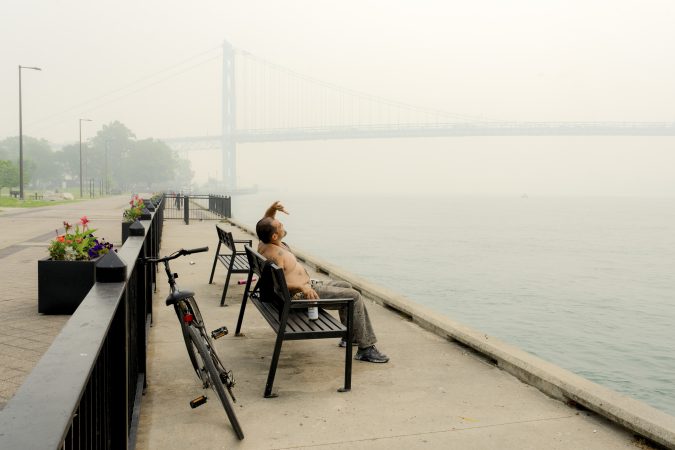
    In July, Republican candidates in Michigan were lining up to excoriate Canada for the wildfire smoke wafting across the international border. “They MUST PAY and PUT OUT the fires!” wrote gubernatorial candidate John James on X, after declaring he would introduce legislation to impose sanctions on the neighbors to the north. Other politicians made similar claims about how they would deal with Canada. Meanwhile, Donald Trump moved to impose new tariffs on Canada in response.

    Such political posturing shows little understanding of the actual situation. For example, it overlooks the fact that the scale and magnitude of these fires is surely linked to climate change, which the United States is arguably doing less to combat under the Trump administration than any other industrial nation in the world.

    This is not the first time the two countries have dealt with cross-border air pollution. However, in the Great Lakes-St. Lawrence region historically, it was more often American emissions that were afflicting Canada.

    By the mid-20th century, air pollution across the Michigan-Ontario border in the St. Clair-Detroit River corridor was raising significant concerns. At the request of both nations, the International Joint Commission (IJC), which had been created by the 1909 Boundary Waters Treaty, formed a joint St. Clair-Detroit Air Pollution Board in the 1960s to investigate the precise sources of air pollution in this region.

    In a 1971 report, this board found that sulfur dioxide and particulate matter from Detroit’s auto and steel industries were crossing over to Windsor, Ontario. Along the St. Clair River, the joint board reported that Sarnia’s Chemical Valley south of the city, which had already developed into an enormous petrochemical complex that befouled both air and water, was the main pollution culprit. Certainly some of the poisons drifted into Michigan, though the board determined that the primary victims were in Ontario. The IJC duly recommended that the two federal governments create pollution boards and establish national air quality standards.

    A similar dynamic played out in other transboundary air disputes between Ontario and adjoining U.S. states, with both sides (though more often the United States) found to be the culprit. Ontario Hydro built a large coal-fired power station at Atikokan in the northwest part of the province that threatened cherished recreational areas across the border, such as the Boundary Waters Canoe Area Wilderness in Minnesota. In another instance, the Reynolds aluminum smelter in Massena, N.Y., was accused of contaminating the nearby binational Mohawk community, including the parts in Canadian territory.

    Over time, the air quality issues stemming from these specific sources mostly either fell off the public’s radar or became subsumed within wider debates about acid rain and national air quality agreements (such as the 1970 Clean Air Act). Indeed, by the 1980s acid rain dominated not only the Canada-U.S. environmental relationship, but general bilateral relations.

    Acidified precipitation is created when sulfur and nitrogen oxides (SO2 and NOx) emissions, often from coal plants, are transported through the atmosphere and transformed into sulfuric and nitric acids. This acid rain fell onto terrestrial and aquatic environments where it had a range of short- and long-term negative consequences. Melting acidic winter snows produce an “acid shock” in streams during the spring run-off, for example, which is predictably bad for aquatic species.

    While both countries generated pollution that fell in the other’s territory, acid rain originating in the United States and descending to earth in Ontario was the biggest problem. Ongoing bilateral studies established that 70%-80% of it came from the United States. That acid rain affected cottage country north of Toronto — where many of the country’s elite have vacation homes — helps explain why this problem gained so much public traction.

    But the two countries could not agree on solutions, such as the need for emission limitations and controls. As the primary contributor, the United States would have had to bear the brunt of any necessary changes, and the Reagan administration was ideologically opposed to any environmentally motivated regulations on economic activity. Washington stalled the talks, calling for more research.

    The United States proved more amenable to addressing the problem after George H.W. Bush entered the White House in 1989. Negotiations began on what would emerge as the 1991 Canada-United States Air Quality Agreement (AQA), which permanently capped emissions at approximately 13.3 million tons by 2010 in the United States and 3.2 million tons in Canada. While the United States would not make any legal commitments to reduce emissions in Canadian territory, it did pledge to follow the requirements of its recently updated Clean Air Act, which reduced the emissions that created acid rain.

    Made By History sponsorsInquirer Staff

    Ultimately, the results of the 1991 Air Quality Agreement were mixed. SO2 emissions did go down by almost 70%. Granted, this decrease probably had more to do with domestic regulations and technological changes on both sides of the border. In the long run, neither country has fully followed through on its commitments.

    The AQA also created a framework that could incorporate other air pollution issues, such as particulate matter and ozone. In that vein, Canada and the United States signed an “Ozone Annex” to the Air Quality Agreement in 2000. There was also a different type of ozone problem — the hole in the ozone layer — involving Canada and the United States; both were adherents to the 1987 Montreal Protocol on Substances that Deplete the Ozone Layer, considered by many to be the most successful global environmental treaty ever.

    To be sure, the United States and Canada have had the world’s most consequential environmental and energy relationship over at least the last century. No two nations have exchanged resources and collectively modified ecosystems on the same scale — which, by extension, has created harmony in wider U.S.-Canada relations and established many important precedents for international environmental law and governance. Yet, both countries are also petro states and climate villains, with their societies and economies organized around deeply unsustainable industrial practices and consumption patterns.

    The amity that has long characterized U.S.-Canada relations has been eroding with Trump at the helm. And this recent strife about transborder smoke is representative of the ways that breakdowns in U.S.-Canada environmental and energy relations can undermine the rest of the relationship.

    Daniel Macfarlane is professor in the School of Environment, Geography, and Sustainability at Western Michigan University and the author or coeditor of six books, including “Natural Allies: Environment, Energy, and the History of US-Canada Relations.”

    Made By History takes readers beyond the headlines with articles written and edited by professional historians. Opinions expressed do not necessarily reflect the views of The Inquirer.

  • Lawmakers will investigate Iranian attack that killed 6 U.S. troops

    Lawmakers will investigate Iranian attack that killed 6 U.S. troops

    Democratic lawmakers announced Thursday that they are opening an investigation into the Iranian drone strike that killed six U.S. service members in Kuwait earlier this year, citing doubts over the objectivity of the military’s internal review of the attack.

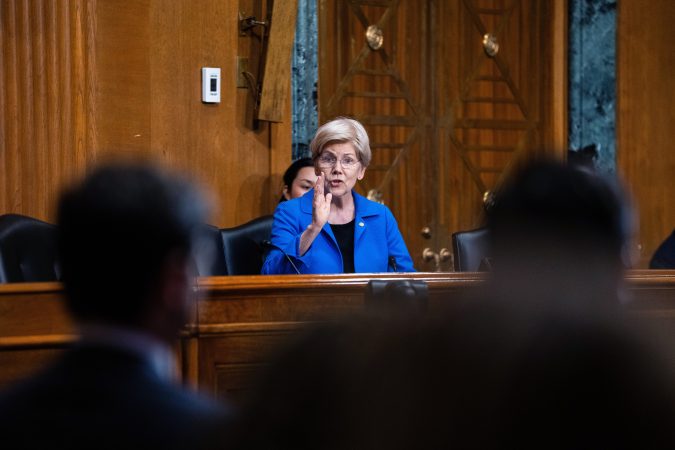
    In a letter to Defense Secretary Pete Hegseth, Sen. Elizabeth Warren (D., Mass.) and Rep. Pat Ryan (D., N.Y.) — along with almost a dozen other House and Senate Democrats — cited recent reporting by the Washington Post and other media outlets scrutinizing the March 1 strike, saying they want answers to whether the military had adequate protections in place before the attack and whether the troops received proper medical care afterward.

    “The need for this investigation goes beyond the Shuaiba attack — it’s about taking accountability and protecting our service members,” Ryan, an Army and Iraq War veteran, said in a statement to the Post. He was referring to Port Shuaiba, the facility along the Persian Gulf where the deadly strike occurred. “It’s our job as members of Congress to force [Hegseth] to give us real answers and make sure something like this never happens again.”

    Reached for comment, the Pentagon did not address whether it would cooperate with lawmakers’ investigation, saying in a brief statement that “as with all Congressional correspondence, we will respond directly to the sender.”

    It was just the second day of Operation Epic Fury, the name the Trump administration has given the conflict, when an Iranian Shahed drone crashed into the center of an Army operations center at Port Shuaiba. Dozens of service members were injured in the attack along with the six who died.

    In the months since, survivors have alleged that military leaders failed to take appropriate action after being warned the facility lacked adequate defenses. Some have said, too, that troops wounded in the strike faced considerable difficulty obtaining treatment.

    Military officials have contested both assertions.

    As the Post reported this month, several soldiers who were at Port Shuaiba have said they doubt the Army’s internal review will hold anyone accountable. Citing a U.S. official familiar with the review, the Post also reported that the initial findings did not assign fault for the attack or address any punitive action.

    The Army has shared its findings with the families of some of the fallen service members but has not released that information publicly.

    In their letter to Hegseth, lawmakers questioned the seriousness and independence of the Army’s internal review, citing other reporting by the Post that revealed the task was assigned initially to a midgrade officer within the affected unit instead of an outside investigator.

    The matter was later elevated to a more senior officer at U.S. Army Central, the affected unit’s parent command. Outside observers have said they were skeptical of the move, noting that it still left the review to be overseen by personnel in the same chain of command.

    The lack of an independent investigator, coupled with new concerns about the Pentagon’s transparency and recordkeeping, raise questions about “whether investigations into service member casualty incidents will be conducted objectively,” Warren wrote in the letter.

    Citing Democrats’ concerns about the Defense Department’s “failures to provide service members that sustained injuries in this war with adequate care and its inability to honestly and openly inform the American people about the consequences of this war,” the lawmakers have chosen to pursue answers on their own, the letter says.

    They requested a response from the Pentagon by Aug. 12.

  • A refugee family found a new home and ‘the first step of hope’ in Philly. Now, fewer may get that chance.

    A refugee family found a new home and ‘the first step of hope’ in Philly. Now, fewer may get that chance.

    A small garden stands outside the two-story Northeast Philadelphia home where Fatima Alsalih Alti Keli and Waled Keli live with their three children. Inside, their 8-year-old daughter, Abeer Janna Keli, sits on the couch drawing pictures with her two brothers, her small arms carefully wrapped in bandages to protect her fragile skin. The ordinary domestic scene would have seemed nearly impossible before the family immigrated to the United States from Turkey, after the civil war in Syria had prompted both parents to flee.

    Over the last two years, the family’s future has been radically transformed in Philadelphia with the help of specialized treatment for Abeer. And yet, the resettlement process by which they were granted visas is threatened: When the family applied for resettlement in the United States around 2020, the annual refugee admission cap was set to 18,000. The cap this year is set to 7,500, the lowest in U.S. history.

    Alti Keli, 28, and Keli, 30, had known each other through their families in Syria, but they married after both had fled to Turkey and started their family there. Once in Turkey, they applied to move to seek medical treatment for Abeer, a process that took about five years.

    Abeer was born with epidermolysis bullosa, a rare genetic disorder that causes the skin to blister and tear from minor friction. Children with the condition are often described as having “butterfly skin.” Before the family came to the United States, Abeer had little access to specialized medical care. She struggled to eat because of sores in her mouth, relied on a wheelchair, and spent much of her time asleep.

    “She was like a ghost,” her mother said in Arabic through a translator.

    The family applied to immigrate through the United Nations High Commissioner for Refugees in 2020 on the basis of receiving treatment for Abeer’s disease and were connected with Children’s Hospital of Philadelphia, where Abeer still receives treatment. When they arrived in Philadelphia in July 2024, they went directly to CHOP, where Abeer stayed for 12 days before she could go home. Two years after the move, the Kelis have settled into their lives in Philadelphia.

    “Now that she is here, she is talking, walking, and is happy going to school,” Alti Keli said, smiling through tears. “Her doctors saved her life.”

    They moved to their predominantly Arab neighborhood after first living in Southwest Philadelphia. Struggling with the language barrier and the job search, they were feeling isolated there. The friction of daily life was a real struggle as the family balanced learning English, taking their daughter to medical appointments, finding employment, and coordinating schooling for Abeer and her brothers — Abdul Rahman, now 10, and Mahmoud, now 6.

    For example, they were flabbergasted when their water bill spiked from $50 to $500 a month. Realizing their toilet was leaking, they struggled to communicate with their landlord. Those struggles have eased. In their new neighborhood, their children can easily walk to school and have made friends who share their Arab heritage. With the help of English classes, phone translators, and a refugee-support organization, the family has been able to build a comfortable life.

    Volunteer Dan McVay talks with Abeer Keli, 8, about her drawing at her home on Wednesday, July 22, 2026 in Philadelphia. The Refugee Empowerment Support Team (REST) works with refugee families in Philly.Monica Herndon / Staff Photographer

    The Refugee Empowerment Support Team (REST) helped the family confront the logistical challenges of moving to a new country. Efforts by President Donald Trump’s administration to curb immigration have affected not only the number of refugees allowed into the country, but also the kind of help they receive while they are here. After the administration threatened to close resettlement offices in 2025 and froze federal funding, many of the offices shut down and laid off employees. Provisions in the One Big Beautiful Bill Act limited refugees’ access to government services like Medicaid, Medicare, and SNAP benefits.

    REST has filled in those gaps by helping to connect refugees with employers, assisting with transportation to medical appointments, and dealing with other logistical challenges. Dan McVay, a leader with REST, said more refugees are now contacting the organization directly through Facebook, asking for help finding jobs and accessing services.

    “There is no money for refugees already in the country,” McVay said.

    Alti Keli, however, is “very happy with the challenge” of adjusting to life in a new country. While she takes care of the children, her husband works in landscaping at a golf course. He also loves to garden at home and has filled the front of the house with potted plants and flowers.

    McVay describes the family as very welcoming, often serving guests tea or coffee and homemade sweets.

    Before the family moved to the United States, the Kelis fled to Turkey from Syria in 2014, where they married and had their three children. Alti Keli’s face contorts while describing her life in Syria, where she lost her father and four siblings, during the civil war: “It was like a nightmare.”

    The family had to keep moving and did not have access to shelter, food, or even potable water.

    “We had to drink dirty water,” Alti Keli said. In Turkey, life was better, but Abeer could not get the specialized care she needed.

    (left to right) Abdul Rahman Keli, 10, Mahmoud Keli, 6, Walid Keli, and Abeer Keli, 8, posed for a portrait at their home on Wednesday, July 22, 2026 in Philadelphia. The Refugee Empowerment Support Team (REST) works with refugee families in Philly.Monica Herndon / Staff Photographer

    A United Nations spokesperson described the situation in Syria during 2013 as “a complete meltdown of humanity,” as Bashar Assad’s Russian-backed regime tried to recapture rebel-held territory. During the war, civilians were subject to chemical warfare, indiscriminate bombing attacks, and systematic torture and execution by the Assad regime.

    Moving to Philadelphia was “the first step of hope,” Alti Keli said, a step that has been realized now that her daughter is doing well. “I came here for hope,” she says. “What else can I ask for?”

  • ‘She killed the kids!’ 911 call from Lindsay Clancy’s husband brings tears to the courtroom

    ‘She killed the kids!’ 911 call from Lindsay Clancy’s husband brings tears to the courtroom

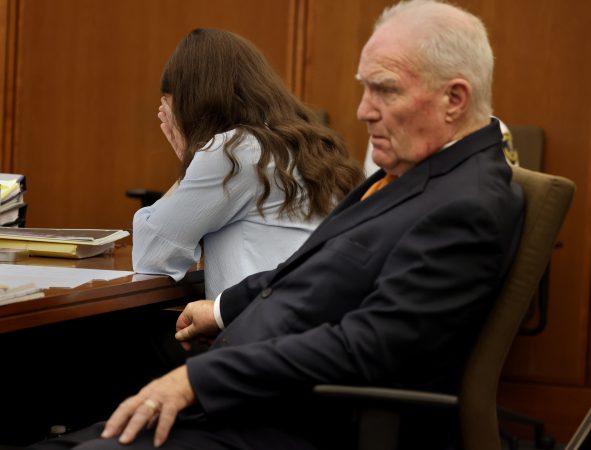
    PLYMOUTH, Mass. — Lindsay Clancy sobbed in court Wednesday as jurors listened to the anguished 911 call her then-husband made after returning from an errand to find she’d strangled their three children in their Massachusetts home.

    On the roughly 7-minute recording, Patrick Clancy can be heard speaking with his wife upon finding her badly injured and bleeding in their yard, after she jumped from the home’s second-story window.

    “Look at me,” he says. “Say my name.”

    He then tells the dispatcher he’s going to check on the children. Moments later, he howls and cries after finding them in the basement. The confused dispatcher repeatedly asks what happened.

    “She killed the kids!” he yells.

    Three years after their deaths, the murder trial has centered on Lindsay Clancy’s mental state at the time. Her lawyers will seek to prove she had postpregnancy psychosis, a rare mental illness linked to the stress, sleep deprivation and hormonal changes that follow childbirth.

    Prosecutors say Clancy, a former labor and delivery nurse at Massachusetts General Hospital, acted intentionally and is criminally responsible for the deaths of 3-year-old Dawson, 5-year-old Cora, and 8-month-old Callan in January 2023.

    ___

    EDITOR’S NOTE: If you or someone you know needs help, the national suicide and crisis lifeline in the U.S. is available by calling or texting 988. There is also an online chat at 988lifeline.org

    ___

    Her lawyer said in opening arguments Monday that she had bipolar disorder, and that antidepressants prescribed after the birth of her third child worsened her condition. On the day of the killings, Lindsay Clancy said she heard a voice telling her, “This is your last chance. Kill the children so you can kill yourself,” according to her lawyer.

    If convicted of murder, she faces life in prison without parole. If found not guilty due to a lack of criminal responsibility, she would be committed to a state mental health facility.

    Patrick Clancy has said in interviews that he forgives his ex-wife, whom he viewed as ill rather than evil. The trial marks the first time he has seen Lindsay Casey since the killings.

    A husband’s emotional testimony and a chilling 911 call

    Patrick Clancy testified Wednesday that his last image of Dawson was of the boy sitting on the couch, eating chicken nuggets and green beans. Lindsay Clancy had asked her husband to make a quick trip for takeout food and medication at a pharmacy for Cora. Prosecutors say this was an excuse to get him out of the house.

    Jurors were shown surveillance video from the pharmacy of Patrick Clancy on the phone with his wife, asking a question about the medicine.

    “She was pretty quiet. It sounded like she was busy,” he testified Wednesday. “I remember hanging up thinking she was probably in the middle of giving baths or something like that.”

    Returning home, it was unusually silent. He called out to his family.

    When no one answered, he searched the children’s rooms and the bathroom, again thinking they might be in the tub, before finding blood throughout the main bedroom and a window open.

    Injured but conscious, Lindsay Clancy told him she’d tried to kill herself and that the kids were in the basement, without saying they were dead. He didn’t realize he was still on the phone with 911 as he ran downstairs to find each had been strangled with exercise bands.

    Lindsay Clancy’s parents, seated in the front of the court, also cried as the call was played. Patrick had already left the room after finishing his testimony.

    Jurors were shown the clothes each child had been wearing, with a prosecutor pulling the items from clear plastic evidence bags: pajamas and a pink robe for Cora; a nightshirt and dinosaur underwear for Dawson; a red onesie decorated with snowflakes for Callan.

    The trial will hinge on Lindsay Clancy’s mental state

    Patrick Clancy testified Monday about his wife’s deteriorating mental health in the months before the killings, including her telling him about intrusive thoughts of harming the children and of suicide.

    Lindsay Clancy had sought care from experts in postpartum mood disorders, was put on multiple psychiatric medications, and when nothing worked, checked in to a psychiatric hospital. She killed the children 19 days after she was discharged.

    No one ever told Patrick Clancy his wife shouldn’t be alone with the children, he testified Wednesday. “I didn’t know what psychosis was until after this happened.”

    Clancy and her ex-husband accuse her medical providers of failing to properly diagnose, treat and monitor her, according to lawsuits filed earlier this year.

    On cross-examination, Clancy’s attorney, Kevin Reddington, aimed to demonstrate she took her medications and closely tracked her declining mental health. He introduced daily, handwritten notes she took of her medicines and her mood, including repeatedly writing “horrible thoughts.” She also had a book and fact sheet on postpartum anxiety and a chart where she tracked her mood.

    Reddington also got Patrick Clancy to acknowledge that many of her medical appointments starting in the summer of 2022 were with nurse practitioners and on Zoom calls lasting only 20 minutes. They also went through multiple medications she was prescribed, including Seroquel — an antipsychotic medication for which doctors increased her dosage in December.

    “The idea was that it would help with sleep, but she didn’t get better. She got worse,” Patrick Clancy said.

  • Blanche nomination at risk of delay as senator seeks assurances on Trump settlement

    Blanche nomination at risk of delay as senator seeks assurances on Trump settlement

    WASHINGTON — A planned vote to move forward with Todd Blanche’s nomination for attorney general appeared in doubt Wednesday as a key Republican senator demanded more assurances from the Justice Department about the settlement of President Donald Trump’s lawsuit against the Internal Revenue Service.

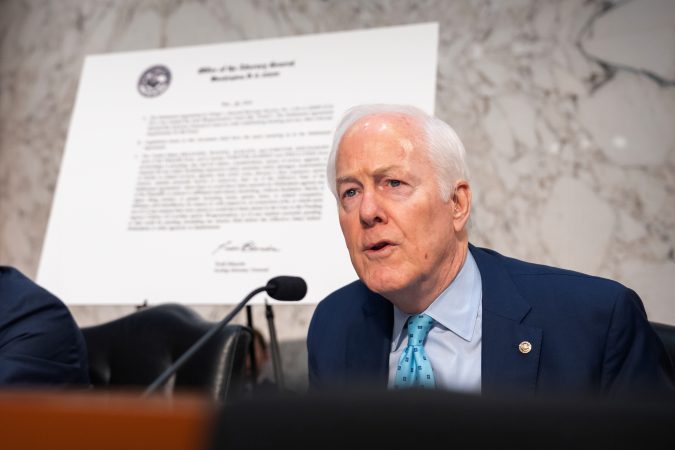
    GOP Sen. John Cornyn, a crucial swing vote, called off a scheduled Wednesday meeting with Blanche, who has been serving as acting attorney general since Pam Bondi’s firing in April. Cornyn told reporters that the Justice Department has not adequately addressed in writing his concerns about the settlement that afforded Trump and members of his family protection from tax audits.

    The dispute threatened to upend plans for the Senate Judiciary Committee to vote Thursday on whether to advance Blanche’s nomination to the full Senate. Another Republican on the committee, Thom Tillis of North Carolina, has backed Cornyn’s position, and just one Republican holdout could sink Blanche’s prospects.

    “They know what they need to do but they simply refuse to do it,” Cornyn, who lost the Texas Republican primary in May, said of the Justice Department.

    At the center of the fight is the settlement of Trump’s $10 billion lawsuit against the IRS that included a deal to drop tax claims against the president and a now-scrapped plan to create a $1.776 billion “Anti-Weaponization Fund” to compensate people who believe they were wronged by the Justice Department. The Justice Department said in June that it was no longer moving forward with the “Anti-Weaponization Fund” amid bipartisan outrage but officials have said the audit immunity agreement remains in place.

    Trump on Wednesday downplayed any concerns about Blanche’s path to confirmation, calling his attorney general pick and former personal attorney “outstanding.”

    “Maybe John Cornyn’s upset with me because I didn’t endorse him,” Trump told reporters in response to questions about the senator’s demands.

    Texas Attorney General Ken Paxton won the state’s Republican nomination for the U.S. Senate, easily defeating Cornyn. Trump had endorsed Paxton.

    Some lawmakers have raised concerns that the fund could be resurrected absent a commitment in writing from the Trump administration that it is dead, especially since Trump has expressed continued support for the idea. Blanche had previously resisted requests for a formal written retraction, though he told senators at his confirmation hearing earlier this month that the administration would be willing to help craft legislation to bar the creation of the fund.

    Cornyn has also demanded clarification from the Justice Department on the scope of the tax immunity deal. He has pressed the administration to modify that piece of the settlement to make clear that it covers only existing audits and does not protect the president from examination of future tax filings.

    “We’re been trying to help them get to a conclusion here and they won’t let us. It’s befuddling to me,” Cornyn said.

    A person familiar with the matter said the Justice Department provided Cornyn’s office with a written proposal seeking to address his concerns around the audit immunity agreement and the fund. The person spoke on the condition of anonymity to talk about sensitive discussions surrounding Blanche’s confirmation.

    The settlement resulting from Trump’s lawsuit over his leaked tax returns has drawn intense scrutiny both in Congress and in court. The judge handling the case said in a scathing ruling earlier this month that Trump had effectively engaged in self-dealing through the lawsuit and that she was troubled Blanche had signed the settlement, given his prior representation of Trump.

    Blanche has said he disagrees “with the judge’s insinuations” about him.

  • The EPA halted a study on gas stoves and asthma. But even partial results were striking.

    The EPA halted a study on gas stoves and asthma. But even partial results were striking.

    Paul Moore’s house is old. It was built around 1900 as a hunting lodge near where Cleveland would develop, and his grandparents bought the home around 50 years later, converting it over the years into a three-bedroom ranch that included what Moore called an “old school” gas stove.

    When he moved into the house in 2020 with his wife and six children, Moore already had debilitating asthma. He got winded walking up hills and couldn’t play basketball with his children. He slept poorly and couldn’t hold steady employment, instead doing odd jobs like fixing neighbors’ cars and houses. He was hospitalized multiple times with severe asthma attacks and almost died from being unable to breathe.

    “My asthma was a real hindrance at the time. And I couldn’t figure out why, you know?” Moore said. “Just couldn’t pinpoint one thing or another. Was it me? Is it something going on with my body? Is it something else?”

    It turned out that researchers at Case Western Reserve University in Cleveland and a local hospital network were studying asthma sufferers like Moore. He signed up to have his gas stove swapped out for an electric one in June 2025. That research would end up providing vital evidence on gas stoves’ health impacts, amid fierce debate between fossil fuel advocates and climate change activists.

    Moore said without the study, he has no clue how long it would have taken him to save the money to change it himself. The researchers spent an average of about $10,000 per household, as many old homes needed to be completely rewired to handle the larger electrical load of an induction stove.

    What Moore didn’t know is that he would be one of the last people to get a new stove as part of that work.

    Ash Sehgal, a Case Western medical professor who led the study, had received an $18 million grant from the Environmental Protection Agency in December 2024 to replace the stoves in 1,200 homes of asthma sufferers in the Cleveland and Akron, Ohio, areas. A month before Moore’s stove was replaced, Sehgal received a letter stating that the grant had been terminated.

    It was one of thousands cut short after President Donald Trump took office and launched aggressive efforts to reduce government spending.

    But unlike many others forced to halt their research, Sehgal and his co-authors released their study anyway, publishing it in the Journal of Allergy and Clinical Immunology in Practice this month with a fraction of the intended sample size. Still, removing the gas stoves relieved the participants’ asthma so much that the results were clear even with only 85 of them, according to two scientists who reviewed the methodology but were not involved in the study.

    “What really surprised me is that the improvement in the asthma symptoms was similar to or even larger than the improvement in asthma symptoms that’s reported in clinical trials of commonly used asthma medications,” Sehgal said.

    Participants recorded far fewer asthma attacks, emergency room visits and missed days of work after the stove was removed, and levels of nitrogen dioxide in their kitchens plummeted by 70 percent.

    “They were able to see some important results, even with the grant getting canceled, even with the sample size being less than a tenth of what they’d intended,” said Julian Marshall, an environmental engineering professor at the University of Washington.

    “It’s also an actionable finding. People who have asthma would want to know, ‘What can I do about this?’” he added. “This is a major problem facing thousands and thousands of people across the U.S.”

    Sehgal said that while it can help to replace gas stoves that exacerbate symptoms, it is not a cure for asthma. Asthma sufferers still need to work with a doctor, take their medications and avoid triggers like pollen and cigarette smoke.

    Rob Jackson, an environmental scientist at Stanford University who was not involved in the research, said many studies on indoor air pollution from gas stoves rely on models to estimate the impact on people’s health, whereas this study makes real-life observations.

    “It’s important because the extent to which indoor air pollution from stoves harms people’s health is still debated in state houses, federally, in courtrooms, and so every piece of the puzzle, even if it’s only 85 individuals, strengthens that story,” he said.

    In recent years, conservatives have championed gas stoves and fought Biden-era policies that sought to reduce the use of fossil fuels driving climate change. Trump has championed fossil fuel development, seeking to boost the oil and gas industry by rolling back environmental protections and opening new areas to exploration.

    Politicizing science

    Scientists have lamented the loss of federal funding following the Trump administration’s dramatic cuts last year to grants across the government, including those awarded by the National Institutes for Health and Centers for Disease Control and Prevention.

    The EPA has terminated $28.5 billion in grants, according to Grant Witness, a tracking project, with much of that money intended to focus on helping communities respond to climate change or reduce pollution. That included funding projects that installed rooftop solar or sealed up houses against wildfire smoke, as well as scientific studies that had real-life applications, like evaluating the replacement of gas stoves.

    The agency closed the Office of Environmental Justice and External Civil Rights, which awarded Sehgal’s grant, amid its broader purge of programs related to climate change, environmental justice and diversity, equity and inclusion.

    Despite court challenges, including a district judge ruling earlier this month that the cancellations were illegal, many researchers were forced to end their studies early.

    EPA spokesperson Brigit Hirsch said in an email that the agency’s internal scientists continue to conduct vital research.

    “EPA’s core mission is protecting human health and the environment, and at the Trump EPA, gold-standard science supported by our excellent career scientists is happening like never before to ensure clean air, land, and water for all Americans,” she said.

    The cancellation of the gas stoves research grant “seems to be a political decision, not necessarily based on science-based or public health priorities,” said Darya Minovi, a public health researcher at the Union of Concerned Scientists, an advocacy group.

    The administration is looking to expand its ability to shape scientific funding, she said. The White House’s Office of Management and Budget proposed a new regulation in late May that would demand grants across the federal government align with the president’s policy priorities or face cancellation.

    While presidents often set the general direction of agencies by appointing their leadership, Minovi said this new policy would give the president more control over decisions typically made by staffers at institutions such as the NIH.

    “This is really making it government-wide policy to politicize grant-making that should not be subject to the whims of a president, but really should be decided on scientific merit,” she said.

    What was lost

    Based on the results that were published, Sehgal can estimate how much damage halting the study caused. If 1,100 more households had participated as originally planned, it would have resulted in 900 people with better-controlled asthma and 84 fewer people who would go to the emergency room or be hospitalized.

    Many of those people probably don’t even realize the connection between their asthma and their gas stove, said Angela Bland, a 38-year-old stay-at-home mom in Akron who also participated in the study. She said the impact of replacing her stove was almost immediate, and she didn’t feel her throat closing up as much while cooking.

    “It was kind of heartbreaking because I was like here’s something that can really help people and get information out there to help people, and they cut it so quick,” she said.

    Similar to Bland, Moore said he quickly felt the impact of removing his gas stove.

    “It was just like, ‘Huh, I feel a little bit better. It’s not like how it used to be.’ It was a slow realization over the first week,” he said.

    He remembers waking up to his daughter cooking, smelling the food and feeling good for once, so much so that his family noticed.

    “They felt the difference. It was a magical moment,” Moore said.

    After his health improved, Moore found a new job locating gas lines so that major construction projects don’t rupture them.

    “There’s a whole lot of people out there probably feeling just like how I felt,” he said. “A lot more people deserve to feel good when they cook or when they eat or when they are able to sit down with their families.”

  • Russia accuses Telegram CEO Pavel Durov of aiding terrorism in its latest digital crackdown

    Russia accuses Telegram CEO Pavel Durov of aiding terrorism in its latest digital crackdown

    Russian authorities said Wednesday they had charged Pavel Durov, the founder and CEO of the popular messaging app Telegram, with aiding terrorism, the latest step by the Kremlin to bring the internet and digital communications under its control.

    The charges against the Russian-born Durov, who lives abroad, came as authorities have sought to restrict the use of Telegram as part of a widespread crackdown on online freedom that followed Moscow’s full-scale invasion of Ukraine in 2022.

    The Federal Security Service, or FSB, said in a statement it had accused Telegram’s administration of failing to remove “numerous channels, chats and bots” allegedly used by “Ukrainian intelligence agencies, terrorist and extremist organizations to prepare and coordinate acts of sabotage and terrorism, mass murder, and cyber fraud” in Russia, which resulted in “numerous human casualties.”

    The FSB accused Ukrainian security services of using a popular dating chatbot on Telegram to lure and recruit Russians for “sabotage and terrorist activities,” and said 46 users of the chatbot, from 12 to 22 years old, have been detained in Russia over the past year for assaulting law enforcement officers, arson and other acts.

    It also said it was adding the name of the 41-year-old billionaire to international wanted lists.

    Durov had said earlier this year that Russian authorities opened a criminal investigation against him, and he accused them of fabricating pretexts to restrict access to Telegram as part of an attempt to “suppress the right to privacy and free speech.”

    If convicted, he could face up to life in prison in Russia.

    Telegram, which boasts of more than 1 billion users worldwide, did not respond to a request for comment. Its official website links to an account on X that on Wednesday posted am image of Durov raising a middle finger to the camera.

    Telegram’s website says that the company is based in Dubai and that Durov, who holds dual citizenship in France and the United Arab Emirates, lives there, too.

    Russia has sought to censor the internet

    Under President Vladimir Putin, Russian authorities have engaged in multipronged efforts to rein in the internet, adopting restrictive laws and banning websites and platforms that don’t comply and focused on improving technology to monitor and manipulate online traffic.

    Popular social media platforms, such as Facebook, Instagram and X, have been banned in Russia; YouTube has been throttled; popular messaging apps, such as Signal and Viber, have been blocked, and the most popular ones — WhatsApp and Telegram — have been restricted.

    Russia’s popular Facebook-like social media platform Vkontakte, founded by Durov long before he launched Telegram, had come under the control of Kremlin-friendly companies. Russia tried to block Telegram between 2018-20 but failed.

    While it’s still possible to circumvent some of the restrictions by using virtual private network services, many of them are routinely blocked, too.

    At the same time, Russia actively promotes what it calls a “national” messaging app known as MAX, which critics say could be used for surveillance. The platform is touted as a one-stop shop for messaging, getting online government services, making payments and other activities. It openly says it will share user data with authorities upon request, and experts also say it doesn’t use end-to-end encryption.

    The Telegram restrictions have elicited widespread discontent in Russia, and this year activists in multiple regions tried to organize protests against it, but authorities quashed nearly all their attempts.

    Military bloggers also have denounced the crackdown, arguing the app is an indispensable communications tool for Russian troops in Ukraine and for activists running crowdfunding campaigns to help Moscow’s forces.

    The government initially promised not to restrict Telegram on the battlefield, but a different message later came from the Kremlin. At a meeting with Putin for International Women’s Day, a servicewoman called Telegram “an adversarial communications tool” and agreed with him when he said that “the use of communications systems that are not ours, not under our control, poses a danger to personnel” in battle.

    Despite the restrictions, multiple Russian officials still use Telegram and regularly update their “channels” — its term for blogs — on the platform. The Kremlin’s Telegram page had more than 284,000 followers as of Wednesday.

    Durov was arrested in France in 2024

    In 2024, Durov was arrested in Paris amid allegations that his platform was being used for illicit activity, including drug trafficking and the distribution of images of child sexual abuse. French authorities handed him preliminary charges for allegedly allowing criminal activity on the platform. In March 2025, Durov said he had returned to Dubai after spending “several months” in France.

    The Kremlin at the time criticized the French authorities for their move against Durov as selective. Putin’s spokesman Dmitry Peskov said at the time that “yes, indeed, terrorists use Telegram. But terrorists also use cars. Why aren’t they arresting the CEO of Renault or Citroen?”

    Peskov didn’t respond to a request for comment on what made Russian authorities change their position.

    The Paris prosecutor’s office told The Associated Press that Durov remains under formal investigation, facing an array of potential charges for alleged criminal activities linked to Telegram. French investigators have questioned him repeatedly, most recently this month, the office said in written comments Wednesday.

    Russia is accused of using Telegram as a recruitment tool

    Russia itself has faced accusations of using Telegram coordinate and recruit people to carry out acts of arson and sabotage in Ukraine and across Europe. In the U.K., a British man was recruited, likely by Russian military intelligence, on the platform to organize a plot in 2024 to set fire to a warehouse in London containing satellite equipment for Ukraine. He was also asked to kidnap a pro-Ukrainian exiled Russian billionaire living in London.

    Dutch teenagers were arrested in the Netherlands in September after being contacted by Russian hackers on Telegram who wanted them to map Wi-Fi networks in The Hague. The city is the location of many sensitive organizations, including the International Criminal Court — which has issued an arrest warrant for Putin — as well as the Organization for the Prohibition of Chemical Weapons and Europol which helps European countries fight international crime.

    Moscow has repeatedly denied involvement in acts of sabotage in Europe.

  • Trump’s attacks on mail balloting and concerns over delays turn midterms spotlight on Postal Service

    Trump’s attacks on mail balloting and concerns over delays turn midterms spotlight on Postal Service

    Roughly six weeks before the first midterm ballots are mailed out, the U.S. Postal Service is emerging as a pivotal player in an election season that will determine control of Congress.

    President Donald Trump is seeking greater control over mail balloting through an executive order while a change to how the agency processes mail is leading to criticism that it’s failing to deliver ballots on time.

    Democratic officials have raised concerns over the past week about how quickly the Postal Service will process ballots after tens of thousands of them in California and hundreds in Wisconsin arrived at local election offices too late to be counted in elections earlier this year. The top election offices in Kansas and Michigan are urging voters who want to cast their ballots early to avoid the mail and instead drop them off in person.

    The Postal Service replied to those concerns by saying it remains “committed to fulfilling our role in the electoral process.”

    “We provide a secure, efficient, and effective way for citizens to participate when policymakers decide to use mail as part of their elections,” it said in a statement Tuesday.

    Trump’s order puts more focus on mail ballots

    The Postal Service faced similar questions about mail delivery in 2024, but the scrutiny this year is heightened because of an executive order Trump issued in March that seeks to create a national voter list to guide the Postal Service in deciding who gets a mail ballot.

    The order has sparked multiple lawsuits and federal court orders, leading to a case now before the U.S. Supreme Court in which the administration is asking the justices to allow it to impose its restrictions on mail balloting.

    Trump has lied for years about voter fraud to try to explain away his loss to Democrat Joe Biden in 2020, and mail balloting is a favorite target, even though he has used the method himself. During a recent stop in Michigan, he falsely characterized mail balloting as “inherently corrupt” and added, “Hopefully there will be no mail-in ballots.”

    A 2025 report from the research group Brookings identified about four cases of fraud for every 10 million mail ballots cast.

    Despite Trump’s attacks, the method remains popular with voters of both major parties. In 2024, nearly 30% of U.S. voters cast their ballots by mail, according to federal data. In Michigan, where competitive U.S. House and Senate races could help determine the balance of power in Congress, the state said it has sent out more than 2 million absentee ballots for the state’s Aug. 4 primary.

    “We want to keep vote by mail. We want to protect it. We want to expand it,” said Jonathan Smith, president of the 200,000-member American Postal Workers Union, which launched a campaign in April promoting it and is opposed to turning the Postal Service into an election administrator. “Why? Because it works.”

    Legal battles intensify over Trump’s order

    The Postal Service proposed a rule in June in line with Trump’s executive order that would create a national list of eligible voters, based on databases kept by other federal agencies. Only those on the list would be eligible to receive mail ballots.

    Democratic officials in nearly two dozen states filed a federal lawsuit in Massachusetts. A federal judge there blocked Trump’s order last month, and an appeals court upheld that ruling, prompting Trump’s appeal to the Supreme Court. But the appeals court for the District of Columbia refused Tuesday to block the order in a separate case, calling a legal challenge premature.

    Democratic senators and governors have written to the Postal Service urging it to abandon efforts to implement Trump’s order.

    “Donald Trump has shown he’ll stop at nothing to meddle in our upcoming elections,” Wisconsin Sen. Tammy Baldwin said in a statement to The Associated Press. ”At best, this new push will exacerbate already severe delays for mail-in voters and at worst, it will stop eligible Americans from casting their ballots.”

    In a letter to Democratic senators earlier this month, the heads of the Postal Service said they were abiding by the court rulings that had halted the executive order. But Smith, of the postal workers union, told the AP on Tuesday that USPS information technology staffers who are union members are working on a planned portal for the list of eligible voters “behind the scenes.”

    The Postal Service declined to respond to Smith’s statements and said it could not comment about whether it’s moving forward with work related to Trump’s order because of the litigation.

    The postal workers’ union opposes the plan for a portal, a national list of eligible voters and using that list to determine who can receive a mail ballot. Smith said it shouldn’t be postal workers’ responsibility “to decide who can vote and who can’t vote.”

    A plan to consolidate mail processing centers upsets officials

    The Postal Service has been under financial stress for years and has been consolidating mail processing into fewer regional centers. Mail travels an average of 139 miles to reach one and sometimes 500 miles, according to a recent Brookings report.

    In January, a group of mostly Democratic senators said it was concerned about a decision to end twice-daily mail dispatches from local post offices to regional processing centers. The result is that mail arriving after the only daily dispatch would go out the next day.

    California officials said the change was a factor in the state rejecting more than 148,000 ballots from its June primary, with 63% of them arriving too late despite a seven-day grace period. Officials worried that some ballots were postmarked at processing facilities the day after they were dropped off at a post office, possibly invalidating them. Wisconsin officials also said hundreds of ballots from an election in April arrived late.

    The Postal Service said postmarks generally are being applied with automated equipment at processing centers, “in the same manner and to the same extent as before.” It said someone who wants to make sure their ballot envelope gets a timely postmark can get a free one applied by a postal worker.

    A report on the 2024 election by the USPS Office of Inspector General said the Postal Service handled more than 59 million pieces of ballot mail from Sept. 1 to Nov. 15 that year and that 97.3% arrived on time.

    Some state election officials advise voters to avoid the mail

    The Michigan secretary of state’s office is advising voters to hand-deliver ballots to their local clerk’s office or a drop box.

    “We’ve seen these issues over a number of election cycles now — they’re always concerning, and that’s why we’ve put out that guidance,” said Deputy Secretary of State Aghogho Edevbie.

    The Postal Service said its Michigan centers are not seeing processing delays.

    In Kansas, concerns about late ballot deliveries in the state’s 2024 primary election prompted a quip on the social platform X from Secretary of State Scott Schwab, a Republican: “The Pony Express is more efficient at this point.” Asked his view now, spokesperson Whitney Tempel said Schwab still believes “keeping your ballot out of the hands of the federal government is best.”

    Jamie Shew, a Democrat elected to oversee elections in Douglas County, home to the main University of Kansas campus, said his office is trying to change voters’ perceptions.

    “I think voters are used to, you can drop it off on Friday and we’re going to receive it by Election Day,” Shew said Tuesday. “That’s just not the reality.”

    California’s state budget includes $10 million for social media campaigns and other efforts to discourage last-minute ballot mailings.

    And the Postal Service said it hasn’t changed its own longstanding advice for voters: They should get their ballots in the mail at least a week before their state’s deadline for receiving them.