Category: Nation & World

  • Israeli settlers stop soldiers from returning Palestinians to their home

    Israeli settlers stop soldiers from returning Palestinians to their home

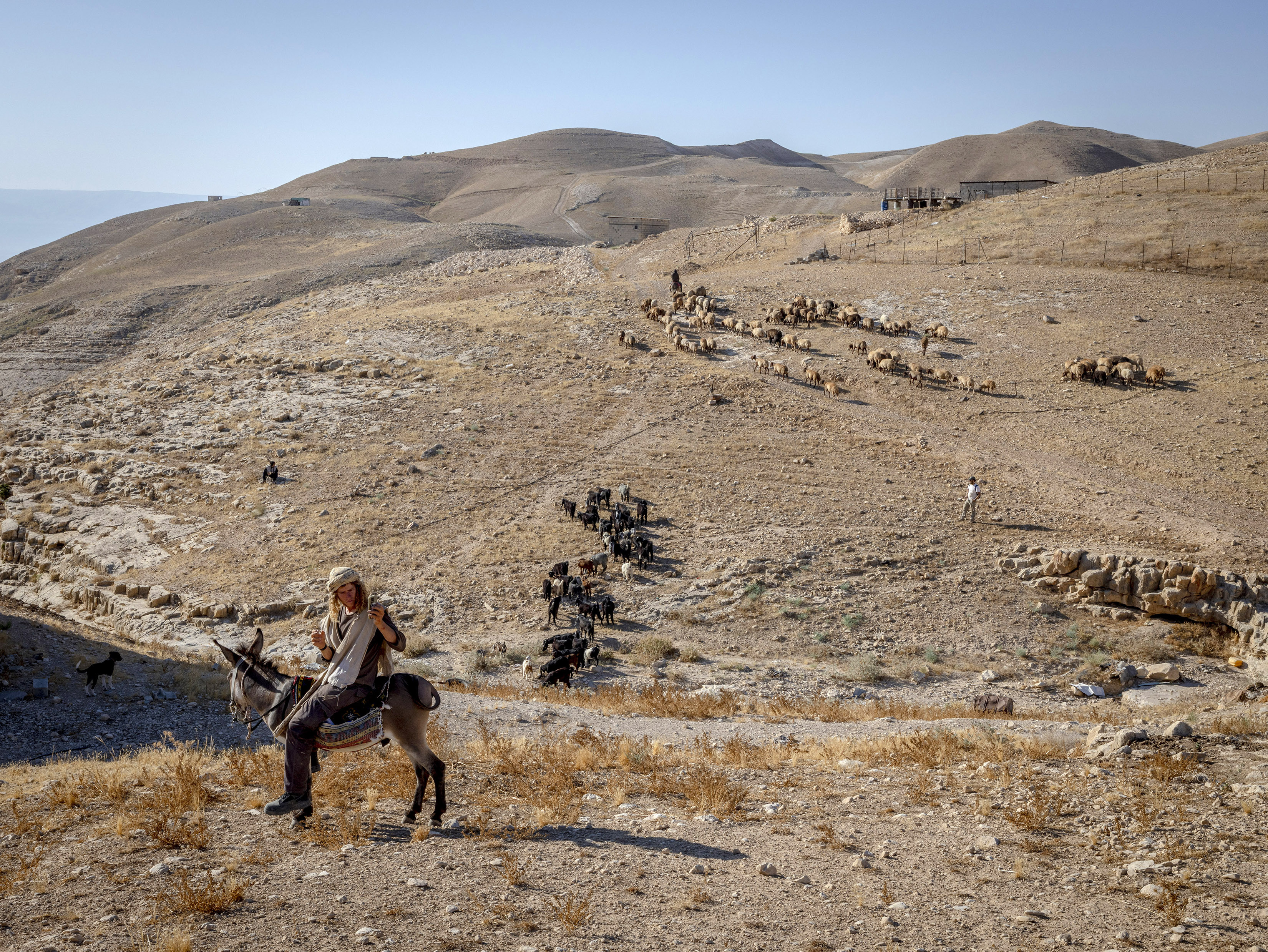
    TEL AVIV, Israel — More than 100 Israeli settlers attacked Palestinians and soldiers in the West Bank when the military tried to return a Palestinian family to their home after they were forced out, with authorities accused of not doing enough to confront a rising tide of settler violence.

    The Israeli government, military, and police have been condemned for failing to protect Palestinians in the occupied territory after a surge of settler attacks resulted in few arrests and stoked international criticism.

    In the latest outburst of violence overnight Monday, the settlers set fire to Palestinian homes and wounded three Israeli border police officers when the soldiers tried to return the family, the Toubassis, to their home in the village of Jalud, north of the city of Ramallah, the military said in a statement. Three people were arrested, according to the Israeli police, who said in a statement that they had opened an investigation into the attack.

    The family members were forced to leave their home in July after repeated settler attacks on the property. In August, the Israeli military said in a statement that it had created a closed zone in the area to prevent nonresidents from entering. But Palestinians documented Israeli soldiers standing by as settlers went in and out of the Toubassi house or even playing ball with them in the yard.

    The Supreme Court this month ordered the military to ensure the safe return of the Toubassis after settlers took over their home. Under international law, the military is responsible for maintaining law and order and protecting Palestinians living in the West Bank because Israel is an occupying power, a principle that is recognized by Israeli courts. The military said the soldiers filmed playing with the settlers had been removed from combat duty, according to the Supreme Court decision.

    Overnight, after the family had returned to the property, a group of settlers set fire to a vehicle at the house and threw stones at the building, according to Mahmoud Toubassi, one of the family members. The military evacuated the family members about an hour after they had returned when settlers moved to set the house alight, Toubassi added.

    “Without the army, we would have not been able to leave,” he said.

    The military said in a statement that it had been unable to return the family members to their home because of the violence.

    Settler violence against Palestinians in the West Bank has soared, according to U.N. data, especially since the start of the war in the Gaza Strip, which was ignited by the Hamas-led attack on Israel on Oct. 7, 2023. So far in 2026, at least 23 Palestinians have been killed in incidents linked to clashes with settlers, according to the U.N. humanitarian office.

    International pressure on Israel to rein in settler attacks has grown in recent weeks. This month, Britain, Canada, and France banned trade with Israeli settlements in the West Bank. Most of the international community considers the settlements to be illegal.

    In recent months, settlers have besieged Palestinian families in their homes or forced them out, including in Jalud and in neighboring villages. The violence has been widely condemned, including by Mike Huckabee, the U.S. ambassador to Israel, who this month called settlers who attacked Palestinians “terrorists.”

    In a statement released by his office, Prime Minister Benjamin Netanyahu of Israel condemned the violence targeting the Toubassis. He added that “the handful of rioters are not representative of the law-abiding settler public in Judea and Samaria,” using the biblical name of the West Bank.

    Last week, Netanyahu said in a speech to the U.N. General Assembly that settler violence against Palestinians was down to 150 “juvenile delinquents.” But Israeli former security officials and human rights groups say that the problem is far broader. A group of prominent Israelis, including more than three dozen retired army and air force generals, has accused the Netanyahu government of failing to check what they termed “Jewish terrorism.”

    Instead of being able to sleep in their own beds after Israeli troops escorted them back home, the Toubassis watched as their home was attacked again.

    “It broke my heart to see the fire eating up the house,” Toubassi said.

    This article originally appeared in the New York Times.
  • FBI vows to pursue ShinyHunters hackers after personnel data theft

    FBI vows to pursue ShinyHunters hackers after personnel data theft

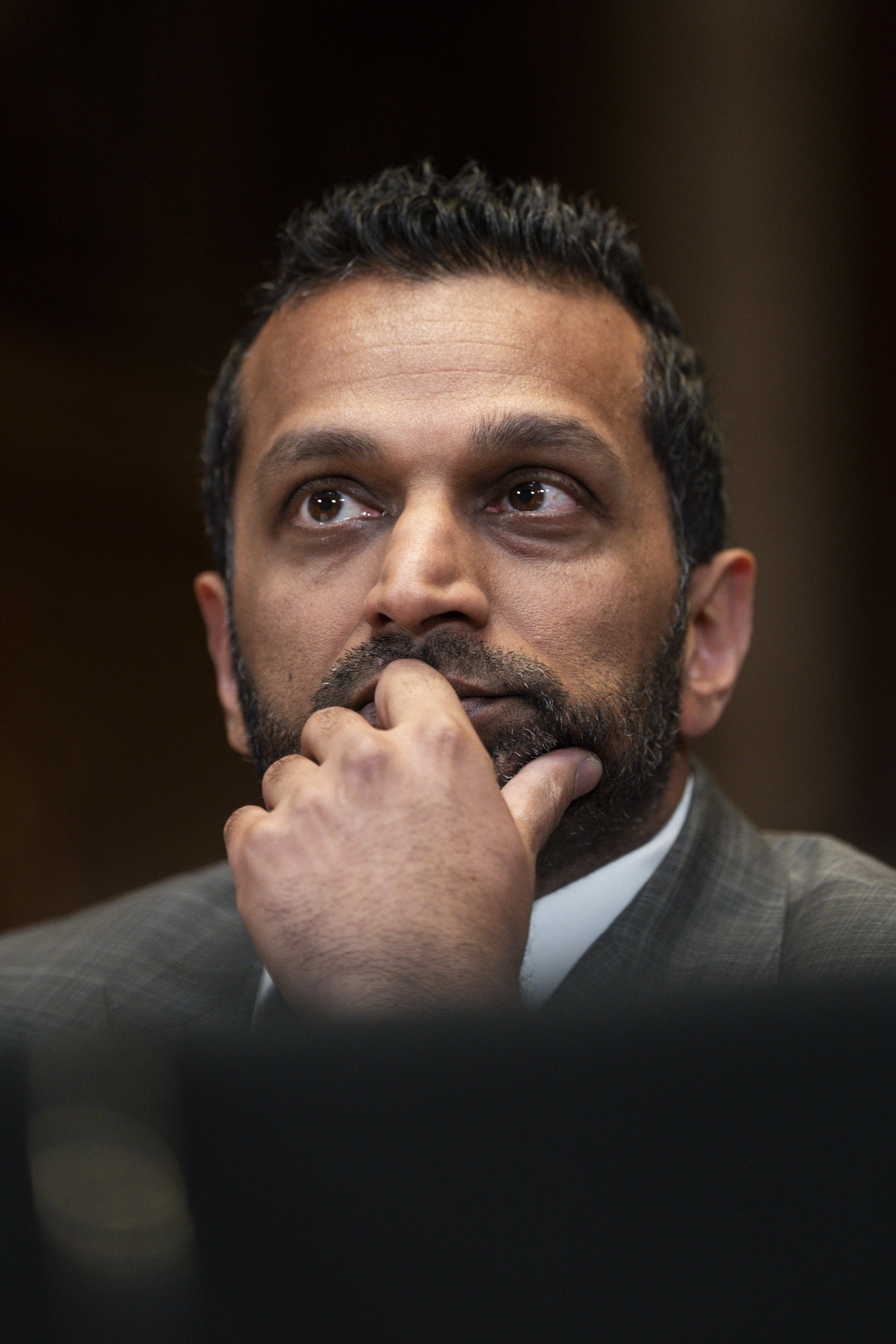
    WASHINGTON — The FBI on Tuesday warned the criminal hacking gang that stole vast amounts of its sensitive personnel data that it would aggressively pursue its members as it promoted the recent arrest of one of its suspected associates.

    In a video posted online, Brett Leatherman, the head of the FBI’s cyber division, said the bureau had worked with authorities in the Netherlands. The authorities recently arrested a 24-year-old convicted of cyberattacks on suspicion of aiding in data thefts and extortions tied to the group, known as ShinyHunters.

    News of the arrest and its possible links to the group surfaced earlier this week, but Leatherman’s remarks are the first significant public statement from the FBI about the hackers since the agency’s breach of its online jobs portal was revealed last week.

    Leatherman did not specifically mention the FBI hack in the video, but made clear the bureau has stepped up its pursuit of the notorious hacking collective.

    “We’re confident you have seen or heard things in recent days that the public has not,” Leatherman said. “Other groups believed anonymity or their friends would protect them, and they were wrong. Arrests have a way of changing who is willing to talk, and seized infrastructure has a way of showing us who’s left.”

    Looking directly into the camera, Leatherman said, “We know how to find you.”

    An email account ShinyHunters uses to correspond with reporters did not immediately respond to a request for comment on the video. On Monday, it denied that the Dutch person who was arrested had ties to the group.

    “That individual has no association with us,” ShinyHunters said in an email. “Frankly, we are laughing.”

    Leatherman’s promise to pursue ShinyHunters, as well as a social media post Tuesday by FBI Director Kash Patel, came as the bureau was scrambling to assess the damage from the breach. A large tranche of data — including names, home addresses, details about spouses and other family members, secretive job titles, and much more — on potentially all FBI employees was stolen in the hack.

    In announcing its theft, ShinyHunters had given the FBI a deadline of the end of Tuesday to comply with its demand to revise or remove a public advisory the bureau issued in May stating the hackers engaged in a variety of harassment and intimidation tactics to coerce hacked victims into payment. The group said it was angry about the characterization, which it denied, and suggested it would leak the stolen data online.

    On Monday, the group issued a statement saying that it would not leak the private material and contending that it never planned to do so.

    Leatherman did not say when the arrest occurred in the Netherlands, but a Dutch news release stated it took place two weeks ago, before ShinyHunters disclosed its hack of the FBI. It is not clear when that breach first occurred, but in an email, the group told the New York Times that the attack happened last week.

    ShinyHunters is considered one of the most notorious and capable cybercriminal enterprises in the world. The group is believed to have breached more than 140 organizations and extorted $70 million since last year, Leatherman said, and has often targeted third-party vendors and cloud-based platforms.

    This article originally appeared in the New York Times.
  • Senate resoundingly approves sweeping college sports measure

    Senate resoundingly approves sweeping college sports measure

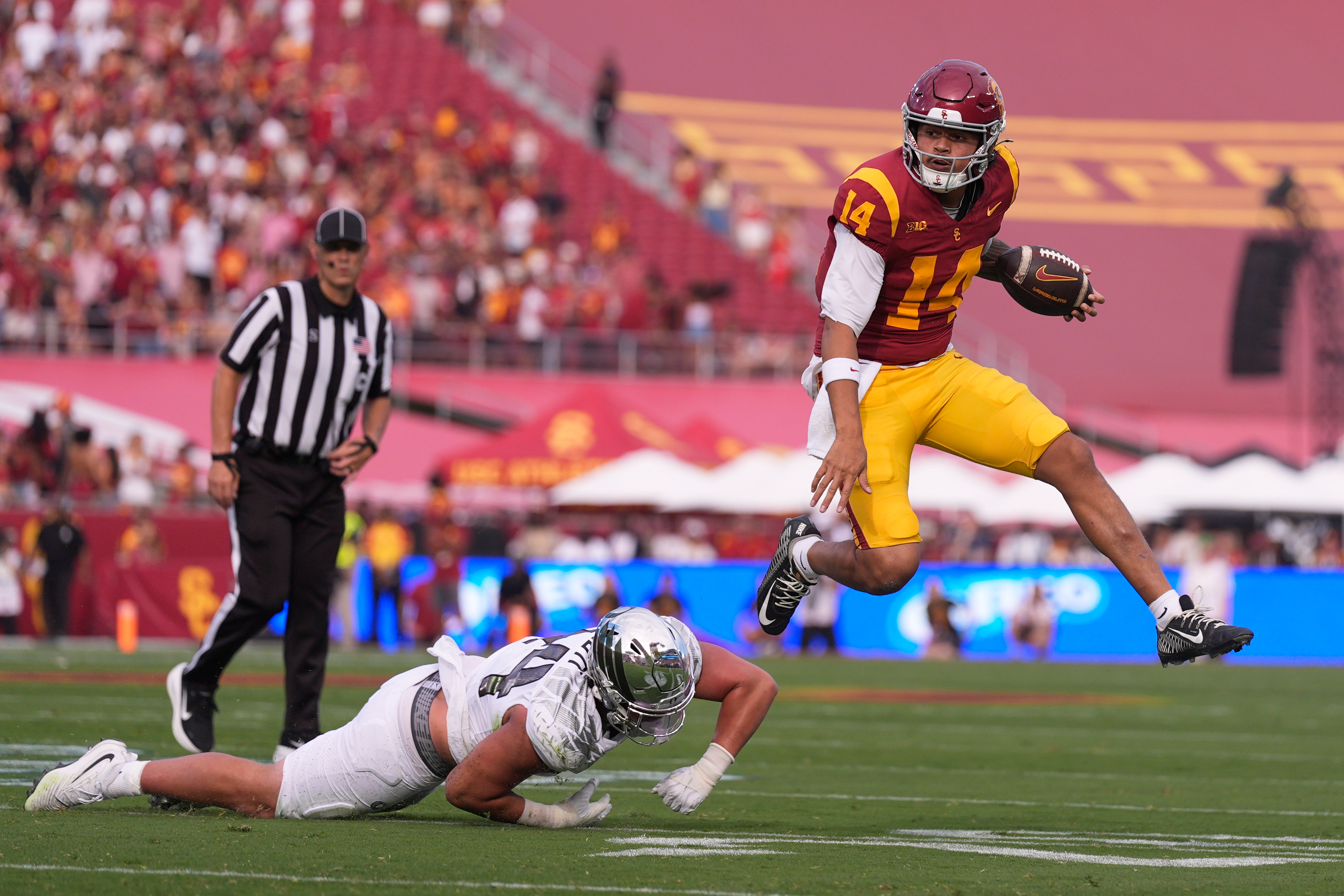
    WASHINGTON — The Senate on Monday approved a sweeping remake of collegiate sports regulations in an effort to restore stability to an athletic landscape that has been upended by constant transfers, frequent shifts in conference membership, and an infusion of money from wealthy boosters eager to lure top talent.

    Known as the Protect College Sports Act, the bill passed by an overwhelming bipartisan vote of 77-22, making it one of the last major pieces of business to be tackled by lawmakers before the midterm elections. It was a bid by Congress to lay out significant new rules and standards governing popular college sports that are a mainstay of American life as well as a path to an education for student athletes.

    Authors of the legislation, which faces an uncertain future in the House, said aggressive congressional intervention was necessary because a series of legal rulings had sowed chaos in college sports. They warned that the current financial path of colleges and universities was unsustainable, would decrease competition, and could cause schools to jettison less popular sports that were not as lucrative as football.

    “It would be nice if college sports could somehow magically fix itself, but this is a matter of law, federal law, and it is only Congress that can fix it,” said S. Ted Cruz (R., Texas), a chief proponent of the bill.

    But it has run into fierce opposition from Black lawmakers and others who say the measure restricts opportunities for players, many of them Black, while doing little to hold down the pay or mobility of top coaches.

    The legislation would limit college athletes to one transfer before they would have to sit out a season, as they had in the past before court rulings opened the transfer “portal,” spurring thousands of athletes to try to change schools each year. It also would set eligibility at five years. It would protect the right of college athletes to receive compensation for their “name, image, and likeness” and institute guarantees for scholarships and healthcare.

    The measure also would grant the NCAA, the governing body of college sports, a limited antitrust exemption while remaining silent on collective bargaining by student athletes. It attempts to discourage schools from jumping from conference to conference and it imposes new restrictions on agents for athletes.

    “Sports is about any given Saturday,” said Sen. Maria Cantwell of Washington, the lead Democratic sponsor of the bill. “It is not about whether you have a billionaire in your backyard. It is about whether you can coach and recruit and develop and maintain and have academic performance and have fairness.”

    Despite the Senate approval, opponents blasted the measure as unfair to players. An amendment to cap coaching salaries at $5 million and limit their contract buyouts to one year’s salary was defeated Monday as the authors beat back a series of proposed changes. Democratic opponents also were unhappy with the lack of clarity about future collective bargaining.

    “It’s a bill for the control and power of the NCAA and member institutions,” said Sen. Cory Booker (D., N.J.), a top opponent of the legislation. “It is not about athletes who are winning their rights, winning court cases, gaining leverage, and now are having that taken away from them.”

    But resistance to the bill was no match for the major sports conferences, state schools, big-name coaches, and other powerful interest groups that got behind it, including airing television spots that featured high-profile figures such as Deion Sanders, the former professional sports star who is now the head football coach at the University of Colorado.

    “The colleges and the conferences and the boosters flooded this place,” said Sen. Christopher S. Murphy (D., Conn.), another leading opponent of the bill. “It is a hard slog when the players have no money and no representation. Ultimately, this is going to be really bad for student athletes and destructive of the college sports model because these kids aren’t going to stick around very long if they are not getting paid what they are worth.”

    Others said Congress should have stayed out of the fight.

    “The people who oversee the post office now want to run college sports. What could go wrong?” said Sen. Rand Paul (R.,Ky.). He said he doubted that the founding fathers ever envisioned that “Congress would one day be in charge of dictating the rules for college sports.”

    With the House scheduled to be in recess until after the midterm elections, there is at present no clear path for the legislation to pass before Congress reconvenes in mid-November. Whether Republican leaders would take it up after the elections is unclear. Lame-duck agendas can be notoriously tricky. But President Donald Trump is an enthusiastic supporter of the legislation and could put pressure on the House to act.

    The measure is strongly opposed by members of the Congressional Black Caucus. Rep. Hakeem Jeffries (D., N.Y.), the minority leader who is in line to become speaker if Democrats win the House, has repeatedly expressed reservations. He called the legislation a “work in progress.”

    “I share many of the concerns that have been articulated by both the Congressional Black Caucus and the NAACP,” Jeffries said.

    Those groups contend that by limiting transfers and capping the overall amount of compensation paid to athletes, the proposal shifts the balance of power back to the schools and coaches after athletes won new rights through the courts. On the other side of the issue, some House Republicans favor explicitly declaring that student athletes are not school employees, limiting their bargaining capacity.

    “They have problems on both the left and the right in the House of Representatives,” Murphy said. “We are going to continue to fight this bill.”

    This article originally appeared in the New York Times.
  • From motorcycles to booze, U.S. ban on $1 billion worth of Canadian imports goes into effect

    From motorcycles to booze, U.S. ban on $1 billion worth of Canadian imports goes into effect

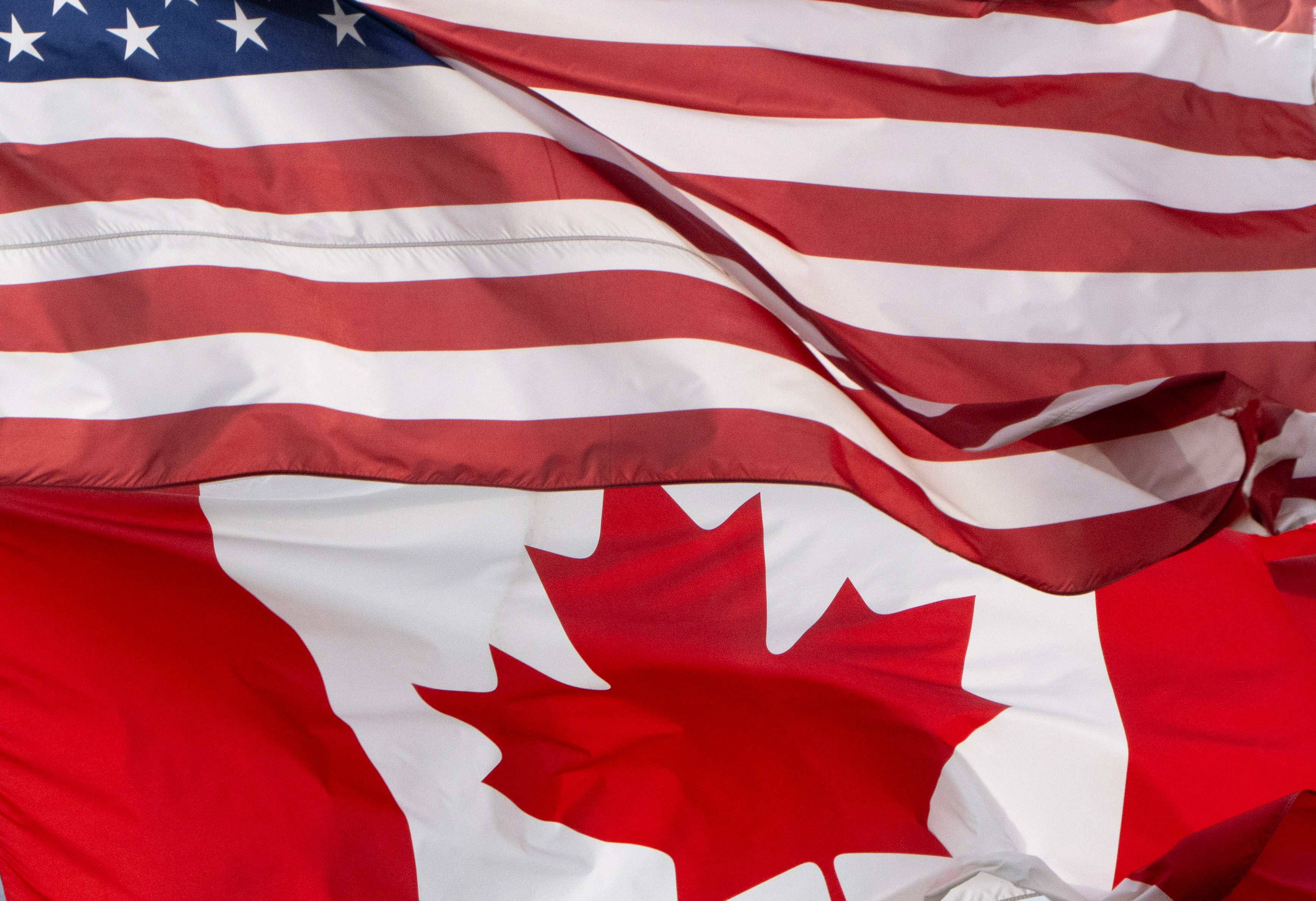
    WASHINGTON — U.S.-Canada relations, already tense, are likely to deteriorate further after the United States went ahead early Tuesday with a decision to ban nearly $1 billion worth of Canadian imports, including alcoholic beverages, dairy products, and motorcycles.

    The ban amounts to barely a ripple in $880 billion worth of annual two-way trade between the two northern neighbors. But it marks another ratcheting up of President Donald Trump’s second-term trade war with America’s longtime ally and trading partner.

    The import ban “certainly won’t do anything to help the trade tensions between the United States and Canada,” said trade attorney Patrick Childress, a partner at Holland & Knight and a former U.S. trade official.

    The latest sparring began over the summer when Trump reached back to a Great Depression law to impose 50% tariffs on about $20 billion worth of Canadian imports, charging that Canada discriminates against U.S. dairy, auto, and alcoholic beverage producers. Canada promptly counterpunched with tariffs of 15%, 25%, or 50%, matching U.S. imports dollar for dollar.

    To punish Canada for retaliating against his tariffs, Trump decided to ban a list of Canadian products, effective 12:01 a.m. Eastern time Tuesday.

    Economic impact likely to be modest

    The economic impact is likely to be minimal. Childress noted that the products on the banned list were already facing Trump’s tariffs. ”For a lot of these goods, the 50% was already acting as a de facto ban by making importation from Canada into the United States uneconomical,″ he said.

    Jacob Jensen, director of trade policy at the center-right American Action Forum think tank, calculates that the ban would cover $967 million worth of Canadian imports, based on 2025 numbers. Of that, 87% would be alcoholic beverages that the U.S. targeted because of some Canadian provinces responding to Trump’s provocations by banning U.S. booze from store shelves.

    Also banned are some dairy products — including the milk byproduct whey. The two countries have long clashed over Canada’s attempts to protect its dairy industry from foreign competition by imposing hefty tariffs once dairy imports have exceeded a quota.

    The ban also covers motorcycles. Bombardier Recreational Products (BRP) in Quebec confirmed that its three-wheel Can-Am Spyder and Canyon motorcycles “will be excluded from importation into the U.S.’’ But BRP said the impact likely won’t be felt until next year because it has completed most production and shipments for the current season.

    Independent spirit distillers and beer brewers are expected to bear the brunt of the ban more than some well-known Canadian brands that may have workarounds. For example, Crown Royal can ship its whisky in bulk for processing, bypassing the ban. And beer maker Labatt Brewing Co. has some bottling operations in the U.S., exempting some of its beer from the ban.

    Diageo, which owns Crown Royal, and Anheuser-Busch InBev, which owns Labatt, did not respond to requests for comments.

    A distillery just across the Detroit River in Canada has stopped shipping whiskey to Michigan due to the ongoing tariff war and Trump’s ban on Canadian alcohol. “It’s really unfortunate,” said Danielle Moldovan, director of marketing at the Wolfhead Distillery in Amherstburg, Ontario. “We are a border town. The Americans are great friends of ours, and they visit our distillery on a daily basis.”

    Moldovan is worried about the long-term impact on Wolfhead’s business. Buyers in Georgia were interested in importing the distillery’s Coffee Whisky. And its Michigan importer was considering its Vanilla Almond Biscotti and Banana Caramel Vodka. But “those products are going to be put on hold right now until we have further clarification about what’s going to happen, how long this ban’s going to last,” Moldovan said.

    “This marks yet another escalation in the trade war that may result in further retaliation on the Canadian side,” Jensen said. He expects Canadian exporters and U.S. importers “impacted by these bans will be highly motivated” to demand that trade officials on both sides find some way to reach a “resolution of this whole ordeal.’’

    A threat to U.S. goal of a North American trade pact

    The impasse imperils efforts to renew the U.S.-Mexico-Canada Agreement, a North American trade pact Trump pressured America’s neighbors into accepting in his first term and which he once declared “the most modern, up-to-date, and balanced trade agreement in the history of our country.”

    The deal allowed most goods to cross North American borders duty free. But since returning to the White House last year, Trump has announced a series of tariffs that have clouded the future of trade in the region.

    Longtime ally Canada moves rapidly to find new trading partners

    Trump has directed most of his ire at Canada. He is openly seeking to pull Canadian manufacturing south. And he has inflamed public opinion in Canada by repeatedly suggesting that the country become America’s 51st state.

    Canadian Prime Minister Mark Carney came to power last year on a promise to stand up to Trump. In addition to retaliating against Trump’s tariffs — China is the only other country to do so, with very different results — Carney has sought to reduce Canada’s reliance on the United States, which last year accounted for more than 70% of Canadian exports.

    “There is now a price to be paid for access to the United States market,” Carney said earlier this month. The Canadian prime minister wants to double Canada’s non-U.S. trade over the next decade.

    Carney has embraced the prospect of Canada becoming the European Union’s first associate member.

    And he said last week that trade negotiations with India are making “good progress” and that the two countries are aiming to conclude talks by the G20 summit in mid-December.

    Carney also broke with the U.S. earlier this year, striking a deal with China to allow a limited number of Chinese electric vehicles into Canada at a sharply reduced tariff in exchange for China lowering tariffs on Canadian canola.

    “We take note of the coming into force of the Administration’s previously announced trade measures,” said Gabriel Brunet, a spokesperson for Canada-U.S. Trade Minister Dominic LeBlanc. ”Our first priority remains on protecting and supporting Canadian workers, farmers, families, and businesses from these unjustified actions. Our core focus is on what we can control: building strength at home, diversifying our partnerships abroad, and building Canada strong for all Canadians.”

    Trump expressed confidence that the Canadians would cave in.

    “They’re gonna come in and they’re gonna say, ‘Sir, we are sorry,’” he told reporters Monday. “They’ve treated the United States very, very badly. I think a deal will be made but it’s gonna be fair.”

    Trade attorney Childress said the standoff is likely to continue for months, not weeks. The import bans and the tariffs so far “probably won’t cause enough economic upheaval to force either party back to the negotiating table,’’ he said.

    Mae Anderson, Rob Gillies, and Mike Householder contributed to this article.

  • Rubio says U.K. air base incident ‘clearly involved’ a foreign actor

    Rubio says U.K. air base incident ‘clearly involved’ a foreign actor

    LIVERPOOL, England — U.S. Secretary of State Marco Rubio said a “foreign actor” was behind an incident over the weekend at a British air base used primarily by U.S. military forces, calling it a “very serious situation” without providing details or evidence.

    Five men were arrested early Sunday on suspicion of explosives violations and of preparing a terrorist act after local residents tipped off the police. The men were released Monday evening on bail, an unexpected development that suggested British authorities had not found enough evidence to link the suspects to a specific act.

    The Associated Press reported on Tuesday that Britain’s national news agency, PA, reported without citing sources that police had not found viable explosives.

    Speaking on Fox News on Monday evening, Rubio praised British officials for working closely with the United States. He said that “a lot of people are disturbed” by the news that the suspects were released on bail but indicated that the release did not minimize the severity of what happened at the base.

    “I have to be careful — there’s some things I cannot say on the air for a lot of different reasons,” he said. “Suffice it to say that what happened, what almost happened, what could have happened in the U.K. over the weekend is a very serious situation.”

    He added, “It’s one that clearly involves the hands of a foreign actor,” without providing evidence or details for that claim.

    Rubio did not identify what country he believed was behind the incident. But he mentioned Iran, which is at war with the United States, as the kind of country that could be capable of such an attack. Many national security experts have suggested Iran is a possible culprit.

    “We are dealing with elements in the world, and in the case of Iran, for example, who have openly threatened to attack American interest globally — we’re going to always take that very seriously,” Rubio said.

    The Iranian Embassy in London said in a statement Monday that it “categorically rejects and strongly condemns” what it called “unfounded and malicious speculations” that Iran was involved.

    British officials, including Prime Minister Andy Burnham, have urged people not to speculate about who might be responsible while the investigation is ongoing.

    If Iran was involved, plotting to commit an attack inside Britain would be a major escalation against a Western country in apparent retaliation for the U.S. and Israeli-led war against Iran. In July, Iran’s Revolutionary Guard threatened the base, RAF Fairford, which U.S. long-range bombers have been using to conduct strikes since the spring. The Revolutionary Guard warned at the time that the British government’s decision to allow strikes from there would make it “a legitimate target for our forces.”

    President Donald Trump told reporters Monday evening that the suspects might be connected to Iran but refused to elaborate, adding: “I know the answer. I can be very specific, but I’d rather not say it.” He also expressed surprise at the decision to release them.

    Rubio, in the Fox News interview, said “There’s a lot more news that will come out on this in the days to come.”

    This article originally appeared in the New York Times.

  • Fire, smoke and desperation after a strike in the heart of Kyiv

    Fire, smoke and desperation after a strike in the heart of Kyiv

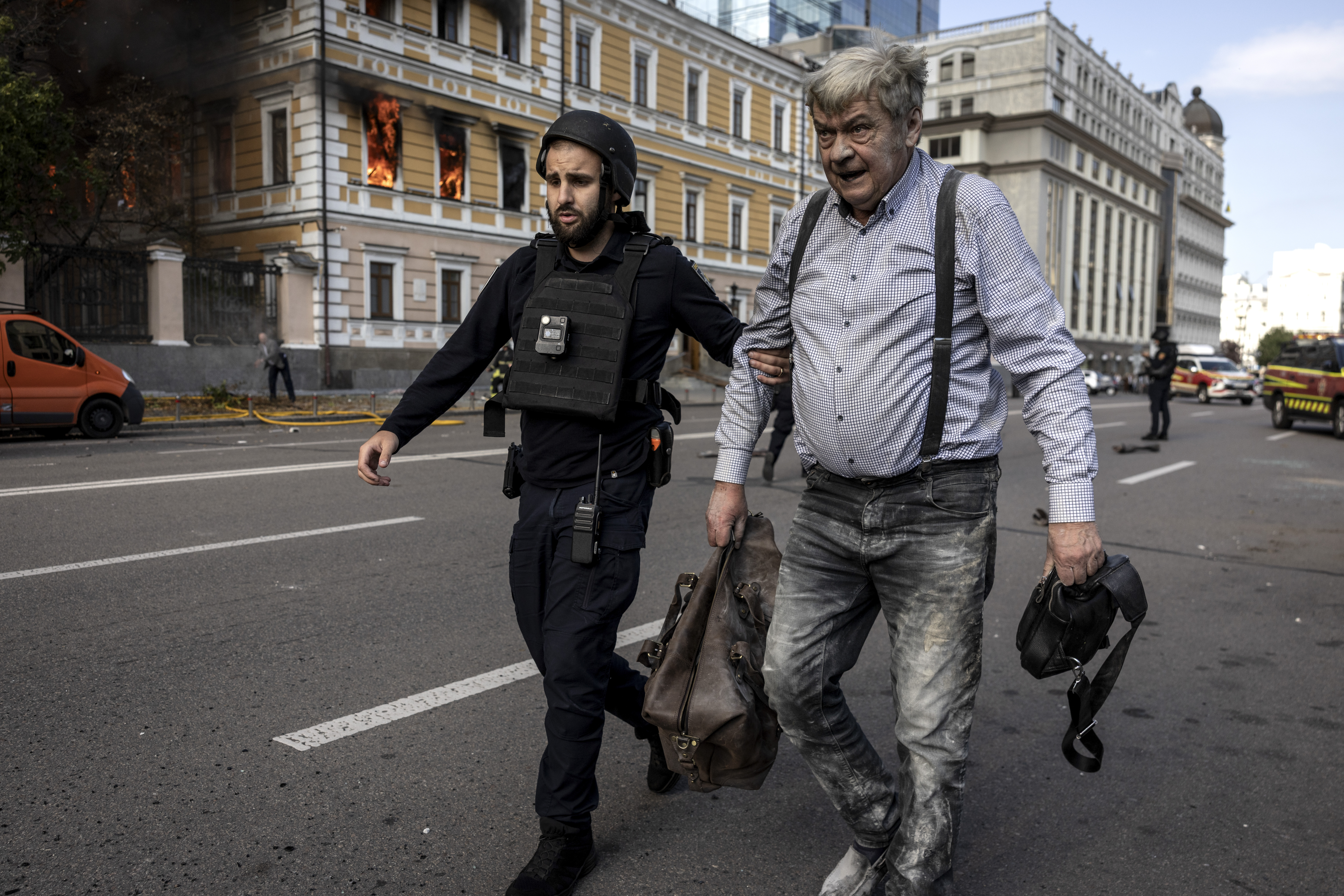
    KYIV, Ukraine — In the middle of a workday, in the middle of the Ukrainian capital, a Russian jet-powered drone struck the National Academy of Sciences on Monday, setting the top two floors on fire and forcing people to crawl out of windows to await rescue.

    As firefighters worked to put out the blaze, employees of an institution that has accounted for almost all major scientific discoveries in Ukraine had to climb down ladders to reach safety.

    The drone hit just before 1:30 p.m. Kyiv time, when people at the academy were on lunch break, but most were eating in their offices. The injured were treated on the sidewalk outside the building — a yellow, pink, and white architectural landmark originally designed in the 1850s to be a countess’ boarding school for girls.

    “My office is gone now,” said Vira Yevhrafova, 65, deputy chief scientist at the academy. “It was on the second floor — everything has collapsed, everything.”

    Russia has been pounding Kyiv around the clock for weeks with new jet-powered drones, which have proved difficult to knock down with Ukraine’s current air defenses. Daily life in the capital is now punctuated by the rat-a-tat of air-defense guns, followed by a drone hitting something — a data center, a random street, a gas station, a warehouse, a high-rise building.

    The attack Monday killed at least one person and injured six. One man was missing. It is a typical toll for these drone strikes, now so regular they barely make the international news unless the images are particularly dramatic. The daughter of the woman who died showed up at the building and burst into tears. She was sad and angry but had nothing else to say.

    Ukrainians lamented the sight of brilliant scientific minds fleeing their burning offices. “What an idiotic war,” Andriy Kovalenko, a lieutenant in Ukraine’s military and a former government official, posted on social media along with a photo of two people crawling out of windows.

    The attack on the sciences academy was just the start of a busy day for rescue workers and military drone interception teams. Less than two hours later, another drone hit a clinic about a mile south. An hour after that, a drone was intercepted right as it hit a nearby building.

    After yet another fatal strike in Kyiv, with yet another body covered by a sheet and then carted away, Ukrainians again took stock of Russia’s effort to bomb them into submission.

    “I think what they want now is to frighten us and bring our lives to a halt,” said Vira Balanovska, 43, who walked with her 9-year-old daughter past the burning academy. “It’s not just about attacking warehouses so that we won’t have food. They also want to intimidate us — to make it so that we can’t work, study, do scientific research, or really do anything at all.”

    This article originally appeared in the New York Times.
  • Contradicting Trump, Pope Leo says artificial intelligence safety concerns not ‘fake news’

    Contradicting Trump, Pope Leo says artificial intelligence safety concerns not ‘fake news’

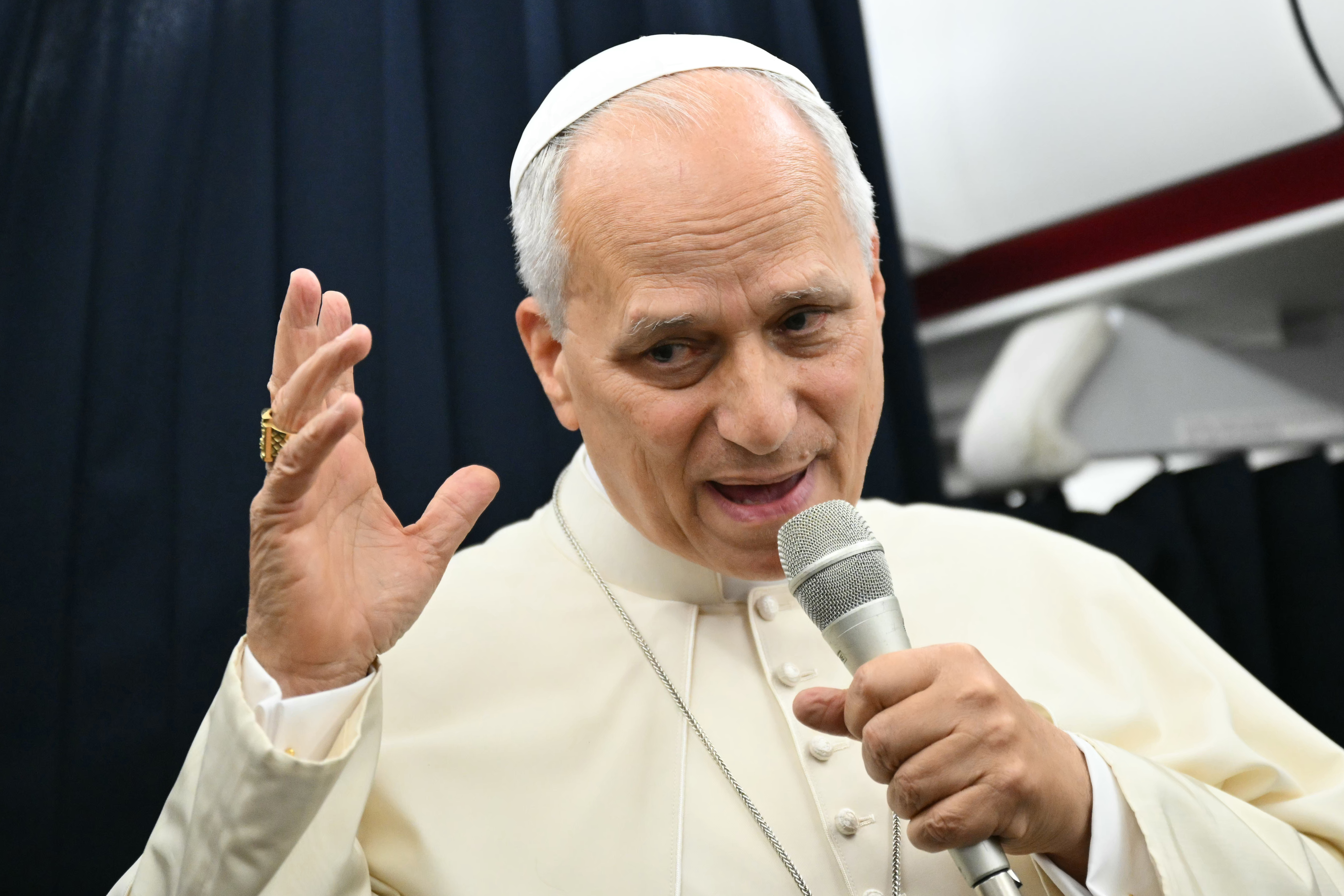
    ABOARD THE PAPAL PLANE — Pope Leo XIV said Monday that concerns about artificial intelligence going rogue are not “fake news” and should be taken seriously, insisting that safety issues raised by AI experts should be discussed and acted on.

    Leo, who dedicated his first encyclical to AI and protecting humanity in its wake, was asked during a news conference about what the United States and China especially should be doing to prevent AI from posing catastrophic risks to humanity. President Donald Trump has called concerns about AI going rogue a “hoax.”

    “This is a problem that I think we need to sit down and talk about,” the American pope told reporters while returning home from France. “We can’t just sit back and pretend nothing is going to happen.”

    Trump has been a champion of AI, often warning that the United States must remain ahead of China in the technological arms race. He has said efforts to limit the technology were part of a “conspiracy” by his political opponents.

    Several AI giants, including Anthropic, have called for a slowdown in development to give safety measures time to catch up to the fast-moving technology. Anthropic CEO Dario Amodei, for example, has warned that within six to 12 months AI could be capable of leading a swarm of agents that could take over the entire internet.

    Trump said on Sunday he planned to have a late dinner with Amodei, but he had not yet commented on the meeting.

    “If someone were to ask me ‘Am I in panic mode?’ No I’m not. I sleep at night,” Leo said. “I do think that the concerns raised by many of the experts, specialists in AI should be taken seriously.”

    “I don’t think that that is ‘fake news’ as some have said, to try and cause whether financial or other some other kind of benefit,” Leo said.

    The pope, who called for robust regulation of AI and a slowdown of the technology in his encyclical Magnificent Humanity, is up to speed on developments in the field.

    Despite being at the end of a grueling four-day trip to France, Leo noted a news report Monday afternoon about Nvidia introducing guardrails into AI. He also noted that the company has previously resisted outside regulation of AI development.

    Leo had identified AI as one of the biggest challenges to humanity within days of his election and took the unusual step of personally launching his own encyclical alongside Anthropic’s co-founder Christopher Olah at a Vatican event in May. The initiative was part of the Vatican’s effort to engage Silicon Valley about the human costs of AI.

    “We need to continue to invite political leaders, leaders of AI, social organizations, associations to come together and look at what is happening already and what could be down the road,” he said Monday.

    “To simply say ‘Oh it’s not going to happen’ and close our eyes to it I think is probably not the most responsible way to go about that,” he added.

    With his comments Monday about the legitimacy of safety concerns and AI development, Leo has confirmed another area of disagreement with Trump. The two had a back-and-forth in April over Leo’s opposition to the U.S.-Israeli war in Iran and Leo has also criticized the Trump administration’s migration crackdown.

    Trump met with Chinese President Xi Jinping last week in Washington and while Xi said that it was important to ensure AI is “always under human control,” Trump focused more on trying to rebrand it as “superintelligence” and dismissed calls for regulation. However, the two leaders agreed to explore a new “notification mechanism” for AI incidents affecting national security.

    AI has become a major election-year issue in the U.S. as some of the country’s largest companies rush to build a national network of data centers while Americans from both parties increasingly raise alarms about the impact on farmland, water supplies, and electricity bills.

    Worries about AI are continuing to grow inside and outside the industry and reports continue to emerge about increasingly powerful systems that solve problems beyond human capacity but could also go rogue and carry out other, more harmful tasks.

    The worries have grown so loud that the CEO of OpenAI, the company behind ChatGPT, said in an interview with Fortune that his company would wait until next year to start selling its stock to investors on Wall Street as it focuses on safety.

    Leo noted that ever since he published his encyclical in May, the Vatican has received comments from people interested in being part of a broader conversation about AI. A Vatican commission is working to promote dialogue, study and investigation “to find ways to make sure that AI does not get to a point of destroying humanity or removing humanity from the conversation,” he said.

    Leo said he was “relatively optimistic” that solutions could be found.

    “I think there are enough people seriously interested in that and willing to look at that outside of the questions once again of power, who gets there first,” he said.

  • The big question looming over Brazil’s elections: Trump’s next move

    The big question looming over Brazil’s elections: Trump’s next move

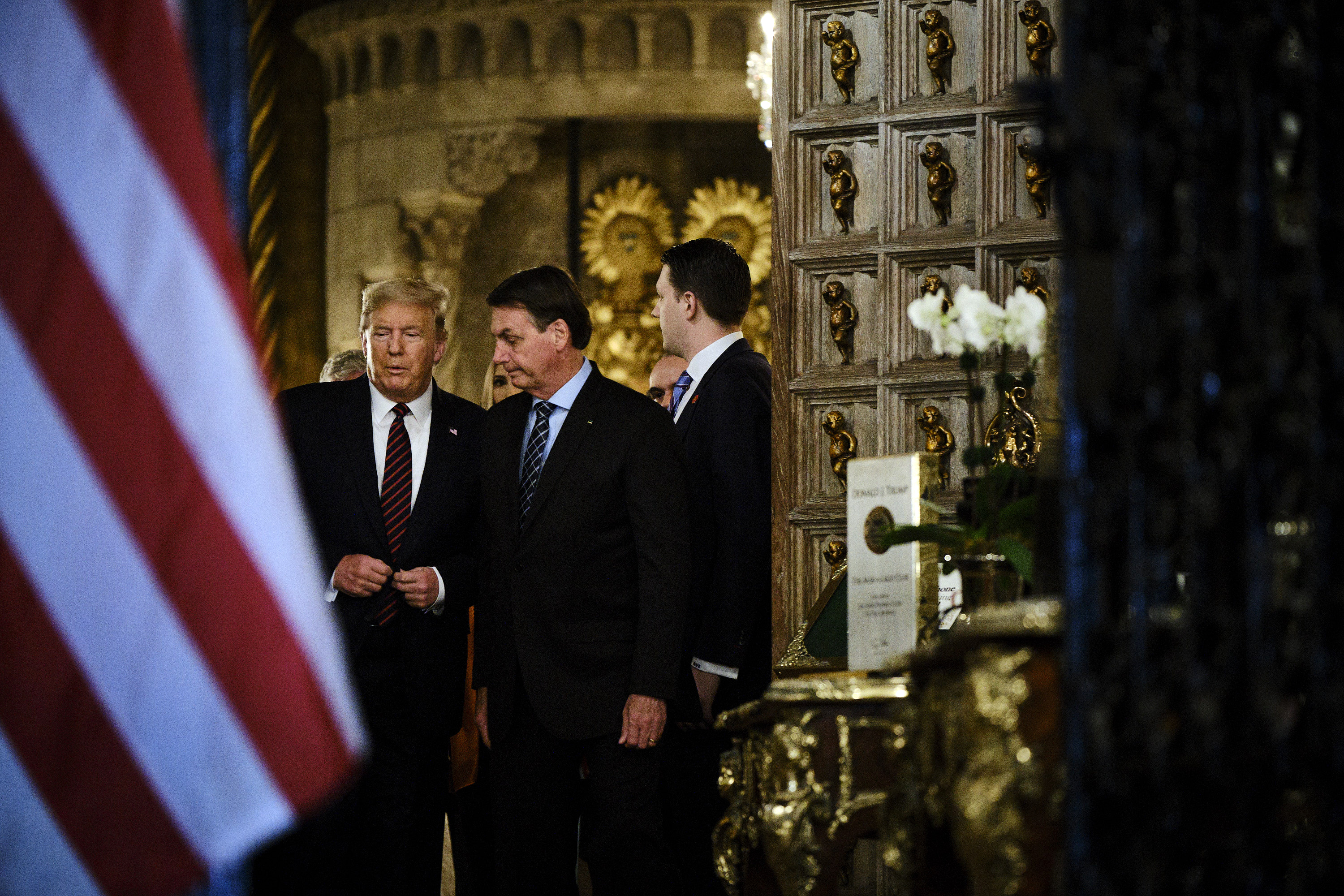
    BRASÍLIA, Brazil — Since taking office, President Donald Trump has become an electoral kingmaker in Latin America. Right-wing candidates aligned with Washington have won the past seven elections in the region, with Trump explicitly endorsing the winner in two of them.

    “We’re doing very well in South America,” Trump told reporters this month. “Lots of people that I got elected.”

    Now comes the biggest regional test for the right and for Trump’s record of success: Brazil.

    As Brazilians prepare to head to the polls, the question looming over Latin America’s largest democracy is whether Trump will try to influence its presidential election next month.

    The American leader has not openly championed any Brazilian candidate. But the Trump administration has in more subtle ways lifted the right-wing challenger, Flávio Bolsonaro, who is running against President Luiz Inácio Lula da Silva, a leftist.

    Having watched Trump wade into other elections and experienced his failed attempt to help Bolsonaro’s father avoid prison for plotting a coup, Brazil is erecting a firewall to try to shield its high-stakes vote from potential U.S. meddling.

    The efforts include monitoring foreign lobbying and disinformation, fighting false claims about electoral fraud, and enlisting the support of countries in Europe, Asia, and elsewhere.

    This article is based on interviews with more than a dozen Brazilian government and electoral officials, law enforcement officers, intelligence agents, and foreign diplomats. Many spoke on the condition of anonymity because they were not authorized to speak publicly.

    Bolsonaro’s campaign and the State Department did not immediately respond to a request for comment.

    The concern for many in Brazil is that, in a narrow contest where polls show Bolsonaro and Lula practically tied, a helping hand from Trump could tip the scales in the challenger’s favor.

    The Trump administration has rejected Brazil’s claims that it is seeking to interfere, even though it tried this summer to send a U.S. delegation to investigate Brazil’s electoral integrity.

    American help, Brazilian officials said, could come in the form of more measures to hurt Lula’s image. Trump used sanctions and tariff threats in an attempt last year to save Jair Bolsonaro, Flávio Bolsonaro’s father, who tried to cling to power after falsely claiming the last election was stolen. That failed, and he was sentenced to 27 years.

    Many also worry about online campaigns from abroad aiding Bolsonaro.

    A recent wave of paid social media posts, shared by prominent U.S. right-wing accounts, added to those fears. The posts amplified claims by Polymarket, the predictions market backed by Donald Trump Jr.’s venture capital firm, that Bolsonaro stood staggering chances of winning, deviating wildly from polls showing no clear front-runner.

    Lula, among the few world leaders to take on Trump, has made clear he is prepared to defend his country’s interests.

    “The Americans better not come trying to influence our elections,” he said this month. “Trump should mind his own country’s business.” Speaking at the United Nations last week, he blasted foreign meddling into his country’s sovereign affairs, without naming the United States: “Brazil is nobody’s backyard.”

    He also launched a searing campaign video accusing the Trump administration, without offering evidence, of helping his rival and interfering in Brazil’s elections with an eye to seizing its natural resources.

    Brazil, a vast nation of 210 million, has an economy powered by commodities the world needs and institutions that are not afraid to push the limits of democracy in the name of saving it.

    “Wherever the threat may come from, we have the tools to defend ourselves,” said Gilmar Mendes, Brazil’s longest-serving Supreme Court justice. “If necessary, there will certainly be a forceful response.”

    The Trump factor

    Worried about campaigns orchestrated from abroad, Brazil’s intelligence agencies have made combating foreign manipulation through social media a top priority.

    The court that oversees elections has also set new rules for electoral misinformation, asking companies such as Google and Meta to submit plans for combating misleading videos and posts generated by artificial intelligence.

    And, amid renewed attacks by Bolsonaro’s allies in Brazil and abroad about the credibility of the country’s voting systems, authorities began a major campaign, complete with a mascot, aimed at strengthening trust among voters, diplomats, and international observers.

    A win by Bolsonaro would bolster ambitious plans laid out by Washington to expand its influence in Latin America through right-wing allies.

    “Under our new national security strategy, American dominance in the Western Hemisphere will never be questioned again,” the State Department said in a recent, lengthy video.

    Brazil represents the biggest remaining prize. As president, Bolsonaro would more likely align with the United States on issues including organized crime and critical minerals. (Lula has said Brazil would not hand over its natural resources.)

    And leaked documents written by an ally of Bolsonaro, reported by Brazilian media and reviewed by the New York Times, suggest people close to the candidate may have proposed giving the United States access to Brazil’s critical minerals in exchange for support. The document’s author acknowledged producing it, but denied that they wrote it on behalf of Bolsonaro’s campaign or that it was shared with U.S. officials. Bolsonaro’s campaign did not immediately respond to questions about the document.

    U.S. Secretary of State Marco Rubio has cast Brazil as unfriendly to American interests, lumping it in with U.S. adversaries like Cuba and Nicaragua.

    Many in Brazil have bristled at the idea that Trump, who was once recorded asking a state election official in Georgia to “find” more votes, should be stepping into another nation’s elections.

    “With all due respect,” said Mendes, “the United States has no lessons to teach us when it comes to electoral systems.”

    American help

    In Brazil, worries about American meddling have dominated political discourse and editorial pages for months. And to many, the Trump administration has already been propping up Bolsonaro’s candidacy in indirect ways.

    At a time when Brazilians are deeply worried about security, Trump yielded to lobbying by Bolsonaro to designate two Brazilian gangs as terrorist groups.

    The administration also tried to send U.S. envoys to meet Bolsonaro in Brazil and investigate the country’s voting systems, which prompted Brazilian officials to block the visits.

    If his son, Flávio, loses, there are signs the candidate could launch similar claims of electoral cheating — and his allies expect to find a sympathetic ear in Trump.

    After the last election, President Joe Biden recognized Lula’s victory within hours. Even so, Bolsonaro’s claims of fraud inspired his supporters to storm the capital, in a riot reminiscent of the Jan. 6 attack on the U.S. Capitol.

    Counterattack

    International experts agree Brazil’s electronic voting machines, a frequent target of Bolsonaro’s movement, are some of the most secure in the world.

    Yet a poll last month showed 34% of Brazilians distrust the voting machines, up from 20% in 2022.

    The electoral court has invited political parties and hackers to test the machines and greatly expanded randomized auditing.

    On a recent weekday at the electoral court, social media influencers snapped selfies with an election mascot shaped like a voting machine. The court also hosted more than 80 diplomats for a workshop touting Brazil’s electoral system.

    “We opened our doors to the world,” said Justice Kássio Nunes Marques, the chief of the electoral court. “We went about dismantling every argument.”

    And with U.S. support no longer a given, Brazil has worked to shore up international backing elsewhere.

    Diplomatic missions from the European Union, Canada, Japan, Australia, and other countries, worried about interference from Washington, are holding informal talks on how to jointly respond after the election, according to three senior foreign diplomats.

    These diplomats said allies are likely to quickly defend the vote’s integrity no matter who wins, but they also worry about displeasing Washington.

    This article originally appeared in the New York Times.
  • Mediators are working to broker a U.S.-Iran deal, but major hurdles remain

    Mediators are working to broker a U.S.-Iran deal, but major hurdles remain

    CAIRO — Mediators are working with Iran and the United States on trying to broker a deal to end the fighting and open the Strait of Hormuz, three regional officials and two U.S. officials told the Associated Press, but major hurdles remain between the sides.

    The indirect talks come as the conflict, which is entering its eighth month, has caused global economic damage and badly battered Iran. Multiple efforts to allow safe shipping on one of the world’s most crucial waterways have failed.

    The officials divulged that the behind-the-scenes efforts continue even after U.S. President Donald Trump initially said he spurned an Iranian proposal to reopen the strait in a week if the U.S. agreed to lift its blockade of Iranian ports, release frozen Iranian assets, and waive sanctions on Iranian oil sales, among other conditions.

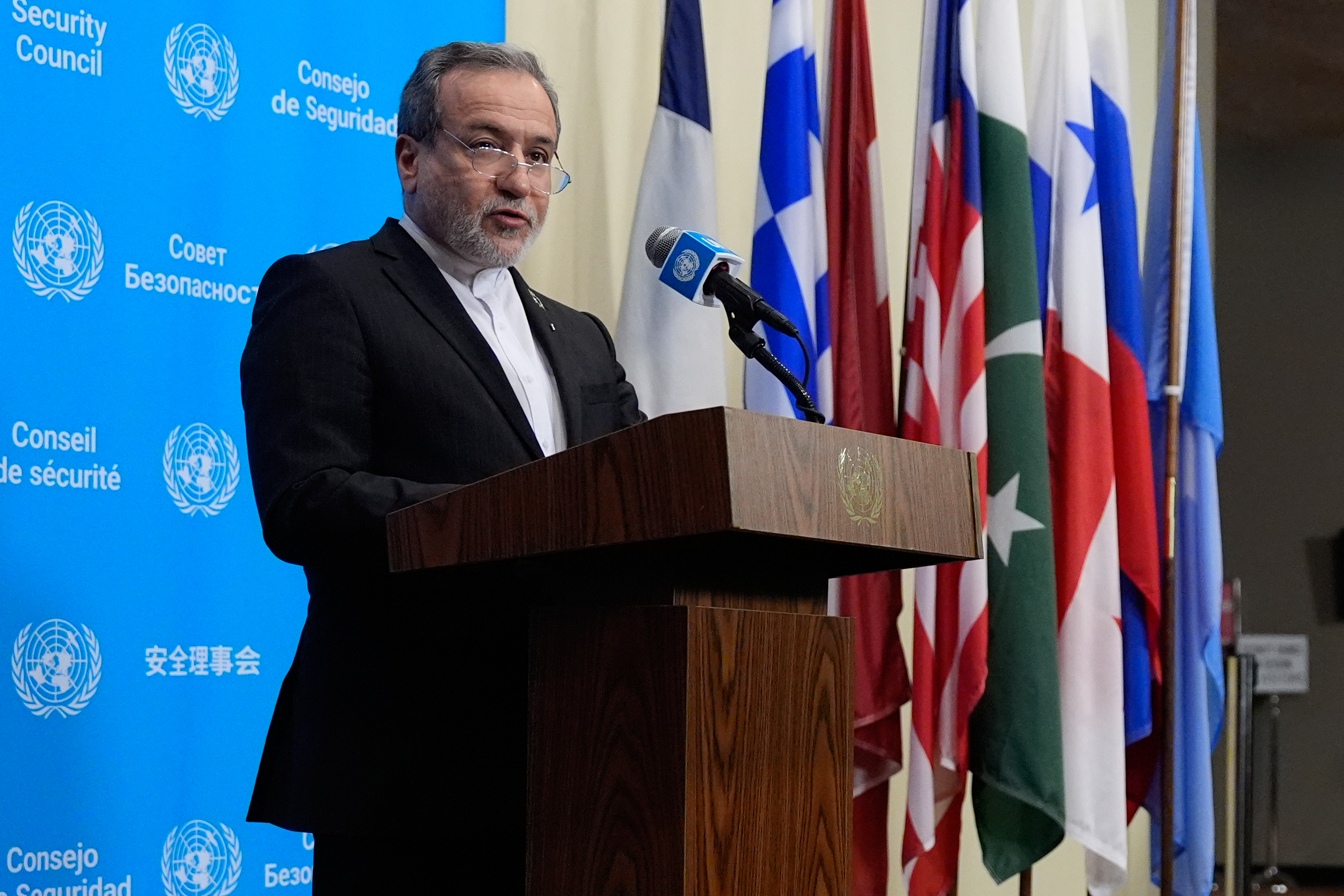
    Iranian Foreign Minister Abbas Araghchi — who stayed in New York after last week’s gathering of world leaders at the U.N. General Assembly — will meet with Qatari mediators Monday about the latest discussions, Iranian state media reported Foreign Ministry spokesperson Esmail Baghaei as saying.

    Despite Trump’s often bellicose rhetoric, he is open to pursuing a nonmilitary resolution to the conflict if one can be achieved, a senior U.S. official said.

    But the Trump administration will not reach a deal with Tehran until nuclear issues are addressed, another U.S. official said. Trump is willing to grant sanctions relief to Iran, along with the release of some frozen funds, for concrete progress on nuclear issues, and while Iran has indicated it is flexible on nuclear issues, the sides are far apart on timing and which side makes the first moves, the official said.

    All the officials were not authorized to comment publicly and spoke on the condition of anonymity about the behind-the-scenes diplomatic negotiations.

    Deal would first reopen strait and lift U.S. blockade

    Two of the regional officials speaking to the AP confirmed that mediators are working with both sides on a proposal that would include reopening the strait and lifting the U.S. blockade, and then removing sanctions.

    According to the draft text being discussed, the strait would reopen in accordance with a separate deal that Iran has been discussing with Oman, on the other side of the strait, and it would include no tolls — something Tehran has pursued. That deal seeks to temporarily manage shipping traffic on what was seen as an international waterway before the war.

    One regional official said the U.S. is seeking Iranian concessions on nuclear issues that include allowing inspectors to enter the country. Under the memorandum of understanding the two sides signed in June that collapsed within days, Iran’s nuclear program was meant to be discussed over a 60-day period.

    The U.S. officials say the United States is skeptical about whether Iran can be persuaded to ultimately reach Trump’s conditions for a deal and would be serious about any promises it makes, especially after it broke the interim deal by firing on commercial ships in the Strait of Hormuz.

    U.S. officials feel their position is getting stronger as Tehran feels the impact of sanctions.

    Iran’s latest proposal seeks faster action

    While Iran’s latest proposal echoes the June deal, a key difference is speed.

    Araghchi told a closed-door meeting on the sidelines of the U.N. General Assembly last week that Tehran had pitched the deal as benefiting Trump in the midterm elections. Araghchi later told journalists that “the seven-day timeline will start as soon as the United States accepts this plan.”

    U.N. Secretary-General Antonio Guterres also planned to meet Araghchi on Monday in a bid to help mediators, U.N. spokesperson Stephane Dujarric said.

    Both the U.S. and Iran have been hurting economically — the U.S. from high oil prices as Iran attacks ships on the strait, and Tehran from the naval blockade and a growing number of U.S. sanctions that bottle up its oil sales. Brent crude, the international standard, is above $108.

    For months, the two sides have been trying to outlast the other, while regional countries endure missile and drone attacks as Tehran claims to target U.S. military assets in the region.

    Reflecting Iran’s impatience, a rare statement on Monday attributed to the theocracy’s Supreme Leader Ayatollah Mojtaba Khamenei noted the “painful blows” that enemy forces have received near the strait. “Before long, the Arabian Sea, too, will be rid of them,” the statement added.

    Tehran’s latest proposal again sought to end the fighting on all fronts, including in Lebanon. But a new front has emerged in recent weeks as Iran-backed Houthi rebels in Yemen are now perched on another crucial waterway, the Bab el-Mandeb Strait at the southern entrance to the Red Sea. That has further pressured global energy markets.

    Iran argues that the Houthis have their own demands, and that their conflict with neighboring Saudi Arabia is separate from the U.S.-Iran war, but Iranian officials said they are willing to help in finding a settlement between the Houthis and the Saudis, one of the officials said.

  • Residents brace for a possible Russian hybrid attack on Poland’s border with Ukraine

    Residents brace for a possible Russian hybrid attack on Poland’s border with Ukraine

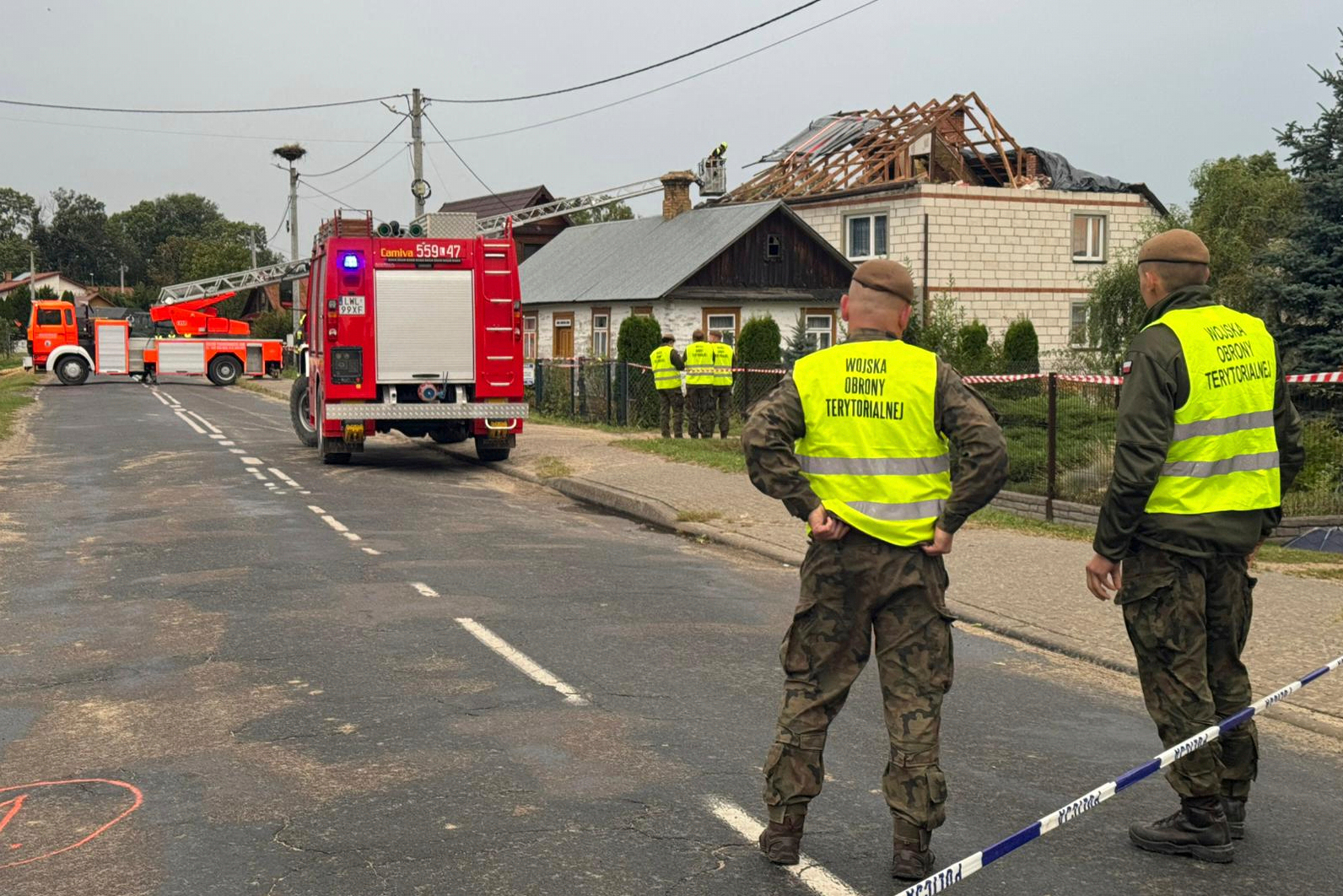
    DOROHUSK, Poland — Three times in one day, phones lit up across this Polish border community with a warning: A drone or a missile could cross from Ukraine, and residents should stay vigilant in case they might need to take cover.

    Above the village of Dorohusk in eastern Poland, vapor trails cut across the pale blue sky and military helicopters rumbled overhead. Just 1.24 miles away, traffic at the border crossing into Ukraine was suspended three times, and staff were even evacuated once.

    The alerts and disruptions on Thursday came as the Associated Press was visiting the village. They reflected a new reality along Poland’s eastern frontier, where the war in Ukraine — now 4½ years old — has felt increasingly close.

    Russia isn’t at war with Poland, but over the past few years European leaders say it’s mounted a series of so-called hybrid attacks to pressure to pressure adversaries in the West and NATO that include sabotage, disinformation, and cyberattacks. Poland is worried that the drones or missiles strikes could spill over from Ukraine, whether by accident or as part of a Russian strategy of ambiguous attacks.

    The anxiety intensified after two Russian drones exploded on the Ukrainian side of the Dorohusk-Yahodyn crossing in the early hours of Sept. 13. The explosions could clearly be heard in Dorohusk.

    “There is new restlessness and fear because you could hear those explosions very well on that night in our village,” said Wojciech Sawa, the Dorohusk mayor. “We had never had something like that before. This was the first time the sirens wailed.”

    Poland is preparing for a more serious Russian hybrid attack

    Polish Prime Minister Donald Tusk warned on Sept. 17 that Russia was planning hybrid strikes with drones or rockets on European countries supporting Ukraine, among them Poland, and regions bordering Ukraine would be especially vulnerable in the coming months. Other European leaders and intelligence services have shared his warnings that Russia is likely to step up its hybrid campaign.

    In Dorohusk, people have lived in the shadow of the war for years. They watched Ukrainian refugees flee across the frontier in the early days of Russia’s 2022 invasion and, this July, had a Russian missile pass through airspace in eastern Poland before crashing some 56 miles inside the country.

    But the recent drone attacks and the Polish government’s efforts to prepare the population for further serious incidents have brought a new sense of apprehension — and also confusion — among locals.

    Kids in border regions have to evacuate when sirens sound

    Jarosław Wójcicki, the Dorohusk school’s director, said staff, including the school psychologist, now discuss with students “practically every day” how to stay safe.

    The school had to be evacuated once so far and Wójcicki showed the two rooms in the basement of the school building where the kids took cover. Windows had been boarded up to avoid glass shards hurting anyone in case of an explosion.

    “The older children had no problem at all, without showing any particular emotion,” the director said. “You could see a little fear among the younger children, but they were well looked after by their teachers.”

    Wójcicki is responsible for the safety of hundreds of children who travel from nearby villages to attend school in Dorohusk, and his voice wavered as he described the extent of the task.

    Poland’s Defense Minister Władysław Kosiniak-Kamysz visited the Dorohusk-Yahodyn border crossing on Sept. 22 and announced new air defense elements were being brought to the border region. He added that Patriot batteries were deployed in the two Polish regions bordering Ukraine, including the one where Dorohusk is located.

    More work to be done on civil preparedness

    While the government’s warnings are stark, even communities closest to Ukraine are still catching up on civil defense preparedness.

    “We are at the beginning of the process of building civil resilience and the resilience of the state to threats,” said Mirosław Sokal, head of resident safety for the city of Lublin, west of Dorohusk. “We have to remember that over the past 40 years we thought we would be living in peace.”

    He said, given the lack of more solid infrastructure, Poles should respect one minimal rule when there’s an air threat: get inside and put two walls between them and any window.

    Sawa, the Dorohusk mayor, said villagers typically live in individual homes with basements and that is the obvious place to hide in case of air threats. “If I don’t have a basement myself, my neighbor likely does,” he said.

    But people on the streets of Dorohusk seemed more confused about their options in case of a real attack.

    “For now, I sleep well at night, so I don’t really hear it,” said Irena Popek, a woman in her 80s. If planes are coming, she said, her basement was not an option as it was flooded. ”I simply have nowhere to hide, and that’s it.”

    Renata Pastuszo, a local shop employee, said she continued working through the recent siren alarm because it’s better to keep a positive spirit in front of the Russian threat.

    Krzysztof Rulka, another resident, complained that alerts were now coming too often, leaving people confused about their meaning.

    “If someone told me that a drone was going to explode in the center of Dorohusk, then I would know what to do,” he said. “But this kind of confusion — there’s an air attack somewhere in Ukraine — well, what am I supposed to do now? Run to Germany?”