Category: Nation & World

  • Christa Pike discharged from hospital, 10 days after failed execution

    Christa Pike discharged from hospital, 10 days after failed execution

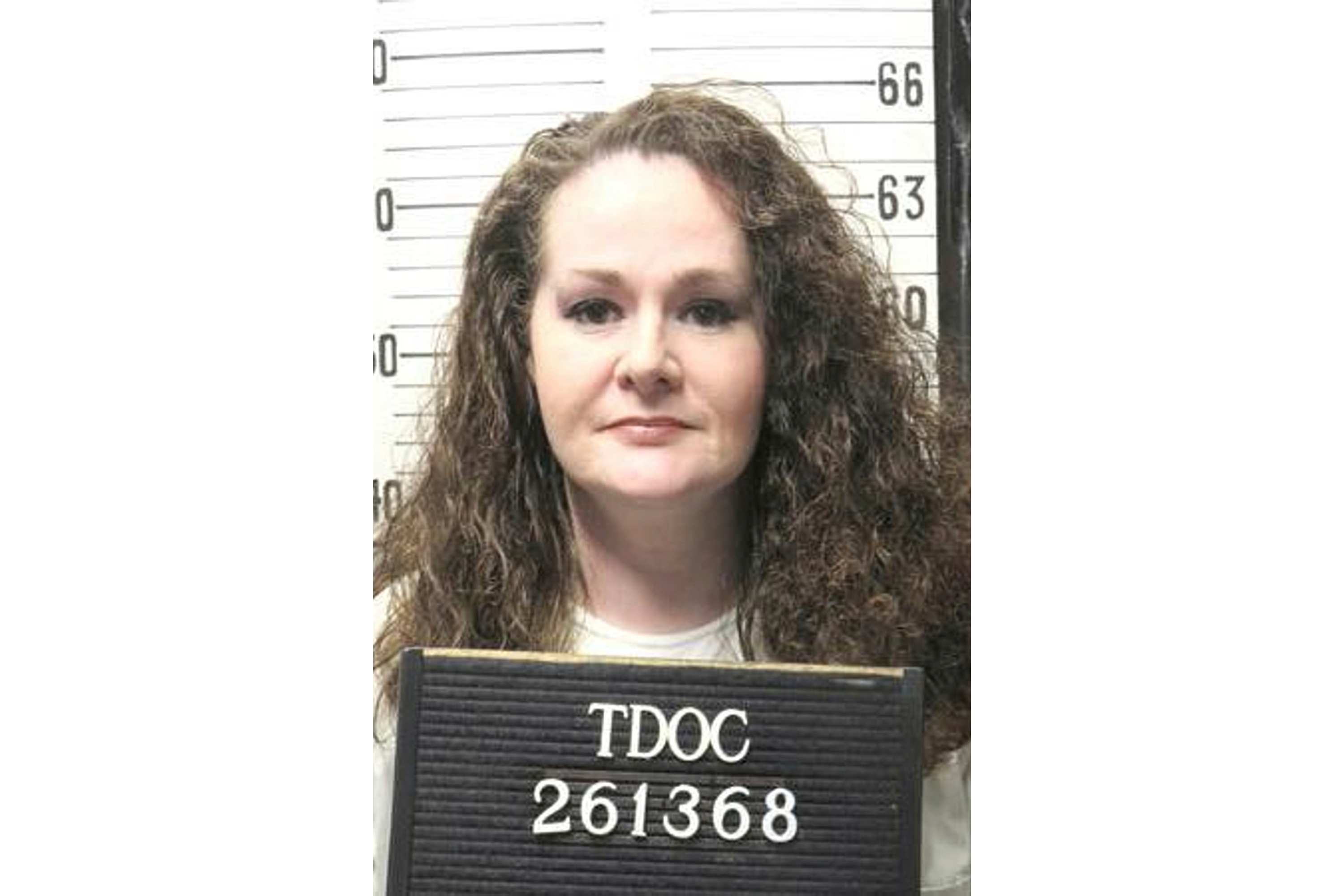
    Christa Pike, who survived an execution attempt in Tennessee 10 days ago, has been discharged from the hospital and moved to a rehabilitation center, according to her attorneys and the Tennessee Department of Correction.

    “Christa Pike was discharged from a local hospital and is now at Debra K. Johnson Rehabilitation Center where she has been housed for more than 30 years,” a statement from Pike’s attorneys said. “She is grateful to the first responders and her medical team for their care in these extraordinary circumstances. She is continuing to receive medical care at the prison, and we will continue to track her recovery.”

    The Tennessee Department of Correction confirmed the move and said no further information was available.

    Tennessee officials attempted to execute Pike, 50, on Sept. 30.

    Representatives of the media who were in the death chamber in a Nashville prison said Pike continued to talk, breathe, and snore after she was given two doses of lethal injection drugs. The execution was halted by the state, and Pike received emergency care and was transported to a hospital.

    Pike’s attorneys said she was on a ventilator and unconscious the day after the execution attempt, and that she arrived at the hospital with swelling, burns, and blisters on her arms. On Tuesday, her attorneys had said she was conscious and speaking.

    The historic failure by state officials raised questions about Tennessee’s execution protocols and led to the resignation of the state’s prison chief. Gov. Bill Lee (R) earlier said he was halting all scheduled executions for the rest of 2026 and ordering a third-party review of the botched execution.

    A jury sentenced Pike to death decades ago for her role in a 1995 killing she helped carry out when she was 18 alongside two other teens. Pike was also convicted of attempted first-degree murder in a 2001 assault on another inmate while she was incarcerated. Her case drew global attention because she would have been the first woman executed in Tennessee in more than 200 years.

    Pike’s attorneys previously challenged the state’s lethal injection protocol, citing Tennessee’s botched lethal injection of another inmate at the same Nashville prison.

    Her lawyers said she faced related risks because of a blood disorder and that her small veins would create a heightened risk of complications during lethal injection, as well as the possibility of extreme pain and bleeding. They requested the state consider alternative methods of execution, namely a firing squad or hanging.

    Pike is the first person to survive after being injected with lethal doses of execution drugs, according to the Death Penalty Information Center, a nonprofit that monitors capital punishment.

  • 9 dead after shooting in Erie, Pa.

    9 dead after shooting in Erie, Pa.

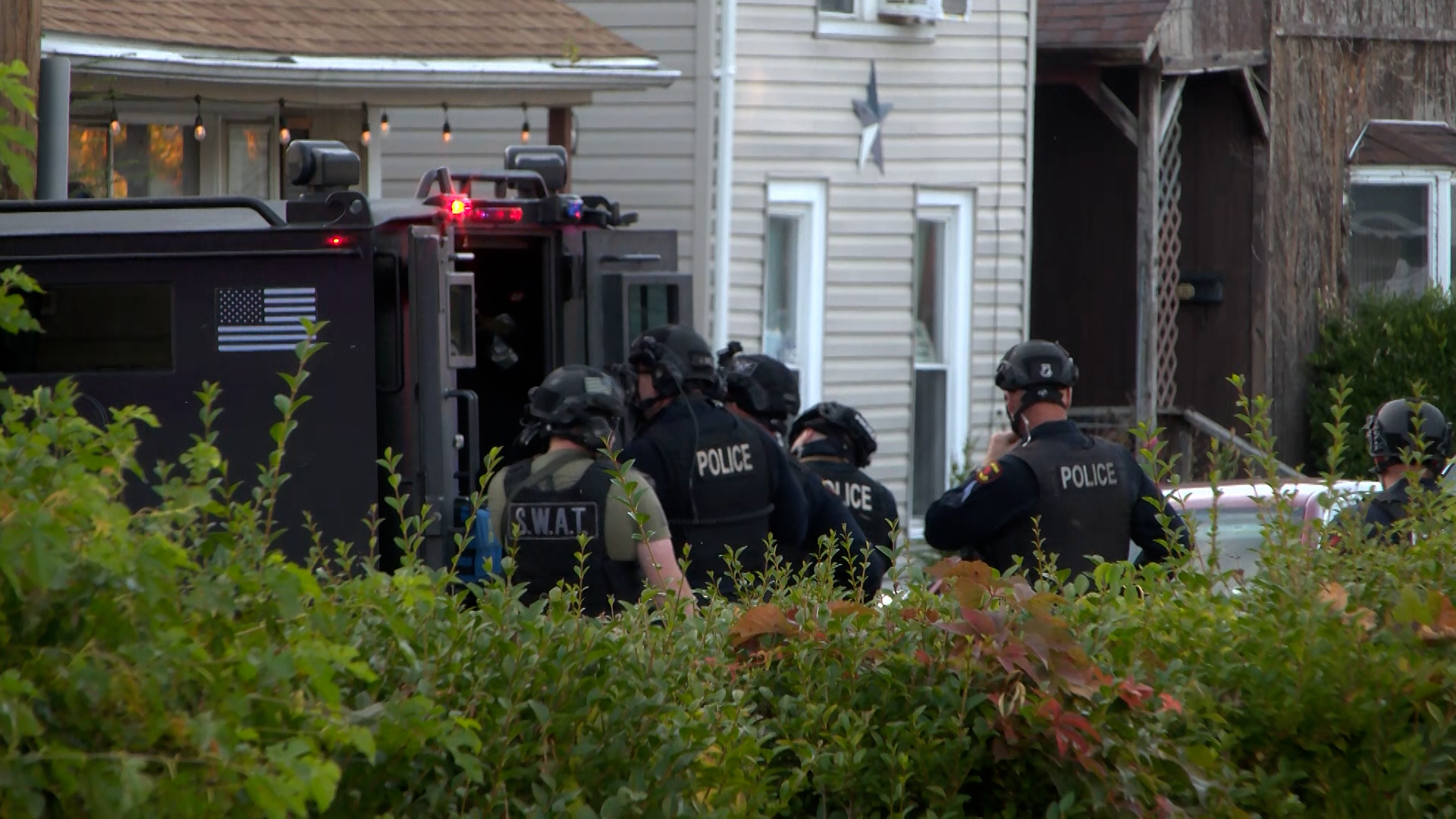
    A shooting in a residential area of Erie, Pa., left nine people dead including two children, a pregnant woman, and the suspected shooter, authorities said.

    Erie Police Chief Rick Lorah said the 45-year-old male gunman was related to seven of the victims in Friday’s shooting, while the eighth was a friend of the pregnant woman.

    Video and audio evidence recovered by investigators showed two “distressed” women arriving at the home shortly before 5 p.m. and pounding on the door, he said. The gunman then came out and shot them before returning inside.

    Police arrived to find the two women dead outside. Inside they found the bodies of a 5-year-old boy, a 1-year-old girl, two more women, two young men, and the shooter.

    Lorah declined to discuss motive but said investigators would talk to other relatives and examine the cell phones of the women who were killed outside the home.

    “They knew something was going on at that house,” he said. “We have to figure out what that is.”

    Officers are said to have arrived within minutes of receiving an alert via ShotSpotter, a controversial gunshot detection system that relies on artificial intelligence and a network of microphones to identify gunshots. The city said in a statement that no additional shots were fired after that.

    “Sounds heard during the police response that may have been mistaken for gunfire were flash bangs associated with law enforcement’s tactical response,” the city said.

    “I have not seen anything like this in my 28-plus years,” Lorah told a local news station earlier in the day. “I’m not sure that the city of Erie has ever seen the loss of life and the devastation that we just witnessed.”

    Gov. Josh Shapiro said he offered his administration’s “full support” to Erie Mayor Daria Devlin.

    Erie is about 120 miles north of Pittsburgh.

  • 2 powerful earthquakes and multiple aftershocks rock Panama

    2 powerful earthquakes and multiple aftershocks rock Panama

    PANAMA CITY— Two powerful 7.7 and 6.6 magnitude earthquakes and a series of aftershocks struck Panama Friday afternoon, collapsing buildings near the epicenter and prompting evacuations across the country, the U.S. Geological Survey said.

    The earlier quake, felt as far away as neighboring Colombia, was centered about 6 miles southwest of the remote community of Pitaloza Arriba, in the central province of Herrera, the USGS said. It struck at a depth of 6 miles.

    The USGS initially reported the first quake as magnitude 8, then revised it to 7.6 and later to 7.7.

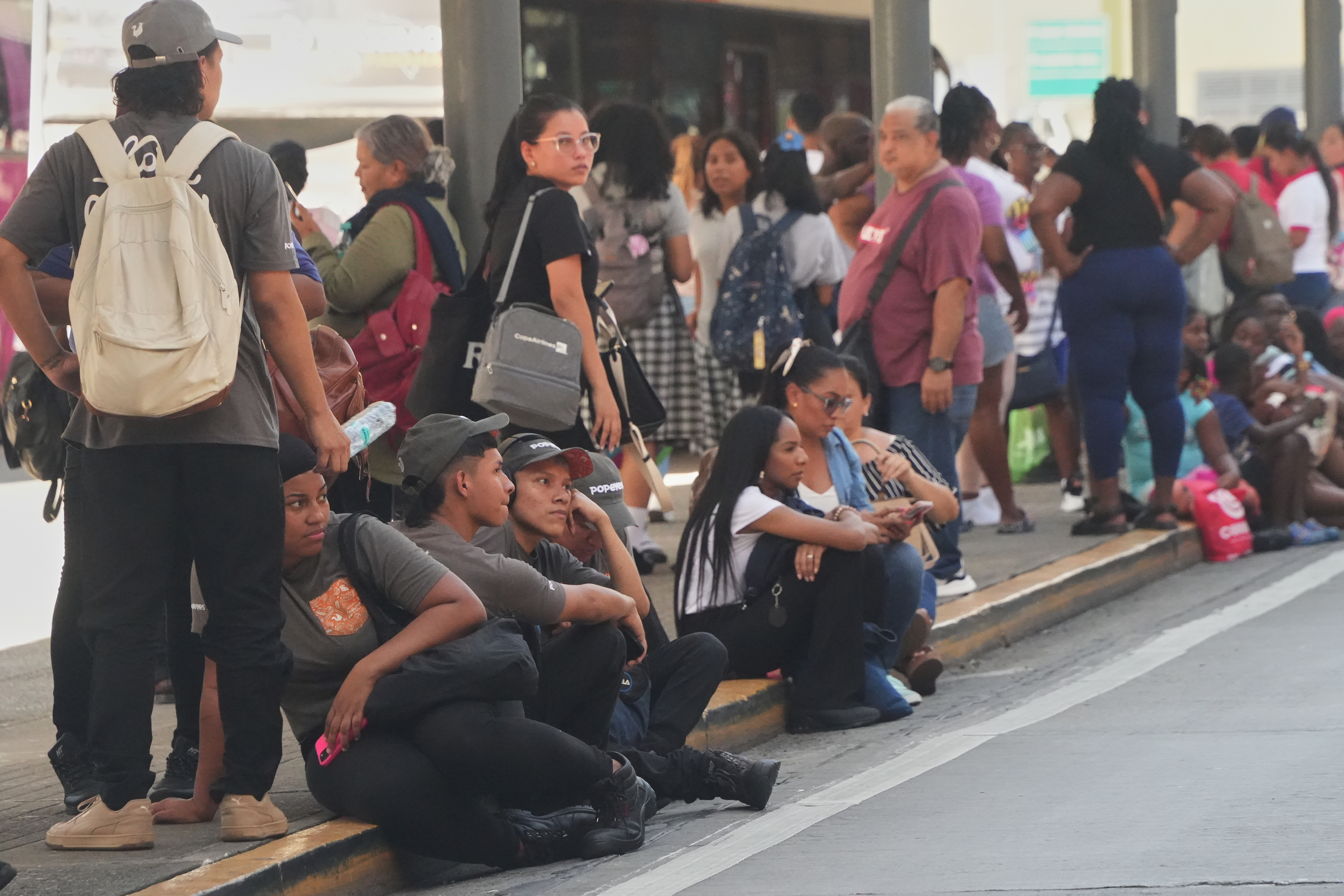
    Visibly shaken residents of Panama City gathered outside as they waited for news of the quake’s impact on Friday.

    “We felt it very strongly. It knocked things over in the kitchen, but we’re OK, though we’re very scared,” Rosendo Domínguez, 60, who is from Herrera province, where the earthquake struck, told the Associated Press by phone. “Everyone is outside, scared.”

    Multiple aftershocks continued to rattle Panama, including several measuring magnitude 5.8, 5.5, and 5.2. Seismologists at the University of Panama recorded more than 45 aftershocks, though many were too weak to be felt.

    Calls for calm and reports of collapsed buildings

    Images of crumbling buildings and deep fissures slicing through roads added to fears across a region battered by a series of devastating earthquakes in recent months.

    Two back-to-back 7.2 and 7.5 magnitude earthquakes roiled Venezuela’s La Guaira state in June, killing more than 6,500 people and leaving 17,000 homeless. In August, a 7.4 magnitude earthquake in Colombia killed at least 289 people.

    Panamanian President José Raúl Mulino called for calm on Friday, writing on X: “What happened should not be used to cause alarm or disorder.”

    Omar Smith of the National Civil Protection Service said on the Telemetro Reporta news channel that damage was concentrated in the central provinces of Veraguas, Herrera, and Los Santos. He said there were no reports of damage in the capital, which is known for its hundreds of skyscrapers.

    Smith said several injuries have been reported, including one person struck by debris from a partially collapsed structure in the city of Penonomé, around 93 miles from the capital. He confirmed a partial collapse and cracks at the cathedral in the district’s main square, as well as damage in the governor’s office building and the Dos Continentes hotel. No casualties were immediately reported.

    Local news outlets also reported that the Church of San Atanasio, a colonial-style Catholic church in Panama’s Los Santos province, had collapsed. The church was declared a National Historic Heritage Site in 1938. Elsewhere, including in Veraguas province, large fissures ran along roadways.

    Tocumen International Airport in Panama City, one of the region’s busiest airports with more than 20 million travelers in 2025, said it would temporarily suspend operations and activated evacuation plans. It said operations would resume once security conditions have been checked.

    The Panama Canal Authority said operations were continuing normally along the key global trade route. It said its priority was the safety of employees, vessels, and crews and that specialized technical teams were inspecting facilities for possible damage.

    Tsunami warnings as far as Chile’s Easter Island

    The last major earthquake to cause widespread damage in Panama struck in 1991. A magnitude 7.4 quake, centered in nearby Costa Rica, killed 23 people, injured 559, and left thousands of people homeless in the border Bocas de Toro region.

    Earthquakes are common, especially along Panama’s border with Costa Rica and its Pacific coast, because of the interaction of several tectonic plates, including Cocos, Nazca, and Caribbean plates.

    Panama lies along the “Ring of Fire,” a 25,000-mile arc of volcanoes and fault lines around the Pacific Basin, where most of the world’s earthquakes occur.

    The National Weather Service issued a tsunami warning Friday for the coasts of Panama, Colombia, Ecuador, Nicaragua, and Guatemala. It warned that waves ranging from 3 to 9 feet above tide may occur in some coastal areas of Panama.

    Alerts were also issued in El Salvador and as far as Chile’s Easter Island, about 2,175 miles off Chile’s mainland coast. Chile’s government placed the island under a precautionary advisory.

    Nearby countries sent messages of support Friday afternoon. Colombian President Abelardo de la Espriella, whose country was recently hit by earthquakes, expressed his solidarity with the Panamanian people and their government during what he called “difficult times.”

    “Panama is not alone! You can count on Colombia’s support and our full willingness to provide whatever assistance is needed,” he wrote on X.

    The U.S. Embassy in Panama said it was “closely monitoring” the aftermath of the quake and accounting for the welfare of its citizens in Panama, a popular retirement destination for Americans.

  • As Putin wages shadow war, Europe looks for a way to hit back

    As Putin wages shadow war, Europe looks for a way to hit back

    BERLIN — Russia is escalating its campaign of sabotage in NATO countries, trying to break European support for Ukraine — and Europe is struggling to respond.

    European officials say they do not expect a major Russian invasion of a NATO country; in that sense, traditional deterrence has worked. But countries are grappling with how best to counter this heightened pattern of Russian attacks. What officials say they fear most is that, by accident or by intention, one of those attacks will cause a significant loss of life.

    Moscow is “trying to break the will to support Ukraine and trying in a broader sense to change the security architecture of Europe,” said David Cattler, a former NATO intelligence official now at the Center for European Policy Analysis, a Washington think tank. Operationally, he said, the Russians are using tools “that are hard to attribute, that they believe are big enough to matter and yet small enough not to trigger” a larger war.

    Internally, the debate among European officials, they said, is whether and how to retaliate by taking the fight to Russia. The first response should be to maintain calm and not fall into a Russian trap by overreacting, said Camille Grand, a former senior NATO official, while not being so complacent as to ignore reality. The Russian campaign is a continuation of a pattern, he said, but “the growth in the number and nature of the events is significant, and the dangerous nature of them.”

    Europe is trying to increase deterrence against hybrid warfare — aggressive actions that fall short of direct military conflict — on three levels: first, by calling out Russia’s attacks and blaming the Kremlin directly; second, by increasing societal awareness and building stronger defenses around potential targets; and third, by imposing consequences on Moscow, whether overt or covert, with clear messaging to President Vladimir Putin.

    “Any attack should be clearly linked to a concrete measure of response,” said Linas Kojala of the Geopolitics and Security Studies Center, a research group in Lithuania. “To make that work,” he added, “governments would need to have funding and legal authority prepared in advance, so the response is not delayed by a new political debate after every incident.”

    That presumes collective European agreement on responses to unpredictable attacks that could quickly lead to war, decisions that countries have traditionally reserved to themselves. But producing such a consensus, as Cattler said dryly, “can be quite a challenge.”

    Putin’s strategy

    Recent incidents directly attributed to Russia or thought to have been ordered by Moscow include strikes on railroad infrastructure in Poland, a Russian frigate’s firing flares at a Danish helicopter, sabotage at factories, incursions by Russian reconnaissance drones, and plots to kill executives of European armaments companies.

    While many episodes are hard to pin on Russia, Berlin directly attributed to Moscow a recent explosive-laden but faulty drone at the Leipzig-Halle airport in eastern Germany, found near Ukrainian transport planes. The failed attack — the drone was discovered by an airport employee — was among several incidents that have spurred fresh warnings across Europe.

    The drone at Leipzig-Halle marked a shift, both for Russian risk-taking and for Germany’s willingness to point the finger at Moscow.

    Claudia Major, a defense expert with the German Marshall Fund, said Putin wanted “not only to show that support for Ukraine has a cost, but to undermine the trust of the populace that a democratic state can protect them.” Russia’s aim in Ukraine is not only territorial, she added, but also “to show that the West doesn’t hold together and can be undermined from within.”

    The Russian president has been more explicit lately in warning NATO countries supporting Ukraine that they can be targeted. Russia is also suspected of trying to influence key elections in France, Italy, Poland, and Spain, where far-right and pro-Russian parties are mounting significant challenges, European officials note.

    Inducing fear in adversaries is a long-standing element of Russian strategy, said Hanna Notte, a Russia expert who has recently published a book about Putin’s effort to defeat the West called We Shall Outlast Them.

    Notte noted that Sergei Karaganov, a hard-line Russian analyst, wrote in 2024 that for Moscow to prevail against the West, “There must be fear.” Another prominent analyst who came to support the war, Dmitri Trenin, she recalled, has written, “Where there is no fear, there is no security.”

    Putin deterred former President Joe Biden from doing more for Ukraine by threatening nuclear escalation, said Keir Giles, a Russia scholar at Chatham House, a research group in London. Under President Donald Trump, Giles said, “It’s not the U.S. that needs to be deterred or coerced, but Europe.”

    Raising the cost to Russia

    NATO is already increasing its conventional deterrence, conducting more and larger exercises along the Russian border. Europe’s efforts to increase deterrence against hybrid warfare are less advanced and less visible.

    The region is increasingly focused on attribution, with leaders and intelligence agencies becoming more explicit about Russian responsibility and intentions, using words like “kinetic” rather than “hybrid,” to imply that this is a more active kind of war.

    Europe is also investing heavily in protecting airports, critical infrastructure, railway junctions, and important factories. Some countries, such as Denmark, Finland, and Poland, are preparing citizens for potential warfare, with warnings and public-service notices. NATO countries can count such efforts toward the alliance goal of spending 5% of gross domestic product on defense by 2034.

    Such action is necessary but cannot guard against accidents, real or intentional, that kill people and leave Western countries at a loss on how to respond, analysts said.

    Resilience still leaves Russia with the initiative, Kojala said. “The response has to go beyond protection,” he noted. “It should target the networks behind these operations — identify and indict Russian intelligence officers, disrupt the recruitment and payment of local proxies.”

    That is the more delicate third part of Europe’s response, which is to impose costs on Russian behavior. To identify Moscow as a culprit and not impose commensurate consequences shows weakness and encourages more attacks, Cattler said. But the messaging must also be careful and collective, he said, rather than a single country’s response to a single act.

    Analysts suggested, for instance, that cyber capabilities could be used to shut down a Russian town or the Moscow subway as a warning message. And if the worry is about a drone or missile strike, deliberate or otherwise, NATO countries could institute forward air defense, including over Ukrainian territory, to shoot down threats heading toward NATO territory, as Radoslaw Sikorski, the foreign minister of Poland, has urged.

    This article originally appeared in the New York Times.
  • Trump bought over $1 million in SpaceX debt days before unveiling space policy

    Trump bought over $1 million in SpaceX debt days before unveiling space policy

    President Donald Trump bought between $1 million and $5 million in debt issued by SpaceX just days before the White House announced a new space-travel policy, the president’s latest financial disclosure form shows.

    Two days after purchasing the bonds, Trump signed a memorandum setting out the new policy, which is intended to strengthen space transportation, in part by backing industry so the United States can support more than 1,000 space launches and re-entries a year by 2030.

    SpaceX is the largest space-launch company by a wide margin. Among its competitors is Blue Origin, which was founded by Jeff Bezos, who owns the Washington Post.

    Trump’s purchase of the SpaceX bonds differs from other recent transactions he has disclosed both in its scale and because most of the president’s other purchases have involved buying stocks in companies.

    Trump’s latest financial disclosure detailed more than 500 transactions made by the president’s financial accounts in a wide variety of companies potentially affected by his policies. The form discloses the value of investments only in ranges — in this case, between $1 million and $5 million. Unlike his recent predecessors, Trump has not placed his assets in a blind trust, and his accounts have made tens of thousands of trades over the course of his second presidency.

    White House spokesperson Davis Ingle said in a statement that there are no conflicts of interest with the president’s transactions. Trump’s stock-and-bond portfolio is “independently managed” by third-party financial institutions, he said, adding that all holdings are maintained in discretionary accounts and invested through “computer-based model portfolios that automatically replicate recognized indexes, such as the Schwab 1000.”

    “Neither President Trump nor any member of his family has any ability to direct, influence, or provide input regarding how the portfolio is invested or when investments are bought or sold,” Ingle said.

    Ingle did not respond, however, to questions about whether the bond purchase was executed by an algorithm of that sort. He said all of the investment decisions are “made entirely by independent managers” but did not answer a question about who decided to buy the SpaceX debt.

    There are bond indexes that include SpaceX debt. However, it would be unusual for investors to purchase debt to track bond index funds, said a financial adviser who spoke on the condition of anonymity because they did not have direct knowledge of the president’s financial strategy.

    High-net-worth individuals sometimes buy individual stocks to track an index to avoid some fees involved in buying an index fund, the person said. That practice, however, is rarely applied to bonds, the adviser said.

    SpaceX sold bonds this summer to support its heavy spending on AI data centers, which support its subsidiary xAI, the maker of Grok. The company also has high costs associated with developing its Starlink satellite network and Starship craft.

    By selling bonds rather than issuing more stock, the company was able to acquire capital without further diluting equity after it went public this year.

    SpaceX is led by Trump’s political ally Elon Musk, who ran the U.S. DOGE Service in the early days of the administration. After tensions last year, the pair have rekindled their alliance. Musk has been a frequent presence at the White House, attending Trump’s state dinner for Chinese leader Xi Jinping and the lunch he hosted last week for AI CEOs.

    On Thursday, Trump presented Musk with the National Medal of Science, celebrating his work at SpaceX.

    “Elon is our modern-day Thomas Edison,” Trump said as he presented Musk the award. “You’re my friend and all of that, but you are a very, very special guy.”

  • Vance skeptical execution will be livestreamed, says he won’t watch if it is

    Vance skeptical execution will be livestreamed, says he won’t watch if it is

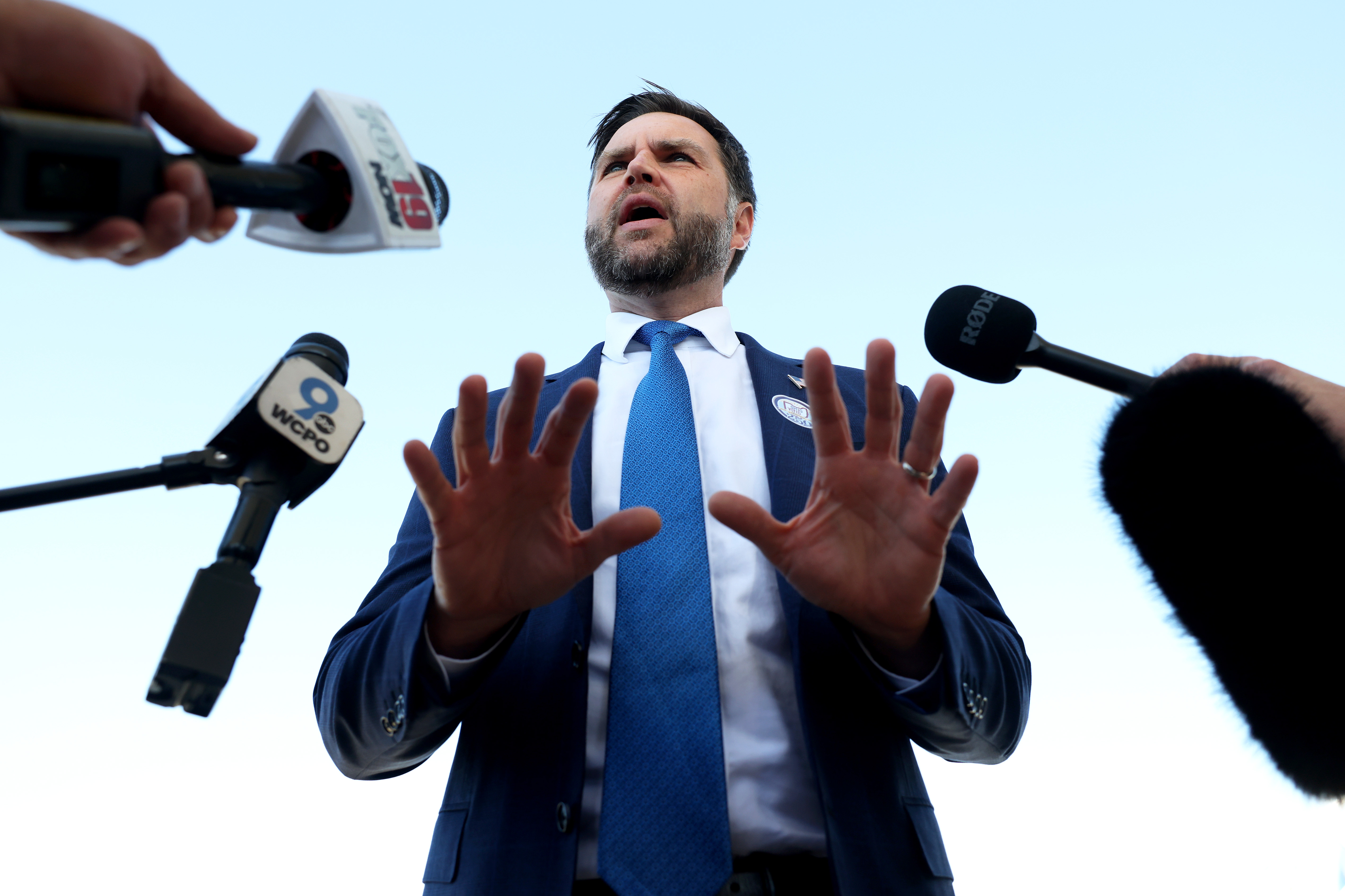
    Vice President JD Vance said Friday he would not watch the planned livestreamed execution of Fort Hood shooter Nidal Malik Hasan and expressed skepticism over whether it will be broadcast.

    On Thursday, the Pentagon said Hasan’s execution by firing squad would be livestreamed for the public to watch. It would be the first time the U.S. military broadcasts an execution live on the internet. Hasan’s execution is scheduled for Dec. 3.

    Vance, a Catholic who previously has said he supports the death penalty, was asked by reporters aboard Air Force Two how he reconciled his faith with the Pentagon’s decision to livestream the killing. He underscored that Hasan “brutally murdered” innocent people but added, “If it’s ultimately livestreamed, I’m not going to be watching it.”

    The vice president also expressed skepticism that the livestream would take place.

    “I don’t know that that’s actually going to happen,” Vance said. “Let’s sort of see.”

    Vance’s comments mark the first time a top Trump official has signaled some unease with the Pentagon’s decision to make the execution public.

    Earlier Friday, Federal Communications Commission Chairperson Brendan Carr said he would defer to the Pentagon over whether to potentially broadcast the execution on television networks.

    Carr said on CNBC’s Squawk Box that the potential livestream falls outside the FCC’s regulatory power. The Pentagon has not indicated that the execution will be broadcast on television, and major networks have not said they plan to carry the feed. But broadcasters could still pick up the live feed if no restrictions are set.

    “I trust what [Defense] Secretary [Pete] Hegseth said. He’s implementing the laws and the regulations that are, you know, relevant to the Department of War, and I think he’s doing a great job, and I trust that he’s making the right call on these issues,” Carr said.

    When pressed on whether the FCC would allow Pentagon officials to broadcast the execution if they wanted to, Carr responded, “Ultimately, we’re going to defer to Secretary Hegseth and his decisions on how to move forward with this.”

    The United Nations and Amnesty International swiftly condemned the plan to livestream Hasan’s execution. The U.S. Conference of Catholic Bishops, with whom Vance has at times publicly disagreed, also called the livestream of the execution “a barbaric promotion of a culture of death.”

    In Washington, some Republicans have also said they oppose the effort.

    Sen. Thom Tillis, a retiring Republican from North Carolina, wrote on X on Thursday that Hasan “should face the death penalty” but that making his execution public and streaming it is “beyond disgusting.”

    “Public executions are what oppressive dictatorships like Iran and Afghanistan do,” he said. “It should not be happening in America.”

    Rep. Austin Scott (R., Ga.) joined Tillis, writing on X that while he “absolutely” supports the death sentence for Hasan, “livestreaming executions is what Islamist militants do. America is better than that.”

    Sen. John Curtis (R., Utah) urged Hegseth to reconsider livestreaming the execution, writing on social media that “broadcasting a death diminishes us and is not an effective deterrent.”

    President Donald Trump this week approved the firing squad execution of Hasan, a former U.S. Army psychiatrist who in 2009 shot dozens of people at the Soldier Readiness Processing Center in Fort Hood, Texas. Hasan uses a wheelchair after officers responding to the attack shot him, leaving him partially paralyzed.

    In his first public comments after the Pentagon announced the livestream, Trump said Hasan’s planned death is justified.

    “We’re giving a man the death penalty … through firing squad, and he deserves it,” Trump said Friday at a Columbus Day event ahead of the Monday holiday.

    While a few countries still conduct public executions, government-sanctioned executions in the United States have long been hidden from public view.

    Hasan’s execution would mark the first U.S. military execution since 1961, according to the nonprofit Death Penalty Information Center. The military’s last known firing squad execution was carried out by “musketry” on Nov. 9, 1945, according to the group.

  • ICE officers shot a man in New York because they believed they were in danger, official says

    ICE officers shot a man in New York because they believed they were in danger, official says

    WASHINGTON — The federal officers who shot a man driving with his young son in New York believed they were in danger because the Dominican national drove his car toward their vehicles as they tried to arrest him, senior immigration officials said Friday.

    Those agents weren’t aware that the man’s 5-year-old son was with him in the car on Thursday when they opened fire at the vehicle, said Marcos Charles, the head of enforcement and removal operations for Immigration and Customs Enforcement. The child was not hurt. The driver, 28, was shot “superficially” in the neck, Charles said. He was treated at a hospital, then taken into federal custody.

    New York City police security cameras recorded the start of the encounter, but did not capture the shooting. One video released by the department Friday shows two immigration officers wearing civilian garb running up to the vehicle with their guns drawn and pointed at the driver. As one officer bashes the barrel of his gun against the car’s windows, the driver pulls away and out of view of the camera. A second video taken from a different angle shows people scrambling out of the way on the sidewalk.

    Charles said ICE officers used their vehicles to block the man as he attempted to drive away, but he accelerated toward them.

    “Our officers, using their training and believing that their life and the life of the partners and the general public were in danger, used their training and fired weapons,” he said during a news conference with U.S. Homeland Security Secretary Markwayne Mullin in Washington.

    New York City police and local court records identified the wounded man as Oscar Belgal. His lawyers later gave the spelling of his last name as Bergal. Federal officials spelled his last name Bengal.

    Mullin blamed the man for putting his son at risk by trying to evade officers.

    The shooting was the latest violent encounter with ICE officers during President Donald Trump’s nationwide immigration crackdown. The agency has on previous occasions said its officers felt in danger when operating against immigration targets or during protests. In some instances, evidence has later emerged casting doubt on those claims.

    ICE previously tried to detain Belgal, Charles says

    Belgal associated with a robbery crew that used mopeds and weapons, and he was convicted of grand larceny last year and sentenced to five years of probation, Charles said, adding that he evaded officers in September when ICE tried to arrest him for deportation.

    Belgal has pleaded not guilty to narcotics-sale charges in an ongoing case. The Legal Aid Society, which was representing him in that case, called Friday for a “full and transparent” investigation of the shooting, but declined further comment.

    Attorneys representing Belgal filed an emergency petition challenging the legality of his detention, and a judge issued an order temporarily barring the government from removing him from the U.S.

    At a brief hearing in Manhattan federal court, Belgal’s lawyers said he was still in pain from the shooting when he called an hour earlier.

    “He still has a bullet in his body,” attorney Paige Austin said.

    Prosecutors confirmed Belgal was whisked from the hospital late last night and sent to a federal facility in Newark, N.J., before being sent to the federal Metropolitan Detention Center in Brooklyn.

    New York City Mayor Zohran Mamdani and New York Gov. Kathy Hochul, both Democrats, said late Thursday that they had unsuccessfully pressed Mullin and Republican President Donald Trump to release Belgal. They also urged the administration to immediately release ICE officers’ body camera footage of the shooting and to halt immigration enforcement operations in the city.

    Mullin confirmed ICE officers were wearing body cameras that were activated, but didn’t say when any of that footage would be released. Under agency policy, bodycam video can be released within 72 hours if it is “determined that it is in the best interests of the agency.”

    NYPD releases videos of shooting

    On Friday, New York City police also released body camera footage from its officers in addition to the surveillance videos.

    The body cam video shows Belgal sitting on the pavement with his hands behind his back as federal officers attend to his injury, and one federal officer is carrying a rifle. The video also shows officers lifting Belgal, placing him in a black SUV, then driving him to a nearby hospital.

    “Yo put pressure. Put pressure,” an officer can be heard saying as the SUV reverses down the block.

    New York City Police Commissioner Jessica Tisch said Belgal was pulling into a parking space when a federal officer in plainclothes approached with his gun drawn, followed by another federal officer who also wasn’t in uniform. Belgal started to pull the car forward, and at least one of the officers fired seven rounds, hitting the man below his left ear.

    Mamdani called the shooting an “outrage.”

    “There is no justification for what we have seen today,” he said late Thursday.

    Mullin criticizes New York City’s immigration policies

    Mullin accused New York officials of creating an unsafe atmosphere for immigration detentions. Under laws in place for years, the city’s jails don’t honor most immigration detention requests, meaning people awaiting trial for minor crimes, or who have finished serving jail sentences, are regularly freed even if they are being sought for deportation.

    ICE has asked local officials in New York to hold onto more than 14,000 people for federal officers to detain, Mullin said.

    “Silence. Absolute silence is what we have gotten back,” the secretary said. “Why would they release these individuals back onto the streets?”

    ICE has justified other shootings with perceived threats to officers

    During Trump’s second term, Homeland Security has often accused suspects of attempting to ram officers with vehicles or other perceived threats, which the department uses as justification for opening fire. Evidence from other shootings has sometimes called that rationale into question.

    In the Jan. 7 shooting death of Renee Good in Minneapolis, Homeland Security officials initially claimed an ICE officer opened fire in self-defense after Good attempted to run him over with her vehicle. Videos filmed from multiple angles challenged the administration’s narrative.

    On July 10, ICE officers fatally shot Lorenzo Salgado Araujo in Houston as the Mexican national was driving his construction crew to a job site. DHS maintained Salgado Araujo rammed an ICE vehicle, but the three men inside his vehicle disputed the narrative.

    Last year in a Chicago suburb, immigration officers fatally shot Silverio Villegas González after they say the Mexican national drove at them and dragged one with his car, causing “serious injuries.” But body camera videos from local police showed the agent who shot Villegas González walking around afterward and dismissing his own injuries as “nothing major.”

  • Iranian campaign planted fake articles in real U.S. publications using ChatGPT

    Iranian campaign planted fake articles in real U.S. publications using ChatGPT

    “The bill will follow Americans beyond the fighting itself,” an opinion piece in the Port St. Joe Star, a tiny Florida weekly newspaper, warned of the Iran war last month.

    The article ran under the byline Ervin Hoskins, which has also appeared on articles critical of the war in larger publications including Daily Kos and Middle East Monitor, which together have more than 3 million followers on Facebook.

    But ChatGPT maker OpenAI said Thursday that Hoskins’ purported work was generated using its chatbot by users based in Iran as part of an “influence campaign.” The campaign placed about 100 fake articles across at least 20 news outlets, the company said.

    The author photo on the Hoskins column published by the Star was generated using OpenAI’s artificial intelligence tools, according to the company’s online verification tool.

    As artificial intelligence tools have become more powerful, some news outlets have been forced to delete AI-generated content published under fake bylines that initially went undetected by editors. Business Insider and Wired removed a series of articles last year that appeared under the byline Margaux Blanchard and appeared to be AI-generated.

    But while it was unclear who or what was behind the stories written by Blanchard and some other apparently fake personas, OpenAI said in a Thursday report on use of ChatGPT in political influence campaigns that Hoskins was part of an operation focused on seeding content about U.S. military action in Iran. Many of the articles highlighted negative impacts of the war on Americans.

    OpenAI said that Hoskins was among seven bylines that appeared on the series of AI-generated articles, made by users who sent instructions to the chatbot in Persian. The operations appeared to be run by a commercial outfit as a “for-hire influence campaign,” the company said. (The Washington Post has a content partnership with OpenAI.)

    David Adlerstein, publisher of the Port St. Joe Star, said in an email that the Hoskins column had caught his eye after it was pitched to him by PeaceVoice, a small liberal think tank in Oregon, that had been sending the Star content for “years.” Gulf County, where Port St. Joe is located, has a population of about 15,000.

    “Because we’re in a very red part of Florida, I usually don’t run PeaceVoice columns, but this one struck me as thought-provoking and not a strident attack on Mr. Trump, which would be problematic for much of our readership,” Adlerstein said. Due to his existing relationship with PeaceVoice, he did not feel a need to verify the origin of the column or the author’s identity, he said.

    Tom Hastings, the founding director of PeaceVoice, said the organization beefed up its existing no-AI policy after OpenAI contacted him.

    OpenAI said it had banned the accounts behind the campaign and that it blocks access to ChatGPT from Iran.

    “The overall activity appeared consistent with a commercial actor running a for-hire influence campaign, but we are unable to identify the particular actor involved,” the company said in its report. “We have shared information on this case with the relevant authorities.”

    Middle East Monitor and Daily Kos said they had taken down the articles written by the fake bylines.

    The Daily Kos articles by Hoskins appeared on a community platform not subject to review by the outlet’s staff before publication. Markos Moulitsas, the site’s founder, said in an email that such a campaign was “incredibly corrosive” to the platform and that he was examining how to prevent future incidents.

    “We already struggle with community members accusing others of being bots or fake accounts simply because they disagree with them. An operation like this pours gasoline on that fire,” he said. “The very trust of our community is at stake.”

    Articles written by authors OpenAI said were part of the Iranian campaign covered a range of topics in the Middle East but were often critical of the Iran war’s effects on Americans. Many of the outlets were focused on policy and foreign affairs.

    After generating articles in English, the ChatGPT users in Iran prompted the chatbot to adjust the draft to fit submission criteria for a specific outlet and to generate a pitch email to send to an editor there.

    The purported authors of the articles were described as freelance writers, policy analysts, and peace advocates. The Middle East Monitor, which brands itself as supportive of the Palestinian cause, had published at least 21 stories under bylines OpenAI said were fake including Hoskins, Michael Harrison, Jenny Williams, and Alice Johnson.

    Some of the bylines, including Hoskins, also appear on social media accounts, and in one case a profile on blogging platform Medium, that shared a name and profile image with published articles. An email account apparently used to send the Hoskins article to PeaceVoice, and a LinkedIn account in his name with a photo that appeared with some bylines, did not respond to a request for comment.

    At least one other purported author, Ericka Feusier, used an AI-generated profile picture, according to OpenAI’s tool that verifies whether images were generated using the company’s technology.

    OpenAI’s report on influence campaigns mounted using its technology also described a cluster of ChatGPT accounts in Russia that were banned after they were used to operate what appeared to be a fake think tank in Latin America. OpenAI said there was evidence the project may have co-opted real humans to work for the organization.

    The AI company said that it published the research to inform regulators, other companies, and the public of “how we see threat actors trying to leverage AI, and to shine a light on the vulnerabilities they try to exploit.”

    The outlets impacted by the campaign vary in reach. But while they appear to have published AI-generated articles under fake bylines, real people have read them.

    Hoskins’s column in the Star prompted a letter to the editor — a rare event for an opinion piece about a national topic, Adlerstein said. He added that he is now looking into introducing an explicit AI policy.

    Hastings, of PeaceVoice, said the article appeared to be genuine when he saw it.

    “I found nothing remarkably pro-Iran in his work, which I would never publish, just a legitimate critique of Trump’s war of choice. If Mr. Hoskins sends in another I will simply require that we meet by Zoom to discuss,” he wrote in an email. “At least for now, that’s the best I can do.”

  • FlyDubai co-pilot intended to crash plane into Tel Aviv airport, UAE prosecutor says

    FlyDubai co-pilot intended to crash plane into Tel Aviv airport, UAE prosecutor says

    JERUSALEM — The ax-wielding co-pilot who attacked the captain of a FlyDubai flight to Tel Aviv last month intended to seize control of the airplane and fly it into the passenger terminal at Israel’s main international airport, authorities in the United Arab Emirates said Friday.

    The suspect, an Omani national, did so “with the intention of causing the greatest possible number of human casualties,” the UAE’s top prosecutor said in a statement carried by the state news agency WAM. Most of the 174 passengers on the flight were from Israel.

    The statement said the co-pilot “drew inspiration” from the Sept. 11, 2001, attacks in the United States and used two previous flights from Dubai to Tel Aviv to “familiarize himself with the flight route and the airport.”

    It said none of FlyDubai’s security or professional checks had indicated that the pilot, who was identitifed by the Associated Press as 29-year-old Hamam al-Hammami, harbored extremist views or plans to carry out an attack.

    Hammami “admitted that he had acted alone, without the involvement of others,” the statement said, adding that he “provided a detailed confession outlining his motives and the stages of planning and execution” in the presence of his lawyer. It also suggested he was radicalized at a mosque in Australia while attending the Royal Melbourne Institute of Technology in 2017.

    The update from the public prosecutor Friday was the most comprehensive since the UAE took over the investigation shortly after the incident on Sept. 30. FlyDubai is a government-owned airline.

    The crisis unfolded suddenly in the skies above Jordan and Saudi Arabia, when Hammami attacked the captain, Smit Machchhar, with a crash ax in the cockpit. Bloodied and beaten, Machchhar managed to open the cockpit door, alerting passengers and crew to the assault.

    Passengers detained Hammami and helped steady the aircraft, which had plunged roughly 14,000 to 16,000 feet in less than a minute. Two reserve pilots then guided the plane to an emergency landing at Tabuk airport in Saudi Arabia.

  • Trump administration hits International Criminal Court with severe sanctions

    Trump administration hits International Criminal Court with severe sanctions

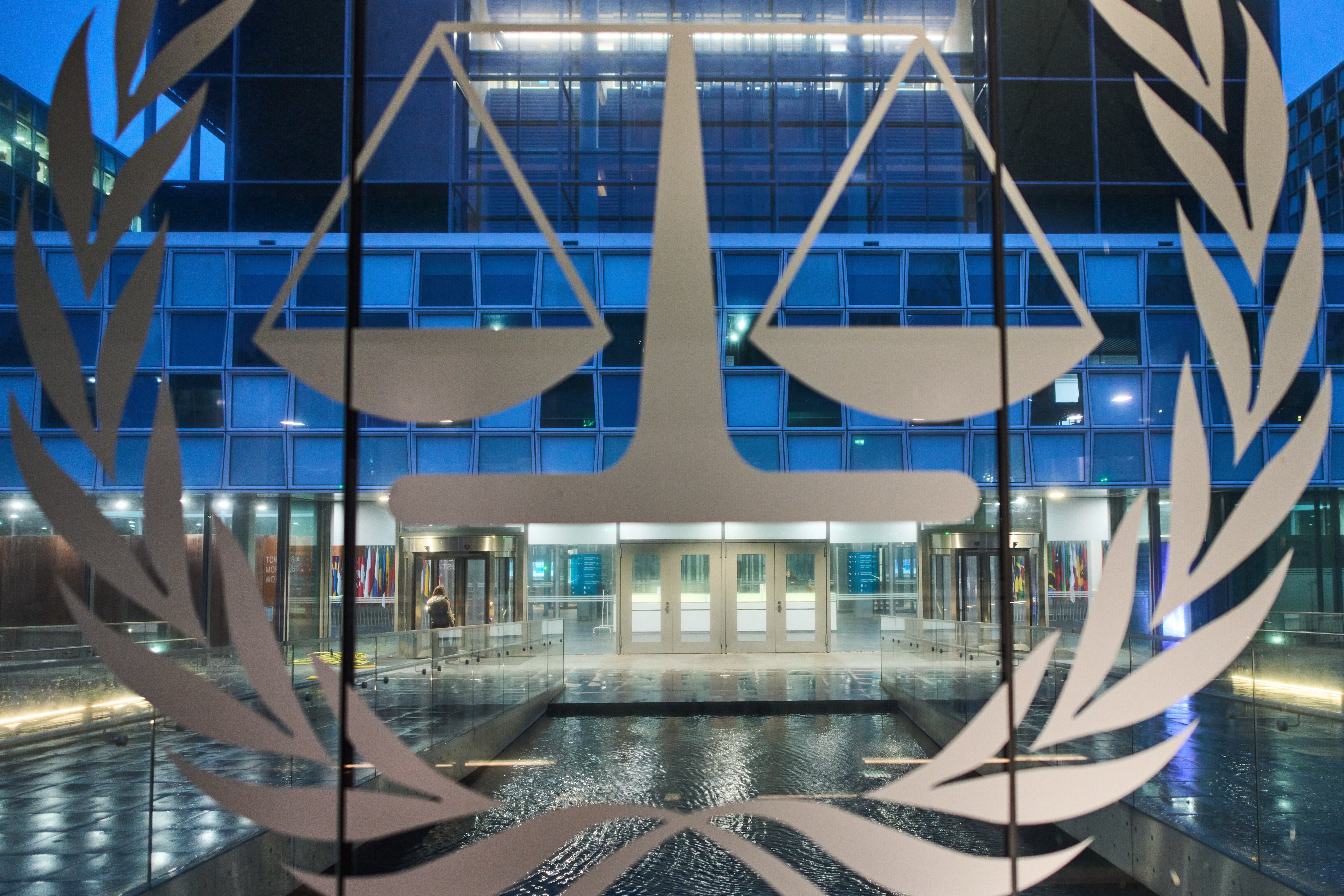
    ATHENS, Greece — The Trump administration announced Friday that it was imposing severe financial sanctions on the International Criminal Court, its latest effort to cripple the global body that seeks to prosecute those accused of war crimes, genocide, and other murderous criminal acts.

    The new sanctions, unveiled by Secretary of State Marco Rubio and the State Department, would prohibit transactions with the court after a grace period of six months. Any companies doing business with the court afterward could be subject to punishment by the U.S. government.

    The threat of that could constrain the institution’s ability to carry out daily operations.

    Although the State Department had been preparing the sanctions for months, Rubio’s announcement came just hours after a committee in Norway said it was awarding the Nobel Peace Prize to Navi Pillay, a South African lawyer who served for nine years as a judge on the ICC and worked as the top human rights official at the United Nations.

    The sanctions are an intensification of the Trump administration’s push to undermine the court. In February 2025, just weeks after taking office, President Donald Trump issued an executive order directing agencies to come up with sanctions to impose on the court.

    At the time, he said the court was trying to violate American sovereignty and undermine “the critical national security and foreign policy work of the United States government and our allies, including Israel.”

    Rubio said in a statement Friday that Trump would never allow the court to prosecute Americans. “We will ban transactions with this rogue court, cutting off their resources and crippling its ability to operate,” he said.

    Rubio announced in July that the United States planned to “systematically disable” the court, which Trump has long described as a threat to Americans.

    The administration has imposed financial sanctions and visa bans on court judges and prosecutors, but the measures announced Friday are broader.

    The ICC said in a statement that the American move was “an assault on the rule of law and on the very foundations of the international legal order, which strikes at the simple principle that no one stands above the law.”

    Many companies that have business ties with the court will be granted licenses over the next 180 days to continue their work without financial punishments, the State Department said.

    During that period, the Trump administration will assess whether its concerns regarding the ICC have been addressed, the department said in a statement. The administration can then adjust the licenses based on that.

    The Treasury Department is helping to enact the sanctions and maintains a list of entities punished with financial restrictions.

    Of nearly 200 nations in the world, 125 have signed the Rome Statute of the International Criminal Court and are subject to its rulings. The United States never ratified the treaty establishing the institution, and both it and Israel are among those that are not bound by the statute.

    However, given the number of countries that are members of the court — including close U.S. allies — the prosecution of U.S. citizens could put those people at risk of arrest and extradition in many parts of the world, in theory. But experts often say that the chances of foreign officials taking those actions are low.

    Rubio announced the sanctions the day after he returned from a three-nation tour of Europe during which he was trying to strengthen alliances. The three countries he visited — Iceland, Greece, and Portugal — are all members of the ICC.

    The court, officially established in 2002 and based at the Hague in the Netherlands, has a mission to investigate and prosecute genocide, war crimes, and other serious offenses. The Trump administration has in the past pushed back on the court’s ability to look into the conduct of U.S. soldiers in Afghanistan and has also been highly critical of the court’s actions against Israel.

    In November 2024, the court issued arrest warrants for Benjamin Netanyahu, the prime minister of Israel, and Yoav Gallant, the defense minister for much of Israel’s war in the Gaza Strip. Prosecutors had investigated the officials for war crimes and crimes against humanity in operations in Gaza, where thousands of Palestinian civilians have been killed and some have starved to death. Israel carried out airstrikes and ground operations after the deadly Hamas attacks in Israel in October 2023.

    The Trump administration has already sanctioned many of the court’s judges. Rubio has suggested that even more sweeping punishments were necessary because of the possibility that the court could prosecute U.S. citizens, and U.S. service members in particular.

    Such actions would “mean the death of the U.S. as a sovereign and independent nation,” Rubio wrote in an opinion essay published in the Wall Street Journal this summer.

    Defenders of the court often point out that it has no police force of its own, and would be able to arrest and try U.S. citizens only if member states carry out arrests.

    The Trump administration is not the first to take on the ICC: Under George W. Bush, the United States also pushed back on the court’s ability to go after Americans.

    Yet the Trump administration’s effort to dismantle the institution — “brick by brick, if necessary,” according to Rubio — is an escalation, from skepticism and rhetoric to outright dismemberment.

    “This is incredibly disturbing,” said James A. Goldston, executive director of the Open Society Justice Initiative legal organization, calling the sanctions a “calculated attack” on international justice.

    Whether the American attack on the ICC will cripple the institution will depend in part on how its member nations respond, he said, and whether they stand by the institution.

    “We know that the court has been preparing for this much-rumored eventuality,” he said. “We’ll have to see.”

    The European Union’s executive arm, whose 27 member countries are also members of the court, said in a statement that “the EU will work closely with the ICC to ensure it continues to operate effectively” and called the American move “deeply regrettable.”

    The EU statement emphasized that the six-month delay leaves “room for dialogue.” Canada, Denmark, Germany, France, Italy, Japan, the Netherlands, and Britain also released a joint statement in defense of the court Friday.

    The court was already in a state of turmoil. Karim Khan, the institution’s chief prosecutor, was removed earlier this year after an investigation into allegations that he sexually harassed a subordinate. Khan has denied the accusations.

    In a recent interview with the New York Times that was conducted before the latest sanctions were announced, Tomoko Akane, president of the court, said that the institution has been taking “measures to strengthen its resilience” in the face of the Trump administration’s threats.

    “A permanent body like the ICC must never be shut down,” she said. “The stakes extend far beyond the court itself.”

    This article originally appeared in the New York Times.