Category: Nation & World

  • Weird and wonderful, the Lucas Museum lands in LA

    Weird and wonderful, the Lucas Museum lands in LA

    LOS ANGELES — From scruffy Exposition Park in South Los Angeles, there is no missing the new Lucas Museum of Narrative Art.

    It hovers like a spaceship on the skyline, at the park’s edge, snow white and ginormous. Its billowy, aerodynamic curves and swoops, capped by tufts of greenery, spill down to lavish gardens on what had been the site of a gated asphalt parking lot.

    Design-wise, the museum’s galleries seem an afterthought, its circulation a puzzle. But this is one you won’t want to miss. Both surgically somber and proudly over the top, the Lucas is a weird kind of wonderful and an instant city landmark. It opened to the public Tuesday.

    The 300,000-square-foot goliath was designed by prominent Chinese architect Ma Yansong and built to house the art collection of Star Wars filmmaker George Lucas and his wife, businessperson Mellody Hobson. The couple have picked up the project’s no-expense-spared tab: more than $1 billion.

    That whopping sum has paid for more than 80,000 square feet of black-box exhibition space on the building’s fourth floor, where Luke Skywalker’s X-34 Landspeeder from Tatooine now idles in a Star Wars display.

    Bridge-of-a-cruise-ship-style viewing ports at either end of the exhibition floor, and another in between, add pizazz and a respite from the gallery crawl.

    Other rooms are devoted to Norman Rockwell paintings, manga art, motherhood, and love, among various folksy themes.

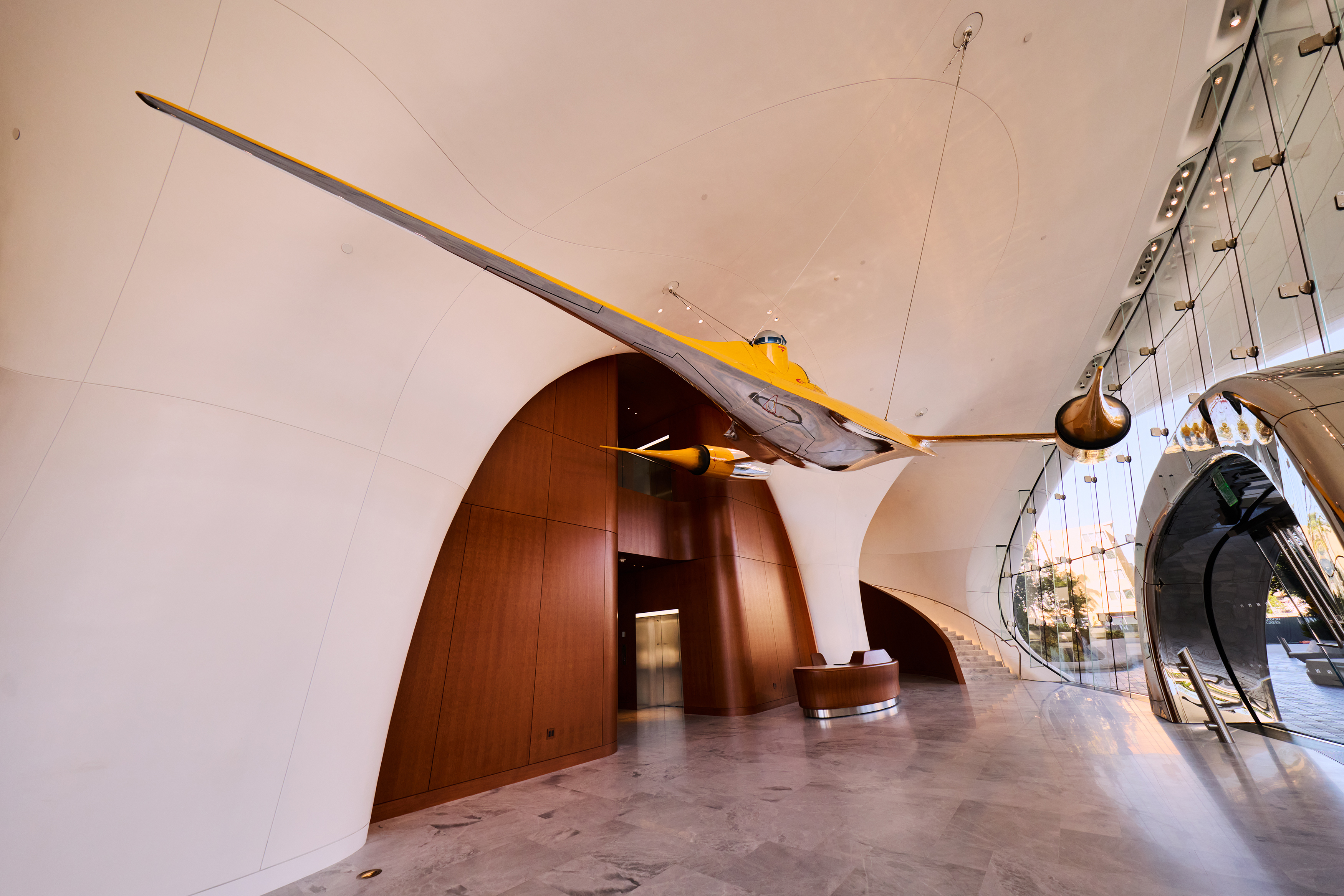
    There are two state-of-the-art movie theaters, along with a shop and a cafe tucked into the building’s cinched podium. The roof, which has a restaurant, is a landscaped aerie of colorful plantings, winding paths, and sweeping vistas. A separate pavilion contains a library with arts and crafts furnishings, of all things, and a student center. A yellow Naboo N-1 Starfighter dangles from its lobby ceiling.

    An artisan of biomorphic megastructures, Ma, who founded MAD Architects in Beijing, made his bones designing showstoppers including the Harbin Opera House in China and the Ordos Museum in the Gobi Desert. The Lucas Museum is his first major American cultural commission. Its arrival, across the street from the University of Southern California campus, where Lucas studied film, seems like destiny.

    Lucas acquired his first work of art, a V.T. Hamlin Alley Oop comic, for a song in the 1970s. Over the decades his collection ballooned to include more than 40,000 works by famous comic artists and graphic novelists; film production designers and anime fabulists; golden-age American magazine illustrators and figurative painters of the 20th century such as Frida Kahlo and Thomas Hart Benton.

    These were artists after Lucas’ own heart, naturally — fellow populists, visual virtuosos, and storytellers. Lucas came to believe modern art museums shortchanged or ignored them.

    So he decided to build a cathedral to kindred spirits. He and Hobson first floated the idea to the Presidio in San Francisco in 2010. City officials there rejoiced at the prospect. But when the Presidio’s trustees balked, Lucas and Hobson looked to Chicago, Hobson’s hometown, hiring Ma to design a museum for a lakefront site.

    Ma came up with a volcano-shaped design rising from the flat plains of the Windy City, which ran aground after a Chicago nonprofit parks preservation group sued, tying the project up in the courts.

    After a second pass fizzled in the Bay Area, this time for a site on Treasure Island, Lucas and Hobson turned to Los Angeles.

    By destiny I didn’t just mean that Lucas is synonymous with Hollywood. I mean that Los Angeles is also home to the Getty, the Huntington, the Norton Simon, the Hammer, and the Broad. Vanity museums, some of the most memorable on the planet, have been a big part of what makes the city’s cultural landscape so lively, diverse, and deep.

    These institutions belong to a strain of American entrepreneurial individualism that has also given us the Barnes Foundation in Philadelphia, Donald Judd’s Marfa spaces in Texas, and the Guggenheim in New York — go-it-alone ventures founded on contrarian principles. The Guggenheim proselytized the mystic healing powers of Wassily Kandinsky, Bach organ chorales, and incense.

    The Lucas joins that company.

    Its architectural goal was a blockbuster with contours inspired by trees and clouds, so as to blend into and anchor the edge of Exposition Park, alongside giants like Memorial Coliseum. The exterior is clad in 1,271 school-bus-size, hand-finished, fiberglass-reinforced polymer panels, combined like puzzle pieces, manufactured by a shipbuilding company in the Bay Area. Ma’s pièce de résistance is the museum’s central plaza: a four-story-high, 185-foot-wide arching gateway and oculus linking the neighborhood with Exposition Park.

    A curator told me he has heard people compare the building to a sneaker. I’ve heard Angelenos talk about a mountain suddenly rising in South LA, and, of course, an Imperial Star Destroyer. It’s as svelte as an F1 car.

    It is now the second museum to arrive this year and shake up the city’s architectural geography. Like the new Los Angeles County Museum of Art, the Lucas also has civic ambitions. Tickets are $25, but anyone younger than 18 and/or living in the museum’s ZIP code, many of them low-income Angelenos, can enter free.

    Footpaths and garden crossings, where that gated surface parking lot had been, aim to knit the area’s streets and sidewalks.

    We’ll see how well those green spaces will be maintained, how open those neighborhood connections remain.

    But it’s a safe bet that millions of children raised on their phones — who couldn’t care less about the definition of narrative art — will embrace the museum.

    They’ll whoosh up and down the tubular glass elevators, run under the hanging gardens and across lawns devised by Mia Lehrer’s landscape team at Studio-MLA.

    And be wowed by Ma’s architecture.

    Who knows, some of them may even be inspired to put down those phones and pick up a pencil to draw.

    This article originally appeared in the New York Times.
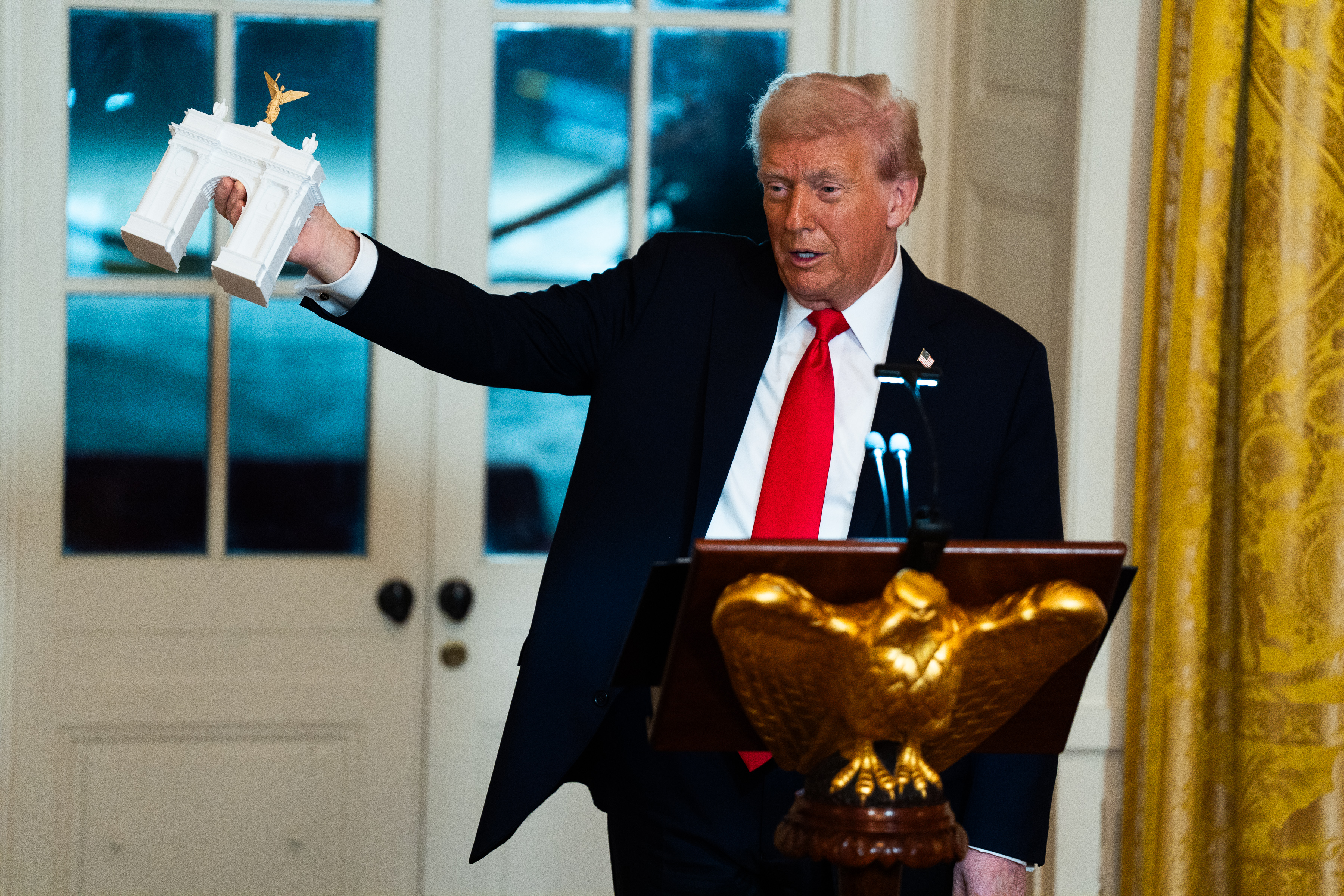
  • Trump’s plan to militarize proposed arch raises new legal, safety concerns

    Trump’s plan to militarize proposed arch raises new legal, safety concerns

    President Donald Trump’s push to convert his planned triumphal arch near Arlington National Cemetery into a military complex has complicated a required federal review process and raised new legal and safety concerns.

    Trump unveiled his new national security rationale Sunday in a post on Truth Social, saying that the 250-foot-tall arch project — which he has framed for nearly a year as a tourist attraction — will now house drones, snipers, and ammunition. The president said he was making the change at the request of the U.S. military.

    Critics of the plan saw echoes of Trump’s shifting security case for the White House ballroom, which the administration has used to defend that project in court. But while presidents have historically had some leeway to revamp the White House grounds, the arch would stand on federal parkland more than a mile away, where Congress has set stricter rules for construction.

    “There is nothing that authorizes or justifies a massive arch, even if Trump tries to disguise it as a military facility,” said Rep. Jared Huffman of California, the top Democrat on a House committee that oversees federal parkland. “This is cartoonishly illegal, but he’s obviously trying to find a way to do it anyway.”

    Aviation experts warned Monday that using drones at the planned arch site — Memorial Circle, a roundabout near Reagan National Airport — could pose risks in the airport’s crowded airspace.

    “Anything you add to the airspace complicates the airspace and increases the operational risk,” said Tom Lintner, a former safety official at the Federal Aviation Administration (FAA).

    Other military and safety experts have questioned the implications of storing ammunition in the middle of a heavily used traffic circle and whether tourists could still enter the arch as previously planned.

    Historic preservationists participating in a required federal review process said they could not move forward until the administration clarifies Trump’s plans for the arch. Administration officials last week had asked Washington’s and Virginia’s preservation offices to agree to a memorandum of agreement (MOA) by Monday as part of that process, and they invited other preservationists to participate.

    “This MOA is DOA,” Charles Birnbaum of the Cultural Landscape Foundation wrote in an email to the administration on Monday. An official for Washington’s historic preservation office also wrote in an email that the office needed clarity on Trump’s post. Both emails were shared with the Washington Post.

    Administration officials have declined to offer further details about Trump’s plans to convert the arch to a military complex. They have previously said that they will not begin construction on the arch until they have received “all necessary approvals.”

    But Trump has pushed his deputies to expedite the arch and other construction projects, particularly in the wake of a Supreme Court ruling on Aug. 31 that let him continue building his ballroom, according to two people who spoke on the condition of anonymity to discuss private conversations. The ruling did not decide the merits of the case.

    Spokespeople for the White House and Pentagon said on Monday that they had no additional information to provide beyond the president’s social media post. A defense official, speaking on the condition of anonymity because of the sensitivity of the issue, said it was not clear if U.S. Northern Command, which oversees domestic military operations, has been asked to develop any related plans.

    Military officials with Joint Task Force-National Capital Region, which oversees military operations to protect D.C., did not respond to requests for comment on Monday. Spokespeople for the Interior Department and the National Park Service also did not respond to questions about the project. The Federal Aviation Administration referred questions to the White House.

    Until Sunday, the Trump administration had largely portrayed the arch as a prominent tourist attraction. Architectural plans posted by the National Park Service last month include a “ticket booth,” a “family restroom,” and other features atypical of any active military complex.

    Interior Secretary Doug Burgum mentioned that the arch would also offer a “military observation deck” in a social media post earlier this month.

    The administration had already faced safety questions, in part because the 250-foot-tall structure would sit directly in National Airport flight paths. Aviation safety there has garnered significant attention since a 2025 collision between an Army helicopter and an American Airlines regional jet near the airport that killed 67 people.

    On Friday, the FAA said it had determined that the arch would not pose a hazard to aircraft, including at National Airport. That finding preceded Trump’s announcement about drones, whose type and frequency of use remain unclear.

    In its final study on the arch, the FAA said the proposed structure should feature “a nonstandard eternal flame” to make it noticeable to pilots. It also said the arch should be continuously floodlighted by searchlight projectors around its base.

    Jeff Guzzetti, a former FAA and National Transportation Safety Board accident investigator, said having drones in the flight path of National would worsen the airport’s congestion problem.

    “Even not knowing how often these things are going to be used, it would certainly increase the risk of a collision with a commercial airliner,” Guzzetti said.

    Michael McCormick, coordinator of the Air Traffic Management program at Embry-Riddle Aeronautical University, said he expected the FAA would need to conduct another study.

    “Whatever the drones are, no matter what, the FAA would have to approve their flight because it’s civilian airspace,” McCormick said. “It cannot be a unilateral decision by the Pentagon.”

  • Fat Bear Week opens for Alaska’s heavyweight crown. Can Chunk, the 1,200-pound champ, win again?

    Fat Bear Week opens for Alaska’s heavyweight crown. Can Chunk, the 1,200-pound champ, win again?

    ANCHORAGE, Alaska — After a summer spent packing away sockeye salmon, Alaska’s heftiest brown bears are ready to throw their weight around.

    Online voting began Tuesday for Fat Bear Week, the annual contest that pits the rotund residents of Katmai National Park and Preserve against each other for the title of most oversized ursine.

    Last year’s winner, Chunk — known officially as Bear 32 — is hungry for a repeat. Chunk’s weight in 2025 was estimated at 1,200 pounds, which gave him a narrow victory. This year he’s back and facing corpulent competition like Gully — aka Bear 903 — the offspring of two-time champion Grazer.

    The contest, which is in its 12th year, celebrates the resilience of the 2,200 brown bears that live in the preserve on the Alaska Peninsula, which extends from the state’s southwest corner toward the Aleutian Islands. The animals gorge on the abundant salmon that return to the Brooks River, sometimes chomping the fish in midair as they make their way upstream to spawn.

    The event this year features 16 bears facing off in a single-elimination, bracket-style tournament. All voting is done online at www.fatbearweek.org, with the winner declared Sept. 29. The public can watch the bears on explore.org’s livestream cameras before deciding on their favorite.

    “Fat bears are successful bears,” the nonprofit’s website says. They gorge on salmon starting in late June in order to accumulate fat reserves to prepare for winter hibernation, when they do not eat or drink and lose one-third of their body weight.

    Adult male brown bears typically weigh 600 to 900 pounds (about 270 to 410 kilograms) in midsummer. By the time they are ready to hibernate after feasting on migrating and spawning salmon — each eats as many as 30 fish per day — large males can weigh well over 1,000 pounds (454 kilograms). Females are about one-third smaller.

    Voters in the online contest can review before-and-after photos of the bears, lean at the start of summer and fattened at the end. The bears are not actually weighed — imagine that process — and some fans choose their favorite based on their looks or backstory.

    To be featured in the contest, the bears must frequent the area around the river.

    The live cameras at Brooks Falls captured the moments in 2024 when mother bear 128 Grazer ‘s cub slipped over the waterfall and floated into the fishing spot occupied by Chunk, who attacked and injured the cub. Grazer fought Chunk, but the cub ultimately died. After the dramatic fight, voting fans handed Grazer a victory over Chunk. Then Chunk returned in 2025 to take the title.

    Fat Bear Week was started in 2014 as an interactive way to inform the public about brown bears, the coastal cousins of grizzlies.

  • Trump returns to UN at a moment of anxiety about Iran, AI and the future of world body itself

    Trump returns to UN at a moment of anxiety about Iran, AI and the future of world body itself

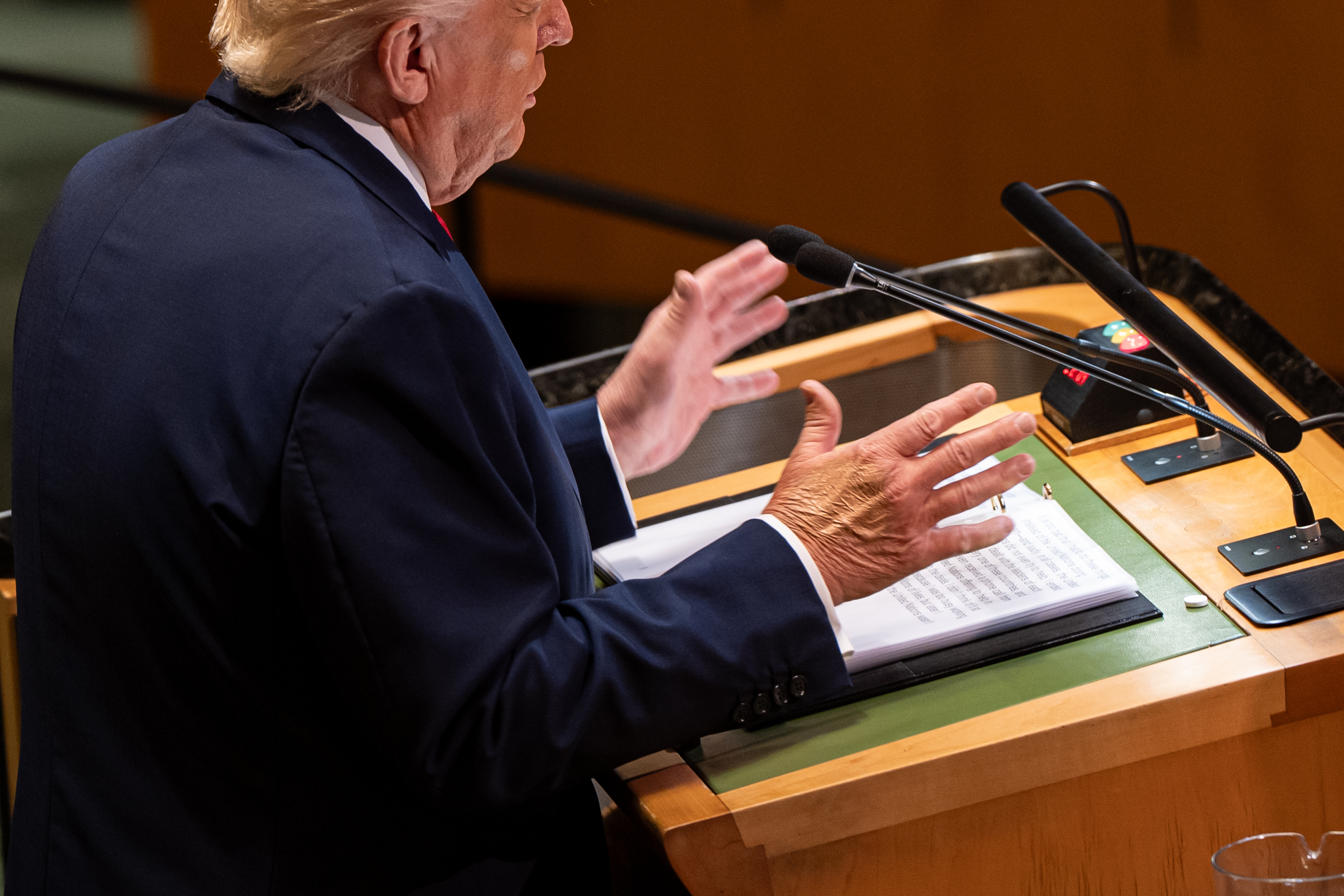
    NEW YORK — President Donald Trump is set to address the U.N. General Assembly on Tuesday at a tumultuous moment for the world — and for his presidency.

    The global economy has been shaken by his decision to launch a war against Iran. Anxiety about the social impact being wrought by artificial intelligence is surging. And questions linger about the future of the United Nations itself with Trump’s scaling back U.S. financial support for the United Nations.

    After his speech to the annual gathering of world leaders, Trump is expected to hold talks with new British Prime Minister Andy Burnham, Japanese Prime Minister Sanae Takaichi and a more informal meeting with Venezuela’s acting President Delcy Rodríguez, according to the White House.

    He’s also set to meet with leaders and senior officials from Gulf Cooperation Council nations — Bahrain, Kuwait, Oman, Qatar, Saudi Arabia, and United Arab Emirates — to discuss the way ahead with the war in Iran and growing concern about recent Iran-backed rebel attacks on Saudi Arabia.

    The visit to the U.N. comes when Trump’s foreign policy approach — particularly his decision to start a war with Iran — has become a drag on his fellow Republicans’ hopes of retaining control of both chambers of Congress during the coming midterm elections. Nevertheless, administration officials signaled Trump will make the case in his address that the world is better off for his leadership.

    “We expect the president will highlight how he has and his administration have confronted complex problems head-on around the world,” Ambassador Mike Waltz, Trump’s chief envoy to the international body, told reporters.

    Waltz also suggested that Trump might revisit some of his long-held criticism of the United Nations. The president has criticized the body as being ineffectual on issues of war and peace, has claimed the organization is perpetuating a “con job” by emphasizing the need to address global warming, and has asserted the U.N. has promoted the “invasion” of migrants into Europe.

    Iran war to loom large

    In last year’s address at the U.N., Trump claimed the U.S. had “demolished” Iran’s nuclear capabilities after he ordered the June 2025 bombardment of three key facilities.

    He returns to the General Assembly nearing the seven-month mark of a new war against Iran that he insists is necessary to address a nuclear threat posed by Iran.

    The war has grown more complicated even though strikes by the United States and Israel have killed much of Iran’s top leadership and destroyed its air force and navy, while a U.S. blockade of Iranian oil has left Tehran in economic shambles.

    The passage of oil from other Gulf countries through the Strait of Hormuz has improved in recent weeks with the help of the U.S. Navy helping guide commercial vessels through the narrow waterway. Still, the flow of oil is significantly below pre-war levels. And Brent crude continues to hover around $100 per barrel, up from about the $70 range in the weeks before the start of the war.

    But the energy market continues to be spooked. Saudi Arabia earlier this month shuttered a key pipeline that acted as a relief valve for oil blocked in the Gulf. The kingdom made the move after the pipeline came under attack by Iran-backed militants in Iraq.

    At the same time, territorial grabs by the Yemen-based Houthi rebels, another Iranian-backed group, near the Bab al-Mandab Strait has now made it treacherous for oil carriers to use that Red Sea shipping lane.

    Majed al-Ansari, chief spokesman for the Qatari Foreign Ministry, said Monday that Qatar and other mediators are trying to penetrate a “deep deficit of trust” between the U.S. and Iran and get the sides back to negotiations.

    “What we’re trying to say is that, ‘Listen, this will end at the negotiating table,” said al-Ansari, speaking at the Concordia Annual Summit, a global affairs forum taking place during the U.N.’s high-level week. “Either we sign a deal now or sign a deal 10 months away. The only difference is the number of dead and destruction that we see.”

    The administration will sign a Greenland deal

    At last year’s General Assembly, Trump touted his record as a peacemaker and claimed that “everyone says that I should get the Nobel Peace Prize” for his administration’s efforts mediating several conflicts around the globe.

    This year, his administration is set to sign an agreement on the sidelines of the General Assembly with Danish and Greenlandic leaders that aims to set the pathway for the expansion of the U.S. military’s footprint on Greenland.

    The deal, announced last week, came together after Trump repeatedly threatened to “take over” Greenland, a territory of NATO-ally Denmark, by military force if necessary.

    Under the deal, Greenland remains Denmark’s territory. “I’m looking forward to the meeting tomorrow. I think we have reached a good agreement,” Prime Minister Mette Frederiksen told Danish broadcaster TV2 Denmark.

    Trump’s frustration with Russia-Ukraine war mounts

    The president could also touch on Russia’s continuing war against Ukraine during the address — a conflict that during his 2024 campaign he predicted would be resolved on Day One of his second term.

    The president has routinely expressed frustration about the conflict. He hasn’t obscured that his patience is being tested by Ukraine’s targeting of Russia’s diesel refineries — an issue that’s added to oil markets’ volatility — and Russia’s targeting of Ukraine’s energy grid.

    Trump last week asserted that he got the two sides to agree to not target each other’s energy infrastructure. Ukrainian President Volodymyr Zelenskyy said he was willing to go along with Trump’s plan if Russia abided by it. Russia said it could only go along with Trump’s energy truce proposal if Western energy sanctions on Moscow were lifted first.

    The two sides have continued carrying out strikes on refineries and other energy infrastructure. Trump on Monday, before departing for New York, expressed his frustration with targeting of energy infrastructure.

    “Russia has unfortunately lost control of its Diesel Oil Industry due to its War with Ukraine,” Trump posted on social media. He added, “This ridiculous and never ending War with Ukraine must be ended.”

    Trump to hold critical talks with UK, Japan and Venezuela leaders

    The president is set to hold his first face-to-face meeting with Burnham, the center-left Labour Party leader who became prime minister in July.

    With elevated oil prices dragging the British economy, he may also be eager to discuss ways to fully reopen the Strait of Hormuz. He announced on Monday that he would send a Royal Air Force plane to the Mideast to help Saudi Arabia repel attacks from Houthi rebels. The plane will refuel Saudi planes during defensive missions.

    Trump’s meeting with Japan’s Takaichi comes as he prepares to welcome Chinese President Xi Jinping later this week to Washington for a state visit.

    The historically complicated Japan-China relationship became even more fraught after Takaichi said last year that Japan’s military could intervene if China were to take action against Taiwan, a semi-autonomous island democracy that Beijing considers its own territory. The tensions have spilled over into the China-Japan economic relationship.

    Trump’s engagement with Rodriguez, Venezuela’s interim president, will be the first meeting between the two leaders since Trump in January ordered a U.S. military operation to capture then-President Nicolás Maduro and swept him off to New York City to face federal narco-terrorism and drug trafficking charges. Maduro’s lawyers have objected to the U.S. military action that snatched him from power.

  • Lindsay Clancy’s attorney asks judge to investigate the lone juror who wanted to convict her

    Lindsay Clancy’s attorney asks judge to investigate the lone juror who wanted to convict her

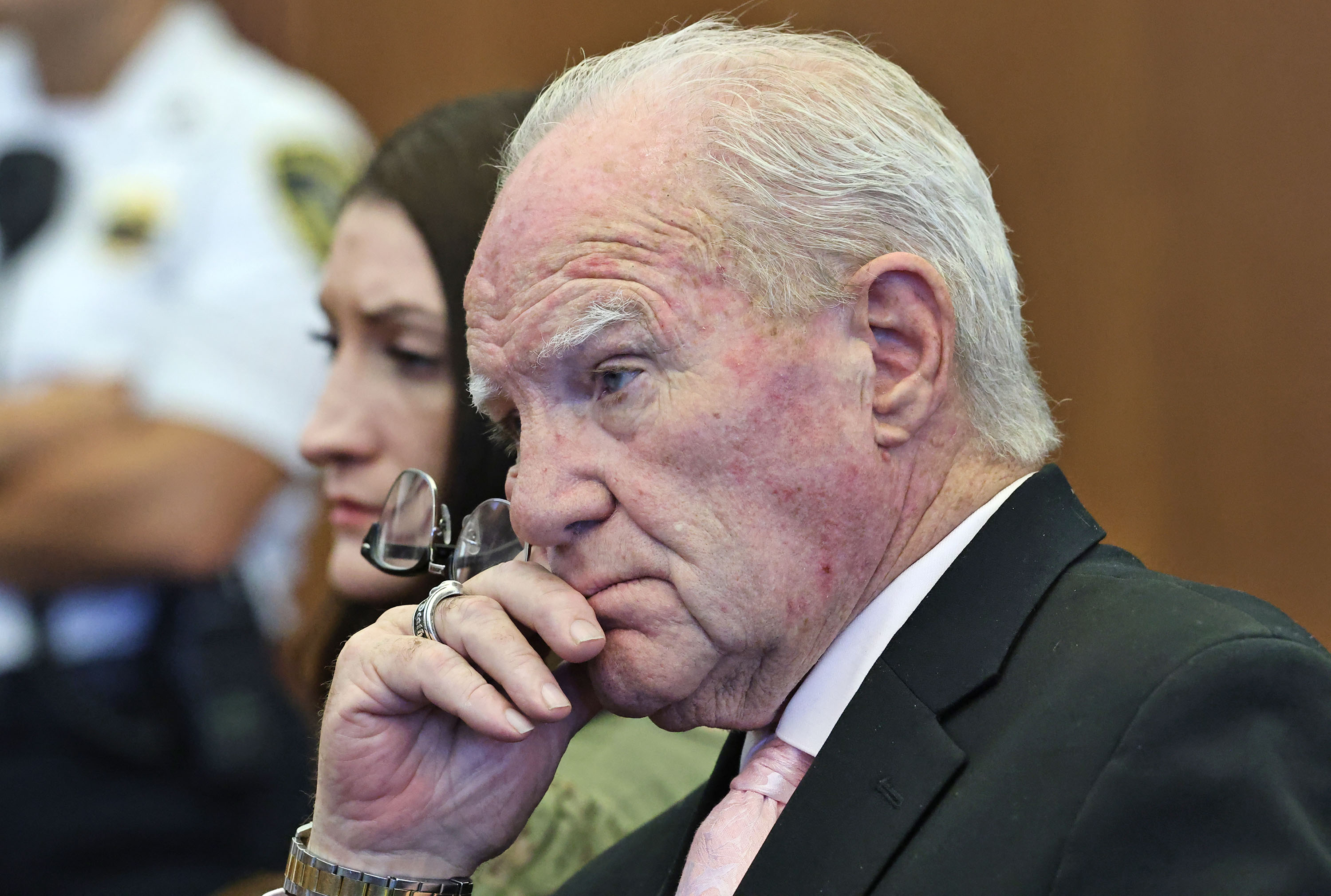
    BOSTON — A lawyer for Lindsay Clancy is asking a judge to investigate the conduct of the lone juror who wanted to convict the Massachusetts mother of murder in the deaths of her three young children.

    In a motion filed Friday but made public Monday, Clancy’s lawyer asked the court to question juror Michael Desronvil about his alleged use of a cellphone during deliberations, his truthfulness on a questionnaire that prospective jurors filled out before the trial began, and his truthfulness when jurors were questioned by the judge a day before the trial ended.

    Among other things, lawyer Kevin Reddington asked the court to obtain a record of any calls or texts Desronvil made between 8 a.m. and 4:30 p.m. on each day the jury deliberated. Phone use during deliberations is prohibited in the state.

    The judge declared a mistrial Sept. 4 after the jury insisted it couldn’t reach a unanimous verdict, despite days of trying. Eleven of 12 jurors were ready to clear Clancy of criminal responsibility, with the majority feeling that she was in the grip of a rare condition called postpartum psychosis when she strangled her kids.

    But Desronvil sided with the prosecutors, who had argued that Clancy knew what she was doing.

    Desronvil hasn’t been accused of any wrongdoing in connection with his service on the jury, though some other jurors complained that he was inflexible in his opinion that Clancy was guilty. In a statement released by his lawyer last week, Desronvil said he “didn’t have any doubts.”

    Prosecutors have yet to say whether they plan on putting Clancy on trial again. She remains charged with murder and is in a psychiatric hospital until her case is resolved.

    In another motion on Monday, another lawyer for Clancy, Martin Weinberg, asked the judge to take the unusual step of dismissing the criminal case, rather than putting on a new trial, on the grounds that a mistrial shouldn’t have been declared in the first place.

    Weinberg argued that the judge should have replaced Desronvil with an alternate during the deliberations after the jury foreperson complained he was refusing to listen to the law on reasonable doubt.

    “Contrary to the court’s stated belief at the time, it did have viable choices other than declaring a mistrial,” Weinberg wrote.

    A spokesperson for Plymouth County District Attorney Timothy Cruz would not comment on the motions.

    At the trial, jurors heard from psychologists and clinicians who treated Clancy for several months before the killings, when she was suffering from worsening mental health problems that emerged after the birth of her youngest child. She was released from a psychiatric hospital less than three weeks before she killed her children.

  • Equipment outages grounded flights into Philly airport and caused long delays

    Equipment outages grounded flights into Philly airport and caused long delays

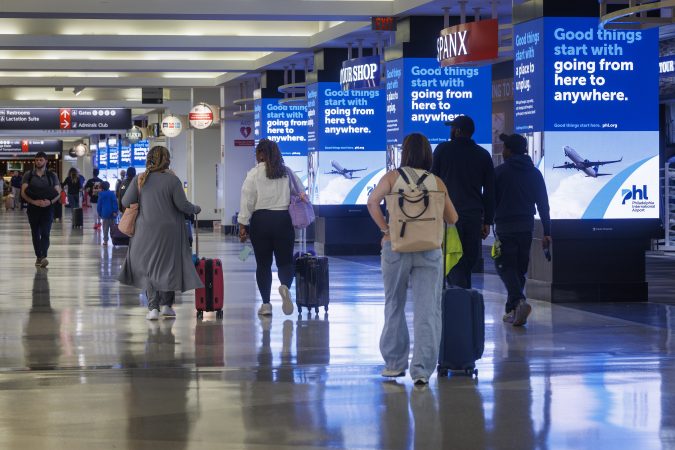
    Flights into Philadelphia International Airport were grounded for much of the day Monday due to a stop instituted by the Federal Aviation Administration that impacted hundreds of flights in the Northeast in the wake of equipment outages.

    Incoming flights were briefly allowed to resume at one point, but were again halted a short time later, according to the FAA’s airspace system status. The ground stop was again lifted at about 5 p.m. Monday.

    As of late Monday afternoon, PHL had experienced about 400 delays and 200 cancellations, according to data from flight tracking website FlightAware. Some airlines were allowing their customers to change flights without fees. The FAA advised travelers to check the status of their flights with their airline before heading to the airport.

    On Monday night, arrivals and departures at Philadelphia were still delayed by an average of at least two hours, according to Flighty, the popular flight-tracking app.

    During the stops, FAA said planes departing from a U.S. airport and heading to PHL should remain on the ground. At times, flights at John F. Kennedy International Airport, LaGuardia Airport, Newark Liberty International Airport, and Bergen County’s Teterboro Airport were also affected.

    The ground stop came after a circuit failed at an air traffic control tower in Philadelphia, and officials found that a line from a backup system was cut at a construction site in New Jersey, FAA Administrator Bryan Bedford said. The technical problems happened at the same FAA facility in Philadelphia that caused numerous disruptions at Newark Liberty International Airport in spring 2025.

    “Unfortunately, that circuit failed today,” Bedford said at a Monday news conference. “And when it went to flip into the backup, we discovered that the backup fiber had a break, and that fiber break is probably 13 hours to repair.”

    Bedford described the break as “massive,” and said it consisted of about 600 feet of fiber line somewhere between New Brunswick and Newark. It was not immediately clear when the break in the fiber line for the backup occurred, he said.

    Verizon said contractors had dug up and cut the cable that runs along the Amtrak rail line in New Jersey. The company said in a statement that its technicians were racing to get the cable fixed.

    Transportation Secretary Sean Duffy said the ground stop showed the need for more funding to modernize infrastructure.

    “This is not shocking to us,” Duffy said. “It’s an old system that we’re stuck working with.”

    The FAA on Monday also began testing a new computer system that uses AI to help predict schedule conflicts and weather issues, but it did not appear to be linked to the outage because it was only being tested in the Washington, D.C., area.

    Inquirer staff writer Robert Moran contributed to this article, which also contains information from the Associated Press.

  • Tiny wild cat newly identified as a species draws curious visitors in Bolivia

    Tiny wild cat newly identified as a species draws curious visitors in Bolivia

    COROICO, Bolivia — A tiny wild cat hidden away in the cloud forests of Bolivia has become an unlikely tourist attraction, drawing a stream of visitors hoping for a glimpse of the animal that scientists have identified as a brand new species.

    There is just one problem: Tigrino, as he has been affectionately dubbed, doesn’t like the attention.

    The small, spotted feline with large, leopardlike spots is easily stressed, so caretakers at the wildlife sanctuary near La Paz keep him out of public view, turning away the crowds eager for a closer look. When the Associated Press visited Sunday, Tigrino cautiously emerged from his shelter, sniffed the air and paced around for a few minutes before slipping back into the foliage.

    Tigrino belongs to Leopardus tilcayo, the first living wild cat species described by scientists in more than a century. At just 18 inches from head to the base of his tail and 3 pounds, he is smaller than the average house cat.

    The discovery published Thursday in the journal Current Biology set off a flurry of excitement on social media. Visitors from across Bolivia and beyond have flocked to the Senda Verde Wildlife Sanctuary, where Tigrino has lived since 2017, when a family brought him there after trying unsuccessfully to make a house cat of him.

    “Tigrino has become, in just a few days, an ambassador for conservation,” said sanctuary co-founder Marcelo Levy, adding that the new species designation has helped raise awareness about the need to protect wild cats and their habitat in Bolivia’s tropical forests.

    “He’s such a tiny animal, and he has become something so important,” Levy said.

  • Ex-Haitian official, 17 others appear in U.S. court related to 2021 plot to kill Haitian president

    Ex-Haitian official, 17 others appear in U.S. court related to 2021 plot to kill Haitian president

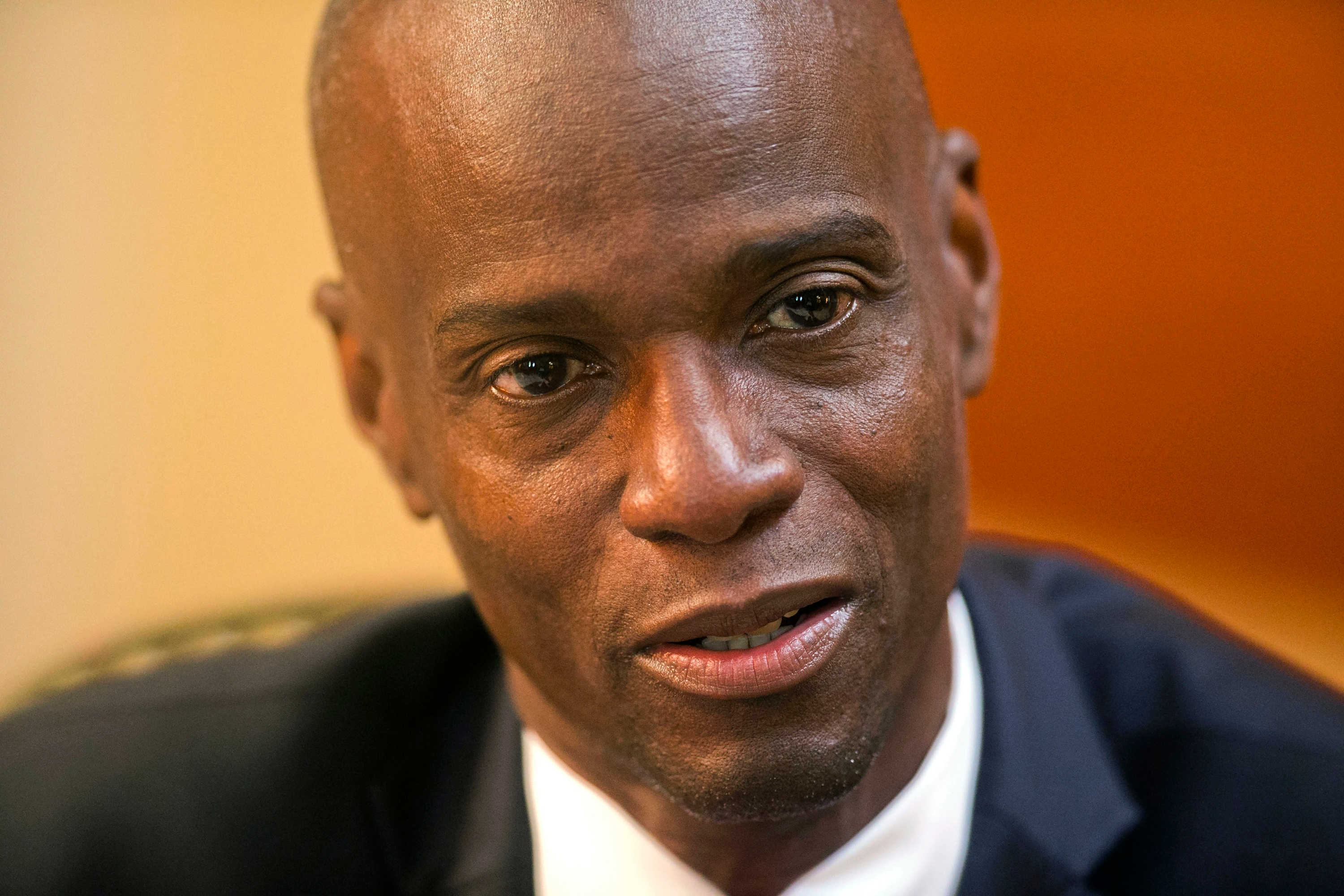
    MIAMI — A former Haitian government official and more than a dozen other people appeared Monday in federal court in Miami on charges related to the 2021 assassination of Haitian President Jovenel Moïse.

    Joseph Badio, a former Haiti Ministry of Justice employee, was brought into the Florida court in a wheelchair. The hearing happened a day after he and 17 others described as Colombian mercenaries were flown to the United States from Haiti, where they had been in custody.

    They’re among 30 people charged in the indictment, including Christian Sanon, a Palm Beach County, Fla., resident and dual Haitian-American citizen who was already preparing to face trial next week. Authorities said he aspired to be Haiti’s president.

    South Florida served as a central location for planning and financing the plot to oust Moïse and replace him with someone of the conspirators’ choosing, U.S. authorities have alleged. At least nine people so far have been convicted at trial or through guilty pleas.

    Moïse was “assassinated by individuals seeking to profit from illicit financial opportunities and business contracts,” U.S. Attorney Jason Reding Quiñones said.

    Moïse was killed on July 7, 2021, when about two dozen foreign mercenaries, most from Colombia, attacked his home near Port-au-Prince.

    In 2025, justice officials in Haiti asked the U.S. and Canada for help after a local court of appeals ordered a new investigation into Moïse’s killing, the third inquiry of its kind since he was shot 12 times at his private residence. His wife, Martine, also was injured in the attack.

    The previous investigations were stalled because Haitian judges kept resigning from the case, fearing for their lives, and gangs seized control of the downtown Port-au-Prince courthouse where the judges were interrogating suspects.

    Any proceedings in Haiti “continue to face significant difficulties,” the Ministry of Justice and Public Security said Sunday.

    The indictment says Badio, who is charged with conspiracy, posed as a U.S. drug agent and participated in Moïse’s killing. A lawyer appointed to temporarily represent him could not immediately be reached for comment.

    Badio once worked in the government’s anti-corruption unit until he was fired for alleged ethics violations weeks before the assassination.

    U.S. Magistrate Judge Lisette Reid assigned lawyers and set additional court dates during a series of brief dialogues with each of the 18 defendants.

    The scheme to kill Moïse included paying mercenaries with money obtained from U.S. government programs that were intended to help businesses during the COVID-19 pandemic, the indictment says.

    Haiti has not had a president in the five years since Moïse’s death. It has instead been overwhelmed by gang violence: More than 3,000 people were killed this year by June and about 1.5 million people were displaced, according to the U.N.

  • Jury convicts man who shot three Palestinian students, including one from Haverford, in Vermont

    Jury convicts man who shot three Palestinian students, including one from Haverford, in Vermont

    The man who shot three Palestinian students in Burlington, Vt., including one from Haverford College, during the 2023 Thanksgiving weekend was convicted on three counts of second-degree attempted murder Monday.

    The students, who’d known each other since grade school in the West Bank, were together for the holiday. They had been walking along a street near the University of Vermont when a man confronted them with a handgun and fired at least four rounds before running away, according to police.

    That man was later identified as Jason Eaton, 51, who did not dispute that he shot Hisham Awartani, Tahseen Aliahmad, and Kinnan Abdalhamid that Saturday evening.

    His attorneys, however, argued he was not guilty by reason of insanity, presenting testimony that Eaton was suffering from a delusional, psychotic disorder after having lost his job two weeks before the shooting.

    Eaton believed he was receiving messages from the CIA ordering him to “go out and shoot somebody,” said his attorneys.

    Abdalhamid, the Haverford student, suffered non-life-threatening injuries; Trinity College student Aliahmad was shot in the chest; and Awartani, a Brown University student, was paralyzed from the waist down as a result of his injuries.

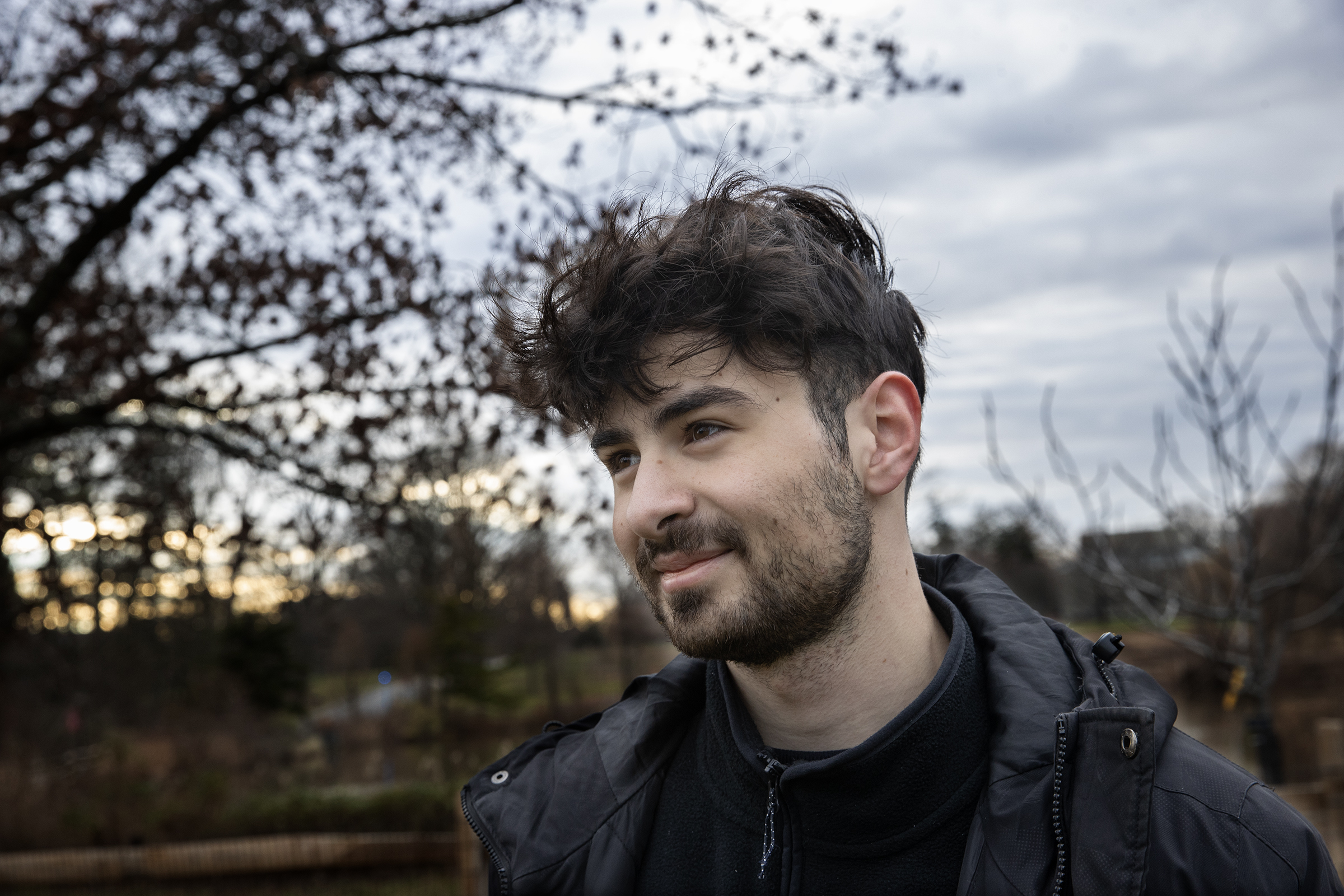
    Haverford College student Kinnan Abdalhamid, one of the three Palestinian American men who were shot in Vermont in 2023.Charles Fox / Staff Photographer

    The case garnered national attention because of the rising tensions around the Israeli-Palestinian conflict and the continuing fallout of the Oct. 7 attacks close to two months prior. All three students were of Palestinian descent, speaking Arabic, and two were wearing keffiyehs at the time of the attack, according to police.

    Abdalhamid, who was 20 at the time, returned to campus weeks later, calling on school leaders to join him in calling for a ceasefire.

    “I’ve gotten more than enough support as an individual,” Abdalhamid said in December 2023. “I’m advocating for the school to back a ceasefire.”

    The parents of the victims and groups including the Arab American Anti-Discrimination Committee asked that the attack be investigated as a hate crime, though prosecutors could not support the charges.

    The Chittenden County State’s Attorney Office is seeking a life sentence for Eaton.

  • The Netherlands is bracing for potentially devastating U.S. sanctions against the ICC

    The Netherlands is bracing for potentially devastating U.S. sanctions against the ICC

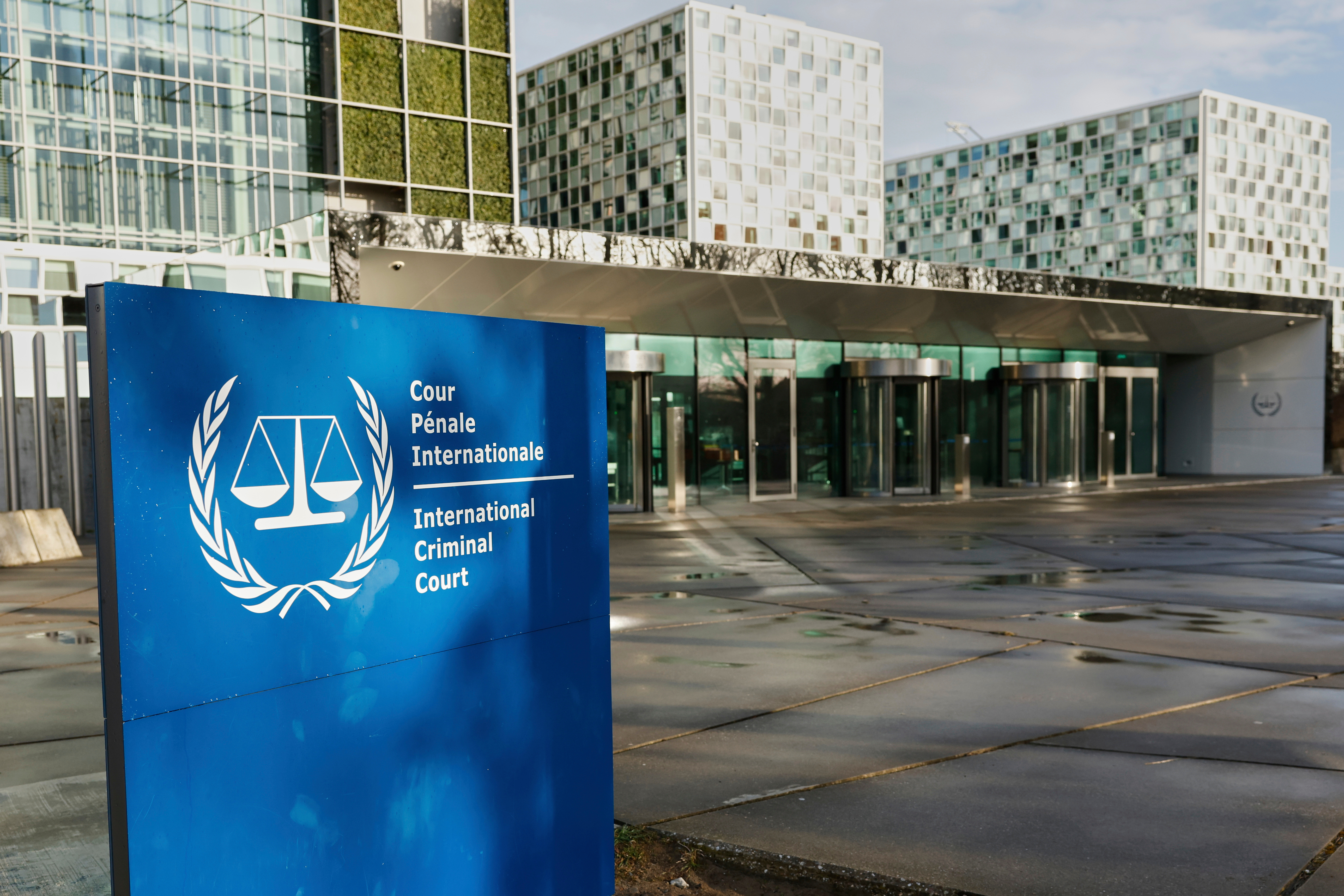
    THE HAGUE, Netherlands — Dutch officials are preparing for the United States to impose a tough new round of sanctions on the International Criminal Court as it seeks to dismantle the global tribunal over what the Trump administration sees as overstepping its authority.

    Officials in the court’s host country, the Netherlands, have been notified that the sanctions are imminent and are looking at ways to help the tribunal keep operating, including paying staff, protecting witnesses, and maintaining the detention facility, diplomatic and government officials with knowledge of the briefings told the Associated Press. They spoke on condition of anonymity because they were not authorized to speak publicly.

    Washington has already sanctioned more than a dozen current and former staff members, including half of the court’s sitting judges, in what U.S. Secretary of State Marco Rubio has described as a “sweeping campaign to dismantle the threat posed by the International Criminal Court.”

    The U.S. and Israel have strongly objected to the court’s arrest warrants for top Israeli officials, including Prime Minister Benjamin Netanyahu, over the war in Gaza. The U.S. also has opposed investigations into its military actions in Afghanistan.

    Like Russia, China, India, and Israel, the United States is among countries that have never joined the panel, with Washington citing fears of politically motivated prosecutions of its military. The court currently has 125 member states.

    The sanctions could prevent the court from accessing financial and IT services, and even paying its U.S. employees. When the court’s former chief prosecutor was sanctioned in 2025, he lost access to his Microsoft email, his bank accounts were frozen, and he was barred from entering the United States.

    According to two sources familiar with the situation, U.S. officials warned their Dutch counterparts that sanctions would be levied as early as Monday and encouraged the court’s host state to withdraw from the institution.

    Two U.S. officials told the AP that more ICC sanctions may be coming, but stressed that the scale and scope of the penalties had not yet been finalized and that no announcement is expected this week. The officials were not authorized to comment publicly on the matter and spoke on condition of anonymity.

    The ICC was established in the Hague in 2002 as the court of last resort to prosecute individuals responsible for the world’s most heinous atrocities: war crimes, crimes against humanity, genocide, and the crime of aggression. It takes on cases when nations are unable or unwilling to prosecute crimes on their territory.

    U.S. officials did not immediately reply to a request for comment. “The Trump Administration has been clear: the International Criminal Court is a corrupt and fatally politicized supranational court that has maliciously abused its authority and exceeded its mandate,” Secretary of State Marco Rubio said in a statement when announcing sanctions on the court president last month. “We will not tolerate its assault on state sovereignty.”

    The ICC has been preparing for months for the possibility of sanctions. Earlier this year, the court migrated off Microsoft products onto a German software provider, according to three ICC staff members who were not authorized to speak on the record. The tribunal has also changed insurance and other financial providers to companies without a footprint in the United States, they said.

    Dutch and court officials are hoping for a six-month grace period before the sanctions come into effect, arguing that the institution needs time to sever itself from American companies, which could face huge financial penalties if they are found to be in violation.

    Beyond migrating to European-based alternatives, the Netherlands and the European Union have few options to protect the institution.

    The EU “blocking statute” can be used to protect European court staff by preventing European companies from complying with the U.S. measures, though it’s unclear whether the statute would shield the ICC itself, because it’s an international body, not a European one. EU citizens are entitled to a basic bank account, but that doesn’t provide access to credit cards or U.S. payment facilities.

    A small but growing number of the global tribunal’s member states have announced plans to leave the institution in recent months, including Venezuela and Chad.

    Chad specifically cited the United States in its decision to withdraw. Foreign Minister Abdoulaye Sabre Fadoul said in a statement that during a phone call with a U.S. official in July, “the American side expressed its concerns regarding the functioning of this institution and requested that Chad reconsider” its membership.