Category: Nation & World

  • Iran’s Revolutionary Guard warns U.S. over escalation

    Iran’s Revolutionary Guard warns U.S. over escalation

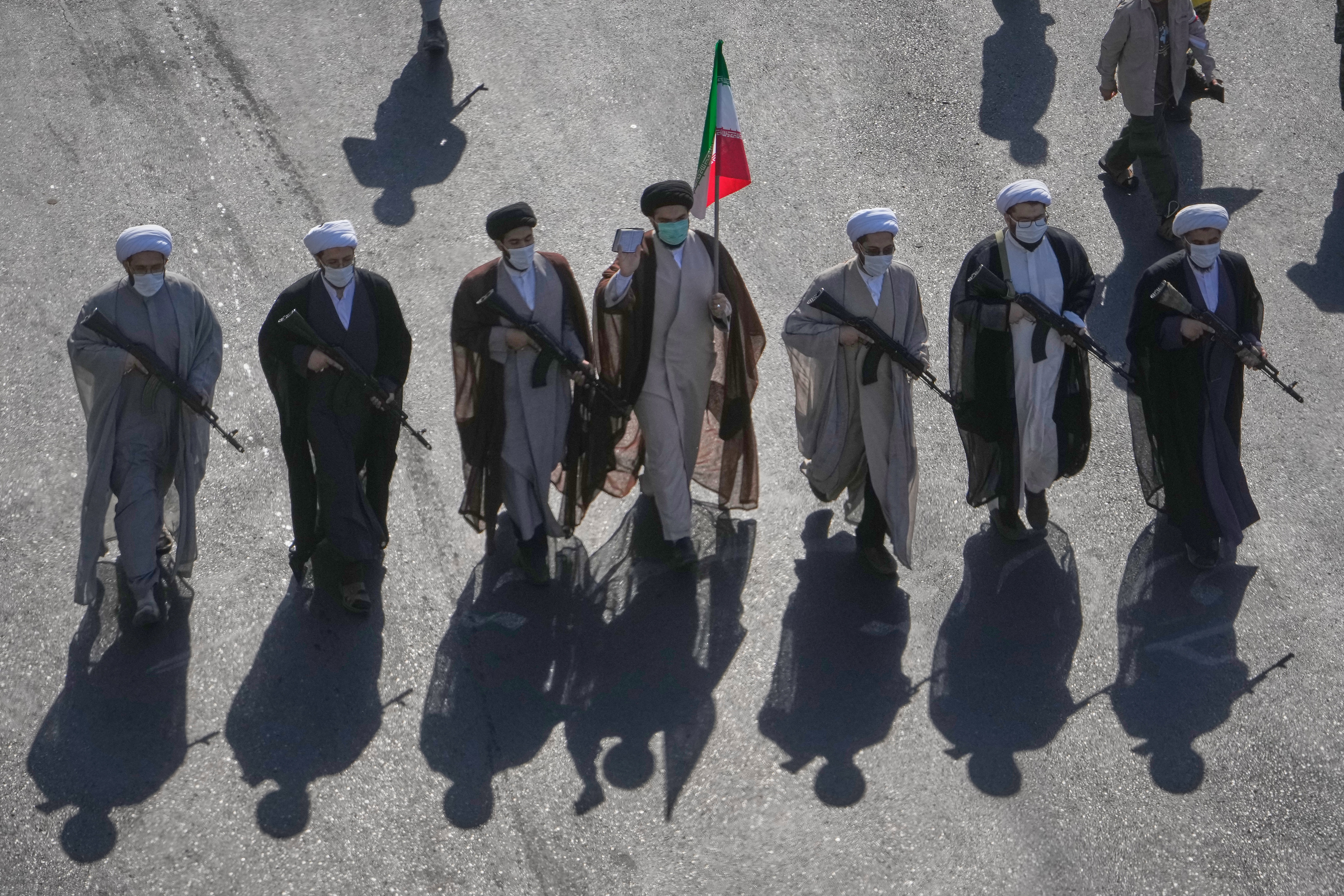
    Iran’s Revolutionary Guard warned Monday that it would “change the geography of the war” if the United States escalates the conflict.

    Meanwhile, the British military said an “unknown projectile” struck a tanker as it entered the Strait of Hormuz on Monday, injuring two crew members.

    The Israeli military remained on alert as much of the country shuts down for Yom Kippur, the holiest day in Judaism.

    Iran’s Revolutionary Guard says ‘war is not over’

    A spokesperson for Iran’s paramilitary Revolutionary Guard, Hossein Mohebbi, said Monday that “the war is not over” and warned that Iran would change its weapons, military tactics, and targets if the conflict with the U.S. escalates.

    “We will certainly change the geography of the war,” Mohebbi said in a statement carried by Iranian state media. “We will certainly bring new weapons with new capabilities into the battle.” He said the Guard had prepared for a long-term war.

    “Our targets will no longer necessarily be the same as before,” he said, according to the Islamic Republic of Iran Broadcasting, adding that Iran has targets that have not yet been struck.

    The more than six-month war began with U.S. and Israeli strikes on Iran on Feb. 28. The conflict has included repeated attacks and efforts to negotiate an end to the fighting, with no agreement reached to reopen the Strait of Hormuz or revive talks over Iran’s nuclear program.

    Projectile strikes tanker in Strait of Hormuz, British military says

    The United Kingdom Maritime Trade Operations Center (UKMTO) said a tanker was struck by an “unknown projectile” as it headed into the Strait of Hormuz. Two crew members sustained minor injuries.

    The UKMTO said Monday the vessel is reportedly continuing to its next port of call under its own power. No reports indicated any environmental impact at this time.

    Tehran has asserted control over much of the Strait of Hormuz since the U.S. and Israel launched the war on Feb. 28. In peacetime, about 20 million barrels — roughly a fifth of the world’s oil supply — passed through Hormuz each day.

    Some tankers are again traversing the strait, but traffic is well below what it once was.

    Houthi leader lashes out at Saudis in televised speech

    In Yemen, the leader of the Iran-backed Houthi rebels used the anniversary of his group’s overthrow of the Yemeni government to lash out at Saudi Arabia.

    In a recorded speech aired Monday, Abdul Malik al-Houthi said his group’s demands include an end to what he called Saudi “aggression” and the blockade the Saudi-led coalition has imposed on the rebels for about a decade.

    “Stop the aggression and end the blockade. Our demands represent the legitimate rights of our people,” he said in the speech aired by the Houthi-run al-Masirah channel.

    The Houthis descended from their stronghold in northern Yemen, taking over the capital of Sanaa in September 2014 and forcing the country’s government into exile in Saudi Arabia.

    The following year, Saudi Arabia led a multi-national coalition that entered the war in an attempt to restore the government. The coalition imposed an air and sea blockade on the Houthi-held areas, as part of its war efforts.

    WHO reports 680 new casualties in a week in Yemen

    The World Health Organization says 680 people were killed or injured across Yemen over the course of a week as fighting between the Houthi rebels and Saudi-backed government forces continues.

    WHO said on Monday in a post on X that 164 people were killed and 516 injured between Sept. 13 and Friday. This brings the total number of casualties since Aug. 6 to 3,672, including 674 deaths and 2,998 injuries.

    Lahj province in southwestern Yemen is currently an active front line where 58 deaths and 226 injuries were reported within six days, according to the U.N. agency.

    Fighting between the Houthis and government forces has so far displaced 129,438 people across seven provinces, the International Organization for Migration says.

    The IOM said in an update Monday that people escaping the conflict inside the country were forced from their homes in only a few weeks, with many already fleeing more than once.

    Israeli military on guard on Jewish faith’s holiest day

    Israel’s military remained on alert even as the country woke up to the silence and empty streets of Yom Kippur, the Day of Atonement, considered the holiest day for the Jewish faith.

    Streetlights blinked yellow Monday as the faithful walked to the Western Wall in Jerusalem’s Old City.

    “For the next 25 hours, Israel is offline,” the foreign ministry said on X after sundown Sunday. But the military said it bolstered its frontline forces following the killing of an Israeli settler Sunday in the occupied West Bank. The Palestinian suspect was detained after a search.

  • U.N. General Assembly to confront familiar crises, new conflicts and AI

    U.N. General Assembly to confront familiar crises, new conflicts and AI

    World leaders converge in New York this week for the United Nations General Assembly with the Middle East in turmoil, war raging between Russia and Ukraine, old alliances in peril, energy prices rising, and scientists warning that artificial intelligence could imperil humanity.

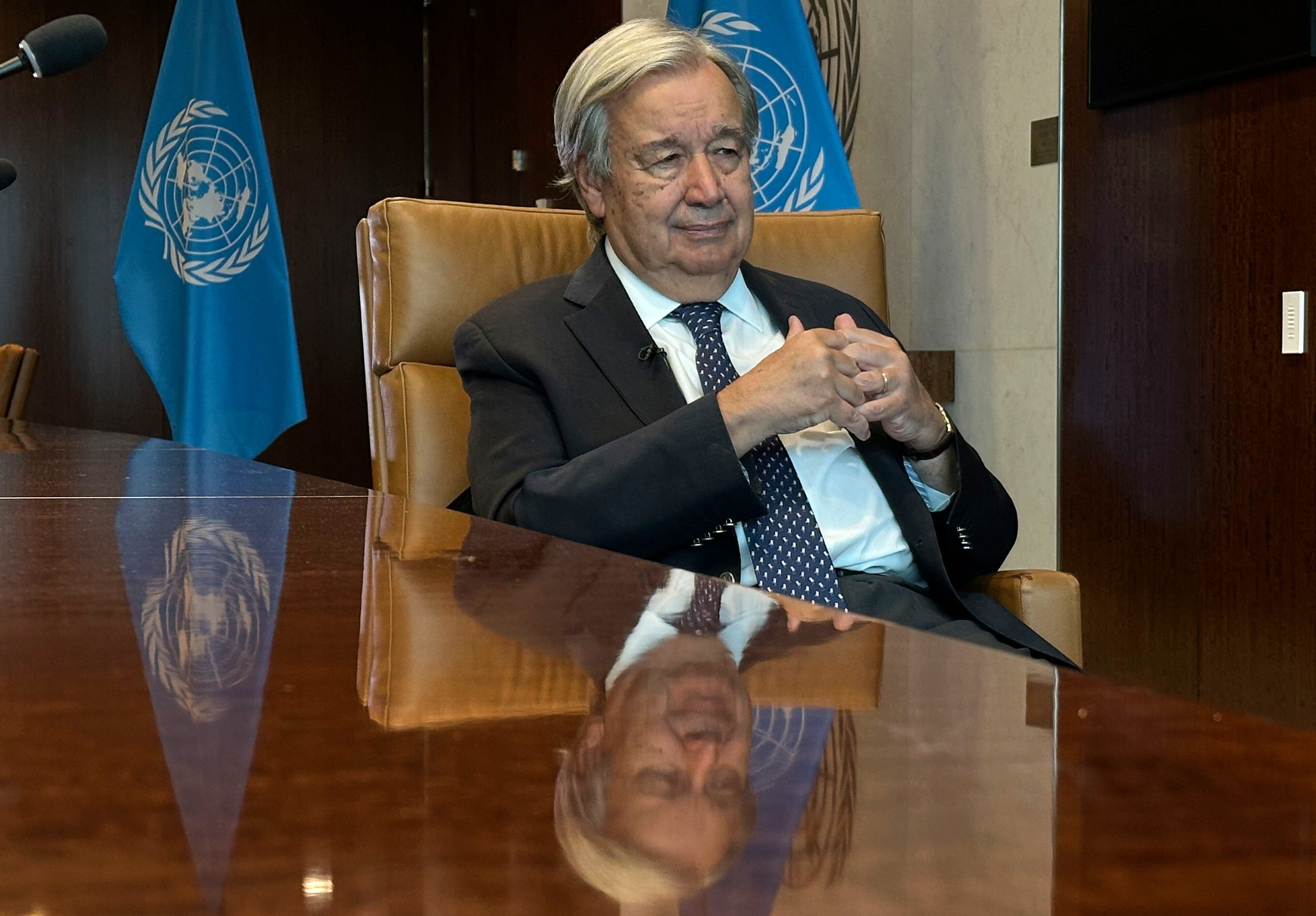
    “It would be hard to imagine a scenario as threatening as the one we’re facing right now,” acknowledged António Guterres, who has served two terms as the U.N. secretary-general since 2017 and will step down at the end of December.

    The U.S.-Israeli war with Iran and its reverberations on the world economy and oil supplies will be a major topic. And Ukrainian President Volodymyr Zelensky is expected to implore world leaders not to forget his country.

    But for the first time at the world body, the threat posed by artificial intelligence has jumped to the top of the agenda. U.N. leaders plan to seek global cooperation for guardrails around the rapidly advancing technology.

    Against the backdrop of these challenges, the U.N. is searching for its next leader, who will take the helm in January. Seven candidates are in the running after Michelle Bachelet, former Chilean president and ex-high commissioner of the U.N.’s Human Rights Council, dropped out. But so far no clear front-runner has emerged, diplomats said, because the U.N. Security Council, the body responsible for selecting the secretary-general, has not reached a consensus.

    Guterres will deliver his final address to the General Assembly on Tuesday, and he is expected to close his tenure by urging world leaders to defend international law, protect human rights, invest in sustainable development, and push for peace.

    “At a time when the world faces three existential threats — runaway artificial intelligence, the climate crisis, and the intolerable deepening of inequalities — international cooperation is more necessary than ever,” Guterres said at a recent news conference.

    He said that when he took charge of the institution years ago no one could have predicted that the world would be as it is today, roiled by conflicts and facing a multitude of crises like climate change and the seemingly unrestrained growth of artificial intelligence.

    The U.N. has defined the theme of this year’s gathering as “Restoring Trust, Managing Transformations: A United Nations That Delivers for All.” Trust and transformation have been among the biggest challenges for the U.N. as it has faced questions of relevance from donors and the public, experienced severe funding cutbacks from the Trump administration and made efforts to streamline its operations. At the same time, its 15-member Security Council stands paralyzed by divisions among its five permanent members with veto-holding powers.

    Still, while the organization said in January that it was facing imminent financial collapse and would run out of money by the summer if member states — namely the United States, its top donor — didn’t pay their annual dues, it has survived.

    Last week, the United States paid $725 million to the U.N. as part of its dues for the regular budget and $102 million for peacekeeping, but it still owes $1.3 billion in annual dues, said Farhan Haq, a U.N. spokesperson.

    Many U.N. staff members and diplomats had expressed anxiety that President Donald Trump could withdraw from the organization altogether, given his exit from U.N. agencies such as the World Health Program and the defunding of some programs as part of a policy to cut foreign aid significantly. Analysts said last year that the U.N. was in a “free fall” as it observed its 80th anniversary.

    But those fears have not materialized. Analysts said that while the U.N. was still facing a crisis, the United States had remained engaged, albeit seeking to change and bend the institution to the administration’s vision.

    Richard Gowan, a U.N. expert at the International Crisis Group, said of the United Nations, “It is still standing, and if you compare the U.N. to some of the really bad periods during the Cold War, it’s still actually far more active than it was in its darkest hours.”

    He added, “But every single year it’s a little bit less relevant; it’s a little bit more under restraint.”

    Trump is set to speak to the General Assembly on Tuesday morning, the first day of the gathering. Last year, he lectured the United Nations and other countries about how they were failing and aired a list of grievances.

    “Your countries are going to hell,” he said.

    This year, he will be facing a world rattled by his imposition of tariffs, his open disdain for allies, and the instability resulting from his war against Iran.

    The biggest hurdle for the U.N. in resolving conflicts in the past few years has been the geopolitical divisions among the five permanent powers of the Security Council: the United States, Russia, China, France, and Britain. The council, which is in charge of preventing global conflict and safeguarding stability, has been frozen over the wars in Ukraine, the Gaza Strip, and Iran because action has been blocked by permanent members with stakes in the fighting.

    The Ukraine war is more than 4 years old, the conflicts in Sudan over 3 years old, the one in Gaza closing in on 3 years old, and the United States’ war with Iran nearing its seventh month. The conflict in Iran has sent energy and oil prices soaring and has upended supply chains that rely on shipping in the Strait of Hormuz. The Houthis in Yemen and Saudi Arabia have intensified fighting in the past few weeks with another critical waterway, the Bab el-Mandeb Strait, in the Indian Ocean, under threat.

    “There is clearly a vacuum here in terms of dealing with these growing number of wars we have and other crises,” said Robert A. Wood, a U.S. ambassador to the U.N. during the Biden administration. “It is critical that we get a next secretary-general who has experience, and Rolodex, and kind of energy and background in managing, not only dealing with great powers, but in dealing with major international crises.”

    Among the speeches by leaders that will be watched closely will be the ones by Iranian President Masoud Pezeshkian; Zelensky; and Venezuela’s leader, Delcy Rodríguez, who will be making her debut on the world stage after the United States captured her predecessor, Nicolás Maduro. Others of note will be by leaders of the Arab countries in the Persian Gulf; Israeli Prime Minister Benjamin Netanyahu; and Palestinian leader Mahmoud Abbas, who will address the assembly virtually for a second year because the United States denied visas to the Palestinian delegation.

    This year, discussion of a possible two-state solution for Israel and Palestinians is expected to be more low-key than in the past, with France, Britain, Canada, and Saudi Arabia hosting a session Thursday on the sidelines of the General Assembly meeting.

    A notable number of world leaders will be absent from the General Assembly. Xi Jinping of China is traveling to Washington to see Trump on Thursday, and the meeting is expected to overshadow the speeches at the assembly in New York.

    The leaders of two nations from the so-called global south — India’s prime minister, Narendra Modi, and South Africa’s president, Cyril Ramaphosa — will also not attend.

    The Security Council will hold a session on Ukraine, as it has done for the past four years during the General Assembly meeting, and this year it has drawn new criticism that European members of the council have ignored other pressing conflicts every year to keep the spotlight on Ukraine during the high-level week.

    Despite their global repercussions, Iran and the conflict in the Persian Gulf are not on the council’s public agenda this week. Arab countries in the Gulf are expected to hold a closed-door meeting with council members and Trump on the sidelines, diplomats said.

    The council will discuss AI and the threats it poses to global security and stability. Guterres was also set to host a side event Monday to urge countries to create global regulations for the technology, and a private, invitation-only event at the U.N. that brings together heads of states and leaders of AI to debate how to govern the field.

    But a clash of opinions and visions is expected.

    The United States, China, and Russia have indicated that they oppose external rules on their own development of AI technology, and Trump recently denounced such efforts as a “sick conspiracy.”

    Guterres said the world cannot “afford a race to the bottom on AI safety.” He added, “We need guardrails to build trust, and that make AI safe, transparent, accountable, with human dignity at the center.”

    This article originally appeared in the New York Times.

  • Ukraine marks Putin’s scripted election win with assault on Moscow refinery

    Ukraine marks Putin’s scripted election win with assault on Moscow refinery

    As the first parliamentary elections in Russia since the 2022 invasion of Ukraine delivered a scripted victory on Sunday to Vladimir Putin, Ukraine pummeled the Moscow region with drones and missiles, hitting a key oil refinery and showing that winning the war remains out of reach for the Russian leader.

    The Ukrainian air attack, one of its largest on Russia’s capital area, killed at least three people, local officials said, and damaged the refinery in Kapotnya, on Moscow’s southeastern edge, which supplies a large share of the city’s fuel, including for diesel and aviation. Videos on social media showed it on fire.

    The strike contradicted President Donald Trump’s assertion last week that Ukraine and Russia had agreed to halt attacks on energy targets. Trump insisted that the war in Ukraine — not his own war against Iran — is driving up diesel prices in the United States. Experts more commonly cite the war in the Middle East.

    The refinery in Kapotnya has been hit several times, and the Moscow region has experienced intermittent fuel shortages in the aftermath of each attack. On Monday, lines formed again at gas stations, which began rationing supplies.

    A day before claiming the supposed energy truce, Trump urged Ukrainian President Volodymyr Zelensky to “stop knocking out diesel fuel” targets in Russia, saying the attacks were contributing to a global shortage. Late on Sunday, Zelensky said that he had spoken with Trump and that they had agreed to meet on the sidelines of the U.N. General Assembly in New York.

    “There are ideas for de-escalation steps and for addressing fundamental security issues — energy security, food security, and the protection of human life,” Zelensky posted on X. “We are working together with the American team and are ready to take really serious steps.”

    Zelensky also thanked Trump for signing into law what the Ukrainian leader called the “sanctions from hell” legislation, a bill co-written by Sen. Lindsey Graham (R., S.C.) before his death that authorizes the president to impose sweeping sanctions on Moscow and additional tariffs on countries that continue to buy Russian energy.

    The law gives Trump considerable latitude in its implementation, including over which countries could face tariffs and at what rates, as well as discretion to waive sanctions for certain countries.

    The Kremlin said Monday that the signing “certainly does not contribute to the revival of bilateral relations” between Russia and the United States. “And, of course, it is unlikely to contribute to more successful progress toward a resolution of the Ukrainian conflict,” Kremlin spokesperson Dmitry Peskov told reporters.

    Moscow Mayor Sergei Sobyanin said more than 1,600 drones had been intercepted and shot down Sunday, 450 of them aimed at Moscow. Russian officials have been accused of inflating such figures.

    “The unprecedented attack was obviously planned with the aim of disrupting the elections,” Sobyanin posted on Telegram. “The enemy did not succeed.”

    With 95% of ballots counted in Russia’s national parliamentary vote, the Central Election Commission said Monday morning that United Russia, the party that serves as an extension of Putin’s policies, was in first place with 57.8% and the Communist Party in second at 13.8%.

    The election was decried as sham by Russian opposition leaders, election watchers, and foreign officials.

    “United Russia has ‘won’ an election it was never allowed to lose. There was no genuine political competition and little room for voices outside the Kremlin’s line,” Slovenian Prime Minister Janez Jansa wrote on X. “This was not a mandate. It was political theatre designed to manufacture support for Putin’s war.”

    The core mechanism of staged elections in Russia is local authorities pressuring public-sector workers to go to the polls in support of the government, with employers tracking turnout and demanding that employees send photos of their ballots as proof that they voted to achieve the desired result.

    This year, however, criticism of the election procedures also came from Gennady Zyuganov, the longtime leader of the Communist Party, who described the campaign and the vote count as a “return to the wild ’90s.”

    In an interview with state media, Zyuganov lamented pressure on voters, and he alleged numerous irregularities. In one region, he said, his party’s poll observers “were removed, completely illegally.” Zyuganov said the party would compare its copies of polling station protocols with the official count.

    In Russia, uncertainty has swirled over many aspects of life, even as the election outcome was a foregone conclusion.

    The results announced Monday guarantee that Putin will remain firmly in control, amid inevitable speculation over who will succeed him when he is gone.

  • ICE hides locations of thousands of detainees with final removal orders

    ICE hides locations of thousands of detainees with final removal orders

    U.S. Immigration and Customs Enforcement has stopped publicly revealing where it is holding thousands of detainees who are subject to final deportation orders, an unannounced move that has made it far more difficult for lawyers and relatives to find them, according to current and former officials familiar with the practice.

    ICE removed those detainees from its online detainee locator system on Sept. 15, according to three current and former ICE officials who spoke on condition of anonymity because they were not authorized to discuss the change. Several lawyers contacted by the Associated Press confirmed their clients vanished from the system this week, and the American Immigration Lawyers Association warned its members about the situation Friday.

    The move represents a stark departure from previous practice and highlights the hardline nature of President Donald Trump’s immigration crackdown, leaving thousands of detainees exceedingly hard to trace and potentially unable to exercise all of their legal options.

    The practice, which applies to detainees who have received final orders of removal from an immigration court, could speed deportations by making last-minute legal challenges harder to pursue, immigration lawyers said. Nearly 16,000 people who were arrested and booked into ICE detention in July were subject to final removal orders, more than a third of the overall bookings, according to ICE data obtained by the Deportation Data Project based at U.C. Berkeley and UCLA.

    The practice does not apply to detainees held at a detention facility in Adelanto, Calif., or at temporary holding facilities in Minneapolis, New York City, or suburban Chicago, the sources said. Judges have ordered ICE to list detainees in those facilities in the online locator promptly upon their arrival, as part of litigation over their detention practices.

    Lawyers, relatives distressed by lack of information on detainees

    The effort to hide their locations adds to the ways in which the Trump administration has made life harder for detainees and their families as it has increased pressure on them to waive appeals and agree to deportation.

    ICE did not publicize the move and in a statement issued to the AP, the agency did not confirm or deny it. The statement said detainees with final removal orders were being prioritized for deportation, even as ICE faces a “historic number of injunctions” from courts stopping individual removals.

    As a result of the change, lawyers and relatives lost track of their clients and loved ones without explanation, which is especially concerning because detainees are frequently moved to new facilities before deportation, said Greg Chen, senior director of government relations at the American Immigration Lawyers Association.

    “Families are freaking out because they think the person has been deported and they don’t know where the person might be,” he said. “On the attorney side, this has serious implications for the ability to contact their client. It certainly has implications about how it will interfere with the attorney-client relationship.”

    The Department of Homeland Security, ICE’s parent agency, has argued that people who are subject to final removal orders have received due process. That usually means an immigration judge has ordered their removal after a hearing, including cases when immigrants fail to show up, and the decision was affirmed on appeal or not appealed.

    Detainees with final removal orders still have options to appeal

    Still, those detainees have options to challenge their detention and removal, including seeking to reopen the case or by bringing what’s known as a habeas petition asking a judge to release them on constitutional grounds. Federal judges have granted thousands of rulings ordering that detainees be released or granting bond hearings.

    ICE detention facilities held more than 65,000 people as of early July, the most recent available data. Around 30% of them likely have final removal orders, said Michelle Mendez, legal director at the National Immigration Project.

    More people have been issued final removal orders after failing to show up for hearings in recent months because the administration’s immigration courts have taken steps to make it harder to participate in and to reopen such cases, she said.

    “To me, it’s just another iteration of disappearing people,” she said. “Why would we do that in the United States of America? It’s something we’d hear about in another country and be concerned about individual rights and due process.”

    Some with final removal orders also have legal protections against deportation to their countries of origin based on the likelihood they would be tortured or persecuted. Many of them are facing removal to third-party countries where they have no ties and their disappearance in ICE’s system will make legal challenges harder, lawyers said.

    Lawyers say clients have vanished from ICE locator system

    ICE initiated the online detainee locator system in 2010 to allow relatives, lawyers, and the public to search for people in custody. Previously they had to call ICE regional offices or individual facilities to try to track them down.

    Many advocates and lawmakers have complained that the system updates too slowly and contains too much inaccurate or missing information, allowing ICE to shield the locations of detainees for days or weeks. Minors, people who have been held by U.S. Customs and Border Protection for less than 48 hours, and detainees who are being transported are not in the system, among others.

    But the exclusion of detainees with final removal orders has no apparent parallel, several immigration lawyers said. Atenas Burrola Estrada, a deputy program director with the Amica Center for Immigrant Rights, said that “every single one of our clients who has a final order has disappeared from the locator,” including 17 in all as of Monday.

    Among those disappeared from the locator system are eight Somali men being detained at the U.S. military base in Guantanamo Bay, Cuba, according to one of their attorneys, My Khanh Ngo, of the American Civil Liberties Union. She said the change could make it “nearly impossible” for people to challenge their removals in some cases.

    “If you can’t find your client, don’t know what’s happening to your client, you can’t get that information to the court to stop their removal,” she said.

  • German leader faces tough time ahead after election defeats, but no sign of leadership challenge

    German leader faces tough time ahead after election defeats, but no sign of leadership challenge

    BERLIN — German Chancellor Friedrich Merz stood by his vow to stay in office Monday after his party suffered two more regional election defeats and was voted out of a state legislature in a humiliating first. But he faces a struggle to keep his reform agenda intact.

    Minutes after polls closed on Sunday, the unpopular Merz said he planned to stay on as leader of both Germany and his center-right party, and said that he would push through reforms to Europe’s biggest economy.

    Hours later, final results underlined the extent of what Merz conceded was a “disaster” in Mecklenburg-Western Pomerania, an eastern region on the Baltic Sea coast. His center-right Christian Democratic Union fell just below the 5% of the vote needed to keep seats in the regional parliament, the first time that has happened in 77 years of modern Germany’s federal republic, after losing more than half its support. The far-right Alternative for Germany finished as the strongest party.

    In Sunday’s other election, the CDU dropped to second place in Berlin behind the hard-left Left Party, which is in pole position to lead the next city government — though Merz’s party could, depending on how coalition talks go, still retain city hall.

    But after days of speculation about Merz’s future, there were no prominent public calls Monday for his departure and no sign of a challenge. The chancellor said no one raised any “personnel questions” in party leadership meetings Sunday or Monday.

    “It is the historic task of the (governing) coalition here in Berlin and the political center as a whole to make our country fit for the coming years,” Merz said. “Extremists suggest that there are easy solutions. But everyone who has ever governed knows there are no easy solutions.”

    At the same time, he acknowledged that the CDU needs to work on its profile. He said that it “no longer has satisfactory answers to too many questions, and we will and must change that.”

    A far-right party gains again

    Neither of the states that voted Sunday is a political heavyweight. The CDU’s 2023 win in Berlin was its only one in the past 25 years in the capital, which has tended to lean left. The party was already weak in Mecklenburg-Western Pomerania.

    But the results added to the headwinds Merz faces after a stinging defeat by the far-right, anti-immigration Alternative for Germany, or AfD, two weeks ago in Saxony-Anhalt, another region in the formerly communist east, damaged his authority and set off speculation that he might be replaced.

    While AfD was the strongest party in Mecklenburg-Western Pomerania, the center-left Social Democrats — the junior party in Merz’s national governing coalition — were fairly close behind after a campaign focused squarely on the state governor, Manuela Schwesig, as a bulwark against the far right. That polarization helped squeeze other mainstream parties, including the CDU.

    A left-leaning three-party coalition under Schwesig would have a majority in the new regional legislature.

    Questions over how Germany should be reformed

    Schwesig and others in the governing parties have cast doubt on aspects of the federal government’s reform agenda, which is meant to bolster a chronically sluggish economy. The reform plans include a potentially painful overhaul of the creaking pension system and of the healthcare system. A proposal to scrap a rule allowing people who have paid pension contributions for 45 years to retire early without taking a financial hit has drawn particular criticism.

    The Social Democrats’ national leaders said Monday that they stand by the coalition. But they made clear that they will seek at least some changes to the plans.

    Vice Chancellor Lars Klingbeil, who is also the finance minister, said that “saying we will ignore what voters told us in three state elections won’t work.”

    “We need reforms, but these reforms must be fair and they need support in the population,” he said. The party’s other co-leader, Labor Minister Bärbel Bas, said the plans need a “reality check” and a “fairness check,” but that she was optimistic of finding solutions on the pension system reform, the most controversial plan.

    “There would be nothing more lethal than letting this coalition break apart over some technical question,” Bas said.

    Merz said he wouldn’t speculate about “where we must make corrections.”

    There are at least no more electoral tests this year. However, five state elections are scheduled next year, three of them in April.

    They include one in North Rhine-Westphalia, Germany’s most populous state, currently led by a prominent CDU figure often cited as a possible successor to Merz, Hendrik Wüst. None of the five elections is in the east, where AfD is strongest.

    Looking forward, much will depend on the CDU’s influential regional leaders. But there was no sign of a challenge to Merz Monday from them or others.

    “You get the feeling that the stronger figures are trying to stay away from Berlin at the moment,” Thomas Poguntke, a longtime political science professor at the Heinrich Heine University in Duesseldorf, told Phoenix television.

    “Swapping out a leadership figure wouldn’t achieve so terribly much now,” he added, but the chancellor has made avoidable mistakes in the past, “and the government’s handicraft simply must improve.”

  • World leaders meet at UN as their planet grapples with war, division, runaway AI and climate shocks

    World leaders meet at UN as their planet grapples with war, division, runaway AI and climate shocks

    UNITED NATIONS — Under a global cloud of wars and bitter divisions, world leaders meet at the United Nations this week facing new fears that runaway artificial intelligence could threaten humanity even as climate shocks and escalating prices are already making life much tougher for hundreds of millions of people.

    The annual high-level gathering at the U.N. General Assembly will also be consumed with major wars in Iran, Gaza, Ukraine,Sudan, Congo and Myanmar and a persisting question: Can the leaders do anything to end them?

    And what can they do about the relentless rise of global warming threatening the future of the planet, the growing inequalities within and among nations, and shocks to the global economy as blocked shipping routes and supply chains increase the cost of living and slow growth?

    The future of the United Nations will also definitely be on the agenda. At 81, its powers are still the victorious nations from World War II, not the 21st century’s major global players. The U.N.’s 193 member nations have agreed to a wide-ranging reform package that includes updating key institutions such as the powerful U.N. Security Council, where the U.S., Russia, China, Britain and France hold inordinate sway because of their veto power. Reform, however, is easier said than implemented.

    Behind the scenes, there will be speculation about who will lead the United Nations next. Secretary-General Antonio Guterres’ second five-year term ends Dec. 31 and no clear successor has emerged.

    This meeting is still pivotal

    There is still no question that the U.N. remains THE gathering place for its 193 member nations and their leaders. Some 130 heads of state and government are expected to speak at the General Assembly starting Tuesday along with dozens of ministers.

    Among the headliners will be U.S. President Donald Trump and French President Emanuel Macron. Both will speak Tuesday after Guterres’ opening “state of the world” address. Ukraine’s President Volodymyr Zelenskyy and Iran’s President Masoud Pezeshkian speak Wednesday.

    Israeli Prime Minister Benjamin Netanyahu — whom New York Mayor Zoran Mamdani wanted arrested for his treatment of Palestinians in Gaza until he learned he has no such authority — will address the assembly on Thursday. For a second year, Palestinian President Mahmoud Abbas won’t be coming to the U.N. because the U.S. has refused to give him a visa. He will nonetheless address the assembly by video the same day.

    The United States, under its agreement with the U.N. to host the organization, is required to allow diplomats from all member nations to attend meetings.

    Equally telling is who else isn’t coming. China’s President Xi Jinping is meeting Trump in Washington on Wednesday, yet he is skipping — some diplomats say snubbing — the U.N. gathering and sending a vice president instead. Russian President Vladimir Putin isn’t coming either, and Indian President Narendra Modi has backed out.

    France’s U.N. ambassador, Jerome Bonnafont, said it is “extremely critical” for world leaders this week to support the U.N. as the place where the world’s nations meet — especially at a time of such polarization.

    “We believe in multilateralism,” he said, ”and we believe that the high-level week is the occasion for countries in the world to reaffirm that they prefer cooperation and dialogue to confrontation.”

    United Nations has not had a great year

    There is no doubt it’s been a tough year for the world body. It has been pushed to the sidelines when it comes to its key responsibility of ensuring international peace and security and trying to end major conflicts in the Mideast and Ukraine. The U.S. failure to pay billions of dollars in outstanding arrears has left the organization’s finances in rocky shape.

    But veteran U.N. watcher Richard Gowan, the International Crisis Group’s global issues and institutions program director, says 2025 was even worse.

    A year ago, he said, people were contemplating that Trump would use his U.N. speech to announce that the United States would leave the world organization. Trump didn’t announce a pullout last September and the U.N. muddled through the past 12 months with financial troubles that forced cutbacks to its peacekeeping operations and humanitarian aid.

    In recent days, the U.S. paid $725 million of its dues to the U.N.’s regular operating budget for this year, enough to keep the Trump administration from losing its vote in the General Assembly. The payment was a strong indication Trump will keep the U.S. in the United Nations.

    The U.N. is no longer “in freefall,” Gowan said, but it “is stuck in an open-ended or permanent crisis.” Put more graphically, he said, “The U.N. may not be in emergency care like it was last year, but it does seem to be trapped in a trauma center for the foreseeable future.”

    Former U.N. deputy secretary-general Mark Malloch-Brown, a United Nations Foundation board member, said, “While the world still trusts the U.N., the global public is eager for change.”

    AI is pushing toward the center of the agenda

    The future of artificial intelligence has pushed to the forefront of global concerns, with its speeding advances and the dawning recognition that there are no industry controls, let alone any global guardrails for a technology that has many advantages but also many disadvantages and unknowns.

    Days before the global gathering, leaders of three major AI companies warned about the technology getting out of human control and called for a pause, but Trump dismissed their concerns as “a hoax,” and urged continued advances to keep the U.S. ahead of China.

    The U.N. Security Council added a high-level meeting on AI to its agenda on Wednesday afternoon, a sign of the growing apprehension and need to address the issue. It was already slated to hold a high-level meeting on Ukraine with Zelenskyy on Wednesday morning.

    For the U.N. chief, this will be his last assembly meeting with global leaders. He previewed his speech last week, telling U.N. reporters that power is shifting in “an era of deep uncertainty.”

    “At a time when the world faces three existential threats,” he said, “international cooperation is more necessary than ever.”

    Others will be vying for the spotlight on issues from rising sea levels and funding education to the fight for gender equality. Hundreds of private meetings will also convene in U.N. cubicles, hotels, diplomatic missions and restaurants.

    Esther Brimmer, a senior fellow in global governance at the Council on Foreign Relations and former U.S. assistant secretary of state for international organization affairs in the Obama administration, said in-person meetings can help countries hash out ideas that get implemented months later.

    She called the situation in 2026 “much more serious and complex than in decades past.”

    “With that said, I’m also not without hope as well,” Brimmer said. “Over the past decades we’ve learned a lot about international cooperation.”

  • Man shot by ICE officer is detained in Texas with a bullet still in his back, attorney’s office says

    Man shot by ICE officer is detained in Texas with a bullet still in his back, attorney’s office says

    AUSTIN, Texas — A Venezuelan man shot by a U.S. Immigration and Customs Enforcement officer was in custody Monday at an ICE detention center in Texas after he was released from a hospital with a bullet still lodged in his back, the man’s attorney said.

    Speaking by phone during a news conference, Wilber Rafael Garces Perez said doctors didn’t remove the bullet because it’s near his spine. He said ICE pressed for him to be released quickly from the hospital so it could move him to a detention center. He said he had received no pain medication or treatment there, and had slept on the floor, before eventually being given a “pill” by a nurse on Monday.

    Perez, 28, was making a DoorDash delivery in Austin on Sunday when his car was “sideswiped” twice by ICE officers in an unmarked truck, immigration attorney Kate Lincoln-Goldfinch told reporters Monday.

    An ICE officer shot Perez in the back of the neck before officers pulled him from his car, she said. He was taken to a hospital, Lincoln-Goldfinch said, but was released later Sunday into ICE custody with the bullet still inside him.

    “I am not doing well due to the gunshot wound, and I have not received the medical attention that I require,” Perez said, speaking in Spanish over the phone as his wife translated during the news conference.

    Perez was being detained at the South Texas ICE Processing Center in Pearsall, about 130 miles southwest of Austin, Lincoln-Goldfinch said. She said Perez told her in a prior phone call that he was being interrogated.

    The Department of Homeland Security, which oversees ICE, has released little information and has not said what prompted the shooting. In a statement early Monday, the department said it was investigating the shooting of a Venezuelan man in the U.S. illegally who “had a final order of removal.”

    Homeland Security did not immediately respond to email messages seeking further comment on the shooting.

    Perez entered the U.S. legally in 2024 as an asylum seeker and had a valid work permit, Lincoln-Goldfinch said. She said a judge issued a deportation order for Perez after he missed a hearing in immigration court because the hearing notice was sent to a former address.

    “Not that being out of status would justify any of this at all,” Lincoln-Goldfinch said of the shooting in a social media post.

    The shooting occurred amid a surge in ICE enforcement across the U.S. during President Donald Trump’s second term. During the summer, it reported more than 50,000 monthly arrests in July and August — a first for the agency.

    Immigration officers have come under intense scrutiny amid a series of shootings during the crackdown. At least four people have been fatally shot by federal officers during immigration enforcement operations this year.

    Local advocates, leaders of the civil rights group the League of United Latin American Citizens, and two Democratic congressmen who represent parts of Austin called during the news conference for the creation of an independent body to review use-of-force incidents by ICE and refer suspected crimes to prosecutors.

    They also urged Congress to ban ICE officers from making traffic stops, saying the officers are undertrained and too quick to resort to violence.

    Austin Mayor Kirk Watson, a Democrat, has said he wants local police to have a role in investigating the shooting. Watson said it wouldn’t be appropriate for ICE to investigate on its own.

    The area beneath an overpass where a large crowd of protesters had gathered Sunday near the shooting scene was quiet Monday. Trash-filled plastic bags were left below concrete pylons marked with anti-ICE graffiti.

    Amid discarded police tape, people left candles, flowers, and a sign that read “Justice for Wilber.”

  • TV networks halt pool coverage of White House as CNN, MS NOW, Politico prepare to sue Trump

    TV networks halt pool coverage of White House as CNN, MS NOW, Politico prepare to sue Trump

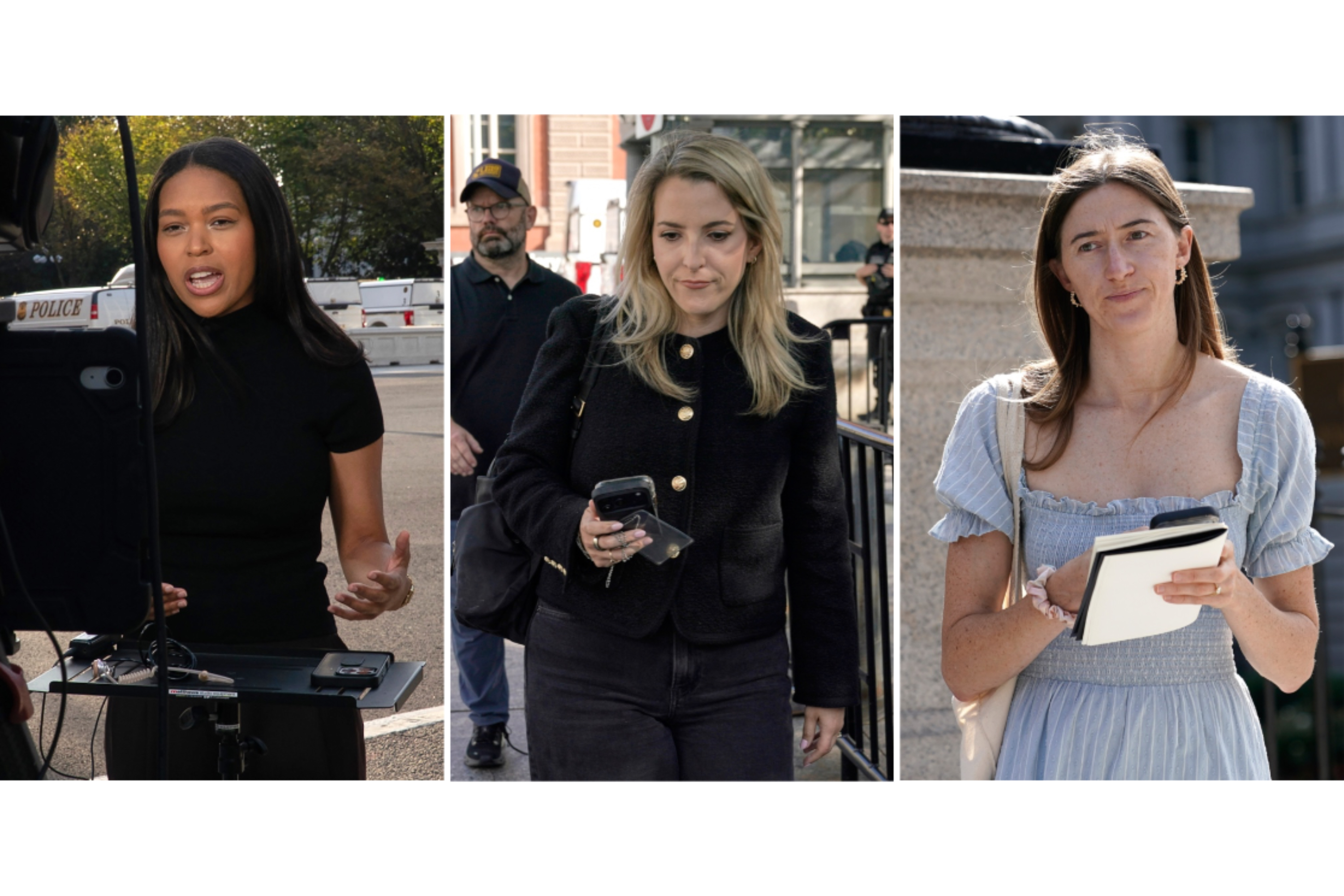
    Major television networks will halt TV coverage of presidential events, according to a memo obtained by the Washington Post, over the White House’s ban of CNN — which was barred alongside MS NOW and Politico in recent days — while the three news organizations have said they’re suing the government, alleging violations of their constitutional rights.

    “This is to advise that, effective today, the TV pool will not be covering events designated as pool coverage of the President,” Bryan Boughton, the Fox News Washington bureau chief and chairperson of the TV pool, wrote in a memo to the White House press corps that was obtained by the Post.

    “This follows the White House’s position preventing CNN from fulfilling its assigned pool duties. There will be no replacement pool put in place. All other pool coverage will continue as normal, including Congress, VIPs, and selected events in Washington and around the country.”

    In a joint statement Monday, the five members of the rotating TV pool wrote: “The public has a vital interest in receiving accurate, independent information about its government. No administration should restrict a news organization because it objects to its reporting.”

    The banned outlets released a statement Monday saying they would be filing suit: “This morning, we notified the government that we are filing a lawsuit today to protect our First Amendment rights and defend the principle that the government does not decide what the press reports or publishes. Without notice or process, the White House revoked our journalists’ credentials because it objected to our reporting. Left unchallenged, this threatens press freedom and the public’s right to independent journalism free from government interference.”

    The complaint, which was filed in federal district court in Washington, alleges violations of the news outlets’ First Amendment free press rights and Fifth Amendment due process rights. They are asking for an expedited hearing from a judge.

    Trump said Friday he would ban MS NOW, CNN, and Politico from the White House, saying he disliked how they covered him. “They’re fake news,” he said. The following day, the organizations said that their journalists had been denied access to the White House grounds and that their press passes were confiscated.

    Trump addressed the bans Monday in a post on Truth Social.

    “The White House is not instituting an assault on the Free Press, something which I cherish,” he wrote. “It is instituting an assault on the FAKE NEWS, something that has grown like Cancer in our beloved United States of America. It is corrupt, purposeful, pervasive, fully coordinated, and totally out of control. It is a threat to our National Security, and must be stopped, NOW!” When asked for comment, the White House referred the Post to this post on Truth Social.

    White House reporters for each of the outlets — MS NOW’s Akayla Gardner, CNN’s Betsy Klein, and Politico’s Cheyenne Haslett — are also plaintiffs in the suit. Trump, White House Chief of Staff Susie Wiles, White House communications director Steven Cheung, and Secret Service Director Sean M. Curran are named as defendants in their government capacities.

    The plaintiffs, represented by First Amendment lawyer Theodore J. Boutrous Jr., are asking a federal judge to strike down the ban as unconstitutional and restore the outlets’ access.

    In a statement, Boutrous called the ban “a direct assault on the First Amendment and a blatant violation of due process” and said the law is on the plaintiffs’ side.

    CNN, MS NOW, and Politico have received nearly unanimous support from fellow news organizations as well as press advocacy organizations in recent days. White House Correspondents’ Association President Jacqui Heinrich, a Fox News reporter, wrote in a statement Saturday that the bans violate the First Amendment and called upon the White House to restore the reporters’ access.

    “The American people, through a free and independent press, must be able to scrutinize those elected to power, regardless of whether government officials view it favorably,” she said.

    The Knight First Amendment Institute at Columbia University said it plans to support the news outlets in court. Jameel Jaffer, the group’s executive director, said the bans constitute “an attack both on press freedom and the public’s right to independent information about the government.”

    During his first administration, Trump banned CNN reporter Jim Acosta and later Playboy reporter Brian Karem from the White House, though both were allowed back after they sued the government. Those cases, along with a 1977 case involving Robert Sherrill of the Nation, were highlighted in the new complaint.

    CNN’s ban in particular has created logistical hurdles for the news media. The network is one of five poolers — along with ABC, CBS, NBC, and Fox News — that rotate primary responsibility of covering the president with television cameras. The White House removed the network from its schedule Monday, presumably leaving the president without designated TV cameras filming him during his trip to the United Nations in New York.

    The pool is a way for the networks to split the hefty costs of following the president around with TV cameras. The assigned network records and distributes a live feed that other news outlets can use. Without a TV pooler, there will be scant video coverage of Trump unless news outlets take their own video or use feeds provided by the White House.

    The Associated Press reported that Trump showed off his new White House helicopter landing pad on Monday, attempting to brush aside the First Amendment firestorm even as major television networks kept their cameras away in protest of CNN being banned from the grounds.

    A light drizzle fell on the South Lawn as Trump used oversized gold scissors to cut a red, white and blue ribbon. He then exchanged handshakes with officials and with some members of a construction crew wearing green smocks and hardhats — seeking to portray business as usual.

    If he had words to mark the occasion, however, it was impossible to hear them over the noise of his waiting helicopter. Normally, TV network crews work to capture clearer audio.

    Trump also didn’t answer reporters’ shouted questions before climbing aboard Marine One for an eventual flight to New York. Instead, he wrote on his social media site, “We are just leaving the White House Lawn on the maiden voyage from the newly built, and very beautiful, Heliport!”

    Trump has long crowed about how the new helipad — featuring extensive granite that he boasts will have a “million-year life,” as well as a large insignia reading the “Seal of the President of the United States” — would impress Chinese President Xi Jinping, who arrives Wednesday for a state visit.

    He’s been focused on wowing Xi even as he decried Democrats as communists in an attempt to help Republicans retain control of Congress in upcoming midterm elections. But his effort to curb access for media outlets to the White House has overshadowed Trump’s pet building projects and Xi’s visit.

    Igniting constitutional questions over media access also eclipsed the reason Trump was lifting off from the helipad — the annual trip to attend the United Nations General Assembly beginning today.

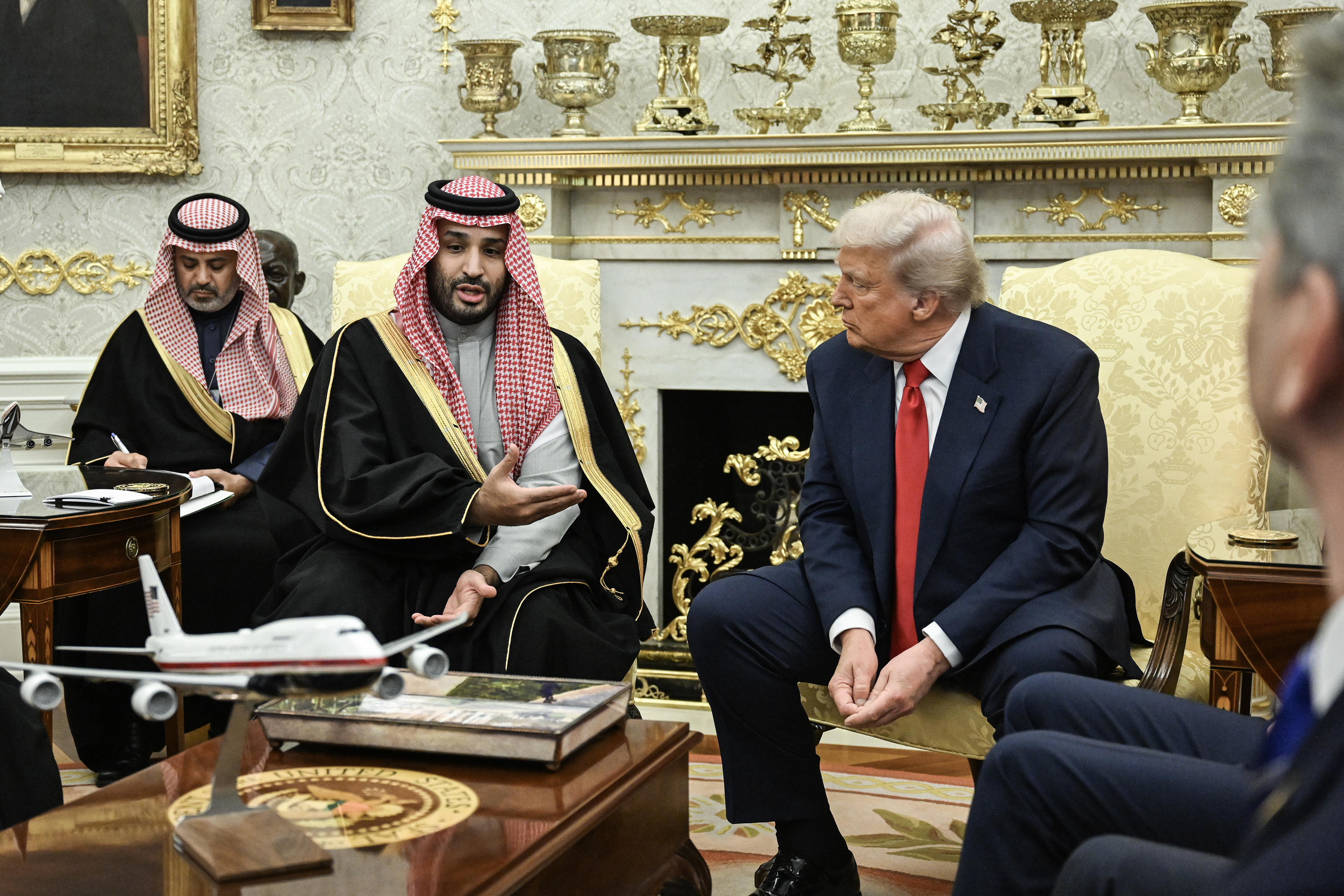
  • Trump gets caught in a dilemma over a Saudi plea for military help

    Trump gets caught in a dilemma over a Saudi plea for military help

    For two weeks, the question of whether to yield to pleas from Saudi Arabia and order the U.S. military to strike targets in Yemen controlled by the Iran-backed Houthis has bedeviled President Donald Trump.

    A decision to go forward could open another front in the war against Iran that Trump started but has been unable to end as it spreads economic shock around the globe.

    The president had wavered for weeks over the Saudi appeals for help in fighting the Houthis, who took advantage of the instability in the Middle East and reignited their war with the kingdom this summer.

    But things came to a head Thursday: Crown Prince Mohammed bin Salman, the kingdom’s de facto leader and a major ally in the Iran war, called the president to implore him, again, to step in to help blunt the rapidly advancing group, administration officials said.

    Trump had met with advisers just the day before and told them he did not favor strikes. But after speaking with the Saudi crown prince, he reversed himself and told the Pentagon to prepare for airstrikes against the Houthis.

    But by midday Sunday, the president appeared to have reversed himself again. There would be no U.S. airstrikes against the Houthis — at least not for the time being, according to administration officials. The officials spoke on the condition of anonymity because they were not authorized to discuss military planning.

    The White House press office declined to discuss Trump’s deliberations for the record. A senior administration official would say only that “the U.S. has a defense agreement with Saudi Arabia and we will always defend our allies.”

    Most of the president’s inner circle was either deeply skeptical or outright opposed to joining the Saudi fight against the Houthis, especially given the existing strains facing the U.S. military in the war with Iran, according to a senior administration official.

    Trump’s decision to pull back from, or at least delay, striking Houthi targets came as commanders had approved target lists, troops were loading bombs onto U.S. warplanes selected for the missions, and the wave of attacks was just about to begin, according to two people briefed on the operation.

    In a telephone call with Fox News on Sunday morning, the president told reporter Trey Yingst that he was in “deciding mode” on what to do in the larger war with Iran. On the topic of the Houthis, the president said the United States was in constant communication with the group, mentioning that the Houthis had so far agreed not to fight the United States, Yingst reported.

    The gyrations reflect the quandary in which the president now finds himself: He is correct when he says that the Houthis have steered clear of attacking U.S. ships. But they have gone after Saudi Arabia, creating a dilemma for Trump.

    Some U.S. military officials have argued that the United States needs the kingdom’s help with the war in Iran, and Saudi officials have shown they are willing to exercise what leverage they have in the absence of U.S. cooperation. For instance, in May, Saudi Arabia effectively halted the Trump administration’s plan to use the U.S. military to escort commercial oil tankers through the Strait of Hormuz by refusing the United States use of its airspace and American air bases in the country.

    If the United States did join the Saudi fight, it could be in conjunction with a new planned ground offensive by Yemeni government troops, officials said. But those forces have proved ineffective against the Houthis.

    The Houthis have been fighting with Yemen’s internationally recognized government, which is backed by Saudi Arabia, since 2014. The violence slowed after a truce took effect in 2022, but the group waded into the widening war in the Middle East this summer by declaring a blockade on Saudi shipping in the Red Sea and attacking Saudi vessels.

    Amid the fighting, the Houthis captured critical areas near the Bab el-Mandeb Strait — a major choke point along the Red Sea — threatening to unsettle global energy markets already reeling from the U.S.-Israeli war against Iran.

    Current and former U.S. diplomats and commanders who served in the Middle East expressed skepticism that a limited U.S. bombing campaign would compel the Houthis, who withstood nearly eight weeks of U.S. bombardment last year, to negotiate and drop their most hard-line demands.

    In the spring of 2025, the U.S. military bombed the Houthis for more than 50 days to restore freedom of navigation in the Red Sea and to stop the group’s attacks on commercial and U.S. naval shipping vessels.

    During that campaign, U.S. Central Command struck more than 1,000 targets, including radar systems, air defenses, ballistic missile sites, drone launch areas, and a drone production hub near Sanaa, the Yemeni capital.

    The Houthis fought back and shot down several American drones, and they continued to fire at naval ships in the Red Sea, including a U.S. aircraft carrier.

    The U.S. strikes burned through weapons and munitions at a rate of about $1 billion in the first month alone. During the campaign, two $67 million F/A-18 Super Hornets tasked with conducting strikes against the Houthis accidentally tumbled off America’s flagship aircraft carrier into the sea.

    Less than two months into that campaign, Trump abruptly announced a ceasefire with the Houthis, proclaiming that they “gave us their word that they wouldn’t be shooting at ships anymore, and we honor that.”

    The Houthis stopped firing at American ships. But that would probably change if the United States were to restart an air campaign, one official said. The official also warned that, with the Strait of Hormuz still unstable since the war against Iran started, the world might soon be dealing with further disruptions in petroleum and gas transit routes in the Bab el-Mandeb.

    Since last year’s ceasefire, the Houthis have reconstituted much of their capabilities and are even using artificial intelligence to develop and engineer new types of missiles.

    The current and former officials said that defeating the Houthis would be difficult, even with the U.S. military helping the Saudis.

  • To a binational tribe, Trump’s border wall feels like betrayal

    To a binational tribe, Trump’s border wall feels like betrayal

    TOHONO O’ODHAM NATION — The first fence to slice through the Tohono O’odham Nation was simple barbed wire meant to keep cows from roaming south into Mexico. The second, which rose nearly a century later, was a sturdier steel barricade that stopped smuggler trucks from barreling north into the United States.

    The binational tribe, whose land stretches from modern-day Arizona into the Mexican state of Sonora, has long been caught in the middle of disputes over a border between two countries that did not exist when the O’odham’s ancestors first settled here thousands of years ago.

    The tribe’s leaders have adapted, working with the U.S. government as it ratcheted up immigration security on their territory. But now they are facing the biggest wall yet, and they are drawing a line.

    The Trump administration wants to build a towering 62-mile barrier that would bisect the Tohono O’odham homeland along the international boundary with Mexico, and construction could begin as soon as October. Leaders of the Native American nation say it will restrict member movement, endanger wildlife, destroy sacred burial sites, and undermine tribal sovereignty while doing little to tamp down illegal activity.

    “It’s like me bulldozing right through the Arlington Cemetery,” said Verlon Jose, the chairperson of the Tohono O’odham Nation. “We don’t matter to the U.S. government. They want to erase us. They want to take our land; they want to desecrate it. They want to hit us where it hurts.”

    The tribe has sued to prevent construction, but the federal government is pushing ahead as it seeks to wall off most of the southern frontier. Last month, masked and armed Border Patrol agents escorted a group of contractors through the reservation to do survey work at the planned wall site. O’odham leaders accused the workers of trespassing.

    It is one of many battles simmering along the southern border, where President Donald Trump’s wall has drawn bipartisan outrage in national parks, on private ranches, and among environmentalists and Catholic priests. But this escalating confrontation on Native land southwest of Tucson, Ariz., stands out because it upends decades of uneasy cooperation between the tribe and the United States.

    The Tohono O’odham Nation, which occupies a reservation roughly the size of Connecticut, has for years allowed federal immigration authorities to operate bases and surveillance towers on its land. The tribe spends $3 million a year on border security, and its police force works closely with Border Patrol agents.

    “We’ve bent over backwards to work with the federal government,” Jose said. “But we will never agree to a wall.”

    During Trump’s first term, the tribe successfully lobbied against a wall. But since Trump’s reelection, O’odham leaders say they have found federal officials unwilling to compromise.

    The administration, which has waived environmental reviews to speed wall construction, has argued that the tribe’s vast and varied territory is a hot spot for cartel-sponsored crime.

    “The project will close one of the most dangerous smuggling and trafficking corridors on the Southwest border,” Rodney Scott, the U.S. Customs and Border Protection commissioner, said in a statement.

    The Tohono O’odham, whose enrolled members number nearly 40,000, have long moved freely among the Sonoran Desert’s skyscraping saguaros, Seussian ocotillos, herds of javelina, and packs of coyotes.

    In the 1850s, the Gadsden Purchase divided O’odham land nearly in half as a new boundary was drawn between the United States and Mexico. Today, Mexico is home to some 2,000 tribal members, as well as ancestral cemeteries and ceremony sites. But to cross, the O’odham must call a Border Patrol agent, who then checks documentation and unlocks one of three gates along the existing barrier.

    Illegal immigration and drug smuggling through the reservation surged in the 1990s, raising fears among tribal members and prompting O’odham leaders to increase collaboration with Border Patrol.

    “We’ve been homeland security,” Jose said. “We care about who’s coming through our borders.”

    The tribe now says the federal government has betrayed that partnership. If the CBP proceeds, Jose said, the O’odham could seek to cancel leases allowing the agency’s offices and towers on the reservation.

    The tribe sued in June, claiming the wall would illegally reduce the size of its reservation without congressional approval. Its lawyers asked for an emergency court order to stop construction. Last month, a federal judge denied the request, writing that the government’s security needs outweighed the O’odham’s concerns. The tribe is appealing.

    Critical to the court challenge is a 60-foot-wide ribbon of federal land that runs along the border from California to New Mexico, known as the Roosevelt Reservation, where the Trump administration has claimed broad authority to build walls.

    The tribe argues that its borderland is exempt from the Roosevelt Reservation and that wall construction would inevitably spill beyond the strip.

    A few feet from the border fence, a group of O’odham members has been tending a fire of creosote branches for weeks while praying for a halt to the wall construction. Tribal members at the prayer camp said the idea that CBP would listen to them was far-fetched.

    “We don’t trust the government,” said Wynona P. Larson Yazzie, a Marine Corps veteran who lives a few miles from the border.

    Some see the dispute as a continuation of abuse and exploitation that dates to Spanish colonization of the area.

    “It’s just opening old wounds again,” said Samuel Fayuant, a cultural affairs specialist with the tribe. “They have never healed. It just continues and continues, and I don’t know if it’s ever going to stop.”

    If the tribe loses in court, many members have said they would put their bodies on the line to stop a wall, citing the massive protests in support of the Standing Rock Sioux’s fight against an oil pipeline in 2016.

    The tribe also has concerns about construction outside the reservation. In nearby Organ Pipe Cactus National Monument, where CBP built a wall during the last Trump administration, it is now building a second barrier that will run parallel to the first.

    Bulldozers have begun clearing miles of desert to make way for construction, and the tribe is worried the work will wreak havoc on a sacred site known as Quitobaquito Springs.

    The spring, a rare desert oasis, hosts three endangered species — a fish, a turtle, and a snail — and was long the site of religious rites for the Hia-C’ed O’odham, a band of Tohono O’odham.

    “Quitobaquito is the aquatic, biological gem of that broader desert landscape,” said Russ McSpadden, a conservation advocate with the Center for Biological Diversity. Because the Trump administration waived environmental laws, “contractors are pretty much working blind,” he said.

    CBP conducts cultural and environmental reviews before construction and hires monitors to oversee the contractors, said Hilton Beckham, an assistant commissioner at the agency.

    Illegal immigration also threatens the environment, she said, when border crossers leave “trash, pollution, and damage to natural resources.” Beckham said construction would “avoid Quitobaquito Springs and minimize impacts to sensitive resources.”

    But activists and tribal members say the government has a poor track record. Six years ago, border wall construction in the area unearthed human remains and destroyed protected saguaros. In April, contractors plowed through a 1,000-year-old O’odham archaeological site.

    Lorraine Marquez Eiler, whose great-grandparents lived near Quitobaquito Springs, fears the cherished place will not survive a second wall. “How much more damage can it take?” she said.

    The atmosphere around the reservation is tense these days. On a recent afternoon, Jose was driving along the planned wall site to monitor construction preparation when a Border Patrol agent flashed his lights and swerved his truck in front of the Jose’s SUV.

    “Why are you stopping me?” Jose demanded.

    “I’m trying to get your attention,” the agent replied. He asked Jose to roll down his windows and identify the passengers in his car, saying he was checking for smugglers. “We don’t normally have a lot of vehicles coming down this way.”

    Jose refused, saying, “This is my territory.”

    Jose fumed as he drove on, angry that a federal agent would accuse an O’odham leader of wrongdoing on his own land. He continued his survey until he reached a hill on the reservation’s eastern boundary.

    Leaning on a dried saguaro rib for support, Jose walked to an overlook and gazed out. Far below, the old steel border fence faded into desert scrub, almost out of sight.

    This article originally appeared in the New York Times.