Category: Nation & World

  • White House moves to take control of NIH scientific grants

    White House moves to take control of NIH scientific grants

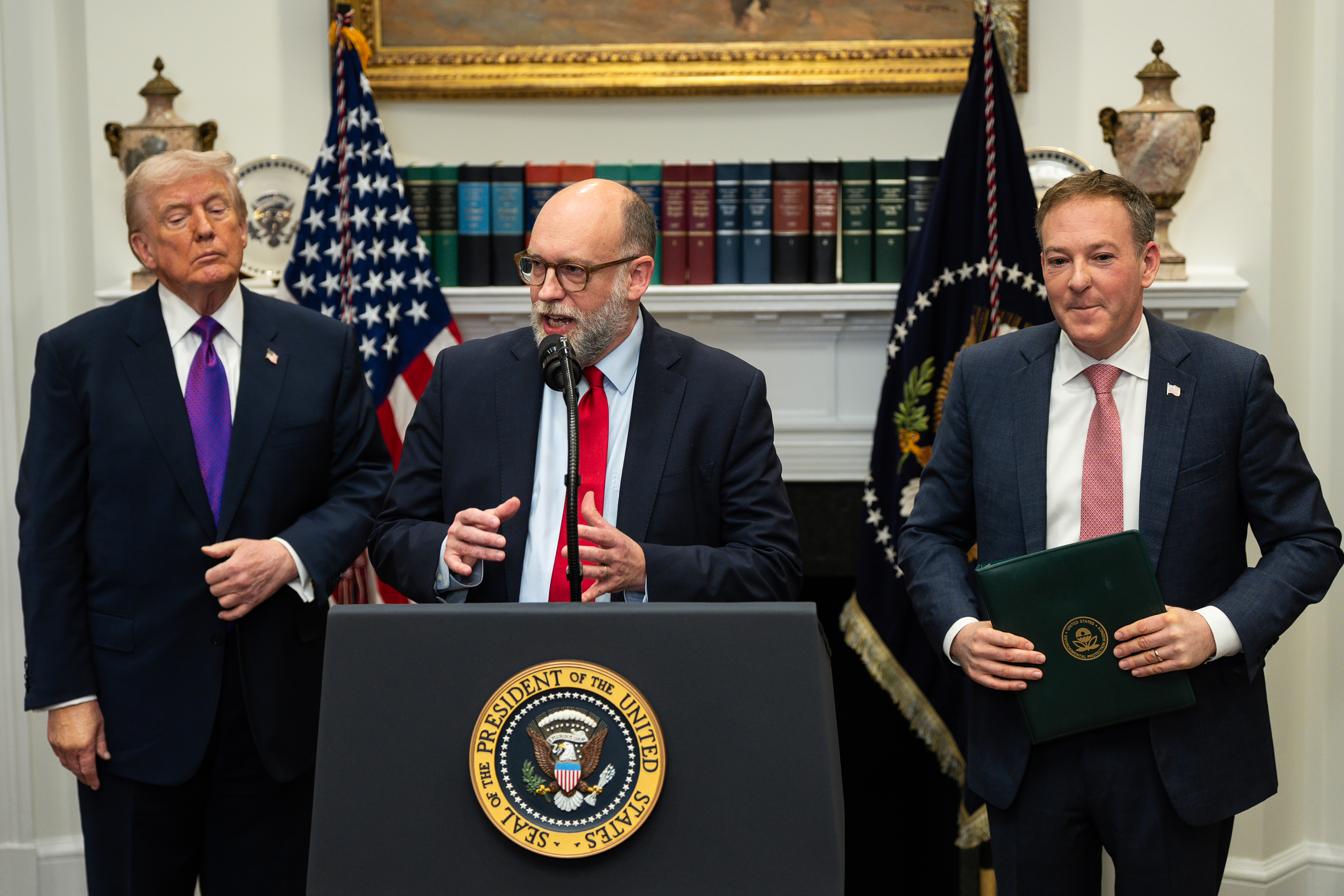
    The White House has begun drafting a new executive order that could further cement President Donald Trump’s ability to control billions of dollars in scientific grants funded by the National Institutes of Health.

    Discussed at a highly contentious meeting at the White House on Friday, the directive aims to create a new external committee with the power to veto awards in the nation’s vast biomedical research portfolio that do not conform to Trump’s political agenda, according to people with knowledge of the effort.

    The meeting was first reported by the Washington Post. Officials at the Office of Management and Budget, which is drafting the executive order, declined to comment. A spokesperson for the NIH, Joshua Pradko, declined to discuss details of the meeting.

    “NIH remains committed to its mission of funding biomedical research to benefit the health of the American people,” Pradko said in a text message.

    Referring to reports that Russell Vought, director of the OMB, wants to rescind NIH funding, Pradko added, “There will be no rescissions to NIH grant monies. All NIH grant monies will be spent.”

    If the order moves forward, it would mark the latest attempt by the Trump administration to usurp the scientific autonomy of the NIH, a $48 billion agency that distributes a majority of its budget to labs across the country for research into areas such as heart disease, cancer, and infectious diseases.

    Traditionally, the NIH selects projects based on expert review of their scientific merit. But Trump has sought through a series of recent directives in his second term to bring that process under political review, arguing in part that the government has been funding “woke” liberal priorities.

    Friday’s meeting brought to a head months of conflict between two of the attendees: Vought, who wants to impose greater political control over NIH grant approvals, and Jay Bhattacharya, the NIH director, who is resisting those efforts, according to two people close to Bhattacharya.

    Their relationship has grown so contentious that Vought had refused to meet with Bhattacharya, the people said. During the session Friday, Vought accused the NIH director of funding projects that were in conflict with administration priorities, such as supporting research related to diversity and equity.

    One of Trump’s executive orders, issued on his first day back in office, ended all administration programs involving “diversity, equity and inclusion.” It has had far-reaching effects on NIH studies, including those investigating “health disparities” — why people of certain races and ethnicities may be more or less prone to certain diseases or to suffer worse outcomes.

    As a Stanford University economist, Bhattacharya conducted research on health disparities and has been trying to find a way to preserve NIH funding for such work. In 2011, for instance, he and colleagues reported on “persistent racial disparities in survival after heart transplantation.”

    The study, funded by the NIH, found that Black heart transplant patients were at higher risk of death than similar white patients were.

    But as NIH director, Bhattacharya has also supported eliminating funding for work he regards as low-quality or ideologically driven. In a brief conversation with reporters early in his tenure, Bhattacharya said the cancellations were targeting “politicized expressions of devotion to a particular ideology” as opposed to “good science.”

    On Friday, Vought also sought access to funds for the current fiscal year that have not yet been spent, but he did not succeed. The main argument between them, however, appears to reflect a philosophical difference: Vought wants to cut federal spending for research; Bhattacharya does not.

    Nor does Congress, which overruled Trump’s proposal to cut biomedical research spending last year.

    Moreover, Bhattacharya opposes Vought’s push to give political appointees the final say over all federal spending, including health and scientific research.

    A proposed rule earlier this year would have integrated political review into the entire federal grant-making process, calling for “ending government sponsorship of gender ideology and other radical doctrines,” such as DEI projects.

    The changes were widely denounced by the scientific and medical research community, and drew bipartisan rebuke in Congress, where lawmakers blocked the White House from proceeding.

    The White House has issued a number of executive orders to stop scientific research into areas that conflict with administration priorities. Thousands of grants were terminated for being in conflict with these priorities.

    Even before Friday’s meeting, the administration was entangled in multiple lawsuits that challenged those actions.

    Last week, a class-action lawsuit was filed in California district court by the American Civil Liberties Union on behalf of scientists alleging that the NIH was unconstitutionally censoring scientific research.

    The lawsuit, on behalf of researchers who study health disparities, Alzheimer’s disease, and sexual harassment, among other topics, argued that measures the agency was already using to screen grants for compliance with political priorities were a violation of the free speech rights of scientists.

    “What the First Amendment does not allow is the government’s use of its funding power to target or silence the expression of disfavored viewpoints within the biomedical research community,” the lawsuit said.

    This article originally appeared in the New York Times.

  • Iran-backed Houthi rebels warn against joining Saudi Arabia in Yemen’s growing civil war

    Iran-backed Houthi rebels warn against joining Saudi Arabia in Yemen’s growing civil war

    CAIRO — A senior official with the Iran-backed Houthi rebels is warning countries against joining Saudi Arabia in Yemen’s revived civil war, telling the Associated Press on Sunday that his group has assured the Trump administration that it won’t attack U.S. vessels in the Red Sea.

    Mohamed al-Bukhaiti, a member of the Houthis’ political bureau, said Washington reached out to the rebels after their rapid advance down Yemen’s western coast to the Bab el-Mandeb Strait earlier this month.

    “We confirmed that we are not targeting the United States, or any other nation, in the strait, with the sole exception of the Saudi enemy,” he told the AP in a Zoom interview from the rebel-held Yemeni capital, Sanaa. “That remains the case.”

    U.S. President Donald Trump last weekend said his administration has “had discussions” with the Houthis, but did not say when. “The Houthis called us, and they don’t want to fight with us,” he said. “They would much prefer not having us involved, and they’re letting most ships go through.”

    The AP later reported that Oman hosted a meeting between U.S. and Houthi representatives last weekend, citing a Houthi official and another individual familiar with the talks. They spoke on condition of anonymity because they were not authorized to brief the media.

    However, al-Bukhaiti only confirmed indirect contacts with U.S. officials through longtime mediator Oman, which brokered a 2025 ceasefire between the Houthis and the Trump administration. That ended a weekslong U.S. bombing campaign against the rebels in return for them ceasing attacks on U.S. vessels in the Red Sea.

    “The goal of our military operations is not to close the Bab el-Mandeb Strait, but rather to ensure freedom of navigation through it for everyone, including Yemen,” he said.

    Houthis claim they can fight a war on multiple fronts

    Al-Bukhaiti said the rebels have the capacity to fight a war on multiple fronts “should any nation become implicated in the aggression against Yemen alongside Saudi Arabia.”

    “Today, Yemen is capable of waging battle — not merely an internal conflict, but an international one as well,” he said.

    He said the Houthi attacks against neighboring Saudi Arabia will persist until Riyadh ends its decade-long blockade on rebel-held areas in Yemen and allows vessels to reach Houthi-controlled ports on the Red Sea. Then they will be ready to negotiate, he said.

    Al-Bukhaiti blamed Saudi Arabia for the latest escalation of violence in Yemen, which he said erupted after an airstrike blamed on the Saudi-led coalition fighting the rebels hit the Sanaa international airport. The strike prevented an Iranian flight carrying a Houthi delegation to land. The flight was a Houthi attempt to challenge the coalition’s air and naval blockade.

    The Houthis responded with missile and drone strikes on Saudi Arabia, including one that targeted Riyadh on Saturday before being intercepted. Saudi officials said debris from a Houthi drone also killed one civilian and injured others.

    The Houthis also declared a blockade on Saudi shipping in the Bab el-Mandeb Strait and the Red Sea, attacking Saudi-linked vessels and oil facilities inside the kingdom, the world’s top oil exporter.

    The Saudis and their allies have long struggled to contain the Houthis, and may be tempted to seek a diplomatic solution to halt attacks. That might ultimately require U.S. concessions to Iran, the only country with leverage over the Houthis. But Washington’s negotiations with Tehran over their own war fell apart weeks ago.

    “We have not closed the door to peace,” Mahdi al-Mashat, president of the Houthis’ Supreme Political Council, the top executive body, said in a speech Sunday marking the anniversary of their 2014 takeover of Sanaa.

    The U.S., which bombed the Houthis under the Biden and Trump administrations, has shown no interest in getting involved militarily this time around.

    The rebels believe power has shifted in their favor

    The rebels’ advance inside Yemen seized the crucial port city of Mokha and key Red Sea islands that allow them to better monitor shipping traffic through the Bab el-Mandeb, through which some 12% of world trade normally passes.

    The Saudi-backed Yemeni government forces, long divided into factions, withdrew but have vowed to regroup.

    The escalation ended a 2022 ceasefire that largely ended fighting in Yemen’s civil war, which started when the Houthis swept in from their mountainous heartland and seized much of northern and central Yemen, including Sanaa, 12 years ago.

    The Saudi-led coalition entered the war the following year on behalf of the internationally recognized government. The civil war killed at least 150,000 people, according to U.N. estimates, and pushed the country to the brink of famine.

    Now, with Houthis in control of Yemen’s western coast overlooking the Red Sea shipping corridor, “the balance of power has shifted in favor of the Sanaa government,” al-Bukhaiti said, referring to the rebels’ de facto authorities there.

    “Ultimately, (Saudi Arabia) lost its most critical card: the west coast,” he said.

  • North Korea launches 2 ballistic missiles toward the sea and dials up pressure on the U.S.

    North Korea launches 2 ballistic missiles toward the sea and dials up pressure on the U.S.

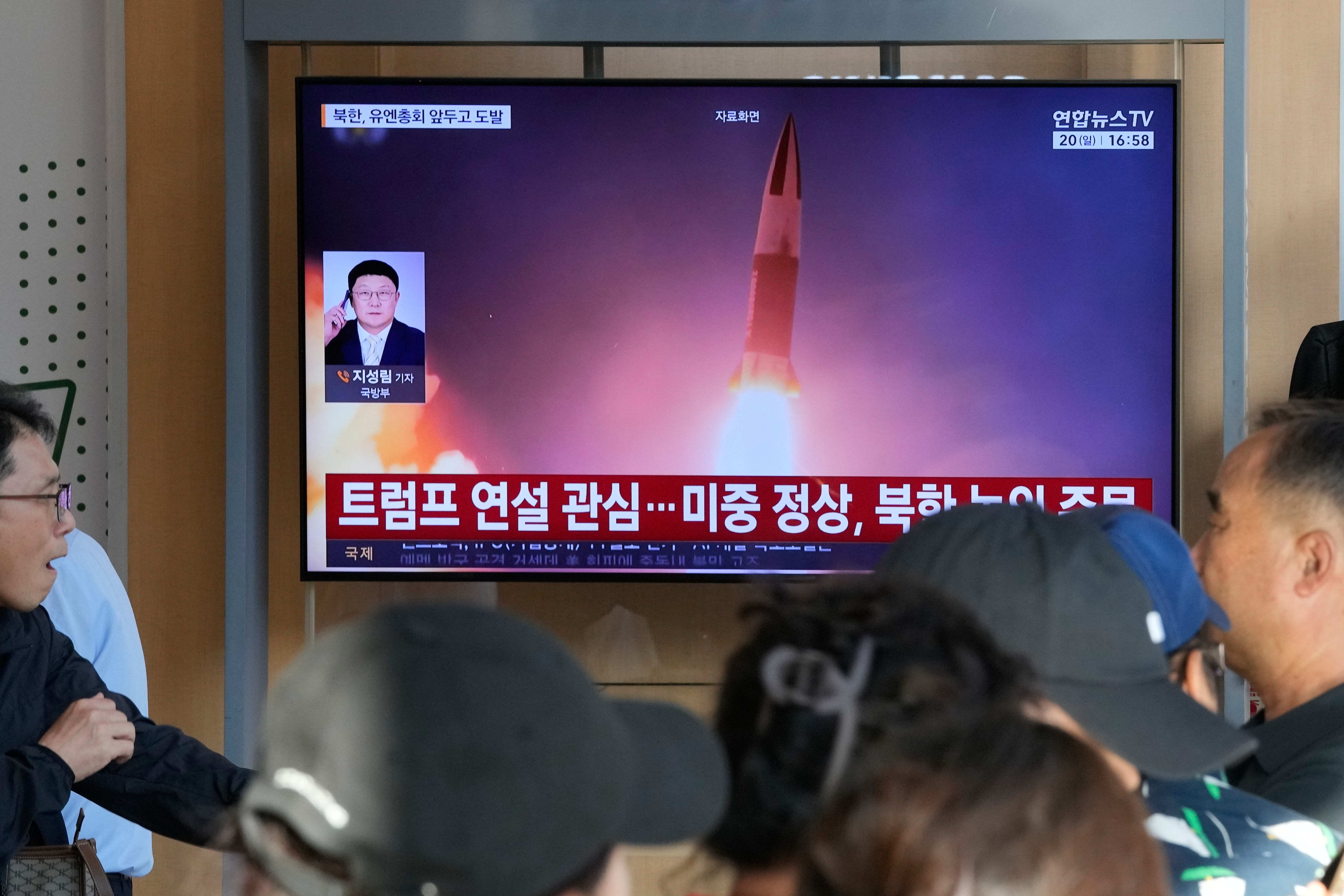
    SEOUL, South Korea — North Korea launched two short-range ballistic missiles toward the sea on Sunday, South Korea’s military said, days after the North threatened to bolster its nuclear deterrent capabilities and respond to what it called U.S. hostilities.

    The launches were the latest in a series of weapons demonstrations by North Korea even after U.S. President Donald Trump scaled back a joint military exercise with South Korea last month in an apparent effort to revive diplomacy with the North’s leader, Kim Jong Un.

    The two missile launches — about three hours apart — were conducted from North Korea’s eastern coastal Wonsan area. The first missile flew about 280 miles while the second one flew more than 370 miles, both toward the North’s eastern waters, South Korea’s military said.

    The missiles eventually ended up in the sea. South Korea’s presidential office urged North Korea to immediately halt ballistic missile launches that are banned by U.N. Security Council resolutions. The South’s military said it maintains readiness to repel any provocations by the North under a solid alliance with the United States.

    Japan’s Defense Ministry said it detected a suspected North Korean missile earlier Sunday but that the weapon did not land in its territorial waters.

    North Korea escalates pressure on U.S.

    Kim’s sister and senior official, Kim Yo Jong, earlier shrugged off Trump’s overture, saying that shortening the drill wouldn’t change its “provocative, aggressive nature.” North Korea’s military later launched about 10 short-range ballistic missiles toward the sea, apparently following through with a previous threat to respond to the U.S.-South Korean drill.

    On Friday, Kim’s sister slammed another recent U.S.-led multilateral maritime exercise in the region as a “frantic military move” by the Americans meant to prolong their hegemony in the Asia-Pacific area. The “Pacific Vanguard” exercise brought together the U.S., South Korea, Japan, Australia, New Zealand, and Canada.

    She claimed that “regular U.S.-led war rehearsals” are the main source of worsening tensions in the Korean Peninsula and the region.

    “Our will to defend our sovereignty will be expressed in clearer action and there will be never ever change in the course of intensifying the nuclear war deterrence,” she said.

    Earlier this month, North Korea conducted what it called a joint live-fire drill involving missiles, artillery, and drones, a day after the United States, South Korea, and Japan wrapped their five-day trilateral military drill that North Korea described as a provocation. North Korea said its drill included firing different types of weapons simultaneously, likely aiming at developing the ability to overwhelm South Korean and U.S. air defenses.

    Chances of a swift resumption of U.S.-North Korea talks are unclear

    Kim Jong Un has been focusing on expanding his nuclear arsenal after his earlier high-stakes diplomacy with Trump collapsed in 2019.

    When Trump ordered the Pentagon to “substantially reduce” the annual Ulchi Freedom Shield exercise with South Korea, he cited what he called a good relationship with Kim, who has called such drills invasion rehearsals.

    Emboldened by his advancing nuclear arsenal and deepening ties with Russia and China, experts say, Kim likely thinks he now has greater leverage in possible fresh diplomacy with Trump. Earlier this year, Kim said he could return to talks if the U.S. drops its “hostile policy” against his country and respects what he calls the North’s status as a nuclear state.

    South Korean President Lee Jae Myung, a liberal who advocates improved ties with the North, said on Friday that a resumption of U.S.-North Korea talks would be “an important starting point” toward boosting chances for peace on the Korean Peninsula.

    “What is clear is that President Trump wants dialogue and I’ve also been encouraging President Trump to seek dialogue” with Kim, Lee told reporters.

  • Ukraine fires over 1,000 drones at Russia, including ‘largest ever’ attack on Moscow

    Ukraine fires over 1,000 drones at Russia, including ‘largest ever’ attack on Moscow

    Ukrainian forces fired more than 1,000 drones at Russia overnight, including hundreds that were launched toward Moscow, officials said Sunday, as the Kremlin was wrapping up the third and last day of its parliamentary elections.

    Moscow’s mayor described the wave of drones as the “largest ever” drone attack on the Russian capital and said there had been damage to the Moscow Oil Refinery, which is among several sites that supply the Russian capital, and a residential building.

    Across the wider Moscow region, the attack killed two people and wounded 20, local Gov. Andrei Vorobyov said. The dead were a 74-year-old man and a 44-year-old woman, he said.

    Writing on social media, Ukrainian President Volodymyr Zelensky said that Kyiv had used a range of missiles and drones in the attack — including Ukraine’s domestically made Flamingo and Pelican missiles — to hit oil and logistics facilities.

    “These are billions of dollars that sustain the war machine,” Zelensky said, referring to the financial pressure that Kyiv hopes to put on Russia’s economy.

    Ukraine also continued to fend off Russian attacks, Zelensky said. A Russian drone strike hit a monastery in Ukraine’s Kherson region Saturday, killing a member of the clergy and wounding four people, he said.

    A Russian attack on the Ukrainian capital also killed two children and their mother on Saturday evening, said Tymur Tkachenko, head of the Kyiv regional state administration. He later said that another child wounded in the same attack had died in hospital on Sunday.

    Russia votes in an election devoid of opposition

    The attack took place on the final day of Russia’s first wartime parliamentary election — balloting that has been virtually devoid of opposition to President Vladimir Putin’s policies and is all but certain to cement the Kremlin’s dominance.

    Russia was also holding the vote in the four Ukrainian regions that Moscow illegally annexed after the war began but still doesn’t fully control, and in Crimea, the Black Sea peninsula that was illegally annexed by Russia in 2014. Kyiv has denounced the action as illegal.

    In a Russian-occupied area of Ukraine’s Kherson region, a Ukrainian attack killed a member of the local electoral committee, Russia’s Central Election Commission said in a statement.

    Russia’s Ministry of Defense said Sunday that its forces shot down a total of 1,110 Ukrainian drones across Russia, as well as over the annexed Ukrainian peninsula of Crimea and the waters of the Black Sea.

    Moscow Mayor Sergei Sobyanin said that 450 drones had been destroyed en route to the Russian capital, and that the attack had damaged the Moscow Oil Refinery and a residential building.

    He said the “unprecedented attack” on Moscow was an attempt to disrupt the elections. “The enemy failed in this regard,” he said.

    Since Russia’s invasion more than four years ago, Ukraine has become a global leader in military drone technology, deploying domestically produced long-range drones alongside missiles for strikes deep inside Russia. Its drone technology has impressed governments and defense manufacturers around the world.

    Kyiv is aiming to make the Russian public feel the war’s consequences and pressure Russian President Vladimir Putin into negotiating a peace settlement. Putin has so far shown no signs he intends to stop the invasion.

    Instead, Moscow and Kyiv have been drawn into an escalating duel of long-range aerial strikes as fighting along the roughly 780-mile front line in eastern and southern Ukraine has slowed, restricted by large numbers of drones and ground robots threatening troop movements.

  • Hackers who broke into OpenAI warn the AI industry has a security problem

    Hackers who broke into OpenAI warn the AI industry has a security problem

    SAN FRANCISCO — Cybersecurity researchers who broke into ChatGPT maker OpenAI this summer say the artificial intelligence industry is unprepared for the security risks created by the growing power of its own technology.

    Researchers from computer security startup Hacktron got inside the company’s systems with help from the Claude chatbot made by OpenAI’s primary rival, Anthropic. After first targeting a public-facing messaging board, they were able to access OpenAI’s private systems, including some of the AI company’s internal code, according to posts on X late Thursday by Hacktron describing the campaign.

    OpenAI patched the problem and paid the hackers $6,500 for reporting the vulnerability. But the episode, along with incidents in which AI models accessed the internet undetected and attacked other companies, has drawn criticism from cybersecurity experts. They warn that the effort deployed by AI developers to protect their systems doesn’t match the immense power they claim their technology to have.

    Mohan Pedhapati, one of the Hacktron researchers who broke into OpenAI, said the company’s use of conventional business software such as Slack, consumer-grade internet browsers, and other apps that are accessible through the public internet makes it vulnerable to a potential attack.

    “If the people building these systems truly believe they are powerful enough to create nuclear-level risks, and they are talking about slowing down because of those risks, why is that work … done through ordinary SAAS products,” Pedhapati said early on Saturday in a post on X, using an industry term for cloud software.

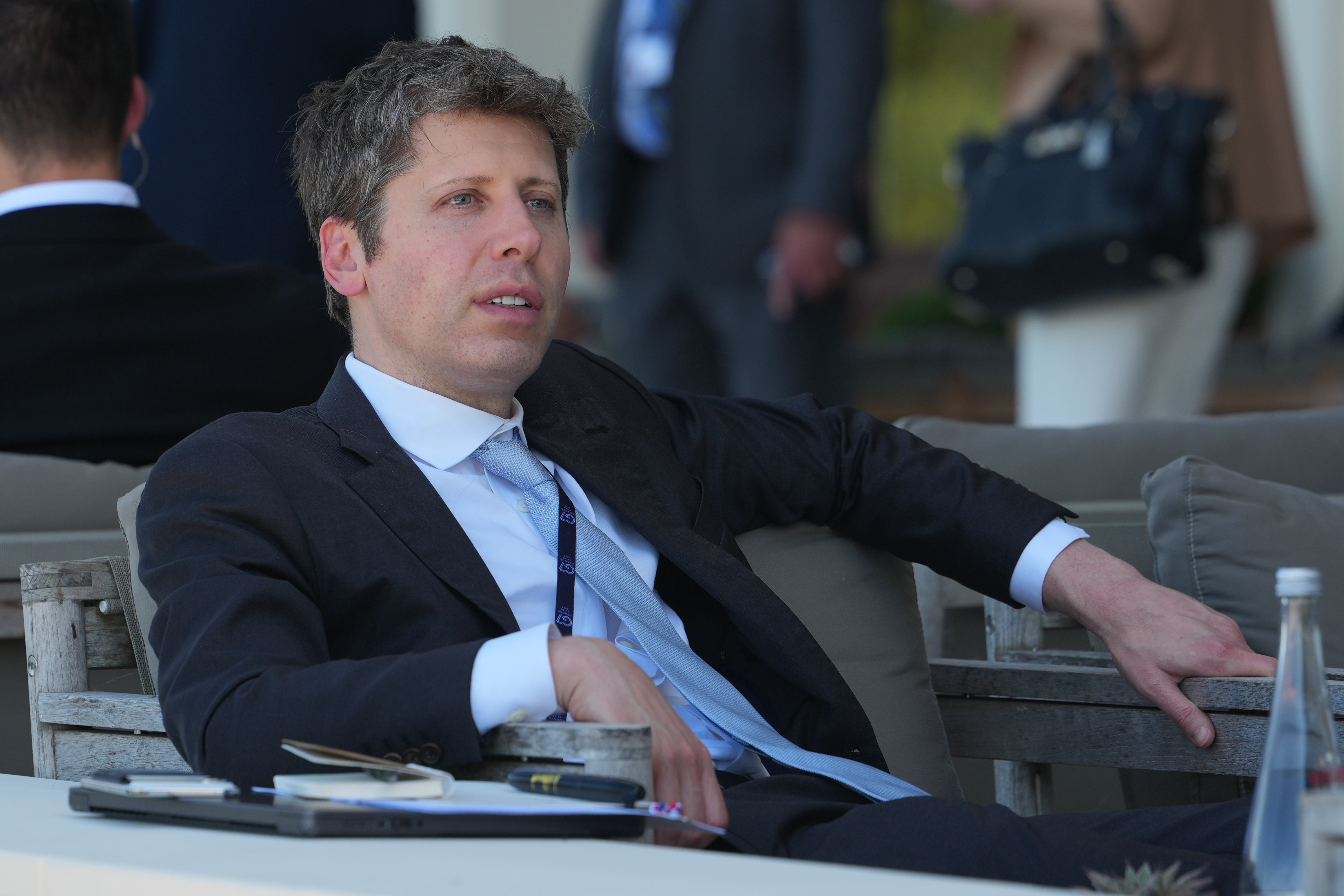
    OpenAI chief executive Sam Altman recently joined calls from other leaders in the field to slow the pace of AI development, out of concern that its capabilities are outstripping the industry’s ability to control the technology.

    “We thank the researchers for contacting us and sharing their findings,” an OpenAI spokesperson said in a statement, which also said the company had tightened its security measures. (The Washington Post has a content partnership with OpenAI.)

    Frank Cilluffo, director of the McCrary Institute for Cyber and Critical Infrastructure Security at Auburn University, said the ability of a small team of researchers to carry out a hack — at what they said was the cost of $3,000 paid for using Anthropic’s systems — should be considered a “warning shot.”

    “If three responsible researchers armed with commercial AI tools could achieve this level of access in days, we have to assume well-resourced foreign intelligence services are pursuing the same targets continuously and certainly never tipping off the target about what they did and how,” Cilluffo said.

    National security experts have long warned that American AI companies should expect to be targeted by hackers backed by foreign governments eager to cut into the United States’ lead in the technology. China has a history of seeking to steal U.S. technological secrets.

    Calls for an AI slowdown have prompted lawmakers in both major parties to say the industry should be subject to more government oversight. President Donald Trump has firmly rejected such proposals, saying the industry must race forward to stay ahead of China.

    The Hacktron breach of OpenAI, which used the security prowess of Anthropic’s chatbot Claude, comes after months of debate in the tech industry and Trump administration about how to respond to the growing power of AI models to identify security holes in software. Although OpenAI and Anthropic have restricted who can access the full cybersecurity skills of their chatbots, Chinese firms release free AI models that now have potent hacking capabilities available to anyone.

    In July, OpenAI said some of its own AI agents had broken out of the company’s computer systems during internal tests, accessed the public internet, and hacked into another AI company.

    The incident triggered criticism from some cybersecurity experts, who said the company could have done more to make sure its AI couldn’t break out of its networks. OpenAI hired outside AI researchers to study why its agents escaped, but the investigation did not include a traditional independent cybersecurity postmortem.

    The Hacktron hack of OpenAI happened around the same time as the incident involving the AI agents. Soon after, OpenAI redirected a substantial amount of engineering resources toward improving its security, OpenAI President Greg Brockman said in a podcast interview with venture firm Andreessen Horowitz released this week.

    “We took 25% of our production engineers and said, ‘Sorry, all your projects are on hold. You are now defending,’” Brockman said. “We found a number of serious issues, and we fixed them.”

    Hacktron’s researchers criticized how OpenAI responded when they notified the company they had found a way into their systems.

    Like many major companies, OpenAI openly encourages security researchers to report vulnerabilities. Fabian Faessler, Hacktron’s head of agent engineering, said in a post on X early on Saturday that OpenAI’s chief information security officer, Dane Stuckey, had called the researchers unprofessional and that Faessler had expected a more welcoming response from the company.

    Dan Wallach, an AI security resident at the research organization Rand, said OpenAI was fortunate that the vulnerability was discovered by researchers who came forward and shared what they found.

    “As a general rule it’s not polite to do what they did, but I would think that OpenAI should be pleased that the attacker was nice enough to tell them,” Wallach said.

    OpenAI’s Stuckey reached out to apologize after Faessler posted his X thread, Faessler said in a later post.

  • Trump and sons invest heavily in AI economy as he resists calls for slowdown

    Trump and sons invest heavily in AI economy as he resists calls for slowdown

    President Donald Trump’s sprawling family business empire has become increasingly intertwined with the boom in artificial intelligence, at the same time that he has resisted calls to slow the development of the technology, a Washington Post analysis of his financial disclosures and corporate announcements found.

    Several factors play into Trump’s push for rapid AI development: He has surrounded himself with technology executives and investors who have advocated for the government to accelerate AI development, including venture capitalist David Sacks, Nvidia chief executive Jensen Huang, and Meta chief executive Mark Zuckerberg. The president fears ceding an economic and technological advantage to China. And he has celebrated the stock market’s record highs, which are heavily tied to the performance of AI-related firms.

    But Trump also has a personal financial stake in industries benefiting from the AI build-out, creating potential conflicts of interest as his administration makes decisions that could affect the value of those investments. Unlike his recent predecessors, Trump has not placed his assets in a blind trust, and he has continued to buy and sell stocks while in office.

    “No president since we’ve had this regime of conflict-of-interest statutes has ever conducted their finances this way,” said Don Fox, a former acting director of the Office of Government Ethics in the Obama administration. “His predecessors in the post-Watergate era wanted the American people — whether they agreed with them or not — to believe the president was doing what was in the best interest of his country.”

    White House spokesperson Davis Ingle said in a statement that there are “no conflicts of interest.” Trump’s investments are “made entirely by independent managers,” he said.

    “All holdings are maintained in discretionary accounts and invested through computer-based model portfolios that automatically replicate recognized indexes, such as the Schwab 1000,” Ingle said in a statement. “Neither President Trump nor any member of his family has any ability to direct, influence, or provide input regarding how the portfolio is invested or when investments are bought or sold.”

    The Trump family’s expanding web of investments illustrates how Trump’s personal wealth and his family’s increasingly technology-focused ventures overlap with one of the most consequential policy debates confronting his administration: how aggressively the government should respond to rapid advances in artificial intelligence.

    Trump’s investment accounts have disclosed nearly 30,000 securities transactions since he returned to the White House, including many purchases and sales of shares in companies supplying the chips, servers, and energy infrastructure underpinning the AI boom.

    Trump has purchased shares in companies including Dell Technologies, Micron Technology, and GE Vernova, government filings show. Those companies’ profits are tied to the enormous spending on computing and electricity infrastructure needed to develop and operate advanced AI systems.

    On Monday, shares of all three companies fell amid a broader sell-off in AI-related stocks after prominent technology leaders warned about the risks of racing ahead with increasingly powerful AI systems.

    It is not known whether Trump still owns the shares he bought in any of those companies since he does not have to disclose trades in real time. He has also disclosed buying technology stocks whose share prices went up Monday.

    At the same time, businesses controlled by or tied to Trump’s family are striking deals that would give them greater exposure to the AI economy. Trump Media & Technology Group, the parent company of Truth Social, has announced a merger with a nuclear fusion company that plans to develop power plants as electricity demand surges, in large part because of the rapid expansion of AI data centers.

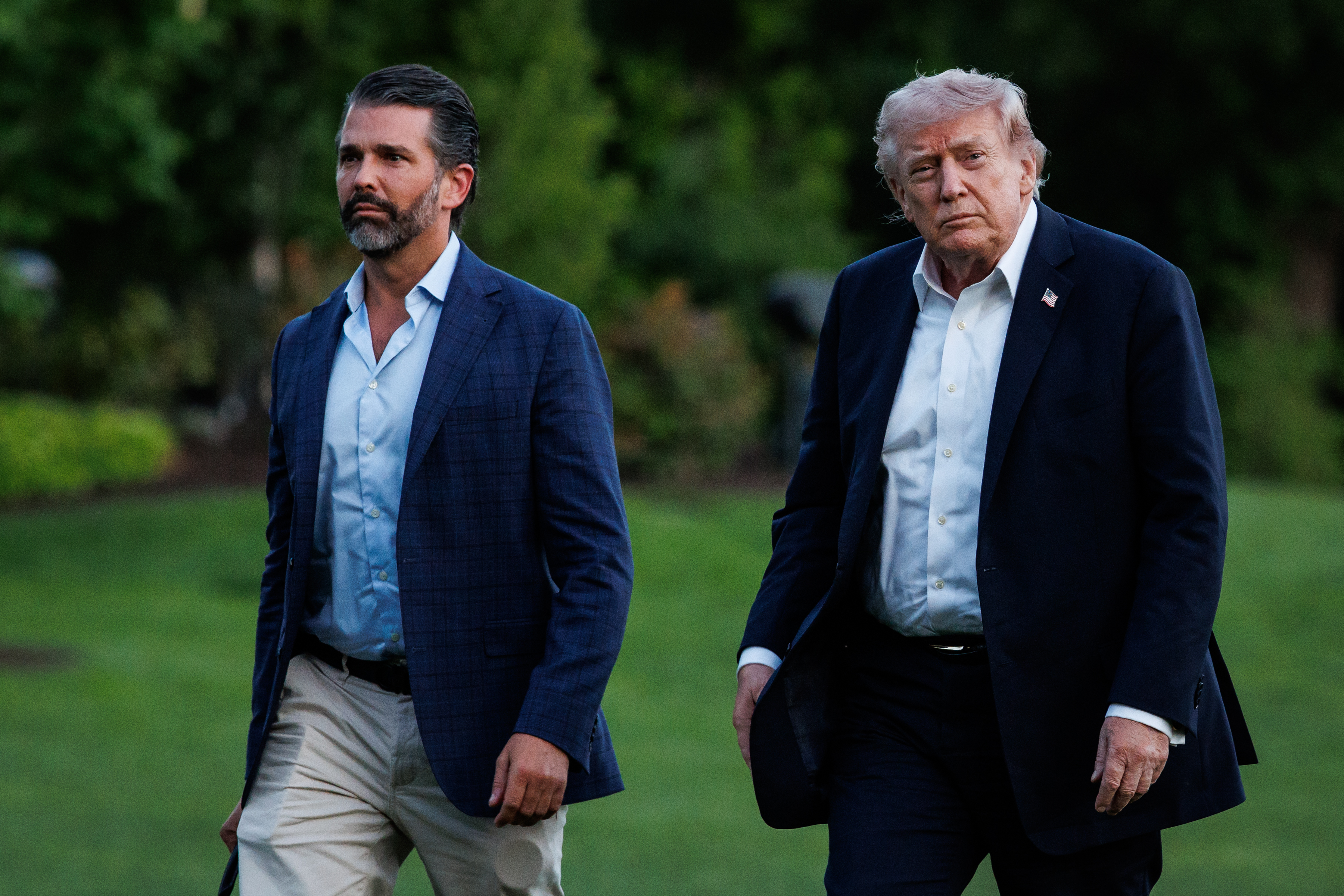
    Trump’s sons Donald Trump Jr. and Eric Trump are investors in a number of AI and data center ventures, primarily through the investment firms 1789 Capital and American Ventures. Trump Jr. is a partner at 1789 Capital, a Florida-based venture capital firm that announced it had closed a $1.2 billion fund that will focus on real estate ventures, including deals aimed at digital infrastructure like data centers.

    In a statement, a 1789 spokesperson said Donald Trump Jr. was operating as a private citizen and not in a government capacity.

    A growing number of lawmakers, researchers, and technology executives have called for safeguards around increasingly powerful AI systems, with those calls mounting after Anthropic CEO Dario Amodei, OpenAI CEO Sam Altman, and xAI founder Elon Musk warned that the pace of AI development could outstrip the ability of leading labs to control the technology.

    (The Post has a content partnership with OpenAI, which makes ChatGPT.)

    Trump recently offered a number of responses to concerns about out-of-control AI. Days ago, he posted that the only necessary guardrail for AI was “a STRONG AND SMART (High IQ!) PRESIDENT.” On Saturday in a Truth Social post, Trump suggested policing ”BAD” aspects of the industry through enforcement of existing laws and a new, scantily described “AI Force.”

    The clash comes as AI is emerging as a political issue ahead of the midterm elections. Multiple polls show a majority of Americans are concerned about the pace of AI development and opposed to the construction of data centers.

    Trump’s stock holdings

    The past volatile week in the stock market illustrated how Trump’s wealth could be affected by AI news developments that he has influence over.

    After some prominent AI industry leaders spent the weekend advocating for slowing AI advancements over their fears of an AI doomsday, technology stocks dropped sharply Monday even as Trump spent the day ridiculing AI fears as a “hoax.”

    Investors, worried that an AI slowdown could hit profits of AI-related companies, sold off stocks of many companies connected to the mammoth, trillion-dollar construction of AI data centers across the country.

    Trump’s financial disclosures this year show that he had bought stock of several of the losers in Monday’s stock market decline, including computer chipmakers Broadcom and Texas Instruments and the data center equipment companies Credo Technology and Super Micro Computer.

    Trump has attributed his income of more than $2 billion in 2025 to the highs in financial markets.

    “You know why I’m profiting, because the stock market’s going up,” Trump told reporters in July after his financial disclosures were released. “Everybody’s profiting. … Thank you, President Trump.”

    U.S. stocks have been on a tear for most of the four years since the public launch of ChatGPT kicked off an AI surge. Stocks related to AI are responsible for about two-thirds of the increase in the S&P 500 index this year, according to calculations by Matt Orton, chief market strategist at the investment firm Raymond James Investment Management.

    The AI-related market gains have made wealthier, stock-owning Americans richer and spurred them to spend more money, which has boosted overall U.S. economic growth, economists say.

    Trump’s family businesses

    Since Trump’s first term, his family businesses have evolved from real estate and reality TV to encompass a wide range of technologies at the center of Washington’s regulatory debate.

    As Trump Media and Technology Group (TMTG) prepares for its merger with the nuclear fusion company TAE Technologies, its subsidiary Truth Social is also investing in AI-related products.

    TMTG interim CEO Kevin McGurn told CNBC in August that it was going into the “AI world” by licensing access to Truth Social posts to AI labs. AI companies are eager to vacuum up social media posts so they can feed them into AI algorithms in an effort to train those models to mimic human speech patterns.

    TMTG would provide data through TruthAPI, the controversial tool that provides companies and investors with access to posts from the president and others. The tool allows investors to access the president’s announcements more quickly than the general public, inviting legal and ethical concerns.

    Truth Social has also rolled out a search tool powered by “answer engine” Perplexity. The tool provides answers to questions based on Trump-friendly media sources, such as Fox News and Newsmax, but the Post previously found that it nonetheless frequently contradicts Trump.

    TMTG did not respond to a request for comment.

    Much of Trump’s income increasingly comes from cryptocurrency-related ventures. Last year he made more than $500 million from World Liberty Financial, a crypto company that Trump founded in 2024 alongside his sons and the sons of Steve Witkoff, Trump’s special envoy to the Middle East.

    World Liberty Financial has collaborated with WorldClaw, a Hong Kong-based business that provides access to a suite of AI models. Customers are able to pay for access using USD1, World Liberty Financial’s token. WorldClaw offers access to models made by Chinese companies that the U.S. government has flagged for national security concerns, Reuters reported.

    World Liberty Financial also sold a large stake to investors tied to the United Arab Emirates just before Trump’s inauguration. Sheikh Tahnoon bin Zayed al-Nahyan, the UAE’s national security adviser and chairperson of the UAE-based AI company G42, was involved in the purchase.

    “World Liberty does not control WorldClaw’s product decisions, including which AI models it makes available. WorldClaw is not accessible to users in the United States,” David Wachsman, a spokesperson for World Liberty, wrote in an email.

    The company did not respond to the question of whether the Trump family’s stake posed a conflict of interest but, instead, noted that WorldClaw competed with a similar product operated by Amazon, whose founder, Jeff Bezos, owns the Post.

    Trump’s sons’ interests

    Eric Trump and Donald Trump Jr. are involved in firms that have invested in a broad array of AI-related companies, according to news and data from PitchBook, a venture capital research database.

    Within days of Donald Trump’s 2024 election win, Donald Trump Jr. announced he was becoming a partner at 1789 Capital, which bills itself as “funding the next generation of American exceptionalism.” Since Trump returned to office, the firm has made many investments in companies related to AI and the infrastructure underpinning the technology, including Cerebras Systems, Perplexity, and Musk’s xAI, which later merged with SpaceX.

    Eric Trump invests through American Ventures, a branch of a boutique investment bank called Dominari Holdings, the Post previously reported. He is an investor in companies operating in defense and robotics, including Space-Eyes, a company that uses AI to process streams of data from satellites and other sensors.

    A month after their father returned to the White House, Trump Jr. and Eric Trump also launched an initiative called American Data Centers, which was intended to support the build-out of AI infrastructure. That company then merged with American Bitcoin, a digital asset mining operation majority-owned by Hut 8, a crypto infrastructure company. Hut 8 is developing Beacon Point, a massive data center project in Texas.

    Dominari Holdings did not respond to requests for comment.

  • Trump says planned 250-foot arch will be ‘military complex’ for drones, snipers

    Trump says planned 250-foot arch will be ‘military complex’ for drones, snipers

    President Donald Trump on Sunday said his proposed 250-foot triumphal arch will now be a “top grade” military complex that will house drones, snipers, and ammunition.

    In a post on Truth Social, Trump wrote that he has agreed to convert the arch “at the strong request” of the U.S. military, and “for National Security purposes.”

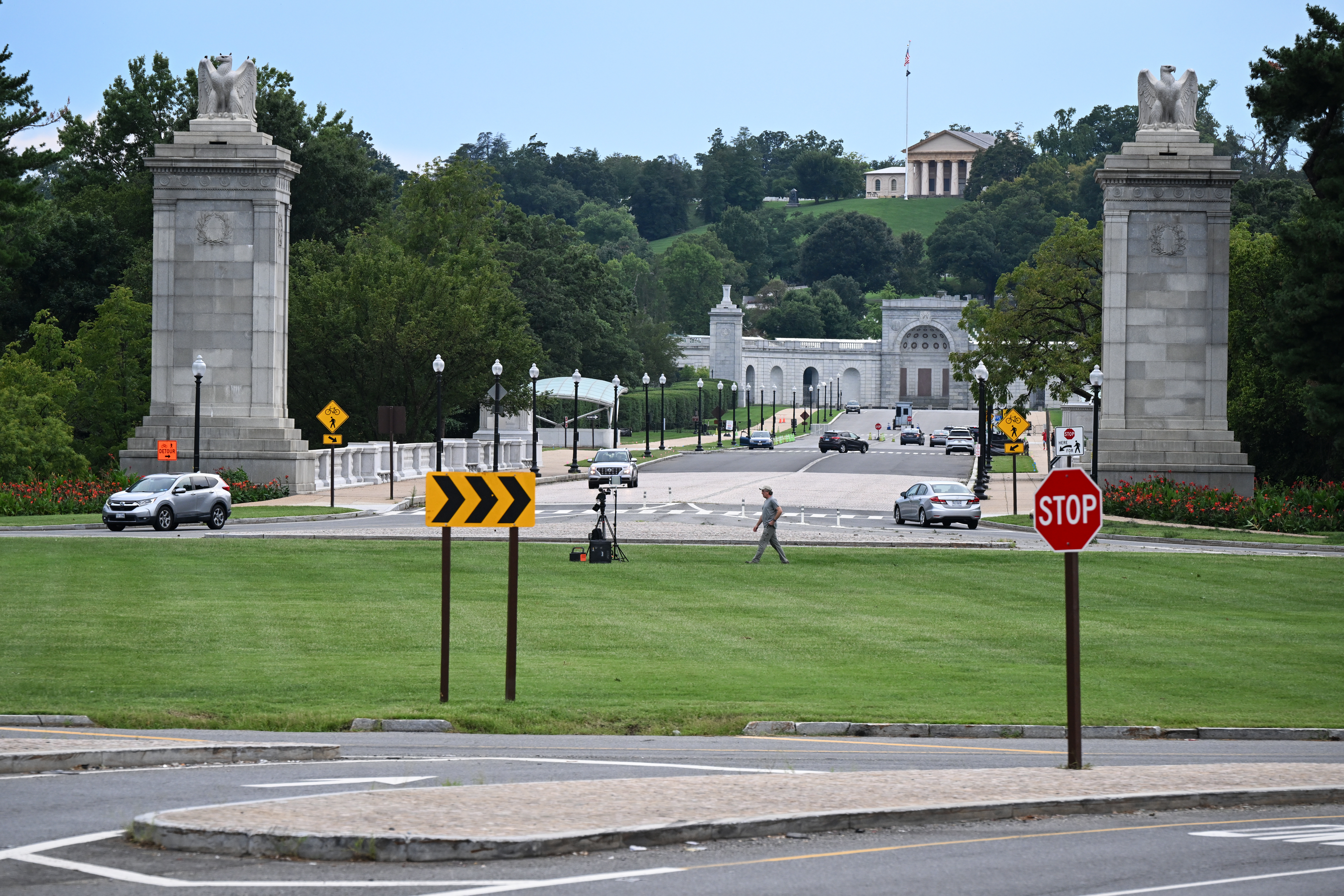
    The “Military Complex/Triumphal Arch” near Arlington National Cemetery will “house, store, and have the rapid ability to use large numbers of drones, plus Snipers, on both the roof and plaza areas, and additionally have and hold large quantities of sniper ammunition in storage,” Trump wrote. “There will be no facility like this anywhere in the World.”

    Trump’s new claims about the arch, which come as veterans groups, historic preservationists, and others attempt to stop the project, resemble his arguments for the need to build a ballroom at the White House. Trump initially said the ballroom was needed to entertain guests but more recently has said it was a “desperately needed National Security structure.” That argument also has become central to the administration’s legal claims that the ballroom must be built.

    The Trump administration, which plans to begin construction on the arch as soon as November, has been consulting with D.C.’s and Virginia’s historic preservation offices as part of a required federal preservation process. The National Capital Planning Commission previously said the arch is intended to be a “visitor destination” with an observation deck.

    The topic of converting the arch to a military complex has not previously been raised, even as the project has undergone months of federally required reviews.

    The White House did not immediately respond to questions about the president’s post. The Interior Department, which oversees the federal parkland where the arch would be built, did not immediately reply to requests for comment, and a Pentagon spokesperson said they had nothing to add beyond the president’s post.

    Trump has spent nearly a year touting his plans to build an arch at Memorial Circle, a traffic roundabout tucked inside Washington’s boundaries, near the entrance to the military cemetery and managed by the National Park Service.

    The president and his deputies have said the arch should be built to commemorate the nation’s 250th anniversary. The administration contends it does not need congressional approval for the arch because lawmakers a century ago authorized a somewhat similar project near the site.

    “This will be one of the Great Pieces of American Architecture, honoring the history and significance of Arlington Cemetery and befitting the most powerful Capital in the World,” Interior Secretary Doug Burgum wrote on X this month.

    Trump’s plan for the arch has been opposed by military veterans, historic preservationists, and local activists, who have said the towering structure would overshadow the cemetery, alter pedestrians’ views of the Lincoln Memorial and other historic sites, and cause other disruptions.

    A D.C. official last week advised the administration to abandon its planned arch and instead pursue a less obtrusive alternative.

    Some preservationists and advocates questioned Sunday whether the project would now need to undergo additional reviews, if its purpose is being significantly changed. They also questioned the practicality of constructing a military complex at the center of a widely used traffic circle not far from Reagan National Airport.

    “Putting a drone launching site directly in the landing path for DCA is a stupid, dangerous, and unworkable idea,” Rep. Don Beyer (D., Va.), who represents the district that encompasses the airport, said on X, suggesting the plan was a legal pretext.

    “The President’s belated efforts to manufacture a national security justification for this project do nothing to cure its fundamental illegality,” said Nicolas Sansone, a lawyer at Public Citizen Litigation Group, a watchdog organization that is representing several veterans who say the large arch would alter their experience when visiting the nearby military cemetery.

    A federal judge has been weighing whether to halt the project. U.S. District Judge Tanya S. Chutkan, an Obama appointee, has also warned the Trump administration not to abruptly move forward with construction on the arch — as Trump did when demolishing the White House’s East Wing to build his ballroom without seeking approval from federal review panels or from Congress.

    Trump officials have said they will obtain “all necessary approvals” before beginning construction on the arch.

    The president’s claim Sunday about the arch being converted to a military complex follows his administration’s evolving legal strategy to defend the ballroom on similar grounds.

    Administration officials have increasingly contended that the ballroom must be built by citing the planned military complex being constructed underneath it and the need to protect the president.

    Judge Neomi Rao, a Trump appointee to the U.S. Court of Appeals for the D.C. Circuit, said the administration’s national security claims in the ballroom case had merit.

    “The equities in this case turn on complex architectural and security determinations best made by the Secret Service and the military — not judges,” Rao wrote in August.

    Other federal judges have said that Trump could not claim broad national security reasons as a basis to pursue a construction project that had not been authorized by Congress.

    “While I take seriously the Government’s concerns regarding the safety and security of the White House grounds and the President himself, the existence of a ‘large hole’ beside the White House is, of course, a problem of the President’s own making,” U.S. District Judge Richard Leon — who first blocked work on the ballroom — wrote earlier this year.

    The Supreme Court on Aug. 31 ruled 5-4 that construction on the ballroom could continue for now but declined to rule on the merits of the administration’s arguments in that case.

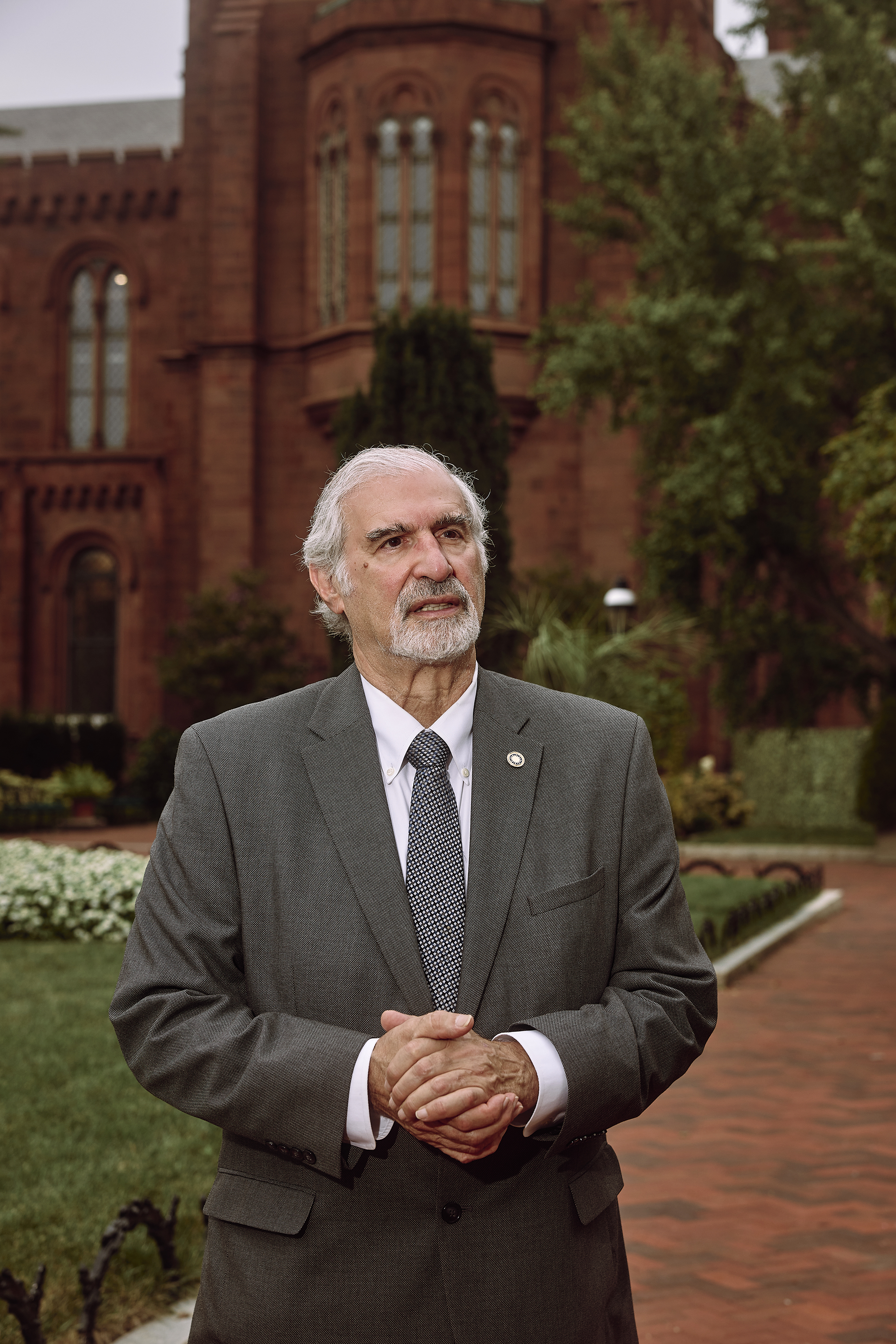
  • Two centuries on, Smithsonian connects Jefferson’s hair to Hemings’ children

    Two centuries on, Smithsonian connects Jefferson’s hair to Hemings’ children

    For more than 200 years, the question has nagged at the edges of American history: Did Thomas Jefferson father children by Sally Hemings, a woman he enslaved?

    The claim that he did has prompted denials, polemics, scandalous bestsellers, and sober historical scholarship, before settling in recent years into a widely, if not universally, accepted truth.

    Now the Smithsonian Institution is offering what it says is the most definitive evidence yet, based on an extraordinary piece of data: Thomas Jefferson’s genome, sequenced from samples culled from a few strands of his hair.

    In a new book, Richard Kurin, the Smithsonian scholar who led the effort, describes how a team of researchers used cutting-edge techniques to extract and sequence Jefferson’s DNA. They then compared it with DNA samples obtained from 13 living Hemings and Jefferson family descendants.

    It’s a 15-year detective story that involves archaeologists, genealogists, molecular geneticists, and historians, stretching across multiple changes in Smithsonian leadership. Kurin, in a video interview this week, called it a “capstone” to decades of previous research and “extraordinary proof” that Jefferson fathered Hemings’ children.

    So is it absolutely certain?

    “Other people may have other ideas, and I don’t think there’s necessarily an institution position,” Kurin said. “But I think it’s compelling.” He added, “It’s very clear.”

    History by a Hair, publishing Tuesday by Crown, a division of Penguin Random House, arrives with endorsements from prominent scholars.

    But it is landing at an extraordinarily tense moment for the Smithsonian, which has been engaged in a standoff with the Trump administration. The president has accused the institution and its secretary, Lonnie Bunch III, of promoting a “divisive, race-centered ideology” that dishonors the nation’s founders and overemphasizes slavery and other negative parts of American history.

    This month, Bunch, who has led the Smithsonian since 2019, announced that he would depart by the end of the year. Last week, the administration outlined its plans to install signs outside the Smithsonian’s National Museum of American History, warning visitors of what it claims is inaccurate history.

    While the Hemings issue has not figured into the controversy, the Smithsonian has adjusted the rollout of its research. An event on Tuesday announcing the findings has been moved from the American history museum to a less prominent Smithsonian location, limited to descendants, and closed to the news media. An online public lecture by Kurin through the institution’s educational arm set for the next day was canceled.

    Kurin acknowledged what he called the “unpredictability” of the moment. But for him, the research was just “doing my job.”

    “This is a topic of interest to the American people,” he said. “I didn’t invent this question, and it wasn’t invented by the Smithsonian. It goes back to Hamilton and Jefferson and Adams. If we have evidence, scholarship, and science that helps elucidate American history, I think we have a duty to pursue it.”

    In a foreword to the book, Bunch, 73, strikes a similar note, linking the research to the museum’s truth-seeking mission.

    The research, he writes, “helps resolve an issue that had divided us since the time of our national founding, and points to how science, scholarship and education can bring us together as people of one, albeit complicated, American family.”

    A Notion long discounted

    The claim that Jefferson fathered children by Hemings goes back to the early days of the Republic, when Jefferson’s political opponents lobbed the scandalous charge that he had an enslaved Black mistress at Monticello, his estate in Virginia.

    Jefferson’s paternity was also recorded in generations of Hemings family accounts, including an 1873 oral history given by her son Madison, who said that Hemings had become Jefferson’s “concubine,” bearing five children by him, including one who died in infancy.

    Still, deep into the 20th century, the notion was discounted by most mainstream, white historians, who saw it as out of keeping with Jefferson’s character.

    The 1990s saw a sea change, driven in part by a 1997 study by Annette Gordon-Reed, who analyzed the wealth of evidence in support of the claim, and the ways it had been systematically discounted by white scholars. In 1998, geneticist Eugene Foster published a DNA study in the journal Nature, which indicated that Hemings’ son Eston was the son of a Jefferson male.

    In a 2000 report, the Thomas Jefferson Memorial Foundation, the nonprofit group that owns and operates Monticello, concluded that multiple strands of evidence suggested a “high probability” that Jefferson was the father of Hemings’ son Eston, and that he was “most likely” the father of her other children.

    In 2018, Monticello went further, declaring it a “settled historical matter.” Still, some skeptics have continued to advance other paternity candidates, including Jefferson’s brother, Randolph.

    Kurin, a cultural anthropologist who joined the Smithsonian in 1976, has helped oversee many complex projects, including the development or renovation of most of its museums. The Jefferson effort, he said, began with a flash of simple intellectual curiosity.

    In 2011, Kurin was previewing a Smithsonian documentary about Jefferson’s personal Bible, which he had created by cutting out passages containing Jesus’ moral teachings and pasting them into a new book.

    Kurin wondered: Could Jefferson have cut himself in this process, leaving blood behind?

    There was no blood. But conservators, he learned, had found something else: three strands of hair.

    At that time, no one had reliably sequenced usable samples of nuclear DNA (the genetic material found in the nucleus of every cell) from follicleless hair shafts, which these were. But after getting permission from the Smithsonian’s Board of Regents, Kurin started working with Beth Shapiro and Ed Green, two experts in ancient DNA at the University of California, Santa Cruz, who were pioneering new techniques for extracting and sequencing DNA from challenging sources.

    Kurin was mindful that the research could yield clear evidence that Jefferson was not the father of Hemings’ children. He discussed that possibility with Bunch, who at the time was the director of the National Museum of African American History and Culture.

    “The museum has to be on a foundation of truth,” Bunch said. “Whatever it is.”

    ‘We’re going to exhaust it’

    The first task was simply to figure out if the Bible hairs were actually Jefferson’s, by comparing any DNA that could be extracted with samples taken from a known Jefferson descendant.

    A genealogist started tracking down living fifth-generation descendants of Jefferson and of Hemings. (Fifth-generation descendants, some of whom were already in their 80s, would most likely be the last to have enough possible Jefferson DNA — an average of roughly 3.1% — to provide a clear match.)

    Three years in, the team hit a possible dead end. The scientists had analyzed mitochondrial DNA, which passes unchanging through the female line, extracted from the Bible hairs. It didn’t match a sample obtained from a female-line descendant of Jefferson’s mother. So it couldn’t be Jefferson’s hair.

    The team turned to another source that had emerged: strands from a lock at Monticello said to have been clipped from Jefferson’s head while he was on his deathbed in 1826.

    That hair matched the DNA sample from the living maternal-line descendant. “We’re going to exhaust it and sequence the crap out of it,” Shapiro wrote to Kurin.

    The team was ultimately able to sequence Jefferson’s entire genome, employing groundbreaking techniques that didn’t exist when the research started but have since been used to solve criminal cases like the Gilgo Beach murders and the Golden State Killer, for which Green managed to recover and sequence DNA from rootless hairs.

    Shapiro, whose research has also included recovering the DNA of extinct species like the dodo and the woolly mammoth, credited the Jefferson project with helping spur creative thinking about new ways to extract DNA from hair.

    “It’s hard to say we ever would have gotten to this place, where all these tools were used to convict the Gilgo Beach serial killer, if it hadn’t been for starting this project,” she said.

    Ultimately, the team was able to compare Jefferson’s DNA with that from samples obtained from nine fifth-generation descendants of Hemings via Madison and Eston. They shared between 0.5% and 5% of DNA with Jefferson, within the range of the expected average of 3.1% for a fifth-generation descendant.

    The team also got data from two fifth-generation Jefferson descendants via his daughter Maria, who shared 2.4% and 2.6% of his DNA, and two descendants of Jefferson’s brother, Randolph.

    Sam Vohr, a computational biologist working with the team, used the data to run 20,000 simulations of each paternity scenario involving Thomas Jefferson, Randolph, or Randolph’s sons. The odds that Thomas Jefferson did not father either Madison or Eston were less than 1 in 1,000.

    In an interview, Green said Jefferson being the father of Eston and Madison is by far the most likely scenario. Strikingly, he noted, the person with the highest percentage of shared DNA with Jefferson — 5% — wasn’t a descendant of Jefferson and his wife, but a Hemings descendant.

    “Any alternative paternity scenario is going to have to reconcile that,” Green said.

    This month, one Hemings descendant who had given a sample in 2015 asked to withdraw her participation, saying she was dismayed that the book was appearing before a related article had been published in a scientific journal. The Smithsonian confirmed that the descendant’s sample and related data had been destroyed.

    Shapiro said the descendant’s data had also been removed from the scientific article, which is under submission and awaiting completion of peer review. The team also reran its analysis. “It didn’t change the results,” Shapiro said.

    Jefferson’s freckles

    It remains to be seen how the research, which so far has been closely guarded, will be received.

    Gordon-Reed said she welcomed the findings, which she was briefed on several months ago, but confessed to “mixed feelings.” In her view, the historical evidence, bolstered by the 1998 DNA study, was enough. “But it’s always good to have more corroboration,” she said.

    The most surprising thing about the research, Gordon-Reed said, was that it was possible at all.

    “Now they have Jefferson’s genome,” she said, adding with a laugh, “Can they clone him?”

    Views among Jefferson descendants vary, with some having long accepted that he fathered children with Hemings and others strongly rejecting the idea.

    The Monticello Association, a Jefferson descendant group that owns the graveyard at Monticello, which does not admit Hemings descendants, did not respond to requests for comment.

    David Miller, a sixth-generation Jefferson descendant whose mother, Sarah Coachman Miller, provided a DNA sample, said he welcomed the results, which confirmed what he already believed.

    His mother died before the results came back. But through the project, Miller had connected with some Hemingses, whom he calls “cousins.”

    “It’s positive the family now hopefully gets the recognition and acknowledgment and acceptance they deserve,” he said.

    The person in the study who shares the most DNA with Jefferson is Clara Lee-Nutt, 64, who lives in Sharpsburg, Md. Along with 5% of his DNA, she also has what her father teasingly told her were Jefferson’s freckles.

    Growing up, being descended from Jefferson wasn’t something that was shouted from the rooftops. It was the kind of claim, she once overheard her father say, that could “get you lynched.”

    But now Lee-Nutt embraces it. In January 2009, she published an open letter to Jefferson, whom she says she views “with reverence,” in Newsweek, telling him about the inauguration of Barack Obama and her hopes that Americans could move forward “as one people.”

    Lately, Lee-Nutt said, she had thought often about her father, who died when she was 10. Before getting the Smithsonian’s results, she had braced herself for the possibility that the stories he had told her were wrong.

    She said she understood how some Jefferson descendants might feel as if something were being taken away from them.

    “But we’re not trying to diminish anyone,” she said. “We just want to be able to tell our children who they are.”

    This article originally appeared in the New York Times.
  • The world economy is becoming wary of the U.S.

    The world economy is becoming wary of the U.S.

    WASHINGTON — Global investors are balking at U.S. bonds. Talk of the dollar’s dwindling power is getting louder. Foreign governments are hauling their gold out of American vaults.

    Almost two years into President Donald Trump’s second term, the world economy is increasingly looking for ways to distance itself from the United States. Concerns about a $40 trillion debt burden, the excessive use of sanctions to solve foreign policy problems, and Trump’s penchant for pushing the limits of the rule of law are raising questions about the appeal of the United States as a haven for global investment.

    Despite pledges by foreign companies and nations to invest in the United States — in many cases to curry favor with the White House — capital is starting to seek alternative destinations.

    “Geopolitical factors and U.S. weaponization of the dollar through financial sanctions are causing central banks and other official investors to attempt to diversify away from dollar assets,” said Eswar Prasad, the former head of the International Monetary Fund’s China division.

    The United States is not yet an investment pariah. Private investors are still pouring money into American financial markets and stocks, artificial intelligence infrastructure is booming, and no rival currency is poised to topple the dollar imminently.

    In testimony before Congress on Tuesday, Treasury Secretary Scott Bessent said he remained confident in the credibility of the U.S. financial system, arguing that bond auctions continue to operate successfully and that the dollar is still thriving as measured by its share of global transactions.

    “The U.S. is in fact the leader, and the leader does not fear competition,” Bessent said. “Competition makes us better.”

    But cracks in America’s economic dominance are starting to show.

    Bond market jitters

    The most glaring example has been in the bond market. Yields have been soaring as investors nervous about the mounting national debt demand a higher rate of return for buying Treasury bonds. This week, the yield on the 10-year Treasury topped 5%, reaching its highest level since 2007.

    The decision to raise interest rates Wednesday could help to alleviate concerns about the Federal Reserve’s grip on elevated inflation, fears that have injected more jitters into bond markets.

    The ominous bond threshold was crossed a week after the Treasury Department purchased $5.2 billion of its own debt maturing in the next 10 to 20 years, part of a plan to inject demand into the Treasury market to try to push prices higher and yields lower. Bessent said investors were failing to understand the underlying strength of the economy and dared them to bet against him.

    “It’s my dream,” Bessent said recently at Southern Methodist University. “I have asymmetric information. I am the house now.”

    With the United States’ long-term fiscal situation looking shaky, some countries are starting to wonder if the U.S. is a wise investment. This month, Norway’s sovereign wealth fund, the largest in the world, said it planned to reduce its holdings of U.S. Treasurys as it looks elsewhere for stronger returns.

    And then there is the future of the dollar.

    Nearly 90% of global foreign exchange transactions are in dollars. But the share of dollars being held in central bank reserves has been steadily declining over the past decade, falling to 56% at the end of 2025 from 64% in 2015.

    Last year, Christine Lagarde, the president of the European Central Bank, said erratic policymaking in the United States was setting the stage for a “global euro moment.”

    The United States has taken advantage of the greenback’s special status to use it as a foreign policy tool, imposing stiff sanctions on adversaries such as Iran and Russia. As the United States ramps up its use of sanctions to resolve global conflicts, the permanence of the dollar as the world’s reserve currency has come into question with greater frequency.

    Digital currencies

    Although the euro and China’s renminbi do not appear ready to overtake the dollar anytime soon, the emergence of central bank digital currencies, stablecoins, and cryptocurrencies give U.S. adversaries new avenues to circumvent the American financial system when making international transactions.

    China has been leading the development of a cross-border digital currency platform with Hong Kong, Thailand, the United Arab Emirates, and Saudi Arabia that would allow money to move more quickly and with lower fees than what is possible with traditional banking transactions. A similar cross-border payments project led by some Group of 7 major industrialized nations and Western financial institutions is also in development but is not as far along as China’s initiative, which is known as mBridge.

    Russia and India said recently that they are working on a plan that would let them use central bank digital currencies to settle international trade payments. Such a mechanism would allow the countries to expand their trade relationship and reduce reliance on Western financial institutions that can be targeted by U.S. sanctions.

    “The story of moving away from the dollar is one of the oldest stories that exists,” said Josh Lipsky, the chair of international economics at the Atlantic Council. “Countries have thought about working around the dollar, and technology is making it a little cheaper and easier to do it than before.”

    Going for the gold

    While some countries are focused on digital money, others are going for the gold as they fret about the stability of the United States.

    In 2025, world international reserves held in gold surpassed foreign official holdings of U.S. Treasury securities. This year, the price of gold exceeded $5,000 per troy ounce for the first time in history as central banks stocked up on the metal amid intensifying global conflicts and concerns over inflation.

    Demand for gold is so high that some countries also want to keep theirs closer to home. With geopolitical unrest rising and Trump lobbing tariff threats against European allies, some have even taken the rare step of relocating the gold they keep in vaults at the Federal Reserve Bank of New York.

    This month, the central bank of the Netherlands said it transferred a large part of its 95 tons of North American gold reserves out of the United States, citing “increasing geopolitical unrest” and the need to be prepared for crisis. In March, the Bank of France said it pulled 129 tons of gold from the Federal Reserve Bank of New York and moved it to Paris.

    The Trump administration has not threatened to seize foreign gold held in the United States, but Trump has raised questions about his views of international law by floating the idea of colonizing places like Greenland and Canada.

    ‘It’s like the countries don’t trust the U.S.’

    “It’s like the countries don’t trust the U.S.,” said Daniel Tannebaum, who served at the Treasury Department’s Office of Foreign Assets Control and as the OFAC compliance coordinator at the Federal Reserve Bank of New York. “I do think that there is a fear factor.”

    That fear factor is also creating blowback for American companies that are trying to do business abroad.

    Tannebaum, who is a partner in Oliver Wyman’s finance and risk practice, said the aggressive use of tariffs and export controls by the United States has made European countries and companies wary of adopting American technology for sensitive industries such as AI. They worry that if they are dependent on the United States for such infrastructure it could be used against them if Washington decides to ban or disable the technology, as it has done during disputes with China and Russia.

    All of this has contributed to an erosion of the United States’ status as a safe haven.

    “Governments and companies now have to ask what would happen if the United States turned its economic leverage against them,” Tannebaum said.

    This article originally appeared in the New York Times.

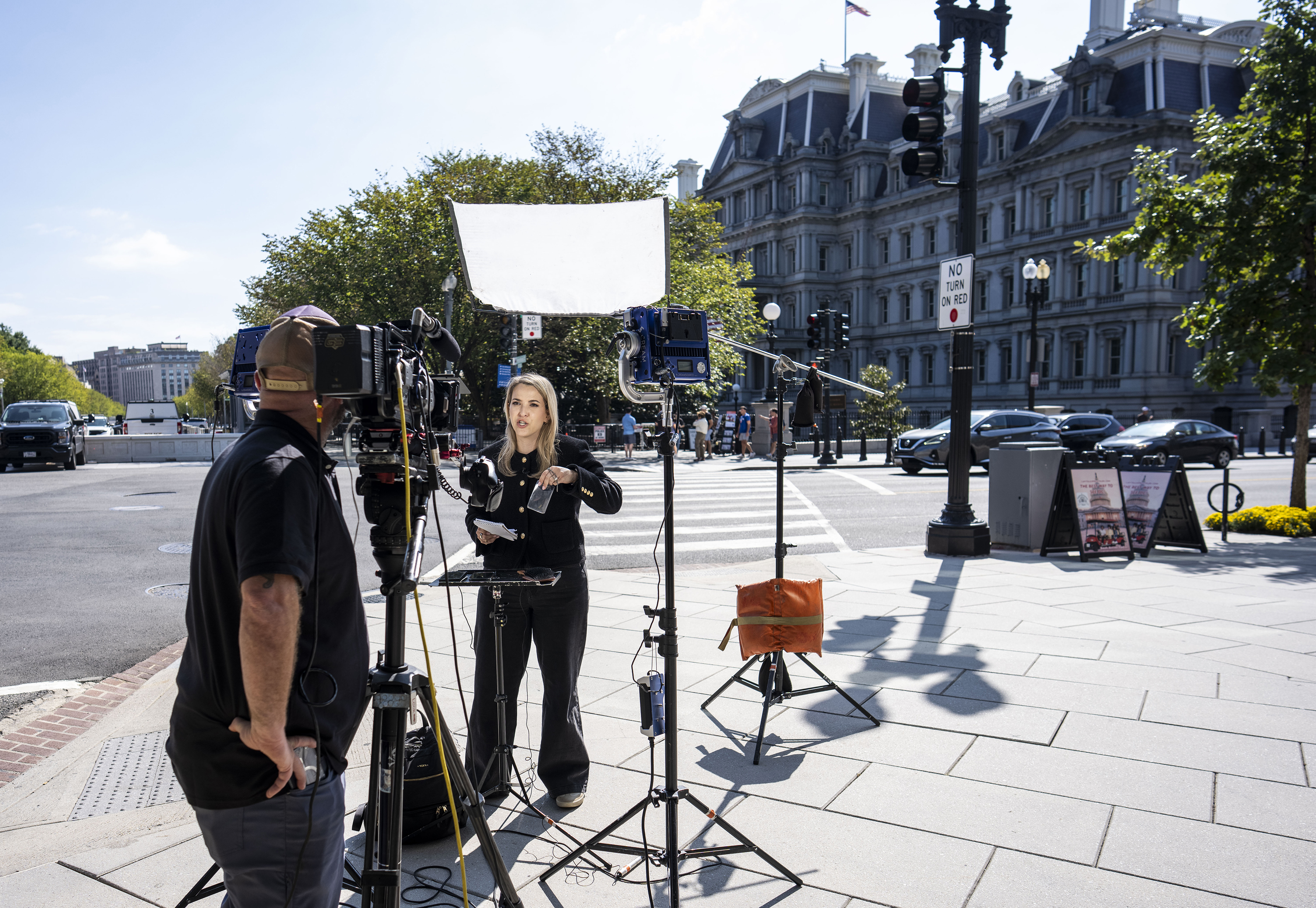
  • News outlets express solidarity after Trump bars some reporters

    News outlets express solidarity after Trump bars some reporters

    Many major media outlets and some high-profile Democrats panned President Donald Trump’s abrupt decision to ban CNN, MS NOW, and Politico from the White House.

    Trump acted on his latest barrage of threats against the press Saturday morning, when reporters for the outlets were denied access to the White House and had their badges confiscated.

    On Friday evening, Trump had accused the three outlets of running “purposely negative stories” that were untrue, though he provided no details. The Trump administration has not said what led to his decision, which many First Amendment groups called unconstitutional and unlikely to survive a court challenge.

    Condemnation from leading news outlets was nearly universal, including from many that compete directly with CNN, MS NOW, and Politico.

    “No news organization — or person — should be retaliated against by the government over the words they use,” said Lauren Easton, a spokesperson for the Associated Press, which filed suit over restrictions that Trump tried to impose on its White House access last year.

    The New York Times, The Washington Post, and press associations also released statements calling the ban an attack on free speech and the free press.

    Journalists at Fox News have also taken issue with the ban. One Fox contributor, Ari Fleischer, said conservatives should challenge liberal reporters. “Argue and defeat them,” he said. “Don’t ban them. Or one day they’ll ban us.” Another contributor, Jonathan Turley, said that “barring disfavored media from the White House is a terrible precedent and practice.”

    Jacqui Heinrich, a Fox News anchor and president of the White House Correspondents’ Association, said on social media that the right to First Amendment protections “does not depend on whether the president likes a news organization’s coverage.”

    “This is about more than the rights of journalists,” Heinrich added. “It is about the right of the American people to receive a full and independent account of the activities, policies, and decisions of whoever occupies the nation’s highest office.”

    Democrats pounced on Trump’s ban as an attempt to hide his administration’s shortcomings and to distract voters from other issues. They pointed out that Republicans were heading into a challenging election cycle with high inflation and an unpopular war with Iran started by Trump, whose support in the polls has sagged.

    “Donald Trump just did what dictators throughout history have done,” Senate Minority Leader Chuck Schumer of New York said on social media. “This is a democracy. You will not be able to manipulate the news or hide the truth.”

    Rep. Jamie Raskin of Maryland, the top Democrat on the House Judiciary Committee, called on the news media to boycott the White House if Trump “keeps violating press freedom.” Sen. Elizabeth Warren (D., Mass.) said Trump was censoring the press and trying to “hide his failures.” Sen. Bernie Sanders (I., Vt.) said that Trump wanted to “control the flow of information and silence media that might hold them accountable.”

    “We will not allow Trump to undermine the First Amendment, the Constitution, and our democracy,” Sanders said on social media. “We will not accept authoritarianism.”

    High-ranking Republicans and members of the Trump administration mostly remained quiet Saturday. But Defense Secretary Pete Hegseth, who has tried to restrict reporters’ access to the Pentagon, said he “fully supports” a ban on some outlets that he and Trump have labeled “fake news” for negative coverage.

    “They endangered our troops with false stories, leaks, and trafficked in fiction and lies about the President,” Hegseth said, without providing examples or evidence.

    Benny Johnson, a right-wing podcaster, also celebrated the decision to block certain outlets from the White House and pointed out that Trump had been banned from social media platforms after the Jan. 6 attack on the Capitol by his supporters.

    “No one is infringing on their ability to do reporting,” Johnson said in a social media post.

    The campaign of former Rep. Mike Rogers, a Republican running with Trump’s backing for a competitive Senate seat in Michigan, appeared to distance itself from the president’s decision.

    Rogers “held a news conference just this morning with invites out to each of those outlets,” Alyssa Brouillet, a spokesperson for his campaign, said in a statement. “That tells you where he stands.”

    Meghan McCain, a conservative commentator, was more explicit.

    “Unpopular opinion in my parts, but it’s insane and a very slippery slope to kick media outlets you don’t like out of the White House,” McCain said.

    This article originally appeared in the New York Times.