Category: Nation & World

  • U.S. plan is said to pull a third of fighter jets it provides NATO for Europe

    U.S. plan is said to pull a third of fighter jets it provides NATO for Europe

    BERLIN — The United States plans to significantly reduce the aircraft and warships that it makes available for NATO operations in Europe, according to two senior European officials, accelerating America’s effort to scale down the protection it has offered to European allies for eight decades.

    The decision would limit NATO’s ability to launch long-range strikes and conduct surveillance. It was communicated to allies in early June in a written document, parts of which were reviewed by the New York Times. The European officials, who were briefed on the decision, spoke on condition of anonymity to speak more freely about sensitive military plans.

    The planned drawdowns include:

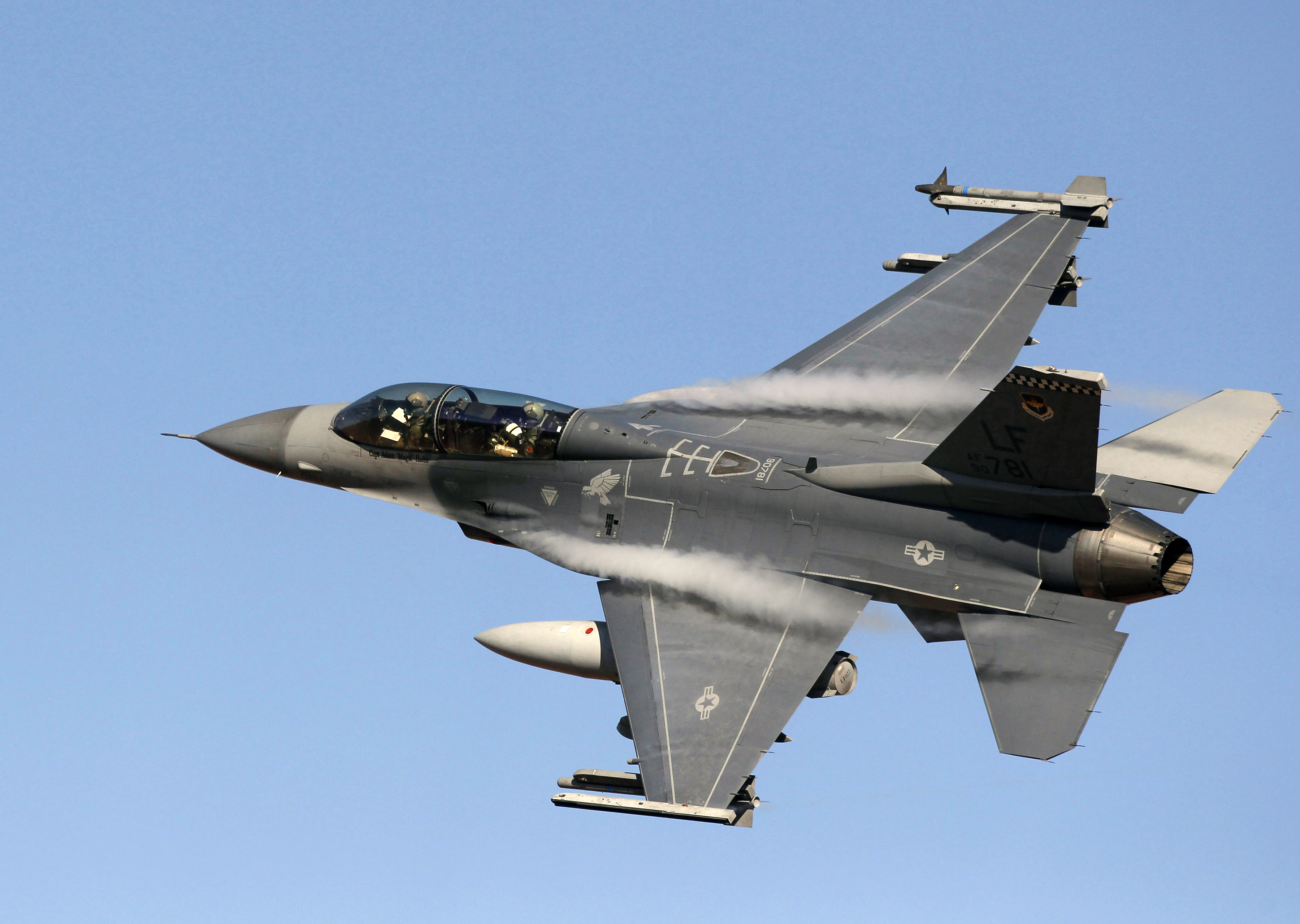
    — Reducing the number of F-16 and F-15E fighter jets from roughly 150 to 100

    — Reducing maritime reconnaissance aircraft from 26 to 15 and cutting all eight aerial refueling tanker jets previously available to Europe

    — Reallocating a missile-launching submarine and an aircraft carrier, along with several warships and scores of jets that join the carrier’s missions

    — Reallocating one of two groups of bombers previously assigned for Europe’s defense

    The Pentagon declined to comment on the specific numbers in the document, and referred to a statement by its European Command last week that spoke in general terms of its intention to reduce its commitments in Europe.

    These details, some of which were first reported in the German news outlet Die Welt, provide the clearest picture yet of the extent to which the Trump administration intends to reduce its commitment to NATO, a military alliance created in the aftermath of World War II. NATO’s purpose was mainly to protect U.S. allies in Europe from external threats such as the Soviet Union, and its European members still see it as essential to their ability to deter Russia.

    The Pentagon has not yet publicly revealed the timeline for the drawdown but U.S. officials have indicated it will take effect very soon — far earlier than European counterparts had been preparing for. The abrupt cutoff of U.S. forces would affect NATO’s ability to, for example, monitor Russian submarine traffic or launch long-range Tomahawk missiles deep into Russian territory.

    Though Europeans have similar missile-launching capabilities, experts say that the missiles act as a bigger deterrent to Russia when wielded by the United States, since Europeans may be warier of deploying them.

    “While each of these cuts can be managed individually, together they represent a significant posture change and pose challenges to European deterrence readiness across the spectrum,” said Giuseppe Spatafora, of the European Union Institute for Security Studies, a Paris-based think tank.

    President Donald Trump has complained for years about the burden that the United States shoulders in its contribution to NATO. He has repeatedly called on Europe to do far more to defend itself without U.S. support, and threatened to leave the alliance altogether. But his administration had only followed through with one-off announcements about relatively small withdrawals from individual countries — until the June document detailing the sweeping reductions to American support for NATO as a whole.

    The cuts will be mitigated by the fact that U.S. troops in Europe will still constitute one of the largest NATO forces on the continent. The drawdown’s effects will also be softened by the fact that European leaders, seeing a need to rely less on U.S. support, were already in the process of rearming their countries.

    But Britain’s defense secretary quit Thursday, accusing the government of spending too little on its military. And Europe is struggling to coordinate its rearmament; on Tuesday, Germany confirmed its withdrawal from a project to build a new fighter jet with France and Spain.

    For some Europeans, the specific number of U.S. assets assigned in Europe is less important than the question of whether Trump is prepared to deploy any of them in combat.

    Anton Hofreiter, a German lawmaker, said: “NATO’s main problem is that, as long as Trump is president, there is no longer any faith that the U.S. would come to the Europeans’ aid in the event of an emergency.”

    The drawdown comes at a particularly tense moment for Europe. In late May, a Russian drone hit an apartment block in Romania, the first such strike in a major urban area in NATO territory. Combined with other Russian drone intrusions into NATO airspace, it raised European fears that Russia might expand its aggression beyond its invasion of Ukraine.

    Ed Arnold, of the Royal United Services Institute, a security think tank in London, said that while the drawdown could be worse, “it will have the effect of focusing minds.”

    The details of the drawdown were communicated privately as top U.S. defense officials spoke publicly about their intention to reallocate forces to defend American interests in the Indo-Pacific region.

    The head of the Pentagon’s European Command, Gen. Alexus G. Grynkewich, said in early June: “There has been an unhealthy codependence in the NATO Force Model on U.S. forces.”

    The general, who is NATO’s top military commander, added: “President Trump, Secretary Hegseth, and others have been clear that this needs to change, and it will change. The potential reality of simultaneous conflict in multiple theaters demands it.”

    This article originally appeared in the New York Times.
  • Algae forms in the Reflecting Pool. It’s ‘residual,’ Trump officials say.

    Algae forms in the Reflecting Pool. It’s ‘residual,’ Trump officials say.

    When renovations of the Reflecting Pool were completed last week, President Donald Trump praised its “beautiful, clean water.” Under his predecessors, Trump said, the pool was “Terrible. Disgusting … garbage ridden.”

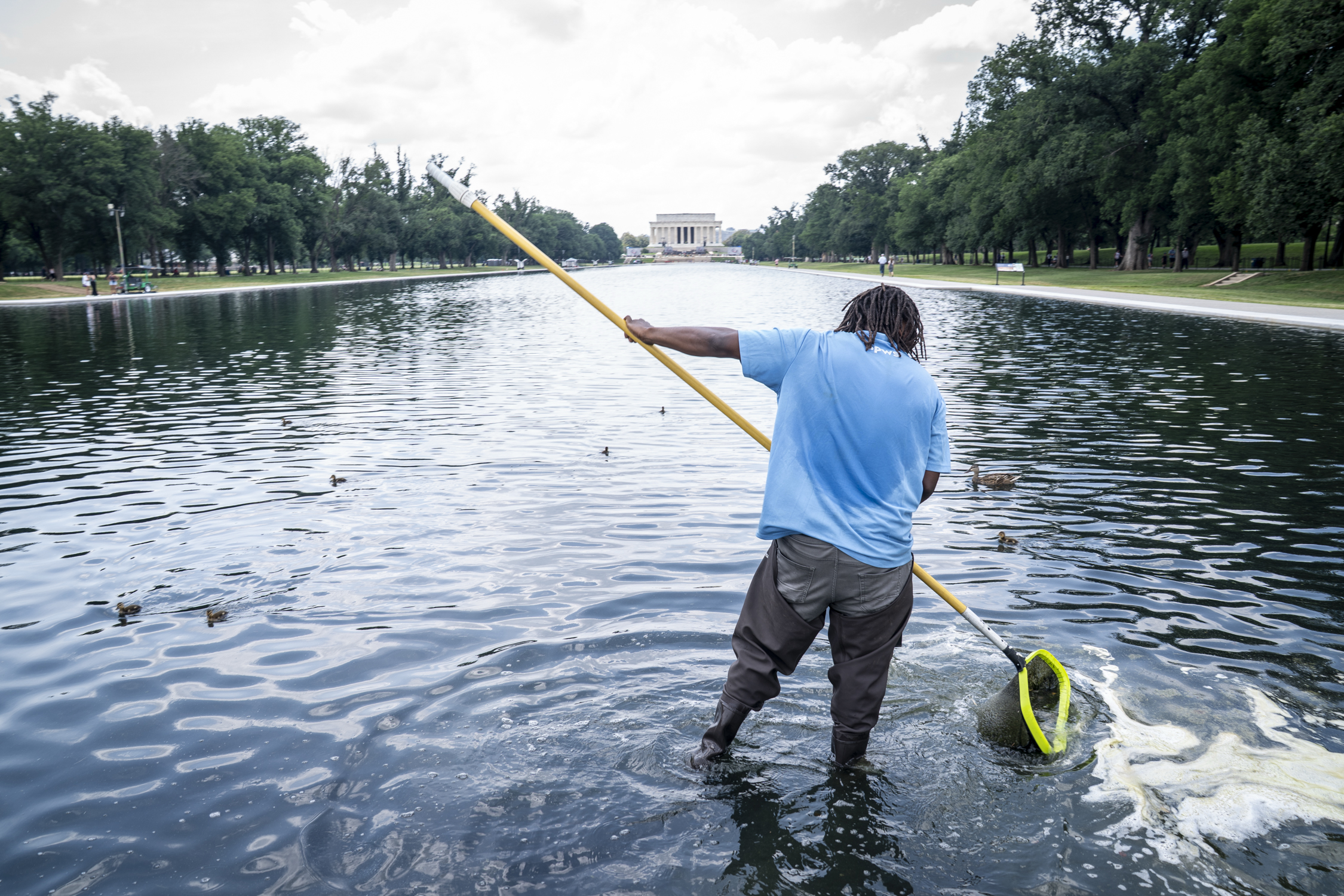
    Now, days after the pool was refilled, clumps of green algae have been spotted throughout the water. Noticed on two separate visits to the Reflecting Pool this week, the algae coated several areas of the bottom of the pool, including the east and west ends, close to the World War II Memorial and the Lincoln Memorial, and floated on the surface.

    An algae spot near the World War II Memorial grew significantly bigger between a rainy Wednesday afternoon and Thursday, which was hot and muggy.

    News photographers also captured images of buckets of Induclor, a chlorine compound used to control bacteria, algae, slime, and fungi in bodies of water.

    Trump officials have an explanation: “What you are seeing is residual algae from the supply lines which have been sitting dormant for eight weeks while construction has been taking place. It’s part of the normal startup process,” Katie Martin, an Interior Department spokesperson, said in a statement.

    “We are removing the algae, and the nanobubblers will maintain the pool and keep it algae free. President Donald J. Trump is an expert builder who has fixed the Reflecting Pool for good unlike the failed and extremely costly attempt by Obama and Biden.”

    Trump on Thursday touted his changes to Washington, including his resurfacing of the Reflecting Pool’s basin.

    “It always leaked because it was done in stone,” the president told reporters in the Oval Office. “Now it’s done properly. It’s not going to leak at all.”

    When asked about the algae, White House spokesperson Taylor Rogers replied in a statement: “President Trump used his expertise to deliver exquisite upgrades to the Lincoln Memorial Reflecting Pool that Americans will enjoy for years to come. The public supports these long-overdue improvements to our nation’s capital, and hit pieces like this are exactly why trust in the media is at an all-time low.”

    Algae has been a consistent problem for the pool, and quickly reappeared after a $34 million renovation that was completed in 2012.

    The plantlike aquatic organisms thrive on sunlight and heat, abundant in D.C.’s summer months. They are controlled through proper water filtration and chlorination, algaecide, and nanobubbles, tiny bubbles of oxygen that effectively cut off the algae’s food supply.

    Trump has touted his rapid renovation of the reflecting pool as a playbook for how he wants to make over Washington: move quickly to launch and complete construction projects, even if it requires bulldozing through regulations and red tape.

    Trump announced his plans to resurface the pool on April 23, saying the project would take about a week and cost less than $2 million. The project ultimately took six weeks and cost more than $14 million, drawing a lawsuit from historic preservationists who said Trump had flouted requirements for public comment and other necessary steps. Democrats also have pressed the White House on why the administration has issued no-bid contracts and rushed work on the reflecting pool and the president’s other construction projects.

    “While it is important that we maintain our national landmarks as they age, the scale, cost, and permanence of these projects has revealed troubling patterns of waste, fraud, and abuse across these episodes,” Sen. Richard Blumenthal (D, Conn.), the top Democrat on the Senate’s permanent subcommittee for investigations, wrote in a letter Tuesday to Park Service leaders. The letter was shared with the Washington Post.

    Trump has repeatedly defended his changes to the century-old pool as necessary, calling its water “filthy” and “disgusting,” and claiming that he has fixed the site’s repeated problems, such as persistent leaking.

    “I’m looking at the Washington Monument and this thing is terrible. The water is dirty, there’s cartons of stuff in it, and everything is just so horrible,” the president said at the White House last month. “It’s a much better job. This will last for at least 50 years and you’ll never have a leak.”

    White House officials this week echoed the president, saying that even critics should concede that Trump’s changes were for the better.

    One official mocked the pool’s smell before Trump’s changes.

    “I don’t think anyone can argue” with Trump’s renovations, the official said. The official declined to comment on the reappearance of algae.

    The “American Flag Blue” paint — another of the president’s choices for the renovation — has maintained the pool’s mirrorlike reflective qualities. But up close, the dark color is a high-contrast backdrop for bird droppings, which could also be observed this week, along with the families of ducks that had returned to the water.

  • Judge rules Trump can stage UFC fights on the White House’s South Lawn this weekend

    WASHINGTON — A federal judge ruled on Friday that the White House is allowed to stage a UFC show this weekend in an elaborate ring already built on the South Lawn to celebrate the nation’s 250th anniversary — on President Donald Trump’s 80th birthday.

    U.S. District Judge Amit Mehta rejected a legal advocacy group’s request to block organizers from using the White House lawn as the venue for Sunday’s planned UFC mixed martial arts event.

    Mehta concluded that the plaintiffs likely don’t have legal standing to challenge the event and have failed to prove that they would suffer irreparable harm by the event going forward as planned. The judge also cited the plaintiffs’ “unreasonable delay” in suing to challenge an event that’s been in the works for months.

    “In the context of an emergency application — and coupled with the fact that the UFC fight date was long ago known — it is fair to say Plaintiffs unreasonably delayed bringing suit, undercutting their claims of irreparable harm,” Mehta wrote.

    Attorneys from the nonprofit Public Integrity Project sued to challenge Trump’s UFC Freedom 250 event on behalf of an activist and a Vietnam War veteran. The two plaintiffs also asked the court to block organizers from building anything for the event on White House grounds, including a 92-foot-tall, 600-ton steel structure called the Claw.

    The plaintiffs’ alleged “aesthetic harms,” the judge noted, are temporary since the Claw will be disassembled starting Monday morning and staging equipment at the Lincoln Memorial must be removed before then. “The President’s musings about permanency of the Claw does not move the dial in the face of a White House official’s clear representation,” the judge wrote.

    The White House called the lawsuit a baseless attempt to prevent Trump from hosting an event that’s no different from many others routinely hosted at public forums in the nation’s capital.

    Trump’s administration can’t issue permits for sporting events on the South Lawn or at the Lincoln Memorial, where UFC fighters planned to hold a news conference in front of fans on Friday, according to plaintiffs’ attorneys. They noted that the event is a privately organized, for-profit business venture, with VIP packages costing millions of dollars.

    “The President’s administration is granting the UFC an extraordinary business opportunity it may not lawfully grant, and in exchange the UFC is throwing an event at which its leadership, fighters, advertisers, and various celebrities will all pay tribute to the President on his birthday,” plaintiffs’ attorneys wrote.

    Public Integrity Project attorney Brendan Ballou said the plaintiffs were disappointed in the judge’s decision but respect it and intend to “keep bringing cases to raise the cost of corruption in America.”

    “This isn’t a case about a sporting event, it’s about corruption, as a handful of people and companies stand to profit from our public monuments,” Ballou said in a statement.

    The National Park Service and the Interior Department are named as defendants in the lawsuit.

    In 2019, during his first term in office, Trump became the first sitting president to attend a UFC show. Trump, a Republican, is a friend of UFC president and CEO Dana White.

    Mehta was nominated to the bench by President Barack Obama, a Democrat. Mehta has presided over other Trump-related cases, including civil litigation accusing Trump of inciting a mob of his supporters to attack the U.S. Capitol on Jan. 6, 2021, after he lost the 2020 presidential election to Joe Biden, a Democrat.

  • Lights! Camera! Cage match! The White House lawn’s Octagon is ready for Trump’s 80th birthday bash

    WASHINGTON — It looks from afar more UFO than UFC.

    Maybe it’s the kind of contraption that has carried space aliens to the White House to force a meeting with America’s leader.

    But come closer and you’ll see the contours of the eight-sided cage, 30 feet in diameter and shaped, with careful precision, like the MMA league’s signature Octagon.

    That is, a STOP! sign flipped on its edge, with wire-mesh sides and padded corners fitted with different sponsors’ logos: Morgan & Morgan, Bud Light, Dodge Ram, Corona Extra, and Polymarket, which identifies itself as the world’s largest prediction market.

    Overhead looms the Claw, a four-sided mass that arcs more than 90 feet into the air and features lights, speakers, thick snakes of wiring, and four large screens so fans not seated right next to the Octagon can follow the cage fighting below.

    Think more of the four-sided, metal grabby thing that tries to grasp stuffed animals at a video arcade rather than what house cats have — hence the extraterrestrial vibes.

    And surrounding all that are risers filled with gray folding chairs forming a temporary arena expected to seat 4,000-plus people for the seven UFC fights being staged on Sunday to celebrate the 80th birthday of President Donald Trump and the 250th anniversary of the Declaration of Independence’s signing.

    “Quite attractive to a lot of people”

    For non-UFC fans, all of this might be disorienting under any circumstances. But the temporary arena is covering nearly the entirety of the White House’s South Lawn, where Marine One usually lands to ferry the president to out-of-town trips and gobs of kids scramble in the grass during the Easter Egg Roll every spring.

    More than $60 million and tens of thousands of hours of labor have been poured into building the arena, according to a court filing from the National Park Service, which oversees the South Lawn and contested a lawsuit meant to block the event. Federal Judge Ahmet P. Mehta on Friday declined to block it, ruling it could go forward.

    The White House says the UFC is covering the costs, though the filing states that seven agencies — including the Department of Homeland Security and the Federal Aviation Administration — have “allocated significant resources and manpower.”

    Fighters, their entourages, and assorted support staffers are expected to take over the driveway and part of the West Wing when they’re not fighting. But they’ll enter the arena via curtained-off walkways with access to the Octagon.

    They, as well as ordinary attendees of Sunday’s spectacle, will have picturesque views of the White House’s Executive Residence and its storied Truman Balcony on one side and the Washington Monument towering in the distance on the other. All of it will be accentuated by swirling spotlights, and perhaps even sweat and blood pouring off the fighters pummeling each other.

    A packed pre-event schedule included a news conference at the Lincoln Memorial with UFC chief Dana White and the fighters on Friday night.

    The schedule also includes a ceremonial weigh-in for combatants on Saturday at the Ellipse, a park near the White House, where organizers expect 120,000-plus visitors to watch Sunday night’s proceedings on large screens after winning free tickets in a lottery.

    Stunt athlete Travis Pastrana is also set to do a potentially death-defying backflip on a dirt bike on the White House lawn as part of the preshow extravaganza.

    Trump has called the Octagon and its Claw “quite attractive to a lot of people.” He’s even suggested that maybe the temporary structure could become permanent, like the Eiffel Tower, which he notes was originally built as part of the 1889 World’s Fair but then was never taken down.

    Only the president knows how serious that suggestion really is.

    The fights will go on rain or shine — despite a lack of covering

    Work on the arena began May 20 and has continued for weeks. During a walk-through for reporters on Thursday, construction noises — particularly sanding and hammering — could be heard. Giant cranes were carrying materials around overhead, though that was for the $400 million ballroom that Trump is building nearby, not the UFC fight.

    The remaining grassy lawn around the arena, on the other sides of the White House, has been fitted with supplemental spotlights. But the grass that normally grows between the White House and the start of the risers for the arena is now gone, with nothing but dusty dirt that will need to be resodded when this is all over — unless the president really does decide to leave the arena up permanently.

    There’s also a large Freedom 250 logo standing between the White House and the arena. Nearby, crews removed the tables and yellow patio umbrellas from Trump’s refurbished Rose Garden and were power-washing that space, as well as the colonnade to the Oval Office, in preparation for the fights.

    Secretary of State Marco Rubio signed a cooperation agreement with UFC that will see both institutions provide fight training and health and diet regimens, while promoting teamwork and leadership among youth around the world.

    “We are so polarized,” Rubio said. “There are only a handful of things that bring people together in one place at one time, united by their interest in one thing. We need more of those.”

    Later Thursday, crews began testing the sound system, unleashing a deep rumbling — and sometimes unsettling bass notes — throughout the West Wing. During a subsequent Oval Office event, the music from the lawn was loud enough that the 1970s hit “Boys Are Back in Town” rollicked in the background as Trump spoke.

    Sunday’s event starts at 8 p.m. ET. As darkness falls, crews will illuminate the Claw in red, white, and blue, and the mass of lights will offer projections that make it seem as though the entire structure has been enveloped in a twirling stars and stripes pattern.

    The weather forecast calls for hot and muggy conditions with thunderstorms possible. The underside of the Claw’s tower features an overhead cover that should keep the fighters reasonably dry should it rain — and Trump is also likely to watch from a protected, covered area.

    But everyone else would almost certainly get wet.

    White has vowed that even heavy lightning — when the Claw might make a conspicuous target for bolts — wouldn’t stop the show.

    “I don’t care if it snows,” White said.

  • EU agrees to launch membership talks with Ukraine next week even as war with Russia drags on

    BRUSSELS — European Union nations agreed on Friday to open membership talks with Ukraine next week, officially launching the process for the war-torn country to eventually join the world’s biggest trading bloc.

    At a meeting in Brussels, ambassadors from the 27 EU nations decided to officially open negotiations with Ukraine as well as with Moldova, which Russia has also tried to drag back into its orbit, on Monday in Luxembourg.

    Ukraine sees EU membership as an important “security guarantee” for a stable future once war with Russia ends.

    Its best guarantee would be NATO membership, but the Trump administration insists that cannot happen. Others oppose it joining while fighting continues. Russia is strongly against it, and has cited moves toward NATO membership as a reason for launching its full-scale invasion in 2022, though it has not objected to EU membership for Kyiv.

    Countries hoping to join the EU must complete negotiations in 35 policy areas, or chapters, ranging from agriculture to trade, a process which can take years.

    An intergovernmental conference will be held on Monday to open key chapters — grouped together as “clusters” — concerning the values and principles on which the bloc was founded.

    “This is a recognition of the determination, courage, and hard work shown by both countries in advancing reforms, even in the face of immense challenges,” EU Council President António Costa and Commission President Ursula von der Leyen said in a statement.

    They described the move as “a strategic choice” that strengthens “peace, security, and prosperity across our continent.” It’s also a “signal that the EU’s offer of peace, stability, and opportunity is unmatchable,” they said.

    Ukraine officially applied for EU accession less than a week after Russia invaded in February 2022. The EU commission has praised the country for reforms it has been able to push through in wartime, although deep concerns about corruption and justice standards remain.

    Last month, German Chancellor Friedrich Merz urged his EU partners to consider offering “associate membership” to Ukraine and breathe new life into talks aimed at ending more than four years of war with Russia.

    Other countries — France and the Netherlands among them — have suggested workarounds to bring Ukraine into the fold more quickly but without the rights of full membership.

    It all comes as the EU weighs whether to try to launch its own negotiations with Russian President Vladimir Putin, with U.S.-mediated talks bogged down while America’s attention focuses on the Iran war.

    Under Merz’s proposals, Ukraine would take part in EU meetings, but without voting rights, and would also have nonvoting “associate members” of the bloc’s powerful executive branch, the European Commission, and the European Parliament.

    All 27 EU members must agree before each policy chapter can be opened, and then again for it to be closed. Hungary, notably, has blocked the opening of negotiations, but the arrival of a new government in Budapest has softened that stance.

  • Blocking Trump’s Fund, Judge Presses for Guarantee It Won’t Move Forward

    ALEXANDRIA, Va. — A federal judge Friday barred the Trump administration until further notice from setting up a $1.8 billion fund to compensate people claiming to have been unfairly prosecuted by the government, saying that her order was needed because of mixed messages about the scheme from President Donald Trump.

    The ruling by the judge, Leonie M. Brinkema, was the strongest effort to date by anyone in government to hold the administration to its word that the proposal to create the fund had actually been set aside. While Todd Blanche, the acting attorney general, told Congress last week that the fund would not move forward, Trump has been much more circumspect, insisting that he still loves the idea and believes that people who suffered in court at the hands of the government should get financial compensation.

    Brinkema seized on the president’s statements during a hearing in U.S. District Court in Alexandria, Va., suggesting they left open the possibility that the fund could be brought back to life despite Blanche’s promises and assertions made in court papers that the fund was no longer moving forward.

    “We just don’t have the absolute certainty that this fund won’t rear its head in another form,” she said.

    Brinkema did, however, give the administration a way out. She said she would consider rescinding her order if, within a week, the Justice Department sent her a declaration, filed under penalty of perjury, that the fund was dead once and for all. She told Andrew Block, a department lawyer who appeared in court for the government, that the declaration needed to be signed by Blanche and Scott Bessent, the Treasury secretary.

    Brinkema’s ruling extended a temporary pause on the fund that she had put in place at the end of May. And it came two days after a federal judge in Washington, Richard J. Leon, refused to issue his own order putting the fund on hold.

    Leon took the Justice Department at its word that the plan had been shelved, but still warned the administration not to play games with him by pretending it was dead, if it was not.

    “Don’t play possum with this court,” he said.

    The fund has created a political headache for the White House almost from the moment it was first announced May 18 — in no small measure because of concerns that it could be used to funnel taxpayer money to hundreds of rioters prosecuted for storming the Capitol on Jan. 6, 2021.

    Brinkema underscored those concerns by reading aloud a passage about payments being made to the rioters that appeared in a brief criticizing the fund that was submitted to her last week by Sens. Cory Booker (D., N.J.) and Bill Cassidy (R., La.).

    “A scheme deliberately designed to recast insurrectionists — including those who perpetrated violence against law enforcement officers — as victims and legitimate prosecutions as persecution does not merely rewrite history,” the judge read from the bench. “It creates incentives for similar conduct in the future, with the explicit encouragement of the officials responsible for administering justice.”

    The lawyers who challenged the administration in front of Brinkema celebrated her order, saying it would keep the fund in check, despite “the administration’s shifting explanations” about its future.

    “The court recognized the serious legal concerns raised by the Trump-Vance administration’s attempt to create a secretive, taxpayer-funded compensation program operating outside the constitutional safeguards that govern public spending,” said Skye Perryman, the president and CEO of Democracy Forward.

    The nonprofit group brought the case on behalf of five clients — among them, a former federal prosecutor fired after working on Jan. 6-related cases — who asserted that they had been wronged by the Trump administration and would be prevented from filing claims with the fund because it was designed to compensate people alleging harm by Democratic administrations.

    The fund emerged from an extraordinarily unusual ploy to settle a $10 billion lawsuit that Trump had filed against the IRS, a federal agency that he technically controls. The suit accused the IRS of not doing enough to stop a contractor from leaking his tax information to the New York Times in 2019.

    As part of the same deal, the IRS and the Justice Department gave the president an even more remarkable and personal benefit, granting him, his family, and businesses broad protections from tax investigations.

    Brinkema made clear Friday that her order applied only to the compensation fund, not to the tax provision. She noted that the entire settlement deal — including both the fund and the IRS protections — was being scrutinized as a potential act of fraud by the federal judge in Miami, Kathleen M. Williams, who oversaw the original lawsuit.

    Shortly after being assigned the IRS suit, Williams, an Obama appointee, had questioned whether it presented an actual conflict that she could consider, given that Trump was effectively on both sides of the matter. When she closed the case, she noted that there was no “settlement of record,” but shortly after, the Justice Department released its agreement dismissing the suit.

    Williams effectively reopened the case last month after 35 former federal judges urged her to examine whether Trump’s legal team and the Justice Department had colluded to reach the deal in a way that avoided any scrutiny or oversight.

    As part of her inquiry, Williams has given Trump’s personal lawyers until the end of Friday to tell her in writing whether the dismissal of the suit was “premised on deception” and whether it should be formally reopened because she was the “victim of a fraud.”

    This article originally appeared in the New York Times.
  • Elon Musk becomes the world’s first trillionaire

    Elon Musk becomes the world’s first trillionaire

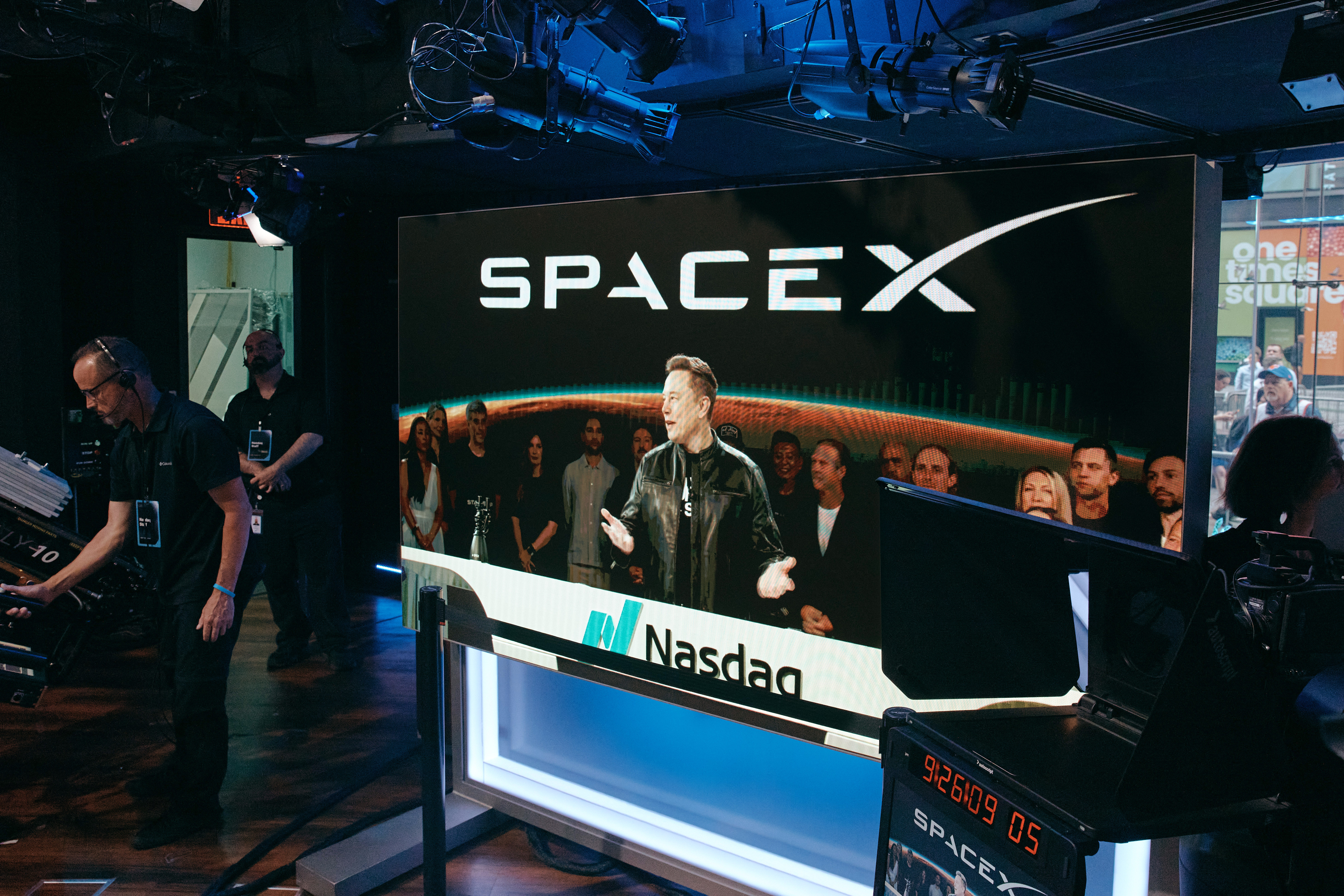
    Elon Musk became the world’s first trillionaire Friday when shares of his rocket company SpaceX began trading on the stock market, signaling a new era of ultra-affluence and widening wealth inequality.

    Musk reached the milestone when trading of SpaceX shares opened at $150, up 11% from their initial public offering price of $135. His net worth — which comprises his stock in SpaceX and his electric carmaker, Tesla, as well as ownership stakes in other ventures including brain implant company Neuralink and tunneling firm the Boring Co. — stood at around $1.1 trillion.

    Musk, 54, was already the world’s richest person. He claimed that title from Amazon founder Jeff Bezos in January 2021, after Tesla’s shares surged to take his net worth past $185 billion.

    Since then, the South African-born entrepreneur’s fortune has more than quintupled in a 5½-year period, during which he bought social media company Twitter, founded an AI startup, fused them together with SpaceX, and then took the conglomerate public. In that time, Musk also spent more than $250 million to help elect Donald Trump and advised the president.

    And Musk’s wealth-making has only accelerated, cementing his influence over society, culture, and global politics. Since October, his net worth has doubled.

    “The fact is that wealth for some and wealth inequality is growing in dimensions that we’ve never seen before,” said Steven Durlauf, the director of the Stone Center for Research on Wealth Inequality and Mobility at the University of Chicago.

    When oil tycoon John D. Rockefeller’s fortune was at its height in 1937, his $1.4 billion net worth amounted to about 1.5% of U.S. gross domestic product, Durlauf said. Musk’s net worth is now equivalent to more than 3% of U.S. GDP.

    Such wealth is so extraordinary that it can be hard to make meaningful comparisons. The median American household had a net worth of just under $200,000 in 2022, the year with the most recent data available from the Federal Reserve. That means Musk’s net worth is 5 million times as large as that of the typical family.

    His wealth dwarfs even that of the everyday wealthy. The top 10% of households by income had an average net worth of $6.5 million in 2022, less than 0.001% of the SpaceX leader’s total. The world’s second-richest person, Google co-founder Larry Page, is worth around $304 billion, according to the Bloomberg Billionaires Index.

    Inequality is notoriously difficult to measure, but the explosion of wealth at the top is hard to dispute. The net worth of the middle 40% of households, adjusted for inflation, has risen slightly more than 50% over the past decade, according to data from French economists Emmanuel Saez and Gabriel Zucman. The top 1% have seen similar gains. But the richest 0.001% have seen their wealth roughly double over the same period.

    Beyond Musk, the ultrawealthy have experienced significant increases in their fortunes. In 2016, a net worth of $100 billion — a mark that Musk crossed about six years ago — would have easily placed someone at the top of the Forbes Billionaires list. Today, $100 billion would rank them as the 20th richest person in the world.

    “Christ, when I was a kid, we only talked about millionaires,” said Bernie Sanders, 84, the progressive senator from Vermont. “If this isn’t an example of oligarchy, I don’t know what is.”

    Musk’s rapid accumulation of wealth largely comes down to the appreciation of his nearly 50% stake in SpaceX, which is worth more than $900 billion. During its IPO, the company sold more than 555 million shares, which valued it at $1.77 trillion, up from a $400 billion valuation on the private market last summer. Starting in January, SpaceX also granted Musk pay packages totaling 1.3 billion shares, which he cannot sell until he hits certain operational milestones.

    Musk did not respond to a request for comment. But he has previously acknowledged the trillionaire milestone.

    In February, he replied to a post on X about possible trillionaire status by noting that he had created significant wealth for shareholders and held less than 0.1% of his net worth in cash. In May, he responded on X to the financial musings of Peter Diamandis, a friend and SpaceX investor, saying he would reach “$10T or bust.”

    Musk has also recently said that “money won’t matter” in the future because Tesla and SpaceX would develop robotics, AI, and rockets so powerful that no human would ever have to work again. In his utopian world of “amazing abundance,” everyone would have “universal high income,” he has said.

    Musk’s allies said his net worth was justified by his impact, providing an example and incentive for those who want to build successful companies. Diamandis, the head of the XPrize Foundation, an organization that holds contests to encourage scientific breakthroughs, said Tesla and SpaceX were “raising the floor.”

    “The fruits of his labor are making him into a trillionaire, and they’re uplifting humanity,” Diamandis said.

    Adeo Ressi, Musk’s college roommate at the University of Pennsylvania, said the SpaceX chief never cared as much about financial gain as obtaining resources to help him achieve his entrepreneurial goals. For Musk, “money is a means to an end,” Ressi said, comparing his friend’s mindset with a gamer accumulating coins in a video game to beat a level.

    “He’s amassing resources to do things, and the thing he wants to do most is colonize Mars,” Ressi said. “That’s a really big driving force behind his wealth accumulation.”

    He added that Musk was “not a poster child of wealth inequality” and pointed to the tech leader’s lifestyle, in which he is known to work around the clock and avoid the typical trappings of the rich, like islands and megayachts.

    “It’s not like he’s planning to leave this in a massive family trust,” Ressi said. “It’s literally going to be used to make humanity into a multiplanetary species.”

    But critics say the way Musk chooses to lead his life is beside the point. His net worth has already provided him with the means to personally acquire companies and spend hundreds of millions of dollars to help elect a preferred presidential candidate, Durlauf of the University of Chicago said.

    Becoming a trillionaire will only magnify how “economic inequalities are spilling over into the political domain,” he added.

    Sanders called Musk’s trillionaire status “a moral travesty,” noting that 60% of Americans live paycheck to paycheck.

    The senator also agreed with the assessment that Musk was probably not as interested in owning islands or yachts. The trillionaire, in his view, was interested in just one thing.

    “This guy is into power,” Sanders said. “And he is now the most powerful person on Earth.”

    This article originally appeared in the New York Times.
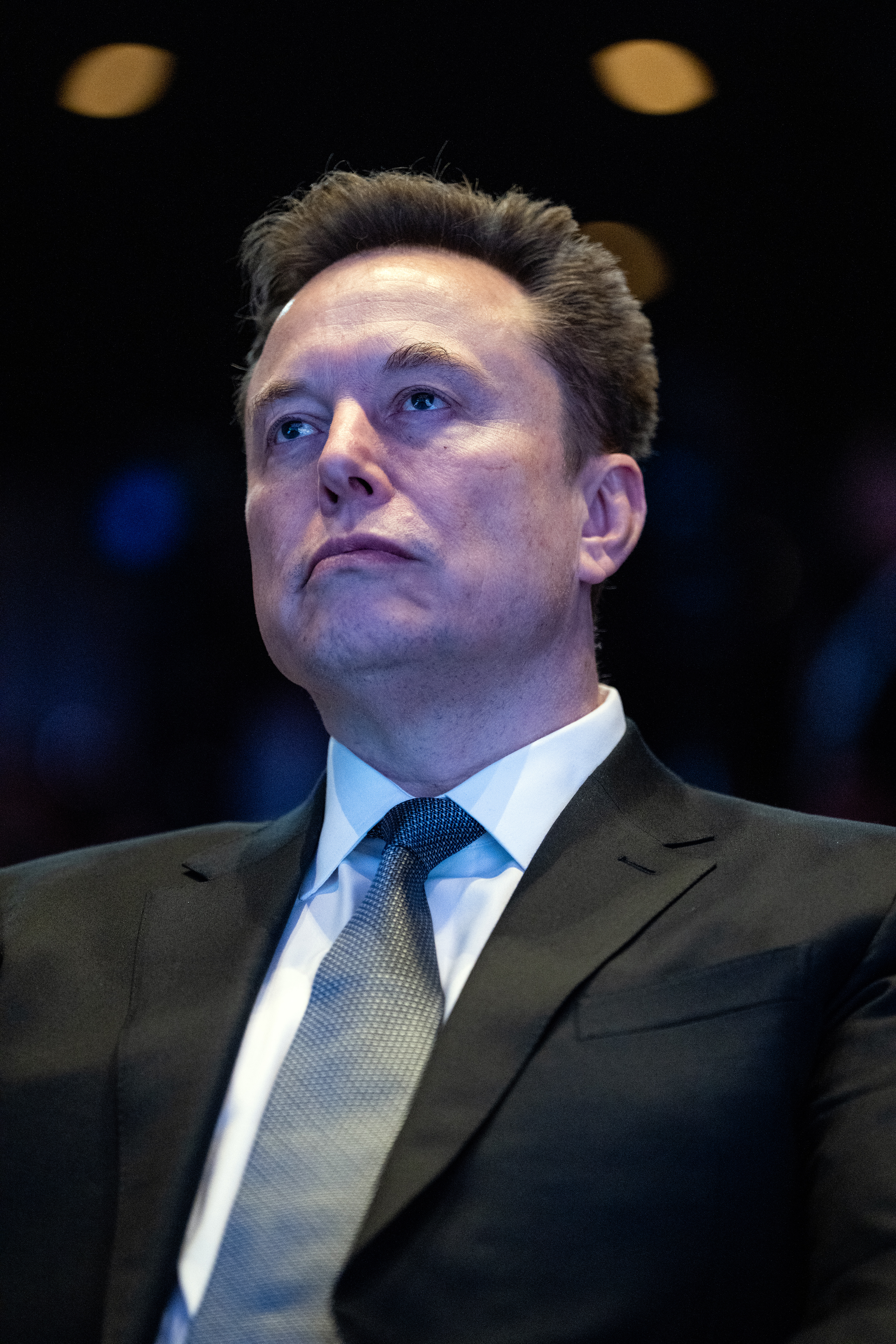
    FILE — Elon Musk in Washington on Nov. 19, 2025. Elon Musk became the world’s first trillionaire on June 11, 2026, as shares of his rocket company SpaceX began trading on the stock market at $150, up 11 percent from their initial public offering price, signaling a new era of ultra-affluence and widening wealth inequality. (Haiyun Jiang/The New York Times)HAIYUN JIANG
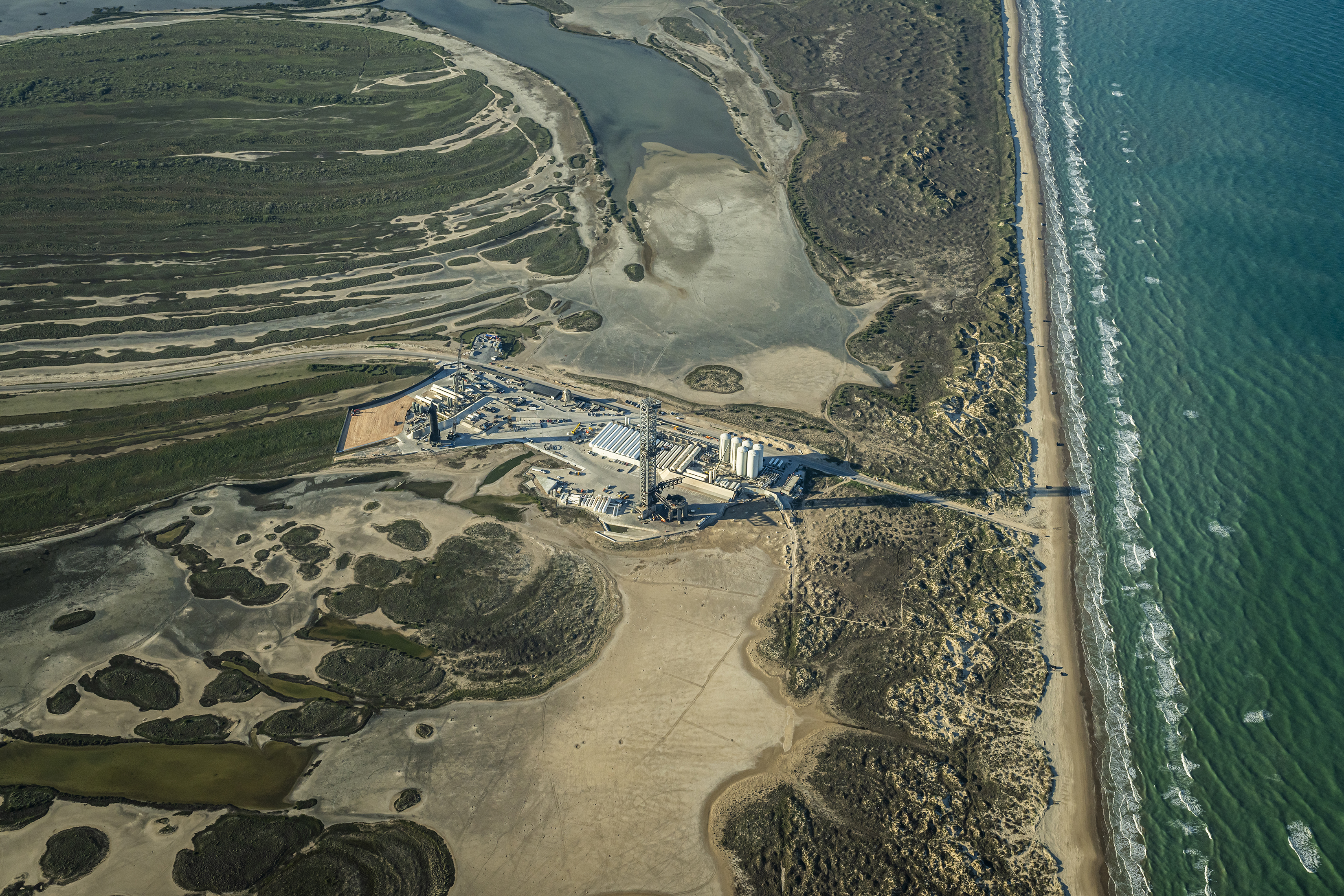
    FILE — The SpaceX Starbase rocket launch site near Boca Chica beach, in Cameron County, Texas, on Feb. 24, 2024. Elon Musk became the world’s first trillionaire on June 11, 2026, as shares of his rocket company SpaceX began trading on the stock market at $150, up 11 percent from their initial public offering price, signaling a new era of ultra-affluence and widening wealth inequality. (Meridith Kohut/The New York Times)MERIDITH KOHUT
  • US and Iran are close to a deal to end their war, officials say

    ISLAMABAD — Pakistan’s prime minister said Friday the United States and Iran have agreed to wording of an agreement aimed at ending their war in the Middle East and that mediators were working with both sides to finalize a deal.

    Prime Minister Shehbaz Sharif said the U.S. and Iran have reached a “final, agreed upon text.” He said Pakistan, which has taken the lead in mediation efforts, was working with the warring countries on next steps.

    “Peace has never been this close as it is now,” Sharif said in a post on X.

    The apparent breakthrough in negotiations comes after Iran exchanged fire with the U.S. and Israel over three days this week, threatening to return the Middle East to full-scale war.

    There was no immediate comment from U.S. or Iranian leaders on Sharif’s statement.

    Iranian Foreign Minister Abbas Araghchi said Friday an agreement “has never been closer” in a post on X. U.S. President Donald Trump, who has said multiple times in recent weeks that the countries were on the cusp of a deal, shared Araghchi’s post on his own social media.

    None of the leaders gave details about the emerging agreement.

    The war launched by the U.S. and Israel on Feb. 28 has rattled the Middle East and virtually shut down oil and natural gas shipments from the Persian Gulf. A fragile ceasefire has been in place since April 7.

    Official says emerging deal would reopen strait

    The U.S. and Iran were making progress Friday toward completing a deal that could effectively end the war, reopen the Strait of Hormuz, and begin the process of destroying or removing Tehran’s highly enriched uranium, according to a senior U.S. administration official.

    The official, who briefed reporters on condition of anonymity under ground rules set by the White House, said a deal was 80% to 85% done and that the U.S. side believes “most of the people who have authority” in the Iranian government want to sign onto the deal “but not everybody.”

    The official said technical details on how to remove Iran’s enriched uranium, according to the emerging agreement, would be worked out over 60 days after both sides sign it. The official did not detail who the U.S. envisions taking charge of removing the uranium, which is believed to be entombed under three nuclear sites that were battered by U.S. strikes last year.

    Three regional officials said the emerging deal is also expected to include the phased lifting of sanctions on Iran and the release of frozen Iranian assets. The officials spoke on condition of anonymity because of the sensitivity of the negotiations.

    Underscoring the fragility of the negotiations, Trump on Friday lashed out at Iranian officials on social media and said: “They better get their act together, and FAST!” That was before he shared Araghchi’s post.

    Officials say deal could be signed in coming days

    Iran’s nuclear program has been a key point of division. The U.S. and Israel fear it could lead to an atomic weapon — a main reason their leaders cited for going to war. Tehran has insisted its nuclear efforts are for peaceful purposes.

    Also critical is Iran’s effective closure of the Strait of Hormuz, a vital shipping lane for oil and natural gas. Disruption of transit through the strait has crimped global energy supplies, driven up fuel prices, and made food and other basics more expensive well beyond the region.

    The U.S. has responded since mid-April with a naval blockade of Iranian ports to choke off Iran’s own oil exports.

    The regional officials said they expect a signing ceremony for the agreement in the coming days after officials in Washington and Tehran approve it.

    Trump on Thursday claimed significant progress in the negotiations, just hours after he threatened to escalate attacks and seize Iran’s oil industry. Esmail Baghaei, a spokesperson for Iran’s Foreign Ministry, said on state television that mediators were active and the text of a deal was “mostly finalized.”

    There was no immediate comment Friday from Pakistan’s Foreign Ministry, which has been leading efforts to mediate a deal between the U.S. and Iran. Foreign Ministry spokesperson Tahir Andrabi had said Thursday that Pakistan remained involved in negotiations.

    Israel expects Trump to advocate for its interests

    Israeli Prime Minister Benjamin Netanyahu has said Israel is not a party to the deal being negotiated. He said in a statement Friday that he and Trump were in “full agreement” that Iran must not have nuclear weapons.

    Israeli Defense Minister Israel Katz said in a separate statement that Israel also expects Trump to uphold key Israeli interests, including weakening Iran’s missile program and proxy network.

    Katz warned that Israel could still act independently toward Iran and that the country would not pull out of the zones it is occupying in Lebanon, Syria, and Gaza, nor would it withdraw from the northern refugee camps of the Israeli-occupied West Bank.

    Iran has insisted that any deal to end the war must also end fighting in Lebanon between its ally militia Hezbollah and Israel. Netanyahu appears intent on pursuing his goal of destroying the militant group, complicating negotiations between Iran and the U.S.

    The deal was largely being brokered by Pakistan, led by its army chief Field Marshal Asim Munir, the regional officials said, with backing from Saudi Arabia, Turkey, Egypt, and Qatar.

  • A key U.S. government surveillance program is set to expire. A look at what that means

    WASHINGTON — A key surveillance tool seen as vital in preventing terror attacks and catching foreign spies was set to expire Friday after congressional efforts to temporarily extend it failed in bipartisan fashion.

    It’s a significant lapse for the program known as Section 702, and even as President Donald Trump nominates a new national intelligence director more palatable to both Republicans and Democrats than his initial pick, it’s unclear how soon lawmakers — set for recess — would be able to revive the spy program.

    Still, there is not expected to be an immediate drop-off in intelligence collection given that a court order from March certified that government surveillance powers under the law could remain in effect for another year.

    Section 702 allows for sweeping powers

    The provision is a part of the Foreign Intelligence Surveillance Act, known as FISA, and grants American spy agencies sweeping powers to collect and examine the communications of foreigners located outside the United States without first getting a warrant.

    U.S. officials see the law as an invaluable national security tool that has helped disrupt potential acts of terrorism, yielded valuable insight into ransomware attacks on critical infrastructure, and contributed to the killing of al-Qaida leader Ayman al-Zawahri in a 2022 drone strike.

    The law was passed in 2008 as an effort to codify key aspects of a predecessor spy program created by President George W. Bush’s Republican administration.

    Since then, officials across administrations of both major political parties have warned that without the law the government won’t be able to collect crucial intelligence overseas.

    Program’s renewal historically has been contentious

    The periodic need to reauthorize the law has prompted protracted debate in Congress well before this year, including discussion over whether additional guardrails are needed to protect the privacy of Americans and their personal data.

    That’s because when the government eavesdrops on foreigners abroad, it also sweeps up the communications of American citizens and others in the U.S. who are in contact with those surveillance targets.

    Civil liberties advocates have raised concerns over revelations that FBI analysts over the years have improperly queried the vast repository of intelligence collected through the program for information about Americans, including related to the Jan. 6, 2021, riot at the Capitol by a mob of Trump supporters and the racial justice protests of 2020, as well as about state and federal political figures.

    Some of those advocates have said the government should be required to have a warrant before examining communications collected from Americans. U.S. officials have said that a warrant would be legally unnecessary and overly cumbersome and that corrective measures have been implemented to reduce the number of improper queries.

    Complicating the debate is the unlikely political alliances it has produced, uniting a coalition of lawmakers skeptical of government surveillance that includes both privacy-minded liberal Democrats and Republicans who still regard the intelligence community with suspicion over the investigation of ties between Russia and Trump’s 2016 Republican presidential campaign.

    Pushback over acting intelligence pick Bill Pulte

    Democrats balked when Trump picked Bill Pulte to serve as acting national intelligence director and refused to support a FISA extension until the selection was withdrawn. Pulte, a Trump loyalist with no known national security experience, has set off alarms by using his perch as director of the Federal Housing Finance Agency to facilitate dubious mortgage fraud investigations of perceived Trump adversaries.

    A House vote this week that would have temporarily extended the program collapsed, with 19 Republicans and nearly all Democrats rejecting the temporary measure, 198-218. A Senate effort to approve its own versions also failed.

    After those votes, Trump announced he was tapping Jay Clayton, the U.S. attorney in Manhattan who previously served as chairperson of the Securities and Exchange Commission, as his permanent pick for director of national intelligence, or DNI. The pick was warmly received on Capitol Hill, but it was not enough to break the impasse before Friday’s scheduled expiration.

    Connecticut Rep. Jim Himes, the top Democrat on the House Intelligence Committee, said that he has “known and respected” Clayton for decades and that had he been tapped a week ago, “lots of pain might have been avoided.”

    “His intelligence, temperament, and deep commitment to public service will make him a terrific DNI,” Himes said.

    Next steps for the spy powers provision

    Before the congressional votes, Republican Arkansas Sen. Tom Cotton, chairperson of the Senate Intelligence Committee, and Iowa Sen. Chuck Grassley, chairperson of the Senate Judiciary Committee, had warned the Trump administration to prepare “for a potential significant gap in foreign intelligence collection.” Other lawmakers since then have voiced similarly dire concerns.

    The expiration is likely to be the first meaningful lapse of Section 702 since the law was created more than 15 years ago. In 2024, the Senate barely missed its midnight deadline before voting to approve a bill that was then signed by President Joe Biden, a Democrat, creating a brief lapse.

    Despite this year’s sunset of the statute, there’s no expectation of any immediate halt to intelligence collection as the U.S. hosts a series of events this summer with potential national security concerns, including the World Cup and festivities surrounding the 250th birthday of the United States.

    A March opinion from the secretive Foreign Intelligence Surveillance Court certified the program’s renewal for another 12 months, meaning that Section 702’s authority is expected to remain intact through then. Even so, it’s conceivable that without congressional reauthorization, communications companies forced to provide data to the government under the law could try to cease that compliance and argue that they cannot be compelled to cooperate.

  • The Gordie Howe Bridge opening between the U.S. and Canada was postponed. Here’s what to know

    The Gordie Howe Bridge opening between the U.S. and Canada was postponed. Here’s what to know

    A day before a ribbon-cutting ceremony, the opening of a new bridge meant to ease congestion at the busiest trade corridor between Canada and the United States hit another roadblock, four months after President Donald Trump vowed to block it.

    The authority that will operate the 6.4 billion-Canadian-dollar Gordie Howe International Bridge between Detroit and Windsor posted a notice online Thursday announcing that the opening, scheduled for late Friday morning, had been postponed.

    “Canada and the United States have agreed to delay the opening of the bridge, taking the necessary time to resolve any outstanding issues,” Chuck Andary, acting CEO of the bridge authority, said in a statement. “We appreciate the efforts of workers on both sides of the border to get the bridge to its current state of readiness.”

    The statement offered no details about those issues and gave no new opening date.

    Invitations to a Friday opening ceremony had been sent to participants Tuesday.

    In February, Trump threatened to stop or delay the project in a rambling social media post, saying he wished to punish Canada for what he described as its exploitation of the United States and its revival of trade ties with China, among other perceived transgressions.

    He also demanded compensation for a wealthy Detroit-area family that owns a nearly century-old bridge upstream, which currently carries around $300 million a day in trade.

    Matthew Moroun, a billionaire trucking industry scion in Detroit whose family has mounted legal challenges of the project for decades — one even reaching Canada’s Supreme Court — and aggressively lobbied governments on both sides of the border.

    Trump had issued his post hours after Moroun met in Washington with Commerce Secretary Howard Lutnick, The New York Times reported in February. Lutnick then called Trump.

    Less than one month before that meeting, Moroun donated $1 million to a super PAC devoted to Trump.

    What’s being negotiated?

    After Trump’s initial post, Canada’s prime minister, Mark Carney, said he called Trump and explained that although Canada paid for the bridge, it will share ownership with Michigan under a 2012 agreement between the two governments.

    Canada is Michigan’s largest export market.

    “This is a great example of cooperation between our countries,” Carney told reporters at the time. “I look forward to it opening.”

    Carney said that Trump asked Pete Hoekstra, who is the U.S. ambassador to Canada and is from Michigan, to “play a role in smoothing the conversation” about the bridge.

    In late May, Carney told reporters that there have been “discussions at the ambassadorial level around the bridge.” Neither Carney or officials in Canada or Michigan have offered any details about those talks.

    The bridge opening delay comes as a July 1 review deadline for the United States-Mexico-Canada Agreement on trade looms. The Trump administration has been offering varying signals about its continuation in the pact.

    On Wednesday, Trump said: “I don’t know that I’m going to renew it.”

    The following morning at a conference in Toronto on relations between Canada and the United States, Hoekstra appeared more optimistic about the pact’s continuation.

    He advised Canadians to “go into these negotiations very aggressively and say we know America has needs across the board and we’re here to partner with America.”

    He added: “We’re open to offers, make your case.”

    Why did Canada build a second bridge?

    The catalyst for the new bridge was the closing of the border after the Sept. 11, 2001, terrorist attacks.

    The enormous, miles-long traffic jams of trucks along roads in Ontario underscored the vulnerability created by relying on a single bridge for commercial traffic at North America’s busiest land crossing.

    There is a tunnel for vehicles linking Windsor and Detroit, but tractor-trailers are too tall to fit.

    The Ambassador Bridge, which opened in 1929, was also showing its age. Chunks of it regularly fell off, causing lane reductions on the bridge and street closings below in Windsor.

    An expressway that runs across southern Ontario ends on the outskirts of Windsor, forcing trucks to make a slow journey to the bridge on a congested local road.

    Investors and both governments floated several proposals, including a plan by the Moroun family to build a second crossing alongside the four-lane Ambassador Bridge.

    Who is the Moroun family?

    Manuel Moroun purchased the Ambassador Bridge in 1979 after building a fortune largely through the expansion of his father’s trucking company. Matthew Moroun, Manuel Moroun’s son, gradually took over as head of the family before the older Moroun’s death in 2020.

    Manuel Moroun was known for being exceptionally litigious even with other members of his family. He also had a reputation for disregarding government and court orders.

    The Moroun family bought properties on both sides of the border near its bridge and was known for leaving the buildings in those areas to decay, leading to disputes with both cities.

    A former railway station in Detroit that became a widely known symbol of the city’s decay was among the family’s holdings. It was sold to Ford Motor Co. in 2018 and was restored.

    Who paid for the new bridge?

    After finding no interest among U.S. lawmakers, the Canadian government has entirely financed the bridge’s construction and even paid for the highway interchange on the American side. The United States paid for the bridge’s border inspection facility.

    The project cost CA$6.4 billion, or $4.7 billion. The province of Ontario also completed a $1 billion highway expansion that opened a decade ago.

    By alleviating traffic on streets in Windsor, the bridge, which has been built roughly six years behind schedule, will benefit both countries, said Dennis Darby, CEO of the Canadian Manufacturers and Exporters, an industry group.

    “Fewer bottlenecks and fewer surprises mean more resilient, competitive supply chains,” Darby said in a statement.

    This article originally appeared in The New York Times.