Category: Nation & World

  • Deal is reached to end Iran war and Trump orders stop to US naval blockade

    ISLAMABAD — The United States and Iran have reached an initial agreement to end their war and open the Strait of Hormuz, offering relief to the Gulf region and global economy more than three months since fighting began.

    Details of the deal were not immediately released and Iran signaled implementation would not start until the signing, which key mediator Pakistan said would occur Friday in Switzerland. It was expected to extend the tenuous ceasefire reached in April so that negotiators can try to resolve thorny issues such as Iran’s nuclear program and related sanctions.

    There was no immediate word from Israel, which together with the U.S. started the war on Feb. 28 but has expressed skepticism about the negotiations.

    But even as it became clear the parties still have days to influence what lies ahead, the announcements had an air of relief.

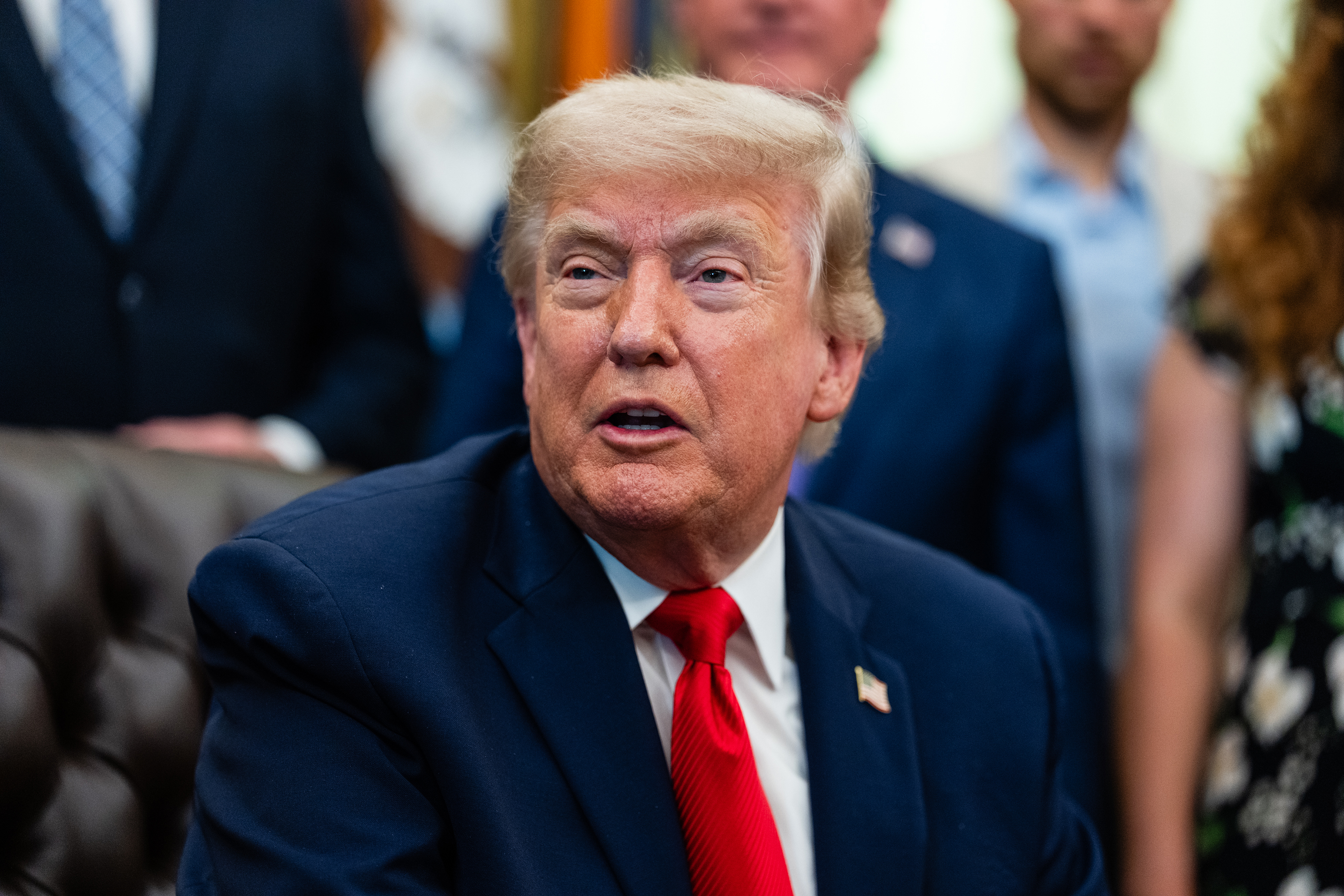
    “Congratulations to all!” U.S. President Donald Trump wrote on social media, adding: “I hereby fully authorize the toll free opening of the Strait of Hormuz, and, simultaneously herewith, authorize the immediate removal of the United States Naval blockade,” imposed in retaliation for Iran’s grip on the crucial waterway.

    He soon hedged, however, saying the strait wouldn’t open until Friday’s signing. The U.S. previously said it would ease its blockade of Iranian ports as the strait reopens, and would agree to relax sanctions to allow Iran to sell more of its oil and strengthen its battered economy.

    Iran’s deputy foreign minister, Kazem Gharibabadi, confirmed the agreement on state television but said Iran would not start implementing it until it was signed on Friday. He said the deal followed talks with Qatar, another mediator.

    Qatari mediators later left Tehran following 17 hours of negotiations, said an official briefed on the developments who spoke on condition of anonymity due to sensitivity of the talks. Separate preparatory meetings with each side will take place in Doha this week, the official said.

    After months of fighting, a ‘critical step’ is taken to end the war

    “This represents a critical step towards the peaceful settlement of the conflict,” the spokesperson for the United Nations secretary-general said of the deal and framework for further negotiations.

    Pakistan first announced the deal after a day in which Israel, sidelined from the negotiations, attacked Beirut’s southern suburbs while pursuing the Iranian-backed Hezbollah. Iran’s deputy foreign minister hinted at the tensions that caused, saying “our armed forces were fully prepared to give a decisive response to Israel’s actions.”

    Pakistani Prime Minister Shehbaz Sharif said “both sides have declared the immediate and permanent termination of military operations on all fronts, including in Lebanon,” adding that mediators this week will facilitate meetings to “lay the foundation for the technical talks.”

    There was no immediate comment from Israel, which had criticized the emerging deal. Iran wanted a ceasefire deal to include Lebanon, where Israel has pushed its invasion deeper than at any point in over a quarter-century.

    Iranian state TV later cited the secretariat of the Supreme National Security Council saying the war on all fronts “will end immediately and permanently beginning tonight” — but that the U.S. blockade “will be terminated immediately and in full.”

    It was not clear who from Iran would sign the deal on Friday. U.S. Vice President JD Vance told Fox News the White House was still figuring out who would attend: “I certainly plan to be there, but it’s possible the president himself could be there.”

    The deal came under criticism even in the final hours

    Broader negotiations on outstanding issues like Iran’s nuclear program would continue over the next 60 days, two senior Pakistani officials said earlier Sunday, speaking on condition of anonymity because they were not authorized to discuss the matter publicly. If the sides fail to reach a resolution within that time, the timeline could be extended.

    The deal likely returns the region to a status that existed before the war, but with thousands of people dead and Iran wielding a new source of negotiating pressure with its ability to influence shipping in the strait. The waterway is crucial to significant shipments of oil, natural gas and related products like fertilizer, and its effective closure rocked the global economy.

    Even with a deal, it will take months for oil and gas supplies to flow freely enough for the world’s needs to be met because shipping and insurance companies want to be confident the agreement will last, energy experts said.

    Of the stated targets by the U.S. and Israel when they launched the war on Feb. 28 with strikes that killed Iran’s supreme leader, Ayatollah Ali Khamenei, Tehran still has a missile program, support for armed proxies in the region like Hezbollah and a stockpile of highly enriched uranium for its nuclear program.

    Khamenei’s son is now supreme leader, though he has not been seen in the public since the war began. His approval was needed for Iran to sign off on the deal.

    There was apparent friction inside Iran in the hours before the announcement, as the government warned that division at home over the deal weakens its negotiating position. Iranian President Masoud Pezeshkian called it a “disgrace” when someone stands before parliament and calls anyone who negotiates a traitor.

    The emerging deal had been sharply criticized by critics in Trump’s own Republican Party. Some said it did not improve on the terms of the 2015 Iran nuclear deal that Trump withdrew the U.S. from during his first term and still describes as “bad.”

    The central question of Iran’s nuclear program remains

    After the war began, Iran attacked Israel and several Arab Gulf nations with missiles and drones. A ceasefire was reached on April 7. Ten days later, the U.S. military imposed its blockade. A historic face-to-face meeting between Vice President JD Vance and Iranian parliament speaker Mohammad Bagher Qalibaf ended without success.

    Throughout negotiations, Trump alternatively threatened to destroy Iranian infrastructure, even its civilization, and praised the relationship with Iran as “more professional” as his administration sought an exit from the war with midterm U.S. elections coming later this year.

    Iran’s government, with its own tensions around hard-liners as it scrambled to replace several top officials killed in the war, repeatedly expressed wariness of negotiations after rounds of talks last year and early this year ended with U.S. and Israeli attacks.

    Tehran has emphasized that it wanted a deal to focus on ending the war, with discussions put off until later on its nuclear program — the issue at the center of it all.

    Iran has 440.9 kilograms (972 pounds) of uranium that is enriched up to 60% purity, a short, technical step from weapons-grade levels of 90%, according to the International Atomic Energy Agency.

    Iran has long maintained its nuclear program is peaceful and has not publicly committed to giving up the enriched uranium, which is believed to be buried under three nuclear sites that were badly damaged by U.S. strikes last year.

    At times, the U.S. had sought the removal of the enriched uranium from Iran as part of a deal. Russia has offered to take it. At other times, Trump said he wanted the uranium destroyed.
  • Sports betting was once widely outlawed. Now it’s promoted at the White House.

    Sports betting was once widely outlawed. Now it’s promoted at the White House.

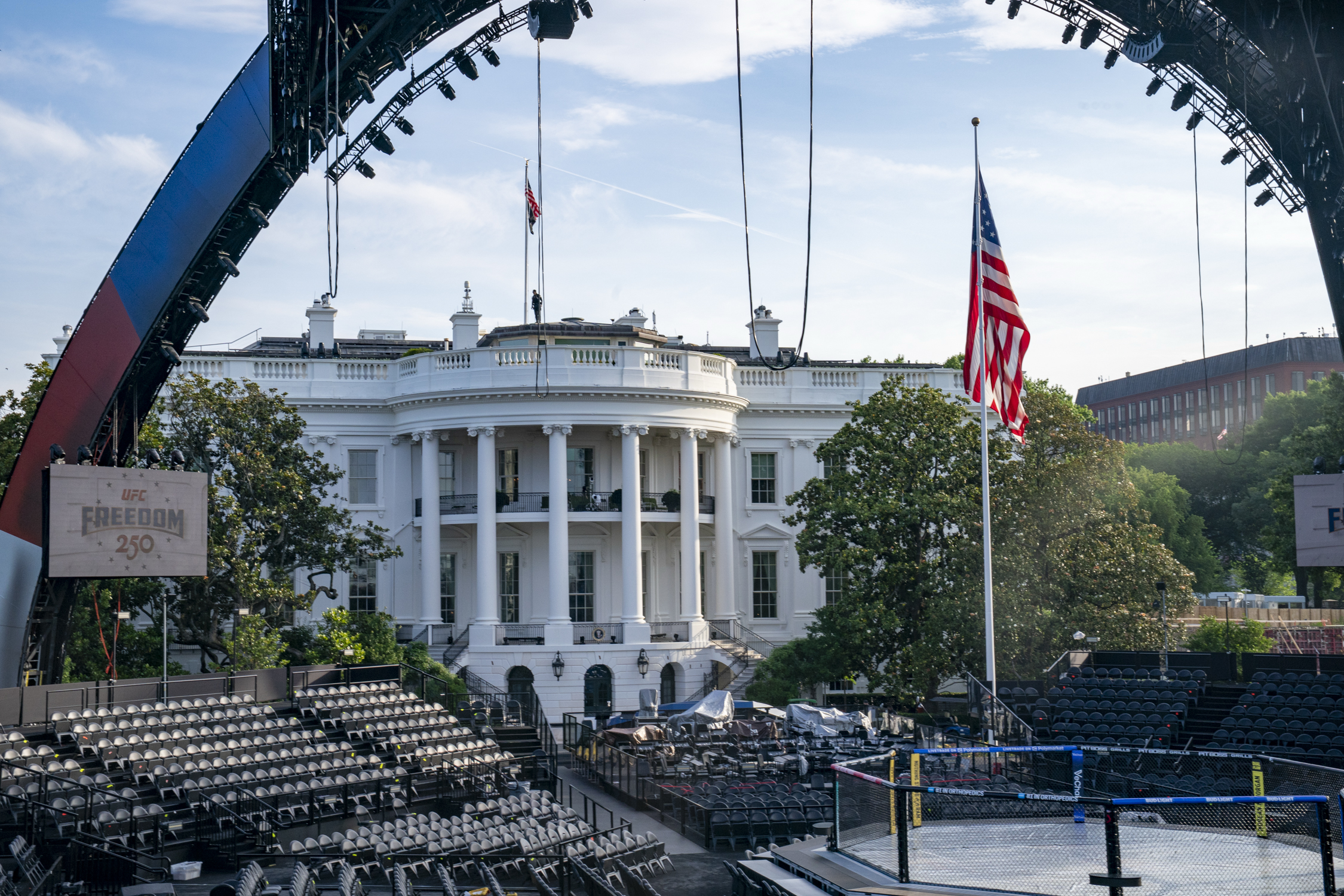
    The walls of the eight-sided cage where fighters will pummel each other Sunday on the South Lawn of the White House were plastered with logos for Polymarket, the prediction market where traders had staked millions on the fights.

    Across sportsbooks, fans are placing bets on whether President Donald Trump will receive a birthday cake at the event, whether first lady Melania Trump will appear at his side, or whether the now-80-year-old president will fall asleep during a bout.

    Less than a decade ago, wagering on a sporting event was a crime in all but a handful of states. On Sunday, the mat of the octagon Trump ordered placed on White House grounds advertised for Stake, a Caribbean-based online casino and sportsbook.

    Welcome to UFC Freedom 250 — and to the latest improbable milestone in the transformation of betting from a shadowy, mostly illegal pastime into a mainstream force in American sports, culture, and politics.

    The event marks a triumph for an industry that has grown into a multibillion-dollar juggernaut in eight years — and is now expanding beyond sports through prediction markets such as Polymarket, which allow users to wager on everything from Ultimate Fighting Championship fights to election contests and more. But the industry’s embrace by the White House comes as lawmakers and regulators face the consequences of an explosion in legal gambling, including addiction and mounting consumer debt.

    “Right now it’s certainly in its heyday,” said Bradley Tusk, a political strategist who helped FanDuel navigate gambling laws more than a decade ago and is now advising prediction markets.

    Trump, a former Atlantic City casino owner, has emerged as a natural ally for the sports betting and prediction market industries. He purchased $35,000 to $50,000 of stock in DraftKings earlier this year, according to his financial disclosure filings, and his social media company, Truth Social, also has said it is working with Crypto.com to launch its own prediction market, Truth Predict. Crypto.com’s logo appeared on the steps to the UFC cage, and it was a primary sponsor of the Sunday fights.

    In April, Trump said that he was “never much in favor” of prediction markets but later told reporters, “A lot of other countries are doing it, and when the other countries do it, we get left out in the cold if we don’t do it.”

    “I know people that are in the prediction market business, and they’re pretty happy with it,” he added. Trump’s son Donald Trump Jr. has invested in Polymarket through his venture capital firm, and he has advised both Polymarket and Kalshi.

    Trump “sort of embodies the casino capitalism of the late 20th and early 21st century,” said Jonathan D. Cohen, who leads gambling policy at the American Institute for Boys and Men. “It makes too much sense that his family would have personal investments in the prediction markets and support the rise of gambling on everything, and place a UFC fight on the White House lawn.”

    The White House said in a statement that the Trump family’s investments do not pose a conflict of interest, promising that the UFC fights would be “one of the greatest and most historic sports events in history.”

    “President Trump only acts in the best interests of the American public — which is why they overwhelmingly reelected him to this office, despite years of lies and false accusations against him and his businesses,” White House spokesperson Davis Ingle said. “President Trump’s assets are in a trust managed by his children.”

    UFC and Stake did not respond to requests for comment. Polymarket said in a statement that it was “proud to sponsor” the White House fight.

    The White House fights were not expected to generate an unusual volume of betting for UFC matches, said Chris Grove, partner emeritus at Eilers & Krejcik Gaming, a research firm focused on the global gambling industry. He anticipated that the total volume of wagers and trades would be measured in the tens of millions, rather than the hundreds of millions — far smaller than for major sports betting events such as the Super Bowl or FIFA World Cup.

    But the event’s role as a billboard for the betting industry has attracted criticism.

    “It’s an abomination that we have these sports betting markets sponsoring something that’s happening on the lawn of the chief executive officer of the United States,” said Joel Griffith, a senior fellow at Advancing American Freedom, a conservative think tank founded by former Vice President Mike Pence. “It shows that there’s a lot of money to be made in this business. Unfortunately, [sports betting] is harming Americans.”

    Griffith also said he’s “deeply troubled” by the potential conflicts of interest posed by the president’s investments in betting markets and in UFC while hosting an event that advertises both businesses.

    Congress advanced bipartisan legislation in 1992 that outlawed sports betting in every state except Nevada, highlighting how politically unpopular it once was to support the practice. Oregon, Delaware, and Montana had limited carve-outs.

    But since the Supreme Court struck down that law in 2018, 39 states have legalized sports betting, and bettors have wagered more than $650 billion, according to estimates from Legal Sports Report. The decision enabled the rise of companies such as FanDuel and DraftKings, which allowed people to bet on games directly from their cellphones.

    Internet searches for help with gambling addiction, such as “am I addicted to gambling,” have cumulatively increased 23% nationally since the 2018 Supreme Court decision, according to 2025 research from the University of California at San Diego Qualcomm Institute and School of Medicine.

    The rise of prediction markets such as Kalshi and Polymarket also has provided a new avenue for people to bet. Combined monthly global trading volume on the platforms has risen from less than $5 billion in September 2025 to about $24 billion in April 2026, according to Pew Research Center’s analysis of data from the Block, a digital assets media and information firm.

    The administration proposed new regulations for prediction markets Wednesday that are aimed at allowing most wagering, while restricting bets that are particularly vulnerable to manipulation and those that aren’t in the public interest, such as bets related to terrorism, assassination, or war.

    Multiple lawmakers have proposed bills that would regulate prediction markets. One from Sens. Adam Schiff (D., Calif.) and John Curtis (R., Utah) would bar prediction markets from offering sports betting, which they argue circumvents state gaming laws and legalizes sports betting nationwide.

    The administration’s proposed rule is “a backdoor for legalized sports gambling,” Schiff said in a statement, adding, “the sight of profiteering and gambling on the White House lawn in celebration of [Trump’s] birthday is problematic enough, we must ensure it is not compounded by insider trading and other conflicts of interest.”

    Other proposals would regulate the markets and ban elected officials from trading on them, or ban betting on sensitive events such as war, terrorism, and elections as well as sports.

    Lawmakers in Congress also are trying to rein in their own access to prediction markets, raising concerns about conflicts of interest and insider trading. The Senate passed a resolution in April prohibiting senators and staff from using prediction markets, and Rep. Bryan Steil (R., Wisc.) is working on legislation to ban current and former members and candidates from betting on political events.

    But such legislation faces an uncertain future as long as Trump is in the White House and holds veto power.

    “There’s lots of concern from both sides of the aisle about prediction markets, but there’s also this gnawing sense that the White House will block any attempt to rein them in,” said Cohen, who also wrote Losing Big: America’s Reckless Bet on Sports Gambling. “It’s going to get bigger before it gets smaller.”

  • Independent Cascadia? Greater Idaho? Disunited states look toward divorce

    Independent Cascadia? Greater Idaho? Disunited states look toward divorce

    SEATTLE — The revolution begins with a poetry reading.

    Last month, a journalist turned organizer named Andrew Engelson invited friends and fellow Pacific Northwesterners to a small club in Seattle’s Capitol Hill neighborhood for an evening of verse, in which his guests would ponder what it means to be from “Cascadia,” the bioregion stretching from Northern California, through Oregon and Washington, into British Columbia.

    Odes to volcanoes, woods, and rivers would help the audience reach the same conclusion he has: The region might be better off leaving the United States.

    Engelson and his group, Cascadia Democratic Action, are trying to drive conversations that could lead to 2028 ballot measures in Washington and Oregon on secession if things don’t improve. The effort is hardly an outlier in these Disunited States, where frustration on the left and right has created small but vocal collections of Americans so fed up with feeling disempowered that they’re talking about redrawing state lines or dissolving them altogether.

    “The salmon don’t pay attention to the 49th parallel,” Engelson said, referring to the U.S.-Canada border. “I have way more in common with someone in Vancouver, B.C., than someone in Arkansas.”

    Separatism is “in the zeitgeist,” said Ryan Griffiths, a Syracuse University political scientist who wrote the 2025 book The Disunited States: Threats of Secession in Red and Blue America and Why They Won’t Work.

    Activists in Texas and California continue to push independence. Lawmakers in inland California have pitched splitting the state in two or three. Organizers in southeastern New Mexico want to join Texas.

    Republican lawmakers in Indiana approved legislation last year inviting conservative counties in Illinois to become Hoosiers. A state senator in West Virginia followed suit in late 2025, inviting 30 border counties from Virginia and Maryland to join the Mountaineers.

    North of the 49th parallel, conservative Alberta is moving toward a referendum in October asking: Do you want to stay in Canada or have a separate, binding referendum to secede?

    The people Griffiths interviews often sound remarkably similar, he said.

    “Whether they’re libertarian or conservative or liberal,” he said, they complain that government is “in their face, it’s dysfunctional, and it’s distant.”

    One of the most successful of those efforts is, like Engelson’s, based in the Northwest, but on the opposite end of the political spectrum. The Greater Idaho movement, a 6-year-old campaign to move a large swath of rural, conservative Oregon into neighboring Idaho, has won support in 13 county ballot measures and turned a once-fringe idea into a subject of state capital debate.

    “Our system is not quite functioning the way it’s supposed to,” said Matt McCaw, a spokesperson for Greater Idaho.

    Greater Idaho proponents argue that their movement reflects frustrations that date to Oregon’s earliest days. At the 1857 meeting to draft Oregon’s founding document, 59 of the 60 delegates came from west of the Cascade Mountains.

    Today, eastern Oregon makes up roughly two-thirds of the state’s land mass but only 10% to 15% of its population. Lawmakers from Portland and the Interstate 5 corridor dominate policy debates and have pushed through gun laws, environmental regulations, and tax changes that many in rural Oregon oppose.

    As western Oregon transitioned from an economy built on timber, farming, and manufacturing to one driven by technology and services, the disconnect has grown.

    “They just don’t understand us on the other side of the mountains,” said Dan Joyce, the county judge in Malheur County, Ore., whose voters were among the earliest and strongest supporters of Greater Idaho.

    Semir Dzebo, a postdoctoral researcher at Oxford University who worked on a 2025 study on Greater Idaho, said public polling conducted through the study showed that the effort was less a partisan fight than an economic one.

    In other parts of the world, efforts to redraw boundaries are often rooted in long-standing ethnic, linguistic, or national identities tied to particular places, such as Scotland in the United Kingdom or Catalonia in Spain. Since the Civil War, America has felt “inoculated” against separatist movements, Dzebo said, “because it rests on a civic understanding of nationalism, that there’s no particular ethnicity that is ‘American.’”

    But as electoral politics have become more polarized, and as the gap between the rich and everyone else has grown, the sense of a shared American identity has eroded.

    “What propels these movements is when that sense of feeling different really comes with economic consequences,” Dzebo said.

    In that regard, the Greater Idaho movement and the Cascadia secession effort are cousins. McCaw doesn’t think elected leaders in the Oregon capital represent him. Engelson feels the same about Washington, D.C.

    Cascadians argue that people are often bound more closely by geography, ecology, and regional economies than by national borders, particularly when the borders stretch so far in every direction. Engelson said Washington and Oregon progressives could get more value from their tax dollars if they formed their own smaller political unit and paid for priorities such as universal healthcare and free college tuition.

    A number of states are already engaging in a form of “soft secession,” by conducting multistate public health efforts during the COVID-19 pandemic or forming compacts to address climate change.

    But none of the secessionist movements are close to achieving their goals.

    The Constitution provides a mechanism for changing state boundaries with the approval of legislatures in both affected states and Congress. But that tends to go only one direction. Neither Virginia nor Illinois has responded to the overtures of its neighbors.

    Oregon Democrats have declined to meet with proponents of Greater Idaho, and neither President Donald Trump nor Oregon’s lone Republican Congress member, Cliff Bentz, has answered calls for help. And voters in two of the counties that initially embraced the idea have since backtracked.

    The Cascadia movement faces an even larger obstacle. In the 1869 case Texas v. White, the Supreme Court ruled that the nation was “indestructible” and that states could not unilaterally secede. The court left open the possibility that a state could leave through “revolution” or with the consent of the other states but rejected the idea that a state could simply vote its way out.

    Hugh Spitzer, a retired University of Washington law professor who began studying separatist movements in law school, laid out a possible path through a treaty negotiated by the president and ratified by two-thirds of the Senate. But that would take decades and require momentum driven by more than a single political moment.

    Engelson said the second Trump administration had convinced him that conversations about separation could no longer remain theoretical.

    “We’re in an abusive relationship with the federal government,” he said. “Divorce is a valid response.”

    This article originally appeared in the New York Times.

  • One of the pope’s best friends works in Spain. They often talk cars.

    One of the pope’s best friends works in Spain. They often talk cars.

    VALLADOLID, Spain — As Pope Leo XIV prepared last month to issue a major statement about the perils of artificial intelligence, he briefly turned his attention to an evening WhatsApp message about a car part.

    One of the pope’s close friends, Armando Jesús Lovera, had sent Leo an image of a flashing sign on his car’s dashboard warning about the state of the vehicle’s catalytic converter.

    “What’s going on with the Citroën?” the pope texted back.

    “It’s dying,” Lovera responded.

    “Is it running or is it stopped somewhere?” the pope asked.

    Lovera informed “Bob” — the name he uses for the pope in his contacts — that he was on the way back to his home city in Spain after an event to promote his new book, From Roberto to Leo, about their friendship.

    “How much further do you have?” the pope asked, in an exchange Lovera showed me on his phone. Then the pope implored his friend to “keep a close eye on the engine temperature” and to “drive carefully.” Finally, the Holy Father signed off with a word of fatherly advice to Lovera, an editor at a Catholic publishing group, whom he has known for decades.

    “Sometimes at low speed it doesn’t run well,” the pope wrote. “But at a higher speed, the oil flows normally.”

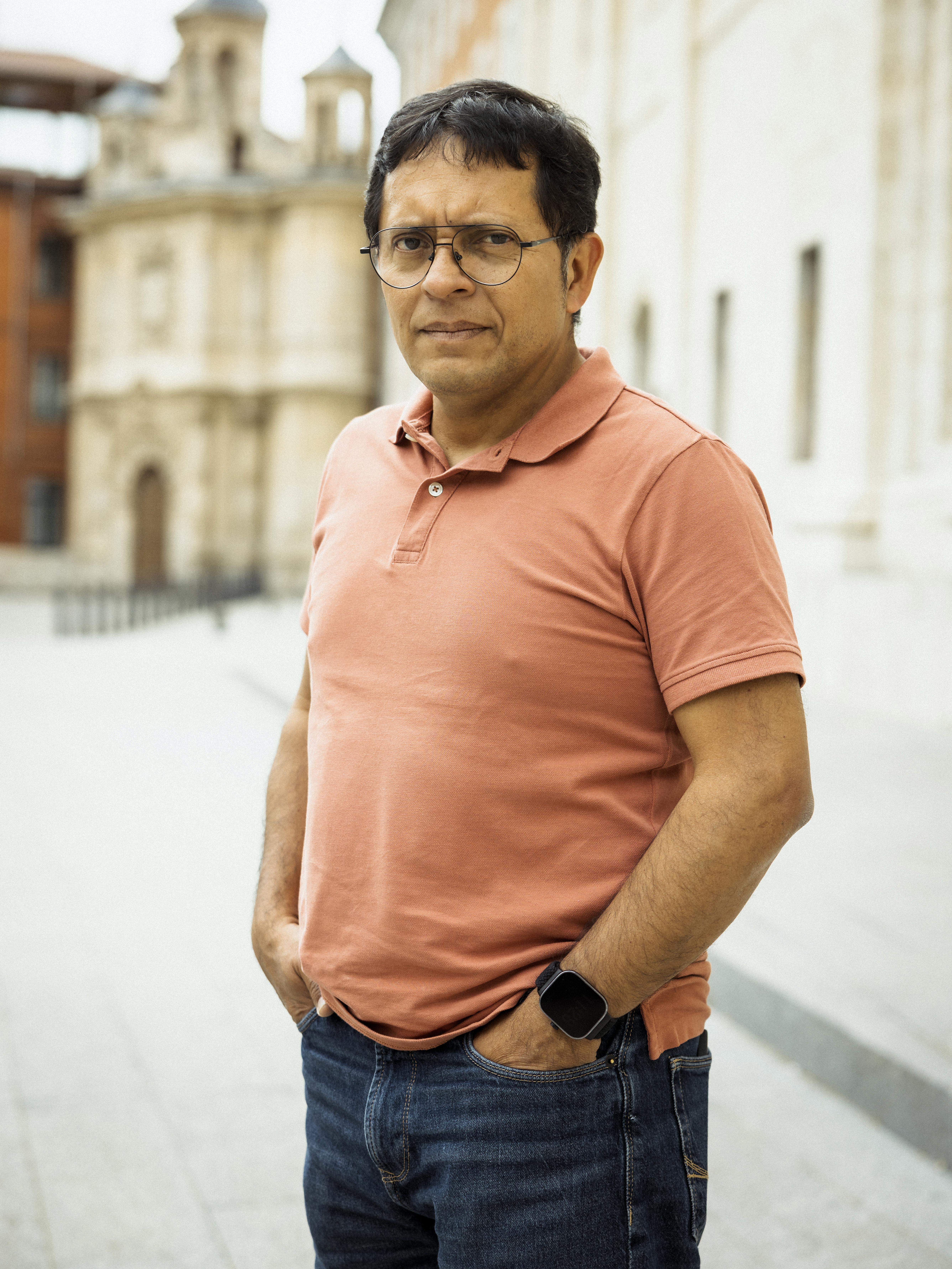
    Armando Jesús Lovera in Valladolid, Spain, at the local headquarters of the Augustinian order.Gianfranco Tripodo for The New York Times

    Lovera, 52, and Leo, 70, have been close friends since they lived together for seven years in Peru, in a formation house, a live-in community for Catholics considering a life dedicated to the faith. Leo, then a missionary priest known by his pre-papal name of Robert Prevost, ran the house.

    Over the decades — as Lovera moved to Spain and Prevost became a bishop, cardinal and then pope — the two have stayed tight.

    Lovera and his family visited the pope for five days in July, and they will join the pope again in Rome this August, Lovera said.

    “To play tennis,” he said, “to feed the fish.”

    This past weekend, as Leo began his weeklong visit to Spain with a tight schedule of events, he found time to send his old friend a greeting in a text message. “We said hello,” Lovera said.

    Lovera, left, and the future Pope Leo in Orlando, Fla., in 2000.Armando Jesús Lovera via The New York Times

    Originally from a Roman Catholic family in Iquitos, a town in the Peruvian part of the Amazon, Lovera moved to Colombia with the goal of becoming an Augustinian missionary. There, in 1991, he first met the man who would become Leo; soon after, Lovera moved with other Augustinians into the formation house, in Trujillo, Peru.

    Leo taught the small, tight-knit group spiritual exercises and also how to manage money — “because you cannot give what you don’t have,” Lovera said, in an interview at the vast Augustinian headquarters in Valladolid, the city where he lives, a two-hour drive north of Madrid.

    “He used to tell me that a community isn’t made of superheroes, but of brothers who decide together what is best,” Lovera added.

    The two shared a love of music, mathematics and long road trips.

    “We’ve been travel buddies,” said Lovera, who became the group’s driver, even though he didn’t have a driver’s license. The future pope filled their long hauls with car talk, expounding on how to drive cars through flooded streets. When he once spent the night at the Lovera family’s modest home, they had no bed to offer him, only a sofa.

    It was so hot and humid that the future pope elected to sleep in a rocking chair. “My mother was dying of embarrassment,” Lovera recalled.

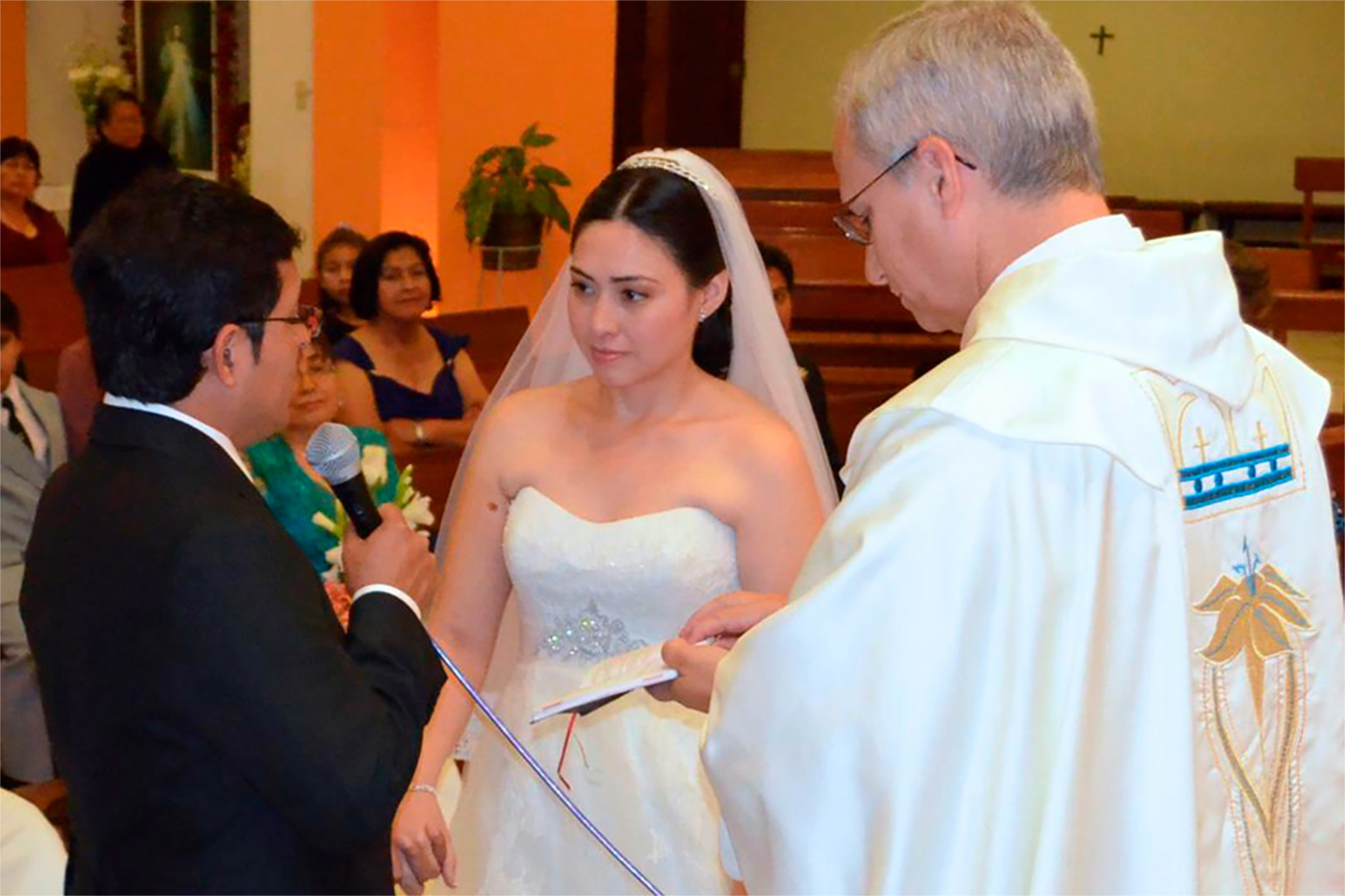
    The future pope officiating the church wedding of the Loveras in Trujillo, Peru, in 2013.Armando Jesús Lovera via The New York Times

    Leo left Peru in 1999 after being elected to lead the Augustinian Order in the Midwest, and soon after, Lovera decided to leave the missionary track. Community living, he decided, wasn’t for him, and he wanted to do more to protest against the economic policies of the Peruvian government at the time. He also didn’t take well to an order to travel to Rome to study the teachings of St. Augustine: “I wanted to be more independent,” he said.

    Lovera said Leo had talked to him about the change and, instead of giving him a teacher’s lecture, had offered a friend’s understanding.

    “Don’t feel obligated,” Lovera recalled his friend telling him, emphasizing that a holy life could be lived in different ways. Mostly, Lovera recalled, they joked about the Y2K bug that people at the time feared would wipe out the world’s computers at the turn of the millennium.

    Soon after, Lovera moved to Spain for a job with a Catholic publisher. Leo later became the global leader of the Augustinian Order, a job based in Rome that required constant international travel, including to Spain, where he visited Lovera.

    Lovera would often visit Chicago and catch up with the future pope’s family, including Leo, who happened to be there in November 2004. At that meeting, Lovera told his friend about a young Peruvian woman in Spain who had caught his eye. But when he had asked her out, Lovera explained, she had told him only that she would think about it — and mentioned a teddy bear that she coveted.

    “I told him, ‘I have to find a teddy,’” Lovera recounted. The men hit the road, driving to malls looking for the right stuffed toy, finally finding what Lovera was looking for in a Target near New Lenox, Illinois.

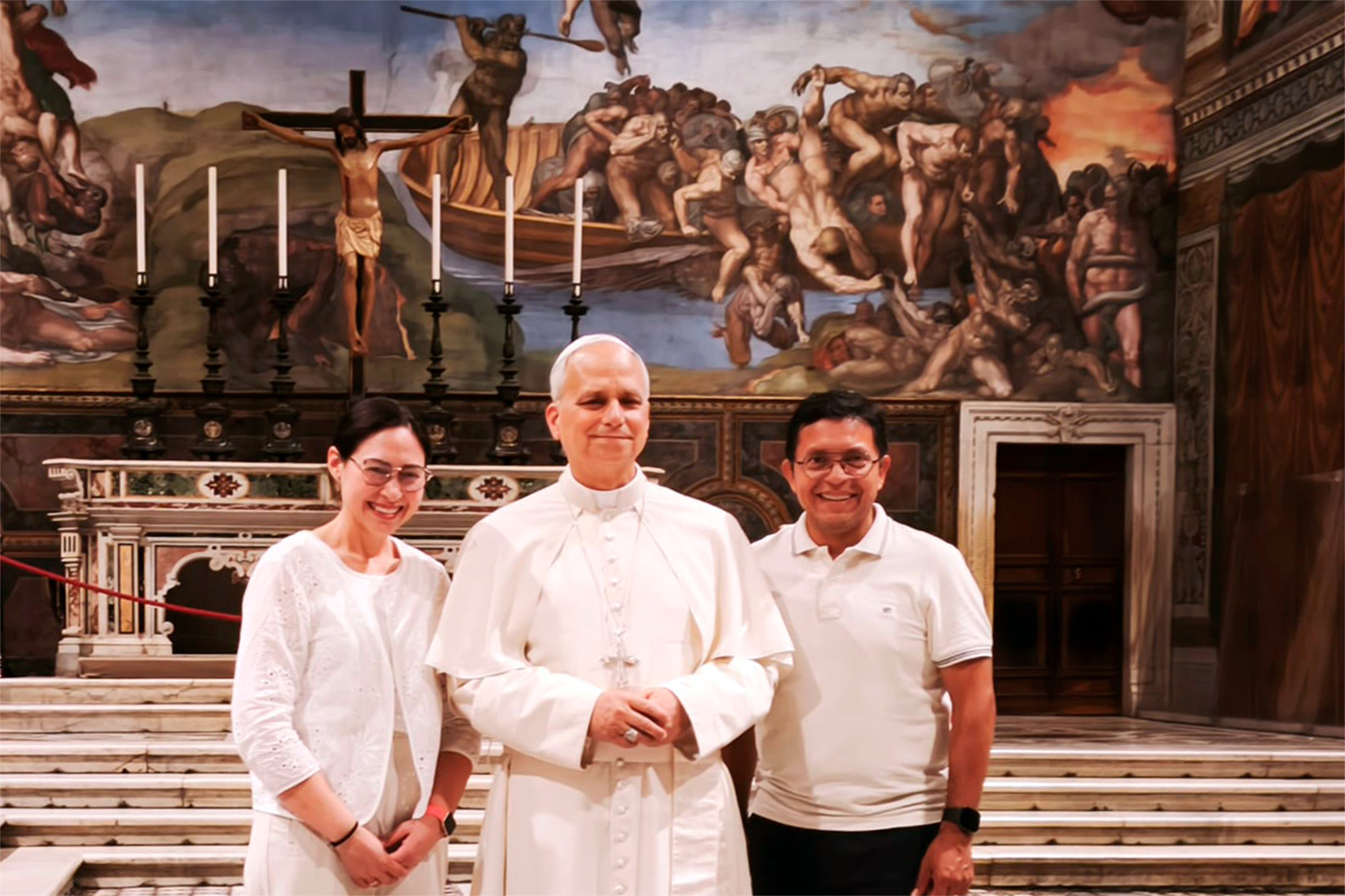
    The Loveras with Pope Leo at the Vatican in 2025.Armando Jesús Lovera via The New York Times

    Back in Spain, the woman accepted the gift but initially rejected Lovera. He persisted, though, and they eventually married in a civil ceremony with the future pope as their witness.

    In 2010, Leo landed in Spain for meetings with Spanish Augustinians, and Lovera picked him up at the airport. It was the day of the final of the soccer World Cup, and the future pope — a professed Real Madrid fan — decided that they should pull over to watch the match. In a pizza bar, they watched Spain defeat the Netherlands with a late goal in overtime, and both men chanted, “I am Spanish,” with the crowd, Lovera said.

    For Lovera, the pope was his co-pilot. In 2012, for instance, Leo drove with Lovera to check out a house in Valladolid that Lovera and his wife wanted to buy. “I have never stopped consulting him,” Lovera said.

    In December 2013, after the Loveras’ civil wedding, Leo married the couple in a church in Trujillo, and he later traveled to see them after the birth of their two daughters, whom he baptized. The girls, now 9 and 11, don’t quite understand that he is pope, Lovera said, and “see Roberto as part of the family.”

    Once they reached school age, Lovera began to call his friend from the car when driving to pick the girls up from school, he said. When Leo became pope, those frequent calls became texts, but they remained in regular contact, Lovera said.

    Last May, he asked the pope’s permission to write a book about their friendship, and the pope approved. “I trust you. You are my friend,” the pope said, according to Lovera.

    In October, they posed together with the published book, which highlights their efforts to build solidarity among marginalized Peruvians in a time of upheaval.

    Last month, Leo mentioned to Lovera that his brother, John Prevost, still called the pontiff from Chicago for information technology support.

    “And Roberto says, ‘John, I’m the pope,’” Lovera recalled.

    “‘Oh, sorry, pope,’” the pope’s brother responded, according to Lovera. “‘My computer is broken.’”

    On his own calls to the pope, Lovera said that he didn’t talk about tech or politics or about the church’s future. Instead, he said, “I talk about cars!”

    This article originally appeared in The New York Times.

  • Ships stranded by war face costly dilemma: Wait it out or risk attack

    LONDON — Pankaj Khanna, the CEO of Heidmar Maritime Holdings, knows what it’s like to be stranded at sea in a war zone. Long before he became a shipping executive, he was a seafarer himself, a crew member on a ship during the Persian Gulf War of 1991 as a Scud missile flew overhead. He recalled the paralyzing fear of some seafarers on board.

    Today, the stress on the roughly 11,000 stranded sailors in the Persian Gulf may be even greater. Seafarers now have internet access and are often watching livestreams of attacks happening around them while seeing explosions from their ship decks.

    “The fact that they are sitting on board the ships with real-time information — it is psychologically very traumatic,” said Khanna, 55.

    Three commercial vessels have been hit by U.S. forces this week. One of the strikes killed three people, bringing the number of seafarers killed since the start of the war to 14. All told, there have been 46 attacks on international ships in and around the Strait of Hormuz since Feb. 28, most by Iran and some by the United States.

    The war in Iran is approaching its 15th week. For the shipping industry caught in the middle, pressure is mounting — on the sailors, the shipowners, and operators losing hundreds of thousands of dollars a day, and the customers awaiting the delivery of oil and goods. At stake is not only the safety of those in the line of fire but the functioning of the global economy.

    A tense calm prevailed in the Gulf on Friday on hopes that a deal to end the fighting could be near.

    “We have heard this, like, 20 times,” Khanna said. “So what are the prospects? I don’t know.”

    Even after a reopening of the strait, he added, ships will need a “framework” before they attempt to get out. “We need to know which parts of the strait are clear,” he said.

    Heidmar Maritime, based in Athens, Greece, manages a fleet of 60 vessels that operate all over the world, including off the coasts of Europe, South America, and northern Asia and in the Red Sea. Just two weeks ago, one of its ships was attacked by Somali pirates.

    The company’s ship in the Persian Gulf, carrying Saudi crude oil, is one of about 500 large vessels operated by established companies that have been stranded there since the early days of the war in late February. Some vessels have taken advantage of windows of calm to slip out of the Gulf. But departures have slowed recently, according to Lloyd’s List Intelligence, as tensions have increased.

    And it seems less likely that conditions faced by shipping businesses will quickly return to their prewar state even if a deal is reached.

    “Even if a solution for peace is put in place in the coming weeks, there’s no guarantee there won’t be another crisis later on, and we can’t be prisoners to Hormuz,” Rodolphe Saadé, the CEO of CMA CGM, the French shipping giant, said at a French parliamentary hearing Tuesday.

    The world’s third-largest container line, CMA CGM has 11 vessels stranded in the Gulf after three others were able to leave. “I won’t be fixated on the idea that the Strait of Hormuz is going to reopen and everything will return to how it was,” Saadé said.

    As the strait remains effectively blockaded, shipowners are subject to marine insurance fees as high as $6 million to $7 million to exit the gulf, said Khanna of Heidmar Maritime. Perishable cargoes are expiring, and insurance premiums are adding up. Still, shipping companies have, in some ways, benefited from higher tanker rates and longer journeys needed to reroute around risky areas like the Red Sea.

    For the companies with ships stuck in the gulf, Iran has offered a way out: Pay a fee to secure safe passage. But sanctions imposed on Iran by the United States and Europe make it illegal for companies with American or European connections to pay.

    The shipping industry has more or less steadfastly maintained that the resumption of free passage through the strait is essential for global trade. Now the rising costs have led to some cracks in that argument.

    Last week, Evangelos Marinakis, the owner of one of Greece’s biggest shipping businesses, said at a conference in Athens that paying $100,000 or $200,000 tolls to secure safe passage through the strait would be better than having the strait closed.

    “I would prefer to pay a toll for the right to navigate through the Strait of Hormuz immediately and safely, rather than pay huge extra war risk premiums,” he said in a statement.

    And the stress for seafarers keeps mounting.

    Mohamed Arrachedi, the Middle East coordinator of the International Transport Workers’ Federation, a seafarers union, said he was receiving WhatsApp messages at all times of day from seafarers requesting repatriation or reporting unpaid wages.

    “They were hopeful, but now, observing that it is starting again, people are not only anxious, worried, and concerned, but people are desperate,” Arrachedi said.

    In recent weeks, more seafarers reported shortages of fresh fruit and vegetables than in the first couple of weeks, he said. On some ships, people are surviving on dry food alone. Drinking water, too, has become an issue since vessels have to be moving in deep water to generate their own supply.

    “It’s kind of like being on the front line of a war that you have absolutely no involvement in,” said Michelle Wiese Bockmann, an analyst at the maritime intelligence firm Windward. “You don’t have a dog in the fight, and you’re just there.”

    This article originally appeared in the New York Times.

  • Fox News host fact-checks John Fetterman: ‘Senator, we haven’t confirmed that’

    Fox News host fact-checks John Fetterman: ‘Senator, we haven’t confirmed that’

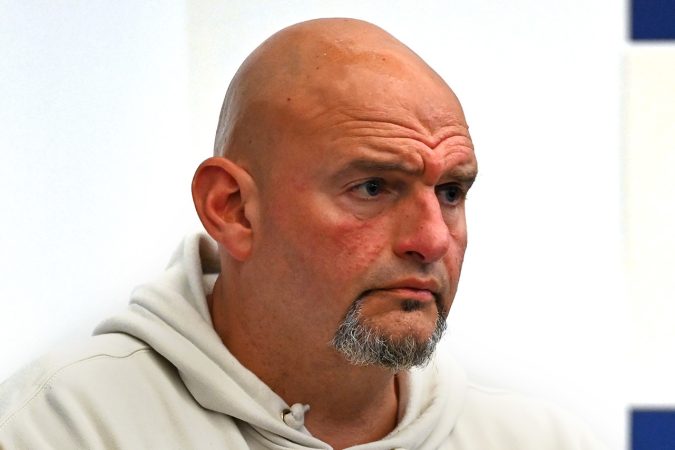
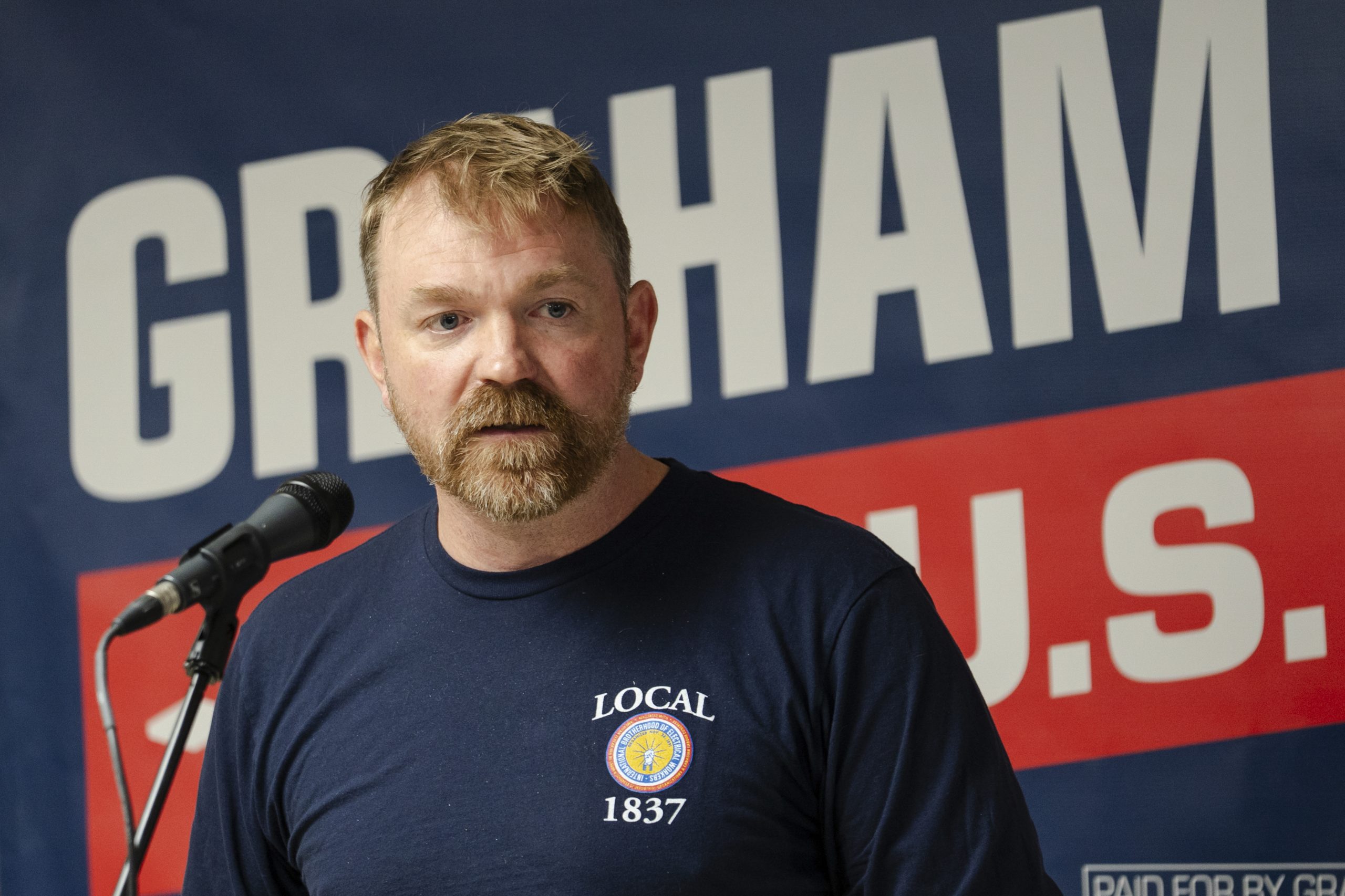
    Sen. John Fetterman (D., Pa.) was back on television Friday attacking a familiar target: controversial Maine Democratic Senate candidate Graham Platner. This time, he received some fact-checking pushback from a Fox News host.

    Despite sharing political parties, Fetterman has been an outspoken critic of Platner, who reportedly exchanged explicit text messages with other women during the early days of his marriage and is accused of volatile behavior by several ex-girlfriends. Platner has denied being physically threatening.

    The criticism followed earlier questions about a death’s-head tattoo that Platner had that was similar to a World War II SS symbol, and various comments he posted on Reddit.

    “He’s a bona fide dirtbag,” Fetterman told Philadelphia native Kristen Welker on NBC’s Meet the Press NOW Friday. “The Nazi tattoo, and the insane things that he said online. … What’s his resumé?”

    Democrat Graham Platner is taking on incumbent Republican Sen. Susan Collins in Maine. Sophie Park

    Fox News opinion hosts have been more than happy to welcome Fetterman in recent months, especially if it’s to criticize a fellow Democrat. He was just on the network last week bashing Platner, telling host Sean Hannity, “I’ll never carry water for that mess.”

    But on Friday night, during an appearing on The Ingraham Angle, host Laura Ingraham had to interrupt Fetterman after he accused Platner of sending sexually explicit pictures as recently as last year.

    “Senator, we haven’t confirmed that,” Ingraham said. “Fox has not confirmed that he sent these pictures.”

    The interruption caused Fetterman to fumble a bit before calling on Platner to “clear it up” by releasing all the messages he allegedly sent.

    Amy Gertner, Platner’s wife, admitted the two had worked through issues in their marriage and acknowledged seeking help from both marriage and personal counselors.

    “No marriage is perfect, and I don’t want a perfect marriage,” Gertner said in a video shared on social media last month. “I want my marriage, and I want to be married to Graham.”

    Platner recently took a shot at Fetterman on the campaign trail, criticizing the Pennsylvania senator’s work ethic during a town hall in Portland, Maine, last weekend.

    “I got a lot of criticisms about the way this government functions. But in order for us to make it functional, we’re going to have to do stuff,” Platner said, according to The Hill. “And you can’t just go down there and be John Fetterman and … just sort of be an a-hole.”

    “Oh, I’m devastated,” Fetterman joked on NBC. “I’ll take everything he says as a badge of honor.”

    Platner is taking on incumbent Sen. Susan Collins (R., Maine) this fall for a seat Democrats are targeting as part of their effort to take back control of the Senate. Republicans currently control the Senate 53-47, with two independents caucusing with Democrats. So Democrats would need to gain at least four seats in the 2026 midterm elections, and right now political analysts are focusing on six states: Maine, North Carolina, Texas, Ohio, Alaska, and Iowa.

    While Fetterman won’t be supporting Platner and has veered to the right to become a key backer of some of President Donald Trump’s priorities, don’t expect to see him campaigning for Collins.

    “I am a Democrat,” Fetterman told Ingraham on Fox News. “We have different views on things.”

  • Trump administration says it will restart asylum and immigration processing

    Trump administration says it will restart asylum and immigration processing

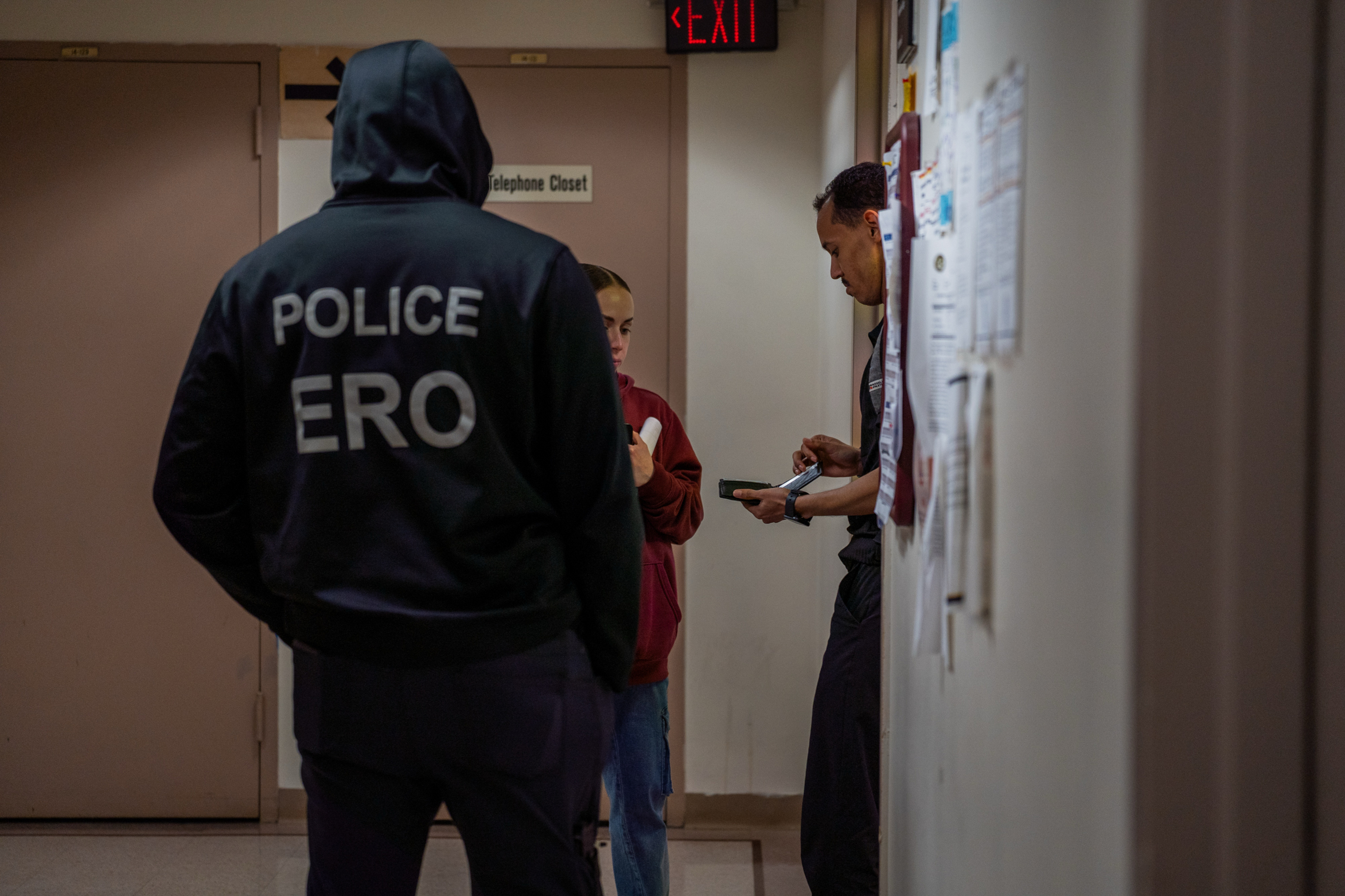
    WASHINGTON — The Trump administration said Friday that it would comply with a court order to restart processing asylum and other immigration applications filed by a broad swath of people who had been left in legal limbo for months.

    The move comes after a federal judge in Rhode Island last week struck down a suite of policies imposed by U.S. Citizenship and Immigration Services, a major blow to the administration’s expanding efforts to restrict legal immigration. The policies included a global hold on asylum applications filed with the agency and a freeze on immigration applications filed by people from 39 countries, largely in Africa and the Middle East, that are subject to President Donald Trump’s travel ban.

    More than 1 million applications had ground to a halt as a result, preventing many people from obtaining green cards, citizenship, and other immigration benefits. The halt also disrupted people’s ability to legally work and left them waiting indefinitely for decisions on their applications.

    In a court filing Friday, Angelica Alfonso-Royals, deputy director of U.S. Citizenship and Immigration Services, said the agency instructed employees to treat the policies “as if they are no longer in effect.” The agency also said in a memo posted on its website that it “strongly disagrees with the court’s order” but that it would “follow its terms pending possible further judicial review.”

    As of Friday evening, it was unclear whether the agency had restarted making immigration application decisions. Also on Friday, the administration filed an appeal with the 1st U.S. Circuit Court of Appeals seeking to pause the decision.

    The response came after Judge John J. McConnell Jr. rebuked the Trump administration for failing to immediately comply with the order he issued last week.

    The administration argued in a filing Tuesday that the initial order by McConnell, an appointee of President Barack Obama, was preliminary and therefore had not “become effective,” indicating that the department had yet to resume making application decisions.

    In response, McConnell quickly entered his judgment Thursday, ordering the government in blunt terms not to stall any further.

    “There is no excuse this time,” he wrote. “The government has an obligation to immediately comply with this order.”

    McConnell gave the administration until Friday evening to file an update “advising the court as to what specific steps it has taken to comply.”

    Democracy Forward, the legal organization representing the assorted unions and immigration aid groups, had accused the government of playing procedural games to deliberately dodge last week’s court order.

    “The Trump-Vance administration’s cruel immigration policies have been about chaos, confusion, and inefficiency, and we are proud to challenge these unlawful measures and to have secured a court order blocking the policies,” Skye Perryman, the organization’s president, said in a statement. “The federal government cannot shut down lawful immigration pathways or discriminate against people based on where they come from.”

    The policies at the center of the case were issued in November after authorities said an Afghan national had shot two National Guard members in Washington. The man, Rahmanullah Lakanwal, has pleaded not guilty.

    In his searing 135-page opinion last week, McConnell wrote that the policies effectively made it impossible for many people to remain in the country and that they were improperly fueled by “anti-immigration sentiments.”

    This article originally appeared in the New York Times.

  • A Tren de Aragua leader is killed in a joint strike, U.S. and Venezuela say

    A Tren de Aragua leader is killed in a joint strike, U.S. and Venezuela say

    A joint strike by the United States and Venezuela killed a leader of the Tren de Aragua transnational gang, President Donald Trump and officials in both countries said Friday, dealing a blow to a syndicate the Trump administration has blamed for an influx of violent crime and illicit drugs.

    The strike took place this past week alongside Venezuelan security forces, Defense Secretary Pete Hegseth said, without providing a precise date. He said it targeted a compound housing Hector Rusthenford Guerrero Flores, a founder of Tren de Aragua.

    A statement from Venezuela’s communications ministry said the operation took place in Venezuela, in the southeast of the state of Bolívar. Hegseth and Venezuelan officials said Guerrero Flores had been killed in the strike.

    Guerrero Flores, 43, was better known by the alias Niño Guerrero, meaning “warrior child.” He was wanted in the United States on federal charges of directing acts of terrorism, alongside other charges.

    The CIA, which has dedicated expanded resources to Latin America during Trump’s second term, supplied the intelligence that led to the strike, according to a senior administration official, who spoke on condition of anonymity given the sensitivity of the operation.

    Trump said on social media that the U.S. military’s Southern Command had conducted the strike at his direction as part of his pledge to dismantle foreign gangs. His administration designated Tren de Aragua as a foreign terrorist organization last year.

    Trump said the operation had been conducted with the Venezuelan government, which has become more cooperative with the United States since the United States captured former Venezuelan leader Nicolás Maduro and helped install a more pliant replacement, Delcy Rodríguez.

    Trump posted a video of a building exploding and invoked the names of crime victims in Georgia and Texas, calling the operation “retribution” for their families.

    Trump has often railed against the gang, using it to push his deportation agenda and to justify his military strikes on vessels purportedly ferrying illegal drugs from Venezuela to the United States. Critics have questioned whether Tren de Aragua has truly played the dangerous role that Trump says it has.

    Gen. Francis L. Donovan, who leads U.S. Southern Command, thanked Venezuelan security forces in a social media post for their support in what he described as a joint operation.

    The Venezuelan government said in a statement Friday that a combined operation had targeted organized crime structures. The operation was based on the exchange of intelligence between the two countries, the statement said.

    Tren de Aragua originated as a prison gang in Venezuela in the mid-2000s and has since expanded across Latin America and several U.S. cities. The organization is one of the most notorious in the region, focused on sex trafficking, human smuggling and drugs, drawing intense scrutiny from U.S. law enforcement.

    The Biden administration in 2024 issued a reward of up to $5 million for information leading to Guerrero Flores. He was charged last year in a New York federal court under the second Trump administration with racketeering, terrorism, drug importation and firearms offenses.

    This article originally appeared in the New York Times.

  • Trump, Pakistan say Iran deal could be signed Sunday

    ISLAMABAD — Key mediator Pakistan on Saturday said a deal to end the Iran war was closer than ever and U.S. President Donald Trump asserted it would be “signed tomorrow,” while Iran made some of its most optimistic statements yet but indicated a bit more time was needed.

    Trump said the Strait of Hormuz would open immediately after the signing.

    Pakistani Prime Minister Shehbaz Sharif said a deal was expected to be finalized within 24 hours. Each side was expected to sign electronically. Pakistan’s foreign ministry said the signing ceremony was scheduled for Sunday but did not provide details.

    Iran foreign ministry spokesperson Esmail Baghaei in statements carried by state media said the signing “will not happen tomorrow,” but “the likelihood of finalizing the memorandum of understanding in the coming days is high.”

    A tenuous ceasefire has been in place since April 7. Trump has asserted multiple times in recent weeks the countries were on the cusp of a deal.

    Iran has long expressed wariness in negotiations, pointing out that previous talks with the U.S. last year and early this year ended with attacks by the U.S. and Israel.

    Trump to discuss demining the strait at G7 summit

    Trump was expected to discuss demining the Strait of Hormuz during the Group of Seven summit that starts Monday.

    A senior U.S. official, who briefed journalists on condition of anonymity under rules set by the White House, said Trump planned to meet on the G7 sidelines with the leaders of Egypt, Qatar, and United Arab Emirates to discuss efforts to wind down the war.

    G7 members Britain and France have expressed interest in assisting with demining once the conflict is paused.

    It was not clear how many mines are in the strait that Iran has effectively controlled since shortly after the war began, virtually shutting down oil and natural gas shipments from the Persian Gulf. The U.S. has blockaded Iranian ports in response.

    The nuclear issue remains elusive

    Iran’s foreign ministry spokesperson said the memorandum of understanding under discussion was focused on ending the war and “at this stage, it has been decided that there will be no discussion of the nuclear issue.”

    Iran’s nuclear program and highly enriched uranium have long been at the center of tensions with the U.S. and Israel and an international source of concern.

    Trump on social media asserted that “when all is calm,” the U.S. would go in and “downblend and destroy” the enriched uranium in Iran or in the U.S.

    The apparent breakthrough in negotiations came after Iran exchanged fire with the U.S. and Israel earlier in the week, threatening to rupture the ceasefire and push the Middle East back into full-scale war.

    Iranian Foreign Minister Abbas Araghchi posted on X on Friday that an agreement “has never been closer.” Trump on Thursday claimed significant progress in negotiations, hours after he threatened to seize Iran’s oil industry.

    Iran’s former supreme leader will be buried in July

    Iran’s state-run television said funeral ceremonies for former Supreme Leader Ayatollah Ali Khamenei, killed in the war’s opening attack, will take place in July.

    The funeral, burial, and farewell events for Khamenei will occur between July 4-9 during Muharram, a traditional period of mourning in the Shiite Muslim calendar.

    Khamenei is succeeded by his son, Mojtaba, who is considered less compromising and has not been seen publicly since the war began.

    Funeral ceremonies are expected to begin in Tehran and move to Qom, a stronghold of many senior Shiite clerics, then to Mashhad, Khamenei’s birthplace. He’ll be buried there at the Imam Reza Shrine, considered the holiest place among Shiite devotees.

    Khamenei remolded the Islamic Republic following the death in 1989 of Ayatollah Ruhollah Khomeini, the fiery, charismatic ideologue who led the overthrow of the shah and installed rule by Shiite Muslim clerics.

    Khamenei ruled far longer than Khomeini. He greatly expanded the Shiite clerical class and built the paramilitary Revolutionary Guard into the most important body underpinning his rule. The Guard became a military and business behemoth, the country’s most elite force and head of its ballistic missile arsenal — a key target for Israel and the U.S. in the war.

  • Trump’s name gone from the Kennedy Center’s facade

    WASHINGTON — The curtain may have come down for President Donald Trump at the Kennedy Center but the tarp stays up for now.

    Matt Floca, executive director and chief operating officer of the performing arts venue, told a federal court Saturday that the institution had complied with an order to remove Trump’s name from the facade. In a filing, Floca said the board of trustees and the center had removed “all physical signage on the Kennedy Center building and grounds, including the front portico, that purports to rename the Kennedy Center after President Trump.”

    But for onlookers who have gathered on the plaza in front of the center over the past day hoping to witness a dramatic moment symbolizing the limits of Trump’s power, it was virtually impossible to see whether the signage was gone. A tarp hung over the scaffolding constructed for workers to perform that task. It was unclear when the tarp might be removed to reveal the original lettering that had endured for decades: “The John F. Kennedy Memorial Center for the Performing Arts.”

    A reporter was able to peer through a slight opening in the tarp, which was pulled tightly against the wall, and saw that the letters for Trump’s name were no longer affixed to the building.

    By the end, the Kennedy Center’s leadership had dug in against a federal judge’s order to erase Trump’s name from the building. Two courts rejected the institution’s last-minute request to retain Trump’s name pending an appeal. After severe thunderstorms raked Washington on Friday evening, the Kennedy Center sought one more extension before complying with a noon Saturday deadline.

    Those who pushed for the scrubbing of Trump’s name were in a celebratory mood. Rep. Joyce Beatty (D.,Ohio), an ex officio member of the board who sued to remove references to the president from the building and the center’s operations, was spotted in the plaza late Friday and Saturday morning. She posted a video to social media that purported to show her performing the “Trump dance” in one of the Kennedy Center’s great halls.

    “Today’s victory is the beginning of returning the Kennedy Center to the American people,” Beatty said in a statement. “The rule of law prevailed, and that is worth celebrating.”

    Leo Bartholomaus, a recent graduate of Syracuse University who lives in Virginia, said he was walking by the Kennedy Center on Friday afternoon after visiting the National Mall to see events related to this weekend’s UFC match at the White House. He said he was not happy that Trump added his name to the building.

    “My grandmother had a big love of the arts,” he said. “I’ve been here to see The Lion King. I wasn’t a fan of Donald Trump putting his name on it. I thought it was better as the Kennedy Center.”

    Closing an unusual chapter

    The removal of Trump’s name closes one of the more unusual chapters in the history of the Kennedy Center, which began construction in 1964 and was dedicated to the memory of the slain president, Democrat John F. Kennedy. At what is typically one of the few relatively nonpartisan spaces in Washington, Trump has wielded tremendous influence over the venue during his second term.

    Though he rarely discussed the Kennedy Center during his 2024 campaign, Trump moved quickly to oust the institution’s leadership when he returned to office in January 2025 and replaced it with a board of trustees that named him chairman. His name was quickly added to the building.

    While the removal of his name marks a setback for Trump, he is moving forward with plans to reshape the physical landscape of the nation’s capital in ways that have few modern parallels.

    He demolished the East Wing of the White House and is building a controversial ballroom in its place. He remodeled the Lincoln Memorial Reflecting Pool and plans extensive renovations of a golf course in East Potomac Park, moves that could significantly reduce the public’s access to running and biking paths. He is also moving forward with a triumphal arch that will sit near Arlington National Cemetery across the Potomac River in Virginia.

    Indeed, as Trump’s name was being removed from the Kennedy Center, the South Lawn of the White House has been transformed into a venue for a UFC match intended to celebrate the 250th anniversary of American independence but also coinciding with Trump’s birthday on Sunday.

    Questions linger about the Kennedy Center’s future

    Back at the Kennedy Center, there are many questions about the institution’s future. The same May court decision that ordered Trump’s name to be removed from the building also blocked a planned two-year closure for renovations that was set to begin next month.

    The Kennedy Center’s calendar for the weeks ahead include performances of Moulin Rouge! The Musical and Bluey’s Big Play. Comedian Bill Maher is to be awarded the Mark Twain Award for American Humor during a ceremony on June 28.

    But little is scheduled for the stages beyond that and, after substantially reducing staff, it is unclear how quickly the Kennedy Center could build out a robust performance list. Trump, angered by the court’s order to remove his name, has said he would turn the Kennedy Center over to Congress and has suggested it might simply shutter because of public safety concerns.

    In its unsuccessful appeal on Friday seeking a pause on the order removing Trump’s name, the Kennedy Center’s leadership argued, in terms that seemed similar to the president’s speech patterns, that the lower court was interfering with needed renovations.

    “The District Court is not allowing us to close in order to properly fix up and repair the Building, including potentially life threatening structural damage like beams and parking garage ceilings that are rusted, and in serious danger of falling onto people below,” according to the appeal. “Indeed, total collapse!”

    The institution also suggested that the president’s name could return to the building if the Kennedy Center later wins its appeal.

    If the court denied the venue’s request for a pause, the Kennedy Center argued it would “be forced to squander time and money — by both removing the signage and then potentially returning it after appeal.”