Category: Nation & World

  • Oceans are warming, but scientists are concerned about this cold blob

    As the planet warms, it’s becoming increasingly rare to see cooler than average conditions across vast stretches of the ocean, particularly as an expected super El Niño scorches parts of the Pacific.

    But right now, an expansive area of well below-average ocean temperatures exists in the North Atlantic, to the east of Newfoundland. There, unusually cool waters have lingered for the last year.

    This patch of cool water is occurring in one of the few areas where the ocean hasn’t warmed in recent decades — and where scientists are closely monitoring for changes in the Atlantic meridional overturning circulation (AMOC).

    The AMOC, which extends deep into the Atlantic Ocean, is a vital current that carries heat northward from the tropics toward the pole and plays a critical role in the climate around Greenland, Iceland and northern Europe. If the cold blob persists for years, it could eventually cool the climate in these places — and signal this key current is weakening. Should it collapse, a massive cooling could occur in the Northern Hemisphere, while it warms in the south; sea levels could rise in some areas and seasons could flip in others.

    As this conveyer belt of warm, salty water reaches the North Atlantic, it loses heat to the cold air above, becoming denser and sinking into the deep ocean. But as ice in the Arctic melts, introducing more freshwater into the sea, it becomes harder for the water to sink, potentially slowing down the current.

    Scientists have been monitoring the current’s behavior in the Irminger Sea, south of Greenland, where the U.S. National Science Foundation recently announced that it is dismantling its ocean monitoring equipment.

    In Iceland, a collapse of the AMOC is considered a national security risk, since it would send winter temperatures plunging to minus-50 degrees Fahrenheit.

    Recently published research from a team led by Stefan Rahmstorf of the Potsdam Institute concluded that “the strong evidence for a weakening AMOC is a serious concern for society and policy” and that it requires “urgent attention.” However, other research published last year found no evidence of long-term weakening, but that it was still expected to slow some in the future.

    There’s high confidence that the AMOC is weakening according to the U.N. Intergovernmental Panel on Climate Change. The IPCC has indicated, with medium confidence, that it will not abruptly collapse before 2100.

    But what about the recent cold blob? Does it offer a sign of AMOC’s eventual collapse or can it be explained by a combination of forces?

    Over the last week, the current cold blob has trended on social media, raising fresh concerns about the status of AMOC.

    While stormy and windy weather in the North Atlantic have enhanced the cold blob this year, those factors don’t immediately describe why it has remained there for a year straight.

    Other natural climate patterns, such as the Atlantic Multidecadal Oscillation (AMO), have affected the ocean’s conveyer belt. When the AMO is in its positive phase, waters warm in the North Atlantic. The opposite is generally true when it’s in its negative phase.

    From mid-2023 to mid-2025, when the AMO was predominantly in its positive phase, the cold blob disappeared for extended periods. But when it became negative in mid-2026, the cold blob returned.

    Based on this, a mix of climate forces — including human-driven warming as well as natural variability — appear to be contributing to the current conditions. And climate models predict that the cold blob could linger for the rest of the year — and possibly expand and become more frigid.

    What the current cold blob means for the future state of AMOC is uncertain, but models stop short of signaling widespread cooling across western Europe, Iceland or Greenland — the doomsday scenario that has so far been the stuff of movies.

  • Trump sees 22 medical specialists, appearing to set new bar for presidents

    For George H.W. Bush’s first medical checkup as president in 1989, he was seen by five specialists, the White House said at the time. His son George W. Bush was seen by 12 in his first presidential checkup, White House officials said a dozen years later.

    President Donald Trump appears to have set a new bar: 22 medical specialists assessed him as part of his latest checkup, according to a medical report recently released by the White House.

    That figure is nearly double the number of specialists who assessed Trump for his past medical checkups as president, according to a review of publicly available statements by Trump’s doctors.

    The figure also represents the most medical specialists to assess a president for a single visit, based on a review of public statements and records, prompting questions from outside physicians who said they were already skeptical of the White House’s disclosures around the nearly 80-year-old Trump’s health.

    “It is an extraordinary number,” said Jonathan Reiner, a longtime cardiologist for former vice president Dick Cheney. “What specialties do they represent? Why so many?”

    White House officials said that the number was commensurate with the need to perform a “complete and preventive evaluation” of the president. Sean Barbabella, the president’s physician, said the assessment found that Trump was in “excellent health.”

    “The involvement of multiple specialists reflects a comprehensive, multidisciplinary evaluation consistent with best practices for executive-level medical care,” the White House said in a statement.

    A White House official said that physicians affiliated with Harvard University, Duke University and other prominent institutions helped perform the evaluation. The official also said that some generalist physicians were included in the administration’s count of 22 specialists.

    “We have nothing to hide,” the official said.

    The White House has often declined to answer specific questions about Trump’s medical assessments, such as what prompted the president to undergo a second physical exam at Walter Reed National Military Medical Center last year. Presidents usually make one annual trip unless they have an urgent condition. Nearly three months after the visit, and after initially telling reporters that he had undergone an MRI exam, Trump and the White House clarified that the president had received a CT scan as part of his assessment.

    Trump’s medical reports also no longer include a common hair-loss prevention drug that his physicians said he routinely used during his first term in office. White House officials have declined to comment on Trump’s past use of the drug, finasteride, and whether he had stopped taking it.

    The scrutiny of Trump’s health comes amid broader questions about the fitness of the current president and his predecessor, Joe Biden, to serve as commander in chief. Biden, who was 82 when he left office, and Trump, who turns 80 on June 14, are the two oldest men to serve as president.

    Karine Jean-Pierre, who served as Biden’s press secretary, said at a February 2024 press briefing that a team of “20 doctors” participated in Biden’s medical evaluation at Walter Reed that year.

    Past administrations have often elected not to disclose the specific number of specialists who consult on the president’s medical evaluations, which are traditionally performed at Walter Reed.

    Presidents are not required to disclose their health records, although lawmakers in both parties have called for more checks on chief executives, such as creating an independent commission that could assess the president’s health.

    But publicly available records and statements indicate that the number of specialists reviewing presidential health appears to have ballooned.

    The five specialists involved in President George H.W. Bush’s checkup in May 1989 included an ophthalmologist, a urologist, a dermatologist and two allergists — White House officials said at the time. The 65-year-old Bush then saw eight specialists the following year, including a radiologist, cardiologist, and rheumatologist, the White House said.

    His son, President George W. Bush, saw 12 specialists for his 2001 checkup, White House officials said then.

    As questions swirled about Trump’s fitness during his first year in office, Ronny Jackson, who served as Trump’s physician during his first term and is now a Republican member of Congress from Texas, arranged 13 specialists to see the president, he wrote in his memoir.

    “I didn’t do this physical by myself; I was assisted by an entire committee of top-of-the-line specialty doctors at Walter Reed, including ones who specialized in dermatology, orthopedics, gastroenterology, ophthalmology, urology, pulmonary medicine, otolaryngology, and cardiology,” Jackson wrote in his book, Holding the Line.

    “The cardiologist did his heart exam. The pulmonologist did his lung exam and pulmonary function testing, the dermatologist did his skin exam, and so on.”

    Trump saw 11 specialists for his 2019 checkup and 14 specialists for his checkup last year, according to past medical reports released by the White House.

  • Trump’s new Fed chief may soon have to raise interest rates

    President Donald Trump’s new Federal Reserve chair, Kevin Warsh, previously argued that the Fed had room to cut interest rates, a message that made him attractive to a president who has long viewed cuts as a top priority.

    Only weeks into his role as chair, Warsh is confronting rekindled inflation that may eventually force him to do the opposite on rates, defying President Donald Trump, to exercise the Fed’s strongest tool to fight inflation.

    This week’s consumer price index showed inflation topping 4 percent on an annual basis for the first time in three years. The hot inflation report landed about a week before Warsh chairs his first regularly scheduled policy meeting and one that could set the early terms of his tenure. And the news follows a stronger-than-expected jobs report reflecting resilience in the labor market, the other part of economy the Fed watches.

    The Fed is designed to operate independently of the White House, setting interest rates based on its best assessment of the economy rather than short-term political pressure. That independence has long been considered a cornerstone of the central bank’s credibility — and a source of tension with some presidents, especially Trump, who wants dramatically lower borrowing costs.

    “A critical test for Warsh in the early going will be whether he delivers the cuts Trump so strenuously demanded,” said David Wilcox, an economist at Bloomberg Economics and the Peterson Institute for International Economics. “Depending on how economic circumstances unfold, Warsh and his colleagues may be put in the difficult position of having to defy Trump by not delivering rate cuts and conceivably even hiking them.”

    The logic behind a potential rate increase is straightforward: With the economy running hot, punctuated by the surprisingly solid jobs market, higher interest rates would raise borrowing costs on an array of loans, cooling demand and preventing the economy from overheating. It is the Fed’s classic role, in the words of a former chair, to take away the punch bowl just as the party gets going. The question is whether Warsh will pull that lever, and when.

    The Fed is almost certain to hold rates steady at its meeting next week. But investors increasingly predict the central bank will move toward higher rates before the end of the year.

    The Fed’s short-term benchmark rate ripples through the financial system, shaping what millions of Americans pay for mortgages, car loans and other forms of borrowing. The Fed doesn’t directly set those interest rates, though it does influence them.

    Warsh is unlikely to telegraph his next move, and he may in fact begin a shift toward communicating less about his projections about the economy. One subtle move: He may cut language in the Fed’s policy statement that has suggested a rate cut is more likely than a rate increase. That change alone would reflect a meaningful shift for the financial markets that closely parse every word emanating from the central bank.

    Some Fed officials have signaled growing impatience with the hope that inflation will simply fade on its own. Cleveland Fed President Beth Hammack said last week it “may soon be appropriate to act” on inflation — language widely read as a signal she could push for a rate hike this summer. Dallas Fed President Lorie Logan has also indicated openness to higher rates.

    Vincent Reinhart, a former Fed official who spent years drafting the Fed policy statements, said he thinks Warsh can navigate the politics without ever getting to a hike — at least for now. By stripping out existing language in its post-meeting statements that has signaled a bias toward rate cuts, Warsh can satisfy the inflation “hawks” on his committee.

    “There is a practical political benefit from cutting out the guidance,” said Reinhart, now at BNY Investments. “It makes the target you put on your back smaller.”

    Warsh can also signal he is an agent of change simply by reworking the post-meeting statement that has accumulated decades of boilerplate language that adds little value and takes up a big chunk of the document, Reinhart added.

    At his White House swearing-in ceremony last month, Warsh pledged to lead a “reform-oriented Federal Reserve.” He has yet to comment publicly on interest-rate policy. Warsh has since tapped two conservative policy veterans as interim advisers, one of whom helped write the chapter on overhauling the Fed in the conservative Project 2025 blueprint.

    Trump said he wanted Warsh to be “totally independent,” while adding what he hopes that independence will yield. “You get the interest rates down, everybody’s going to be very, very happy,” he said after Warsh’s swearing-in ceremony. Asked on NBC’s “Meet the Press” whether he would support a rate increase, Trump said he wanted Warsh to “do whatever he wants.” Then he added, “We should actually lower interest rates.”

    Veteran Fed watchers say Trump misunderstands how monetary policy actually works. The president tends to think of interest rates the way a real estate developer would, from the borrower’s side, rather than as a macroeconomic tool. If Warsh were to cut rates now, longer-term rates set by the market would likely rise in response, as investors demand higher returns in anticipation of higher inflation. That pushes up mortgage rates and undermines the very relief Trump craves. The bond market, already in a sour mood, would punish the move.

    The inflation toll is showing up in the data. Consumer sentiment has fallen to its lowest level on record, while inflation expectations remain elevated and are moving in the wrong direction.

    Though inflation has been fueled by successive supply and energy shocks, compounded by fiscal stimulus, it’s the Fed that now has a credibility problem: It is the institution specifically charged with price stability, and inflation has remained above target for more than five years, said Diane Swonk, chief economist at the accounting and consulting firm KPMG. She projects the Fed will raise rates twice this year.

    “At the end of the day, the Fed’s job is to make sure that does not continue,” she said.

  • Too sick to work, but can they prove it? New Medicaid rule worries patients

    NEW YORK (AP) — On hot afternoons, DeAnna Brandon’s three dogs zag around while she splashes in a backyard kiddie pool with her grandkids. These are the moments the 48-year-old blood cancer survivor cherishes — and wonders if she’ll get to have in the years to come.

    Brandon, who lives in Rockwell, North Carolina, is worried that new Medicaid work requirements starting next year could jeopardize her health coverage. She had expected to qualify for a medical frailty exemption, but new guidance introduced by President Donald Trump’s administration last week has thrown that into question.

    The interim final rule released by the Centers for Medicare and Medicaid Services means being sick with extreme exhaustion and memory challenges related to her treatments may not be enough for Brandon to evade the new work requirements. She’ll have to attest and later prove that those symptoms “significantly impair” her ability to fulfill the new mandates.

    If the government doesn’t accept her case, she could lose her coverage — and the twice-monthly maintenance chemotherapy that keeps her multiple myeloma in remission. Working is “outside of the realm of possibility for me,” she said in an interview.

    “I was always a push-through-it person — you know, ‘Oh, you’re tired. Push through,’” Brandon said. “It’s hard to explain to people you can’t push through it.”

    Health analysts have sounded the alarm about the Republican Trump administration’s newest guidance, which differs from what states had been expecting. Experts said it will put more Americans at risk of losing their health insurance and force states to scramble in their already harried efforts to implement the changes on time.

    “This will mean more paperwork for Medicaid patients — specifically for the sickest Medicaid patients,” said Adrianna McIntyre, a professor at Harvard University’s school of public health. That, she said, “is going to push in the direction of more people needlessly losing coverage.”

    Medical frailty rules may mean paperwork nightmares for sick people

    The new Medicaid restrictions were part of Trump’s big tax and policy law in 2025. The change affects those covered through an expansion, which most states chose to make, that gave more lower-income people access to the government’s safety net healthcare program.

    Expansion enrollees aged 19 to 64 will have to show that they work or do community service at least 80 hours a month or are in school at least half the time. There are exceptions for those considered medically frail or in addiction treatment programs, among others.

    Last week’s announcement from CMS caught states off guard with a new definition of medical frailty. The law had said medically frail people include those who have substance use disorders, disabilities or serious medical conditions. But the CMS rule last week went further, saying someone’s condition must “significantly impair” their ability to work, volunteer or attend school at the rates required in the law for them to be granted an exemption.

    In 2027 and once in 2028, the patient can attest that they meet this definition. But when they try to renew coverage in 2028, they’ll need to prove it.

    Advocates said it’s unclear what kind of documentation could prove that point. They said doctor notes may be required — something some providers don’t feel comfortable writing. Medicaid enrollees fighting disease may carry the bureaucratic burden.

    Brandon, who tried to prove she couldn’t work to access disability benefits during her active cancer treatment and failed, said she’s worried about the hoops she and other patients may need to jump through.

    “It’s not that easy — you may have to go through four doctors,” Brandon said. “If you’re already battling an illness like this, you don’t have the physical or the mental or the emotional energy to do that all the time.”

    States and advocates are confused by the government’s approach

    States have been planning to use Medicaid claims data and other data sources to automatically exempt eligible enrollees whenever possible.

    CMS Administrator Dr. Mehmet Oz on a call with reporters last week endorsed that approach, saying he hoped most people would be helped “without ever having to talk to anybody.”

    Asked to clarify how the rule should be implemented, CMS told The Associated Press in an emailed statement that the agency “chose not to allow states to categorically exclude individuals from work requirements based solely on a diagnosis or condition type.” For renewal in 2028, it said, “verification through claims data or other documentation will generally be required.”

    But state Medicaid officials and consultants said Medicaid claims data doesn’t prove someone is significantly impaired from working, and they don’t know of any existing data that does. That has left them confused about how to honor the government’s rule.

    “States are going to be asked to make a determination using information that doesn’t exist in their systems,” said Kinda Serafi, a partner at the consulting firm Manatt Health who is working with states to make the changes.

    One state, Nebraska, started the new Medicaid work requirements ahead of schedule. But it used diagnostic codes to identify people who are medically frail, and it therefore will likely have to rework its system, said Sarah Maresh, healthcare access program director at the advocacy group Nebraska Appleseed.

    Maresh said she was concerned doctors in the rural state who are already reluctant to take Medicaid patients may decide to stop.

    “They’re already drowning in paperwork, so to require them to do an additional step of certifying whether someone is able to work, I think is concerning,” she said.

    Preparing for the Jan. 1 kickoff of the new policies is an immense and expensive task. A $200 million federal allotment is flowing to states to help, and CMS has partnered with technology companies to provide free and discounted services, but the tab for the additional technology requirements and more staff is likely to exceed $1 billion, according to an AP analysis. That extra cost will be borne by a mix of federal and state tax dollars.

    Republicans say the rules will save Medicaid for those who need it most

    Republicans promoting the new rules say they are commonsense measures to eliminate government freeloading and preserve benefits for people who need them most. Oz last week, citing a report by the conservative American Enterprise Institute think tank, said able-bodied people on Medicaid spend an average of 6.1 hours a day “watching TV or just hanging out.”

    “This is a concern, not a criticism,” he said. “Work requirements are going to turn this around, we hope.”

    But current enrollees who don’t meet the work requirement threshold said that’s a misrepresentation of their experience.

    Mids Meinberg, a 42-year-old freelance writer from New Jersey who lives with chronic depression and diabetes, said that even with his health issues, he’s proud to have found a meaningful career. But his conditions make him unable to work 80 hours a month. He said he thinks there are many people with disabilities who are “too disabled to work but not disabled enough for the state to think they can’t work.”

    Brandon, in North Carolina, said she wants the government to understand that she’s “not just sitting around wasting time or being a drain on society.”

    “I’m pouring into my grandchildren,” she said. “We’re valuable, and we can still contribute to our communities even if it’s not working.”

  • Could the FIFA World Cup reduce U.S.-South African tensions?

    Could the FIFA World Cup reduce U.S.-South African tensions?

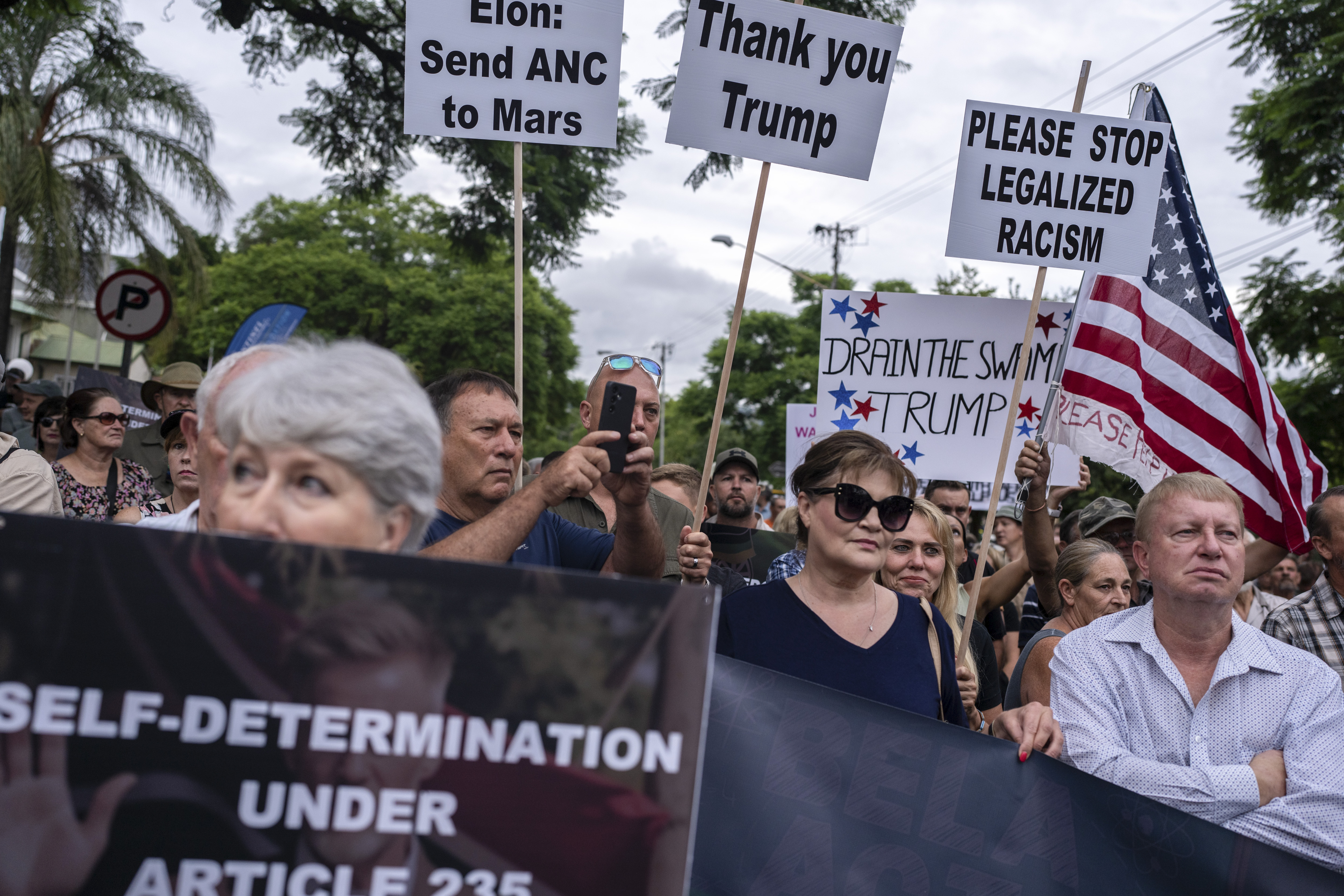
    The Trump administration has adopted a confrontational approach toward long-time ally South Africa. Washington has spent the past year spreading falsehoods about “white genocide,” cutting crucial HIV funding and blocking South Africa from the G20 while threatening its trade relationships. The United States has also made a point of resettling white Afrikaners as refugees, while excluding nearly all other refugees around the world.

    With the FIFA World Cup approaching, some may hope for a new chapter of “sports diplomacy” to relieve tensions between the countries. When South Africa’s national football team takes the field this summer, it marks Bafana Bafana’s first World Cup appearance in 16 years. But U.S. visa policies initially threatened South Africa’s ability to travel. At nearly every turn, the Trump administration is sending a clear message: it is hostile to a Black-led South Africa and sympathetic to its white minority. The domestic politics of race and white supremacy, long an undertone of U.S.-South African ties, animate the current bilateral relationship.

    The Trump administration’s embrace of white South Africans and the tensions with the African National Congress (ANC), the liberation movement-turned-political party that currently governs South Africa as part of a coalition, are not without historical precedent. Throughout the Cold War, Washington maintained close ties with apartheid South Africa’s white minority regime. Race was always part of the equation, but it was camouflaged in the language of anticommunism and strategic interest. Today, with the Cold War long over, racial politics are more exposed.

    From the early years of the Cold War, anti-Communism and race were entangled features of the U.S.-South African relationship. For Washington, South Africa’s white minority government was a reliable ally: rich in strategically important natural resources, home to a crucial shipping route and a bulwark against the Soviet Union in southern Africa.

    This relationship continued despite the formal consolidation of apartheid in 1948. The Afrikaner-led National Party systematically implemented apartheid, a draconian patchwork of racial segregation policies that stripped Black South Africans of their land and citizenship while blunting Black mobility. Despite this odious lack of democracy, Washington actively encouraged friendly relations with the white-minority-ruled South Africa. Cold War objectives overpowered moral arguments against apartheid.

    But the Cold War also shaped racial politics in unexpected ways. Just as Washington tolerated apartheid abroad, it was contending with its own system of racial segregation under Jim Crow. The Cold War created a powerful incentive for the United States to manage its image on race at home and abroad. The Soviet Union eagerly broadcast U.S. racial violence to newly decolonizing nations across Africa and Asia, undermining U.S. claims to lead the free world. This exposed Washington’s liability and motivated federal policymakers, becoming a key driver of civil rights victories and landmark decisions, such as school desegregation.

    These dynamics had the potential to threaten U.S. support for South Africa. After all, how could the self-proclaimed leader of the free world maintain its alliance with a government built on white supremacy? The answer, for most of the Cold War, was to turn a blind eye. And in the early Cold War years, domestic pressure campaigns to halt support for apartheid South Africa faced charges of communist subversion, severely blunting their impact and reach. While the Cold War opened the door to domestic civil rights gains, its politics in the early years also stymied avenues of resistance that could force Washington’s hand.

    Yet cracks eventually began to show. The rising tide of decolonization further exposed the hypocrisy of U.S. support for South Africa. In 1960 alone, 17 African nations gained independence from European colonial rule. Another turning point was the 1960 Sharpeville massacre, in which South African police killed 69 Black protesters, shocking international opinion and placing the evils of the apartheid state on full display. In turn, African leaders frequently criticized apartheid at the United Nations, placing Washington on the defensive. South Africa faced mounting international isolation, and Washington had to decide between its Cold War alliance with white-led South Africa on the one hand and its credibility with the decolonizing world on the other.

    The Nixon and Ford administrations resolved that tension by drawing Washington ever closer to South Africa’s white minority in the 1970s. Even as demands mounted from groups like the Congressional Black Caucus and the blossoming anti-apartheid movement for mandatory economic sanctions and a formal severing of U.S. ties to the regime, Washington remained steadfast. They concluded that gradual, constructive change, which they claimed to desire, could only come from white South Africans themselves not from U.S. pressure. It was an argument that conveniently absolved Washington of any responsibility to pressure Pretoria—and revealed U.S. policymakers’ views that Black South Africans were not credible leaders of their own liberation. Washington’s continued support became more exposed when, in 1974, South Africa was expelled from the United Nations General Assembly.

    Following the June 1976 Soweto massacre, where South African police killed over a hundred protesting students, international opinion grew more outraged, adding urgency to calls for sanctions. Winds of change arrived, albeit briefly, when the Carter administration initially took an aggressive approach to apartheid, aligning U.S. foreign policy with an interest in promoting human rights abroad. That agenda changed in the 1980s. President Reagan rejected calls for economic sanctions, instead endorsing “constructive engagement,” the argument that crippling the South African economy would hurt rather than liberate Black South Africans. Critics such as Desmond Tutu rejected this logic, arguing that Black South Africans had repeatedly called for sanctions. The U.S. Congress was also unconvinced. On October 2, 1986, a bipartisan majority overrode Reagan’s veto of the Comprehensive Anti-Apartheid Act, imposing economic sanctions and severing Washington’s formal ties to the regime.

    Made By History sponsors. FOR USE ON MADE BY HISTORY STORIES ONLY.Inquirer Staff

    Following decades of pressure, South Africa held its first multiracial elections in April 1994, bringing the ANC and Nelson Mandela to power. Washington warmly welcomed a democratic South Africa, which it now saw as a model for a peaceful transition to majority rule. In a post-Cold War world, the strategic rationale for supporting white South Africa largely disappeared; the U.S. no longer needed its defense against Soviet expansion.

    But the Trump administration’s hostile stance today is a signal that the Cold War relationship with South Africa was never purely animated by military necessity; a willingness to accept white minority rule undergirded the U.S.-South African relationship and was consistently reflected in policy. Now, those racial politics have become far more visible. The “white genocide” myth, Afrikaner refugee exception and hostility toward South African diplomats are driven by racial politics and a consistent willingness to privilege the concerns of South Africa’s white minority, unmediated by Cold War necessity.

    Whether or not the U.S.-South African relationship can be improved remains to be seen. Sport, which often reaches audiences that diplomacy cannot, also serves as a potential arena for reconciliation. The history of democratic South Africa suggests that sport has, more than once, progressed more rapidly than politics. The 1995 Rugby World Cup was perhaps the most celebrated example, when Mandela used the tournament to signal reconciliation, a moment immortalized in the Clint Eastwood film Invictus.

    South Africa’s first participation in the World Cup since it hosted in 2010, on American soil no less, symbolizes that potential. And yet, until Washington reckons with the racial politics driving its relationship with South Africa, both past and present, the World Cup is more likely to highlight the divide than to heal it.

    Mattie Webb, PhD, is an assistant professor of history at the Virginia Military Institute (VMI) and a Nonresident Fellow with the Institute for Global Affairs at Eurasia Group.

    Made by History takes readers beyond the headlines with articles written and edited by professional historians. Opinions expressed do not necessarily reflect the views of The Inquirer.

  • U.S. military says it’s striking ‘multiple targets’ in Iran in second day of renewed fire

    DUBAI, United Arab Emirates — The U.S. military said Wednesday it began another round of strikes against Iran, after President Donald Trump warned that Tehran would “pay the price” for stalled negotiations. The escalating attacks threatened to derail efforts toend the war.

    U.S. Central Command said in a social media post that the military was striking “multiple targets in Iran,” attacks that were “in response to Iran’s unwarranted and continued aggression.”

    The second day of American strikes came hours after Bahrain, Kuwait and Jordan — all of which host U.S. troops — came under Iranian fire. It was the third time this week that back-and-forth strikes have tested a two-month ceasefire. They also came a day after the U.S. struck Iran following the crash of an Army helicopter near the Strait of Hormuz that Trump blamed on the Islamic Republic.

    Trump has urged Iran to sign a deal to end the war and suggested earlier this week that an agreement could be reached in a matter of days.

    Iranian media reported that explosions were heard in Bandar Abbas, Sirik and Minab in the south of the country.

    Iran has proved resilient despite weeks of heavy bombing. It is betting that its ability to effectively close the Strait of Hormuz — a crucial passageway for oil and natural gas — gives it a strong bargaining chip.

    Iran’s United Nations envoy said the U.S. should refrain from threats of force if it wants a deal.

    “Iran has never negotiated under threats and pressure and will never submit to pressure or question,” Ambassador Amir Saeid Iravani told the U.N. Security Council on Wednesday.

    Still, both countries seem to be looking for a way to end the conflict — if they can manage to sell it as a win at home.

    Israeli Prime Minister Benjamin Netanyahu appears intent on pursuing goals that make compromise harder: the collapse of Iran’s theocratic government, the elimination of its nuclear program, and the destruction of the Iranian-allied Hezbollah militant group in Lebanon. On Monday, Iran and Israel targeted each other.

    Trump says U.S. is sneaking oil past the Strait of Hormuz

    Since the U.S. and Israel started the war with Feb. 28 attacks on Iran, the conflict has shaken the global economy, driven up energy prices worldwide, and made food and other basics more expensive.

    The international benchmark for crude oil traded above $93 a barrel on Wednesday, up more than 25% since the start of the war.

    Trump said Wednesday the U.S. military has since last month undertaken a “secret mission” to sneak oil shipments past Iran’s forces in the Strait of Hormuz. He said ships were slipping through at night, aided by the destruction of Iranian radar equipment.

    Trump said as a result more than 100 million barrels of oil have evaded Iran’s chokehold on the strait. There was no immediate confirmation of that figure, which roughly equals five days of oil shipments through the waterway before the war began.

    The military’s role was not immediately clear. Capt. Tim Hawkins, a Central Command spokesman, said U.S. forces “communicate and coordinate” with commercial ships in the area, but gave no details on military support being offered.

    U.S. and Iranian strikes shake the Mideast

    Earlier Wednesday, the U.S. military said an American aircraft fired “precision munitions” into the engine room of the Palau-flagged vessel M/T Settebello as it attempted to breach the naval blockade with a shipment of Iranian oil. It was the eighth merchant vessel disabled by U.S. forces in waters off Iran.

    India’s foreign ministry said three Indian sailors were missing after the Settebello was struck, while 21 others were rescued. Its statement did not mention the U.S. military or the blockade.

    Hawkins of U.S. Central Command said American forces warned the crew before firing on the ship.

    The U.S. military said strikes earlier Wednesday targeted “air defense, ground control stations, and surveillance radar sites.”

    Iran said U.S. strikes hit two water reservoirs in the southern city of Sirik, temporarily cutting off water to thousands of people. U.S. Central Command had no immediate comment.

    Tehran later claimed attacks in Kuwait, Bahrain, and Jordan.

    Jordan said it shot down five incoming missiles, which Iran said targeted an air base hosting American military aircraft.

    Bahrain and Kuwait said they intercepted incoming fire.

    Iranian Foreign Minister Abbas Araghchi condemned the American attacks as a violation of Iranian sovereignty. Foreign Ministry spokesperson Esmail Baghaei said in televised comments that, following the new attacks, Iran would review its stance on negotiations to end the war.

    Efforts to mediate a deal continued. Following consultations with the U.S., a delegation from Qatar arrived in Tehran for talks on Wednesday, according to an official with knowledge of the visit who requested anonymity due to the sensitivity of the talks.

    The exchanges of fire came a day after a U.S. Army attack helicopter crashed near the Strait of Hormuz. The helicopter collided with an Iranian drone, according to a U.S. official speaking on condition of anonymity to discuss an ongoing investigation. It wasn’t clear whether the collision was intentional.

    A drone boat rescued the helicopter’s two crew. Trump said they were uninjured.

    Big disagreements stand in the way of a quick peace deal

    Wary of high gas prices in the run-up to congressional elections in November, Trump seems to be looking for a quick win. But he is also making demands that will be tough for Iran to swallow.

    The U.S. wants to see Iran give up its stockpile of highly enriched uranium. While Iran insists its nuclear program is peaceful, that uranium is a short technical step from weapons-grade levels.

    Iran is refusing to give up the uranium and demanding relief from sanctions. It also wants the release of frozen assets even before a final agreement is in place, something Trump rejected.

    It’s not clear how those differences can be bridged. In a Truth Social post Wednesday, Trump said Iran was taking “too long to negotiate a deal” and ”now they will have to pay the price!!!”

    Iran has insisted that any deal to end the war must also end fighting between its ally Hezbollah and Israel. Israel has instead intensified its military campaign against the Lebanon-based militant group.

    An airstrike on a village east of Tyre killed at least six people, Lebanon’s state-run National News Agency reported. It said two others were killed by an Israeli drone strike on a car in the southern city of Sidon.

  • A new wave of anti-immigrant violence hits U.K. as riots convulse Belfast

    BELFAST — Masked men set houses, vehicles, and a city bus ablaze in Belfast on Tuesday night, torching neighborhoods across the city after a graphic video of an alleged knife attack by a Sudanese asylum seeker went viral, igniting the latest anti-immigration violence to convulse the United Kingdom.

    Ignoring pleas for calm from politicians and clergy, rioters rampaged through heavily immigrant neighborhoods in Belfast, the capital of Northern Ireland, in some cases going door-to-door and causing some families to flee under police protection.

    Men in balaclavas and hoods shouted “foreigners out,” witnesses said. One family with children had to be escorted from a burning house, according to the BBC, and a family of Ukrainian refugees fled through their back door as the front door burned.

    Attackers set cars alight in an eastern Belfast neighborhood, stopping in one case after a neighbor told them the vehicle was owned by “locals.” A member of Parliament from the Belfast area described the actions as a “race-based pogrom.”

    The riots spread from Belfast to towns across Northern Ireland and reached into Scotland and England by nightfall. A heavy police presence remained Wednesday morning as officials braced for unrest to continue. Officials said some 200 backup officers from other parts of the U.K. were due to arrive Thursday.

    The Rev. Brian Anderson of the East Belfast Methodist Mission, who was at the scene overnight, said that many of the rioters were “young men out of control” but that the attacks seemed to be directed by a smaller number of older men.

    Anderson’s congregation of native-born and immigrant parishioners was terrified, he said Wednesday morning amid the burned-out cars and broken glass along Lendrick Street. Many parents kept their children home from school, he said.

    Anderson condemned the violence but said underlying social tensions must be addressed.

    “I do believe this community does want to welcome immigrants, but they also want to have their housing issues and their employment issues dealt with,” he said.

    The transit agency suspended services in parts of Belfast, after rioters pushed burning trash bins into a public bus. The Police Service of Northern Ireland said it received 13 reports of criminal damage and at least five of arson, some of which were treated as hate crimes.

    The unrest was the most serious to grip the United Kingdom in nearly a year and placed fresh strain on a government already battered by a running national argument over race, immigration, and police conduct that has been building since last summer.

    The immediate trigger this time was a knife attack late Monday in north Belfast, in which a man in his 40s suffered significant injuries to his eyes and slash wounds to his face and back. Bystanders, including one man wielding a hurling stick, intervened to stop the attack and were credited with saving the victim’s life.

    Word spread rapidly on social media that the attacker was a foreign-born asylum seeker.

    The suspect, a Sudanese national, was charged Tuesday with attempted murder.

    During an appearance at Belfast Magistrates’ Court by video link Wednesday, he was identified as Hadi Alodid, 30, and was denied bail.

    The victim’s family put out a statement Wednesday condemning the riots. “We want to make it absolutely clear that overnight unrest is not welcome, and peaceful protest is the only way forward,” the statement said. “We have many migrants who make a deeply valuable contribution to our country, including in our healthcare system and hospitality sector and we depend on them to make our country work. We do not want this terrible tragedy to be used to divide people or fuel hostility.”

    Northern Ireland’s chief constable, Jon Boutcher, confirmed Tuesday that the suspect was living in the United Kingdom on a five-year visa granted in September 2023. Boutcher said the man was believed to have traveled to Paris from Sudan and then to Dublin before claiming asylum in Belfast.

    “There is no trace of this suspect on any of our national security databases, and he was not known to the Police Service of Northern Ireland,” Boutcher said. Police said the attack was not being treated as terrorism.

    Though Ireland and France are both members of the European Union, Ireland is not part of Europe’s visa-free travel zone. It was not clear how he had traveled between the two nations.

    The Republic of Ireland and the United Kingdom are part of a common travel union, and movement between them is unregulated. Anti-immigration activists have accused Ireland of being an easy entry point for asylum seekers and other migrants into Britain.

    Jim Allister, a member of Parliament from the Traditional Unionist Voice party said he believed unfettered access had made Northern Ireland “an open house” and blamed Prime Minister Keir Starmer’s Labour Party for not doing more to stem migration.

    “We have a man probably fighting for his life because he is a victim of the open borders that this government has permitted,” Allister said in a BBC interview.

    Tensions over immigration long predate Starmer’s government, which took office in 2024 after 14 years of Conservative Party rule.

    Video of the attack spread on social media Tuesday, and some right-wing leaders called for mass protests.

    The English anti-immigrant activist Tommy Robinson called the knife attack “yet another invader attack on our people.”

    Elon Musk, the South Africa-born American billionaire, reposted Robinson’s call for nationwide protests on X, writing: “Only by protesting REPEATEDLY and LOUDLY will there be any change!!”

    The leaders of Northern Ireland’s five main political parties issued a joint statement condemning the stabbing and urging calm, saying that “there is no place in our society for this kind of brutality.”

    First Minister Michelle O’Neill wrote on social media that groups of masked men burning families out of their homes amounted to “nothing less than disgusting cowardice.” O’Neill said there were “dangerous attempts to exploit” the attack to target innocent people simply trying to live, work and raise their families in Belfast.

    Starmer called the knife attack “horrific” and “sickening.” His office said “it is time for calm,” and urged that police be given “time and space to investigate appropriately.” Starmer and other senior politicians urged the public not to share the graphic video circulating online or to spread disinformation.

    The Belfast riots, with some of the unrest concentrated in traditionally unionist parts of the city, are the latest upheaval in a prolonged crisis over race and immigration in Britain. Last June, Northern Ireland endured two weeks of anti-immigration rioting triggered by an alleged sexual assault in the town of Ballymena, which drove much of the town’s Roma population to flee.

    More recently, violent protests erupted in May after Vickrum Digwa, 23, a Sikh man was convicted of murdering Henry Nowak, 18, university student stabbed in Southampton in December 2025.

    Police body-camera footage showed Nowak, who had been handcuffed, pleading with responding officers who did not recognize that he was seriously injured, saying: “I can’t breathe” and “I’ve been stabbed.” An officer told him: “I don’t think you have, mate.”

    Nowak died at the scene. Critics said officers treated Digwa, who claimed Nowak had attacked him “racially,” with more deference than the victim. The footage fueled claims that British police were institutionally biased against white Britons, claims that prosecutors and ministers have rejected.

  • Trump sticks with Pulte for intel job as risk grows of lapse in spy powers

    WASHINGTON — A lapse in a law that allows the U.S. to gather intelligence abroad grew more likely on Wednesday as President Donald Trump resisted calls from Republicans and Democrats on Capitol Hill to immediately name a permanent head of the nation’s intelligence agencies.

    Trump has doubled down on his temporary pick for director of national intelligence, federal housing finance regulator Bill Pulte, even though he has little experience for the job. Democrats say they won’t support the renewal of Section 702 of the Foreign Intelligence Surveillance Act, known as FISA, unless he withdraws Pulte’s appointment and nominates a permanent replacement.

    The impasse could soon result in limitations on what intelligence the U.S. government can collect abroad just as World Cup games begin in cities around the country and ahead of celebrations for the nation’s 250th anniversary. The law expires on Friday at midnight.

    Trump on Wednesday asked Congress for a short-term extension of the law to “provide time for the selection and confirmation” of a permanent director.” But he stuck with Pulte as the acting head and said he wants to begin downsizing intelligence agencies.

    “We can’t let them extort us,” Trump said of Democrats.

    Senate Republicans floated a two-week extension of the law after Trump’s request, but it was immediately rejected by Democrats who argued that it’s up to the president to replace Pulte.

    As the bill stalled in the Senate, Speaker Mike Johnson announced the House would hold a vote Thursday on a two-week stopgap even as the chances of passage appeared slim.

    “We’re going to ask every member here to do the right thing,” Johnson said. “We cannot allow that to go dark.”

    House Democratic leader Hakeem Jeffries said if Trump wants a shot at a short-term extension, he needs to pull the Pulte appointment. Pulte is a “disgraceful individual” and a “partisan political hack” who is deeply unqualified for the job, Jeffries said.

    GOP leaders lobby the White House, to no avail

    Congressional Republicans have lobbied Trump all week to quickly nominate a permanent replacement. But he said he needs more time to do so.

    Senate Majority Leader John Thune (R., S.D.) said Wednesday that Republican leaders have “made our views known” to the White House about the easiest way to get the bill passed, and “we’re just doing what we can here to ensure that the White House understands what will be necessary in order to make that happen.”

    Trump said on Friday that he is interviewing five candidates for his pick to lead the agency permanently and that all have a national security background.

    “It’s an important position and one that I think will be filled by a highly qualified person,” said Johnson, who met with Trump twice this week to talk about the FISA impasse.

    Trump made it very clear, Johnson said, that Pulte will serve a “very short term — a sort of renovation role” to help the Office of the Director of National Intelligence be “renovated and downsized.”

    To unlock votes for FISA, the pick would have to be soon — and Trump’s choice would have to satisfy both Republicans and Democrats.

    One of several possible replacements could be Pete Hoekstra, Trump’s ambassador to Canada and a former chairman of the House Intelligence Committee. The White House has reached out to Hoekstra about the job and conversations are ongoing, according to a person familiar with the outreach who requested anonymity to discuss the private conversations.

    FISA will lapse at midnight Friday

    Section 702 of FISA allows agencies such as the CIA, National Security Agency, and FBI to collect communications from foreign targets overseas without a warrant.

    While members of both parties who cite privacy issues have long wanted to limit the authority, there was broad bipartisan support to renew it, especially after Republicans and Democrats recently worked out a compromise bill.

    Virginia Sen. Mark Warner, the top Democrat on the Senate Intelligence Committee, has worked with Republicans on the compromise legislation to renew the authority. But he called Pulte’s appointment to replace outgoing DNI Tulsi Gabbard “a live hand grenade” as they were trying to pass it. Republican leaders tried to start the process last week, but seven Republicans joined nearly all Democrats in blocking a long-term extension after Pulte was appointed.

    Warner said Wednesday that the only way he’ll support a short-term extension of the surveillance law is if the principal deputy director of national intelligence, Aaron Lukas, is the acting leader during the duration of that extension.

    Sen. Tom Cotton, the chairman of the Senate Intelligence Committee, and Sen. Chuck Grassley, chairman of the Senate Judiciary Committee, have warned the administration that the spy tool is likely to lapse.

    The administration should prepare “for a potential significant gap in foreign intelligence collection,” they wrote in a letter.

    Trump doesn’t back down on Pulte

    After bipartisan pushback to Pulte’s temporary appointment, Trump said last week that he would not permanently nominate him to the position. But Democrats, and some Republicans, want his appointment pulled immediately and for Trump to nominate a replacement that can be confirmed by the Senate.

    On Tuesday, though, Trump announced that Pulte would not only take over as acting director — he’d also start earlier than expected, on June 19.

    And he stuck with Pulte on Wednesday, posting that he needed more time to find a permanent replacement and telling reporters that the agencies need to be downsized.

    Both Republican and Democratic senators skeptical of Pulte have pointed to his lack of intelligence experience and also his record at the Federal Housing Finance Agency. In the position, the Trump loyalist has been linked with criminal referrals over allegations of mortgage fraud by public officials Trump sought to punish, including New York Attorney General Letitia James, a Democrat; Sen. Adam Schiff (D., Calif.); and Lisa Cook, a board member of the Federal Reserve.

  • Pope honors Barcelona’s Sagrada Familia as masterpiece of stone, color, and light on Gaudí centenary

    BARCELONA, Spain — Pope Leo XIV celebrated the Sagrada Familia Basilica as a masterpiece of “stones, colors, and light,” as he marked the centenary of the death of its architect, Antoni Gaudí, with a Mass on Wednesday to inaugurate its final soaring sandcastle spire.

    Leo called Gaudí’s unfinished temple, one of the world’s most visited monuments, a “sign of unity and harmony for all of Spain,” an ongoing building project like the lifelong journey all Christians make to find God.

    “We are all the living stones of this edifice,” Leo said from the altar of the basilica, with Spanish King Felipe VI and Queen Letizia sitting to his side and a hundreds-strong choir filling the basilica with song.

    The service marked the highlight of Leo’s weeklong visit to Spain, the first by a pope in 15 years to the once staunchly Catholic European country that, like many others, has experienced secularizing trends.

    The trip, though, has underscored how the country of 50 million people, which experienced a religious crisis after its 20th century dictatorship ended, still has plenty of faithful Catholics who have turned out in droves to welcome the American pope.

    An estimated 120,000 people lined the streets around Sagrada Familia for the event, with streets closed to traffic and a heavy police presence, given the attendance of the royal couple and Prime Minister Pedro Sánchez. The crowds remained after Mass to watch as Leo inaugurated the basilica’s final Tower of Jesus Christ that has made it the world’s tallest church.

    Speaking in Catalan and Spanish, Leo blessed the tower and its illuminated ceramic cross from outside the basilica, surrounded by bishops craning their mitre-capped heads to look up. An angelic boy’s choir sang as a spectacular light show lit up the basilica’s stained glass windows from the inside and fireworks shot off its facade.

    Honoring Catalonia’s Christian traditions

    Earlier Wednesday, Leo celebrated a more ancient sacred monument, traveling to Montserrat, a mountain complex outside the city that is dear to many Catalans. The complex, which includes an 11th-century Benedictine abbey and a 16th-century basilica, is revered for its Black Madonna statue and is home to a boys choir that has existed since the 13th century and is Europe’s oldest.

    Thousands of faithful arrived early at the monastery, with groups of nuns and schoolchildren singing and waving signs and photographs of the pope outside the basilica. Bells rang out over the spire-like rock formations that top Montserrat and the valley below as Leo arrived in a golf cart.

    In recent years, the Montserrat abbey has faced numerous accusations from survivors of clergy sexual abuse and was included in the Spanish ombudsman’s 800-page report on the crisis in 2023. The report found 15 victims and three alleged perpetrators linked to the abbey.

    “It’s very painful because there are members of the church who committed errors,” said the Rev. Cesario Escarda, a Toledo priest, as he waited for Leo at the abbey. “What the pope wants to do is shine a light on the truth and ask forgiveness and bring in the victims and listen to them and accompany them.”

    The Bible carved in stone

    The highlight of Leo’s visit, though, was his Mass at Sagrada Familia to commemorate the 100th anniversary of the death of its famed Catalan designer, Gaudí, who died at age 73, three days after he was hit by a tram.

    A century after construction began during the pontificate of Leo’s namesake, Pope Leo XIII, the basilica has become one of the world’s most visited but unfinished monuments, annually drawing upward of 5 million visitors a year.

    Commemorating Gaudí’s death, Leo said he wanted to give thanks to all the supporters, artists, and workers who “cooperated in the construction of an architectural masterpiece, which is also an eloquent catechesis made of stones, colors, and light.”

    Gaudí, who is on the path to possible sainthood, spent four decades designing and building the temple as the summary of the Christian faith carved in stone. The most important stories of Jesus’ life, the Nativity and Passion, are etched into the basilica’s east and west facades. A third facade facing south, the Glory, will serve as the basilica’s main entrance when finished.

    The temple is an architectural and geometrical masterpiece inside and out, an art nouveau celebration in form and symbol of Christianity and God’s creation through stone and light.

    “Much more than a monument, the Basilica of the Sagrada Familia remains a work in progress today, reminding us that the Christian life is always a journey, because it is a project that God is carrying out,” Leo said in his homily.

    A total of 18 sandcastle spires rise up from the top and pierce Barcelona’s skyline: 12 to symbolize Christ’s 12 apostles, four for each of the four Evangelists who recorded Christ’s life in the Gospels, one topped with a star over the apse honoring the Virgin Mary and, tallest among them, the Tower of Jesus Christ.

    When the final Christ tower was finished last year at a height of 564 feet, it made Sagrada Familia the world’s tallest church.

    “The entire structure of the Sagrada Familia is striking,” said Laura Rincón, who was on hand outside along with two friends for the Mass, after she finished work in a nearby shop. She said that she was sure the pope would be impressed by the church she marvels at every time she passes by.

    “If you look at it just for its architecture, it is amazing,” she said. “Inside, its columns make you feel like you are inside a forest.”

    An interior that looks like a forest

    The cross-shaped interior, with the altar at the apse, is an homage to light and nature. Treelike columns soar to the sky, colored by constantly changing light filtered through stained glass windows like the sun poking through leaves in a forest.

    “Nature is my teacher,” Gaudí once said. “Everything comes from the great book of nature, always open that we must read.”

    The colors of the window glass have meaning: The blues and greens of the eastern portal windows, where the facade depicts Christ’s birth, look more joyful and are most brilliant when the sun rises and light passes through. The coarser shades of red and orange, illuminated by the setting sun on the western portals, color the side of the basilica that depicts Christ’s Passion. Behind the altar and above the cross are yellows and gold that glimmer in the noonday sun.

    Historian Mònica Santín, who leads tours of the basilica, said that in designing Sagrada Familia, Gaudí was guided by two books: the Gospels and nature.

    “The way he lets in the natural light is also an invitation to the Christian mystery,” she said, citing the three facades depicting Christ’s birth, death, and glory.

    “And when you enter inside, it is all light,” Santín said. “What is that the symbol of? We can’t see God, but we perceive his light all around us. I think that is how you can read this message, and it is fascinating.”

  • Trump officials lay out aggressive timeline to build triumphal arch

    Trump officials lay out aggressive timeline to build triumphal arch

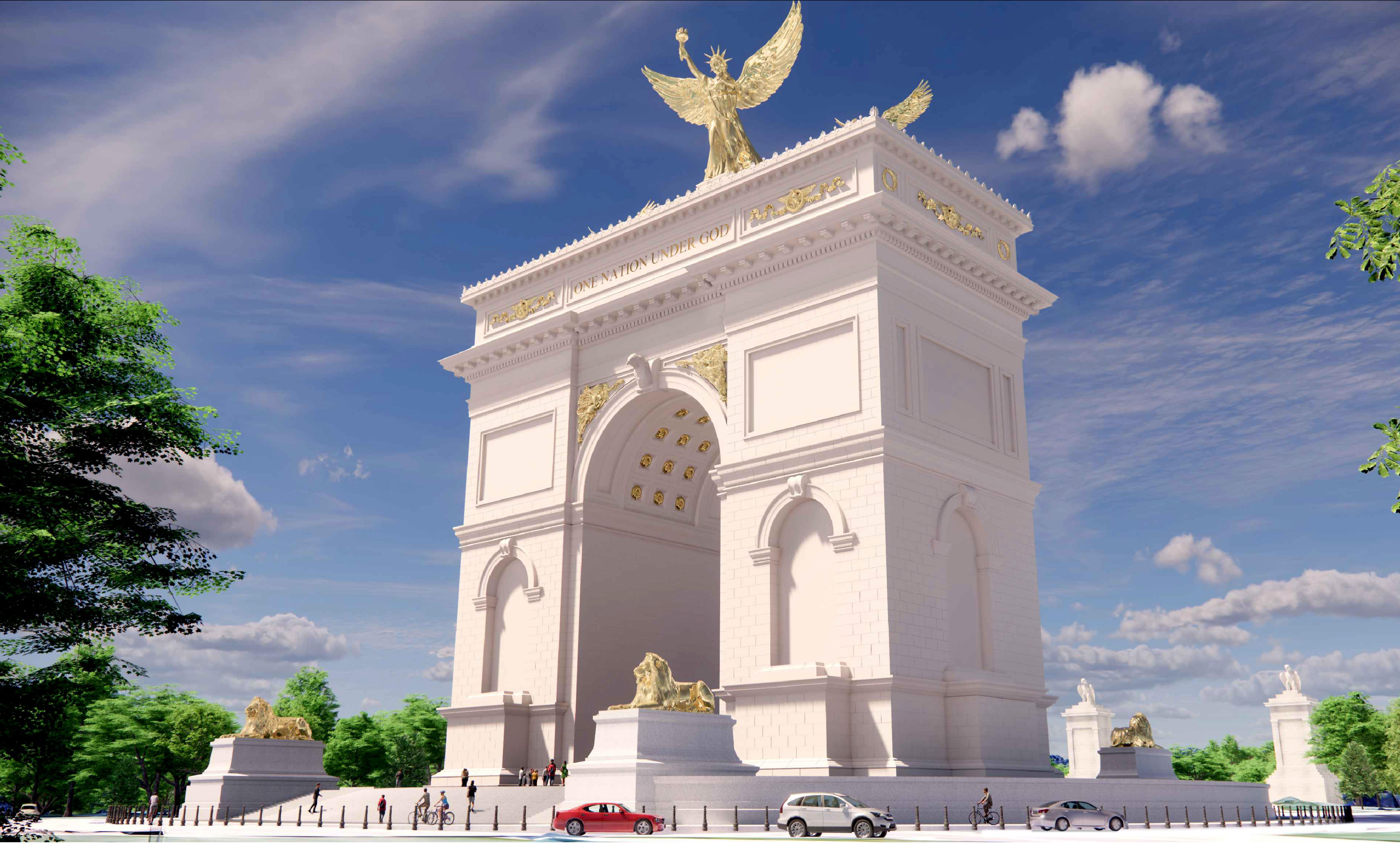
    Federal officials are laying more groundwork to begin construction on President Donald Trump’s planned 250-foot-tall triumphal arch, sharing additional documents that detail the project’s scope and an aggressive timetable for potentially completing work before Trump’s term ends.

    According to National Park Service documents posted this month, the administration envisions 20 hours per day of construction on the arch, year-round, in hopes of completing the project within two to three years. Construction experts said that timeline — which would involve two 10-hour daily shifts — is unusually aggressive for a nonemergency project.

    The arch also would be built with concrete clad in granite, unlike the nearby Lincoln Memorial and other monuments that were constructed with natural stone like marble and limestone — another way to expedite its construction, experts said.

    “He’s obviously in a hurry to try to get this all done before he leaves office,” said Matthew Bell, a University of Maryland architecture professor, commenting on the timeline and materials. “Most of the major monuments in D.C. are stone.”

    The Park Service said the project would require large cranes, including one that may be 320 feet tall and another that could be as high as 300 feet. The planned site for the arch is on a flight path to nearby Reagan National Airport, where planes can sometimes fly at around 500 feet of altitude, raising concerns about safety.

    The Federal Aviation Administration has said it is reviewing whether the arch’s planned height would present risks to airplanes transiting the area, concluding in a preliminary report last week that the arch would need red blinking lights to alert planes at night. An FAA spokesperson said Tuesday that the agency was still conducting a full study on the project.

    FAA, Transportation, and Interior Department spokespeople did not respond to questions about whether the additional height of the cranes would pose further risk.

    The White House declined to comment on the Park Service documents. Officials said they planned to begin construction as soon as all approvals are received.

    “The Triumphal Arch in Memorial Circle is going to be one of the most iconic landmarks not only in Washington, D.C., but throughout the world,” Davis Ingle, a White House spokesman, said in a statement.

    Trump has insisted that the 250-foot-tall arch be built to mark America’s 250th anniversary, and two federal panels led by Trump allies have rushed the project through reviews. The arch would be erected at Memorial Circle, a traffic roundabout near Arlington National Cemetery that is tucked inside Washington’s boundaries, and it would represent the president’s most significant change to Washington’s skyline.

    The administration is not planning to seek authorization for the project from Congress, drawing rebukes from Democrats who say the president continues to flout long-established laws and norms. Trump has also demolished the White House East Wing to clear space for his planned ballroom, decided unilaterally to renovate the Lincoln Memorial’s Reflecting Pool, and undertaken other construction projects without going through the usual legally required reviews or seeking approval from Congress.

    “Running through all these incidents is an inexplicable disregard for legal process,” Sen. Richard Blumenthal (D., Conn.), the top Democrat on the Senate’s permanent subcommittee for investigations, wrote in a letter Tuesday to Park Service leaders.

    Blumenthal asked for the Park Service to explain and justify its use of urgent procedures, including no-bid contracts, to complete Trump’s projects; to share its internal records on the arch, the Reflecting Pool, and other work driven by the president; and to provide a full list of projects underway or under consideration on Park Service land in the D.C. area. The letter was shared with the Washington Post.

    Some construction and design firms have declined to work on the arch, worried that they could not meet the administration’s aggressive timeline and wary of the risks of participating in the controversial project, according to two people who spoke on the condition of anonymity to describe internal deliberations around the project.

    Fifty-two percent of Americans are against the planned arch, compared with 21% who favor it, according to a Washington Post-ABC-Ipsos poll conducted in April.

    The project is also the subject of a lawsuit brought by several military veterans who say the towering structure would alter their visiting experience to nearby Arlington National Cemetery. Lawyers for Public Citizen, a watchdog group that is representing the military veterans, have urged a federal judge to halt the project.

    “With every passing day, Defendants’ arch moves closer to construction,” Public Citizen lawyers argued in a filing to U.S. District Judge Tanya Sue Chutkan last week.

    Trump administration lawyers have argued that the project should not be halted because it has not officially begun. Administration officials have also said they will provide at least 14 days’ notice before beginning construction of the arch.

    The Park Service last week opened a 10-day comment period for the public to weigh in on the arch project. The comment period, which the agency and administration officials have not publicized on their communications channels, according to a Post review, is a legally required step before beginning construction.

    The Park Service has acknowledged the potentially adverse effects of the arch on Arlington National Cemetery and other nearby monuments — “all of which derive significance in part from their planned visual, commemorative, and spatial relationships across the Potomac River and through the monumental core,” one report concluded.

    The Interior Department last month awarded a contract to Otak Inc., a Portland, Oregon-based architectural firm, to perform compliance-related work related to the arch project. Otak declined to answer questions about the contract and its involvement in the project, referring comment to the Trump administration.

    The project has already received approval from the Commission of Fine Arts, which reviews designs for major federal projects. A second panel, the National Capital Planning Commission, is expected to approve the project as soon as next month.

    Will Scharf, the Trump-appointed chairman of the National Capital Planning Commission, also said last week he believed a federal law limiting the height of construction in Washington should not apply to the arch. The law restricts most construction in Washington to a maximum height of 130 feet.

    Meanwhile, Trump officials have declined to include a half-dozen historic preservation and advocacy groups, such as the National Trust for Historic Preservation and the Cultural Landscape Foundation, in a federally required process to consider the arch’s potential effects on historic properties. All of the excluded organizations, which have historically offered input on past federal projects, have sued the Trump administration over the president’s planned ballroom, his Reflecting Pool and other initiatives.

    “Each of these organizations brings subject area expertise that could be helpful,” Charles Birnbaum, the president of the Cultural Landscape Foundation, wrote in a letter Monday to the Park Service, asking to participate in the process. The letter was shared with the Post.