NEW YORK — In an abrupt reversal, Luigi Mangione’s lawyers said Thursday that they had withdrawn their intent to argue that he was experiencing “extreme emotional disturbance” at the time he was accused of killing a UnitedHealthcare executive in midtown Manhattan in 2024.
The withdrawal came one day after the New York state judge overseeing the case, Justice Gregory Carro, revealed at a pretrial hearing that Mangione’s legal team had filed a motion in September notifying the court that it was considering the defense.
In a one-sentence letter, Mangione’s lawyers wrote, “The defense respectfully withdraws CPL [Section] 250.10 notice at this time,” referring to psychiatric evidence.
Because of the withdrawal, Carro put the documents and transcript that exposed the defense strategy back under seal.
Mangione, 28, is accused of killing Brian Thompson, the executive, on the morning of Dec. 4, 2024. Surveillance footage showed a man in a hooded sweatshirt emerge from between parked cars, point a handgun affixed with a silencer, and fire at Thompson as he walked toward the entrance of a Hilton Hotel in midtown to prepare for an investor conference.
Mangione faces federal charges of stalking and multiple state charges, including second-degree murder. In New York state, if defense lawyers can convince a jury that strong emotions resulted in a “profound loss of self-control,” leading to a homicide, the highest charge their clients can be convicted of is manslaughter, which has a maximum sentence of 25 years. The murder charge carries 25 years to life.
Thursday was the deadline set by Carro for Mangione’s legal team to provide prosecutors with documents related to the psychiatric defense and to explain “what malady it is that this defendant suffers from.”
The team responded with the withdrawal, and Mangione’s defense strategy now remains publicly unclear. The state trial is scheduled for September, and his federal trial will follow.
At the pretrial hearing Wednesday, where the potential defense was disclosed, his lawyer, Karen Friedman Agnifilo, made several arguments to keep the psychiatric evidence under seal. She said concealment was essential because “this defense is not available federally.”
“Mr. Mangione is being prosecuted federally, and this is prejudicial to his federal case about the exact same facts,” she said.
Joel Seidemann, a prosecutor with the Manhattan district attorney’s office, said at the hearing that his office would “vigorously” fight any request for postponement of the trial’s start date if Mangione’s lawyers continue to explore the extreme emotional disturbance defense.
Friedman Agnifilo said Seidemann’s statements were “completely unnecessary” because she had not requested a delay.
As the two lawyers argued, Mangione appeared incredulous throughout the exchange, shaking his head.
WASHINGTON — A new kind of flu vaccine moved a step closer to the U.S. market Thursday as federal health advisers recommended approval of the first made with the same mRNA technology that was key to ending the COVID-19 pandemic.
The Food and Drug Administration is evaluating Moderna’s new shot, dubbed mFlusiva, for older Americans ahead of the winter flu season. Moderna is seeking full approval for the vaccine’s use in people ages 50 to 64 — along with authorization for use in those 65 and older while it conducts additional testing.
The FDA’s independent advisory committee evaluated Moderna’s studies of the vaccine and voted unanimously that its benefits appear to outweigh any risks for both age groups. The FDA will consider that recommendation in making a final decision by early August.
Tens of thousands of Americans die from influenza every year, and older adults are among the most vulnerable. There are various types of flu vaccines already available in the U.S., including three specifically recommended for people 65 and older. But vaccines made with the Nobel Prize-winning mRNA technology are faster to manufacture than other types — something experts say might help if the shape-shifting flu virus mutates in a way that requires suddenly brewing new doses to match.
“Having this technology available puts us in a better position to be prepared for emerging strains in the future,” said Flor Munoz-Rivas of Texas Children’s Hospital, one of FDA’s advisers.
In a study of 40,000 people age 50 and older, Moderna’s mRNA vaccine reduced flu cases by about 27% compared with those given another routinely used vaccine brand. In a smaller study of people 65 and older, Moderna’s shot also generated a strong protective immune response compared with a high-dose flu vaccine already recommended for that age group.
Data showing strong immune reactions “were very compelling,” said FDA adviser Anna Durbin of Johns Hopkins University, adding that “the vaccine looks very promising.”
Moderna’s Rituparna Das told panelists that the company’s ability to quickly manufacture mRNA vaccines that closely match the latest flu strains could prevent thousands of hospitalizations in older Americans.
Severe flu cases in the U.S. generally rise in years when the flu shot doesn’t closely match the circulating virus. Moderna officials noted that flu strains for each fall’s vaccines now are chosen several months earlier than the yearly recipe update for COVID-19 shots that mostly are mRNA-based — and there can be a mismatch if the flu virus mutates after the recipe is made.
At the meeting, FDA vaccine reviewer Timothy Brennan suggested the agency was open to approving the vaccine for older adults ahead of the coming flu season, despite the need for more information about its use in frail seniors or people with weak immune systems.
If it’s approved, Moderna is planning its required next-step study to include 400,000 people 65 and older, half given the mRNA vaccine and the rest given one of today’s special-for-seniors shots. It’s supposed to repeat that study for two flu seasons.
Moderna’s data showed no major safety issues, although the shot did cause some temporary reactions including injection-site pain, fever, headache, tiredness, and aches. The latter reactions are common in a variety of vaccines, but occurred somewhat more often than with today’s flu shots. The FDA said that’s typical of mRNA vaccines.
Those temporary reactions can be a signal that “your immune system is responding,” said Hayley Gans, a Stanford Medicine pediatrician and FDA adviser who stressed it will be important to explain that to vaccine recipients.
Earlier this year, Moderna’s data was at the center of a highly unusual public dispute as a then-top FDA official blocked the company’s application for its first-of-its-kind shot.
The embattled vaccine chief at the time, Vinay Prasad, said the company should have compared its shot to a high-dose flu vaccine recommended for seniors rather than a standard-dose brand. It was a sign of FDA’s heightened vaccine scrutiny under Health Secretary Robert F. Kennedy Jr.
Moderna challenged that decision, noting that FDA staff had approved that main study’s design and citing a separate, smaller study comparing the mRNA shot with a high-dose vaccine for seniors. Days after the spat, the FDA accepted Moderna’s application.
Moderna also is studying the vaccine in younger adults and plans a separate study in 9- to 17-year-olds this fall.
More than 150 troops at Lackland Air Force Base in Texas have been infected with influenza over the past three weeks — a major outbreak less than two months after Defense Secretary Pete Hegseth said American troops would no longer be required to be vaccinated against the flu.
The Air Force said in a statement Thursday that the 37th Training Wing, which is at Lackland, “has been managing a localized influenza outbreak among trainees at Basic Military Training.”
About 160 people have become ill, according to two people familiar with the matter who spoke on the condition of anonymity because of the sensitivity of the issue. More than 36,000 military recruits come through the 37th Training Wing each year.
The Air Force did not immediately respond to a question about whether the troops who contracted the flu had been vaccinated. The outbreak was first reported by the New York Times.
People showing symptoms are being isolated and treated, and medical personnel are also monitoring those who were in close contact with sick individuals, according to the Air Force statement. Recruits will return to training once they’re cleared by medical staff.
The Air Force also said in a news release earlier this week that Keon McDaniel, who was in his sixth week of basic military training, died after experiencing a medical emergency and being transported to nearby Brooke Army Medical Center. The Air Force is investigating whether his death is related to the outbreak, but that review is still underway, a U.S. official said, speaking on the condition of anonymity because of the sensitivity of the issue.
In April, Hegseth announced he would be rolling back a decades-old mandate requiring U.S. troops to receive the annual flu vaccine. The defense secretary called the requirement “overly broad” and said that soldiers would be able to take the vaccine if they believed it was in their best interest, describing it as an effort to “restore freedom and strength to our joint force.”
Chief Pentagon spokesperson Sean Parnell said Thursday in a statement that the Department of the Army, Department of the Navy, Department of the Air Force, National Security Agency, and Defense Health Agency had been granted permission to require the vaccines in certain circumstances.
“The decisions were based upon thorough risk assessments and are designed to maximize operational readiness, lethality, and force generation, while safeguarding at-risk populations,” Parnell said, adding that the military components requesting the exceptions are responsible for their implementation.
Undersecretary of Defense for Personnel and Readiness Anthony Tata told members of Congress last month that the Pentagon was reviewing exceptions for service members in environments such as basic training, submarines, ships, and Army Ranger School.
The Times reported Thursday that in the midst of the recent outbreak, the Air Force was granted an exception to the new voluntary vaccine policy, requiring that recruits at Lackland get flu shots. The Air Force did not immediately respond to questions from the Washington Post about whether that exception had been put in place.
Influenza rates are considered low right now nationally and in Texas, according to tracking by the Centers for Disease Control and Prevention and the Texas state health department. But living in close quarters could exacerbate an outbreak, as flu is spread mainly when people cough, sneeze, or talk.
The flu vaccine is not a cure-all; it is much less effective in preventing infections than vaccines such as the one for measles, mumps, and rubella, which the CDC says prevents measles in about 97% of cases when patients have received two doses. But multiple studies have shown the flu vaccine reduces the disease’s severity and averts hospitalizations and deaths.
However, Health Secretary Robert F. Kennedy Jr. has a long history of disparaging vaccines. As health secretary, he stopped a flu awareness campaign and downgraded the recommendation for childhood shots.
The U.S. military first mandated the flu vaccine in 1945, at the end of World War II — in part to hedge against the threat of biological warfare and because the influenza pandemic of 1918 to 1920 had hindered American troop readiness during World War I, killing more than 26,000 American soldiers. The mandate was briefly withdrawn in 1949 but reinstated in the 1950s.
Military vaccine mandates were a campaign issue for President Donald Trump, who promised during his 2024 campaign to rehire individuals who had lost their jobs over the military’s requirement that service members be vaccinated against the coronavirus.
“I will rehire every patriot who was fired from the military with an apology and with backpay,” Trump said at the time, which he went on to do in an executive order in January last year.
For days, workers have been trying to rid the Reflecting Pool of algae after a more than $14 million renovation that President Donald Trump said was “done properly” and “could last for 100 years.”
But now workers have another problem to contend with: peeling paint. On Thursday, a sheet of the pool’s surface — painted in American Flag Blue, a color selected by the president — was seen floating on the north side of the pool. It undulated in the water as curious tourists gathered, some of whom had come to see the green algae.
At 5:35 p.m. on Thursday, a worker came to remove the sheet of pool surface, telling a Washington Post photographer not to photograph it, despite being on public land.
The Interior Department did not immediately respond to questions about the paint and why the pool surface is separating. The agency said in a statement on Wednesday that it is treating the pool with hydrogen peroxide and “high-tech nanobubble ozone technology” to effectively cut off the algae’s food supply.
On Thursday, the Interior Department press office posted on X that “the Reflecting Pool water is crystal clear, and our National Park Service team is now vacuuming up the bottom of some parts of the Reflecting Pool — just like the destroyed Iranian Navy resting on the bottom of the Persian Gulf.”
Indeed, some areas of the Reflecting Pool were looking cleaner compared with earlier in the week. Workers in chest-high waders stood in the middle of the pool and vacuumed the algae. The neon green-tinted water could be seen pouring out of tubes into nearby drainage grates. The center of the pool, though, was still neon green, and residual algae remained in the cleaned portions of the pool.
Within days of the renovation’s completion, the Reflecting Pool had more algae in it than at any recorded point in the month of June for at least five years, according to a specialized analysis of satellite data.
The Reflecting Pool renovation, Trump has said, was prompted by a friend visiting from Germany who called the water “filthy, dirty … disgusting looking.” Algae has been a consistent problem for the pool and quickly reappeared after a $34 million renovation that was completed in 2012.
But this time would be different, the president promised. He touted his pool-building experience and praised the workmanship of his contractor, who got the job in a no-bid contract.
“I’m very proud of it,” Trump said in the Oval Office on June 3, saying that his six-week project had finally solved the pool’s yearslong leaking issues. “I’m very good at building things and constructing things.”
“This was not a paint job,” Trump wrote on Truth Social on June 5. “This was highly sophisticated material, industrial strength, that could last for 100 years, applied by very talented people.”
On Friday morning, the president reposted an artificial intelligence-generated video showing him filling the Reflecting Pool with what appeared to be critics’ tears (and blue-tinted water) on Truth Social.
The Cultural Landscape Foundation, a local advocacy organization, sued to stop Trump’s changes to the Reflecting Pool, but the work was completed before a judge could issue a ruling.
One of the reasons TCLF filed its lawsuit is because the National Park Service did not perform a review as per the National Historic Preservation Act, said Charles A. Birnbaum, the organization’s president and CEO.
Under that review, they would have been required to consult subject area experts who could “identify potential problems — like algae and exfoliating paint — and, perhaps, suggest solutions,” said Birnbaum in a statement to the Post. “Instead, the Park Service granted themselves a ‘streamlined review,’ which they admitted was done under pressure from ‘White House leadership’ even though the project was ineligible.”
ROME — The Italian government closed ranks on Friday to slam U.S. President Donald Trump over his claim that Premier Giorgia Meloni had “begged” for a photo with him during the recent G7 summit, a pushback that suggested America’s longtime European ally had had enough of Trump’s boasting and criticism.
Italian Foreign Minister Antonio Tajani abruptly canceled a planned trip to the United States this weekend, calling Trump’s claims “serious and offensive” toward Meloni and all of Italy.
Meloni for her part posted a video calling Trump’s claims “completely fabricated” and expressing astonishment that he would invent such things about an ally.
“Italy and I do not beg,” she said pointedly.
Trump had made the comments in an interview broadcast Friday on the La7 network. The La7 correspondent had asked Trump about Ukraine, but Trump raised Meloni and the conversation turned to their meeting during the just-concluded G7 meeting in Evian-les-Bains, France. Meloni and Trump were filmed speaking at several moments, including alone on a small sofa.
According to La7, Trump said Meloni had “begged” him for a photo-op. Trump said he wasn’t obliged to do it but that he felt sorry for her and agreed, La7 said. The broadcaster put a dubbed version of the conversation online, not the original English audio.
Meloni is astonished and defiant
Trump’s posturing underscored how his alliance with Meloni — long seen as one of his closest friends in Europe — has frayed over his war in Iran, his tariffs against Europe, and his complaints when anyone disagrees with him.
But Meloni’s strong response on Friday suggested she no longer fears Trump’s verbal attacks — attacks that could actually play in her favor in a country where public opinion of the American president has chilled, said Lorenzo Castellani, a political scientist at Rome’s Luiss Guido Carli University.
“In some ways this was a favor to Giorgia Meloni, in the sense that she was accused until a few months ago of being a sort of Trump’s vassal in Europe,” he said.
In her video, Meloni said she was responding to Trump’s claims because “certain things deserve an immediate response.”
“Donald Trump’s statements are completely fabricated. I am frankly stunned,” she said. “I don’t know why the president of the United States behaves this way toward his own allies. After all, this isn’t the first time this has happened.”
It was an apparent reference to an interview Trump gave to Italian daily Corriere della Sera in April in which he criticized Meloni’s refusal to back the U.S.-Israel war in Iran. Meloni didn’t respond publicly at the time. By Friday, it appeared she had had enough of his boasts and broadsides.
“I can only say that it’s a shame he doesn’t show the same resolve toward the enemies of the West, toward the enemies of the United States — toward leaders with whom he, on the other hand, is much more accommodating,” Meloni said Friday. “But there’s one thing he must remember: Italy and I do not beg.”
The White House did not return an immediate request for comment on Meloni’s remarks.
Meloni had initially sought to build on longstanding strong U.S.-Italian ties when Trump began his second term, and had positioned herself as a “bridge” between Washington and the European Union. She was the lone EU head of state to attend his inauguration.
But relations have frayed over the U.S. war in Iran, which Meloni has said was illegal, and Trump’s position on Ukraine, which Italy strongly supports. Trump’s tariffs and strong U.S. support of Israel over its war in Gaza have been other points of contention.
Italian officials close ranks around Meloni
By Friday afternoon, solidarity for Meloni had poured in from across the government and political spectrum, and included a call from President Sergio Mattarella, Italy’s respected head of state.
“Whoever attacks @GiorgiaMeloni attacks all of us,” posted Transport Minister Matteo Salvini.
Justice Minister Carlo Nordio referenced the sacrifice of American troops in World War II in underlining the harm to U.S.-Italy relations caused by Trump.
“The thousands of crosses marking the graves of American soldiers who died to free us from Nazi-Fascist dictatorship did not deserve such a painful blow to our fraternal ties,” Nordio said on X.
Defense Minister Guido Crosetto said he didn’t believe Meloni would ever beg someone for a photo, “not even under threat.”
Tajani had been due to travel to the U.S. on Sunday to take part in an Italy-U.S. business forum in Miami during which he was to have meet with U.S. Secretary of State Marco Rubio, according to a U.S. State Department announcement of the meeting.
A ‘fantastic’ friendship frays
Meloni and Trump had gotten off to a strong start, and the two leaders are ideologically aligned on many issues. As the head of a far-right party, Meloni backs curbing migration and promoting traditional values.
Weeks before Trump’s 2025 inauguration, Meloni met Trump at his Mar-a-Lago retreat, a visit that she said went “beyond expectations.” It was, she said at the time, “an opportunity to confirm a relationship that promises to be very solid.’’
In the months after, Trump had praised her repeatedly, as “fantastic,” “incredible,” beautiful, and a friend.
But stark differences emerged over Ukraine. More recently, Meloni sharply warned against U.S. threats to take Greenland by force, saying she didn’t believe Washington would go so far and that regardless Italy would never support such a move.
Meloni also received support from an unlikely ally in Europe: Spain’s Socialist Prime Minister Pedro Sánchez, who was on Friday asked about the back and forth on the sidelines of a European Council meeting.
“About Meloni, first and foremost, all my solidarity,” he told reporters. “Secondly, I not only say this publicly in a response to your question, but also in private during the European Council meeting I offered her all my solidarity against this attack that is not political or personal … I really don´t know how to qualify it.”
Iranian officials did not travel as planned to Switzerland, insisting that Israeli strikes on Iranian-backed Hezbollah militants in Lebanon must stop before the talks can take place, according to three regional officials and a person familiar with the matter. They were not authorized to publicly discuss the ongoing mediation to try to get the talks rescheduled and spoke on condition of anonymity.
The situation was fluid as Israel and Hezbollah agreed on Friday to renew their ceasefire, according to a U.S. official and regional officials. It remains to be seen whether that could help put the U.S.-Iran talks back on track.
In Washington, President Donald Trump lashed out once again in the midst of the intensified fighting in Lebanon and the stalled nuclear talks.
“We didn’t meet out of desperation, Iran did,” Trump wrote in a social media post Friday. “They are FINISHED! We’ll play out the 60 days. They get no money, not ten cents!”
Vance was ready for Swiss talks
Trump’s vice president, JD Vance, had been prepared to make an overnight flight to meet with his Iranian counterparts at a mountainside resort in the tiny Swiss village of Obbürgen and begin the technical talks.
Vance’s staff and a small group of journalists had gathered at Joint Base Andrews outside Washington in anticipation of the trip. Dozens of White House officials, advance staffers, and more media were already in Switzerland.
Then the trip was called off — abruptly and for the time being.
A White House statement said Vance, tapped by Trump to lead the negotiations, decided to postpone his travel. It made no mention of the escalating violence in Lebanon.
“The logistics of these negotiations have never been simple or predictable,” the statement said.
But, according to officials, the Iranians made clear to the White House that they had balked at starting the talks with Vance because of the Israeli action in Lebanon.
While Iranian officials and Vance did not make it to Switzerland Friday, a mediator from the Gulf country of Qatar found his way to the resort near Lucerne, Switzerland, where the U.S.-Iran talks are to be held. Qatar’s prime minister and foreign minister, Sheikh Mohammed bin Abdulrahman Al Thani, met with the Swiss foreign minister, Ignazio Cassis.
Fighting in southern Lebanon intensifies
The fighting had intensified with at least 18 killed by Israeli airstrikes, while four Israeli soldiers were killed in southern Lebanon, officials said.
Israeli Prime Minister Benjamin Netanyahu said Thursday that Israel’s military would stay in a “security zone” of southern Lebanon as long as “Israel’s security needs require it.”
Israel and Hezbollah are not parties to the U.S.-Iran agreement.
Iran insists Israel must withdraw from the large swath of southern Lebanon it is occupying, but the wording of the interim deal does not explicitly require that and only ensures Lebanon’s “territorial integrity.”
Hours before postponing his trip, Vance gave some indication of the state of flux when he told reporters at a White House briefing that he was uncertain if the talks were going to happen this weekend.
“We think these technical negotiations start sometime this weekend,” Vance said. ”That’s still the plan. But that could change.”
Soon after Vance spoke to reporters, Iran’s supreme leader, Ayatollah Mojtaba Khamenei, endorsed direct negotiations with the United States. His terse statement, read by state media, appeared to signal to the Islamic Republic’s leadership that it could move forward with a first round of talks.
“It is obvious that the face-to-face negotiations that will be held in the future will not mean accepting the enemy’s opinion,” Khamenei said.
The messaging seemed to give Khamenei, who was badly wounded in the U.S. strike on Feb. 28 that killed his father, some maneuverability. Hard-liners in the Iranian government, including Khamenei’s father, long opposed direct talks with the White House, especially after Trump, during his first term, pulled out of the 2015 nuclear deal negotiated by Democratic President Barack Obama’s administration.
Meeting was initially supposed to be a signing ceremony
It says Iran’s stockpile of highly enriched uranium, which is believed to be buried under rubble left by U.S. military strikes last year targeting Tehran’s key nuclear sites, must at minimum be diluted under international supervision.
It also says Iran shall not procure or develop nuclear weapons — a commitment Tehran has made previously. Other commitments remain to be worked out.
Iran believes it’s in a strong negotiating position
Iranians would be going into the talks with a measure of confidence after effectively shutting down the strait, causing global economic reverberations, said Rosemary Kelanic, director of the Middle East Program at Defense Priorities in Washington.
She said the U.S. is now “essentially trying to negotiate our way back to the prewar status quo.”
Neil Quilliam, an associate fellow with the Middle East and North Africa Program at Chatham House think tank, said the “buoyant” Iranian leadership feels it has the upper hand. The endorsement of the talks by the Iranian supreme leader “sends a very strong signal domestically: ’We’re now on an equal footing with the U.S.’”
”‘Trump has gone from calling for regime change on Feb. 28 to this: Now they’re going to sit down with us directly and talk about these big issues,’” Quilliam said of the Iranians’ thinking. “So it’s intended more for the domestic audience, and telling them: ‘We are firmly in control of this. There can be no protests, no revolution: We are a new regime and we’re staying put.’”
Vance’s skepticism of foreign wars was a core part of his political identity during his political rise, which included election as a U.S. senator. Now he finds himself the chief defender of negotiating an endgame to Trump’s conflict that Democrats have largely derided as a foolish gambit. Some hawkish Republicans are aghast that Trump is getting behind a settlement that could put billions of dollars into Iran’s coffers.
U.S. Sen. Roger Wicker, chairperson of the Senate Armed Services Committee, said aspects of the deal are “completely out of step” with Trump’s goals.
Trump fiercely criticized Obama for the 2015 nuclear agreement, which Trump argued failed to stop Tehran from advancing toward a weapon and funneled billions of dollars to the Islamic Republic. The Republican president exited the U.S. from the deal in 2018.
Trump has pushed back against comparisons to that earlier agreement, saying he had “negotiated from strength” after a major military campaign while asserting that Obama was paying the Iranians off and not receiving acquiescence.
Wicker (R., Miss.) was particularly concerned about the $300 billion fund for the reconstruction and economic development of Iran mentioned in the 14-point agreement. Trump and Vance have said no U.S. taxpayer money would go to such a fund and it would not come without concessions and reforms by Tehran.
“This is the day he will die,” thought Roy Reed, a reporter for the New York Times.
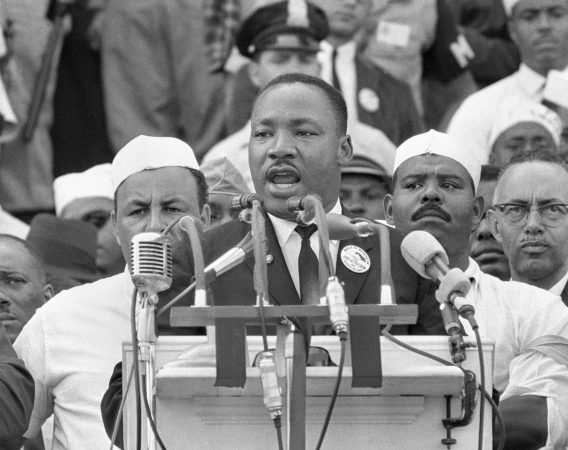
On June 21, 1966, Reed was standing behind Martin Luther King Jr., who was surrounded by about 300 hostile white people in Philadelphia, Miss. King had led a delegation from the Meredith March Against Fear to commemorate the second anniversary of the killings of the civil rights activists James Chaney, Andrew Goodman and Mickey Schwerner.
King was trying to navigate a rocky path full of obstacles: the threats of southern racists, a frayed alliance with President Lyndon B. Johnson and dissent within the civil rights movement.
His response showcased his greatest gifts — and his actions on June 21 painted a nuanced picture of what made King so influential. Much of our historical memory of the civil rights leader deifies him, a marker of the nation’s racial progress. It also, however, dramatically oversimplifies the man and the movement he helped lead. It cloaks the divisions within the civil rights movement, along with King’s struggle to harness different factions and tactics toward his goals.
The enshrinement of King also prevents Americans from seeing just how he married the ideals of American democracy with the righteous struggles of Black Americans. It eludes how he exhibited both spiritual power and political acumen. Looking at King’s actions during the Meredith March, by contrast, spotlights three of his most important roles in the civil rights movement: as an icon of moral courage, as a lodestone for Black activism and as an architect of sustainable ideals for a social justice movement.
All of these qualities were on display on the extraordinary day of June 21, 1966.
The Meredith March began on June 5 with one man, James Meredith, who had planned to walk from Memphis to Jackson, encouraging voter registration. On the second day, he got shot, and though he survived, the major civil rights organizations transformed his quest into a mass march.
By the time King gathered with the activists in Mississippi two weeks later, the big story was Black Power. On June 16, Stokely Carmichael introduced the new slogan as a message of self-determination. It implicitly criticized King’s bedrock values of nonviolence and racial integration.
On the morning of June 21, King met the marchers at a Black church — and he looked scared, with good reason. Philadelphia, in west-central Mississippi, was off the main route of the march. Instead of protection from the state police, the marchers were under the jurisdiction of Cecil Price, the deputy sheriff at the center of the federal conspiracy trial the three civil rights activists’ killing.
During their procession to Philadelphia’s town square, the marchers were jeered, spat upon and sprayed with hoses. The air was thick with danger.
Surrounded by his flock and his foes, King steeled himself. “I am not afraid of any man,” he proclaimed. “We are going to work together for freedom. We are here to save America.”
Despite the hostile crowd, King didn’t duck the heinous violence that the march was commemorating. He remembered the movement’s martyrs. “I believe in my heart that the murderers are somewhere around me,” he intoned.
“They’re right behind you!” shouted a white boy. The mob hooted. Price smirked.
As the activists left, the mob tossed eggs, rocks and bottles. Scuffles broke out. The marchers reached the Black district just before some white toughs arrived, brandishing knives, wrenches and ax handles.
Made By History sponsors. FOR USE ON MADE BY HISTORY STORIES ONLY.Inquirer Staff
Confronted by murderous hatred, he was a model of resolve and principle. His fortitude reassured his fellow marchers and it projected the movement’s integrity to the broader public.
After his speech in Philadelphia, King boarded a tiny, twin-engine plane for Sunflower County, in the Mississippi Delta, to speak at a voter registration rally.
“It was like a messiah walking through the community,” recalled local organizer Charles McLaurin. Alongside the legendary Fannie Lou Hamer, McLaurin had led a 10-mile march from the town of Sunflower to the county courthouse in Indianola.
There, King revealed his magnetic power. Wherever he went, Black folks followed. Because he was in Indianola, over 300 people attended the rally. As was the case throughout King’s life, his reputation attracted a big turnout and his charisma compelled political participation. More than any other figure, he drew people into the southern civil rights movement.
King’s day was not yet done. He got back on the plane, headed for Yazoo City, on the southern edge of the Delta, where the Meredith Marchers had stopped for the night.
King arrived for a nighttime rally in a public park. Radical activists gave speeches promising bloody retaliation if white people attacked them again. They won roars from the large crowd. Black Power, with its vows for self-defense and independence, struck emotional chords that exposed the widening fault lines in the movement.
Yet, even as the crowd cheered the rhetoric of Black militants, it reserved its greatest adoration for King. To reach the podium, he waded through the masses. Old ladies jostled each other to touch him, while weathered farmers pressed their palms into his.
And as this tumultuous, grueling day turned into a sweaty, bug-filled night, King painted a vision for the movement. He understood the need for Black political power. He acknowledged that Mississippi was afflicted by oppression. But segregation and violence were plagues on everyone, Black and white. To survive, to thrive, Black people needed a “coalition of conscience.”
“Now,” he said, “I’m ready to die myself.” In his classic style, he weaved together the rhythms of the pulpit with the ideals of American democracy.
“When I die I’m going to die for something, and at that moment, I guess, it will be necessary, but I’m trying to say something to you, my friends, that I hope we will all gain tonight, and that is that we have a power.” He recalled the movement’s great triumphs and celebrated their destiny to redeem the nation. In the process, he touched people’s souls.
By insisting on his ideals, and by summoning his greatest oratorical powers, King maintained his slippery grasp on the march’s message. In its final days, the Meredith March encountered more violence, including a tear gas attack in the town of Canton. Yet amid the cries of Black Power, the marchers maintained the discipline of nonviolence. They arrived in the capital city of Jackson for the largest civil rights demonstration in the history of Mississippi, signaling the resonance of mass protest in the lives of Black Americans
On the Meredith March, King illustrated why his birthday is a federal holiday, a memorial in the National Mall’s Tidal Basin celebrates his legacy and nearly 1,000 streets bear his name. He was neither a saint nor the movement’s single leader. But he exhibited the qualities of leadership, in the service of forging a genuine democracy.
King demonstrated profound courage, setting a meaningful example. He pulled followers into his orbit, articulating principles that resonated with people. And he insisted that a crusade for justice demanded the best of its advocates, investing their cause with the deepest meaning.
Throughout his glorious and tragic journey with the civil rights movement, King shared these blessings. Sometimes he did it all on one single day.
Made by History takes readers beyond the headlines with articles written and edited by professional historians. Opinions expressed do not necessarily reflect the views of The Inquirer.
President Donald Trump’s administration sued Philadelphia and some of its top officials Thursday over a new ordinance that bars law enforcement officers from concealing their identities and effectively bans federal immigration agents from wearing masks.
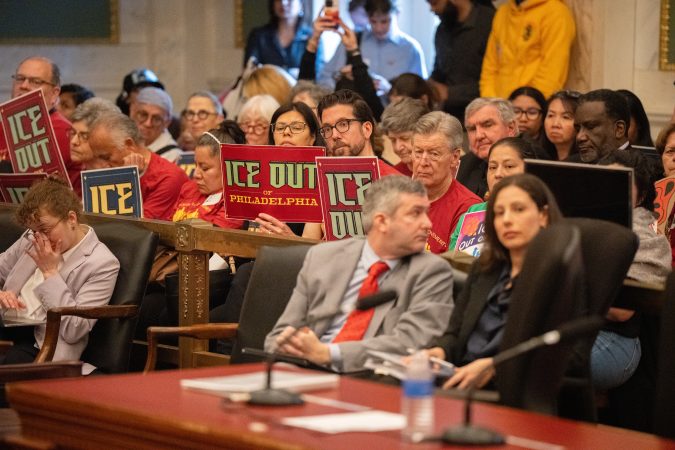
The law, part of City Council’s recently adopted “ICE Out” package of legislation imposing some of the nation’s toughest local restrictions on immigration agents, is “blatantly unconstitutional,” the lawsuit said.
“Such an ordinance also undermines the principles of federalism that underlie our entire constitutional order by seeking to prevent effective federal law enforcement within Philadelphia,” according to the complaint.
The ordinance makes it a crime for any law enforcement officer, including Immigration and Customs Enforcement agents, to wear face coverings or conceal personal identifiers like badges and nameplates while carrying out their official duties in the city, and it requires officers to identify themselves. It also prohibits the use of unmarked vehicles.
The bill includes exceptions allowing officers to wear masks in certain circumstances, such as medical emergencies or SWAT operations.
An officerwho violates the ordinance could be prosecuted, and risks up to 90 days in jail plus a fine.
The suit, filed in the Eastern District of Pennsylvania, names as defendants the city, Mayor Cherelle L. Parker, District Attorney Larry Krasner, and City Solicitor Renee Garcia. It asks a federal judge to find the bills unconstitutional, warning that federal agents could suffer irreparable harm if the policy remains in place.
“Protecting officers’ personal identities is particularly important during high-risk enforcement operations involving individuals with violent criminal history, gang affiliations, transnational criminal organizations, and known or suspected terrorists,” the suit says.
The lawsuit marks the Trump administration’s most significant action targeting Philadelphia’s immigrant-friendly policies to date.
“Today we regrettably had to sue the birthplace of this great Nation,” Associate Attorney General Stanley Woodward said in a statement. “But we will not sit by while Philadelphia flagrantly violates our Constitution, seeking to criminally punish our Nation’s law enforcement heroes merely for doing their job.”
Philadelphia has long been known as a sanctuary city primarily because it does not comply with ICE-issued detainers, in which federal agents ask local jails to facilitate the arrest of undocumented immigrants in their custody.
But Parker has largely avoided direct confrontation with the White House over the issue, a reversal from the combative stance of her predecessor, former Mayor Jim Kenney.
Parker’s supporters credit her with careful, crafty management of the city’s relationship with Trump, noting Philadelphia has been spared from the surges of federal agents the president has sent to other cities. But immigration advocates say Parker has backed away from a fight at a time when strong action is most needed.
The tension surfaced when Parker decided to let the mask bill became law without her signature, after Garcia warned the mayor that the provisions might not be legally enforceable.
Council members, however, wanted to take a more proactive stance against Trump’s nationwide deportation campaign. And they seem to have gotten his attention.
Councilmember Kendra Brooks, who coauthored the “ICE Out” package, said she “will not back down from this fight.”
“Philadelphia doesn’t like bullies. And we certainly don’t like masked PPD officers or ICE agents terrorizing our neighbors,” Brooks said in a statement. “The people of this city expected our leaders to fight back against Trump’s invasion. That’s what we did when we passed ICE Out.”
Brooks noted that the lawsuit cites the Parker administration’s publicly aired concerns about the bill, and said other jurisdictions targeted by Trump after they passed legislation restraining ICE have not had to deal with that dynamic.
“Other lawsuits aren’t dealing with the City’s own words about the laws being used against them,” Brooks said.
The Parker administration declined to comment.
The Pennsylvania Immigration Coalition condemned the lawsuit as a political effort to undermine local policies that keep families safe, strengthen public trust, and ensure city resources serve Philadelphians.
“Once again the Trump administration is using the courts to wage a political campaign against immigrant communities, instead of addressing the real needs of our country,” coalition executive director Jasmine Rivera said in a statement. “Pennsylvanians have been clear, they do not want more immigration enforcement and detention centers, they want affordable education, healthcare, and housing.”
Councilmember Rue Landau, the legislation’s other coauthor, criticized Trump for “targeting Philadelphia because our city dared to stand up and say that masked federal agents should not be able to operate in our communities and target our vulnerable neighbors without accountability.”
‘We will arrest you’
In addition to banning officers from concealing their identities, the “ICE Out” package, which in April passed Council with a veto-proof supermajority, prohibits federal immigration agencies from staging raids on city-owned property, bans discrimination on the basis of citizenship status, and prohibits the city from engaging in most forms of information-sharing with ICE.
The legislation also codified some of Philadelphia’s long-standing sanctuary city policies that had been established only through executive order — most notably a ban on city jails honoring ICE detainers not accompanied by judicial warrants.
Parker did not sign the bill after Garcia expressed concern about the ban’s “significant legal and operational challenges,” the suit notes. The mayor’s signature would signal the Parker administration’s intent to enforce the requirement, the solicitor said, and would send an inaccurate signal that the prohibition was enforceable.
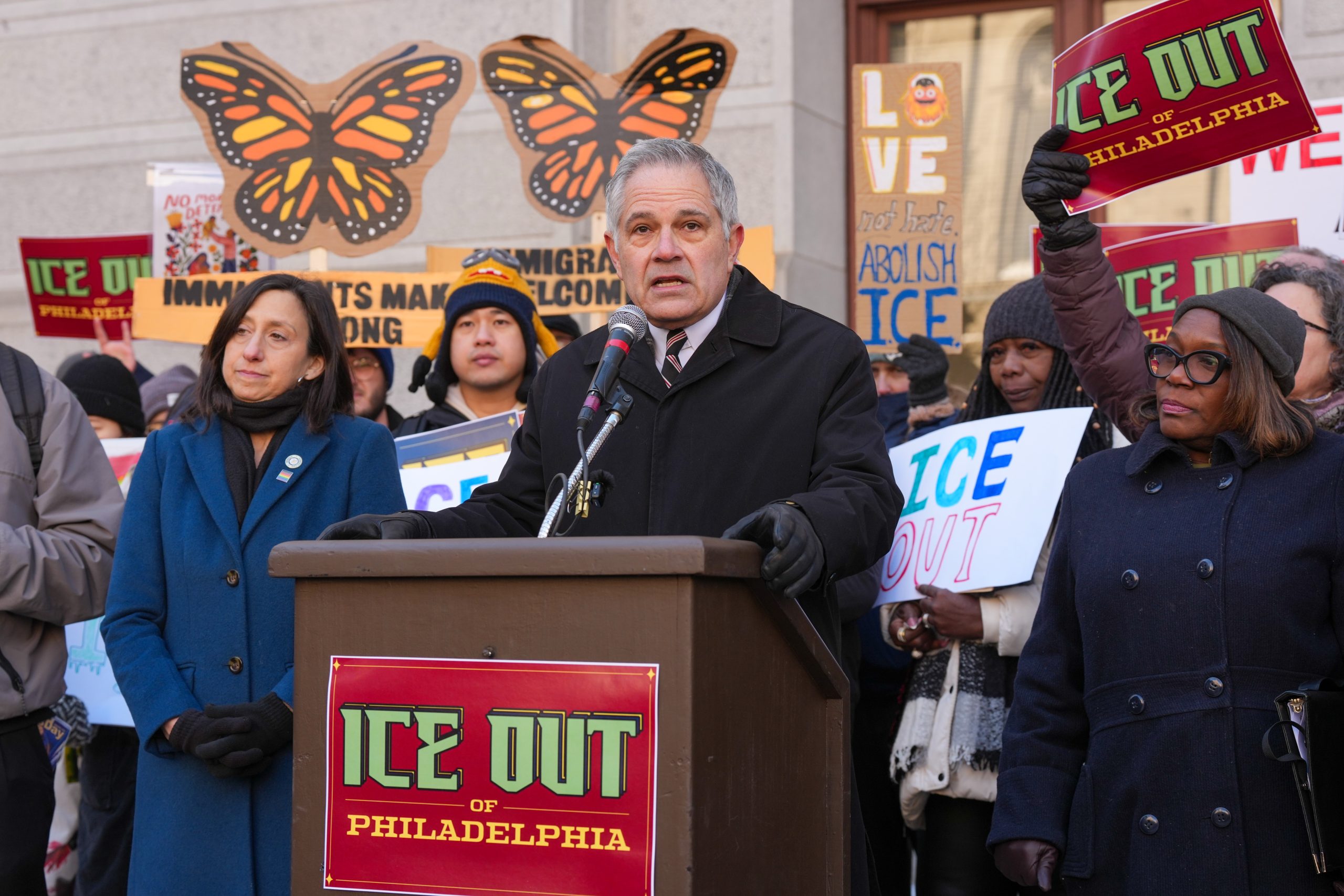
While Parker might have attempted to distance herself from the requirement by not signing the bill, the lawsuit quotes Krasner threatening federal agents with prosecution.
“We will arrest you. We will put handcuffs on you. We will close those cuffs. We will put you in a cell,” Krasner said in January. “We will do everything in our power to convict you and we will make sure you serve your entire sentence because Donald Trump has no power whatsoever to pardon you.”
Larry Krasner shown here during a press conference at City Hall to announce a package of bills aimed at pushing back against ICE enforcement in Philadelphia, January 27, 2026.Jessica Griffin / Staff Photographer
Philly case could have national stakes
The complaint makes clear that by bringing this lawsuit, the Department of Justice is not closing the door on challenges to other ICE Out ordinances.
Around the country, more and more Democratic-led communities are attempting to regulate what ICE can and cannot do within their jurisdictions. And doing so with the support of immigrant communities.
“In all the ways that ICE agents terrorize and violate the rights of our community, masked kidnappings are ones we consistently see and hear about,” said Erika Guadalupe Núñez, executive director of Juntos, the South- Philadelphia-based immigrant advocacy organization.
She said, however, that “we’re part of a strong local movement organized to fight back, and we all embody the spirit of this city, we will not back down easily.”
In March, the Montgomery County Board of Commissioners passed a resolution that restricted the agency from using county property or resources for civil investigations.
Issues around masks and identification have been particularly contentious.
Activists in Philadelphia and elsewhere say ICE arrests often look like kidnappings or muggings, where men in ordinary clothes, with no visible identification, suddenly descend on their target. The people being arrested may think they are being attacked by criminals.
Several states, including New Jersey and New York, have passed laws to ban law enforcement officers, including ICE, from wearing facial coverings while on duty.
In April, the U.S. Court of Appeals for the Ninth Circuit upheld a lower court’s injunction on a California law that required federal agents to “visibly display identification.” The unanimous three-judge panel ruled that the requirement violated the Constitution’s supremacy clause, which bars the states from regulating federal government activities.
New Jersey Gov. Mikie Sherrill signed bills in March that essentially banned ICE agents and police from wearing masks on the job, drawing pushback from Republican lawmakers. The Trump administration sued New Jersey in federal court in April, and the New Jersey Monitor and others reported that ICE agents continued to cover their faces during recent clashes with demonstrators outside the Delaney Hall immigrant detention center in Newark.
The Trump administration says federal immigration officers wear face coverings to protect themselves and their families from anti-ICE activists who may seek to identify and harm them. Assaults and death threats are on the rise, the administration said.
WASHINGTON — Republican leaders on Capitol Hill, including top national security figures, were voicing strong reservations Thursday — and some outright condemnation — of the Trump administration’s agreement to end the fighting in Iran.
The memorandum of understanding signed by President Donald Trump started a 60-day negotiating clock to reach a final deal on the future of Iran’s nuclear program. While Trump allies noted the agreement is not final, the lifting of economic sanctions on Iran’s sale of oil and the plan for a $300 billion fund to rebuild Iran and its economy were met with criticism from Republican leaders and conservative influencers, including some close Trump supporters.
“President Trump has pursued peace through strength. I hope the intermediaries working on this deal are not undermining that objective,” said Mississippi Sen. Roger Wicker, the chairperson of the Senate Armed Services Committee, who has urged Trump to keep up the pressure on Iran and last month warned against striking a bad deal.
“The $300 billion fund for the reconstruction and economic development of Iran — though not funded by U.S. taxpayers — would make Iran’s payoff under President Obama’s 2015 deal look like a pittance by comparison,” Wicker said, referring to the Democratic administration’s Iran agreement that Trump withdrew from during his first term.
The criticism from within Trump’s own party — though hardly unanimous — comes as he is trying to bring an end to the unpopular war fewer than five months from midterm elections, where Republicans are facing headwinds in their effort to hold their narrow majorities.
Trump calls his critics “fools”
Wicker’s points were backed by a number of his colleagues, many of whom supported the war when it began.
“History demonstrates giving billions of dollars to the theocratic lunatics who want to kill you is an exceptionally bad idea,” said Texas Sen. Ted Cruz, a staunch supporter of the war. “And so I hope we don’t do that.”
Trump on Truth Social called his critics “fools” and said the $300 billion payment to Iran by the United States is “fake news.” The interim pact promises a $300 billion fund for postwar reconstruction. It’s not clear where that money will come from — but Trump said, as Wicker noted, the U.S. would not contribute.
“All there is for the U.S. is Success, Lower Oil Prices, and Victory,” he posted.
Some senators question financial provisions
As the memorandum was released to Congress on Thursday, several Republican senators said it left them with questions, many of them about its financial provisions.
Majority Leader John Thune and fellow South Dakota Sen. Mike Rounds were seeking clarity on how financial incentives to Iran and conditions barring funding terrorism would be enforced, because “right now, a lot of money’s going to go to Iran,” Rounds said.
To be sure, there were Republicans more closely aligned with Trump’s America First policies in the Senate and elsewhere who were giving him the benefit of the doubt.
Sen. Roger Marshall stressed the point in the memorandum that supporters say gives the U.S. the upper hand. In a social media post, the Kansas Republican said one of the most important provisions “lays out a key commitment that strengthens regional security and ensures that Iran can never have a nuclear weapon.”
Louisiana GOP Senate candidate John Fleming, who has focused on Trump’s most loyal supporters ahead of a June 27 Republican primary runoff, said that means Trump has suggested that the U.S. will strike Iran again if it does not live up to the agreement.
“The criticism may be worthy if there isn’t follow-through,” Fleming said. “He’s using the speak-softly-and-carry-a-big-stick in offering them plenty of help, but at the same time he’s got that stick ready if they don’t live up to their agreements.”
MAGA voices send a warning
Still, some of Trump’s strongest supporters in conservative media have warned against the agreement.
Conservative radio host Mark Levin suggested a strategic rethinking to hold off on an agreement with Iran until after the midterms.
“We should consider slow-walking the enemy, building up our munitions, our oil reserves, get the price of gasoline down, get through the midterms, then knock them out,” he said in a social media post. Instead, the U.S. seemed to be “rushing to a deal, building up their oil industry” and agreeing to governments “transferring billions to them.”
Right-wing social media influencer Laura Loomer, who has long supported Trump while also promoting conspiracy theories, was more pointed in her criticism.
“Who is giving the President tainted, pro-Islamic intel?” she posted on X.
What all the critics shared is an abiding distrust of the Iranian regime, no matter their relationship to Trump.
“It does smack of the kind of appeasement,” said former Vice President Mike Pence, whose relationship with Trump was fractured after the Jan. 6, 2021, attack on the U.S. Capitol. “Bottom line. I don’t trust the Iranians.”
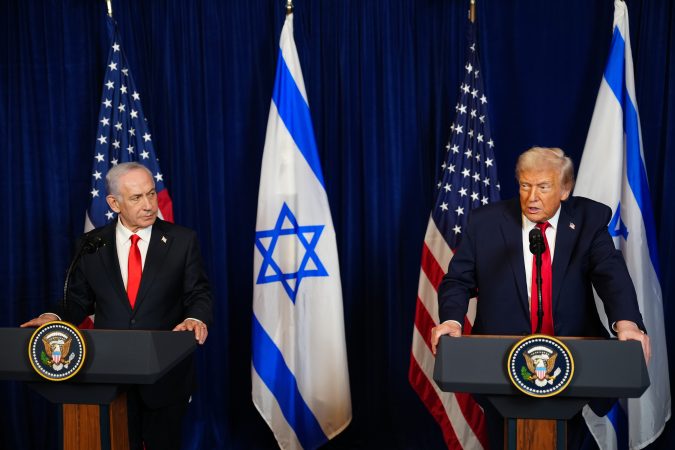
JERUSALEM — Israel awoke to a frightening new reality Thursday as it absorbed, with disbelief and largely in silence, the terms of President Donald Trump’s preliminary agreement to end the war with Iran.
It accomplishes none of Israel’s war aims, analysts and officials said, and arguably leaves the country in worse shape on each of them.
Regime change? The government in Tehran is emerging from the war even more hard-line and emboldened, despite being decapitated at the outset of the conflict in late February. The deal’s requirement that U.S. forces retreat from the “proximity” of Iran within 30 days means that Iran can boast that it has chased the U.S. military out of the region.
Ballistic missiles and proxy militias? The agreement does nothing to address Iran’s missile arsenal or its support of Israel’s enemies, like Hezbollah in Lebanon and the Houthis in Yemen.
Worse still for Israel, by constraining its military in Lebanon — indeed, by requiring that Israel withdraw its forces from that country — the agreement seeks to handcuff Israel in a way that it was not limited before the war.
The hundreds of billions of dollars that Iran may receive in sanctions relief, unfrozen assets, or reconstruction aid could wind up funding more missiles in Iran and aiding Iran’s militia allies around the Middle East.
And Iran’s nuclear program? The existential threat to Israel that Prime Minister Benjamin Netanyahu of Israel has tried to eliminate throughout his career, and which was Trump’s primary reason for joining the wars on Iran, was left for a later stage of U.S.-Iran negotiations.
“It’s a bad agreement in which the Americans are paying with cash, and got, at the maximum, a letter of intent,” Yaakov Amidror, a hawkish former national security adviser to Prime Minister Benjamin Netanyahu of Israel, said in an interview.
David Horovitz, the editor of the Times of Israel, called it “a catastrophic capitulation,” in the headline of a fiery opinion column.
And Nir Dvori, an analyst for Israel’s Channel 12 News, likened the deal to a “diplomatic Oct. 7” — a cataclysmic disaster for which Israel was wholly unprepared.
Netanyahu and top officials in his government offered no public comment on the agreement overnight, leaving minor ministers and backbench lawmakers to put the best possible face on it.
Amichai Chikli, the diaspora affairs minister, speculated in a radio interview that Netanyahu would know how to say no to Trump about pulling out of Lebanon just as he knew how “to bring the United States into this war.”
But others more soberly grappled with the degree to which Netanyahu’s triumphalist rhetoric from early in the war had proved fantastical. He had repeatedly and confidently assured Israelis that the country and its alliance with the United States were “changing the face of the Middle East” to Israel’s advantage.
“We are remaking the region,” Chuck Freilich, a former Israeli deputy national security adviser, said on Thursday.
“Iran came out stronger, and I believe is now the regional hegemon,” he added. “They stood up to the U.S., the global superpower. They can have missiles, and there’s nothing in the agreement about the nuclear issue except we’ll talk about it. This is an Iranian victory over the U.S. and Israel.”
Even as they reeled from the terms of the agreement, Israelis across the political spectrum seemed also to be reckoning with Trump, the nature of his support for Israel, and the degree to which Netanyahu has tied Israel’s fortunes to the American leader’s goodwill.
On Wednesday at the Group of 7 summit in France, the president had again spoken of Netanyahu with disdain, suggesting he was excitable and prone to overreacting to Hezbollah’s attacks. He belittled him publicly as the “very small partner” in the relationship and saying that Israel would have been annihilated if it had not been for him.
Trump suggested that Syria could do a better job than Israel of cracking down on Hezbollah in Lebanon without killing as many civilians. And he minimized the ballistic-missile threat from Iran — which forced millions of Israelis to run in and out of shelters throughout the war. He said it was only fair for Iran to have missiles because other countries in the region did as well.
The reactions in Israel evoked a bad divorce.
Hanoch Milwidsky, a lawmaker from Netanyahu’s Likud party, posted a video on social media of himself removing a red MAGA hat and replacing it with a blue one with the Hebrew words for “total victory.”
Ben-Dror Yemini, a columnist at Yediot Ahronot, Israel’s largest newspaper, wrote that Netanyahu had led Israel into “the most severe collapse in its history.”
“Trump reneged on every promise, turned Iran into a power, strengthened Hezbollah, and as a final flourish, gave Israel a kick and humiliation,” he wrote.
Dahlia Scheindlin, an American-born Israeli pollster, said it was “slowly sinking in” for Israelis that Netanyahu had staked the entire U.S.-Israeli relationship on his personal bond with a president prone to “temper tantrums” over “simple slights.”
“I think he was hoping that he could employ the tools that he has always employed with American presidents,” she said. “You know, tread carefully and strategically, but push the boundaries, and try to run circles around them if you can,” she added.
“I think that with a bit of a back-and-forth dance, it was largely working for him with Trump,” she said. “But he hit his limit.”