Category: High School Sports

  • Reese D’Ariano embraces role as youngest player on USA field hockey’s World Cup roster

    Reese D’Ariano embraces role as youngest player on USA field hockey’s World Cup roster

    Reese D’Ariano’s field hockey journey began at the swimming pool.

    The youngest of three children, Reese was always put into the same sports as her two older brothers. One day, when accompanying her mother, Jodie, and her middle brother Landon, to his swim practice, the mother of one of Reese’s friends mentioned a field hockey clinic being held at a nearby high school.

    Rather than staying to watch her brother swim, eight-year-old Reese picked up a field hockey stick.

    The following nine years of Reese’s career led her to representing the United States as a member of the women’s national team at the indoor and outdoor Pan American Cups, Indoor World Cups, Women’s junior World Cup, and the U18 and U16 National Teams for Four Nations Tournaments.

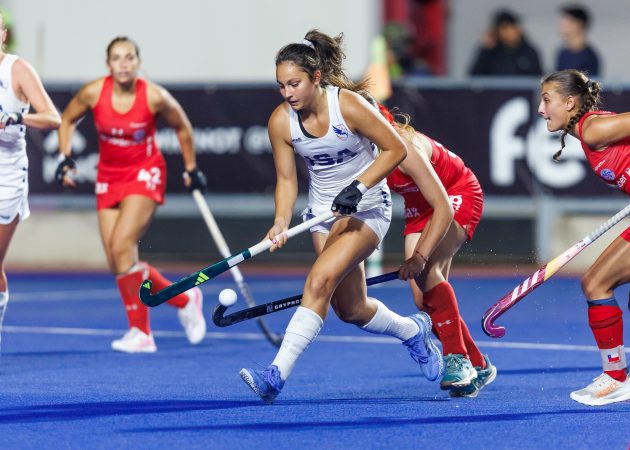
    Now, at 17 years old, the West Chester native is playing on her biggest stage yet. Reese will compete at the FIH Hockey World Cup in Belgium and the Netherlands from Aug. 14-30. Team USA will play its first game on Aug. 15 against Argentina.

    Reese is the youngest player to make the U.S. women’s national team. But before any accolades or national team appearances, her journey continued at the pool.

    While her brother was practicing, Reese and her mother would go to the multipurpose fields nearby to work on drills. Coming straight from school, she would carry her stick and a bag of balls with her, watching videos and analyzing the game.

    “Obviously, the progression was slow if you saw it day to day,” Reese said. “But as the weeks and months went on, it was a pretty drastic change in how I progressed.”

    Her progression eventually landed her a spot on the national team.

    The forward/midfielder noted that while it’s cool to acknowledge her role as the youngest player and the only high school student on the team in this tournament, she doesn’t think about it too much.

    “People have graduated from college, and I walked in, [a few] weeks ago, saying ‘I just got my license, guys, stay off the roads,’” Reese said. “Everything’s just really lighthearted about it because I’m just as an equal member of the team as anybody else.”
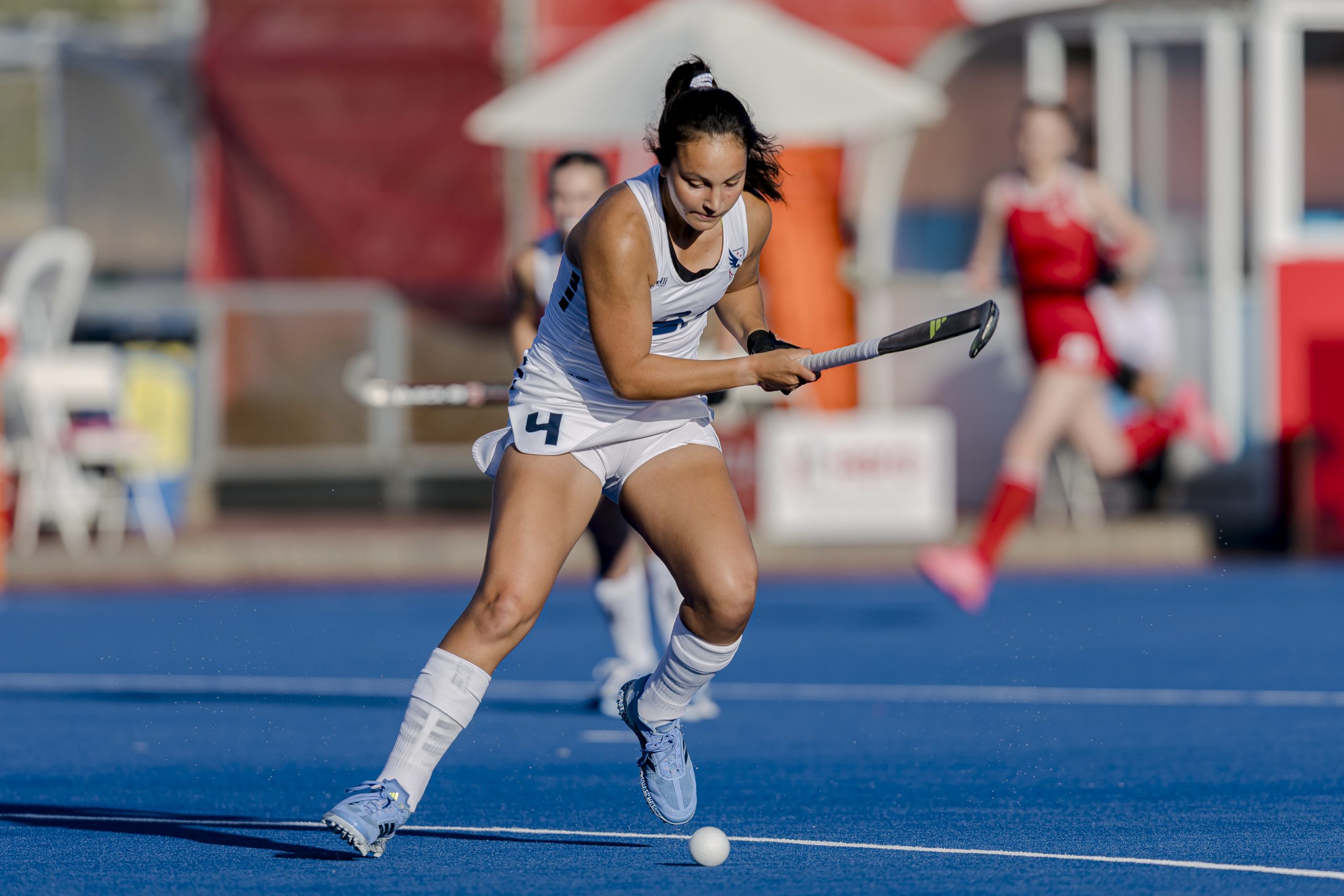
    Reese D’Ariano first stint with the U.S. national team came at age 12, when she played on the U16 team for a series against Canada in Vancouver.World Sport Pics / USA Field Hockey

    Playing alongside older teammates isn’t new for Reese, whose club career with the WC Eagles saw her playing with older age groups from the time she was 10. As one of the top field hockey clubs in the nation, the environment challenged her, Jodie said.

    “I’m not surprised by anything that she’s achieved,” Jodie said. “I always say she’s built differently.”

    An athlete herself, Jodie D’Ariano ran track at Stanford and her husband, Frank, played soccer at The College of New Jersey. Reese’s brother, Ryan, golfed at West Chester University and Landon swims at North Carolina State. Jodie said she has tried to match her kids’ efforts by giving them the best opportunities she could within their respective sports.

    Reese’s first big opportunity in field hockey came in 2022, when she was put on the U16 team at age 12 for a series against Canada in Vancouver. A year later, in 2023, she was 13 playing at the FIH Indoor Hockey World Cup in South America, where she earned the Junior Player of the Tournament Award.

    Currently enrolled at Pennsylvania Leadership Charter School, a cyberschool, Reese said she’s sacrificed the “normal” high school experience in favor of field hockey.

    Making the switch to cyberschool around eighth grade has given Reese the flexibility to train in the Netherlands in the fall. In turn, Jodie said field hockey has taken her and her family to incredible places, including Belgium in August, when she and her husband will travel to watch Reese play in the World Cup.

    “We try to get to everything that she’s in,” Jodie said. “It’s a small window of time that you get to see kids compete, so obviously, I want to take advantage of it.”

    With Team USA, Reese has played in 17 international matches as a member of the senior national team. She has won two gold medals, one at the 2025 Rohrmax Cup in Vienna, Austria, where she was the top goal scorer of the tournament, and another at the 2024 Indoor Pan American Cup in Calgary, Canada, where she was awarded the most valuable player of the tournament and top goal scorer.

    She earned two silver medals at the 2026 Junior Pan American Cup in Santiago, Chile, and the 2025 Pan American Cup in Montevideo, Uruguay. Her one bronze medal comes from the 2026 FIH Hockey Nations Cup in Auckland, New Zealand.

    But playing in a senior World Cup is a big step up, says Team USA head coach David Passmore.

    “The whole size and scale of the event is enormous,” Passmore said. “But I think the other thing is that we also need to not overexpect too much from her too soon. I don’t want to place any additional pressure than her own standards, [which] bring enough pressure on herself.”

    This year marks the first time since 2018 that the U.S. women’s national team qualified for the World Cup. Only two players on the roster have prior experience in the tournament. However, others have competed on the Olympic stage. Regardless of their previous background, Passmore expects each of the players to come away with a new experience.

    “When you come away from something, a big event like that, you understand the whole mental side of the game, the preparation, the need to also be relaxed, because being relaxed helps you make better decisions,” Passmore said. “[Reese] will bring that towards the rest of her career and hopefully it will help her in her career with the USA national team as well.”
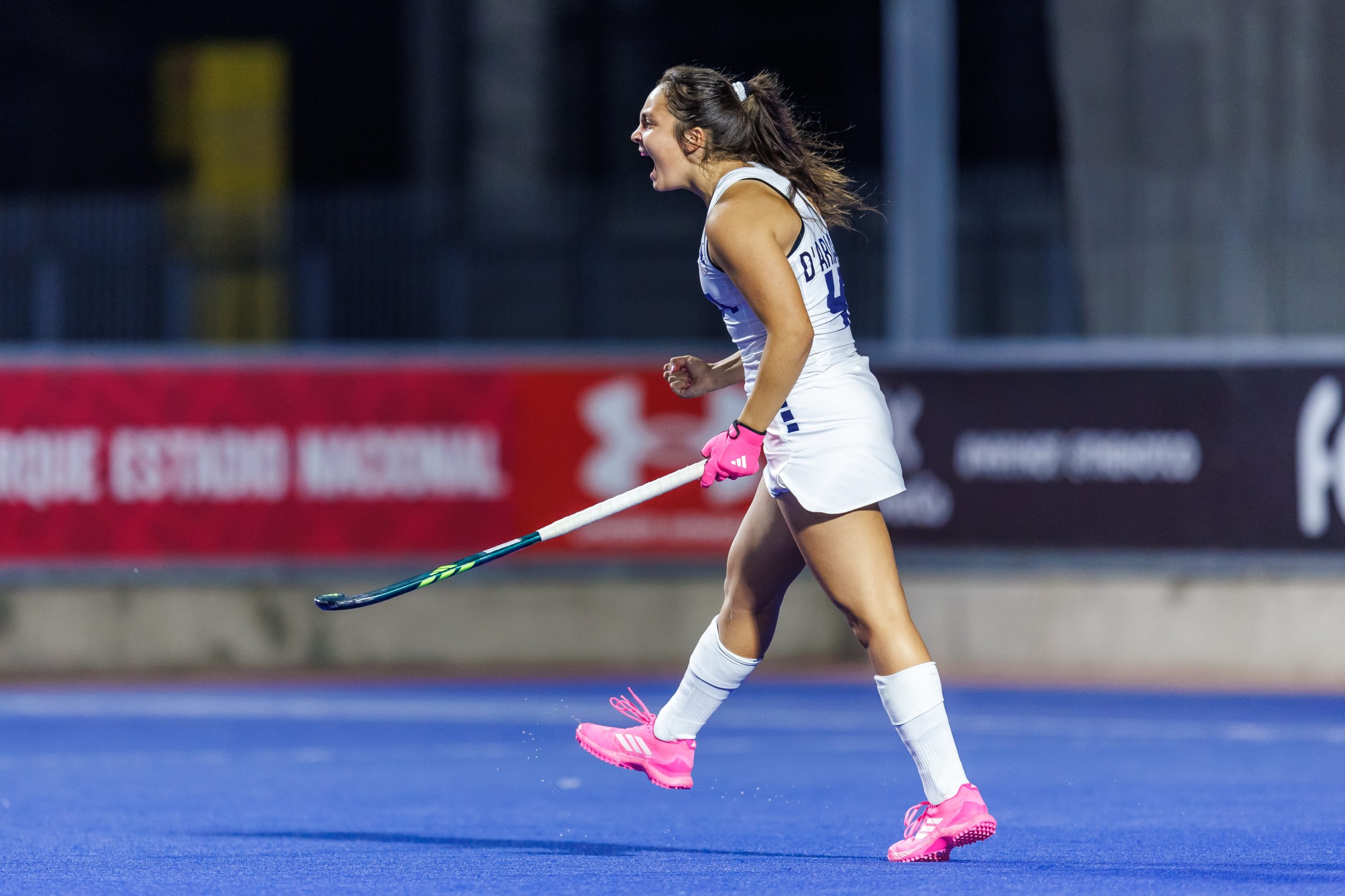
    Reese D’Ariano is committed to play field hockey at North Carolina under Chadds Ford native Erin Matson.World Sport Pics / USA Field Hockey

    As one of the top recruits for the class of 2027, Reese is committed to play for Chadds Ford native Erin Matson, head coach of the University of North Carolina in Chapel Hill.

    But first, she’s focused on competing in the World Cup, and then, finishing high school.

    “I just look at it as just another tournament, another opportunity to show what I’ve been working for, and what the team’s been working for,” Reese said. “Stepping on the field for the World Cup is a big deal, but I think having the experience that I have, I’m going to be much more calm and prepared for the moment.”
  • South Jersey was the latest stop on Steph and Ayesha Curry’s Underrated Golf Tour

    South Jersey was the latest stop on Steph and Ayesha Curry’s Underrated Golf Tour

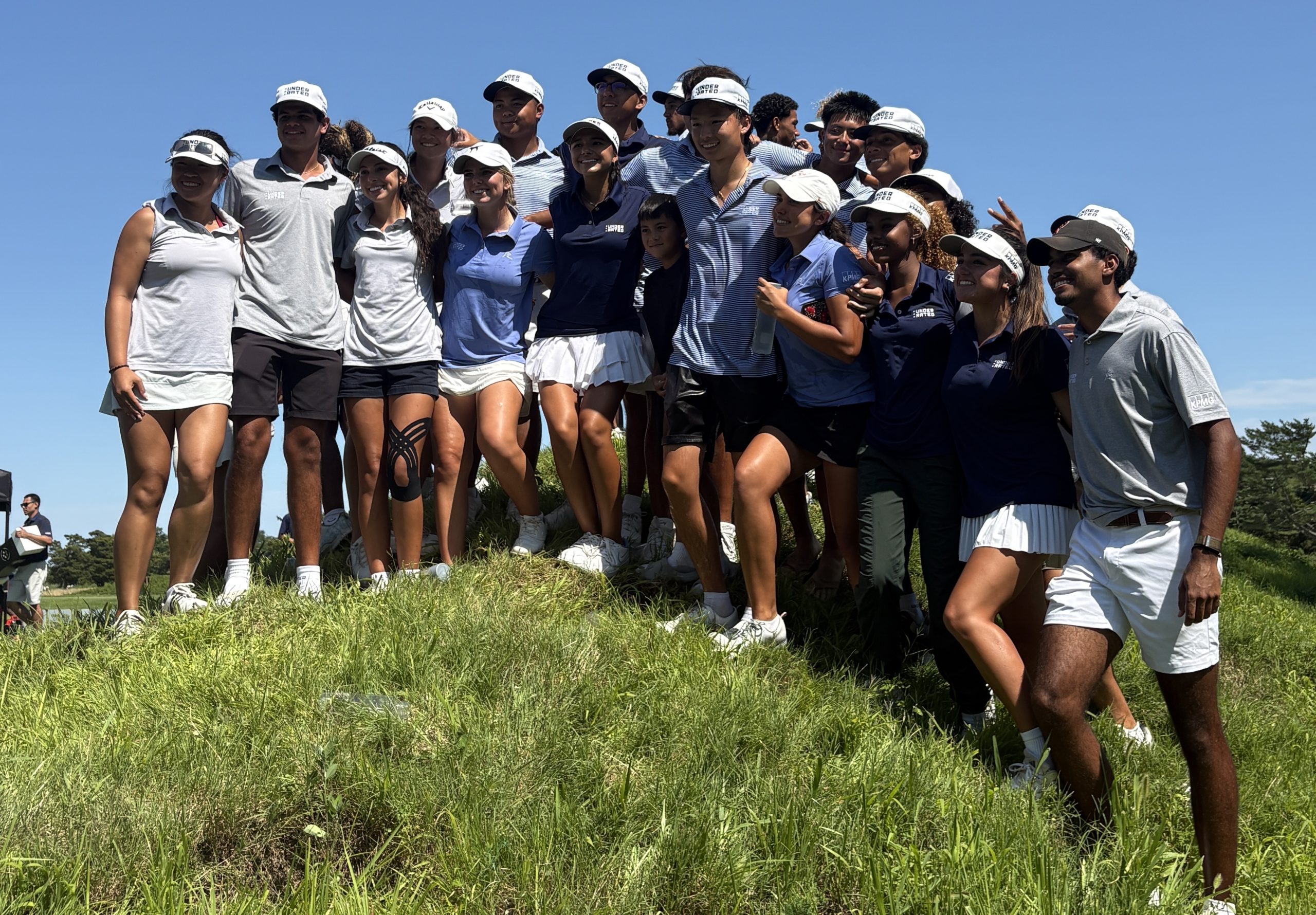
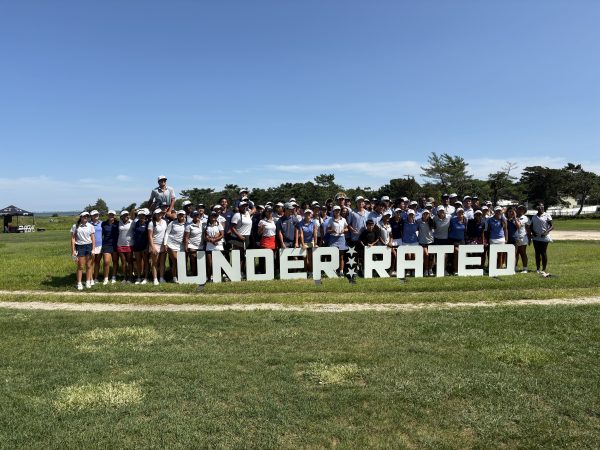
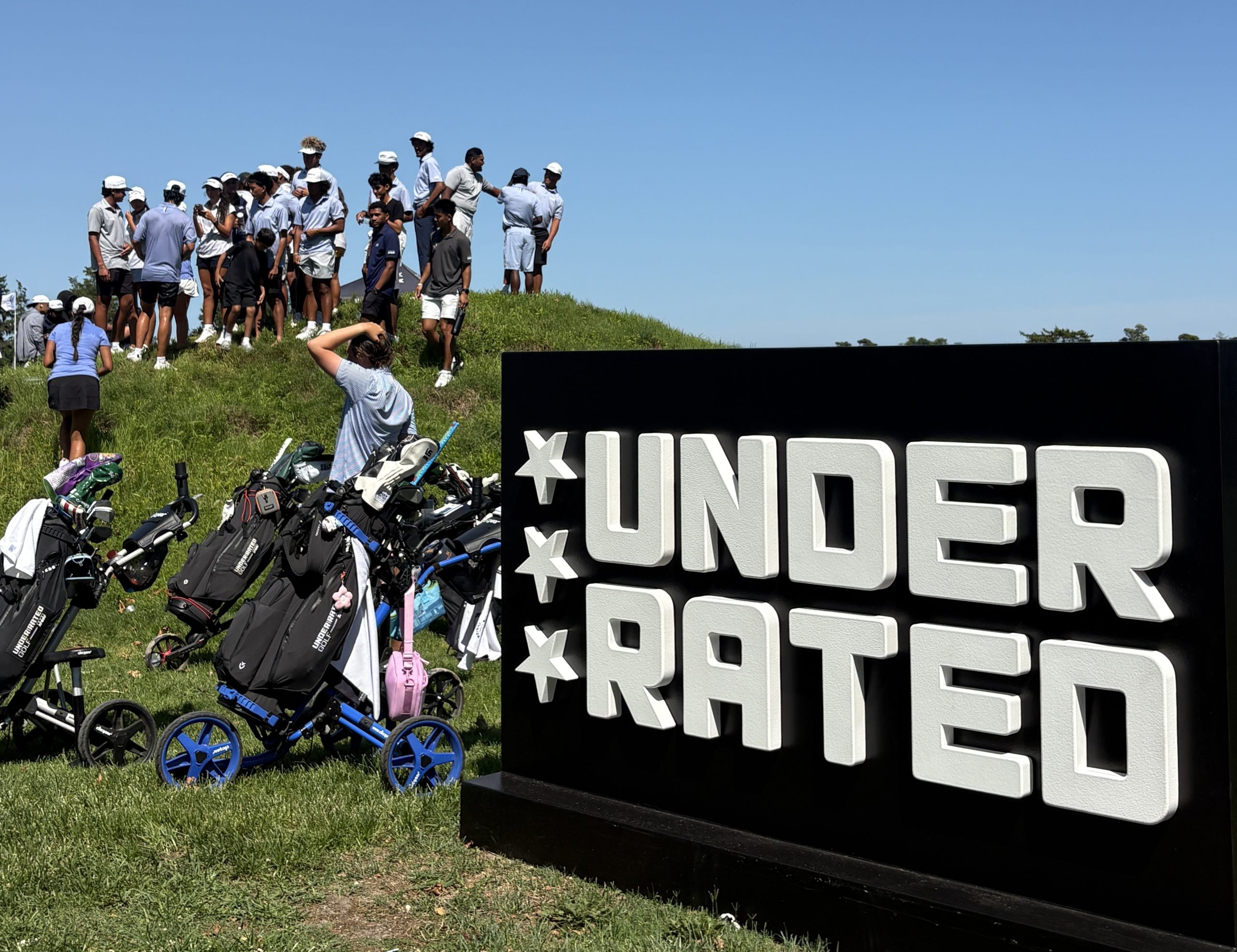
    The hills of the 18th hole at Seaview Golf Club in Galloway, N.J., were filled with young golfers clad in blue and gray golf shirts as the final strokes of this latest stop on the Underrated Golf Tour wrapped up Thursday.

    Underrated Golf, founded in 2022 by Steph and Ayesha Curry, is an organization focused on lowering the barrier of entry to golf for individuals across all backgrounds by offering more access to competitive opportunities.

    With its history as a sport that’s predominantly white, male, and typically played by the wealthy, Underrated’s pillars of equity, access, and opportunity offer experiences for young golfers “regardless of socio-economic status, personal adversity or characteristics protected by law such as ethnic background or gender,” according to its website.

    “You can’t be what you don’t see,” said former golfer and broadcaster Will Lowery, who has been involved with the organization since its inception. “So when you have young men and women who come from a different clubhouse, various backgrounds, that kid that is at home, desires to play golf, desires to compete in golf, they can see what’s happening in real time. They can get a sniff of what’s going on either via social media or come out here and be on the property, and that may want to inspire them to come out here and compete.”

    The number of golfers since 2022 when Underrated began has increased as the organization gains popularity, said Hampton Clark, Underrated’s athletics operations manager.

    Clark said that the Currys’ vision for Underrated and what it can do in the junior golf space “sold itself.” It’s become a tour once searching for golfers a few years ago, that today receives outreach from people who want to get involved.

    “It’s kind of been kind of cool to see all the interest from the kids and the families,” Clark said. “So, it’s really great to see we’re getting some great golfers, especially kind of the background that we’re looking for. And it’s been kind of great to see from year one to right now.”

    Underrated Golf offers experiences for young golfers “regardless of socioeconomic status, personal adversity or characteristics protected by law such as ethnic background or gender,” according to its website. Mia Messina / Staff

    Liam Eyer, from San Jose, Calif., has been part of the Underrated tours for four years. On Thursday, Eyer won his first tournament with the tour, going 6-under-par to secure the boys victory.

    Eyer, who struggled Wednesday, received a lesson and a few pointers from Lowry following the round, which helped his performance Thursday with advice that Eyer joked “changed [his] life.”

    Myra Tomer, from Newtown, also shot 6-under to secure the win on the girls side, in her first Underrated tournament.

    Tomer came in as a local qualifier, making her the second female golfer in Underrated to come in with that distinction and go on to win the tournament. She also qualified to play for the Curry Cup at Bethpage Black Golf Course in New York in September, and then the next and final stop of the tour in Los Angeles at Hillcrest Country Club. Tomer also received full status for the tour next year.

    “I grew up playing [Seaview’s course], I know it very well, and it was just so special to come and win here,” Tomer said. “It’s somewhere I came as a little kid and I dreamed one day I’m gonna win here.”

    The number of golfers who have taken part in the Underrated program has increased exponentially since it began in 2022. Mia Messina / Staff

    As a first-time golfer with Underrated, Tomer said everyone instantly made her feel included in what Tomer said was a “special week.” It also contributed to providing her tournament experience, which is part of Underrated’s mission.

    Lowery said that part of Curry’s vision includes helping golfers get 10,000 hours of tournament time so they can grow accustomed to playing competitively. It was a mission Lowery said he saw succeed during the three days Underrated was at Seaview.

    “I saw the kids have stick-to-itiveness,” Lowery said. “The course is not easy, the conditions aren’t easy, and these kids all said, ‘I played better today.’ ‘I had a rough first round or a first nine,’ and they came back, and that’s what it’s all about. Something they can leave and learn from something.”

  • From national champion to pro lacrosse star: Delco’s Andrew McMeekin excels beyond the faceoff

    From national champion to pro lacrosse star: Delco’s Andrew McMeekin excels beyond the faceoff

    At halftime of this year’s NCAA men’s lacrosse championship at Scott Stadium in Charlottesville, Va., the NCAA commemorated the 25th anniversary of Princeton’s national title team.

    As the current Tigers went into the locker room, the players from 2001, which was the last time Princeton won the title, greeted them with cheers and words of encouragement to finish the game strong.

    “It was pretty serendipitous,” said faceoff specialist and Delco native Andrew McMeekin.

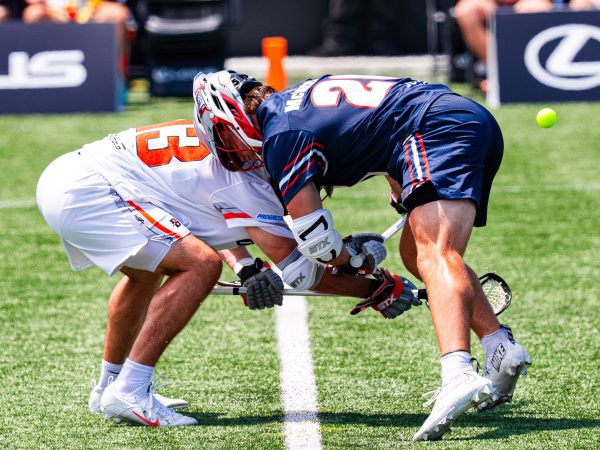
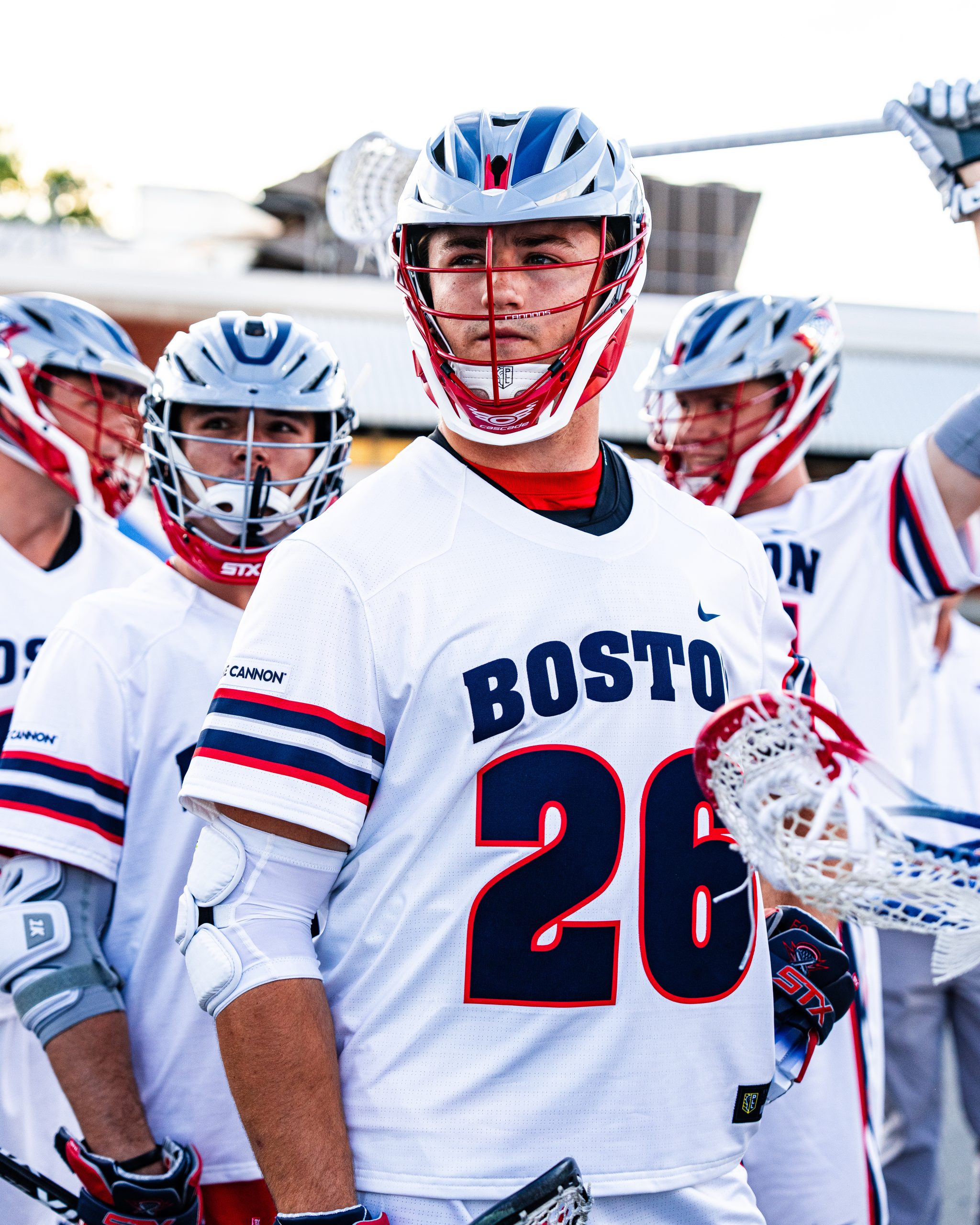
    The Tigers defeated Notre Dame, 16-9, on May 25 to claim the program’s seventh national title. Less than two months later, McMeekin is now making a name for himself in the Premier Lacrosse League with the Boston Cannons.

    McMeekin ranks third in the league in faceoff percentage (56.8%) and scored his first professional goal on July 11 in a 15-13 win over the Denver Outlaws.

    Playing at the next level

    Playing professional lacrosse was always McMeekin’s goal.

    He was coached by Chris Bates at Episcopal Academy. Bates was one of the original coaches during the PLL’s inaugural 2019 season. Once at Princeton, McMeekin watched the upperclassmen continue their careers professionally. Those personal ties with the league sparked a desire to reach the top of the sport.

    When the 2026 PLL college draft was held April 14, McMeekin wasn’t surprised that his name wasn’t called. Specialty players, like goalies and faceoff men, are rarely selected on draft night.

    Still, conversations with the Cannons coaches later that month assured him that his professional opportunity would come.

    Building a winning culture

    Before beginning his professional career, McMeekin had one final goal to accomplish at Princeton: Win a national championship.

    It was the culmination of a four-year journey to get there, McMeekin said.

    “It really did feel like a full four-year build,” he said. “Each year had its own story and our class in general took away the right things that we needed to take away after the seasons ended. It came together at the right time.”

    The group of 10 seniors, who lived together in a house off campus, met once or twice a week outside of practice to discuss how to set the standard, what being a good teammate looked like, and how they could improve as a group.

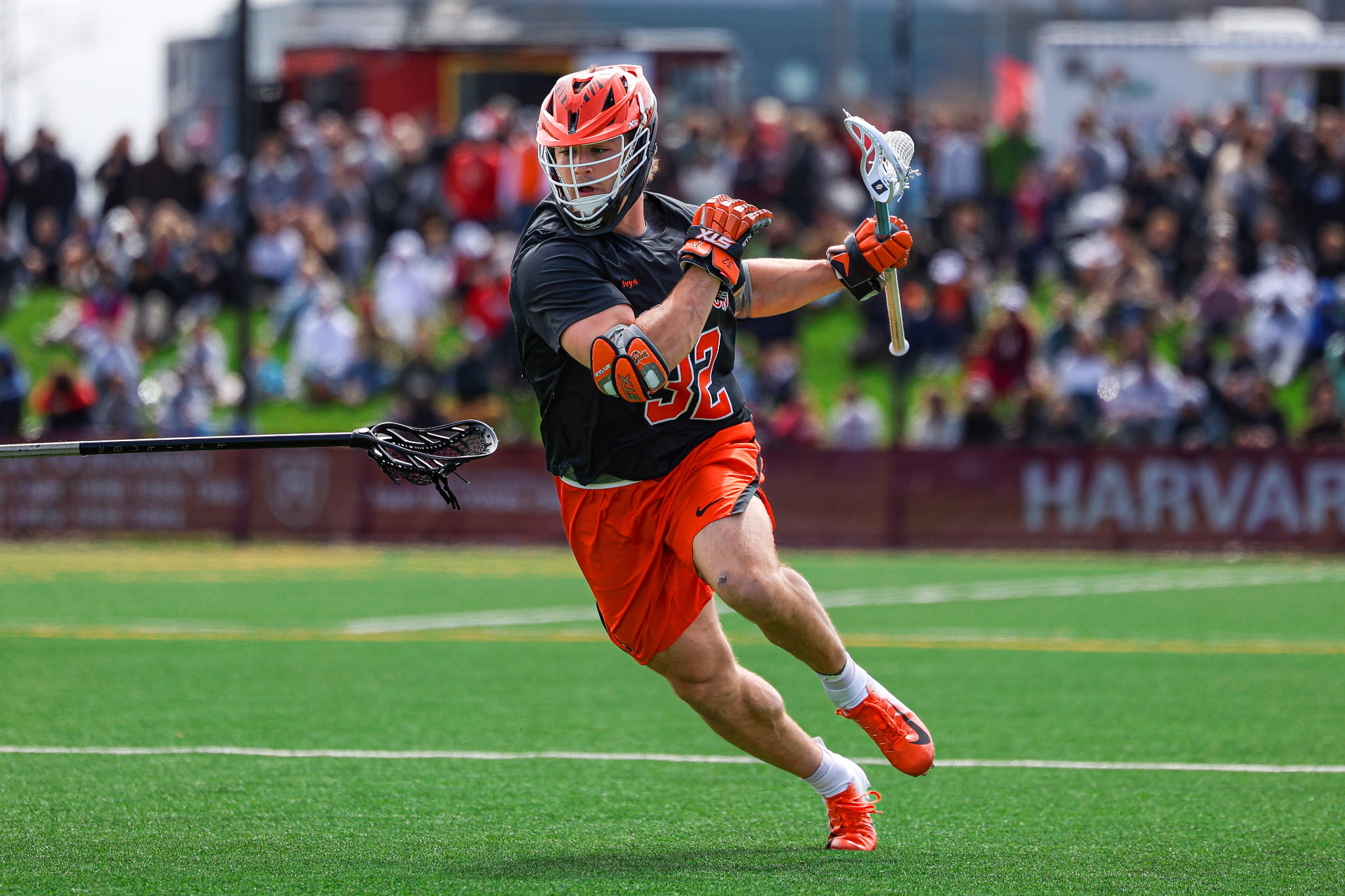
    Andrew McKeekin is Princeton’s career record holder for faceoff wins and groundballs.Courtesy of Camryn Ley

    “We learned to have honest and productive conversations early because we knew that it would benefit the team,” McMeekin said, “and since we, as a senior class, understood that, it trickled down from there.

    “All the guys really cared about was winning as a team, and that’s different from what I’ve seen from a lot of other teams. All the best teams in the country have extremely talented players, obviously, but I think the teams that are willing to sacrifice egos a bit and more just want to win as opposed to one guy having all the best stats — that’s what our team thrived on the most this year.”

    McMeekin left his impact on the Tigers lacrosse team. He’s the program’s career leader in faceoff wins (698) and ground balls (446), and he set the school’s single-season record this year for ground balls (145). He also finished 23rd in the nation in faceoff percentage (57.7%).

    Lacrosse player first

    Part of the success for McMeekin can be traced back to weekly four-hour round-trip drives to Cockeysville, Md.

    Since seventh grade, McMeekin has trained with Jeremy Rualo, founder of Inner Circle Lacrosse. Inner Circle is built around a simple philosophy: players should be lacrosse players first and faceoff specialists second.

    “I coach the position for the play, holistically,” Rualo said. “The play is to provide the ball in a possession to the offense. Two guys face off, yeah, but that isn’t decoupled from the midfield play that is about to happen.”

    Rualo, who works professionally in clinical genomics and next-generation sequencing, said faceoffs were never intended to be separated from midfield play.

    Andrew McMeekin is making a name for himself in the Premier Lacrosse League with the Boston Cannons.Premier Lacrosse League

    When he played lacrosse in high school and college, if a player took faceoffs, they were also expected to contribute as a midfielder. The specialization of the position developed later, eventually leading to the modern-day FOGO – “faceoff, get off.”

    Now, Rualo and McMeekin believe many young players specialize too early without developing the broader skills to become complete lacrosse players.

    “A lot of the time people look at faceoff as a very siloed and individual thing, but holistically it is a three-on-three with the wings and obviously very tied to possessions,” McMeekin said. “I take pride in making sure I have good plans for my wings and have a whole team view of the faceoff as opposed to just making it one-on-one the whole time.”

    Inner Circle emphasizes the entire play that happens after the whistle. Players train in game-like scenarios, learning not only how to win faceoffs, but also how to anticipate where the ball will go, compete for ground balls, and contribute as a midfielder.

    “Because of the way that we train, and the scale at which it is done and the holistic picture, what you get is the Inner Circlers are outstanding at midfield and that becomes this massive separator,” Rualo said. “No one else really does it, because they don’t think that way.”

    Developing complete lacrosse players is non-negotiable, Rualo added.

    “‘Why do you want to [stink] at lacrosse?’” he jokingly asks his players. “You should absolutely be a lacrosse player first.”

    McMeekin has carried this philosophy with him throughout high school and college. Now, he’s taking it to the next level.

    “The coaches are very adamant about me trying to take shots, and pushing transition while still being smart with my risk tolerance,” he said. “I’ve had a long leash in that sense to try and score and push the offense, so we are going to continue with that.”

  • The friendship of two longtime baseball coaches was shaped over decades in the Catholic League

    The friendship of two longtime baseball coaches was shaped over decades in the Catholic League

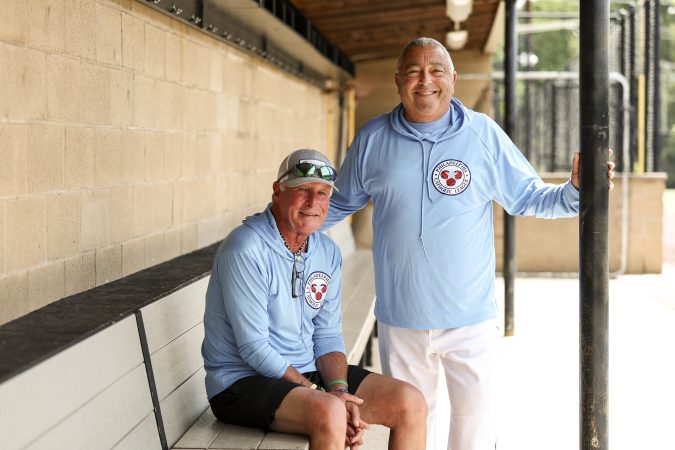
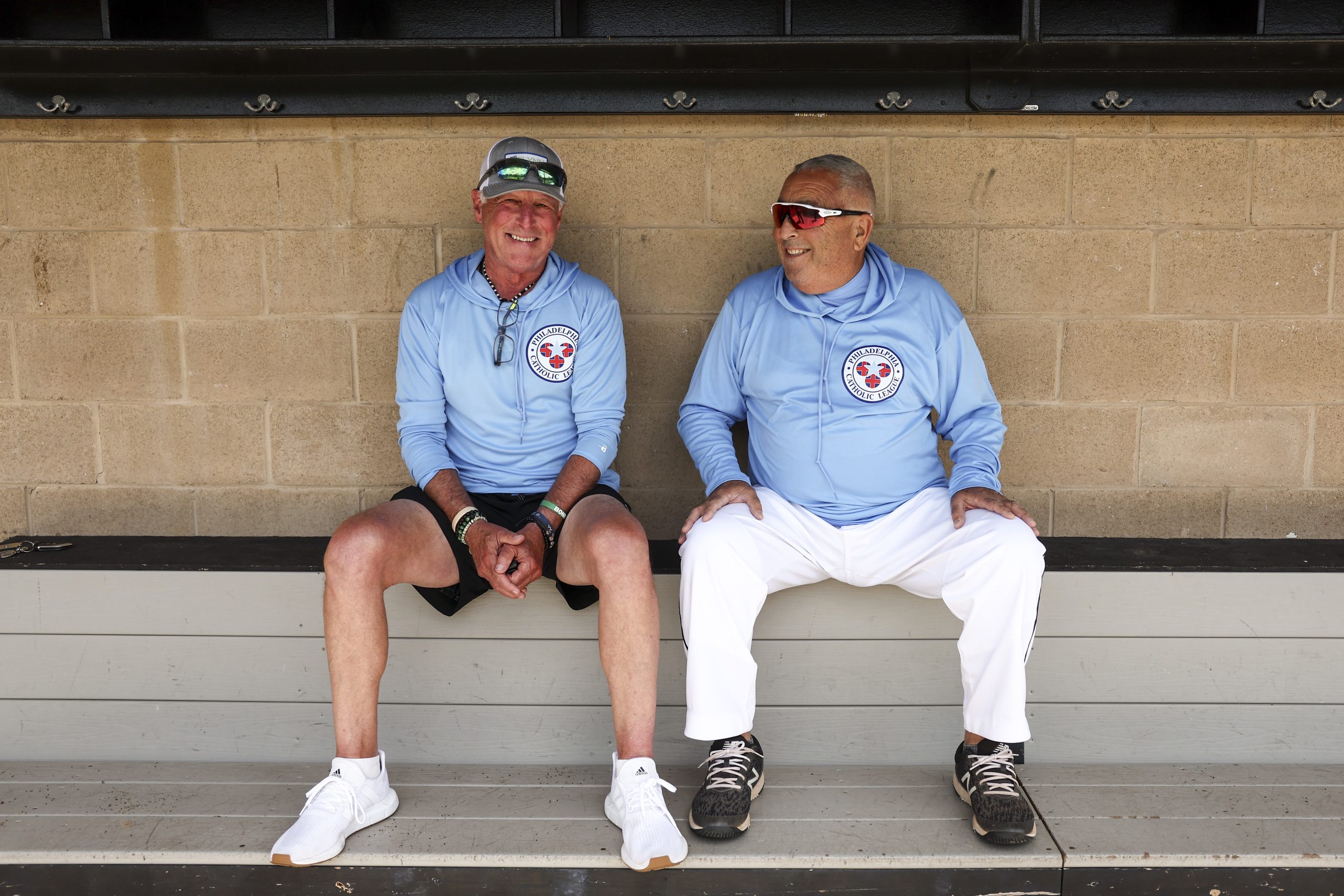
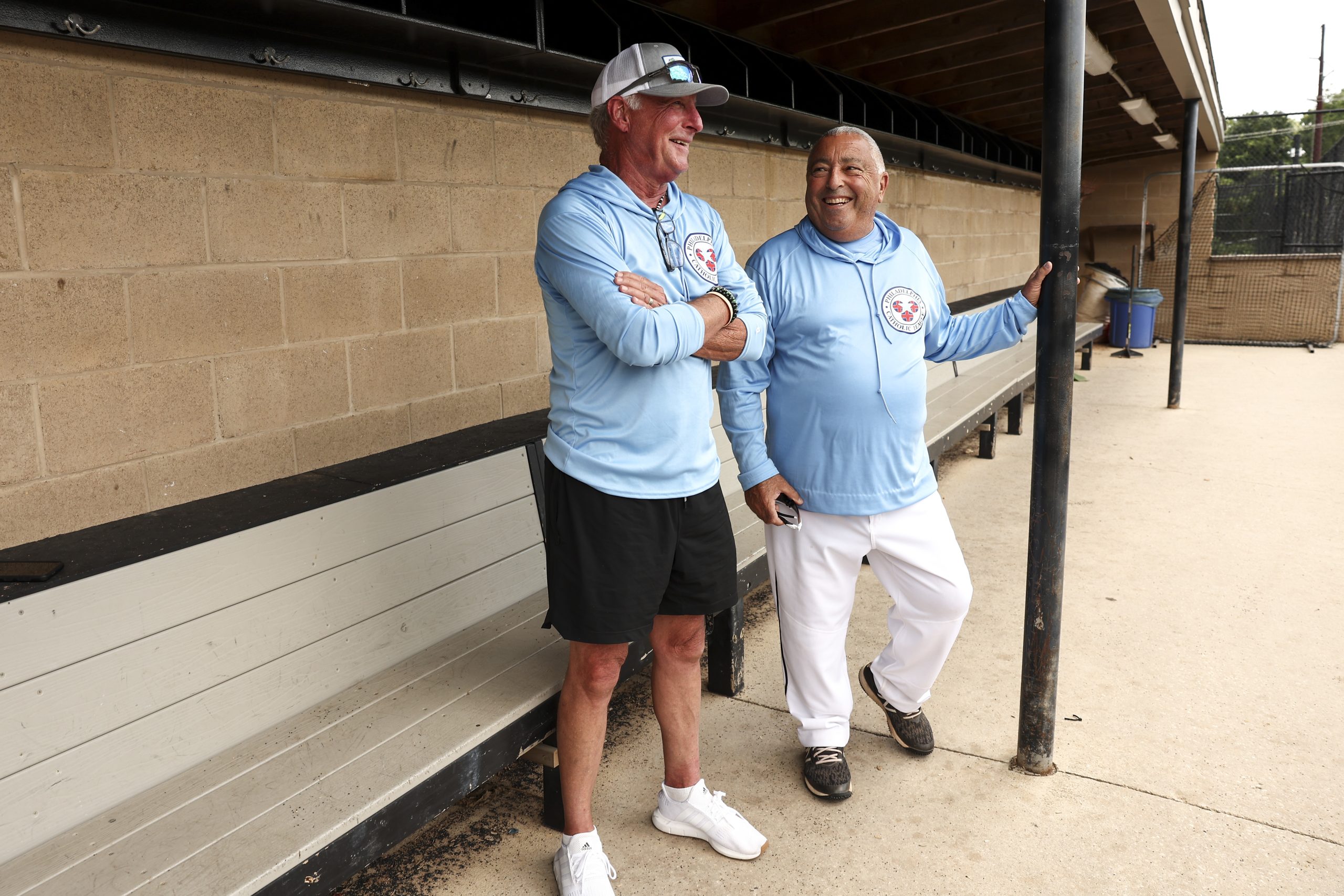
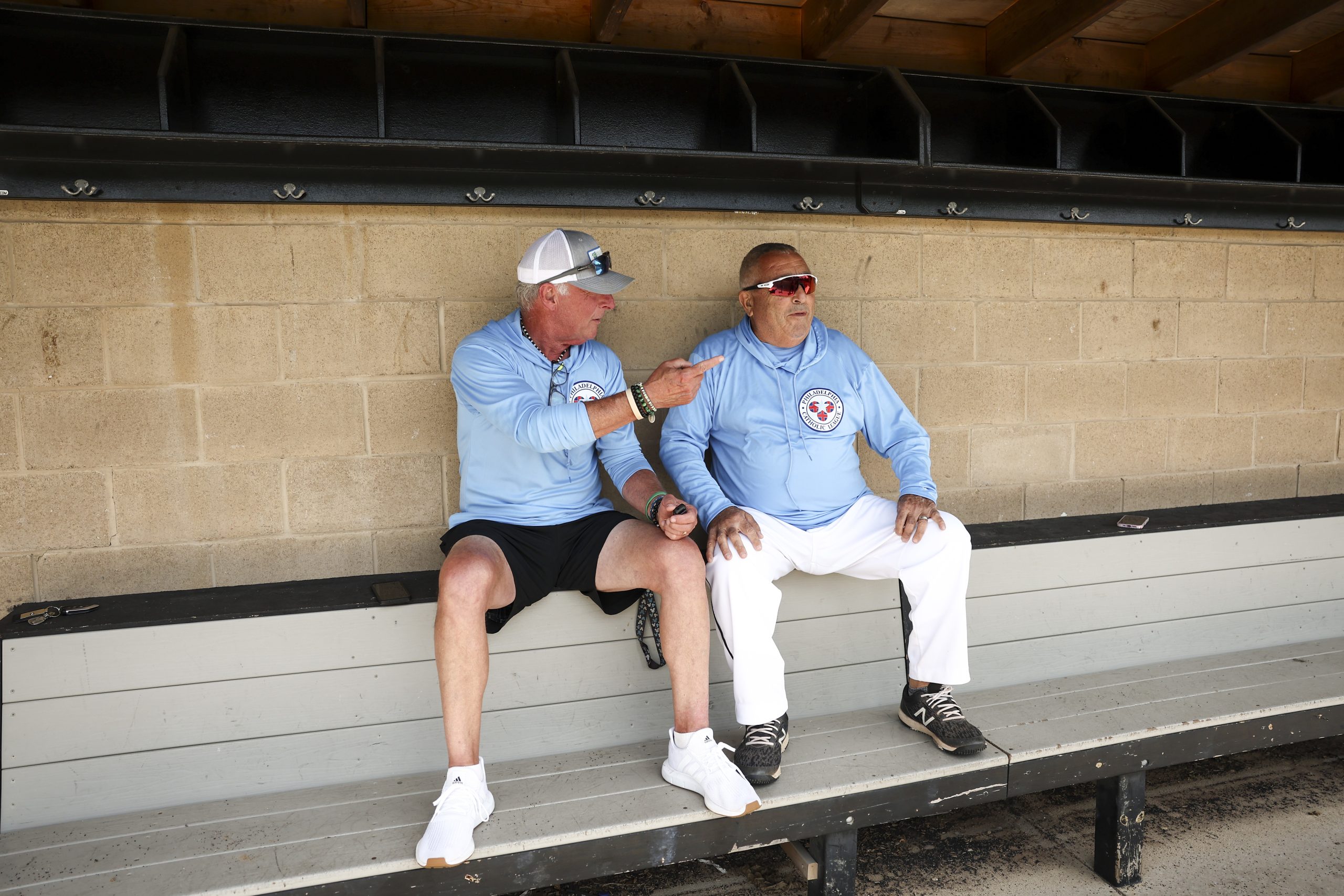
    For most of the year, Jim DiGuiseppe and Joe DeBarberie are standing in opposing dugouts. But for a few weeks each year, they’re on the same team as co-managers for the Catholic League in the annual Carpenter Cup.

    It’s an 18-year standing tradition between the pair to put aside their different allegiances — DiGuiseppe to Archbishop Wood and DeBarberie to Bonner-Prendergast — in favor of representing the Catholic League in the tournament.

    The Carpenter Cup, a tournament that features the top players from leagues across Pennsylvania, New Jersey, and Delaware, had not seen a PCL win since 2005. That was until June 8, when the pair helped lead the PCL to its first title in 21 years.

    The Catholic League team will be honored at the Phillies game on Aug. 4 for its victory.

    “It was a really good mix of players that understood that we hadn’t won in a while, and I think really took it to heart,” DeBarberie said. “There was a little bit of strategy in there, and I think we did a good job of doing that, it just fell the way we thought it was going to.”

    DiGuiseppe was head coach at Wood from 1995-2011, having joined the coaching staff a few years earlier when his son was on the team. DeBarberie began as an assistant coach with Bonner-Prendie in 2005 (while it was Monsignor Bonner) and took over as head coach from 2008-18.

    Despite sporting different shades of green and gold, the pair are longtime friends off the diamond and share a lot in common.

    They both were head coaches for more than a decade, they both saw their sons take over the helm when they stepped down, they both continue to serve in assistant coaching roles, and they share a love for the Catholic League.

    Joe DeBarberie (left) and Jim DiGuiseppe Sr. led the Catholic League to a Carpenter Cup championship for the first time in 21 years.Monica Herndon / Staff Photographer

    When DiGuiseppe’s son, Jim DiGuiseppe Jr., the current head coach at Wood, took over as the general manager for the Carpenter Cup team, he thought that his dad and DeBarberie would serve as unbiased managers for an all-star team.

    And even though the two spend most of the year in the backseat, DiGuiseppe Jr. said, the two stepped into the lead role “like riding a bike,” with the background and credentials to support their positions.

    “I think our league as a whole genuinely benefits from the structure of that and having guys like that,” DiGuiseppe Jr. said.

    Through their many years together, the pair hasn’t rubbed off much on each other in terms of personality. DiGuiseppe is more outspoken, while DeBarberie is quieter. But the dynamic works for them.

    “I’m fiery, I usually am on the field running, and he does all the paperwork and gives me all the knowledge that he can impart, but yeah, we’re a little different,” DiGuiseppe said.

    DiGuiseppe’s passion is hereditary. Most people warn against working with family, but DiGuiseppe has been his son’s assistant for longer than his son served his dad.

    In the dugout, the two get very animated during games, but it comes from a place of love and passion. Last season, DiGuiseppe Jr. became the winningest coach in Wood’s history with his 204th win. His father previously held the record with 203.

    “The joke of it is that we struggled early. It took me 17 years to win about 210. He won about 220,” the elder DiGuiseppe said. “[But] you always want your son to do better.”

    As for DeBarberie, with the amount of strategy that goes into the Carpenter Cup — making sure everyone is playing the correct number of innings and managing pitch counts — the knowledge he imparts comes in handy.

    His son, Steve DeBarberie, the current head coach at Bonner, said this happens during the season with the Friars as well.

    “The knowledge of having him in certain situations is invaluable,” Steve DeBarberie said. “When he’s up on the varsity staff he’ll just have little tidbits for me and put some stuff in my ear, to look out for it, to game plan for later on in the game because he sees stuff that not a lot of people see. He’s very intuitive and is always thinking ahead of the next steps.”

    This year, thinking ahead included setting the tone early with highly competitive players throughout the league. DeBarberie said they reminded the athletes that the competition they once harbored during the season was behind them and for the duration of the Carpenter Cup, they were all working toward a shared goal.

    Joe DeBarberie (left) was a head coach at Archbishop Wood, while Jim DiGuiseppe Sr. led Bonner-Prendergast.Monica Herndon / Staff Photographer

    DiGuiseppe and DeBarberie served as the exemplars for that.

    “Respect among the coaches is also transferred to the players on the various teams, and I think the fact that the Catholic League means a lot to us as coaches, kids also get that vibe,” DeBarberie said. “They understand that yes, you’re going to compete, that’s fine, but there’s no need for animosity — we’re all part of what we feel is the best league in the area.”

    There’s a “coaching fraternity in the Catholic League,” says DeBarberie.

    Along with DeBarberie and DiGuiseppe, Conwell Egan’s Jeff Manto, Neumann Goretti’s Nick Nardini, Lansdale Catholic’s Brian Ferko, St. Joseph’s Prep’s Jimmy Stinsman, and DiGuiseppe Jr. were members of the coaching staff for the Carpenter Cup.

    Both DiGuiseppe and DeBarberie were PCL Honorary Coach Award recipients for their 10 years of service as a head coach. When DiGuiseppe was honored in 2024, DeBarberie presented the award to him. This year, when DeBarberie received the honor, DiGuiseppe Jr. presented it.

    “Their personalities are very different, yet at the same time, they’re extremely close, not just in baseball, but off the field,” DiGuiseppe Jr. said. “Our families get together for dinner.”

    Joe DeBarberie and Jim DiGuiseppe Sr. say the Catholic League is “the best league around.”Monica Herndon / Staff Photographer

    Along with the friendship they formed from their time in the league, DiGuiseppe and DeBarberie also share an appreciation for a league that means “everything” to them.

    “We think that this is the best league around, just everything about it,” DeBarberie said. “Even when we’re not playing or we lost in the playoffs or whatever, and other teams are going on, I’m rooting for the other Catholic League teams to win. It’s just been such a big part from a baseball standpoint of our lives.”

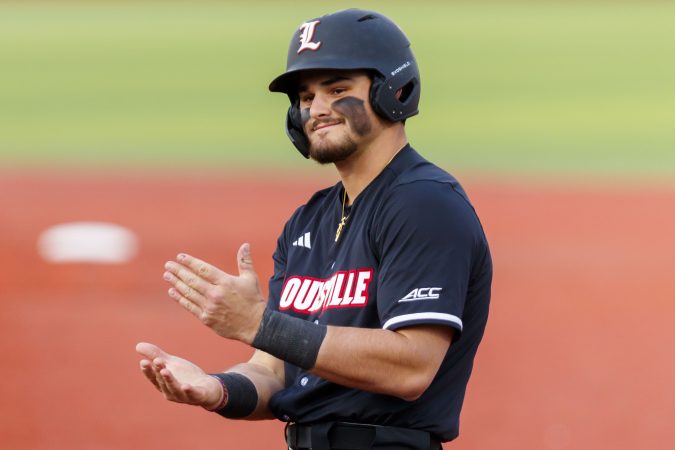
  • Tague Davis is ‘reaping the rewards’ of his baseball journey at Louisville — and now with Team USA

    Tague Davis is ‘reaping the rewards’ of his baseball journey at Louisville — and now with Team USA

    Tague Davis just got the tattoo on his right arm finished.

    The tattoo, which took 13 total hours and two sessions to complete, features the initials of his immediate family members with three clovers — which represents the family’s traditional coat of arms from Ireland. A silhouette of Davis and his father, former major league catcher and Phillies color commentator Ben Davis, playing catch is included at the bottom of the design.

    Also included in the tattoo is a verse from the Bible, Matthew 6:34. The verse reads, “Do not worry about tomorrow, tomorrow has its own worries.”

    In life and in baseball, the West Chester native looks to live by this passage.

    “Once you really break it down, you realize that it’s more of the journey to get to where your next destination is,” Tague Davis said. “That’s where you start reaping the rewards.”

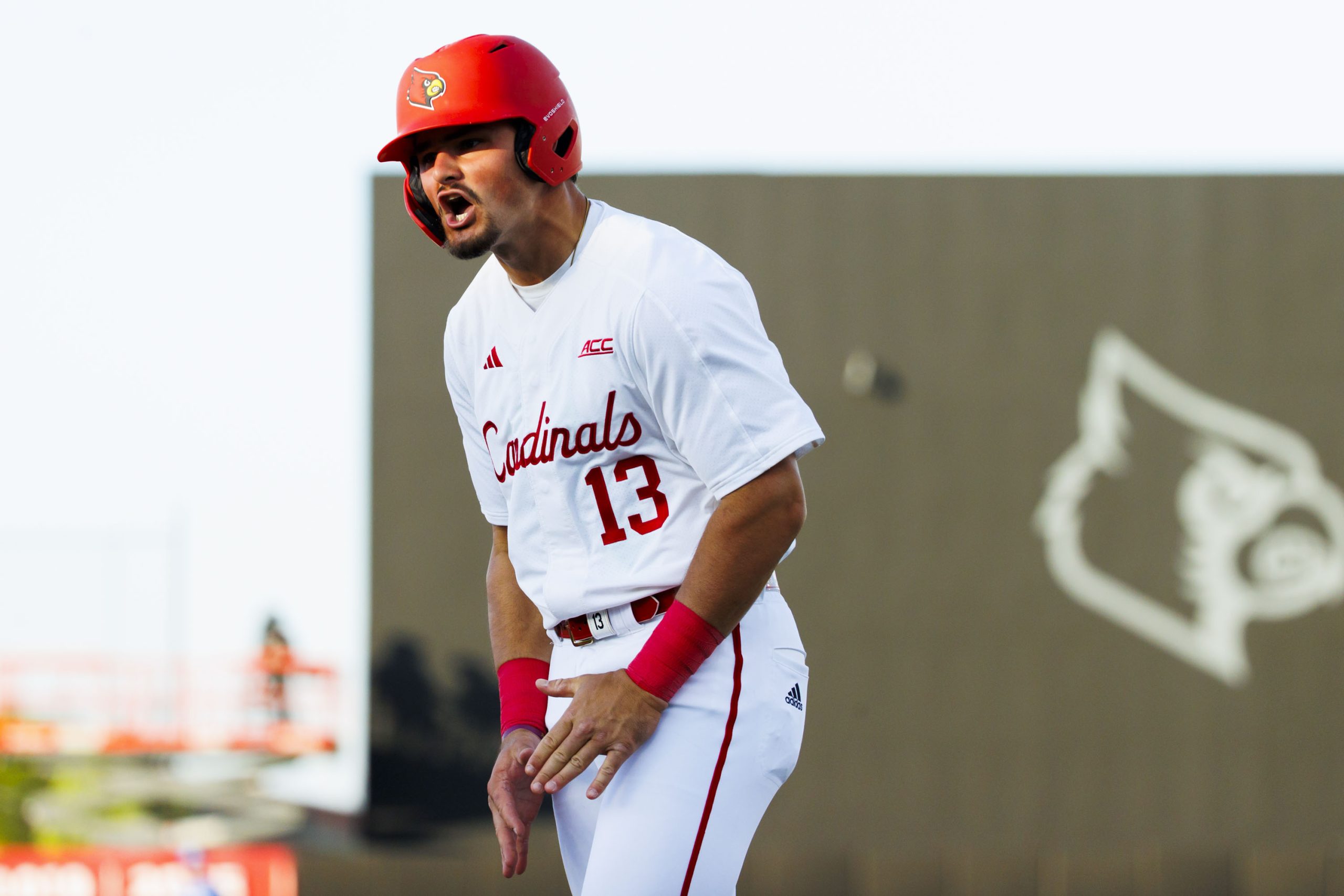
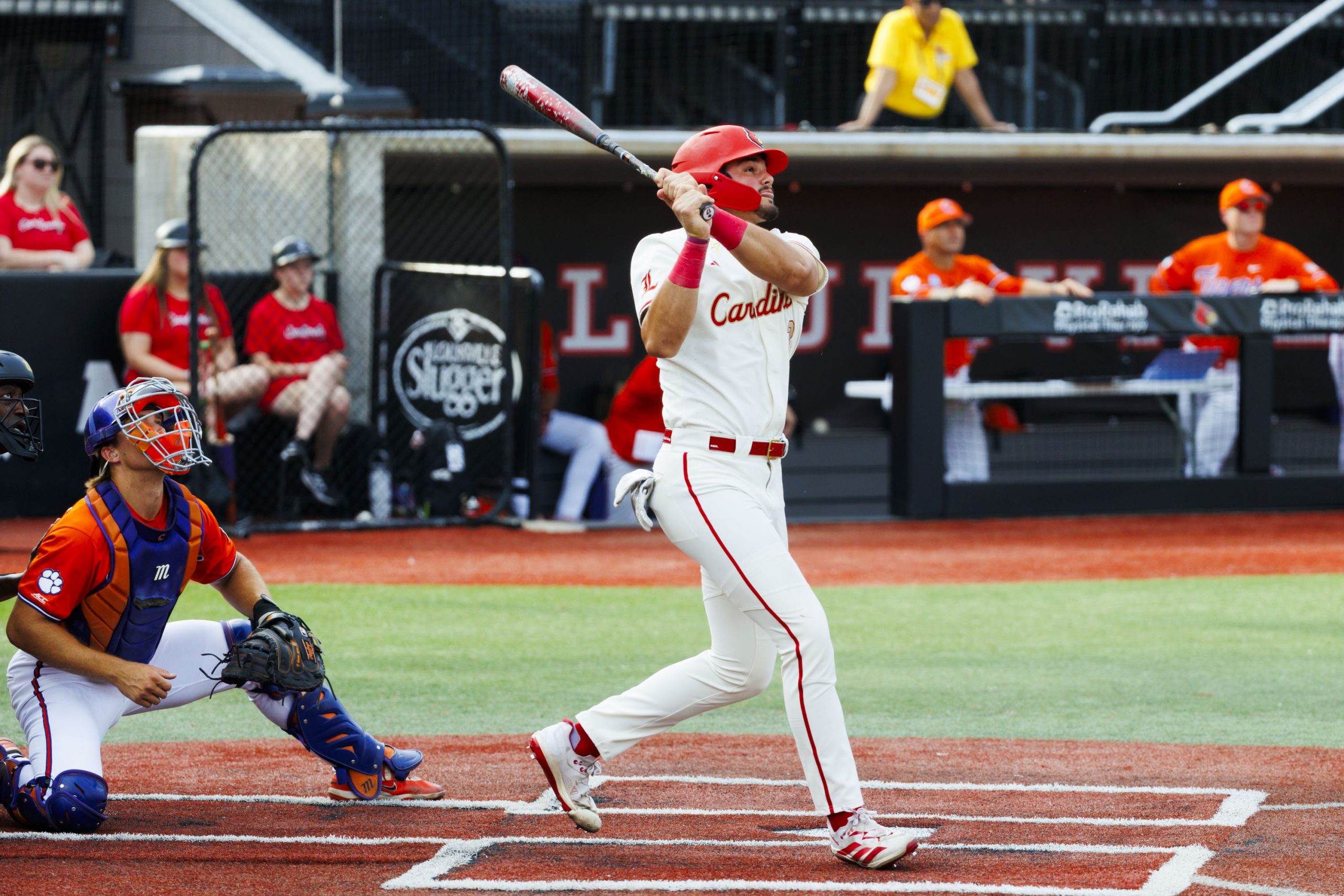
    The Louisville first baseman is coming off a stellar sophomore season. In May, Davis was named the Atlantic Coast Conference Baseball Player of the Year. He led the nation with 34 home runs while driving in 98 runs.

    This summer, Davis starred for the Cotuit Kettleers of the Cape Cod Baseball League before earning a spot on the USA Baseball collegiate national team. For Team USA, the Malvern Prep alumnus shined in the inaugural World Collegiate Baseball Championship in Taiwan. In a 10-0 win over Korea in the tournament’s semifinals, he logged a game-high three RBIs. Team USA fell short of gold after losing 6-3 to Japan in the final.

    Tague Davis competed with USA Baseball’s collegiate national team this summer.Taris Smith / Louisville Athletics

    With all this change, Davis has relied on his support system to keep him grounded.

    “Luckily and thankfully, there’s always been a role model [in my life] to humble me and show me where I’m supposed to be,” Davis said. “Obviously, faith comes into play with it. Right now at college, coach [Dan McDonnell] is a huge part. He preaches to me every day to be where your feet are, you can’t worry about the next day.”

    ‘What makes him great’

    Louisville baseball coach Dan McDonnell attributes Davis’ success to his worry-free attitude and natural ability to find joy in even strenuous situations.

    One story McDonnell loves to tell came during Davis’ freshman campaign. McDonnell opted to pull his pitcher. After he made his way back to the dugout, McDonnell looked back out to the diamond. The infielders were crowded together, discussing how to get out of the inning unscathed. Well, most of them were. Davis was razzing a teammate, flicking the back of his ear.

    “As a coach, your first instinct is, ‘Why is this guy not locked in and intense and focused? This is the most crucial part of the game here,’” McDonnell said. “There’s another part that you just kind of [smiles], and you go, ‘That’s what makes him great. He’s a kid. He’s playing the game the way you’re supposed to play it.’”

    That was not the only time Davis surprised his coach. During a one-on-one meeting, McDonnell ripped into his star player following a poor two-game stretch. Davis took the criticism “like a champ.” After McDonnell dismissed him, the star player quickly shifted topics — showing the heated conversation was already water under the bridge.

    “[Davis] gets off the couch, he gets to my door, and he turns back and smiles,” McDonnell recalled. “He goes, ‘Hey, coach, it’s a great time of the year to go fishing. We need to go fish.’ And he walks out the door.”

    Tague Davis says other programs contacted him during the season to see if he had interest in transferring. He rebuffed the offers.Taris Smith / Louisville Athletics

    ‘Grass ain’t always greener’

    Louisville’s 2026 season ended early after an opening-round loss to Pittsburgh in the ACC postseason tournament.

    Amid the Cardinals’ disappointing 30-27 season, Davis began receiving attention from other programs — weeks before the season even ended.

    “I open my Instagram one day and there was a link,” Davis said. “I clicked on the link and went into my DMs. It was just a list of like four different trucks, like Ford F-350 Lariat — anything you wanted. I’m like, ‘Oh my gosh, what school is this from?’

    “You see different stuff like that and you think to yourself, ‘Do I really want this?’ Or do I want to stay at home, and ‘home’ is the easiest answer. So there was a bit of tampering, but you know they’re just doing their job. It’s a shame that the game has come to this.”

    Although he found the whole ordeal “flattering,” entering the transfer portal was never in the cards for Davis — who noted he “wasn’t raised like that.” He knows, as his tatted arm will remind him, not to worry about what could be.

    “Sometimes the grass ain’t always greener,” Davis said.

    Added McDonnell: “We never felt or thought like Tague was necessarily leaving, and that just again goes to show just how well grounded he is. He’s like, ‘I don’t need this status. I don’t need these people gushing over me. Yeah, that money is nice, but that’s not necessarily what I’m chasing.’ It’s just very refreshing in a challenging time in this athletic world.”

  • Access to high school sports in Pa. depends on where you live, a new report finds. Here’s a breakdown.

    Access to high school sports in Pa. depends on where you live, a new report finds. Here’s a breakdown.

    More than 30% of high school students in the affluent Radnor and Wallingford-Swarthmore districts played sports in the 2024-25 school year.

    In the Philadelphia school district, less than 10% of high school students did.

    The disparities are part of a pattern, with fewer students playing sports in lesser-resourced urban schools, according to Research for Action, a Philadelphia-based educational research organization that released a report Thursday analyzing high school sports participation rates across Pennsylvania.

    The report, which looked at sports as another barometer of opportunities available to students, found participation varies widely — as does school spending on sports programs.

    It also found a link between funding and sports participation, with more students on average playing in higher-spending districts.

    “The degree to which a student may have access to school athletics really depends on what district they’re in,” said Maja Pehrson, the report’s lead author.

    Here’s what the report found — and what questions it raises about access to high school sports in Pennsylvania.

    There are big differences in sports participation rates

    Participation in school sports “hasn’t really been looked at very much,” Pehrson said. Research for Action analyzed data that school districts and charter schools are required to report to the Pennsylvania Department of Education on athletic opportunities.

    The report found participation rates in the 2024-25 school year ranging from 5% in some school districts, to a handful of districts with rates above 40%.

    Topping the list locally were Jenkintown School District, at 35%, and Springfield Township School District in Montgomery County at 34%; followed by Radnor and New Hope school districts, at 31%; Wallingford-Swarthmore, at 30%; West Chester, at 28%; and Upper Dublin, at 27% — all majority white, relatively affluent districts.

    Below the Philadelphia school district’s 9.6% rate were Upper Darby, at 9%; William Penn and Norristown, at 8%; and Chester-Upland, at 6% — all districts that are majority non-white and high-poverty.

    Overall, large, urban districts tended to have the lowest participation rates, meaning “almost half of Pennsylvania high school students are enrolled in districts where the likelihood of participating in a school athletics team is relatively low,” the report said.

    Those “very low” participation districts — with 5% to 17% of students participating — also offered fewer sports per 1,000 students than high-participation districts, the report found.

    Naima DeBrest, a spokesperson for the Philadelphia district, said the district had expanded athletic opportunities in recent years “by introducing new sports such as girls wrestling and girls flag football” and creating intramural programs at the elementary and middle school levels.

    Despite “common challenges” faced by urban districts, “the district remains committed to expanding access to high-quality athletic opportunities and ensuring students have meaningful opportunities to participate in sports that support their academic success, well-being, and overall development,” DeBrest said, noting that the district’s rate is comparable to other urban districts.

    <iframe title="Sports Participation and Athletics Spending Among Local School Districts" aria-label="Table" id="datawrapper-chart-dyc1W" src="https://datawrapper.dwcdn.net/dyc1W/1/" scrolling="no" frameborder="0" style="width: 0; min-width: 100% !important; border: none;" height="971" data-external="1"></iframe><script type="text/javascript">(function(){function e(){window.addEventListener(`message`,function(e){if(e.data[`datawrapper-height`]!==void 0){var t=document.querySelectorAll(`iframe`);for(var n in e.data[`datawrapper-height`])for(var r=0,i;i=t[r];r++)if(i.contentWindow===e.source){var a=e.data[`datawrapper-height`][n]+`px`;i.style.height=a}}})}e()})();</script>

    There are also big gaps in spending

    The report found a relationship between money and sports participation rates. Among the 10% of school districts deemed most underfunded by a state formula calculating what schools need to adequately educate students, more than half had “very low” sports participation rates, while more than two-thirds had “very low” or “low” participation, according to the report.

    And looking at what districts spend on athletics, it varied widely, the report found. Districts with “very low” participation reported spending an average of $409 per high school student on athletics, while “very high” participation districts — with 28.2% to 61.6% of students participation — spent an average of $939 per student.

    Locally, the Jenkintown, West Chester, Phoenixville, and Colonial school districts reported spending more than $1,100 per high school student on athletics, compared with $145 per high school student in Philadelphia.

    The report noted that those figures don’t fully reflect spending on school sports. Many districts didn’t report any spending on athletic facilities, for instance; Pehrson said it was likely hard for schools to calculate how much of their overall facilities spending was tied to athletics.

    The data also don’t reflect any activities fees paid by students.

    Charters have lower participation rates — but in line with Philly

    Statewide, brick-and-mortar charter schools, which are publicly funded but independently run, reported lower rates of sports participation. On average, 8.4% of charter high school students participated in sports, compared with 18.1% in district schools. (Cyber charter schools reported no participation; charter students who participate in district programs are counted by districts.)

    Rather than a difference between the charter and district sectors, however, the gap could largely be a product of school district conditions, the report said. Half the state’s charter high schools are located in Philadelphia, where the charter sports participation rates largely mirror the district’s, the report said.

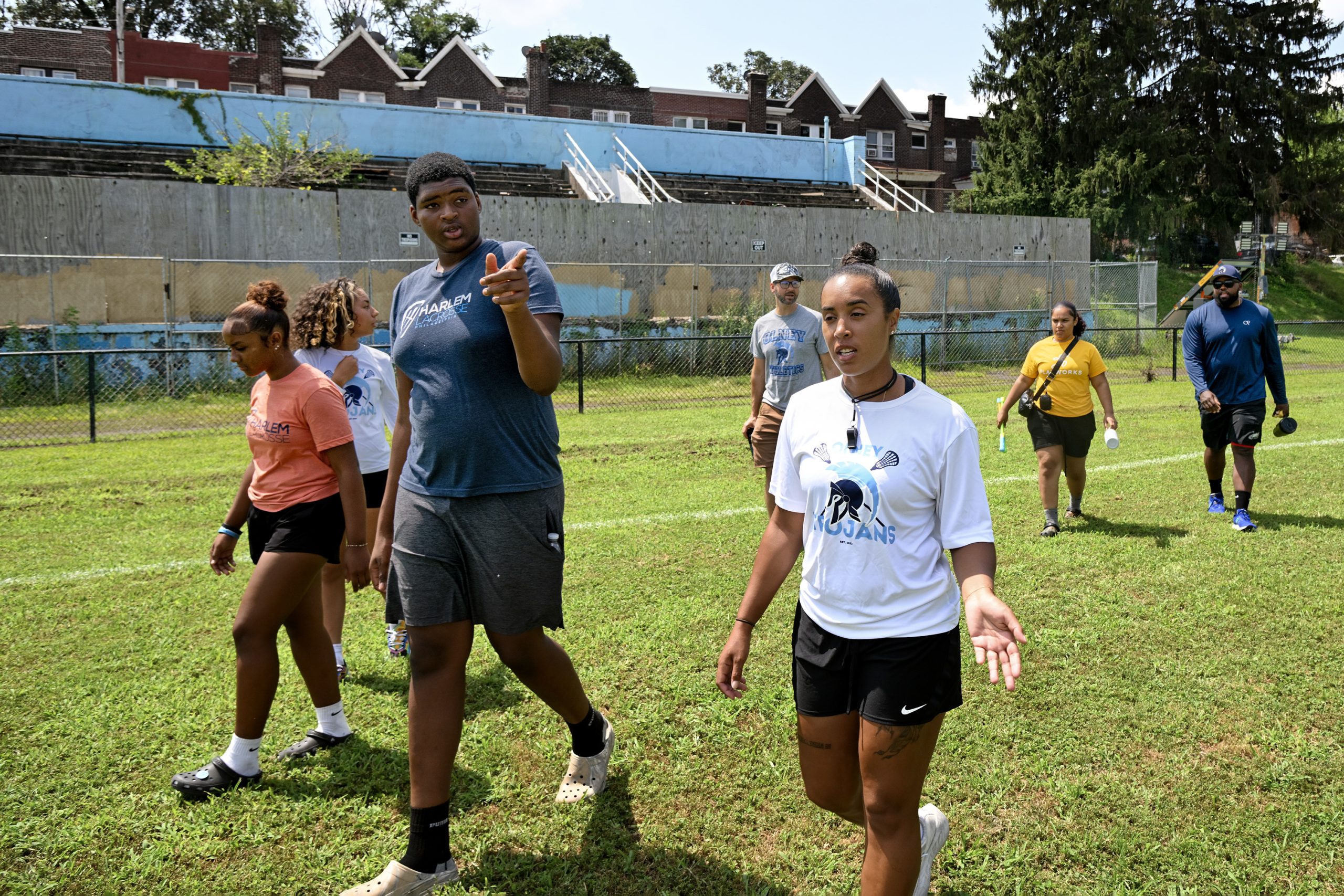
    In front of their boarded up dilapidated stadium, Olney High School athletes Cindi Lizardo (from left), Emma Blanco, Sidi Traore; and principal Michael Roth, coach Siena Childs, recent graduate Ysis Rivera, and athletic director Jorge Gonzalez point out the deplorable condition the sports facilities are in July 24, 2025. Olney High School, which spent a decade under charter management, was turned back over to the Philadelphia school district in 2022.Tom Gralish / Staff Photographer

    Gender gaps persist

    Boys participated in sports in 2024-25 at a higher rate than girls — at an average rate of 20.3% compared with 15.8%, the report found.

    And those gaps persisted across different types of school districts, the report found. For instance, in districts with “very low” overall sports participation, 14% of boys participated, compared with 10% of girls. In districts with “moderate” participation, 24% of boys participated, compared with 19% of girls. And in “very high” participation districts, 35% of boys participated, compared with 30% of girls.

    What’s driving the disparities?

    The report found that access to high school sports in Pennsylvania “is not evenly distributed and is strongly shaped by structural conditions.”

    “Districts with fewer athletic opportunities are more likely to be urban districts with large high schools and more students of color, and they tend to offer a narrower range of teams and spend less per student on athletics, limiting the extent to which students can engage,” the report said.

    But district funding alone isn’t responsible for disparities, the report noted. The gender gap, for instance, is found in well-funded and poorly funded districts.

    The pattern of higher-spending districts seeing more participation “doesn’t line up neatly for every district,” Pehrson said, noting that the data can’t fully answer questions about what’s driving differences in participation.

    Other possible factors could include transportation and sports outside of schools, Pehrson said.

    DeBrest, the Philadelphia spokesperson, noted that urban districts may also have limited athletic facilities, and practice space “and the need for some students to balance academics, work, or family responsibilities.”

    Pehrson hopes the findings prompt more investigation into the availability of school sports, which “are a key part of students’ educational opportunities,” Pehrson said — from boosting physical and mental health, to promoting social-emotional skills and building community.

    “There are clear disparities in terms of sports opportunities students are having,” Pehrson said. “Why is that, and how can we move forward and try to figure out these differences?”

    Editor’s note: This story has been updated to reflect that Jenkintown and Springfield Township were the local districts with the highest sports participation rates.

  • Saucon Valley to host U.S. Junior Amateur, featuring local talent and Tiger Woods’ son

    Saucon Valley to host U.S. Junior Amateur, featuring local talent and Tiger Woods’ son

    Golf’s future stars are coming to Bethlehem, Pa., this week, competing for a chance to lift the Tiger Woods Trophy.

    The 78th U.S. Junior Amateur returns to Saucon Valley Country Club in Lehigh Valley from Monday to Saturday, bringing together 264 of the best junior golfers in the world. The championship has launched careers for some of the game’s biggest names, including Tiger Woods, Jordan Spieth, and Scottie Scheffler.

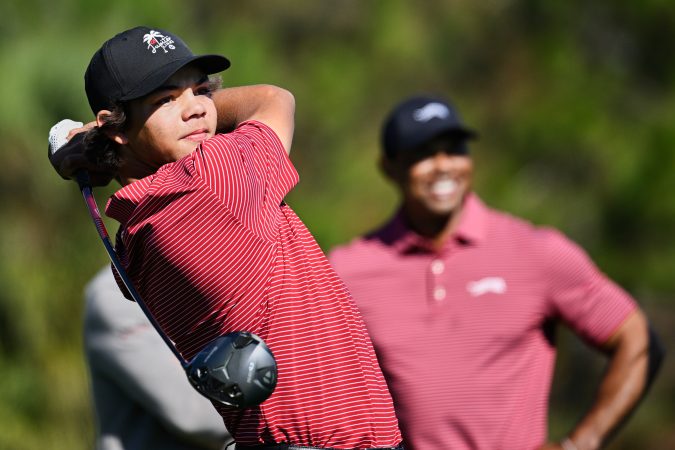
    This year’s field features Woods’ son, Charlie, defending champion Hamilton Coleman, and a pair of locals in Declan Conner, of Swarthmore, and Charlie Barrickman, of Kennett Square.

    What is the U.S. Junior Amateur?

    The U.S. Junior Amateur is the United States Golf Association’s national championship for male amateur golfers who have not reached their 19th birthday by the end of the championship. Players must also have a Handicap Index not exceeding 2.4 to be eligible.

    This year, 3,681 players applied to play in the championship, and 18-hole stroke-play preliminary qualifying rounds were conducted across 42 sites nationwide to determine the field.

    The tournament began in 1948 and has produced some historic moments. Tiger Woods won the championship from 1991 to 1993, Spieth won in 2009 and 2011, and Nick Dunlap won in 2021, joining Woods as the only player to win both the U.S. Amateur and U.S. Junior Amateur titles.

    How does it work?

    The championship begins with 264 players competing in two rounds of stroke play on Monday and Tuesday. One round will be played on Saucon Valley’s Old Course, and the other will take place on the Grace Course.

    After 36 holes, the top 64 players will advance to match play on the Old Course. The round of 64 begins on Wednesday, followed by the round of 32 and round of 16 on Thursday. Players who advance to Friday will have to survive both the quarterfinals and semifinals before Saturday’s 36-hole championship match.

    The championship features competitors from 30 countries and 39 states.

    Local golfers will be competing

    Swarthmore’s Conner will represent Delaware County after earning medalist honors at his qualifier, alongside Roger Rice, of Chatham, N.J., and Daniel Kim, of Franklin Lakes, N.J. The 17-year-old rising senior at Ridley High School shot a 2-under 70 at Saucon Valley’s Weyhill Course to qualify for his first USGA championship.

    Conner is one of five Pennsylvania golfers in the field, joining Barrickman (Unionville High School), Dane Mohap (Nazareth), Nico Ward (Allegheny County), and Chase Yenser (Berks County).

    “Being able to qualify for a national championship in my backyard is truly amazing,” Conner told the Golf Association of Philadelphia after qualifying at Saucon Valley’s Weyhill Course. “In doing so, I will be able to have support from my family and friends. I feel like I can compete, I just need to prepare the right way.”

    Charlie Woods is back

    Charlie Woods will make his third consecutive U.S. Junior Amateur appearance after qualifying in a playoff at Heathrow Country Club in Florida.

    The Florida State pledge has become one of the most recognizable names in amateur golf, and will look to get his name on the trophy named after his father.

    USGA Championships at Saucon Valley

    This marks the second time Saucon Valley has hosted the U.S. Junior Amateur and its ninth USGA championship overall.

    The club hosted the event in 1983 and welcomed championships including the 2009 U.S. Women’s Open and the 2022 U.S. Senior Open.

    The Old Course will serve as the primary championship venue, and the Grace Course will cohost the stroke-play portion of the competition.

    Renaming of the trophy

    The USGA announced in February that the U.S. Junior Amateur trophy would be renamed and redesigned to honor Tiger Woods. The trophy is meant to recognize his competitive career and accomplished resumé in amateur golf.

    Woods won three consecutive U.S. Junior Amateur Championships and three consecutive U.S. Amateur Championships, feats that have not been repeated.

    How To Watch?

    Golf Channel will air Friday’s semifinal match from 4-6 p.m and Saturday’s final from 3-5 p.m.

    The championship is free and open to spectators.

  • How Moorestown ‘shaped’ pro women’s lacrosse star Marie McCool

    How Moorestown ‘shaped’ pro women’s lacrosse star Marie McCool

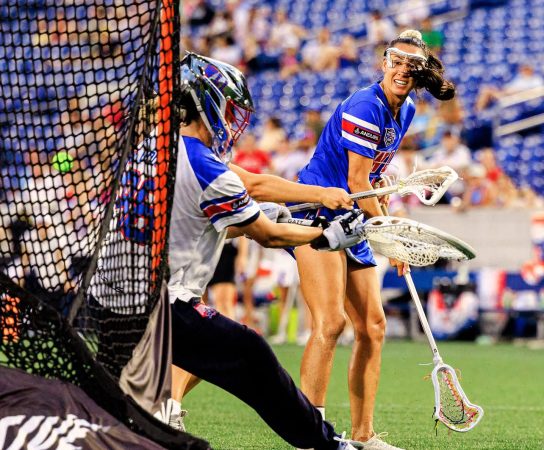
    Marie McCool’s buzzer-beater led to her being named MVP of the inaugural Women’s Lacrosse League All-Star Game, but it’s about more than the accolades for the Moorestown High School alumna.

    “Being an MVP is a great honor,” McCool said after the 16-15 win for Team Scane on July 5, “but I personally feel like there were so many people on the field that deserved it. I happened to be the last one with the ball in my stick, and I glanced at the shot clock and saw that there was only 10 seconds left, so I was like, ‘All right, gotta try and make a play here.’”

    McCool is one of 20 players and coaches in the WLL who are from the Philadelphia area, and she’s continuing her trailblazing career in the nascent league as a midfielder for the California Palms. The team, which is in its second season in the four-team league, currently is 2-1 and is atop the standings by virtue of goal differential (plus-8).

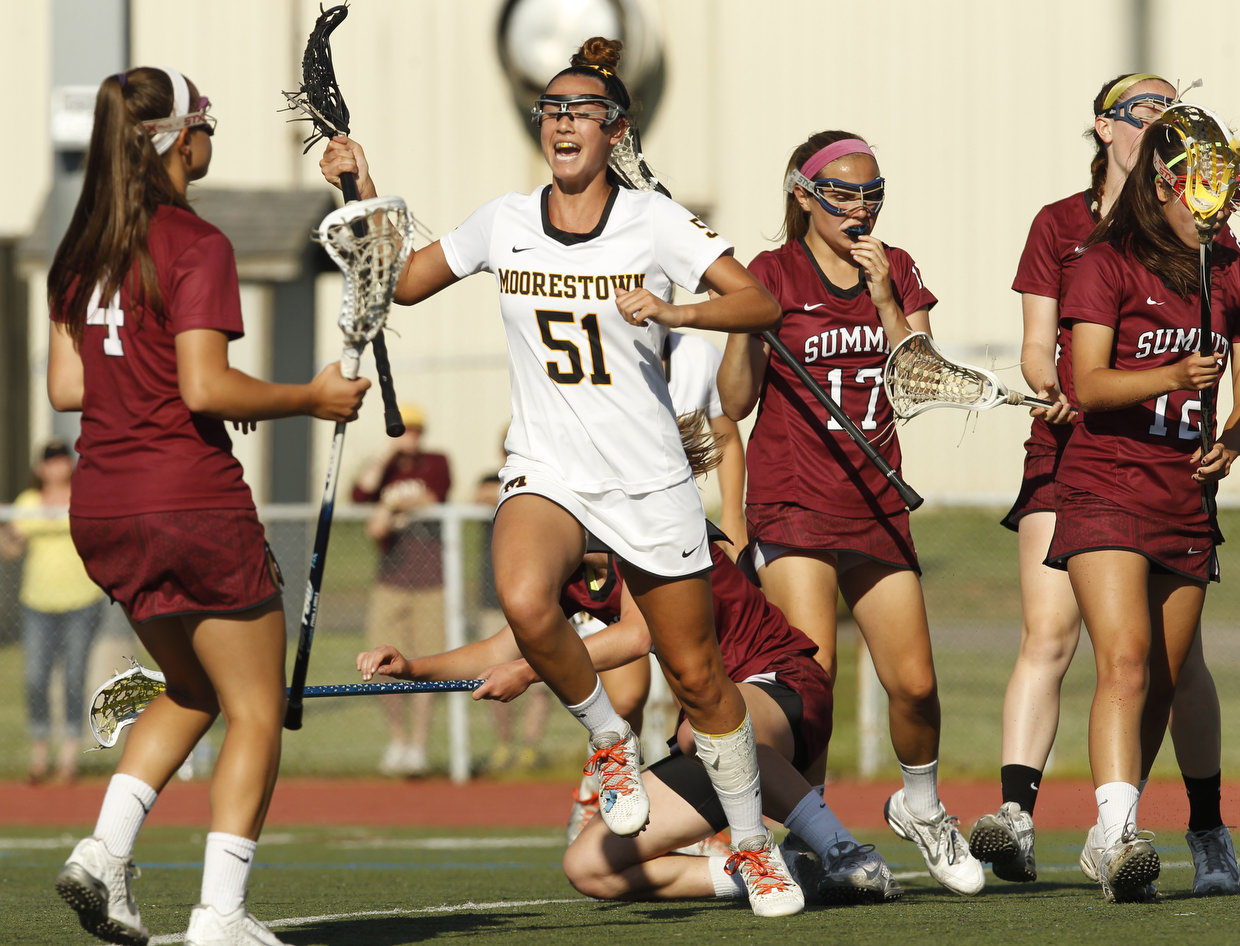
    “She was something very special and left a lasting legacy at Moorestown,” said her high school coach, Deanna Knobloch. “She had been the first at the time to be a three-time All-American at Moorestown. She was a two-time high school player of the year in the state of New Jersey, back to back, junior and senior years.”

    Moorestown’s Marie McCool was a two-time high school player of the year.

    After winning three state titles in high school, she had a historic run at North Carolina. While still a student, she tried out for the national team, and, at just 19, she became the youngest player on Team USA in the 2017 World Championship. McCool, who has been a Tar Heels assistant coach since 2021, also is preparing for the 2026 World Championship in Tokyo and hopes to secure her third title on Aug. 2.

    But amid the accolades, including MVP at the 2025 World Games, it all goes back to her local roots.

    “I wouldn’t be where I am today without Moorestown,” McCool said. “Just the program that the Knoblochs built, and the legacy, and the dynasty, just to be a part of that has really shaped me into who I am today.”

    Her best advice for continuing to grow is shaped by leaning on her teammates, from Moorestown to Team USA.

    “We always say at UNC, ‘Iron sharpens iron,’” she said. “Just being surrounded by the best of the best every day challenged me to continue to get better.”

    Now, McCool has a chance to return to the area for the WLL championship game on Aug. 15 at the Union’s Subaru Park, a stadium that is no stranger to McCool’s talents.

    “It’s a pretty full-circle moment because the championship is actually on the same field that I won a championship on as a player in Carolina [in 2016], and hopefully [we will] win the first-ever WLL championship,” she said.

    The establishment of the WLL in late 2024 is a sign of the sport’s growing popularity. It expanded quickly at the college level, growing from 600 to more than 900 men’s and women’s NCAA lacrosse teams in the past decade — paving the way for lacrosse to appear at the 2028 Olympics in Los Angeles for the first time in a century.

    This boom added motivation for McCool within the WLL, despite the short season.

    “This being a four-game season, some are like, ‘Oh, only four games,’ but for me, I’m like, ‘It’s a great opportunity,’” she said. “I really do believe that we’re moving in the right direction to continue to get the women’s game on the biggest stage and continue to help grow it.”

    Marie McCool (No. 4) won a national championship in 2016 with North Carolina at Subaru Park.

    McCool has played no small part in the growth. Knobloch, who coached at Moorestown for 27 years before retiring in 2018, says it takes players like McCool to keep the sport in the spotlight.

    “I watch her now, and I still watch in awe of the player that she has become,” Knobloch said. “I absolutely loved coaching Marie and watching her grow, not only as a player, but, more importantly, as a leader, like the captain that she became, and how she continued representing the sport, and having all these next generations want to be just like her. I’m just grateful to have been a small part of that.”

    Meanwhile, the 29-year-old McCool says she is approaching the end of her playing career, but isn’t quite done yet.

    “I know I still have some gas left in the tank,” McCool said. “I’m excited to just continue to play and have the opportunity to do so, and hopefully leave the game better than I found it.”

  • Drexel Hill’s Michael Anderson and a trio of St. Joe’s players selected on Day 2 of the MLB draft

    Drexel Hill’s Michael Anderson and a trio of St. Joe’s players selected on Day 2 of the MLB draft

    The second day of the MLB draft continued at the Pennsylvania Convention Center as rounds five through 20 of the draft took place.

    While only two local players were drafted on Day 1 with Aiden Robbins and Ryan Lynch both being selected in the third round, Sunday saw more action for area players.

    Here’s a look at the locals who were selected on Day 2:

    Fifth Round

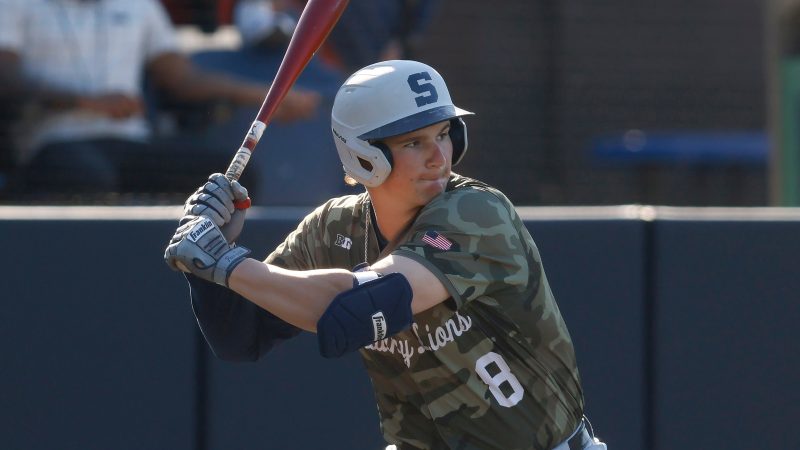
    Michael Anderson Jr. was selected by the Texas Rangers with the 149th pick in the draft. Anderson, a Drexel Hill native, played high school ball at Bonner-Prendergast before going to University of Rhode Island and then University of Arkansas.

    The 6-foot-3 first baseman finished his collegiate career at Penn State, where he posted a record-breaking season for the Nittany Lions, earning him First Team All-Big 10 honors.

    His 20 home runs set a program record, as well as his 18 hit-by-pitches. His 141 total bases and .742 slugging percentage were the fourth-most in a season in school history. He was second on the team with a .358 batting average and led the team in RBIs (53), hits (68), and OPS (1.212).

    Sixth Round

    The Chicago White Sox selected South Jersey’s Alex Weingartner at pick 166.

    A two-way player at St. Augustine Prep, Weingartner was drafted as an outfielder but also pitched for the Hermits.

    The Penn State pledge was named the 2025-26 Gatorade New Jersey Baseball Player of the Year following his senior season with the Hermits where he batted .495 with a .817 slugging percentage, 36 RBIs, 46 hits, and seven home runs. On the mound, Weingartner had a 6-1 record with a 0.87 ERA in 48.1 innings pitched, recording 81 strikeouts.

    The 6-2 outfielder from Berlin was the number one prospect in the state for the class of 2026, according to Perfect Game, and is ranked 75th nationally.

    Seventh Round

    Yardley’s Joe Tiroly was selected by the San Diego Padres with the 215th pick.

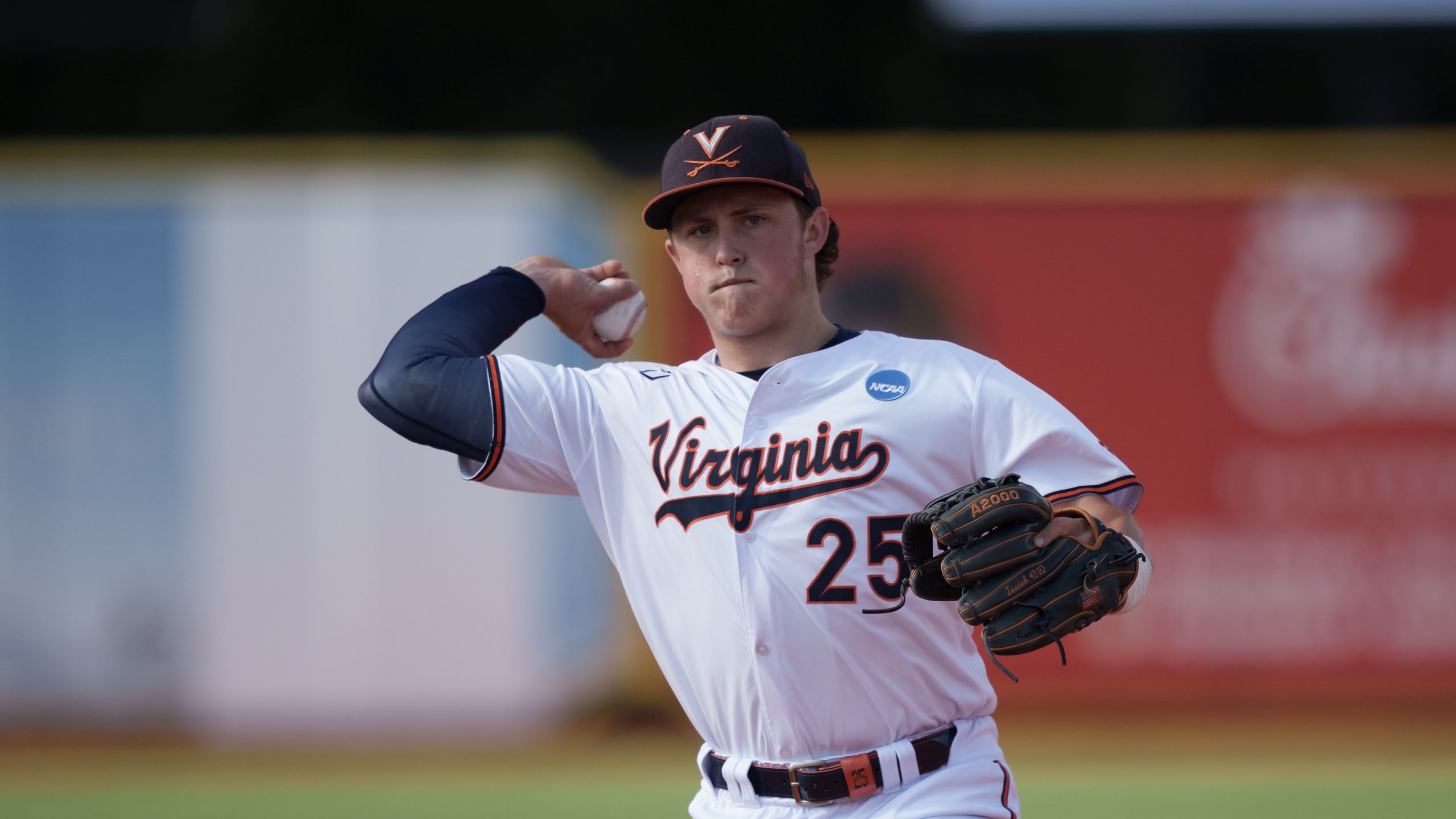
    The 6-foot second baseman from University of Virginia was one of just two Cavaliers to play in all 60 games. He led Virginia in hits (76), home runs (16), RBIs (66) and total bases (137) while batting .319.

    Joe Tiroly played in all 60 games for Virginia last season.Matthew Hinton

    Prior to playing at Virginia, Tiroly was at Rider where he led the team during his sophomore year in hits, doubles, triples, home runs, total bases, and slugging percentage. He also set a single-season record with his 70 RBIs and 66 runs.

    Prior to entering college, Tiroly played at Pennsbury High where he was ranked as the No. 15 third baseman in the state.

    Eighth round

    Central Buck sEast graduate Aiden Weaver was selected 231st overall by the Athletics.

    Weaver, a right-handed pitcher from Duke, finished the season with a 6.37 ERA across 65 innings pitched, tallying 87 strikeouts.

    The 6-5 senior started in all 14 of his appearances, recording the most innings for the Blue Devils this season, but finished with a 4-9 record.

    10th Round

    Right-handed pitcher Luc Rising was drafted by the Los Angeles Angels with the 289th pick.

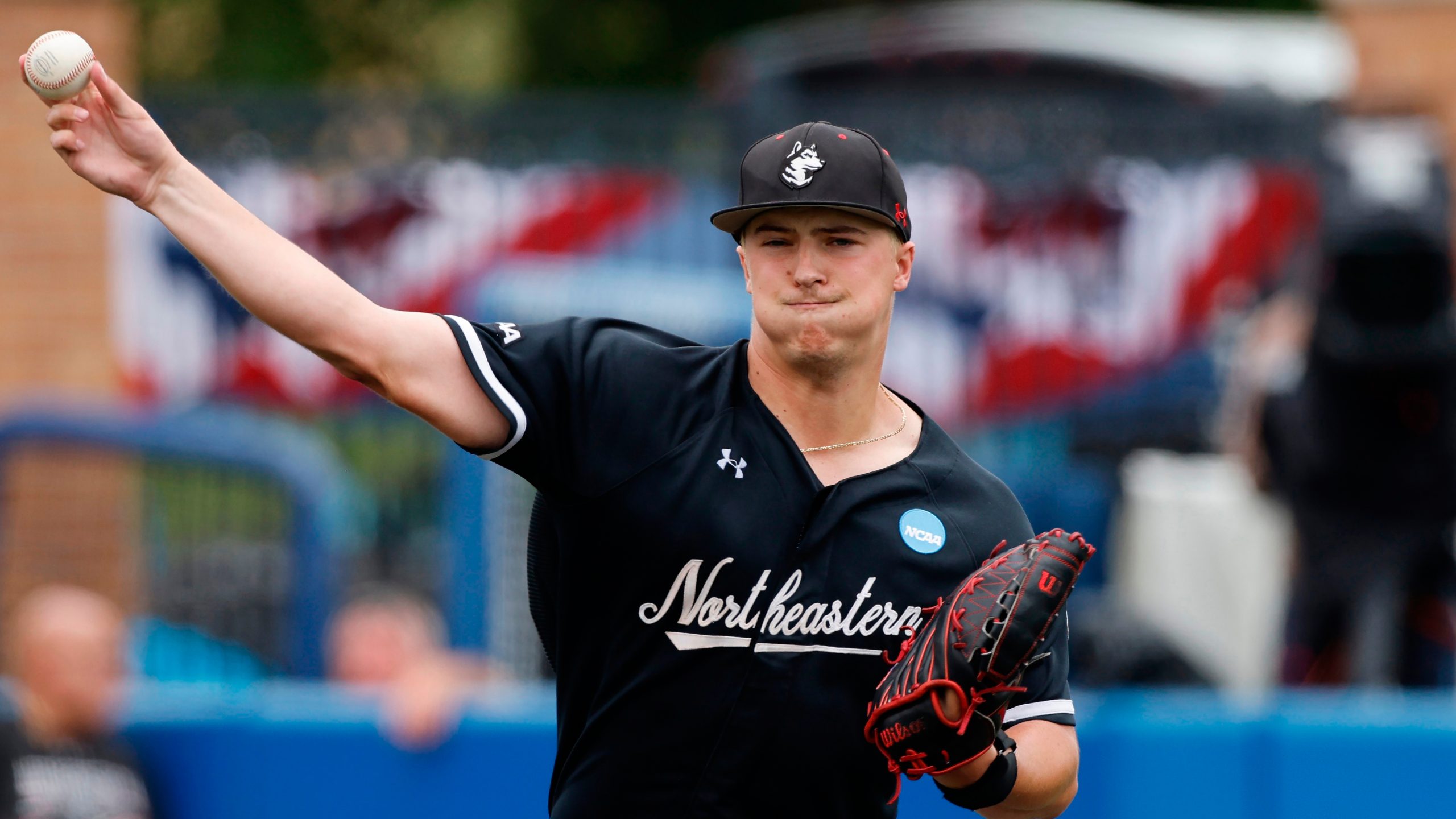
    An Exton native, Rising started in 13 of his 16 appearances at Northeastern. The 6-f2 pitcher went 5-5 with a 3.54 ERA and 84 strikeouts, pitching 81.1 innings, including an inning in the CAA championship to help Northeastern secure its second consecutive conference title.

    Luc Rising helped Northeastern win back-to-back conference titles in 2026.Colin E. Braley

    Before playing at Northeastern for his senior year, Rising played at the Rochester Institute of Technology where he earned First Team All Liberty League honors and was named a Perfect Game College Baseball League All-Star. Rising played baseball at Downingtown East.

    Later in the 10th round, Andrew Gaines was selected by the Milwaukee Brewers with the 311th pick.

    A pitcher at St. Joseph’s, the 6-5 senior from Marlton was selected to Atlantic 10 all-conference second team after matching the St. Joe’s single-season save record (10).

    The 6-5 right hander finished the season with a 4.99 ERA and 47 strikeouts in 30.2 innings pitched, helping St. Joe’s set a program record for most wins in a season.

    Gaines graduated from St. Augustine Prep before going to Iona College. He then transferred to Pitt after two seasons before spending his senior year with the Hawks.

    12th Round

    Christian Coppola from St. Joe’s was selected by the Phillies with the 369th pick.

    A 6-5 right-handed pitcher from Galloway, Atlantic County, Coppola transferred to St. Joe’s this year after spending two seasons at Rutgers and one at Arizona.

    Christian Coppola helped St. Joe’s set a program record for wins in a season.Jason E. Miczek

    This season, the relief pitcher had a 1.69 ERA in 37.1 innings pitched for the Hawks, earning him American Baseball Coaches Association All-East Regional first team honors.

    Coppola played high school ball at Cedar Creek, where he set the school record for single season strikeouts during his senior year.

    15th Round

    Souderton Area graduate Liam O’Leary went to the Pittsburgh Pirates as the 438th pick overall.

    O’Leary, a right-handed pitcher from St. John’s, played previous seasons with Lackawanna Community College and Montgomery County Community College.

    This season, the 6-4 junior posted a 3.64 ERA, pitching 108.2 innings after starting in all 17 of his appearances. He added 78 strikeouts to 32 walks to his statline for a 1.23 WHIP and a 8-5 record.

    17th Round

    St. Joe’s had its third player drafted in the 17th round, when Duke McCarron went to the Miami Marlins with the 505th pick.

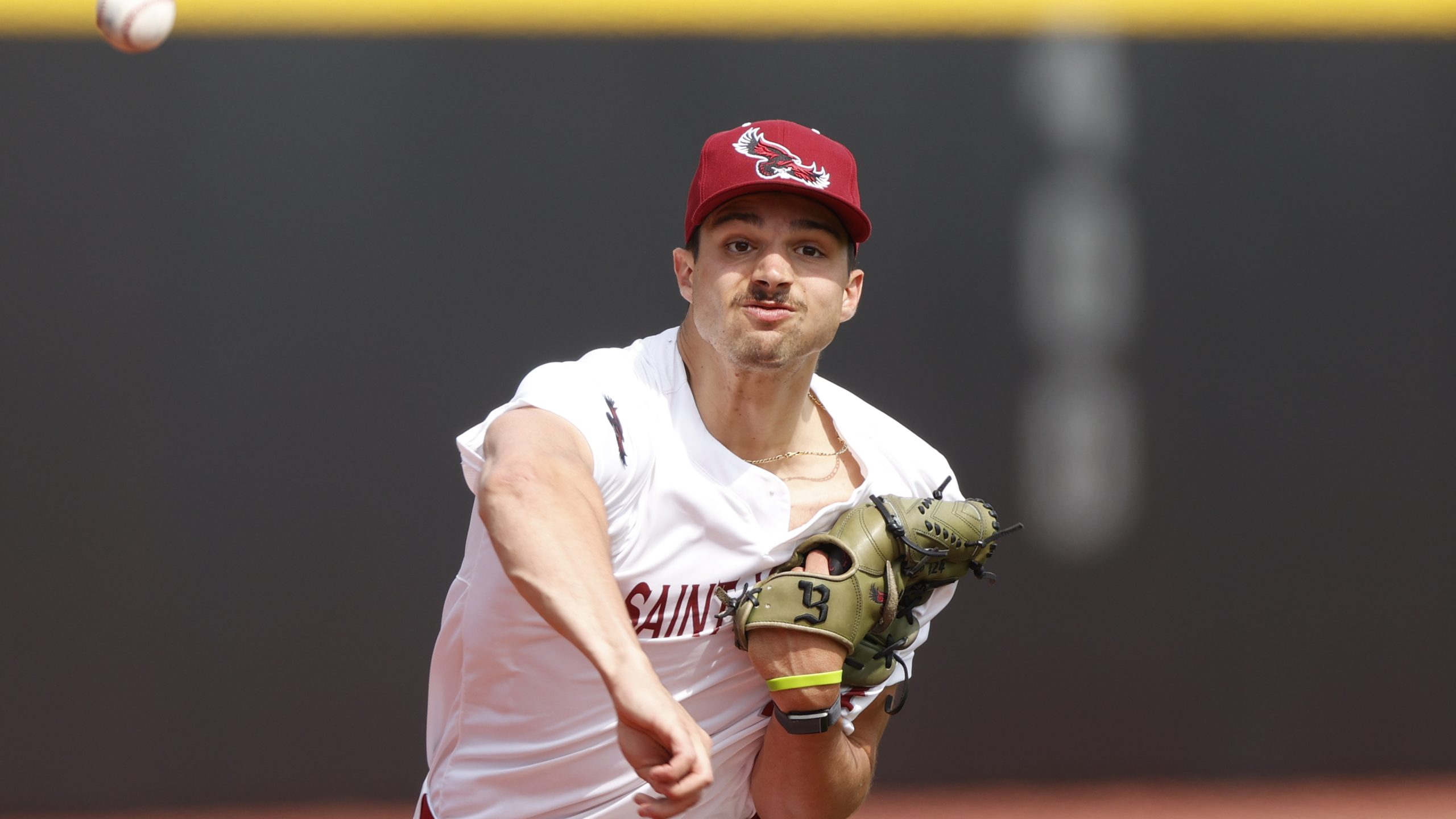
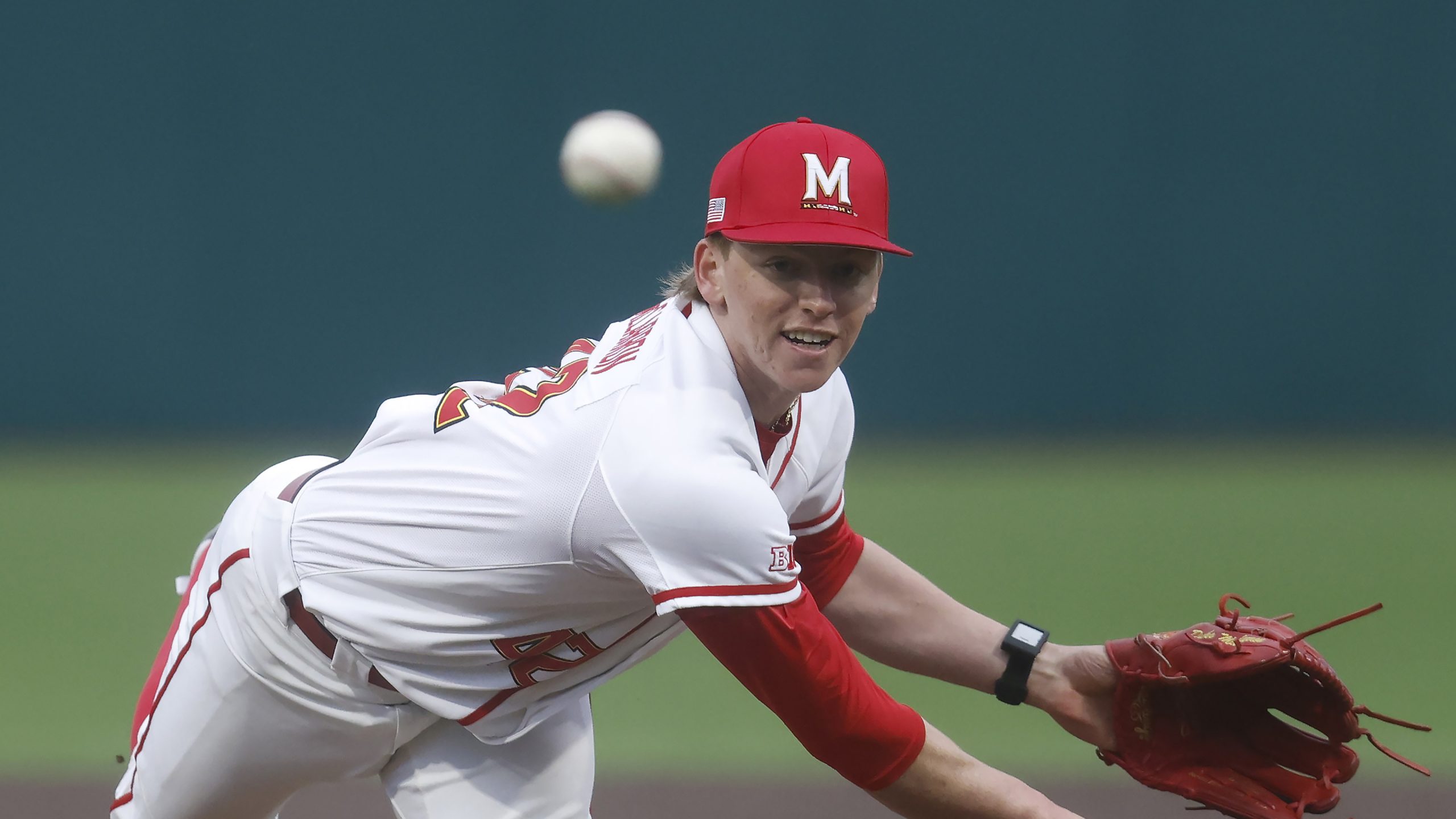
    The 6-foot right hander spent his junior year with the Hawks after spending a season at Maryland and one at State College of Florida. He finished this season with a 5.27 ERA after pitching 70 innings, starting all 15 games he appeared in for a 4-3 record.

    Duke McCarron spent one season at Maryland before transferring to St. Joe’s.Mike Buscher

    McCarron, one of the main arms for St. Joe’s this season, hails from Ventnor, N.J. and played baseball for Ocean City High.

    18th Round

    Philly’s Mark Quatrani went to the Padres with the 545th pick.

    A graduate of the Haverford School and a junior at Notre Dame, Quatrani earned a Buster Posey National Collegiate Catcher of the Year Semifinalist and a second team all-ACC nod after only his first season with the Fighting Irish.

    In his 53 games started, the 5-11 catcher posted the best batting average on the team, with a .376, also leading in hits (80), RBIs (66), and slugging percentage (.643). Quatrani was second on the team in home runs (15) and total bases (137). Defensively, he caught 14 runners out during the season.

    19th Round

    The Phillies had another local selection with the 579th pick, drafting Braeden Lipoff from Gloucester Catholic.

    The 5-11 catcher batted .459 during his senior year with the Rams and is the 18th-ranked catcher nationally for the Class of 2026, according to Perfect Game. A native of Woolwich, Gloucester County, he ranks second for catchers in his class from the state.

    The East Carolina recruit was also a two-time all-state honoree and played a role behind the plate in three of Gloucester Catholic’s four consecutive state titles.

    20th Round

    Late in the final round of the draft, Lafayette’s Tristan Helmick was drafted by the Cleveland Guardians at 602nd overall.

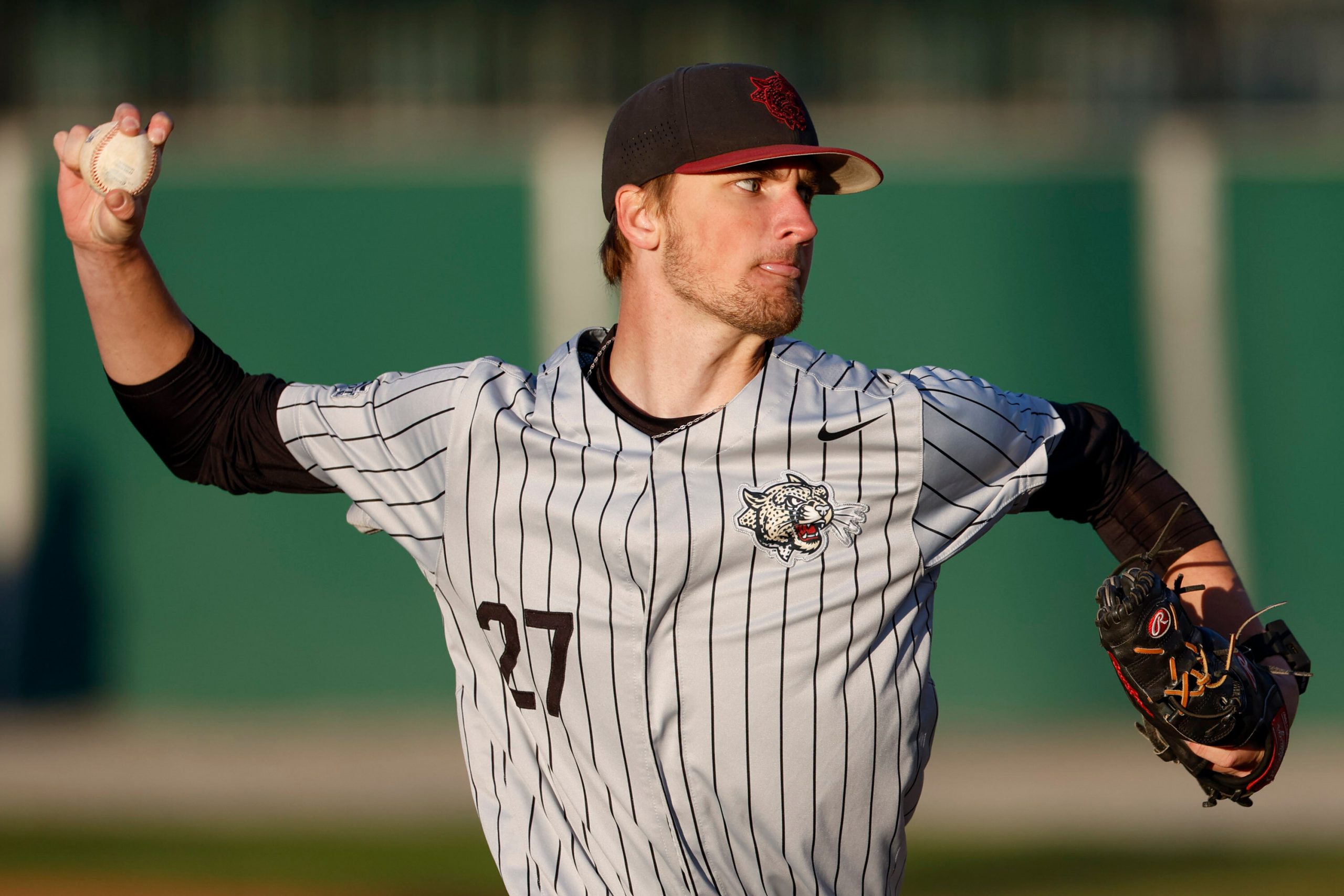
    In his third season with the Leopards, Helmick had 11 appearances on the mound, all of them starts, owning a 5.78 ERA, 62 strikeouts, and a 1.48 WHIP with 62.1 innings pitched.

    Tristan Helmick posted a 1.48 WHIP last season.Greg M. Cooper

    The 6-6 right hander, originally from Fort Washington attended La Salle College High, where he was first team all-catholic and first team all-county, finishing his senior year with a 2.30 ERA and 6-1 record with 48.1 innings pitched.

    The penultimate pick of the draft belonged to the Toronto Blue Jays, who selected Eddie Rosado Jr. from Holy Ghost Prep.

    The 6-foot left-handed batter led Holy Ghost Prep in batting average (.463), OPS (1.545), hits (37), runs (44), and home runs (8), also setting the school career hit record with 111.

    The outfielder from Bristol is committed to St. Joe’s and was ranked second in the state nationally for outfielders in his class by Perfect Game. He was also named to the 2026 Class 4A all-state team.

  • Yardley’s Aiden Robbins and Moorestown’s Ryan Lynch selected in third round of MLB draft

    Yardley’s Aiden Robbins and Moorestown’s Ryan Lynch selected in third round of MLB draft

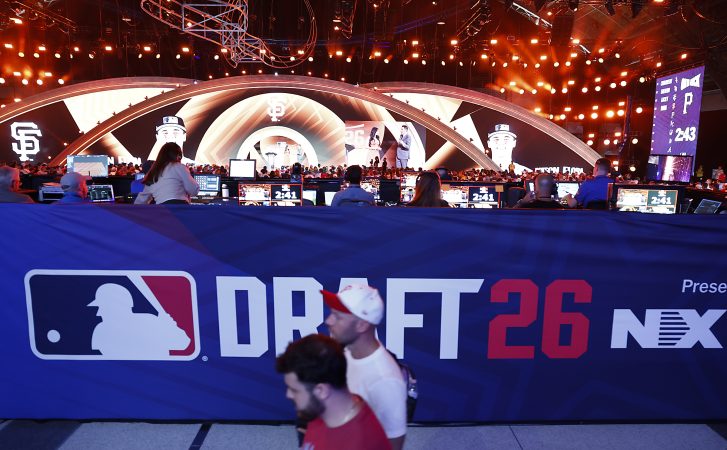
    The All-Star festivities continued this weekend as the MLB draft was held at the Pennsylvania Convention Center, marking the first time that Philadelphia has hosted the event.

    However, for the second consecutive year, there wasn’t a single draftee in attendance. Spectators certainly showed out. Fans repping jerseys from across the league filled the space to celebrate future MLB talent.

    MLB Network’s Siera Santos and Robert Flores, along with Eliza Andrus served as the draft hosts, and fans were treated to a parade of mascots, karaoke, and Home Run Derby prize tickets while teams were on the clock. The West Powelton Steppers, also known as the Phillies Bassline, also contributed to energizing the crowd.

    League commissioner Rob Manfred was met with a chorus of boos as he offered his opening remarks, where he highlighted the city and America’s 250th.

    “There’s no place more fitting to celebrate the games future than a city that has helped define its past,” Manfred said.

    Fans cheer during the 2026 MLB draft at the Pennsylvania Convention Center on Saturday.Yong Kim / Staff Photographer

    “From Hall of Fame legends Dick Allen, Richie Ashburn, Steve Carlton, and Mike Schmidt, to World Series champions Cole Hamels, Ryan Howard, Jimmy Rollins, and Chase Utley, generations of Phillies greats have inspired the passionate fans in this city. [On Saturday], that historic spotlight turns to a new wave of players who may one day evoke the same type of admiration for these young men and their families. Today marks a life-changing milestone on their journey.”

    Rollins was in attendance and made an appearance on stage with Greg Luzinski. Hamels was also present as one of the analysts for the draft coverage, alongside Mark DeRosa, Harold Reynolds, and Dan O’Dowd. MLB Network’s Greg Amsinger was the broadcast’s host.

    Saturday consisted of the first four rounds and Sunday will conclude the remaining 16. Here’s a look at the locals who were selected on Day 1.

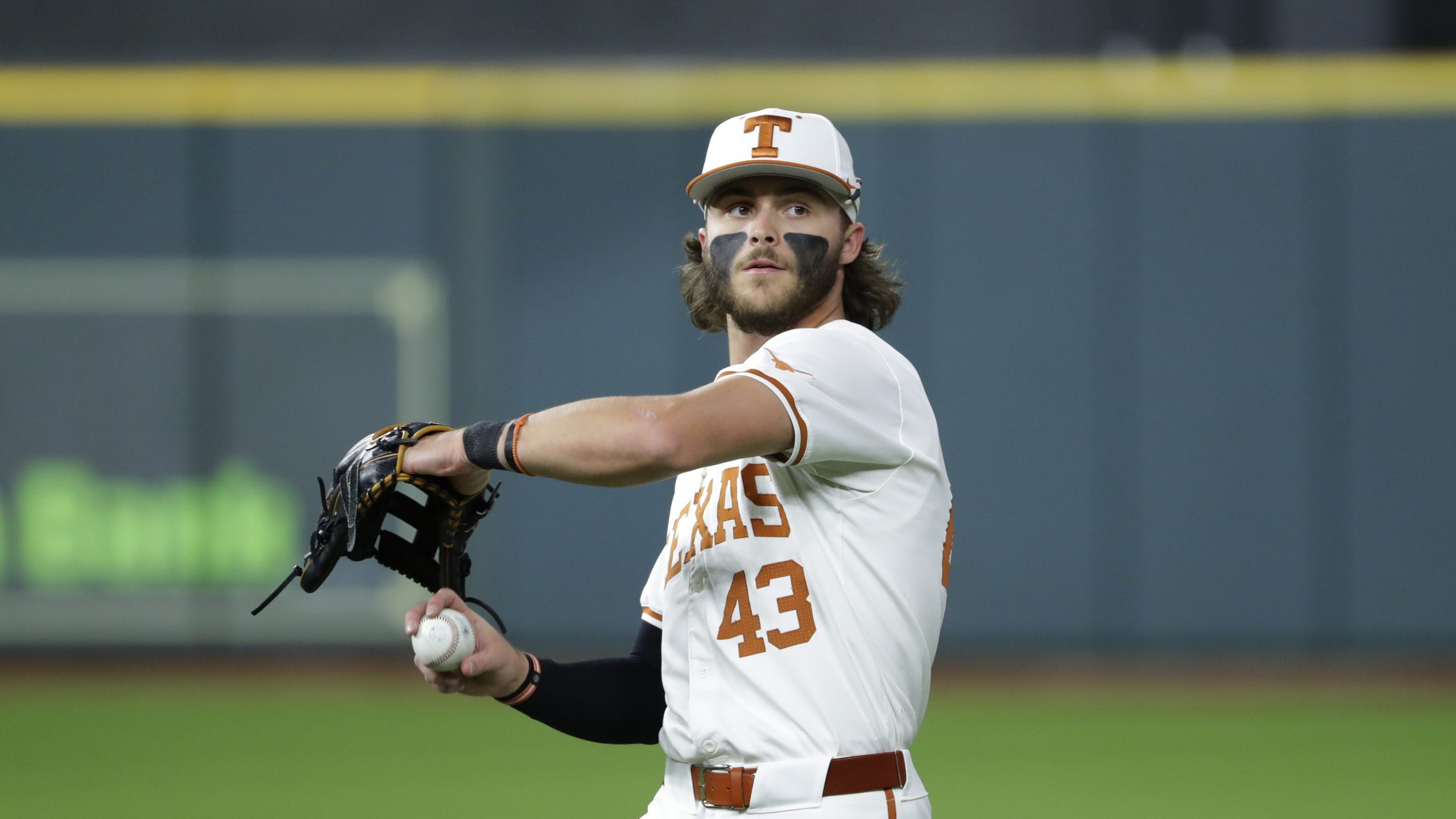
    Texas outfielder Aiden Robbins during an NCAA baseball game against Coastal Carolina on Friday, Feb. 27, 2026, in Houston. (AP Photo/Michael Wyke).Michael Wyke

    Third round

    The first area player off the board was Holy Ghost Prep graduate Aiden Robbins, a Yardley native, who was selected by the New York Mets with the 92nd overall pick.

    The 6-foot-2 outfielder transferred to Texas this past season after spending his first two years of college at Seton Hall, where he led the Big East with a .422 batting average.

    With the Longhorns, Robbins was among the team leaders in average (.333), OPS (1.122), runs (68), hits (79), total bases (165), and slugging percentage (.696). He also was a key contributor to Texas’ run to the College World Series. The Longhorns were eliminated by Georgia and finished fifth nationally. Robbins capped his junior season with 24 homers and was named SEC Newcomer of the Year.

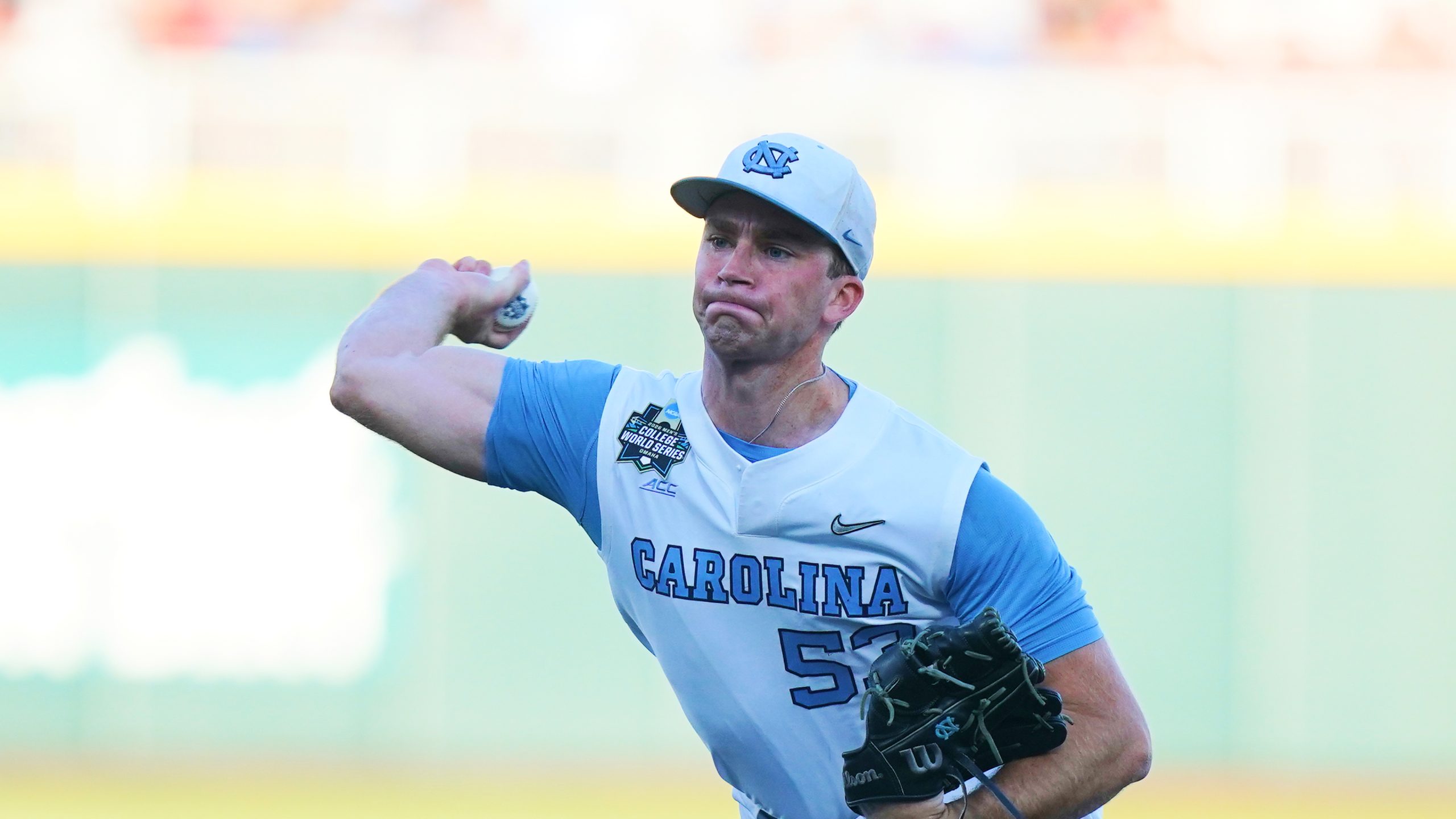
    Moorestown High product Ryan Lynch was drafted 97th to the San Diego Padres.

    Lynch, a 6-3 right-handed pitcher, spent most of his freshman year with North Carolina in a reliever role, before earning starts in the postseason. Following his freshman season, Lynch earned freshman second team All-American honors by D1Baseball and Baseball America, along with a spot on the 2025 USA Baseball Collegiate National Team.

    As a sophomore, Moorestown native Ryan Lynch started in 18 of his 19 appearances, finishing the season with a 4.21 ERA and 89 strikeouts in 98⅓ innings pitched.Vera Nieuwenhuis

    This year, as a sophomore, he started in 18 of his 19 appearances, finishing the season with a 4.21 ERA and 89 strikeouts in 98⅓ innings pitched. He finished his two years with a 10-5 record, 161 career strikeouts, 61 walks, and a 3.72 ERA.

    During the Tar Heels’ run in the College World Series, Lynch pitched in North Carolina’s first win over West Virginia, throwing 4⅔ innings, giving up two runs. In Game 2 of the final series against Oklahoma, Lynch left the game in the fourth inning with an oblique injury after recording five strikeouts and giving up two earned runs.