Category: High School Sports

  • New PIAA rule lets these Holy Ghost Prep students play football with their hometown schools

    New PIAA rule lets these Holy Ghost Prep students play football with their hometown schools

    Last October, the Pennsylvania Interscholastic Athletic Association (PIAA), the governing body of high school sports in the state, initiated a policy that would allow students attending faith-based private schools to play sports for their home public school district, if the faith-based private school they attend does not offer a particular sport that their home school district does.

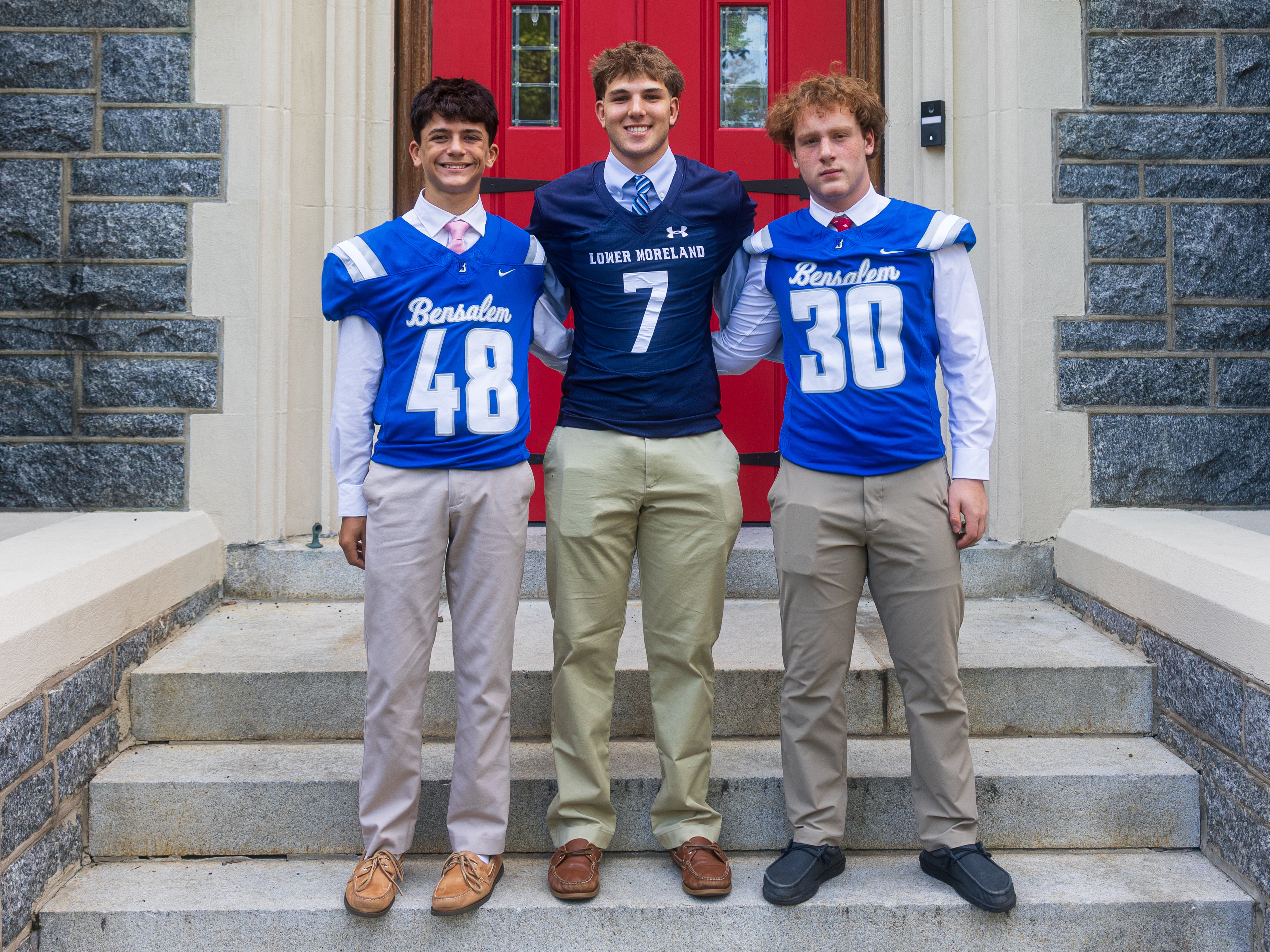
    Holy Ghost Prep, the newly minted member of the Philadelphia Catholic League this sports season, does not have a football program. So the new PIAA policy allows students to play football for their home school districts. Three HGP students have made that move: freshmen Connor Gear and Brennan McDonough, who both play for Bensalem High School, and senior Andy Lynch, who has made an immediate impact for Lower Moreland High as a two-way starter in his first year of playing football.

    McDonough, who is 5-foot-11, 190-pounds, is a starting outside linebacker and a backup running back on varsity. Gear, at 5-8, 130-pounds, is the backup junior varsity quarterback. Lynch, at 6-3, 210 pounds, is a starting defensive tackle and tight end for a 4-1 Lower Moreland team that is ranked No. 4 in District 1 Class 4A.

    It is a unique situation for the trio, more so for Lynch, who never played organized tackle football before this fall.

    “I always thought about playing football,” said Lynch, who attended school in Lower Moreland district until eighth grade and is the manager of the HGP basketball team. “I was at my friend Cole’s house last November when my friend’s dad [Mike Zalewski], who is Lower Moreland’s offensive line coach suggested I try out. In early January, I started working out with the team once I found out this new [PIAA] rule was passed. We’re winning games, it’s pretty cool. Once I knew I was playing, I started lifting every day. I had a lot of learning to do. I’m still learning. … It’s been a great experience, reuniting with the guys I grew up with.”

    Lynch reshaped his frame and had to be shown how to put on football pads for the first time in August. He’s learned fast. He has three sacks in four games (Lower Moreland beat Jenkintown by forfeit when Jenkintown ended its season due to low participation).

    “Andy has been amazing,” Gregorio said. “He’s been doing an unbelievable job. He works hard. He is so raw, I think he could play at another level. He’s very athletic. He has one catch for 16 yards. We’re doing well and Andy has been a big part of that. We beat Tennent a few weeks back, which is the first time we’ve beaten a Suburban One team in decades.”

    Gear and McDonough represent the future of a Suburban One League team that has struggled. Bensalem has not had a winning record since going 6-5 in 2004. Gear and McDonough are hoping to change that. The Owls have had a couple of years in 2024 and 2025 when they went 5-5. Bensalem is 1-4 this season.

    “We’re in games,” said McDonough, whose father picks him up every day at 2:30 p.m. from HGP to Bensalem for 2:45 p.m. practice. “We should be 3-2. The mental aspect has been the biggest adjustment, being a freshman and starting on defense. Time management has been good. I get home at 6:30 every night. It is like going to two schools. I know everyone on my team, because I grew up with all these guys.”

    Gear played football until the fifth grade before giving it up. Once he heard about the new PIAA rule, he wanted to try football again.

    “It’s been an adjustment, learning all the plays and getting them in, but right now, I’m sitting in a good spot,” Gear said. “I’m also reading defenses, which is a challenge for me. I truly do like football. I jumped on the chance to play again. What I like most is how the coaches push us. The guys at Bensalem are really surprised that I go to Holy Ghost and I play for Bensalem. I tell them I love the game. The plan is to continue doing this the next three years.”

    Pennridge is No. 1 again

    Pennridge is riding a special motivation this season. The Rams are coming off a record-setting 2025 year when they won 13 games for the first time in program history, finishing 13-2 overall and reaching the PIAA District Class 6A championship before losing 21-14 to North Penn. Instead of taking their district silver medals home, the Rams hung them up in the school weight room, tangible reminders of just how close they came to capturing their first district championship.

    For the second-straight year, the Rams have started 5-0. but this year, they only have 11 seniors. Pennridge coach Kyle Beller has done an impressive job of keeping the Rams on top after graduating a core group, including starting quarterback Noah Keating to Marist.

    The Rams seem to be even better than they were a year ago, when they beat North Penn during the regular season for the first time since October 2012.

    Only two years ago, the Rams were 4-7.
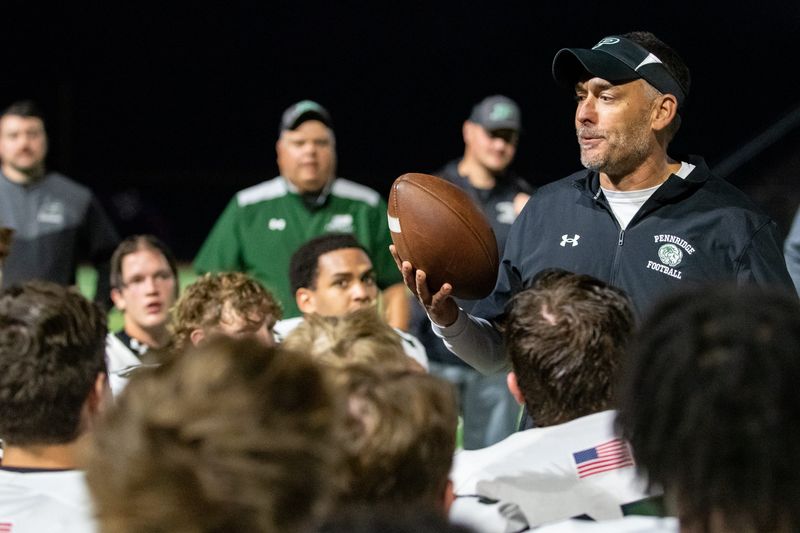
    Pennridge head coach Kyle Beller has led his team to a 5-0 start for the second straight year.Michele C. Haddon / Bucks County

    “No one expects to start a season 5-0, and the teams we beat were district playoff teams,” said Beller, who is in his fourth season. “We had a young team coming in, and this is a credit to the guys of playing to the standard of what we want.”

    Junior Aiden Tetkowski has taken over at quarterback and junior Trevor Picciotti, the nephew of former CB West great Dustin Picciotti, is the Rams’ bull, rushing for 509 yards on 93 carries and averaging 101.8 yards rushing a game. Senior wide receiver Sean Leuthe averages 15.5 yards a catch, while senior linebacker Brody Blomgren and junior linebacker Blake Landherr lead the team in tackles.

    Beller did not mention last year’s success to this team, even though the Rams are a combined 18-2 over these last two years, the best record in District 1 Class 6A.

    “The message was to trust our process. We spoke about playing to our standard and playing with grit,” Beller said. “A lot of freshmen and sophomores got playing time last year. The biggest surprise of this group has been learning to grow up faster. The senior group that graduated did take a lot of lumps (going 7-15 their sophomore and junior years). It’s why we won a lot of close games last year. This group is very even keeled. They just keep playing.”

    Right now, it’s a Pennridge team that looks like it could keep playing into deep November.

    The secret behind Great Valley’s emergence

    Great Valley was a combined 6-14 over the previous two years. The Patriots may be one of the biggest surprises in the area this season, beginning 5-0 and rising to a No. 3 rank in PIAA District 1 Class 5A. The team has been buoyed by the play of 5-10, 185-pound junior tailback Beau Kosmalski, who has scored 17 times, including two five-touchdown games this season, and rushed for 933 yards overall.

    Patriots coach Gary Phillips is in his second year of his second stint at Great Valley and 19th overall, after his previous tenure from 1992-2010.

    “I knew the kids and what they could be this year,” Phillips said. “What we focused on was the weight room. They bought in. We started lifting a week after the season ended last year. They worked and worked, and the kids invested into it. Across the board we added 10 to 20 pounds of weight to each player’s lift. It’s reduced injuries, added size, and we have a small number of seniors. This junior class played as sophomores and gained valuable experience. I put in the defense last year and the kids know it. They move faster. The real leap has come on offense.

    “Beau is just different.”

    Kosmalski already holds the Great Valley single-season and career rushing touchdown records (32). Last year he rushed for 945 yards in 10 games. He is just 13 yards from exceeding that this year on a team with 10 seniors on a 45-man roster. Great Valley may be small in numbers, but is large up front with Alan Johnson, a 6-2, 250-pound junior center, 6-3, 290-pound junior right tackle Dean Hickman, who has fully recovered from a broken leg suffered last fall, and 6-2, 270 senior right guard Najee Dorsey.

    Another victory by Great Valley, which will host West Chester Henderson at 7 p.m. on Friday night, would equal the combined number of victories the Pats had the previous two years.

    Kosmalski distinctly remembers the down years. He still lugs the bricks from those 3-7 seasons.

    “The culture here has changed, and everyone knows it,” said Kosmalski, who is 15 pounds heavier than he was last year and is getting Ivy League attention. “Everyone is committed. When everyone wants it, it’s unbelievable. And everyone on this team wants to win. We have a bunch of guys on this team who want to be physically dominant. I’ll admit it, we have a chip on our shoulders. There was a lot of chirping on social media at us last year, a lot of teams laughed at us; not so much this year. We feel we can beat any team we face.”
  • Hiring youth sports officials in N.J. has become challenging, and new rules could exacerbate the problem

    Hiring youth sports officials in N.J. has become challenging, and new rules could exacerbate the problem

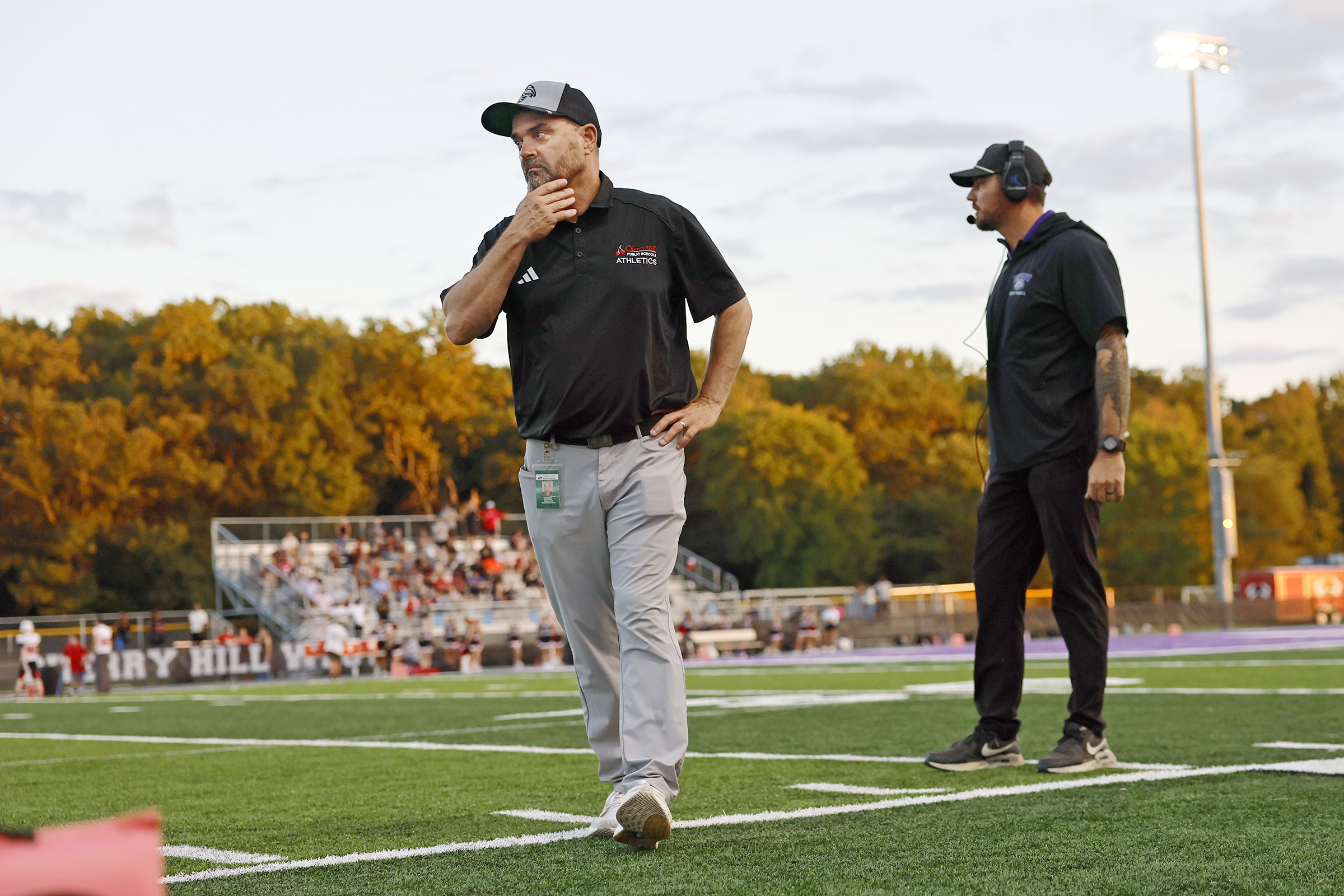
    Michael Beirao, the athletic director for Cherry Hill Public Schools, manages about 1,800 athletic events each academic year — with about $130,000 to pay referees for all of them.

    The cost of hiring a ref has increased, while the number of officials participating has declined.

    In Cherry Hill, Beirao oversees two large high schools, East and West, which have 63 varsity teams, plus another 60 or so junior varsity and freshman groups. The middle schools — Beck, Rosa, and Carusi — each offer 17 sports programs.

    His $130,000 — with $100,000 for the high school level and $30,000 for middle school — for officials is considered “a large budget,” Beirao noted.

    The change of officiating classification could be slow and gradual. However, it could mean eventual higher property taxes and cutting athletic programs from public schools if they can’t afford the cost, say South Jersey athletic directors.

    “It would be devastating, because I’ll use Cherry Hill Public Schools as an example; this year we had to cut our budget by $14 million,” Beirao said. “How do you make a decision between keeping a teacher during the day and having an official after school?”

    Meanwhile, Beirao noted, school sports programs face competition from clubs and private-equity-owned programs. Requiring schools to hire referees as employees would be an added “burden,” he said.

    “It wouldn’t be feasible, and it wouldn’t be a tenable situation,” Beirao said.

    Ken Schoudt, athletic director for the Delsea Regional School District, asked an umpire association how much it would charge for an official classified as an employee instead of an independent contractor. The cost tripled.

    “For one umpire at the varsity level, is $110. For them to break even and make the same amount of money, they would have to charge us close to $350,” Schoudt said.

    But a proposed bill could help. If passed, it would classify all officials as independent contractors under state law.

    What is New Jersey’s ABC test?

    The New Jersey’s Department of Labor and Workforce Development presumes all workers who make compensation in the state are employees, unless they satisfy all three prongs of the ABC test to be classified as an independent contractor. Some changes to the rule are set to take effect Oct. 1.

    New Jersey Sen. Kristin M. Corrado (R-District 40) said the system’s new regulations make it even more difficult to be classified as an independent contractor.

    Umpires, referees, and other officials are generally paid on a per-game basis and employed primarily in other occupations and supplement their income by officiating part time, according to the U.S. Bureau of Labor Statistics data.

    Most officials work through agencies for each sport. The high school and youth programs go to those agencies for assigning games.

    New Jersey Gov. Mikie Sherrill’s administration is instructing some agencies to classify their workers as employees. But for “100 years we’ve always been independent contractors,” said John Gallante, president of the New Jersey Umpire Alliance.

    The state’s labor department said it’s not targeting sports officials, but “whether a worker is an employee or an independent contractor depends on the specific facts of each individual’s working relationship, under New Jersey’s ABC test.”

    Michael Beirao is the athletic director for Cherry Hill Public Schools.

    New Jersey adopted the ABC test in 1936 under the state’s Unemployment Compensation Law.

    Thirty-three states use some version of the ABC test to determine worker classification. In New Jersey, paid workers are presumed to be employees unless they meet all three of the following:

    • Prong A: individual has been and will continue to be free from control or direction over the performance of services, both under the contract and in fact.
    • Prong B: the services are either outside the usual course of the employer’s business or are performed outside of all the employer’s places of business.
    • Prong C: the individual is engaged in an independently established trade, occupation, profession or business.

    The test is used to enforce wages, benefits, and labor protections. Misclassification can result in significant financial penalties for employers, according to the NJDOL.

    What are the new regulations?

    In May, the state labor department clarified the test’s rules with new regulations in response to court cases in recent years involving worker classifications.

    It is set to go in effect Oct. 1.

    The clarifications, according to New Jersey law firm Cole Schotz, include:

    • The business must prove it does not exercise control over the worker and has not “reserved the right to control the individual’s performance.”
    • Work is not outside the usual course of business if it is “integrated into the hiring entity’s business,” even if the work is done off premises.
    • The worker must have proof of their independent business, that would keep running even if they lost this specific contracted job.

    Corrado said the new regulations put further and narrower definitions on each of the prongs, making it more difficult to be an independent contractor in New Jersey.

    “The ABC test itself is not new and neither are the problems that come with it,” Corrado wrote in an email. “These regulations would exacerbate those problems.”

    How are amateur officials being impacted?

    Gallante, of the New Jersey Umpire Alliance, recalled that two years ago an amateur official incorrectly filed for unemployment.

    “The officiating association responded and said they don’t have any employees,” said Gallante, whose organization represents 13 certified baseball and softball officiating associations. “So that claim was denied. But then it prompted an unemployment audit of that association.”

    The department determined from its audit that all officials in the association should be classified as employees, Gallante said, and that the association should backpay unemployment dating back to 2020. That “would in essence put them out of business. They would no longer be able to function,” he said.

    Gallante added, “the Department of Labor has told us that in ‘fairness,’ they would examine all the other officiating associations in the state as well.”

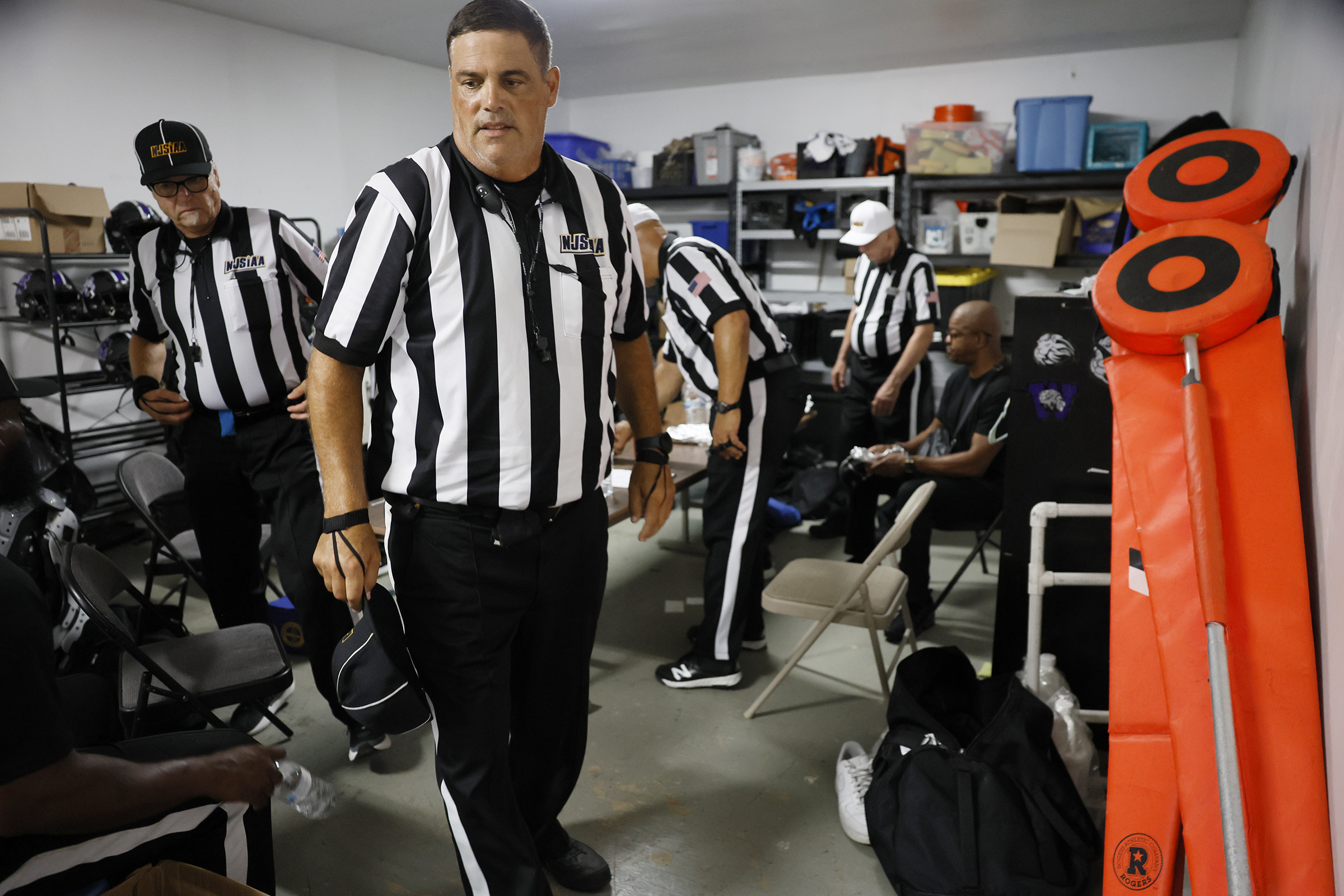
    NJSIAA officials John Lovenduski spots the football while Bruce Carter signals a first down during the Cinnaminson and Cherry Hill West game on Sept. 18.Elizabeth Robertson / Staff Photographer

    The state labor department said it “does not comment on ongoing legal or administrative proceedings.” And labor commissioner Kevin Jarvis said he could not give examples of what differentiates an employer from an independent contractor.

    Corrado said the Sherrill administration levied a fine that could put that association out of business, which would impact thousands of youth baseball and softball games.

    “Thankfully, the organization is standing strong against the Department of Labor and fighting this determination,” Corrado added.

    An organization with employees must account for payroll, unemployment, disability, workers’ compensation, wage and hour requirements, and other employment laws — all of which comes with a cost.

    Corrado emphasized the uncertainty is problematic: “A Little League, travel tournament, high school, or other organization should not need lawyers and accountants to determine whether classifying someone who officiates a few games qualifies as an independent contractor.”

    Who is trying to change this?

    Corrado introduced bill S4045 in March, along with Sen. Paul A. Sarlo (D-District 36) and Sen. Latham Tiver (R-District 8).

    If passed into law, it would specify that amateur sports officials are not employees under state employment laws.

    “It would ensure that youth sports officials are able to work when they want, where they want, and how much they want,” Corrado said. “It would also allow youth sports organizations and high schools to continue to pay the officials at the rates they are accustomed to, not needing to worry about the burden of payroll taxes or workers’ compensation insurance.”

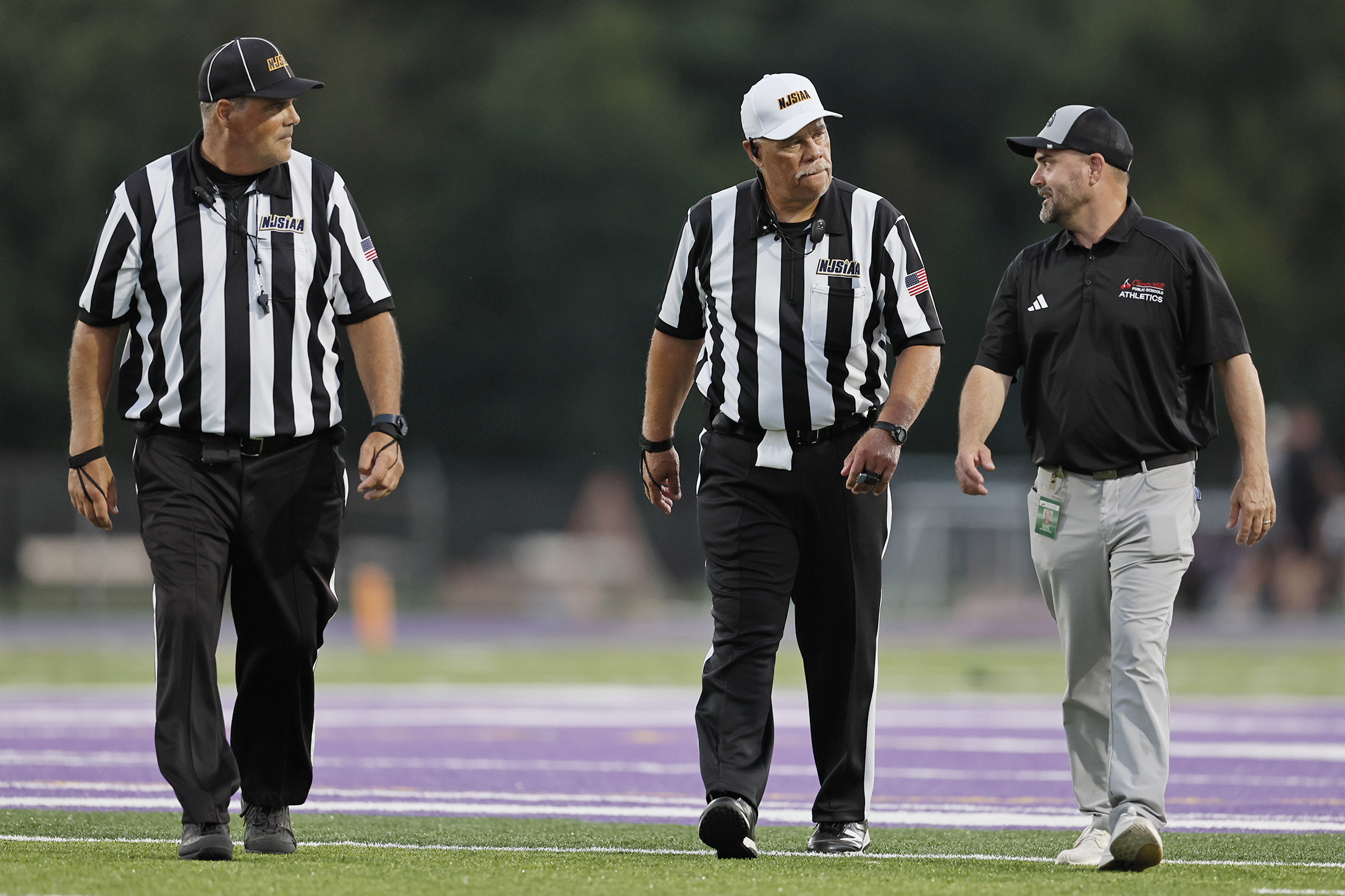
    NJSIAA official John Lovenduski (front) and the rest of the officiating crew head back to the field after a meeting at halftime during a game between Cinnaminson and Cherry Hill West on Sept. 18.Elizabeth Robertson / Staff Photographer

    The bill is pending in the Senate and Assembly labor committees.

    The New Jersey State Interscholastic Athletic Association (NJSIAA), which oversees and registers high school sports officials in the state, said in an email to The Inquirer that it is monitoring the issue and has been in conversations with lawmakers and regulators.

    “We recognize the potentially significant impact this could have on interscholastic athletics and continue to make sure policymakers understand the critical role officials play,” a spokesperson wrote. “Our position is clear: high school sports officials are independent contractors and should continue to be treated as such.”

  • Pope John Paul II grad Kevin Heywood overcame an ACL tear to become Wisconsin’s starting OT

    Pope John Paul II grad Kevin Heywood overcame an ACL tear to become Wisconsin’s starting OT

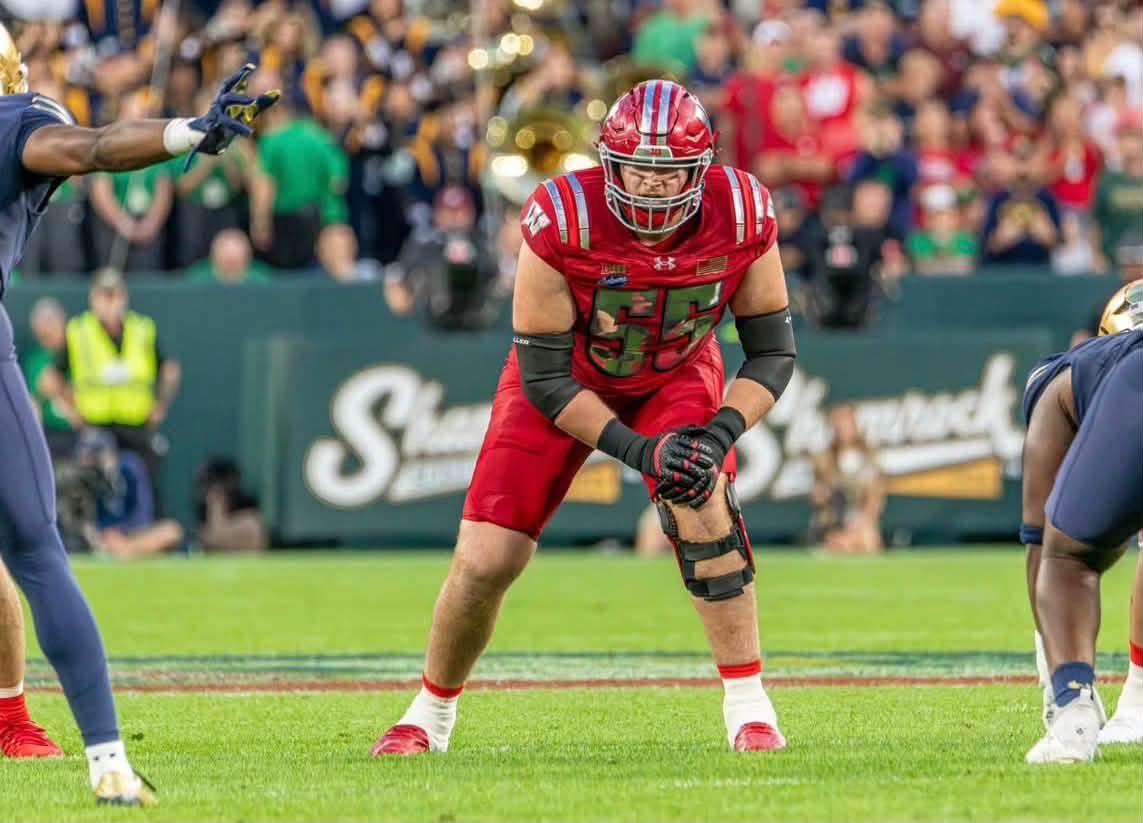
    MADISON, Wis. — Kevin Heywood ran onto the field, in a stadium filled with fans donning the blue and green of Notre Dame and the white and red of Wisconsin. For the second time in school history, the Wisconsin Badgers made the two-plus hour trip to face Notre Dame on Sept. 6 at Lambeau Field, home of the Green Bay Packers for the last 69 years.

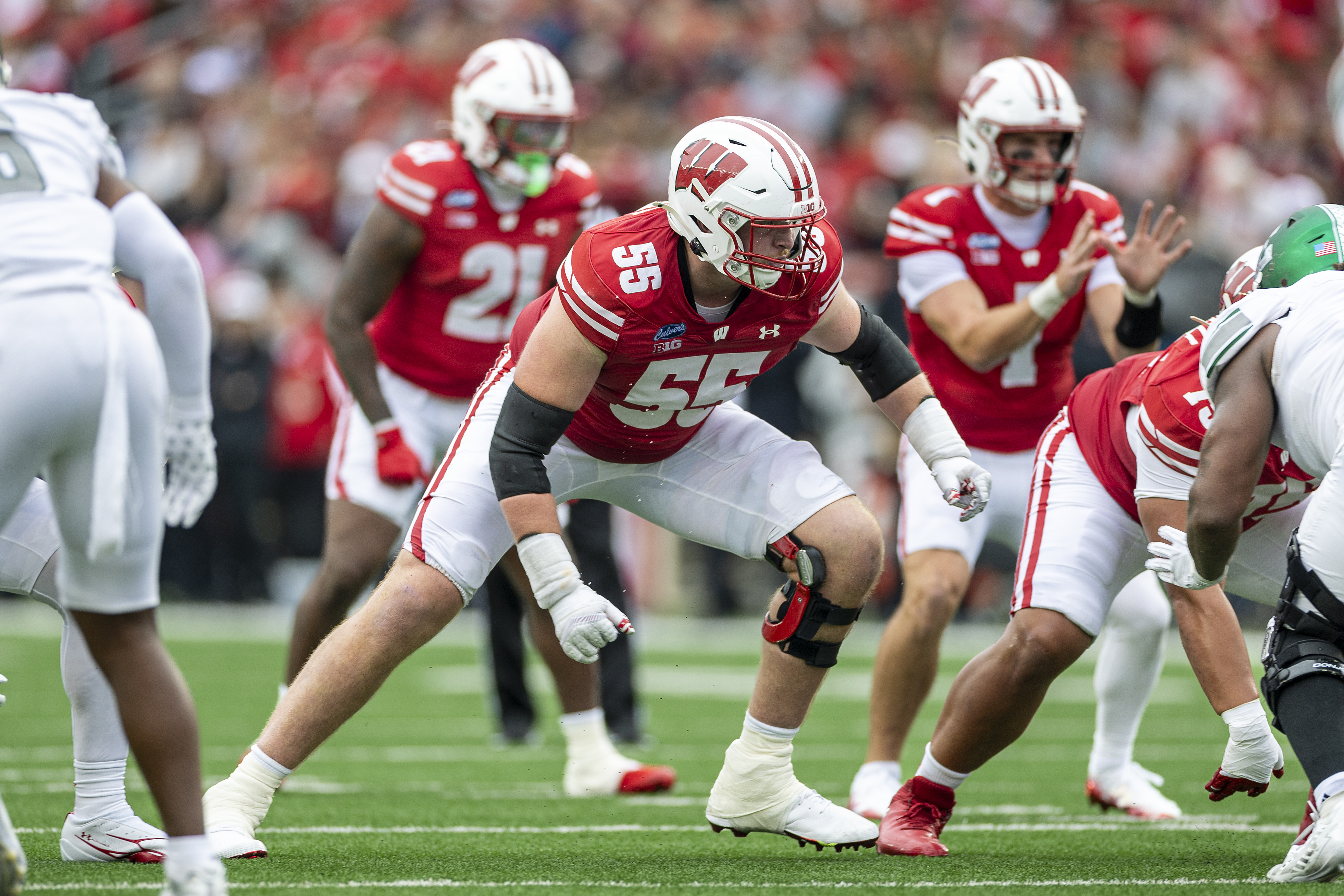
    Nearly three weeks since the junior made his first collegiate start at right tackle for Wisconsin, the Pope John Paul II graduate, who stands at 6-foot-9, 320 pounds, looked beyond the Camp Randall Stadium stands after Tuesday’s practice with the vivid memory he’ll keep with him for a while.

    “It was crazy,” Heywood told The Inquirer, as he shook his head in disbelief of the experience. “It was really cool. Just running out, look up. It’s just like 50/50 [between the two fan bases] in the stands. … Wish [we] came out with the dub, but learned a lot from that game, [grew] from that game, and just got to keep rolling.”

    Rolling from Lambeau Field to now Beaver Stadium, in fact. Wisconsin (2-1) opens Big Ten play three hours west of his hometown Royersford, in a place he knows well. Penn State runs in the family.

    His older sister, Claire, graduated from Penn State in May, and Heywood had deeps ties with the program when James Franklin was still the head coach. Deion Barnes, the North Philly native who was the D-line coach at Penn State and now coaches at South Carolina, was Heywood’s former trainer and developed a close relationship with the lineman.

    But Heywood ultimately chose Wisconsin, and his journey will come full circle for Saturday’s game at Beaver Stadium (5 p.m., Peacock).

    “Just being a kid from Pa., going on a bunch of visits [at Penn State] in high school, it was cool,” Heywood said. “I think it’s a really cool atmosphere for us to play in and [it’ll] be a fun environment for sure.”

    Wisconsin offensive lineman Kevin Heywood blocks against Eastern Michigan on Sept. 19.Courtesy of Wisconsin Athletics

    Bouncing back from injuries

    Getting to this point wasn’t always as clear-cut. Heywood early enrolled at Wisconsin in 2024 and mostly played on special teams as a freshman.

    Last year, heading into his sophomore season as a projected starter at left tackle, Heywood tore the anterior cruciate ligament in his knee during spring practice, ending his 2025 season.

    Heywood returned this spring and once again went into this season as a projected starter, but the setbacks continued when he got injured on the second day of fall camp. His starting debut against Notre Dame seemed in doubt, but he was cleared to play a few days before the season opener.

    “I’m so proud of how he’s buckled down and fought through the adversity of all the injuries,” said his father Erik Dougherty. “He’s taking everything and [running] with it. We put a lot of stuff in front of him, had him with a lot of people to get him to where he’s at now, but he utilized all those people — and it’s just awesome.”

    Added Heywood: “I think the trainers and the strength staff made it very easy. If you’re motivated to come back, you got every tool, every resource to do to get healthy. And I feel better than I did before.”

    As he battled his ailments, Heywood also had to endure a coaching change at offensive line. Eric Mateos, who previously coached at Arkansas, was hired last winter to be the new Wisconsin offensive line coach.

    The Royersford native says Mateos has taught him to “never be satisfied” and appreciates how “hard he is on us.”

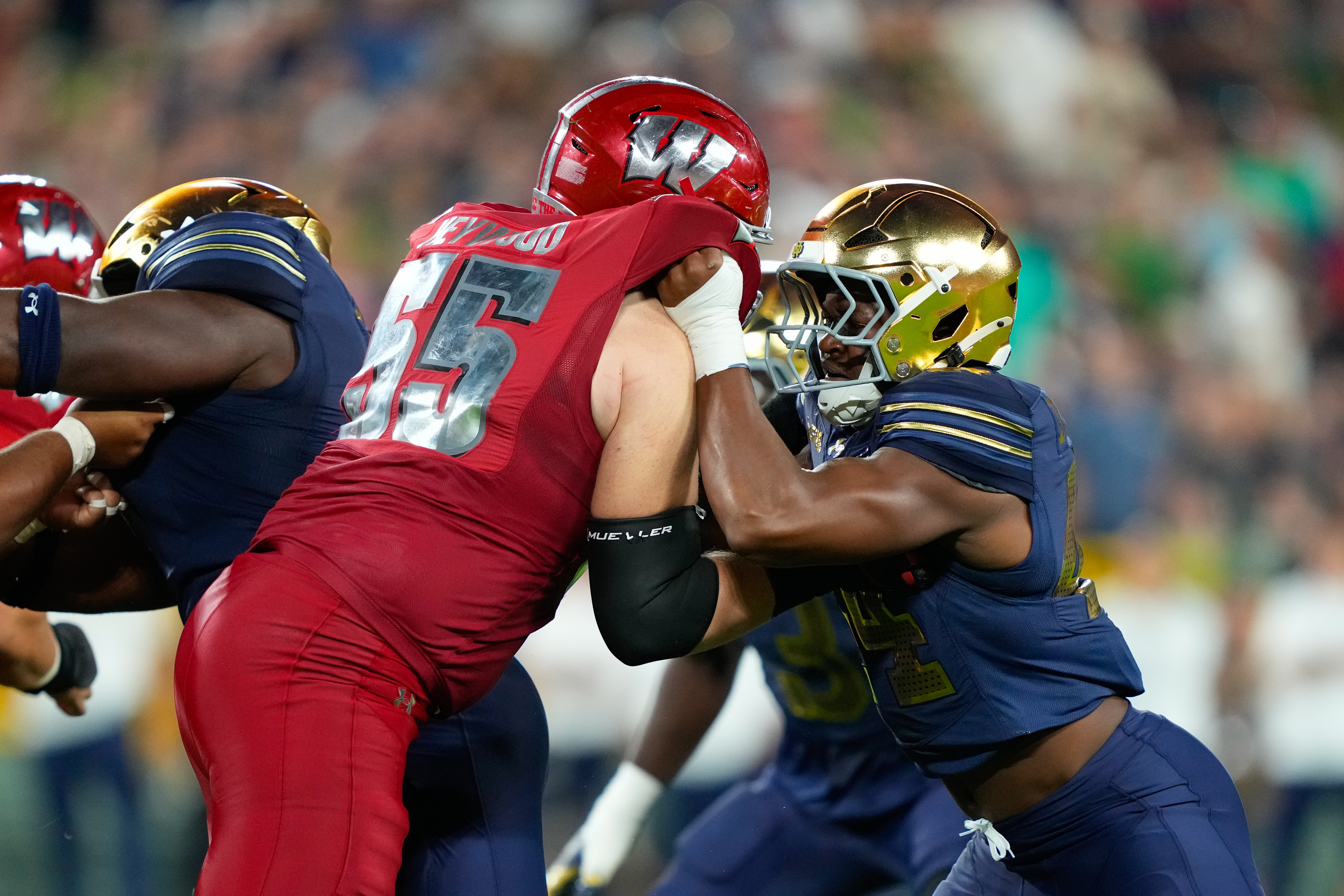
    Notre Dame defensive lineman Rodney Dunham (44) against Wisconsin offensive lineman Kevin Heywood (55) on Sept. 6.Kayla Wolf

    “He’s pushing everyone in a different way every day,” Heywood said. “There’s always time to clean up on a rep. It’s never going to be perfect. Even when you win a game, you still have to correct yourself and be better and be very hard on yourself.”

    Facing the wall

    Every time Heywood walks into the team meeting room, he sees the faces of the past Wisconsin All-American linemen. From Joe Thomas to Ryan Ramczyk to Tyler Biadasz, Heywood is reminded of the standard set before him to play on the offensive line.

    Thomas and former Rams tackle Rob Havenstein are among the former Badgers linemen who come through to visit, Heywood says.

    “Starting is the start of all of it, so I got that down,” Heywood said. “Just got to keep working on my fundamentals and techniques. I have that nastiness. I just need to clean up everything around it, and I’ll be right there with them.”

    Heywood learned from other professionals, too, this summer. Heywood and four offensive linemen attended the OL Masterminds summit, which Eagles right tackle Lane Johnson is the cofounder of. Wisconsin’s starting center, Austin Kawecki, grew up in Frisco, Texas, where the summit is held, and hosted Heywood and his teammates after the sessions.

    “I’d say the biggest thing I took away is just at the end of the day, it’s still a nasty game up front,” Heywood said, while noting he learned some techniques specifically from Johnson as a fellow right tackle. “You can be taught all the techniques in the world, but if you don’t have that edge to you, if you don’t have that nastiness, like, you’re never going to go where you want to go. And I think that’s the main thing I took from it.”

    Kevin Heywood played at Lambeau Field for his first career start.Courtesy of Wisconsin Athletics

    Doughtery and his wife, Amy, have attended every Wisconsin game so far this season, and will be in the stands on Saturday, along with Claire, and a few of Heywood’s friends from high school.

    It is “nerve-racking” watching Heywood play at this level, Doughtery admits, but seeing his son’s dream come to fruition has “filled our hearts.”

    “We just have to trust in everything that we instilled in him as a young kid, and he’s taken that and run with it,” Doughtery said. “It’s all him. We just sit back and watch how hard he’s worked and the things that he’s endured.

    “He’s got his mind right and he’s focused on what his goals are, and we’re just extremely proud of him.”

  • Scott Bandura’s MLB debut marked a full-circle moment that began with his dad in Philly

    Scott Bandura’s MLB debut marked a full-circle moment that began with his dad in Philly

    Growing up, Scott Bandura and his father Steve would chat about some of the ballparks they wanted to visit together one day. Scott was 10-years-old at the time, and Steve said Oracle Park in San Francisco, Calif., was near the top of that list.

    Fifteen years later, they finally got to see the stadium together. But both were realizing even bigger dreams. Scott was making his MLB debut with the San Francisco Giants on Sept. 13, and his parents were in the stands.

    “Just amazing that the first game I went to Oracle, he was playing in it,” Steve said. “It was an amazing experience to see. It’s just weird, you see the lineup come up on the board, and you see all these stars’ names, and his name’s on there too.”

    Taking the field in San Francisco, the outfielder played his father’s words in his head: “Don’t let the pressure exceed the pleasure.

    “He sent that quote to me when I left and went to college [at Princeton], and when I was in college and I moved on to pro ball, and that exactly what it is,” Scott said. “There’s definitely some pressure to perform and things like that, but this was the dream and this is what I wanted to do my whole life.”

    He has four hits through 10 appearances since his promotion from triple A. Steve’s other piece of advice to his 25-year-old son was to think about what his 12-year-old self would say now.

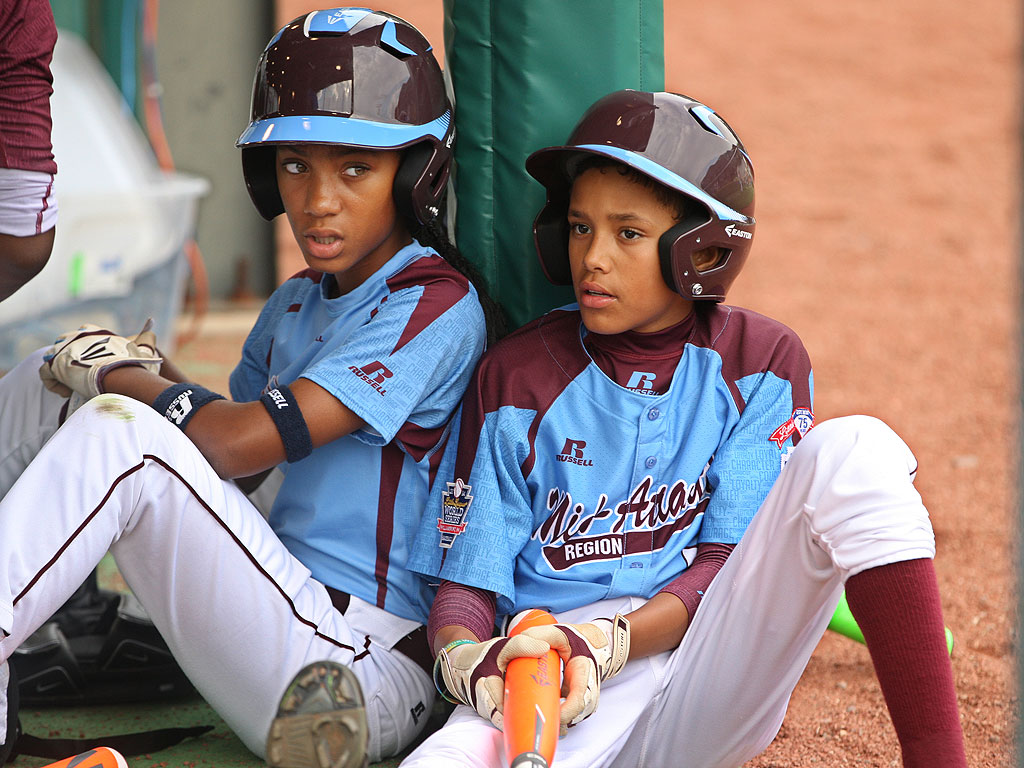
    Around that age, Scott was a part of the 2014 Taney Dragons Little League World Series team, alongside Mo’ne Davis, the first girl to pitch a shutout in the tournament. Scott was the catcher. The team was comprised of members of the Taney Youth Baseball Association and Anderson Monarchs, which Steve founded and directed.

    Davis, who lived with the Banduras while the two attended Springside Chestnut Hill Academy, “was like literal family” to Scott, and was in attendance in St. Louis on Sept. 15 to watch him play.

    “With all my Monarchs teammates, it’s like having a second family,” Scott said. “They’re just an extension of my family, and it’s great to still have that support from everybody. … I’m still keeping up with them. I know what they’re up to. I’m supporting them too, so it’s just a great all around relationship.”

    Scott was coached by his father since he started t-ball at 2 years old. Per the Monarchs’ three-sport requirement for athletes, Steve also coached Scott in basketball and soccer.

    The admirable qualities he learned from the Monarchs and his father, Scott still carries with him.

    Steve said his son did most of his character building from soccer and basketball, where Scott wasn’t a standout player. But he figured out how to build a role.

    “When I was growing up, the last thing he would say to me before getting out of the car to go to school [was], ‘Be a leader,’ and so I always had that instilled in me,” Scott said. “But also, he put a lot of emphasis into not just being a talented player, but knowing the ins and outs of the games and wanting to be the smartest team on the field from a baseball IQ standpoint.”

    Mon’ne Davis (left ) and Scott Bandura (right) during a Taney Little League game in August 2014.

    But Scott said this whole process is a lot larger than him, and it is a testament to the work his father put in for every child who has come through the Monarchs’ program.

    “For him, it’s a lot bigger than than just me,” Scott said. “He’s been doing it for hundreds of kids for almost 40 years now, so I’m just appreciative.”

    But there’s some differences that come with having the coach as your father.

    After a game, Steve will send his son a note of pointers and they’ll discuss them. Scott said he appreciates the feedback because he isn’t “going through it alone.”

    With every new level from high school to college, throughout the minors, and into the majors, Scott said there are new intricacies and nuances introduced. Steve understands that.

    “Especially as you get towards the higher levels of the game, a lot of guys, their parents don’t know a whole lot about the sport and the intricacies of everything, and how those expand and compound the higher you go in in the game,” Scott said. “Having somebody that understands that and I can talk about it with is awesome.”

    Scott said his father’s intricate understanding of the game was clear during his first MLB hit in his debut, which was “a perfect example of why it’s great to have you know people in [his] life that know baseball.”

    During the bottom o the sixth inning of the Giants’ 6-4 loss to the Padres, Scott hit an infield single, which the broadcast showed his parents reacting to. He said as the play unfolded, you could see his father’s hesitation to see if the play would be scored as a hit or an error before he joined his mother, Robin, in celebrating.

    Robin, a physical therapist, has also instilled her expertise in Scott throughout his baseball journey, helping him through injuries, in addition to driving him and friends from school in Chestnut Hill to practice in South Philly, multiple nights a week.

    Scott said she played the role of mom for him and every other kid that Steve coached throughout the years.

    Now, his parents share the title as Scott’s biggest fans.

    “I’m just a fan now, and as a dad, he needs someone to lean on and talk to him,” Steve said. “That’s what I do now.”

  • The deaths of two young athletes, and a mother’s words, must start a difficult conversation

    The deaths of two young athletes, and a mother’s words, must start a difficult conversation

    Before the soccer game, teenagers draped their arms over each other’s shoulders and let tears wash down their faces and parents listened in silence as a mother stood in the middle of a stadium to tell everyone there about her boy.

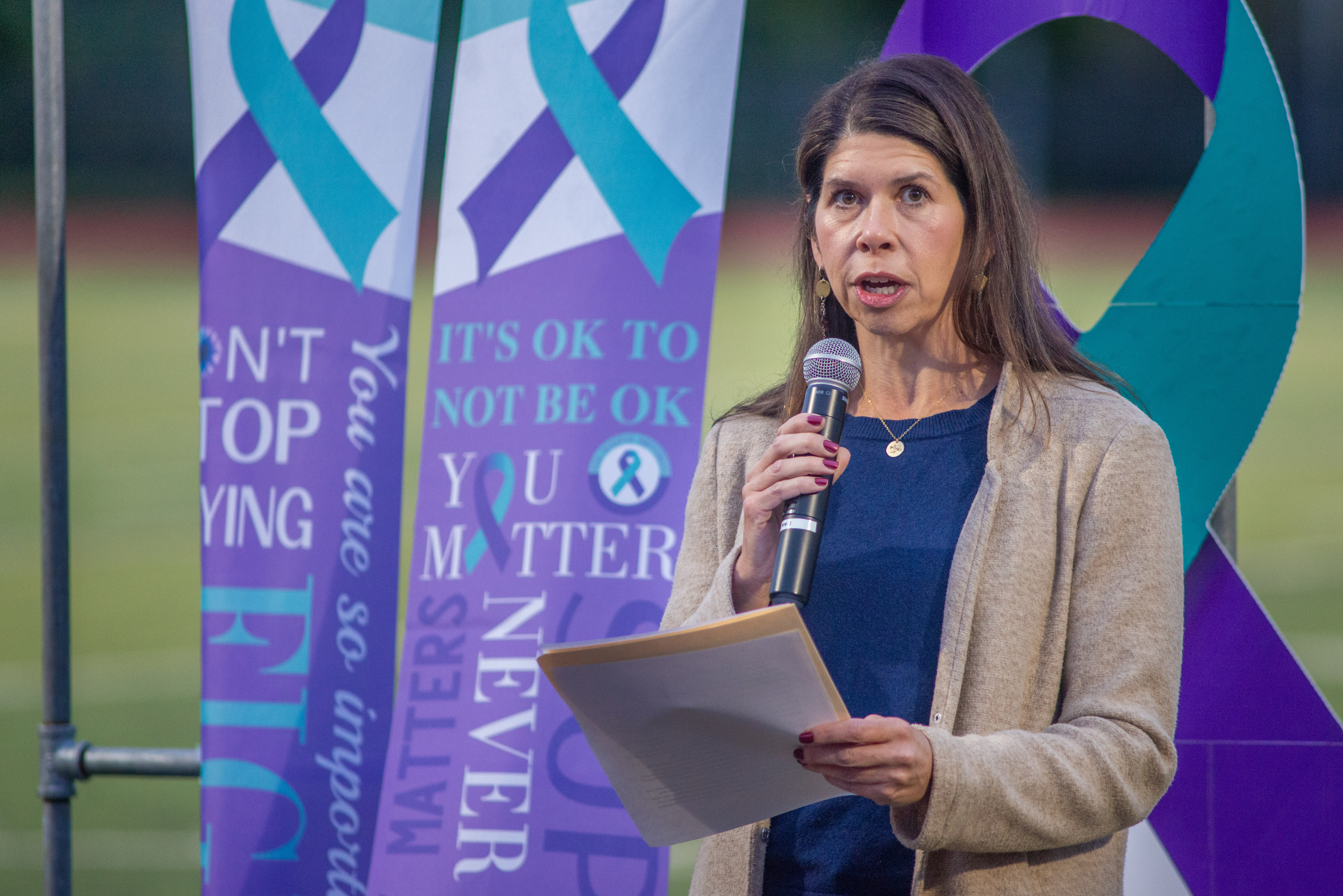
    “I’d do anything,” Megan Hanson said into a microphone, “to have my beautiful son back.”

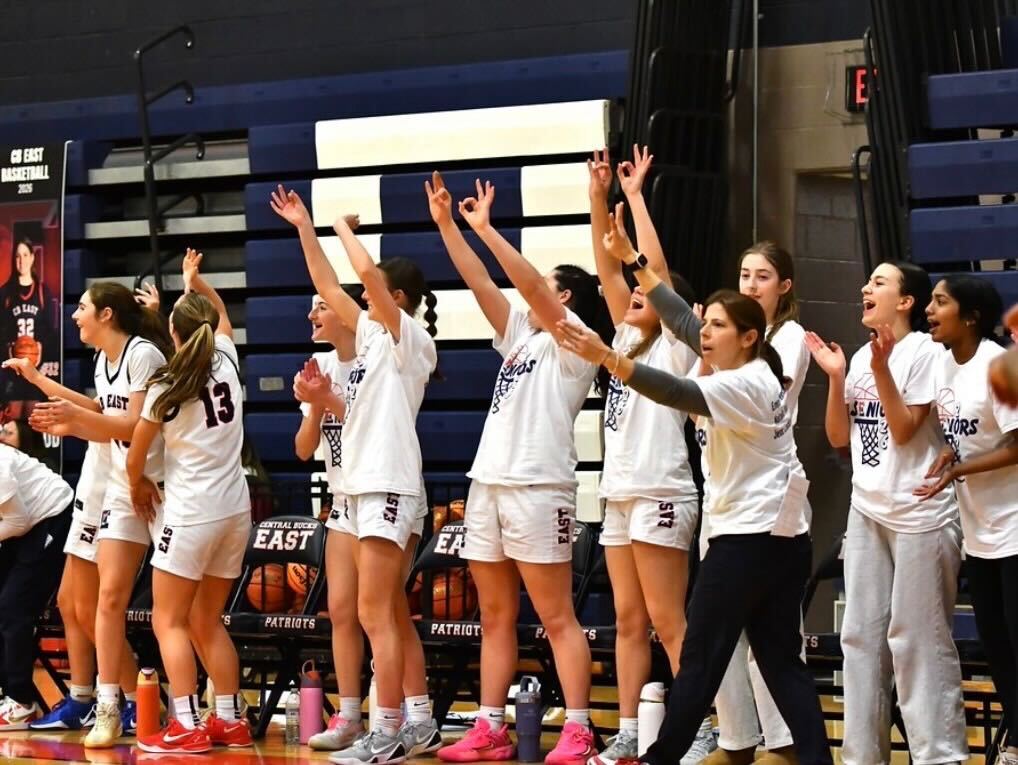
    Sam Hanson was 16 years old when he died by suicide on April 5. A sophomore at Central Bucks High School East, a catcher on its baseball team, he was the second student-athlete at the school to take his own life in less than four months. The first — Frankie Pacitti, who was 17 and a standout lacrosse player, a self-described ladies’ man who could get guys guffawing and girls giggling just by being himself, the kid in school everyone knew — had died in December.

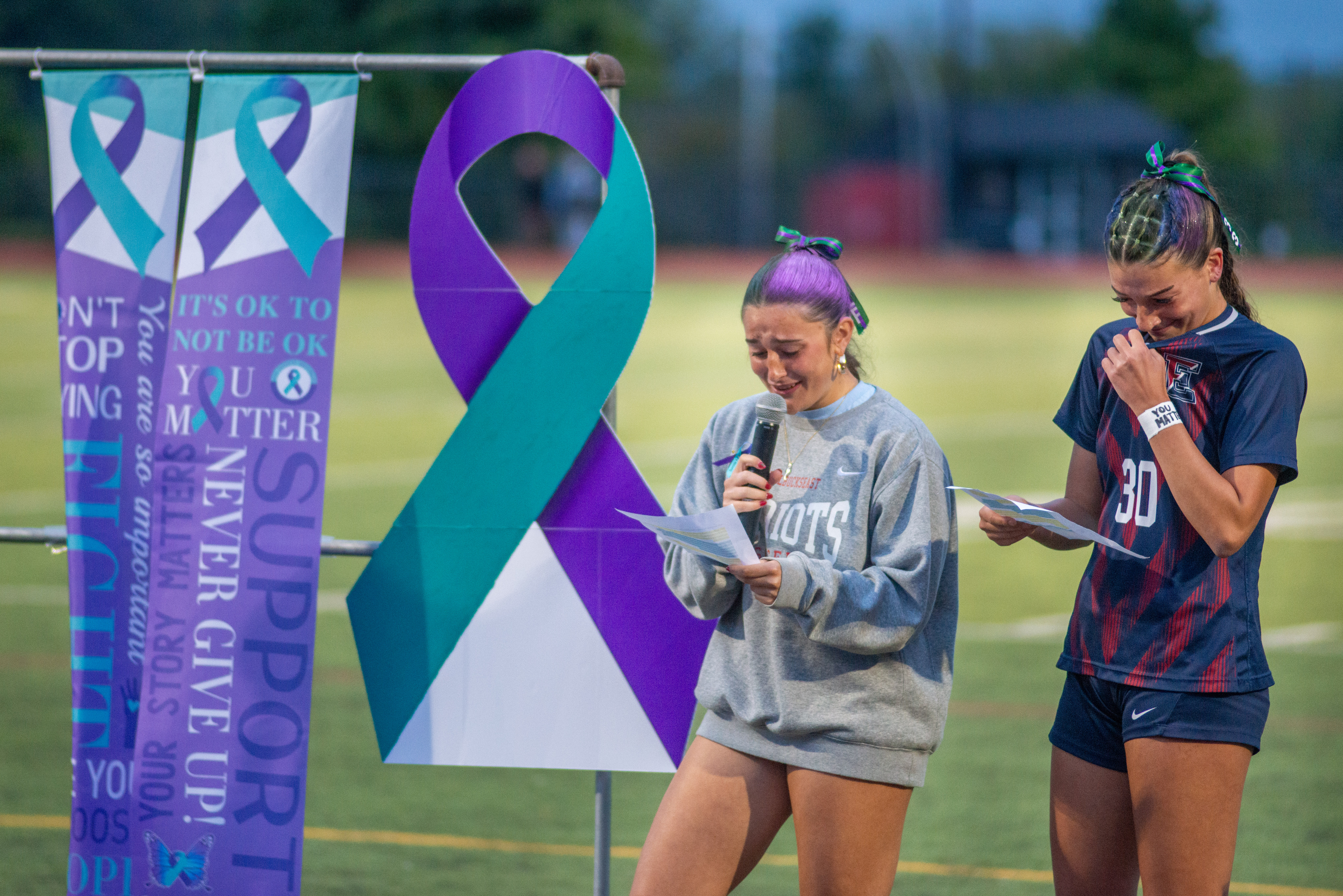
    A few members of CB East’s girls’ soccer team, among them Mia Forney, a senior forward and perhaps the best female high school soccer player in Pennsylvania, arranged to hold a mental-health awareness night in the aftermath of Sam and Frankie’s deaths. “Once Sam passed,” Forney said, “we realized this is not normal.” When the players asked Megan Hanson if she would speak at the event, she wasn’t certain she was ready. Still, she wanted to try to prevent something like this from happening to someone else. So she wrote a brief speech, and she delivered it Tuesday night, just before the CB East girls’ team beat CB West, 4-0, and she hoped that the people in the bleachers and on the field were listening.

    “Parents,” she said, “I’m not here to scare you but to share some insights I’ve learned … I won’t insult you by telling you to ‘talk to your kids.’ We all talk to our kids, and most of us are highly invested in their lives. What I will tell you to do is to talk to your kids directly about their mental health. Don’t be afraid to ask them hard questions, like, ‘Have you thought about suicide?’”

    Megan Hanson, whose son Sam died by suicide in April, speaks during a pregame mental health awareness presentation on Sept. 22. William Thomas Cain / For The Inquirer

    It was her most important, urgent, and accurate message. It aligned perfectly with what Derrick Gordon, an associate professor of psychiatry at Yale University, described as “the myth we have out there is that, if we suspect somebody is suicidal, we shouldn’t raise this with them because we don’t want to put the idea in their head.

    “The reality is, you can’t put an idea in their head that’s already there,” Gordon told me in an interview last year. “Actually, the best course of action is to ask the question of the individual, then talk about it and address it. It’s been my experience, and I think other professionals would say this, that if you raise the issue of suicidality with people who are contemplating it, they feel relieved. ‘Oh, Jesus, I can now finally say it out loud.’ You can talk to them about the possibility that if they’re going to hurt themselves, it would impact you. Oftentimes, they get lost in their own experience of what they’re going through, and you want to get them outside of that space.”

    Megan Hanson had no idea that her son was considering harming himself, how dark his world could get. How could she have an idea? Sam was pulling A’s and B’s in a roster of advanced-placement and honors courses at CB East. As a fourth grader, he had constructed a gift for his Connie Mack coach, Mike McCardle — a pen-and-pencil holder with a photo of the two of them set into it, a gift that McCardle still keeps on his desk. He died on the day before Easter, and it had been a full and wonderful day. Sam had practiced parallel parking in a middle-school lot in the morning, then passed his driver’s test and earned his license and was proud that he had.

    CB East soccer players Mia Forney (left) and Rylie Leedy make remarks about their late friend, Frankie Pacitti, before the start of their game with CB West on Sept. 22. William Thomas Cain / For The Inquirer

    He and Megan had gone out to lunch to celebrate. He had worked a few hours at the local pub and restaurant where he was a familiar and welcome face to the owners and patrons. Megan allowed him to borrow his car to drive to a friend’s house that night, and when he returned they talked about their plans for Easter. They would go to church in the morning and head to her parents’ house in the afternoon, and when she said good night to him she could never have thought, even in her most dismal nightmares, that he would get out of his bed and go downstairs into the basement and never come up again.

    “It’s hard with teenagers because they’re moody and they don’t talk,” Megan said in a private moment Tuesday, “and I felt like we were getting to a better place where he was being more open with me, and I felt like we were getting to another level in our relationship. The hardest part is just looking back and saying, ‘Maybe this was a warning sign or a cry for help.’ I truly don’t believe it was something he planned out. I wish whatever went on in his brain, if he had just woken me up …”

    She could not finish the sentence, and she did not need to. Home from the soccer game, I called my sons, who are 15 and 12, into the living room. Our family lives in the same school district that Sam Hanson and Frankie Pacitti did. My older son is a sophomore and has a class this semester with Sam’s sister. The boys paused the baseball video game they were playing and plopped on the couch. My wife and I wanted to talk to them directly about something.

  • Jenkintown is canceling the rest of its varsity football season

    Jenkintown is canceling the rest of its varsity football season

    The Jenkintown School District is canceling the rest of its varsity football season over safety concerns from low participation, officials announced this week.

    The high school team in Montgomery County’s smallest school district had played two games so far this season and was set to play Lower Moreland on Friday.

    There were not enough players on the team, nor enough active participation, to safely play a whole season, high school principal Thomas Roller and athletic director Aubrie Breisblatt wrote in a letter to the school community Tuesday, and the team had already been forced to forfeit games.

    “Continuing to compete under these circumstances would place significant physical demands on a limited number of players,” the school leaders wrote, adding that the decision had come at the head coach’s recommendation.

    While the team will not play any more games this year, the program will continue to hold practices, and officials hope to rebuild the program in the future.

    “Sports participation, especially at a school as small as Jenkintown, ebbs and flows over time depending on students’ interests,” school board president Carolyn Riley wrote in a text Wednesday.

    ”We remain very supportive of our students committed to playing football.”

  • Silas Graham’s path to St. Joe’s basketball comes with a familiar coaching connection

    Silas Graham’s path to St. Joe’s basketball comes with a familiar coaching connection

    Silas Graham’s first basketball memory came from the inside of a penalty box.

    His father, Nat Graham, was an assistant coach for Boston College at the time. Along with hosting basketball games, the Eagles’ Conte Forum doubles up as a hockey arena. When the hardwood is placed over the rink, the penalty box remained, and it was the perfect place to put a rambunctious toddler.

    It was easier to keep Silas contained when he couldn’t walk, Nat remembers. Silas would crawl by his father’s feet while Nat ran drills as an assistant at Cornell — one of his first coaching stops. With Nat on the staff, the Big Red made March Madness appearances in 2008, 2009, and 2010. In diapers, Silas attended all three tournaments.

    “It was such a part of his life at that stage,” Nat said. “He idolized the guys. By the time he was walking and talking, I can remember him playing in the living room and pretending to be the guys on the team.”

    After a four-year stint at Boston College, Nat coached at Penn as an assistant from 2014 to 2025. Coaching alongside his father at Cornell, Boston College, and Penn was Steve Donahue. Silas and Donahue, now the head coach at St. Joseph’s, developed a strong relationship, and it continued once Silas picked up basketball.

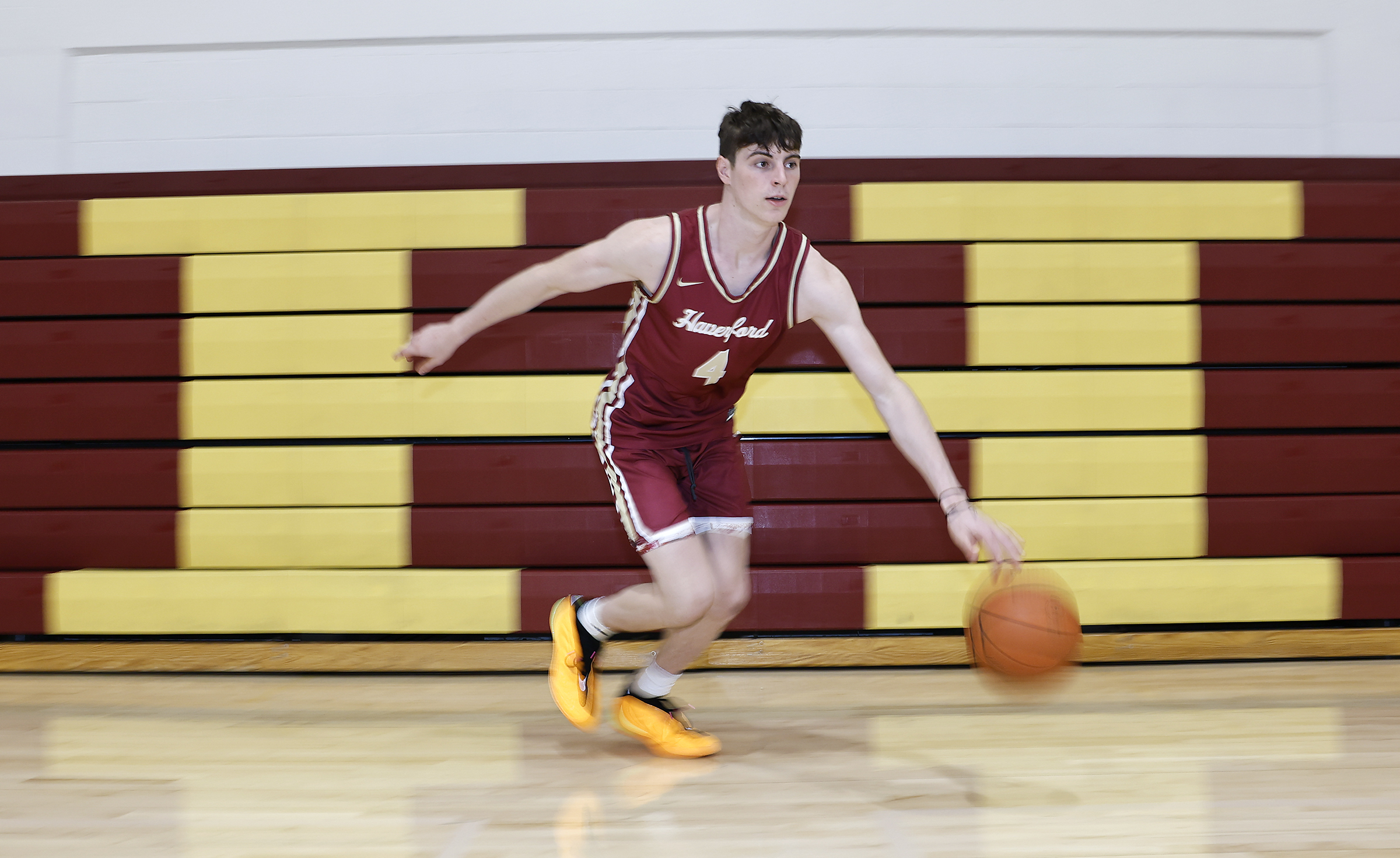
    Last year, Silas — now a 6-foot-4 senior guard at the Haverford School — received scholarship offers from Notre Dame and Stanford. However, he gravitated toward Hawk Hill because of his familiarity with the program’s head coach. He announced his verbal pledge to St. Joe’s on Aug 4.

    “I don’t need to build a relationship with Coach Donahue,” Silas said. “He can coach me, and I’m going to understand that it’s not the same relationship that it was before, and that he’s going be tougher for me, and I have to be prepared for that.”

    Silas Graham committed to play basketball for St. Joseph’s.Yong Kim / Staff Photographer

    Silas enters his senior year as the Fords’ all-time leading scorer. Last season, he averaged 20.7 points, 9.1 rebounds, and 3.1 assists. 247Sports ranks Graham as the second-best player in Pennsylvania, trailing just Archbishop Wood’s Jaydn Jenkins in the class of 2027.

    “I never take it for granted how coachable he is and what a joy [Silas] is to coach,” said Fords coach Bernie Rogers. “Forget all the points and the wins. He’s enjoyable to coach every day and we don’t take that for granted.”

    ‘Seeing how he operates’

    Sitting in the Haverford School bleachers following a team workout, Silas wore a pair of red Cornell basketball shorts. After being dismissed by Penn following the 2024-25 season, Nat returned to Ithaca to serve as an assistant last season.

    But just like Donahue, Nat found himself back in the Big 5. This summer, Nat was hired by Drexel to coach on Zach Spiker’s staff. In the near future, Nat will likely see his son on the opposing sidelines of a Big 5 matchup. In the meantime, he has enjoyed coaching Silas during summer runs at Drexel’s Daskalakis Athletic Center.

    “We would play with some Haverford kids,” Silas said. “My dad [has] never really been a coach on one of my teams, so it was kind of cool to see that. Obviously he likes to give me pointers about myself, but even him just telling other guys what to do and seeing how he operates basketball-wise is nice.”

    Silas Graham grew up around basketball with his father coaching at the college level.Courtesy of Nat Graham

    As a child, Silas rarely responded well to his father’s postgame pointers — and Nat offered plenty.

    “I have a friend who’s a trained musician,” Nat said. “He says when he goes to concerts or he goes to a small bar with live music, it’s hard for him to enjoy it because he’s always looking at it critically, and I think the same is true for coaches.

    “I can’t turn the coach off. There’s things I see that no one else here sees, and I can’t not tell you. But that process was very difficult. I think in the long run, it may have been beneficial, but it’s not easy as a kid.”

    Eventually, Nat broke through. Silas no longer brushes off his father’s criticism and welcomes the additional coaching. Last season, Nat attended two Haverford games while living in Ithaca. Silas is looking forward to having him back in the bleachers during his final high school season.

    ‘Want them to be well-rounded’

    With the recruiting process behind him, Silas is exploring who he is outside of basketball. Nat has long given Silas and his two other children the support to so.

    “As much as I love basketball and I can be on them about basketball stuff, I want them to be well-rounded, thoughtful [people],” Nat said. “More developed overall humans than sometimes can happen with sports people.”

    Silas has watched his father develop himself outside of basketball.

    Off the court, Nat is a committed racial justice advocate. He has written about several racial justice topics including white allyship and police brutality. In 2021, as a member of Penn’s staff, Nat sat during the national anthem to bring attention to institutional racism. Silas is taking an African American studies class, where he noted he is one of two white students.

    “It’s cool to see another part of history,” Silas said. “Haverford, we say we’re like ‘woke’ and diverse, we don’t really like to go super deep into all that stuff. We kind of stay surface level, so this is the one class gets intense and emotional, but I think I like it. I think it’ll be interesting for me.”

    One area of importance for Silas is wanting to help Philadelphia’s homeless population. This, too, is because of Nat. Growing up, Silas would regularly drive through West Philadelphia with his father to Penn’s campus. From his booster seat, Silas saw how homelessness affected the area.

    Silas Graham averaged 20.7 points, 9.1 rebounds, and 3.1 assists last season at the Haverford School.Yong Kim / Staff Photographer

    “That’s actually another big thing for my dad,” Silas said. “People don’t understand why people are homeless and they blame it all on them. There’s so many other factors that go into that, but like that’s something I took an interest in.”

    Silas is looking forward to his future at Hawk Hill, where he expects to play early. He’s also proud to stay in Philadelphia.

    “I love the Big 5,” Silas said. “I grew up around it, and I love like the history behind it. So many Philly guys leave now. Even in high school, Philly guys leave now. So l I think it’s cool that I’m one of the guys that stays.”

  • Banking on Ball: Recruiting is the third rail in the Philadelphia area’s high school sports

    Banking on Ball: Recruiting is the third rail in the Philadelphia area’s high school sports

    Second in an occasional series.

    The sound inside the locker room was already overwhelming, Father Judge’s coaches and players shouting and singing after their 52-46 victory over Archbishop Wood in the Philadelphia Catholic League boys’ basketball semifinals last February. And every time someone opened the door to exit, the noise in the room rose, because a sold-out Palestra crowd was now roaring over the night’s second game: Neumann Goretti vs. Bonner-Prendergast.

    Still, the kid who had been the primary cause of the celebration, the 6-foot-4 senior guard who had made the night his, was calm. Derrick Morton-Rivera had scored 27 points on an array of three-pointers and pull-up jumpers, leading the Crusaders back from an early 16-point deficit.

    “Playing in front of 10,000 people every year, there’s nothing like it,” Morton-Rivera, now a freshman at Temple, said after the game. “I never knew about the PCL until my eighth-grade year. That’s when I learned.”

    How did he end up at Judge?

    The coaches “recruited me,” he said.

    Father Judge graduate Derrick Morton-Rivera after he sank a three-point shot during the 2026 Catholic League boys’ championship.Elizabeth Robertson / Staff Photographer

    With that one verb, recruited, Morton-Rivera touched the live wire that crackles among coaches, parents, administrators, and players throughout the high school sports scene in Pennsylvania. House Bill No. 41 — a measure that would allow the PIAA to create separate postseasons, one for public schools and one for private, parochial, and charter schools — passed the Pennsylvania State House of Representatives in April. And of all the factors that play into the longtime dispute over whether boundary and non-boundary schools should compete against each other for championships, none generates as much heat and controversy as recruiting.

    “It’s two different worlds,” longtime Lower Merion boys’ basketball coach Gregg Downer said. “If you don’t put massive talent out in basketball or football or soccer or lacrosse, you’re going to get run over.”

    Mark Ostaszewski with Archbishop Ryan athletic director Joe Zeglinski after the Raiders won the Catholic League Blue Division title in 2024.Courtesy of Archbishop Ryan

    ‘Philly is Philly’

    Since the Catholic League joined the PIAA in 2008, just one of its coaches, Archbishop Ryan football coach Mark Ostaszewski, has been suspended for recruiting violations. At a January 2025 football camp, Ostaszewski asked a student from the Bensalem School District if he wanted to apply to Ryan. District 12, the association’s umbrella for the Philadelphia Catholic and Public leagues, banned Ostaszewski for a year; he has returned to his role this season.

    Locally, recruiting accusations often put programs from District 12 at odds with those from District One, which comprises schools in Philadelphia’s suburbs. And that confirmed example is tame compared to the more intense efforts that coaches have allegedly made to coax athletes to their programs.

    A former basketball standout who graduated recently from a District One public school and his father told The Inquirer on the condition of anonymity that, while the student was in eighth grade and throughout his high school career, representatives from three Catholic League programs pursued him. One head coach offered him free tuition, a stipend, and the use of an apartment near campus. The coach also had his team’s star player send several direct messages on Instagram to the player in an attempt to persuade him to attend the school.

    Another program had an assistant coach and a parent take the player’s father out to lunch twice, telling him at both meals that he would not have to worry about paying any tuition for his son. The third program’s head coach told the father that, if his son helped the team win the Catholic League championship, a booster would provide a house for the player. Each of the three schools were located between 15 and 35 miles from the player’s home.

    Gregg Downer has spent three decades as the Lower Merion boys’ basketball coach.CHARLES FOX / Staff Photographer

    “They can twist this however they want,” Downer said. “These kids are targeted because they’re good at sports. I could list 50 examples of kids who have been recruited.”

    Morton-Rivera’s path to Father Judge captures the murkiness of the entire issue. Jim Meredith, a 1992 Judge graduate who became its president in late July, noted in a recent interview that while in eighth grade, Morton-Rivera had visited the school and taken its entrance exam — and that he grew up and lived in Lawncrest, just a mile-and-a-half from Judge.

    “I can say with full confidence that we’re following PIAA rules and regulations,” Meredith said. “We’re trying to put out an excellent product for our school and our students. Part of that is making sure we adhere to the guidelines that are prescribed to us.”

    When asked how Morton-Rivera ended up choosing Judge, head coach Chris Roantree pointed out that Morton-Rivera’s background and family history made it natural for him to consider attending a school with a strong basketball program. D.J. Rivera, his father, finished his high school career in 2006 as Neumann Goretti’s all-time leading scorer before playing Division I ball at St. Joseph’s and Binghamton.

    Father Judge coach Chris Roantree noted that Morton-Rivera’s background and family history made it natural for him to consider attending a school with a strong basketball program.Elizabeth Robertson / Staff Photographer

    “Philadelphia basketball is a very small community,” Roantree said. “There are different relationships that everybody has. When somebody shows interest in us, we sell the school. When we bring guys in, we show them our career-pathway center. We show them our academic center. …

    “Ultimately, ‘recruiting’ is a very broad thing. It’s going to be questioned because we’re a Catholic and private school. He’s within a mile or two of the school. To me, that’s no different from [a public-school coach] talking to someone from a Plymouth Whitemarsh middle school or an Abington middle school. He’s not a transfer. We didn’t aggressively go after him like that.”

    Under Article VI, Section 11 of its bylaws, the PIAA forbids “recruiting [that] is materially motivated in some way by an athletic purpose. Recruiting for athletic purposes is directly contrary to fundamental interests of PIAA and its member schools, and any school engaged in such conduct should do so with the expectation that it will be treated harshly upon proof of such conduct.”

    Liz Potash retired earlier this summer after 13 years as Central Bucks East’s girls’ basketball coach.Courtesy of Diane Barry
    She said, “If I wanted to recruit, I wouldn’t be a public-school coach.” Courtesy of Diane Barry

    As clear as that excerpt might seem, determining whether a student’s decision to attend a particular school was “materially motivated” by athletics requires hard and fast evidence, such as text or direct messages between a coach and the athlete, said Sean Kelly, District One’s vice chairman.

    If a principal or athletic director files a formal complaint charging an opposing program with violating PIAA bylaws, the association’s corresponding district committee will hold a hearing on the matter.

    “Sometimes I’ll get a call from a coach or an AD or somebody who’s associated with one of the schools who says, ‘Hey, this is what we’re hearing. We’re hearing Student A is going to go to this school,’” Kelly said. “I just ask them, ‘What evidence do you have? Are you saying they’re just transferring, or are you saying they’re being recruited?’ We take some time to make sure we pump the brakes because people get very sensitive and very emotional.”

    Neumann Goretti and Father Judge boys’ basketball play in South Philadelphia on Feb. 1, 2026.Yong Kim / Staff Photographer

    Article VI, Section 11 applies to both boundary and non-boundary schools, but suburban public school coaches bemoan what they see as an inherent imbalance in the system: To play a varsity sport at a public high school, a student must live in that school district. But private, parochial, and charter schools, such as those in the School District of Philadelphia and the Archdiocese of Philadelphia, can draw their students from anywhere. Too many of those institutions, several District One coaches said, bend the rules to do it.

    “It’s just not fair,” said Joe Dempsey, who has been the boys’ basketball coach at Spring-Ford High School in Royersford since 2021. “They have the ability to go and get players, to which I say: Let them do that. If they want to go play in that sandbox, let them go.”

    Dempsey had previously coached at La Salle College High School for 27 years, including 14 as the program’s head coach. At CYO games, he would see a promising seventh or eighth grader, he said, then approach the player’s parents without talking to the player.

    Joe Dempsey previously coached at La Salle College High School for 27 years.

    “La Salle made it very clear: Don’t step over the line. Don’t get us in trouble,” Dempsey said. “Once a couple of schools took the gloves off, the pressure came. The pressure was on me at La Salle. I went to the administration: ‘Are you looking around the Catholic League? I can’t just sit on my hands and wait on some wonderful 6-foot-7 kid who can pay a lot of tuition and go to school with all boys and get bused here. It ain’t going to happen by accident.’”

    That archdiocesan schools compete for students within District 12’s open-enrollment landscape only complicates matters further. Consider one example: Bonner-Prendie, nestled in Drexel Hill in Delaware County, won the 2024 PIAA Class 4A football championship. Of the top six zip codes from which the school drew students that year, five were within Delco, and the other was just nearby — the Overbook section of Philadelphia — according to Steve Clement, the chief administrative officer of the archdiocese’s Office of Catholic Education.

    How many of its football players did Bonner-Prendie recruit, if any? How many did it have to recruit, given the school’s proximity to West Philadelphia? And if a school such as Bonner-Prendie draws students from the city or St. Joseph’s Prep draws them from Camden — less than five miles away — how different is that from the dynamic at a public school in an especially large district?

    “The reality,” Clement said, “is that these schools are still serving the areas they were intended to serve.”

    Similarly, parents can and do contact the School District of Philadelphia to ask what high schools would best fit their children’s skills and interests: maybe sports, maybe drama, maybe career and technical education. Starr Davenport, the district’s director of finance for athletics, said she frequently fields phone calls from parents of rising ninth graders who ask her about the quality and array of athletic programs at a particular school, and she is happy to answer their questions.

    “It’s not a recruitment strategy,” Davenport said. “It’s just transparency. When they want to know, it means they’re trying to find their school home. That selection process seems equitable because we’re not putting it out there, ‘Go to this school if you like football.’ But if a parent or student-athlete inquires, we are definitely transparent in terms of the full gamut of what is offered at a school.”

    As for making competition across the state and the Delaware Valley more equitable — that is, giving boundary schools a better chance of beating non-boundary schools — it doesn’t matter much whether gifted athletes who already live within the city’s borders attend public or non-public schools. As long as it stays in Philadelphia, that talent will reveal itself in the results one way or another.

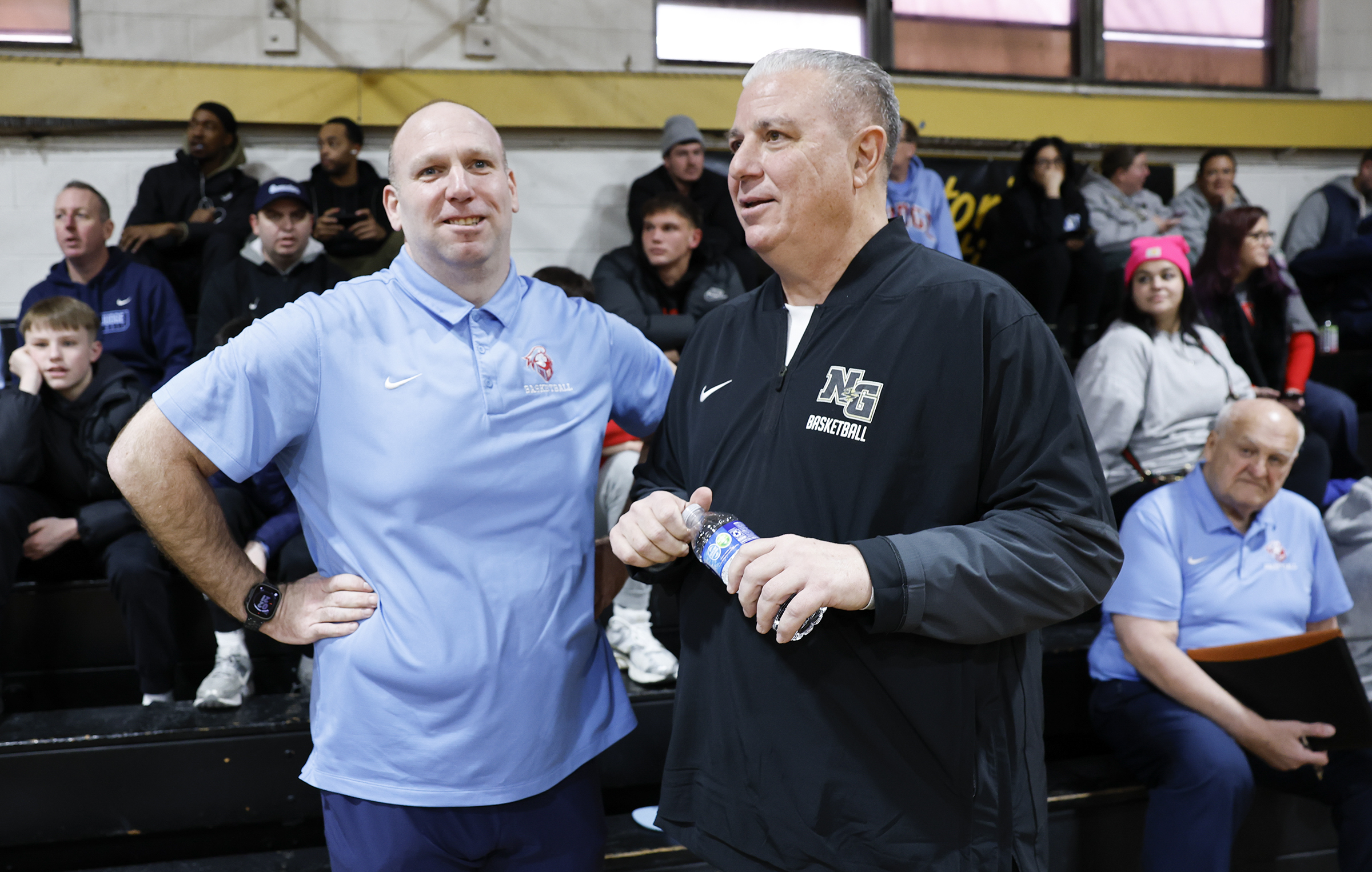
    Neumann Goretti head coach Carl Arrigale (right) meets with Father Judge head coach Chris Roantree before the two teams played each other in February 2026.Yong Kim / Staff Photographer

    “Here’s the thing: Philly is Philly,” Roantree said. “So if you want all the Philly kids to go to public schools, they’re still going to dominate. There are six, seven, eight, 10 good teams in the Catholic League. If they’re in the playoffs, they’re going to make some noise” in the state tournaments.

    The primary complaint among suburban public school coaches and administrators, of course, is that non-boundary schools don’t limit themselves to drawing talent from the city or the neighborhoods that surround them. To some public-school coaches, the notion of recruiting is an alien concept, one they wouldn’t consider if for no other reason than they or the athletes’ families would have to make the necessary arrangements for the athletes to live within district boundaries — say, finding a long-lost aunt whose house was within walking distance of a school bus stop.

    Liz Potash, who retired earlier this summer after 13 years as Central Bucks East’s girls’ basketball coach, said she never sought out players to refill her program’s talent pool. “If I wanted to recruit, I wouldn’t be a public-school coach,” she said. “I’m not going to beg an eighth grader to come to East.”

    But another coach might.

    “Everyone’s doing it,” said Daniel DiBerardinis, who spent 11 years as a Catholic League athletic director — six at Roman Catholic, five at St. Joe’s Prep — before becoming Penn Charter’s AD last year. “Public schools are recruiting. They recruit. People move to different zip codes all the time.

    “I’m not going to put any school on blast, but I know intimate situations — I know families who got an address to be a part of a district. I’m not going to say any schools, but I do know it happens. The rules are super-gray, and people are always going to find workarounds.”

    Father Judge takes on Archbishop Wood during in the Catholic League boys’ basketball semifinal at the Palestra on Feb. 18, 2026.Isaiah Vazquez / For The Inquirer

    Technicalities

    Football, boys’ basketball, girls’ basketball: It’s within the worlds of those three sports that the debates and bickering around recruiting are the loudest and have the most relevance. Rep. Scott Conklin, a Democrat who introduced House Bill No. 41 and represents the 77th district, in State College, all but admitted that the bill was aimed at stopping private, parochial, and charter schools from recruiting — and from continuing to move into the next frontier: wielding sponsor dollars or name, image, and likeness deals to entice athletes.

    “Technically, yes, public schools could cheat,” he said in a phone interview. “But we know how difficult that is. I’m 67 years old, and I can win the high-jump competition — technically. But we all know it’s never going to happen.”

    In that Palestra locker room back in February, Roantree snickered at the mere mention of the subject. “Everybody says it’s an unfair advantage,” he said. “What I say is, every kid’s got a dream of playing Division I, and there are a lot of coaches in our league who can make that happen. We don’t have to recruit as much as kids want to come and play for us.”

    Four days later, behind a team-high 14 points from Morton-Rivera, Father Judge beat Goretti to win its second straight PCL championship. The Crusaders advanced to the semifinals of the PIAA Class 6A tournament, where they lost to a city rival, Imhotep Charter, which then lost in the championship game to Harrisburg’s Central Dauphin.

    A public school.

  • High School football roundup: Chester’s freshman RB emerges, powerhouse clash awaits, and more

    High School football roundup: Chester’s freshman RB emerges, powerhouse clash awaits, and more

    Three weeks into the high school football season, area teams are reestablishing identities with new faces or still searching for one. The newcomers are also starting to make their arrival known.

    Here’s a look at what has happened so far, including a peak at what is ahead for two major programs and a new beginning for several players at different schools.

    ‘This kid is special’

    Sa’Mhad “Showtime” Williams does not seem to run by defenders. It’s more like the 5-foot-10, 180-pound Chester freshman tailback glides by them. Each time he carries the ball, he makes a quick survey of the field, finds a crease, and off he goes, kicking up rubber turf pellets in his wake.

    Chester reached the PIAA District 1 Class 5A championship last season, relying on generational talents Jalen and Daron Harris. The twins led the Clippers to historic heights in their four-year high school tenure, going 45-7 along with winning four straight Del-Val League titles. When they graduated (Daron is at Temple and Jalen at Lincoln), Chester needed to rebuild — or so it was thought.

    The Clippers are off to a 3-0 start and ranked No. 2 in District 1 5A behind Central League power Garnet Valley. Williams is one of the reasons why. In three games, he has rushed for 412 yards and leads the area in scoring with nine touchdowns, three coming last Friday night in Chester’s 32-30 victory over a good Northeast team which had beaten Coatesville. Williams scored on a 90-yard kickoff return, and on 80- and 26-yard runs — all in the first half. He scored on two of his first three touches and had amassed 215 total yards on six carries by halftime.

    “The scary part is, he’s just a freshman,” Northeast coach Nick Lincoln said about Williams. “You hear things about how special certain kids are, and they rarely back it up. This kid is special.”

    Williams has shown, even as a freshman, an innate ability to slow down the game.

    Each touch comes with an emphatic intent: “To score every time I have the ball,” said Williams, who was approached by several private schools last summer, but was committed to Clippers coach Dennis Shaw. “I don’t think I really felt comfortable [at the varsity level] until I scored my second touchdown [in the season opener against Strath Haven]. I like to pattern my running after Saquon Barkley and Jahmyr Gibbs — run fast, run physical.”

    Shaw was highly impressed by Williams’ maturity. Shaw said when Chester gave up its first touchdown to Northeast, Williams consoled the defense as the players walked off the field. When Northeast scored on a kickoff return, Williams, who is also Chester’s kicker, blamed himself.

    “That’s just who [Williams] is,” Shaw said. “He’s mature. He’s accountable. We’re happy he stayed home in Chester. Some people I see on social media are already comparing him to Kevin Jones (the former Cardinal O’Hara star who was a 2004 NFL first-round draft pick by the Detroit Lions). He does things beyond his age. He runs with patience, and with great vision.”

    Chester may be getting even better with the return of quarterback Kenjai Gatling to the area. Gatling started as a freshman for Bonner-Prendergast, then transferred to national powerhouse DeMatha Catholic in Maryland for his sophomore and junior seasons. He decided to return and attend Chester this season. The 6-2, 200-pound Gatling threw his first two touchdowns of the season against Northeast.

    “I’m getting more reps and each game I’m getting more confident,” Gatling said. “This is the first time that I’m playing regularly in two years. We have a lot of athletes, and once we develop more chemistry, we’re going to be better. I feel confident about everyone around me. This has been a good situation for me. I love my guys.”

    Early season showdown

    It’s been a while, dating back to 2015, since traditional area powerhouses Malvern Prep and St. Joseph’s Prep have played. That ends Saturday when the Hawks host three-time defending Inter-Academic League champion Malvern Prep at 7 p.m. at Franklin Field.

    Both teams enter the game 1-1. Malvern fell, 27-21, to Imhotep Charter, while St. Joe’s Prep lost to Bergen Catholic, 33-3, last week. The Hawks also lost starting quarterback Max Rogers, who reportedly suffered “a significant upper body injury” late in the first quarter. Junior Nickee Holden replaced Rogers, who may be out for a longer period of time.

    Malvern has one of the best tailbacks in the area in junior Julius Riddick, who has rushed for 201 yards and four touchdowns this season. He scored twice and gained 71 yards in the Friars’ 21-0 victory over La Salle, and rushed for 130 yards and two touchdowns against Imhotep.

    Riddick had to bide his time behind Zeke Bates, who’s now at Minnesota, the last two years. Now, Riddick has become Malvern’s primary weapon and will be the focal point of the Hawks’ defense on Saturday night.

    “Julius is a downhill runner who is the strongest player on our team, including linemen,” said Malvern coach Dave Gueriera. “He is hard to bring down with one defender. He runs hard, he runs low, and has great vision. He’s 205 pounds, and we were hoping to see this from Julius. I think he is exceeding everyone’s expectations.”

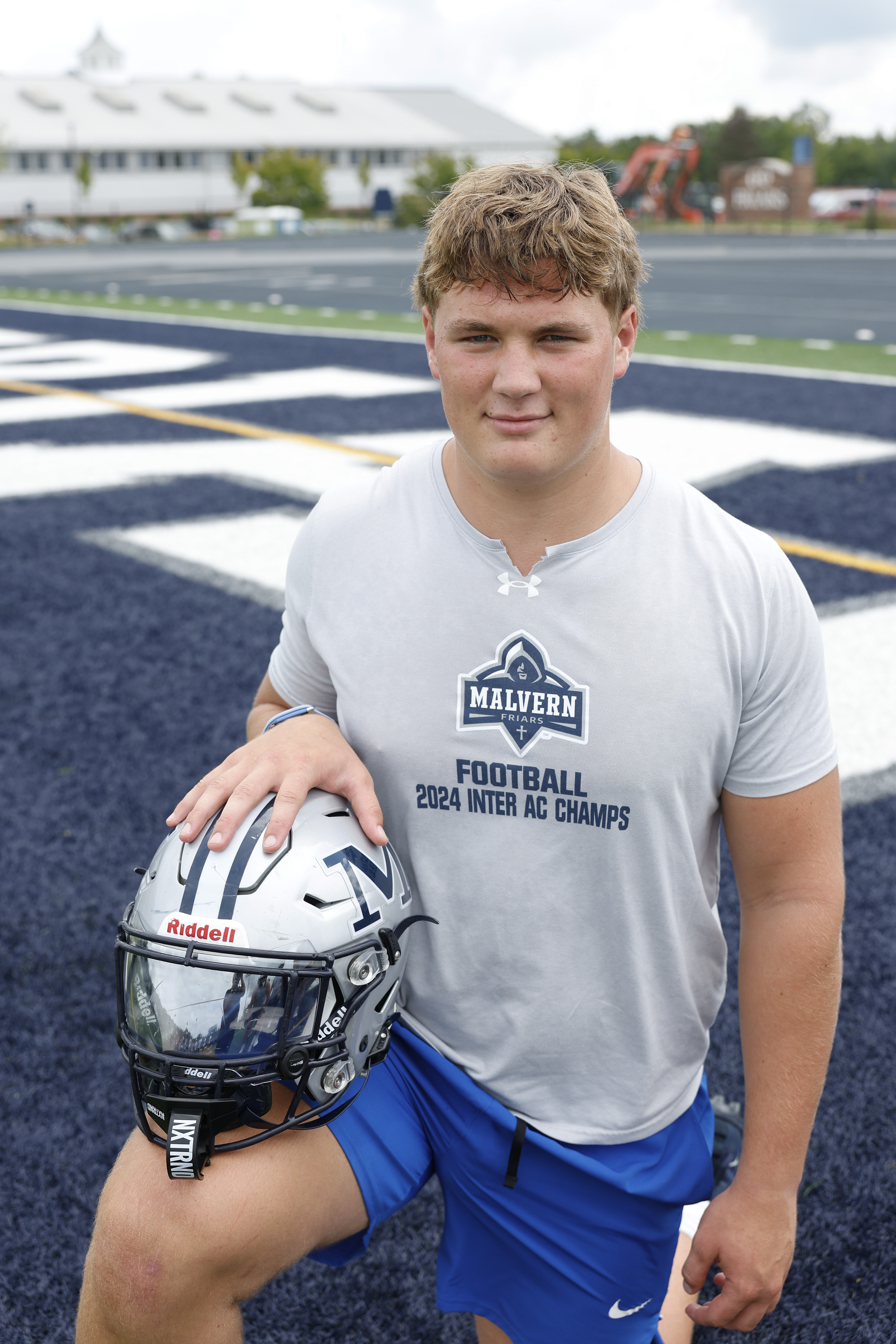
    Malvern Prep senior Tyler Graham plans to play offensive tackle at Duke next fall.Steven M. Falk / For The Inquirer

    Gueriera likes his team up front, featuring Duke-bound offensive tackle Tyler Graham and major Division I junior edge rusher George Parkinson IV. He also has one of the prime targets in the state in LSU-bound receiver Cade Cooper.

    What promises to be an interesting matchup is the possibility of Cooper, a two-way player, defending St. Joe’s Prep junior receiver Jett Harrison, who’s committed to Ohio State.

    “Prep’s front on both sides are big and good. Jett Harrison is a matchup nightmare anywhere he is on the field, and there could be a possibility Cade will be on Jett,” Gueriera said. “Their running game is good. Brandon Lockley, their linebacker, is very good. Prep is tough, physical and well-coached.”

    Four Cheltenham players to play for Lincoln

    Last October, Lincoln beat Philadelphia Public League power Imhotep, 26-25, snapping the Panthers’ 35-game Public League winning streak. Railsplitters coach Hakeem Cooper returns a young team this season, with three starting seniors on defense and four on offense. Lincoln did, however, receive a significant boost with four transfers from Cheltenham, which canceled its 2026 varsity and junior varsity football seasons following a hazing incident during the 2025 season.

    Seniors Kendall Jackson, Cheltenham’s starting quarterback last season, and junior offensive lineman Mason Jones are eligible to play, while senior offensive lineman Kaiden Rogers and senior cornerback Andre Jones still have to undergo District 1 hearings on their playing eligibility, according to Cooper.

    Lincoln is 1-2 overall entering its Public League season against West Philadelphia at 3 p.m. Friday.

    “These Cheltenham kids are good kids who wanted a chance to play,” Cooper said. “They’re good kids that deserve it. They’re learning the system, and they are still trying to figure things out, but they have fit right into our culture and they work hard, honestly.”

    Cooper returns senior safety/wide receiver Rei Talley, junior running back/safety John Nichols, senior receiver Naz Holley, and an electric transfer from Delaware Military Academy in 5-9, 175-pound junior Isaiah Muhammad, who leads the team in passing and rushing.

    “This is one of the youngest teams I have had in the last couple of years, but we still have high expectations and with a lot of new kids, the biggest thing is forming a family and learning about one another,” said Cooper, who is in his fifth season and led the Railsplitters to the 2023 Public League Class 6A championship, the first Public League title Lincoln has won since 1979. “We do feel really good about this team, and we feel we will only get better.”

    With Imhotep dropping to Class 5A, Lincoln has a good chance to take the Public League 6A championship.

  • How girls’ flag football kicked off in South Jersey and ‘opened so many doors’ for those involved

    How girls’ flag football kicked off in South Jersey and ‘opened so many doors’ for those involved

    Barb Hertline didn’t have any coaching experience in flag football prior to 2025.

    Jim McHugh, the Camden Catholic High School athletic director, told her there was a grant available to start a girls’ flag football program at the school and asked Hertline if she would be willing to be the first head coach of the program.

    “Without a doubt, I said yes because it was an opportunity for our girls,” said Hertline, the executive assistant & special projects manager at Camden Catholic. “I didn’t know anything about flag football or the rules or really anything that it would entail. I just knew I wanted to be a part of it to give these girls a chance to experience it.”

    The decision gave Camden Catholic’s girls an opportunity to play the sport that was quickly gaining popularity in South Jersey.

    “They wanted this opportunity and we were able to give that to them, and it has opened so many doors,” Hertline said.

    In May, the New Jersey State Interscholastic Athletic Association sanctioned girls’ flag football as a high school varsity sport with the first official season starting in the spring of 2027.

    The sport initially began as a club activity at several South Jersey high schools in 2023. June Cioffi, director of athletics at Kingsway and president of the West Jersey Football League, said the first two years served as a “pilot stage” for coaches, athletic directors, and league officials.

    “It was an easy sell, and everyone was on board,” Cioffi said.

    The Eagles and New York Giants played a significant role in helping girls’ flag become sanctioned in New Jersey.

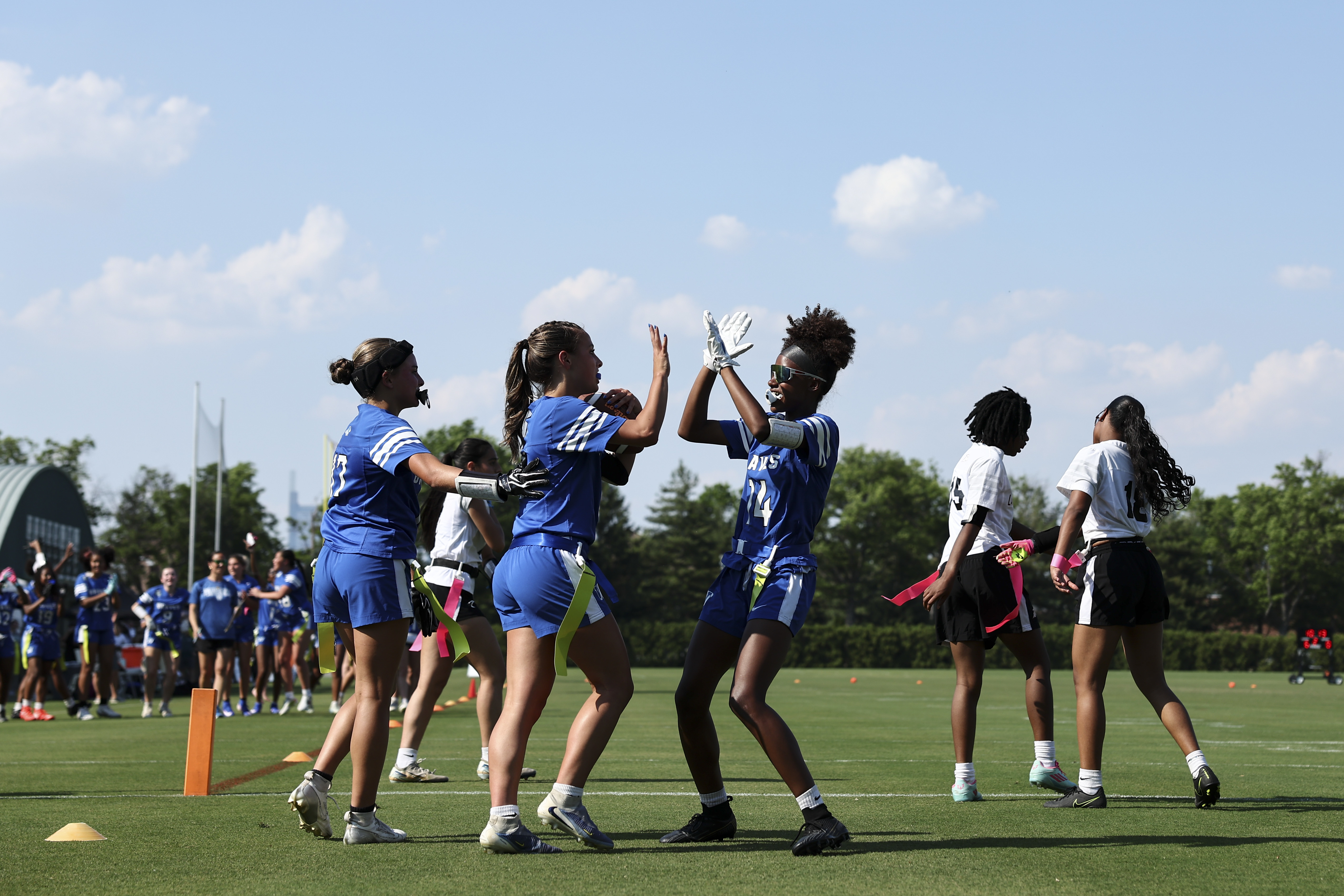
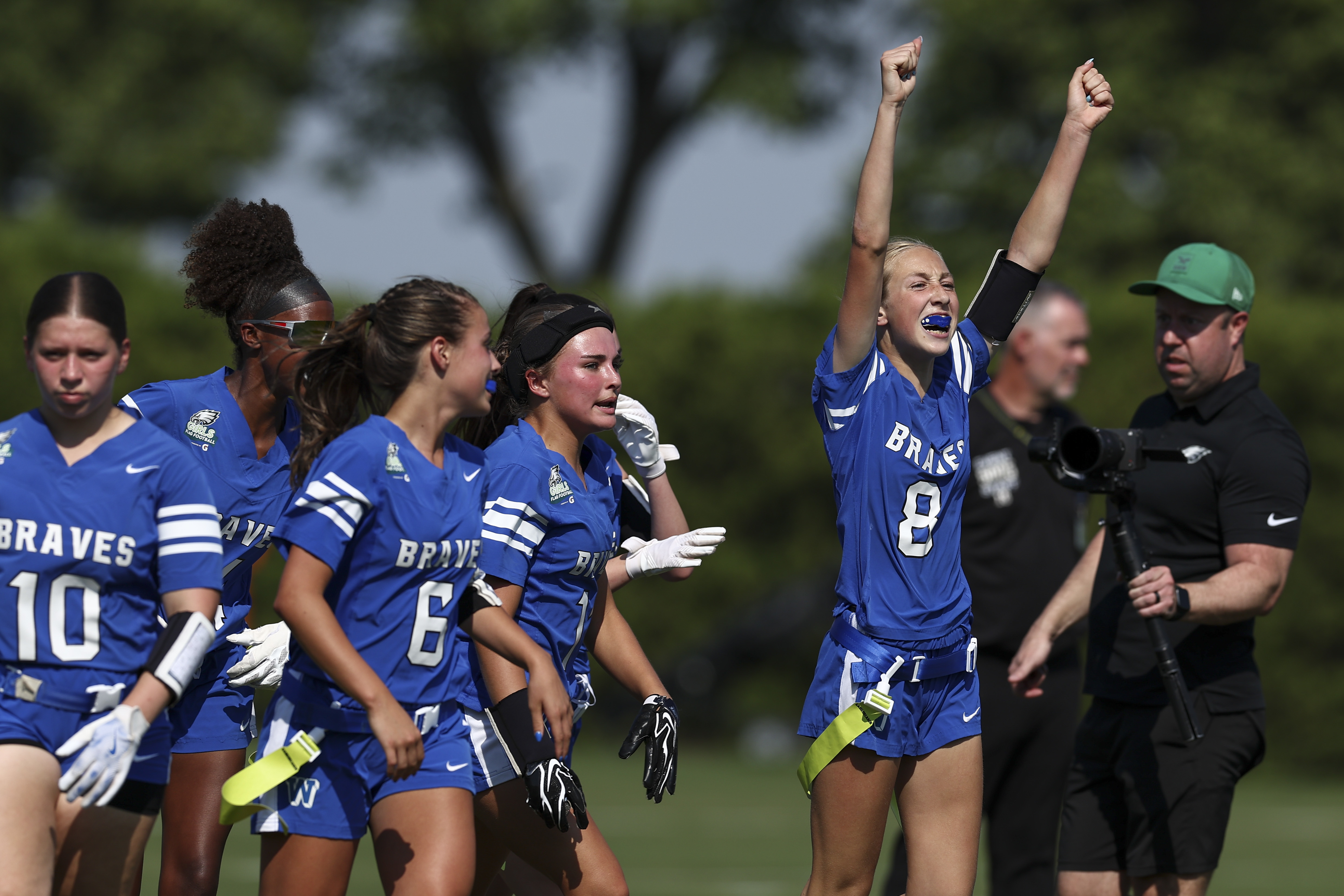
    The Eagles launched a girls’ flag football league in 2022 with the intention of reducing barriers of entry. The league began with 16 teams, but has now expanded to 100 teams from Pennsylvania and 30 from South Jersey.

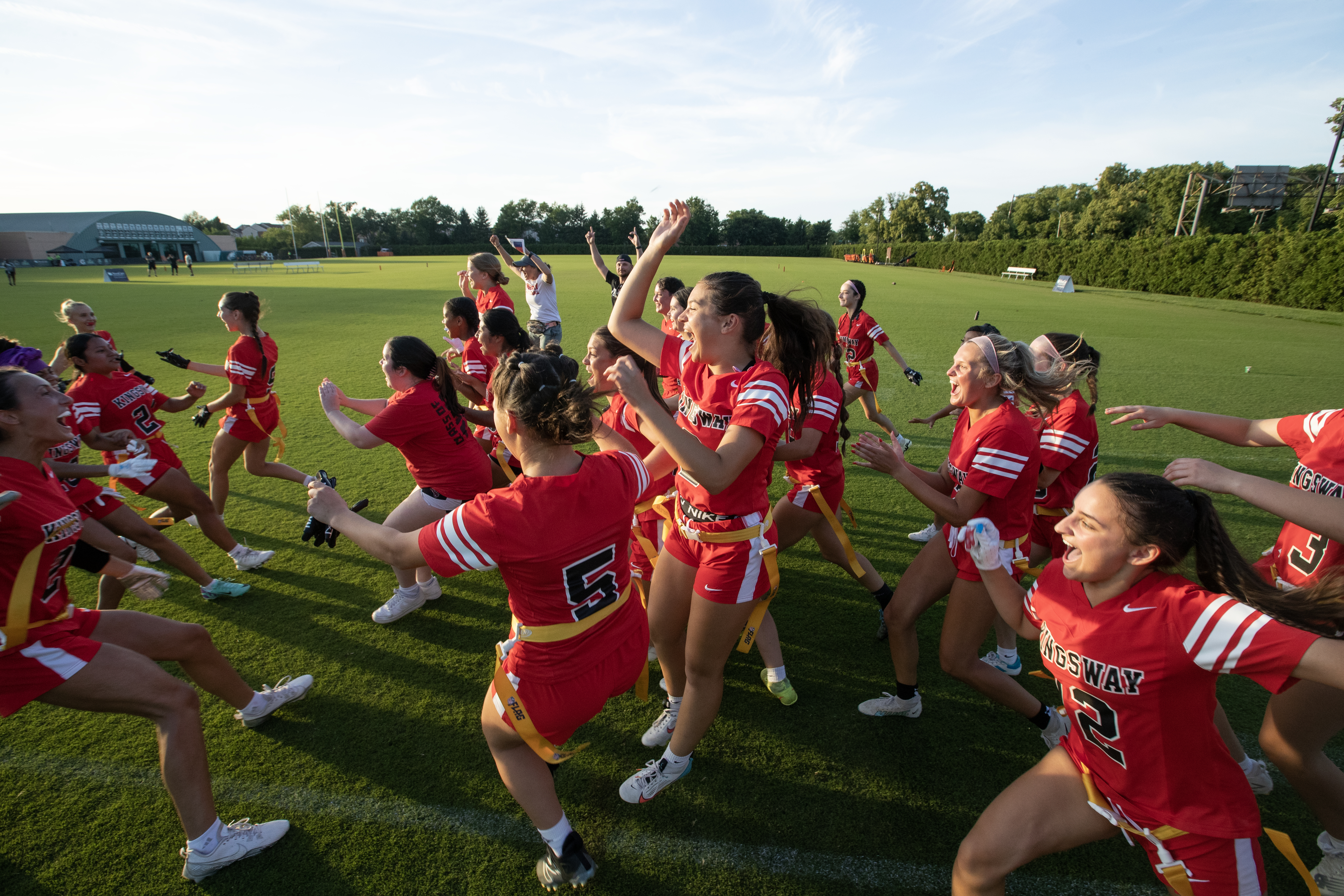
    Kingsway celebrates after winning the Eagles’ New Jersey flag football championship in 2024.Charles Fox / Staff Photographer

    “They were very helpful in offering all of that for those first couple years and to try to bring on new schools and make it more of an easy sell to the superintendents,” Cioffi said.

    The Eagles offered each team funds to get programs started and provided uniforms, footballs, coaching seminars and equipment. Clinics were also hosted for players and coaches, and the Eagles partnered with Operation Warm, a non-profit organization that manufactures sports bras to provide gear for girls in sports. According to their website, by the age of 14, girls are dropping out of sports at two times the rate of boys because of a lack of access to basic gear.

    “A barrier to participation was the lack of equipment and so working with Operation Warm, we can now give sports bras to every participant,” Eagles president Don Smolenski said.

    The Eagles support was intended to represent who they are as an organization.

    “We’ve opened up our facilities; fields and indoor practice facilities,” Smolenski said. “That’s us sort of embracing the community around us, and you see the impact when you see how excited the athletes are when they come to a practice or run onto the field for the very first time — it’s incredibly gratifying and motivates us to continue to explore how we can further support it.”

    The Eagles hosted more than 100 girls’ flag football coaches and players from the tri-state area at training camp on Aug. 24. It was an experience, some coaches and players say, they never thought they would have.

    “It’s really nice to know that a male-dominated sport is very supportive of women coming in and just kind of making it their own,” Kingsway Regional High School senior Jade Matthew said. “I feel like all the opportunities that we get, even something like this, and the fact that they host our championship and playoff games, it’s just nice to be a part of.”

    Matthew and teammate Jayda Romagnoli grew up playing co-ed flag football with their siblings.

    “It was a bit hard competing with boys even. … when I was little, normally the boy would never really pass to us, and we kind of always got ignored,” Matthew said. “But it’s nice to see that we’re kind of growing out of our little shy phase and actually embracing that this is ours and we can make it what we want.”

    When they first heard girls’ flag was going to be a high school varsity sport, they thought it was going to be co-ed.

    “They’re really taking this serious and they were actually growing it,” Romagnoli said. “I want to go to college for it, so it’s nice to hear that more people are going to start getting the love for this sport that I had before.”

    Interest in flag football has “exploded”, Cioffi said, with more college programs including flag as a varsity sport at all levels.

    Several South Jersey high school coaches said the Eagles’ backing their teams helped speed up the process to sanction the sport.

    “We want the sport of football to be embraced by everyone — men, women, boys, girls,” Smolenski said. “We don’t want it to just be thought of as, ‘Oh, that’s a boy sport, only boys can play,’ and flag football is a sport that can be played by everyone.”

    Harper Carney of Williamstown celebrates a touchdown during the Eagles’ New Jersey flag football championship on May 18.Monica Herndon / Staff Photographer

    Last year, Hertline knew very little about flag football during her first season as coach at Camden Catholic, but the growth of the game is a testament to the increased opportunities and the determination of the girls.

    “Girls get such a bad reputation sometimes, with the ‘play like a girl,’” Hertline said. “Yeah, play like a girl because if you see the way our girls play, they are second to none against any boys’ team. They really raise the bar and because there has been so much excitement surrounding the announcement of all of this and the NFL is backing it, everyone wants to be a part of this.”