The past and the future met at Citizens Bank Park on Sunday morning for the Perfect Game All-American Classic. Sixty of the top high school baseball players in the country took the field and were coached by former major leaguers.
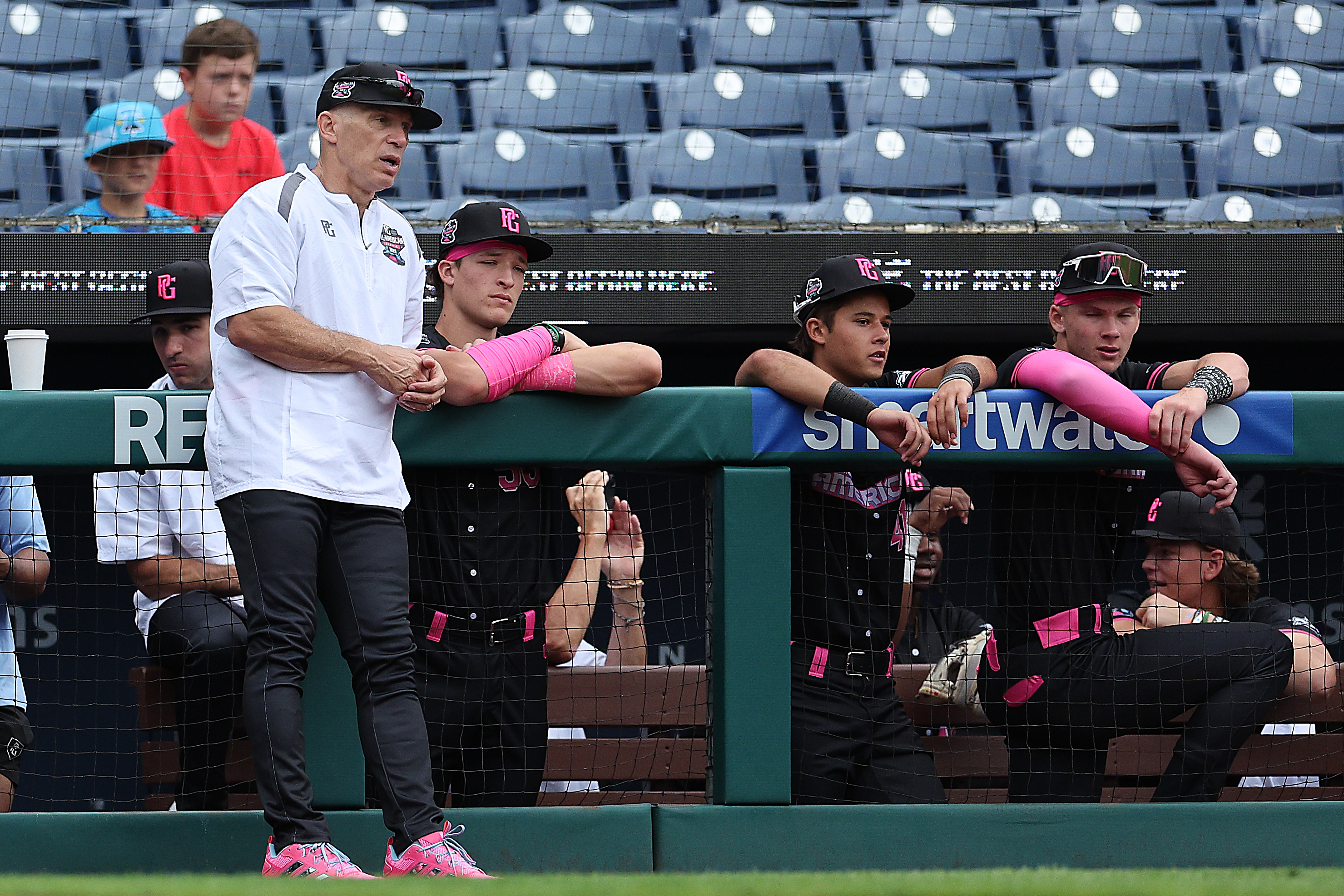
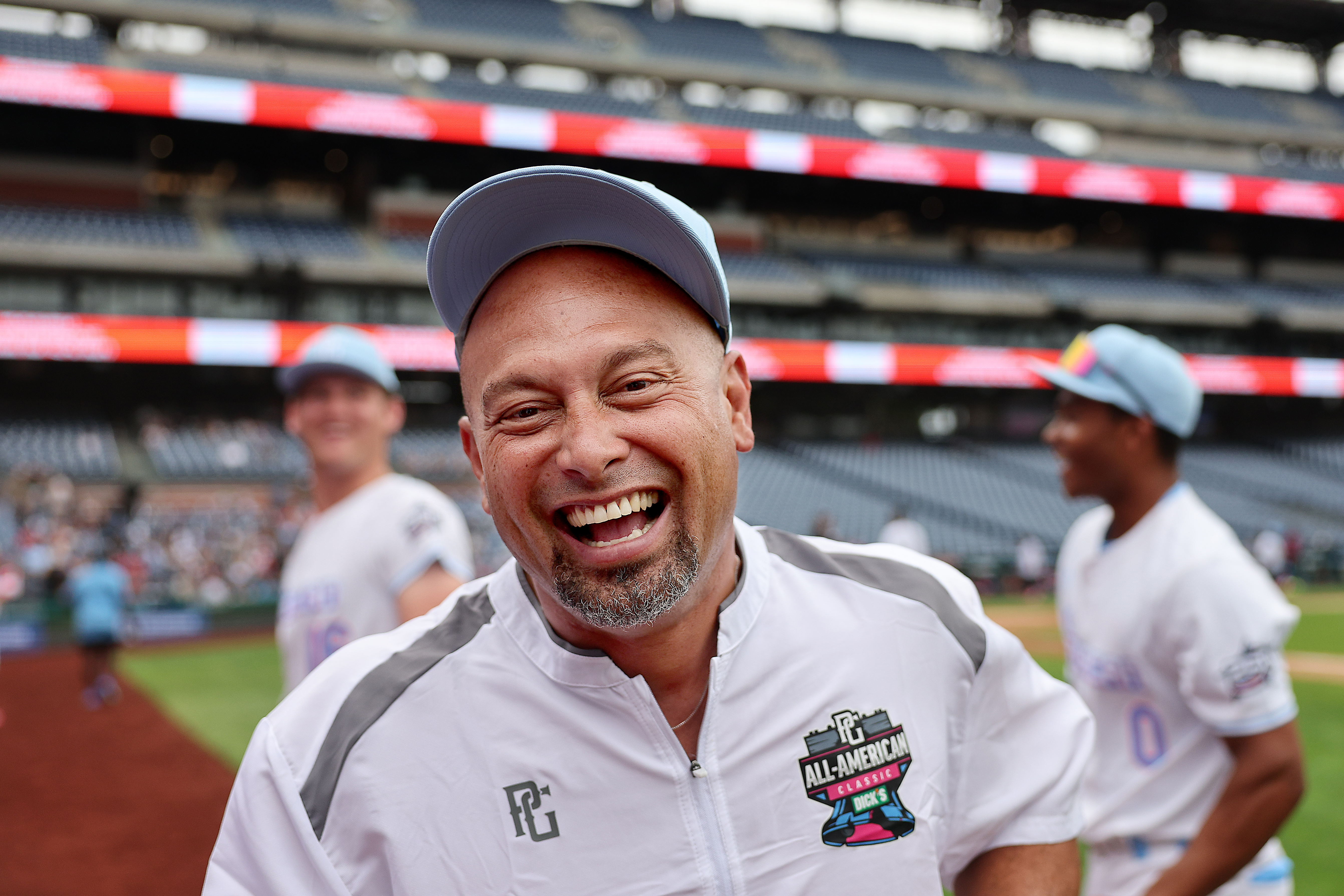
Former Phillies manager Joe Girardi, a four-time World Series champion as both a Yankees skipper and player, served as the manager of the West team. Across the field in the first-base dugout, former Phillies center fielder Shane Victorino was the manager of the East team.
Ultimately, it was Girardi who came out on top with an 8-3 winfor the West team.
Girardi spent 273 games as the Phillies manager starting in 2020. He went 132-141 record with a .484 win percentage before being fired early in the 2022 season. He hadn’t been back in the dugout at Citizens Bank Park since. Instead, he’s been focusing on his role as a Yankees game analyst for the YES network. He said it was great to be back in Philly.
“I enjoyed my time here,” Girardi said. “It’s a great baseball town. People are extremely passionate. Just great to be around these young kids too.”
Girardi was the manager of the West team for his first time back in the dugout at Citizens Bank Park after being fired in early 2022.David Maialetti / Staff Photographer
Victorino, whose eight seasons in Philly included two All-Star selections, three Gold Gloves, and the 2008 World Series title, has spent a lot of time back in the city. During All-Star Weekend last month, he led Team Victorino to win the inaugural MLBx three-on-three tournament against Jimmy Rollins, Ryan Howard, and Andruw Jones.
Also part of both the Perfect Game coaching staff and the 2008 Phillies were pitchers Kyle Kendrick and Tom Gordon. Milton Thompson and Ben Rivera, from the Phillies’ 1993 NL champions, joined them on the coaching staff, along with fellow ex-Phillie José Contreras. Former manager Charlie Manuel was in attendance as the honorary chairman for the first-ever Perfect Game event held at Citizens Bank Park.
With so many players back and involved in the event, Victorino said it’s a testament to the “Phillie way.”
“There’s something special when I came here, and I learned that through the years that there’s a way that they do it here,” he said. “To be a part of it, to be called back, and to be a part of this organization still, [with] five, six people involved in this [event] it’s always amazing.”
Former Phillie Shane Victorino was the manager of the East team and was one of five former Phillies part of the coaching staff for the game.David Maialetti / Staff Photographer
Fellow former major leaguers Mo Vaughn, Trevor Hoffman, Ryan Klesko, Todd Coffey, Denard Span, and Jason Phillips, and Girardi’s son Dante were also on the coaching staffs.
For Dylan Seward, a shortstop from Corona, Calif., who is projected to be the top pick in the 2027 draft by MLB.com and is committed to Tennessee, the opportunity to play and learn under these veterans was “a major blessing.”
“Joe’s managed some of the best players ever, so getting to pick his brain a little bit, to me, that’s how you get better,” Seward said. “Always [having an] open mind and ask a lot of questions from guys with a lot of knowledge and just really listening.”
In line with the rest of the big names surrounding the game, Daron Sutton and former Phillies outfielder Hunter Pence called the game on PGTV.
Pence’s nephew, Striker Pence, a 6-foot-6 two-way player also from Corona, pitched the first inning. The right-hander maxed out at 99 mph with the rest of his pitches sitting in the high 90s.
In the fourth inning, Pence, who bats left-handed, hit a doubleto centerfield that brought in the first two runs of the game.
On the East team, Brue Milner, a catcher from Tallassee, Ala., who is committed to Georgia Tech, went yard in the top of the sixth to bring in a run for Victorino’s team. Later in the inning, a base-hit from Harry Chubb Jones Jr., an Alabama pledge from Douglasville, Ga., tied the game.
A sacrifice fly from Max Hemenway, a native of Puyallup, Wash., who’s another Tennessee recruit, gave the East a one-run lead in the top of the eighth. An RBI single from LSU recruit Sebastian Castillo, of Justin, Texas, in the bottom of the frame tied it up. Pence walked, moving Castillo to second before hestole third. A single from Ontario’s Jalen Jacobs brought Castillo home before a grand slam from another LSU pledge, Koa Romero from Des Allemands, La., ended the game.
The talent displayed is something both Victorino and Girardi said they don’t recall possessing at 17, but it says a lot about the direction the game is heading.
“It’s amazing the size, first and foremost, and then the ability to play the game at the level at such a young age,” Victorino said. “I think it’s pretty impressive, but again, there’s so much more for these kids to learn, so much more ahead for them.”
Striker Pence was one of the 46,000 fans in attendance when the Phillies took on the St. Louis Cardinals at Citizens Bank Park during the National League Division Series in 2011. His uncle, Hunter Pence, was the Phillies’ starting right fielder, batting third in the lineup.
Striker doesn’t remember anything from his visit to the stadium. He was just 2 years old at the time and hadn’t been back since. But on Friday, it was his turn to be on the field at the Bank as the players for the Perfect Game All-American Classic took batting practice and scrimmaged ahead of Sunday’s game. And Pence said he was ready to “enjoy every minute of it.”
Wearing two gloves for batting practice and his socks hidden under his pants, Pence didn’t appear to have any of the oddities his uncle was recognized for. But when he’s back home in Corona, Calif., Pence said he’ll wear his socks above the knee like his uncle does — just one of the quirks the two have in common.
“Our swings are both funky. Everything we do is funky,” said the younger Pence. “But we get it done.”
Pence’s left-handed swing involves bringing his knee up high, similar to how a pitcher would, which makes sense for the two-way player.
The 17-year-old, who throws right-handed, has a four-seam fastball that maxes out at 101 mph and usually sits in the high 90s. His changeup clocks in the high 80s, and his slider hits the mid-80s.
Striker Pence while his uncle played for the Phillies.The Pence Family
He said he’s never wanted to choose between pitching and hitting the way most players do when they get to high school. In an era of baseball with most players having a specialty, he said Shohei Ohtani is changing things. But his desire to be a two-way player predates Ohtani, and said he “must have had something click,” when he was younger, giving him a love for both roles.
“I’ve always wanted to be a two-way, and then [Ohtani] showing it, showing teams it’s possible, makes it awesome,” Pence said. “I’m good at both. I’m going to keep doing it as long as I can.”
That’s what makes him one of the top prospects in the 2027 MLB draft. Currently ranked seventh overall in the nation and second for right-handed pitchers in the Class of 2027 by Perfect Game, Pence reclassified from the Class of 2028 to the Class of 2027 on June 4.
Rather than spend another year in high school, Pence said the decision comes from being “content” with playing at the next level, whether that be within an MLB organization or a college team.
Being drafted seems like the probable next step. MLB.com and Perfect Game list him as a first round-pick at 19th and 23rd, respectively, in their mock drafts.
Jered Goodwin, Perfect Game’s vice president of scouting operations, said Pence is “a complete unicorn.”
“Unique is the absolute word for Striker,” Goodwin said. “We, as a company, have not seen somebody that young throw as hard as he does, typically around the zone, and be able to have the left-handed power that he does. There have been a handful of two-way guys that have been high draft picks over the last couple years, but nobody that has had his power profile that we’ve seen, at least in the last 10 or 15 years.”
Striker is the nephew of Hunter Pence, a former Phillie.The Pence Family
Pence plans on improving his speed offensively and his command when pitching before next year’s draft. Off the field, his poise doesn’t need much refining.
Since he’s attended Perfect Game events at around 13 years old, Goodwin said Pence has always known what he wants out of an experience and how to get it.
This disposition translates to the field and in the clubhouse. Earlier this summer, Pence went to a national showcase with Perfect Game just to field balls at first base and help his team out. Goodwin said Pence’s pedigree, and learning how to be both a competitor and a teammate from a young age, explains his demeanor.
“Nature and nurture is both a big thing,” Goodwin said. “The Pence family are tremendous people, so it’s no doubt that he picked up a lot of those qualities from first off, his parents, and then, obviously, secondly, his uncle.”
The “quiet confidence” Goodwin described Pence demonstrating was learned from his uncle, who taught him the importance of uplifting himself as a player.
“Confidence is one of the highest things that you could do,” Striker said. “It makes you perform the best, and all it takes is you to just think about it and believe in yourself.”
While it was his uncle who passed down his idiosyncrasies and mindset, Pence’s father and Hunter’s brother, Howard, helped him with the rest. Howard helped his son throw and hit in the backyard and with workouts. Striker said his dad taught him “everything that I know.”
Jered Goodwin, Perfect Game’s vice president of scouting operations, said of Striker Pence: “We, as a company, have not seen somebody that young throw as hard as he does, typically around the zone, and be able to have the left-handed power that he does.”Jose F. Moreno / Staff Photographer
Howard Pence also was a pitcher and played in the minor leagues with the Astros and Padres affiliates. He threw a cutter that reached up to 97 mph, according to Striker.
Now, Striker said his teammates and opponents are also playing a role in aiding in his development. Being surrounded by top-level talent is helping him hone his skills as he prepares for his draft year, and he expects the Perfect Game All-American Classic on Sunday to help, too.
“Playing against the best talent, seeing the best pitchers, and facing the best hitters, it just makes you better, overall, more prepared,” Pence said. “These guys are all going to be at the next level. So am I, so you got to get used to it.”
The connection was obvious for anyone who cared to see it.
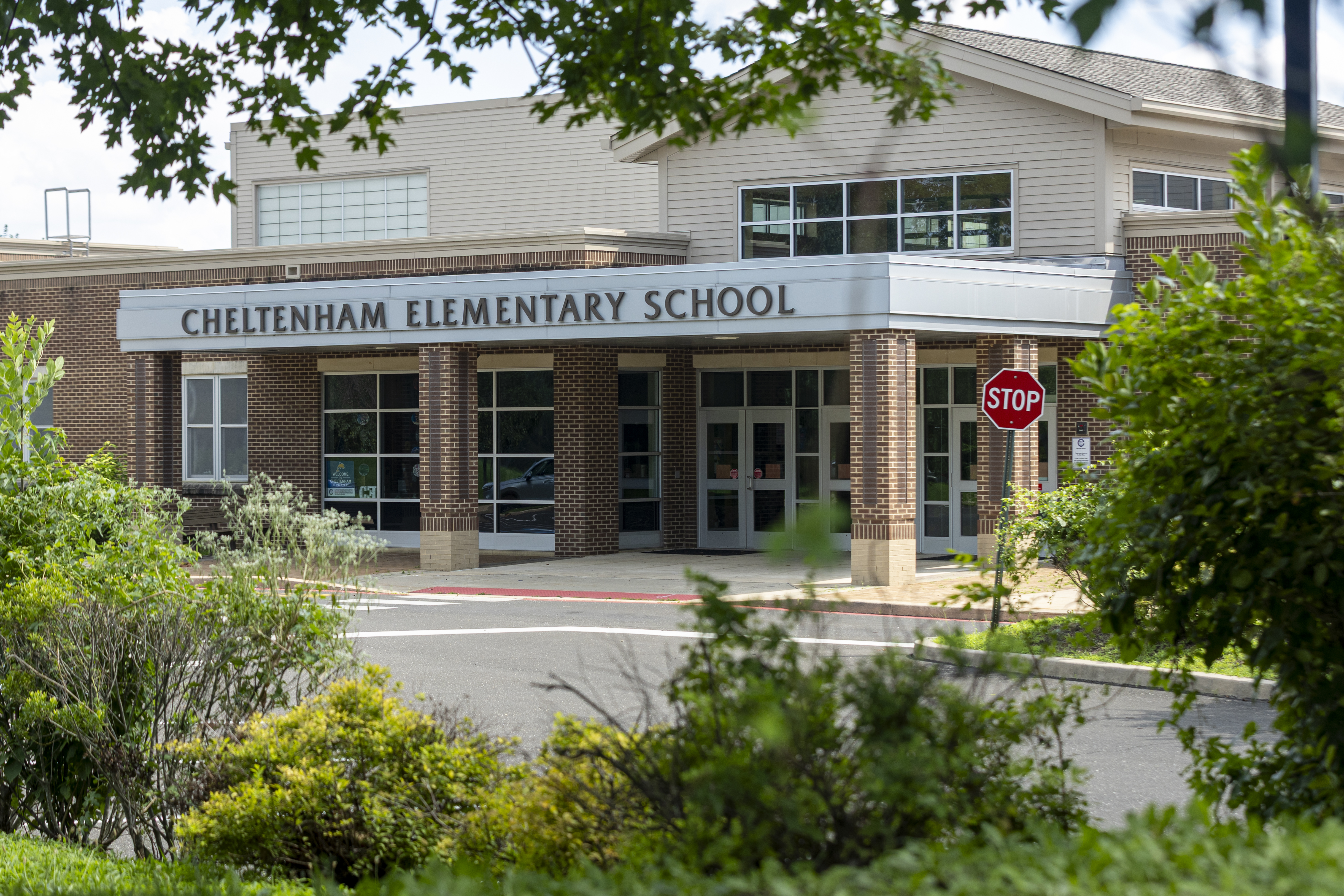
One parent after another stepped to a lectern at a Cheltenham school board meeting Tuesday night, each of them bemoaning the district’s handling of either the recent hazing scandal within the high school’s football program or a string of student-on-student assaults at Cheltenham Elementary. The alleged hazing led to criminal charges against four coaches and six players and was brutal: teammates holding down a 15-year-old sophomore so they could step on him with football spikes and poke at his buttocks with a broomstick. The alleged assaults at the elementary school, involving children in kindergarten and second grade, involved conduct and comments that were sexual in nature.
Leah Mulhearn, the board’s president, announced that the district would review its safety policies and that “football will not return until we address this,” only to duck behind the protective shield of the passive voice — “Mistakes were made” — when it came time to assign responsibility for the dual disasters. The anger among the meeting’s attendees was palpable and universal, and it was justified. These are not two crises on distinct, parallel tracks. They are linked, and there is no separating them.
It was impossible, after listening to some of those parents describe the abuse accusations at Cheltenham Elementary, not to think, What kind of school leaders ignore these incidents? The kind likely to ignore a parent who reports a violent attack in the football locker room. The Cheltenham school district has a culture problem, and that problem isn’t new. Does that assertion seem outlandish? It isn’t. In youth and high school athletics, certain patterns, even the worst kind, tend to repeat and perpetuate themselves.
“It seems some sort of disconnect,” the author Hank Nuwer, who for decades has been tracking hazing-related incidents and deaths, once told me. “You have to look at it from the outsider position and the insider position. The outsider sees it as sadistic. The people on the inside have the disconnect, particularly if they’ve gone through it themselves. ‘This needs to be done because it has been done to me. So we’re doing it to someone else.’”
Go to 2002, to Central Catholic High School in Pittsburgh, where two football players were charged with sexual assault after allegedly holding down a 15-year-old teammate and slapping him in the face with their genitals.
Go to West Chester’s Arrowhead Day Camp in 1966. The Roman Catholic High School football team was there for training camp. In a hazing prank, three players carried sophomore Lamonte Jenkins to a swimming pool sometime after the pool’s 8:30 p.m. closure, threw him in, then scurried back to their bunks. Jenkins drowned.
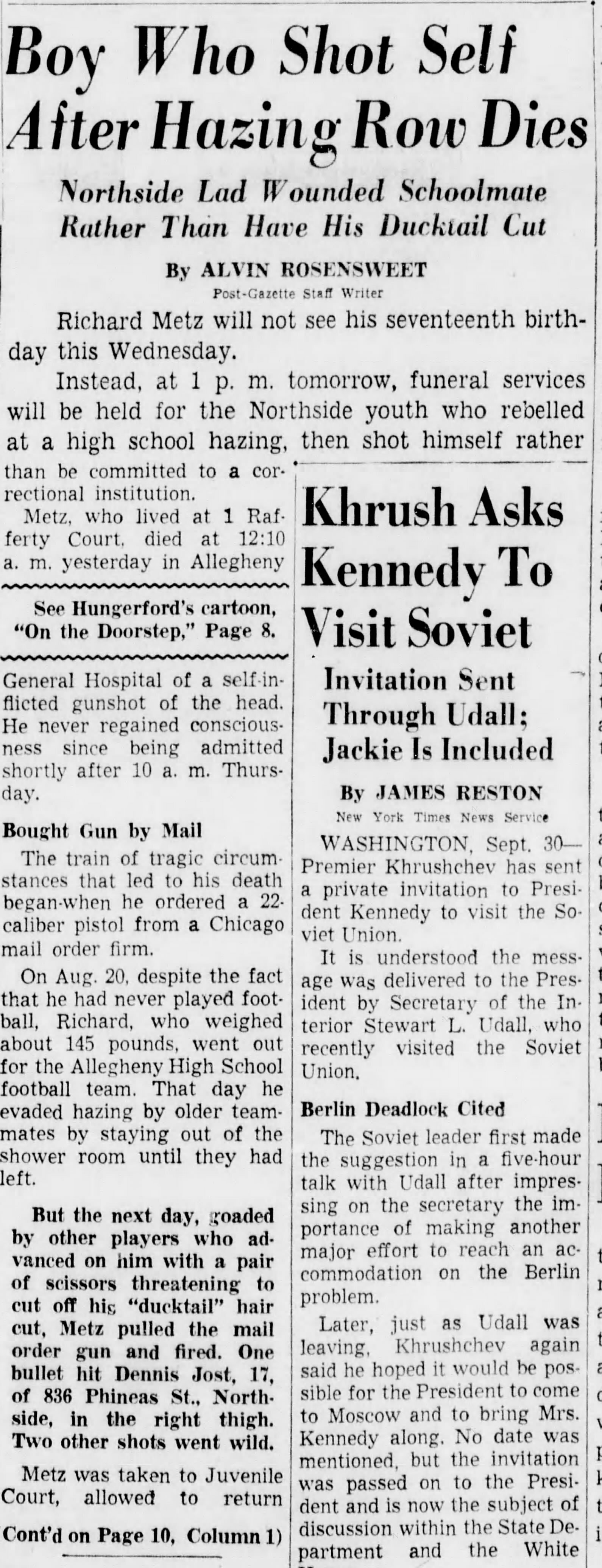
Go back to Pittsburgh, in 1962, when Richard Metz, 16, tried out for the Allegheny High School football team and, after the first day of practice, stayed out of the locker room showers to avoid being hazed. The next day, when two players wielded a pair of scissors and threatened to cut his hair, Metz pulled out a .22-caliber pistol that he had ordered in the mail and fired three shots at the players, hitting one of them in the right thigh. Six weeks later, Metz shot himself.
In 1962, Richard Metz shot a gun at two football players who attempted to haze him at Allegheny High School.Newspapers.com
A “psychiatrist’s report showed that Richard had an inability to meet a crisis,” the Pittsburgh Post-Gazette’s Alvin Rosensweet wrote on Oct. 1, 1962, the day after Metz’s death. “He felt he was only defending himself when his teammates goaded him into shooting.”
A young, troubled man who brings a gun to school … and turns it on other students … then dies by suicide. It doesn’t sound like something from the distant past. It sounds like the sort of atrocity too common in our time.
Yes, these episodes are anecdotal. They’re also predictable without proper oversight from the adults who are supposed to be in charge, without awareness and understanding of the conditions that can create them. One would think the omnipresence of smartphones and social media and the possibility that such abhorrent acts would be captured on camera and blasted out to the world would serve as deterrents to hazing. They don’t, and the additional, necessary guardrails didn’t exist at Cheltenham and don’t in too many other locker rooms. Incidents like these seem rare, but there’s no telling how often they actually occur.
“How likely,” Nuwer said, “are students to report this?”
They’re not likely at all. The victims are often too humiliated to reveal the abuse, and you can be sure that the perpetrators won’t be quick to confess. Somehow those lasting lessons weren’t delivered to enough Cheltenham football coaches and players, and based on the abuse parents described Tuesday night, those responsible for the district’s youngest students need to learn them, too.
There will be a review of the district from an outside attorney, and the high school football season has already been canceled, just as last season’s was. These are half-measures, and too late at that. Curtailing such cruelty comes down to stopping it before it starts, to cultivating an environment where everyone understands that there will be consequences for those who don’t meet the baseline for basic human decency.
It takes elected leaders who actually lead. It takes educators and administrators who wield wisdom and compassion and discipline in the proper proportions. It takes parents and students with the willingness to speak up, and it takes parents who have the strength, the humility, and the self-awareness to recognize that their children might be causing the chaos — and who take the steps to stop it. It takes a lot of elements that right now seem in short supply in the Cheltenham school district.
This column has been updated to reflect the outcome of one accusation of hazing.
Caleb Lundy announced his verbal pledge to Drexel on social media Thursday.
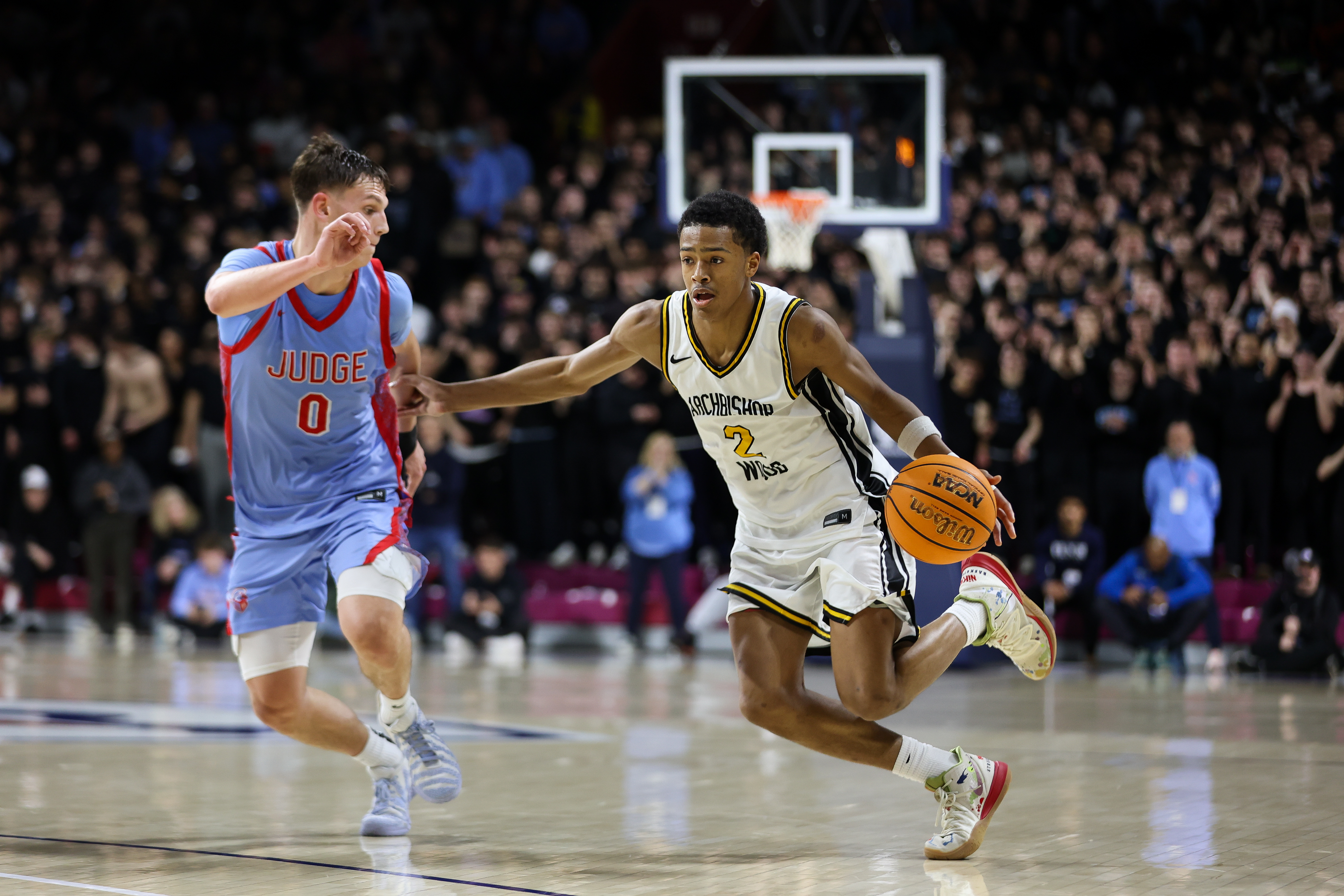
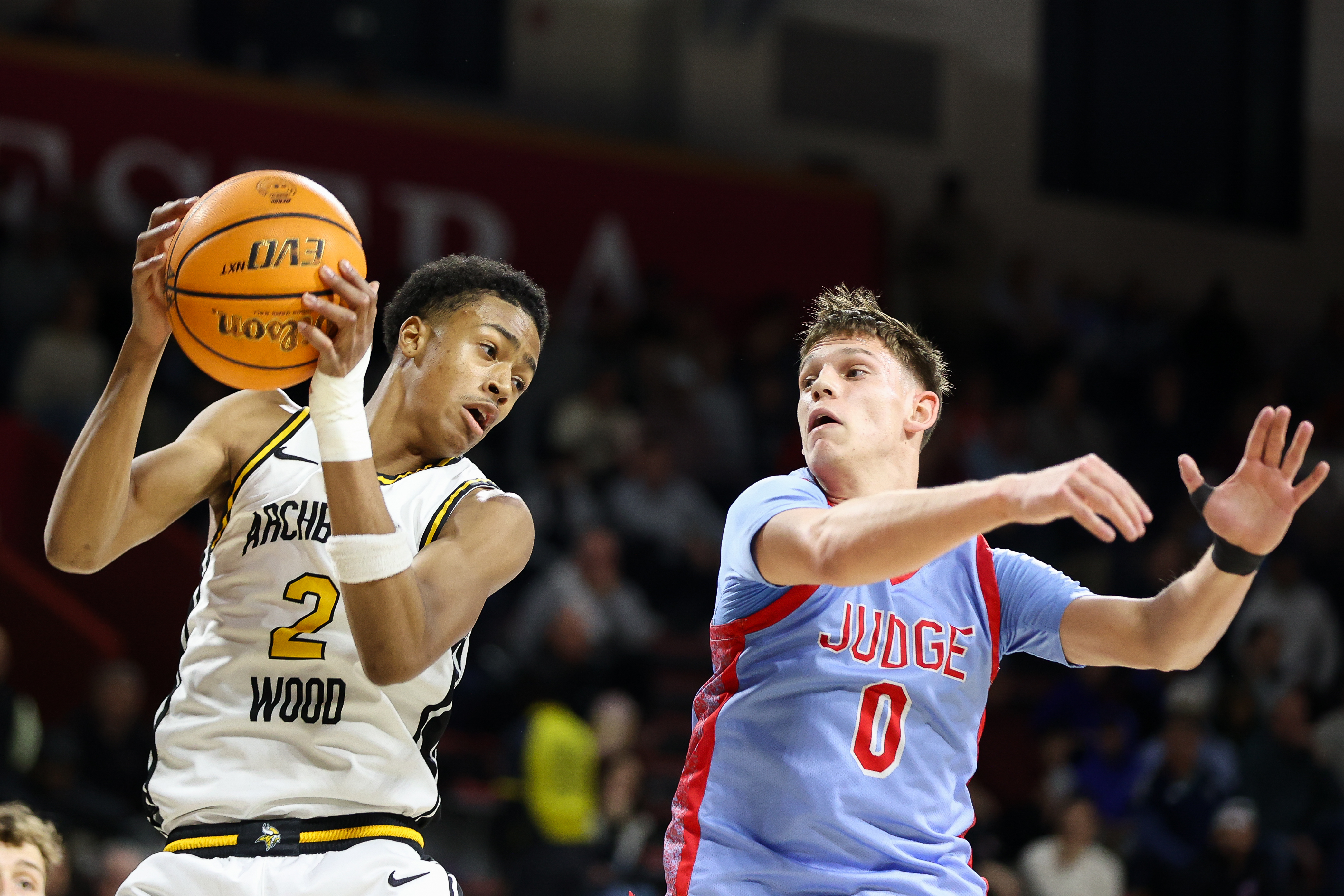
The Archbishop Wood guard and Warminster Township native is ranked as a four-star recruit and the fourth-best rising senior in Pennsylvania, according to 247Sports.
Lundy chose Drexel over Temple, La Salle, and St. Joseph’s, among others.
Lundy has the highest composite rating of any Drexel recruit in the 247Sports database, which dates back to 2000. His four-star ranking bests former players Mate Okros, T.J. Bickerstaff, and former NBA guard Damion Lee, all of whom were three-star recruits.
Lundy and Marist signee Brady MacAdams led Wood to a 12-1 regular-season finish in the Catholic League and a semifinal appearance in the PCL tournament. The Vikings have not won a league championship since 2021.
Lundy is the first player to commit to Zach Spiker’s 2027 recruiting class. The Dragons have also extended an offer to Imhotep Charter forward Zaahir Muhammad-Gray, a rising senior and four-star recruit who has yet to make his commitment.
Lundy’s verbal pledge will not be official until he signs an aid agreement with the school. The early signing period for the class of 2027 begins on Nov. 11.
Archbishop Wood’s Caleb Lundy (left) averaged 17.1 points and 4.7 assists last season.Isaiah Vazquez / For The Inquirer
Lundy is the third player from Wood to commit to Drexel under Spiker, who is entering his 11th season as the Dragons head coach.
Josh Reed was part of Spiker’s 2024 recruiting class, and former Wood guard Justin Moore spent two seasons in University City after joining the Dragons in 2022.
Lundy comes from an athletic family. His father, Mikal Lundy, played running back at Kent State in 2000 and 2001. Caleb’s uncle, Wali Lundy, was a running back at Virginia. He spent one season with the Houston Texans after being selected in the sixth round of the 2006 NFL draft.
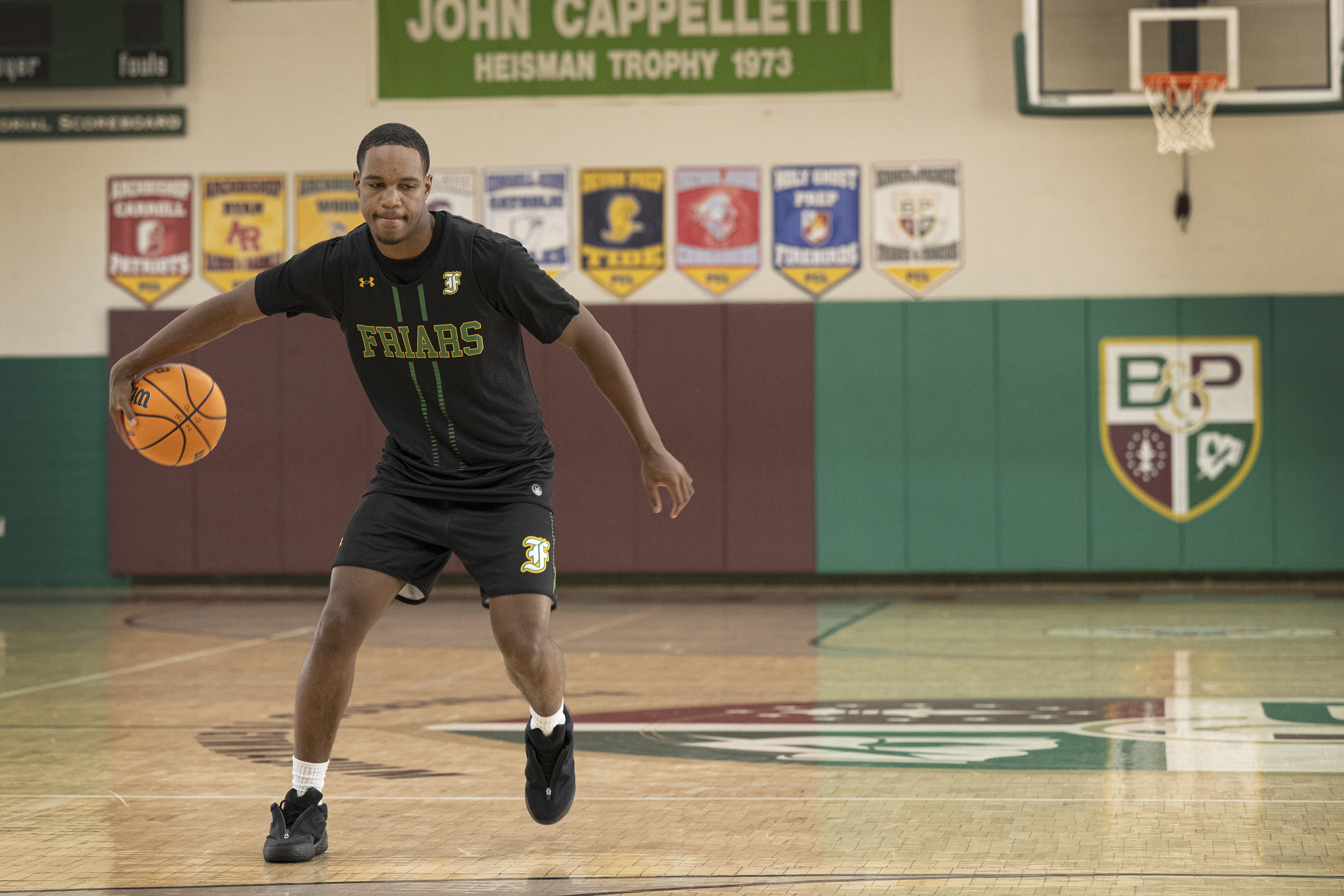
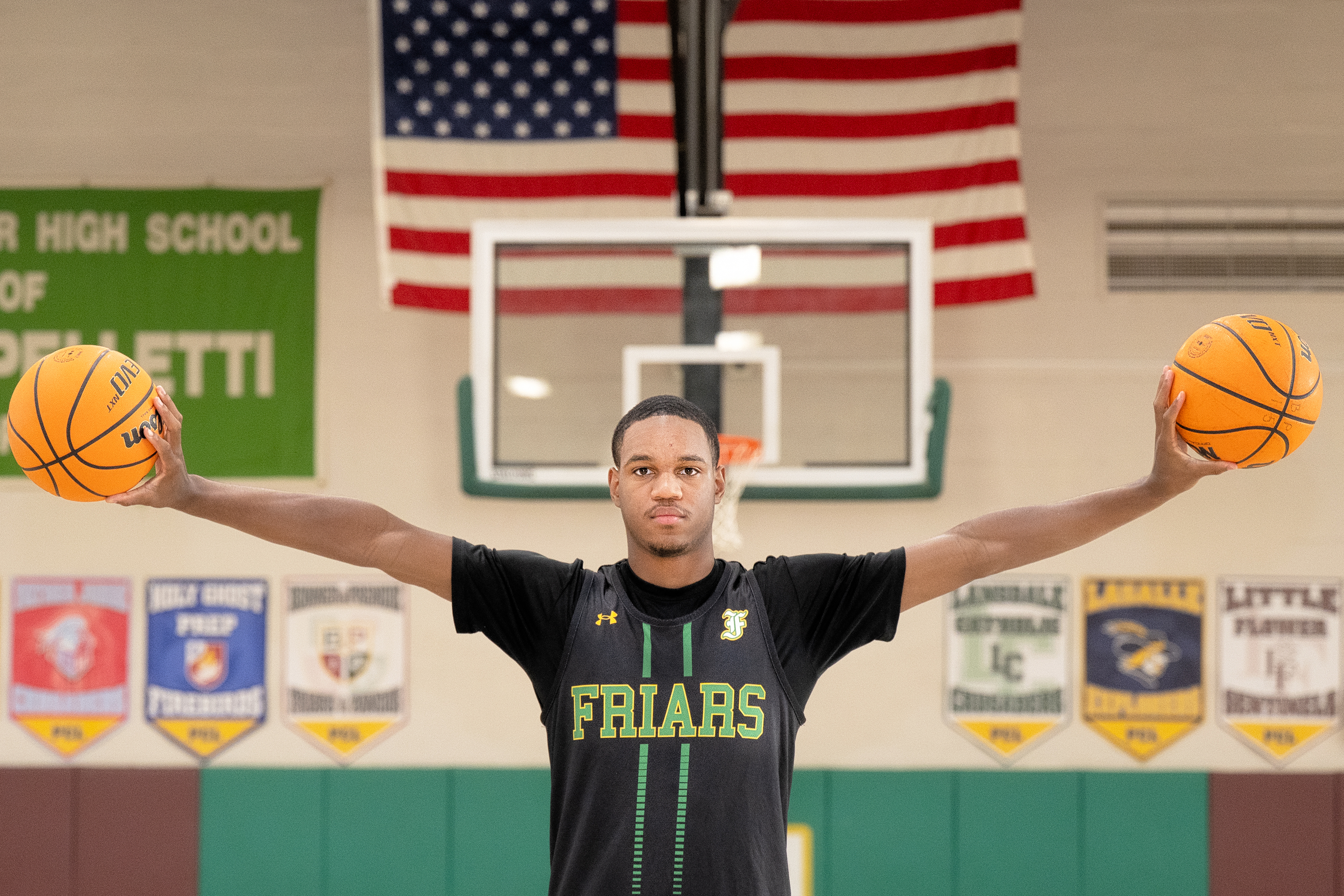
If you walk into the Bonner-Prendergast gym in Drexel Hill during the basketball season, you will find more than 30 family members and friends cheering for rising senior Korey Francis.
Basketball has always been a family affair for the Francises. Korey’s father, Keefer Francis, played at Bonner and went on to play collegiately at Cabrini. His grandfather, uncle, and aunt all played the game as well.
Now, Francis has become one of the state’s most competitive and complete players, being named Mr. Pennsylvania Basketball and the Catholic League MVP after leading Bonner-Prendie to a PCL semifinal appearance and its first PIAA 5A state championship in program history during the 2025-26 season.
“I pretty much do everything,” Francis said. “I’m able to defend and guard bigger [players], but I’m also able to score and be a point guard and bring the ball up and set my teammates up to make the right plays.”
Korey Francis averaged 21.6 points, 7.1 rebounds, and 3.2 assists last season.Jose F. Moreno / Staff Photographer
Francis averaged 21.6 points, 7.1 rebounds, and 3.2 assists while shooting 52.3% from the field, 36.7% on three-pointers, and 75% on free throws. He enters his senior season with 1,265 career points.
Francis, who received a basketball as his first birthday gift, began playing for Brookhaven Youth Basketball and Chester Biddy League before joining Team Iverson.
“Korey was always special growing up,” said Bonner-Prendie head coach Billy Cassidy. “He was the kid you heard about and read about from the time he touched the basketball.”
Cassidy’s relationship with the Francis family dates back to his own high school years, when he played basketball with Francis’ father at Bonner.
When Cassidy was named the head coach in 2022, he knew he wanted Francis to play for him.
“Korey wanted to make his own mark on the high school, that was his biggest thing,” he said. “Obviously, he had a lot of options and choices to go elsewhere and be the next guy in their programs. He took the leap to come to Bonner to basically turn this program around. He has done that and more already.”
Francis hasn’t just made an impact on the court. He served as the class president his freshman year, and has now been the vice president of his class for the past two years.
“The community and making an impact on the school was a huge thing he wanted to do outside of basketball,” Cassidy said.
Korey Francis has 19 scholarship offers, including St. Joseph’s, Temple, La Salle.Jose F. Moreno / Staff Photographer
Late last season, Bonner hosted Roman Catholic in an important game for league standings and postseason seeding. Francis went head-to-head with the league favorite for MVP, Sammy Jackson, before delivering what Cassidy said was the defining moment of his season.
“He dunked on the kid, and the place went nuts,” Cassidy said. “That was the moment everyone realized he was the MVP, which has not been done by a junior many times at all.”
Although Francis has emerged as one of the state’s best players, he admits confidence didn’t always come naturally to him.
“Towards the start of my high school career, a lot of games I would be really nervous for, and overthink and not have as much confidence,” Francis said. “But my coach gave me the motivation and the knowledge to know that I’m supposed to be out there.”
Each year, Francis has added to his body and improved his game, Cassidy said.
The attention from college coaches began during his freshman year, but following his junior season, the process sped up. He now has 19 scholarship offers, including St. Joseph’s, Temple, La Salle, Virginia Tech, and Xavier.
When deciding on a school, Francis is looking for more than basketball.
“I’m looking for a place that feels like family, a place where I feel at home and then a coach that’s going to push me and be able to take me to the next step in my game.”
Before moving on to college, Francis is focused on his final season at Bonner.
Korey Francis hopes to bring a Catholic League title back to Bonner-Prendie.Jose F. Moreno / Staff Photographer
“I’m just excited to finish out my high school career,” he said, “playing with my teammates that I’ve been playing with since I was younger.”
His goals are simple: Win another state championship and earn the school’s first Catholic League title since 1988.
“Basketball requires time to become as good as you want to be,” Francis said. “The more work you put in, the more you get out. Things take time, and being able to stay in the race is better than trying to sprint through it.”
Cheltenham Superintendent Brian Scriven resigned Thursday, a little more than a week after prosecutors charged four football coaches and six players in connection with violent assaults against a player last season in a high school locker room.
The superintendent’s resignation, effective immediately, came amid community outcry over the district’s handling of the August and September 2025 incidents, which prosecutors say both involved students attacking a 15-year-old and using a broomstick to poke at his buttocks.
Yet the district did not uncover that there had been two assaults, and administrators appeared to downplay a report from the 15-year-old’s mother, according to the Montgomery County grand jury that recommended the charges. It described a “level of incompetence” in the district that “put every young man on the football team at risk.”
Some parents who have been battling the district to take student safety more seriously said Scriven and his administration did not fail only in overseeing the football program.
“I see a complete lack of urgency,” said one mother who has been among a group of parents pressing the district since October to address violent incidents at Cheltenham Elementary School. The mother, who spoke on the condition of anonymity out of fear of retaliation for her child, said administrators still have not answered questions about how students are disciplined and how others are supported after assaults.
Another Cheltenham Elementary parent, Shanyl Jones, said her daughter, an incoming second grader, twice experienced sexual touching and comments in school. In kindergarten, a boy repeatedly touched her against her will, conduct that escalated to him grabbing her vagina, Jones said.
The boy also made sexually explicit comments to her daughter, Jones said. She reported the conduct and filed a Title IX sexual harassment case; the school moved the boy to a different classroom, she said.
After a separate boy made sexual comments to Jones’ daughter in first grade, the principal called Jones and apologized, though the boy was not moved to a different classroom, Jones said.
News of the football charges “just tore me up on what my daughter’s future would be in the school system,” Jones said. “It gave me no assurance they’re going to be able to reconcile what’s happening now.”
Scriven said in his resignation letter Thursday that “this year has tested our community in ways none of us anticipated.”
“I have come to believe that the district is best served by a fresh start under new leadership, and that stepping aside now is the right and necessary step to allow Cheltenham to move forward,” he said.
The district has not commented on how else it plans to respond to the explosive grand jury report released last week, which described the response of several employees at the high school — identified only as Employees #1, #2, and #3 — as minimizing an assault reported by the 15-year-old’s mother, and trusting the word of the head coach, Terence Tolbert, that he had not instructed the student not to tell his parents what happened.
The district did not respond to questions this week about its hiring of Tolbert — who was among the four coaches charged — including whether it had sought references from Abington, which cut ties with him after one year as its head football coach. Some parents of football players told The Inquirer they had “pleaded” with Cheltenham administrators not to hire Tolbert, whom they accused of allowing bullying during his tenure at Abington Senior High School.
Nor did the district respond to questions about whether it would take action against any employees, including those described in the grand jury report.
The Cheltenham High School vice principal whom the mother said she had reported allegations to, Mark Hoff, was named vice principal at Wyncote Elementary last month.
The grand jury report “details very troubling questions about the management and operation of the district’s athletic programs, including the football program,” school board president Leah Mulhearn said in a statement this week. “Our highest priority is the safety and welfare of the children we serve.”
Mulhearn, who did not address questions about Cheltenham Elementary in the statement, said the board was “focused on conducting a comprehensive review of the grand jury’s findings, including our policies and practices related to athletics, as the first step in implementing measures to ensure that no such conduct ever occurs again at our schools.”
The district has said a Title IX investigation into the allegations will soon be finished, with possible discipline for students. Two 18-year-old players charged as adults — the other four were charged as juveniles — have already graduated.
Community members are closely watching the school board’s next steps. Sharif El-Mekki, a nationally known Philadelphia-based educator who runs the Center for Black Educator Development and previously led Mastery Shoemaker Charter School, called on the school board in a letter to apologize to the victimized student and commission an independent investigation into the district administration’s conduct.
“Every student in Cheltenham, every teacher, every parent, and every young leader in Montgomery County is being taught something right now by how the district is responding,” El-Mekki said.
‘Environment of ongoing chaos’
Cheltenham Elementary parents said they raised concerns to administrators last October, after they heard from their children that a student touched another student’s penis sexually in class, over his clothes, in view of classmates.
Some initially did not believe it. “We would have been told about it,” said one mother, who also spoke on the condition of anonymity out of fear of retaliation against her child.
Parents began talking to one another to confirm what happened. Other parents and students told them the same child had been involved in previous sexual incidents, two mothers said.
A group of parents sent an email on Oct. 3 to ShaVon Savage, then the district’s assistant superintendent, saying they had recently learned that a student “touched another child sexually during class time” and that the child had been involved in “multiple sexual incidents over the past few years.” They asked to be notified about instances of physical or sexual assault.
In the email, shared with The Inquirer, they also asked for additional supervision and counseling for students with behavioral challenges and described an “environment of ongoing chaos” at the school, which last year served a larger number of students with emotional support needs than the district’s other three elementary schools.
Savage wrote back 10 days later, saying she needed more details “to conduct a full and thorough investigation,” according to an email shared with The Inquirer. She also said that when a situation poses a “threat to a particular school community,” the district would communicate with parents, but could not share details about particular children due to federal privacy laws.
Savage met with some parents in early November and said she would visit the school — though parents were unsure whether she did, the mothers said.
Their concerns escalated when on Dec. 5, a Friday, the school’s principal, Stephanie Junod, was assaulted by a student, according to the mothers.
That night, Scriven, the superintendent, sent an email to school parents, informing them that “while Ms. Junod was attempting to de-escalate a situation with a high-needs student, she was struck in the head by their thermos.” Scriven said the principal was “expected to make a full recovery.” Junod could not be reached for comment.
Scriven said central office staff would be at the school the following Monday “to begin implementing additional measures to strengthen safety and provide more comprehensive support for students who require additional behavioral interventions.”
Brian Scriven has resigned as superintendent of the Cheltenham School District.Courtesy of Cheltenham School District
The mothers were angry that the district had not already been providing that support. Around the same time as Junod’s injury, they said, there was an assault on a student, and “at least two” against staff members, one of the mothers said.
Parents had a meeting scheduled with Savage for Dec. 15, but administrators pushed it to January, one of the mothers said.
Scriven met with parents on Jan. 8 and apologized for not treating their concerns urgently enough, according to the mother, who said Scriven also assured parents that “the football situation had been handled.”
“Obviously, that was a lie,” she said.
Scriven met with them again on Feb. 25 and said changes would be made, including putting a behavioral specialist at the school four days a week, according to the mother.
Scriven did not mention that Junod would be resigning, the mother said — a decision announced shortly after the meeting.
‘Slow to respond’
Problems at the school continued.
On March 26, parents said, a student assaulted five staff members — including punching one in the face — in view of other children. Police came to the school.
The district did not immediately notify parents. But Scriven sent an email to the school community the next day, reporting that “an emotional support student had an episode during which he eloped from the building and engaged in physical altercations with a number of staff as they were trying to de-escalate” the situation.
“While I cannot share individual student consequences or placements, I can assure you that this situation is being addressed with the highest level of seriousness and urgency,” Scriven said in the email.
In an email the next day demanding a meeting with administrators, one parent wrote: “The frustration among parents has reached a boiling point.”
“Information is simply not being shared, and critical questions regarding the safety and education of our children are being ignored,” the parent said in the email, which one of the mothers shared with The Inquirer.
Scriven responded to the parents on April 14.
“I understand the urgency of your concerns and sincerely apologize for the delay in providing a comprehensive response,” Scriven said, in an email the mother shared with The Inquirer.
Scriven said the school’s new principal, Shareese Nelson, had needed time to settle into the job, but “we are prepared to move forward in a more formal and collaborative manner.” He invited families to the school for an April 29 community meeting.
The meeting was “highly emotional,” one of the mothers said, with parents sharing their children’s experiences. After the meeting, Scriven told a 6abc reporter: “I was slow to respond. I do have to own that, and rectify that immediately.”
Shanyl Jones recalled that administrators seemed “completely unprepared” during the meeting to address parents’ safety concerns.
In a message to the community May 6, the school board acknowledged “concerns around safety and student conduct have presented challenges that we continue to navigate.”
The board said it took “all concerns that are raised with us as a board” seriously and was paying attention to how they were addressed.
It also stood by Scriven, a former Baltimore County Public Schools administrator who was named Cheltenham’s superintendent in 2021.
“Five years ago, the board invested in Dr. Scriven and his vision for the district,” the board said, calling the superintendent a “strong strategic thinker.”
“We continue to support him and his vision,” it said.
On Thursday, Mulhearn said in a statement that the board thanked Scriven “for his dedicated service to Cheltenham public schools.” She said the board had selected Joshua Sweigard, Cheltenham’s director of business services, as acting superintendent.
While the district in May released an action plan for Cheltenham Elementary, including a safety audit, staff training, and monthly reports on school incidents, the mothers said it still has not clearly explained how it handles student assaults, and how kids who are victimized or witness them are supported.
Until it does, “beginning from kindergarten up, we are not going to see this change in any meaningful way,” one of the mothers said. “This is not a one-off event.”
It was easy for Derrick Morton-Rivera to “fall in love” with basketball. He was always around it.
His father, D.J. Rivera, had his son while he was a sophomore at St. Joseph’s. Even after he transferred to Binghamton University in New York then University of Montevallo in Alabama, his son traveled to games and watched.
“His little eyes would be going up and down the court,” said D.J. Rivera, who grew up in Lawncrest and played nine years professionally overseas. “I gave him a basketball, and he never put it down.”
For the Riveras, basketball serves as a reminder that nothing in life is guaranteed.OnMarch 4, 1990, Gathers collapsed on a court in Southern California while playing in the West Coast Conference tournament semifinals. He suffered cardiac arrest and died at 23 years old.
“With my uncle and his heart condition, you never know when you could play your last game or your last time people seeing you — death is real,” D.J. Rivera said. “It’s the only thing that’s guaranteed in life, so I think while we’re here, you should do what you love.”
It’s why Rivera brought his son to the Danny Rumph Classic for years.
The five-day tournament, which begins Thursday at Drexel, honors Rumph, who died in a pickup basketball game at the Mallery Recreation Center on May 8, 2005.
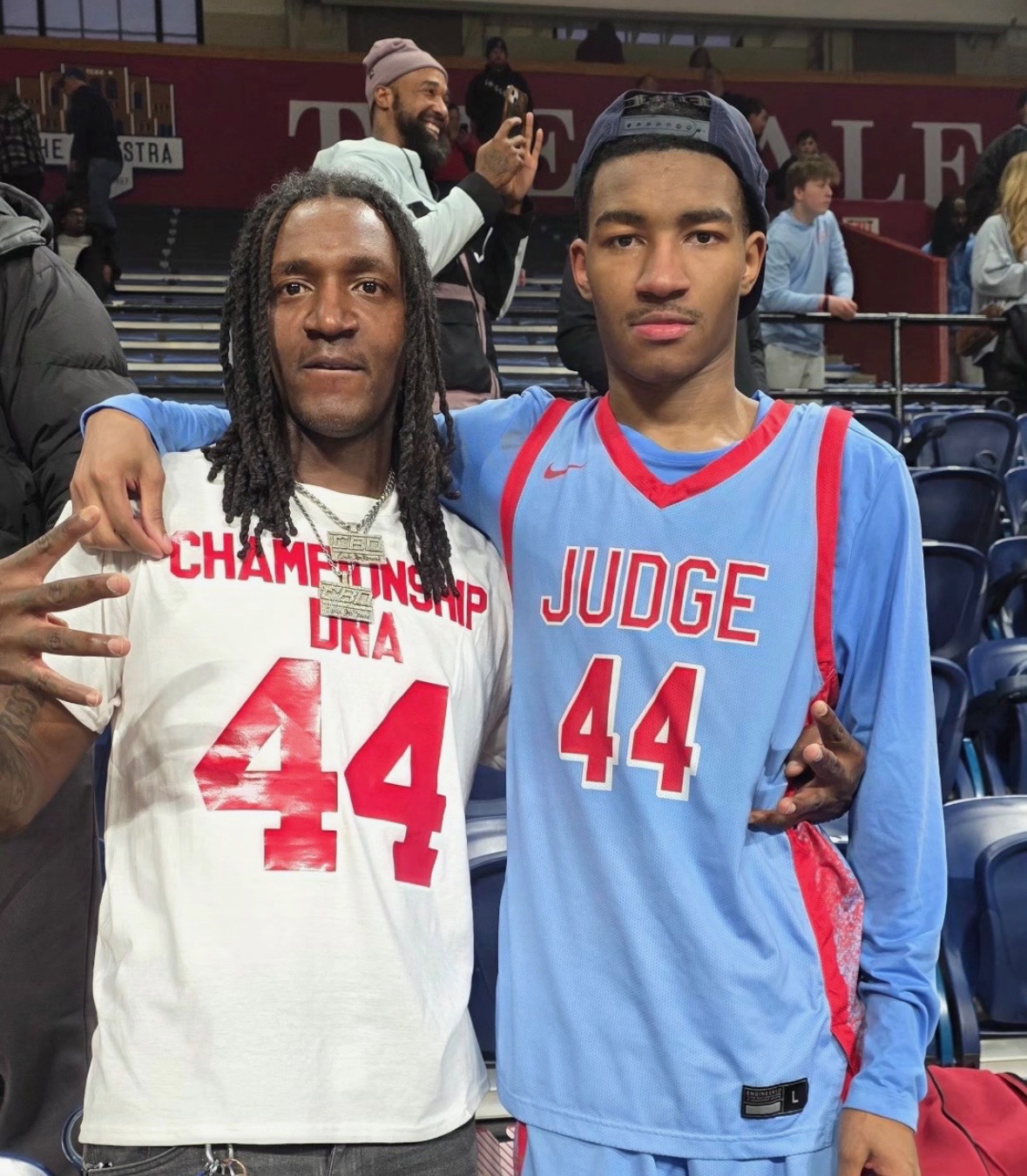
D.J. Rivera with his son, Derrick Morton-Rivera, who will play college basketball at Temple this fall.D.J. Rivera
Rumph died from an undiagnosed heart condition, known as hypertrophic cardiomyopathy, which caused him to go into sudden cardiac arrest. He was 21.
Giving back to a cause that similarly impacted his family was important to Rivera. He played in the tournament in 2012 and did it consecutively for about 10 years. Even Morton-Rivera participated in a youth halftime game during the tournament in 2016, where he recalled winning a $50 Nike gift card and James Harden showing up to play in the final.
The two have made an effort to check out the event each year and plan to attend a game this week.
“I love the Danny Rumph tournament,” Rivera said. “You get to play against pros, NBA players, be highly competitive, get to talk trash, and the crowd’s great. It’s just a great weekend in the city that you look forward to end the summer on.”
Being exposed to an event like the Rumph Classic has also played a factor in Morton-Rivera, a 6-foot-4 guard, continuing his basketball legacy in Philadelphia. The Father Judge graduate will play at Temple this fall.
“Back in the day, a lot of people used to stay home,” he said. “That’s not normal now. I feel like that should be a normal thing because that brings the community out even more. Like if a lot of hometown kids are staying, a lot of people from Philadelphia are going to the games. It’s just better for the city, it brings everybody together.”
At a young age, Morton-Rivera didn’t fully grasp what happened to Gathers, but as he got older, he had a better understanding.
He took a family trip to California before 2020 and visited LMU, where he saw Hank Gathers’ statue outside of the arena. He also met with a program who detects heart problems and had a screening done.
D.J. Rivera played high school basketball at Neumann Goretti, his son competed at Father Judge.D.J. Rivera
The trip, Morton-Rivera said, brought his family together.
“Even though I didn’t know much about it at a young age, just me hearing about it and knowing what they did inspired me to do what I do,” he added.
Basketball has also been the focal point of him and his dad’s relationship. This past year, D.J. Rivera got to watch his son win back-to-back Catholic League championships with Father Judge, a feat he once achieved 20 years ago with Neumann Goretti.
Both father and son left their respective high schools as the program’s all-time leading scorer.
After Judge won the crown inside a packed Palestra this past February, Rivera surprised his son with a shirt that read on the back, “20 years apart same heart.”
“When my career came to an end, I got to watch his, so it’s like the game never left,” said Rivera, who will graduate from the Philadelphia Fire Academy in three weeks. “That’s something that brings me and him together. … It’s something we can enjoy together because I both know we love the sport.
“Basketball has done a lot for us. It’s just a great feeling to be able to continue that and watch his time be here now. Soon enough, he’ll be playing in the Rumph as a professional.”
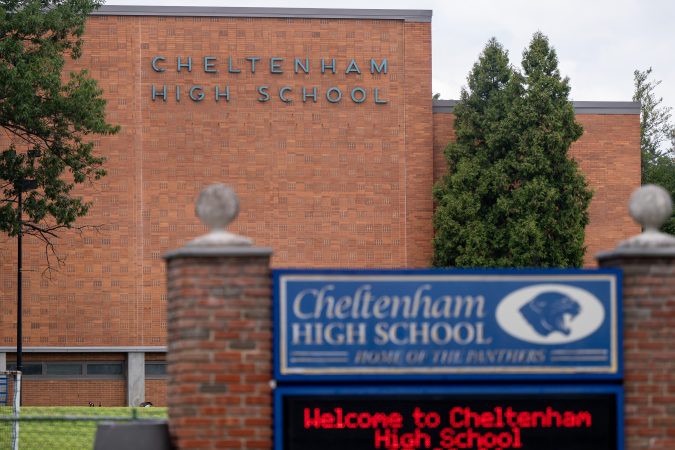
The questions that cut to the heart of the horrible hazing incidents within Cheltenham High School’s football program are the same questions that everyone always asks in these situations: Where were the adults? Who allowed this behavior to happen? How did the chop-busting and rites of passage that have long been intrinsic to sports escalate to the point that four coaches, including former head coach Terence Tolbert, and six players have been indicted for two alleged assaults that took place in the team’s locker room?
Even a glance at the details is enough to turn your stomach. Players — as many as 19 of them — allegedly held down a 15-year-old sophomore member of the team, stepped on his chest and groin with their cleats-clad feet, and tried to poke a broomstick into his butt. The coaches traded inculpating texts about it, according to Montgomery County District Attorney Kevin Steele. The Cheltenham School District canceled the football team’s season last year and again this year. Parents, many of whom reportedly had warned the district against hiring Tolbert in the first place, are angry. And everyone, inside the program and out, is left wondering how in the hell we got here.
A less egregious incident, in the Central Bucks High School West football program in 2014, is instructive here. In that situation, a preseason initiation ritual progressed each year from giving players haircuts — sometimes in the shape of male or female genitalia — to licking mayonnaise off teammates’ nipples and groins to simulating sex with a stuffed toy pig to playing “Slap/Lick/Fondle,” a game that ended with underclassmen touching other players’ private parts.
The Central Bucks School District canceled West’s football season and removed its head coach, but what matters most is that the district acted before the hazing reached the same severity as what allegedly happened at Cheltenham. You’d think such an episode would have been a warning siren for coaches and athletic administrators throughout the region. But after a while, the siren goes silent or the people who need to hear it most go deaf, and vigilance wanes, and the pattern repeats itself.
It is easy and of course correct to lament that youth and high school sports too often have taken on an outsized and inappropriate importance for too many coaches and parents and athletes. But one of sports’ greatest benefits to young people is that it gives them a stake in something bigger than themselves, a stake in something that matters to them, and they learn to develop and modify actions and habits to preserve sports’ place in their lives.
Amid the C.B. West hazing story, for instance, Phil DiGiacomo, who was a star running back on two of the school’s state-championship teams in the late 1990s, told me that, when he played, the Bucks’ success served as an effective deterrent against bad behavior. Yes, Mike Pettine, the program’s legendary head coach, and his staff ruled with a measure of iron-fist discipline that likely wouldn’t fly today, and even those old-school coaching techniques and West’s on-field dominance didn’t prevent every instance of player misconduct. Still, DiGiacomo said, the athletes themselves knew that, just by suiting up for West, they were continuing a special tradition, and they stood to lose a chance to call themselves champions if they did something stupid or malicious. So most of them didn’t.
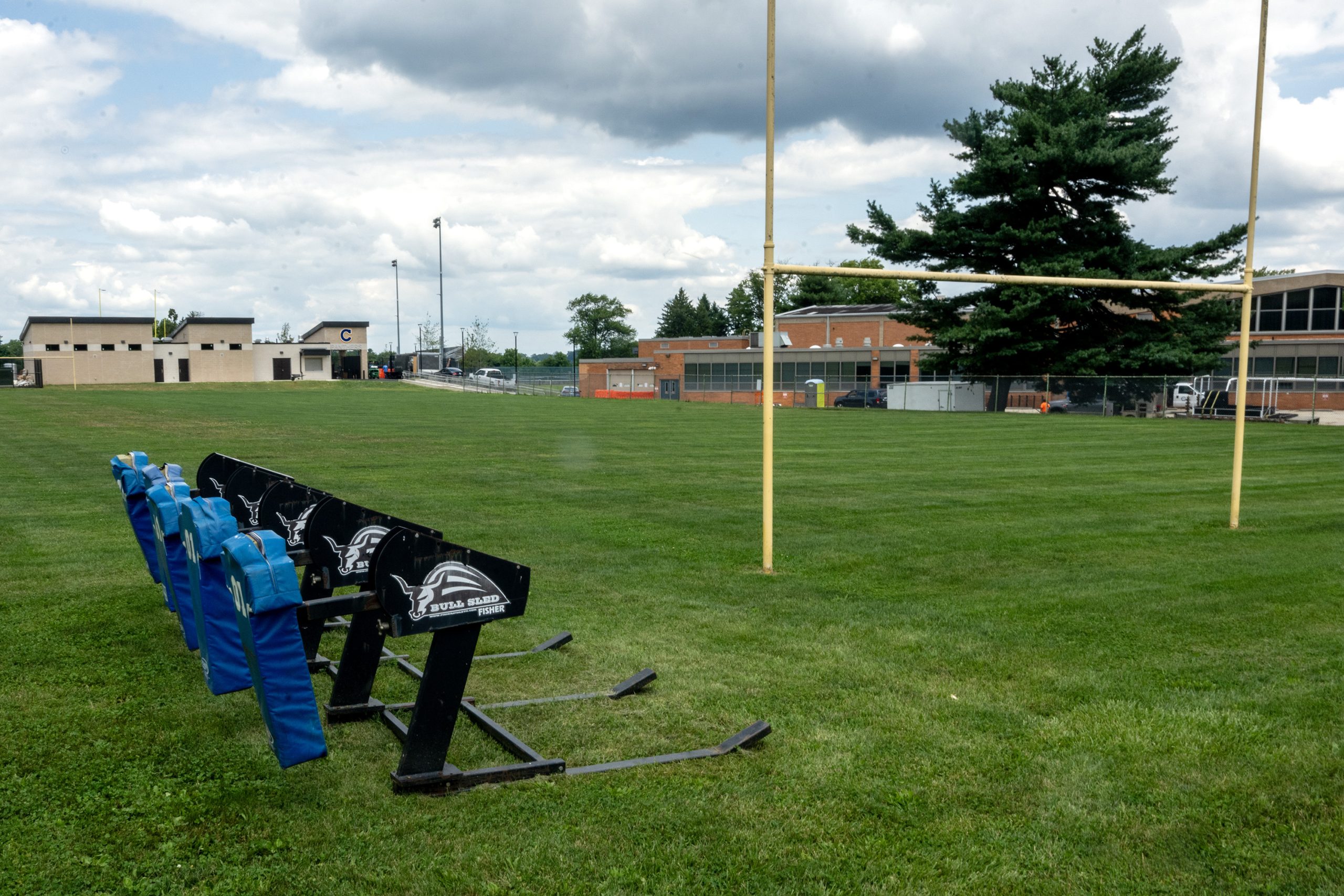
Cheltenham’s practice field photographed on July 29. The program hasn’t had a winning season since 2022.Tom Gralish / Staff Photographer
“When we were there, there was no hazing,” DiGiacomo said. “It’s kind of funny because if anyone ever got picked on, it got straightened out by an older guy real quick, mostly because we feared Pettine — that, and we were too damn tired to do anything else.”
A high school team doesn’t have to win 59 straight games and three consecutive state titles, as those West teams did, to be a point of pride for its players. It just has to provide them a rewarding experience, and they — and their coaches — have to feel that they have something to lose if it doesn’t. That element appears to have been missing entirely from the Cheltenham football program in recent years. In fact, it seems not to have been even a consideration for the school’s administration.
In his previous stint as a head coach, for Abington in 2023, Tolbert had won just one game. The school district decided not to renew him as coach, and sources have told The Inquirer that Tolbert’s toleration of a toxic atmosphere within and around the Abington program, including bullying by players and the use of slurs by coaches, were the driving forces behind his departure.
Cheltenham’s leadership either was unaware of these red flags or was willing to look past them, and for what? The program hasn’t had a winning season since 2022, but come on. Was Tolbert thought to be such a great coach that only he could restore the program to respectability? What qualities did he have that the people who hired him considered so essential? It’s obvious now that he and his assistants weren’t capable of doing the one thing any adult working in a school should put first: Keeping students safe.
The courage to take the right steps
The most infuriating aspect of stories such as this is the excuse that coaches can’t be held responsible for all their players’ mistakes. That’s true as far as it goes, but there are steps coaches can take to establish the right kind of culture, to model good behavior, to let the athletes in their care know what will be tolerated and what won’t.
One longtime area football coach told me Wednesday morning that he was fortunate to have two assistant coaches who were special-education teachers, who spent a lot of time around kids who had been the objects of ridicule. These coaches brought students from the school’s autism-support classes to be managers and statisticians and scorekeepers, and they let everyone know: These kids are part of this program. These kids are accepted members of this team. Treat them with respect.
Those are the kinds of gestures that seem small but can make a major difference, that mitigate the risks that coaches have accepted for decades. Coaching high school sports is a damn hard job, and it’s difficult because, at its best, it requires a measure of moral courage: To say no, to explain why, to stand by that decision. In this Cheltenham ugliness, we see once again what happens when that strength is lacking. The necessary guardrails fall away, if they were ever installed at all, and only after the damage comes to light does it become clear that a school and its students have been saddled with coaches and educators who aren’t willing to do the right thing or, worse, don’t even know what the right thing is.
Entering her final season at Northwestern, Ashley Sessa has accomplished nearly everything in her college field hockey career.
After winning the 2022 national championship as a freshman at North Carolina, the Schwenksville native transferred to Northwestern, where she helped lead the Wildcats to back-to-back national titles in 2024 and 2025.
She has earned several accolades and honors, including two Big Ten Offensive Player of the Year awards, two National Field Hockey Coaches Association All-America nods, and a spot on the 2025 NCAA All-Tournament team.
But now, Sessa, 22, is preparing for something new. She will make her first trip to the Women’s International Hockey Federation World Cup with the United States national team from Aug. 14 to 30.
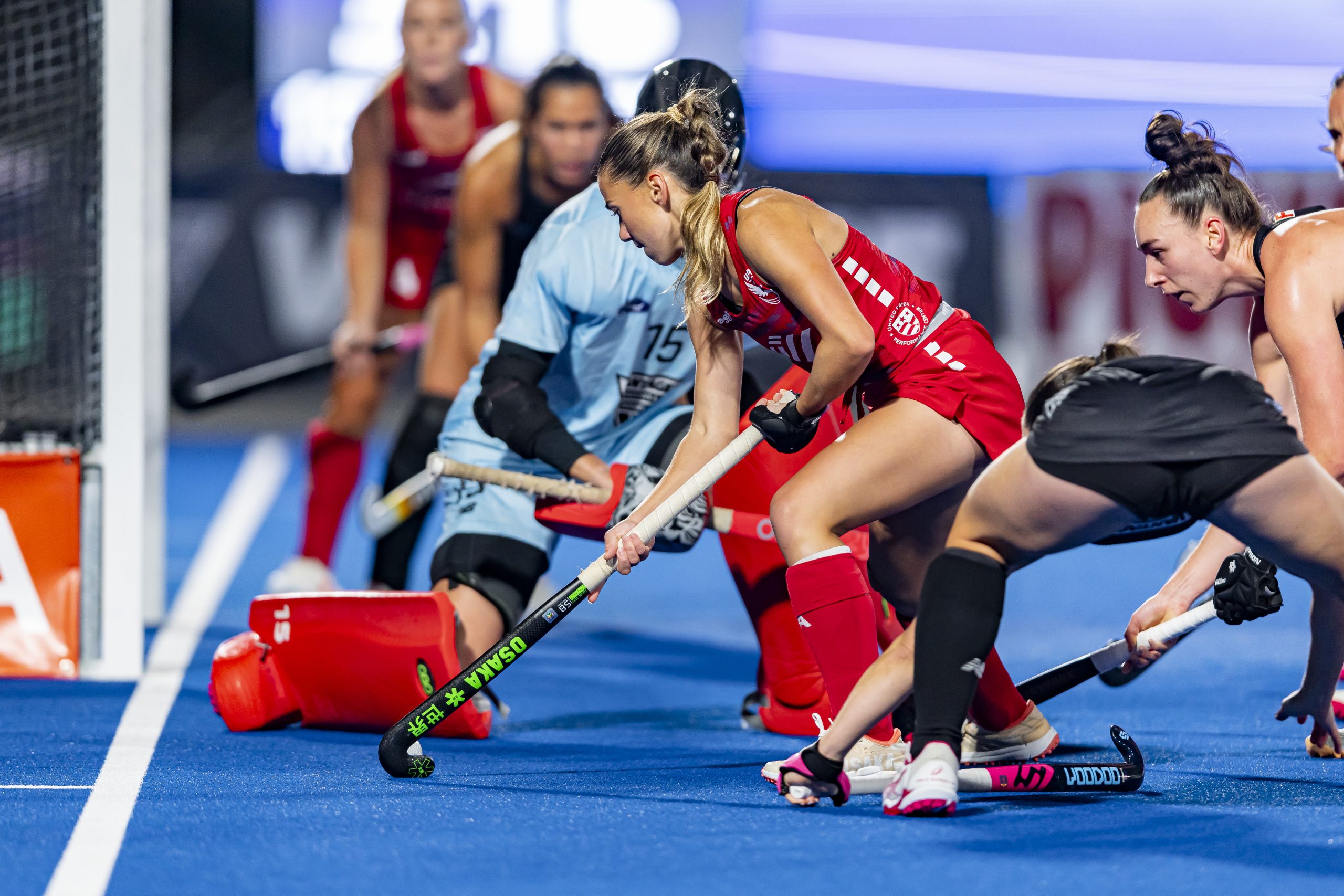
Sessa will travel to Belgium with the rest of the U.S. team for the tournament, which is held every four years in between the Summer Olympics. The U.S. begins its group stage schedule with a match against two-time champion Argentina on Aug. 15 (11:30 a.m., watch.hockey).
Sessa has 62 appearances with Team USA, including at the 2024 Paris Olympics, but she says the World Cup presents a different challenge. The U.S. team left for Europe from Charlotte, where it trains, on Friday.
“We just introduced a few double sessions, two each day, and then [we are] scrimmaging each other on Saturdays,” Sessa said. “It’s been a hard few weeks and months leading up to it, but we’re really excited to see how things go at the World Cup.”
Team USA will look to top its third-place finish in 1994, and it has a large contingent of players from the Greater Philadelphia area. Nine of the 20 players on the roster are from Southeastern Pa., and one from Ocean City, N.J.
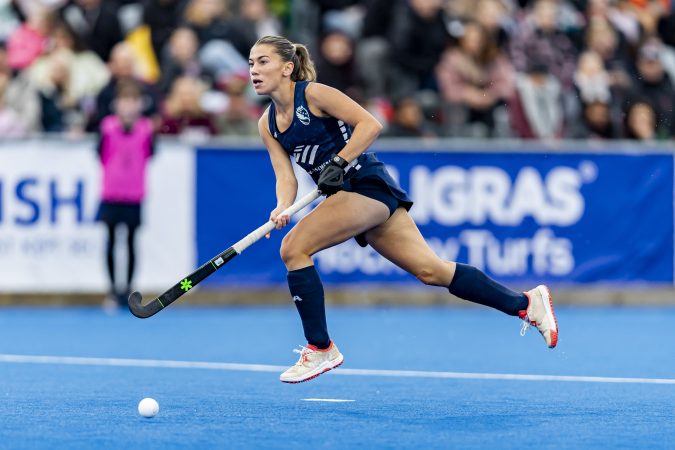
Ashley Sessa has made 62 appearances with Team USA, including the 2024 Paris Olympics.World Sport Pics / Simon Watts
Sessa, who played for Spring-Ford and Episcopal Academy in high school, said her familiarity with her teammates is a benefit. She’ll compete alongside current and former teammates from Northwestern in Hershey native Maddie Zimmer and Lebanon County native Lauren Wadas.
“We know each other pretty well,” Sessa said. “I’ve known a lot of the girls since I was at WC Eagles, [a Chester County-based youth club], since I was maybe like 11, 12 years old. We have a good connection, especially through schools, too … Just growing up with the girls and now playing in a World Cup with them is super amazing.”
The U.S. team medaled at an international competition this summer, earning a third-place finish at the FIH Nations Cup, hosted in New Zealand in June.
Sessa scored two goals, including a 46th-minute winner, to lift the U.S. over Chile in the third-place game. The forward was joint top scorer with six goals in the tournament and was named its best player.
Sessa hopes that the momentum the U.S. team built from its best-ever finish at the eight-team Nations Cup will carry forward to the 16-team World Cup.
“I think we have the determination to go out there and prove to each other that the USA is improving in field hockey,” Sessa said. “We have a great team and a great system that allows us to improve every time we step foot on the field.”
In addition to representing her country, Sessa is determined to make field hockey more visible around the U.S. Through her coaching venture, AS3, Sessa has hosted free youth field hockey clinics in Manayunk and Norristown.
Sessa handed out donated equipment at her clinics, and hopes to do more events across the Northeast and Midwest in the future to get more young athletes interested in the sport.
She said the idea to hold free clinics and equipment distributions came from her mother, Tracey Sessa, who grew up in Norristown. Sessa said she remembered playing against Norristown Area High School as a freshman at Spring-Ford, before transferring to Episcopal Academy.
“You could tell the girls loved the sport, it was just the fact that they didn’t have access to the newest stick or the newest shoes to help them be able to perform,” Sessa said. “I don’t think money should prohibit your sporting abilities or for you to be able to compete in something you love.”
In addition to hosting free clinics in the Philadelphia area, Sessa has hosted a talk and donated equipment to a youth field hockey organization in Charlotte, N.C. She hopes to hold an event in Chicago in the near future.
Her goal is to help draw attention to field hockey, which has a large international audience, but remains obscure in much of the U.S.
The sports’ viewership is growing, with an estimated 10 million Americans watching women’s field hockey during the 2024 Olympics, a 220% increase from the 2021 games.
Leading up to the 2028 Olympics in Los Angeles, the first Summer Games on American soil since 1996, Sessa wants to get more Americans interested in the sport.
“I think this is the most important time to do it, especially two years out,” Sessa said. “America is such a huge avenue for sports, and focusing on that, I think if they do it right, it could be a huge opportunity to grow the sport.”
Sessa tries to stay focused on her day-to-day with the national team and her upcoming senior season at Northwestern, but every once in a while, she lets her mind visualize what it would be like to play at the Olympics on home soil.
“If I have a bad practice day, I let myself think forward a bit and just say, ‘You know what, this is good, I’m learning something new,’” Sessa said. “This preparation will help me further in the future for the L.A. Games.
“Just having that mindset, for me, is really good. … It’s still so far away, and [I am] just doing every I can do to get better, not only as an athlete, but as a person as well, to help me grow, to hopefully be a part of those games.”
Cheltenham High School varsity football families repeatedly warned district officials about allegations that former head coach Terence Tolbert allowed bullying to fester in his previous coaching position at Abington Senior High School, parents say.
Tolbert, along with three other Cheltenham coaches, was charged last week with endangering the welfare of a child and conspiracy after a 15-year-old player was allegedly assaulted in the football team’s locker room by teammates twice last year. Six players were also charged. The assaults have led to the cancellation of two football seasons.
Both the district and a Montgomery County grand jury found that inadequate supervision played a role in the assaults. The district also found coaching staff displayed “a failure to prioritize student safety.”
Tolbert and the other coaches are no longer with the district. Tolbert has declined to comment on the matter, and he and his lawyer did not respond to requests for comment on this story.
‘We protested and pleaded’
In the two months leading up to Tolbert’s hiring in June 2025, Cheltenham football families urged district officials to reconsider Tolbert’s hiring in numerous private conversations and public meetings, parents said in interviews this week.
“We protested and pleaded,” said Naim Ferguson, father of Cheltenham quarterback Kendall Jackson during Cheltenham’s last season. “We didn’t think the people they were putting in place were adequate to handle the kids.”
Parents went to the principal, Benjamin Hammond, and vice principal Samuel Sheridan, who is also the athletic director,emails between the officials and football parents show.
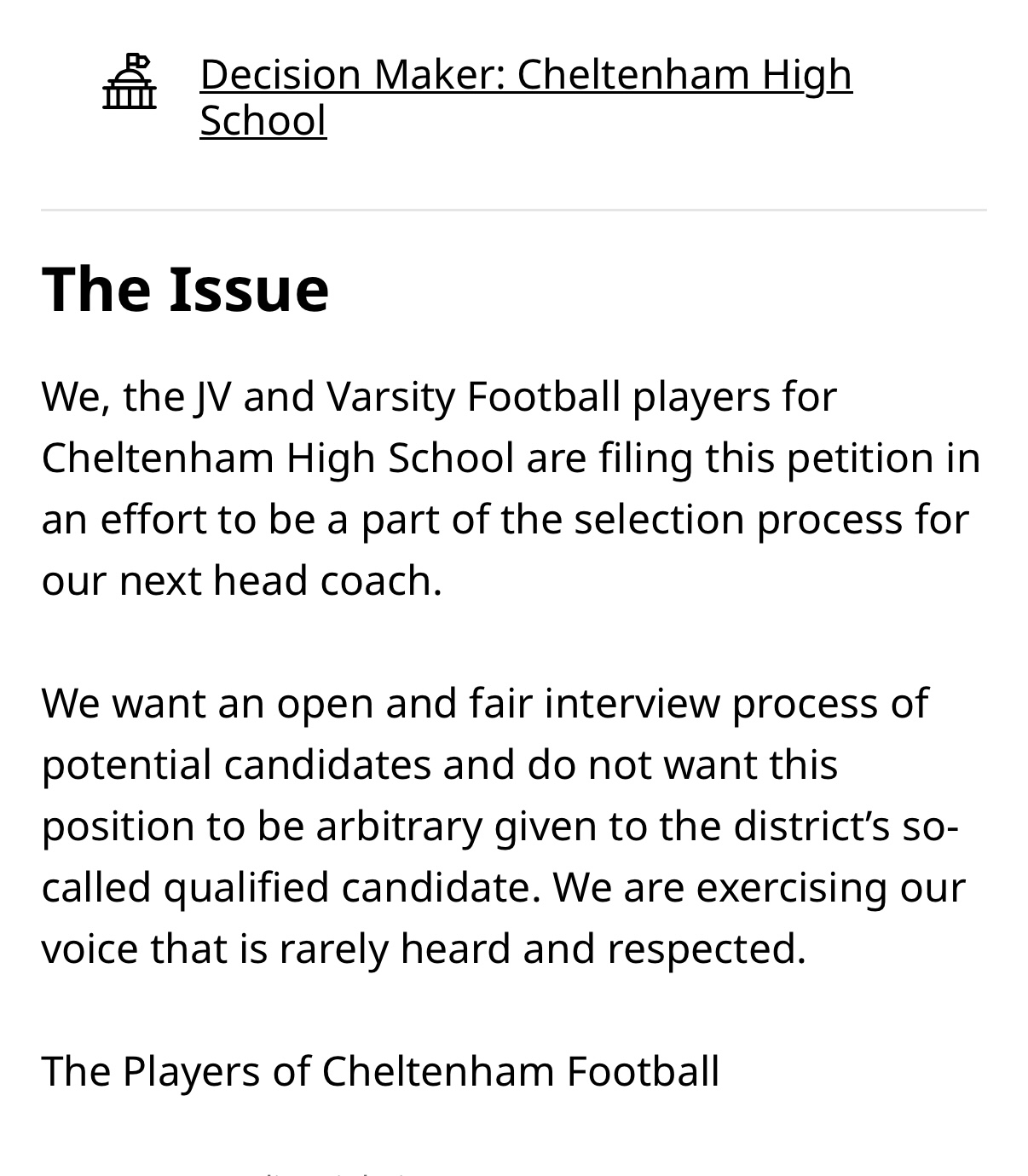
A then-junior on the varsity team started a petition against hiring Tolbert.
“We … do not want this position to be arbitrary given to the district’s so-called qualified candidate,” the petition reads.
A petition started by a Cheltenham varsity football player against the hiring of Terence Tolbert as head coach.Change.org
Taryn Knox, then the vice president of the football parent board, shared her concerns about Tolbert’s hiring process and his record at Abington at school board meetings and in meetings between administrators and football parents until the district formally made Tolbert the coach in June.
At a May board meeting, Knox said Tolbert had been “let go” from Abington, calling him “not appropriate or qualified” for the head coach job.
She was not the only parent who spoke out at that meeting.
“We asked for our children to have a solid leadership,” said Dana Burnley, whose son was on the team. Burnley said that her son had interest from seven Division I schools but that the coaching switch had disrupted the recruitment process.
Burnley’s husband, Ralph, a volunteer coach,was among those charged alongside Tolbert last week and faces the same charges of endangering the welfare of a child and conspiracy. Ralph Burnley has not responded to calls seeking comment.
Multiple upperclassmen also met with Hammond and Sheridan in April to voice their concerns,according to a list that Knox emailed to the principal. Included in the list of concerned players were at least two who were charged last week in connection with the assaults.
“Every plea that we tried was ignored,” Knox said — including one at an April 22 meeting with parents where Knox asked Tolbert to voluntarily resign to reopen the hiring process. Hammond rushed to take the microphone from Tolbert before he could respond, she said.
Cheltenham did not answer any questions this week about parent concerns ahead of Tolbert’s hiring.
Tolbert applied for the open Cheltenham position after a brief stint at Abington that he had left an offensive coordinator role at Cheltenham to pursue. The 2023 move to Abington was a promotion to head coach, but his tenure there was short-lived.
The Abington team won only one game that season, and Tolbert’s employment expired. Abington has acknowledged that the district opted not to renew the one-season appointment but declined to give further details.
Parents from both schools said they believed it was a failure to address bullying and a toxic team culturethat led to his departure.
“There were kids being bullied in the locker room, the language, cussing out coaches,” Knox said this week.
After charges against Tolbert went public last week, an Abington parent shared with The Inquirer the text of a 2023 email he said was sent to Abington officials outlining similar allegations he had heard at the time, including that Tolbert failed to intervene in persistent bullying on the team and crude language from other coaches.
Before a Sept. 8, 2023, game, a coach used the f-slur to refer to the opposing team in a pep talk in front of Tolbert, who did not intervene, the email alleges. The complaint also describes instances when Tolbert failed to break up fights or react appropriately when he saw bullying, including a player who verbally berated a teammate with disabilities.
“It wasn’t a secret,” said the Abington parent, who requested anonymity for fear of retaliation against his child, who still attends the school. “Many parents knew why he was removed. I’m shocked that he was able to get another job.”
Union contract gave Tolbert leg up for coach
Knox and Ferguson said the district hired Tolbert without an interview.
“The [same] buildup that happened here, happened at Abington,” Knox said. “It just didn’t lead to an assault.”
Before Tolbert’s hiring, Cheltenham parents were already upset about former coach Troy Gore’s removal during an important recruitment period, Knox and Ferguson said, because it left players who anticipated scholarships from Division I schools without an advocate.
“These are students who are trying to achieve higher education while also playing a sport that they love, and for some of them, this is their only option,” Knox said at the May 2025 school board meeting.
But when parents questioned what they viewed as an abbreviated hiring process for Gore’s replacement, administrators pointed to a clause in the teachers union contract that gives qualified staff first pick of coaching jobs ahead of external candidates, Knox and Ferguson said.
Tolbert briefly taught business at Cheltenham until he resigned in October 2023, board documents show. He then took a job at Abington as a long-term substitute for business education in addition to coaching.
Cheltenham rehired Tolbert as a business teacher before announcing his 2025 appointment as head coach.
‘Be accountable’
Knox returned for the June 2025 board meeting and said she had been promised a call from the superintendent after the May meeting, but did not receive one.
“Be accountable,” Knox said at the June meeting. “If you say you’re going to follow up, please follow up.”
Superintendent Brian Scriven replied that there was a meeting planned with football players.
“I did say I was going to call you. I opted not to. I will own that,” the superintendent said, adding that Knox had his number and could call him.
The board officially appointed Tolbert as coach at the meeting.
Knox’s son did not trust Tolbert as a teacher or a coach, she said.
“He had been a part of the team for two years prior to that and didn’t have the relationship with the boys,” Knox said.
‘The administration failed these kids’
The administration erred again, Ferguson said, by not suspending students who were involved in the locker room assault recorded on video.
Nearly 20 members of the team witnessed the locker room assault, according to the district’s investigation, and the video was widely circulated. Ferguson said his son and most of the team did not witness the attack.
Jackson always stayed on the field after practice running extra drills, his dad said, and Ferguson would bring his younger son to hang out on the grounds while they waited for him to finish.
By January, the superintendent had publicly acknowledged the district was aware of “several” perpetrators.
But the lack of disciplinary action left the entire team in limbo all year — isolating Jackson from teachers and other students, who were not sure which players were involved, Ferguson said: “People can’t fathom the fact that he’s the starting quarterback and he didn’t know about it.”
Now Jackson, who broke the school’s sophomore quarterback passing record in 2024, is struggling to find a transfer school.
“The administration failed these kids,” Ferguson said.
Knox transferred her son to a Philadelphia school before the incidents. He is set to play football at East Stroudsburg University, a Division II school.
“Thank God I pulled him out,” Knox said. “Every school said, ‘We know you came from Cheltenham; we’re glad you transferred.’”
Staff writer Maddie Hanna contributed to this article.
This suburban content is produced with support from the Leslie Miller and Richard Worley Foundation and The Lenfest Institute for Journalism. Editorial content is created independently of the project donors. Gifts to support The Inquirer’s high-impact journalism can be made at inquirer.com/donate. A list of Lenfest Institute donors can be found at lenfestinstitute.org/supporters.