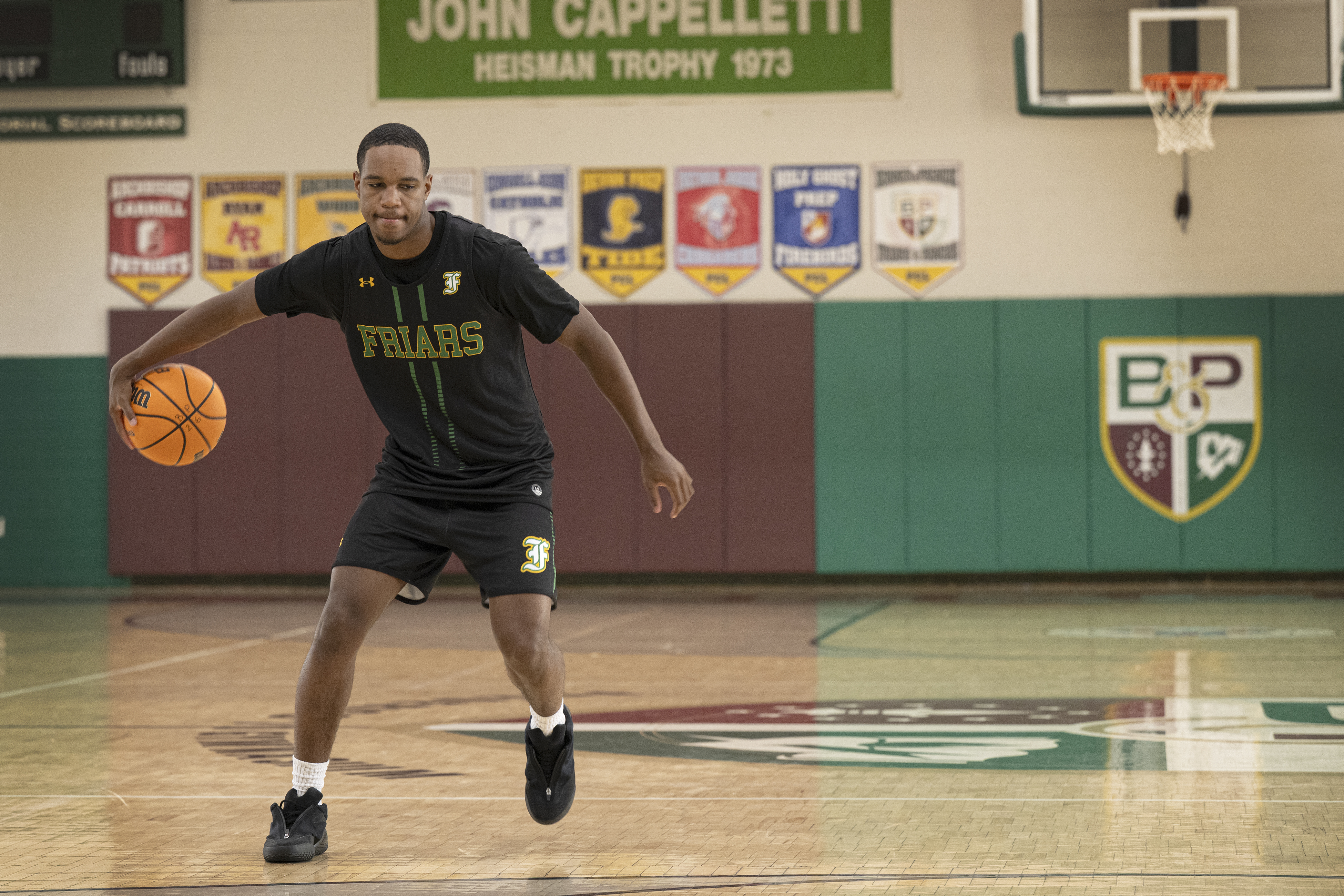
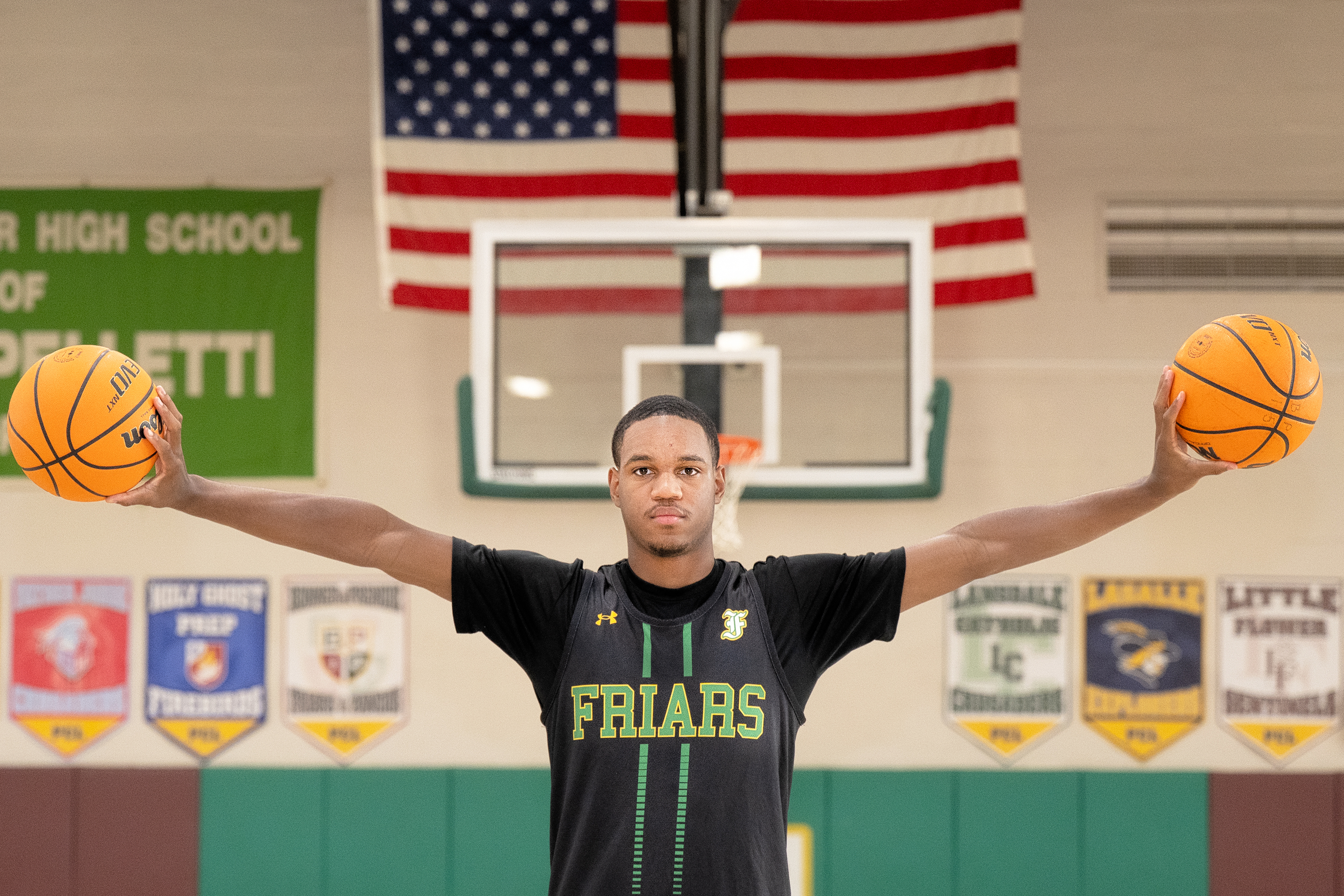
If you walk into the Bonner-Prendergast gym in Drexel Hill during the basketball season, you will find more than 30 family members and friends cheering for rising senior Korey Francis.
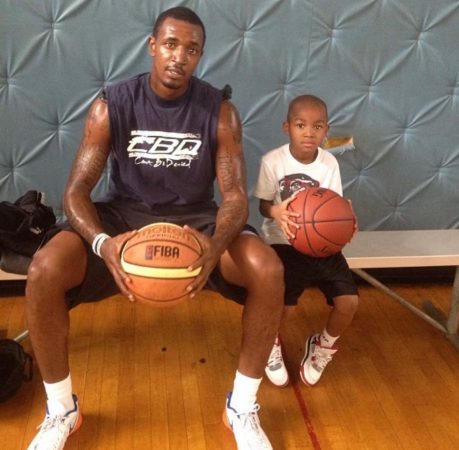
Basketball has always been a family affair for the Francises. Korey’s father, Keefer Francis, played at Bonner and went on to play collegiately at Cabrini. His grandfather, uncle, and aunt all played the game as well.
Now, Francis has become one of the state’s most competitive and complete players, being named Mr. Pennsylvania Basketball and the Catholic League MVP after leading Bonner-Prendie to a PCL semifinal appearance and its first PIAA 5A state championship in program history during the 2025-26 season.
“I pretty much do everything,” Francis said. “I’m able to defend and guard bigger [players], but I’m also able to score and be a point guard and bring the ball up and set my teammates up to make the right plays.”
Korey Francis averaged 21.6 points, 7.1 rebounds, and 3.2 assists last season.Jose F. Moreno / Staff Photographer
Francis averaged 21.6 points, 7.1 rebounds, and 3.2 assists while shooting 52.3% from the field, 36.7% on three-pointers, and 75% on free throws. He enters his senior season with 1,265 career points.
Francis, who received a basketball as his first birthday gift, began playing for Brookhaven Youth Basketball and Chester Biddy League before joining Team Iverson.
“Korey was always special growing up,” said Bonner-Prendie head coach Billy Cassidy. “He was the kid you heard about and read about from the time he touched the basketball.”
Cassidy’s relationship with the Francis family dates back to his own high school years, when he played basketball with Francis’ father at Bonner.
When Cassidy was named the head coach in 2022, he knew he wanted Francis to play for him.
“Korey wanted to make his own mark on the high school, that was his biggest thing,” he said. “Obviously, he had a lot of options and choices to go elsewhere and be the next guy in their programs. He took the leap to come to Bonner to basically turn this program around. He has done that and more already.”
Francis hasn’t just made an impact on the court. He served as the class president his freshman year, and has now been the vice president of his class for the past two years.
“The community and making an impact on the school was a huge thing he wanted to do outside of basketball,” Cassidy said.
Korey Francis has 19 scholarship offers, including St. Joseph’s, Temple, La Salle.Jose F. Moreno / Staff Photographer
Late last season, Bonner hosted Roman Catholic in an important game for league standings and postseason seeding. Francis went head-to-head with the league favorite for MVP, Sammy Jackson, before delivering what Cassidy said was the defining moment of his season.
“He dunked on the kid, and the place went nuts,” Cassidy said. “That was the moment everyone realized he was the MVP, which has not been done by a junior many times at all.”
Although Francis has emerged as one of the state’s best players, he admits confidence didn’t always come naturally to him.
“Towards the start of my high school career, a lot of games I would be really nervous for, and overthink and not have as much confidence,” Francis said. “But my coach gave me the motivation and the knowledge to know that I’m supposed to be out there.”
Each year, Francis has added to his body and improved his game, Cassidy said.
The attention from college coaches began during his freshman year, but following his junior season, the process sped up. He now has 19 scholarship offers, including St. Joseph’s, Temple, La Salle, Virginia Tech, and Xavier.
When deciding on a school, Francis is looking for more than basketball.
“I’m looking for a place that feels like family, a place where I feel at home and then a coach that’s going to push me and be able to take me to the next step in my game.”
Before moving on to college, Francis is focused on his final season at Bonner.
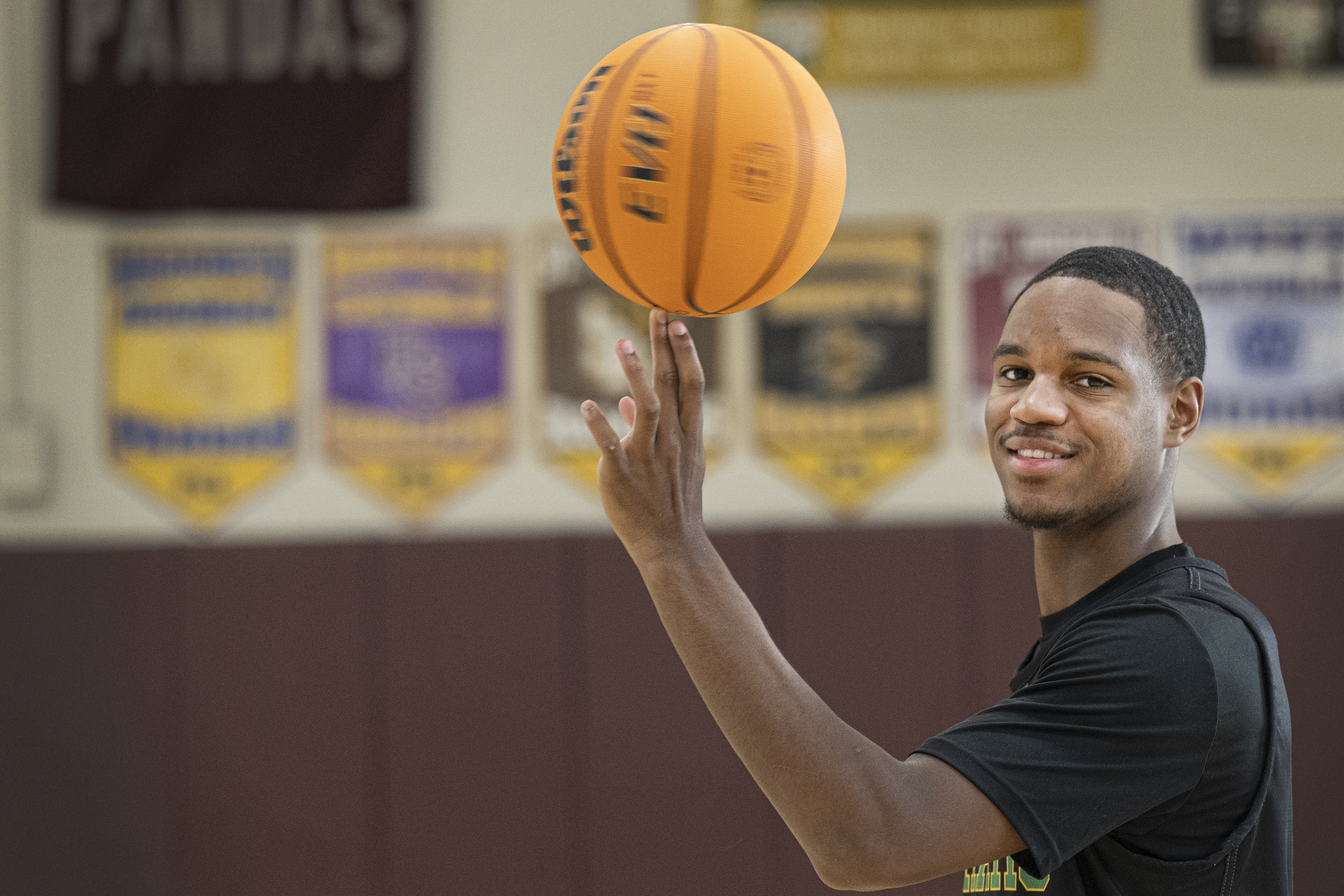
Korey Francis hopes to bring a Catholic League title back to Bonner-Prendie.Jose F. Moreno / Staff Photographer
“I’m just excited to finish out my high school career,” he said, “playing with my teammates that I’ve been playing with since I was younger.”
His goals are simple: Win another state championship and earn the school’s first Catholic League title since 1988.
“Basketball requires time to become as good as you want to be,” Francis said. “The more work you put in, the more you get out. Things take time, and being able to stay in the race is better than trying to sprint through it.”
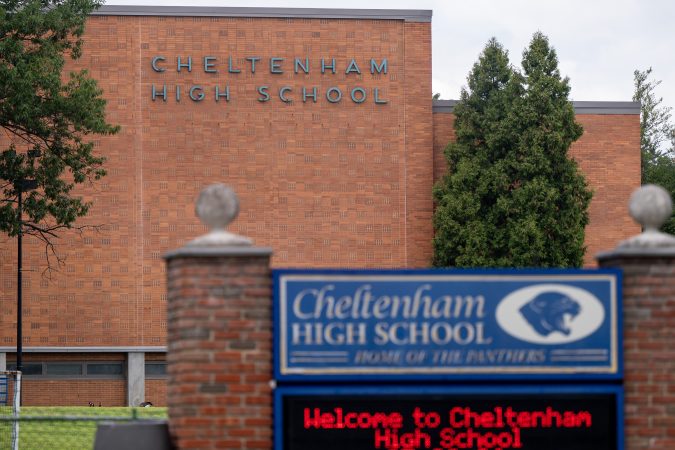
Cheltenham Superintendent Brian Scriven resigned Thursday, a little more than a week after prosecutors charged four football coaches and six players in connection with violent assaults against a player last season in a high school locker room.
The superintendent’s resignation, effective immediately, came amid community outcry over the district’s handling of the August and September 2025 incidents, which prosecutors say both involved students attacking a 15-year-old and using a broomstick to poke at his buttocks.
Yet the district did not uncover that there had been two assaults, and administrators appeared to downplay a report from the 15-year-old’s mother, according to the Montgomery County grand jury that recommended the charges. It described a “level of incompetence” in the district that “put every young man on the football team at risk.”
Some parents who have been battling the district to take student safety more seriously said Scriven and his administration did not fail only in overseeing the football program.
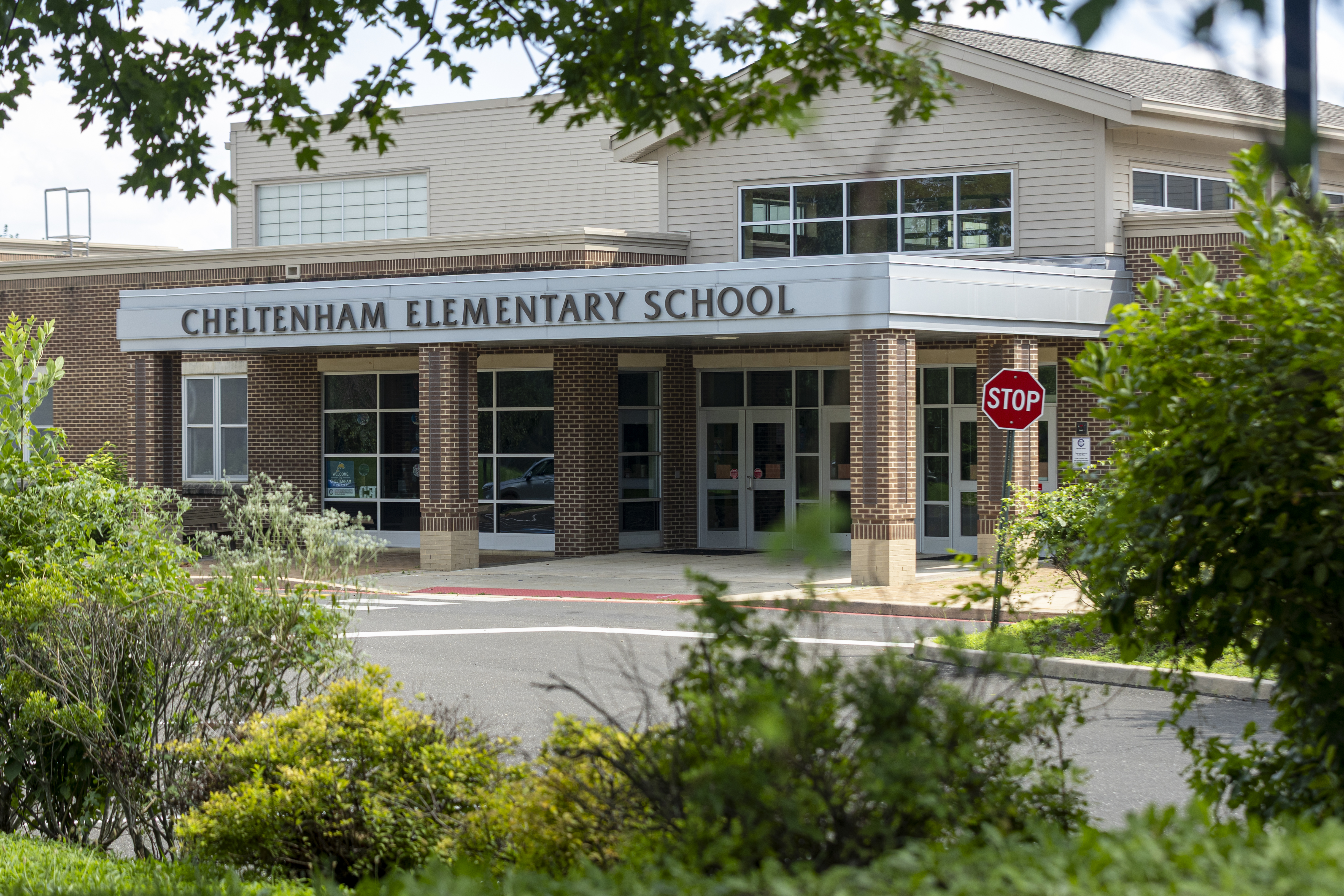
“I see a complete lack of urgency,” said one mother who has been among a group of parents pressing the district since October to address violent incidents at Cheltenham Elementary School. The mother, who spoke on the condition of anonymity out of fear of retaliation for her child, said administrators still have not answered questions about how students are disciplined and how others are supported after assaults.
Another Cheltenham Elementary parent, Shanyl Jones, said her daughter, an incoming second grader, twice experienced sexual touching and comments in school. In kindergarten, a boy repeatedly touched her against her will, conduct that escalated to him grabbing her vagina, Jones said.
The boy also made sexually explicit comments to her daughter, Jones said. She reported the conduct and filed a Title IX sexual harassment case; the school moved the boy to a different classroom, she said.
After a separate boy made sexual comments to Jones’ daughter in first grade, the principal called Jones and apologized, though the boy was not moved to a different classroom, Jones said.
News of the football charges “just tore me up on what my daughter’s future would be in the school system,” Jones said. “It gave me no assurance they’re going to be able to reconcile what’s happening now.”
Scriven said in his resignation letter Thursday that “this year has tested our community in ways none of us anticipated.”
“I have come to believe that the district is best served by a fresh start under new leadership, and that stepping aside now is the right and necessary step to allow Cheltenham to move forward,” he said.
The district has not commented on how else it plans to respond to the explosive grand jury report released last week, which described the response of several employees at the high school — identified only as Employees #1, #2, and #3 — as minimizing an assault reported by the 15-year-old’s mother, and trusting the word of the head coach, Terence Tolbert, that he had not instructed the student not to tell his parents what happened.
The district did not respond to questions this week about its hiring of Tolbert — who was among the four coaches charged — including whether it had sought references from Abington, which cut ties with him after one year as its head football coach. Some parents of football players told The Inquirer they had “pleaded” with Cheltenham administrators not to hire Tolbert, whom they accused of allowing bullying during his tenure at Abington Senior High School.
Nor did the district respond to questions about whether it would take action against any employees, including those described in the grand jury report.
The Cheltenham High School vice principal whom the mother said she had reported allegations to, Mark Hoff, was named vice principal at Wyncote Elementary last month.
The grand jury report “details very troubling questions about the management and operation of the district’s athletic programs, including the football program,” school board president Leah Mulhearn said in a statement this week. “Our highest priority is the safety and welfare of the children we serve.”
Mulhearn, who did not address questions about Cheltenham Elementary in the statement, said the board was “focused on conducting a comprehensive review of the grand jury’s findings, including our policies and practices related to athletics, as the first step in implementing measures to ensure that no such conduct ever occurs again at our schools.”
The district has said a Title IX investigation into the allegations will soon be finished, with possible discipline for students. Two 18-year-old players charged as adults — the other four were charged as juveniles — have already graduated.
Community members are closely watching the school board’s next steps. Sharif El-Mekki, a nationally known Philadelphia-based educator who runs the Center for Black Educator Development and previously led Mastery Shoemaker Charter School, called on the school board in a letter to apologize to the victimized student and commission an independent investigation into the district administration’s conduct.
“Every student in Cheltenham, every teacher, every parent, and every young leader in Montgomery County is being taught something right now by how the district is responding,” El-Mekki said.
‘Environment of ongoing chaos’
Cheltenham Elementary parents said they raised concerns to administrators last October, after they heard from their children that a student touched another student’s penis sexually in class, over his clothes, in view of classmates.
Some initially did not believe it. “We would have been told about it,” said one mother, who also spoke on the condition of anonymity out of fear of retaliation against her child.
Parents began talking to one another to confirm what happened. Other parents and students told them the same child had been involved in previous sexual incidents, two mothers said.
A group of parents sent an email on Oct. 3 to ShaVon Savage, then the district’s assistant superintendent, saying they had recently learned that a student “touched another child sexually during class time” and that the child had been involved in “multiple sexual incidents over the past few years.” They asked to be notified about instances of physical or sexual assault.
In the email, shared with The Inquirer, they also asked for additional supervision and counseling for students with behavioral challenges and described an “environment of ongoing chaos” at the school, which last year served a larger number of students with emotional support needs than the district’s other three elementary schools.
Savage wrote back 10 days later, saying she needed more details “to conduct a full and thorough investigation,” according to an email shared with The Inquirer. She also said that when a situation poses a “threat to a particular school community,” the district would communicate with parents, but could not share details about particular children due to federal privacy laws.
Savage met with some parents in early November and said she would visit the school — though parents were unsure whether she did, the mothers said.
Their concerns escalated when on Dec. 5, a Friday, the school’s principal, Stephanie Junod, was assaulted by a student, according to the mothers.
That night, Scriven, the superintendent, sent an email to school parents, informing them that “while Ms. Junod was attempting to de-escalate a situation with a high-needs student, she was struck in the head by their thermos.” Scriven said the principal was “expected to make a full recovery.” Junod could not be reached for comment.
Scriven said central office staff would be at the school the following Monday “to begin implementing additional measures to strengthen safety and provide more comprehensive support for students who require additional behavioral interventions.”
Brian Scriven has resigned as superintendent of the Cheltenham School District.Courtesy of Cheltenham School District
The mothers were angry that the district had not already been providing that support. Around the same time as Junod’s injury, they said, there was an assault on a student, and “at least two” against staff members, one of the mothers said.
Parents had a meeting scheduled with Savage for Dec. 15, but administrators pushed it to January, one of the mothers said.
Scriven met with parents on Jan. 8 and apologized for not treating their concerns urgently enough, according to the mother, who said Scriven also assured parents that “the football situation had been handled.”
“Obviously, that was a lie,” she said.
Scriven met with them again on Feb. 25 and said changes would be made, including putting a behavioral specialist at the school four days a week, according to the mother.
Scriven did not mention that Junod would be resigning, the mother said — a decision announced shortly after the meeting.
‘Slow to respond’
Problems at the school continued.
On March 26, parents said, a student assaulted five staff members — including punching one in the face — in view of other children. Police came to the school.
The district did not immediately notify parents. But Scriven sent an email to the school community the next day, reporting that “an emotional support student had an episode during which he eloped from the building and engaged in physical altercations with a number of staff as they were trying to de-escalate” the situation.
“While I cannot share individual student consequences or placements, I can assure you that this situation is being addressed with the highest level of seriousness and urgency,” Scriven said in the email.
In an email the next day demanding a meeting with administrators, one parent wrote: “The frustration among parents has reached a boiling point.”
“Information is simply not being shared, and critical questions regarding the safety and education of our children are being ignored,” the parent said in the email, which one of the mothers shared with The Inquirer.
Scriven responded to the parents on April 14.
“I understand the urgency of your concerns and sincerely apologize for the delay in providing a comprehensive response,” Scriven said, in an email the mother shared with The Inquirer.
Scriven said the school’s new principal, Shareese Nelson, had needed time to settle into the job, but “we are prepared to move forward in a more formal and collaborative manner.” He invited families to the school for an April 29 community meeting.
The meeting was “highly emotional,” one of the mothers said, with parents sharing their children’s experiences. After the meeting, Scriven told a 6abc reporter: “I was slow to respond. I do have to own that, and rectify that immediately.”
Shanyl Jones recalled that administrators seemed “completely unprepared” during the meeting to address parents’ safety concerns.
In a message to the community May 6, the school board acknowledged “concerns around safety and student conduct have presented challenges that we continue to navigate.”
The board said it took “all concerns that are raised with us as a board” seriously and was paying attention to how they were addressed.
It also stood by Scriven, a former Baltimore County Public Schools administrator who was named Cheltenham’s superintendent in 2021.
“Five years ago, the board invested in Dr. Scriven and his vision for the district,” the board said, calling the superintendent a “strong strategic thinker.”
“We continue to support him and his vision,” it said.
On Thursday, Mulhearn said in a statement that the board thanked Scriven “for his dedicated service to Cheltenham public schools.” She said the board had selected Joshua Sweigard, Cheltenham’s director of business services, as acting superintendent.
While the district in May released an action plan for Cheltenham Elementary, including a safety audit, staff training, and monthly reports on school incidents, the mothers said it still has not clearly explained how it handles student assaults, and how kids who are victimized or witness them are supported.
Until it does, “beginning from kindergarten up, we are not going to see this change in any meaningful way,” one of the mothers said. “This is not a one-off event.”
Entering her final season at Northwestern, Ashley Sessa has accomplished nearly everything in her college field hockey career.
After winning the 2022 national championship as a freshman at North Carolina, the Schwenksville native transferred to Northwestern, where she helped lead the Wildcats to back-to-back national titles in 2024 and 2025.
She has earned several accolades and honors, including two Big Ten Offensive Player of the Year awards, two National Field Hockey Coaches Association All-America nods, and a spot on the 2025 NCAA All-Tournament team.
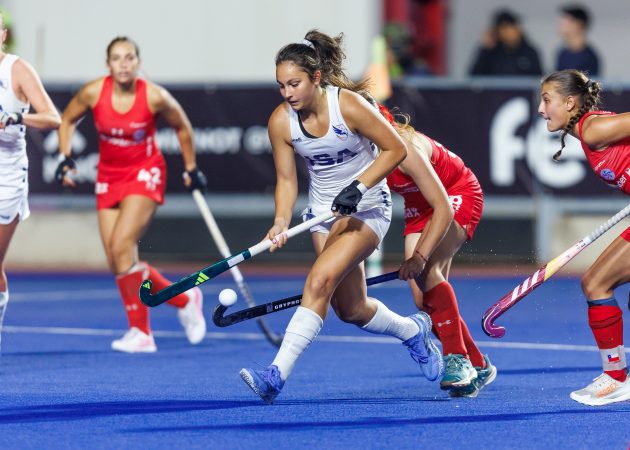
But now, Sessa, 22, is preparing for something new. She will make her first trip to the Women’s International Hockey Federation World Cup with the United States national team from Aug. 14 to 30.
Sessa will travel to Belgium with the rest of the U.S. team for the tournament, which is held every four years in between the Summer Olympics. The U.S. begins its group stage schedule with a match against two-time champion Argentina on Aug. 15 (11:30 a.m., watch.hockey).
Sessa has 62 appearances with Team USA, including at the 2024 Paris Olympics, but she says the World Cup presents a different challenge. The U.S. team left for Europe from Charlotte, where it trains, on Friday.
“We just introduced a few double sessions, two each day, and then [we are] scrimmaging each other on Saturdays,” Sessa said. “It’s been a hard few weeks and months leading up to it, but we’re really excited to see how things go at the World Cup.”
Team USA will look to top its third-place finish in 1994, and it has a large contingent of players from the Greater Philadelphia area. Nine of the 20 players on the roster are from Southeastern Pa., and one from Ocean City, N.J.
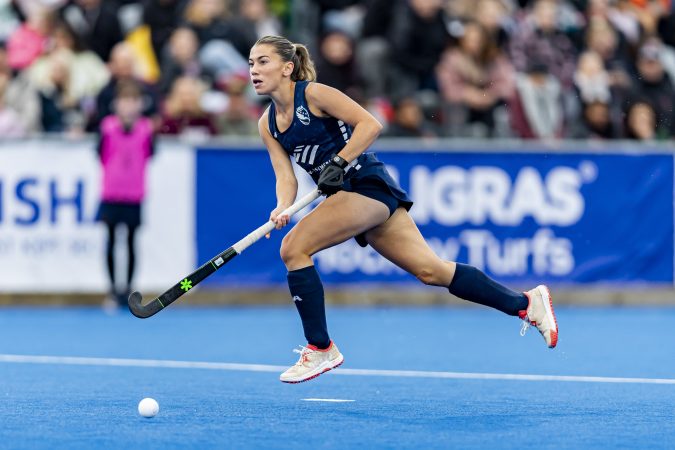
Ashley Sessa has made 62 appearances with Team USA, including the 2024 Paris Olympics.World Sport Pics / Simon Watts
Sessa, who played for Spring-Ford and Episcopal Academy in high school, said her familiarity with her teammates is a benefit. She’ll compete alongside current and former teammates from Northwestern in Hershey native Maddie Zimmer and Lebanon County native Lauren Wadas.
“We know each other pretty well,” Sessa said. “I’ve known a lot of the girls since I was at WC Eagles, [a Chester County-based youth club], since I was maybe like 11, 12 years old. We have a good connection, especially through schools, too … Just growing up with the girls and now playing in a World Cup with them is super amazing.”
The U.S. team medaled at an international competition this summer, earning a third-place finish at the FIH Nations Cup, hosted in New Zealand in June.
Sessa scored two goals, including a 46th-minute winner, to lift the U.S. over Chile in the third-place game. The forward was joint top scorer with six goals in the tournament and was named its best player.
Sessa hopes that the momentum the U.S. team built from its best-ever finish at the eight-team Nations Cup will carry forward to the 16-team World Cup.
“I think we have the determination to go out there and prove to each other that the USA is improving in field hockey,” Sessa said. “We have a great team and a great system that allows us to improve every time we step foot on the field.”
In addition to representing her country, Sessa is determined to make field hockey more visible around the U.S. Through her coaching venture, AS3, Sessa has hosted free youth field hockey clinics in Manayunk and Norristown.
Sessa handed out donated equipment at her clinics, and hopes to do more events across the Northeast and Midwest in the future to get more young athletes interested in the sport.
She said the idea to hold free clinics and equipment distributions came from her mother, Tracey Sessa, who grew up in Norristown. Sessa said she remembered playing against Norristown Area High School as a freshman at Spring-Ford, before transferring to Episcopal Academy.
“You could tell the girls loved the sport, it was just the fact that they didn’t have access to the newest stick or the newest shoes to help them be able to perform,” Sessa said. “I don’t think money should prohibit your sporting abilities or for you to be able to compete in something you love.”
In addition to hosting free clinics in the Philadelphia area, Sessa has hosted a talk and donated equipment to a youth field hockey organization in Charlotte, N.C. She hopes to hold an event in Chicago in the near future.
Her goal is to help draw attention to field hockey, which has a large international audience, but remains obscure in much of the U.S.
The sports’ viewership is growing, with an estimated 10 million Americans watching women’s field hockey during the 2024 Olympics, a 220% increase from the 2021 games.
Leading up to the 2028 Olympics in Los Angeles, the first Summer Games on American soil since 1996, Sessa wants to get more Americans interested in the sport.
“I think this is the most important time to do it, especially two years out,” Sessa said. “America is such a huge avenue for sports, and focusing on that, I think if they do it right, it could be a huge opportunity to grow the sport.”
Sessa tries to stay focused on her day-to-day with the national team and her upcoming senior season at Northwestern, but every once in a while, she lets her mind visualize what it would be like to play at the Olympics on home soil.
“If I have a bad practice day, I let myself think forward a bit and just say, ‘You know what, this is good, I’m learning something new,’” Sessa said. “This preparation will help me further in the future for the L.A. Games.
“Just having that mindset, for me, is really good. … It’s still so far away, and [I am] just doing every I can do to get better, not only as an athlete, but as a person as well, to help me grow, to hopefully be a part of those games.”
The questions that cut to the heart of the horrible hazing incidents within Cheltenham High School’s football program are the same questions that everyone always asks in these situations: Where were the adults? Who allowed this behavior to happen? How did the chop-busting and rites of passage that have long been intrinsic to sports escalate to the point that four coaches, including former head coach Terence Tolbert, and six players have been indicted for two alleged assaults that took place in the team’s locker room?
Even a glance at the details is enough to turn your stomach. Players — as many as 19 of them — allegedly held down a 15-year-old sophomore member of the team, stepped on his chest and groin with their cleats-clad feet, and tried to poke a broomstick into his butt. The coaches traded inculpating texts about it, according to Montgomery County District Attorney Kevin Steele. The Cheltenham School District canceled the football team’s season last year and again this year. Parents, many of whom reportedly had warned the district against hiring Tolbert in the first place, are angry. And everyone, inside the program and out, is left wondering how in the hell we got here.
A less egregious incident, in the Central Bucks High School West football program in 2014, is instructive here. In that situation, a preseason initiation ritual progressed each year from giving players haircuts — sometimes in the shape of male or female genitalia — to licking mayonnaise off teammates’ nipples and groins to simulating sex with a stuffed toy pig to playing “Slap/Lick/Fondle,” a game that ended with underclassmen touching other players’ private parts.
The Central Bucks School District canceled West’s football season and removed its head coach, but what matters most is that the district acted before the hazing reached the same severity as what allegedly happened at Cheltenham. You’d think such an episode would have been a warning siren for coaches and athletic administrators throughout the region. But after a while, the siren goes silent or the people who need to hear it most go deaf, and vigilance wanes, and the pattern repeats itself.
It is easy and of course correct to lament that youth and high school sports too often have taken on an outsized and inappropriate importance for too many coaches and parents and athletes. But one of sports’ greatest benefits to young people is that it gives them a stake in something bigger than themselves, a stake in something that matters to them, and they learn to develop and modify actions and habits to preserve sports’ place in their lives.
Amid the C.B. West hazing story, for instance, Phil DiGiacomo, who was a star running back on two of the school’s state-championship teams in the late 1990s, told me that, when he played, the Bucks’ success served as an effective deterrent against bad behavior. Yes, Mike Pettine, the program’s legendary head coach, and his staff ruled with a measure of iron-fist discipline that likely wouldn’t fly today, and even those old-school coaching techniques and West’s on-field dominance didn’t prevent every instance of player misconduct. Still, DiGiacomo said, the athletes themselves knew that, just by suiting up for West, they were continuing a special tradition, and they stood to lose a chance to call themselves champions if they did something stupid or malicious. So most of them didn’t.
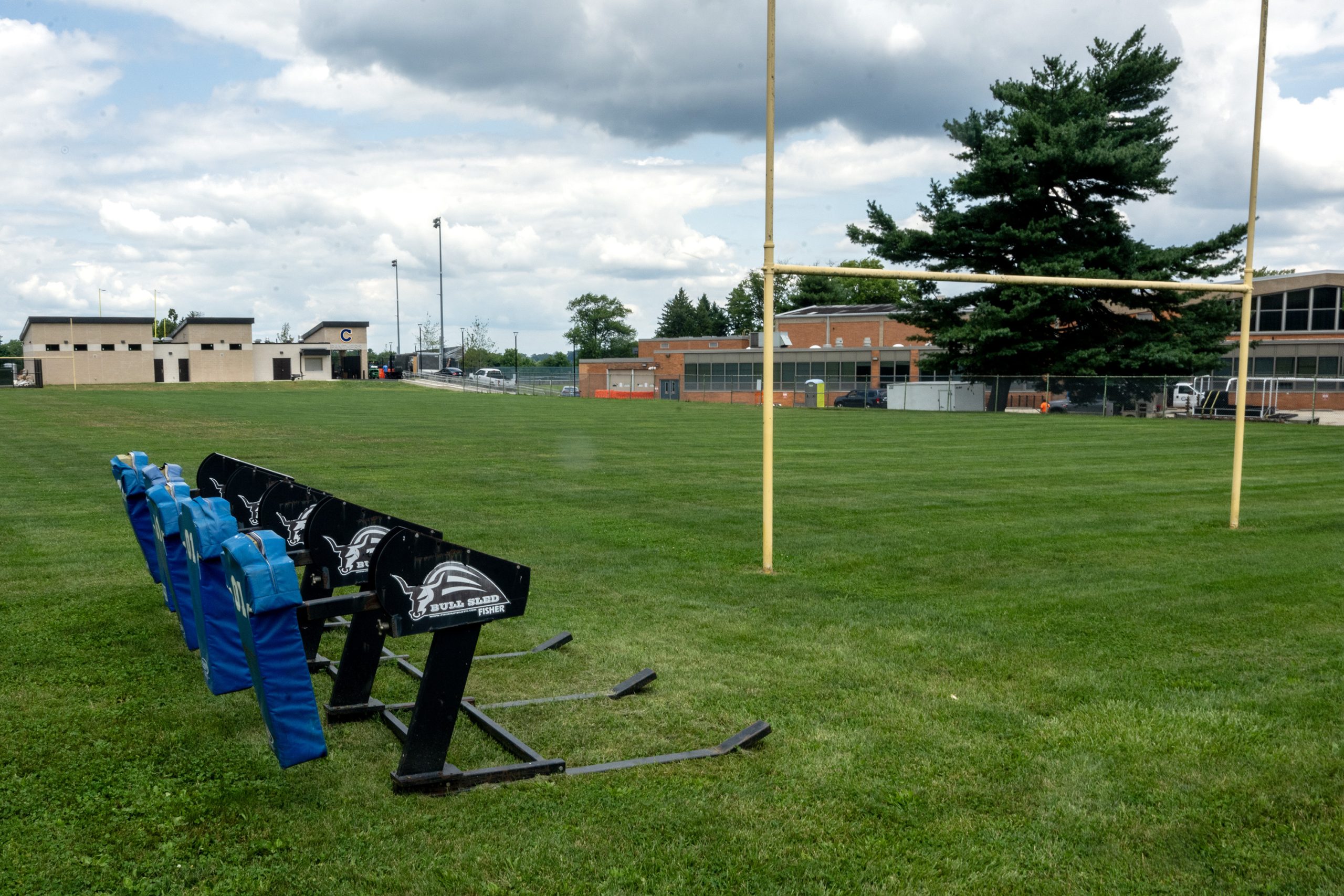
Cheltenham’s practice field photographed on July 29. The program hasn’t had a winning season since 2022.Tom Gralish / Staff Photographer
“When we were there, there was no hazing,” DiGiacomo said. “It’s kind of funny because if anyone ever got picked on, it got straightened out by an older guy real quick, mostly because we feared Pettine — that, and we were too damn tired to do anything else.”
A high school team doesn’t have to win 59 straight games and three consecutive state titles, as those West teams did, to be a point of pride for its players. It just has to provide them a rewarding experience, and they — and their coaches — have to feel that they have something to lose if it doesn’t. That element appears to have been missing entirely from the Cheltenham football program in recent years. In fact, it seems not to have been even a consideration for the school’s administration.
In his previous stint as a head coach, for Abington in 2023, Tolbert had won just one game. The school district decided not to renew him as coach, and sources have told The Inquirer that Tolbert’s toleration of a toxic atmosphere within and around the Abington program, including bullying by players and the use of slurs by coaches, were the driving forces behind his departure.
Cheltenham’s leadership either was unaware of these red flags or was willing to look past them, and for what? The program hasn’t had a winning season since 2022, but come on. Was Tolbert thought to be such a great coach that only he could restore the program to respectability? What qualities did he have that the people who hired him considered so essential? It’s obvious now that he and his assistants weren’t capable of doing the one thing any adult working in a school should put first: Keeping students safe.
The courage to take the right steps
The most infuriating aspect of stories such as this is the excuse that coaches can’t be held responsible for all their players’ mistakes. That’s true as far as it goes, but there are steps coaches can take to establish the right kind of culture, to model good behavior, to let the athletes in their care know what will be tolerated and what won’t.
One longtime area football coach told me Wednesday morning that he was fortunate to have two assistant coaches who were special-education teachers, who spent a lot of time around kids who had been the objects of ridicule. These coaches brought students from the school’s autism-support classes to be managers and statisticians and scorekeepers, and they let everyone know: These kids are part of this program. These kids are accepted members of this team. Treat them with respect.
Those are the kinds of gestures that seem small but can make a major difference, that mitigate the risks that coaches have accepted for decades. Coaching high school sports is a damn hard job, and it’s difficult because, at its best, it requires a measure of moral courage: To say no, to explain why, to stand by that decision. In this Cheltenham ugliness, we see once again what happens when that strength is lacking. The necessary guardrails fall away, if they were ever installed at all, and only after the damage comes to light does it become clear that a school and its students have been saddled with coaches and educators who aren’t willing to do the right thing or, worse, don’t even know what the right thing is.
It was easy for Derrick Morton-Rivera to “fall in love” with basketball. He was always around it.
His father, D.J. Rivera, had his son while he was a sophomore at St. Joseph’s. Even after he transferred to Binghamton University in New York then University of Montevallo in Alabama, his son traveled to games and watched.
“His little eyes would be going up and down the court,” said D.J. Rivera, who grew up in Lawncrest and played nine years professionally overseas. “I gave him a basketball, and he never put it down.”
For the Riveras, basketball serves as a reminder that nothing in life is guaranteed.OnMarch 4, 1990, Gathers collapsed on a court in Southern California while playing in the West Coast Conference tournament semifinals. He suffered cardiac arrest and died at 23 years old.
“With my uncle and his heart condition, you never know when you could play your last game or your last time people seeing you — death is real,” D.J. Rivera said. “It’s the only thing that’s guaranteed in life, so I think while we’re here, you should do what you love.”
It’s why Rivera brought his son to the Danny Rumph Classic for years.
The five-day tournament, which begins Thursday at Drexel, honors Rumph, who died in a pickup basketball game at the Mallery Recreation Center on May 8, 2005.
D.J. Rivera with his son, Derrick Morton-Rivera, who will play college basketball at Temple this fall.D.J. Rivera
Rumph died from an undiagnosed heart condition, known as hypertrophic cardiomyopathy, which caused him to go into sudden cardiac arrest. He was 21.
Giving back to a cause that similarly impacted his family was important to Rivera. He played in the tournament in 2012 and did it consecutively for about 10 years. Even Morton-Rivera participated in a youth halftime game during the tournament in 2016, where he recalled winning a $50 Nike gift card and James Harden showing up to play in the final.
The two have made an effort to check out the event each year and plan to attend a game this week.
“I love the Danny Rumph tournament,” Rivera said. “You get to play against pros, NBA players, be highly competitive, get to talk trash, and the crowd’s great. It’s just a great weekend in the city that you look forward to end the summer on.”
Being exposed to an event like the Rumph Classic has also played a factor in Morton-Rivera, a 6-foot-4 guard, continuing his basketball legacy in Philadelphia. The Father Judge graduate will play at Temple this fall.
“Back in the day, a lot of people used to stay home,” he said. “That’s not normal now. I feel like that should be a normal thing because that brings the community out even more. Like if a lot of hometown kids are staying, a lot of people from Philadelphia are going to the games. It’s just better for the city, it brings everybody together.”
At a young age, Morton-Rivera didn’t fully grasp what happened to Gathers, but as he got older, he had a better understanding.
He took a family trip to California before 2020 and visited LMU, where he saw Hank Gathers’ statue outside of the arena. He also met with a program who detects heart problems and had a screening done.
D.J. Rivera played high school basketball at Neumann Goretti, his son competed at Father Judge.D.J. Rivera
The trip, Morton-Rivera said, brought his family together.
“Even though I didn’t know much about it at a young age, just me hearing about it and knowing what they did inspired me to do what I do,” he added.
Basketball has also been the focal point of him and his dad’s relationship. This past year, D.J. Rivera got to watch his son win back-to-back Catholic League championships with Father Judge, a feat he once achieved 20 years ago with Neumann Goretti.
Both father and son left their respective high schools as the program’s all-time leading scorer.
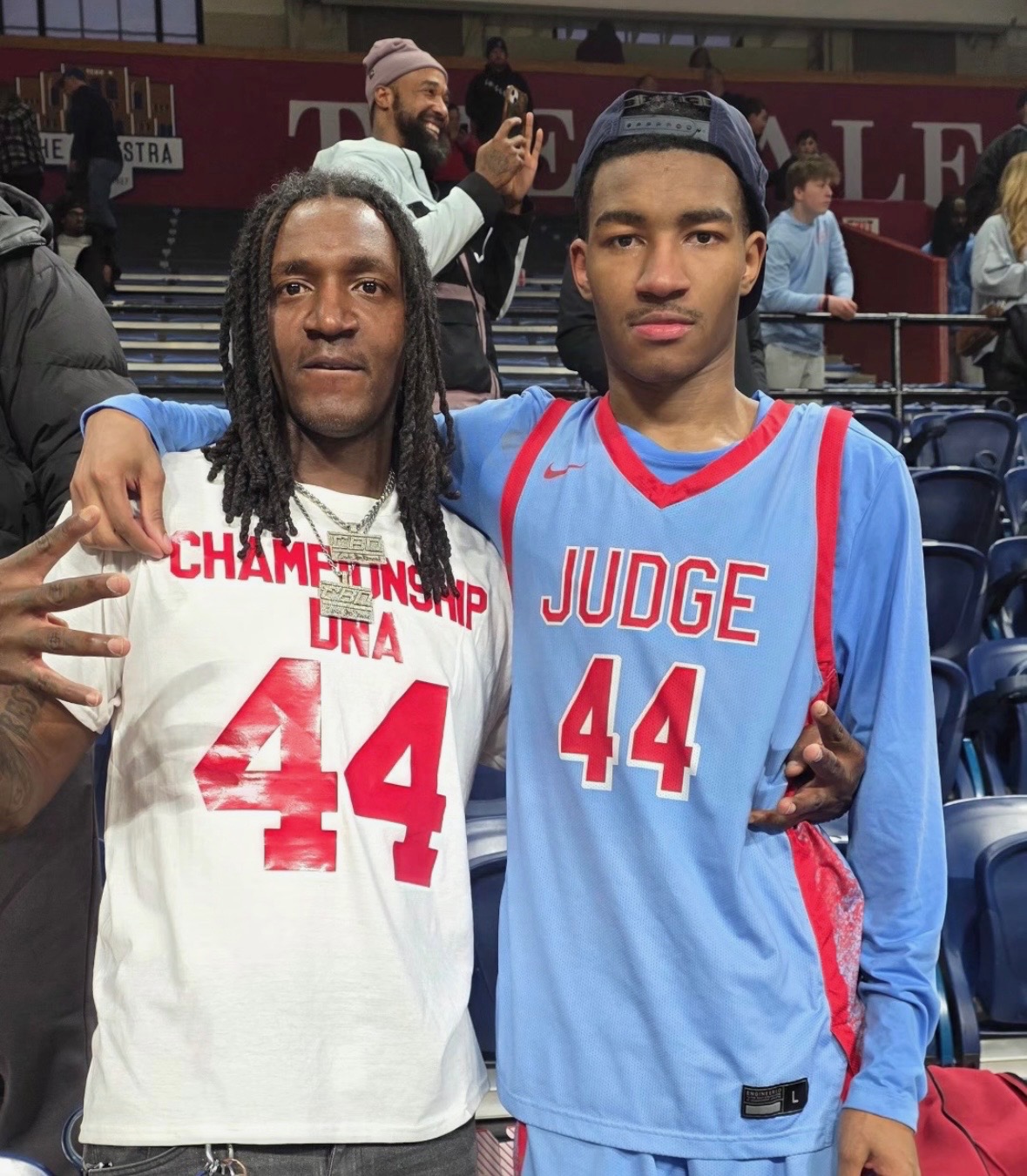
After Judge won the crown inside a packed Palestra this past February, Rivera surprised his son with a shirt that read on the back, “20 years apart same heart.”
“When my career came to an end, I got to watch his, so it’s like the game never left,” said Rivera, who will graduate from the Philadelphia Fire Academy in three weeks. “That’s something that brings me and him together. … It’s something we can enjoy together because I both know we love the sport.
“Basketball has done a lot for us. It’s just a great feeling to be able to continue that and watch his time be here now. Soon enough, he’ll be playing in the Rumph as a professional.”
Cheltenham High School varsity football families repeatedly warned district officials about allegations that former head coach Terence Tolbert allowed bullying to fester in his previous coaching position at Abington Senior High School, parents say.
Tolbert, along with three other Cheltenham coaches, was charged last week with endangering the welfare of a child and conspiracy after a 15-year-old player was allegedly assaulted in the football team’s locker room by teammates twice last year. Six players were also charged. The assaults have led to the cancellation of two football seasons.
Both the district and a Montgomery County grand jury found that inadequate supervision played a role in the assaults. The district also found coaching staff displayed “a failure to prioritize student safety.”
Tolbert and the other coaches are no longer with the district. Tolbert has declined to comment on the matter, and he and his lawyer did not respond to requests for comment on this story.
‘We protested and pleaded’
In the two months leading up to Tolbert’s hiring in June 2025, Cheltenham football families urged district officials to reconsider Tolbert’s hiring in numerous private conversations and public meetings, parents said in interviews this week.
“We protested and pleaded,” said Naim Ferguson, father of Cheltenham quarterback Kendall Jackson during Cheltenham’s last season. “We didn’t think the people they were putting in place were adequate to handle the kids.”
Parents went to the principal, Benjamin Hammond, and vice principal Samuel Sheridan, who is also the athletic director,emails between the officials and football parents show.
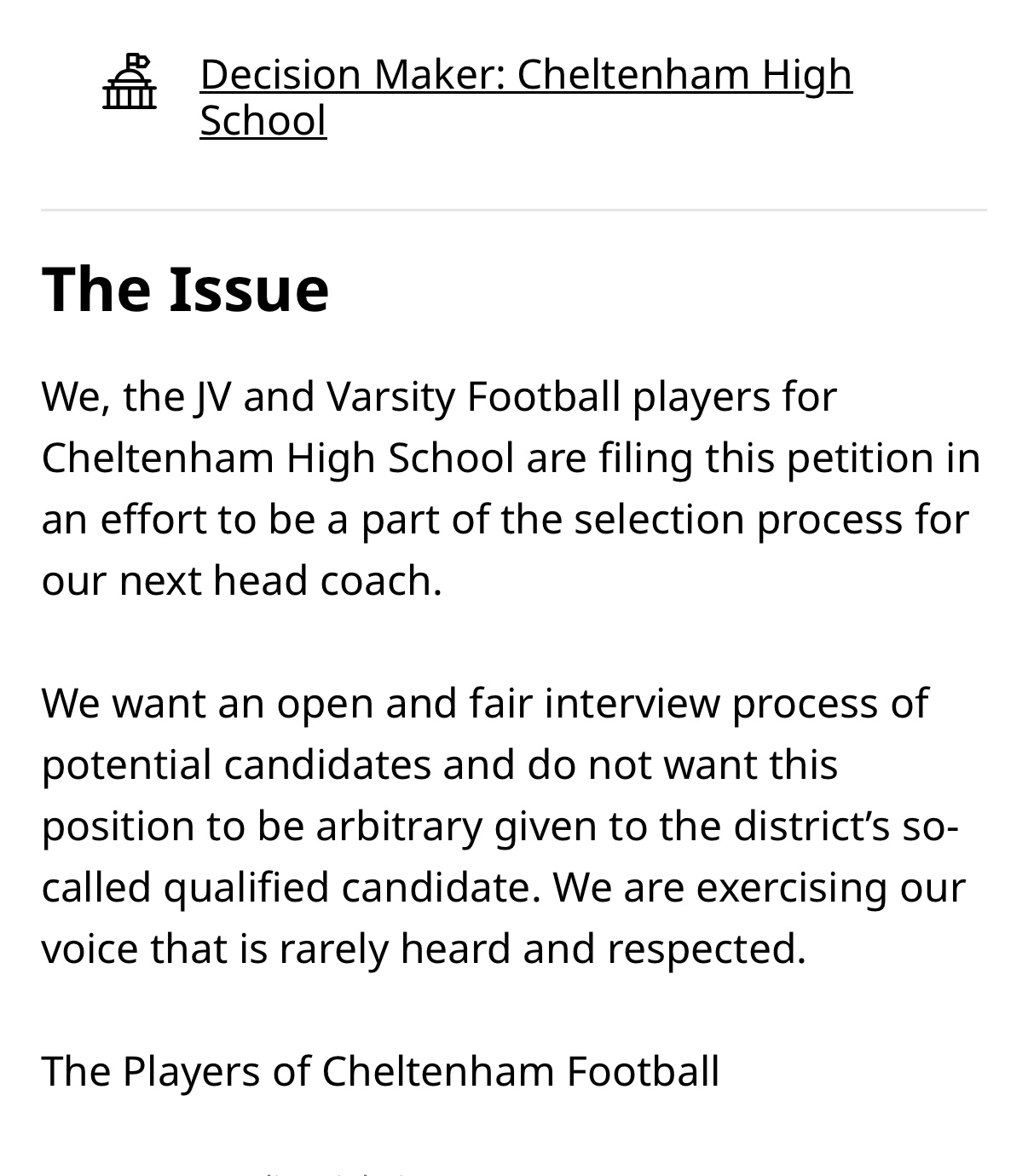
A then-junior on the varsity team started a petition against hiring Tolbert.
“We … do not want this position to be arbitrary given to the district’s so-called qualified candidate,” the petition reads.
A petition started by a Cheltenham varsity football player against the hiring of Terence Tolbert as head coach.Change.org
Taryn Knox, then the vice president of the football parent board, shared her concerns about Tolbert’s hiring process and his record at Abington at school board meetings and in meetings between administrators and football parents until the district formally made Tolbert the coach in June.
At a May board meeting, Knox said Tolbert had been “let go” from Abington, calling him “not appropriate or qualified” for the head coach job.
She was not the only parent who spoke out at that meeting.
“We asked for our children to have a solid leadership,” said Dana Burnley, whose son was on the team. Burnley said that her son had interest from seven Division I schools but that the coaching switch had disrupted the recruitment process.
Burnley’s husband, Ralph, a volunteer coach,was among those charged alongside Tolbert last week and faces the same charges of endangering the welfare of a child and conspiracy. Ralph Burnley has not responded to calls seeking comment.
Multiple upperclassmen also met with Hammond and Sheridan in April to voice their concerns,according to a list that Knox emailed to the principal. Included in the list of concerned players were at least two who were charged last week in connection with the assaults.
“Every plea that we tried was ignored,” Knox said — including one at an April 22 meeting with parents where Knox asked Tolbert to voluntarily resign to reopen the hiring process. Hammond rushed to take the microphone from Tolbert before he could respond, she said.
Cheltenham did not answer any questions this week about parent concerns ahead of Tolbert’s hiring.
Tolbert applied for the open Cheltenham position after a brief stint at Abington that he had left an offensive coordinator role at Cheltenham to pursue. The 2023 move to Abington was a promotion to head coach, but his tenure there was short-lived.
The Abington team won only one game that season, and Tolbert’s employment expired. Abington has acknowledged that the district opted not to renew the one-season appointment but declined to give further details.
Parents from both schools said they believed it was a failure to address bullying and a toxic team culturethat led to his departure.
“There were kids being bullied in the locker room, the language, cussing out coaches,” Knox said this week.
After charges against Tolbert went public last week, an Abington parent shared with The Inquirer the text of a 2023 email he said was sent to Abington officials outlining similar allegations he had heard at the time, including that Tolbert failed to intervene in persistent bullying on the team and crude language from other coaches.
Before a Sept. 8, 2023, game, a coach used the f-slur to refer to the opposing team in a pep talk in front of Tolbert, who did not intervene, the email alleges. The complaint also describes instances when Tolbert failed to break up fights or react appropriately when he saw bullying, including a player who verbally berated a teammate with disabilities.
“It wasn’t a secret,” said the Abington parent, who requested anonymity for fear of retaliation against his child, who still attends the school. “Many parents knew why he was removed. I’m shocked that he was able to get another job.”
Union contract gave Tolbert leg up for coach
Knox and Ferguson said the district hired Tolbert without an interview.
“The [same] buildup that happened here, happened at Abington,” Knox said. “It just didn’t lead to an assault.”
Before Tolbert’s hiring, Cheltenham parents were already upset about former coach Troy Gore’s removal during an important recruitment period, Knox and Ferguson said, because it left players who anticipated scholarships from Division I schools without an advocate.
“These are students who are trying to achieve higher education while also playing a sport that they love, and for some of them, this is their only option,” Knox said at the May 2025 school board meeting.
But when parents questioned what they viewed as an abbreviated hiring process for Gore’s replacement, administrators pointed to a clause in the teachers union contract that gives qualified staff first pick of coaching jobs ahead of external candidates, Knox and Ferguson said.
Tolbert briefly taught business at Cheltenham until he resigned in October 2023, board documents show. He then took a job at Abington as a long-term substitute for business education in addition to coaching.
Cheltenham rehired Tolbert as a business teacher before announcing his 2025 appointment as head coach.
‘Be accountable’
Knox returned for the June 2025 board meeting and said she had been promised a call from the superintendent after the May meeting, but did not receive one.
“Be accountable,” Knox said at the June meeting. “If you say you’re going to follow up, please follow up.”
Superintendent Brian Scriven replied that there was a meeting planned with football players.
“I did say I was going to call you. I opted not to. I will own that,” the superintendent said, adding that Knox had his number and could call him.
The board officially appointed Tolbert as coach at the meeting.
Knox’s son did not trust Tolbert as a teacher or a coach, she said.
“He had been a part of the team for two years prior to that and didn’t have the relationship with the boys,” Knox said.
‘The administration failed these kids’
The administration erred again, Ferguson said, by not suspending students who were involved in the locker room assault recorded on video.
Nearly 20 members of the team witnessed the locker room assault, according to the district’s investigation, and the video was widely circulated. Ferguson said his son and most of the team did not witness the attack.
Jackson always stayed on the field after practice running extra drills, his dad said, and Ferguson would bring his younger son to hang out on the grounds while they waited for him to finish.
By January, the superintendent had publicly acknowledged the district was aware of “several” perpetrators.
But the lack of disciplinary action left the entire team in limbo all year — isolating Jackson from teachers and other students, who were not sure which players were involved, Ferguson said: “People can’t fathom the fact that he’s the starting quarterback and he didn’t know about it.”
Now Jackson, who broke the school’s sophomore quarterback passing record in 2024, is struggling to find a transfer school.
“The administration failed these kids,” Ferguson said.
Knox transferred her son to a Philadelphia school before the incidents. He is set to play football at East Stroudsburg University, a Division II school.
“Thank God I pulled him out,” Knox said. “Every school said, ‘We know you came from Cheltenham; we’re glad you transferred.’”
Staff writer Maddie Hanna contributed to this article.
This suburban content is produced with support from the Leslie Miller and Richard Worley Foundation and The Lenfest Institute for Journalism. Editorial content is created independently of the project donors. Gifts to support The Inquirer’s high-impact journalism can be made at inquirer.com/donate. A list of Lenfest Institute donors can be found at lenfestinstitute.org/supporters.
Reese D’Ariano’s field hockey journey began at the swimming pool.
The youngest of three children, Reese was always put into the same sports as her two older brothers. One day, when accompanying her mother, Jodie, and her middle brother Landon, to his swim practice, the mother of one of Reese’s friends mentioned a field hockey clinic being held at a nearby high school.
Rather than staying to watch her brother swim, eight-year-old Reese picked up a field hockey stick.
The following nine years of Reese’s career led her to representing the United States as a member of the women’s national team at the indoor and outdoor Pan American Cups, Indoor World Cups, Women’s junior World Cup, and the U18 and U16 National Teams for Four Nations Tournaments.
Now, at 17 years old, the West Chester native is playing on her biggest stage yet. Reese will compete at the FIH Hockey World Cup in Belgium and the Netherlands from Aug. 14-30. Team USA will play its first game on Aug. 15 against Argentina.
Reese is the youngest player to make the U.S. women’s national team. But before any accolades or national team appearances, her journey continued at the pool.
While her brother was practicing, Reese and her mother would go to the multipurpose fields nearby to work on drills. Coming straight from school, she would carry her stick and a bag of balls with her, watching videos and analyzing the game.
“Obviously, the progression was slow if you saw it day to day,” Reese said. “But as the weeks and months went on, it was a pretty drastic change in how I progressed.”
Her progression eventually landed her a spot on the national team.
The forward/midfielder noted that while it’s cool to acknowledge her role as the youngest player and the only high school student on the team in this tournament, she doesn’t think about it too much.
“People have graduated from college, and I walked in, [a few] weeks ago, saying ‘I just got my license, guys, stay off the roads,’” Reese said. “Everything’s just really lighthearted about it because I’m just as an equal member of the team as anybody else.”
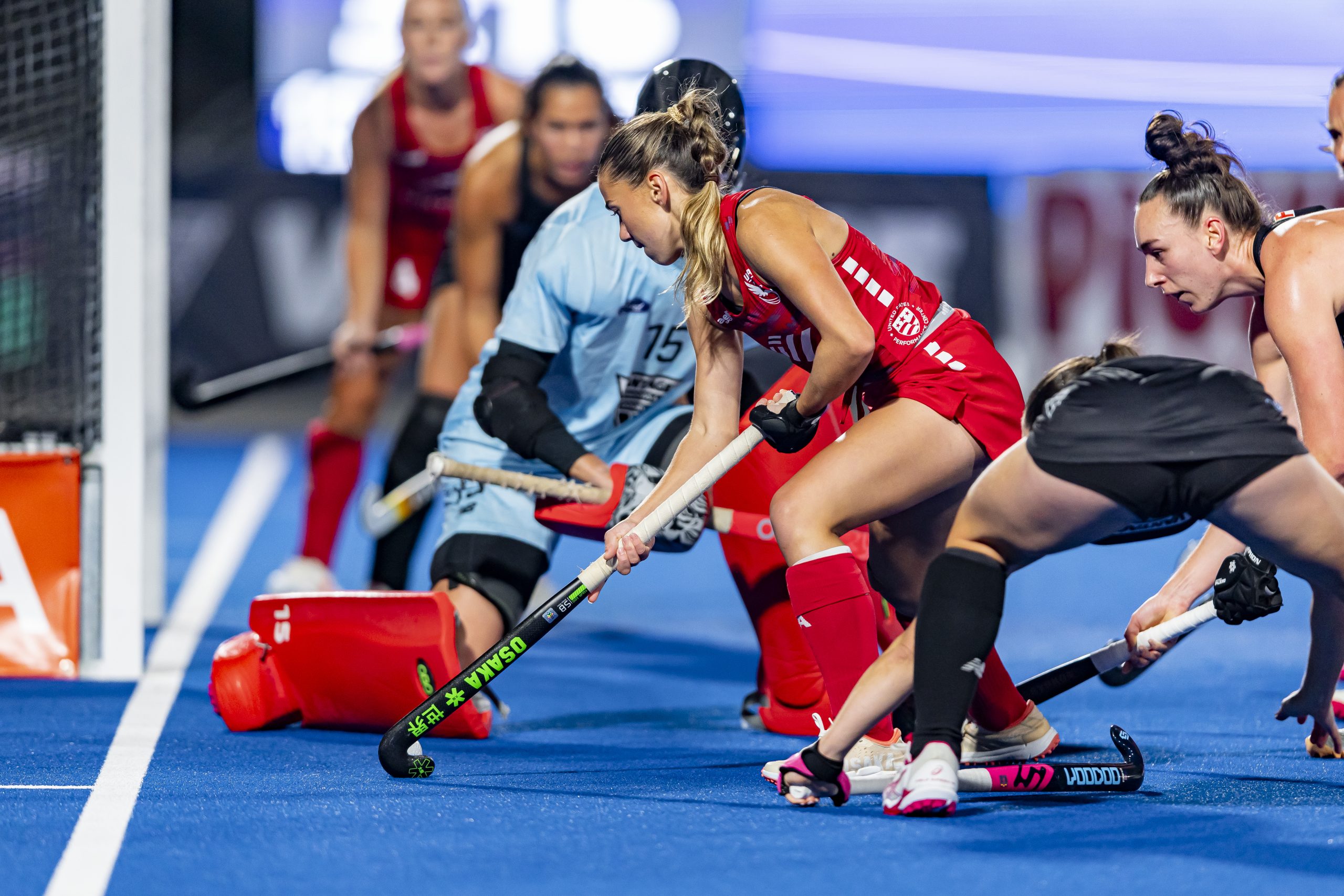
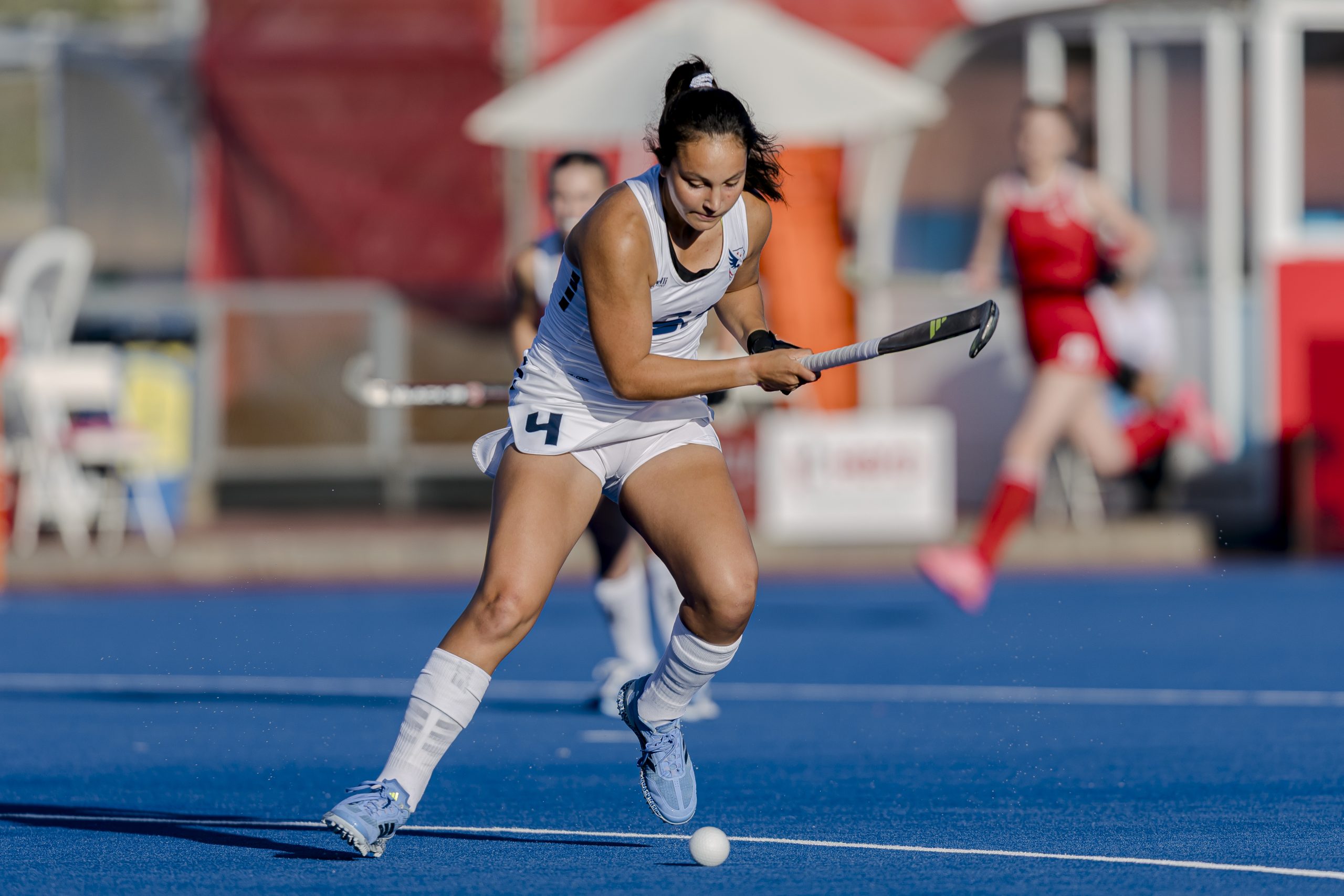
Reese D’Ariano first stint with the U.S. national team came at age 12, when she played on the U16 team for a series against Canada in Vancouver.World Sport Pics / USA Field Hockey
Playing alongside older teammates isn’t new for Reese, whose club career with the WC Eagles saw her playing with older age groups from the time she was 10. As one of the top field hockey clubs in the nation, the environment challenged her, Jodie said.
“I’m not surprised by anything that she’s achieved,” Jodie said. “I always say she’s built differently.”
An athlete herself, Jodie D’Ariano ran track at Stanford and her husband, Frank, played soccer at The College of New Jersey. Reese’s brother, Ryan, golfed at West Chester University and Landon swims at North Carolina State. Jodie said she has tried to match her kids’ efforts by giving them the best opportunities she could within their respective sports.
Reese’s first big opportunity in field hockey came in 2022, when she was put on the U16 team at age 12 for a series against Canada in Vancouver. A year later, in 2023, she was 13 playing at the FIH Indoor Hockey World Cup in South America, where she earned the Junior Player of the Tournament Award.
Currently enrolled at Pennsylvania Leadership Charter School, a cyberschool, Reese said she’s sacrificed the “normal” high school experience in favor of field hockey.
Making the switch to cyberschool around eighth grade has given Reese the flexibility to train in the Netherlands in the fall. In turn, Jodie said field hockey has taken her and her family to incredible places, including Belgium in August, when she and her husband will travel to watch Reese play in the World Cup.
“We try to get to everything that she’s in,” Jodie said. “It’s a small window of time that you get to see kids compete, so obviously, I want to take advantage of it.”
With Team USA, Reese has played in 17 international matches as a member of the senior national team. She has won two gold medals, one at the 2025 Rohrmax Cup in Vienna, Austria, where she was the top goal scorer of the tournament, and another at the 2024 Indoor Pan American Cup in Calgary, Canada, where she was awarded the most valuable player of the tournament and top goal scorer.
She earned two silver medals at the 2026 Junior Pan American Cup in Santiago, Chile, and the 2025 Pan American Cup in Montevideo, Uruguay. Her one bronze medal comes from the 2026 FIH Hockey Nations Cup in Auckland, New Zealand.
But playing in a senior World Cup is a big step up, says Team USA head coach David Passmore.
“The whole size and scale of the event is enormous,” Passmore said. “But I think the other thing is that we also need to not overexpect too much from her too soon. I don’t want to place any additional pressure than her own standards, [which] bring enough pressure on herself.”
This year marks the first time since 2018 that the U.S. women’s national team qualified for the World Cup. Only two players on the roster have prior experience in the tournament. However, others have competed on the Olympic stage. Regardless of their previous background, Passmore expects each of the players to come away with a new experience.
“When you come away from something, a big event like that, you understand the whole mental side of the game, the preparation, the need to also be relaxed, because being relaxed helps you make better decisions,” Passmore said. “[Reese] will bring that towards the rest of her career and hopefully it will help her in her career with the USA national team as well.”
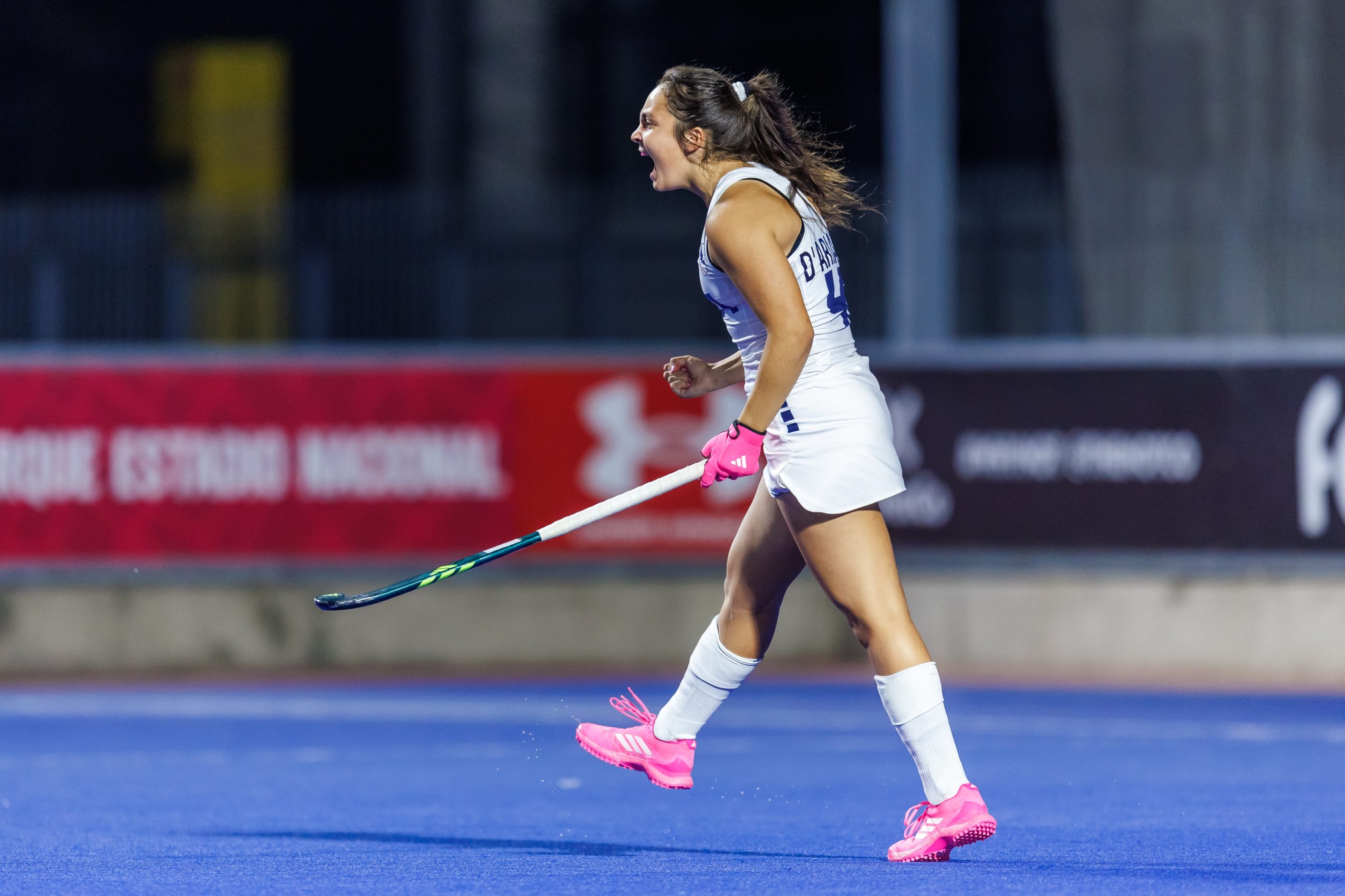
Reese D’Ariano is committed to play field hockey at North Carolina under Chadds Ford native Erin Matson.World Sport Pics / USA Field Hockey
As one of the top recruits for the class of 2027, Reese is committed to play for Chadds Ford native Erin Matson, head coach of the University of North Carolina in Chapel Hill.
But first, she’s focused on competing in the World Cup, and then, finishing high school.
“I just look at it as just another tournament, another opportunity to show what I’ve been working for, and what the team’s been working for,” Reese said. “Stepping on the field for the World Cup is a big deal, but I think having the experience that I have, I’m going to be much more calm and prepared for the moment.”
John Linehan and Kobe Bryant used to talk. A lot. This would not have been unusual for other AAU teammates, but these two were fierce high school rivals.
Linehan was a scrappy point guard for Chester. Bryant was a relentless shooting guard for Lower Merion. Both were competitive, almost to a fault, and in the days leading up to big games, they’d get chippy.
The week before the 1996 PIAA Class AAAA District 1 title game, for example, the players talked every day on bulky landline phones, with Bryant often calling Linehan at his home in Chester.
“I just said, ‘You know, John, I haven’t won a championship yet, and you have,’” Bryant told The Inquirer in 1996.
Linehan knew what his friend was doing. The future NBA star did the same thing a few weeks later, on March 19, a day before the teams met again in the state semifinal.
“He was trying to get me to trash talk,” Linehan said. “I think he needed a little edge. I didn’t want to give him too much. I was like, ‘Man, you crazy.’”
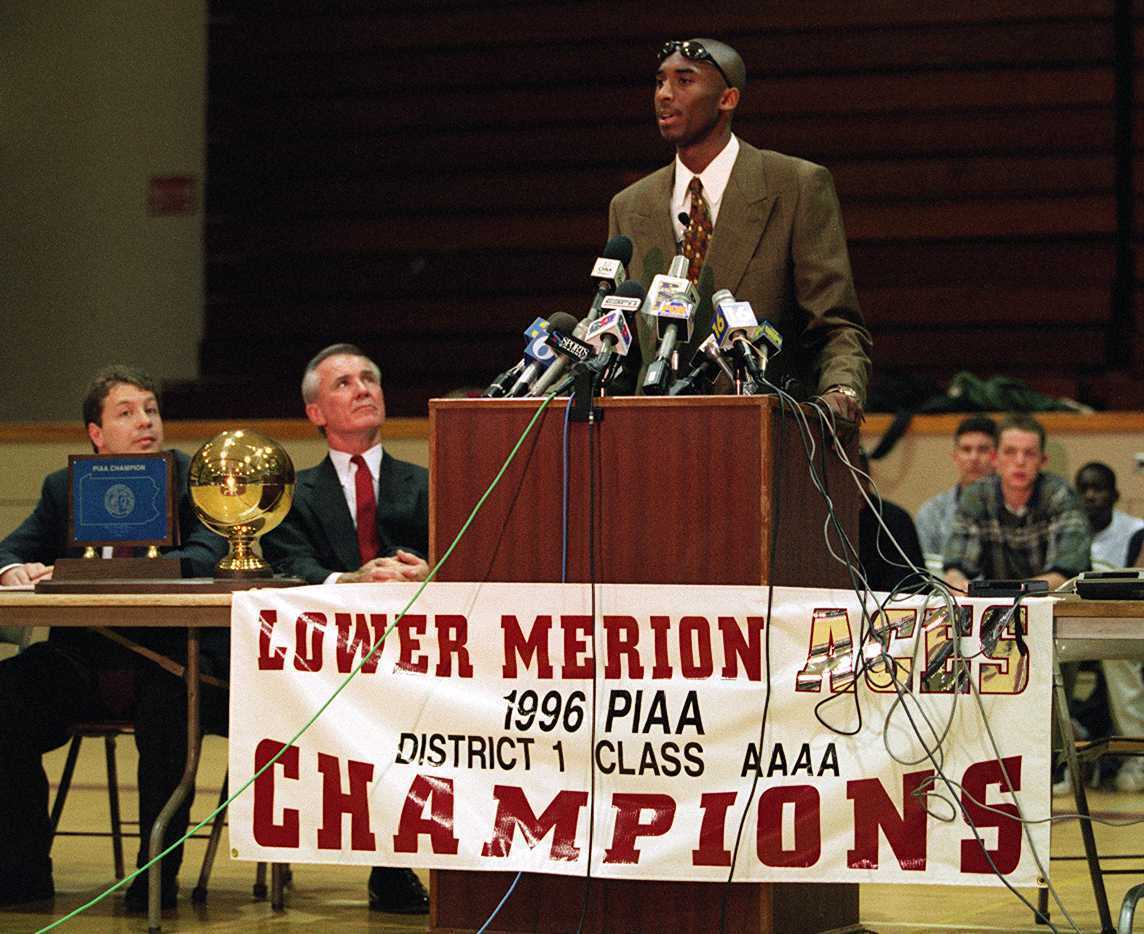
The late Kobe Bryant, a former Lower Merion basketball star, announcing he will go directly into the NBA draft out of high school.ALEJANDRO A. ALVAREZ / Staff Photographer
Lower Merion wasn’t a basketball school when Bryant arrived in the fallof 1992. It paled in comparison to the local powerhouses like Simon Gratz, Coatesville, and Chester.
But Bryant changed that. Even in his freshman year, a season in which the Aces went 4-20, he brought a new standard, working out before class and introducing a level of toughness that was foreign to his teammates.
Bythe mid-1990s, Lower Merion was among the best high school teams in the Philadelphia area. Its players were more confident, celebrating after big shots, and talking loud on the court.
The Aces didn’t play as many games against Coatesville, a rising power led by Rip Hamilton. They couldn’t consistently measure themselves against Gratz, which didn’t participate in the PIAA playoffs untilthe 2004-05 season.
But they could against Chester. And so, a decades-long rivalry was born.
From 1996 through the mid-2010s, Chester and Lower Merion put on some of the greatest high school basketball games in the area. They’d often sell out venues like the Palestra and Villanova’s Pavilion. Some fans would even scalp tickets.
Their communities were almost diametrically opposed. Chester was predominantly Black; Lower Merion was predominantly white. Chester was plaguedby poverty; Lower Merion was considered affluent.
Chester, with its Biddy League, had a legacy of basketball greatness, and a steady pipeline of talent. Lower Merion had nothing comparable. But these differences melted away on the court.
And while the rivalry is not what it once was, it lives on today.
“The pride and the intensity and the history will never fade,” said Lower Merion coach Gregg Downer. “I mean, if we played them tomorrow night, that would be an intense game.”
The Bryant-Linehan era
When Downer was named head coach in 1990, he already was well-aware of Chester’s tradition. He’d played youth basketball growing up in Media and had heard about the stars who’d come out of the Biddy League.
It was obvious that his team would have to go through the Clippers to win any sort of accolade. But it wasn’t until Bryant’s arrival that Downer’s aspirations became a real possibility.
The shooting guard, who was the son of former 76er Joe “Jelly Bean” Bryant, was mature for his age. He’d demand more, mentally and physically, of older teammates. Doug Young, a former Lower Merion forward, remembered seeing Bryant leaving the locker room at 7 o’clock one September morning in 1993.
He’d been at the high school gym since 5 a.m., working out by himself. To the Lower Merion basketball team, this was a “crazy” concept, so Young and his cohorts decided to join him.
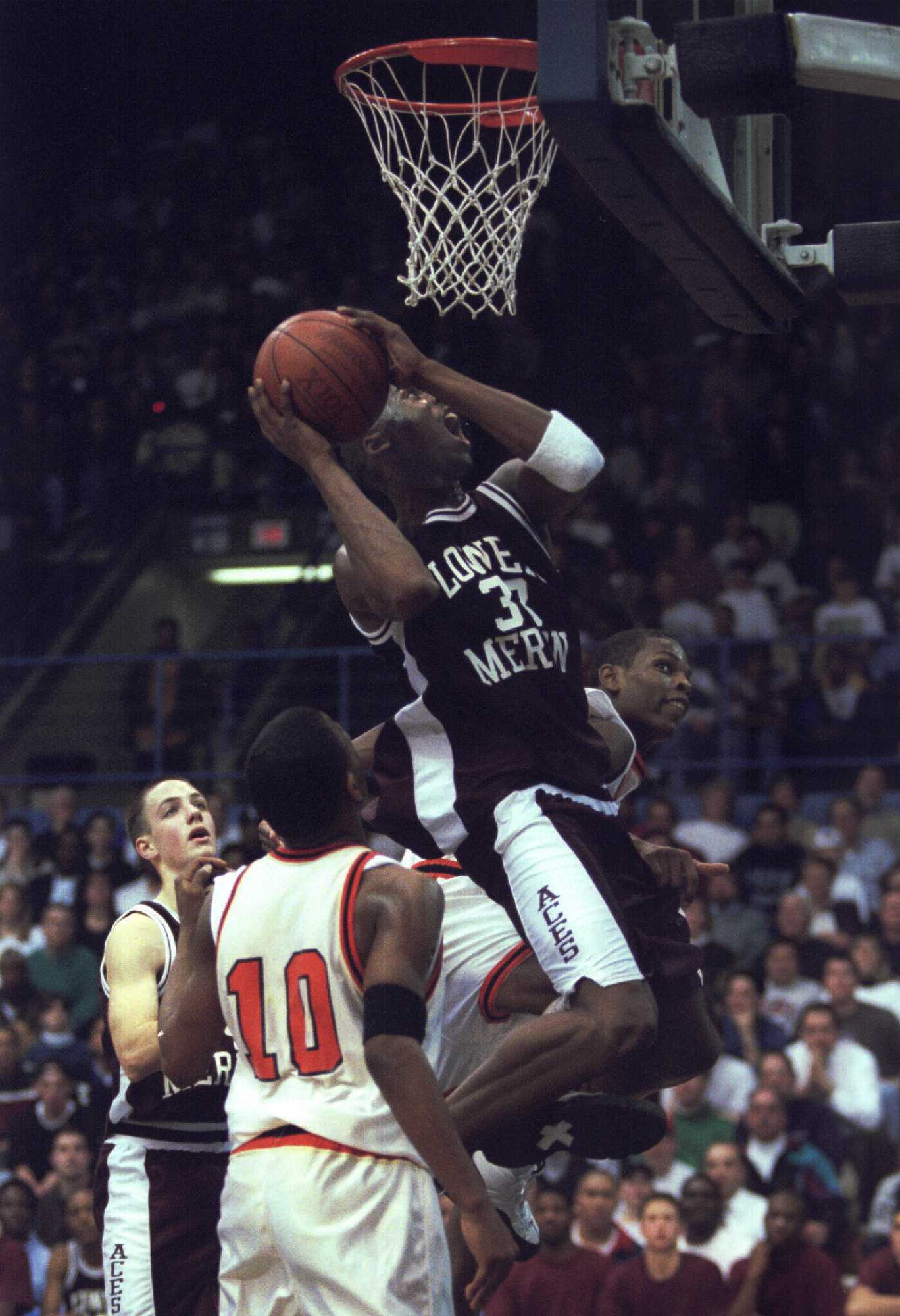
In the District 1 championship game against Chester, Kobe Bryant goes to the hoop over the Clippers’ John Linehan.Jay Gorodetzer / Staff Photographer
They arrived the next day at 5:06 a.m. The players knocked on the door. Bryant didn’t answer.
“He wouldn’t open it,” said Young, who graduated in 1995. “You’re either there or you’re not. We were six minutes late.”
His teammates waited outside until 6:30 a.m., when the school opened. They made sure to show up before 5 a.m. from that day on.
Downer was wired the same way. The coach — and his NBA-bound pupil — would push the team in practice. Losses were particularly tough. The players would go through endless sprints and rebounding drills that sent them running to the trash can.
It wasn’t fun. But over time, the method created a newfound tenacity.
“No one walked into high school saying, ‘Oh, yeah, I want to win a state championship,’” Young said. “But [Kobe] knew what that was. He was like, ‘I don’t know any other way. If we’re not going to win a championship, what the heck are we playing for?’”
Chester was always going to be an obstacle, so Downer tried to play into the battle. He’d use analogies for the tough, hard-nosed team, comparing it to an animal stalking its prey.
The coach began to screen movies to underscore this point. Together, in a Lower Merion classroom, Downer’s players watched Jaws and other tales of survival, like The Edge, a 1997 thriller about a plane that crashes in the Alaskan wilderness.
“This bear is stalking them, and the couple is saying, ’What are we going to do about this bear?’” Downer said. “And one of them says, ‘The only thing we can do is kill the bear.’
“And I remember being like, ‘We can do this.’ But the only solution is to — not to be overly graphic — but to kill them.”
(The bear in this analogy was Chester.)
He added: “We tried everything humanly possible to get through to this team.”
The first few games were ugly. In 1995, Lower Merion met the Clippers in the District 1 championship, only to lose by 27 points. But they came back with a renewed focus the following year, in 1995-96, going 25-3 in the regular season to earn a district final rematch against Chester.
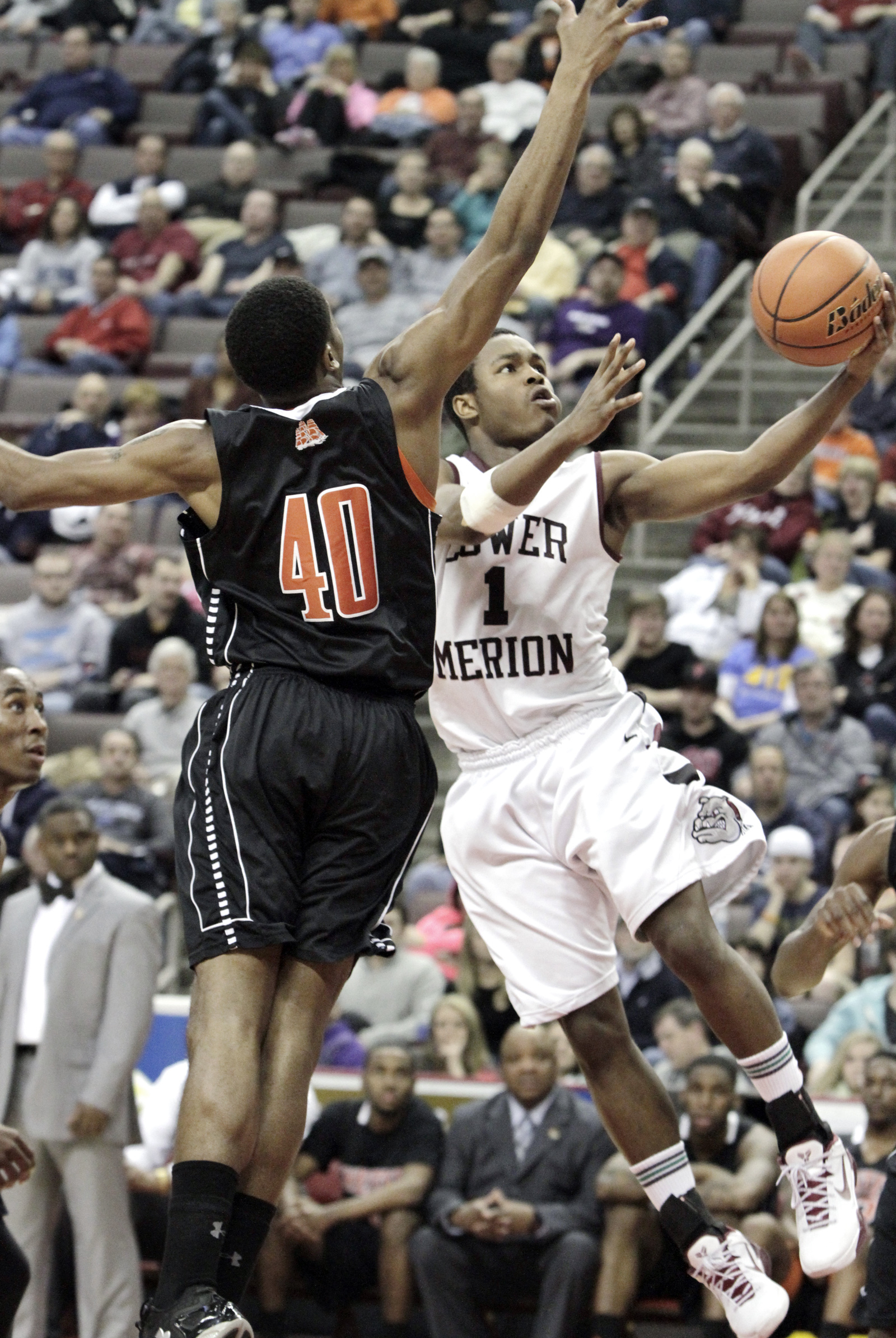
The Aces showed up at the arena with “27″ printed on their warmup shirts. Bryant, armed with fresh bulletin board material from Linehan, dropped 34 points against the Clippers en route to a 60-53 Aces win.
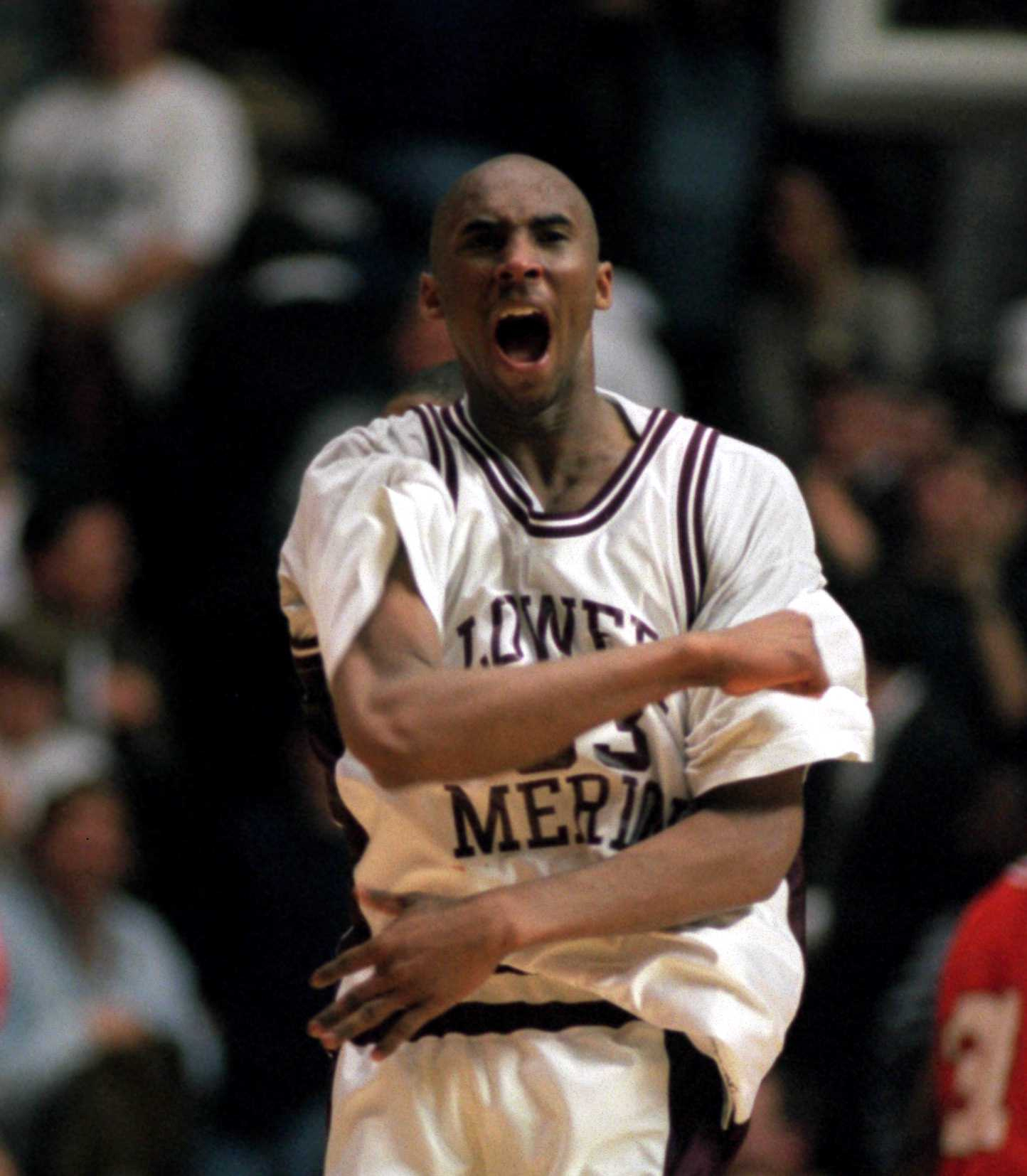
The shooting guard scored 39 points later that month — with a broken nose — in a 77-69 state semifinal win over Chester. Lower Merion went on to beat Erie Cathedral Prep, 48-43, to win its first state championship since 1943.
Kobe Bryant celebrates after defeating Chester at the Palestra in 1996 to advance to the state final.
To Linehan, the difference Bryant made was obvious. He joked that he’d “never heard of Lower Merion” before his friend arrived. But once he did, Chester realized it would have to go to great lengths to prepare for the phenom.
Ahead of a big game against Lower Merion in the mid-1990s, the coaching staff reached out to Clippers alumnus Zain Shaw. He played at West Virginia and in Europe and possessed some of the same characteristics as Bryant — a tall frame and an athletic build with strong ballhandling skills.
The Clippers invited Shaw to practice, where he played the role of Bryant (to the best of his ability).
“Kobe was so special, we had to bring in a pro to help us prepare,” said Linehan, who later starred at Providence.
But there was another impact the future Lakers star had, one that had nothing to do with his own prowess. Linehan noticed that Bryant’s Lower Merion teammates started to take on some of his qualities. Suddenly, they were playing brash, confident basketball.
“We didn’t have reason to believe, until Kobe got there, that we belonged on the court with Chester,” Young said. “The fear was real. Teams were afraid of Chester because they’d run you out of the building.
“The idea of Lower Merion being on the court in a meaningful game against [them] was such a crazy thought. But then, you started to believe.”
The buzzer-beater heard ’round Chester
Bryant never got over the rivalry, even after he embarked on his Hall of Fame NBA career in 1996. Sometimes, he’d call the coaching staff before big games against Chester, leaving expletive-laden voicemails to use as motivation.
The Lakers shooting guard also created an incentive structure for his former team.
“You couldn’t get a pair of Nike sneakers unless you qualified for the playoffs,” Young said. “If you don’t earn it, you don’t get it.”
He became especially involved in 2005-06. After a lull in the early 2000s, Chester and Lower Merion found themselves neck-and-neck again. The Aces were led by the duo of Ryan Brooks and Garrett Williamson, and the Clippers boasted a deep roster, headlined by Darrin Govens. All of them eventually played in the Big 5.
(Chester was so stacked that it brought a 1,000-point scorer off the bench in Noel Wilmore.)
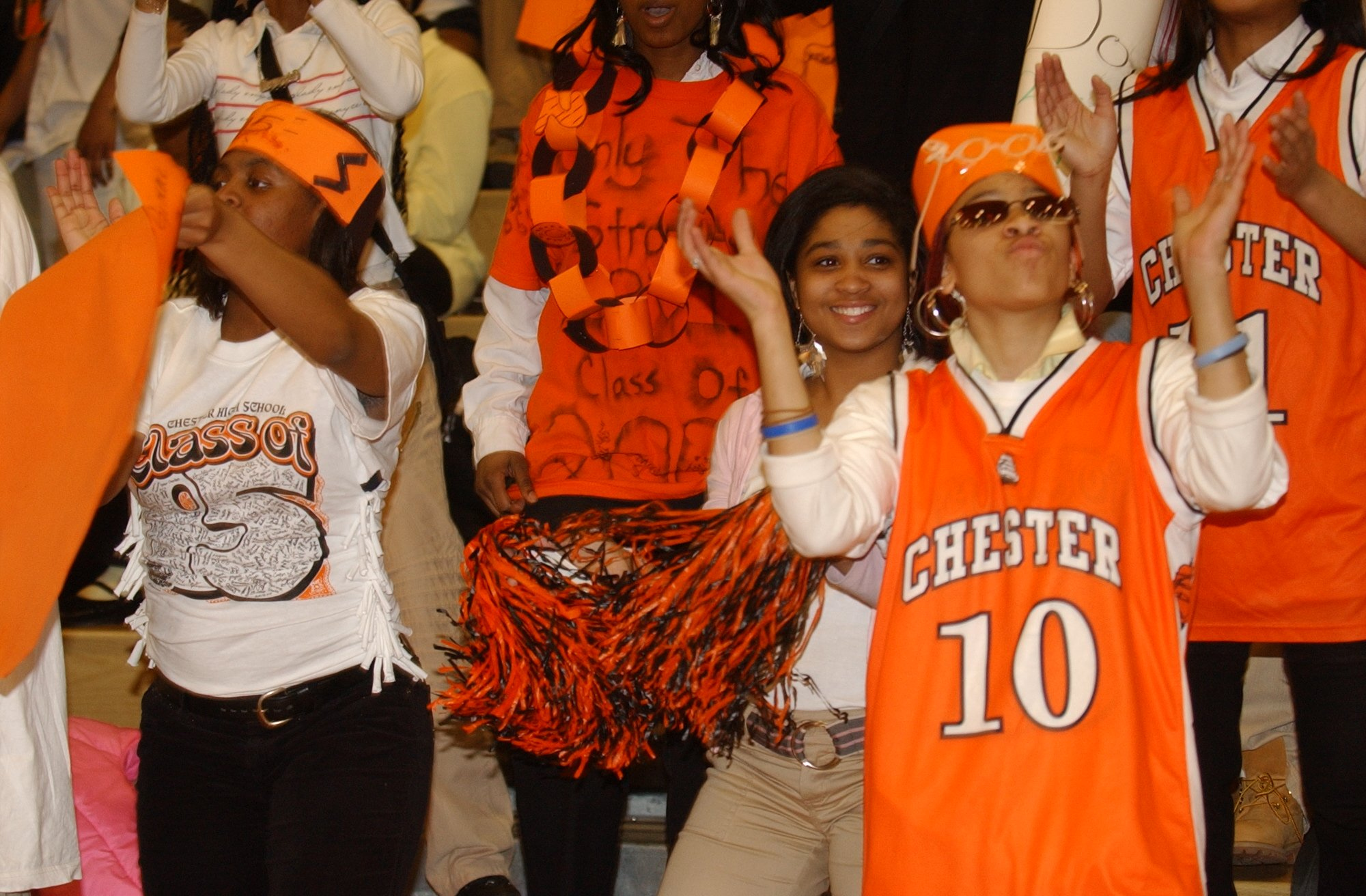
Students from the class of 2005 show their support as Chester and Lower Merion play in the state final. Hinda Schuman / Staff Photographer
The rivals met in the state championship on March 19, 2005. Despite strong performances from Williamson and Brooks, the Clippers pulled away in the second half thanks to a dominant third quarter from Govens. Chester won, 74-61.
The teams reconvened the following season with their competitive spark fully reignited. They faced each other three times that year. Chester took Round 1, a one-point regular-season victory on Dec. 27.
Round 2 was in the district final on March 3. Before the game, in front of a packed crowd at the Pavilion, Chester sophomore Karon Burton walked up to the layup line.
Lower Merion’s student section caught his ear with a chant about coach Fred Pickett’s stout stature.
The dig didn’t intimidate Burton. If anything, it fueled him. He grew up playing street ball in Chester and always loved trash talk.
Instead of cowering, like the crowd hoped, the sophomore delivered an unforgettable outing. The game went into overtime, and was tied at 80 with only a few seconds remaining.During a timeout, assistant coach Keith Taylor pulled Burton aside.
“He was like, ‘Hey, listen,’” Burton said. “They’re going to double Darrin. If you get that ball, do your thing.’”
Taylor’s words proved prescient. As Lower Merion’s defenders swarmed Govens, the Clippers inbounded the ball to Burton.
He took a pull-up jumper from beyond the arc and drilled it for an 83-80 win. The Chester fans stormed the court. Burton, who later joined Wilmore in the 1,000-point club, said he felt like a celebrity in his hometown.
“It was like watching a buzzer-beater in the NBA,” he said. “I just ran to my teammates, they picked me up. It was a crazy feeling.
“I’m a big Kobe fan, too. Kobe’s my favorite player ever. So when I came and I hit the game-winner on that team …”
Round 3 took place a few weeks later, in a state semifinal rematch at the Palestra on March 22. Bryant called Lower Merion’s coaches before the game.
“I don’t remember specifically what he said, but I’m sure there were a lot of [expletives] dropped,” said Young. “Like, ‘Don’t call me back if you don’t beat those [expletives].’ That was a line we heard from him a couple times.”
This one didn’t go Chester’s way. After trailing the Clippers, 47-37, at the end of the third quarter, the Aces came roaring back in the fourth and put up 33 points to eke out a 70-65 win.
The celebration in the locker room was cathartic. Water sprayed into the air. Players sat atop each other’s shoulders and turned the showers into a slip ‘n slide. Bryant called in, again, as other members of the 1996 team filtered through.
Darrin Govens scored his 1,000th point for Chester against Lower Merion in the state championship in 2005.Hinda Schuman / Staff Photographer
This was not how Govens wanted to end his high school career. And a few months later, when he arrived at St. Joseph’s on a basketball scholarship, he saw a familiar foe.
It was Williamson, his new Hawks teammate.
“We were sitting on the opposite side of the bench,” Govens said. “I didn’t want to sit next to him; he didn’t want to sit next to me. We’d kind of avoid each other and just head nod.
“Even in running drills, it was a competition. He looked to the left. I looked to the right. We tried to beat each other in sprints. But then we realized, ‘All right bro, we’re teammates now.’”
‘Hero status’
Chester had always rallied around its high school basketball team. Linehan said it was akin to playing for the Sixers. The teenagers were treated like professional athletes — especially those who had been a part of big wins.
The Clippers’ public address announcer, James Howard, called this “hero status.”
“All of a sudden, your money’s no good,” he said. “Barbers take care of you, make sure your hair looks nice before games. Free food. Little kids look up to you and ask for your autograph. That’s how it is.”
In Chester, there were plenty of heroes to draw from. There was Linehan, but also Jameer Nelson, who met a young Burton in the late 1990s. Nelson, a friend of Burton’s cousin, gave the aspiring basketball player a gift before he left for St. Joe’s: his MVP medal from the Chester summer league.
“He was one of the biggest guys in our city,” Burton said, “so it’s definitely something that I’ll always remember.”
By the early 2010s, when the rivalry was reignited for a third time, Lower Merion had built more of a basketball tradition. Aces guard Justin McFadden said he’d get stopped in Wawa before big games against the Clippers.
Chester celebrates its win over Lower Merion for the state championship in 2012. Steven M. Falk / Staff Photographer
“It became a community thing,” he said. “People would be asking, ‘What do you guys think about Chester? Do you think we can get it done?’”
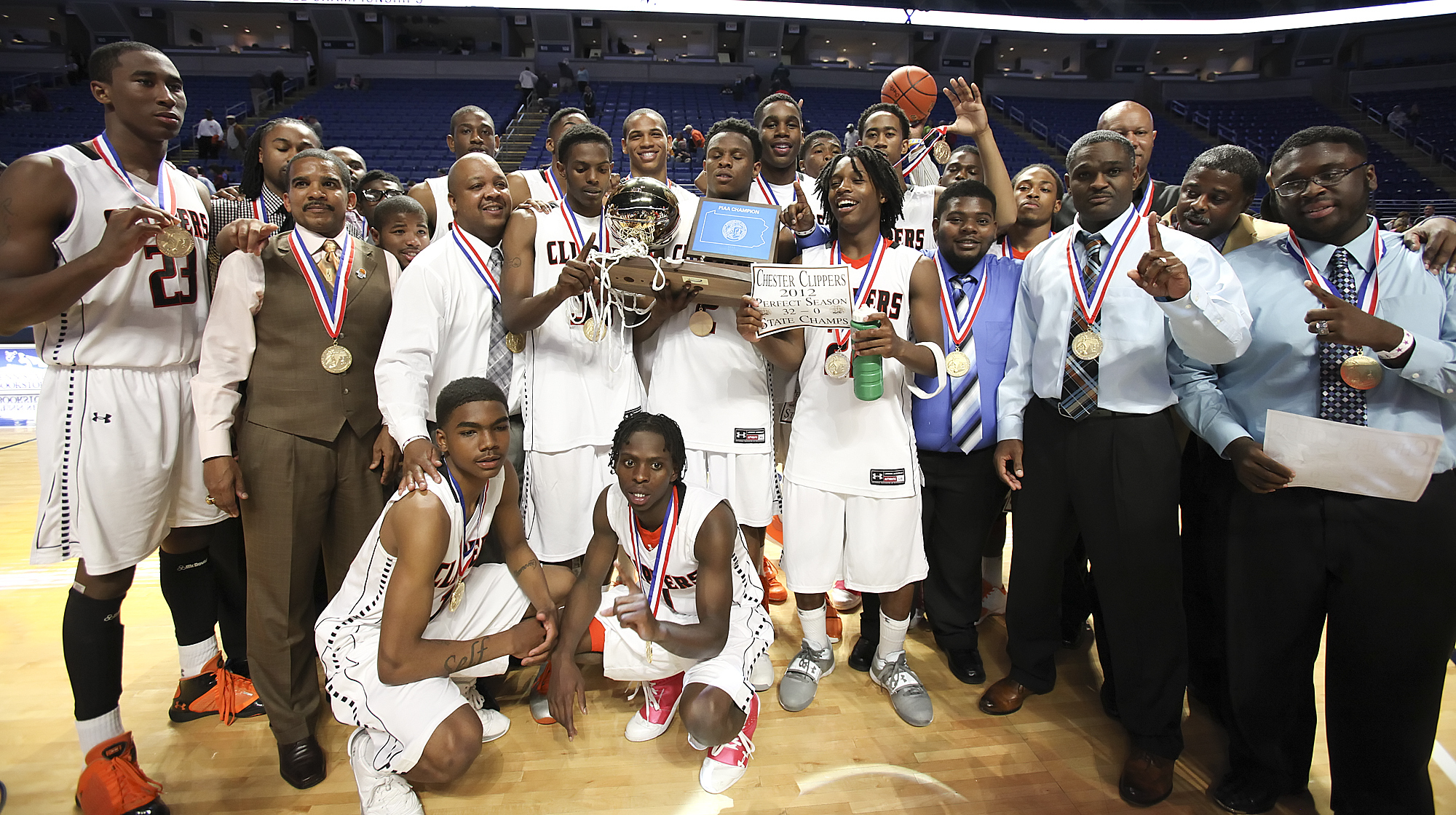
In 2012, the schools met in the state championship for the first time since 2005. Junior forward and future NBA starter Rondae Hollis-Jefferson put up a double-double to lead the Clippers to a resounding 59-33 win over the Aces. It was their second straight title and their 58th straight victory.
A year later, after going 17-0 in the Central League, the Aces met the Clippers in the state final again. Chester had won 78 straight games against in-state opponents. Snapping that streak would be daunting, but Downer had a plethora of motivational tactics at his disposal.
Just as they had in the 1990s, The Aces again spent pockets of the season watching Jaws, The Edge, as well as an addition: Al Pacino’s “Inch by Inch” speech in Any Given Sunday.
“He would have that fired up on YouTube, ready to go,” McFadden said. “Looking back, [your reaction] is a chuckle, but in the moment, it worked. We knew that this was the hill that needed to be climbed.
“And every time they played that speech, we got goose bumps. We were ready to fire.”
Chester got out to an early lead, but Lower Merion rallied behind a 22-point, 11-rebound performance from B.J. Johnson, who later starred at La Salle. The Aces snapped the streak and won their seventh state title with a 63-47 victory.
Lower Merion’s Jaquan Johnson goes to the net as Diamonte Reason guards him in the Chester-Lower Merion state championship game in 2013.Elizabeth Robertson / Staff Photographer
The Clippers then were coached by Larry Yarbray. Pickett, who was diagnosed with cancer in2010, was in declining health. Just before he died in 2014, Downer decided to say goodbye.
He and his former assistant coach Jeremy Treatman drove out to Pickett’s home in Chester. They went to his bedside.
“And we talked,” Downer said. “And we held hands. It was a really touching moment for me. This is a man that carried Chester on his back. That tried to carry Lower Merion on his back. And I knew it was the last time I was going to see Fred.
“We walked out the door, and we told each other that we loved each other. And I never thought he would say that to me, or vice versa. But it was just kind of like, ‘You know what? We’ve had some amazing battles, and there’s a lot of respect there.’”
Keeping the tradition alive
In recent years, the Chester-Lower Merion rivalry has diminished.
There was a brief period when the teams were in different classifications. Both programs have lost players to private schools that can recruit, and the addition of the Philadelphia Catholic League to the PIAA has made the state playoffs more competitive.
One place the Aces and Clippers could meet is in the district tournament, where they reunited in 2024. But they haven’t played each other since. And Howard says the contests don’t have the same feel.
“Both teams have lost D-I talent,” he said. “It’s not as high-flying, above the rim, as it was in the past. But still a great game. Sold out at Lower Merion, and at Chester, same thing.”
The history will always be there, though, and Burton is doing his best to keep it alive. His 8-year-old son, Karon Burton Jr., is playing in the Biddy League. His father is his coach.
Sometimes, they go on YouTube and watch old Clippers games. Junior’s favorite, of course, is the 2006 district final.
Burton believes that his son has a promising future, but isn’t sure of where he’ll go to high school yet. He doesn’t want Karon Jr. to feel obligated to follow his father’s path.
But if it worked out that way, what a story that would be.
“I’d love to be the first father and son to have 1,000 points,” Burton said. “With the same name? That would be crazy.”