Several weeks ago, The Inquirer food desk deliberated on declaring a sandwich of the summer, after the New York Times designated Italian piadinas their pick for said title (a phenomenon that seems mostly confined to Brooklyn). Personally, I think the designation is pretty silly. Why?
The hot dog is the sandwich of the summer. It always has been, but it’s especially true now.
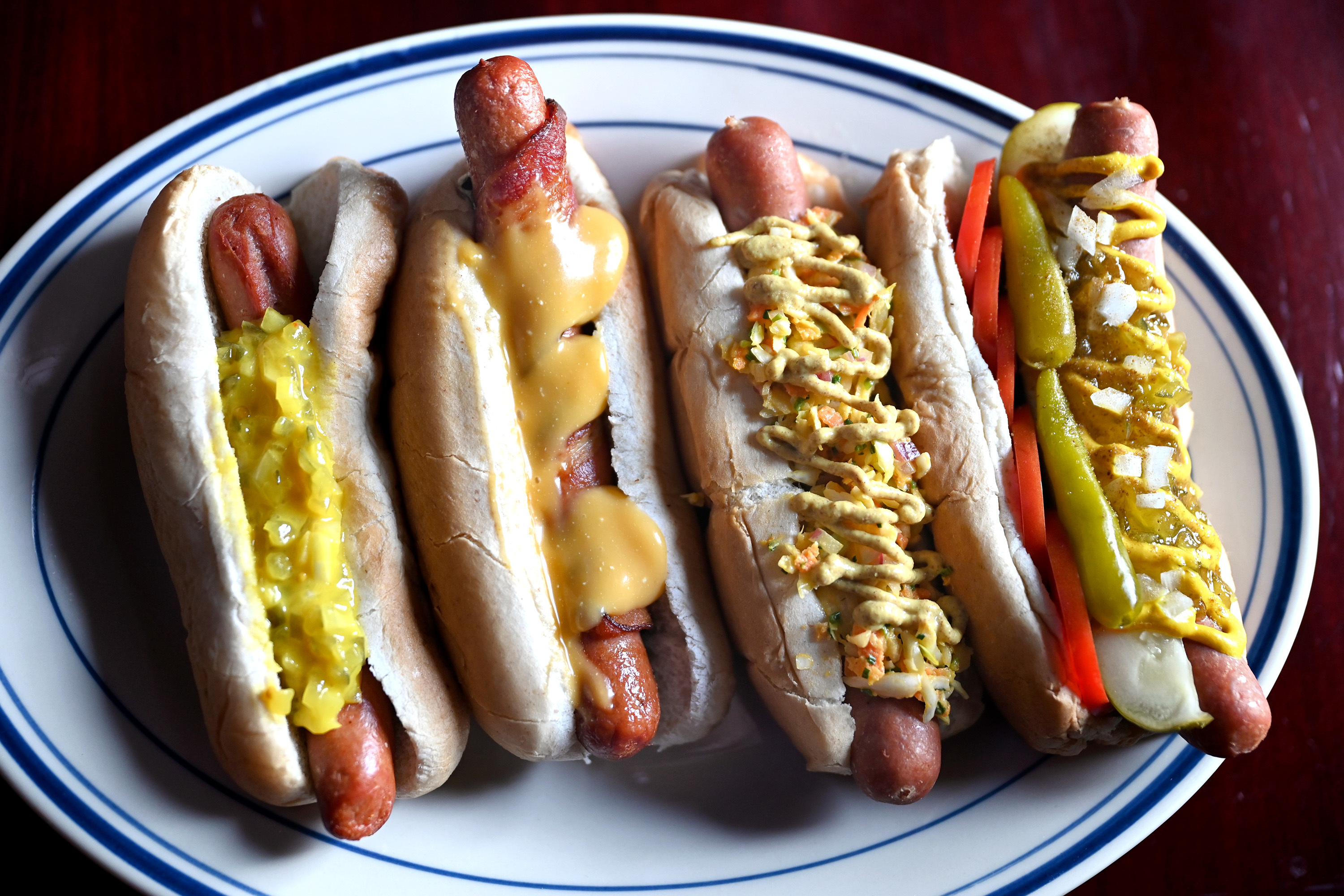
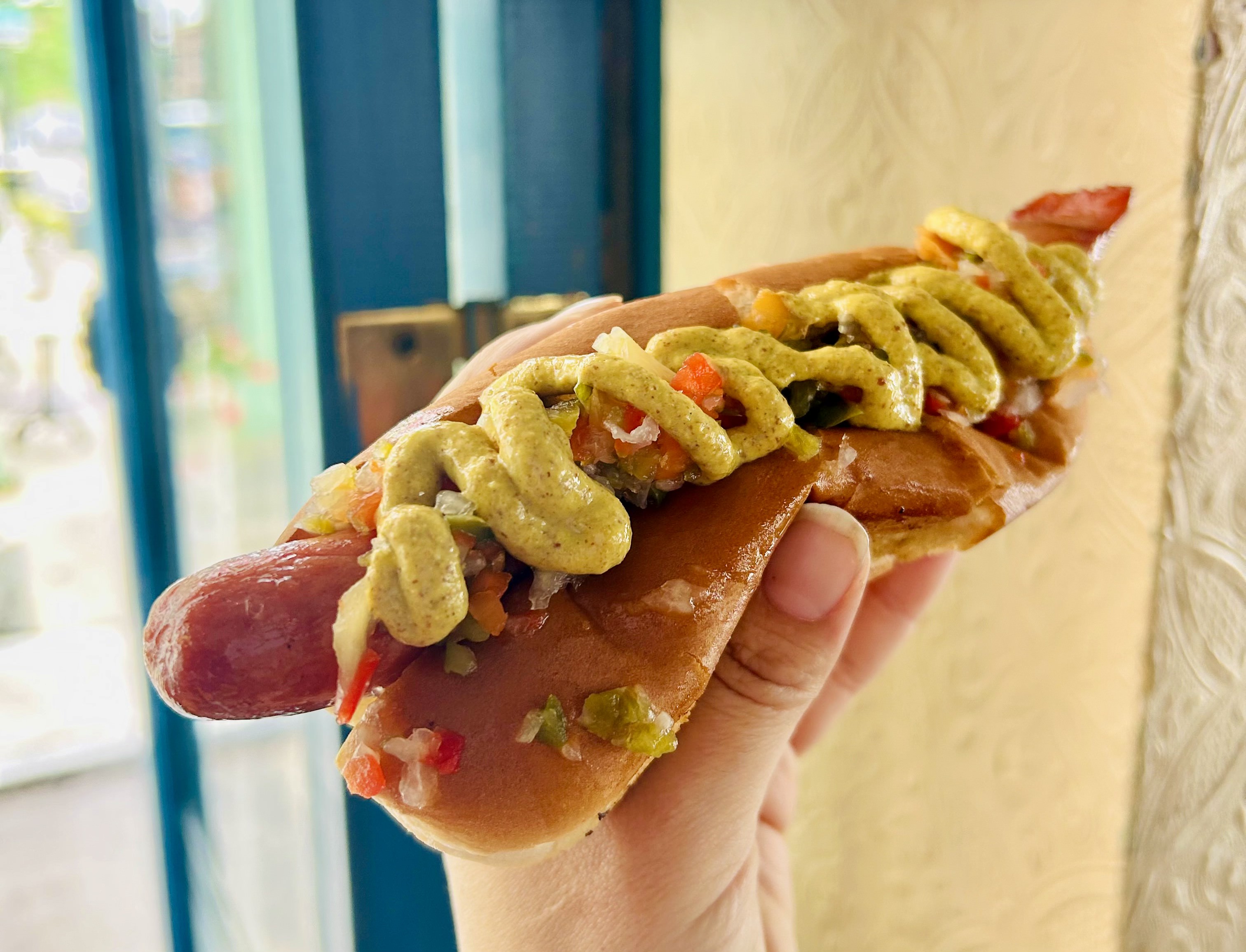
Hot dogs at Royal Tavern’s Dog Days of Summer special, held annually in July. (A few dogs remain on the menu in August.)Tom Gralish / Staff Photographer
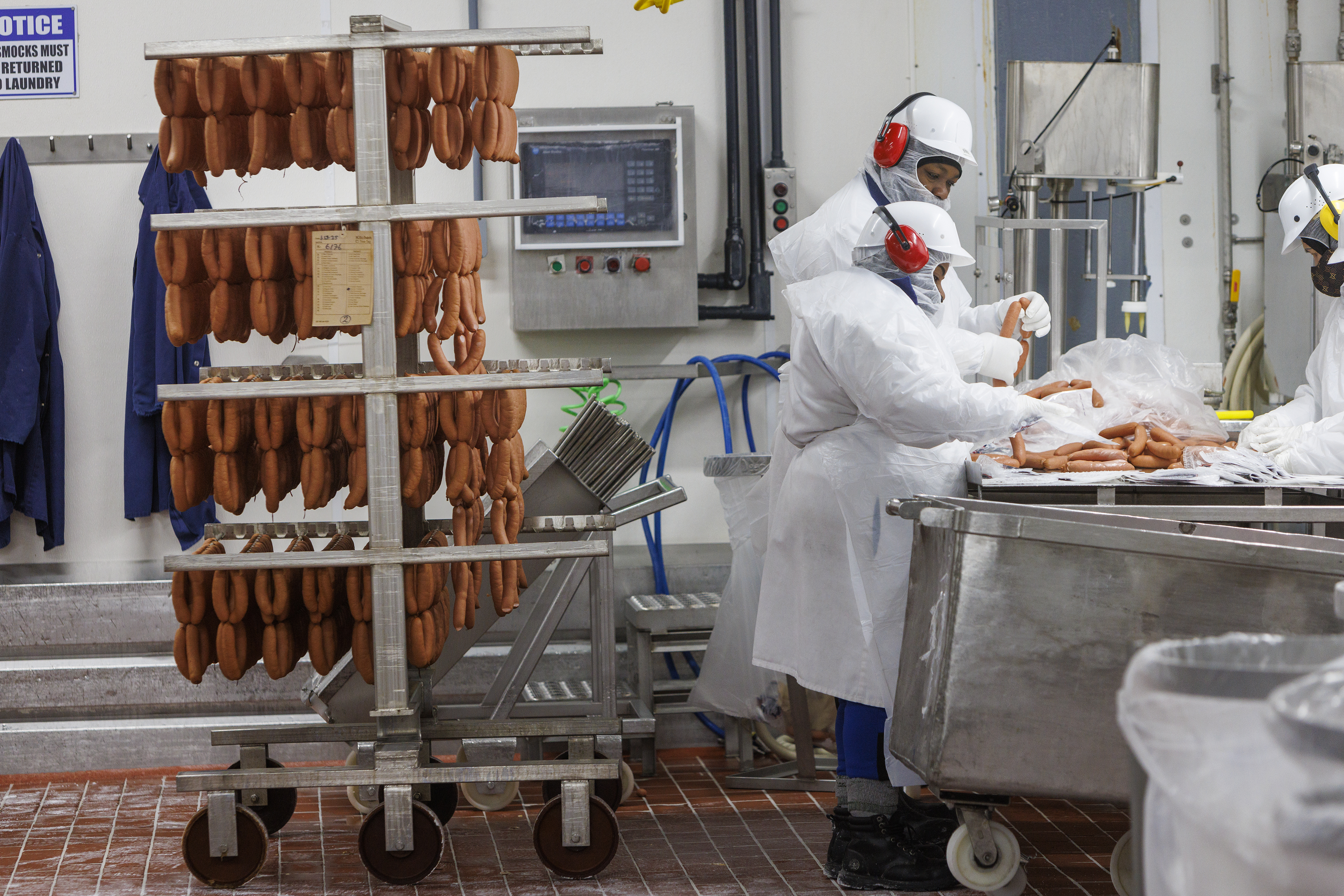
The boom times won’t necessarily end after Labor Day, but, for many people, hot dogs have a season, and it is summer. After all, nearly half of the 100 million hot dogs made annually by Dietz and Watson, Philly’s homegrown deli meat maker, are sold between May and August, according to Lauren Eni Canseco, Dietz’s vice president of brand strategy and fourth-generation family owner.
Food handlers packaging Black Forest Uncured Knockwurst at Dietz and Watson plant Philadelphia in 2025. Dietz and Watson produces and distributes deli meats, cheeses, and other specialty food products.Alejandro A. Alvarez / Staff Photographer
That the hot dog is the sandwich of the summer, here or anywhere, seems so obvious, it almost shouldn’t even need to be verbalized. It’s ballpark food, barbecue food — summer food.
The one major hitch? The enduring, irreconcilable debate over whether a hot dog is a sandwich. This is well-tread ground among hot dog enthusiasts, a subset of civilization that is fiercely opinionated and quite vociferous.
To give both sides of the argument equal air time, I asked several local glizzy authorities — makers, avid consumers, etc. — to weigh in. Is a hot dog a sandwich? Here’s what they said:
Craig LaBan, Inquirer restaurant critic: Technically, yes. As much as a hoagie, or hot roast beef, cheesesteak or cutlet can be a sandwich. You put sausage on a bun and call it a sandwich. Hot dog is a sausage, so …That is not to say hot doggery is the same thing as eating a peanut butter and jelly. … and it’s true hot dogs can absolutely exist on their own — in a pot of beans or Korean Army soup, baked into a croissant, wrapped in a blanket, in which cases they are not a sandwich. So … now that I rethink it, a hot dog is NOT a sandwich, but it can become one.
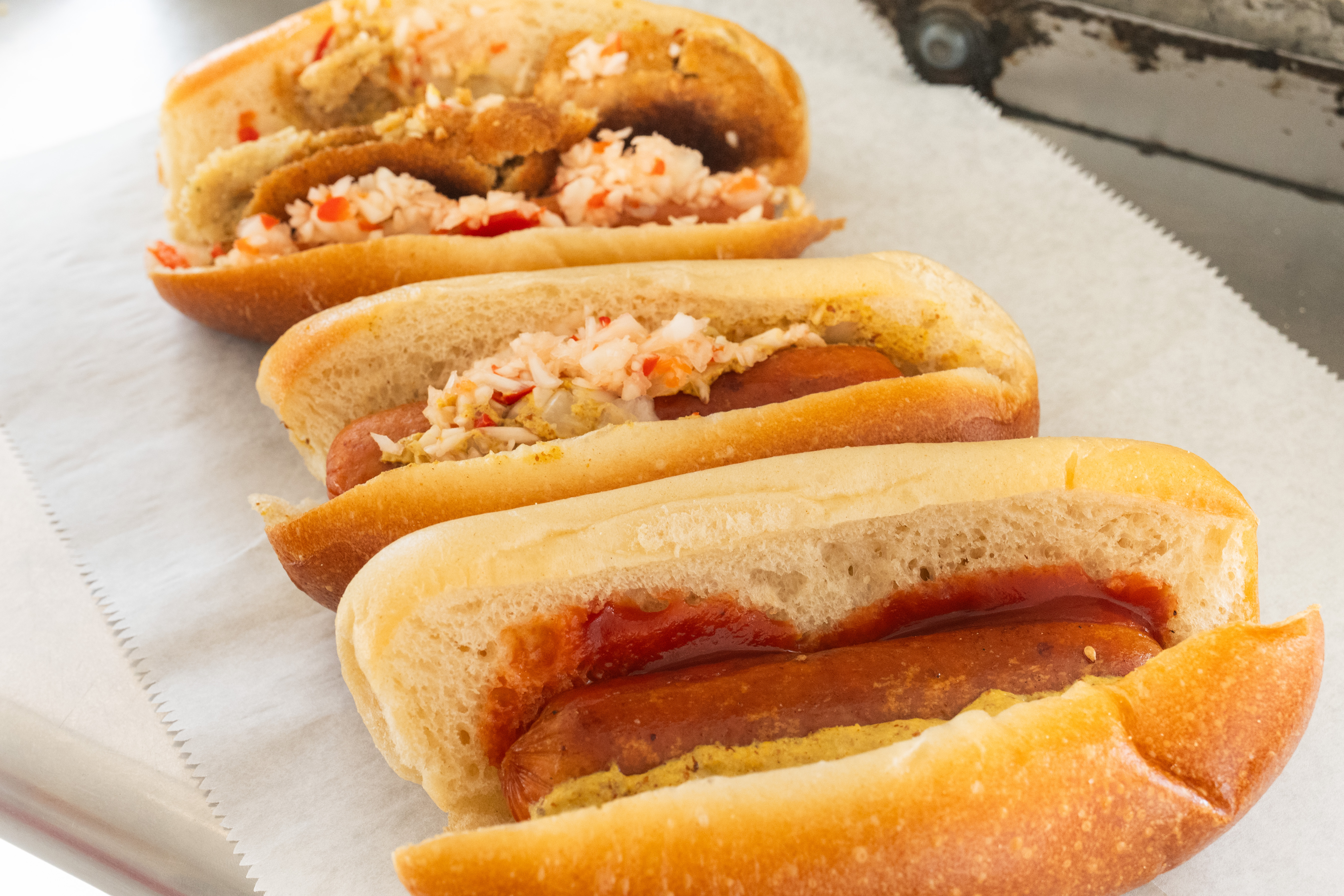
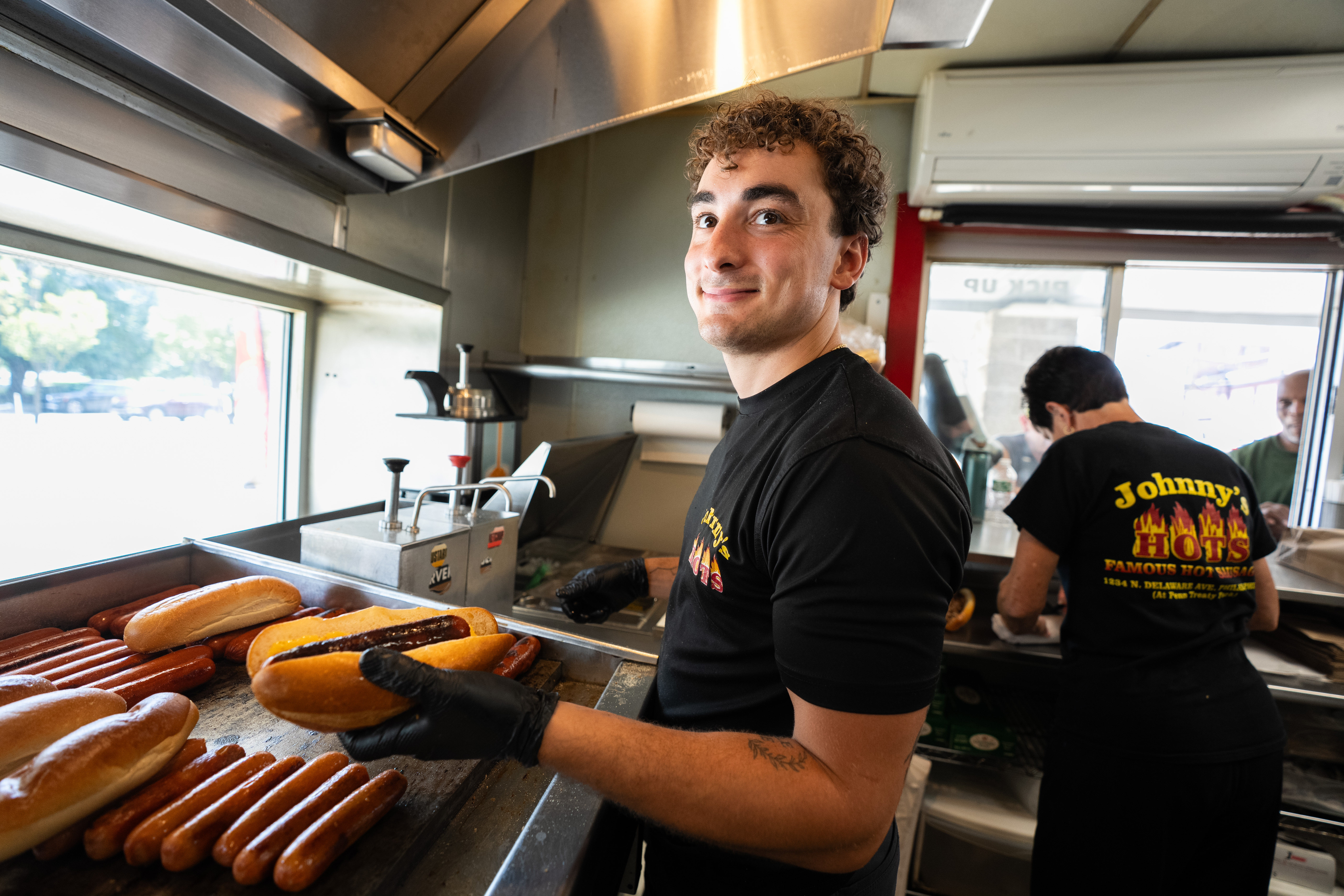
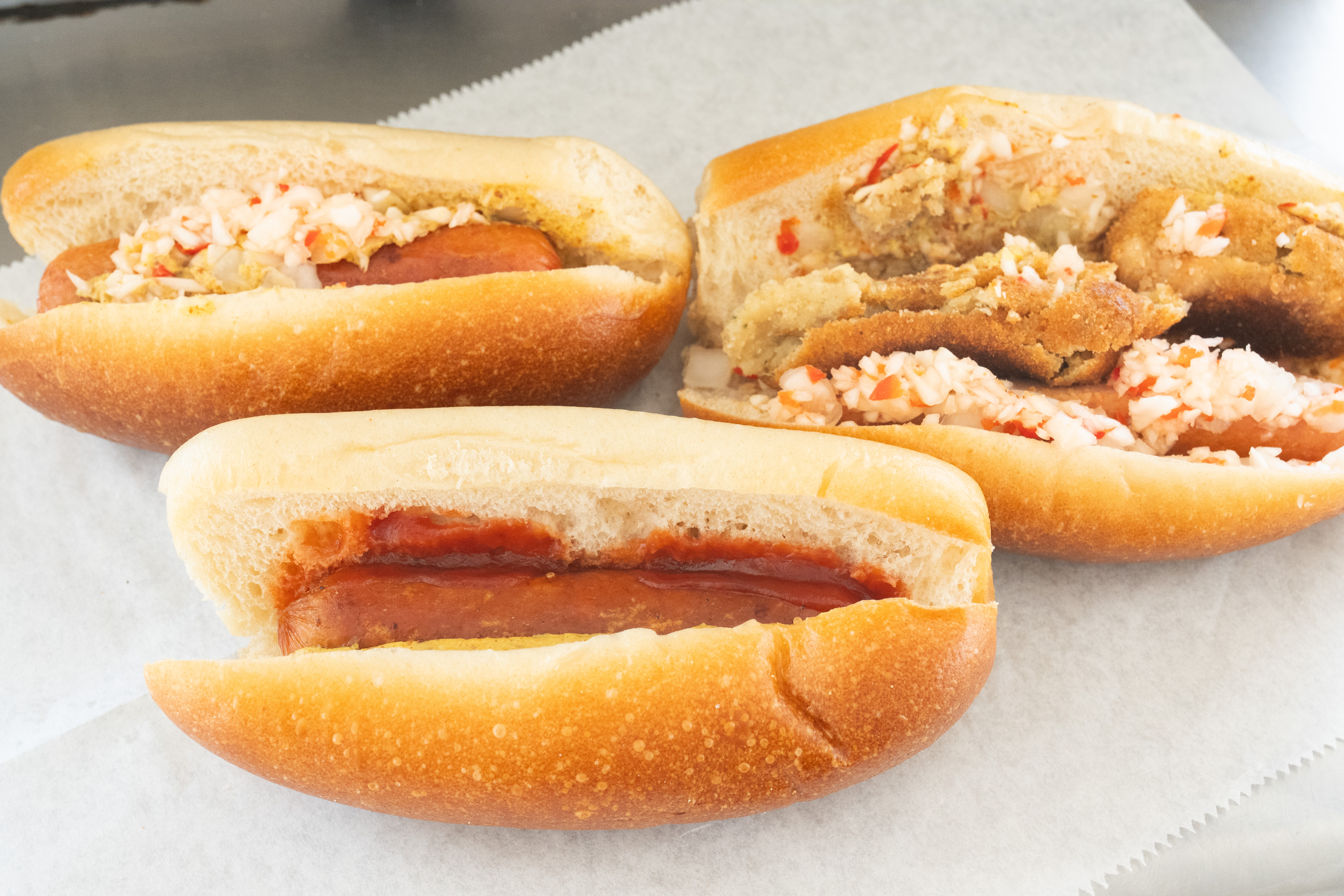
Standard hot dog with ketchup and mustard, hot dog with pepper hash, and hot dog with fish cake and pepper hash at Johnny’s Hots on Aug. 17.Jessica Griffin / Staff Photographer
Chris Barnes, owner of Lucky’s Last Chance: A hot dog is a hot dog! It’s unique and perfect and one of one. Anyone who says otherwise probably also likes ketchup on it.
Jen Zavala, owner of Juana Tamale: Yes, a finger sandwich.
Sandwiches are commonly considered a complete meal. One hot dog is a snack. You need two or three to make a meal.
Sandwiches are usually portable, packable. Something you can put in a Ziploc, bring for lunch, or save for later. This is not a pleasant or regular practice with hot dogs, they are designed to be eaten immediately.
Sandwiches are usually COLD, unless advertised as a “hot sandwich.” Hot dogs are almost NEVER served cold.
Hot dogs and sandwiches are best purchased from different sorts of vendors. You probably wouldn’t want a hoagie from your favorite Center City hot dog lunch cart; and you probably wouldn’t want a hot dog from your favorite Philadelphia deli (I’ve tried) — unless it was Famous 4th Street.
I’ve been painting and writing about hot dogs for almost 20 years. Poring over old articles, menus, going back to the early 1900s. Very rarely, or maybe even never, have I seen a hot dog historically referred to as a sandwich.
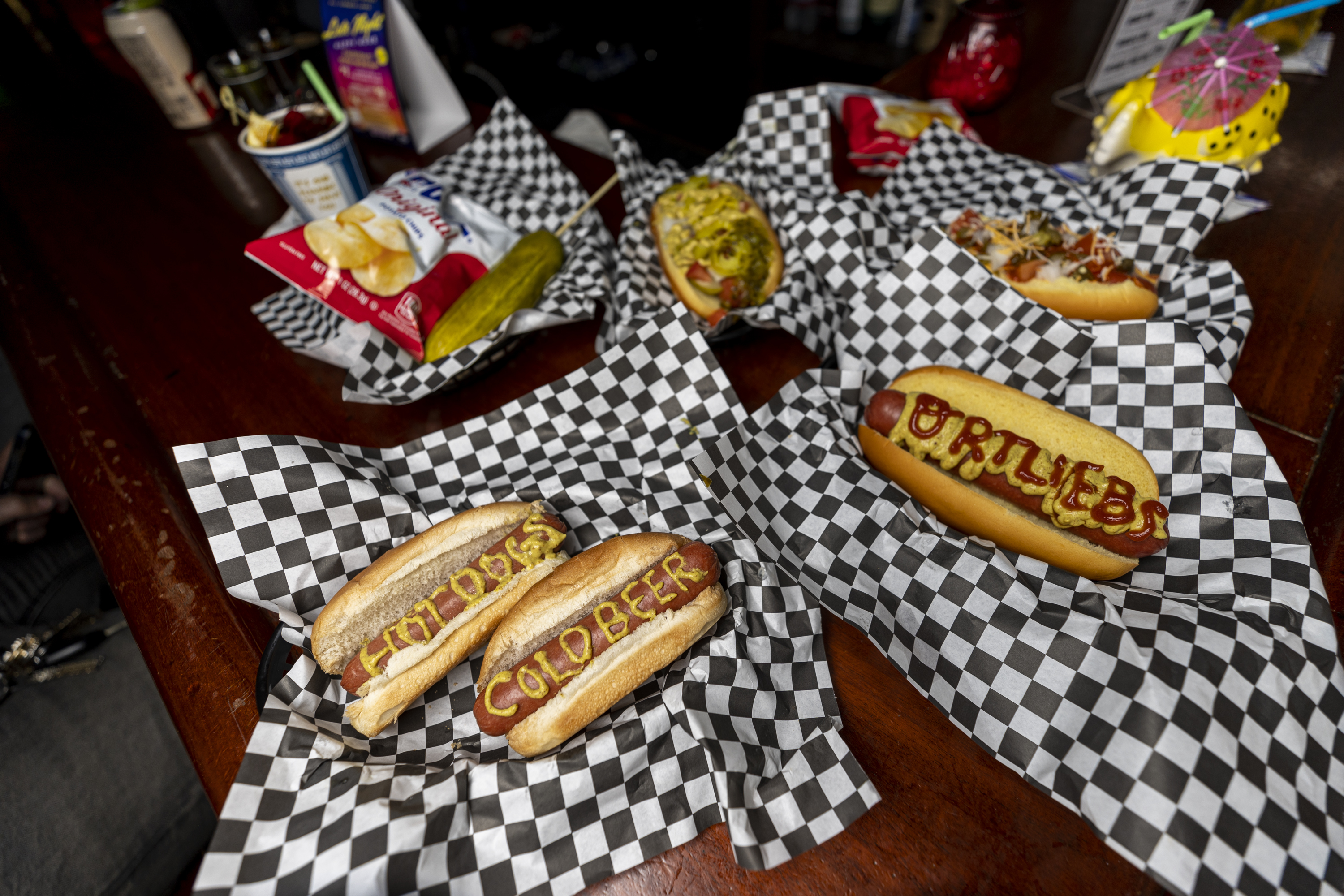
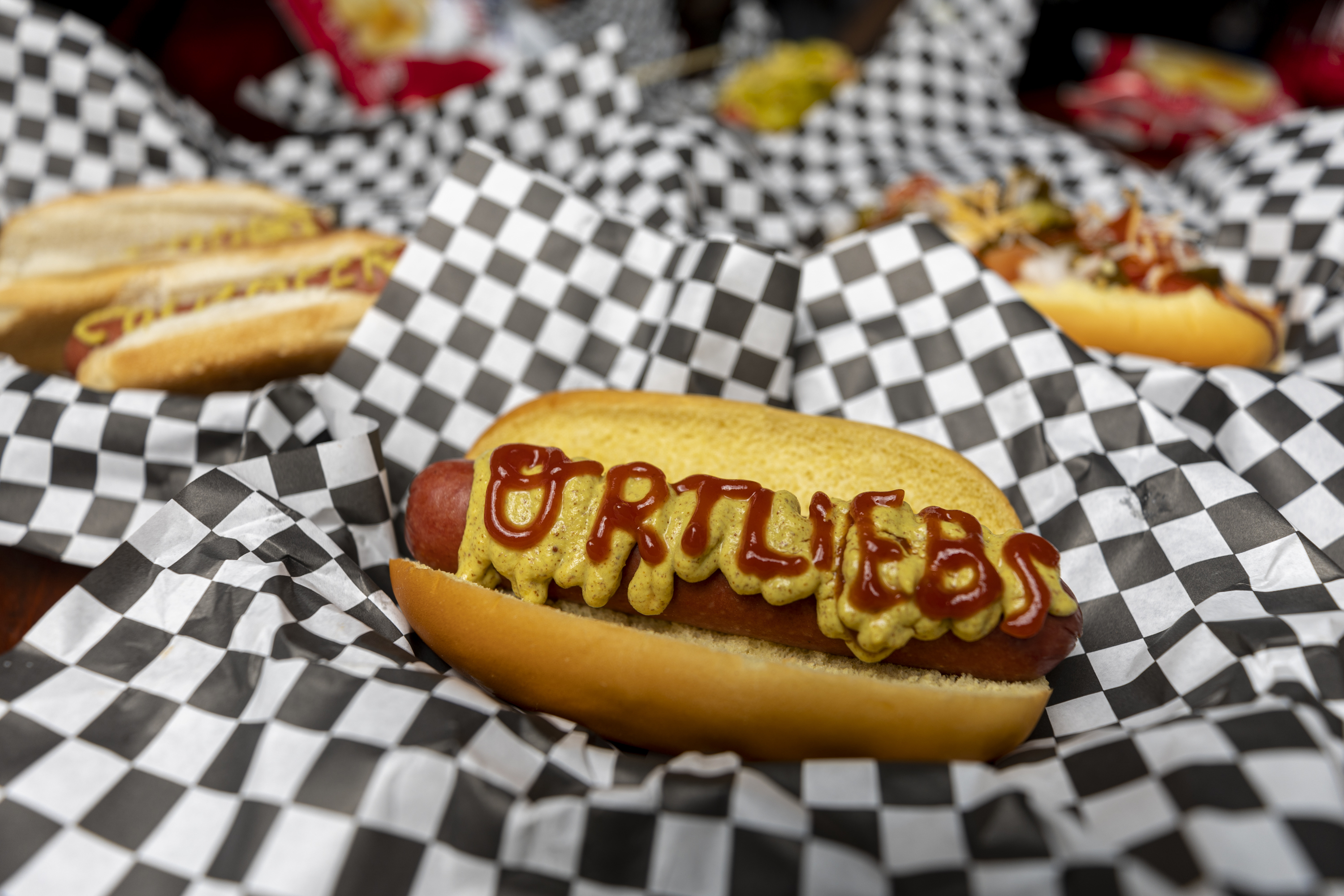
An assortment of classic hot dogs with mustard and ketchup writing at Ortlieb’s in Northern Liberties.Tyger Williams / Staff Photographer
Nic Macri, chef at Royal Tavern: Considering a hot dog is a hot dog without the bun, I am going to say no. I’ll tell you what is not a hot dog — a sausage in a hot dog roll!
Pierre Li Peters, aka @theehotdogsummer: A hot dog is not a sandwich because it’s an entirely different art form. A hot dog is a hot dog, even when it doesn’t look like the classic Nathan’s frank we all imagine. For example, a corn dog could be considered a part of the hot dog family but doesn’t really fit into the sandwich category … The beautiful thing about the hot dog community: It’s not limited in being classified as a sandwich; creativity flourishes due to unique characteristics shaped by the regions that enjoy them.
Lauren Eni Canseco, Dietz & Watson VP: A hot dog CAN be a sandwich, but it can also be an ingredient, an entree, or a snack! If it’s a high-quality, high-protein dog, the possibilities are endless.
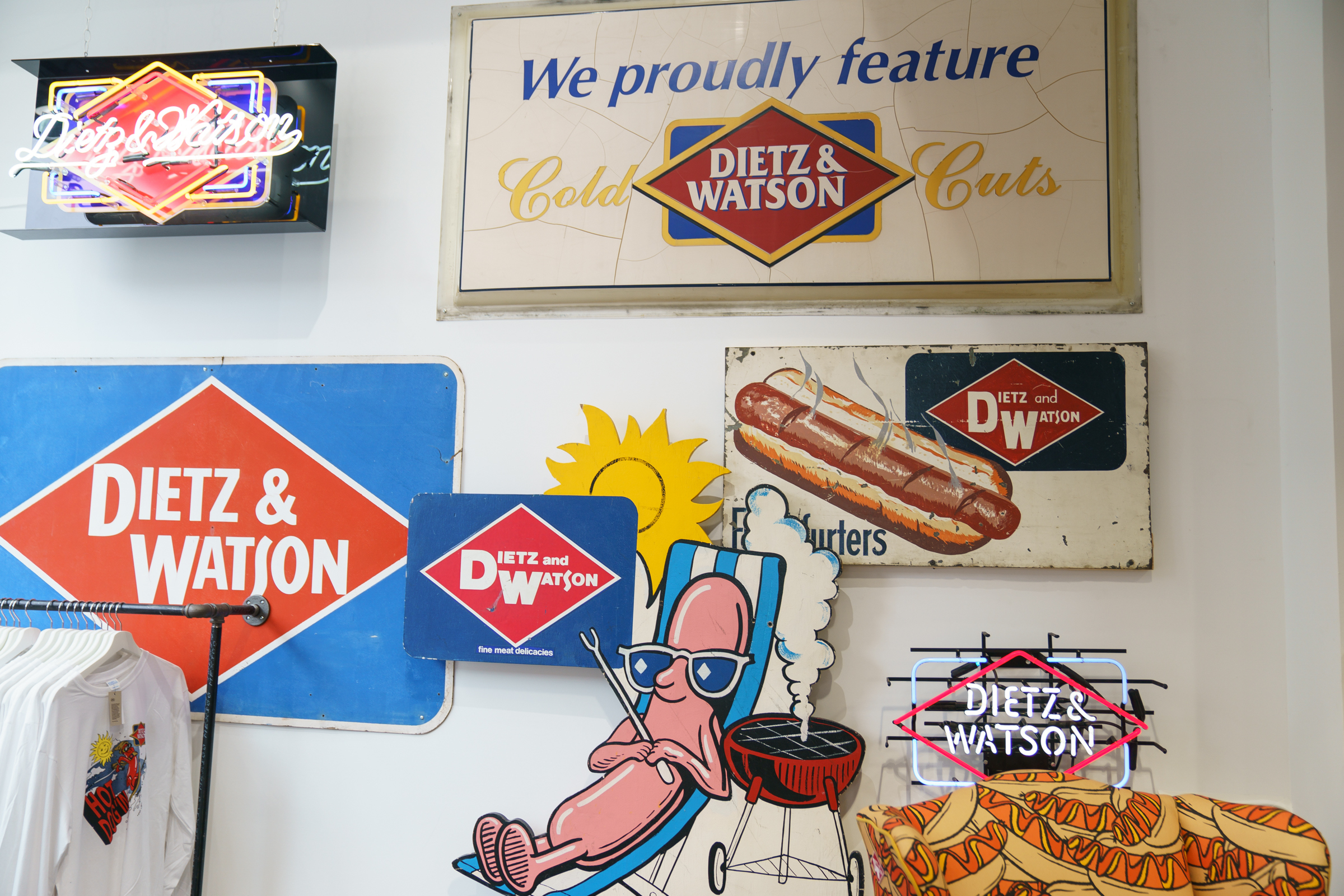
Retro wall decor at Dietz & Watson pop-up store at Fifth and South Streets in 2019.JESSICA GRIFFIN / Staff Photographer
Emilie Dormer, aka @glizzygirliez: In my heart, I don’t consider a hot dog a sandwich. A hot dog feels like its own category entirely. There’s something culturally distinct about it that gets lost when you simply call it a sandwich. That said, if you forced me to place it into one of the traditional food categories, I’d have to admit that yes, structurally, I guess that it probably qualifies as a sandwich. Bread, filling, handheld … the evidence is unfortunately there.
Ralph Stollenwerk, artist and hot dog illustrator: I think a hot dog is as much of a sandwich as a hoagie. Nobody officially calls it a “hoagie sandwich,” [just] as nobody calls it a “hot dog sandwich,” but it is meat held between bread. I’m calling it a sandwich, but I would NEVER call it a sandwich in public.
As for me, I pretty much agree with Stollenwerk. You can quibble with my headline, but the substance of the argument is undeniable: The hot dog is the sandwich of the summer, even if the “sandwich” is silent.
Summer may be nearing its end, but hot dogs aren’t going anywhere. Philly is deep in the throes of a hot dog era. Our inveterate cheesesteak-and-hoagie city hasbeen throughthem before, but what sets apart the current boom is that it’s not so much about standalone hot dog joints. Instead, dogs have nosed their way onto many menus where they once might have been out of place.
That’s a double-edged sword: Hot dog purists may want to avert their eyes. This list, which is focused on Philly proper, has some natural-casing-centric sweet spots for them, but we’ve also included spots that are bucking strict hot dog norms with croissant buns, bonito flakes, carrot salad, and pineapple salsa. Some even deploy the most divisive condiment of all: ketchup. — Jenn Ladd
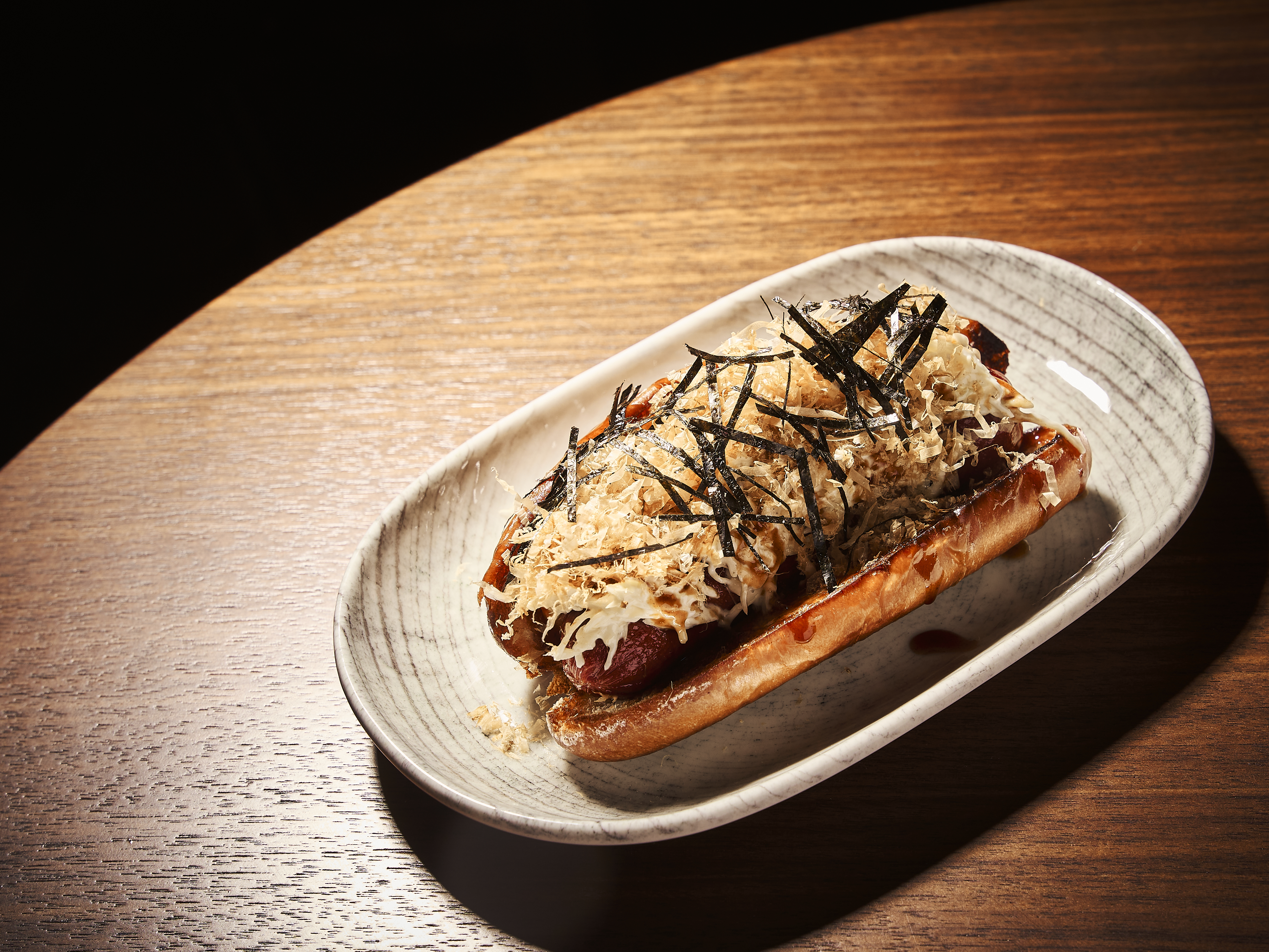
The Wagyu hot dog at Almanac in Old City, topped with tonkatsu sauce, Japanese slaw, bonito flakes, and nori.Stephen Recchia
Almanac
There’s something delightfully incongruous about pairing Almanac’s hot dog with one or two of its painstakingly crafted cocktails, often made from foraged ingredients and house-fermented elixirs. As bar snacks go, the Wagyu hot dog is a bit of an indulgence, but it hits all the notes of salty, fatty, sweet, and umami — the hallmarks of snacks you’d get at a konbini, or Japanese convenience store. The juicy sausage is tucked into a run-of-the-mill yet perfect split-top bun and topped with house-made tonkatsu sauce, a crunchy cabbage slaw, strips of nori, and bonito flakes. It’s a feat of layered textures and contrasting flavors, just as one would expect from one of Philly’s finest omakase chefs. — Kiki Aranita
Almanac, 310 Market St., Second Floor, 215-238-5757, almanacphilly.com
Texas Tommy from A.P.J. Texas Weiner (47 N. 13th St.)Craig LaBan
A.P.J. Texas Weiner
Time has largely forgotten A.P.J. Texas Weiner, a no-frills, old-school luncheonette squished between a bail bondsman’s office and an omakase restaurant on 13th Street just off Filbert, across from the Criminal Justice Center. Greek immigrants Andrew Kanakis, Paul Vasiliades, and John Halkedis opened the joint a century ago, joining an early-20th-century rush of so-called Texas wiener (as it’s usually spelled) joints around town. The “Texas” in a Texas wiener refers to the thin, mild chili perfumed by cinnamon and allspice that the cook spoons onto the grilled, split 5-to-a-pound beef hot dog before adding yellow mustard and chopped onions. In sum: the best $3 snack in Center City. You can dine in, though it’s primarily call-ahead (no apps!) or grab-and-go (from the sweetest counter woman, who won’t skimp on the napkins). — Michael Klein
47 N. 13th St., 215-665-8081
Café Tinto Fishtown
Café Tinto’s hot dogs are only available from 3 to 6 p.m. on weekdays at its buzzy new Fishtown location. The scarcity only adds to the mystique of chef Daniela Garcia’s Colombian-style beef hot dogs, which are all about perfecting the golden ratio of sweet, spicy, and crunchy. Served in soft, buttery house-baked rolls, Café Tinto’s happy hour dogs come topped with Garcia’stangy pineapple salsa and a layer of crushed classic Lays potato chips. There’s something deeply satisfying and oddly nostalgic about the crunch, which reminds me of when I’d stuff Doritos inside my salami sandwich on white bread in elementary school. Chips really do make everything better. — Beatrice Forman
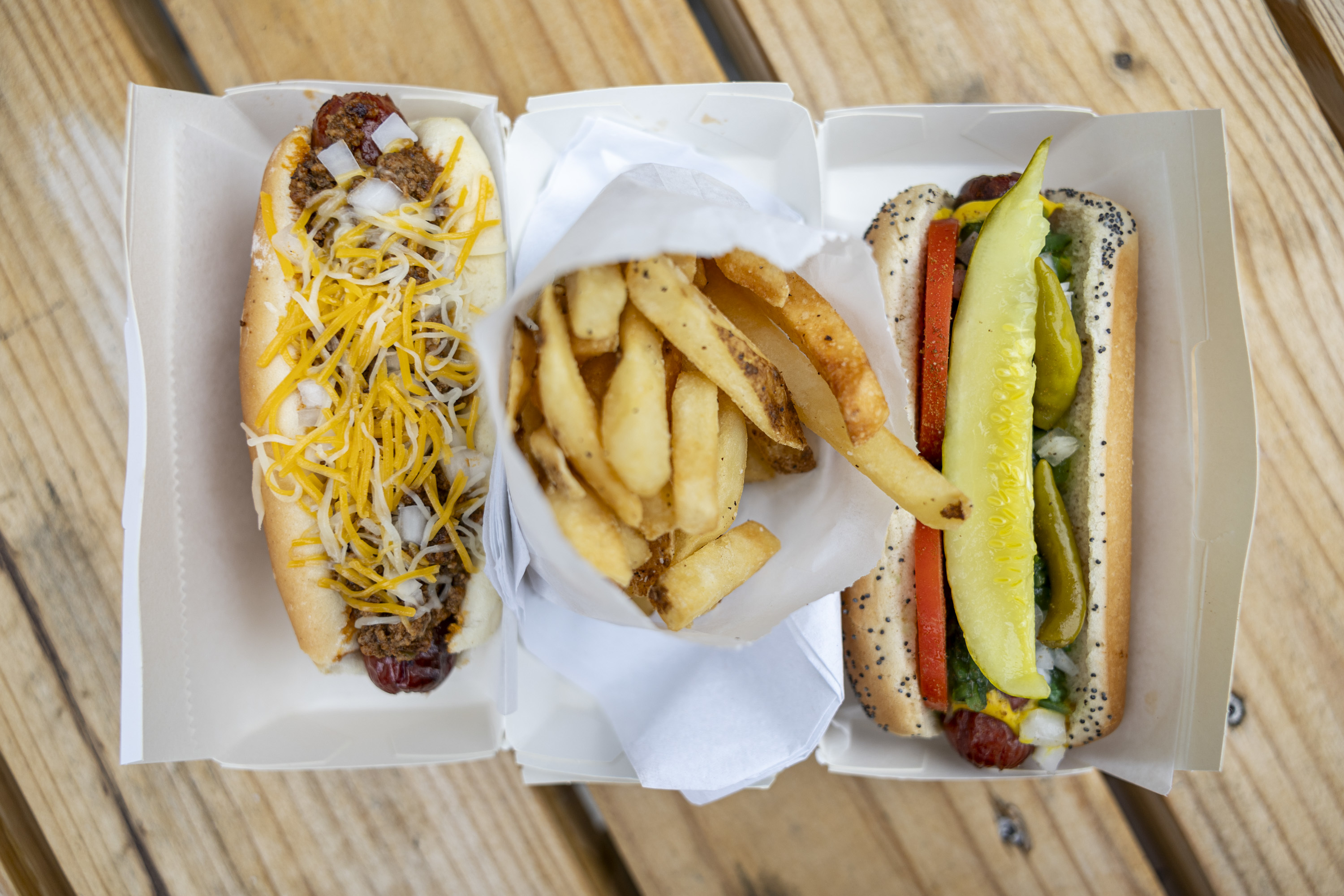
A Chili Cheese Dog and a Chicago Dog with a side of fries from Bad Nina’s grand opening outside Attic Brewing in Philadelphia on Wednesday, July 16, 2025.Tyger Williams / Staff Photographer
Bad Nina’s
In 2025, Attic Brewing owner and Chicago native Laura Lacy decided to capitalize on one of the most intuitive food pairings there is: beer and hot dogs. Lacy and her husband/co-owner, Todd, decked out a vibrant yellow-and-teal food truck that operates noon to dinnertime Friday through Sunday, serving up at least 12 dog variations, including a jalapeño popper dog, a cheeseburger dog, and a classic Chicago-style dog (mustard, relish, chopped white onion, sliced tomatoes, a dill pickle spear, celery salt, and pickled peppers). Bad Nina’s go-tos are Vienna Beef brand hot dogs and Cacia’s Bakery rolls, but there are also Impossible vegan dogs and gluten-free buns (and bratwurst if you’re dogged out). — Jenn Ladd
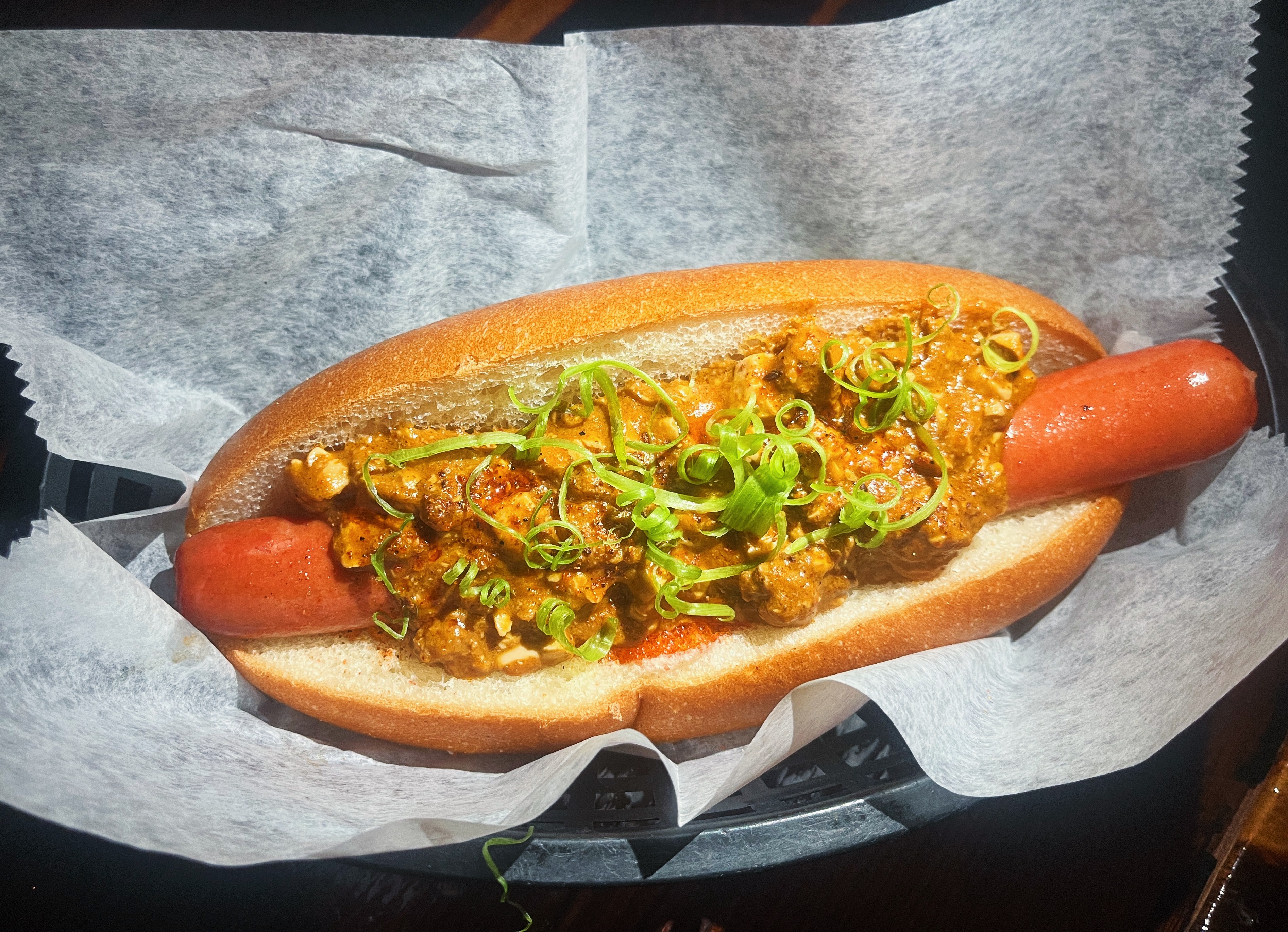
What’s more rock ’n‘ roll than a dive bar hot dog? A dive bar chili dog. Doom technically isn’t a dive, but it is a heavy metal bar with a just-messy-enough hot dog that some dare to call the best in Philly. Doom’s dog starts with a deep-fried, ripper-style beef frank in a split-top bun. Then, it gets topped with a tofu-and-pork Bolognese inspired by mapo tofu, the spicy Sichuan classic. Doom’s version is milder and smokier, transforming the sandwich into something akin to a sloppy joe with a touch of class. Not a drop of chili is to be wasted. We recommend scooping up the inevitable spillage with a side of fries. — B.F.
The mapo chili dog from Doom, a heavy metal bar at 421 N. Seventh St., is inspired by the popular Sichuan dish.Beatrice Forman / Staff
Famous 4th Street Delicatessen
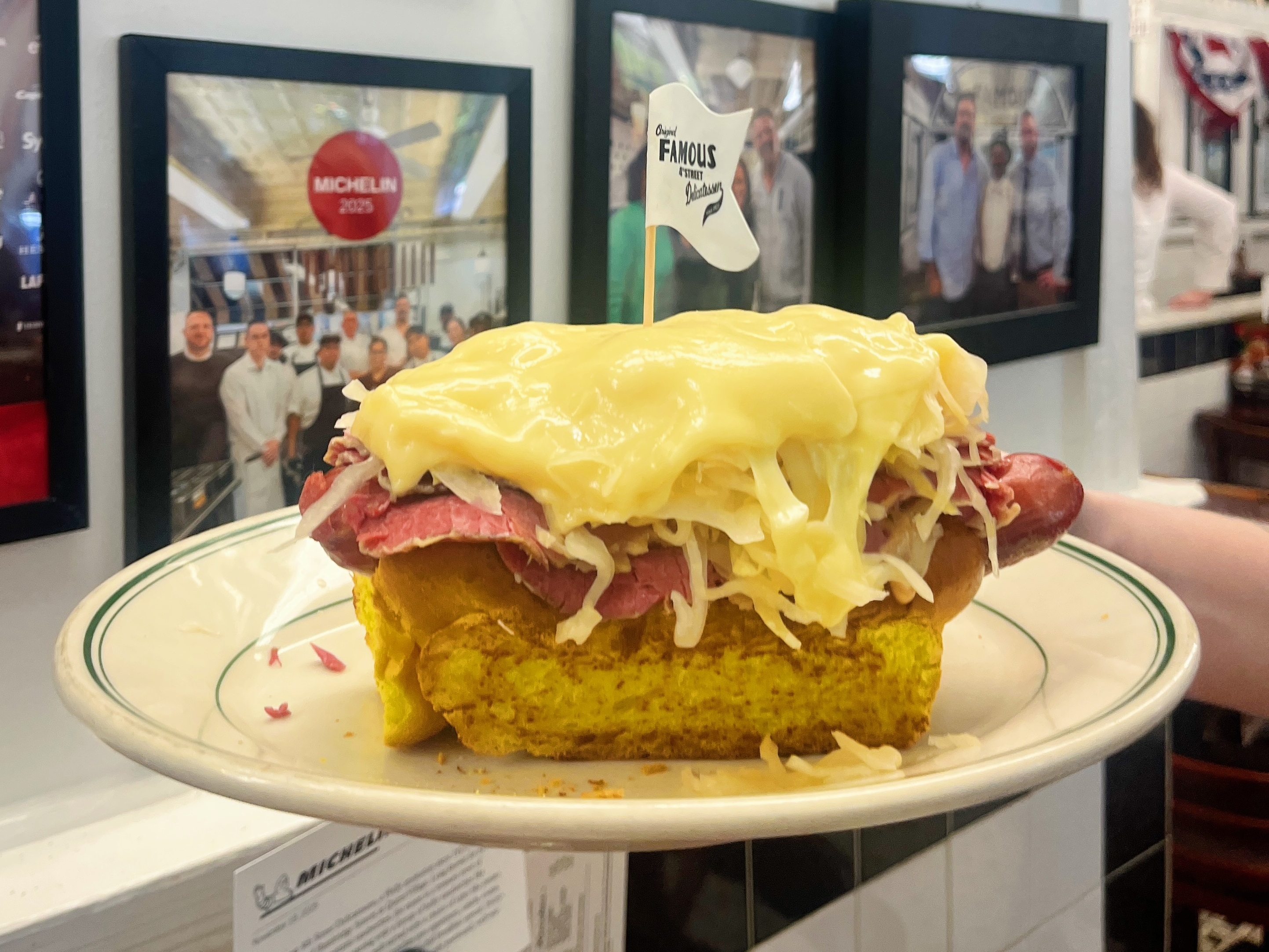
Famous 4th Street’s hot dogs are just how deli magnate Russ Cowan left them when he sold the joint in 2024 to Connecticut-based restaurateur Al Gamble: big and beefy. The Queen Villageinstitution still uses all-beef sausages for its traditional hot dogs and oversized pigs-in-a-blanket, and it still makes its challah buns in house. The only difference? The buns are now buttered and lightly toasted to mimic a Connecticut-style lobster roll, a change that Gamble said “tastes like childhood.” The deli’s classic hot dog is its bestseller, but the true showstopper is the hulking Reuben dog, which piles thin-cut pastrami, hot sauerkraut, and Russian dressing atop a 7-inch frankfurter. It’s just as filling as the sandwich it’s based on — and nearly half the price. — B.F.
The Reuben Dog at Famous 4th Street Delicatessen, 700 S. Fourth St.Beatrice Forman / Staff
Fox & Son
Reading Terminal Market has a certain “state fair” feel anyway, but a stop at this stand will make your day seem even more festive. Rebecca Foxman’s signature, crunchy hand-dipped corn dogs are made with corn batter, a boon to those who are sensitive to gluten. Choose pork-and-beef, all-beef, turkey, spicy pork, or a Beyond veggie dog, then stick with the classic or go fancy. Variations include chili-cheese-scallion, cheddar-jalapeño, and sweet-potato batter with chorizo and cilantro-lime sour cream. For a more lavish version, choose the Korean-style dog with mozzarella, sugar, ketchup, and mustard. — Michael Klein
Standard hot dog with ketchup and mustard front, hot dog with pepper hash back, and hot dog with fish cake and pepper hash at Johnny’s Hots, in Philadelphia, Aug. 17, 2026.Jessica Griffin / Staff Photographer
Johnny’s Hots
At 5:45 every weekday morning (and at 7:15 on Saturday), the window rolls up at this cash-only stand across from Penn Treaty Park. Ride-share drivers, truckers, and other hungry early birds start pulling up for grilled hot dogs and especially that old-time Philly combo of hot dogs and fish cakes, on soft buns. Johnny’s traces its roots to the 1950s, when Nunzio “John” Danze started serving waterfront workers from a lunch truck. The business later operated from a pier-side shack before moving to its current location on Delaware Avenue. The power move is the namesake spicy sausage, though the menu includes breakfast sandwiches as well as roast pork and cheesesteaks. — Michael Klein
The standard hot dog with ketchup and mustard, hot dog with pepper hash, and hot dog with fish cake and pepper hash at Johnny’s Hots on Aug. 17.Jessica Griffin / Staff Photographer
Juana Tamale
The only thing better than one hot dog is two hot dogs. Juana Tamale’s Jen Zavala serves her Sonoran-style hot dogs in pairs for $8, and prepares them just like they do in Northwest Mexico, where the street food originated before becoming Arizona’s glizzy of choice. A Sonoran dog comes wrapped in bacon and topped with refried pinto beans, Hatch chiles, red and green salsas, mustard, and mayo. Zavala’s one departure from a traditional Sonoran: She uses Amoroso’s Italian rolls instead of fluffy bolillo bread. The two have nearly the same texture, she said, and the Amoroso’s roll adds a touch of Philadelphia to a hot dog steeped in Southwestern spice. The Sonoran dog’s excess was a hard sell at first in Philly, Zavala said, but now, her East Passyunk Avenue Mexican restaurant sells between 200 and 300 a week. The more-is-more approach hits just right for those of us who view the hot dog as a prime vessel for toppings. — B.F.
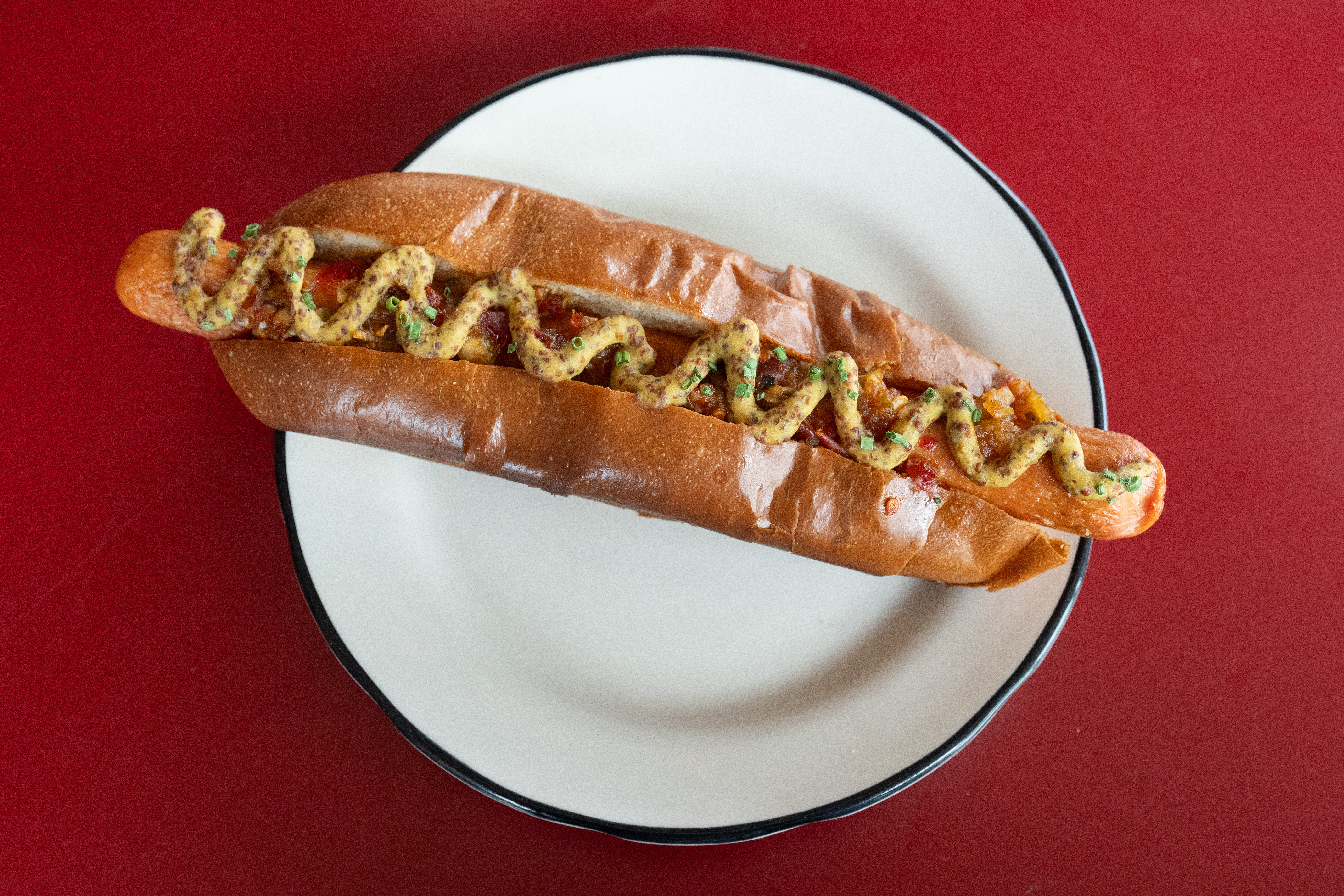
Size matters at Columbus Boulevard’s newest waterfront tavern. Lucky Duck co-chef Sanil Shah claims the bar’s 10-inch wiener is likely the largest you can find in Philly — it pokes comically out the ends of its 6-inch Baker Street Bread roll. The tavern uses a smoky beef-and-pork blend from Reading-based Berks Packing Co. that has an audible snap with every bite. The toppings are simple — just brown mustard and a house-made hot honey-pepper relish that Shahsaid is loosely inspired by the packets of duck sauce that come with Chinese takeout. Bonus: Lucky Duck’s dogs are available until 1 a.m. on Fridays and Saturdays, just in case a late-night glizzy craving hits. — B.F.
501 N. Christopher Columbus Blvd., Suite 2003, 215-964-9345, luckyduckphl.com
A hot dog at Lucky Duck, Aug. 17.Jessica Griffin / Staff Photographer
Lucky’s Last Chance
When Chris Barnes added hot dogs to the Lucky’s Last Chance burger-centric menu six months after it opened its first location in Manayunk in 2011, he hoped to sell “maybe 50 hot dogs a week.” Now, Barnes estimates the shop goes through between 5,000 and 6,000 franks weekly across its four locations, in Queen Village, Manayunk, East Falls, and Ambler. At Lucky’s, Deitz and Watson franks (or Light Life veggie dogs) are the base for 12 variations that push the limits of the “is a hot dog a sandwich” debate. Take the Voodoo, layered with shredded chicken, American cheese, and onion strings. Feels like a sandwich to me. The bacon bits and BBQ sauce-topped Deadwood? A very meaty hot dog. The 1Up, with sautéed mushrooms, provolone, and garlic aioli, is somehow a secret third thing — a hot dog crossed with a French dip. Rich and warm, it resonates even in winter. — B.F.
848 S. Second St., 267-519-2080; 4421 Main St., 215-509-6005; 5154 Ridge Ave., 216-842-5836; 15 S. Ridge Ave., Ambler, 215-367-5881; luckyslastchance.com
Lucky’s Last Chance uses Dietz & Watson dogs and New England-style split-top rolls.Marisa DiSalvatore
Miller’s Twist
Lines often wrap around the edges of this legendary Reading Terminal Market vendor, whose tawny, traditionally knotted Amish-style pretzels are irresistible in their own right. So what’s not to love about that same supple, salt-studded dough wrapped around a hot dog, then baked to juicy perfection? Costco customers will be particularly enthused: The Miller family uses Kirkland brand for their regular and jumbo dogs. (Dietz & Watson supplies their spicy beef and jalapeño dogs.) Buy one with or without cheese, and be sure to spring for a dipping sauce, especially the hot-sweet mustard made by the owner’s Lancaster-based in-laws. (Note that Miller’s does not make Philly soft pretzels; for better or worse, ours are not buttery. If you want a hot dog wrapped in Philly pretzel dough, head to one of three Bernie’s Pretzels in Delco.) — J.L.
Chef Chance Anies’ Filipino riff on Outback Steakhouse is a great place to go for happy hour, and particularly welcoming to kids. One of the draws is the Jollidog: an all-beef dog with mayonnaise mixed with bangus (umami-rich tinned milkfish), sandwiched in a soft bun, and topped with atchara, or pickled green papaya. It’s a perfect snack with a glass of wine, or a great meal for a toddler. Mine ate it up and clamored for another, which we happily ordered. The hot dog is on the regular menu, too, and comes with fries for only a few bucks more at happy hour. — Margaret Eby
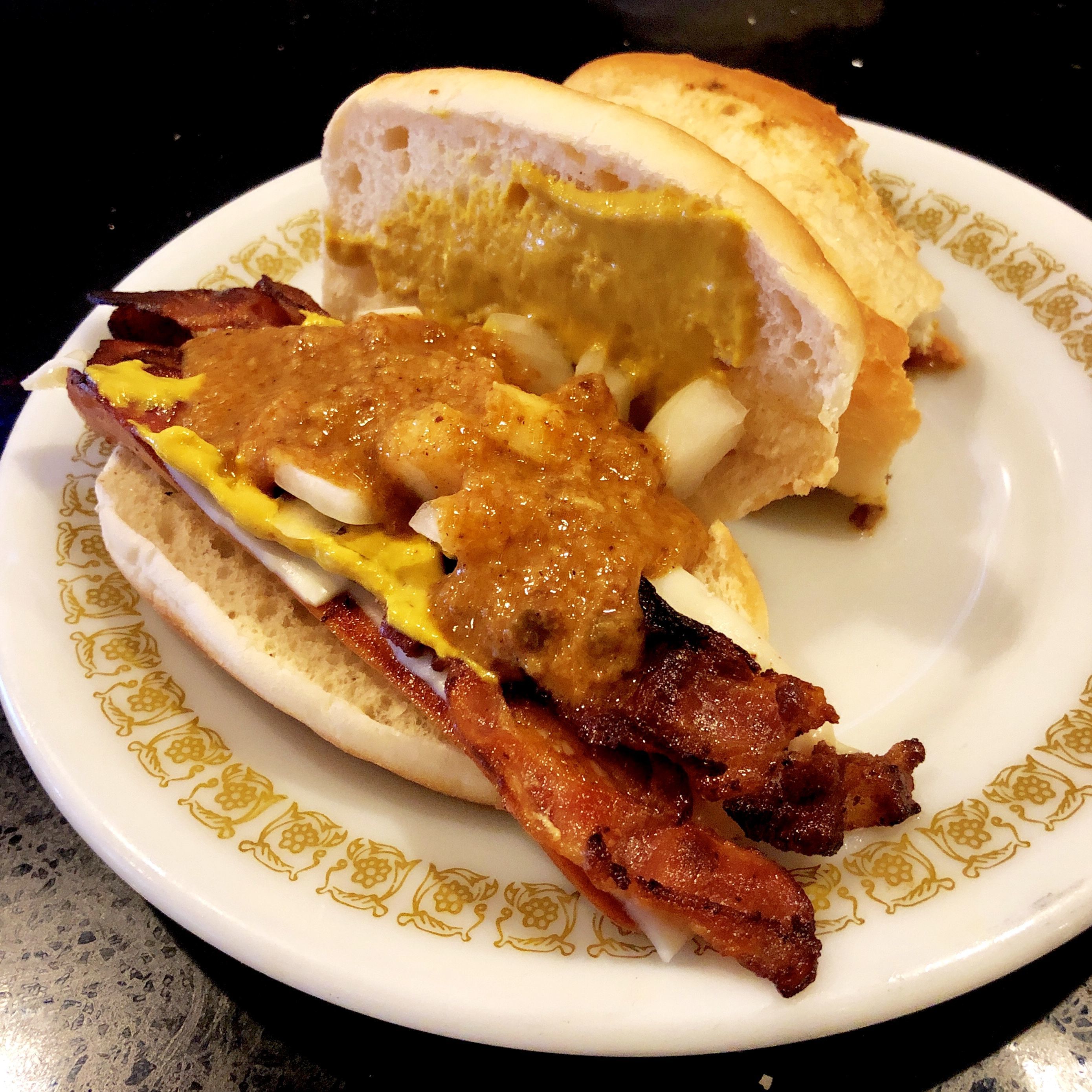
When we kids were extra-good and my mom was feeling extra-rich, my mom would buy bacon and American cheese for our usual hot dog nights. She’d pull out the stovetop griddle, split the dogs, wrap them in bacon, and make us each a Texas Tommy — draping a thin slice of American cheese over everything to melt on contact. For me, the smoky, crispy Tommy at the Nifty Fifty’s chain is the perfect throwback to ’60s indulgence, even if the cheese of choice for the pork-and-beef dogs here is Whiz. Get yours topped with chili and eat it with a knife and fork, and don’t forget to use your napkin, as the old luncheonette lady would have reminded you. — M.K.
2491 Grant Ave., 215-676-1950; 2700 S. 10th St., 267-719-1950; 2431 Aramingo Ave., 267-771-1950; 1140 Old York Rd., Abington, 267-833-1950; 503 S. Oxford Valley Rd., Fairless Hills, 267-571-1950; 1900 MacDade Blvd., Folsom, 610-583-1950; 3524 West Chester Pike, Newtown Square, 484-992-1950; 684 York Road, Warminster, 267-802-1950; 1365 Marrows Rd, Newark, Del., 302-742-1950; 4670 Route 42, Turnersville, 856-875-1950; niftyfiftys.com
A classic hot dog with Ortlieb’s written on it with mustard and ketchup, in Philadelphia on July 20, 2024.Tyger Williams / Staff PhotographerAn assortment of classic hot dogs with mustard and ketchup writing, Ortileb’s taco dog, a Chicago dog, and a pickle on a stick, at Ortlieb’s on July 20, 2024.Tyger Williams / Staff Photographer
Ortlieb’s
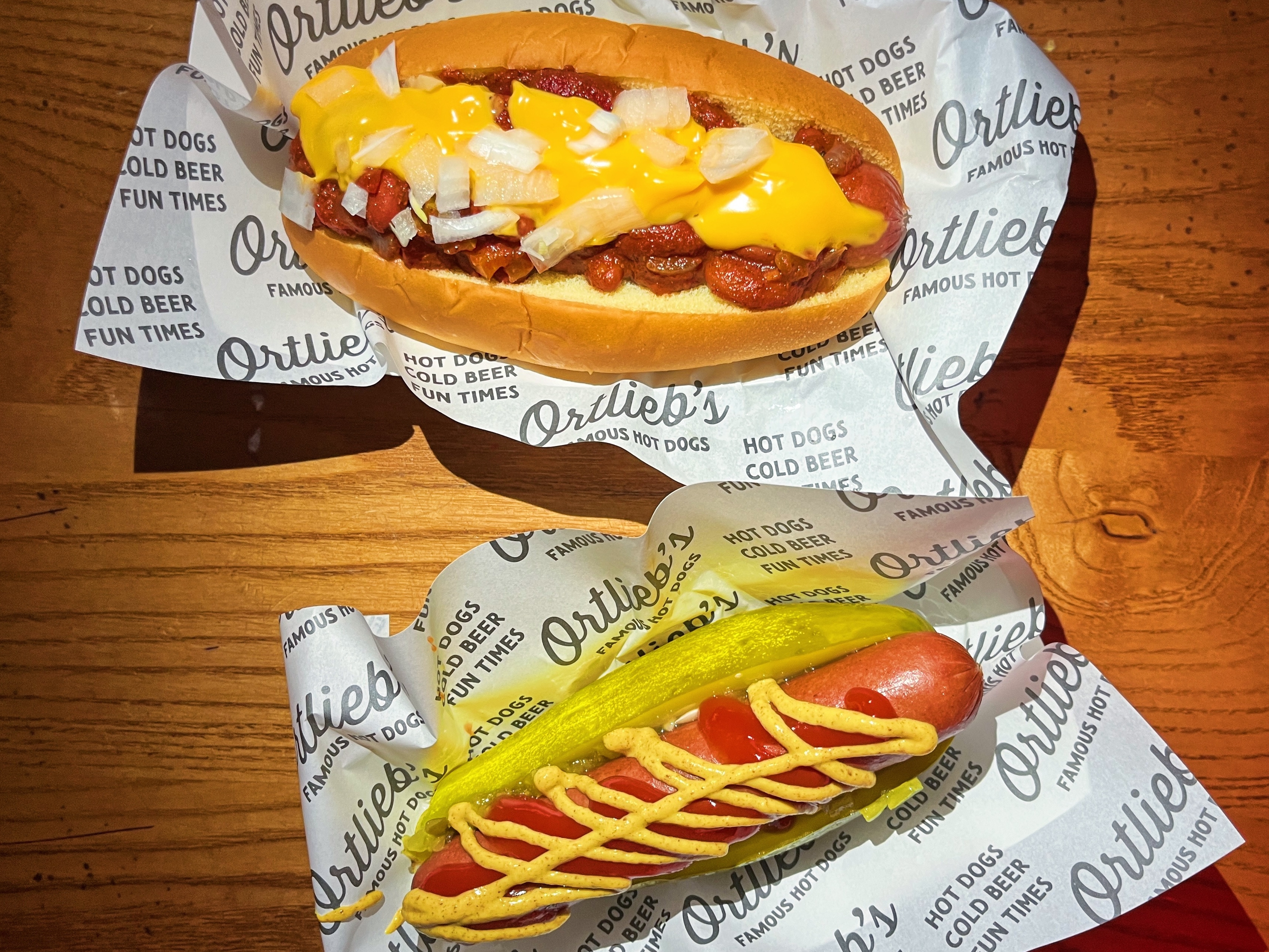
When Kyle Costill dedicated his Northern Liberties bar to the humble hot dog in 2024, “people were laughing at us,” Costill said. “Now, it’s like everybody is doing them.” Since then, Ortlieb’s has built a tiny empire out of no-frills dogs. Costill estimates the bar has sold 30,000 in the past two years thanks to a partnership with music venue Union Transfer and Port Richmond’s Green Rock Tavern, which sells Ortlieb’s-branded steamers behind the bar. The secret to their success is the wiener, a maple wood-smoked beef frank from Nevada-based brand Snap-o-Razzo, whose natural casing is so taut, the dog pops with each bite. (That feeling has inspired Costill to work on a proprietary Ortlieb’s dog that he intends to launch by the end of 2027.) Ortlieb’s has something for everyone: You can swap out a Snap-o-Razzos for a veggie dog, or top either with a vegan three-bean chili, courtesy of chef Alan Lichtestein of Haddonfield’s Little Hen. And pickle lovers will find a new obsession in the bar’s pickle dog, a hot dog cradled in an oddly sturdy half-sour spear. — B.F.
The chili cheese dog (top) and pickle dog (bottom) at Ortlieb’s in Northern Liberties are offered in both meat and vegan versions.Beatrice Forman / Staff
Perfect Together Restaurant & Cafe
Dilbar Nurivinova, the chef at this Bella Vista halal restaurant, grew up eating Uzbek super hot dogs at street food stands across her native Bukhara. So after nearly two decades living abroad, she was eager to recreate this overloaded wiener tribute to home at Perfect Together, the restaurant she opened last year on South Street with a menu that features foods from Uzbekistan and the Czech Republic, her previous place of residence. Nurivinova’s super dog begins with a smoky pink halal beef hot dog, then is piled high with so many fixings — garlicky shredded carrots, tangy beet salad, rice noodles, a hard-boiled egg, Nurivinova’s special sauce (a ketchup zingy with cumin and paprika), and copious gobs of mayo — that it is essentially an entire Uzbek picnic on a bun. Perhaps even better is the kofta variation she makes with a well-spiced kabob of minced beef. There are several other intriguing variations to be found in Uzbek Northeast Philly. — Craig LaBan
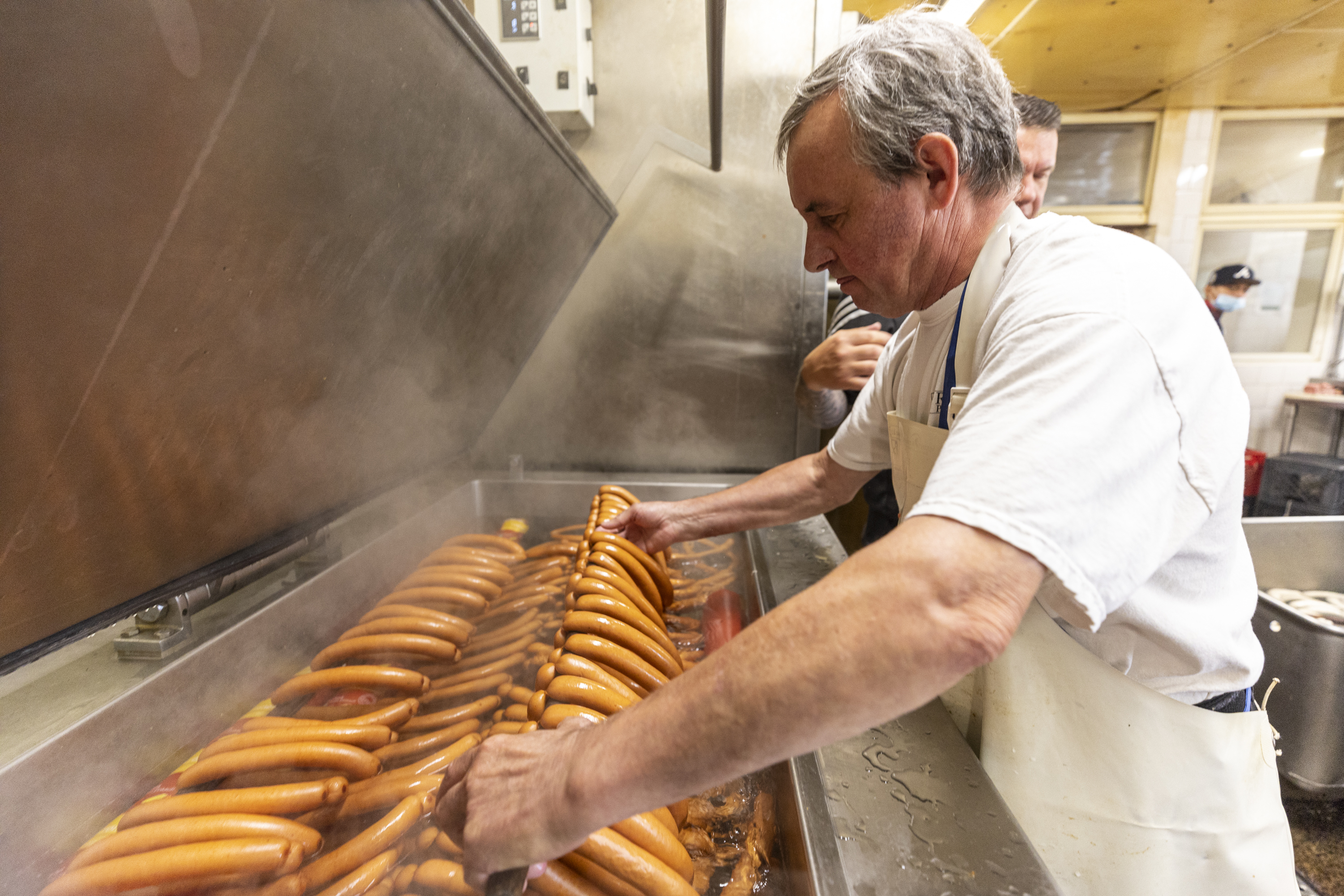
Don’t go to this 54-year-old Fox Chase institution expecting to walk out with a griddled hot dog on a bun. Rieker’s is a market — “German-food wonderland” is probably more accurate — and, particularly, a sausage specialist. The traditional wieners here are handmade in the back, where the staff grinds bull meatwith a blend of beef trimmings, pork butt, granulated onion, paprika, and garlic powder, then makes long links that go into the smokehouse for a hickory-scented steam. You can buy the skinny, snappy wieners by the pound, along with well over a dozen other sausage varieties, plus German potato salad, dried egg noodles, and much more. — J.L.
Alex Naumenko, a sausage maker, pulls wieners from a water bath at Rieker’s Meats in Philadelphia, on July 16, 2024.Tyger Williams / Staff Photographer
Second Daughter
Is there an ordinary treat that Rhonda Saltzman can’t transform into a work of art? The creative genius behind Second Daughter bakes all-beef Nathan’s dogs in ultra-flaky, sesame-seeded croissant shells that give faint crunch to each savory bite. The Second Daughter crew tops the dogs with ketchup and spicy brown mustard squiggles and house-made pickle chips for tangy contrast. The only drawback: The dogs are so popular at both the fourth-floor Bok Building bakery and its Rittenhouse Farmers’ Market stand, they’ve been selling out around noon. On the bright side, Saltzman says they’re not going anywhere, even after summer ends. (Look out for specials like a sloppy joe dog and a baked bean-topped dog.) — J.L.
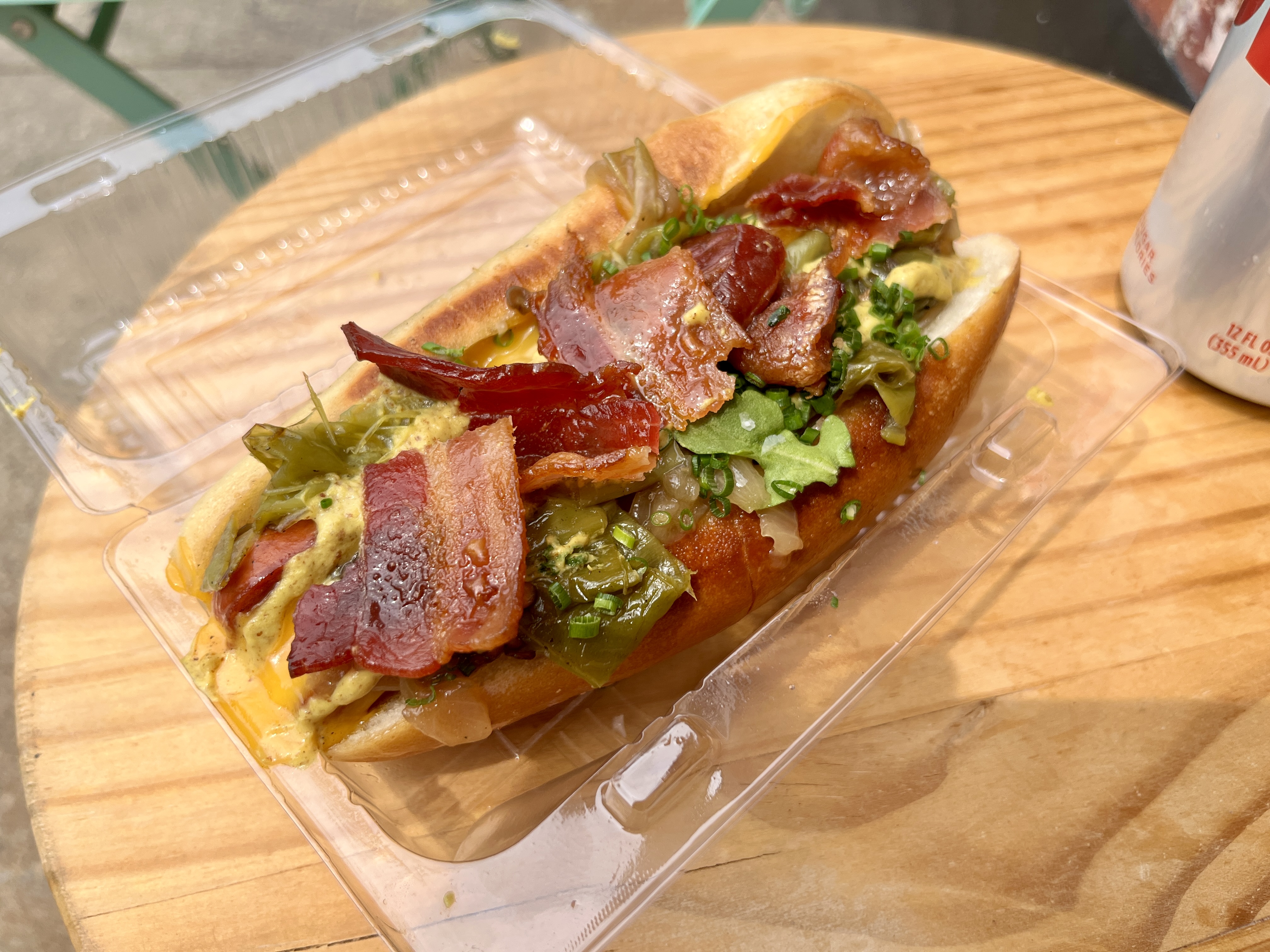
Essington native and Starr Restaurants alum Mark Gears runs a bustling breakfast and lunch takeout trade from this Kensington corner store, which has some bodega trappings, too. Need paper towels, dish soap, sugar, and spaghetti sauce? Gears has it. That pragmatic mindset led him to add hot dogs to his menu when he opened the shop in October. “Preopening, I went to Cacia’s [Bakery] to talk bread and saw these beautiful little fresh hot dog rolls. Said, how the hell can’t that be tasty,” Gears said. Smalls’ plump griddled all-beef hot dog, served on buns delivered fresh daily, will cost you less than a fiver, but it’s well worth springing for caramelized onions, roasted long hots, and crispy bacon toppings. — J.L.
A loaded hot dog (with roasted long hots, cheddar, bacon, spicy brown mustard, and caramelized onions) at Smalls’ Provisions in Kensington.Jenn Ladd / Staff
Sonnys Cocktail Joint
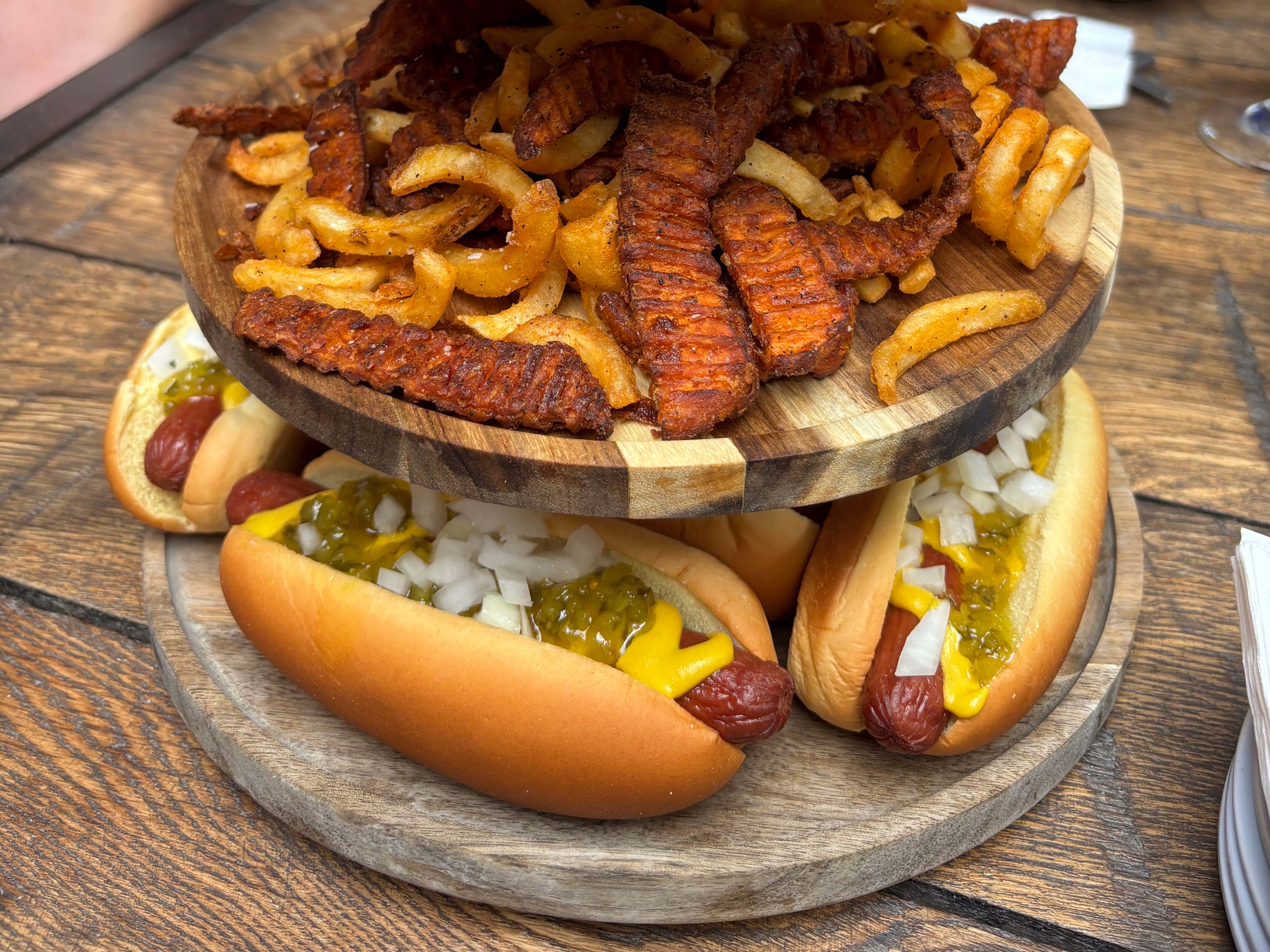
A single hot dog isn’t ideal for sharing. But at Sonnys Cocktail Joint, they’ve solved that particular issue with a hot dog tower, an inspired play on the seafood tower, that replaces oysters and shrimp with hot dogs, french fries (regular and sweet potato), and a top tier filled with little cups of ketchup, ranch, and a peperoncini aioli. A small tower comes with six hot dogs, a large fits 12. The hot dogs aren’t anything fancy — a standard-issue wiener with an array of condiments — but the format is whimsical, and it’s a perfect accompaniment for a couple of cocktails. — M.E.
Restaurateur Bruce Cooper is big on dates. He opened Jake’s in Manayunk on Oct. 19, 1987 — Black Monday, the day the stock market crashed.
He’ll close it on Oct. 19, 2026, the start of its 40th year on Main Street.
In between was another financial crisis, an expansion that reflected changing tastes, a devastating flood, a pandemic — and nearly four decades in which Jake’s evolved along with Manayunk itself.
Cooper, 72, is selling the side-by-side Main Street properties that house what is now Jake’s & Cooper’s Wine Bar. Before the final night, he plans to turn the wind-down into a reunion. Past employees will get a 50% discount on Sundays and Mondays, and the restaurant will extend its September restaurant week (Sept. 14-20) pricing through the final day. On Oct. 19, a party will empty the bar and kitchen, with proceeds going to a local charity.
“I just wanted to get to [the start of] 40 years,” said Cooper. “I wanted to get out two years ago.”
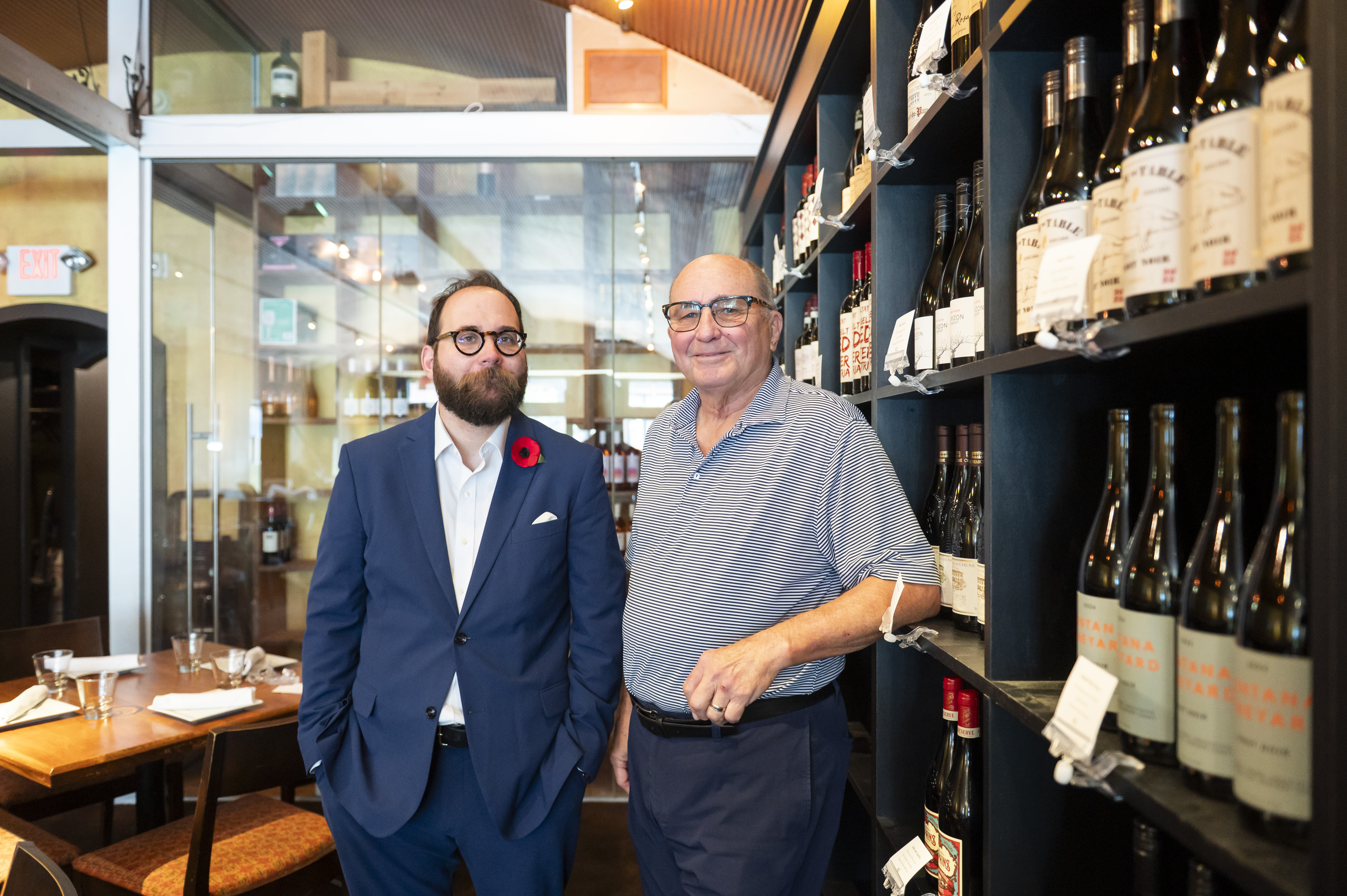
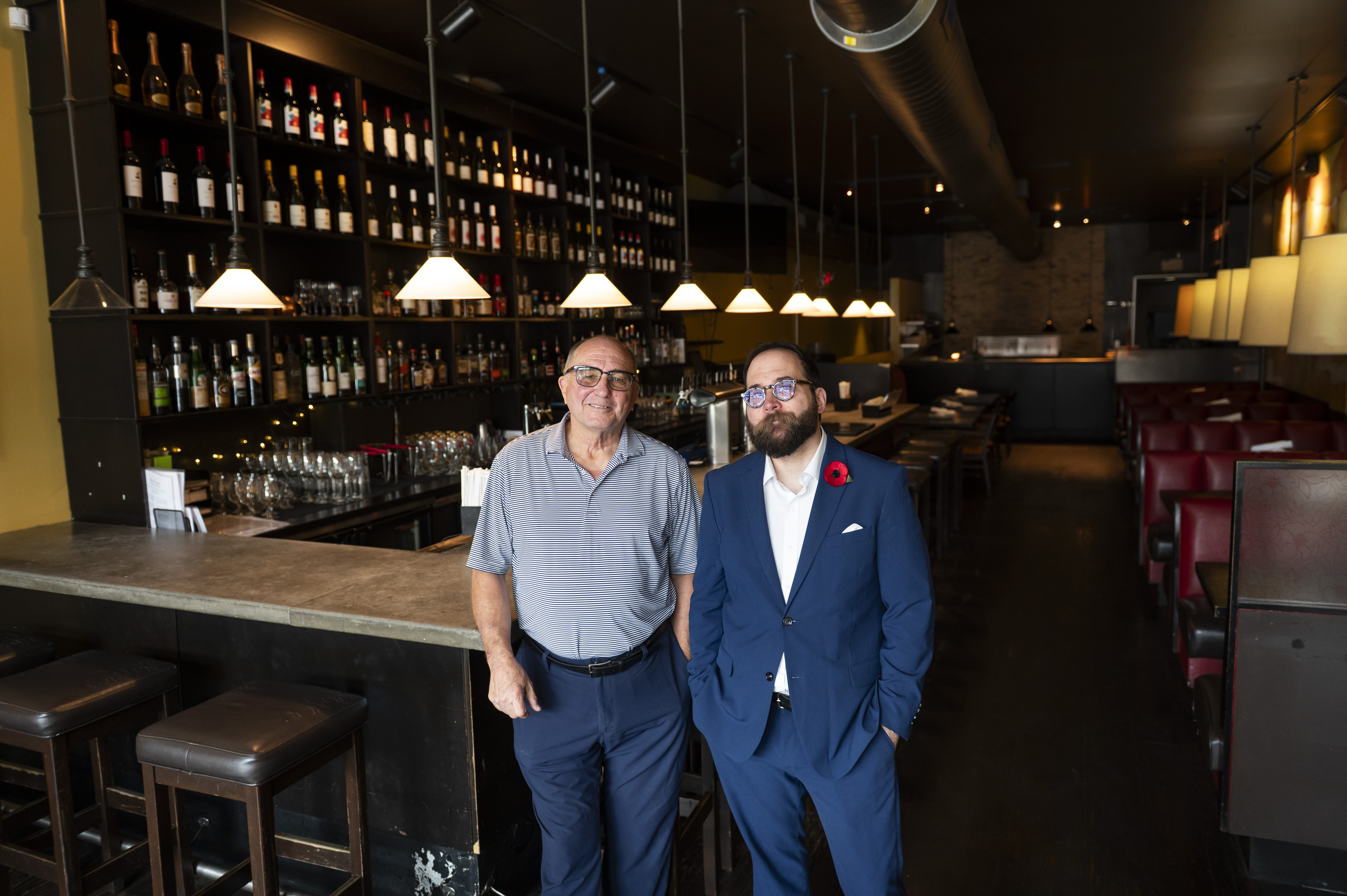
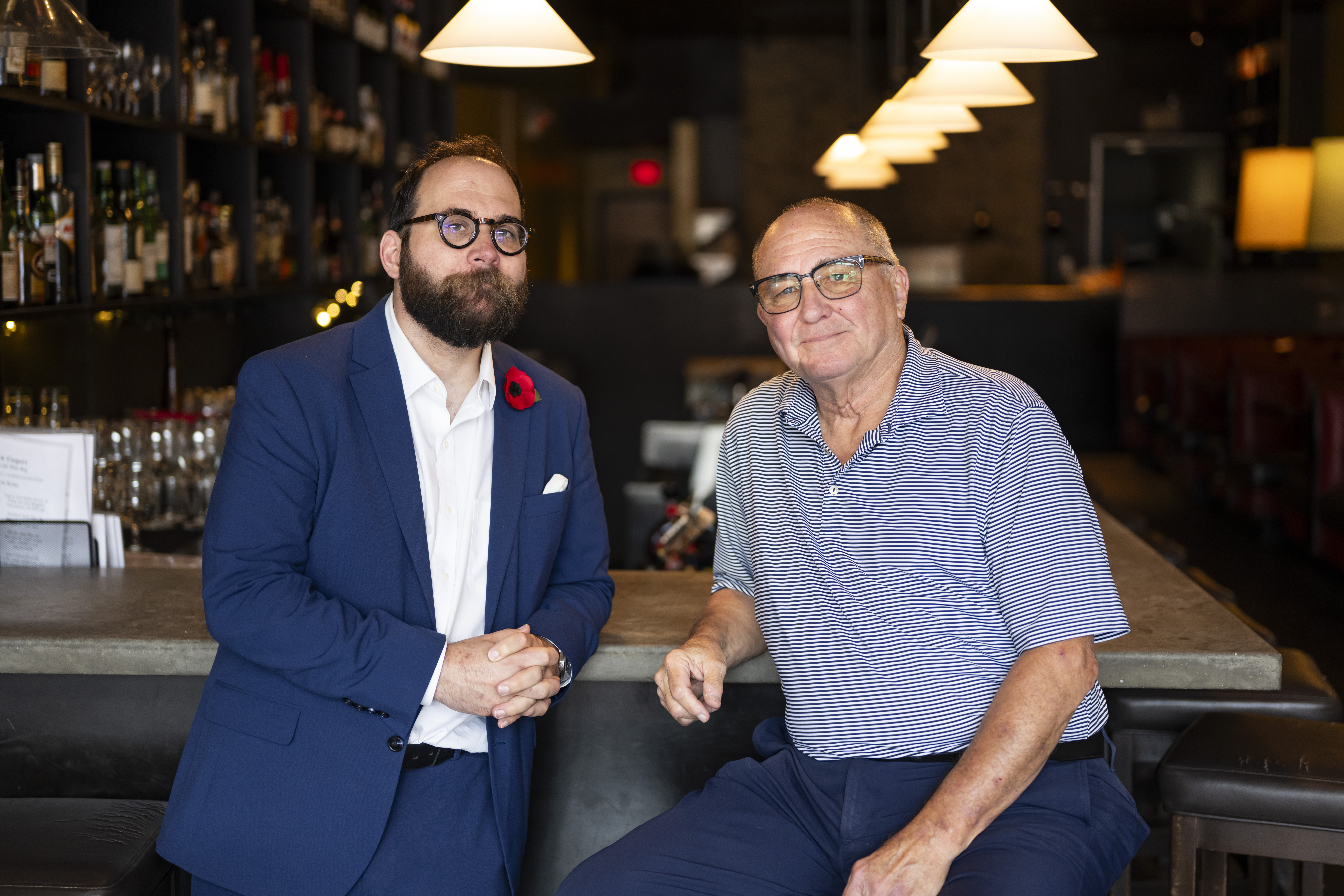
Bruce Cooper with his son, Bruce Joseph Cooper II, inside the wine bar at Jake’s & Cooper’s Wine Bar.Allie Ippolito / For The Inquirer
Cooper, a Culinary Institute of America graduate from Upstate New York, had spent a decade as executive chef at Lankenau Hospital before deciding that he wanted a restaurant of his own. He took business courses at Community College of Philadelphia and St. Joseph’s University and spent years looking at properties before a real estate agent showed him a former print shop in Manayunk in early 1987.
Cooper didn’t commission traffic studies. While walking along Main Street, he noticed Jaguars and other expensive cars rolling up to a posh restaurant called Jamey’s, which had opened a year and a half before. Otherwise, as he remembers it, “there were practically tumbleweeds floating down the street. You could find parking on a Saturday.”
That spring, Cooper bought 4365 Main St. and assembled a group of investors to open Jake’s, his then-wife Helena’s nickname.
Jake’s was conspicuously ambitious: white tablecloths, contemporary artwork, an extensive wine list, and Cooper’s refined cooking, including pastas from scratch. Dishes included crab cakes with raspberry butter, scallops with red pepper and papaya sauces, and duck breast with tangerine sauce.
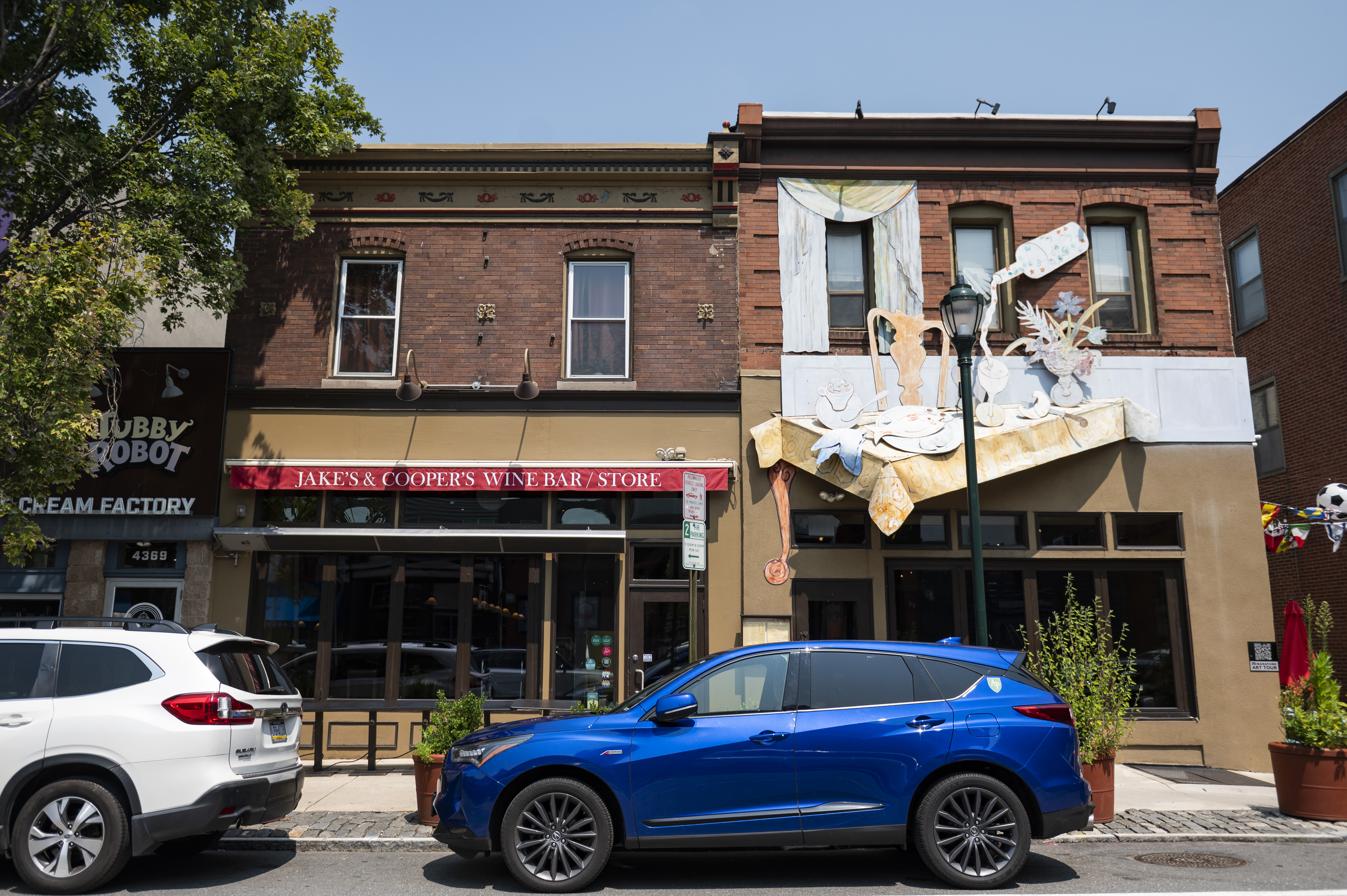
The restaurant’s whimsical facade depicted an oversize table setting, with food spilling from a plate and wine pouring into a glass, surrounded by flowers, flatware, linen, and crystal — designed to suggest both fine dining and a sense of fun.
The exterior of Jake’s & Cooper’s Wine Bar in Manayunk on Monday, Aug. 10, 2026. The bar is closing after 39 years.Allie Ippolito / For The Inquirer
Many early customers came from the Main Line, crossing the Schuylkill over the Green Lane Bridge into the former mill town.
Business grew quickly. When Cooper had put together his business plan, his accountant told him his projected sales were impossible for a 65-seat restaurant. Jake’s reached the projection in its second year, Cooper said.
By the 1990s, Main Street was crowded with boutiques and similarly high-aiming restaurants like Sonoma and Kansas City Prime.
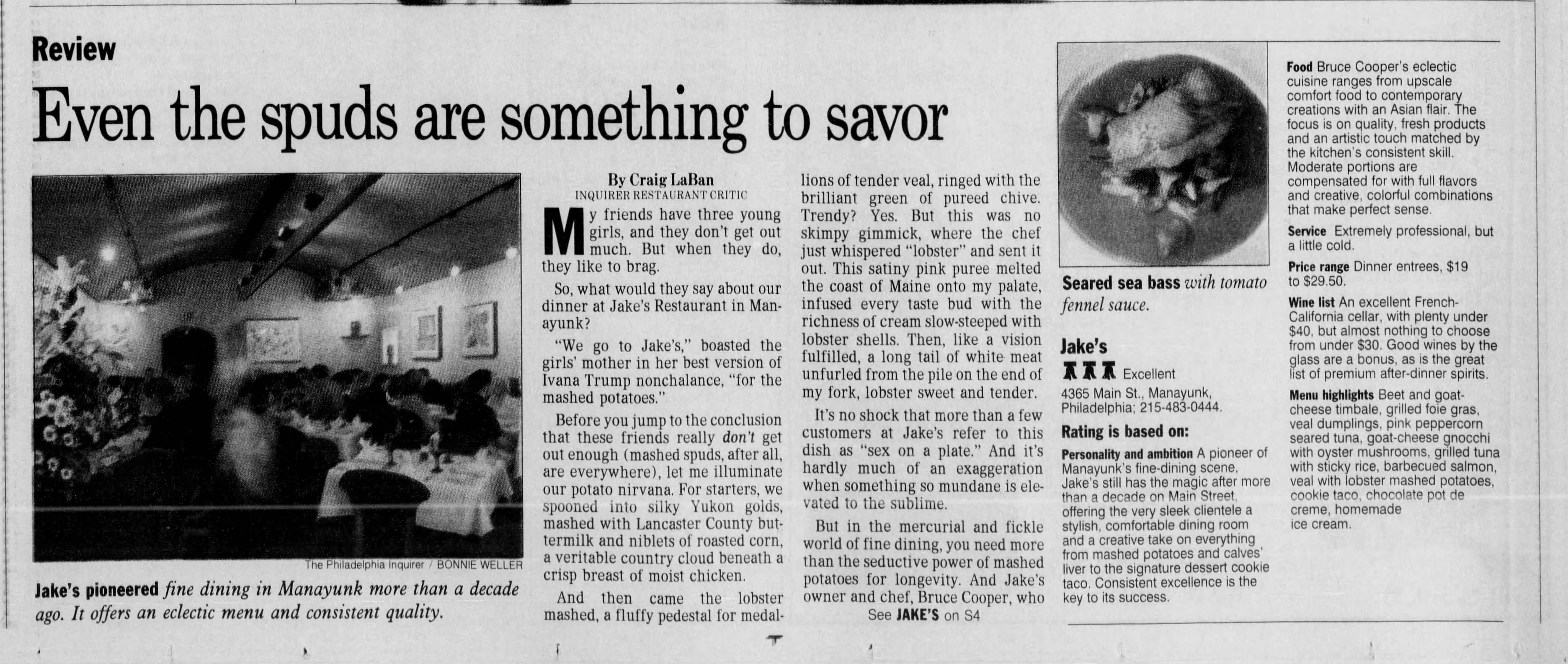
In a 1998 review, Inquirer restaurant critic Craig LaBan described a room of cushioned banquettes, contemporary design, and a stylish but unstuffy clientele. He called out the veal dumplings with caramelized ginger, seared tuna with sticky rice, foie gras with grilled mango, and the barbecued salmon — a signature.
Craig LaBan’s first review of Jake’s, from July 1998.Newspapers.com
And then there were the mashed potatoes. One version paired Yukon gold potatoes with buttermilk and roasted corn. Another, served beneath medallions of veal, was infused with lobster and cream. Patrons, LaBan reported, had taken to calling the latter “sex on a plate.”
LaBan awarded Jake’s three out of four Liberty Bells, the rating system he used at the time. “That’s when it really started to take off,” Cooper said.
Manayunk’s overall success brought its own problems. Friction between residents and the expanding restaurant and bar scene in the late 1990s led then-City Councilmember Michael Nutter to push for a five-year moratorium on new restaurants in the district.
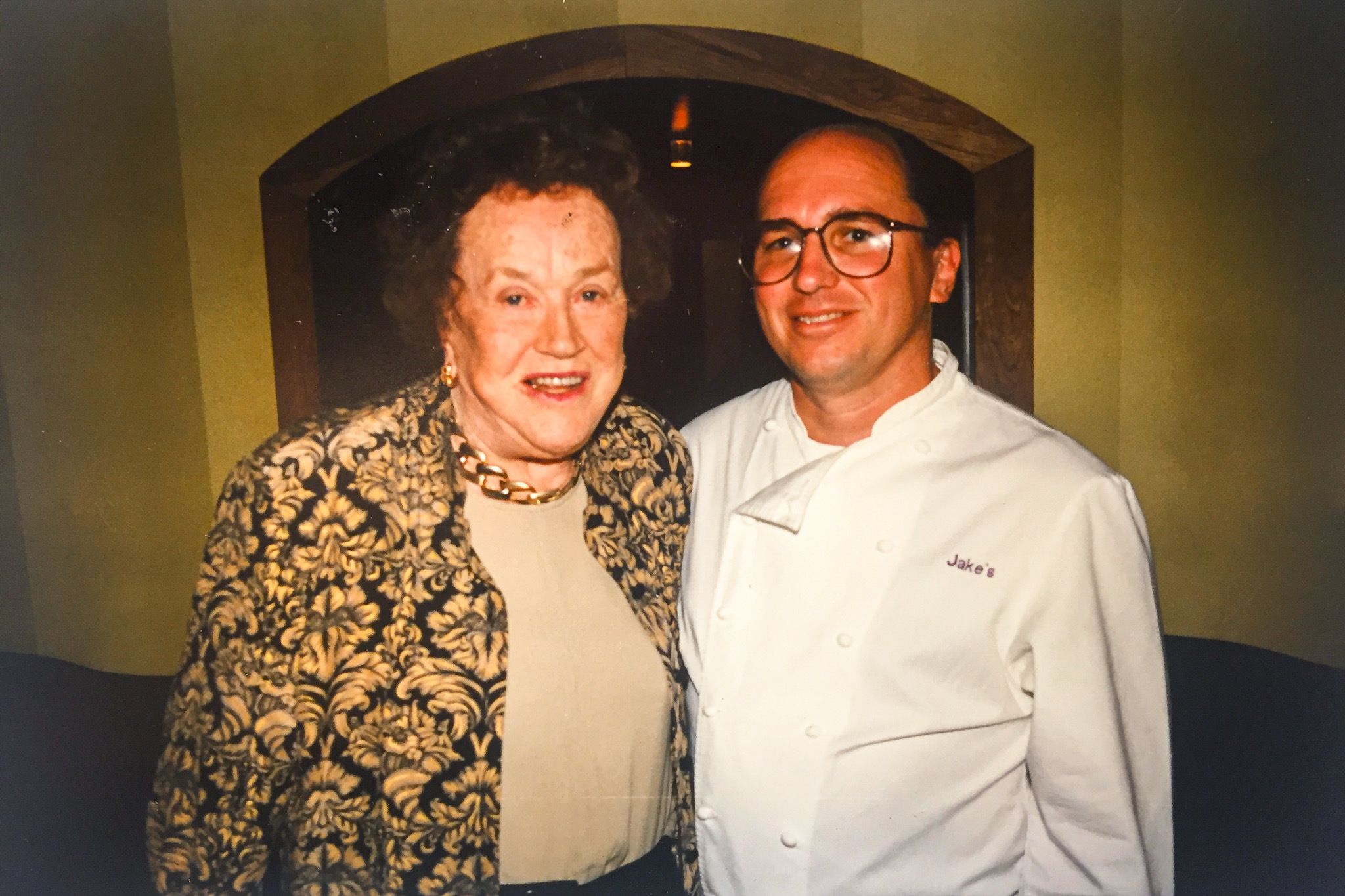
Julia Child with Bruce Cooper at an event in 1996.Courtesy of Bruce Cooper
Cooper, who later served as president of the Manayunk Development Corp., believes that the moratorium lasted too long and helped push Main Street toward nightlife. He later helped develop agreements among restaurateurs, landlords, the business association, and neighborhood groups that placed operating restrictions on new restaurants.
Meanwhile, the style of dining that had made Jake’s successful was changing. White tablecloths were giving way to small-plate menus.
Which leads to another consequential date: March 14, 2008, on the eve of another financial crisis, when Cooper bought the former clothing store next door at 4367 Main St. and opened Cooper’s Brick Oven Wine Bar. Cooper’s is a markedly different restaurant, drawing a younger crowd and serving pizza, small plates, craft beer, and less expensive wines.
The dividing line quickly blurred, Cooper said. Customers at Cooper’s wanted food from Jake’s, and Jake’s customers wanted dishes from Cooper’s. The restaurants shared a kitchen, and Cooper eventually merged their menus and identities as Jake’s & Cooper’s Wine Bar.
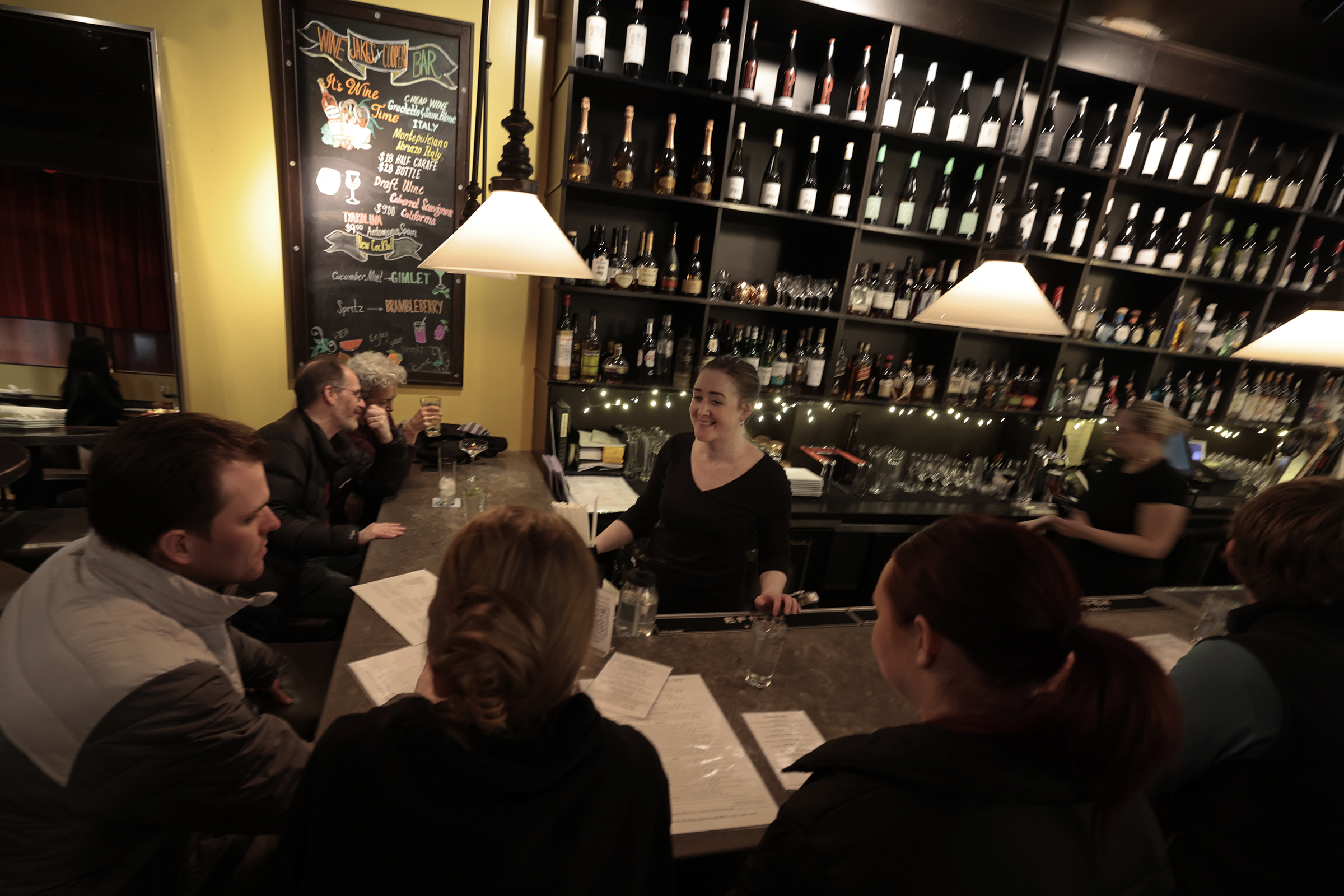
Head bartender Carrie Hice chatting with patrons at Cooper’s Wine Bar in 2023.Elizabeth Robertson / Staff Photographer
Then came July 17, 2016.
Cooper got a middle-of-the-night phone call that a city water main had ruptured outside the restaurant, sending water through the building and destroying the kitchen and the apartments above. He gutted and rebuilt, with business-interruption insurance helping carry the restaurant through a six-month closure.
The experience changed the way Cooper thought about the business.
“When you stop a business and then restart it, there are people who had been coming every week, and then they stopped,” he said. “They got into another routine. They went elsewhere.”
Even months after Jake’s reopened, Cooper said, customers would walk in surprised to discover it had reopened. “That’s when I started looking at things differently,” he said.
Cooper considered selling, but a real estate adviser urged him to wait as residential development accelerated in Manayunk and Roxborough. Three years later came the pandemic. His extended time at home spoiled him, he said.
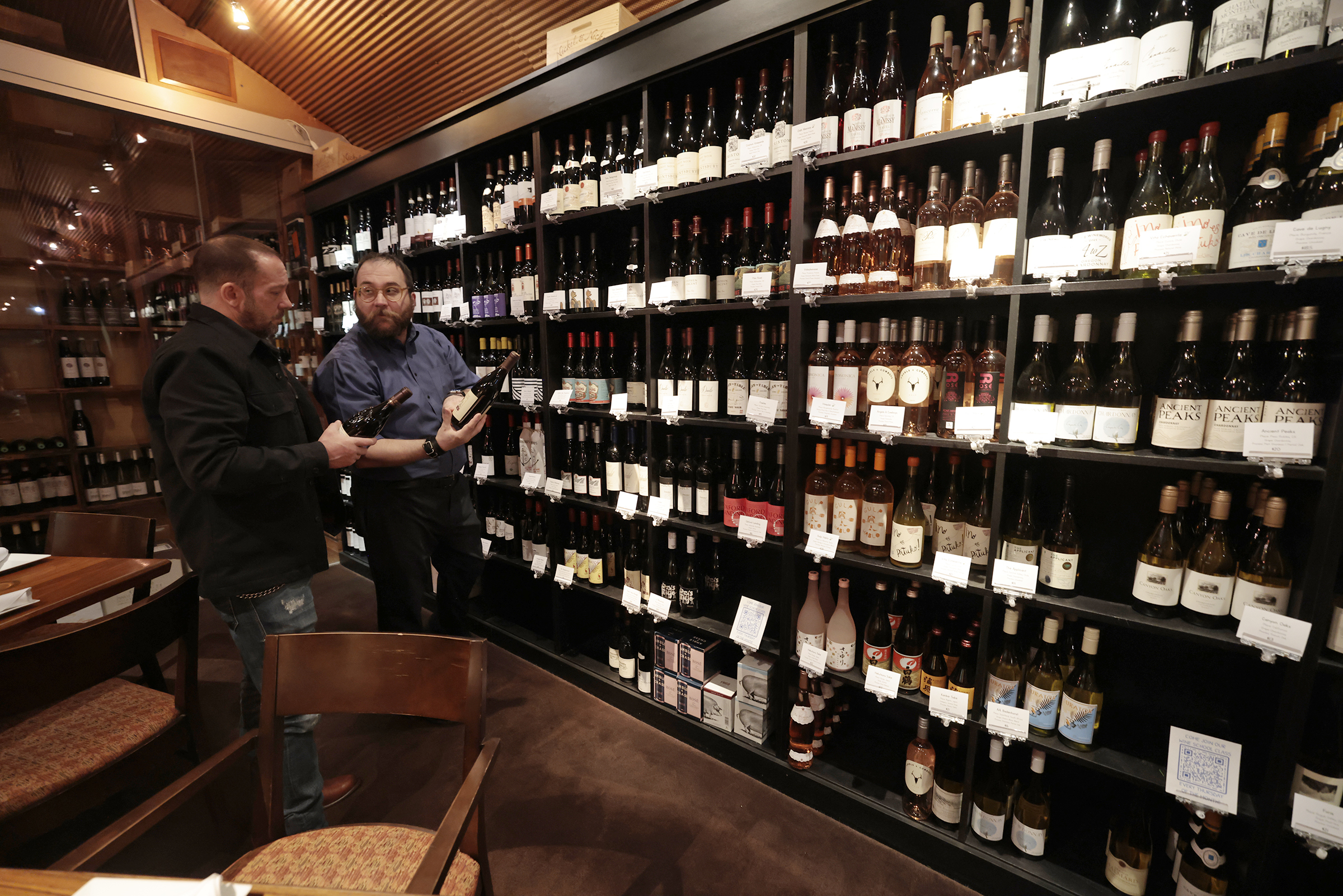
Chris Campana (left), with help from Bruce Joseph Cooper II, choosing a wine from the wall in 2023.Elizabeth Robertson / Staff Photographer
Three years ago, Cooper moved to Delaware. His son, Bruce Joseph Cooper II, 37, now manages the restaurant day to day, while the senior Cooper comes north once or twice a week to handle scheduling, wine orders, and other duties.
In June, Cooper put the properties, including four upper-level apartments, on the market for an undisclosed asking price. Cooper said he wants a clean break rather than passing the restaurant to his son, though neither rules out working together on another project someday.
The closing will end one of the longest remaining restaurant runs from the era that transformed Manayunk. Pitchers Pub (1987) and Zesty’s (1993) are still at it; U.S. Hotel Bar & Grill has been open irregularly since Bill Green, the former mayor and congressman, reopened it in 1986.
For Cooper, that history encompasses more than the people who ate there. “When you look back, you think about the generations of customers —in a lot of cases, we’re talking about three generations,” he said. “But it’s not just the customers. It’s all the people behind the scenes: the banker, the produce person, all those people who helped you get through things.”
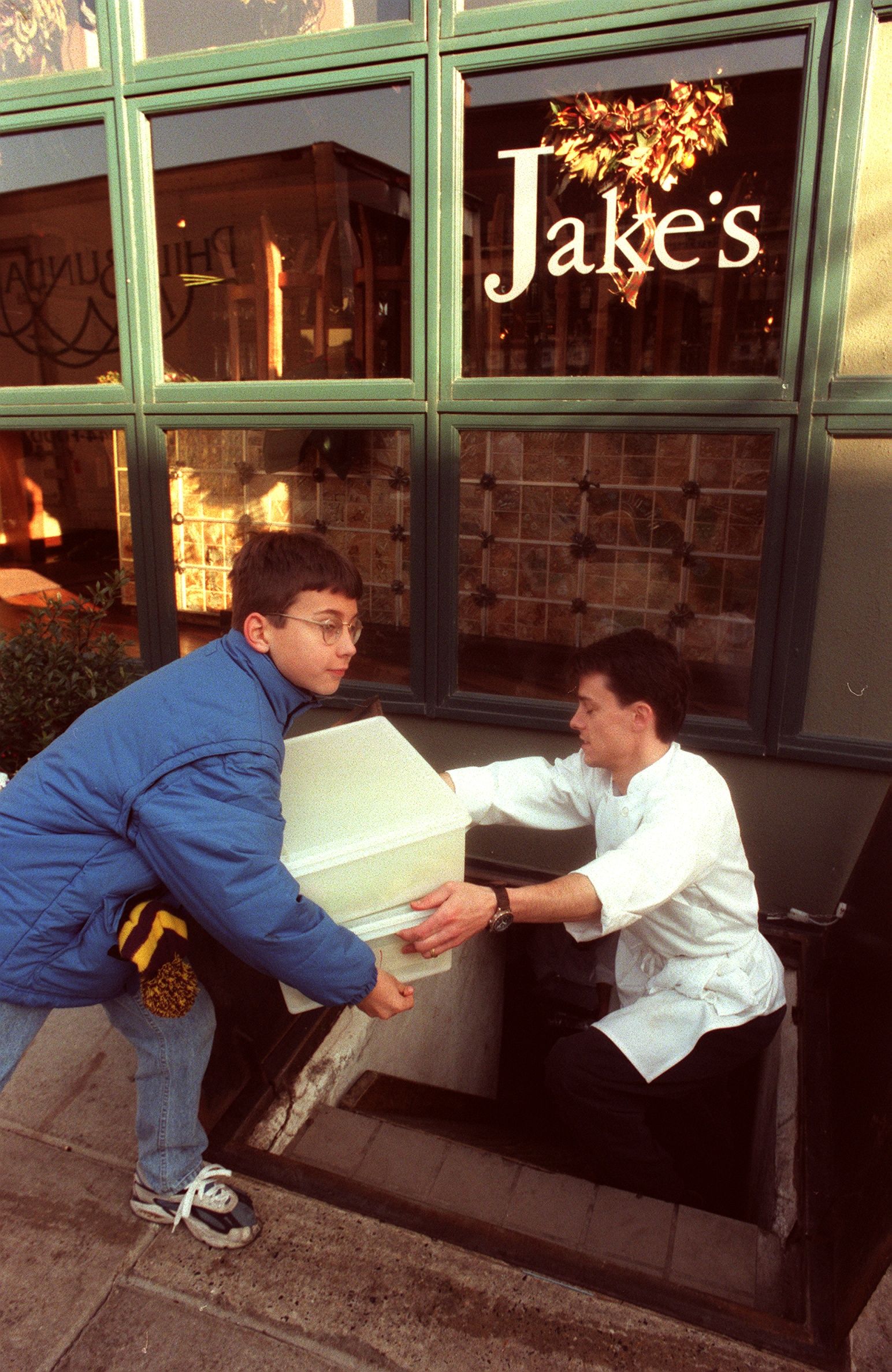
Bruce Joseph Cooper II, then 11, helps chef Bill Murphy carry food from Jake’s basement to be loaded into a truck for a 1999 holiday dinner by Philabundance. Vicki Valerio / Staff Photographer
Cooper’s son grew up at Jake’s, handing out cookies at holiday meals his father helped organize through North Light Community Center. He joined the restaurant full-time during the pandemic, starting as a food runner and eventually taking over management.
Purveyors and other restaurateurs have approached Cooper Jr. with potential job offers, he said, and he would consider working with whoever buys the properties. He once imagined taking over Jake’s himself but is no longer certain that is what he wants.
His father understands.
The restaurant business, the senior Cooper said, demands long hours and constant attention. One lesson he would give a new restaurateur is the one that helped him survive both the flood and the pandemic: Own the real estate if you can.
“If I didn’t own this real estate during COVID, I would have owed the landlord,” he said.
Cooper has begun informally advising other restaurateurs about the economics of getting into, staying in, and getting out of the business. After nearly four decades, he said, he is ready to find out what comes next.
His son thinks about Jake’s in more personal terms.
“Even in my almost five years working as a manager here, I’ve seen kids go from being in the womb to toddlers, and they know me as Uncle Bruce,” the younger Cooper said. “That’s one of the greatest feelings in the world — being able to say, ‘I knew you before you were born, little one.’”
Bruce Joseph Cooper II (left), general manager, and Bruce Cooper (right), owner, inside Jake’s & Cooper’s Wine Bar in Manayunk.Allie Ippolito / For The Inquirer
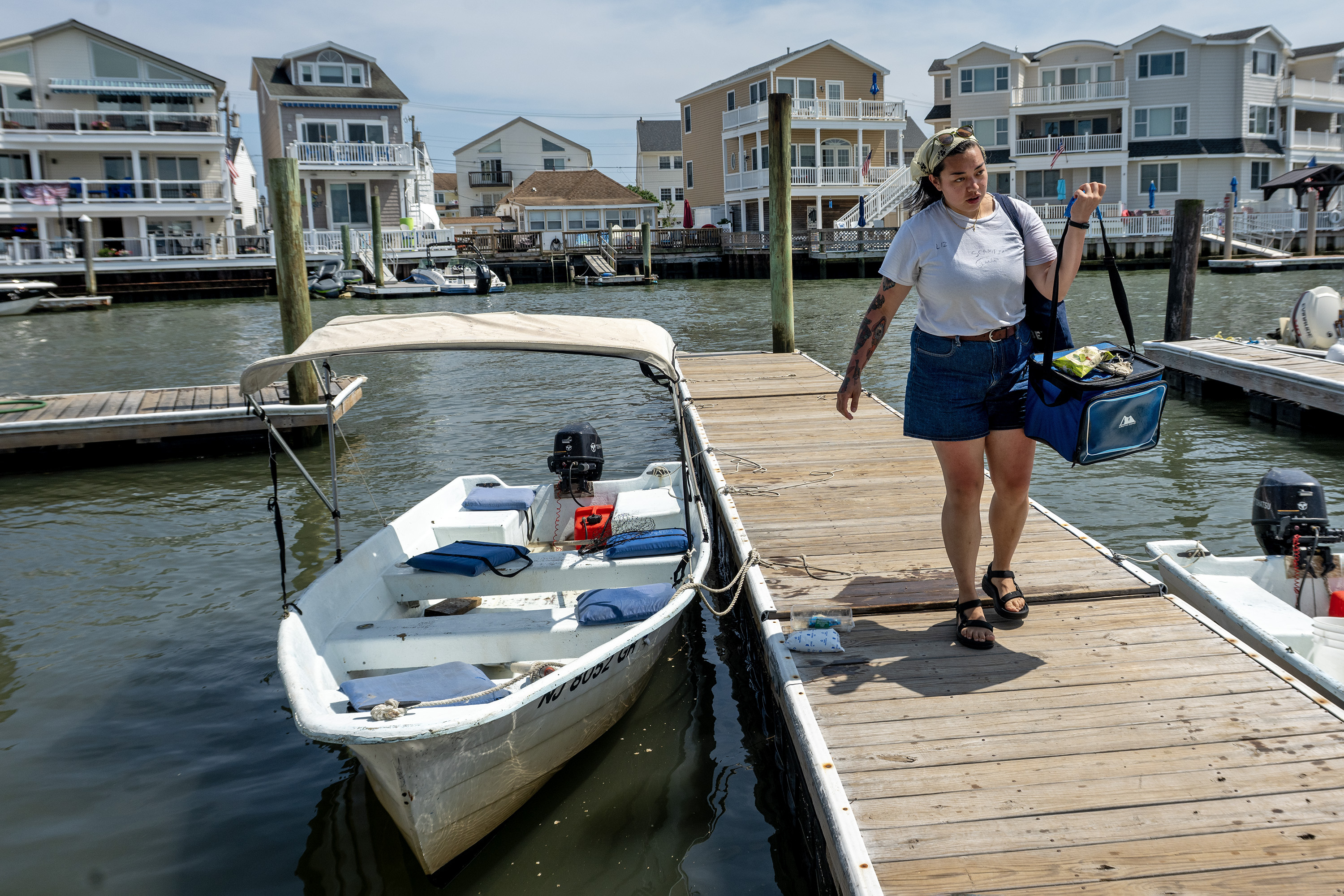
Sitting on a skiff on the bay in Sea Isle City, chef Liz Grothe slowly pulled up a submerged string from the lapping waters while holding onto a half-eaten Wawa hoagie.
On the string, a blue crab emerged, clinging to the severed fish head at the end of the bait holder, called a handline. The crustacean was too small for New Jersey’s recreational size minimum (3 inches long), Grothe and her companions determined. With a sigh, she dropped the crab back into the water.
It was an hour into Grothe’s Sunday crabbing expedition, and her crew had already caught a handful of crabs.
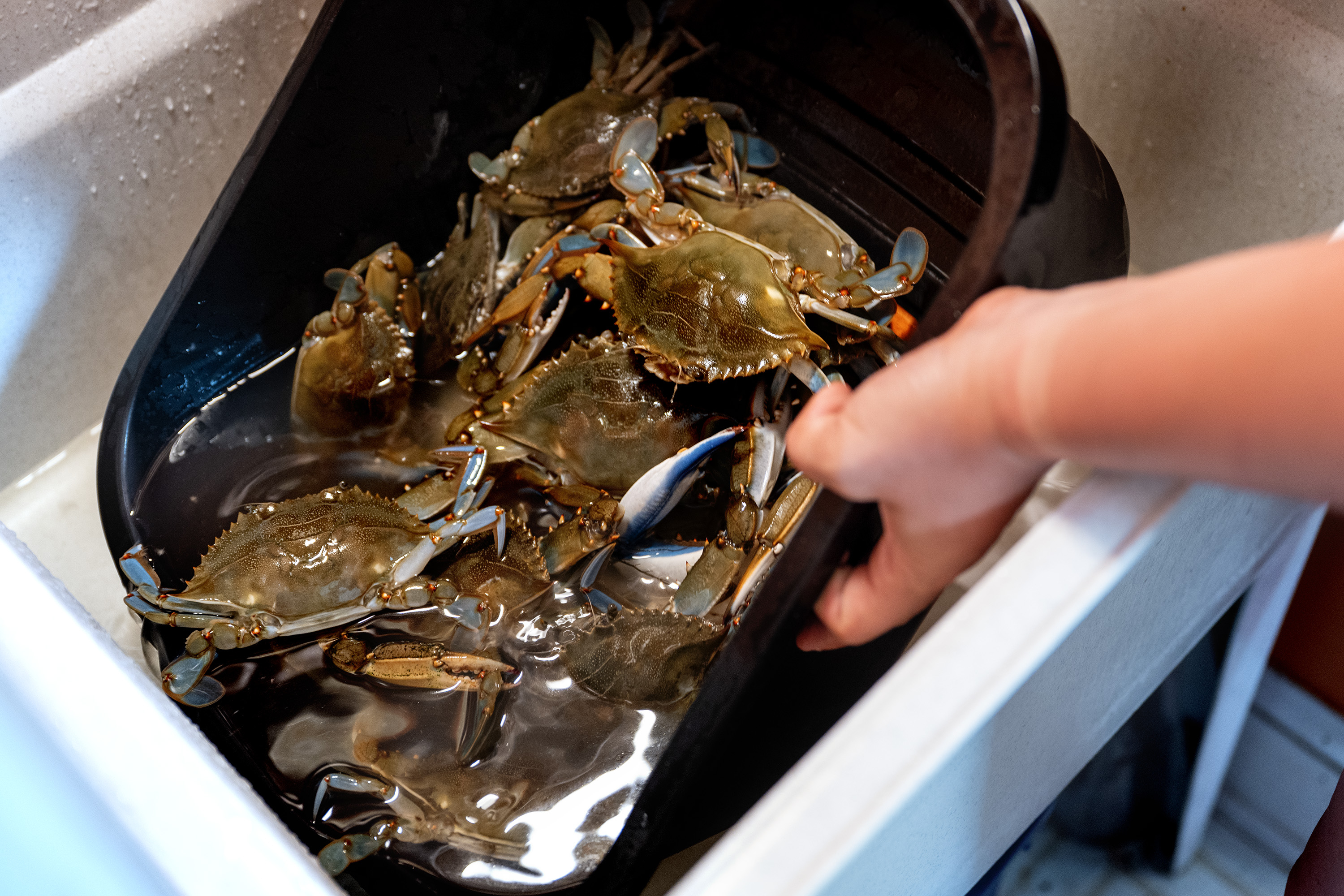
Chef Liz Grothe washing the day’s catch of grabs in the laundry-room sink of her partner’s family home in West Cape May, Sunday, Aug. 2, 2026. Grothe spent the afternoon crabbing out of Sea Isle City and was making dinner for the family Tom Gralish / Staff Photographer
With bright skies and calm waters that day, she rented two skiffs from Bay Breeze Marina with her partner, Jacob Lance, and Lance’s family to embark on her favorite Shore hobby: crabbing on the bay — and later, cooking up her catch in Cape May.
“We get all our ‘beach’ time down the Shore at the bay,” Grothe, who owns the Italian-ish Queen Village restaurant Scampi, said. “[The bay] is more like Oklahoma-style waters, where it’s just a shallow lake rather than like the rough seas of the ocean. So this is more my speed.”
Grothe grew up catching catfish in the creeks of Oklahoma. But it wasn’t until six or seven years ago that an ex-boyfriend introduced her to Sea Isle City’s bay and its crustaceous inhabitants. “He took me on his boys’ excursion, which was crabbing,” she said. “We broke up later — being the kind of girl I am, I stole it. I go to the same place they rented their boats; we do it in the same way I learned.”
Grothe named her restaurant after a seafood dish, so it’s no surprise she has strong feelings about crabs, the scavengers of the sea. Don’t expect these to show up on her menu, though — they are for personal eating only. The once-a-summer hobby lets her “touch grass, so to speak, and have something to do that’s not the harrowing day-to-day that we deal with in the kitchen,” she said.
Being close to water was always a priority for her family — Grothe’s mom is originally from the Philippines. Her interest in seafood, however, comes from the love of catching and cooking it. “Eating is just the secondary part of the fun,” she said.
“I’m in it for the love of the game, not the catch,” she said, while tossing the handline back into the water.
Bay Breeze Marina rents a boat for $109 for four hours, including gas, cushions, anchor, paddle, cutting board, and a net. The rental also offers a map of the best areas to catch the crabs. It was a no-brainer for Grothe and crew.
Around 10:30 a.m., she and Lance took one boat, and Lance’s brother and sister-in-law hopped into their own. (Grothe and Lance’s boat didn’t have a bucket, so they improvised, throwing their crabs into a cooler.)
For four hours, the crew tossed their baited handlines in various areas of the bay — deep waters, shallow areas, just off the coast — to catch as many crabs as they could. They found that chunky pieces of bait — like the trout head — were the best lures.
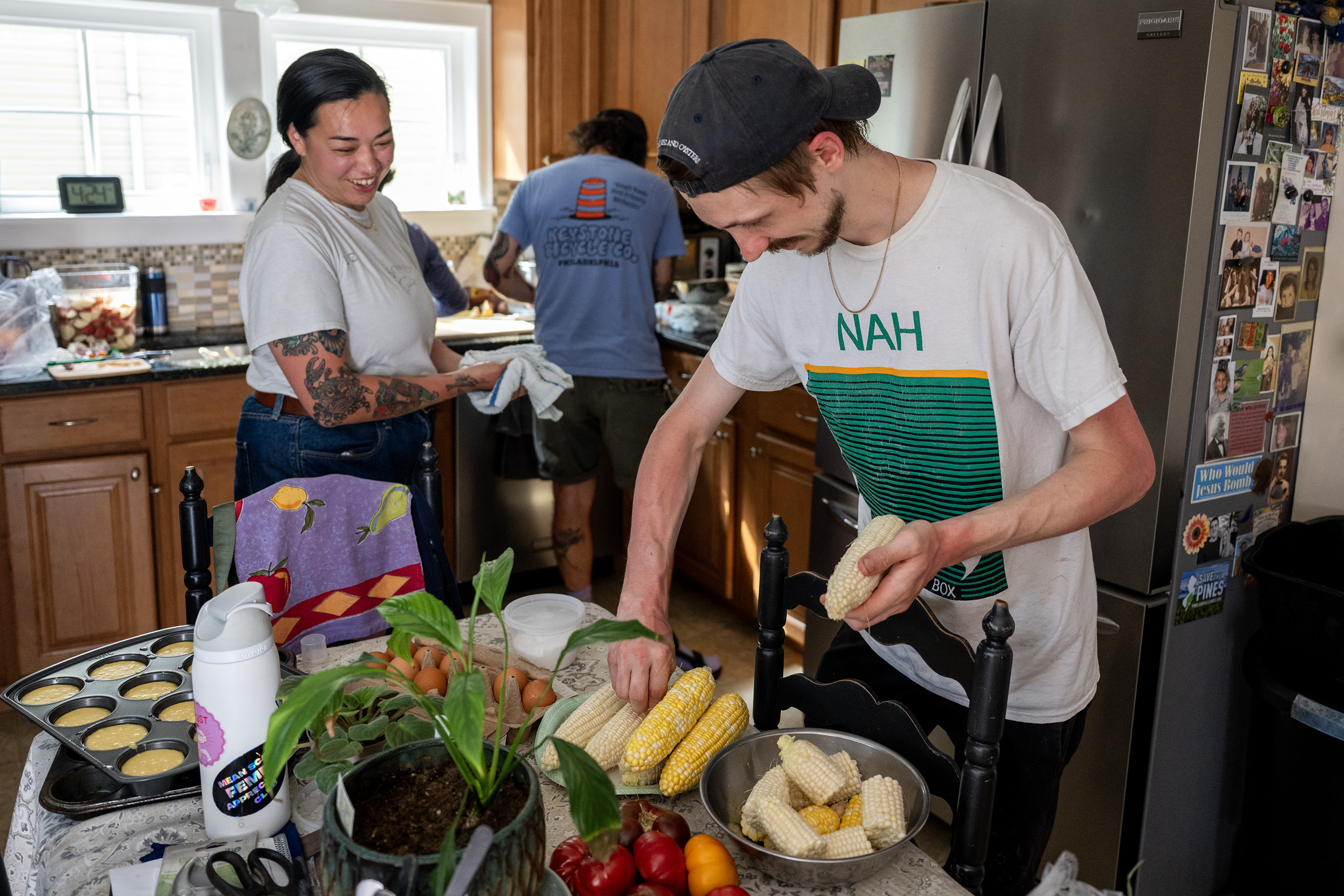
Chef Liz Grothe (left) as her partner Jacob Lance preps the corn at his mother’s home in West Cape May, Sunday, Aug. 2, 2026. They spent the afternoon crabbing out of Sea Isle City and were making dinner for the family Tom Gralish / Staff Photographer
“What kind of music do crabs like?” Lance asked the group. “They don’t seem to be digging country.”
“Crabs are chaos; try house music,” Grothe said. “I could see them vibing to it.”
But Daft Punk and Prince were the “certified crab bangers,” as Grothe put it.
By the end of the excursion, the crew caught more than a dozen crabs of varying sizes. After docking their skiffs, Grothe assessed which crabs were too small to keep and dropped those back in the water.
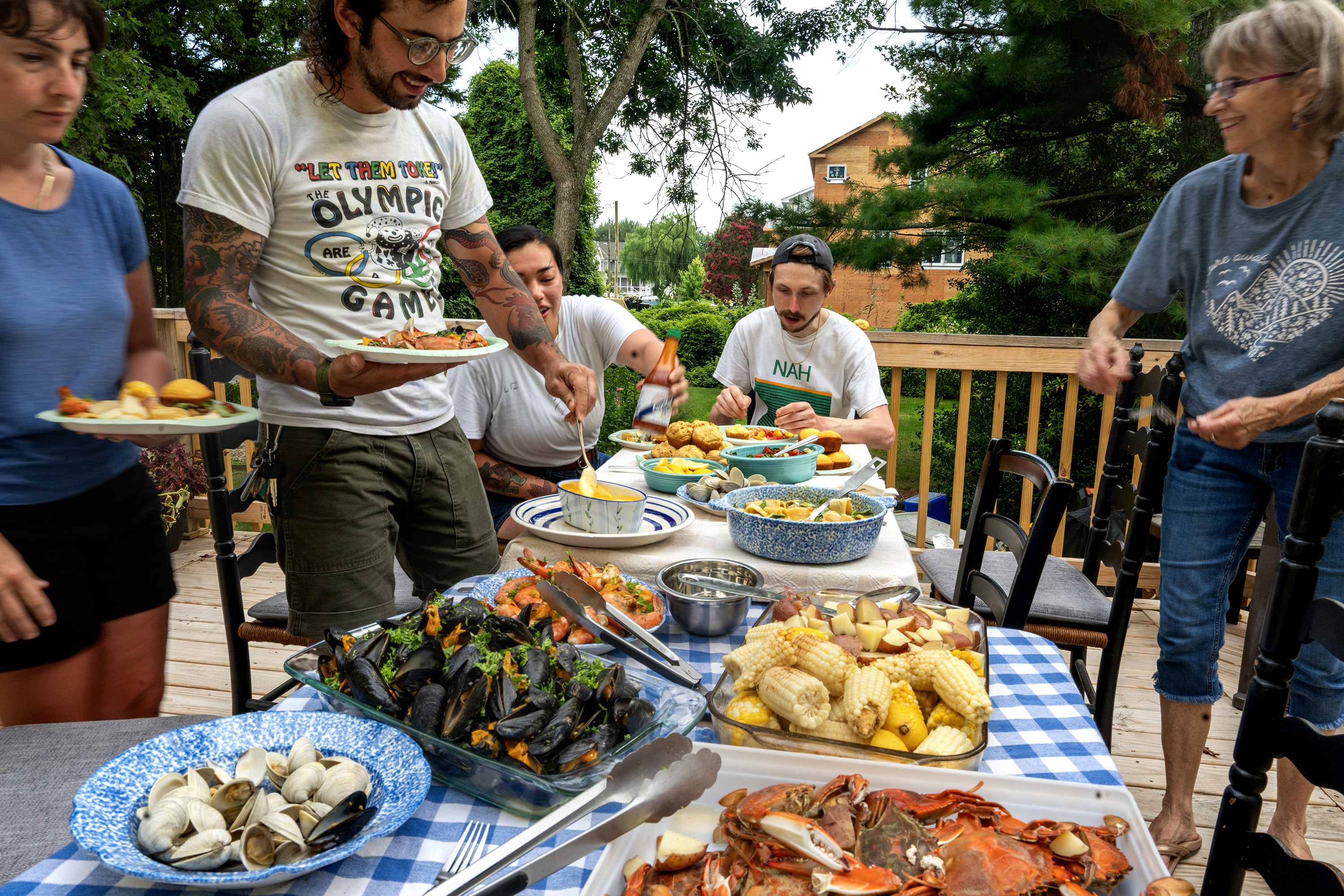
Left with 14 crabs,the crew decided to supplement their haul with other catch for a big boil. They stopped by the fish market at the Lobster House in Cape May to pick up mussels, shrimp, and clams before heading to Lance’s mom’s house in West Cape May, where the live crabs were washed and tossed into the boiling water.
The key to cooking a crab boil, according to Grothe: a lot of Tony Chachere’s Creole Seasoning. “Maryland and up, people use Old Bay. But if you go south, those who know reach for Tony Chachere’s,” said Grothe, shaking a big container of it into a pot inside the Lances’ kitchen. “Tony is a saltier, spicier, better Old Bay,” Lance added.
Family members fill their plates at dinner by Liz Grothe, of Scampi, at her partner’s family home in West Cape May, Sunday, Aug. 2, 2026, after an afternoon crabbing out of Sea Isle City.Tom Gralish / Staff Photographer
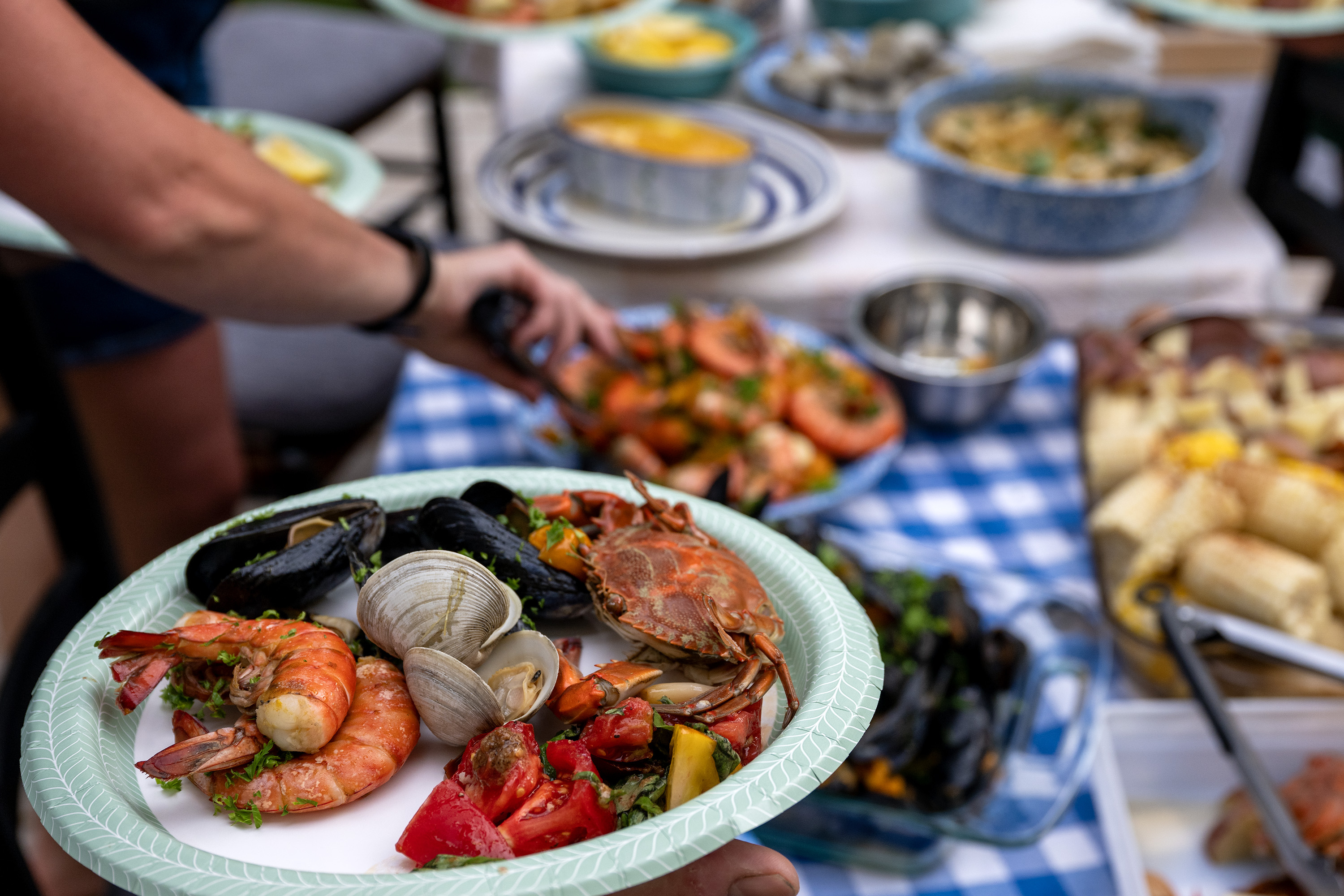
By 5:30 p.m., the table was set with plates of steamed mussels, poached and steamed shrimp with a sungold tomato broth, calamarata pasta, boiled crabs and clams, gluten-free and regular cornbread, and tomato salad. The menu was prepared with leftover ingredients, including sungold tomatoes, basil, and butter from Scampi — “things that were going to go bad and that we had excess of, just a little something to share with the crew.”
After an almost seven-hour expedition, Grothe and the Lances settled down on the backyard patio, cracking crabs and enjoying the fruits of their labor.
“If you’re gonna go crabbing, that’s gonna be your activity for the day — you catch them, and then you gotta deal with them,” Grothe said.
“Doing something that is very labor-intensive, sharing a part of me with other people that’s fun and interesting — even if it’s not the most industrious or profitable thing — is what I love about cooking,” Grothe added. “Just bringing the family together and showing them that I care via doing this stuff makes me feel good.”
Chef Liz Grothe of Scampi (rear, center) and her partner Jacob Lance eat dinner at his mother’s house in West Cape May, Sunday, Aug. 2, 2026. At left are Lance’s brother and sister-in-law Shmem Rose and Zachary Rachelle, and on the right is his mother, Christina Johnson.Tom Gralish / Staff Photographer
I am a breakfast sandwich snob. I also love rules, which is why there’s rigorous criteria a sandwich needs to meet for me to even consider ordering it.
Is it served on brioche, a bread that is entirely too soft for a greasy sandwich? Hard pass.
Is there one of those dreaded rectangular egg patties, which are somehow always dry and a little cold in the center? Don’t even send it my way.
Does it lack whimsy? Unless there’s some sort of intrigue— a fun condiment, fresh-baked bread, a flavor combo that gives a sense of perspective — I’ll just have eggs with a side of bacon and home fries, please.
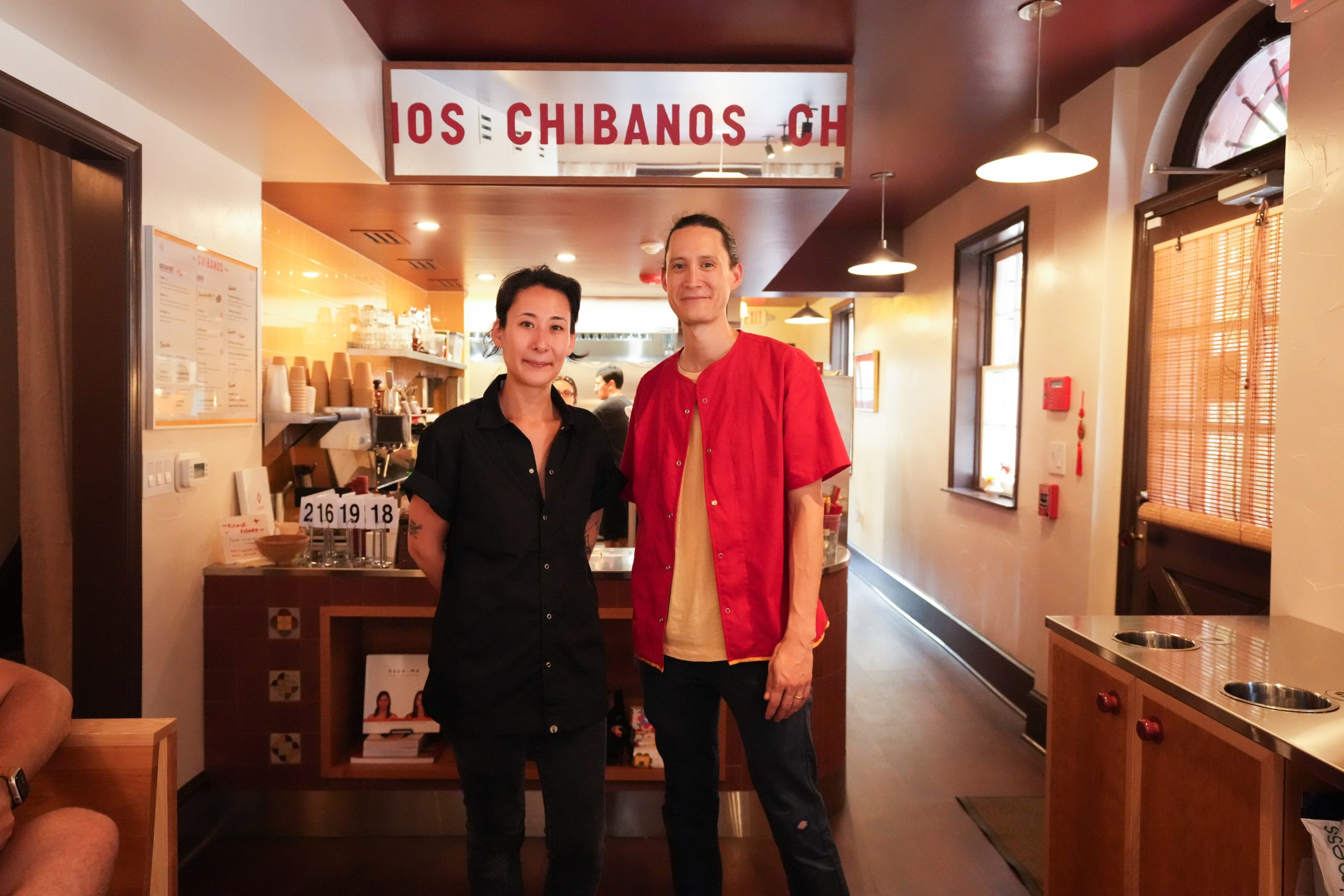
Executive chef Aya Iwatani (left) and owner Evan Jaroff (right) inside Chibanos, their Cuban-Chinese sandwich shop that opened on July 1 at 1127 Pine St.Jessica Griffin / Staff Photographer
The tight menu — eight sandwiches plus a handful of snacks — is an ode to owner Evan Fong Jaroff’s mother, Ana, a Chinese Cuban who immigrated to the U.S. from the island in the 1960s. Jaroff grew up watching her command their home kitchen in Lansdowne, where she’d serve traditional Southeast Chinese fish dishes alongside staple Cuban dishes like fried yucca, beef picadillo, and lechón (aka shredded and slow-roasted pork).
“I don’t think of us as a Cuban restaurant. I don’t think of us as a Chinese restaurant,” Jaroff told me in July. “We’re our own thing.”
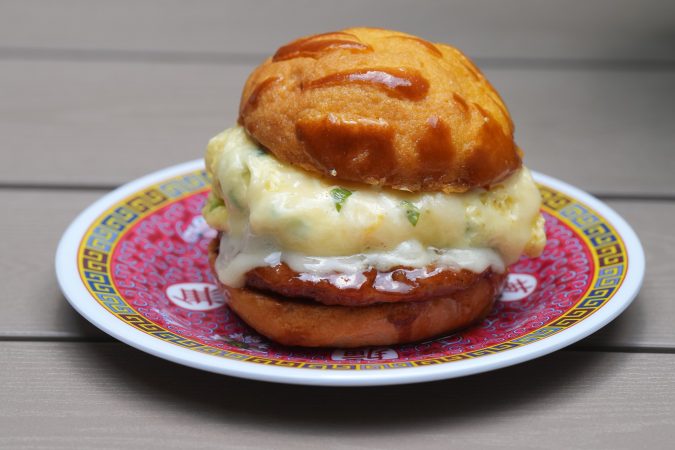
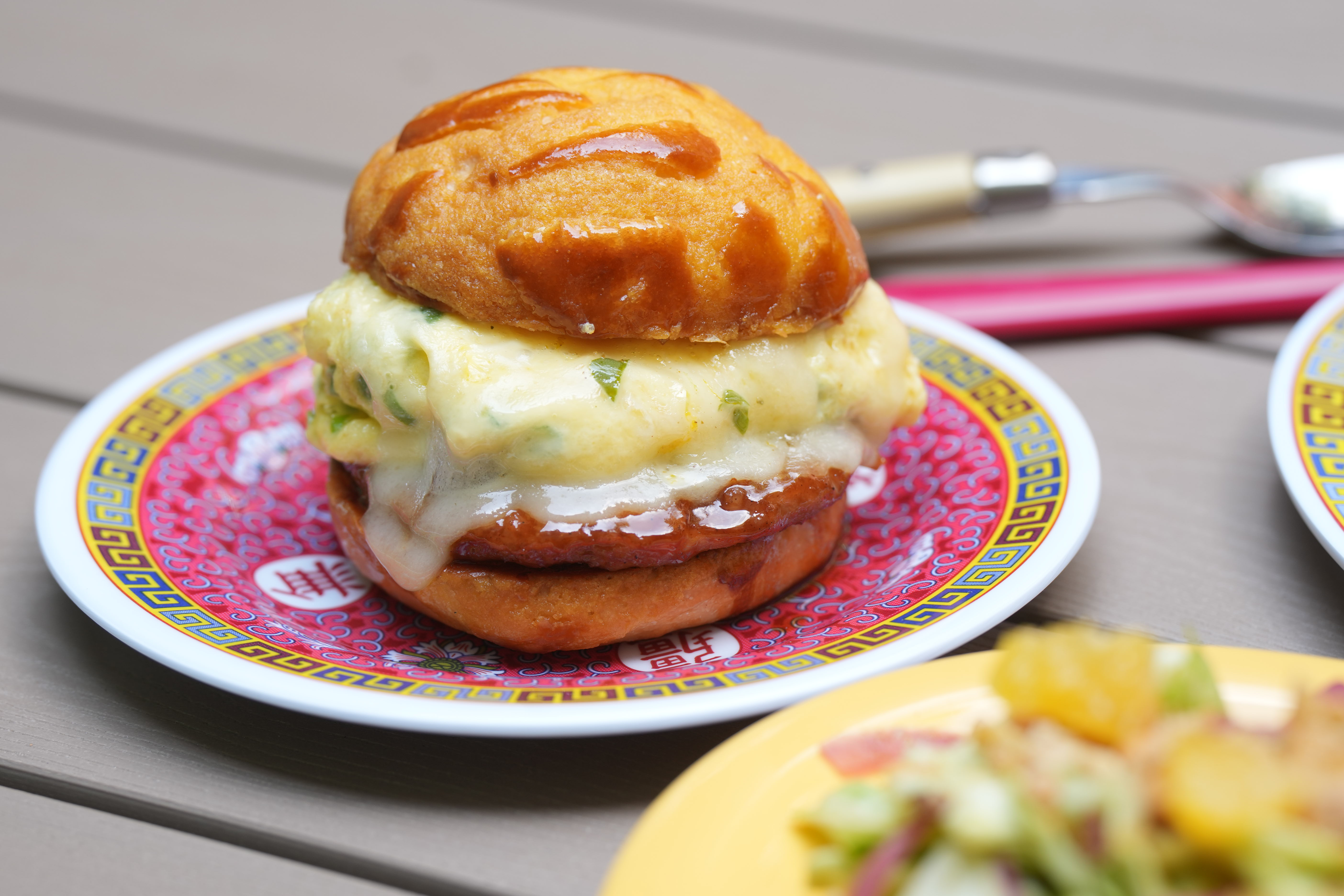
Chibanos’ menu pulses with nostalgia. That’s especially true of the Chino, which packs fluffy eggs, melted Swiss cheese, and a sticky-sweet char siu-style sausage patty between a crackle-crusted bolo bao bun smeared with garlicky scallion mayo.
The sandwich is an adult version of Jaroff’s favorite childhood breakfast: a steamed, custard-filled bao from pretty much any bakery in Chinatown.
The Chino breakfast sandwich on a Dodo Bakery bolo bao at Chibanos, a Chinese-Cuban sandwich shop at 1127 Pine St.Jessica Griffin / Staff Photographer
Developed in partnership with executive chefAya Iwatani (formerly of Honeysuckle Provisions), the Chino is the perfect combo of sweet and savory. It conjured up my ownmemories of using sausages to sop up the leftover syrup from diner pancakes. The lightlysweet bao from Dodo Bakery — a Cantonese bread and sweets specialist in South Philly — is equally transportive. It reminds me of the oversized conchas that lined the pastry cases of the panaderias in the tiny Hudson River town I lived in as a teen.
It’s funny how a single sandwich can take me to so many places. Perhaps I should add another question to my breakfast sandwich checklist: Does it make me feel warm and fuzzy?
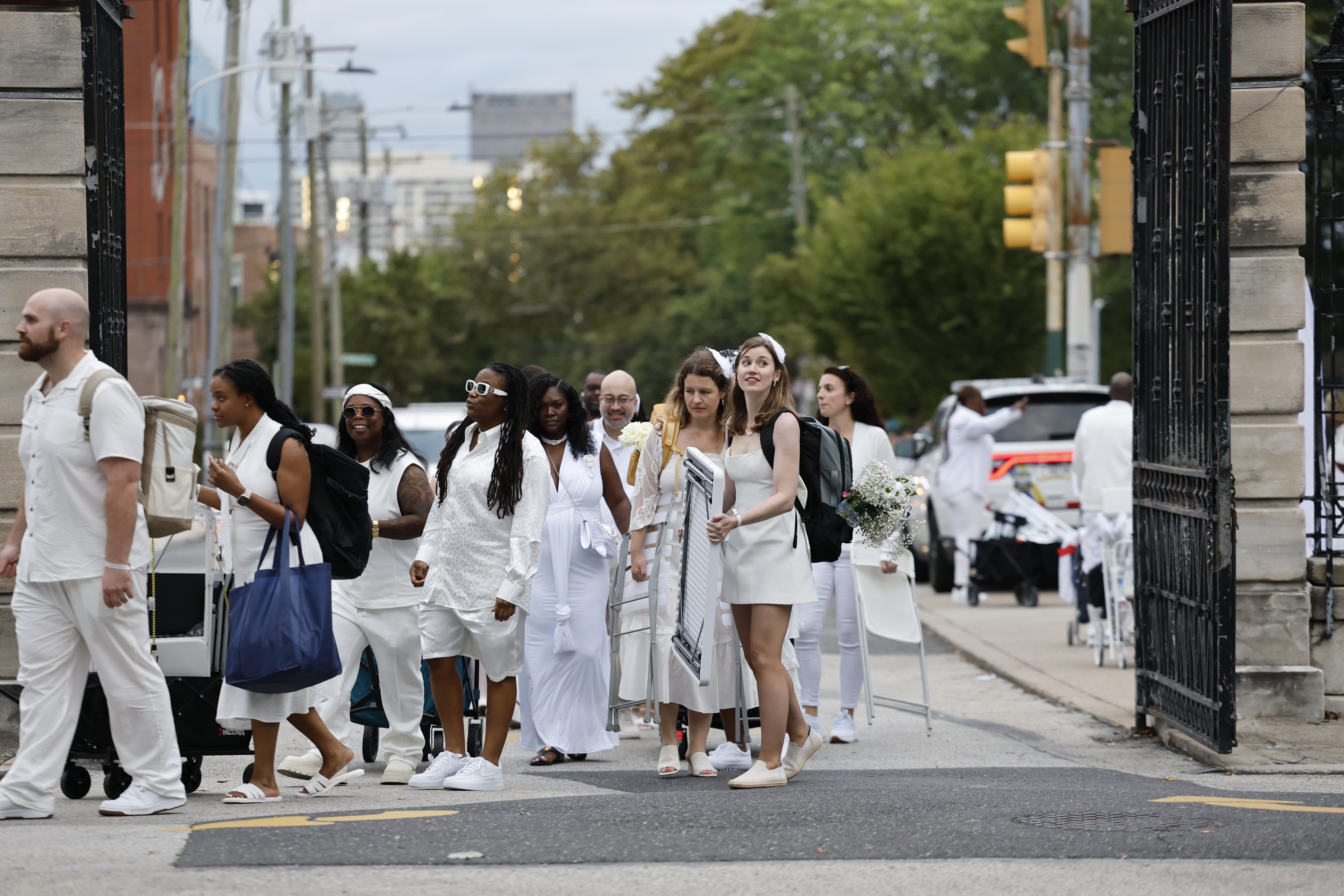
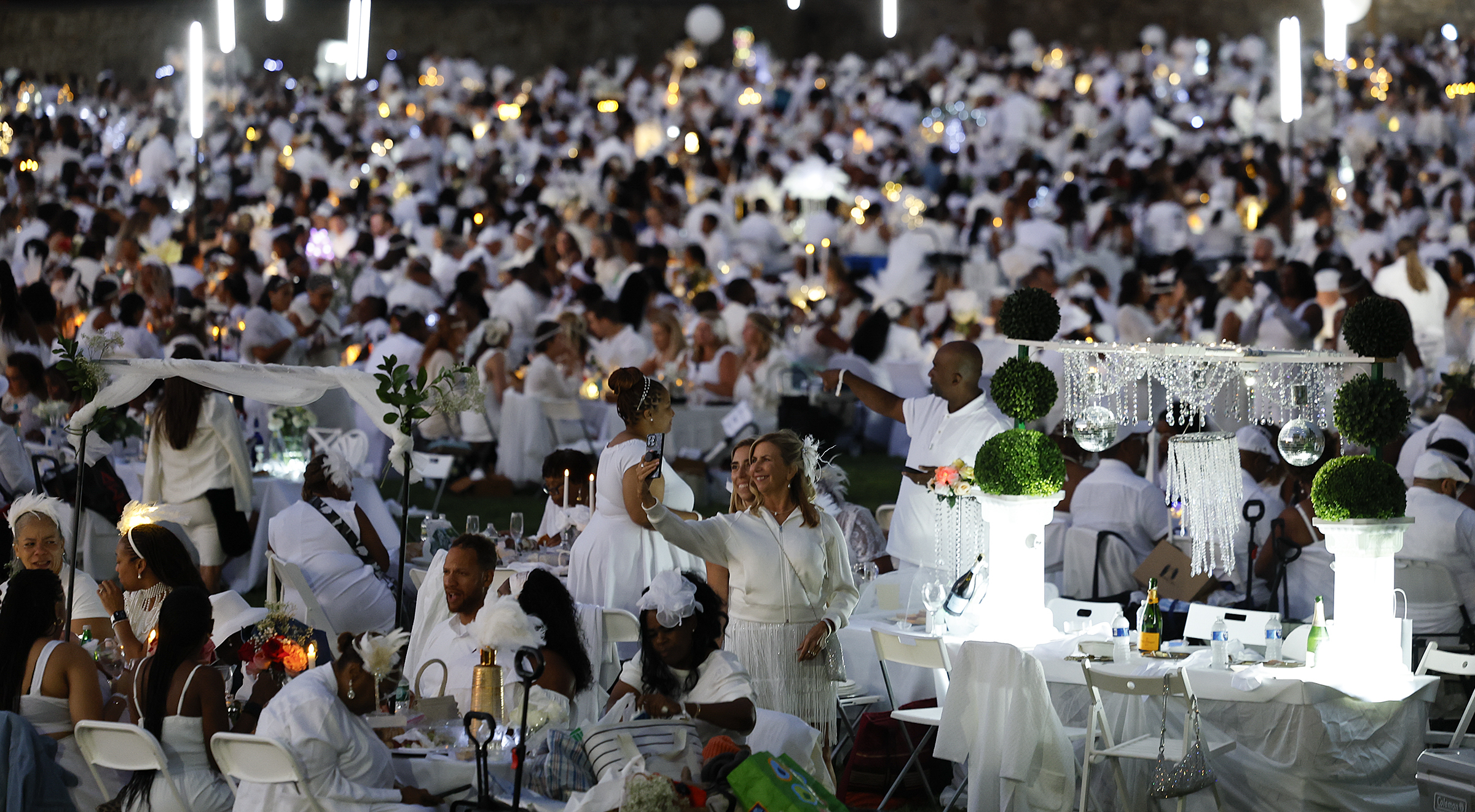
When inclement weather prompted organizers to cancel Philly’s 14th annual Dîner en Blanc Thursday night, would-be revelers dealt with their disappointment and celebrated anyway.
Attendees paid $146 per couple to attend the picnic, which attracts thousands of people. Every year, they bring their own white chairs, tables, tablecloths, food, and drink to a secret location, revealed hours before the event. Last year’s event had 5,000 participants. This year’s Dîner en Blanc was sold out and the location had not yet been disclosed to participants.
The Inquirer asked Dîner en Blanc representatives if participants would be refunded, or if the event would be rescheduled, but has not yet received a response.
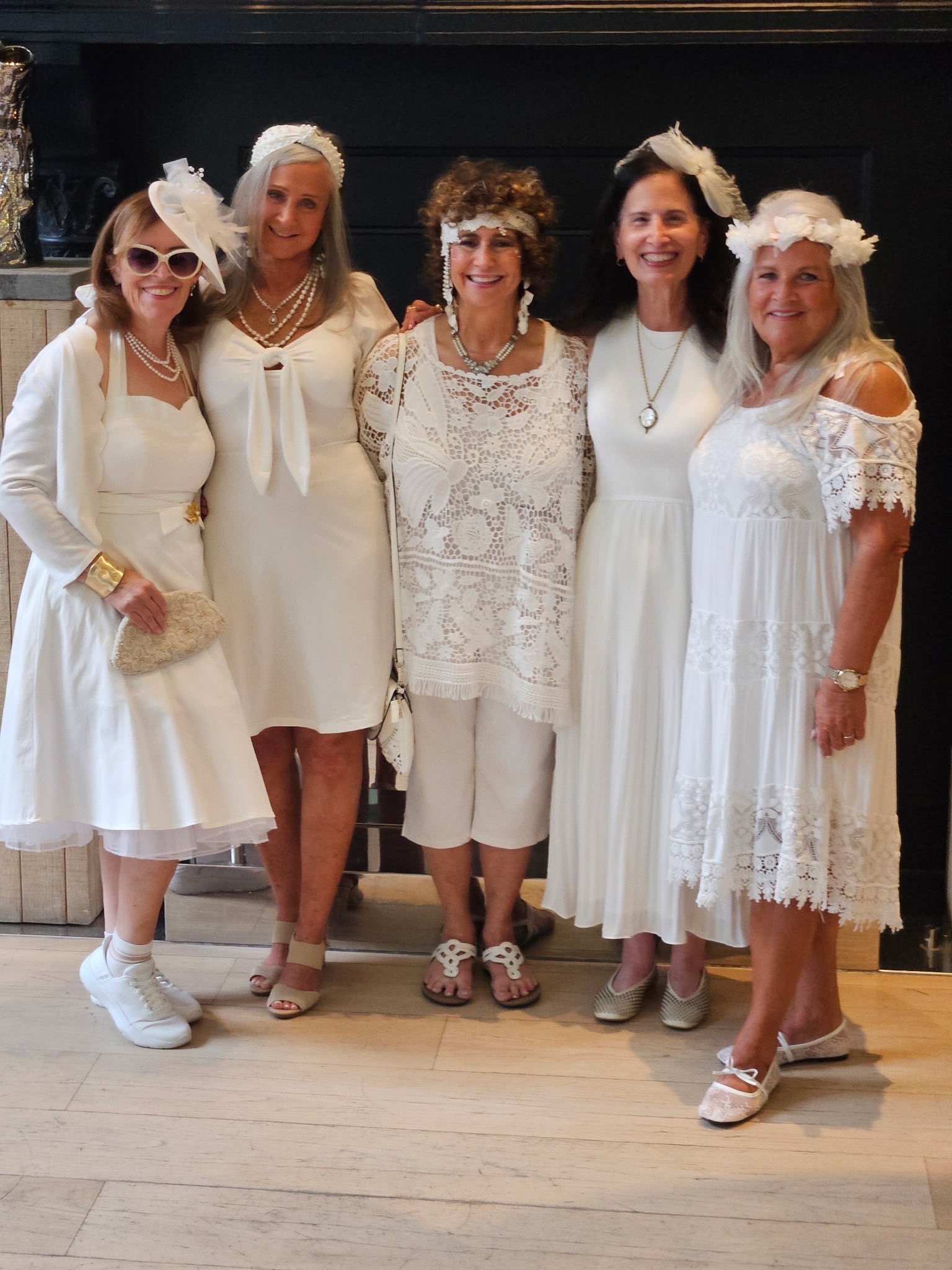
Table leader Candy Rathsmill, who was set to lead 50 Dîner en Blanc attendees to the location, had already prepared for rainy weather, adjusting her outfit to include a poncho and white sneakers. But she and her friends still “dressed in our whites,” drank champagne, and dined at Spice Finch. “Many of my guests partied at hotels, others picked up the food they had ordered and celebrated at home with friends,” said Rathsmill.
Karen Barach, Carolyn Blatstein, Candy Rathsmill, Adelyn Brecher, and Jill Shefsky, still dressed up and celebrated Dîner en Blanc on their own, despite the annual picnic being canceled.courtesy of Candy Rathsmill
“We made lemonade out of lemons,” she said.
TV host and style expert Jen Su was already dressed for the occasion before the cancellation announcement was made shortly before 4 p.m. on Thursday. “My dress was from [the brand] Akira and it was styled by Soku Massimo. And my hair was done by [red-carpet hair stylist] Linnternational,” she lamented. “My hubby ended up cooking dinner for me and we wore our white outfits by candlelight and drank champagne.”
“[We had] Sichuan spicy chicken and rice as the rain poured outside. It ended up being a beautiful Dîner en Blanc,” said Su.
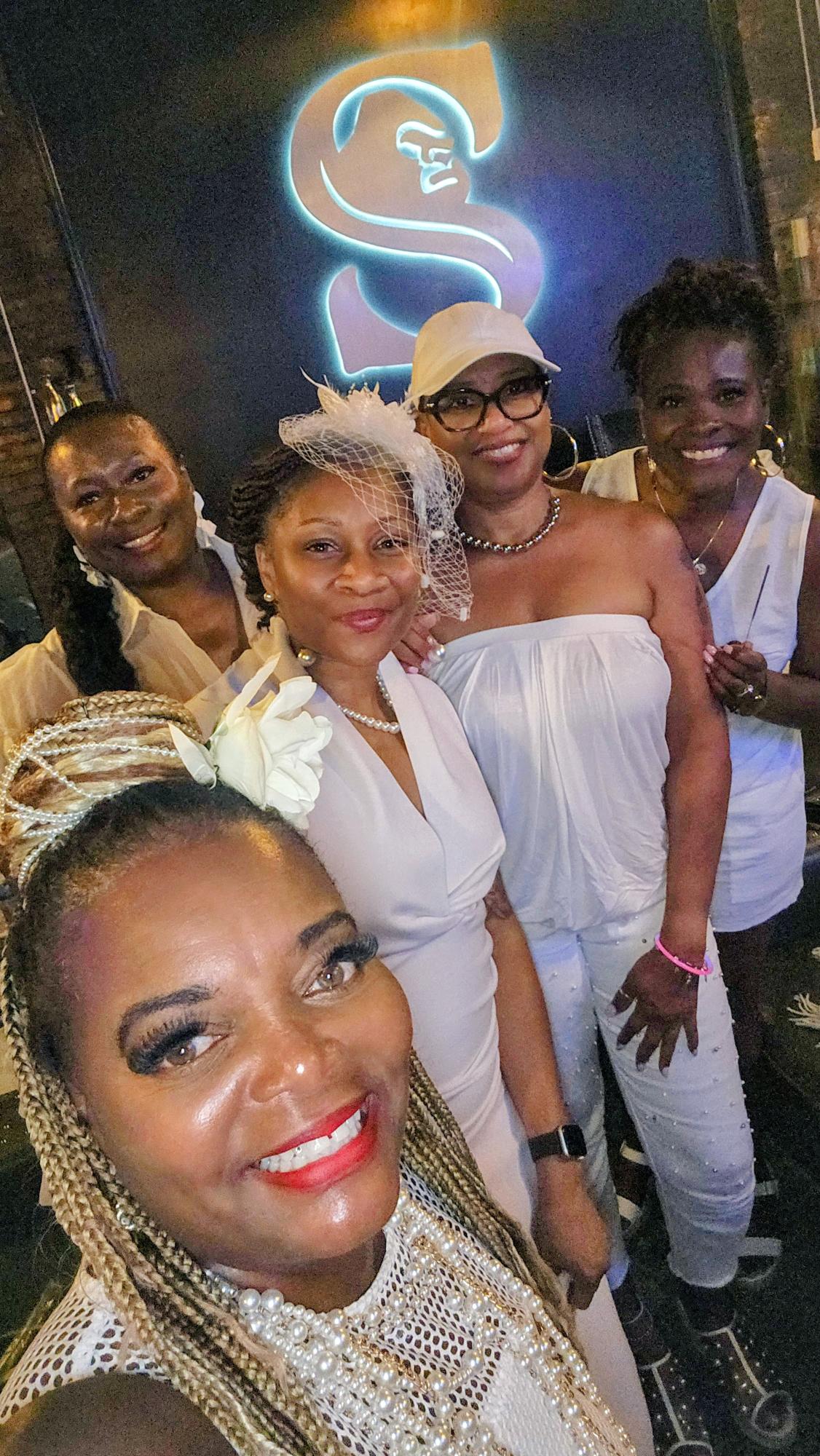
Melissa Joyner, owner of Tangibles Salon & Beautique in Voorhees, and her friends also made the best of the situation. They were already dressed up and had packed their decor, so they headed to Smokin’ Silverbacks Cigar Lounge in Fishtown and set their tables up inside. ”Our Dîner en Blanc was born. From napkin-swinging to sparklers, good food, cigars, laughs, and unforgettable vibes, we had it all and we had a ball,“ said Joyner.
Melissa Joyner, Malaika Guest, Jamel Lott, Marian Gordon, and Annetta Hall were already dressed up for Diner en Blanc, until the event was canceled and they rerouted to Smokin Silverbacks Cigar Lounge in Fishtown.MelissMelissa Joyner’s impromptu Diner en Blanc table, set up inside a cigar lounge when the event was canceled.Meliss
“The original plans may have been canceled, but the celebration definitely wasn’t. Sometimes the best memories come from the plans you never planned,” said Joyner.
Meanwhile, Rathsmill is keeping the party going even longer and planning to meet up with members of her group today. “One of the best parts of Dîner en Blanc is making lifelong friends,” she said.
For years, Graduate Hospital — the Center City neighborhood roughly bounded by South Street and Washington Avenue, and Broad Street and the Schuylkill — has been sorely lacking in places to stop in for a snack, pastry, or ice cream cone.
It didn’t seem to matter: Rittenhouse was so close that residents’ desires for little treats were generally met by walking a couple blocks north, where “little treats,” the culture of which has been surging worldwide, abound. On the 200 block of 20th Street alone, between Walnut and Spruce, you’ll find 1-900-Ice-Cream, which opened in 2022 and sees relentless lines down the block; All Aboard Candy, which opened last year and is one of two places you can buy adorable gummy candies; and Biederman’s, a seafood-centric “appetizing” shop that opened earlier this year.
Now, Grad Hospital is seeing its own treat boom. In recent months, the neighborhood has seen an influx of treat sellers that shows no sign of stopping.
The openings have been concentrated on South Street between 15th and 17th Streets, but other parts of the neighborhood are changing as well.
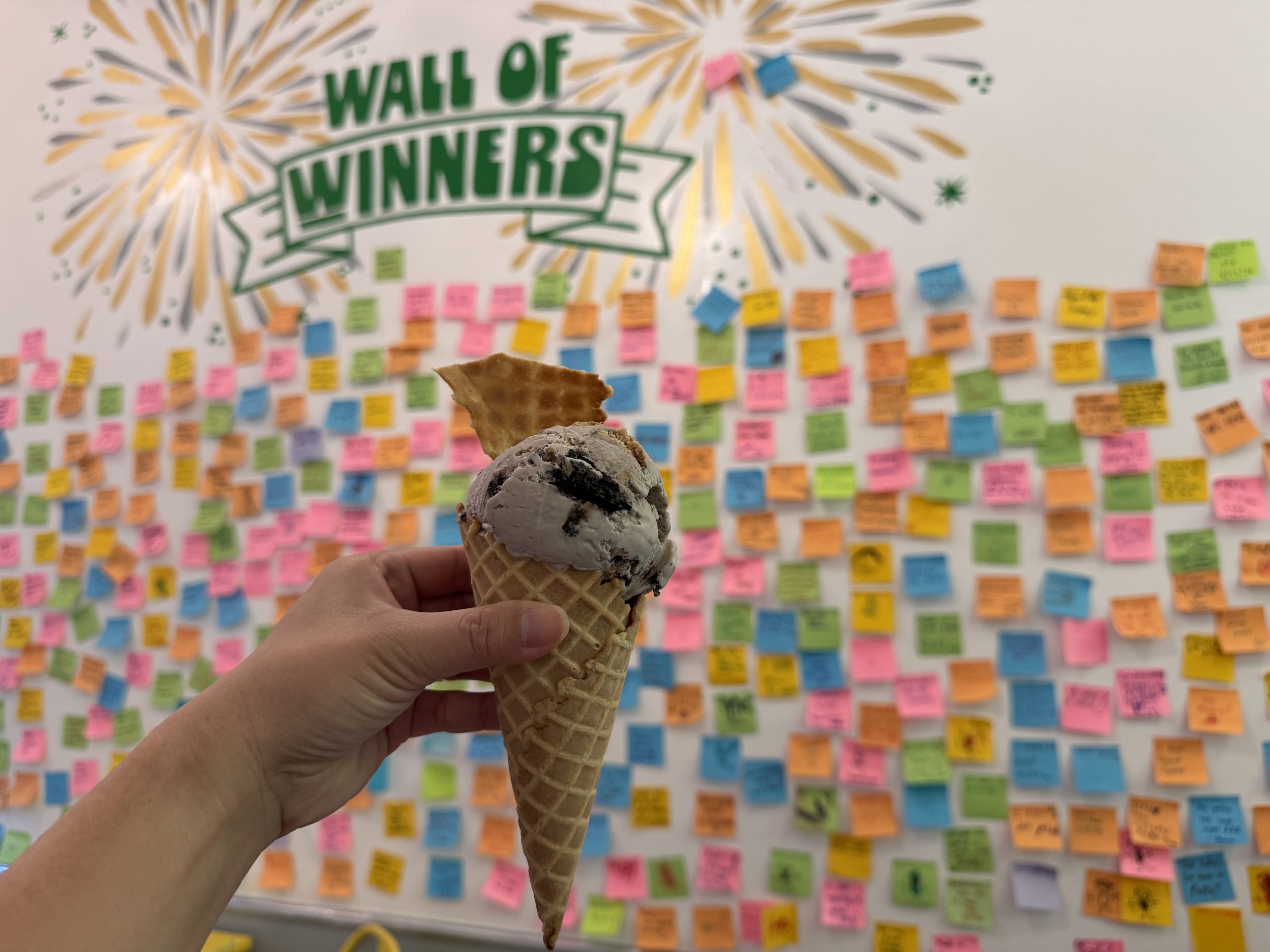
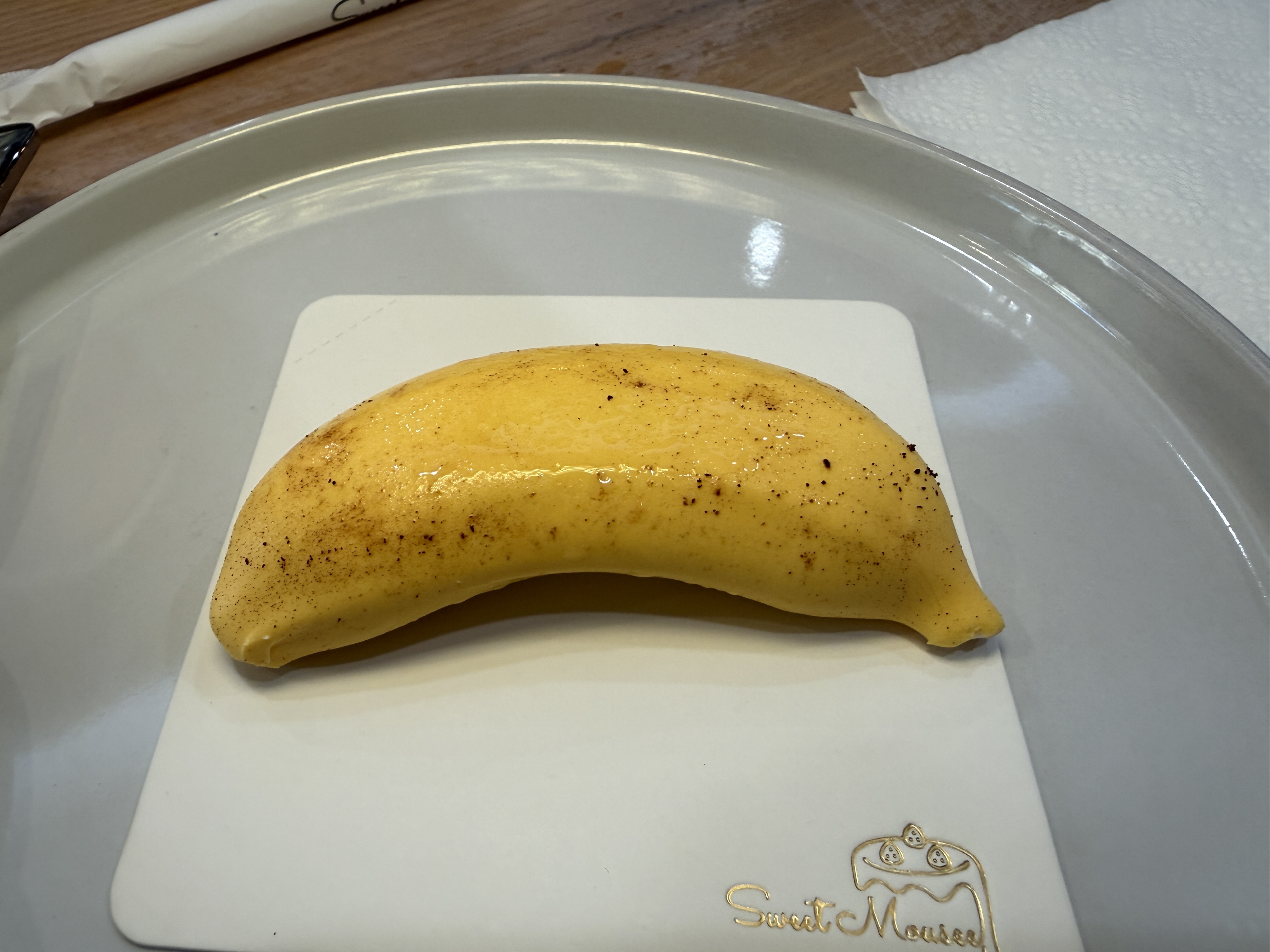
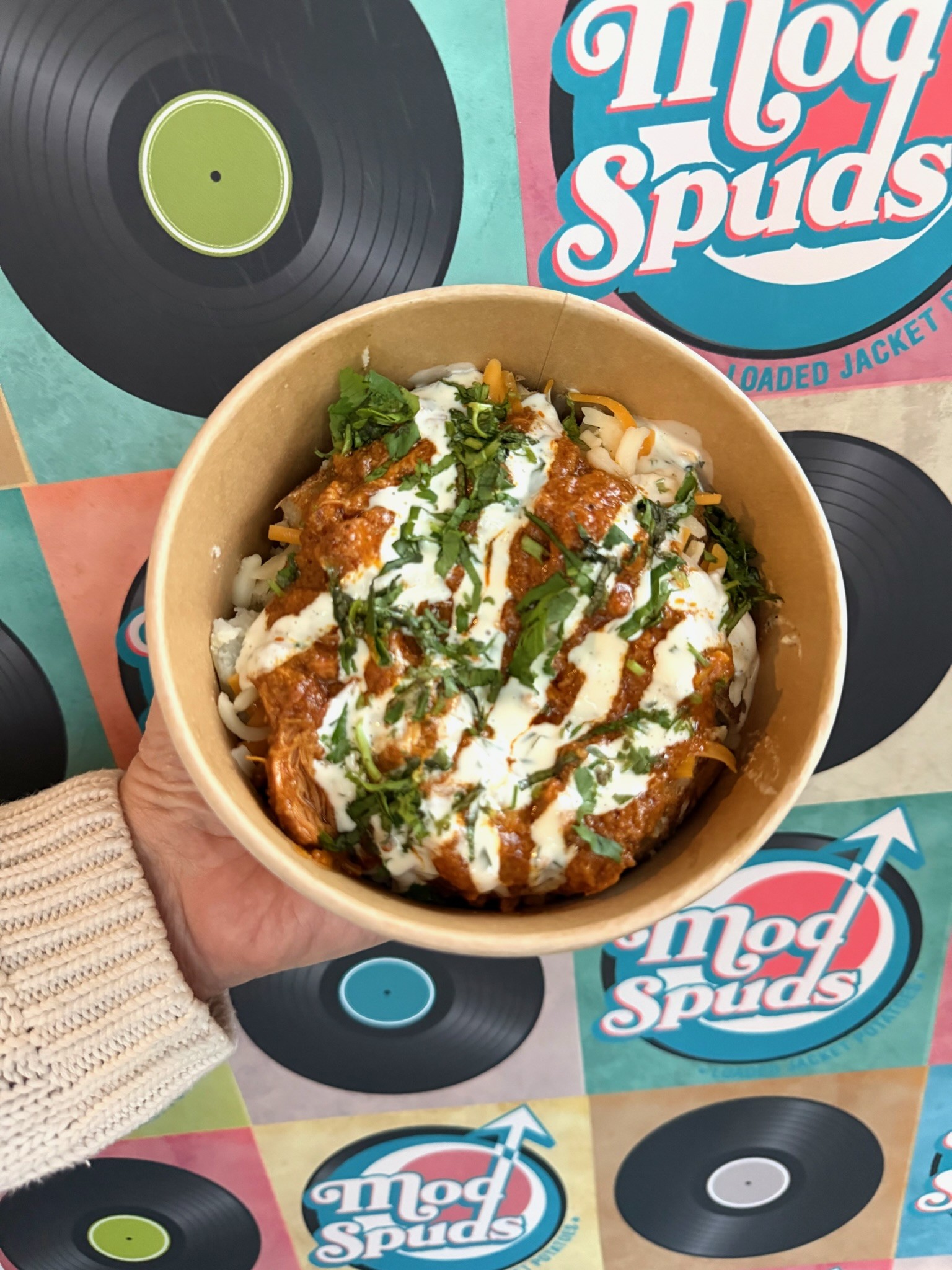
Winners Ice Cream, Ange Branca’s jacket potato and creamsicle-driven operation Mod Spuds, Sandpiper Cafe (where you can get trendy matcha lattes), and Sweet Mousse (which sells even fancier beverages and mousse cakes) all opened within two blocks of one another on South Street between May and July this year. They are all Asian-owned — a notable aspect of little treat culture, as Asian flavors like matcha and ube have been extremely popular at little treat retailers. (Demand for both ingredients has been so high, both have seen global supply chain shortages.)
The market for little treats, also known as treatonomics, is propelled by Gen Z but not at all restricted to that generation, as spending on “pick-me-ups” generally increases in recessions and in uncertain economic conditions, economists have found.
Cookies and cream dream in a waffle cone at Winners Ice Cream in Graduate Hospital.Kiki Aranita
The Grad Hospital boom is powered by nimble operators with no need for the ventilation systems required at most full-service restaurants. Thus, they are able to launch after footing comparatively light construction costs.
“We’re two months in and it’s been awesome,” said Anh Nguyen, the owner of Winners. “Many are saying Grad Hospital needed an ice cream shop, so I’m happy we opened here.”
Nguyen’s clientele consists mostly of neighborhood residents and families. He hopes to attract more customers from outside the area. “My aim is to win the block, then win the city. I love being the neighborhood ice cream parlor — somewhere for families to go celebrate and make memories.”
Though Nguyen currently lives in Roxborough, he hopes to move. “I’ve fallen in love with Grad Hospital since being here and everyone I’ve met has been so welcoming and encouraging.”
The dark chocolate banana mousse cake from Sweet Mousse in Graduate Hospital.Kiki Aranita / Staff /
Little treats are massively impacting a neighborhood that, until this year, was stalled in gentrification. Once primarily home to working-class Black residents, Grad Hospital fell into disrepair when the manufacturing industry declined in Philadelphia. The neighborhood gentrified rapidly between the late 1990s and early 2010s due to city tax abatements and proximity to University City and Center City. According to a study by Pew Charitable Trusts, Graduate Hospital experienced the most dramatic changes in racial composition in Philadelphia in the early aughts: “[Graduate Hospital’s] total Black population fell from 7,793 in 2000 to 3,450 in 2014. During the same period, the number of white residents more than tripled in the neighborhood.”
The wave of redevelopment, new construction, and gentrification brought comparatively few small businesses and restaurants. Unlike South Philly and Fishtown, Grad Hospital has no established restaurant corridor.
A Malaysian spud from Mod Spuds.Courtesy of Mod Spuds
“Mod Spuds [on the 1400 block of South Street] needed a place that is a fine balance between good traffic, neighborhood-y, and affordable,” said Branca, who said that the location was perfect despite (or even because of) being a “less desirable block.” Its limited kitchen space, which does not allow for an exhaust hood, kept her rent down. It was only after Mod Spuds opened that Branca realized she was right on Grad Hospital residents’ commute home from jobs in Center City.
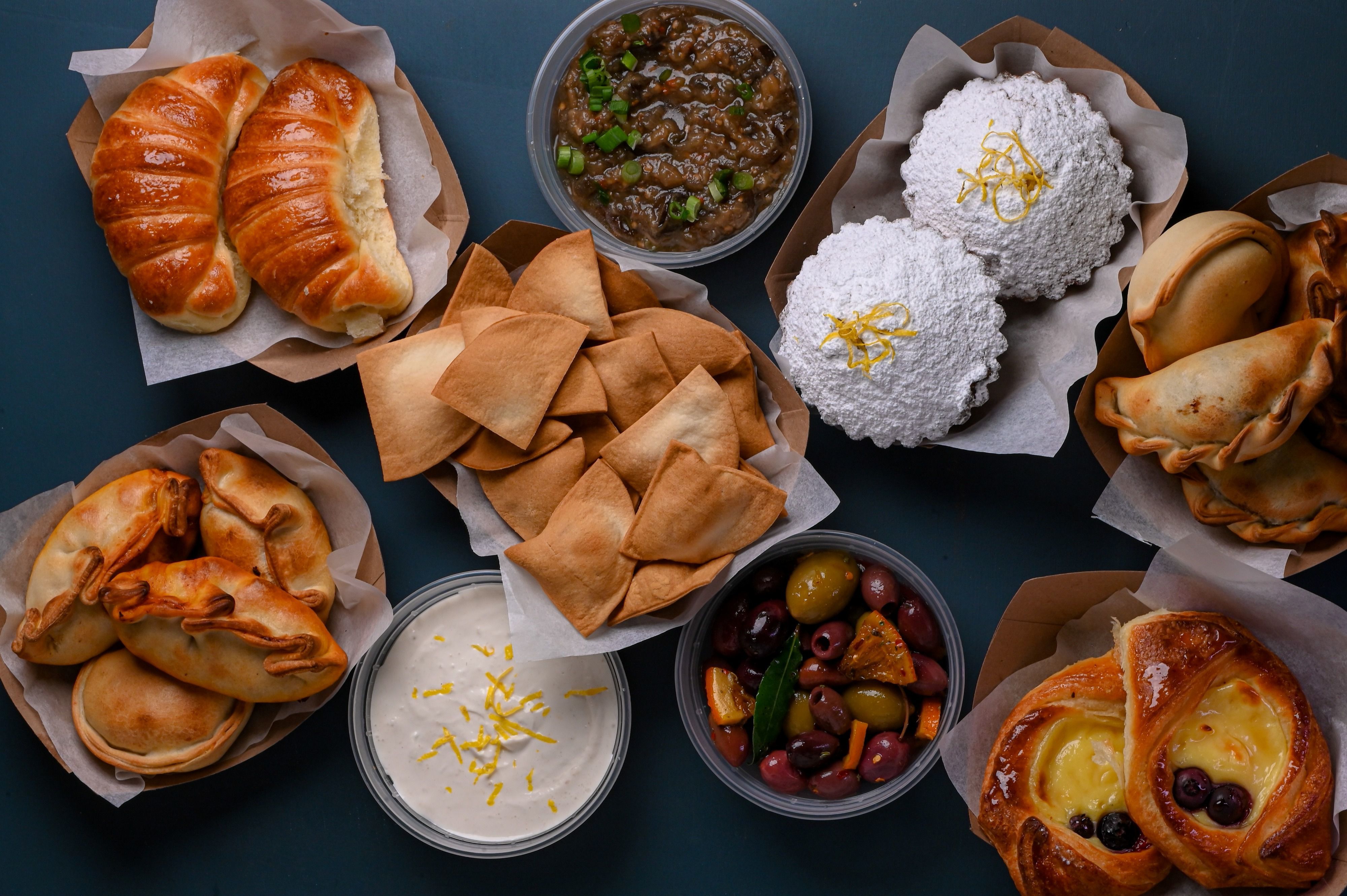
The neighborhood has also beckoned “empanada queen” Jezabel Careaga, who had left as a business owner, but not as a resident, in 2018. Technically, Careaga’s original Argentine bakery, Jezabel’s, was in Fitler Square, but now she is reopening it at 617 S. 24th St., right on the cusp of Grad Hospital. Careaga’s empanadas and alfajores helped define Philly’s little treat scene long before the culture acquired its tagline.
“Graduate Hospital has changed so much since I first came to this neighborhood, but what is really special to me is seeing the generations grow up here,” said Careaga, who has lived in the neighborhood since 2010. “It feels like I’m creating a little piece of the memory I had with my grandmother, right here in my own neighborhood.”
Assorted dishes from Jezabel Careaga, including empanadas, medialunas, escabeche, ricotta cake, facturas, olive oil crackers and preserved lemon labneh.Lucas Careaga / Innprodev Agency
The same children who would stop at her bakery after school are now grown up — some have even asked her for jobs. “And now I’m seeing them with children of their own, stopping by our bake sales with their little ones,” said Careaga. “It makes me so happy to think that the traditions we started years ago can continue with another generation.”
Anthony Bourdain spent much of his career telling audiences that the best way to understand a place was to resist the easy story about it.
Tony, the new movie about his formative summers in Provincetown, Mass., might have taken that advice.
Director Matt Johnson’s film is an affectionate, funny, atmospheric, and beautifully acted origin story about the future chef, writer, and television personality. Its smartest decision is to avoid trying to encompass Bourdain’s entire life, which ended with his suicide in 2018 at age 61.
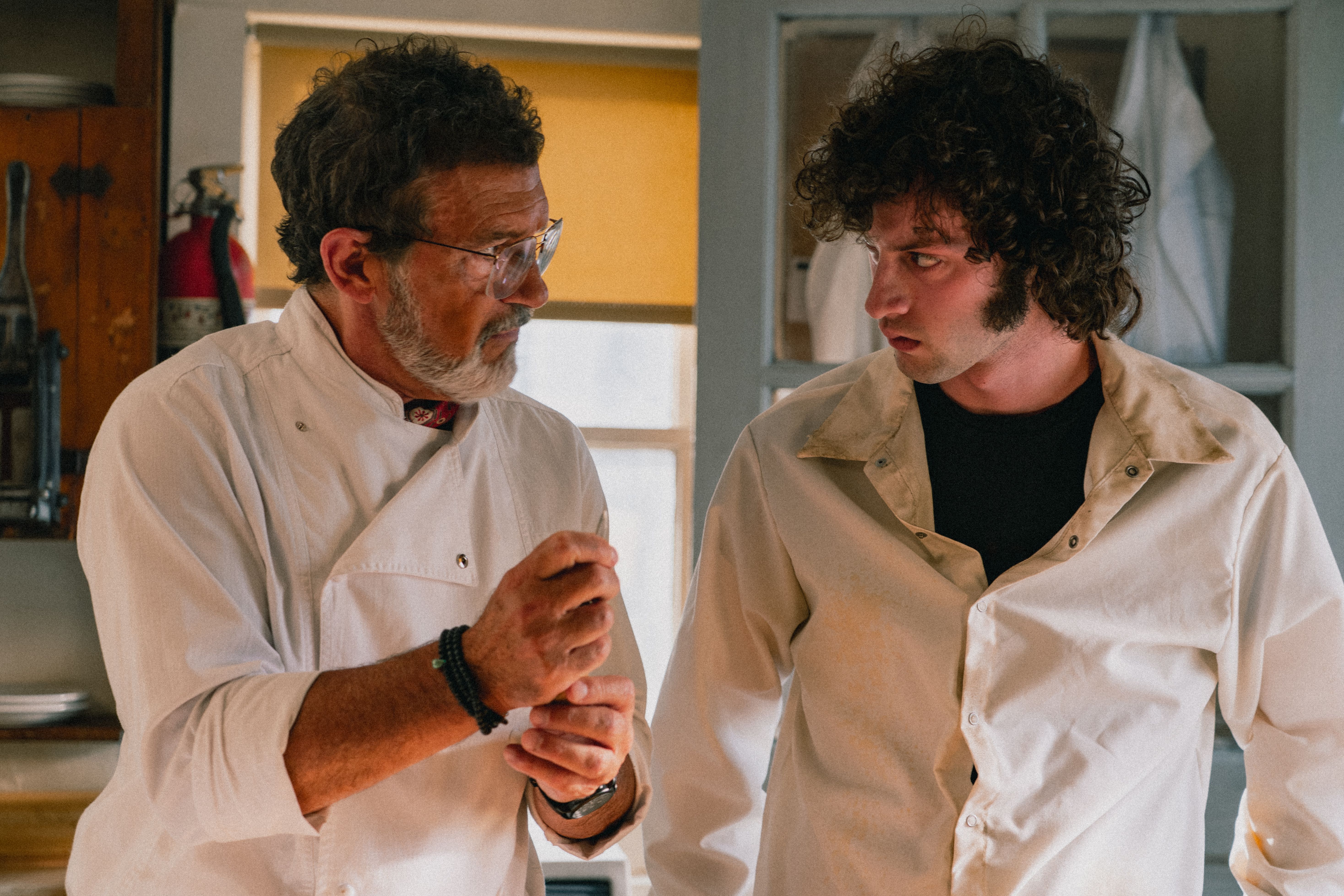
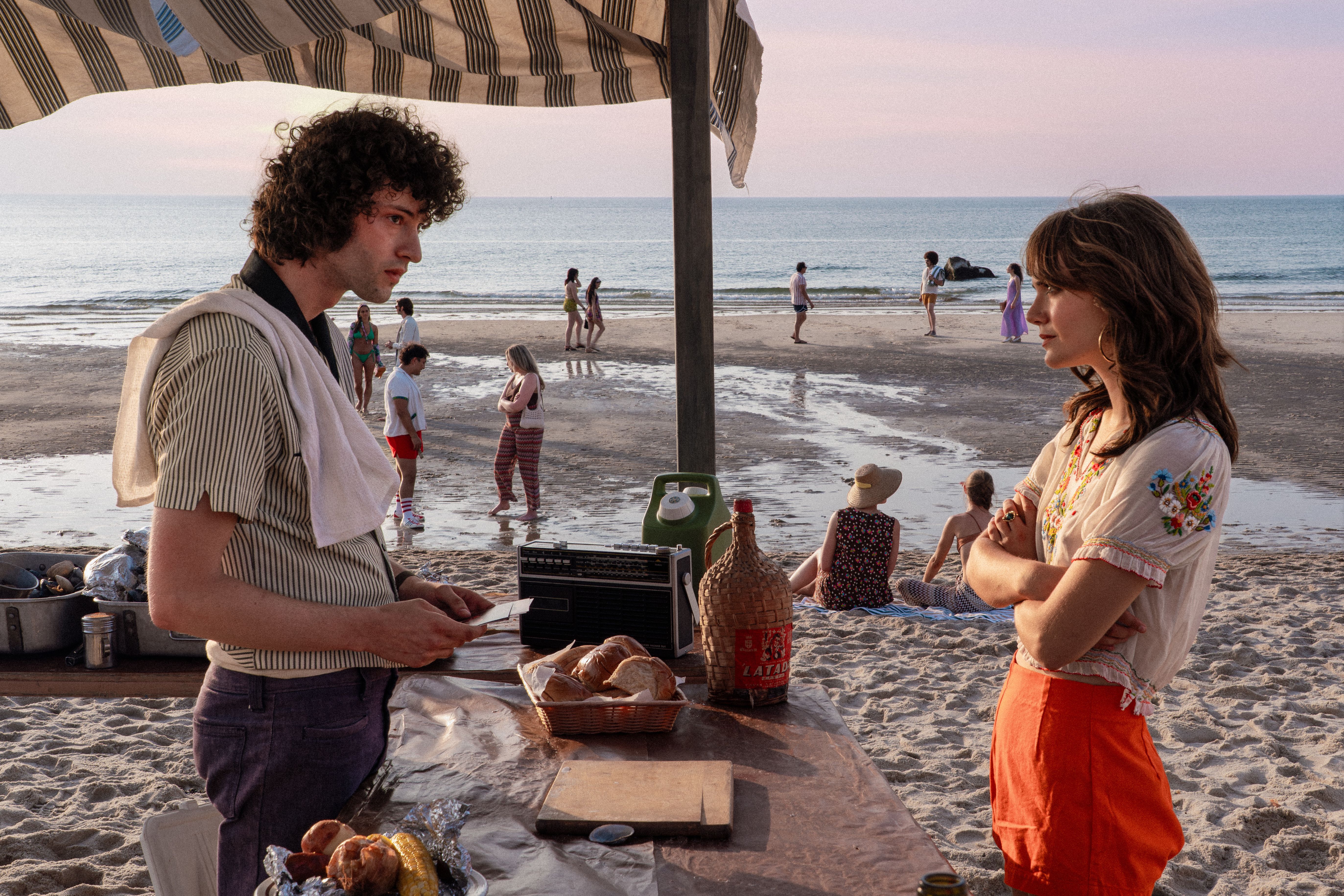
Antonio Banderas (left) as a chef-mentor with Cherry Hill native Dominic Sessa as Anthony Bourdain in “Tony.”A24
Instead, Tony concentrates on the period when a privileged, unhappy teenager from New Jersey stumbled into a restaurant kitchen and discovered a world more exciting than his own.
The historical outline is true. The story Tony builds around it is considerably less so.
Cherry Hill nativeDominic Sessa, who made an impression in The Holdovers, plays Bourdain at 19: a Vassar student, would-be writer, romantic, poseur, and world-class pain in the a—. He arrives in Provincetown chasing both an idea of himself and Nancy Putkoski (Emilia Jones), his girlfriend and eventual first wife.
Sessa wisely avoids a Bourdain impersonation. Rather than reproduce the familiar television cadence or Parts Unknown mannerisms, he gives us a young man who has not yet earned the persona he is trying on.
Bourdain later described his younger self as spoiled, narcissistic, miserable, and self-destructive. Tony takes him at his word. This Tony is clever but not nearly as clever as he thinks, hungry for experience but desperate for other people to notice him having it.
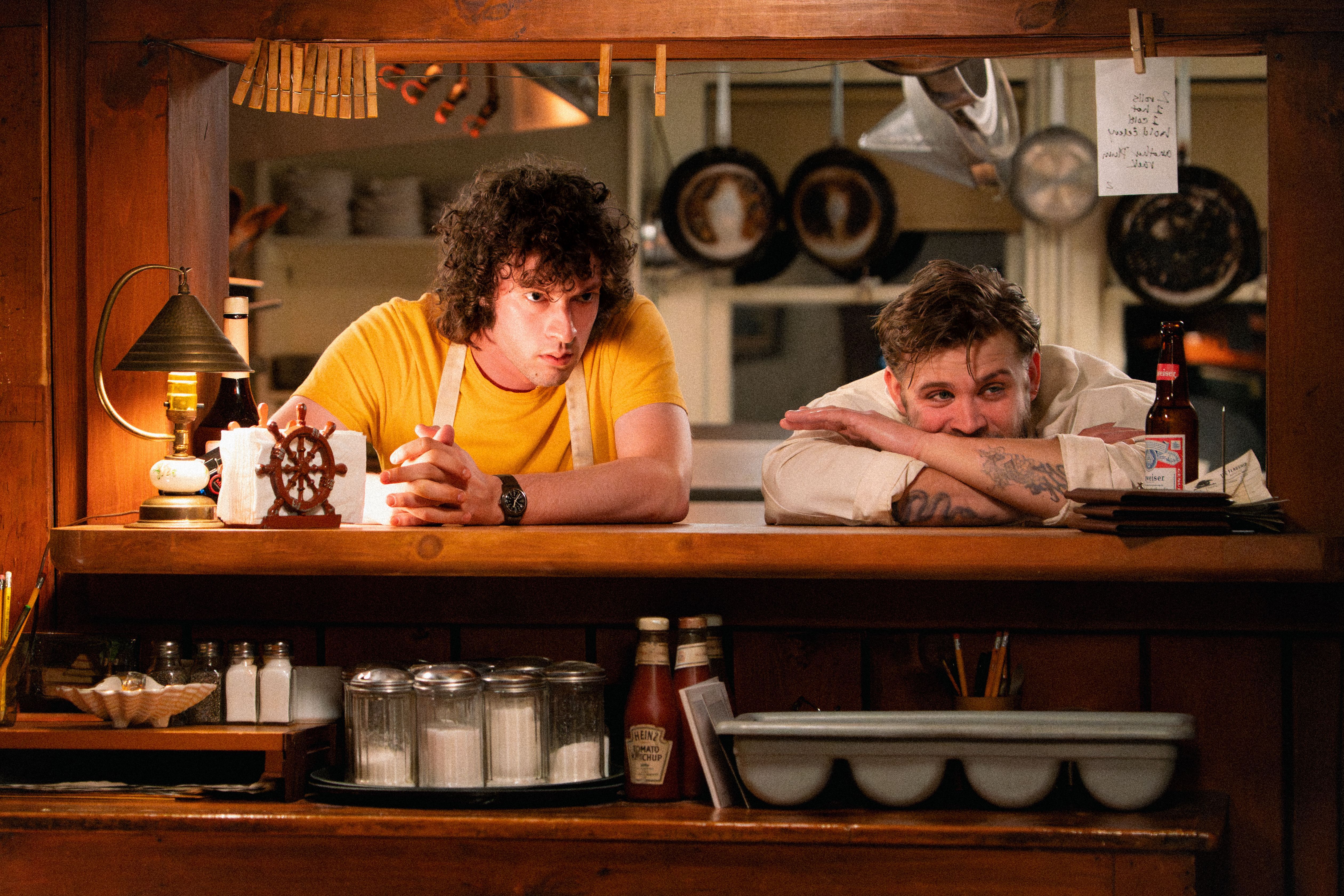
The movie becomes much more interesting once he lands a job washing dishes at the Flagship, a waterfront seafood restaurant in Provincetown that Bourdain renamed the Dreadnaught in Kitchen Confidential.
Here Johnson has something unusually valuable for a biopic: Bourdain’s own account of being seduced by the restaurant life.
He remembered the Flagship cooks as pirates and gods, former hippies, drifters, and hard-living professionals who drank, swore, stole, screwed, and seemed afraid of nothing. To a sheltered young man searching for an identity, they represented an intoxicating alternative to his comfortable world.
Cherry Hill native Dominic Sessa as Anthony Bourdain with Emilia Jones as Nancy, his girlfriend, in “Tony.”A24
Tony is at its best capturing that attraction.
The kitchen is hot, filthy, profane, sexually charged, and physically punishing. The cooks haze newcomer Tony, who starts in the dish pit and discovers he likes being useful, gradually working his way toward cooking.
Sessa is especially good at conveying Tony’s fascination with people who seem more authentic than he feels.
Leo Woodall plays Sal, a charismatic cook with the confidence, appetites, and recklessness Tony envies. Antonio Banderas supplies the opposite influence as Ciro, the restaurant’s chef-owner, a disciplined professional who sees something worth cultivating in the callow teenager.
Both are effective characters. But neither should be mistaken for straightforward biography.
That is the complication at the center of Tony.
The movie draws from the opening sections of Bourdain’s 2000 memoir, Kitchen Confidential, and his later recollections in a 2014 Parts Unknown episode. With thin source material, Johnson and his cowriters have filled the gaps aggressively.
Johnson has acknowledged that he compressed Bourdain’s several formative summers in Provincetown into one, set in 1975. Nancy was real and worked at Spiritus Pizza, a gathering place in Bourdain’s Provincetown years. The Flagship was real, and Bourdain began there as a dishwasher. His fascination with its swaggering cooks comes directly from his writing.
Much of the rest is interpretation. Relationships are reshaped and characters are combined. Experiences Bourdain described retrospectively become revelations occurring in real time.
That is hardly unusual for a biopic, and some of the inventions work.
Nancy is not merely the girlfriend waiting to recognize the greatness everyone in the audience knows is coming. She is often the person least impressed by Tony’s performance of himself, and Jones gives her enough intelligence and independence to puncture his pretensions.
Banderas brings a quiet dignity to a movie otherwise swimming in adolescent testosterone. But Ciro appears largely to be a composite created to give Bourdain something his own account of Provincetown did not provide so neatly: a moral mentor.
Sal serves the opposite function. He represents the seductive outlaw kitchen culture Bourdain embraced — drugs, sex, appetite, danger — and its costs.
The arrangement is dramatically efficient: two models of the man Tony might become.
It is also awfully tidy.
Bourdain’s relationship with restaurant culture was more complicated. The same world that gave him purpose also gave him permission to indulge some of his most destructive instincts. He understood that contradiction particularly well in middle age, when he returned to Provincetown for Parts Unknown and discussed his past with considerably less nostalgia.
Tony occasionally seems reluctant to live with that ambiguity.
Johnson, cinematographer Michael Bauman, and production designer Ryan Warren Smith compensate with a Provincetown rendered in a hazy mid-1970s glow. The movie moves languidly between the restaurant, Nancy, parties, beaches, and the community around him. At its best, it feels less like a conventional biopic than a memory of a summer whose significance became clear only later.
Some of Bourdain’s later literary observations are handed to his teenage self, a familiar biopic trick that makes young geniuses sound suspiciously like their accomplished older selves.
That is unfortunate because one of the interesting things about Bourdain’s story is how long it took him to become Anthony Bourdain.
He did not emerge from Provincetown as the finished article. He still had the Culinary Institute of America, decades of restaurant work, addiction, failure, writing, celebrity, television, travel, and reinvention ahead of him.
What Provincetown gave him was simpler: restaurants.
Bourdain found satisfaction in washing dishes and learning to cook. He discovered a tribe whose confidence and camaraderie fascinated him and people whose lives bore little resemblance to his cushy upbringing. Eventually he recognized that cooking might offer something writing had not yet provided — a place to belong.
Those facts are compelling enough without forcing them into a neat transformation.
That is why Tony succeeds when it stops trying to show us the instant Anthony Bourdain became Anthony Bourdain. The more it simply observes a confused young man falling in love with restaurant life, the closer it gets to the truth.
Philadelphia’s 14th edition of Dîner en Blanc — the annual picnic where participants wear white and bring their own food, chairs, and tables to a surprise location announced just hours before the event — was set to take place Thursday night. But severe weather predicted for this evening changed those plans. This is the first time the event has ever been canceled.
Dîner en Blanc organizers had sent an email update to ticketed participants this morning. According to the email, organizers “are closely monitoring the weather and are in active discussions with the city, venue, and weather services. We are carefully evaluating the conditions, and we will keep you posted as we learn more.”
Before 4 p.m., they issued a statement on Instagram that read: “We are devastated to inform you that amid weather-related concerns and after discussions with the city, weather services, venue, and vendors, we will not be moving forward with tonight’s Dîner en Blanc Philadelphia 2026. The decision to cancel was not made lightly, as we know how much time, excitement, and effort go into this event on the guest side. The safety of our guests, volunteers, and vendors is of the utmost importance. The current weather forecast for lightning, high winds, flash flooding, hail, and tornado threat makes it impossible for us to proceed as planned.”
Dîner en Blanc has traditionally been a rain-or-shine event. “We’ve definitely partied through the rain!” said Kate Marlys, the PR representative for Philadelphia’s Dîner en Blanc.
“The Navy Yard year [2015] had rain, and we were still able to continue with the event. The year we were at Boathouse Row [2019], there was a severe storm with lightning that came through during the event, and we did have to end the event early that year,” said Marlys, who said the forecast for Thursday night seemed more severe than in previous years.
In the past, rain did not deter table leaders — who meet 50 other attendees apiece at predetermined locations throughout the city to help navigate setting up tables, then collect all trash and belongings at the end of the night — like Candy Rathsmill, 71, who has so far attended all but one of Philadelphia’s Dîner en Blanc occurrences.
“Rain makes it uncomfortable but it brings a new dimension to the experience,” said Rathsmill. “When it rained at the Navy Yard, my plate filled up with water and I couldn’t eat my food, but this year I’m prepared.”
She was planning on wearing white sneakers instead of sandals, and packing a poncho and a plastic tablecloth to layer on top of her white linen one. “It’s always fun to be soaking wet and wearing white,” she joked. “And I bring everything in white trash bags.”
“Even when it rains, it’s a celebration of life. It’s the best party I’ve ever gone to.”
Last year, Dîner en Blanc was held on the Girard College campus, with 5,000 people in attendance. Tickets, sold in pairs, cost $146 per couple.
With only a few weeks of peak barbecue season left and Labor Day weekend around the corner, there’s no better time to stock up on wines like this one that are equipped to handle a rack of ribs.
Red wines and red meats go together so well that it’s tempting to think that anything goes as long as the colors match. If you’re a fan of leaner, drier reds from places like Italy or France, it’s helpful to know that they will not taste their best with barbecue sauce. With only a handful of fruity exceptions like valpolicella or Beaujolais, those combos are almost guaranteed to clash due to the ultra-dryness of most European classic reds and the sticky sweetness of most barbecue sauces.
Red wines from the Americas or the southern hemisphere are better equipped for barbecued ribs, chicken, or even BBQ-flavored chips because they taste so much riper and register as sweeter, even when their actual sugar content is almost as low.
Bold red blends from California are a great choice for barbecues because, in addition to tasting less dry and more fruit-forward, they align nicely in other dimensions as well. Most are quite intense in their concentration of flavor and almost all feature prominent oak flavors that harmonize with the smoky taste of barbecue sauce.
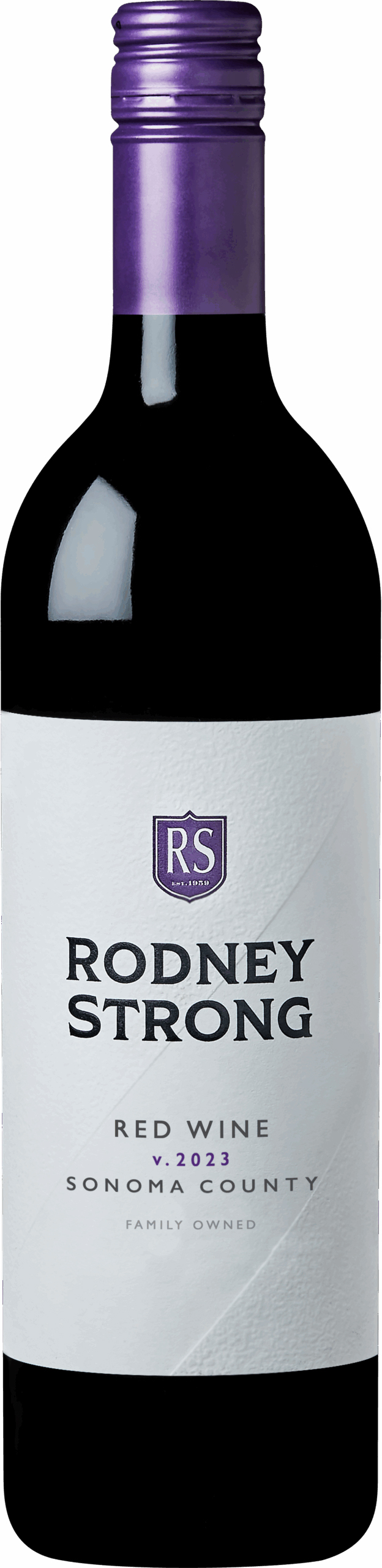
Cheaper reds may acquire oaky flavor through the use of extracts or wood chips, but premium wines like this Sonoma red blend from Rodney Strong get their oak taste the old-fashioned way — by aging in newly toasted oak barrels. Here, grapes like merlot and cabernet sauvignon contribute a blackberry backbone while jammier malbec and zinfandel add a sweet black cherry component. The result is a robust blend that is juicy enough to handle ribs and all the other barbecue staples, but still dry enough for red wine lovers to sip on and enjoy by itself.
Rodney Strong Red from Sonoma County.Rodney Strong
Rodney Strong Red
Sonoma County, California; 14.5% ABV
PLCB Item #96511
On sale for $18.99 through Aug. 31 (regularly $22.99)
Also available at: Canal’s in Mt. Ephraim, N.J. ($15.49; mycanals.com), Hopewell Super Buy Rite in Pennington, N.J. ($15.49; buyrite.wine), Moorestown Super Buy Rite in Moorestown, N.J. ($15.99; moorestownbuyrite.com)