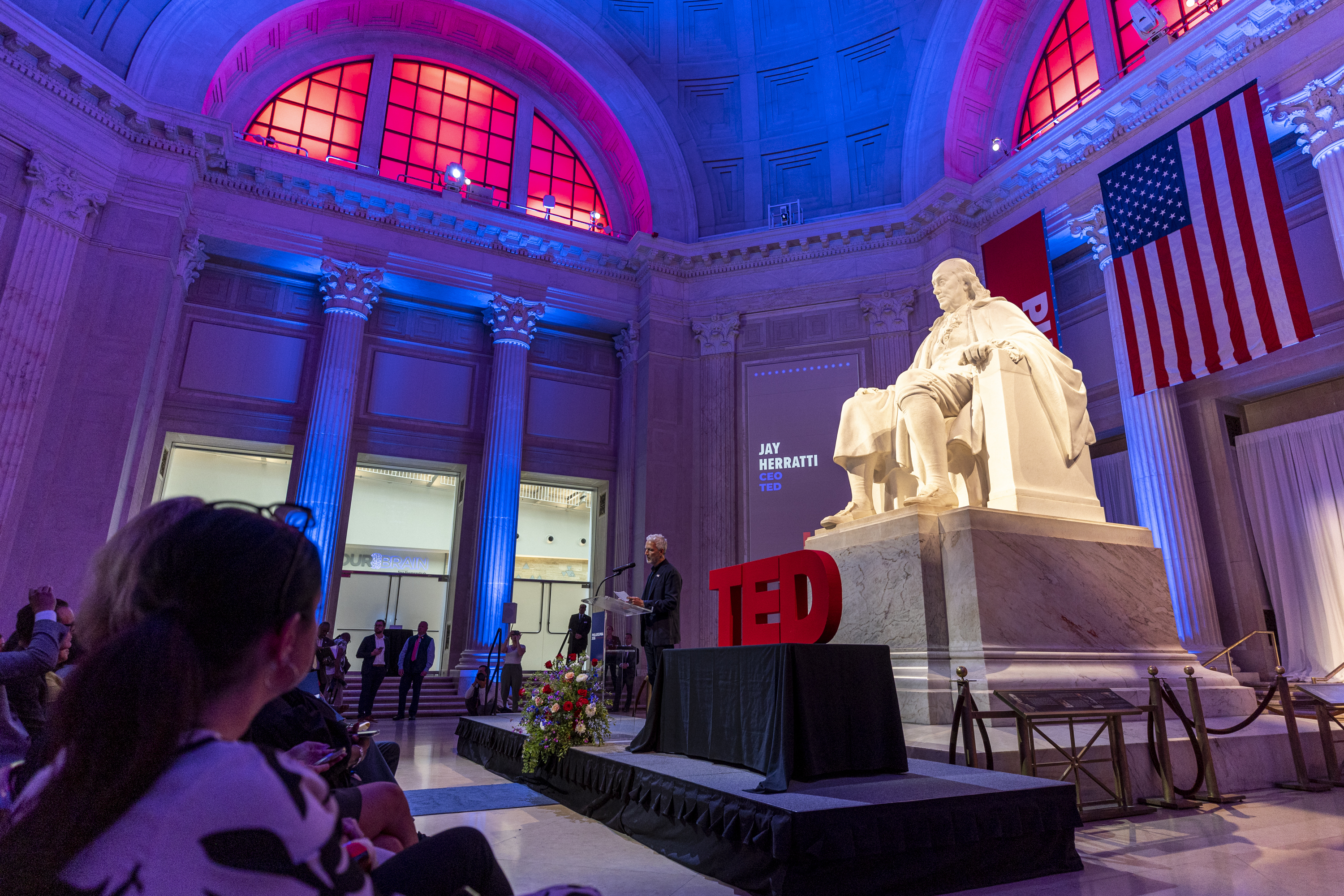
Storytellers and innovators from across the globe are in Philadelphia, America’s birthplace, to discuss the ongoing experiment of American democracy.
“TED Democracy Philadelphia: Founding Futures,” a full-day of new TED talks exploring the health and future of modern democracy in honor of America’s 250th anniversary, and hosted in the Kimmel Center’s Marian Anderson Hall, features over 30 speakers Saturday, including eight from Philadelphia.
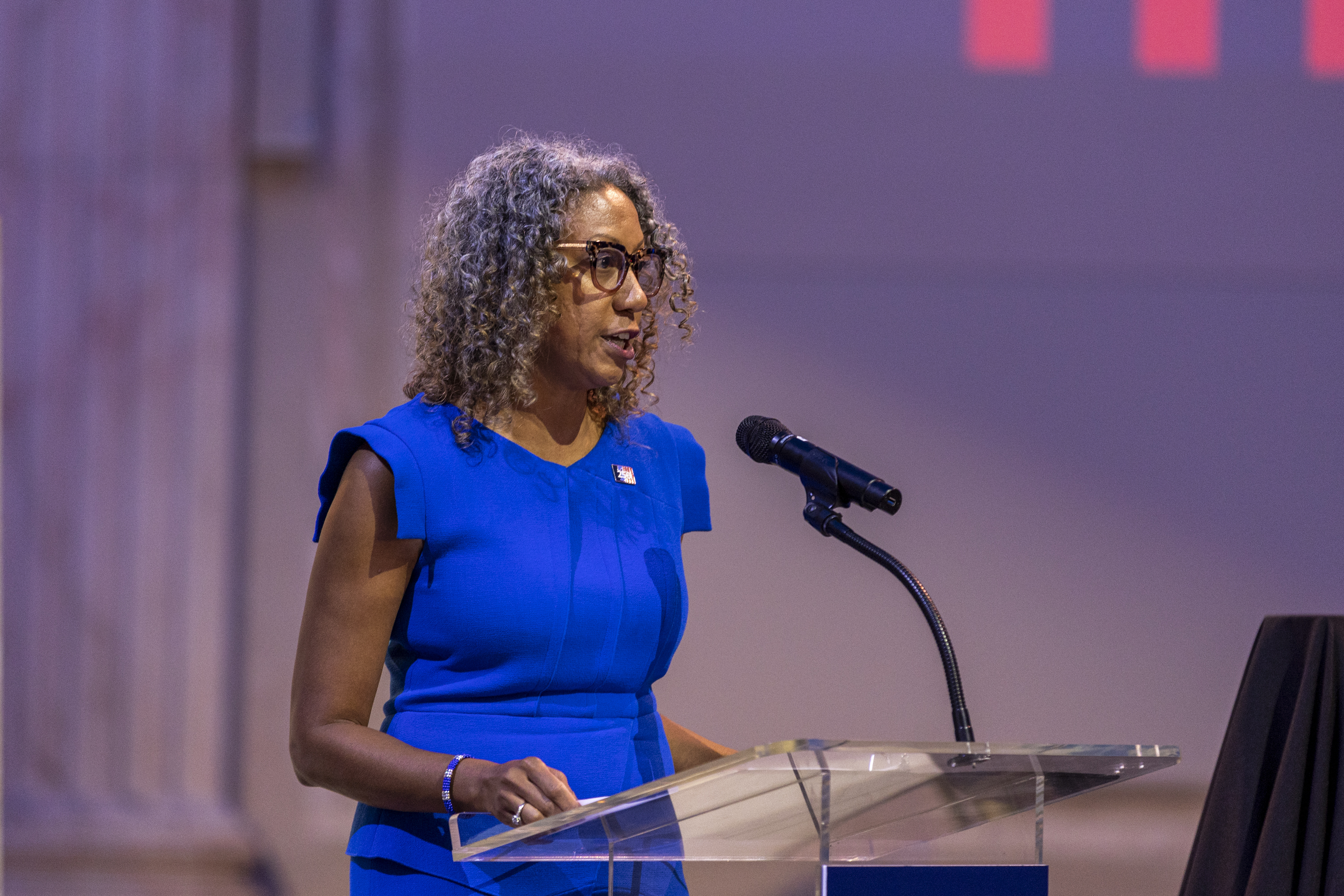
Angela Val, president and CEO of Visit Philadelphia, speaking during the announcement of Ted Democracy at the Franklin Institute in 2024.Tyger Williams / Staff Photographer
“We have so many things going on in Philadelphia on the 250th anniversary of our country,” said Angela Val, president and CEO of Visit Philadelphia. “What we felt was still needed was a discussion about democracy in America’s birthplace. Philadelphia is where democracy was born, and its future is being written. We’re still a city of thought leaders.”
Local leaders — including Anuj Gupta, head of the Welcoming Center, a nonprofit finding pathways for immigrants and Jasmine E. Sessoms, president of the 1968 Collective, dedicated to increasing civic engagement among Black women — will also offer three-minute Philly Flash Talks on topics like, race, economic equity, media literacy.
“What it means to participate in a democracy, what it means if we were to lose it,” said Val. “How it affects our everyday lives and influences our media and pop culture. It’s an opportunity to engage, question and reimagine the kind of democracy we want to build together for the next 250 years.”
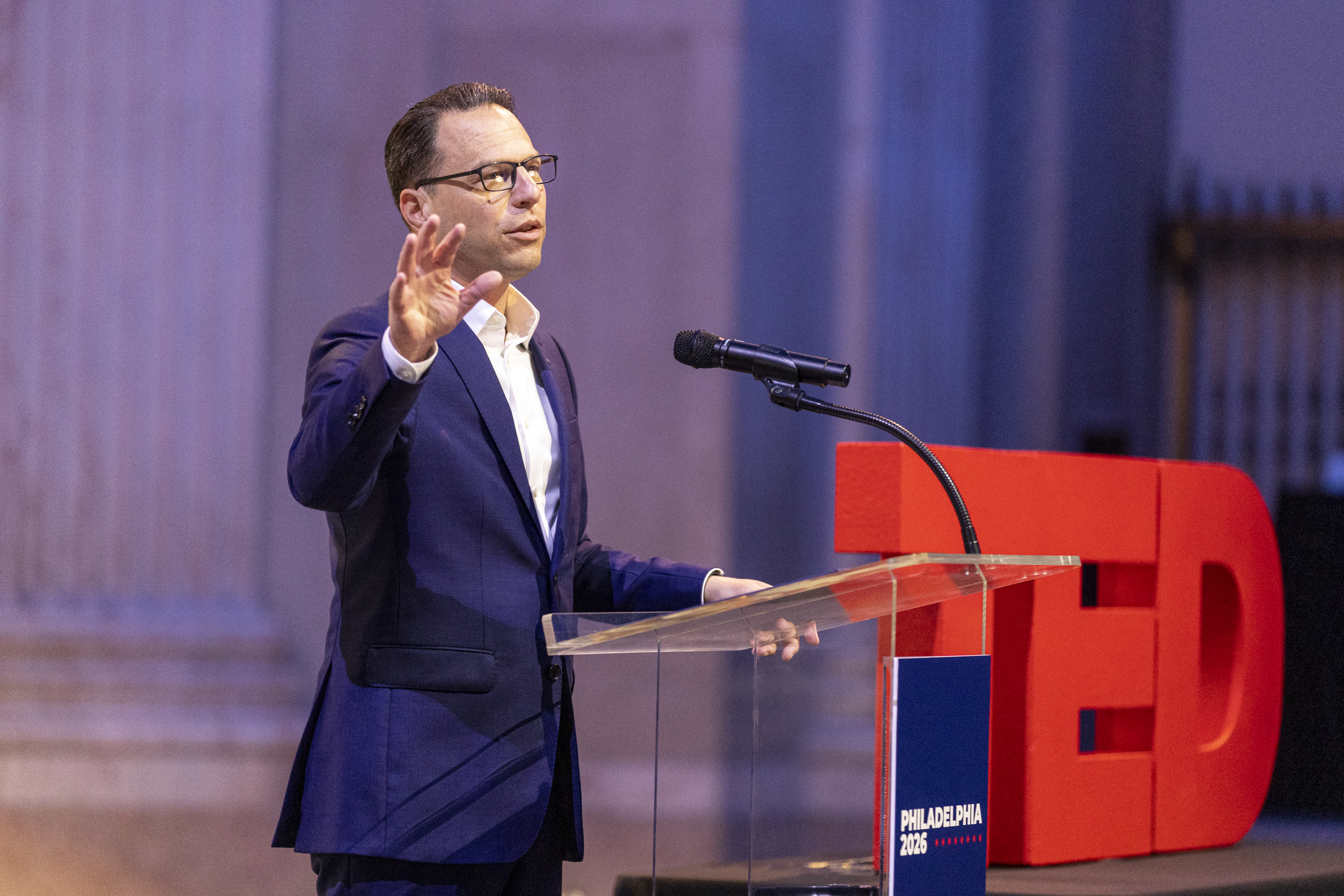
Governor Josh Shapiro at the announcement of Ted Democracy in 2024.Tyger Williams / Staff Photographer
Laura Beyer, head of TED’s partnerships program, said there is no better place to stage a global conversation about the future of democracy than Philadelphia.
“With TED Democracy, we are surfacing the next generation of ideas to ensure our democratic systems remain resilient,” she said.
Three years in the making — and the culmination of a TED speaker series in Philadelphia last year — the event also features small group discovery sessions, a “Public Square,” featuring local food, books, and crafts, and a “PEW Spotlight Stage,” with live performances and interviews. Partnering with the American Library Association, the event will be livestreamed at more than 65 libraries across the country.
Gonzalez, a staff writer at the Atlantic, who recently published her third novel, Last Night in Brooklyn, said she will discuss social class, a topic she is exploring for a memoir.
“So few people think about the matter of social class or income inequality as having anything to do with democracy, but it very much does,” she said. “It’s exciting to get to have the opportunity to talk about something that, generally speaking, people don’t really like to talk about.
Philly is a perfect spot for the talks, she said.
“This country really started as a bunch of ideas,” she said. “It feels like a very cool and appropriate way to celebrate this country in this moment by sharing ideas, and asking, ‘How do you make democracy better?’”
Back in 2000, when New Jersey musician and superstar producer-to-be Jack Antonoff played a show in Philadelphia with his teenage band Outline, the group stopped at a Wawa to fill Antonoff’s parents’ van with gas.
As fate would have it, the song playing at the gas pump was “Just Don’t Want to Be Lonely,” the 1974 recording by Philly soul group Blue Magic, co-written by Bobby Eli, guitarist in Sigma Sound Studios house band MFSB.
That Wawa pull up is immortalized in “The Van,” a song on Everyone for Ten Minutes, the new album by Antonoff’s band Bleachers, which will bring its “Bleachers Forever” tour to the TD Pavilion at the Highmark Mann in Fairmount Park on Saturday night.
Speaking via Zoom from New York the night after a tour date in Montreal this week, Antonoff said, in retrospect, he realized that “Just Don’t Want to Be Lonely” crystalized a theme that’s run through his life and work.
“At the time, I wasn’t articulating it to myself,” said the songwriter, whose client list as a producer starts with Taylor Swift and includes Lorde, Kendrick Lamar, Sabrina Carpenter, St. Vincent, Lana Del Rey, and Doja Cat.
(He’s been named producer of the year three times and has won 14 Grammys in total.)
“But now that I look back on it, the idea of leaving [on tour], and the Blue Magic song, and we’re all sitting there and no one knows how to pump gas because we’re from Jersey: what ties us all together is not wanting to be lonely.
“It’s a funny way to encapsulate what it is to choose the life I’ve chosen. But one thread between all of us is — whether it’s with each other in the van or with our audience — it’s a group of people with a fear of loneliness.”
“The Van” is a celebration of the camaraderie of playing music together and belongs to an autobiographical album about how “a kid in the shadows” like Antonoff, who grew up in Bergen County in North Jersey, found his people.
The song and the album are also a celebration of Antonoff’s marriage to actor Margaret Qualley, whom he married in 2023 on Long Beach Island, where the couple chiefly resides.
Of course, Antonoff is Jersey proud.
On Everyone, he sings about LBI as a place with restorative qualities. “Maybe that’s why my mom stays down at the Shore most of the time,” he sings. “We’re always meeting her there to breathe … it’s nice to get a break from that cynical beat.”
Every year, Bleachers headlines the Shadow of the City festival at the Stone Pony in Asbury Park. This year’s Memorial Day weekend edition was rained out, so the band played a free show inside the Pony, with the full performance now posted on YouTube.
Shadow of the City — which along with Bleachers and a TBA lineup also features “The World Famous SoTC Dunk Tank” — has been rescheduled for Aug. 28.
“Music, to me, is very location based,” said Antonoff. “I’ve always felt like I’ve spent my life going around the world just to show people what it feels like to be where I’m from.”
Qualley, The Substance and Blue Moon star whose upcoming starring roles include Ridley Scott’s sci-fi thriller The Dog Star and Rachel Morrison’s romantic drama Love of Your Life, is ever present on Everyone.
She’s on Antonoff’s mind in “Dirty Wedding Dress,” “She’s From Before,” and “You and Forever,” where she plays with her dog while waiting for her husband to come home in the video.
Antonoff’s first meeting with Qualley on the rooftop of New York’s Electric Lady Studios — which Del Rey sang about in “Margaret” — is evoked in the last verse of “The Van.” The two realizing that, like Blue Magic, they “just don’t want to be lonely.”
In March, in advance of Everyone’s release, Antonoff did a solo Bleachers Free at Noon gig at World Stage and performed “The Van” in the city that inspired it.
Since he wrote that song, Antonoff said, he’s been waiting for “the day I get to play it in Philly. Trust me, I am jumping out of my skin to do that.”
He put in many years in indie bands before becoming collaborator of choice for the world’s biggest pop stars. In the ’00s, he released five albums with his band Steel Train, before joining Fun. with Nate Ruess, and breaking big with “We Are Young,” a duet between Ruess and Janelle Monáe.
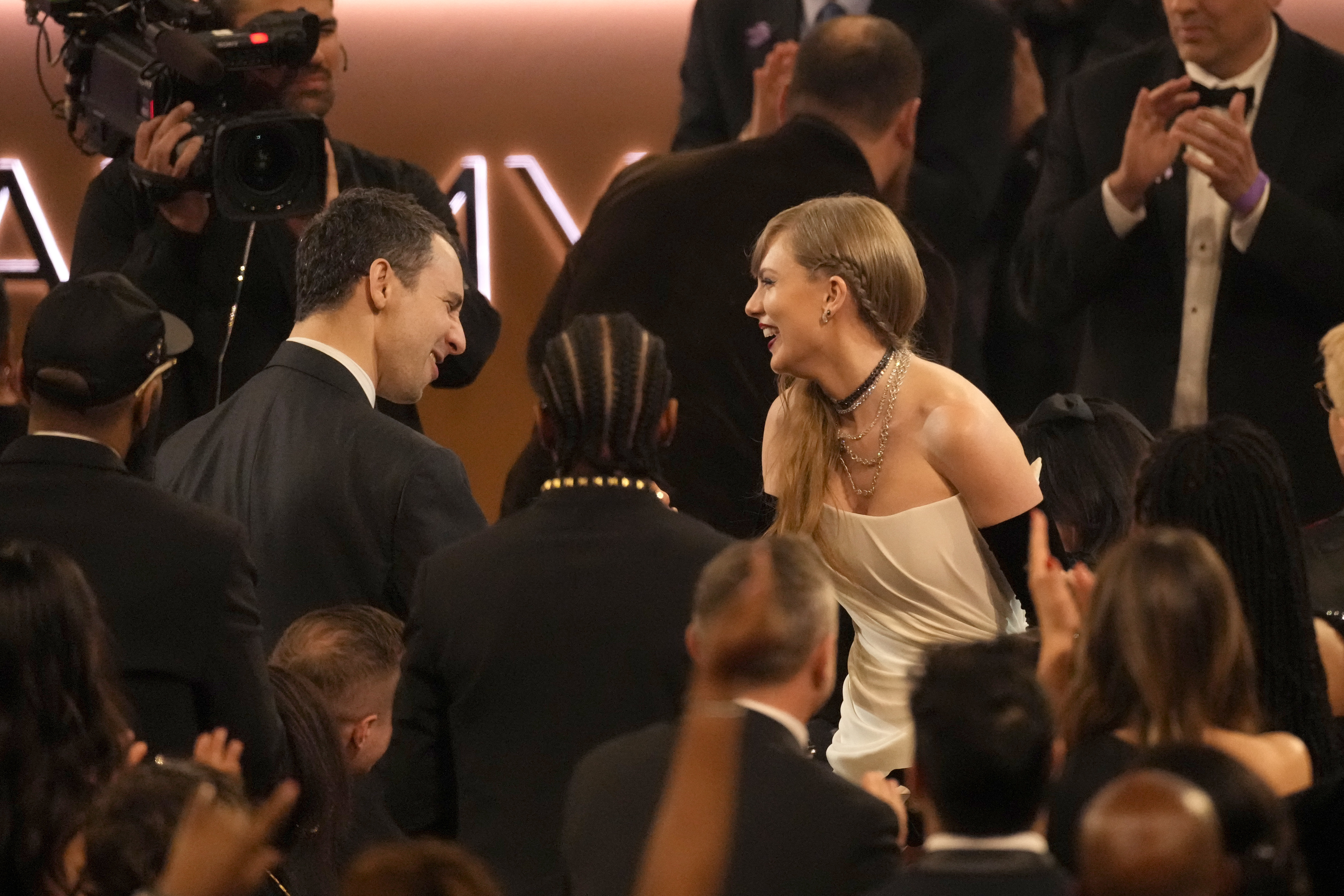
Jack Antonoff and Taylor Swift react as Swift wins the award for best pop vocal album for “Midnights” during the 66th annual Grammy Awards on Feb. 4, 2024, in Los Angeles. (AP Photo/Chris Pizzello)Chris Pizzello
The next year, he teamed with Swift to cowrite and coproduce “Sweeter Than Fiction,” from the soundtrack of One Chance: The Incredible True Story of Paul Potts.
Then, in 2014, Fun. split up and Antonoff formed Bleachers, and worked with Swift on four songs on her album 1989, which many consider to be her best. Swift, who was inducted into the Songwriters Hall of Fame in New York this week, “was about the first one who said ‘we’re not going to hire a big-name producer.’”
“It’s like that joke about the SAG card,” Antonoff said, referring to the Screen Actors Guild. “You can only get one if you’re in a SAG production, and you can only get in a SAG production if you have a SAG card.”
“Music can be that way,” he said, “I always had clear, deep feelings about what I was doing with the work I was making. But it was very hard to break in because you needed some big cosign.”
Now, of course, Antonoff is the big-name producer. “I’ve been very fortunate,” he said.
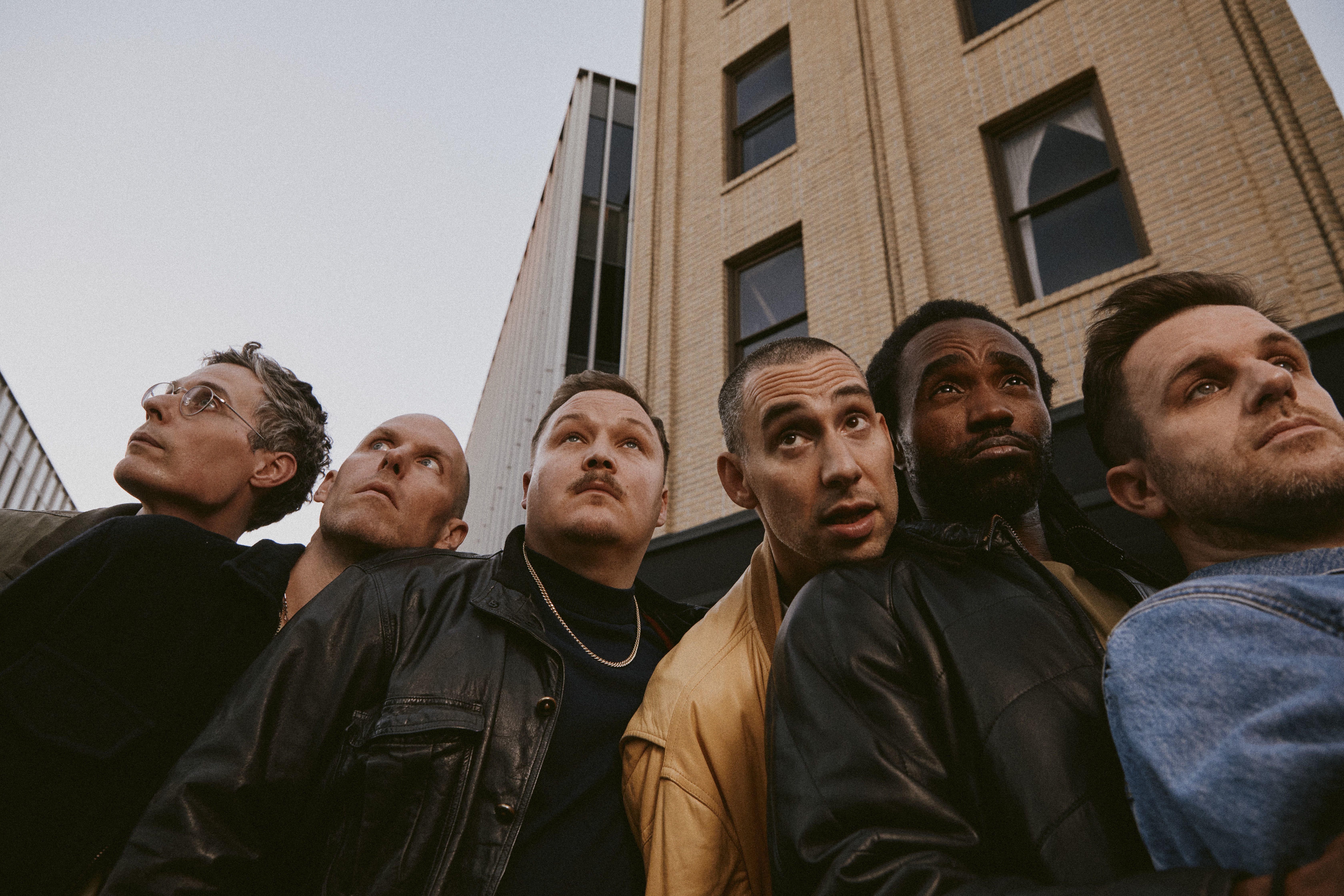
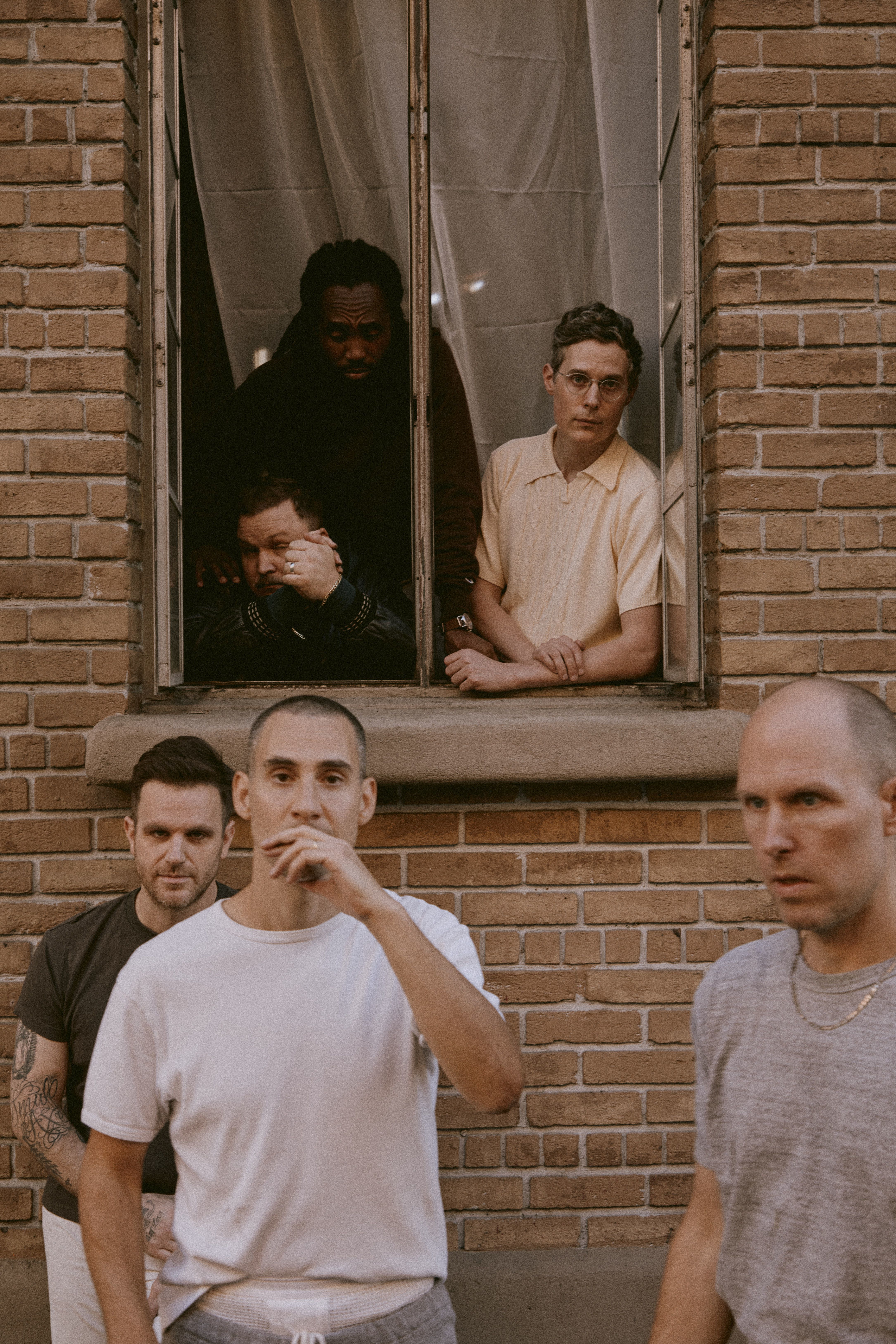
Bleachers play the TD Pavilion at the Highmark Mann Center on Saturday. Back of window: Zem Audu. Second row in window: Sean Hutchinson, Michael Riddleberger. First row: Mikey Freedom Hart, Jack Antonoff, Evan SmithAlex Lockett
But there’s also been online backlash. Google him and the first question asked is “Why don’t we like Jack Antonoff?”
The AI answer blames him for “dulling the edges” of his collaborators because “his signature sound has become repetitive or overly minimalist” with “atmospheric echoes” and “lingering synths.”
“I Knew It, I Knew You,” Swift’s new Toy Story 5 single that Antonoff co-wrote, seems intent on countering that criticism. On it, Antonoff plays guitars, percussion, drums, banjo, mandolin, harmonica, celesta, and Mellotron.
Everyone is full of joy, but also copes with loss.
“I Can’t Believe You’re Gone” is about living with the grief over Antonoff’s younger sister, Sarah, who died from brain cancer at age 14.
“My whole career has been revisiting that through a different lens,” he told Pitchfork in 2021. In “I Can’t Believe You’re Gone,” he sings, “these hope-filled lies, these unearned traditions / If you repeat them enough, you can live with someone you’re missing.”
“It’s about loss,” Antonoff said of the song. “It’s kind of a choose-your-own-ending when it comes to grief.”
A handful of shows into the Bleachers tour, Antonoff said he’s been confronted with something he tends to forget when he’s off the road for too long. “Whenever I start a tour, there’s this completely life-affirming reminder that I have no ability to pace myself and every show is just like the last night on earth.”
“Every night has to be pushed to the brink of everything. So I’m pushing the band to the brink, myself, the audience … You wake up the next day and you feel like you’ve been hit by a truck. And you should. Fried and happy. It’s kinda my favorite feeling in the world.”
He has one more thing to add: “I cannot f— wait to get to Philly. That’s a place that has always had our back.”
Bleachers Forever with Hovvdy at the TD Pavilion at the Highmark Mann, 5201 Parkside Ave., at 8 p.m. Saturday. highmarkmann.org.
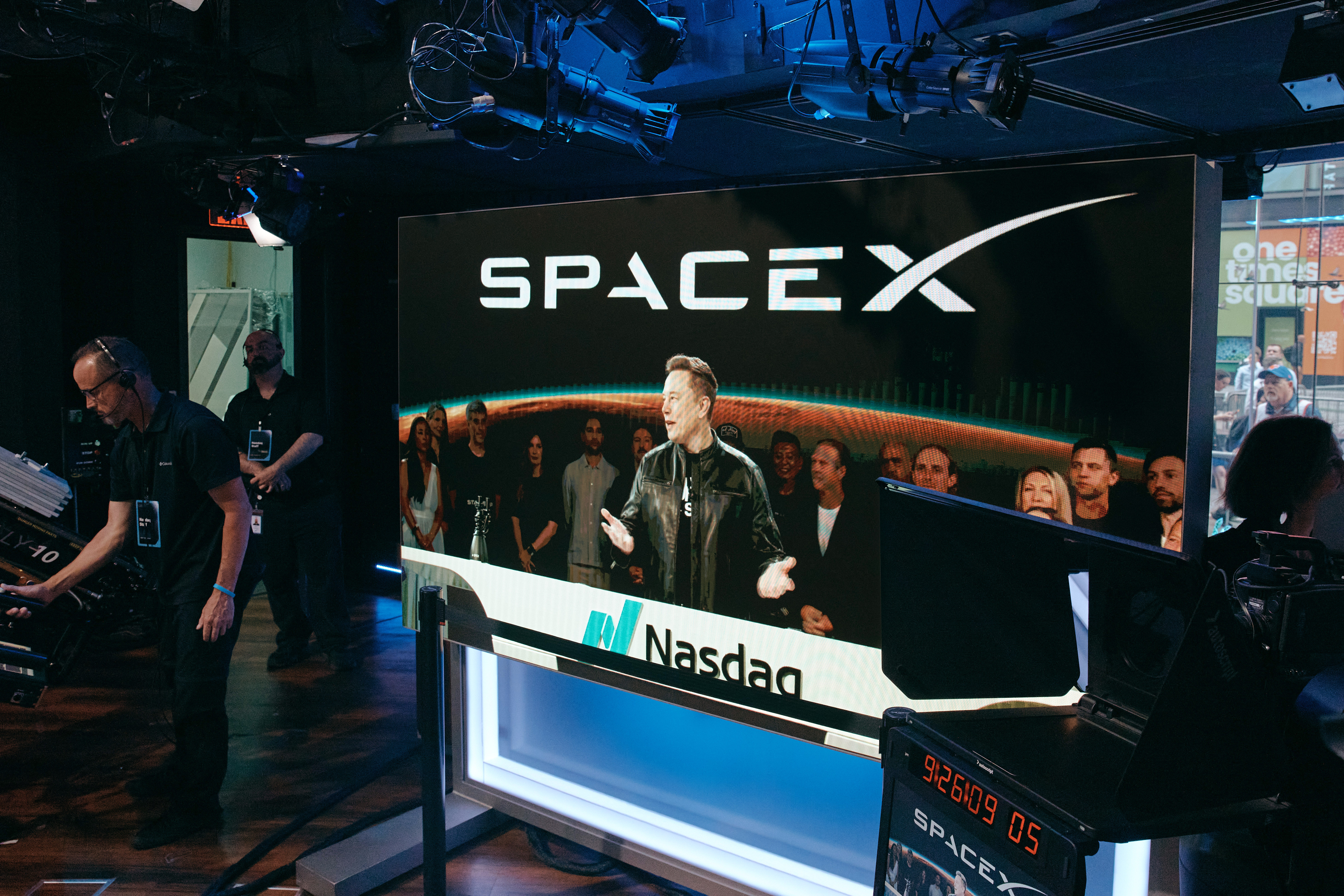
Elon Musk became the world’s first trillionaire Friday when shares of his rocket company SpaceX began trading on the stock market, signaling a new era of ultra-affluence and widening wealth inequality.
Musk reached the milestone when trading of SpaceX shares opened at $150, up 11% from their initial public offering price of $135. His net worth — which comprises his stock in SpaceX and his electric carmaker, Tesla, as well as ownership stakes in other ventures including brain implant company Neuralink and tunneling firm the Boring Co. — stood at around $1.1 trillion.
Musk, 54, was already the world’s richest person. He claimed that title from Amazon founder Jeff Bezos in January 2021, after Tesla’s shares surged to take his net worth past $185 billion.
Since then, the South African-born entrepreneur’s fortune has more than quintupled in a 5½-year period, during which he bought social media company Twitter, founded an AI startup, fused them together with SpaceX, and then took the conglomerate public. In that time, Musk also spent more than $250 million to help elect Donald Trump and advised the president.
And Musk’s wealth-making has only accelerated, cementing his influence over society, culture, and global politics. Since October, his net worth has doubled.
“The fact is that wealth for some and wealth inequality is growing in dimensions that we’ve never seen before,” said Steven Durlauf, the director of the Stone Center for Research on Wealth Inequality and Mobility at the University of Chicago.
When oil tycoon John D. Rockefeller’s fortune was at its height in 1937, his $1.4 billion net worth amounted to about 1.5% of U.S. gross domestic product, Durlauf said. Musk’s net worth is now equivalent to more than 3% of U.S. GDP.
Such wealth is so extraordinary that it can be hard to make meaningful comparisons. The median American household had a net worth of just under $200,000 in 2022, the year with the most recent data available from the Federal Reserve. That means Musk’s net worth is 5 million times as large as that of the typical family.
His wealth dwarfs even that of the everyday wealthy. The top 10% of households by income had an average net worth of $6.5 million in 2022, less than 0.001% of the SpaceX leader’s total. The world’s second-richest person, Google co-founder Larry Page, is worth around $304 billion, according to the Bloomberg Billionaires Index.
Inequality is notoriously difficult to measure, but the explosion of wealth at the top is hard to dispute. The net worth of the middle 40% of households, adjusted for inflation, has risen slightly more than 50% over the past decade, according to data from French economists Emmanuel Saez and Gabriel Zucman. The top 1% have seen similar gains. But the richest 0.001% have seen their wealth roughly double over the same period.
Beyond Musk, the ultrawealthy have experienced significant increases in their fortunes. In 2016, a net worth of $100 billion — a mark that Musk crossed about six years ago — would have easily placed someone at the top of the Forbes Billionaires list. Today, $100 billion would rank them as the 20th richest person in the world.
“Christ, when I was a kid, we only talked about millionaires,” said Bernie Sanders, 84, the progressive senator from Vermont. “If this isn’t an example of oligarchy, I don’t know what is.”
Musk’s rapid accumulation of wealth largely comes down to the appreciation of his nearly 50% stake in SpaceX, which is worth more than $900 billion. During its IPO, the company sold more than 555 million shares, which valued it at $1.77 trillion, up from a $400 billion valuation on the private market last summer. Starting in January, SpaceX also granted Musk pay packages totaling 1.3 billion shares, which he cannot sell until he hits certain operational milestones.
Musk did not respond to a request for comment. But he has previously acknowledged the trillionaire milestone.
In February, he replied to a post on X about possible trillionaire status by noting that he had created significant wealth for shareholders and held less than 0.1% of his net worth in cash. In May, he responded on X to the financial musings of Peter Diamandis, a friend and SpaceX investor, saying he would reach “$10T or bust.”
Musk has also recently said that “money won’t matter” in the future because Tesla and SpaceX would develop robotics, AI, and rockets so powerful that no human would ever have to work again. In his utopian world of “amazing abundance,” everyone would have “universal high income,” he has said.
Musk’s allies said his net worth was justified by his impact, providing an example and incentive for those who want to build successful companies. Diamandis, the head of the XPrize Foundation, an organization that holds contests to encourage scientific breakthroughs, said Tesla and SpaceX were “raising the floor.”
“The fruits of his labor are making him into a trillionaire, and they’re uplifting humanity,” Diamandis said.
Adeo Ressi, Musk’s college roommate at the University of Pennsylvania, said the SpaceX chief never cared as much about financial gain as obtaining resources to help him achieve his entrepreneurial goals. For Musk, “money is a means to an end,” Ressi said, comparing his friend’s mindset with a gamer accumulating coins in a video game to beat a level.
“He’s amassing resources to do things, and the thing he wants to do most is colonize Mars,” Ressi said. “That’s a really big driving force behind his wealth accumulation.”
He added that Musk was “not a poster child of wealth inequality” and pointed to the tech leader’s lifestyle, in which he is known to work around the clock and avoid the typical trappings of the rich, like islands and megayachts.
“It’s not like he’s planning to leave this in a massive family trust,” Ressi said. “It’s literally going to be used to make humanity into a multiplanetary species.”
But critics say the way Musk chooses to lead his life is beside the point. His net worth has already provided him with the means to personally acquire companies and spend hundreds of millions of dollars to help elect a preferred presidential candidate, Durlauf of the University of Chicago said.
Becoming a trillionaire will only magnify how “economic inequalities are spilling over into the political domain,” he added.
Sanders called Musk’s trillionaire status “a moral travesty,” noting that 60% of Americans live paycheck to paycheck.
The senator also agreed with the assessment that Musk was probably not as interested in owning islands or yachts. The trillionaire, in his view, was interested in just one thing.
“This guy is into power,” Sanders said. “And he is now the most powerful person on Earth.”
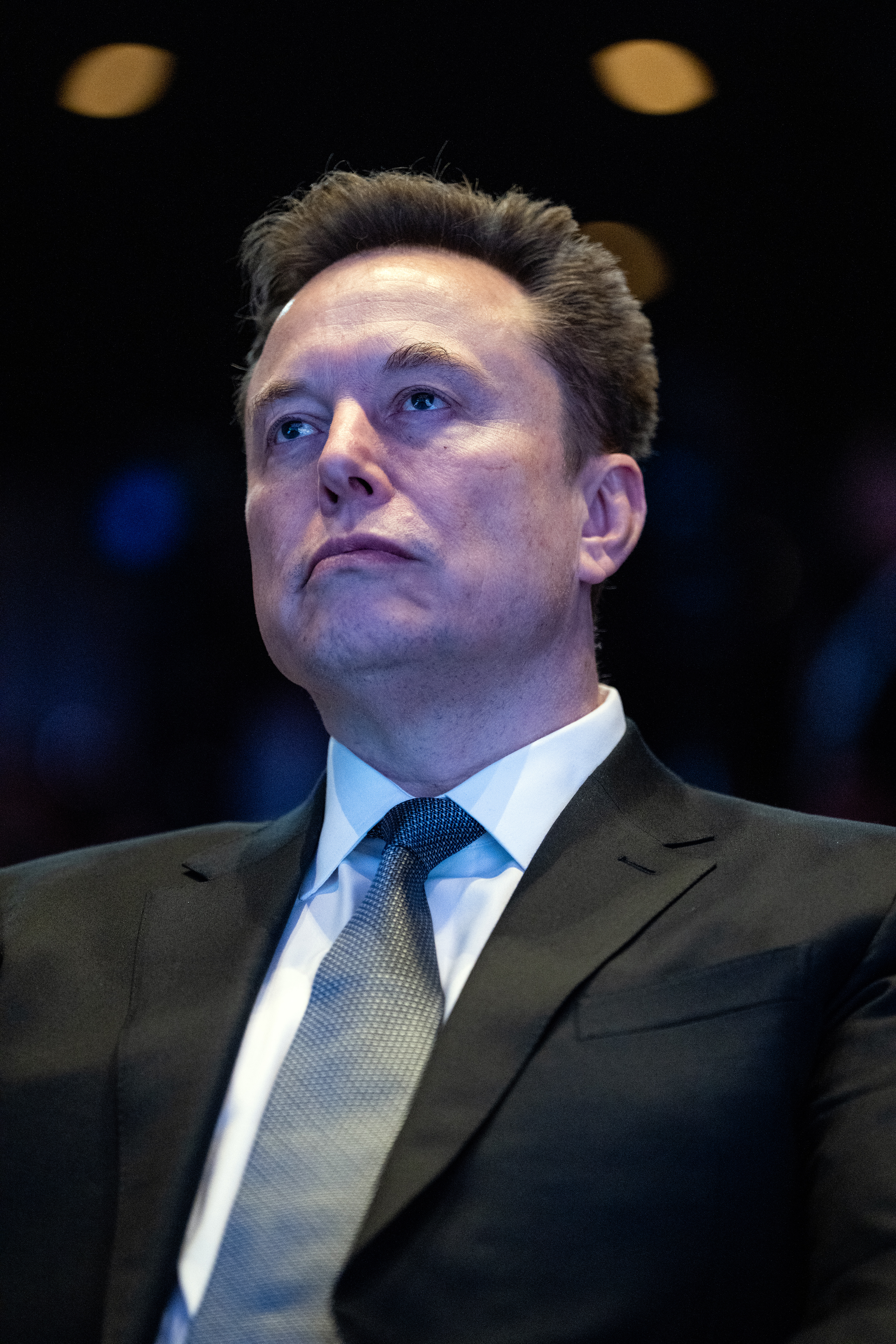
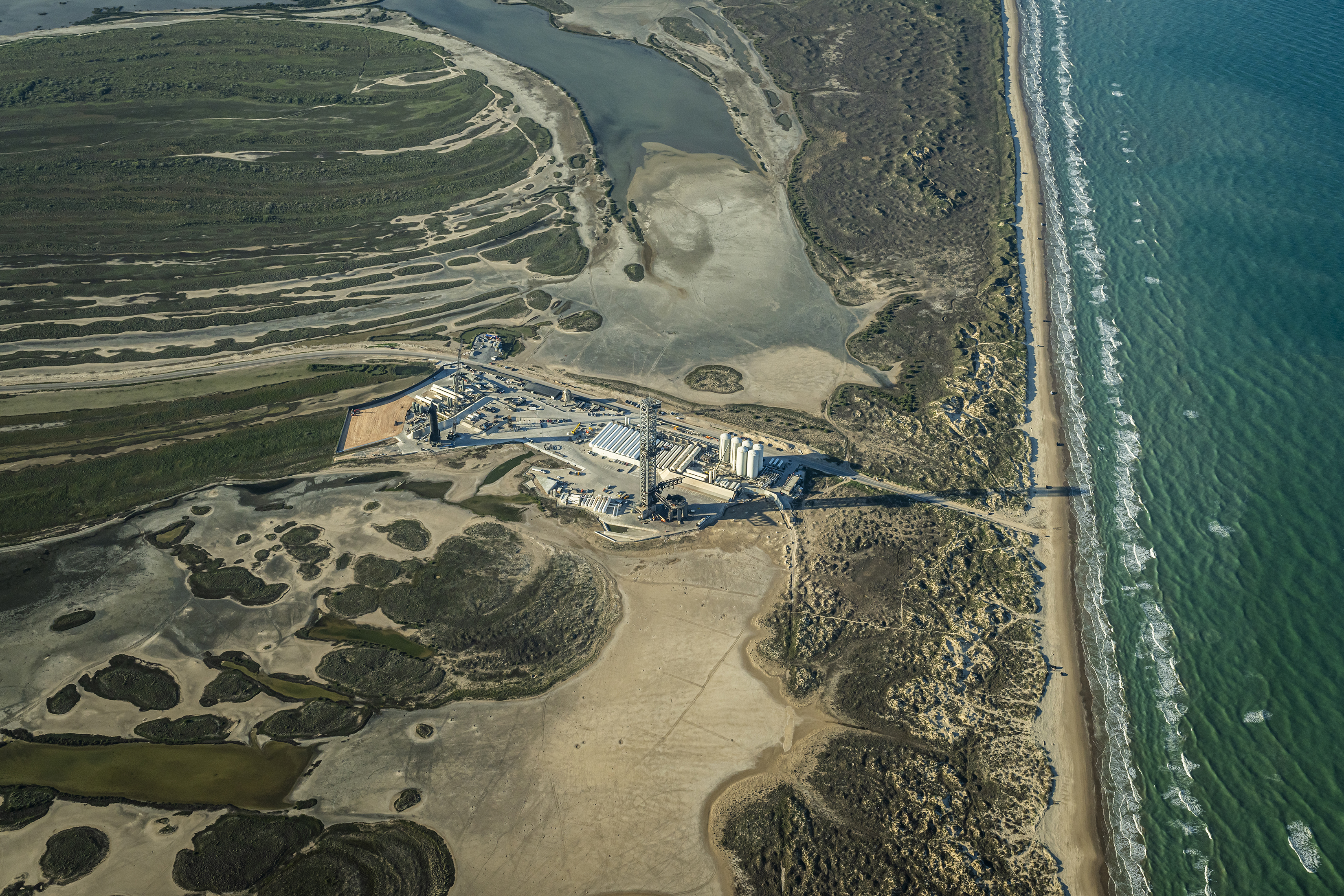
FILE — Elon Musk in Washington on Nov. 19, 2025. Elon Musk became the world’s first trillionaire on June 11, 2026, as shares of his rocket company SpaceX began trading on the stock market at $150, up 11 percent from their initial public offering price, signaling a new era of ultra-affluence and widening wealth inequality. (Haiyun Jiang/The New York Times)HAIYUN JIANGFILE — The SpaceX Starbase rocket launch site near Boca Chica beach, in Cameron County, Texas, on Feb. 24, 2024. Elon Musk became the world’s first trillionaire on June 11, 2026, as shares of his rocket company SpaceX began trading on the stock market at $150, up 11 percent from their initial public offering price, signaling a new era of ultra-affluence and widening wealth inequality. (Meridith Kohut/The New York Times)MERIDITH KOHUT
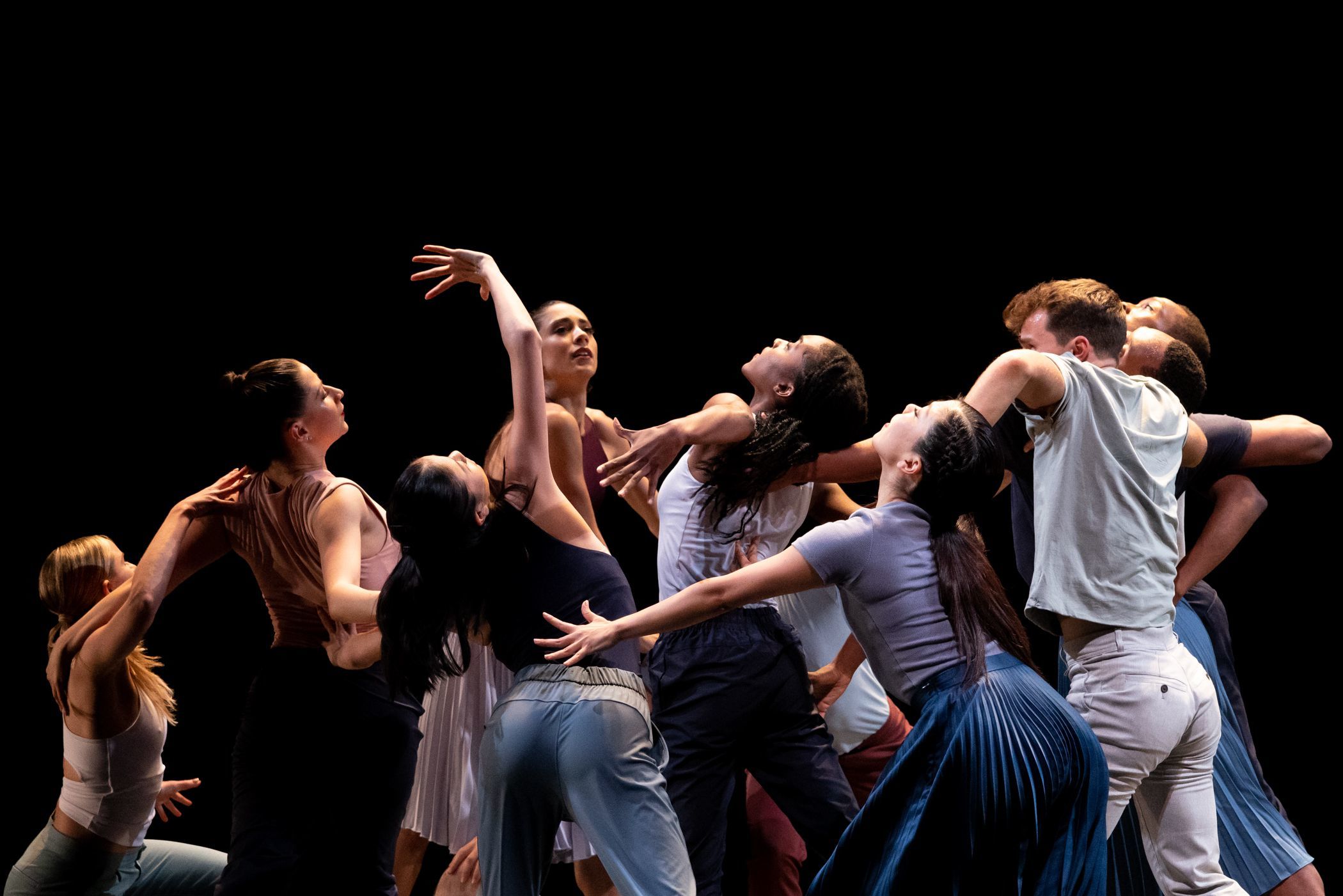
At 20, BalletX has matured into a contemporary ballet company with a national reputation. The company premiers numerous new works, regularly performs at the prestigious Vail Dance Festival, and has grown to 16 dancers.
The spring series opening March 10, 2027, also at the Suzanne Roberts Theatre, will feature two world premieres. Noelle Kayser is making a work inspired by Colombian author Gabriel García Márquez, known for 100 Years of Solitude and Love in the Time of Cholera.
Le Wang’s new piece will focus on whalefall, when a whale’s carcass falls to the ocean floor, creating a massive new food source for sea creatures. (Whalefall is also the title of an unrelated film to be released this year.)
The program at the Highmark Mann Center opening May 21, 2027, looks especially exciting. It will be dedicated to the works of Justin Peck, the resident choreographer at New York City Ballet and three-time Tony Award winner for choreography.
The Peck works will include Become a Mountain, which BalletX has performed in recent years. The company also will perform the Philadelphia premieres of Peck’s 2012 ballet In Creases and his 2018 work Hurry Up, We’re Dreaming.
The summer season, opening July 7, 2027, at the Suzanne Roberts Theatre, will feature new works by South African choreographer and composer Mthuthuzeli November, Emmy-award winner choreographer Natasha Adorlee, and BalletX choreographic fellow Phoebe Jewitt.
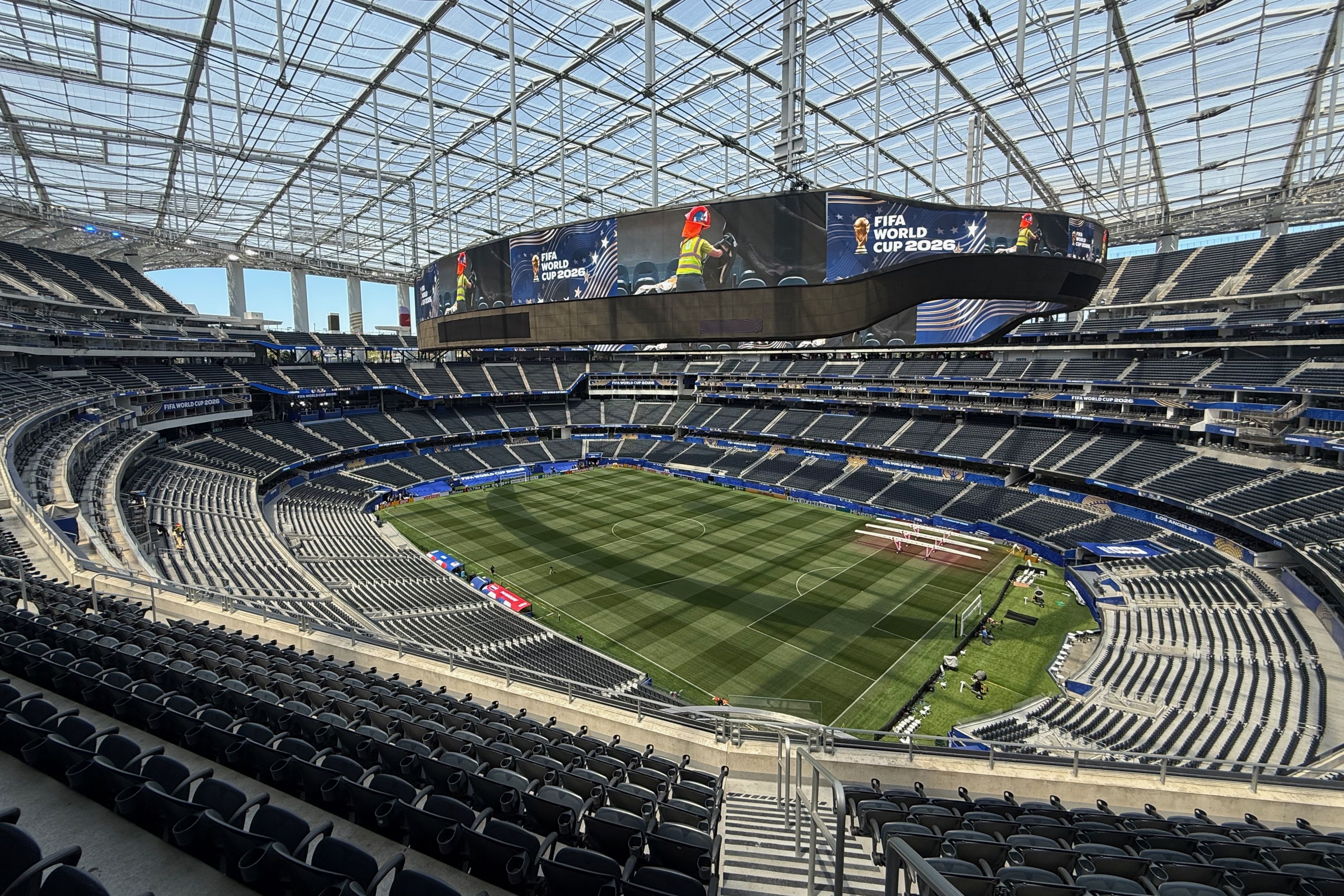
The United States men’s national soccer team kicks off their 2026 World Cup schedule Friday night against Paraguay (9 p.m., Fox 29) in a rebranded SoFi Stadium in Los Angeles. Here are our predictions for the game.
The U.S. got a lucky draw by landing in Group D, avoiding the European powerhouses and South American superpowers. And the U.S. has faced all three of their opponents — Paraguay, Australia, and Turkey — in matches over the past year.
Fox is broadcasting the World Cup for the third time, but it could be the network’s last. TV rights in the U.S. for the 2030 World Cup in Morocco, Portugal, and Spain (plus three opening matches in South America) have yet to be sold, and Fox might not be able to afford keeping the tournament if the NFL is successful in squeezing the network for more money.
The network’s going all out, with a roster of studio talent that includes NBC’s Rebecca Lowe and CBS soccer analyst (and ex-French star) Thierry Henry. Fox also took a big swing by adding former Sweden striker Zlatan Ibrahimović (better know as Zlatan) to its top World Cup studio team that will also include the polarizing Alexi Lalas.
In a first, FIFA has introduced mandatory three-minute water breaks in the middle of soccer’s famous uninterrupted play, due to the heat. They will take place midway through each 45-minute half, and Fox took full advantage Thursday to cut away for a two-minute commercial break during Mexico’s 2-0 victory over South Africa, cutting back after play resumed.
Here’s everything you need to know to watch or stream U.S. vs. Paraguay Friday:
What TV channel will U.S. vs. Paraguay air on?
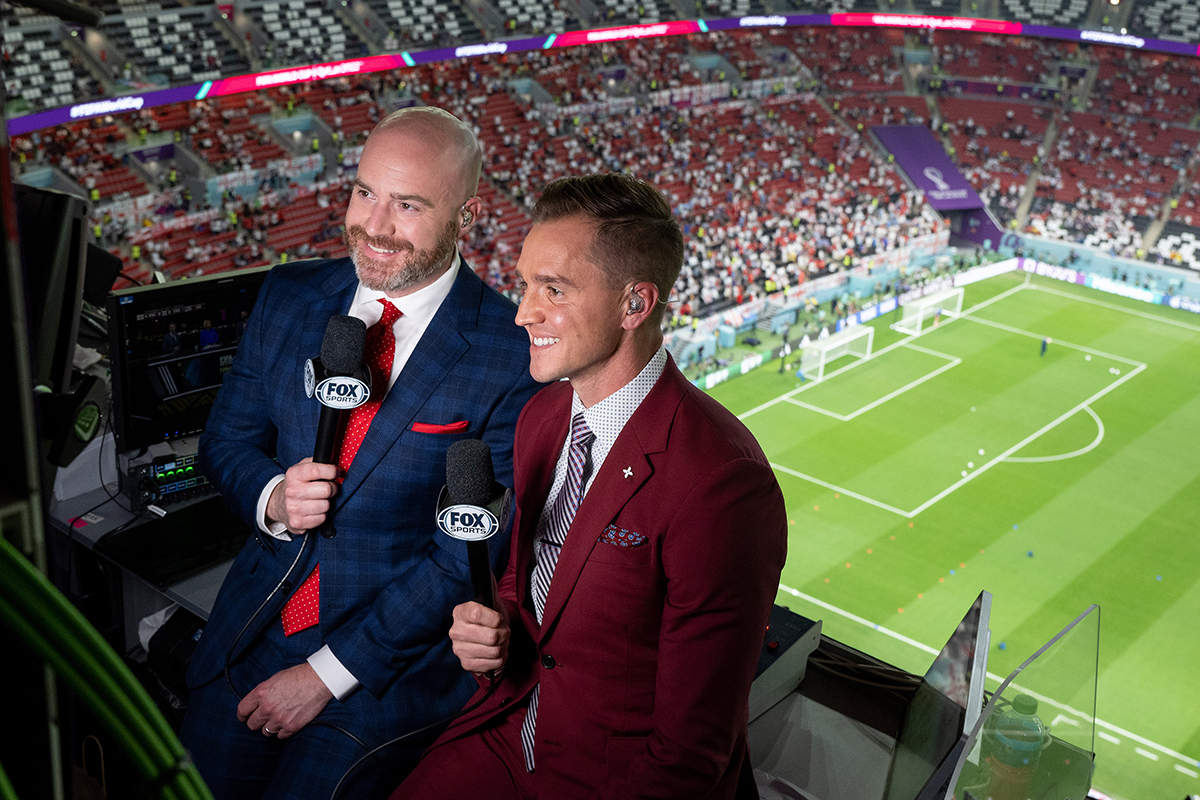
Fox’s top soccer broadcasting team, John Strong (left) and Stuart Holden (right).Fox Sports
Tonight’s World Cup matchup between the U.S. and Paraguay will air on Fox, which once again has American TV rights to the tournament.
U.S. vs. Paraguay is scheduled to begin at 9 p.m. Philly time.
Calling the game will be Fox’s lead play-by-play announcer, John Strong. He’ll be joined in the booth for the third-straight World Cup by former U.S. midfielder Stu Holden.
Jenny Taft will report live from SoFi Stadium (which has been rebranded Los Angeles Stadium for the tournament).
Telemundo will broadcast the Spanish-language telecast, with Andrés Cantor and Omar Zerón calling the game.
FIFA World Cup Today, Fox’s studio show, will air beginning at 6 p.m.
All U.S. World Cup matches will stream for free
While Fox has its own subscription streaming service in FOX One, all Team USA World Cup matches will stream for free on Tubi. All that’s required is a free account.
If you live in or near Philadelphia, you can also stream any match airing on Fox 29 for free using a digital antenna.
Fans looking to stream a Spanish-language telecast will need to turn to Peacock, NBC’s subscription streaming service. You can also stream the game on the Telemundo app, but it’ll require a cable subscription.
Today’s World Cup schedule
Friday is Day 2 of the 2026 World Cup. Here’s a complete schedule of all the matches Friday:
Canada vs. Bosnia and Herzegovina (Group B): 3 p.m., Fox, Telemundo
United States vs. Paraguay (Group D): 9 p.m., Fox, Telemundo
U.S. full 2026 World Cup schedule
The U.S. will play three games during the group stage of the tournament. Here is their full schedule:
United States vs. Paraguay: Friday, 9 p.m. (Los Angeles)
United States vs. Australia: Friday, June 19, 3 p.m. (Seattle)
United States vs. Turkey: Thursday, June 25, 10 p.m., Fox (Los Angeles)
Philadelphia 2026 World Cup schedule
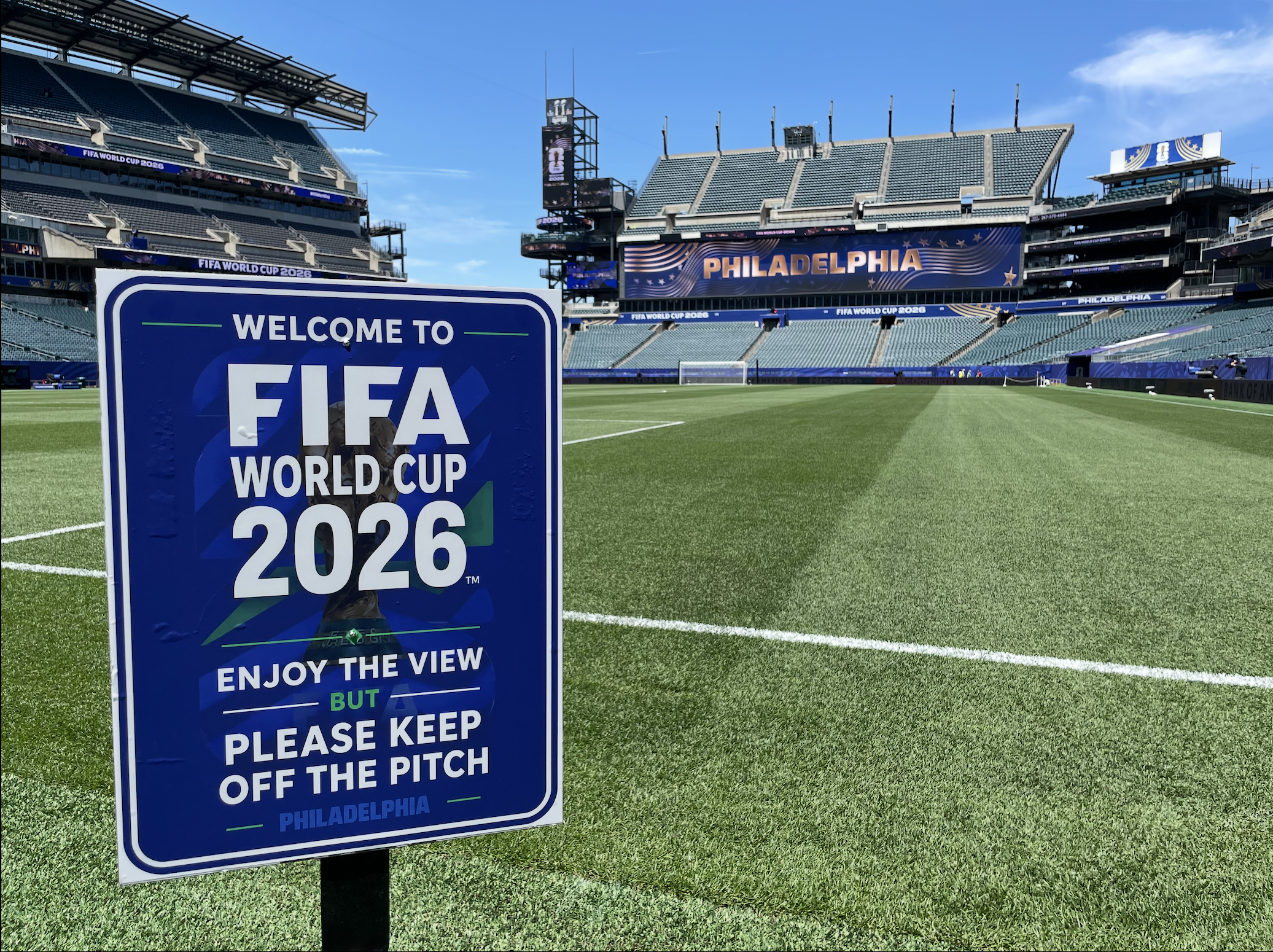
Lincoln Financial Field has been transformed into “Philadelphia Stadium” for the World Cup. Kerith Gabriel
Philly will host at least nine teams and six World Cup games, beginning with Sunday’s match between Ivory Coast and Ecuador.
It’s highly unlikely the U.S. will end up in Philly during the Round of 16 on July 4, but it’s not impossible. Here’s what would need to happen.
Here’s Philly’s full World Cup schedule:
Ivory Coast vs. Ecuador: Sunday, June 14, 7 p.m. (FS1)
Brazil vs. Haiti: Friday, June 19, 9 p.m. (Fox)
France vs. Iraq: Monday, June 22, 5 p.m. (Fox)
Curacao vs. Ivory Coast: Thursday, June 25, 4 p.m. (FS1)
Croatia vs. Ghana: Saturday, June 27, 5 p.m. (FS1)
Round of 16: Saturday, July 4, 5 p.m. (FOX)
More coverage of the 2026 World Cup
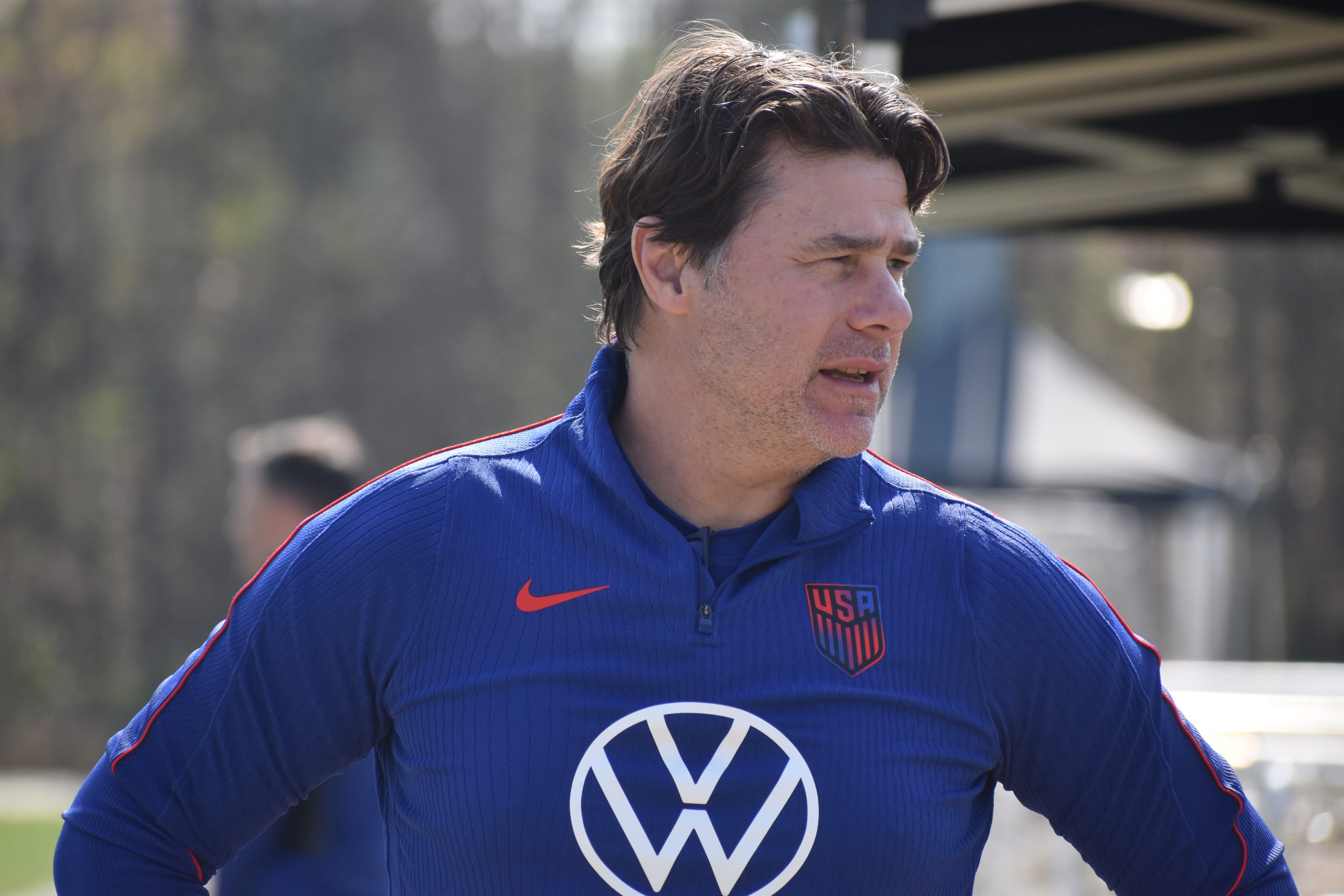
U.S. men’s national team manager Mauricio Pochettino.Jonathan Tannenwald
The Philly region is home to a plethora of farmers markets, so we compiled a list of 25 that are well worth checking out. Some operate through the fall, while others are available year-round.
Here’s a sampling:
🥬 Explore the Media Farmers Market which highlights vendors within a 150-mile radius (runs Sundays from 10 a.m. to 1 p.m.)
🍑 Check out 4th & Lehigh Farmers Market and try the plump peaches and crates of juicy strawberries (opens in July; runs on Tuesdays from 11 a.m to 3 p.m.)
🧀 Try artisanal cheese at Clark Park Farmers Market in West Philly (open all year long every Saturday from 10 a.m. to 2 p.m.)
New Jersey secured a federal disaster declaration for the crops damaged in April’s rare heat-freeze sequence. Pennsylvania counties got a similar designation last month.
Philadelphia will begin opening pools on a rolling basis across the city Friday, but details are scarce.
FloatLab, a public art feature that will offer an eye-level view of the Schuylkill, finished its voyage up the East Coast and arrived at Bartram’s Garden on Wednesday.
FDR Park’s Anna C. Verna Playground will remain closed for at least another few weeks, after an inspection found that slide equipment did not meet safety standards.
🌳 Your outdoorsy experience
I’m on the hunt for new stories to share here. Tell me: Where do you go for a moment of calm? What sight takes your breath away? If you have photos, we’d love to see them — you might even be featured in an upcoming newsletter.
🎤 Now I’m passing the mic to arts and culture reporter Earl Hopkins.
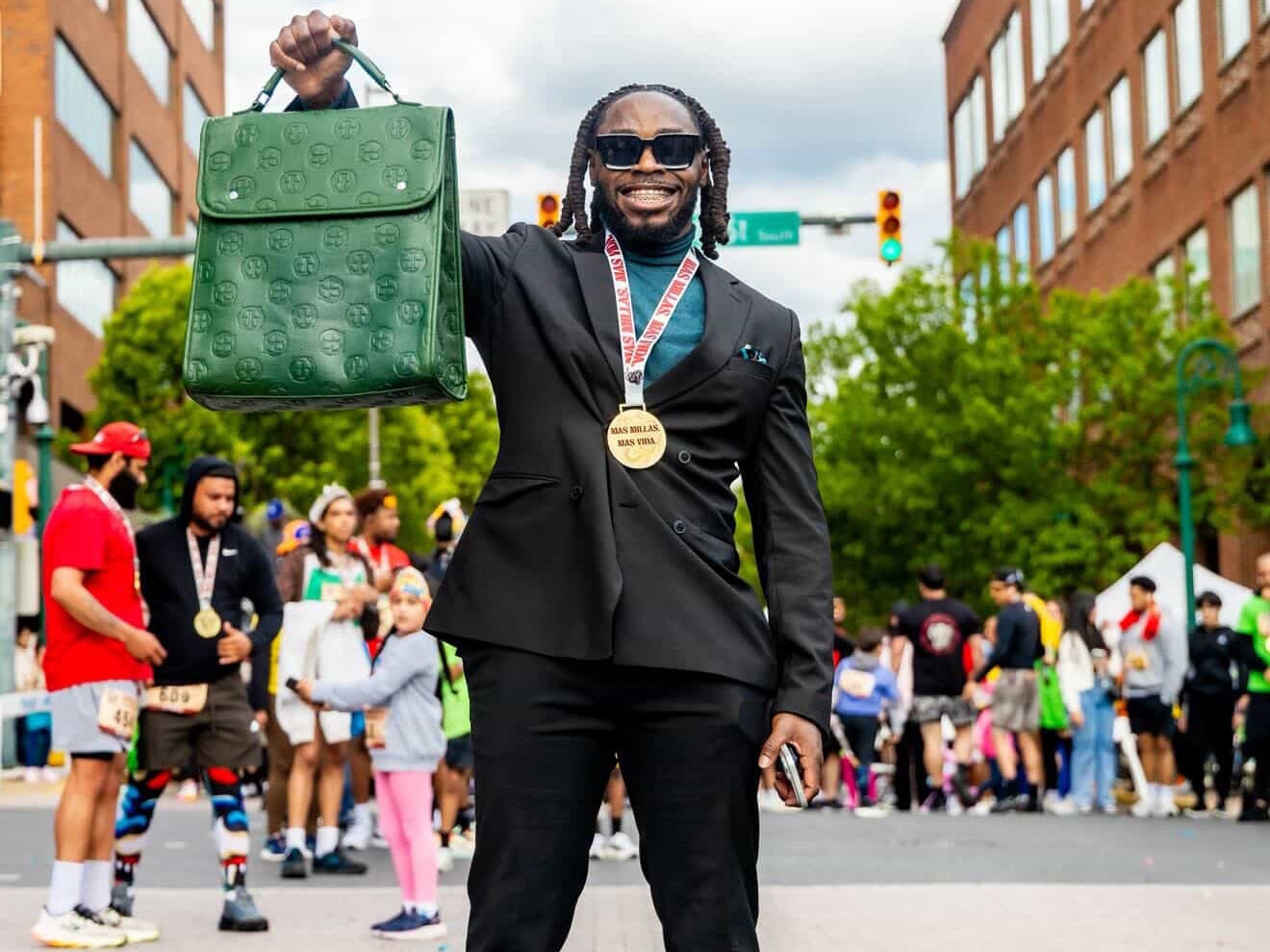
The image of a long-distance runneris usually a combination of heavy-duty sneakers, compression shorts, and sweat-absorbing tops. But that’s not the picture Alim Wallace paints on a race day.
That’s because the North Philly native shows up in a tailored suit, with a pocket square and a suede briefcase stuffed with hydration packs and electrolyte gels. Yes, to a race.
Since his first race in 2025, Wallace has competed in the Philadelphia Marathon, the Broad Street Run, and others like the Life Time Miami Marathon and the Publix Atlanta Marathon. He’s racked up medals and thousands of social media followers who follow him not just to see him run past the finishing line, but to see what he wears crossing it.
“It was about having an idea, and being bold enough to do it,” Wallace, 31, said. “Some people will let an idea stop them. They say, ‘People are going to look at me funny. People are going to think this way.’ I really don’t care.” — Earl Hopkins
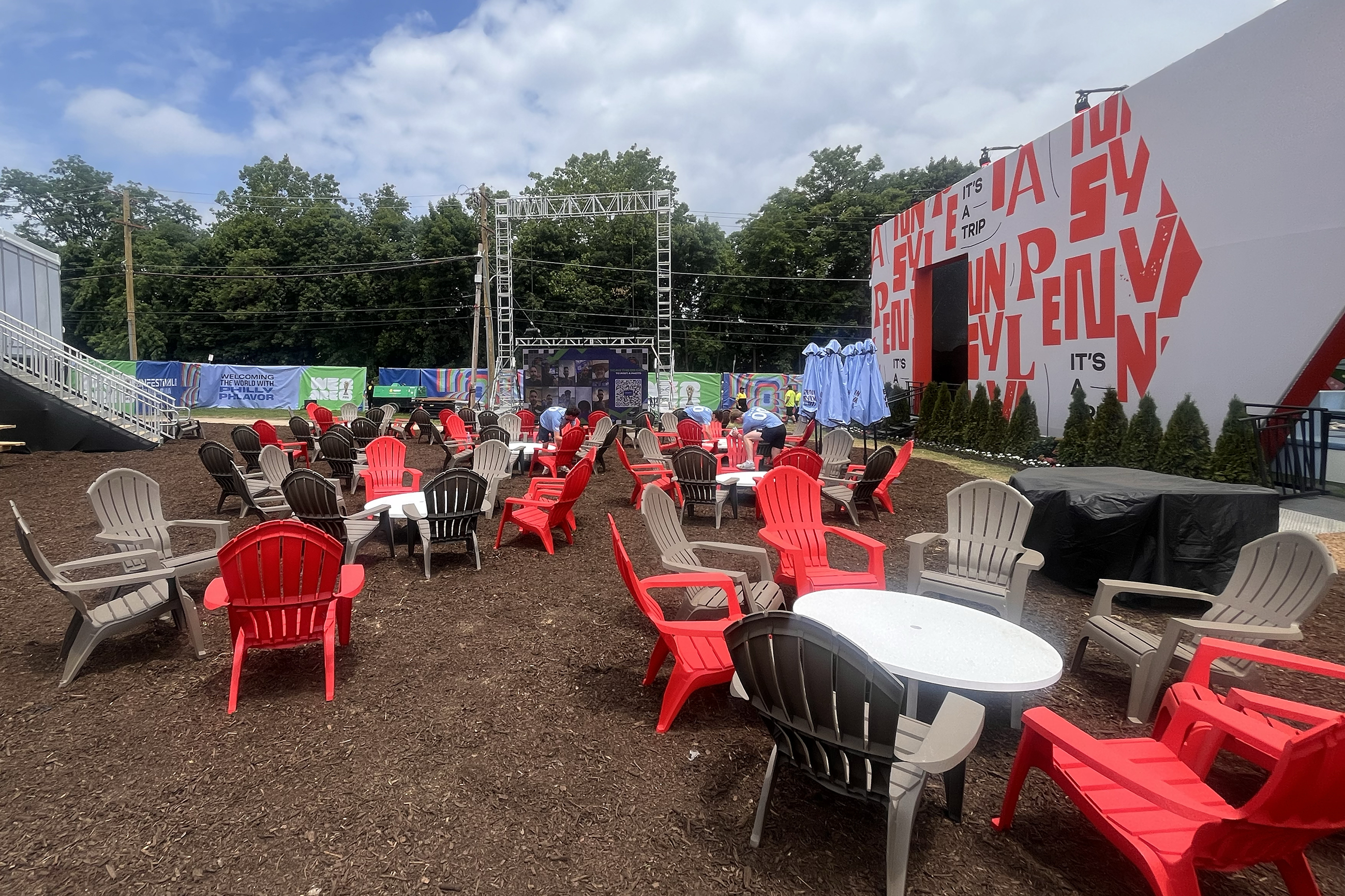
A 39-day festival for the World Cup is officially underway on Lemon Hill in Philadelphia’s Fairmount Park, with thousands expected to join in on the free, open-air fun.
The city’s official watch party will let fans watch matches on a stage-size screen, play a bit of “futebol,” and explore vendor and food markets.
Here are a few things to know before you go:
⚽ To get there: There is no parking on-site. Consider SEPTA, the Philly PHLASH shuttle, cycling, or rideshare.
⚽ To get in: Fans must first register via an online form.
From the end of June to early July, the Trump administration will host what it is calling “The Great American State Fair,” a weeks-long event to help mark the nation’s 250th birthday. The White House is promoting the fair as “a master-planned celebration” in and around the nation’s capital. They note that it will feature “pavilions, designed in the beaux-arts style [sic]” that will “highlight national pillars,” such as “Arts & Culture,” “Land & Expansion,” “The Arts & Innovation,” “Technology & Progress,” and “Horsepower” to “ignite a spirit of adventure and innovation to help our nation succeed for the next 250 years.”
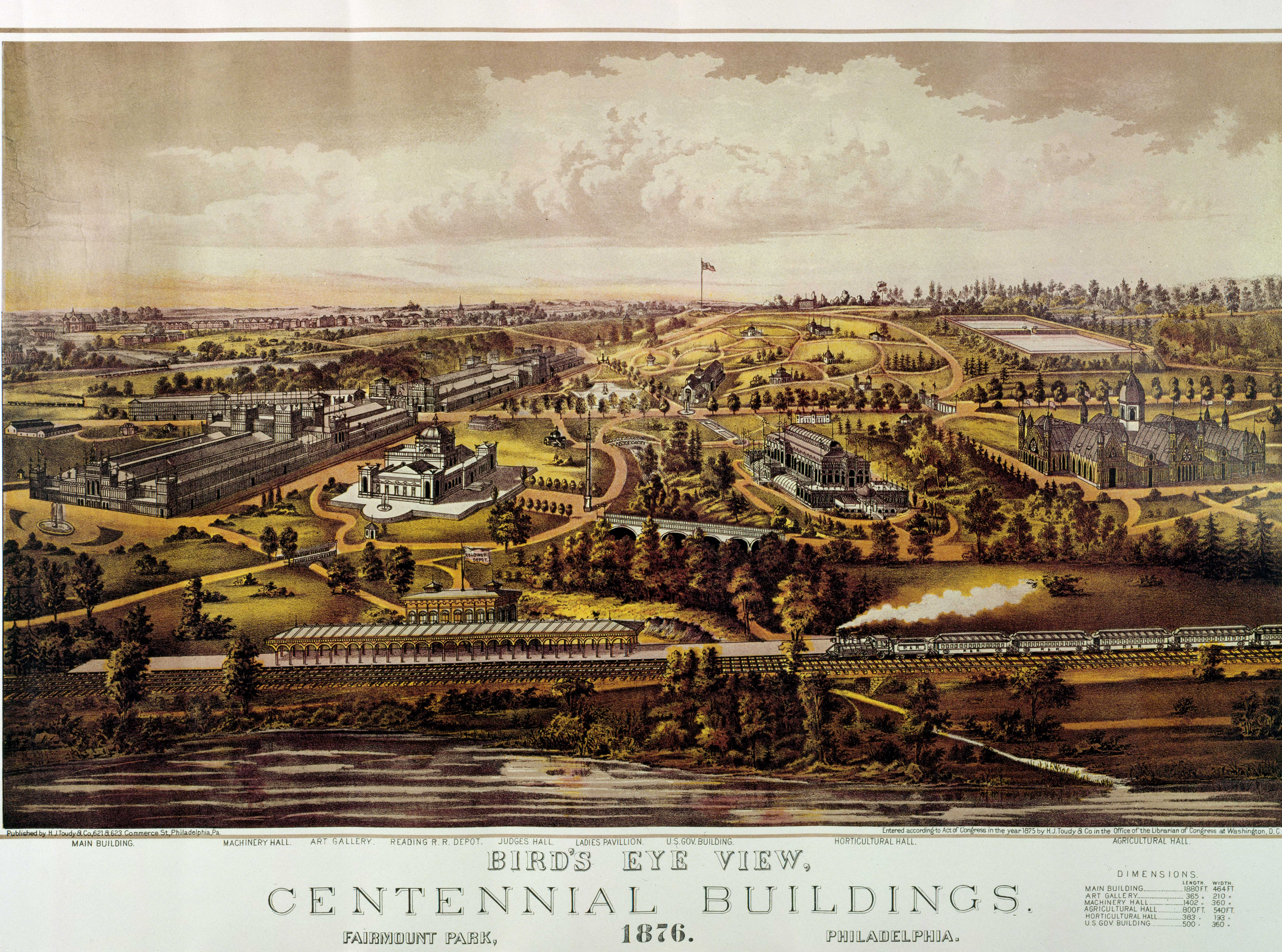
These grand pronouncements call to mind a classical world’s fair exhibition, even if the administration hasn’t put in the work to pull it off. By contrast, the first major world’s fair held in the United States 150 years ago, the 1876 Philadelphia Centennial Exposition, was ten years in the making, spanned six months, attracted more than 10 million visitors, and featured the work of over 30,000 exhibitors, including Alexander Graham Bell and Thomas Edison. Today, the White House is fighting poor publicity, scrambling to find respectable entertainers to perform, and floating a plan to cancel its fair altogether.
Yet, we can find echoes of the Philly Expo in today’s slapdash 250th celebration. History reveals that America in 1876 was, as it is now, in turmoil, gripped by a growing economic crisis and mounting unemployment, politically torn apart, debating the impact of new technology, and reeling from the cost of war. In the familiar context of extreme uncertainty, the glorious Exposition also drew sharp criticism and, more poignantly, highlighted the nation’s fragility.
In 1876, from May to November, Philadelphia was the site of the biggest public event in the nation’s history up to that point – the International Exhibition of Arts, Manufactures, and Products of the Soil and Mine, or more simply, the Centennial Exposition. This was a world’s fair, a unique event in which the host nation spent lavishly to build elaborate fairgrounds, exhibition halls, courtyards, and gardens to grab the global spotlight and celebrate progress. In the 19th century, amid the industrial revolution, a world’s fair commonly featured thousands of displays promising a peek into the future. Visitors could glimpse the cutting edge in science and technology, advances in the arts, new discoveries in medicine, innovations in transportation, and the latest consumer products.
The stakes were terribly high for the United States as it planned to host its own world’s fair in 1876, the first held in the U.S. since the Civil War. Although the war had been devastating, and the work of reconstructing the South still threatened the lives of freed Black people and the American two-party political system, the preserved republic was pursuing new projects, including building a continent-crossing railroad and rapidly expanding the industrial economy. Both fueled the growth of cities and a new diversified workforce thanks to emancipation, immigration, and the rise of the middle class. In the midst of big changes, the world’s fair in Philadelphia was an opportunity for America to present itself to the nation and the world as a stable and culturally advanced industrial giant with a bright future.
For six months, visitors from all over the country and abroad poured in to see tens of thousands of exhibits, many of them astonishing firsts: incandescent light bulbs, the typewriter, a dishwasher, Alexander Graham Bell’s first prototype for the telephone, and a new fireproofing material called “asbestos.”
In addition, farmers put several agricultural wonders on display including new types of citrus trees that could thrive in the American West, and bananas, considered an expensive delicacy and priced at $2 each (about $60 today). At the center of the Machinery Hall exposition building was one of the fair’s main attractions: a hulking, 1400 horsepower steam engine, 45 feet tall, and weighing 650 tons. This Corliss engine was the biggest of its kind and, in size and power, signaled America’s industrial might. For 50 cents ($15 today), visitors could climb to the top of a towering hand and torch structure called “Liberty Enlightening the World”—a portion of what would eventually become the Statue of Liberty.
The Philadelphia Centennial seemed to say that, yes, the United States may have been, in a global context, a young country. But that fact only reinforced all that it had accomplished in one short century.
The timing for such a vainglorious celebration wasn’t optimal. The year of the Exposition came at the height of the so-called “Terrible Seventies,” an era of disastrous economic news that began with the financial panic of 1873 and continued through the decade with bank closures, business failures, railroad bankruptcies, mass layoffs, and inept government leadership. Indeed, the crisis forced fair planners to resort to penny pinching in the final stages of construction, leaving some exhibition buildings unfinished after opening day.
The era of the Philadelphia World’s Fair was also a time when a handful of capitalists accumulated extreme wealth and tightened their grip over the nation’s resources while workers began to lose control over their own conditions of labor. In growing cities like Philadelphia, where industrial wage workers, including Black laborers and new immigrants, were concentrated, poverty spread quickly. Outside of urban centers, small farmers lost ground to commercial agriculture and worried about sustaining their rural way of life and simply making ends meet. At a time when the average laborer made around $1.25 a day and people in the skilled trades made little more, the 50 cent fair entry fee was an extravagance reserved for only those with expendable time and income.
Made By History sponsors. FOR USE ON MADE BY HISTORY STORIES ONLY.Inquirer Staff
Some fairgoers left ambivalent about the future and puzzled by how disconnected the consumer-focused displays seemed to be from current economic realities. One visitor from Connecticut complained to the Hartford Christian Secretary that the fair seemed to be little more than “a scramble for the Almighty dollar” at a time when terrific economic fear “pervades the country.” Another wrote with dismay to Ohio’s Worthington Advance that the grandiose festivities focused on consumer abundance proceeded, even as a “great army of men and women out of employment is on the increase.”
The Terrible Seventies revealed a tough truth: America had survived war, embraced modernity, and proved more than capable of industrial might. But it remained fragile. The awe and grandeur of Philadelphia’s sprawling Centennial Exposition paradoxically reminded the nation of the challenges – both predictable and unpredictable – that lay ahead. It turned out, great progress and great problems would be inseparable.
Trump’s Freedom 250 events aren’t likely to be successful as a showcase of national advancement. Still, as with the 1876 Philly Expo, some Americans will find meaning and pride in the fact that this year’s Great American State Fair will take place on the National Mall near the White House, where Trump has asserted his power. Its location and its brazen host will be enough to elevate Make America Great Again spirits, even at a time when they’ve been shaken by rising costs, an unpopular war with Iran, and declining global power.
For many other Americans and for the world watching, this fair will not be a glorious reminder of the nation’s birth. Instead, in the midst of economic crisis, political animosity and corruption, and fears that American principles won’t survive, the commemoration of the nation’s founding will likely reinforce uncertainty ahead— just as was the case a century and a half ago.
Felicia Angeja Viator is an associate professor of history at San Francisco State University, a pop culture writer, and editor for Made By History.
Made by History takes readers beyond the headlines with articles written and edited by professional historians. Opinions expressed do not necessarily reflect the views of The Inquirer.
Before Jay-Z at the Roots Picnic or Bad Bunny at Made in America, there was Louis Armstrong at the Philadelphia Music Festival.
Before there was the American Idol competition, there was Philly’s “Voices of Tomorrow.”
Shortly after Germany surrendered, but a few months before Japan followed suit, Philadelphia put on its first true citywide music festival.
In 1945, the city held its inaugural festival, creating an event leaders claimed was for the kids and a distraction from war, and a celebration of Philly’s robust music scene. It also made use of a large stadium during the slower summer months post-World War II.
By 1949, the city was on its fifth event, and the festival had proved to be an opportunity to raise money and spirits.
‘Symposium of the arts’
On Friday night, June 10, 1949, the city’s festival held its fifth iteration.
The Inquirer, which sponsored the event, called it a “symposium of the arts.”
“On a magnificent June night with a great golden moon peeping over the rim of Municipal Stadium, an exited and delighted throng of 80,000 people, largest crowd ever to attend a cultural event in this city, roared their applause last night for the star-studded fifth annual Philadelphia Music Festival,” The Inquirer reported the following day.
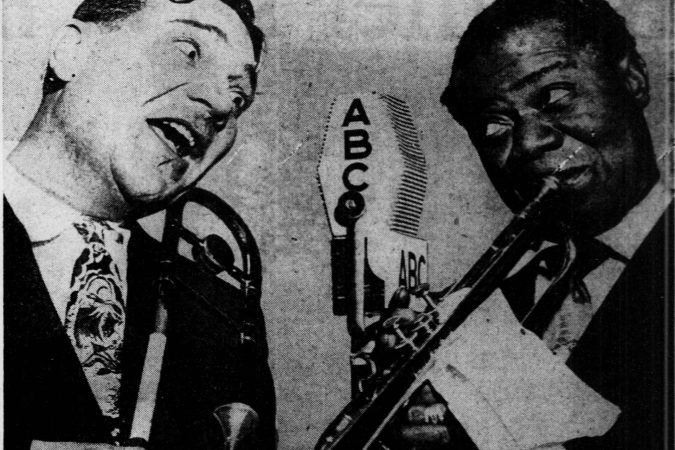
The paper said the total eclipsed the previous year’s attendance of 72,000, with acts like jazz legend Armstrong, violinist Jeanne Mitchell, and pianist and vocal improvisationalist Alec Templeton.
These performances included local acts from area high schools, bugle corps, and marching bands.
‘Voices of Tomorrow’
In its annual “Voices of Tomorrow” contest, four young singers rose above a field of more than 2,000 competitors, singing in opera and “other fields” hinting at what was coming in the following decade. Competitors would sing in front of the crowd, which would choose the four winners by applause.
And the nearly four-hour event closed with the playing of “The Star-Spangled Banner.”
Municipal Stadium, which was opened in 1926 for the Sesquicentennial, would be named after John F. Kennedy in the 1960s, and would close in 1992.
The city’s 11th annual music festival in 1955 was its last until the 1960s brought the Philadelphia Folk Festival, Beatlemania, and a cultural revolution.
Former Phillies All-Star Jayson Werth and former 94 WIP host Devan Kaney have started a podcast.
The first episode of Werth Talking About was released Thursday. The hosts discussed topics ranging from Werth’s passion for horse racing to their defining Philly sports moments — and whether the Phillies have what it takes to make it to the World Series this year. They promised to “tell it like it is” and “keep it real” in their weekly Thursday episodes.
Werth, who played for the Phillies for four seasons, helped lead the team to back-to-back World Series appearances in 2008 and 2009 before signing a whopping seven-year, $126 million contract with the Washington Nationals after the 2010 season. Though his departure was a major disappointment for many Phillies fans, Werth assured that he is impartial these days.
“I had some great years in Philadelphia,” he said. “I played on great teams, won a World Series, and nobody can take that away from me. … I can be a Phillie, I can be a Nat, but these days, I identify as a horse racing owner.”
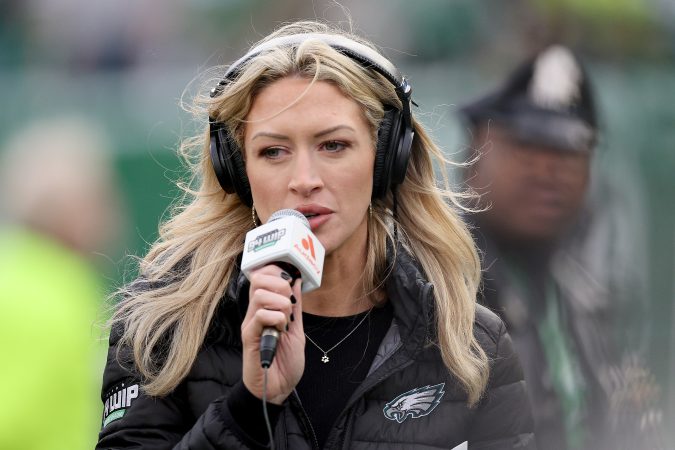
For Kaney, Werth was a welcome surprise voice for the podcast.
“I was absolutely not expecting Jason Werth,” Kaney, who replaced Howard Eskin as WIP’s Eagles sideline host in 2024 before being laid off in March, told The Inquirer. “We’re one episode in, and he just has so much lore. He’ll just drop the most insane stories, and it’s awesome to work with him.”
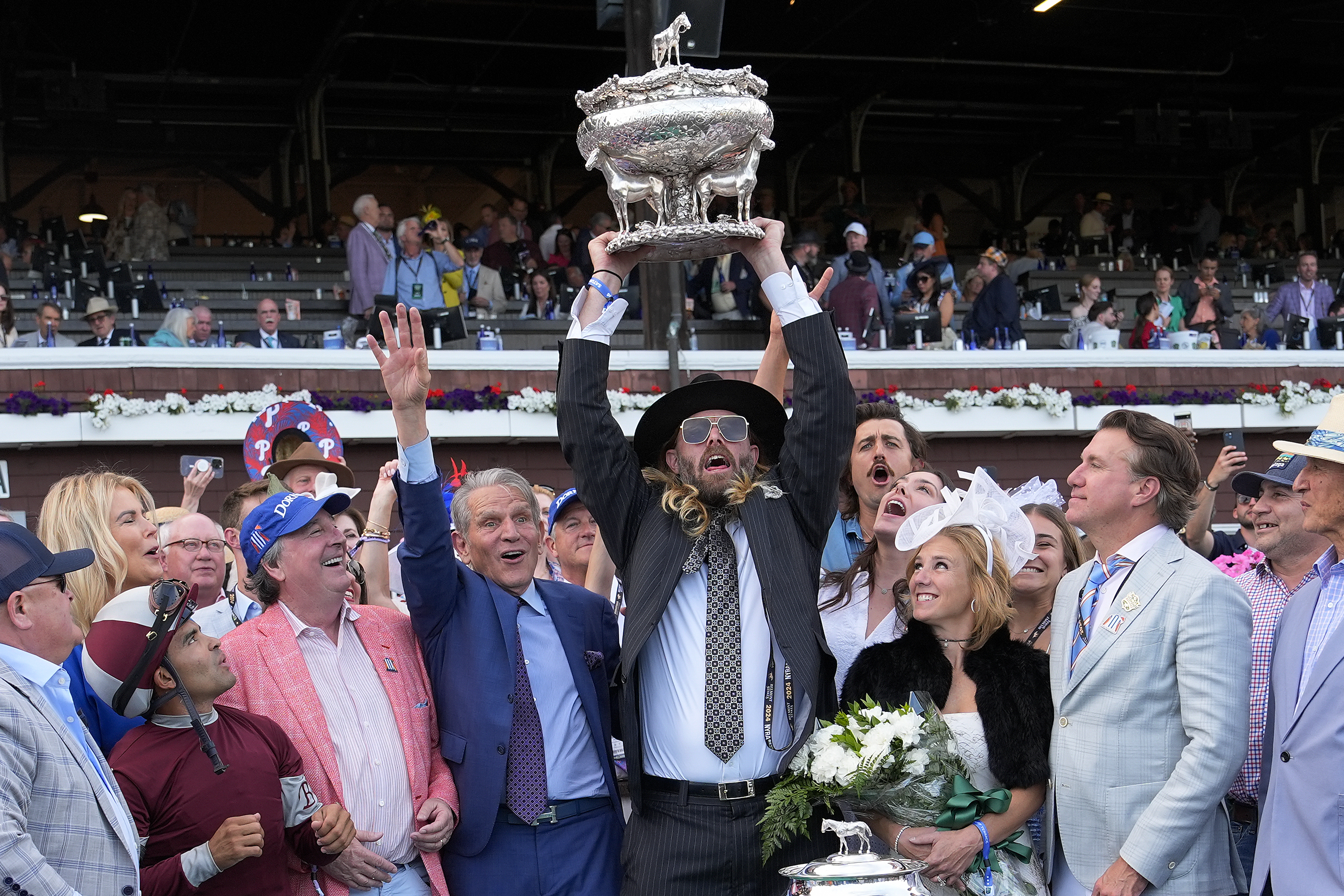
Jayson Werth holds up the August Belmont Memorial Cup after Dornoch won the 156th running of the Belmont Stakes in June 2024.Julia Nikhinson
Though out of the baseball limelight for the past few years, Werth is no stranger to podcasting, having served as a cohost of Off the Rail, a show discussing the world of horse racing with fellow former MLB player Shawn Kelley.
As the hosts got acquainted in the debut episode, stories bounced from Werth’s horses to his recent appearance in a Lakers jersey at Game 3 of the NBA Finals, and, of course, each of their perspectives on the Phillies’ 2008 World Series win.
Despite now being a horse racing enthusiast and accomplished owner — Werth’s horse, Dornoch, won the 2024 Belmont Stakes — he shared some analytical thoughts on his former team. Werth, who retired from baseball in 2018, offered a wealth of insider knowledge after playing in Washington with current Phillies stars Trea Turner and Bryce Harper. The latter sparked debate over his status as an elite player.
“I think Bryce is right in the middle of his prime,” Werth said. “If he can stay healthy over the next few years, we’re talking about a first-ballot Hall of Famer.”
The Phillies have been one of the best teams in baseball since replacing manager Rob Thomson with interim Don Mattingly in April. Werth remains optimistic about the team’s chances the rest of the way but knows from experience that it won’t be easy — even if he believes the team is better than most.
“I would say this to the people out there that say, ‘Oh, this team’s not as good,’” Werth said. “This team, year over year, has made it to the playoffs, won the division, and found a way to get in. So this is a quality team if it keeps doing what it’s supposed to do. … Winning is hard. Everybody should know that. Winning is hard.”
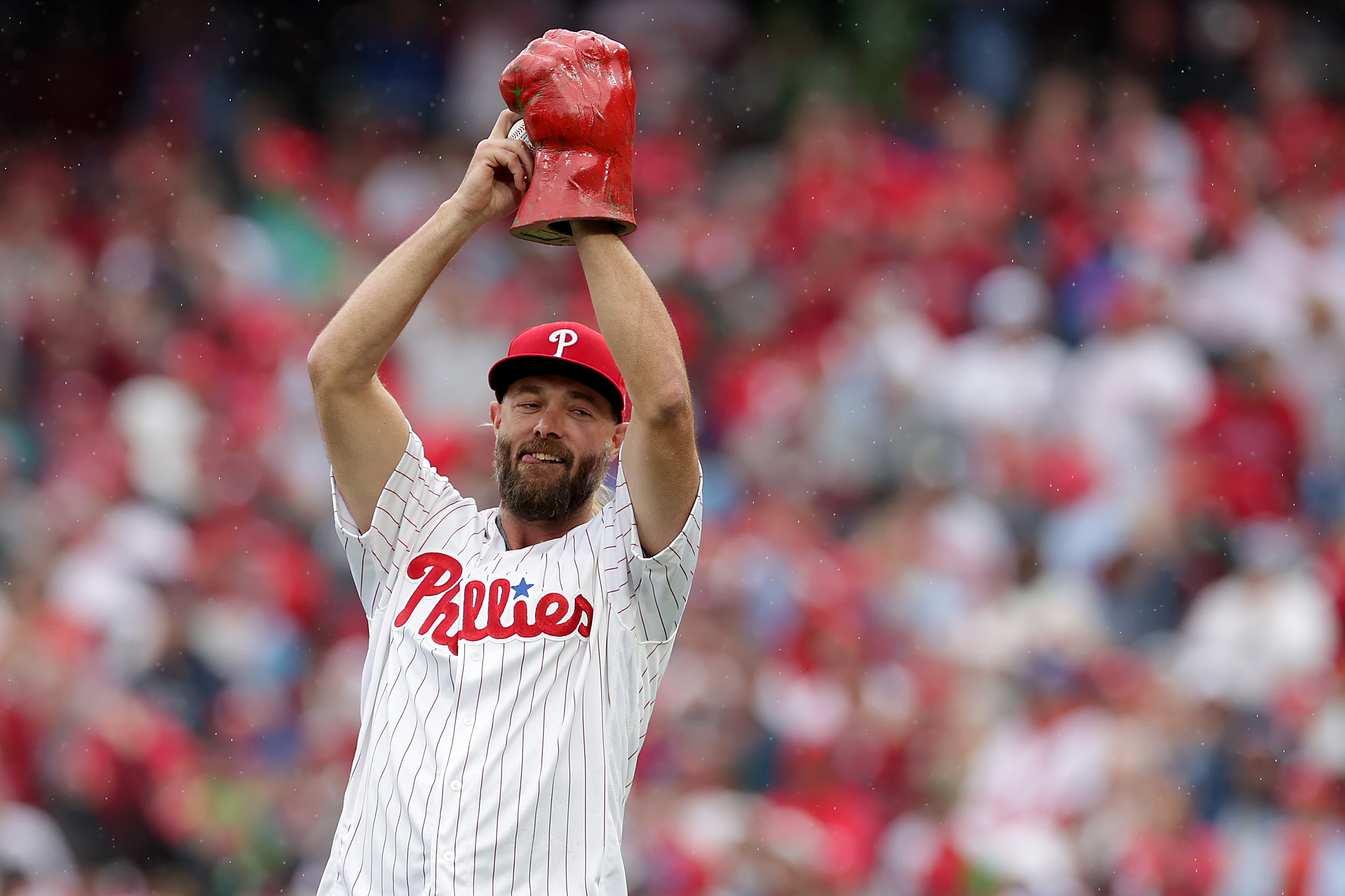
Werth threw out the first pitch before Game 5 of the 2022 NLCS between the Phillies and Padres.Chip Fox / Staff Photographer
As the Phillies move deeper into the season — and the baseball world descends on Philly next month — Kaney said the show will continue to evolve.
“We’re going to start incorporating a lot more guests and active players,” Kaney said. “I know we’re going to do a lot of fun stuff around the MLB All-Star Game here in Philly.”
Werth Talking About is produced by the ALLCITY Network and PHLY, which also produces Cooper DeJean and Reed Blankenship’s podcast, Exciting Mics. The show is working with the Major League Baseball Players Association to plan on-site episodes and in-person recordings as it grows.
“What we provide in our podcast is a unique perspective,” Kaney said. “It’s not attacking, it’s not hot takes, it’s not anything overly negative, but more so kind of peeling back the curtain on what happens behind the scenes.”
Kaney, a longtime Phillies fan, also hopes the show provides some optimism for fellow fans as the hosts draw connections between the current team and the ones Werth played on.
“If I was part of this Phillies team, I would be so sick of hearing about the magical 2008 Phillies just because they’re the last team that won,” Kaney said jokingly. “This is a good team, and we’re going to tie both of them together and find the similarities and differences between those teams.
“It’s going to be something that’s really fun for us.”
If you ask some Philadelphia fans, Taylor Swift’s claim to the city should be revoked.
On Wednesday, Swift sat on Madison Square Garden’s celebrity row to watch the New York Knicks, who swept the Sixers out of the playoffs last month, claw back from a 29-point deficit against the San Antonio Spurs to take a three-games-to-one series lead in the NBA Finals. Swift, who’s from Reading and spent her childhood summers in Stone Harbor, N.J., cheered on New York despite her strong ties to the Philadelphia area.
The pop star wore a blue T-shirt with “Stevie Knicks” — a nod to Fleetwood Mac’s Stevie Nicks — printed in Knicks orange. She was seated between friends and fellow musicians Este and Alana Haim, who sported “Knickole Kidman” and “Knickelback” shirts, and Law & Order: SVU star Mariska Hargitay, whose character, Olivia Benson, inspired one of Swift’s cats’ names.
So, what’s actually going on? Did Swift ever rep the Sixers or has she always been a big Knicks fan?
In April 2002, a 12-year old Swift performed the national anthem before the Sixers tipped off against the Detroit Pistons at the First Union Center (now Xfinity Mobile Arena). Sixers public address announcer Matt Cord, who retired after this past season, introduced the future global star as “Taylor Swift from Reading, Pa.”
Swift, who also performed the anthem before Game 3 of the 2008 World Series at Citizens Bank Park, recently reflected on singing at her hometown NBA team’s arena during a December appearance on The Late Show with Stephen Colbert, but she did not mention where her NBA fandom lies. She instead focused on the American flag-themed attire she wore.
“You know, when you’re like 11 and you’ve got that one outfit that you just know goes so hard,” Swift said. “You just know that when you put this on, you’re like, ‘I’m sorry, I’m unstoppable today.’”
In 2014, Swift told Time magazine that she began to root for New York earlier that year when she moved to the Big Apple. That year, the “Process Sixers” went 19-63, but the Knicks were not worldbeaters either, finishing 37-45. Her reason for embracing the Knicks evidently was not because of how the team was playing. Instead, it was because of a friendship she formed with New York big man Amar’e Stoudemire.
“So you run into a bunch of different, interesting types of people at the Met Ball,” Swift told Time. “I’ve gone the last four years. And the most normal people at that event, every single time, are Amar’e Stoudemire and his wife Alexis. I talk with them and hang with them every time I’m there. So I’ve always had this sort of love of the Knicks, just because Amar’e is so cool.”
It also seems the Sixers did not claim a special place in Swift’s heart because they invited her to sing, either. In fact, as she told Time, she also performed at Madison Square Garden as a child. The Mecca seemed to leave a greater impression on her than the Sixers’ South Philly arena.
“And also I performed at the Knicks’ — at Madison Square Garden’s kids talent competition at halftime when I was 12 or 13,” Swift said. “And ever since then, I’ve had this kind of sparkly, magical opinion of Madison Square Garden and the Knicks, since they let me sing when I was a little kid.”
As some on social media have pointed out, Swift also attended Game 3 of the Knicks’ Eastern Conference finals matchup at the Cleveland Cavaliers. At that game, seated next to her fiancé and Kansas City Chiefs tight end Travis Kelce, she appeared to root for the Cavaliers — not the Knicks. Kelce and his brother, retired Eagles great Jason Kelce, are from Cleveland Heights, Ohio, and have been public in their support for the Cavs.
Am I tripping or was she not just rooting for the Cavs against the Knicks in the last series lmaoo https://t.co/aCoFWt359F
Swift’s relationship with the Eagles does not leave many clues to where her loyalty lies, either. Despite previously performing in Eagles jerseys and mentioning the team in her 2020 song “gold rush,” Swift seemingly ditched the Birds after she began to date Kelce. Since then, she has supported Kansas City.
This is a very important reminder to everyone that Taylor Swift is an Eagles fan. 🦅 pic.twitter.com/Sw4viIt8MV
It seems that Swift will have to correct the record on her favorite teams. Until then, a small sect of Philadelphia Swifties will likely hold out hope. The rest? They seem to have given up.