Category: Entertainment

  • 😳 Spotted | Outdoorsy Newsletter

    Welcome to the final day of July, and happy Shark Week to all who celebrate.

    Here’s what we’re doing outside today:

    ☀ Your weekend weather outlook: Overall splendid conditions, with a mix of sun and clouds. Some Sunday showers may dampen things.

    — Paola PĂ©rez (outdoorsy@inquirer.com)

    If someone forwarded you this email, sign up for free here.

    Hello, strangely beautiful invader
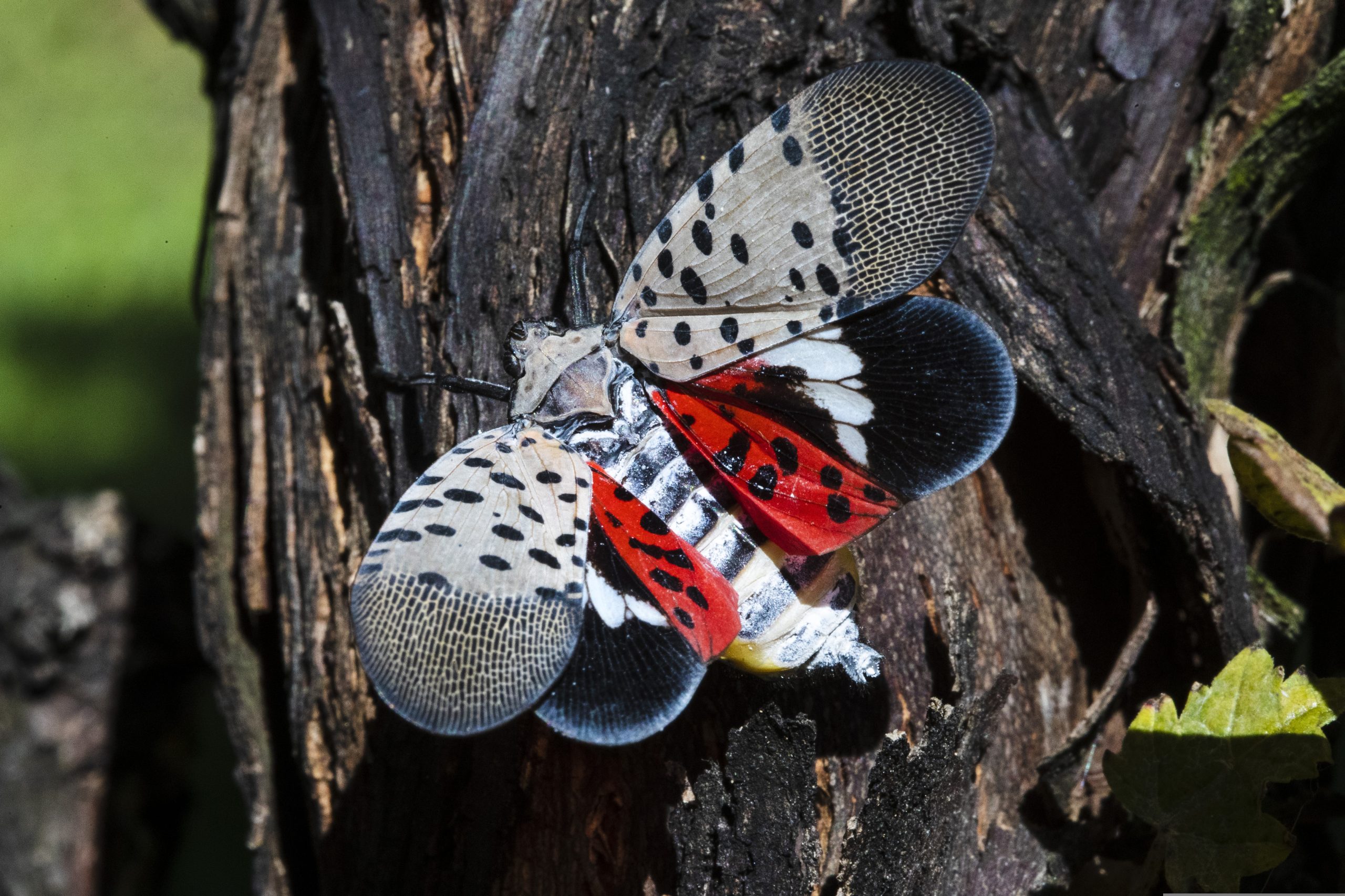
    Every year, people ask: “Should we still care about the spotted lanternfly?”

    It’s been nearly a decade since it showed up in Pennsylvania and threatened the balance of the ecosystem. Back then, things got so spooky that people started calling 911 (and were respectfully asked to stop doing so).

    Thankfully, their wrath was not as bad as we feared. Lanternfly numbers have declined, but efforts to control them continue. They still pose threats to vulnerable plants, especially grapevines.

    Active from July through December, adult lanternflies remain a pest to be dealt with. Recent seasons have been more or less mild, but lately I’ve noticed more and more of the inch-long plant-hoppers crawling around Philly. I even caught a crafty one hitching a ride on the hood of my car.

    We’re told to kill them on sight, but… I truly hate having to stomp on them, and it’s not just because they are experts at effortlessly escaping certain death. There’s something special about them. Heck, they even make for extraordinary tattoo subjects. They can’t help that they wreak chaos.

    At any rate, it’s important to know how to identify, prevent, and treat spotted lanternfly damage. Use our guide here.

    📬 What are you witnessing out there? Email me to let me know if your neighborhood has seen a rise or decline in spotted lanternfly sightings.

    News worth knowing

    🌳 Your outdoorsy experience

    What are you doing out there? This is your spot to shine, dear reader. I’m looking for new stories and moments to feature. Send your story in an email (pictures, if you have them, are welcome). You may see it in an upcoming edition of this newsletter.

    Mushroom wars

    đŸŽ€ Let me pass the mic to business reporter Joseph DiStefano.

    Pennsylvania mushroom growers welcomed this month’s U.S. Department of Commerce preliminary finding that Canadian farms are selling mushrooms to U.S. grocery stores at unfairly low prices.

    The ruling against “dumping” threatens to make mushrooms more expensive to import, easing competitive pressure on family-owned U.S. growers in an industry also under pressure from a shortage of harvesters amid the U.S. immigration crackdown.

    “This ruling supports the long-term health of our industry” in Pennsylvania, said CJ Ciarrochi, CEO and fourth-generation owner of Modern Mushroom Farms in Toughkenamon, Chester County, part of the Fresh Mushrooms Fair Trade Coalition supporting the case against the Canadians.

    But one of the largest area growers called the decision a protectionist move that would enable aging U.S. farms to avoid upgrades and leave consumers with fewer choices. — Joseph DiStefano

    Read on for the full fungi fight report.

    Their haven is a habitat

    Larry Cohen and Marla Hexter foster an eye-catching meadow at their Schwenksville home, and live by the motto: “Think globally act locally.” See their flourishing gardens and the critters that thrive there.

    Paola’s picks

    🍑 An activity: Peach Festival at Peddler’s Village in Bucks (free; all ages).

    🚙 A story: Obeying posted speed limits saves you money, and helps the planet.

    🩟 A reminder: Prevent mosquito breeding — and bites — with these tips.

    🐩 A win: The formerly extirpated piping plover bounces back.

    🌇 A song: “Summer In The City” by Quincy Jones (1973).

    A riverside view
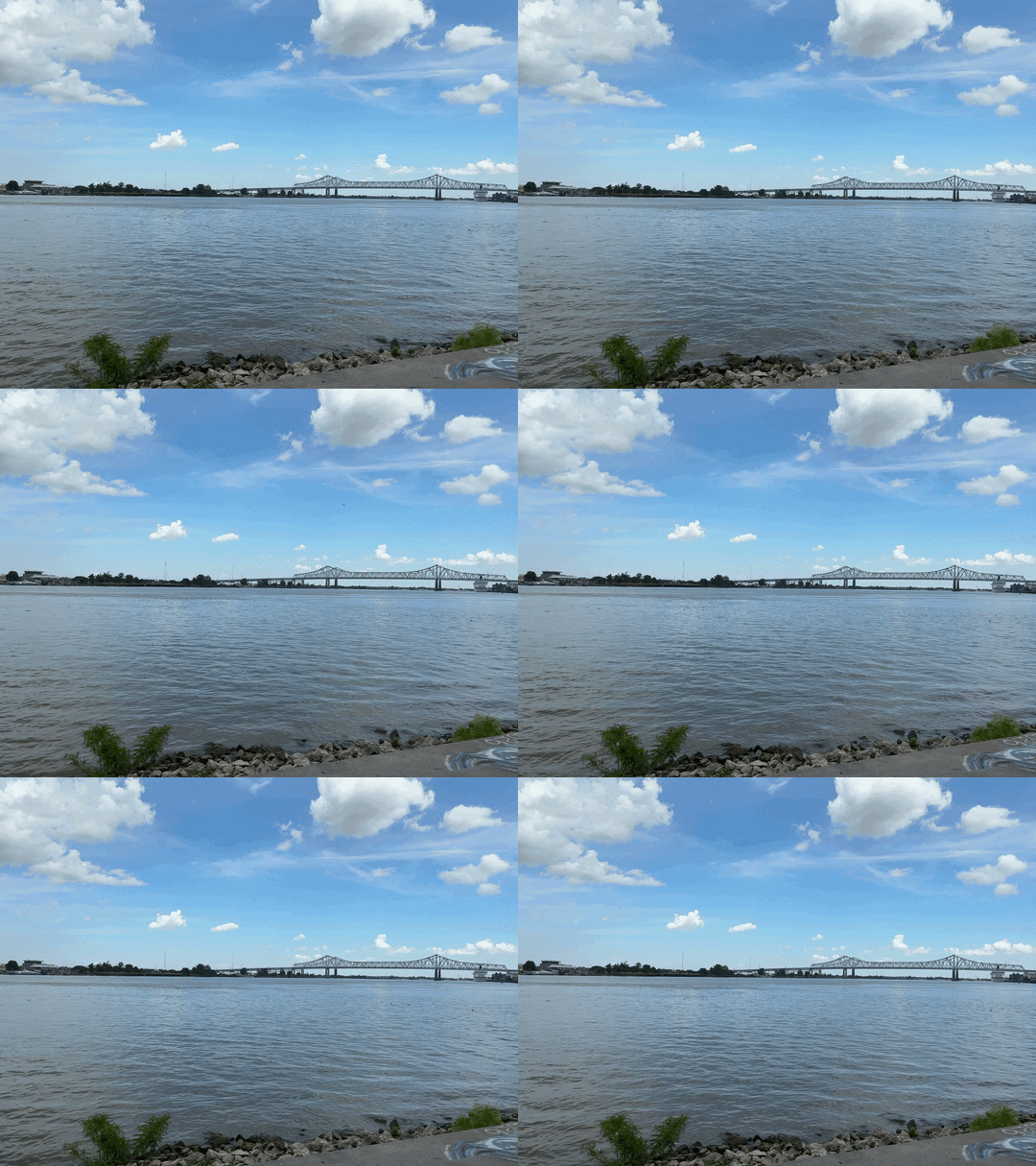
    Breathe in…and breathe out. Take in the Mississippi.Paola PĂ©rez

    I captured this along the Moonwalk Riverfront Park in New Orleans last weekend.

    đŸ‘‹đŸœ A hike is calling my name. Where should I go? I’ll catch up with you soon.

    By submitting your written, visual, and/or audio contributions, you agree to The Inquirer’s Terms of Use, including the grant of rights in Section 10.
  • Times Square will be surrounded by a West Philly artist’s work all August

    Times Square will be surrounded by a West Philly artist’s work all August

    Times Square is getting a touch of Philly artistry.

    West Philly-based Maia Chao has been Times Square’s Public Artist-in-Residence since 2023, having been invited to examine the behind-the-scenes experience of what is one of the busiest tourist areas in the world.

    A photo installation and “Midnight Moment” presentation from her work will be on display through the month of August. The art will draw from her studies on the cleaning and beautification processes, and human behavior at the plaza.

    “I’ve always been interested in infrastructure, the management of public space, and the sociality of different places,” Chao said. “Times Square itself was a funny place to be presented with because it’s what a lot of New Yorkers avoid passing through. I was coming to it looking at what the space has become as it became corporatized.”

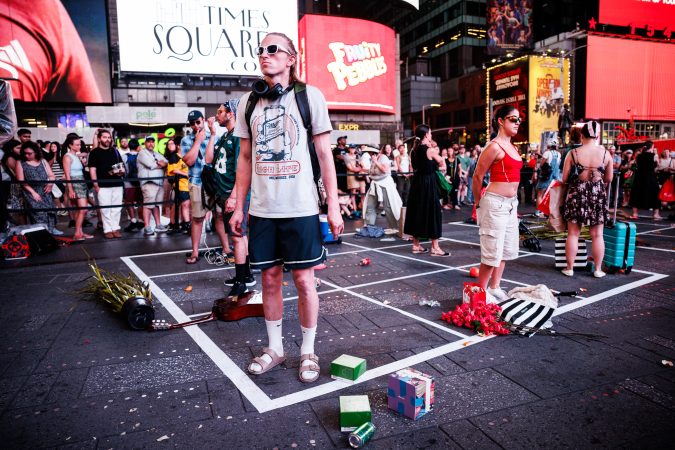
    Actors performing in Philly artist Maia Chao’s show “American Idle” in Times Square. The performance is being restaged August 14, 2026.Maria Baranova-Suzuki

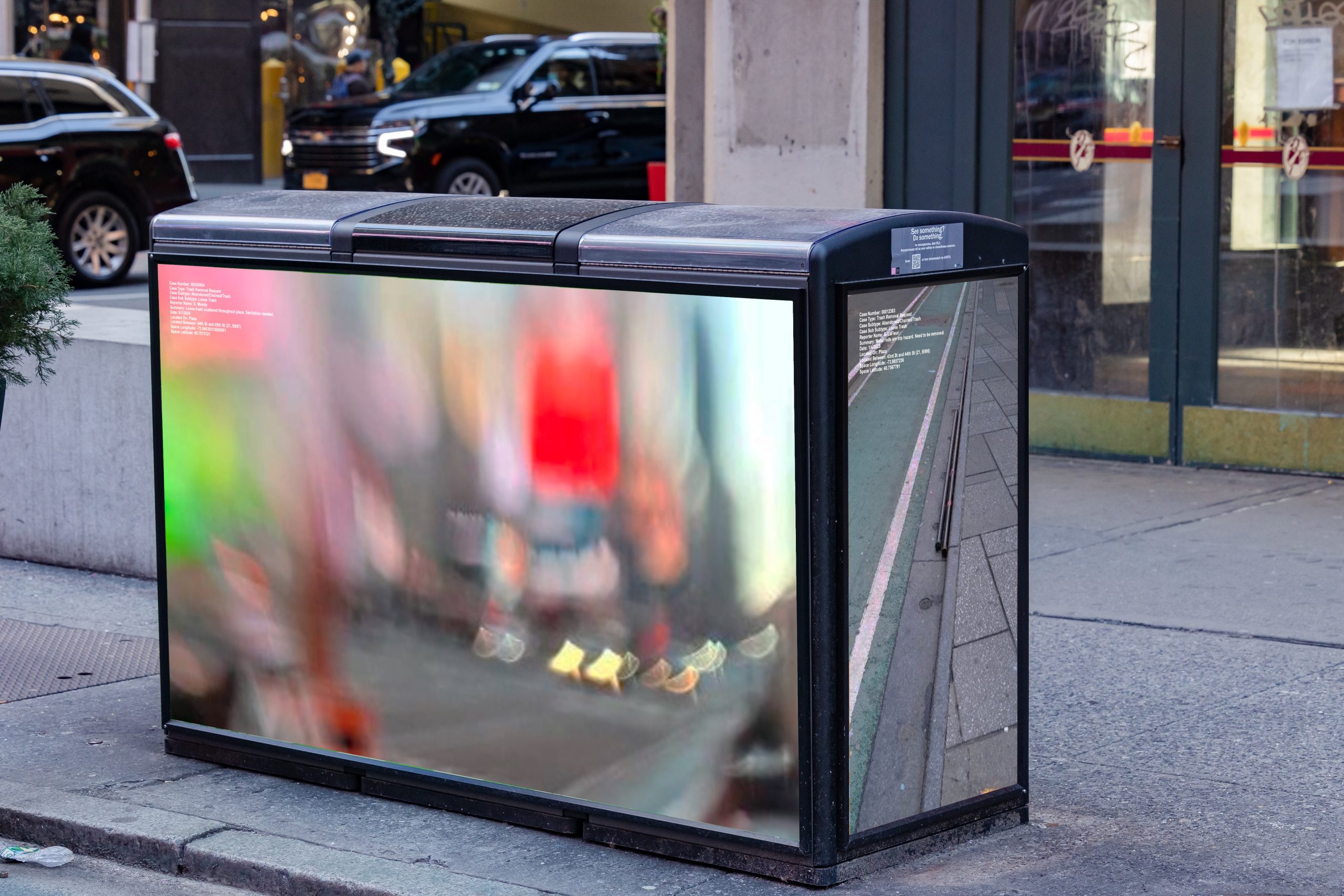
    Chao’s photo project “Case Subtype: Damaged/Nonfunctional” will present 30 photographs displayed on Bigbelly trash cans across Times Square. The photographs were taken by actual sanitation workers, who already document potholes, graffiti, and other abandoned objects as a part of their job.

    “A lot of the work of the Times Square Alliance is to improve the reputation of Times Square from its history of being ‘seedy’ or ‘dangerous’ in the 1980s and 1990s,” said Chao. “A lot of that effort is about maintaining its appearance as clean and safe to visit. I came to that with a critical lens on what and who is deemed clean and safe.”

    The title of her project references how workers mark found objects as “damaged/nonfunctional” when they upload the photos to their system. Details like the location and photographer are seen in small text in the corner of each photograph.

    A mockup of one of the photo installations from Philly artist Maia Chao’s upcoming project “Case Subtype: Damaged/Nonfunctional.” The photos are to be displayed on Bigbelly trashcans in Times Square.Liz Ligon

    “People are used to seeing advertising [on trash cans] and [the art] might catch their eye when they’re putting something in the trash can,” said Anna Starling, director of Times Square Arts. “I’m hoping that people will understand or at least think about what is this, why it is there, and recognize the beauty in the everyday objects that you see.”

    Some of the images on display include photographs of an abandoned bike chained to a pole, a rolling office chair next to a trash can, a spill of light blue paint on the sidewalk, and a pothole with a cone coming out of it.

    “There was something appealing to me about thinking about the people making these strange narratives,” said Chao. “When you see a huge microwave on the street or an abandoned stroller, they feel poetic and narrative, and kind of like traces of people’s lives.”

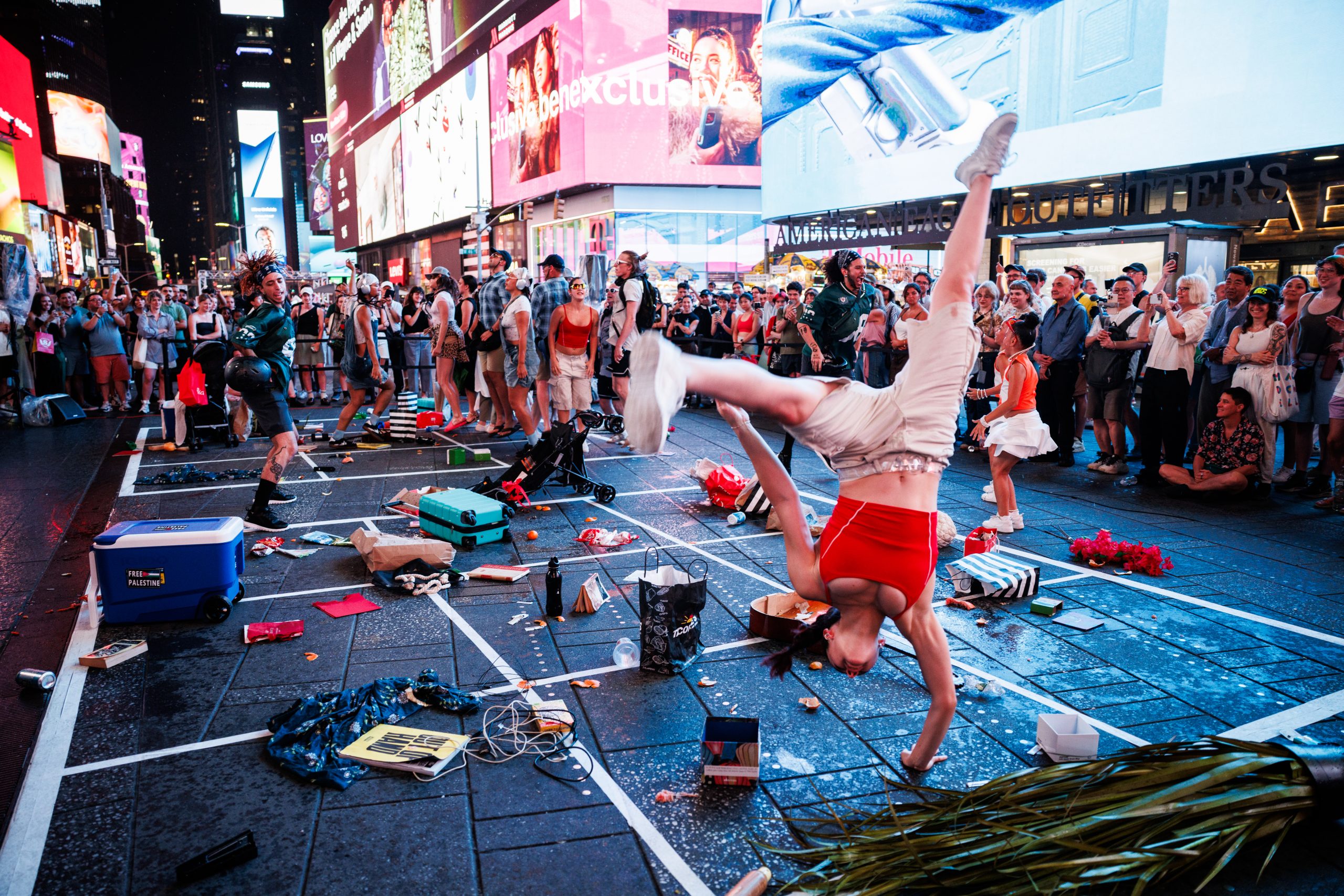
    Actors perform in Philly artist Maia Chao’s 2025 work “American Idle” in Times Square. The performance will be restaged August 14, 2026.Maria Baranova-Suzuki

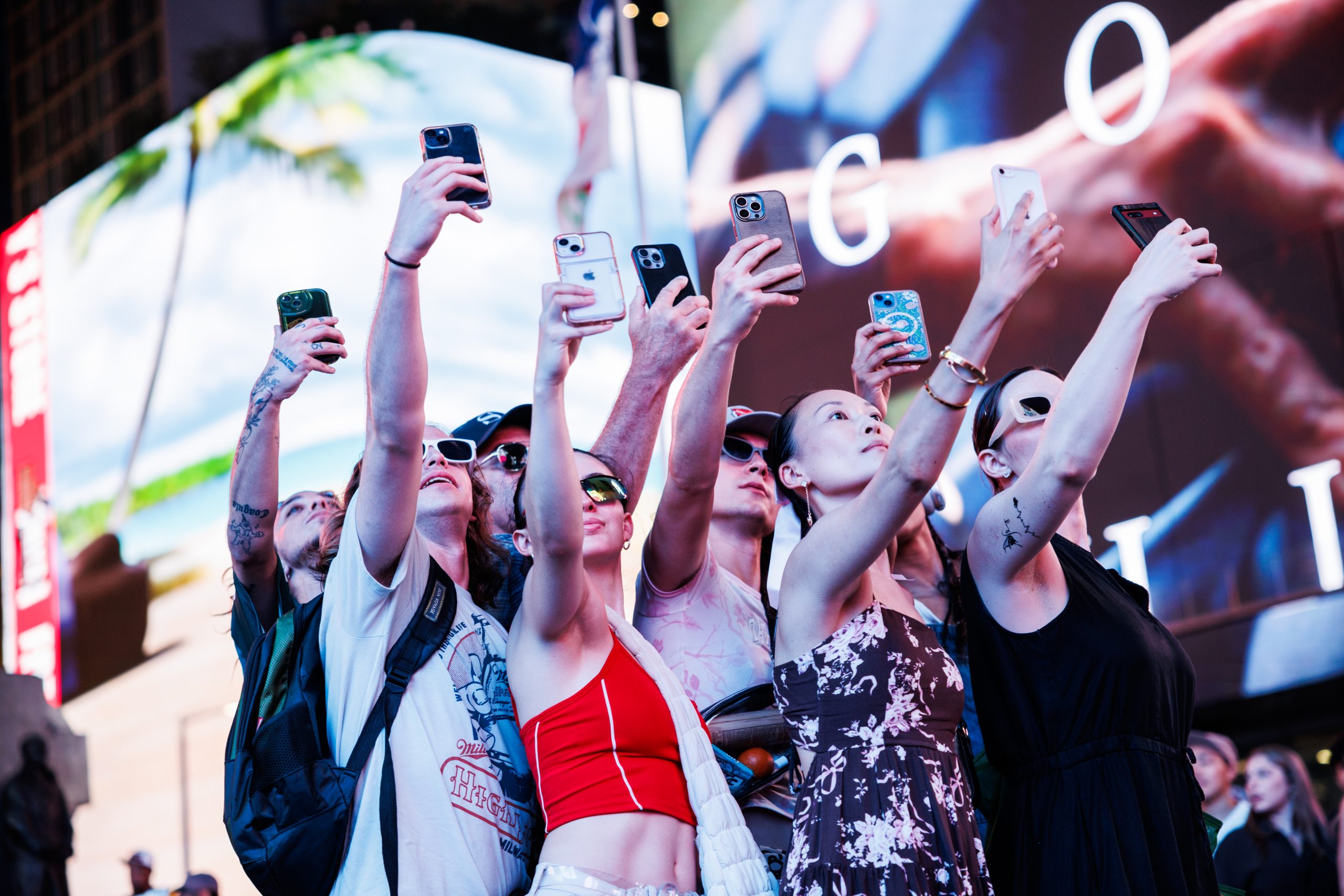
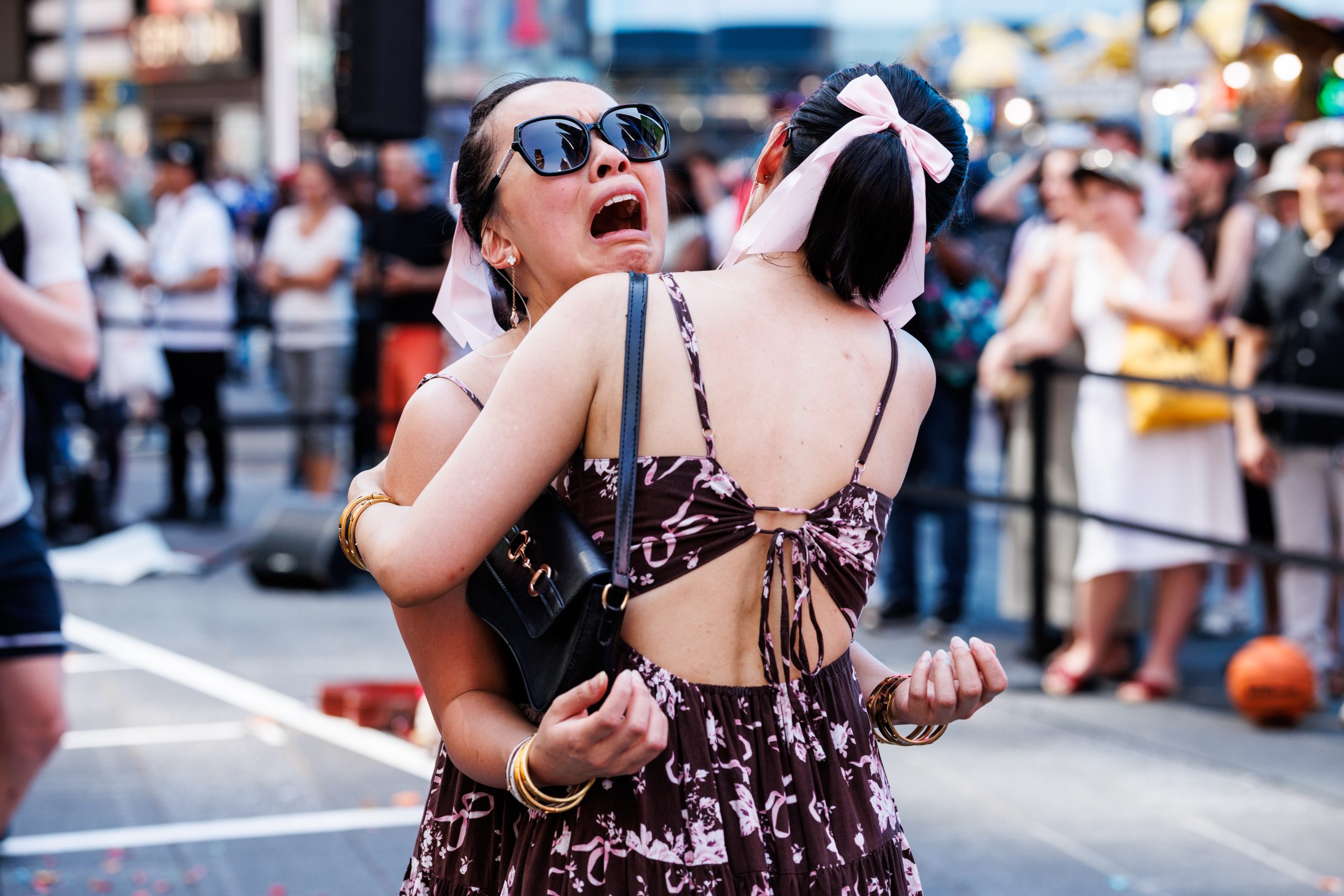
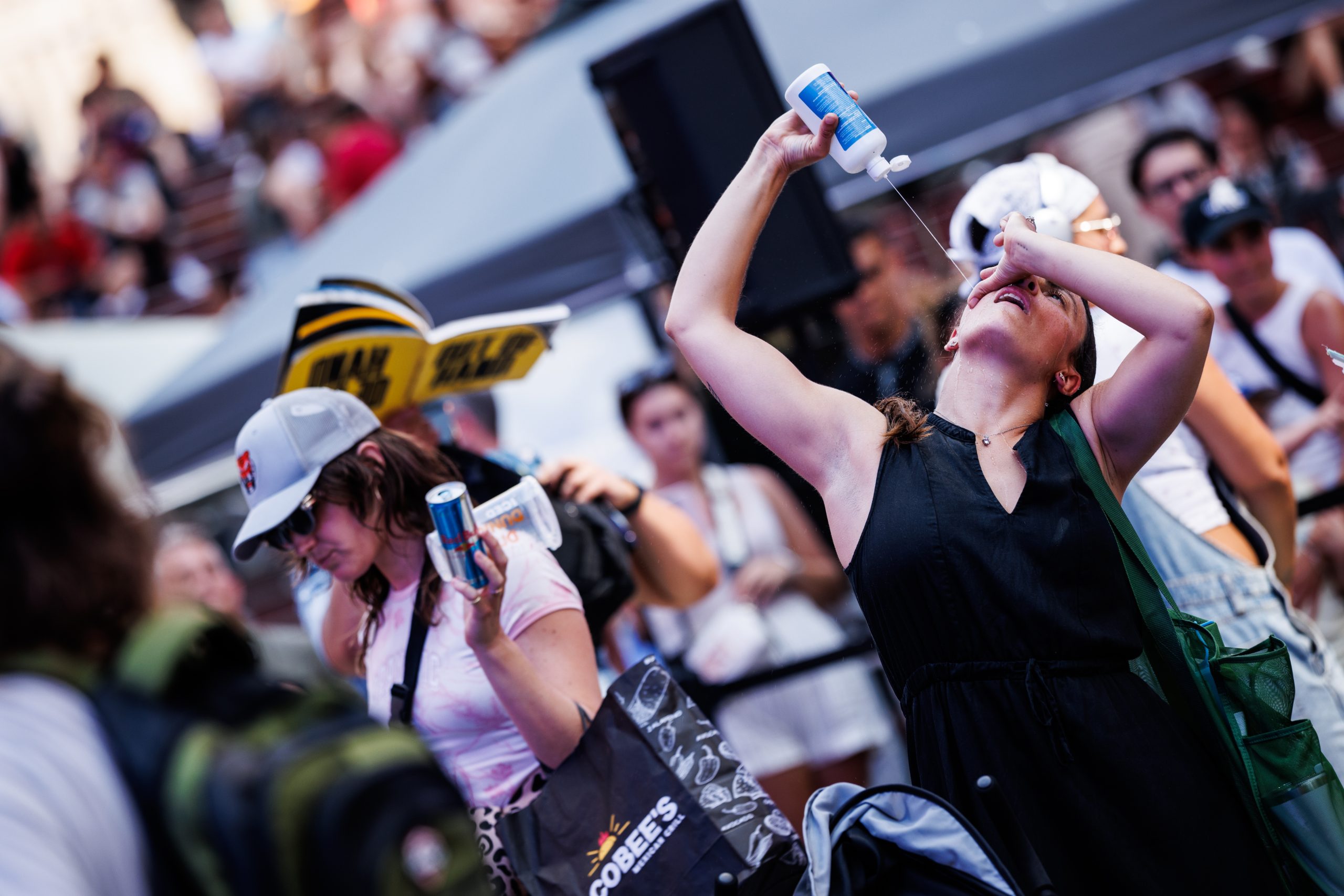
    In addition to the photo installation, there will be a restaging of Chao’s 2025 performance piece American Idle on Aug. 14. The show comprises a group of actors playing Times Square archetypes, like tired kids, lost tourists, and influencers, all acting out their typical behavior. At the same time, identically dressed body doubles of each character mimic the other’s actions.

    “Initially, the idea was for the pedestrians of Times Square to be able to watch themselves, so it would be a crowd watching a crowd,” said Chao. “Something that may seem spontaneous when one person is doing it, is all of a sudden seen as learned and programmed when two people are doing it in unison.”

    Chao, who has a bachelor’s degree in cultural anthropology from Brown University, drew inspiration from the human behavioral patterns she noticed in real life and the 3D modeling program Crowds Pro. Typically used to simulate crowds for TV and movies, the system has a collection of characters being “idle,” shifting their weight and/or looking around, and making common gestures like clapping or scrolling on their phone.

    Actors perform in Philly artist Maia Chao’s 2025 work “American Idle” in Times Square. The performance will be restaged August 14, 2026.Maria Baranova-Suzuki

    “It’s a way of showing we’re all scrolling and taking pictures, and there’s definitely a pessimism to the ways we’re all becoming these robots or our attention is being conditioned to become increasingly fractured,” said Chao, a Rhode Island native. “But we also need to bring an observational, loving, and compassionate lens on the beauty of people as they are in their everyday selves.”

    A three-minute video with portions of choreography from American Idle will be playing every night in Times Square throughout the month. This will be August’s “Midnight Moment,” a long-running program that displays digital art across all the billboards in Times Square, daily, for three minutes before midnight.

    “Part of having public art in such large public spaces is having to be accessible to audiences. Maia’s project makes art and its concepts accessible, which draws people in,” said Starling. “The repetitiveness and duplicative aspects of the performance are eye-catching. Then with the art on the everyday receptacles that people pass by, having those two together we felt would engage audiences in new ways.”

    Actors performing in Philly artist Maia Chao’s show “American Idle” in Times Square. The performance is being restaged August 14, 2026.Maria Baranova-Suzuki

    Chao has plans for her own home city, too. This fall, she will be showing Waste Scenes, a video installation, at the ICA Philadelphia. She will also be curating the multimedia exhibit “An Endless Meeting,” organized by Philadelphia arts collective Vox Populi, of which Chao is a former member.

    “I’ve been making live performances for the past few years and I think often there are flows and cycles to my practice,” said Chao. “In the next few years, I might be working in a different way, using one project to escape another, or to exercise a different muscle. I don’t know what medium I’ll be working in next, it could be sculpture. I’m excited to see what the ecosystem of my practice needs or calls for next.”

  • Curtis’ $25 million plan for the Art Alliance building includes a 2,900-square-foot rehearsal hall

    Curtis’ $25 million plan for the Art Alliance building includes a 2,900-square-foot rehearsal hall

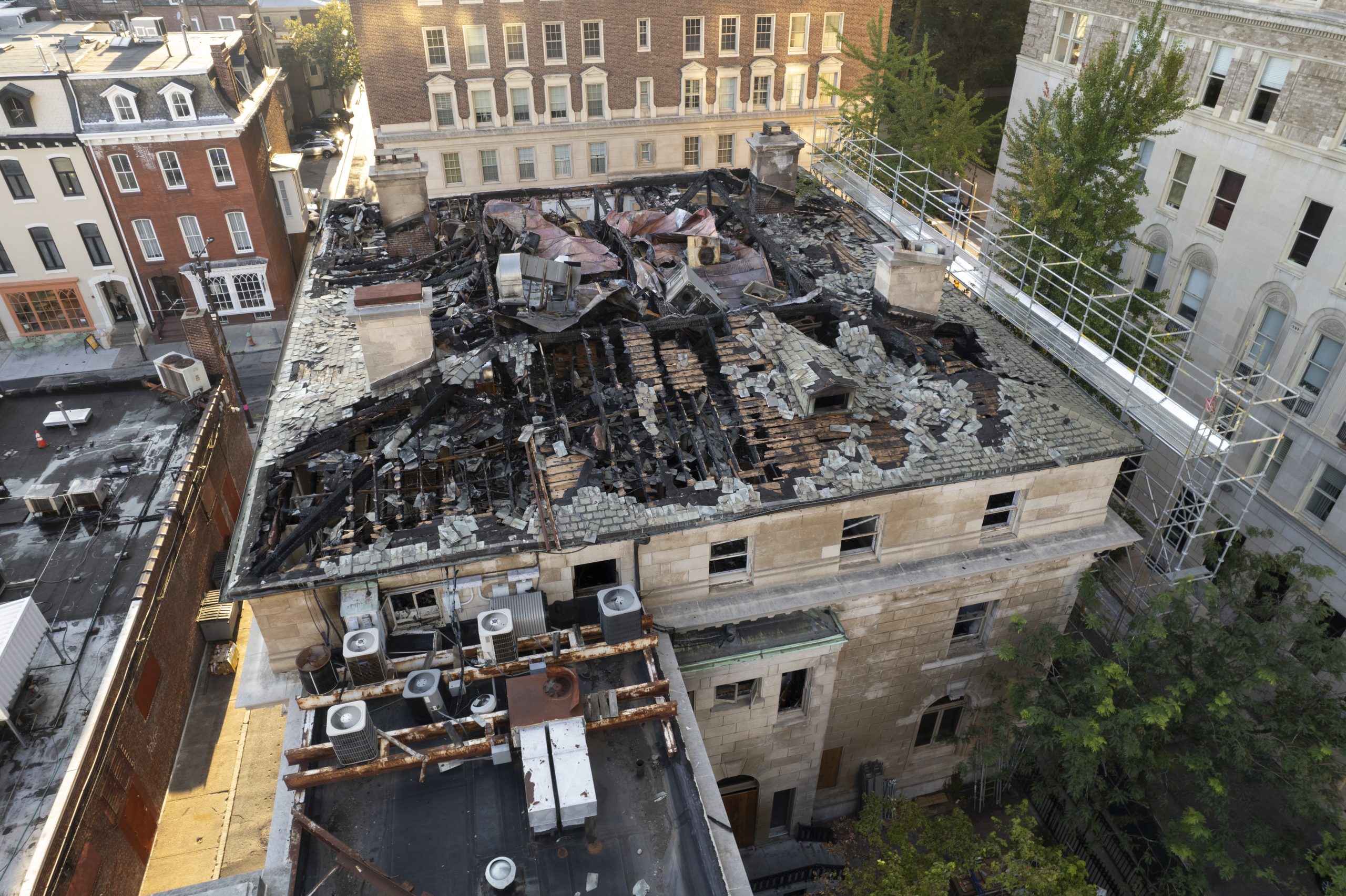
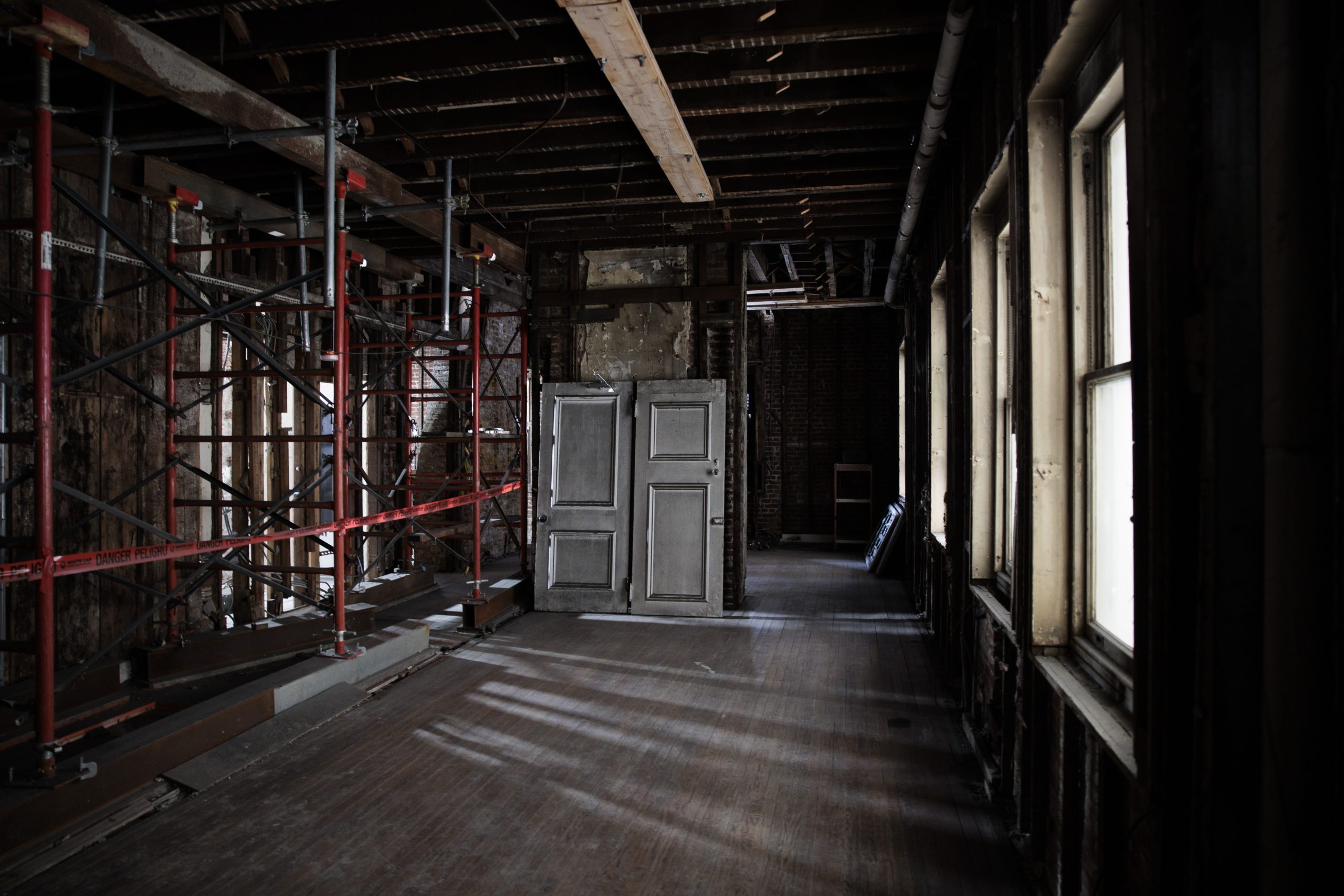
    It is hard to imagine, given the charred smell, wrecked plaster, and thick web of scaffolding and structural supports evident these days inside the Art Alliance on Rittenhouse Square. But a year after a devastating fire, the Curtis Institute of Music is closing in on a vision for the historic building’s next act as the new home of the music conservatory’s vocal and opera department.

    “My hope has always been that we could use this space to do for the vocal department what we did for the rest of the school or the orchestral program, certainly, with Lenfest,” says Curtis president and CEO Roberto Díaz.

    Lenfest Hall, on the 1600 block of Locust Street, opened in 2011, providing the school with 105,000 square feet of dorms, rehearsal studios, a dining hall, a light-filled rehearsal hall large enough to accommodate a full orchestra, and other spaces.

    The fire-damaged Art Alliance building at 251 S. 18th St. as it appeared in Aug., 2025.Monica Herndon / Staff Photographer

    The Art Alliance was gutted by fire and water damage in July 2025, and plans for its restoration are now being worked out by the school with Philadelphia firm VSBA Architects & Planners.

    The first floor is envisioned as having two 1,000-square-foot event spaces for master classes or lectures. The second floor will feature six teaching/coaching rooms and a student lounge. In the basement will be a catering kitchen, a costume shop/dressing room, and storage.

    The major new space in the Art Alliance building will be a rehearsal room on the third floor whose 2,900 square feet roughly equal the size of the orchestra rehearsal hall in Lenfest.

    “We could open it up for the neighborhood to come in and participate,” Díaz says, “but it gives the vocal department something that they just don’t have anything even remotely like.”

    The vocal and opera department currently occupies a series of spaces in Curtis’ main historic building on the 1700 block of Locust Street.

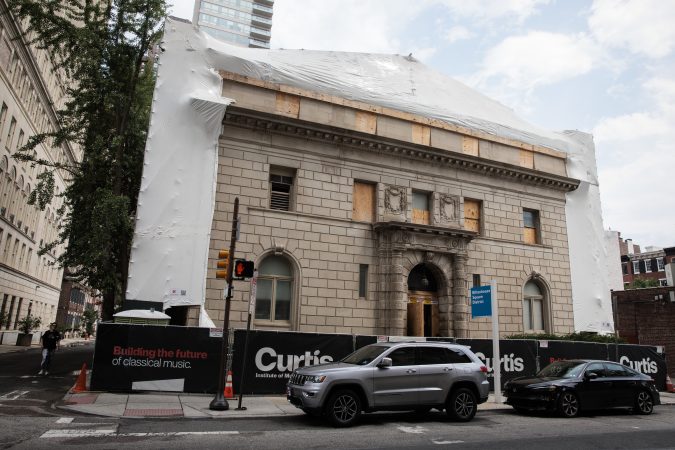
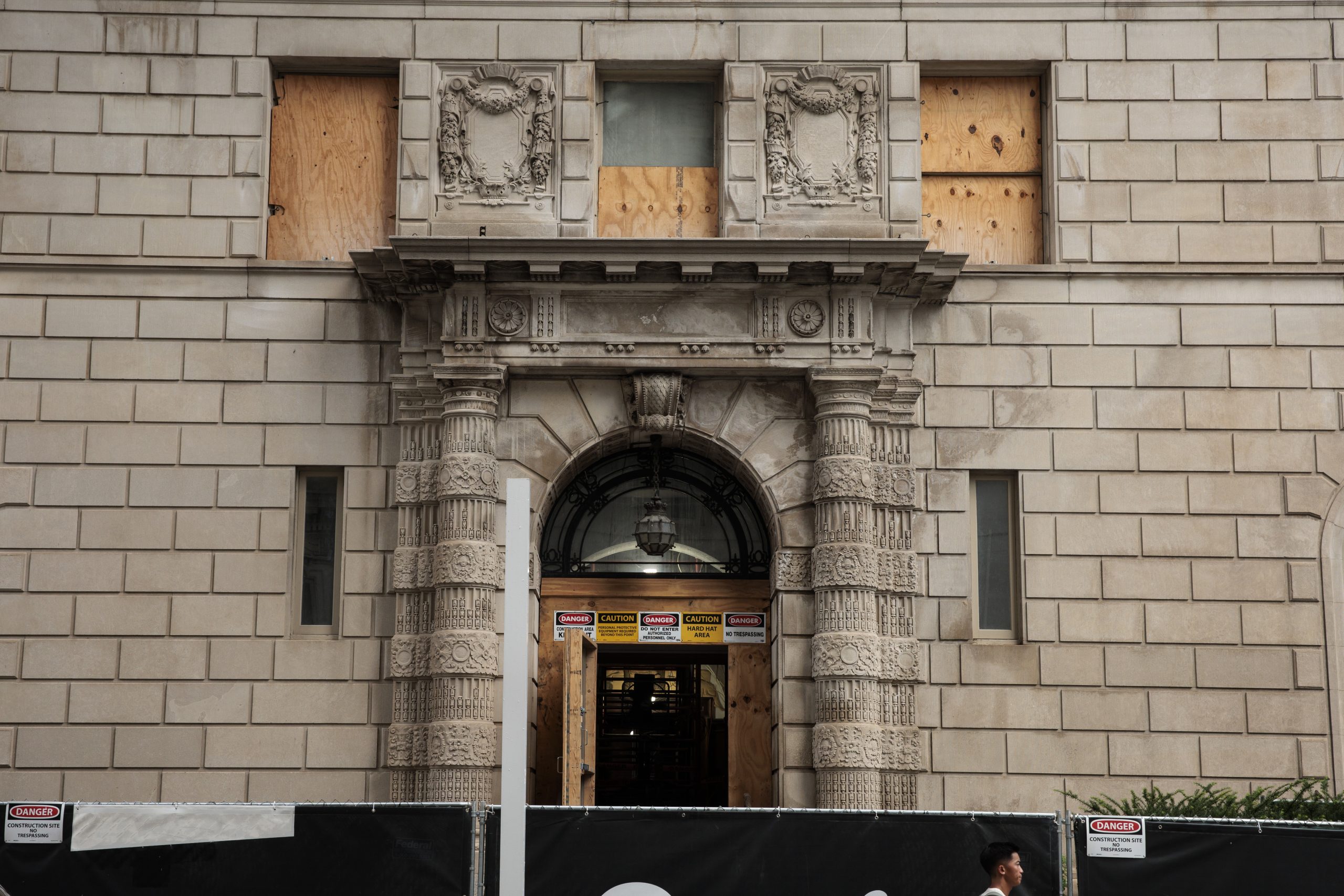
    The exterior of the Curtis Institute’s Art Alliance building, July 27, 2026.Monica Herndon / Staff Photographer

    While the restored and reconfigured Art Alliance building is primarily intended as the home of opera and vocal music, it will also likely host instrumentalists as space and scheduling allow. The school — with a student body of about 160, all on full scholarships — expects to open up events like master classes, informal workshop performances, and lectures to the public, but the frequency of public events has not been determined.

    “In addition to supporting the work of our students and faculty, we look forward to ensuring that the Art Alliance is a welcoming place for our neighbors, communities, and partners,” Curtis spokesperson Patricia Johnson said. “At this stage, we’re exploring ways this could take shape.”

    The building could open in about three years, Johnson said.

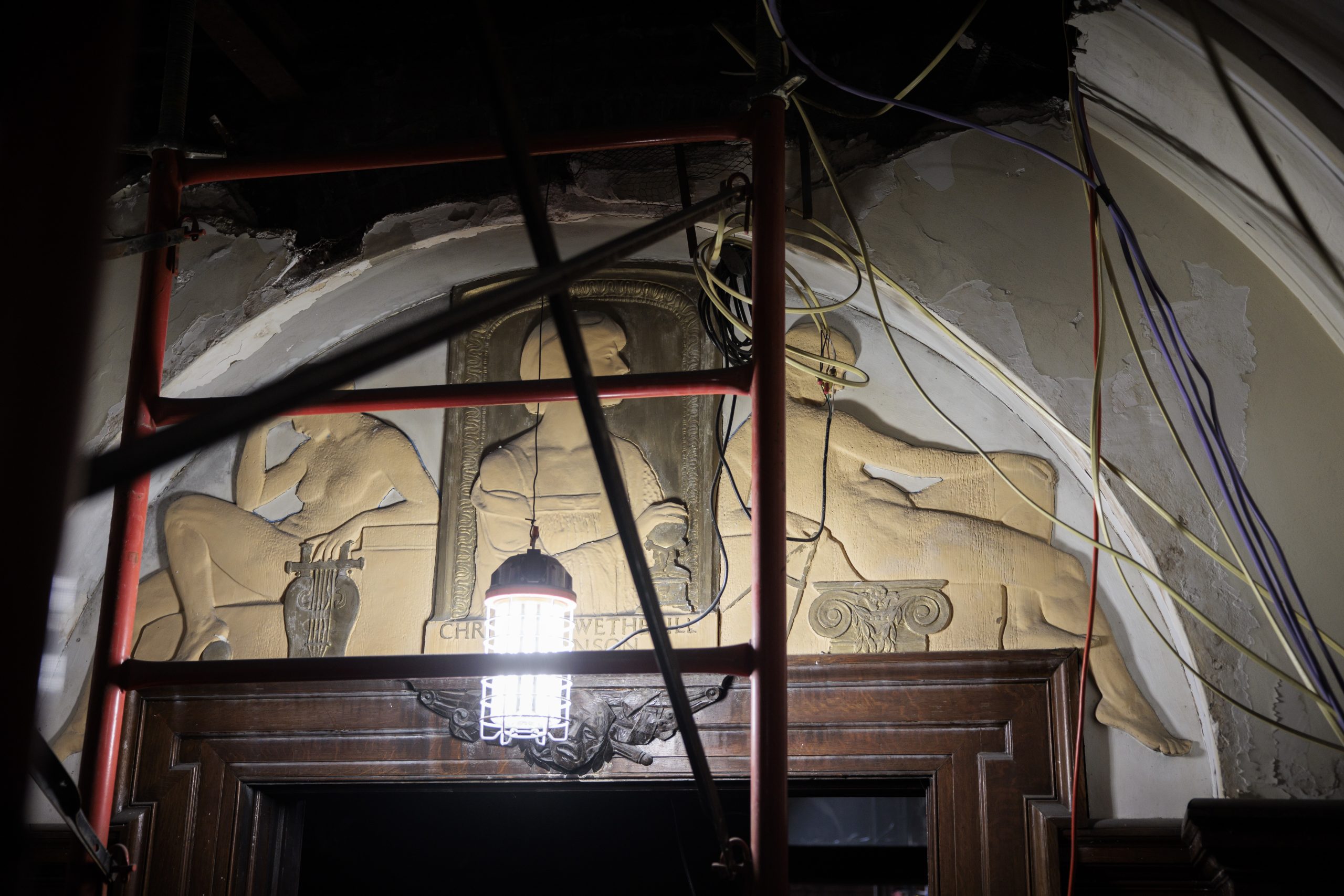
    A frieze honoring Art Alliance founder Christine Wetherill Stevenson in the building, July 27, 2026.Monica Herndon / Staff Photographer

    Among the issues still to be resolved is the eventual height of the Italian Renaissance Revival building, the onetime Wetherill mansion dating from 1906. Curtis would like to make the ceiling height on the third floor high, the better for acoustics in spaces like the large rehearsal room.

    “That’s a work in progress,” Díaz said. “When we were in the design stages of Lenfest Hall, we had to get a lot of permissions from the architectural folks and the [Philadelphia] Historical Commission and so forth. So that would be part of the process here. Obviously the more volume we have in this room, the more things we can do in it.”

    The building’s attic was destroyed in the fire, and a new one will not be built.

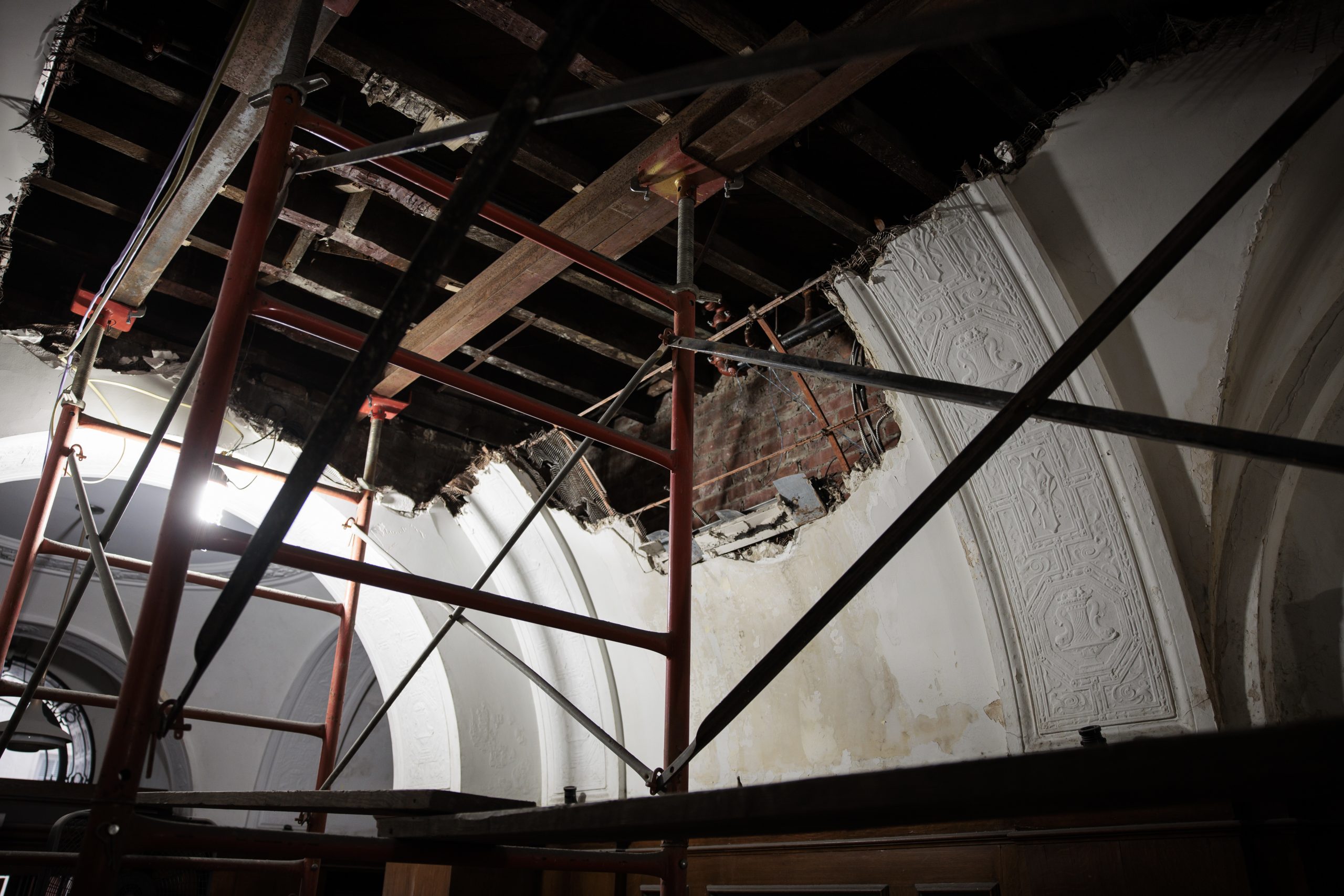
    Some of the plaster detail lost in Art Alliance fire.Monica Herndon / Staff Photographer

    A number of historic elements of the building have, however, been saved — the stained glass windows on the landing between the first and second floors, and a frieze honoring Art Alliance founder Christine Wetherill Stevenson, among them.

    Most of the demolition planned for the building’s interior has been completed, said Scott Kahan, senior project manager with construction management and general contracting firm C. Erickson & Sons.

    As the exact programmatic elements of the building are developed, DĂ­az said, a total project cost will emerge. A rough estimate is around $25 million.

    And then there is the matter of paying for it all.

    The school’s insurance claim is still unresolved, Díaz said, and philanthropy will be a part of the funding mix.

    Curtis has “lots of angels interested in opera and vocal music,” and while none has stepped forward yet, Díaz suggests the building will have naming opportunities.

    “The idea is very much like what we did with Lenfest, where Gould Rehearsal Hall has its name and we have the Locks Board Room and we have the teaching studios and rehearsal spaces that are named and so forth.”

    Most of the demolition of the Art Alliance building’s fire- and water-damaged interior is complete.Monica Herndon / Staff Photographer

    Curtis bid for the Art Alliance building in January 2025, acquiring it for $7.6 million from the bankruptcy estate of the University of the Arts, and was in the process of cleaning it out when the blaze struck. A report from the city’s fire marshal categorized the cause as “undetermined.”

    The school was exploring potential uses for the facility at the time.

    In its days as an arts institution and restaurant location, the Art Alliance lodged itself in the memories of many for its exhibitions, as well as weddings, parties, and other events.

    One element of the building that went unscathed in the fire now seems elegiac. It is a floor mosaic just inside the entrance with the University of the Arts logo rendered in red-and-white tile.

    Historic as the logo has become, that detail, Curtis leaders say, will go.

  • The King decided. Now it’s your turn | Things to do

    The King decided. Now it’s your turn | Things to do

    Two words: LeBron. James.

    I’m sure you’ve heard by now — and if you haven’t, shame on you, my friend.

    The NBA Hall of Fame player has officially signed with the Philadelphia Sixers, which means I’m walking around with 23-times the Ohio pride than I typically carry. (That’s right, all of Ohio claims LBJ as their own).

    No, but seriously. The city is due for a celebration with the King deciding to call Philly his sporting home. Now, it’s your time to decide how to spend your weekend.

    Read below to see what’s happening in the region, and take your pick.

    Also in this week’s edition:

    — Earl Hopkins (@earlhopkins_, Email me at thingstodo@inquirer.com)

    If someone forwarded you this email, sign up for free here.

    A Philly street artist installs a LeBron James mirror mosaic

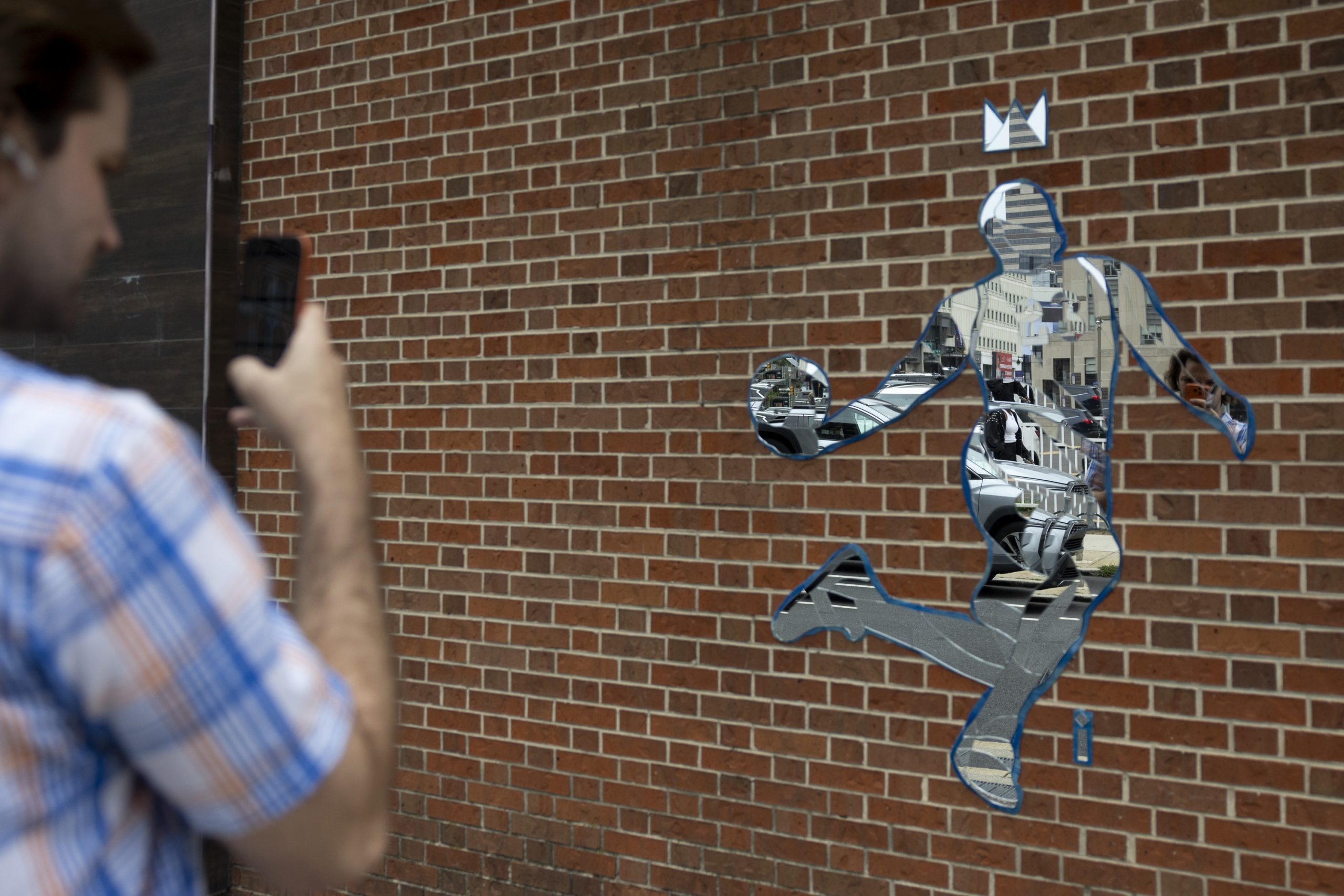
    Adam Hock, 28, of Center City, Pa., saw on Facebook about the LeBron James mosaic on 8th and Market Street in Philadelphia, Pa., on Tuesday, July 28, 2026.Tyger Williams / Staff Photographer

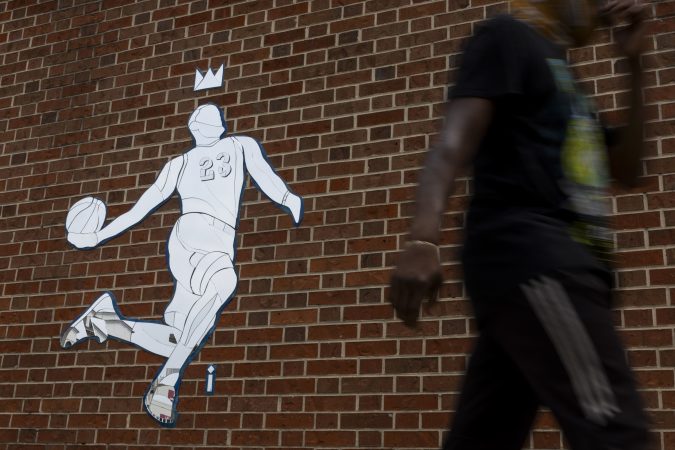
    Street artist irregular, born Sean Hassett, rarely cries. But when LeBron James announced he was going to end his NBA career with the Sixers, he shed some tears — and then got to work, writes trending sports reporter Gabriela Carroll.

    Within 48 hours, Hassett’s tribute in mirrors was up on the side of an old Burger King in Center City.

    Hassett usually sells art at Rittenhouse Square on Saturdays, but he spent most of last Saturday afternoon walking around Center City to scout potential locations for the piece. He ultimately settled on a building at 8th and Market, and it’s now become a public art attraction.

    Learn more about Hassett’s mirror mosaic here.

    The best things to do this week

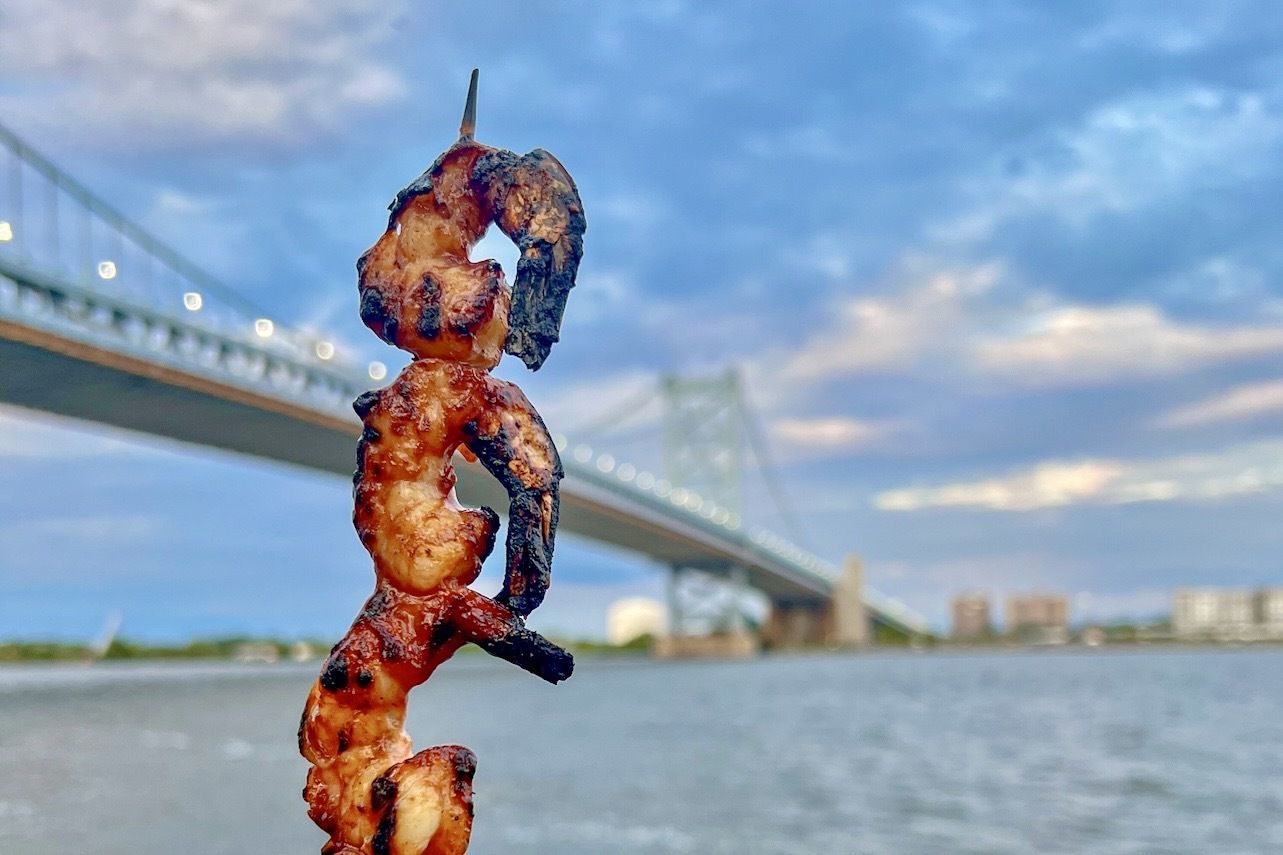
    Pinchos by the river at La Placita on Cherry Street Pier by Dionicio Jimenez.Michael Klein / Staff

    🎭 Last chance to swoon in romance theater: Grab your tickets before the final showing of The Notebook, based on the best-selling novel-turned-film. The musical runs through Sunday at the Academy of Music.

    đŸžïž Clark Park drama: Enjoy Shakespeare’s Hamlet under the evening sky. A free, open-air telling of the classic drama is happening at Clark Park through Sunday.

    🐅 A 1920s mystery at the Zoo: Who doesn’t love a good old-fashioned Zoo Done It? Stop by the Philadelphia Zoo for a night of wonder and mystery. Guests will play detectives, tracking down clues in a wild scavenger hunt.

    💃 A fiesta at Liberty Point: The third annual La Placita Fest returns with food, drinks, music, dance, and a live performance by artist Frankie Negrón.

    📅 My calendar picks this week: Dirty Rocks Cocktail Clash at Fringe Bar, ACANA African Festival, and Freedom Now Festival. Here’s our full list for the week.

    Saif Manna’s famed pastries have a home in Kensington

    Assorted baked goods at the new brick and mortar location of Manna Bakery on Thursday, July 23, 2026 in Philadelphia.Monica Herndon / Staff Photographer

    After building a following for his Levantine and Palestinian pastries at farmers markets, former Temple University student Saif Manna opened his first brick-and-mortar bakery in Kensington.

    The bakery opened Thursday at 110 W. Berks St., the former home of Essen Bakery.

    During the week, food and restaurant reporter Michael Klein writes that the bakery will feature many of Manna’s signatures — manakeesh, chicken sumac buns, fatayer, cardamom buns, and others. And the weekends will bring an even broader selection.

    For the full rundown, read Klein’s story here.

    Summer fun this week and beyond

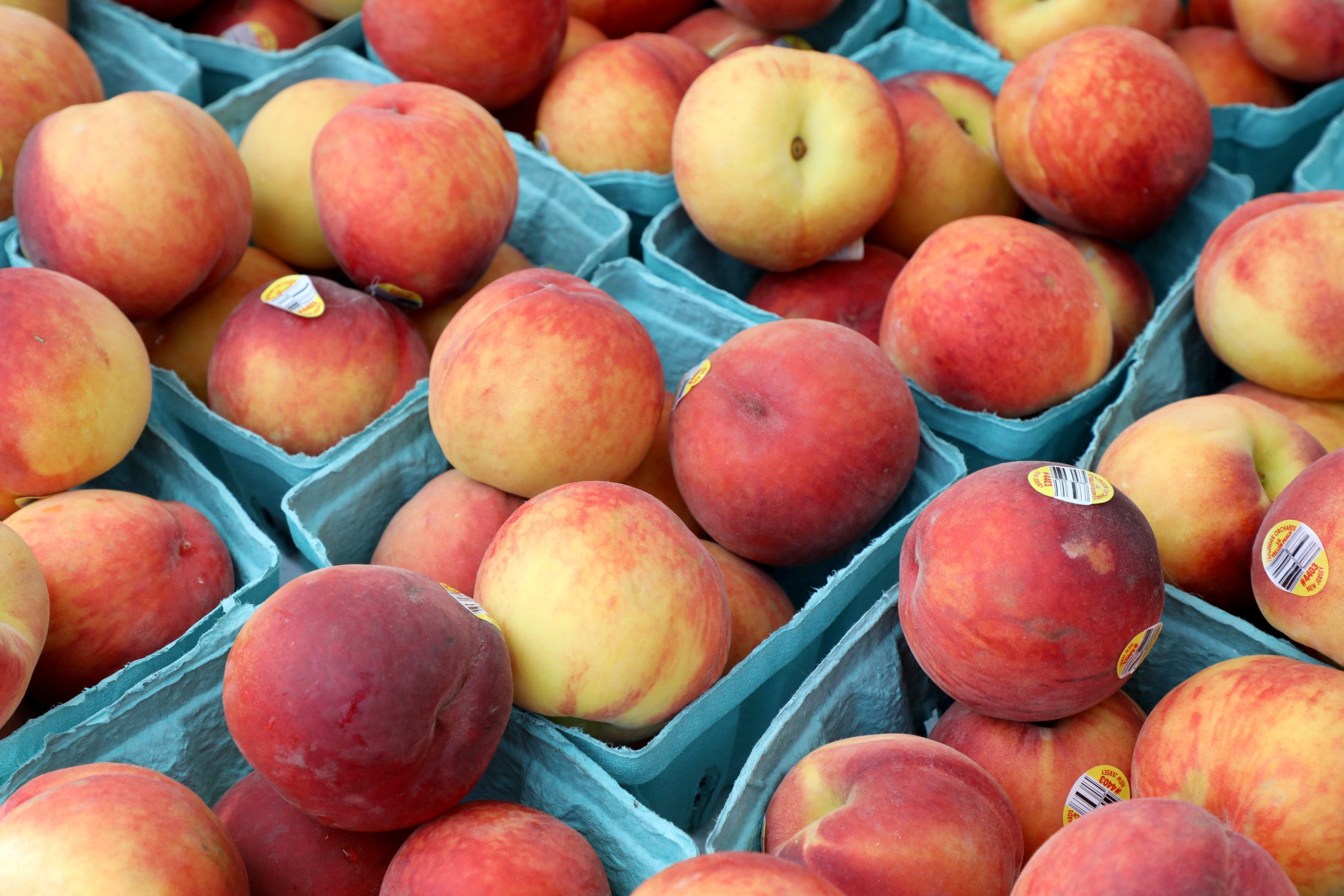
    Fresh produce, like these peaches from AlÕs Produce, a local farm, on sale at the Sea Isle City Farmers Market, Tuesday, July 28, 2026.Vernon Ogrodnek / For The Inquirer

    🍑 Keep your weekend peachy: Peddler’s Village celebrates another sweet and peachy treat. The Peach Festival will boast finger painting, lawn games, sand art, a petting zoo, and other family-friendly activities.

    🚂 Take a train through Morris Arboretum: Make your way to this floral oasis, now offering discounted admission to celebrate the Garden Railway. There will be Thomas & Friends trains, the Whimsical Woods, a fairy garden, and other hands-on activities.

    đŸœïž Final Pop-Up at RTM: It’s your last chance to enjoy a Tommy Dinic’s roast pork and warm apple dumpling at Reading Terminal Market’s Pop-Up Plaza. Dine outside the market’s doors for the last time this season on Sunday.

    đŸ‡ș🇾 A world of wonder: The Workshop of the World Exhibition continues through Oct. 18 at the Philadelphia Museum of Art. The immersive exhibition features 250 objects — from ceramics to furniture and textiles — that tells the story of Philly’s centennial exhibition.

    Staffer picks

    FILE – Ella Langley performs during Amazon Music Country Heat at Country Radio Seminar in Nashville, Tenn., on Feb. 28, 2024. (Photo by Amy Harris/Invision/AP, File)Amy Harris

    Here’s pop music critic Dan Deluca’s list of the best concerts this weekend.

    đŸŽč Thursday: South African pianist, composer, and educator Nduduzo Makhathini kicks off the first of back-to-back shows at Solar Myth on Thursday.

    đŸŽ€ Friday: Keyboardist and singer PJ Morton, who released his new album Saturday Night/Sunday Morning last month, is headlining at the Fillmore Philly Friday night.

    🎾 Saturday: Morgan Wallen and Ella Langley, the two biggest country stars and best-selling artists in the country, will headline at Lincoln Financial Field this weekend. The final show is Saturday.

    đŸŽ· Sunday: After a Friday performance in Atlantic City, legendary Chicago bluesman Buddy Guy will stop by the Keswick Theatre in Glenside for his “Buddy Guy 90 tour.”

    Check out the full concert list here.

    ❓Pop quiz

    With LeBron James’ arrival, NBA Championship hopes are now abound. Most Sixers fans know the last time the team captured a chip, but what year was the first?

    A) 1962

    B) 1976

    C) 1967

    D) 1969

    Here’s the answer to last week’s question: North Philly’s Jill Scott says her favorite cheesesteak is at Ishkabibbles. How does she take it? Answer: Fried onions, marinara, mozzarella, mustard, and mayo.

    That’s all for now, folks. Ride the high of this revamped Sixers roster and enjoy everything the weekend has to offer.

    – Earl Hopkins

    By submitting your written, visual, and/or audio contributions, you agree to The Inquirer’s Terms of Use, including the grant of rights in Section 10.
    Courtesy of Giphy.comCourtesy of Giphy.com
  • Disney hits back as Trump administration targets 6abc’s TV license

    Disney hits back as Trump administration targets 6abc’s TV license

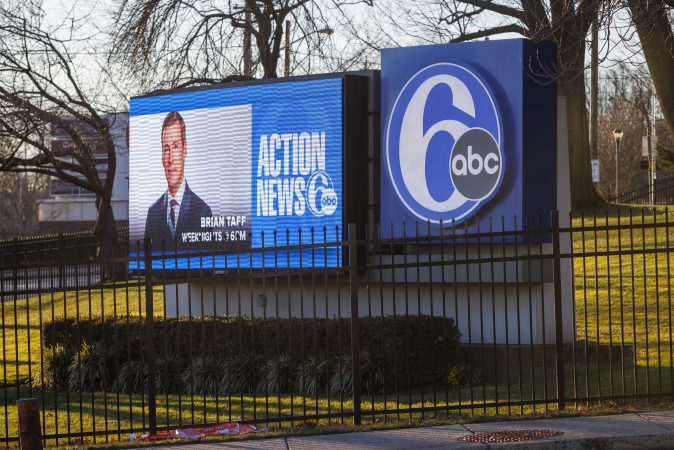
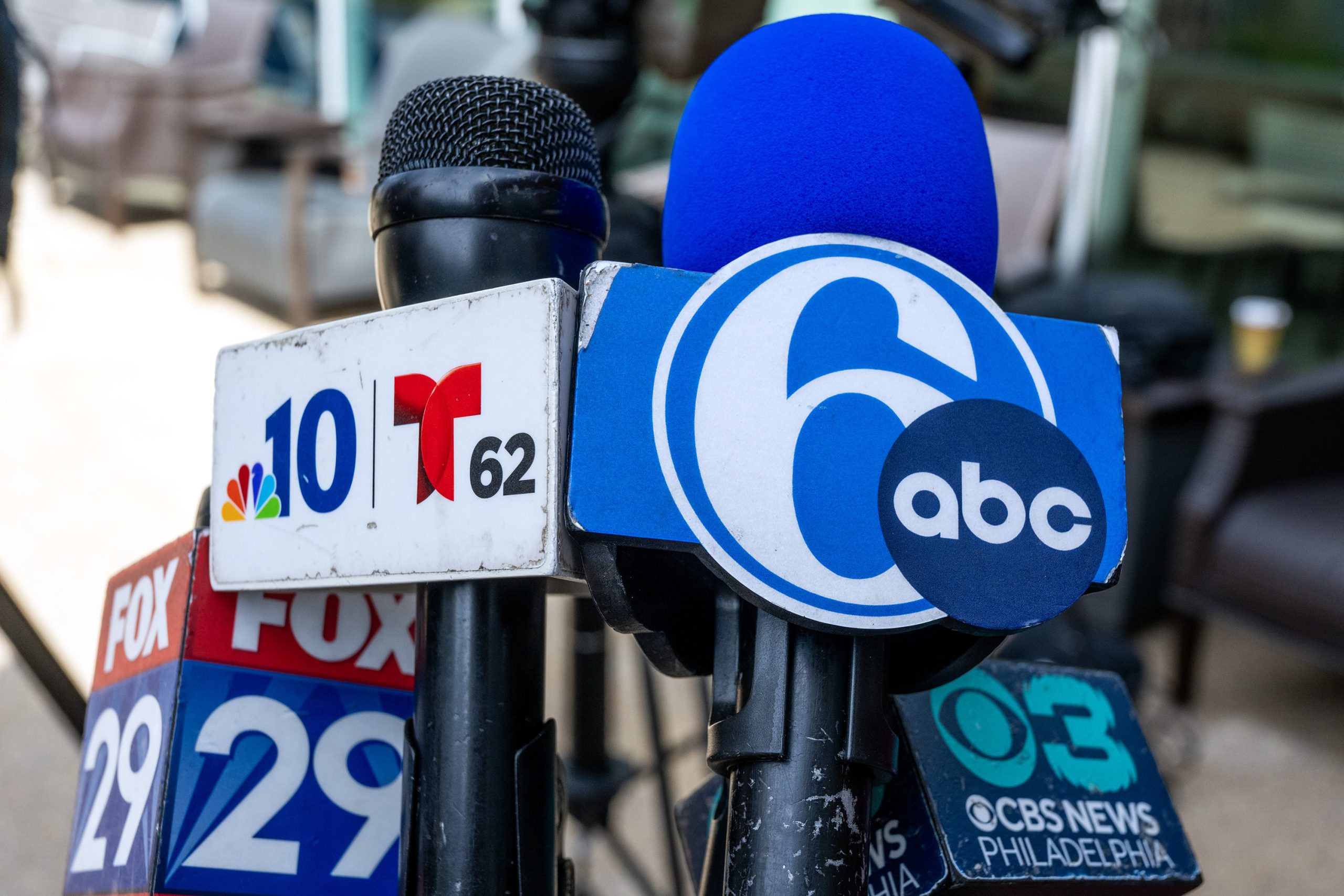
    Disney has come out swinging in its defense of 6abc and seven other owned-and-operated ABC TV stations the Trump administration is threatening to take off the air.

    In a new filing Thursday, Disney claims President Donald Trump is using the Federal Communications Commission to go after the local stations’ broadcast licenses in “retaliation” for comments made by ABC late-night host Jimmy Kimmel.

    “There is no question why the commission is singling out these eight stations: Each is owned by ABC, and the administration has openly and repeatedly called for the revocation of ABC’s licenses, because it dislikes the content and viewpoints expressed on ABC network programs,” Disney wrote.

    The FCC did not address Disney’s criticism, but in a statement a spokesperson said the agency “is going to hold broadcasters accountable to the full extent of the law.”

    In April, the FCC ordered an unprecedented early review of the broadcast license for 6abc and the seven other stations shortly after Trump called for Kimmel to be fired over a joke he made involving first lady Melania Trump. Disney called the early review “extraordinary” and an attempt at censorship.

    “The retaliation against ABC is a signal to every media company in the country: accommodate the administration’s view of what news coverage should look like or pay the price,” Disney wrote.

    The FCC has said the review stems from an earlier investigation into diversity, equity, and inclusion initiatives at Disney, citing “the agency’s prohibition on unlawful discrimination.” The agency is conducting a similar investigation of Comcast, which owns NBC.

    FCC chairman Brendan Carr also said the agency would include in its review the network’s decision not to air Trump’s prime-time address on election security earlier this month, in which the president repeated the baseless claim he won the 2020 election, despite losing to former President Joe Biden.

    “I think that’s something that broadcasters should be carrying,” Carr said.

    NBC also passed on carrying the speech live, while some local Fox affiliates picked up cable coverage from Fox News. CBS aired Trump’s address, but broadcast networks are not required to preempt their programming when the president addresses the nation.

    Could the Trump administration really take 6abc off the air?

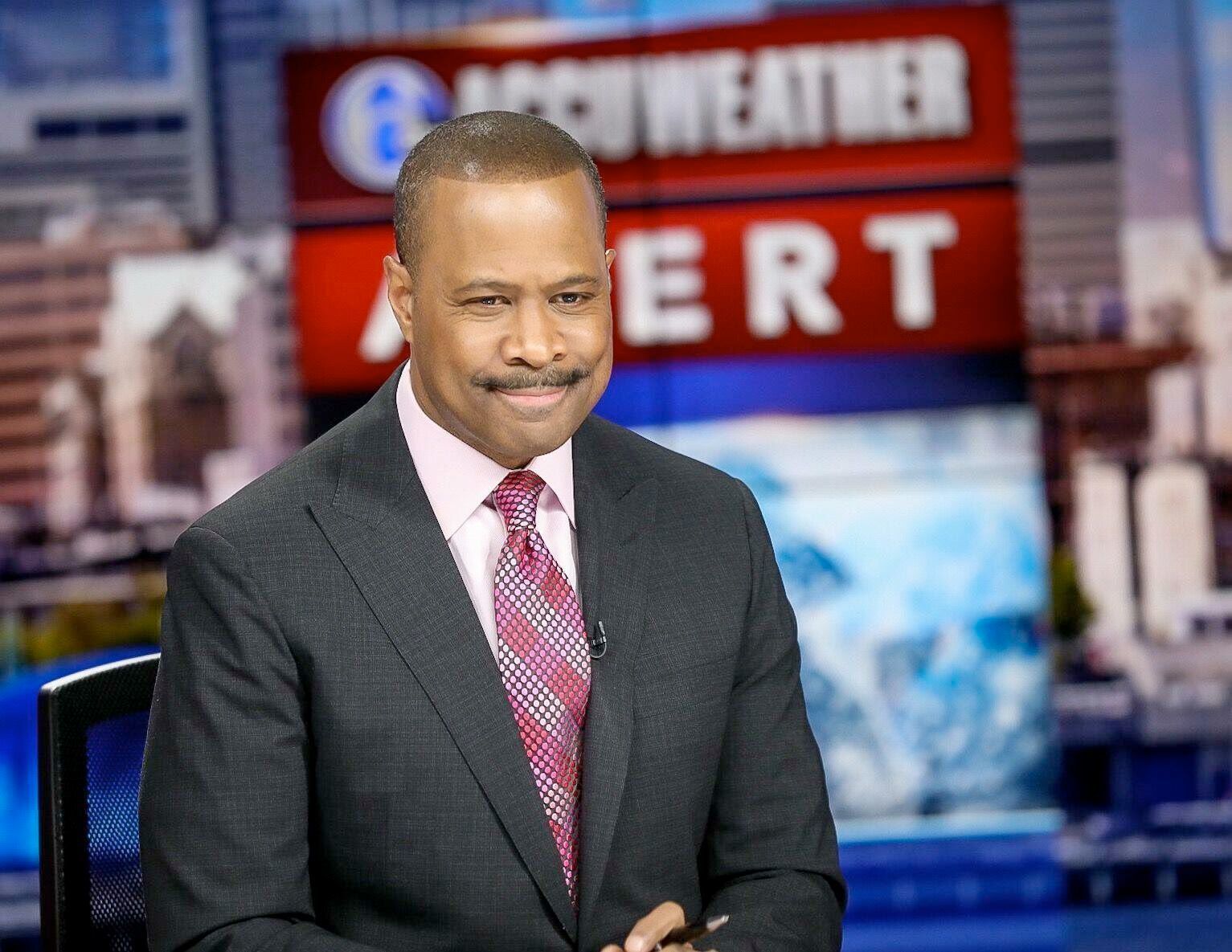
    Rick Williams anchors 6abc’s 11 p.m. edition of “Action News.” 6ABC

    The short answer is yes, but experts say it would be a messy, complicated battle that could take years, a process likely extending beyond the end of Trump’s second term in office.

    6abc’s current broadcast license, renewed in 2023, runs through 2030. The FCC’s next step would be a referral for an official hearing, which could take place as early as next month.
    So far, the FCC has not presented evidence 6abc or the other seven ABC stations owned by Disney have violated any public interest requirements.

    “The FCC has spent the last 18 months searching for some pretext for revoking the Stations’ licenses,” Disney wrote. “The commission has found none, because the Stations easily meet the standard for license renewal — which under the law means that the Commission cannot revoke their licenses or order a hearing on their renewal applications.”

    The last time the FCC revoked a TV station’s broadcast license was in 1987, when RKO General Inc. lost its licenses in Boston, New York, and Los Angeles because of business misconduct.

    If the FCC does move to revoke all eight of ABC’s local broadcast licenses, the case would be decided by an administrative law judge, according to the FCC’s website. Even then, the decision would be subject to appeals to the full commission and federal courts.

    6abc going dark would be ‘a significant loss to the Philadelphia region’

    6abc’s “Action News” has been the city’s most-watched local news program for decades. Tom Gralish / Staff Photographer

    Last month, 6abc called on viewers to weigh in on the early review of its broadcast license and support the station. That public comment period ended Wednesday, with over 152,000 people sounding off on the FCC’s move.

    Responders overwhelmingly supported the station, according to an analysis of public comments posted to the FCC’s website, with 6abc widely praised for its local news coverage.

    U.S. Rep. Brian Fitzpatrick (R., Pa.), who represents Bucks County, called on the FCC to give 6abc “full and fair consideration” on its early license renewal, calling the station “an important part of our region’s public safety, cohesion, and civic life.”

    Among the organizations weighing in was the Philadelphia Zoo, which called 6abc a “steady, trusted presence in this community for decades.”

    “The loss of 6ABC would be a significant loss to the Philadelphia region and to organizations like ours that rely on the station’s local news, weather, and community coverage to reach the public,” Jo-Elle Mogerman, the Philadelphia Zoo’s president and CEO, wrote in a letter to the FCC.

    The Philadelphia Police Foundation called 6abc an “indispensable partner” and “vital contributor” to the quality of life across the city, praising the station’s support of police officers, first responders, and Philly children.

    “The loss of 6ABC broadcasting would deeply impact the Philadelphia region, removing a trusted journalistic voice and a critical pillar of support that local nonprofits and public safety organizations rely upon,” the organization wrote.

    Local residents were also overwhelmingly against removing 6abc from the air. Faith Paffett-Lugassy cited 6abc’s coverage of weather events and emergency information, pointing to Action News’ live coverage during severe thunderstorms that swept through the Philadelphia region earlier this month.

    “ABC stayed on the news channel the entire time until a tornado watch was finally canceled,” Paffett-Lugassy wrote. “ABC is my favorite channel to watch, please don’t take it off the air.”

    Bucks County resident Donald O’Keefe is not a cable TV subscriber, and said he relies on 6abc’s broadcast signal for local news and weather updates. According to O’Keefe, taking the station off the air “would directly compromise the public safety and awareness of Lower Makefield Township” and deprive residents of “critical safety warnings.”

    Others, like David DeGrace, looked beyond Action News to all the other programming on ABC that would be unavailable if the FCC followed through on its threat.

    “Don’t take away my Jeopardy!” DeGrace wrote. “This is ridiculous.”

  • At the Kimmel, jazz legend Herbie Hancock gave way to rock star Herbie Hancock

    At the Kimmel, jazz legend Herbie Hancock gave way to rock star Herbie Hancock

    At some point in his 86 years of life, Herbie Hancock — one of the most revered artists in jazz — became a rock star.

    That was evident simply from the rapturous reception that greeted the legendary keyboardist and composer at Kimmel Center’s Marian Anderson Hall on Wednesday night, from a packed crowd that would have been a demographer’s dream.

    The point was driven home throughout his nearly two-hour performance, which was raucous, pyrotechnical, and just plain big.

    That includes the members of his audacious quintet, outsized musical personalities all.

    Trumpeter Terence Blanchard is a fellow NEA Jazz Master who likely answers few calls for sideman work these days, busy as he is writing scores for Spike Lee and other filmmakers, composing acclaimed operas, and leading his own band.

    Benin-born guitarist Lionel Loueke pairs a singular sound (Hancock mused that he must be “either alien or AI”) with vocals that incorporate Xhosa-inspired rhythms and tongue clicks.

    James Genus is a virtuoso with a deep groove whose Saturday nights have been booked solid for more than 25 years as the bassist in the SNL band.

    The wild card was 27-year-old drummer Jaylen Petinaud, who played with the destructive force of a bulldozer, an avalanche of funk that provoked his elders on the stage into visceral flights. He was embraced so quickly by the Kimmel crowd that he received a trademark hazing, getting heckled for daring to show up for the gig sporting a Knicks cap. He obliged by turning the offending logo to the back.

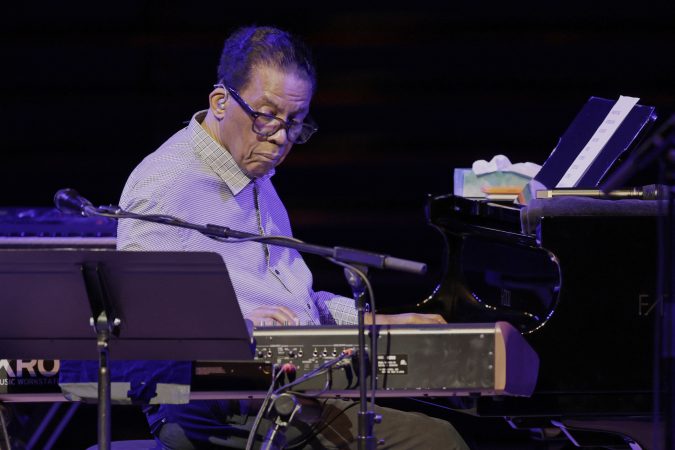
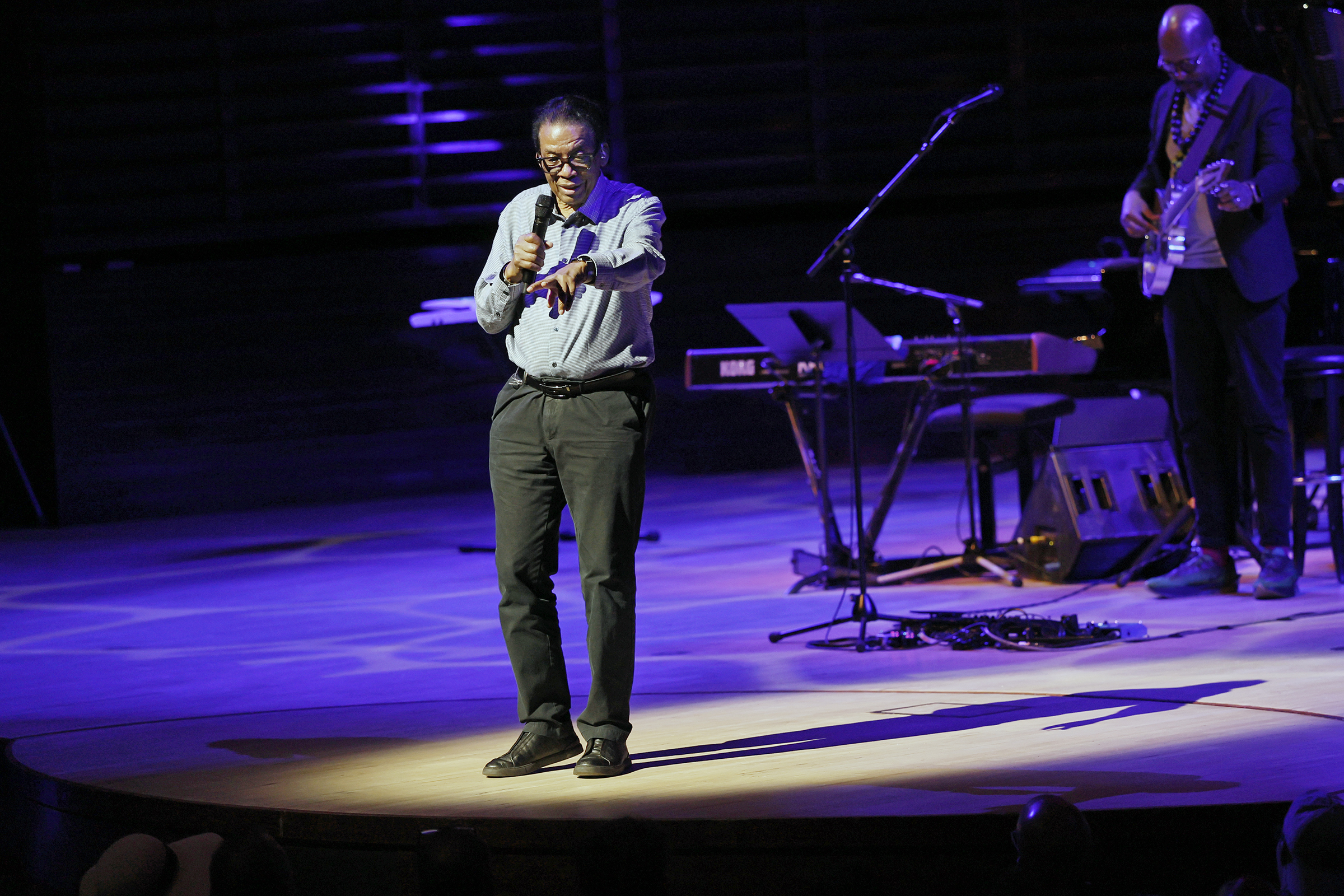
    Herbie Hancock greets the audience during his tour stop at the Kimmel Center in Philadelphia on Wednesday, July 29, 2026.Elizabeth Robertson / Staff Photographer

    Hancock, attempting to introduce the band, was unaware of the details but quickly picked up on the vibe, asking, “What’s that, some Philly stuff?”

    As tumultuous as the set would become, it began in a meditative mood. Hancock spent the first few minutes musing on “Maiden Voyage,” the title tune from his 1965 Blue Note classic, letting the melody submerge and rise again from his elegant, gossamer lines as if gently bobbing on ocean waves.

    After a few minutes, he turned to his right, bringing in the band with the familiar strains of “Watermelon Man” on his Korg keyboard. In that 90-degree swivel was represented a pivot point in jazz, the turn from the acoustic piano to the electric keyboard and the adoption of ‘70s rock into fusion, as embodied by Hancock’s Headhunters.

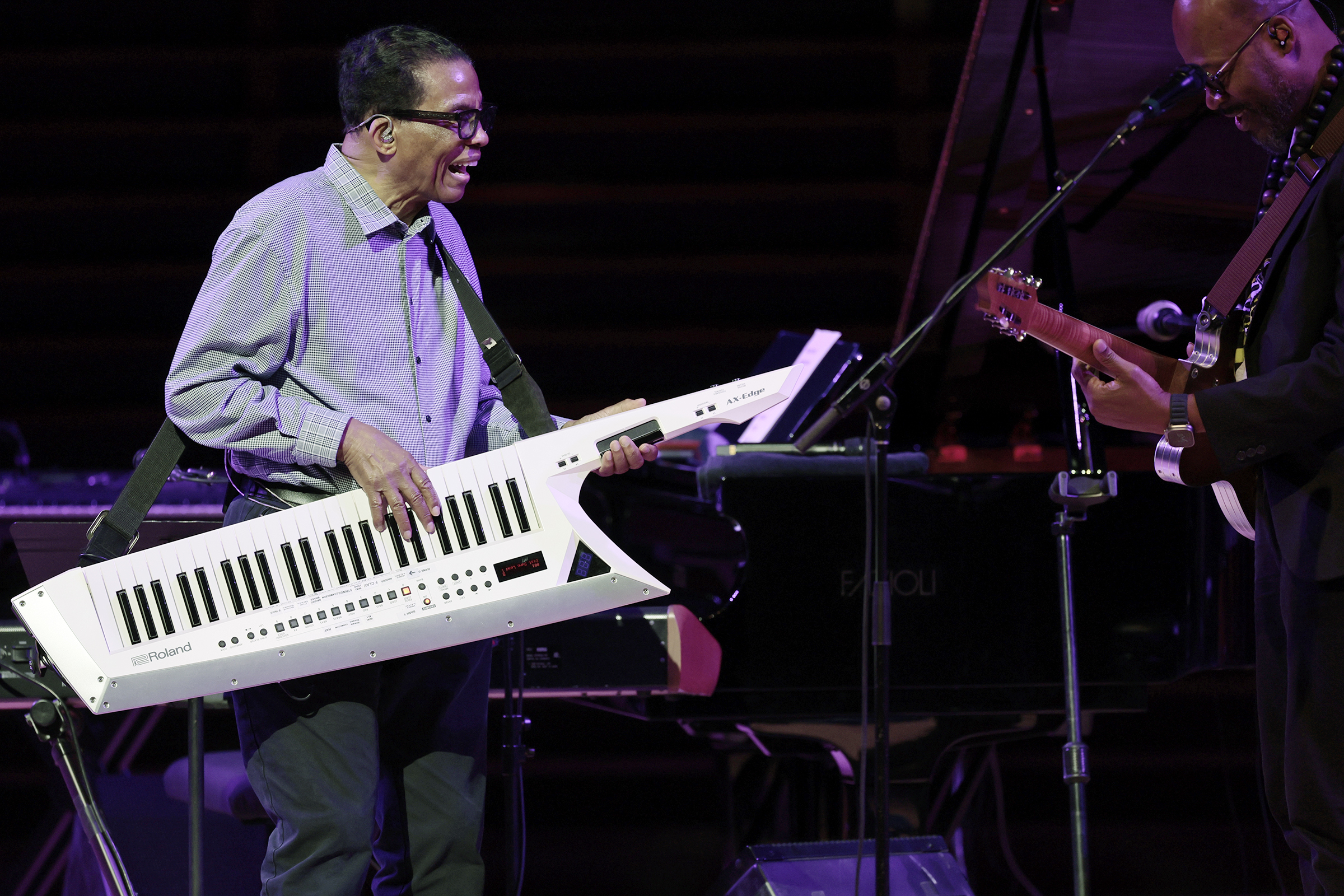
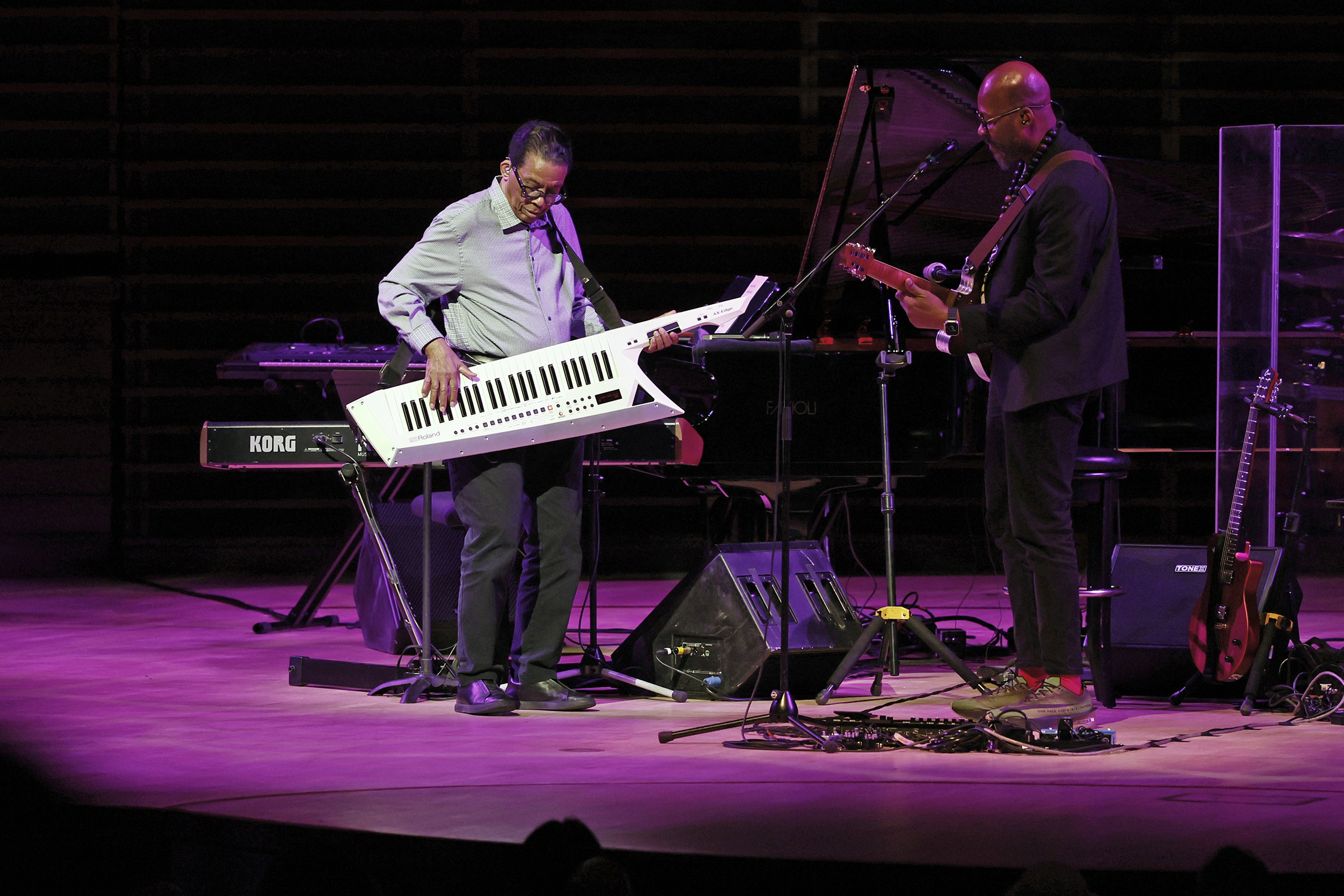
    The bandleader has long since melded the two strains into one, moving effortlessly throughout the show between piano, keyboard, and keytar — the latter allowing him to roam the stage and bend notes like a guitar wizard.

    Hancock’s age was a constant theme of the night, for him at least — nothing about his playing or his stamina showed any sign of slowing, even if his gait shuffled more than in the past. By the end of the night, he would be face-to-face with Loueke, wailing on the keytar while executing synchronized jumping jacks with the guitarist more than three decades his junior.

    Herbie Hancock (left) and guitarist Lionel Loueke perform during “Herbie Hancock’s Summer Tour 2026” stop at the Kimmel Center in Philadelphia on Wednesday, July 29, 2026.Elizabeth Robertson / Staff Photographer

    He introduced much of the set with jabs at the material’s age, only backing off when he realized that he might be insulting fans who can remember when these songs were new. “I was going to say this one is older than me, but that can’t be,” he remarked at one point — then added, “Nothing’s older than me.”

    This was in Hancock’s introduction to “Actual Proof,” an avant-funk framework for improvisation from 1974’s Thrust that proved to be one of the show’s most vital and exuberant highlights. Driven by Petinaud’s percussive barrage, Hancock erupted into forceful cascades along the piano, his hands crashing down onto the keys and then skittering away into curious, serpentine lines. (“I call that a finger-breaker,” he commented afterward.)

    Blanchard’s turn opted for tension, his electronically-enhanced trumpet sculpting sleek contours vigorously resisting the pull of Petinaud’s boisterous funk. Loueke’s quicksilver solo, Genus’ burbling flow unfolding with the logic and cadence of a monologue, and Petinaud’s final explosion rounded out the jaw-dropping showcase.

    These classics were balanced by a few newer pieces that Hancock introduced as works in progress, though “Secret Sauce” has been a staple of his setlist for nearly a decade. The other, tentatively titled “Phoelix” after one of its cocreators (along with Loueke and flutist Elena Pinderhughes), was a neo-soul-inflected number featuring Hancock singing through a vocoder. Genus’ eloquent unaccompanied solo, fleet and mellifluous, so impressed one woman in the audience that she was moved to announce, “I love bass players!”

    Herbie Hancock (left) and guitarist Lionel Loueke perform during “Herbie Hancock’s Summer Tour 2026 Tour” stop at the Kimmel Center in Philadelphia on Wednesday, July 29, 2026.Elizabeth Robertson / Staff Photographer

    “Footprints” was also included as an homage to the late Wayne Shorter, Hancock’s bandmate in Miles Davis’ second great quintet and “my best friend.” His investigatory piano solo offered a capsule portrait of Shorter’s quizzical and mysterious nature, becoming increasingly insistent and blistering as it unfurled, hinting at stride inflections that further expanded the historical reference points. Loueke’s solo turned from an intricate guitar/vocal pairing to blues-rock shredding, then to taut, gnarled figures, the malleable rhythm section hyper-attuned to every swerve and sudden stop.

    “Let’s see if we can have some fun,” is how Hancock introduced the evening, making sure to wave to every section and balcony before taking his seat at the piano.

    Mission accomplished, judging by the standing ovation from the crowd and the ear-to-ear grin on Hancock’s face after every tune. He confirmed the feeling with a final outburst of, “We had fun!” before breaking into a giddy run across the stage and shaking hands with an adoring crowd.

  • Is Bradley Cooper really from Jenkintown? We investigate.

    Is Bradley Cooper really from Jenkintown? We investigate.

    Unlike Philadelphia — a city, county, and school district all in one — the collar counties are a mesh of townships, boroughs, and informal neighborhoods.

    That geographical maze, along with the centuries-long evolution of the U.S. Postal Service, means some suburbanites are not even sure what town they live in.

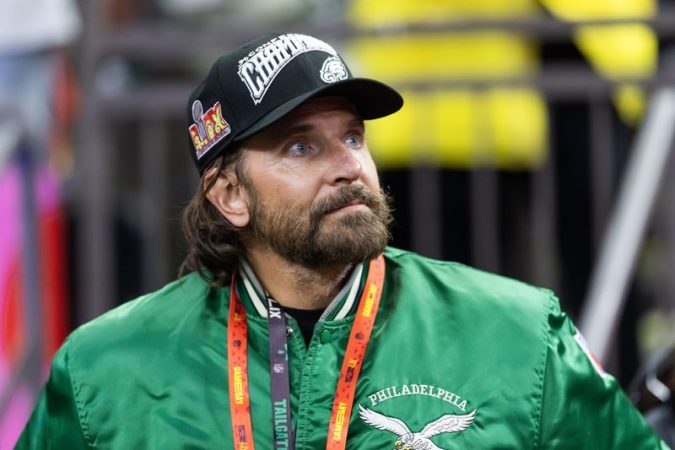
    Which may explain why one of Montgomery County’s most famous sons, former Daily News contributor Bradley Cooper, is often reported to be from Jenkintown, but he is not.

    He is from Abington Township and, like many Abingtonians, he has been living a lie.

    Where is Bradley Cooper from?

    Cooper grew up not in Jenkintown, but a mile away in the unincorporated Abington community of Rydal, in a house his parents bought before he was born, property records show.

    In the 1980s, he attended Rydal Elementary, where he played a mime, according to a playbill shared on social media.

    The Oscar-nominated actor later enrolled at Germantown Academy, a private school in Whitemarsh Township whose reunions he still attends.

    Cooper is known to call nearby Jenkintown his hometown from time to time — maybe because the borough is more well-known, and because that is what his childhood mailing address was. His reps did not return a request for comment this week.

    Some Abingtonians don’t know where they live

    But unlike people who grew up in the tiny enclave, Cooper could not have attended Jenkintown School District or participated in its National Geographic-famous Color Day.

    “As someone who grew up in Jenkintown and loved cute boys and is about the same age as Bradley Cooper, I can tell you he is not from the Borough of Jenkintown,” writer Lauren McCutcheon said.

    Many Abingtonians think they live in J-town, borough manager George Locke has said — so much so that his staff starts resident service calls by asking for an address. Otherwise they could spend 45 minutes on the phone, Locke said, before realizing the caller is in Abington.

    Residents of unofficial neighborhoods like Glenside, or towns that span counties like Telford, may be more aware of their official designation. Some Glensiders attend school in Cheltenham, while others attend Abington School District.

    For people without a kid in public school, an invisible municipal boundary may not matter much day to day. But it matters for local elections and during tax season.

    Nye Stevens, a longtime Postal Service expert for the U.S. Government Accountability Office and the Congressional Research Service, said mailing addresses can also affect people’s insurance rates, which are often based on zip code instead of municipality.

    And a zip code across two towns is nothing, Stevens added — some people get their mail from another state.

    Bob O’Brien of Wyncote used to think his practice, Relief Counseling & Art Therapy, was located in Jenkintown — until the tax bill from Abington arrived.

    “It was confusing,” O’Brien said — especially since there is a Jenkintown post office in the same building.

    “How it got this way, I’m not sure,” he added.

    The demands of mail delivery

    U.S. post offices began primarily as a pickup service in cities until the agency introduced home delivery in the late 1800s.

    Then cars expanded the suburbs, townships shifted, and assigned post office locations grew increasingly messy.

    “As townships grow, post offices seem farther away,” a New York Times headline about South Jersey observed in 1997.

    The U.S. has also closed tens of thousands of post offices in the last several decades, Stevens said, which may mean losing a mailing city that reflects where people actually live.

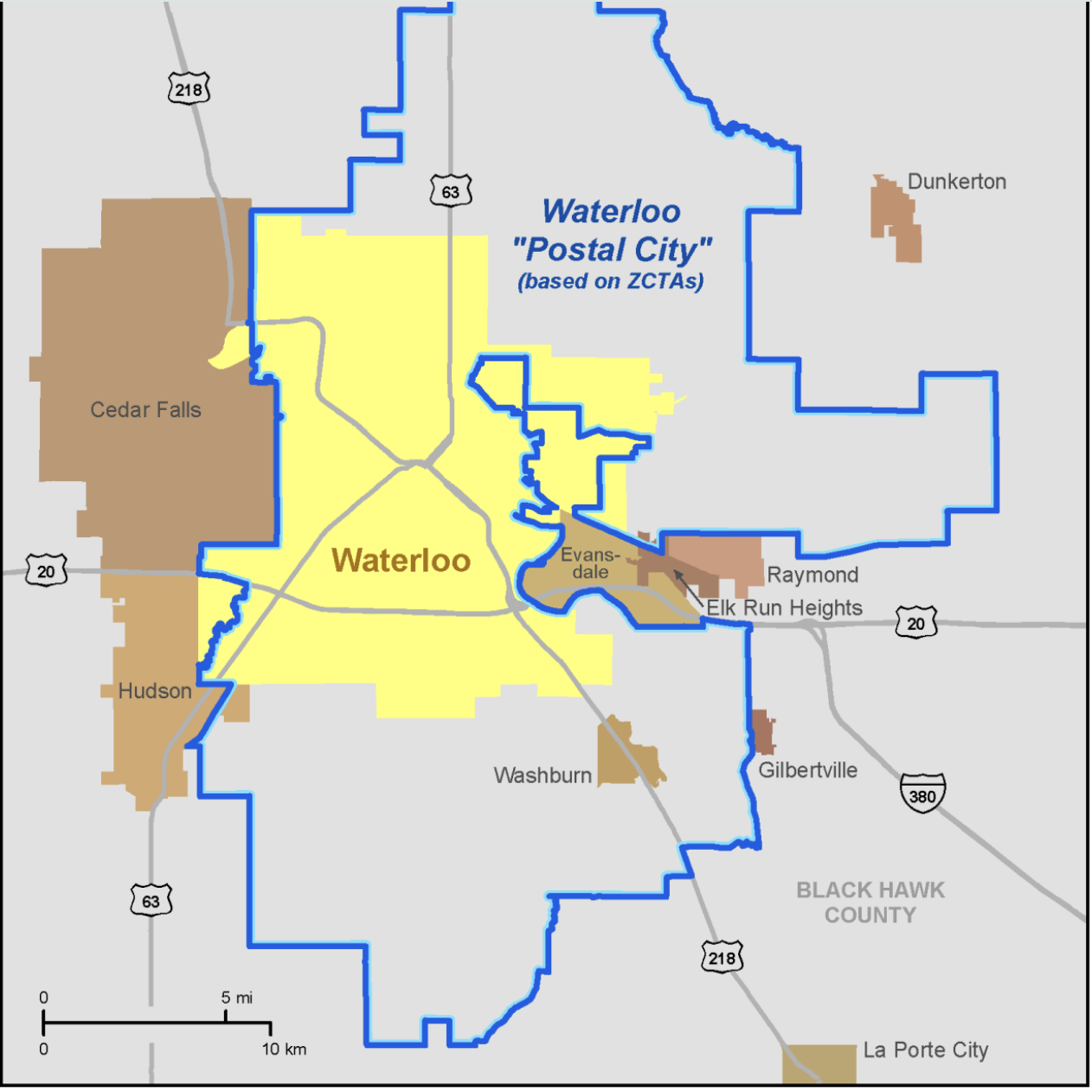
    A map shows the city limits of Waterloo, Iowa, in yellow, while a blue line shows the boundaries of the “Waterloo” zip code.U.S. Census Bureau

    Around 1990, some in Congress tried to fix the issue with a bill requiring the Postal Service make zip codes match municipal boundaries if towns request it.

    But such a change would “absolutely ruin the postal system,” Stevens said. “You can’t have a post office for every little borough.”

    The bill failed, and years later, the Postal Service was routinely rejecting zip code change requests, Stevens wrote in a 2006 Congressional Research Service report.

    “Some communities that lack delivery post offices complain that the need to use mailing addresses of adjacent areas robs them of a community identity,” he noted in the report.

    But at the end of the day, “zip codes are basically a delivery system. They’re not a neighborhood recognition system,” Stevens said this week.

    As for Bradley Cooper, the confusion around his addresses in the Philly suburbs has not ended.

    He supposedly owns an estate in New Hope. But he really lives in Solebury Township.

    This suburban content is produced with support from the Leslie Miller and Richard Worley Foundation and The Lenfest Institute for Journalism. Editorial content is created independently of the project donors. Gifts to support The Inquirer’s high-impact journalism can be made at inquirer.com/donate. A list of Lenfest Institute donors can be found at lenfestinstitute.org/supporters.

  • The first complete dinosaur skeleton on view to the public made its debut at Philly’s Academy of Natural Sciences

    The first complete dinosaur skeleton on view to the public made its debut at Philly’s Academy of Natural Sciences

    In the early 1800s, Philadelphia’s loose cohort of natural scientists became obsessed with learning all they could about the plants and animal species of the New World.

    They shipped dried specimens to Britain for naturalists to identify and catalog. And when the American naturalists discovered a new species, the Brits named it and took the credit for the findings in their medical journals.

    When the Crown enacted trade restrictions in 1807 — ultimately leading to the War of 1812 — American botanists, herbologists, and entomologists had enough with Britain’s interference.

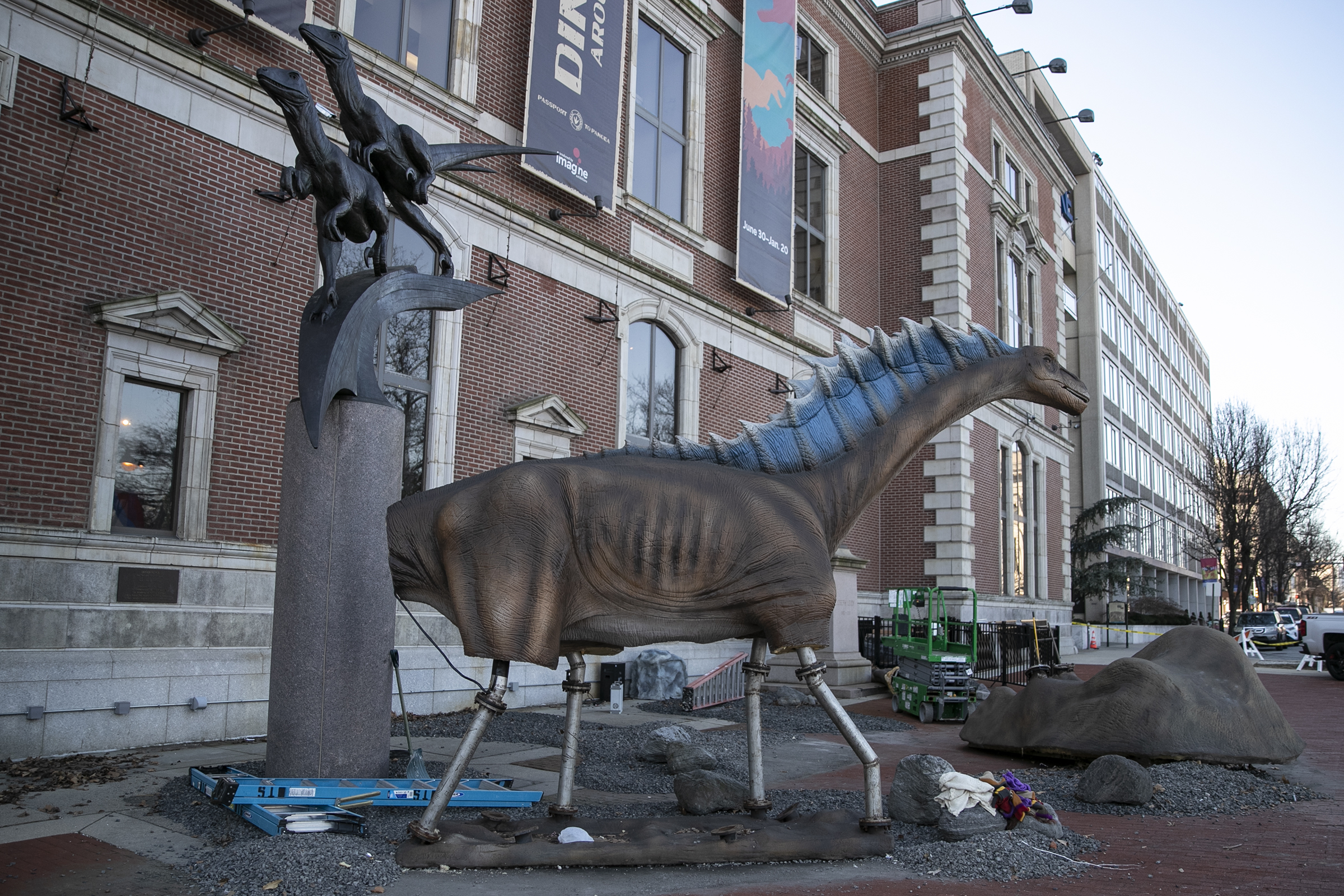
    Artist Ibi PadrĂłn Venegas’ Academy of Natural Sciences No. 1 translates his ideas of daydreams, everyday sensations, and the curiosity that comes with playing with science for his sculpture.Ibi PadrĂłn Venegas for ColibrĂ­ Workshop

    Six Philadelphia gentlemen and amateur naturalists — Gerard Troost, Nicholas S. Parmentier, Camillus MacMahon Mann, Jacob Gilliams, John Shinn Jr., and John Speakman — held a meeting Jan. 12, 1812, in Speakman’s Old City apothecary. Their goal: to map out a plan to be recognized as scientific experts on what grew on their own soil.

    On March 21, they took the official name, the Academy of Natural Sciences of Philadelphia.

    The Philadelphia Historic District will celebrate the academy’s beginnings at its Ben Franklin Parkway home on Saturday from 11 a.m. to 1 p.m. The party, or “Firstival,” is part of a series of yearlong fetes honoring events, places, and organizations with Philly roots in honor of America’s 250th birthday.

    “Americans were doing the research and risking their lives to cull these specimens,” said Robert M. Peck, curator of artifacts and senior fellow emeritus at the Academy of Natural Sciences of Drexel University.

    “We [Philadelphians] were feeling left out of the picture,” said Peck, the author of the 2012 book A Glorious Enterprise: The Academy of Natural Sciences of Philadelphia and the Making of American Science. “By forming our own academy and publishing our own journals, we were able to take control of the science and discovery in America for Americans.”

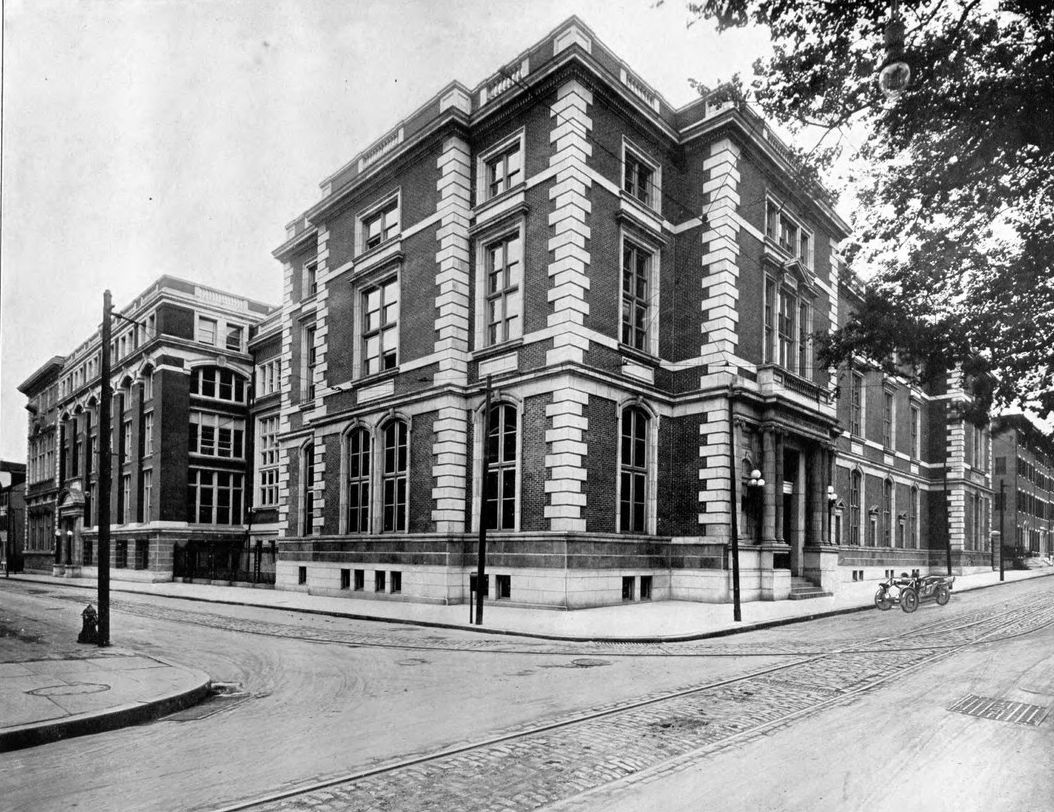
    The Academy of Natural Sciences’ current home at 1900 Benjamin Franklin Parkway. This building opened in 1876 for the Centennial and stands through present day.Courtesy of the Journal of the Academy of Natural Sciences of Philadelphia

    Thomas Say is listed as the seventh founder, though he didn’t attend the first meetings, Peck said. Still, Say is the most famous of the early members as he is the father of American entomology and conchology.

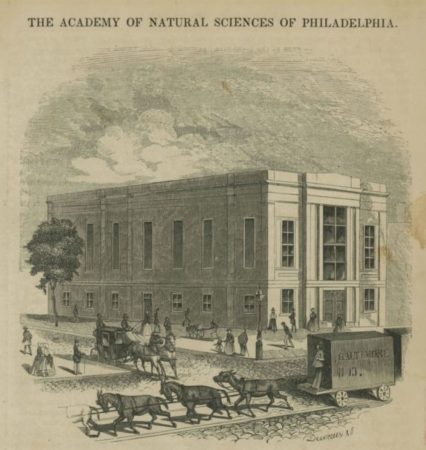
    The academy was a private club in the beginning, opening its nature collections to the public in 1828 when it was housed at the Swedenborgian Church at 12th and Sansom.

    By the mid-19th century, the academy was as important in Philadelphia’s science and education circles as Ben Franklin’s highbrow American Philosophical Society. In 1849, the society transferred Thomas Jefferson’s fossil collection to the academy, where it remains today. During the mid-19th century, the academy acquired the bird skins from John James Audubon’s collection, and the pressed plants gathered by explorers Meriwether Lewis and William Clark.

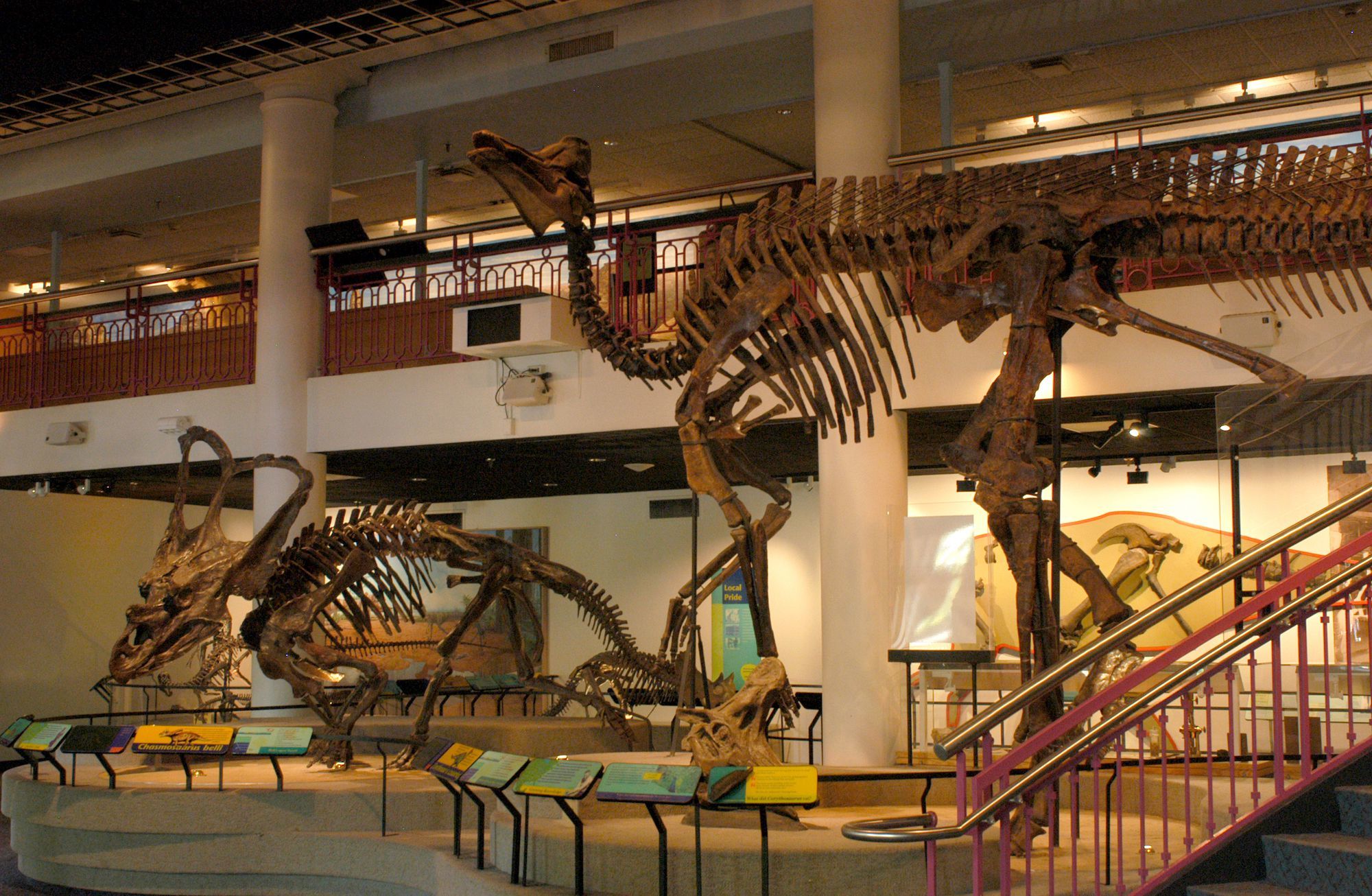
    In 1868, the academy made paleontology history when Benjamin Waterhouse unveiled a 15-foot-tall complete dinosaur skeleton of Hadrosaurus foulkii built from the bones of the plant-eating dinosaur excavated in Haddonfield 10 years before.

    Samples of the Academy of Natural Sciences’ robust dinosaur collection as photographed in 2020. Courtesy of the Academy of Natural Sciences of Drexel University

    “Before then, people didn’t understand what dinosaurs really were, how they really looked,” Peck said. “This is the first time the world had ever seen what a dinosaur really looked like and it shaped how we still see them today.”

    During the 19th century, the academy was the founding home of the American Association for the Advancement of Science and the Entomological Society of America, in 1848 and 1859 respectively.

    In 1876, the academy moved to its present building on the Parkway, where, exactly 100 years later, the Please Touch Museum opened its 2,200-square-foot pilot. (It is now located in Memorial Hall on the Centennial campus in West Philadelphia.)

    The academy went on to become a home base for scientists who study a wide range of climate-related topics, from global warming in Mongolia to avian bird flu in Vietnam.

    The Academy of Natural Sciences in June 2020. HEATHER KHALIFA / Staff Photographer

    In 2011, the Academy of Natural Sciences became a subsidiary of Drexel University, retaining its own board and legal status as a separate nonprofit organization. In April, The Inquirer reported Drexel was in discussions to sever ties with the academy unless it agreed to grant Drexel its building, endowment, and significant collections.

    This week’s “Firstival” is Saturday, Aug. 1, 11 a.m.-1 p.m. at the Academy of Natural Sciences of Drexel University, 1900 Benjamin Franklin Parkway.

    The Inquirer is highlighting a “first” from the Philadelphia Historic District’s 52 Weeks of Firsts program every week. A “52 Weeks of Firsts” podcast, produced by All That’s Good Productions, drops every Tuesday.

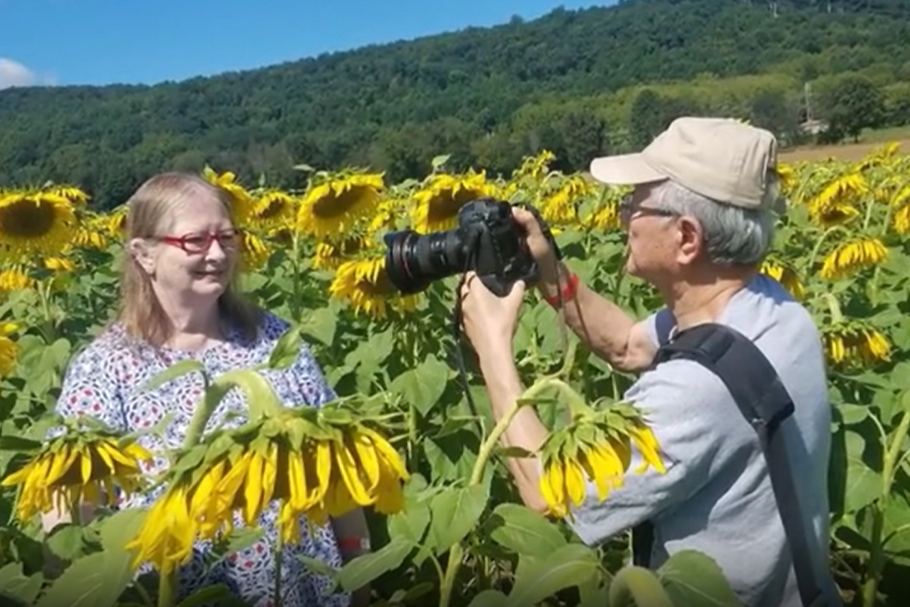
  • Akira Suwa, award-winning photojournalist at The Inquirer, has died at 84

    Akira Suwa, award-winning photojournalist at The Inquirer, has died at 84

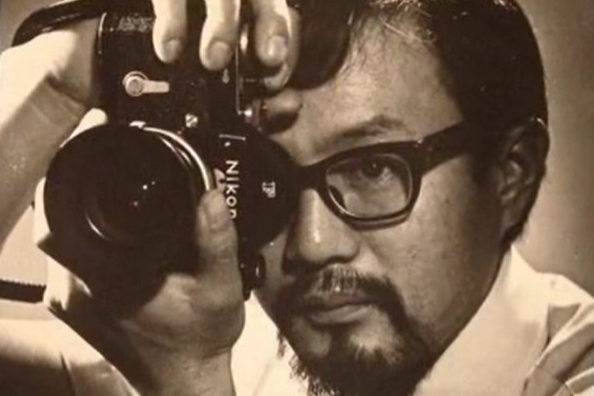
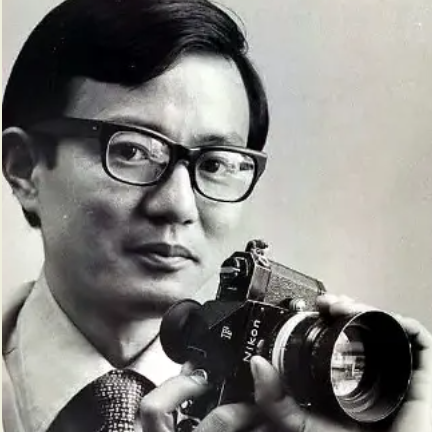
    Akira Suwa, 84, of Laurel Springs, Camden County, award-winning longtime photojournalist at The Inquirer, mentor, and lifelong green-thumb gardener, died Tuesday, July 14, of complications from dementia at his home.

    Born in what is now South Korea and reared in Japan, Mr. Suwa came to the United States for good in 1967 as a landscape designer and amateur photographer. When a landscaping job at a Florida garden center dried up, he polished his photography skills and, from 1969 to his retirement in 2014, worked as an award-winning staff photographer at the Tampa Tribune, the St. Petersburg Times, the Palm Beach Post, and The Inquirer.

    He joined The Inquirer in 1977 and, for 37 years, provided readers with thousands of illustrative, dramatic, stylish, and emotion-evoking photos from assignments around Philadelphia, South Jersey, and the world. He took poignant photos after the Three Mile Island nuclear accident, the fall of the Berlin Wall in Germany, and the Sept. 11 terrorist attacks, and during Operation Desert Storm in Saudi Arabia and the 1998 Winter Olympic Games in Japan.

    He sent back tragic and heroic images of conflict and despair from Libya and Brazil. He photographed drug traffickers in Colombia and was detained by authorities in China.

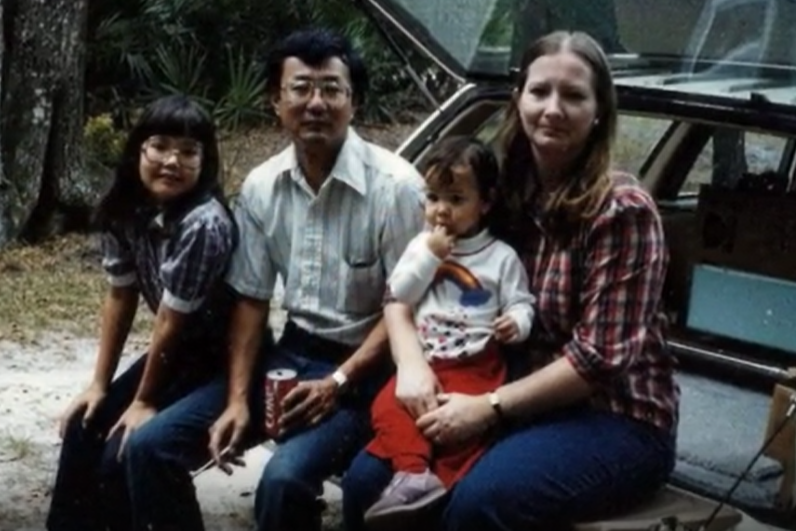
    Before the Inquirer, Mr. Suwa took photographs for the Palm Beach Post, the St. Petersburg Times, and the Tampa Tribune.Courtesy of the family

    Locally, he photographed athletes celebrating and commiserating, politicians and celebrities walking and waving, fashion models on runways, and restaurant specialties on tables. Former Inquirer colleagues called him a “brilliant photojournalist” and a “funny, engaging and terrific colleague” on Facebook.

    One former colleague said: “Akira told thousands of great stories with his camera.” His family said in a tribute: “Akira believed every story was worth telling.”

    Before the Inquirer, Mr. Suwa took photographs on all kinds of assignments for the Palm Beach Post, the St. Petersburg Times, and the Tampa Tribune. His father was an avid amateur photographer back in Japan, and Mr. Suwa honed his own emerging photo skills at nights and on weekends in Florida before joining the Tribune in 1969.

    He won several awards from the National Press Photographers Association and was named the 1973 Florida Newspaper Photographer of the Year by the University of Florida. He mentored young photographers and students, and one former student said: “He taught me so much about making the best photos possible.”

    Mr. Suwa photographed his wife, Deborah, often.Courtesy of the family

    Away from the lens, Mr. Suwa enjoyed tending his backyard garden in South Jersey, watching the birds flit about the feeders, and chasing the squirrels away. His mother was a serious gardener in Japan, and he studied agriculture in California as an exchange student while earning a degree at Tokyo Agricultural University in 1966.

    In 1964, he took a year off from college to work as a busser in the Japan pavilion at the World’s Fair in New York. “I fell in love with America, especially New York City,” Mr. Suwa wrote in an autobiography he shared with his family. “I was young and motivated to do something different from my peers back in Japan.”

    Akira Suwa was born Dec. 22, 1941, in what was then Taegu, Korea. He and his family fled Korea for Japan as refugees after World War II, and he grew up mainly in Osaka.

    He never formally studied photography, but his innate camera skills got him a job with a photo studio in Florida in the late 1960s.

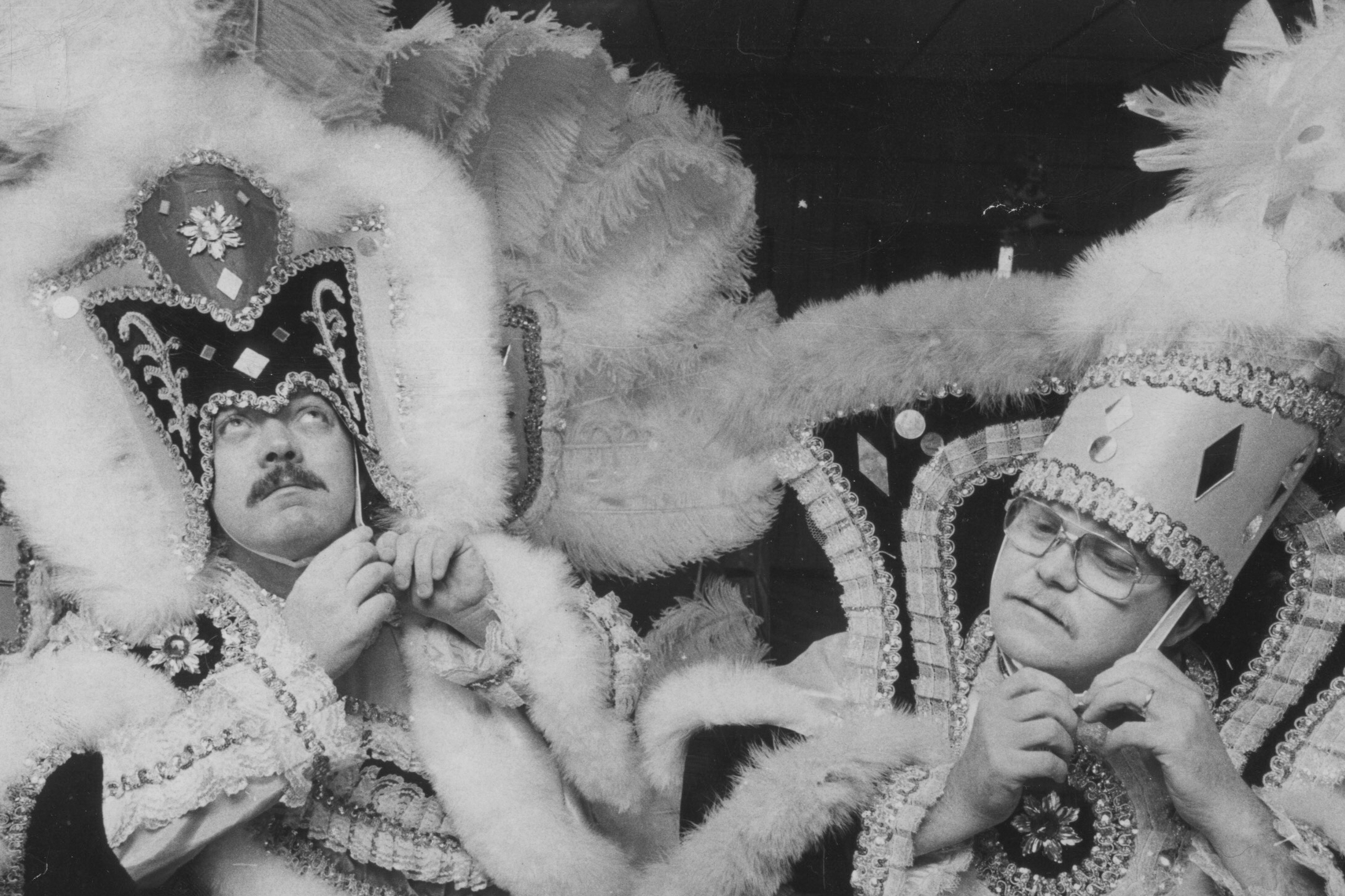
    Mr. Suwa photographed these Mummers in 1978. Akira Suwa / Staff Photographer

    He met Deborah Carter through a mutual friend at the studio, and he took her to see the musical Hello, Dolly! on their first date. She was smitten, she said, and they married in 1969, and had daughters Jasmine and Keiko.

    They settled in Laurel Springs when he joined The Inquirer and traveled to Japan several times to visit family and friends. “We enjoyed the best of both cultures,” his wife said.

    Mr. Suwa listened to jazz and built his own home computers. He liked to play pranks on the girls, his daughter Keiko said, but was simultaneously warm, serious, and practical. “If there was a job to do,” she said, “he would get it done.”

    His daughter Jasmine said: “He was forthright, sincere, and full of integrity.”

    Mr. Suwa and his family traveled to visit family in Florida and Japan. Courtesy of the family

    He doted on his wife and their grandchildren, and his family praised “his sharp eye, his mischievous sense of humor, and his devotion to his family.” His wife said: “He had my back and was as honest as the day is long.”

    Friends called him “the kindest person,” “wonderful and enormously talented,” and “a caring person to everyone.” He was interviewed by Photo Lounge in 2022 and said: “I just take pictures, and I like people.”

    His wife said: “He was my human, my person, my guy.”

    In addition to his wife and daughters, Mr. Suwa is survived by two grandchildren and other relatives. A brother died earlier.

    Visitation with the family is to be from 1 to 3 p.m. Saturday, Aug. 1, at Gardner Funeral Home, 126 S. Black Horse Pike, Runnemede, N.J. 08078.

    Donations in his name may be made to the Committee to Protect Journalists, Box 2675, New York, N.Y. 10108; and the Animal Welfare Association, 509 Centennial Blvd., Voorhees, N.J. 08043.

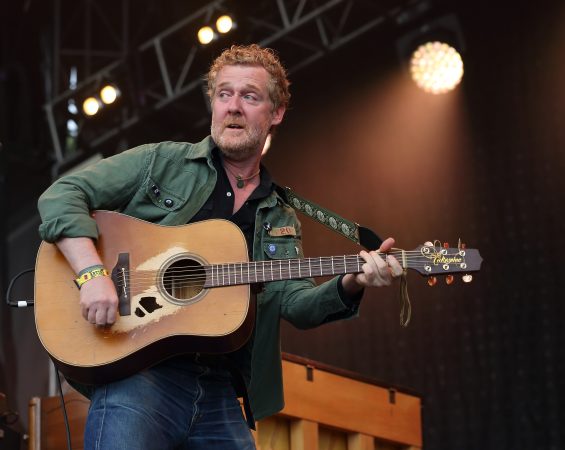
  • ‘Once’ Oscar winner and Irish musician Glen Hansard dies in motorcycle crash

    ‘Once’ Oscar winner and Irish musician Glen Hansard dies in motorcycle crash

    LONDON — Irish singer-songwriter Glen Hansard, who won an Academy Award for the 2007 film Once, died in a motorcycle crash on the outskirts of Dublin early Wednesday, his management said. He was 56.

    ATC Management told broadcaster RTE that Mr. Hansard’s family was “deeply shocked and heartbroken.”

    News of his death brought tributes from fellow musicians including Bruce Springsteen, who said on Instagram he was “heartbroken” at the loss of “a great musician, a good friend and a generous and gracious man.”

    Irish police said a man in his 50s died in single-vehicle motorcycle crash in Lucan, on the western outskirts of the Irish capital, before 4:30 a.m. Wednesday. The man, who they did not name, was treated at the scene but pronounced dead a short time later.

    Mr. Hansard combined acting and a musical career. He played a member of a Dublin soul band in the hit 1991 movie The Commitments and won an Oscar in 2008 for the song “Falling Slowly,” which he co-wrote for the indie musical Once with co-star MarkĂ©ta IrglovĂĄ.

    Once, a love story about two struggling musicians, was later adapted for Broadway, again with songs by Mr. Hansard and IrglovĂĄ. It won eight Tony Awards in 2012, including best musical.

    Mr. Hansard was long-serving front man for rock band The Frames, half of rock duo The Swell Season with Irglová, and released solo albums including Didn’t He Ramble, which was nominated for a Grammy for Best Folk Album in 2016.

    Ireland’s President Catherine Connolly said he was one of Ireland’s great singer-songwriters.

    “Glen was one of the vital driving influences of the Irish music world, bringing people together in the sharing of live music,” Connolly said. ”He will be sorely missed by all who knew him or experienced his work.”

    Actor-comedian Chris O’Dowd said Mr. Hansard’s “energizing melodies and soulful, searching voice made the tough times more manageable, the stagnant times more beautiful, and the joyful times even more memorable.”

    Mr. Hansard started out as a busker on the streets of Dublin. He became famous for leading the Christmas Eve busk outside Dublin’s Gaiety Theatre, where members of the public gathered to see famous Irish musicians perform in aid of a homelessness charity.

    Former Irish president Michael D. Higgins said Mr. Hansard was a “wonderful musician and performer” who also “placed great emphasis throughout his life to the importance of tackling the problems of society.”

    At the funeral of The Pogues frontman Shane MacGowan in 2023, Mr. Hansard performed a rousing version of The Pogues’ song “Fairytale Of New York” with Irish singer Lisa O’Neill that had the congregation dancing in the aisles of the church.

    Mr. Hansard is survived by his wife, Finnish poet Maire Saaritsa, and their 3-year-old son, Christy.