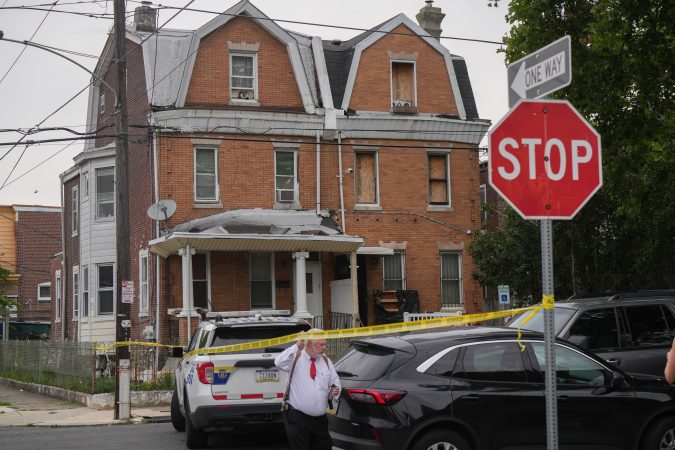
Philadelphia police found a “significant amount” of blood inside the decrepit Olney house linked to the investigation of at least two missing women, multiple law enforcement sources said.
The sources, who spoke on the condition of anonymity to discuss an ongoing investigation, said forensic testing has not yet determined whose blood it is or whether it’s even human — a process that could take several weeks to complete. But, the sources said, police are prepared to excavate the front and backyards of the West Chew Avenue home in the coming weeks in search of potential human remains.
Deputy Police Commissioner Frank Vanore declined to confirm or comment on the discovery Monday afternoon, citing the ongoing investigation. Vanore said Friday that police had not recovered any human remains from the home and were awaiting testing of the tubs of chemicals and other materials found in the basement.
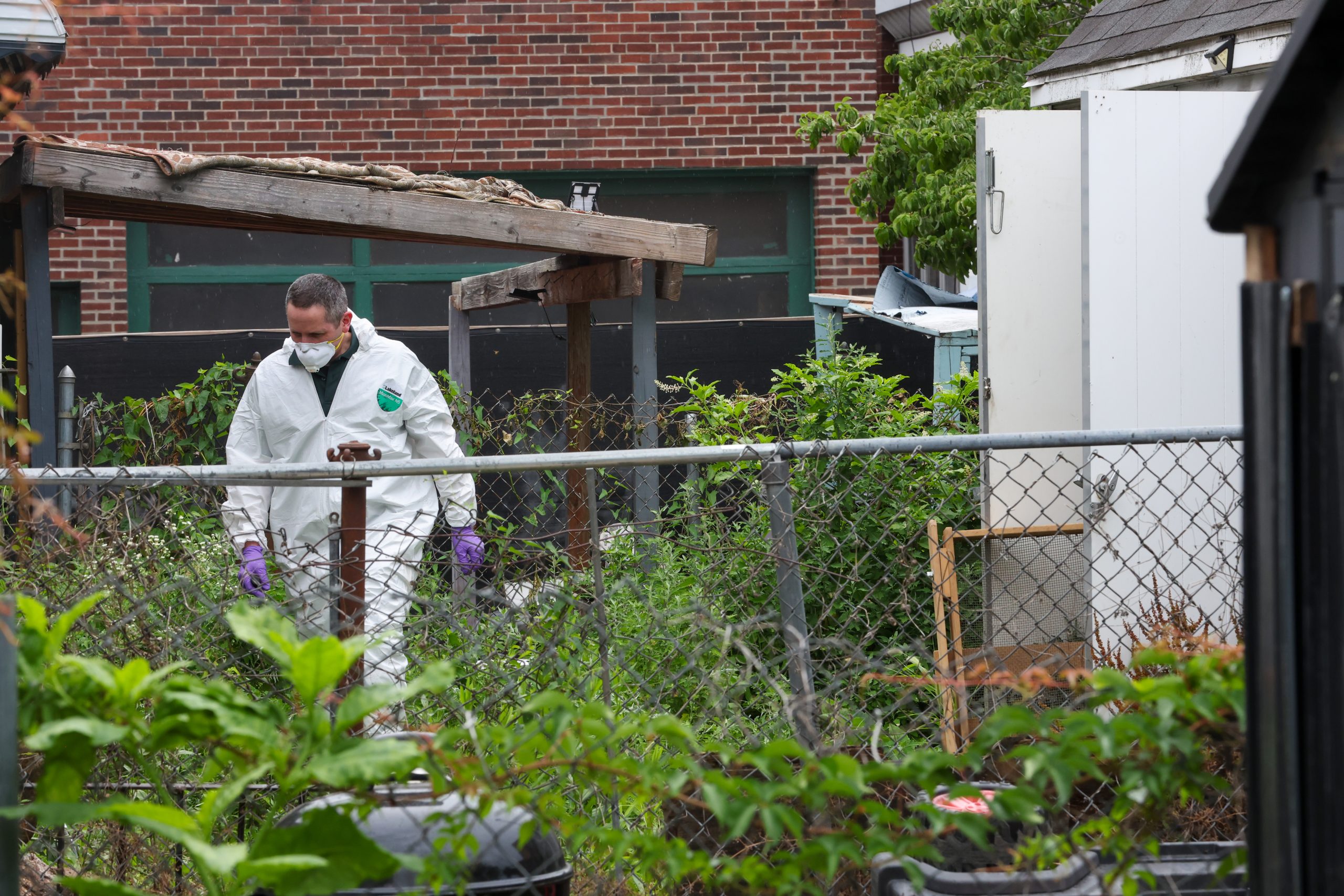
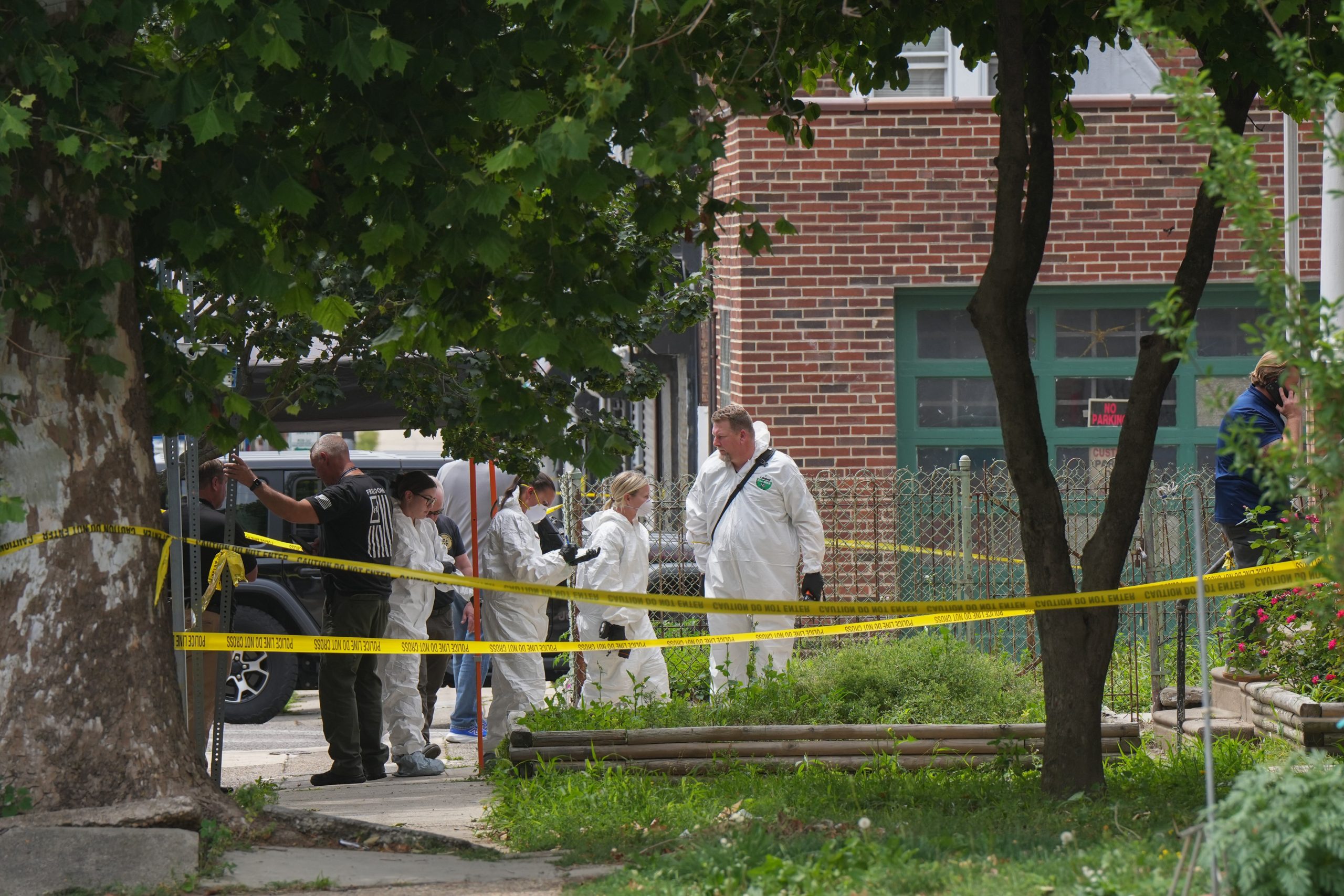
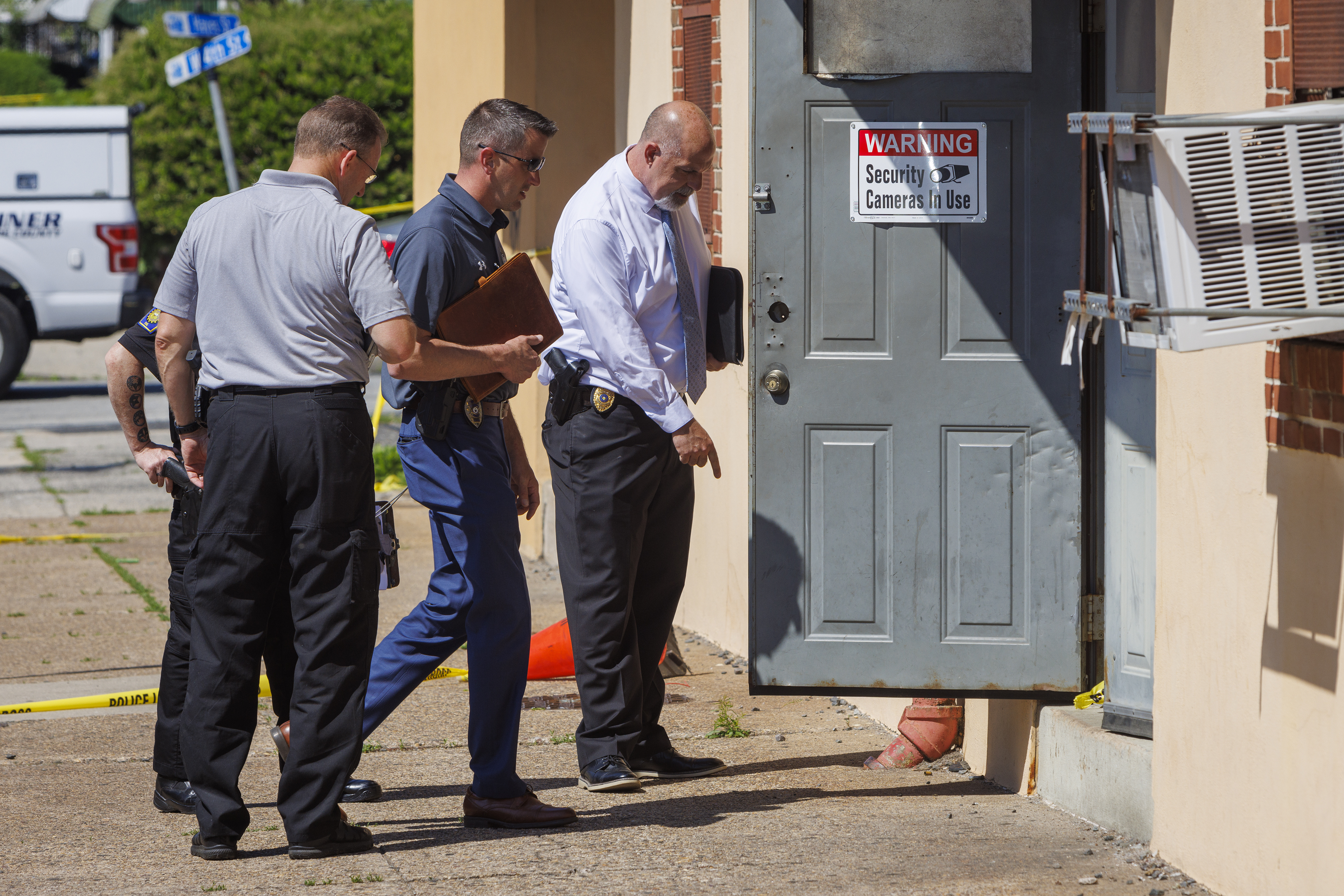
Forensic investigators search the backyard of 417 W. Chew Ave. on June 27.Aidan T. Gallo / Staff Photographer
The finding marks the latest development in an unusual saga that began after the arrest of Eugene Albert Horsch, 44, the owner of the Olney home now being searched by law enforcement for a second week in connection with the disappearance of at least two women who have been missing for years.
Horsch was arrested June 19 after U.S. Park Police saw him parked in his black BMW near Sixth and Market Streets, acting suspiciously. When a ranger approached the car, police said, he heard a woman in the back seat say, “You’re going to hurt me” and saw drug paraphernalia.
Police searched the car and reported recovering two guns with obliterated serial numbers, as well as cocaine, fentanyl, and marijuana, a cattle prod, switchblade knives, handcuffs, and a fake U.S. Drug Enforcement badge featuring Horsch’s photo.
The woman with Horsch falsely identified herself to the officers as Blair Tonzelli, a 38-year-old woman who had been reported missing in Kensington in 2023, police said.
The woman, 39, later told investigators that she gave Tonzelli’s name because she had open warrants for her arrest in ongoing drug cases and that Horsch had made her fake identification cards in that name and said she could use it if she was ever stopped and questioned by police, sources said.
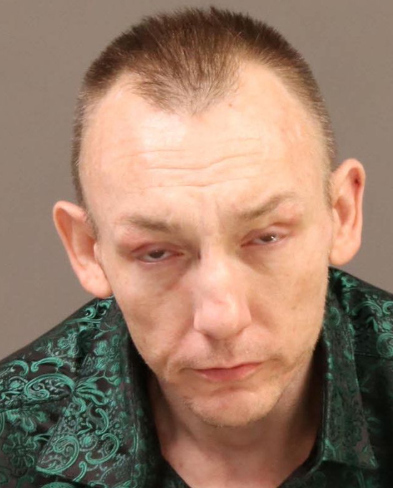
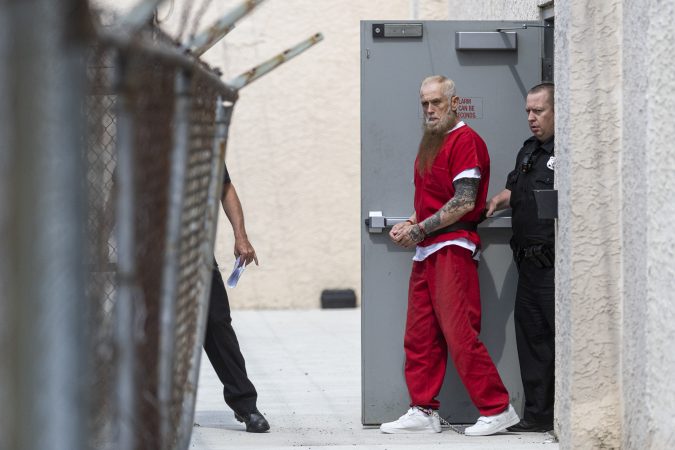
Eugene Albert Horsch, 44, was arrested June 19 for illegal gun possession and drug crimes. Courtesy of Philadelphia police
The woman said she did not know Tonzelli or even that she was missing — but the way Horsch spoke about her and other women made her feel like something bad had happened to her, the sources said.
Philadelphia homicide detectives then began reviewing that missing woman’s case, and, alongside federal law enforcement, searched Horsch’s home at 417 W. Chew Ave. last week.
That search produced a trove of bizarre discoveries: a basement with drums filled with chemicals, bottles of unknown substances, Tonzelli’s bank card, the death certificate of another woman, and what appeared to be urns holding at least one of Horsch’s relatives’ cremated remains.
Investigators also found another handgun, materials used to grow marijuana, and a 55-gallon drum with connections to waterlines leading into a hole in the ground.
Federal investigators also discovered a multipage, unsigned, handwritten letter that appeared to describe hurting people and referenced the serial killer Ted Bundy, according to the affidavit of probable cause to search the home that was obtained by The Inquirer.
Eugene Horsch lived at 417 W. Chew Ave. with his father until he died last year. Jessica Griffin / Staff Photographer
Law enforcement sources said police were working to determine whether the writings were part of a novel or screenplay. Horsch’s late father, Raymond “R.C.” Horsch was a known drug manufacturer and erotic filmmaker who had published several works of fiction with violent, masochistic themes, including one described as an “autobiographical memoir of a caring, empathetic serial killer.”
The probe into the younger Horsch took another twist when investigators learned that Raymond Horsch’s ex-wife Amy McHale was last seen at the Olney property in 2016 and has not since be located. A lawyer for Eugene Horsch and his father said the two men had nothing to do with McHale’s disappearance and said she struggled with substance abuse and mental illness.
Horsch has been charged with illegal gun possession and drug crimes by Philadelphia authorities.
He is also facing a federal gun possession charge, court records show. The U.S. Attorney’s Office filed a complaint against Horsch on Friday, charging him with possession of a firearm by a felon and centering their allegations on the guns that park rangers found in his car during an encounter in Center City earlier this month.
Horsch has not yet been arraigned in that matter, and he remained in a city jail, held on $500,000 bail as of Monday afternoon. But the case could give federal prosecutors an opportunity to argue to a judge that he remain in federal custody until trial.
This is a developing story and will be updated.
Staff writers Jesse Bunch, Max Marin, Barbara Laker, and Chris Palmer contributed to this article.
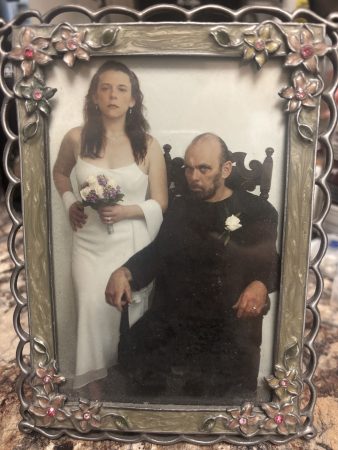
Amy McHale and Raymond “R.C.” Horsch met on the streets when she was battling pneumonia and needed medical care.
She had long struggled with mental health issues and drug and alcohol addiction. She saw Horsch, an erotic photographer and filmmaker 30 years her senior, as her rock, said her mother, Gloria McHale.
“He was like her savior.”
They held their wedding reception beside a greenhouse in the sprawling, serene backyard of his Chalfont home in September 2004. The marriage lasted only a few years, but Amy McHale kept going back to Horsch after he moved to a house on West Chew Avenue in the Olney section of Philadelphia with his son, Eugene Albert Horsch.
She was staying there on June 14, 2016, when she left a voicemail message for her daughter, Amanda Stofer, saying all was OK. At the time, Amy McHale was a 44-year-old mom and grandmother of three.
She has been missing ever since.
“She would never leave her daughter and grandchildren,” Gloria McHale, 79, said by phone after news broke this week that authorities had been combing through that house for days. “She loved them, adored them.”
For more than a week, Philadelphia police and federal authorities have been searching the crumbling Horsch twin home to determine if there is any connection to the disappearance of Amy McHale and one other woman.
R.C. Horsch was a controversial figure who had been convicted of forgery and drug manufacturing when he died in May 2025 of chronic obstructive pulmonary disease at age 82. Police have not named him as a person of interest in a missing-person investigation.
His son, Eugene Albert Horsch, is being held on $500,000 bail at Curran-Fromhold Correctional Facility on charges of illegal gun possession and drug crimes. He had a criminal history that included at least 10 other arrests for drug possession, dealing, assault, and drunken driving when he was arrested earlier this month near Independence Hall after his actions drew the attention of U.S. Park Police.
“This is much ado about nothing,” said Eugene Horsch’s attorney, Jerome Brown, of his client’s connection to any missing-person investigation. “They’re barking up the wrong tree.”
When the news broke, McHale’s mother and daughter thought they might finally discover what happened.
“But I don’t feel much closure, and today is an emotional low,” McHale’s daughter, Amanda Stofer, said Saturday. “I was hoping for some answers about my mother from the home, but I’m doubtful that will happen.
“It just feels heavy and sad.”
The case came to light under bizarre circumstances. U.S. Park Police stopped Horsch, 44, near Sixth and Market streets on June 19. In his black BMW, officers recovered two firearms with obliterated serial numbers and a phony drug enforcement badge with Horsch’s photograph under the name “Eugene Frederick Steiner.” He also had large amounts of cocaine, fentanyl, and marijuana, according to an affidavit of probable cause for his arrest.
A woman with Horsch gave officers a false name, one that belonged to a 38-year-old woman who had been reported missing in Kensington in February 2023. Horsch’s passenger told investigators that he had made her fake ID cards with that name before and advised that if she was ever stopped by police, she could use them.
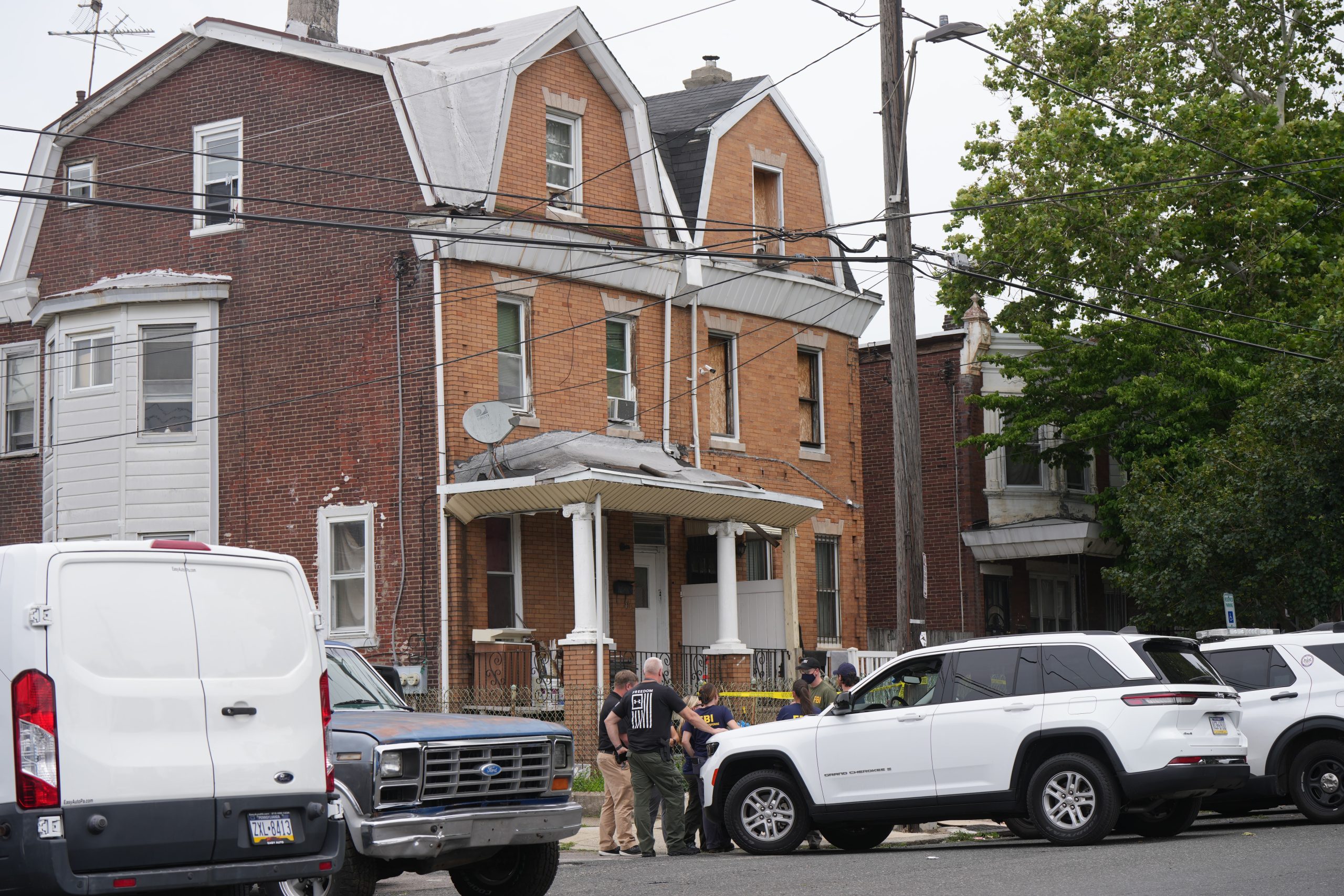
Law enforcement wearing FBI clothing at the scene of an ongoing investigation in the 400 block of West Chew Avenue, searching a home in Olney.Jessica Griffin / Staff Photographer
In Horsch’s dilapidated home, investigators found another handgun, hidden compartments, a 55-gallon drum with connections to water lines leading to a hole in the ground, and chemicals and bottles of liquid that forensics investigators are working to identify. There were also what appeared to be urns holding remains, one set of which was apparently his father’s. The basement resembled some sort of chemical lab.
Federal investigators also found a unsigned and handwritten letter that referenced hurting unspecified people and the serial killer Ted Bundy, according to an affidavit of probable cause obtained by The Inquirer.
Investigators are working to verify the authenticity of the letter, and whether it was meant to serve as a portion of a novel or screenplay.
Under a gloomy sky Saturday, about 15 FBI agents, some wearing hazmat suits, streamed in and out of the boarded-up twin home. “They’ve begun processing the scene,” Philadelphia Deputy Police Commissioner Frank Vanore said. Forensic experts were determining what evidence had to be sent away for scientific analysis, he said. “It’s going to take some time.”
Art and weed
R.C. Horsch, who was born in East Stroudsburg, Monroe County, in 1943, is described in an author’s biography as “an artist, filmmaker, composer, writer, porn performer, drug smuggler, sometime political activist, art forger, counterfeiter, pot grower, air show pilot, army deserter, fugitive, sociopath, ex-convict and all-out villain.”
Throughout his life, R.C. Horsch worked on avant-garde artwork and erotica, often focused on scantily clad women in sadomasochistic settings, including a book described as an “autobiographical memoir of a caring, empathetic serial killer.” He directed his first film, The Erotic Memoirs of a Male Chauvinist Pig, in 1973.
A 1968 news report identified Horsch, then in his mid-20s, as the operator of a theater on the 2000 block of Sansom Street known as “Underground Cinema 16” — later the Roxy — which screened avant-garde films, including his own, but was shut down for operating without a license.
Horsch was married at least three times. He married Anna Ferkuniak, a native of Nant-y-moel, Wales, who was Eugene Horsch’s mother. She died in 1989 at age 39 after a lengthy illness, according to her obituary.
R.C. Horsch also had an extensive criminal history.
He pleaded guilty to passing bad checks in North Carolina in 1973, and the following year the Secret Service charged him and another man in Doylestown with passing nearly $180,000 in fake 10-dollar bills and possessing phony driver’s licenses.
In 1977, federal authorities raided what was described as his home laboratory, seizing equipment they alleged was meant to make methamphetamine. But Horsch left for New Zealand, later returning to California, according to court records, and operating under the alias “Richard Harris.”
Eugene Horsch was born in 1981, while his father was still a fugitive.
Authorities captured R.C. Horsch in Florida in 1985. A psychologist hired by his defense attorney claimed Horsch had a 140 IQ, according to court records, but had “deep rooted emotional problems.”
He was sentenced to three years’ imprisonment, plus probation. He later settled in Chalfont but acquired the Chew Avenue house after his aunt died in 2004. In 2007, he used power of attorney to legally transfer ownership to his son for $1.
In 2009, R.C. Horsch was indicted in Chalfont for growing “455 marijuana plants.” Investigators also confiscated two shotguns. The feds seized his suburban home and he was sentenced to 54 months in prison.
Federal inmate records show he was released from prison in 2013, and later moved into the Chew Avenue property, where he would reside until his death. He authored several erotic novels in the 2010s, often focused on women battling substance abuse or mental health issues.
Krista Marie Killen is credited as appearing in multiple erotic films that he directed, including one released as recently as 2021, and at times listed the Chew Avenue house as her residence.
In 2025, a motorist sued R.C. Horsch, Killen, and an unidentified man, claiming the trio crashed their Chrysler 300 into her SUV near Adams Avenue and Montour Street in 2023. Court papers list Killen’s occupation as “caregiver” and the “adult in charge of residence.”
She died the next month, according to an obituary, three months after Horsch.
In searching the home recently, investigators found a death certificate for Killen. According to the affidavit of probable cause, the cause of death was drug intoxication.
‘People don’t vanish’
R.C. Horsch and Amy McHale had become a couple in the 1990s.
“I was a young kid when they started dating, and I want to say he had been around for at least 10 years by the time they got married,” Stofer recalled.
They divorced after a few years and McHale moved in with her mother on South Hutchinson Street in Philadelphia. She went to Peirce College, became a paralegal, and was trying to get her life back on track, said Gloria McHale, 79.
But she could not kick her drug and alcohol addiction, she said. She would periodically return to Horsch’s home on Chew Avenue.
“They stayed friendly with each other,” Stofer said. “I’m sure it had something to do with the drugs and alcohol. I think he enabled her with things that weren’t really permitted in my grandmother’s house.”
On June 13, 2016, she went to Horsch’s. She called her mom that night to tell her she was on her way home. “She was obviously very drunk and I told her to stay where she was, because to get home she would have to take the subway, and she was in no shape to take the subway.”
The next day, she called Stofer and left a message. “She told me she was at Ray’s house and she was OK.”
That’s the last they heard from her.
Amy McHale would sometimes be gone for a couple of days, but never for much longer, they said. Stofer had three children, and her mother doted on them. Stofer was planning her September wedding.
“My mom had her struggles with addiction,” said Stofer, 38. “But my mom would not want to disappear in my life. She would never do that. She always came back around. She never missed big things like my kid’s kindergarten graduation.”
Gloria McHale searched all over for her daughter. “I put signs up all over Kensington,” she said.
Detectives interviewed Horsch. He told police and the McHale family that she was drinking vodka and he went to bed. “He said when he woke up, she was gone,” McHale said.
And Horsch stopped reaching out to her family.
“When she would disappear before, Raymond would always keep calling me. ‘Did you hear from her?’ And after this I never heard from him.”
McHale is hoping someone will come forward now with new information.
“Somebody has to know something,” she said.
“People don’t vanish into thin air.”
Amy McHale.Courtesy of the family of Amy McHale
Staff writers Brett Sholtis, Michelle Myers, and Isabel Maney contributed to this article.
The 400 block of West Chew Avenue in Olney was largely shut down Friday afternoon as Philadelphia and federal law enforcement officials searched a home on the block to determine if its owner had connections to at least two missing women.
Residents of the block had effectively been sealed in as caution tape and Philadelphia Police Department vehicles cordoned off the street. Some residents gathered on their porches or sidewalks as federal officials produced equipment from the back of a black, unmarked utility truck.
“I have been living here all my life,” Larry Alosi, 56, said. “It used to be a safe place, but it changed with time.”
Consisting largely of rowhouses and small businesses, the North Philadelphia neighborhood of Olney is among the city’s most diverse, with large Korean American and Latin American populations calling the area home.
The search had been ongoing for nearly a week, and came after U.S. Park Police encountered Eugene Albert Horsch, 44, acting suspiciously in a black BMW near Sixth and Market Streets on June 19, police said. Investigators recovered two firearms with obliterated serial numbers from Horsch’s vehicle, as well as cocaine, fentanyl, and marijuana — along with a baton, a cattle prod device, a switchblade, and a falsified U.S. Drug Enforcement Administration badge with Horsch’s photograph depicting a falsified name.
Officials took Horsch into custody following the stop, and charged him with illegal gun possession and drug crimes. Searches of his home began last week.
Horsch was being held Friday at Curran-Fromhold Correctional Facility with bail set at $500,000.
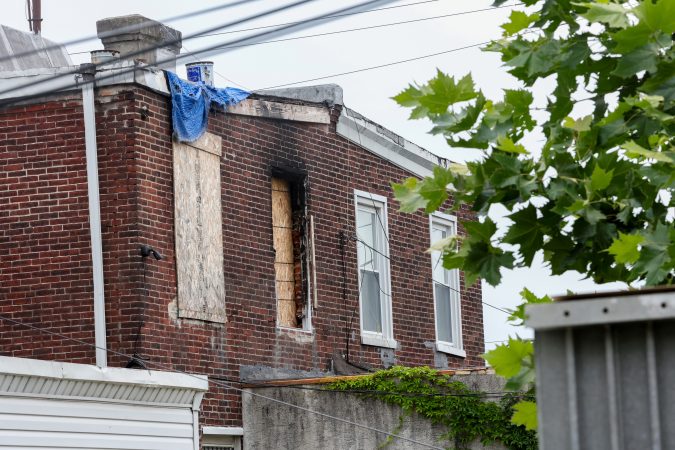
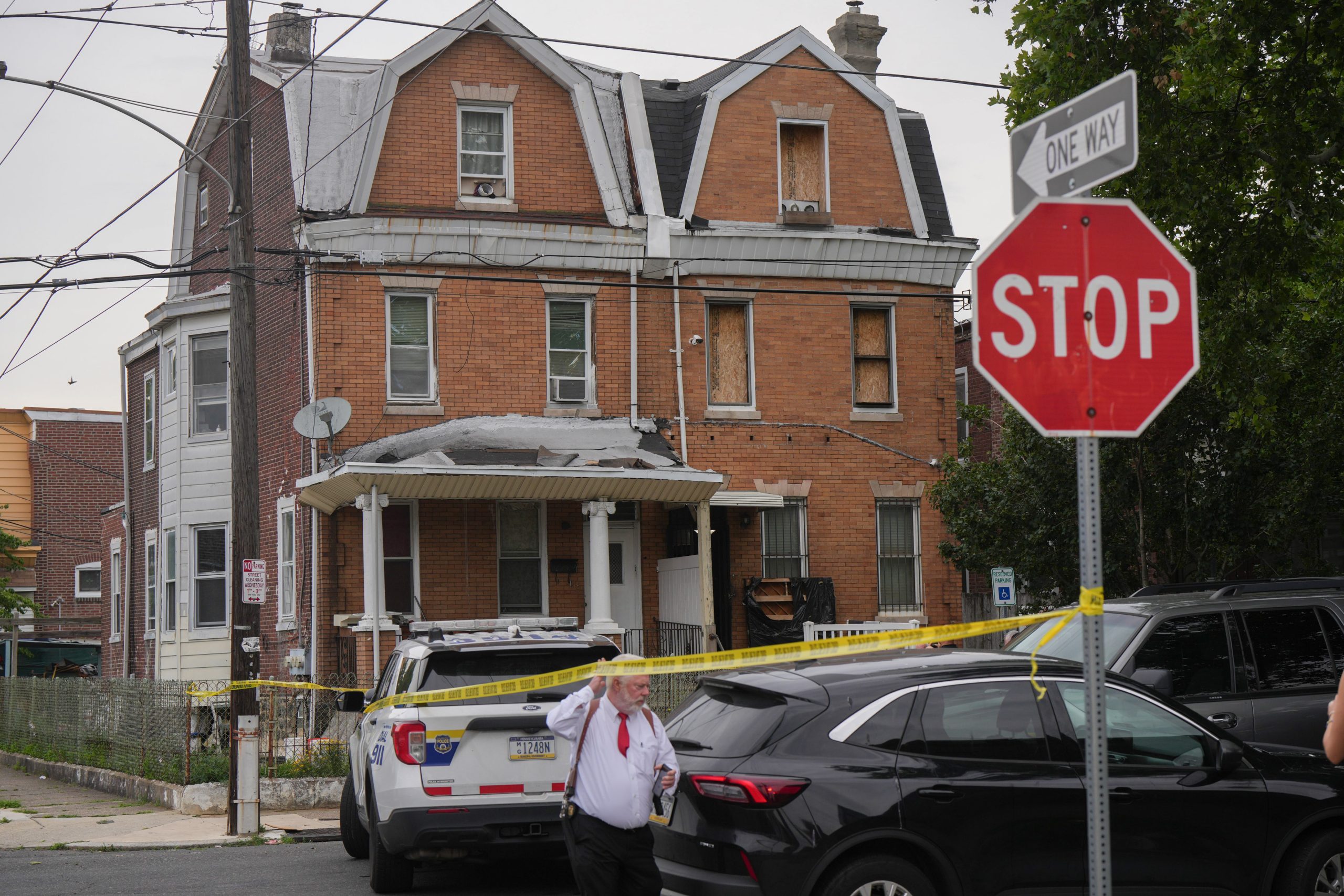
A passerby called the West Chew Avenue residence “a house from a scary movie,” with boarded-up windows on its second and third floors. A camera on the exterior points to the street. The windows on the first floor have bars from top to bottom. Pink flowers remain on the lawn, decorated with pieces of broken glass from the door.
Neighbors on Horsch’s block said the area is a quiet one, though it occasionally has its issues. Fabin Ingram, an area resident, said he never saw anyone coming or going at the corner of West Chew near Horsch’s home, and he largely worked to avoid the intersection.
“I’m big on energy and feelings,” Ingram said. “If I get an eerie feeling, I act on it.”
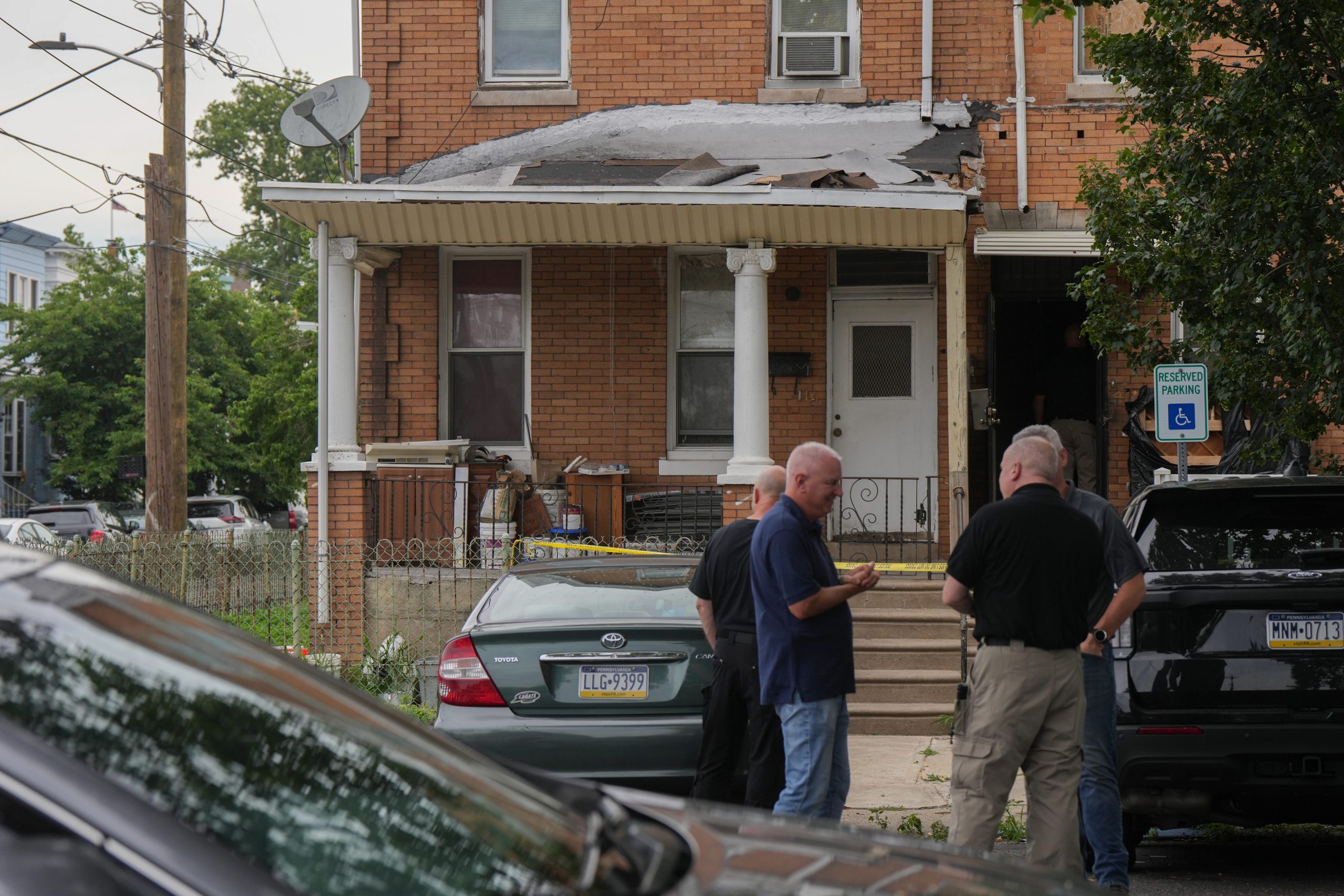
Investigators at 417 W Chew, searching a home in Olney neighborhood in Philadelphia, June 26, 2026.Jessica Griffin / Staff Photographer
One neighbor, Sid Brunson, who used to cut Horsch’s grass, described Horsch as a quiet, jittery man who “had a lot on his mind.” Brunson said that Horsch’s father, R.C. Horsch, a convicted drug manufacturer and erotic filmmaker, died in 2025, leaving a pall over the home.
“You will never see a man other than him coming or leaving the house after that,” Brunson said. “If there was visitors at the home, it was always a female, never a male.”
Another neighbor, who asked not to be identified for fear of reprisal, said Horsch was someone who got into disagreements with neighbors over parking and trash. He had long driven an impeccably maintained gold 1980s Lexus, and in recent years had started driving a new black BMW — and was often seen bringing women home with him, the neighbor said.
The ongoing search of Horsch’s home this week was the latest in a series of odd developments at the property, with investigators saying that several urns had been found inside the home, including one that was labeled with the name of a deceased relative. Officials also discovered a 55-gallon drum with connections to water lines leading into a hole in the ground, as well as materials to grow marijuana, though it was not immediately clear if the items in the home were connected to drug manufacturing or more violent purposes.
On Friday, law enforcement officials wearing hazmat suits were seen entering and exiting the property.
During Horsch’s arrest last week, a woman falsely identified herself using the name of a 38-year-old woman who had been reported missing in Kensington in February 2023, sources told The Inquirer. Deputy Police Commissioner Frank Vanore declined to identify the woman who had been reported missing, but reports indicate that Horsch’s father had been questioned in the 2016 disappearance of his ex-wife, Amy McHale, of South Philadelphia.
By late Friday afternoon, the investigation into Horsch’s home had not ceased, but a large FBI truck was spotted leaving the scene. Late in the day, the area had been largely left quiet, with the crime-scene tape on the home’s door serving as conspicuous evidence of the day’s events.
Staff writer Andrea Padilla contributed to this article.
During a weeklong search of a crumbling Olney twin, federal agents and Philadelphia police found guns and drugs, tubs of chemicals, a curious unsigned letter, and fake law enforcement badges as they were investigating the homeowner’s connection to at least two women who have been missing for years.
The unusual investigation began under similarly bizarre circumstances: U.S. Park Police encountered Eugene Albert Horsch, 44, acting suspiciously in his black BMW parked near Sixth and Market Streets on the morning of June 19, Deputy Police Commissioner Frank Vanore said.
As the ranger approached the car, Vanore said, he heard a woman in the backseat say, “You’re going to hurt me.” The woman then falsely identified herself to the officers using the name of a 38-year-old woman who had been reported missing in Kensington in February 2023, said the sources, who spoke on the condition of anonymity to discuss an ongoing investigation.
The woman, 39, later told investigators that she’d given the alias because she had open warrants for her arrest in ongoing drug cases, and that Horsch had previously made her fake identification cards in that name, telling her she could use it if she was ever stopped and questioned by police, the sources said.
And later, the sources said, she told officials that she did not know that missing woman — but feared something bad may have happened to her.
Eugene Albert Horsch, 44, of Philadelphia.Courtesy of Philadelphia police
When police searched Horsch’s car outside Independence Hall, they recovered two firearms with obliterated serial numbers, as well as cocaine, fentanyl, and marijuana, according to an affidavit of probable cause for his arrest. What’s more, a source said, the car also contained a collapsible baton, a cattle prod, switchblade knives, and a fake U.S. Drug Enforcement badge with Horsch’s photograph under the name “Eugene Frederick Steiner.”
Horsch was taken into custody and charged with illegal gun possession and drug crimes. He’s currently being held on $500,000 bail at Curran-Fromhold Correctional Facility.
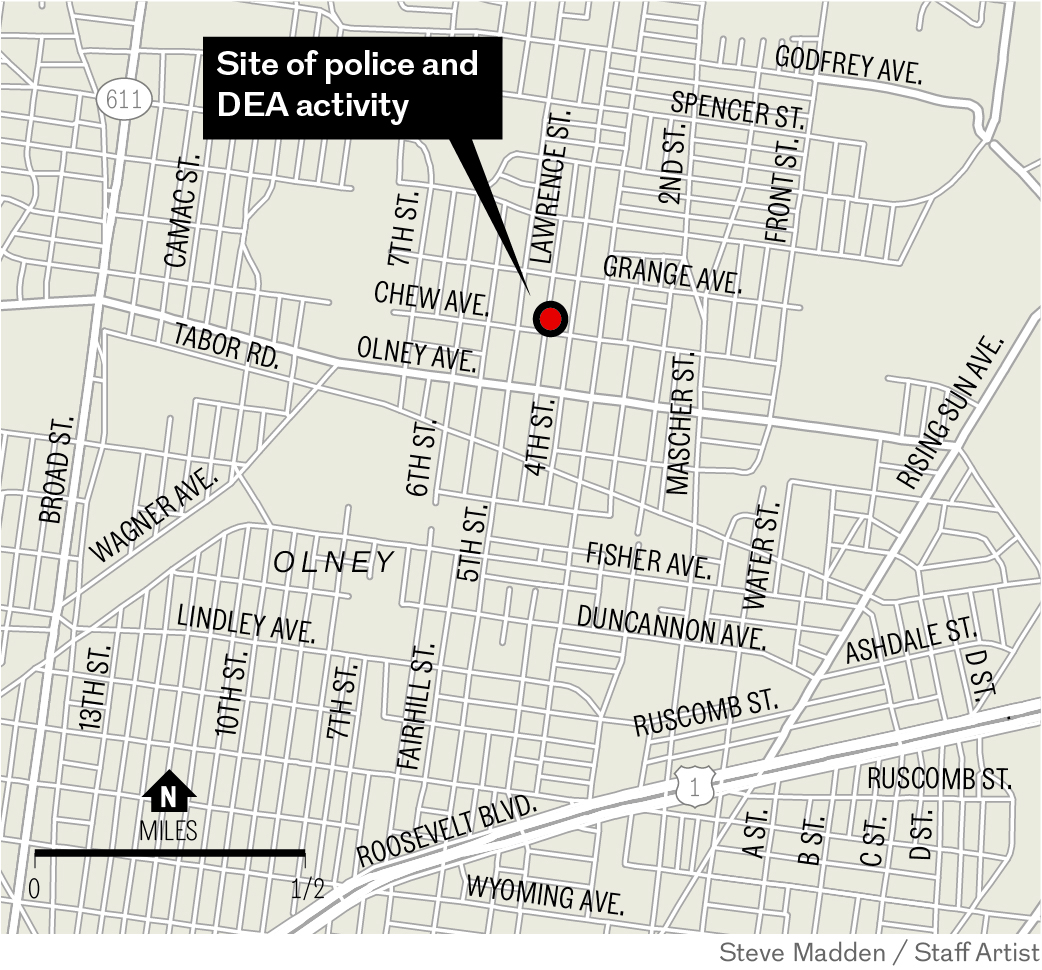
Officials with federal drug enforcement began searching Horsch’s home on the 400 block of West Chew Avenue alongside Philadelphia police on June 19.
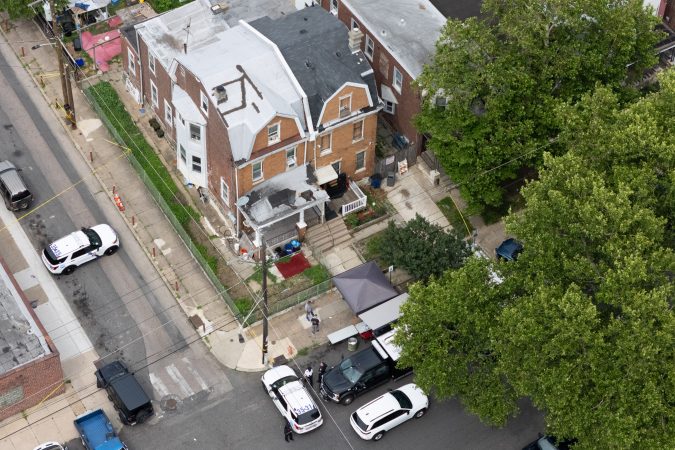
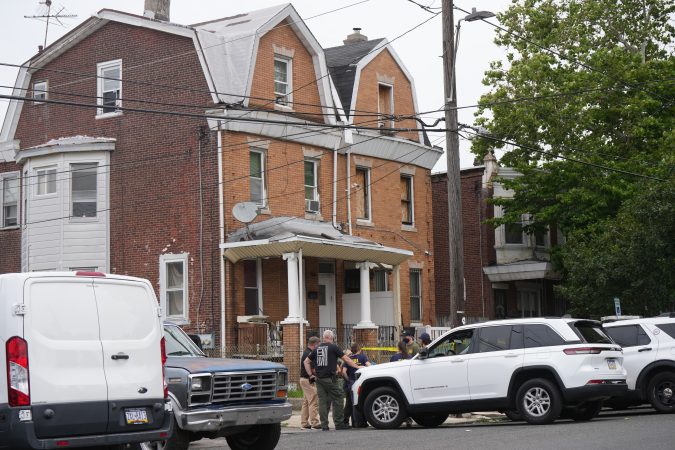
The house at the 400 block of W. Chew Avenue in Olney being investigated.Steve Madden
Vanore, in a news conference Friday, said the conditions of the boarded-up twin and materials recovered inside of it — including hidden compartments, drums filled with chemicals, and what appeared to be urns holding at least one of Horsch’s relatives’ cremated remains — only deepened the mysteries of the case.
And investigators soon found themselves confronting a second concerning thread: Horsch’s late father, R.C. Horsch, a convicted drug manufacturer and erotic filmmaker, had an ex-wife who was last seen at the Olney property in 2016 and has never been found.
Horsch’s attorney, Jerome Brown, said he did not have details about the ongoing police investigation.
Brown said R.C Horsch, who died in 2025, had been questioned in the June 2016 disappearance of his ex-wife Amy McHale, of South Philadelphia. She suffered from mental health and substance abuse issues, he said.
“This is much ado about nothing,” Brown said of the missing persons investigation. “They’re barking up the wrong tree.”
Inside Horsch’s home, investigators found another handgun, chemicals and bottles of liquid that forensics investigators in white hazmat suits were still working to identify on Friday, Vanore said. There was also a 55-gallon drum with connections to waterlines leading into a hole in the ground, he said, and materials to grow marijuana upstairs.
Federal investigators also found a multipage and unsigned handwritten letter that described references to hurting unspecified people, and references to the serial killer Ted Bundy, according to an affidavit of probable cause to search the home that was obtained by The Inquirer.
“Acting on emotion is where problems occur. What I don’t think I told you was that the first time it was planned ahead of time. The threat was made before you know who came over and I already had a 2ft zip tie in my pocket and a drum set up,” the letter said, according to the affidavit.
According to the warrant, it went on: “I had been ready and waiting and I damn sure showed no hesitation. And it was fun.”
Law enforcement sources said investigators were working to verify the authenticity of the letter, who wrote it, and whether it was meant to serve as a portion of a novel or screenplay. Horsch’s father published several works of fiction with masochistic themes, including one described as an “autobiographical memoir of a caring, empathetic serial killer.”
Police also found bank cards in the name of the woman who went missing in 2023, and also recovered what appeared to be a death certificate for another woman who died last year, the document stated.
Vanore said no human remains were found inside the home.
Forensic experts from the FBI are now analyzing the liquids and materials recovered in the home, he said.
Vanore said it wasn’t clear whether the chemicals were intended for a drug manufacturing operation or another purpose.
“We just don’t know what he’s doing, if he’s producing something, if he’s making something, if he’s irrigating something, we don’t know,” Vanore said. “I’m not a chemist, but from what I’ve been told … they could have been explosives.“
And, he said, it was too early to say whether the evidence would speak to any of the missing person cases tied to the property. He declined to identify the woman who had been reported missing in 2023 and did not answer questions related to the ongoing investigation into McHale’s disappearance.
“We’re certainly going to look into the activities that went on at that house,” he said.
Investigators on W. Chew Avenue.Jessica Griffin / Staff Photographer
News reports of the search of the Horsch home reopened wounds for McHale’s family. Gloria McHale said her daughter struggled with mental health issues and a drug addiction, and was married to R.C. Horsch for several years before disappearing June 14, 2016.
In an interview Friday, she said when police questioned R.C. Horsch at the time of her daughter’s disappearance, he said he last saw McHale drinking vodka before he went to bed, and that when he woke up, she was gone.
“I knew that wasn’t right,” McHale’s mother said. “She wouldn’t disappear. She had a daughter and grandkids. Her daughter was about to get married.”
Prior to his arrest last week, Eugene Horsch had a criminal history that included at least 10 other arrests for drug possession, dealing, assaults and drunk driving. He was sentenced to four to eight years in prison after police discovered $1.9 million worth of cannabis inside the Chew Avenue home in 2013, court records show.
He was arrested again in May 2025 for possession of marijuana and amphetamines and handed three years’ probation.
Then, in March, he was charged with aggravated assault after police said he stabbed a man in the stomach at Eighth and Market Streets. Prosecutors withdrew the charges in May after a witness failed to appear in court, court records show.
Since his release from jail, he appeared to be living back at his rundown home on Chew Avenue, a property that city inspectors cited as vacant and unsafe in recent years and that neighbors described as an increasingly off-putting presence on the block.
On Friday morning, anxiety swirled along the typically quiet residential neighborhood, about a mile from the Montgomery County border.
A security camera mounted on Horsch’s home between the boarded-up windows on the upper floors looked out over an overgrown yard where at least a dozen local and federal agents collected and tested evidence into the late afternoon.
Sid Brunson, a construction worker who lives nearby and occasionally cut the grass in front of Horsch’s house, said Horsch often had women who appeared to use drugs at his property. A fire broke out on the upper floors of the property several months ago, he said, which led to plywood covering the windows.
He described his neighbor as a “quiet” and “real jittery” man who kept to himself.
“He always had a nice shirt on like he was going to the office,” Brunson said, “but he never gave you enough time to talk because he was always rushing.”
Staff Writers Ryan W. Briggs, Samantha Melamed, Brett Sholtis, Michelle Myers, Isabel Maney, Andrea Padilla, and Jesse Bunch contributed to this article.
A U.S. park ranger last week conducted what seemed like a routine traffic stop near Independence National Historical Park, approaching a black BMW that was parked in front of a fire hydrant and asking to speak with the driver.
But just moments into the encounter, the ranger discovered a series of alarming pieces of evidence inside the car, according to a police report obtained exclusively by The Inquirer: switchblade knives, drug materials, a cattle prod and, eventually, two loaded guns.
The car’s occupants, too, were displaying troubling behavior, the report said — a woman inside said the driver was going to hurt her. And she then produced a fake identification that included her photo, but had the name of another woman who had been missing for three years.
The episode kicked off what has since become a weeklong investigation into the car’s owner and a variety of unsettling materials police have since found in the man’s Olney rowhouse.
And the probe has only intensified in recent days, growing to include Philadelphia homicide detectives, FBI agents specializing in chemical analysis, and unsubstantiated rumors spilling across social media about corpses being found in a basement.
Officials said Friday that they had no indication that Eugene Albert Horsch, 44 — the man who owns the BMW and the home in Olney — had actually stored human remains in his house on the 400 block of West Chew Avenue. But Deputy Commissioner Frank Vanore cautioned that the investigation remained ongoing, and that law enforcement agents were examining a host of unusual evidence connected to Horsch and his home.
Horsch, in the meantime, remains jailed on gun and weapons charges that were filed after his initial encounter with the park ranger last Friday.
The police report obtained by the Inquirer, as well as the affidavit of probable cause for Horsch’s arrest, gave this account of how that episode unfolded:
Around 8 a.m. on June 19, a park ranger patrolling the area noticed Horsch’s BMW stopped on Sixth Street in a restricted area, and the ranger walked up to the car to speak with the driver.
When Horsch rolled down his window, the ranger heard a woman inside the car yell out that the man inside was going to hurt her. The ranger also noticed signs of potential drug use by the occupants of the car, including a butane lighter and tweezers, and he asked both people in the vehicle for identification.
The woman then provided an ID that had her photo but the name and other details of a woman who had been reported missing several years ago.
And when the ranger asked Horsch to step out of the car, he noticed Horsch had scissors, a switchblade knife, and a glass drug pipe. The ranger’s partner then searched the car and found more troubling signs under the floorboards: two loaded firearms.
The rangers then handcuffed Horsch and the woman, but Horsch told police the guns were not hers. He also then said he had crack cocaine in a compartment near his steering wheel.
Both Horsch and the woman — whom The Inquirer is not identifying because she has not been charged with a crime — then began hyperventilating, and were taken in separate vehicles to Jefferson Hospital.
Officers continued searching Horsch’s car and found more apparent drug materials, a baton, a cattle prod, another knife, and fake credentials that purported to identify Horsch as an agent with the Drug Enforcement Administration.
After being released from the hospital, Horsch and the woman were taken to DEA headquarters. Horsch declined to speak with investigators.
The woman, however, said she’d met Horsch a few months ago, and provided enough details about their interactions at his house that investigators applied for a search warrant.
Vanore, of the police department, said investigators were continuing to sort through a mix of guns, drugs, chemicals, and even urns they’d found inside — including during searches Friday.
The possibilities of why such materials could have been on hand include drug manufacturing, explosive production, or other activities, he said, adding: “We’re certainly going to look into the activities that went on at that house.”
Two years after a Chester man stormed into his workplace with a gun and opened fire in a shooting that left two people dead, he is on trial for murder before a Delaware County judge.
Wilbert Rosado-Ruiz screamed he was “tired of people f— with” him as he fired shots at nearly 50 of his coworkers at Delaware County Linen, injuring five of them, according to the affidavit of probable cause for his arrest.
Rosado-Ruiz, 63, is charged with two counts of murder for killing brothers Leovanny Peña Peña, 30, and Giguenson Peña Peña, 26, after reporting for his early-morning shift at the industrial-laundry business.
Three other people were shot during what prosecutors described as a rampage.
Rosado-Ruiz’s attorney, Kevin O’Neill, has said his client fired the shots after feeling threatened during a confrontation with a group of his coworkers. His actions that day, O’Neill said, did not constitute murder.
Polites rested her case Thursday, but the trial is not over: O’Neill will present his defense in July. The delay, he said Thursday, was to accommodate members of Rosado-Ruiz’s family, who need to travel to Delaware County from Puerto Rico to testify on his behalf.
Prosecutors have said Rosado-Ruiz intended to kill more people on the day of the shooting, and would have done so had the 9mm Remington R51 handgun he was carrying not jammed. Investigators recovered the weapon and traced it to Rosado-Ruiz after his DNA was found on it, according to testimony this week.
Rosado-Ruiz’s coworkers told investigators he had a history of abusive, bullying behavior, including threatening people with his gun, in the 10 years he worked at Delaware County Linen before the shooting, according to court filings.
Chester Police search for evidence after a shooting Delaware County Linen on May 22, 2024. Five people were shot in the incident, two of them fatally, according to prosecutors. Alejandro A. Alvarez / Staff Photographer
On the day of the shooting, Rosado-Ruiz got into a verbal dispute with a coworker, Nilamarie Valdivieso.
Valdivieso testified that Rosado-Ruiz “looked very mad” when he arrived at work, and exploded at her when she asked him what was bothering him.
Later, after Valdivieso returned with two supervisors, along with Leovanny Peña Peña, she said, the conversation escalated, and Rosado-Ruiz pulled the 9mm handgun from his waistband.
He shot Valdivieso once in the chest before chasing down and firing at the other victims as they ran and dived for cover, she said. The Peña Peña brothers were both shot multiple times trying to flee Rosado Ruiz, and were pronounced dead at the scene by medics.
Another victim, Charles Doyle, testified that he was fixing an industrial washing machine when he heard several shots ring out in quick succession.
He said he saw Rosado-Ruiz pull a second magazine from his pocket and reload his handgun. Doyle said he yelled out to distract the gunman so that his father, who also worked there, had time to flee.
When Doyle turned to leave, he said, Rosado-Ruiz shot him three times in the back, shattering his right arm and causing severe internal damage to his organs.
Doyle said he is unable to work because of nerve damage in his arms — he said moving his hands feels similar to trying to wiggle his ears.
He testified that he did not see or hear anyone threatening Rosado-Ruiz before the gunfire rang out.
Rosado-Ruiz fled after the shooting, which led police from surrounding departments to lock down streets around the business.
He was taken into custody by an officer from Trainer, pulled over on the edge of Chester as he attempted to drive home. Inside the car, investigators found a backpack with a smaller bag containing additional 9mm bullets, authorities said.
Law enforcement officials arrested 25 people and rescued more than 50 birds after breaking up a cockfight in Delaware County over the weekend.
The Pennsylvania SPCA Animal Law Enforcement Team, along with local authorities including the Pennsylvania State Police and Central Delaware County Organized Crime Unit, interrupted the cockfight Saturday night at a home on the 500 block of Franklin Street in Chester, officials said. There, investigators removed 52 live birds and discovered three dead roosters while serving a search warrant on the property.
“Cockfighting is one of the most brutal forms of animal cruelty; these birds are forced to fight to near death one cut at a time, suffering devastating injuries in the process,” Nicole Wilson, director of animal law enforcement and shelter operations at the PSPCA, said in a statement.
PSPCA officials received a tip about the cockfight on Thursday, the organization said. Investigators went on to surveil the property, and noted a number of people entering and exiting it — some of whom were carrying “animal transport carriers,” the PSPCA said.
After securing a warrant, PSPCA investigators received support in serving it from the Central Delaware County Organized Crime Unit because of the number of people involved in the cockfight.
The animals rescued from the property were taken to the PSPCA’s Philadelphia headquarters, where they were to receive exams and medical care. The birds will remain in PSPCA custody until their owners surrender them, or a court case related to the incident is adjudicated, the organization said.
Officials did not identify the people arrested.
Cockfighting, the PSPCA said in its statement, is a felony in Pennsylvania. The investigation is continuing.
The PSPCA asked that anyone with information contact its animal cruelty hotline at 866-601-SPCA (7722) or email cruelty@pspca.org. Tips may be left anonymously.
Two fatal shooting marked a particularly violent Tuesday in Chester, roughly a year after the city celebrated a steep decline in homicides involving firearms in the first half of 2025.
The fatalities were from separate shootings, one of which left a third person in critical condition, according to the city’s mayor. No arrests were made and officials did not have descriptions of any suspects.
“These acts of violence are heartbreaking and serve as another painful reminder of the ongoing challenges facing our community and the devastating consequences violence continues to ave on individuals, families, and neighborhoods,” said Chester Mayor Stefan Roots in a statement Wednesday.
Roots lamented a third incident, in which a police officer was assaulted Tuesday and suffered lacerations during a domestic dispute call. The officer was treated at a hospital and released as the incident remains under investigation.
While year-to-date nonfatal and fatal shooting statistics were not immediately available, Tuesday’s deaths mark the latest in a spate of shootings.
Though zero shootings were reported in March, The Delaware County Daily Times reports there have been 10 since April.
Last summer, the Chester police reported 15 nonfatal shootings just over the midway mark of the year. That translated to a 16% decrease in nonfatal shootings compared to 2024. Homicides in the first half of 2025 had also dropped 41% compared to the same time in the year prior, according to the Chester police midyear report.
The summer would go on to be one of the safest the Chester ever had, largely credited to national trends in declining violence and the yearslong collaboration among community advocates, police, and the Delaware County District Attorney’s Office.
Though Tuesday’s violence was alarming enough to warrant a news conference with both Roots and Chester Police Commissioner Katrina Blackwell, the mayor emphasized the continued violence prevention work across stakeholders and law enforcement.
Chester’s Safe Summer Initiative will continue to provide resources to youth and families, as well as positive opportunities in the city, said Roots.
“But public safety cannot rest solely on the shoulders of law enforcement,” he said in a statement, adding that people who “know something” should “say something.”
A man who shot his girlfriend twice in the back on a quiet Chester street on Wednesday night later turned his gun on responding police officers, prompting them to shoot him, authorities said.
The man and the woman — whom authorities did not identify — were in critical condition at an area hospital, Delaware County District Attorney Tanner Rouse said.
Authorities said the man shot the woman shortly before 9 p.m. near the intersection of East Ninth and Walnut Streets. Then, Rouse said, the man opened fire on passing vehicles.
No drivers were struck.
When officers arrived at the scene, the man turned his weapon toward them, authorities said, and at least one officer shot him.
Helicopter footage of the scene shows more than two dozen bullet casings littering the streets and what appears to be a parked power-washing truck riddled with bullet holes.
A Chester Police Department spokesperson did not return a request for additional information on Thursday.
Rouse said his office was reviewing camera footage of the incident and would “make sure we have every angle that depicts the events that transpired.” When its investigation is complete, he said, charges will be filed against the man.
Meanwhile, he praised law enforcement for its response to the shooting.
“I can tell you with confidence that the actions of the Chester Police Department were nothing short of lifesaving and the defendant in this case had every intention to kill anyone he could,” Rouse said.
Tanner Rouse will be Delaware County’s new top law enforcement officer, but he’snot new to the work.
Rouse will be sworn in on Jan. 5 as district attorney after his predecessor, Jack Stollsteimer, steps down to assume the county judgeship he won in November. Rouse, 42, will finish out the final two years of Stollsteimer’s term after working as his first assistant since 2020.
In a recent interview, Rouse discussed the strides in reducing violent crime he and his colleagues have made under Stollsteimer — the first-ever Democrat to serve as district attorney in Delaware County — as well as how he plans to continue those advances.
The short answer: Keeping the same playbook, but “putting a personal stamp on it,” as an offensive coordinator does when he takes over as head coach, said Rouse, an avid Eagles fan and ambitious Little League coach.
A former Philadelphia prosecutor under Seth Williams, Rouse credited the lessons he learned from investigating gun violence in the city, along with the recruitment of several former colleagues he brought over the county line, withimproving the way crime is prosecuted in Delaware County.
“We have demonstrated you can reform the criminal justice system and that it doesn’t have to come at the expense of stopping violent crime,” Rouse said. “They’re not mutually exclusive.”
Who is Tanner Rouse?
Rouse, a Phoenixville-area native, is the son of the late Willard Rouse III, the prominent Philadelphia developer behind One and Two Liberty Place. After graduating from the University of Wisconsin and Fordham Law School, Rouse spent seven years in the Philadelphia District Attorney’s Office, prosecuting crimes in Center City and North Philadelphia.
Rouse left the office in 2017, months before Larry Krasner took over. He practiced civil law for a time and ran an ultimately failed campaign to unseat then-State Sen. Tom McGarrigle before Stollsteimer called and offered him the first assistant job.
At the time, Rouse said, the offer was unexpected. But, looking back, he now considers it one of the greatest opportunities of his career.
What is Rouse most proud of from his tenure as first assistant?
The most notable achievement of his tenure to date in the district attorney’s office, Rouse said, is the steep reduction of gun violence in Chester.Shootings are down 75% since 2020. Rouse credits community outreach efforts for that, especially through the Chester Partnership for Safe Neighborhoods program, overseen by veteran homicide prosecutor Matt Krouse, whom Rouse worked with in Philadelphia and recruited to join him in Delaware County.
The partnership’s fundamental philosophy is a combination of focused deterrence programs Rouse helped oversee in Philadelphia that target repeat offenders, as well as community outreach efforts run by trusted neighborhood figures.
Rouse said he never wanted to be a faceless presence in the county and made it his priority to get out and form relationships in all of the municipalities he served, visiting community meetings, block parties, and even a few pickup basketball games.
“I don’t do this job from behind a desk,” he said, speaking in his county courthouse office. “And I think demonstrating that commitment and that care by being more present in those communities, and not just being kind of the big, scary law enforcement agency on a hill is incredibly important.”
Rouse said he is proud of other reforms including creating a diversionary unit in the office, revamping its drug court and instituting a special “child’s court,” created by Kristen Kemp — Rouse’s chosen first assistant and an expert in special-victims’ cases — that allows young victims to testify against adult offenders in a more comfortable environment.
The county’s jail population is down 50% as well, something Rouse says is a result of approaching prosecuting crimes in a humane, logical way.
What are his priorities as district attorney?
Rouse said he plans to create a similar community outreach program in Upper Darby, a community he said is “on the verge of some big things.”
“It’s not as if we’re saying, ‘We’re coming in here to take on Upper Darby and what goes on there,’ but more of, ‘Guys, look, we’re not just the people you pick up and call when there’s a crime.’”
He also expressed interest in creating reciprocity agreements with his counterparts in the other collar counties around Philadelphia, specifically when it comes to handling drug cases and providing treatment to the people caught up in them.
How has his time in Philadelphia influenced his work in Delco?
Rouse said he cut his teeth in the city working alongside veteran prosecutors, and he’s worked to bring that environment of mentorship to Delaware County.
He said he and his more senior deputies often sit in on trials, giving feedback to younger staff members just as his mentors did for him nearly two decades ago.
“That’s how I got better, and that’s one of the roles I most cherish here,” he said.