Category: Crime & Justice

  • Off-duty Philly cop who shot and killed uncle in Northampton County claims self-defense, court documents say

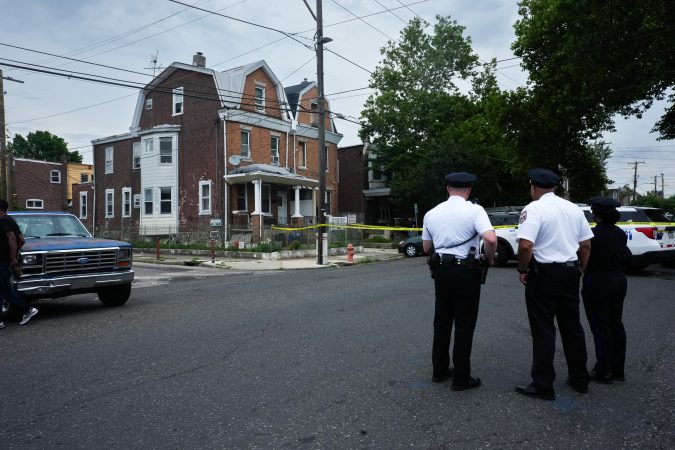
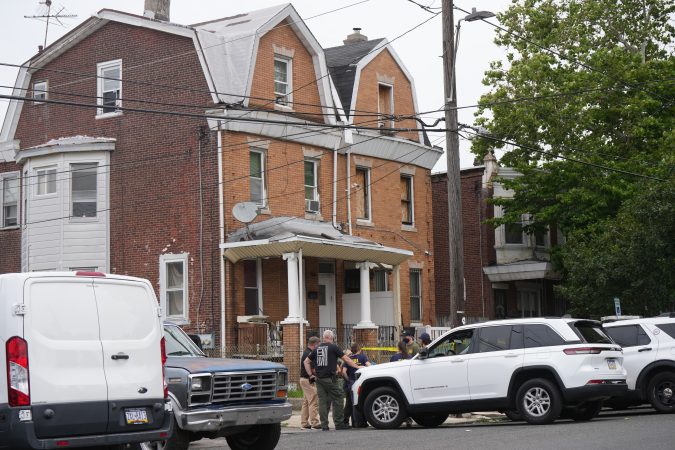
    An off-duty Philadelphia police officer who authorities say shot and killed his uncle in Northampton County during the weekend contended he did so in self-defense, according to court documents.

    Kenroy Anthony Cummings, 25, of Roxborough, was charged Saturday with homicide and fleeing law enforcement in Allen Township, where state police say he gunned down 27-year-old Shakair Moncrieffe before leading officers on a high-speed car chase ending with his surrender.

    Cummings told troopers he had fired at Moncrieffe because he feared the man was reaching for his concealed firearm during a domestic confrontation, according to an affidavit of probable cause in his arrest.

    Investigators say Cummings shot Moncrieffe six times in the head with a 9mm handgun during the confrontation at a residence on Old Gate Road.

    Cummings is a two-year veteran of the force. He has an entry-level rank and serves on the Kensington detail, where he is paid a salary of $79,259, public records show.

    Cpl. Jasmine Reilly, a police spokesperson, said Monday that the department’s internal affairs bureau has opened an inquiry into Cummings. She referred further questions to state police, who are overseeing the criminal investigation.

    A spokesperson for the Pennsylvania State Police barracks in Bethlehem did not immediately respond to a request for comment.

    The conflict began Friday around 1:30 p.m., when Cummings confronted his uncle at the home after a young family member told the off-duty officer that Moncrieffe had verbally threatened him, according to court documents.

    After Cummings entered the residence, other family members saw the two men begin to struggle, with Moncrieffe shoving Cummings as he tried to stand up, the documents said.

    The young family member — a juvenile whom police did not identify — then approached Moncrieffe and punched him multiple times in the face, the documents said. He later told investigators that the escalation led Moncrieffe to “square up with him.”

    That’s when Cummings drew his weapon and fired at Moncrieffe, striking him in the head, the documents said. Moncrieffe slumped to the floor, and Cummings shot him again in the head before fleeing the property.

    Cummings was arrested that afternoon after leading troopers on a chase through the Lehigh Valley community, at points traveling more than 100 mph through residential areas as he evaded law enforcement in an orange 2023 Kia Forte, according to the documents.

    The pursuit ended back at Moncrieffe’s home, where Cummings surrendered his firearm and was taken into custody without further resistance, authorities said.

    He is being held in the Northampton County jail without bail and is set to appear before District Judge Jordan A. Knisley on Aug. 8.

    Staff writer Ryan Briggs contributed to this article.

  • A 29-year-old woman was killed by a hit-and-run driver after exiting a rideshare in Eastwick

    A woman was killed by a hit-and-run driver in the Eastwick section early Monday morning just seconds after having exited a rideshare vehicle.

    Talyia Bernice Nesmith, 29, of Philadelphia, was exiting a rideshare vehicle just before 3:30 a.m. on the 7200 block of Elmwood Avenue, police said, when someone driving a black Dodge Charger at high speed struck her. Nesmith had just exited a rideshare vehicle and was attempting to cross Elmwood Avenue, police said.

    Nesmith was struck with so much force that she was thrown into the rear of a nearby unoccupied parked car. After striking Nesmith, the driver of the Dodge Charger continued east, striking another parked car before fleeing without stopping, according to police.

    Police responded to the scene at 3:30 a.m. for reports of a multi-vehicle crash involving a pedestrian. Philadelphia Fire Department medics took Nesmith to Penn Presbyterian Medical Center, where she was declared dead at 4:05 a.m.

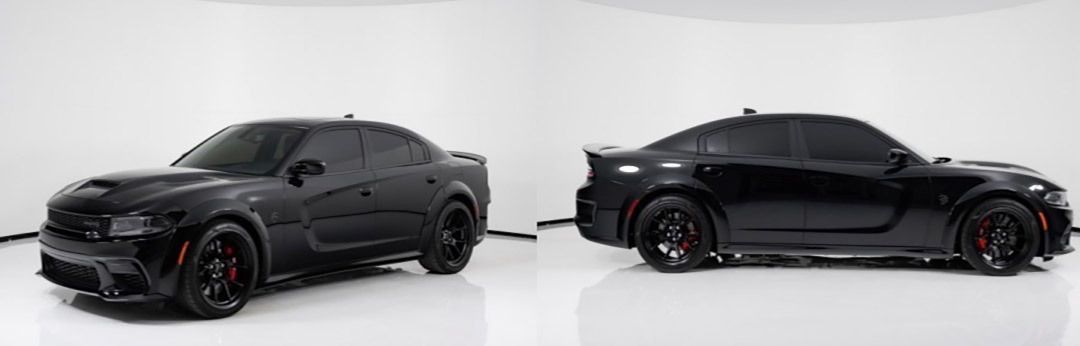
    A stock image of a high-performance black Dodge Charger, the same model of car police believe was used in a fatal hit-and-run on Monday morning which left 29-year-old Talyia Bernice Nesmith dead.(Courtesy of Philadelphia Police Department)

    The driver of the black Dodge Charger has not been identified. Police initially believed the car to be a Dodge SRT, but later said they were looking for a black 2020-2023 Dodge Charger Hellcat or Scat Pack Wide Body — two high-performance versions of the standard Charger model. The vehicle may have damage to the passenger side and possible damage to the windshield. It was last seen traveling east on Elmwood Avenue.

    (function(){function e(){window.addEventListener(`message`,function(e){if(e.data[`datawrapper-height`]!==void 0){var t=document.querySelectorAll(`iframe`);for(var n in e.data[`datawrapper-height`])for(var r=0,i;i=t[r];r++)if(i.contentWindow===e.source){var a=e.data[`datawrapper-height`][n]+`px`;i.style.height=a}}})}e()})();

    The number of hit-and-run crashes, like the one that killed Nesmith, has fallen in Eastwick in recent years, according to Pennsylvania Department of Transportation data. There were nine hit-and-runs in 2025, down from 15 in 2023. But since 2019, nearly 100 hit-and-run crashes occurred in the neighborhood, resulting in 84 people injured and four deaths.

    The police Crash Investigation Division is investigating the case. Anyone with information can submit an anonymous tip by calling the police department’s tip line at 215-686-TIPS (8477). Tips can also be submitted electronically at phillypolice.com/tips.

  • Off-duty Philadelphia police officer facing charges in connection with deadly shooting

    An off-duty Philadelphia police officer has been charged in connection with a fatal shooting this weekend in Northampton County, according to Pennsylvania State Police.

    Kenroy Cummings, 25, faces charges of criminal homicide and attempting to elude an officer in connection with the killing of a 27-year-old man.

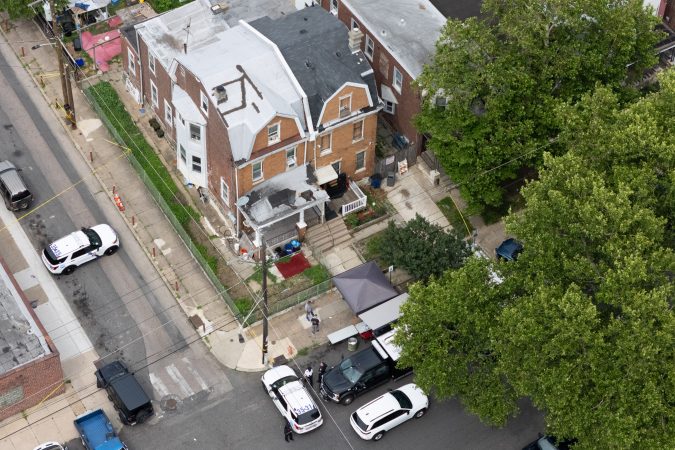
    State police responded shortly before 2 p.m. Friday to a domestic incident at a home in the 1200 block of Old Gate Road in Allen Township, about 55 miles northwest of Philadelphia.

    Troopers found the man suffering from gunshot wounds, and he was taken to a local hospital where he died. His identity has not been made public.

    The alleged shooter fled in an orange Kia, which authorities later spotted in Hanover Township. After a brief car pursuit, the suspect returned to the residence and was taken into custody, state police said.

    Cummings did not immediately appear in court records, and it was unclear if he had an attorney.

    A spokesperson for the Philadelphia Police Department said the department’s Internal Affairs Bureau had been notified and an investigation was initiated.

    No additional information was available.

  • Chester man convicted of murder for killing two of his coworkers at Delaware County Linen

    Chester man convicted of murder for killing two of his coworkers at Delaware County Linen

    A Chester man who gunned down two of his coworkers during an armed rampage two years ago was convicted of murder Friday.

    Wilbert Rosado-Ruiz, 63, was also convicted of four counts of attempted murder — three for other coworkers he wounded in the May 2024 shooting, and one for another man he attempted to shoot before his gun jammed.

    Rosado-Ruiz had no reaction as the verdict was handed down by Delaware County Court Judge Kevin Kelly, who presided over the bench trial. Kelly will sentence Rosado-Ruiz in October. A conviction for first-degree murder carries a mandatory penalty of life in prison.

    Leovanny Peña Peña, 30, and Giguenson Peña Peña, 26, were killed by Rosado-Ruiz during the shooting at Delaware County Linen, an industrial laundry facility where he had worked for 10 years. The three other victims were seriously wounded, including Charles Doyle, who said that he suffered severe internal injuries that have left him with limited use of his arms.

    During his trial before Kelly, Rosado-Ruiz testified that he acted in self-defense: A group of his coworkers, including the Peña Peña brothers, cornered him inside the facility and threatened to kill him and his family.

    The brothers, he said, were holding knives as they slowly walked toward him.

    Prosecutors disputed Rosado-Ruiz’s version of events. Evidence from the scene, including surveillance footage and witness accounts, showed Rosado-Ruiz was the aggressor, screaming that he was “tired” of his coworkers during an argument near the facility’s time clock.

    He then pulled out his 9mm handgun and opened fire, according to Nilamarie Valdivieso, the first person Rosado-Ruiz shot that morning.

    In her closing arguments, Assistant District Attorney Sophia Polites said none of the victims were armed, and no weapons were recovered from the scene. She asserted that Rosado-Ruiz went room-to-room, searching for more victims as they fled from the initial gunfire, and at one point paused to reload his gun before continuing to fire.

    Rosado-Ruiz intended to kill more people, according to the prosecutor, and would have done so had his gun not jammed. He fled the scene, and was arrested by a Trainer police officer not far from his home.

  • Excavation begins at Olney house at center of missing women case

    Excavation begins at Olney house at center of missing women case

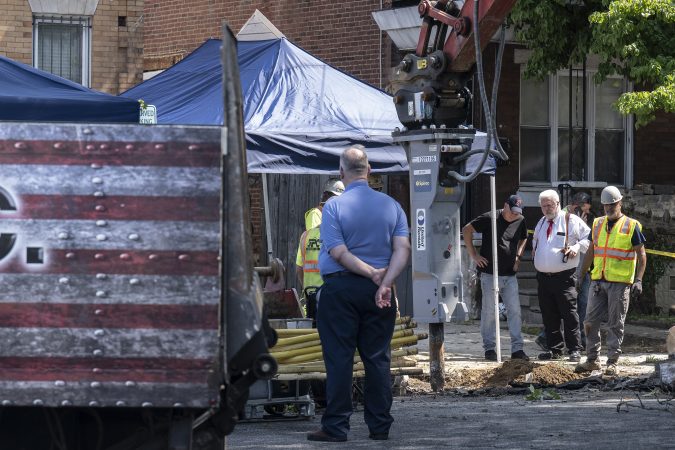
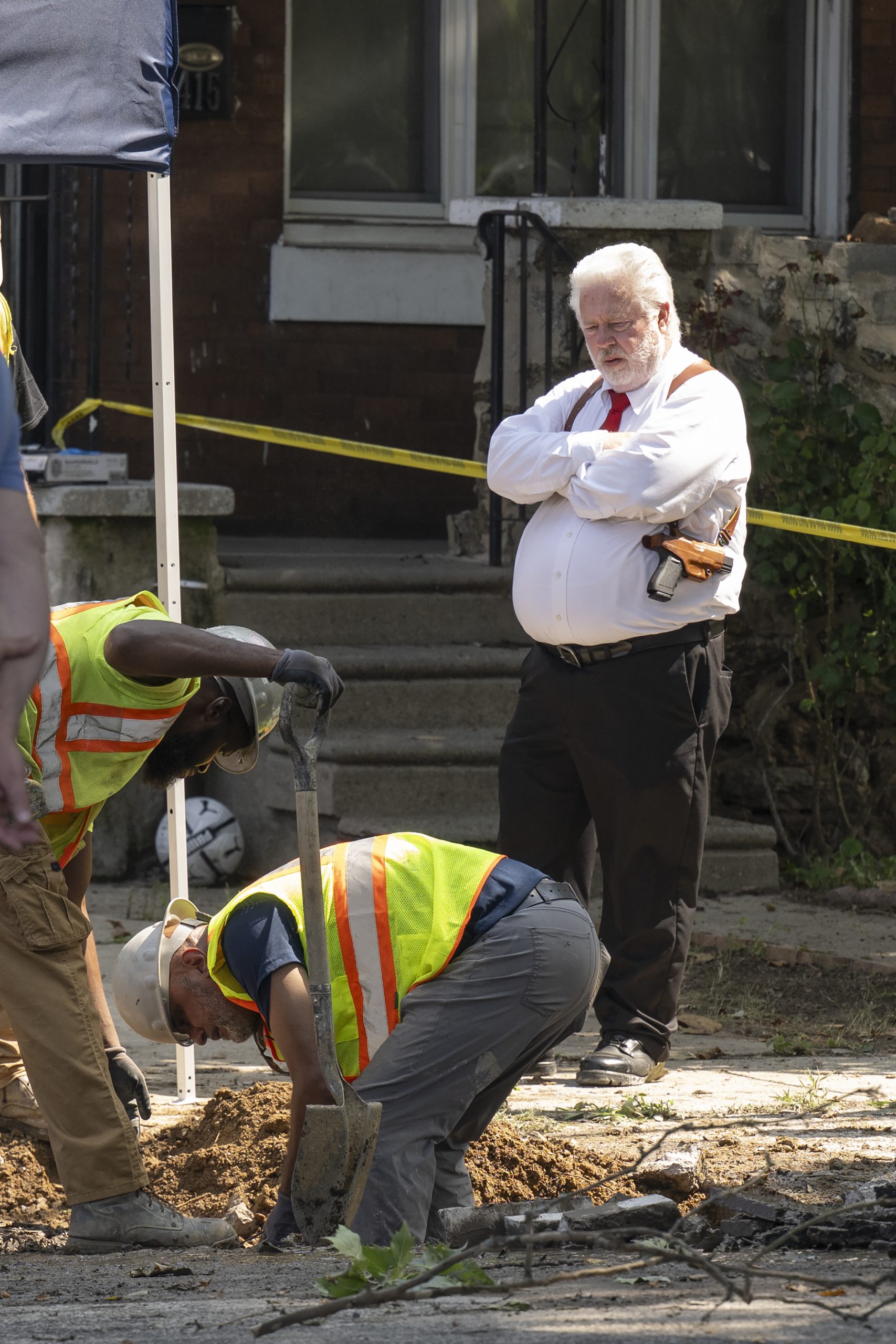
    Breaking concrete, beeping trucks, and the hum of heavy machinery signaled movement Wednesday in the monthlong investigation into two missing persons last seen at a house on the 400 block of West Chew Avenue in Olney.

    With that cacophony of construction sounds, the Philadelphia Police Department and the FBI began a planned excavation at the home of Eugene Albert Horsch, 44, who faces charges of carrying illegal firearms and fake federal law enforcement credentials following a June arrest. Horsch’s dilapidated twin home on West Chew Avenue has since been connected to the disappearances of at least two women in the last 10 years.

    Authorities said they would excavate a portion of Horsch’s property with assistance from the Philadelphia Water Department. Investigators, officials said, were intent on unearthing and examining a pipe under the house as part of a widening probe.

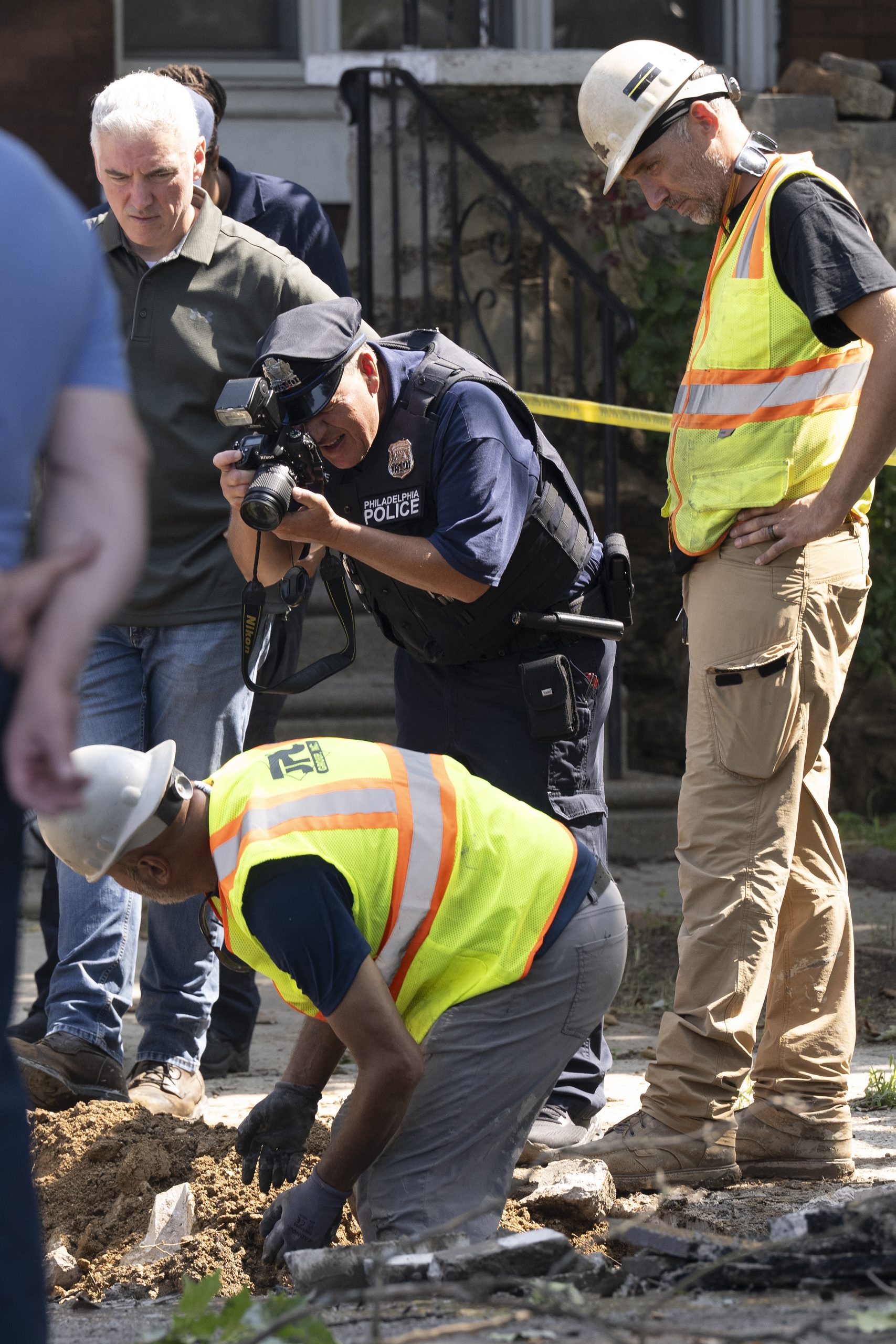
    Workers and police investigators dig and inspect a hole while removing pipes and debris at the entrance to the home of Eugene Albert Horsch on West Chew Avenue.Jose F. Moreno / Staff Photographer

    “The general scope of the dig is to excavate and remove a pipe that will be subsequently examined by FBI and PPD forensics for any evidence that may be present,” Sgt. Eric Gripp, a police department spokesperson, said Monday.

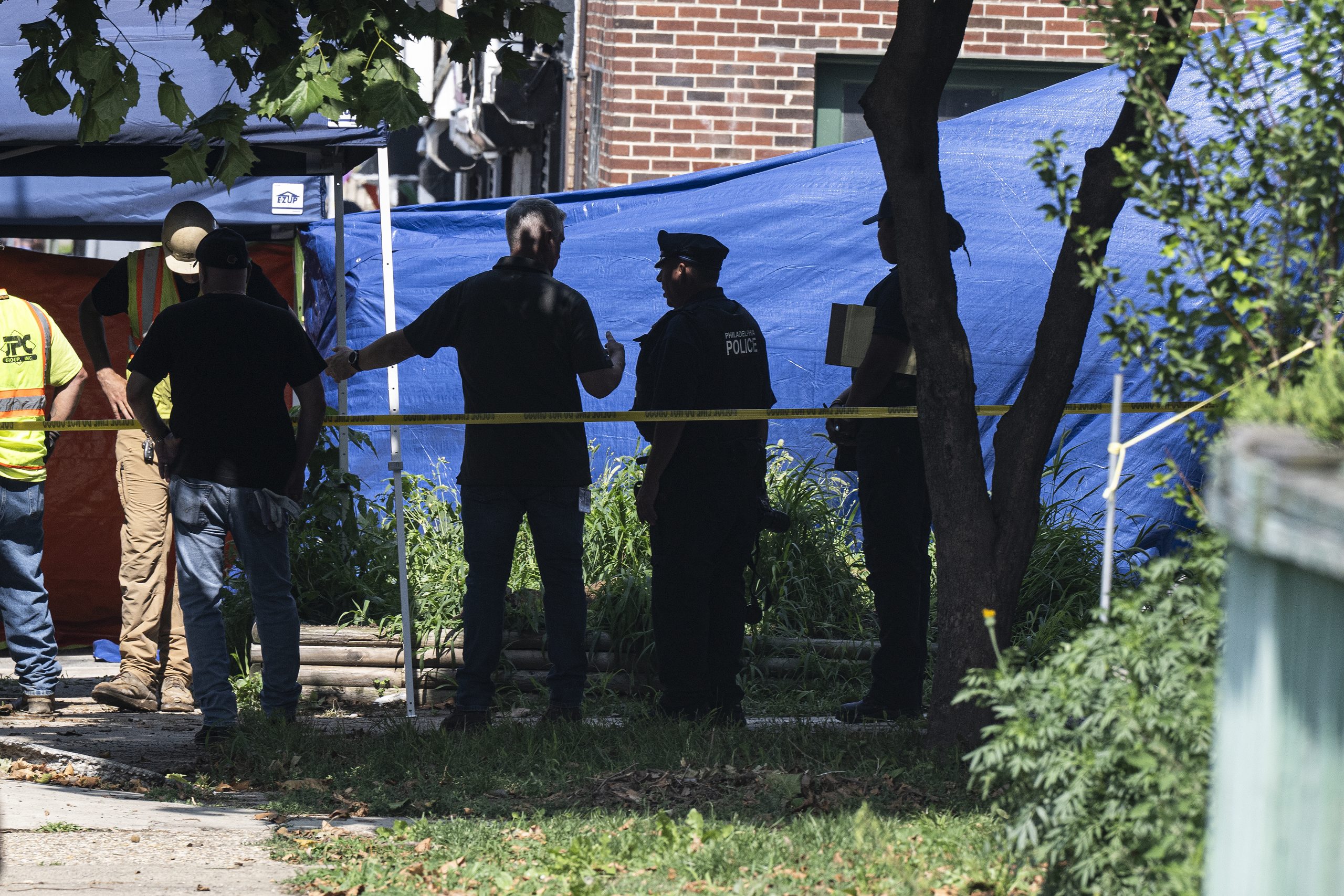
    That effort began in earnest before 9 a.m. Wednesday morning, with crews digging up what was once a small, overgrown garden in front of Horsch’s home, as well as the sidewalk and street in front of the property. Trucks and tents cropped up throughout the morning as investigators walked the block. Periodically, investigators inserted a white pole into the earth, measuring the depth of a hole.

    Later in the morning, workers pulled a piece of pipe from the ground and took it inside the home.

    Wednesday’s excavation was the latest development the case that began June 19, when Horsch was arrested near Independence Mall with drugs, guns, and other weapons, as well as a counterfeit U.S. Drug Enforcement Administration badge. A woman was with him at the time, and she was carrying a fake ID in the name of Blair Tonzelli, who was last seen at Horsch’s home in 2022.

    Workers and police investigators dig and inspect a hole while removing pipes and debris at the entrance to the home of Eugene Albert Horsch.Jose F. Moreno / Staff Photographer

    Since then, investigators have discovered a swath of evidence, authorities have said. Among the items found at the West Chew Avenue home were vats of chemicals, a 55-gallon drum with connections to water lines in the house’s basement, and what police sources called “a significant amount” of blood.

    Forensic testing is continuing, and it has not yet been announced whether the blood is human. Horsch does not currently face charges involving violent crimes.

    Additionally, authorities have found other fake IDs in Tonzelli’s name, as well as the missing woman’s bank card. Investigators have also said that Amy McHale, the ex-wife of Horsch’s late father, Raymond Horsch, was last seen at the Olney home in 2016, according to the woman’s family.

    It was unclear Wednesday if investigators had linked any evidence to the disappearances of Tonzelli or McHale.

    Workers and police investigators dig and inspect a hole while removing pipes and debris at the entrance to the home of Eugene Albert Horsch on Wednesday.Jose F. Moreno / Staff Photographer

    The midweek excavation surprised some neighborhood residents. Cheri Smith lives two blocks from the site of the investigation, but still felt its effects. Smith, who has lived nearby for two decades, said she has felt unsettled since news of the investigation broke last month, and has seen little communication among police, the city, and neighbors.

    “It’s a shame what happened,” Smith said. “It would be nice if they notified us that this work is going to be happening, but the city is going to do what they are going to do.”

    Laurenza Moise said that when she arrived Wednesday to open her braiding business, the corner of Fifth Street and Chew Avenue had already been blocked off. Since the investigation began, she said, she has seen a reduction in business.

    “When they close the street, my business goes down, and there’s no parking for customers,” Moise said. “What can I do other than mind my business?”

  • A Chester man was convicted in his friend’s murder after recruiting him for the botched ambush of their rival

    A Chester man was convicted in his friend’s murder after recruiting him for the botched ambush of their rival

    A Chester man who recruited his friend to carry out the execution of a criminal rival in June 2024, only to have that friend die during the botched ambush, was convicted of first-degree murder by a Delaware County jury.

    Jesse Allen Jr., 20, was charged with the murder of Zaheem Sabree, even though he did not fire the shot that killed him, under the legal theory of transferred intent. The person who pulled the trigger, Tyjohn Walker-Jones, 18, was the target of Allen and Sabree, who were out for revenge after Walker-Jones allegedly killed their friend weeks earlier.

    Text messages presented during Allen’s three-day trial showed that he had begun plotting Walker-Jones’ death immediately after the murder of Sabrie “Breezy” Pierce.

    “Everybody gone pay,” Allen said in the message, displayed in court.

    Surveillance footage from a nearby deli recorded Allen and Sabree walking together down 24th Street on the day of the shooting, then hiding nearby — Allen in shrubbery and Sabree behind a concrete wall. Moments later, Walker-Jones is seen on the video walking through the area and then ducking behind a parked car as the gunfire rang out, prosecutors said.

    Shell casings found at the scene showed that Walker-Jones and Sabree shot at each other multiple times — Sabree with a .45-caliber pistol and Walker-Jones with a 9mm, prosecutors said. Walker-Jones and Allen then fled in opposite directions.

    Sabree was found near that scene, shot in the head. Police took him to Crozer-Chester Medical Center, where he was later pronounced dead.

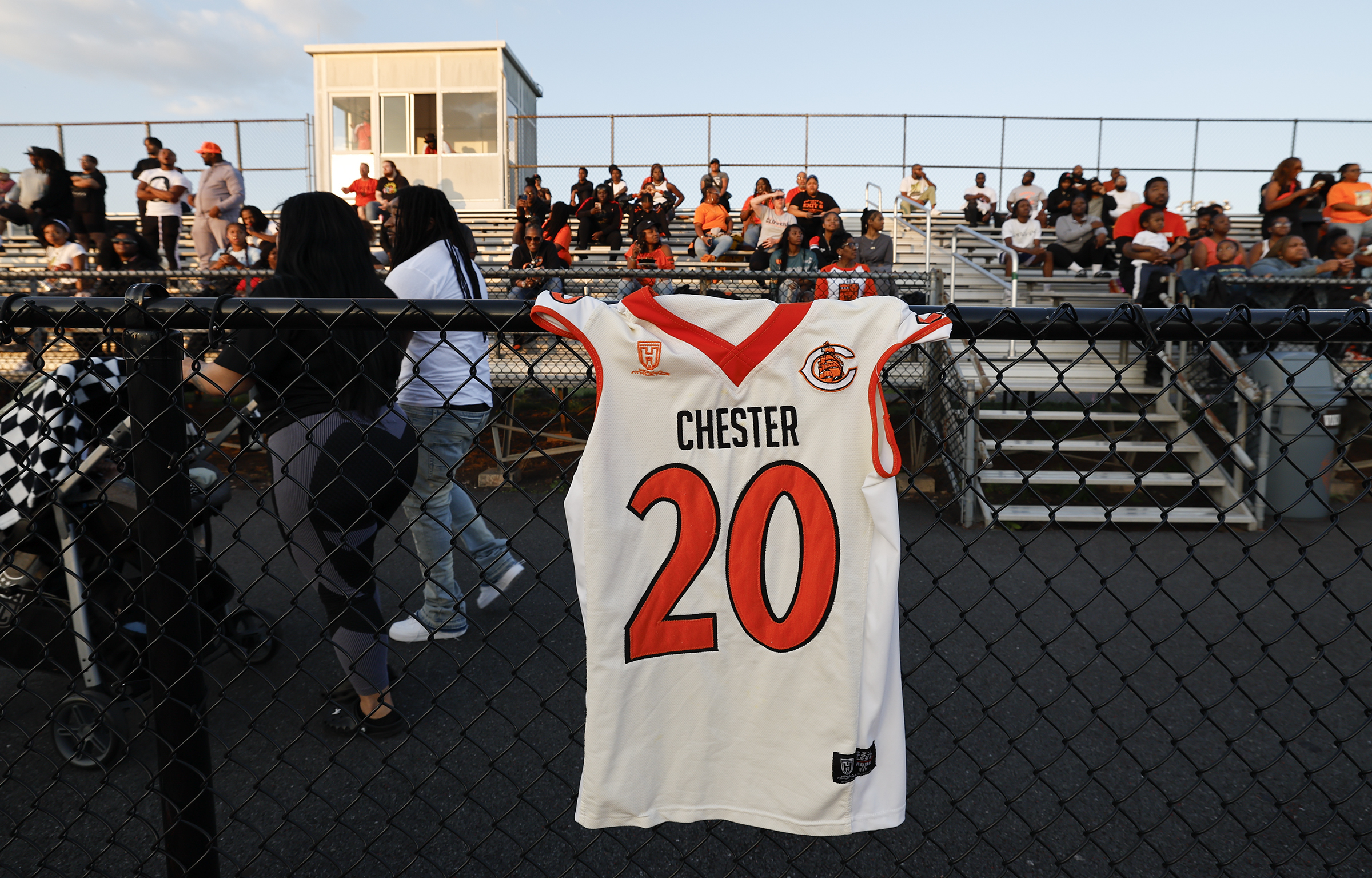
    The jersey of Chester High School football player Zaheem Sabree hangs on the fence while the Chester High School before a game in August 2024. Sabree was gunned down in Chester during the botched ambush of another teen.Yong Kim / Staff Photographer

    Allen’s attorney, Brian Malloy, urged jurors in his closing arguments to acquit his client. The real killer, he said, was Walker-Jones, who, while awaiting trial in Pierce’s murder, was given a “two-for-one deal” by prosecutors.

    During Allen’s trial, Walker-Jones, who was not charged in connection with Sabree’s death, took the stand and admitted to shooting Sabree in the head.

    “He knows he has to play along, say what he has to say, but actions speak louder than words,” Malloy said. “We watched videos of him killing two people, and he’s not sitting at this table, and that’s a crazy thing.”

    Malloy suggested that Walker-Jones was the aggressor, chasing Allen and Sabree as they walked through Chester.

    But Deputy District Attorney Matt Krouse said Allen took deliberate steps to plan the ambush and was directly responsible for Sabree’s death.

    Allen directed Sabree, a star football player at Chester High School and an honors student at STEM Academy, to wear all black and meet him at a deli in Walker-Jones’ neighborhood, which was nowhere near his own, Krouse said. He deliberately left his cell phone at a friend’s house, knowing his movement would be tracked.

    And after the shooting, Allen, in text messages, bristled at the rumor circulating through Chester that he had left his wounded friend to die, saying he had no choice.

    “He knew already on June 30, 2024 that he was guilty of everything he was charged with,” Krouse said. “But just like he ran from his so-called best friend to avoid the consequence of his actions, that’s what he’s trying to do today and this week.”

    Allen is to be sentenced in October. Walker-Jones’ trial in the death of Sabrie Pierce is scheduled to be held later this year.

  • Eugene Horsch indicted in federal court on firearms, fake credentials charges

    Eugene Horsch indicted in federal court on firearms, fake credentials charges

    Federal prosecutors on Thursday formally indicted Eugene Albert Horsch, the Olney man at the center of a widening investigation into the disappearance of at least two women, on charges that he illegally possessed firearms and fake federal law enforcement credentials.

    The two-count indictment accuses Horsch, 44, of possessing two loaded firearms despite having been convicted of a prior felony, which bars him from having guns. It also alleges that he had “fraudulent identification documents” that appeared to have been issued by the Drug Enforcement Administration and the Federal Bureau of Investigation, but that neither agency had produced.

    The indictment stems from Horsch’s arrest on June 19. On that day, U.S. Park Police officers recovered two loaded firearms — a .38 Special revolver with an obliterated serial number and a Taurus .40-caliber semiautomatic pistol — from beneath a front seat of his black BMW, which was parked in a restricted area near Independence Hall in Center City, according to court records.

    Officers said they also recovered counterfeit DEA credentials from the vehicle. And later, during a search of Horsch’s home in the 400 block of West Chew Avenue, federal and local authorities uncovered fraudulent FBI credentials and a desktop computer that may have been “used to facilitate” the fake documents, according to the indictment.

    Horsch has remained in federal custody since his initial appearance in U.S. District Court last month, after a magistrate judge ordered him detained pending a trial.

    Horsch’s attorney, Jerome Brown, said this week: “We believe Mr Horsch is innocent.”

    The federal case has unfolded alongside a broader investigation that began after Horsch’s arrest. Authorities searching his deteriorating twin home found another firearm, equipment used to grow marijuana, barrels of chemicals, ashes of least one relative, documents connected to two women who have been missing for years, and an unsigned, handwritten letter describing violence and referencing serial killer Ted Bundy, officials have said.

    Investigators have said they have not found human remains at the property, but found a “significant” amount of blood. They have continued examining evidence recovered from the home as they search for any possible links between Horsch and the disappearances of Blair Tonzelli, who was reported missing in 2023, and Amy McHale, his father’s former wife, who was last heard from at the Olney property in 2016.

    Brown previously said he did not believe his client had harmed either woman.

    “I’d be shocked if [police] found any harm related to those missing persons at that location,” Brown said after Horsch’s detention hearing.

    Staff writer Ryan W. Briggs contributed to this article.

  • A Chester couple will face a county judge on murder charges in the death of their 2-year-old son

    A Chester couple will face a county judge on murder charges in the death of their 2-year-old son

    Cynthia Robinson and Frank Walton Sr. won back custody of their son, Frank Jr., in May 2025, Delaware County prosecutors said Tuesday.

    Six months later, the 2-year-old was dead, and the bruises and cuts that covered his young body told the story of the abuse he had been dealt in the weeks leading up to his killing, according to First Assistant District Attorney Kristin Kemp.

    Robinson, 37, and Walton, 57, were held for trial on charges of murder, conspiracy, and related crimes after an hours-long preliminary hearing before District Judge Dawn L. Vann.

    An autopsy revealed that Frank died in November from a laceration to his liver that caused significant internal bleeding, as well as bleeding in his brain that a forensic examiner said Tuesday was caused by either blunt trauma or severely shaking the boy.

    Those injuries, Kemp said, were caused by Robinson, who has a documented history of abusing all four of her children, and who had been seen beating and striking Frank whenever he cried at the couple’s house in Chester.

    Kemp said though Robinson dealt the fatal injuries, Walton was just as culpable — he waited to call 911 until the boy had died, despite seeing his condition worsen in the hours after the beating.

    Walton also agreed to lie to police and attempt to blame his son’s injuries on his then-3-year-old daughter, whom Robinson claimed had pushed the boy down the stairs, Kemp said. The girl, according to testimony Tuesday, had spent the entire day with Walton and had not been home.

    “They were afraid of law enforcement and investigators seeing that every aspect of that child had been abused,” Kemp said. “Only one thing could’ve happened with that baby, and that was his death.”

    Robinson’s attorney, Michael Dugan, said that there was no evidence his client had intended to kill her son.

    “At the end of the day, who calls 911? Mom. Who does CPR? Mom,” Dugan said. “I don’t think either one of these parents knew this child was dying, and when they knew his extreme condition, they called for help.”

    Walton’s attorney, Wana Saadzoi, asserted that the charges against him should be dropped — he had never been seen abusing his son, and the mortal injuries took place when he was out working.

    “He couldn’t have prevented it from happening if he wasn’t present,” she said. “This was a tragic failure that he was unable to appreciate the seriousness of his injuries.”

    But Kemp doubted that theory of the case, saying Walton was well aware of Robinson’s history of child abuse and should have done more to protect the toddler.

    “As a parent, you don’t get to bury your head in the sand,” she said. “You have an affirmative duty to intervene and save your child.”

    Frank was born prematurely, according to the affidavit of probable cause for his parents’ arrests, and tested positive for cocaine and fentanyl. He was placed in foster care as a result, but was returned to his parents in May 2025.

    Robinson’s half brother, Jason Weldon, testified Tuesday that he saw her carry Frank down the stairs by his T-shirt and drop him onto his back from about waist height hours before the boy died.

    He said he saw Robinson slap Frank and forcibly cover his mouth when he cried, and heard her say she was going to “beat this little [expletive].”

    Weldon testified that he threatened to report Robinson to county officials, but that she begged him not to because she did not want the boy to be taken away again.

    He said he told Walton about the abuse and that he needed to protect his kids.

    “If I would’ve known [Frank Jr. would be killed], I would’ve done something about it,” Weldon said.

    Weldon said he woke up on the night Frank died to see Robinson frantically performing CPR on the boy. And he was in the room when she told police that her daughter had pushed Frank down the stairs, he said, but he “didn’t think it went down that way.”

    An autopsy revealed that the injuries the boy sustained, especially the laceration to his liver, required force only an adult could apply, according to testimony Tuesday.

  • Police searched Olney home last summer, but drugs — not missing women — were the focus

    Police searched Olney home last summer, but drugs — not missing women — were the focus

    About a year before police raided a crumbling Olney twin in connection to a missing woman last month, Philadelphia narcotics officers scoured Eugene Horsch’s basement and found telltale signs of a drug dealer.

    Firefighters had responded to a small blaze on the second floor of the property on May 18, 2025, alerting police to what they said was a sprawling marijuana grow operation. And when narcotics cops searched the home later that morning, court records show they recovered a modified fully automatic assault rifle with an obliterated serial number, a sawed-off shotgun, a pistol, and ammunition.

    The top floor was filled with cannabis plants, tents, and UV lights, with exposed wires running between the floors and into the basement, where vats of chemicals were stored, apparently to “cultivate marijuana,” the records said.

    The police report detailing the drug bust at the Olney house made no mention of missing women, despite the fact that concerned relatives and friends had told police years earlier that at least two women who stayed at the house had vanished.

    Now, the disappearance of one of those women, Blair Tonzelli, is central to an ongoing search at the property, where police found fake IDs and bank cards in her name, among other disturbing evidence.

    That law enforcement did not appear to connect the missing women to the search for drugs at the same address raises questions about whether the officers who searched the property last summer were aware of the two missing persons cases. The Philadelphia Police Department declined to comment, citing the ongoing investigation.

    Police began reexamining Tonzelli’s disappearance on June 19 after arresting Horsch, whose companion had a fake ID in her name. Investigators reinterviewed witnesses and viewed footage of a statement given in February 2023 by Tonzelli’s friend, who told officers Tonzelli was last seen at 417 W. Chew Ave. Police have also revisited the 2016 disappearance of Amy McHale — the ex-wife of Horsch’s father, erotic filmmaker Raymond C. Horsch — whose mother said she vanished from the Olney home.

    Gloria McHale, Amy’s mother, said she was surprised to learn that police had searched the property for drugs in 2025.

    “I wish they would have looked deeper,” she said.

    Police have not charged Horsch with any crimes linked to missing women. He has been jailed since his arrest last month on $500,000 bail for gun and drug charges, as federal and local police prepare to excavate the property in search of more evidence.

    His attorney, Jerome Brown, declined comment. Brown has previously said police had interviewed Raymond Horsch several times over the years about McHale’s disappearance.

    When local and federal law enforcement officers searched Horsch’s home last month in connection to the missing women, police said they again found guns, ammo, and drugs. More troubling, according to police records, is that they also found a “significant amount” of blood, a handwritten letter referencing serial killer Ted Bundy, and fake IDs and bank cards in Tonzelli’s name.

    The latest search began after police arrested Horsch in his black BMW with an array of weapons, drugs, and a woman donning a fake ID in Tonzelli’s name. A sworn affidavit to initiate the search includes witness testimony that suggested Horsch was a “sociopath” who knew how to dispose of human remains.

    But it was a fire that brought police to Horsch’s property one morning in May 2025.

    Eugene had been living in the twin with two other women, including his father’s longtime companion, Krista M. Killen. City firefighters said the small blaze was started by “careless smoking” on the second floor, according to Horsch’s arrest report. While extinguishing the fire, a fire marshal and police patrolman on the scene discovered a “marijuana grow operation” on the home’s third floor and basement.

    Officers with the PPD Narcotics Strike Force later searched the home and seized 26 pounds of marijuana, 131 grams of dried mushrooms, $1,200 worth of methamphetamine, $800 cash, and “numerous gold colored and silver” coins in a safe, records show.

    Police also recovered a BCI Defense AR-15 style rifle modified to be fully automatic, a 12-gauge Stevens Model 67 pump-action shotgun with a sawed-off barrel, a 9mm Girsan MC28 pistol and more than a hundred rounds of ammunition. The serial numbers had been destroyed on all three firearms, according to records.

    Horsch had previous felony convictions for drug manufacturing charges and was not legally allowed to own firearms. He was arrested and held on $750,000 bail for manufacturing drugs, illegal gun possession, and related crimes.

    Brown, the family attorney, told a judge that the weapons belonged to Horsch’s father, who had died just three days before the drug raid. Brown said Eugene Horsch was planning to properly dispose of the firearms, according to a spokesperson for District Attorney Larry Krasner.

    His health became a factor in determining an appropriate resolution to the case. Sources familiar with the case, who were granted anonymity because they are not authorized to discuss the details publicly, said Horsch appeared frail at the time of his 2025 arrest and could barely walk into court.

    Horsch pled guilty to manufacturing drugs, and prosecutors withdrew the additional gun charges. He received three years probation.

    Within months of his release from jail, Horsch would be locked up again.

    In March, police arrested Horsch and charged him with stabbing a man at Eighth and Market Streets. Prosecutors dropped the charges after a witness failed to appear in court, records show, and he was released from lockup in May.

    Three weeks later, U.S. Park Police stopped him in his car near Independence Mall, where they recovered a fake ID in Tonzelli’s name.

    The search of the Olney property continued Wednesday.
  • The Olney man being investigated for his connections to missing women will be held in federal custody

    The Olney man being investigated for his connections to missing women will be held in federal custody

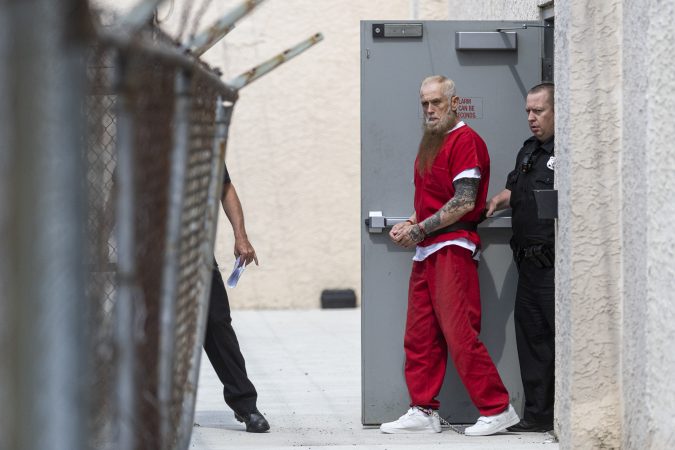
    The Olney man at the center of a sprawling investigation into the disappearance of at least two women in recent years was taken into federal custody Tuesday and will be detained until trial.

    Eugene Albert Horsch, 44, was arraigned Tuesday on a federal firearms charge — a case that relates to his alleged actions on June 19, when a U.S. Park Police officer near Independence Hall reported seeing a black BMW parked in a restricted zone and next to a fire hydrant.

    The officer reported hearing a woman in the vehicle express fear of being injured and then seeing pairs of scissors in the front seat area. A search of the vehicle, in part based on Horsch’s actions, led to the discovery of a switchblade and a glass pipe in Horsch’s pants and two firearms under the car’s front seat.

    Horsch — who was not allowed to possess guns because of felony convictions — had been charged for that same conduct last week by the Philadelphia District Attorney’s Office and he was being held in a city jail on $500,000 bail. City prosecutors also charged him with having cocaine, heroin, and marijuana in his car.

    But the federal gun charge — and the decision by U.S. Magistrate Judge Pamela A. Carlos to detain him until trial — effectively ensures that Horsch will not be able to post bail or secure his release as his case proceeds. And that will give authorities time to continue investigating him in connection with questions potentially far more serious than illegally possessing guns.

    In the days after Horsch was arrested with the firearms in Center City, investigators who searched his decrepit rowhouse in Olney found another gun and materials to grow marijuana.

    But more concerning, they also discovered a variety of more unusual materials — including barrels of chemicals in the basement, urns holding the cremated remains of at least one of his relatives, documents tied to at least two women who have been missing for years, and a handwritten letter that described hurting people and mentioned the serial killer Ted Bundy.

    Officials have said police have not discovered any human remains in the house. But investigators did find a significant amount of blood inside, sources told The Inquirer this week, although it was not clear whether it was human blood. And authorities have been testing a variety of materials they’ve recovered from the house, such as the chemicals in vats stored in his basement.

    The probe is also seeking to learn more about potential connections between Horsch and at least two missing women with ties to his home.

    One is Blair Tonzelli, who might have worked there as a home health aide and who was reported missing in Kensington in 2023. Some of Tonzelli’s friends told police after she disappeared that they worried that something bad had happened to her and that they had told police that Horsch was a “sociopath,” according to police documents obtained by The Inquirer.

    In addition, when Horsch was arrested in Center City earlier this month, a woman who was with him falsely identified herself as Tonzelli and later told police that she did so because Horsch had given her a fake identification with Tonzelli’s name.

    The other missing woman is Amy McHale, the ex-wife of Horsch’s father, who was last heard from at the Olney property in 2016. Horsch’s father, Raymond “R.C.” Horsch — now deceased — was an erotic photographer and drug manufacturer who had published several works of fiction, including one described as an “autobiographical memoir of a caring, empathetic serial killer.”

    Eugene Horsch, during his brief appearance in federal court Tuesday, said little beyond responding to routine legal questions. He will likely be held at Philadelphia’s Federal Detention Center as his case proceeds toward trial.

    His attorney, Jerome Brown, said afterward that he didn’t believe Horsch had harmed any of the women at the center of the investigation.

    “As far as I know, I’d be shocked if [police] found any harm related to those missing persons at that location,” Brown said.