Newspaper readers on Earth 2 woke up this week to a shocking headline in the Bizarro New York Times: “President’s Mental Health Crisis Spirals Downward Again in Stunning and Senseless Speech to UN.”
The article began: “BIZARRO NEW YORK — In a rambling and at times incoherent 40-minute speech to the United Nations General Assembly that shocked delegates from around the alternative planet, President Donald Trump made up his own new name for artificial intelligence, lied about his regime’s murderous attacks on boats in the Caribbean, and threatened a nuclear Armageddon in Iran.
“The speech from a hoarse and occasionally confused Bizarro American president sparked a rushed press conference on Capitol Hill from rattled Democrats calling for Mr. Trump’s immediate removal under the 25th Amendment, an outcome also urged by three major U.S. newspapers in front-page editorials.”
Meanwhile, here in the polluted reality-based atmosphere of Earth 1, Trump’s mashugana speech to the U.N. was more or less “sanewashed” by the media and by Congress — just like everything else from 21st-century Caligula, like his 2 a.m. AI-fueled posting sprees on social media, his growing obsession with renaming lakes and whatnot, or the more serious unconstitutional power grabs.
The actual not-bizarro New York Times did mention the Iran annihilation threat in its headline, but explained that Trump had laid out his “Winner-Takes-All Vision” of geopolitics, which also presumably would have been the paper of record’s 1938 sanewashing of a certain German dictator’s foreign policy.
It’s not the first time a vision of journalistic objectivity that was forged in a very different mid-20th-century America has failed the public. I say that as someone who began an evolution from “straight” news reporter to opinion journalist when conventional reporting failed to call out the obvious lies when the U.S. invaded Iraq in 2003.
But what was a big problem a generation ago now looms as a once-in-a-lifetime catastrophe: A demagogue who hijacked American democracy, just as the nation’s founders feared would happen, is devolving into a mad king before our eyes.
Less than halfway through Trump’s second term, a buck-naked monarch is parading down Fifth Avenue atop a horse he just appointed to his cabinet, holding nothing but a .38-caliber pistol he occasionally fires into a stunned paradegoer, just to prove he can still get away with it. Somewhere in New York or Washington, D.C., a headline writer is hailing a president’s “One-of-a-Kind Approach to Diplomacy.”
The United States is in a world of trouble right now — losing a totally pointless war in which insane prices at the gas station are collateral damage, committing crimes against humanity from the waters off South America to the meatpacking plants of Dodge City, Kan. — but there is no more pressing crisis than the mental state of a president who believes the only limits on his power are “my own morality, my own mind.”
The salary of both the elite Beltway media and our corporate-sponsored members of Congress depends very much on not understanding the seriousness or nature of this crisis, and so both occupations cower at the thought of making the hard moral choices required by even a child’s understanding of our mad emperor’s new clothes.
There are some eyes-wide-open scribes out there like indie journalist Dan Froomkin, formerly of the Washington Post, who’s long been crusading against the news media’s sanewashing of Trump and wrote in a recent piece that “his idiocy is intertwined with his derangement. And yes, it’s compounded by the lack of anyone inside his bubble willing to correct him. But it’s not so much correction that he lacks. It’s a functional brain.”
A mockup of President Donald Trump’s proposed triumphal arch stands at the Great American State Fair on the National Mall in June.Jen Golbeck
I try not to write a “hot take” column every time the president utters something completely irrational, because that would be at least five or six times a week and there’d be no time to write about all the other bad things happening in our country right now.
I did find myself baffled by the coverage of what I thought was maybe the most bat-guano crazy thing to come out of Trump’s unhinged Truth Social feed: his “announcement” that his 250-foot “triumphal arch” in the nation’s capital will now become a sniper’s nest stockpiling live ammo and lethal drones.
What read like a plea for a 302 involuntary commitment police call for 1600 Pennsylvania Avenue was instead treated by too many journalists as a serious news story, followed up by thumb-sucking pieces about Trump’s new penchant for invoking “national security” to silence critics of his many vanity projects. Fellow journalists: We need fewer “think pieces” and more “this man cannot think” articles.
The U.S. Supreme Court, with its three Trump-appointed justices, has made it clear that the president will never be punished in a courtroom for his multiple high crimes and misdemeanors. But if another trial did somehow take place, I believe Trump could have grounds for an insanity defense, because he certainly appears to lack an ability to understand how politically toxic his shtick has become.
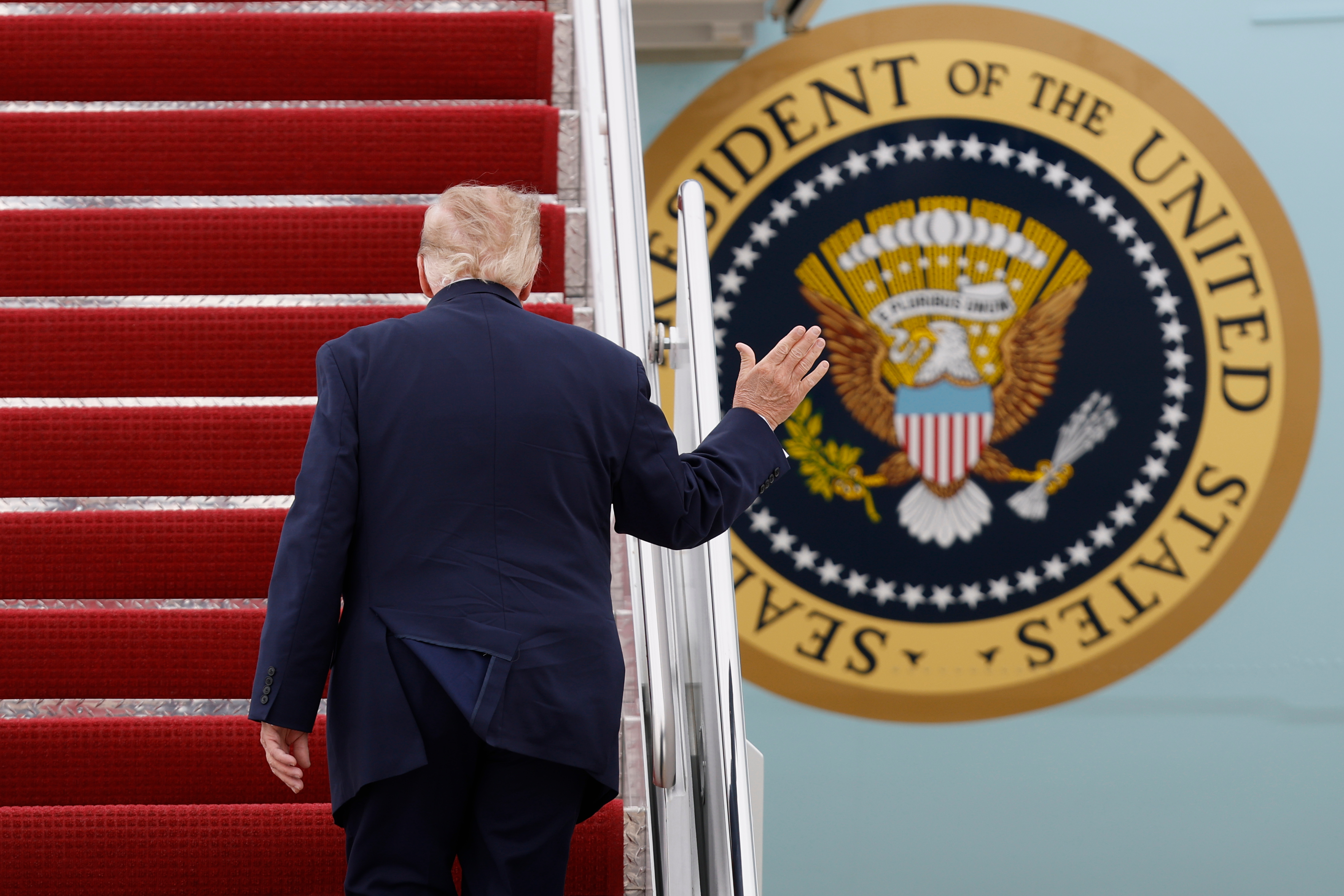
This week, with some polls showing Trump’s approval rating plunging to Richard Nixon pre-resignation levels, the president commandeered Air Force One to fly to yet another college football stadium’sluxury box, with his blonde Rasputin, Natalie Harp, right by his side. This came after a week dominated by a gaudy three-day summit with Chinese dictator Xi Jinping, where tuxedoed guests gorged on sesame-crusted sea bass while nothing was done about the planet’s many pressing problems.
President Donald Trump toasts with Peng Liyuan, the wife of China’s President Xi Jinping, during a state dinner in the East Room of the White House Thursday.Alex Brandon
It was Trump’s close aide and social media guru Dan Scavino who put an exclamation point on the “let them eat cake” mindset by posting an AI video of him getting pushed through the aftermath of the Xi dinner on a cart spraying a bottle of Champagne, with two attractive women at his side. But can you truly “own the libs” with a 29% approval rating? Or do they just not care, and if so, why not?
In a broken country that now runs on the “mind” and the “morality” of its weakened strongman leader, there are three explanations the media needs to discuss, but for the most part won’t:
The oldest man ever elected president in American history is gradually succumbing to dementia, much like his own landlord father whose employees created a desk full of fake work for him in his final years, and his yes-sir Oval Office aides refuse to confront the problem.
Trump has always been like this — an out-of-control, unrepentant narcissist — and he is determined to spend his last three years of power achieving only the things that matter to him, which are building giant monuments to himself as well as the infrastructure to make sure no one from his family goes to prison. In such a world, his approval rating, or your vote in November, matters not.
The scariest of the three: Trump is crazy … like a fox. In other words, all the insane pronouncements about his power to change the names of things like AI or Lake Ontario are really just numbing the public to the idea that he can do anything he wants, including somehow nullifying the upcoming election with the Democrats looking likely to win both houses.
If no one is blocking Trump from these fairly serious violations, who will try to stop him when he sends troops or immigration agents to polling places, seizes huge numbers of ballots, or conspires with Republicans on Capitol Hill to not seat Democratic election winners? And then ignores judicial orders to cease and desist?
This is exactly why the time to sound the alarm is now, and not Nov. 10 or Jan. 3, when undoing irrational and unlawful moves by the White House will be much, much harder. Look, TV punditry and newspaper analyses that stop pretending the president is a well man, or newspaper editorials calling for his resignation, or leaders in Congress backing impeachment won’t end the crisis … today.
But calling attention now to Trump’s gross unfitness to hold office will set the stage for the battles to come — moving the Overton window on what can be done to restore democracy and helping any sensible Republicans understand there’s still a way to save both themselves and the country before it’s too late.
The right words matter, a lot. We need to start urgently looking for them.
This week marks a year since Shackamaxon debuted. Named for the place Lenape chiefs would meet for discussions and community ceremonies under the great elm, the column is focused on what happens at City Hall and Harrisburg — our modern Shackamaxons. This week’s edition focuses on SEPTA and whether bipartisanship is truly dead.
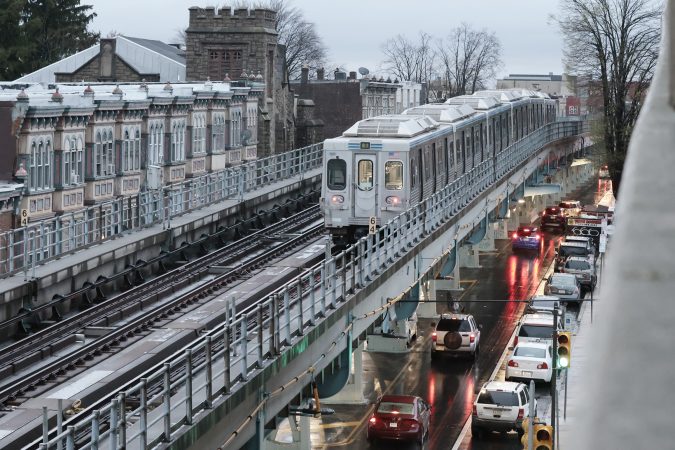
A SEPTA Market-Frankford Line train as it heads away from the Frankford Transportation Center in 2024.Elizabeth Robertson / Staff Photographer
Getting there
In 2032, if all goes according to plan, SEPTA will look quite different.
The Market-Frankford Line will have new trains and run more frequently. There’ll be new trolleys, as well, with modern light rail cars replacing the aging fleet. Instead of boarding at the corner, like a bus, trolley riders will have new, fully accessible stations with seating.
The Regional Rail fleet will be in the middle of its own modernization. While the process will take longer, SEPTA plans to make every Regional Rail station accessible, replace its fleet, and boost frequencies to every 15 or 30 minutes, depending on the line. It’s an ambitious undertaking that would more than double the number of people who live within a quarter mile of frequent mass transit, from 900,000 to two million.
This kind of optimism is rare for SEPTA, an agency that is accustomed to hearing complaints and begging lawmakers for enough money to keep current levels of service operating. The SEPTA Accelerate plan does depend on securing additional funding from Harrisburg. This time, however, the city’s transit leaders are trying a different approach: Instead of pointing out the potential dangers of losing services, they are highlighting what they could provide if given adequate resources.
It also comes at an opportune time. While there are always improvements to be made when it comes to timeliness and quality of life, SEPTA has made unmistakable progress.
The agency has hired hundreds of cleaners, with each station now covered by a dedicated member of staff during heavy-use periods. Customer satisfaction has reached record highs. Throughout it all, SEPTA has remained the country’s most efficient transit agency. Each ride costs less than $8 to provide, compared with the rest of the nation’s $12 average.
Even Republican state Senate Majority Leader Joe Pittman seems to have noticed. In an interview with NBC10’s Lauren Mayk, Pittman gave SEPTA and new General Manager Scott Sauer credit for responding to criticism, reducing crime, raising revenue, and improving its credit rating.
Locally, the proposal received praise. Montgomery County Commissioner (and SEPTA board member) Neil Makhija told me he’s been advocating for SEPTA to have 15-minute Regional Rail service for years, and that he is “thrilled to see that transformative vision has finally been released in this plan.”
Longtime SEPTA riders will remember the old “We’re Getting There” slogan. The Accelerate plan is the agency’s biggest chance to finally arrive.
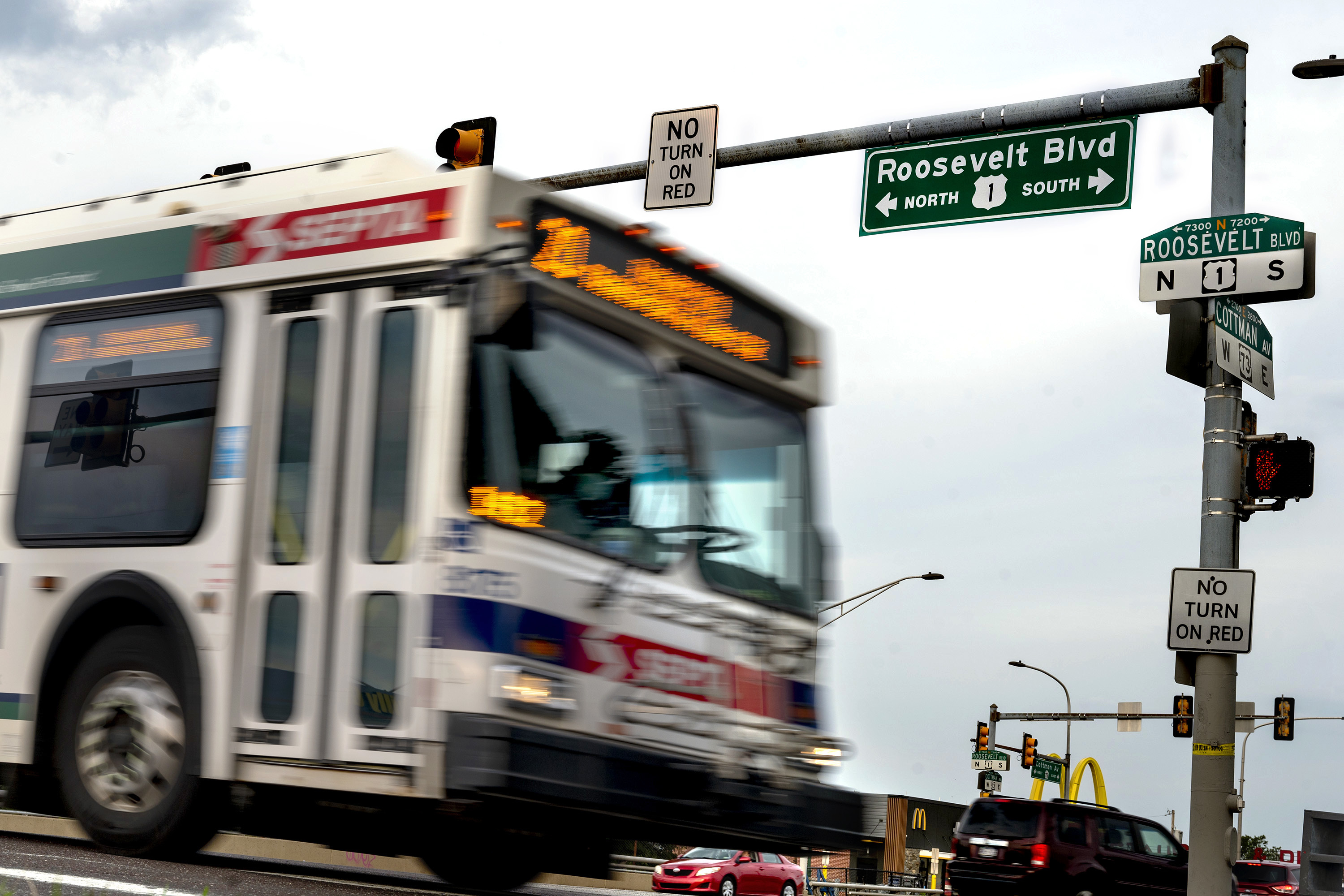
Traffic on the Roosevelt Expressway at Cottman Avenue in Northeast Philadelphia.TOM GRALISH / Staff Photographer
Boulevard or bust
The plan, while ambitious, does not call for any significant expansions in the immediate future. Extensions to Reading, Allentown, Maryland, and King of Prussia get a brief mention — as ideas the agency might embrace in a better-resourced future. The long-awaited subway extension to Roosevelt Boulevard is also included in the map. Events, however, may require deciding on this sooner rather than later.
After all, PennDot is already planning to redo the entire corridor. The initial plan is to add $134 million in safety improvements. Longer term, there are six different options. The route could either become a neighborhood boulevard, with less space for motorized traffic, or it could become a partially capped expressway, separating high-speed traffic from pedestrians and homes. Both proposals would then be paired with one of three transit options: a subway extension, a light rail route, or Bus Rapid Transit.
BRT is the cheapest option and would be my preference if the subway doesn’t get built. The idea is to give buses a dedicated lane and limit how often they stop. This would speed up service for current riders, but wouldn’t bring in a significant number of new commuters. There is also a chance future policymakers would remove the dedicated bus lanes in order to provide more space for motorists, something that has happened to BRT systems in other states.
To some policymakers, light rail represents a kind of Goldilocks option. It has more transformative potential than bus service, while costing less than a full metro line. To me, however, Roosevelt Boulevard is a particularly bad fit for the idea.
The cheapest way to build a light rail system would include trains traveling in their own lanes next to automobile traffic. Given the often-chaotic behavior of motorists in Philadelphia, trips would be subject to delays every time a driver decides to save a couple of minutes by driving along the tracks. The trains would also get caught at red lights anytime left-turning traffic builds up.
Officials could mitigate this risk by building an elevated trackway, but this would make the project significantly more expensive, negating the entire point of opting for light rail. Additionally, riders would have to transfer at the end of the line rather than seamlessly continuing into Center City, as they would with a subway expansion. Light rail also costs more to operate than a subway, meaning any savings would disappear over time.
While it has the highest construction costs, the subway option remains the ideal solution for the corridor. It would transform how people get around the region.
Bucks County residents would be able to travel all the way to the sports complex for events after parking at Rock Hill Station, helping to alleviate the postgame traffic crunch. Northeast Philadelphia’s emerging dining scene would benefit from improved access to diners from Center City and South Philadelphia. It would make the Boulevard an attractive corridor for employers, who could bring in talent from the city’s core via the subway, while also remaining accessible to suburban residents. It would also mitigate traffic congestion the most, which is especially important if PennDot selects the neighborhood boulevard option.
Lt. Gov. Austin Davis (left) and Attorney General Dave Sunday (right) joined Arnold Ventures’ Kevin Ring at the company’s Public Safety Boot Camp on Thursday.Photo from Lt. Gov Austin Davis staff
Bipartisan belief
With state lawmakers consistently unable to perform the basics, like passing a budget on time, it is worth wondering whether Washington’s allergy to bipartisanship has spread to Pennsylvania, which has traditionally been more collegial.
At a panel discussion last Thursday at the Franklin Institute, however, the spirit of cooperation was thriving. Lt. Gov. Austin Davis and Attorney General Dave Sunday spoke at Arnold Ventures’ Public Safety Boot Camp, which hosted legislators from around the country and both political parties. The two showed a remarkable amount of overlap, both professing support for evidence-based approaches, accountability, and second chances.
Even better? State and local leaders are already seeing results from this balanced approach: Homicides in Philadelphia are at generational lows, as well as being down across the commonwealth.
Alexander “Chicken Man” Tominsky walked into the Museum of the Philadelphian in a Canadian tuxedo and a baseball hat with “Phillies” written on it in marker on Tuesday and was blown away to find his name on a plaque alongside other local legends like Benjamin Franklin and Philly Elmo.
“No way! Oh my gracious! Who would have known when I was a little kid crying in my pillow something like this would happen,” he said, pointing to his name.
Tominsky — who became renowned throughout the land in 2022 for eating 40 rotisserie chickens in 40 days, culminating with a public noshing of a chicken on an abandoned Walmart pier in South Philly — was invited to a preview opening for the museum by its founder and creator, Brian Adoff.
Founder and creator Brian Adoff outside his Museum of the Philadelphian in Fishtown.Monica Herndon / Staff Photographer
“The museum is about the personality and attitude and conduct of Philadelphians,” Adoff said. “My personal hope is that you leave inspired to really be the best version of yourself, the best Philadelphian you can be.”
Located in a 300-square-foot storefront that was previously Adoff’s office on East Girard Avenue in Fishtown, the free, temporary “micro museum” is just down the road from another Philly landmark — the “I Hate Bank of America” sign. The large, yellow banner was put up by a homeowner in 2007, after the bank branch across the street ticked him off. The branch closed many years ago, but the sign remains, a grand tribute to Philadelphians’ spite.
View on Threads
What makes Philadelphians this way? And what makes it so oddly endearing? These are questions Adoff explores in his absurd and unexpectedly heartwarming museum, which opens Friday.
“There’s an emotional narrative arc the museum takes in its 300 square feet, where it ends with literally a book of Philadelphians who exhibit five qualities that I’ve determined, with my crack team of curatorial advisers, that make up a Philadelphian,” Adoff said.
As of a student of the Philadelphian who’s written hundreds of profiles of the everyday people who make me love this city more every day, I thought Adoff had set a lofty goal for himself when we first met earlier this month. How do you distill what it means to be a Philadelphian in 300 square feet? And how do you decide who makes the cut?
At the preview Tuesday, I was pleased to find that over the course of about 20 exhibits in the space, Adoff skillfully addresses the Santa-hating-battery-throwing-robot-killing tropes that haunt Philadelphians, while also getting to the oddly-touching truths behind those, and other very Philly stories.
Visitors browse the Museum of the Philadelphian.Monica Herndon / Staff Photographer
And while Adoff and his team have compiled a “Register of Philadelphians” with more than 50 names and stories of local folk heroes who epitomize what it means to be a Philadelphian, their best decision may have been to include cards for visitors to nominate their own quintessential Philadelphian. Because if one thing is certain, Philly is going to have thoughts.
Grease the pole
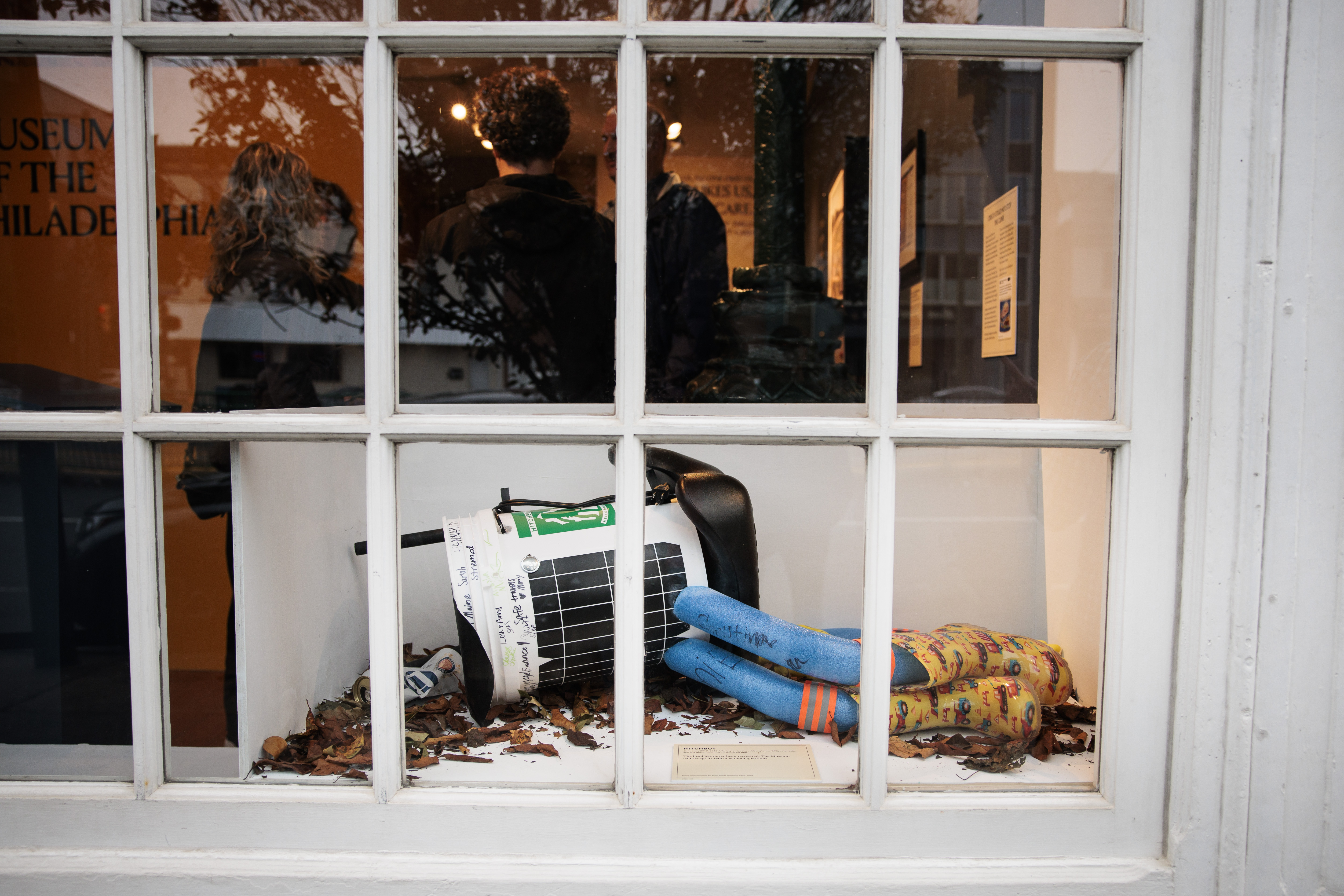
Guests are greeted in the museum’s front window by a re-creation of the death of hitchBOT, the hitchhiking Canadian robot who traveled across the country on human kindness, only to be dismembered and beheaded in Philly. In the accompanying plaque, Adoff notes that Philadelphians offered to rebuild the robot, and that a Philly police detective jokingly blamed the crime on New Jerseyans.
A re-creation of the death of hitchBOT is displayed in the front window of the Museum of the Philadelphian.Monica Herndon / Staff Photographer
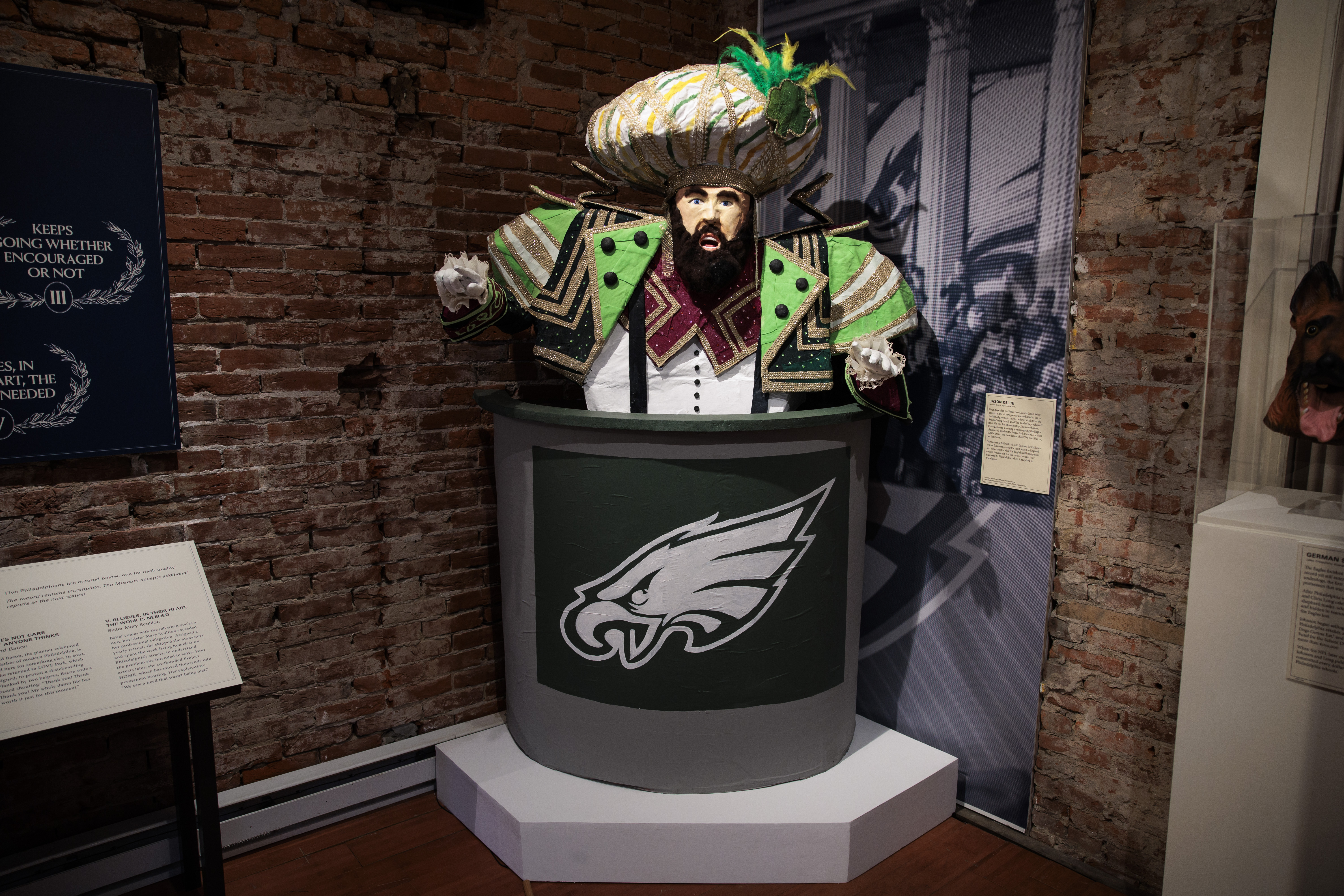
Once inside the museum, two large papier-mâché sculptures immediately catch the eye — one, of a Philadelphian climbing a greased pole, and the other of Jason Kelce during his Eagles Super Bowl speech. In the first, guests are invited to “grease the pole” with a paintbrush and clear goo from a nearby can (you know I did it!), and at the latter, visitors can stand under a sound dome (fancy!) in front of the sculpture to hear Kelce’s “Hungry Dogs” speech.
A papier-mâché sculpture of Jason Kelce during his 2018 Eagles Super Bowl speech is featured in the Museum of the Philadelphian.Monica Herndon / Staff Photographer
In the center of the room is a freestanding wall with a rearview mirror on it. The accompanying plaque tells the story of Ted Passon, whose parked car was flipped in the aftermath of the Phillies 2008 World Series win. Passon created a blog asking Philadelphians who enjoyed the spectacle to help pay for his vehicle, and through the generosity of donors, he was able to get a new car and give $3,000 to someone else whose car was flipped. On an iPad at the exhibit, visitors can play a YouTube video of the flipping and read Passon’s blog.
I remembered the story well because I interviewed Passon about it in 2008. Seeing him at the event Tuesday was a full-circle Philly moment for both of us. Passon, who’s now an Emmy Award-winning documentarian, said he was happy to loan the mirror of the vehicle Philly claimed from him to the museum.
“It’s an honor to be included in the story of Philadelphia,” he said. “If I can be a footnote in the city’s history, I did something right in my life.”
‘Booing is my love language’
Other exhibits explore Philadelphians’ history with booing, our history of throwing things, and the five qualities Adoff and his team have decided make a Philadelphian, with number one being, “Does not wait for permission.”
The “Register of Philadelphians” on the wall and accompanying book begins in 1731 with Benjamin Franklin and ends this year, with Jameka Wilson, the woman who went viral for her TV interview about kicking a man in a Chucky mask who was terrorizing pedestrians.
The Register of Philadelphians features notable Philadelphians ranging from Ben Franklin to Jameka Wilson. To the left of the register is the museum’s official portrait gallery, which can be seen through two ViewMasters. Monica Herndon / Staff Photographer
I was excited to see a couple people I’ve written about on the list, including Paul “Jelloman” Vile and the late Gilbert Hilton, who turned heads across the city for years in his “Badillac” car, which was covered in items from Goodwill, and who was one of the most Philly people I’ve ever met.
There’s also a portrait gallery by the Rev. Michael Alan of seven Philadelphians in the register that can only be seen through an old-school ViewMaster, which were a hit with the crowd.
“It was a small space and this was a way to make something look bigger without being bigger,” Alan said.
Creator and founder Brian Adoff talks about the Museum of the Philadelphian in front of the museum’s gift shop. Monica Herndon / Staff Photographer
The tiny museum even has a gift shop with shirts that say “I greased the pole at the Museum of the Philadelphian” and bumper stickers that read “Booing is my love language.”
‘The most Philadelphian thing’
The museum was funded by Adoff through his experience design studio, Architects of Human Connection, and admission is free because he believes “the Philadelphian has paid enough.”
The museum is a culmination of Adoff’s many endeavors over the years, from music, clowning, absurdist theater, and working as a tour guide for the Greater Philadelphia Film Office, to managing a software business and, most recently, creating events that connect Philadelphians.
In 2023, he cofounded the Fishtown Choir,and last year, Adoff created Join Philly, which connects Philadelphians with area clubs and groups.
The idea for the museum came to Adoff in June, as he was trying to think of uses for his storefront office space. With the help of five paid collaborators, Adoff built the museum in less than three months, which is impressive, given the amount of research that clearly went into the exhibits, plaques, and bios.
“It started kind of absurd and silly until I was like, ‘Oh, this is just like everything else I do. It matters and it actually has heart and it has meaning,” he said.
Brian Adoff in the Museum of the Philadelphian he created in Fishtown. Monica Herndon / Staff Photographer
Here’s the potentially scandalous thing — Adoff isn’t a Philly native. He’s originally from Long Island, moved to Cherry Hill as a kid, and came to Philly to attend the University of Arts. He spent time in Chicago then returned to Fishtown 20 years ago, where now lives with his wife and son.
Knowing how nativist Philly can be (my native colleagues said transplants can “never” say they’re from Philly if they moved after the age of 13), I had to ask Adoff what gave him the gall to open the museum.
“Because I express the qualities that make a Philadelphian,” he said.
“But you decided those qualities, right?” I asked. (They are: 1. Does not wait for permission 2. Decides for themselves what is worth doing 3. Keeps going whether encouraged or not 4. Does not care what anyone thinks 5. Believes, in their heart, the work is needed).
“Yes, which is the most Philadelphian thing I could have done,” he said.
Adoff wants people to leave his museum feeling as inspired as he did after watching the opening of the Obama Presidential Center on TV. He dreams of Rob Mac narrating an audio tour of the exhibit, like Steve Buscemi does for Eastern State Penitentiary. And his longterm goal is to open a more universal experience one day — a fart museum. Everybody isn’t lucky enough to be a Philadelphian, but everyone farts.
I imagine Benjamin Franklin, a fellow Philly transplant who once wrote a satirical essay about flatulence, would think that’s a gas.
Darrin Rowland (left), and Leslye Rowland grease the pole sculpture at the Museum of the Philadelphian on Tuesday. Monica Herndon / Staff Photographer
Know before you go
The museum, 454 E. Girard Ave., is open Fridays (5 to 8 p.m.), Saturdays (noon to 5 p.m.), and Sundays (noon to 5 p.m.) Sept. 25 through Nov. 1.
Admission is free, but timed reservations online are recommended. Opening night is already booked and only a few spots remain for this weekend.
Like Philadelphia, there is a lack of public bathrooms at the museum, in that there are none.
The museum is wheelchair accessible via a temporary ramp. Email visit@museumofthephiladelphian.org prior to visiting so staff can have the ramp ready.
All ages are welcome, but some exhibits do include profanity.
How will artificial intelligence affect student learning on college campuses?
We don’t know. And here’s the worst part: We don’t want to know.
That’s because we have never taken teaching — or learning — seriously. We don’t prepare future professors for the classroom. And have no real systems for evaluating and rewarding their instruction.
Dire warnings aren’t new
So we also don’t have good ways to evaluate the gee-whiz rhetoric from the AI industry, which assures us the tool will “revolutionize” learning. We’ve heard that song before. In 1913, Thomas Edison forecast that books would “soon be obsolete” in schools, and that “every branch of human knowledge” would be taught via film.
Like today’s AI barons, Edison had a vested interest in that outcome: He helped invent motion pictures and started a company to market them in schools. But none of his predictions came true. Ditto for the futurists who said radio, television, and personal computers would transform teaching and learning forever.
But AI is different, its enthusiasts tell us, because it interacts with us. In the brave new world to come, everyone will be taught by a robot tailored to their individual interests, skills, and goals. It will help students “build agency,” “learn continuously,” and “solve hard problems,” declares the largest provider, OpenAI.
The initial research suggests the opposite: Students forsake their agency to the bot when challenges arise. As a recent report by an AI committee at the Massachusetts Institute of Technology (MIT) warned, AI creates “the illusion of learning” for students who use it “at the first hint of struggle.”
But in higher education, we’ve been fostering the illusion of learning for a very long time. Over the past half century, we have assigned less work and awarded higher grades. And there’s no evidence — none — that our students are learning more.
Nor have we made a sustained effort to incentivize teaching. At every type of institution, from small community colleges to huge private universities, professors who spend more of their time on research make more money. Those who devote themselves to teaching make less.
And nobody is really minding the classroom itself. I have been teaching at the University of Pennsylvania for 10 years, and I have never been observed by someone with supervisory authority. I could be doing anything. Or nothing.
Sure, my students submit evaluations of my courses. But the results have never figured into my rank or salary. And a good review from your students doesn’t mean you did a good job teaching them.
Indeed, it might mean the inverse. In a 2010 study at the Air Force Academy, where everyone takes the same courses, professors who got high marks from their students gave out higher grades — and their students did worse in subsequent classes. Professors who were harder graders got lower student evaluations, but their students performed better later on.
Let’s teach teaching
If we really valued teaching, we would evaluate it the same way we judge each other’s research: via peer review. When I wrote a history of college teaching, I didn’t submit it to a group of 19-year-olds to decide if I had something important to say. It was vetted by specialists in my field.
We would also give future professors sustained instruction in how to teach. To obtain a doctorate at Penn, you have to spend six to nine years reading in your field and conducting research that contributes to it. To become a teaching assistant, by contrast, you receive a three-day training.
That’s why I called my book The Amateur Hour — not because all college teaching is terrible (some of it is terrific), but because we never professionalized it. We don’t hold each other to best practices, and we don’t have good data about who is doing what.
That’s the biggest scandal in higher education we talk the least about. And AI has shone a bright light on it.
Dozens of institutions — including Penn — have released policies and statements about proper and improper uses of AI. We want AI to “enhance student learning,” not inhibit it. But we never bothered to figure out how much students were learning in the first place. So we’re in no position to judge how the bot is affecting them.
Every institution providing Claude or ChatGPT to its students should also commit to researching their learning. It won’t be easy or cheap. But it’s the only way to see our way out of this mess. Without real knowledge, we’ll be flying blind.
I’ve heard colleagues say teaching and learning are too subtle and complicated to evaluate in a meaningful way. Please. Scholars at Penn have examined hugely complex forms of human behavior, from consumer choices to sexual decision-making. If we wanted to do the same for what happens in our classrooms, we could.
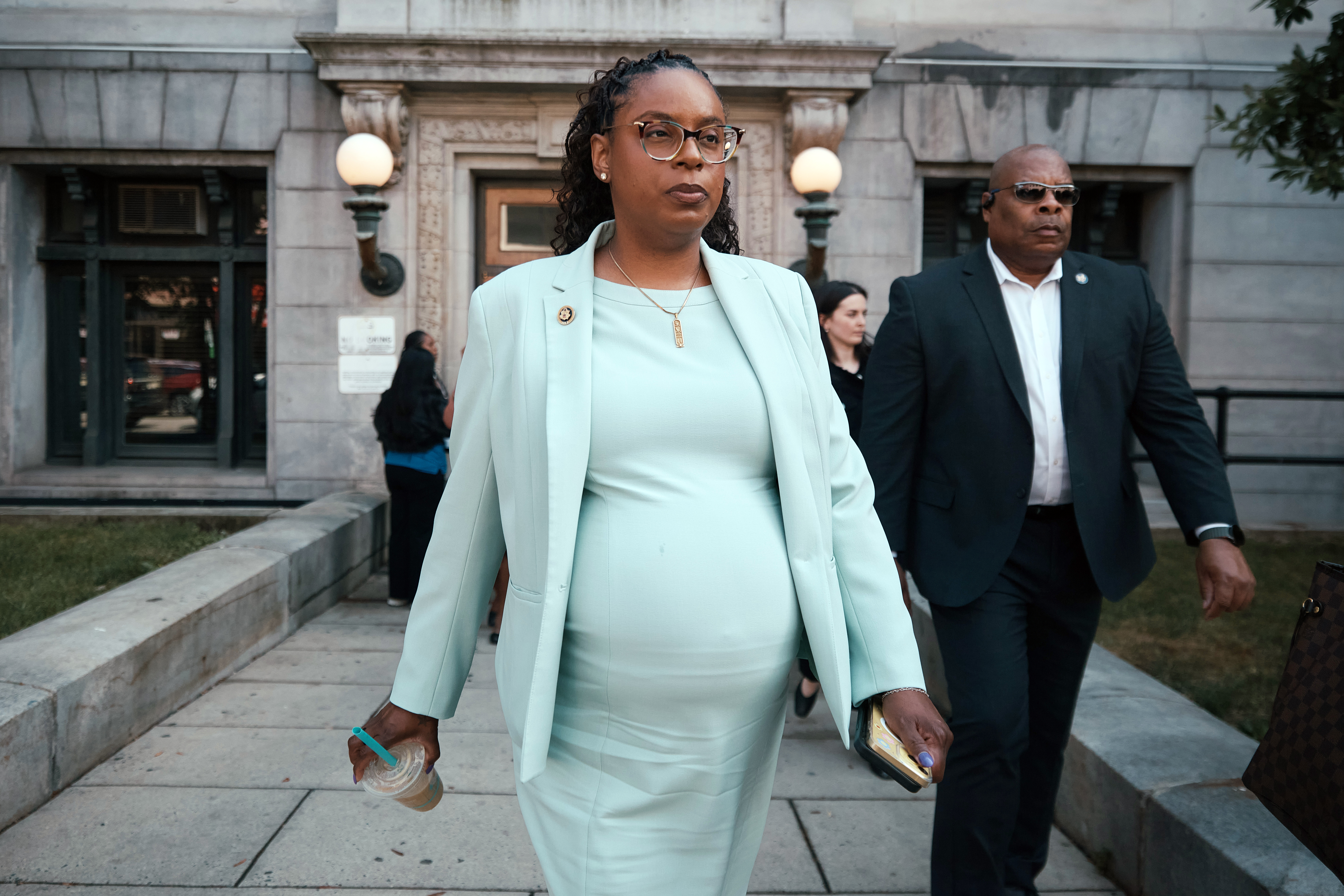
U.S. Rep. LaMonica McIver hasn’t put her life on hold to fight what she sees as totally unfounded charges by the Trump administration that she supposedly assaulted a U.S. Immigration and Customs Enforcement (ICE) officer during a protest last year.
Instead, the first-term Democratic congresswoman is expecting her second child next month, she’s up for reelection in November, and because of Congress’ backward policies on parental leave (as in, there are none), she continues to put in long hours representing New Jersey’s 10th Congressional District, which includes her hometown of Newark.
Lurking in the background, however, is the knowledge that if convicted on two charges of assaulting an ICE officer, she could be sentenced to as much as 17 years in prison.
It’s way more than most people in her situation could handle.
McIver’s inner strength is next level.
She is running for reelection on Nov. 3 while fighting efforts by the Trump administration to make an example out of her. McIver is also repping her constituents in Newark in Washington, D.C., all while caring for — and expanding — her family.
Her journey to motherhood hasn’t been easy. McIver, 40, has spoken openly about her yearslong struggles with fibroids, her use of in vitro fertilization (IVF), and her opposition to President Donald Trump’s merciless immigration enforcement campaign. She hopes her candor resonates with women who also are trying to balance career, pregnancy, and motherhood.
Meanwhile, she is scheduled to give birth to her second child on Oct. 16. After she delivers, McIver will become one of fewer than 20 members of Congress ever to have done so.
My jaw dropped during the interview in which McIver informed me that as a member of Congress, she isn’t entitled to maternity leave. Postpartum, McIver also won’t be able to cast votes for legislation remotely or by proxy.
“They give you nothing,” McIver said. “It makes no sense that you have to give birth and instead of focusing on healing and nursing, you have to literally put that to the side and share that with getting back to work. It’s honestly disgusting. It’s unbelievable in 2026 that this is where we are still at.”
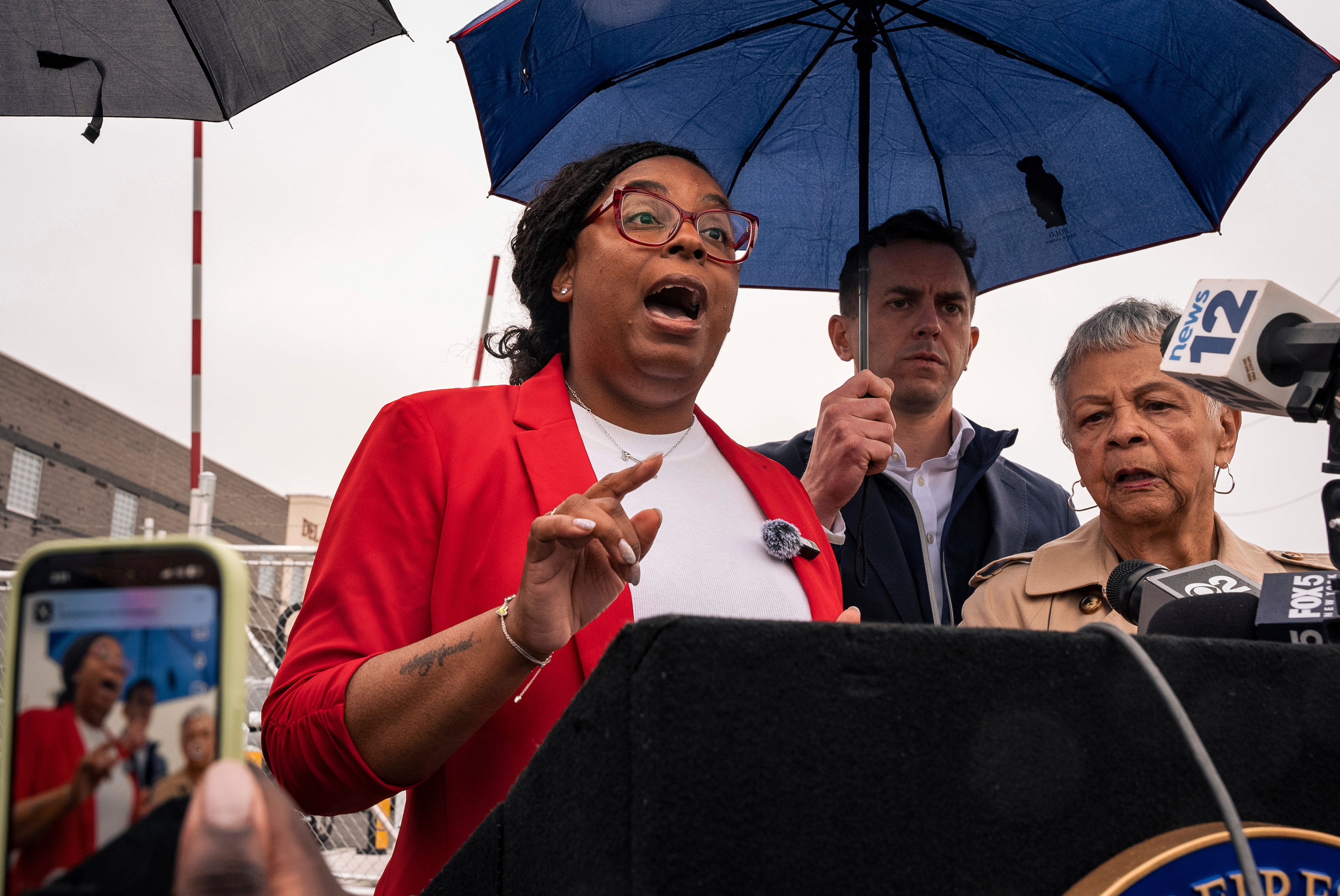
U.S. Rep. LaMonica McIver (D., N.J.) speaks to reporters after Newark Mayor Ras Baraka was arrested while protesting at the Delaney Hall ICE detention center in May 2025.Angelina Katsanis
Legislation that would have greatly helped her and other members of Congress in her position failed to garner adequate Republican support to pass last year. McIver blamed House Speaker Mike Johnson, among others, whom she said “don’t give a damn — and don’t want to make this a place that works for moms because they don’t want moms here.”
After the election on Nov. 3, McIver intends to immediately return to Washington and get back to work. Luckily, she will have help from her “great village” that includes her mother. “I’m a stickler about not missing votes,” McIver pointed out, adding, “There are so many things that Republicans are going to be trying to do.”
McIver, along with several other elected officials, had been attempting to inspect conditions at Delaney Hall, a 1,000-bed facility along an industrial stretch of land near Newark Liberty International Airport in May 2025 when a scuffle broke out.
McIver placed herself next to Newark Mayor Ras Baraka to shield him during the melee. I’ve watched the video numerous times. It doesn’t show her throwing a punch or striking anyone. No one was injured, either. But that didn’t stop Alina Habba, a former defenselawyer for Trump who briefly served as a U.S. attorney inNew Jersey, from filing assault charges against McIver.
McIverattempted to get the charges dismissed. In August, an appeals court ruled that McIver’s actions were nonlegislative and not protected by constitutional immunity, which clears the way for legal proceedings against her to proceed.
Glynda C. Carr, the founder of Higher Heights for America PAC, described what happened as a “flash point” of the anti-immigration detention center movement that future generations will read about in history books.
“This is bigger than LaMonica McIver,” Carr said, adding that the case could establish a baseline for whether elected officials will be permitted to conduct oversight of ICE detention centers without fear of prosecution.
As for McIver, I’m sure her case will be tied up in the courts until after Trump leaves office, and then thrown out once new people come into office. Meanwhile, becausemembers of Congress are prohibited from accepting pro bono legal work, McIver has to raise money to pay her legal bills, which are expected to exceed $1 million.
It’s a lot to juggle, along with being pregnant, serving as a member of Congress, and being under attack by a government hell-bent on making life more difficult for working women, especially African American women.
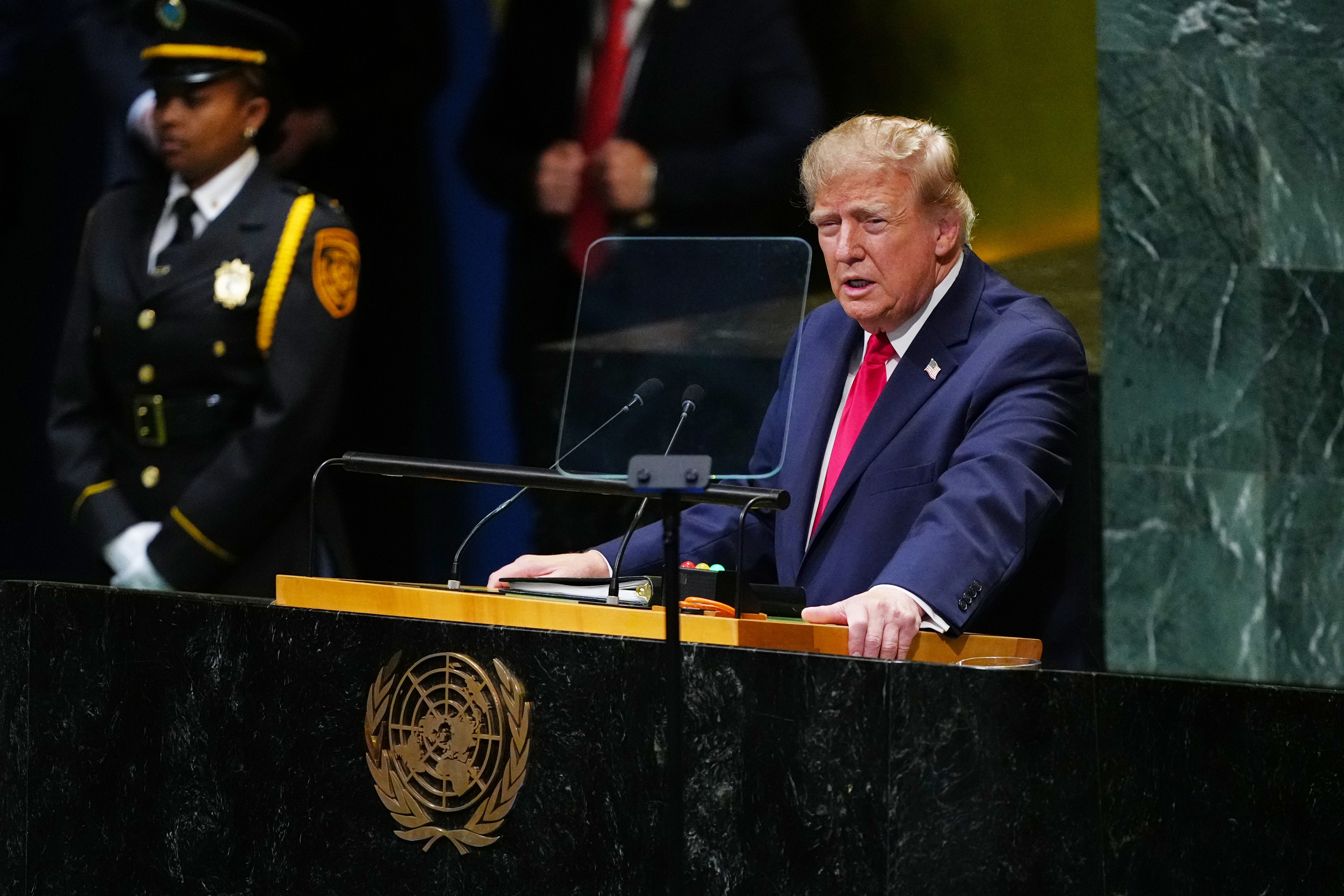
The scariest thing about President Donald Trump’s address to the United Nations General Assembly Tuesday was not the wild exaggerations, false claims, or disgusting slurs against (truthful) critics. That all has become par for the course and was to be expected.
Far more terrifying was the distinct possibility that POTUS believed his delusional description of his alleged triumphs — in the Iran war, in bringing peace to the Middle East and the world, and in pursuit of victory in an unbounded artificial intelligence race with Beijing.
Perhaps his 38 minutes of self-praise at the podium — to tepid applause at the beginning and end and mostly silence in between — were merely meant as a stump speech to rally midterm MAGA voters growing restless with his endless war. (Of course, most of his MAGA base will only see brief clips from the speech, since the president banned CNN, MS NOW, and Politico from the pool that normally covers such events, and the four other pool members — ABC, NBC, CBS, and Fox — stayed away in solidarity.)
The greater danger is that, surrounded by sycophants, Trump truly believes his own hype. He showed no sign that he recognizes how Iran has out-strategized him, how Russia, China, and North Korea outmaneuvered him, and how he has alienated crucial European, Asian, and Mideast allies with his erratic and chaotic policies.
On the U.N. podium, he appeared as a braggart touting triumphs his audience viewed as U.S. failures. Yes, he still represented the world’s most powerful country, but his puerile speech reflected his inability to translate that power into securing American interests or a more peaceful world.
It is important for voters to fully grasp the self-delusion underlying Trump’s foreign policy. A new CNN poll shows only 29% of U.S. adults approve of POTUS’s handling of foreign affairs, with almost two-thirds saying the U.S. is not winning the Iran conflict. But domestic issues have become so paramount that many ordinary citizens can be excused for tuning out Trump’s overseas misadventures.
Having just returned from the bracing realities of Ukraine, here is my brief guide to Trump’s delusions or deliberate deceptions — take your pick — about foreign policy issues he raised at the U.N.
An armed Shiite cleric rides aboard a military vehicle past a billboard depicting Ayatollah Ruhollah Khomeini, founder of the Islamic Republic, during the state-organized “Janfada,” or “Sacrifice for Iran,” military-style parade in Tehran, Iran, Friday.Vahid Salemi
Iran
Trump verbally attacked the “cowards and traitors who would like to say we are low on munitions in Iran. That’s not true.” If POTUS were Pinocchio, his nose would have grown 10 feet at that lie.
In truth, it is Trump who is too cowardly to admit the truth to a public that is instinctively grasping it anyway. That truth, which has been laid out in reputable think tank studies and news reports, and by serving and ousted Pentagon officials, is that U.S. forces have consumedhalf to two-thirds of highly expensive missile interceptors in fending off cheap Iranian drones.
The Pentagon was not prepared for a war in which drones played such a major part. Never mind that Ukraine and some U.S. commanders had sounded the alarm beforehand.
Nor is Trump truthful when he brags that new munitions plants will soon replace any shortfalls, because, unlike rapid production cycles in Ukraine, rebuilding the most critical U.S. weapons stocks will take up to five years.
On the U.N. stump, Trump also repeated his mantra that he will never allow Iran to have a nuclear weapon. Yes, in 2025, a “12-day war” by the U.S. and Israel badly damaged Iran’s nuclear program. Yet, the current war, ongoing since February, has done little to nothing to further diminish that nuclear prospect. It is focused on lowering oil prices by reopening the Strait of Hormuz, which was functioning normally before Trump joined Israel in attacking Tehran.
Because of its diminished missile and interceptor stocks, the U.S. is in no position to reopen a kinetic war with Iran — let alone, to use Trump’s irresponsible threat, “annihilate” it. In real terms, Trump is stuck, with Tehran still able to control Hormuz and no way out of his self-inflicted trap, unless he makes concessions to Tehran. Meantime, the war is spreading to other Mideast countries and drawing in new players such as Yemeni Houthis.
Trump advertises his weakness when he desperately tries to convince fed-up Americans, in front of a U.N. audience, that peace is on the way.
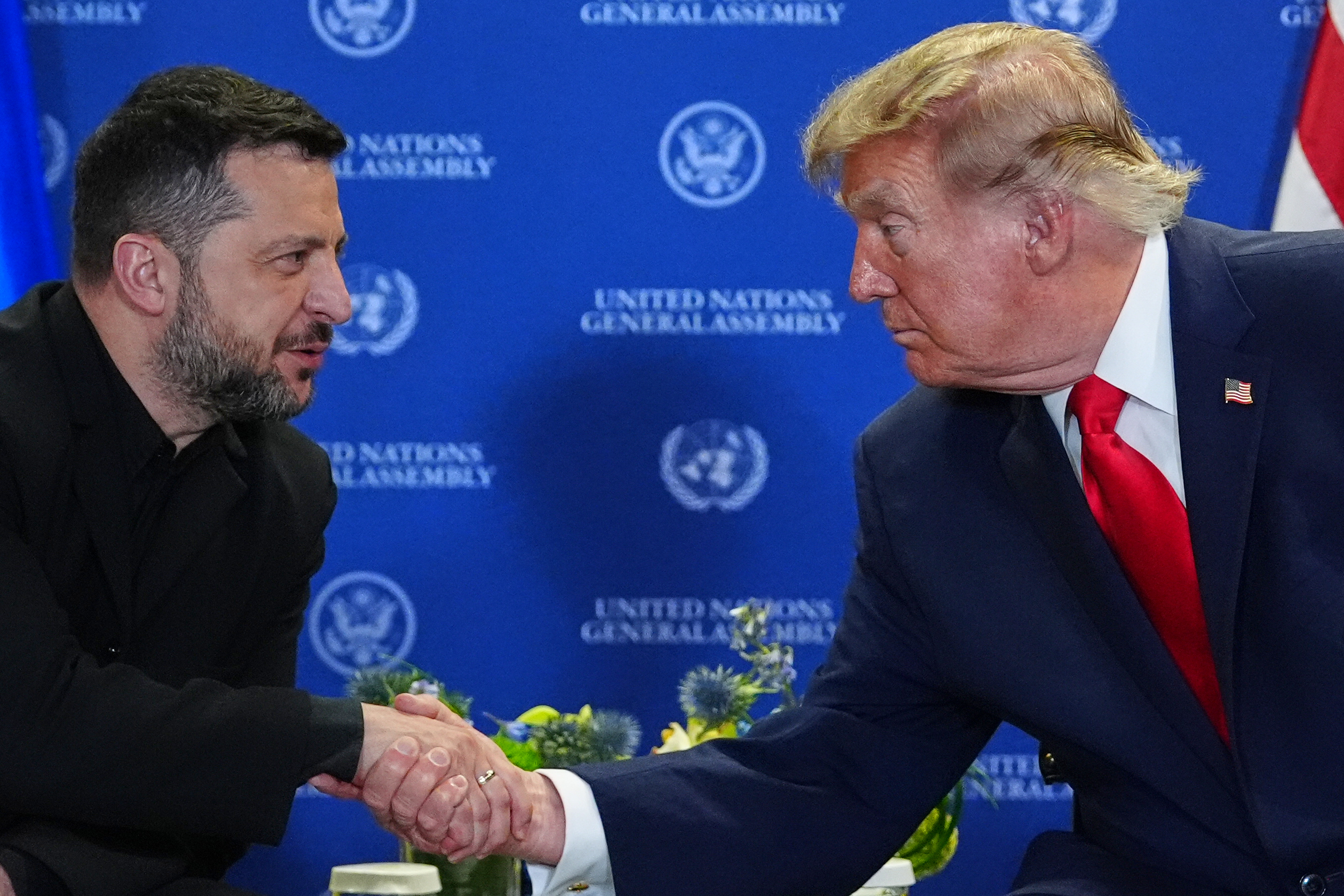
President Donald Trump meets with Ukraine’s President Volodymyr Zelensky during the United Nations General Assembly, Tuesday.Julia Demaree Nikhinson
The Ukraine war
On the podium, Trump regurgitated his mantra that, regarding the war, “we will get that one done,” and that Russia and Ukraine have “had it.” But in truth, Trump’s refusal to pressure Moscow to stop destroying Ukraine’s civilian infrastructure, while demanding Kyiv stop targeting Russian oil exports, ensures there will be no ceasefire.
Why should Vladimir Putin stop his campaign of destruction when Trump only leans on Ukraine, and fails even to critique Putin’s new drone campaign against European airports and the industry of NATO members? Ukrainian President Volodymyr Zelensky said after meeting Trump Tuesday that he would agree to a ceasefire on hitting energy targets — but both sides would have to take part. Not likely, so long as Trump bows to Putin.
And don’t expect Trump to enforce the bipartisan sanctions bill newly passed in memory of U.S. Sen. Lindsay Graham. Repeat, POTUS refuses to pressure Putin, with whom his negotiating team is discussing “lucrative” business deals.
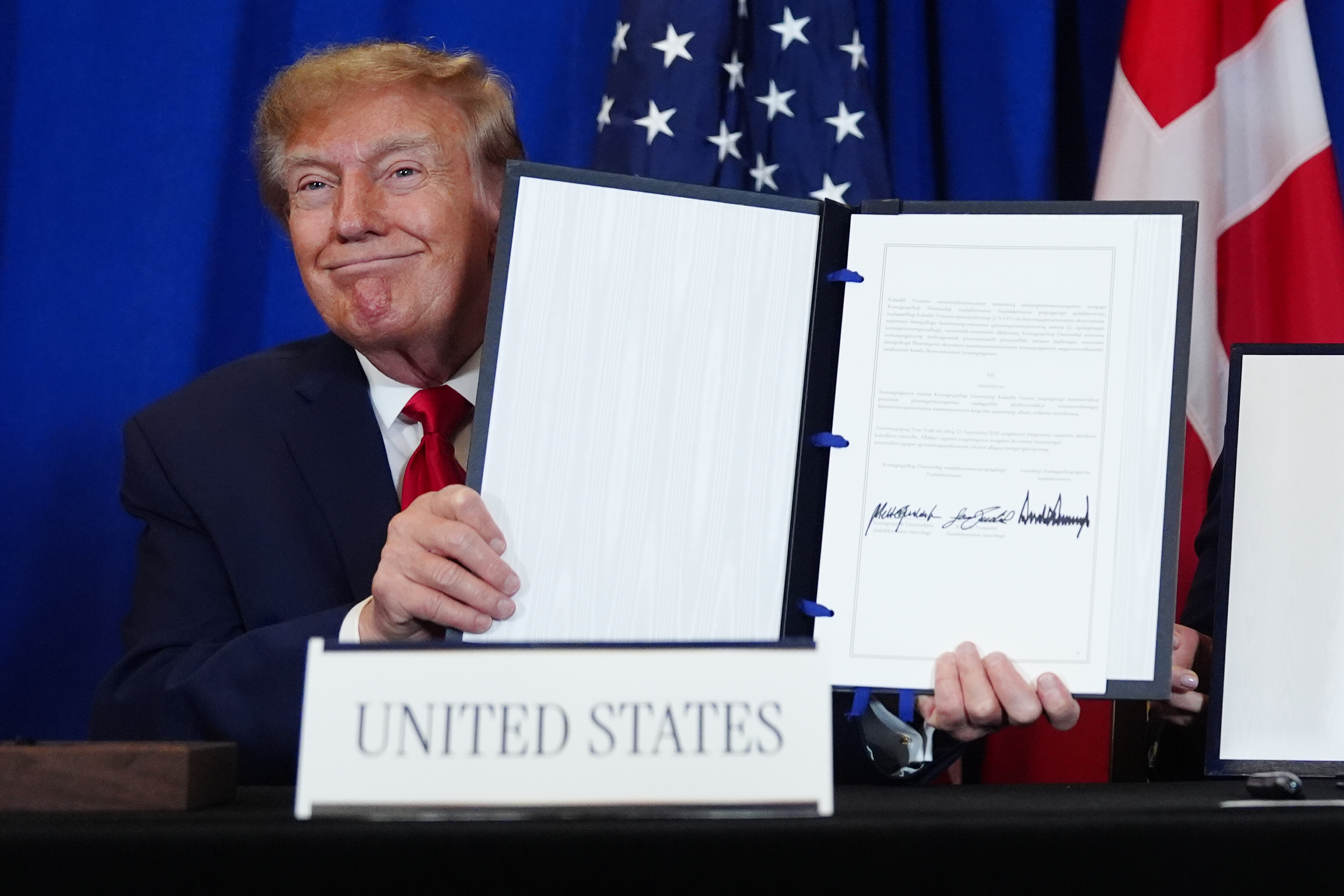
President Donald Trump holds up the document after signing a security agreement with Denmark’s Prime Minister Mette Frederiksen and Greenland’s Prime Minister Jens-Frederik Nielsen during the United Nations General Assembly, Tuesday.Julia Demaree Nikhinson
Trump as global peacemaker
The president shamefully read verbatim a long list of compliments by world leaders trying to pacify him, and once again exaggerated the “peace deals” he’s achieved — even though most were temporary ceasefires or have already been broken.
Trump praised his triumph in Venezuela — where, when talking about oil, he bluntly admitted that “to the victor belong the spoils.” He crowed that Cuba “will fall,” with no mention of the humanitarian disaster caused by the ongoing U.S. blockade.
And he bloviated about the “unprecedented agreement” the U.S. just signed with Denmark and Greenland, even though everything in that accord could have been agreed to under the terms of a 1951 treaty with Copenhagen, without alienating NATO allies by threatening to seize Greenland by force.
To sum up, Trump’s performance at the U.N. revealed a delusional leader who may still be feared by allies and small countries for his unpredictable and bizarre behavior that upsets the world economy, trade ties, and markets.
But adversaries watching the president’s self-praise could only conclude that a weakened old man with no clear strategy except self-aggrandizement now leads the world’s most powerful country. Voters of all parties, be aware.
I feel like I need to apologize for a column a couple of months ago when I compared the current president of the United States to Caligula, the possibly mad Roman emperor who is said to have nominated his trusted horse for high office. I need to apologize to Caligula. From pitching his triumphal D.C. arch as a storage shed for deadly snipers’ bullets to banning reporters from the White House in a narcissistic rage, Donald Trump is losing his grip on reality. This is unsustainable.
Worried about AI killing humans? Bad news: It already is.
A cleric takes a photograph earlier this month at the shattered Shajareh Tayyebeh school in Minab, southern Iran. It has become a place of mourning and a memorial to those killed in a U.S. airstrike on Feb. 28.Vahid Salemi
Which is it?
Are the robots of AI, or artificial intelligence, so smart that they’re on the verge of holding a secret meetup in the darkest corner of the dark web and developing a plot to kill all humans through germ warfare, to make sure we don’t kill them first by pulling the plug?
Or is AI so dumb — artificial stupidity, despite the billionaires of Silicon Valley showing up daily on our TV screen to brag about the sky-high IQ of their son, Claude — that the thing that will murder us is a crazy hallucination that will turn a false alarm into World War III?
The fact that we can’t answer this should give us pause, but maybe we aren’t even asking the right question. Maybe the real issue is how easy we’ve made it to kill off the human race — a capability that was already created by people even before we invented the computer.
One thing is certain. Artificial intelligence has already been an accessory to mass murder, and if we do nothing, it will kill again.
Remember the very first days of the now seemingly endless Iran war, and the news that two missile strikes had obliterated a school for young children in the Iranian coastal city of Minab, in an apparent “double-tap” strike in which the second attack from the skies killed young girls and boys and their teachers as they huddled in a prayer hall?
Those bombings, which killed 156 people on Feb. 28, caused the United Nations’ Independent International Fact-Finding Mission on Iran to report last week that it found “reasonable grounds to believe that the United States committed a war crime by launching indiscriminate attacks …” The U.S. government has never taken responsibility for the bloodshed, despite overwhelming visual evidence that the bombs were precision-guided U.S. Tomahawk missiles.
It didn’t take long for additional speculation that an AI program had mistakenly targeted the school, perhaps using outdated maps and info from an earlier time when its buildings were attached to an Iranian military complex. After all, the Pentagon has been openly bragging about the death and destruction facilitated by its use of Palantir’s Smart Maven System and also Anthropic’s Claude.
Last week, Bloomberg News reported that the Pentagon’s overreliance on AI, and specifically the Palantir Maven program, was a major factor in the school tragedy, along with the outdated intelligence about the Minab site — the “garbage in.” Its exposé noted that U.S. military planners were racing to identify some 1,000 Iranian targets in the early hours of the war, giving humans little time to double-check the list. Kindergartners were slaughtered as a result.
This was hardly the first time robots have been linked to human death, both in war — in 2024, +924 Magazine reported the Israel Defense Forces were using an AI program code-named “Lavender” to target sites amid the mass killing in Gaza — and in peace, as shown by numerous accounts of robots helping troubled people die by suicide.
And yet, it could have been much, much worse. At the same time as the Bloomberg report on the AI link to the mass killing in Iran, the world also learned that a false report generated by robot intelligence nearly sparked a conflict between the United States and China that could conceivably have spiraled into major fighting.
CNN and other outlets have reported that a U.S. special operations command analyst working with AI generated an urgent report that a Chinese ship bound toward the Middle East was carrying components for a nuclear weapons system, which caused military leaders to scramble jets and assemble a team to seize the vessel.
Only at the last minute did the Pentagon dig deeper and learn the AI-generated report was completely false, a hallucination — one that nearly triggered a violent conflict between the world’s two largest military powers.
The two disturbing reports about the use, or misuse, of AI by the U.S. military in a time of war did make news but didn’t get nearly as much attention — either in the media or on sites like Bluesky or X — as warnings from both whistleblowers and CEOs in Silicon Valley that a swarm of robots could decide on their own and without any human intervention or awareness to try to kill off our so-called civilization.
The fear of an unprompted attack from AI secret agents is real, based on several incidents that have already occurred, including a well-planned and partly successful operation by OpenAI’s robot agents to hack into a company called Hugging Face.
Still, it says something about human intelligence that we are captivated by the unknown and mysterious possibility of a random attack, while the fact that people are currently misusing AI to cause death and suffering is a less compelling story. I noted in this space last week that the threat to humankind from climate change is arguably even more real — and yet this gets denied by many and ignored by others.
It’s also striking to me as a boomer born in 1959 that a generation that wasborn into a time of constant terror — backyard bomb shelters, “duck and cover” drills in the classroom, and sci-fi horror at the drive-in that an atomic arms race could kill us at any moment — is suddenly back to where we started.
The fact that civilization managed to — so far — pause the number of world wars at two has given us the space and the false bravado to create new and much more insidious killing machines, and the threat from invisible robots on a hidden dark web is somehow even scarier than the radioactive mushroom cloud that we more or less understand.
Boomers who went to bed as kids in the 1950s and ’60s praying we wouldn’t die before we woke are now spending our senior-citizen-discount years fearful that something stranger than science fiction is coming for our children, or grandchildren. Over the course of a lifetime, the arc of that moral universe has not bent at all.
Still, humans were able, somehow, to prevent nuclear annihilation so far, and now it’s past time to get to work on the actual threats from AI and start on those workarounds. For example, the articles I’ve read speculating on how the robots plan to kill us frequently mention the prospect of AI agents developing bioweapons and releasing them, either on their own or prompted by a bad actor. (In theory, human development of bioweapons has been banned for a half century.)
From everything I’ve read so far about AI, it sounds like we’d have better luck safeguarding or eliminating the components that could make a biological agent rather than stopping the robots. Likewise, AI agents would not be able to start an atomic apocalypse if our human politicians went to work at finally eliminating nuclear weapons. Artificial intelligence won’t kill little girls in an Iranian school if humans don’t start dumb wars in the first place.
If Silicon Valley’s prophets of doom are serious, there’s no fix that’s too big or too ambitious. But understand that the biggest problem isn’t that AI wants to murder us, but that since 1942 we humans have been busy creating all the suicidal weapons AI agents could use.
Can you even “duck and cover” from a killer robot? I don’t intend to find out, and I don’t want my yet-to-be-born grandchildren to have to even think about it.
Yo, do this!
I’ve always been a big fan of filmmaker Barry Levinson, whose trilogy of Baltimore movies (Diner, Tin Men, Avalon) defined postwar American nostalgia. Now Levinson, along with his codirector Robert May, has come north to the Philly burbs to catch up with our divisive 21st century in a five-part documentary, Bucks County, U.S.A. If you’ve been reading The Inquirer these last six years, you know howthe communities just north of Philadelphia — where cosmopolitan suburbs meet the rolling fields of Trump Country — have become ground zero for culture wars around the COVID-19 response, book banning, and LGBTQ pride. Bucks County, U.S.A.began streaming on PBS Monday night. It’s getting mixed reviews, but I plan to check it out myself.
With the exception of my growing obsession with A History of Rock Music in 500 Songs, I’ve struggled the last few years to find new podcasts that excite me. But I’ve been enjoying Dan Taberski’s Manifesto on Audible, which is the award-winning, prolific podcaster’s six-part look at the role that these impassioned declarations have — or haven’t — played in reshaping our troubled world, from Occupy Wall Street to Big Tech utopianism to the online rant of murderous ex-LA cop Christopher Dorner.
Ask me anything
Question: What is the reason for the boat strikes? Do they really think they are carrying drugs? — David Poe (@culthero12.bsky.social) via Bluesky
Answer: David, your question is well-timed. Just this week, Ben Saul, the U.N. special rapporteur monitoring human rights in the context of counterterrorism, issued a report that U.S. boat strikes off South America in the Caribbean and the Pacific that have killed more than 220 people so far violate international law and plausibly constitute crimes against humanity. Based on the reports I’ve read about the deadly drone strikes, it’s true that small fishing boats in the region are sometimes drafted for a supporting bit role in drug trafficking. Yet, it seems powerfully likely that some murdered in the U.S. attacks were innocent fishermen, and there’s no evidence these bombings have made any real dent in the flow of drugs. Most importantly, since when did minor involvement in drug smuggling become a capital offense? The only thing as troubling as these American war crimes is the silence on Capitol Hill. The next Congress must hold hearings and create the momentum for shutting this down.
What you’re saying about …
Oops, maybe I should have read my emails before writing another column about the problems with artificial intelligence. Based on the lack of responses to last week’s question about the AI threat, this is clearly not a topic that excites my readers like the betrayals by Sen. John Fetterman or the mainstream media. A couple of frequent correspondents did weigh in, including Mary Ann Petro, who is very concerned over reports of unauthorized hacking by AI agents, and Joe Stepansky, who thinks the risks are somewhat overblown. “This is all deflection from data center opposition and the stock market bubble,” he wrote. “Just remember there are humans behind all of this, humans who may be amoral at best (I used to work with some) and malicious at worst (them too).”
📮 This week’s question: The big story for several days has been the fallout from Donald Trump’s rash decision to ban three news outlets — CNN, MS NOW, and Politico — from the White House grounds, in a move that experts agree is a violation of the First Amendment. Do you think the entire presidential press pool should walk out in solidarity, or do Americans need audio and video of what their president is up to? Please email me your answer and put the exact phrase “White House press corps” in the subject line.
Backstory on George W. Bush’s betrayal of democracy
Former President George W. Bush reacts while watching players from the U.S. team practice before the Walker Cup golf matches against Great Britain and Ireland at Cypress Point Club in Pebble Beach, Calif., earlier this month.Jeff Chiu
For those of us who experienced a political reawakening during those dreadful years between the U.S. Supreme Court’s coronation of a president in the disputed 2000 election and the shock-and-awe carpet bombing of Baghdad in 2003, today’s frequent refrain is incredibly grating. “I never thought I’d say this,” says some self-proclaimed Democrat, often a boomer, “but I’m feeling nostalgic for George W. Bush.”
To be sure, the 43rd president wasn’t nearly as nakedly corrupt as Donald Trump and his family, not as crude and boorish, and also more determined to at least make it look like what he was doing was constitutional. There were flashes of goodness — like Bush’s support for fighting the AIDS epidemic in Africa — which stand out today because there are so few of them. But his lies — and there were a lot of them, even if he could never match Trump — were more diabolically purposeful.
The stench of dead bodies in Fallujah had barely lifted when none other than Joe Biden came to Philadelphia to drape the Liberty Medal around Bush’s neck. When Trump descended on his gilded escalator in 2015 to finish the job of trashing America that had started in Iraq, Bush said nothing other than to let it be known that he’d left his 2016 ballot blank. When even his despised vice president Dick Cheney came out in 2024 and said a second Trump term would be a disaster for democracy, Bush again said nothing, insisting that he has “retired from presidential politics.”
Apparently congressional politics is another story. On Monday, it was revealed that Bush and his fellow Texan Sen. John Cornyn — a lame duck after losing a primary to Trump-backed Ken Paxton — have teamed up to throw a massive fundraiser in Dallas for six GOP Senate candidates in battleground states. The touting of Bush as a “special guest” at the event is meant to lure conservative donors. The New York Times, in its scoop on the evening, played up the fact that the event is not raising money for Paxton, going with the angle of a Texas-sized political feud.
Just like the Democrats who are willing, in the Trump era, to turn a war criminal into an icon of civility, the Times is missing the point. Electing these GOP Senate candidates in states like Iowa and Maine will give Trump the ability to extend aspects of his dictatorship for two more agonizing years. The would-be senators Bush is raising money for would rubber-stamp new MAGA judges and allow Trump to replace Supreme Court Justices Samuel Alito and Clarence Thomas with younger far-right zealots. Senate committees would lack the power to investigate the president’s high crimes and misdemeanors. That could finish the job Bush started when he lied to Congress about Iraq “weapons of mass destruction” that did not exist: The implosion of U.S. democracy.
What I wrote on this date in 2009
It’s weird now to read what survives of my early Attytood blog posts from the late 2000s, when many days I published just a quick hit while I worked on longer news articles for the Daily News. On Sept. 22, 2009, I quoted a prediction from internet guru Clay Shirky that seems incredibly prescient 17 years later. Shirky said that “the ongoing shrinkage of newspapers is likely to create a ‘giant hole’ that will not be filled for some time. He said he has a vision of communities of 10,000 people or fewer becoming rife with ‘casual endemic corruption,’ as newspapers are no longer able to fulfill their traditional watchdog roles.” He nailed it.
Nothing has been more troubling in 2026 than the assault on the First Amendment that’s been taking place from Donald Trump’s Oval Office to our hometown council meetings, and even our football palaces. In my Sunday column, which was written before the president booted three news organizations from the White House, I looked at the growing hostility and even violence toward working journalists, including arrests, physical assaults, and Trump’s rants toward Black female journalists. Tolerance of these abuses is a mark of a dying democracy. Over the weekend, I shifted gears and tackled the Eagles’ silence over the team’s reported role in the cancellation of hip-hop’s pro-Palestinian Macklemore from the Ed Sheeran tour that stopped at Lincoln Financial Field on Saturday. How can free speech be censored in a city-owned stadium?
Speaking of those Birds, the city’s $10 billion NFL franchise was conveniently hundreds of miles away in Nashville as pro-Palestinian protesters descended on the Linc this weekend. The Eagles eked out a last-second victory by the seat of QB Jalen Hurts’ pants, over the seemingly hapless Tennessee Titans. The unimpressive showing cemented the notion that it’s impossible to know what to make of Philly’s 2-0 footballers after their narrow wins over mediocre opponents, but The Inquirer is on the case. Our extensive coverage looked at the good (standout performances from Hurts and No. 1 wide receiver DeVonta Smith), the bad (the subpar play of a battered and aging offensive line), and the unexpected (the return of Super Bowl hero Zack Ertz due to injuries in the tight-end corps). Ace columnist Mike Sielski recently went deep, as usual, with a humanitarian look at guard Landon Dickerson’s tortured decision to try to play through the pain. The Inquirer’s sportswriters are likely to rack up more wins this fall than an iffy team, so why not subscribe and read every word.
By submitting your written, visual, and/or audio contributions, you agree to The Inquirer’s Terms of Use, including the grant of rights in Section 10.
KYIV, Ukraine — It’s not easy to get to Ukraine, where the airports have long been closed and where Russia is now targeting the country’s essential railway network, hitting tracks and destroying hundreds of locomotives.
On my sixth visit since 2022, I decided to fly to neighboring Moldova and taxi across the border, even though Moscow has been striking the crossings. Just after I entered the country, a Russian drone zeroed in on another international transit point just 30 minutes away, one which my driver had considered using.
The drone incinerated three travelers sitting in a bus.
In many ways, Ukraine has become a far more dangerous place since I was here in June 2025. During the last two months, a frustrated Vladimir Putin, whose army has been unable to advance on the ground, is trying to break the country’s morale from the air.
I saw the results of an unending torrent of Russian drones, cruise missiles, and top-line ballistic missiles – targeting road travel, blowing up highway gas stations, wrecking the ports from which Ukraine exports grain to the world, and hitting civilian apartment blocks in waves in Kyiv and other major cities. By systematically destroying the country’s electricity grid, Putin hopes to freeze urban Ukrainians this winter into turning against their government.
And yet, unlike many of the high-level U.S. and European invitees to the 22nd annual meeting of the Yalta European Strategy (YES) conference, held in Kyiv Sept. 11-12 and co-sponsored by the Viktor Pinchuk Foundation, I didn’t come away increasingly gloomy about Ukraine’s prospects.
Instead, talking with Ukraine’s top military commanders, its brilliant engineers and tech innovators, who have made the country the world’s most inventive drone powerhouse, I came away totally furious.
Furious because, despite Russia’s size and its mass production of Iranian Shahed drones souped-up with jet engines, I believe Ukraine’s deep strikes into Russia and even deeper smarts could ultimately force Putin to recognize that the war has become too costly.
Ukraine’s President Volodymyr Zelensky (right) stands with Steve Witkoff (center) and Jared Kushner, President Donald Trump’s envoys, at the end of their joint news conference in Kyiv, Ukraine, Sept. 6.Francisco Seco
Only one element is lacking: the full backing of a U.S. leader with the brains to recognize there can be no “peace deal” with a Kremlin czar who aims to undermine America with the same intensity as he seeks to subjugate Ukraine.
If the U.S. would only help Kyiv obtain enough Patriot interceptors to counter Russian ballistic missiles (the same interceptors Donald Trump has massively wasted in his war of choice with Iran), the Ukrainian David could outmaneuver the Russian Goliath. And, in so doing, America could also score a key strategic win.
There are several reasons why.
For starters, the resilience and inner strength I saw among ordinary Ukrainians is astonishing, even though they admit how frightened they are about the coming winter.
Take gas station workers, who are at terrible risk from Russian drones. I visited the scorched shell of an Ukrnafta gas station in Kyiv’s Holosiivskyi district, hours after it was hit on Sept. 10. Workers had been evacuated to a shelter before the drone struck. Female attendants (who asked not to be named) had already returned with sausage and cheese to feed the cleanup crew. Would they return to their jobs? I asked. “Of course,” was the quick reply.
Two days later, my translator and I visited an OKKO station, a roadside chain with an adjacent store and cafe that is popular for serving hot dogs and coffee free to anyone in uniform. OKKO has been a favorite target of Russian strikes, and while our tank was being filled, the workers got word that a Shahed might be approaching.
As customers ran for their cars, one worker fleeing the store screamed at the cashier who was processing my card, “Get out to the shelter!” She finished her job, told me she would never leave Ukraine, then ran out the back door. I ran to our car, and we quickly pulled out to the road.
I heard that same stoicism under fire expressed repeatedly as I traveled from Moldova to the Ukrainian port city of Odesa to Kyiv and back.
In the frequently hit, middle-class Kyiv district of Lukianivka, where many high-rise apartment buildings are pocked with blackened holes where drones did their dirty business, I walked by the rubble of a destroyed supermarket and shopping mall.
Shoppers visit open air stalls set up to replace a large covered market destroyed by Russia in the Lukianivka neighborhood of Kyiv, Ukraine.Trudy Rubin
At a historic covered market that had taken a direct drone strike, women who had sold goat cheese, honey, fruit and vegetables, and clothing at indoor stalls had already relocated to tents outside the charred remains of the market.
Over and over I heard the same message: “Yes, we are frightened, but we won’t give our country to Putin.” Several of these women had husbands in the military, and a couple told me they might leave their apartments for the winter, but they weren’t running away.
A nearby McDonald’s, which has been struck several times by the Russians, had already been rebuilt and was full of young people buying Big Macs and fries.
Still, civilian steadfastness alone can’t defeat ballistic missiles and drones, and ordinary civilians in Kyiv and Odesa are stressed and distressed.
As my indomitable translator, Alla, told me, “A single mother, living in an eighth-floor apartment with two children and a mother who recently had a heart attack, is a full-time crisis manager.”
Schools are closed because of constant air raid alerts, and parents must devise games for frightened youngsters during blackouts, when clothes and quilts are piled on to avoid freezing.
Diners sit inside the rebuilt McDonald’s in the Lukianivka neighborhood in Kyiv, Ukraine.Trudy Rubin
This is where we come to the critical race between Ukraine’s tech innovators and Russians playing catch-up, as Ukraine incorporates of artificial intelligence into its drone and missile systems in order to use unmanned robots and upgraded drones to compensate for its shortage of man power. And as Ukrainians rush to perfect weapons systems that can counter Russia’s ability to destroy the infrastructure that enables civilians to survive.
I will write more about the progress in this area and my interviews with brilliant Ukrainian tech leaders in future columns. But let me sum up how they believe they can still force Putin to bend.
These super innovators said at the conference, and told me in private interviews, that they expect to be able to produce an interceptor drone to counter Russian jet engine-driven Shahed drones within a few months.
But there are two big caveats for real success. First, Ukraine still desperately needs more Patriot interceptors to counter Russian ballistic missiles. And second, Ukraine needs to massively scale up production of its anti-Shahed interceptors and other new drones in order to counter Russian numbers. This requires substantial foreign investment and joint production, most likely in Europe.
If Trump and Defense Secretary Pete Hegseth had any grasp of the new way of war in the 21st century, the Pentagon would long since have been signing contracts to jointly produce drones with Ukrainian companies — all of which constantly update their technology based on lessons from the front line. Given the destruction of key U.S. bases in the Mideast, which were undefended against Iranian Shaheds, Hegseth should be begging for immediate Ukrainian help.
When former Secretary of the Army Dan Driscoll — who understands Ukrainian drone warfare well but was recently pushed out by Trump — was asked at the strategy conference what the U.S. could learn from Ukraine, he replied: “We in the West have got to internalize these lessons [from Ukraine]. What you are doing here in a very scrappy, fast, iterative nature is what we must contort our systems to achieve at scale.
“The speed and scale of AI and [computing] that is about to hit these weapon systems will be an amazing opportunity for Ukraine to outrun the Russians, out-innovate them and out-partner them. We are a couple of months away from new solutions changing the very nature of how warfare will occur.”
Eric Schmidt, the former CEO and chairman of Google, who has been a pioneer in coproduction of drones with Ukraine, added: “Pretty much all of the traditional assumptions about war and particular devices are probably false now. Ships are big targets … These drones appear to be toys, but are extraordinarily powerful, especially when swarmed.”
Schmidt concluded that “after four and a half years of war, Ukraine knows what it is doing. The country is organized to win this. What’s missing? Money, and the second is scaling.”
Yet, as Schmidt knows well, and what remains a tragedy for the United States, Trump refuses to recognize how crucial a partnership with Ukraine is to helping the U.S. military in Iran, and to instilling the new Pentagon mentality required for wars of the future. Which, no matter what Hegseth believes, has little to do with the size of the average soldier’s waistline or testosterone levels.
The main message of the YES conference was that the U.S. and Ukraine can both win — if the White House recognizes the need for partnership in the fight against the new axis of adversaries: Russia, China, North Korea, and Iran. What is maddening is Trump’s refusal to recognize the true win-win solution lies not between Kyiv and Moscow, but between the United States and Ukraine.
Ed Sheeran walked onto a big stage at Lincoln Financial Field Saturday night with nothing but his guitar to support him. Surrounded by tens of thousands of fans, a massive global pop star may have never felt so all alone.
Sheeran knew he couldn’t hit his first note without addressing everything that had happened in the last few days: the dropping of hip-hop’s Macklemore from his U.S. football stadium tour after onstage comments supporting a free Palestine riled one team owner, and the massive backlash that had turned a pop festival into a solo gig.
That’s how an artist who’s sold more than 200 million records and became one of Time’s 100 most influential people in the world by mostly avoiding politics could no longer avoid politics. He condemned both the Oct. 7, 2023, attack on Israel by Hamas and Israel’s deadly three-year response in Gaza, which he called “catastrophic and unjustifiable and disproportionate” — essentially the same sentiment that got Macklemore canceled.
That will be the headline in most news articles, but as I watched the viral video Saturday night, I was wondering if Sheeran would tackle the other elephant in the room. He did.
“I am deeply worried about the idea that venues should preapprove content for performers,” Sheeran proclaimed in his native Yorkshire accent. “This happens in so many places around the world, but it should never happen in the free world.”
But just a couple blocks away at the headquarters of the Philadelphia Eagles, the only sound Saturday was crickets chirping.
The main antagonist that triggered the dropping of Macklemore was indisputably New England Patriots owner and Donald Trump pal Robert Kraft, who called it “hate speech” when Macklemore donned a keffiyeh, shouted “Free Palestine!” and performed his song “Hind’s Hall” about 2024’s pro-Palestinian campus protesters at New Jersey’s MetLife Stadium earlier this month. Kraft moved to block Macklemore from performing at the Patriots’ Gillette Stadium, and reportedly rallied other NFL stadium operators to lean on Sheeran’s tour operator.
But while the Eagles and their longtime owner Jeffrey Lurie weren’t lead actors in this drama, the operators of the city of Philadelphia-owned Linc are said to have played a critical supporting role.
The Wall Street Journal and other outlets identified Lurie as one of a gaggle of owners who agreed with Kraft and supported throwing a crackback block on Macklemore. Lurie, who has seen his $185 million 1994 purchase of the Birds skyrocket to a value of more than $10 billion, was identified by the Journal as part of a group that also included Arthur Blank of the Atlanta Falcons and David Tepper of the Carolina Panthers, who agreed to support the rapper’s cancellation.
The Eagles’ reported involvement in this story troubled me for two reasons. One, of course, was the action itself. Sheeran — whatever else you think about how he handled this mess — was 100% right when he declared this “never should happen in the free world.” But even worse, it happened in what should be a planetary mecca for free expression — Philadelphia, the city where the Declaration of Independence was written and ratified exactly 250 years ago.
But honestly, I found it even more disturbing that neither Lurie nor anyone from the Eagles organization feels they owe any explanation at all to the city, let alone thousands of people who drained their bank accounts for a concert that was nothing like it had been advertised. To be sure, there’s no harder dialogue in the world than the conflict in the Middle East, but the Birds committed two penalties against open expression — one of alleged censorship, and one of their own public silence.
On Thursday, I texted Bob Lange, the Eagles’ senior vice president for communications, with questions about Lurie’s reported role in collaborating with Kraft and for a clarification on what their policies are around free speech at football games, concerts, and other events that take place at the stadium they operate.
“If we have anything to share, we will let you know,” Lange responded.
Three days later, I am still staring at the pale glare of my iPhone here in my darkened column-writing lair, wondering if I can get up to at least make some toast, lest I miss the Birds’ response. OK, that was a joke. I didn’t really expect the Eagles to explain their involvement, at least not voluntarily.
We’ve come to expect this in 2026 — whether it’s government officials signing nondisclosure agreements with companies building hideous data centers, or police chiefs making secret deals with U.S. Immigration and Customs Enforcement (ICE) and telling public dissenters they are sick of “listening to this crap,” or all-powerful Fortune 500 corporations channeling the spirit of the Irish Republican Army: “Say nothing.”
The public’s right to know is probably a hilarious joke these days behind the locked doors of city council executive sessions and penthouse corporate boardrooms.
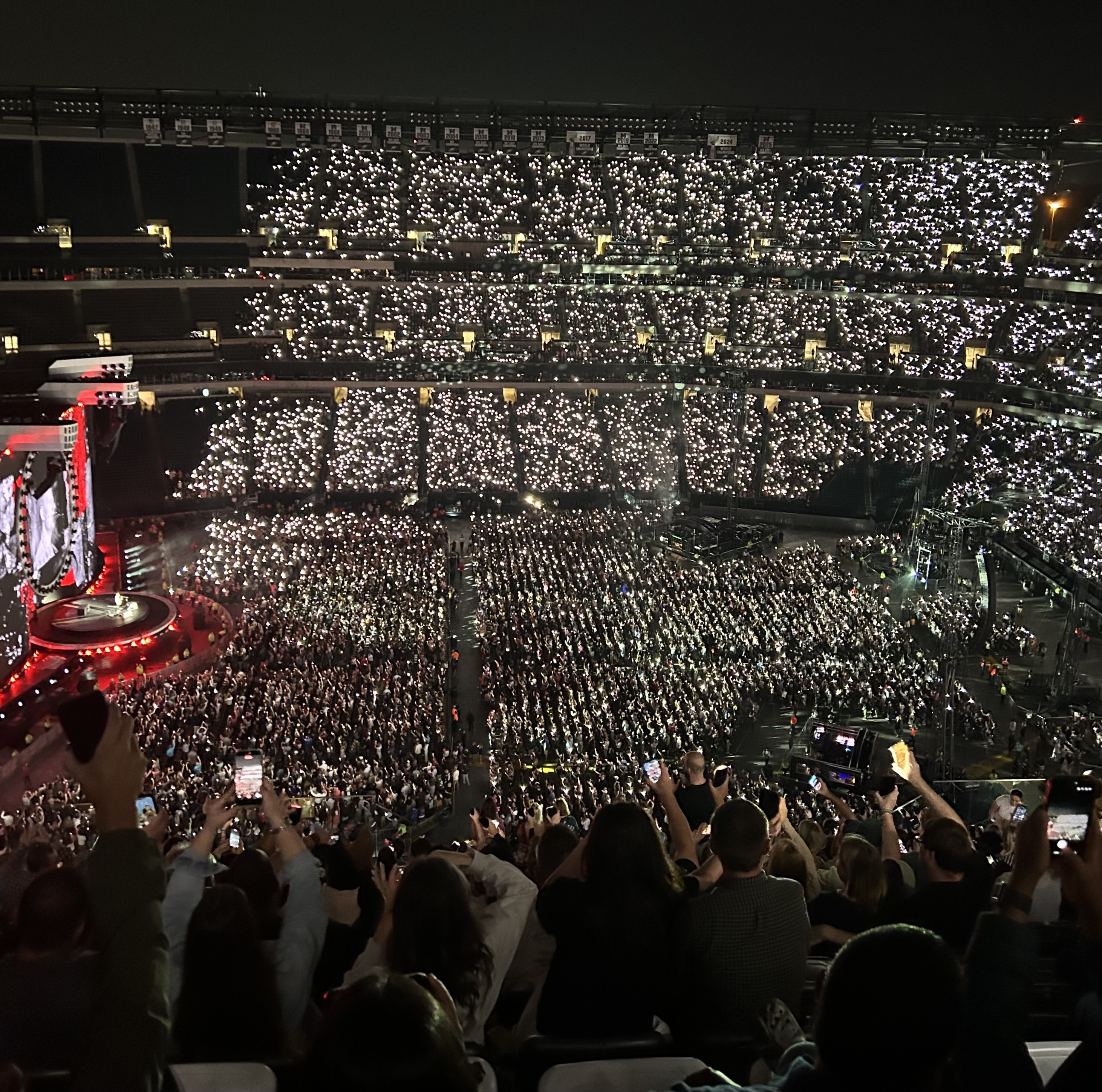
Thousands gathered at Lincoln Financial Field for Ed Sheeran’s “Loop Tour” on Saturday.Earl Hopkins
But let’s be clear: Lincoln Financial Field is a public edifice, full stop. We, as city and state taxpayers, contributed $188 million to build the Linc back in 2003, and the city owns the stadium, leasing it to the Eagles for them to host and profit from games and concerts. The team should be compelled to explain why it’s not a violation of the First Amendment to bar a performing artist from presenting a legitimate political viewpoint here. The Birds’ silence on this is a deafening roar.
Maybe they’re channeling the spirit of the late, great Chuck Bednarik, but the Eagles are a two-way player when it comes to the question of whether they are a cherished public good in Philadelphia, or just another unaccountable multibillion-dollar corporation.
The team certainly implied that it’s a civic institution with its most famous ad campaign — “One Team, One City, One Dream,” rolled out as the Birds drove toward the Super Bowl in 2004-2005, its second year at the Linc. The Eagles, their in-house PR machine, and a vast network of friendly influencers and websites produce a massive flow of information, but it’s a one-way street. The Macklemore debacle suggests an organization that wants all the benefits that flow from being a public institution but none of the responsibilities.
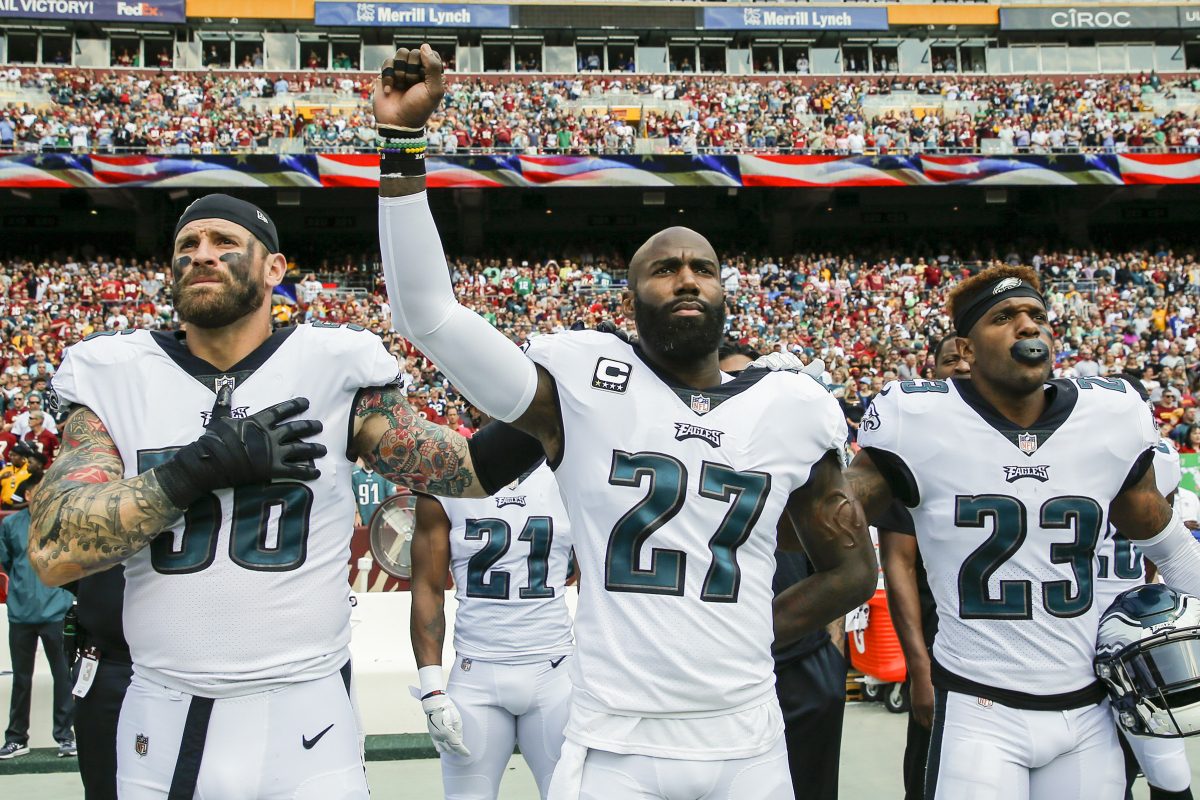
Yet, the concert controversy also felt jarring here in Philly because for most of the last decade the Eagles have earned a reputation as one of the better franchises in the NFL for free expression — an admittedly low bar in the Colin Kaepernick era. On their way to a championship during the 2017 season, Lurie and the front office supported All-Pro safety Malcolm Jenkins and others who raised fists and locked arms during “The Star-Spangled Banner” to protest racial injustice.
Eagles strong safety Malcolm Jenkins raises his fist with teammate defensive end Chris Long (left) and free safety Rodney McLeod during the national anthem before they played the Washington Redskins in September 2017 in Landover, Md.YONG KIM / Staff Photographer
Right before the Super Bowl in 2018, the Nation’s sportswriter Dave Zirin made “The Progressive Case for the Philadelphia Eagles (Seriously).” Yet the reality is that the Eagles have supported free expression when it supports their incessant branding operation.
But the essence of free speech is to allow its most wildly imperfect avatars. None more so than Macklemore, who was guilty of either antisemitism or remarkable ignorance when he donned a bearded, hook-nosed mask at a 2014 concert. That appears to be an isolated instance for which he has since apologized.The views Kraft described as “hate speech” — criticizing the military actions of Israel’s right-wing government in Gaza and backing Palestinian liberation and the right of U.S. students to hold demonstrations to express their feelings — are supported by a majority of Americans.
Not that popularity matters when it comes to principle.
And most people, myself included, don’t have a problem when the team bans any and all political expressions in the stands during a game, since banners or noisy protests would mar the experience fans paid to see. And it’s worth noting the Eagles’ best-known enforcement of this, involving a certain South Jersey politico, happened when they barred him from waving a pro-Israel flag.
Political expression by performing artists is very different. From blasting the cops on Sunset Strip to fighting the powers that be, protest is the essence of every musical genre from rock to hip-hop to country, and the Eagles have made millions of dollars in concert fees off of that.
Of course, Kraft’s ham-handed cancellation of Macklemore that infected the Eagles wasn’t just a personal foul against free speech, but wildly counterproductive. It triggered a boisterous pre-concert protest outside the Linc, forced Sheeran to denounce Israel’s actions in Gaza, and prompted an outpouring of support for Palestine from the likes of rocker Dave Matthews, who waved a “STOP GENOCIDE” placard at his concert stops.
If the Streisand effect means amplifying a rumor by denying it, then spreading a protest by trying to crush it needs to be called the Kraft effect.
In addition to censorship and secrecy, another hallmark of the 2020s is insanely profitable sports franchises demanding new stadiums when their current home would be barely old enough to drink. The Eagles recently announced they’re exploring the possibility of a new stadium when their lease expires in 2032 — even though the Linc was considered state-of-the-art when it opened just 23 years ago — and politicians like Gov. Josh Shapiro are already working to make sure the team stays in Philadelphia.
Imagine if some of our political leaders got a spine transplant and — instead of throwing incentives at the Eagles like they were Mardi Gras beads — demanded a free speech policy that would ensure something like the Macklemore debacle never happens again. If the Birds want to build a $2 billion censorship palace, they can spend their own money.
But they shouldn’t do that. Instead, the Eagles need to embrace the idea that you can’t have “One Team, One City, One Dream” without a multitude of voices.
This week’s edition of Shackamaxon looks at a crackdown on “smoke shops,” the Philadelphia police’s handling of traffic citations, how Harrisburg deadlines can be leveraged to fund transit, and what City Council forgot to talk about in its first session after returning from summer break.
Up in smoke?
An increasingly common frustration has been expressed across Philadelphia over the rise of what are known as “smoke shops,” which have proliferated in the city’s commercial corridors. Ostensibly operating as grocery stores, they are often locations where illegal drugs and drug paraphernalia are sold. They tend to operate late into the night and attract the ire of both residents and other business owners.
That’s why it was refreshing to see someone make a substantive move to shut them down. State Rep. Amen Brown, whose district includes parts of West Philadelphia and Logan Square, has put together an initiative he’s called Operation Breezy. Working with both city and state law enforcement, and relying on the support of members of the community, Brown’s efforts have already shuttered 13 of the establishments.
Brown’s approach uses confidential informants, many of whom come from the community itself. He told me that one of the now-closed shops had roughly 40 pounds of marijuana on thepremises, the outlets routinely sell out-of-state cigarettes, and that firearms have been seized as part of the efforts. Residents who would like to help can send an email to OperationBreezy@gmail.com or a message to the effort’s Instagram page, @operationbreezy.
Brown said he’d like to do more to stop the smoke shops, but that the best option requires action at the local level. Rather than enacting a broad-based curfew for all businesses, he’d prefer to target just the smoke shops. He says that might be possible by imposing restrictions on the operating hours of grocery stores that are smaller than 300 square feet. That’s a size below which, officials say, legitimate uses for a storefront become impractical.
Still, I couldn’t help wondering whether this incident is a natural outgrowth of the department’s policies. The Philadelphia police simply do not seem to take enforcing traffic laws seriously enough. Traffic citations have plunged over the last few decades. In the 1990s, officers regularly issued roughly half a million tickets per year. In 2023, about 45,000 tickets were handed out. These days, we celebrate an increase of a few thousand citations, even as overall stops remain at a fraction of the total pedestrian safety experts say is needed. Commissioner Bethel has said that enforcing traffic violations is a lesser priority.
While many officers blame the city’s Driving Equality Law for this decline, that measure does not prevent officers from enforcing moving violations, which are the most dangerous offenses. Failing to do so is a choice the department has made on itsown. The result of this lack of enforcement, traffic safety experts say, has been an increase in reckless and aggressive driving.
Given thata city controller report called Philadelphia’s streets the most dangerous of any major U.S. city, this lack of prioritization must change. While speed cameras and other forms of automated enforcement have made a difference along high-traffic corridors like Roosevelt Boulevard and Broad Street, they can only enforce certain offenses in certain locations. Reckless driving is an issue almost everywhere.
It is impossible to know what went through the mind of the officer who left Eugene Beauford in the street. The department has declined to publish his name, let alone make him available for an interview. But perhaps this horrific incident will prompt police brass to rethink the department’s strategy for enforcing traffic laws.
Skill game shutdown
Next month, Pennsylvania’s so-called games of skill will need to be unplugged. Oct. 13 marks the last day of the grace period the state Supreme Court gave the General Assembly to devise a taxation and regulatory scheme for the machines, devices that resemble slot machines and which are currently banned under state law. For years, legislators have debated where the machines can operate, and whether they should pay the same tax rate as existing slot machines.
By pure coincidence, there’s another big deadline approaching: the authorization period for the state-appointed SEPTA prosecutor. I’d like to propose a potential compromise for both issues. Harrisburg should extend the SEPTA prosecutor’s authority by three years, agree to Gov. Josh Shapiro’s proposed shift in sales tax revenue to support public transit, and pay for it by legalizing skill games and taxing them at the same rate as slot machines. They should also pass regulations limiting the placement of the machines and creating penalties for owners who allow children to use them.
Given District Attorney Larry Krasner’s recent struggles, extending the SEPTA prosecutor should be less politically contentious now than it was in years past. Lawmakers can also point to the significant decline in fare evasion and violent crime on the transit system over the last few years as justification.
For Philadelphia lawmakers who may be reluctant to place limits on the authority of Krasner, who has been overwhelmingly elected by their constituents three times, that kind of middle ground can provide fiscal peace of mind for SEPTA, which has been subject to financial uncertainty for three years. While Democrats seem to be pinning their hopes for approving more state funding for SEPTA on winning control of the state Senate during this fall’s elections, that is hardly guaranteed. If a deal can be reached ahead of time, it reduces the risk of a collapse. It also does not preclude additional action next year.
Finally, the need to act on skill games is clear. As it stands, it will be difficult for the commonwealth to shut down every location that houses the machines. We don’t even know how many exist. I am not a fan of these devices, which have a negative impact on the communities that host them. Regulation will make it easier to mitigate that damage and ensure Pennsylvanians see some benefit from the funds that flow through them.
Council comeback
After its three-month summer hiatus, City Council is back in session. All eyes on the second floor of City Hall will be trained on how Mayor Cherelle L. Parker will respond to a series of potentially contentious legislative proposals — from Councilmember Jamie Gauthier’s bill to stop burning trash to Councilmember Isaiah Thomas’efforts to stop at least part of the school closure plan.
City Council should hold investigatory hearings into both officials. Residents deserve better from their leaders than what both Krasner and Bilal have shown.