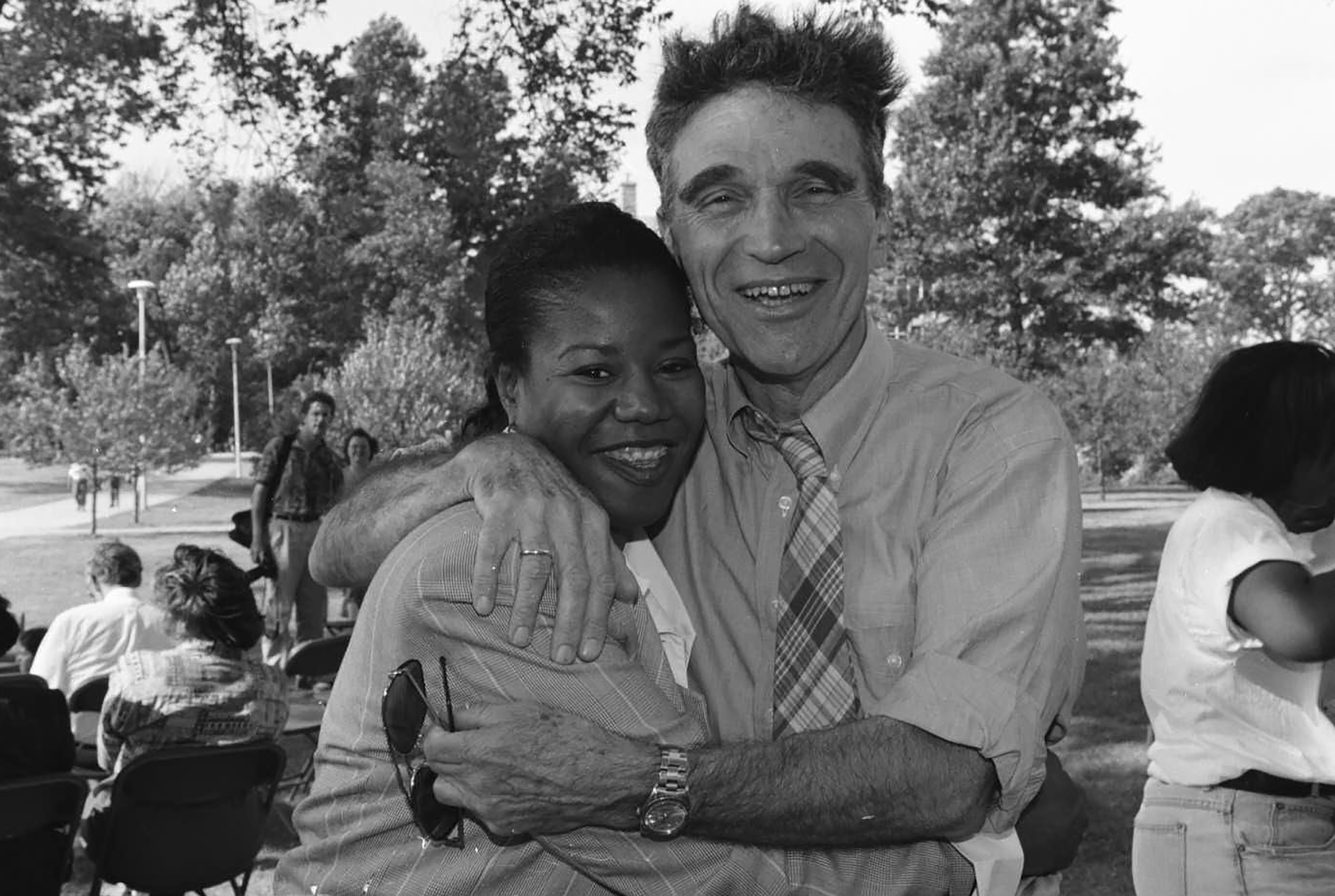
In the spring of 1983, my wife graduated from Williams College. We weren’t married — yet — but I was already in love with her. So I was in the audience on a warm May morning to watch her receive her diploma.
That’s also where I first encountered Robert Coles.
Coles, who died June 4, was the commencement speaker. I’m embarrassed to admit that I didn’t know anything about Coles, perhaps the most influential psychiatrist in modern America. But as soon as he started talking, I was transfixed.
He spent his life listening to children and their parents, particularly during moments of trauma or crisis. And he urged the rest of us to listen, too.
When you listen closely, Coles discovered, every individual you meet becomes exactly that: an individual. They’re no longer a category or a caricature. They’re a human being, trying to make sense of the world. Just like you, and like me.
That’s why Time magazine, in a 1972 cover story about Coles, congratulated him for “breaking the American stereotypes.” Wherever Coles looked, he saw people distorting — and demeaning — each other. The only antidote for that was conversation, which would “depolarize a divided society” (Time predicted) by allowing us to recognize the humanity in everyone.
It’s easy to assume we have lost that spirit in America, which seems even more divided than it was a half-century ago. You can hear it in our heated political rhetoric, so full of anger and recrimination. She supports Democrats, so she’s a libtard. He votes Republican? Must be a fascist.
But Coles reminded us that we can move beyond the vituperation and name-calling. Show compassion and curiosity toward everyone, he insisted. And listen to them before you judge them.
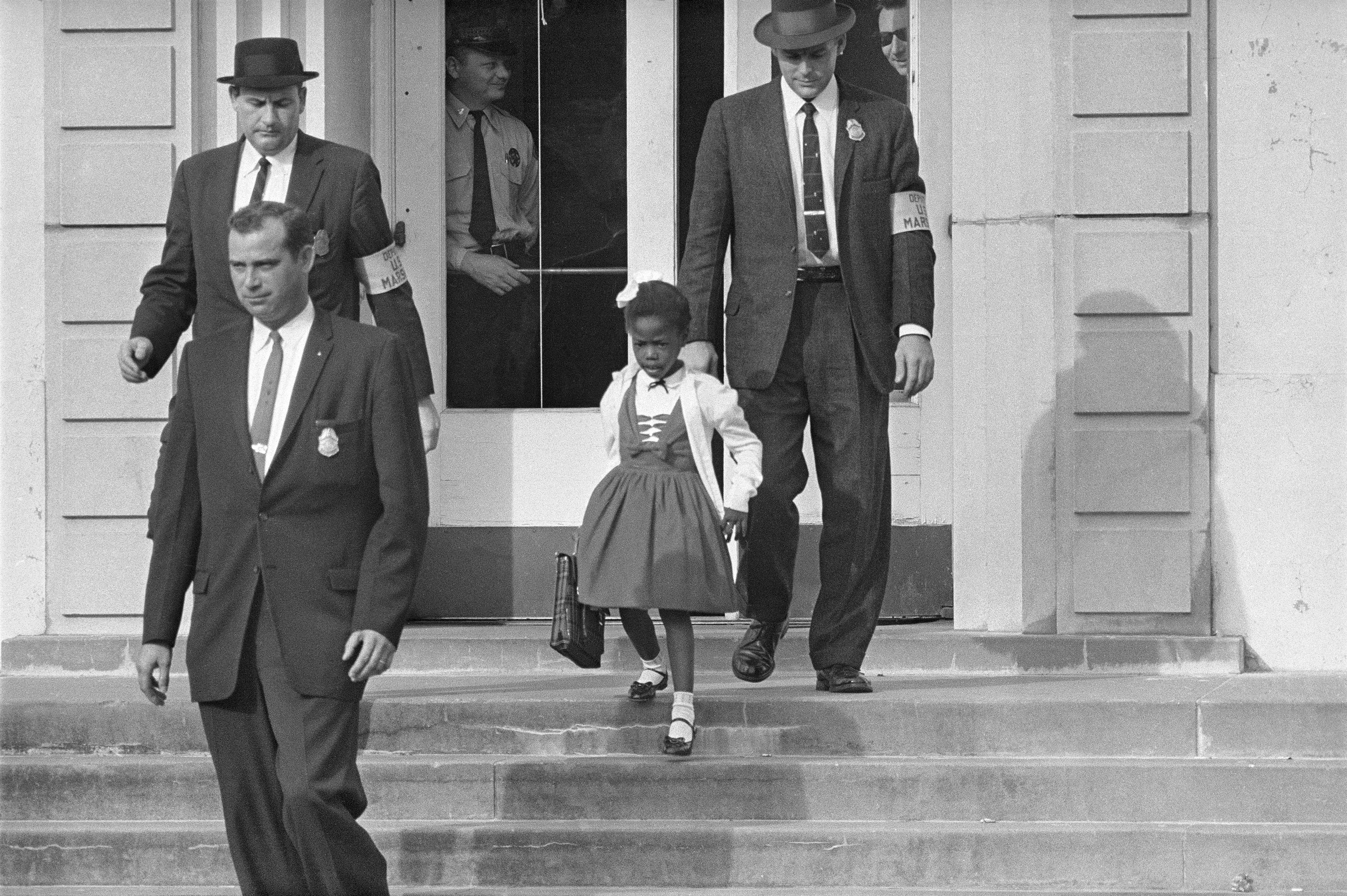
Coles was best known for his interviews with Black children like Ruby Bridges, the 6-year-old girl who faced a mob of white racists in 1960 while integrating an elementary school in New Orleans. But he also warned against imagining Black people as noble victims, or Southern whites — including opponents of integration — as ignorant bigots.
“Policemen are not pigs, white Southerners are not rednecks, and Blacks are not all suffering in exotic misery,” his Harvard colleague David Riesman told Time, summarizing Coles’ approach. “What he is saying is ‘People are more complicated, more varied, more interesting, have more resiliency and more survivability than you might think.’”
Coles’ conversations with poor and right-wing whites confused his liberal friends, who wondered why he would spend so much time with “awful, vulgar, reactionary people,” Coles noted. The reason was both simple and profound: He wanted to understand them.
“I don’t look upon them as good or bad,” Coles explained. “I look upon them as human beings, strong and sensible, weak and full of faults.” He readily acknowledged “the blindness, the distortions, the racism, the meanness” among them. But he refused to reduce them to that.
You could find the same negative qualities in any group, Coles insisted. And working people “bore the brunt of change in American society,” he added. Dismissing them as racist was itself an unjust act, committed by people who imagined themselves as agents of social justice.
In academia, meanwhile, these same tribunes of justice often wrote in impenetrable jargon that only their fellow professors could understand. Coles didn’t do that, either. He used ordinary language, just like the people he interviewed.
Federal marshals escort 6-year-old Ruby Bridges from William Frantz Elementary School in New Orleans, in November 1960.Uncredited
That spawned skepticism among some of Coles’ colleagues, who disparaged him as “unscientific” or — heaven forbid — a “popularizer.” But what’s the point of writing something that nobody — other than a small set of specialists — will ever read?
Coles made a difference in the world precisely because his work was accessible to so many people. At the Williams graduation, he told us Bridges had been moving her lips as she walked past the mob protesting her for desegregating an all-white school. Later, Coles asked her what she had been saying.
“I was talking for God and praying for the people in the street,” she replied. “I always pray the same thing. ‘Please, dear God, forgive them, because they don’t know what they’re doing.’”
Bridges’ courage and compassion inspired Norman Rockwell’s famous painting, The Problem We All Live With, which appeared on the cover of Look magazine in 1964. And it inspired Coles to spend his life talking to people about how they experienced the challenges and contradictions of their world. In over 50 books and hundreds of articles, he taught us that everyone — especially children — had something important to say.
We just have to listen to them. And, I hope, to Robert Coles.
Jonathan Zimmerman teaches history and education at the University of Pennsylvania. He is the author of “Whose America?: Culture Wars in the Public Schools.”
As President Donald Trump sinks deeper into an Iran quagmire, he looks like a loser for joining an ill-planned war of choice and failing at peace talks.
Even if a U.S.-Iran memorandum of understanding (or MOU) is signed soon, this will not be a “peace deal” but will merely kick negotiations on all the tough issues down the road. And the MOU will most likely leave the U. S. worse off than before the war.
Yet, on another front, the Ukraine war, where Trump is supposedly still working on a peace proposal, the president has new opportunities to advance a reasonable deal and be lauded as a winner.
Kyiv, through incredible bravery, fortitude, and technological brilliance, has finally turned the tide against Russian aggression via its innovative drone war. The conflict is far from over, but Russia has been stalled for months, gaining almost no ground, and is now losing more men than it can mobilize.
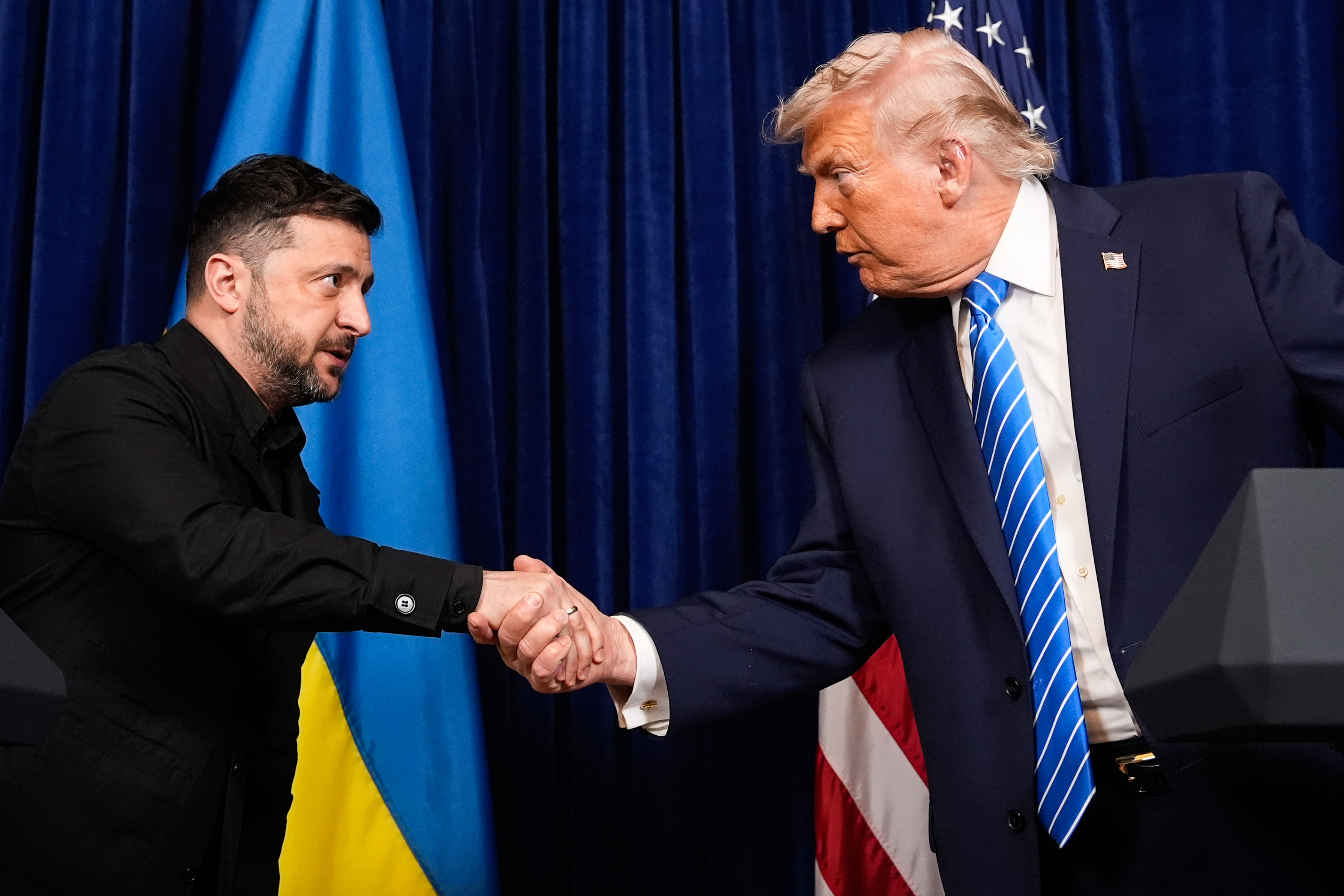
And President Volodymyr Zelensky has just proposed freezing the war along current lines while negotiating directly with Vladimir Putin in a third country, an offer the Russian leader immediately refused.
Yet, Trump continues to aid the loser, Putin, and to undermine the advances of the increasingly visible winner, Kyiv. He has cut off all military aid to Ukraine (even though Europe will pay for the weapons), including vital air defense systems Kyiv desperately needs to destroy the ballistic missiles Putin is raining down on civilians. POTUS is also resisting bipartisan efforts in Congress to restore limited Ukraine aid and add sanctions to Russia.
The House just passed the Ukraine Support Act in a bipartisan push that overcame Speaker Mike Johnson’s efforts to block it, but the White House has strong-armed pro-Ukraine Republicans in the Senate to sit on a similar measure. The GOP‘s cowardice has become a national embarrassment.
If Trump insists on going down in history as a foreign policy loser (or a Russian dupe), Senate Republicans must decide whether they want to share the shame.
It is pathetic to watch how the Kremlin has been making fun of Trump’s weakness. The president keeps claiming he doesn’t want to provoke Moscow by sending more weapons, yet his vacillation has made him a punching bag on RT, the Kremlin’s mouthpiece TV outlet.
“Vladimir, STOP!” Trump begged on Truth Social on April 27, after massive Russian drone and missile attacks on Kyiv and other cities. “Lets get the Peace Deal DONE!” He told reporters he thought Putin would listen. Haha!
“What Vladimir Putin doesn’t realize is that if it weren’t for me, lots of really bad things would have already happened to Russia, and I mean REALLY BAD. He’s playing with fire!” POTUS posted on May 27. RT posted sarcastically: “Trump’s message leaves little room for misinterpretation. Until he posts the opposite the next morning.”
A Kremlin spokesperson dismissed his remarks as “emotional overload.” Trump appears unaware of Kyiv’s extraordinary achievement in bringing the war home to Russia, hitting deep into the country with mid-range and long-range drones that take out military bases, oil depots, refineries, bridges, and rail lines.
When I spoke to Ukrainian military officers as they were displaying videos of sophisticated drone operations to business and political leaders at the Munich Security Forum in March, they told me their goal was to interrupt Russian supply lines and thus cripple military logistics inside Russia and inside Russian-occupied territories.
Another main point was to finally bring the cost of the war home to Russians, since Kremlin-controlled media and internet constantly portray Russia as winning.
Even under President Joe Biden, Ukrainians were frustrated that U.S. aid, notably medium- and long-range missiles, was conditional on their not being fired into Russia — lest it “escalate the fighting.” Under Trump, who has cut all aid, the Ukrainian military feels no such compunctions.
This approach is succeeding. Fuel shortages are spreading across Russia, and fuel supplies in Crimea have reportedly run dry last week, after Ukrainian drones took out two land bridges to the Russian-occupied peninsula.
Even more embarrassing to Putin, he was forced to curtail the huge annual May 8 and 9 World War II Victory Day military parade due to fear of Ukrainian long-range drone strikes.
Yet, Trump refuses to take advantage of Russia’s new weakness and to endorse Zelensky’s call for a freeze along current military lines. Instead, the president’s ill-equipped negotiators have swallowed Putin’s demand that Kyiv surrender critical cities, which Russia has been unable to take by force.
Even more idiotic, Trump has failed to take advantage of Zelensky’s year-old offer to share Ukraine’s brilliant drone technology and swap just-in-time, battle-tested drones and interceptors for U.S. weapons. This, at a time when the unacceptably slow pace of U.S. drone development has put America on the back foot in the Iran war, and forced our military to use $2 million missiles to down $50,000 Iranian Shahed UAVs (as unmanned aerial vehicles are called).
All of America’s Sunni Arab allies are begging Kyiv for help downing Iran’s drones, as U.S. private companies are rushing to test new drone innovations in Ukraine. Even some Pentagon officials are waking up to how much they need Ukraine’s help, yet Trump remains aloof — and still blames Ukraine, not Putin, for causing the war.
My only explanation for such stupidity is that POTUS has never gotten over his anger at Zelensky for rejecting the president’s famous 2019 demand in a phone call to dig up (nonexistent) “dirt” on Biden. That phone call was the basis for Trump’s first impeachment.
I’d add to the mix Trump’s envy of dictator Putin’s total control of everything in Russia and his past, frequent displays of bare-chested masculinity. (Perhaps the choice of a bizarre UFC mixed martial arts match for his birthday on the White House lawn Sunday is a way for POTUS to play catch-up.)
The result, however, is that America rejected the vital help of an important Ukrainian partner at a critical moment in the Iran war, while aiding a Russian adversary who is assisting Iran. And the U.S. president has squandered hundreds of scarce Patriot and THAAD long-range interceptor missiles in the Iran war, which, if Europe could have purchased them for Ukraine, could have saved that country’s urban infrastructure.
Instead, Trump refuses to put Ukraine in the queue for receiving new missiles when the woefully slow U.S. production lines are sped up. And he has just halted a scheduled deployment of Tomahawk missiles to Germany, supposedly from fear of upsetting Russia, even though Putin is now openly threatening Europe.
From June 15 to 17, the leaders of the G7 group of the world’s top industrial nations will meet in France, on the shores of Lake Geneva, and French President Emmanuel Macron has invited Zelensky to speak. The topic will be Ukraine, and Trump will have a chance to strongly endorse Zelensky’s proposal.
I don’t expect much from Trump, who has complained about Russia being kicked out of the former G8 after invading Ukraine. But who knows? Maybe POTUS will decide he doesn’t want to be a loser after all.
There has always been a Church of Bruce. Now it has its own building.
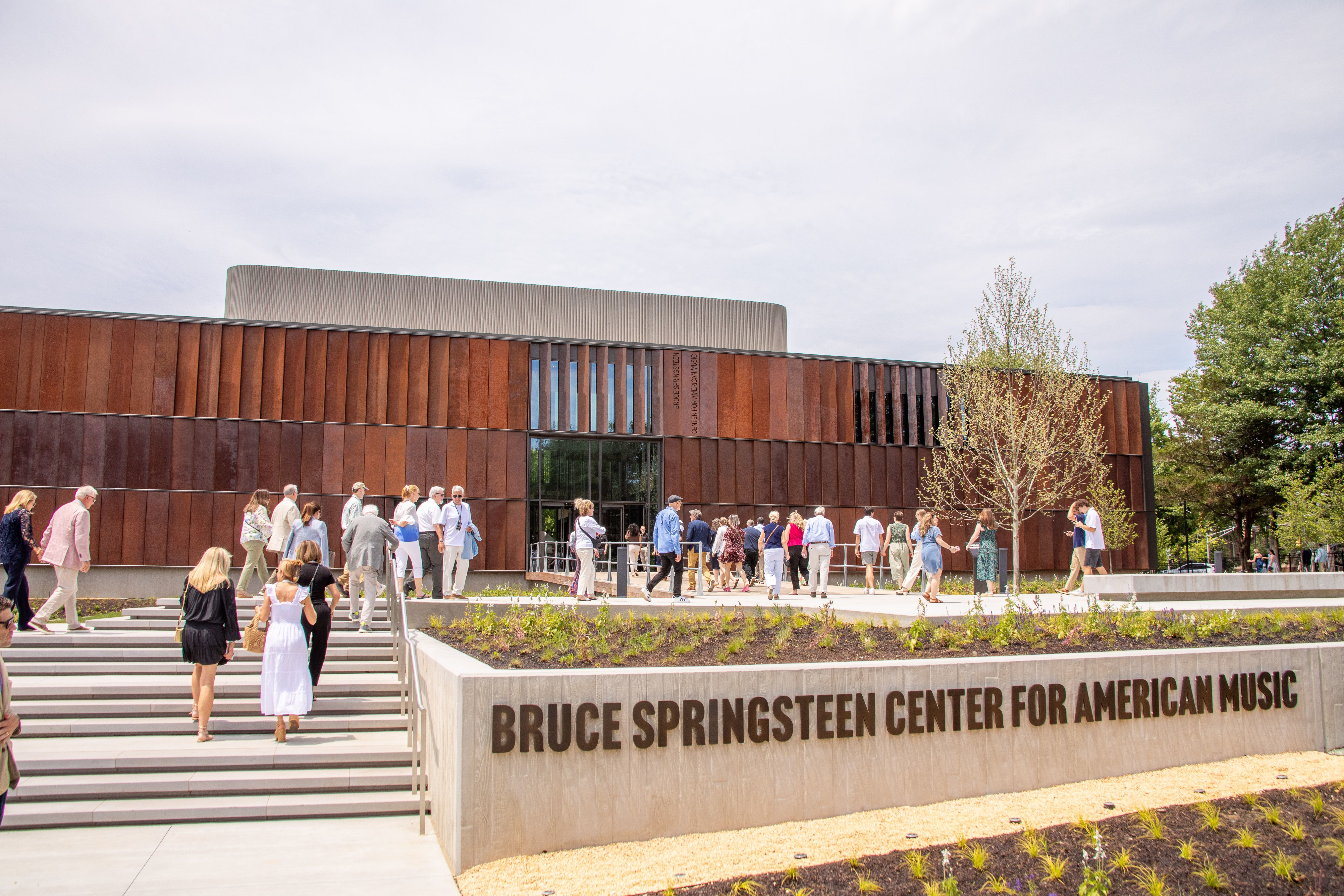
Officially called the Bruce Springsteen Center for American Music, it’s located on the Monmouth University campus, four miles north of Springsteen’s old Asbury Park stomping grounds. As the name suggests, the center — part museum, part archive, part concert venue — is seeking to broaden the conversation by situating the Jersey rocker along a continuum, one that starts with Indigenous drumming rituals and stretches into the hip-hop era.
And yet, as you stride up the center’s boardwalk-style entrance ramp, past the memory tree that commemorates the one from Springsteen’s childhood home, and come face-to-face with the building’s rust-hardened steel walls, there’s little doubt that you are really entering Bruce’s house.
Springsteen has been such a cultural presence in American life over the last half century that it is hard to imagine it otherwise. Every detail of the building designed by New York’s CookFox Architects is keyed to some piece of his well-known biography. The joy in the architecture, particularly for the legions of Springsteen superfans, will come from decoding the references.
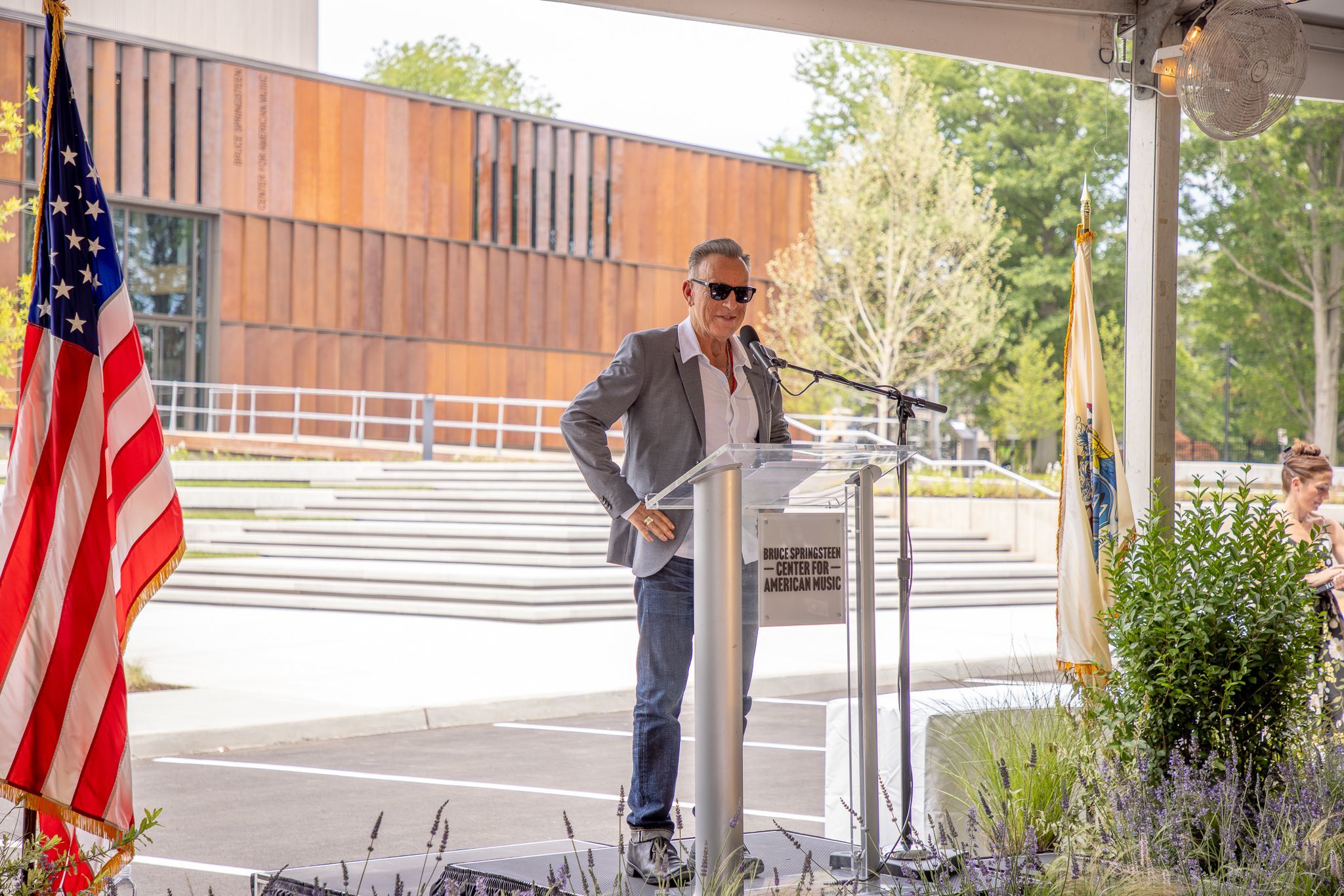
Guests gathered June 7 for the opening of the new Bruce Springsteen Center for American Music on the campus of Monmouth University in Long Branch, N.J.Monmouth University
There is the site itself, on the shady university campus where Springsteen played one of his first big concerts in 1969, at a time when most of his gigs were confined to dive bars. The simple rectangular building is put together with the same devotion to craft you find in Springsteen’s lyrics, and it’s similarly infused with grit.
On the facade, vertical slats of weathering steel angle in search of sun and shade. Their calloused red surface evokes the aging factories that stood on the edge of Springsteen’s hometown of Freehold, and that form a recurring motif on “Born in the U.S.A.,” an early and prescient elegy for America’s dying manufacturing towns and diminished working class.
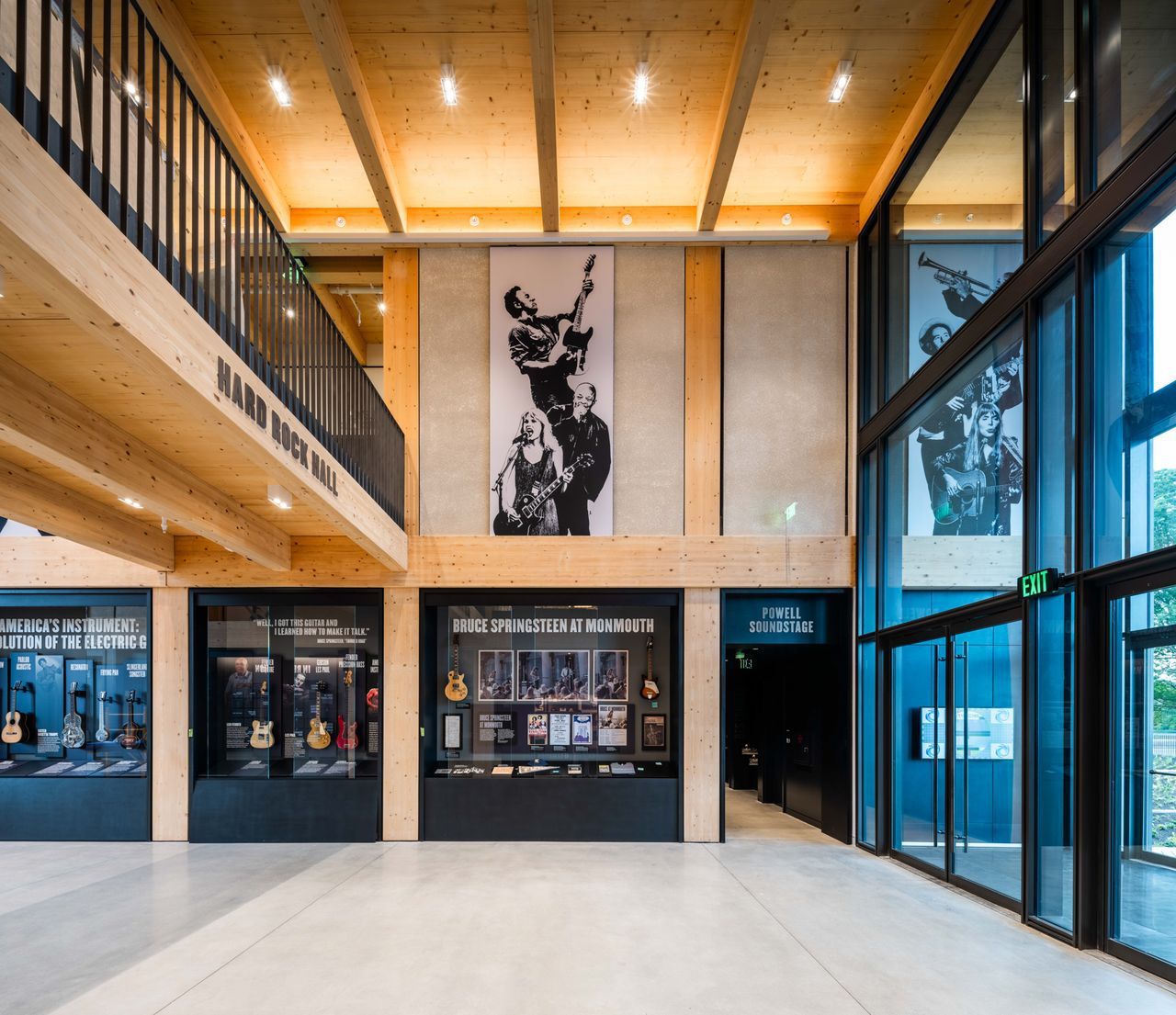
That industrial theme is reinforced once you step inside. Muscular columns and beams, made from environmentally friendly engineered wood, structure the interior. There are wood slats on the ceilings and chunky blocks on the theater floor. They are the same hardy, end grain cut that factories once used to support heavy machinery.
Why fans will come
While Springsteen’s work tends toward darkness, the new center, which opens Saturday, emphasizes the light, both in its design and in the content of the exhibits.
Most visitors probably won’t be making the pilgrimage to Long Branch for the architecture, good as it is. They’ll come for the same reason they have attended so many concerts over the years, standing for the Boss’ relentless, three-hour jams and chanting the lyrics by heart. His stories of yearning and defiance have become the soundtrack for their lives. The $50 million center promises to serve as a giant scrapbook for those memories.
The project’s origins go back to 2011, when a donor gave Monmouth University a collection of Springsteen memorabilia, mostly posters and magazine clippings. At the time, it seemed likely that Springsteen’s much larger personal archive would end up at the Rock & Roll Hall of Fame in Cleveland.
The university nevertheless continued to expand its holdings, and in 2016, several people connected with the collection decided to make a play for Springsteen’s personal archive. A delegation was sent to meet with the musician and make the case that the material belonged in New Jersey, not Ohio.
Springsteen’s longtime manager and friend, Jon Landau, “loved the idea,” recalled Eileen Chapman, the center’s director. Springsteen agreed to donate his archive to the university — gratis — and the university agreed to erect a suitable place to house it.
The Boss did make one stipulation: He didn’t want the exhibits to focus on him exclusively, said Robert Santelli, a Grammy-award winning music historian and Monmouth alum who is now the center’s executive director. Once again, the university agreed, and the center’s scope was expanded.
”The Bob Dylan archives are about Bob Dylan. The Woody Guthrie Center is about Woody. We felt the best way to tell Bruce’s story was to make him a chapter in an ongoing story of American music,” said Santelli, who has helped start several music museums, including the Grammy Museum in Los Angeles.
Everything went smoothly at first. CookFox Architects, who are known for their commitment to both green and healthy design, won the design competition for the center in 2018. Then the pandemic hit and fundraising slowed.
First exhibit: Protest songs
Although it has taken eight years to get to this point, there is a certain poetic alignment in the timing of the opening, as America celebrates its 250th anniversary. The center’s first special exhibit will be devoted to protest songs.
Richard A. Cook, the CookFox partner who oversaw the design, considers himself a casual fan. But he said he was deeply moved by the passages in Springsteen’s autobiography about his father, who struggled with bipolar disorder, as Cook’s father did. As an architect, he has embraced biophilic design, which uses sunlight and nature to shape soothing interiors.
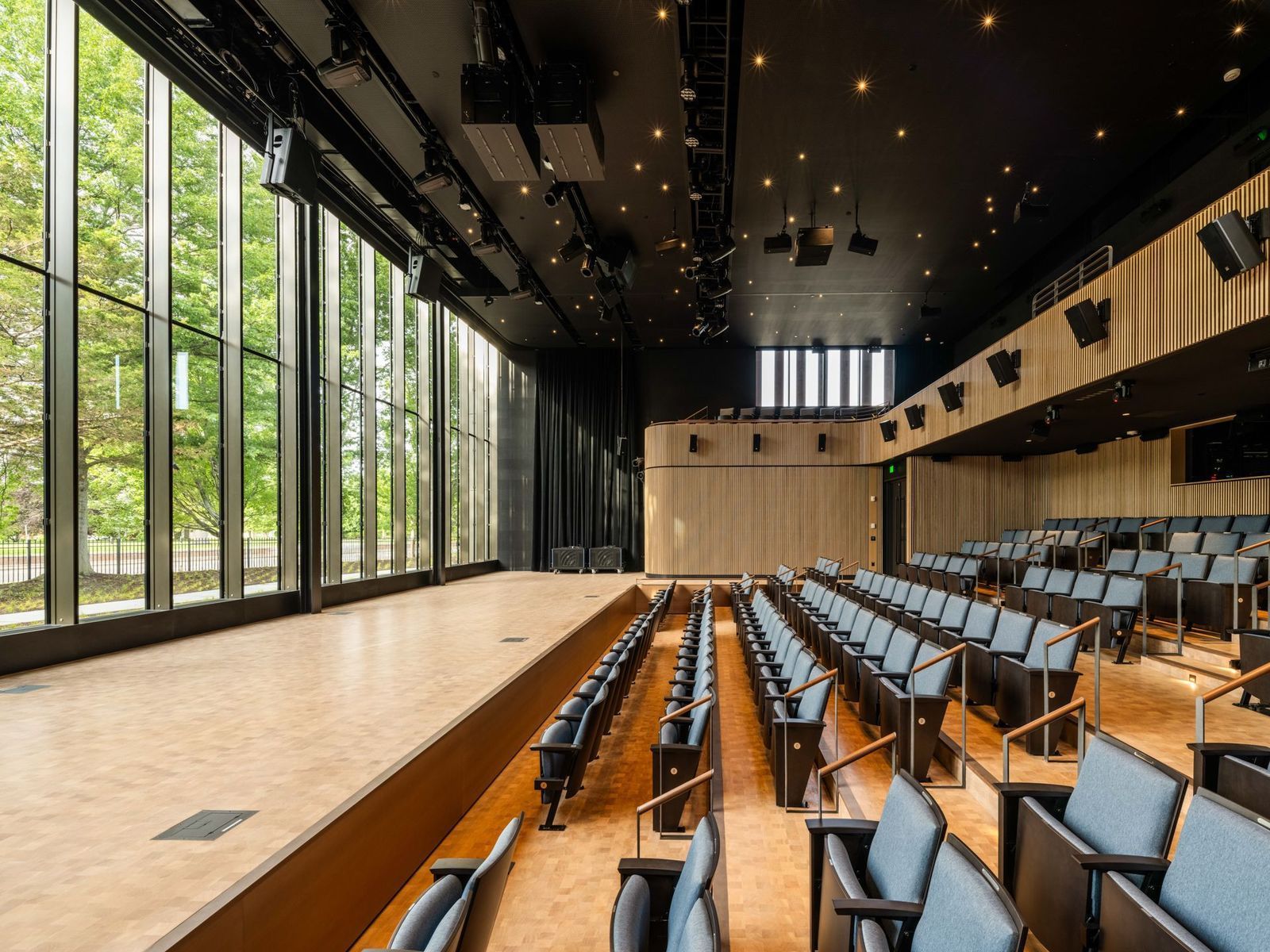
Entering the building from the boardwalk, visitors will be immersed in a calming, double-height hall flooded with natural light and smelling of wood. From there, they are directed to an intimate, 240-seat auditorium — where more light pours in from a floor-to-ceiling glass wall behind the stage — for an introductory film by Thom Zimny.
The theater is easily the most expressive space in the building. It is rare to see such large windows in a performance venue, which are typically hermetic boxes that overwhelm the street with blank walls. By offering views of the planted meadowland that encircle the center, Cook sets the mood for the entire visitor experience. Just before a film or concert starts, a curtain and screen will drop down, completely covering the wall.
Sound quality was a priority, and the theater is outfitted with the latest technology and acoustical materials. Unlike most stages, this one has no steps, which means performers who use wheelchairs can roll directly onto the platform. Even in this space, Springsteen’s presence is conveyed through the use of denim upholstery on the seats.
As Springsteen himself remarked at the June 7 dedication, “The building really feels like me, feels like where I came from.”
Springsteen’s archive, open to all
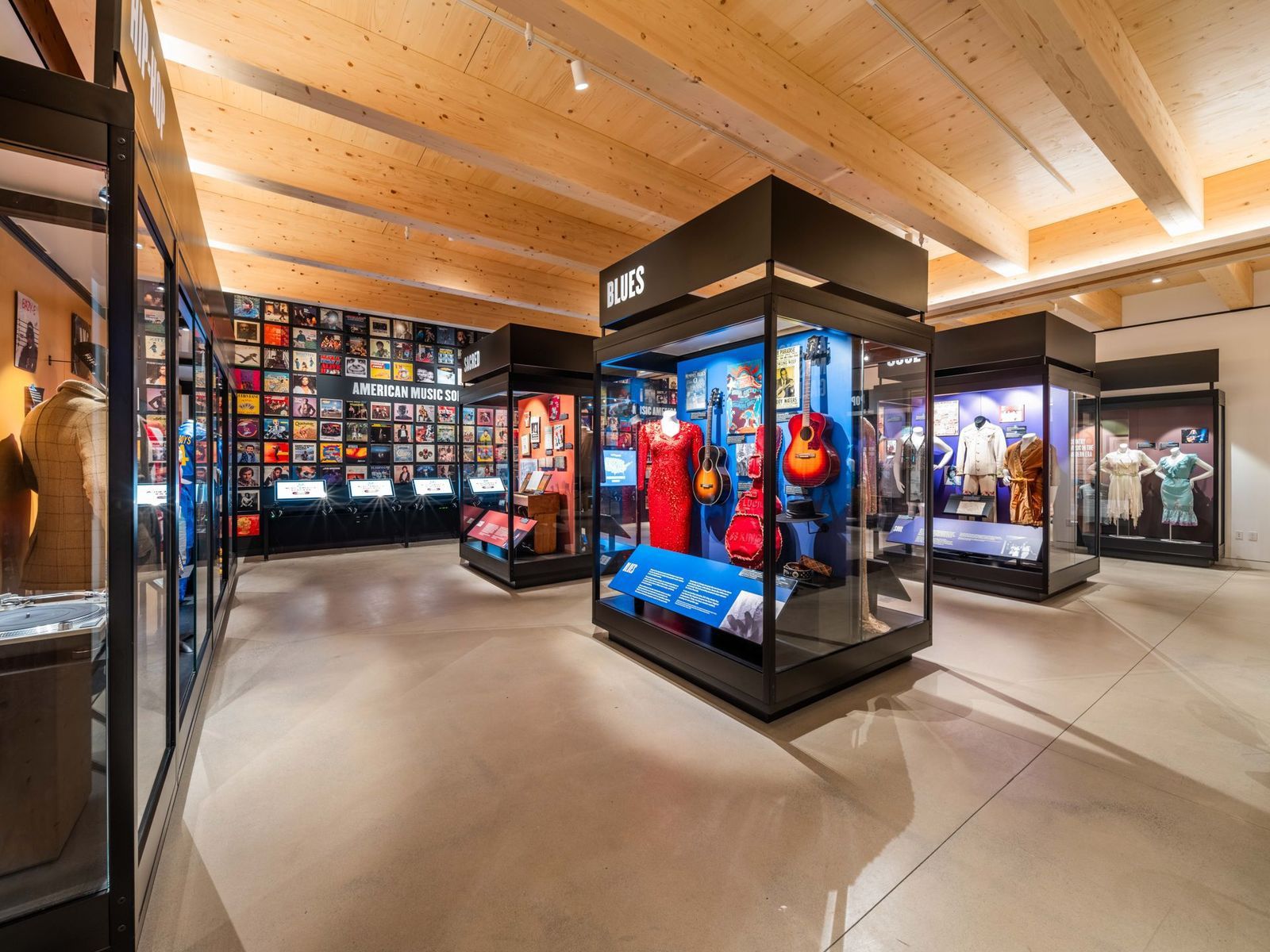
The rest of the building is divided neatly in half: A permanent exhibit on American music and a special exhibition gallery occupy the ground floor. Upstairs, it’s all Springsteen. Those second-floor exhibits include several interactive displays, including a room of instruments where visitors can don headphones and hear tips for replicating Springsteen’s music.
But the heart of the center is the archive. While many museums limit access to scholars, this one is open to everyone. Springsteen was known to labor for months on some songs, and Chapman says she wants to use the archival material to bring his artistic process to life.
Probably the most literal reference to Springsteen’s work can be found in the restrooms. The architects converted the cover of Greetings From Asbury Park, N.J. into bathroom tile, then cut it into sections and installed a piece in each restroom. It’s a nice idea, but I suspect only hardcore fans will be able to recognize the source of the scaled-up, pixilated image. A room filled with iconic photographs of Springsteen, donated by Philadelphia lawyer Robert J. Mongeluzzi, also feels a bit padded.
Outside, the center, which received a Gold certification from the U.S. Green Building Council, is surrounded by a sustainable and biodiverse meadow by LaGuardia Design Group. A small concert venue has been tucked in amid the flowers.
Plenty of museums around the world are devoted to individual visual artists (i.e., Calder Gardens) and important historic figures, but exhibits focused on popular musicians seem to be growing by the day, perhaps in response to the increasing sophistication of audio and interactive technology. Along with museums covering specific musical genres, shrines are devoted to the work of Dylan, Guthrie, Johnny Cash, Louis Armstrong, and, of course, Elvis. The Springsteen Center won’t be the last.
Although Monmouth University is a 90-minute drive from Center City, the center is close to several Springsteen-specific sites, including the Long Branch house on West End Court where he wrote “Born to Run,” as well as several Asbury Park venues.
The Jersey Shore has been an incubator for musical talent for nearly a century, from Count Basie — the “Kid from Red Bank” — to Jon Bon Jovi, yet that legacy has never gotten its due. While Springsteen’s name is the one etched onto this building, the project is really a validation of New Jersey’s enormous contribution to the history of American music.
When organizers announced two years ago that Philly’s FIFA Fan Festival site for the World Cup would be at Lemon Hill, many Philadelphians responded with a collective: Huh?
Located between the Philadelphia Museum of Art and Girard Avenue, the grassy site in East Fairmount Park hasn’t hosted many big public gatherings, though it was the staging and undressing area for the Philly Naked Bike Ride in 2022.
In my many years in Philly, I’d never covered an event at the site — and I’d never been to a FIFA Fan Fest either, which features live broadcasts of the games, entertainment, vendors, and soccer-related activities. So I went on Thursday, the opening day of the 39-day festival, to bring a minute-by-minute report of what I experienced to you.
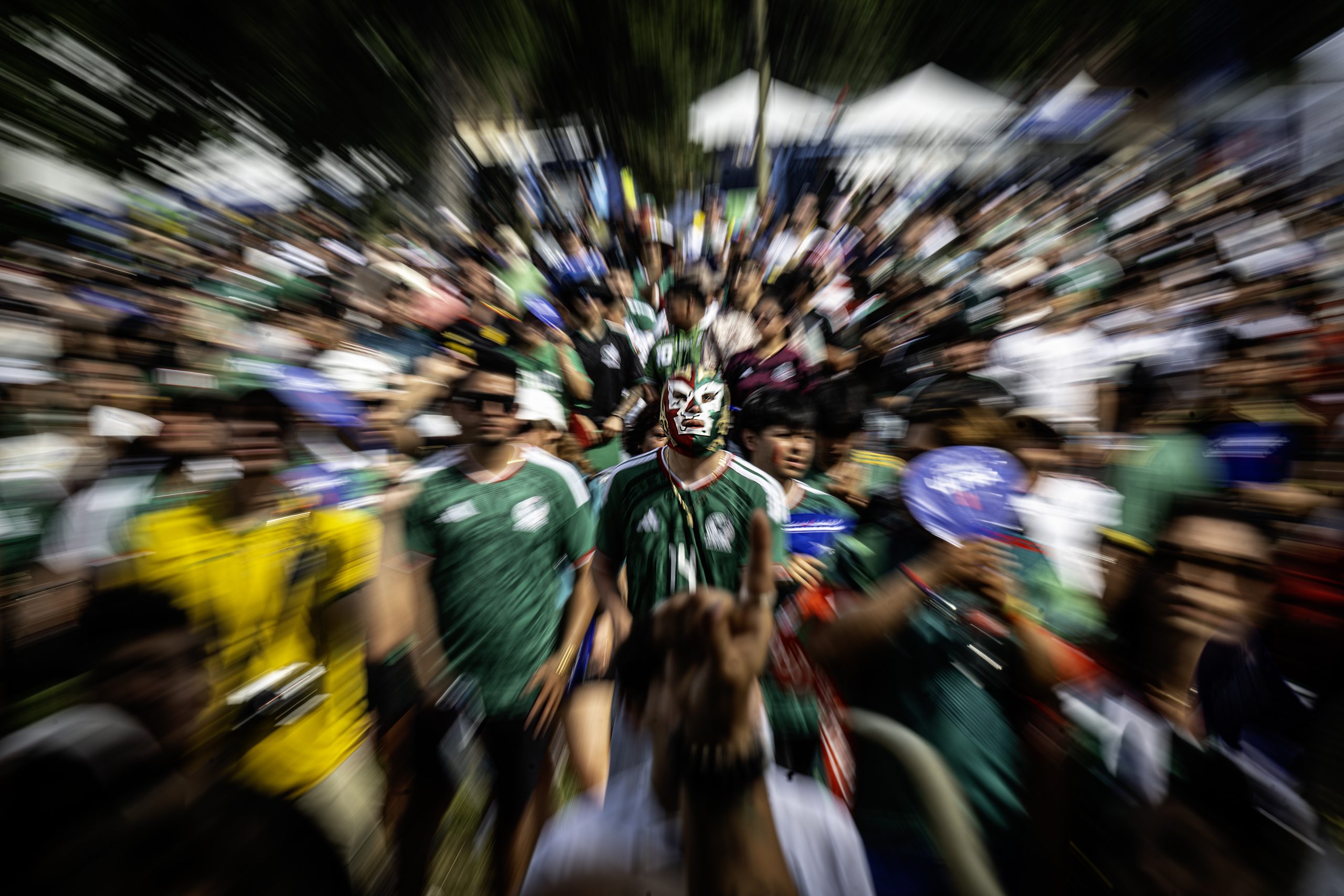
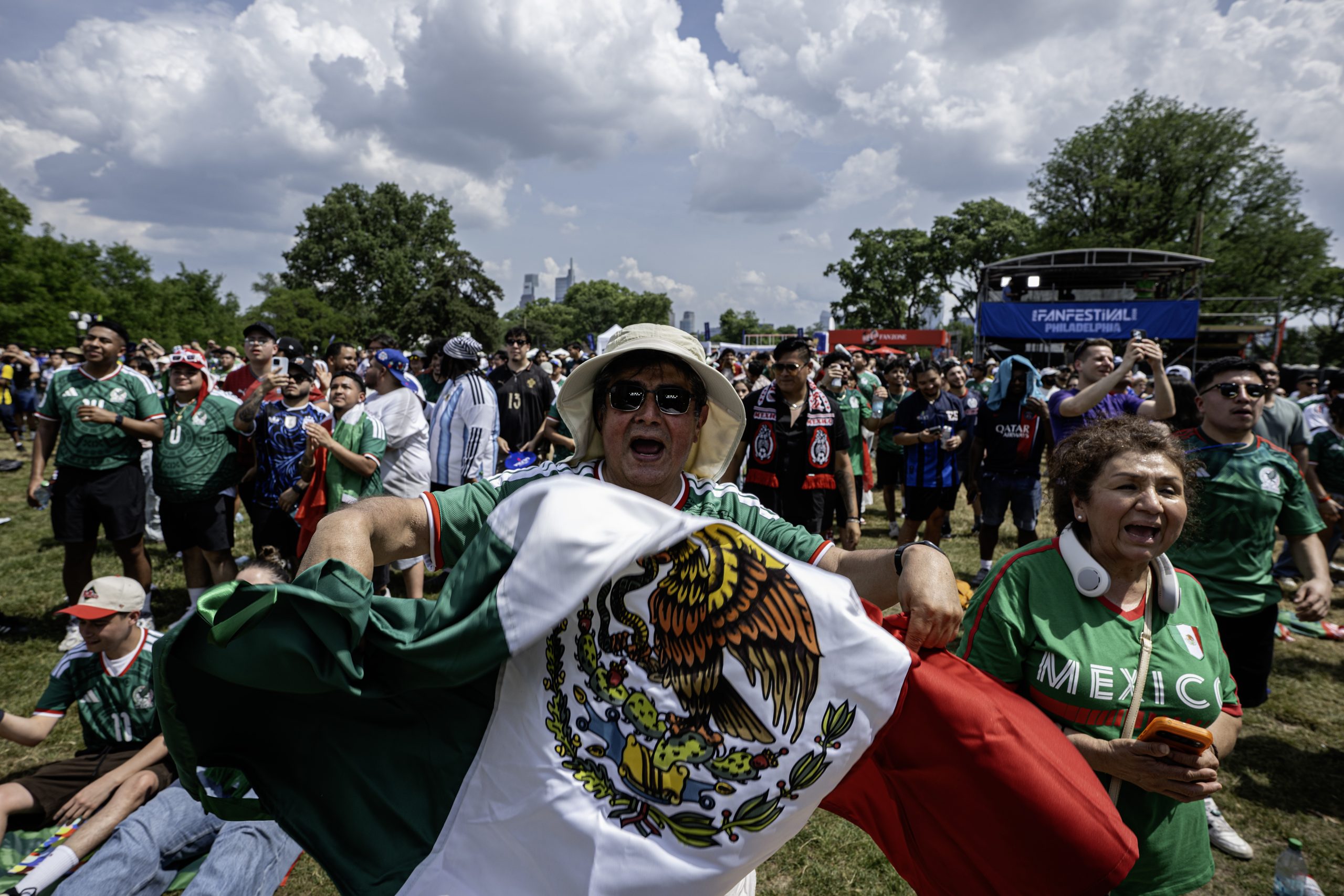
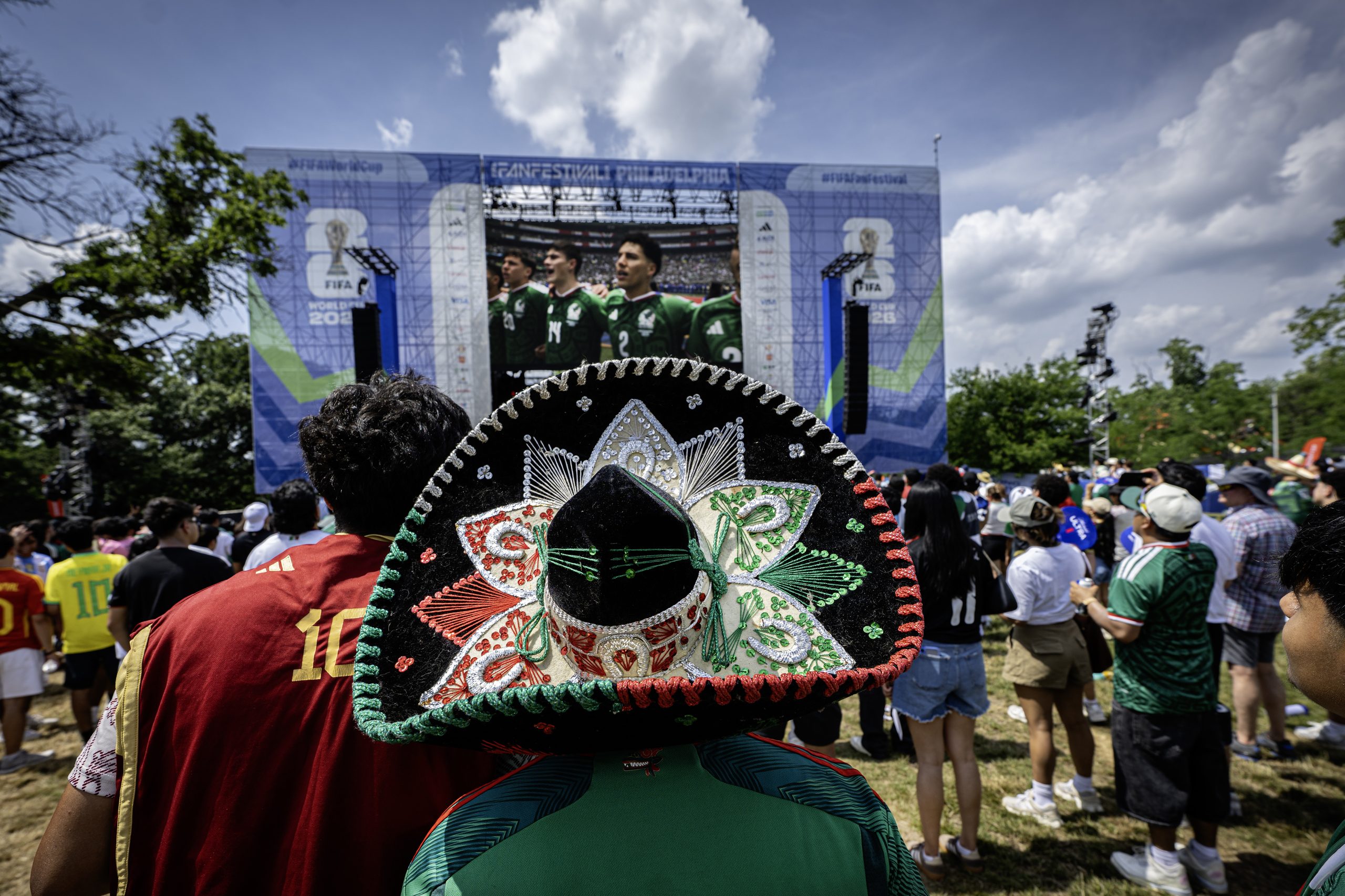
Using a zoom lens technique, Mexican fans watch the FIFA World Cup opening match between Mexico and South Africa on a giant screen during the opening day of the FIFA Fan Festival at Lemon Hill on Thursday.Jose F. Moreno / Staff Photographer
I knew the journey wouldn’t be easy. Not only were temps forecast to be in the mid-90s (with heat indexes over 100 and a heat health emergency in place), you can’t drive to the site, or get close with ride share apps. Roads around the venue are closed and street parking has been restricted to neighborhood residents.
To get to the event, the city is urging guests to take the Philly PHLASH bus, take SEPTA’s bus routes 32 or 48, use a bicycle, or walk. I chose the latter.
12:30 p.m.
I begin my journey at LOVE Park, where I see a group of five friends in their team Mexico jerseys — and a sixth in a white T-shirt and sombrero — getting their photo taken with the LOVE statute.
Alexis Arellano, 29, tells me they’ve come from Atlantic City to catch the Mexico v. South Africa game at the FIFA Fan Festival.
“It’s a once-in-a-lifetime opportunity. You’ve got to take advantage of everything they got going on. It’s in our backyard,” he said.
12:39 p.m.
I stop into the pop-up Philadelphia Visitor Center hospitality hub at the park. The space is tiny, but the air-conditioning feels like silk sheets on my sweaty skin. I strongly consider buying the $14 portable fan that sprays wooder at your face and ponder at a bucket hat that reads: “Freedom has a Philly accent.”
12:45 p.m.
I head over to the public bathroom trailer that’s temporarily been installed in LOVE Park in front of the circular building known as flying saucer.
“What a waste,” I think, as I look up at the very cool saucer, which remains closed and empty, despite a call-out last year from the city for ideas to reactivate the space in time for the World Cup and the Semiquincentennial.
The new, temporary public bathroom trailer set up in LOVE Park.Stephanie Farr / Staff
I step inside the bathroom trailer. Not only is it air-conditioned, it’s outdoor-wedding-quality nice. Next to the trailer is a sink of water fountains and water bottle-filling stations.
1:15 p.m.
After making my way down the Ben Franklin Parkway, I spot another, larger hospitality hub across from Eakins Oval. This one has several large boards in front of it you can stick your face into to get a photo with Gritty, Rocky, or Patti LaBelle.
When I step inside the hub, I almost weep tears of joy because it’s so cold. It has much of the same items as the other, but with more Rocky merchandise (“Yo, Adrienne! Buy my stuff!”).
The pop-up Philadelphia Visitor Center hospitality hub across from Eakins Oval.Stephanie Farr / Staff
Outside of the hub, I meet Valentine Emeré, 20, and his parents, who are on holiday from France and had no idea the World Cup was in town. They’re in Philly as part of an East Coast tour of the U.S.
“It’s a very good city, it’s a living city,” Emeré tells me when I ask his thoughts on Philly. “We really like how many things there are to do.”
1:41 p.m.
I arrive at the FIFA Fan Fest welcome center tent. Aside from the oppressive heat, the walk was easier than I expected. I pass the Philly Phestival Marketplace, a row of vendors selling everything from nail polish to onesies that read “baby jawn.”
1:48 p.m.
At the Glitterbrush Facepainting booth, I chat up Martiza Quendo of North Philly, who wore a team Mexico shirt, and Marissa DeMatteo of South Philly, who was repping team USA. They’d just had their faces painted and told me they came to Fan Fest because they love free merch and “participating in Philly.” Mostly they were there for the live Luis Fonsi concert after the Mexico vs. South Africa game.
Martiza Quendo of North Philly, at left in a team Mexico shirt, and Marissa DeMatteo of South Philly, at right in a team USA shirt, pose after getting their faces painted at the Philly Phestival Marketplace.Stephanie Farr / Staff
1:52 p.m.
As several hundred people wait in line for the gates to open, visitors pose for pictures in front of a large soccer ball surrounded by fresh flowers, a photo-op that looks straight out of the Philadelphia Flower show. An enterprising street vendor nearby tries, without success, to sell umbrella hats.
“You think business would be better in this heat,” he says.
2:10 p.m.
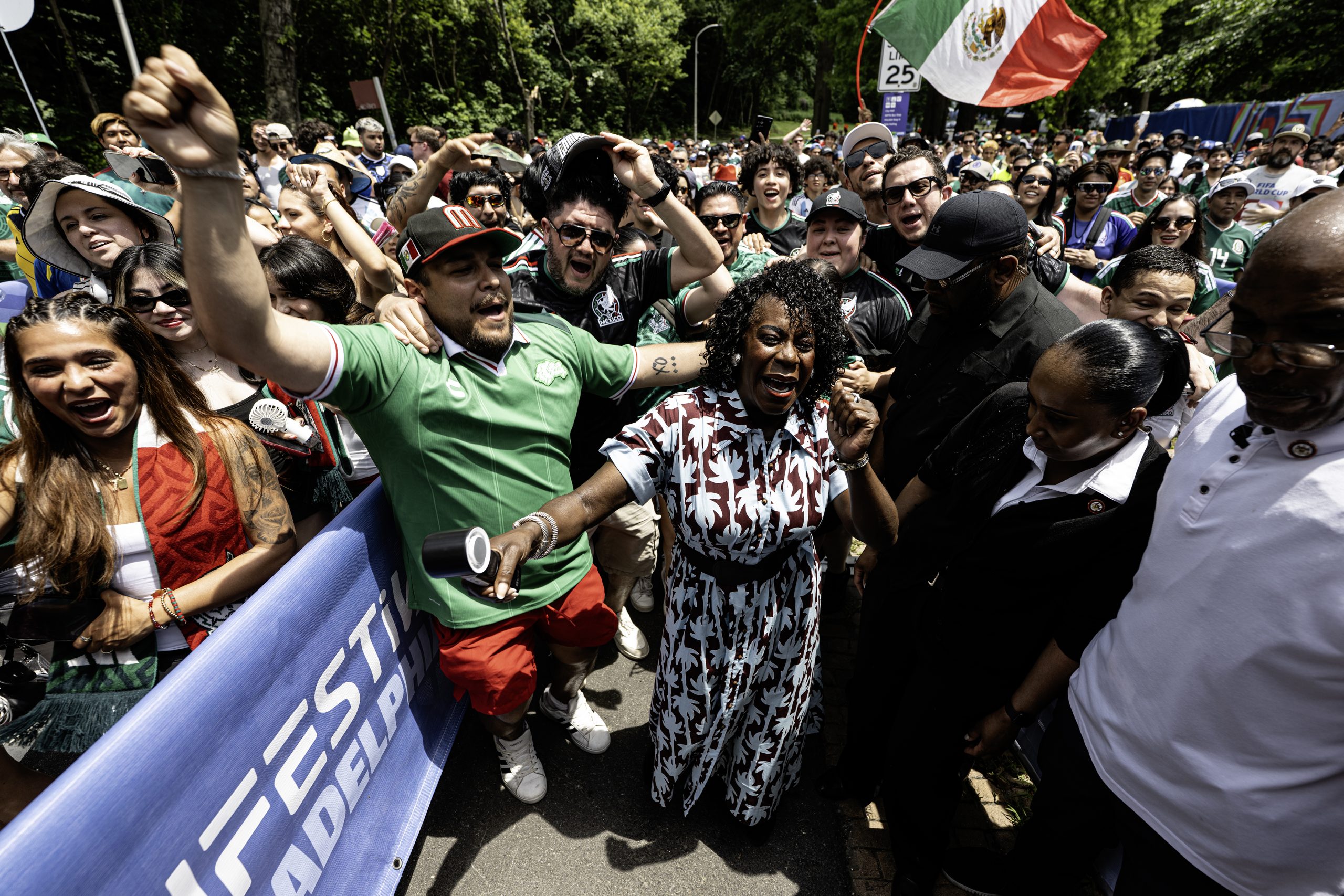
Philadelphia Mayor Cherelle L. Parker joins fans in a Mexican chant before entering the FIFA Fan Festival at Lemon Hill on opening day of the FIFA World Cup 2026 on Thursday, June 11, 2026, in Philadelphia. Fans gathered to watch Mexico face South Africa in the tournament’s opening match.Jose F. Moreno / Staff Photographer
Gates open to the festival, a little behind schedule, but folks get in calmly, quickly, and with little trouble. Some come in singing, others run in waving Mexican flags. My colleague, photographer Jose Moreno, later shows me pictures of Mayor Cherelle L. Parker walking in with the crowds.
2:18 p.m.
I stop by the Home Depot activation, billed as “Beckham’s Backyard,” which features the facade of a home with a 12-foot-skeleton in front of it. An employee tells me this mimics a backyard with Beckham’s flair.
“He’s not here though, right?” I ask.
“I wish. This would be a lot more popular if he was,” he said.
Inside, there is a giant Home Depot bucket with a TV screen inside showing games. The nearby Casamingos stand selling margaritas for $17 appears to be far more popular.
2:26 p.m.
I ask an employee manning the Bank of America activation why the line there is so long. He tells me they’re letting people make their own bracelets — with very cool Philly and World Cup charms — for free.
2:28 p.m.
At the Visit PA pavilion, the lines for the free prize wheel and claw machines — which dole out Visit PA-branded merch — were very long.
But nobody was at the “Soccer Jawn” video game, which pits two players head-to-head in a Pong-like game of soccer on a big screen. I yell to a young woman passing by to battle me and she accepts my challenge.
Biance Yetta, 16, of Easton, beats me 5-4. In my defense, she plays soccer on a traveling team and I’ve never played before in my life (though I’ve probably played way more Pong).
2:38 p.m.
A message plays on the 60-foot-wide main screen of the festival from astronauts aboard the International Space Station. I’m too far away to hear everything they say, but I can make out the words: “Sharing one planet, one game,” and that makes me smile.
2:40 p.m.
I walk into the massive FIFA Fan Fest store, which is so well air-conditioned I almost fall to my knees and thank the gods of consumerism.
I browse for a bit, but when I check the price of a FIFA cropped women’s sweatshirt — $104.99 — I walk right back out.
2:56 p.m.
The national anthem of South Africa begins and crowds gather around the big screen. Folks try to hide under what little shade is available, but most of us are forced to swelter in the sun.
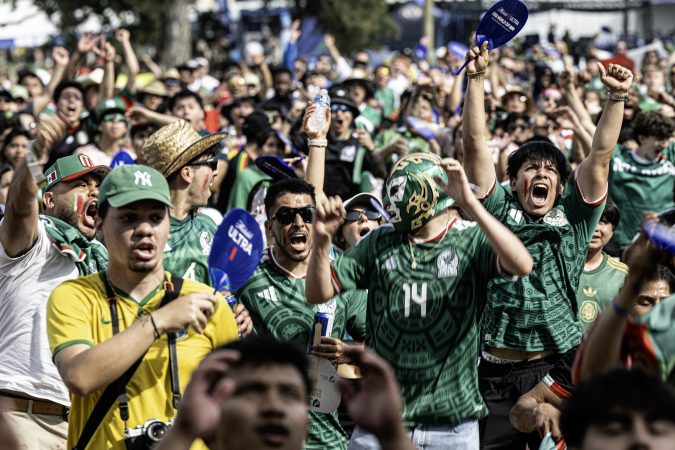
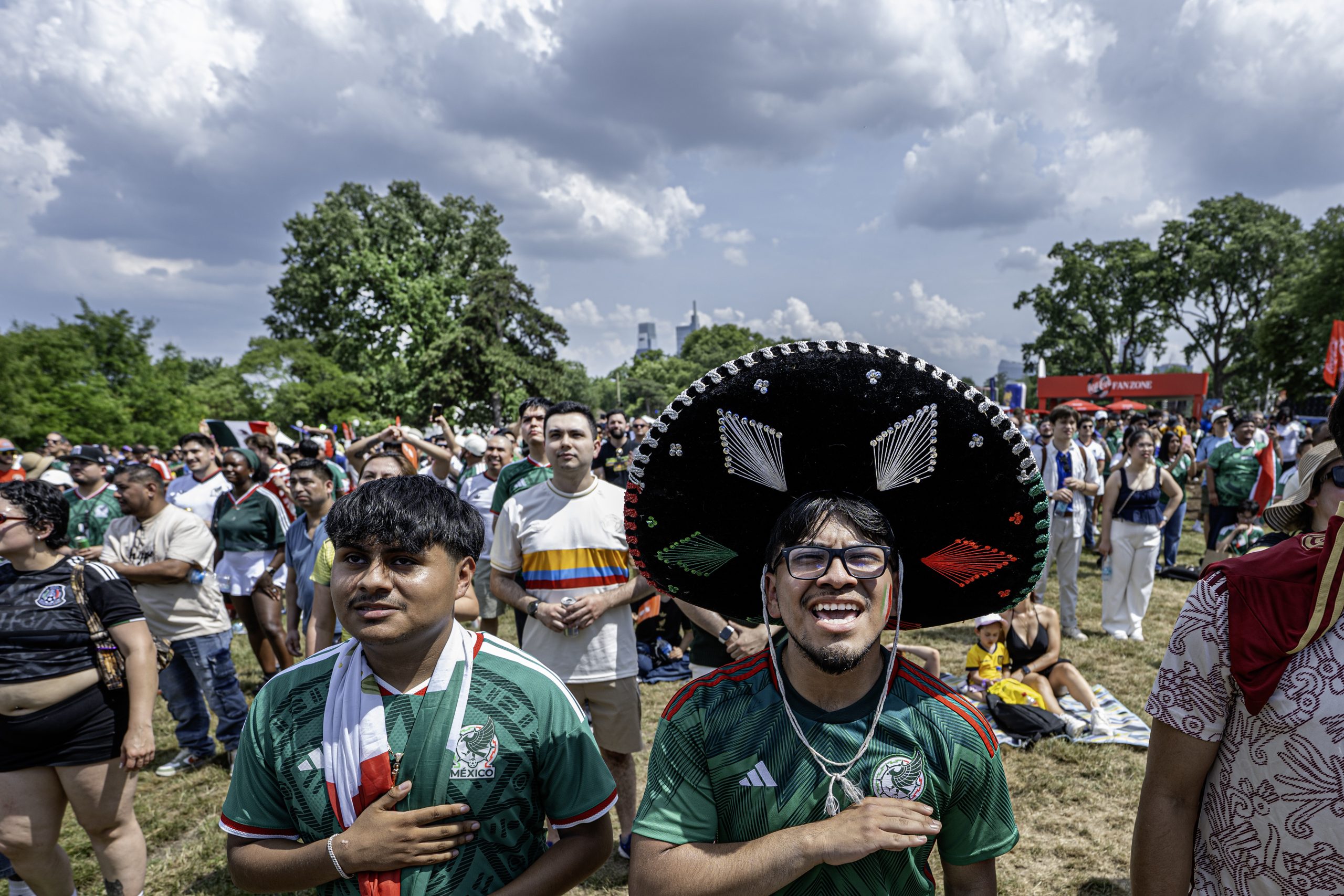
Shortly thereafter, the Mexico national anthem plays and many in the crowd — which now numbers in the thousands and is mostly team Mexico fans — sing along.
It feels electric being in the middle of them and watching the game begin, but I have more of the festival to explore.
Mexican fans sing the national anthem before the start of the FIFA World Cup opening match between Mexico and South Africa at the FIFA Fan Festival at Lemon Hill on Thursday.Jose F. Moreno / Staff Photographer
3:04 p.m.
I approach what looks like a nice little area called “The Orchard” and am immediately stopped by a security guard. I’m informed it’s a VIP-only area for sponsors (enjoy the perks, 12-foot Home Depot skeleton).
Next to it was another public viewing area with a smaller screen showing the game. This one had picnic tables under shade (huzzah!). Nearby was a food area with booths selling street corn, cheesesteaks, and churros — none of which sounded appetizing in 94-degree heat. I’d spotted a single water ice stand at another food vendor area across the way earlier, but the line was 42 people deep and there was one guy working the booth.
3:24 p.m.
I spot a woman in a Phamassador T-shirt, the Visitors Center program that’s recruited 10,000 volunteers to be ambassadors of Philly this summer.
Ruth Bangura, 19, tells me she’s a Philly transplant who’s “obsessed” with the city and wants to help others become obsessed, too. Despite the heat, she’s loving the “good energy” at Fan Fest and loves seeing people waving flags of all colors coming together.
“Everyone is different but at the same time, we’re all here for one game. This is the best thing that could ever happen to the United States right now,” she says. “This is the melting pot, this is what America is supposed to be instead of differentiating each other and dividing each other.”
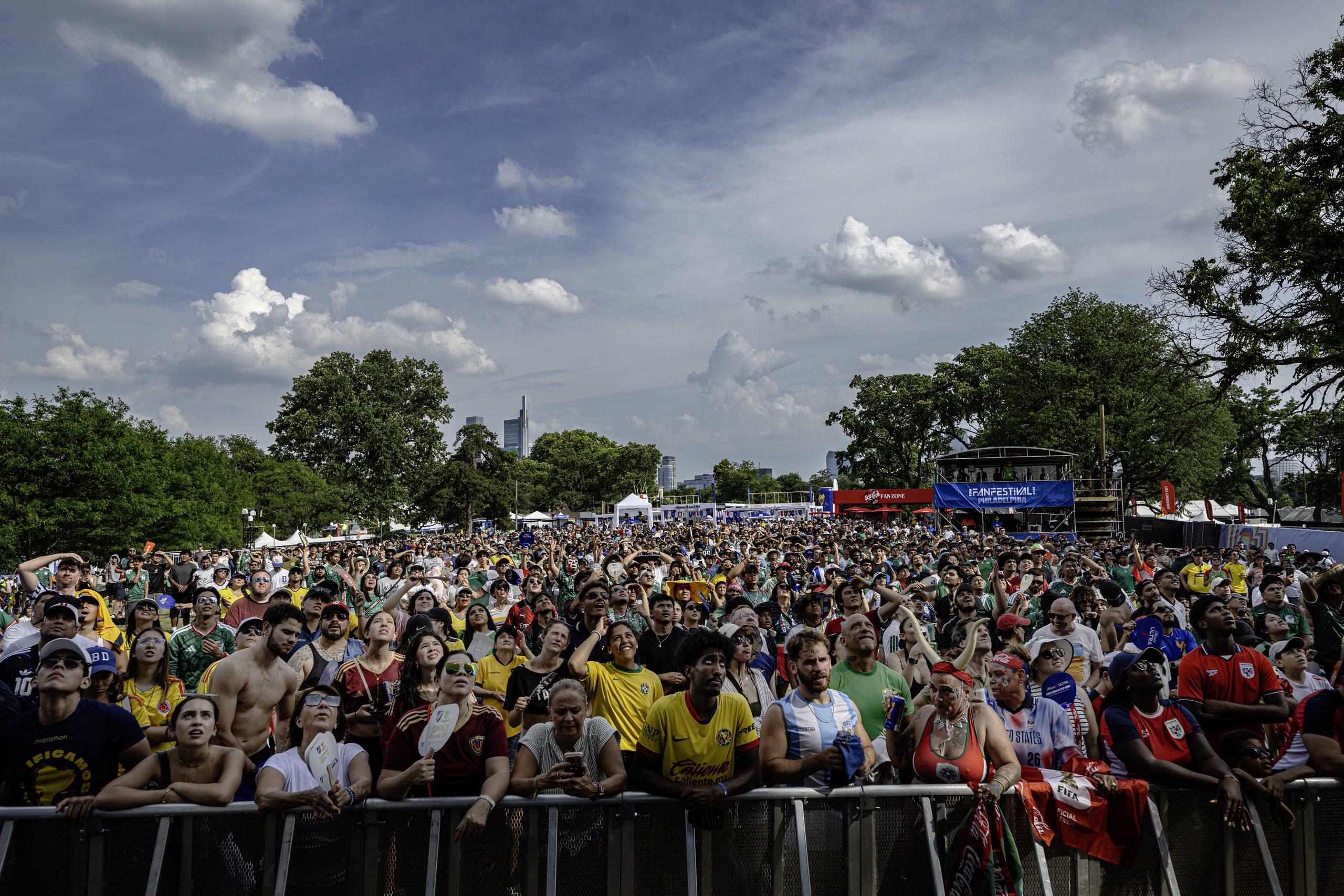
Soccer fans gathered to watch the FIFA World Cup opening match between Mexico and South Africa during the opening day of the FIFA Fan Festival at Lemon Hill on Thursday.Jose F. Moreno / Staff Photographer
3:31 p.m.
As I walk by an American Heart Association tent filled with CPR dummies, staffer Jennifer Russ asks if I want to learn CPR. She teaches me chest-compression as music that’s 100-to-120 beats per minute plays in the background. Like “Staying Alive,” these are songs you should time chest compressions to.
Russ’ manager tells me they’re on site because CPR is a skill they want people from all over the world to learn.
“And, honestly, sports is one of the main places cardiac arrests happen,” she says. “So this is great because it’s just such a big footprint.”
3:46 p.m.
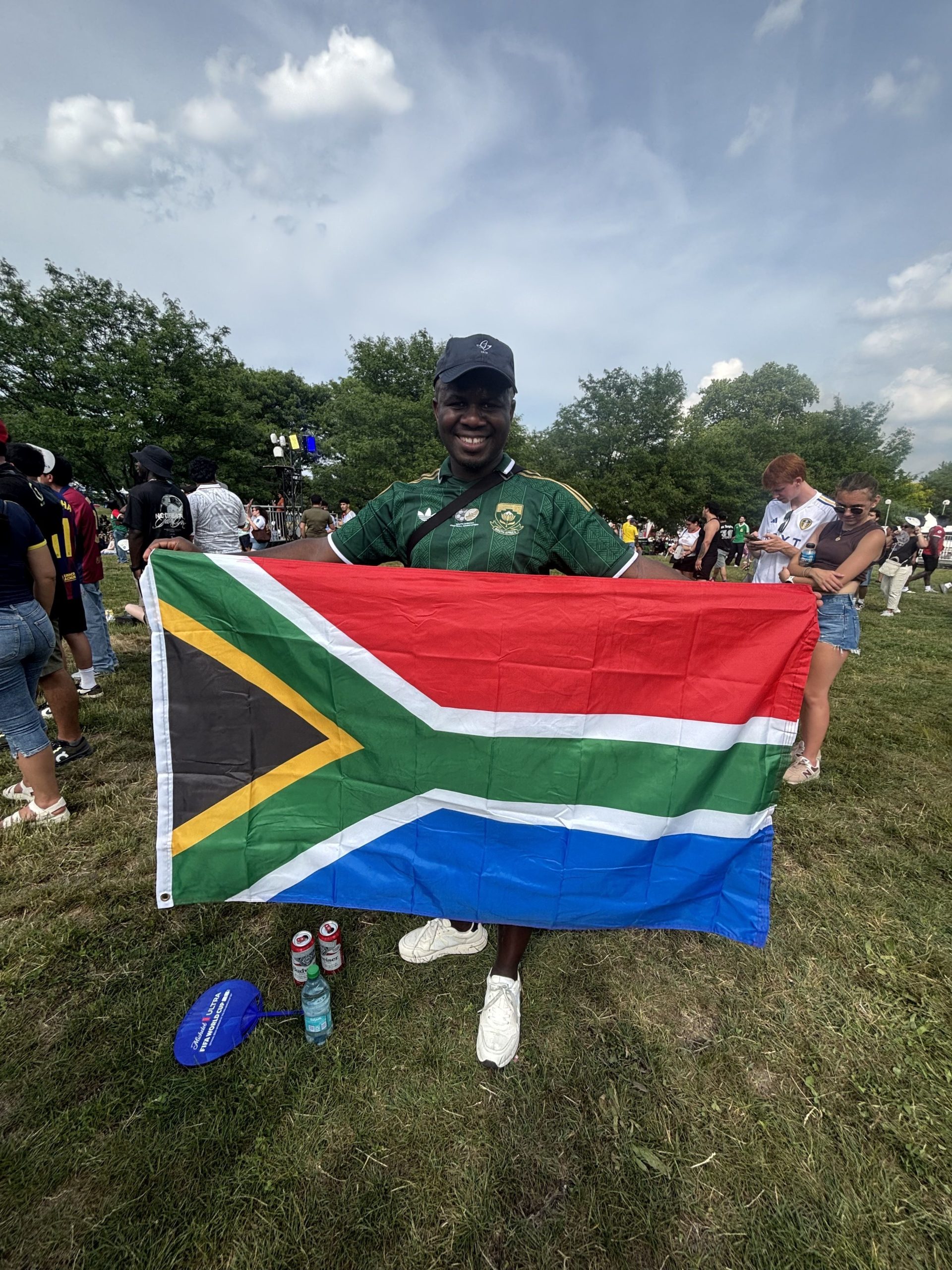
Back at the big screen showing the game, I introduce myself to Mla Mhlongo, 34, a native of South Africa now living in Claymont, Del., who came to support his national team. He tells me that when the World Cup was in South Africa in 2010, they showed all the games at outdoor parks, so Fan Fest feels like a small tase of home.
Mla Mhlongo, a South African native now living in Delaware, waves the South Africa flag in support of his home country at FIFA Fan Fest in Philadelphia.Stephanie Farr / Staff
“I’m enjoying the game with a lot of people; I’ve taken a lot of pictures with people from Mexico and people from around the world,” he says. “The World Cup is supposed to unite the world and it does that.”
4:06 p.m.
An Eagles chant breaks out in the crowd.
4:23 p.m.
I need to find shade. I head to one of the misting tents with fans, but the mist evaporates before it even reaches me.
4:38 p.m.
Once I cool down a little, I realize how hungry I am. I consider a jerk chicken wrap, until I realize it’s $24. I settle on a hot dog and soda for $14. I try to pay with cash and am told everything is card-only.
4:42 p.m.
As I sit to eat in the shade near the smaller screen, I realize that hardly a single person is on their phone. They’re tuned into the game or each other and I think about how nice — and rare — that is.
4:52 p.m.
I try my hand at the Philadelphia Union’s activations, which test your soccer shooting and passing skills by having you kick balls at a series of blinking lights. They’re fun — and one of the few activations that doesn’t require you to scan a QR code. I fail miserably at both games, at one point kicking the ball into the crowd outside the tent.
5:05 p.m.
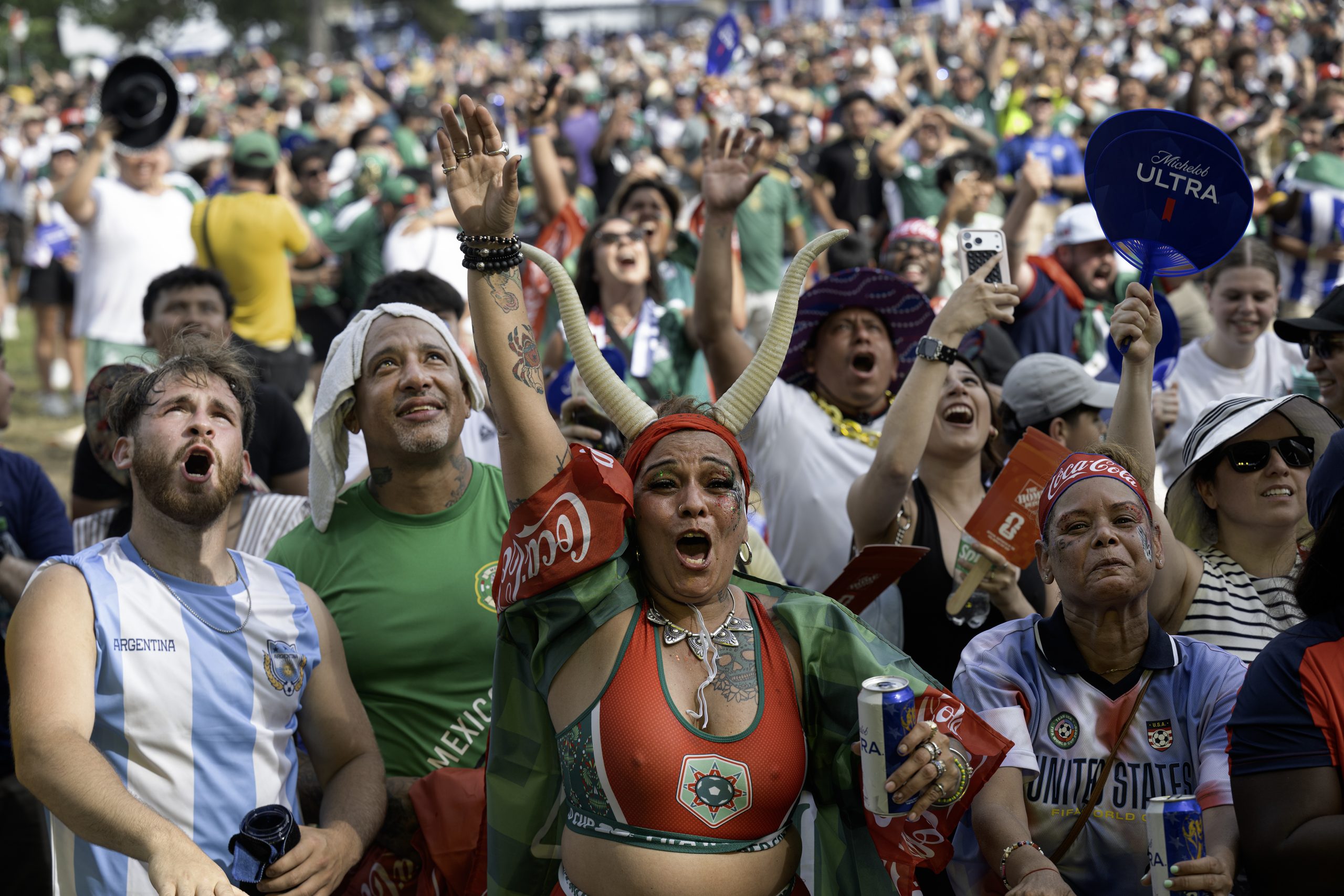
Mexican fans celebrate after Mexico scores against South Africa while watching the FIFA World Cup opening match on a giant screen during the opening day of the FIFA Fan Festival at Lemon Hill on Thursday.Jose F. Moreno / Staff Photographer
The match on the big screen ends and fans of Mexico cheer their team’s win. People make their way to the stage under the screen for the Luis Fonsi concert. I spot the two facepainted Philly ladies I talked to earlier right up against the stage barrier.
5:17 p.m.
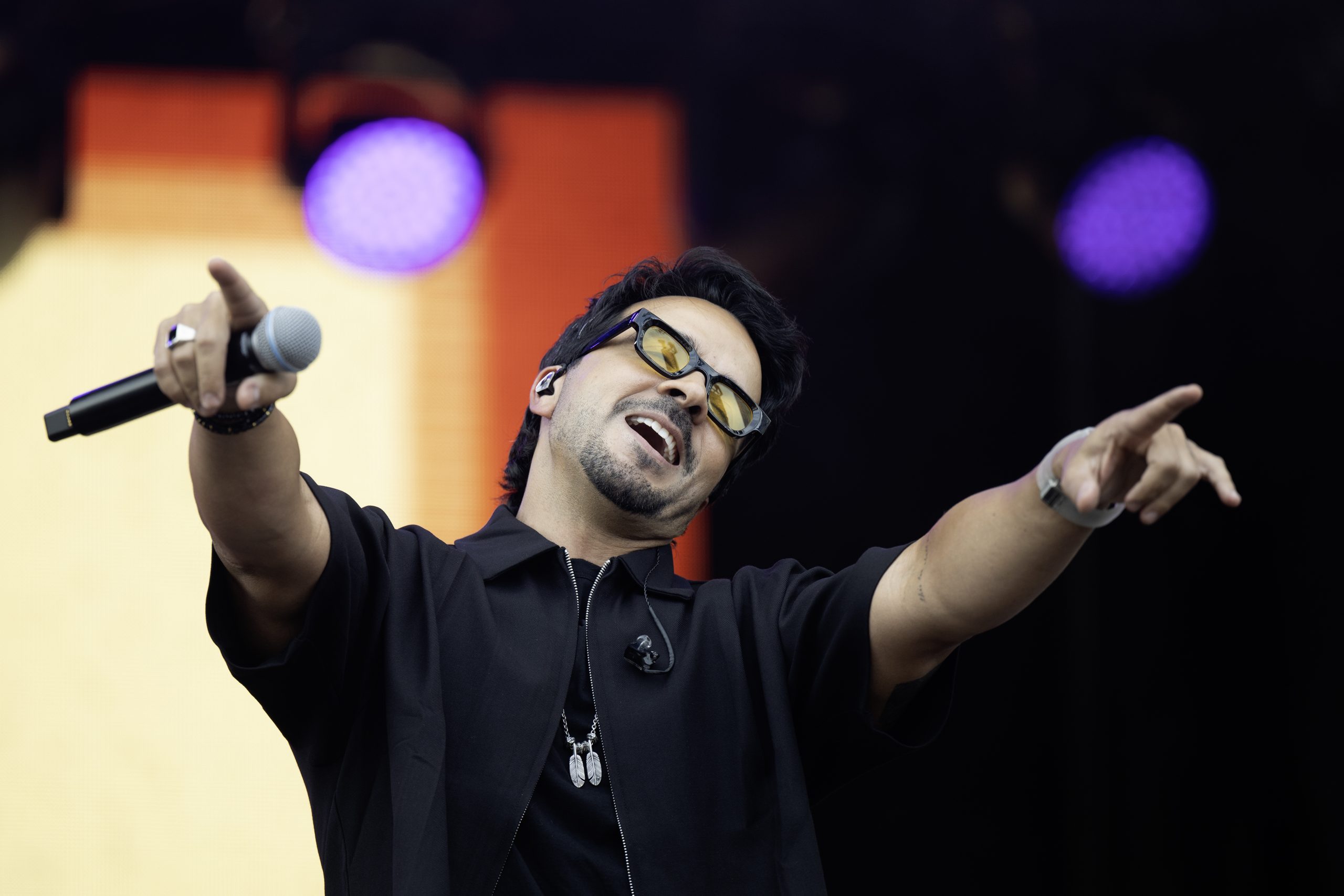
Singer Luis Fonsi performs during the opening day of the FIFA Fan Festival at Lemon Hill on Thursday.Jose F. Moreno / Staff Photographer
Fonsi takes the stage. A woman with a man in a Mexican wrestling mask, both of whom are wearing Mexican flags as capes, dance in front of me. I see a mom and daughter singing together in Spanish and a man dancing through the crowd, his arms raised. Everyone is happy and smiling.
5:30 p.m.
I leave early to beat the crowds and walk back. On my way out, I see a man at a picnic bench reading Booked by Kwame Alexander. He tells me the American Federation of Teachers is giving books away for free at the Philly Phestival Marketplace. I stop by the booth and talk with Leslie Koelsch, deputy director of communications for the federation.
“We launched the Summer Reading Cup and we’re giving away thousands and thousands of soccer-themed books this summer to get kids excited about reading,” she tells me.
5:42 p.m.
Just outside the fest, I see a sign for the “LOVE Park shuttle” and a row of four school buses. A driver tells me they’re giving free rides back to LOVE Park after the fest. It’s a wonderful service, but the buses don’t have air-conditioning and the first one isn’t anywhere near full yet, so I decide to continue on foot.
5:55 p.m.
Walking along the Parkway, I think about all the events I’ve covered there — the good and the bad, the celebrations and the protests — and I look at all the nationality flags waving in the warm breeze.
Soccer fans gather to watch Mexico play South Africa on a giant screen during the opening day of the FIFA Fan Festival at Lemon Hill on Thursday.Jose F. Moreno / Staff Photographer
I’ve had conversations with many people over the last few months who find it very hard — if not impossible — to consider celebrating anything amid the current climate of our country. But when you attend one of these events in Philly that brings people from all over the world together, you get something you don’t get when you sit at home and watch all the horrors of the news.
You realize how much people want to connect with one another, and how easily we still do, when we choose to.
Soccer fans gather to watch Mexico play South Africa on a giant screen during the opening day of the FIFA Fan Festival at Lemon Hill on Thursday.Jose F. Moreno / Staff Photographer
The World Cup is finally here, and for the next 39 days, billions of soccer fans worldwide will hang on the fate of the 48 national teams vying to be named the global best for the next four years.
There is nothing else quite like it.
If you haven’t followed it closely, try to imagine it as a kind of March Madness wherein the bracket’s unexpected turns and Cinderella runs can upend every expectation: add into it the international scope and quadrennial timing of the Summer Olympics; then top it off with the fervor of beloved religious observance — and you’ll be getting close.
My familial WhatsApp group started really buzzing two days ago, after New York City Mayor Zohran Mamdani posited the possibility of Morocco winning it all, and won’t stop buzzing until the confetti rains down on the overjoyed winners. In between will be everything from play-by-play game commentary, to status reports on Panini collections or taste tests of World Cup branded snacks, to shared photos of candles lit for the success of a favored team.
Because, when you are all in you are all in, am I right?
Thursday the opening match took place between Mexico (which, along with the United States and Canada, is co-hosting this World Cup) and South Africa.
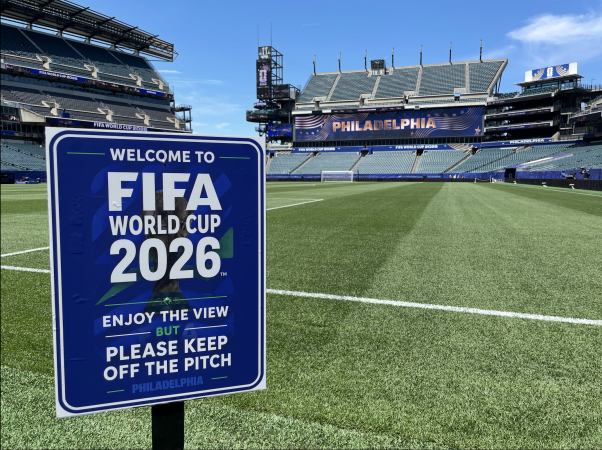
On Sunday, our own Linc-turned-Philadelphia-Stadium will host Cote d’Ivoire vs. Ecuador. Philadelphia Inquirer columnist Will Bunch has written about the Cote d’Ivoire team — which he will see in person — and whose fans came to watch them in Chester even before the World Cup started.
The Vourvouliad (the collective we’ve coined for my extended family) long toyed with the idea of attending one of the Philadelphia matches as a group — but FIFA’s dynamic pricing put the kibosh on that by making every seat cost a small fortune.
But we’ll make do — as we have every mundial before this one — watching from afar.
Truth is, many of us are also approaching this World Cup with more than a little bit of trepidation. We will watch the World Cup matches taking place on U.S. soil with bated breath, given President Donald Trump’s xenophobia and his administration’s targeted deployment of Immigration and Customs Enforcement and other Department of Homeland Security agents to Black and brown cities, communities and gathering spaces.
But we longtime fans have too many great memories born of our experiences of soccer to boycott the World Cup altogether — even though some have called for that.
In fact, most of the fans that I’ve spoken with lately are consumed by the exact opposite: trying to find a way to get into a World Cup stadium.
Ecuador’s Moisés Caicedo carries the ball during a World Cup 2026 qualifying soccer match against Argentina at Banco Pichincha Stadium in Guayaquil, Ecuador in September.A
Felipe, who — perhaps channeling Pelé, Neymar and countless other soccer icons — only wanted to go by one name, will be at the Philadelphia opener Sunday, rooting for his home country of Ecuador.
“I will be going to the stadium with my family. We will also be tailgating with some other friends from Ecuador before the game outside the stadium,” he told me. “I think it will be a great opportunity to meet other soccer fans there.”
“I am really excited for the World Cup, not only because Ecuador’s national team is in great shape but also because it is a once in a lifetime [opportunity] to have your home country’s national team playing a World Cup in the city you are living in,” Felipe added. “I wish the organization would take into account the fans’ enjoyment before the profit, but I guess this is the business model we sadly see in many other sports as well.”
France’s Kylian Mbappé, left, scores his side’s third goal during a World Cup 2026 group D qualifying soccer match between France and Ukraine in Paris in November.Christophe Ena
Ben Rush-Goebel, who moved to Philadelphia from France more than a decade ago, probably won’t be at France’s match on June 22.
“The tickets are really too expensive,” he told me, “so unless I find a magical way to get to the Philly game, I will be watching it with my friends. I can’t wait to go to the FanFest to watch this game and others. Might also go to a bar. Fado has always been our spot. In 2018, when France went to the finals to beat Croatia, we were in the rain on South Street watching from the screen set up by Brauhaus Schmitz. This was the most amazing time as we rushed after the victory to buy cheap champagne to celebrate.”
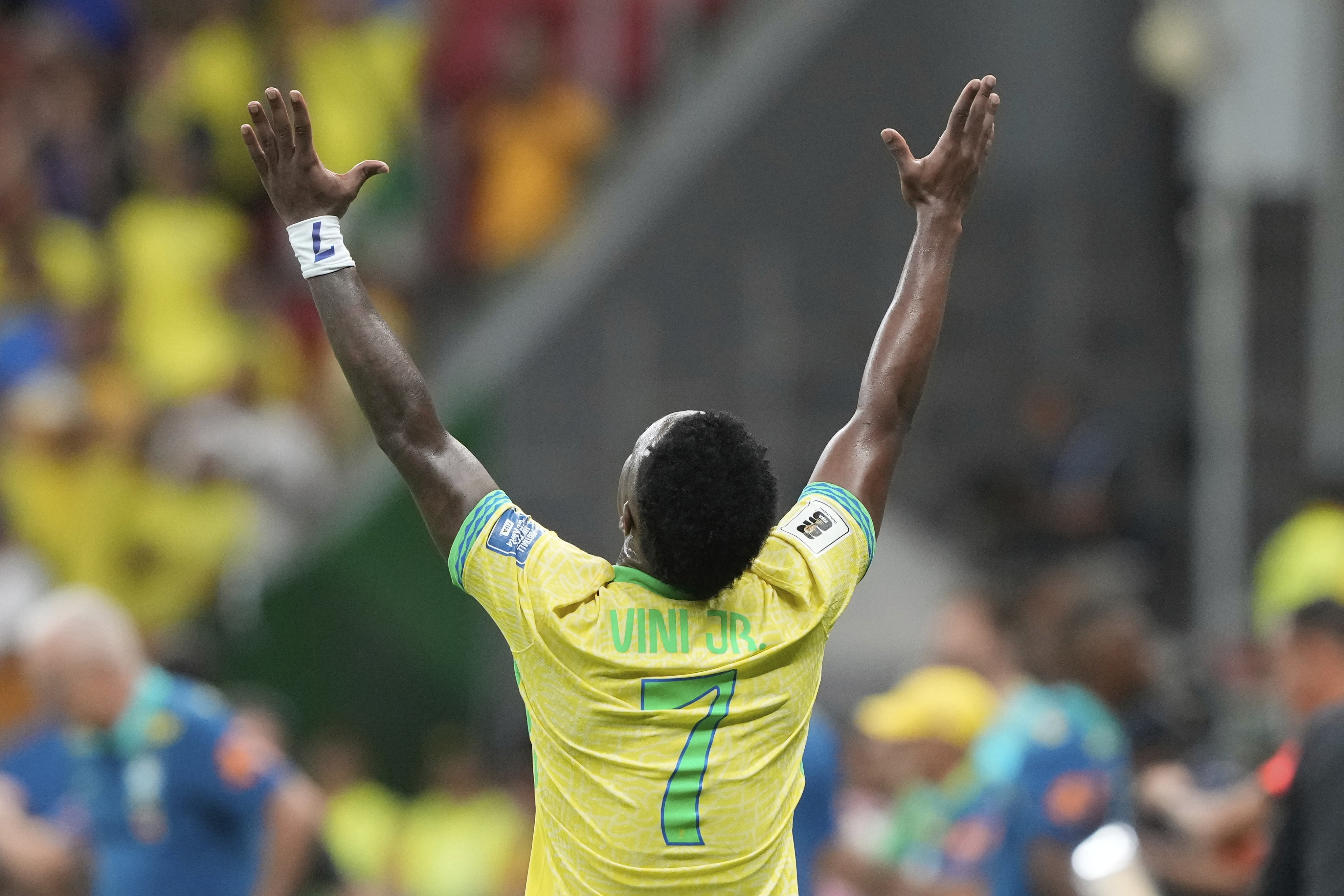
Brazil’s Vinícius Júnior celebrates after scoring his side’s second goal against Colombia during a FIFA World Cup 2026 qualifying soccer match at Mané Garrincha stadium in Brasilia, Brazil, in March 2025.Eraldo Peres
Rob Levin, raised in Brazil and rooting both for their Seleção and Argentina’s Albicelestes, will be watching Brazil play in Philadelphia June 19 from home, or with others at a watch party.
“Chevere to have the World Cup here,” he said. “It’s a shame that the ticket costs are so high and travel to and fro is so fraught — I hope all the fans behave and all players are treated well and with respect — no place for politics in these games. May everything go as smoothly as possible, as it should.”
The Union’s Danley Jean Jacques, right, is the first active player from the Philadelpha club to play in a World Cup, on the Haitian national team.Jessica Tobias
Numa St. Louis, whose team, Haiti, is participating in the World Cup for the first time in more than 50 years, hasn’t given up on seeing the team play against Brazil on June 19.
“I’m still hoping to score a ticket for the Haiti-Brazil game,” he told me, “but if not, I’ll be enjoying the tournament the Haitian way — at community watch parties, breaking bread with friends and family, dancing, and vibing to Haitian music and rhythms while cheering on our team.”
“The entire Haitian community is energized by the opportunity to support our national team and celebrate this historic moment together …Win, lose, or draw, this team has already made us proud,” he added.
Like Levin, St. Louis worries about the welcome players and international fans might feel in the U.S. venues. “I have some concerns about how the United States is being perceived by many international fans,” he said. “Reports regarding the treatment of an African referee, Senegalese players, and issues involving Iranian supporters have raised questions about whether the spirit of the tournament is being fully embraced. The World Cup should be a celebration of cultures, people, and the beautiful game. It should feel welcoming, joyful, and inclusive for everyone.”
And it should resonate, even years later.
“My best soccer memory goes back to 1996, the first time Ecuador beat Argentina in Quito,” Felipe told me. “I was 12 years old and went to watch the game at the stadium with my grandfather who was a huge fan of soccer.”
Rush-Goebel points to that 2018 moment on South Street after France’s win as his favorite soccer memory: “A whole lot of French people, many of whom were my friends, my wife, [all of us] stressing together, in the rain, to an amazing victory!”
For myself, I have fond memories of seeing Mexican immigrants in Philly dressing their Jesus figures in El Tri’s national jerseys before Mexico played in the 2014 mundial — but you have to go all the way back to the 1970 World Cup in Mexico for my best memory.
Sure, I recall snippets of the televised semi-final “game of the century” between Italy and West Germany, and maybe even Pelé’s magnificent header that opened the final between Brazil and Italy…
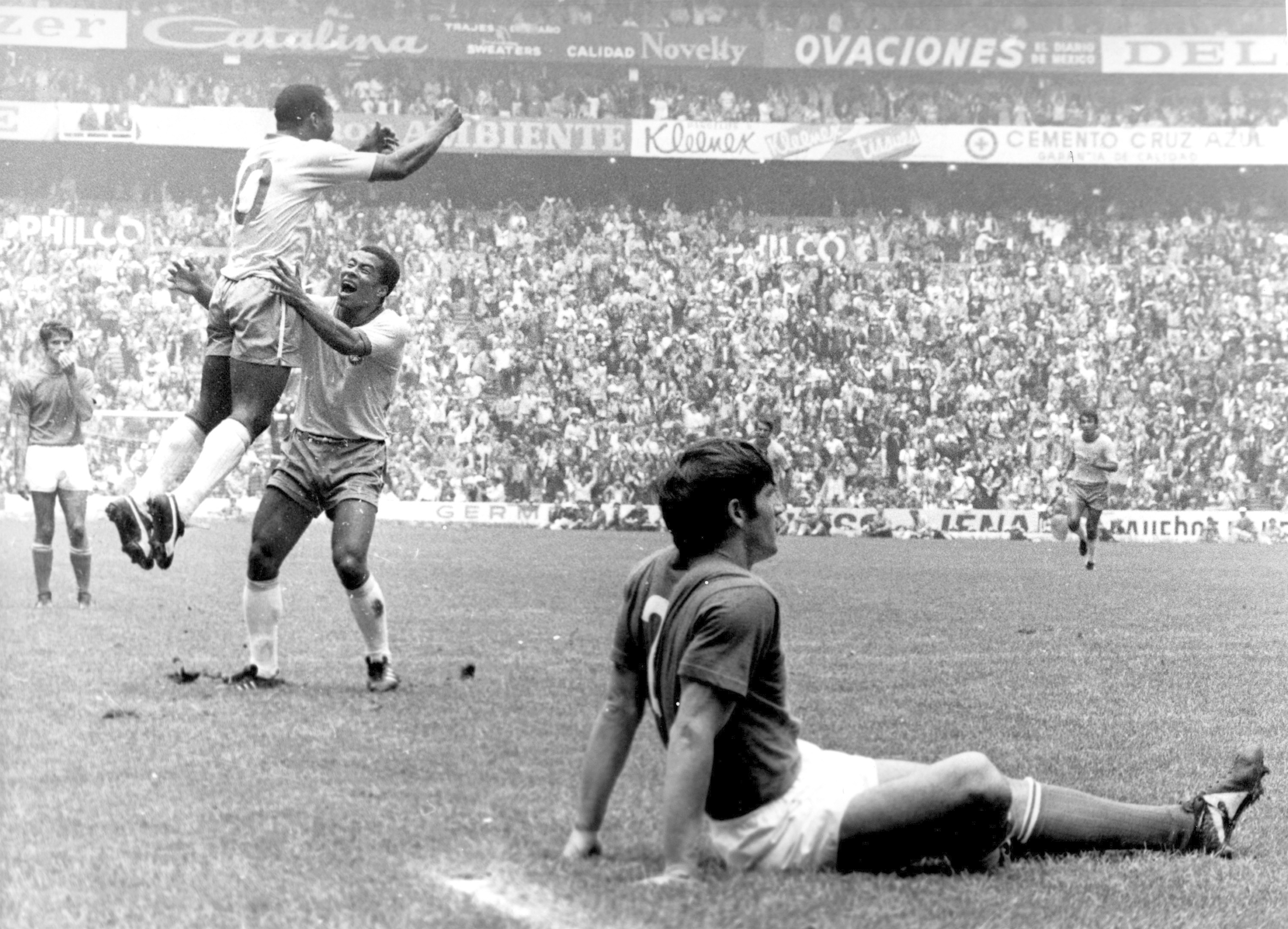
In this June 21, 1970 file photo, Brazil’s Pelé jumps for joy after scoring his team’s first goal against Italy in the first half of a World Cup final at Azteca Stadium in Mexico City, before winning 4 – 1. Kurt Strumpf
But what lives most vividly in my memory played out during the long lent leading up to those games.
I’m a kid, standing under the eucalyptus tree in my grandmother’s house in Guatemala with my brothers, trading Panini we purchased for centavos at the corner store in Zone 7 so that we could fill every team roster with stamps in our albums. We talked fútbol nonstop — me, who can’t stand sports, and my brothers, who love soccer and baseball with equal passion — and cheerfully bickered about who would go the distance.
For me soccer will always be about those two people I love, who I want to keep talking fútbol with until the day I die. The beautiful game is beautiful precisely because of the profound connections it invites and honors — be it with family members, friends or strangers across continents and time zones.
Or with a city, hosting its first ever World Cup matches with characteristic style and grit. May you hold our deep and indelible memories forever, Philadelphia.
Welcome to Shackamaxon, a weekly politics column focused on what’s happening at City Hall and in Harrisburg. It is named for the place where the Lenape chiefs would meet to conduct the people’s business, which is now known as Penn Treaty Park. This week’s column covers ward leader elections, efforts to make community events affordable, and a U-turn on some painful cuts at the Philadelphia School District.
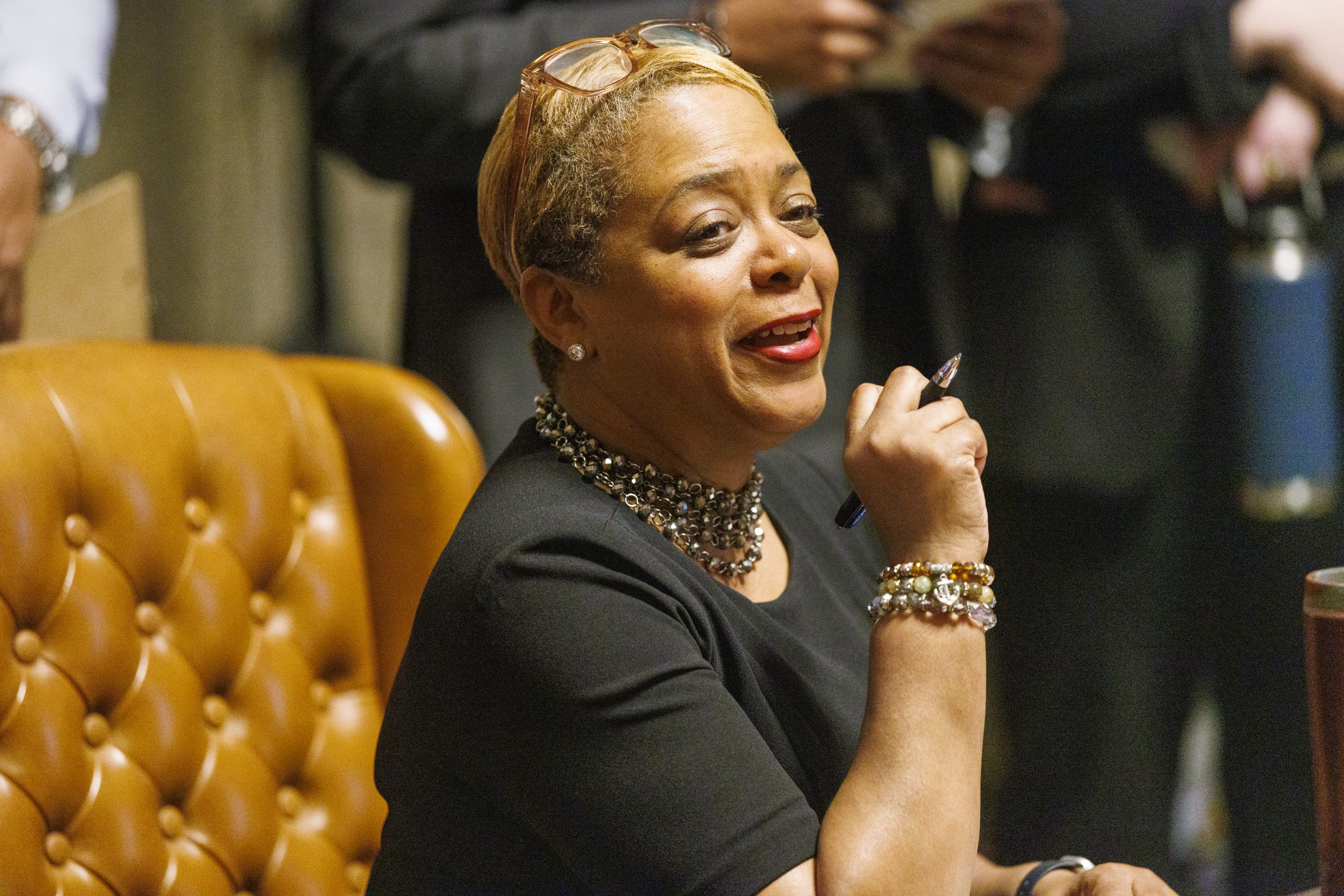
Council member Cindy Bass has been widely condemned for declaring herself the winner of a controversial election for the leadership of the 22nd Ward.Alejandro A. Alvarez / Staff Photographer
The dinosaur groans
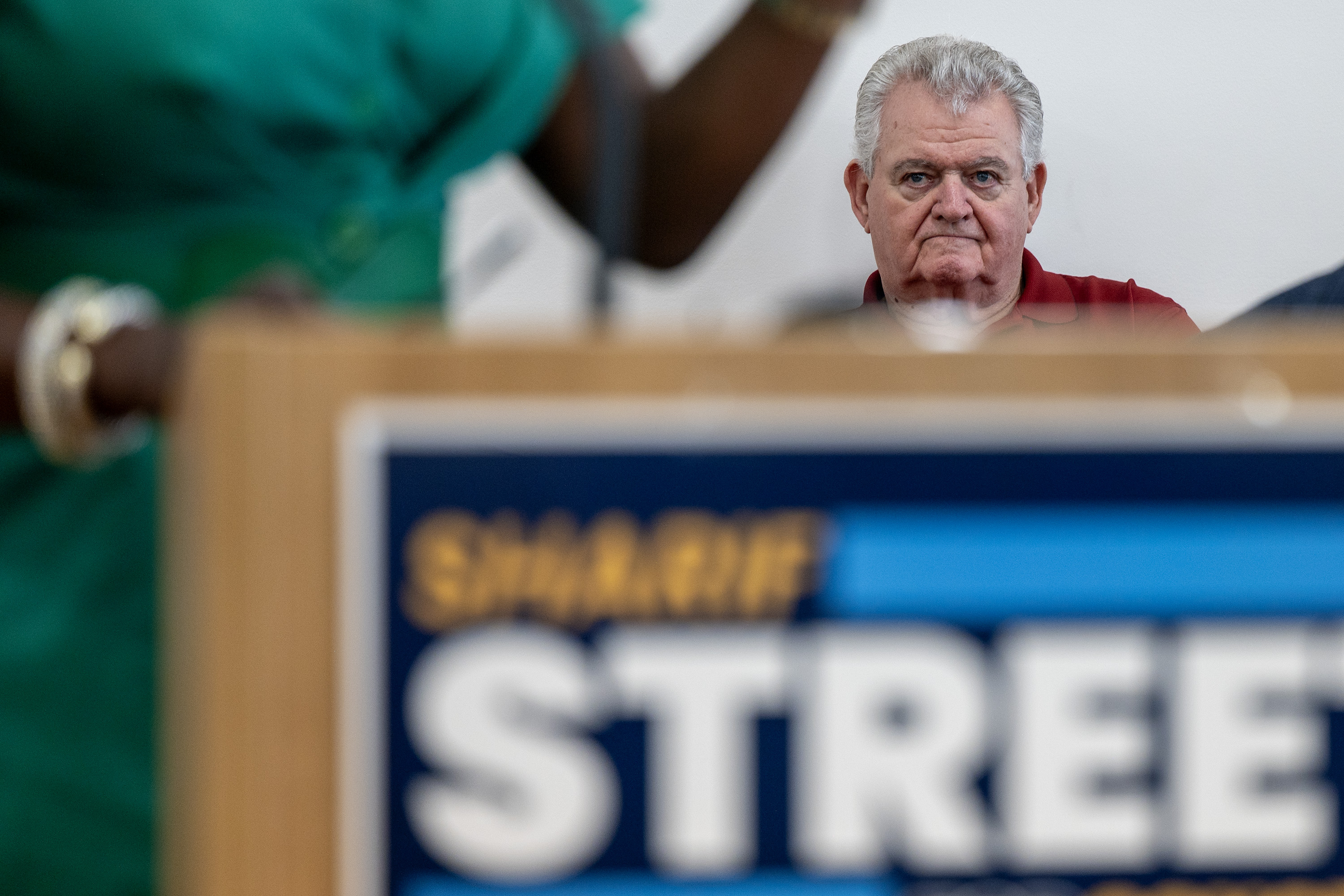
After the primary elections three years ago, Philadelphia Democratic Party Chairman Bob Brady was in a celebratory mood. In an open letter posted on social media, Brady boasted that the “dinosaur roared,” a playful, self-deprecating reference to the party establishment’s wins over progressive and reformist alternatives. During this week’s ward elections, however, establishment candidates had little to brag about. Wards That Work, a coalition of left-leaning groups, announced that candidates they supported had won six of the city’s 69 ward leadership positions. While the party’s old guard still holds a significant lead in the total number of ward leader positions, it is clear where the energy and enthusiasm of the party are headed. The insurgent wards, and the wards they’ve contested but haven’t yet prevailed in, are filled with committeepeople. The machine-dominated wards are filled with vacancies.
Fred Dedrick, an elected committeeperson, told me that current ward leader and 8th District Councilmember Cindy Bass had initially told folks to show up by 7:15 p.m. if they wanted to participate in the reorganization vote. After the meeting finally began at 8 p.m., she quickly called for a voice vote, declared herself the winner, ignored requests for a roll-call vote, and sent everyone home.
Under the party’s own rules, Brady told The Inquirer’s Sean Collins Walsh, a roll-call vote must be taken if it is requested.
Bass’ tactics drew widespread condemnation. Even U.S. Rep. Brendan Boyle, who usually stays out of local governmental issues, said he was “absolutely disgusted” by what he saw in a video of the vote, and made a direct comparison to President Donald Trump’s repeated efforts to “obstruct our democracy.”
ThePhiladelphia Democratic City Committee, for its part, is planning to host a revote between Bass and her challenger, Octavius Price.
This is far from Bass’ first controversy. Her tenure on City Council has been characterized by high-profile disputes with some community organizers. Bass’ critics cite what they describe as a lack of consistency, particularly on issues of development: When Bass opposes a project, like the proposed reuse of the Ada Lewis Middle School property, she cites a lack of popular support. When she’s behind an effort — like the decision to grant development rights at the former Germantown YWCA — the community’s viewpoint isn’t taken into account.
That kind of vacillation could be part of why Bass won her most recent primary election in 2023 by just over 400 votes, despite her opponent having little in the way of name recognition.
Former City Council member (and prominent real estate developer) Allan Domb cautioned his colleagues in city government to move slowly before they acquired the former Inquirer building. They probably should have listened to his advice.Tom Gralish / Staff Photographer
Avoidable boondoggle
In 2016, then-Councilmember Allan Domb raised concerns about then-Mayor Jim Kenney’s plan to turn the former Inquirer building on North Broad Street into the new police department headquarters. Domb’s objection was basic common sense. If the city is going to spend a quarter of a billion dollars, shouldn’t we at least get an appraisal first? Especially given that a developer had spent just $22.7 million — a fraction of its expected price tag — to acquire it in the first place.
An Inquirer analysis suggested that the city had, in fact, overbid. The city ended up paying around $90 per square foot, which is higher than the $71 per square foot paid for a comparable property, the former GlaxoSmithKline headquarters that sold three years before. Since 2018, the value of commercial real estate in Center City has declined. The sprawling Centre Square complex near City Hall sold for under $60 per square foot.
In fact, in addition to buying the building without an appraisal, the city also agreed to a yearslong leasing agreement, which allowed the owner, developer Bart Blatstein, to utilize historic tax credits.
Now the bill has come due, with city officials forced to either buy the building outright at its inflated price or pay double in rent payments while searching for a new location, which would also likely cost hundreds of millions of dollars to get up to standards.
While buying the building may be the least bad option at this point, the entire situation is a frustrating reminder of how defensive and parochial city government can be. Despite having a bona fide real estate expert in Domb available to assist their decision-making, city officials embarked on the plan without asking for his input ahead of time.
A report by City Controller Christy Brady found that Philadelphia’s cumbersome rules for event planning are getting in the way of some long-standing civic traditions.Tom Gralish / Staff Photographer
Haphazard hosting
With the World Cup having kicked off and America preparing to celebrate its 250th birthday, you might think the city would be filled with local events, festivals, block parties, and other revelry spreading to all corners of the cradle of liberty. Thanks to the city’s stringent regulations and a stated lack of resources, there will be fewer events than many Philadelphians might have hoped for.
Hosting events in Philadelphia is a slog during the best of times. City Controller Christy Brady issued a report earlier this year that reiterates findings reported in The Inquirer: The high cost of security and convoluted permitting process is shrinking, pushing out, and eliminating many long-standing civic traditions.
This year was supposed to be different, thanks to the Neighborhood Celebrations Grant Fund. But organizers told Inquirer reporters that they are running into unforeseen obstacles, including blackout dates that extend from June 11 to July 18. This means neighborhoods are being restricted at the same time when demand is highest. While security concerns are a legitimate issue, giving people an option to celebrate closer to home could be the key to avoiding the traffic, parking, and crowding concerns that inspire caution in the first place.
Schools switch
After weeks of debate over the proposed rideshare tax and the insistence that a failure to pass it would result in the elimination of 340 positions in the Philadelphia School District, officials have backpedaled. Apparently, there will be no cuts after all.
The district’s revenue needs are what they are, but the way city officials handled the situation fostered confusion and cynicism. Threatening to make cuts without additional revenue, only to cancel the cuts despite failing to secure new money, makes everyone look opportunistic. What was the fight all about in the first place?
The compromise, however, required sacrifices elsewhere. The city had to raid its capital budget and cut some of the Commerce Department’s budget for contracted services, per a statement from City Council President Kenyatta Johnson’s office. More painful cuts could be on the horizon for next year’s budget if a new revenue source isn’t found.
Tuan Van Bui’s bad luck arguably started the day he was born in 1970 in the city then known as Saigon — the child of a Vietnamese woman and one of the thousands of U.S. soldiers who fought in Southeast Asia for nearly two decades.
Van Bui never knew his dad, but he quickly learned what it was like to grow up in a hostile homeland that called the estimated 25,000 to 50,000 Amerasian kids like him “children of the dust.” The communist government that won the war in 1975 denied him any education past grade school.
In 1990, Van Bui caught a break — of sorts. In the late 1980s, a U.S. Congress struggling to come to grips with the mess America had left behind passed the Amerasian Homecoming Act. That allowed Van Bui to legally immigrate to America and settle in Philadelphia’s Kensington neighborhood, but with no real safety net.
His first two decades on U.S. soil were rough, marked by occasional run-ins with the law. But in middle age, Van Bui had settled into a more comfortable American life. He married a fellow Amerasian immigrant in 2017, earned some money from construction and other odd jobs, and indulged his quirky hobbies like stamp collecting. He was paying back his fines from the bad years and — although threatened with a removal order — he religiously showed up for check-ins with U.S. immigration officials.
His family says Van Bui was doing everything the right way.
Still, it was with much trepidation that Van Bui showed up with his wife at the Philadelphia immigration office on Aug. 18, as the reelected Donald Trump and his team pushed for a massive increase in arrests and deportations. What happened next, as his wife related to family members, was even worse than they had feared.
Tuan Van Bui in an undated family photo. Van Bui, 55, died in immigration custody at the Miami Correctional Facility in Bunker Hill, Ind., on April 1.Handout art
Van Bui’s stepdaughter, Ly Wang, told me this week that U.S. Immigration and Customs Enforcement officers were waiting. “Before he could even really check in, they saw him, they spotted him,” she said. “The ICE agents ambushed him, and they shoved my mom out of the way. They tackled my stepdad … shoving him into a wall because he’s a big dude.” Wang said the ICE agents threw Van Bui’s paperwork in the trash and warned her mom, “You need to leave before we make it a problem for you, too.”
Van Bui’s arrest that August day was the start of a seven and a half month Kafkaesque journey through the rancid food and 4 a.m. wake-ups of ICE detention sites, first in upstate Pennsylvania, and then nearly 700 miles away in rural Indiana.
It ended on April 1. That morning, Van Bui had made his usual phone call to his wife and, despite the routine complaints, sounded fine. The next call came that night, but from the chaplain at Indiana’s Miami Correctional Facility. Van Bui had suddenly collapsed and died. He was just 55.
It took more than two months for Wang and her mom — who herself had suffered a debilitating stroke in the days right after watching Van Bui’s violent arrest — to deal with Indiana authorities, obtain some additional testing, bring his body back home, and secure a spot for him in the Fernwood Cemetery in suburban Lansdowne, where he was buried on June 5.
But his family’s many questions have not been laid to rest.
Why was Van Bui’s ICE detention dragged out for so many months when — given the wretchedness of life behind barbed wire — he and his family would have preferred deportation to Vietnam, even if he hadn’t been there for 36 years? Why wasn’t Van Bui given more medical attention, as doctors noted his swollen knees and other signs of worsening health?And why is ICE’s account of Van Bui’s death so different from what other detainees told the family — that staff did nothing at first while they, the detainees, attempted CPR until paramedics finally arrived a full hour after the collapse, too late to do anything but declare him dead?
A 55-yr-old Vietnamese immigrant, Tuan Van Bui, died at the Miami Correctional Center in Indiana in government custody last week, marking the 46th detainee death during the #Trump administration's #immigration crackdown. https://t.co/vHgj8qtncz
And a bigger question hangs over all of this: Why did a redemption-seeking United States government invite Van Bui to come here from the other side of the world, only to leave him to fend for himself before brutally arresting him, dumping him in a hellhole prison, and allegedly watching him die from chronic and then acute neglect?
“I think he fully considered America to be his home, and he was very comfortable here despite even all the challenges against [Amerasians],” Wang said. What happened to Tuan Van Bui is in many ways mystifying, but he is also not unique.
Even as the Trump regime’s deportation raids have sometimes dominated the headlines, much of the attention has focused on the targeting by masked ICE and Border Patrol agents of brown and Black neighborhoods, such as Latinos in Los Angeles and Chicago or the Somali community in Minneapolis. The government’s stepped-up arrests of Asian Americans have largely flown under the radar.
“There’s just a severe sense of fear in the community,” Nancy Nguyen, the executive director of Philadelphia-based VietLead, told me, adding that the message “for the Asian communities is that they are not wanted here under Trump.”
A painful irony is that the hardest hit have been refugees for whom the United States opened its doors in the latter years of the 20th century — a belated acknowledgment that their plight was often the result of America’s violent and unpopular war in Southeast Asia. This winter in Minnesota, masked immigration raiders frequently targeted the Hmong people from Laos who’d once been welcomed for their role in helping American troops and the CIA over there.
Nguyen said that nationally, more than 1,000 Vietnamese immigrants and more than 500 Laotians were deported in 2025 — compared with fewer than 100 a year before the second coming of Trump. A few have been sent to remote African nations like Eswatini, where they don’t know any people or the language. Many more have been languishing, as Van Bui did, in the cruel limbo of ICE detention — sometimes with lethal consequences. Nguyen said that of the 50 or so ICE detainees who’ve died under the Trump regime, nearly a third were of Asian descent.
No one deserves to die in ICE custody. Every person in detention centers deserves basic human needs like water and safe shelter. My visit to Miami Correctional Facility raised concerns that should not be ignored. pic.twitter.com/JznLZKhpff
Van Bui was actually the second Asian American to die at the Miami Correctional Facility — run by the state of Indiana, which contracts with ICE — since February. Lorth Sim, 59, who came to America in 1983 as a refugee from the brutal dictatorship of Cambodia’s Pol Pot, also collapsed at the facility, where officials also blamed heart disease.
What’s more, Van Bui is the third member of Pennsylvania’s Asian community to die in immigration custody in less than a year. In January, 46-year-old Cambodian American Parady La was arrested outside his Upper Darby home and died three days later at Philadelphia’s federal detention center, reportedly while undergoing narcotics withdrawal. Last August, 32-year-old Chinese immigrant Chaofeng Ge died at the upstate Moshannon Valley Processing Center five days after his arrest near Harrisburg; family members and advocates have challenged ICE’s assertion that his death was a suicide by hanging.
In Van Bui’s case, ICE issued a fairly detailed statement that insisted the Amerasian detainee — who’d suffered a serious stroke on Christmas Eve 2023 and used a cane for mobility, among other preexisting health problems — was properly monitored and treated amid clear signs his condition was deteriorating, with a decreased platelet count and then swollen knees indicating “obstructive pulmonary disease.” It also claimed — disputed in the accounts other detainees have offered Van Bui’s family — that staff at the Indiana facility responded quickly to his April 1 collapse with CPR and a defibrillator before he was pronounced dead at 6 p.m.
Whether ICE and Indiana corrections officers offered Van Bui adequate medical care is still up for debate, but what the government definitely did not offer was empathy. As with other ICE custody deaths, grieving relatives were slammed with an official press release that denied Van Bui’s humanity.
“Criminal illegal alien from Vietnam passes away at Miami Correctional Center” was the headline on ICE’s press release, which stressed Van Bui’s encounters with law enforcement when he was a younger man.
His stepdaughter Wang told me the litany of criminal charges in the release includes some arrests for which he was not charged or convicted, and that he was diligently repaying fines for other past violations. But what hurts more is the regime’s cruel characterization of a human being whom Wang described as a soft-spoken, gentle giant who never turned down a request for help from his Kensington neighbors and — “a nerd in a way” — loved to scour flea markets for cuckoo clocks or rare coins or stamps.
Chaofeng Ge, 32, died in August at the Moshannon Valley Processing Center while detained by ICE.Courtesy of David Rankin
She said he’d told her little about the first 20 years of his life in Saigon (renamed Ho Chi Minh City after the war), but did admit that the abandonment of his American GI father weighed on him.
“Something that he did tell me and just confided in me was that he never felt like he grew up feeling wanted, you know? Starting with his dad not being around, and his mother being very busy and being a single parent,” she said. “So he had kind of a rough start.”
Amerasian kids were treated cruelly in Vietnam — as reminders of the hated Americans who’d invaded their country — and typically denied any education beyond grade school, which apparently was the case for Van Bui. The United States seemed to acknowledge that harsh reality when Congress and the Reagan administration enacted the special AM-1 visa that allowed Van Bui to come here in 1990. But the new arrivals didn’t always adapt easily to a home where they were reminders of a war that most Americans wanted to forget as much as the Vietnamese.
“My impression that he got into kind of the wrong mix of crowds,” said Wang, who first met her future stepfather when she was a teenager. “I see him as someone who, because he didn’t have that much of an education … that you could manipulate, unfortunately.”
Like many others, Van Bui faced an immigration judge’s removal order from the 2000s because of his legal problems, yet was allowed to remain as long as he continued his regular check-ins — which he did until his violent arrest last August.
Van Bui was initially sent to the large Moshannon Valley site in Clearfield County, Pa., then transferred in December hundreds of miles west to the lockup in tiny Bunker Hill, Ind., where, since last year, ICE has promised the state of Indiana $291 a day — four times the normal rate — to house some of its rising numbers of detainees.
In just a short period of time, complaints from detainees, advocates, and Indiana Democratic Rep. André Carson — who visited the site just days after Van Bui died — that conditions at Miami Correctional Facility are cruel and inhumane have mounted. Carson said two detainees he met described “heartbreaking” conditions, and that a lack of functioning intercoms may have played a role in Van Bui’s death. The American Civil Liberties Union of Indiana settled multiple suits from state inmates — predating the 2025 deal with ICE — alleging pitch-black conditions from windows covered with steel plates, and frequent episodes of cells flooded with wastewater.
Two deaths this year at Miami Correctional Facility's ICE detention space is getting attention.https://t.co/1pzcfwUQo9
Wang said it took weeks to even learn Van Bui had been moved to Indiana, and when they did reconnect, he complained of freezing-cold winter conditions and horrible food, even as they were awakened by guards for breakfast at 4 a.m. Things were so bad that Van Bui actually wanted to be deported back to Vietnam, but despite finally seeing a judge in February, the government continued to hold him in these gulag-like conditions.
Until he died.
During the agonizing weeks Van Bui’s wife and stepdaughter worked to bring home his remains — an effort which included this still active GoFundMe page — they heard from other detainees, most of them also Asian Americans. One Vietnamese native from Philadelphia who successfully won his release in a habeas corpus case tracked down Van Bui’s wife for a surprise visit, to tell the family his version of what really happened on April 1.
“What we’ve heard from the cellmates is that he collapsed, and they immediately called for help, and no one came,” Wang recounted. “So the cellmates themselves, they did the CPR. None of the staff did CPR. The cellmates did the CPR. They … did CPR and chest compressions relentlessly, with somebody else pressed up against the gate of the jail cell just yelling, ‘Help! Help!’”
They allege there was no help, not right away.
“From their view, what they saw was the correction officer sitting there staring at the video and not moving at all,” Wang continued. “It’s reported that [the corrections officers] waited at least around 15 to 20 minutes before they got up, locked down all the cells, and then finally went over to see what happened. Once they came over, they bought a defibrillator, except they did not know how to use it, so they had to call the paramedics. By the time the paramedics showed up, they declared him dead, which was about an hour later than he actually collapsed.”
I asked a spokesperson for the Indiana Department of Correction about what really happened on April 1, but was referred to ICE. And ICE, as with past columns, has not responded to my request for more information. All we have is ICE’s official report, which insists that detention center staff were the ones who performed CPR, that the defibrillator was used — and which offers no timeline for how long it really took for the paramedics to arrive.
Those explanations aren’t satisfactory to Van Bui’s family, or to immigration advocates here in Philadelphia or the ACLU back in Indiana, who continue to press for answers while they explore possible legal action.
But there are questions that are bigger than any courtroom. Why are Asian communities that, in those post-Vietnam War years, drove the comeback of America’s cities and older suburbs now targeted by a terror campaign from the U.S. government? Why did the United States abuse innocent people from Southeast Asia — and especially the Amerasians — twice, first in a pointless war and now in a gulag archipelago on American soil?
What did Tuan Van Bui do to deserve neglect and death in a dark, dank cell hundreds of miles from the people who loved him?
When his family finally held his services at a Chinatown funeral home, it wasn’t known if his wife would be healthy enough to attend. She did show up briefly at his wake, just long enough to utter these anguished words that Ly Wang posted on their GoFundMe page.
“You said you would come home! Why didn’t you come home?”
Early Tuesday morning, President Donald Trump claimed, yet again, that a peace deal with Iran could be closed “in two or three days.”This was the 38th time since a U.S.-Iran ceasefire in April that he predicted a deal was around the corner.
But never mind.
By later Tuesday, Israel was heavily bombing the historic city of Tyre in southern Lebanon, despite Trump’s earlier, profanity-laden demand to Prime Minister Benjamin “Bibi” Netanyahu to stop such attacks.
Yet, Bibi seems determined to occupy southern Lebanon, drive out its population, and raze its villages and towns in an effort to finally stop Iran’s Shiite proxy militia Hezbollah from firing into northern Israel. Meantime, Tehran insists there will be no deal on opening the Strait of Hormuz, and no nuclear talks before ending Israel’s attacks on Hezbollah.
So Lebanon has become the new flashpoint of the conflict. Events there will be more critical to the outcome of the Iran war, I believe, than the limited U.S. military strike on Iran in retaliation for the shootdown of a U.S. helicopter near the Strait of Hormuz.
Why so? For me, Lebanon provokes a painful case of déjà vu, because I spent two years as a foreign correspondent covering the 1982 Israeli invasion of Lebanon, and watched it give birth to Hezbollah, unnecessarily. I watched Israel — and the United States — make mistakes they are repeating today, which will trap both of them in a self-induced Iran quagmire.
I reported that Israel (and the Reagan administration) learned the hard way that defeating an ideological movement cannot be done by military pressure alone, but must involve winning over the local population. And that includes offering hope that they can gain more from rejecting the ideologues, despite the risk that is involved, especially if those abusive ideologues have already alienated them deeply.
Based in Beirut, at the legendary Commodore Hotel, I used to make regular trips to southern Lebanon, a poor Shiite region that was neglected by Sunni and Christian Lebanese leaders who deprived it of resources.
And many Shiites resented the tens of thousands of Palestinian refugees who fled or were driven out of Palestine in 1947-49 during Israel’s war for independence. Although the refugees lived in shantytown camps, they received lots of international aid, including education, hospitals, and jobs.
In Sidon and Tyre, I met with numerous middle-class Shiites who had emigrated to West Africa to earn money and returned to build homes and small businesses. Many were members of the strongest Shiite political movement in that region, known as Amal (or Hope), and led by Nabih Berri, which agitated for more government help for their region.
They resented the growing power of the Palestine Liberation Organization, based in the camps and nearby cities, which, according to my sources, treated the Palestinians unfairly.
When Israel invaded southern Lebanon in 1982, I was told by Amal leaders that they were not displeased at Israel’s effort to eject the PLO, but wanted the war to end as soon as possible.
They were worried about a new group called Hezbollah, backed by Iran, that was emerging to fight the occupation. Berri wanted the Israeli military and government to negotiate directly with Amal leaders. He pledged they would protect the border with Israel and cooperate in preventing any Hezbollahis from attacking across the boundary.
Instead, Israel chose to ally with a Christian leader, Bachir Gemayel, who was soon assassinated by a member of the Syrian Socialist Nationalist Party, an ally of Iran. No peace deal with Lebanon was signed.
With Iran’s help, Hezbollah grew into the most powerful military and political force in Lebanon, far more powerful and better armed than the Lebanese army, with the more moderate Amal reduced to a secondary force. Israel remained in south Lebanon as an occupying power until 2000, immersed in a quagmire that took the lives of innumerable soldiers and embittered thousands more.
Fast-forward to today. Most Lebanese are fed up with Hezbollah, which dragged Lebanon into the Gaza war by attacking Israel in sympathy with Hamas. Syria has a new government, which is hostile to Iran and Hezbollah. Moderate Sunni Arab leaders in the region feel the same. So do many Shiite leaders in southern Lebanon, where Hezbollah was based, and from which Israel has now driven out much of the population. (Longtime survivor Berri is currently the speaker of the Lebanese parliament.)
And Lebanon, for the first time in decades, has a president, Joseph Aoun, who is willing to stand up to Hezbollah, negotiate directly with Israel, and try to replace Hezbollah with the Lebanese army, which is too weak to do so without external help.
Instead, choosing to rely on force, Israel has been trying to make southern Lebanon into another Gaza, razing villages and towns to the ground, and making it impossible for the population to return. This can only lead to another occupation quagmire for Israel, just like 1982-2000. It will only restore Hezbollah’s credibility and assist Iran.
This threat was summed up acutely by Ehud Barak, the former Israeli prime minister, who finally withdrew Israeli troops from Lebanon in 2000.
“To eradicate Hezbollah,” he wrote in Haaretz, “we would need to occupy all of Lebanon, which is simply unrealistic. The only way to disarm the organization is through a diplomatic process in coordination with the governments of Lebanon, the U.S. and others of the region.”
In addition, France, Gulf Arab countries, along with Jordan and Egypt, might contribute to policing the south and the border with Israel. (Forget about U.N. peacekeepers who failed miserably for decades.) “Anyone, without a plan like that,” Barak continued, “is destined to sink into the Lebanese quagmire and spill years of blood without results. We’ve already been there, done that, and believe me, it is not easy to get out of it.”
The mistake Netanyahu made, and Trump endorsed when both attacked Iran in February, was to assume that force alone could resolve the Iran problem. This has left POTUS on the back foot, still dreaming he can get Iran to surrender without any concessions.
After Trump’s mistaken handling of the Iran war, it will be tremendously difficult to devise any deal with Iran that doesn’t leave its leaders strategically stronger than they were before the war started, although the economic price Iran has paid may inspire a domestic revolution after the fighting ends. But if POTUS doesn’t want to join Israel in a Lebanon quagmire and end any prospects of opening the Strait of Hormuz, he had better find negotiators who know a bit of Lebanese history.
Once more, there is a small chance to save Lebanon from Iran’s clutches and end the rule of its Hezbollah proxies. But that chance will die if Israel insists on dispossessing one million Lebanese Shiites and subjecting them to horrors such as those Netanyahu permitted in Gaza.
Trump claims he can control Bibi. He failed wretchedly (and he never really tried) in Gaza. The test now is in Lebanon.
This should be a moment for sports fans to be insanely happy. The finals are underway in both the NHL and NBA, and the matchups and the games so far have never been more compelling. Soccer’s World Cup — always the greatest show on earth — starts Thursday (see below). Yet, something seems off. If you wanted to attend Monday night’s Knicks-Spurs Game 3 at Madison Square Garden, it would have cost about $4,500 — not courtside, but in the last row. Equally insane and opaque ticket pricing has ruined the World Cup for many fans. Sports are supposed to be an escape from life’s problems, not a PowerPoint demonstration of them.
Orange-clad Ivorians bring soccer joy to a World Cup tune-up in Chester
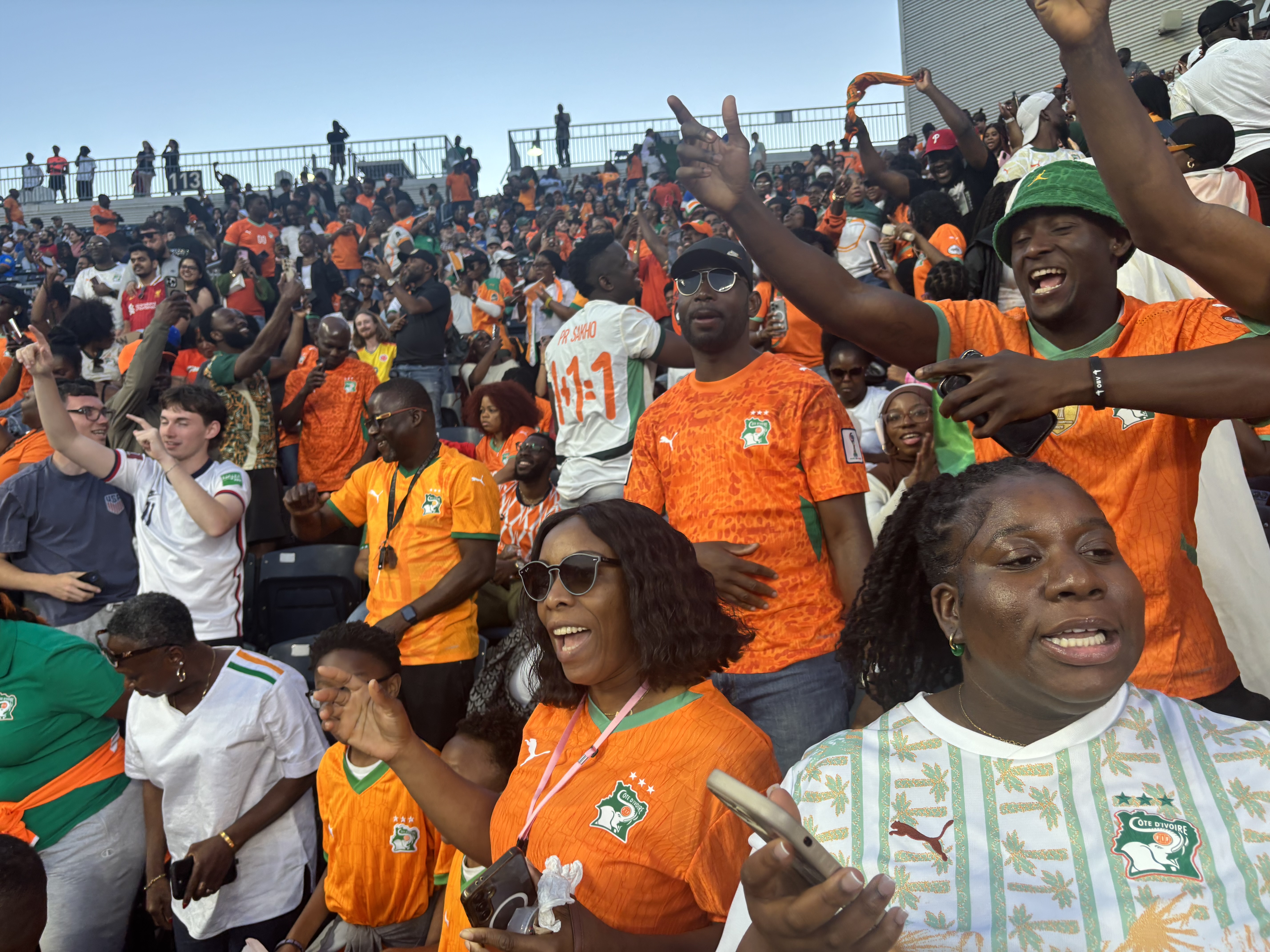
Fans of the Côte d’Ivoire national soccer team erupt in cheers during their team’s 2-0 friendly match win over the Philadelphia Union II squad at Subaru Park in Chester on June 8, ahead of the 2026 World Cup.Will Bunch
The cosmic vibes were not great Monday night. On the car radio, the news brought a new cycle of bombs dropping across the Middle East, and yet another onscreen meltdown from an American president who is stumbling toward his 80th birthday in confused anger. Reports from the eve of the much-anticipated return of soccer’s World Cup to North America were less about the game and more about U.S. immigration outrages, including a Somali referee turned away at the airport.
Then at about 6:59 p.m., I walked through a long tunnel in suburban Chester and into an undulating orange sea of pure joy.
On the green soccer pitch of Subaru Park, the national team from Côte d’Ivoire lined up in rapt attention as “L’Abidjanaise,” the national anthem of the West African nation, blared from a loudspeaker. But in the stands, fans wearing their native country’s iconic orange jerseys could not sit still, laughing and waving their cell phones, confirming with videos that their heroes were actually here, on U.S. soil.
For a you-can’t-beat-it ticket price of zero dollars, in a year of maximum sports greed, members of an African diaspora scattered along the Eastern Seaboard had driven up or down I-95 for hours to watch Côte d’Ivoire — also known by the anglicized Ivory Coast — easily win its World Cup tune-up match against the young American prospects of the Philadelphia Union II, 2-0.
Fatim Toure, 27, in her Côte d’Ivoire jersey, and her 26-year-old sister, Ferima, wearing her headwrap like many female fans at the stadium, had driven down from North Jersey to see the match, and were now beaming as they watched the kickoff from the tunnel as the sun set on a crisp, perfect June evening.
Fatim said the sisters “were filled with nationalism and pride, so we’re excited to see how it goes.”
The cheerfulness of the Côte d’Ivoire faithful who turned the 18,500-seat stadium bright orange — drowning out scattered dots of Philadelphians in the Union blue of the regular home squad — was infectious. It was truly what the world needs now.
Soccer fans like me have been waiting since 1994 with patience, then anticipation, and finally something bordering on dread for the World Cup — Planet Earth’s ultimate sporting event — to finally return to U.S. grass. With the opener in Mexico City (75% of the matches are in the United States, with the rest in Canada and Mexico) slated for Thursday, news about the World Cup and soccer’s corrupt, authoritarian-loving governing body, FIFA, has been dominated by grim headlines.
Indeed, the political rise of Trump — the stuff of cartoon satire not long after the first World Cup matches were played here 32 years ago — and his hostile border regime have sparked the greatest angst, and on the eve of the kickoff, these fears are coming true.
Top soccer referee Omar Artan from the African nation of Somalia was turned away at Miami International Airport on Saturday, denied the pinnacle of his profession by U.S. Customs and Border Protection agents for reasons still unknown. The star striker for the Swiss national squad was also initially denied entry (since reversed), while a star player from Iraq was interrogated for hours.
Players from Iran — the nation Trump decided to bomb back in late February and is still engaged in a murky war — are going ahead with matches in Los Angeles and Seattle, but U.S. officials are forcing them to immediately return to their base camp over the Mexican border in Tijuana and not stay here overnight.
Côte d’Ivoire, an ethnic melting pot of 32 million people on Africa’s Atlantic coast where French is the official language, hasn’t been immune to the xenophobic U.S. turn on immigration. The nation is one of several under a restrictive travel ban by the Trump regime, and efforts to allow visas for some soccer fans have been plagued by confusion, including a $15,000 bond that was announced, then canceled.
While Monday’s free friendly match was a gleeful coming-out party for a diaspora that’s rooted in East Coast urban neighborhoods such as Southwest Philadelphia, most acknowledged that fans back in their native Côte d’Ivoire, where soccer is the national obsession, could never afford the cost of coming here — or the risk.
“The ICE situation has killed the entire momentum of the World Cup,” a Liberian-born woman from Southwest Philly, who said she came out to support her African neighbors, told me. “America could have used this to boost the economy and generate income, but because of the whole ICE situation, a lot of people are afraid to come.”
No World Cup squad will be more deeply tied to Philadelphia than Côte d’Ivoire, which plays two of its three matches at the temporarily unbranded Lincoln Financial Field, starting against Ecuador on Sunday night. The team is training in Chester at the Union’s facilities and staying in Delaware. But with the cheapest tickets on StubHub for that Ecuador showdown starting at $836, few whom I spoke with will be attending the matches that actually count for Côte d’Ivoire’s long-shot dream of becoming the first African nation to win the World Cup.
“I wish, but I couldn’t get any tickets, unfortunately — it was too expensive,” Audrey Yao, a 32-year-old Ivorian American researcher from the University of North Carolina who was visiting Philly from Chapel Hill, told me. “So the opportunity to see the team today — that’s why I’m here.“
For many Ivorians, Monday’s free friendly was essentially their World Cup, and they partied accordingly — swaying and gyrating to piped-in African Zouglou music between breaks, and celebrating wildly as keeper Alban Lafont stopped a penalty kick for Les Éléphants against rising young Union star Cavan Sullivan.
As a die-hard — emphasis on the word die — Union supporter for their 16-year tortured history, I’ve seen some great matches in Chester, but I’ve never had so much fun.
Monday night wasn’t just how the World Cup should have, could have been. It was very much the way America is supposed to be — with people who were proud and happy to be here, with one foot still planted in their bright-orange African heritage as they lived and breathed that Philadelphia freedom, with no masked goon squads there to hassle them.
By the setting-sunlit banks of the Delaware River, there was no U.S. Immigration and Customs Enforcement, no need to raid the ATM, no bad news from outside the stadium walls. Just 90 minutes of the Beautiful Game.
Yo, do this!
Don’t expect a lot of high-class book or film reviews this month, as my waking nonwork hours are devoted to watching the World Cup. Three games to circle this week are Thursday afternoon’s opening match in Mexico City between Mexico and South Africa (3 p.m., Fox); the first U.S. match against Paraguay in Los Angeles Friday night (9 p.m., Fox); and Philadelphia’s first contest between Côte d’Ivoire and Ecuador Sunday night at 7 p.m. on FS1, or in person at “Philadelphia Stadium” if you can spare the cash.
What if the biggest story of our time isn’t Trump’s outbursts, or even the World Cup — but the growing inability of our young people to sit down and read a book from cover to cover? The latest installment in this genre comes from university professor Tyler Jagt in a searing essay for the Chronicle of Higher Education: “My Students Can’t Read.” Is the culprit the smartphone and now AI, or the lost COVID-19 years, or the teach-to-the-test dictates of the Common Core curriculum? There’s a strong case for “All of the Above.”
Ask me anything
Question: You recently wrote about data centers. Have there been any groups who have successfully gotten data center plans aborted? What do you think are the most effective ways for communities to fight back? — @silvermoonfafo.bsky.social via Bluesky
Answer: There are already signs that the backlash against these massive, noisy, energy-and-water-sucking data centers powering the artificial intelligence revolution is becoming one of the most successful grassroots movements in American history. I wrote this spring about how everyday folks in rural Montour County, Pa., successfully blocked an Amazon-backed site that started with a lot of support from elected officials. How’d they do it? I wish there was some big secret, but basically it was: showing up. They organized petitions and got big crowds to speak at county commission and zoning board meetings, and the politicians had little choice but to listen. They have money, but we have people. Never forget that.
What you’re saying about …
Well, you won’t know it from today’s soccer-heavy newsletter, but not all readers share my deep passion for the Beautiful Game. Most questions that aren’t some variation on how much do you hate Donald Trump, or John Fetterman, or the media get low responses, but my World Cup question about a favorite team besides the U.S. set a record for reader nonparticipation. Andrew Ross is rooting for Portugal because he moved there from Philly three years ago (and we are all jealous). Weekly correspondent Mary Ann Petro isn’t rooting for anyone and hopes the Yanks “go down in flames.” I’m rooting for the U.S. and Côte d’Ivoire, but you knew this.
📮 This week’s question: Few things are more outrageous these days than Donald Trump’s expensive desecration of Washington, starting with that $1 billion-or-whatever proposed ballroom at the White House. So what happens to the ballroom when the good guys retake power? Tear the whole thing down, or blow it up on national television? Or repurpose it as a community health center or midnight basketball court, or something else? Please email me your answer, and please put “Ballroom future” in the subject line.
Backstory on how an LA mayor’s race could blow up America
Everything about the doomed bid of a B-list reality-TV star, Spencer Pratt, to become a Republican mayor in the ultra-liberal enclave of Los Angeles has been utterly predictable. That includes his campaign that was big on the kind of social media stunts that an entertainment-oriented LA media loved, and short on substantive ideas for a city with big problems that are both chronic (its incurable homelessness) and acute (violent immigration raids, the 2025 wildfires). It also includes the fact that Pratt wasn’t likely to get more than the roughly 27% his highest-profile fan, Donald Trump, received in 2024 from America’s second-largest city.
And now the least surprising thing of all: The right-wing conspiracy theories that Pratt’s apparent defeat by two Democratic women of color — incumbent Mayor Karen Bass and progressive upstart Nithya Raman — is their long-sought proof of massive voter fraud, after Pratt had started the lengthy vote counting in second place.
It’s not just the usual loudmouths on X. Trump is taking the lead role, again, in spreading election lies, telling Kristen Welker of NBC’s Meet the Press in their now-notorious Wisconsin interview that the California voting was rife with fraud, and, when asked for any proof, blurted angrily: “No, they’re crooked … Just like you’re crooked.” When House Speaker Mike Johnson was asked about these lies on Capitol Hill, he only amplified them, stating that “everybody knows instinctively that something is wrong.” No proof, just “instincts.” Trump’s handpicked and apparently incompetent top prosecutor for Southern California is now threatening an investigation.
Here’s the thing. California’s elections are among the most democratic and inclusive in America. There is extensive opportunity for the convenience of mail-in voting, and voters are allowed to send these ballots right up until Election Day. Local officials then have up to 30 days to meticulously count all the votes. That means a) it takes longer to declare a winner in California than anywhere else, and b) it unexpectedly turns out there are significant differences between who votes by mail instead of in-person, and the shape of the race can change dramatically from election night to the end of the lengthy counting. To today’s GOP, any fair and measured vote-counting must be a conspiracy.
Why does it matter? Pratt loses and — according to some reports — moves out of LA. End of story, right? Not exactly. We don’t know yet what ridiculous claims California’s train wreck federal prosecutor will make about supposed election fraud, but it’s almost guaranteed that the Trump regime is looking to make California the bogus argument for extreme measures to influence the general election in November.
Sending in troops? Seizing election machines? Invalidating results? It will all be on the table for Team MAGA in November, and the fact that the former bad boy from MTV’s The Hills couldn’t get elected mayor of one of the nation’s most diverse and liberal cities will be cited as a reason. Spencer Pratt has landed a starring role in the worst reality show ever.
What I wrote on this date in 2023
Even though it was only three short years ago, memories of this week in early June back in 2023 are a little foggy — because the skies here in Philadelphia and around the Eastern Seaboard were filled with suffocating, thick smoky haze from wildfires up in Canada. Before digging up my column, I’d forgotten that a Phillies game at Citizens Bank Park was canceled because of the horrendous air quality. I wrote: “In a perfect world, [President Joe] Biden would have donned an N-95 mask Wednesday and spoken in front of the orange blur of the Statue of Liberty to declare unconditional war on fossil fuels.”
I’ve never had so many column ideas swirling around in my head as this chaotic start to the summer of 2026. Last week’s Sunday column looked at the openly fascist coming-out party for the former U.S. chief immigration raider Greg Bovino, who attended a European white supremacist conference. I said it matters a lot that he is now screaming the not-that-quiet part about U.S. xenophobia out loud. I shifted gears over the weekend and wrote about the growing panic of U.S. elites over grassroots opposition to data centers, which has sparked bizarre accusations of Chinese influence, as well as spying on activists by some police agencies. The 1 Percent can’t admit it’s really the noise pollution and higher electric bills.
Wrapping up this week’s theme in a bow, I have to say I’ve been blown away both by the quality and the quantity of The Inquirer’s coverage of the World Cup, which has truly matched, if not surpassed, some of the national outlets. Lead writer Jonathan Tannenwald, with a well-deserved reputation as one of the nation’s top soccer journalists, has been following the U.S. team in its Georgia training and at its warmup matches, profiling key American players like its star Christian Pulisic, and filing other human interest stories like a Penn soccer standout who’ll be taking the pitch for Haiti. Other Inquirer writers have contributed with in-depth features about everything from the role the late Tug McGraw’s widow played in bringing soccer to Philadelphia, to the storied history of the cinder (ouch!) pitch in Fishtown that brought Philly “attytood” to the sport’s slow rise here. That’s not to mention the comprehensive guide we published earlier this year. You won’t be able to read all this without a subscription, so now is the time to finally sign up. And let the games begin.
By submitting your written, visual, and/or audio contributions, you agree to The Inquirer’s Terms of Use, including the grant of rights in Section 10.
It wasn’t always like this. I’m old enough to remember the Bicentennial celebration back in 1976. After being struck by the trifecta of the Civil Rights Movement, the Vietnam War, and Watergate, it felt as if the country was moving forward.
I lived in the nation’s capital, the epicenter of America’s Bicentennial celebration. Practically everything had a Bicentennial theme. Even the fire hydrants were painted red, white, and blue. I spent much of that hot, humid summer attending free Bicentennial-themed events such as the Smithsonian Institution’s Folklife Festival and the July Fourth fireworks display.
At our house in Brookland in northeast Washington, D.C., my parents hosted their annual backyard BBQ with the usual Southern favorites. My dad, a Korean War veteran, proudly hung the American flag from our front porch. Patriotism wasn’t code for MAGA back then. Political affiliation didn’t matter as much. Americans celebrated the nation’s 200th birthday together.
Those were happy times.
I shudder to think about what this year’s celebration of America’s 250th anniversary in Washington will be like with President Donald Trump living in the White House.
But that’s how it is with him. Trump is going to Trump. That’s why he’s furious about having his name ordered removed from the Kennedy Center for the Performing Arts.
It’s also why his scowling face appears on commemorative U.S. passports, National Park Service passes, and gold coins made specially for the 250th anniversary.
It’s not enough for him to have large banners featuring his image hanging from various government office buildings — he’d love it if he could get his mean mug on $250 bills, as well.
Take what happened after musical artists started dropping out of a series of concerts after learning it wouldn’t be the nonpartisan event they expected. The president went on Truth Social and trashed the performers, and also floated the idea of hosting a giant MAGA rally instead — featuring none other than himself.
“We should have a giant MAKE AMERICA GREAT AGAIN RALLY, for 250, instead of having overpriced singers, who nobody wants to hear, whose music is boring, and yet who do nothing but complain,” Trump posted, adding, “Cancel it.”
Cue the fireworks! Finally, the president and I agree on something. He’s right about canceling the musical performances. But in my opinion, he didn’t go far enough. Trump should cancel all of the Freedom 250 events, which have been billed as nonpartisan but were actually organized by a group formed by Trump.
At this great age, America deserves better than a president who has installed a massive red, white, and blue cage on the South Lawn of the White House for a UFC fight on Sunday, June 14, the day of his 80th birthday.
It’s problematic enough that America’s Founding Fathers were too sexist and racist to include equal rights for women, African Americans, and Native Americans in the Constitution, but fast-forward to today, and we have the griftiest of grifters in the Oval Office.
Trump has finagled it so that the IRS is “forever barred and precluded” from auditingTrump, his family, and the Trump Organization’s taxes prior to May as part of a deal to settle his $10 billion suit against the Internal Revenue Service.
And if the courts don’t permanently block it, Trump intends to create a $1.776 billon slush fund using taxpayer money that could be used to compensate rioters who stormed the U.S. Capitol on Jan. 6, 2021, among other things.
Demonstrators storm and breach the US Capitol building in Washington on Jan. 6, 2021. Victor J. Blue
Meanwhile, migrants are being systematically rounded up, denied basic human rights, and packed into squalid detention centers such as Delaney Hall in Newark, N.J., and America is engaged in an intractable and unprovoked war with Iran that has sent gas prices and the cost of living skyrocketing for all of us.
Trump is focused on the wrong things: his daily stock trades, building a $400 million ballroom at the White House, rehabbing the Reflecting Pool, erecting a giant arch in D.C., and adding a promenade onto the Lincoln Memorial.
Instead of helping heal the country’s divisions and bring Americans together, the president does whatever is best for him.
His leadership has put America in a sunken place, and that’s nothing to celebrate.