It was easy for Derrick Morton-Rivera to “fall in love” with basketball. He was always around it.
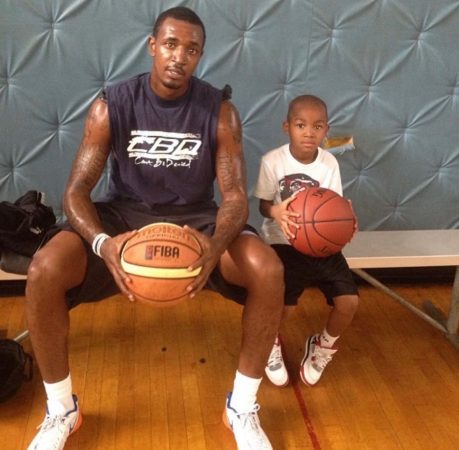
His father, D.J. Rivera, had his son while he was a sophomore at St. Joseph’s. Even after he transferred to Binghamton University in New York then University of Montevallo in Alabama, his son traveled to games and watched.
“His little eyes would be going up and down the court,” said D.J. Rivera, who grew up in Lawncrest and played nine years professionally overseas. “I gave him a basketball, and he never put it down.”
For the Riveras, basketball serves as a reminder that nothing in life is guaranteed.OnMarch 4, 1990, Gathers collapsed on a court in Southern California while playing in the West Coast Conference tournament semifinals. He suffered cardiac arrest and died at 23 years old.
“With my uncle and his heart condition, you never know when you could play your last game or your last time people seeing you — death is real,” D.J. Rivera said. “It’s the only thing that’s guaranteed in life, so I think while we’re here, you should do what you love.”
It’s why Rivera brought his son to the Danny Rumph Classic for years.
The five-day tournament, which begins Thursday at Drexel, honors Rumph, who died in a pickup basketball game at the Mallery Recreation Center on May 8, 2005.
D.J. Rivera with his son, Derrick Morton-Rivera, who will play college basketball at Temple this fall.D.J. Rivera
Rumph died from an undiagnosed heart condition, known as hypertrophic cardiomyopathy, which caused him to go into sudden cardiac arrest. He was 21.
Giving back to a cause that similarly impacted his family was important to Rivera. He played in the tournament in 2012 and did it consecutively for about 10 years. Even Morton-Rivera participated in a youth halftime game during the tournament in 2016, where he recalled winning a $50 Nike gift card and James Harden showing up to play in the final.
The two have made an effort to check out the event each year and plan to attend a game this week.
“I love the Danny Rumph tournament,” Rivera said. “You get to play against pros, NBA players, be highly competitive, get to talk trash, and the crowd’s great. It’s just a great weekend in the city that you look forward to end the summer on.”
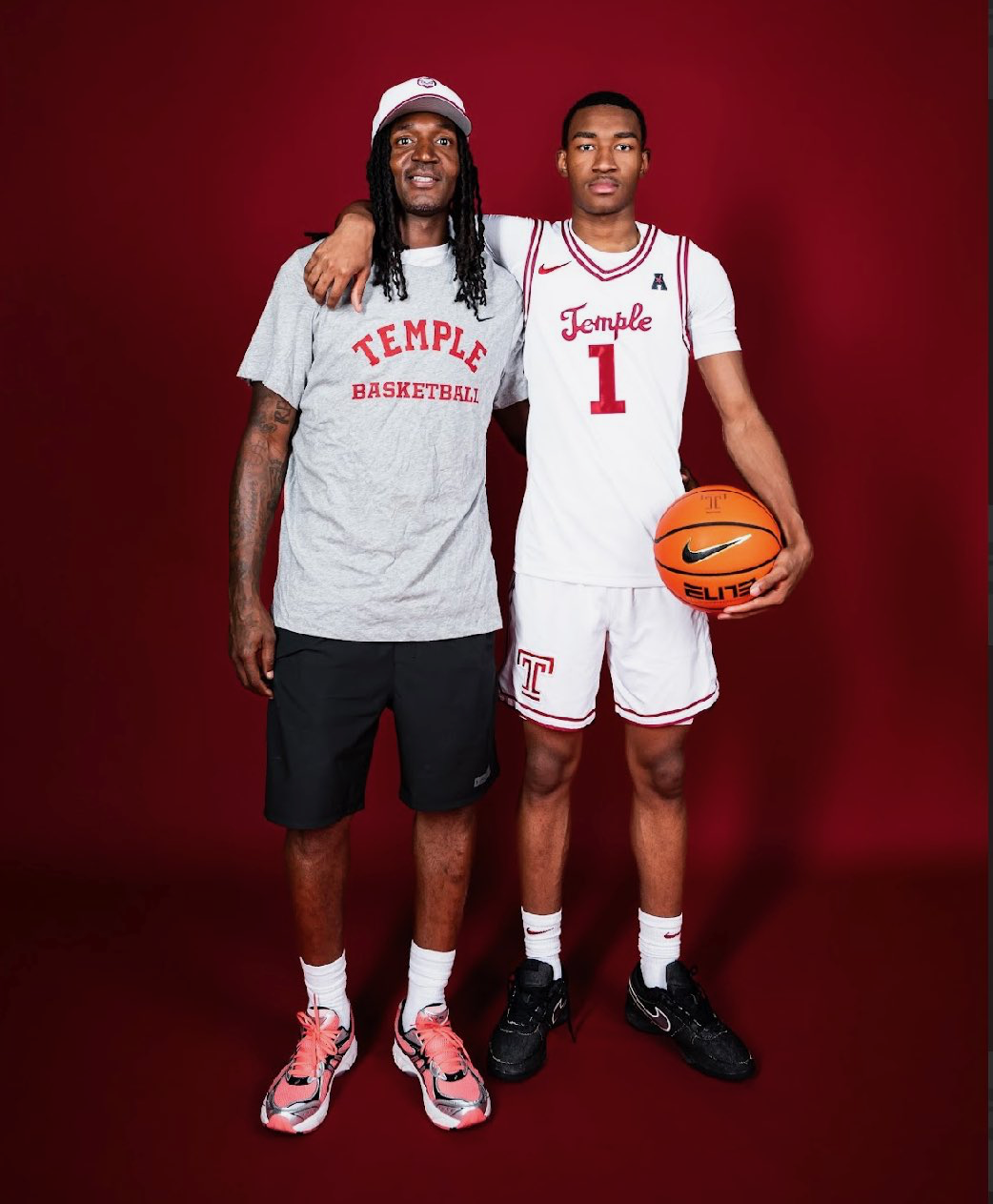
Being exposed to an event like the Rumph Classic has also played a factor in Morton-Rivera, a 6-foot-4 guard, continuing his basketball legacy in Philadelphia. The Father Judge graduate will play at Temple this fall.
“Back in the day, a lot of people used to stay home,” he said. “That’s not normal now. I feel like that should be a normal thing because that brings the community out even more. Like if a lot of hometown kids are staying, a lot of people from Philadelphia are going to the games. It’s just better for the city, it brings everybody together.”
At a young age, Morton-Rivera didn’t fully grasp what happened to Gathers, but as he got older, he had a better understanding.
He took a family trip to California before 2020 and visited LMU, where he saw Hank Gathers’ statue outside of the arena. He also met with a program who detects heart problems and had a screening done.
D.J. Rivera played high school basketball at Neumann Goretti, his son competed at Father Judge.D.J. Rivera
The trip, Morton-Rivera said, brought his family together.
“Even though I didn’t know much about it at a young age, just me hearing about it and knowing what they did inspired me to do what I do,” he added.
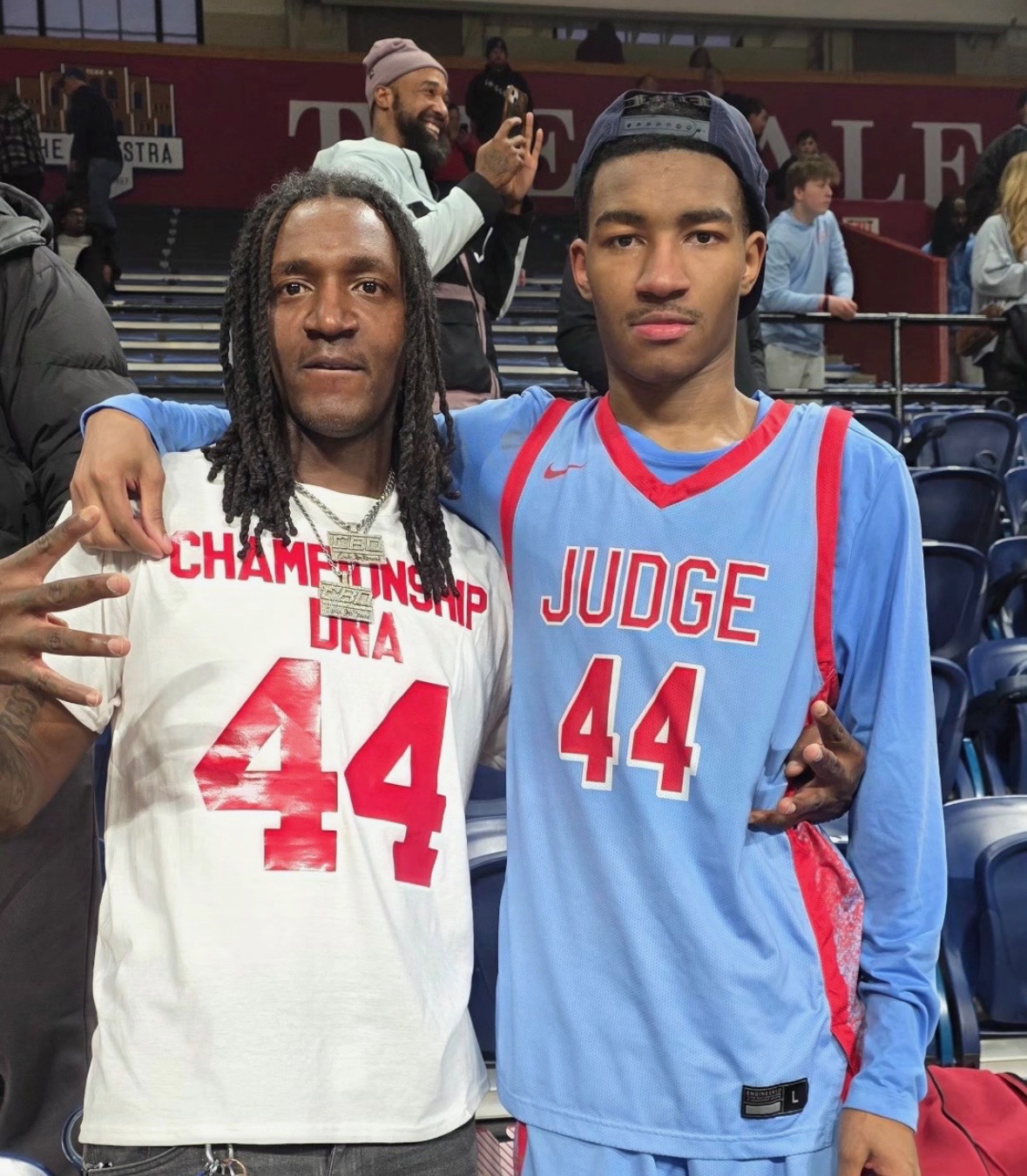
Basketball has also been the focal point of him and his dad’s relationship. This past year, D.J. Rivera got to watch his son win back-to-back Catholic League championships with Father Judge, a feat he once achieved 20 years ago with Neumann Goretti.
Both father and son left their respective high schools as the program’s all-time leading scorer.
After Judge won the crown inside a packed Palestra this past February, Rivera surprised his son with a shirt that read on the back, “20 years apart same heart.”
“When my career came to an end, I got to watch his, so it’s like the game never left,” said Rivera, who will graduate from the Philadelphia Fire Academy in three weeks. “That’s something that brings me and him together. … It’s something we can enjoy together because I both know we love the sport.
“Basketball has done a lot for us. It’s just a great feeling to be able to continue that and watch his time be here now. Soon enough, he’ll be playing in the Rumph as a professional.”
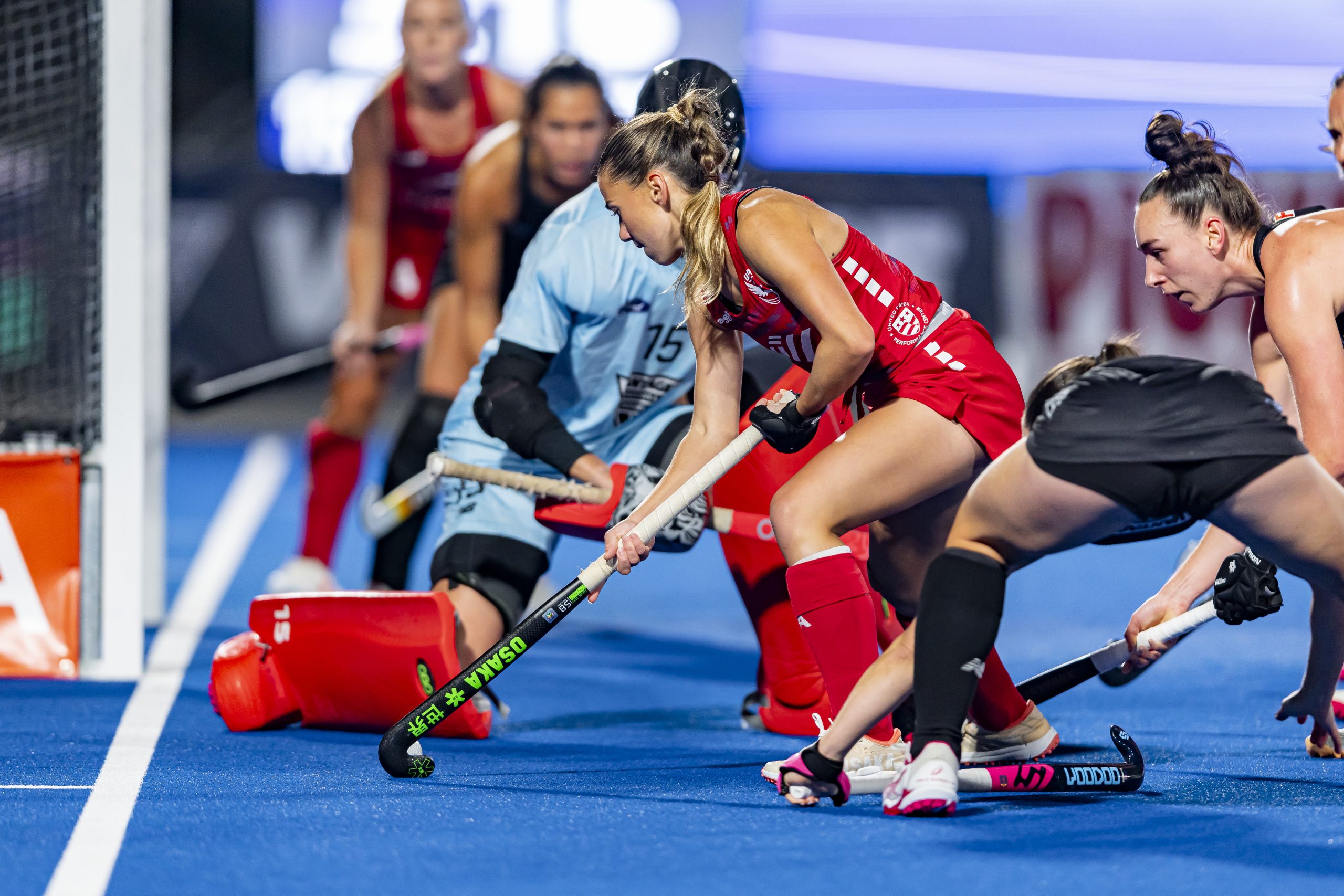
Entering her final season at Northwestern, Ashley Sessa has accomplished nearly everything in her college field hockey career.
After winning the 2022 national championship as a freshman at North Carolina, the Schwenksville native transferred to Northwestern, where she helped lead the Wildcats to back-to-back national titles in 2024 and 2025.
She has earned several accolades and honors, including two Big Ten Offensive Player of the Year awards, two National Field Hockey Coaches Association All-America nods, and a spot on the 2025 NCAA All-Tournament team.
But now, Sessa, 22, is preparing for something new. She will make her first trip to the Women’s International Hockey Federation World Cup with the United States national team from Aug. 14 to 30.
Sessa will travel to Belgium with the rest of the U.S. team for the tournament, which is held every four years in between the Summer Olympics. The U.S. begins its group stage schedule with a match against two-time champion Argentina on Aug. 15 (11:30 a.m., watch.hockey).
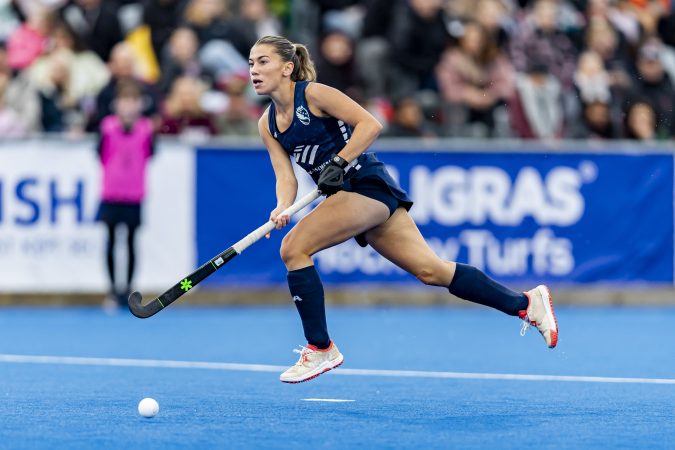
Sessa has 62 appearances with Team USA, including at the 2024 Paris Olympics, but she says the World Cup presents a different challenge. The U.S. team left for Europe from Charlotte, where it trains, on Friday.
“We just introduced a few double sessions, two each day, and then [we are] scrimmaging each other on Saturdays,” Sessa said. “It’s been a hard few weeks and months leading up to it, but we’re really excited to see how things go at the World Cup.”
Team USA will look to top its third-place finish in 1994, and it has a large contingent of players from the Greater Philadelphia area. Nine of the 20 players on the roster are from Southeastern Pa., and one from Ocean City, N.J.
Ashley Sessa has made 62 appearances with Team USA, including the 2024 Paris Olympics.World Sport Pics / Simon Watts
Sessa, who played for Spring-Ford and Episcopal Academy in high school, said her familiarity with her teammates is a benefit. She’ll compete alongside current and former teammates from Northwestern in Hershey native Maddie Zimmer and Lebanon County native Lauren Wadas.
“We know each other pretty well,” Sessa said. “I’ve known a lot of the girls since I was at WC Eagles, [a Chester County-based youth club], since I was maybe like 11, 12 years old. We have a good connection, especially through schools, too … Just growing up with the girls and now playing in a World Cup with them is super amazing.”
The U.S. team medaled at an international competition this summer, earning a third-place finish at the FIH Nations Cup, hosted in New Zealand in June.
Sessa scored two goals, including a 46th-minute winner, to lift the U.S. over Chile in the third-place game. The forward was joint top scorer with six goals in the tournament and was named its best player.
Sessa hopes that the momentum the U.S. team built from its best-ever finish at the eight-team Nations Cup will carry forward to the 16-team World Cup.
“I think we have the determination to go out there and prove to each other that the USA is improving in field hockey,” Sessa said. “We have a great team and a great system that allows us to improve every time we step foot on the field.”
In addition to representing her country, Sessa is determined to make field hockey more visible around the U.S. Through her coaching venture, AS3, Sessa has hosted free youth field hockey clinics in Manayunk and Norristown.
Sessa handed out donated equipment at her clinics, and hopes to do more events across the Northeast and Midwest in the future to get more young athletes interested in the sport.
She said the idea to hold free clinics and equipment distributions came from her mother, Tracey Sessa, who grew up in Norristown. Sessa said she remembered playing against Norristown Area High School as a freshman at Spring-Ford, before transferring to Episcopal Academy.
“You could tell the girls loved the sport, it was just the fact that they didn’t have access to the newest stick or the newest shoes to help them be able to perform,” Sessa said. “I don’t think money should prohibit your sporting abilities or for you to be able to compete in something you love.”
In addition to hosting free clinics in the Philadelphia area, Sessa has hosted a talk and donated equipment to a youth field hockey organization in Charlotte, N.C. She hopes to hold an event in Chicago in the near future.
Her goal is to help draw attention to field hockey, which has a large international audience, but remains obscure in much of the U.S.
The sports’ viewership is growing, with an estimated 10 million Americans watching women’s field hockey during the 2024 Olympics, a 220% increase from the 2021 games.
Leading up to the 2028 Olympics in Los Angeles, the first Summer Games on American soil since 1996, Sessa wants to get more Americans interested in the sport.
“I think this is the most important time to do it, especially two years out,” Sessa said. “America is such a huge avenue for sports, and focusing on that, I think if they do it right, it could be a huge opportunity to grow the sport.”
Sessa tries to stay focused on her day-to-day with the national team and her upcoming senior season at Northwestern, but every once in a while, she lets her mind visualize what it would be like to play at the Olympics on home soil.
“If I have a bad practice day, I let myself think forward a bit and just say, ‘You know what, this is good, I’m learning something new,’” Sessa said. “This preparation will help me further in the future for the L.A. Games.
“Just having that mindset, for me, is really good. … It’s still so far away, and [I am] just doing every I can do to get better, not only as an athlete, but as a person as well, to help me grow, to hopefully be a part of those games.”
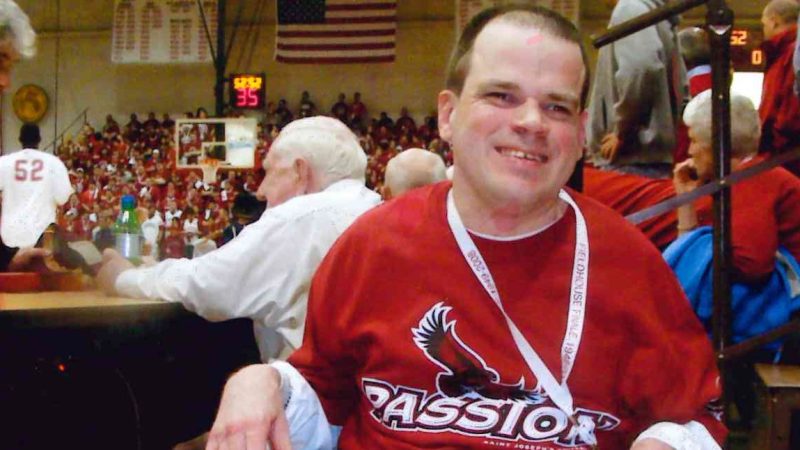
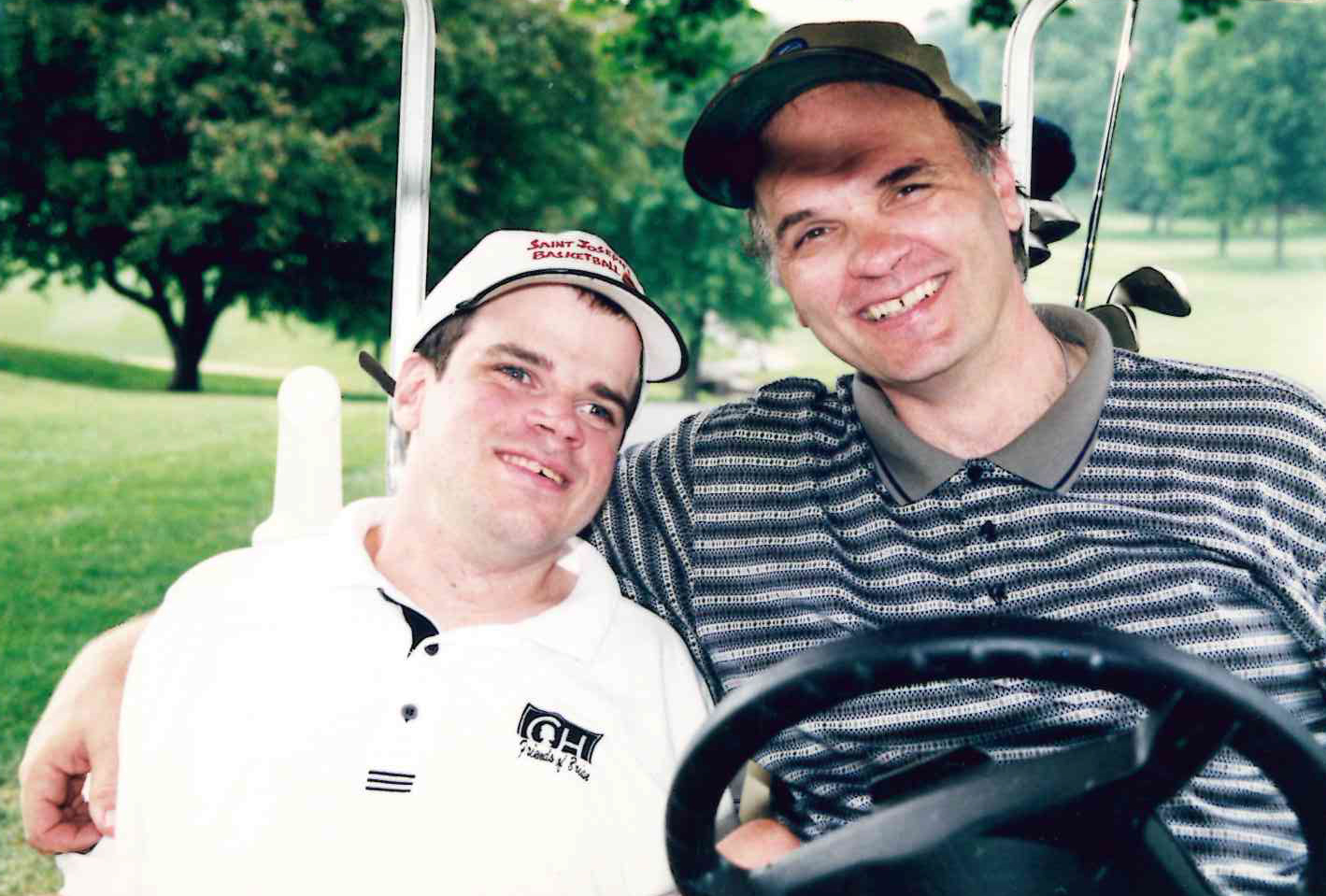
Chris DiJulia spent 56 years living as if he didn’t have cerebral palsy. He’d take “walks” in his wheelchair, down the block from his Havertown home. He was a regular passenger on SEPTA long before paratransit came to the suburbs in 1994.
The avid St. Joseph’s basketball fan would often go to Hawk Hill to visit his father, Don, the longtime athletic director, or to watch men’s and women’s basketball practice.
But he’d also venture to Eagles training camp in West Chester, games at the Palestra, Villanova, Temple, all on his own, boldly traversing a city unequipped to take him anywhere.
Of course, this came with its challenges. A broken elevator or an unexpected flight of stairs could derail an entire trip. Sometimes, a bus driver would pretend not to see DiJulia waiting at his stop because they didn’t want the hassle.
But DiJulia was no fool, and certainly no pushover. He’d scribble down the license plate, call SEPTA’s customer service line, and report the vehicle.
“And probably said a thing or two about them as they drove by,” his father added.
This spirit was what made DiJulia special. His limbs were short and stiff, his speech was slow and slurred, but between the ears, he was just like anybody else, and expected to be treated as such.
He frequently signaled this through his humor. If the St. Joe’s fan was among a group of coaches trading barbs, he’d join in. DiJulia was not above yelling “brick” when a player missed a shot, or expanding that sentiment to, “you’re building a whole house!”
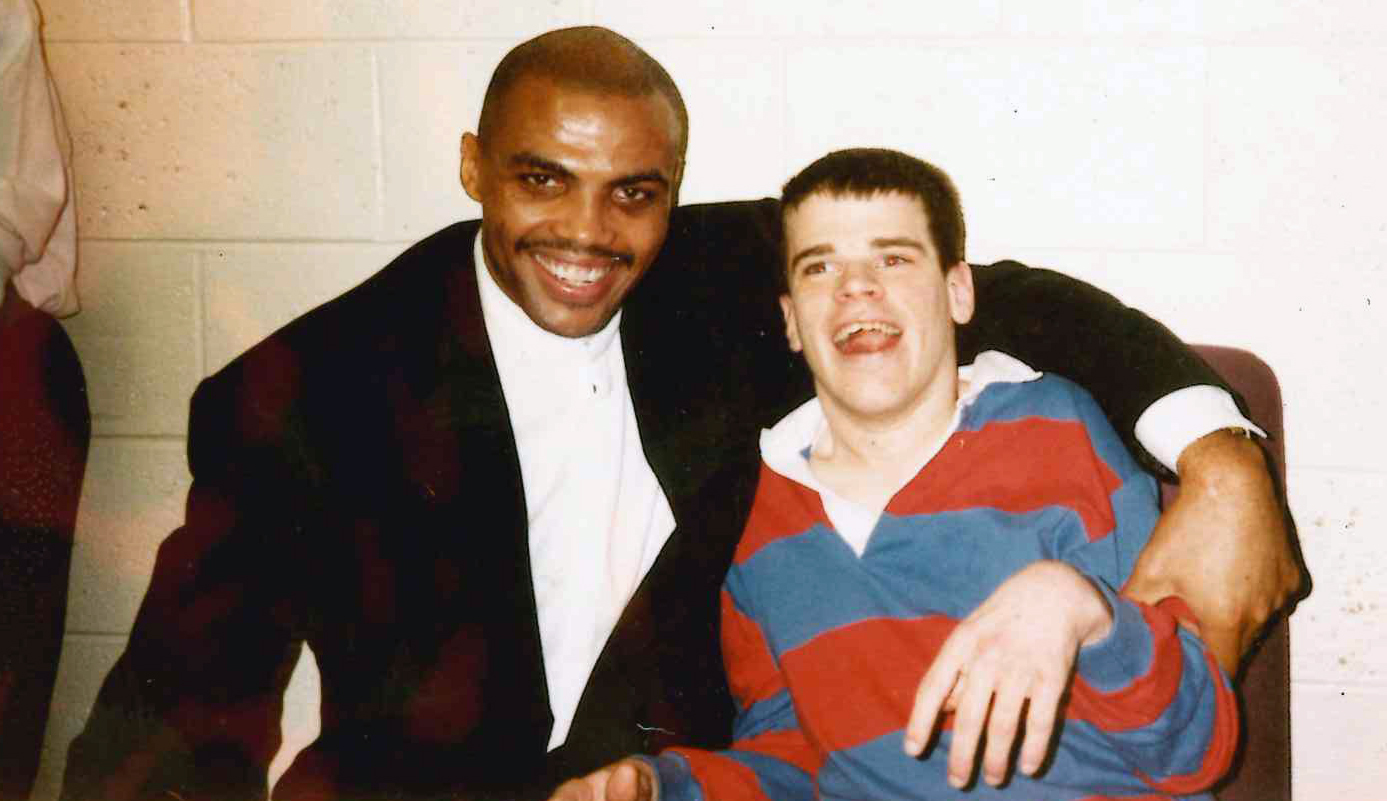
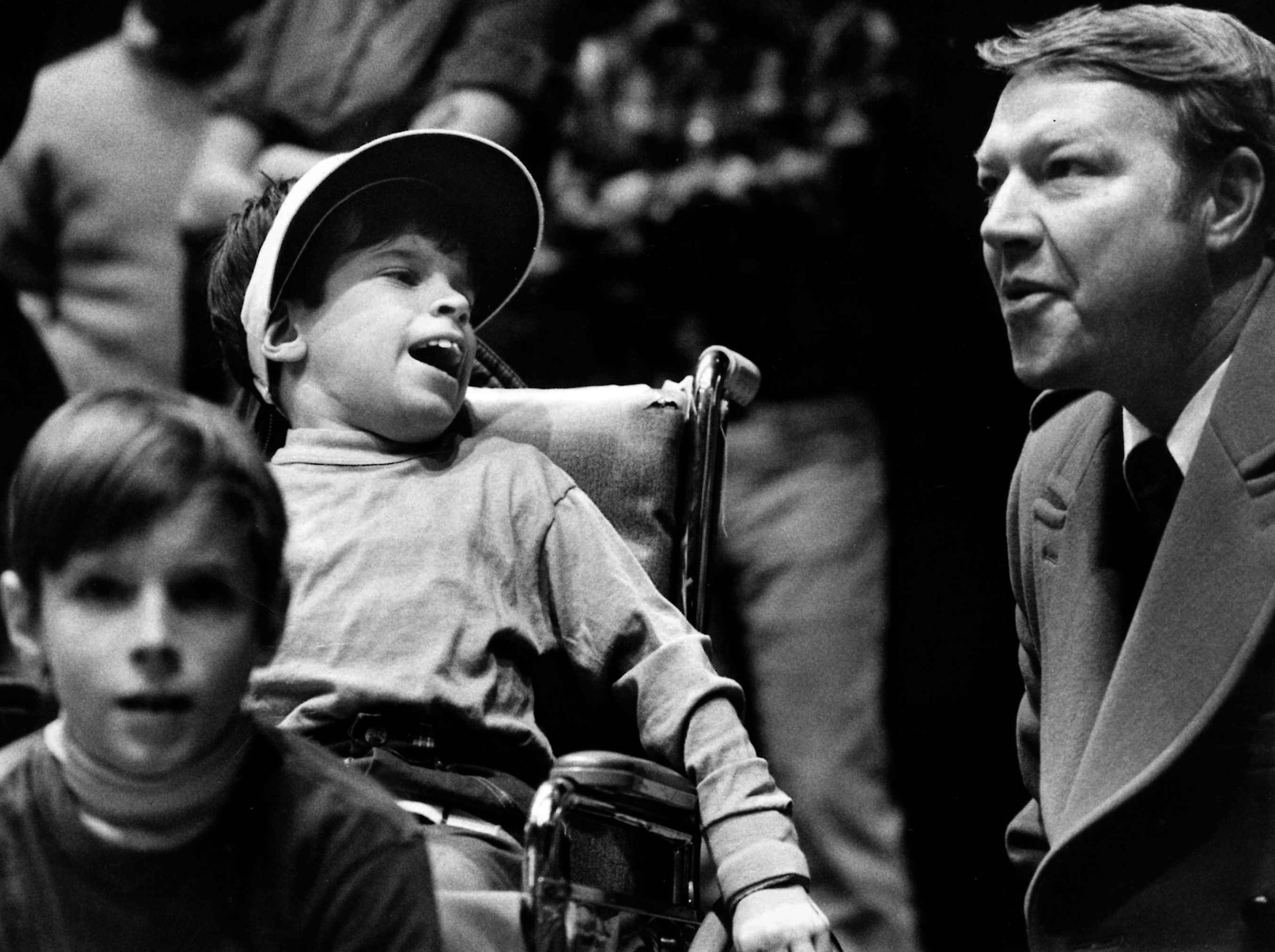
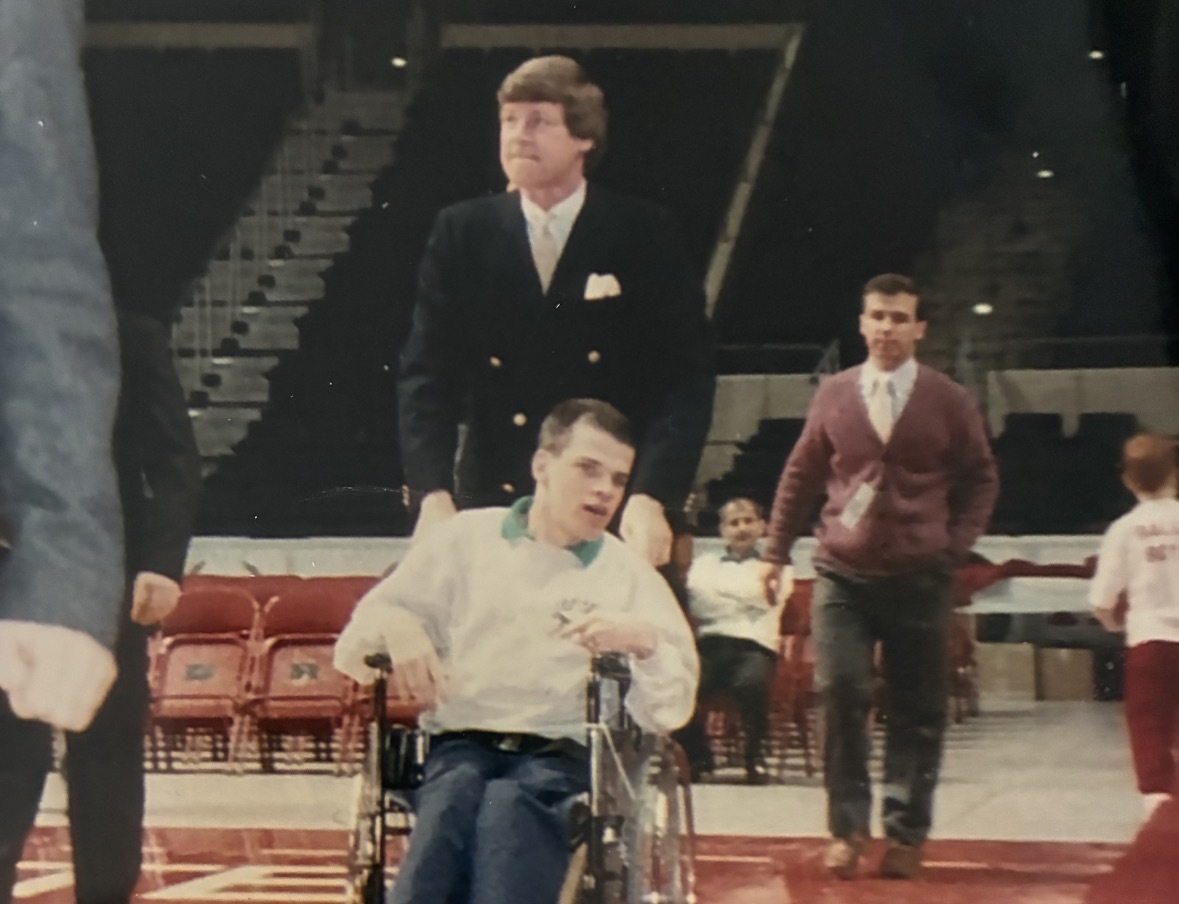
Charles Barkley (left) and Chris DiJulia became friends in the 1980s.provided by Saint Joseph's University
No one was exempt, not even NBA stars. Charles Barkley first met DiJulia in the late 1980s, at the start of his professional career. The Sixers practiced in the morning at St. Joe’s, and the teenager in the wheelchair was always there.
If Barkley had a poor showing, DiJulia would be quick to point it out.
“When I had hair, you never played bad and [went] to a Black barbershop,” Barkley said last week. “You never played bad and [went to] see Chris DiJulia the next morning. You know something bad is going to happen.”
DiJulia could’ve lived a smaller, less-adventurous life in Havertown, and no would have blamed him. But he chose to immerse himself in the world of Philadelphia sports, with all its eccentricities and quirks, and fit right in.
Now, that world is mourning his absence. On July 27, DiJulia died of natural causes stemming from cerebral palsy. The outpouring of support has been immense and wide-ranging.
The DiJulia family has heard from former St. Joe’s basketball players, softball players, field hockey players. Broadcasters and coaches have reached out, many of whom are no longer in the Philadelphia market.
On Thursday morning, Phil Martelli, another close friend of DiJulia’s, texted Delonte West. The former Hawks guard has long struggled with substance abuse and homelessness, but has been sober for the past 190 days.
Phil Martelli (right) was among those on Hawk Hill who drew endless inspiration from Chris DiJulia.provided by Saint Joseph's University
He asked Martelli to relay a message.
“Please send my condolences for Chris,” West said. “[He] was my brother, I carry him in spirit, he used to always have the right words and smile for me.”
A public funeral will be held on Aug. 12. The family is expecting a big crowd. Some will travel hundreds of miles, all to support a man who would do anything to support them.
Pushing through the pain
DiJulia was born in Connecticut in 1969. At first, his parents thought he was healthy; it wasn’t until the baby was baptized that a family member with a medical background noticed his head was oversized.
Doctors diagnosed him with cerebral palsy, and he underwent surgery at three weeks old (the first of over 20 surgeries throughout his lifetime).
Even as an infant, Chris radiated joy, with a big smile and bright blue eyes. Pat DiJulia knew her son had obstacles ahead, but when she’d look at his face, full of expression, she could tell he understood what she was saying.
Don was an assistant college basketball coach at Fairfield at the time. A few years later, when he was hired by George Washington, the family moved to Virginia.
Chris DiJulia (center, with longtime Phillies broadcaster Harry Kalas) developed a love of sports at a young age.provided by Saint Joseph's University
In 1973, he accepted an assistant coaching job at American. Chris was approaching pre-school age, but local options were limited.
The boy would need physical, occupational and speech therapy. The Americans with Disabilities Act was17 years from becoming law, and most schools didn’t provide those kinds of services yet.
So, the DiJulias were directed to three boarding schools on the East Coast. The one closest to them, in Virginia, was more like an institution; instead of catering to a specific population, it housed students with a number of physical and mental disabilities.
They chose to send Chris to Philadelphia instead, to the HMS School for Children with Cerebral Palsy. Both parents had family in the area who could visit him. Don started looking for work there, which is how he ended up becoming the St. Joe’s athletic director in 1976.
It was at HMS that Chris found his love for Philadelphia sports. Many staff members were Phillies fans and began to watch games with him. He quickly developed a talent for critiquing the local ball club (one that would serve him for the rest of his life).
The younger DiJulia would spend his weekends at Alumni Memorial Fieldhouse and the St. Joe’s athletic offices. He did not do so quietly. Women’s basketball coach Jim Foster said the 9-year-old would routinely bust into his office, so much so that he joked he was going to “need a new doorway.”
The family returned to Connecticut in 1984, when Don was named commissioner of the Metro Atlantic Athletic Conference. But they couldn’t stay away from Hawk Hill, and came back in 1988, after Don was re-hired as athletic director, a job he’d keep for the next 30 years before retiring.
The DiJulia siblings were raised by their parents, Don and Pat, to stick together.provided by Kath DiJulia Cloran
By this point, Chris was a young man, brimming with confidence. This was due in large part to his upbringing. He was one of seven children, and Pat and Don treated him no different than the others.
The family would help Chris where he needed it, but always encouraged him to be independent. If he could lift his arms and put his shirt on with some minor assistance, then he would do it.
If he could shuffle his feet from the wheelchair to the bed, as someone hoisted him up, then he would do that, too.
“He was one of the seven,” his sister, Kath Cloran, said. “And yes, he needed extra care, but he was held to the same standards as all of us.
“He never wanted to be special. He just wanted to fit in and do what all of us did, really, and just live as regular a life as he possibly could.”
Transportation was integral to this. Don and Pat would map out a route for their son before each trip, making sure he was familiar with every curb and stair.
Some of these trips were laborious. To get to his technical school in Norristown, for example, Chris would travel a half mile on Haverford Road, to a platform for a high-speed rail.
Chris DiJulia (with his mother Pat) would stop at nothing to be close to the Philly sports scene.provided by The DiJulia Family
When he arrived at Norristown Transit Center, he’d take an elevator to the street level (if the elevator was working, which was a big if) and “walk” a few more blocks to school.
Despite any setbacks, the process was empowering. And paratransit made it even easier. Before long, Chris could travel all over the city, which meant ample trips to St. Joe’s and elsewhere.
Jim Lynam, the Sixers’ former head coach and DiJulia’s uncle, said it wouldn’t be unusual for his nephew to attend Sixers practice in the morning, St. Joe’s men’s basketball practice in the afternoon, and women’s basketball practice at night.
This was how he met Barkley.
The NBA star quickly realized DiJulia was able — and willing — to spar. So, Barkley and a few of his teammates, Rick Mahorn and Manute Bol, started going back and forth with him.
“Some fans, they’re just a-holes,” Barkley said. “They’re just mean. But the way he said something and just started laughing immediately, it took all the sting away.”
He added: “I literally met this guy 1,000 times, because he was always at practice. And I think it gave him joy. It gave us joy, but I think it really gave him joy, too.”
‘People just loved him’
DiJulia became omnipresent in Philadelphia basketball circles. When he wasn’t at St. Joe’s, he’d be at home, on the phone, usually with a coach.
In the late 1980s, Foster invited him to sit on the bench during women’s basketball games (a tradition that continued after Cindy Griffin took over the program).
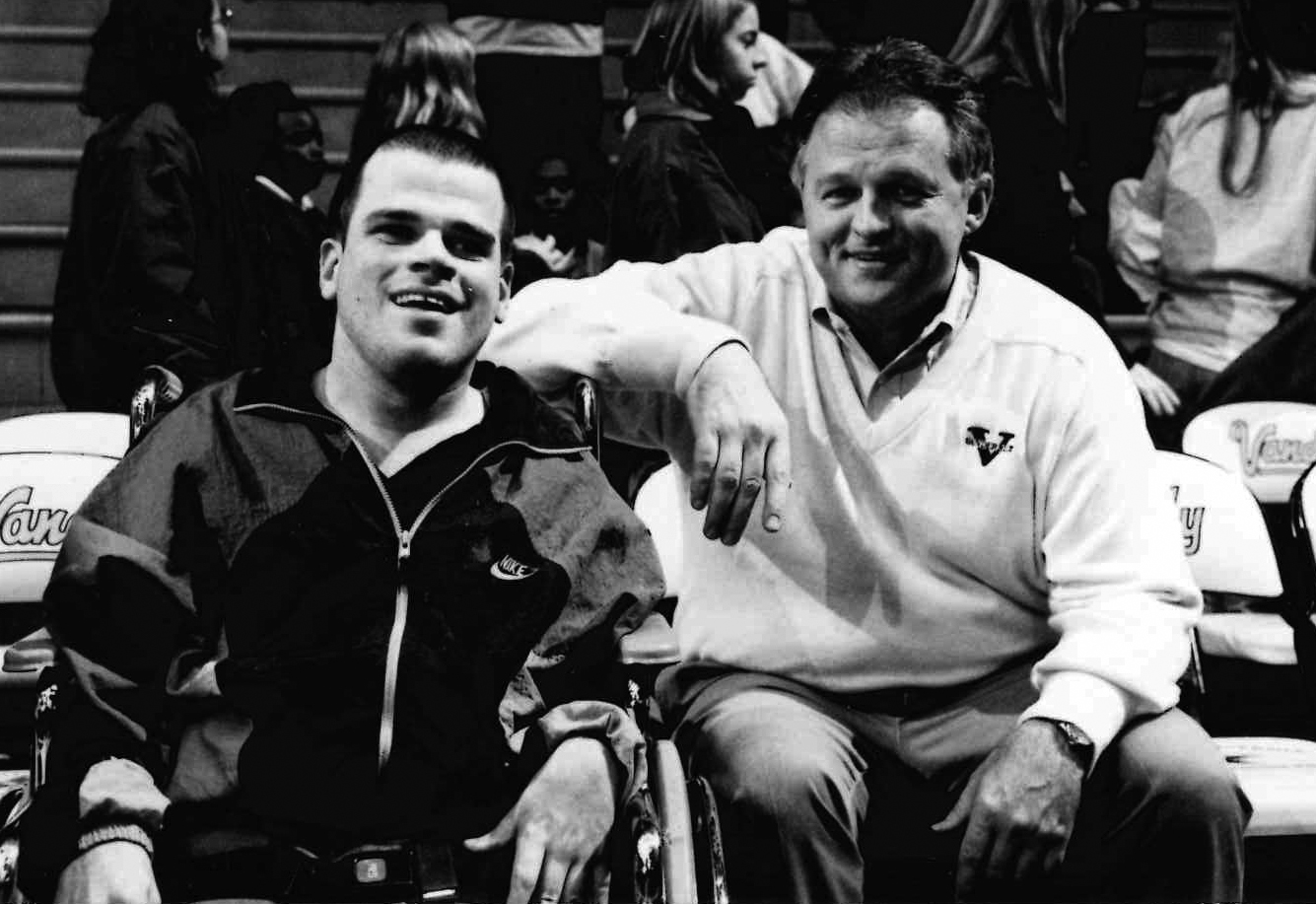
Chris DiJulia’s friendship with St. Joe’s women’s basketball coach Jim Foster (right) continued after Foster moved on to Vanderbilt.provided by Saint Joseph's University
The coach and his de facto assistant created a pre-game routine. After Foster gave his initial speech, he’d turn to DiJulia, who would share a few words.
“And then he would say, ‘But what it really comes down to,’ and he’d point to his heart,” St. Joe’s Hall of Famer Katie Gardler said. “And then he would point to his head.
“And you looked at all your teammates, and you’re like, ‘We’re doing this for him. Because he can’t get out there. We’re doing this for him.’”
DiJulia soon expanded his network beyond Hawk Hill, attending the NCAA and Atlantic 10 tournaments, among other events. If a coach left Philadelphia, he’d follow their careers, often traveling to go see them.
From the 1990s to the 2020s, DiJulia flew to Vanderbilt, Ohio State and Chattanooga to visit Foster, and drove to Michigan with his father to visit Martelli. Every year, he’d trek to Burlington to see Tom Brennan, the men’s basketball coach at the University of Vermont.
Brennan was among his closest friends. They first met in the 1970s, when the coach was assisting Rollie Massimino at Villanova. Brennan was hired by Yale in 1982, overlapping with DiJulia in Connecticut, which brought them even closer.
The two men discovered that they had a similar sense of humor; or as Pat put it, were “both crazy.” Games at Yale eventually led to daily phone calls, which led to trips to Vermont. In late November 2001, DiJulia visited Brennan when Cleveland State was in town, led by Massimino.
A Philadelphia jewel !! Chris DiJulia was as authentic and loyal as they come . An amazing man and a life full of inspiring others !! Love to the DiJulia family . pic.twitter.com/52X7Wglvvb
After the game, they got dinner with a few other coaches and family members. At one point, DiJulia asked Massimino a question that silenced the entire room.
“He said, ‘Rollie,’” Brennan recalled. “And back then, nobody called him Rollie. It was ‘Coach Mass.’”
The head coach turned to DiJulia, with an air of incredulity.
“Rollie?” Massimino said. “Rollie???”
The St. Joe’s fan grinned.
“That’s your name, ain’t it?”
DiJulia was a fixture at the University of Vermont. Every time he visited, he’d sit on the bench, right next to Brennan, tasked with keeping track of timeouts. This didn’t always go according to plan.
In February 1991, Vermont played at Delaware. It was a close game in the final minutes. Vermont was down three with the ball. Brennan turned to DiJulia and asked if they had any timeouts.
He said yes, but had counted incorrectly. Vermont got a technical foul. Delaware made one of two free throws, took possession of the ball, and won the game.
“The fun they’ve had with that over the years…” said Don.
Chris DiJulia and one of his best friends, Tom Brennan.Provided by the DiJulia family
Chris was also a regular on Brennan’s sports talk radio show on WCPV-FM. One time, he got the coach out of a parking ticket, because a police officer recognized DiJulia, and decided not to “mess up DeJules’ weekend.”
He was so beloved that in 2005, when Vermont was playing to reach the NCAA tournament, a booster chartered a plane to fly DiJulia to Burlington for the America East final. A gaggle of reporters met him at the airport.
After DiJulia returned home, Brennan checked in with his friend.
“I said, “Are you going to see St. Joe’s [in the NIT]?” Brennan recalled. “And he said, ‘Yeah… commercial.’ You got some balls. Commercial!
“But people just loved him. They loved him.”
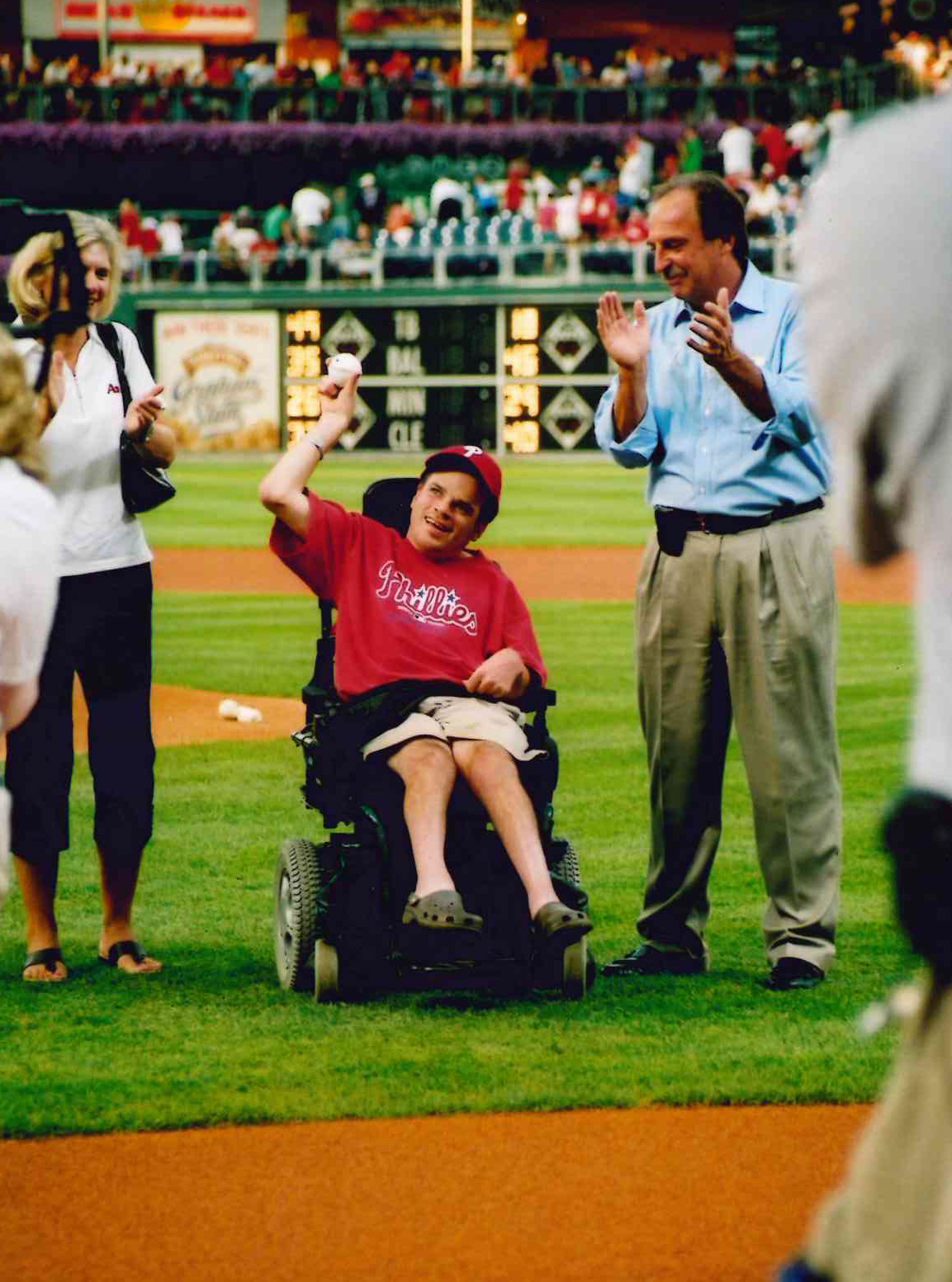
DiJulia’s unflinching honesty was a big reason why. In the mid 1990s, amid a stretch of below-.500 seasons, he penned an angry letter to Phillies team president Dave Montgomery.
Chris DiJulia (with former Big 5 coach Fran Dunphy on the right and St. Joe’s women’s basketball coach Cindy Griffin on the left) was a massive Phillies fan.provided by Saint Joseph's University
Montgomery invited him to his box, with Brennan and Don DiJulia. The executive asked what he could do for the frustrated fan.
“And he said, ‘The first thing is to stop our team from sucking,’” Brennan recalled.
(Montgomery and DiJulia went on to have a very close relationship, one that improved when the Phillies ended their World Series drought in 2008.)
“He was always ready,” Brennan said. “You couldn’t throw him off his game, man.”
A spirit worth celebrating
DiJulia’s health declined over the past two years. He could no longer feed himself or travel. Sitting on the bench at St. Joe’s was not possible; neither was attending games at Citizens Bank Park.
But DiJulia adjusted, as he always did. He continued to work the phones, keeping in touch with coaches. He’d follow his favorite teams remotely, either on TV or an internet stream, rather than in person.
And through it all, he never lost his spirit. Last Easter, DiJulia’s sister, Tyl Sadoff, gifted him a T-shirt. On the front was a message he thought was hilarious: “Just call me Jesus, I keep coming back.”
Perhaps that is the lesson. Even in the darkest of moments, Chris DiJulia was able to laugh. And since his passing, loved ones have found that is the best way to honor him. To share their favorite stories, of their favorite guy, with a tinge of sadness, but a bellyful of joy.
Temple’s football season is just around the corner — even if the pads haven’t come on yet.
On Wednesday, Temple hosted its first open practice for media, allowing second-year coach K.C. Keeler to give some insight into the team’s offseason. Last year, the Owls finished 5-7, one win short of making a bowl appearance.
Temple opens its season against Rhode Island on Sept. 5 at Lincoln Financial Field (2 p.m., ESPN+).
Here are three takeaways from Temple’s first fall camp practice.
Waiting for a QB to ‘step up’
There’s a quarterback battle on North Broad — one that does not have a timetable, said Keeler.
Jaxon Smolik, who transferred from Penn State, and Ajani Sheppard, who made stops at Rutgers and Washington State, are competing for the Owls’ starting role. Neither have started a game in college. Notably, though, Smolik outplayed Sheppard in the Cherry and White spring game.
“I thought it was a pretty good back and forth all spring,” Keeler said. “And then just the spring game that Jaxon had, obviously that’s what you’re hoping our quarterback can play like this season. … If we get that Jaxon, you know, let’s go. But again, I think we all feel Ajani has a special skill set, too.”
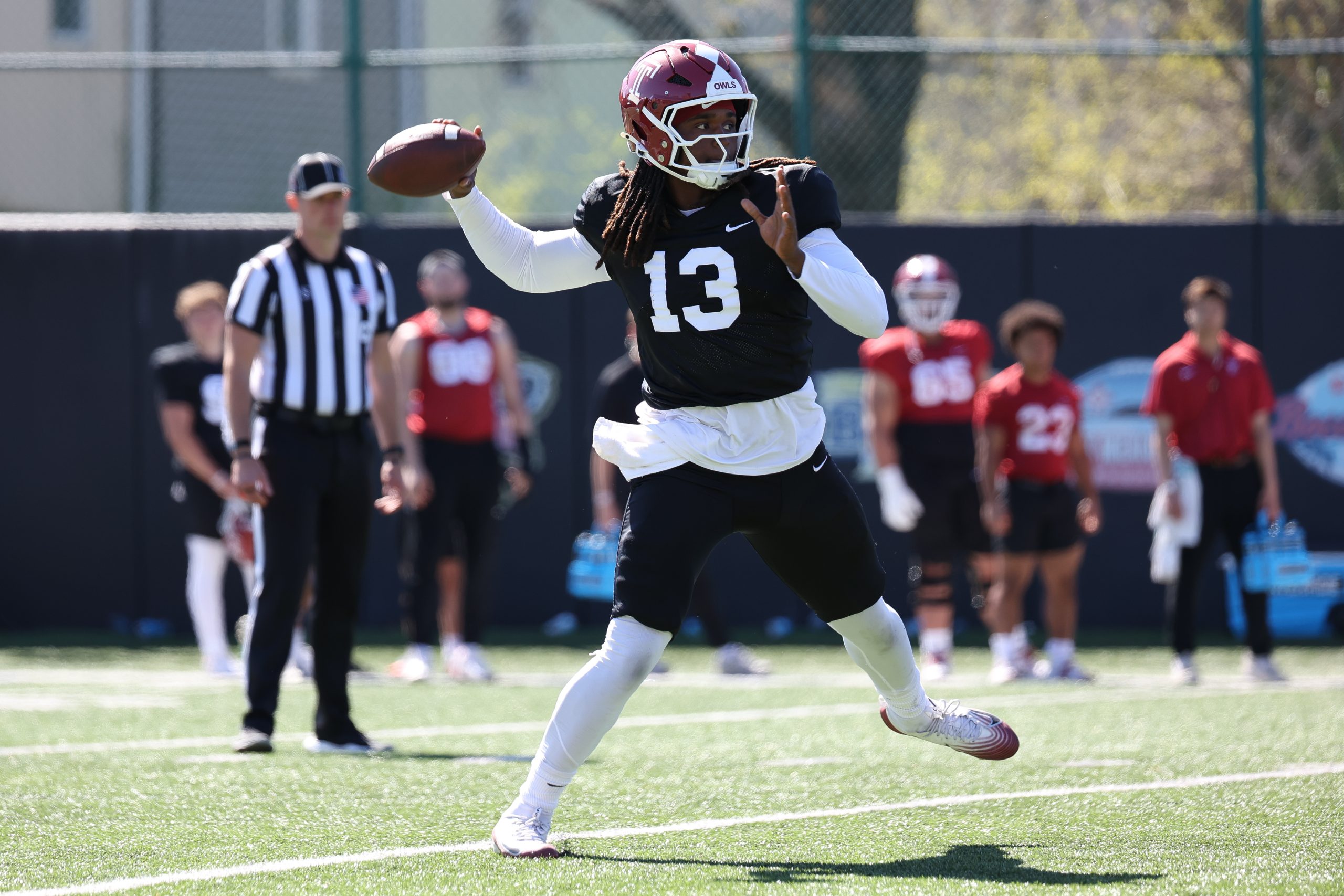
Temple quarterback Ajani Sheppard (13), shown during the Cherry and White spring game in April, has a “special skill set,” said coach K.C. Keeler.Isaiah Vazquez / For The Inquirer
Both quarterbacks took repetitions with the first-team offense. Fifth-year wideout Colin Chase, who finished with 40 receptions, 414 yards, and four touchdowns last season, will be among the top pass catching options for either quarterback.
“Ajani and Jaxon are two great guys,” Chase said. “They’re very mature about their business. … They work very well together. So for myself, it’s whatever they need. If Jaxon needs a couple more throws after practice, if Ajani wants to go watch film after practice, I’m there to assist whoever because as of right now, they’re both the starters in my eyes.”
In 2006, Keeler, who was then Delaware’s coach, presided over a quarterback battle between Joe Flacco and Ryan Carty. Flacco, a future Super Bowl champion with the Baltimore Ravens, did not win out until the “last scrimmage.” Keeler likened this year’s battle to the one two decades ago. Carty is now Delaware’s head football coach.
“You didn’t think it was going to be back and forth,” Keeler said. “I mean, I love Ryan. Ryan was a pretty good little football player too. Joe ended up being the 18th overall pick. So obviously, Joe had this unique skill set, but it took us a while because Ryan just kept on fighting and kept on putting himself in a position where you couldn’t legitimately say Joe was the better one.”
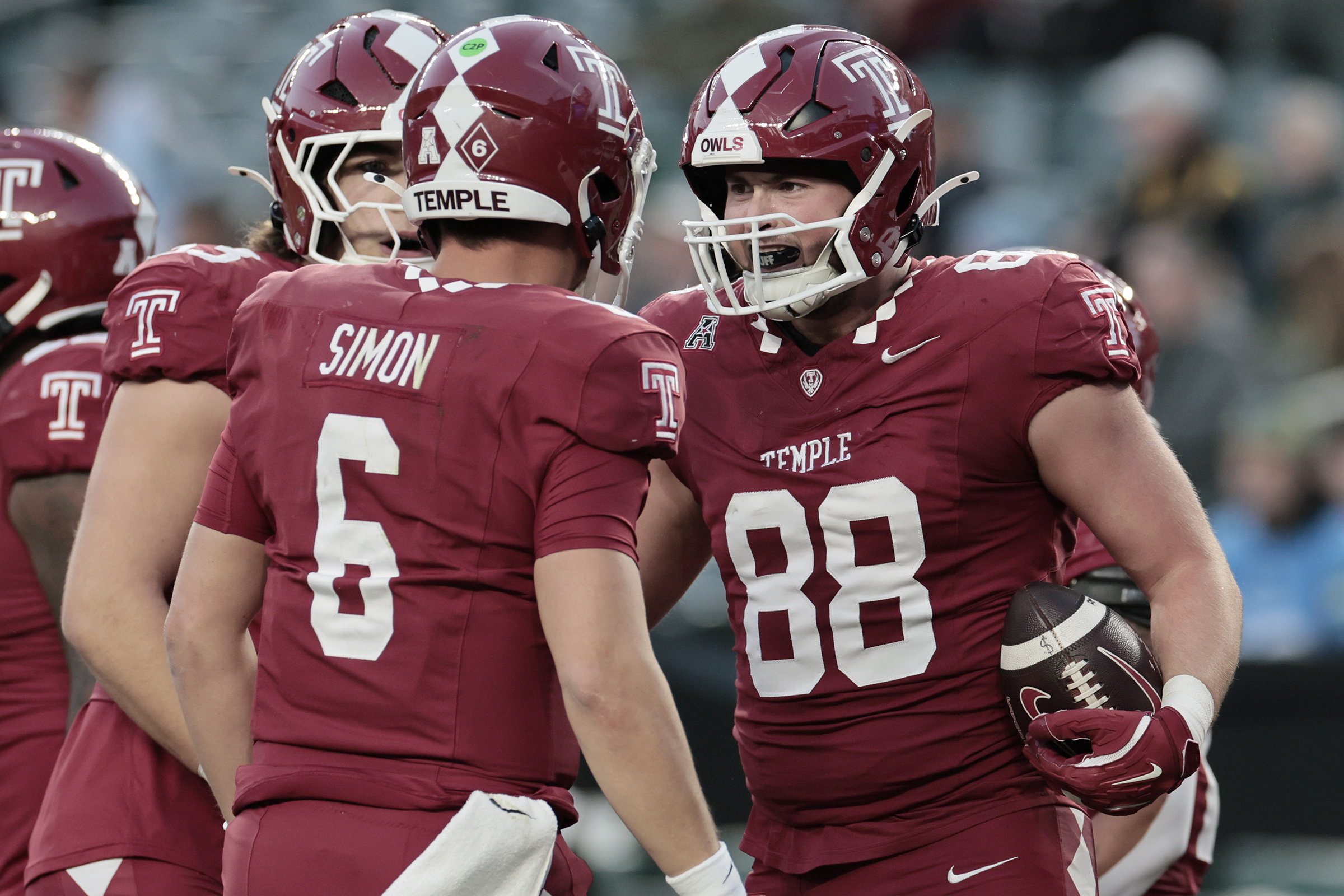
In time, Keeler hopes that one quarterback will “step up” like Flacco did, but he does see a world where their unique skill sets allow both quarterbacks to see action this season. Evan Simon and Gevani McCoy also battled for the starting role during Temple’s fall camp last season before Simon was later named the starter.
“I never love to say we’re playing two quarterbacks, but I’ve been in package situations before where I’ve had guys who like [come in for] red zone packages, short yardage packages,” Keeler said. “Whatever it may be, one guy fits better than the other guy does.”
Retaining key players
Beyond the quarterback position, Temple boasts a slew of returners.
Two weeks ago, during the American Conference’s media day, Keeler noted that the Owls had multiple players who were contacted by Power Four schools. Some were even offered “hundreds of thousands of dollars” to transfer.” However, every eligible starter returned.
One key returner, who could have transferred to a bigger program, is senior tight end Peter Clarke. Last season, he logged 483 yards and six touchdowns. Clarke, a product of the NFL Academy in England, was named to preseason watchlist for the John Mackey Award, given annually to the best tight end in college football.
Temple tight end Peter Clarke (right) will anchor the passing game this season.Elizabeth Robertson / Staff Photographer
On Wednesday, Keeler recounted his pitch to Clarke.
“Peter, you had six catches in two years, now you’re one of the top five tight ends in the country coming back,” Keeler said. “How does that happen? Probably in the right system, you probably got a great strength coach, you know you got a great position coach. Your ‘O’ coordinator is brilliant. You obviously have bought into everything we have to offer.”
“This is home to him, and so he wanted to stay in the worst way,” Keeler added. “And we had to find a way to make it financially reasonable. We can’t match, but we’re going to do our best. And I think he appreciated that.”
Along with Clarke, Keeler added that punter Dante Atton and offensive linemen Giakoby Hills and Eric King also turned down bigger programs to stay at Temple.
“Once we got those guys, it made the locker room so much easier to keep [together],” Keller said. “Because it’s like, ‘you guys are turning down what you think is significant money. We turned down a lot more and here are the reasons why we turned down that money, because we believe in where this place is going.’”
Cornerback room takes a hit
On Wednesday, Keeler revealed that sophomore cornerback Devontae Ward-Grant suffered a torn ACL in his right knee during the spring game and will miss the entire 2026 season.
“Every obstacle is an opportunity,” Keeler said. “And even though [Ward-Grant] would have competed to be a starter for us this year, he really needs a year in the weight room. … We’re looking at it like ‘it’s a great year for you to just get your body bigger, stronger, faster,’ and we’ll get him back next year.”
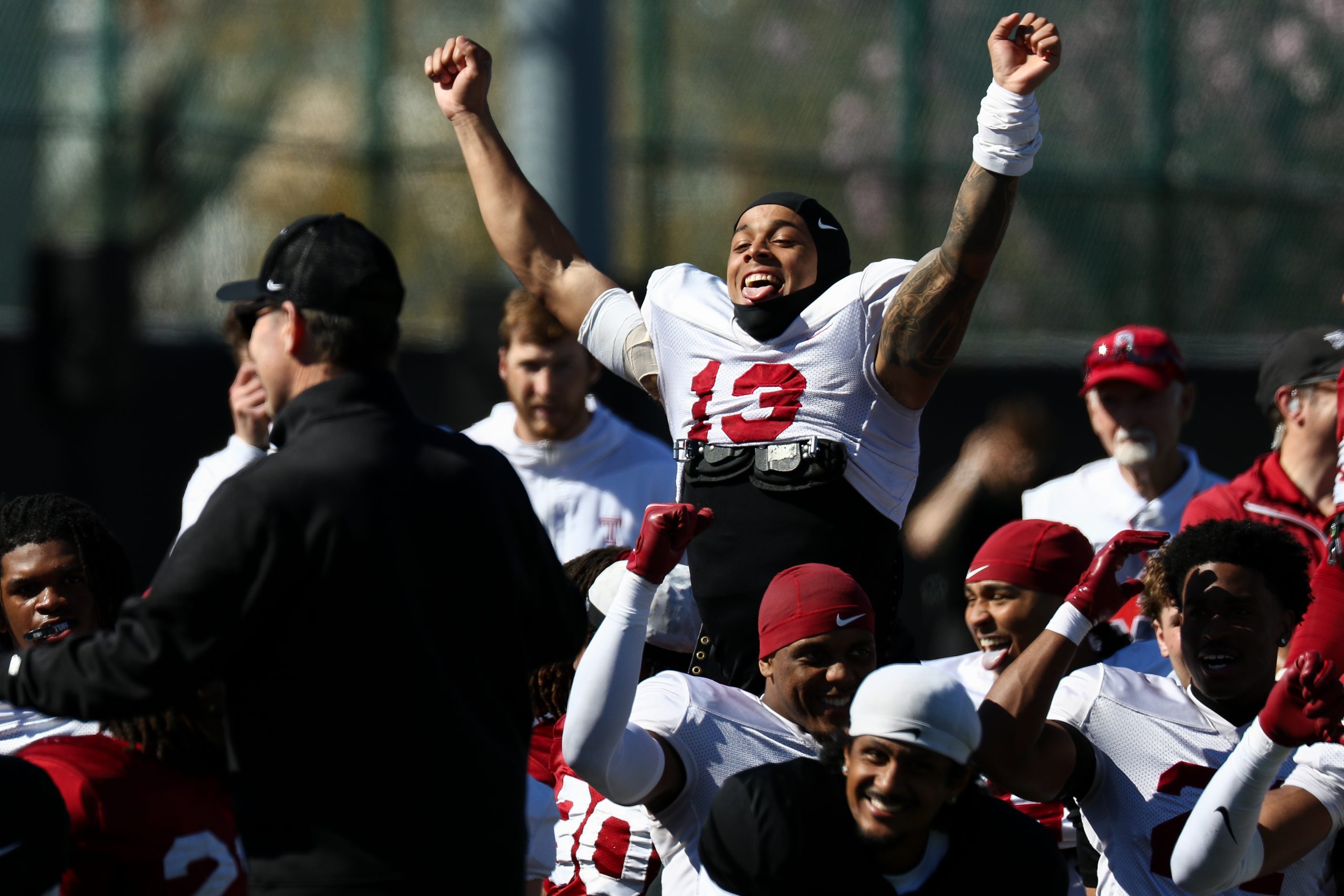
Denzel Chavis (13) is among the returning cornerbacks vying for a starting role for Temple this season.Isaiah Vazquez / For The Inquirer
The loss of Ward-Grant hurts an uncertain cornerback room. Notably, the Owls returned juniors Denzel Chavis and Adrian Laing. The duo combined for just 15 solo tackles last season.
“I think that cornerback spot is the one position you go, ‘I like the guys out there. I just need to see more of them,’” Keeler said. “I like their skill set. I just need to see more of them. So I think that’s where we’re at.”
“There’s one or two guys in that cornerback group that you feel really good about,” he added. “They’re getting in the right position, you know. But now, when the ball’s in the air, you got to make that play.”
“I want to be Defensive Player of the Year,” Carter said. And he absolutely thinks he can do so right away.
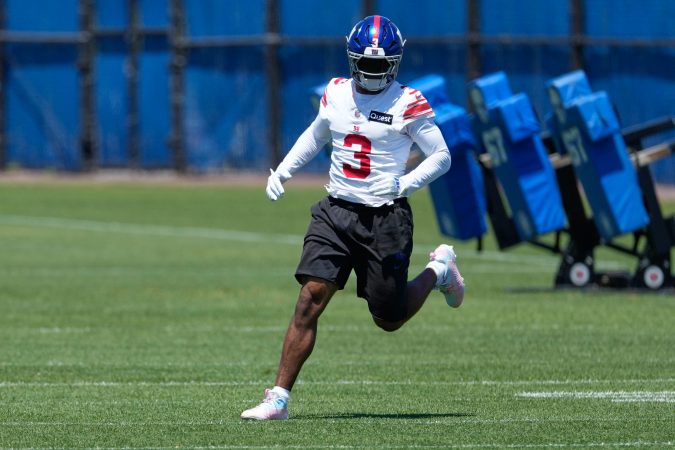
The North Philly native, who starred at La Salle College High School and Penn State, goes into his second NFL season with the New York Giants having come a long way from the edge rusher selected with the third pick in the 2025 draft and who asked Hall of Famer Lawrence Taylor to wear his No. 56 — and was denied. He has visibly evolved as a player and a person since struggling through the first two months as a rookie and getting disciplined twice for off-field team violations.
After finishing strong last year with 3½ sacks in his final five games, Carter has been a disruptive force early in training camp and could soon be an every-down linebacker and a difference-maker in all situations.
“I know what I’m capable of,” Carter said last week at The Greenbrier Resort in White Sulphur Springs, West Virginia. “I know if I put the work in and believe in myself, trusting myself, trust in my teammates, trust in my coaches, I can be whoever I want to be.”
Carter has shown flashes of brilliance in practice, working against established starting left tackle Andrew Thomas and often beating him to the backfield. Thomas notices Carter being better than this time last year.
“He’s using his power more, and you can tell he just has a better understanding for different types of blocks, different types of attacks, recognizing play schemes,” Thomas said, acknowledging Carter has exhibited growth all around. “He wants to be a good player, so when you have that drive, you just have to get it going in the right direction. You just learn as you go. He’s a young kid. He’s going to learn. He’s going to get even better.”
The learning happened in a very public way. Carter had just half a sack in his first 10 pro games, got benched from the first defensive series of his 11th by interim coach Mike Kafka, who then sat him again for the first quarter two weeks later.
Carter, who will be 23 in October, said at the time he owned his mistakes. Asked at this camp if he could tell his younger self anything, he brushed that off as not the way he thinks about life.
“I feel like everything happened the way it was supposed to,” Carter said. “I learned from it, moved on from it, so I’m ready to go into year two.”
“He ended the year strong,” Burns said. “I expect him to break out, pick up where he left off.”
Carter intends to do that by leaning on the video, playbook study and practice habits he has developed. That approach fits in with what Burns and others have observed about Carter showing more maturity.
It doesn’t hurt that Carter also has a new coach in John Harbaugh, who brings Super Bowl-winning gravitas to the job and hired Dennard Wilson to be defensive coordinator. It’ll be up to Wilson to figure out the best ways to use Carter to unlock his potential, though that’s something Harbaugh already has a good idea of.
“Just a consistency level: down, after down, after down, all downs, all situations,” Harbaugh said. “Play the run, rush the passer, all the movements, stunts — things like that — (and) cover for guys on movements. All those things that he’s determined to do, I’ve heard him say it many times, to be a complete player.”
The annual preseason college football coaches poll was released, and Penn State was included despite a disastrous 2025 season.
On Tuesday, Penn State was ranked No. 17. Eight Big Ten schools were included in the Top 25 poll, with Ohio State atop the list.
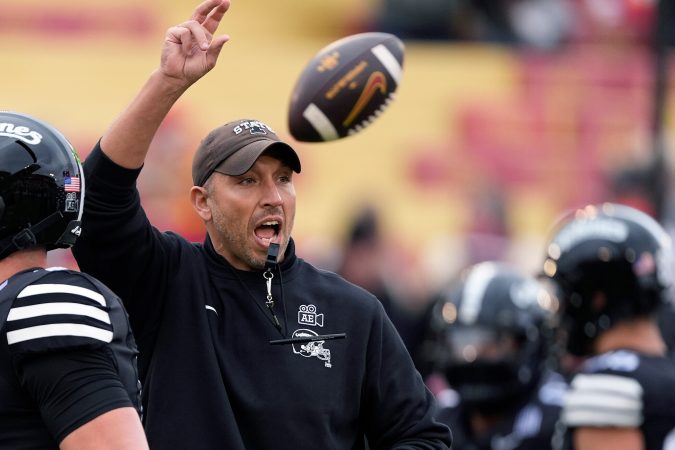
Last season, the Nittany Lions were ranked third overall in the same preseason poll, which was not indicative of the season the team had. The Nittany Lions finished 7-6 overall and 3-6 in conference play. Longtime head coach James Franklin was dismissed in the middle of the season. Former Iowa State coach Matt Campbell was hired in December to take over the program.
“Over the past six months, we’ve been reminded every day why Penn State was the right fit,” said Campbell during Big Ten media day last week. “The history is special. The tradition is special. But what really resonated with me is how Penn State has always valued integrity, character, and class at its best.”
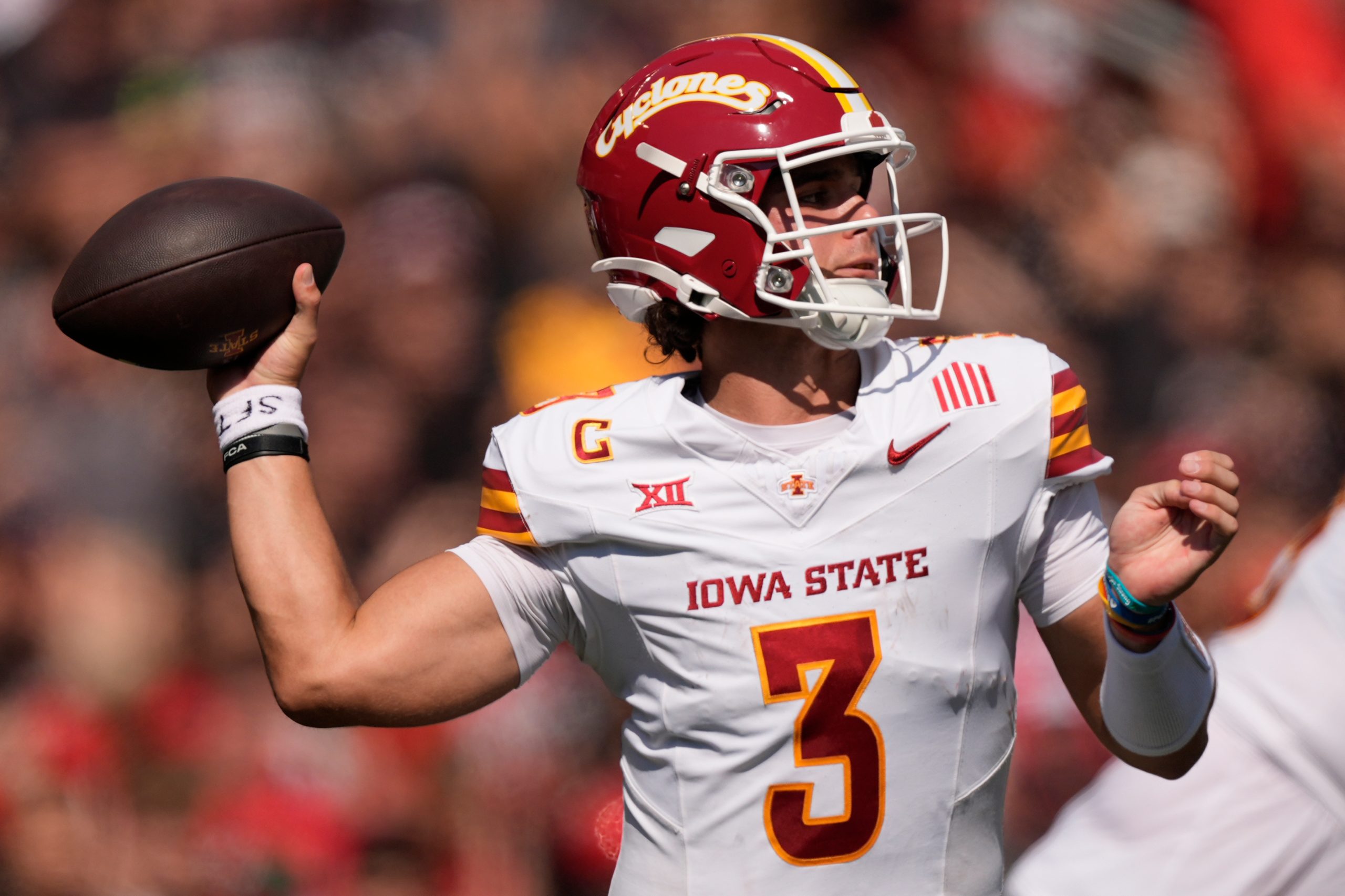
It seems Campbell’s peers believe he can help the program bounce back. To do so, he will lean on some familiar faces, as 24 Iowa State players followed Campbell to Penn State through the transfer portal, including starting quarterback Rocco Becht.
In 12 games last season, playing with a torn labrum on his nonthrowing shoulder, Becht threw for 2,584 yards and 16 touchdowns. He is the winningest returning quarterback in college football.
Quarterback Rocco Becht followed Matt Campbell to Penn State.Carolyn Kaster
“We have our goals in mind, and that’s to win a Big Ten championship and ultimately get to the College Football Playoff to have a chance to win a national championship,” Becht previously told the Inquirer. “With the team that we have now, I think we’re fully capable of doing that. Everybody just has to buy in, be consistent with the standards, and I think we’ll be in good hands.”
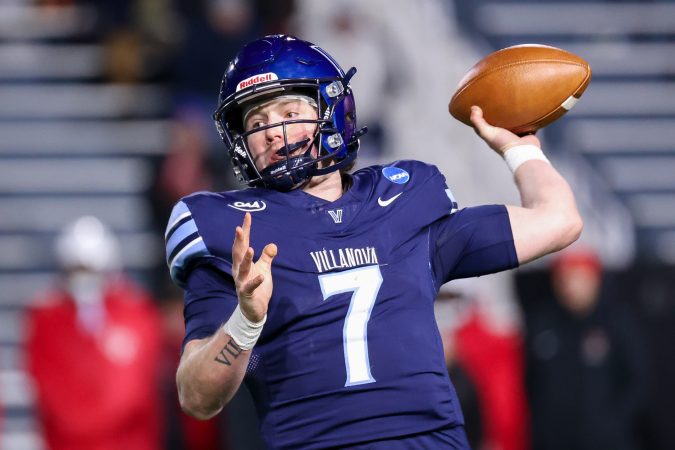
After a legal ruling, it seems that Villanova quarterback Pat McQuaide will suit up this season.
On Saturday, Cuyahoga County (Ohio) Common Pleas Court judge Timothy P. McCormick ruled that the NCAA cannot enforce its eligibility rules against McQuaide, granting the quarterback a preliminary injunction to play this season. McQuaide, who is from Solon in Cuyahoga County, motioned to sue the governing body after the NCAA denied his waiver request to play in 2026-27. The initial waiver was filed by Villanova on McQuaide’s behalf.
“Villanova is aware of the court decision regarding Pat McQuaide’s eligibility for the 2026 college football season,” the university wrote to The Inquirer. “We are working closely with the Patriot League and with Pat to determine the appropriate next steps.”
NEWS: An Ohio judge has ruled that the NCAA is barred from enforcing its eligibility rules against McQuaide or punishing Villanova University, making McQuaide immediately eligible to play Division I football for Villanova in the 2026–2027 season. pic.twitter.com/q7vVsJzlyB
McQuaide, 23, alleged that the onset of the COVID-19 pandemic during his junior year of high school severely disrupted his development and recruitment. Because of this, McQuaide landed at Kent State University as a walk-on. At Kent State, McQuaide redshirted and later transferred to Mississippi Gulf Coast Community College. After one year at Mississippi Gulf Coast, McQuaide played at Nicholls State for two years and Villanova last season.
The legal question around McQuaide’s eligibility pertains to his 2022 season at Mississippi Gulf Coast Community College. Villanova requested that this season should not count against McQuaide’s allotted eligible seasons, as Mississippi Gulf Coast is a junior college program and not under the purview of the NCAA. Additionally, McQuaide landed at the community college because of “extreme circumstances outside the normal recruiting process and outside of McQuaide’s control.”
McCormick cited past legal decisions involving issues of student-athlete eligibility, such as the case of former Vanderbilt quarterback Diego Pavia, and recently adopted NCAA bylaws in his decision to grant a preliminary injunction.
The decision also noted that Villanova is holding a spot on its roster for McQuaide to return as the team’s starting quarterback. With this, it is expected he will return to the Wildcats. Last season, McQuaide passed for 3,123 yards and 25 touchdowns in 15 appearances.
DENVER — A federal court dealt a perhaps chaos-inducing blow to the NCAA’s new eligibility rule Friday when it ruled that all high school class of 2022 athletes who exhausted their fourth season of college eligibility this spring are eligible for a fifth season this school year.
The ruling from U.S. District Judge Charlotte Sweeney in Denver, expected to be appealed, undercuts the NCAA’s plan to have the so-called “five for five” rule go into play starting with athletes who enroll in college in fall 2027.
It also has potential to wreak havoc on rosters across the country — for instance, opening the possibility that an undrafted player in an NFL training camp could decide to try to head back to college for a fifth year this upcoming season.
In granting the preliminary injunction, Sweeney said the players “will suffer irreparable harm without” it. She did not sign onto the governing body’s argument that applying the new rule retroactively would create “roster chaos.”
But NCAA President Charlie Baker said it would in responding to the rulings while referencing a bill in Congress designed to provide the NCAA antitrust protection on the eligibility issues.
“Today’s rulings and the chaos they bring to college sports are exactly why it’s time to pass this bill,” Baker said.
The Colorado ruling came hours after a Tennessee court granted Jalen Washington, who most recently played at Vanderbilt, and 18 other basketball players a fifth season of eligibility.
In June, the NCAA approved its new eligibility model for Division I athletes that will allow five seasons of competition over a five-year period that begins with their full-time enrollment or the academic year following their 19th birthday, whichever occurs first.
While the ruling in Tennessee applied to those 19 basketball players, the one in Colorado cast a wider net, granting the class certification the plaintiffs sought. It means the ruling applies to all Division I players who started their college careers in the 2022-23 season, not just a select list.
The Big Ten and Southeastern Conference agreed Friday night to support the Protect College Sports Act, a Senate bill that seeks to regulate college sports, ending a breakneck week of negotiations and pulling the bipartisan measure out of what looked like a certain death spiral.
School presidents from both conferences voted to back the bill after receiving last-minute concessions over language regarding third-party name, image, and likeness deals and the so-called “associated entities” that often make those arrangements.
More details need to be worked out, but the bill still has a chance to earn the 60 votes it needs to halt debate and head to an up-or-down vote before the Senate heads for summer break next Friday.
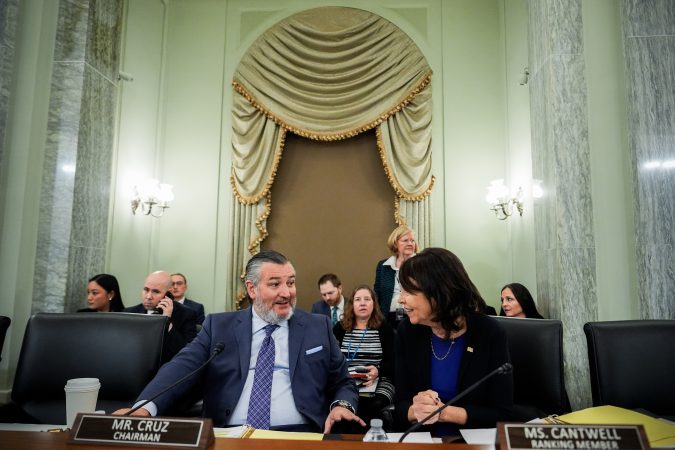
The summer recess was increasingly looking like a hard deadline for the Protect College Sports Act, a bipartisan effort headed by Sens. Ted Cruz, R-Texas, and Maria Cantwell, D-Wash.
After the conferences, which had balked at large sections of the bill, put out a short release announcing they supported the act “as currently drafted,” Cantwell went on social media and said: “Good. Now progress can be made in protecting women and Olympic athletes and moving the legislation closer to the President’s desk.”
Good. Now progress can be made in protecting women and Olympic athletes and moving this legislation closer to the President’s desk. https://t.co/RWytYnzVya
President Donald Trump, who also has been seeking fixes for an industry that now pays its players millions, got involved late Thursday, which helped push the parties back to the negotiating table.
Cody Campbell, the Texas Tech regent who has played a big role in shaping this policy, called the SEC and Big Ten support “a major breakthrough that moves us closer to a Senate vote — and a better future” for college sports.
Increased salary cap, new language entice holdouts
It could represent a major reworking of the House v. NCAA settlement, which governs paying players. The idea is that the extra money will take the place of payments from “associated entities” that were allowed beyond the $21.3 million cap. It was those payments that, many schools complained, obliterated any idea of a cap or controlled cost.
The SEC and Big Ten sought stronger language in the bill to guarantee that any third-party deals are truly outside deals and not coming from the schools’ multimedia-rights partners, which currently broker the majority of those deals.
Among the questions still unanswered are whether the new cap will comport with the House settlement, which had specific instructions about the hard cap (22% of a certain part of revenues, which equals $21.3 million this season), and what would happen to the College Sports Commission, the main NIL enforcement arm that spends the bulk of its time analyzing third-party NIL deals.
Long road remains
Even with Friday night’s victory, the bill has a long road ahead. Sen. Tommy Tuberville, R-Ala., has been a staunch opponent of the bill since the beginning. Before the latest compromise, Sen. Bill Cassidy, R-La., said that “as written today,” the act “creates chaos and eliminates opportunity for student-athletes.”
Whether the SEC’s approval is enough to get those senators and others from SEC states on board is one issue. If the bill clears the Senate, it would still then need to pass the narrowly divided House, which flailed on another college bill called the SCORE Act, for more than a year.
There’s also the matter of whether smaller conferences, long in favor of the bill, will remain so now that their bigger competition is being allowed to directly pay players up to $48.8 million.
Almost everyone in college sports agrees that the status quo isn’t working.
The news about the bill broke only hours after the NCAA lost a pair of key court cases involving its new rule that would give most Division I athletes five years to complete five seasons of eligibility.
Using those losses as another chance to urge for passage of the bill, NCAA President Charlie Baker said “It is long past time leaders across college sports call for the immediate passage of the bipartisan Protect College Sports Act.”
Two-time national champion hoops coach Dan Hurley of Connecticut used social media to outline the stakes in more colorful terms: “Somebody please come and fix College Sports. It’s a complete [expletive] show,” he said, using an emoji where the expletive would go.
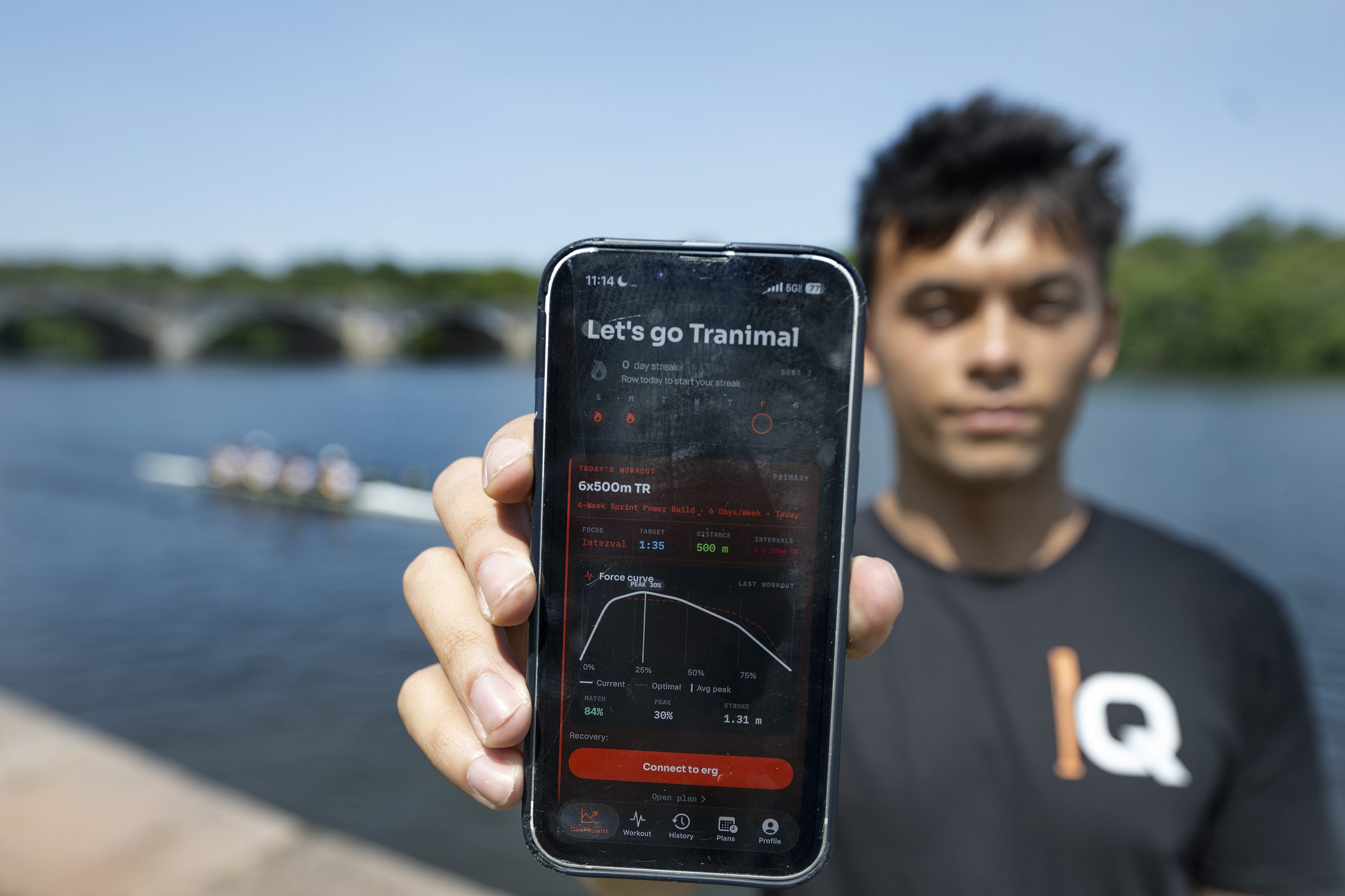
The app he was using to track his rowers’ stroke length and the amount of force they were using from the team’s ergometer rowing machines stored the information in different locations. Krakic wanted it on one screen.
Eventually, Krakic contacted and paid the app’s developer to make the fix — which caught the attention of one of his rowers.
“I was like, ‘Dang! My coach is paying $500 for something I could have done in 20 minutes,’” said Will Tran, a senior who primarily rows in the second varsity eight boat. “There’s a real gap in the market here. I used the app as well. I know I could improve this in so many different ways.”
Tran, a computer science major, decided to build his own app.
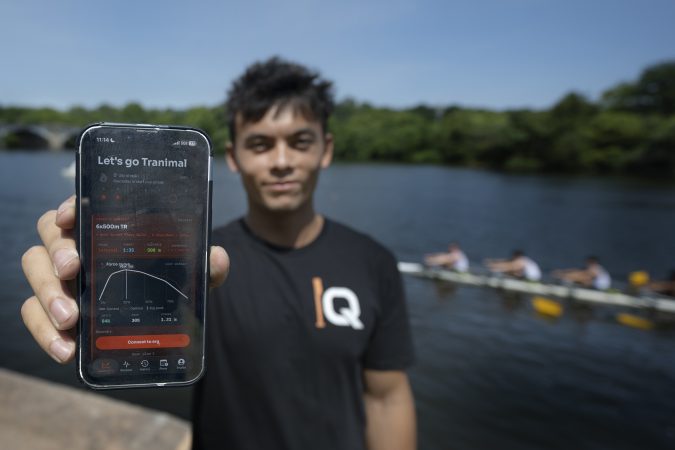
The final product became known as RowIQ. The app is an all-encompassing data ecosystem that uses artificial intelligence to pinpoint where and how rowers can improve. The app processes data from Concept2 ergometer rowing machines, smartwatches, and RowIQFuel — Tran’s nutrition app. In the future, RowIQ will also be able to collect data from on-water rowing monitors.
“We have hundreds of thousands of data points that no one ever looks at,” Tran said. “In rowing, these races are sometimes won by a hundredth of a second, so you need that 1% sometimes. Actually, a lot of the time you need that 1%. What we’re aiming to do is give rowers a complete picture of their training with data that’s never been seen before.”
Will Tran displays the training app he created. In the last two months, the RowIQ has received over 1,000 downloads.Jose F. Moreno / Staff Photographer
The app also allows rowers to create groups, so coaches have access to their entire team’s data in one location. Tran noted that this feature lets coaches “see trends in less than a second,” allowing them to understand areas of improvement and create lineup decisions with ease.
“It gives you really good data feedback on your [rowing] curve, how you’re rowing, and essentially what you’re doing and how you’re transferring your power,” Krakic said. “We’re able to match the guys indoors and then transfer that onto the water. We’re lucky to have it. It puts us ahead a little bit.”
In the last two months, the app has received over 1,000 downloads. More importantly though, the app boasts impressive user retention. Tran noted that top users are logging over 200,000 meters per week on the app.
Yin and yang
For the first few months of RowIQ, Tran worked alone. But while he tinkered with the app’s coding, Tran found that he had little time to dedicate to RowIQ’s marketing, so he put together a small team. Fittingly, they all have a background in rowing.
A few members from Penn’s lightweight crew team are developing a telemetry system to fully integrate RowIQ’s data into one central location. Meanwhile, former Harvard lightweight rower Zarret Mills is working as a consultant for the app.
One of the most important members of the team has been Sergej Čipak, a former La Salle rower who moved back to his home country of Serbia to pursue electrical engineering. Tran and Čipak spent one year as teammates at 20th and Olney.
“You spend a lot of time together, even when you’re not like racing or training,” Čipak said. “You’re eating together. You go to parties together. So I really grew close with Will over some time. Will has a very interesting personality. He can be kind of cold sometimes and give not-detailed-enough instructions. But I think we have some kind of dynamic that makes us really productive.”
After starting part-time, Čipak’s role with RowIQ has grown exponentially. While Tran focuses on more big-picture endeavors, Čipak leads the app’s development. With the app’s success, Tran has been able to compensate Čipak — something Tran did not think he “would ever be doing at 22.”
“It’s a yin, yang,” Tran said. “On one side, it’s awesome that someone pays for their apartment and their food via your idea and creation. It’s such a wonderful feeling to be able to provide that for someone and do it through something that you are so passionate about.
“And then the other side of it is, I never want to go to sleep and I never want to get outworked because this person is relying on me, and I feel an obligation to always be on, always be working, always progressing. I never feel off. Sometimes I’m with my girlfriend and I say I’m present, but I’m not. I’m thinking like, ‘Shoot, we got to pay Sergej his monthly paycheck so he can pay his rent and buy his groceries.’”
While Tran is adjusting to the added pressure of managing employees, Čipak is working full-time for a company that is not aligned with the career path he expected to pursue in Serbia. Still, he is on board with RowIQ for the foreseeable future.
“We just crossed 1,000 users a few days ago, so I mean it’s really exciting,” Čipak said. “I never really worked on something like this in my life, and I do plan on keeping on working on this.”
Can’t tell this kid no
In the tech world, “college dropout” is somewhat of a lauded title.
Mark Zuckerberg dropped out of Harvard to run Facebook full-time; Bill Gates did it before him, leaving Cambridge to co-found Microsoft; and Jack Dorsey left NYU a semester before his graduation to move to California, eventually starting Twitter.
The list goes on and on.
Today, chasing the AI boom, tech venture capital firms like Y Combinator and Antler are known to provide college students with hundreds of thousands of dollars to fund their startups. Meanwhile, industry giants like Palantir and Elon Musk’s xAI encourage students to ditch their formal education to work for them instead. Tran is no exception to this pressure.
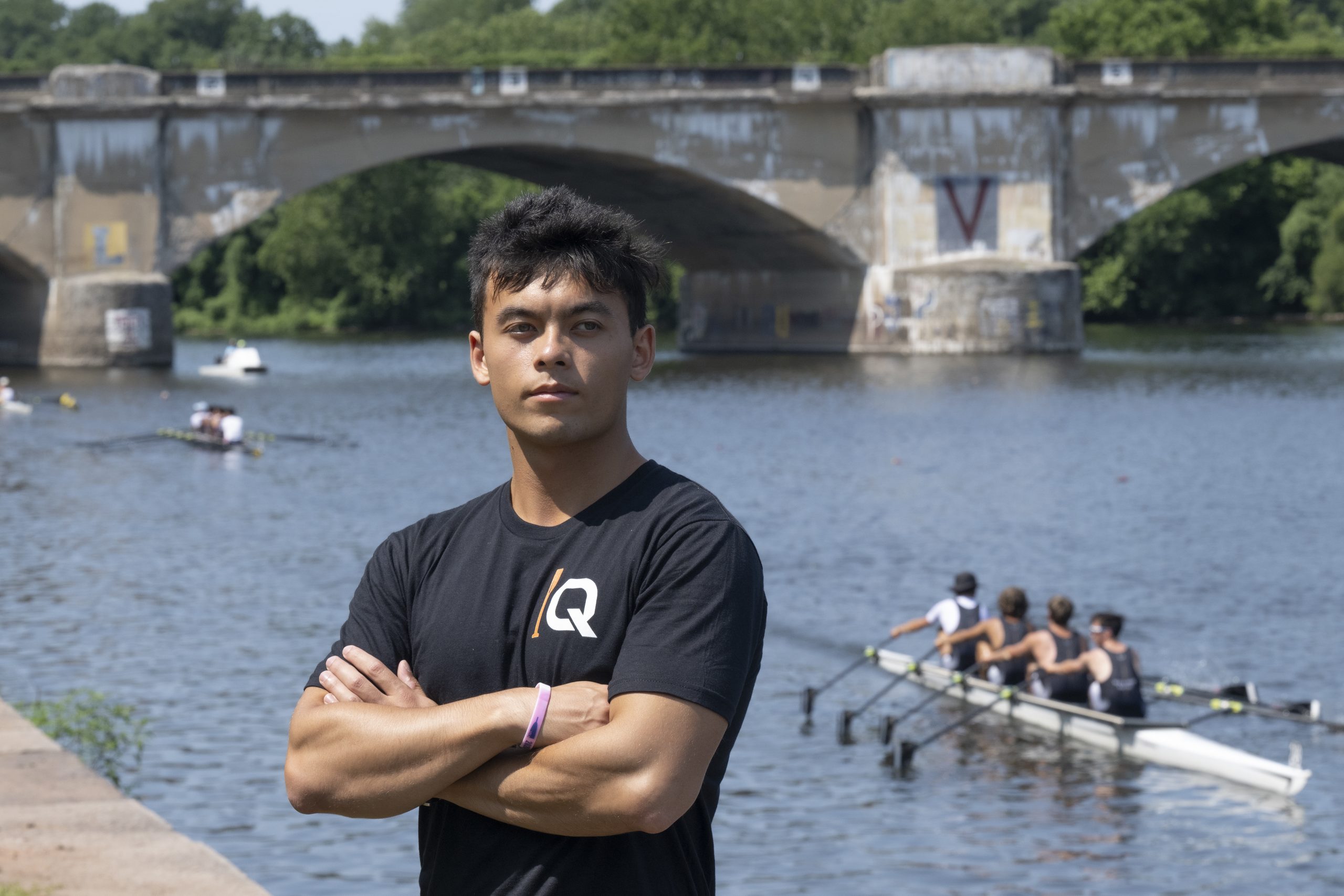
Will Tran, a rising senior at La Salle, has spent this summer growing RowIQ in the area.Jose F. Moreno / Staff Photographer
“I’ve seriously debated taking this fall semester off,” Tran said. “Like genuinely — we’re continuing to close deals with high school clubs, college clubs, recreational clubs. We’re onboarding probably 70 new athletes a day from clubs. It’s huge, and I don’t know if I will have the time in college to do schoolwork, be a Division I athlete, be a boyfriend, and run RowIQ at the same time.
“I have seriously debated taking the fall off and joining some sort of Y Combinator, coming back to school later. Do I think I’m going to do this? Probably not.”
Tran has already sacrificed opportunities to focus on RowIQ. This summer, he turned down an internship offer from a data analytics company. For now, even if the balancing act can seem impossible at times, Tran will try to have it all at La Salle.
“You can’t really tell this kid ‘no’ or ‘you can’t do it,’” Krakic said. “The more you say ‘don’t do this’ or ‘it’s not possible,’ the more he tries to prove you wrong.”