Category: College Sports

  • Should Division I men’s soccer become a two-semester season? Here’s where Philly coaches stand.

    Should Division I men’s soccer become a two-semester season? Here’s where Philly coaches stand.

    A change to Division I men’s soccer looks to be on the horizon.

    After years of discussion and debate, the NCAA Men’s Soccer Oversight Committee adopted legislation to shift the sport’s season from the fall to a two-semester schedule. The change was set to go into effect before the 2027 season. But on June 24, the NCAA announced that the Division I Cabinet remanded the proposal for additional review.

    Twenty conferences opposed the measure, according to the NCAA’s release, taking issue with “the duration of the season” and “the lack of clarity about related rules.” Additionally, the Cabinet noted issues relating to how the change could impact the “student-athlete academic experience.”

    Philadelphia has six Division I men’s soccer programs: Penn, La Salle, Drexel, Villanova, Temple, and St. Joseph’s. The head coaches of each program reacted to the possible change. Some supported it, while others pointed out a variety of flaws.

    Player development

    Critics of the one-semester season have long lamented that the current setup impacts player development. Villanova head coach Mark Fetrow, who noted his program has been “big supporters” of the new legislation, believes a two-semester format will accelerate development and may be a necessity for college programs.

    “When you space the games out, and now you’re saying we’ve got a year of competition, we can now periodize our training in a way where we’re getting more out of our training sessions from a week-to-week basis,” Fetrow said. “We’re really maximizing performance because guys are just healthier on game days. If we want to stay relevant, if we want to evolve, because the game has evolved a lot in the United States in the past 10 years, then we have got to be willing to make some changes as well.”

    A main competitor for colleges, in terms of acquiring and developing talent on a path to the professional ranks, has been Major League Soccer Next Pro, MLS’s path to pro league. But a longer season could put college soccer on par with the emerging professional league, says Taylor Thames, La Salle’s head coach.
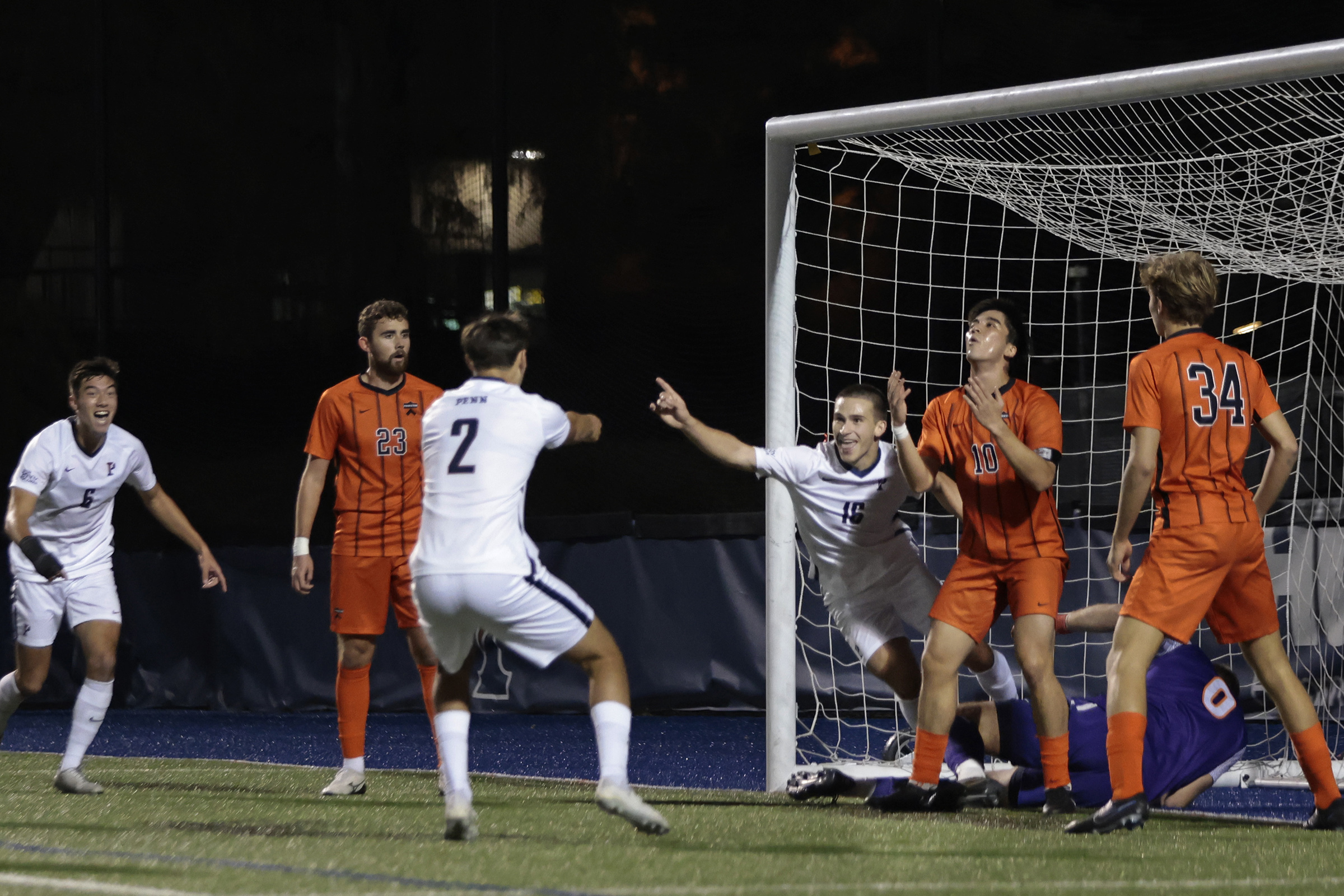
    Oliver Pratt (No. 16) played four years at Penn before signing a pro contract.Elizabeth Robertson / Staff Photographer

    “I think it makes us much more competitive in relation to MLS Next Pro, and some of these USL One contracts that are starting to take some high-level players from the college landscape, and it helps us develop them for longer spells,” Thames said. “There’s a bigger development cycle.”

    Oliver Pratt, a 22-year old defender for MLS Next Pro’s Union II, played four years at Penn. He had to graduate a semester early to sign with an MLS team in time for the season. Having now experienced a full year of training in the pros, Pratt better understands the upside to shifting the college format.

    “I definitely would have been able to maximize [training] more, and I would say be able to significantly improve within one season,” Pratt said. “It’s a different transition for me now. I’m dealing with a 10-month season, and my body’s definitely taking a toll.”

    However, the majority of college players are not going pro, St. Joe’s coach Tim Mulqueen pointed out. He also noted that increased development would benefit the “top 1% or 2%,” but argued “that would happen for the top players anyway.” Mulqueen has seen premier development firsthand. He served in multiple roles with U.S. Soccer, including as an assistant coach for the 2008 U.S. men’s Olympic team.

    Meanwhile, Drexel coach David Castellanos believes the current system is yielding strong results and a “drastic change” would not be necessary. He said that the old model has produced “national team guys in the 1990 World Cup” and “MLS head coaches.”

    Scheduling games, shifting operations

    In a two-semester season, programs would have to adjust how and where games are scheduled.

    Under the new format, the maximum match limit for each team would stay at the current cap of 25, meaning no additional games would be added in the 2027 season. With this, programs are required to schedule at least seven games or at most 10 games in the spring season. A team cannot opt to play all of its games in the fall.

    Having to schedule games and additional practices in the spring could create issues for teams that share their facilities with other programs. For example, St. Joe’s shares Sean Sweeney Field with both of the school’s lacrosse teams and the women’s soccer program.
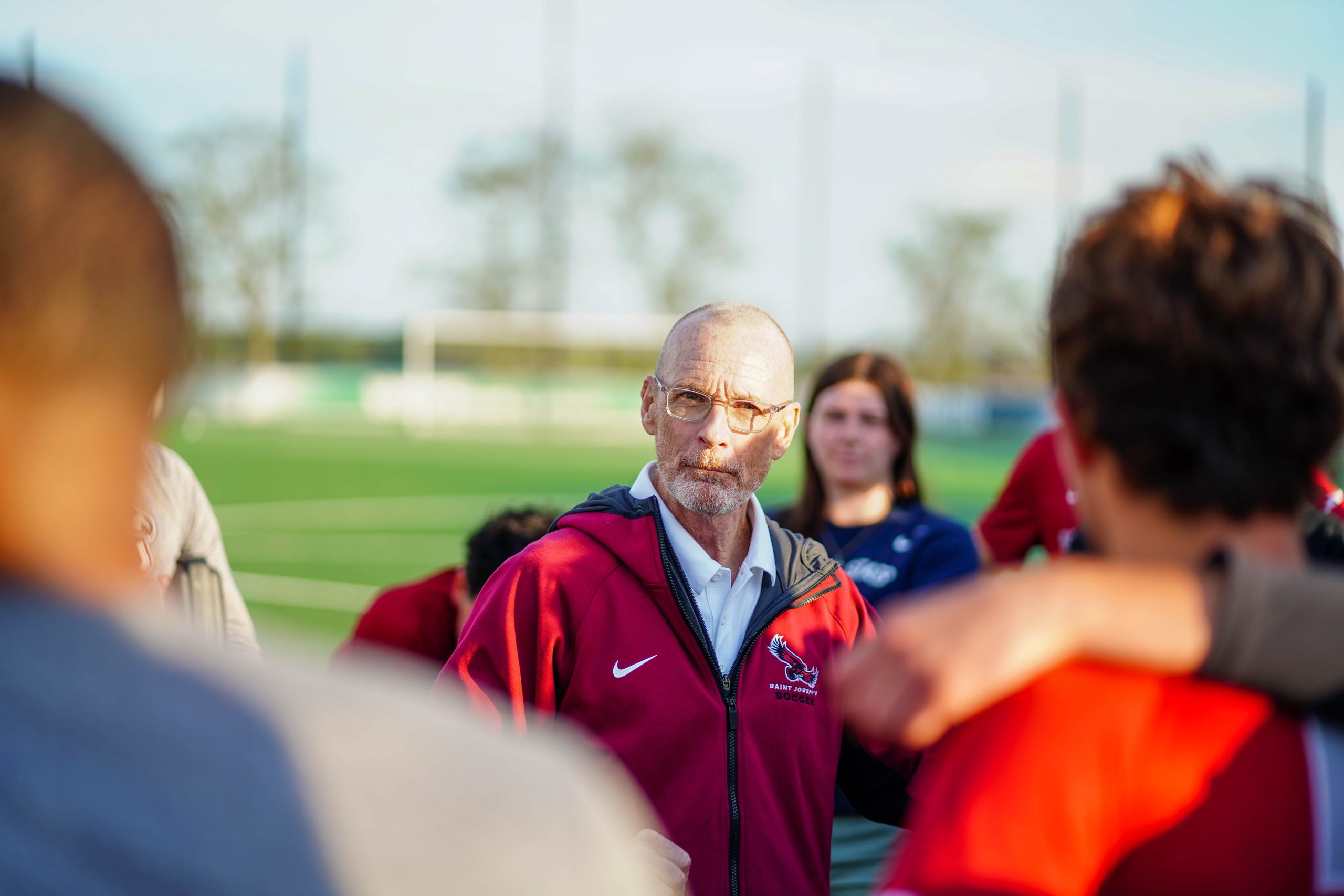
    Tim Mulqueen has served in multiple roles with U.S. Soccer, including as an assistant coach for the 2008 U.S. men’s Olympic team. St. Joseph's Athletics

    “When you’re sharing [facilities] with lacrosse or field hockey, that’s going to stress training times,” Mulqueen said. “It’s going to stress the [operations] people, it’s going to stress our trainers, who in small schools do multiple teams.”

    Penn and Villanova are the only two local Division I programs that boast soccer-specific facilities, meaning that intra-program scheduling conflicts are unlikely to occur. Still, Quakers coach Brian Gill expressed concern with how the change may affect the other resources that his program relies on.

    “Your infrastructure gets shared, so if that’s the actual facility or some of the people: trainers and strength coaches, sports information,” Gill said. “There’s a lot of shared overlap there, so that’s probably one of the biggest challenges. … How do you make this all feasible when it comes down to that stuff?”

    Then, there’s the case of weather. Philadelphia boasts relatively cold Februaries, when spring play is slated to resume. From 1992 to 2021, the city’s average temperature in the month was 36 degrees — a cause of concern for a few of the City 6 coaches.

    “It’s going to be brutal,” said Castellanos. “If you take, for example, the winter that we just had this year and then you’re telling me our playing season is going to be in the spring. You need January, February for preseason to ramp these guys up.”

    Added Thames: “I think any coach should be concerned about competitive advantages — how to protect their program and fight for their program. That’s one concern that I would imagine for teams that don’t have an [indoor] bubble. [La Salle], for example.”

    However, Temple head coach Bryan Green did not feel Philadelphia’s climate was a cause for concern.

    “All the leagues in Europe, like Germany, have a pretty similar climate to us,” he said. “They play in December and January. It’s part of the sport to play outdoors and play in different environments and conditions”
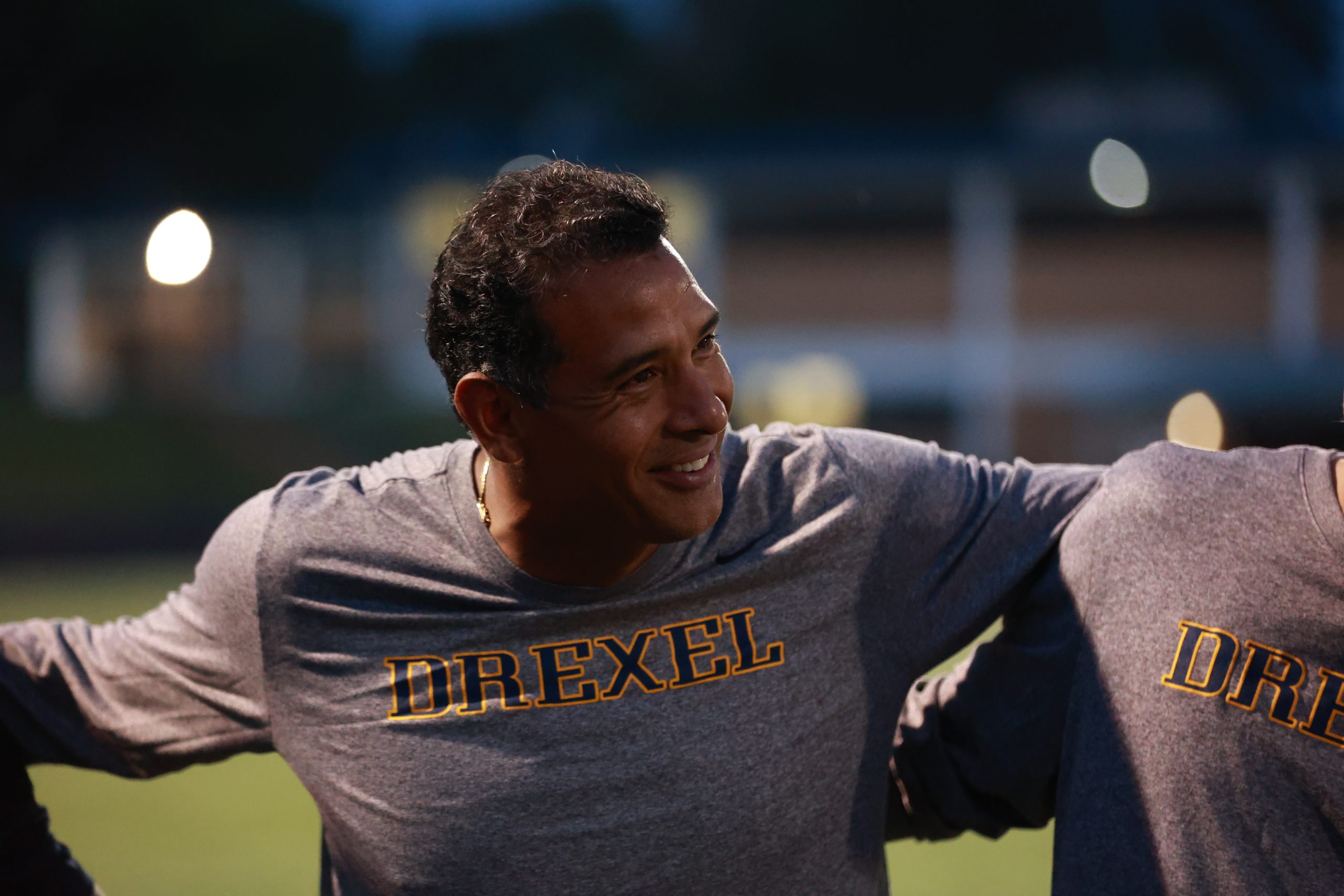
    David Castellanos believes college soccer’s current system is yielding strong results and a “drastic change” would not be necessary.Drexel Athletics

    One way to escape the cold is to schedule early spring matches down South, which is what most of the area’s college baseball teams do. Fetrow noted that he has been in conversation with Villanova to “try to go down to a place like North Carolina” to start the second half of the season. Thames, Mulqueen, and Castellanos all shared similar interest.

    Like anything, though, that will come with additional costs.

    “Those are going to be travel expenses. I don’t see how you can get around it,” Mulqueen said. “We’ve gotten to the stage where the smaller schools, we have to adapt to what’s being done at an NCAA level that we really don’t have much say in.”

    Player health

    A leading factor in the new format’s adaption was the idea that spacing out games would result in fewer total matches missed due to injuries. The NCAA, in its formal announcement, wrote that increased recovery time “could support injury prevention and return-to-play protocol.”

    For the most part, the area’s coaches agreed with the reasoning.

    “Say a kid needs two and a half weeks to get back [from an injury], there’s a good chance that the player missed five or six games through one injury,” Gill said. “Versus [in the new format], the player maybe misses two to three games. You’re sort of giving some space for guys to naturally come back.”

    While Castellanos agrees that total games missed will be cut down due to the new format, he believes that a longer season may bring more “wear and tear” injuries.

    “When we think about these injuries, we think about some of the major ones, but we’re not talking about the soft tissue ones,” Castellanos said. “Now that you go 10 months, you’re on it every single day, right? I think that you know these things can linger. It’s going to put a lot more pressure on the training staff to maintain these guys to be healthy for 10 months.”
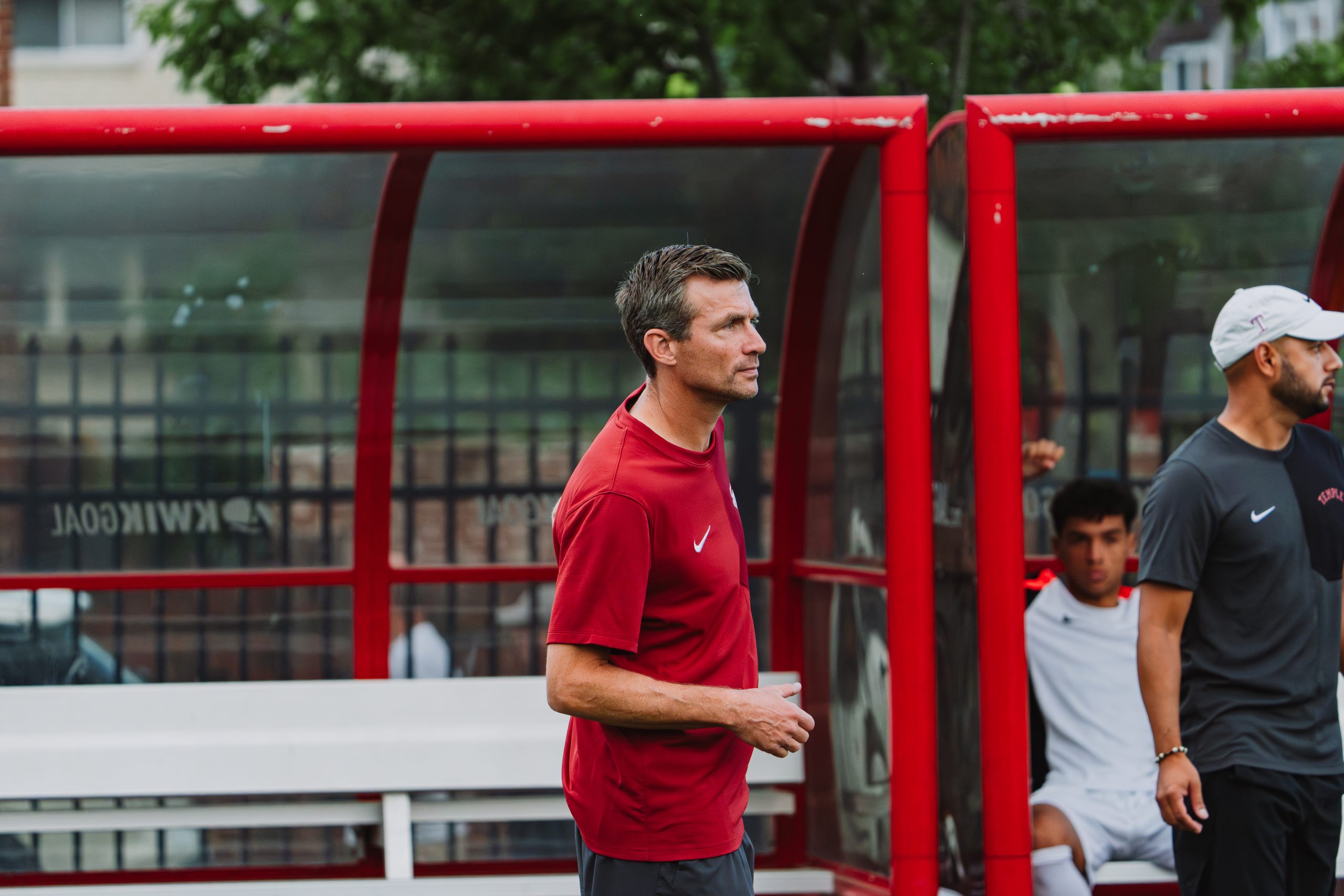
    Bryan Green has led the Owls as head coach since 2022.Temple Athletics

    Mulqueen is also concerned about new injuries sprouting due to the format.

    “In my experiences, when you have more time, you do more things,” Mulqueen said. “No one’s going to sit idly by and say, ‘Right, we have 10 months now, or we’re going to give guys time off.’ Well [if] you get bad results, you’re going to do more.”

    Now, Philadelphia’s coaches are in a waiting game to see when the proposal will make its way back to the NCAA’s desk. In the meantime, they will continue to prepare for what feels like the inevitable.

    “There’s all kinds of different challenges every season, no matter what,” Green said. “I think that’s the one thing that college athletics does really well, is they’re nimble and adaptable, and this is just one more thing that we can prove that we can do.”
  • Gerry O’Reilly, Villanova track Hall of Famer, Irish Olympian, and Vanguard executive, has died at 61

    Gerry O’Reilly, Villanova track Hall of Famer, Irish Olympian, and Vanguard executive, has died at 61

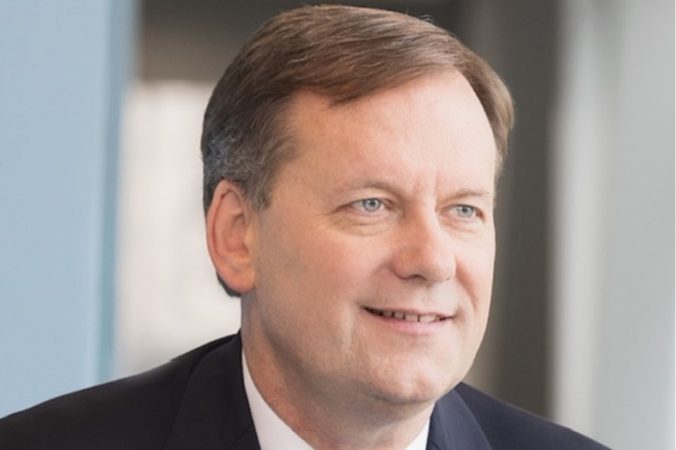
    Gerry O’Reilly, 61, of Chester Springs, Hall of Fame middle distance track star at Villanova University, 1988 Irish Olympian in the 1,500-meter run, longtime executive at the Vanguard Group Inc., mentor, and role model, died Thursday, June 11, at Phoenixville Hospital after an earlier sudden cardiac event.

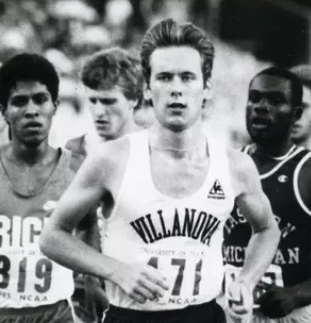
    Born and reared in Dunboyne, County Meath, Ireland, Mr. O’Reilly earned a track scholarship to Villanova in 1983 and joined a dozen other Irish athletes in what became known as the school’s Irish Pipeline to the Main Line. He went on to run cross-country and indoor and outdoor track, win seven Big East Conference championships, and hold the Big East outdoor record in the 1,500 for 37 years.

    He ran the 1,500- and 3,000-meter runs, the mile, and the distance medley relay at Villanova, and was named All-America four times. He won six national collegiate championships, was named outstanding performer at the 1986 Big East Indoor Championships, and was inducted into the Penn Relays Wall of Fame in 2007 and the Villanova Varsity Club Hall of Fame in 2009.

    “Without exaggeration, those were four of the best years of my life,” Mr. O’Reilly told Dave Thomas on the Belmont Plateau Hall of Fame podcast. Villanova “kind of set me up both athletically and academically for the rest of my life.”

    Marcus O’Sullivan, former Villanova teammate and countryman, now director of track and field and cross-country at Villanova, said Mr. O’Reilly “had a steadfast moral compass that guided him in his life, and in doing so it had an intoxicating influence on others. … We all need a person like Gerry O’Reilly in our lives.”

    After college, Mr. O’Reilly competed in the international Millrose Games in New York, the 1987 World Championships, the 1989 World Indoor Championships, and for Ireland in what is now the World Athletics Championships. At the 1988 Summer Olympics in Seoul, South Korea, he made it to the semifinals of the 1,500.

    Irish Olympic team officials called him “an exceptional athlete” and praised his “genuine commitment to helping the next generation.” They said: “Once an Olympian, always an Olympian.”

    Irish marathon Olympian John Treacy told the Irish Times: “Gerry was a smashing runner and just the nicest guy, great for staying in contact and communicating with other Irish runners over the years.”

    Mr. O’Reilly ran miles at night after school in the rural Irish fields and lanes, and joined the Dunboyne Athletic Club when he was 9.
    Villanova University

    Mr. O’Reilly was also inducted into the Belmont Plateau Hall of Fame in 2025 and recently honored by his hometown Dunboyne Athletic Club.

    He earned a bachelor’s degree in economics in 1987, joined Vanguard in 1992 and the trading desk in 1994, and worked as an investment leader and portfolio manager. He was a mentor, colleagues said in a tribute, “who made immeasurable contributions to several of Vanguard’s flagship index funds.”

    He served on corporate panels and lectured at leadership development events. Colleagues called him “riveting and influential” and “a giant in every sense except ego.” One said: “You could tell he truly cared about the markets and about doing things right.”

    A friend said: “Great athlete, great person.”

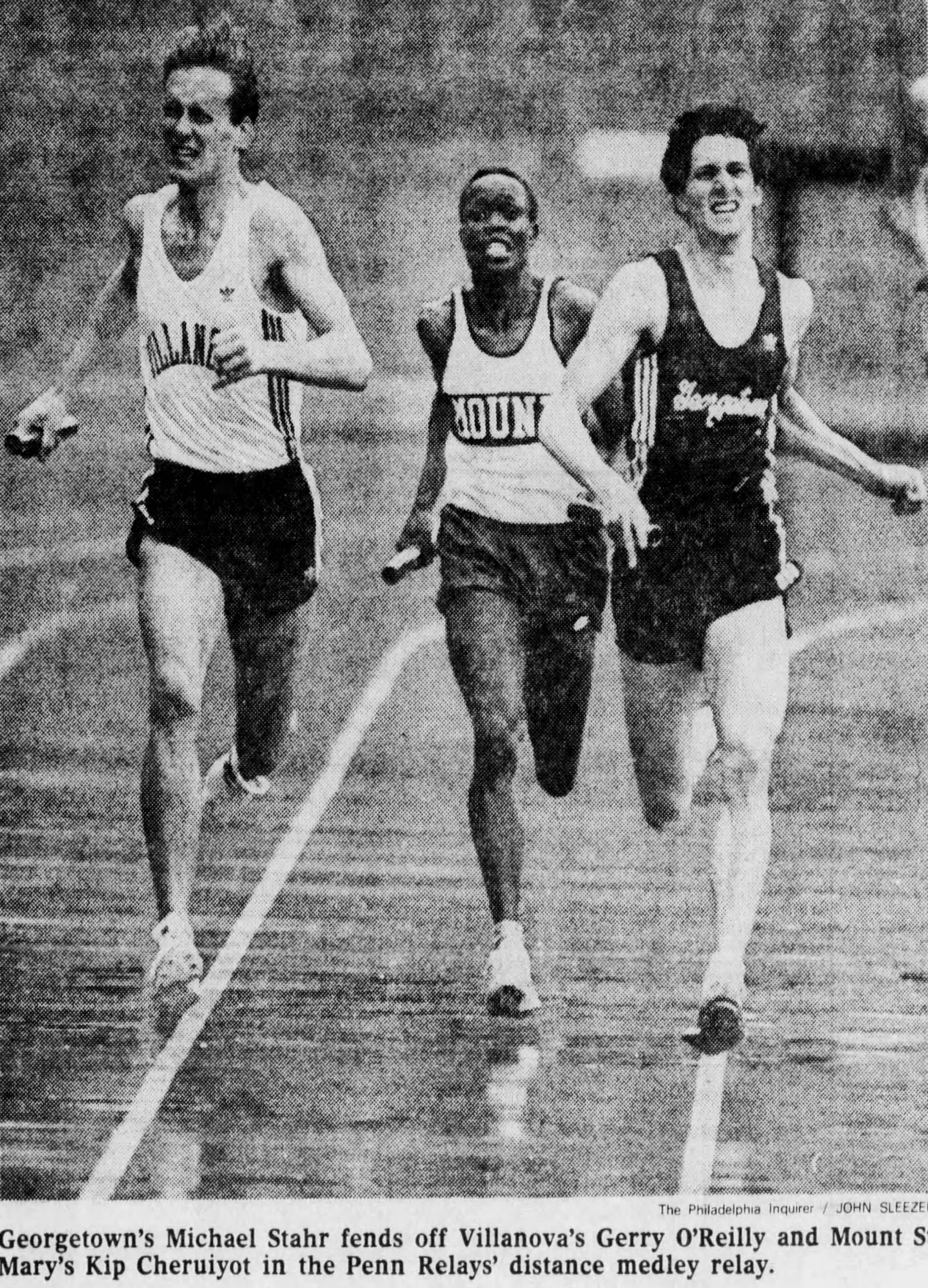
    This photo and a story about Mr. O’Reilly (left) appeared in The Inquirer in 1987.Newspapers.com

    Gerard Christopher O’Reilly was born July 1, 1964. He was the oldest of six children and excelled at cross-country, track, soccer, and other sports.

    He ran miles at night after school in the rural Irish fields and lanes, joined the Dunboyne Athletic Club when he was 9, and was inspired, he said later, by Irishman Eamonn Coghlan’s fourth-place finish in the 1,500 at the 1976 Summer Olympics. Mr. O’Reilly went on to win the 1983 Irish Junior 1,500 championship.

    He met fellow track star Melody Sye, and they married in 1992 and had a daughter, Meghan, and sons Keelan, Jack, and Conor. They divorced later.

    “Despite all his trophies and merits,” Mr. O’Reilly’s family said in a tribute, “he always remained humble and would say being a dad to his four kids was his proudest accomplishment.”

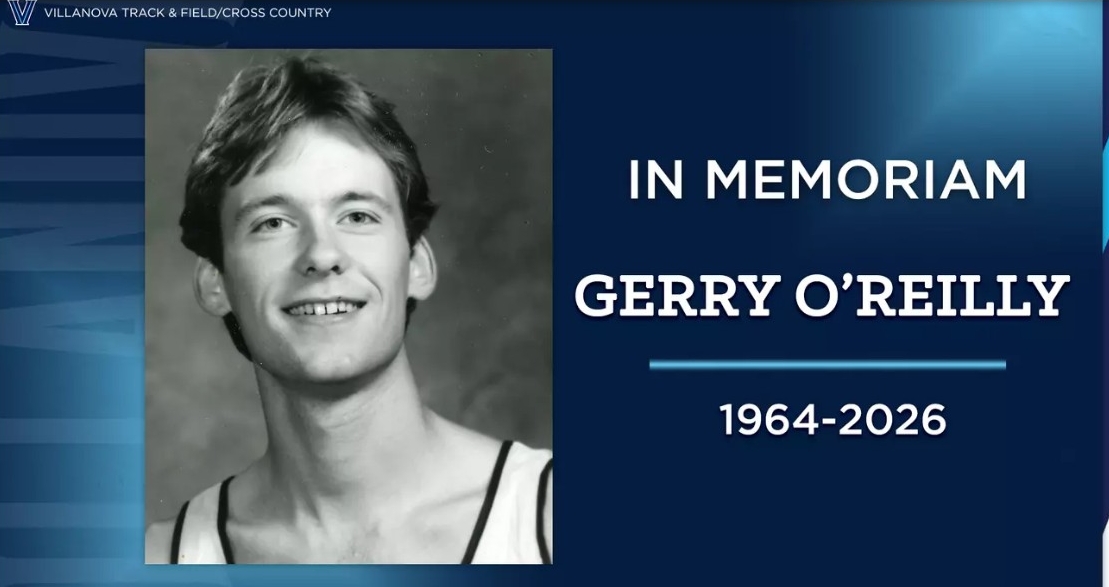
    Villanova honored Mr. O’Reilly online.Villanova University

    Mr. O’Reilly was an avid bicyclist, and he spent many weekends on long rides and at Eagles games on Sundays. He liked poker, hikes with his dog, Bear, and watching sports with his family.

    “Most of all,” his family said, “he simply enjoyed cracking jokes, sharing stories, and spending time with his friends and family.”

    In addition to his children and former wife, Mr. O’Reilly is survived by three sisters, two brothers, and other relatives. “His final gift,” his family said, “was saving multiple lives through organ donation.”

    Services were held earlier.

    Donations in his name may be made to the American Heart Association, 7272 Greenville Ave., Dallas, Texas 75231; Special Olympics, 2600 Virginia Ave. N.W., 11th Floor, Washington, D.C. 20037; and the American Cancer Society, Box 6704, Hagerstown, Md. 21741.

  • Villanova and Wisconsin men’s hoops will meet at Xfinity Mobile Arena on Dec. 12

    Villanova and Wisconsin men’s hoops will meet at Xfinity Mobile Arena on Dec. 12

    Villanova and Wisconsin are set to meet in nonconference men’s basketball play for the second straight season, Villanova announced Wednesday.

    After Villanova claimed a 76-66 overtime win over Wisconsin at Fiserv Forum in Milwaukee last December, the schools will meet again for a matchup at Xfinity Mobile Arena on Dec. 12 in an event Villanova is calling the Philly Hoops Showdown.

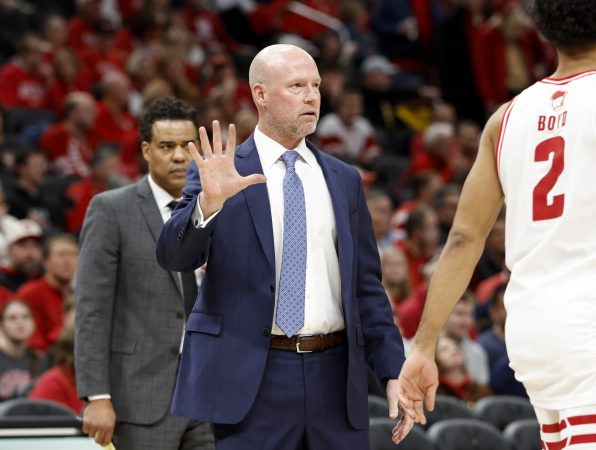
    Kevin Willard coached the Wildcats back to the NCAA Tournament in 2025-26 after a three-season drought. Villanova was eliminated from the dance in the first round by Utah State, but Willard has reinforced his lineup with key portal pickups, including Italian big man Luigi Suigo.

    Greg Gard has led Wisconsin to six of the last seven NCAA Tournaments. The Badgers were a No. 5 seed in last year’s bracket but were upset by No. 12 seed High Point in the first round.

    While Villanova has historically played home nonconference and Big East games in South Philly, the school’s announcement specifies Xfinity Mobile Arena will be considered a neutral site, and that all aspects of the game will be managed by Chicago-based marketing company Intersport.

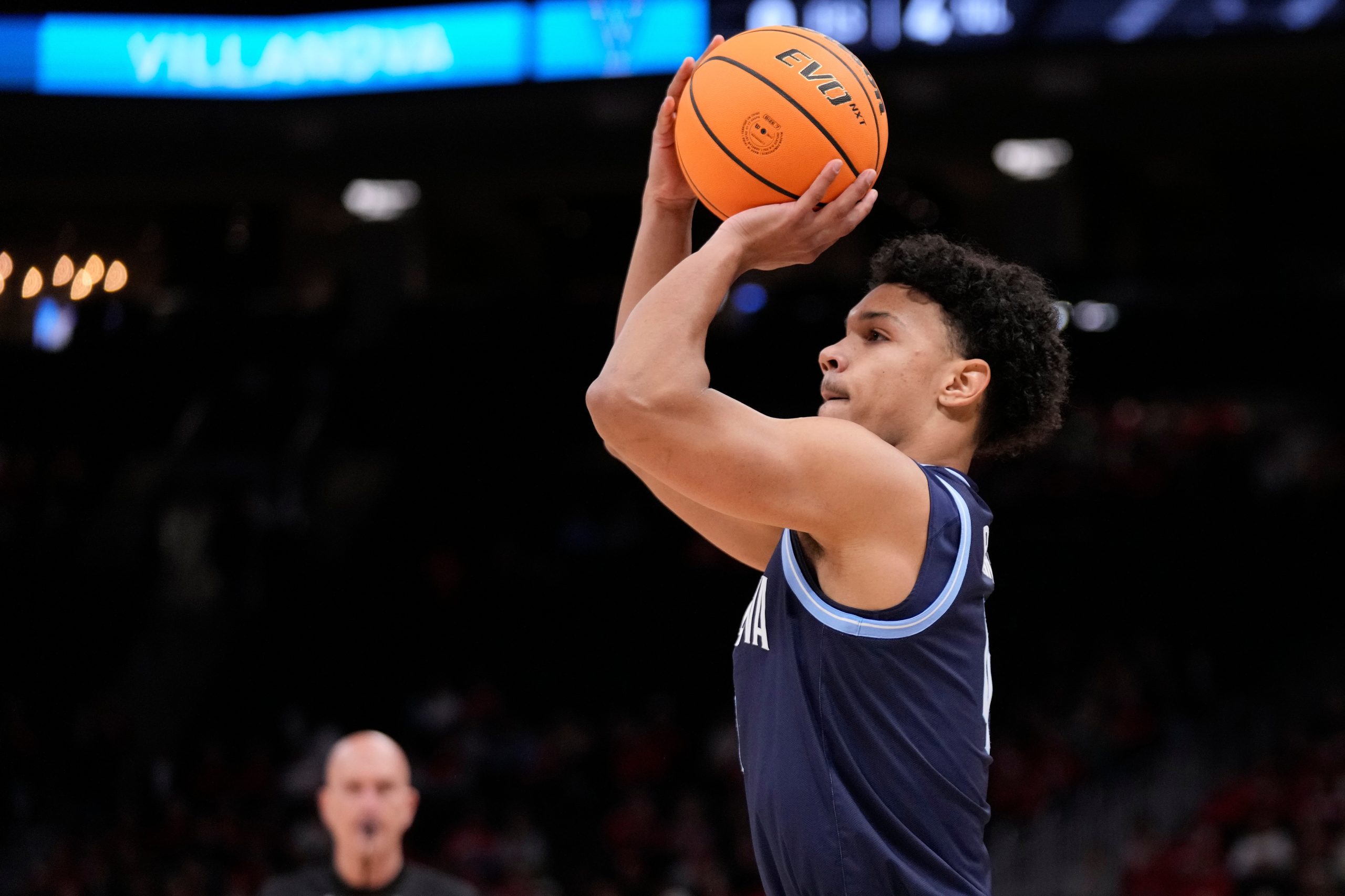
    Tyler Perkins returns to a Wildcats team that is looking to defeat the Badgers of the Big Ten for a second straight year. Kayla Wolf

    Last season’s game in Milwaukee was also considered a neutral site event. That factor could influence how the NCAA Tournament selection committee views the game closer to March. A home win against a team ranked in the top 30 of the NET is considered a Quadrant 1 win, but at a neutral site, the threshold for a Quad 1 win is expanded to the the top 50 teams in the NET rankings.

    Villanova played three games at Xfinity Mobile Arena last season, two of which were considered home games. The other was the Big 5 Classic final, which the Wildcats won for the first time since the retooling of the Big 5 format in 2023.

    The matchup against Wisconsin in South Philly will be the fourth-ever meeting between the schools’ men’s programs. Before 2025, Villanova picked up a win against Wisconsin in 1995, and the Badgers upset the defending champion Wildcats in the second round of the 2017 NCAA Tournament.

    Wisconsin is the latest confirmed addition to Villanova’s nonconference schedule, which will open with Notre Dame in Rome at the Eternal City Tip-Off on Nov. 1. The Wildcats’ nonconference schedule also includes a trip to face Kansas on Nov. 27 at Allen Fieldhouse as part of a home-and-home series.

  • Jay Wright named to National Collegiate Basketball Hall of Fame

    Jay Wright named to National Collegiate Basketball Hall of Fame

    Jay Wright is headed to the National Collegiate Basketball Hall of Fame.

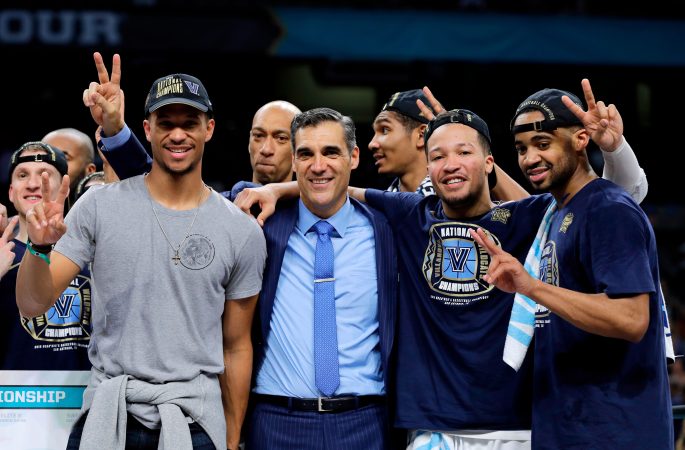
    On Monday, it was announced that the longtime Villanova coach would be inducted as a part of the Hall’s 2026 class. Wright led Villanova for 21 seasons from 2001 to 2022. In that span, the Wildcats made four Final Four appearances and won NCAA titles in 2016 and 2018.

    Wright, who had a career record of 642–282 (.695), including a seven-year stint at Hofstra (1994-2001), is widely considered to be the main force behind Villanova becoming a consistent national brand in college basketball. He is already a member of the Naismith Memorial Basketball Hall of Fame, being inducted in 2021.

    “The Class of 2026 represents the very best of college basketball — individuals whose performance, leadership, and impact helped shape the game at the highest level,” Hall of Fame CEO Kevin Henderson said in a statement. “Their legacies will forever be preserved as part of the sport’s rich history.”

    Five other selectees make up the Hall’s incoming class: UCLA coach Walt Hazzard from Overbrook High School, Kentucky coach Tubby Smith, Kansas coach Ted Owens, Michigan star Glen Rice, and BYU standout Danny Ainge.

    The induction will take place Oct. 22 in Kansas City, Mo., where the National Collegiate Basketball Hall of Fame is located.

  • Drexel Hill’s Michael Anderson and a trio of St. Joe’s players selected on Day 2 of the MLB draft

    Drexel Hill’s Michael Anderson and a trio of St. Joe’s players selected on Day 2 of the MLB draft

    The second day of the MLB draft continued at the Pennsylvania Convention Center as rounds five through 20 of the draft took place.

    While only two local players were drafted on Day 1 with Aiden Robbins and Ryan Lynch both being selected in the third round, Sunday saw more action for area players.

    Here’s a look at the locals who were selected on Day 2:

    Fifth Round

    Michael Anderson Jr. was selected by the Texas Rangers with the 149th pick in the draft. Anderson, a Drexel Hill native, played high school ball at Bonner-Prendergast before going to University of Rhode Island and then University of Arkansas.

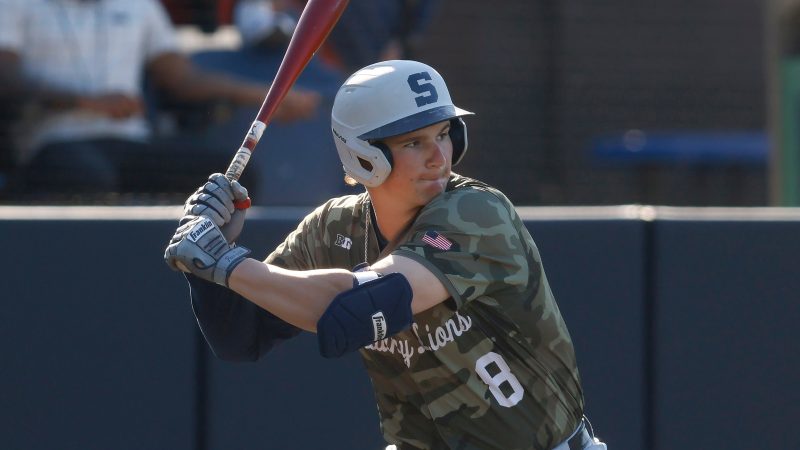
    The 6-foot-3 first baseman finished his collegiate career at Penn State, where he posted a record-breaking season for the Nittany Lions, earning him First Team All-Big 10 honors.

    His 20 home runs set a program record, as well as his 18 hit-by-pitches. His 141 total bases and .742 slugging percentage were the fourth-most in a season in school history. He was second on the team with a .358 batting average and led the team in RBIs (53), hits (68), and OPS (1.212).

    Sixth Round

    The Chicago White Sox selected South Jersey’s Alex Weingartner at pick 166.

    A two-way player at St. Augustine Prep, Weingartner was drafted as an outfielder but also pitched for the Hermits.

    The Penn State pledge was named the 2025-26 Gatorade New Jersey Baseball Player of the Year following his senior season with the Hermits where he batted .495 with a .817 slugging percentage, 36 RBIs, 46 hits, and seven home runs. On the mound, Weingartner had a 6-1 record with a 0.87 ERA in 48.1 innings pitched, recording 81 strikeouts.

    The 6-2 outfielder from Berlin was the number one prospect in the state for the class of 2026, according to Perfect Game, and is ranked 75th nationally.

    Seventh Round

    Yardley’s Joe Tiroly was selected by the San Diego Padres with the 215th pick.

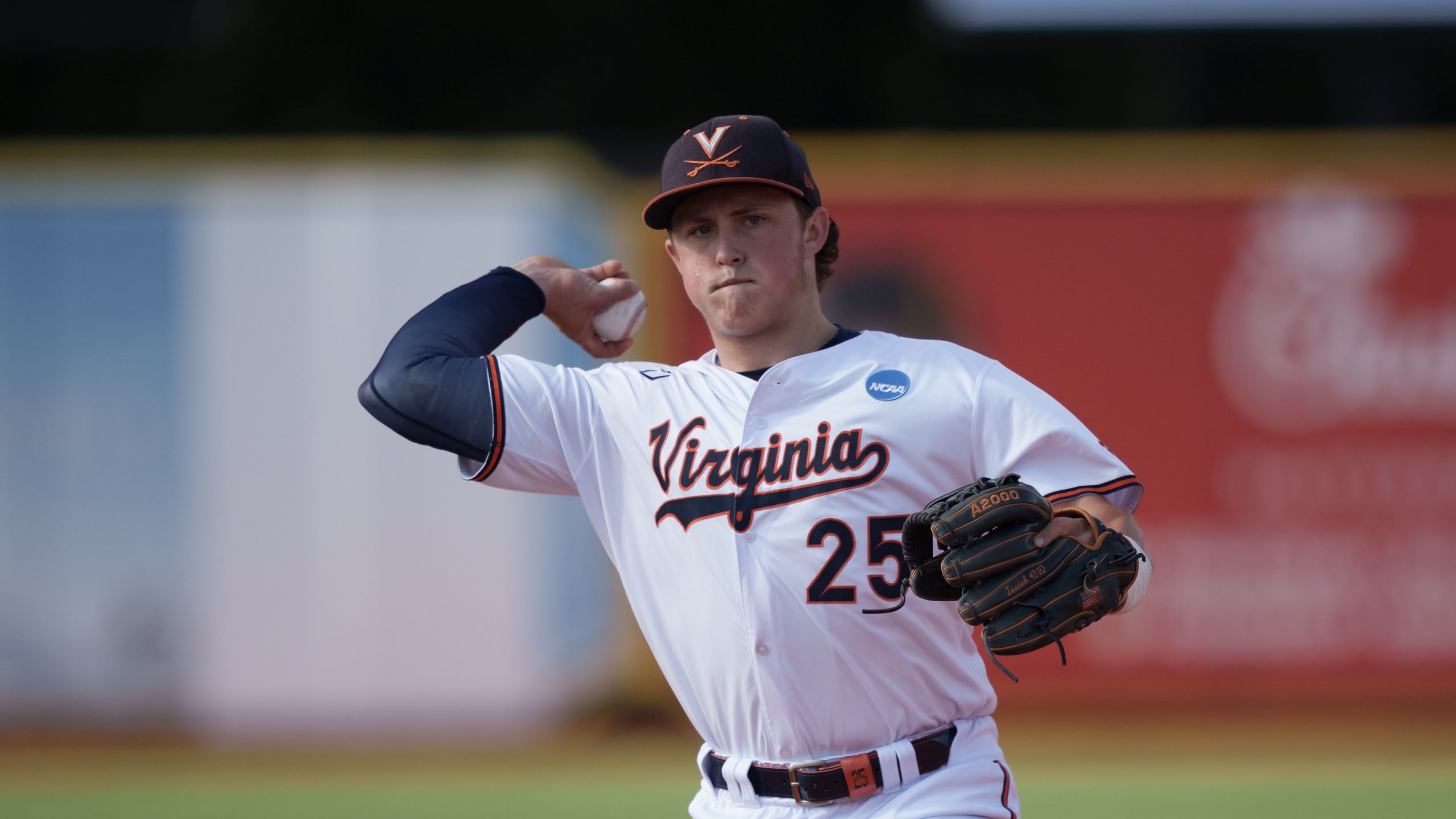
    The 6-foot second baseman from University of Virginia was one of just two Cavaliers to play in all 60 games. He led Virginia in hits (76), home runs (16), RBIs (66) and total bases (137) while batting .319.

    Joe Tiroly played in all 60 games for Virginia last season.Matthew Hinton

    Prior to playing at Virginia, Tiroly was at Rider where he led the team during his sophomore year in hits, doubles, triples, home runs, total bases, and slugging percentage. He also set a single-season record with his 70 RBIs and 66 runs.

    Prior to entering college, Tiroly played at Pennsbury High where he was ranked as the No. 15 third baseman in the state.

    Eighth round

    Central Buck sEast graduate Aiden Weaver was selected 231st overall by the Athletics.

    Weaver, a right-handed pitcher from Duke, finished the season with a 6.37 ERA across 65 innings pitched, tallying 87 strikeouts.

    The 6-5 senior started in all 14 of his appearances, recording the most innings for the Blue Devils this season, but finished with a 4-9 record.

    10th Round

    Right-handed pitcher Luc Rising was drafted by the Los Angeles Angels with the 289th pick.

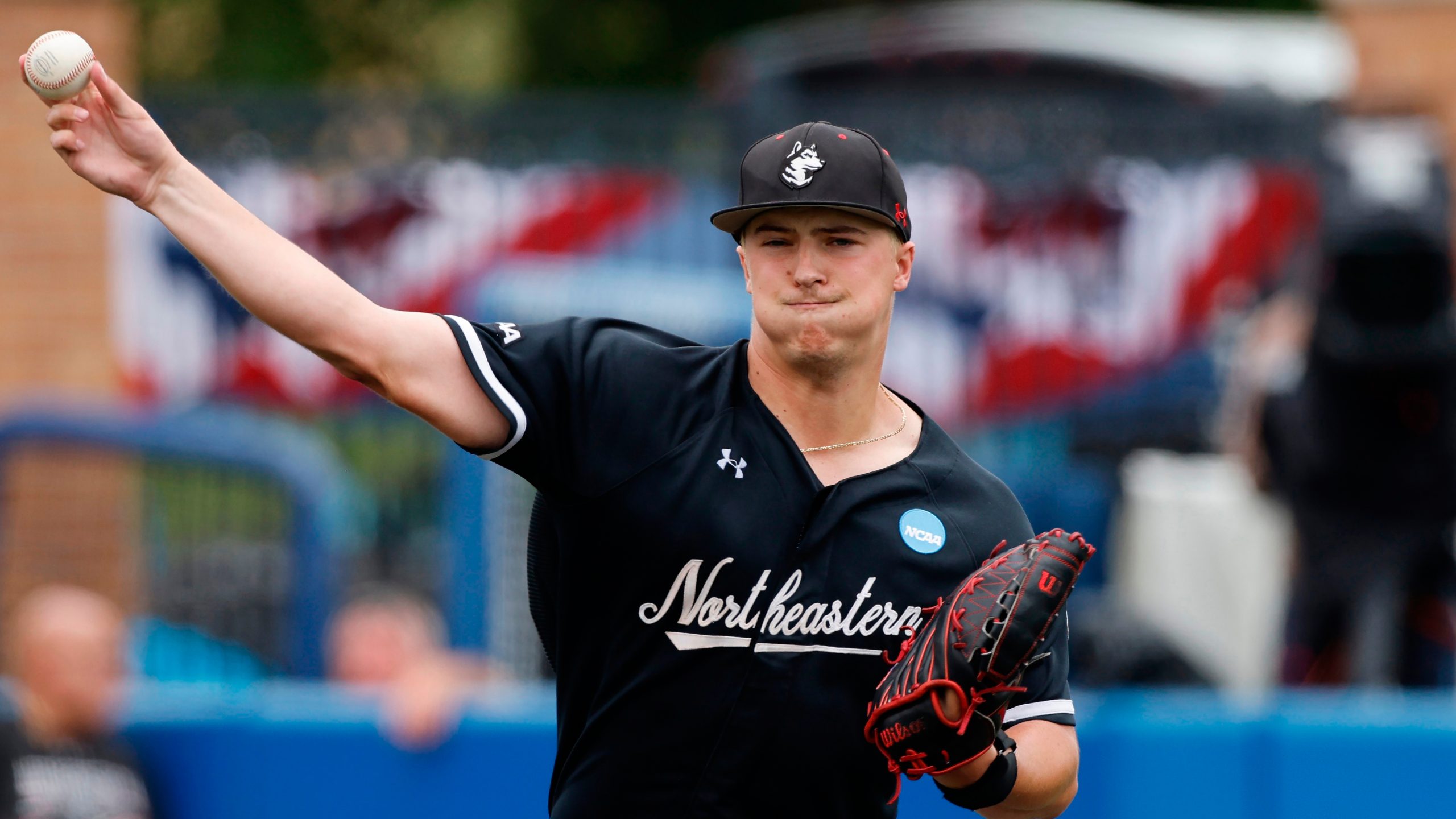
    An Exton native, Rising started in 13 of his 16 appearances at Northeastern. The 6-f2 pitcher went 5-5 with a 3.54 ERA and 84 strikeouts, pitching 81.1 innings, including an inning in the CAA championship to help Northeastern secure its second consecutive conference title.

    Luc Rising helped Northeastern win back-to-back conference titles in 2026.Colin E. Braley

    Before playing at Northeastern for his senior year, Rising played at the Rochester Institute of Technology where he earned First Team All Liberty League honors and was named a Perfect Game College Baseball League All-Star. Rising played baseball at Downingtown East.

    Later in the 10th round, Andrew Gaines was selected by the Milwaukee Brewers with the 311th pick.

    A pitcher at St. Joseph’s, the 6-5 senior from Marlton was selected to Atlantic 10 all-conference second team after matching the St. Joe’s single-season save record (10).

    The 6-5 right hander finished the season with a 4.99 ERA and 47 strikeouts in 30.2 innings pitched, helping St. Joe’s set a program record for most wins in a season.

    Gaines graduated from St. Augustine Prep before going to Iona College. He then transferred to Pitt after two seasons before spending his senior year with the Hawks.

    12th Round

    Christian Coppola from St. Joe’s was selected by the Phillies with the 369th pick.

    A 6-5 right-handed pitcher from Galloway, Atlantic County, Coppola transferred to St. Joe’s this year after spending two seasons at Rutgers and one at Arizona.

    Christian Coppola helped St. Joe’s set a program record for wins in a season.Jason E. Miczek

    This season, the relief pitcher had a 1.69 ERA in 37.1 innings pitched for the Hawks, earning him American Baseball Coaches Association All-East Regional first team honors.

    Coppola played high school ball at Cedar Creek, where he set the school record for single season strikeouts during his senior year.

    15th Round

    Souderton Area graduate Liam O’Leary went to the Pittsburgh Pirates as the 438th pick overall.

    O’Leary, a right-handed pitcher from St. John’s, played previous seasons with Lackawanna Community College and Montgomery County Community College.

    This season, the 6-4 junior posted a 3.64 ERA, pitching 108.2 innings after starting in all 17 of his appearances. He added 78 strikeouts to 32 walks to his statline for a 1.23 WHIP and a 8-5 record.

    17th Round

    St. Joe’s had its third player drafted in the 17th round, when Duke McCarron went to the Miami Marlins with the 505th pick.

    The 6-foot right hander spent his junior year with the Hawks after spending a season at Maryland and one at State College of Florida. He finished this season with a 5.27 ERA after pitching 70 innings, starting all 15 games he appeared in for a 4-3 record.

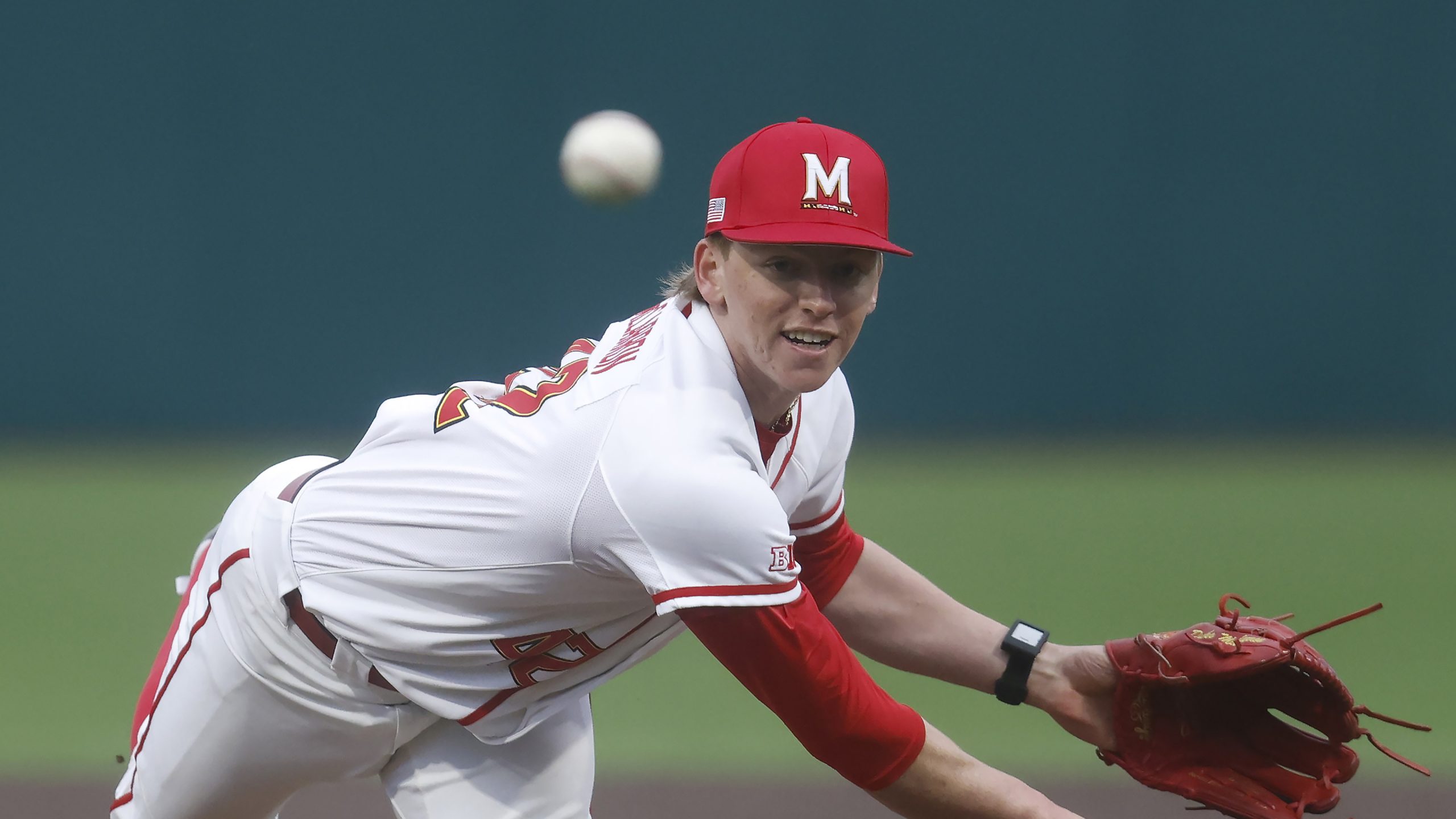
    Duke McCarron spent one season at Maryland before transferring to St. Joe’s.Mike Buscher

    McCarron, one of the main arms for St. Joe’s this season, hails from Ventnor, N.J. and played baseball for Ocean City High.

    18th Round

    Philly’s Mark Quatrani went to the Padres with the 545th pick.

    A graduate of the Haverford School and a junior at Notre Dame, Quatrani earned a Buster Posey National Collegiate Catcher of the Year Semifinalist and a second team all-ACC nod after only his first season with the Fighting Irish.

    In his 53 games started, the 5-11 catcher posted the best batting average on the team, with a .376, also leading in hits (80), RBIs (66), and slugging percentage (.643). Quatrani was second on the team in home runs (15) and total bases (137). Defensively, he caught 14 runners out during the season.

    19th Round

    The Phillies had another local selection with the 579th pick, drafting Braeden Lipoff from Gloucester Catholic.

    The 5-11 catcher batted .459 during his senior year with the Rams and is the 18th-ranked catcher nationally for the Class of 2026, according to Perfect Game. A native of Woolwich, Gloucester County, he ranks second for catchers in his class from the state.

    The East Carolina recruit was also a two-time all-state honoree and played a role behind the plate in three of Gloucester Catholic’s four consecutive state titles.

    20th Round

    Late in the final round of the draft, Lafayette’s Tristan Helmick was drafted by the Cleveland Guardians at 602nd overall.

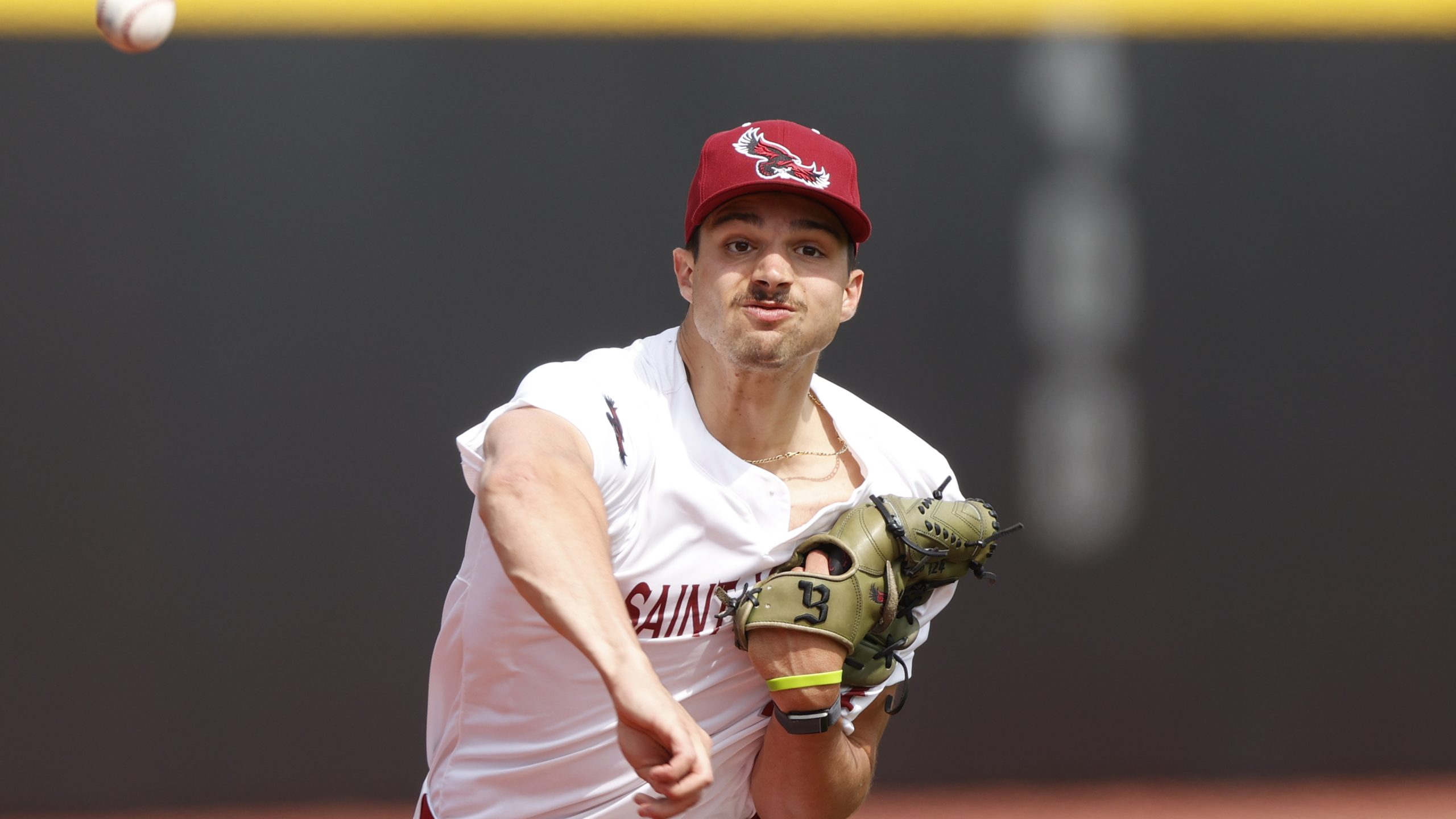
    In his third season with the Leopards, Helmick had 11 appearances on the mound, all of them starts, owning a 5.78 ERA, 62 strikeouts, and a 1.48 WHIP with 62.1 innings pitched.

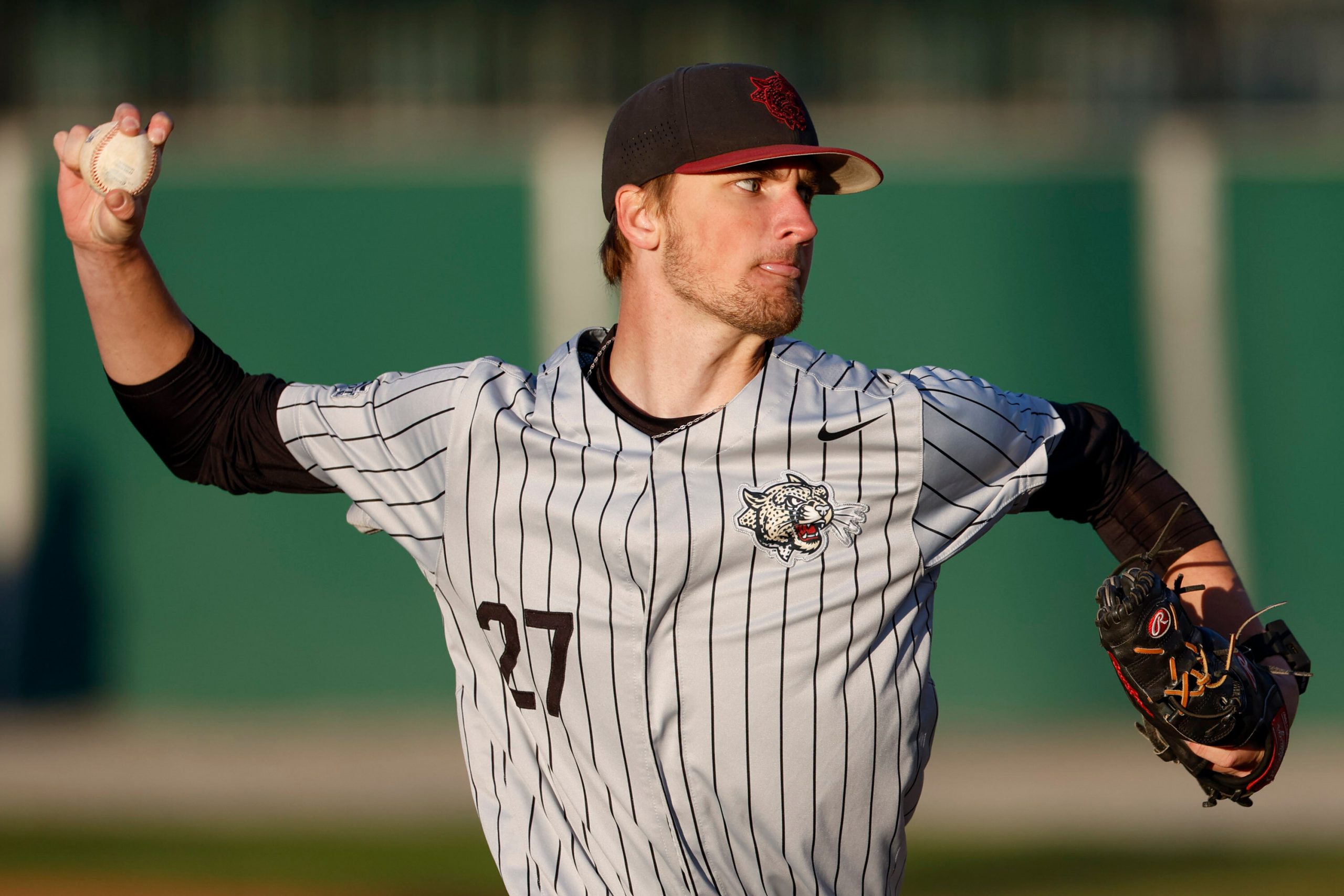
    Tristan Helmick posted a 1.48 WHIP last season.Greg M. Cooper

    The 6-6 right hander, originally from Fort Washington attended La Salle College High, where he was first team all-catholic and first team all-county, finishing his senior year with a 2.30 ERA and 6-1 record with 48.1 innings pitched.

    The penultimate pick of the draft belonged to the Toronto Blue Jays, who selected Eddie Rosado Jr. from Holy Ghost Prep.

    The 6-foot left-handed batter led Holy Ghost Prep in batting average (.463), OPS (1.545), hits (37), runs (44), and home runs (8), also setting the school career hit record with 111.

    The outfielder from Bristol is committed to St. Joe’s and was ranked second in the state nationally for outfielders in his class by Perfect Game. He was also named to the 2026 Class 4A all-state team.

  • Ryan Daly’s Philly basketball roots brought him to Syracuse — with a chance to revive the Orange

    Ryan Daly’s Philly basketball roots brought him to Syracuse — with a chance to revive the Orange

    A sign hangs in Ryan Daly’s office at the John A. Lally Athletics Complex in Syracuse, N.Y., with the total number of fans that can pack the JMA Wireless Dome — 35,446.

    In November, Syracuse fans will fill the historic college sports venue, hoping one of college basketball’s most prominent programs returns to success.

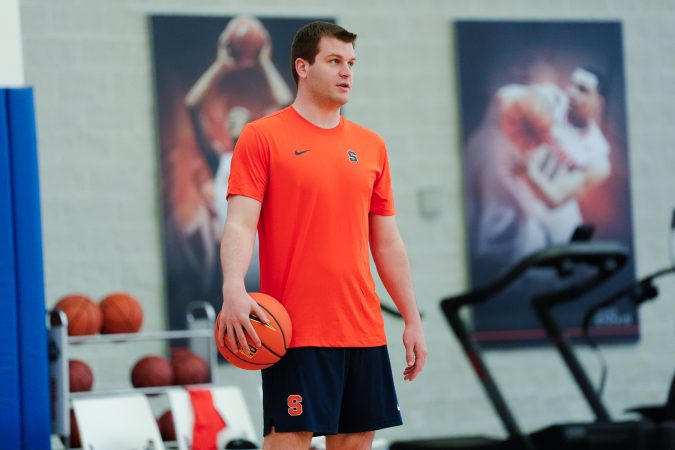
    For Daly, who was hired in April as an assistant under new head coach Gerry McNamara, the number is a reminder of the work that lies ahead.

    The Havertown native has climbed the coaching ranks at 28 years old, arriving at Syracuse after serving as an assistant at Albany, Bryant, and Virginia Commonwealth. Daly said none of that would be possible without his Philadelphia basketball roots and the people he met along the way.

    “A lot of these opportunities that have come my way have been a result of a lot of people pouring into me,” he said.

    A family affair

    Growing up in a family of “basketball junkies” sparked a fire in Daly.

    His grandfather, Jim Boyle, was the longtime coach of St. Joseph’s before coaching in the NBA and overseas. His father, Brian, played at Hawk Hill under Boyle, then coached at Penn State.

    “We are a Philadelphia basketball family,” said his mother, Tracie Daly. “We weren’t on the outside looking in, we were on the inside.”

    Ryan’s earliest basketball memory was at 5 years old, shooting on a Fisher-Price hoop at his grandparents’ house in Overbrook.

    “I don’t remember a time when basketball wasn’t the only thing I thought about or talked about every day,” he said.

    Ryan went to St. Denis School until the seventh grade. Prior to that school year, his family moved to Boston, then State College, Pa., after his dad took a coaching job at Boston University and Penn State, respectively.

    Three years later, Ryan and his younger brother Colin approached their parents with a request.

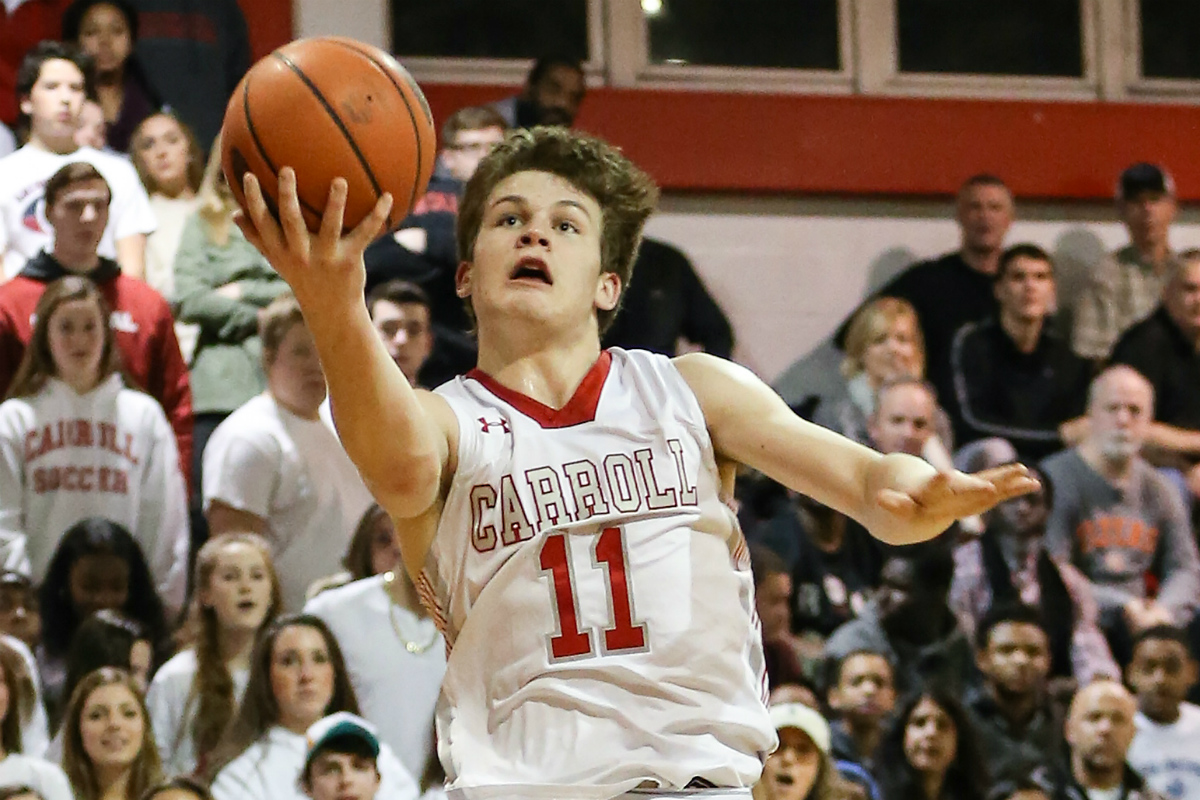
    Ryan Daly joined Archbishop Carroll as sophomore and won Catholic League MVP in 2016.STEVEN M. FALK / Staff Photographer

    “They came up to us and said, ‘We want to play basketball in the Catholic League,’” Tracie said.

    The Philadelphia Catholic League is one of the top high school basketball conferences in the country, and there is a certain type of DNA that those players possess, Ryan said.

    Tracie, Ryan, Colin, and their sister, Keri, moved back to the area before Ryan’s sophomore year, while Brian stayed at Penn State to continue coaching. Ryan and Colin both played for Archbishop Carroll.

    “Neither of my boys would’ve been able to develop to the basketball players they were if we hadn’t moved back,” Brian said.

    ‘Tight-knit community’

    Philadelphia basketball became Ryan Daly’s classroom.

    Daly grew up hearing stories about Sonny Hill, Speedy Morris, John Chaney, Phil Martelli Sr., and Jay Wright — legends of Philadelphia basketball. Jim Lynam — also known as pop — was another mentor. Those relationships gave him an appreciation for the city’s basketball culture.

    “Philadelphia is a special basketball community,” he said. “ … To see so many people coaching and involved with it, it’s one big circle, and it feels like it’s a very small tight-knit community.”

    However, his own college recruiting process wasn’t easy.

    Daly was a star on his nationally ranked AAU team, the Jersey Shore Warriors, and at Carroll — he won PCL MVP in 2016 — but didn’t receive many scholarship offers. It was a stressful time, he said, but his own experience became one of the biggest lessons in his coaching career.

    “It taught me patience with evaluating players,” he said. “You might see them on a really good day, and that’s not really who they are or you might see them on a bad day and they are a lot better than that.”

    He committed to the University of Delaware two days before graduating from high school without visiting the campus.

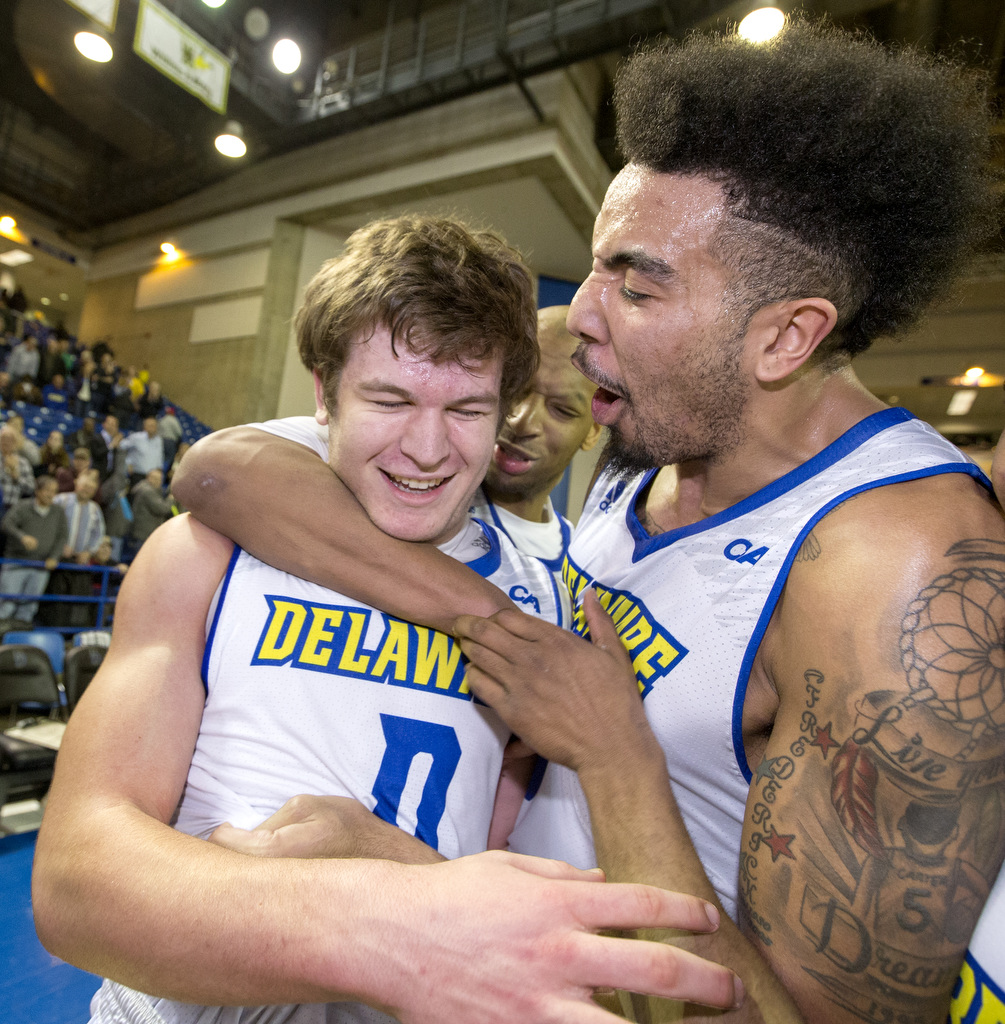
    Ryan Daly spent two seasons at Delaware, where he surpassed 1,000 career points.

    Daly had two standout seasons at Delaware, surpassing 1,000 career points. He then transferred to St. Joe’s and led the Atlantic-10 and Big 5 in scoring from 2019 to 2021.

    Daly briefly pursued a career in the NBA G League, but living out of hotels and being away from his family was not for him. He quickly realized coaching was where he belonged and accepted his first coaching position at Albany when he was 24.

    Soaking it in

    At Albany, Bryant, and VCU, Daly immersed himself in the coaching profession, working early mornings and late nights and soaking up every piece of information from those he worked with.

    He credits Albany head coach Dwayne Killings for teaching him creativity and VCU head coach Phil Martelli Jr., whom Daly followed from Bryant to the Rams, on how to recruit.

    Each of those schools helped him develop his coaching philosophy.

    One mantra in particular has stayed with him. Martelli Jr. often reminded Daly to “believe further than you can see.”

    “When he said that line to me a year and a half ago, it really stuck out to me,” Daly said. “You never know when opportunities are going to come, you just have to be ready for it.”

    That philosophy carried Daly to two conference championships and two NCAA Tournament appearances in consecutive seasons at Bryant and VCU.

    Relationship-driven sport

    Daly’s relationship with McNamara began long before he got the call to join the Syracuse coaching staff.

    When Daly was a sophomore at Carroll, McNamara was recruiting his teammate, Derrick Jones Jr. McNamara attended open practices twice a week and often spoke to Daly after practice.

    “He took me aside a lot and was like, ‘I don’t understand why coaches aren’t recruiting you; you should have a lot of interest and offers right now,’” Daly said.

    Years later, when Ryan was a coach at Albany, they reconnected at a Coaches vs. Cancer event.

    “I walked up to him and said, ‘I don’t know if you remember me,’” he said.

    McNamara’s response was immediate: “‘Of course I remember you,’” Daly recalled.

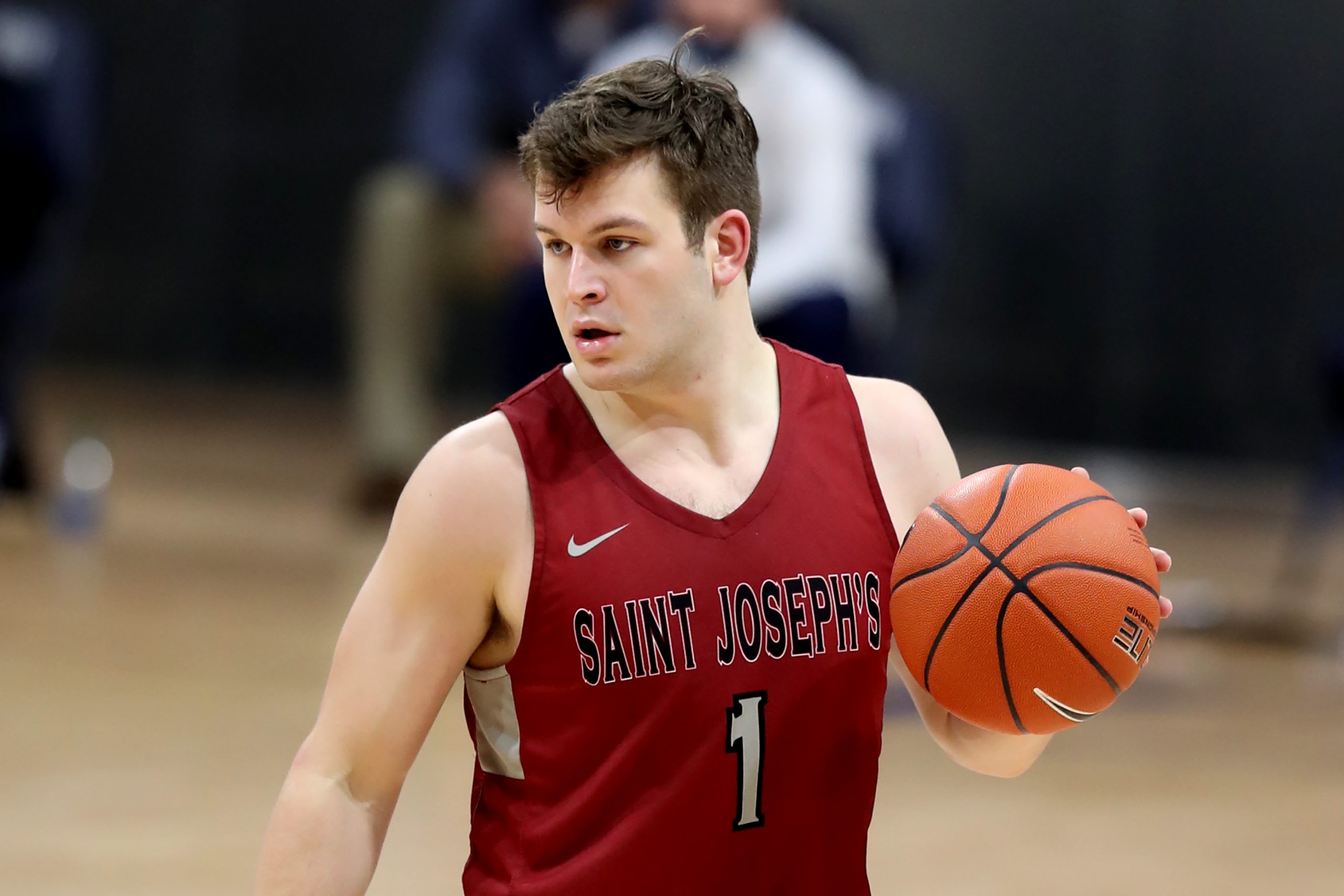
    While playing for St. Joe’s, Ryan Daly led the Atlantic 10 and Big 5 in scoring from 2019 to 2021.CHARLES FOX / Staff Photographer

    Since then, Ryan and McNamara have kept in touch, texting each other about wins or recruits, while also seeing each other frequently on the road. When McNamara was announced as Syracuse’s new head coach, Daly texted him, saying congratulations. Two days later, Daly received the call from McNamara asking to join his staff.

    But leaving VCU was not an easy decision.

    “In some sense it was the hardest thing I ever did,” he said. “In some sense, it was a no-brainer.

    “The part that was exciting for me was that growing up I remember seeing Syracuse in the Final Four and Sweet Sixteen. The Orange is synonymous with March, and the challenge of bringing them back to that was exciting.”

    Brian Daly emphasized to Ryan while growing up that building connections was an important part of life, but also in the sports community. And those relationships are exactly how he has advanced in the profession and ended up at Syracuse.

    The last time Syracuse made an NCAA Tournament appearance was in 2021, and it advanced to the Sweet Sixteen. The program won its first and only national championship in 2003, when McNamara was a player on the team.

    Soon, 35,446 fans will be able to fill the Dome to see what McNamara and Daly are building in Syracuse.

    “I know the fans are diehard supporters, and experiencing people who live, eat, sleep, and breathe Syracuse men’s basketball in the Dome every night, you really can’t ask for anything more as a coach and a player,” Ryan said. “It’s a real home court advantage, and we want to bring that back.”

  • Will MLB’s outreach to Black fans with the HBCU Swingman Classic at Citizen’s Bank Park resonate?

    Will MLB’s outreach to Black fans with the HBCU Swingman Classic at Citizen’s Bank Park resonate?

    In honor of the nation’s 250th anniversary, Major League Baseball (MLB) is bringing the Mid-Summer Classic to the place where the Declaration of Independence was signed. Among the kick-off events is the HBCU Swingman Classic on July 10, an event showcasing the past and present of historically Black college and university (HBCU) baseball programs.

    The event, intended to increase interest in baseball among Black Americans, reflects MLB’s complicated relationship with Black fans. Across the 20th century, team owners and executives have tried periodically to draw Black fans to the ballpark. Yet, to maintain the game’s appeal to its traditional fanbase, much of it white, owners simultaneously created environments that did not fully welcome Black fans. This history shows that if MLB truly wants to draw more Black Americans to the game, it has to alter the culture of the game and do more than just stage one-off events like the Swingman Classic.

    Until the 1940s, some Major League teams racially segregated their ballparks. As early as 1920, Black fans could sit only in the outfield seats at Sportsman’s Park in St. Louis, home to the National League’s Cardinals and the American League’s Browns. Following decades of advocacy by St. Louis’s Black community, the policy changed in 1944. Yet even after it ended, Black fans who still felt the sting of being segregated did not go to Sportsman’s Park in large numbers.

    Even at ballparks where Black fans had not been formally segregated, MLB executives marginalized them by making it clear they did not believe Black fans deserved the same respect from players as white fans. For example, one Black fan recalled that as a child in the 1930s, “I was called a ‘black bastard’ by St. Louis Cardinal left-hander Clyde Shoun,” and in a demeaning move harking back to a common practice of slave owners, his “head was rubbed for good luck by St. Louis Cardinal right-hander Fiddler Bill McGee as he walked out of the clubhouse past the bleachers.”

    Racism permeated the sport, inside and outside the ballpark. In a radio interview in 1938, despite not actually working in law enforcement, Yankees outfielder Jake Powell (who ended his career with the Phillies in 1945) claimed that he stayed in shape in the offseason by claiming to be a police officer who would beat Black people “over the head with my blackjack.” His comments provoked outrage and although Powell was suspended and forced to apologize, he remained with the Yankees through the 1940 season.

    Yankees General Manager Ed Barrow told The Philadelphia Tribune, “No owner of a business permits his employees to be pert or insulting to the customers patronizing the business,” indicating that the team was happy to take money from Black fans but would prefer their players not share racist views on the air. Evidently, the team concluded that they should angle for revenue from Black fans—but keep Powell on the roster all the same.

    As Jackie Robinson tore up the minor leagues in 1946, several MLB owners had another concern: too many Black fans if he were moved up to the majors. As they wrote in what was intended to be an internal document, they feared that “the preponderance of Negro attendance in parks such as the Yankee Stadium, the Polo Grounds, and Comiskey Park could conceivably threaten the value of the major league franchises owned by these clubs.”

    The next year, when Robinson broke MLB’s color barrier with the Brooklyn Dodgers, Black fans regularly made up as much as one-third of the crowd at his games. But as scholar Gerald Early recognized, it was “not the desire of any major-league baseball owner to have blacks make up the kind of attendance percentage they did when Robinson debuted in 1947. It would, indeed, be a cause of unease, if not downright unrest.”

    Owners couldn’t stop Jackie Robinson and the waves of talented players of color who followed him to the majors. Instead, they made it more difficult for Black fans to attend games by building stadiums farther away from Black communities. Scholars Alan Sager and Arthur Culbert determined that the demographics of the neighborhood around a team’s ballpark was the deciding factor for whether or not a team moved in the decades after Robinson’s debut. Teams that moved between the 1950s and 1970s left neighborhoods that were on average 44.1 percent Black. By contrast, teams that did not move were in neighborhoods that were 17.6 percent Black. Almost all teams that relocated in this era moved to far whiter neighborhoods, including the Phillies who moved from Connie Mack Stadium in North Philadelphia to Veterans Stadium in South Philly after the 1970 season.

    By contrast, in Houston, owners of a yet-to-be-named franchise secured vital Black voter support for the bonds needed to construct what would eventually be called the Astrodome. They promised that unlike many other public accommodations in Houston in 1961, it would be desegregated. But MLB owners continued to display bias against Black fans. Roy Hofheinz, who led the franchise and was the driving force behind the Astrodome, told a reporter, “We did a lot of research before choosing the colors [of the luxury suites]. We made sure the color complemented the complexion and clothing of women. It took us two weeks to get the right color of blue. Many blues would give ladies a pasty-looking complexion.” His concern reveals that he did not expect Black women to sit in the most exclusive part of the dome.

    When the Baltimore Orioles opened Oriole Park at Camden Yards in Baltimore’s downtown in 1992, it seemed to signal a shift in ballparks’ relationship to urban spaces and their Black populations. Yet in other ways, the team continued MLB’s pattern of marginalizing potential Black fans. Maryland state representative Howard P. Rawlings noted that the Orioles had “neglected the city’s black majority” in the park’s opening festivities and argued “it’s a reflection of [the team’s] lack of awareness that” the city “is more than 60 percent African-American.” Ballparks evolved, but many MLB executives’ attitudes about potential Black baseball fans did not.

    Made By History sponsors. FOR USE ON MADE BY HISTORY STORIES ONLY.Inquirer Staff

    Even this year, new barriers to Black fan attendance were added, such as when the Texas Rangers installed the “One Riot, One Ranger” statue at their ballpark. The statue depicts a member of the original Texas Rangers, the state law enforcement organization the baseball team is named after, that was modeled on E. J. Banks, a ranger best known for being dispatched by the state’s governor to keep Black students from enrolling in an all-white public school in 1956. Banks stood by and watched as white segregationists threatened violence against any Black child who tried to enter the school.

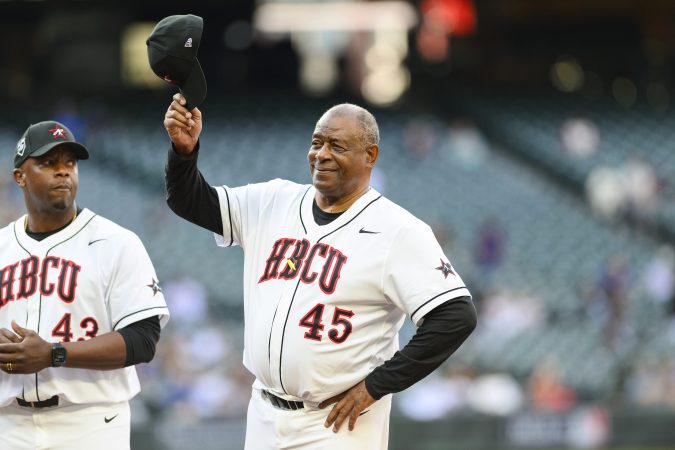
    Yet MLB is also making efforts to attract Black fans with events like the HBCU Swingman Classic at Citizens Bank Park. The Swingman Classic, named in honor of Black Hall of Famer Ken Griffey, Jr., is open to 50 current players from 17 historically Black Division I colleges and universities. The players will be divided into two teams, each coached by a Black former MLB player including, Phillies legend Jimmy Rollins.

    Unlike the Home Run Derby and the All-Star Game being played a few days later at Citizens Bank, tickets for the Swingman Classic are comparatively affordable and cheaper than some Phillies games, an admirable and encouraging choice. History cautions, however, that MLB is usually only interested in extracting revenue from Black fans when doing so does not threaten the game’s largely white fan base. While the Swingman Classic will likely draw a higher percentage of Black fans to Citizens Bank Park than an average Phillies game, only time will tell whether it helps to shift MLB culture towards greater inclusion of Black fans.

    Seth S. Tannenbaum is a Philadelphia native, historian, and associate professor of sport studies at Manhattanville University. His book, Bleacher Seats and Luxury Suites: Democracy and Division at the Twentieth-Century Ballpark was published this spring by the University of Illinois Press. He will be speaking at the Roxborough Branch of the Free Library of Philadelphia on Friday, July 17 at 3:30pm and at the Joseph E. Coleman Branch on Saturday, July 18 at noon.

    Made by History takes readers beyond the headlines with articles written and edited by professional historians. Opinions expressed do not necessarily reflect the views of The Inquirer.

  • Penn State and Pitt to renew battle of Pennsylvania at the Palestra

    Penn State and Pitt to renew battle of Pennsylvania at the Palestra

    For the Palestra’s 100th anniversary, Penn State is returning to the storied arena to face a Keystone State rival, Pittsburgh.

    The matchup will be Nov. 8, and it’s the second straight season in which the programs have played at a neutral site — they faced off at the Giant Center in Hershey on Dec. 21, 2025. Penn State holds an 76-73 advantage all-time over Pitt.

    This is also the fifth consecutive season in which the Nittany Lions will play at the Palestra.

    “Games like this are what college basketball is all about,” Penn State coach Mike Rhoades wrote in a release. “Great history, passionate fan bases, and high-level competition. The Palestra is one of the most iconic venues in college basketball, and the opportunity to celebrate its 100th anniversary while renewing an in-state rivalry for the 150th time makes this a special event for everyone connected to our program.

    Pitt coach Jeff Capel added: “Every basketball player and coach in this country understands the significance of playing at the Palestra. It’s one of the great venues in the history of the sport, and to play Penn State there in its 100th Anniversary year is a truly unique opportunity. Our players will be walking into a building with a century of history behind it, and after the atmosphere we saw in Hershey last year, I can’t wait to see the energy our fans bring to a place like the Palestra.”

    The matchup is the second major addition to the Palestra’s 100th anniversary slate announced this week. On Tuesday, Penn announced that its annual Cathedral Classic will expand from four to five teams, ditching its round-robin format. The event, which is Nov. 27-28, will feature host Penn, La Salle, Bucknell, Buffalo, and Towson.

    Penn announced in January that the Palestra’s anniversary celebration will begin in late August.

  • The Supreme Court freed college athletes to earn. Collective bargaining is the next step.

    The Supreme Court freed college athletes to earn. Collective bargaining is the next step.

    It is past time for Division I colleges and universities to recognize that their student-athletes deserve both the right to bargain collectively and recognition that they are employees because of the compensation their institutions provide to them and the control those institutions have over them.

    A deluge of media coverage has been aimed at other issues in big-time college sports, particularly football and basketball, but too little attention has been given to what should be center-stage — how student-athletes should be fairly treated by the institutions that benefit from their athletic prowess.

    The Senate Commerce Committee recently held a hearing on the Protect College Sports Act of 2026, sponsored by Sens. Ted Cruz (R., Texas) and Maria Cantwell (D., Wash.), to “restore order” to college sports. This 111-page legislative effort is the latest in a series of approximately 40 bills aimed at reversing judicial rulings that oblige universities to share financial gains with their players.

    Like their legislative predecessors, the 2026 bill limits or ignores existing player rights and immunizes universities from antitrust liability resulting from player-initiated litigation and substitutes Congress’ judgment for the courts, players, and universities.

    Thus, the 2026 bill restricts the ability of players to transfer through a “portal” from one college to another and limits player eligibility to five years beyond the day of high school graduation. The bill would preclude awarding antitrust damages to players who seek to increase their mobility and earnings. It would also preempt state laws guaranteeing players compensation for their names, images, and likenesses used, for instance, on video games and athletic clothing (this has come to be called NIL money).

    Until the last decade, the unchallenged position of the National Collegiate Athletic Association was that all college players are amateurs entitled to no more than athletic scholarships and frequently inadequate reimbursement for college expenses. Post-World War II football and basketball were dominated by the Southeastern Conference and the Big Ten, and both were big businesses.

    Notwithstanding this reality, the NCAA maintained that the players were amateurs who could not be paid until the U.S. Supreme Court in 2021 ruled that the NCAA and its member campuses were liable for treble damages when they conspired to deny the players “educational” compensation beyond athletic scholarships and reimbursements.

    Universities became involved in class-actions brought by their players about player transfers, eligibility, and related issues following that Supreme Court ruling. The ruling recognized that the universities have always treated athletes differently from other students, sometimes providing them with preferred admissions as well as under-the-table monies and other benefits, frequently in conjunction with wealthy alumni and “boosters.”

    With California leading the way, many states enacted so-called NIL laws that allow players to be compensated for use of their names, images, and likenesses.

    But the NCAA continued to insist the players were amateurs. As a result, outside “booster” groups or “collectives” were created to provide business deals to attract or retain college athletes from a source other than the universities.

    Meanwhile, institutions of higher learning went to war to attract coaches with multimillion-dollar salaries, often exceeding those of any other employee, and — among state universities — any other state employee, including governors.

    In the wake of these developments, an immediate response was the negotiation of financially lucrative media deals by the universities and a realignment of college conferences.

    Stanford University, for example, left the Pac-12 Conference to join the Atlantic Coast Conference, requiring all its varsity athletes to travel regularly across the country, increasing the separation from their classrooms.

    Further, NIL procedures have become a kind of Wild West, sometimes composed of shadowy characters and “agents” who operate without any regulation as is provided in the professional leagues.

    Earlier this year, President Donald Trump convened a meeting of business and university officials in connection with a new executive order to preempt state regulation. The 2026 Cruz-Cantwell bill is the most recent response. It consigns players to minority representation on an athletic “governing board” or “rulemaking committee.”

    Deeply troubling, it avoids even a mention of collective bargaining or employee status for the players. The current National Labor Relations Board is unlikely to address these issues effectively. And this Congress is unlikely to act on the Cruz-Cantwell bill.

    Some, we realize, claim we should go back to an earlier era when money was not center stage in every aspect of Division I college sports. But it is too late to return that genie to its bottle.

    Rather than wait for voluntary recognition of the organizing power of college players, or for state legislatures to take action, Congress should amend the National Labor Relations Act to allow student-athletes to exercise their collective bargaining rights.

    This step by a new Congress in 2027 could provide much-needed protections for college athletes in terms of adequate compensation, health and safety protections, as well as a reasonable measure of player mobility fashioned by both students and universities seeking a balance between freedom and a disruptive revolving door.

    After all, the most appropriate forum for resolving the complex matters around modern-day college athletics isn’t through one-off legislation or the occasional court ruling, but rather at the collective bargaining table.

    Thomas Ehrlich is the president emeritus of Indiana University, former provost of the University of Pennsylvania, and former dean of Stanford Law School. Currently, he is an adjunct professor at the Stanford University Graduate School of Education. William B. Gould IV is the Charles A. Beardsley Professor of Law, emeritus, at Stanford Law School. He is a member of the National Academy of Arbitrators and former chairman of both the National Labor Relations Board and the California Agricultural Labor Relations Board.

  • The fifth annual Cathedral Classic returns to the Palestra with expanded five-team field

    The fifth annual Cathedral Classic returns to the Palestra with expanded five-team field

    With this year marking the Palestra’s 100th anniversary, the fifth annual Cathedral Classic is expanding.

    The multiteam event, which previously was a four-team round robin, will boast five teams this year: host Penn, La Salle, Bucknell, Buffalo, and Towson. The classic also is shifting from three days to two and no longer will crown a winner.

    The two days of doubleheaders span Thanksgiving weekend, Nov. 27-28, and open with La Salle vs. Bucknell at 3:30 p.m., then Penn vs. Towson (6 p.m.). The next day, Towson takes on Buffalo (3:30 p.m.), and Penn will face Bucknell (6 p.m.).

    “The Penn men’s basketball program is excited to celebrate 100 years of the Palestra with the return of the Cathedral Classic,” Penn coach Fran McCaffery said in a release. “There is no better way to honor our historic arena than with a weekend of great basketball games.”

    La Salle coach Darris Nichols added: “We’re grateful for the opportunity to play at the Palestra during its 100th anniversary. Honoring the venue’s legacy was important to us when we first talked about this year’s schedule, and we’re excited to take on a good Bucknell team.”

    Last season, Hofstra was crowned the tournament’s champion after defeating Penn to finish 3-0 in the round robin. However, for Big 5 fans, the most memorable game was on Day 2, when the Quakers faced La Salle. In that matchup, Penn erased a 15-point deficit to defeat the Explorers, 73-71.