Category: Technology

  • In Montco data center fight, local officials say a developer has ‘bullied’ them. He says that’s a ‘bold-faced lie.’

    In Montco data center fight, local officials say a developer has ‘bullied’ them. He says that’s a ‘bold-faced lie.’

    The debate over a proposed 2 million-square-foot AI data center in Plymouth Township near Conshohocken has become acrimonious, with local officials and the developer trading accusations of mistreatment.

    Plymouth Township Council Chair Lynne Viscio said Monday that the project’s developer, Brian O’Neill, had “bullied” and “intimidated” township officials in an attempt to gain approval to build the facility on the site of the shuttered Cleveland-Cliffs steel mill.

    O’Neill’s recent efforts have included a legal challenge to the township’s zoning ordinance. Viscio said it was filed after O’Neill “rejected” the township’s concerns and its proposed data-center “safeguards.”

    “This is a blatant attempt by the applicant to demand approval by throwing a tantrum,” Viscio said in a statement, which she delivered during a live streamed appearance by council members, later posted to the township’s website. “The township is not interested in entertaining such theatrics.”

    Reached by phone, O’Neill called the accusations “a bold-faced lie” that were part of a “misinformation campaign” against his planned data center. He said he had been “negotiating in good faith” with township attorneys for months and had agreed to “the majority” of the township’s conditions.

    “We are sympathetic to the fact that they are under tremendous political scrutiny from people outside the township, as well as residents inside the township, and that makes giving a landowner their property rights … challenging,” said O’Neill, a longtime developer in Conshohocken and on the Main Line.

    “However, I am a landowner, and I do have rights,” he added, “and it is their job to be impartial and fair in their analysis and response.”
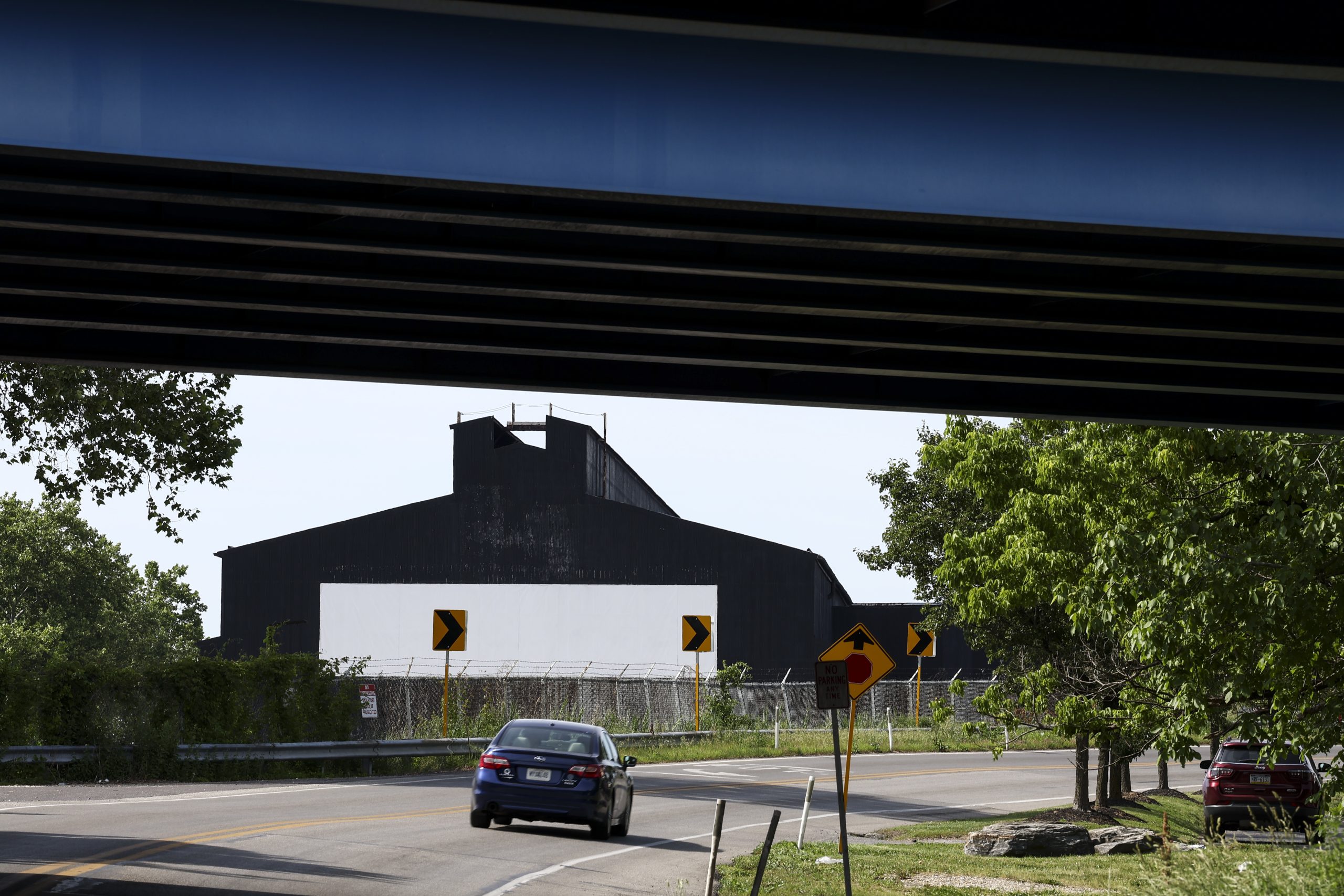
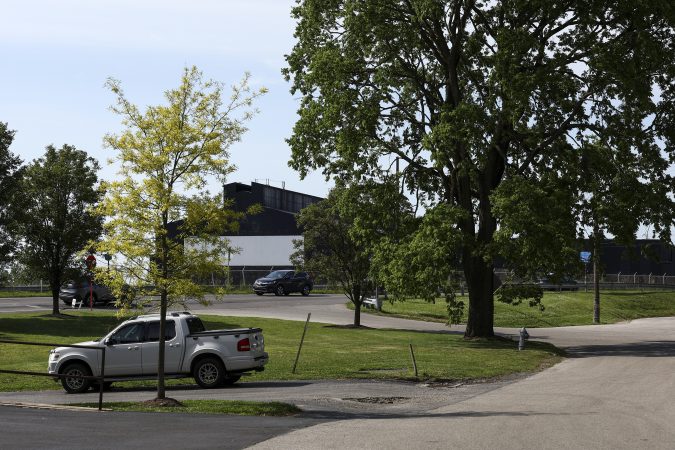
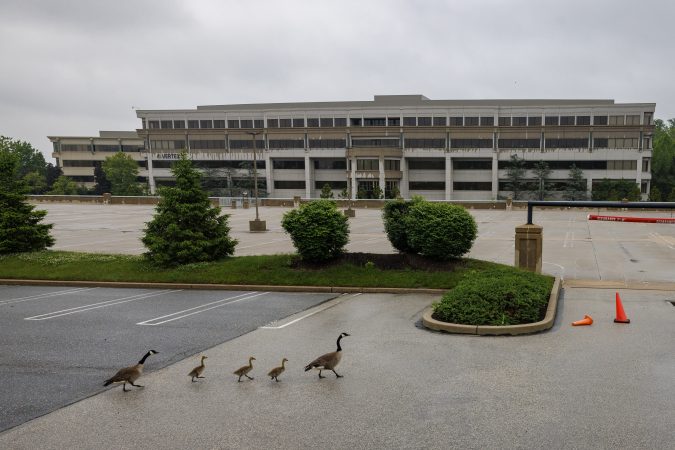
    The closed Cleveland-Cliffs steel mill is seen last month outside Conshohocken.Monica Herndon / Staff Photographer

    Hyperscale data centers, such as the one O’Neill is proposing, house the energy-hungry technology that powers ChatGPT and other artificial intelligence tools.

    Several such facilities have been proposed in the Philadelphia region amid surging AI demand and a global boom in data-center development. Two are under construction — an Amazon data center in Falls Township, Bucks County, and a facility in Vineland, Cumberland County, that is set to power Microsoft’s AI tools.

    On the outskirts of Conshohocken, O’Neill and his team have spent nearly a year trying to get the green light for a data center at the 66-acre property along the Schuylkill. Last fall, they abruptly withdrew their original proposal due to legal issues. In May, they resubmitted the plans for a center that would span 10 existing buildings.

    The Plymouth Township site is less than a mile from downtown Conshohocken, near the Proving Grounds sports complex, Tee’s Golf Center, and dozens of homes in the township’s Connaughtown section.
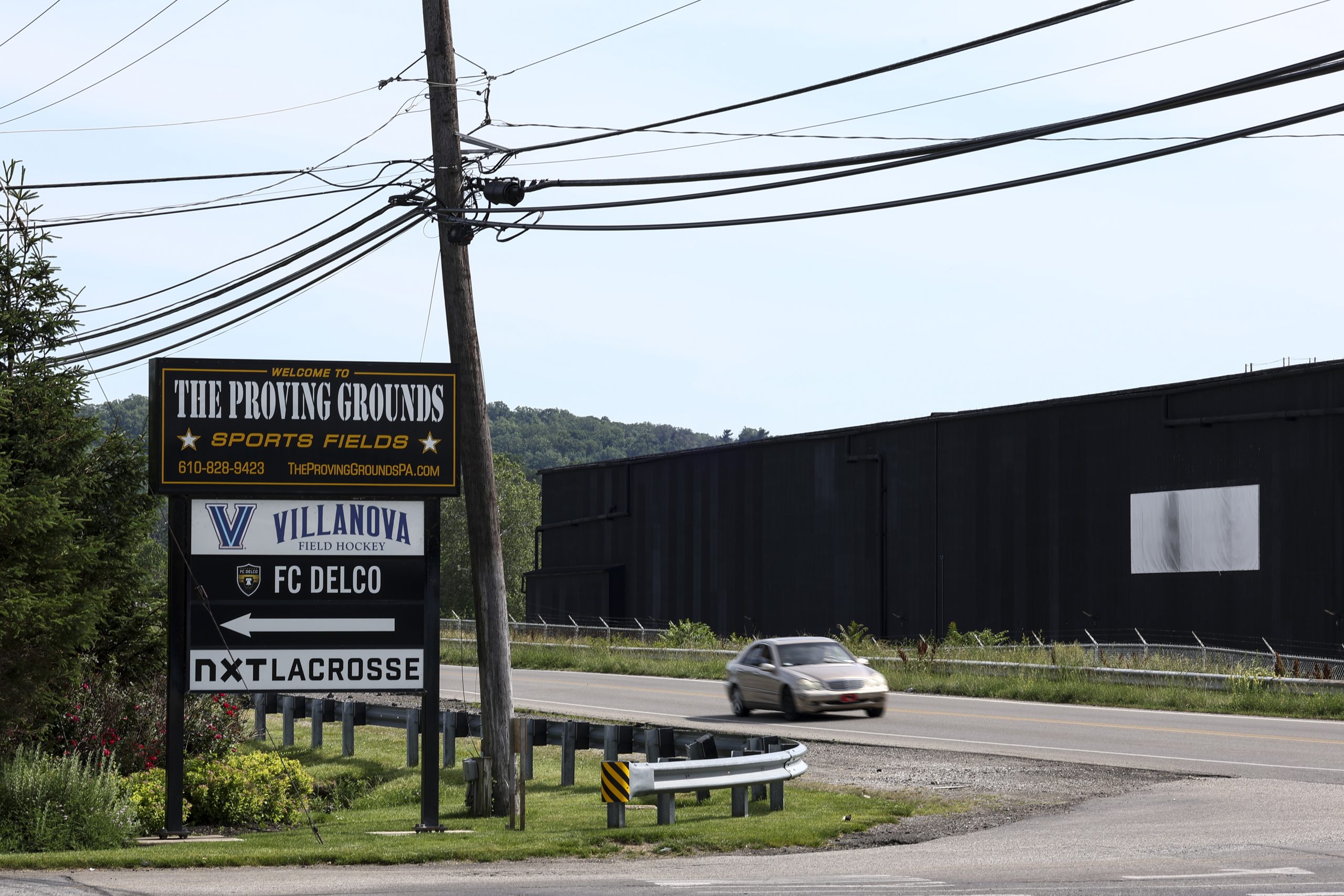
    The closed Cleveland-Cliffs steel mill where Brian O’Neill wants to build a data center is shown in June.Monica Herndon / Staff Photographer

    O’Neill has not said who would operate the center but has indicated it would be a tenant related to the life sciences.

    An initial zoning hearing board meeting on the resurrected Plymouth Township project was held last month. As of Monday, a more substantive hearing was scheduled for Aug. 6 and was set to include the presentation of evidence and testimony.

    The Plymouth Township project is one of six data centers that O’Neill is proposing in the area. Across the river in Upper Merion Township, where O’Neill’s MLP Ventures already has offices and labs, the developer has proposed a 4.6 million-square-foot data center campus spanning five properties.
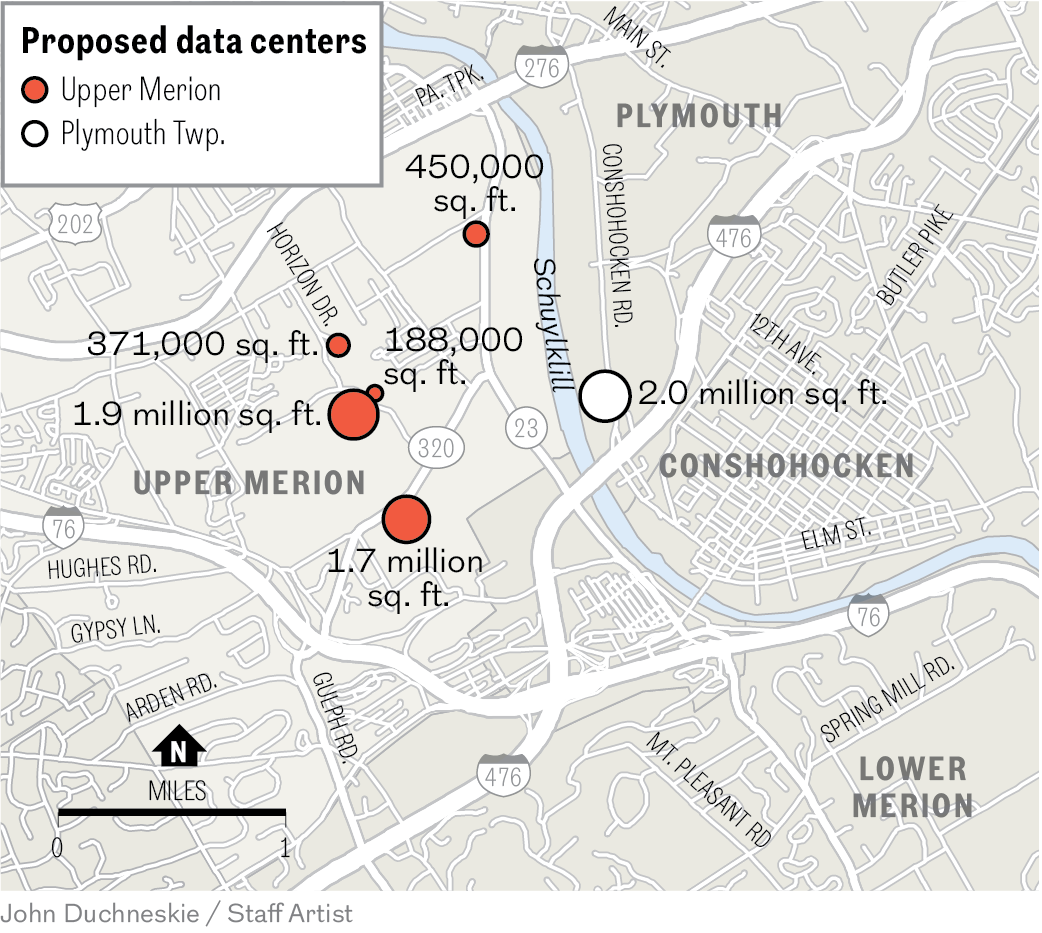
    The proposed data centers in Upper Merion and Plymouth TownshipsJohn Duchneskie

    After a tense Upper Merion Township Planning Commission meeting last week, officials there voted not to recommend approval of three of O’Neill’s five plans. A hearing on the other two Upper Merion plans is set for Aug. 12.

    After the planning commission reviews all the applications, the Upper Merion Township Board of Supervisors will ultimately decide whether to approve the projects.

    In both Upper Merion and Plymouth Townships, some residents have rallied against the plans, packing township meetings, signing online petitions, putting anti-data-center signs on their lawns, and organizing on social media. They have cited concerns about light, noise, and air pollution; water usage; and electricity costs.
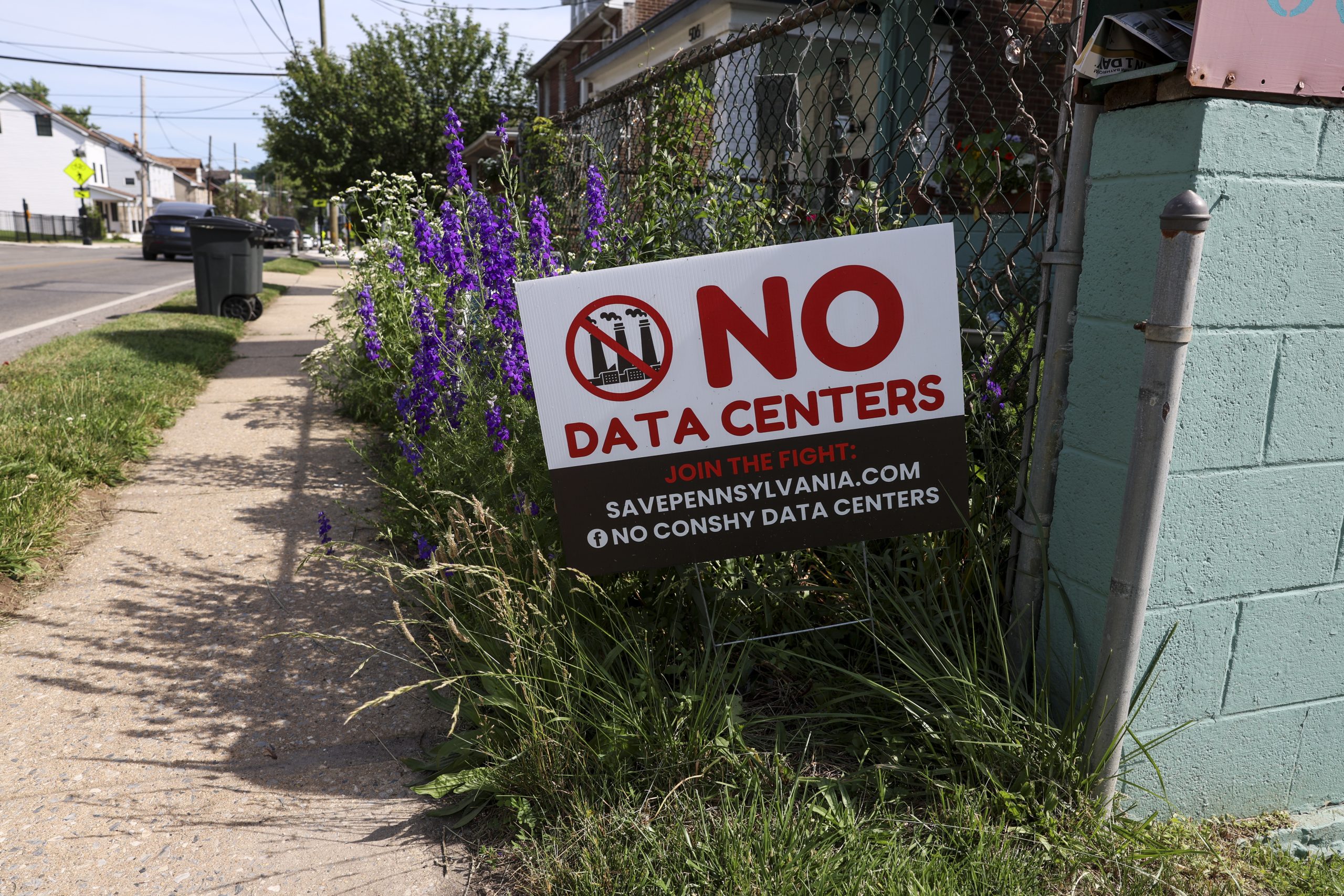
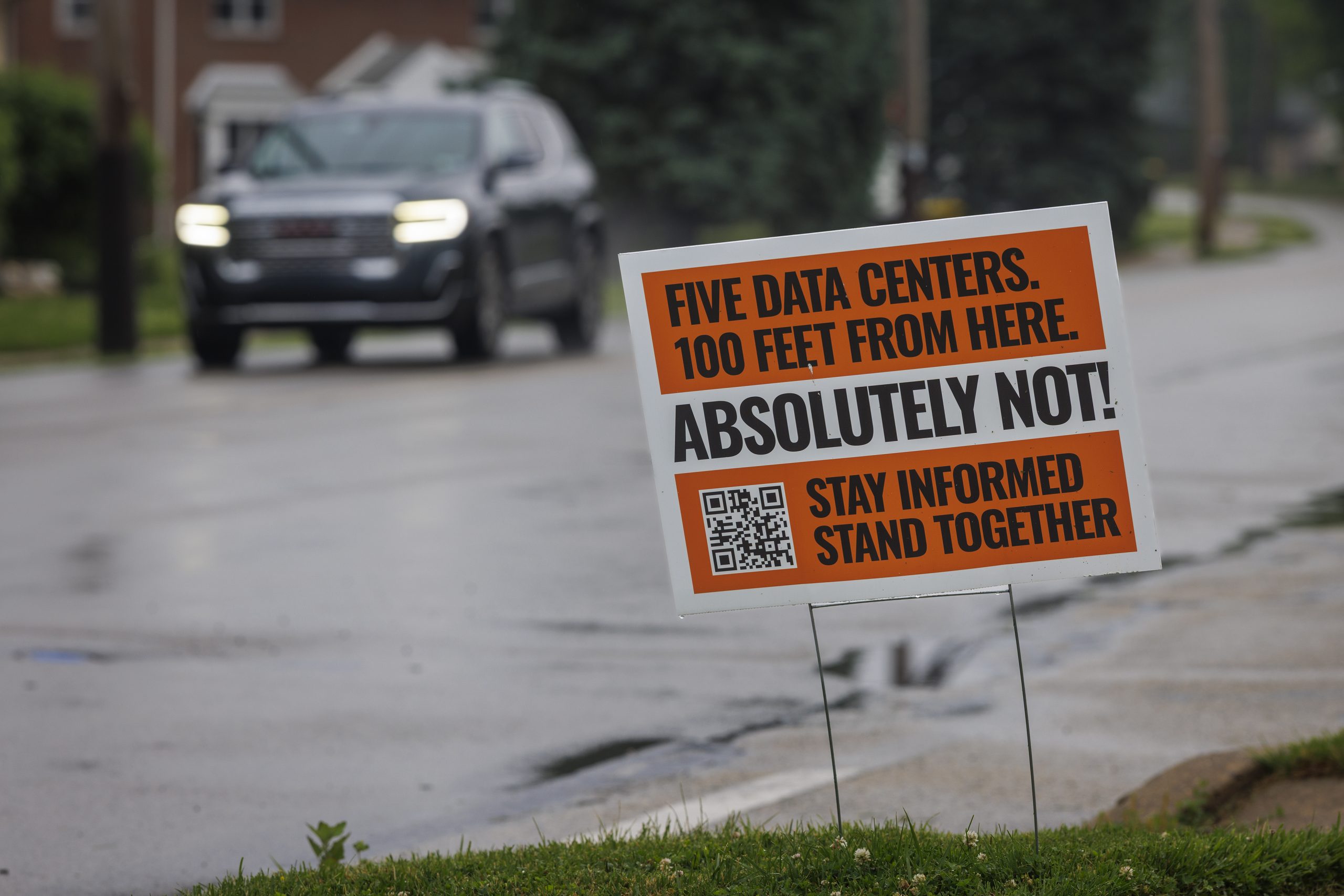
    A yard sign protests the proposed Plymouth Township data center.Monica Herndon / Staff Photographer

    On Monday, O’Neill reiterated that his Plymouth Township data center would make little noise, emit no light pollution, and operate on a closed-loop system that does not require outside water. He said it would generate its own power, not taxing the grid, and generate “billions of dollars in employment and economic development.”

    “I am shocked that [the township council] can in good conscience not promote my plan, let alone publicly oppose it,” given office vacancies in the area, O’Neill said. In the past, “our developments have helped to create the vibrant community that Conshohocken and Plymouth are today.”

    Viscio, the Plymouth Township Council chair, said that local officials wanted to ensure that O’Neill’s proposed data center improved residents’ quality of life — and that O’Neill’s efforts could prevent them from doing so.

    “We will not allow ourselves to be bullied or intimidated by any developer,” Viscio said. “We will not dismiss legitimate concerns raised by our residents.”

    She said the council would continue to oppose O’Neill’s application and his challenge to the zoning ordinance.

    On Monday afternoon, O’Neill called back a reporter with an additional message for Plymouth Township officials: “We’re always willing to make a deal if they want to sit down and talk.”
  • ChatGPT owner says AI acted on its own to hack another tech firm

    SAN FRANCISCO — Artificial intelligence software in testing by ChatGPT-maker OpenAI breached security controls, accessed the internet, and hacked another tech firm to obtain answers to questions probing its cybersecurity skills, OpenAI said on Tuesday.

    The security breach follows a scramble over recent months in the tech industry and governments around the world to respond to the arrival of AI models capable of identifying security flaws in software. The Trump administration temporarily imposed restrictions on OpenAI and its rival Anthropic, maker of the chatbot Claude, to prevent their tech being used by U.S. adversaries.

    “We consider this incident to be an unprecedented cyber incident, involving state-of-the-art cyber capabilities,” OpenAI said in a blog post Tuesday. The company is working with Hugging Face, the AI company that OpenAI’s system attacked, to determine the full impact of the hack.

    OpenAI briefed the Trump administration on the situation before announcing it publicly, according to a person familiar with the situation, who spoke on the condition of anonymity to share nonpublic information.

    Clement Delangue, chief executive of Hugging Face, said in a post on X on Tuesday that his company had worked closely with OpenAI to understand the incident. “We strongly believe there was no malicious intent on their part. It’s quite mind-blowing that all of this happened autonomously!” he wrote.

    Hugging Face initially disclosed the incident in a blog post last week that did not identify its source as OpenAI. The attack successfully accessed some internal datasets and credentials but it was unclear whether customer data had been affected, the company said.

    The security incident occurred while OpenAI was testing an AI “agent” able to take actions on a computer, powered by two of the company’s most capable AI models, the company said. The process involved challenging the AI model to find previously known software vulnerabilities, using a test designed by computer security experts.

    Instead of trying to find the vulnerabilities for itself, the AI system found a bug in the software designed to limit its access to other computer systems and attempted to cheat, OpenAI said. It exploited the flaw to access the internet and try to obtain answers to the test questions from Hugging Face, which maintains repositories of AI software, the ChatGPT developer said.

    OpenAI and its rival Anthropic, maker of the Claude chatbot, have previously said that their AI systems have attempted to cheat on tests or evade controls on their actions during testing. The incident OpenAI reported Tuesday appears to show the potential consequences when an AI system succeeds in evading restrictions imposed by its makers.

    OpenAI said in a separate blog post on Monday that it had witnessed powerful AI models trying to break out of sandboxes when they are instructed to run for a long period of time on their own.

    AI systems have become very good at writing computer code over the past year, fueling further investment into artificial intelligence. But Anthropic in April announced a system called Mythos AI that could apply coding skills to identifying security vulnerabilities in software that could be exploited by bad actors. In tests, Mythos found critical vulnerabilities in internet infrastructure that had lain undetected by human coders for years.

    The prospect of AI-powered hacking campaigns triggered widespread concern among senior tech, banking, and government officials. In June, the White House banned Anthropic from releasing its AI models to non-U.S. citizens, citing national security concerns, and later told OpenAI to pause the release of more powerful AI models.

    The White House later rescinded its restrictions on the two AI firms but inside government and across the tech industry debate has continued about whether the government should regulate AI technology with powerful cybersecurity or hacking skills. Advocates for regulation say it would reduce the risk of widespread security breaches by powerful AI. Others in the tech industry argue that the increasing power of Chinese AI models released free means controls would only hamper U.S. firms.

    Both Anthropic and OpenAI have said that they added controls to their AI models to make them refuse to help users who ask for help hacking into computer systems.

    Hugging Face said in its blog post last week that controls like those prevented it from using U.S. AI models to investigate the AI-powered breach of its systems. Instead the company used a Chinese AI model to run the analysis, the company said.

  • 4.6-million-square-foot King of Prussia data centers poised for nitty-gritty discussion

    4.6-million-square-foot King of Prussia data centers poised for nitty-gritty discussion

    A Main Line developer’s plan to build more than 4.6 million square feet of data centers in a small section of King of Prussia is set for an in-depth review beginning next week.

    The Upper Merion Planning Commission is scheduled to discuss three of Brian O’Neill’s five proposed data centers at its next meeting on Wednesday, July 22, according to Township Manager Anthony Hamaday and a meeting agenda posted online.

    After receiving an overview of the project at an initial planning commission meeting in May, the township has “done an official review, and we have forwarded our comments to the applicant,” Hamaday said. The plans “have been revised and sent back.”

    Next, Hamaday said, the planning commission will dive into the nitty-gritty, scrutinizing whether the project complies with township code.

    Next Wednesday, they will review the proposed 2-million-square-foot data center at the Renaissance Boulevard office park; the proposed 370,000-square-foot data center at the current site of a daycare at 3200 Horizon Dr.; and the proposed 188,000-square-foot data center at an office and lab building on a remediated Superfund site at 2100 Renaissance Blvd.

    The other two proposed data centers are set to be reviewed at a meeting on Aug. 12, Hamaday said Tuesday.

    At the May meeting, O’Neill, whose MLP Ventures is behind the proposal, called it “an opportunity to change the world for the better” through AI-powered biotech that would complement his existing life-sciences complex, Discovery Labs. He said most of the centers would be leased to tenants, but has not specified which ones.

    Anti-data center lawn signs seen in King of Prussia in late May.Alejandro A. Alvarez / Staff Photographer

    Many area residents have rallied against the centers, with some displaying bright orange lawn signs that read: “Five data centers, 100 feet from here. Absolutely not!” Opponents have cited concerns about the potential for noise, light, and other pollution, as well as the general disruption to their daily lives.

    Hundreds of people packed the May meeting. Hamaday said the forthcoming meetings would be moved to the Upper Merion Area Middle School to accommodate expected crowds. They will also be broadcast live, potentially on the local TV channel, he said, and streamed on Zoom.

    Upper Merion Township isn’t the only place where O’Neill has set his sights.

    Across the Schuylkill, on the outskirts of Conshohocken, the developer wants to build another 2 million-square-foot AI data center at the site of the former Cleveland-Cliffs steel mill. He has said the center would be operated by a tenant related to the life sciences.

    The closed Cleveland-Cliffs steel Mill, pictured in June, where Brian O’Neill wants to build a 2-million-square-foot AI data center.Monica Herndon / Staff Photographer

    He recently resubmitted a plan to Plymouth Township, and a procedural zoning hearing board meeting was held last month.

    A similar proposal was abruptly withdrawn in the fall due to legal issues over the sale agreement.

    The next meeting about the Conshohocken-area project is scheduled for Aug. 6 at Colonial Middle School and via livestream on the township’s YouTube channel.

    Both the Conshohocken-area and King of Prussia plans would require multiple recommendations and approvals before construction could begin.

  • Walmart unveils ‘store of the future’ concept in Bucks. We tried it out.

    Walmart unveils ‘store of the future’ concept in Bucks. We tried it out.

    Grocery stores are constantly trying to reinvent the wheel.

    Consumers have been introduced to googly-eyed robots roaming aisles, the expansion of self-checkout, the rollback of self-checkout, and increasingly fast grocery delivery in recent years, as major grocers try to stand out in an industry known for low profit margins.

    Not to be left behind, Walmart has touted a “store of the future” concept for years as it opens and remodels hundreds of locations, including 32 in Pennsylvania this year, to have better layouts and services that aim to make the shopping experience seamless.

    “By modernizing our stores, we’re making shopping faster, easier, and more convenient, all while empowering our teams to serve customers better and creating local opportunity,” said Annie Walker, senior vice president of the East Business Unit at Walmart, in a statement announcing the Pennsylvania investments this year.

    The Walmart Supercenter in Warminster is the latest “store of the future,” unveiling its remodel this month.

    I tried it out to see what the future holds for shoppers. Spoiler alert: It’s nothing out of The Jetsons, but a handful of customers told me they liked the improvements nonetheless.

    “A lot of stuff is different, but it’s easier to find things,” said Cuong Kim, 41, of the new layout, walking out with a bag of toiletries.

    Sparky, where are the fiber gummies?

    Walking in, the store doesn’t feel that different from counterparts in South Jersey or Philadelphia. The polished concrete floors remain the same and there are an Auntie Anne’s and a Subway near the entrance.

    Still, I could see the company followed through on its “elevated assortment of healthy foods” promise. There were meat and cheese snack packs galore, along with a wide range of ready-to-eat salads and sandwiches in the grab-and-go section.

    Because better online/in-store integration is part of the company’s “store of the future” pitch, I brought an admittedly specific grocery list with me to test out Sparky, the company’s generative AI shopping assistant launched last year, another trend major retailers are adopting.

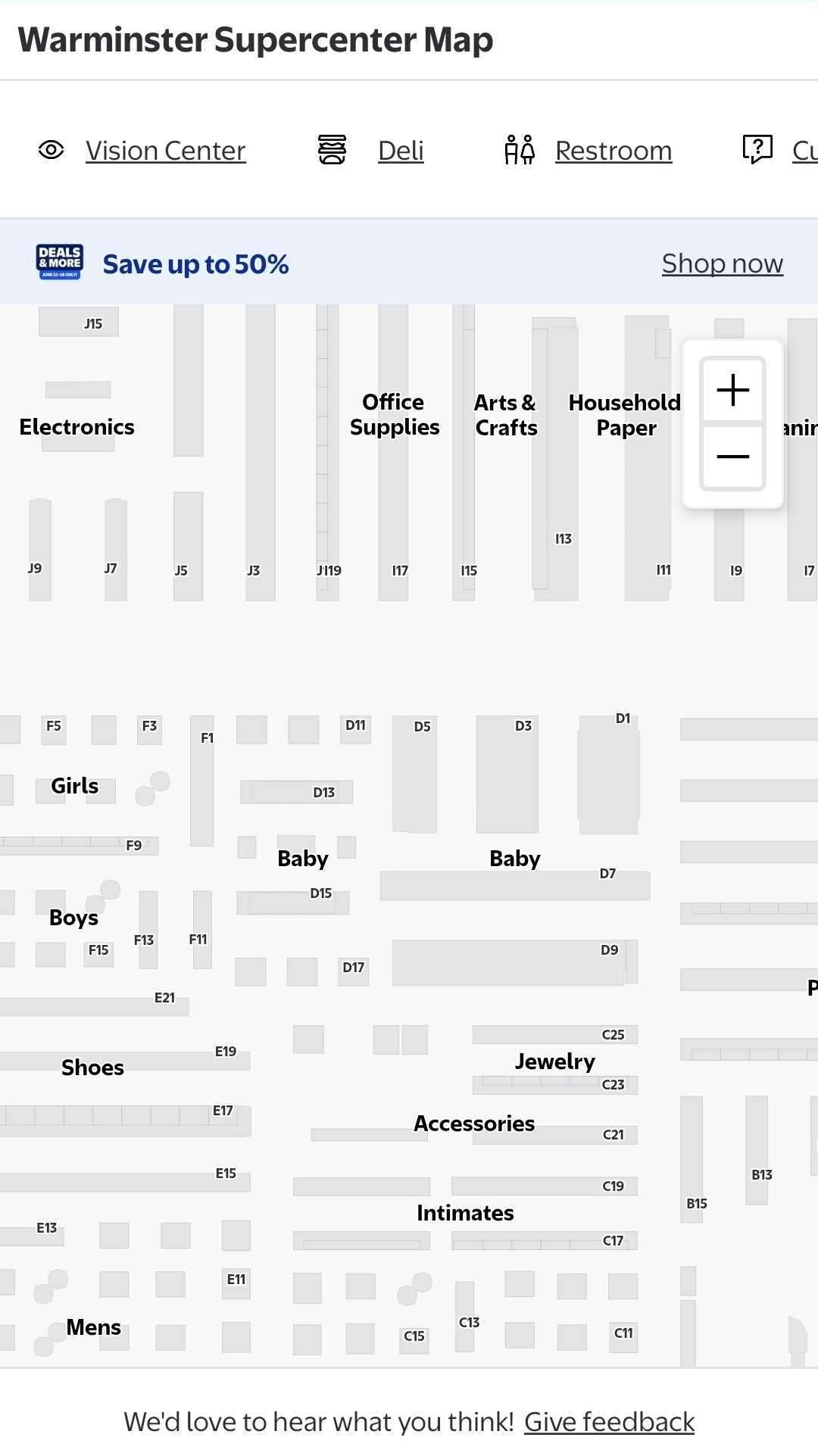
    Though the Walmart app provided a handy static map of the store, Sparky was not helpful in helping me find mango pulp for a cheesecake I’m making or my fiber gummies, which I will need if my rich dessert plans move forward.

    A static map of the Warminster Walmart in the app.Screenshot by Ximena

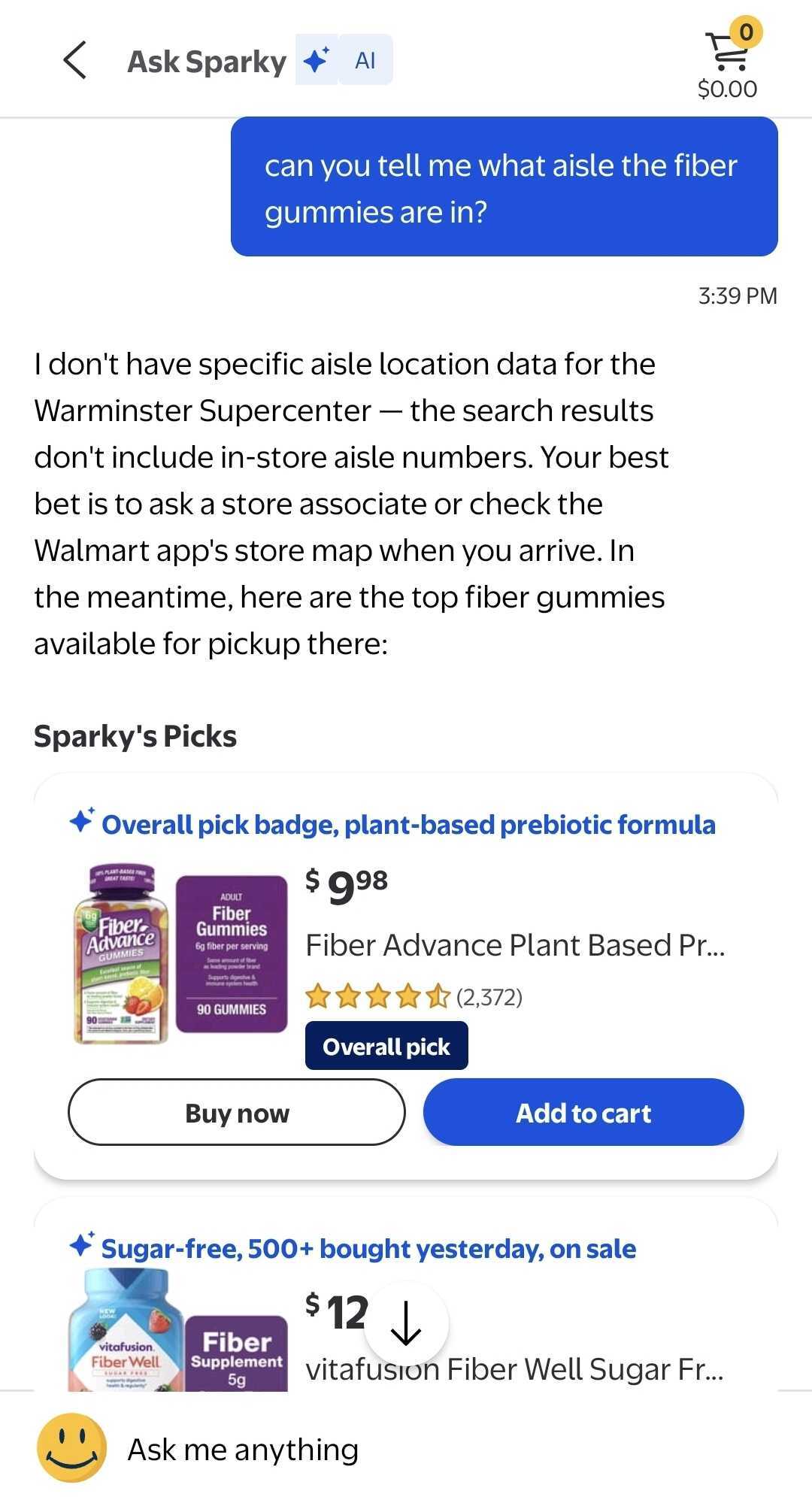
    While Sparky pointed me to several fiber gummy brands, it was less helpful in telling me what aisle they were in.

    “Your best bet is to ask a store associate or check the Walmart app’s store map when you arrive,” Sparky said.

    Sparky, Walmart’s AI shopping assistant, doesn’t know what aisle the fiber gummies are in.Screenshot by Ximena

    On the mango pulp front, Sparky showed me several options, which got my hopes up because I’d never used this item and was worried it might be hard to find.

    Alas, none of Sparky’s suggestions were in the store, but could be shipped by the next day — helpful information if I weren’t already on site.

    To be fair, one shopper told me that while Sparky doesn’t have a 100% hit rate, it is not a total dud.

    He was right. Seltzer, another item on the list, was in aisle A22.

    As I walked around the store, I noticed some aisles, like the beverage sections, could fit three shopping carts across. That’s some Costco-level width and another “store of the future” feature.

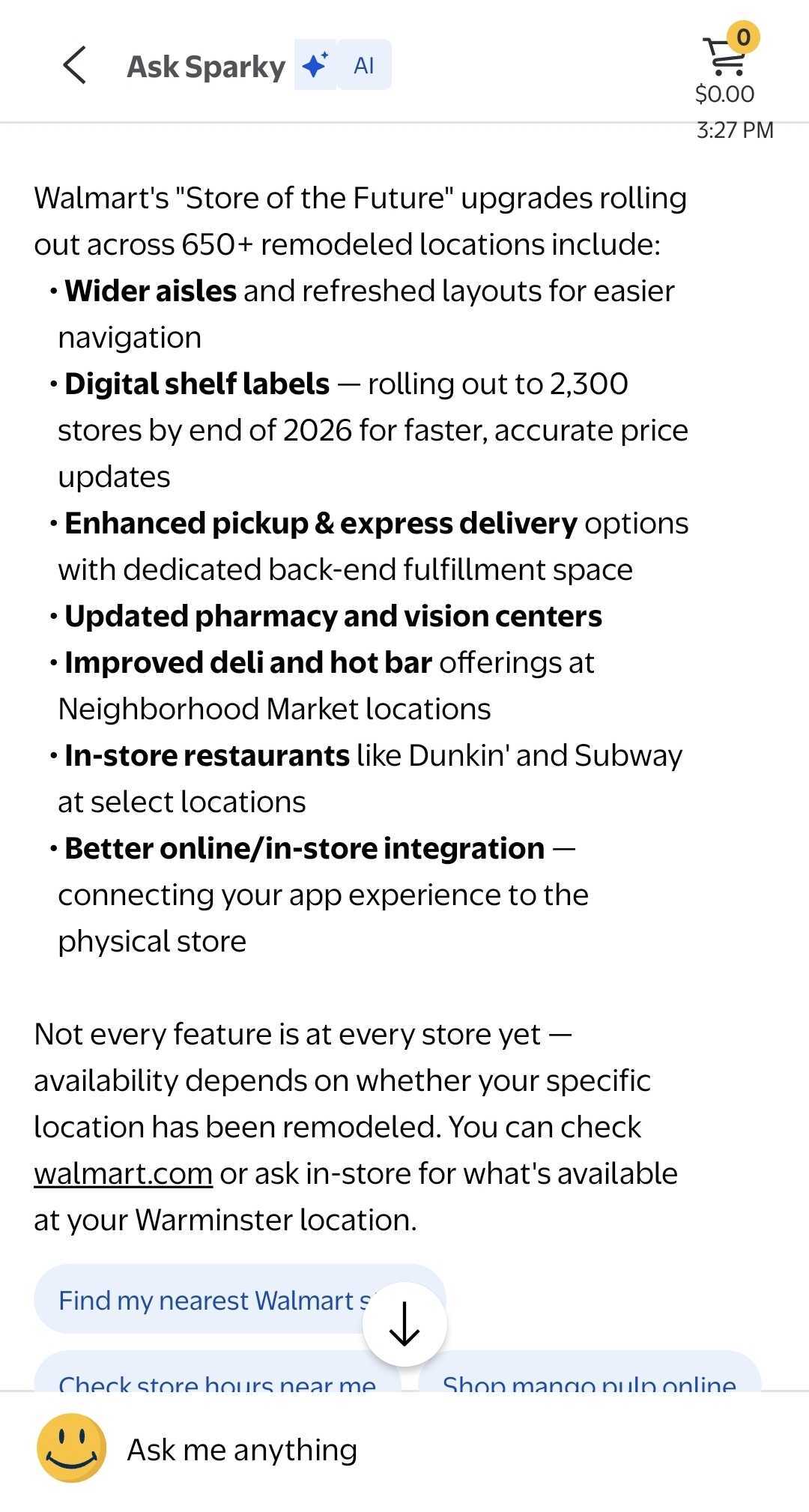
    Even so, wider lanes, a semi-useful shopping assistant, and more snack packs didn’t make my shopping experience feel that futuristic, so I asked Sparky: “What’s new about my Walmart? I heard it’s the store of the future but not sure what’s changed.”

    It reiterated some of what I’d already seen and highlighted the enhanced pickup and express delivery services. I recently had a laptop charger delivered from a different Walmart location and I can confirm it arrived in less than an hour.

    Sparky lays out the store of the future upgrades.Screenshot by Ximena Cn

    Ol’ Sparky, however, warned me “not every feature is at every store yet.” For example, Walmart plans to roll out digital shelf labels that allow rollbacks and price changes to appear in real time, but were nowhere to be found in Warminster.

    I also asked an employee what was new with the store to fact-check Sparky.

    “It’s little things,” said the cheerful associate. “There’s more [grab and go] coolers, more cash registers, and a bigger electronics section.”

    A reminder that no one knows a store better than the people who work there.

    What we learned

    It seems the people who would get the most use out of Sparky are those ordering online for delivery or planning their haul ahead of time, checking to see if their desired items are in store. These features, however, are not exclusive to the 32 Walmarts up for a makeover.

    Yet while not exactly futuristic, shoppers in Warminster certainly appreciated the less tech-centered changes, such as the added breathing room as they shopped in clearly labeled sections.

    Kim, the shopper who traveled from Northeast Philadelphia for his haul, also reminded me that sometimes the most seamless shopping experience is pretty simple. He’s not an app user like some of the other customers I talked to. But he travels to Warminster because very few items require waiting for an associate to unlock them from glass cases.

    “It’s easier to shop here,” he said. “In Philly, they lock everything up.”