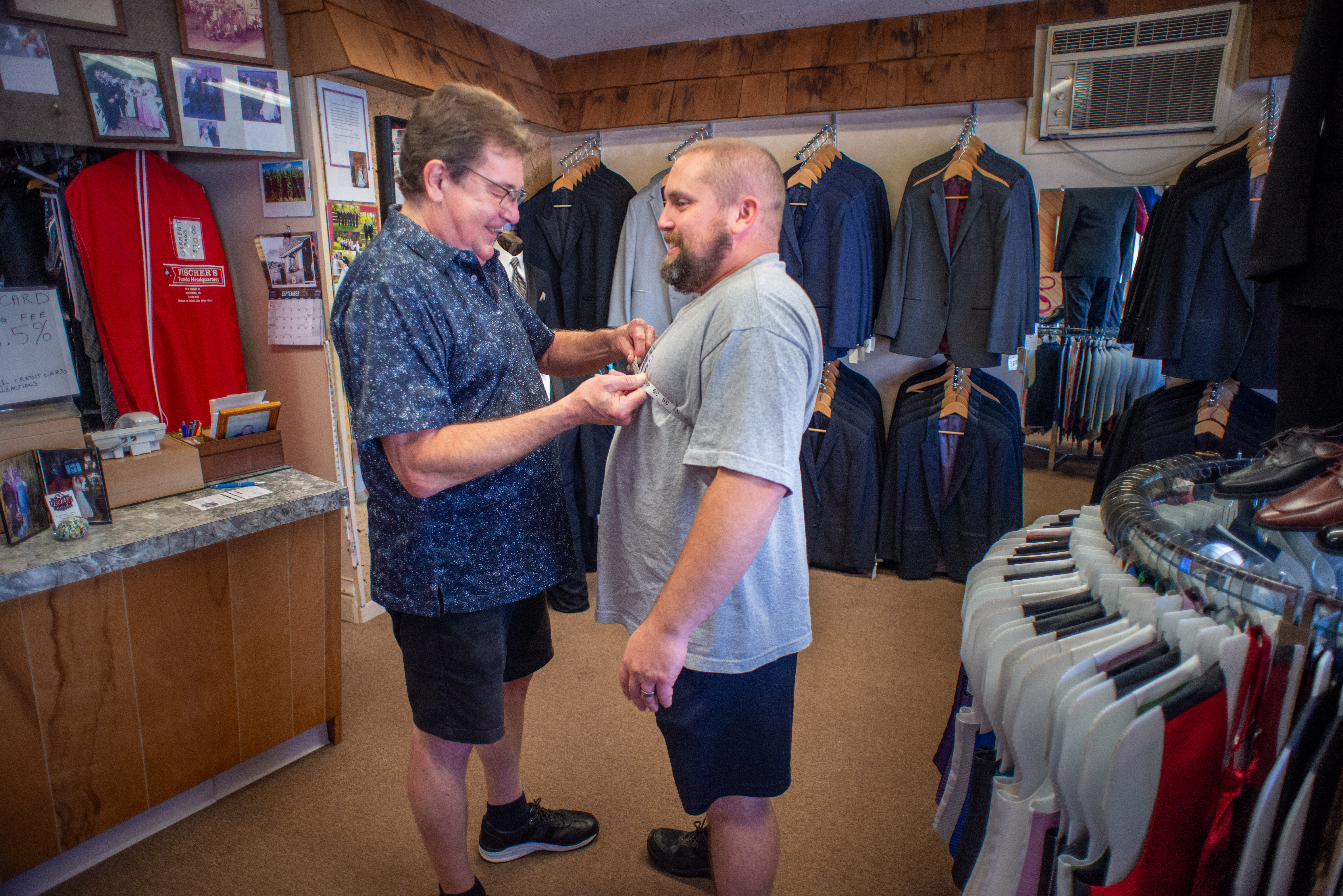
Brett Fischer of Fischer’s Tuxedo in Quakertown learned tailoring as a kid, when his dad owned the store. Now, Brett runs the tailor and dry cleaning business with son Dustin, who learned from Brett.
Dustin started out “shining shoes in the back, and then you know, little by little … sew a button on, shorten sleeves, just easy things,” Brett said.
Dustin is the fifth generation to run Fischer’s, started over a century ago by his German-Romanian great-great-grandfather in the same Broad Street location the family operates today.
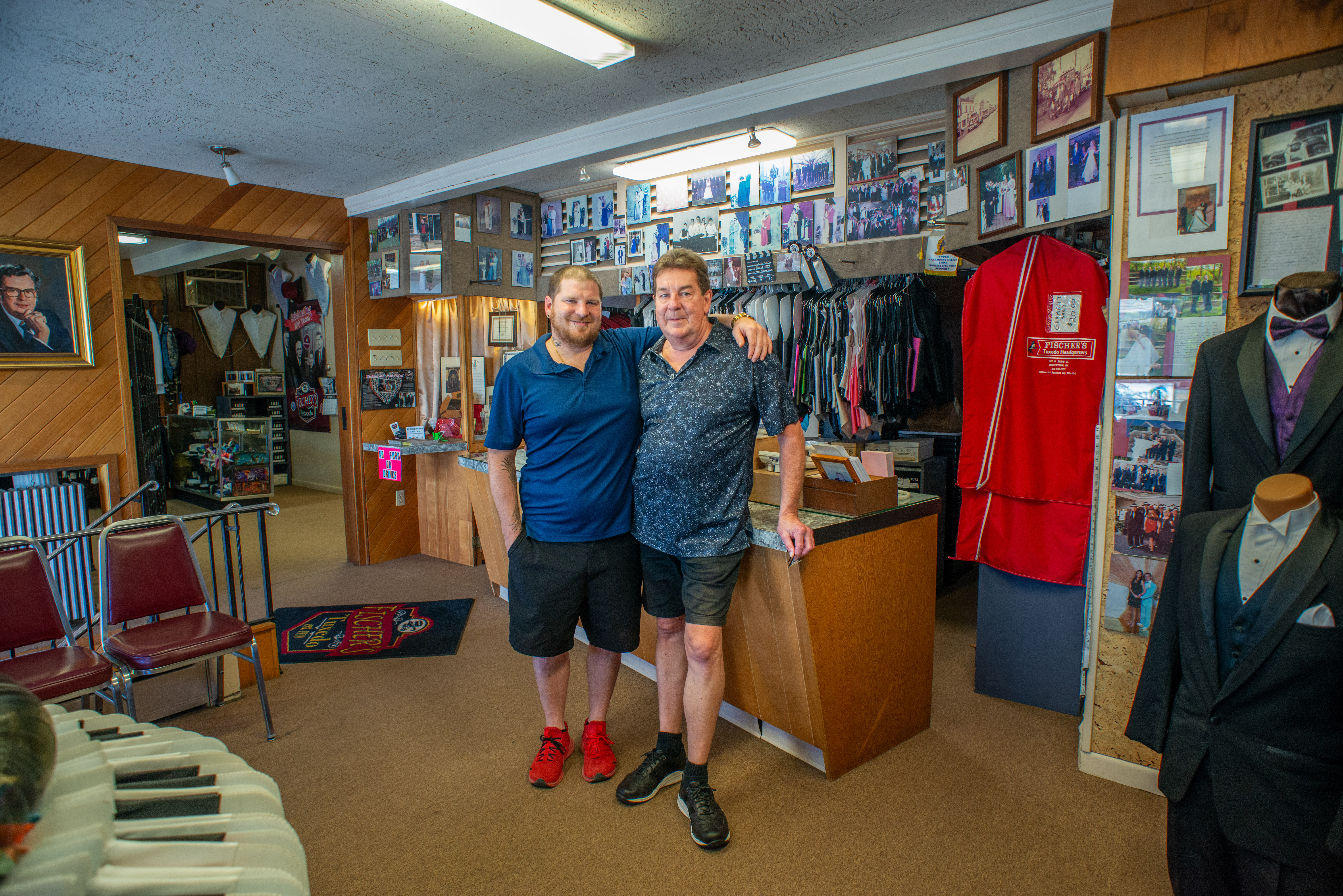
Owner Brett Fischer (right) and son Dustin Fischer pose for a photo in their store Saturday, Sept. 19, 2026, at Fischer’s Tuxedo in Quakertown. Tailors are disappearing, but this Upper Bucks shop is set to pass to a fifth generation.William Thomas Cain / For The Inquirer
That’s “extraordinarily uncommon,” said Cindi Husbands, CEO of the American Tailors and Sewing Association.
Across the country, tailors are disappearing as business owners reach retirement without anyone to replace them.
Fischer’s offerings have changed over time. Services once included seasonal clothing storage because many home closets were too small to hold them, Brett said. His grandfather used to send clothes on the train to Philadelphia for dry cleaning, before he brought that service in-house.
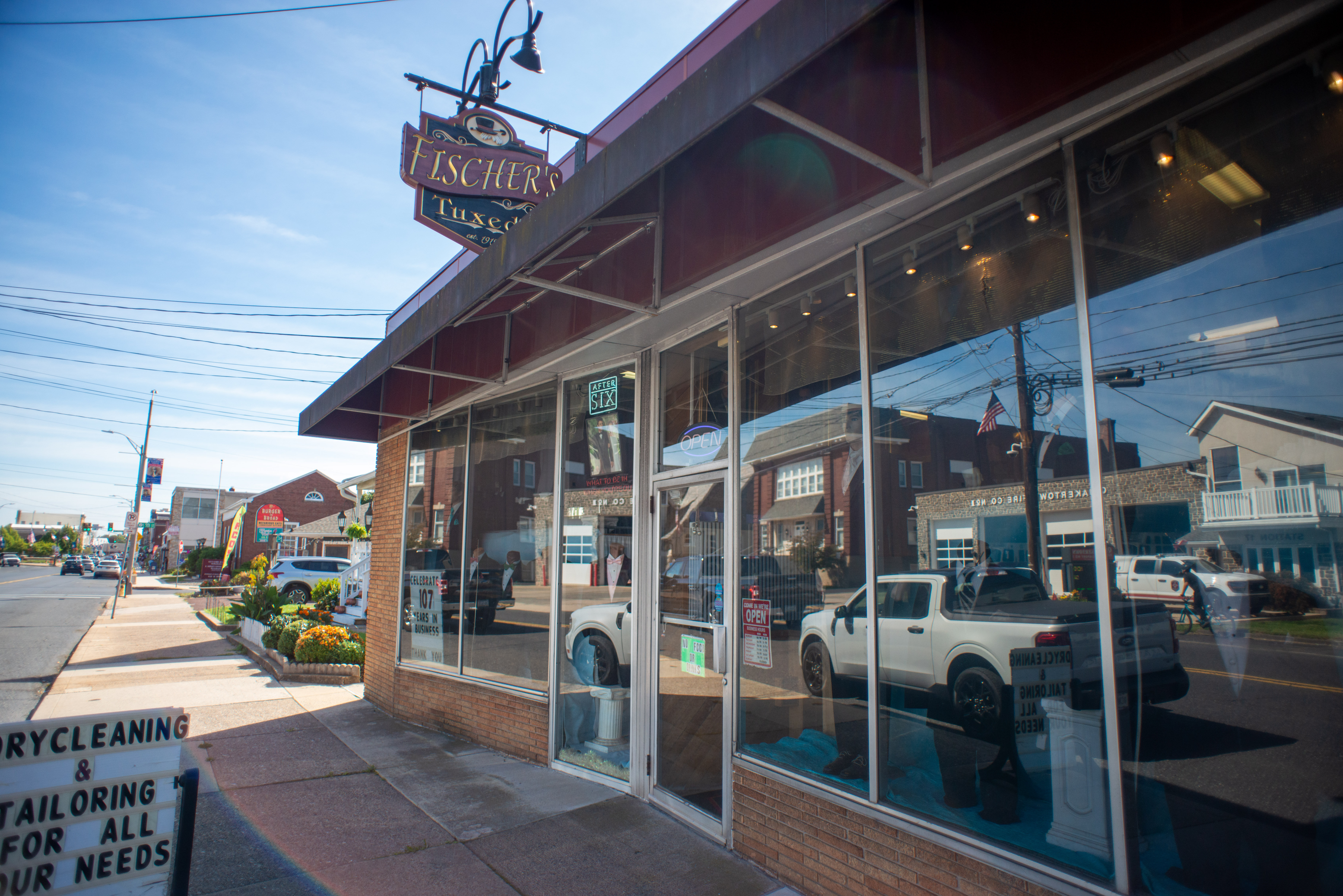
Fischer’s Tuxedo is seen Saturday, Sept. 19, 2026, in Quakertown, Tailors are disappearing, but this Upper Bucks shop is set to pass to a fifth generation.William Thomas Cain / For The Inquirer
The store grew with it.
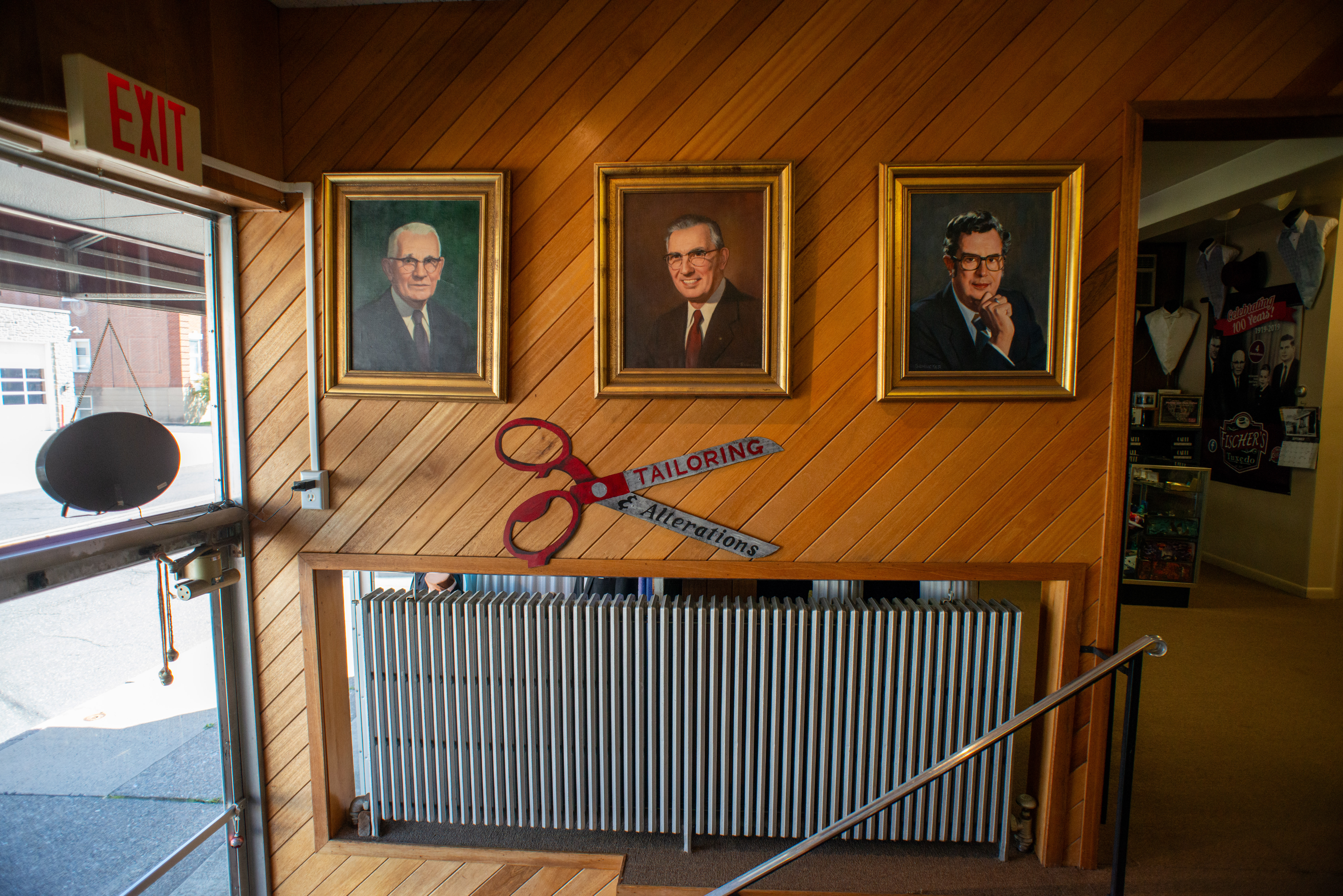
Originally built as a twin home, the front porch is now an indoor reception area. The upstairs apartments became storage. On the wall by the entrance hang painted portraits of Brett’s father, grandfather, and great-grandfather.
The generational wall of portraits is seen Saturday, Sept. 19, 2026, at Fischer’s Tuxedo in Quakertown, Pa. Tailors are disappearing, but this Upper Bucks shop is set to pass to a fifth generation.William Thomas Cain / For The Inquirer
Today, weddings and other formal events are the heart of the business. There are 10,000 suits stored in the 5,900-square-foot shop, Dustin said. But, weddings are smaller than they used to be, he said, and people buy less formal clothing in general.
“It’s a very dressed-down society. … They just wear what we’re wearing,” Dustin added, pointing to his blue polo shirt. “You can wash it in your laundry machine.”
In towns without tailors, other businesses like bridal shops have absorbed some of the demand, Husbands from the trade association said, but it’s difficult to replace the skills and experience of a professional, full-service tailor.
Her organization, along with major retailers like Nordstorm, are investing in tailor training programs to rebuild the workforce.
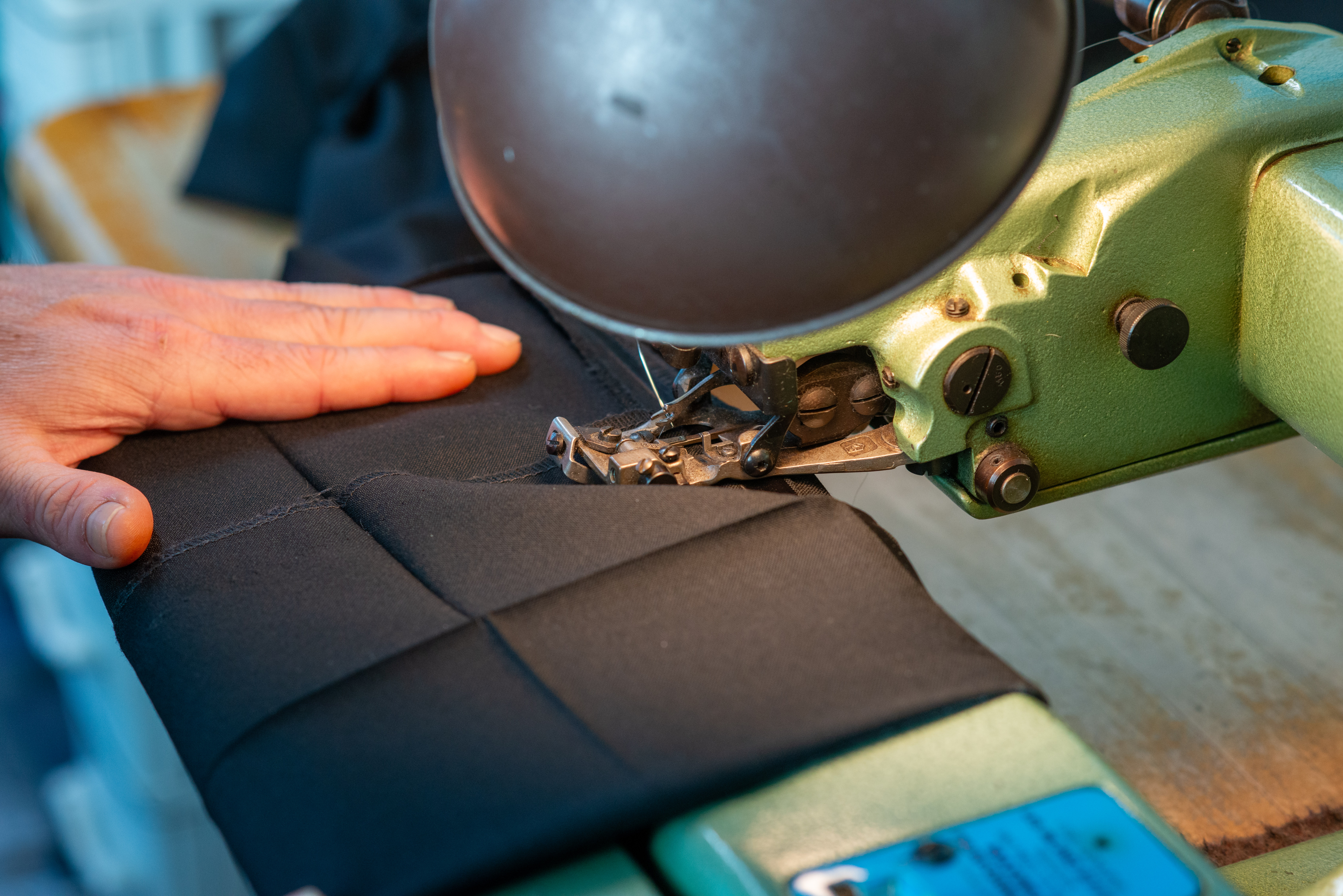
Dustin Fischer hems pants Saturday, Sept. 19, 2026, at Fischer’s Tuxedo in Quakertown. Tailors are disappearing, but this Upper Bucks shop is set to pass to a fifth generation.William Thomas Cain / For The Inquirer
With fewer tailors, Dustin expects to see higher costs and lengthier pants.
“They’re going to charge you an arm and a leg for a simple job,” he said. “Or you just won’t get it done. You’re going to wear your pants, and they’re going to be nice and long.”
Brett attributes his family’s long success to word of mouth, good customer service, and providing “a great product at an extremely fair price.”
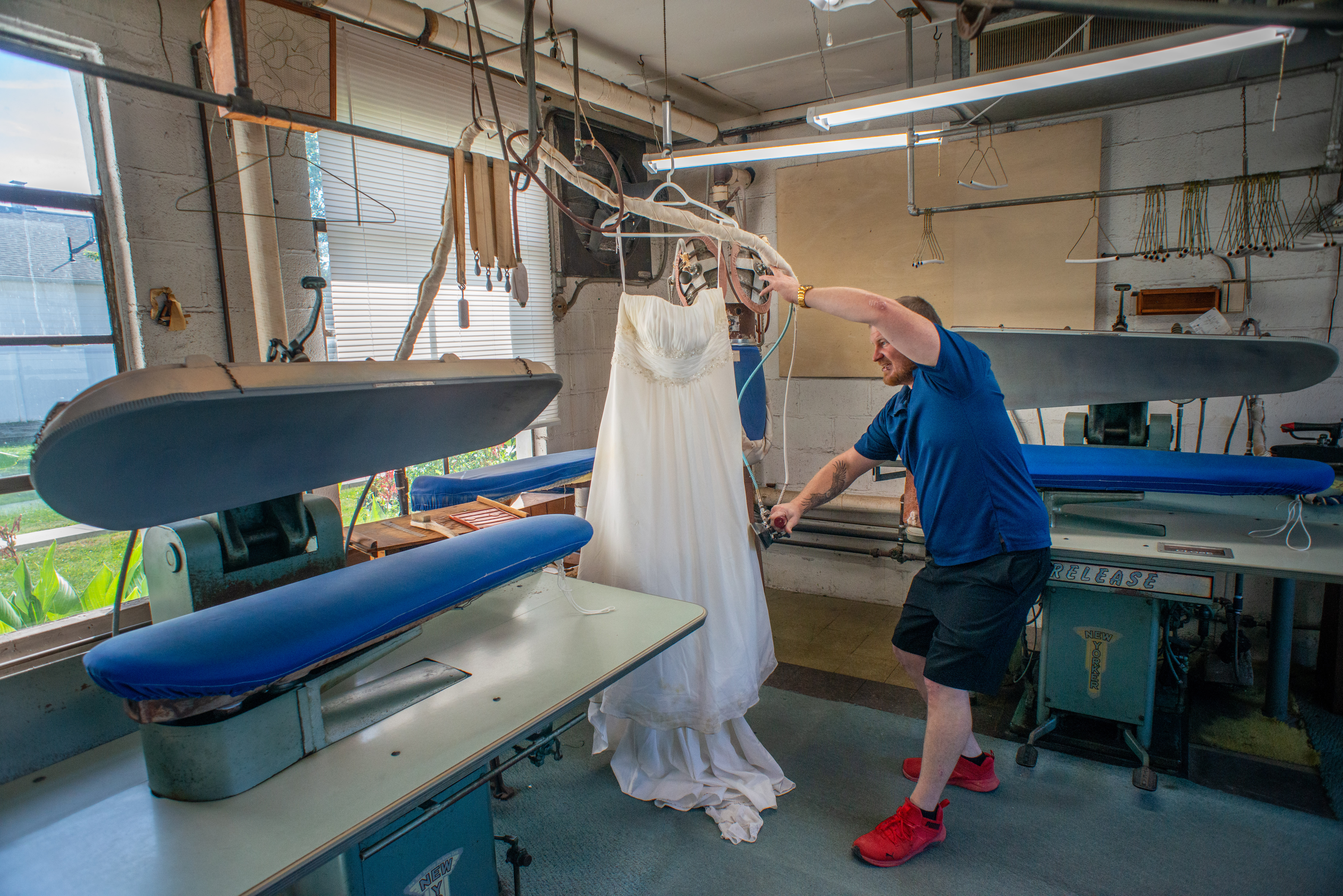
Dustin Fischer sews, irons, and presses clothing Saturday, Sept. 19, 2026, at Fischer’s Tuxedo in Quakertown. Tailors are disappearing, but this Upper Bucks shop is set to pass to a fifth generation. William Thomas Cain / For The Inquirer
Father and son both worked other jobs before joining the family business full time. Brett made office furniture, and Dustin worked in restaurants, a car wash, and a chocolate factory.
After 34 years at the helm, Brett is not sure when he’ll retire: “I’m probably gonna wake up one day and say ‘I’m just done.’”
And Dustin doesn’t know yet whether he’ll keep the store running himself, though he expects someone in the family will.
“But you never know,” he added. “Life’s weird.”
This suburban content is produced with support from the Leslie Miller and Richard Worley Foundation and The Lenfest Institute for Journalism. Editorial content is created independently of the project donors. Gifts to support The Inquirer’s high-impact journalism can be made at inquirer.com/donate. A list of Lenfest Institute donors can be found at lenfestinstitute.org/supporters.
Fishtown Books opened last weekend, the neighborhood’s fifth bookstore. In Manayunk, one couple opened two bookstores on the same street. The August opening of a West Chester fantasy shop wrapped a line around the building, ending early when the shelves were nearly emptied.
Across Greater Philadelphia, bookstores are back.
And despite the growing competition, many sellers said sales are up, mirroring national trends: The Association of American Publishers found the number of books sold via physical retail grew almost 34% over the past five years, outpacing online retail.
“I did not plan for it to be so busy,” said Jackie Botto, 41, of Capricorn Books, which expanded its Jenkintown storefront in July. “We’ve almost doubled our business.”
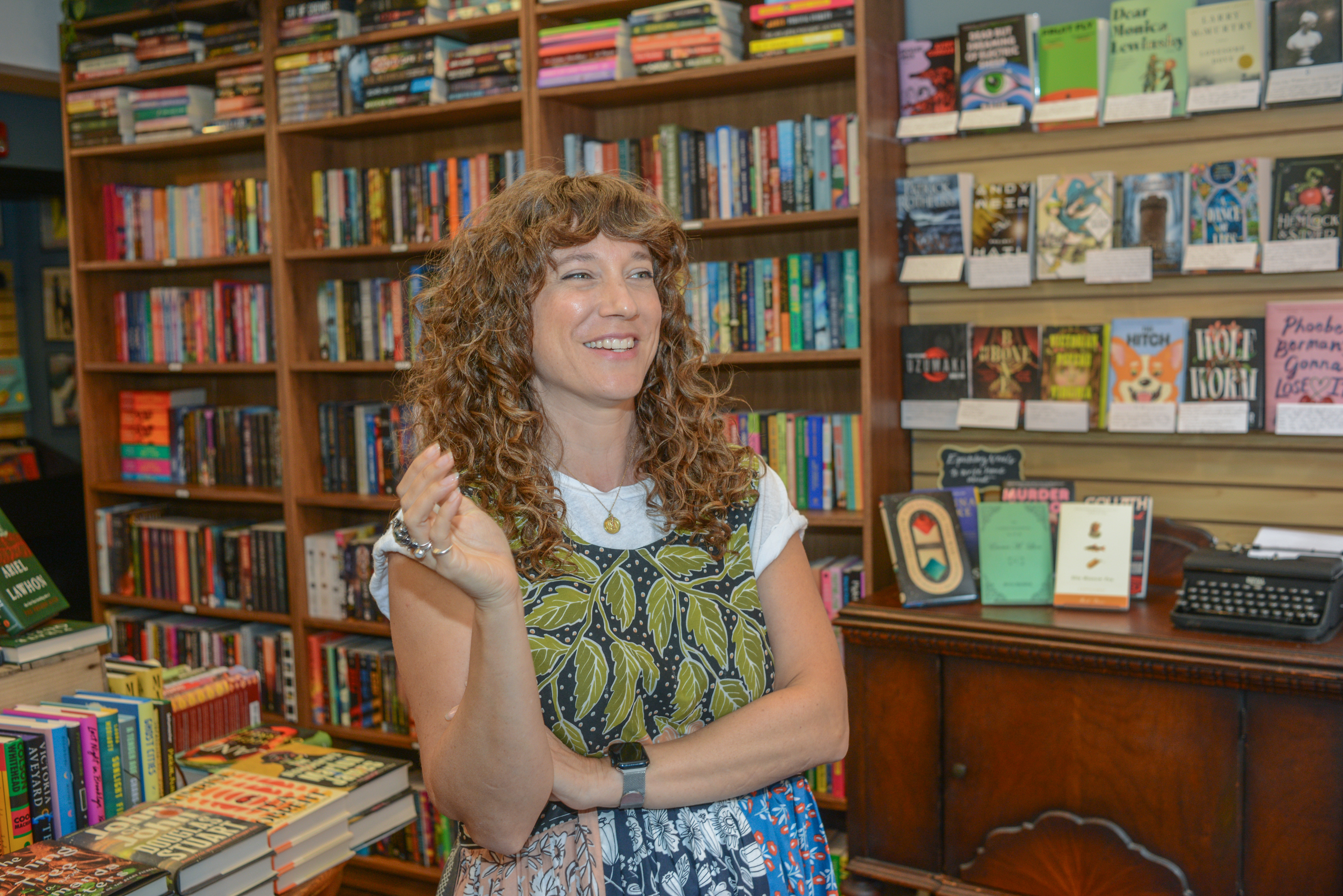
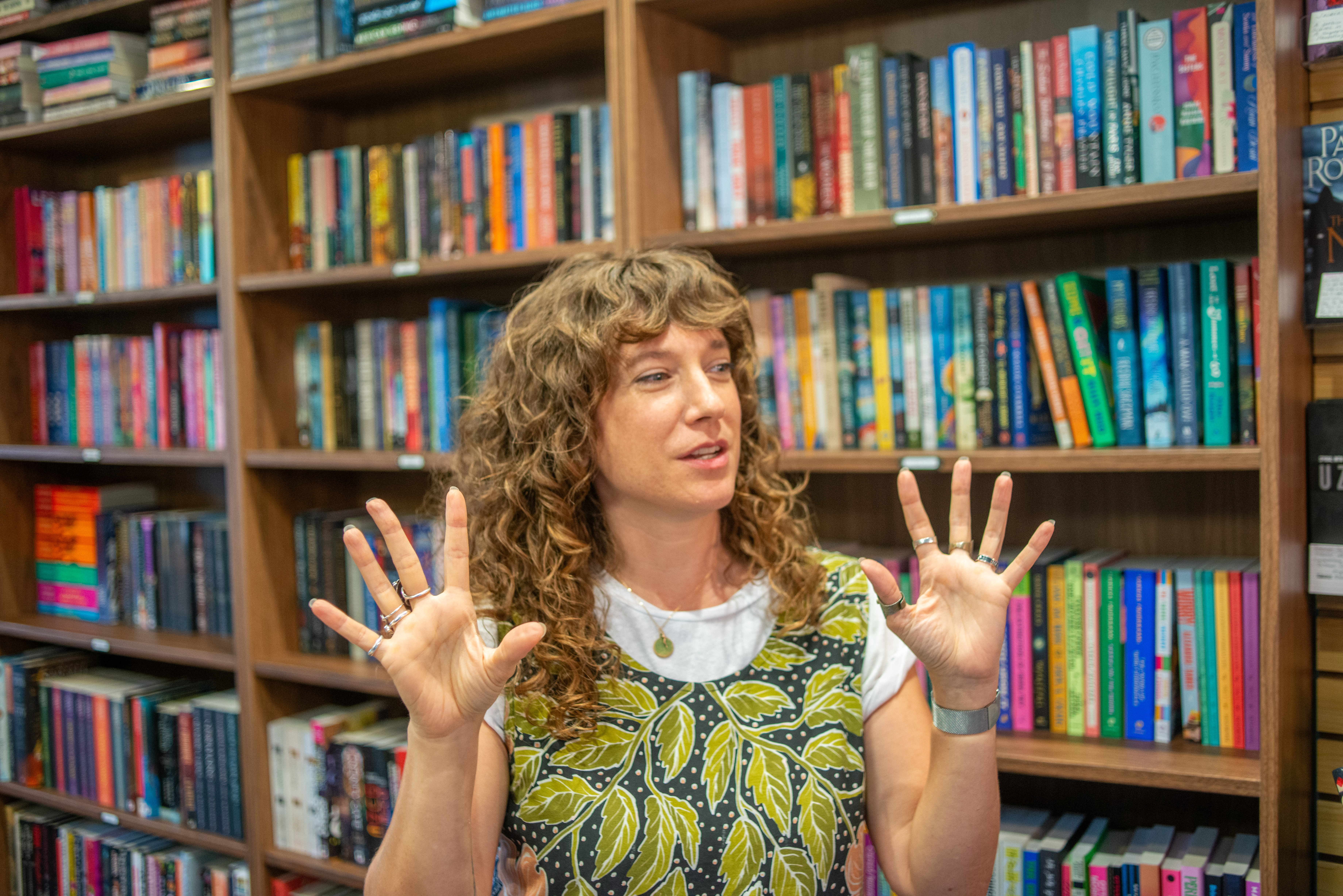
Capricorn Books owner Jackie Botto chats about the books and customers’ love of reading on Sept. 17 in her Jenkintown bookstore.William Thomas Cain / For The Inquirer
Screen fatigue, a hunger for community, and a desire to support local businesses are fueling the surge, said sellers — many of whom are investing in niche genres and hosting creative events to meet their customers’ needs.
Readers are reading, book people say
The reading boom isn’t limited to stores. At Jenkintown and Abington libraries — which sit along the same corridor as Capricorn and a newBarnes & Noble — patronage is growing, and bothlibraries are mulling expansion.
Adult print circulation is up 10% in Abington, and children’s circulation is up 50% since last year. “People are consuming more literature and media in general,” said Abington’s head of circulation, Marcus Palm.
And parents are prioritizing reading for themselves and their kids, said the Abington library director, Elizabeth Fitzgerald: “There is a bit of backlash to the doomscrolling.”
At Bookmarks in West Chester, some customers have tried ebooks and are returning to print.
“They spend all day working on the computer,” owner Lisa Strohl said. “They’re tired of being on the screen.”
But some apps like TikTok — and its algorithmic niche known as BookTok — are also driving readers to the stacks.
BookTok and tailored offerings draw young readers
“The screen is helping them get back into reading,” said Charity Herndon,ownerof Austen’s Shelf in Bordentown. “[BookTok] was the only way to reach the younger generation of readers.”
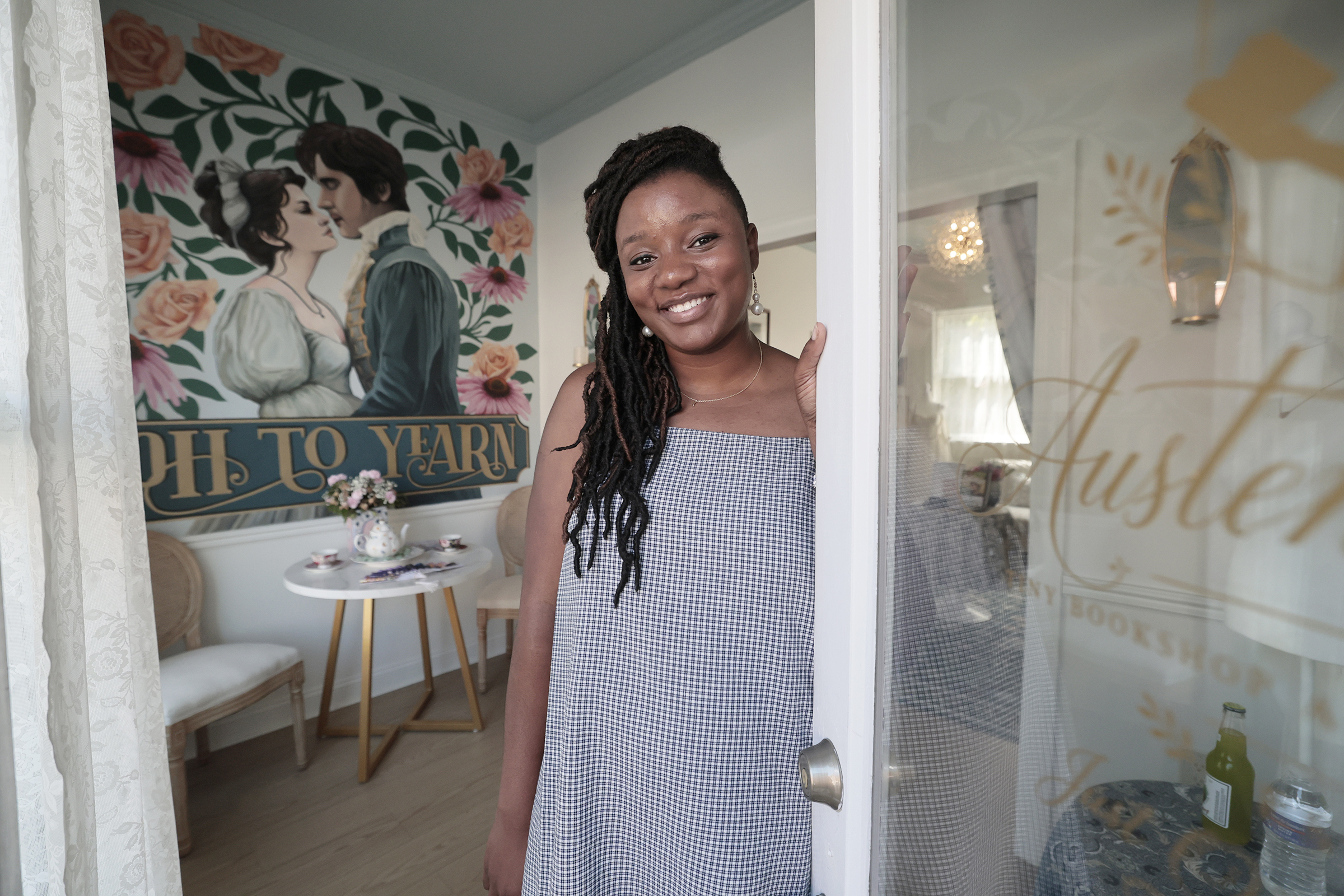
Charity Herndon, owner of Austen’s Shelf, stands in the entrance of her shop in Bordentown on June 13.Elizabeth Robertson / Staff Photographer
Sellers like Herndon and Anthony Long — who opened Thrillerdelphia in Manayunk last year after helping his wife open romance-focused Cupid’s down the street — are using both digital and analog strategies to turn new customers into loyal fans by delivering the community hubs they crave.
In a recent Instagram reel, a Thrillerdelphia staffer played a guitar riff to match each book cover he displayed. In November, the store is hosting the horror punk band Blitzkid, a member of which is also an author.
“I know my customers,” Long said. “You can get the eyeballs, but you have to build the intrigue and make people want to come in.”
Active support from local residents is key, many sellers said. Literary agent Eric Smith decided to start the Philadelphia Book Crawl a few years ago. It’s become a kind of Black Friday for bookstores; several said it’s their best day of the year.
“I’m terribly invested in how things go for our local indie bookstores,” Smith said. “I want to see them thrive.”
(function(){function e(){window.addEventListener(`message`,function(e){if(e.data[`datawrapper-height`]!==void 0){var t=document.querySelectorAll(`iframe`);for(var n in e.data[`datawrapper-height`])for(var r=0,i;i=t[r];r++)if(i.contentWindow===e.source){var a=e.data[`datawrapper-height`][n]+`px`;i.style.height=a}}})}e()})();
“[BookTok] was absolutely a key point, especially during COVID,” said Barnes & Noble vice president Janine Flanigan. “I’ve never seen the conversations around books the way we see them now.”
The chain has taken notice of successful indies: A news release for the new store in Abington — where a Barnes & Noble had closed more than a decade ago — highlighted plans for local author events and book clubs.
The Abington store’s stock will be selected more locally, Flanigan said. “The store managers are deciding what to put in front of their customer.”
The private equity-owned company’s shift to localized control only highlights the value of independent sellers, said Buffy Hastings, a co-owner of Farley’s Bookshop in New Hope.
“They got beat by us,” he said.
Botto, who owns Capricorn Books near the new Abington Barnes & Noble and has fond childhood memories of the chain, is optimistic that there’s room for everyone.
“Looking at our numbers we have no reason to be worried, which is great,” she said.
People buying books despite affordability crisis
Richard De Wyngaert, whose Queen Village store Head House Books opened during the online and big-box-bookstore boom of the early aughts, said those initial customers would always compare him to online vendors.
“Price was all that mattered,” he said. “That two-dollar savings.”
But a few years ago, he noticed a shift — “a new generation who wasn’t raised to think you had to match Amazon,” De Wyngaert said. “By then, we all knew the horrors.”
Mila Panchev (center), 9, and her father, Nikolay Panchev, look at the book “The Scroobious Pip” by Edward Lear and illustrated by Charles Santore and Nicholas Santore before a reading by Nicholas Santore at Head House Books in the Queen Village neighborhood on Jan. 25, 2025. Nicholas Santore finished the illustration started by his father, Charles Santore.Yong Kim / Staff Photographer
Sellers say book prices have shot up in recent months, but the customers keep coming.
The relative price hike for other consumer luxuries like airfare may be part of the reason: The consumer price index for “recreational books” has yet to return to its 30-year peak in 2009.
“I have seen this summer someone who’s like, ‘I can’t go on vacation, so I’m going to read about Italy,’” Herndon of Austen’s Shelf said.
Readers want to ‘escape’, booksellers say
The genres driving much of the growth in stores with broad selections, sellers said, are romance — especially when mixed with fantasy, a subgenre known as romantasy — and horror.
There are also the blockbuster books they can’t keep in stock, like the sci-fi fantasy series Dungeon Crawler Carl, and a return to the classics.
What these books have in common, sellers said, is they’re totally disconnected from everyday life — or, as Hastings put it, “the realities of living in America in 2026.”
The bestsellers at Austen’s Shelf are “books that allow people to escape,” Herndon said. “People just want to tuck themselves into a different world.”
When Head House Books opened in 2005, “people thought I was nuts,” De Wyngaert said. “Today you see bookstores … springing up everywhere.”
It’s “good news,” he added, “for a world that needs some good news.”
This suburban content is produced with support from the Leslie Miller and Richard Worley Foundation and The Lenfest Institute for Journalism. Editorial content is created independently of the project donors. Gifts to support The Inquirer’s high-impact journalism can be made at inquirer.com/donate. A list of Lenfest Institute donors can be found at lenfestinstitute.org/supporters.
WASHINGTON — Global investors are balking at U.S. bonds. Talk of the dollar’s dwindling power is getting louder. Foreign governments are hauling their gold out of American vaults.
Almost two years into President Donald Trump’s second term, the world economy is increasingly looking for ways to distance itself from the United States. Concerns about a $40 trillion debt burden, the excessive use of sanctions to solve foreign policy problems, and Trump’s penchant for pushing the limits of the rule of law are raising questions about the appeal of the United States as a haven for global investment.
Despite pledges by foreign companies and nations to invest in the United States — in many cases to curry favor with the White House — capital is starting to seek alternative destinations.
“Geopolitical factors and U.S. weaponization of the dollar through financial sanctions are causing central banks and other official investors to attempt to diversify away from dollar assets,” said Eswar Prasad, the former head of the International Monetary Fund’s China division.
The United States is not yet an investment pariah. Private investors are still pouring money into American financial markets and stocks, artificial intelligence infrastructure is booming, and no rival currency is poised to topple the dollar imminently.
In testimony before Congress on Tuesday, Treasury Secretary Scott Bessent said he remained confident in the credibility of the U.S. financial system, arguing that bond auctions continue to operate successfully and that the dollar is still thriving as measured by its share of global transactions.
“The U.S. is in fact the leader, and the leader does not fear competition,” Bessent said. “Competition makes us better.”
But cracks in America’s economic dominance are starting to show.
Bond market jitters
The most glaring example has been in the bond market. Yields have been soaring as investors nervous about the mounting national debt demand a higher rate of return for buying Treasury bonds. This week, the yield on the 10-year Treasury topped 5%, reaching its highest level since 2007.
The decision to raise interest rates Wednesday could help to alleviate concerns about the Federal Reserve’s grip on elevated inflation, fears that have injected more jitters into bond markets.
The ominous bond threshold was crossed a week after the Treasury Department purchased $5.2 billion of its own debt maturing in the next 10 to 20 years, part of a plan to inject demand into the Treasury market to try to push prices higher and yields lower. Bessent said investors were failing to understand the underlying strength of the economy and dared them to bet against him.
“It’s my dream,” Bessent said recently at Southern Methodist University. “I have asymmetric information. I am the house now.”
With the United States’ long-term fiscal situation looking shaky, some countries are starting to wonder if the U.S. is a wise investment. This month, Norway’s sovereign wealth fund, the largest in the world, said it planned to reduce its holdings of U.S. Treasurys as it looks elsewhere for stronger returns.
And then there is the future of the dollar.
Nearly 90% of global foreign exchange transactions are in dollars. But the share of dollars being held in central bank reserves has been steadily declining over the past decade, falling to 56% at the end of 2025 from 64% in 2015.
Last year, Christine Lagarde, the president of the European Central Bank, said erratic policymaking in the United States was setting the stage for a “global euro moment.”
The United States has taken advantage of the greenback’s special status to use it as a foreign policy tool, imposing stiff sanctions on adversaries such as Iran and Russia. As the United States ramps up its use of sanctions to resolve global conflicts, the permanence of the dollar as the world’s reserve currency has come into question with greater frequency.
Digital currencies
Although the euro and China’s renminbi do not appear ready to overtake the dollar anytime soon, the emergence of central bank digital currencies, stablecoins, and cryptocurrencies give U.S. adversaries new avenues to circumvent the American financial system when making international transactions.
China has been leading the development of a cross-border digital currency platform with Hong Kong, Thailand, the United Arab Emirates, and Saudi Arabia that would allow money to move more quickly and with lower fees than what is possible with traditional banking transactions. A similar cross-border payments project led by some Group of 7 major industrialized nations and Western financial institutions is also in development but is not as far along as China’s initiative, which is known as mBridge.
Russia and India said recently that they are working on a plan that would let them use central bank digital currencies to settle international trade payments. Such a mechanism would allow the countries to expand their trade relationship and reduce reliance on Western financial institutions that can be targeted by U.S. sanctions.
“The story of moving away from the dollar is one of the oldest stories that exists,” said Josh Lipsky, the chair of international economics at the Atlantic Council. “Countries have thought about working around the dollar, and technology is making it a little cheaper and easier to do it than before.”
Going for the gold
While some countries are focused on digital money, others are going for the gold as they fret about the stability of the United States.
In 2025, world international reserves held in gold surpassed foreign official holdings of U.S. Treasury securities. This year, the price of gold exceeded $5,000 per troy ounce for the first time in history as central banks stocked up on the metal amid intensifying global conflicts and concerns over inflation.
Demand for gold is so high that some countries also want to keep theirs closer to home. With geopolitical unrest rising and Trump lobbing tariff threats against European allies, some have even taken the rare step of relocating the gold they keep in vaults at the Federal Reserve Bank of New York.
This month, the central bank of the Netherlands said it transferred a large part of its 95 tons of North American gold reserves out of the United States, citing “increasing geopolitical unrest” and the need to be prepared for crisis. In March, the Bank of France said it pulled 129 tons of gold from the Federal Reserve Bank of New York and moved it to Paris.
The Trump administration has not threatened to seize foreign gold held in the United States, but Trump has raised questions about his views of international law by floating the idea of colonizing places like Greenland and Canada.
‘It’s like the countries don’t trust the U.S.’
“It’s like the countries don’t trust the U.S.,” said Daniel Tannebaum, who served at the Treasury Department’s Office of Foreign Assets Control and as the OFAC compliance coordinator at the Federal Reserve Bank of New York. “I do think that there is a fear factor.”
That fear factor is also creating blowback for American companies that are trying to do business abroad.
Tannebaum, who is a partner in Oliver Wyman’s finance and risk practice, said the aggressive use of tariffs and export controls by the United States has made European countries and companies wary of adopting American technology for sensitive industries such as AI. They worry that if they are dependent on the United States for such infrastructure it could be used against them if Washington decides to ban or disable the technology, as it has done during disputes with China and Russia.
All of this has contributed to an erosion of the United States’ status as a safe haven.
“Governments and companies now have to ask what would happen if the United States turned its economic leverage against them,” Tannebaum said.
Books are back, in Greater Philadelphia and around the country.
The industry saw modest revenue growth the last four years in a row, an Association of American Publishers report found. Brick-and-mortars saw more than twice the growth of online retail in 2025, and hardcovers outpaced ebooks.
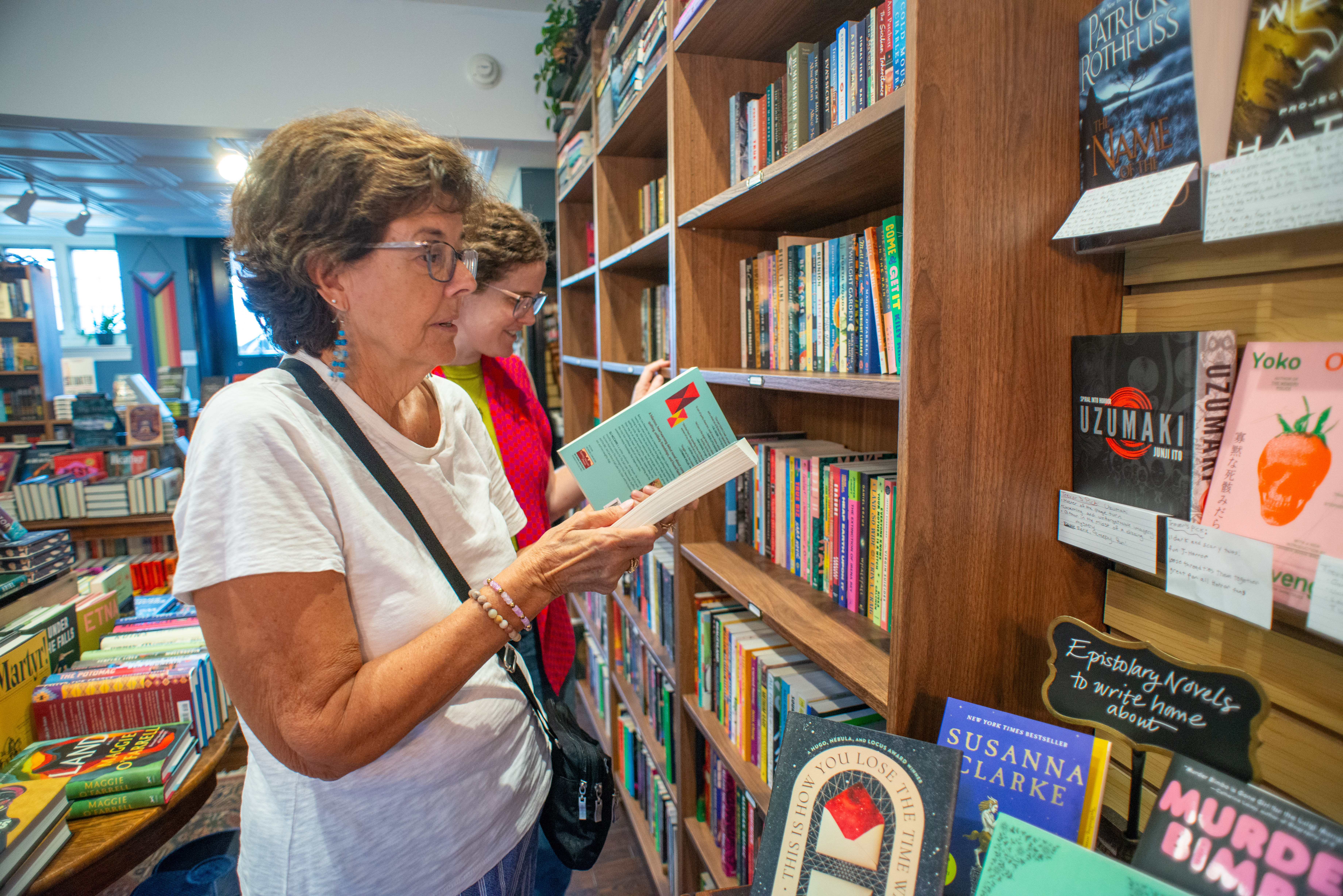
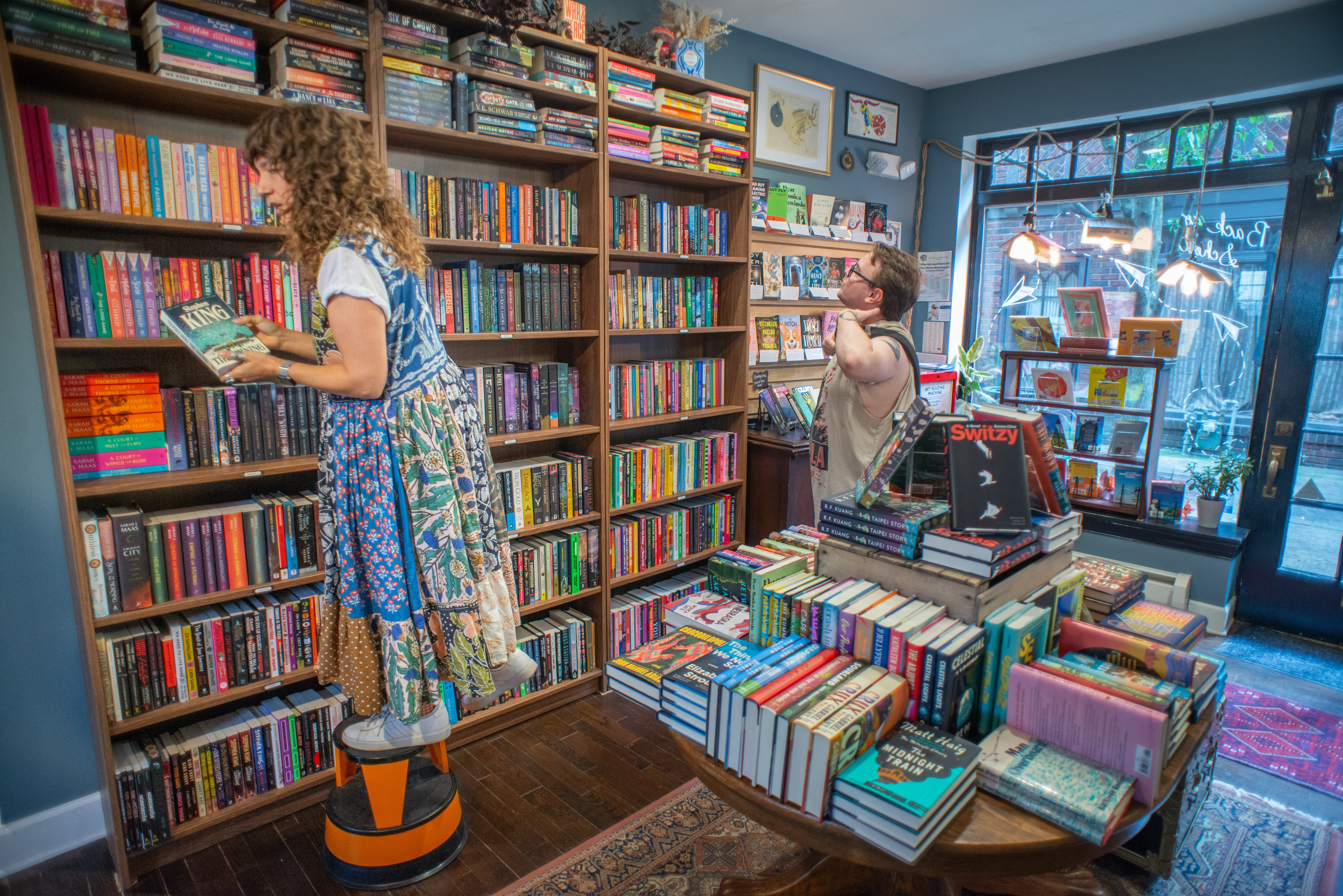
Jackie Botto looks for a book on the shelves while chatting with a customer at Capricorn Books in Jenkintown.William Thomas Cain / For The Inquirer
Many Philly-area booksellers said they’re feeling the surge.
But what are they reading? Sixteen booksellers told us their favorites of 2026 so far.
Angel by Elizabeth Taylor and The Princess of 72nd Street by Elaine Kraf — Ariel Censor, Little Yenta Books in South Philly
Back for Blood: Never Whistle at Night Part II edited by Shane Hawk and Theodore C. Van Alst Jr.— Alex Schneider, A Novel Idea in East Passyunk
Discipline by Larissa Pham — Richard De Wyngaert, Head House Books in Queen Village
Exit Party by Emily St. John Mandel — Jackie Botto, Capricorn Books in Jenkintown
Message to the Blackman in America by Elijah Muhammad — Shaykh Anwar Muhammad, The Black Reserve Bookstore in Lansdale
Most Ardently Yours by Freya Sampson — Charity Herndon, Austen’s Shelf in Bordentown
Partita by Barbara Kingsolver — Elizabeth Young, Commonplace Reader in Yardley
This suburban content is produced with support from the Leslie Miller and Richard Worley Foundation and The Lenfest Institute for Journalism. Editorial content is created independently of the project donors. Gifts to support The Inquirer’s high-impact journalism can be made at inquirer.com/donate. A list of Lenfest Institute donors can be found at lenfestinstitute.org/supporters.
When Michael Ham first began handing out samples of his company’s tea to Whole Foods shoppers in 2024, explaining that it was grown using regenerative farming on South Korea’s Jeju Island, he was often met with blank stares.
That didn’t last long. By the following year, “People were coming up saying, ‘Oh, you’re regenerative!’” says the co-founder and president of Westchester, N.Y.-based Wild Orchard Tea Co.
Regenerative agriculture, an approach to farming that aims to improve soil health through practices like reduced use of pesticides and plowing, is having a moment. Championed by the Make America Healthy Again (MAHA) movement and propelled by increasingly health-conscious consumers, regenerative products now generate some $2 billion a year in retail sales, and some in the industry are positioning the fast-growing category as the next organic.
Big food producers and retailers like Nestlé SA, PepsiCo Inc., General Mills Inc., and Walmart Inc. have made regenerative agriculture commitments, often as part ofenvironmental, social, and governance goals. And late last year agencies including the U.S. Department of Agriculture announced a $700 million pilot program to support regenerative agriculture projects on farms.
But unlike organic, regenerative agriculture is only lightly regulated at the federal level in the U.S. To earn U.S. Department of Agriculture organic certification, producers must comply with detailed federal standards, including strict rules about synthetic pesticides and fertilizers, and undergo annual inspections. There’s no such equivalent for regenerative agriculture, and many products can be labeled as regenerative without having to verify their claims.
With the boom have come increasingly pressing questions from within and outside of the industry about what the label actually means and concerns from advocates about consumers being misled, especially because regenerative products tend to be more expensive.
Nora Brown, a 47-year-old who works in international development in Washington, D.C., buys regenerative products when they’re available. She sees them as healthier for the environment and herself, especially since recovering from breast cancer.
But “I do have a fear of, we just love to label stuff for marketing. There’s pink washing, there’s greenwashing,” she said. “And I hope it doesn’t go the way of that.”
Certifying organizations like Regenerative Organic Certified (ROC) aim to bring more rigor to the space. Last year, dollar sales of ROC-labeled products grew faster than those labeled certified organic, fair trade, and non-GMO, according to the data provider SPINS. But across the broader landscape, regenerative agriculture standards can vary widely, differences that are not always evident to shoppers. As more of them encounter the label at grocery stores, experts worry that this variability could undermine the growing category.
The term regenerative agriculture dates back to at least the 1980s, but it didn’t pick up steam until the 2010s. Backed in the early days by organic farming advocates, regenerative agriculture may also cut down or eliminate synthetic fertilizers and pesticides, but puts a sharper focus on soil health and biodiversity. Proponents say in some ways it’s a return to old-school practices, including rotating crops and using plants like hedgerows as a living fence around fields.
Advocates “started to use the term, ‘We’re regenerating our landscapes, we’re regenerating our farms, regenerating the ecosystem,’” said Gabe Brown, a retired farmer sometimes credited as the movement’s godfather, who co-founded and serves as a board member of a certification program called Regenified. “And now you hear the word regenerative everywhere. Before, the buzzword was sustainability.”
The term’s appeal has been rapidly expanding. With products from baby food to snacks, bath care, and pet food bearing the label, the regenerative agriculture category saw in-store retail dollar sales grow 10% over the last year and nearly 22% the year before, according to NielsenIQ data. Dairy is the largest category by dollar sales, and some of the fastest growth has been in regeneratively grown produce.
Advocates for regenerative agriculture say that it’s healthier for the planet and people. Among the environmental benefits they cite is that by deploying practices like no-till farming, which avoids plowing the land, and planting cover crops between growing seasons, farm soil can store more carbon. Other regenerative farming techniques include moving grazing animals around pasture to let the remaining portions recover, and planting trees and shrubs on working agricultural land next to crops or livestock. Experts, however, say that the climate change benefits may have been oversold.
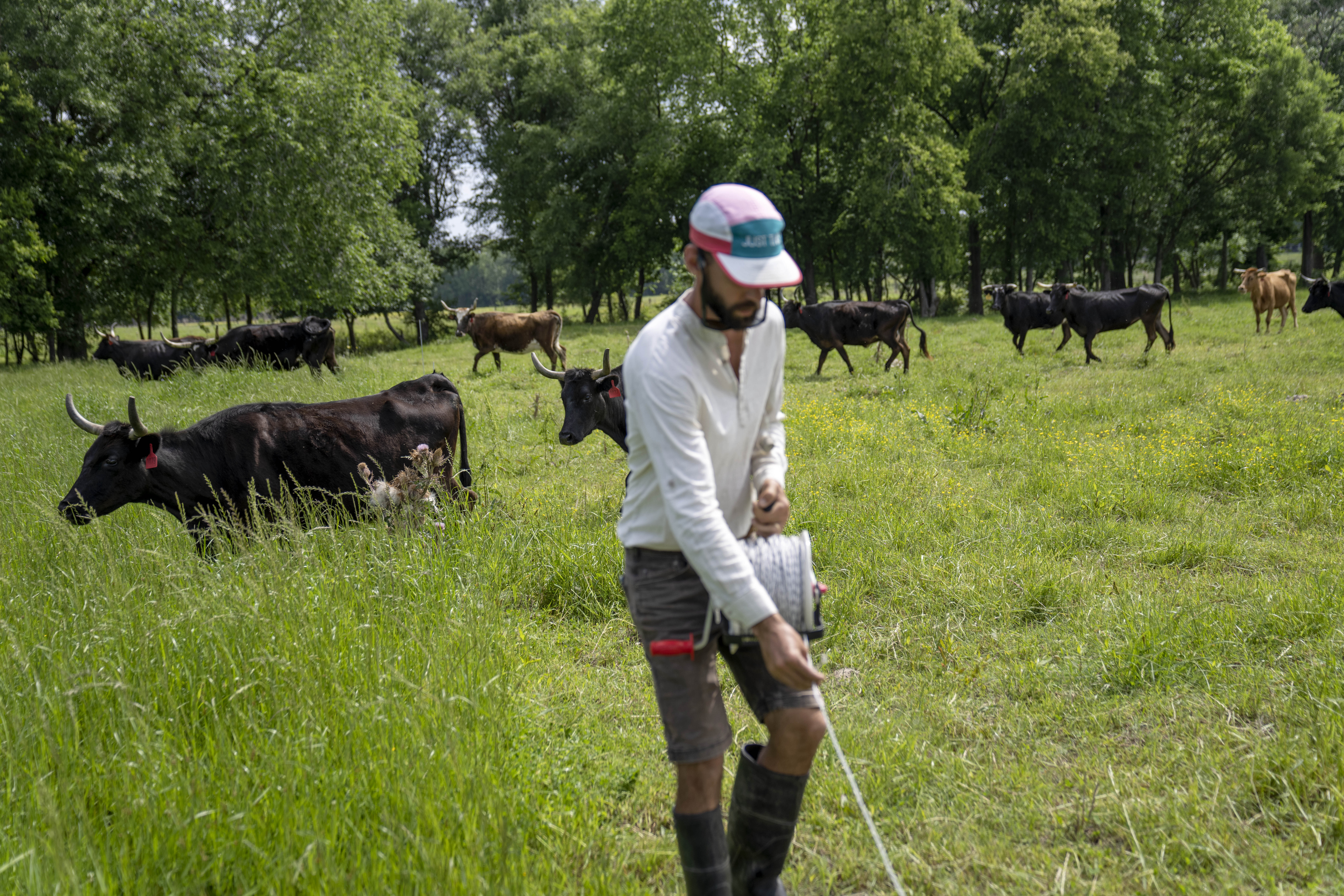
A rancher opens up a new section of tall grass for his cattle to graze in Lufkin, Texas, in 2023. Moving grazing animals around pasture lets the remaining portions recover.David Goldman
The term regenerative has also been embraced by MAHA advocates, including Health and Human Services Secretary Robert Kennedy, Calley Means — an adviser to Kennedy — and Kelly Ryerson, who goes by the moniker “The Glyphosate Girl,” a reference to a widely-used herbicide that many in MAHA want to restrict.
“There was so much press that went around vaccines, but actually this is just as, if not more core to the issues that we really care about,” said Ryerson, who is co-executive director of the advocacy group American Regeneration.
MAHA supporters say food grown using regenerative agriculture has more nutrients and fewer chemicals and is therefore healthier, but those claims are challenging to evaluate, scientists say, including because regenerative practices aren’t applied evenly across farms.
Even as the U.S. government pushes to facilitate such practices, there is still little regulation for products bearing regenerative claims. Where federal oversight does exist, it remains limited: Meat and poultry sellers making claims like “raised using regenerative agriculture practices” have to submit documentation to the USDA’s Food Safety and Inspection Service, but critics note that it’s an honor system and third-party certification is recommended but not required.
The new federal pilot program, meanwhile, will offer technical assistance and financial support to implement regenerative practices and requires participants to test soil to track changes over time, but it does not include certification.
Some retailers are requiring certification or other proof for regenerative claims. Whole Foods, for example, has had such a policy in place since 2021, and so does the Seattle-based PCC Community Markets.
But even third-party certification programs vary widely in terms of what they measure, according to reports released this year by the European Alliance for Regenerative Agriculture and Friends of the Earth.
The Environmental Working Group, a health and agriculture-focused nonprofit, has warned consumers of “misleading” regenerative claims. While some labels, including ROC, indicate that food has been grown without synthetic fertilizers and pesticides and require farm audits, other certifications allow continued use of synthetic chemicals, don’t require audits, and don’t publicly disclose soil test results, the nonprofit said.
“Our biggest concern is that all of the momentum and buy-in and enthusiasm that’s been built around the term regenerative agriculture over the past number of years is frittered away because of greenwashing,” said Adam Kotin, managing director of the Soil & Climate Initiative, which offers its own certification.
For makers of these products, the biggest barrier might be their higher price tags and consumers’ lack of exposure.
Regenerative farming is still more expensive than conventional agriculture, with higher upfront costs, greater labor needs, and a lack of scale. And because grocers try to reach as many shoppers as possible, a pricey, regeneratively grown olive oil is unlikely to be the first or even the second one on the shelf.
At online grocer Thrive Market, for example, regenerative products such as coffee beans, coconut oil, muffin mix, and cans of sparkling green tea make up just 5% of the membership-only online platform’s offerings, and customers are 20 times more likely to filter for organic products than regenerative ones, said April Lane, chief merchandising officer.
“We’re starting to see more and more brands come out with regenerative options,” she said. “But it’s still much, much smaller than organic or non-GMO certifications or gluten-free.”
Though awareness of regenerative agriculture roughly doubled between 2023 and 2024, only 10% of U.S. consumers are actively seeking out such products, estimates Kristine Root, chief executive officer of Socha Branding, a strategy and growth marketing agency that works with natural, organic, and regenerative brands.
To expand that share, companies have to do more than just slap the word regenerative on the package, she said.
“It takes more than just putting a seal on the pack to get the support of a consumer,” Root said. Shoppers “will pay more if they understand the story behind it. But you have to do the work.”
Tesla seems to be testing its autonomous Cybercabs in the Philadelphia area after launching them in Austin earlier this month.
Local Cybercab sightings have been posted on Reddit and other social media in recent days, with photos and excited commentary reminiscent of trainspotters. Several people posted shots of the gold vehicles parked in the lot of a Devon Tesla dealership.
One Reddit user reported being told at the dealership that vehicles are undergoing “training” for future deployment in Philadelphia.
“We’re not at liberty to discuss that,” a person who answered the phone in the sales department said Friday.
Tesla’s corporate media team did not respond to a request for comment about its Cybercab plans in the Philadelphia market.
Competitor Waymo is already here, so if Tesla does make a Philly play, a robotaxi arms race is possible.
The fully autonomous version has no steering wheel, pedals or mirrors, and is piloted by AI, using an array of cameras to navigate.
Waymo has not announced when it will start carrying passengers in Philadelphia. Under state law, PennDot must approve before people can hail one of its autonomous taxis and pay for a ride.
The Cybercabs caught theattention of James Mosleythis week.
Mosley, a commercial and fashion photographer, was waiting for a Route 65 SEPTA bus on City Avenue for the second leg of his commute to work Wednesday morning when he saw the brassy gold, soundless EV with a Cybercab logo on the front bumper and a Texas license plate on back.
“It was shock and awe,” Mosley said. “I thought, ‘This is crazy.’”
He captured a short video clip of the autonomous vehicle passing through an intersection and changing lanes (with signal) to make a left turn at the next traffic light.
Mosley said he didn’t see a person in the cab, which has tinted windows. In any case, he wouldn’t trust AI to drive him in a fully autonomous Cybercab.
“I don’t even like the self-checkout at the grocery store,” he said.
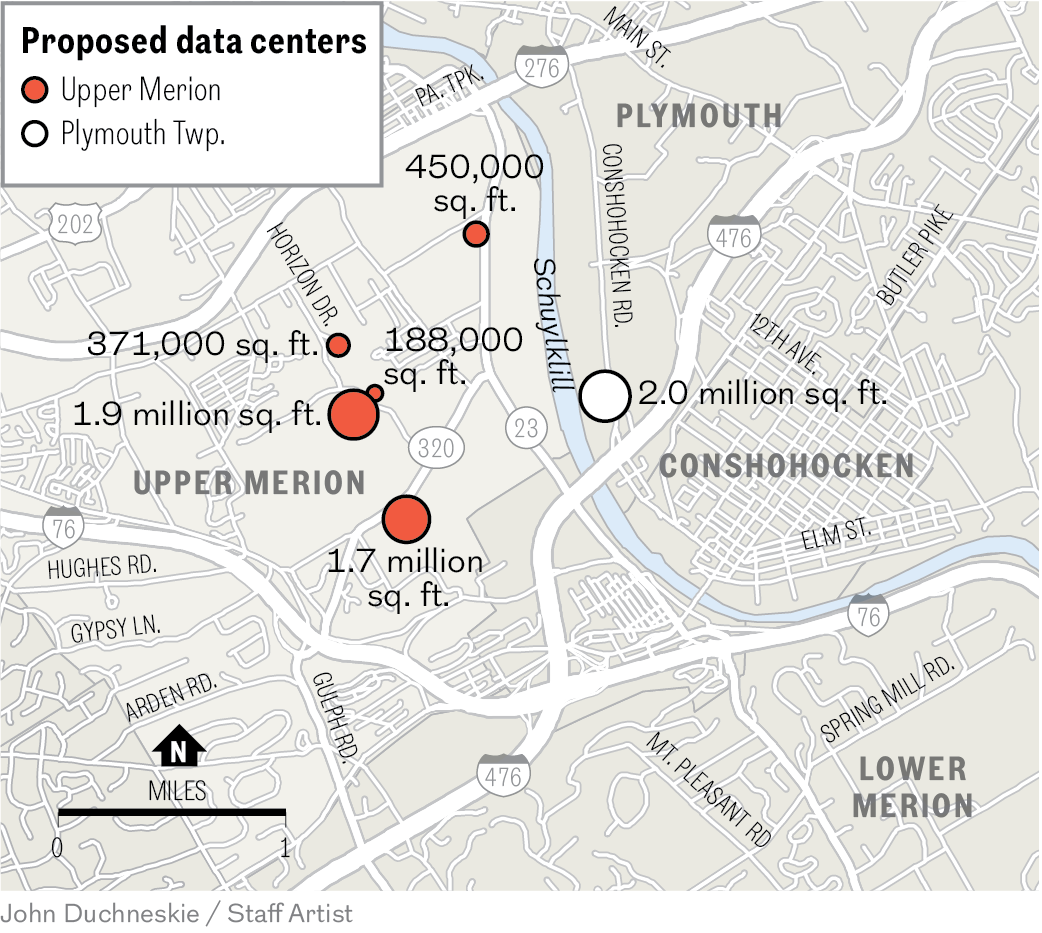
Developer Brian O’Neill has sued the Upper Merion Township Board of Supervisors over its rejection last month of his proposed 4.6 million-square-foot data center campus.
In lawsuits filed Wednesday in Montgomery County Court of Common Pleas, O’Neill said Upper Merion officials have stated in recent years that data centers — which house the equipment that powers AI — qualify as warehouses and are therefore permitted under its zoning code. They changed their tune, according to O’Neill’s team, only after residents pushed back against the plans.
“The township issued a zoning officer’s determination letter that the proposed use was a permitted use, and then when the people started to bombard them, they did a 180,” said Marc Kaplin, an attorney representing O’Neill. “This is what happens when there is public pressure.”
Brian O’Neill has proposed five data centers in Upper Merion Township and one across the river in Plymouth Township.John Duchneskie
Township Manager Anthony Hamaday said Thursday that Upper Merion officials had been informed of O’Neill’s land-use appeals but that the documents had yet to be delivered to them. They declined to comment, pending a full review of the filings.
O’Neill is asking a judge to reverse the supervisors’ denial, give his plans preliminary approval, and appoint an independent third-party “referee” to conduct an evidentiary hearing and oversee the rest of the process. In the lawsuit, O’Neill says the board acted in bad faith and denied his plans over “minor technical items.”
At a contentious Aug. 13 meeting, the supervisors unanimously rejected O’Neill’s five data center plans on the grounds that the proposals lacked specificity, including on fire-safety-related issues, and did not meet zoning requirements. They said O’Neill’s team failed to address their many questions and concerns during the review process.
O’Neill had said his team needed more time to respond and requested an extension until Sept. 30, a request township officials denied.
A day before the supervisors’ vote, the developer sued the township, its planning commission, and its board of supervisors, saying they violated his legal right to an extension. In response, Montgomery County Court Judge Garrett D. Page ordered a pause on township proceedings and decisions related to the data centers. That decision was vacated the next day, just hours before the supervisors’ vote on Aug. 13.
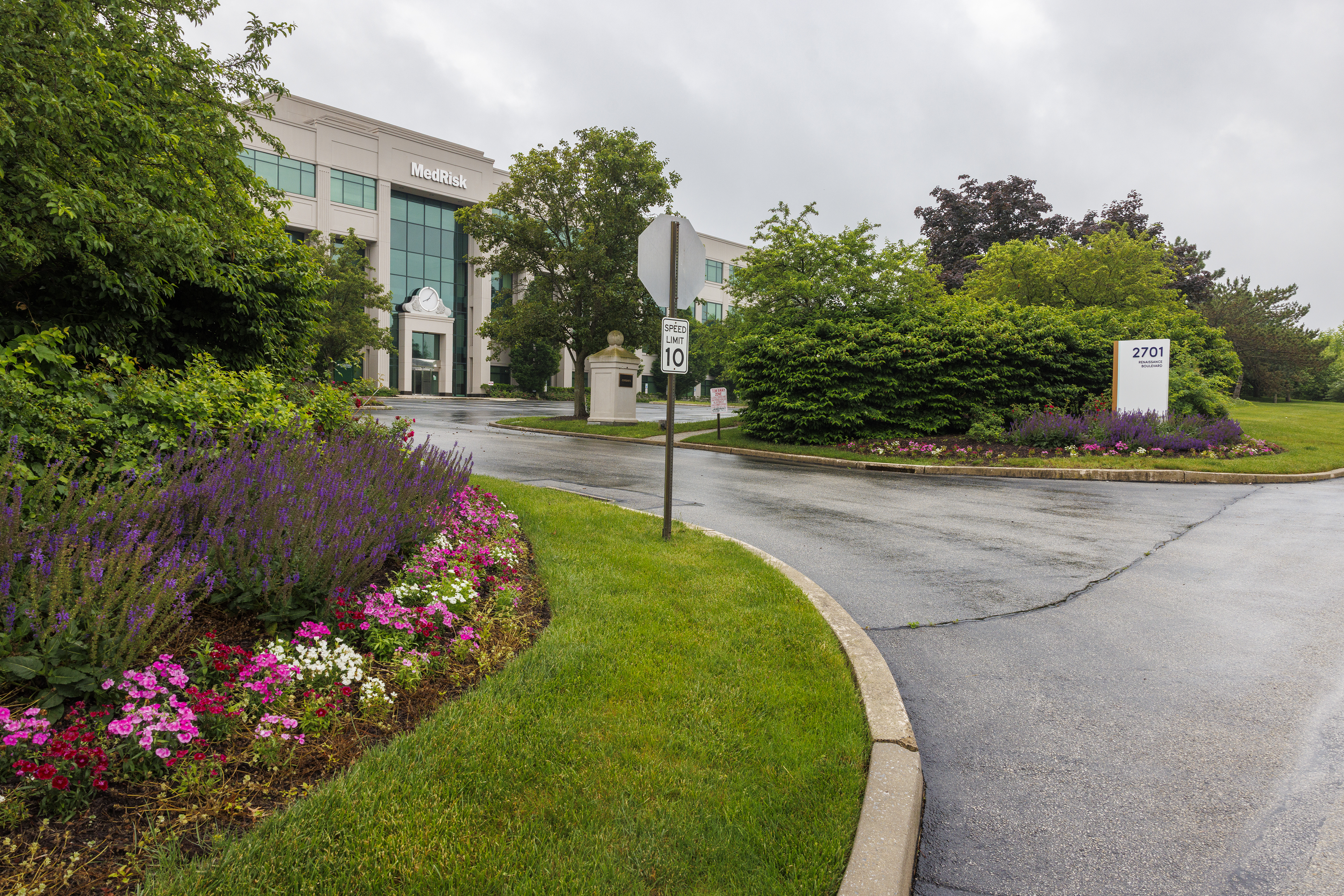
A building at 2701 Renaissance Blvd., as seen in May, is one of the sites that Brian O’Neill wants to turn into a data center in Upper Merion Township.Alejandro A. Alvarez / Staff Photographer
O’Neill has said the centers would emit little light and noise, operate on a closed-loop system that requires no outside water, and provide their own power. They would also be an economic engine for Montgomery County, according to O’Neill, who released an economic impact study saying the project would result in more than 10,000 jobs during construction, more than 700 permanent jobs, and more than $55 million a year in local tax revenue.
Neighborhood groups have rallied against O’Neill’s plans, organizing on social media, packing township meetings, and displaying bright orange lawn signs opposing the project. About 18,000 people had signed a Change.org petition against the Upper Merion data centers as of Friday. Opponents have expressed concerns about pollution, light, noise, electricity prices, property values, and quality of life.
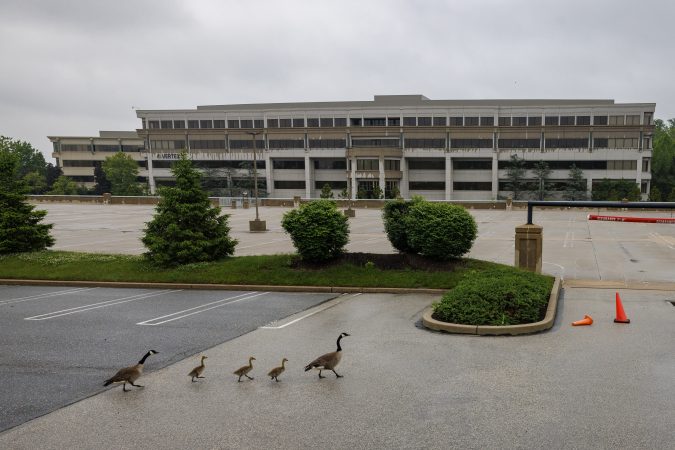
The pushback in Upper Merion mirrors the opposition seen across the Schuylkill River in Plymouth Township, where O’Neill has spent a year trying to get the OK to build another 2 million-square-foot data center on a shuttered steel mill outside Conshohocken. The project was set to be the subject of a Plymouth Township Zoning Hearing Board meeting on Thursday, but the meeting was canceled due to what the township called “an administrative oversight.”
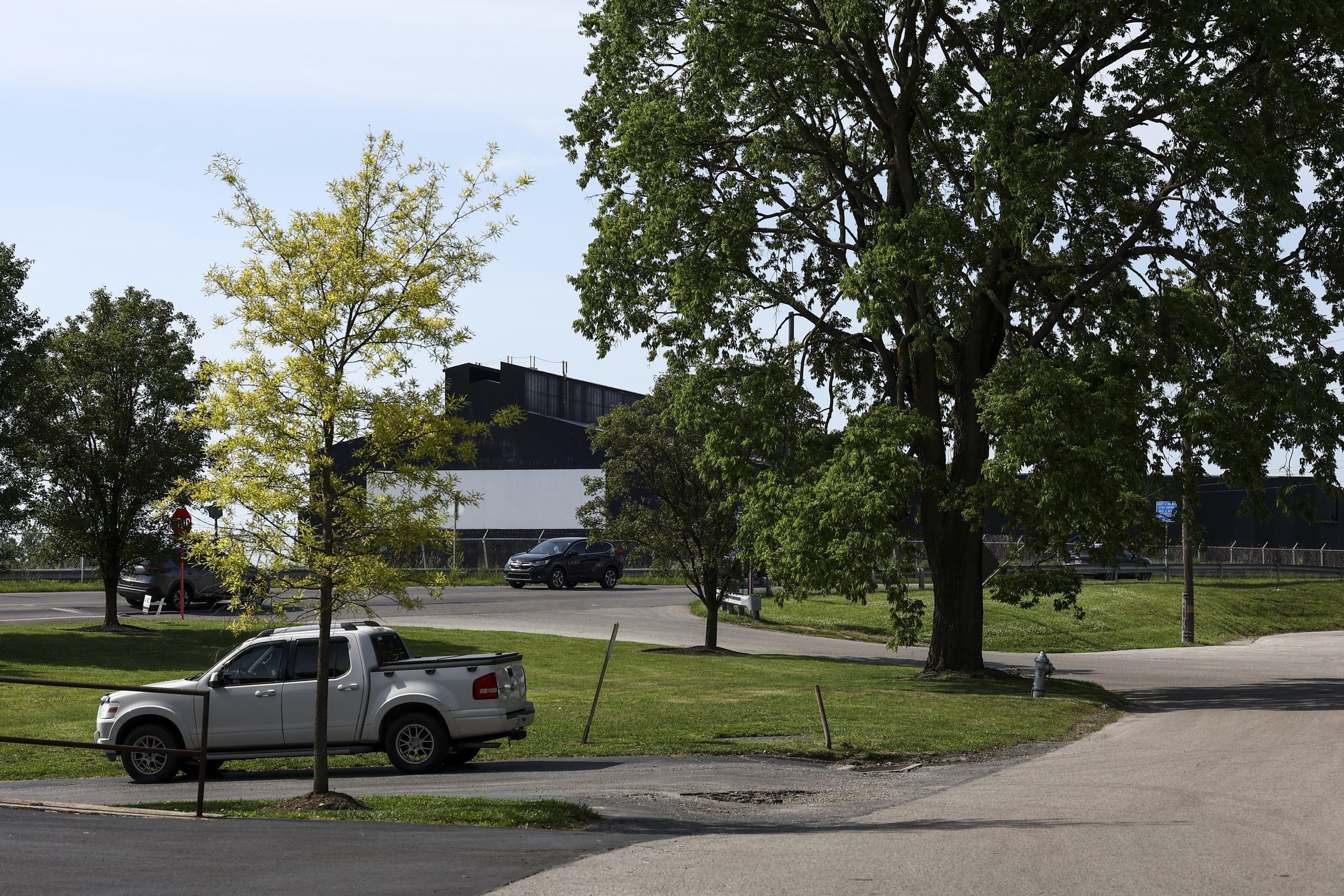
The closed Cleveland-Cliffs steel mill in Plymouth Township, outside Conshohocken, that Brian O’Neill wants to turn into a 2-million-square-foot data center. Monica Herndon / Staff Photographer
Plymouth Township officials failed to post the meeting agenda 24 hours in advance, in violation of the Sunshine Act.
“Out of an abundance of caution and in the interest of legal compliance and public transparency, the board will not convene as scheduled,” Plymouth Township officials said Thursday in a statement, adding that the meeting will be rescheduled.
O’Neill has also faced off with Plymouth Township officials in recent months. In July, he filed a legal challenge to the Plymouth Township zoning ordinance, which prompted township leaders to accuse O’Neill of “throwing a tantrum” in an attempt to bully and intimidate them. O’Neill called their statements “a bald-faced lie.”
Despite pushback, O’Neill’s team remains bullish on data centers.
“Everybody is against data centers but everybody wants their Amazon order delivered instantaneously,” Kaplin said. “We want all these things that are powered by data centers, so you can’t have it both ways.”
Two decades ago, Kaplin said he worked for a developer trying to get several of the region’s Walmarts approved. At the time, there was great public opposition, he said, but now “everybody is like, ‘Walmart is part of the community.’”
“This too shall pass,” Kaplin said. “We have to have this computing power to compete in the world.”
Matcha lovers have a new way to sip their beloved drink: out of a can.
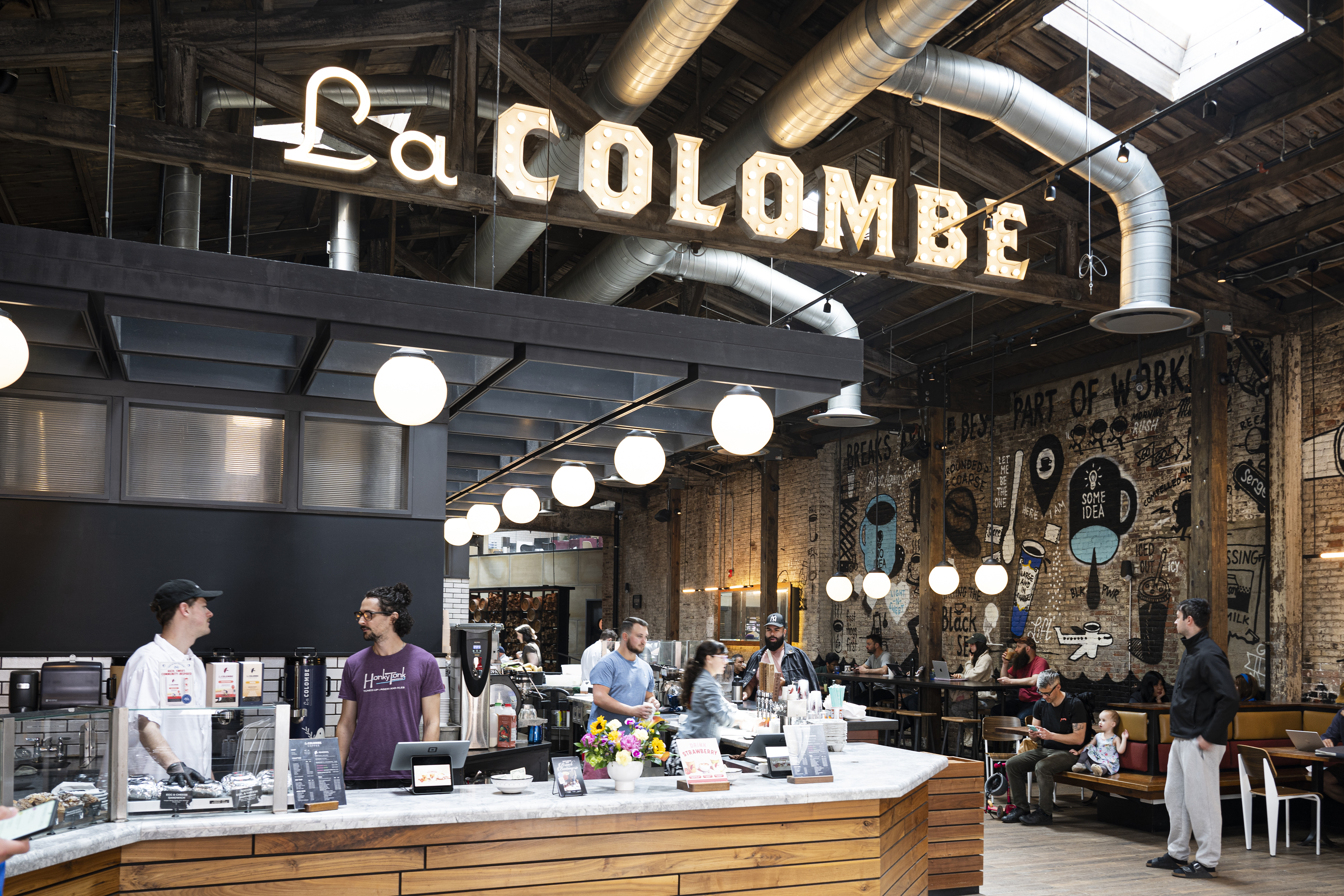
La Colombe, the Philly-founded coffee company, is launching a canned matcha latte that is expected to be in stores this month. The brand already sells matcha drinks at its cafes, but the new line of canned drinks will reach customers at nationwide retailers, the company announced this week.
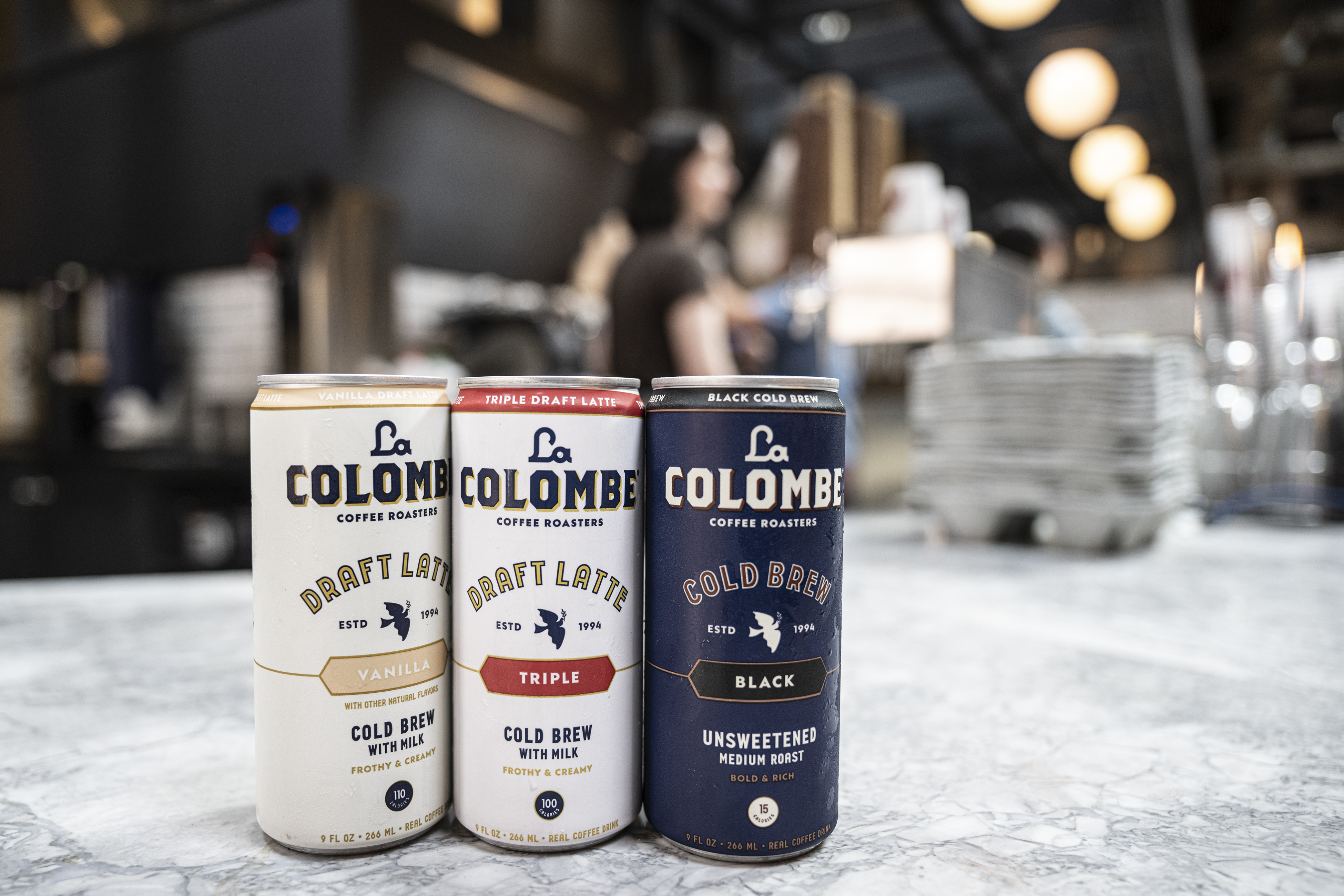
The 11-ounce La Colombe cans come in the original matcha flavor, as well as matcha with strawberry or vanilla. Each can contains lactose-free whole milk, Japanese matcha, and 65mg of caffeine.
Meanwhile, change has been brewing at La Colombe in recent years. In 2023, the Philly-born coffee brand was acquired by yogurt-maker Chobani for $900 million. Chobani founder and CEO Hamdi Ulukaya was already the majority owner of La Colombe as of 2015.
As part of the acquisition, Chobani worked out a deal with a major La Colombe investor, Keurig Dr Pepper. Keurig Dr Pepper’s La Colombe stake became Chobani equity, but this year, Keurig Dr Pepper said it was selling it back.
The canned matcha drinks join several other La Colombe canned beverages on store shelves. The canned draft latte was officially launched in 2016.
Ulukaya is credited with originally challenging the co-founder of the coffee company, Todd Carmichael, to make a ready-to-drink latte, The Inquirer has reported.
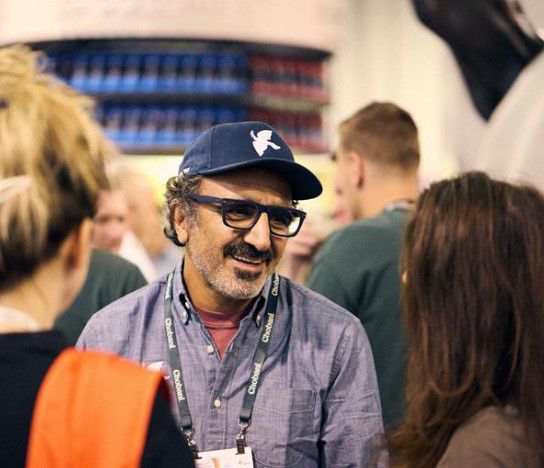
Hamdi Ulukaya, Chobani founder and CEO, became the majority owner of La Colombe in 2015.Chobani
“When La Colombe first put the Draft Lattein a can, the brand helped reshape the [ready-to-drink] coffee category by making a true coffeehouse quality experience accessible to more people,” said Niel Sandfort, chief innovation officer at Chobani and La Colombe, in a statement this week. “Now, we’re bringing that same craft and innovation to matcha.”
And parent company Chobani recently announced it would invest $1.2 billion in Pennsylvania in a new dairy plant, in a move expected to create hundreds of jobs and increase milk demand, benefiting the local dairy industry. Chobani is buying the facility from Keurig Dr Pepper for $125 million.
La Colombe canned draft lattes in Philadelphia, Pa., on Monday, May 6, 2024.Jose F. Moreno / Staff Photographer
The two busiest surgery centers in the Philadelphia region last year were operated by Penn Medicine in Radnor and Jefferson Health in Center City.
Such facilities have grown increasingly popular as a cost-saving option for procedures that do not require intensive hospital resources or overnight stays.
While they offer convenience, the facilities operated by Penn and Jefferson both count as hospital departments for billing purposes, which means they cost more than surgery centers operated by independent physicians or other companies.
Penn Medicine Radnor Surgery Center operates within a large outpatient facility near the intersection of I-476 and Route 30. It logged 12,464 surgical visits in 2025, up from 8,961 the year before, according to data published last month by the Pennsylvania Department of Health.
Penn attributed the growth to the addition of new gastroenterologists in Radnor to perform colonoscopies, upper endoscopies, and other procedures. Colonoscopies, in particular, account for a large portion of the overall volume in surgery centers outside hospitals.
Jefferson Surgery Center was close behind, with 12,261 surgical visits, up from 2,639 in 2024. It sits within the Honickman Center, which opened in 2024 at 1101 Chestnut St. in Philadelphia. Jefferson has gradually expanded the array of surgical services offered there.
“Growth has been driven by both increasing patient demand and the strategic transition of services from other Jefferson locations, allowing us to provide care in a state-of-the-art outpatient environment,” Jefferson said in an email.
Other fast-growing surgery centers include two independently operated facilities focused on orthopedics, Premier at Exton Surgery Center in Exton and Restore Orthopaedic Surgical Institute in Chadds Ford.
(function(){function e(){window.addEventListener(`message`,function(e){if(e.data[`datawrapper-height`]!==void 0){var t=document.querySelectorAll(`iframe`);for(var n in e.data[`datawrapper-height`])for(var r=0,i;i=t[r];r++)if(i.contentWindow===e.source){var a=e.data[`datawrapper-height`][n]+`px`;i.style.height=a}}})}e()})();
Surgery center ownership matters
Even though the Penn and Jefferson outpatient facilities are not in hospitals, their ownership by large hospital systems enables providers to get paid as if they were located inside the Hospital of the University of Pennsylvania or Thomas Jefferson University Hospital.
Hospital outpatient department billing rates are sometimes twice as much as the rates paid to independent surgery centers.
For example, surgery to remove torn cartilage from a knee can cost $7,190 when performed on an outpatient basis in a hospital, nearly three times the $2,477 cost in ambulatory surgery centers (ASCs), according to Philadelphia-area commercial insurance averages from Turquoise Health.
Health insurers Independence Blue Cross and Highmark have implemented policies this year seeking to save money for employers and patients by moving care out of hospitals and into ambulatory surgery centers or ASCs. Both insurers say they will only pay for certain procedures if they are done in an ASC.
But it’s not enough to move surgeries to a setting outside a hospital, given the hospital-like billing status of certain surgery centers.
“The cost savings from an ASC depend on the facility’s ownership, licensing, and billing model,” Richard Snyder, IBX’s chief operating officer, said in a email to The Inquirer.
IBX would like to see more ASCs in its Southeastern Pennsylvania market and is “prepared to help catalyze growth through continued value-based arrangements, strategic partnerships, and investments,” Snyder said.
Litigation over ASCs and other policies
In a July lawsuit against IBX, Jefferson claimed that the insurer’s ASC policy amounted to a change to the financial terms of their contract that needed to be negotiated.
The lawsuit said that ASC mandate will cost the health system $35.4 million, but doesn’t specify over what time period.
IBX filed a motion last weekto dismiss the lawsuit, which was moved to U.S. District Court in Philadelphia from the Philadelphia Court of Common Pleas.
The insurer says that the lawsuit was premature because Jefferson filed it before completing a contractual process designed to resolve such policy conflicts.
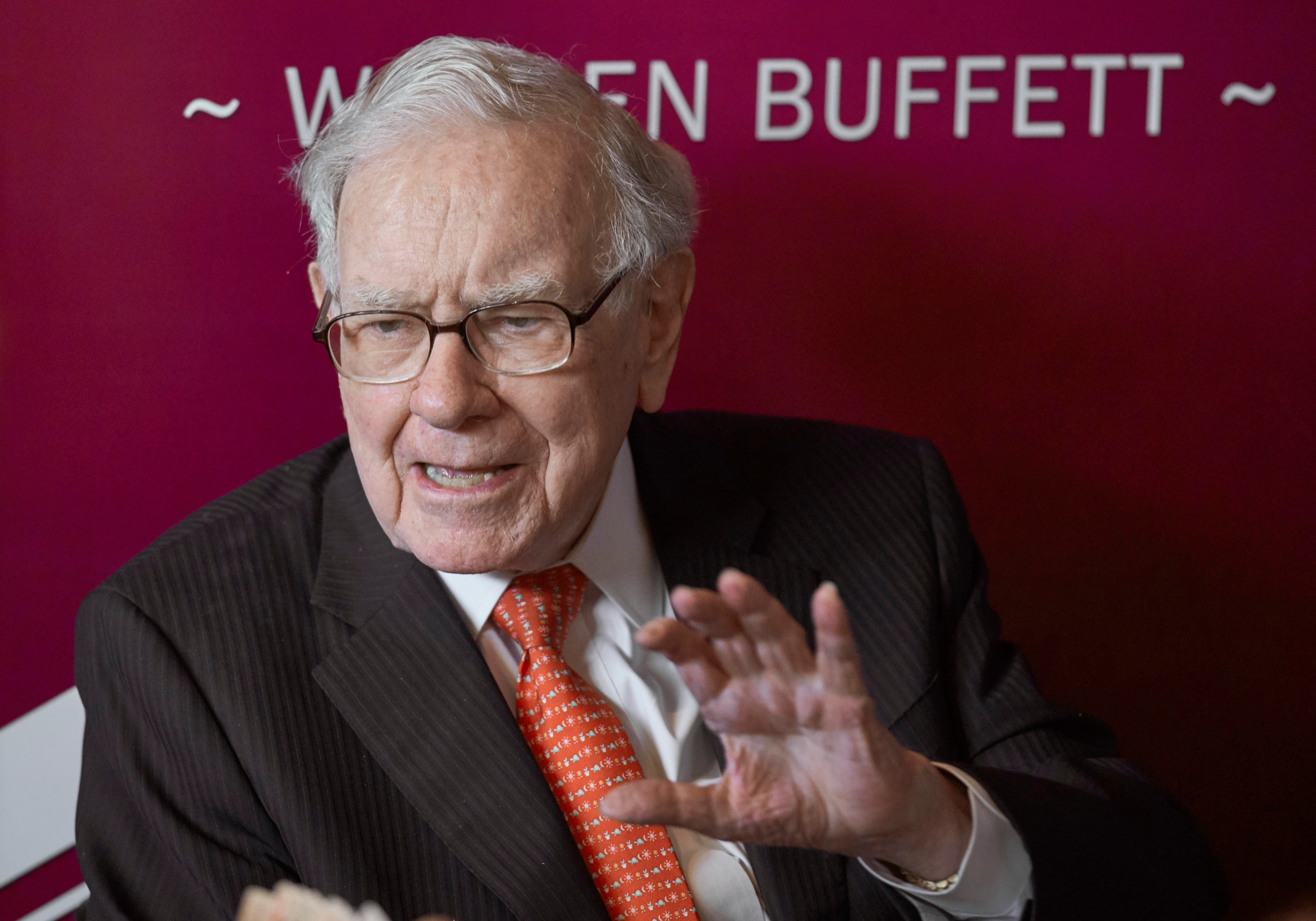
OMAHA, Neb. — Warren Buffett is stepping down as chairman of Berkshire Hathaway in the next step of the transition at the top of the $1 trillion conglomerate he led for more than six decades.
Buffett, 96, will become chairman emeritus and will take on his new role immediately, the company said Friday. His son Howard will become Berkshire Hathaway’s new chairman, part of a long-planned succession. Howard Buffett has been on the Berkshire Hathaway board since 1993.
Warren Buffett, known by a legion of financial market followers as the Oracle of Omaha, will remain a director. He had been Berkshire Hathaway’s chairman since 1970, but he took control of the struggling New England textile company in 1965.
Greg Abel took over for Buffett as the CEO of the conglomerate at the start of this year though Buffett continued to come into the office each day to look for new investments and deals and offer Abel any advice. It’s not clear whether Buffett will change his routine at all now.
“I have served Berkshire since 1965,” Buffett said in a letter to shareholders. “Sixty-plus years in, I still have the best job in the world. That is not something many people my age can say, and I have never felt better about what comes next.”
Investor Adam Mead, who wrote The Complete Financial History of Berkshire Hathaway, said Buffett seems to trying to lessen the impact on Berkshire when he eventually dies by taking this step now. Berkshire’s announcement didn’t reveal any health issues for Buffett, but Mead said “He’s now 96, so even a cold could be a health scare.”
Greg Abel will continue as CEO with Howard Buffett becoming chairman
Buffett said that he is confident with Abel and his son Howard leading Berkshire Hathaway.
“Greg runs the company; Howard will guard its culture and values — both worth more than anything on our balance sheet,” he said. “Think of Howard as a policy the shareholders own and hope never to claim against.”
Abel started managing all of Berkshire’s non-insurance businesses in 2018 when he was elevated to vice chairman, so he knows the various companies well, including BNSF railroad, the utilities and manufacturing operations, as well as name brands like Dairy Queen and See’s Candy. But CFRA Research analyst Cathy Seifert said investors still have questions about how well Abel will be able to deploy Berkshire’s massive $365 billion cash pile.
“There was a premium awarded Berkshire stock because of their financial strengths and because of this famed investor who was allocating capital. I think it’s naive to assume that this is business as usual. It’s not,” Seifert said. “What this does is amplify some of the execution risk in the strategy and the significance of the transition.”
The next orderly step in Warren Buffett’s succession plan
Michael Withers, professor of management at the University of Notre Dame’s Mendoza College of Business, said Buffett took a deliberate approach to Berkshire Hathaway’s succession plans and has carried out the transition step by step.
“Buffett seems to have understood that succeeding him wasn’t just about finding another extraordinary leader,” he said. “It was about building a structure that could preserve what makes Berkshire different long after he has stepped away. The test moving forward will be whether Abel and Howard can honor that legacy while still giving Berkshire room to adapt to a market that looks very different from the one Buffett mastered.”
Buffett’s fortune has been amassed through Berkshire Hathaway stock. Buffett built the company into an investing conglomerate and an icon of Wall Street by buying insurance companies and reinvesting the money from premiums in stocks and other companies. In 2024, Berkshire Hathaway became the first non-tech companies valued at more than $1 trillion.
Buffett, a longtime philanthropist, has given away roughly $66 billion worth of stock since 2006 with the bulk of that going to his friend Bill Gates’ foundation. But this summer he announced that his three children will now take over all of the charitable decisions and distribute the rest of his fortune by the end of 2035.
Buffett’s take on finance has created its own gravitational pull. When Berkshire Hathaway reveals the stocks that the company has acquired or sold in public disclosures, it can shake markets.
During his time as CEO of Berkshire Hathaway, the company nearly doubled the returns of the S&P 500, with a 19.9% compounded annual growth rate compared with the index’s 10.4% gain.
“Warren’s impact on Berkshire and its owners is without parallel in the history of American business,” Abel said in a prepared statement. “The culture Warren built and the values he championed will remain at the heart of Berkshire, and Howard will be their guardian.”
Shares of Berkshire Hathaway edged up 0.1% on Friday.