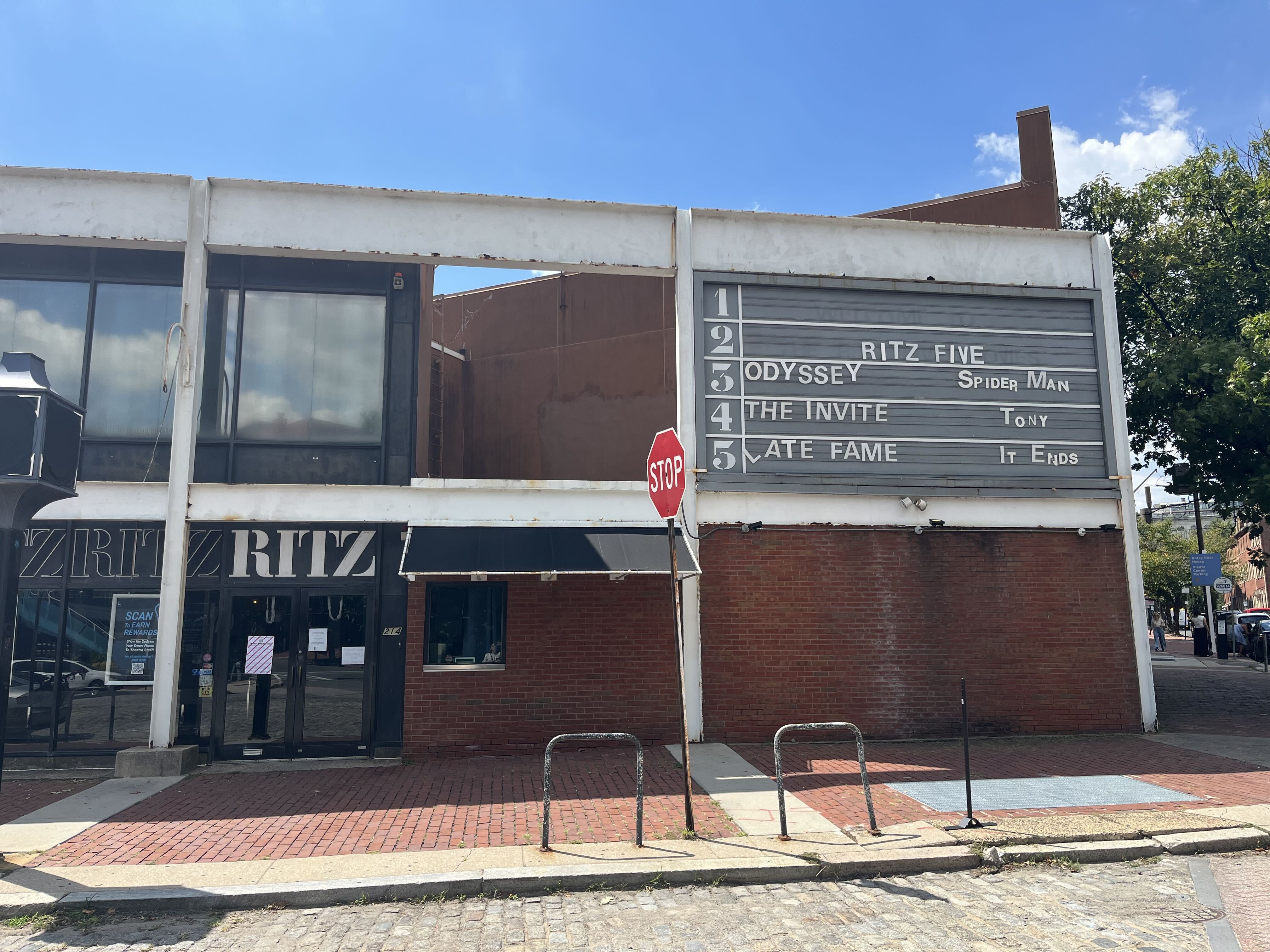
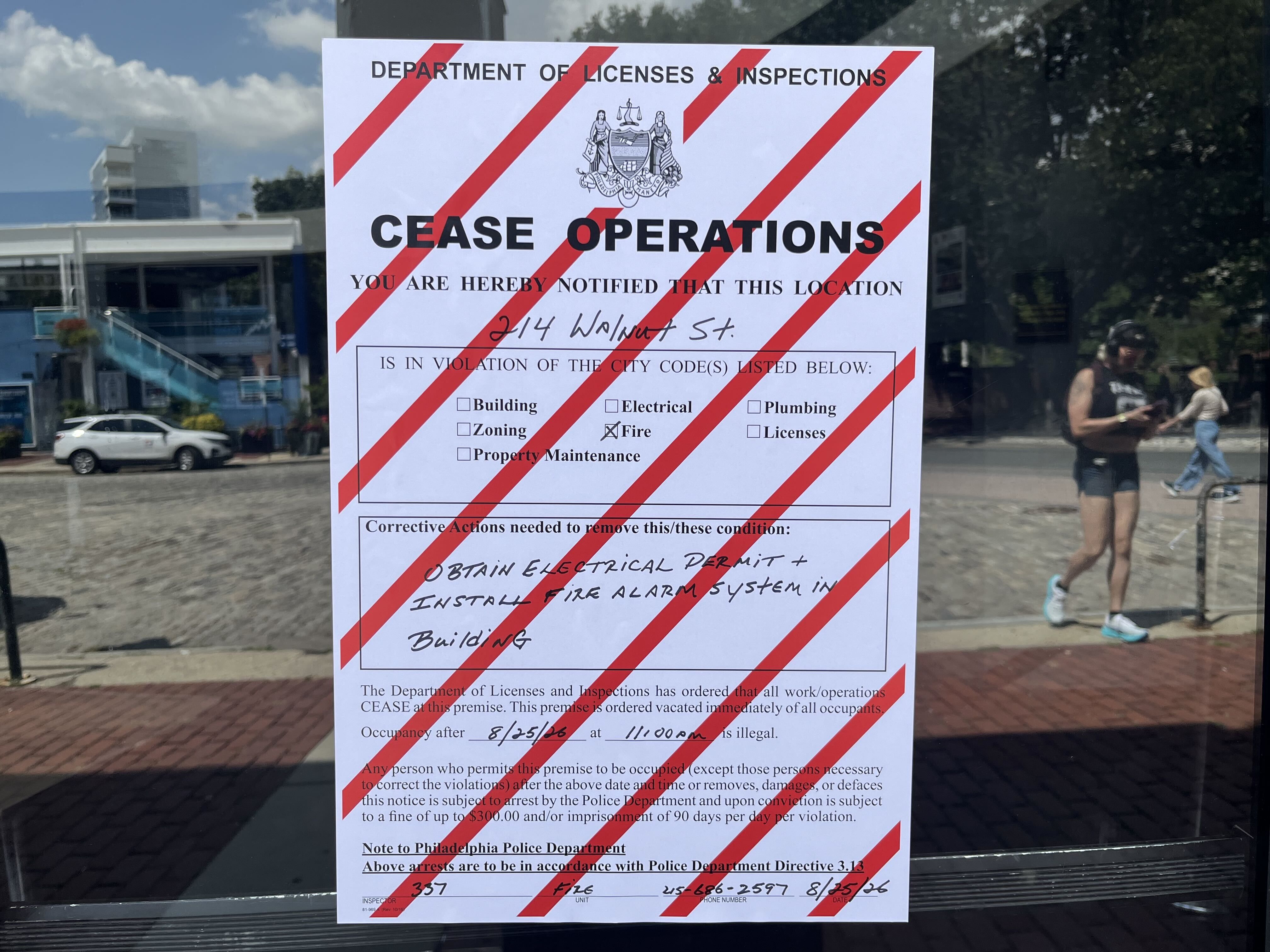
Landmark Ritz Five movie theater is closed after failing inspections by the city’s Department of Licenses and Inspections.
On Wednesday morning, the theater’s website posted that the location was temporarily closed “due to administrative issues.”
The theater at 214 Walnut St. was found in violation of several city codes in March, and the theater failed a follow-up inspection on Aug. 11, according to a city online portal.
March’s violations include failure to: obtain a permit to install a fire alarm system, share documentation that fabrics are flame retardant, ensure that exit doors fully “self-close and latch,” andcertify emergency lighting. The theater was also found to be missing a valid food license. In total, the theater was issued seven violations in March.
A city notice posted to the theater doors on Wednesday said the theater needed to obtain an electrical permit and install a fire alarm system.
The inspections were prompted by the department receiving “several complaints regarding the Ritz Five Theater,” an L&I spokesperson said.
The Landmark Ritz Five movie theater was closed on Wed. Aug. 26, 2026, after failing two city inspections. A cease-operations notice was posted to the theater doors on Wednesday.Ariana Perez-Castells
A representative for Landmark Theatres did not immediately share a comment on the closure and inspections on Wednesday.
When the Philadelphia theater was inspected in March, it was ordered to remedy the violations by April 22 or face fines. The violations each carry their own fines, totaling $2,800. The department charges the code violation fines on a daily basis. The theater can also be ordered to pay additional fines related to the violations.
However, on Wednesday, an L&I spokesperson said “there are no fines associated with the violations. Should this matter be progressed to court, then fines may begin to accumulate.”
The roughly 13,0000-square-foot theater was founded in 1976 with three screens, according to the theater’s website. Today, it has five projection screens.
Philadelphia was once home to three Landmark Ritz theaters, known for showing independent and documentary films alongside mainstream releases. But the theaters at the Bourse and East are now operated by the Philadelphia Film Society while only Ritz Five remains under Landmark’s umbrella.
No showtimes were listed for Wednesday on the theater’s website. As of Wednesday morning, tickets could still be purchased online for Thursday viewings of The Odyssey, Spider-Man: Brand New Day, and Tony, among other movies.
Landmark Theatres was purchased by Cohen Media Group in 2018. The Landmark Theatres brand has several locations across the country, including theaters in Arizona, California, and Florida.
Vanguard has sold a Tredyffrin Township office complex for $17 million — with no plans of moving out.
Last month, the Malvern-based investment firm sold its 22-acre property at 1041 W. Valley Rd. to another Malvern-based company, E Kahn Development, according to Chester County property records.
But Vanguard plans to continue leasing the 323,000-square-foot space, which sits just off U.S. Route 202, about eight miles from its main campus in Malvern. Hundreds of Vanguard IT employees work at the complex, called the Robert A. DiStefano (RAD) Technology Center.
Vanguard’s RAD complex in Tredyffrin Township has been sold for $17 million, but Vanguard will continue to lease the space for its IT operations.Courtesy Vanguard
The sale and lease-back “reflects Vanguard’s focus on providing work environments that support and inspire our crew as they remain focused on our end investors,” a company spokesperson said in a statement. “Vanguard crew will continue to work at the RAD Technology Center through at least 2028, and there are no immediate plans to move crew who work there today.”
Eli Kahn, president and founder of E Kahn Development, said in an email that his company has “no immediate plans for the buildings.”
Vanguard employs about 20,000 employees, 12,000 of whom are based in Malvern. About 600 IT staffers work at RAD, Vanguard’s only complex with a Wayne address.
The company is expanding its IT staff worldwide, including at a new office in India, but has said its U.S. workforce will not be impacted.
Meta agreed Wednesday to pay up to $18 billion and add stronger child-safety measures to its Facebook and Instagram platforms as part of a landmark legal settlement that ended a trial over teen social media addiction and settled claims filed by nearly every state.
The settlement resolved a pivotal case years in the making that sought to hold the tech giant accountable for the role its platforms played in undermining children’s mental health. The effort targeted features designed to hook young people’s attention.
The agreement “institutes real change, real transparency, real protections for children and teens across the country,” California Attorney General Rob Bonta said.
If approved by the court, the deal will stop an avalanche of litigation by states against Meta, although the company still faces lawsuits from individuals and school districts throughout the U.S. For the states, the settlement delivers money for mental-health programs for kids, including after-school or summer activities and digital literacy counselors.
Pennsylvania is expected to receive at least $516 million and up to $729 million, while New Jersey is expected to receive at least $525 million and up to $752 million, according to statements from each state’s attorney general.
“We can’t simply tell parents to do better while allowing technology companies to design platforms that are engineered to addict children,” Pennsylvania Attorney General Dave Sunday said during a news conference Wednesday. “Parents deserve better. Children deserve better, and today shows that Big Tech can do better — some just chose not to. Today is the first step in forcing Big Tech to do better.”
“As a parent, protecting your kids is always your North Star,” New Jersey Attorney General Jennifer Davenport said in a statement. “This agreement achieves critical protections for our children today.”
Neither attorney general commented on how the settlement funds would be used.
Advocates cheered the new protections, including default time limits and the disabling of features such as “like” counts.
But “we cannot truly protect all children and teens until these protections are required on every platform and are permanent — that’s something only Congress can do,” said Sacha Haworth, executive director of The Tech Oversight Project.
The settlement will be paid out over 10 years. California will get the largest sum of at least $1.5 billion, but several other states will still collect hundreds of millions of dollars each over the decade.
The settlement “will put an end to these dangerous practices and deliver meaningful relief that will protect children from online harm,” Virginia Attorney General Jay Jones said.
Meta urges rivals to adopt similar safety measures
Meta said in a blog post that it was “building on our longstanding efforts to empower parents and support teens.”
“Ensuring teens have a safe and productive experience on our platforms is an absolute imperative for Meta,” the company said. “We want to get this right for parents and teens, and that’s why we partnered with state attorneys general to set a new industry standard.”
The company urged competitors TikTok and YouTube to adopt similar safety measures.
The $18 billion settlement is a fraction of Meta’s 2025 revenue of $201 billion. Meta shares were up about 1.5% by midday Wednesday, hours after the deal was announced.
The agreement cuts short an ongoing court case involving California, Colorado, Kentucky and New Jersey, which were among 29 states that sued Meta in 2023. The federal trial kicked off last week in Oakland, California, where Meta CEO Mark Zuckerberg had been among the witnesses expected to take the stand.
The lawsuit accused Meta of contributing to the youth mental health crisis by deliberately designing features that addict children to its platforms and hiding them from the public. The case also argued that Meta violated federal laws by routinely collecting data on children under 13 without their parents’ consent.
The cases in other states had been expected to go to trial later, but are now resolved. The settlement covers 48 states, as well as Washington, D.C., and some U.S. territories. The only two states to be excluded are New Mexico, which went to trial in its case against Meta and won earlier this year, and Florida, where the attorney general said the settlement was not tough enough on Meta.
Florida Attorney General James Uthmeier wrote on X that the “payouts are peanuts compared to the profound harms Meta’s profit-driven addictive features inflicted on kids.” He wrote in a separate post that his team “will hold them accountable in Florida.”
New features to include time limits and curbs on push notifications
Under the proposed settlement, Meta agreed to adopt a series of safety features, including two-hour daily time limits that can only be disabled with a parent’s permission and pauses for children using Instagram and Facebook.
The company will eliminate push notifications during weekday school hours and bring in “robust” age-assurance measures and “age-appropriate” content controls to prevent bullying and harmful material about eating disorders and self-harm.
There will be stronger and more user-friendly parental controls and limits on social comparison features such as “like” counts.
An independent auditor will assess how Meta is implementing the safety features and how effective they are.
The company said 30% of the settlement amount — about $5.3 billion — will be released to states only if rivals YouTube and TikTok meet two conditions: implementing similar safety features, including a one-hour daily time limit, a nighttime block and age-assurance measures; and paying the same amount, split between the two companies.
Neither YouTube owner Google nor TikTok responded immediately to requests for comments.
Meta officials declined to comment on whether they had conversations with their competitors about those conditions, but said they intentionally designed the agreement with the states to incentivize the rest of the industry to follow suit.
Some of the safety measures Meta will implement, like disabling cosmetic surgery and extreme makeup filters, made sense regardless of whether competing platforms do the same, Meta said. Others, like its overnight block, will function better if they are established across the board, the company said.
If industry peers sign on to the agreement, Meta will implement stronger defaults for teens’ daily time limit and the length of time for its “night mode.”
Investigation was led by bipartisan coalition
The federal lawsuit was the result of an investigation led by a bipartisan coalition of attorneys general from California, Florida, Kentucky, Massachusetts, Nebraska, New Jersey, Tennessee, and Vermont. It followed newspaper reports, first by The Wall Street Journal in 2021, that found the company knew about the harm Instagram can cause teenagers — especially teen girls — when it comes to mental health and body image issues.
Meta has since added a host of safety features to Instagram, including separate accounts for teenagers with stronger protections around messaging and privacy, along with content restrictions.
But child-safety advocates and experts, along with some former Meta employees, have long contended that the features are little more than window dressing.
Victoria Hinks, mother of Alexandra “Owl” Hinks, who died by suicide at age 16, said she was satisfied with the terms of the settlement “as long as they enforce it properly.”
“It felt like today finally something was done,” she said Wednesday outside the Oakland courthouse where the trial was held. “I feel like justice is possible.”
Staff writer Dana Munro contributed to this report
WASHINGTON — The U.S. and Canada have ramped up their trade war, hitting each other with steep new tit-for-tat tariffs. Despite the bravado coming from both sides of the border, though, analysts suspect the longtime allies will eventually strike a deal to end a conflict neither really wants.
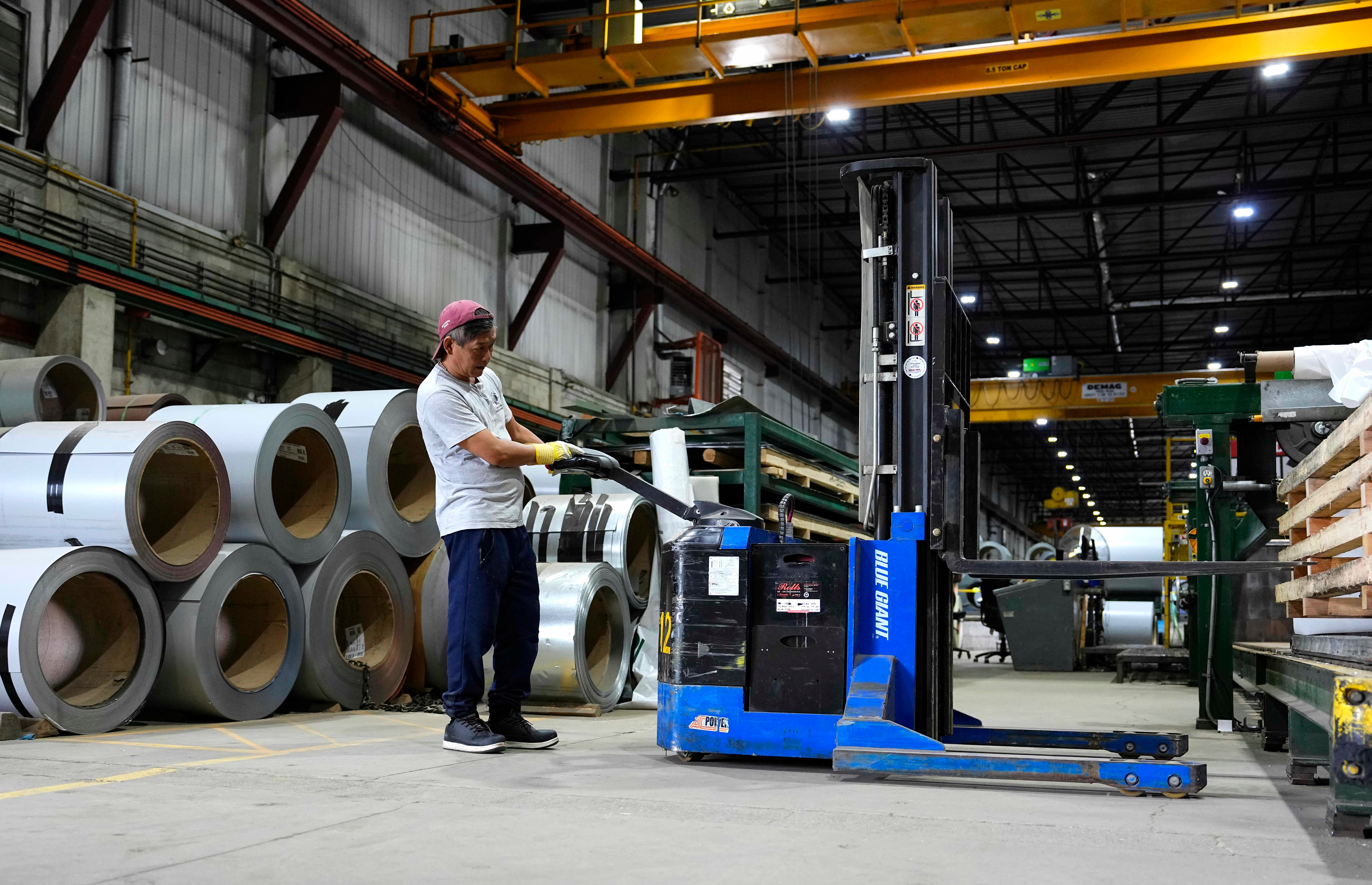
The prospects for compromise looked bleak Tuesday, with Canadian Prime Minister Mark Carney reacting to new 50% U.S. tariffs on certain Canadian goods by responding in kind on about $20 billion worth of American imports, including steel, dairy products, appliances and farm equipment.
Doug Ford, Ontario’s populist premier, told The Associated Press on Monday that he was ready to escalate even further by cutting off his province’s shipments of electricity and critical minerals to the United States.
Soon after, Trump declared his intention to hammer the Canadian auto industry with another set of import taxes if the Canadians don’t “fall in line.”
With the breakdown threatening to harm one of the world’s largest trading relationships and clouding efforts to renew the United States-Mexico-Canada Agreement that Trump negotiated during his first term, experts cautioned that there’s still time to pull back from the brink of an even bigger trade war.
They’ve done it before. “If there is political will, there is an off ramp,” said former U.S. trade negotiator Wendy Cutler.
‘It’s not real until somebody walks away’
U.S.-Canada trade talks typically get testy, said Christopher Sands, who heads the Center for U.S.-Canada Studies at Johns Hopkins University.
The two neighbors have a long history of sparring over things like Canada’s protected dairy market and subsidized softwood lumber exports.
“We’ve gone through this with Canadians before,” Sands said. “It’s almost like it’s not real until somebody walks away from the table. … I’m not panicked.”
First, the U.S. tariffs that Trump imposed Saturday cover just $20 billion worth — around 5% — of Canada’s exports to the United States and are unlikely to do much lasting economic damage. Oxford Economics reckons the trade conflict would reduce Canadian economic growth only slightly next year — from a previously forecast 1.6% to 1.4%. On Monday, U.S. Trade Representative Jamieson Greer even tried to downplay the trade rift as a “tempest in a teapot.”
Moreover, Carney’s retaliatory tariffs wouldn’t take effect until Sept. 8. “That gives us this week. It gives us next week,” Sands said. “Time to take a breather and talk about how to avert” an all-out trade war.
Despite Trump’s tough talk on Truth Social, his punitive auto tariffs wouldn’t kick in until Jan. 1 — well after the Nov. 3 midterm elections in which the president’s Republican Party is hoping to keep full control of Congress despite voter frustration with the high cost of living.
So there’s at least enough time for the countries to find a stopgap solution.
Cutler, now senior vice president at the Asia Society Policy Institute, suggested that the U.S. could tap an emissary that both countries trust to get talks back on track; she recalled that Trump’s son-in-law Jared Kushner helped negotiate the USMCA eight years ago.
Canada would likely balk at a one-sided deal
Cutler also noted that Trump suspended his global tariffs for months last year to allow U.S. trading partners to negotiate with him. Many did, including the European Union and Japan, and ended up agreeing to lopsided trade agreements to dodge the worst of Trump’s tariffs.
Canadians, though, are in no mood for a Trump-friendly trade deal.
The American president has enraged the Canadian public with inflammatory talk of making their country the 51st U.S. state. And on Tuesday, instead of trying to lower the temperature, he declared that he was considering changing the name of Lake Ontario to Lake America. He has also repeatedly hit Canada with tariffs and threats of them, including when he suggested he might punish Canada for wildfires that were blackening U.S. skies.
“Fighting with Washington is hugely popular in Canada right now,” said Scott Lincicome of the Cato Institute, a Washington-based free-trade think tank. “Guys like Doug Ford — like him, love him or hate him — understand this is a political winner for them.”
The latest U.S.-Canada conflagration flared up last month when Trump said he planned to hit Canada with 50% tariffs. He complained that Canada had been unfairly restricting U.S. exports of dairy, alcoholic beverages and autos. Trump set a deadline of Aug. 19 — last Wednesday — for the two countries to reach a deal and head off the tariffs.
Because the Supreme Court struck down his biggest tariffs in February, the president turned this time to an obscure provision of a Depression-era trade law that gives him the power to impose tariffs of up to 50% on imports from countries that have discriminated against U.S. businesses. No investigation is required, nor is there any limit on how long the tariffs can last. But no president has ever imposed such tariffs before, so they are untested in court.
‘No choice’ but to walk away
Last week, negotiators appeared to be close to resolving their differences. Less than two hours before levies were set to take effect, Trump announced a three-day reprieve, posting on social media that “Canada and the U.S.A., subject to the finalization of documents, have a DEAL!” Greer, the U.S. trade representative, later told CNBC that the United States had offered to cut in half existing 50% tariffs on Canadian steel and aluminum, and to sharply reduce levies on Canadian auto and softwood lumber imports.
But it all fell apart Friday and the Canadians walked away, with Carney saying the Americans had sought “to destroy our major industries, including autos, steel and aluminum. … That was one of the main reasons we said no. It was a bad deal.” Carney also said that Washington viewed protections for French and Canadian culture — considered fundamental rights in Canada — as irritants to trade.
Ford said he understood that late in the talks, Washington demanded veto power over trade deals Canada pursued with other countries, which would have violated Canadian sovereignty.
Despite the differences, Cato’s Lincicome said, “both sides understand the economic consequences of some sort of a full-blown trade war.”
The two countries last year did $880 billion worth of trade, according to the U.S. Commerce Department. Canada sends 72% of its exports to the United States. And U.S. communities along the border depend on Canadian electricity. American farmers need Canadian potash fertilizer. And U.S. refineries in the Midwest rely on imports from Alberta’s oil sands deposits.
Then there’s U.S. politics. “Voters hate tariffs,” Lincicome said. “They associate them with higher cost of living, and (Trump has) got to be hearing from political folks that if he wants any chance of salvaging the midterms he can’t start a trade war with Canada.
“My guess — and it’s only a guess — is that cooler heads do prevail somewhere in the next few weeks.”
The U.S. reopened a border crossing in Arizona to cattle from Mexico on Monday as part of a broader effort by the Trump administration to reduce record-high beef prices, though economists doubt the move will mean much to grocery store shoppers.
“Today, the border in Sonora is open for livestock,” Mexican President Claudia Sheinbaum said during a Monday morning news conference in Mexico City, referring to the Mexican state bordering Arizona.
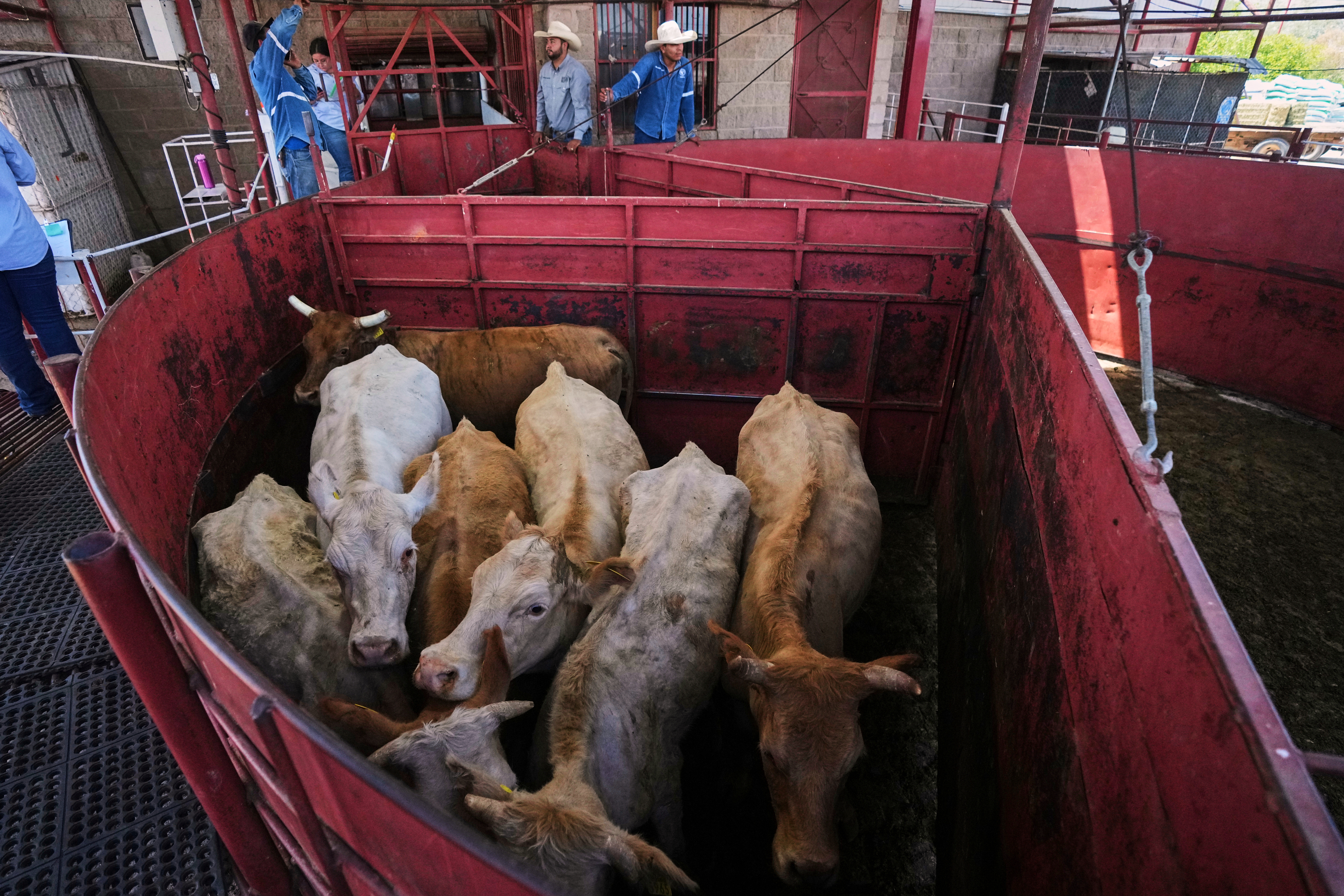
Cattle were coming across the border by mid-afternoon Monday.
Beef prices clearly are a concern for President Donald Trump, who announced Friday that he would allow up to 331,000 tons (300,000 metric tons) of imported ground beef into the U.S., tariff-free, to be sold at below-market prices over the next 90 days. In February, the White House said closing the border to livestock imports from Mexico more than a year ago was “essential” to containing the screwworm, but it has exacerbated a shortage of cattle for slaughter in the U.S.
“The administration obviously has a lot of incentive to try to be able to say that they’re doing something about high beef prices in particular,” said Derrell Peel, a professor of agribusiness at Oklahoma State University. “Beef has been singled out because it is an expensive product and because it’s just high profile.”
The Trump administration closed the border to cattle imports in May 2025 as part of its response to the screwworm, a parasite with flesh-eating larvae that can infest and even kill cattle or other animals. The move came as the U.S. already was struggling to meet beef demand, thanks to a cattle herd that has been shrinking for five years and now is the smallest in decades.
Because the USDA plans a phased reopening of the border, it will take months for Mexican imports to return to their traditional levels, Peel said. Mexico has traditionally provided 1.1 million head, or about 3% of the U.S. cattle supply.
“I don’t expect to see any measurable impact on cattle prices or beef prices soon,” Peel said.
The smallest U.S. herd in decades fueled record prices
The USDA reported that on Jan. 1, the U.S. cattle herd had dropped to 86.2 million head, the lowest figure in 75 years. Beef prices skyrocketed over the past five years, rising significantly faster than food prices as a whole, according to the U.S. Bureau of Labor Statistics.
The average price of a pound of ground beef rose nearly 57% from July 2021 to July 2026, from $4.39 to $6.89 — hitting a peak of $6.90 in May — with a 10% increase over the previous year. Food prices have risen about 25% overall in those five years, according to the bureau’s numbers.
The price for a pound of uncooked steak rose 35% over the past five years, reaching a record $13.06 per pound in July, also 10% higher than a year before.
But Glynn Tonsor, a professor of agricultural economics at Kansas State University, said the potential effect on beef prices from the smaller supply of cattle was lessened because the U.S. beef industry is more efficient and has been able to get more meat from each animal than in past years.
The USDA says the reopening starts at a safe spot
U.S. government and industry officials view the New World screwworm fly as a major threat to the nation’s $113 billion cattle industry. It was an annual warm-weather scourge for U.S. ranchers from at least the 1930s through the 1960s, until the U.S. largely eradicated it. The fly was contained for years near the Panama Canal, but returned to southern Mexico in late 2024 and advanced toward the U.S., with the first case in Texas since 1966 reported June 3.
Since then, more than 40 cases have been confirmed in southern Texas and southeastern New Mexico, with infestations of cattle, sheep, goats, and dogs.
In her July announcement of plans for a phased reopening of the border, U.S. Agriculture Secretary Brooke Rollins said it was possible to start with an Arizona crossing because the northern Mexican states of Sonora and Chihuahua had stronger animal health programs than other parts of Mexico. She also said each animal would be inspected and declared free of the parasite before crossing the border.
U.S. Senate Agriculture Committee Chair John Boozman said the USDA is taking a “careful, science-based” approach to reopening the border and imposing strong animal health protocols.
“This is an important step for America’s cattle producers, especially our feeders in the border states,” Boozman, an Arkansas Republican, said in a statement. “Restoring this long-standing trade is critical to strengthening our cattle supply and supporting a healthy, competitive beef industry.”
Drought, low prices led to the smallest U.S. herd in 75 years
Drought in cattle-producing regions of the U.S. is a major reason the national herd is so small, said David Anderson, professor of agricultural economics at Texas A&M University. If grass doesn’t grow, cattle have nothing to graze upon, forcing ranchers to sell them off. Low cattle prices over the past two decades also are a factor.
“Where we are today is sort of the culmination of some 18, 19, 20 years of very low cattle prices,” he said. “That forces us to reduce our herds. Drought forces us to reduce them even further.”
The shortage of cattle also has left beef processing plants operating below capacity.
Tyson Foods, one of the nation’s largest meat processors, announced in November that it was reorganizing its beef operations and closing a plant in Lexington, Neb., about 220 miles southwest of Omaha. Earlier this month, it announced plans to close a plant in Utah outside Salt Lake City and another in Illinois about 150 miles southeast of Chicago.
In June, another major U.S. processor, JBS USA, announced plans to close beef plants in Memphis and outside Philadelphia, though it later said it would keep some operations at the Pennsylvania plant to preserve 400 jobs there.
Rebuilding the U.S. herd — and ultimately lowering prices — likely will take years, largely because a cow typically has only one calf a year, Peel said. In addition, breeding a heifer keeps her out of the food supply, tightening it further as the herd is rebuilt.
Peel said prices will remain high for some time and for elected officials, “There’s nothing you can do.”
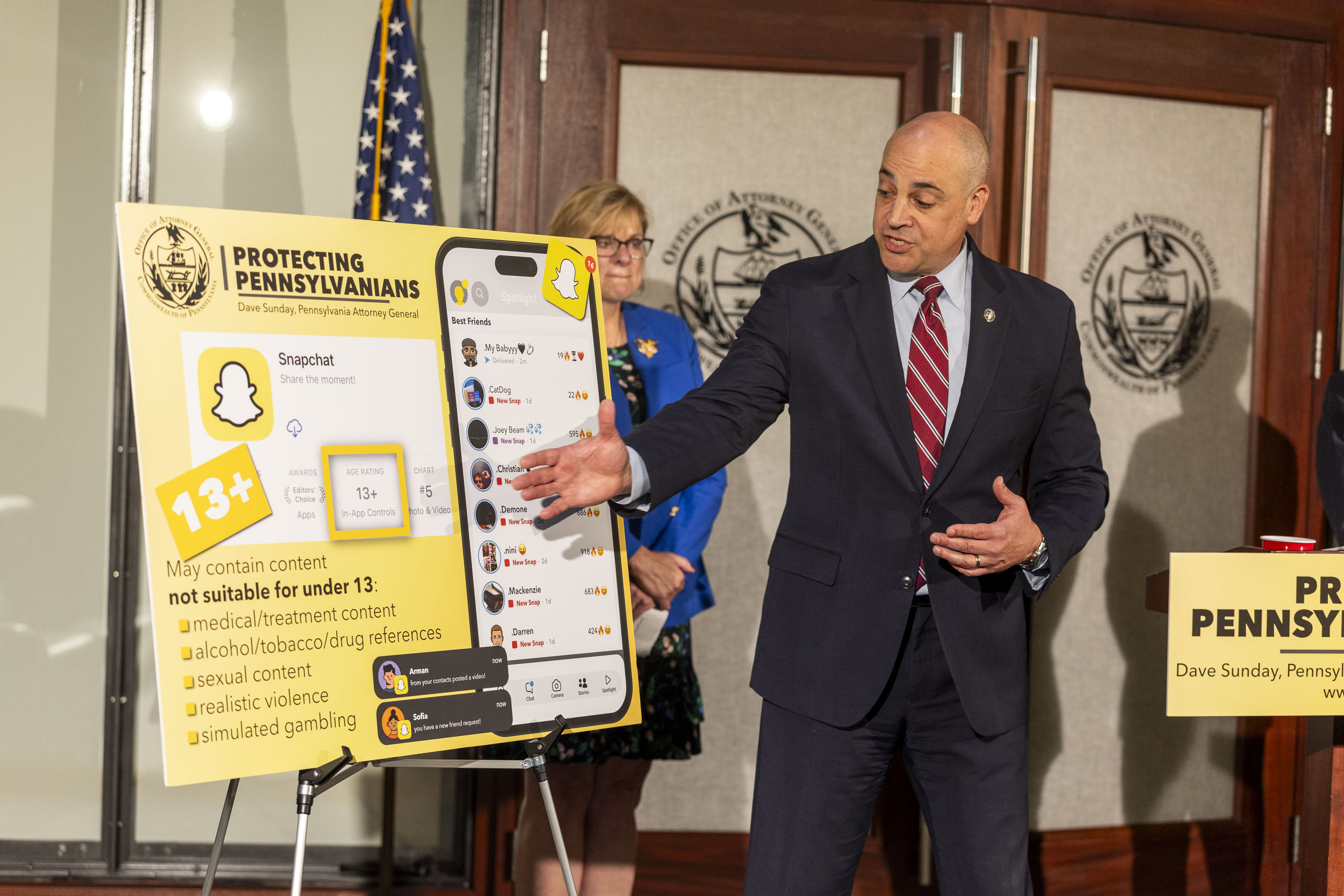
“Both of these actions reflect my priority as attorney general to protect our young people from tech giants who are choosing growth at all costs over the mental wellness of its users,” Sunday saidTuesday at a news conferencein Philadelphia.
The suit alleges that Snap Inc., owner-operator of Snapchat, does not properly warn users of the addictiveness of its features and does not protect children properly from compulsive use.
“The allegations against Snap fundamentally misrepresent our platform and our approach to teen safety,” a Snap spokesperson said in a statement. “We share the Attorney General’s commitment to protecting young people online and are disappointed they have chosen litigation rather than working with us toward that shared goal.”
The complaint, which Sunday’s office filed this week in Common Pleas Court in Philadelphia, asks the company to take steps to protect children from becoming addicted. It cites the SnapStreak feature and the ephemeral nature of the content as examples of ways the app hooks teens specifically.
“To a 13-, 14-, 15-year-old, social acceptance is everything,” Sunday said. “The streak feature puts a tangible value on friendships and influences a child’s feelings of self-worth.”
The app sends an implicit message that the more a child is on the app, the more friends they will have and the more socially accepted they will be, Sunday said.
“That exploits the fear-of-missing-out culture to the absolute extreme,” he said.
It also alleges that Snapchat improperly promotes how frequently adult-themed material — including sexual content and nudity, suicidal ideation, and drug use — appears on the platform to achieve an age-13-plus app rating in app stores.
Through this litigation, Sunday said, he hopes to see Snapchat required to provide a more honest depiction of its content to app stores so it can be marked with a more mature rating, and to change its algorithm to be less addictive.
Montgomery County similarly sued some of the nation’s largest social media companies, including Snapchat’s and TikTok’s parent companies, in a federal court in Northern California earlier this month.
The company recently announced plans to open stores in King of Prussia and Moorestown in late 2027.
The King of Prussia market, the chain’s first Pennsylvania location, is set to open at 320 W. DeKalb Pike, the site of the closed Hobby Lobby in the DeKalb Plaza shopping center.
The Moorestown store, the first in South Jersey, will be located at 1311 Nixon Dr., replacing the Barnes & Noble and PetSmart in the East Gate Square complex.
Each of the new locations will be about 58,000 square feet.
The inside of a recently opened Uncle Giuseppe’s Marketplace in New York.Courtesy Uncle Giuseppe's Marketplace
“King of Prussia and Moorestown are two markets we’ve been looking at for some time,” Carl DelPrete, CEO and cofounder of Uncle Giuseppe’s Marketplace, said in a statement. “We look for communities where we believe our stores will be a good fit and where customers are looking for fresh, quality food and good service.”
Founded on Long Island in 2001, Uncle Giuseppe’s now operates 13 locations in New York and North Jersey.
Every store sells made-in-house mozzarella, homemade pasta, prepared foods, fresh produce, specialty cheeses, imported Italian products, natural and organic items, and more traditional groceries. Each market also has full-service meat and seafood departments, an Italian deli, a scratch bakery, and a catering department.
Customers can watch workers make pasta at a recently opened Uncle Giuseppe’s Marketplace in New York.Courtesy Uncle Giuseppe's Marketplace
Company executives call shopping at Uncle Giuseppe’s an experience, one in which customers can watch pasta, mozzarella, and bread being made and see meats being cut to order.
Gourmet grocers have not been spared. Di Bruno Bros., the Philly-based Italian-food retailer, closed three of its five locations this winter, two years after being acquired by Wakefern Food Corp., the North Jersey-based supermarket cooperative that operates ShopRite.
Despite industry uncertainty, Uncle Giuseppe’s is not the only grocer expanding. Sprouts, the organic supermarket chain, is adding stores, too, including in Havertown, Limerick, and Washington Township.
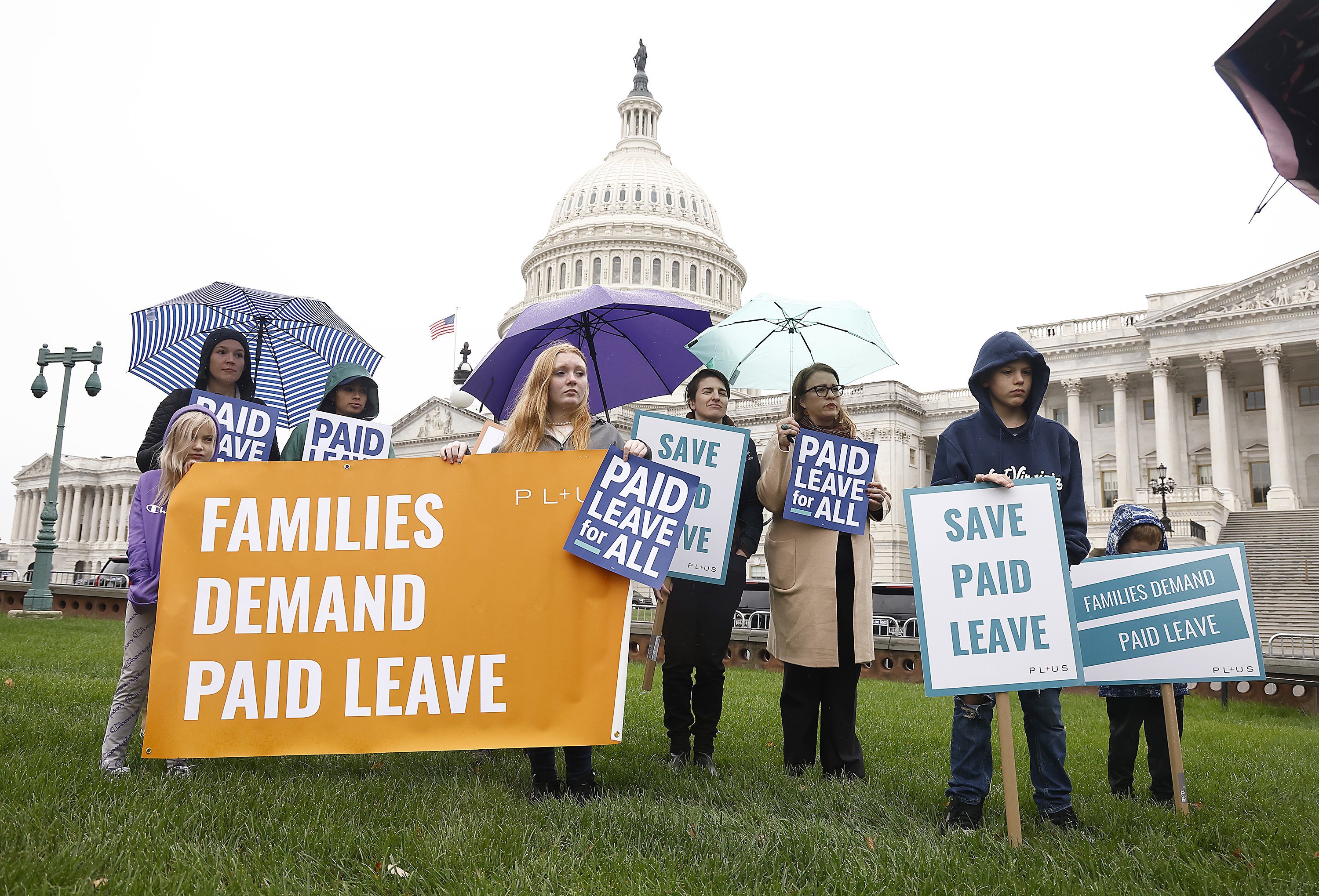
Emily Wielk, a senior policy analyst for working families at the Bipartisan Policy Center, says that she “hears consistently” that paid family and medical leave is a benefit that workers want and need to continue working.
“It is also a benefit that many businesses want to offer, but they are trying to determine the best way to manage the financial, compliance and administrative burdens,” she said.
It doesn’t matter how big or small your business is. Providing this benefit has become increasingly important for recruiting and retaining talent. The good news is that the federal government can help, and thanks to 2025’s One Big Beautiful Bill Act, more support is available.
Employer tax credit
Since 2018 there has been a generous tax credit available for employers who want to voluntarily provide some sort of compensation to their employees taking leave. It’s called the Employer Credit for Paid Family and Medical Leave under Internal Revenue Code Section 45S.
As long as you pay your employee a minimum of 50% of their normal wages while they are on leave, you can take a 12.5% tax credit on what you pay. The credit then increases by 0.25% for each additional percentage point of wages paid.
“If you offer the leave, you have greater certainty that the employee is coming back, and you can determine how to manage the gap in the interim,” said Wielk. “If you lose the worker, you will spend more time, money, and energy recruiting and trying to replace that employee.”
For example, if an employee normally earns $15,000 over 12 weeks and you pay the employee $7,500 while on qualifying leave, your business may receive a federal income-tax credit of $937.50. The more of the employee’s normal wages you replace, the larger the potential credit — up to 25% of the qualifying wages paid. So if you paid the full $15,000, your credit would be $3,750.
To claim the credit, you must have a written policy and provide two weeks of paid leave (not vacation or sick time).
If you own a pass-through business, like an S corporation or partnership, you can still claim the credit against the taxes you owe. If the credit is larger than the taxes you owe, you can carry it forward for up to 20 years. Highly compensated employees — those making $96,000 or more per year — are excluded.
“One specific thing the Section 45S credit does is encourage businesses to offer the benefit specifically to lower- and moderate-wage workers — not just necessarily to their C-suite or higher-wage earners,” said Wielk. “It is designed to ensure that workers who typically don’t have access to the benefit are getting access.”
Updated guidance
Earlier this month, the Treasury Department and Internal Revenue Service provided interim guidance on the expanded credit (more comprehensive proposed regulations are expected.)
Among these changes: Employers who purchase insurance providing paid family and medical leave benefits may now calculate the credit using qualifying premiums rather than wages actually paid during leave. It also potentially allows certain employers to use the credit where leave is required by a state or local government (such as New Jersey and soon in Delaware).
Previously, only wages paid to employees who worked for a company for a year were eligible, but that requirement was relaxed to six months. For 2026, employees who earned more than $96,000 are excluded. Most importantly, the credit has now been made permanent. Previously it came up for renewal every few years.
Stability promises
Wielk says that for Section 45S in particular, the fact that it was a pilot program created uncertainty. She believes that even when businesses knew the credit existed, they couldn’t be sure it would still be there four, five, or six years down the road.
“Many businesses were hesitant to use it for a few years and then have to assume the entire financial burden if the credit expired,” she said. “I think that uncertainty deterred some businesses from utilizing the credit.”
According to Wielk, the data “is very clear” that when workers have access to paid family leave, it boosts employee morale and increases loyalty to the business.
“It allows employees to take the time they genuinely need away from work with the knowledge and security that they can come back,” she said. “That has ripple effects on their ability to return and be productive.”
The people who built 3.0 University Place, an eight-story lab and office complex that covers a landscaped block of West Philly, had a problem: During the biotech slump after their 2023 opening, security costsescalated faster than occupancy.
“We had 80 Siemens cameras in there,” remotely monitored from a suburban surveillance office, and were “paying more than $150,000 a year for guard shifts,“ said Anthony Maher, the University Place Associates president.
But the building’s New York owners were still getting midnight calls for nonevents. Meanwhile the human video watchers missed incidents of concern — the stranger who had taken to sleeping on a tenant’s canopy at night, the fired contractor who sneaked back into the building one weekend.
Investors pressed them for a better way.
Maher and his partner, Scott Mazo, went hunting for an artificial-intelligence solution — an AI-era automated security system to collect and analyze camera, physical, and human-observed surveillance data; rank threats; sort out false alarms; open or shut locks; and quickly notify law enforcement, emergency services, management and owners’ groups as needed.
They rang an entrepreneur they’d met five years earlier at a Drexel University pitch meeting: Matias Klein, founder of Manayunk-based Kognition AI.
Kognition specializes in what Klein calls “cyber-physical threat detection systems,” which link and analyze digital security video, activate remote locks and sensors, load key data into formulas matching clients’ priorities and requests, sort and sharecommunications to alert the right people and agencies, and update responses based on results.
“You hang the cameras; we network the building systems,” as Klein puts it.
100 North American buildings
At 3.0 University Place, “Matias’ system gave us full access to the best 25 cameras, every floor, all times,” said Maher. The system caught incidents, routed them to the right people, and suggested simpler warning paths.
“They keep teaching us to manage the building, telling us, for example, about our people coming in when they didn’t really need to,” he said.
It worked so well “we told the owners to take the security-guard line-item out of the budget,” though they still use guards on occasion. It helps that the building’s big new tenant is the city police forensics unit: “We have a lot of cops coming here,” Mazo added, laughing.
More than 100 North American properties use Kognition AI, from Scotia Plaza, one of the largest office buildings in Toronto; to Pa.-based Benco Dental locations in several states.
A growing sector
Kognition, founded by Klein in 2017, was one of a handful of Philadelphia-area AI start-ups that presented to local investors at a June gathering. Investors included Osage Capital, MissionOG, and Susquehanna International Group’s SIG Growth Equity Fund.
“The AI landscape is changing so fast, it’s hard to tell what will be supplanted in a few months,” said Ellen Weber, who runs Robin Hood Ventures, and attended the meeting.
Robin Hood is a Philadelphia investors’ group whose members include start-up veterans. Members’ portfolio of local AI-dependent start-ups include Center City-based Deepwave, which makes laser weapons guidance systems for Air National Guard jets and other military projects; University City-based GreenIRR, which uses AI to speed carbon-emissions detection for truckers; and Proscia, which digitizes biotech images for fast diagnosis and pharmaceutical drug trials.
Thomas P. Dwyer, a partner at the law firm Troutman Pepper Locke who organized the June meeting, said Philadelphia trails other AI hotbeds.
“Philly has a lot of potential and opportunity here, especially if some of its larger companies get involved, as they do in Silicon Valley,” he said.
AI, he noted, is still seen as a threat by many local companies. They worry, “Can someone armed with Claude overtake your business, duplicate your software, and compete with you immediately — without having to hire people?”
And veteran investors are “gun shy” about AI profitability, he said.
Which, he added, leaves opportunity to those investors who make the “leap of faith” to promising AI start-ups
Operating on ‘the edge’
“An AI product makes itself better” the more it is used, said Kognition AI founder Klein.
Some of the best-known (and most-feared) AI image-and-data applications are based on giant AI companies’ mass sorting of millions of individuals’ information into ever-improving, readily searchable central databases at big new data centers — raising familiar privacy worries, as seen in the recent controversy over the alleged misuse of Flock digital camera data that police have used in attempting to quickly identify drivers.
By contrast, Kognition is one of the firms that operates at the “edge” of big networks, Klein said in an interview at his firm’s Manayunk meeting space. “We don’t send customers’ data throughout our network, and we don’t preload that information,” he said. “We don’t flow data back to a central monitoring station.”
Rather, the goal is “to give people control over the spaces where they live or work or worship, so they can get into a defensive posture fast, if they ever need to.” Custom, localized, focused solutions are “a big area of value creation” for AI start-ups, according to Klein.
Customized experiences
Kognition AI’s custom sharing limits and options are part of its appeal to Ravi Kalidindi. He was tasked by leaders of Bharatiya Temple, a Jain and Hindu religious congregation inMontgomery County, with setting up a system “that gave us control of our doors” without intimidating visitors or compromising members’ private information.
Kalidindi turned to Kognition as a locally based provider.
The system at Bharatiya starts with security cameras at the main entrance and stairways, integrated into a software and communications platform. “They check if our doors are closed. They tell us where there is human traffic. We can let the cleaning crew in without a key. It has mobile device control. It can even work on fobs,” Kalidindi said.
Kognition also has capabilities the temple has not used: “It has a weapons-detection system we have not enabled. It has additional sensors that can ID what people are carrying. It can tell us if we are seeing an above-average or above-expected crowd, make a note of the faces of people who are entering for the first time, and trigger an alert.”
There is a sense of user control of the AI systems that Kalidindi finds reassuring: ”We want to enhance the sense of security, that our facilities are being monitored, but also that everyone with good intent is allowed to enjoy the premises.”
Maleka Evans waited outside Octapharma Plasma in South Jersey at 8:30 on a recent sweltering morning, sweat beading on her face. A dozen other prospective donors had arrived before her, and the line was still growing a half hour before doors opened.
One woman sat on an overturned shopping cart pilfered from the nearby Walmart. Another brought her own folding chair. A man held a bicycle tire, removed to protect his bike from being stolen once he was inside and hooked up to a machine that extracts antibody-rich blood plasma needed for medical treatments.
Every Monday and Friday for the last three years, Evans has trekked to the Audubon strip mall for what she considers her second job. She takes a 45-minute bus ride from her Willingboro home to Camden, then walks another 45 minutes to the donation site with a slogan posted in its window: “When it pays to give hope. That’s plasmagic.”
The 37-year-old single mom has noticed the lines growing in the last year, as others are seeing at donation sites elsewhere in the Philadelphia region and across the nation. The for-profit business is booming as more and more Americans, both poor and middle class, struggle to straddle the gap between stagnant wages and increased living costs.
Evans relies on the $50 that she typically earns for each plasma donation — loaded onto a prepaid debit card — to help with bills that she cannot cover with her $18-per-hour job packing boxes at a warehouse.
“Prices for everything — food, rent, transportation, electricity — are just getting higher and higher,” Evans said. “You have to work two jobs to make ends meet, and you’re still living paycheck to paycheck.”
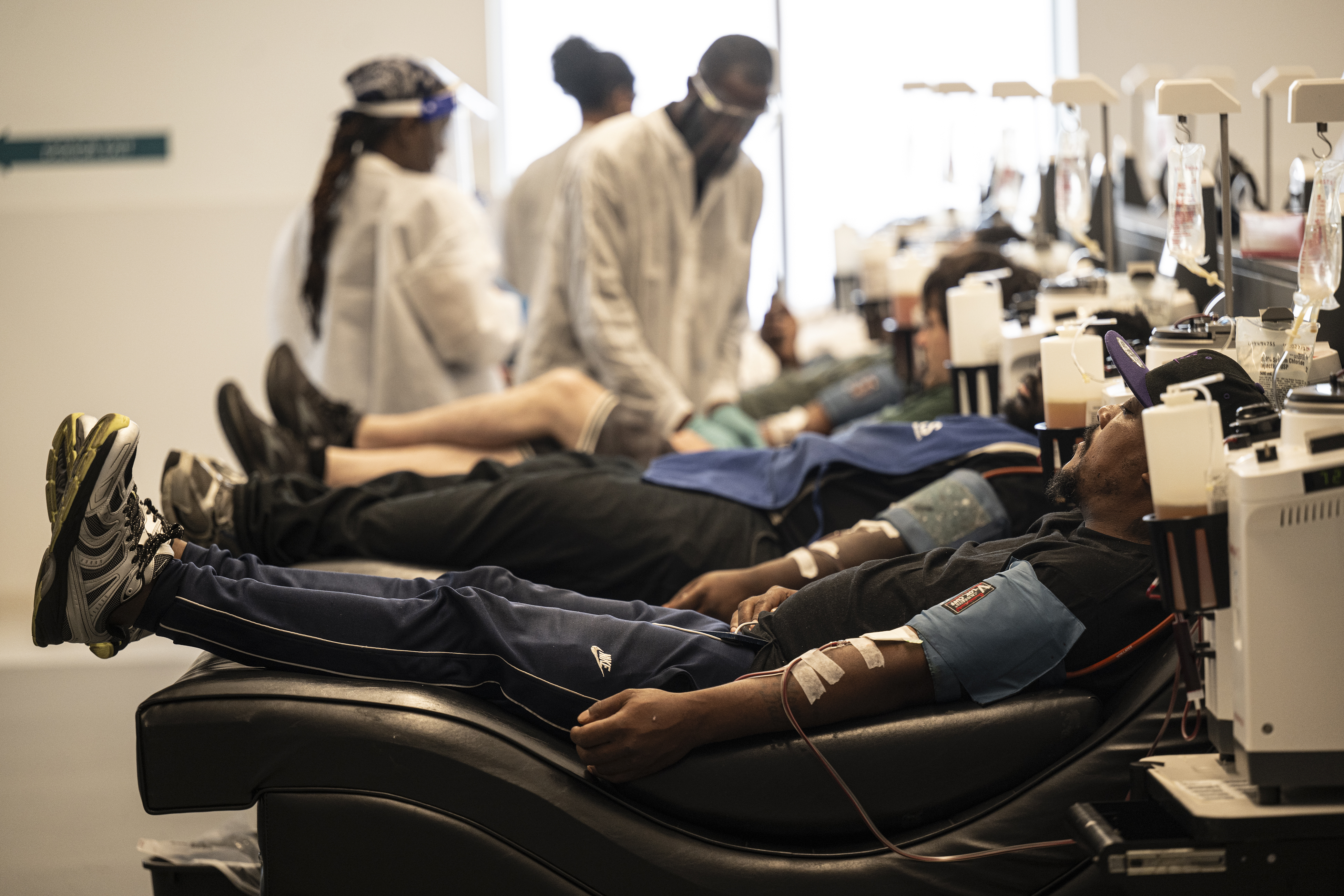
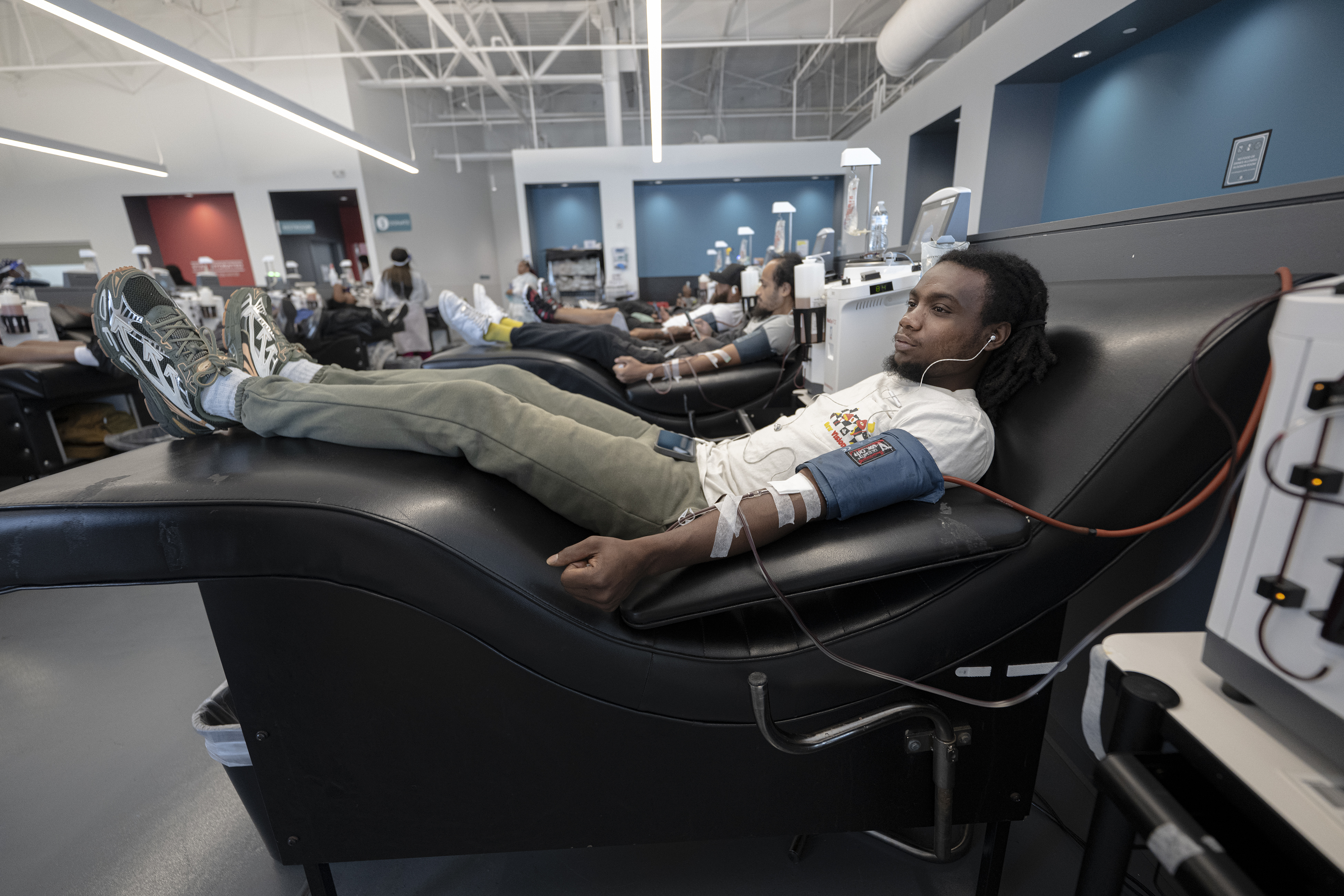
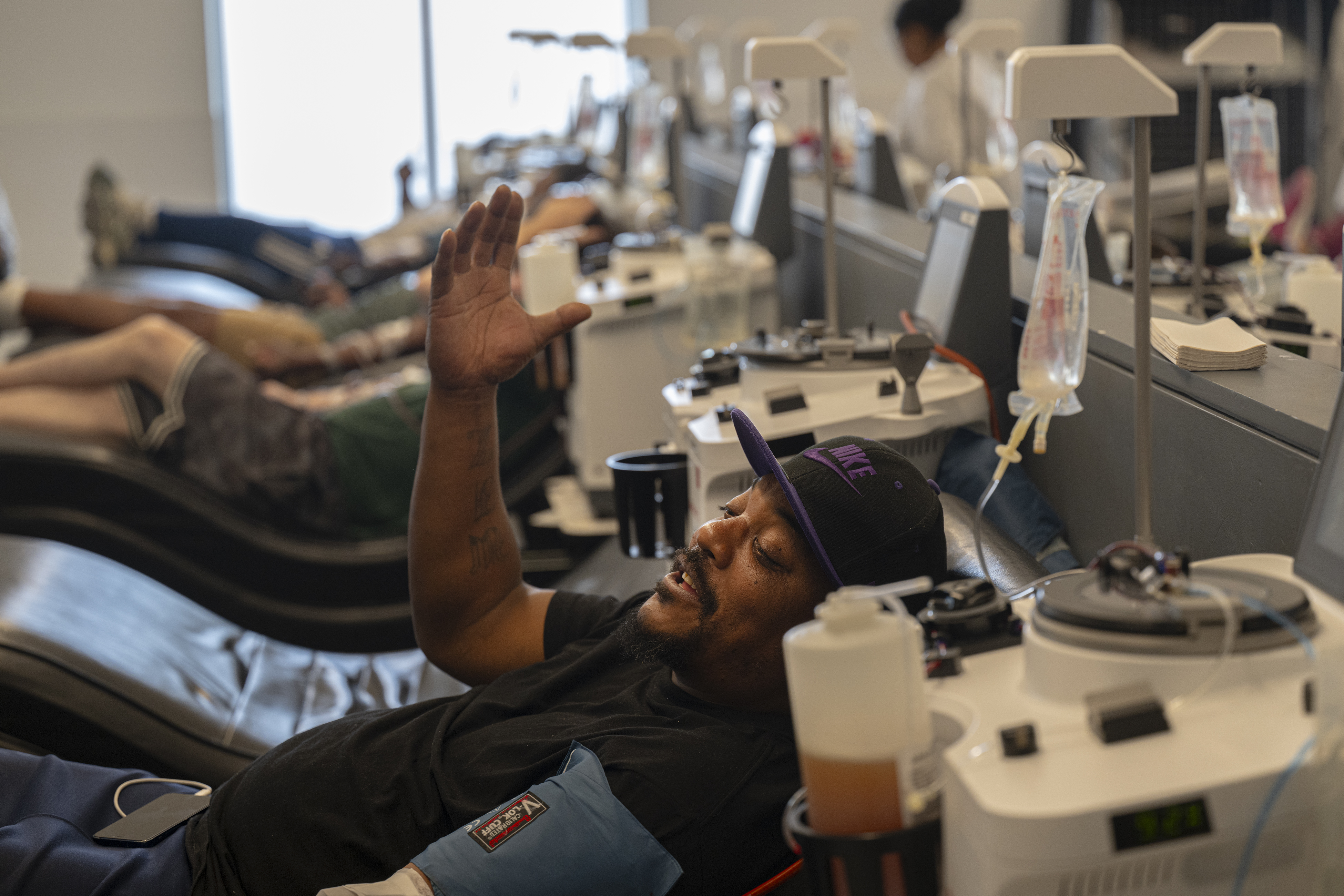
An increasing number of people in the Philadelphia region are selling their blood plasma for money. Here, local donors sit in recliners with needles in their arms at B Positive Plasma in Montgomery County.Jose F. Moreno / Staff Photographer
The U.S is one of about a dozen countries where it is legal to pay donors for plasma. It is among only three countries where people are allowed to donate two times over seven days, though not on back-to-back days, per U.S. Food and Drug Administration regulations.
Nearly 70% of the world’s plasma comes from donors in America, fueling a multibillion-dollar global industry. Plasma, a straw-colored liquid in blood, contains antibodies and other proteins used for treating a wide range of patients with immunodeficiencies, neurological conditions, kidney disease, and bleeding disorders.
Last year, U.S. donors produced 62.5 million liters of plasma — the highest volume ever collected and an 8% increase from the previous year. That trajectory has continued into this year, according to Georgetown University professor Peter Jaworski.
“When the price of most staples goes up, so does the amount of plasma donations,” Jaworski said. “If I fell on hard times, the very first thing I would do is become a regular plasma donor.”
Donating plasma is widely considered low-risk, with millions of people doing it each year without reported health problems. However, the long-term health effects of donating twice weekly for years have not been well-studied. Safety concerns raised by the deaths of two people in Canada who had recently donated at for-profit clinics run by the healthcare company Grifols haveprompted an investigation there.
In the U.S., an FDA investigation into 34 deaths of people who had donated plasma between 2016 and 2020 did not find a link between donations and fatalities.
Some donors experience lightheadedness, fatigue, bruising, bleeding, or dehydration. Drinking water and eating foods high in iron and protein can help alleviate those side effects, according to U.S. health guidance.
Security guard Danny Morales of North Philadelphia said he feels “tired” after donating. But that has not deterred him from heading to CSL Plasma in the city’s Olney neighborhood twice a week, as soon as he finishes his overnight shift at 6 a.m.
Morales can earn $520 a month donating plasma, which helps to offset rising expenses that have the 35-year-old father feeling ever more drained: The cost to fill up his Honda Civic’s gas tank jumped from $30 to $80 in the last year; a package of ground beef increased by $8; and even the brand of mac and cheese that his 8-year-old daughter and 2-year-old son enjoy costs about $1 more, he said.
“It’s just getting worse and worse,” said Morales, whose plasma donations supplement his $18 hourly security job wage. “Stuff is just getting so expensive. Groceries are ridiculous.”
CSL opens at 6 a.m., but a line starts to form around 4:30 a.m. In late July, it snaked past the building, wrapping around the corner. The sight caught the attention of nearby Olney resident Tony Reed.
“There’s always a line there, especially toward the end of the month and definitely on Monday mornings,” Reed said. “People are broke.”
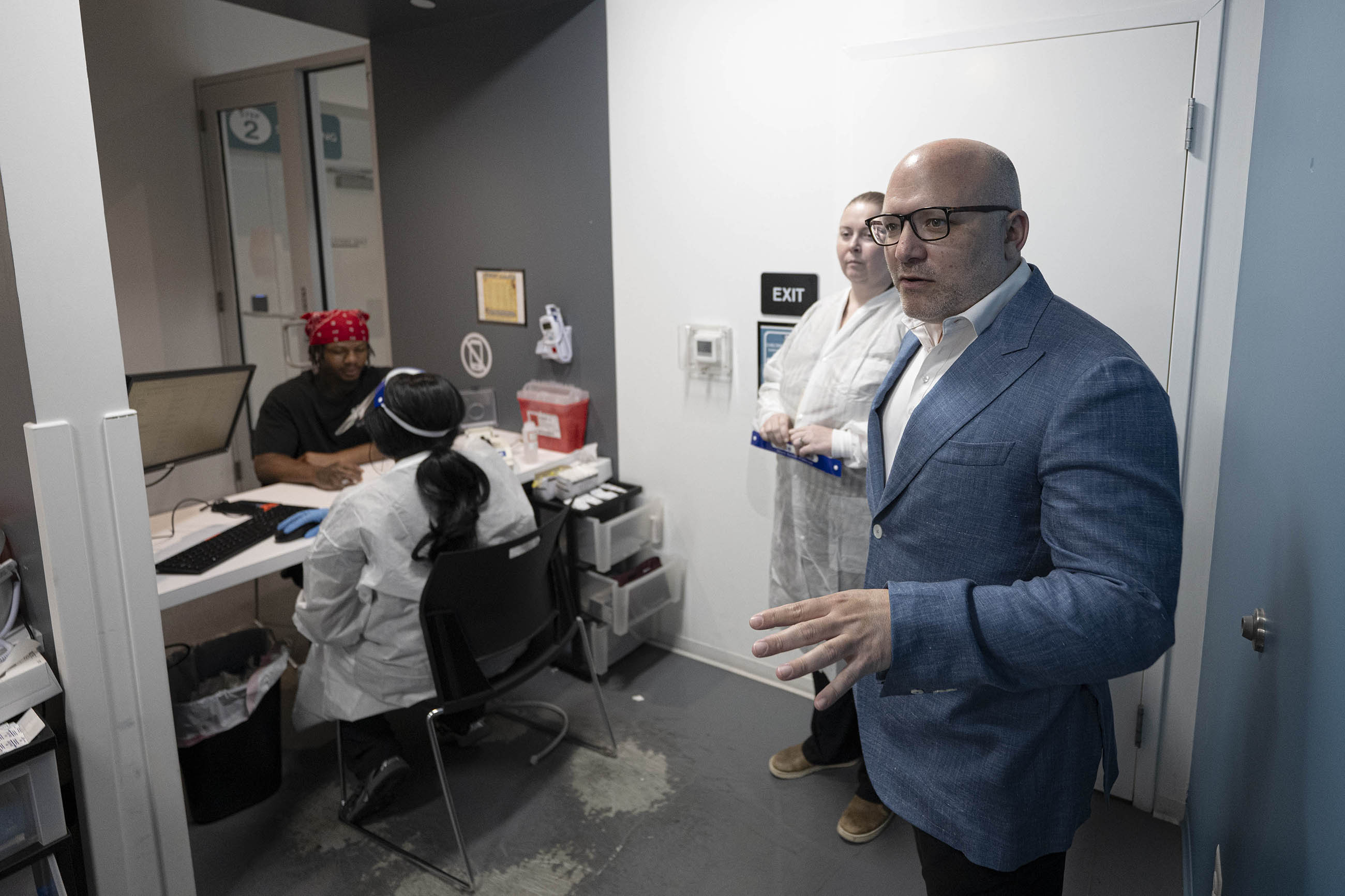
Ben Ruder, CEO and founder of B Positive Plasma, and Pearl Dixon, an assistant manager and phlebotomist, explain the donor intake process. Each donor fills out an extensive health questionnaire, undergoes a medical exam, and gets a finger prick to test their blood for iron and protein levels. Jose F. Moreno / Staff Photographer
Inside the booming industry
On a recent Wednesday afternoon at B Positive Plasma in Montgomery County, a steady stream of donors checked in at kiosks in the lobby.
After filling out an extensive health history questionnaire, each new donor undergoes an on-site medical exam by a licensed practical nurse. Repeat donors must get annual exams. At each visit, a medical tech checks their vitals, including blood pressure, pulse, and temperature, and performs a finger prick to test their blood for protein and iron levels. Donors must weigh at least 110 pounds.
“We make sure they’re healthy and well,” said Ben Ruder, founder and CEO of B Positive Plasma, noting that the plasma itself is tested for HIV and hepatitis B and C before being sold.
Next, plasma donors are hooked up to a machine that draws out blood, spins off the plasma, and then returns the red blood cells back to the donor, a process that typically takes 45 minutes to an hour.
At 2 p.m., 18 of the 24 cushioned recliners at the Wyncote location on Cheltenham Avenue were occupied by donors, each with a needle in one arm. They included a Philadelphia police officer who had donated more than two dozen times since May 2025; a casino cleaner who earns $120 a week donating to support his young daughter; and a home health aide who donates twice a week to help cover his $750 monthly apartment rent.
Jason Johnson, 29, of East Mount Airy, has donated plasma 68 times at B Positive Plasma in the past two years. He makes an extra $120 a week donating twice weekly. The money helps supplement the $17.80 an hour he earns as a cleaner at Live! Casino & Hotel Philadelphia. “In the beginning, I was doing it for the extra money, but once I learned that I’m helping people out in their life, it made me want to come back even more,” Johnson said. Jose F. Moreno / Staff Photographer
Plasma donation differs from whole blood donation, a faster process that relies on unpaid volunteers who can donate only once every 56 days in the U.S.
B Positive Plasma is on track to see a record year, with 180,000 donations, peaking this holiday season, when people need extra money for gifts. Last year, the company saw 150,000 donations at about 1 liter per person.
Ruder, 42, who lives in Center City, opened his first plasma donation center in Cherry Hill in 2012 and rapidly expanded to 12 locations in New Jersey, Pennsylvania, and Delaware. He plans to open two more sites in Maryland next year and another in Allentown later this year.
B Positive Plasma, like other plasma companies, structures payments to incentivize twice-weekly donors. For instance, donors whose weight and physical health yield the maximum amount of plasma — 1,001 to 1,200 milliliters — will receive $45 for the first visit and another $90 if they return that same week. Plus, the company offered a $50 bonus for anyone who donated eight times in August.
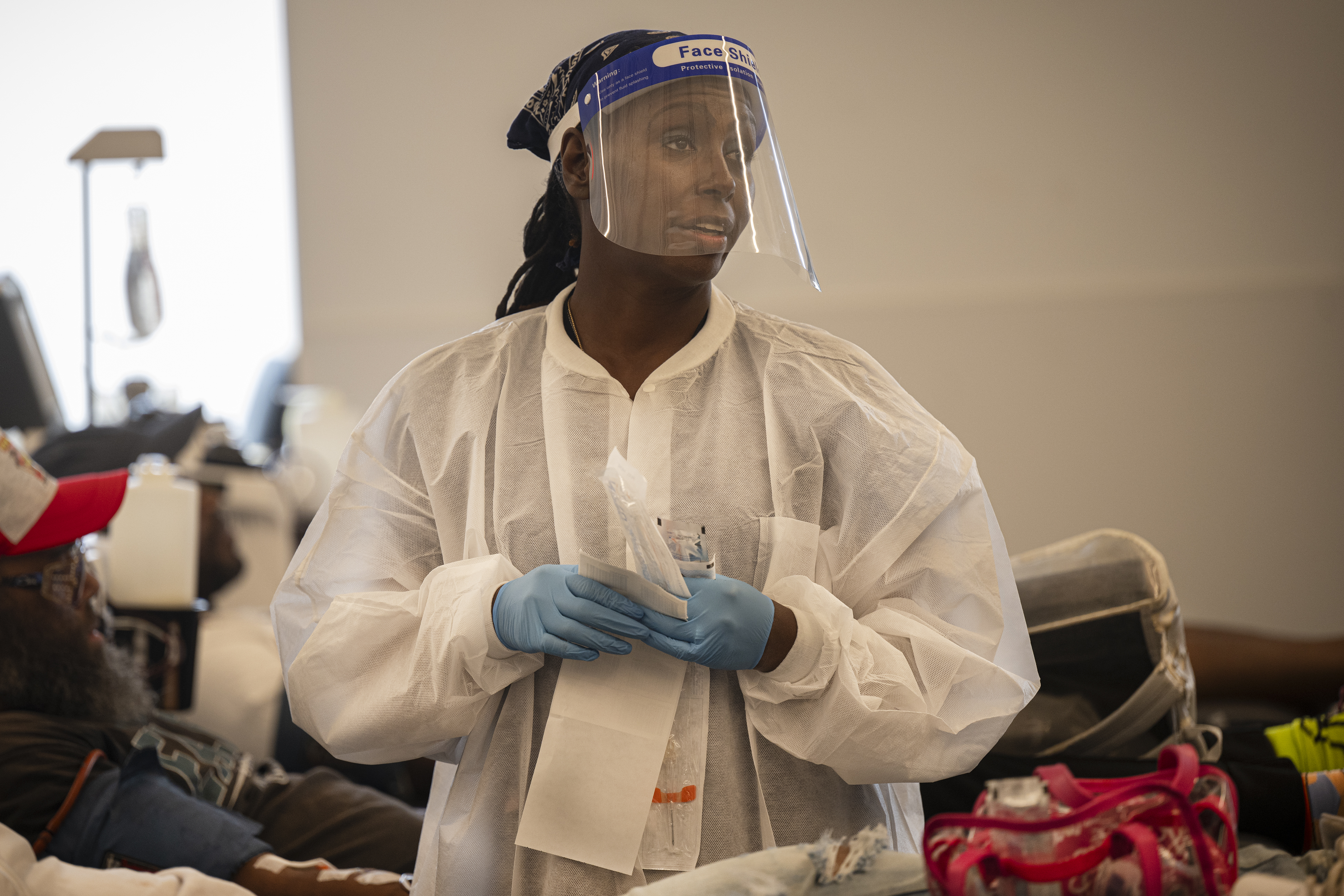
Donyele Wilkins, 48, a phlebotomist and medical assistant, works in the donation room at the B Positive Plasma in Montgomery County. She suffers from lupus, a chronic autoimmune disease for which she receives plasma-derived infusions to control her symptoms.Jose F. Moreno / Staff Photographer
Phlebotomist Donyele Wilkins works 12-hour shifts, four days a week, at B Positive Plasma.
For Wilkins, the paycheck is not the only benefit of working there.
The 48-year-old Northeast Philadelphia resident suffers from lupus, an autoimmune disease in which the body’s immune system attacks its own tissues and organs. Wilkins said she relies on plasma-derived medication, infused through an IV every four to five months, to help control symptoms like inflammation and joint pain.
Knowing how plasma is processed makes her feel “safe,” she said. She also likes getting to know “the regulars” who donate.
“It makes me feel like I know exactly where it’s coming from, and I know the people who are doing it,” Wilkins said. “A lot of them really need the money, so they’re helping me, on top of me helping them.”
‘Blood money’
Paying donors for plasma has sparked ethical debate, with some accusing the industry of exploiting poor people.
In her 2023 book, Blood Money: The Story of Life, Death, and Profit Inside America’s Blood Industry, Kathleen McLaughlin, a Montana-based journalist, found that donors in many U.S. regions are disproportionately Black and brown people.
McLaughlin, who has a rare autoimmune disease treated withmonthly plasma-derived infusions, said today’s rise in donations is “a symptom of our broken economic system.”
While the FDA regulates health safety at plasma centers, the pay rate is set by the companies, McLaughlin found. She thinks donors should be paid more and the amount should be standardized.
“Right now, it’s a capitalist free-market system, where the pricing isn’t transparent,” McLaughlin said. “The profit margins are crazy for these plasma companies, and it’s gamified to make you donate twice a week, every week, in perpetuity.”
Jaworski, the Georgetown University professor, said donors are compensated fairly. A donor whosits for an hour and a half makes “significantly more than” New Jersey’s $15.92 minimum hourly wage and Pennsylvania’s $7.25. Plus, he stressed, donors save “hundreds of thousands of lives.”
Wallace Smith, 45, of Upper Darby, prides himself on making an honest living. He earns $15 an hour as a home health aide. He makes an extra $130 a week selling his blood plasma. The money helps cover cigarettes, rent, and his phone bill. Jose F. Moreno / Staff Photographer
Recently published research suggests that communities can benefit when a new plasma center opens, because fewer young people take out high-interest payday loans and area crime drops, mostly driven by decreases in property and drug-related offenses.
“It helps you from having to do something wrong,” plasma donor Wallace Smith said.
When Smith was in his late 20s, he got arrested for selling drugs. Now 45, he is still struggling to find a job that pays a living wage, he said.
Smith, of Upper Darby, works three days a week, earning $15 an hour, as a home health aide. He earns $130 a week donating plasma, which helps pay for cigarettes, his phone bill, and rent, he said.
Like many donors, Smith said he likes the win-win of earning extra cash and helping patients who depend on plasma.
“They say there’s a job’s out here for everybody, but when you become a person who made mistakes in life, then they look at your background, so there’s only certain jobs you can do,” Smith said as his blood flowed into a spaghetti-thin clear tube at B Positive Plasma.
“With that being said, you don’t go back to your old ways,” he said. “You find better resources like this.”
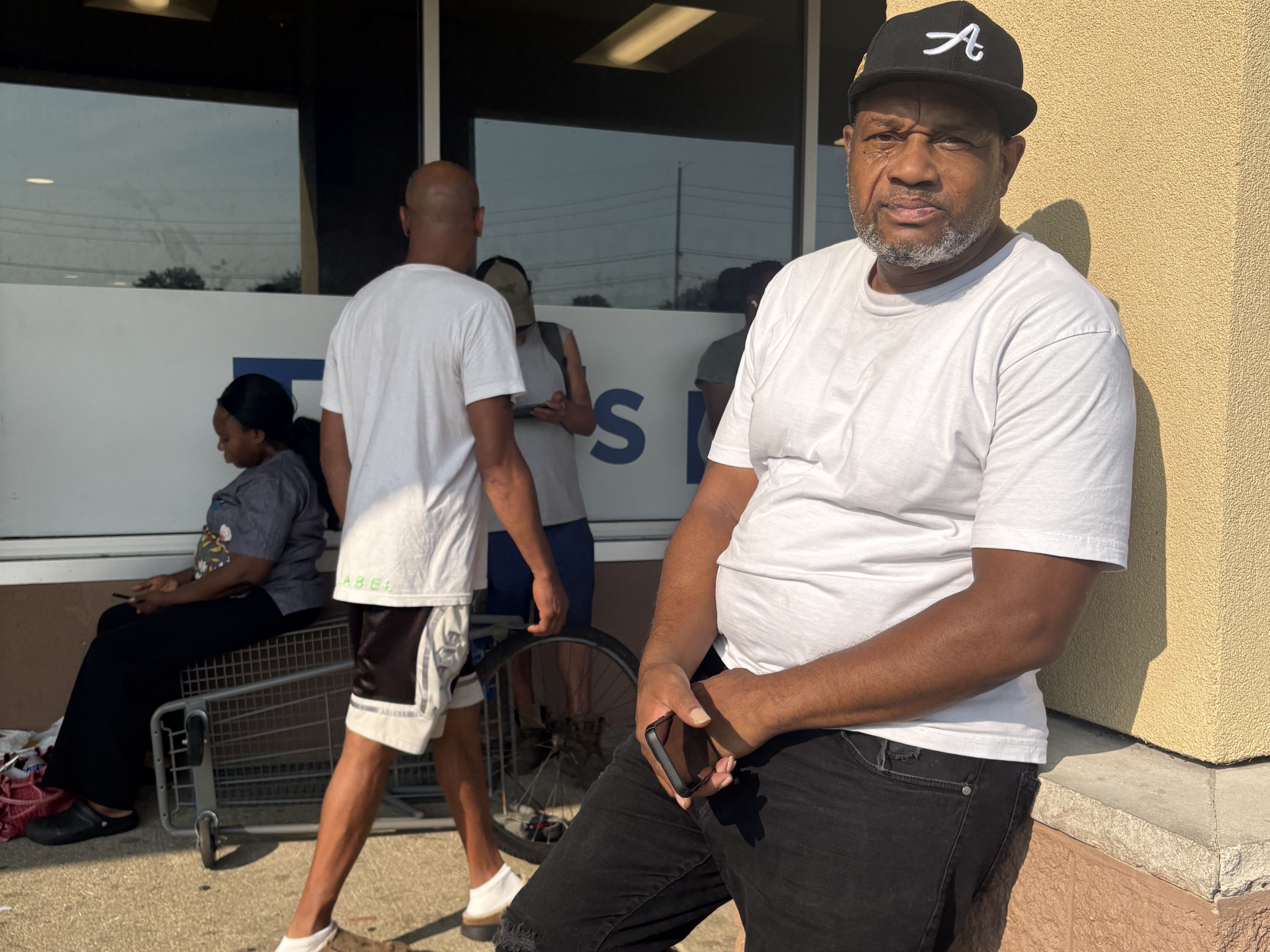
On a hot August morning, donors line up outside Octapharma Plasma in South Jersey to sell their blood plasma for money. They arrive before the doors open at 9 a.m. to beat the wait. Donor Carl Davis, 56, of Camden, donates every Saturday and Monday, earning $70 each time. The extra money helps supplement his $900 monthly Social Security Income disability check. “I get SSI disability, but it’s not enough at all to pay my bills and buy food,” Davis said.Wendy Ruderman
Beach boardwalk fun
At Octapharma Plasma in South Jersey, the wait time can be as long as three hours, donors said. When a sewer pump broke and bathrooms stopped working earlier this year, the company trucked in a row of porta-potties to accommodate donors and staff.
On a recent August morning, Brittany Barr, 36, and her three sons — 5-year-old twins and a 6-year-old — waited outside Octapharma as her husband donated. The family had walked roughly two miles from their Gloucester City home.
When Barr learned her friend had kidney failure and needed plasma infusions, she wanted to help. Barr was unable to donate plasma because she is anemic, so her husband agreed to do it.
In the month since Barr’s husband started donating, the family has earned more than $500. It has helped with groceries and their phone bills to supplement her husband’s income as a shipping manager.
“With only one income, money is tight these days,” Barr said. “Everything is messed up.”
The boys, clad in their bathing suits, climbed up on Barr as she sat on a tipped-over shopping cart. They were headed next to Atlantic City for a beach day.
“This week, the money is going toward fun. They’re going to play arcades and have ice cream or whatever their little hearts desire,” Barr said. “Next week, it’s going to school supplies.”
Brittany Barr, 36, seated with her boys (from left) Cooper, Cannon, and Colton, waits outside for her husband to finish donating plasma at Octapharma Plasma in Audubon, N.J. The family from Gloucester City was next headed down the Shore, where they planned to spend the extra money earned from donating plasma on arcade games and ice cream.Wendy Ruderman / Staff