Leonard Bernstein’s big, audacious, belief-shaking Mass has never slotted easily into the choral/symphonic repertoire, requiring Broadway and rock music resources as well as orchestral ones, with a confrontational message that echoes beyond its 1971 premiere.
Bernstein himself once wondered if the populist, many-faceted Mass should be performed in a gymnasium.
But the newly created suite heard Friday, played (and commissioned by) the Philadelphia Orchestra at the Kimmel Center, is a much more viable version. And it’s not a secondhand encapsulation but an entity unto itself.
And not a day too soon.
No single work has been more closely identified with the now-closed Kennedy Center: Its 1971 opening was the Bernstein Mass premiere. In preperformance comments, music and artistic director Yannick Nézet-Séguin made that connection, calling Mass a statement about “why arts and culture are worth fighting for.”
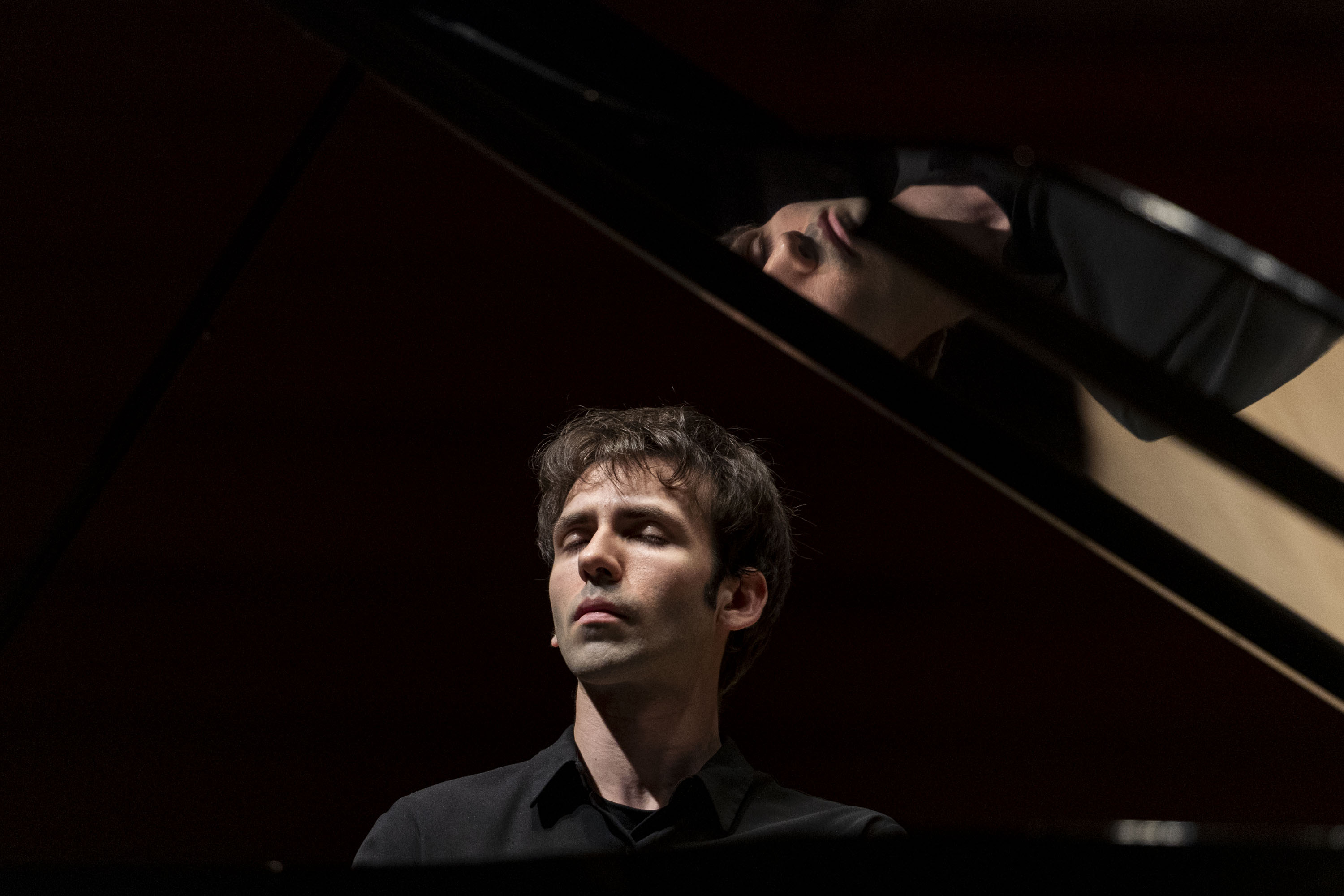
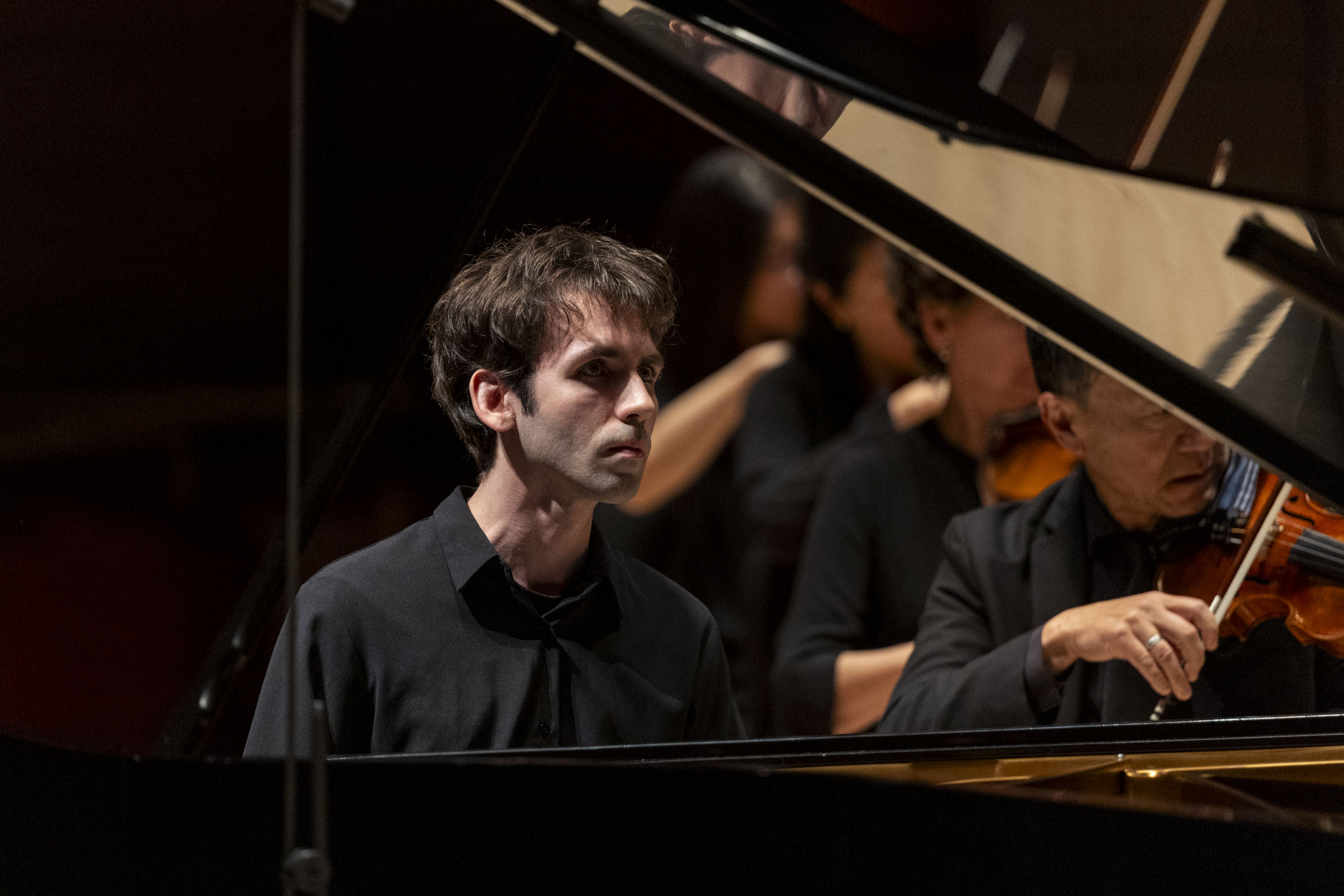
Pianist Alexandre Kantorow performs with the Philadelphia Orchestra at Marian Anderson Hall on Friday, Sept. 25, 2026, in Philadelphia, Pa.Tyger Williams / Staff Photographer
I agree in spirit. But among listeners, you either got the Bernstein Mass gene or not. I did not (and was most excited to hear Alexandre Kantorow play the Brahms Piano Concerto No. 1 that began the program).
Though Mass’ individual songs are indeed lovable, the scrupulously unconventional whole (where the original Mass text is a distant point of reference) is puzzling to me. Why the counterfeit rock music? (Bernstein followed The Rolling Stones and knew better.) Why such glib philosophical conclusions? (Such as “I believe in God but does God believe in me?”)
Nézet-Séguin has not been one to tone down any such element, fearlessly embracing the abrasive modernism lurking around the sides. Garth Edwin Sunderland, vice president for artistic projects at the Leonard Bernstein Office, refashions the piece into Four Symphonic Rituals from MASS, richly scored for orchestra (no singers) that’s a close cousin to Symphonic Dances fromWest Side Story, but with a harder-edge sound palette.
“My solution was to focus each movement on one of the musical concepts, punctuated by interjections from the others,” wrote Sunderland in the program notes.
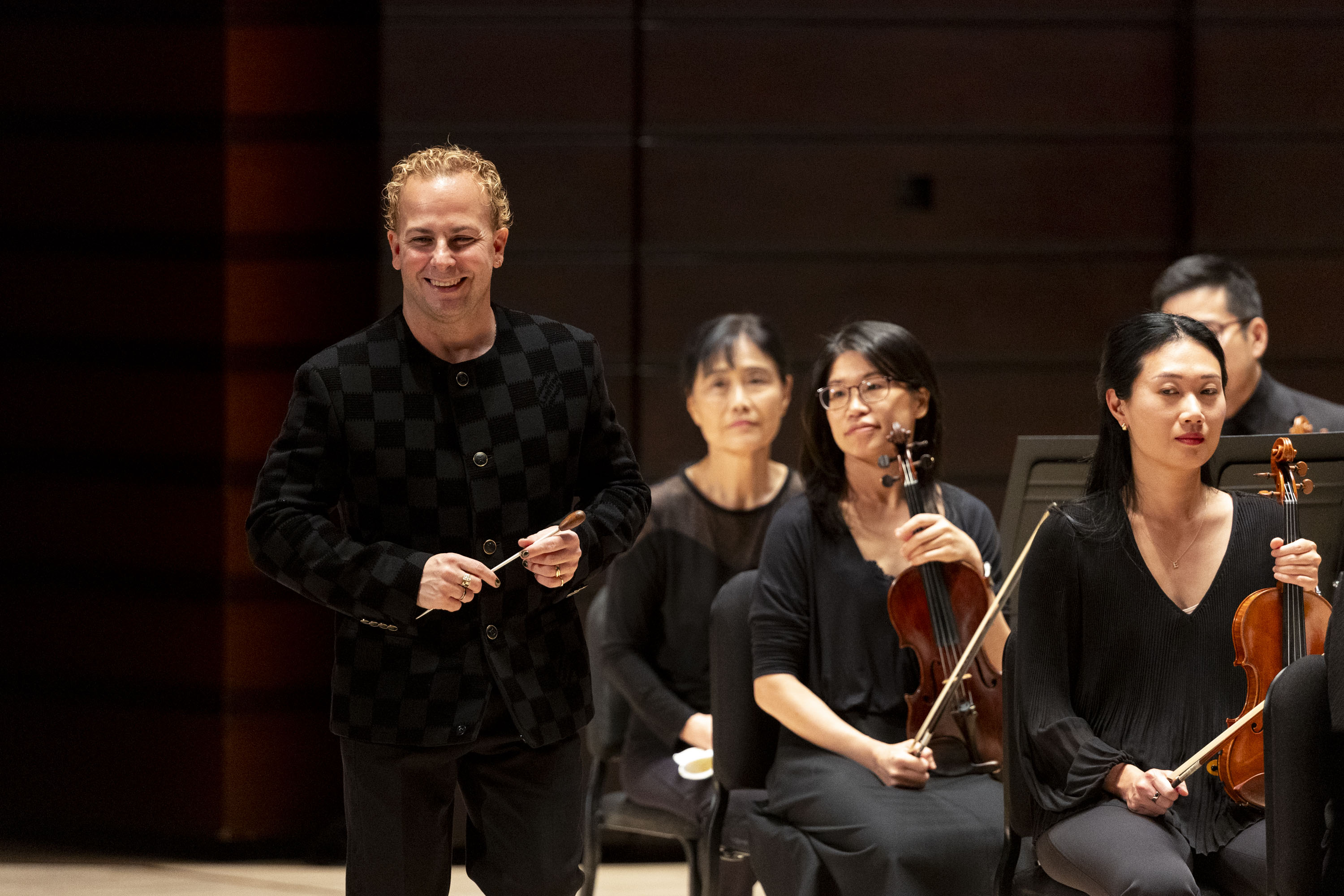
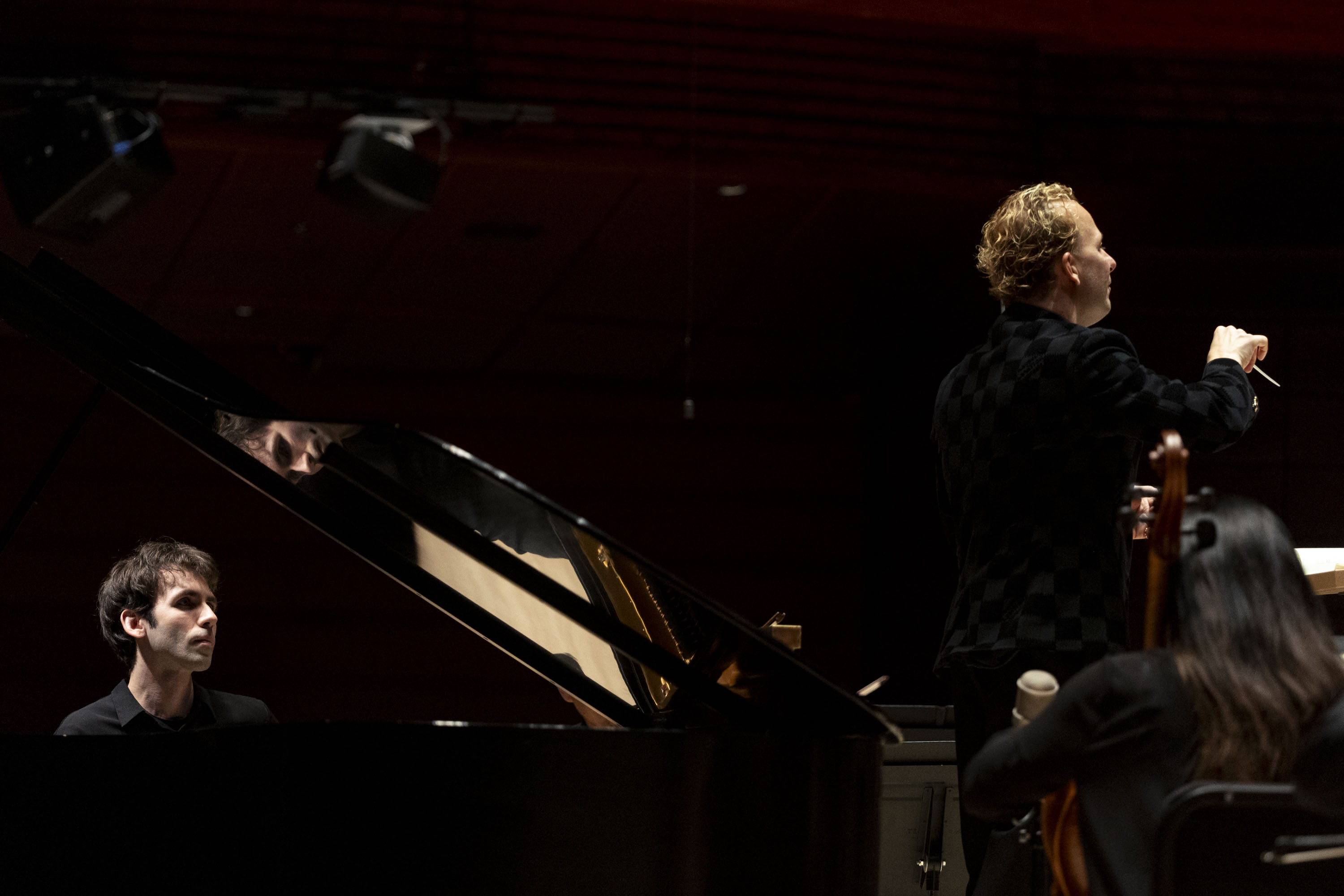
Conductor Yannick Nézet-Séguin and pianist Alexandre Kantorow perform with the Philadelphia Orchestra at Marian Anderson Hall on Friday, Sept. 25, 2026, in Philadelphia, Pa.Tyger Williams / Staff Photographer
With a bit of editing, these Rituals may well have longevity. The opening moments establish the lyrical but nervous character of the piece, bringing out the jazz that wasn’t so obvious in the original — and is very welcome since Bernstein spoke jazz as a first language.
One could write a dissertation on Sunderland’s choices, but the total effect is that of a concerto for orchestra that touches as many bases as possible. Too many, in fact. The last 10 minutes are so splintered that the through line is intermittently lost.
But one unexpected conclusion is that the sung words aren’t missed (except “I Go On” and “Simple Song”). In fact, much of the music seems liberated without words. Electric guitars are still there but blended in as part of the larger sound texture.
What would Bernstein think? It’s worth asking.
(Later tonight, I’ll be near his grave site in Brooklyn where Green-Wood Cemetery is hosting an event for the Missy Mazzoli opera Lincoln in the Bardo.)
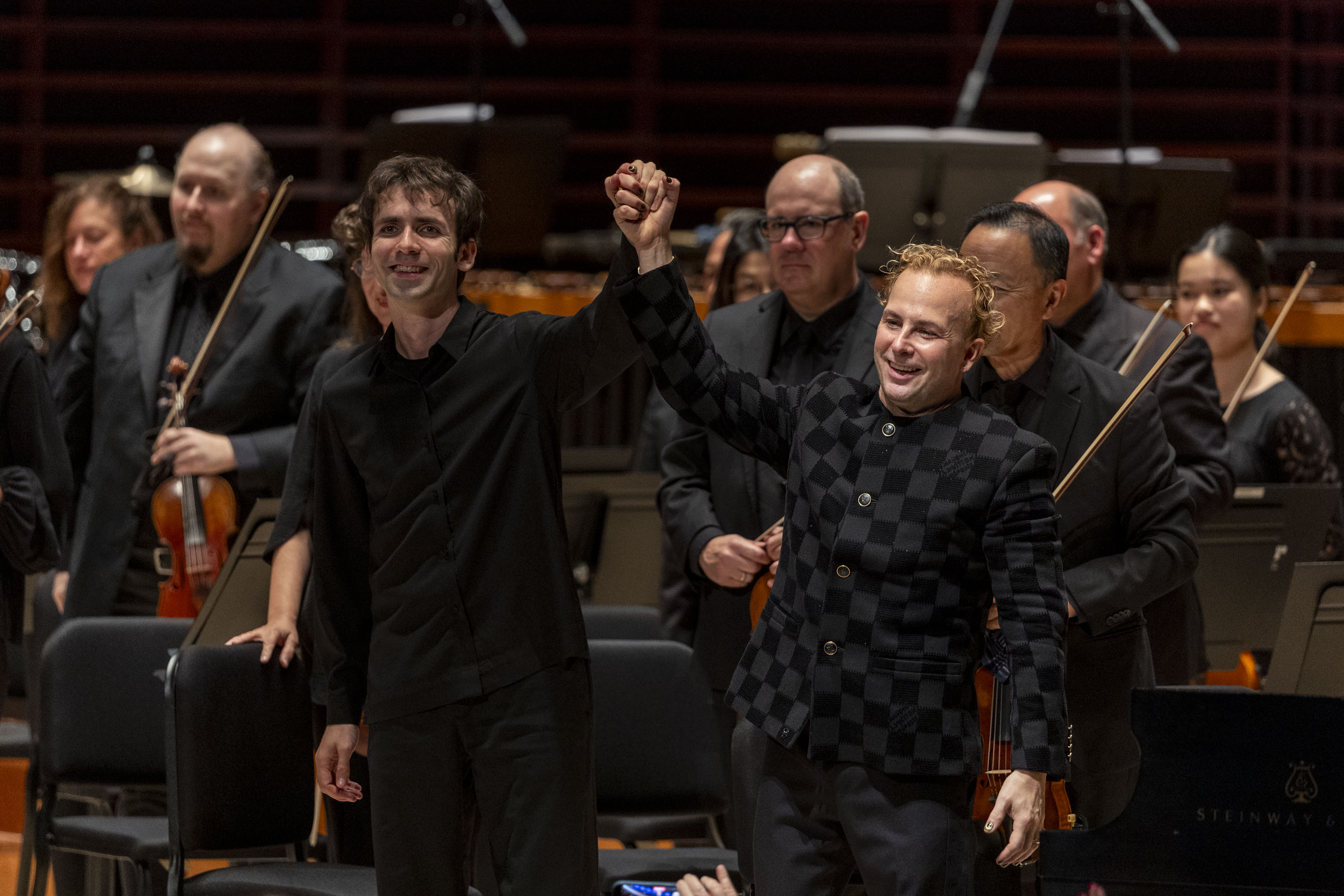
Conductor Yannick Nézet-Séguin and pianist Alexandre Kantorow take a bow after their performance at Marian Anderson Hall on Friday, Sept. 25, 2026, in Philadelphia, Pa.Tyger Williams / Staff Photographer
Brahms piano concerto soloist Kantorow has been called a fire-breathing virtuoso, and he has that quality, but the Gilmore Artist Award he received goes to pianists who have much more than that.
Whether playing solo, chamber music or with orchestra, the 29-year-old French pianist (making his Philadelphia Orchestra debut in these concerts) is thoughtful, highly personal, but never eccentric. He brings an extra depth to Brahms’ early-period concerto from having spent much time with the composer’s three early piano sonatas, finding in them surprising maturity but also youthful rage that carried over into the more stentorian parts of the concerto.
Pianist Alexandre Kantorow performs with the Philadelphia Orchestra at Marian Anderson Hall on Friday, Sept. 25, 2026, in Philadelphia, Pa.Tyger Williams / Staff Photographer
Throughout the first movement, one felt part of a searingly direct conversation with Brahms. The second movement lost me for a bit; Kantorow was too inward to be outwardly communicative. The final movement had reckless chemistry.
When a Philadelphia Orchestra performance lacks complete coordination, you know musicians are deep in the moment and not falling back on remembered emotion.
The program will be repeated at 8 p.m. Saturday and 2 p.m. Sunday at the Kimmel Center. Tickets: $29-$232, philorch.ensembleartsphilly.org or 215-893-1999.
Drexel University has received an offer from the William Penn Foundation that would underwrite operating costs at the museum at the Academy of Natural Sciences of Drexel University while its survival could be studied.
The money would float the continued operation of the museum for at least a year while questions about the Academy’s viability could be examined — matters such as how much money would be required to cover deferred maintenance on the building, how much it would cost to adequately fund and run the museum, and what the potential fundraising capacity would be.
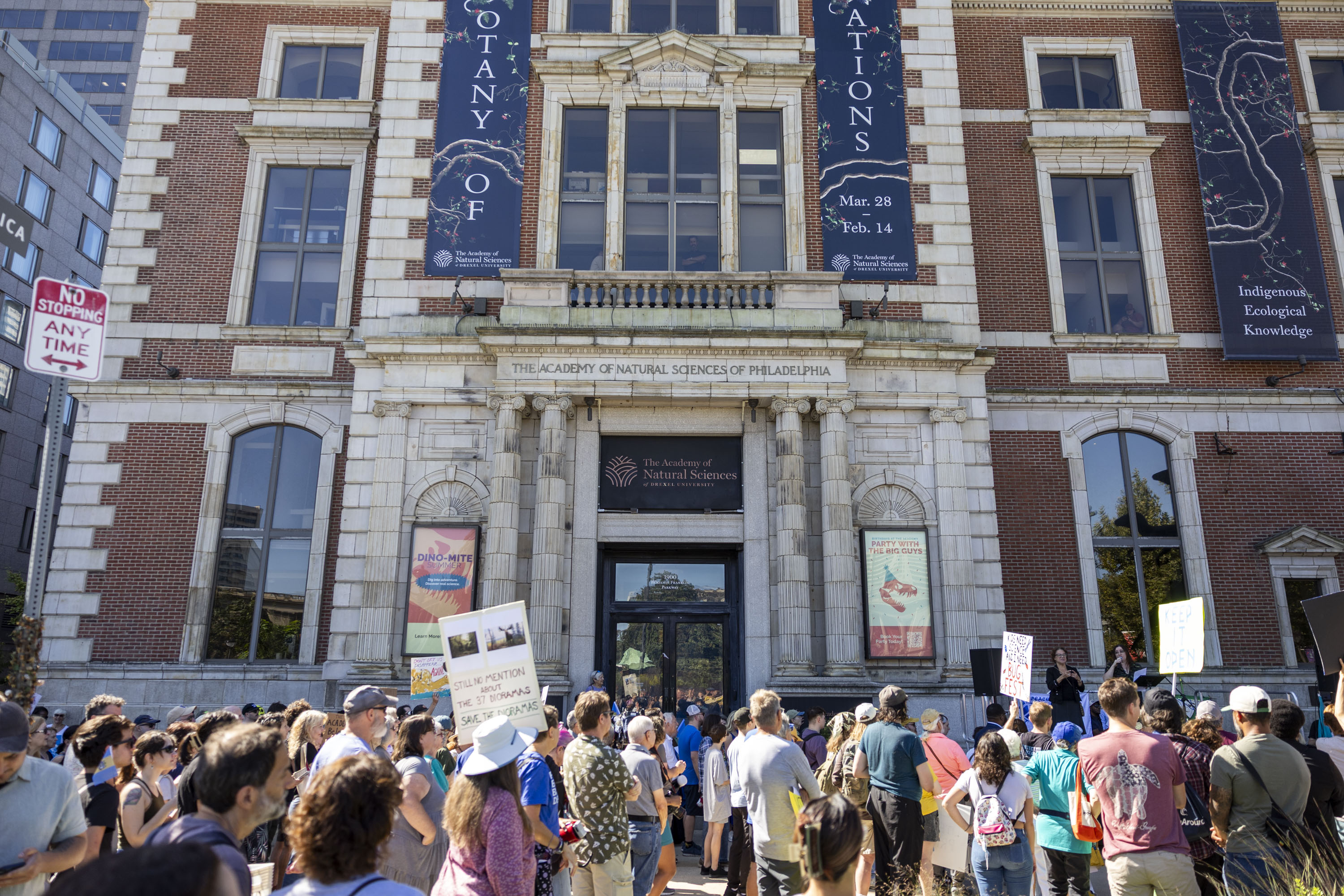
On Sept. 1, Drexel and the Academy announced the closure of the museum as of Sept. 30, with Sunday being the last day open to the public.
Shawn McCaney, executive director of the William Penn Foundation, one of the largest and most influential funders of arts and culture groups in the region, said in a statement that the foundation values the “importance of the Academy of Natural Sciences and its deep history, its presence on the Parkway, what it contributes to critical scientific research, and its public facing museum which has engaged generations in science learning for hundreds of years.
“We have offered to cover the cost of the operating subsidy Drexel has been providing to keep the museum open for at least another year so that the full range of options for the future of the museum could be properly explored, and to provide time to test the interest of other funders and supporters who have not been engaged so far.”
A Drexel spokesperson did not specify whether the university had declined the offer, but said: “No proposal has been presented that would provide a permanent, sustainable path forward for the Academy’s museum. We sincerely appreciate the many ideas and expressions of support.
“At this time our efforts remain focused on securing a permanent, financially sustainable future for the Academy, one that protects its collections and research enterprise and provides meaningful opportunities for public engagement over the long term.”
Academy of Natural Sciences board chairperson Suzanne Biemiller said the Academy was supportive of the idea of staying open beyond Sunday.
“The Academy has learned of an offer to keep the museum open for an interim period of time and give us some breathing room to reimagine a path forward working with the philanthropic community and the larger community. Certainly as a board we are open to the idea and are truly grateful.”
That said, as of Friday afternoon, Biemiller said she was operating under the assumption that the museum would be closing for good to the public at 5 p.m. Sunday.
A second rally by the Save the Academy coalition is planned for Saturday afternoon and a candlelight vigil and march to City Hall on Sunday, beginning at 5 p.m. A rally was held earlier this month shortly after the Sept. 1 announcement.
The plans for the museum come after weeks of public shock and dismay from a broad swath of government officials, civic leaders, science advocates, and families.
City Council members have called for public hearings. Petitions calling on Drexel and the Academy to reverse the decision have drawn tens of thousands of signatures. And families, children, and others have taken to their feet. Attendance at the museum last weekend was about 14,000 over three days — a sum that, if it could be repeated every weekend of the year, would bring more visitors to the Academy annually than almost any other cultural attraction in the city.
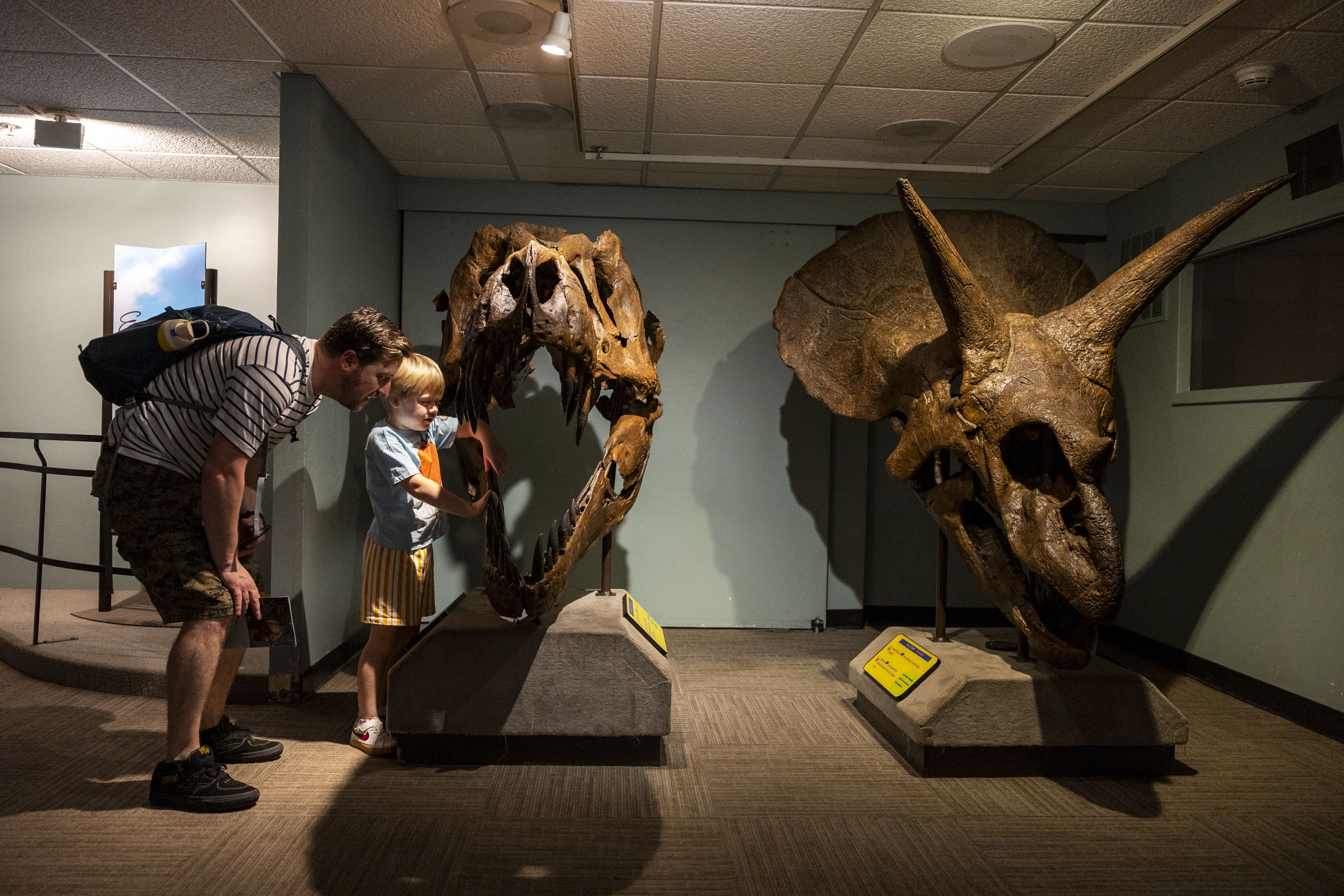
Michael Ashleigh, of Phoenixville, Pa., with his son Otto, 5, looking at the Tyrannosaurus Rex Skull in the Dinosaur Hall at the Academy of Natural Sciences of Drexel University on Sept. 4, 2026. Michael wanted to give his son the experience he had 20 years ago when he first visited the Academy.Tyger Williams / Staff Photographer
Former Comcast executive and U.S. Ambassador to Canada David L. Cohen, who has been involved in the talks between Drexel and the Academy at the behest of Gov. Josh Shapiro, said on Friday that the museum cannot survive in its current location, which has far too many deferred maintenance needs. The better approach, he said, is to find an alternative museum or exhibition space and then seek funders to support the plan.
“When we have a plan, it likely will require some funding,” he said. “And then we’ll go to the philanthropic community, which seems so eager to write a check with a real plan where money can actually accomplish something and accomplish something that would be valuable.”
Cohen said the agreement between Drexel and the Academy preserves the research and education components of the Academy and the third leg — coming up with a plan for a new museum space — is still being worked on.
“We need to have a real plan which is likely to be a community-based plan, that is, with multiple institutions coming to the table,” he said. “We just need the time to put that together and no one is helping things by offering Band-Aids.”
While Cohen said he was aware, and appreciative, of various offers from the philanthropic community, they are “premature,” he said, and “not founded in the true facts of what’s going on here.”
He did not specifically address the William Penn Foundation offer.
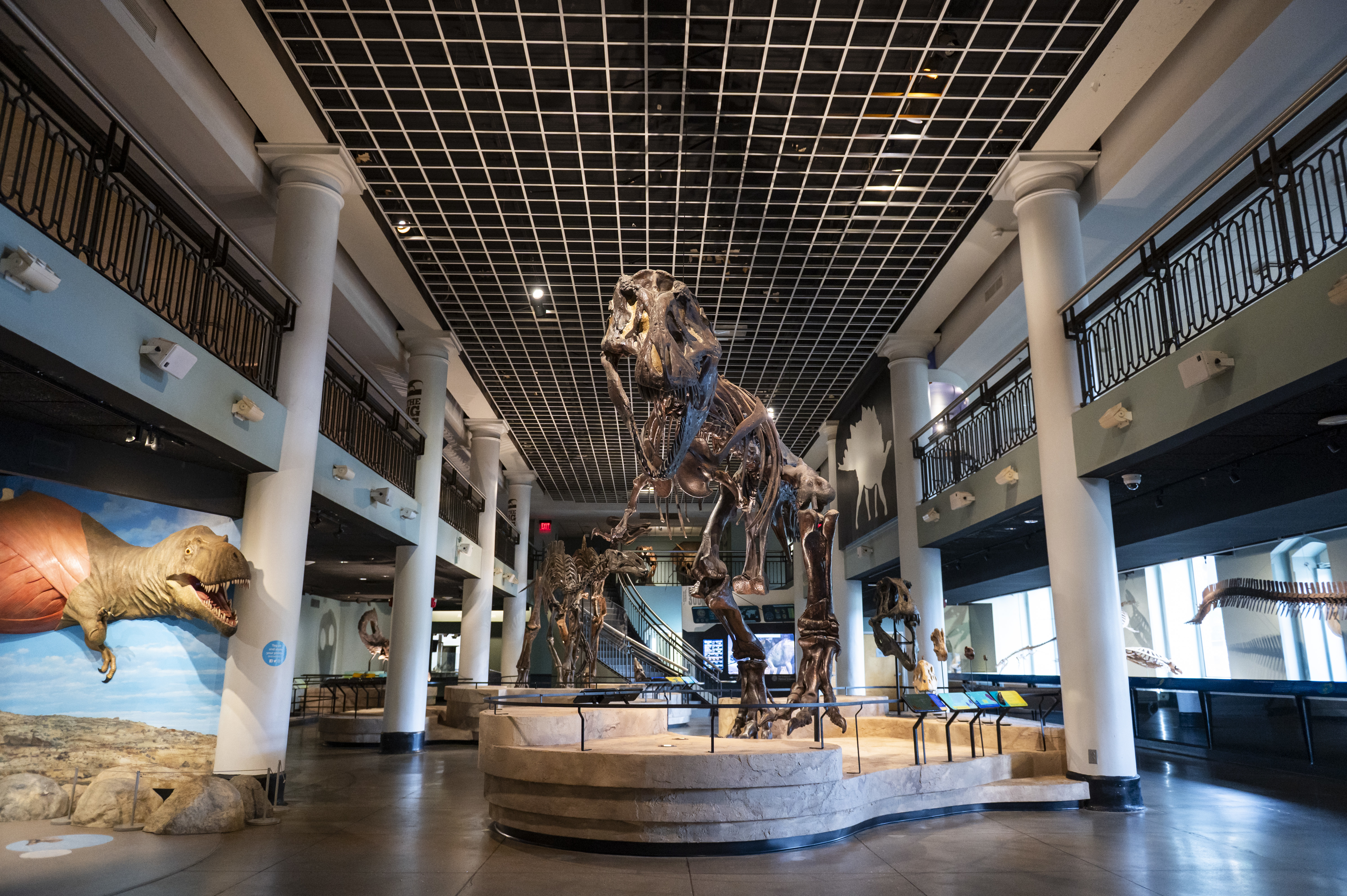
Dinosaur Hall at the Academy of Natural Sciences Aug. 5, 2026.Allie Ippolito / For The Inquirer
At-large City Council member Nina Ahmad said on Thursday she is continuing to explore what can be done to help the academy both with its capital and operational needs and to be sure its endowment is protected.
“We are taking some steps to do our due diligence to understand where we are,” she said. “We are getting hundreds and hundreds of emails with concrete suggestions. We are going through those suggestions.”
She said one thing to explore is whether the PIDC, Philadelphia’s public-private economic development corporation, could provide a bridge loan that would help secure other financing. The Preservation Alliance for Greater Philadelphia also is applying to get the Academy building on the National Historic Register, which might open up other funding streams, she said.
A hearing on the Academy also will be held before City Council, but the date hasn’t been set. Ahmad said the resolution authorizing the hearing included subpoenapowers so that Drexel officials will be required to testify.
“It should not have come to this,” Ahmad said. “Somebody has just been moving along without addressing problems in a timely way,” she said.
A spokesperson from the mayor’s office declined to comment on the offer put forward by the William Penn Foundation.
Drexel and the Academy earlier this month reached a tentative agreement that will continue their affiliation and maintain Drexel’s financial support of the Academy. Negotiations continue on final terms.
Niki Gianakaris, the Drexel spokesperson, said the Academy and Drexel are continuing discussions and “nearing an agreement that will establish a new framework for the relationship between the two institutions and support the Academy’s path forward.”
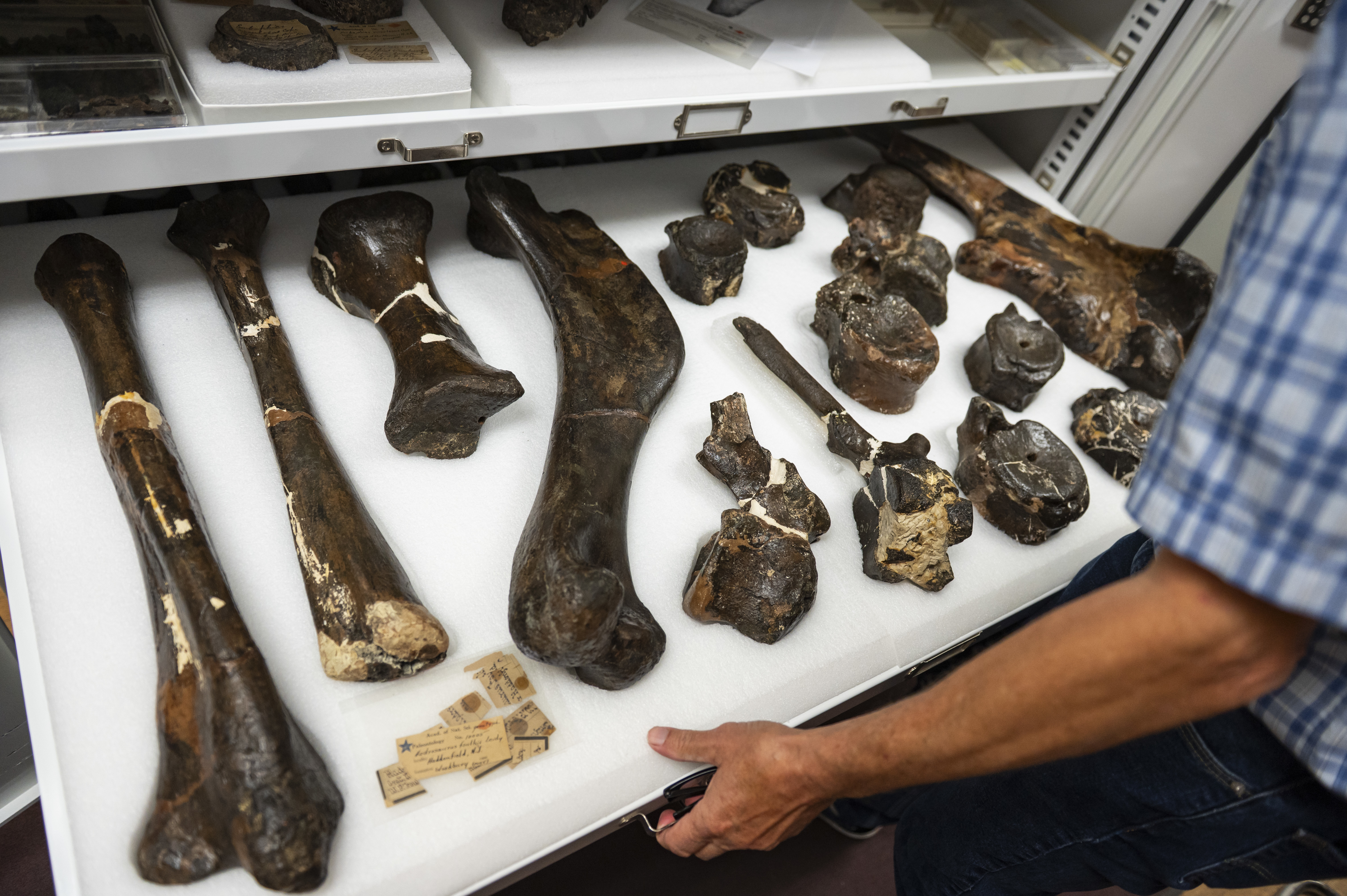
Ned Gilmore, collection manager for vertebrate paleontology, pulls out a drawer filled with bones from a Hadrosaurus at the Academy of Natural Sciences of Drexel University, Aug. 5, 2026. The Hadrosaurus fossils were found in Haddonfield.Allie Ippolito / For The Inquirer
The Academy’s collections, research activities and exhibit materials will remain in the building “while Drexel and Academy leadership consider potential pathways forward,” she said.
William Penn’sMcCaney said that a creative solution was possible given the challenges that the arts and culture sector has faced down before.
“This is a city that can do great things — we saved Eakins’ The Gross Clinic and Parrish’s Dream Garden when they were in jeopardy of leaving Philadelphia. We built an incredible new museum on the Parkway — Calder Gardens. The partnership between the Free Library and the Rosenbach kept a cultural treasure accessible to the public. Those efforts took strong leadership and bringing together partners with the political, intellectual, and financial capital to keep our city at the forefront of arts, culture, and science. We are ready to contribute to an effort with similar thought, ambition, and collaboration.”
“I had a tape recorder I would sing into,” said the South Jersey jazz vocalist.
“I was one of those kids holding a brush in the mirror, singing Billy Joel songs. I was that kid.”
But it was a roundabout route to the stage for Farnese, whose debut album, Oh No, I’m in Love Again, was just released on Philly jazz pianist Orrin Evans’ Imani Records.
First, he followed his father, Aldo Farnese — the star of Philadelphia children’s television shows Dickory Doc and Adam Android in the 1960s and 1970s — in pursuing an acting career. After a stint in Hollywood working in production and scoring some small movie and TV roles, he came home to Philly in the mid-1990s.
Since then, Farnese has had a day job — actually, usually a night job — as a TV camera operator for the Phillies, first at Veterans Stadium and, since 2004, at Citizens Bank Park. He operates a super slo-mo camera from the left field power alley in front of Ghost Energy Deck (formerly Harry the K’s).
By 2012, Farnese was long settled into that job, and also working Sixers and Flyers games for NBC Sports Philadelphia. In 2012, he won an Emmy for his work on the World Series.
But then he felt — as he puts it speaking via Zoom from his home in Woolwich Township, Gloucester County, while his golden retrievers Bailey and Oliver lounge on a sofa behind him — “a tap on the shoulder.”
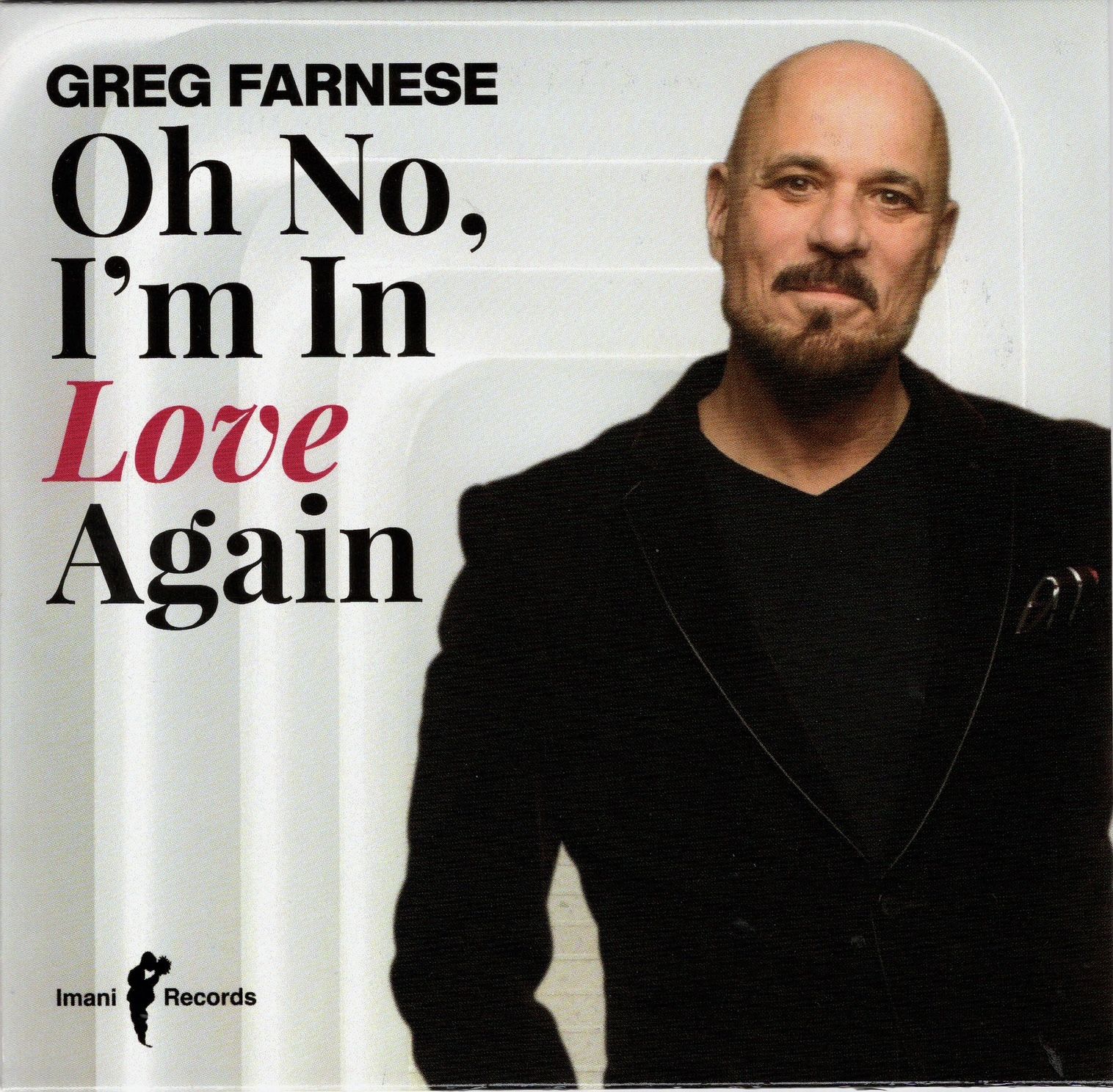
The cover image to Greg Farnese’s album “Oh No, I’m in Love Again.”Courtesy of Imani Records
“When I was a kid, my father would sing throughout the house. We would say ‘Dad, you’ve got a great voice, you should be a singer,’” Farnese said. “And he would go, ‘Meh,’ and kind of blow us off.”
Then one day, he said, “I was singing while putting my son’s air hockey table together.” His wife, Laurie, said “Greg, you’ve got a beautiful voice. You should sing.”
“I started to go ‘Meh …’ — and then I stopped myself. Because I remembered that as a child, I thought my father was wasting his talent.
“So I said: ‘Get me a karaoke machine for Christmas, and I’ll start working on my voice.’ And that’s what I did.”
Farnese, who will perform at Tim McCloone’s Supper Club in Asbury Park on Oct. 4 and the Exit 0 Jazz Festival in Cape May on Oct. 23, is a poised vocalist and skilled song interpreter. Oh No! I’m in Love Again features two originals, including the title cut, both written with Alan Gardner, a former collaborator with Farnese’s father.
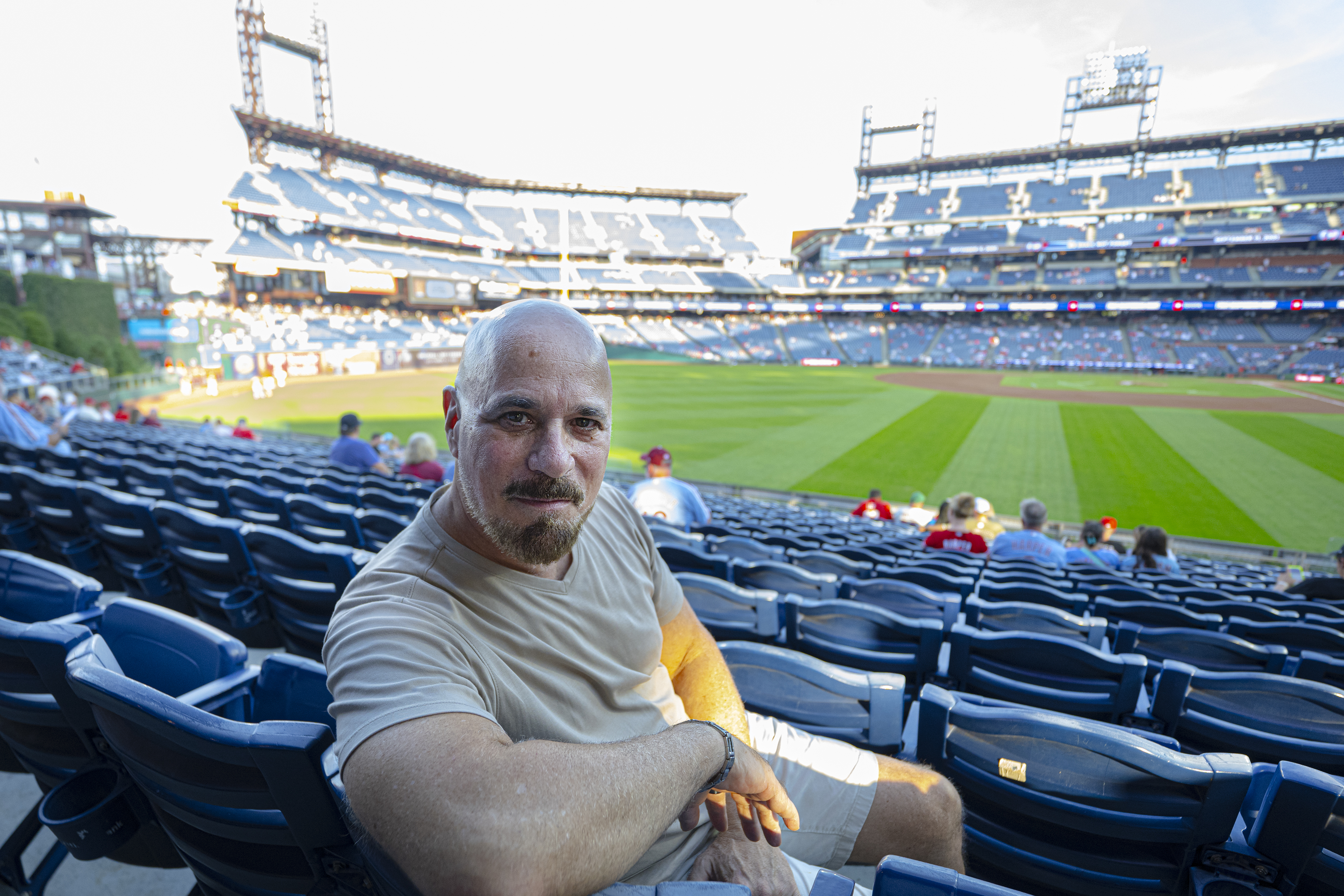
Greg Farnese, a television cameraman and musician, is photographed Wednesday, Sept. 10, 2026, at Citizens Bank Park in Philadelphia, where he works as a camera operator in left field. Farnese, a crooner, recently released his debut album, “Oh No, I’m in Love Again,” on Grammy-nominated Philadelphia pianist Orrin Evans’ Imani Records. Farnese also works as a Phillies television cameraman for NBC Sports Philadelphia, stationed nightly in the left-field power alley.Jose F. Moreno / Staff Photographer
‘The magician canceled, can you come down and sing a song?’
The album, whose polish belies that it was recorded in a single day at MorningStar Studios in Montgomery County, features Philly jazz players like drummer Leon Jordan Sr. and horn arrangements by trumpeter Elliot Bild.
Along with a delicate version of Johnny Mercer’s “Dream” accompanied by guitarist Paul Bollenbock, the album includes Green Day, Oasis, and Tears for Fears songs, all artfully rearranged to make familiar sound fresh.
It’s been a long road of confidence building for Farnese to work with a musician as accomplished as Evans, a three-time Grammy nominee who this spring was named artistic director of the Seattle Repertory Jazz Orchestra. (He’ll split his time between Seattle and Philly.)
Speaking between innings during a recent Phillies-Astros game — an 11-7 win, thanks to a Kyle Schwarber grand slam — Farnese calls Evans “so smart and honest, and a great pianist. It’s like having Quincy Jones in my corner.”
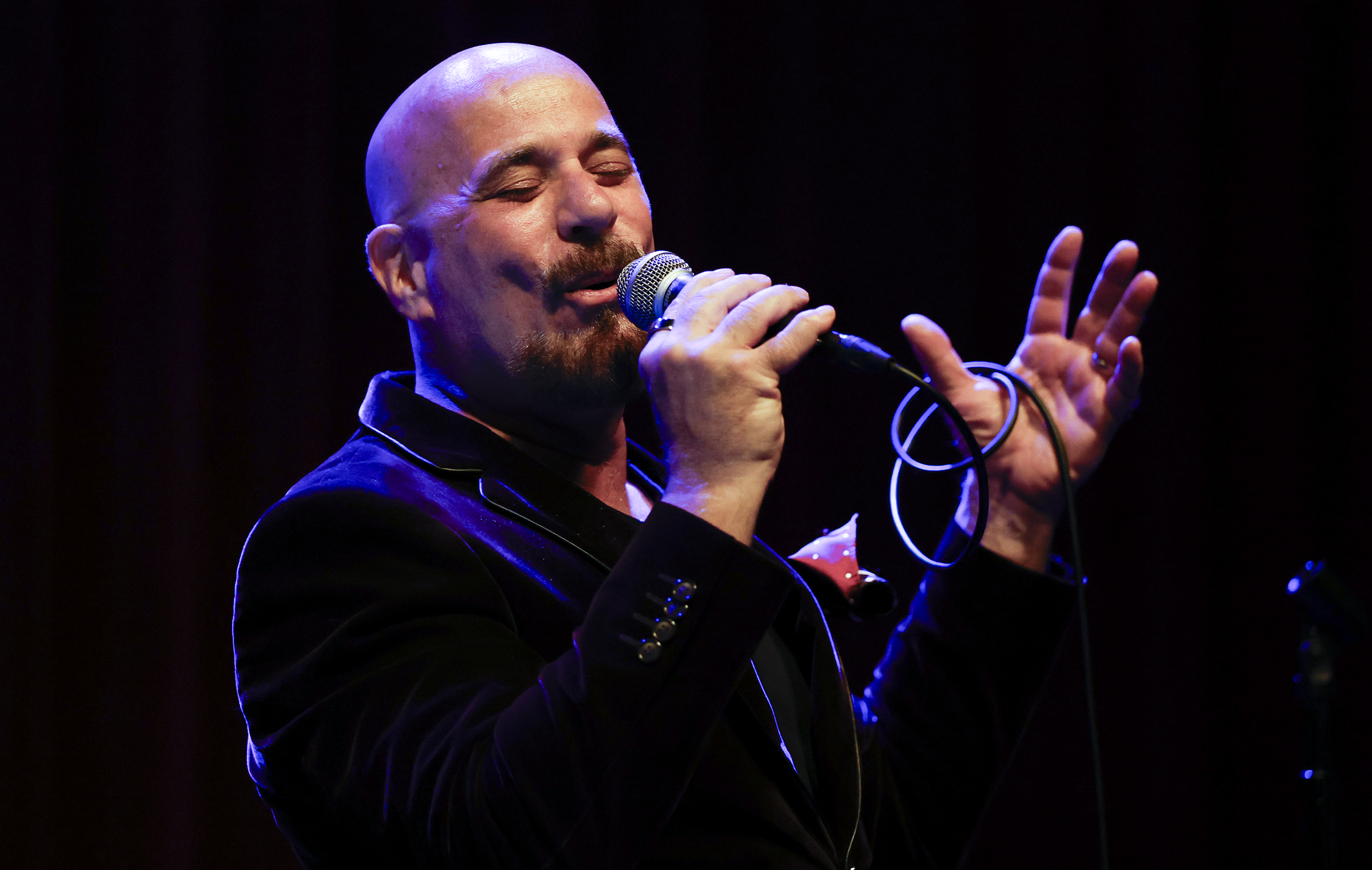
Greg Farnese (center) performs at the World Stage in University City on Sept. 18, 2026. Farnese just released his debut album, “Oh No, I’m in Love Again.”Yong Kim / Staff Photographer
“I started out singing in pizza parlors,” said Farnese, 62. “My wife is a psychologist and she used to work at nursing facilities. She called me one day and said, ‘The magician canceled, can you come down and sing a song?’
“I told her no, I’m not ready yet. She said, ‘Get the hell down here, just do it!’ I was afraid, and I was so self-conscious about being good.”
But as Farnese sang the 1940s standard “Moonlight in Vermont” to an elderly audience in Egg Harbor Township, he had a revelation.
“The two ladies in the front started crying. I was bringing them back to when they were young. That moment I realized that it wasn’t really about me. It was about the effect the music had on the audience. I saw them crying and I thought: This is what I want to do.”
Since then, Farnese has surrounded himself with first-class musicians and sung in area jazz clubs and private events, while also traveling for gigs in New York and Chicago.
Working with the Phillies suits his ambitions. Knowing his schedule months in advance, he books shows when the team is on the road.
“We’ve brought him on a couple of times to sing ‘Take Me Out to the Ballgame,’” said Phillies TV play-by-play announcer Tom McCarthy. “I love his energy. He just brings so much professionalism and creativity and knows how to get the crowd involved. He’s an entertainer.”
Farnese put an exclamation point on one of the Phillies most memorable wins this year.
‘What would Ray Charles do with a Green Day song?’
Evans wasn’t all that familiar with Farnese’s music before he decided to produce Oh No, I’m in Love Again and put it out on his label, home to artists like Philly keyboard player Luke Carlos O’Reilly and Los Angeles drummer Tina Raymond.
Choosing who to work with isn’t about “it has to be the best vocalist, or the best saxophonist. It’s if somebody asks me to help them, and I believe in them as a human being.”
Though he “wasn’t super-duper familiar with Greg’s singing,” Evans said, “I knew some of the people he was playing with. So I know this person doesn’t play with slouches, so he can’t be a slouch.”
The key to success in recording, Evans says, was trust.
“I just like working with people I like. And I know that if we can vibe off the bandstand, there’s no way we’re not going to vibe on the bandstand.
“One of the best things I can say about Greg is his desire and ability to learn. He has an inquisitive spirit. He’s not done evolving. I really love this record, and I’m excited for the next one because of him.”
“I love jazz and swing music,” Farnese said. “You know, Bennett, Bublé, Sinatra. That’s my wheelhouse. But growing up I was exposed to all these different styles. Everything from Simon and Garfunkel and the Beatles to Curtis Mayfield and Puccini.
“So I’m creating a vocal style that combines songs I really love in jazz arrangements. What would Ray Charles do with a Green Day song? What would Duke Ellington do with a Blood, Sweat & Tears song? I want to be my own artist that creates my own music in my own style.”
“I have a great job at NBC Sports Philadelphia. But when I got that tap on the shoulder, that was God saying. ‘This is not what you’re supposed to be doing.’ And being a middle-aged man, this is not a dress rehearsal. This is it. Now’s the time.”
Greg Farnese will perform Oct. 4 at Tim McCloone’s Supper Club, 1200 Ocean Ave N, Asbury Park, timmcloonessupperclub.com and Oct. 23 at the Exit 0 Jazz Festival, Cape May, exitzerojazzfestival.com.
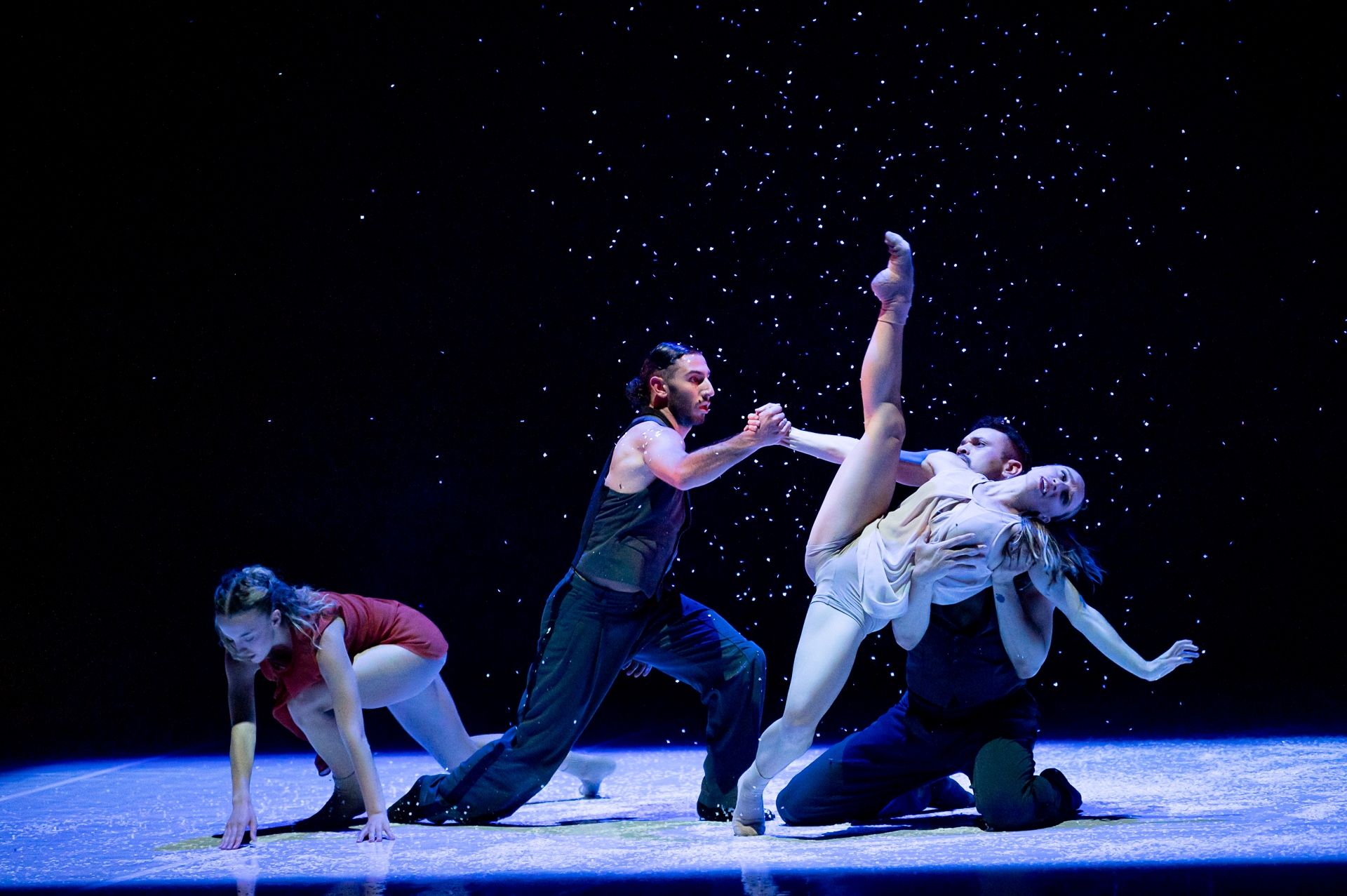
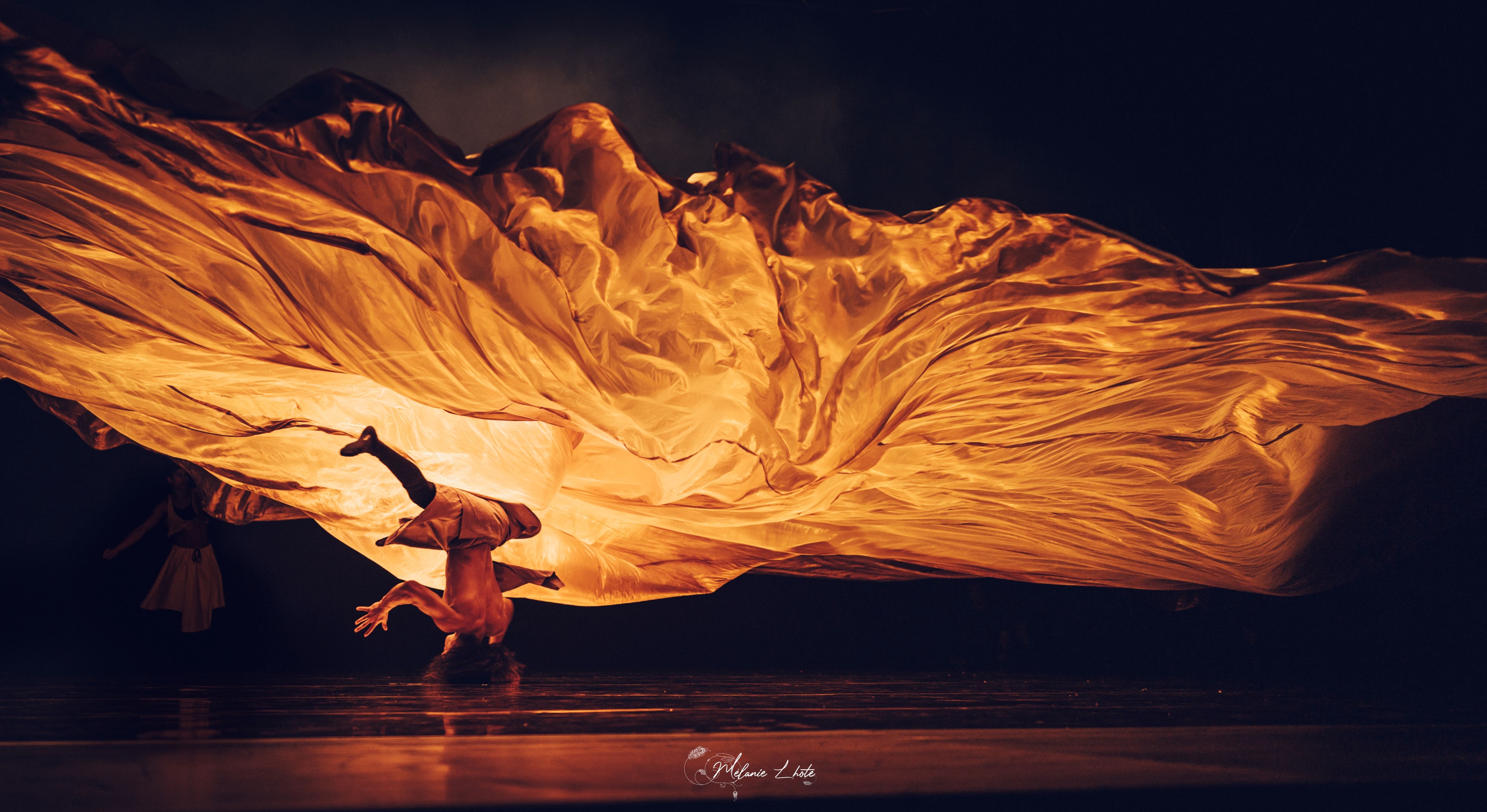
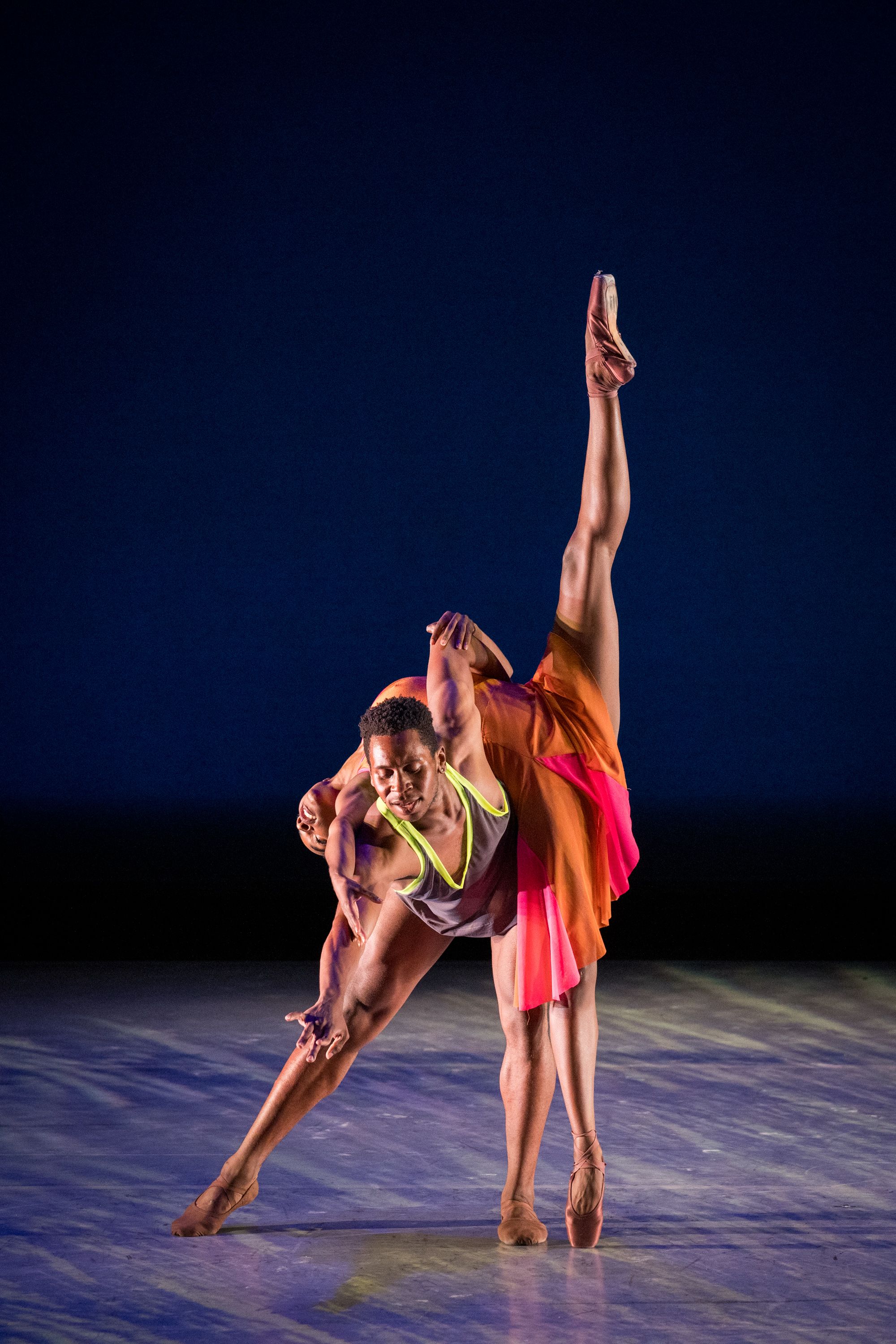
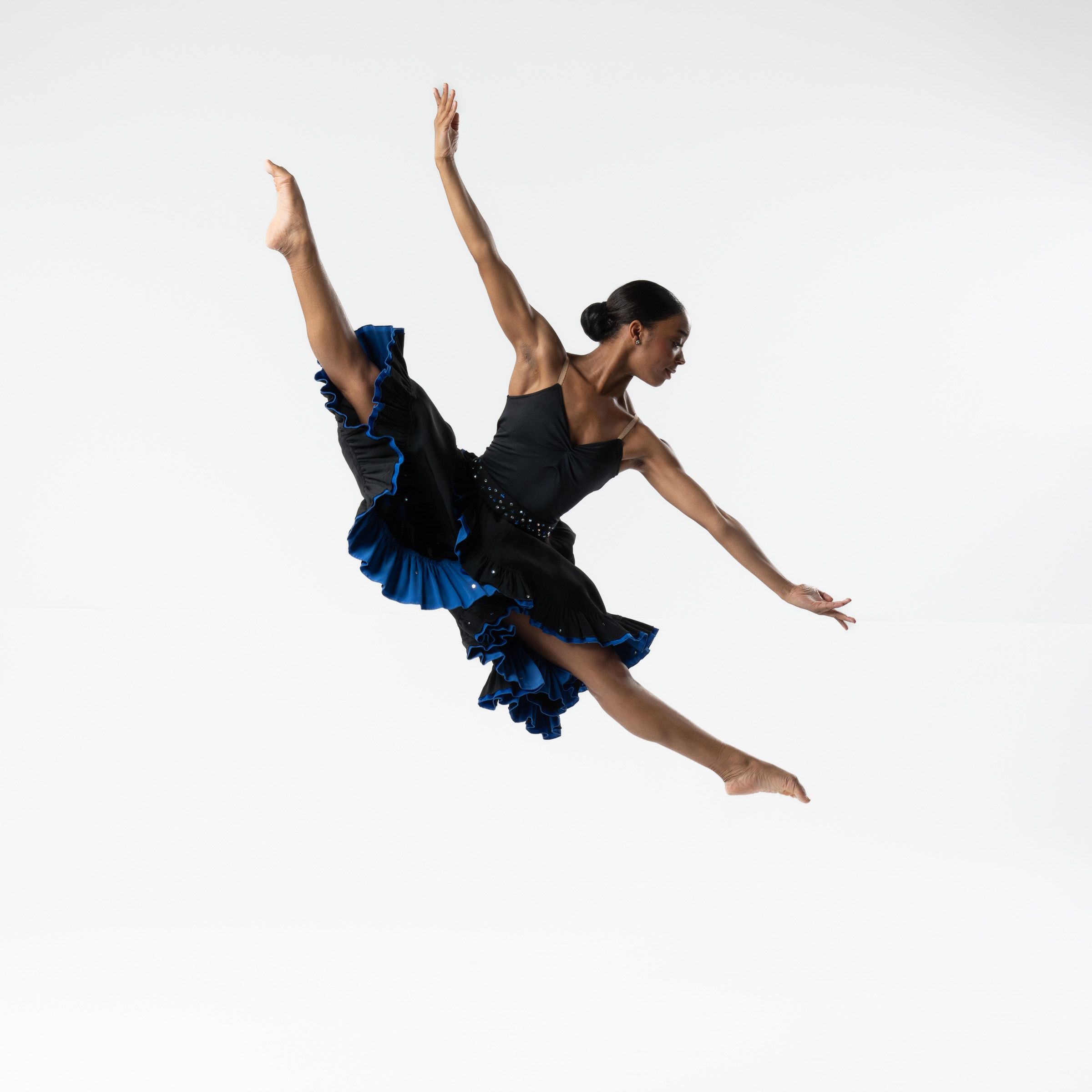
If you like your dance with a good soundtrack, there are a lot of fun options in Philly this fall.
Philadelphia Ballet will open its season with a celebration of America’s 250th anniversary, with its orchestra playing “The Stars and Stripes Forever” and other patriotic music and American classics. Philadanco will be dancing to the Sound of Philadelphia at the Kimmel Center in December. Ballets Jazz Montréal will visit the Annenberg with an homage to Leonard Cohen.
And, of course, holiday music will be back with the dance in December when Philadelphia Ballet brings back George Balanchine’s The Nutcracker. Plus, A Very SW!NG OUT Holiday is coming to the Annenberg, with a live band playing holiday favorites to the dance.
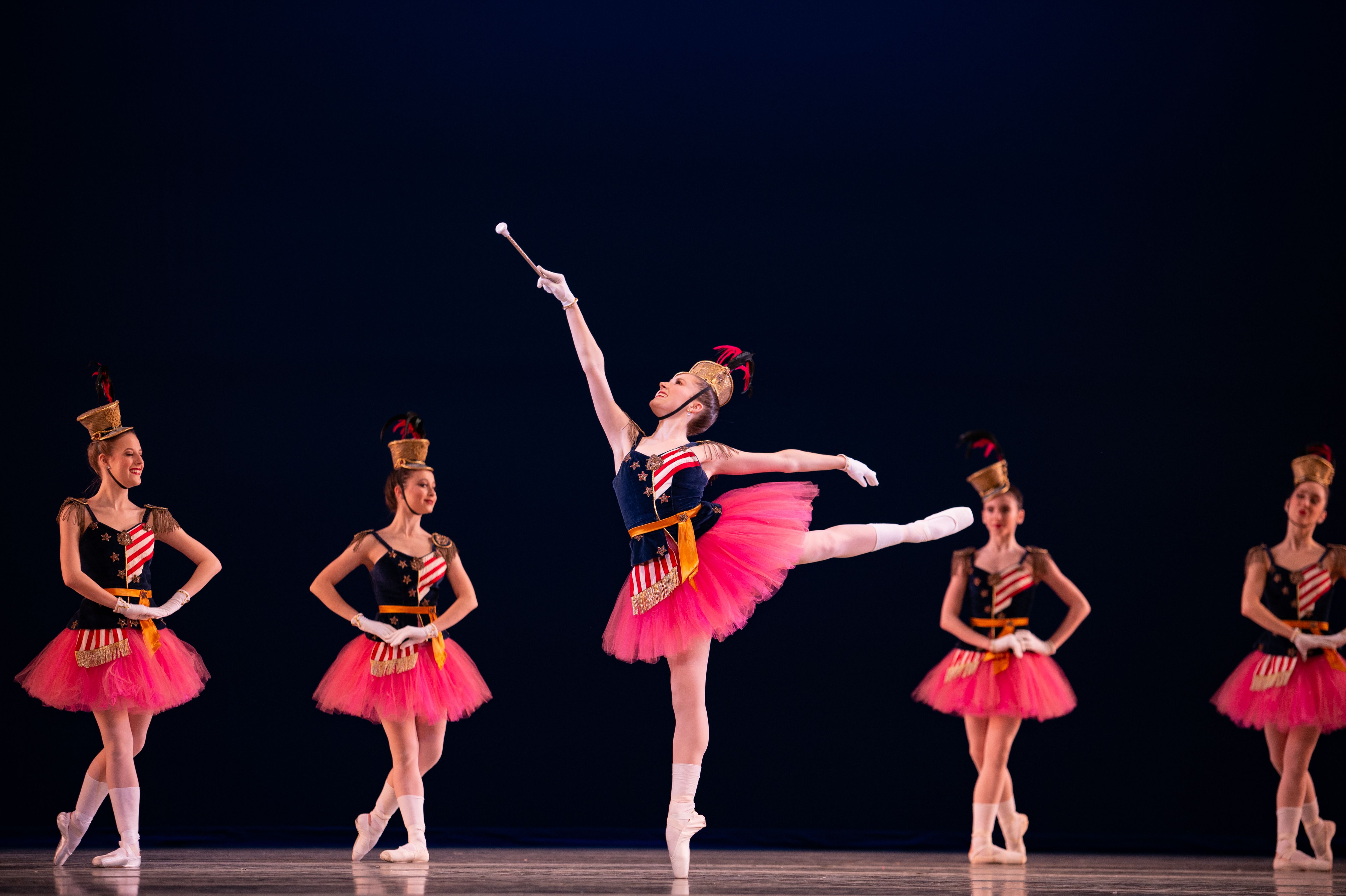
Philadelphia Ballet in George Balanchine’s “Stars and Stripes.”Arian Molina Soca / Philadelphia Ballet
‘Stars and Stripes Forever!’ Philadelphia Ballet
Oct. 8-11, Academy of Music
Most of the Semiquincentennial celebrations happened around July Fourth. But Philadelphia Ballet is continuing the party with its season-opening program. It will be dancing Jerome Robbins’ Fancy Free, George Balanchine’s Stars and Stripes and a concert version of Who Cares?,and Eliot Feld’s Variations on “America.” philadelphiaballet.org
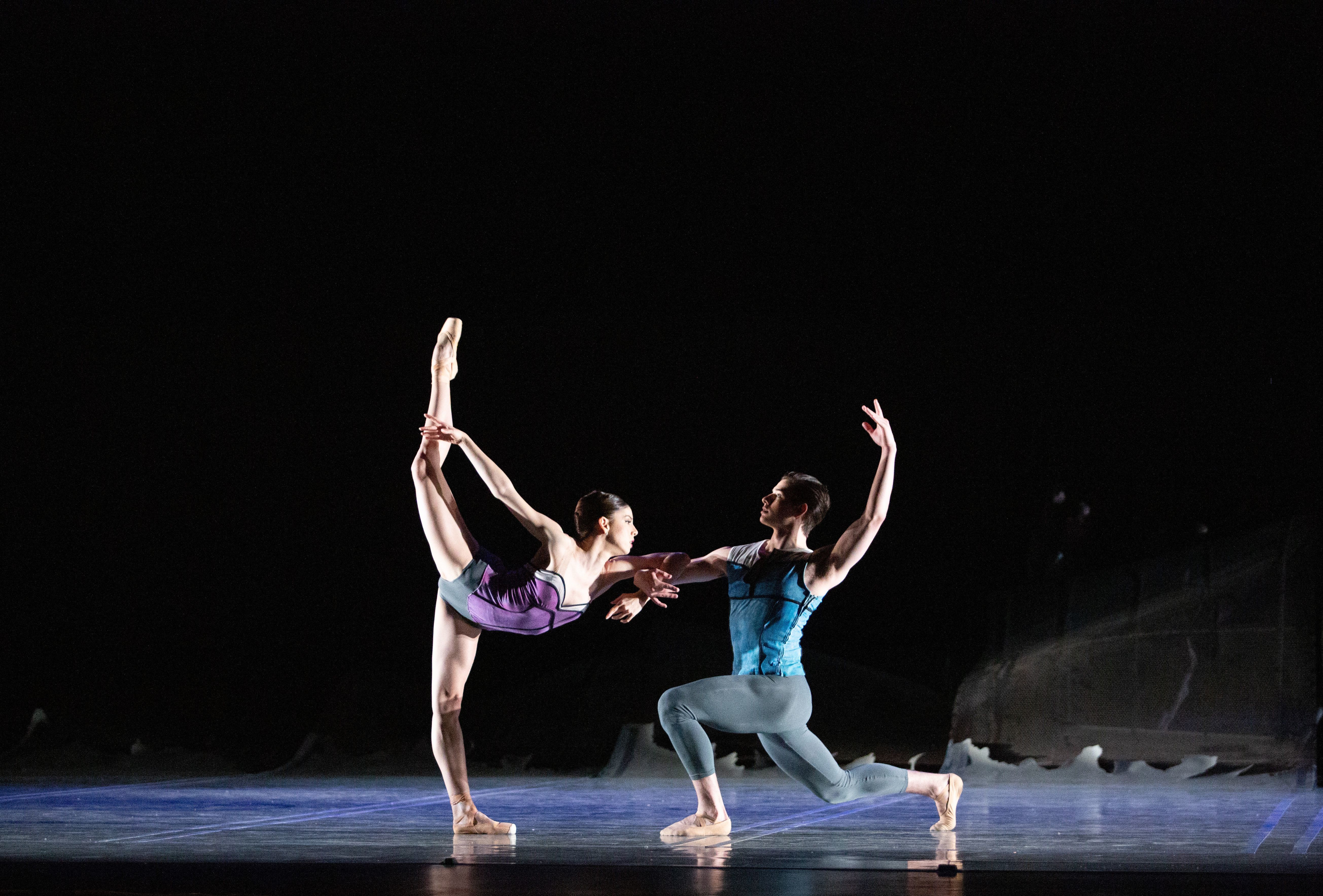
Philadelphia Ballet dancers Dayesi Torriente and Sterling Baca in Christopher Wheeldon’s “DGV.”Alexander Iziliaev
‘Dance at Great Velocity,’ Philadelphia Ballet
Oct. 15-18, Academy of Music
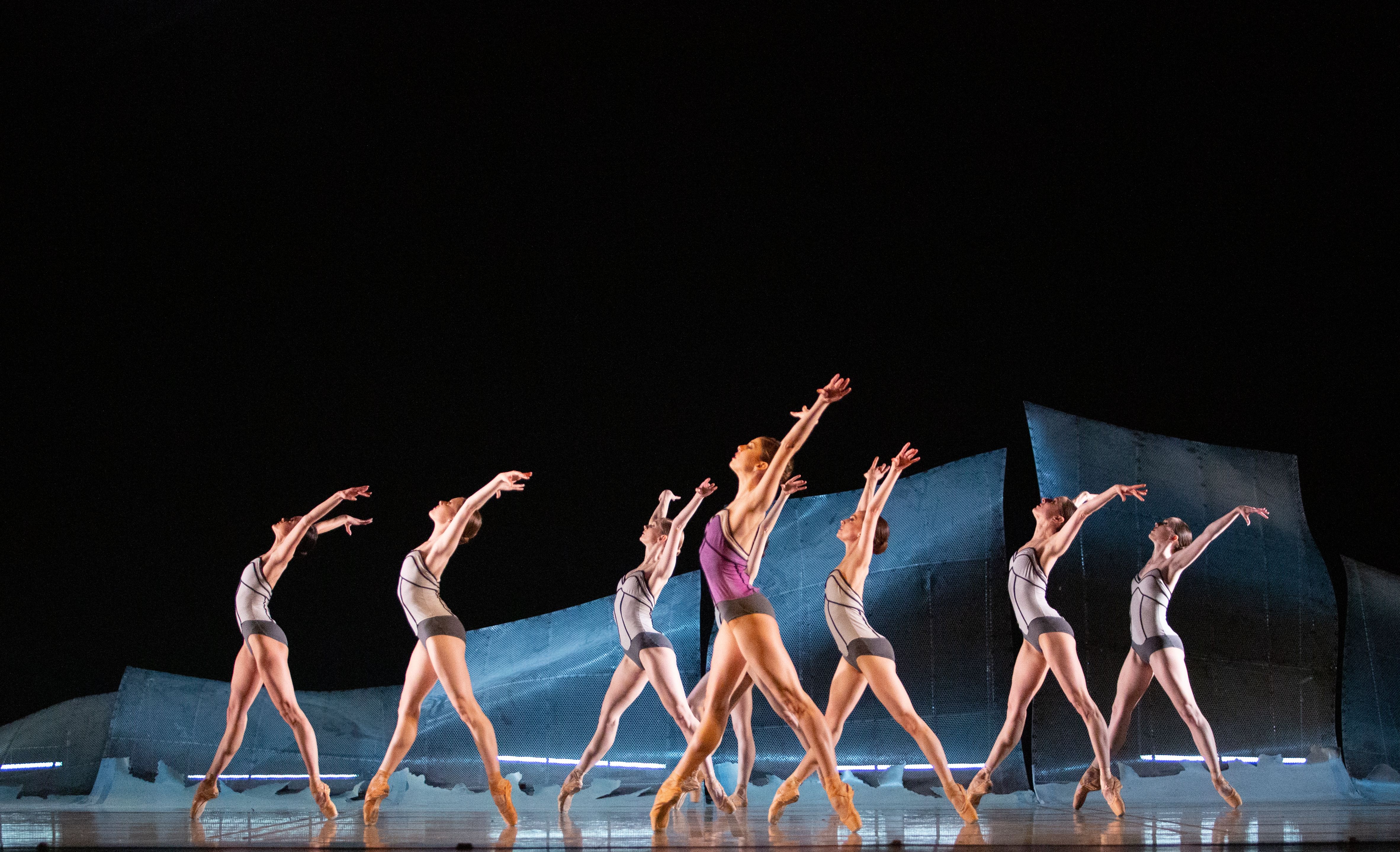
Just days after its season opener, Philadelphia Ballet returns to the Academy of Music for its second program, one that focuses on the power and speed of a ballet dancer. Of course, the challenge is not only to make it athletic, but to bring great artistry, as well. For this program, the ballet is bringing back Wayne McGregor’s Chroma, Christopher Wheeldon’s DGV: Danse à Grande Vitesse, and Twyla Tharp’s In the Upper Room.philadelphiaballet.org
Ballets Jazz Montréal in “Dance Me – The Music of Leonard Cohen.”Rolando Paulo Guerzoni / Ballets Jazz Montreal
Ballets Jazz Montréal
Oct. 23-24, Zellerbach Theatre
This Canadian company is stopping in Philly for the final tour of Dance Me, an homage to the late singer/songwriter Leonard Cohen, who had authorized the work. The work includes choreography by Annabelle Lopez Ochoa (a frequent BalletX collaborator), Andonis Foniadakis, and Ihsan Rustem. pennlivearts.org
Nrityagram Dance Ensemble in “KHANKHANĀ, The Sound of Dancing Feet.”Rajesh Krishna / Nrityagram Dance Ensemble
Nrityagram Dance Ensemble
Nov. 5-7, Zellerbach Theatre
This classical Indian dance company is returning to the Annenberg with the Philadelphia premiere of KHANKHANĀ, The Sound of Dancing Feet. It features three decades of works by artistic director and choreographer Surupa Sen, who specializes in Odissi, one of the nine Indian classical dance styles. pennlivearts.org
This French company is returning to Philadelphia with Sol Invictus, a work that focuses on love and peace. The style is a combination of contemporary dance, hip-hop, capoeira, and martial arts, and it is set to music by Mikael Karlsson, Steve Reich, and Maxime Bodson.pennlivearts.org
BalletX dancers Jared Kelly and Ashley Simpson in Amy Hall Garner’s “Switching The Groove.”Christopher Duggan / BalletX
BalletX fall series
Nov. 4-15, Suzanne Roberts Theatre
BalletX is revisiting Prohibition-era Philadelphia in its fall series, with a world premiere from New Zealand choreographer Loughlan Prior. The company mentions jazz, glamour, and danger. Sounds fun! It will also include the return of 2023’s Switching the Groove by Amy Hall Garner and last year’s In the Wake by Christian Denice.balletx.org
Philadanco will be performing “Sweet Agony” by Gene Hill Sagan in its December program.Philadanco
‘For the Love of Philly,’ Philadanco
Dec. 4-6, Perelman Theater
This season, Philadanco will be celebrating Philly’s Black culture legacy two ways: via its own history and through the Sound of Philadelphia. The program looks meaningful and highly entertaining, featuring world premieres by Rennie Harrisand Dawn Marie Bazemore, as well as Sweet Agony by Gene Hill Sagan, Promise Me You Won’t Call by company co-artistic director Tommie-Waheed Evans, and a reimagined version of Dwight Rhoden’s Tribute. The music will be from the Philadelphia International Recordscatalog and include songs from Patti LaBelle, Teddy Pendergrass, the O’Jays, and others. On opening night, the company will celebrate founder and artistic adviser Joan Myers Brown’s 95th birthday. ensembleartsphilly.org
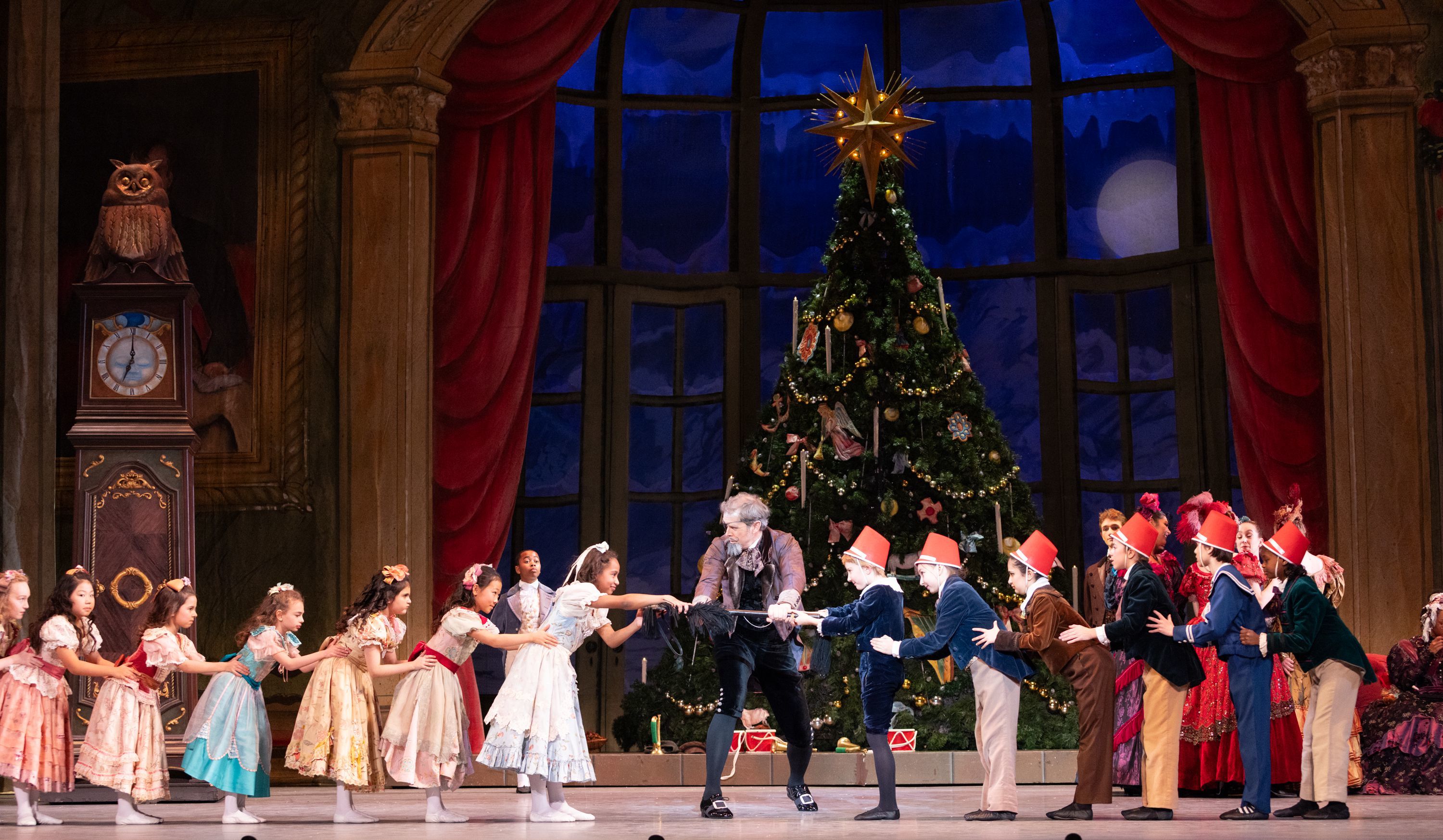
Philadelphia Ballet rehearsal director Charles Askegard, as Drosselmeier, along with students from the School of Philadelphia Ballet in the party scene in “George Balanchine’s The Nutcracker.”Alexander Iziliaev / Philadelphia Ballet
‘George Balanchine’s The Nutcracker,’ Philadelphia Ballet
Dec. 4-31, Academy of Music
If you’ve ever seen one ballet, chances are it’s The Nutcracker. If you’ve ever performed in a ballet, it’s likely The Nutcracker. If you ever felt like there’s one performance that really makes it feel like Christmas, it’s likely The Nutcracker. Philadelphia Ballet offers many chances to get that holiday spirit, with performances throughout most of December. The delightful children, Sugar Plum Fairy, snow on stage, and red-coated Philadelphia Boys Choir are fun to see every year. philadelphiaballet.org
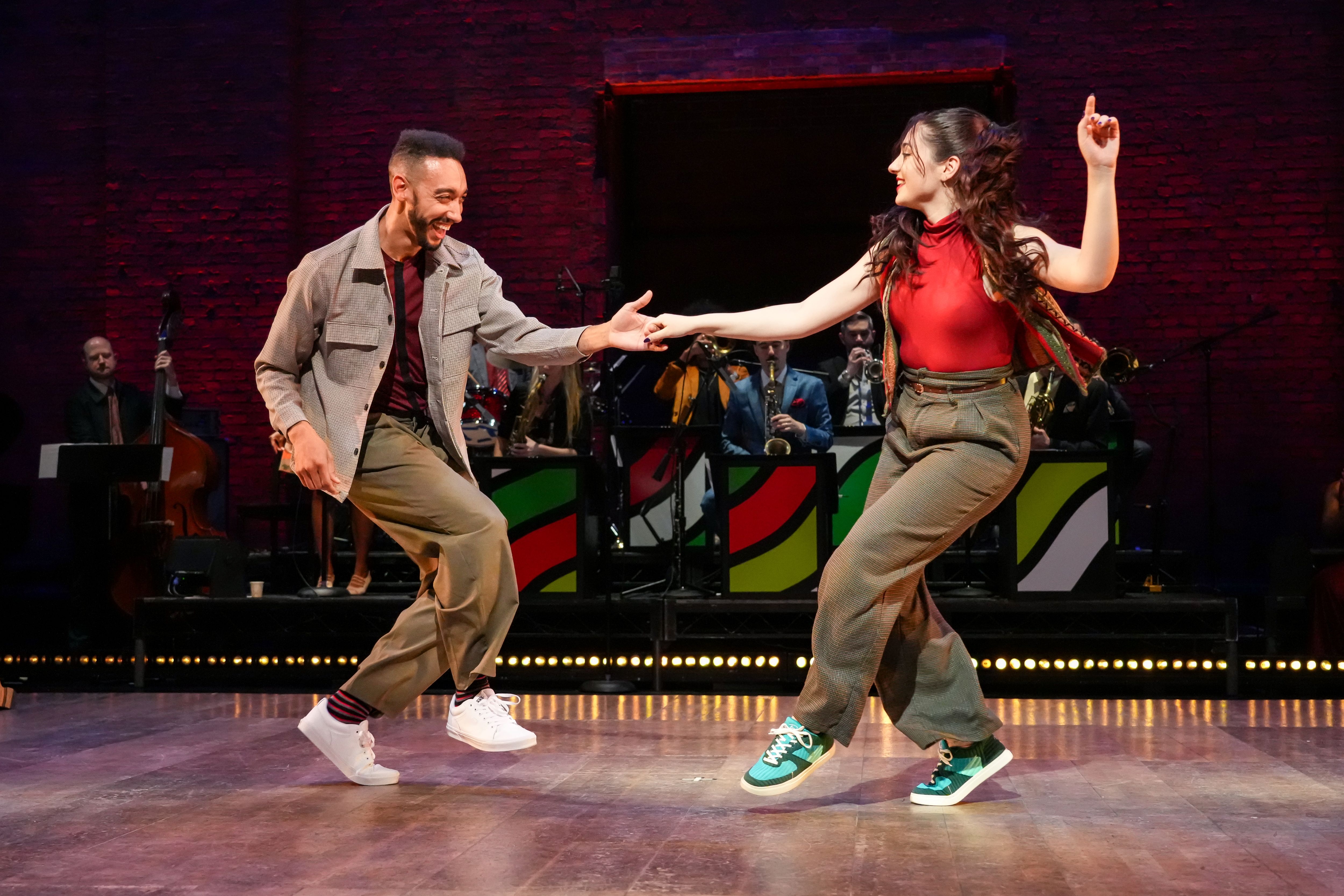
“A Very SW!NG OUT Holiday.”Steven Pisano / Sw!ng Out
‘A Very SW!NG OUT Holiday’
Dec. 11-12, Zellerbach Theatre
If you’d like a different type of Christmas dance show, choreographer Caleb Teicher is bringing some holiday Lindy Hop, based on the show SW!NG OUT, which visited the Annenberg in 2023. The show also features holiday music played live by the Eyal Vilner Big Band.pennlivearts.org
What often gets called cobblestones on old Philadelphia streets are actually Belgian blocks. But no, the neat rectangles cut so they can fit tightly together did not come from Belgium. They came from nearby quarries, often from the New Hope area.
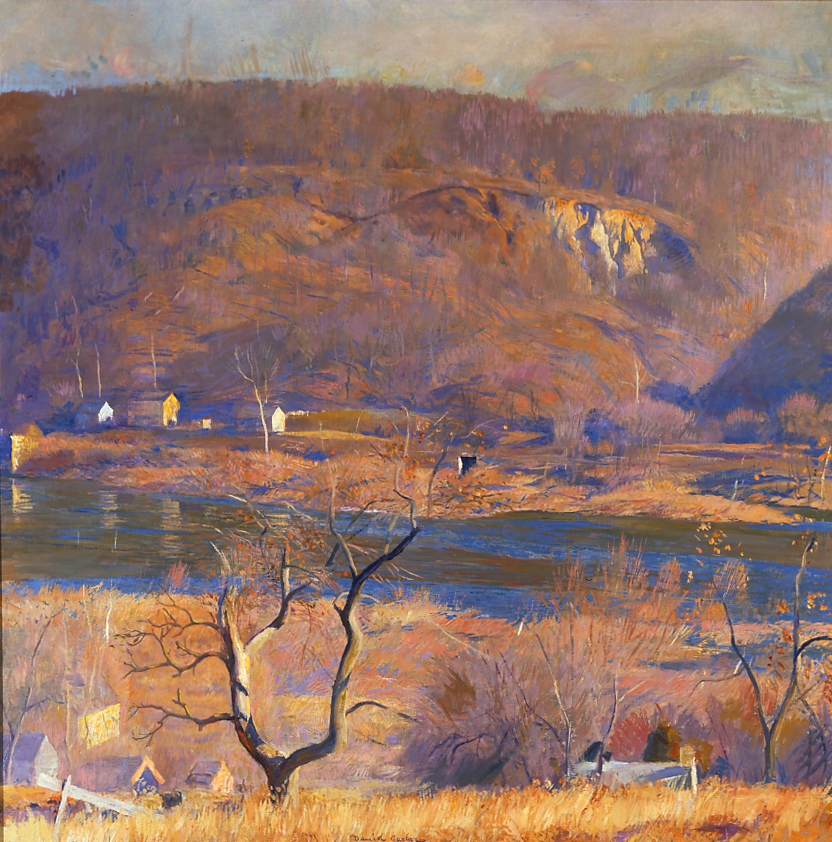
Apart from the city’s architecture, Bucks County’s stones have also shaped the Pennsylvania Impressionism movement that flourished in the first half of the 20th century. New Hope, with its location on the Pennsylvania-New Jersey border, right by the Delaware River, was home to several artists who could afford to buy homes in the area, commute easily to Philadelphia to teach in art schools like the Pennsylvania Academy of the Fine Arts, and easily get to New York for shows and other networking opportunities.
“The land was pretty cheap at the time, and artists could move into an old industrial mill or buy a property for not a lot of money. They could also escape urban life and get out into the country. It was just a really beautiful landscape, so people wanted to live in that area,” said Laura Igoe, chief curator at Doylestown’s Michener Museum and curator of the museum’s ongoing “Abstractions of Nature: Quarries and Industry in Pennsylvania Impressionism” show.
The artists Edward Redfield and William Lathrop, Igoe said, were the first artists to settle in the area around 1900. Their works are a part of the show. Daniel Garber, who studied and taught at PAFA, soon followed them into the area and became one of the foremost artists living in New Hope. Then his students started moving to the area.
“It was kind of like this self-perpetuating colony in a way,” said Igoe, “There was a very active artistic community there at the time, and also a lot of quarries.”
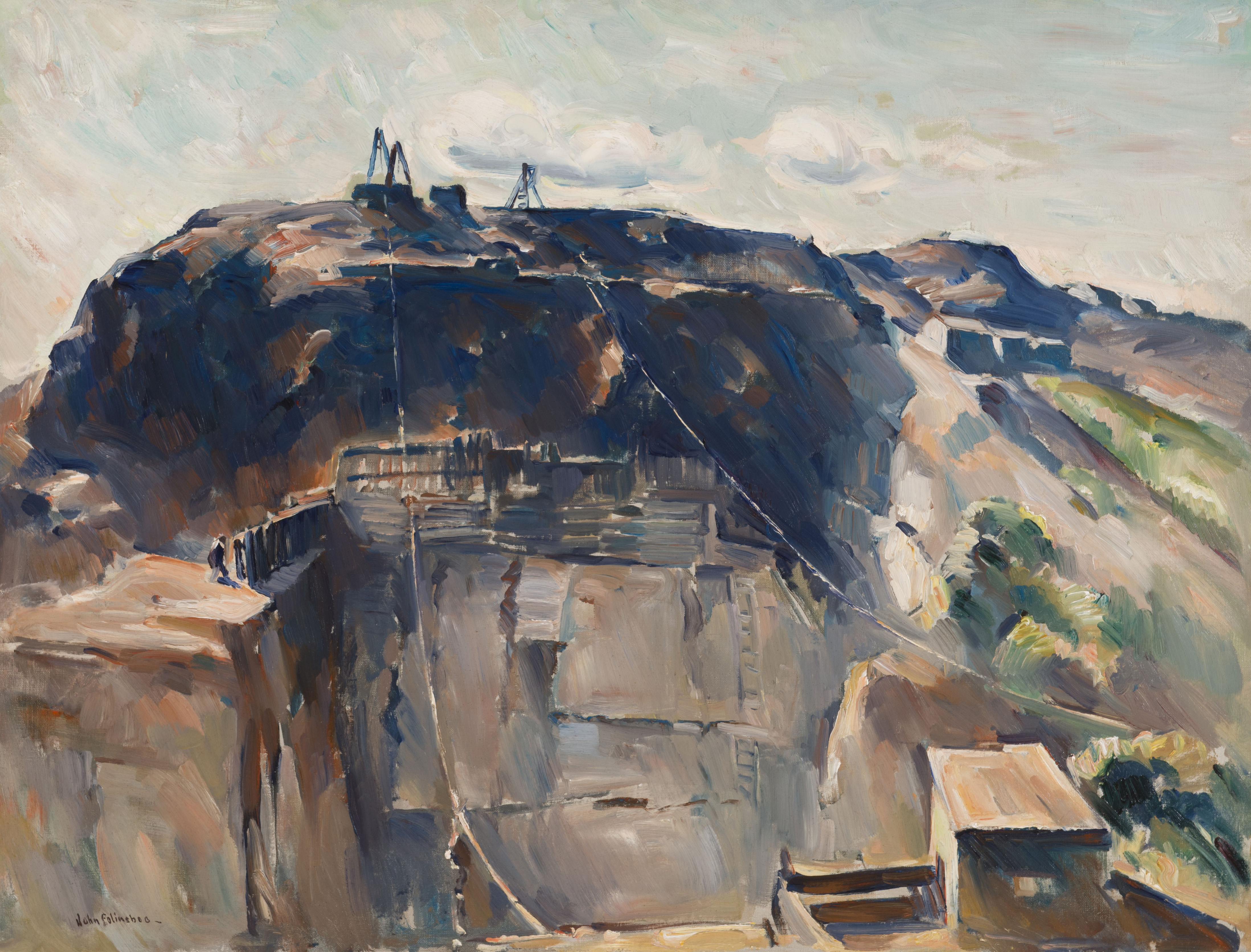
John Folinsbee (1892-1972), “Slate Quarry, Bangor,” 1929. Oil on canvas, 32 x 40 inches. Courtesy of the Woodmere: Gift of the John F. Folinsbee Art TrustCourtesy of the Michener Art Museum
Pennsylvania Impressionism by way of Europe
At the time, there was a new interest in abstraction and Postimpressionism coming from Europe. Cezanne, particularly, was a big influence on some of the New Hope artists who often traveled to Europe and painted in the style of Impressionists like Monet. The Philadelphia art collector Albert Barnes even collected Cezanne paintings where the artist paints abandoned quarries, including Bibémus Quarry (Carrière de Bibémus) (1895).
Like most Impressionists, the New Hope artists painted landscapes en plein air — outdoors, amid nature, directly drawing from subject matter. Naturally, the quarries that were a part of the landscape made it into the paintings and now form the focus of the exhibition.
“But while in Europe Impressionism was a much more avant-garde style, it became kind of the style of the academies in the United States,” said Igoe, “so this was what was taught at places like PAFA.”
“They emphasized capturing effects of light and atmosphere,” said Igoe, “really quick brushwork, quick application of paint.” Many of the artists, she said, were painting landscapes early in the morning or in the evening, painting sunrises and sunsets. “There’s frequently this shimmering sense of light in a lot of these Pennsylvania Impressionist paintings,” she said, “It is this really beautiful reflection of light off the stone that they’re trying to capture.”
Igoe considers 1900 to the 1930s as the peak of Pennsylvania Impressionism, with the 1915 Panama Pacific Exposition in San Francisco being a highlight. Many of the New Hope Impressionists exhibited their work in the show.
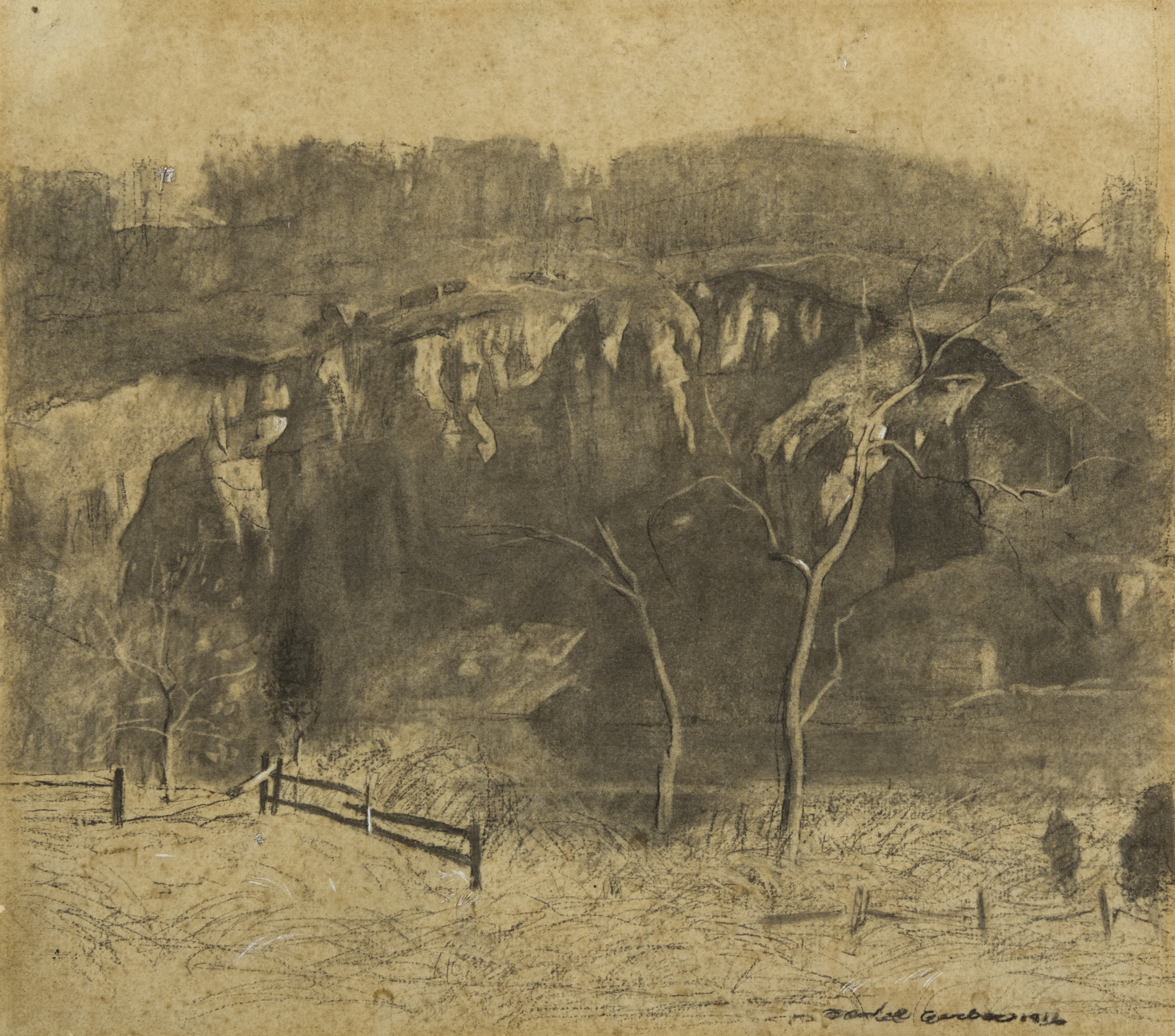
Daniel Garber (1880-1958), “Abandoned Quarry,” 1916. Charcoal on paper, 10 ¼ x 12 1/8 inches. James A. Michener Art Museum. Michener Art Endowment Challenge Gift of Mr. Herbert WardCourtesy of the Michener Art Museum
Redfield, notably, had a full room dedicated to his art; “which was an honor that was bestowed upon the likes of John Singer Sargent and Childe Hassam,” said Igoe. Many of the artists won medals at the show “and it led to them being proclaimed by some critics as the most American school of painting at the time,” said Igoe.
“They painted the landscape of the New Hope area, and they painted in this, what was considered at the time, bold … in this very masculine style. We might not think of Impressionism that way today, but it was considered a very national style for the United States.”
The artists continued to exhibit under the name of the New Hope Group, and their work was collected by museums across the country. Several women artists were members of the group. Together, they founded the Phillips Mill Community Association in 1929, which remains active as an exhibition venue.
“The Michener Art Museum was really founded to preserve the legacy of those artists. Especially in Bucks County, those artists have always been well known. But Michener was founded so more people could learn about these artists and preserve their legacy and collect their work,” Igoe said.
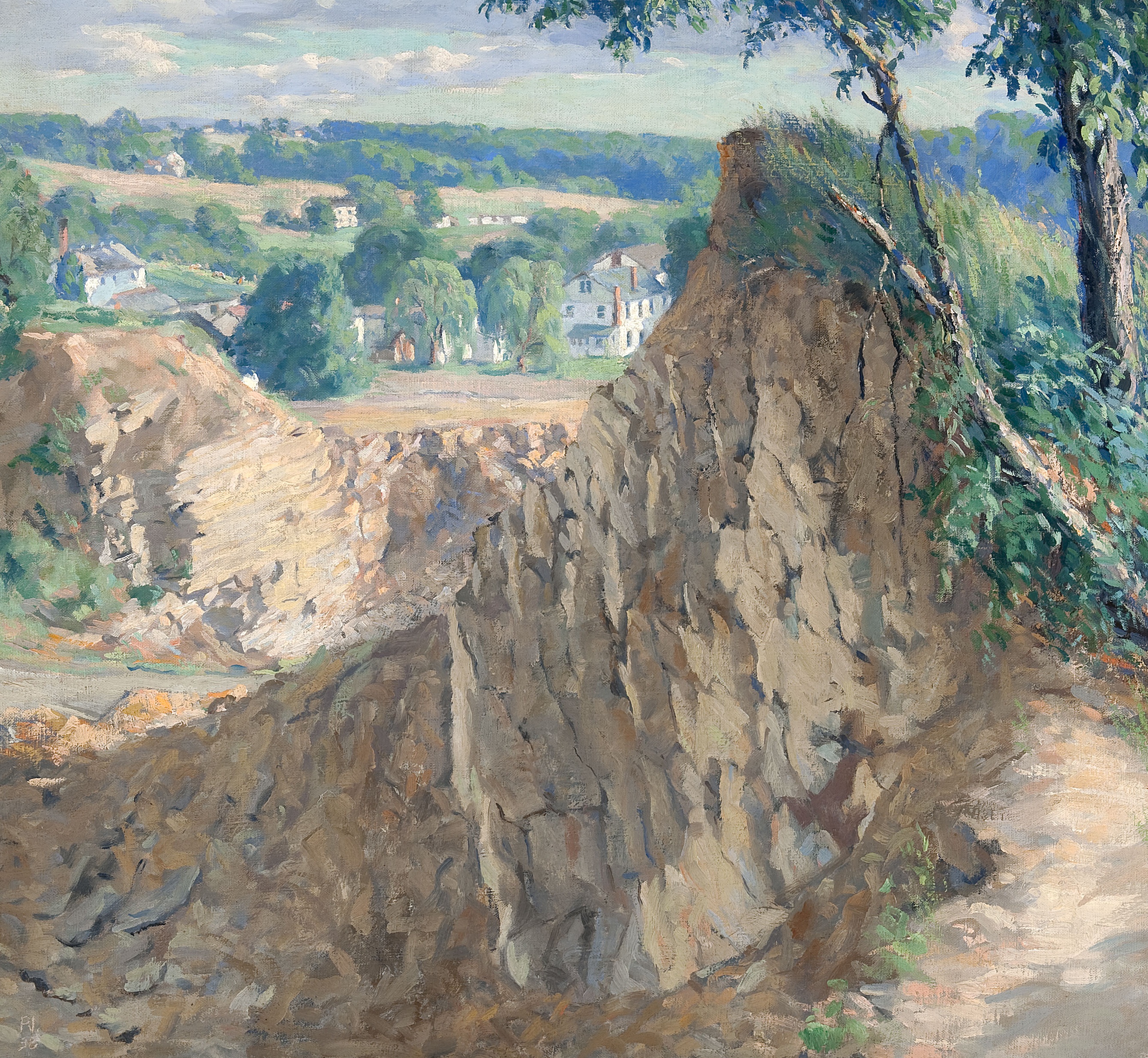
Roy C. Nuse (1885-1975), “The Quarry at Rushland,” 1938. Oil on canvas, 22 x 24 inches. Courtesy of the Woodmere: Museum purchase, 2012Courtesy of the Michener Art Museum
Why paint quarries?
The artists, Igoe said, weren’t always painting exact reproductions of the nature around them, so they had the option of omitting the quarries from their art. “But they frequently chose to include these quarries,” she said, “and that led me to this exhibition where I wanted to look a little more closely at these paintings and think about why artists were so drawn to this subject.”
Firstly, she thinks, the quarries added a drama to the landscape of New Hope that was attractive to the artists. Comparing quarries to the Grand Canyon, Garber said in an interview that they were “on a scale commensurate with the canvas,” said Igoe.
“So you can include these dramatic rock faces, but it doesn’t overpower the canvas in the way the Grand Canyon can. You can’t get the Grand Canyon on a canvas, but you can get a quarry,” said Igoe.
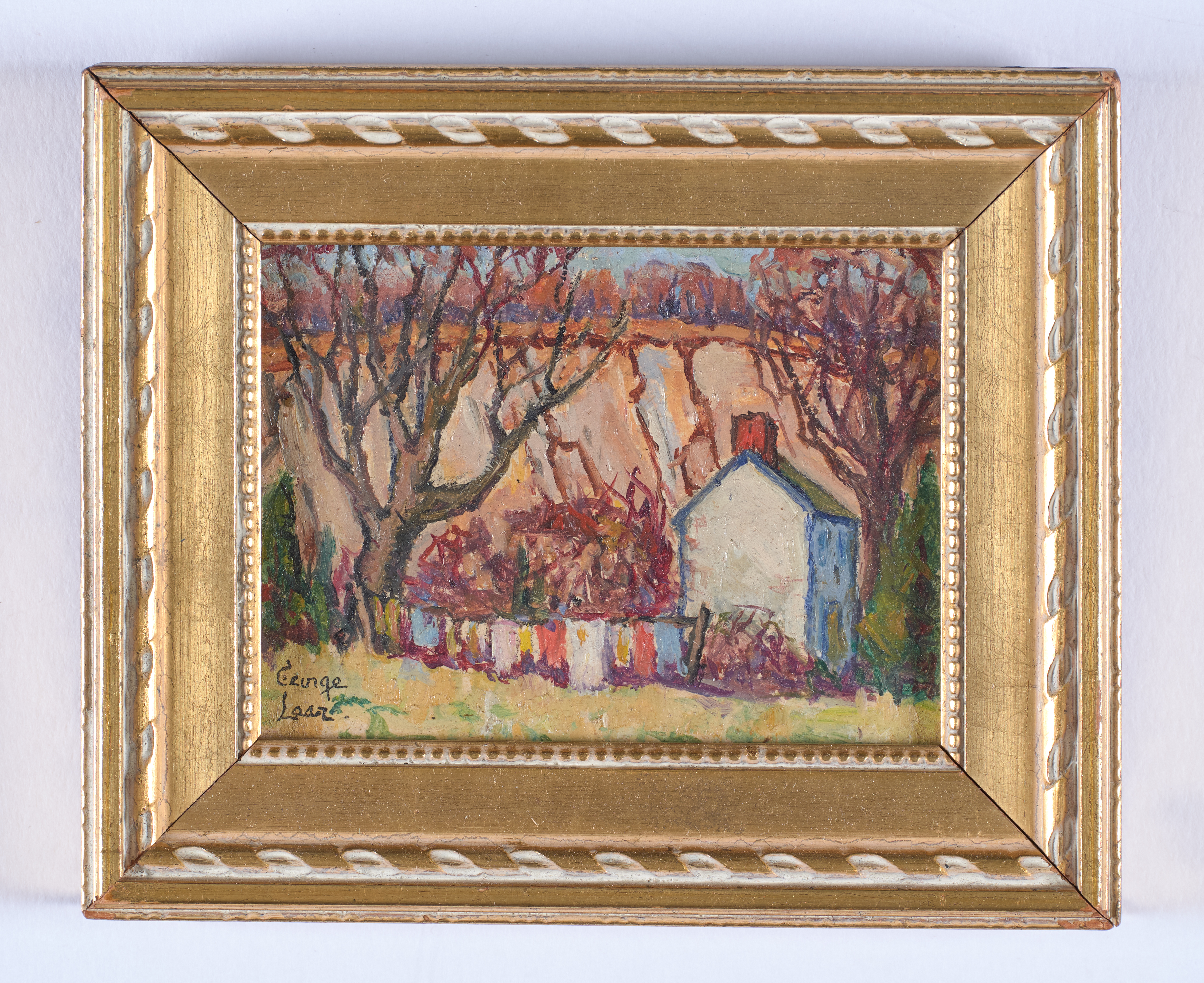
George Lear (1897-1956), “Quarryman’s House,” ca. 1930-1950. Oil on board, 2 5/8 x 3 ¾ inches. James A. Michener Art Museum. Gift of Drs. Irwin and M. Susan RichmanCourtesy of Michener Art Museum
The way the light at different times of the day and year reflected off the stones also inspired the artists, as did the geometric forms of the rock face that often inspired the artists to play with abstraction.
“They were also interested in this human impact on the natural world, the way humans could excavate these rocks, from the landscape, I think was appealing to them,” said Igoe.
Show highlights
Many works in the show portray factories, smoke, and industrialization without much critical commentary, but Garber’s Harmonville (1925) shows a landscape near Conshohocken. To Igoe, it is “one of the artworks in the show that is the most critical of industry.” A sickly tree in the foreground of the print, she said, is perhaps Garber’s way of saying “that this industry can be really destructive to nature too.”
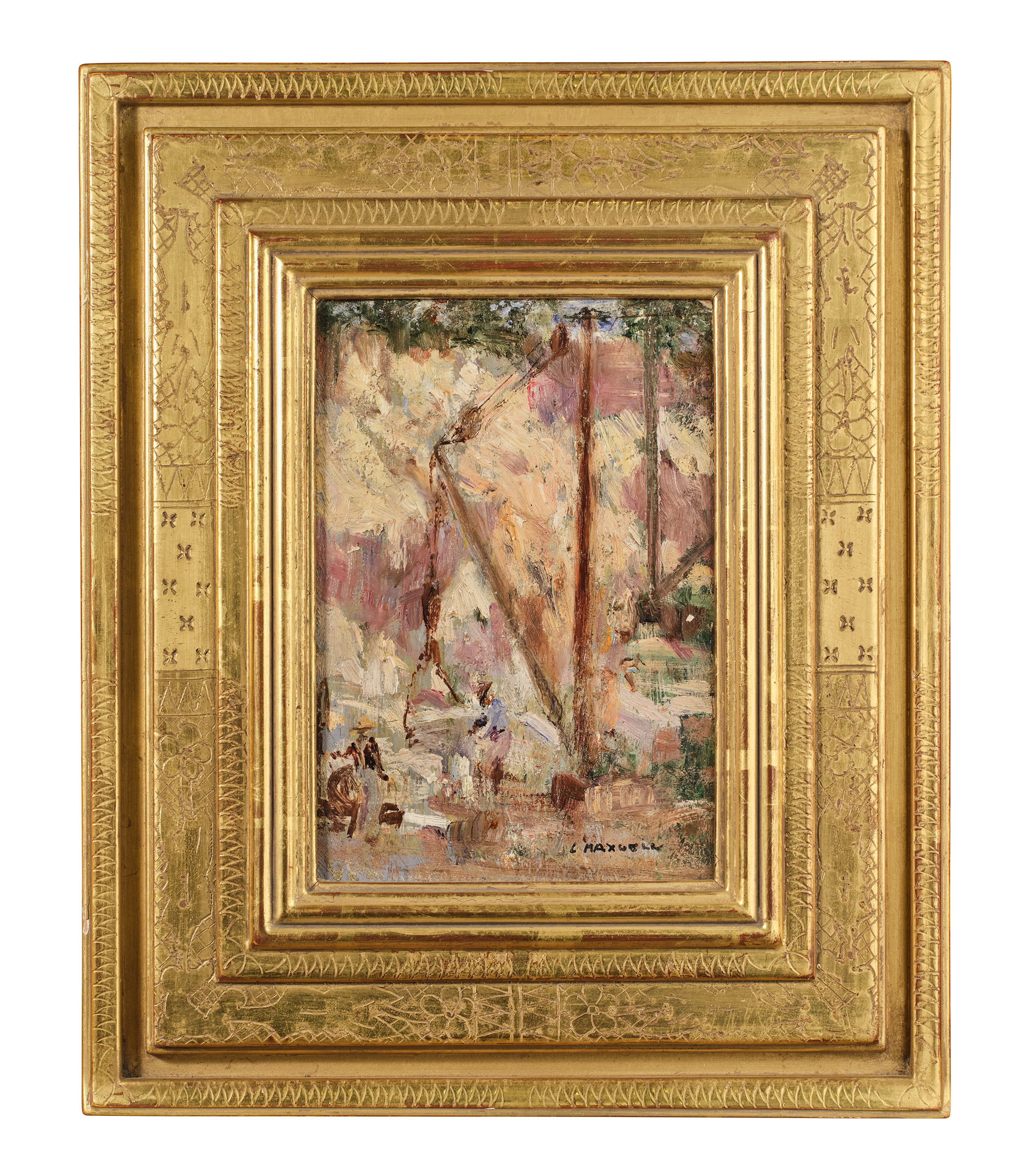
Other artists in the show include Letitia Maxwell Ely, the lone woman artist in the mix, who was one of Garber’s students. “I just wasn’t finding a lot of paintings of quarries by women artists. I am not sure if it’s because it’s perceived as a more masculine subject,” said Igoe. But Maxwell Ely’s work, she said, stands out in the way the artist paints in proximity to the quarries. Masters like Garber, Igoe said, took a distant view of the quarries, not usually engaging with the human labor at the quarries.
Letitia Maxwell Ely (1886-1967), “Quarry,” 1914. Oil on board, 8 x 5 inches. James A. Michener Art Museum. Gift of David B. Long.Courtesy of the Michener Art Museum
But Maxwell Ely, whose work was much smaller in scale, “brings you right into the quarries themselves in those little paintings, and she is more interested in the labor.” In works like Quarry (1914), there are no sweeping vistas, but a more zoomed-in perspective at life of those working in the quarries.
“There’s not a lot of work known by her that’s still available. She’s an artist that I wish we knew a little bit more about, but she didn’t leave a very large body of work behind,” said Igoe.
Among the other highlights of the show, according to Igoe, is a postcard-sized painting The Quarryman’s House by the artist George Lear. Another artist is Roy Nuse who lived by the Rushland quarry and painted that quarry many times throughout his life. “Nuse has this reputation as being somewhat of a homebody, he painted things close to his home,” said Igoe. “I just found it interesting that there was a quarry close to his home, and he painted it in all different seasons, in the winter and spring. And I think he really enjoyed the shapes that the quarry provided as well.”
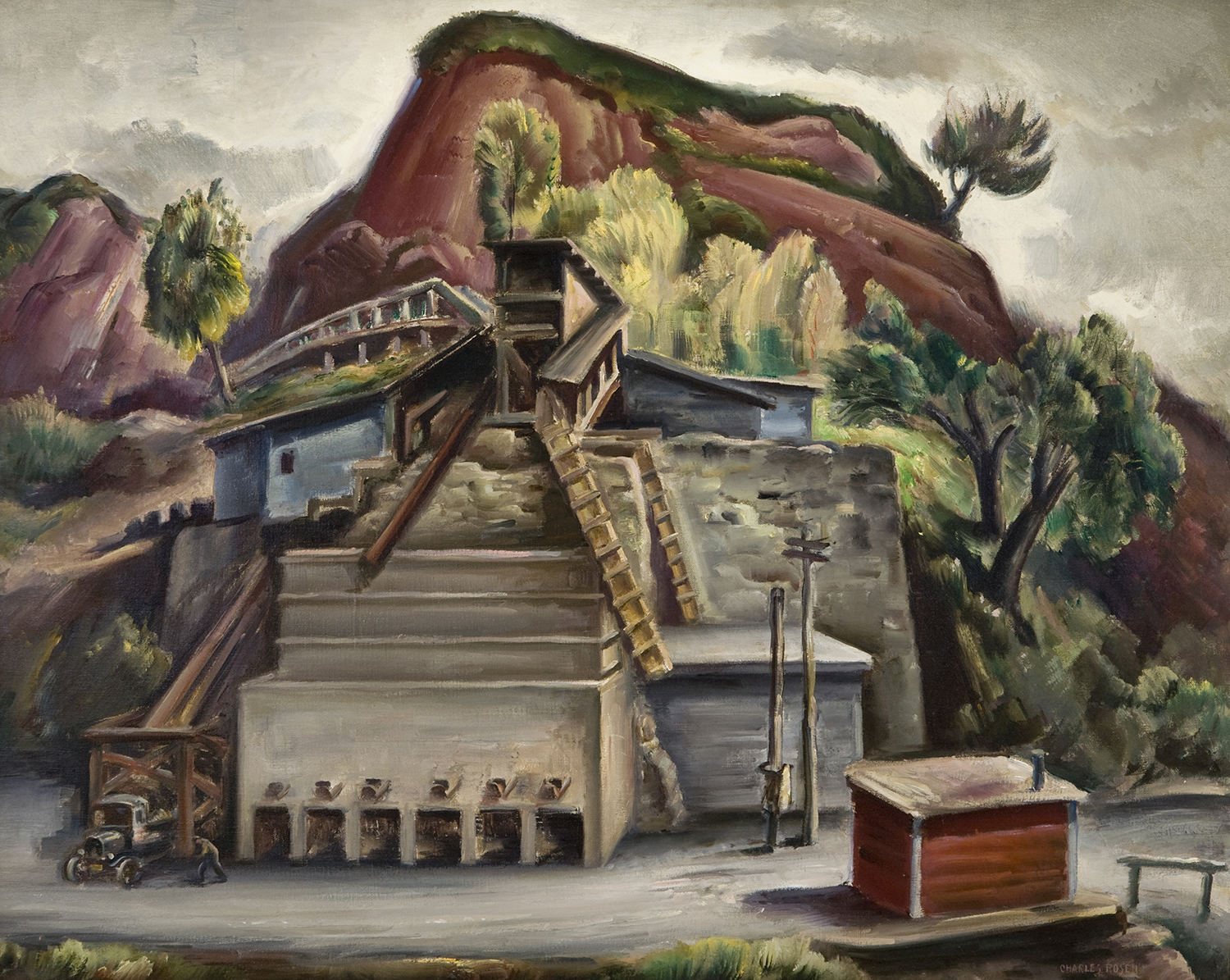
Charles Rosen (1878-1950), “Quarry and Crusher,” early 1930s. Oil on canvas, 32 x 40 inches. James A. Michener Art Museum. Museum purchase funded by George C. Benson in honor of his friend, John Horton.Courtesy of the Michener Art Museum
Charles Rosen, another artist in the show, started his career being an Impressionist but moved onto more avant-garde European styles after moving to Woodstock, N.Y.
Pennsylvania Impressionism eventually dwindled as a movement around the 1940s as public interest shifted to more modern, abstract art forms. Some of the quarries depicted in the show remain active, some are overgrown, and some are part of protected land along the Delaware River.
Igoe’s colleagues have even picked up some rocks from nearby quarries that, with the art, will also be a part of the show.
So visitors can touch and feel the stones that they have walked over thousands of times. Stones that, with their jagged faces and smoothened ends, have witnessed artists’ curiosities and have gone on to outlive the hands that painted them.
“Abstractions of Nature: Quarries and Industry in Pennsylvania Impressionism” runs through Feb. 28, 2027. Michener Art Museum, 138 S. Pine Street, Doylestown, Pa. 18901. michenerartmuseum.org
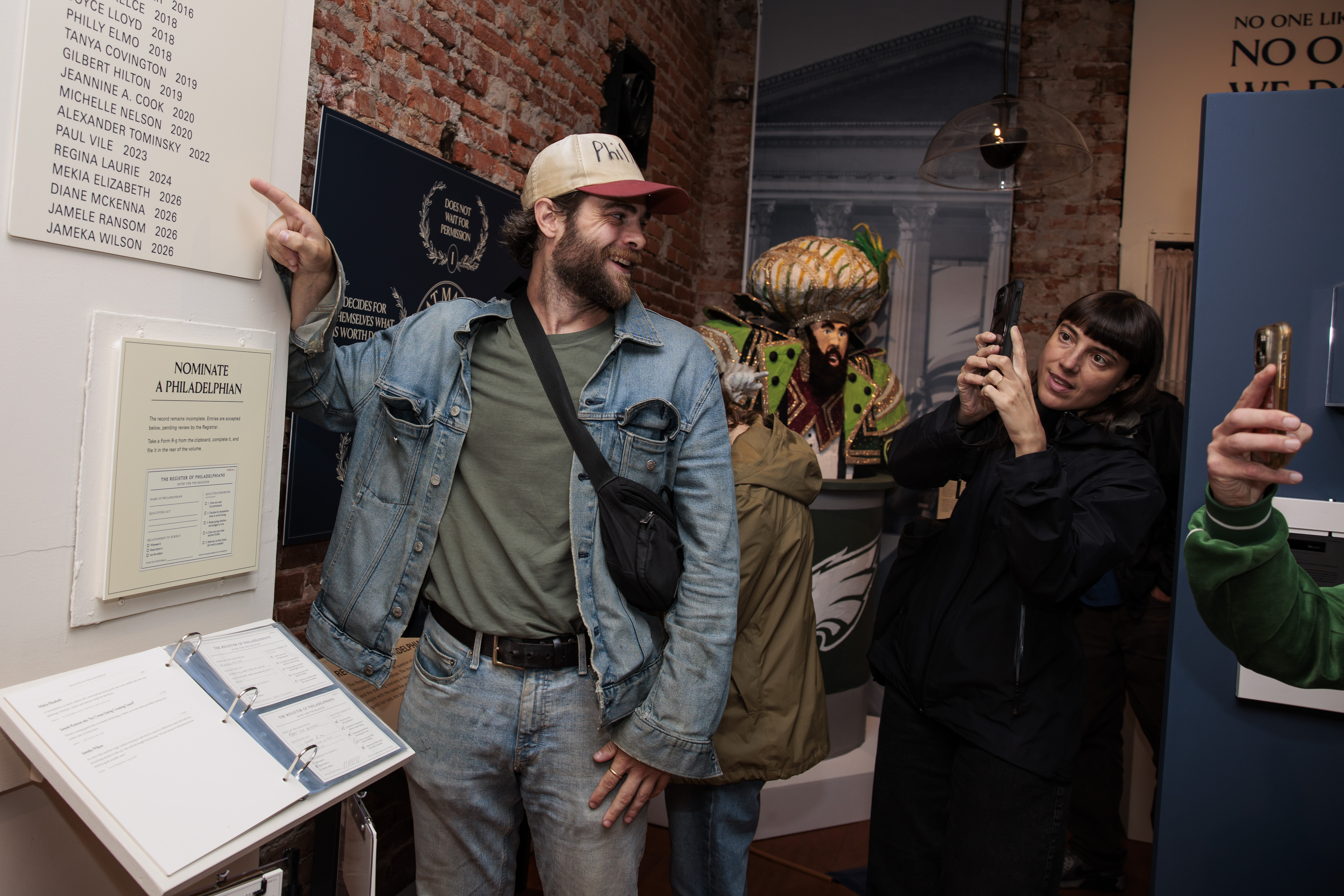
Alexander “Chicken Man” Tominsky walked into the Museum of the Philadelphian in a Canadian tuxedo and a baseball hat with “Phillies” written on it in marker on Tuesday and was blown away to find his name on a plaque alongside other local legends like Benjamin Franklin and Philly Elmo.
“No way! Oh my gracious! Who would have known when I was a little kid crying in my pillow something like this would happen,” he said, pointing to his name.
Tominsky — who became renowned throughout the land in 2022 for eating 40 rotisserie chickens in 40 days, culminating with a public noshing of a chicken on an abandoned Walmart pier in South Philly — was invited to a preview opening for the museum by its founder and creator, Brian Adoff.
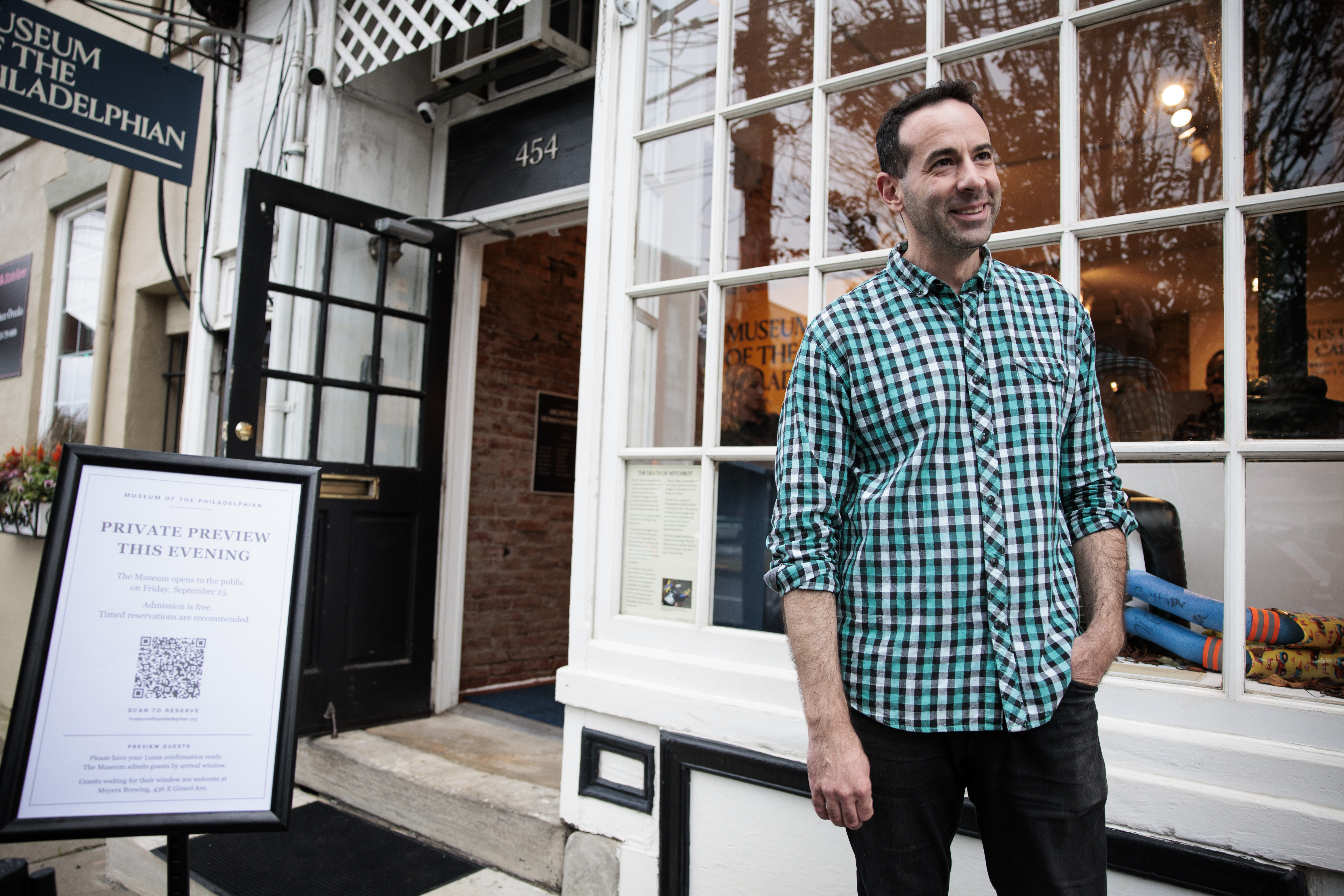
Founder and creator Brian Adoff outside his Museum of the Philadelphian in Fishtown.Monica Herndon / Staff Photographer
“The museum is about the personality and attitude and conduct of Philadelphians,” Adoff said. “My personal hope is that you leave inspired to really be the best version of yourself, the best Philadelphian you can be.”
Located in a 300-square-foot storefront that was previously Adoff’s office on East Girard Avenue in Fishtown, the free, temporary “micro museum” is just down the road from another Philly landmark — the “I Hate Bank of America” sign. The large, yellow banner was put up by a homeowner in 2007, after the bank branch across the street ticked him off. The branch closed many years ago, but the sign remains, a grand tribute to Philadelphians’ spite.
View on Threads
What makes Philadelphians this way? And what makes it so oddly endearing? These are questions Adoff explores in his absurd and unexpectedly heartwarming museum, which opens Friday.
“There’s an emotional narrative arc the museum takes in its 300 square feet, where it ends with literally a book of Philadelphians who exhibit five qualities that I’ve determined, with my crack team of curatorial advisers, that make up a Philadelphian,” Adoff said.
As of a student of the Philadelphian who’s written hundreds of profiles of the everyday people who make me love this city more every day, I thought Adoff had set a lofty goal for himself when we first met earlier this month. How do you distill what it means to be a Philadelphian in 300 square feet? And how do you decide who makes the cut?
At the preview Tuesday, I was pleased to find that over the course of about 20 exhibits in the space, Adoff skillfully addresses the Santa-hating-battery-throwing-robot-killing tropes that haunt Philadelphians, while also getting to the oddly-touching truths behind those, and other very Philly stories.
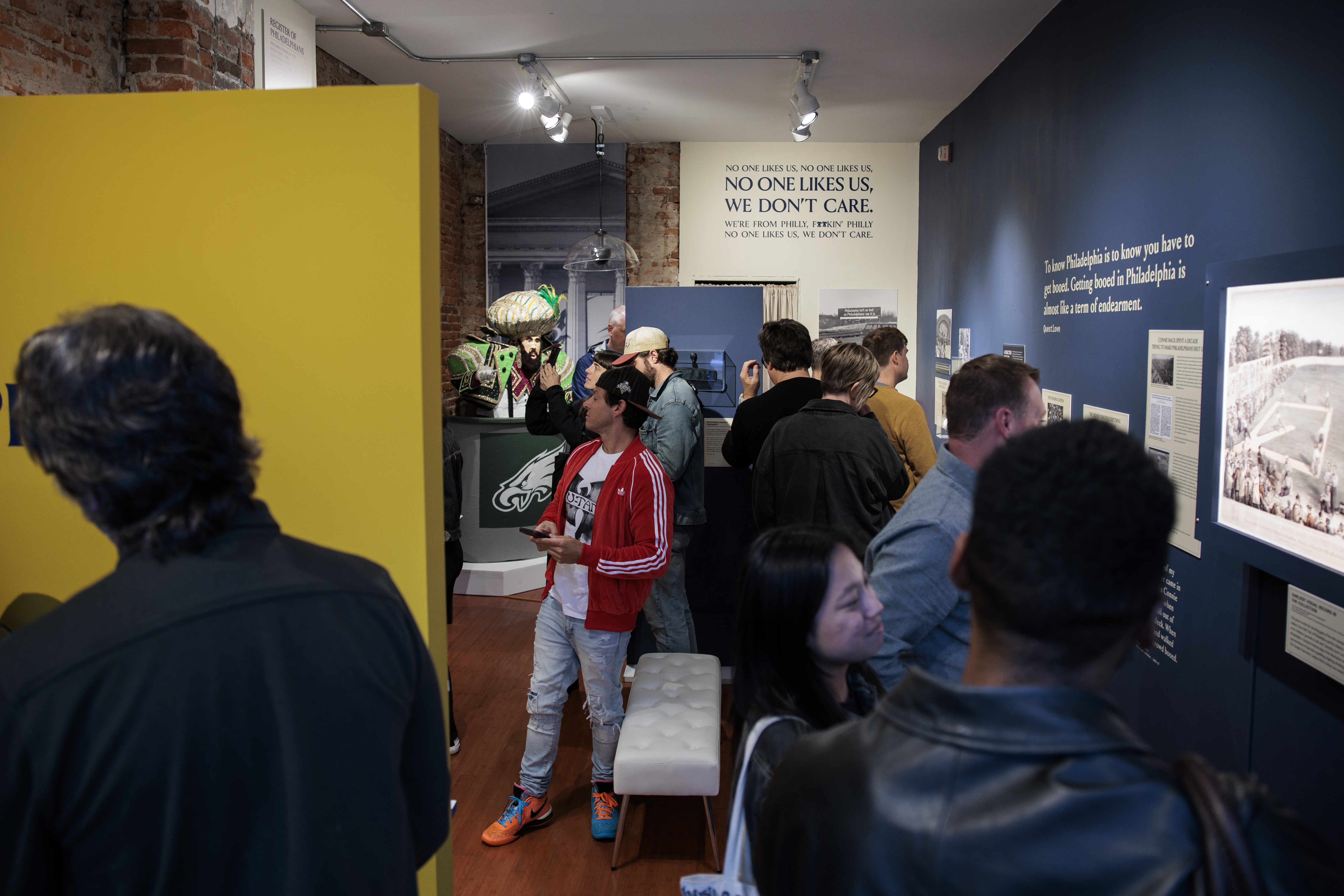
Visitors browse the Museum of the Philadelphian.Monica Herndon / Staff Photographer
And while Adoff and his team have compiled a “Register of Philadelphians” with more than 50 names and stories of local folk heroes who epitomize what it means to be a Philadelphian, their best decision may have been to include cards for visitors to nominate their own quintessential Philadelphian. Because if one thing is certain, Philly is going to have thoughts.
Grease the pole
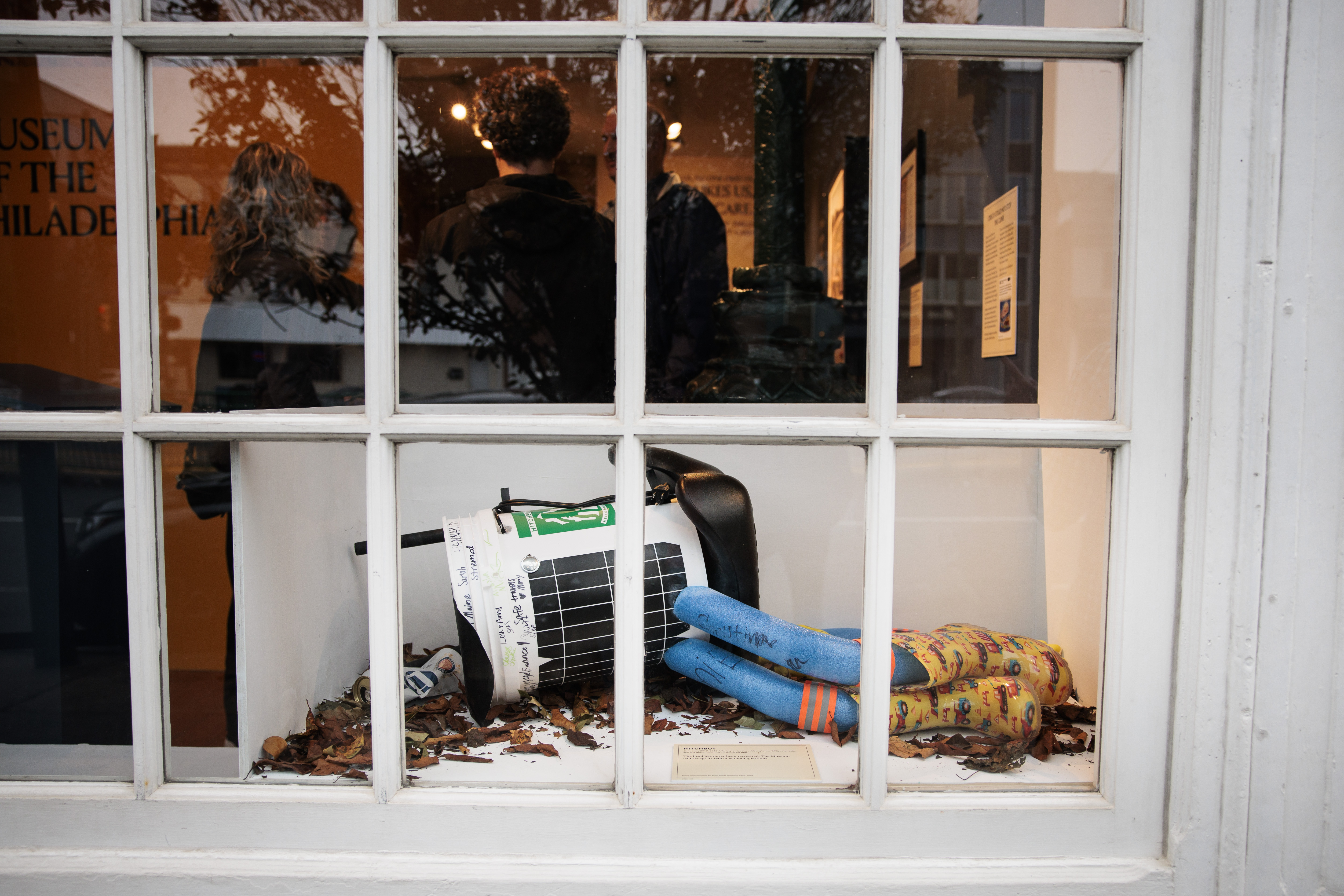
Guests are greeted in the museum’s front window by a re-creation of the death of hitchBOT, the hitchhiking Canadian robot who traveled across the country on human kindness, only to be dismembered and beheaded in Philly. In the accompanying plaque, Adoff notes that Philadelphians offered to rebuild the robot, and that a Philly police detective jokingly blamed the crime on New Jerseyans.
A re-creation of the death of hitchBOT is displayed in the front window of the Museum of the Philadelphian.Monica Herndon / Staff Photographer
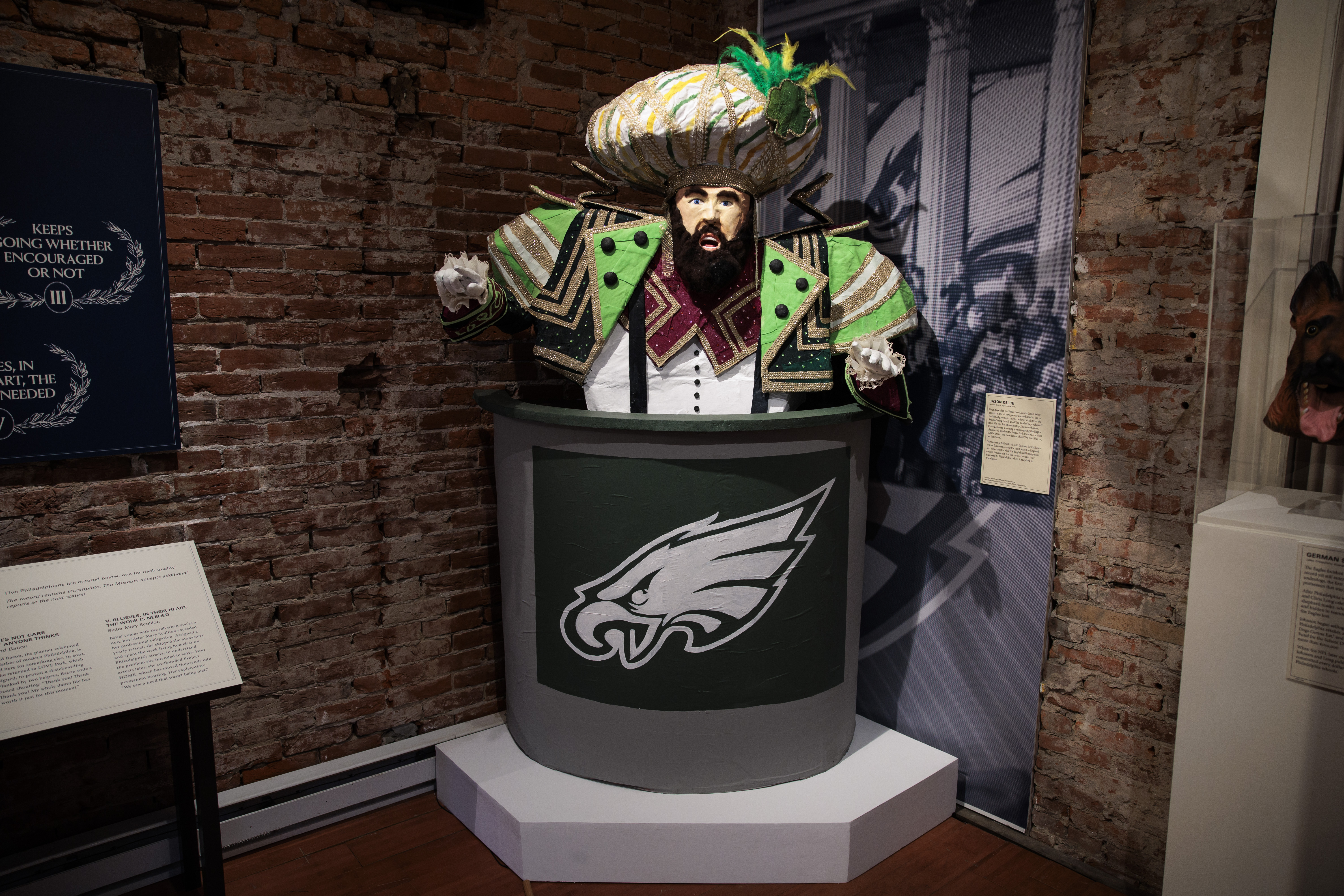
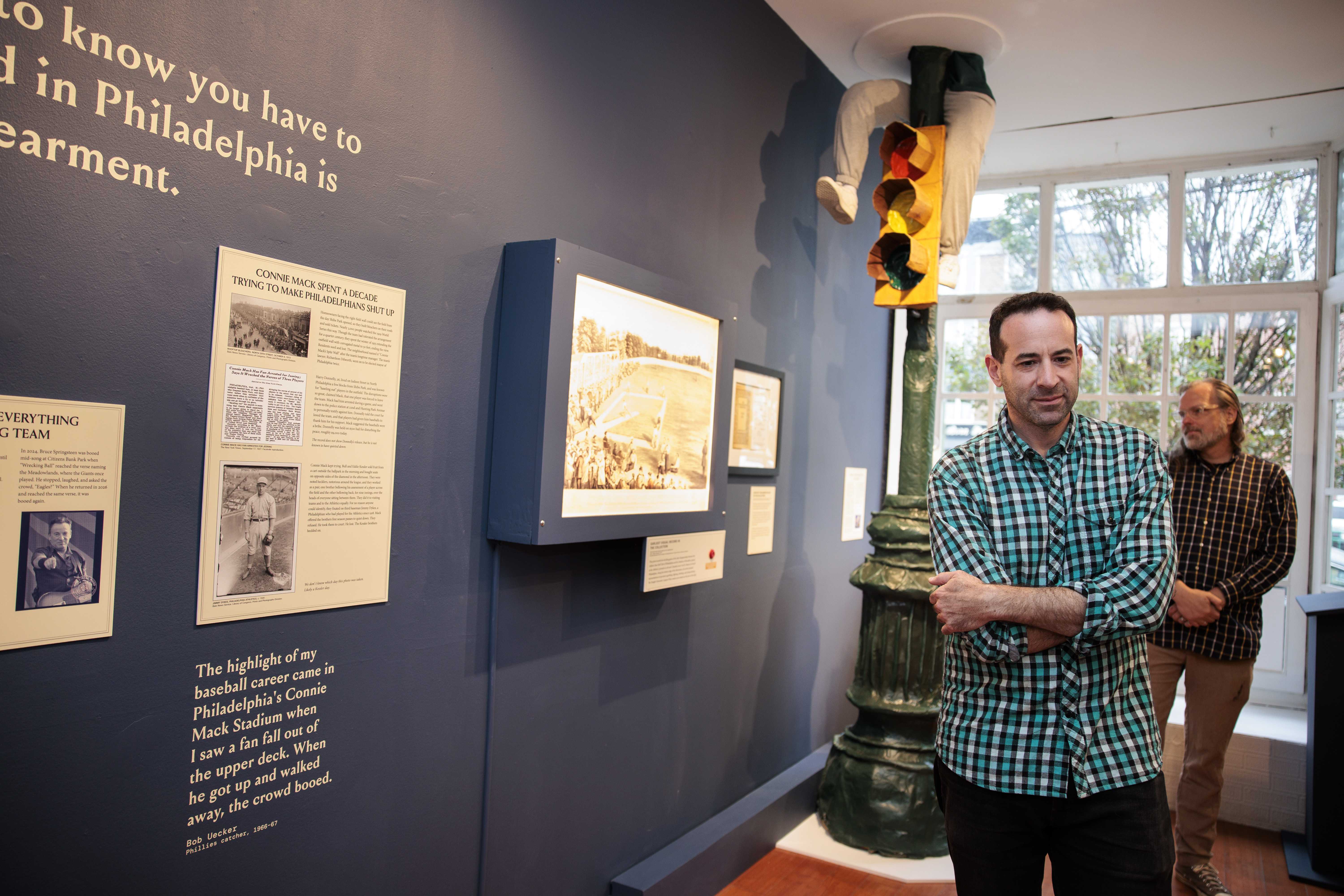
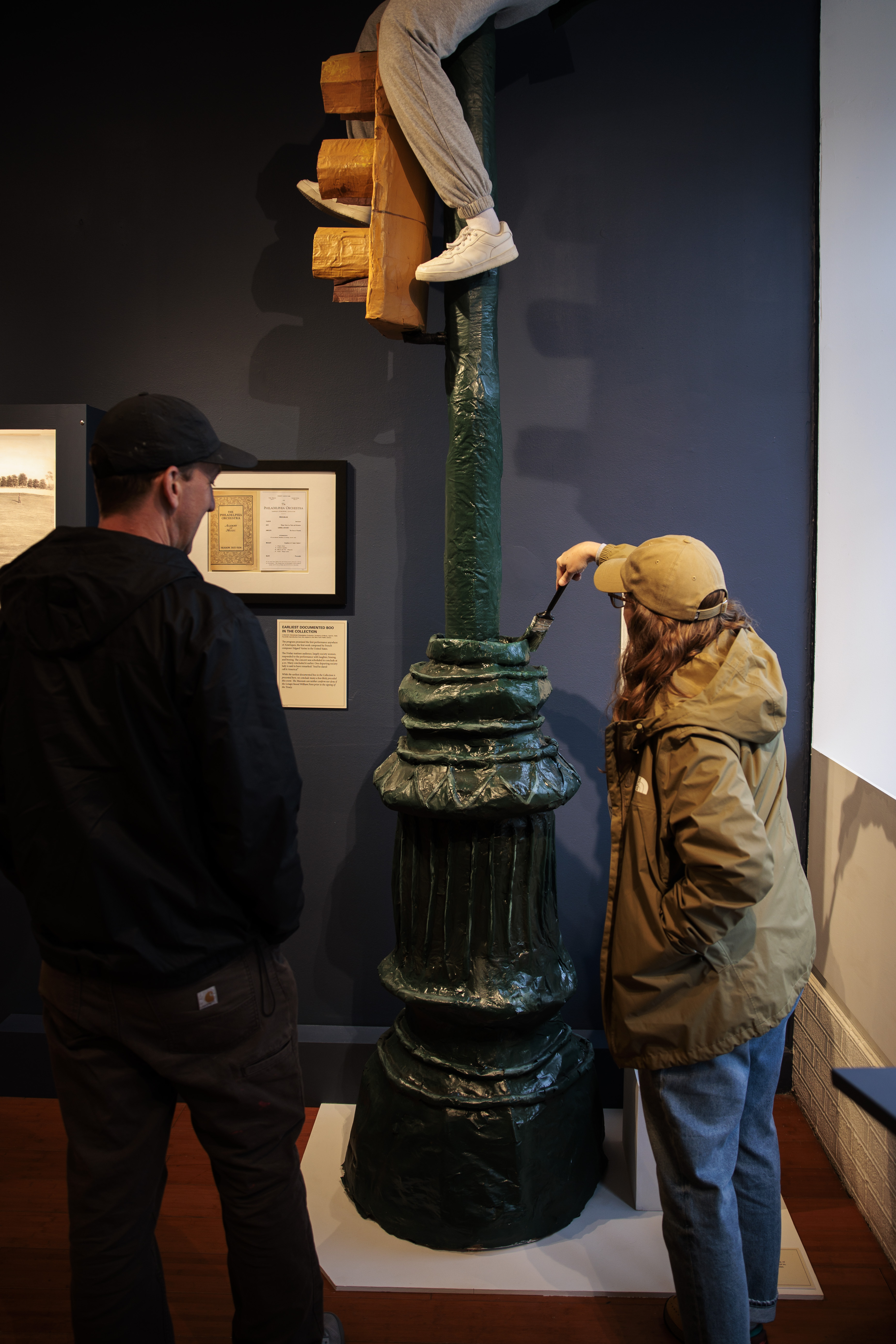
Once inside the museum, two large papier-mâché sculptures immediately catch the eye — one, of a Philadelphian climbing a greased pole, and the other of Jason Kelce during his Eagles Super Bowl speech. In the first, guests are invited to “grease the pole” with a paintbrush and clear goo from a nearby can (you know I did it!), and at the latter, visitors can stand under a sound dome (fancy!) in front of the sculpture to hear Kelce’s “Hungry Dogs” speech.
A papier-mâché sculpture of Jason Kelce during his 2018 Eagles Super Bowl speech is featured in the Museum of the Philadelphian.Monica Herndon / Staff Photographer
In the center of the room is a freestanding wall with a rearview mirror on it. The accompanying plaque tells the story of Ted Passon, whose parked car was flipped in the aftermath of the Phillies 2008 World Series win. Passon created a blog asking Philadelphians who enjoyed the spectacle to help pay for his vehicle, and through the generosity of donors, he was able to get a new car and give $3,000 to someone else whose car was flipped. On an iPad at the exhibit, visitors can play a YouTube video of the flipping and read Passon’s blog.
I remembered the story well because I interviewed Passon about it in 2008. Seeing him at the event Tuesday was a full-circle Philly moment for both of us. Passon, who’s now an Emmy Award-winning documentarian, said he was happy to loan the mirror of the vehicle Philly claimed from him to the museum.
“It’s an honor to be included in the story of Philadelphia,” he said. “If I can be a footnote in the city’s history, I did something right in my life.”
‘Booing is my love language’
Other exhibits explore Philadelphians’ history with booing, our history of throwing things, and the five qualities Adoff and his team have decided make a Philadelphian, with number one being, “Does not wait for permission.”
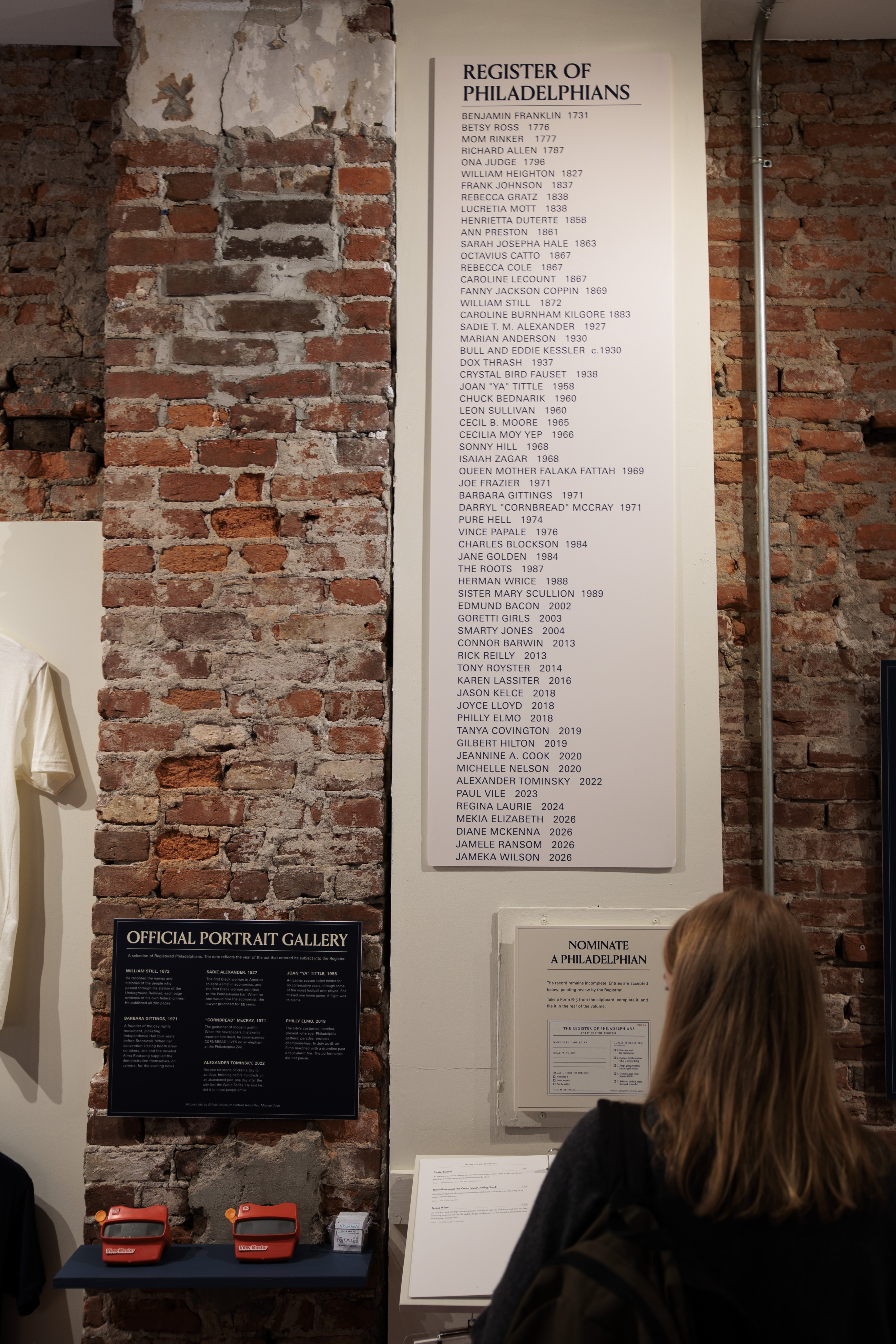
The “Register of Philadelphians” on the wall and accompanying book begins in 1731 with Benjamin Franklin and ends this year, with Jameka Wilson, the woman who went viral for her TV interview about kicking a man in a Chucky mask who was terrorizing pedestrians.
The Register of Philadelphians features notable Philadelphians ranging from Ben Franklin to Jameka Wilson. To the left of the register is the museum’s official portrait gallery, which can be seen through two ViewMasters. Monica Herndon / Staff Photographer
I was excited to see a couple people I’ve written about on the list, including Paul “Jelloman” Vile and the late Gilbert Hilton, who turned heads across the city for years in his “Badillac” car, which was covered in items from Goodwill, and who was one of the most Philly people I’ve ever met.
There’s also a portrait gallery by the Rev. Michael Alan of seven Philadelphians in the register that can only be seen through an old-school ViewMaster, which were a hit with the crowd.
“It was a small space and this was a way to make something look bigger without being bigger,” Alan said.
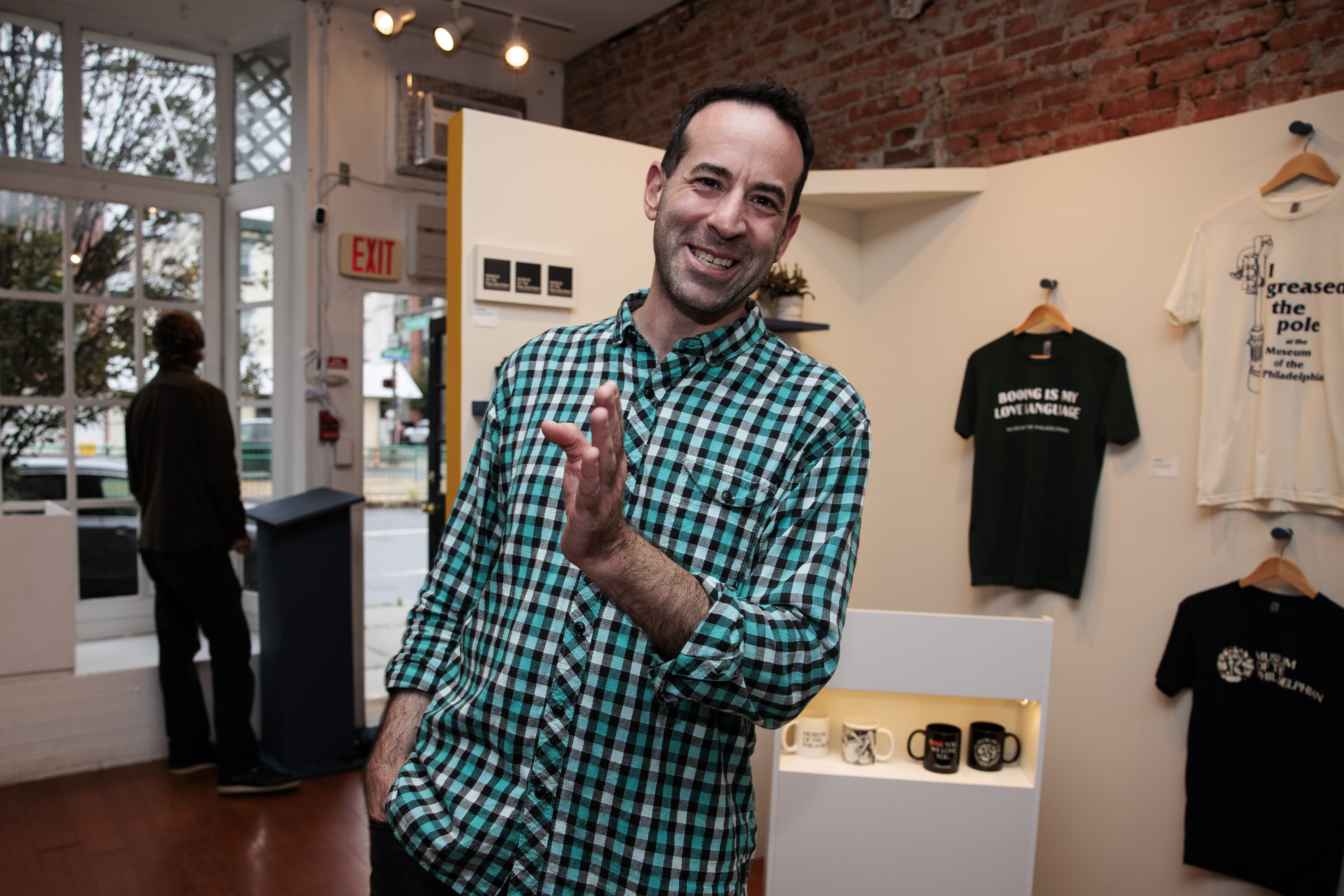
Creator and founder Brian Adoff talks about the Museum of the Philadelphian in front of the museum’s gift shop. Monica Herndon / Staff Photographer
The tiny museum even has a gift shop with shirts that say “I greased the pole at the Museum of the Philadelphian” and bumper stickers that read “Booing is my love language.”
‘The most Philadelphian thing’
The museum was funded by Adoff through his experience design studio, Architects of Human Connection, and admission is free because he believes “the Philadelphian has paid enough.”
The museum is a culmination of Adoff’s many endeavors over the years, from music, clowning, absurdist theater, and working as a tour guide for the Greater Philadelphia Film Office, to managing a software business and, most recently, creating events that connect Philadelphians.
In 2023, he cofounded the Fishtown Choir,and last year, Adoff created Join Philly, which connects Philadelphians with area clubs and groups.
The idea for the museum came to Adoff in June, as he was trying to think of uses for his storefront office space. With the help of five paid collaborators, Adoff built the museum in less than three months, which is impressive, given the amount of research that clearly went into the exhibits, plaques, and bios.
“It started kind of absurd and silly until I was like, ‘Oh, this is just like everything else I do. It matters and it actually has heart and it has meaning,” he said.
Brian Adoff in the Museum of the Philadelphian he created in Fishtown. Monica Herndon / Staff Photographer
Here’s the potentially scandalous thing — Adoff isn’t a Philly native. He’s originally from Long Island, moved to Cherry Hill as a kid, and came to Philly to attend the University of Arts. He spent time in Chicago then returned to Fishtown 20 years ago, where now lives with his wife and son.
Knowing how nativist Philly can be (my native colleagues said transplants can “never” say they’re from Philly if they moved after the age of 13), I had to ask Adoff what gave him the gall to open the museum.
“Because I express the qualities that make a Philadelphian,” he said.
“But you decided those qualities, right?” I asked. (They are: 1. Does not wait for permission 2. Decides for themselves what is worth doing 3. Keeps going whether encouraged or not 4. Does not care what anyone thinks 5. Believes, in their heart, the work is needed).
“Yes, which is the most Philadelphian thing I could have done,” he said.
Adoff wants people to leave his museum feeling as inspired as he did after watching the opening of the Obama Presidential Center on TV. He dreams of Rob Mac narrating an audio tour of the exhibit, like Steve Buscemi does for Eastern State Penitentiary. And his longterm goal is to open a more universal experience one day — a fart museum. Everybody isn’t lucky enough to be a Philadelphian, but everyone farts.
I imagine Benjamin Franklin, a fellow Philly transplant who once wrote a satirical essay about flatulence, would think that’s a gas.
Darrin Rowland (left), and Leslye Rowland grease the pole sculpture at the Museum of the Philadelphian on Tuesday. Monica Herndon / Staff Photographer
Know before you go
The museum, 454 E. Girard Ave., is open Fridays (5 to 8 p.m.), Saturdays (noon to 5 p.m.), and Sundays (noon to 5 p.m.) Sept. 25 through Nov. 1.
Admission is free, but timed reservations online are recommended. Opening night is already booked and only a few spots remain for this weekend.
Like Philadelphia, there is a lack of public bathrooms at the museum, in that there are none.
The museum is wheelchair accessible via a temporary ramp. Email visit@museumofthephiladelphian.org prior to visiting so staff can have the ramp ready.
All ages are welcome, but some exhibits do include profanity.
Each time Theophilus Annor descends the stairs nestled underneath Frances M. Maguire Hall’s grand first-floor banister and into Woodmere’s Jewelry Vault, he’s humbled and proud.
The 26-year-old metalsmith, 3D printer wiz, and graduate of Temple University’s Tyler School of Art and Architecture has a significant amount of bling on permanent display in the vault, which comprises the Woodmere Art Museum’s three underground galleries dedicated to baubles fashioned by Philadelphia’s most celebrated jewelry artisans.
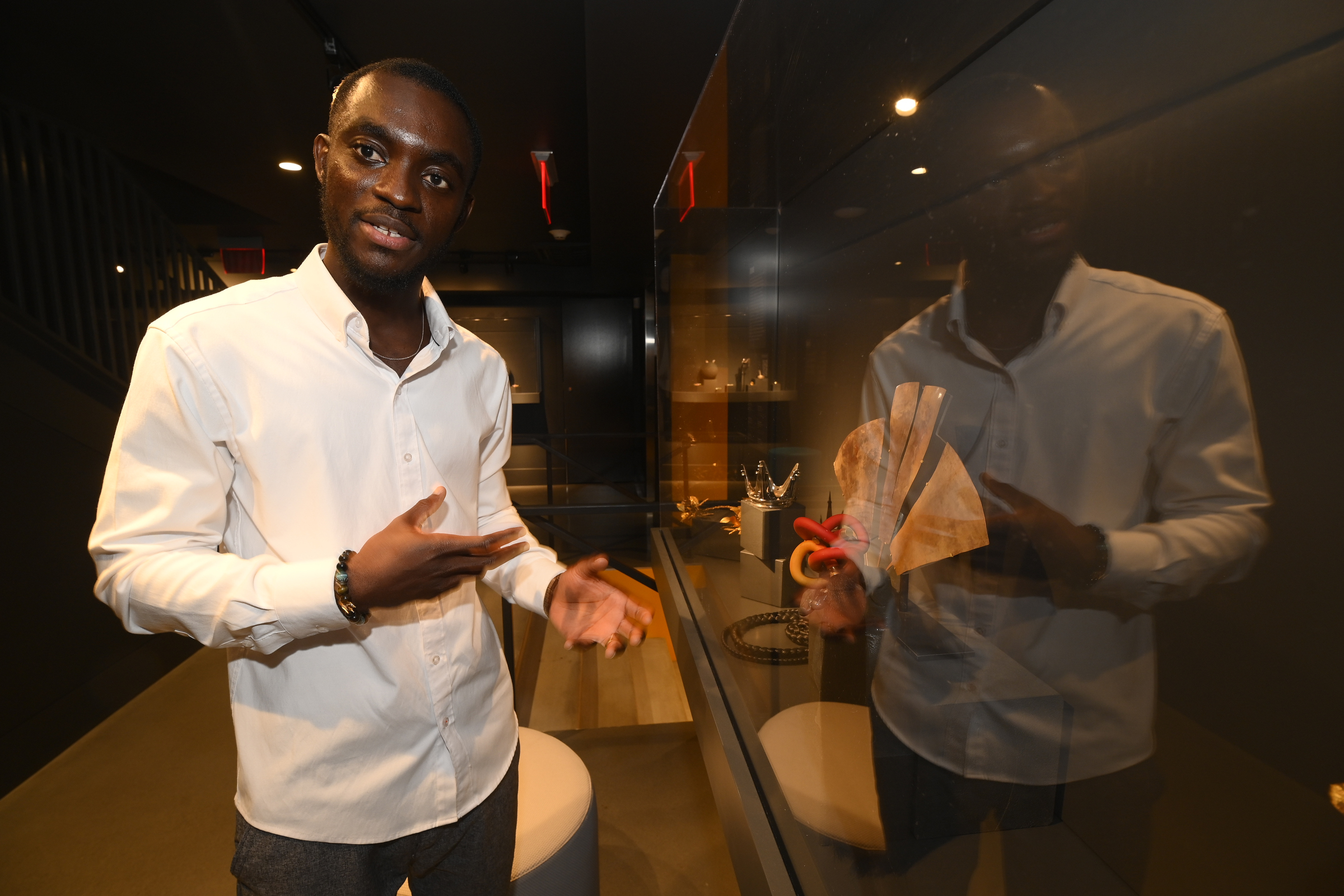
Theophilus Annor explains the loyalty symbol from Ghana that forms a theme in his artistic jewelry work as he poses next to “Hairpiece,” 2025, on display at the Jewelry Vault of the Woodmere Art Museum in Chestnut Hill, on Aug. 27, 2026.Bastiaan Slabbers / For The Inquirer
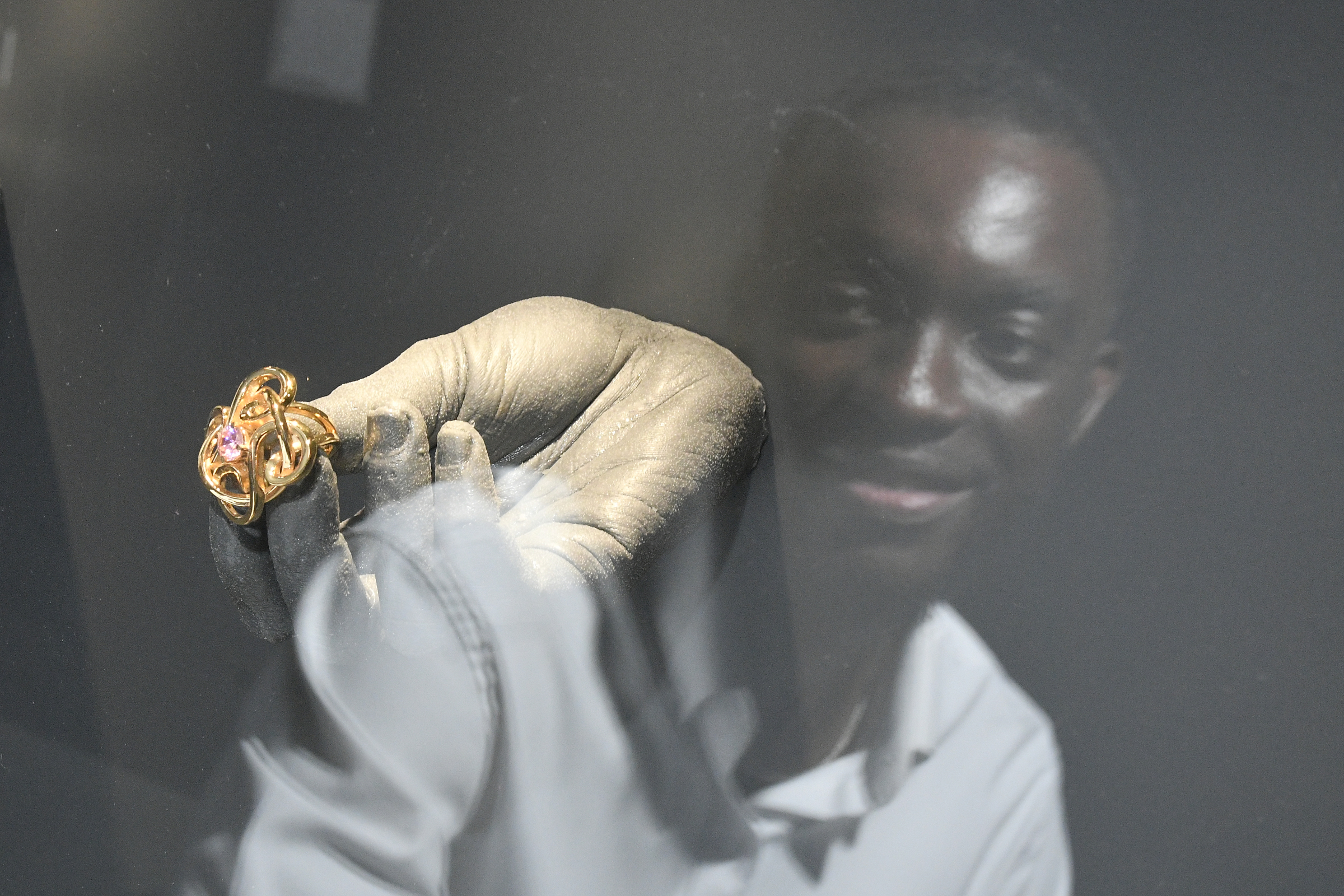
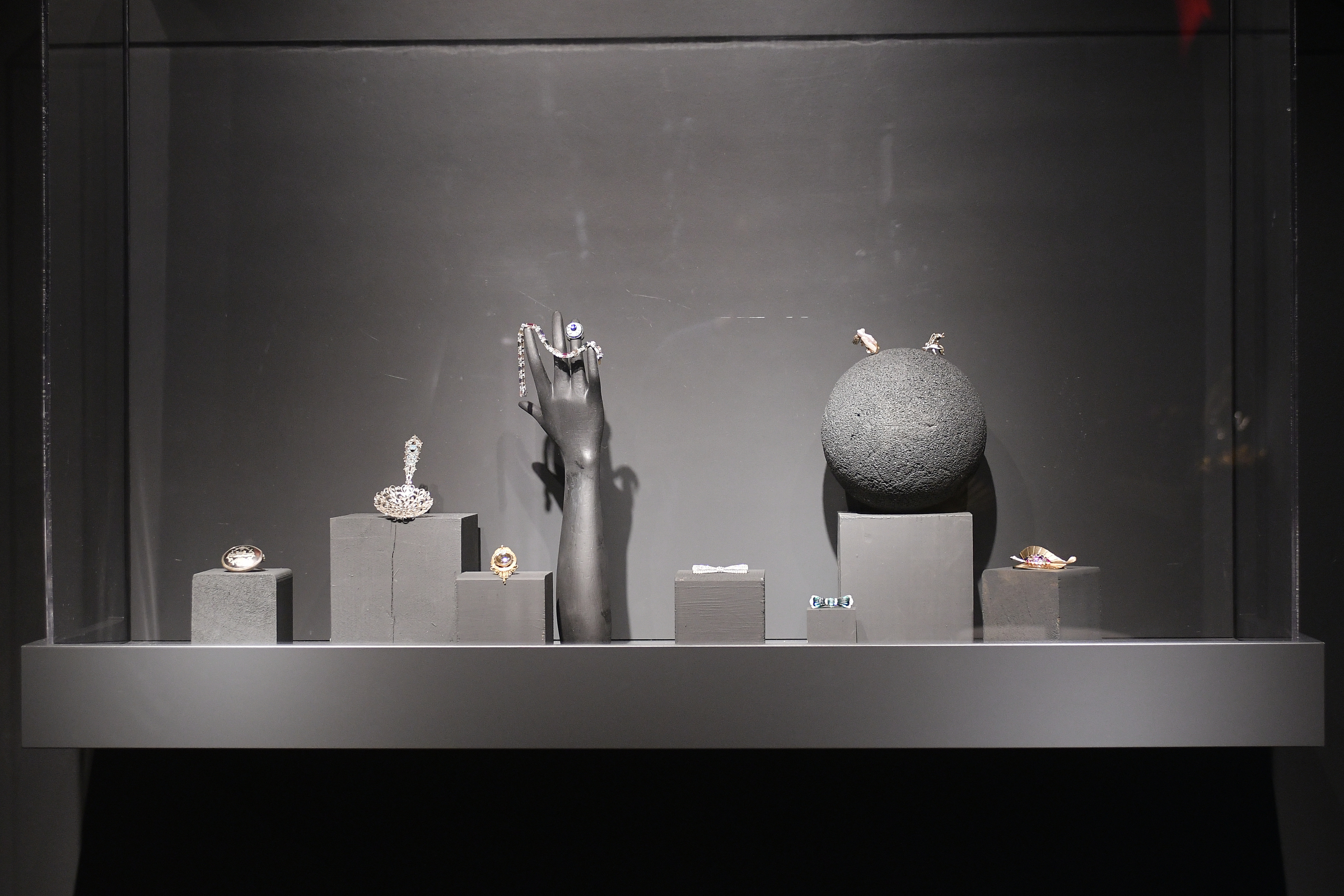
Holding On is a gold-plated brass ring Annor, one of the youngest artists featured in the vault, fashioned into the Ghanaian Adinkra symbol for loyalty. It sits in the vault’s center display case with its rose gold gemstone sparkling in conversation with more than a dozen other pieces from artisans Richard Reinhardt, Wesley Emmons, Henri David, and Doug Bucci, Annor’s teacher and mentor at Tyler.
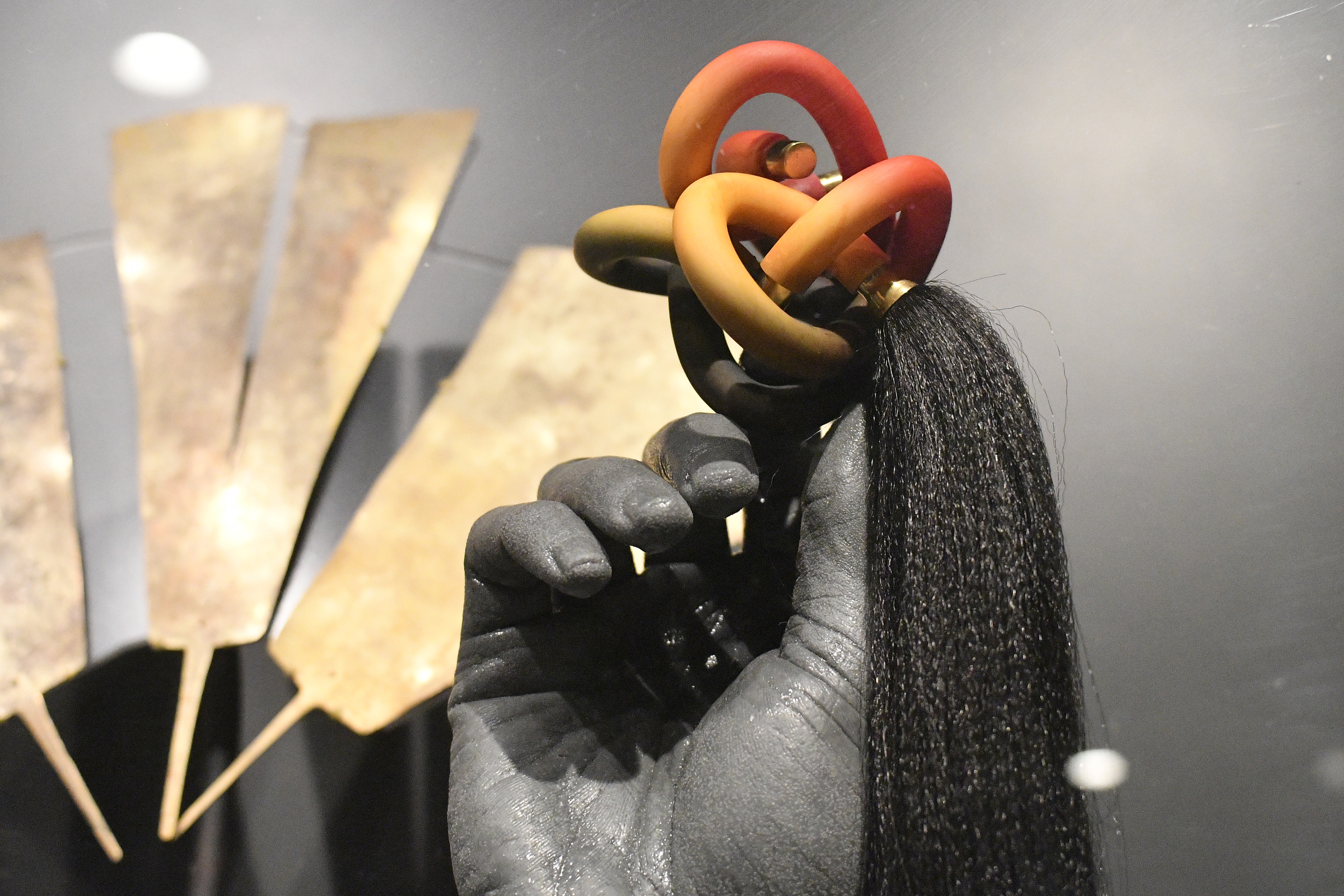
Each ring in the showcase is delicately planted between the middle finger and thumb of a silicone hand Annor cast from an alginate mold of his own. The lines in the 14 gray palms and shape of each nail bed clutching the trinkets mirror Annor’s lithe ebony hands. The young artist’s hands literally uphold the masterpieces of the artists who came before him.
Theophilus Annor’s work features the Agyendewura Adinkra symbol, a loyalty symbol from Ghana that forms a theme in his artistic jewelry work as he poses next to “Holding On,” 2024, gold and multifaceted gemstones, on display at the Vault of the Woodmere Art Museum in Chestnut Hill, on Aug. 27, 2026.Bastiaan Slabbers / For The Inquirer
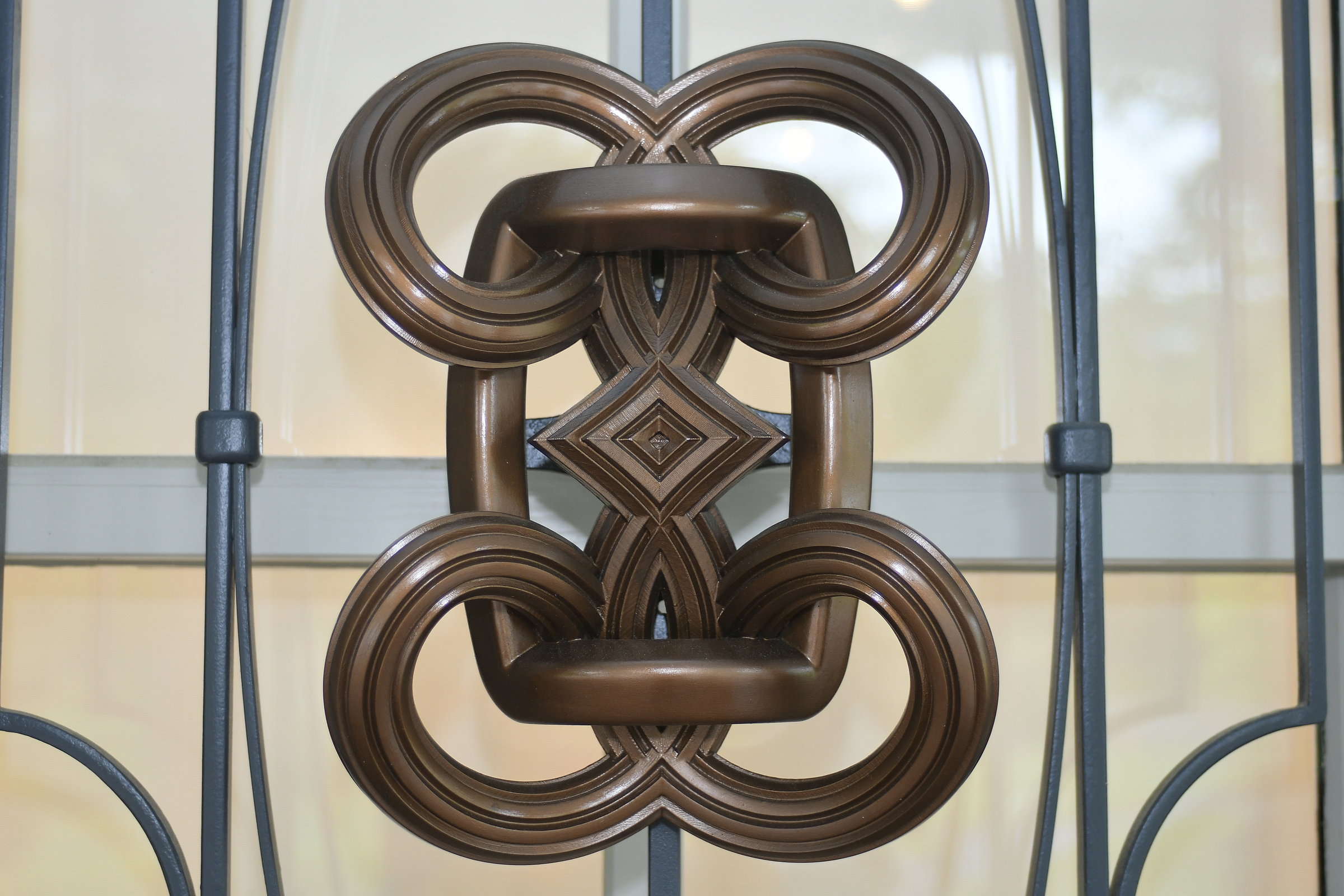
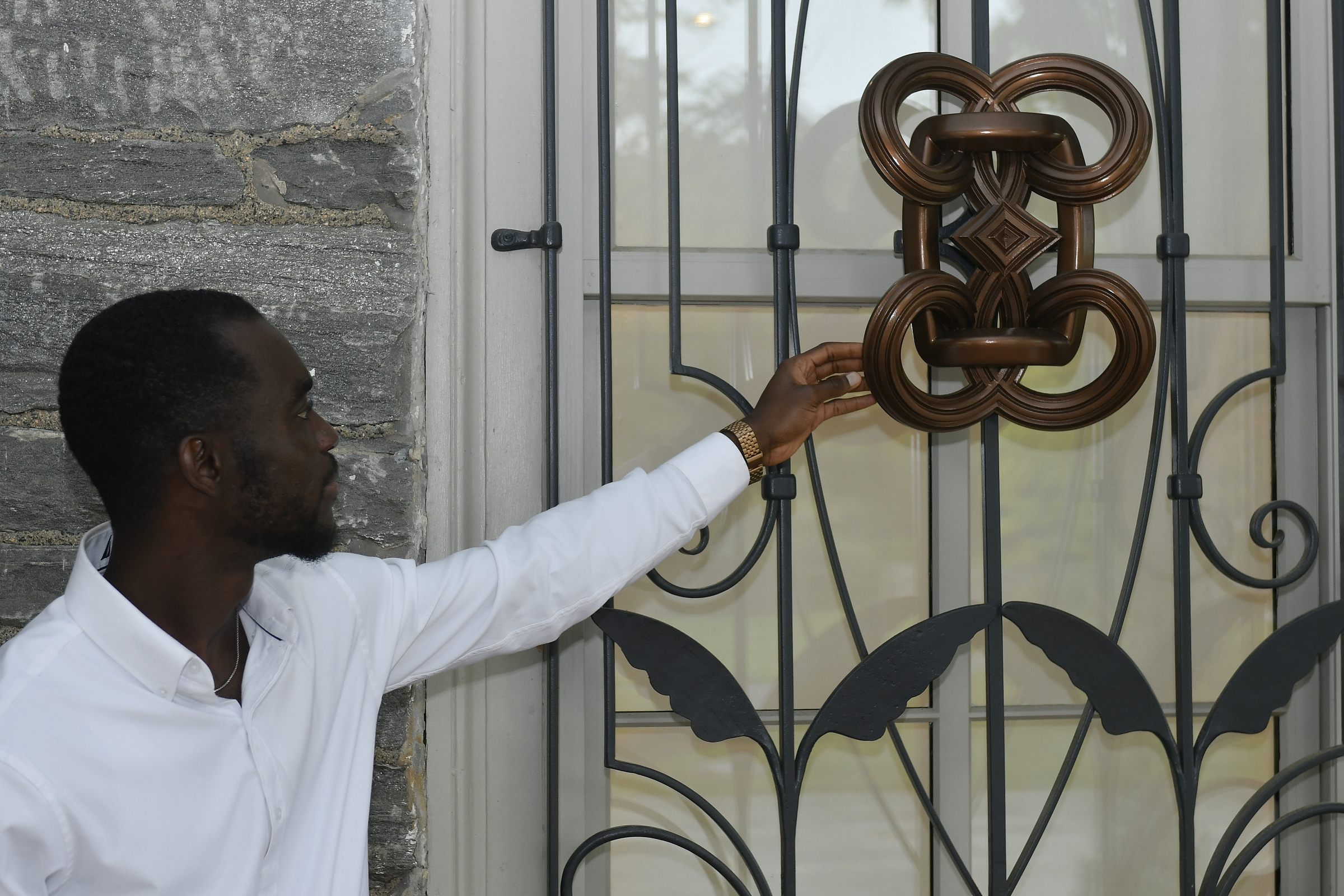
“Of that I’m so honored,” he said, sitting on a bench on Maguire Hall’s porch. Above him is one of five window grills he designed with Philadelphia blacksmith John Rais.
Rais created the decorative wrought iron while Annor scaled another Adinkra symbol up to life-size with a bronze, metallic finish.
He made the ornamentation on a 3D printer, and it took several days to print each of them.
Woodmere purchased its four-story Victorian mansion home from the Sisters of St. Joseph in 2021. In 2022, the Maguire Foundation gave the museum $10 million in honor of its late matriarch, Frances M. Maguire. Through a capital campaign, Woodmere’s executive director William R. Valerio raised a total of $28 million to purchase, renovate, and create an endowment for Maguire Hall.
Last October, the 14-gallery space opened, Annor’s touch dispersed throughout, “reminding visitors of the diversity of Philadelphia artists on display here at Woodmere,” Valerio said.
Theophilus Annor’s work features the Agyendewura Adinkra symbol, a loyalty symbol from Ghana that forms a theme in his artistic jewelry work, as he poses next to “Commissioned,” the collaboration between artists John Rais and himself, at the Jewelry Vault of the Woodmere Art Museum in Chestnut Hill, on Aug. 27, 2026.Bastiaan Slabbers / For The Inquirer
“My work is next to that of so many amazing artists,” Annor said. “And I’m so excited to be a part of the legacy.”
As part of Maguire Hall and the vault’s first birthday, Woodmere will host a jewelry trunk show on Oct. 22.
The 1,000-square-foot vault was conceived to serve as a showcase of Philadelphia artisans and pay homage to the city’s history of jewelry arts. It’s less about engagement rings and more about engagement with the community of Philadelphia artists and their patrons.
To the right of the entrance, a vitrine beams with exquisite Gilded Age accessories: a J.E. Caldwell sapphire-and-diamond ring twinkles next to a Bailey, Banks & Biddle topaz brooch.
Jewelry on display in the vault at the Woodmere Art Museum Maguire Hall in Chestnut Hill on Aug. 27, 2026.Bastiaan Slabbers / For The Inquirer
These brands were featured in the 1876 Centennial as part of its jewelry arts exhibition, which catapulted their popularity. And within the year, Philadelphians’ interest in the jewelry arts led to the opening of the University of the Arts, home of one of the country’s first jewelry arts programs. The university helped Philadelphia become an industry leader in the jewelry arts during the 20th century, Valerio said.
Of course, many of the vault’s showpieces celebrate the beauty and drama of all that is jewel-encrusted.
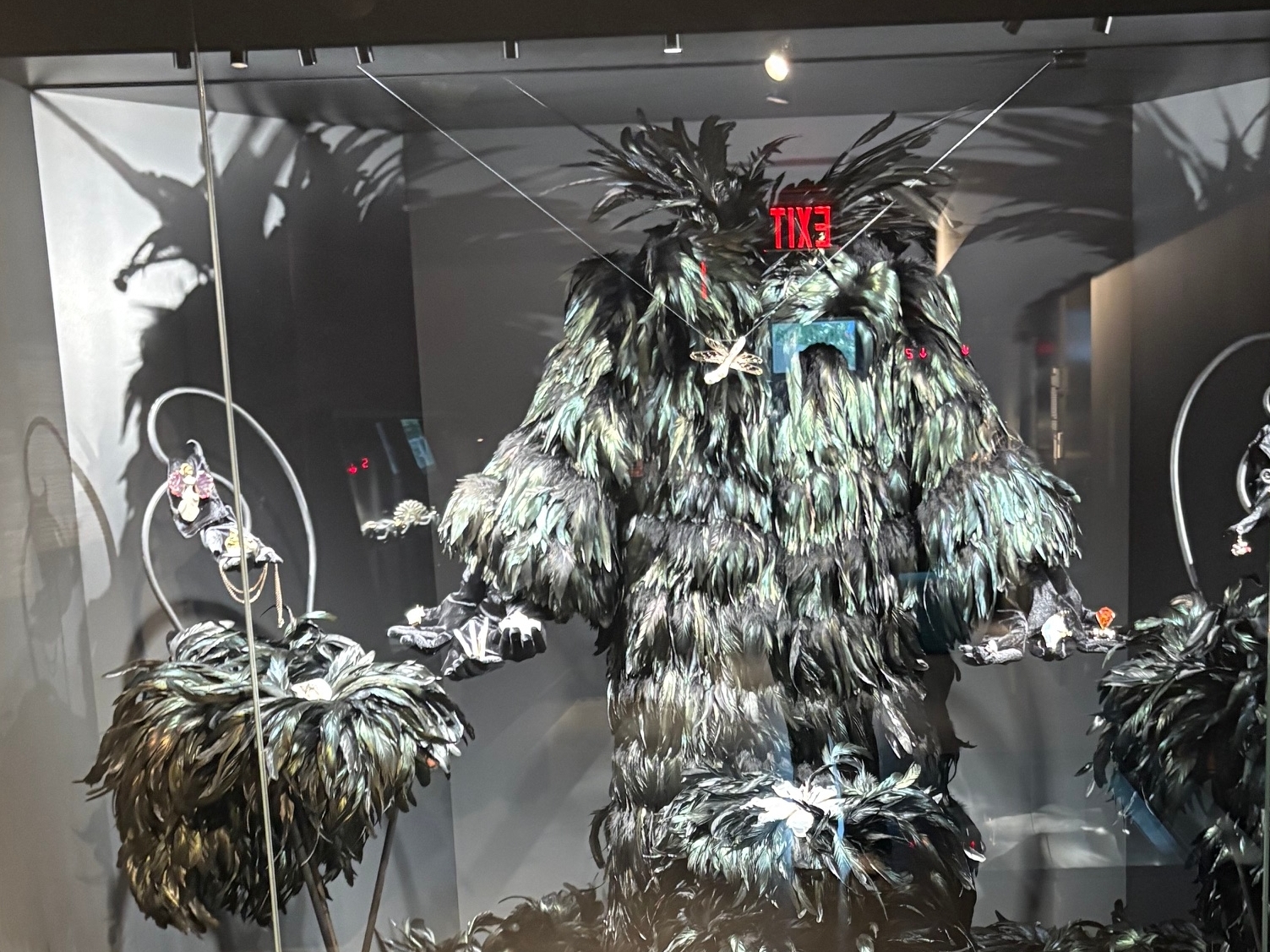
A Henri David installation gives enchanted forest vibes, taking up the entire back wall of the first gallery. A cloak sewn together from thousands of iridescent feathers from the tails of French roosters is centered next to faux greenery. David’s nature-inspired frippery glistens: a 14-carat yellow-and-gold stingray brooch, a diamond-and-pearl dragonfly brooch, and a druzy agate flower brooch with a pretty black fresh freshwater pearl affixed to its center.
In the Henri David case, the Philly-based jeweler’s fantastical work takes up the entire back case of the vault in Woodmere’s Maguire Hall.Elizabeth Wellington
Jewelry innovation is a focus of the vault, too.
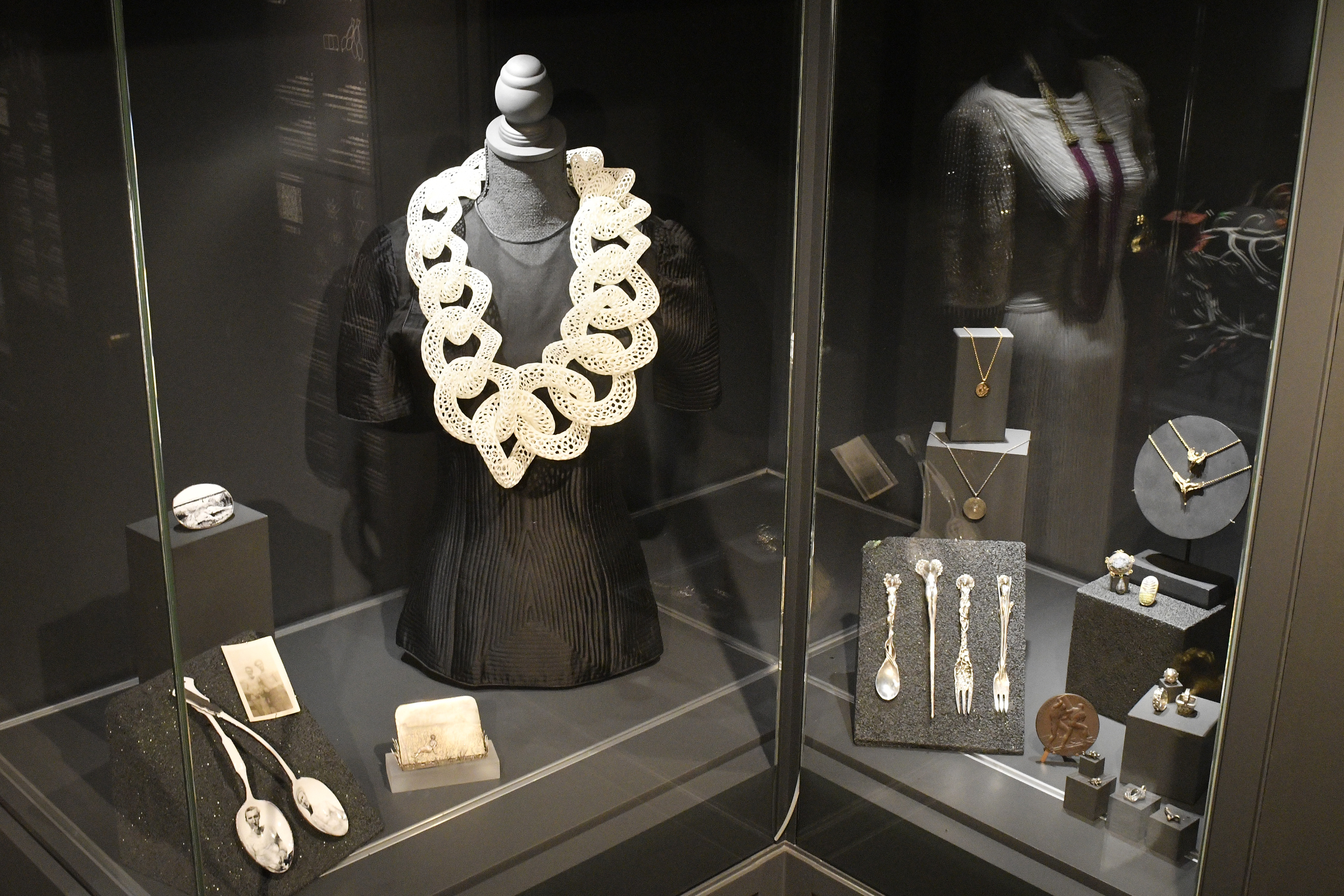
Across from the ring case is Bucci’s insightful Shroud, a continuous sheet of polylactic acid and cubic zirconia installed into the floor. But Shroud is more than a thin layer of ivory glitz under a glass case that resembles a tomb. It’s a 3D-print installation generated from 30 days of Bucci’s blood glucose data. Bucci is a Type 1 diabetic who wears an around-the-clock insulin monitor. Each day is a vertical slice of Bucci’s metabolic history, brilliant evidence of his lived experience.
“The funny thing is that we were really just figuring out what to do with the hole in the ground,” Bucci said. “What we came up with was inspired by beauty, inspired by architecture, and the unseen. It’s like the game of Operation where you have that look inside.”
View of the 3D-printed “Islet I, White a sectional” (Neck Piece) by Doug Bucci, on display in the vault at the Woodmere Art Museum Maguire Hall in Chestnut Hill, on Aug. 27, 2026.Bastiaan Slabbers / For The Inquirer
Islet — Bucci’s most well-known work that includes a necklace, a ring, and a bracelet — also resides in the vault. Each one of the links in the necklace is a honeycomb-patterned tube that is printed as one piece and interlinked, creating an unbroken chain. Bucci was the first jewelry artisan to manipulate a 3D printer to do that.
Islet shares gallery space with a purple polyester resin and sterling silver torque, or metal collar, by Stanley Lechtzin, who founded Tyler’s jewelry program in 1962 and served as its head through 2018.
Lechtzin is considered the grandfather of computer-aided design in the jewelry industry, the first to use a 3D printer to design and produce jewelry. He also developed electroforming, a process that makes big, chunky jewelry light. (It’s why bamboo door-knocker earrings look heavy but are actually light.)
“Lechtzin is truly an innovator in the design field,” Bucci said. “He is one of my educators, mentors, and heroes. So for my work to stand along his and with my students’ is one of the most important moments of my career.”
The vault houses the ostentatious and the kitschy. Brooches made from found art and resin by Maximal Art’s John Wind and Hilary Jay are placed next to brooches, cuffs, pendants, and pleated gowns by the late fashion and accessories designer Mary McFadden.
McFadden — who died two years ago at 84 — made an undisclosed donation to the vault and gave Woodmere several pieces of clothing and jewelry to exhibit. One of the vault’s galleries is named for her.
Theophilus Annor’s jewelry artwork centers the loyalty symbol from Ghana, as seen here in his “Hairpiece,” 2025, on display at the Vault of the Woodmere Art Museum in Chestnut Hill on Aug. 27, 2026.Bastiaan Slabbers / For The Inquirer
The vault’s permanent exhibit comes full circle, ending with a glass cabinet filled with hair adornments. It’s called the Crown Case. In this glass cabinet is a laurel crown symbolizing power, sanctity, and celebration designed by McFadden, a wedding tiara by Reinhardt, and a knotted red-and-yellow hair piece by Annor.
The piece, Annor said, explores the historical significance of knots used in Ghana as ladders during the African slave trade.
“I am from Ghana, but a lot of my thoughts and experiences as a jewelry maker are here in Philly,” Annor said. “At Woodmere I’m able to blend traditional and contemporary art and honor my heritage.”
The Woodmere Art Museum’s Frances M. Maguire Hall is located at 9001 Germantown Ave. The Jewelry Trunk Show will be held Oct. 22 from 1 to 5 p.m. at Charles Knox Smith Hall at 9201 Germantown Ave.
Watching parents struggle to pay for lodging and food as their children underwent treatment for cancer in the early 1970s broke the heart of Children’s Hospital of Philadelphia oncology director Audrey E. Evans.
Evans, a British pediatric oncologist, wanted to do something to make the families comfortable during this terrible time. When she found a four-story, seven-bedroom house in West Philadelphia, she envisioned a space where beleaguered parents could stay, eat, and rest during the tough days and tougher decisions ahead of them.
She just needed $34,000 to buy it.
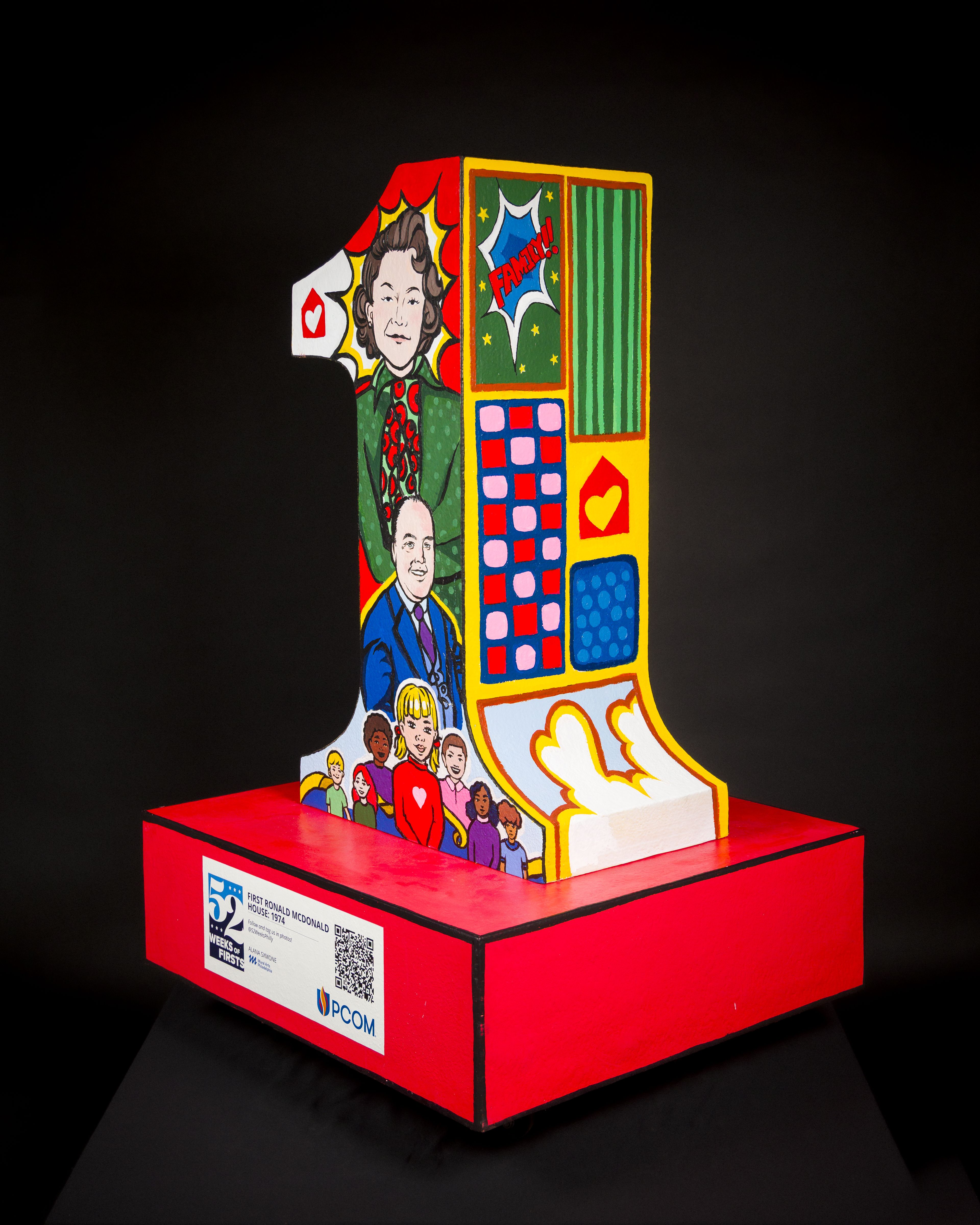
The Ronald McDonald House No. 1 was created by Alana Sxmone in a pop art, ’70s-inspired comic style to capture warmth and optimism. It features cofounders Audrey E. Evans and Jim Murray surrounded by families helped by the Ronald McDonald House.Alana Sxmone for Colibrí Workshop
In 1974, on the other side of town, at North Philadelphia’s St. Christopher’s Hospital, Eagles tight end and wide receiver Fred Hill’s 7-year-old daughter, Kim, was fighting — and beating — acute lymphatic leukemia.
Hill wanted to make a difference for families with sick children. With the help of the team’s then-general manager Jim Murray, he formed the fundraising nonprofit Eagles Fly for Leukemia. Together, Hill and Murray approached Kim’s doctor, Lawrence Naiman, who suggested Hill chat with Evans. She was in the midst of building CHOP’s state-of-the-art cancer facility and needed the money more than he did.
“The Eagles pledged a million to build the oncology ward,” said Ronald McDonald House CEO Susan Campbell. “That began Dr. Evans’ relationship with Fred Hill, Murray, and Eagles owner Leonard Tose.”
Evans didn’t stop there, said Campbell. “She told them, ‘I need to buy this house in West Philly. I need $34,000.′”
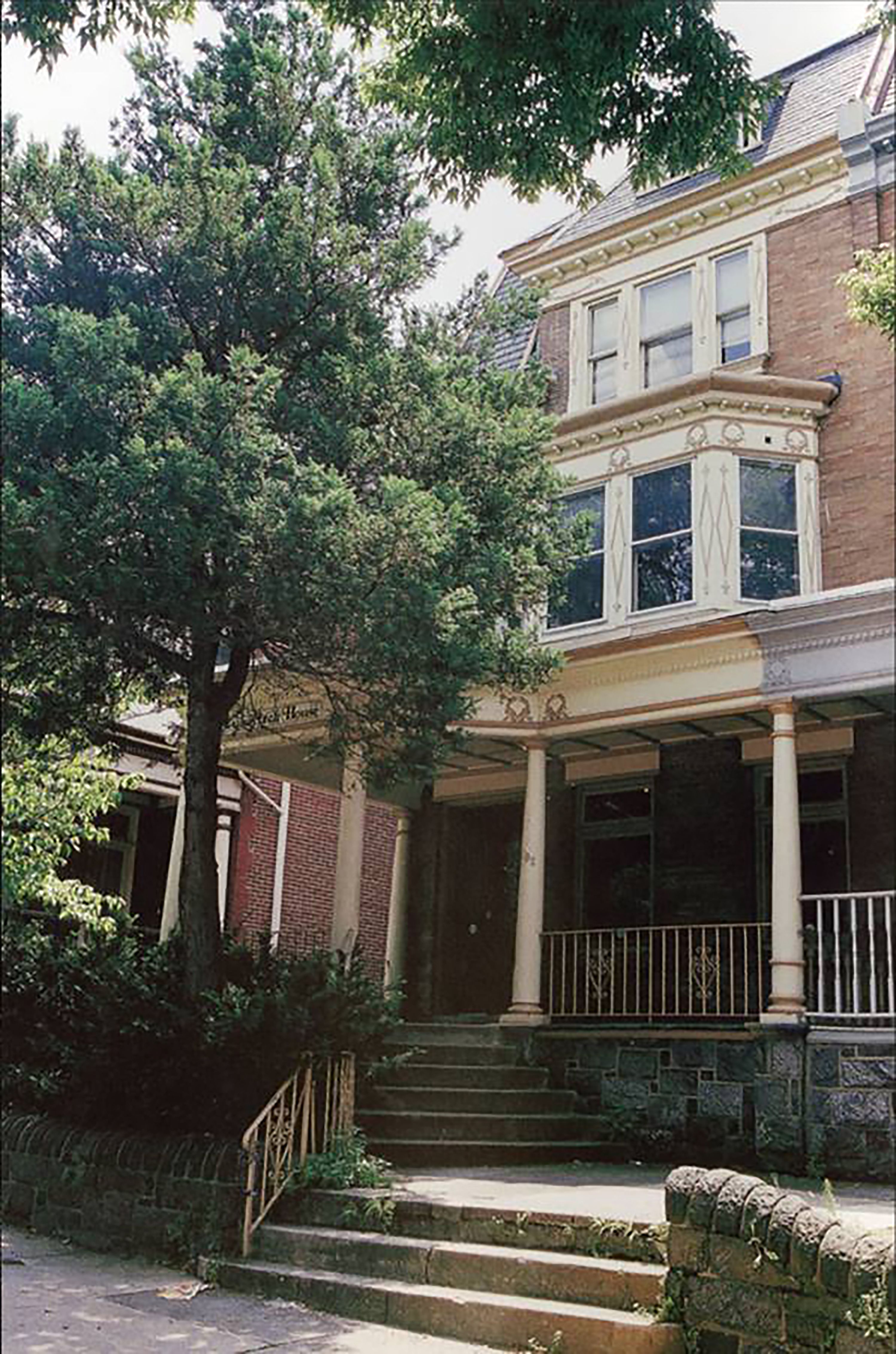
The original Ronald McDonald House, at 4032 Spruce St. in West Philadelphia.The Ronald McDonald House
The Eagles and McDonald’s, the fast-food chain, were clients of the same Philadelphia-based firm Elkman Advertising. Tose devised a deal: He offered to the then-regional manager of McDonald’s, Ed Rensi, his top players, including Roman Gabriel and Bill Bergey, as spokespeople for the Shamrock Shake. His ask? Maybe McDonald’s would donate a portion of the proceeds to Evans’ house.
“Rensi said that he would give Evans all of the proceeds if she would call it the Ronald McDonald House,” Campbell said.
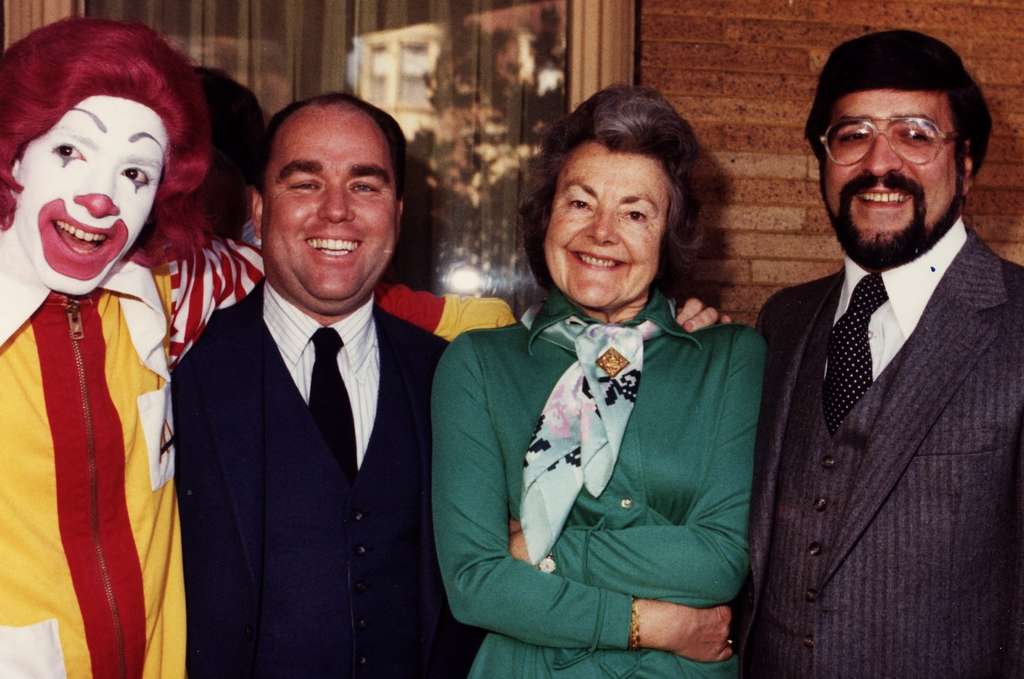
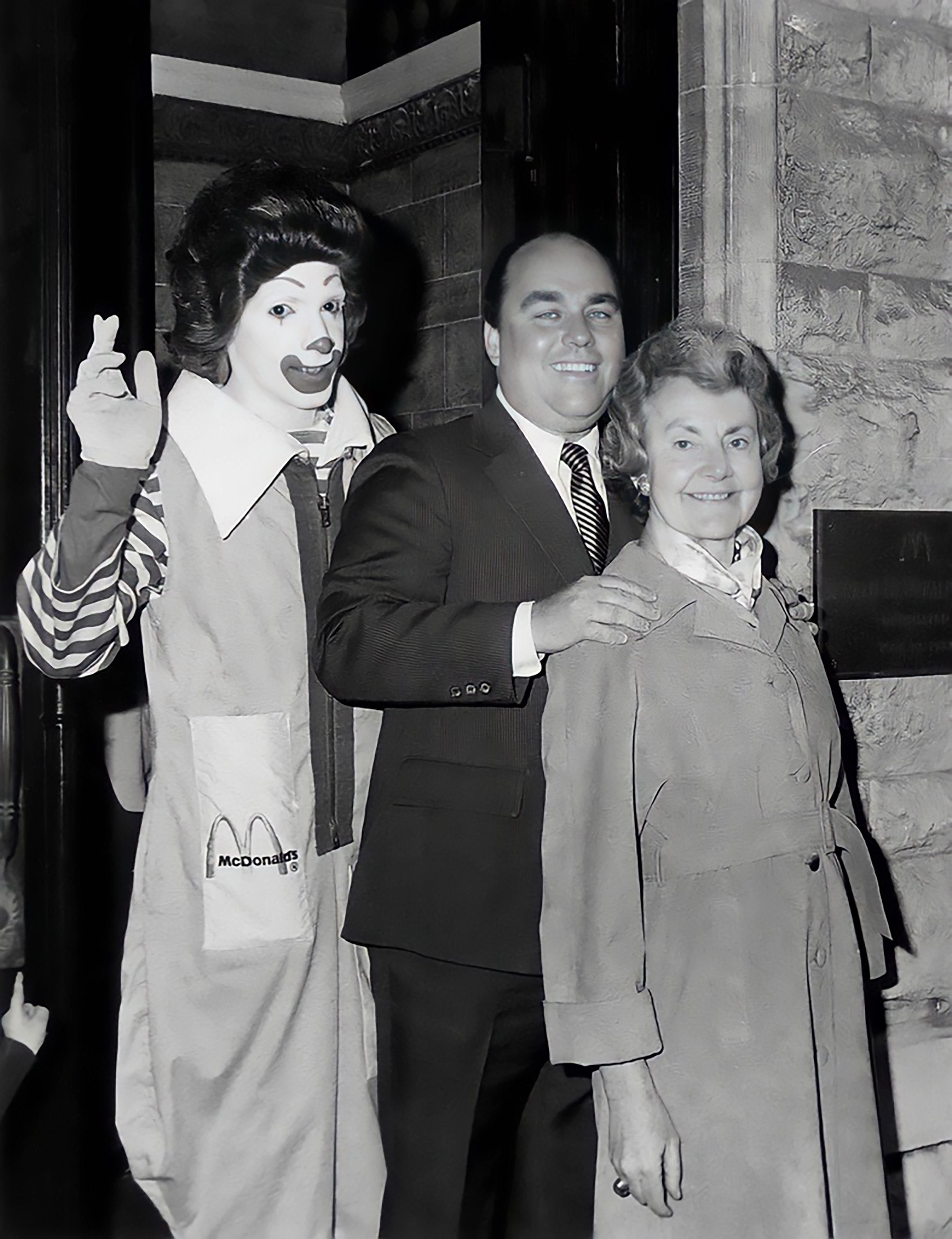
On Oct. 15, 1974, Tose, Gabriel, Bergey, then-chairman of McDonald’s Ray Kroc (the same Ray Kroc for whom the area Salvation Army Kroc Centers are named), and Mayor Frank Rizzo joined Evans at the ribbon cutting of the world’s first Ronald McDonald House, at 4032 Spruce St.
That ribbon cutting will be feted as a “firstival” from 11 a.m. to 1 p.m. Saturday at the Ronald McDonald House’s Chestnut Street location. Firstivals are weekly parties the Philadelphia Historic District is throwing each Saturday celebrating people, places, and things born in Philadelphia in honor of America’s 250th birthday.
There are more local connections: South Jersey builder John Canuso, whose daughter had leukemia, donated the elbow grease, furniture, appliances, and electrical wiring for the original Ronald McDonald House, helping it build its reputation as a sweet space for care and convalescence. By 1979, 5,000 people from 29 states and seven countries called Ronald McDonald House home during a difficult time.
Ronald McDonald House Philadelphia cofounders Jim Murrary, Eagles general manager, and Audrey E. Evans, Children’s Hospital of Philadelphia oncology director, in the 1980s at the Chestnut Street location.The Ronald McDonald House
In 1981, the new Ronald McDonald House opened its doors at a 32-room mansion at 3925 Chestnut St. The new spot — also renovated by Canuso — replaced the original Spruce Street location. It remains open today and features 19 bedrooms, a kitchen, living room, library, and laundry room.
Kim Hill died when she was 44, in 2011. Radiation from her treatments for leukemia as a child caused brain tumors as an adult. Fred Hill is in his 80s and lives in California.
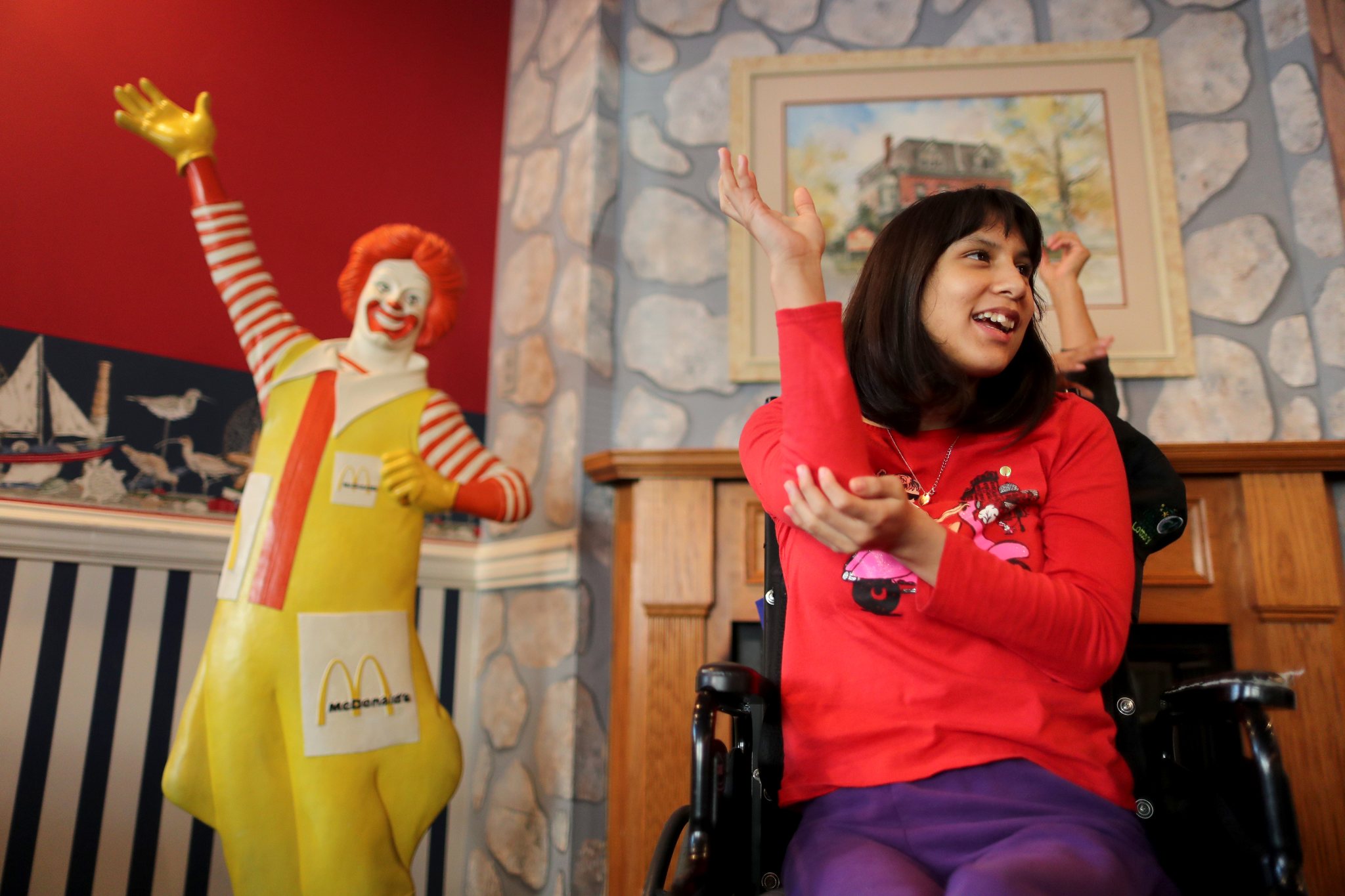
Today, there are about 400 Ronald McDonald Houses in 62 countries, including ones at 100 E. Erie Ave. in Juniata Park, in Camden, and in Wilmington. Families are given a room, three meals a day, and transportation to and from the hospital. The suggested rate is $25 a night, but no parent is turned away. All families with children facing life-threatening illnesses — and being treated at CHOP or neighboring hospitals — are welcome.
Carmen Montes, 17, participates in a game at the Ronald McDonald House of Southern New Jersey in Camden on Oct. 14, 2016.DAVID SWANSON / Staff Photographer
“The ultimate goal is that every child is healthy and that we wouldn’t need a Ronald McDonald House,” Campbell said. “But that isn’t the case. We are grateful that medical technology is advancing and that we’re able to support so many families on this journey.”
This week’s Firstival is Saturday, Sept. 26, from 11 a.m.-1 p.m., at the Ronald McDonald House at 3925 Chestnut St.
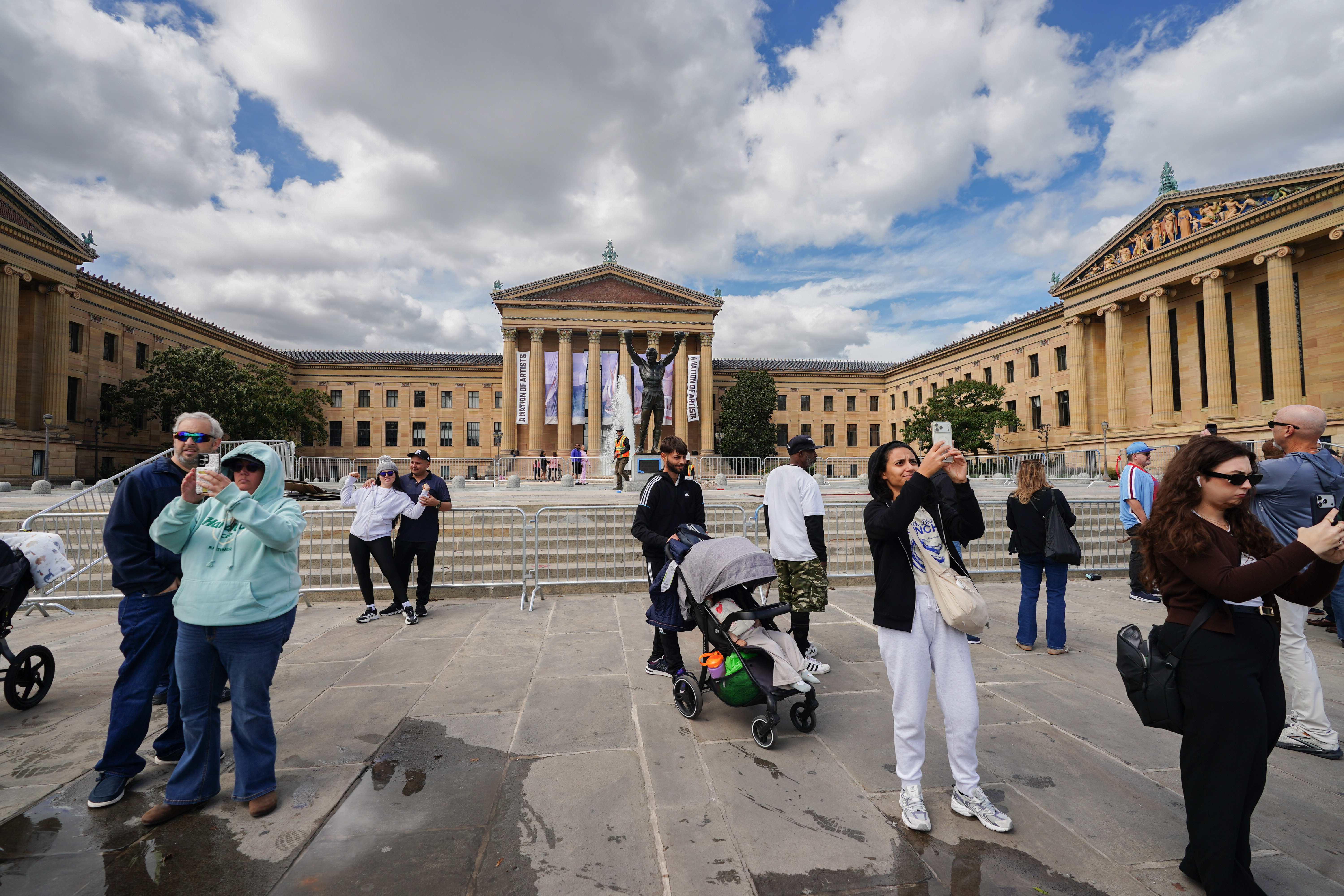
At long last, Rocky Balboa has come back home. Again.
The city’s famed statue of the Italian Stallion was installed atop the Philadelphia Museum of Art’s iconic steps Wednesday. Its installation marks the most visible step yet in getting the fictional boxer’s monument into what has been billed as its permanent place.
Creative Philadelphia, the city arts office behind the statue’s move, said the monument was affixed to its pedestal at the top of the steps about 11:30 a.m. Additional cleanup work was slated to take place Thursday, and barricades around the statue were to be removed Friday, marking the installation’s completion.
After that, no additional work is scheduled, the office said.
The statue’s move, which officially began on Sept. 11, caps a monthslong series of monumental moves at the Art Museum. Since 2006, it sat at the bottom of the institution’s steps, and was then housed inside the museum for the exhibit “Rising Up: Rocky and the Making of Monuments” starting in March.
The original statue, which Stallone commissioned for Rocky III, has long been a controversial piece of public art in the city. It arrived in town in 1981, and has since been moved about a half dozen times — including previous stints at the top of the steps.
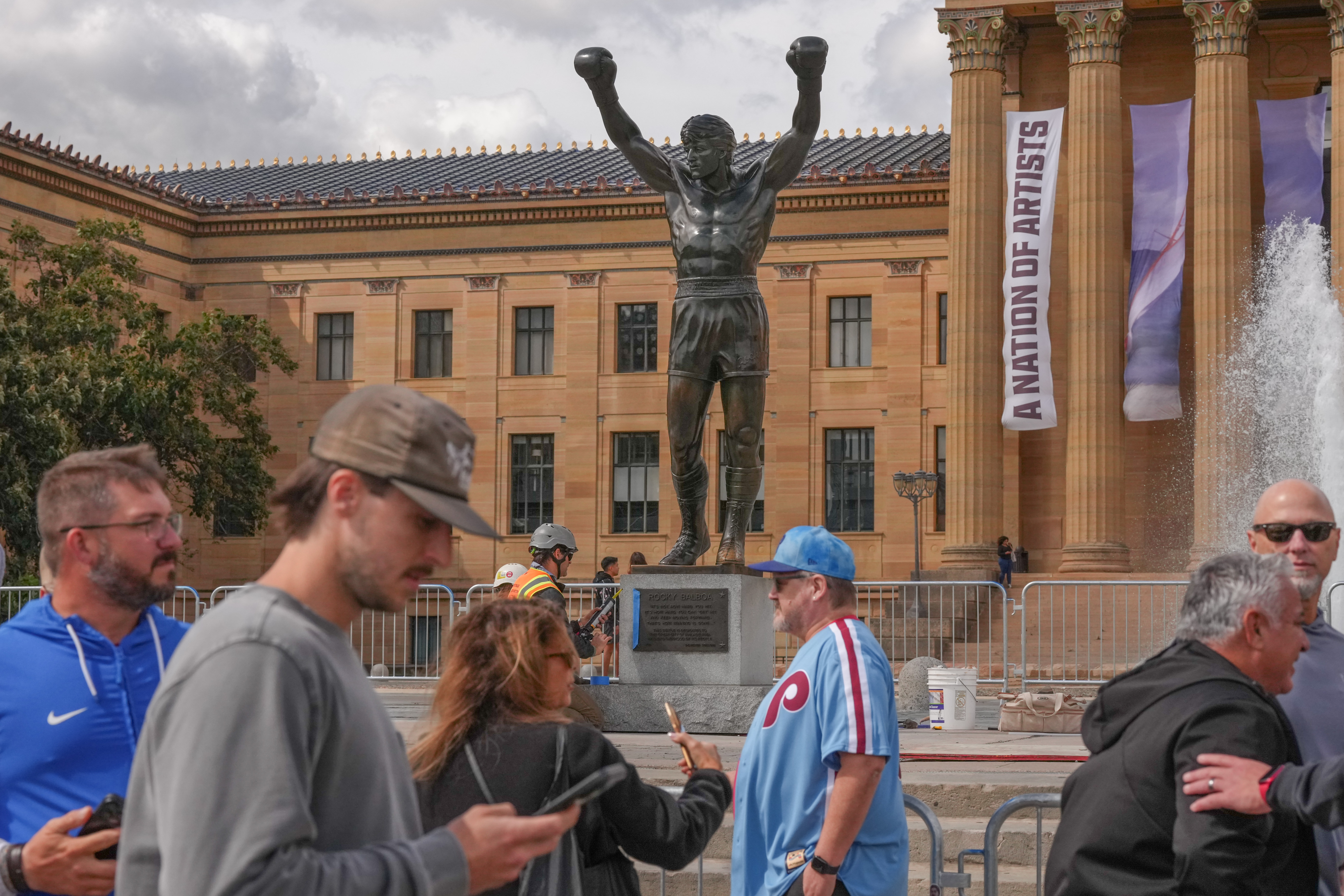
Visitors at the newly installed Rocky statue on the Art Museum steps.Jessica Griffin / Staff Photographer
Now, the statue stands about 14 feet back from the edge of the top step, adjacent to where Rocky’s shoe prints are embedded into a walkway.
Last fall, an Inquirer survey found that 46% of respondents believed there should not be a Rocky statue at the top of the steps. About 20% of respondents said there should not be a Rocky statue in the city’s quiver of monuments at all.
That perspective has been present among Philadelphians since the statue arrived more than four decades ago, when some local officials referred to it as “unnecessarily strident.” At least one Inquirer columnist called it a “monument to schlock, chutzpah, and mediocrity” following its debut.
Since then, debates over its merits — as well as whether it is art or merely an iconic structure — have cropped up periodically. Still, in January, the Art Commission voted to approve a plan for the statue’s installation at the top of the steps.
“We are pleased that after months of planning, the city’s Rocky statue is permanently installed at the top of the Philadelphia Museum of Art steps, where it was first unveiled in 1982,” public art director Marguerite Anglin said in a statement. “It now stands in conversation with the Joe Frazier statue, the real life Philadelphia boxer who inspired the Rocky story.”
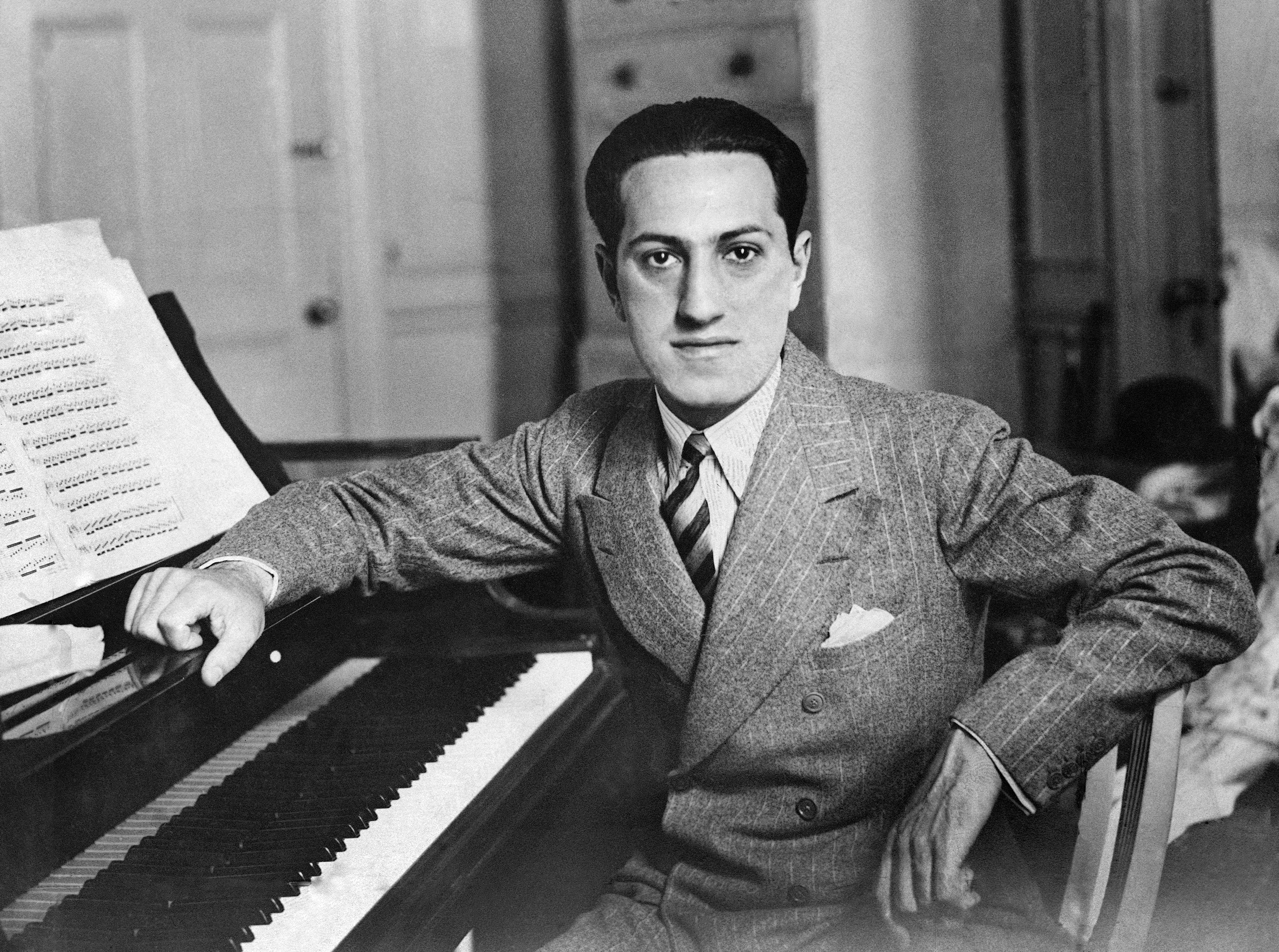
Opera Philadelphia has taken on a new creative partner for its upcoming production of the Gershwin brothers’ rarely performed Let ‘Em Eat Cake. After aJanuaryrun at the Academy of Music, the musical will be presented by New York City Center as part of its “Encores!” series with 15 performances in March, both companies announced Wednesday.
Let ‘Em Eat Cake is a natural fit for Encores!, which specializes in the revival of American musicals. For Opera Philadelphia, where musical theater is more of a novelty, the partnership could open up possibilities for casting, which isn’t yet set.
“I think that because City Center is such an established brand in this world, it could attract certain famous names and people that I don’t have connections to or that might not otherwise consider coming to what is an opera company,” said Opera Philadelphia general director and president Anthony Roth Costanzo.
In this first-ever collaboration between the two arts organizations, the production could be the same in both places, or not — it is yet to be fleshed out — but there will be at least some differences. The orchestra and chorus in Philadelphia will be larger, and the conductor will be different in each city (Corrado Rovaris in Philadelphia, Rob Berman in New York).
Still, for both, director Zack Winokur “will develop the whole concept and idea for the production,” said Costanzo.
Partnering with City Center will yield a “financial benefit” for Opera Philadelphia, he said. “We share costs. We bring in partnership revenue and that helps to cover the costs of what we’re trying to do.”
Let ‘Em Eat Cake, written by George and Ira Gershwin with a book by George S. Kaufman and Morrie Ryskind, premiered on Broadway in 1933 and, despite a memorably melodic score and sharp social and political commentary, hasn’t been heard much since. The story — about a U.S. president who doesn’t accept the election results, establishes a dictatorship, and renovates the White House — was meant at the time as satire.
Opera Philadelphia has never before produced a Broadway show, though it has a strong track record with works that don’t fall into neat categories.
“Somebody said to me the other day, ’Is this an opera or is it a musical?’ And I said, ‘Well, I’m not really here to gatekeep opera,’” said Costanzo. “I think it’s storytelling through music, and that’s what opera fundamentally is.”
“Let ‘Em Eat Cake” runs Jan. 29, 30, and 31 at the Academy of Music, Broad and Locust Sts., operaphila.org; and at New York City Center, 131 W. 55th St., March 17-28, nycitycenter.org.