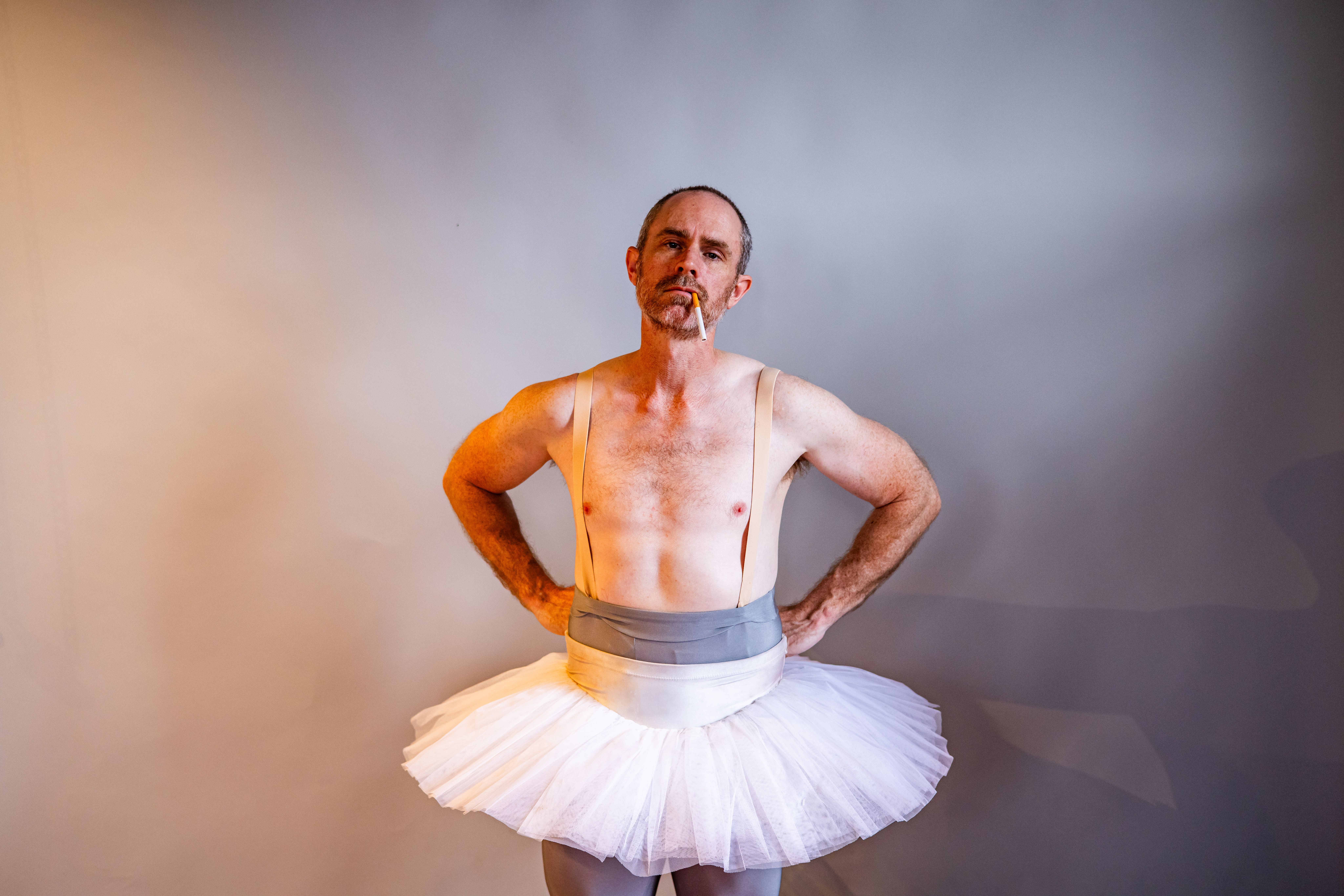
On Wednesday, PFS unveiled the first 50 films that will play as part of the film festival, which runs from Oct. 15-25.
The lineup includes films such as the Venice Film Festival-premiering Martin McDonagh’s Wild Horse Nine. Among the star-studded lineup are the Cannes-premiering films Cristian Mungiu’s Fjord and Ryūsuke Hamaguchi’s All of a Sudden, andBeth de Araújo’s Josephine which premiered at Sundance earlier this year. Simon Stone’s Elsinore, which stars Andrew Scott, is also part of the program.
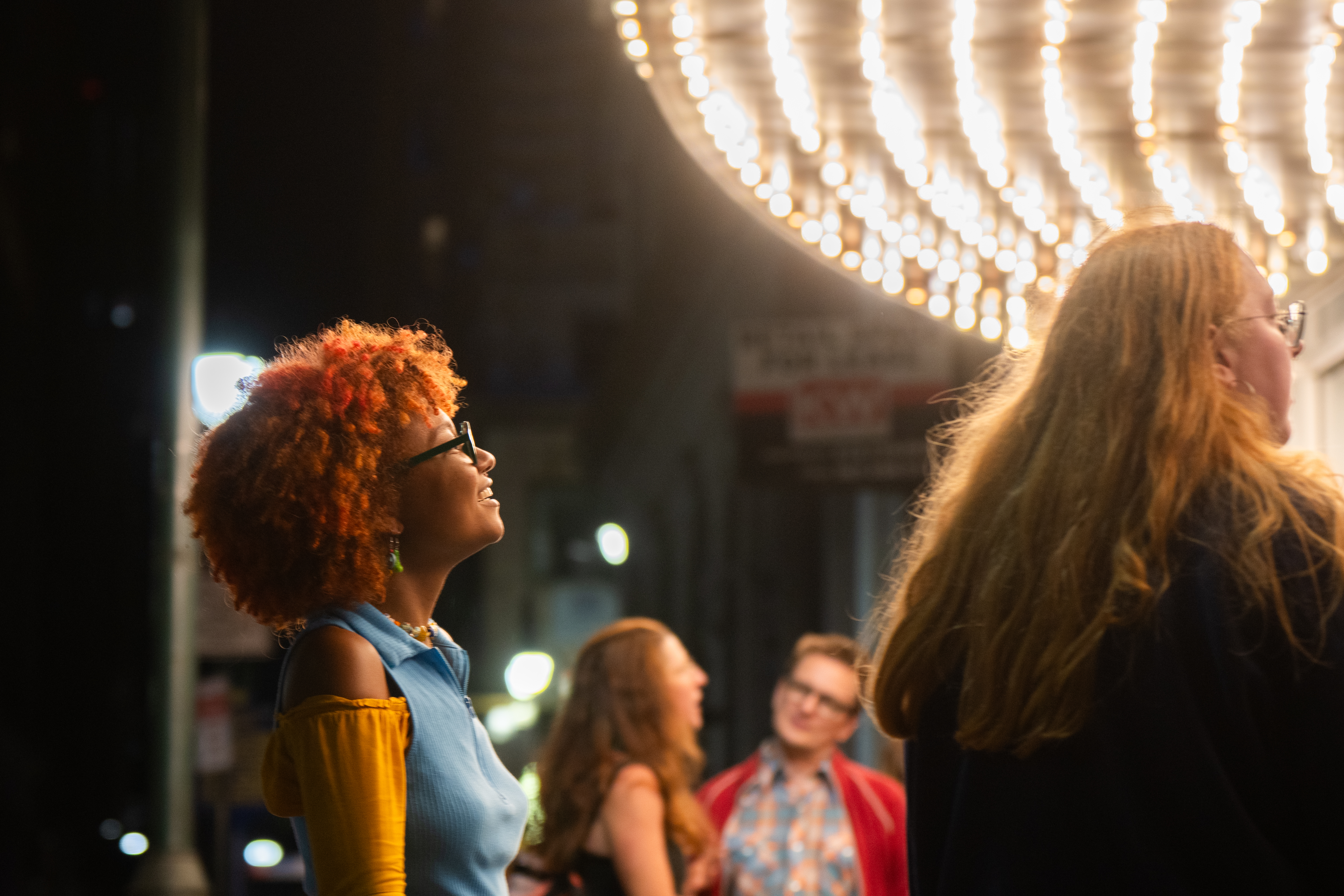
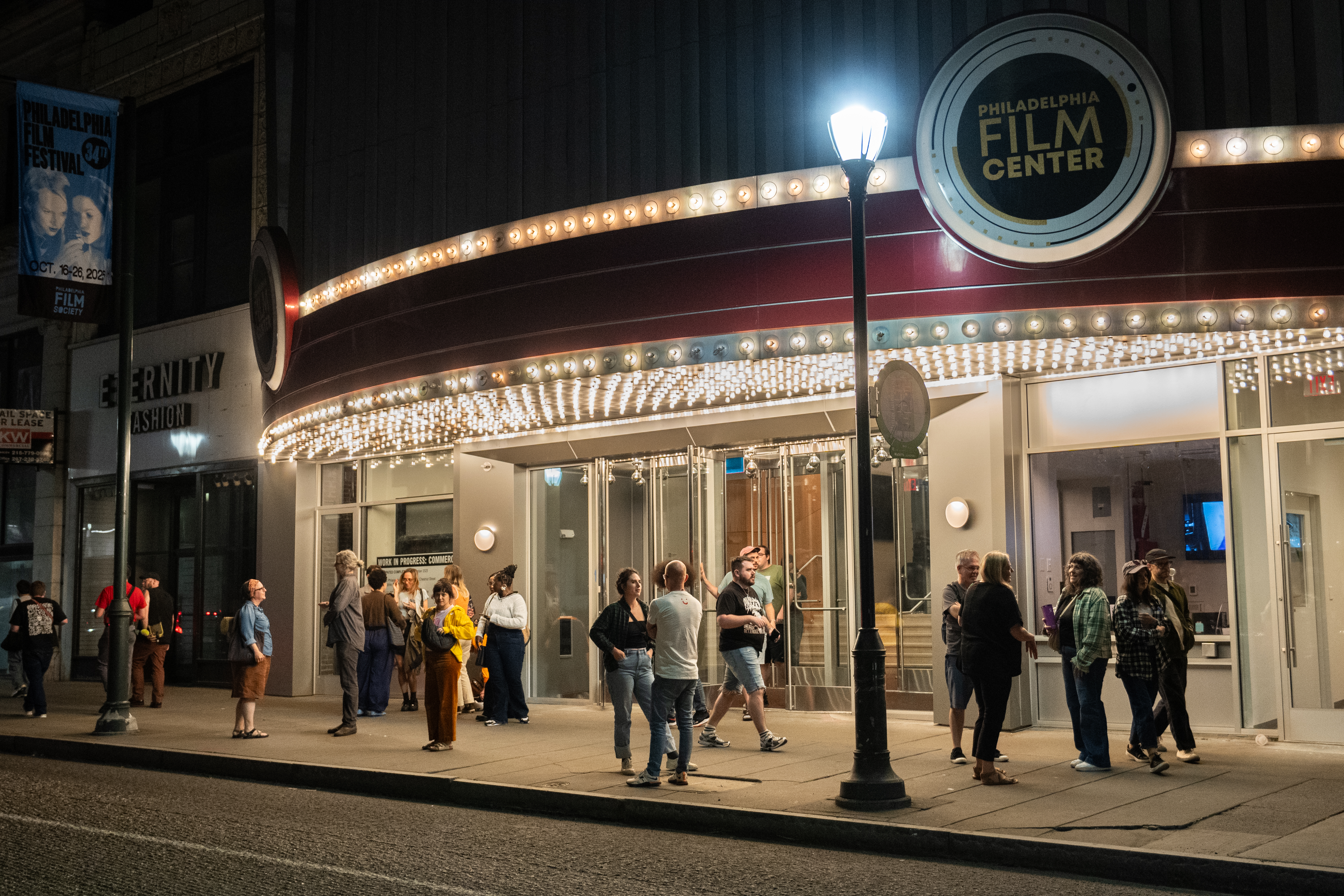
Outside the filming of David Lynch’s “Eraserhead” at the Film Society Center on Oct. 5, 2025.Jessica Griffin / Staff Photographer
PFF35 will also host the world premieres of four films by area filmmakers in the Filmadelphia section. That list includes Hoag Kepner’s Big Phan, Doree Simon Hatfield’s Gentle By Birth, Andrew Sullivan’s I Don’t Want to Drink Your Blood Anymore, and Max Korman’s Joy Will Prevail.
Among other program highlights are Pedro Almodóvar’s Bitter Christmas, Danny Boyle’s Ink, and William and David Greaves’ Once Upon a Time in Harlem, a film that was shot in 1972 by William Greaves but completed by his son David years after his death.
J. Andrew Greenblatt, PFS CEO and executive director, said this year’s milestone is “incredibly special” and he and other organizers anticipate this year’s edition will be the most expansive in the festival’s history.
“This one, I think, will be larger, with features and a couple dozen narratives we’ve had for the last several decades. The intention is for it to be larger than that.”
Like every year, this year’s festival will feature filmmaker Q&As, red carpet events, opening and closing night parties, and surprise guests.
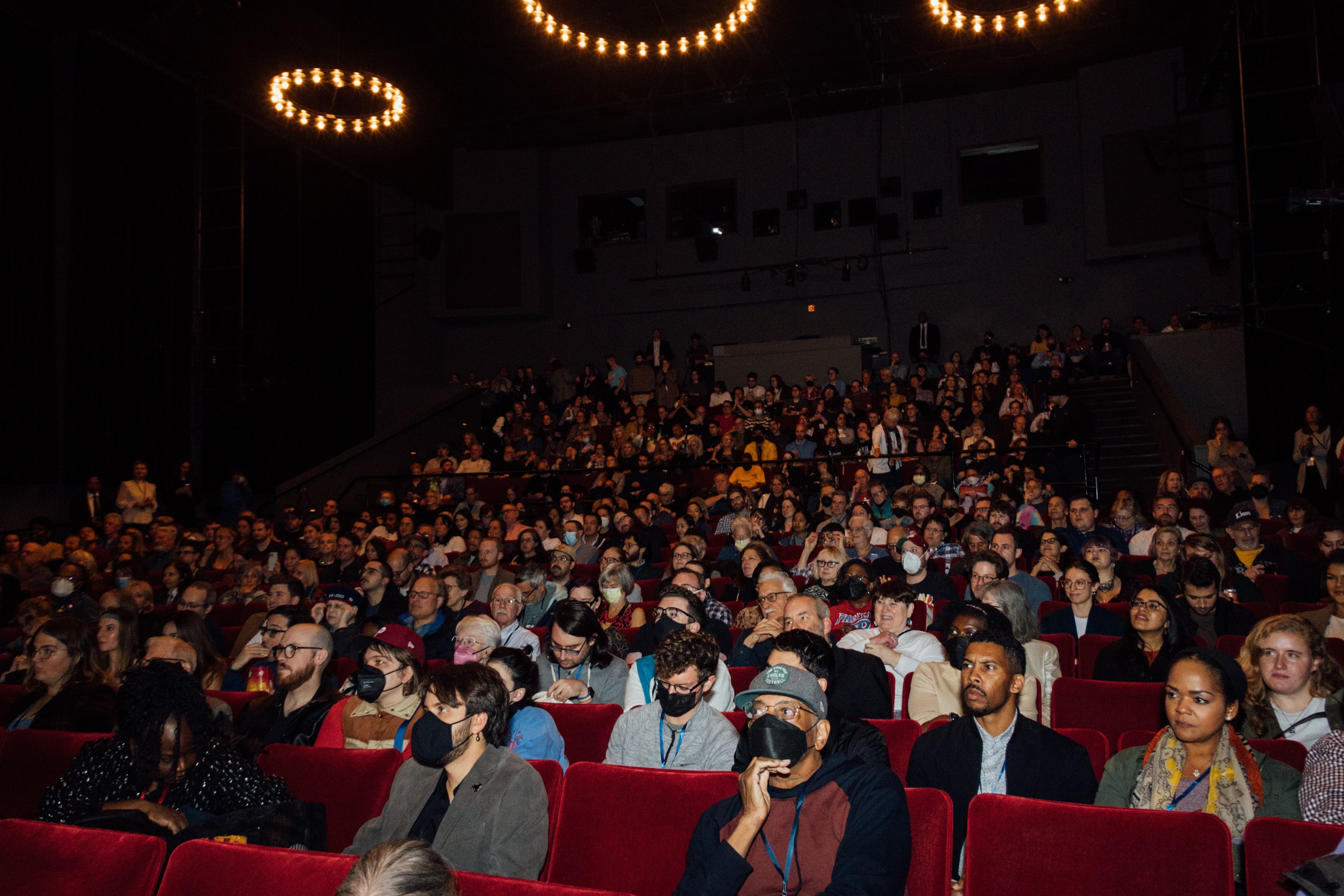
Moviegoers take in a recent screening at the Philadelphia Film Center.Philadelphia Film Society
Greenblatt anticipates upward of 110 films will be screened throughout the 11-day festival, across PFS’s three theaters.
The PFS will also host a preliminary event that honors both the 35th anniversary of the festival and the 25th anniversary of PFS. That event, called Reel October, is a two-week showcase of films projected on 35mm at Film Society Center.
The series kicks off with screenings of Quentin Tarantino’s Reservoir Dogs and Robert Rodriguez’s El Mariachi on Sept. 30, and ends on Oct. 11 with The Exorcist.
Greenblatt said the dual celebration is one he and other programmers have anticipated for years.
“It’s a lot of fun and something we have been planning for a long time because it’s something special for the industry. And it’s something we haven’t taken lightly,” he said.
Philadelphia Film CenterPhiladelphia Film Society
PFS board director Jen Su said these collective efforts are designed to demonstrate how the festival has forged community and continuously sparked viewers’ curiosity.
“They come because they genuinely want to discover something new, hear from filmmakers and experience films together in a theater,” she said.
But it’s also a moment, she said, for viewers to look ahead at the next generation of filmmakers and to inspire emerging storytellers to continue pursuing their dreams.
The full festival lineup will be announced on Oct. 7.
The 35th Philadelphia Film Festival takes place from Oct. 15-25. Festival badges and passes are available for purchase. filmadelphia.org.
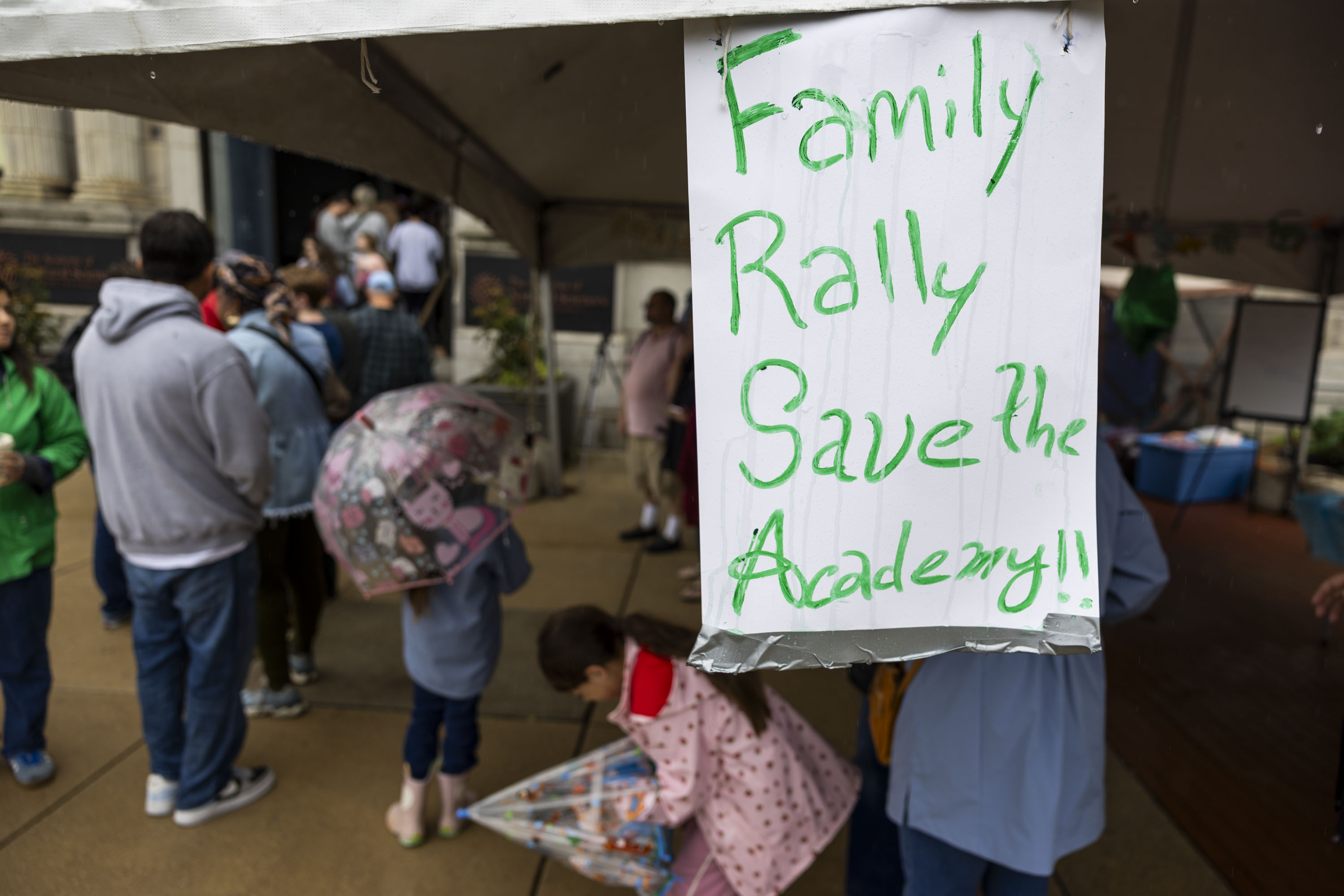
Even after a massive wave of love and a crescendo of protests over the weekend, the Academy of Natural Sciences of Drexel University museum won’t be getting an immediate reprieve.
Philadelphia’s beloved gateway to the natural world will remain shuttered after Drexel University released a statement Monday in response to an offer from the William Penn Foundation to temporarily underwrite operating costs and keep the doors open.
Drexel’s statement neither accepts nor rejects William Penn’s offer. Rather, it suggests that the university is open to talking.
Drexel says that while it appreciates the William Penn Foundation’s “public suggestion that it assist in temporarily keeping the Academy’s museum open,” they have “not received a formal proposal with a defined level of financial support.”
With that in mind, Drexel linked the William Penn offer with keeping both the museum and collections in the current building and what it says is a substantial amount of money that would be needed to bring the building at 19th Street and the Benjamin Franklin Parkway up to snuff.
Drexel said Monday that it looked forward to “continuing to explore the possibility of Foundation support — alongside the considerable commitment Drexel has already made to preserving the research and education missions of the Academy — as we consider the substantial financial and operational challenges, including significant deferred maintenance needs associated with keeping the Academy of Natural Sciences’ collections at their current location.”
“We believe that we are all working toward the same goal, which is to ensure that the treasures of the Academy remain accessible here in Philadelphia over the long-term,” said William Penn executive director Shawn McCaney in a statement Monday. “There are many considerations to determine the best path forward, and our offer of support is intended to help keep the museum open while a plan is developed.”
No meetings between Drexel and the Foundation were scheduled, a Drexel spokesperson said.
“Drexel intends to continue conversations with the William Penn Foundation to better understand and evaluate its offer,” said a Drexel source familiar with the matter who was not authorized to speak publicly about it.
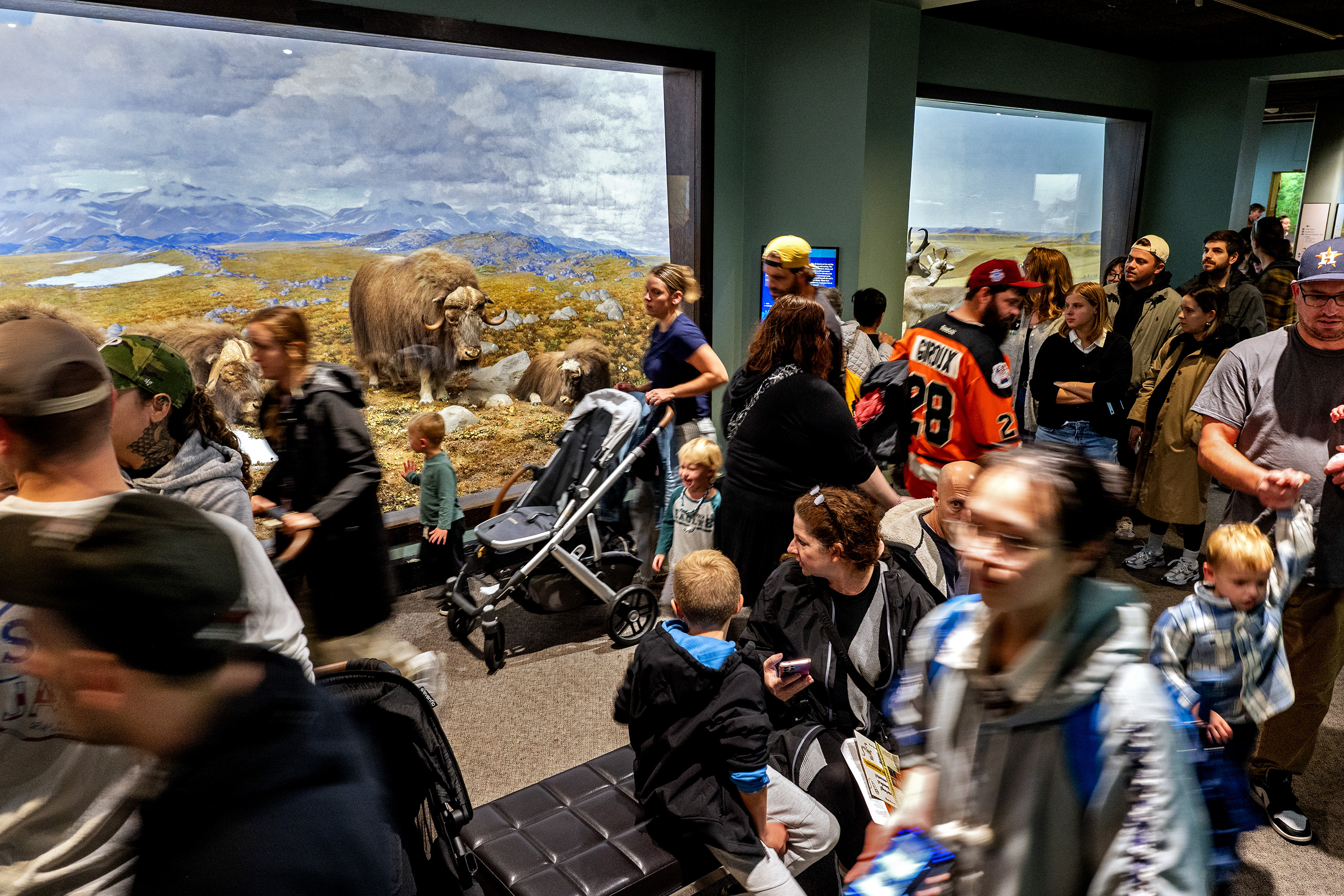
Visitors at the dioramas in the Academy of Natural Sciences of Drexel University on Sunday, the last day the museum was open to the public.Tom Gralish / Staff Photographer
The nearly two-century-old natural history museum closed to the public at 5 p.m. Sunday, and while the Academy‘s research and collections remain operational, leaders have said they intend to sell the building and move the collections at some point to an as-yet undetermined location. A public-facing museum experience of some kind is being envisioned elsewhere, but no details are set.
Academy board chairperson Suzanne Biemiller on Monday did not immediately offer a comment.
Citing a challenging financial picture and attendance trends, the Drexel and Academy boards on Sept. 1 abruptly announced the museum’s closure in 30 days without first coming forward with a public appeal for funds to help keep it open. Public demonstrations attracted hundreds at first, and in recent days online petitions topped 100,000 signatures.
With the closure date fast approaching, William Penn last week extended a hand, offering to cover the cost of the operating subsidy Drexel has been providing to keep the museum open for at least another year, “so that the full range of options for the future of the museum could be properly explored, and to provide time to test the interest of other funders and supporters who have not been engaged so far,” said McCaney in a statement.
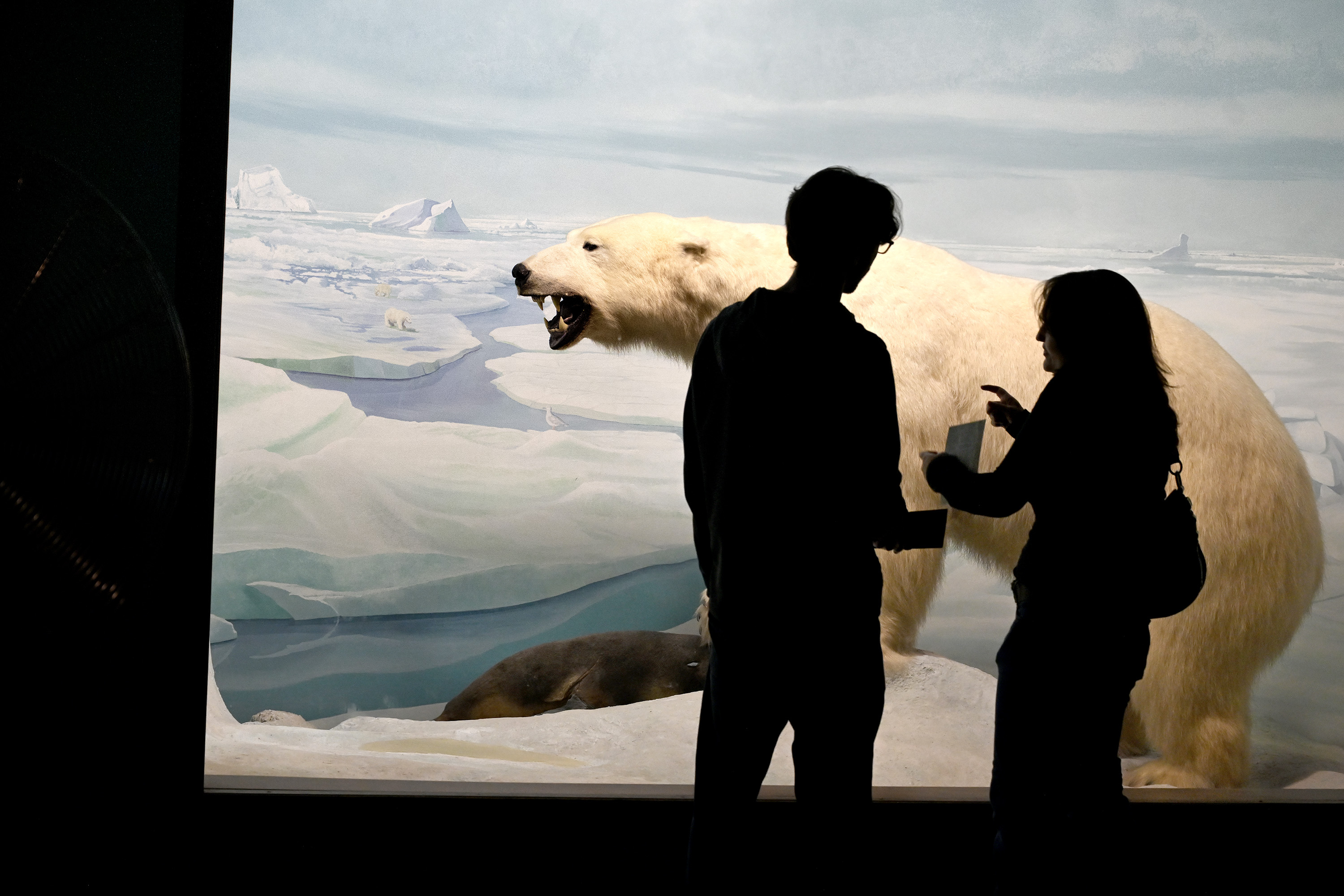
One of the North American dioramas at the Academy of Natural Sciences of Drexel University just before the museum closed on Sunday.Tom Gralish / Staff Photographer
The William Penn offer was intended to help float the Academy’s museum operations while due diligence was done on answering a number of questions about the Academy’s viability. Among them are determining the costs of addressing deferred maintenance in the building and gauging the level of philanthropic support that could be counted on to fund the museum on an ongoing basis.
Biemiller said last week that the Academy was supportive of the idea.
A Drexel spokesperson said that the Academy board and leadership team undertook an “extensive planning process” throughout much of 2024 and 2025 to identify a path toward long-term financial stability. The effort included an assessment of the Academy’s business model and explored options for a more sustainable financial and operational model, including the level of ongoing support required from Drexel.
Although the university did not publicly reject the William Penn money last week, it said that “no proposal has been presented that would provide a permanent, sustainable path forward for the Academy’s museum.”
Pressure intensified over the past few days, with politicians and activists asking why, if the hurdle was financial, Drexel would turn down such an offer.
“We urge Drexel and the Academy to jointly agree to accept the William Penn Foundation’s gracious offer and keep the Academy of Natural Sciences open for the public to continue to enjoy,” wrote City Councilmembers Nina Ahmad and Jeffery Young Jr. in a statement Saturday.
“Anything else is a clear abdication of their public duty, and a demonstration of their contempt for this priceless cultural resource.”
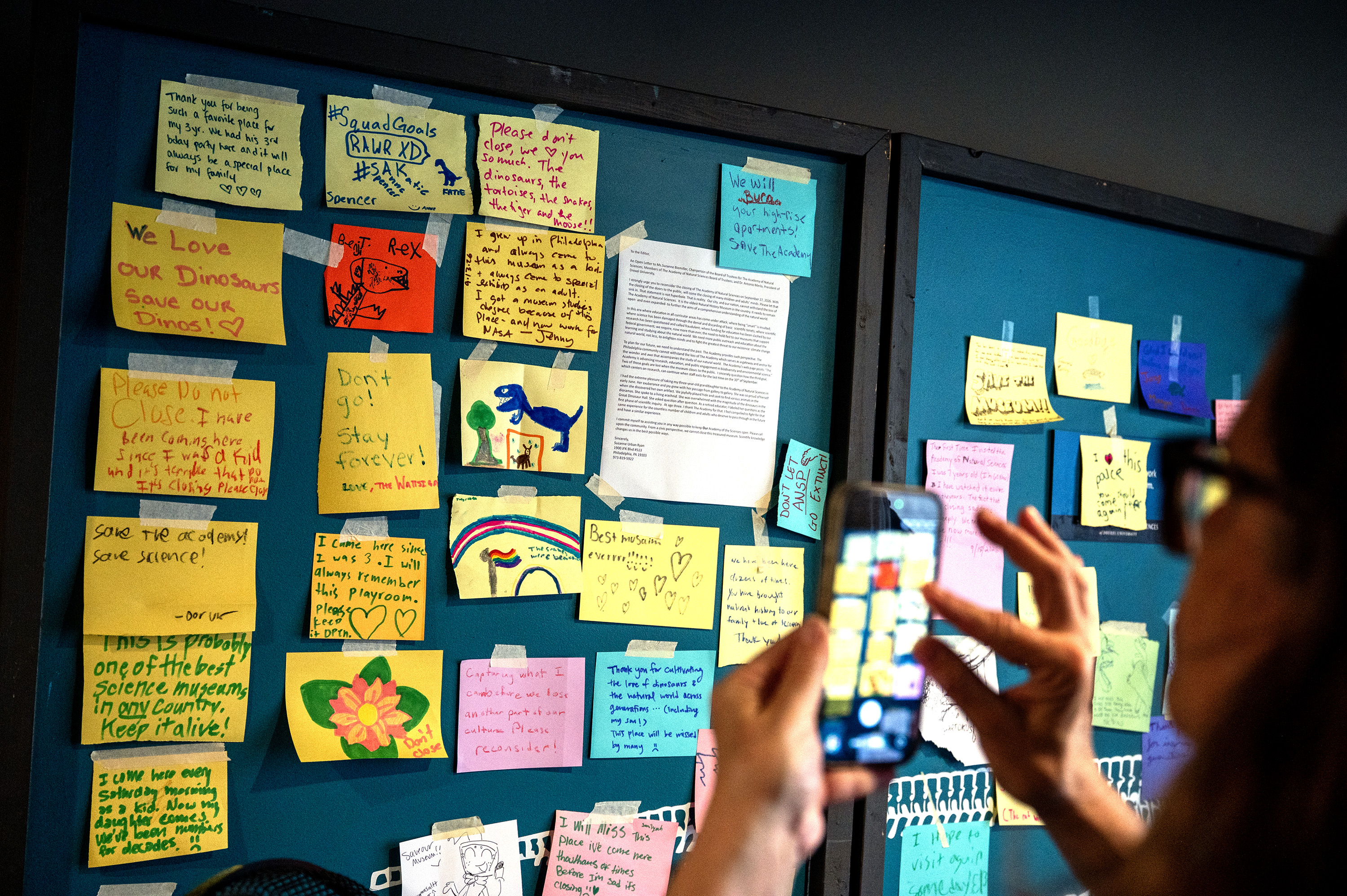
Visitors left love notes inside the Academy of Natural Sciences of Drexel University Sunday.Tom Gralish / Staff Photographer
Drexel says it has contributed $49 million toward the Academy’s budget since the two formed an affiliation announced in 2011. Yet, the institute has still struggled.
“If somebody came in today and said, ‘here’s all the money you need to do all of the deferred maintenance, to do what needs to be done to the building to make sure that you can care for all of the collections and all of the research,’ and it’s feasible to do it there from an economic perspective, which would be wonderful, then I think we would be very open to it,” said the Drexel source. “But we probably still would have to keep the museum closed for a bit, just to be realistic because what needs to be done may not necessarily be able to be done while the museum’s open.”
In the weeks since the impending closure was announced, attendance has soared, and revenue along with it. Estimated ticket revenue for September 2026 alone nearly matched the total ticket revenue for all of 2025, a Drexel spokesperson said.
The Drexel and the Academy boards are in the process of renegotiating their affiliation agreement, brokered in part by David L. Cohen — the onetime Comcast executive and U.S. ambassador to Canada — at the behest of Gov. Josh Shapiro and Mayor Cherelle L. Parker.
“That agreement includes a process for evaluating the future of the collections and the museum,” said Monday’s statement from Drexel. “Until that agreement is fully executed and approved by both boards, we do not intend to alter the plans that the Academy’s board and Drexel have agreed to.”
The Greater Philadelphia Cultural Alliance on Monday lauded the William Penn Foundation’s “generous offer” and said it deserved consideration, but added that responding to one crisis won’t be enough.
“Philadelphia must make a stronger, sustained commitment to the cultural institutions that are fundamental to our civic life,” said the GPCA statement.
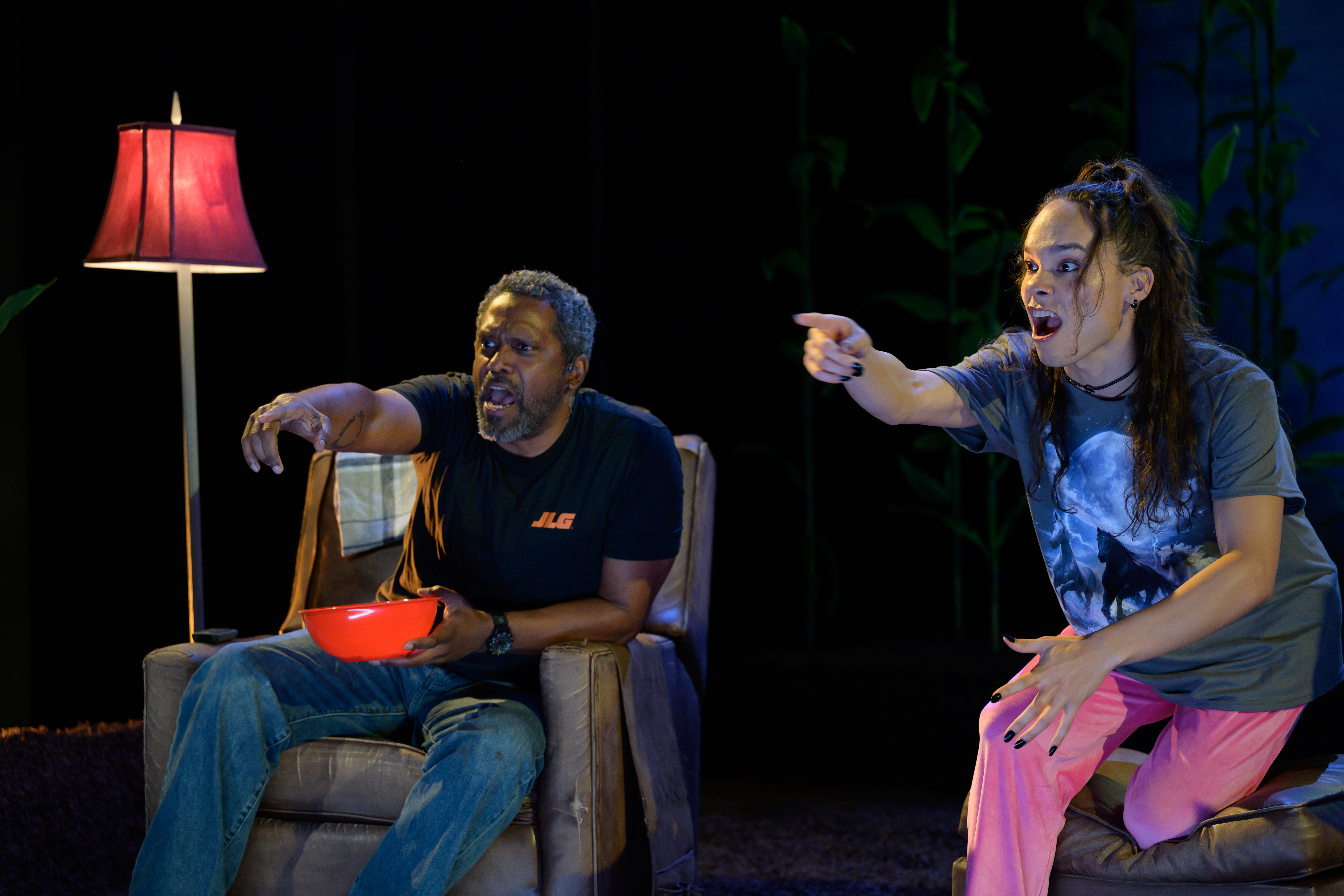
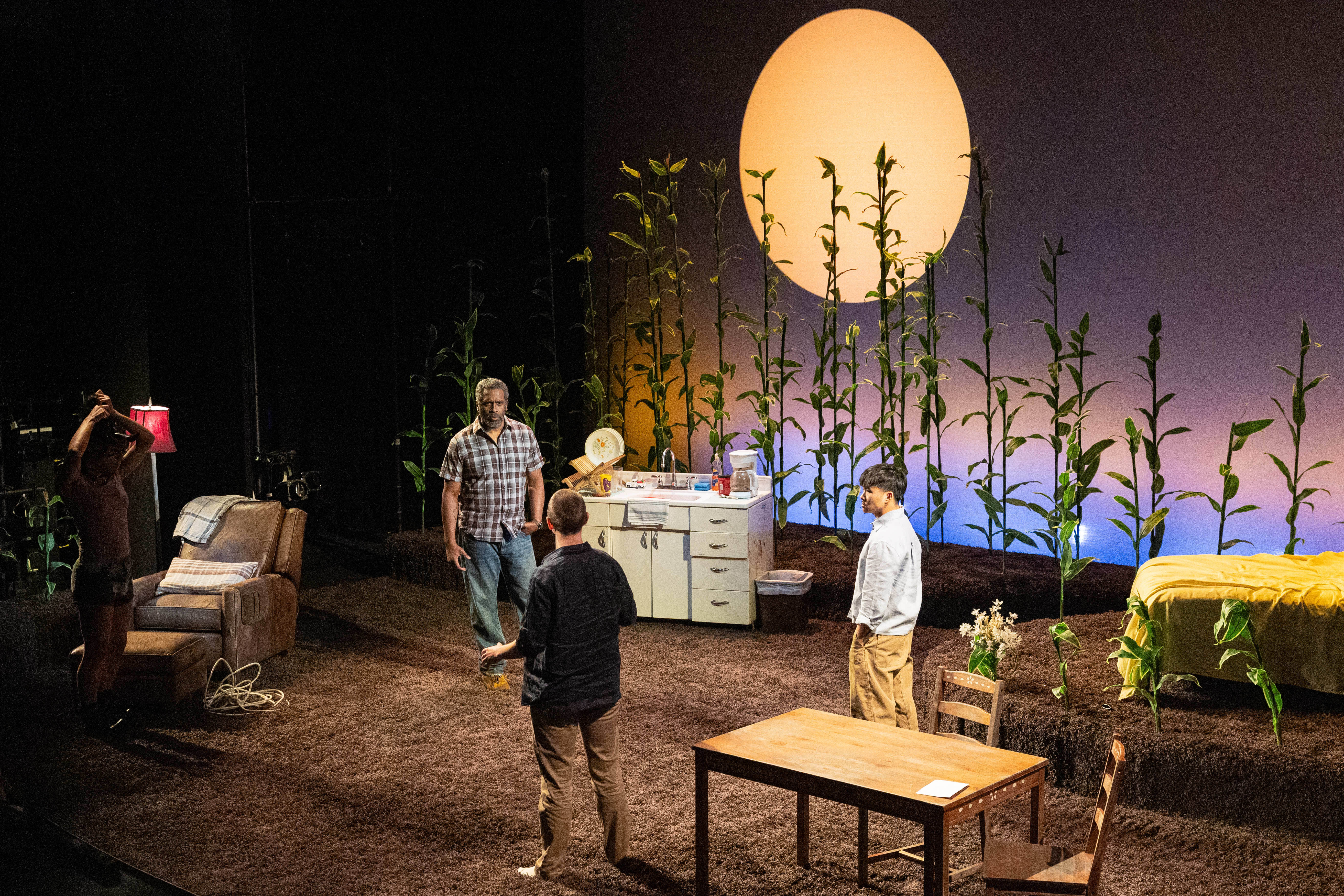
A rural Pennsylvania tableau is laid out across a stage on South Broad Street for the Wilma Theater’s latest production.
There are fresh green cornstalks in the foreground, and the sky glows violet behind them as the two main characters of Horsegirl & Cowdaddy take the stage.
Horsegirl, played by Samora de la Brisa, is a trans woman in her 30s, living and working near a farm in an unnamed southern Pennsylvania town with Cowdaddy, her father, played by Mount Airy’s Lindsay Smiling.
Horsegirl, it turns out, told her father she was trans years earlier, and while he’s still a bit confused by pronouns, his daughter’s identity is not an issue.
“I thought she was just, er, you know, gay,” Cowdaddy says in a scene, explaining to his daughter’s love interest the day Horsegirl came out to him. “But then she said, she told me, ‘I’m a girl,’ er, and I thought, ‘well.’”
The Wilma Theater’s production of “Horsegirl & Cowdaddy” runs through Oct. 4.JOHANNA AUSTIN
Writer DJ Hills, a Queen Village resident who grew up in rural Western Maryland, said one of the goals for their play, which had its world premiere at the Wilma on Friday, was to show that rural America isn’t always a hellscape for queer people.
“I don’t think that there was ever a moment of my life when society didn’t see me as queer in some way,” Hills, 31, said at Wilma on Thursday. “I was really cared for by my family, even when they didn’t always have the language or an understanding of who I was; there was always a lot of care, my grandmothers in particular.”
A 2019 report by the Movement Advancement Project, a Colorado nonprofit focused on LGBTQ equality and democracy, found that approximately 16% of trans Americans live in rural areas. The nonprofit said this population faces unique challenges, including higher poverty rates and “increased visibility.”
“There’s a present-day myth that trans people can only find happiness in metro areas and cities,” said Samora de la Brisa, who is trans. “We are everywhere. We exist in multitudes.”
Samora de la Brisa (far left), starring as Horsegirl, Lindsay Smiling (center), as Cowdaddy, and Ni-Ni (right), as Bethel, go over staging before their third preview inside the Wilma Theater on Sept. 24.Aidan T. Gallo / Staff Photographer
In 2023, The Inquirer spent several months chronicling the lives of two transgender women making their way in rural Dauphin County. One woman — Stephanie Fritsch — wanted to stay there. The other, Billie Jean Williams, wanted to get to Philadelphia or another city.
“You know, I want to be happy, she wants to be happy, and I want people to be happy with their lives. That’s pretty simple, right?” Williams told The Inquirer. “I don’t know what happened in America that made that so difficult.”
In the play, Horsegirl faces a difficult decision about where to live, whether to follow a love interest across the country or stay in rural Pennsylvania with her father. Cowdaddy struggles with past losses and, possibly, future ones, worrying about how his daughter would be treated in a new place.
“Folks here know her,” Cowdaddy says.
Smiling, who was recently named artistic director at the Wilma, said he empathized with the character Hills created.
“He’s got his issues but [is] a very loving father, a patient father doing the best you can for his kid,” Smiling said. “He’s human, just like us, and one of the wonderful things about the play is there are no villains.”
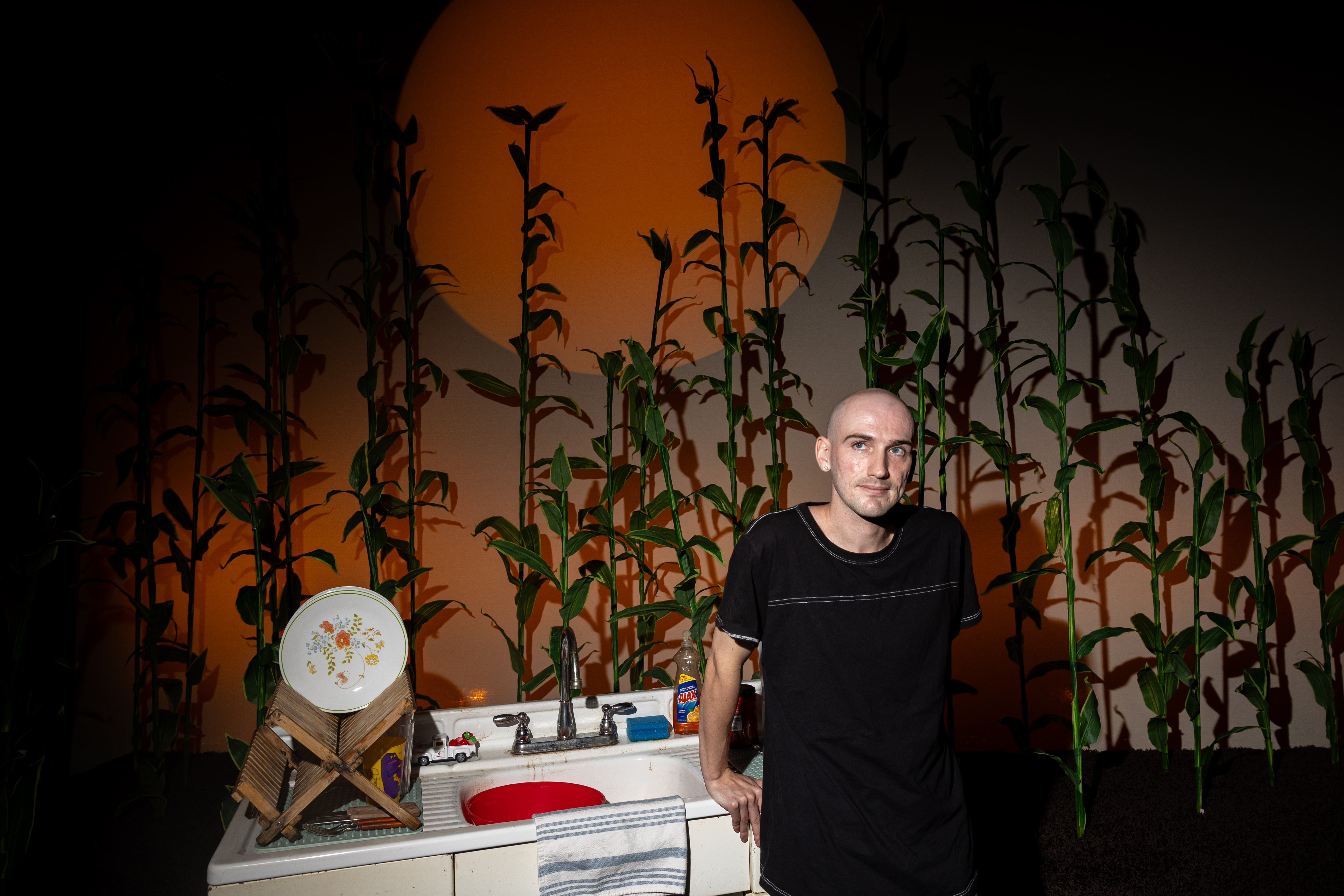
DJ Hills stands for a portrait on the stage inside the Wilma Theater on Sept. 24. Hills’ production “Horsegirl & Cowdaddy” premiered on Sept. 22 and will last until Oct. 4.Aidan T. Gallo / Staff Photographer
Hills said Horsegirl & Cowdaddy was inspired by a simple conversation they had with their father one afternoon in Greencastle, Franklin County, during the pandemic. While the play will be heading to New York City next year, Hills would like to have a run in Pittsburgh and, perhaps, rural settings.
“You can’t call yourself an American playwright if you’re only interested in New York, speaking to New York audiences,” they said.
“Horsegirl & Cowdaddy” plays through Oct. 4 at the Wilma Theater.
Blistering satire, bromance in Brazil, and short stories about women on the brink are among the selection of buzzy fall reads written or set in Philly.
History plays a particularly important role in these Philly-centric books. They shine a light on little known facts, examine the city historic block by historic block, or tell stories of nature discoveries in faraway lands.
As the days shorten and the winds cool, snuggle up with a mug of hot chocolate and one of these picks.
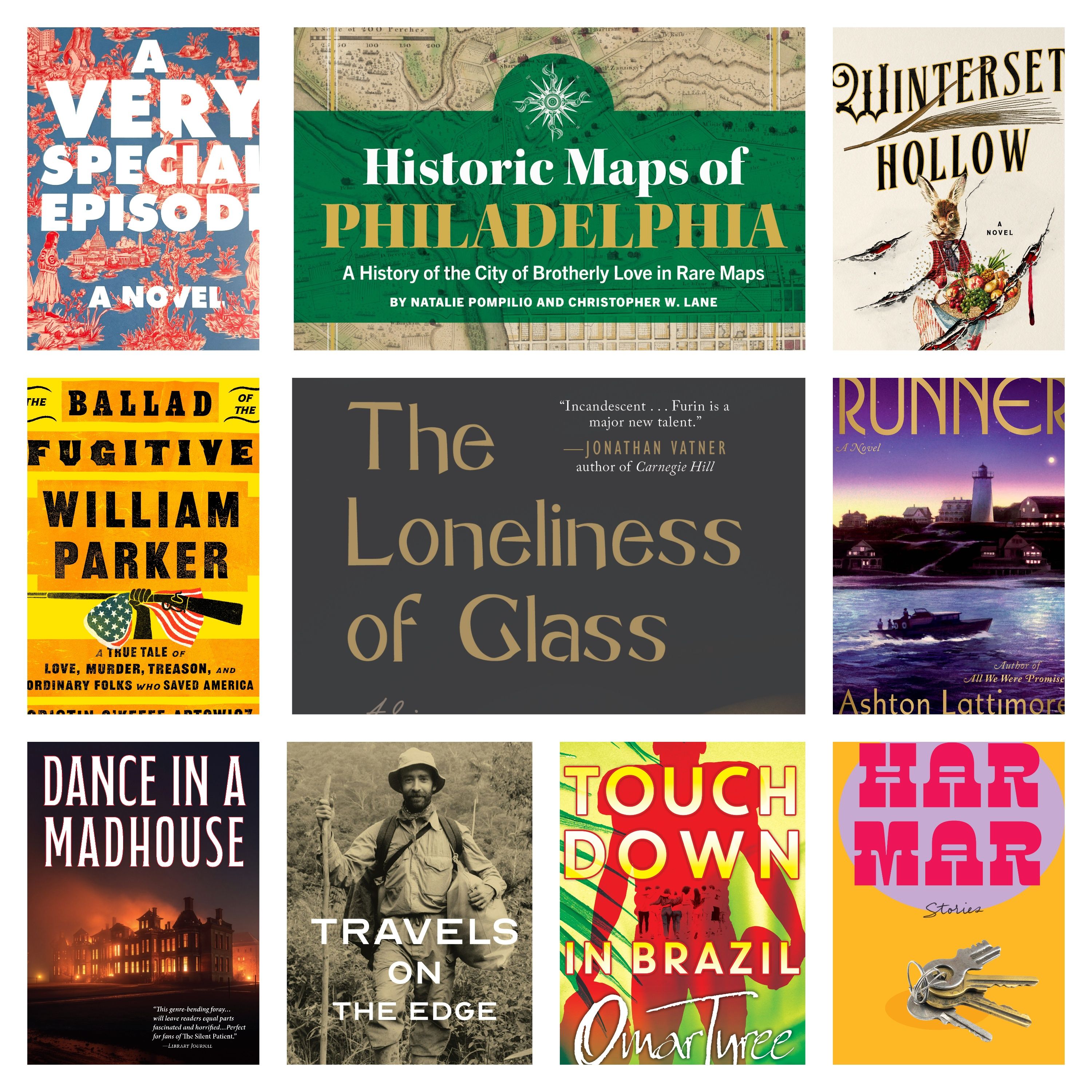
Temple University’s writer-in-residence Camille Acker’s debut novel, “A Very Special Episode,” is a modern day satire about Washington’s Black eliteElizabeth Wellington
Within the first few pages of Camille Acker’s satirical debut novel, A Very Special Episode, it’s clear D.C.’s high-profile Black elite are under interrogation. But West Philly-based Acker doesn’t forget to pay reverence to the legacy of the city’s Black institutions and its people.
At the center of the 285-page novel is the Tenth, a fictional private club and reference to W.E.B. Du Bois’ Talented Tenth theory. Nina, the protagonist, shares a name with Du Bois’ daughter, Nina Yolande Du Bois. Her boyfriend is Booker T. Bruce — whose name is a nod to formerly enslaved 19th-century leaders Booker T. Washington and Blanche K. Bruce. These homages and juxtapositions are doubly interesting, considering Du Bois’ and Washington’s philosophy were at odds.
Acker is a Temple University writer-in-residence known for the biting short stories in Training School for Negro Girls. However, much like those works, A Very Special Episode is grounded in the present. We are with Nina as she tries to keep the Tenth relevant, a darn near impossible job in today’s world in which Jim Crow manifests as gentrification and police brutality. And affluent African Americans willingly don the shackles of material wealth.
A Very Special Episode was released Aug. 18.
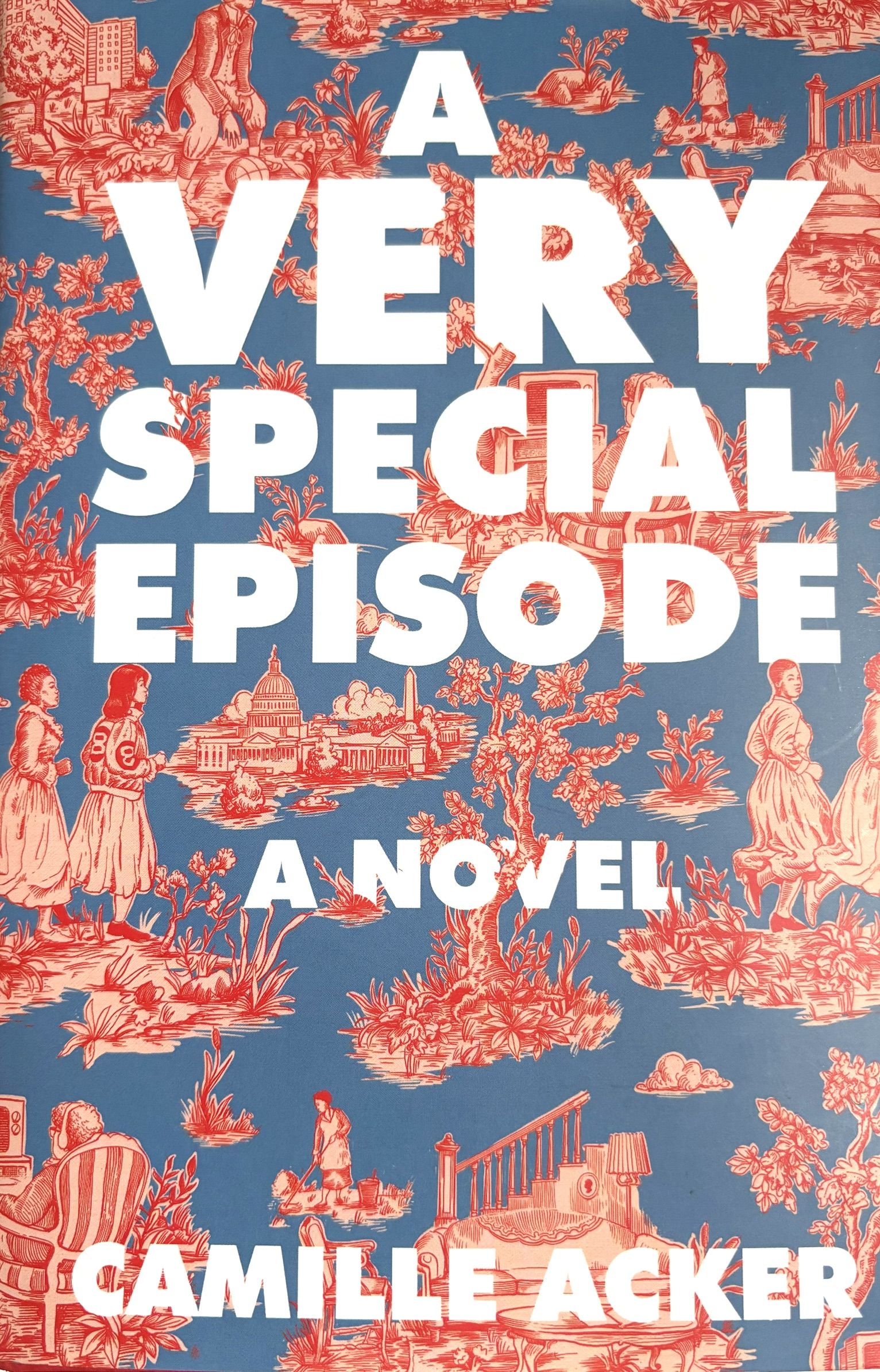
Former Philadelphia Inquirer journalist Natalie Pompilio and PBS’s “Antiques Roadshow” print and map expert Christopher W. Lane teamed up for this illustrated text “Historic Maps of Philadelphia: A History of the City of Brotherly Love in Rare Maps.”Reedy Press
Former Inquirer journalist Natalie Pompilio combines her affinity for Old City and walking tours in this 176-page hardcover exploring Philadelphia’s past through historical maps.
The maps in this book date to the 16th century when Philadelphia was home to the Indigenous Lenape tribe. They weave through colonial, antebellum, and early 20th-century Philadelphia and ends in the mid-20th century with highways that eased drivers’ trips and decimated historic neighborhoods.
Historic Maps of Philadelphia was released Sept. 1.
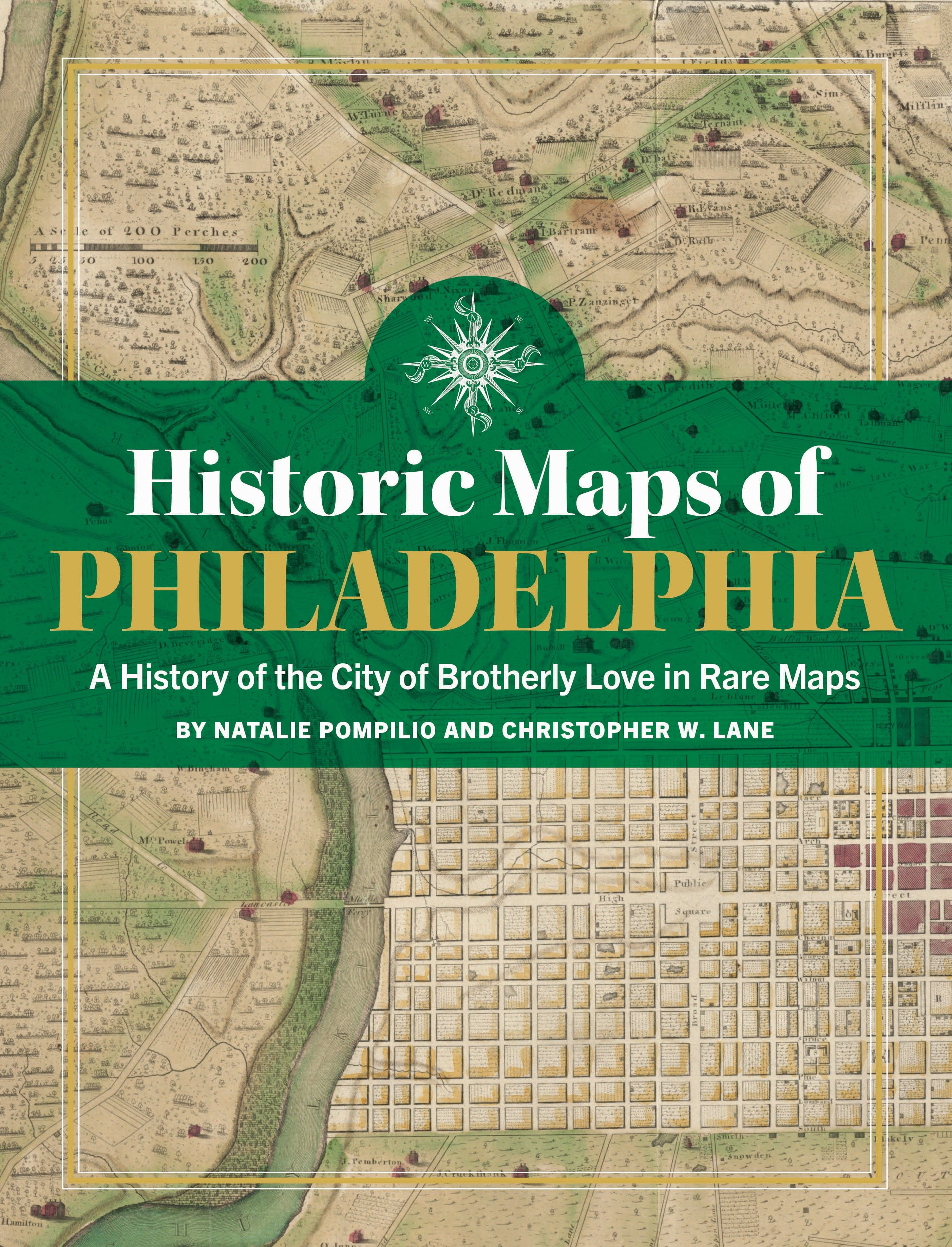
West Mount Airy award winning short story writer Kathleen Furin’s first bound collection of short stories, “The Loneliness of Glass” centers strong, resilient, complex women who overcome the odds and learn to love themselves.Cornerstone Press
West Mount Airy-based book coach, equity and inclusion consultant for Germantown’s Just Strategies Hub, and award-winning short story writer Kathleen Furin will release her first bound collection, The Loneliness of Glass, in November.
On Furin’s website, she describes her work as stories about strong, resilient, complex women who, through overcoming odds, learn to love themselves.
The narratives in this 220-page paperback reflect that and include a piece about a young woman who loses her half sister in a tragic murder, and a woman in an interracial marriage who is forced to confront her preconceived notions about race when she visits her hometown.
The Loneliness of Glass releases Nov. 3.
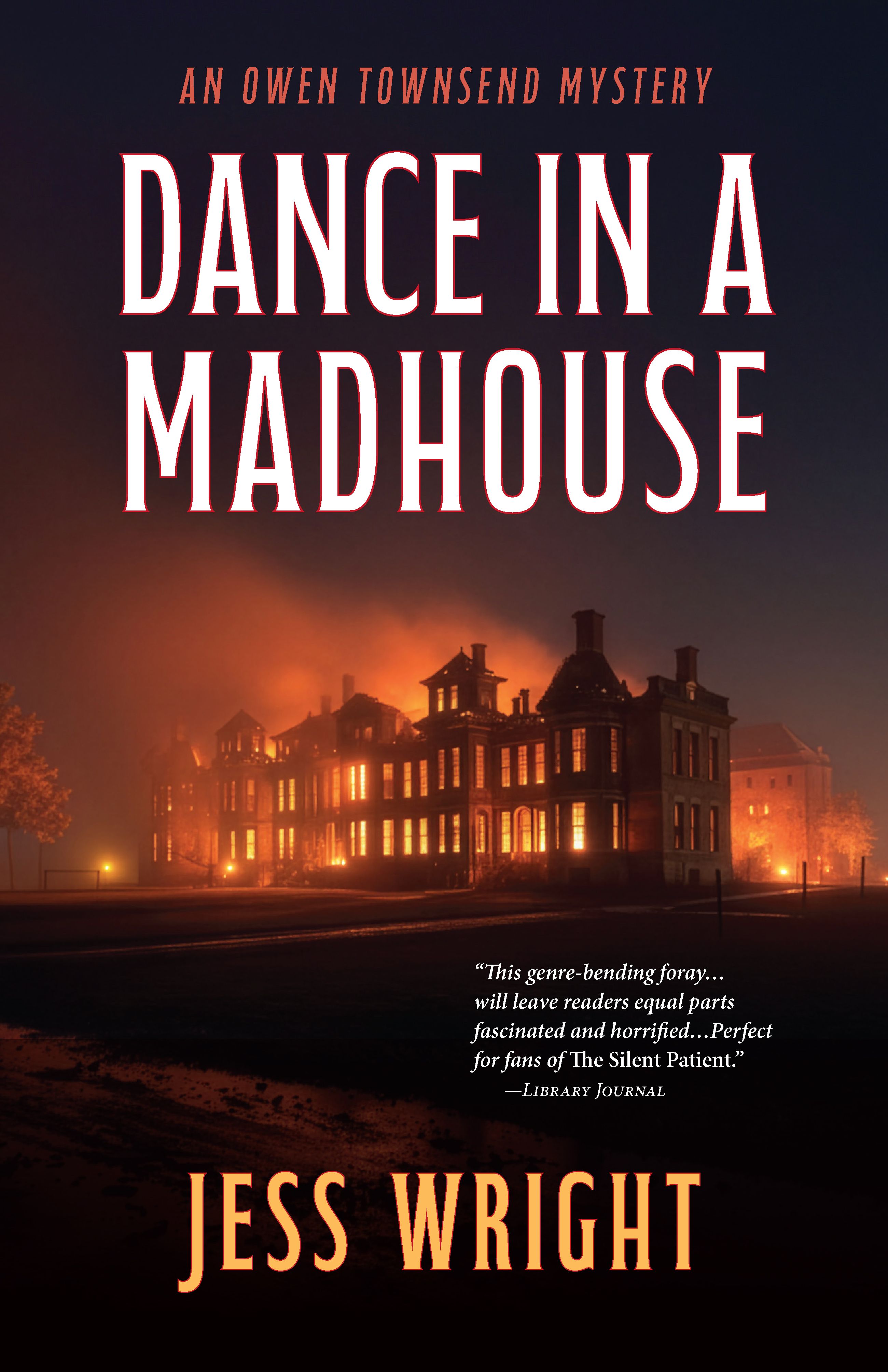
Louisville, Ky.-based psychiatrist Jess Wright explores psychosis in early 20th-century Philadelphia in “Dance in a Madhouse,” the first installment in the Owen Townsend mystery trilogy.Montague Books
Owen Townsend is a promising young medical school intern in 1905 Philadelphia when he gets locked up in the fictional Fairmount Lodge Asylum. Did he really lose his mind? Or, was he set up? Those questions are at the center of noted Louisville, Ky.-based psychiatrist Jess Wright’s mystery Dance in a Madhouse.
Wright, a native of Hollidaysburg, earned his medical degree at Jefferson Medical College in 1969 and interned at Lankenau Medical Center in the early 1970s. This 288-page thriller is set against the backdrop of the Museum of Art when it was located in Memorial Hall and Boathouse Row, the library of the College of Physicians, and Jefferson Medical College. Dance in a Madhouse is the first book in a trilogy of Owen Townsend mysteries.
Dance in a Madhouse was released Sept. 8.
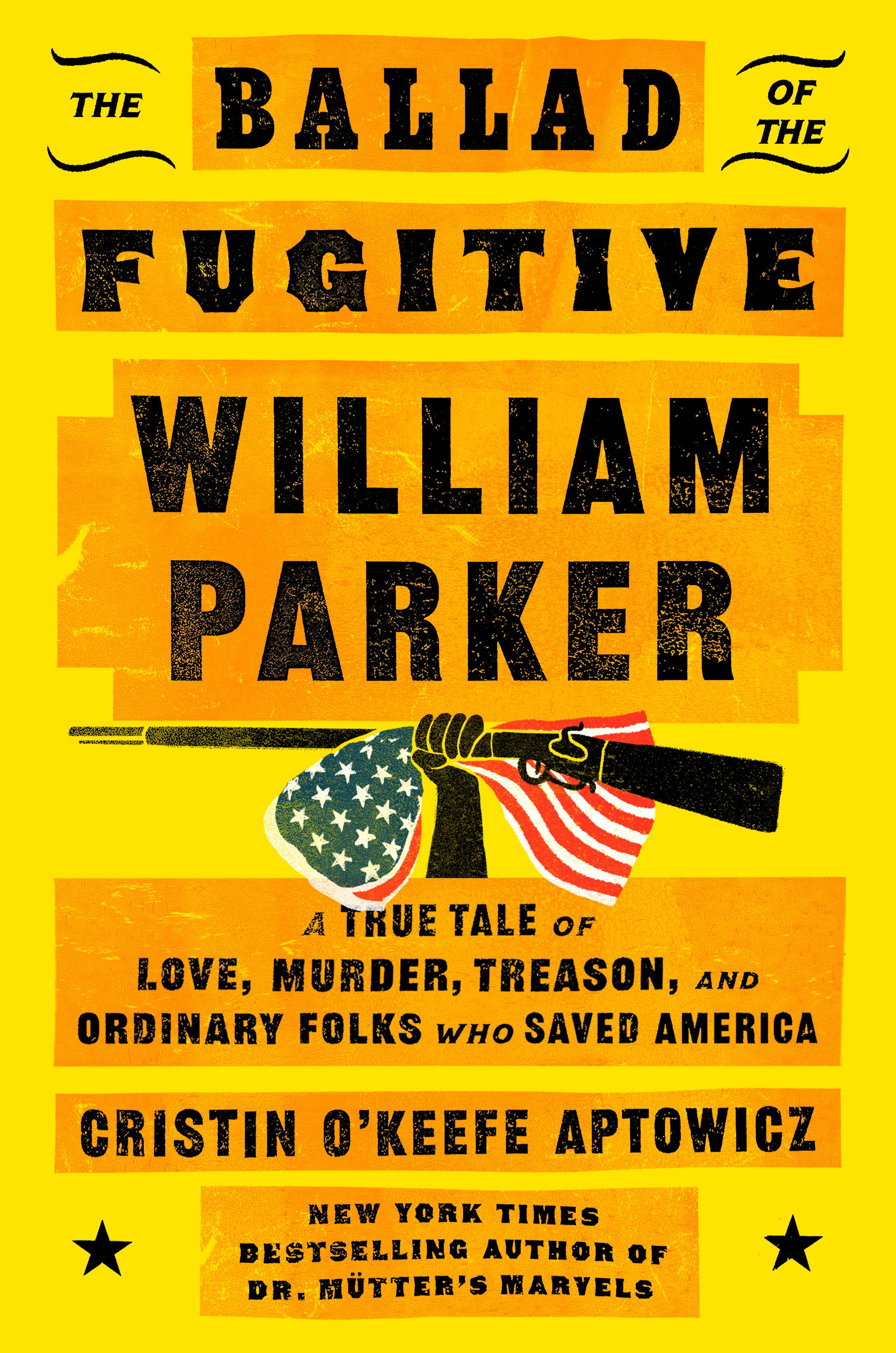
Central High School graduate (Class 255) Cristina O’Keefe Aptowicz’s historical nonfiction drama of William Parker, an enslaved man who emancipated himself from a Maryland plantation as a teenager in 1839, created a new life for himself as a free man in Christiana, Pa. His freedom is threatened when his former enslaver was killed tried to re-enslave him.Simon & Schuster Books
Poet, historian, New York Times best-selling author, and Central High School graduate (Class 255) Cristin O’Keefe Aptowicz’s latest work, The Ballad of the Fugitive William Parker, is the true story of a self-emancipated formerly enslaved man’s fight to remain free in early 19th-century Pennsylvania.
Shortly after her mother died, Aptowicz began exploring her mother’s side of the family tree. She discovered her maternal ancestors were seamstresses for the Underground Railroad, sometimes sewing new outfits for entire groups of freedom seekers in a single night. In her research, she kept coming across the names “William Parker” and “Christiana Riot,” names she, a lifelong Philadelphian, had never heard of before.
The Ballad of the Fugitive William Parker is Aptowicz’s “best attempt to resurrect this important and necessary story and bring it back into the national spotlight where it belongs.”
The Ballad of the Fugitive William Parker was released Sept. 8.
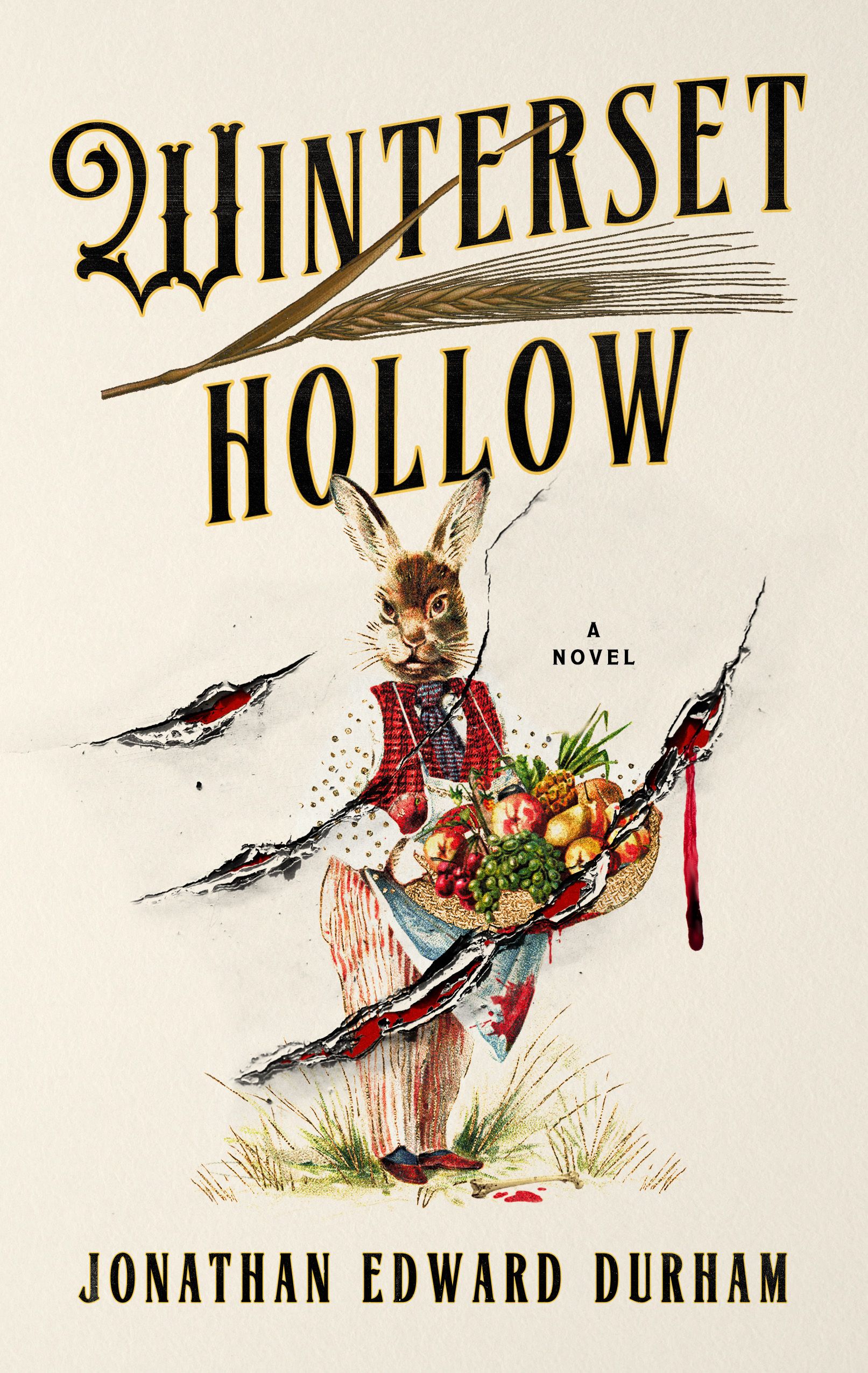
“Winterset Hollow” is a fantasy book within thriller book by Allentown resident and social media sensation Jonathan Edward Durham.Union Square & Co.
When Diana Gabaldon — author of the Outlander novels that inspired Starz’s popular time-traveling series of the same name — refers to your book as “astonishingly powerful and multilayered” declaring it among the most interesting books she’s read in years, you might have written a literary winner.
Such is the case for Allentown writer and social media content creator John Edward Durham, or @thisoneoverhere on Instagram, where he has 419,000 followers.
Durham’s Winterset Hollow follows four fictional friends visiting the island that inspired their favorite fantasy novel, also named Winterset Hollow. But when they break into the writer’s abandoned estate, they discover that the truth behind their favorite adored book is dark, dangerous, and terrifying.
First published in 2021 by Credo House Publishers, Union Square and Co. — a subsidiary of the New York’s Hachette Book Group — will release the new edition in October featuring the fictional book Winterset Hollow within Durham’s book.
Winterset Hollow releases Oct. 6.
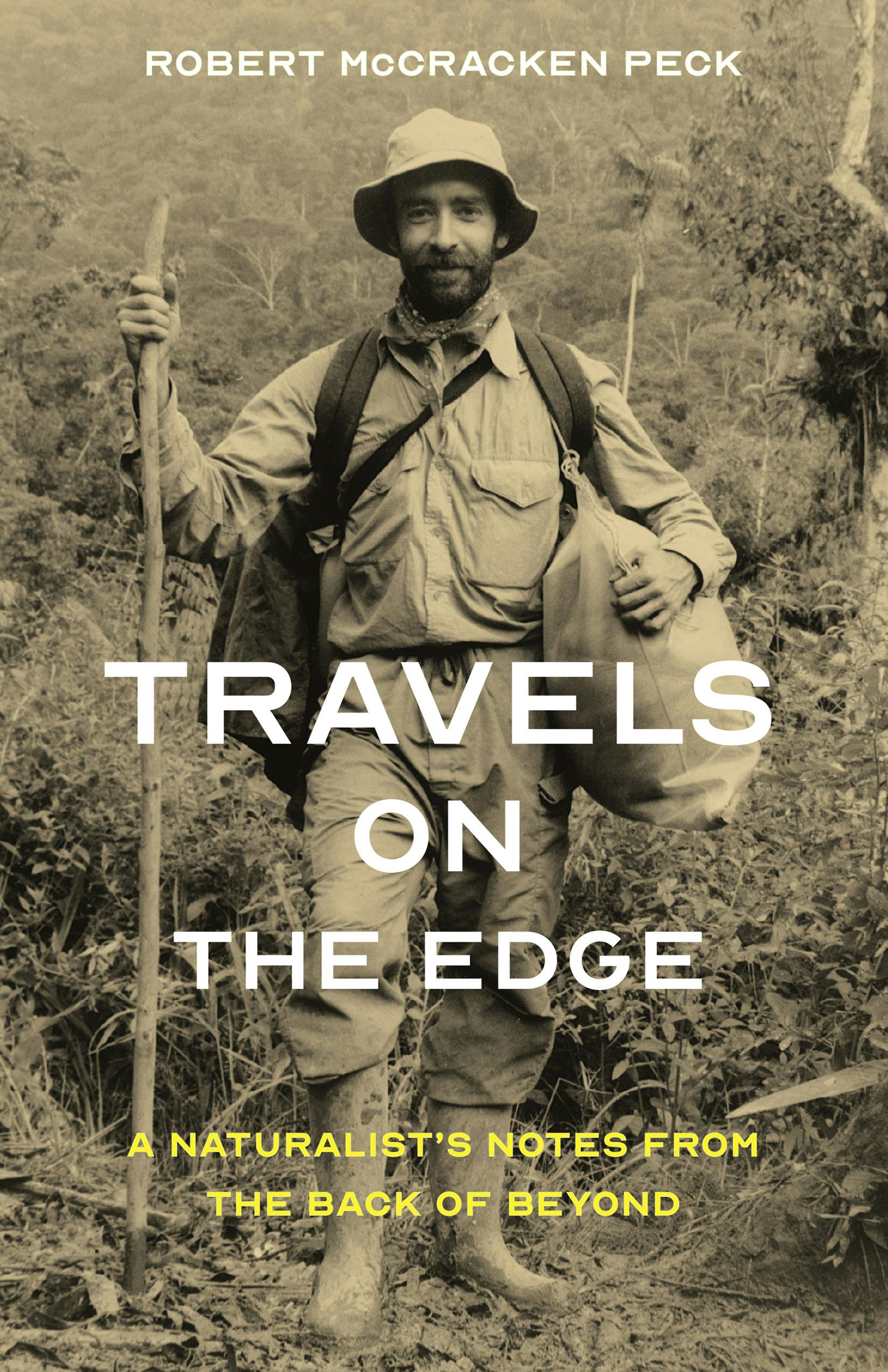
Robert McCracken Peck, a retired senior fellow of the Academy of Natural Sciences of Drexel University, spent close to 50 years as the Academy’s official historian and photographer. “Travels on the Edge: A Naturalist’s Notes from the Back of Beyond” is a collection of essays and photos chronicling his adventures.University of Pennsylvania Press
Retired senior fellow of the Academy of Natural Sciences of Drexel University, author, and Chestnut Hiller Robert McCracken Peck spent close to 50 years traveling the world as the official photographer, historian, and chronicler of scientific exhibitions for the academy.
He discovered three new frogs in the Andes, collected several previously unknown species of fish on the Orinoco River, and studied rare insects in Africa and the Caribbean. He’s been on expeditions to Mongolia to study wildlife, witnessed the fall of the Berlin Wall, and traveled the Gobi Desert.
Travels on the Edge: A Naturalist’s Notes from the Back of Beyondis the scholar and adventurer’s collection of essays accompanied with lavish illustrations and Peck’s original photographs. In 240 pages, readers are transported to the most remote parts of the world to witness the joys (and challenges) of scientific research.
Travels on the Edge: A Naturalists Notes from the Back of Beyond was released Sept. 15.
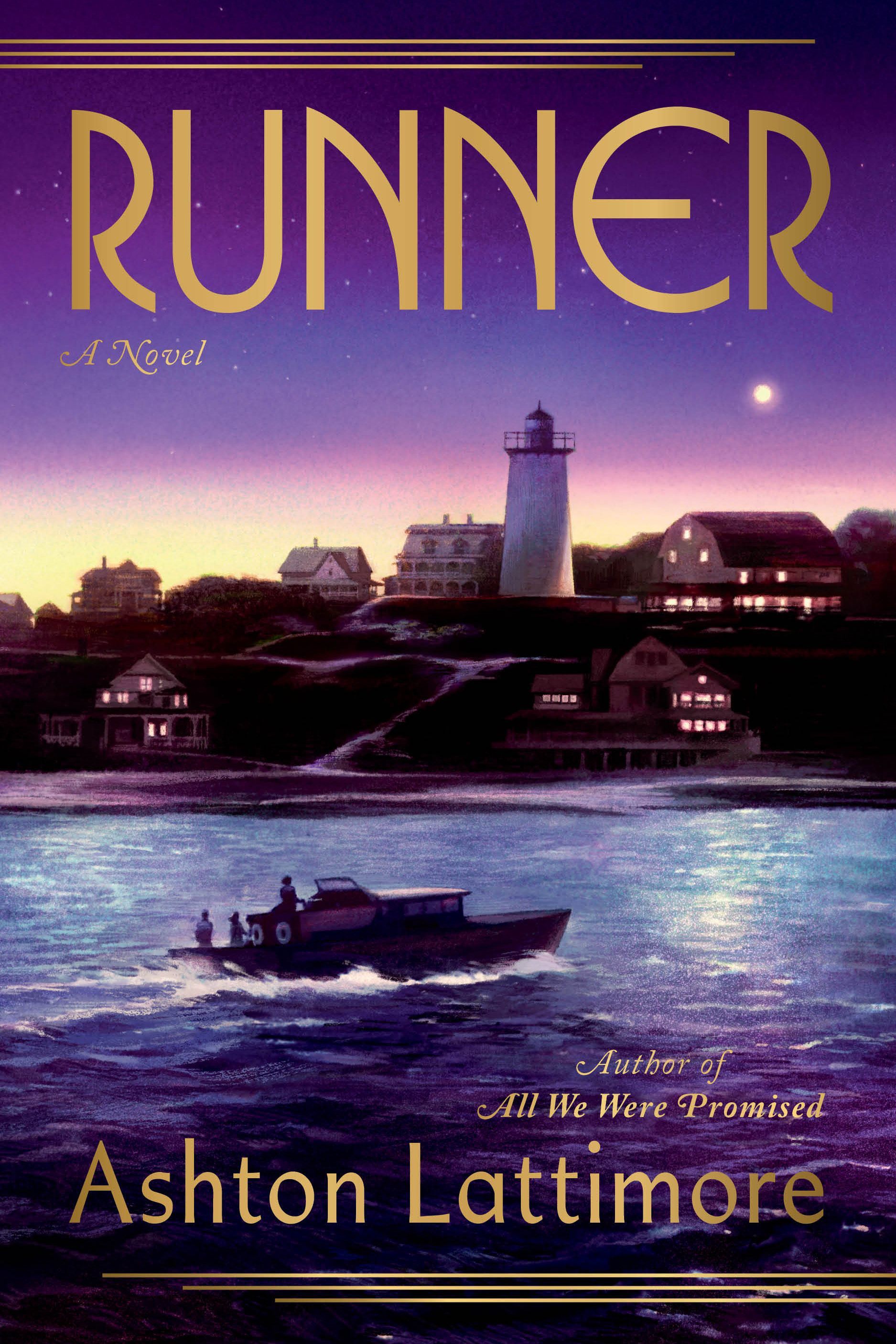
Ashton Lattimore’s “Runner” follows lady rumrunners from Martha’s Vineyard into Boston and down through New York City during the Harlem Renaissance.Penguin Random House
Shortly after Ashton Lattimore completed the 2024 award-winning novel All We Were Promised, centeringanenslaved women in antebellum Philadelphia searching for her freedom, she began writing Runner from her Bryn Mawr home.
Lattimore has since moved to northern New Jersey, but her ties to Philadelphia’s historic organizations run deep.
Runner follows lady rumrunners from Martha’s Vineyard into Boston, and down through New York City during the Harlem Renaissance. Will the protagonist Lena Jameson discover who killed her father? Will she be able to skirt the authorities on her tail during Prohibition? Or, will she lose it all simply because she’s a woman?
Runner was released July 28.
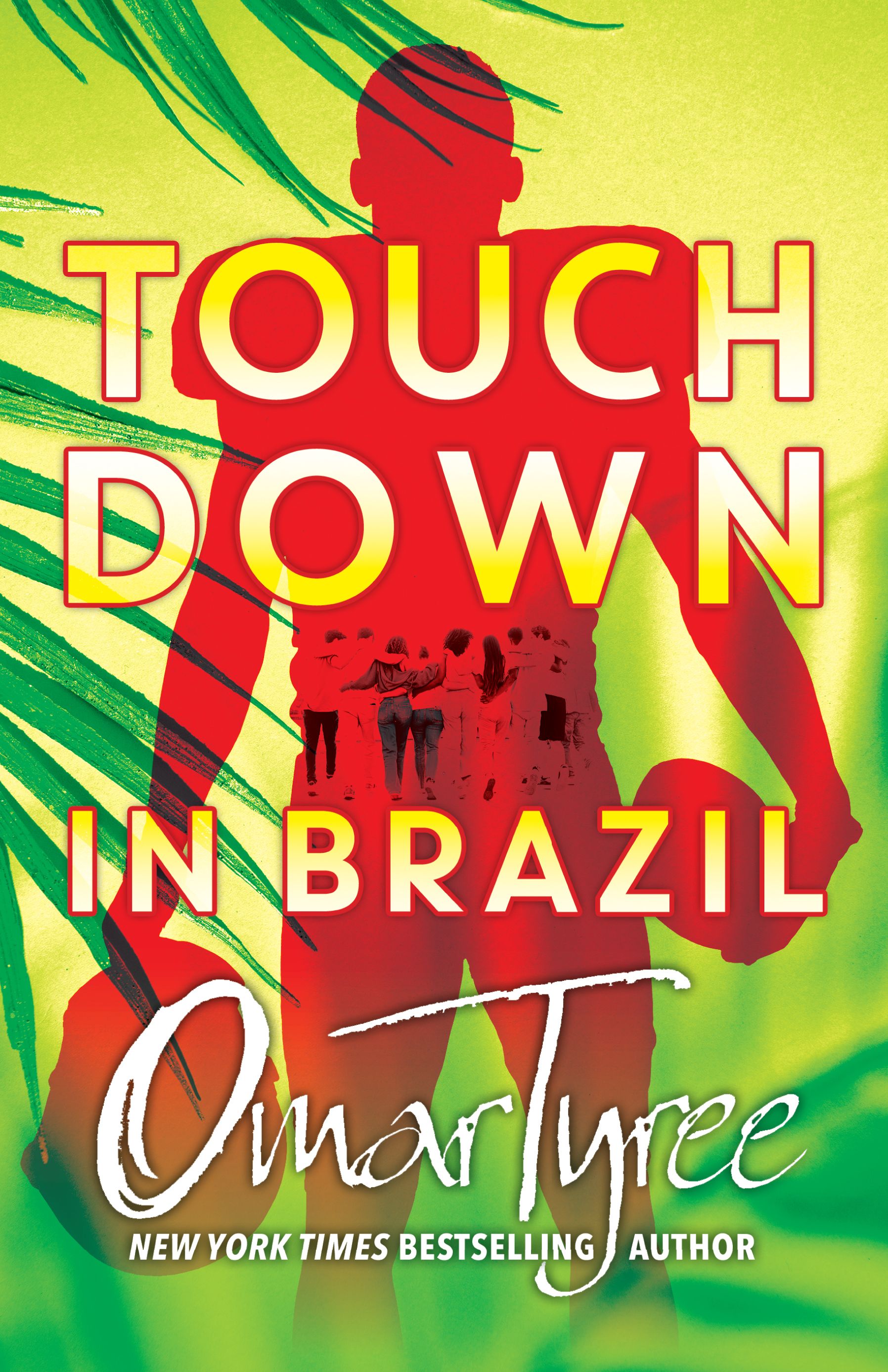
Omar Tyree’s latest book, “Touchdown in Brazil,” is a bromance between an Eagles fan from South Philly and a Green Bay Packers fan in Brazil during the 2024 game between the two teams. It was the first NFL game played in South America.Dafina, an imprint of Kensington Publishing Corp.
Dafina, an imprint of Kensington Publishing Corp., $37.99
West Philadelphia native and veteran author Omar Tyree’s latest novel Touchdown in Brazil centers a Philadelphia Eagles fan who travels to Brazil in 2024 to watch his beloved Birds play the Green Bay Packers in the NFL’s first game played in South America.
The protagonist, named Tony Costa, is an amateur sports better looking for a break from his wife and hoping for a win with the Birds. The Eagles win. But whether Costa — who befriends other husbands and fathers including a Packers devotee and the owner of a local sports bar during his trip — will learn to appreciate his family and take home the ultimate win, is up in the air.
Touchdown in Brazil releases Sept. 29.
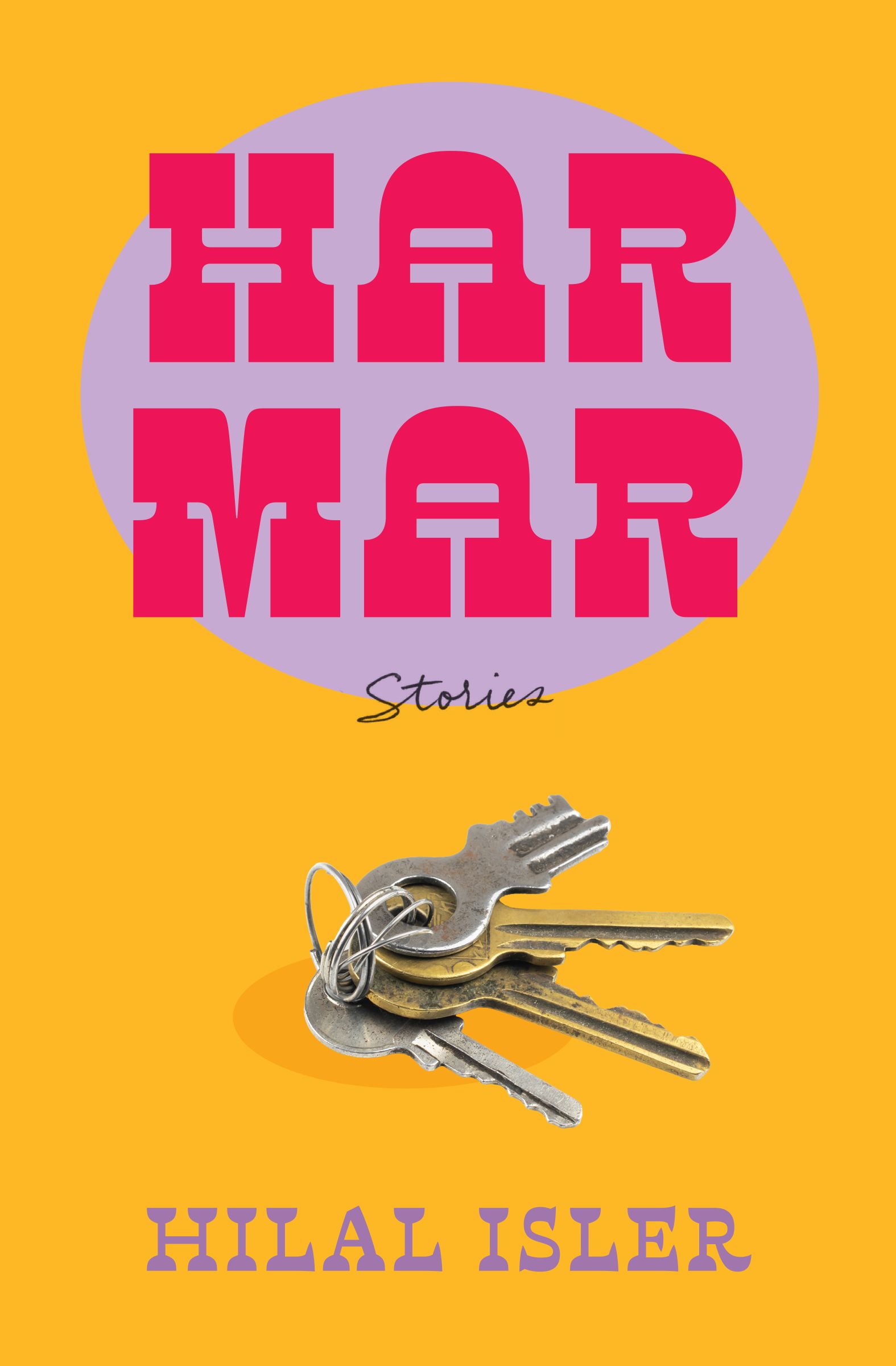
Hilal Isler’s first short story in her collection, “Khadijah Number 2,” is set in the working class neighborhood in West Philly and comes to a climax in the opulent Rittenhouse Square.Northwestern University Press
Curbstone Books, Northwestern University Press, $24
Author Hilal Isler set “Khadijah Number Two,” the introductory yarn in her debut collection of short stories Har Mar, among the rowhouses of West Philadelphia and the luxe lofts, expensive gastropubs, and overpriced yoga pants on Rittenhouse Square.
The story centers 25-year-old Turkish server and borderline alcoholic Ayla Erdoğdu. The devout 50-year-old Muslim woman Khadijah picks Ayla because she’s young, pretty, and flaky — just the energy she needs to sell her book. And she’s right. Khadijah’s novel is a hit and Ayla gets lost, becoming a second edition of Khadijah.
Many of the selections in Isler’s 16-story debut work feature women of color. Some of are Muslim, some are not. But all of them are complicated and have a salty vibe.
Isler attended the University of Pennsylvania and currently is an associate professor at the University of Austin.
Har Mar was released July 15.
An earlier version of this story listed an incorrect publisher for Robert McCracken Peck’s new book. It is the American Philosophical Society Press.
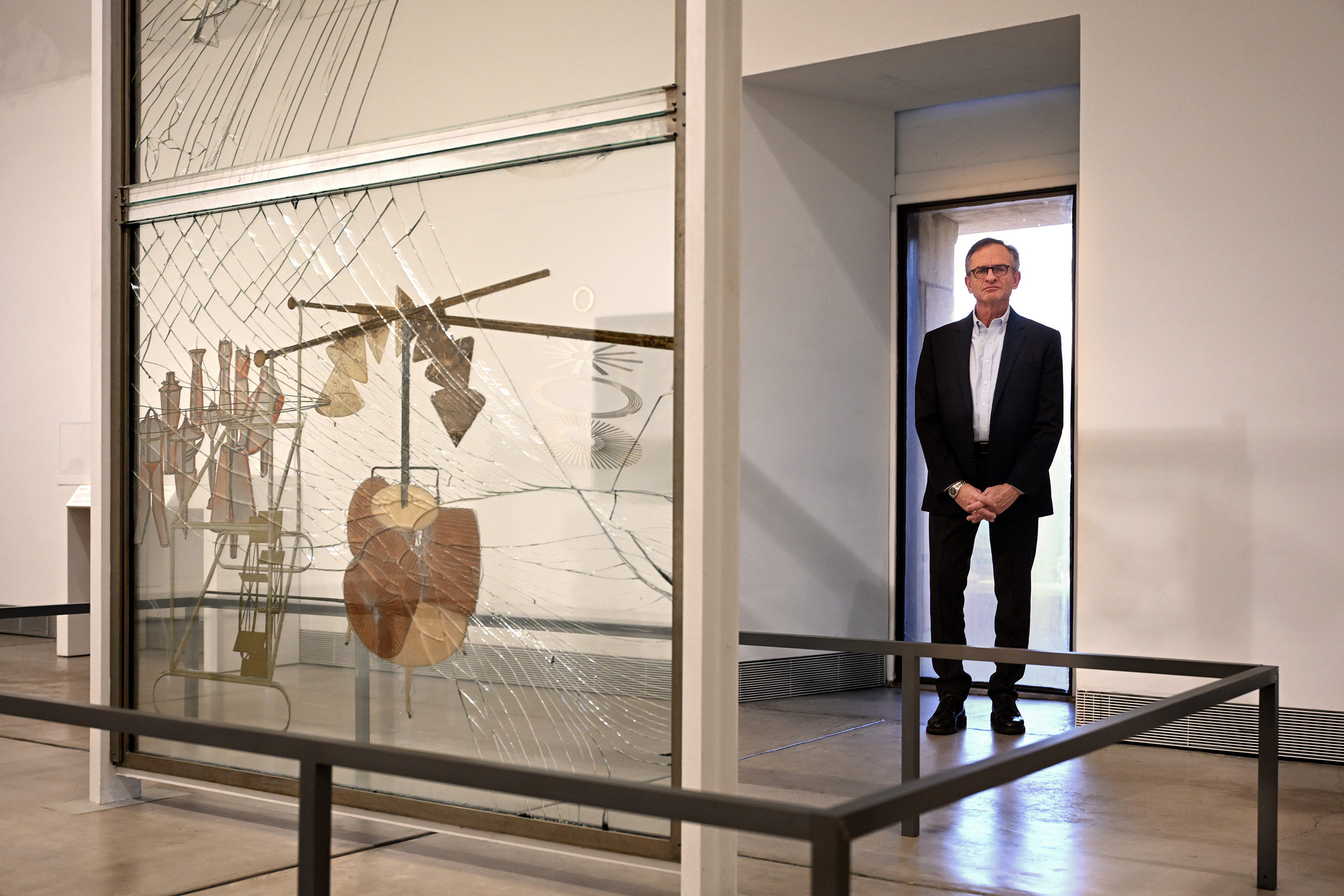
Exploring the arc and range of the pioneering French American artist, who died in 1968, the show features 300 of Duchamp’s paintings, sculpture, film, photography, printed matter, design, and his unclassifiable works known as “readymades.”
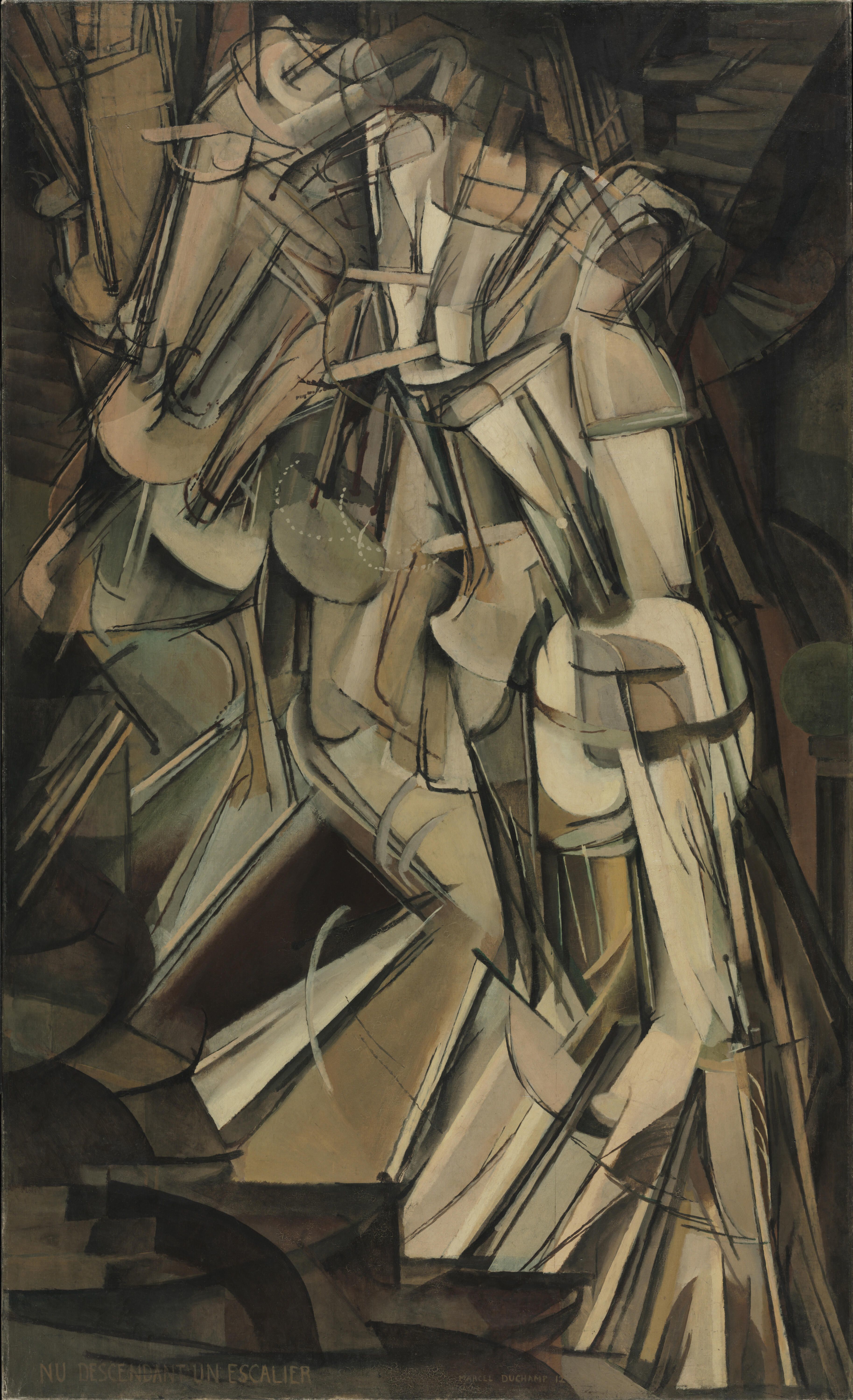
After showing at New York’s Museum of Modern Art, the PMA show will run from Oct. 10 through Jan. 31, 2027. It includes Duchamp’s most celebrated creations, including his 1912 painting, Nude Descending a Staircase (No. 2), and his avant-garde masterpiece created between 1915 and 1923, The Bride Stripped Bare by Her Bachelors, Even. On hand will be Duchamp’s last major art piece, Étant donnés, a 1966 experiential assemblage he had been working on in secret and intended for the Philadelphia Museum of Art.
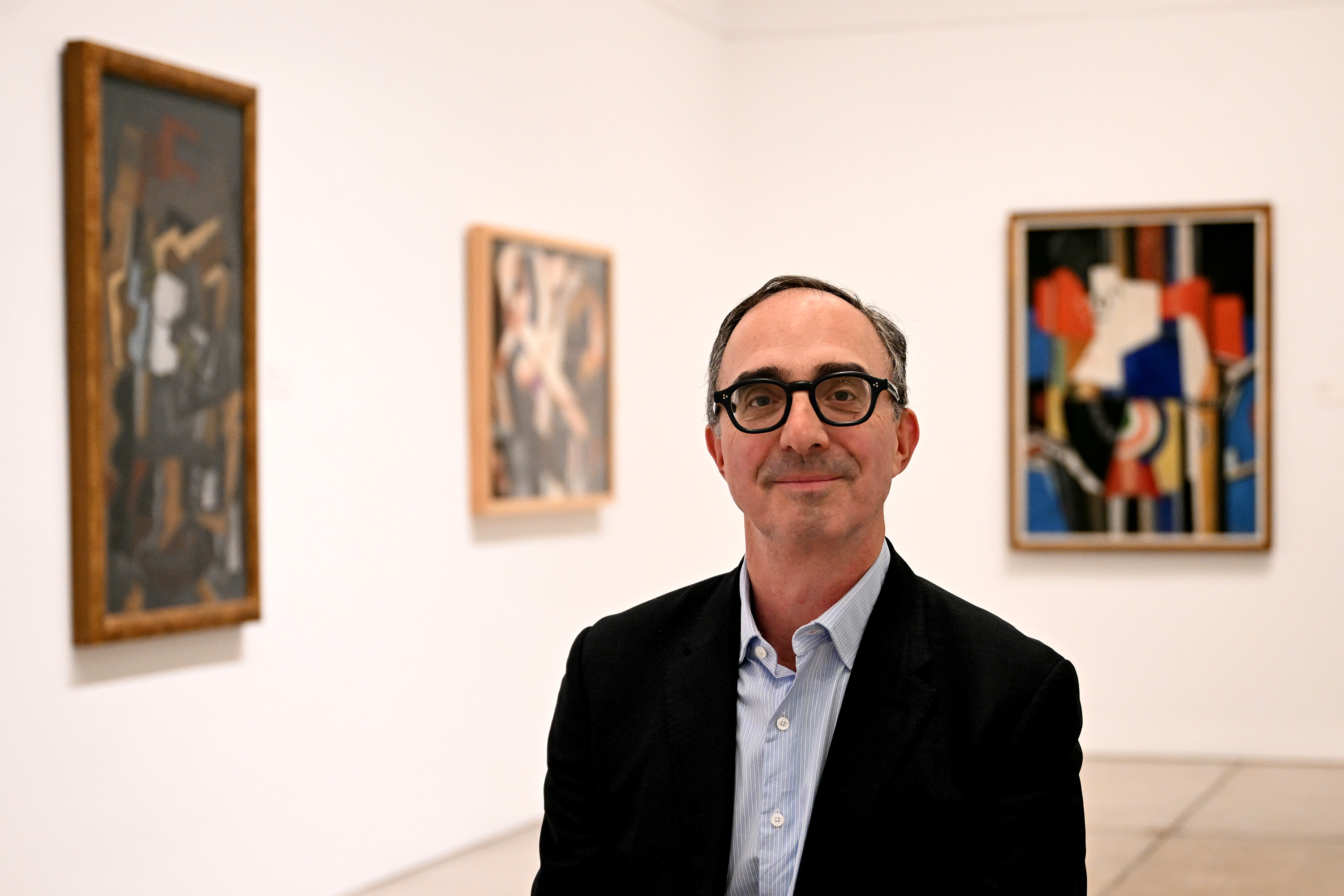
“This is a once-in-a-50-years project,” said Philadelphia Museum of Art curator Matthew Affron.
‘Greatest collections’
The monumental show also marks an opportunity to celebrate the museum’s preeminent relationship with Duchamp — and its lasting legacy and impact on the modern art world. No other art institution in the world has deeper Duchamp roots than the PMA, where the artist first helped install his works in 1954.
Questioning the very definition of what art could be — he believed any ordinary object could be recontextualized as art — Duchamp broke the rules. But the artistic anarchist also maintained a decidedly rigid belief that his work should remain together on permanent display — in a monumental museum.
Duchamp played a critical role in making Philadelphia that home.
Philadelphia Museum of Art curator Matthew Affron in the Duchamp gallery on March 4.Tom Gralish / Staff Photographer
After leaving Paris and its WWI-era artistic repression and moving to New York in 1915, the artist befriended patrons Louise and Walter Arensberg. With Duchamp’s careful guidance, the couple would amass the most fulsome collection of his works, and those of his contemporaries, anywhere.
By the 1950s, Duchamp and his patrons had negotiated with museums, from the Museum of Modern Art in New York to the National Gallery in Washington, before being wooed by the PMA’s forward-looking director, Sidney Fiske Kimball.
Recognizing Duchamp’s boundary-busting potential, Kimball offered what Duchamp wanted: space and control. Lots of it.
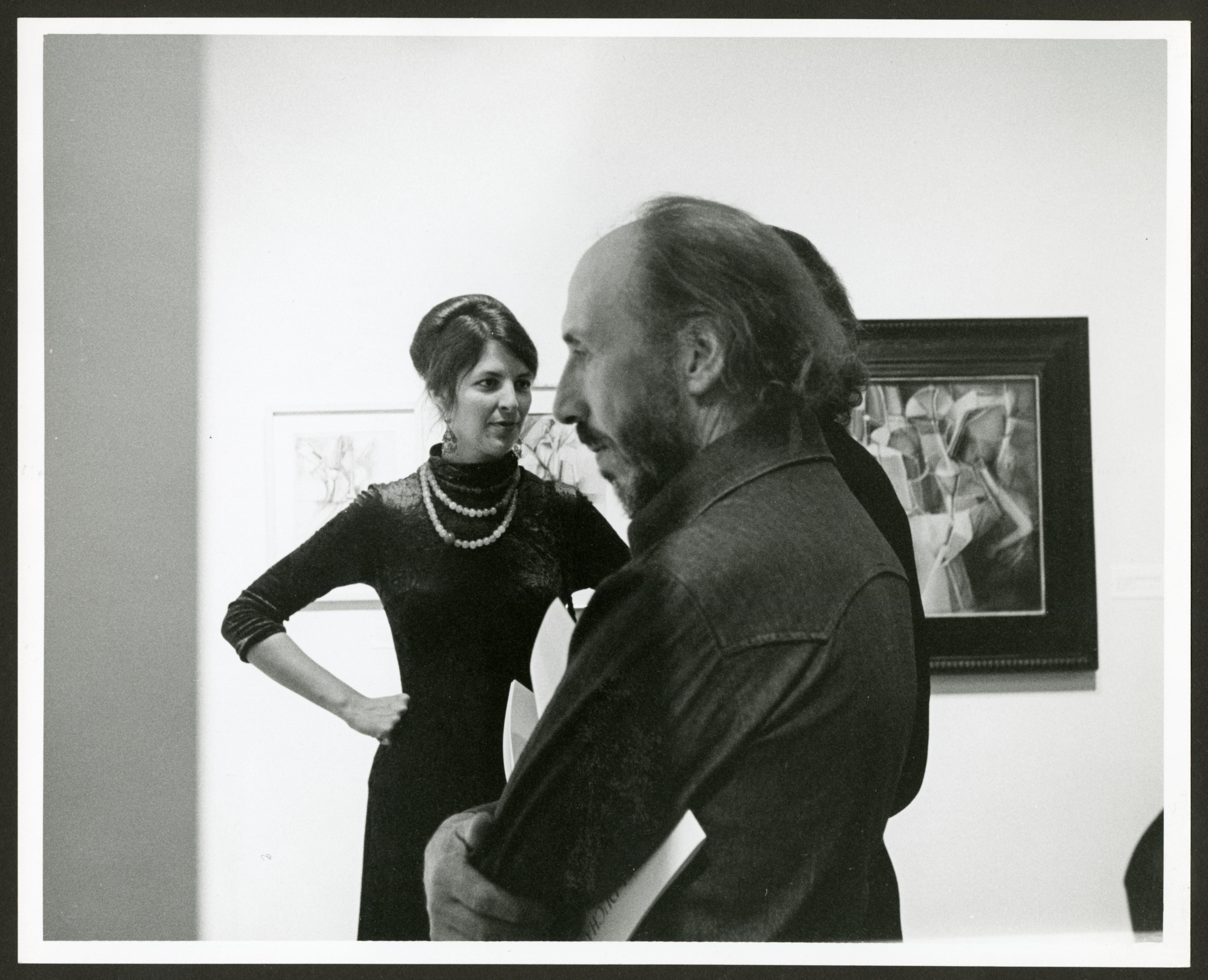
“By the 1950s, Duchamp was becoming a forefather for modern artists,” said Affron. “Fiske was determined to be able to place a major section of modern art within the building.”
Kimball displayed the Arensbergs’ gifted collection in a wing of the still-unfinished museum building on the Parkway, which he helped open in 1928.
Along with other abstract and cubist works, the Arensberg collection helped form the foundation of the Philadelphia Museum of Art for 75 years.
“It’s one of the greatest collections of modern art in an art museum,” Affron said.
Legacy shaping pairing
The unusually intimate relationship between artist and institution — the museum’s permanent display includes 200 Duchamp works and extensive archives — helped shape the artist’s legacy and established the Philadelphia Museum of Art as an essential destination for modern art pilgrims.
Under Duchamp’s direction, the museum initially displayed his works alongside those of contemporaries, like Picasso, Juan Gris, Piet Mondrian, Georges Braque, and Francis Picabia. Many of those works, also amassed by the Arensbergs, were on display at the museum’s temporary show, “Marcel Duchamp, Curator,” which ran through July 12.
Curating the forthcoming retrospective with MoMA collaboration with the Centre Pompidou, Affron said he strove to present a faithful chronology of Duchamp’s work, including replica versions of his own art that he produced later in life.
“One of the game-changing things Duchamp did was put into the question the value of original works of art,” Affron said. “He found a way of working between the originals and copies and when you lay his work out, you start to get a very interesting echo effect.”
It only makes sense for it all to be back at Duchamp’s spiritual home — the Philadelphia Museum of Art, he said.
“We are doing our job of taking care of his legacy,” the curator said.
“Marcel Duchamp” runs Oct. 10 through Jan. 31, 2027, at Main Building, Dorrance Galleries and Galleries 281-283, Philadelphia Museum of Art, 2600 Benjamin Franklin Parkway, Philadelphia, philamuseum.org
Like a lot of great art, the sculptor Donna Dodson’s latest work was born of childhood trauma.
Growing up in the Midwest, Dodson would play chess with her older brother on a beautiful, hand-carved onyx chess set gifted to them by their grandparents — the siblings engaging in long, heated battles, again and again.
And again and again, Dodson would inevitably fall short.
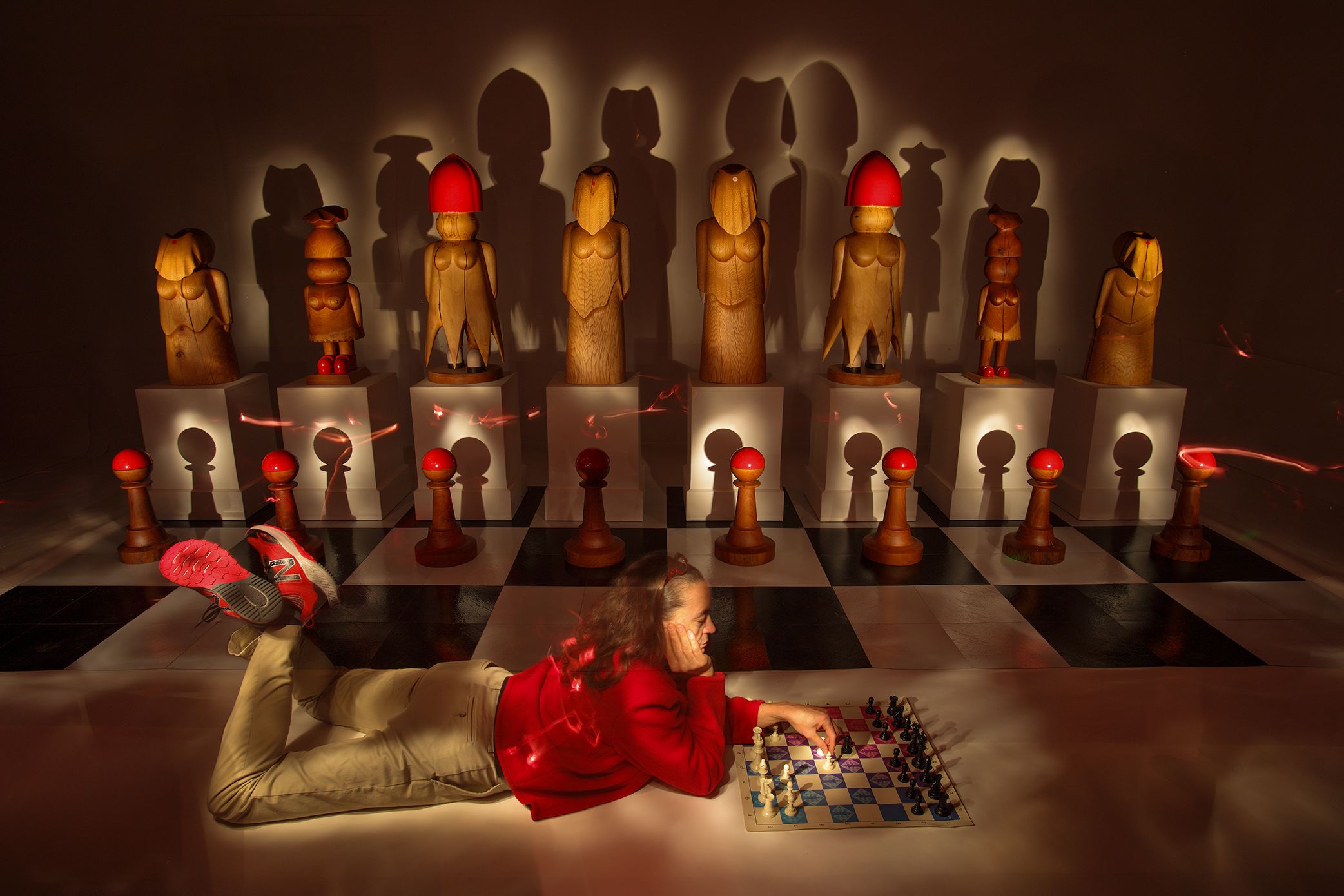
“The humiliation of always losing created kind of a fire in me,” the 58-year-old, Massachusetts-based artist joked recently in a phone interview.“I think me making this chess set is somehow reclaiming my agency and dignity,” she said, referring to her art Match of the Matriarchs, which is a 24-by-24-foot chess set.
The set, which appears in an exhibition of the same name at the Museum for Art in Wood, has the artist turning her attention to one of the world’s oldest games, examining — through the lens of chess — power, matriarchy, and the role of women in society.
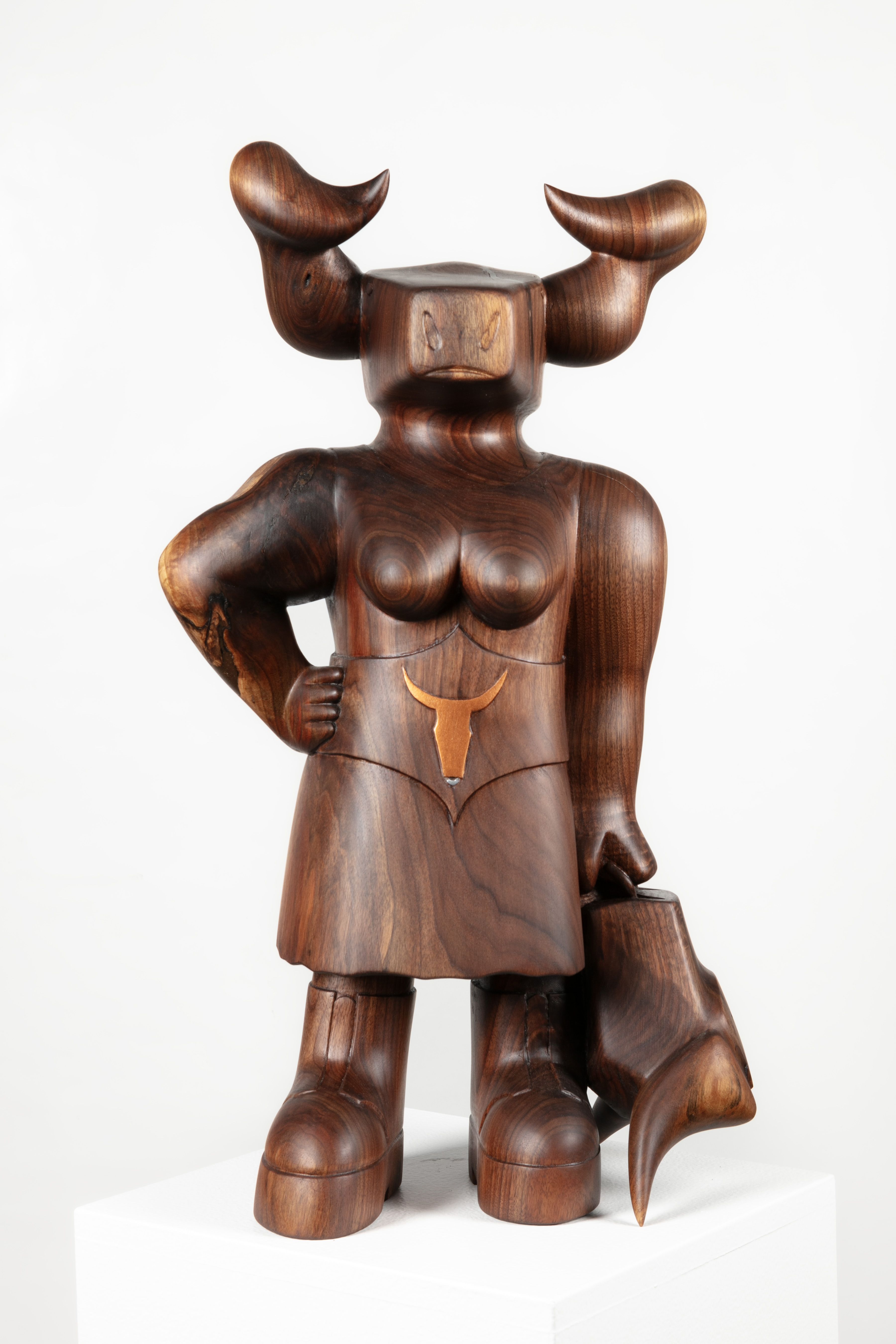
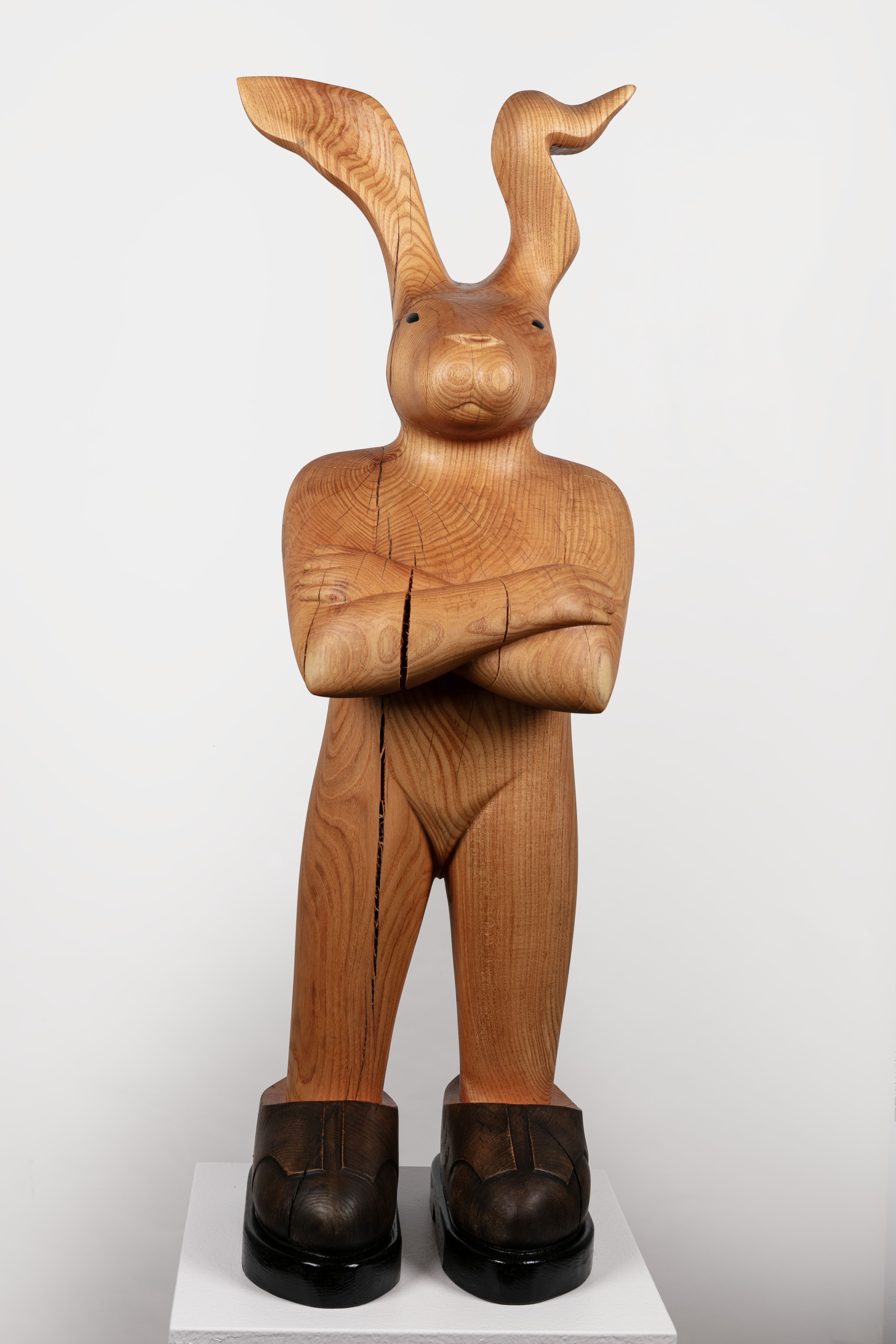
The exhibition is centered on a life-size, 32-piece chess set — all the pieces are women and range from roughly four feet to six feet in height. Dodson handcrafted them from salvaged wood.
The pieces sit atop a massive board that will involve some kind of interactive element — the details of which are still being finalized before the show opens in November.
Including what is believed to be the world’s only life-size chess set featuring all women pieces, the show aims to “transform the traditionally hierarchical game into a speculative arena of matriarchal power and ecological symbolism,” according to the museum’s program notes.
“Minotaur,” a 31-inch-tall piece from sculptor Donna Dodson’s upcoming exhibit “Match of the Matriarchs” at Philadelphia’s Museum for Art in Wood.Brian Wilson
“By placing the feminine at the forefront of a game so deeply associated with power, conflict, and hierarchy, Dodson asks us to reconsider its origins — and to wonder what may have been lost as the game evolved over time,” said Jennifer-Navva Milliken, executive director and chief curator at the Museum for Art in Wood.
A second, smaller chess set — on a board roughly 12 feet by 12 feet — will be fully interactive, with visitors encouraged to stage their own matches, moving the pieces as their strategies demand.
“By playing a game, or inviting viewers to come in and rearrange [the] art work, it creates a new art work every time,” Dodson said.
In addition to Dodson’s work, the show will include about nine other artistic chess sets — including one designed by famed Pennsylvania artist Wharton Esherick, as well as a micro-set with pieces that can only be moved using tweezers.
Prior to its debut at the Museum for Art in Wood, Dodson’s piece was on display at the Boston Sculptors Gallery and, most recently, at the World Chess Hall of Fame in St. Louis — though the Philadelphia version will include expanded programming.
From candy striper to artist
Dodson was never the artsy kid in school, she says. She attended Wellesley College in New England with plans of becoming a doctor, even working as a candy striper for a time. Her medical ambitions dwindled as she began to take to art in her mid-20s, along with her childhood love for chess.
It wasn’t until she met Joseph Wheelwright, the noted Boston sculptor who would go on to become her mentor and teach her woodworking, that she returned to the game.
Wheelwright, who died in 2016, would ask her to play during lunch breaks, and though he, too, would “clobber” Dodson — even while handicapping himself by taking several of his pieces off the board — the matches no doubt served as inspiration for Match of the Matriarch, she said.
In Philadelphia, Dodson has found a fitting setting for her exhibit.
The city is home to Jennifer Shahade, an author and three-time national chess champion, whoseartwork will also be featured in the exhibit.
“She has created a number of conceptual works and videos that recontextualize chess and chess sets as art,” Dodson said.
The exhibition also coincides with the Philadelphia Museum of Art’s presentation from Marcel Duchamp — an artist famously infatuated with the game of chess who also occasionally incorporated the game into his work.
The Museum for Art in Wood exhibit comes on the heels, meanwhile, of a worldwide resurgence in the game spurred by both the pandemic and the 2020 release of the Netflix series The Queen’s Gambit, which starred Anya Taylor-Joy and drove a wave of new interest in chess, particularly among girls and women.
“Tomboy,” a 42-inch-tall piece from sculptor Donna Dodson’s upcoming exhibit “Match of the Matriarchs.”Brian Wilson
Dodson partakes in some form of chess daily, playing a weekly game in Maynard, Mass., where she now lives, as well as online.
“I’ve become much more knowledgeable about the current chess community, what’s going on in the chess world, and have met some of the real-life champions in chess, which is all super exciting,” she said.
Dodson, who will be present Nov. 7 for an artist talk at the museum, said she hopes the game’s universal charm will make the exhibit accessible to a wide audience.
“I think a lot of people don’t feel comfortable going into art museums — they don’t feel that they know enough [about art] or whatever,” she said. “So I think the whole chess theme is very accessible — there’s a whole worldwide chess community of people who play for fun, play as a hobby, their kids play, their grandfather plays.”
“Donna Dodson: Match of the Matriarchs” runs Nov. 6 through March 21, 2027, at Museum for Art in Wood, 141 N. 3rd St., Philadelphia. museumforartinwood.org
The invitation to visit sculptor Zenos Frudakis’ studio arrived unexpectedly in my inbox this summer, soon after I included his Freedom sculpture in The Inquirer’s 76 neighborhood gems article.
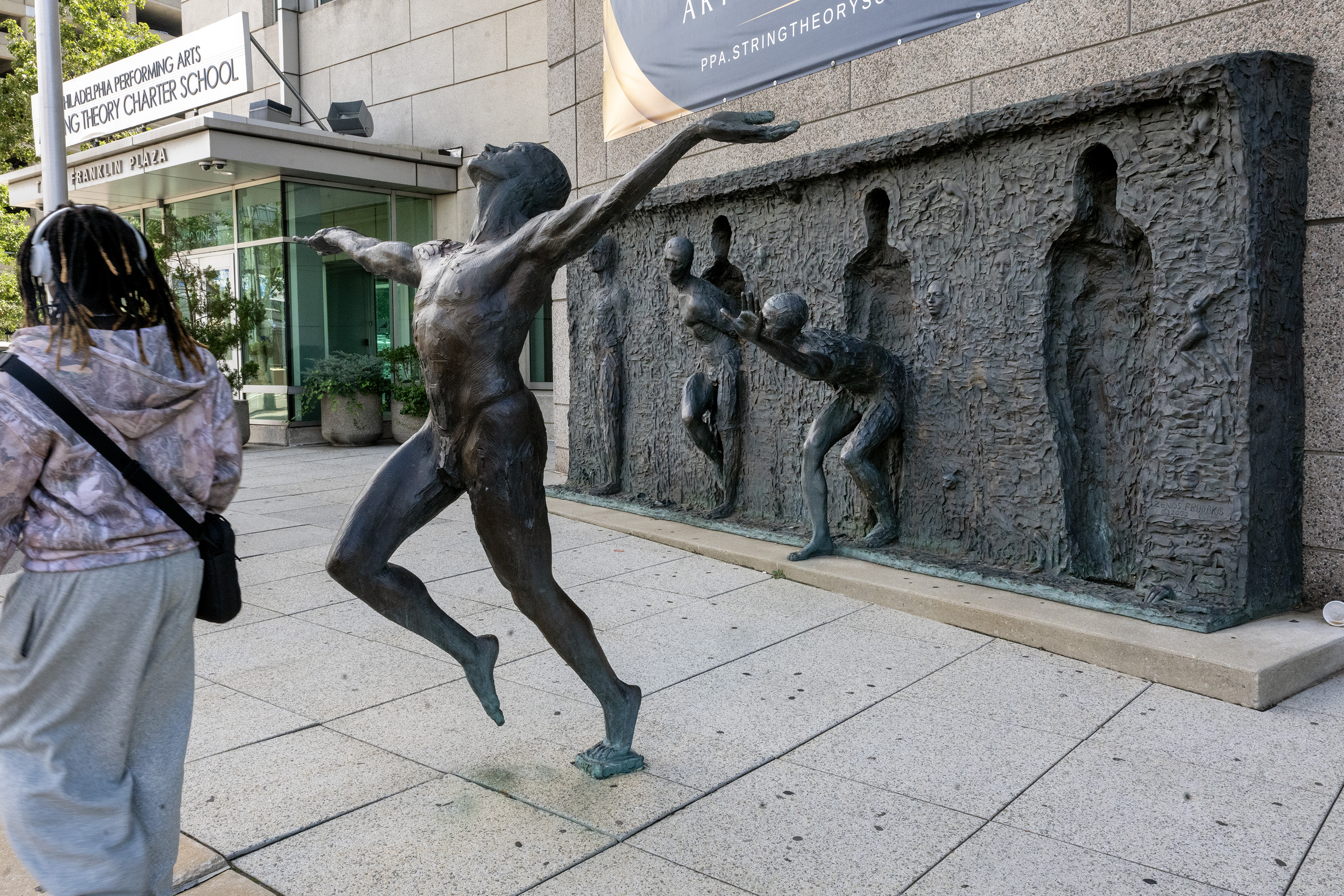
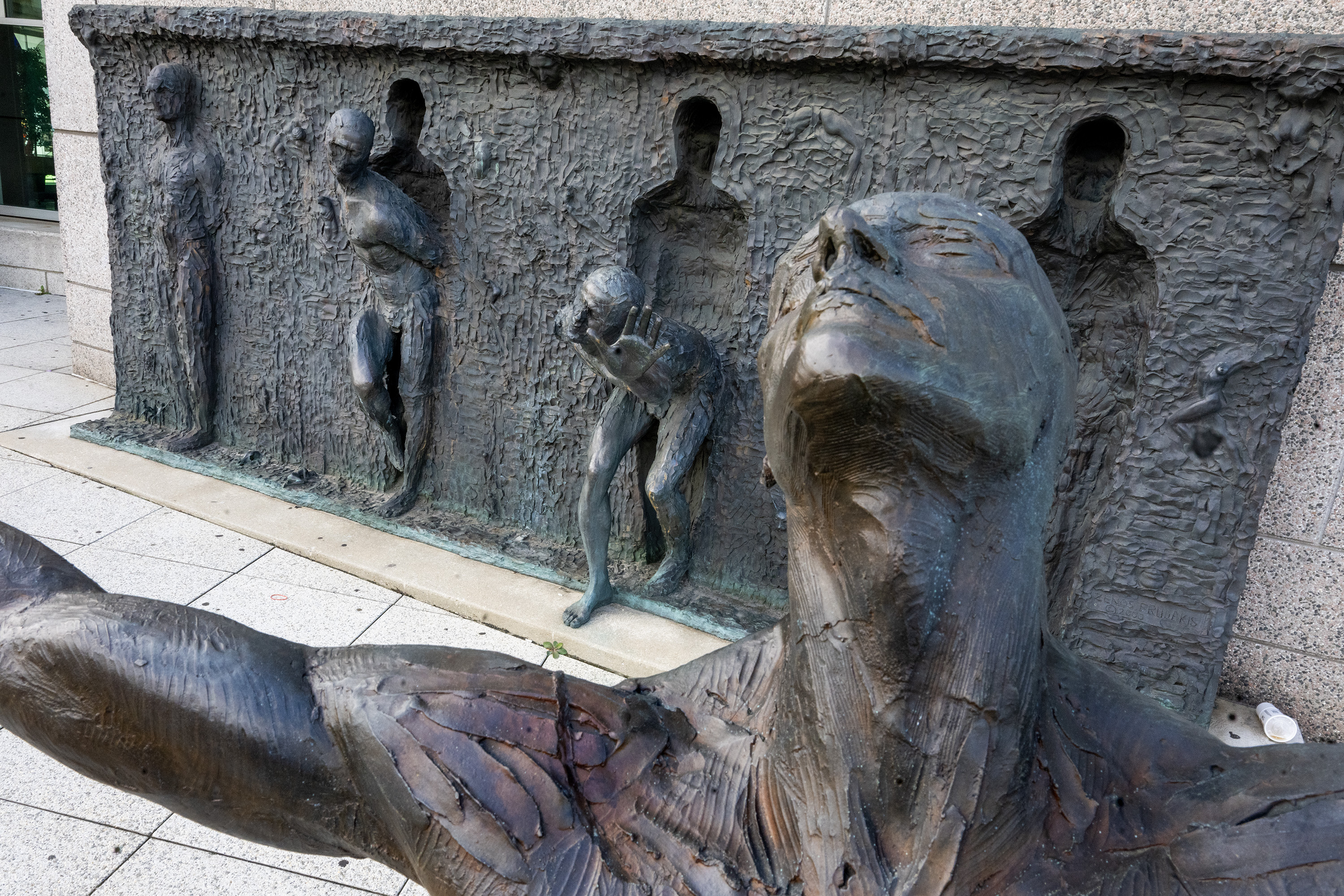
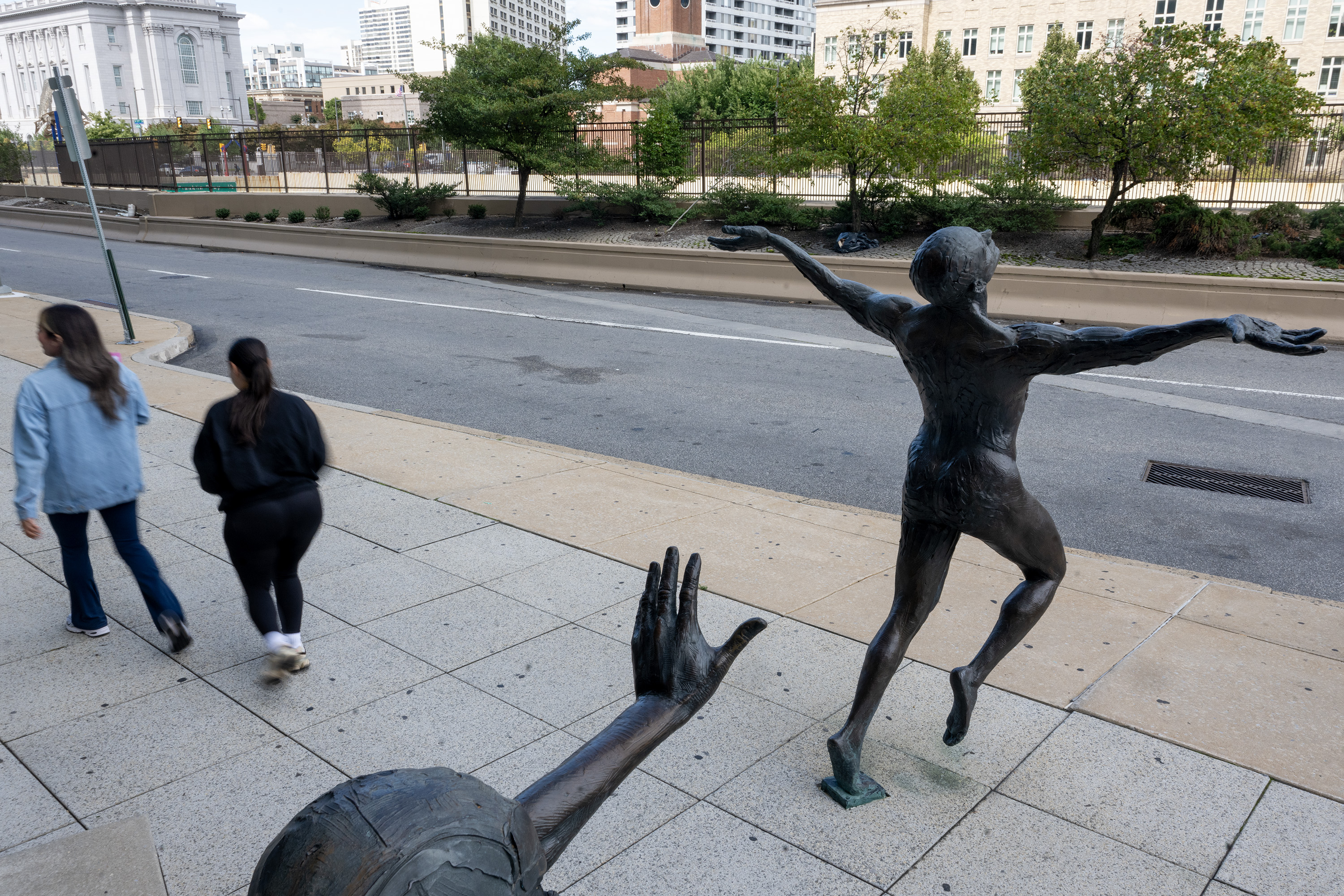
I’ve always thought the 20-foot bronze piece, on Vine Street near 16th, depicting a human figure breaking free of a wall in four stages, with the final figure on the sidewalk, his arms outstretched and face lifted, makes our city a more interesting place.
Artist Zenos Frudakis’ “Freedom” sculpture on Vine Street near 16th in Center City. Tom Gralish / Staff Photographer
“I think on my deathbed, if I’m conscious, I’ll think about that piece,” Frudakis, 75, later told me. “That’s something that I’ve done that I feel good about.”
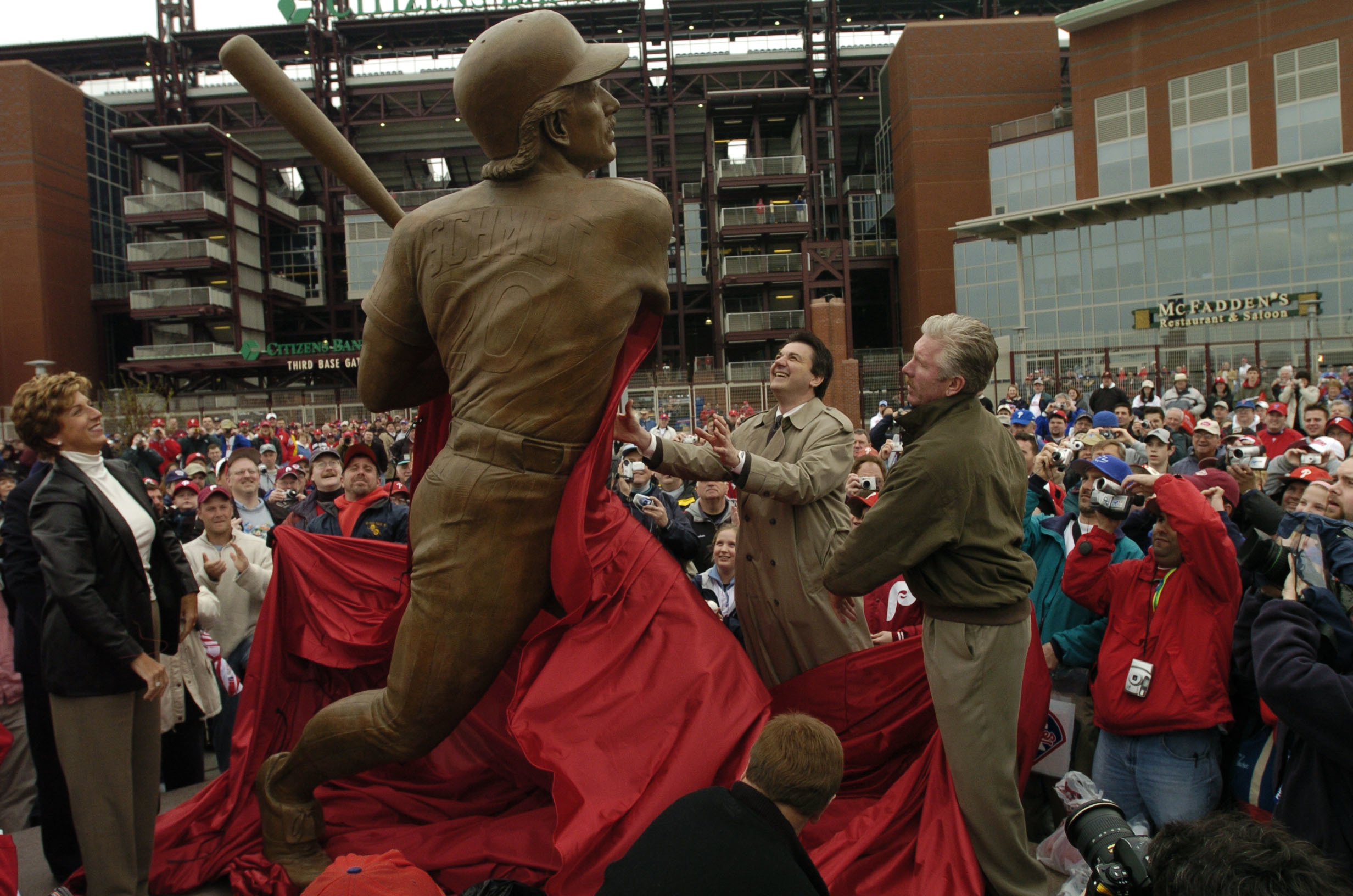
In this 2004 file photo, Mike Schmidt helps unveil the Mike Schmidt statue outside of the third base entrance to Citizens Bank Park on opening day. Sculptor Zenos Frudakis, center, was also on hand for the unveiling. Jerry Lodriguss
It was only after I accepted the invitation and was researching for our interview that I realized Frudakis also created one of the most divisive pieces of public art in Philadelphia history: the statue of highly controversial former mayor and police commissioner Frank Rizzo.
Flooded with art and light
When I arrived at Frudakis’ Glenside studio I was met by his business partner and co-owner of his studio, Rosalie Frudakis. She’s also his best friend and ex-wife (it’s not just Frudakis’ sculptures that are complicated).
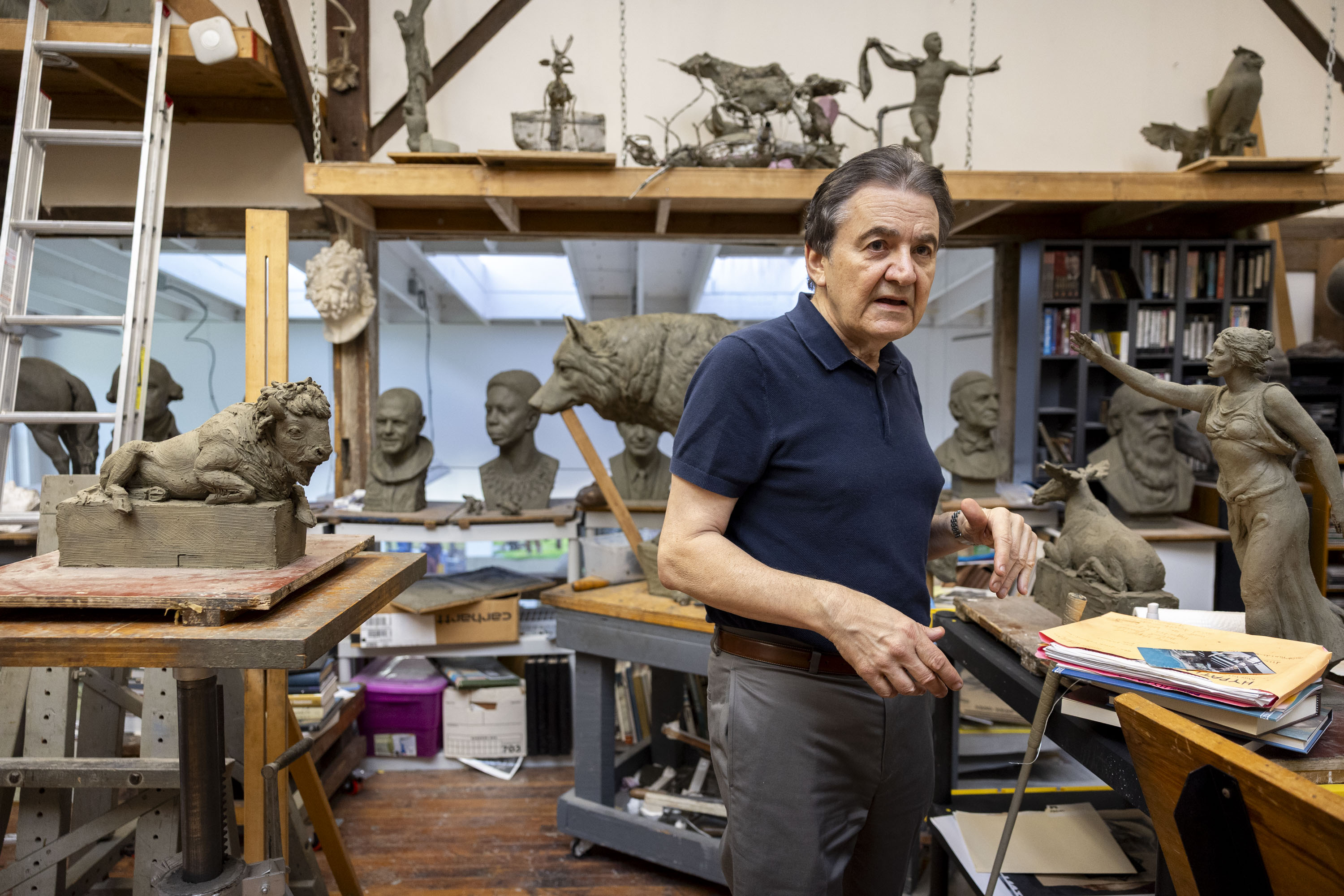
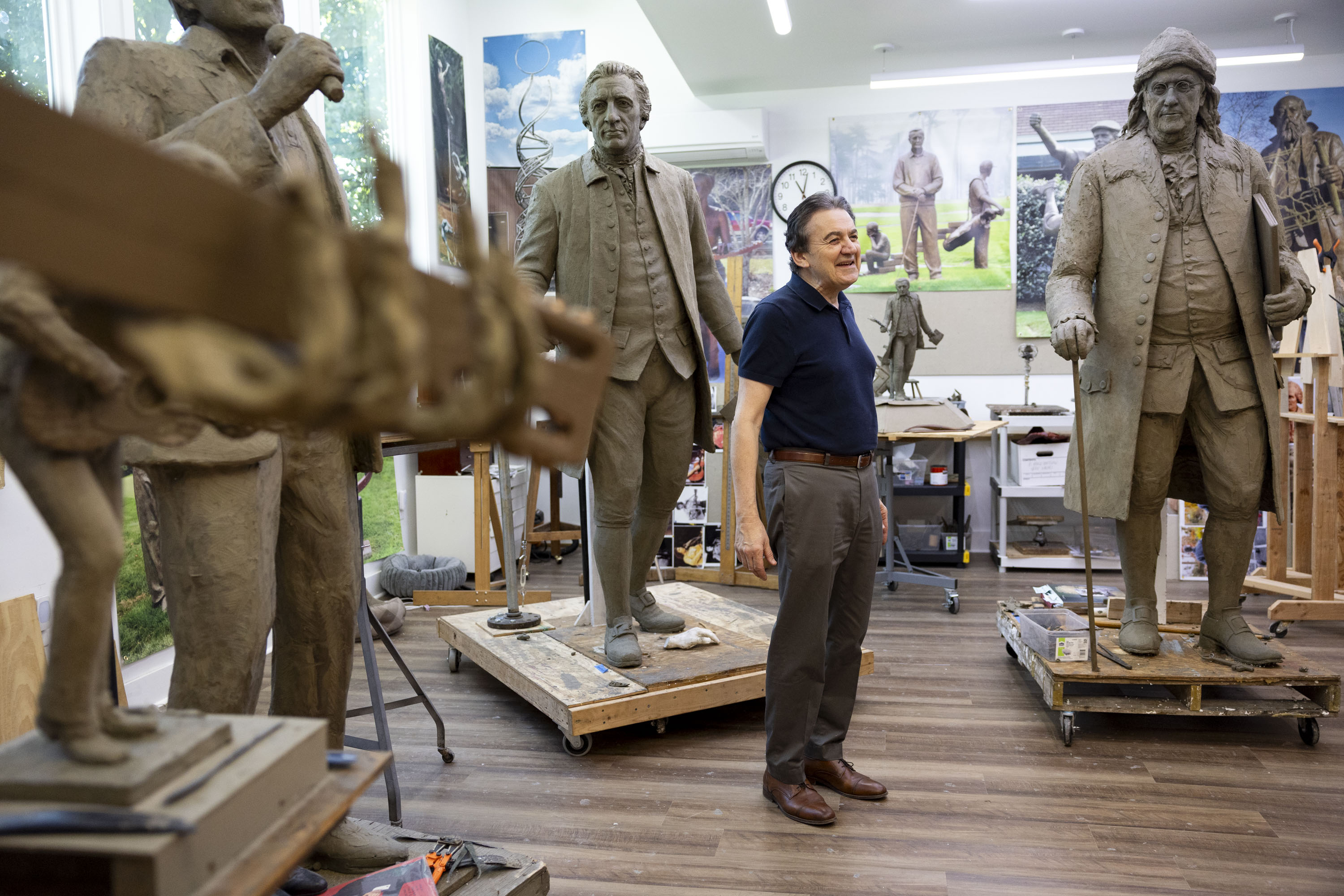
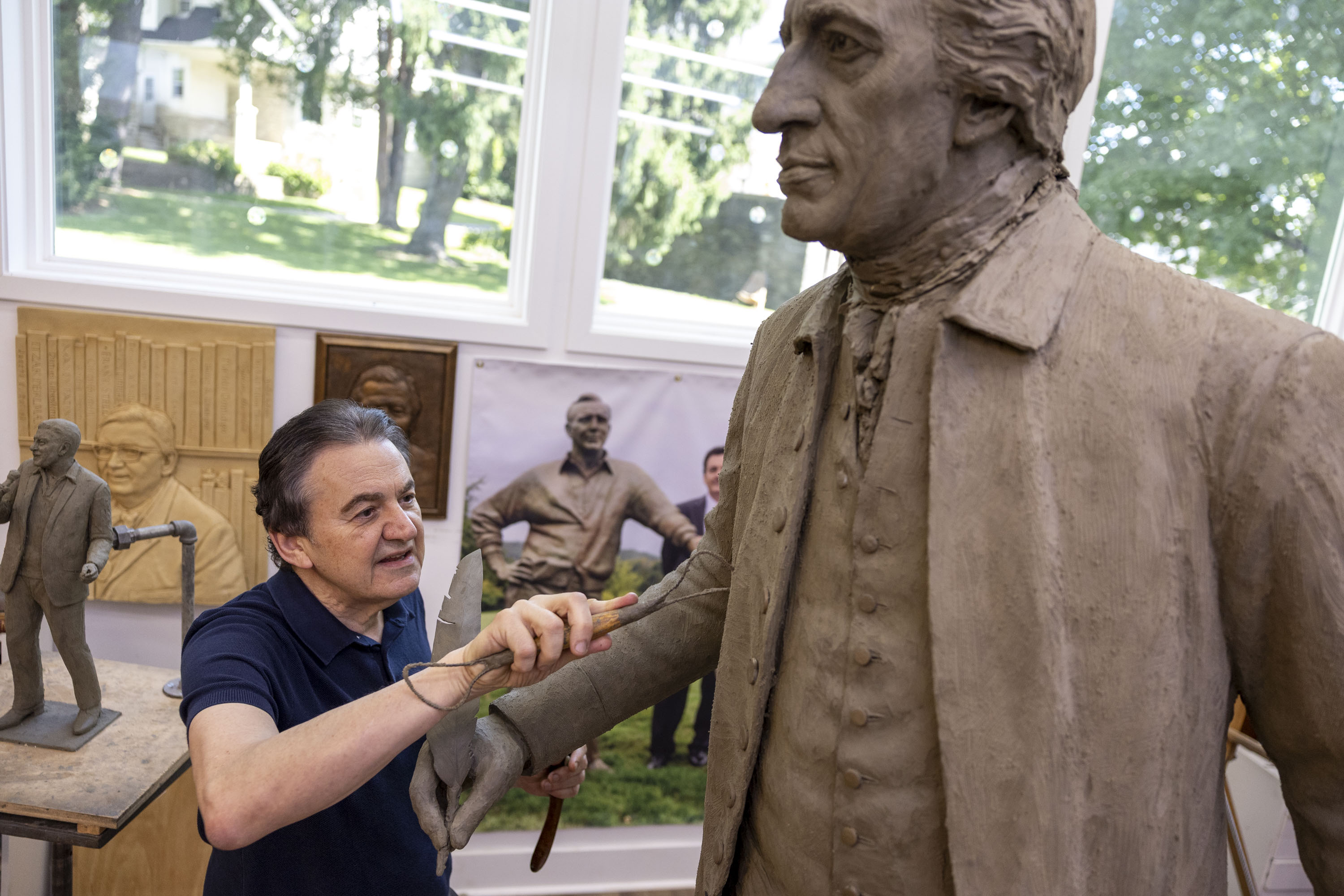
Entering the 275-year-old renovated carriage house behind the artist’s home, I was captivated by how the space was flooded with art and light. Frudakis’ 7-foot statues of Benjamin Franklin and Thomas Paine, still in clay, dominated the center of the room, along with similarly sized sculptures of musicians Bobby Rydell and Don McLean. Busts of historical figures by Frudakis lined the shelves and poster-size pictures of his many commissions papered the walls.
Zenos Frudakis in his studio. To the left of Frudakis is a sculpture of Thomas Paine he’s working on and to the right, is his sculpture of Benjamin Franklin. Tyger Williams / Staff Photographer
Frudakis told me he’s juggling a dozen commissions right now, including two full-size replicas of his Freedom sculpture — destined for where, he won’t say, but he promises it’s exciting. He often works until 2 a.m. in his studio with his cat, Mr. Gray, and hopes that sculpting will lengthen his life. After all, his older half brother — noted sculptor EvAngelos Frudakis, who made The Signer statue at Fifth and Chestnut Streets — lived to be 97 and sculpted right up to the end.
For three hours, Frudakis and I talked about his childhood growing up in a Greek family in Gary, Ind., where his first sculptures were made with his mother’s bread dough; about his move to Philly in 1972 on a scholarship to the Pennsylvania Academy of the Fine Arts; and about his commitment to reading because, if Leonardo da Vinci spent time studying every day, he figured he should, too.
“I wasn’t going to let anybody outwork me or have more knowledge if I could … because that’s your resource, that’s where your ideas come from,” he said.
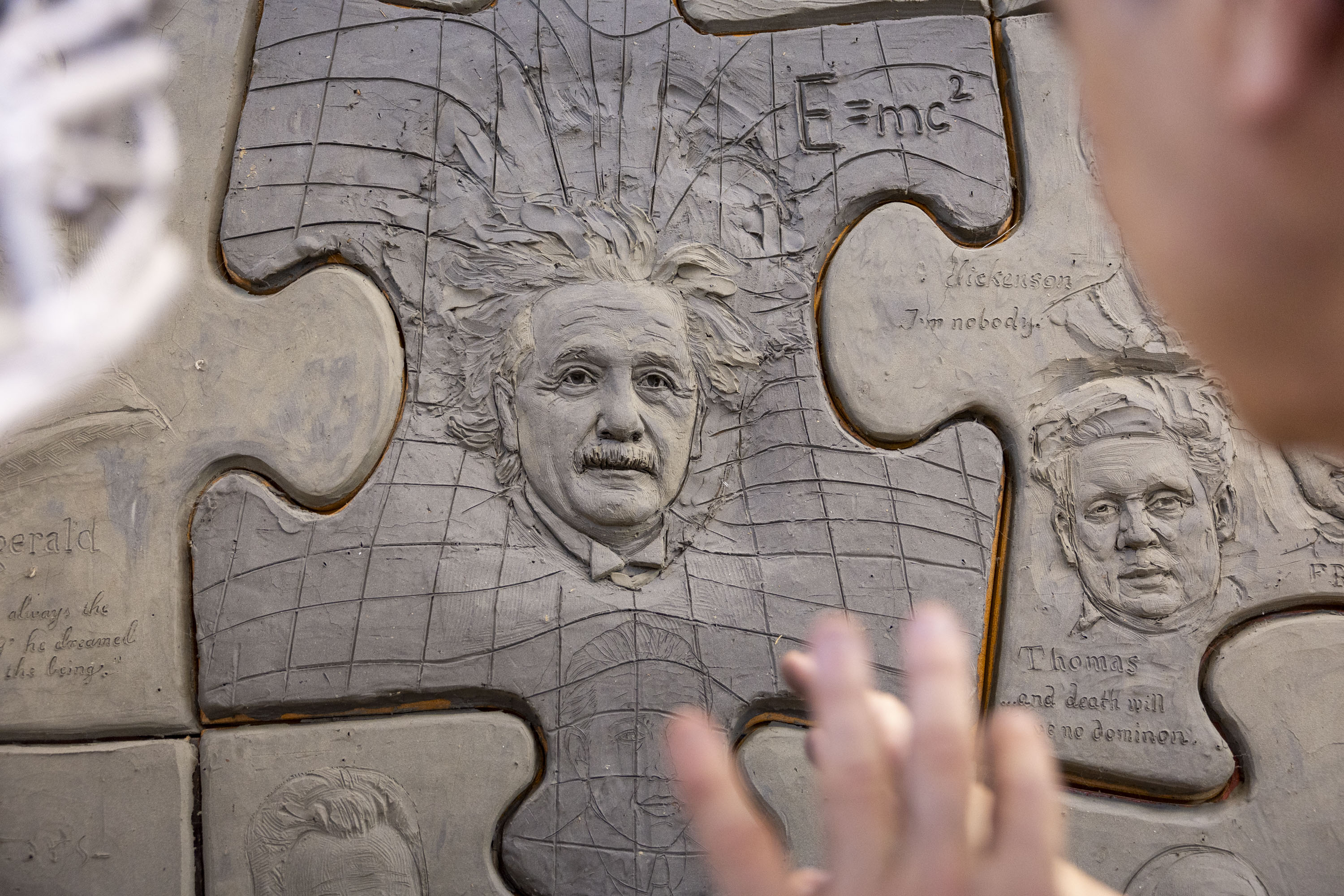
A puzzle piece featuring Albert Einstein is part of a project that Zenos Frudakis is working on in his Glenside studio.Tyger Williams / Staff Photographer
As if to make his point, Frudakis quoted more than a dozen authors and philosophers by name during our chat including: Albert Camus, T.S. Eliot, Aristotle, D.H. Lawrence, Friedrich Nietzsche, and Jean-Jacques Rousseau.
He spoke of science and reason, of being a humanist and of the balance between the emotional and cerebral. He talked about life as a working artist, of the commissions he took and the pieces he created. And he spoke of how history is not set in stone, even for a sculptor.
“You live long enough and sometimes pieces come down,” he said.
A pachyderm and people
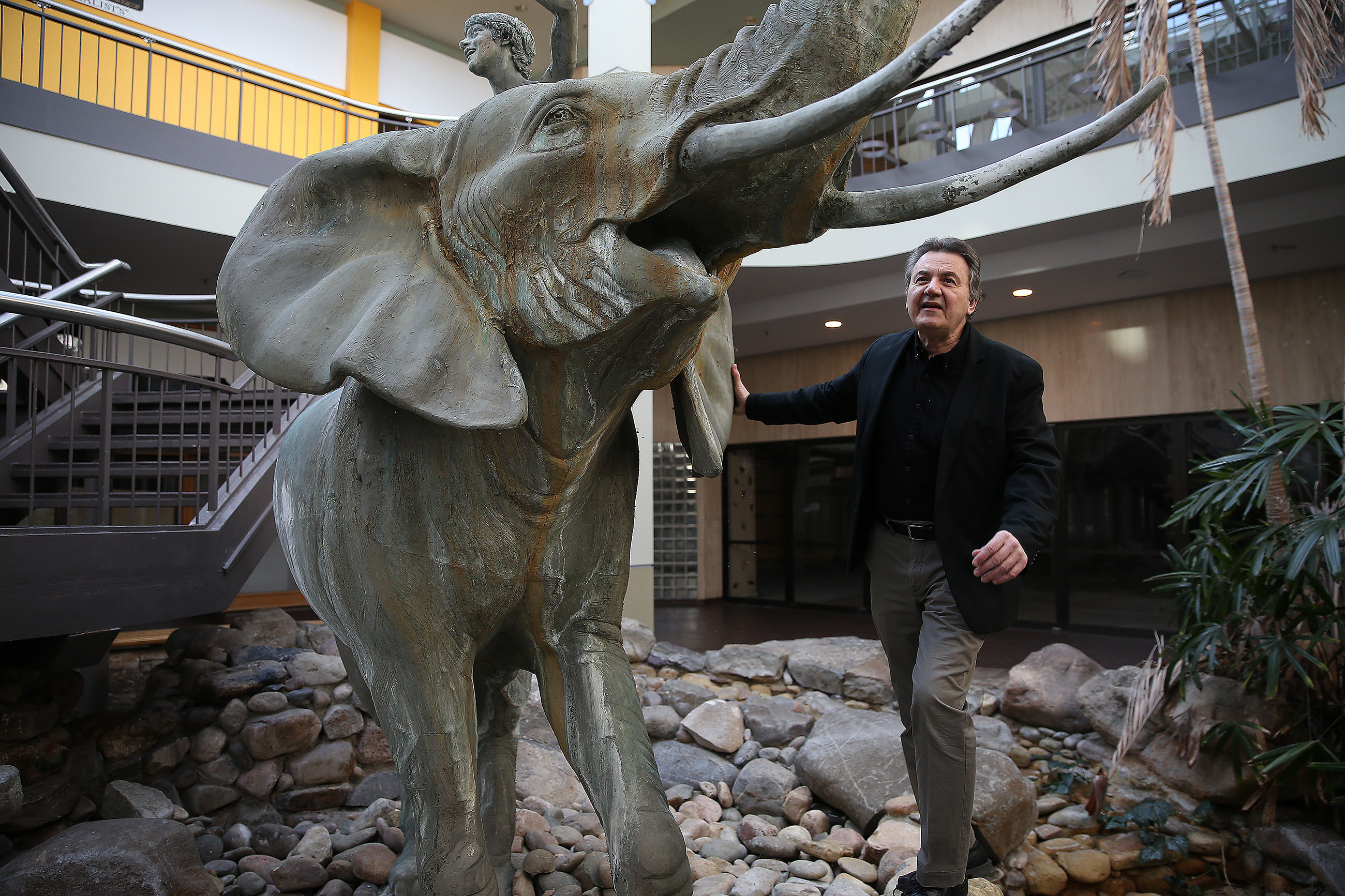
Frudakis’ first public large-scale commission was in 1982 for a bronze sculpture of a boy riding an elephant in the now-shuttered Burlington Center Mall.
Sculptor Zenos Frudakis looks over his first commissioned piece at the now-closed Burlington Center Mall in Burlington, N.J., in 2018.DAVID MAIALETTI / Staff Photographer
In the following years, commissions came for busts of W. Wilson Goode, the city’s first Black mayor, and Joseph E. Coleman, the first Black president of City Council.
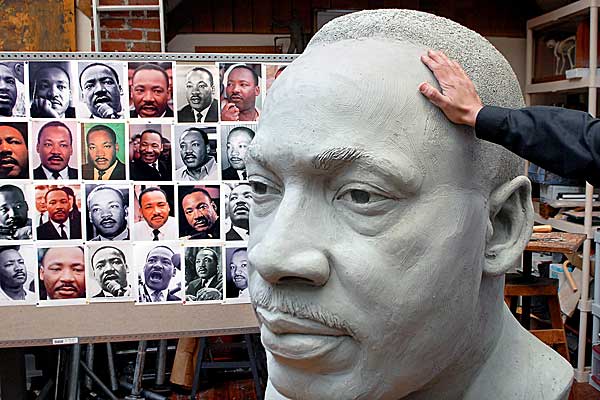
In 1989, Frudakis did a commissioned bust of the Rev. Dr. Martin Luther King Jr. for the U.S. Embassy in Pretoria, South Africa, and traveled there to present it while the country was still under apartheid. It’s one of many commissioned busts he’s done of King, including a 4-foot bronze one for MLK Park in Chester.
Sculptor Zenos Frudakis in his Glenside studio with the plasticine bust of the Rev. Dr. Martin Luther King Jr. that was cast in bronze for the city of Chester in 2010.
It wasn’t until 1994 that Frudakis received his first commission for a public, full-body sculpture of a person in a suit, from the Frank L. Rizzo Monument Committee.
“That’s most commissions that you get, a person who does my kind of work, is men in suits. And the hardest one to get is the first job,” he said.
‘I survived another day’
Rizzo was a polarizing figure as police commissioner (1967-1971) and mayor (1972-1980), and the controversy has only grown since his death in 1991. While some praised his law-and-order style, many see his tenure as an era of unchecked police brutality that targeted members of the Black and LGBTQ+ communities.
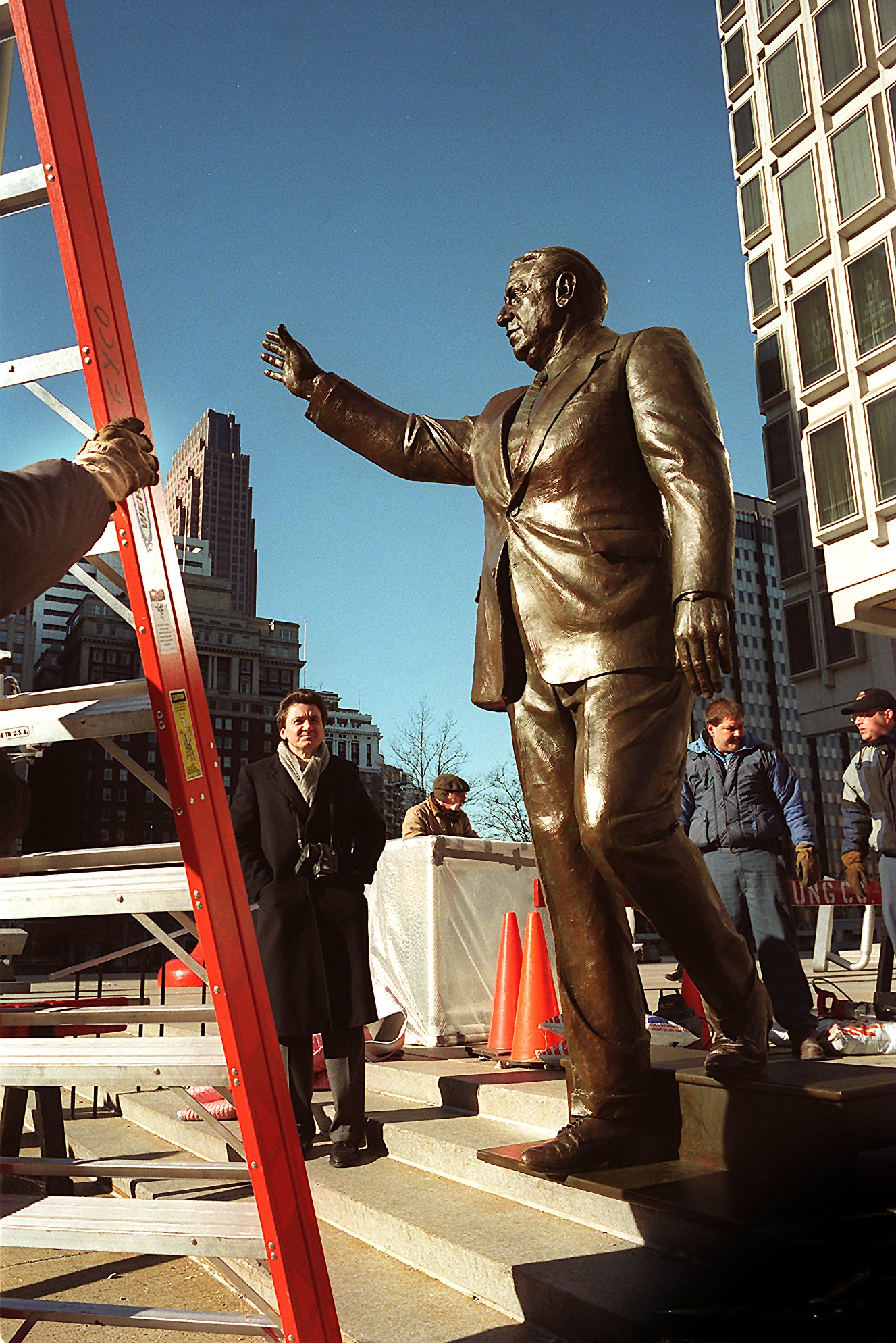
But back in the 1990s, the Philadelphia Art Commission approved a public sculpture of Rizzo, which was paid for by private funds. After some controversy about its placement — backers wanted it in a more prominent place like LOVE Park — it was unveiled in 1999 on the steps of the Municipal Services Building.
Sculptor Zenos Frudakis, left, looks on as Rizzo’s statue is placed on the steps of the Municipal Services Building ahead of its unveiling in 1999.Eric Mencher
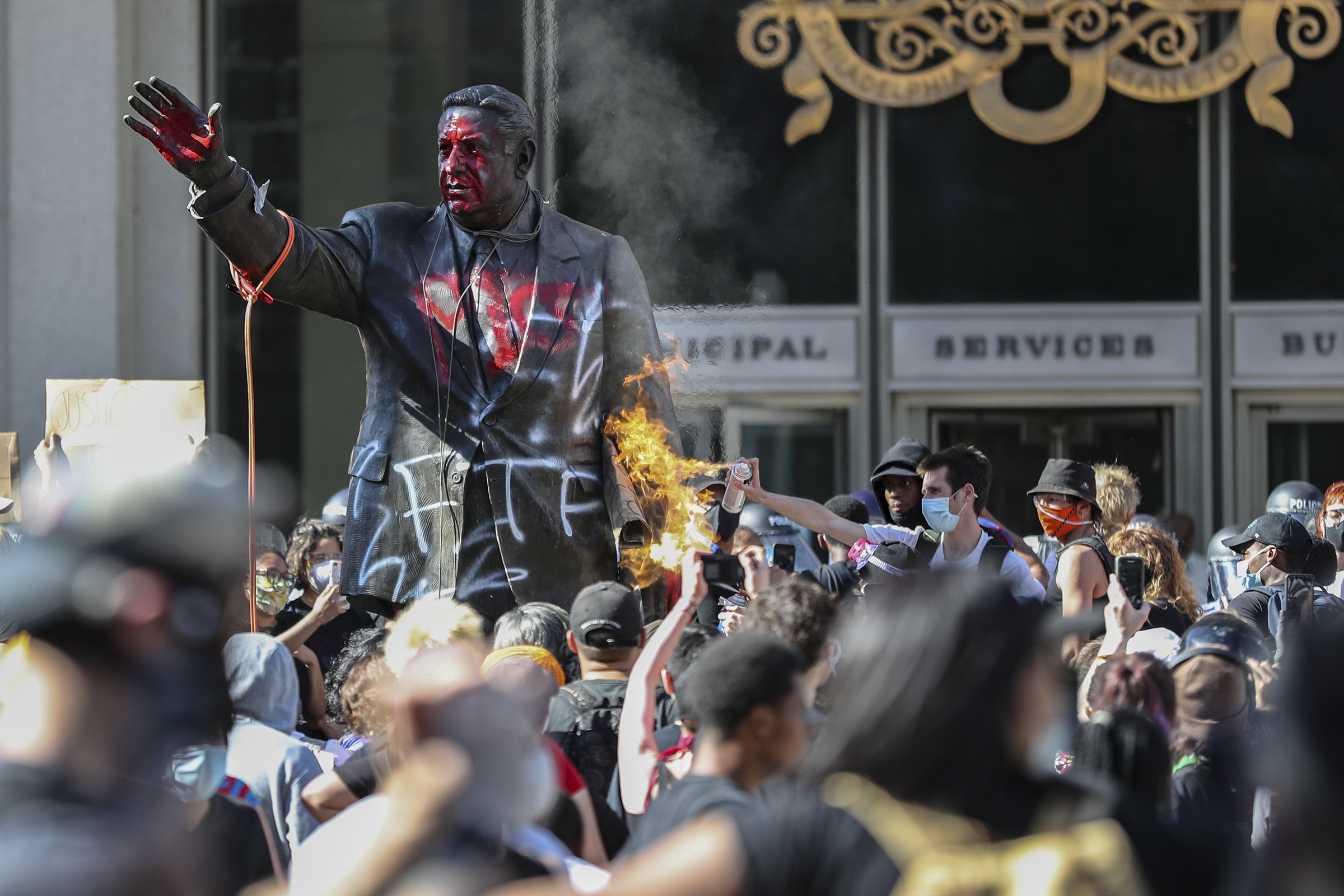
In 2016, amid the Black Lives Matter movement, a petition began circulating for the statue’s removal and in the following years, it became a lightning rod for civil rights protests and was repeatedly defaced.
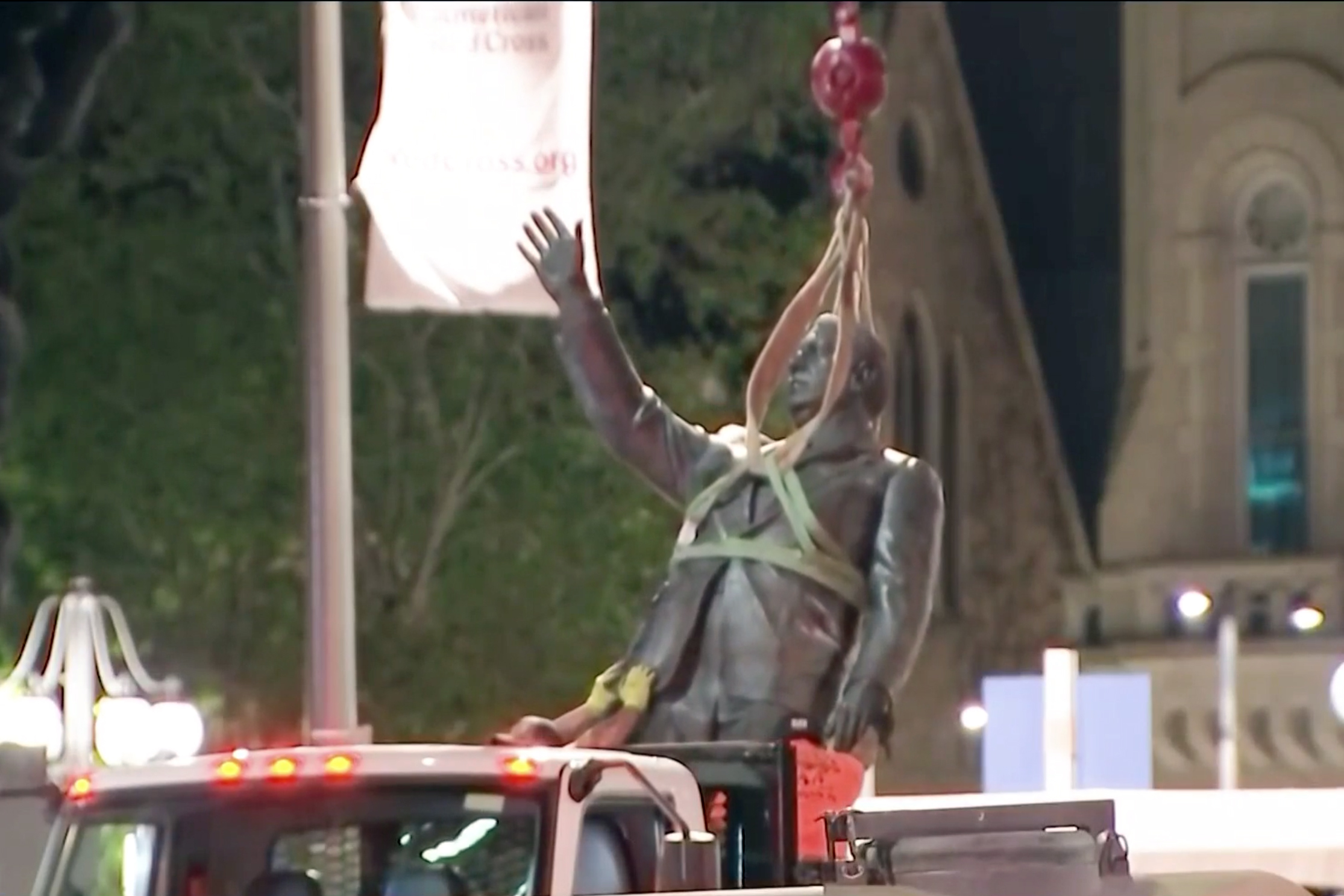
But it wasn’t until the civil rights protests in the wake of the murder of George Floyd in 2020, when then-Mayor Jim Kenney called the statue “a deplorable monument to racism, bigotry, and police brutality,” that it was removed. It remains in storage.
Protesters attempt to burn and bring down the Frank Rizzo statue outside of the Municipal Services Building in Center City during a protest against the death of George Floyd in 2020.HEATHER KHALIFA / Staff Photographer
While I’ve received plenty of hate mail in my career, I can’t imagine having a piece of my work so publicly reviled.
Throughout our chat, I tried to ask Frudakis indirectly about the statue — were there any sculptures he struggled with? Any lessons he’s learned from his career?
But he didn’t take the bait.
Finally, at the end of our interview, I asked him about the Rizzo statue. He wasn’t taken aback and in no way tried to skirt my questions. I felt he answered honestly, even if, at times, he seemed conflicted.
Frudakis told me that when the work was commissioned, he had second thoughts — he didn’t vote for Rizzo, and has always been concerned with civil rights and social issues. But the statue was going to be built one way or another, he figured, and he needed the work.
“I got to do a lot of sculptures because I did that [commission],” he said, adding that the Phillies chose him for their ballpark sculptures because of the Rizzo statue.
“I survived another day as an artist.”
‘A weird blip’
Frudakis says he agrees with the Rizzo statue being removed, for safety reasons. He didn’t want protesters to get hurt trying to topple it. “I made sure I put it in so it couldn’t be pulled out very easily,” he said.
But if he had his way, he’d have liked the statue to have remained up, placed next to a statue of a prominent Philly civil rights leader, like the late Rev. Leon Sullivan, to promote education and dialogue.
“If you take it down, they’re not gonna learn anything. People who love him will still love him. People who hate him will still hate him,” he said.
The statue of former Philadelphia Mayor Rizzo is removed from the Municipal Services Building in 2020. Courtesy NBC10
I came to Philly in 2007, and I didn’t really learn about what happened under Rizzo’s tenure until the protests ramped up around the statue. I agree with its removal, but I have to wonder if I would’ve ever learned so much about that dark chapter in Philly’s history if the statue was never there at all.
One of the last things Frudakis said to me before I left was: “I’ve tried to make up for the Rizzo statue.”
Should he have to? Should I feel torn now about my love for his other work? I called up Conrad Benner, founder of the Streets Dept, a local media organization focused on public art. I remembered the popular videos he did in 2024 with Frudakis at the Freedom sculpture and wanted to get his thoughts on the Rizzo statue too.
“It’s this really weird blip in his career. It seems like everything he’s done since then and probably before then supported maybe a clearer vision of what he’d like to see in the world,” Benner said. “My impression was he was young, he made a decision, and then his career grew and he got more opportunity to have more control over his work.”
Benner pointed out that it’s very uncommon to create bronze monuments to people who’ve lived recently and that Philadelphia doesn’t have any other statues of its mayors.
“You might think the monuments in your city and country are some representation of true history when really they are the culmination of powerful and cultural interests,” Benner said.
“But we get to choose. Every generation gets to choose. We don’t have to inherit anything, whether that be a political dynasty, tax policy, or a monument. Just because they’re on a podium doesn’t mean we can’t change them.”
‘A one-man show’
A year after the Rizzo statue was unveiled, Frudakis’ Freedom sculpture was installed on the exterior of what was then GlaxoSmithKline and is now the Philadelphia Performing Arts Charter School.
It was a piece born of his own heart and mind. It was the kind of work that taking commissions for other less passionate projects made possible.
“I had to do something more philosophical and poetic for myself,” Frudakis said.
When I thought about our conversation later, I couldn’t help but wonder if in some ways, for Frudakis, the figure in Freedom symbolized his own desire to break free of the art that pays the bills for the art that fills the soul.
Zenos Frudakis’ “Freedom” sculpture on Vine Street near 16th in Center City. Tom Gralish / Staff Photographer
“It’s not an accident that my favorite piece, my most popular piece by far, is the one that I got the most freedom to do,” he said.
Frudakis sculpted Freedom on a small scale, but he had to get the 20-foot-long version commissioned by GlaxoSmithKline in order to cast it in bronze. When he scaled it up, Frudakis decided to get weird with it.
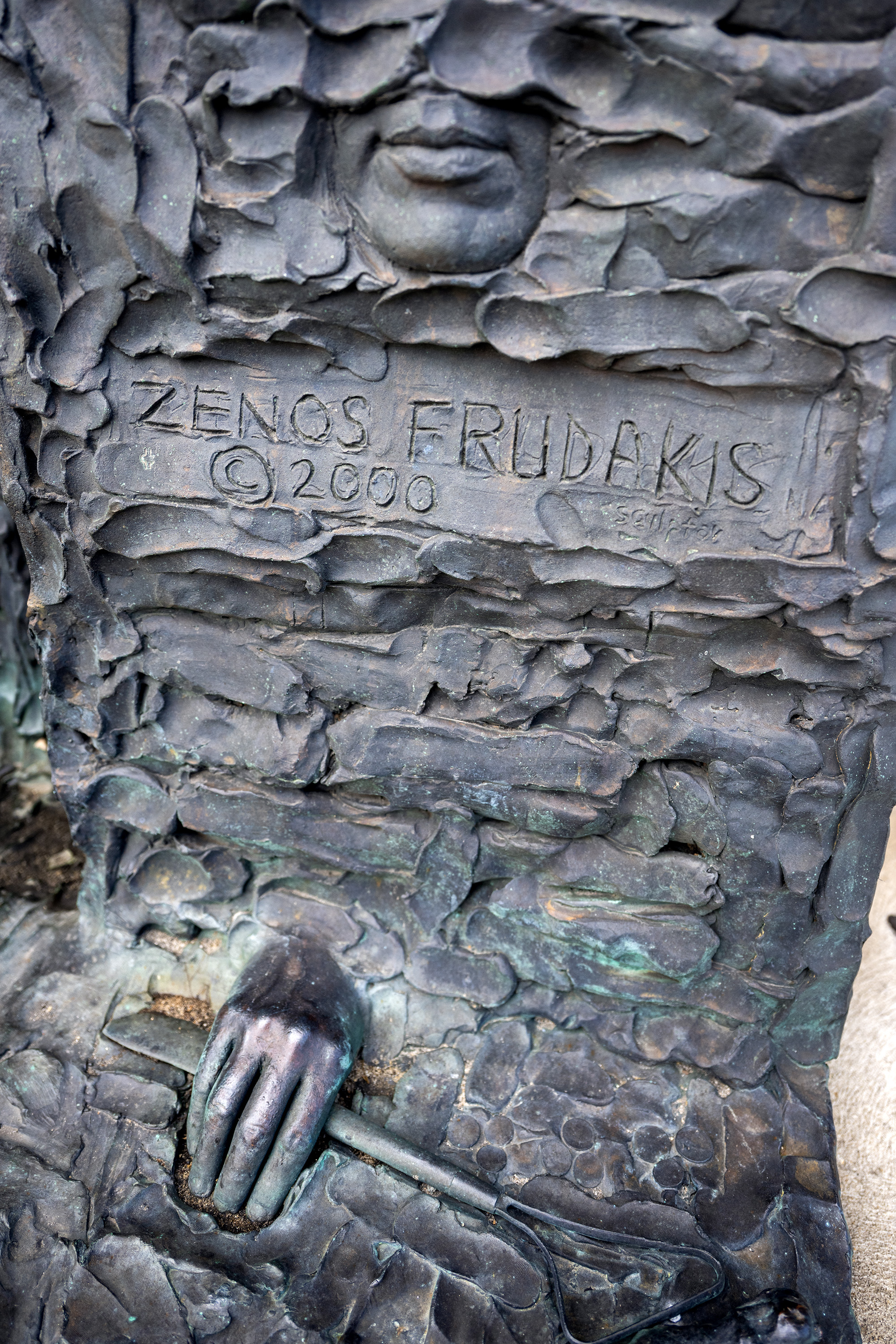
Details in Zenos Frudakis’ “Freedom” sculpture include part of a face and a cast of the artist’s hand with a sculpting tool. Tom Gralish / Staff Photographer
“Since I was having trouble getting in a gallery in Philadelphia, [I decided] that I would put about 20 pieces of mine in the background so I’d have a one-man show that was ongoing,” he said.
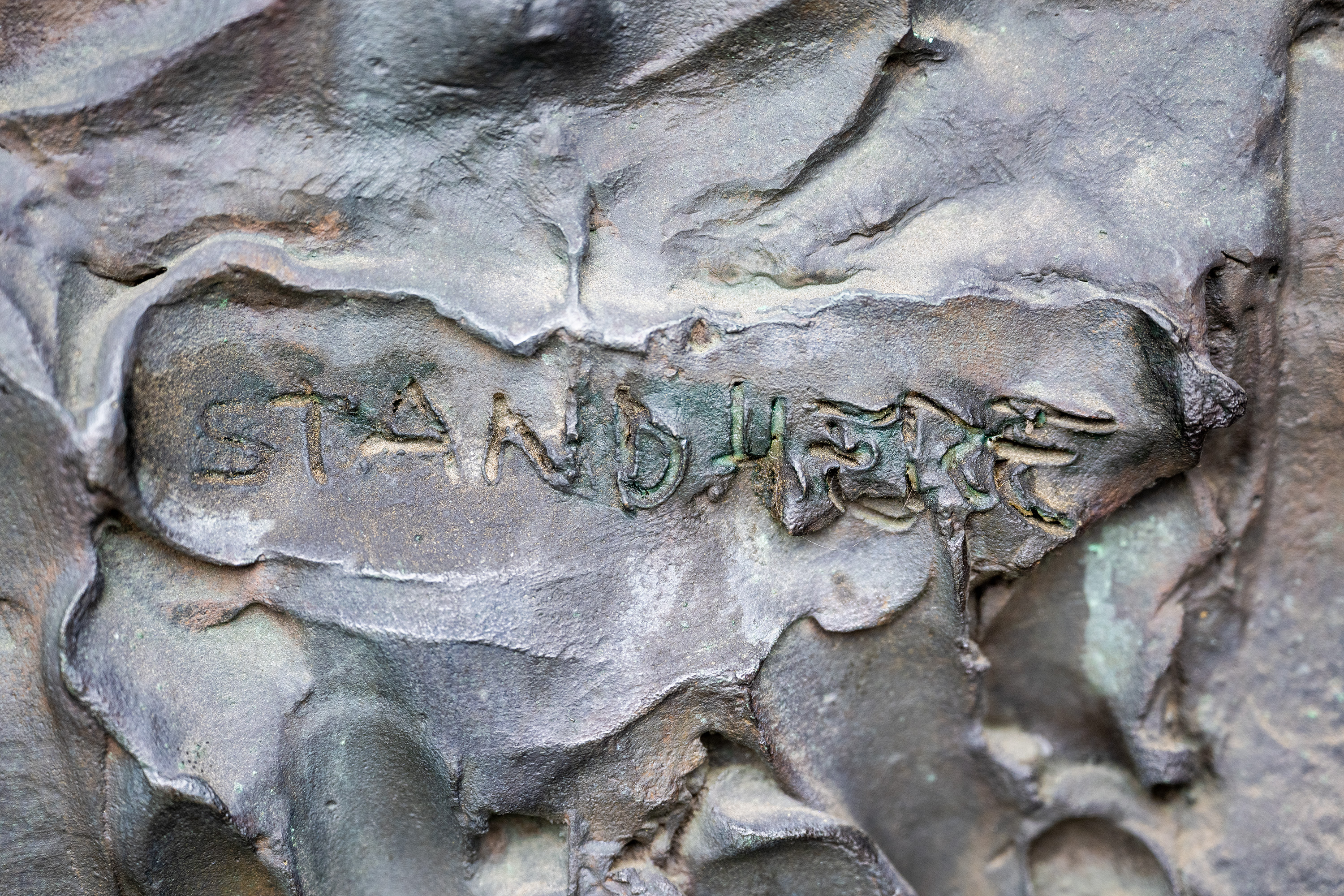
Among the many Easter eggs Frudakis hid within Freedom are a self-portrait, a cast of his hands with a sculpting tool, and a sculpture of his cat’s head. One of my favorite details is carved into the empty space where the final figure has broken free from the wall. There, the words STAND HERE are written, inviting you to become a part of the piece.
The words “STAND HERE” appear in an empty space in Zenos Frudakis’ “Freedom” sculpture, inviting the viewer to become a part of the piece. Tom Gralish / Staff Photographer
Photos of Freedom have appeared in self-help and scholarly books and it has been cited as one of the most fascinating sculptures in the world by Architectural Digest.
“It’s the most personal sculpture I’ve ever done and it’s the most universal,” Frudakis said.
‘It was creating me’
Of course there are other pieces Frudakis is proud of — his sculpture for the National Air Force Memorial Honor Guard in Washington, D.C.; a statue of Nina Simone in Tyrone, N.C., that includes some of her ashes; and a sculpture of Clarence Darrow at the Tennessee courthouse where the Scopes Monkey Trial was held.
The statues of Franklin and Paine he’s working on now are intended for the U.S. Capitol building and the National Mall, respectively. If pending legislation to approve their placement is ever passed (both were first proposed years ago), the bronze castings will be paid for with private funds, Frudakis said.
Artist Zenos Frudakis in his studio working on his sculpture of Thomas Paine. Tyger Williams / Staff Photographer
With an oeuvre of work behind him and his larger-than-life-size bronze figures fetching $400,000 or more today, Frudakis now has the freedom to do statues and commissions he truly believes in.
Frudakis still has sculptures he wants to create for himself too. He dreams of doing one of Hypatia, a female scientist from ancient Greece who was “murdered by religious zealots who tore her whole body apart.” He’s got busts of Amelia Earhart in his studio that he’d love to see in bronze someday. And like he did with Freedom, Frudakis wants to tackle another big human concept through his work — time.
One of the subtle details in Zenos Frudakis’ “Freedom” sculpture. Tom Gralish / Staff Photographer
Just like every story I’ve ever written forged me into the journalist I am today, even those that make me cringe in hindsight (and there are plenty), every sculpture Frudakis created made him the artist he is now, including the Rizzo statue.
But I don’t think any of his pieces has had a more profound effect on the landscape of Philadelphia, or people around the world, than the one that had the most profound effect on him as well.
“I was a different person when I finished my Freedom sculpture. I wasn’t just creating it, it was creating me,” he said.
The final figure breaks free in Zenos’ Frudakis “Freedom” sculpture. Tom Gralish / Staff Photographer
Fall is the best time of year to explore Philadelphia’s theater scene, with local stages upping the ante on their programming. This season is full of family drama; from rival brothers in Suzan-Lori Parks’ Topdog/Underdog to father-daughter clashes in the world premiere of Horsegirl & Cowdaddy.
We’ll also see big-name Broadway tours (Mamma Mia!, Operation Mincemeat) and a dance-fueled new musical (A Beat of Our Own), along with spooky stories right in time for Halloween (The Addams Family, Misery).
Local theaters are also examining social issues this autumn: Feminism takes center stage with the Philadelphia premiere of the 2026 Pulitzer Prize-winner Liberation and a contemporary twist on a 17th-century play called Witch. Additionally, in #CHARLOTTESVILLE, an immigrant playwright explores the rise of white supremacy through a verbatim play based on interviews with community members in Virginia.
These are 10 shows we want to see this fall, paired with suggestions on drink and dining options near each respective theater.
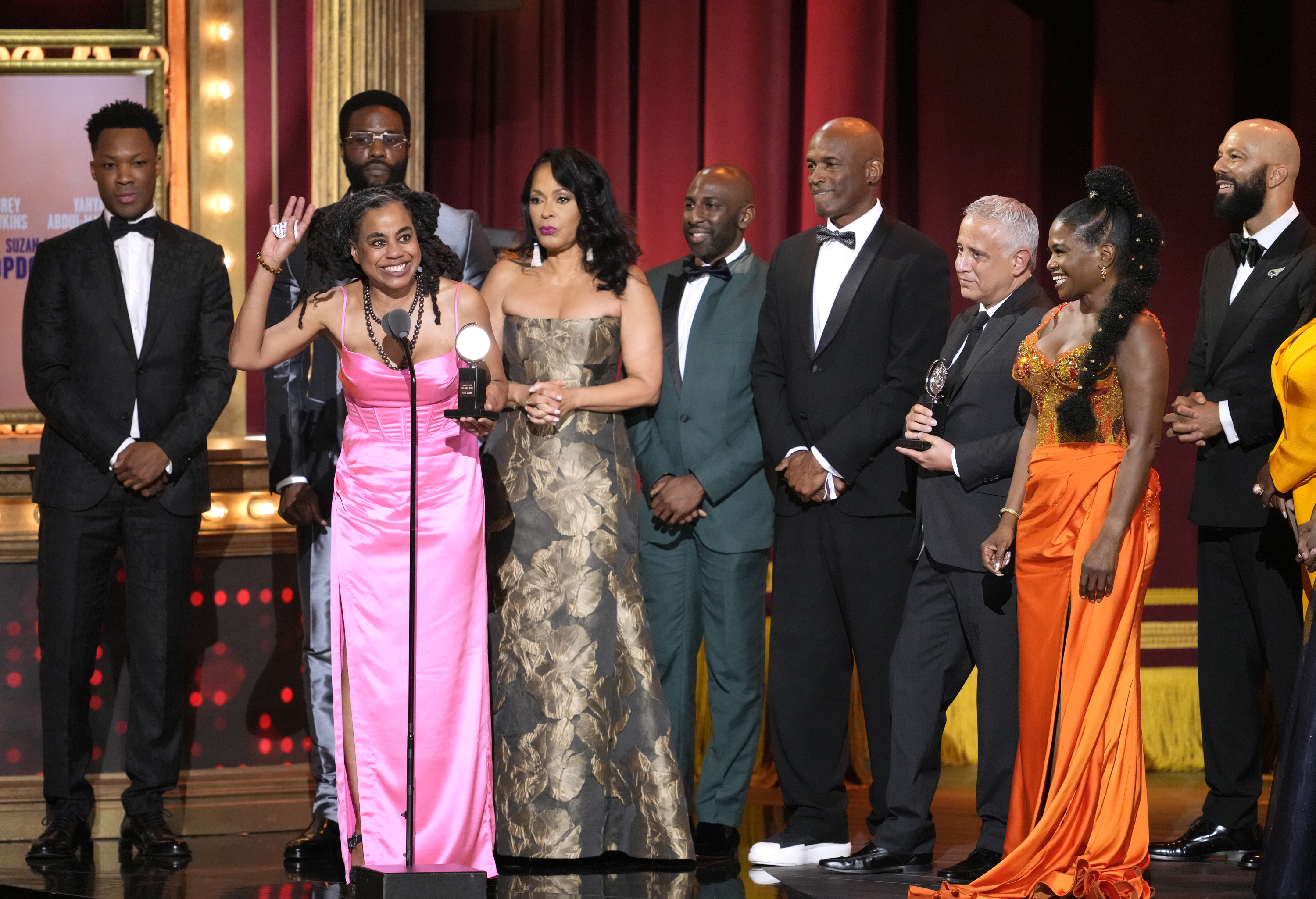
Suzan-Lori Parks (second from left) and members of the company of “Topdog/Underdog” accept the award for best revival of a play at the 76th annual Tony Awards on June 11, 2023, at the United Palace theater in New York. Charles Sykes
‘Topdog/Underdog’
Sept. 16-Oct. 18, People’s Light
Oct. 29-Dec. 13, Arden Theatre Company
An American classic will be staged at two theaters in separate runs this season in a rare coproduction between Malvern’s People’s Light and Old City’s Arden. This Pulitzer Prize-winning play from the prolific and incisive dramatist Suzan-Lori Parks follows two Black brothers, Lincoln and Booth, with a complicated relationship that is both competitive and interdependent. Booth (played by West Philly-raised actor George McGriff) scams and steals to get money while Lincoln (notable Philly star Akeem Davis) works at an arcade where he dons white face and reenacts the assassination of the president for whom he’s named.
People’s Light, 39 Conestoga Rd., Malvern, 610-644-3500 or peopleslight.org, Arden Theatre, 40 N. Second St., Philadelphia, 215-922-1122 or ardentheatre.org
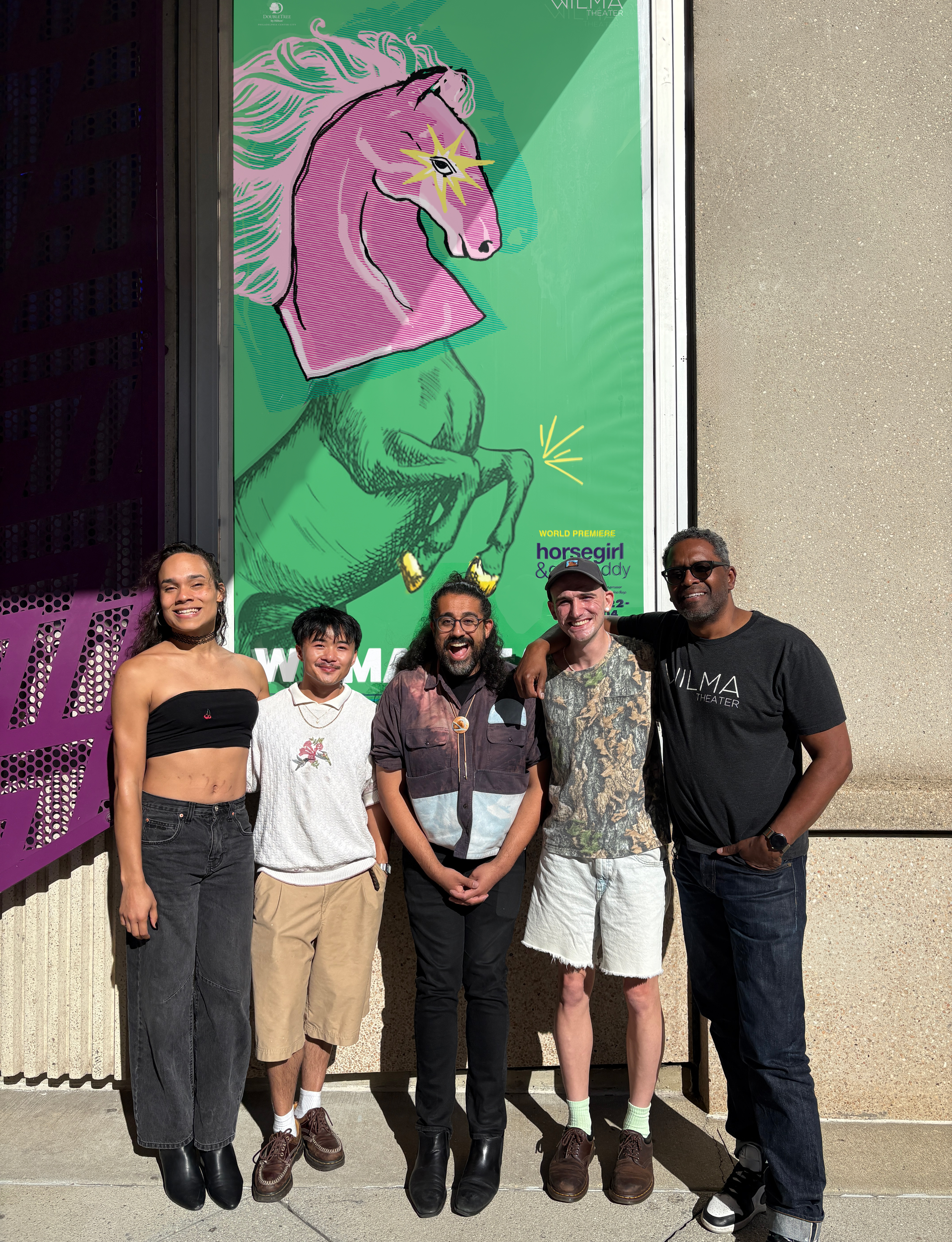
Actor Samora de la Brisa, actor Ni-Ni, director Adil Mansoor, playwright DJ Hills, and actor Lindsay Smiling pose in front of the Wilma Theater following the first rehearsal for the world premiere of ‘Horsegirl & Cowdaddy,’ running Sept. 22 through Oct. 4.Courtesy of Wilma Theater
‘Horsegirl & Cowdaddy’
Sept. 22-Oct. 4, Wilma Theater
Philly poet/playwright DJ Hills — a queer and trans artist from Franklin County, Pa. — penned a new play that will have its world premiere at the Wilma before transferring to New York’s Soho Rep next year. Set in a small and rural Pennsylvania town, the story centers on a 30-something trans woman named Horsegirl who still lives at home with her father, Cowdaddy. A newfound love leads to an unexpected change that threatens to upend her life. Puerto Rican actor and singer/songwriter Samora de la Brisa stars as Horsegirl while veteran actor Lindsay Smiling, who was recently named the Wilma’s sole artistic director, plays Cowdaddy.
Wilma Theater, 265 S. Broad St., Philadelphia, 215-546-7824 or wilmatheater.org
Restaurant recs: Order a Southern-tinged feast at Kitchen & Kocktails, whose menu includes fried green tomatoes, shrimp and grits with lobster tail, chicken and a wide array of waffles, and peach cobbler.
‘The Addams Family: The Musical’
Sept. 22-Nov. 1, Walnut Street Theatre
The morbidly moody teen Wednesday Addams is about to do the scariest thing imaginable: introduce her eccentric family to her “normal” boyfriend and his parents. The young couple soon realize they aren’t the only ones with relationship problems as their parents — yes, even the eternally head-over-heels Gomez and Morticia — stumble into their own conflicts following a discomfiting dinner. With music and lyrics by Andrew Lippa, the popular musical features everyone’s favorite spooky relatives, including Uncle Fester, Lurch, and Thing. (Plus there’s a special showing on Halloween.)
Walnut Street Theatre, 825 Walnut St., Philadelphia, 215-574-3550 or walnutstreettheatre.org
Restaurant recs: Hi-Lo Taco Co. is one of the family- (and budget-) friendliest options in Washington Square West, and the tacos and margs couldn’t be tastier. If you’re looking for something funkier, try Dara, featured in the 2025 edition of The 76, for its deft touch with a range of Thai dishes.
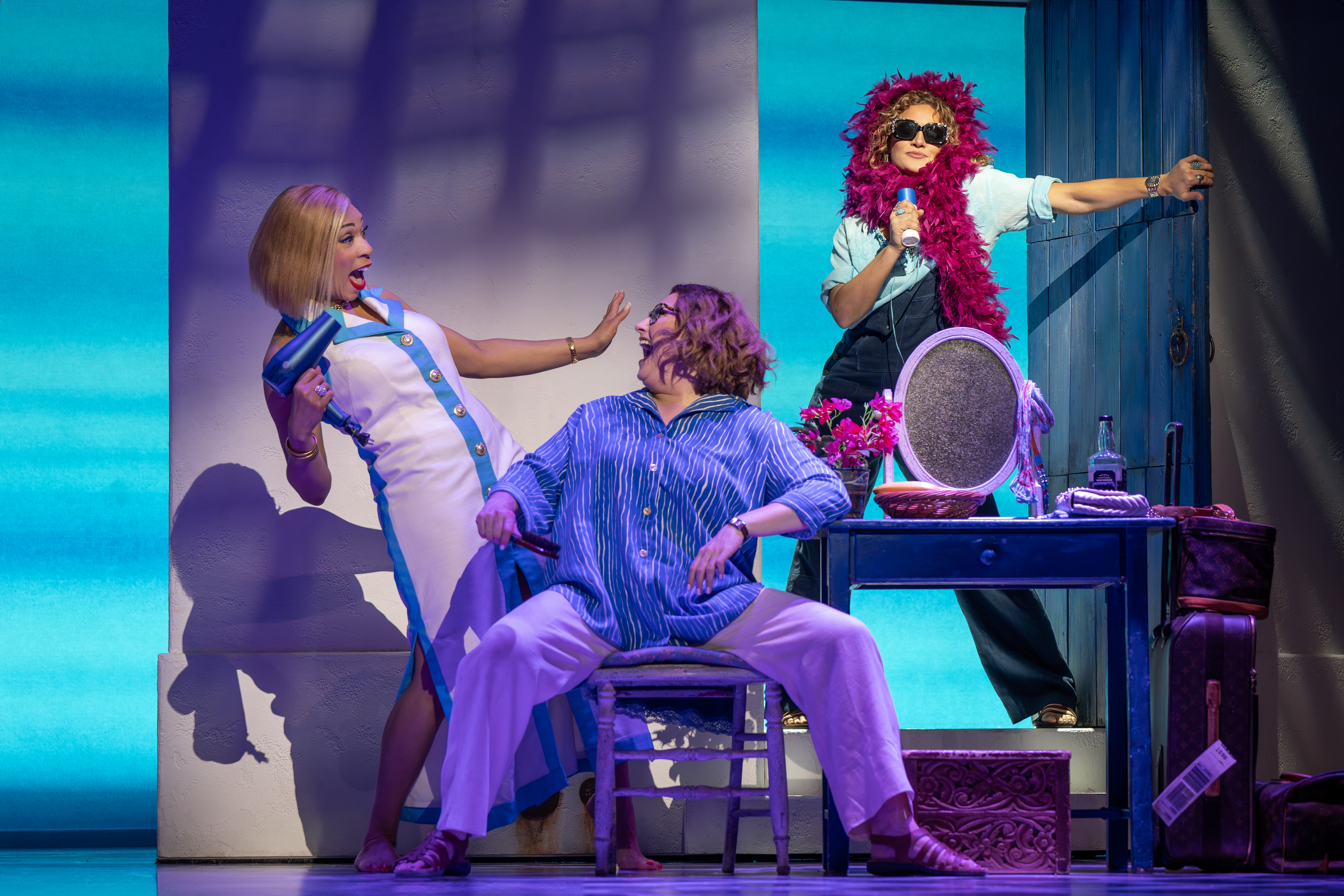
Jalynn Steele (Tanya), Carly Sakolove (Rosie), and Jessica Crouch (Donna Sheridan) in “Mamma Mia!” The show runs Sept. 29 -Oct. 4 at the Academy of Music.Joan Marcus
‘Mamma Mia!’
Sept. 29-Oct. 4, Academy of Music
One of the longest-running shows in Broadway history makes its return to Philadelphia with a fresh cast belting beloved ABBA classics. On a luscious Greek island, a young bride has devised a clever plan to determine the identity of her father: inviting three potential dads to her wedding. What could go wrong? Sing along to favorite tunes like “Dancing Queen,” “Money, Money, Money,” and, of course, “Mamma Mia” while watching the heartwarming family bonding. Pretty Woman: The Musical actor Jessica Crouch takes on the role of Donna while The Voice contestant Juliette M. Ojeda stars as her daughter, Sophie.
Academy of Music, 240 S. Broad St., Philadelphia, 215-893-1999 or ensembleartsphilly.org
Restaurant recs: Double down on the spectacle of a night at the theater with drinks and starters at the bar at Mr. Edison, Jeffrey Chodorow’s aesthetically dazzling $10 million restaurant in the Bellevue Hotel. There are a number of Craig LaBan-approved items if you choose carefully.
Suli Holum (center) and Frank Jimenez play Elizabeth Sawyer and the devil in “Witch,” running Sept. 30-Oct. 25 at Quintessence Theatre.Courtesy of Quintessence Theatre
‘Witch’
Sept. 30-Oct. 25, Quintessence Theatre
This fresh, funny, feminist twist on a 17th-century English play from Jen Silverman focuses on Elizabeth Sawyer, an outcast labeled a “witch” for reasons she can’t fathom. When the devil arrives in the small town of Edmonton, he considers Elizabeth easy prey, but she’s not convinced selling her soul for revenge on cruel neighbors will satisfy her. Instead, the devil finds men who readily fall, like two brothers eager to seize their rich noble father’s inheritance (and you can guess how that feud ends). Suli Holum, a Philly theater mainstay who once cameoed in the Emmy-winning show Mare of Easttown, stars as the titular witch while University of the Arts graduate Frank Jimenez plays the devil, aka Scratch.
Quintessence Theatre at the Sedgwick Theater, 7137 Germantown Ave., Philadelphia, 215-987-4450 or quintessencetheatre.org
Restaurant recs: It’s a bit of a walk down Germantown Avenue, but for a fresh pick in Mount Airy, head to Doho, the fusion-minded bistro from the culinary talents behind Catering by Design. The cocktails are always on point and you can easily fill up on the creative small plates and pasta dishes.
Tara Venkataraman and Salena Quershi lead the cast of ‘A Beat of Our Own,’ running Oct. 7-25 at the McCarter Theatre Center.Thomas Robert Clarke Photography
‘A Beat of Our Own’
Oct. 7-25, McCarter Theatre Center
This big, bold musical feels like Bring It On meets competitive bhangra dancing. Married playwrights Rehana Lew Mirza, who grew up in Bridgewater, N.J., and Mike Lew (Teenage Dick) wrote this comedy about two bhangra teams going head to head in a national competition: one that prides itself on maintaining traditional choreography from Punjab, and another that embraces fusion and incorporates other dance styles like Bollywood and hip-hop. Challenge is, the latter team consists of total amateurs. With music and lyrics by Sam Willmott, the coming-of-age tale features movement by Bollywood choreographer Rujuta Vaidya, and Mirza promises some inside jokes meant specifically for Jersey audiences (her family included).
McCarter Theater Center, 91 University Place, Princeton, N.J., 609-258-2787 or mccarter.org
Restaurant recs: For small and local, Princeton restaurants like Mistral, Agricola, and elements are classic choices. For something new and from New York, try Ayat.
Susannah Flood (left) and Irene Sofia Lucio appear in the Broadway production of “Liberation” in New York. The production comes to Philadelphia this fall. Adam Brisbine
‘Liberation’
Oct. 9-25, Philadelphia Theatre Company
The Philadelphia premiere of this much-buzzed-about play from Bess Wohl comes with dazzling credits as the winner of the 2026 Pulitzer Prize for drama and the 2026 Tony Award for best play. Partially based on the life of Wohl’s mother, who worked at the legendary feminist outlet Ms. Magazine, the play swings between present day and the 1970s as the protagonist, Lizzie, reflects on her mom’s activism in the women’s rights movement. Six women meet in an Ohio rec center and bond over workplace discrimination and the challenges of being wives and mothers while debating what it means to be a revolutionary. Philadelphia Theatre Company coartistic director Taibi Magar directs.
Philadelphia Theatre Company at the Suzanne Roberts Theatre, 480 S. Broad St., Philadelphia, 215-985-0420 or philadelphiatheatrecompany.org
Restaurant recs: If you’re heading to PTC, you couldn’t be closer to Oroshi, the recently opened omakase restaurant located directly across Broad Street. Check that out before the show, then head to Sonnys Cocktail Joint afterward for drinks, tavern pies, and hot dogs.
‘Misery’
Oct. 14-Nov. 7, Hedgerow Theatre
Before the internet age of stans, there was Annie Wilkes, a scarily impulsive fan who terrorized her favorite author in Stephen King’s 1987 novel Misery. After a major car crash, novelist Paul Sheldon wakes up in a remote cabin with Annie playing nurse, but soon he realizes her enthusiasm belies a dangerous obsession. This stage adaptation from Oscar-winning writer William Goldman — the pen behind All the President’s Men, Butch Cassidy and the Sundance Kid, and The Princess Bride — premiered at Bucks County Playhouse in 2012 before a star-studded run on Broadway with Bruce Willis and Laurie Metcalf. This production sees Bruce Graham and Emma Gibson facing off in this psychological thriller.
Hedgerow Theatre, 64 Rose Valley Rd., Media, 610-565-4211 or hedgerowtheatre.org
Restaurant recs: Media has lots of options, but why not go to Fond, Lee Styer and Jessie Prawlucki Styer’s brilliantly revived French bistro, located a mere four-minute drive away from Hedgerow.
‘#CHARLOTTESVILLE’
Oct. 14-Nov. 1, Azuka Theatre @ The Drake
Philadelphia-based actor/playwright Priyanka Shetty was a student at the University of Virginia in 2017 when hundreds of white supremacists marched in Charlottesville, resulting in the three people killed and 35 injured. As an immigrant from Bangalore, India, Shetty felt compelled to respond, so she began interviewing dozens of residents, researching court transcripts, and reading extremist right-wing material to create this verbatim play in which she stars as the sole performer. Popular local theatermaker Yury Urnov directs this production, which he also directed during its award-winning run at the 2025 Edinburgh Fringe Festival.
Azuka Theatre at The Drake, 302 S. Hicks St., Philadelphia, 215-563-1100 or azukatheatre.org
Restaurant recs: The options are good and plenty in this part of town. I’m partial to Monk’s Cafe for sentimental reasons, but you also have La Jefa & Tequilas, Kissho House, and Superfolie to choose from, all within a few minutes’ walk.
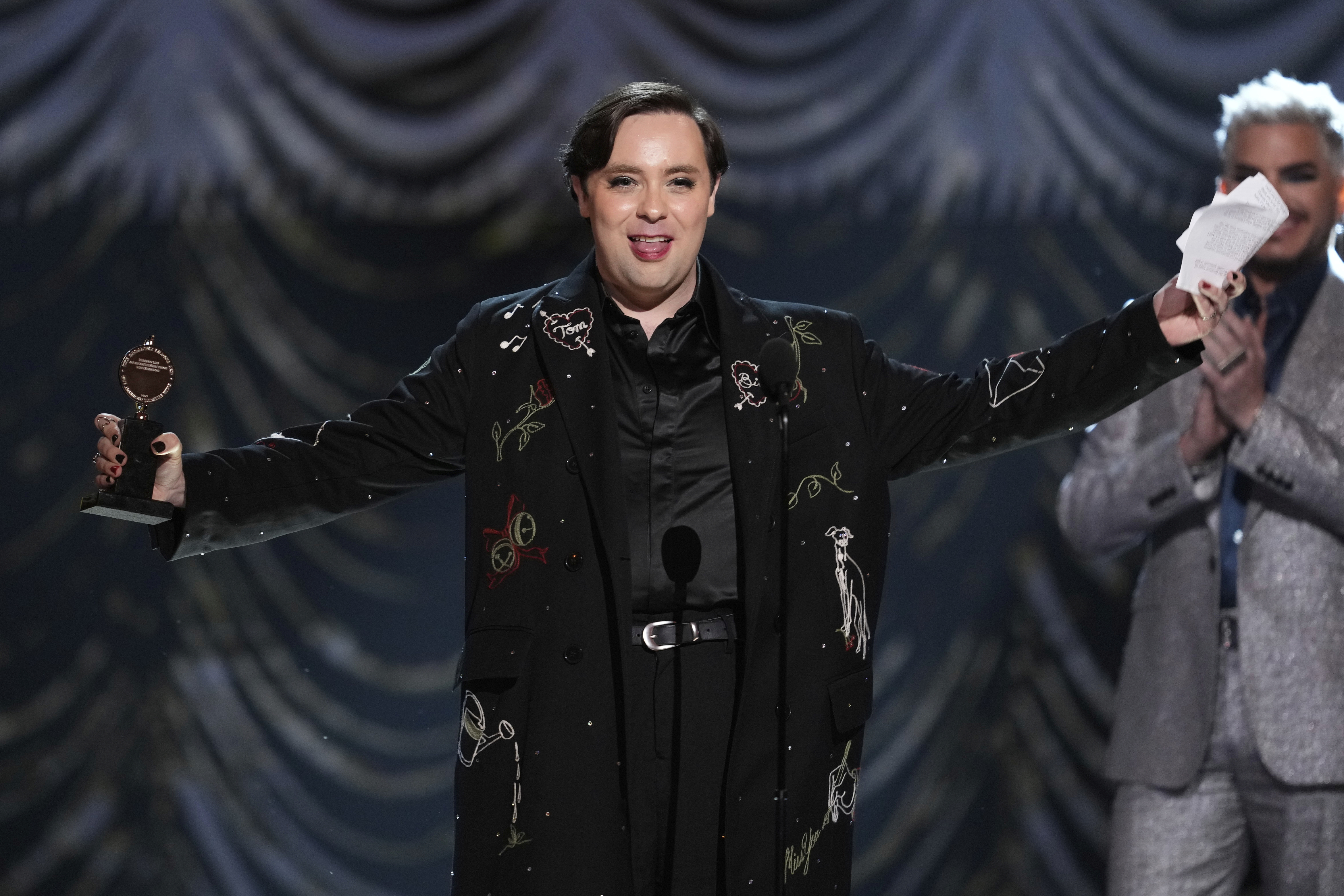
Jak Malone accepts the award for best performance by an actor in a featured role in a musical for “Operation Mincemeat: A New Musical” during the 78th Tony Awards on June 8, 2025, at Radio City Music Hall in New York. The musical will have its Philadelphia premiere this fall.Charles Sykes
‘Operation Mincemeat’
Dec. 15-20, Forrest Theatre
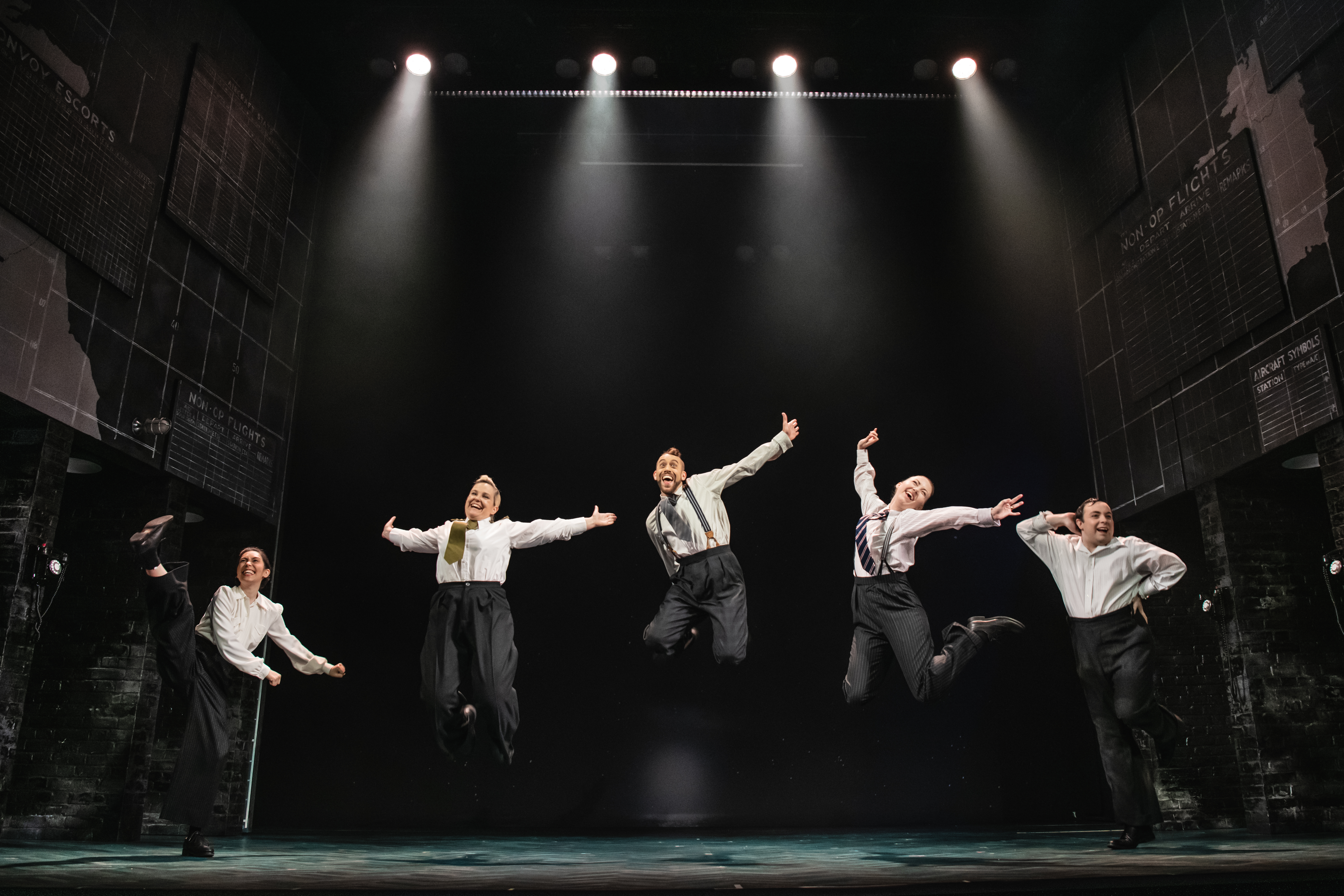
Based on a real-life secret mission during World War II, this zany musical brings five versatile actors to play 87 characters with Monty Python-like humor. The British plot involved disguising a corpse as a Royal Marine officer and dumping the body into the sea along with a briefcase full of fake documents intended to deceive German spies (allowing the Allied forces to invade Sicily). The score includes sea shanties, ballads, electro-pop, and rap for an uproarious, unbelievably informative good time.
Restaurant recs: The Walnut Street Theatre suggestions apply here, too, but for a few more, how about Kichi (a “zoomakase”), Oloroso (delicious tapas by chef Tod Wentz), and Darling Jack’s (a something-for-everyone contemporary tavern menu)?
Classical music has long sought a friendlier mien, and this fall the genre seems to have redoubled its efforts. New books and author chats are in abundance, aiming to demystify the art form and make personal connections. Films with live orchestra have become not a special event, but a regular feature. Concert formats continue to get rejiggered in an effort to make the tent bigger.
There’s a danger, of course, that in its quest for relevance, classical will no longer be the main event. Some of the Philadelphia Orchestra’s appearances with pop artists, for instance, are hard to justify artistically. The balance bears watching.
But in a season that offers rare Bach and Mozart, the continuation of a chamber music series second to none, and a generous pipeline of new works, it’s hard to feel anything but fortunate as the curtain raises on a new season in one of the nation’s classical music hot spots.
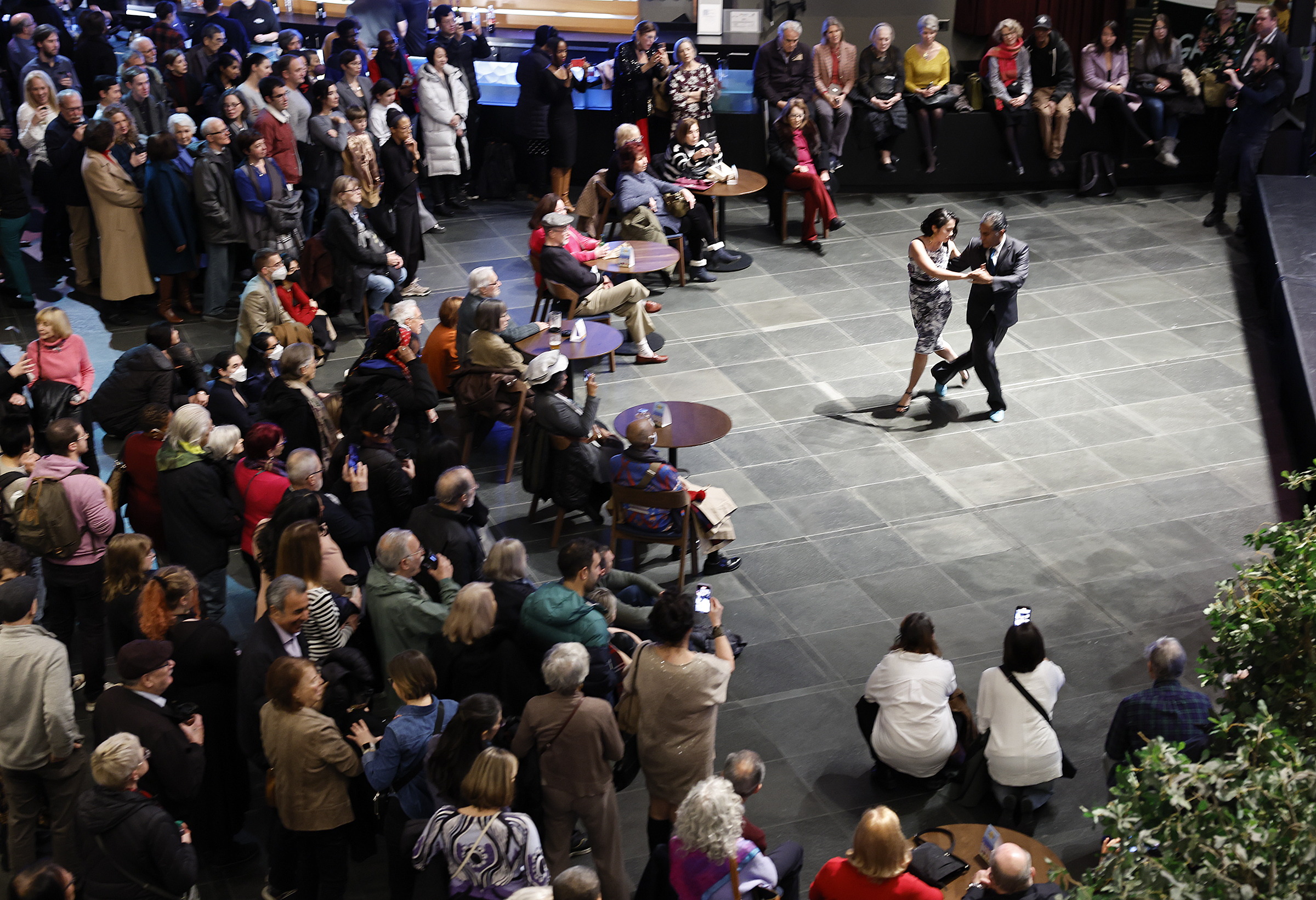
In the Kimmel Center plaza, Andres Amarilla (right) and Amy He of the Philadelphia Argentine Tango School perform at an Orchestra After 5 event in 2024.Yong Kim / Staff Photographer
Orchestra After 5
Oct. 8, Marian Anderson Hall
The Philadelphia Orchestra sometimes launches an initiative only to let it quietly fade, but the Orchestra After 5 series has had remarkable staying power. Now in its fourth season, it’s designed to be a friendly on-ramp for newbies, though one suspects that it’s also luring experienced listeners with its earlier start time, conviviality, and brevity.
The first of three such concerts this season features the orchestra and popular guest conductor Dalia Stasevska in Respighi’s Pines of Rome and, with Gil Shaham, Saint-Saëns’ Violin Concerto No. 3. It starts with a 5 p.m. happy hour in the Kimmel plaza, and the hourlong concert is followed by an artist chat. philorch.ensembleartsphilly.org, 215-893-1999.
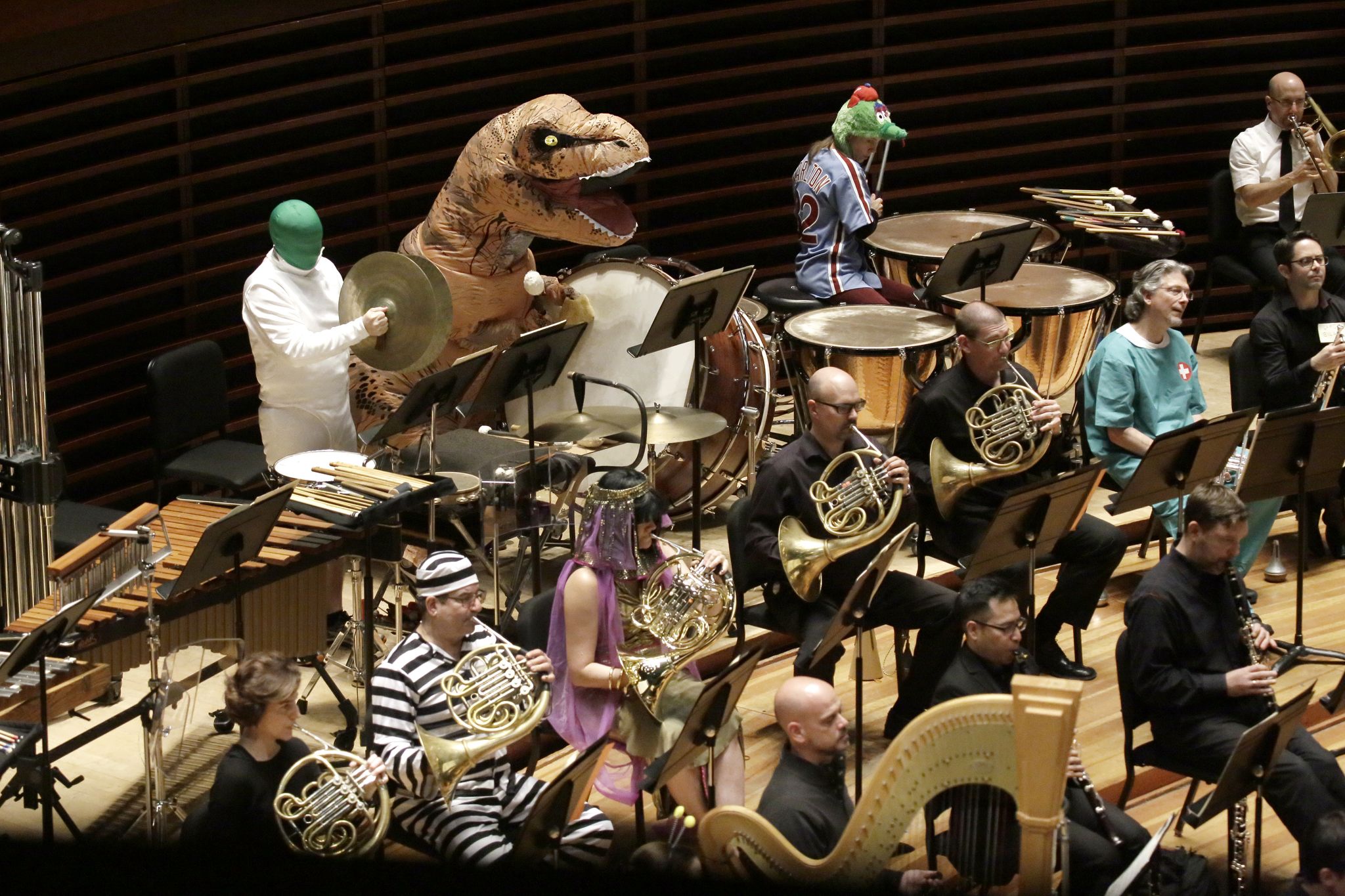
The Philadelphia Orchestra performing a Halloween concert in 2016.ELIZABETH ROBERTSON / Staff Photographer
Philadelphia Orchestra Children’s Halloween Spectacular
Oct. 10, Marian Anderson Hall
With excerpts from Elmer Bernstein’s Ghostbusters Suite, Bach’s Toccata and Fugue in D Minor, and Grieg’s “In the Hall of the Mountain King” from Peer Gynt, the Saturday morning family concert promises to be a fright. But within bounds. This first of five full-orchestra offerings in the coming season aimed at young listeners is sensory-friendly, with house lights kept at mid-level, a cool-down space for stimulated guests, and other accommodations. The aim for all is an introduction with impact to the world of the symphony orchestra, which this ensemble never fails to deliver. Austin Chanu conducts. philorch.ensembleartsphilly.org, 215-893-1999.
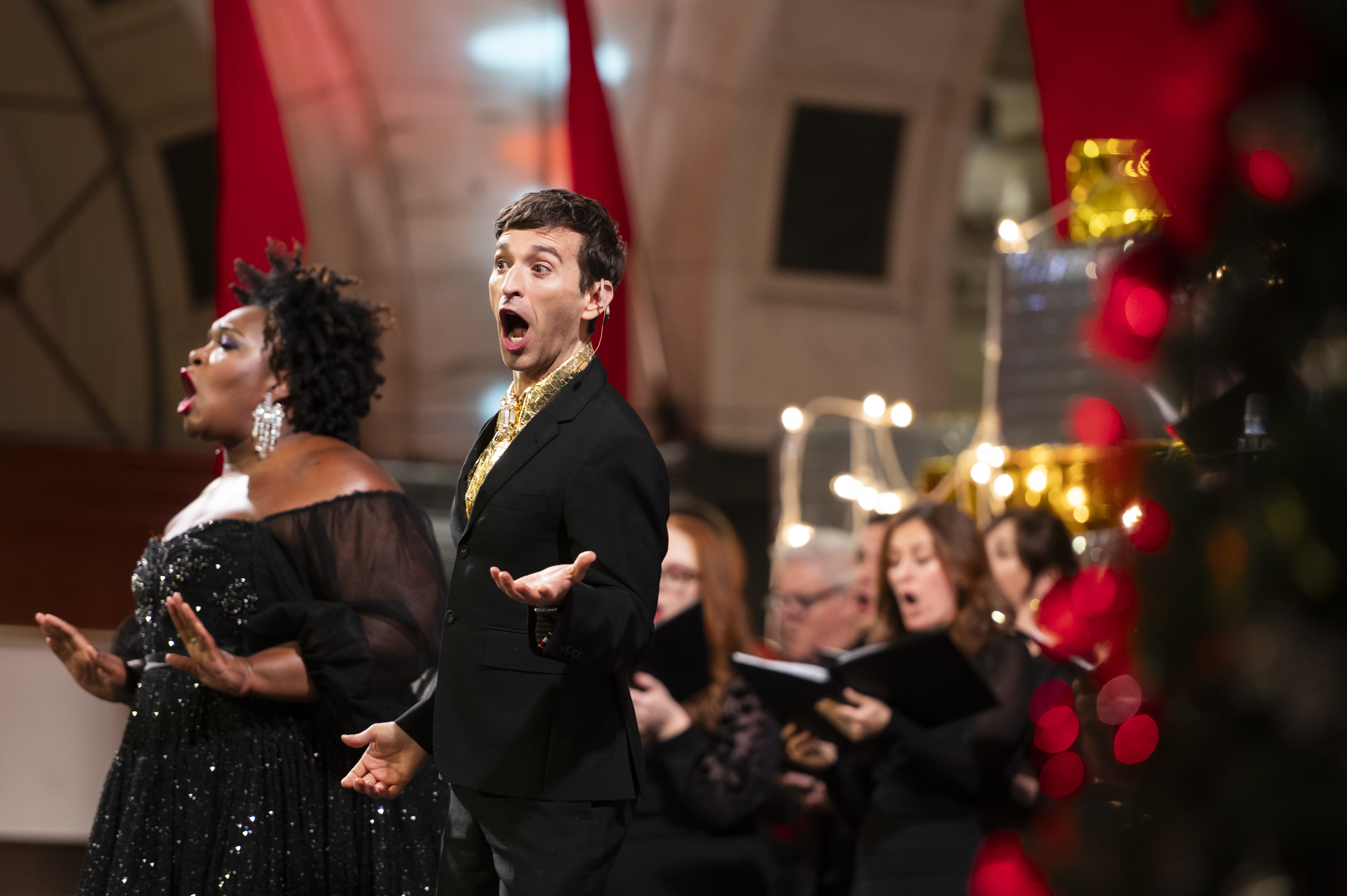
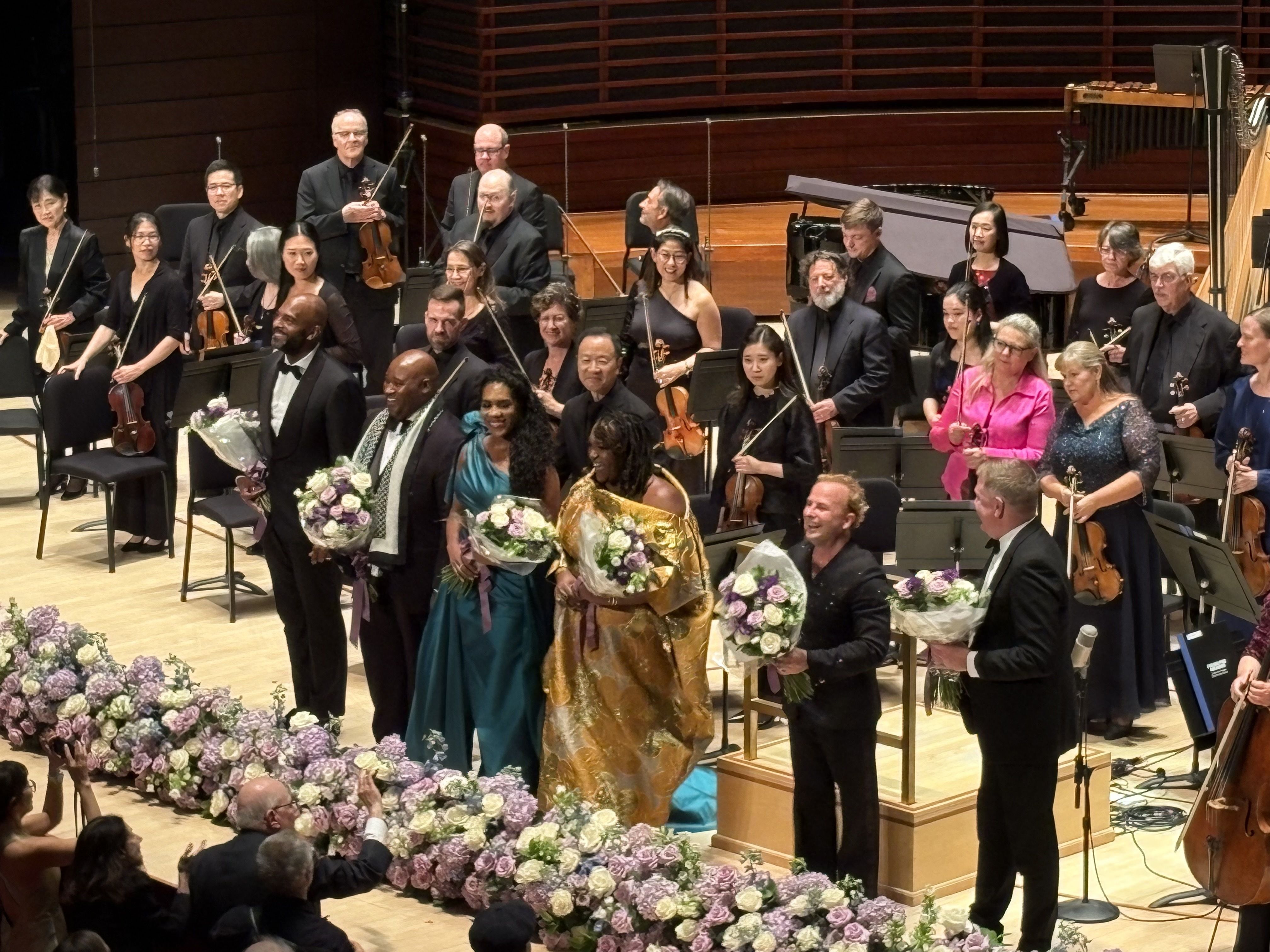
Leah Hawkins (left), soprano, and Anthony Roth Costanzo, countertenor, performing at the Wanamaker Building’s Grand Court in 2025.Allie Ippolito / For The Inquirer
Anthony Roth Costanzo’s ‘Countertenor’
Oct. 27, Free Library of Philadelphia Parkway Central Library
“When you are nervous about going onstage, they say you’re supposed to picture the audience naked. But what happens when you’re nervous about actually being naked onstage in front of three thousand fully — and mostly very nicely — dressed people?”
Costanzo, who has maintained a busy performing schedule as a countertenor while running Opera Philadelphia, recounts the unusual experience of performing naked at the Metropolitan Opera in his forthcoming book. What is a countertenor? Costanzo explains his unusual voice type in this mix of autobiography and opera history, which he’ll discuss at the Free Library’s author series.
There is, of course, a companion recording, which comes out a few days before his talk. Tracks include not just works of Osvaldo Golijov, Philip Glass, and Mozart, but also, intriguingly, the Frankie Valli and the Four Seasons tune “Walk Like a Man.” freelibraryfoundation.org/events.
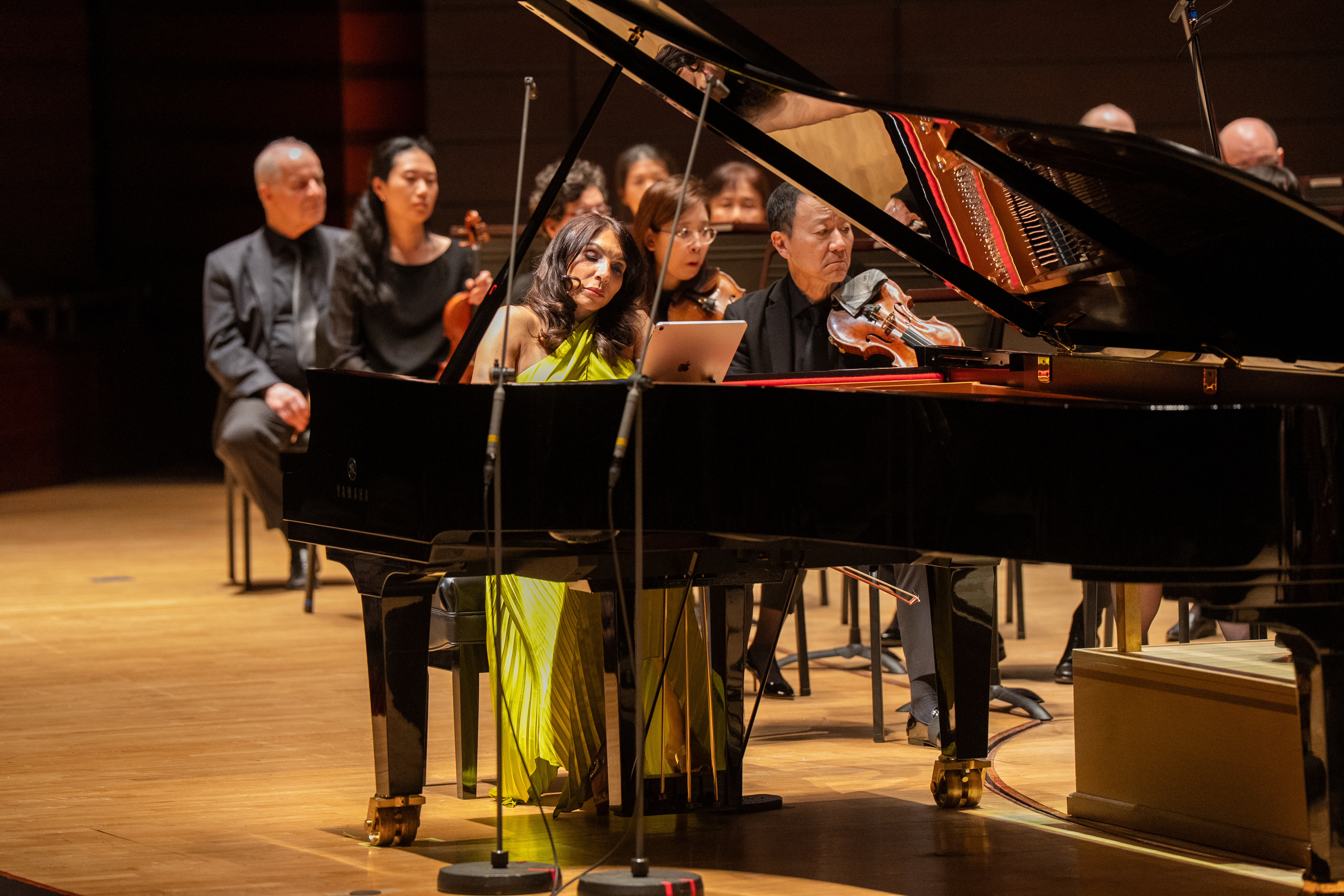
Lara Downes with the Philadelphia Orchestra in Marian Anderson Hall in 2025.Jessica Griffin / Staff Photographer
Lara Downes with Rhiannon Giddens
Oct. 30, Rowan University Pfleeger Concert Hall
In a “musical conversation” called Sounds Like America, pianist Downes and singer-cultural historian Giddens explore the “roots and routes” of American music, with stops at “Amazing Grace” and Paul Simon’s “American Tune” along the way. go.rowan.edu/america.
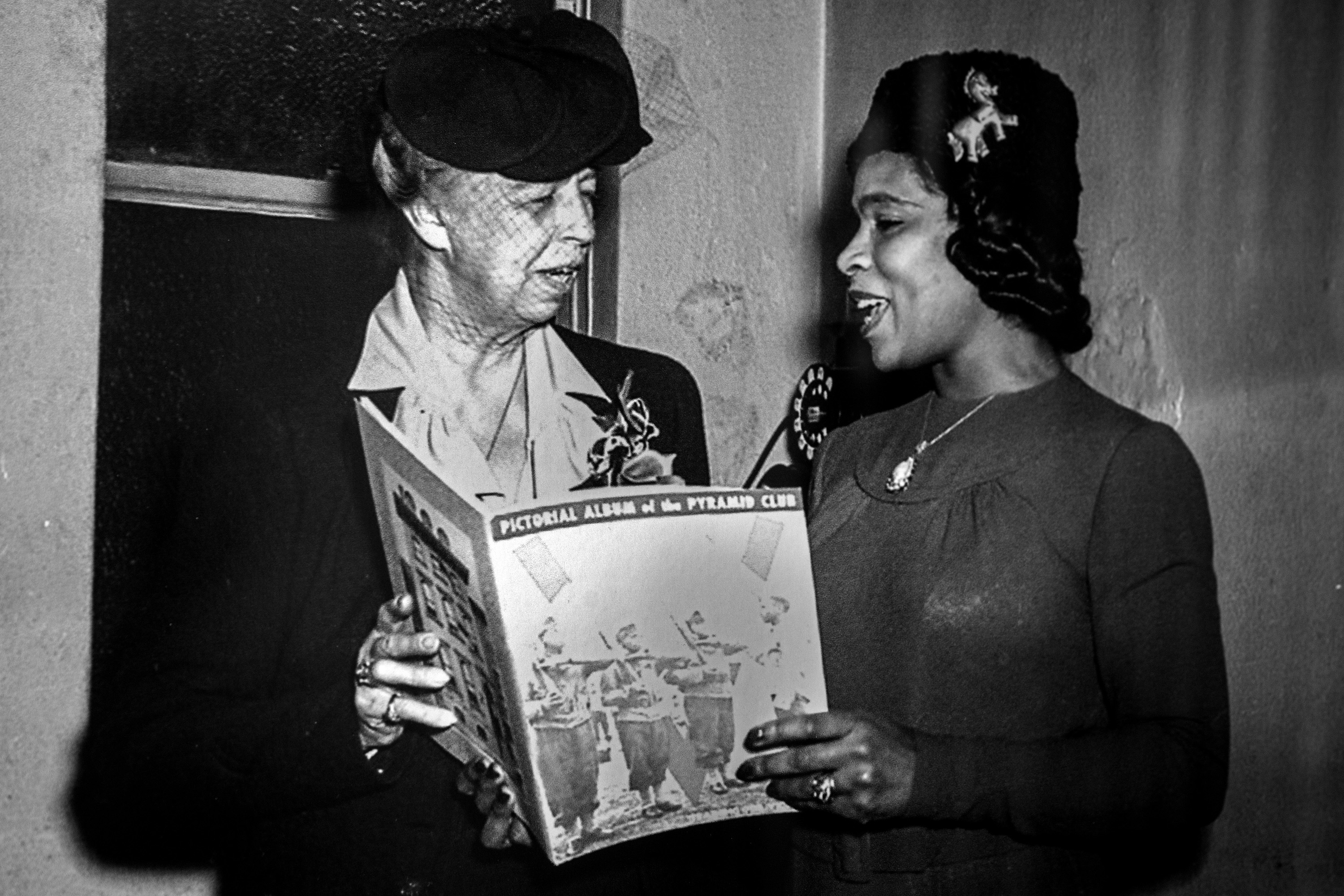
A photo by John W. Mosley of Eleanor Roosevelt (left) and Marian Anderson at the Pyramid Club in Philadelphia in 1943.John W. Mosley Photograph Collection, Charles L. Blockson Afro-American Collection, Temple University Libraries
Anthony Tommasini, author of ‘Voice of a Century: The Life and Artistry of Marian Anderson,’ in conversation with Anthony McGill
Nov. 12, Free Library of Philadelphia Parkway Central Library
The former chief classical music critic of the New York Times chats with Anthony McGill, principal clarinetist of the New York Philharmonic, about Tommasini’s new biography of the Philadelphia contralto and civil rights leader. freelibraryfoundation.org/events.
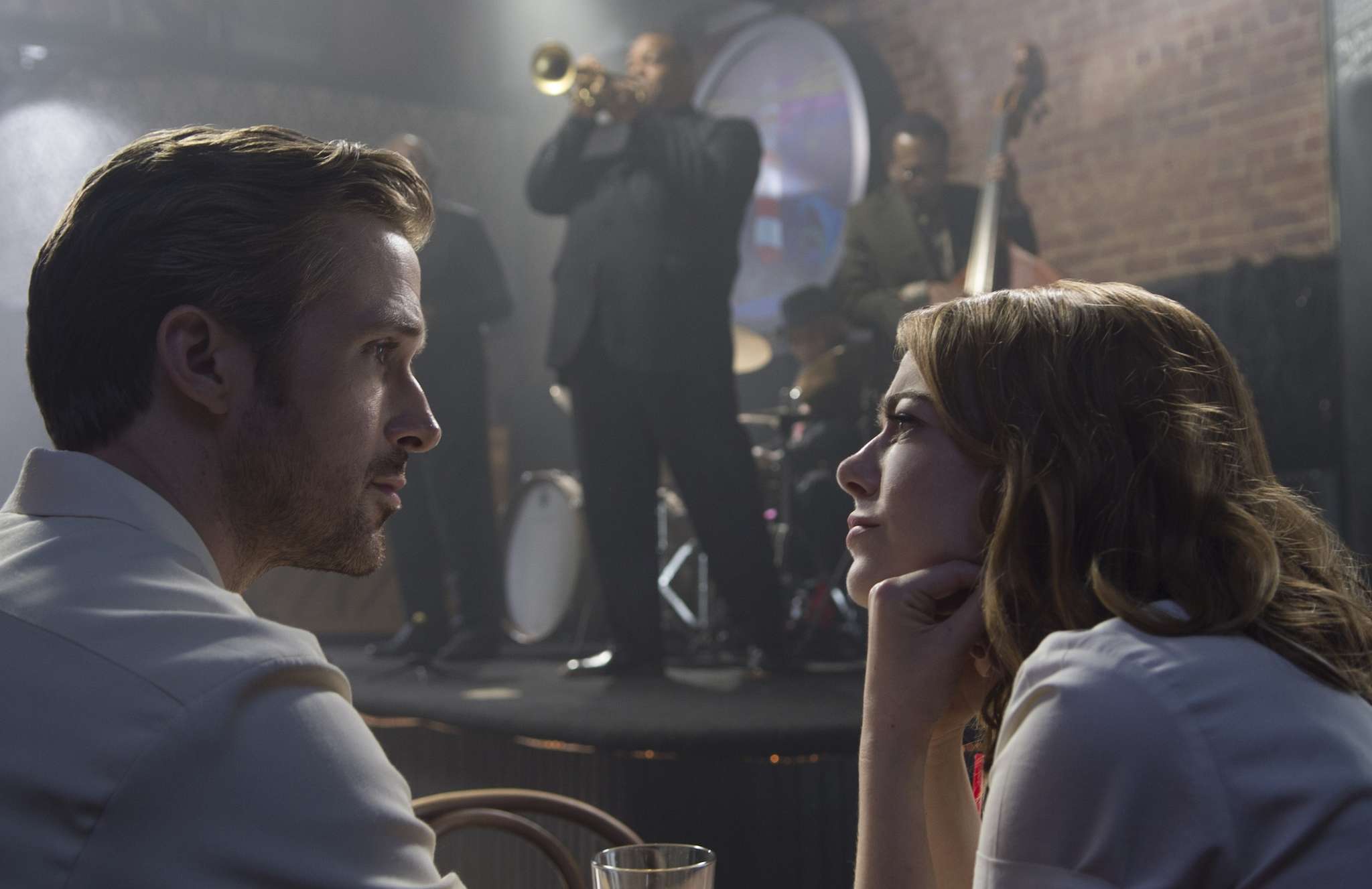
Ryan Gosling and Emma Stone in “La La Land.”DALE ROBINETTE / Lionsgate
Philly Pops ‘La La Land’ in Concert
Nov. 28, The Met Philadelphia
Can it really be a decade since La La Land was released? I never quite got the film, at least not in the way many others did. But this presentation puts a live orchestra and jazz band behind it, which promises to up the daffy appeal and vibe in the room a few notches. Conducted by Esin Aydingoz. phillypops.org.
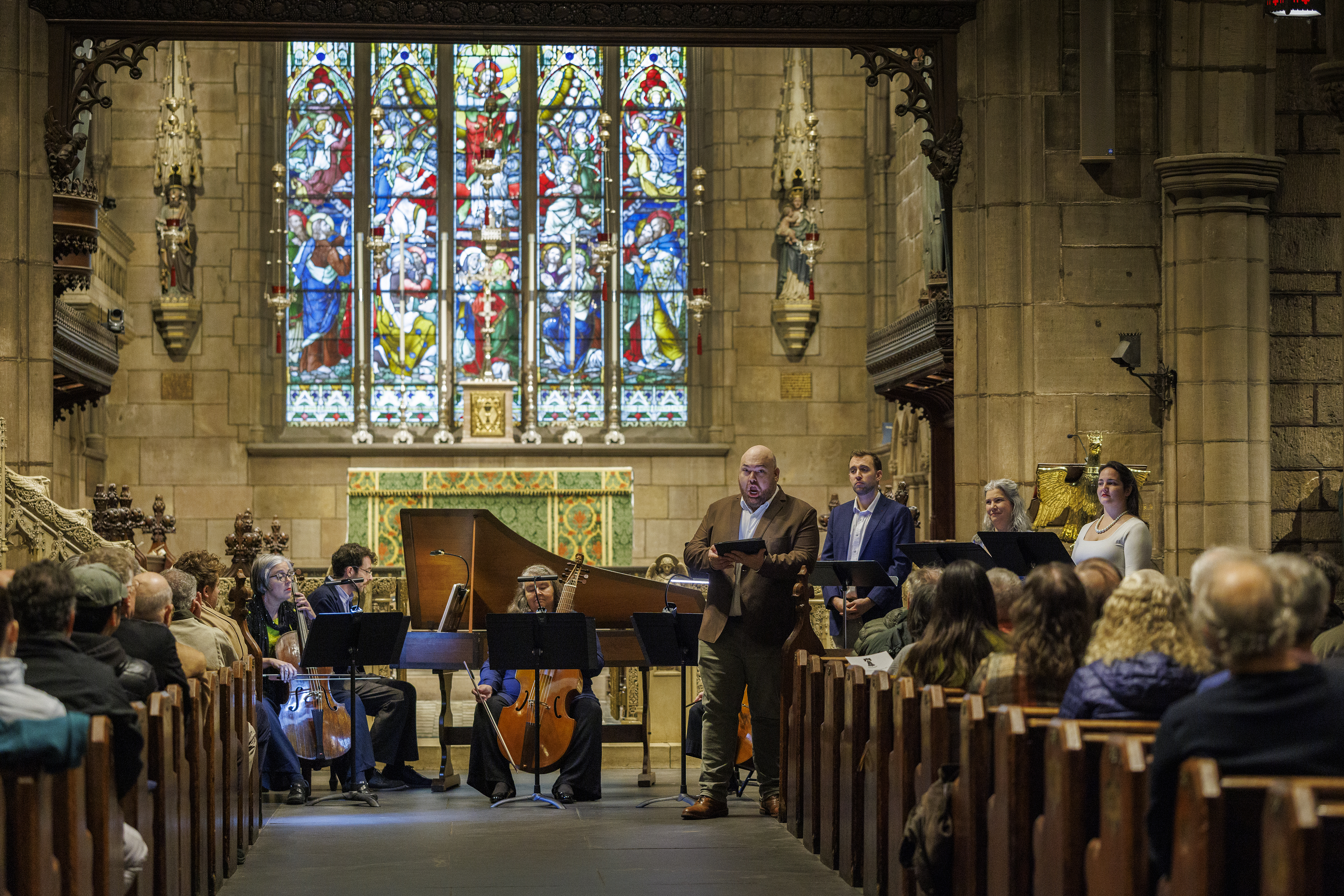
Bass Daniel Schwartz singing in a Philadelphia Bach Collective performance at St. Mark’s Church in 2025.Alejandro A. Alvarez / Staff Photographer
Philadelphia Bach Collective in ‘Nun komm, der heiden Heiland, BWV 62′
Dec. 1, St. Mark’s Church
So seemingly endless is Bach’s genius that even the experienced listener will keep finding gems previously unknown. This is the promise of the Philadelphia Bach Collective, a series of short, pay-as-you-wish afternoon concerts featuring Bach cantatas and other works. To mark the start of Advent, the skilled instrumental and vocal forces take up Nun komm, der heiden Heiland, BWV 62. It’s a concise cantata whose opening chorus based on a Lutheran hymn announcing the coming of the Savior is a beautiful paradox: in a minor key, yet so joyous it can barely contain itself.
“The idea is that Advent is a time of joyful but active anticipation. It’s essentially a call to arms,” says Heather Miller Lardin, one of the collective’s co-artistic directors.
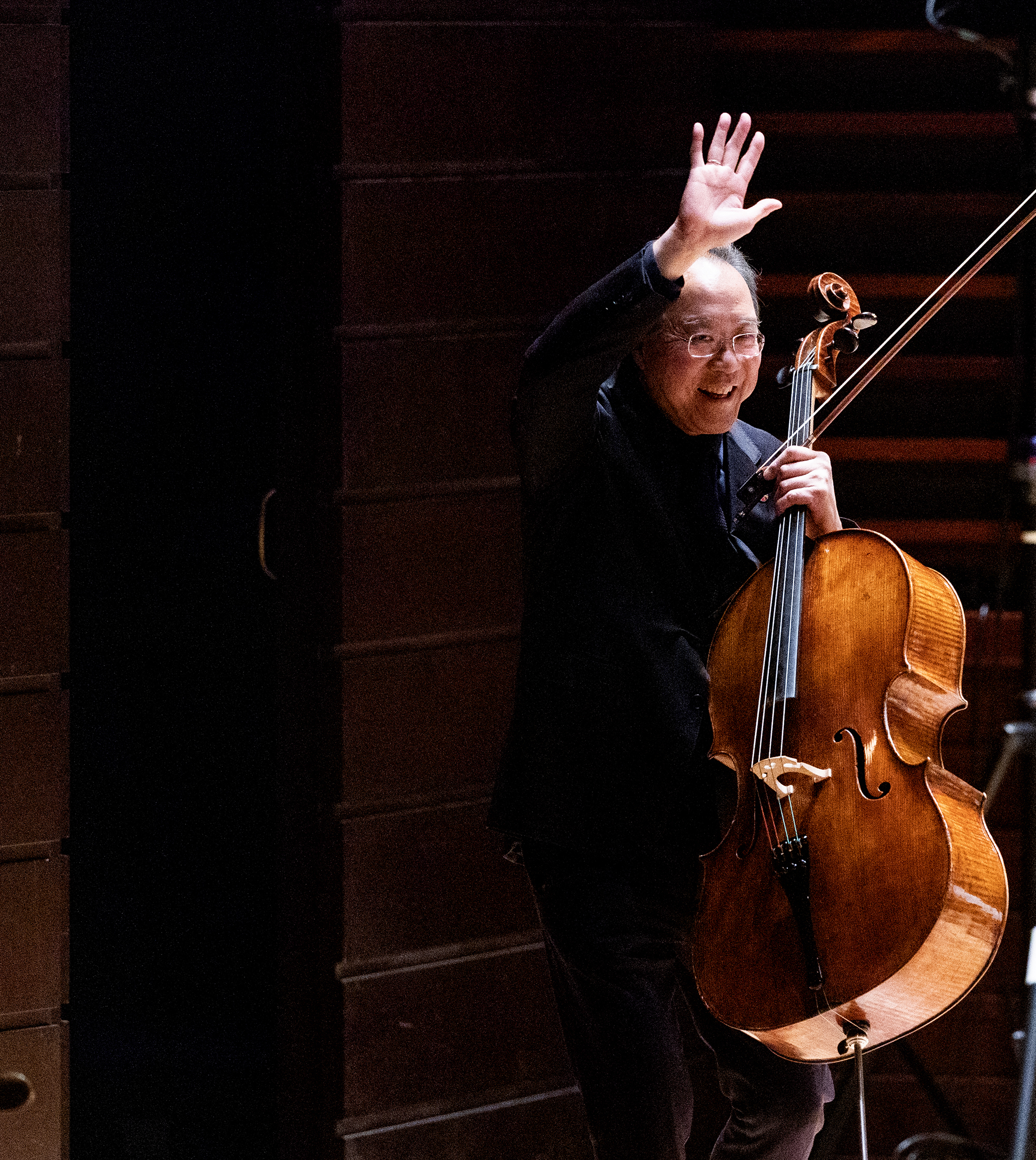
Cellist Yo-Yo Ma at a Kimmel Center appearance in 2024.Charles Fox / Staff Photographer
Yo-Yo Ma and Emanuel Ax
Dec. 6, Marian Anderson Hall
Beethoven? Brahms? Rachmaninoff? The program remained unannounced at press time, but it’s a pretty sure bet that the only thing most ticket buyers really need to know are the names of the cellist and pianist who have both entered the increasingly rarified realm of the legendary. ensembleartsphilly.org, 215-893-1999.
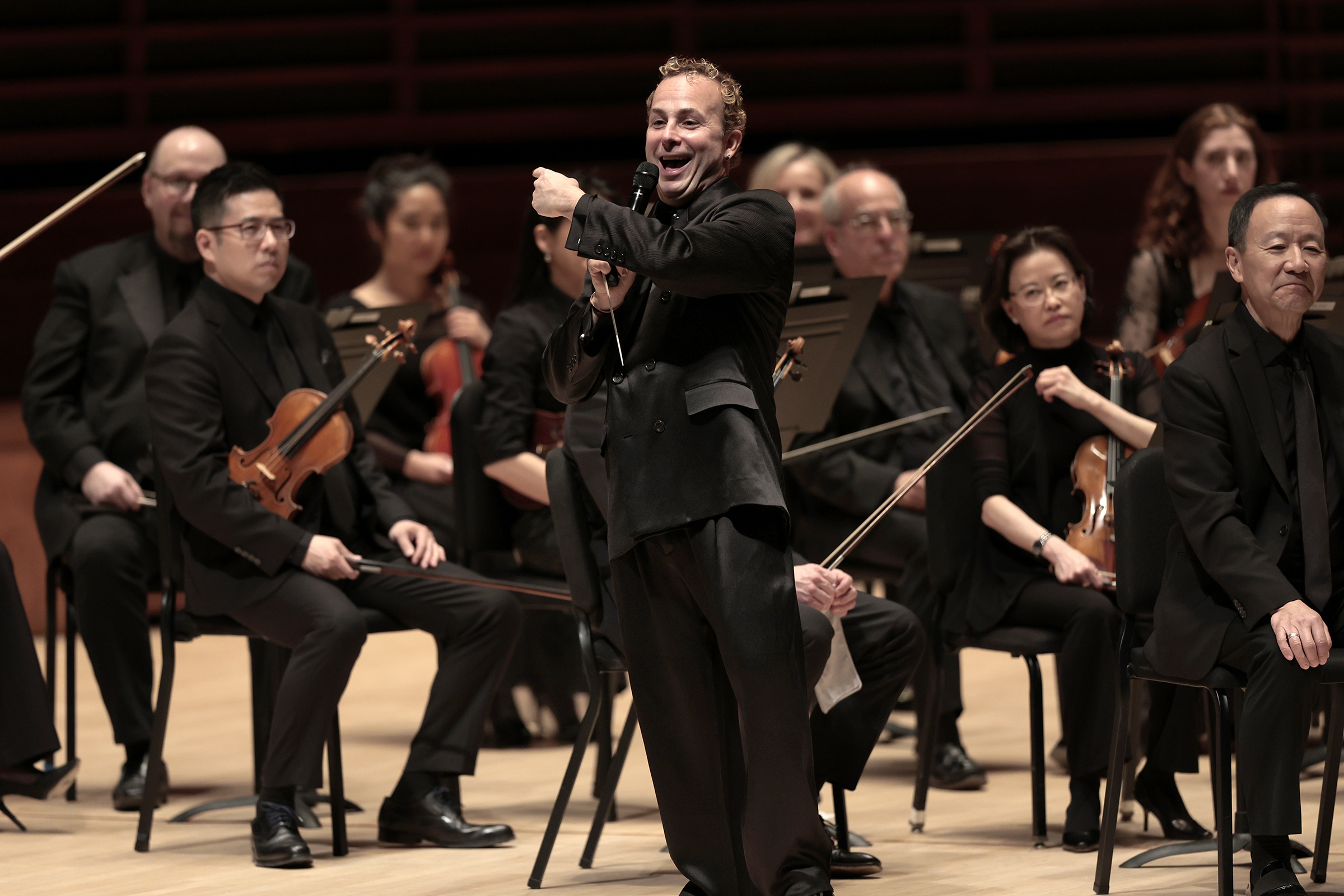
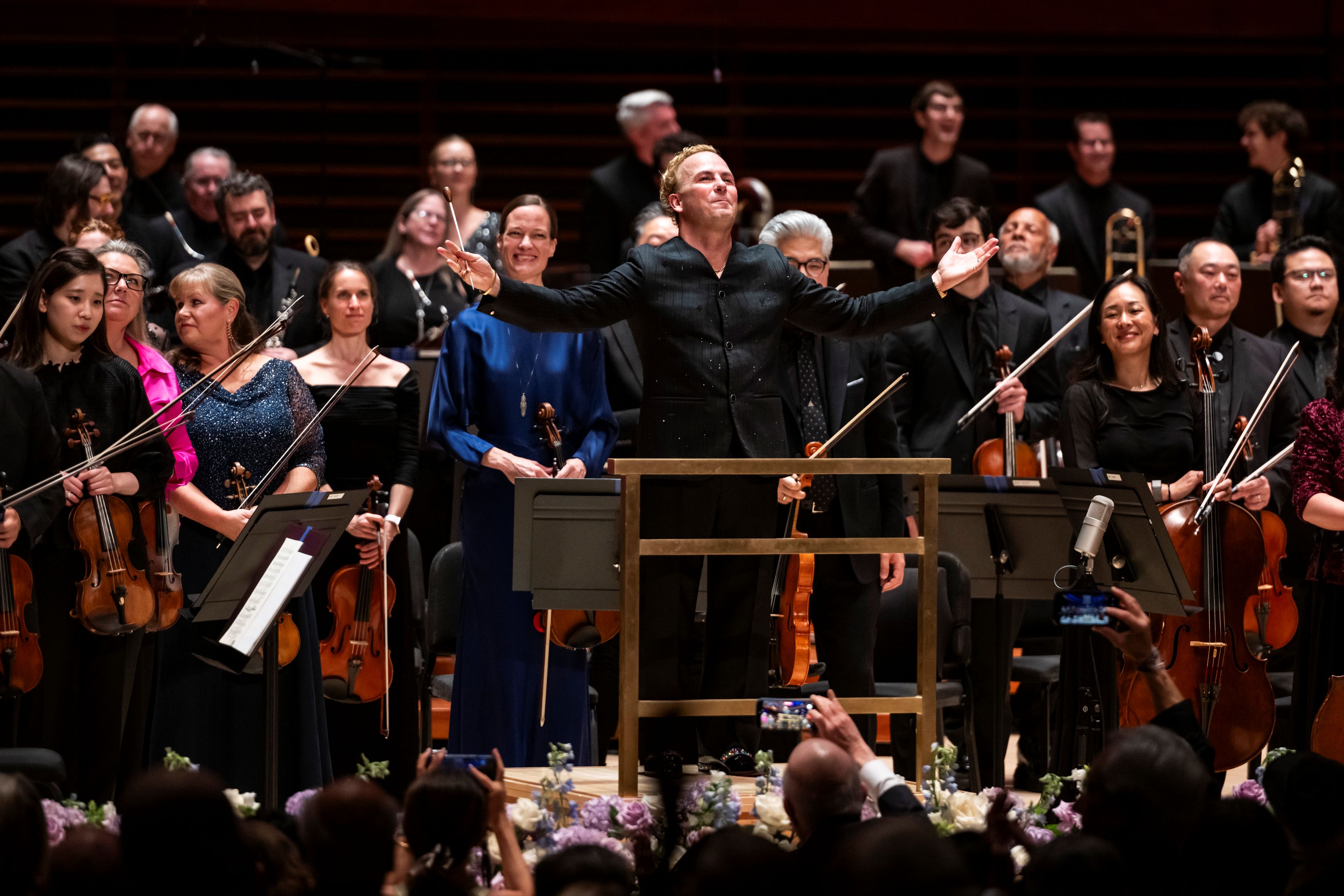
Philadelphia Orchestra conductor Yannick Nézet-Séguin in Marian Anderson Hall in April.Elizabeth Robertson / Staff Photographer
Bach’s ‘Christmas Oratorio’ with the Philadelphia Orchestra
Dec. 12 and 13, Marian Anderson Hall
Bach’s packaging of six cantatas into one vast canvas encompassing the Christmas story offers an astonishing variety of orchestral combinations and colors, not to mention emotional realms. The Philadelphia Orchestra, which has never before performed the work in its entirety, is led here by its music and artistic director, Yannick Nézet-Séguin.
The program, by the way, is in addition to (and not instead of) the orchestra’s traditional Messiah, which will be performed Dec. 4 and 5 with conductor Bernard Labadie. philorch.ensembleartsphilly.org, 215-893-1999.
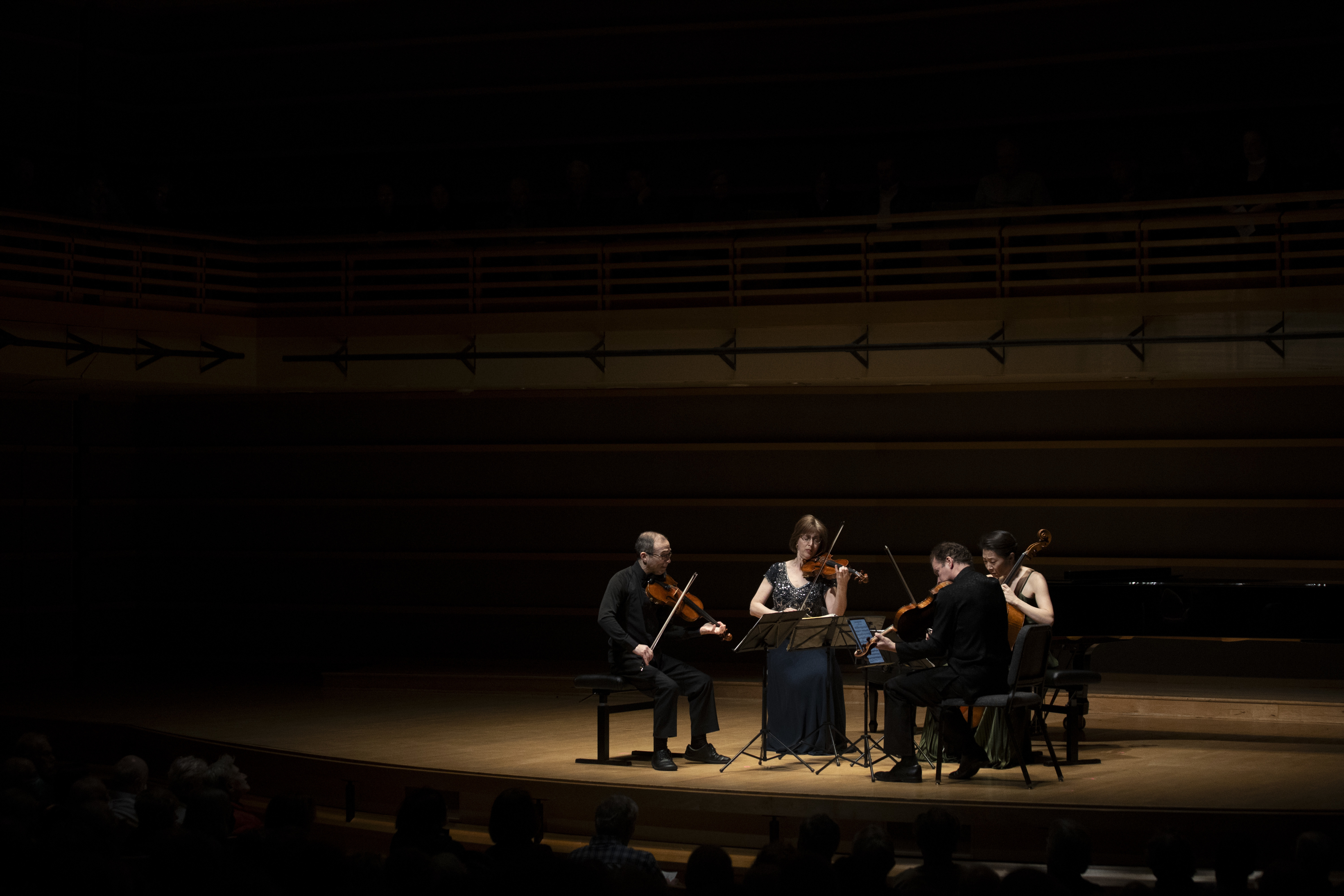
The Brentano Quartet at the Perelman Theater in 2024.Monica Herndon / Staff Photographer
Brentano Quartet
Dec. 13, Perelman Theater
The fugue in classical music is like the golden mean in nature or classical columns in architecture. Once you know it’s there, you start seeing it everywhere. Put simply, it is where a melodic theme is introduced and then repeated in another key while the first one continues. It’s more complicated than this, but basically it’s an almost mathematical tool for creating a dense overlap of competing (though complementary) voices.
Is there a greater meaning to the fugue — say, a philosophical one? The Brentano Quartet, in residence at Yale University, explores that question in works of Beethoven, Shostakovich, and, of course, the fugue’s unsurpassed innovator, Bach. pcmsconcerts.org, 215-569-8080.
David Hayes, music director of the Chamber Orchestra of Philadelphia.Alejandro A. Alvarez / Staff Photographer
Chamber Orchestra of Philadelphia, Bach Brandenburg Concerti
Dec. 19 and 20, Bryn Mawr College’s Goodhart Hall and Philadelphia Film Society Center
Philadelphia’s long-running chamber orchestra has adopted a format of concerts running more or less an hourlong in venues around town. That includes this holiday-time one with Bach’s Brandenburg Concerto Nos. 1, 3, and 4. They are joined by Christopher Theofanidis’s Muse, which was inspired by the third Brandenburg concerto. David Hayes conducts. chamberorchestra.org, 215-545-1739.
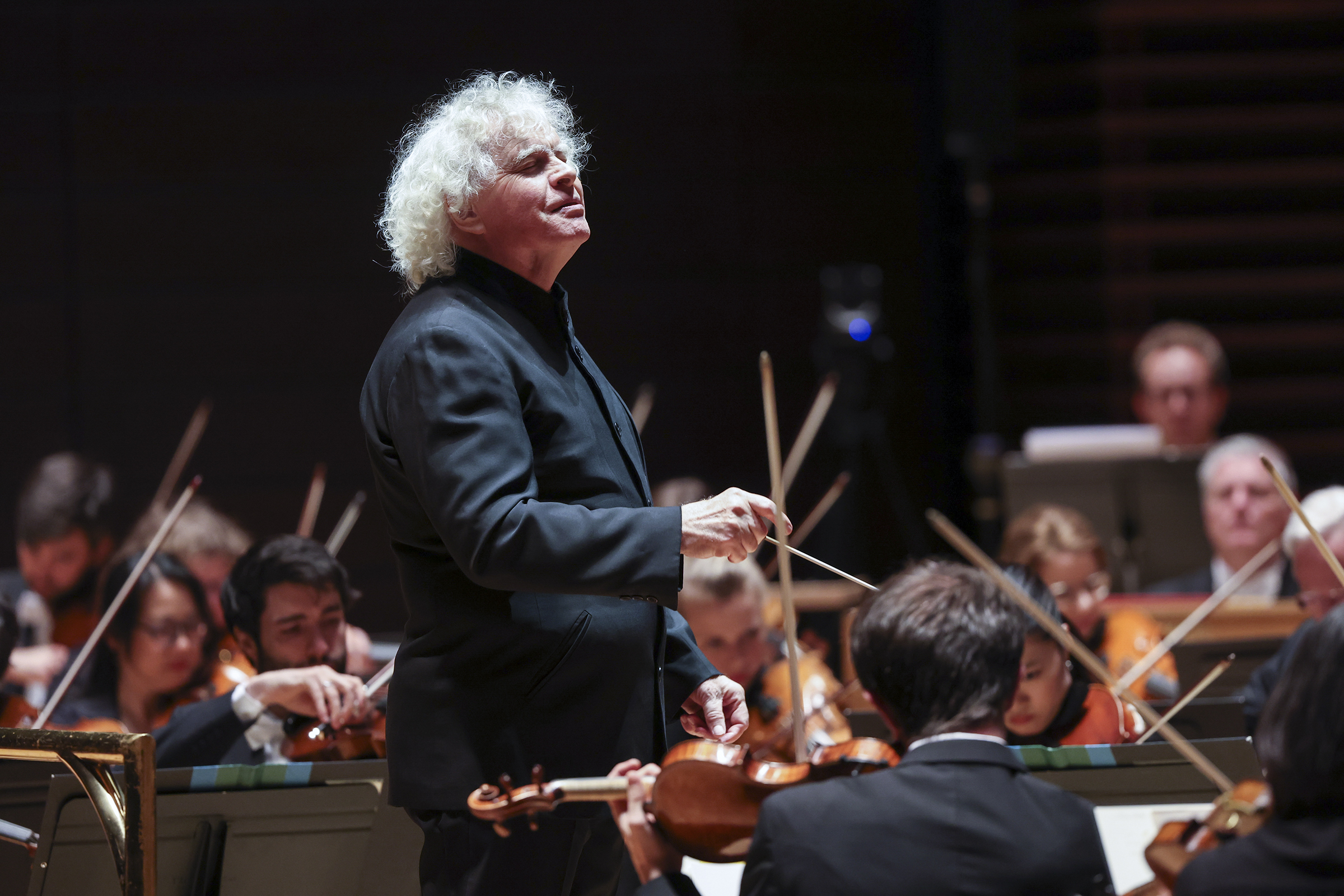
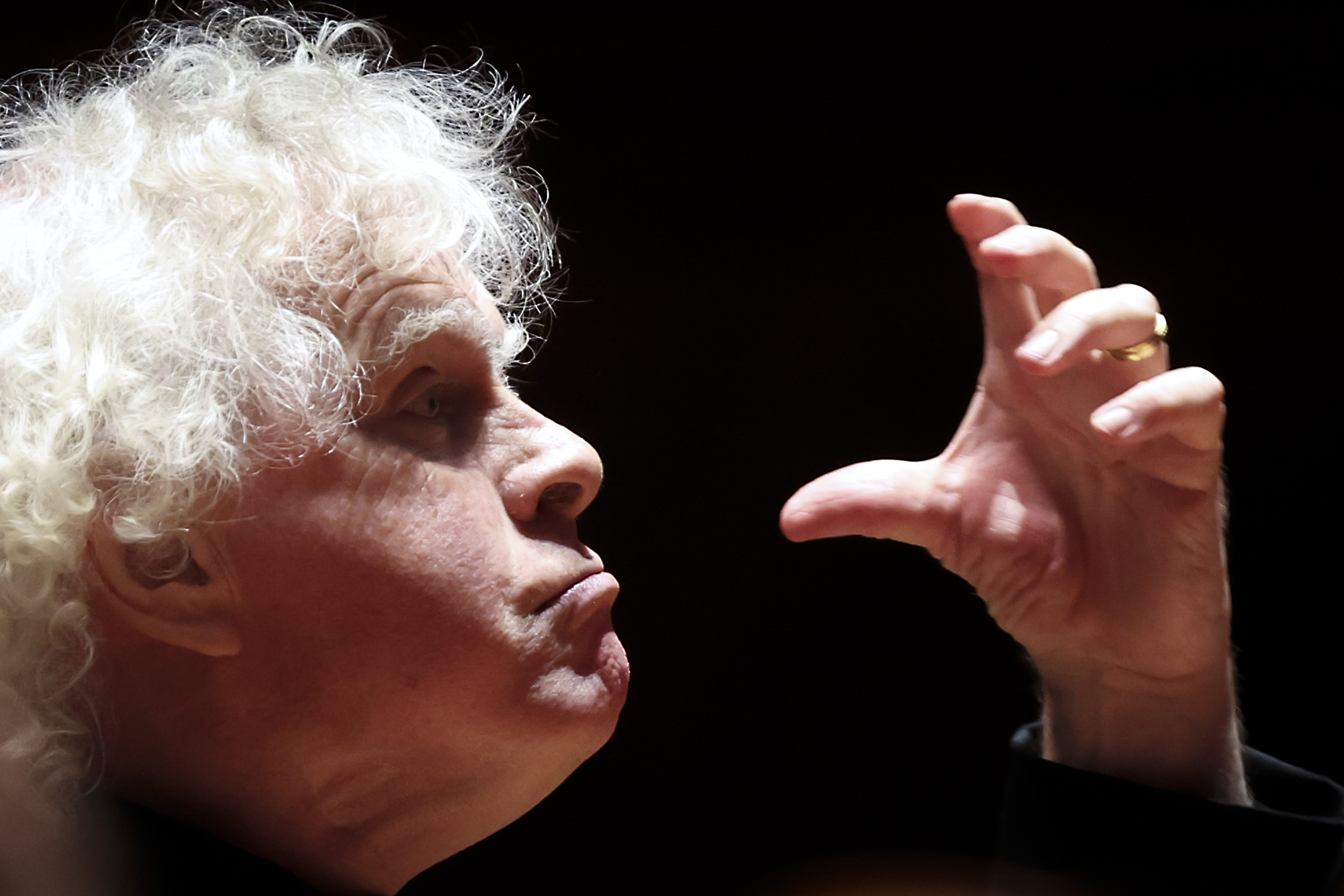
Simon Rattle conducting the Bavarian Radio Symphony Orchestra at the Kimmel Center in 2024.Heather Khalifa / Staff Photographer
Simon Rattle and the Philadelphia Orchestra
Jan. 28, 29, and 30, Marian Anderson Hall; Feb. 2 at Carnegie Hall
Even if he didn’t end up being music director, Rattle still visits the Philadelphia Orchestra’s podium from time to time. His current absence from the orchestra has been a painfully long one — a decade — and he returns with a program of works that seems bound by nothing other than their potential for virtuosity from the ensemble and interpretive depth from the podium: John Adams’ Harmonielehre, Debussy’s La Mer, and the second suite from Ravel’s Daphnis et Chloé. That works just fine for us. philorch.ensembleartsphilly.org, 215-893-1999.
The Gershwins’ ‘Let ‘Em Eat Cake’
Jan. 29, 30, and 31, the Academy of Music
Who knew this is where we’d end up as a country? George and Ira Gershwin did, in an opera with a book by George S. Kaufman and Morrie Ryskind. The piece depicts an election denier who renovates the White House and establishes a dictatorship. “You couldn’t write a better farce about what’s going on in the world than this,” said Costanzo, who is bringing the work from 1933 to Opera Philadelphia for the first time. Conducted by Corrado Rovaris and directed by Zack Winokur. operaphila.org, 215-732-8400.
Museums and galleries are spaces we enter expecting to find joy and beauty in art. Even when we leave overwhelmed with feelings, we know that we went in looking for that beautiful indescribable emotion. That joy is doubled when art comes at you from unexpected corners.
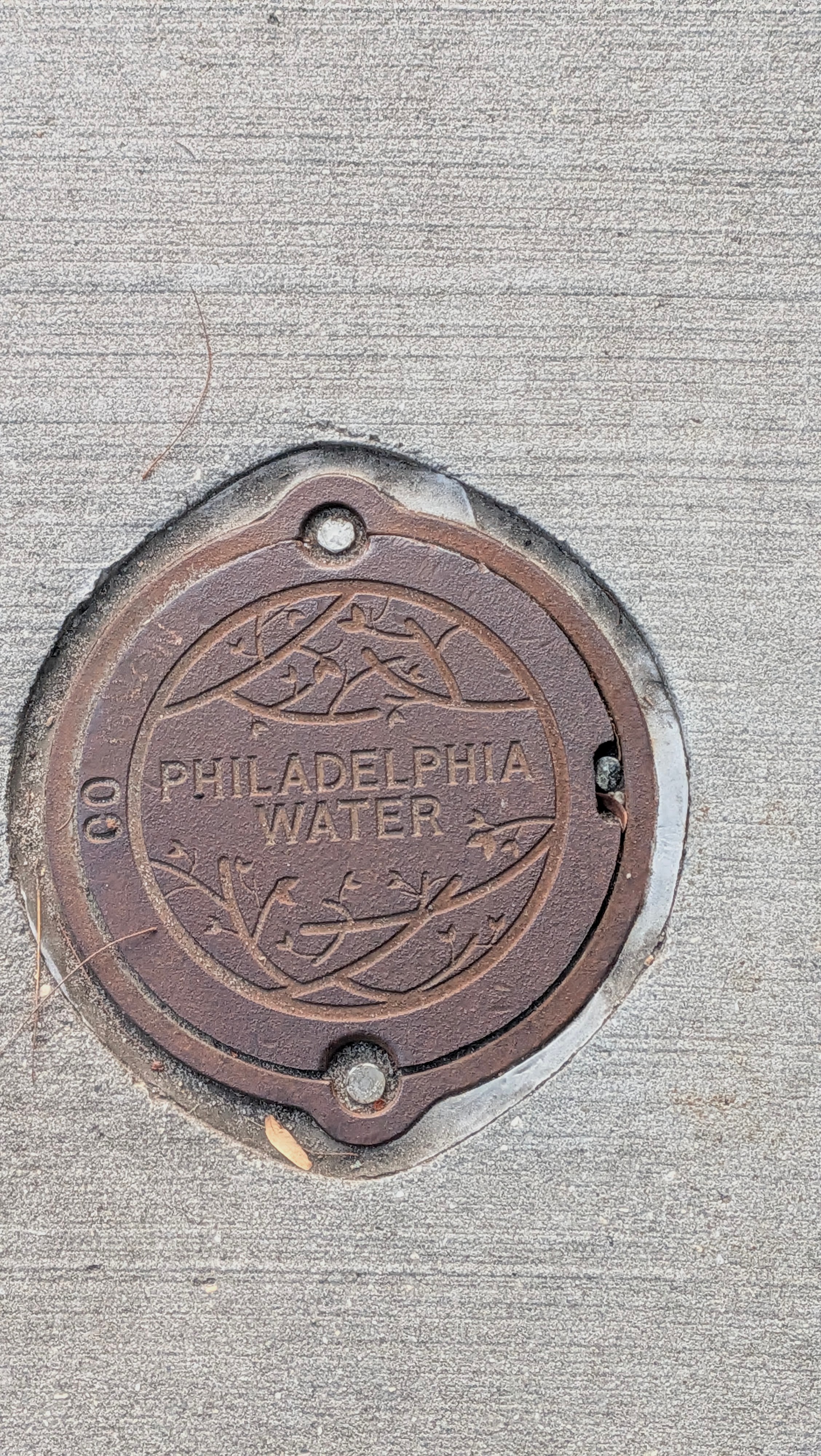
I was walking across the John F. Kennedy Boulevard Bridge one morning when my eyes fell on a manhole cover. A metal lid on the city’s unseen river of waste? Decidedly not art.
A Philadelphia Water Department metal manhole cover on the John F. Kennedy Boulevard Bridge, on Sept. 17 2026.Bedatri D. Choudhury
But imagine it’s early morning and the sun isn’t too strong yet, you’re walking to work with purpose and a head full of to-dos. You see the metal lid that conceals what you’re not supposed to see. The lid is stamped with a design of what looks like shoots of a plant with little leaves growing on them, and the words “Philadelphia Water” occupy the center in symmetrical typographic harmony.
It’s beautiful; its beauty enhanced by the fact that it didn’t have to be anything but a plain metal lid screwed to concrete. No one is supposed to stop and look at manhole covers in silence like framed art in a gallery but someone somewhere in the long line of civic workers at the Philadelphia Water Department decided to build something beautiful just in case someone on their way to work decided to stop and look. Someone came up with a design, someone forged a stamp, someone stamped the metal with it, and someone put that metal lid on the bridge I walk to work. There’s so much joy in discovering this silent gift. Thank you.
— Bedatri D. Choudhury
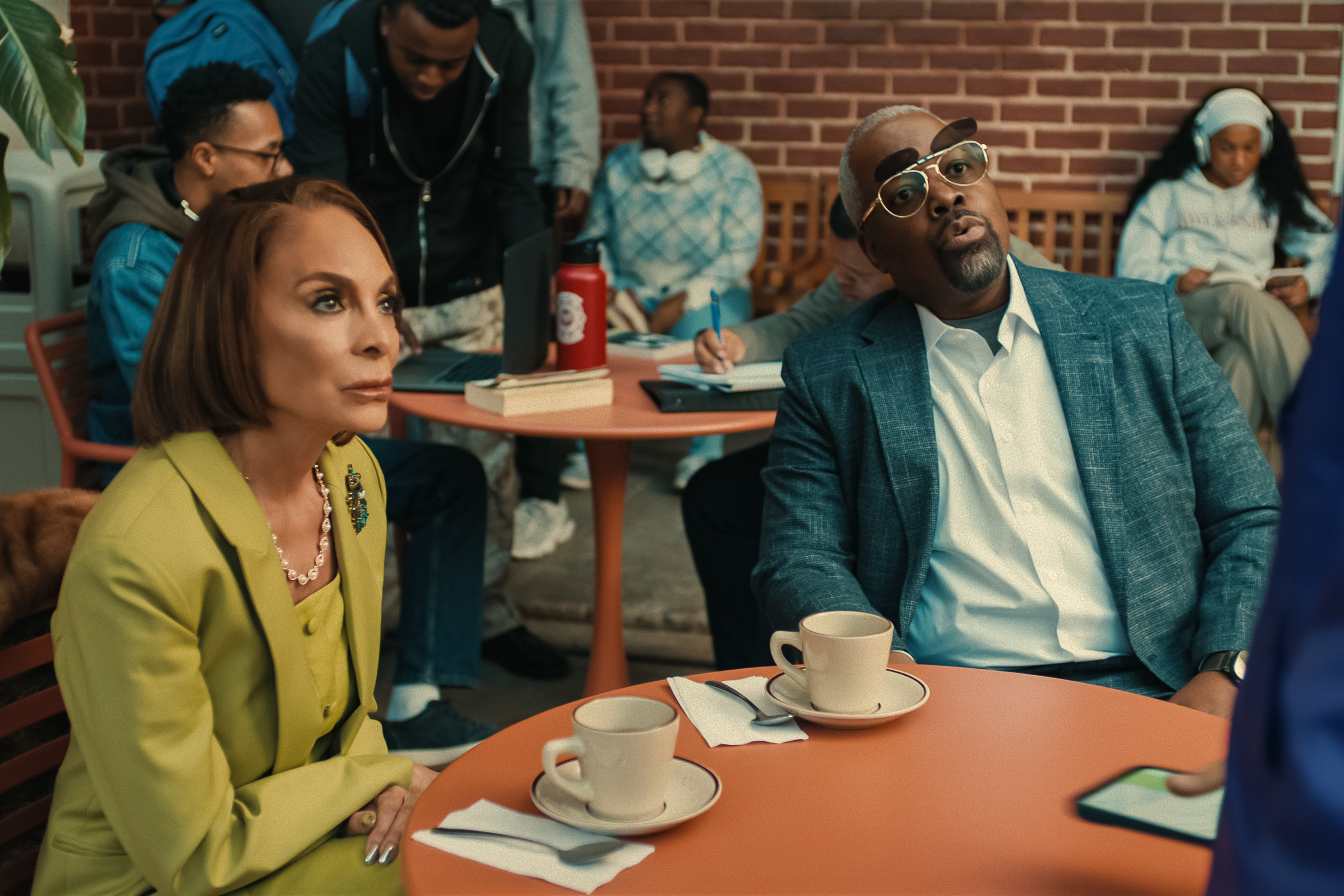
Jasmine Guy and Kadeem Hardison in a scene from “A Different World.” (Netflix via AP)Uncredited
Netflix’s ‘A Different World’ is everything I wanted ‘Bel-Air’ to be
For those of you who don’t remember, A Different World was NBC’s 1987 spinoff of North Philly’s own Bill Cosby’s The Cosby Show. It featured Cliff’s second daughter, Denise Huxtable (Lisa Bonet), as a freshman at her parents’ alma mater, the fictional historically Black university, Hillman College.
After one season, however, Denise was out, Whitley (Jasmine Guy) was the center, and viewers were glued to their seats every Thursday night following Dwayne (Kadeem Hardison) and Whitley’s budding romance. By the end of its six-season run, Dwayne and Whitley were married, and we assumed they lived happily ever after.
After almost 30 years, Netflix has revived A Different World millennial-style, and this week it’s back.
The 10-episode first season gives Philly-inspired Bel-Airvibes; it’s a serious take on a fun-and-games ’90s comedy. At first glance, the male lead, Shaquille Johnson (Cornell Young IV), looks a lot like Jabari Banks, the West Philadelphia-born actor who assumes Will Smith’s character on Peacock’s Bel-Air.
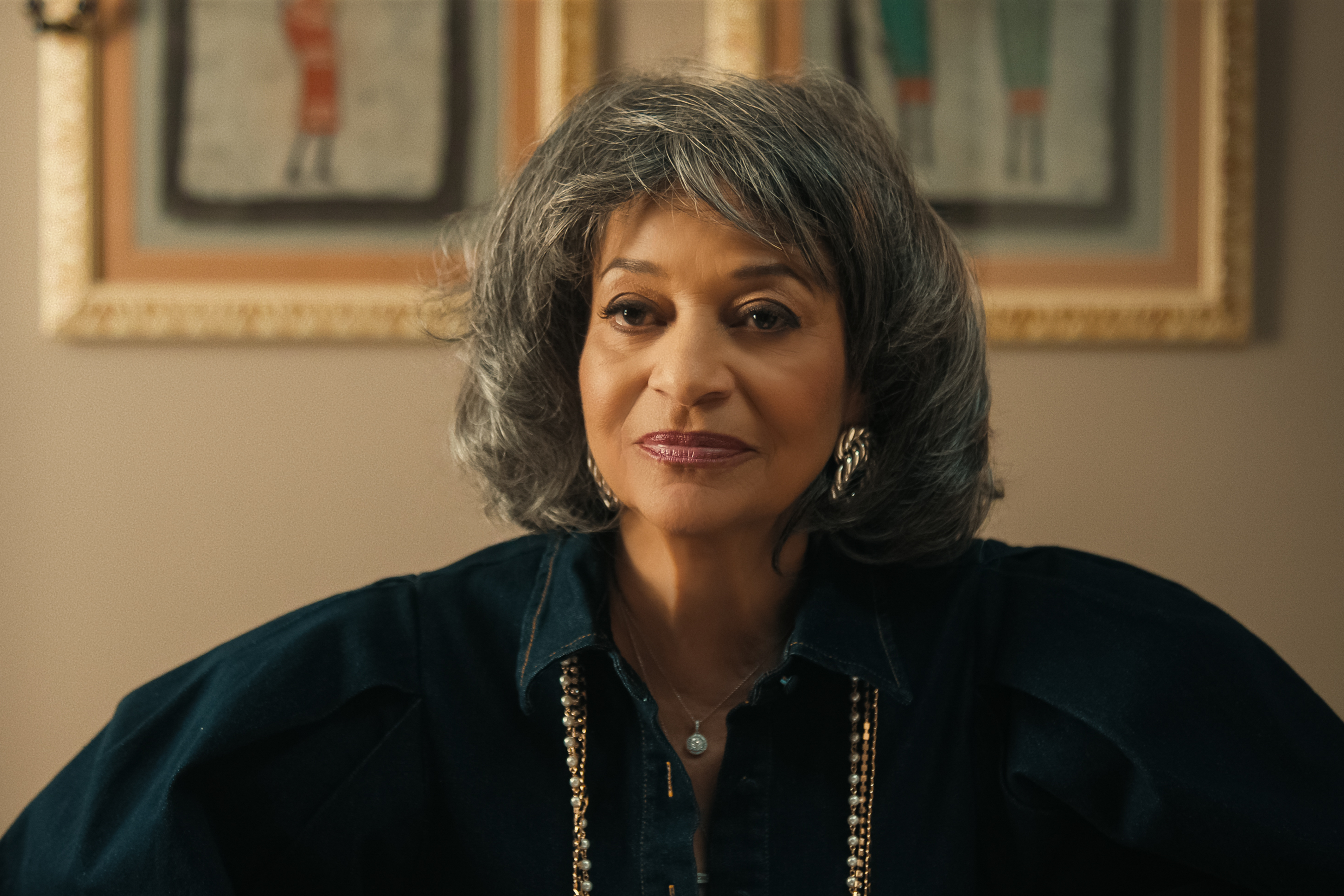
Debbie Allen in a scene from “A Different World.” (Netflix via AP)Uncredited
But that’s where the similarities end.
The updated version of A Different World is what I thought Bel-Air would be. It remains true to the original show’s characters: Whitley is still an entitled snob. Dwayne remains as thoughtful as he is brilliant. And Dwayne and Whitley’s daughter, Deborah (Maleah Joi Moon), is a delightful blend of her mom’s sense of bougieness and her dad’s altruism. It’s a stone-cold gas that her favorite accessory are flip glasses just like Dwayne Wayne. (It made me want to dig mine out)
Yet, the new A Different World is more than a nostalgic walk in the park. The first few episodes deal with 2020s issues like the current presidential administration’s attack on Black history, rampant mismanagement of funding by university administrators, and what it’s like for this generation of college students to engage with professors and each other after almost two years of COVID-19 lockdown.
Just like its 1980s predecessor, A Different World millennium-stylehas the same immediacy.
“A Different World” is now airing on Netflix.
— Elizabeth Wellington
Beethoven meets Joe Hisaishi, thanks to the Philadelphia Orchestra
At opening night of the Philadelphia Orchestra’s 2026-27 season in Marian Anderson Hall, performers take bows after Beethoven’s Symphony No. 9. From left, bass-baritone Ryan Speedo Green, tenor Issachah Savage, mezzo-soprano J’Nai Bridges, soprano Leah Hawkins, conductor Yannick Nézet-Séguin, and Philadelphia Symphonic Choir artistic director Joe Miller.Peter Dobrin
Yannick Nézet-Séguin opened the Philadelphia Orchestra’s 127th season Thursday night with a message at once broad and universal, and very local.
The piece was Beethoven’s Symphony No. 9, and the orchestra’s music and artistic director was no doubt referencing the state of the world when he spoke to the Marian Anderson Hall audience of the work’s shared humanity and how it reminds us that “there’s much more that unites us than what divides us.”
But “this is why,” he continued, “I want to finish by saying that it’s important for me and all of us to recognize all the musicians who have devoted their lives to the orchestra.”
No one said it explicitly at this gala fundraiser, but musicians and management of the orchestra recently agreed to remain united another three years. A new labor contract was ratified last week by players — “overwhelmingly,” a union official said — after six months of talks.
Nézet-Séguin not only praised orchestra members who have been “at the service of this incredible … treasured sound that’s unique in the world,” but an unusually large number of them populated tables in the Kimmel Center lobby for the dinner following the concert, where flowered tablescapes featured photographs of the players.
If the orchestra had wanted to extend the theme of unity, it might have programmed Valerie Coleman’s Umoja: Anthem of Unity, which the ensemble premiered in 2019 and has since championed. But Joe Hisaishi is the orchestra’s composer in residence, and his Orbis, a work whose sound straddles film and concert music, fit the moment.
The orchestra, too, now occupies both of these stylistic realms, making Hisaishi’s ethereal-to-brightly-stirring score — whose Latin text sung by the Philadelphia Symphonic Choir speaks of joy — emblematic of the season ahead.
The short work was written in 2007 as a companion piece to Beethoven’s symphony, which on Thursday featured the expert choir and four soloists who ranged from strong to stupendous: soprano Leah Hawkins, mezzo-soprano J’Nai Bridges, tenor Issachah Savage, and bass-baritone Ryan Speedo Green.
Gala concerts of this sort often feature a single big-name soloist. The spotlight here was on the Beethoven, this great undying statement of humanity, and it was a programming decision endorsed by an audience that responded to the conductor’s push of the tempo at the end with a spontaneous roar.
There was another notable singer in attendance — Kathleen Battle, not on stage, but in the audience. At 78, the soprano still has presence, and you couldn’t help but sense her place as a bridge in history, a link from the pioneering Black contralto for whom the hall is named to the four soloists on stage who represent the future of the art form.
— Peter Dobrin
The mural “Puerto Rican Statue of Liberty” in Fairmount, captured in March 2025.Bedatri D. Choudhury
Ladies of liberty and Boricua pride
Thousands of Philly Ricans will celebrate the annual Puerto Rican Day Parade on the Parkway this weekend in one of the loudest and proudest parties of the year spotlighting our city’s incredibly strong Boricua community. All year round, though, there are other places in Philly with quieter but no less exuberant representations of Puerto Rican history and culture that recently made me smile.
In Fairhill — where I was thrilled to see the indie band Chuwi from Isabela perform at Feria del Barrio a couple weeks ago — there’s a towering, brightly colored mural by Philadelphia artist Parris Stancell that’s a joy to see. There are two vejigante figures in striking red, green, and yellow masks, one with arms wide open like it’s about to embrace the viewer. (These characters typically appear in festivals with frightening, monstrous masks to scare away bad spirits.) Beautiful birds and symbols from Indigenous Taino tribes adorn the vibrant scene.
Also, picture the Statue of Liberty with a Puerto Rican flag hanging from her crown. If that sounds familiar, you may have seen a mural in Fairmount depicting Lady Liberty with the same flag. That painting offers a close-up look at the statue’s mournful, softly defiant face.
Both murals show a powerful symbol in the history of Puerto Rico’s independence movements: These ladies of liberty were not some artistic imagination but recreations of a protest from 1977, when a group of Puerto Rican nationalists occupied the Statue of Liberty and draped their flag across her forehead to demand independence for Puerto Rico.
According to Mural Arts, the Fairmount mural was first made by an anonymous graffiti artist in the early 1980s who wanted to honor that significant historical event, but the mural was later covered up, only to be recreated after Philly Ricans petitioned the mayor to replace it.
These murals have me reflecting on the power of the diaspora in Philadelphia and beyond as Puerto Ricans on the archipelago are struggling through a devastating water crisis. That Statue of Liberty takeover happened nearly 50 years ago to criticize the government for treating Puerto Ricans as second-class citizens. Today, during Latino Heritage Month, when many Latin American nations ring in anniversaries of their independence days, Puerto Rico remains in colonial limbo. And Philly Ricans won’t let anyone forget it.
— Rosa Cartagena
Writer and performer Chris Davis in “The 40-Year-Old Ballerino” as part of the 2026 Philadelphia Fringe Festival. Ashley Smith / Wide Eye Studios
Finding balance at Fringe
Chris Davis is still learning to let go of the barre. A literal ballet barre, from his years of late-in-life dance training. But the barre also represents the vices of his past — drugs; alcohol; unrealistic romantic expectations, thanks to too much exposure to ‘90s media; a codependent relationship.
And, he might admit, maybe they’re not all left in the past.
Dressed in a white tank top, tights, and slippers, Davis stretches and speaks to the Fringe Festival audience with nothing beside him onstage, except the barre and a boom box, which he occasionally holds above his head à la Say Anything.
The sparse set and sub-hour runtime are effective in centering Davis’ emotional journey from the guy who takes up ballet because of a ballerina ex, to the guy who keeps up with ballet (five to six days a week!) because it is what’s filling the existential void. There are more toxic ways to start over.