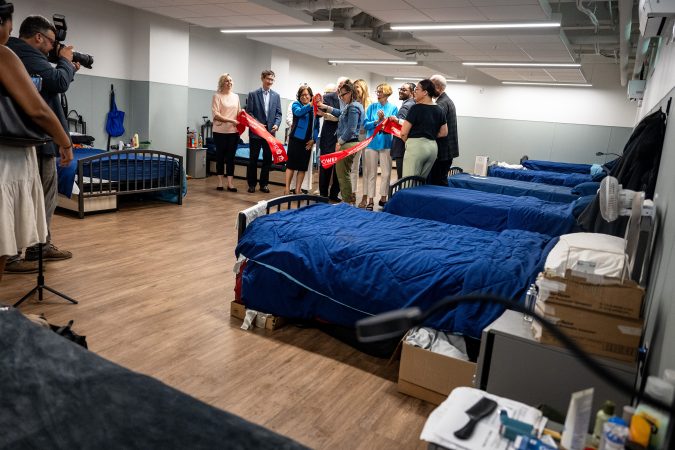
Project HOME is adding 20 beds to a Hunting Park shelter to house hospital patients who have nowhere to go once they’re discharged.
The new center, Hawthorne House Respite, expands the respite beds available at the housing nonprofit’s Sacred Heart Recovery Residence on Old York Road.
Renovations to the building, a former nursing home for cancer patients run by Dominican nuns, added 20 beds in dormitory-style housing — 10 for men, 10 for women — and cost $3.4 million. Funds came in part from $2.3 million raised at the behest of Jon Bon Jovi, a longtime Project HOME collaborator, at the organization’s 35th anniversary gala in 2024.
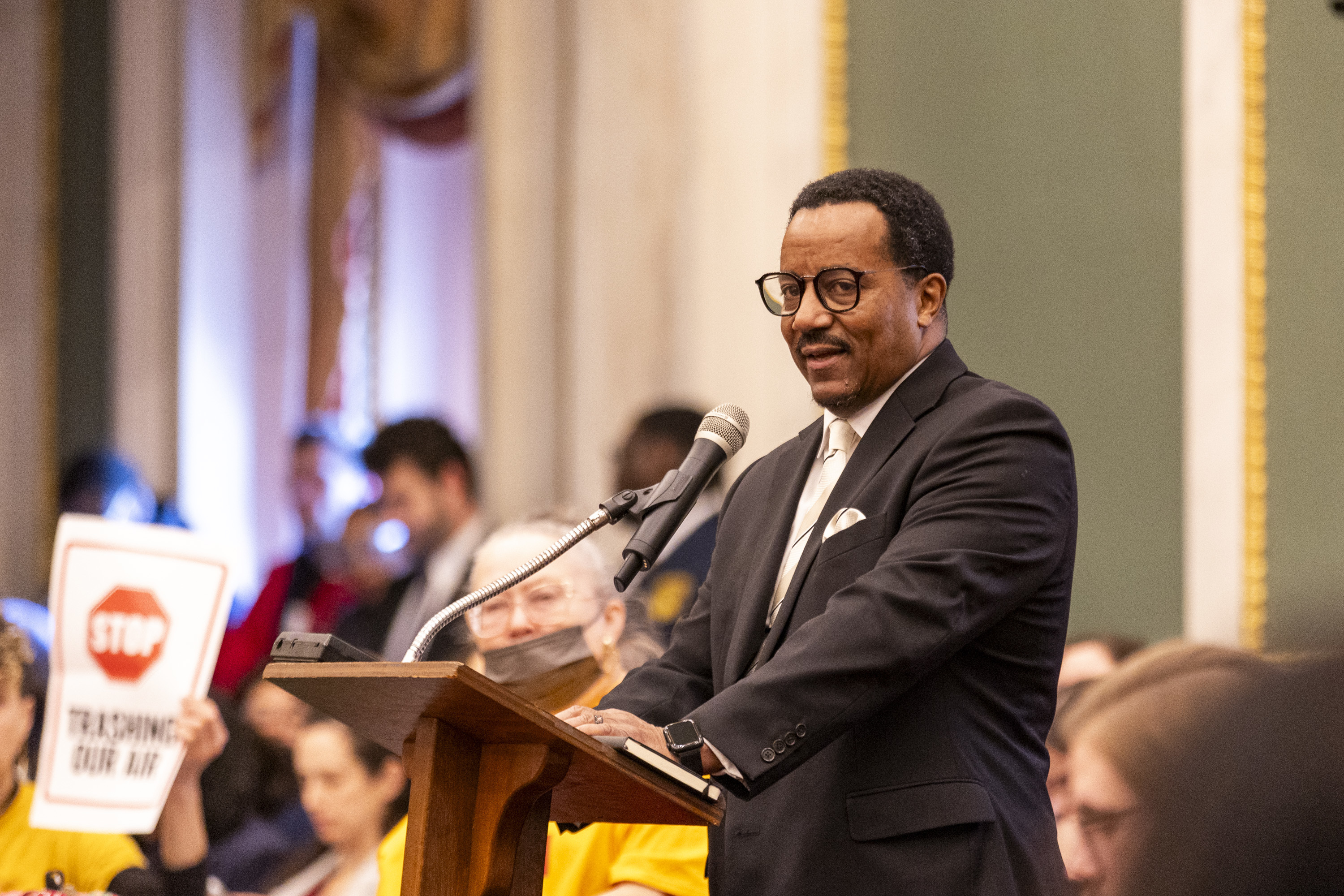
“We can’t stress enough how much housing is healthcare, and that respite beds at every level is so important as part of the ecosystem,” said Donna Bullock, Project HOME’s CEO, after a ribbon-cutting ceremony for the new beds Wednesday.
“People need different levels of care for healing, different levels of housing for stability.”
Sacred Heart, which also offers longer-term housing for people in recovery, already had 10 respite beds for residents.
Now, providers can refer more patients directly from the hospital to Sacred Heart. The program is part of the Project HOME Collaborative, a partnership to address homelessness and substance use recovery with Jefferson Health, Penn Medicine, Temple Health, and Prevention Point.
Project HOME officials say respite beds are in high demand and short supply across Philadelphia. Another respite program run by the Public Health Management Corporation in northwest Philadelphia offers 40 beds for patients with higher-level medical needs.
“It’s not enough,” Bullock said.
Gaps in the healthcare, shelter, and addiction treatment systems often make it difficult for homeless patients to heal after a hospital stay.
Inpatient addiction rehabs and shelters often do not have the capacity to care for patients with ongoing medical needs, while hospitals cannot sustain long-term care for patients who have recovered enough to be discharged.
“We know that recovery doesn’t stop when we discharge you and send you out into the community. Too often, individuals who are homeless face impossible challenges after they are discharged,” said Steve Carson, Temple Health’s senior vice president of population health.
Patients placed in respite beds say such programs are crucial to their recovery and continued stability. Amber Moon arrived at Sacred Heart two years ago after she developed endocarditis from injection drug use, resulting in two heart surgeries.
After months in the hospital, she was well enough to leave — but still needed support to heal. At Sacred Heart, staff arranged rides to doctors’ appointments and helped her navigate new medication regimens. Moon relished the opportunity to continue her recovery outside of a hospital room, surrounded by other residents who’d survived similar experiences.
“I was happy that I was around other people — not just the girls that I was staying with, but staff that understood what I was going through,” she said. “They treat you with humanity, like a regular person.”
Now a certified recovery specialist who helps other people with addiction navigate treatment, Moon is set to move into her own apartment soon.
“I‘m very grateful to have met all the people I’ve met, and been through what I’ve been through, because now I’m able to help others who think that there’s no chance,” she said. “There always is.”
Nurses at Virtua Mount Holly Hospital have voted in favor of a new contract ensuring raises and safety enhancements under a deal reached with employers at the South Jersey hospital after their union threatened to strike last week.
Under the contract approved Friday, the hospital will enforce minimum staffing ratios to ensure a certain number of nurses are caring for a given patient at all times, and hire new staff in some areas.
Nurses will receive pay raises at an average of 16.5% through June 2028.
The three-yearcontract also includes provisions for new safety measures at the hospital, including panic buttons and wearable devices for staff, and increased visitor screening for weapons, the union said. The hospital will also implement a visitor ID system. Protocols will be improved to notify nurses when they have been exposed to an infectious disease.
“HPAE nurses are not willing to tolerate the status quo anymore so we are proud that we have won strong language to ensure nurses can care for their patients the way they were trained,” HPAE president Debbie White said in a statement.
The contract ratification comes after Mount Holly nurses, a local chapter of the Health Professionals and Allied Employees union, voted earlier this month to strike on June 16 if they could not come to an agreement with Virtua officials.
Both sides had been negotiating for two months, including in a 21-hour session the night before the strike vote. More than 700 unionized nurses work at the Burlington County hospital.
Staffing levels, a concern raised by nursing unions across the country, were a particular sticking point in bargaining. Many nurses say that the number of nurses assigned to care for a given patient is a safety issue.
Nurses last week said the strike vote — in which 92% of nurses threatened to walk off the job — helped the union reached a tentative contract agreement with Virtua.
In a statement Monday, Chrisie Scott, senior vice president and chief marketing officer, said the three-year contract “will enable Virtua Mount Holly to continue delivering safe, high-quality care for our patients, while providing wage increases, enhanced safety measures, and updated staffing levels for our nurses.”
“We look forward to moving ahead together,” she said.
Measles was detected in wastewater samples taken in Delaware County on two days last week, local health officials said Wednesday.
This means someone infected with measles used a bathroom connected to the county’s public water supply, although no one in the county has been officially diagnosed with measles, said Lora Siegmann Werner, director of the county’s health department.
Detecting the highly contagious disease in wastewater can serve as a reminder for parents to vaccinate their children, and for health providers to be on the lookout for people experiencing measles symptoms.
“We’re not trying to scare people, but we thought it was a good opportunity to raise awareness,” she said.
The treatment plant where measles was detected in samples on June 9 and June 11, DELCORA Western Regional Treatment Plant in Chester, serves about 500,000 people in Delaware and Chester Counties.
Health officials were able to determine the positive samples came from Delaware County, Siegmann Werner said. But it was impossible to tell whether that person was passing through the county or lives there.
As of Wednesday, state health officials had identified 55 cases in that outbreak, with 32 in Lancaster County. Physicians there have said they fear more cases are circulating in the community among people who avoiding seeking medical care or notifying the state health department.
“We’ve been tracking the outbreaks that occur, knowing it’s likely a matter of time before we have our own cases,” Siegmann Werner said.
The county is engaging in planning exercises and reaching out to healthcare providers to prepare for potential cases in the area.
Measles spreads through the air, lingering in a room for up to two hours after an infected person has left it. About nine in 10 unvaccinated people who come into contact with the virus will contract it themselves.
Two doses of the measles, mumps, and rubella vaccine are 97% effective against the disease.
The virus’ early symptoms include a fever, cough, runny nose, red and puffy eyes, and a rash. In serious cases, measles can lead to pneumonia, brain infections, and death.
There is no evidence it is spread through contact with untreated wastewater, Delaware County health officials said.
Without a confirmed measles case in Delaware County, Siegmann Werner said, the detection of measles in its wastewater will not trigger an investigation into its origin.
“It’s really limited to saying there was someone who was ill” who either passed through the county or lives there, she said. “Please be vigilant and get vaccinated.”
In late April, Joshua Good got a call from a parent at Ephrata Mennonite School: Two of their children had been diagnosed with measles.
Good, who heads the private religious school in Lancaster County, knew he had to act quickly to prevent further spread of the highly contagious disease. But he was not particularly surprised that measles had turned up at his school.
Ephrata Mennonite, a K-12 school with 375 students, is among the most under-vaccinated schools in the state. Less than half its 27 kindergarten students last school year were immune to measles, which can infect nine in 10 unvaccinated people.
Good, who vaccinated his own children, had watched over the last 10 years as more and more parents in his school and church communities had opted out. He knew firsthand how difficult it had become to change minds.
He contacted a local school districtnurse who works closely with Ephrata Mennonite, and then got “right away on a conference call with the state Department of Health.”
In neighboring Lebanon County, three people had arrived at a hospital days earlier with the highly contagious disease. State contact tracers quickly found eight more cases in the county.
Now the outbreak had come to Lancaster.
By this Friday, 53 measles cases had been detected in four counties in Southeastern and Central Pennsylvania, the state’s biggest outbreak in more than 30 years.
Lancaster, which has some of the lowest kindergarten vaccination rates in the state, has been a hot spot all year, with 39 of the 65 total measles cases reported in the state.
And healthcare providers there now worry that measles is circulating far more widely than anyone realizes in a county that, like most in the state, lacks a public health department, and where anti-vaccination sentiment runs high.
Good provided information to help state heath officials trace classmates exposed to the infected students in an effort to contain the spread.
The two students at Ephrata Mennonite have recovered, Good said, and there were no more cases at the school. He feels lucky: One of the infected students had never been at the school while contagious, and the school’s classes end around Memorial Day, so the virus no longer has a chance to spread there.
He welcomed a pop-up vaccination clinic on campus, but even measles cases so close to home were not enough to convince many parents who had not previously accepted shots to immunize their children.
“The measles continues to go around here in the Lancaster-Lebanon area,” he said. “Will that move things at all? I’m not sure.”
Pennsylvania’s first measles scare this year came in February, when eight people contracted measles in Lancaster County in an outbreak that expanded to neighboring Chester and Montgomery Counties, suburbs of Philadelphia. Twelve cases were ultimately reported, the bulk in Lancaster.
Yet few people were aware of the threat at Lancaster’s bustling flea markets and “mud sales” in late February. While area libraries posted signs warning of a measles outbreak, some parents said they believed the risks of vaccination are worse than the prospect of catching measles.
The Green Dragon Market in Ephrata bustles with activity in early spring. The area, in the north of Lancaster County, has seen several measles cases this year.Bob Williams / For The Inquirer
One Amish father, who had never been vaccinated himself, said his 23-year-old son got immunized only because he was born prematurely.
“God will send you what you want anyway,” said the man, who declined to share his name because he was speaking about private medical details.
Only 88.5% of the county’s kindergartners were immune to measles in 2024, the last year for which data are available — well below the 95% threshold scientists consider necessary to protect a community.
Several Lancaster parentssaid they’d vaccinated their older children and then had opted against immunizations for their younger children. Others said they’d always considered vaccination the best way to protect their children.
Lancaster’s Amish communities have presented a unique concern for health providers, who have long sought to increase their access to vaccination.
In 1991, these communities were at the center of an outbreak of rubella — a virus sometimes called “German measles” that produces a similar rash and fever to measles, and can cause severe birth defects in pregnant women. Today’s measles vaccines provide protection against rubella, too.
Lancaster General Hospital physicians vaccinated hundreds to stop the outbreak, launching the Child Protect Clinic, which provides free vaccines to uninsured children and builds trust in communities that have difficulty accessing medical care.
These days, about 70% of patients at the Child Protect Clinic are from Plain communities, Christian groups like the Amish and some Mennonite sects that adhere to modest dress codes and in some cases avoid modern conveniences.
Some members of Plain communities oppose vaccination, but opinions can vary widely, and the current outbreak is not centered in Amish households, said Pia Fenimore, Lancaster General Hospital’s vice chair of pediatrics.
Anti-vaccination sentiment has spread broadly across Lancaster — and is not confined to Plain communities — in recent years.
At Ephrata Mennonite, Good said, opposition to vaccination has become entrenched in a “significant portion of parents,” with concerns ranging from how vaccines are developed to their safety to resentment over the handling of the immunizations and public restrictions during the COVID-19 pandemic.
“And then you throw in messaging from key health people like RFK Jr.,” he said, referring to Robert F. Kennedy, Jr., the anti-vaccine activist at the head of the country’s public health apparatus.
Higher vaccination rates at Ephrata Mennonite among seventh and 12th graders speak to how “there’s been a big shift in the last 10 years,” Good said.
Good believes that vaccination is a parent’s choice, and supports Pennsylvania’s relatively lax vaccination exemption rules. Parents here can opt out of vaccinating children for religious, personal, or medical reasons.
He vaccinated his own children and recalls how when they were young, he would often try to convince others in his community to do the same.
“I would get into protracted conversations, trying to persuade people. But the amount of success that I’ve had in that has been pretty low,” Good said.
“When someone asks me for my opinion, I’ll provide it to them.”
Tracking cases
As Pennsylvania’s worst measles outbreak in three decades spreads in Lancaster County, Alice Yoder said she remains unable to convince her fellow county commissioners to post details on the county’s website informing residents of the spiraling case counts and urging vaccination.
The only Democratic county commissioner in Lancaster and a former nurse and executive at Lancaster General, she feels certain the county needs to do more to address the outbreak.
The county’s health advisory website is so outdated that it advertises an April 2025 meeting, ironically on measles preparedness, beside a fact sheet that merely mentions vaccination as a “highly effective” prevention measure instead of the best defense against the disease.
“If it wasn’t for our local newspaper, I don’t know how many people would be aware,” Yoder said.
So far, Lancaster has reported 31 cases in the current outbreak.
Twice in the last month, potential exposures in public places prompted state health officials to issue news releases. At a Kohl’s in Lancaster in late May, shoppers were potentially exposed to measles, which can linger in the air for up to two hours, over four days after an employee tested positive.
Neighboring Lebanon County, where vaccination rates for kindergartners are around 93%, has seen 19 cases. Berks and Dauphin Counties have reported three cases between them.
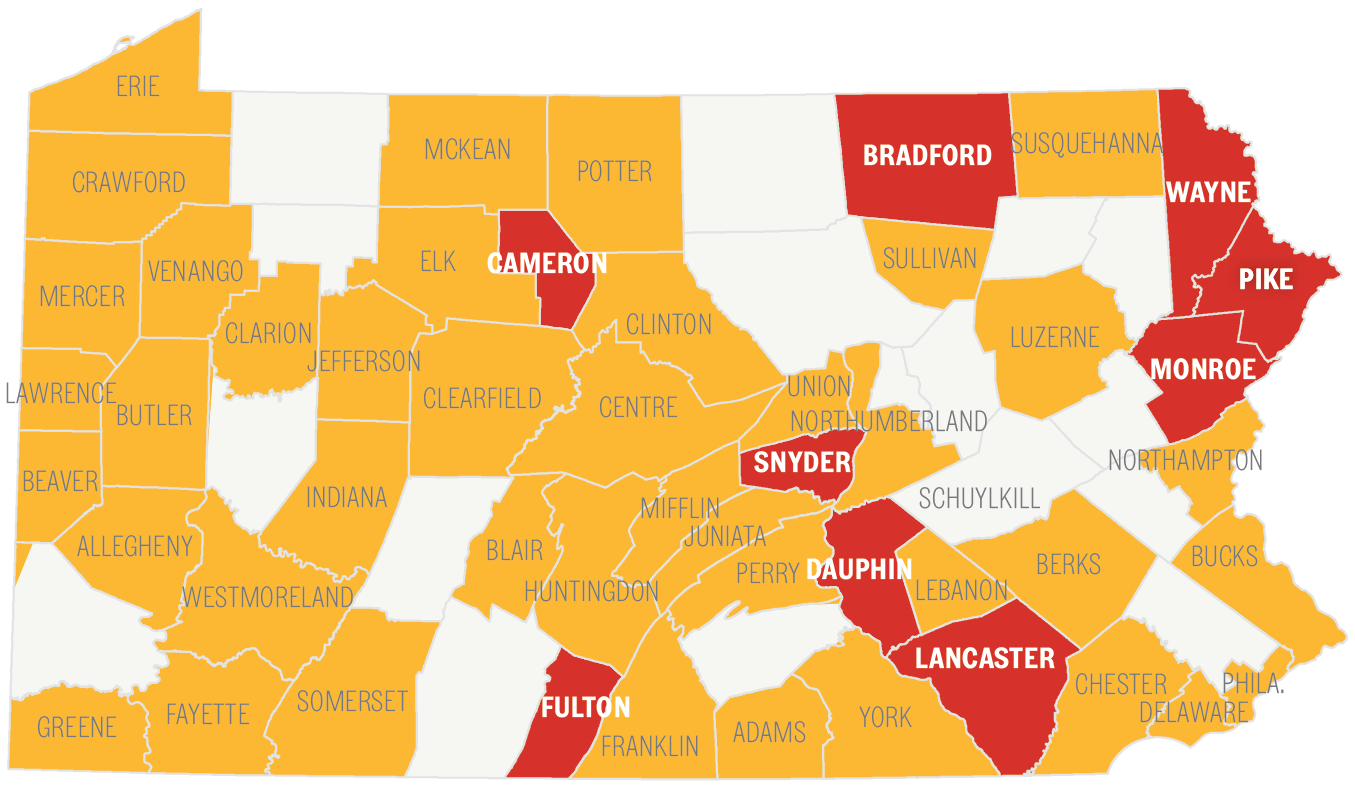
A map showing vaccination rates in kindergarteners for the 2024-2025 school year. Counties in yellow have vaccination rates between 95% and 90%. Counties in red have vaccination rates below 90%. To halt the spread of measles, at least 95% of a given community must be vaccinated against the disease.John Duchneskie
Last week, state health officials reported that they’d confirmed 20 cases. That alone surpassed the total of 16 cases statewide from all of last year.
The rapid case jump, coupled with Lancaster’s low vaccination rates, concerns Remy Pasco, a research associate at the University of Colorado who helped develop a measles outbreak simulator based on school vaccination rates.
Without more information on when and where patients developed symptoms, he said gauging future case patterns is difficult. Only three patients were still contagious as of Wednesday, according to the state.
Measles can incubate in patients for up to 21 days; more active infections means more residents of the county are currently at risk.
Local physicians fear cases are going unreported, and say communication remains a challenge as the outbreak spreads in a county without a local health agency to lead the response.
“There may be many more cases in the community that don’t come to light because people aren’t getting tested,” said Jeff Martin, a physician who heads the family medicine department at Lancaster General.
In some cases, patients may not appreciate why it’s important for health officials to track the spread of the disease, which typically presents with a fever and a rash but can cause brain inflammation and pneumonia in serious cases.
Others may be afraid that if they report a measles case, “there will be some kind of repercussion,” said Fenimore, a hospital pediatrician.
Could a local health department help?
Yoder has spent years calling for a local health department that could update county residents regularly on health threats and educate about the importance of vaccination and other public health measures. But there is little political will to do so, she said.
Lancaster, like 60 of Pennsylvania’s 67 counties, has no local health department, which makes it difficult for Martin and Fenimore to get the full picture of what’s happening.
State officials, who are largely handling the response,say they’re working diligently to contain the outbreak, by conducting contact tracing and hosting vaccine clinics in hot spots that have drawn residents by the dozens.
Martin tracks cases that come through Lancaster General Hospital and its affiliated provider offices. Despite serving on the county health advisory council, Martin learns of cases elsewhere in the county “through the newspaper just like anyone else.”
Martin said that the health department should give physicians details on cases near them regardless of the health system they are detected in.
And, he said, while state health officials are responsive to local physicians and “doing a very good job” at conducting contact tracing, sometimes residents are more receptive to information that comes from their local physician, instead of a state official.
“From a state level, trying to do this in a local community is a little more difficult. We know the providers really well and the unique cultural variations within the community,” he said.
Department of Health press secretary Neil Ruhland said the state is in regular communication with local health systems, working directly with providers to provide “resources and guidance” when cases are detected in an area. The state operates its own health centers in Lancaster and Lebanon Counties, which have “strong ties to the communities they work in.”
State officials have hosted 12 vaccination clinics across the region as the outbreak has unfolded, and local providers routinely offer immunizations at doctor’s offices, fire departments, and state-run health clinics.
Yet no details about the circulating measles threat have reached State Rep. Russ Diamond, a Republican who represents Lebanon County, even as cases in the community where the outbreak began have risen to 19.
“If folks are worried about it,” he said, “then get your kid vaccinated. That’s your right.”
“I don’t know how the state should respond.”
Encouraging vaccination
Parents who have opted against vaccinating their children because of misinformation about vaccine safety have become a focus for local pediatricians trying to halt the outbreak.
The parents coming to Lancaster General often ask about the long-debunked theory that vaccinations cause autism, or ask whether measles is truly dangerous.
In March, two members of Lancaster County’s health advisory board — a nonbinding group that meets every other month — falsely suggested measles vaccines can be deadly and raised long-debunked concerns about measles and autism, according to local news reports.
Neither of Yoder’s two colleagues on the board of commissioners returned calls for comment on the county’s approach to the outbreak.
As physicians race to increase vaccination rates among children whose parents have avoided immunization, they’re also trying to reassure parents in Lancaster whose children are too young to be vaccinated and concerned about the growing risks from measles.
Typically, children receive two vaccines for measles, mumps, and rubella at 1 and 5 years old, but Fenimore increasingly recommends that young children receive an extra early dose at six months, especially if they’re going to spend time around unvaccinated people.
The state is also considering whether to recommend that physicians deliver this “zero dose” to babies as young as six months old in affected counties, said Ruhland, the health department spokesman.
Physicians in Lancaster say it’s key to take time to listen to parents, hear their concerns, and provide accurate information about vaccine safety. These efforts can take several visits.
“We know scare tactics don’t work. What does work is developing a rapport,” Fenimore said. “The fact that we have a current measles outbreak makes this more imperative.”
Inquirer staff writer Gillian McGoldrick contributed to this article.
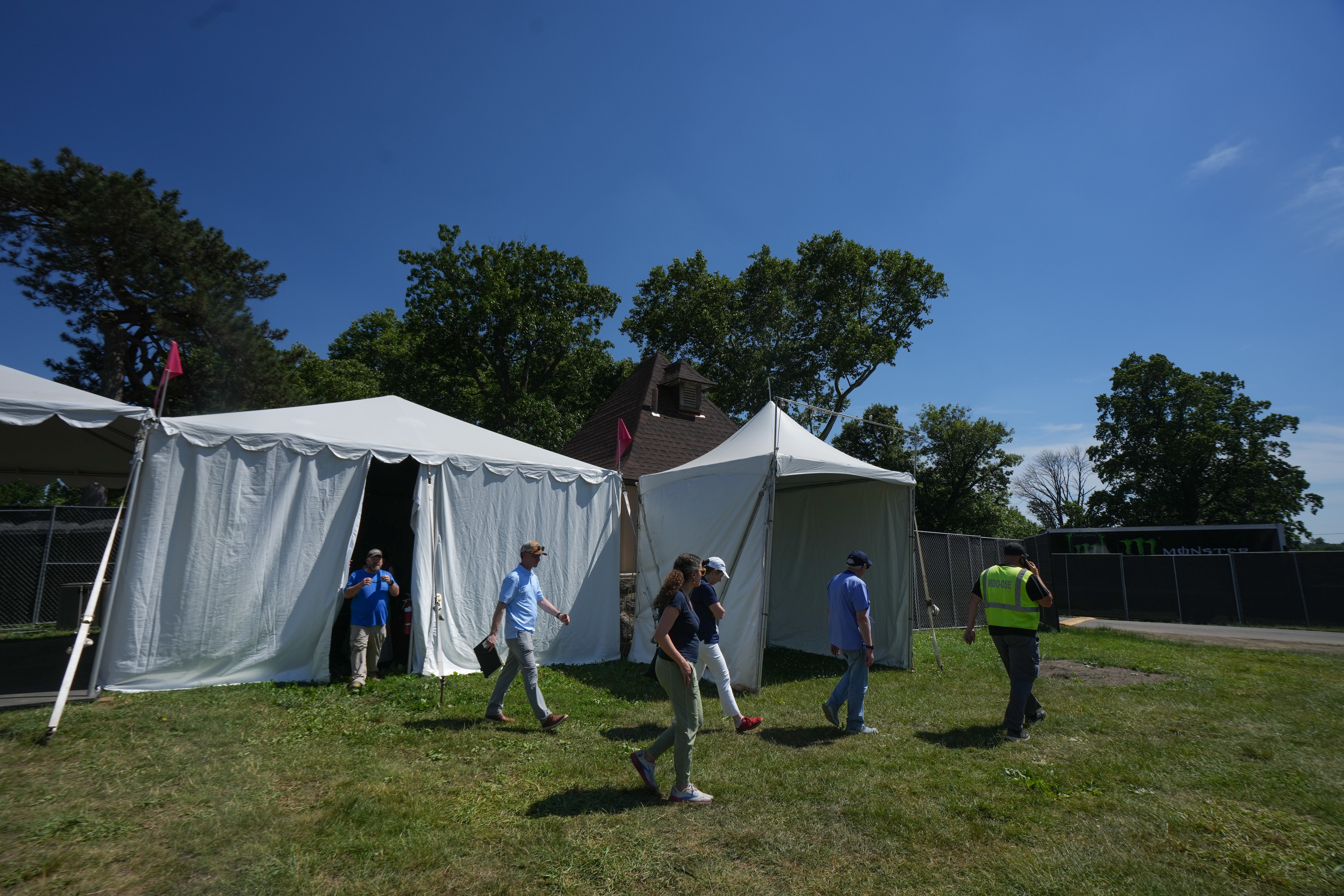
On a muggy Friday days before the World Cup began, a small team of medical emergency planners inspected the cavernous, air-conditioned tent erected for patients at Lemon Hill in Fairmount Park, not far from the enormous screen where thousands can watch matches through July 19.
Near a FIFA tent already full of merchandise, and branded “fan pavilions” in various stages of construction, Philadelphia’s host city medical lead, Patrick J. Brennan, paced what is now the medical home base for dozens of doctors, nurses, and EMTs over the next several weeks.
Brennan, who is also the chief medical officer of University of Pennsylvania Health System, pointed out where the dunk tanks for heatstroke victims would go. He walked through tents with massive fans and misters and visited a smaller first-aid tent for minor medical issues.
Philadelphia is no stranger to large events, from a papal visit to the NFL Draft to the annual Roots Picnic. But the World Cup fan festival at Lemon Hill will be open for more than a month — and is taking place in a summer of high-profile events expected to bring more than 1.5 million visitors to the city.
“That’s the difference — the duration of the event,” Brennan said.
Preparing for the full range of medical emergencies got underway nearly two years ago for Philadelphia’s public health leaders and largest health systems. They have prepared for heat-related illnesses, injuries, mass casualties, and terrorism.
Infectious diseaseis a leading public health concern among host cities and national health agencies.
Measles, a disease once considered eradicated through widespread vaccination and now on the rise across the country, is at the top of their list. An Inquirer analysis found that the Philadelphia region is pockmarked with vulnerable communities, where vaccination rates have fallen below the rate scientists say is necessary to prevent widespread illness.
Now thousands of people from all over the world will turn Philadelphia into a petri dish prime for the spread of infectious diseases. Yet another concern is an Ebola outbreak in parts of Africa, including the Democratic Republic of Congo, which has a team participating in the World Cup games in Houston.
Public health leaders say their best strategy for preventing widespread illness, especially should a case of highly infectious measles arise, is to respond as quickly and efficiently as possible.
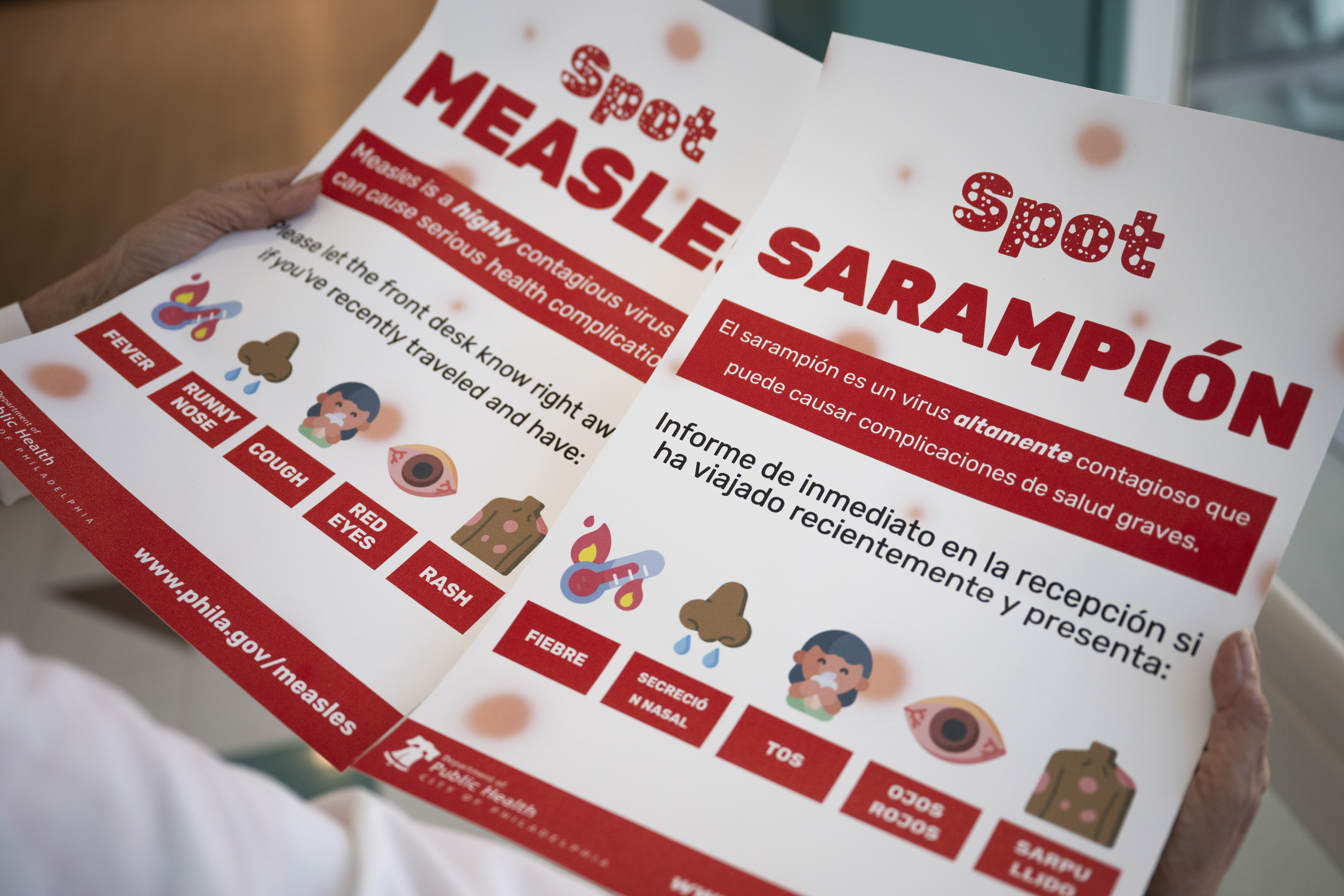
Hospitals have added questions about measles vaccination to their routine emergency department screening, with weekend and evening contacts on call at the city lab that would test potential measles samples. Newly posted flyers in local medical buildings explain how to recognize the early signs of measles — which many doctors have never encountered.
“My main concern with measles are the pockets where people are under-vaccinated, too few people are vaccinated to really stymie an outbreak,” Brennan said. “It’s going to be hard to prevent it from coming into the country.”
The city’s health department, public safety units, and leaders from top health systems, including Temple Health, Penn Medicine, and Jefferson Health, all had seats at the table.
They hashed out responses for potential public health emergencies ranging from bioterrorism, a mass casualty, and violence to routine heat-related health issues. Experts anticipate that the ongoing heat wave, paired with high levels of alcohol consumption, will lead many to experience heat exhaustion, dehydration, and potentially heatstroke.
The prep work built on efforts for past major events, such as Pope Francis’ visit in 2015 or the 2016 Democratic National Convention. New this time around, Philadelphia and World Cup host cities across the country are paying much more attention to infectious-disease concerns.
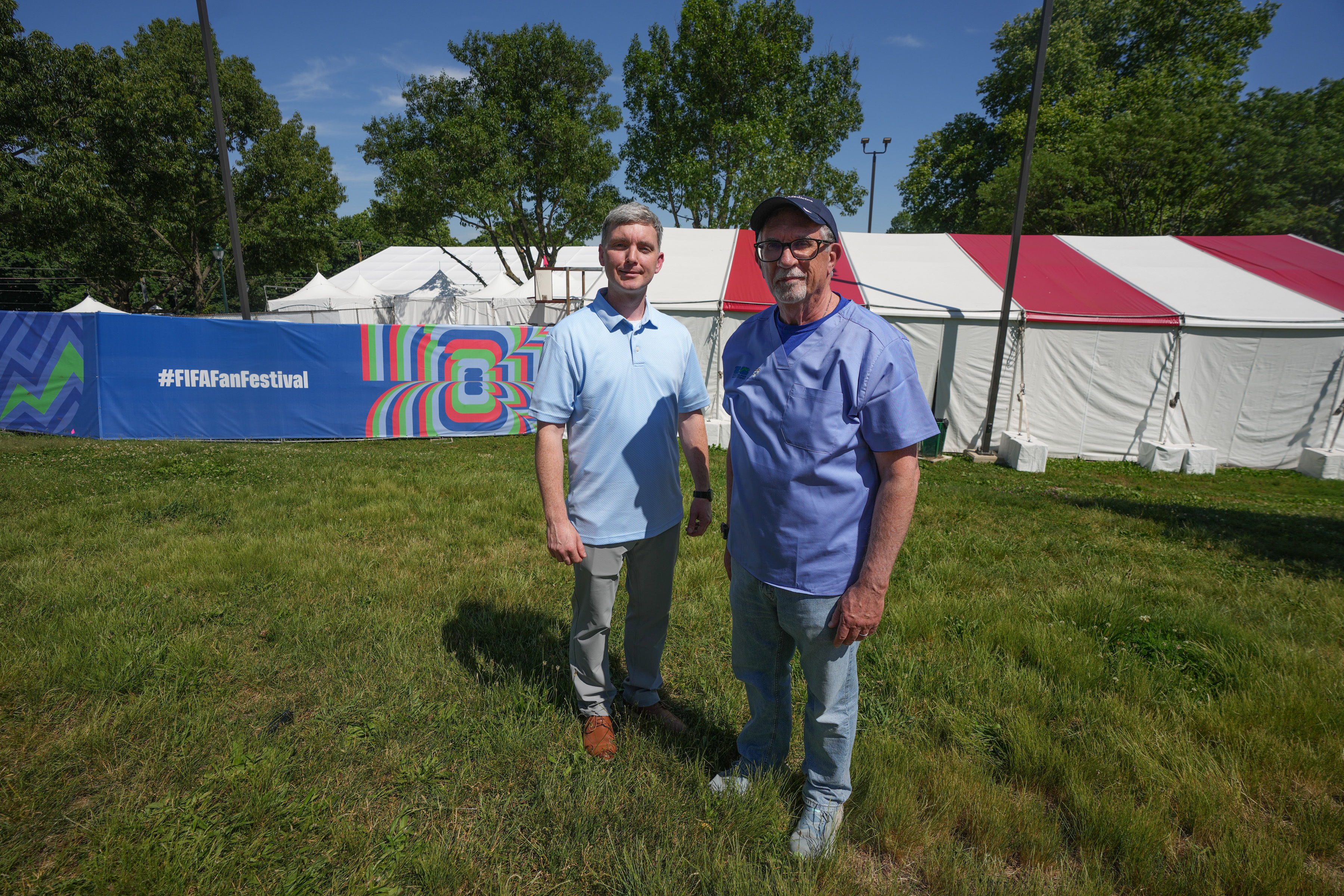
P.J. Brennan (right), Penn Medicine’s chief medical officer and the medical team lead for FIFA’s Philadelphia events, stands with Jack Welsh, an emergency preparedness specialist and clinical nurse at Penn Medicine, outside the main medical tent at the FIFA Fan Fest in Lemon Hill Park.Jessica Griffin / Staff Photographer
Until recent years, measles was not “immediately on the radar” for public health planning, said Jessica Caum, director of disease control for the Philadelphia Department of Public Health.
“We’re in a different place now with measles,” she said. “More cases, increases in vaccine hesitancy, decreases in vaccination rates — all of these things are important to keep in mind.”
The planners looked at staffing levels at medical tents and hospitals, including where surge staffing could come from. They developed a plan for where to quarantine a large number of people, in the event of an outbreak of measles or other infectious disease, but declined to provide details.
“We want to be as prepared as possible,” Caum said.
All that preparation still may not provide a firewall against weeks of sustained sports chaos.
The city’s game-day strategy, should a suspected measles case crop up, is to react as quickly as possible.
Temple trained its emergency department staff to ask new screening questions about measles symptoms and vaccination status in an effort to quickly identify anyone who is at risk, said Daniel Feinberg, chief medical officer for Temple University Hospital Inc.
Temple has been distributing measles information in Spanish and English to providers at its hospitals. Joe Lamberti / For The Inquirer
People whose vaccination status is unclear, or who say they are unvaccinated, will immediately be whisked to an isolation room if they show symptoms associated with measles, such as fever, cough, runny nose, and red eyes.
The telltale blotchy red rash does not typically appear for up to four days, though hospital administrators distributed photos of it to help medical staff recognize it.
Once isolated, people with suspicious symptoms will be tested, with the sample rushed to a city lab on call for such emergencies.
Administrators lined up contact information to reach the lab in the evenings or weekends, when it is typically closed, and discussed the fastest way to get a sample to the lab — potentially to have someone with good sneakers run.
“We don’t want any time wasted,” said Carlene Muto, vice president of infection prevention and occupational health services at Temple Health.
The MMR vaccine can protect against the virus if given to someone within 72 hours of being exposed. Measles immunoglobulin, which contains concentrated antibodies, can provide temporary protection against the virus if given within a few days of exposure. But it is often reserved for infants and other high-risk patients.
The faster health providers identify a measles case, the faster they can work to trace who else may have been exposed.
Medical tents are prepared to handle medical emergencies during the World Cup.Jessica Griffin / Staff Photographer
The risk of exposure is high when someone with measles attends a busy outdoor event, and the challenge of locating all the people who could have come in contact with the disease is immense.
Nine out of 10 unvaccinated people who come into contact with measles will get sick, making it among the most highly contagious diseases.
Anyone who does not get treated in time and has not been vaccinated will need to quarantine for 21 days.
At Jefferson, health system screening protocols are routinely updated to address the latest health threats, said Eric Sachinwalla, Jefferson’s medical director of infection prevention. Its hospitals recently added Ebola screening questions for patients who are being admitted and have traveled to at-risk countries.
Jefferson and other health systems are more likely to see “low-impact” but predictable threats: COVID-19 and other respiratory illnesses, sexually transmitted infections, and gastrointestinal diseases. These illnesses “can spread between people pretty quickly,” he said, but health systems are generally equipped to handle them.
A case of Ebola or measles, however, requires significant resources devoted to treatment and preventing further cases — so hospitals also have to carefully prepare for that possibility, he said.
“It’s balancing those two things. We plan for the high-occurrence things but also [diseases with] high potential impact,” Sachinwalla said.
As Philadelphia launches festivities around the World Cup, the city has declared a heat health emergency beginning at 11 a.m. Thursday.
A heat health emergency is declared when temperatures are high enough that vulnerable people, like elderly or homeless residents, are at a higher risk of becoming sick or dying from heat.
Heat indexes could reach 103 degrees outside on Thursday and Friday, the National Weather Service warned. The city’s emergency declaration will last until 8 p.m. Friday but could be extended, health officials said.
More than 50 Philadelphia schools will dismiss early Thursday because of the heat, and city officials said they are ensuring fans in town for the World Cup are prepared for the heat wave ahead.
The city activates a number of special programs to protect residents during a heat health emergency, including the suspension of water shutoffs and increased outreach to people at risk.
How heat exacerbates health issues
Extreme heat can quickly overstress the bodies of people with certain conditions, including chronic illness and pregnancy, city officials said.Older adults and small children, as well as people who take medications that affect body temperature and people who use drugs or alcohol, are also at risk.
The city warned that strenuous physical activity, working in a hot environment, or simply not having an air conditioner can become risky in a heat emergency.
“The best way to protect our loved ones is to make sure they can get into air-conditioning during the hottest part of the day,” Health Commissioner Palak Raval-Nelson said in a statement, urging residents to check on friends, family, and neighbors over the next few days.
Residents should drink lots of water and avoid caffeine and alcohol to prevent dehydration. Those relying on fans should open windows.
People attending outdoor events are encouraged to bring water and identify shady or indoor, air-conditioned spots to rest. They should also wear sunscreen.
Lightweight, light-colored clothing can help, as can showering in water that is close to skin temperature.
Older people, children, and pets should never be left alone in cars.
Early warnings of heat stress include decreased energy, slight loss of appetite, faintness, lightheadedness, and nausea.
Rest in a cool environment, remove excess clothing, and drink fluids if you experience these symptoms, and call a doctor or 911 if there is no improvement.
Serious signs of heat stress include unconsciousness, a rapid heartbeat, headache, dry skin, chest pain, mental confusion, irritability, vomiting, diarrhea, muscle cramps, staggering, and trouble breathing. These symptoms warrant an immediate 911 call and medical attention.
World Cup visitors
The FIFA Fan Festival at Lemon Hill, a massive gathering spot for World Cup fans to watch games, opens on Thursday. The site has two tents with fans and misters, multiple water stations, and picnic tables in shady areas to rest.
The city is operating four hospitality hubs between City Hall and Lemon Hill with shade, water, and misting stations between 10 a.m. and 8 p.m. every day.
Residents and visitors alike can text CUPPHL to 888-777 for free text alerts or follow the Philadelphia Office of Emergency Management’s WhatsApp channel for updates during the World Cup.
They can get year-round alerts by texting READYPHILA to 888-777.
Shelter from the heat
On Thursday and Friday, the city will open cooling centers with extended hours at community centers and libraries. Residents can also call 311 for information on the nearest center.
Philadelphia Parks and Recreation’s older adult centers will all be open with air-conditioning from 9 a.m. to 6 p.m.
The Philadelphia Corporation for Aging will also operate a hotline at 215-765-9040 for heat emergency questions from 8:30 a.m. to 8:30 p.m. Thursday and Friday, with nurses on hand to answer medical questions.
Homeless outreach
Street teams will patrol the city to offer shelter and other services to people sleeping outside. Anyone who sees someone outside in need of help can call a 24-7 outreach line at 215-232-1984.
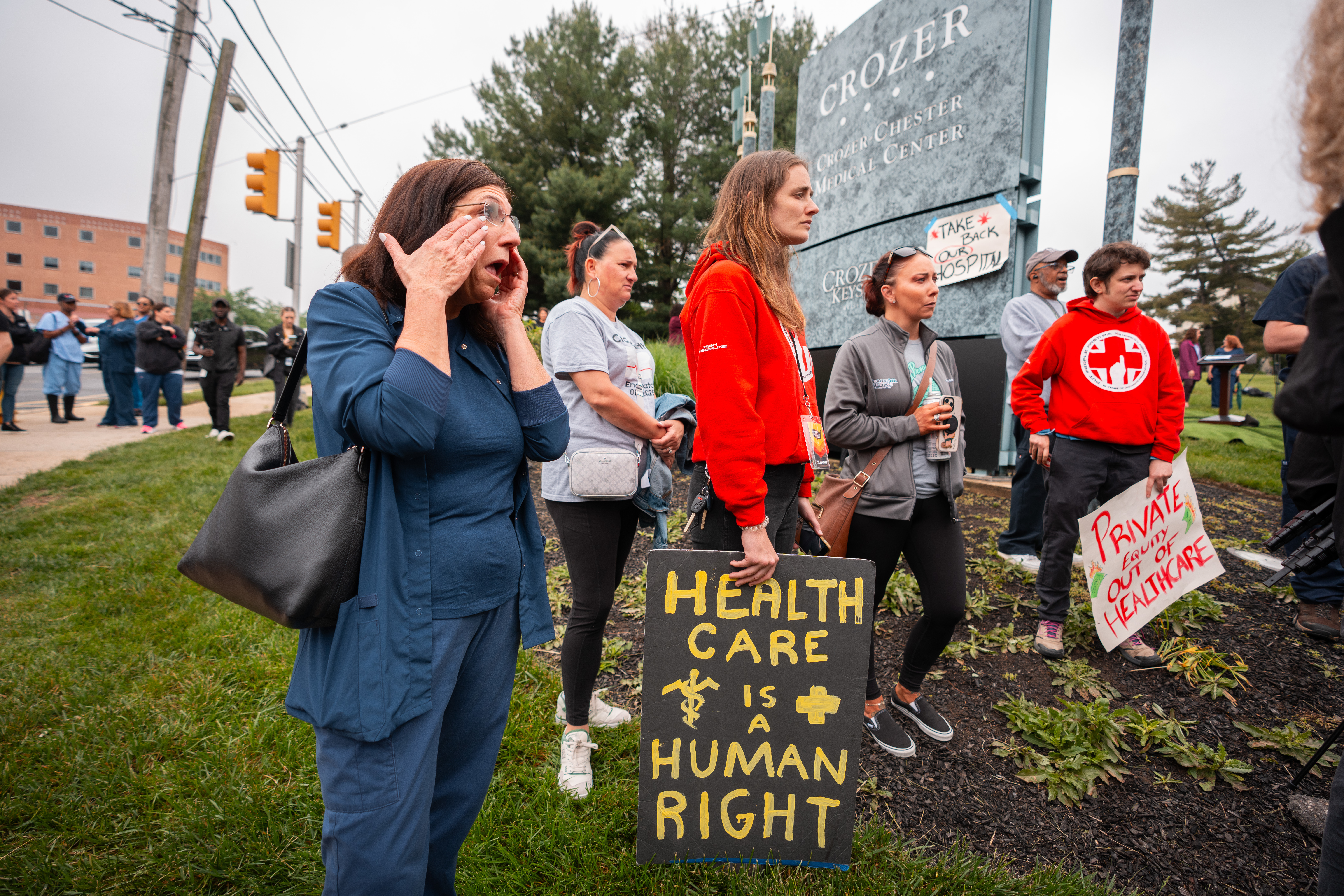
Dawn Pierce felt heartbroken last spring when she learned that Crozer-Chester Medical Center was closing.
The hospital had long been a lifeline in a city with limited healthcare services. Many Chester residents, like Pierce, were unsure where to turn for care when the hospital’s for-profit owner, California-based Prospect Medical Holdings, declared bankruptcy and shut down Crozer and Taylor Hospital in Ridley Park last spring.
“I don’t think of myself as one that will sit around and watch things happen, but I felt hopeless,” Pierce said.
Nearly a year later, Pierce and other residents say the community was left with major healthcare gaps: There are no primary care doctors or pediatricians in town. Locals who received routine care at the hospital had to switch to doctors outside the city, dealing with long drives or rides on public transportation. Some are going without care.
And many worry about whether they can make it to another hospital in time during a medical emergency.
Janice Cimabue, left, and Jamie Blair, center, with Put People First PA, after a news conference outside of the recently closed Crozer Medical Center in Delco, in Philadelphia, May 15, 2025. Jessica Griffin / Staff Photographer
These concerns have emerged through grassroots canvassing by One Pennsylvania, which shared its findings at a news conference this month. In recent months in Chester, organizers have knocked on 4,300 doors to gauge residents’ thoughts on Crozer’s closure and encourage them to advocate for better healthcare options in the city.
The membership group focuses on issues including housing rights and environmental justice. Originally founded as part of a 2011 Pittsburgh campaign by the labor union SEIU, it became an independent organization in 2015 and expanded into the Philadelphia area in 2016.
Pierce, who heads its Chester chapter, counts herself relatively lucky: While she saw specialists at Crozer, her primary care physician was at a different health system. But her brother and his significant other spent most of last year looking for a new doctor after Crozer closed.
“I do think they finally found someone, but at this point those visits are not near Chester. They’re 20 to 30-plus minutes away,” Pierce said.
Residents told One Pennsylvania organizers they felt relief that Chester officials did find a solution for EMS services lost in the closure. The city contracted with VSMC, an ambulance company, for higher-level care on the go, including blood transfusions.
“The restoration of EMS services and ambulance for our city — this matters,” Pierce said at the event held outside a downtown church on a recent Saturday. “However, EMS is a bridge. It’s not the final destination.”
(function() {
var l2 = function() {
new pym.Parent(‘he_chester’,
‘https://media.inquirer.com/storage/inquirer/projects/innovation/arcgis_iframe/he_chester.html’);
};
if (typeof(pym) === ‘undefined’) {
var h = document.getElementsByTagName(‘head’)[0],
s = document.createElement(‘script’);
s.type = ‘text/javascript’;
s.src = ‘https://pym.nprapps.org/pym.v1.min.js’;
s.onload = l2;
h.appendChild(s);
} else {
l2();
}
})();
Chester Mayor Stefan Roots told residents at the news conference that he met recently with representatives from the Crozer property’s new owner, for-profit Chariot Equities, which says it wants to restore medical services to the campus.
Roots said he couldn’t provide many details about a plan for the 64-acre campus that straddles Chester and Upland Township in Delaware County, which Chariot purchased last month for $10 million. Chariot said at the time it planned to operate a “right-sized” hospital and emergency department at the facility.
The new ownership comes after government-supported efforts failed to convince other local health systems last year to form a new nonprofit to run Crozer-Chester and other Crozer Health facilities.
Chester Mayor Stefan Roots told city residents that he met recently with representatives from the Crozer property’s new owner, for-profit Chariot Equities, which says it wants to restore medical services to the campus. Tyger Williams / Staff Photographer
Roots said the new owner has impressive plans, but it could take years to bring back medical services, if successful. “It’s going to take some time, it’s going to take some money, and all we can do right here is to readjust,” he said.
Delaware County Council voted Wednesday to end a disaster declaration over lost EMS services in the wake of Crozer’s closure, since communities left without services, like Chester, had been able to contract with other EMS providers, WHYY reported.
Chester resident Andrea Robinson say she’s still feeling the impact of the lost medical services.
Robinson had to find new doctors after the closure, and a family member is now traveling farther to receive care for a mental health condition once treated at Crozer. And while other area hospitals are taking patients from Chester, the influx of new patients has at times led to long wait times elsewhere.
“We are truly in need of medical services now,” she said.