Author: Aubrey Whelan

  • A Pa. coroner doubted a measles-linked death, sparking anti-vaccine outcry. Records show the state tried to reach him.

    A Pa. coroner doubted a measles-linked death, sparking anti-vaccine outcry. Records show the state tried to reach him.

    Over five days in August, Pennsylvania health officials called the Lancaster County Coroner’s Office at least three times and sent an email asking to discuss the death of an infant who had tested positive for measles.

    They did not connect with coroner Stephen Diamantoni before Gov. Josh Shapiro came to the county to announce at an Aug. 25 news conference that two unvaccinated Lancaster residents had died in a growing measles outbreak, the state’s first measles-associated deaths in 35 years.

    Soon after, the county coroner — an elected Republican who has presided over the office for nearly two decades — was telling reporters the state had not talked to him directly, raising questions about the state’s communications.

    His comments, coupled with his position that he did not believe one of the two infants affected had died from measles, kicked off a viral exchange of misinformation cited by anti-vaccine activists — and spiraling up to federal health leaders — to discredit the dangers of Pennsylvania’s growing measles outbreak.

    Now emails from the coroner’s office, obtained by The Inquirer through an open-records request, show that state officials made significant outreach to Diamantoni, far beyond his prior statements acknowledging only that his deputy spoke with state officials shortly before the news conference.

    In fact, doctors from the state health department had tried to contact his office about the case for days, with increasing urgency. At one point, a doctor told one of Diamantoni’s staffers that they were ready “24/7” to speak with someone from the office.

    Yet two weeks after the announcement, he continued to emphasize the state’s lacking communication in an in-person interview with The Inquirer. “I have not received any information directly from the state [health] department,” he said on Sept. 9.

    By then, his statements had enabled President Donald Trump’s health secretary, Robert F. Kennedy Jr., to question whether the deaths reported in Pennsylvania were real.

    The Centers for Disease Control and Prevention for weeks omitted the first two deaths and those subsequently reported by the state in its national reporting, marking an extraordinary departure from public health norms. As of Thursday, the agency had updated its tally to recognize two deaths nationally this year, while Pennsylvania has reported five measles-related deaths.
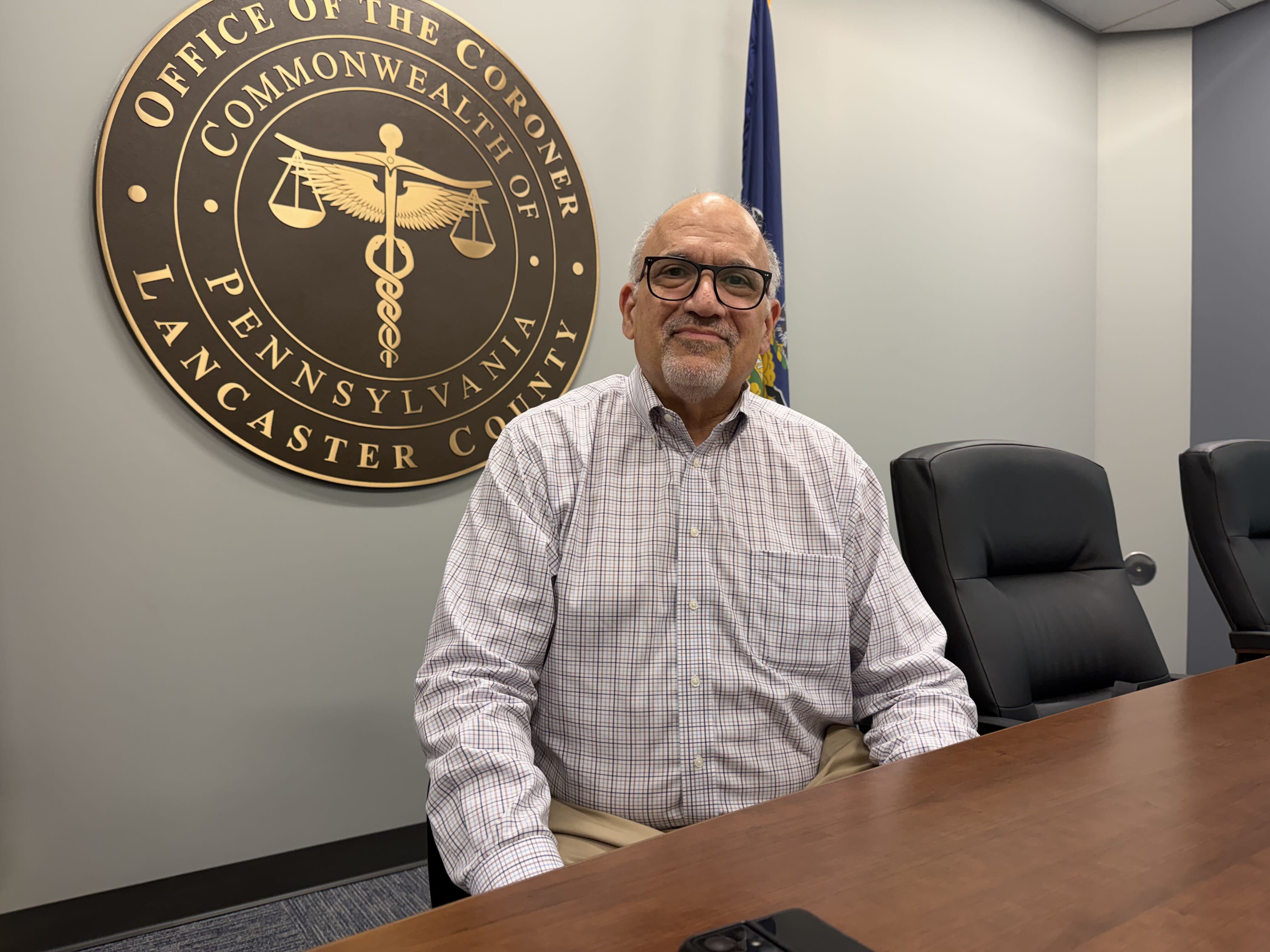
    Lancaster County coroner Stephen Diamantoni poses for a photo in his office in September.Gillian McGoldrick

    Asked to comment on the records, Diamantoni said he was not aware of the state’s outreach ahead of Shapiro’s announcement.

    He said state officials should have been more explicit in the calls they made to his office staffers, who sent him and his deputy emails relaying messages. The communications did not make it clear that they needed to speak to him about a measles-associated death, Diamantoni said, adding that he is easy to reach.

    “It didn’t sound like there was urgency. It didn’t sound like anyone indicated that there was a measles death that we want to talk to the coroner about,” he said.

    Public officers like Diamantoni have an obligation to ensure staff can get timely messages to him, especially in a public health emergency like a measles outbreak, said Kathleen Hall Jamieson, director emerita of the Annenberg Public Policy Center at the University of Pennsylvania. Likewise, she noted, state officials must ensure communications with the public are transparent and easy to understand.

    State officials did not immediately say how they define a “measles-associated death” and have provided few details on the deaths themselves, leaving county coroners to fill in the blanks.

    Public health experts have noted that the politically charged back-and-forth and competing narratives around the deaths risks confusing the public at a time when clarity is crucial — amid the largest measles outbreak in the country, with state officials reporting nearly 1,000 cases and five measles-associated deaths.

    (function(){function e(){window.addEventListener(`message`,function(e){if(e.data[`datawrapper-height`]!==void 0){var t=document.querySelectorAll(`iframe`);for(var n in e.data[`datawrapper-height`])for(var r=0,i;i=t[r];r++)if(i.contentWindow===e.source){var a=e.data[`datawrapper-height`][n]+`px`;i.style.height=a}}})}e()})();

    The contradictory communications from the state and the local coroner’s office around the initial Lancaster deaths set the stage for Kennedy to attack Shapiro in an X post, claiming the Democratic governor may have “fabricated” two of the deaths in Pennsylvania.

    Shapiro has sharply criticized Kennedy, a longtime anti-vaccination advocate, for spreading misinformation about vaccine safety and Pennsylvania’s outbreak, now the largest in the nation this year, with the most deaths reported by any state since 1992.

    Asked for comment on communications with Diamantoni, state officials provided a statement by email saying Pennsylvania law bars them from providing further information on the initial measles-associated deaths.

    The health department’s epidemiology team “thoroughly investigates and verifies” measles-associated deaths to ensure that they meet the state’s definition, and does not announce deaths until they have finished an investigation, health department press secretary Neil Ruhland said in an email.

    He said state law does not require the department to report deaths to a coroner’s office; rather, coroners and “other certifiers” report deaths to the state health department.

    “PA DOH has followed this explicit process for all measles-associated deaths in Pennsylvania,” Ruhland wrote.

    ‘No one looks good’

    News outlets began calling Diamantoni as soon as the first measles-related deaths were reported in Lancaster, where he is a family medicine doctor and former Lancaster City Council president. First elected to the coroner’s office in 2007, he said he views his duties as apolitical and describes himself as a strong advocate for vaccination.

    He told media outlets he had been surprised by the state’s announcement, as his office had not identified any deaths from measles.

    The office had investigated the death of an infant who tested positive for the disease, but Diamantoni has maintained that the child had died from a lacerated spleen, not the highly contagious illness.

    As his claims were widely reshared on social media and in national media stories, state officials said they stood by their findings that both deaths were measles-related. They were not told that the infant’s death was not associated with measles, they said.

    Diamantoni told The Inquirer repeatedly that state health officials had never spoken personally with him about the death of an infant later identified as Ivan Miller, who was hours old when he died on Aug. 14.

    He said that state health officials had only reached out hours before their news conference, and that his deputy, Eric Bieber, had spoken to them.

    (function(){function e(){window.addEventListener(`message`,function(e){if(e.data[`datawrapper-height`]!==void 0){var t=document.querySelectorAll(`iframe`);for(var n in e.data[`datawrapper-height`])for(var r=0,i;i=t[r];r++)if(i.contentWindow===e.source){var a=e.data[`datawrapper-height`][n]+`px`;i.style.height=a}}})}e()})();

    Internal office records reveal that five days before the news conference, a staffer in the coroner’s office e-mailed Diamantoni, saying that an infectious-disease doctor with the state health department was looking to speak to “one of you” about “the positive measles case with the infant we just had.”

    The state health department followed up on its initial Aug. 20 call with subsequent emails and calls on Aug. 21, a Friday, and Aug. 24, the following Monday, records show.

    One doctor included his state-issued cell phone number in an email to a coroner’s office staffer and Bieber and emphasized that he was available “24/7” to discuss the case.

    When Bieber spoke to representatives from the state health department on Aug. 25, the office did not realize that the state was about to announce two measles-associated deaths, according to Diamantoni.

    Diamantoni added that since he did not believe Ivan Miller’s death was caused by measles, he had not been expecting any outreach from the state.

    “I don’t think it would have brought a red flag to me. It just looked like a request we usually receive from different individuals, different agencies, requesting cause and manner information,” Diamantoni said.

    Yet it is the responsibility of public officials to establish communication procedures at their offices, especially when a contagious disease is spreading and the public needs clear information, according to Penn’s Jamieson.

    In public offices, she said, “you shouldn’t be seeing a situation in which the person doesn’t get the information, or is able to say, ‘I didn’t get it.’”

    State officials could have communicated more clearly in announcing the deaths as well, she said, noting that they did not immediately define “measles-associated death” in an initial news release.

    Jamieson said it is important for health officials to explain “what we know, what we don’t know, and how we’re finding out what we don’t know” in terms the public can understand.

    “Anytime the public is listening to voices that are supposed to be speaking with authority, and the public, instead of hearing a clear message, is confused, you have a problem,” she said. “No one looks good.”

    Measles-associated deaths in Pennsylvania

    State officials have repeatedly cited state privacy laws in response to criticism of their communications, saying they cannot provide detail about how they investigated the measles-associated deaths.

    The state defines a measles-associated death as one that occurs within 30 days of symptom onset in a person with clinical evidence of infection and a positive laboratory test for measles, and who did not die of another unrelated cause, like a car crash.

    Officials have provided little information beyond the fact that none of the five people who have died were vaccinated, and their county of residence.

    Local coroners like Diamantoni have offered more details.

    For example, in early September, Jefferson County’s coroner, also an elected Republican, confirmed the death of a 40-year-old woman from measles. He disclosed that the woman also had severe respiratory conditions, including chronic obstructive pulmonary disease, that made her vulnerable to serious complications from a respiratory illness like measles.

    Later in the same week, the Mifflin County coroner, another Republican, confirmed that an unvaccinated 18-year-old had died from a rare neurological complication of measles.

    Diamantoni has shared that Ivan Miller, who died at a birthing center in Lancaster County, tested positive for a measles infection acquired before birth. His family, who is Amish, told the Atlantic that his mother had a severe case of measles and gave birth early.

    Although Diamantoni did not consider measles to have caused the death, he said, measles was included on the boy’s death certificate in a section that lists “significant conditions contributing to death but not resulting in the underlying cause.”

    Physicians have noted that measles can weaken the spleen, putting it at risk of rupture. Diamantoni cited a lacerated spleen as the primary cause of death.

    The second death, another Amish infant, was not initially reported to Diamantoni; Lancaster’s Clinic for Special Children, which treats Amish children with genetic conditions, had treated the baby until her death.

    Diamantoni’s office investigated the death about a week after the state’s news conference; he later told reporters that the baby was 6 weeks old and had Amish lethal microcephaly, a fatal genetic condition that makes respiratory illnesses particularly risky. Diamantoni said measles caused the baby’s death.

    On Wednesday, state health officials announced a fifth death, a Lancaster County resident who tested positive for measles and died. Diamantoni told The Inquirer that he had not handled that death, but that state health officials had informed him about it. He said they provided no further information.

    State officials did not say whether the person, who was unvaccinated, died in Lancaster County.

    Diamantoni told an Inquirer reporter in early September that he was proud that his office was one of the first in the country to be certified by the International Association of Coroners and Medical Examiners.

    “People may not always agree with our findings, but they’re well investigated and well thought out,” he said.

    Staff writer Gillian McGoldrick contributed to this article.
  • Pennsylvania confirms a fifth death associated with widening measles outbreak

    Pennsylvania confirms a fifth death associated with widening measles outbreak

    A fifth person has died amid Pennsylvania’s growing measles outbreak, state health officials confirmed on Wednesday.

    The Pennsylvania Department of Health said in a news release that an unvaccinated resident of Lancaster County tested positive for measles and has died.

    Health officials said they would not release any additional identifying details about the person who died, citing state privacy laws.

    The state has confirmed two other measles-associated deaths this year in Lancaster County residents, both involving infants in the Amish community.

    Mifflin and Jefferson Counties have also reported two measles-associated deaths involving an 18-year-old and a 40-year-old, respectively.

    The announcement came as confirmed measles cases in Pennsylvania reached 943 so far this year, the largest outbreak in the state in three decades and the highest case count nationwide this year. The state has confirmed 40 new cases in the last two days.

    The outbreak is centered in Lancaster, where nearly 400 people have been sickened so far this year, but also expanding in other counties, including Chester County in suburban Philadelphia, which had reported 83 cases as of Wednesday, the third-highest countywide case count in the state.

    (function(){function e(){window.addEventListener(`message`,function(e){if(e.data[`datawrapper-height`]!==void 0){var t=document.querySelectorAll(`iframe`);for(var n in e.data[`datawrapper-height`])for(var r=0,i;i=t[r];r++)if(i.contentWindow===e.source){var a=e.data[`datawrapper-height`][n]+`px`;i.style.height=a}}})}e()})();

    The death toll reported in Pennsylvania is also the nation’s highest since 1992, but state and federal officials have clashed over how to characterize the four previous deaths reported in the state, all in people who were unvaccinated and confirmed to have measles infections.

    The CDC’s public tracking of the toll of measles outbreaks nationally currently only shows two deaths from measles, reflecting decisions made under the leadership of President Donald Trump’s Health Secretary Robert F. Kennedy, Jr., a longtime anti-vaccine activist. The CDC’s website does not say where the two deaths occurred.

    Gov. Josh Shapiro, a Democrat, has accused Kennedy of spreading misinformation about the safety of the measles vaccine, contributing to declining vaccination rates statewide. Kennedy has faulted Shapiro for politicizing the deaths and initially said his administration may have “fabricated” two deaths.

    Pennsylvania officials said the latest death also fits the criteria for the state’s definition of a measles-associated death: One that occurred within 30 days of symptom onset in a person with clinical evidence of a measles infection and a positive lab test, that wasn’t due to an unrelated cause, like a car crash.

    In confirming measles-associated deaths, the state also considers medical records and whether the person was exposed to measles before their death.

    Statewide, nearly one in five people with reported cases have been hospitalized.

    About a third of confirmed measles cases have occurred in children under 18.

    Physicians and local officials in affected counties have warned that there are likely far more cases than have been officially reported.

    Nearly all of the confirmed cases of measles have been in unvaccinated people, state officials said. The state confirmed four cases involving extremely rare “breakthrough” infections in people who were vaccinated, less than 1% of the total cases reported.

    (function(){function e(){window.addEventListener(`message`,function(e){if(e.data[`datawrapper-height`]!==void 0){var t=document.querySelectorAll(`iframe`);for(var n in e.data[`datawrapper-height`])for(var r=0,i;i=t[r];r++)if(i.contentWindow===e.source){var a=e.data[`datawrapper-height`][n]+`px`;i.style.height=a}}})}e()})();

    Lancaster County coroner Stephen Diamantoni said state officials called him Wednesday to inform him of the latest measles-associated death, but provided no additional information on the case.

    He said his office had not handled any recent deaths involving a person who tested positive for measles.

    State officials have noted that not all deaths are referred to a coroner. They did not specify whether the latest death occurred in Lancaster County.

    Diamantoni, an elected Republican who is also a physician, had questioned the state’s conclusions about an earlier death in Lancaster County, in an infant who tested positive for a measles infection acquired before birth.

    The baby died shortly after birth from a lacerated spleen, Diamantoni said, adding that he did not believe the child’s death was caused by measles.

    State officials have said that the baby’s death fits their definition of a measles-associated death, and physicians have noted that measles can weaken the spleen, putting it at risk for rupture.

    Diamantoni also investigated the death of a second infant, which was not initially reported to his office. The six-week-old had a fatal genetic condition that made her particularly vulnerable to respiratory illnesses. That death was caused by measles, Diamantoni said.

    The other two deaths, in Mifflin and Jefferson Counties, involved an 18-year-old who died from a rare neurological complication of measles and a 40-year-old woman with serious respiratory issues that also put her at higher risk of death from measles.

  • CDC acknowledges one U.S. measles death after omitting Pa. data from its dashboard for weeks

    CDC acknowledges one U.S. measles death after omitting Pa. data from its dashboard for weeks

    The Centers for Disease Control and Prevention confirmed Wednesday that one person died this year in the measles outbreaks it tracks nationally.

    Pennsylvania has reported four measles-associated deaths, but the CDC for weeks omitted them from an online dashboard.

    State officials are “not aware of which death the CDC is citing,” a spokesperson said in a statement Thursday, referring questions to the federal agency.

    Federal health officials did not specify where the death reported on the CDC dashboard occurred. On the dashboard, they said the number was “subject to change” and the agency will update its reporting of deaths “as additional information becomes available and relevant reviews are completed.” The agency did not announce the update.

    The agency also said it is working to develop a standard case definition of measles deaths with the Council of State and Territorial Epidemiologists.

    The update came after the National Center for Health Statistics told the CDC that it had received “a report from a state of a measles-related death,” federal health officials said in a statement late Wednesday.

    “Through its standard process, NCHS verified that the death occurred and that measles was listed as the underlying cause of death. This is now reflected on the CDC website,” the statement said.

    Pennsylvania’s measles outbreak, currently the largest in the nation, has sickened more than 800 people, with state health officials reporting more than 100 new cases in the last week alone.

    Lancaster County, the center of the outbreak, has confirmed more than 300 cases, and nearly 80 people have been diagnosed with measles in Chester County, the only Philadelphia-area county with cases in the current outbreak.

    The four measles-associated deaths reported in the state represent the highest death toll linked to the highly contagious disease in more than three decades.

    Measles-associated deaths in Pennsylvania

    The state announced its first two measles-associated deaths, both in unvaccinated Lancaster County residents, in late August, almost immediately sparking a clash between state and federal officials over how to characterize the deaths.

    Two more deaths were reported this month. One involved an unvaccinated 18-year-old in Mifflin County who died from a serious neurological complication of measles. And measles led to the death of an unvaccinated 40-year-old woman in Jefferson County with severe respiratory conditions.

    Both deaths were confirmed by local coroners, both Republicans.

    The Lancaster deaths, later disclosed as two infants in the Amish community, drew widespread scrutiny.

    The county coroner later said he did not believe measles caused one of the deaths, involving an infant with a lacerated spleen who tested positive for measles, though physicians have noted measles can weaken the organ and make it more likely to rupture.

    The coroner, an elected Republican, said a second death, in another infant with a fatal genetic condition, was caused by measles.

    Pennsylvania defines a “measles-associated death” as one that occurs within 30 days of symptom onset in a person with clinical evidence of infection and a positive laboratory test, and who did not die of another unrelated cause, like a car crash.

    All four deaths recorded in Pennsylvania meet that definition, state officials say.

    Announcing the deaths in Lancaster, Democratic Gov. Josh Shapiro criticized President Donald Trump’s Health and Human Services secretary, Robert F. Kennedy Jr., saying he has spread misinformation about vaccine safety that’s contributed to a decline in measles vaccination rates across Pennsylvania.

    Kennedy, a longtime anti-vaccine activist, said Shapiro was politicizing the issue. Kennedy wrote on social media that the governor’s administration may have “fabricated” the Lancaster County deaths, although he later acknowledged that one death was caused by measles.

    And until Wednesday, the CDC had not acknowledged any 2026 measles deaths on its data dashboard for weeks.

    The agency had briefly noted two measles-associated deaths on the dashboard the weekend after Pennsylvania officials confirmed the two Lancaster County deaths, the Washington Post has reported.

    Then, within a day, the deaths were removed from the website and replaced with an asterisk.

    The CDC initially posted an explanation saying it left the deaths off the dashboard because “available information does not establish whether measles caused or contributed to the deaths or whether the individuals died from other causes while infected with measles.”

    The agency later updated its asterisk explainer to note that the National Center for Health Statistics “does not currently have any death records from 2026 that indicate measles is the underlying cause.”

    Using the NCHS to record deaths from measles is a departure from the CDC’s standard protocol. Former CDC officials say the agency has used a different system, the National Notifiable Diseases Surveillance System, to confirm deaths, and does not typically challenge routine disease surveillance from states.

    It can take weeks for the NCHS system to record a death.

    Delaying death reporting, experts have said, could affect efforts to contain Pennsylvania’s outbreak.

    Staff writer Sarah Gantz contributed to this article.

  • Pa. measles outbreak grows past 800 cases; House Democrats press CDC on omitted deaths

    Pa. measles outbreak grows past 800 cases; House Democrats press CDC on omitted deaths

    Pennsylvania’s largest measles outbreak in three decades, currently the largest in the country, passed another sobering milestone on Wednesday: State health officials reported that more than 800 people have contracted the highly contagious disease so far this year.

    The latest case counts show an increase of 111 measles cases in the last week, bringing the total to 835 people with known infections. Physicians and local health officials say this is likely an undercount, with many cases going unreported.

    Chester County logged 12 new cases in the last week, bringing its total cases to 78. The outbreak in the suburban Philadelphia county is now the state’s third largest, having more than tripled in size since early August.

    Chester is the only county in the Philadelphia region with cases in the current outbreak, which began in April. Montgomery County reported three cases in a separate outbreak earlier this winter.

    All but a few have been in unvaccinated people.

    Statewide, children under 18 make up nearly a third of the confirmed cases, and about one in five reported cases have required hospitalization.

    The state reported four rare “breakthrough” cases of measles in vaccinated people earlier this month.

    More than half of Pennsylvania’s 67 counties have now reported at least one measles case.

    Lancaster County, with 342 cases, has the highest case counts in the state, followed by Mifflin County, which has reported 94 cases.

    State officials have reported four measles-associated deaths, all affecting people who were unvaccinated and confirmed to have measles infections.

    The deceased include two infants from Amish families in Lancaster County, an 18-year-old in Mifflin County who died from a serious neurological complication of measles, and a 40-year-old woman in Jefferson County with severe respiratory conditions.

    But state and federal officials have clashed over how to characterize the deaths, with the Lancaster County coroner saying he did not believe measles caused one of the deaths.

    The state considers all four “measles-associated deaths,” meaning deaths that occur within 30 days of symptom onset in a person with clinical evidence of infection and a positive laboratory test for measles, and who did not die of another unrelated cause, like a car crash.

    The Centers for Disease Control and Prevention for weeks omitted these deaths from its public tracking of the toll of measles outbreaks nationally, under the leadership of President Donald Trump’s Health and Human Services secretary, Robert F. Kennedy Jr., a longtime anti-vaccine activist. Kennedy at one point suggested that Shapiro’s administration had “fabricated” the deaths in Lancaster County.

    The CDC updated its dashboard on Wednesday to note one measles-related death in the country, without further explanation.

    In a statement, an HHS spokesperson said that the National Center for Health Statistics received a report of a measles-related death from “a state.” The center verified that the death occurred and that measles was the underlying cause of death, and the CDC website was subsequently updated, the department said without specifying which state the death occurred in.

    On its website, the agency says it is still reviewing death data and developing a new standard definition of a measles-associated death.

    The state has maintained all four deaths fit its definition for a measles-associated death.

    House Democrats ask for a briefing

    New Jersey Rep. Frank Pallone said Wednesday he is still waiting for a response to a letter he sent last week as the top Democrat on the U.S. House committee that oversees healthcare, looking for answers about the CDC’s characterization of the death.

    In the letter, Pallone asked for CDC director Erica Schwartz to brief committee Democrats on her “extraordinary decision” to omit the measles-associated deaths from the agency’s measles data dashboard.

    The letter noted news reports that showed the dashboard had briefly included two measles-associated deaths in Pennsylvania before they were removed from the website.

    Health and Human Services representatives did not immediately return a request for comment on the letter.

    “I think this is the ultimate hypocrisy on the part of the secretary,” Pallone said. “He promised radical transparency, every day during his confirmation hearings. I think now what we’re getting is the opposite, which is a cover-up.”

    Pallone said he was concerned that Kennedy’s anti-vaccine rhetoric has contributed to rising measles cases across the country, and worried that the agency, at Kennedy’s behest, is trying to redefine measles deaths to dodge blame for the rise in cases.

    “What Pennsylvania did was the traditional scientific criteria for deaths from measles,” Pallone said. “What [is the CDC] trying to do? Change that? Based on what?”

  • Pennsylvania measles cases near 800 in ongoing outbreak

    Pennsylvania measles cases near 800 in ongoing outbreak

    Pennsylvania recorded nearly 100 new cases of measles in the last week, bringing the total case count for this year to 792, state officials said Monday.

    The state’s measles outbreak is the largest in the country in 2026 and is centered in Lancaster County, which has reported more than 300 cases this year.

    Chester County has confirmed 76 measles cases so far this year, the third-highest total in the state behind Mifflin County in Central Pennsylvania, which has reported 93 cases.

    State officials have reported four deaths associated with the outbreak: two infants in Lancaster County, a 40-year-old woman in Jefferson County, and an 18-year-old in Mifflin County.

    (function(){function e(){window.addEventListener(`message`,function(e){if(e.data[`datawrapper-height`]!==void 0){var t=document.querySelectorAll(`iframe`);for(var n in e.data[`datawrapper-height`])for(var r=0,i;i=t[r];r++)if(i.contentWindow===e.source){var a=e.data[`datawrapper-height`][n]+`px`;i.style.height=a}}})}e()})();

    The state defines a “measles-associated” death as one that occurs within 30 days of symptom onset in a person with clinical evidence of infection and a positive laboratory test for measles, and who did not die of another unrelated cause, like a car crash.

    Lancaster County’s coroner said one of the infants died from a lacerated spleen, not measles, though the baby tested positive for the disease. Physicians have noted that measles can weaken a spleen and make it more vulnerable to rupture.

    Federal officials have clashed with the state over its characterizations of the deaths.

    Democratic Gov. Josh Shapiro has faulted President Donald Trump’s Health and Human Services secretary, Robert F. Kennedy, Jr., a longtime anti-vaccine activist, for spreading misinformation about the safety of the measles vaccine and contributing to declining vaccination rates.

    Kennedy, in turn, suggested Shapiro’s administration “fabricated” two of the deaths, though he later acknowledged one death was caused by measles.

    The Centers for Disease Control and Prevention still has not listed the deaths on its data dashboard for measles outbreaks.

    (function(){function e(){window.addEventListener(`message`,function(e){if(e.data[`datawrapper-height`]!==void 0){var t=document.querySelectorAll(`iframe`);for(var n in e.data[`datawrapper-height`])for(var r=0,i;i=t[r];r++)if(i.contentWindow===e.source){var a=e.data[`datawrapper-height`][n]+`px`;i.style.height=a}}})}e()})();

    Officials there have suggested the state is not cooperating with the agency and said officials had not requested emergency help from its Epi-Aid program, which provides short-term technical assistance and subject matter expertise during health crises, as other states with outbreaks have. Trump, in a White House appearance with Kennedy on Friday, called Shapiro “close to incompetent.”

    “Incompetence is denying the tragedy of four measles-associated deaths in Pennsylvania,” Shapiro wrote on X in response.

    Pennsylvania health secretary Debra Bogen said last week the state was already working with CDC staff, and had begun the process of requesting an Epi-Aid team — on the condition that the agency acknowledges the deaths in Pennsylvania.

    Measles exposures in Philadelphia

    Chester County is the only county in the Philadelphia area that has reported measles cases in the current outbreak, which began in April. (Montgomery County confirmed three cases in a separate outbreak in the winter.)

    But Philadelphia health officials have reported two potential measles exposures, at the Children’s Hospital of Philadelphia and the Philadelphia International Airport.

    On Sept. 11, city health officials said, a person with measles visited a neonatal intensive care unit and several other areas at the hospital at 3401 Civic Center Blvd. in University City. Infants exposed in the NICU were isolated and treated with antibodies to help decrease their chances of acquiring or becoming seriously ill from the highly contagious disease, CHOP officials said.

    Two days later, on Sept. 13, a person with measles traveled through Terminals B and F at the airport, as well as areas connecting to Terminals C, D, and E, health officials said. The potential exposure was unconnected to the CHOP incident.

    Measles infects up to nine in 10 unvaccinated people exposed to it, and young children are at particular risk for complications from the virus, which can include pneumonia and brain swelling.

    State efforts to vaccinate

    About 95% of a community must be vaccinated against the virus to prevent its spread, but vaccination rates across Pennsylvania have been dropping for years. Hundreds of kindergartens in the Philadelphia region report vaccination rates well below this “herd immunity” rate.

    State officials said in a statement Monday that more Pennsylvanians have expressed interest in getting vaccinated as the outbreak spreads.

    The health department will offer free measles, mumps, and rubella vaccinations from Sept. 26 through Oct. 3 at the Bloomsburg Fair in Columbia County, which has reported two measles cases.

    The clinic is “just the latest way the department is meeting Pennsylvanians where they are, to ensure they have the facts and evidence to make decisions about vaccination for themselves and their family,” officials said.

    State workers have hosted 148 pop-up vaccination clinics and given out more than 4,800 MMR vaccinations in affected areas since April, with “dozens” more scheduled in the weeks and months ahead, officials said, “based on community interest and need.”

    Other healthcare providers have also seen renewed interest in vaccination this year, state officials said. Typically, providers give out about 25,000 MMR doses a month, but in August, more than 46,000 doses were administered, and more than 25,000 doses were given out in the first two weeks of September.

  • Why haven’t state officials revealed more about Pennsylvania’s measles deaths?

    Why haven’t state officials revealed more about Pennsylvania’s measles deaths?

    In the last month, Pennsylvania health officials have announced four measles-associated deaths but have been tight-lipped about almost every detail, beyond sharing their county of residence and that all were unvaccinated.

    Most of what the public knows about the four deaths linked to the outbreak — ranging in age from a newborn to a 40-year-old — has come from local coroners in Jefferson, Mifflin, and Lancaster Counties. In one case, a family also spoke to the media.

    Pennsylvania’s health department has cited state privacy laws that they say prohibit them from releasing more information. Legal and public health experts acknowledge the state faces legal restrictions, but some argue that the state should do whatever it can to ensure more information about the deaths is made public.

    More details about a death, they say, help the public to understand the risks of measles and the benefits of vaccination to prevent the spread of the highly contagious disease.

    Transparency around how the state defines measles-associated deaths and unvaccinated people can also head off misinformation, they said, in a highly politically charged environment.

    The spreading outbreak has sickened 767 people — now the largest outbreak in the United States — and hospitalized 150 people as of Friday. The deaths reported by the state mark Pennsylvania’s first in 35 years, and the most seen nationally from measles in three decades.

    Here’s what to know about Pennsylvania’s privacy laws and how officials communicate in infectious disease outbreaks.

    What is known about the measles-associated deaths in Pennsylvania?

    State officials announced two “measles-associated” deaths in Lancaster County late last month, though they did not define the term in an initial news release on the cases. They did not provide any additional information, beyond saying both victims were unvaccinated and residents of Lancaster County.

    Lancaster County’s coroner subsequently shared that he had investigated one of the deaths, involving an infant who contracted measles in utero and died shortly after birth. The baby tested positive for measles, but, the coroner said, died from a ruptured spleen. Physicians have pointed out that measles can damage a person’s spleen, putting it at higher risk for rupture.

    The state has continued to characterize the Lancaster County infant’s death as “measles-associated,” meaning it occurred within 30 days of symptom onset in a person with clinical evidence of infection and a positive laboratory test for measles, and who did not die of another unrelated cause, like a car crash.

    Lancaster’s coroner said a second death, in a 6-week-old Lancaster County baby, was caused by measles. The child also had Amish lethal microcephaly, a fatal genetic disorder that makes it especially risky to contract a respiratory illness like measles.

    State officials confirmed two more measles-associated deaths last week.

    Jefferson County’s coroner said measles led to the death of a 40-year-old unvaccinated woman with severe respiratory conditions. A postmortem test showed the woman had an active measles infection, and she had also been exposed to a person with a lab-confirmed measles case.

    Mifflin County’s coroner also confirmed that an unvaccinated 18-year-old died of a rare neurological complication of measles.

    (function(){function e(){window.addEventListener(`message`,function(e){if(e.data[`datawrapper-height`]!==void 0){var t=document.querySelectorAll(`iframe`);for(var n in e.data[`datawrapper-height`])for(var r=0,i;i=t[r];r++)if(i.contentWindow===e.source){var a=e.data[`datawrapper-height`][n]+`px`;i.style.height=a}}})}e()})();

    Why are state and federal officials clashing over the deaths?

    Starting with the initial news conference to announce the first two deaths, Democratic Gov. Josh Shapiro has traded barbs with President Donald Trump’s Health and Human Services secretary, Robert F. Kennedy, Jr., over the outbreak.

    Shapiro has accused Kennedy, a longtime anti-vaccine activist, of spreading misinformation contributing to a decline in vaccination rates. Kennedy said in a social media post that Shapiro’s staff may have “fabricated” the deaths, after the Lancaster County coroner’s comments, though Kennedy later acknowledged one infant’s death was caused by measles.

    Federal officials said Tuesday they were aware of the third and fourth deaths reported in Pennsylvania but have not updated the federal website tracking measles cases to reflect any of the deaths reported by Pennsylvania. They have said they will record measles-related deaths when the National Center for Health Statistics “identifies measles as the underlying cause based on death record information submitted by the states.”

    Democrats and public health experts have harshly criticized the decision, saying it’s a departure from established procedures for recording infectious disease deaths.

    State health officials said they have discussed the details of each case with CDC professional staff, “at length.”

    “At no point did CDC staff express any concern or issue with the data we provided,” they wrote in a statement.

    Why is the health department not releasing more information on measles-associated deaths? Why can coroners give out more information?

    Pennsylvania health officials have cited two state laws: one prohibiting public access to death records and another that requires the state to keep records of diseases confidential, except when it’s necessary to inform the public of the risk of communicable disease.

    But coroners and medical examiners are county officials who operate by different rules, the state said in a frequently-asked-questions document posted online last week. Laws governing coroners’ duties and the state’s right-to-know statute allow them to provide the public with identifying details like a person’s cause and manner of death, the state says.

    “Releasing additional details beyond what we did could have led to the unnecessary identification of individuals and their families. Further, the specific details of a single case do not change the important message that measles is a highly contagious virus that can cause severe illness and complications, and the MMR vaccine is the best protection against it,” state health officials said in a statement.

    Legal experts say decision-making around what to reveal about a death during a measles outbreak is difficult, and privacy laws do apply to health departments.

    Robert Field, a professor emeritus at Drexel University’s Thomas R. Kline School of Law, said health departments typically release aggregate data about disease outbreaks, not individual deaths.

    “Confidentiality and privacy are major issues for any health department, which is why the regulations are stricter,” he said. With just a few measles-associated deaths reported, he said, releasing further details about the deaths could risk identifying families.

    “A newborn dying with a ruptured spleen — there aren’t a lot of those,” he said, referencing one case in Lancaster County. “In terms of additional information, further details that would ID the patients — that would be off-limits.”

    Why are some experts criticizing state officials over their communications strategy?

    Releasing less information about a death risks creating an “information vacuum,” especially in a highly politically charged environment, said Amesh Adalja, an infectious disease physician at the University of Pittsburgh Medical Center.

    Unlike the first two deaths, announced by the state last month without further detail, the public immediately knew more about the two disclosed last week, he noted, crediting coroners in Jefferson and Mifflin Counties who have been forthcoming with information about the deaths.

    “Coroners talking in detail about cases they’ve been handling, as well as the parents of the neonate that died” provided “really important information that helped bring a lot of clarity to an information vacuum,” said Adalja, who is also a senior scholar at the Johns Hopkins Center for Health Security.

    Adalja has said the state should have been clearer from the onset about how it defines measles-associated deaths, and could have provided information about the victims’ general age ranges — for example, whether they were adults or children. And the state could involve other officials who are not restricted by the same privacy laws, he said.

    “If they assess they are bound by Pennsylvania state law in a way that county coroners are not, include coroners in the press conferences,” Adalja said.

    He added that Shapiro and Kennedy’s political fight over the nature of the deaths risks overshadowing a serious measles outbreak that has sickened hundreds.

    “The anti-vaccine movement has really made inroads here — people are calling this a hoax,” he said. “It’s obviously not a hoax. And there are real actions that need to be taken. It’s much harder to do that work when you [are] engulfed in some political problem.”

    (function(){function e(){window.addEventListener(`message`,function(e){if(e.data[`datawrapper-height`]!==void 0){var t=document.querySelectorAll(`iframe`);for(var n in e.data[`datawrapper-height`])for(var r=0,i;i=t[r];r++)if(i.contentWindow===e.source){var a=e.data[`datawrapper-height`][n]+`px`;i.style.height=a}}})}e()})();

    Arthur Caplan, a New York University professor emeritus, wrote in an Inquirer op-ed Thursday that the state should provide “maximum information” about the deaths “in order to prevent further harm.”

    He sharply criticized Kennedy, accusing the nation’s top health official of spreading misinformation about vaccine safety and the threat of measles: “[Nothing] the federal government has to say about measles is trustworthy,” he wrote.

    In an interview, he said state should weigh privacy obligations with the need to inform the public about whether victims had exposed others to measles.

    “In the middle of an epidemic, those laws need to be pushed as far as you can,” he said.

    Drexel’s Field said the state could also have emphasized that “unvaccinated” does not necessarily mean that a person chose not to take a measles, mumps, and rubella vaccine. Some people, like newborns, pregnant women, and people with weakened immune systems, are unable to be vaccinated.

    “People should know that if they choose not to be vaccinated and contribute to the spread, it could affect people who did not decline vaccination by choice but are in such fragile health that there is no choice,” he said.

    State officials have said that even revealing that someone was too young to be vaccinated would be enough to identify the deceased in small communities.

    It’s imperative that health officials balance the need to inform the public and maintain trust amid the growing outbreak, Field said, especially as vaccination rates drop.

    “If the credibility of the state health department is questioned by the public, then I think we’re in big trouble. And that would be a very unfortunate outcome of this,” he said.

  • CHOP’s measles exposure shows the growing danger of Pa.’s outbreak, experts say

    CHOP’s measles exposure shows the growing danger of Pa.’s outbreak, experts say

    The visitor arrived at a neonatal intensive care unit at the Children’s Hospital of Philadelphia in University City last Friday morning.

    Then they visited a family lounge. An atrium. A cafeteria.

    At each stop, the person, now known to be infected with measles, potentially exposed others to the highly contagious disease that is particularly risky for young children, city health officials announced this week.

    Hospitals have spent years preparing for such incidents, no longer a theoretical concern as Pennsylvania now deals with the nation’s largest measles outbreak this year, which has already sickened more than 760, experts in infectious disease prevention say.

    Nemours Children’s Hospital in Wilmington reported an exposure in its emergency room in February, although the state has seen only 23 cases of measles all year.

    And across the state in Allegheny County, the University of Pittsburgh Medical Center Children’s Hospital has reported several possible measles exposures this summer.

    Health officials did not specify how many babies and others were potentially exposed at CHOP in announcing the exposure late Thursday. Philadelphia health officials have issued only general details on the infected person’s visit, along with guidelines for anyone potentially exposed to the virus over the course of several hours on Sept. 11 at the hospital at 3401 Civic Center Blvd.

    The hospital is working with NICU families to ensure its patients are protected, Julia Sammons, vice president and associate chief medical officer of CHOP’s Office of Preparedness, Prevention and Response, wrote in an email.

    The hospital took “immediate action” after being notified of the exposure to identify babies who might have been exposed and offer preventive treatments to protect them from the virus, Sammons said. Exposed patients have also been placed in isolation and doctors are monitoring them for symptoms.

    The hospital is also working with staff and patients outside the NICU to ensure they understand the situation, Sammons said, and partnering with the state and city health departments “on contact tracing, timely testing, and safe quarantining practices for all the areas served by the CHOP enterprise.”

    Infectious disease experts say hospitals around the country have been monitoring an explosion of measles cases in the last several years.

    Pennsylvania as of Friday had seen 767 cases of measles in 2026, with 93 reported in the last week. One in five people with reported cases has been hospitalized.

    State officials have confirmed four measles-associated deaths in the last several weeks, the most seen in the nation in more than three decades, sparking a clash with federal officials over how to characterize the deaths.

    “Measles has been up and coming. It’s definitely on the radar of hospitals,” said Ericka Kalp, who directs Drexel University’s infection prevention and control academic programs. “Your risk has increased when you have multiple measles cases within your vicinity.”

    Every year, hospitals work on an infection control risk assessment, monitoring rising diseases around the country and internationally, and developing plans on how to treat sickened patients.

    That could include triaging patients with respiratory illnesses and isolating those with suspected cases in special rooms, said Kalp, who was not involved in the response at CHOP.

    Screening visitors to a hospital is tricky, she said.

    “We can ask visitors and the public not to visit if you’re sick, and visitors need to take it upon themselves to not go to the facility if they’ve been around a particular exposure,” she said.

    But some may not know they are ill: A person can be contagious for four days before measles’ telltale rash appears.

    Sammons said that CHOP screens visitors daily for signs or symptoms of illness at the hospital’s welcome desks, and signs remind visitors that no one with symptoms should be admitted to the NICU. She did not say whether the NICU visitor who exposed others on Friday was symptomatic.

    “We have been in constant communication with families in our NICU to discuss guidance to keep them safe,” she said. “As the measles outbreak continues to evolve, we continue to review and update our screening processes to reduce the risk of exposure to our patients and families.”

    The virus can linger in the air for up to two hours and infect nine in 10 unvaccinated people exposed to it.

    Pregnant women, babies under six months, and some immunocompromised people are among the groups who cannot be vaccinated. Their protection depends on nearly everyone else in a community being vaccinated to prevent the disease from spreading.

    But more parents have opted against vaccinating children for religious or philosophical reasons in recent years, The Inquirer has found, leaving hundreds of area schools and communities vulnerable to the spread of the virus.

    “When you see fewer people are becoming vaccinated and they have less immunity, it opens up a portal of spread,” Kalp said. “We’ve always trained for this type of thing.”

    Sammons said CHOP has stepped up public health education for families and is offering early MMR vaccines for eligible children amid the outbreak, as state health officials have recommended. The hospital is also improving its measles screening capabilities and “developing contingency plans for more widespread community transmission in our area,” she said.

    “The best way to control measles outbreaks remains vaccination with the measles, mumps, and rubella vaccine, which is safe and highly effective in preventing measles,” she said, noting the hospital’s long-running Vaccine Education Center, aimed at debunking misinformation about the safety of vaccines.

    (function(){function e(){window.addEventListener(`message`,function(e){if(e.data[`datawrapper-height`]!==void 0){var t=document.querySelectorAll(`iframe`);for(var n in e.data[`datawrapper-height`])for(var r=0,i;i=t[r];r++)if(i.contentWindow===e.source){var a=e.data[`datawrapper-height`][n]+`px`;i.style.height=a}}})}e()})();

    Treating those exposed

    CHOP is offering post-exposure treatments “in the form of antibodies” to infants who may have been exposed to the virus, Sammons said.

    Doctors can administer immunoglobulin, a treatment made from the plasma of adult donors, that helps boost a baby’s antibodies to infectious diseases like measles, said Sarah Long, a Drexel pediatrics professor and a physician specializing in infectious disease at the Bristol-Myers Squibb Children’s Hospital in New Brunswick, N.J.

    In an outbreak, she said, hospitals can consider limiting visitors to prevent exposures, especially for a virus like measles, which is particularly dangerous for young children and kills about 1 to 3 for every 1,000 infected.

    But responding to measles cases or exposures can require hospitals to expend extensive resources.

    “It’s an enormous number of meetings, manpower, education about IDing cases early, and sequestering as soon as a patient comes in with a fever,” she said. “It’s an enormous amount of money, gowning, gloving, and masks.”

    The latest rise in cases — and rising anti-vaccine sentiment — frustrates Long, who treated children during Pennsylvania’s last major measles outbreak in the early 1990s, which sickened 1,400 people and killed nine children.

    Now she’s worried again about vulnerable children. Nearly one-third of Pennsylvania’s cases this year have been reported in children under the age of 18, and two of the measles-associated deaths involved infants.

    “It makes me just angry, angry, angry. There are so many catastrophes in children’s healthcare that are not preventable,” she said. “To have catastrophes that are preventable is just unconscionable.”

  • Philadelphia health officials report a measles exposure at CHOP

    Philadelphia health officials report a measles exposure at CHOP

    Philadelphia health officials warned that people may have been exposed to measles at the Children’s Hospital of Philadelphia in West Philadelphia on Friday.

    Health officials said the potential exposure took place at the following times and locations on Sept. 11 at the hospital at 3401 Civic Center Blvd.:

    • CHOP neonatal intensive care unit (NICU) West: 9:30 a.m. to 4:15 p.m.
    • CHOP NICU West Family Lounge: 9:30 a.m. to 4:15 p.m.
    • CHOP Atrium: 9:30 a.m. to 4:15 p.m.
    • CHOP main cafeteria: 12:05 p.m. to 2:45 p.m.

    In a press release, Philadelphia’s health department said that they are working with CHOP and the state health department to ensure infants in the NICU receive a “preventive antibody product” to protect them from contracting the highly contagious virus, or to lessen the chance they develop a serious disease.

    Measles can infect up to nine in 10 unvaccinated people exposed to it, and can linger in the air for up to two hours.

    People who were exposed at the hospital should check their vaccination status and watch for symptoms of measles, the city health department said.

    Symptoms of measles include a fever, a runny nose, a cough, and red, watery, eyes, followed by a rash. Most cases are mild, but the disease can cause severe complications, including pneumonia, brain infection, and death. Young children are at particular risk for complications.

    The exposure comes as Pennsylvania deals with a major measles outbreak that, as of Wednesday, has sickened 731 people across 38 counties, including in neighboring Chester County, which has reported 67 cases this year. State officials have confirmed four measles-associated deaths in the last several weeks, and have clashed with federal officials over how to characterize the deaths.

    Philadelphia has not reported any cases of measles, though the health department earlier this year noted potential measles exposures at the airport and 30th Street Station.

    Philadelphia Health Commissioner Palak Raval-Nelson said in a statement that she did not believe the exposures at CHOP poses a “broad risk” to Philadelphians because most are vaccinated.

    But she urged residents to ensure they get the measles, mumps, and rubella vaccine.

    “Given the ongoing outbreaks in Pennsylvania and other places, it is imperative that everyone who is not up to date on their MMR vaccine gets their vaccine as soon as possible,” she said. “Remember, this is not just about protecting yourself, it’s about protecting our most vulnerable Philadelphians.”

    Some people cannot be vaccinated, including infants too young for the vaccine, pregnant people, and some immunocompromised people.

    Typically, children get their first dose of the MMR vaccine at 1 year old, and a second between 4 and 6 years old.

    In recent months, as Pennsylvania’s measles outbreak has spread, state officials have recommended vaccinating children early if they live in or are traveling to areas with measles.

    City officials said they recommend an early first dose of the MMR vaccine for infants between six and 11 months old before international travel or travel to affected areas in Pennsylvania.

    Children from 1 to 4 years old should also get their second dose of the MMR vaccine early, at least 28 days after their last dose, officials said.

    People who were possibly exposed at CHOP should determine if they’re protected against measles, officials said.

    People are generally considered immune if they were born before 1957, have already had measles, or have received two doses of the MMR vaccine.

    City officials said that people who have only received one dose of the MMR vaccine have a low risk of contracting measles from the CHOP exposure, but they should discuss getting a second dose with their doctor.

    People who are protected against measles don’t have to do anything else, officials said.

    People who are not immune to measles should get a dose of the MMR vaccine, officials said. People under 12 months old, pregnant people who are not immune, or people with a weakened immune system should consult a doctor as soon as possible.

    Those who are not immune and may have been exposed at CHOP should wear a mask in indoor public spaces and around any unvaccinated people until three weeks have passed since their exposure, officials said. On its measles website, the department said that people who are not immune should quarantine for 21 days, until Oct. 2.

    In an email, deputy health commissioner James Garrow clarified that the department’s general recommendation is for exposed people to mask and monitor themselves for symptoms, and that the department would contact exposed people for whom they have “a higher level of concern” and recommend they quarantine.

    This is because a person with measles can spread the virus for four days before a rash appears, and for four days after it starts.

    Exposed people who aren’t immune to measles should call their doctor immediately if they develop measles symptoms through Oct. 2. They should inform their doctors that they’ve been exposed to measles, and notify the city health department at 215-685-6740. (Residents of other counties in Pennsylvania should call the state health department at 877-724-3258.)

  • Pennsylvania health officials confirm two new measles-associated deaths, bringing total to four as state outbreak grows

    Pennsylvania health officials confirm two new measles-associated deaths, bringing total to four as state outbreak grows

    Pennsylvania health officials on Tuesday confirmed two more deaths associated with measles, involving a resident of Jefferson County and a resident of Mifflin County.

    The state has now reported four measles-related deaths amid a growing outbreak that has sickened nearly 700 people this year. The deaths mark the state’s first in three decades related to the highly contagious disease, and the most reported in the U.S. in a year since 1992.

    Both residents tested positive for measles and were unvaccinated, state officials said.

    An 18-year-old in Mifflin County died due to measles complications, the county coroner said in a news release Tuesday. The cause of death was acute disseminated encephalomyelitis, “a rare and severe neurological complication of measles.”

    The condition occurs after a measles infection triggers a harmful autoimmune response, said Paul Offit, a physician and vaccine expert who heads Children’s Hospital of Philadelphia’s Vaccine Education Center.

    “It’s rare. It occurs in maybe one in 1,000 cases. But it’s real, and it can be fatal,” he said.

    The death of a 40-year-old woman was reported over the weekend by Jefferson County’s coroner. She also had severe respiratory conditions and died of respiratory failure after showing signs of measles.

    She had been exposed to a person with a lab-confirmed case of measles, and the coroner on Monday evening confirmed in a news release that postmortem testing showed the woman had an active measles infection when she died.

    Health Secretary Debra Bogen, offering condolences to the victims’ families, noted the state’s efforts to “stem this outbreak and prevent more deaths” include ensuring people have access to and accurate information about the measles, mumps, and rubella (MMR) vaccine.

    Measles deaths are rare, with typical symptoms including a high fever, a cough, runny nose, red, watery eyes, and a rash.

    Yet the disease can cause severe complications, including pneumonia and brain swelling, especially in young children. About one to three children for every 1,000 infected will die from complications, according to the Centers for Disease Control and Prevention.

    With 693 cases in 38 counties confirmed so far in Pennsylvania this year, experts fear the mounting death toll indicates that significant numbers of cases are going unreported.

    “I think we are severely underestimating this epidemic,” Offit said.

    Mifflin County, where the 18-year-old patient died, had reported 79 measles cases as of Monday — the second-highest total in the state, behind Lancaster County, where 296 people have been sickened and two deaths were previously reported.

    State officials also warned Monday that a person with measles may have exposed others in a Mifflin County Aldi supermarket earlier this month.

    Jefferson County, where the 40-year-old woman died, has seen 28 cases of measles so far this year.

    Pennsylvania defines a “measles-associated death” as one that occurs within 30 days of symptom onset in a person with clinical evidence of infection and a positive laboratory test, and who did not die of another unrelated cause, like a car crash.

    (function(){function e(){window.addEventListener(`message`,function(e){if(e.data[`datawrapper-height`]!==void 0){var t=document.querySelectorAll(`iframe`);for(var n in e.data[`datawrapper-height`])for(var r=0,i;i=t[r];r++)if(i.contentWindow===e.source){var a=e.data[`datawrapper-height`][n]+`px`;i.style.height=a}}})}e()})();

    Shapiro again criticizes RFK Jr.

    Since last month, state and federal officials have sparred over whether two other deaths reported in Pennsylvania were tied to the state’s measles outbreak.

    U.S. Department of Health and Human Services press secretary Emily G. Hilliard said that state officials had notified the CDC of the two additional deaths reported Tuesday.

    “CDC remains in contact with state health officials as they continue to assess these deaths,” she said in a statement.

    With the news of the additional deaths, Democratic Gov. Josh Shapiro on Tuesday continued his criticism of President Donald Trump’s HHS secretary, Robert F. Kennedy Jr., accusing him of spreading misinformation about vaccine safety through his longtime anti-vaccine activism.

    “This serious situation continues to be made worse by RFK Jr. playing games with public health and safety,” Shapiro said in a X post Tuesday.

    In its latest update Friday, the CDC still had not listed the first two deaths on its website highlighting data on ongoing measles outbreaks around the country.

    Shapiro also noted a news report that Kennedy directed the CDC’s decision not to include the deaths. “It is also deeply concerning to learn that the Secretary personally intervened in an otherwise administrative process to direct the CDC to not report these Pennsylvania deaths, presumably because it doesn’t fit his phony narrative,” he wrote.

    HHS representatives have called the report “false and misleading.”

    Kennedy has accused the Shapiro administration of “fabricating” the first two deaths, although he later said one had been caused by measles.

    Federal health officials also note that unlike several other states with measles outbreaks, Pennsylvania has not required an “Epi-Aid” team from the agency, “which would deploy epidemiologists to provide on-the-ground measles outbreak support.”

    In a post on X, Kennedy said that Shapiro had “chosen to politicize this outbreak instead of implementing a unified public heath response.”

    “He continues to point the finger at me and the federal government and to malign the Amish while refusing the federal assistance that might help end the outbreak,” he wrote. (The two Lancaster County deaths occurred in Amish children.)

    State health officials have said they meet regularly with the CDC and will continue to evaluate if they need additional support from the agency.

    Kennedy also said he had not directed the CDC to “suppress Pennsylvania deaths.”

    “CDC is applying a consistent national standard rather than allowing politicians to decide which deaths appear in federal mortality statistics. CDC will report measles-caused deaths when the National Center for Health Statistics reports measles as the underlying cause based on death record information submitted by the states,” he wrote.

    He added that MMR vaccination is “the most effective way to prevent measles infection.”

    Pennsylvania officials have declined to publicly release additional information on the deaths, citing state privacy laws.

    Details on the circumstances involved with the deaths have come from local coroner’s offices, which at times has heightened the scrutiny on the state’s reporting.

    Lancaster County’s coroner said he had investigated one death caused by measles, in an infant with a deadly genetic disorder that made her vulnerable to respiratory infections.

    He investigated another death in an infant who contracted measles before birth and died shortly after. The coroner, a physician and an elected Republican, has said that infant’s death was caused by a lacerated spleen, not measles. Yet prominent physicians have noted measles can weaken a person’s spleen, putting it at risk of rupture. State officials have maintained that the death was associated with measles.

    Both children were too young to be vaccinated against the virus that is transmitted through the air, when an infected person coughs or sneezes, and can linger in the air for up to two hours.

    Jefferson County’s coroner, also an elected Republican, said from his first news release Sunday that complications associated with measles were behind the death of the 40-year-old woman in his county. He said her death was due to “suspected measles” and other underlying conditions, because she had symptoms of the disease, including a rash and fever, and had been exposed before her death.

    He shared on Monday that he was updating the woman’s death certificate to read “probable measles” after receiving paperwork confirming the woman had been in contact with an infected person with a positive lab test for measles. Later that night, he confirmed in a news release that the woman’s postmortem measles test was positive.

    He told the Guardian that she would not have died were it not for the measles. He did not immediately return a call for comment Tuesday.

    Vaccine protection against outbreaks

    Two doses of the MMR vaccine are 97% effective at preventing the disease, the CDC says.

    The more people who are vaccinated, the less likely it is for measles to spread. Scientists say that about 95% of a community should be vaccinated to prevent spread.

    But vaccination rates in Pennsylvania have dropped in recent years, including in areas now seeing measles-related deaths.

    In Mifflin County, for example, MMR vaccination rates for kindergartners dropped from 92.3% during the 2024 school year to 89% in the 2025 school year.

    Lancaster County’s kindergarten MMR rates were already low and dropped by about 1 percentage point to 87.5% in 2025.

    About 93% of Jefferson County kindergartners were vaccinated in 2025, a slight decrease from the year before.

    Staff writer Stephen Sterling contributed to this article.

  • Jefferson County coroner says a ‘probable’ case of measles led to a woman’s death

    Jefferson County coroner says a ‘probable’ case of measles led to a woman’s death

    Jefferson County’s coroner is updating a death certificate to note that a “probable” case of measles led to the death of a 40-year-old woman over the weekend.

    The woman’s death certificate initially had stated that she died of respiratory failure due to a “suspected” case of measles and other underlying conditions. She also had clinical signs of measles, including a rash and fever, coroner Greg Furlong said Monday.

    Furlong said he had paperwork confirming that the woman had been exposed to a person who had a positive lab test for measles and subsequently decided to change the death certificate.

    The woman’s death marks the third reported amid an ongoing measles outbreak in Pennsylvania that has sickened nearly 700 people. State officials announced last month two other measles-related deaths and say they’re investigating the death reported in Jefferson County.

    Here’s what to know about the case and the ongoing outbreak.

    (function(){function e(){window.addEventListener(`message`,function(e){if(e.data[`datawrapper-height`]!==void 0){var t=document.querySelectorAll(`iframe`);for(var n in e.data[`datawrapper-height`])for(var r=0,i;i=t[r];r++)if(i.contentWindow===e.source){var a=e.data[`datawrapper-height`][n]+`px`;i.style.height=a}}})}e()})();

    What are the details of the death in Jefferson County?

    Jefferson County’s coroner reported Sunday the death of a 40-year-old woman in the county.

    The woman, who died Saturday, was unvaccinated and had serious respiratory issues, requiring her to use supplemental oxygen 24 hours a day, Furlong said.

    Her death certificate initially listed her cause of death as “acute on chronic hypoxemic and hypercapnic respiratory failure” due to “suspected measles,” chronic obstructive pulmonary disease, and asthma, Furlong told The Inquirer, though he is updating the death certificate to read “probable measles.”

    The certificate also lists “supplemental oxygen dependence” as a “significant condition contributing to death but not resulting in the underlying cause.”

    The woman also had hypertension and high cholesterol, Furlong said.

    Furlong said the woman had declined a measles test while she was alive, but his office tested her for measles after her death and was waiting on results on Monday.

    Can respiratory issues put you at higher risk for death from measles?

    Yes, measles is especially risky for people with respiratory conditions, says Paul Offit, a physician and vaccine expert who heads the Children’s Hospital of Philadelphia’s Vaccine Education Center.

    “This person was particularly compromised, with chronic obstructive pulmonary disease and asthma,” he said on Sunday. “That’s a person who could well die from this virus.”

    Children under 5, people older than 20, pregnant women, and people with weakened immune systems are more likely to have complications from measles, according to the Centers for Disease Control and Prevention.

    In young children, complications from pneumonia, or infection of the lungs, are the most common cause of death from measles, the CDC says.

    How are state officials responding to the case?

    Officials at the state health department are aware of the coroner’s report and conducting a “thorough review” of the case, they said in a statement Monday.

    According to the health department’s measles outbreak website, Pennsylvania defines a “measles-associated death” as one that occurs within 30 days of symptom onset in a person with clinical evidence of infection and a positive laboratory test.

    The state also considers additional information on a case, including a person’s medical records and whether they were exposed to measles before their death.

    Deaths without lab evidence of infection, deaths of people who have fully recovered from measles before death, and deaths from unrelated causes, like a car crash, are not counted as measles-associated.

    How are federal officials responding to the case?

    Since last month, state and federal officials have clashed over whether two other deaths reported in Pennsylvania were tied to the state’s measles outbreak.

    In its latest update Friday, the CDC still had not listed two deaths reported by the state on its website highlighting data on ongoing measles outbreaks around the country.

    In announcing the two deaths, Democratic Gov. Josh Shapiro criticized President Donald Trump’s Health and Human Services secretary, Robert F. Kennedy Jr., for spreading misinformation about vaccine safety through his longtime anti-vaccine activism. Kennedy then accused the state of “fabricating” the deaths, although he later acknowledged one had been caused by measles.

    Lancaster County’s coroner has said he investigated one death caused by measles, in an infant with a severe genetic disorder, and another in an infant who contracted measles before birth and died shortly after.

    The coroner, an elected Republican, has said he does not believe measles caused that child’s death, but rather a lacerated spleen. Yet prominent physicians have noted measles can weaken a person’s spleen, putting it at risk of rupture.

    CDC director Erica Schwartz said in a statement Monday that state officials had not notified the agency about the death in Jefferson County.

    “Despite repeated offers of assistance, Pennsylvania has not requested a CDC Epi-Aid, which would deploy epidemiologists and provide on-the-ground measles outbreak support,” she said.

    Several other states, including Texas and South Carolina, requested such assistance when dealing with large outbreaks over the last year and a half, she said, adding that the CDC will respond with Epi-Aid support if the state officially requests it.

    State officials said in a statement Monday that the health department “maintains a strong working relationship” with CDC professional staff and meets regularly with them.

    “We will continue to evaluate any additional CDC support as this outbreak contributes,” the statement read.

    Earlier this month, they said the department meets regularly with CDC staff and has discussed the details of the two previously reported measles-associated deaths with them.

    They added that the CDC requested records about the cases that contained identifiable information, which the state did not share, a decision in line with past practices.

    State officials have maintained that privacy laws keep the department from releasing more information on the cases. Earlier this month, they said the CDC had not provided them with a case report form that would allow them to share de-identified information about the deaths with the agency.

    Can you get measles if you’ve been vaccinated?

    Nearly all of the 693 measles cases reported so far this year in Pennsylvania have been among people who were not fully vaccinated against the disease.

    But last week the state identified four people — three adults and a child — who were “appropriately vaccinated for their age” and still contracted measles. These “breakthrough cases” are rare, accounting for less than 1% of the cases reported in Pennsylvania, and typically result in milder symptoms and less risk of spreading the disease.

    People born before 1957, before the first measles vaccines became available, are generally considered protected against measles through natural immunity — because the disease was once prevalent in children.

    Between 1968 and 1989, most children in the United States received one dose of the MMR vaccine, which is about 93% effective against the virus.

    In 1989, measles cases among vaccinated schoolchildren prompted health officials to recommend children receive two doses of the vaccine, which together are 97% effective against the virus, a change that also prompted some older children to get a second shot.

    How do you get a measles vaccine and who is eligible?

    The measles, mumps, and rubella vaccine is available at many doctors’ offices, urgent care centers, pharmacies, federally funded health centers, local health departments, and health centers run by the state health department. The state has also hosted pop-up clinics in affected areas during the outbreak.

    People interested in getting a vaccine for themselves or their children should call ahead to providers to check availability, the state says.

    Typically, the MMR vaccine is given in two doses, one at around a year old, and one between 4 and 6 years old. Amid the measles outbreak, state health officials are now recommending that parents in affected areas vaccinate children early to protect them against the highly contagious disease, which can infect up to 90% of unvaccinated people exposed to it.

    Babies between six and 11 months who live in, or will travel to, affected areas, can get an early dose of the MMR vaccine, then a second dose at 12 to 15 months and a third at 4 to 6 years old, the state says.

    Children over a year old who haven’t received any MMR shots should get one dose now, and a second at least 28 days later. Children with one dose of the MMR vaccine should get a second dose now, provided it’s been 28 days since their first shot.

    Adults and teenagers who have never had measles or a measles vaccine should get two doses at least 28 days apart.

    Infants younger than six months cannot receive the vaccine. People with severely weakened immune systems, those with a history of severe allergic reactions to the MMR vaccine or a vaccine component, and pregnant women should talk to their doctors about their options, the state says.