An intestinal parasite that causes “explosive” diarrhea is sickening people across 34 states, the Centers for Disease Control and Prevention said Tuesday.
Despite outbreaks affecting two states bordering Pennsylvania, the Philadelphia region so far shows no signs of widespread illness from Cyclospora cayetanensis.
Speaking to reporters, federal health officials said they had linked cyclosporiasis cases in a widespread outbreak in Michigan, Ohio, Kentucky, and West Virginia. Michigan alone had reported more than 3,000 cases by Tuesday.
“It’s a much higher number than we typically see in a cyclosporiasis season — much, much higher than last year or the year before,” said Gwen Biggerstaff, the deputy director of CDC’s Division of Foodborne, Waterborne, and Environmental Diseases.
Reporting requirements for cyclosporiasis cases differ in Pennsylvania, but cases here remain relatively low. Cases were also at typical levels in New Jersey, and none has been reported in Delaware since May.
Here’s what you need to know about the parasite and how to prevent it:
How is cyclosporiasis spread?
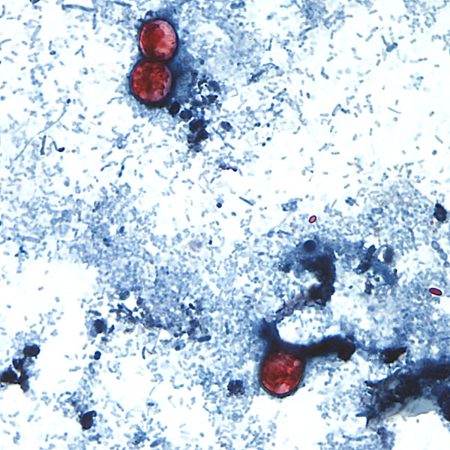
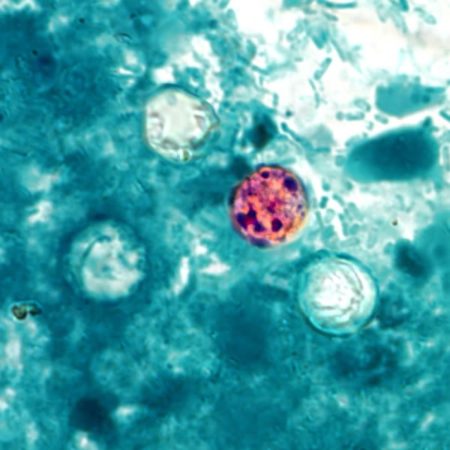
Cyclosporiasis is caused by a single-celled parasite, cyclospora, that spreads through fecal material. It can infect a person’s gut after consuming food or water contaminated by feces.
Common symptoms include watery diarrhea, a loss of appetite, cramping, nausea, and fatigue. Past outbreaks have been associated with leafy greens and other produce, said Rosemary Trout, an associate professor of food science at Drexel University.
The disease doesn’t spread directly from person to person. It becomes infectious after one to two weeks outside the body, and infected people may not immediately develop symptoms.
“It can take two days to two weeks for symptoms to appear,” said Akhil Vaidya, a distinguished professor in the Department of Microbiology & Immunology at Drexel’s College of Medicine.
“That has been the challenge for tracking where the parasite came from. Most likely it’s in some produce, but which produce it’s coming from is not really clear. People don’t remember what they ate two weeks back.”
How do health officials track cyclosporiasis?
Health officials in 47 states, including New Jersey and Delaware, are required by law to report cyclosporiasis cases to the CDC.
Pennsylvania is among a handful of states where doctors are not required to report cases to health officials, but they do so on a voluntary basis, and state officials investigate and submit case reports to the CDC.
A federal foodborne illness surveillance system, FoodNet, stopped tracking cyclosporiasis last year.
But that program’s goal is to “look at trends over time to inform policy and prevention activities,” not monitor active outbreaks, and only drew data from 10 sites around the country, the CDC’s Biggerstaff said.
“[FoodNet] doesn’t give us the data we have from national surveillance,” she said. That broader program is “unchanged,” she said.
Are there cases in the Philly area?
Though Pennsylvania borders Ohio and West Virginia, two states involved in an ongoing outbreak, cases here have been relatively low. So far this year, state health officials have reported 28 cases, 14 of them in Southeastern Pennsylvania.
New Jersey has reported between 31 and 80 cases since May, when cyclosporiasis cases typically rise, according to the CDC. But health officials there said last week that the state is experiencing “normal seasonal circulation without known clusters or outbreaks.”
Delaware has not reported any cases since May 1, the CDC said.
What about cases elsewhere?
Cases in Michigan, Ohio, Kentucky, and West Virginia are considered part of a “multistate outbreak” that is likely tied to a common source, Biggerstaff said. But it’s still unclear what that source is.
Though the CDC has lagged behind states in confirming cases so far, the agency has confirmed 1,645 cyclosporiasis cases since May, and is monitoring 5,100 additional reported cases that will “require additional analysis to confirm,” Biggerstaff said.
How is cyclosporiasis prevented?
Good handwashing practices are the first line of defense against cyclosporiasis: Wash your hands for at least 20 seconds in hot, soapy water.
Washing produce also helps, but rinsing does not necessarily remove all traces of cyclospora, said Trout, the food safety professor. Heating produce to 150 degrees Fahrenheit can kill the parasite.
Trout said that higher-risk groups — immunocompromised people, young children, elderly people, and pregnant women — may want to avoid fresh produce and instead opt for frozen or canned fruit and vegetables.
Most of those products have been treated with heat at some point in their packaging process.
“If you are in a high risk population, or very worried about it, it’s valid,” she said. “The case number is very high, and it’s proximate to our state.”
Delaware became the seventh state to name a surgeon general with the appointment Monday of a physician to serve as the state’s “principal public health communicator” and advise Gov. Matt Meyer on health matters.
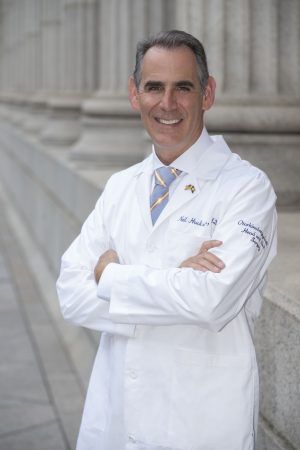
Neil Hockstein, an otolaryngologist who chairs Delaware’s Health Care Commission, will helm public health measures.
Meyer, a Democrat, said the appointment grew out of state government efforts to reassure residents after a chaotic period for U.S. public health, with Robert F. Kennedy Jr., a longtime anti-vaccine activist, leading federal health agencies under President Donald Trump’s administration.
“We live in a time where the information coming from the federal government is not evidence-driven. It’s not fact-based,” he said.
Last year, Delaware joined Pennsylvania and other Northeastern states in a public health coalition to surveil infectious diseases and promote vaccination, joining several states also launching their own public health initiatives in response to the federal changes.
“Traditionally, we’ve been able to rely on the federal government for environmental protection, for food assistance, for reliable health and weather information,” Meyer said. “Now there’s a lot of loss of trust, and in so many ways we’re saying, ‘How can states pick up the mantle?’”
Pennsylvania has a physician general, a similar position. New Jersey does not have a surgeon general.
The Delaware Healthcare Association, which represents the state’s hospitals and health systems, called Hockstein an “invaluable, unrelating advocate” and applauded the creation of the position.
Delaware’s surgeon general will report to Secretary of Health Christen Linke Young, who said the position will help reach residents not already receiving services through her department.
“His job, really, is to think about the whole [public health] ecosystem and to speak to people in a way that is broader than the particular clients who receive particular services from us,” she said.
Republican State Sen. Eric Buckson, who represents parts of Kent County, said the state “already has everyone in place to make sure that the state of Delaware is getting the information it needs to make the best decisions.”
“Do we need this position generated on the premise the current administration is going to somehow mislead Delaware?” he said, adding that he believes Kennedy has “done an excellent job of provoking a conversation.”
A new surgeon general’s focus
Hockstein plans to prioritize “foundational” public health initiatives such as promoting vaccination and ensuring access to clean water and food, along with issues like adequate access to healthcare, especially among older residents.
“More people will die because they have inadequate access to healthcare in Delaware than will die of measles, mumps, or rubella this year,” he said, citing infectious diseases now rising as vaccine rates have declined.
Hockstein said he sees his role as twofold: communicating about health initiatives with the public while supporting healthcare workers.
“They’re hurting right now, and I think having a voice that understands what they do on a daily basis and the threats that they’re feeling is important.”
He said he still plans to see patients for about eight hours a week.
Meyer said he also wants Hockstein to focus on adolescent mental health, partnering with local school districts to raise awareness about the issue.
“It really needs to be attacked with a public health mindset,” he said. “We have an epidemic of loneliness. We have children who know how to interact with their phones and with video games, but not with each other.”
Sokah McNear had just handed a customer a spiral potato from her stand at the Southeast Asian Market in South Philadelphia on Saturday afternoon when her husband pointed to the dark clouds that had suddenly gathered in the sky.
“I said, ‘OK, this is your last potato,’” recalled McNear, the vice president of the vendors’ association at the long-running outdoor market in FDR Park. She switched off her stove, and nearly a dozen friends and family members who had been working the stall with her started to pack up.
Within minutes, they were caught in a torrential downpour. Then came the winds, whipping through dozens of tents across the market.
McNear and her family were struggling to keep their tent from flying away when another vendor raced by, yelling that it was no longer safe to stay outside. As branches cracked and fell from nearby trees, they abandoned the tent and ran to their car.
“We sat in there for maybe five minutes. Then we came out and saw the devastation,” McNear recounted on Sunday.
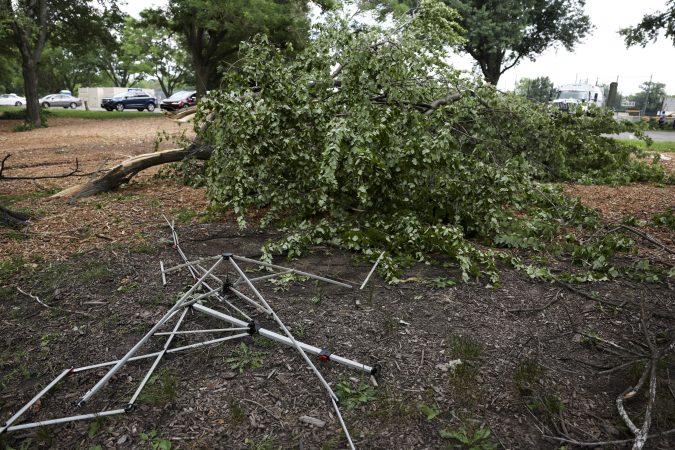
All of the market’s 53 tents were damaged. Tables were overturned, with ruined food and clothing scattered throughout the market. Two vendors suffered minor injuries when a tree branch fell on their tent.
Flying debris left a cut on a customer’s nose, said Sonetha Svay, who sells cookies and bagels at the market. “Everything was just flying. We really didn’t know what to do — we just hung on,” she said.
Eventually, she sheltered in her car with the woman and two other customers. A tree branch also fell on a tent near hers, she said, but the vendors working there had already fled.
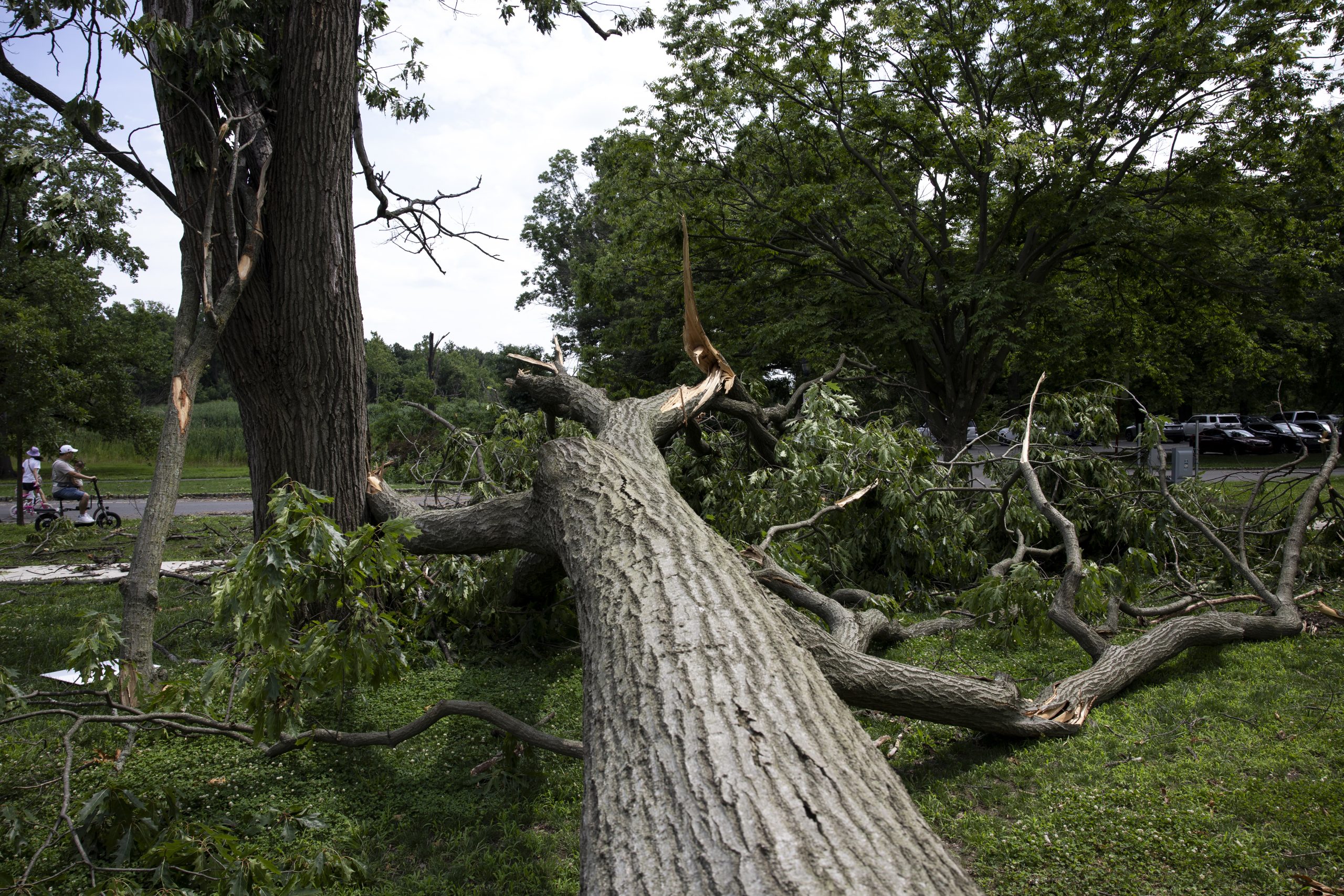
A large downed tree near the Anna C. Verna Playground at FDR Park in South Philly on Sunday, July 12, 2026. The Southeast Asian Market, which was also damaged, is near the playground. On Saturday severe thunderstorms caused damage across the region.Monica Herndon / Staff Photographer
Afterward, Svay, McNear, and other vendors picked through what was left of the market in shock.
Melissa Mgar, the vendors’ association secretary, had raced home with her three young children after a falling tree branch narrowly missed their car. She returned to find all three of her family’s tents destroyed. “One was crumpled into a ball,” she said.
Food inside coolers had survived, but nearly everything else — including supplies for barbecue and papaya salad — was lost.
Mgar, who has been selling at the market for more than 20 years, estimated her losses at around $1,500. She said she believed inventory at her neighbor’s clothing tent next door was “completely damaged.” Svay also lost her tent and food and estimated damages around $1,000.
Between ruined food and other merchandise and broken tents and equipment, most stalls likely sustained damage between $500 and $1,000, McNear said.
Vendors have already been struggling this season with market closures related to high-profile events like the World Cup at the sports stadium complex across the street from FDR Park, McNear said. Food and other supplies are more expensive now, too.
When she first saw the damage, McNear said, she panicked, worrying that vendors or customers had been injured. Once she made sure no one was seriously hurt, she said, her mind turned to the impact on the market. “These are people’s livelihoods,” she said.
By Sunday, the market was still closed for safety reasons. “You don’t want any more of these branches to fall,” McNear said.
Most vendors had managed to clean up what was left of their tents. Market organizers were encouraging donations from the public to help vendors rebuild. A “Dolla Holla” sale set for next weekend was postponed.
Trees had fallen all over the park, and the Friends of FDR Park marshaled volunteers to help clear debris. Park director John Murawski said he was too busy overseeing cleaning operations to comment. On the park’s Instagram account, staff noted that the storm had also caused flooding throughout the park.
McNear said that the market’s vendors are resilient and determined to bounce back from an unexpected setback.
“If you see any of the videos [from the market cleanup], everyone is still smiling. Everyone has such a positive attitude. Even with the devastation, we’re helping each other as a community,” she said.
Added Mgar: “After the storm, it’s going to be sunshine.”
Chester County health officials confirmed two measles cases in residents this week as the highly contagious disease continues to spread in Southeastern and Central Pennsylvania.
The county has now seen four cases since late June, in addition to one case recorded this winter.
The newly reported cases bring Pennsylvania’s tally to 101 measles cases this year, more than six times the cases confirmed in 2025.
An ongoing outbreak centered in Lancaster County, where 52 residents have been sickened since April, is the state’s worst in three decades.
It’s unclear whether the cases in Chester County are connected to the Lancaster outbreak, said Nancy Sullivan, the supervisor of the disease investigation and surveillance program at the county health department.
The latest cases show the virus “is circulating in the community, particularly the western part of Chester County,” Sullivan said.
(function() {
var l2 = function() {
new pym.Parent(‘HE_MEASLES7.html’,
‘https://media.inquirer.com/storage/inquirer/projects/innovation/arcgis_iframe/HE_MEASLES7.html’);
};
if (typeof(pym) === ‘undefined’) {
var h = document.getElementsByTagName(‘head’)[0],
s = document.createElement(‘script’);
s.type = ‘text/javascript’;
s.src = ‘https://pym.nprapps.org/pym.v1.min.js’;
s.onload = l2;
h.appendChild(s);
} else {
l2();
}
})();
Health department staff in Chester County, which borders Lancaster County, have sought to contain the outbreak by conducting contact tracing for months.
But it can be tricky to link patients through their contacts to other confirmed cases.
“It’s difficult for some individuals to establish who they’ve been in contact with. Sometimes they’re unsure,” Sullivan said.
All of the patients infected in Chester County were either unvaccinated or could not prove that they were immune to the virus, which can infect up to 90% of unvaccinated people exposed to it.
Several patients this summer have been hospitalized for serious electrolyte abnormalities and liver and kidney dysfunction, physicians in Lancaster and Dauphin Counties have reported.
Sullivan said that no Chester County residents have required hospitalization so far. All had tested positive for measles after they sought treatment at local healthcare facilities, she said.
Symptoms of measles include a fever, a cough, and a runny nose — similar to other respiratory diseases — that often emerge before patients develop a telltale rash.
But the disease has no specific treatments and can cause serious complications.
County officials had begun preparing for a potential measles outbreak about two years ago, Sullivan said, developing a new software system that made it easier for health workers to track cases and analyze data on an outbreak.
The county is also increasing outreach to residents about the importance of vaccination.
“We’re continuing to push the message of vaccination, checking immunity, speaking to your provider about your potential risk to developing measles, making sure people know where they can get vaccinated,” Sullivan said.
Countywide, 94.5% of kindergarteners were vaccinated against measles in the 2024-2025 school year, the last for which data is available. That’s just below the 95% threshold that scientists consider necessary to prevent the spread of the virus.
The county and state health departments have started recommending that providers offer measles, mumps, and rubella vaccinations to infants at 6 months old.
Typically, children receive an MMR dose at around 1 year old and before entering kindergarten. Under the new recommendation, a “dose zero” is given at 6 months and provides additional protection before children receive two more doses of the vaccine.
Health officials in Philadelphia, to the east of Chester County, are also recommending the “dose zero” for infants whose parents plan travel to Chester County or any of the other seven counties with measles cases.
State and local health officials are tracking dozens of cases of an illness caused by an intestinal parasite with symptoms including “explosive” bowel movements.
Cyclosporiasis, caused by the parasite Cyclospora caytanensis, spreads through contaminated food and water.
Pennsylvania had recorded 28 cases this year as of last week, including 14 in Southeastern Pennsylvania. The state identified 40 cases in 2025.
People sometimes contract cyclosporiasis when traveling in tropical or subtropical regions of the world where Cyclospora is endemic, but outbreaks also occur in the United States.
Cases of cyclosporiasis can occur any time of year but tend to rise in the spring and summer months.
Nationwide, the Centers for Disease Control and Prevention’s website says ithas tracked 145 cases in 17 states between May 1 and June 16, including between 1 and 10 people sickened in both Pennsylvania and New Jersey during that time. All those cases were acquired in the United States.
The agency is also tracking an additional 45 cases reported in people who contracted the parasite while traveling outside the country.
Nationwide, 23 people have been hospitalized for cyclosporiasis since May 1.
The CDC warned that the true number of cyclosporiasis cases is likely higher, as some people recover without seeing a doctor or getting tested.
It is not typically life-threatening, state health officials said, but can last more than a month if not treated.
The CDC said it is working with state and local health departments around the country to learn how cyclosporiasis cases have spread, but there is no evidence that the 145 cases reported since May are linked.
“Investigations to identify potential clusters and potential sources of illness are ongoing,” the agency said.
Pennsylvanians experiencing symptoms of cyclosporiasis should call their doctors, state health officials said.
Unlike most states, Pennsylvania health providers are not required to report cyclosporiasis cases to health authorities, but the state health department still collects reports on confirmed cases and notifies federal health officials weekly.
On a small Lancaster County farm last month, five of the eight King siblings sprawled on the living room floor, sucking on ice pops and listening to calming music, trying not to scratch their itchy skin.
The next county over, in Hershey, children were lying in hospital beds as their immune systems battled an infection damaging their organs.
Pennsylvania is now seeing its worst measles outbreak in 30 years, centered around rural counties just west of the Philadelphia metro area. Lancaster County has emerged as a particular hot spot, with 51 of the 89 total measles cases reported this year in the state.
Anti-vaccination sentiment is prevalent in Lancaster County, where vaccination rates among kindergarteners are some of the lowest in the state. Known for its agricultural bounty and the Amish and Mennonite communities that dot its rural landscapes, Lancaster is also home to the state’s eighth-largest city with an economy heavily supported by tourism and entertainment.
In Lancaster, doctors say many are flocking to local clinics and pop-up vaccination events as cases rise. But others, like the King family, remain resolute in their decision not to vaccinate, instead preparing to ride out what they hope will be an inconvenient summer interruption that builds character and family bonding.
The family isolated in their home for weeks in June while all eight unvaccinated children, who range in age from a 1 to 15, recovered from measles. Their 14-year-old son experienced the most severe symptoms, and went to the emergency department when coughing and nausea rendered him unable to keep down water or medicine.
“Measles isn’t fun, seeing your kids sick isn’t fun,” said Gina King, 41, who lives outside New Holland. But, she added, “I know this is going to be added to the King family core memories.”
The 89 cases Pennsylvania has recorded so far this year exceed by more than five times the cases recorded in 2025. Doctors say the official tally may be an undercount, with many cases going unreported.
An Inquirer analysis found both the metropolis and state increasingly have become vulnerable to a major outbreak.In the 2024-2025 school year, kindergarten vaccination rates in 50 of Pennsylvania’s 67 counties were below the 95% vaccination rate scientists consider necessary to keep the virus from spreading. And even in counties with vaccination rates near so-called “herd immunity,” school-level vaccine data show that susceptible communities pockmark the region.
The majority of measles cases resolve in weeks with mild-to-moderate flulike symptoms, but the disease can take life-altering and even deadly turns, especially for young children.
Doctors and nurses who spoke to The Inquirer could not comment on the King family’s experience because they did not treat them.
But they cautioned that they have seen the harm measles can do to a child’s body: neurological damage, respiratory infections, and pneumonia, which can lead to death.
“Each one of those cases where a child suffers something really devastating — it only takes seeing one for it to really be something that hits home very hard,” said Evan Shirey, a pediatric infectious disease physician who has treated several children with measles at Penn State Health Golisano Children’s Hospital this year.
On the front lines of measles
As a medical student, Shirey never expected he would treat a measles case himself. By 2000, vaccination rates across the United States were so high that the disease was declared eliminated.
“I read the textbooks like they were history books,” Shirey said.
But as vaccination rates decreased, he and other providers began preparing in the last couple of years. He feared inevitably seeing cases like the several adults and children treated at Penn State hospitals this year.
He declined to share details on the cases, saying hospitalization numbers are low enough that doing so would risk compromising patients’ privacy.
Shirey said he’s also fielding “constant” phone calls from pediatricians all over the state as they prepare for — or deal with — emerging measles cases.
Intensive protection measures implemented at Penn State hospitals in Dauphin County, for example, include testing patients with respiratory symptoms, or who were potentially exposed to measles, and isolating them while they wait for test results.
The virus is so contagious, it can infect nine in 10 people who haven’t been vaccinated.
“Airborne diseases are a whole other world,” said Nancy Himmelberger, a critical care registered nurse at Golisano Children’s Hospital and the vice president of its nurses’ union, which is affiliated with SEIU.
Shirey tries to explain to parents why vaccination is the best defense against measles. “I do encounter a lot of parents who truly want the best for their child, and they’re afraid because of what they see on TV or social media.”
The Centers for Disease Control and Prevention recommends children receive two doses of the measles, mumps, rubella (MMR) vaccine at 1 year of age and before starting kindergarten, typically around age 5.
The vaccine is among those required for students to attend school, though Pennsylvania’s lax rules allow families to opt out for medical, religious, or philosophical reasons.
In response to rising cases, Pennsylvania earlier this year updated its guidelines to recommend babies be given their first dose as early as 6 months.
Once someone is infected with measles, Shirey stresses, no treatments are available that specifically target the virus.
Vitamin A may be given to children who have been hospitalized with severe measles symptoms, but it is not a cure and cannot prevent the disease. Excessive amounts of vitamin A can be dangerous.
“For measles, it is supportive care and trying to manage the complications that occur,” Shirey said.
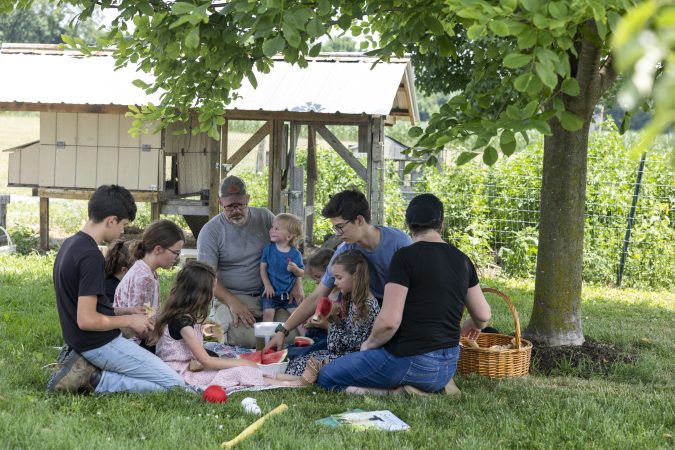
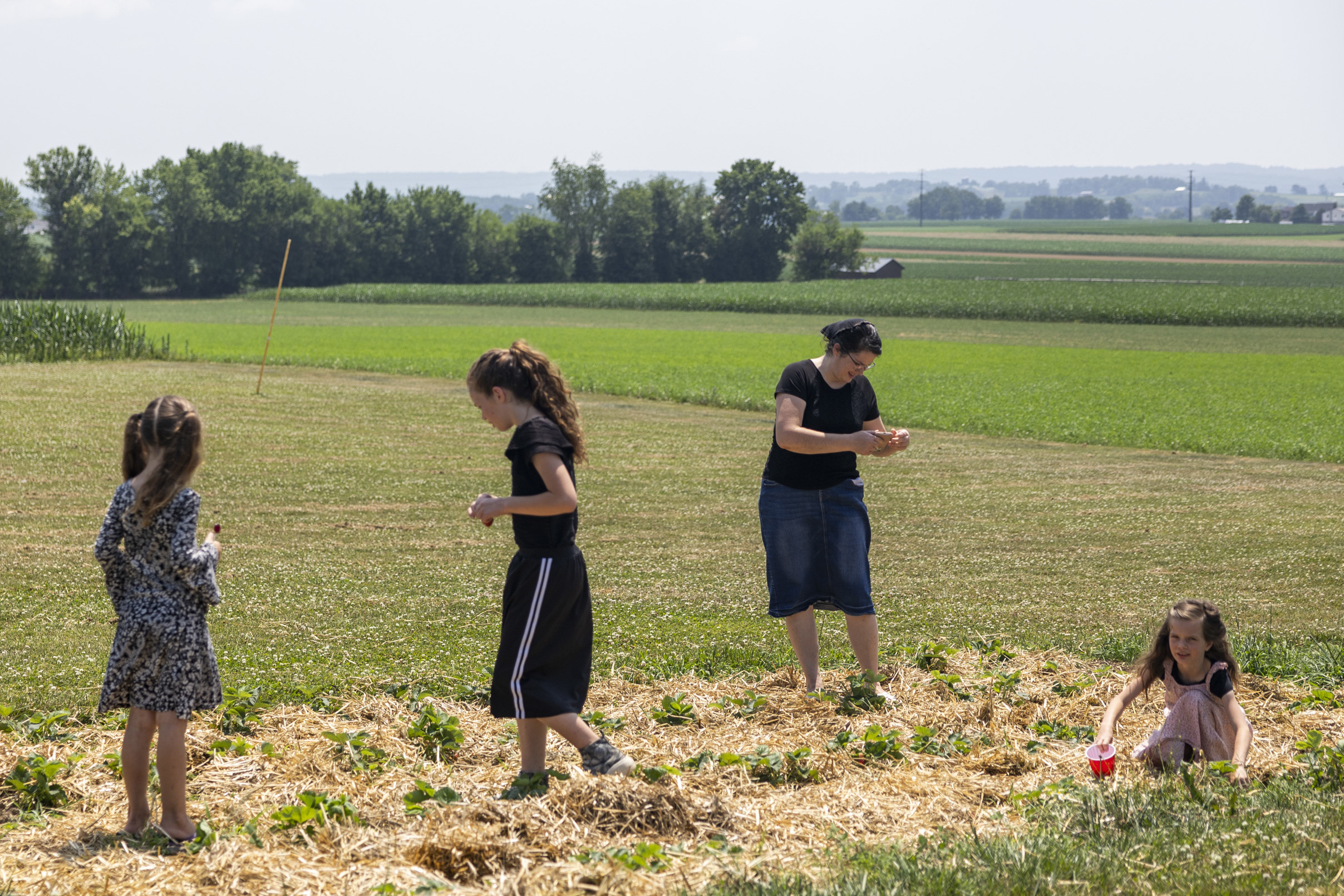
Gina King and her daughters pick strawberries at their home in Lancaster County. Tyger Williams / Staff Photograp
Trying to change vaccine perspectives
When King and her husband, Shawn, began their family 15 years ago, they thought carefully about each vaccine recommended for their babies. They read package labels and looked up ingredients. For each shot, they considered whether they were more comfortable with the risk of side effects from the vaccine, or the risk of illness from skipping it.
When their pediatrician recommended a hepatitis shot before traveling to India, the Kings decided the risk of the disease was greater than any potential side effects.
But when it came to the measles, mumps, rubella (MMR) vaccine, they were uncomfortable that the rubella portion of the vaccine was developed using cells of an aborted fetus.
Vaccines themselves do not contain fetal material. And most major religions promote vaccination, even if they oppose abortion, reasoning that parents have a moral duty to protect their children and the health of the public.
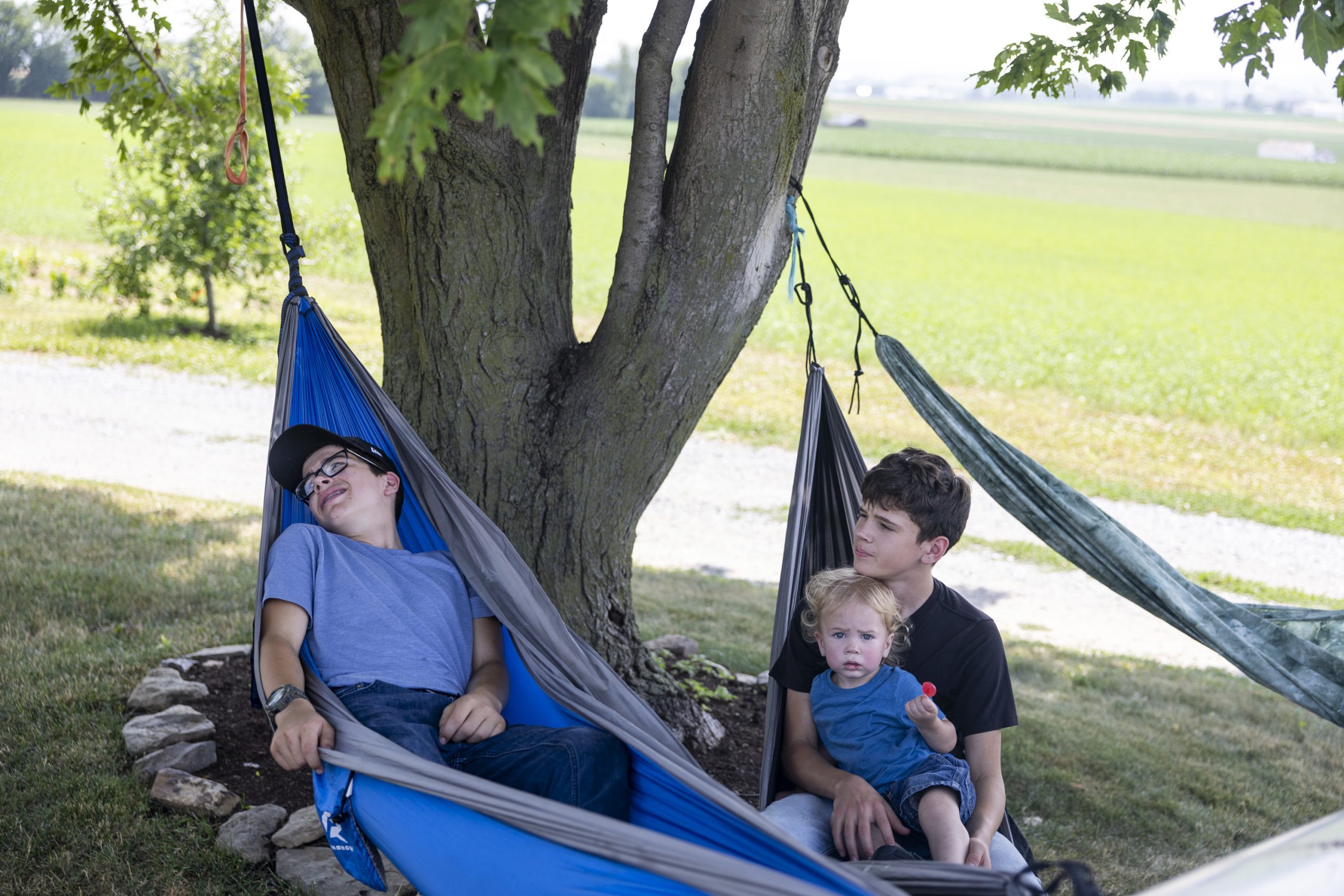
Gina and Shawn King’s sons relax in hammocks after being cooped up inside with measles for several days. Tyger Williams / Staff Photographer
Measles at home
The Kings weren’t aware their children had been exposed to measles, but knew cases were spreading locally. When their two oldest sons, aged 14 and 15, began showing symptoms, they locked down their home.
They appreciated how people can be contagious before and after they experience symptoms. They have relatives with cancer and Down syndrome, conditions that could put them at risk of severe illness if they contracted measles.
“If you made the choice to not vaccinate, you knew there was a risk of getting sick,” King wrote in a tip sheet she created to share with other families. “We should care about others enough to be willing to make some sacrifices to protect vulnerable people.”
Grandparents offered to help care for the children, but the Kings declined for fear of getting anyone else sick.
Instead, friends and family left treats for the kids on the front porch, picked up grocery orders, and checked in through video chat.
Days four, five, and six, were the thorniest, King said. She draped chilled washcloths over the foreheads of her usually independent teens, brought them tea, and read books to them.
She spent at least one night sitting beside the bed of her 14-year-old son, whose coughing and nausea were so bad he couldn’t eat or drink, and she worried he’d become dehydrated.
“I just wanted to be there and keep an eye on him,” she said.
A few days after the boys started feeling well enough to go outside, the five girls, who range in age from 4 to 12, were sick. The baby experiencedthe most mild symptoms among the siblings.
King, who is vaccinated, also got sick, though her husband, who is not vaccinated, has yet to develop symptoms. Vaccinated people, in rare instances, can contract measles, and infection is more likely in an outbreak.
After being inside all day, it became part of the family’s routine to tuck the kids into the back of their family ATV with blankets and more ice pops, and ride around their property to say goodnight to the sheep, cows, horses, and fruit trees.
(function() {
var l2 = function() {
new pym.Parent(‘HE_MEASLES6.html’,
‘https://media.inquirer.com/storage/inquirer/projects/innovation/arcgis_iframe/HE_MEASLES6.html’);
};
if (typeof(pym) === ‘undefined’) {
var h = document.getElementsByTagName(‘head’)[0],
s = document.createElement(‘script’);
s.type = ‘text/javascript’;
s.src = ‘https://pym.nprapps.org/pym.v1.min.js’;
s.onload = l2;
h.appendChild(s);
} else {
l2();
}
})();
Community support
Elsewhere in Lancaster, church communities and friend groups are encouraging people who are sick to stay home, as well asthose who are unvaccinated with a higher risk of severe illness.
Claudia Beiler, a Lancaster mother of five and a Christian wellness influencer,said she has dropped off vitamins, coffee, and dinner for friends and others in her community who were quarantining at home.
Beiler has posted frequently to her more than 110,000 Instagram followers about her decision not to vaccinate her children. She has also offered tips about how to weather measles cases at home.
Like the Kings, she says families who don’t vaccinate must avoid spreading the virus to vulnerable people.
“There’s a seriousness I’m proud of,” she said. “It feels like a lot of care and kindness.”
At Penn Medicine Lancaster General Hospital, physician JeffreyMartin is heartened when he hears that residents have decided to isolate themselves when diagnosed with the virus. He sees it as a measure of the community spirit inherent to Lancaster County.
But isolating once symptoms emerge isn’t enough to protect the community, since the virus can spread days before the first sneeze or cough. The disease’s signature rash typically does not appear for several days.
“‘I can accept the risk’ doesn’t play well with infectious disease,” he said. “Creating space for people to think about that on another level is really important.”
Amid the latest outbreak, Martin said, clinics run by the state health department and Penn Medicine have seen high attendance, with unvaccinated patients choosing to get the shot.
Martin and his colleagues don’t ask many questions about why: “We’re just thankful that people are showing up,” he said.
Two Chester County residents have been diagnosed with measles, local health officials said on Tuesday, the first cases reported in the Philadelphia region this summer.
Pennsylvania has identified 88 measles cases so far this year, the highest case count in three decades and more than five times the cases reported in 2025.
Chester is now the seventh Pennsylvania county with confirmed measles cases since April.
Jeanne Franklin, the county’s public health director, said it was too early to tell whether the two adults’ cases were linked to a growing measles outbreak centered in Lancaster County, which borders Chester.
Health workers in Chester County have conducted contact tracing regularly for months, speaking to about 100 people since the beginning of the year who had come into contact with someone with measles.
“The process is working,” Franklin said. She added that the county is preparing to identify more cases as they continue contact tracing.
The two Chester County residents with measles had initially sought care in Lancaster County, she said, and county officials were still working to determine their vaccination status.
Earlier in June, Delaware County health officials announced they had detected measles in wastewater samples, meaning a person with measles — either a resident or a person passing through the county — had used a bathroom connected to the county’s public water supply.
Since late April, officials have recorded 43 cases in Lancaster County, 20 in Lebanon County, six in Northumberland County, two each in Berks, Chester, and Dauphin Counties, and one in York County. (A winter outbreak saw 12 cases among Chester, Montgomery, and Lancaster Counties.)
Franklin said her department is increasing public communications about the measles risk, and encouraging local health providers to vaccinate infants with a “dose zero” of the measles, mumps, and rubella shot.
Typically, children receive an MMR dose at around 1 year old and before entering kindergarten. A “dose zero” is given at six months and provides additional protection before children receive two more doses of the vaccine.
State officials last week also recommended that physicians in affected areas provide early measles vaccinations to infants and young children.
Chester County officials are also working with the state to analyze school-level vaccination data to pinpoint at-risk communities, Franklin said.
Overall, 94.5% of Chester County kindergarteners were vaccinated against measles in the 2024-2025 school year, the last for which data is available. That’s just below the 95% threshold required to prevent the spread of the virus.
(function() {
var l2 = function() {
new pym.Parent(‘HE_MEASLES4.html’,
‘https://media.inquirer.com/storage/inquirer/projects/innovation/arcgis_iframe/HE_MEASLES4.html’);
};
if (typeof(pym) === ‘undefined’) {
var h = document.getElementsByTagName(‘head’)[0],
s = document.createElement(‘script’);
s.type = ‘text/javascript’;
s.src = ‘https://pym.nprapps.org/pym.v1.min.js’;
s.onload = l2;
h.appendChild(s);
} else {
l2();
}
})();
Spread may be wider than cases reported
Some providers in Lancaster County have said that they fear measles is spreading more widely than state officials have been able to track, either because patients don’t realize the importance of informing health officials about their condition or are avoiding providers.
Chester County also is contending with uncertainty. Franklin said that some residents who have had contact with infected patients have told health workers that they’d rather not get tested for measles.
“They say, ‘I don’t want to be tested. Let this run the course,’” she said.
Contact tracers stress that they’re not judging that decision, she said. But the department emphasizes that they need residents to work with contact tracers, so other potentially exposed families can make informed decisions about their health.
Franklin urged Chester County residents to check their vaccination records to ensure they are protected against measles, which can infect up to 90% of unvaccinated people exposed to the disease.
If they can’t find their records, a primary care physician can order a test to determine whether they’re immune.
Residents should also look out for symptoms of measles, including a fever, a cough, and a runny nose — similar to other respiratory diseases — that often emerge before patients develop a telltale rash.
Several people sickened this summer have experienced severe illness and required hospitalization for serious electrolyte abnormalities and liver and kidney dysfunction, according to physicians in Lancaster County.
“If you previously decided not to get a vaccine, this is the time to reconsider, based on what’s going on,” Franklin said. “The window to get a vaccine once you’ve been exposed is very small.”
Nearly 1,200 nurses at Jefferson Einstein Philadelphia Hospital this week ratified a contract that includes raises and additional staffing at the Logan hospital.
The nurses, part of the Pennsylvania Association of Staff Nurses and Allied Professionals union, reached a contract agreement with Jefferson Health officials after authorizing union officials to call a strike last week.
Jefferson officials said in a statement that the three-year contract “reflects a thoughtful and collaborative approach, balancing the financial realities facing healthcare organizations today with our ongoing commitment to invest in the communities we serve.”
Nurses had called for assurances that the hospital will not close departments; the health system announced plans earlier this year to close several pediatric outpatient clinics that are staffed by non-union nurses.
As part of the new contract, union officials said in a news release, the hospital will add staff to behavioral health units. And a committee of nurses and nursing directors must agree with any plans to reduce staffing levels in any hospital department.
The union negotiated wage increases of 10% to 14% over the course of the three-year contract. In addition, nurses who work weekends will also see higher pay rates to retain staffing levels on weekends.
The hospital also agreed to continue contributing to nurses’ pensions, and cannot “negatively impact” sick and vacation time. The union said Jefferson employees will also save money on health insurance costs thanks to changes to pediatric-care coverage.
“We’re trying to make Jefferson Einstein a more desirable place to work by enhancing our benefits,” said Jyll Kurczewski, a registered nurse in Einstein’s emergency department and the Einstein union’s co-president, in a statement.
“There are many healthcare networks in the area where RNs can choose to work. We want them to want to be at Einstein and to stay at Einstein.”
A Jefferson spokesperson said that wages and benefits in the contract are “consistent with Jefferson’s compensation philosophy and include the support we provide to all the dedicated professionals who deliver exceptional patient care every day.”
Unionized ChristianaCare doctors — members of the first healthcare union in Delaware — ratified their first contract with the Wilmington-based health system this week.
The contract covers three years and includes provisions to establish “formal structures for physician input on issues affecting clinical practice and patient care,” the union said in a statement.
The contract also establishes a procedure for physicians to file grievances if they feel the contract has been violated, and forms labor management committees to address workplace safety concerns, union officials said.
“This is a major step forward in ensuring physicians have a meaningful voice at ChristianaCare,” Nisha Gandhi, an advanced heart failure cardiologist at the health system, said in a statement.
A ChristianaCare spokesperson said the contract also included provisions against striking and “a mutual commitment to collaboration, stability and long-term partnership.”
ChristianaCare has medical locations in Delaware, Southeastern Pennsylvania, and Maryland.
Attending physicians at ChristianaCare voted to unionize in 2024, citing increased workloads with little support for added administrative tasks. They were the first group of attending doctors to unionize in the Philadelphia area.
Since the 1980s, doctors have shifted from owning their own practices to opting for employment at hospitals and health systems. Just a quarter of physicians were self-employed in 2022, and unionization among physicians is growing.
Last year, hundreds of medical residents across several Philadelphia hospitals also voted to unionize, but unions of attending physicians, who have completed their medical training, are rarer.
Pennsylvania health officialshave now detected measles cases in York and Northumberland Counties as cases in Lancaster County, the center of an ongoing outbreak, continued to rise.
And the state health department is now recommending early measles vaccinations for infants beginning at 6 months in affected areas in an effort to protect them against the spread of the highly contagious disease, which is particularly risky for young children. The same precautions should be taken by families with infants traveling to these areas.
Six Pennsylvania counties have now seen measles cases since an outbreak was first confirmed in Lebanon County in April. In all, the state has reported 81 measles cases across eight counties in 2026, more than five times the cases reported in 2025.
(function() {
var l2 = function() {
new pym.Parent(‘HE_MEASLES.html’,
‘https://media.inquirer.com/storage/inquirer/projects/innovation/arcgis_iframe/HE_MEASLES.html’);
};
if (typeof(pym) === ‘undefined’) {
var h = document.getElementsByTagName(‘head’)[0],
s = document.createElement(‘script’);
s.type = ‘text/javascript’;
s.src = ‘https://pym.nprapps.org/pym.v1.min.js’;
s.onload = l2;
h.appendChild(s);
} else {
l2();
}
})();
State health officials said it was too early to tell how the latest cases in York and Northumberland Counties are connected to others in the region, but that contact tracing investigations are continuing. All cases were among people who had not received at least two doses of the measles, mumps, and rubella (MMR) or whose vaccination status was unclear.
As of Wednesday, six cases had been confirmed in Northumberland County, to the north of Dauphin County, and one case had been detected in York County, along Lancaster’s western border.
Lebanon County has reported 20 cases and Dauphin and Berks Counties have reported two cases each.
Lancaster County has seen 38 cases of measles since late April, with health officials confirming seven cases in the last two weeks. The area was at the center of a prior measles outbreak in January, when state health officials confirmed eight cases in Lancaster County and an additional four between Chester and Montgomery Counties.
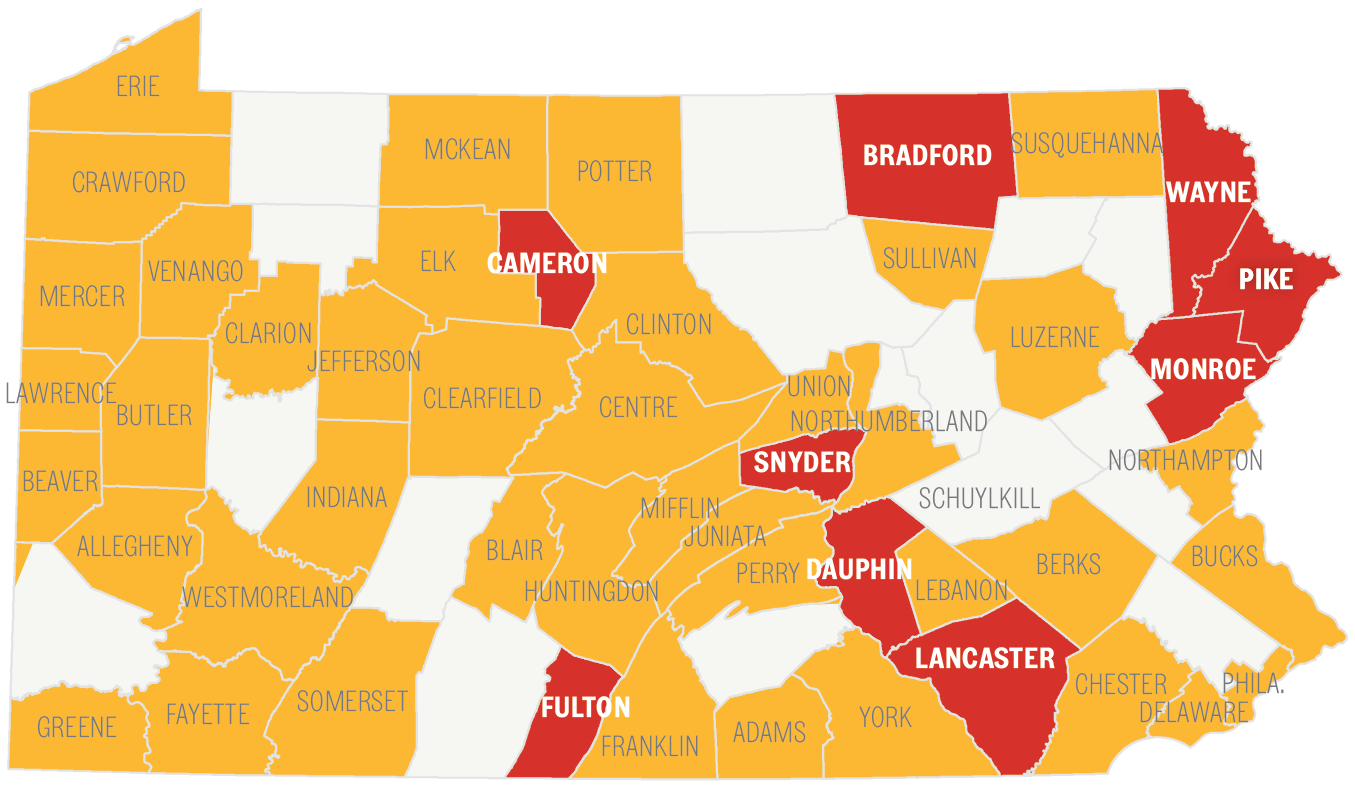
Vaccination rates among kindergarteners have decreased across Pennsylvania in recent years, and some counties affected in the current outbreak have particularly low rates, including Lancaster, where about 88.5% of kindergarten students are vaccinated. Health experts say that 95% of a community must be vaccinated to prevent the spread of the disease.
A map showing vaccination rates in kindergarteners for the 2024-2025 school year. Counties in yellow have vaccination rates between 95% and 90%. Counties in red have vaccination rates below 90%. To halt the spread of measles, at least 95% of a community must be vaccinated against the disease.John Duchneskie
Health officials have been conducting contact tracing to detect as many cases as possible. In the current outbreak, they have twice warned Lancaster residents that they could have been exposed to measles.
Shoppers and employees at a local Kohl’s were potentially exposed to the virus over four days after a staffer tested positive in late May, LancasterOnline reported. And a person with measles visited the Lancaster County Courthouse on June 3.
But doctors in Lancaster County say they fear some measles cases are going unreported, either because patients don’t understand the importance of tracking measles cases or because they fear repercussions.
No cases have been confirmed in the Philadelphia region during this outbreak. But Delaware County health officials said last week that they had detected measles in two wastewater samples, indicating that someone with measles had used a bathroom connected to the county’s public water supply. It was unclear if that person lived in the county or was passing through.
Measles can infect nine in 10 unvaccinated people who are exposed to it, and can linger in the air for up to two hours and incubate in patients for three weeks. The disease typically presents with a fever and a rash but can cause brain inflammation and pneumonia in serious cases.
Typically, children receive the first of two MMR vaccines at 1 year old, then a second between 4 and 6 years old.
But children as young as 6 months can receive an additional “dose zero” to protect them from the disease amid an outbreak. In its alert, the state health department said parents should vaccinate infants between 6 and 11 months with the “dose zero” if they live in affected areas or if they’re planning to travel there.
Those children should then receive additional MMR doses at 12 to 15 months and 4 to 6 years.
This “dose zero” is less effective than doses given at 1 year old, officials cautioned. But it’s 58% effective against measles when given at 6 to 8 months, and 83% effective when administered at 9 to 11 months.
“Early MMR vaccination is safe and provides modest protection when measles is spreading,” officials wrote in the alert.
Children older than 12 months who haven’t been vaccinated should get an MMR dose immediately, and a second 28 days later, health officials said. Unvaccinated adults, or those without evidence of immunity, should also get two MMR doses.
And anyone who has received one dose of the MMR vaccine in the past should get a second at least 28 days after their first, officials said.
Usually, children who received a first dose at around 12 months wait to get their second dose until they’re 4 to 6 years old. But in an outbreak situation, those children should get their second doses early — at least 28 days after their first shot.
Adults born before 1957 are typically considered immune, but healthcare workers in that age group who don’t have lab evidence of immunity or prior infection should consider getting vaccinated, state officials said.
Adults who received an inactivated measles vaccine between 1963 and 1967 are considered unvaccinated during an outbreak, and should also get two doses of the current MMR vaccine.
Pregnant people, people with severely weakened immune systems, and people who have a history of experiencing severe allergic reactions, like anaphylaxis, to a vaccine ingredient or to a previous dose of MMR cannot receive the vaccine.