A suspected case of measles led to a Jefferson County woman’s death on Saturday, county coroner Greg Furlong has confirmed.
The 40-year-old woman was unvaccinated and developed telltale symptoms of an infection after known exposures, Furlong said in an interview Sunday. She also had underlying respiratory conditions that would make her particularly vulnerable to complications, he said.
Furlong, an elected Republican, said the woman died Saturday morning and that his office had reported the death to the state health department.
The state health department said in a statement they were aware of the coroner’s report and conducting a “thorough review” of the case.
“We are in touch with the coroner and appreciate his commitment to keeping the public informed,” the statement said. The department “will provide the public with updated information when it becomes available,” itsaid.
The woman’s death certificate lists her cause of death as “acute on chronic hypoxemic and hypercapnic respiratory failure” due to “suspected measles,” chronic obstructive pulmonary disease, and asthma, Furlong told The Inquirer.
The certificate also lists “supplemental oxygen dependence” as a “significant condition contributing to death but not resulting in the underlying cause.”
The woman also had hypertension and high cholesterol, Furlong said.
Pennsylvania’s measles outbreak so far this year has sickened 676 people and hospitalized 124. Two other deaths, reported by the state as measles-associated have led to a politically-charged dispute with federal health officials over the nature of the deaths.
Jefferson County has reported 26 measles cases so far this year.
Furlong said the woman had serious respiratory issues and used supplemental oxygen 24 hours a day.
Family members told the coroner she declined to be tested for measles before her death, but she had been exposed to several people with both confirmed and unconfirmed cases of the highly contagious disease, Furlong said.
She developed measles symptoms, including a rash and a fever, several days before her death, he said.
“‘Suspected’ means they had all the symptoms, all the signs, and they were exposed,” he said.
Furlong declined to name her.
Unvaccinated people with respiratory conditions face greater risks
Paul Offit, a physician and vaccine expert who heads the Children’s Hospital of Philadelphia’s Vaccine Education Center, said patients with respiratory conditions are at particular risk from measles.
“This person was particularly compromised, with chronic obstructive pulmonary disease and asthma,” he said. “That’s a person who could well die from this virus.”
Measles can linger in the air for up to two hours and infect up to nine in 10 unvaccinated people. Two doses of a measles vaccine are 97% effective at preventing the disease.
Nearly every reported case of measles in Pennsylvania this year has occurred among people who were not fully vaccinated, although on Friday state officials said they had identified four cases in people “appropriately vaccinated for their age.” These “breakthrough cases” tend to be milder and less likely to infect others.
The two deaths reported last month were Pennsylvania’s first in three decades associated with measles.
According to the health department’s website on Pennsylvania’s measles outbreak, the state defines a “measles-associated death” as one that occurs within 30 days of symptom onset in a person with clinical evidence of infection and a positive laboratory test.
The state also considers additional information on a case, including their medical records and whether a person was exposed to measles before their death.
Deaths without lab evidence of infection, deaths of people who have fully recovered from measles before death, and deaths from unrelated causes, like a car crash, are not counted as measles-associated.
State and federal officials spar over reporting measles-associated deaths
In its latest update Friday, the CDC still had not listed two deaths reported by the state on its website highlighting data on ongoing measles outbreaks around the country.
State and federal officials have clashed over whether those deaths were tied to the state’s measles outbreak. In announcing the two deaths, Democratic Gov. Josh Shapiro criticized President Donald Trump’s Health and Human Services Secretary, Robert F. Kennedy Jr., for spreading misinformation about vaccine safety through his longtime anti-vaccine activism. Kennedy then accused the state of “fabricating” the deaths, although he later acknowledged one had been caused by measles.
Lancaster County’s coroner has said he investigated one death caused by measles, in an infant with a severe genetic disorder, and another in an infant who contracted measles before birth and died shortly after.
Four Pennsylvanians who were vaccinated against measles have contracted the highly contagious illness, state officials announced Friday.
Called “breakthrough cases,” such infections in vaccinated people are rare, but sometimes occur if someone’s immune system “did not respond as well” as most patients’ to the vaccine, the CDC says.
Other times, vaccinated people can become sickened by the virus if they’re exposed for a long period to the disease — like living in a house where multiple unvaccinated people have measles. Vaccinated people tend to have a milder illness when this happens, and they’re less likely to spread measles to others.
The four breakthrough cases reported in Pennsylvania occurred in three adults and one child in Centre, Jefferson, Lancaster, and Lycoming Counties.
The state said that all of them were “appropriately vaccinated for their given ages.” None required hospitalization.
Before Friday, the state had identified no cases this year in people who were fully vaccinated. The breakthrough cases reported Friday make up less than 1% of the total cases reported in the state this year.
“When community transmission rises and our overall case numbers increase, we see that a handful of people who were vaccinated will get measles. Even so, vaccination still provides the best protection,” Pennsylvania health secretary Debra Bogen said at a news briefing.
The Centers for Disease Control and Prevention estimates that about three in 100 people who received the two recommended doses of the measles, mumps, and rubella vaccine will contract the disease if exposed. About 7 in 100 people who received one dose will contract the disease.
Sarah Long, a professor of pediatrics at Drexel University College of Medicine who previously served on two federal committees to recommend and license vaccines, called cases in vaccinated people “oddities.”
“This is a fabulous vaccine and a fabulously transmissible virus,” she said, emphasizing that the vast majority of people who get measles are unvaccinated.
A growing outbreak
Pennsylvania is in the midst of the biggest measles outbreak in more than 30 years, with 676 cases reported and 124 people hospitalized as of Friday.
The state recorded 52 new cases in the last two days alone. Local and state health officials have noted that it’s likely many cases are going unreported.
The rapidly rising case count last month, especially among adults ages 25 and 49, merits attention, said Rémy Pasco, research associate at the University of Colorado who helped develop a measles outbreak simulator based on school vaccination rates. In past outbreaks nationally, cases have been more common among children who were not yet old enough to have received both MMR doses.
He said those patterns could indicate the virus reached a community where both adults and children were largely unvaccinated.
The state has reported two deaths associated with the outbreak — namely, deaths where evidence of measles is present, even when the disease may not be assessed by the coroner as the immediate cause of death.
In its latest update Friday, the CDC still had not listed the deaths on its website highlighting data on ongoing measles outbreaks around the country.
Lancaster County’s coroner has said he investigated one death caused by measles, in an infant with a severe genetic disorder, and another in an infant who contracted measles before birth and died shortly after. The coroner has said he does not believe measles caused that child’s death, but rather a lacerated spleen, yet prominent physicians have noted measles can weaken a person’s spleen, putting it at risk of rupture.
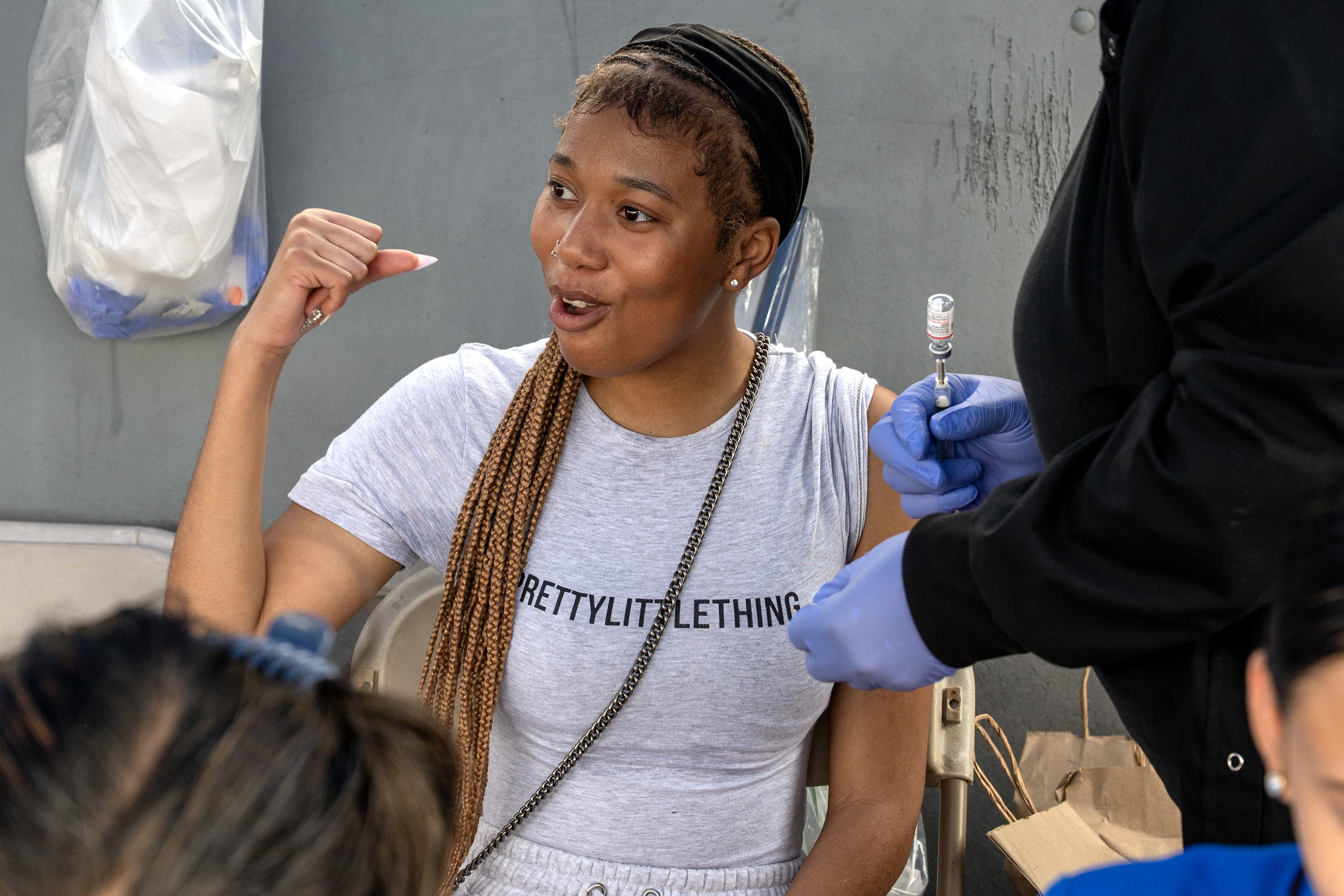
Amid the outbreak, Pennsylvania is seeing more interest in vaccination, Bogen said Friday. Typically, healthcare providers in the Commonwealth give out 25,000 doses of the MMR vaccine a month, she said. In August, they gave out 46,000.
“That is 46,000 times Pennsylvanians have chosen to help stop this outbreak by protecting themselves and others,” Bogen said.
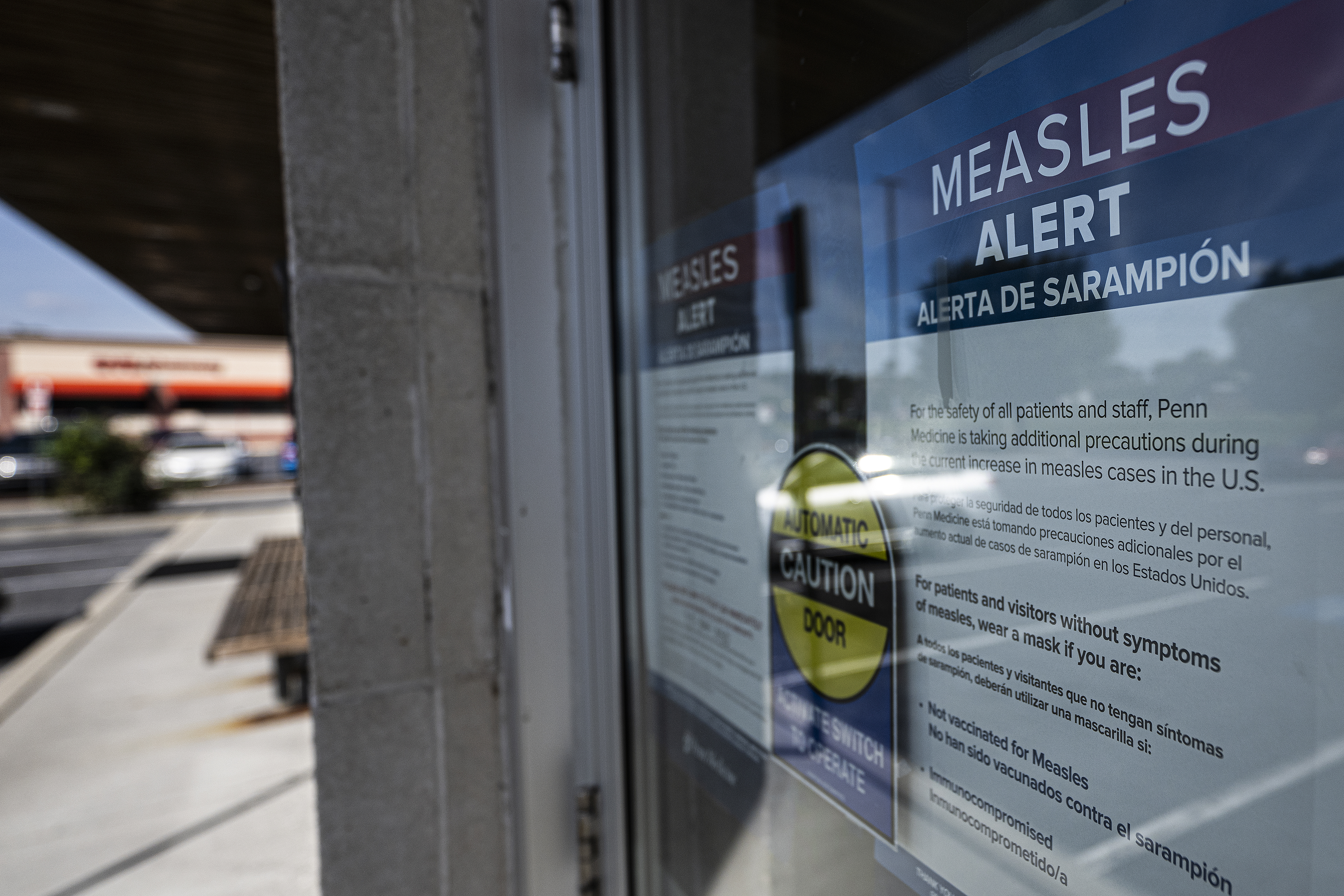
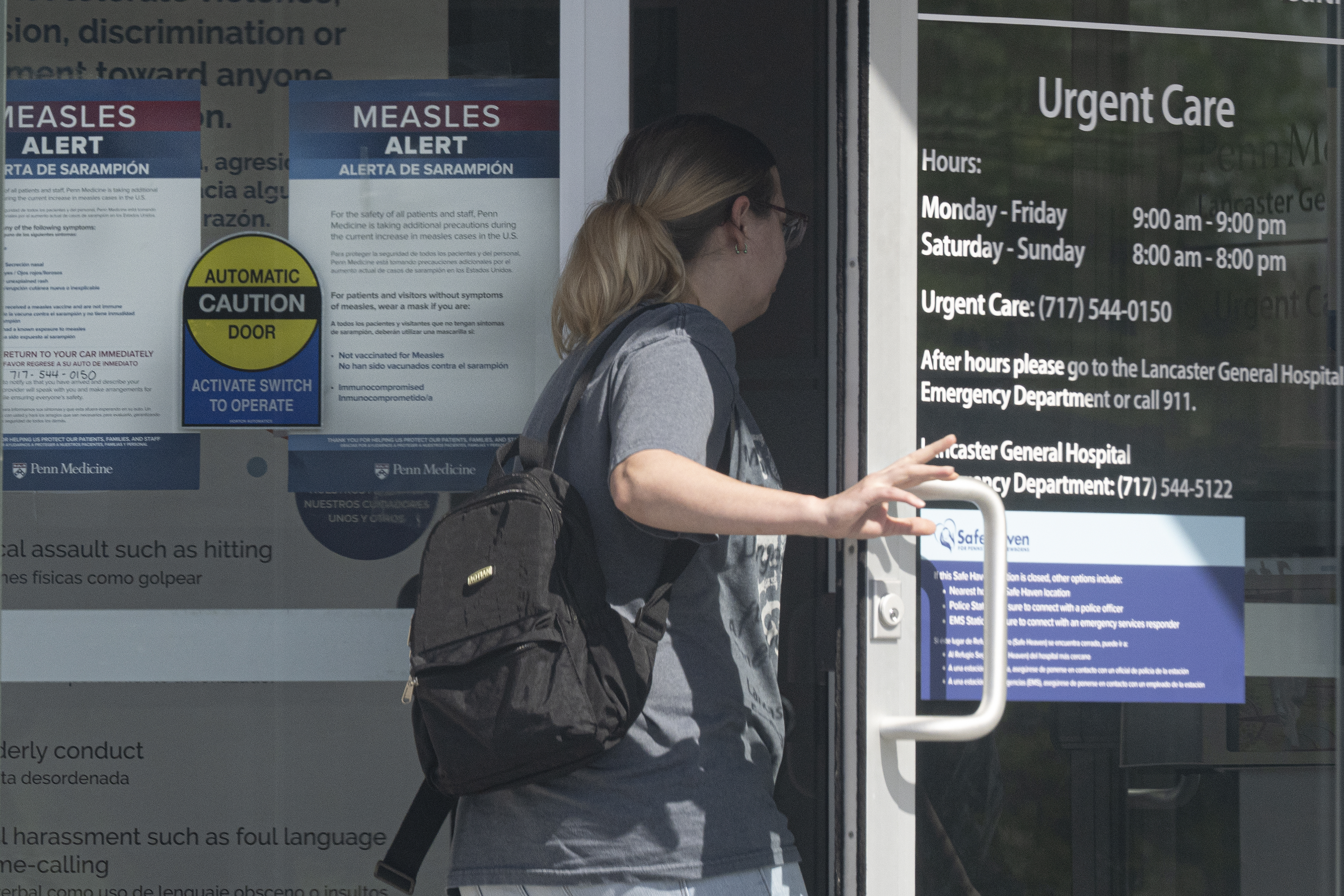
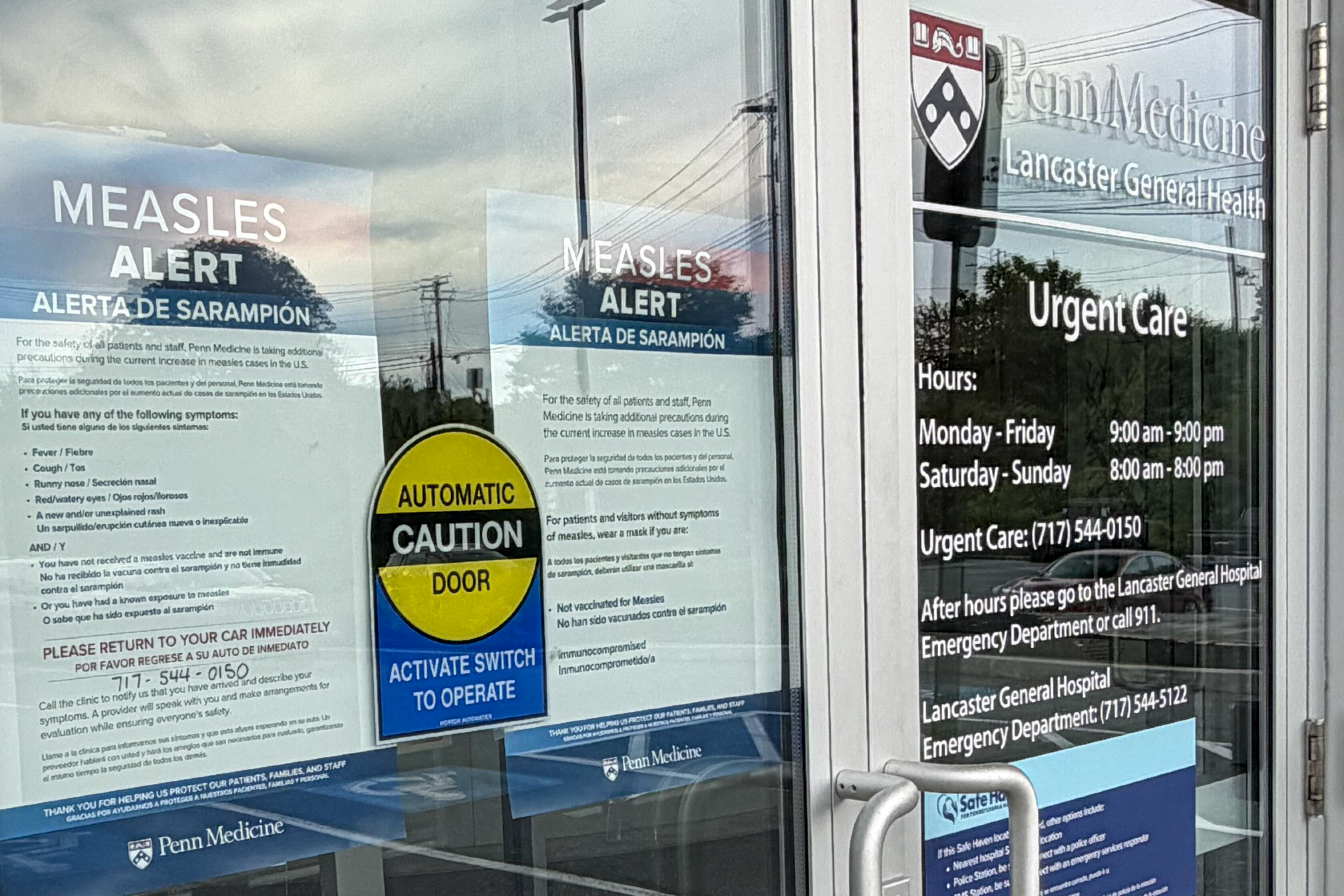
Measles alert signs in English and Spanish are posted on the front doors of an urgent care facility in Lancaster County last month.Jose F. Moreno / Staff Photographer
Breakthrough infections
People born before 1957, before the first measles vaccines became available, are generally considered protected against measles through natural immunity — because the disease was once prevalent in children.
Between 1968 and 1989, most children in the United States received one dose of the MMR vaccine, which is about 93% effective against the virus.
In 1989, measles cases among vaccinated schoolchildren prompted health officials to recommend children receive two doses of the vaccine, which together are 97% effective against the virus, a change that also prompted some older children to get a second shot.
Measles rates plummeted during the 1990s, and the disease was declared eradicated in the United States in 2000.
The MMR vaccine’s 97% effectiveness rate makes it “not perfect, but as good as our vaccines get,” said Rochelle Walensky, who served as CDC director during President Joe Biden’s administration and currently works as a professor of medicine at Harvard Medical School.
Smaller outbreaks with dozens of cases — not hundreds — may not see any breakthrough cases.
“The larger your outbreak, the more likely you’re going to see these,” Walensky said. “It’s just simple math.”
Large outbreaks, with hundreds of cases, will inevitably include breakthrough cases, she said.
Nationwide, 95% of the 3,294 measles cases logged by the CDC so far this year have been among unvaccinated people. The agency said 3% of those cases occurred in people with one dose of the MMR vaccine, and 3% in patients with two doses.
The concern also arose in last year’s major measles outbreak in Texas. A vaccinated person in Bucks County was among those who contracted a mild case of measles last year after traveling there.
Similar stories have emerged from Pennsylvania’s growing outbreak. For example, a mother in Lancaster County told The Inquirer earlier this summer that she was vaccinated and acquired the disease alongside her eight children, who were all unvaccinated; it’s unclear whether hers was one of the breakthrough cases recorded by the state.
Breakthrough illnesses can be contagious, said Paul Offit, a physician and vaccine expert at the Children’s Hospital of Philadelphia who heads the hospital’s Vaccine Education Center.
High levels of immunity in a given community protect everyone living there, Offit said. An unvaccinated person living around mostly vaccinated people is less likely to get measles because the virus has less chance to spread.
But vaccinated people who live around many unvaccinated people are at higher risk of getting a breakthrough case, due to the virus having more opportunities to circulate, he said.
Drexel’s Long recalled caring for children during a 1991 measles outbreak that sickened more than 1,000 people in Philadelphia and killed nine children.
“It’s a horrible, horrible disease. We are extremely grateful we live in the U.S. where these vaccines are developed and proved to be safe and highly effective,” she said.
Pennsylvania officials reported two deaths associated with measles last week, amid a growing outbreak that has already sickened more than 500 people in the state this year.
Gov. Josh Shapiro, a Democrat, has clashed over the state’s characterization of the deaths with President Donald Trump’s head of the Department of Health and Human Services, Robert F. Kennedy Jr., as the outbreak has rapidly become one of the nation’s largest this year.
Shapiro has said Kennedy, a longtime anti-vaccine activist, is spreading misinformation about the safety of vaccines long recommended to prevent measles. Kennedy has disputed what Shapiro and state health officials have disclosed about the deaths, going so far as to accuse the administration of “fabricating” them.
Here’s what’s known about the deaths, the state’s first involving the highly infectious disease in more than 30 years, and the ongoing measles outbreak in Pennsylvania.
What do we know about the measles-associated deaths in Pennsylvania?
State officials announced two measles-associated deaths in unvaccinated Lancaster County residents last Tuesday, but initially provided no further information about the patients’ ages, medical conditions, or what had been investigated.
The state later explained that it defines a measles-associated death as deaths of people where evidence of measles is present, even when the disease may not be assessed by the coroner as the immediate cause of death.
Lancaster County coroner Stephen Diamantoni said the same day that his office was investigating one death involving a newborn who had measles anddied shortly after birth. Later, the state confirmed that this was one of the measles-associated deaths they had announced.
According to Diamantoni, an elected Republican who is also a physician, postmortem testing of the child’s lung tissue showed the infant had a measles infection acquired before birth. But he said he does not believe measles contributed tothe child’s death. He said the child died of a lacerated spleen, citing trauma to the torso. He said he was not sure how the lacerated spleen or trauma occurred.
Subsequently, Diamantoni said a forensic pathologist had included “measles” on the newborn’s death certificate under a section that lists “significant conditions contributing to death but not resulting in the underlying cause.” He said the condition was listed on the death certificate becausethe baby tested positive for measlesand the pathologist said he would put any “significant finding” in that section.
The state’s decision to call the deaths measles-associated came after the state health department’s “epidemiology team thoroughly investigated and verified both individuals tested positive for measles,” Pennsylvania Health Secretary Debra Bogen said in a statement.
Experts like physician Paul Offit, head of the Vaccine Education Center at the Children’s Hospital of Philadelphia, have pointed out that measles can cause the spleen to become fragile, and that the trauma of birth can cause it to rupture. Offit says the coroner needs to explain more about his conclusions, if he does not believe measles contributed to the death.
The state has not released any information about the second measles-associated death, citing privacy laws.
Diamantoni told The Inquirer that his office is reviewing another instance where measles was listed on a person’s death certificate. “It’s a death of a child who had measles,” he said. On Wednesday, he said the child was an infant.
He declined tosay how “measles” was characterized on that child’s death certificate. A healthcare provider signed the death certificate, he said, and his office was not involved at the time. The child did not die at a hospital, he said.
It is not clear if the case was the second measles-affiliated death announced by state officials.
Pennsylvania officials have cited state laws protecting privacy in saying that they can’t disclose more about the deaths without compromising patient confidentiality and the community’s trust.
Several prominent public health experts have criticized the Shapiro administration for not revealing more information, like the ages or causes of death of the victims, saying not doing so created a void for conspiracy theorists to spread misinformation.
What is the CDC saying?
The Centers for Disease Control and Prevention omitted the two measles-associated deaths in Pennsylvania from its last measles outbreak update on Monday.
The agency said that the deaths were not included because ”available information does not establish whether measles caused or contributed to the deaths or whether the individuals died from other causes while infected with measles,” in an update posted to the CDC’s website Sunday.
Kennedy also said Shapiro’s administration is not cooperating with the CDC in giving information on the deaths.
Pennsylvania “thoroughly reviews” all reported measles cases to ensure they meet CDC definitions and has provided “all required epidemiological data” on the measles-associated deaths to the CDC, state health department spokesperson Neil Ruhland said in a statement on Monday.
How far has measles spread in Pennsylvania? Where is it now?
Measles cases have been reported in 36 counties in Pennsylvania, with 530 cases confirmed this year as of Wednesday. The outbreak is centered in Lancaster County, which has reported 242 cases.
Chester County has reported the second-highest case count, with 52 cases so far this year. Health officials there believe many infections are going unreported, and say measles is generally circulating in the western area of the county.
Montgomery County reported three cases in a separate outbreak this winter.
Allegheny County, Pennsylvania’s second most-populous county after Philadelphia, has reported measles exposures at a children’s hospital in Pittsburgh, but no cases in residents.
Philadelphia has not identified any cases, although several people who tested positive for measles have traveled through the city this year. The last outbreak reported in the city sickened nine people, with six requiring hospitalization, in 2024.
How is measles transmitted? How contagious is it? Can you get measles if you’re vaccinated?
Measles is transmitted through the air, when an infected person coughs or sneezes, according to the CDC. It can linger in the air for up to two hours.
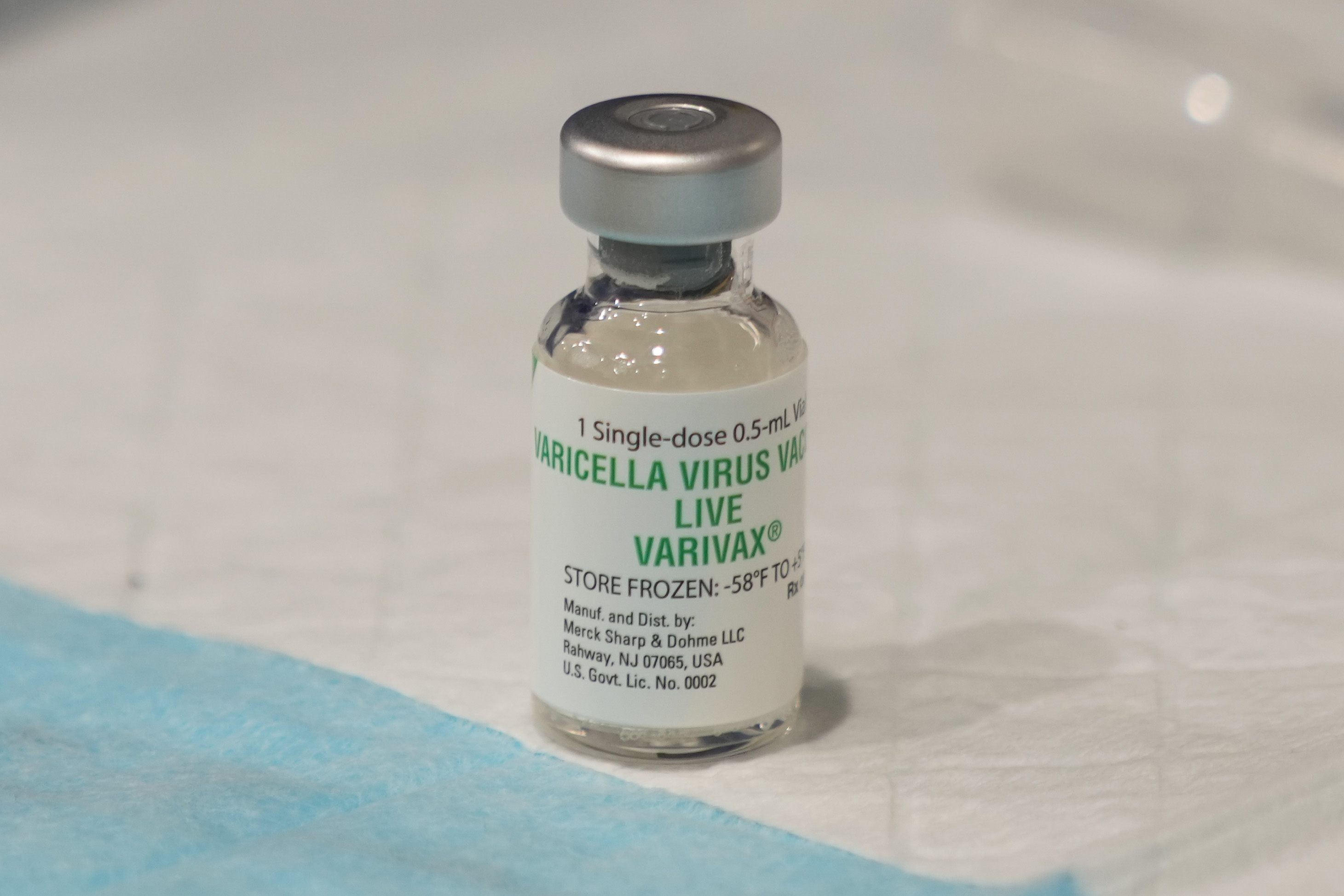
Two doses of the measles, mumps, and rubella vaccine has proven 97% effective at preventing the disease, the CDC says. The more people who are vaccinated, the less likely it is for measles to spread. Scientists say that about 95% of a community should be vaccinated to prevent spread. Nine in 10 unvaccinated people exposed to measles will acquire the disease.
No one who has gotten measles in Pennsylvania this year was fully vaccinated.
Sometimes this occurs if someone’s immune system “did not respond as well” to the vaccine, the CDC says. Other times, vaccinated people can get the virus if they’re exposed for a long period to the disease — like living in a house where multiple unvaccinated people have measles. Vaccinated people tend to have a milder illness if infected, and they’re less likely to spread measles to others.
In 2025, Bucks County reported a case of measles in a vaccinated resident who had recently traveled to Texas, then the site of a major measles outbreak. The person’s symptoms were mild.
What are measles symptoms?
Typical measles symptoms appear one to two weeks after exposure, but sometimes they can take up to 21 days to manifest. They include a high fever, a cough, runny nose, red, watery eyes, and a rash.
How deadly is measles?
About three in 1,000 children who contract measles will die. Measles can cause severe complications, especially in young children, including pneumonia and brain swelling. Physicians on the front lines of the Pennsylvania outbreak have reported treating patients with these symptoms, as well as organ damage from the disease.
Editor’s note: This story has been updated with additional detail from the Lancaster County coroner’s office.
Gov. Josh Shapiro came to the Philadelphia suburbs on Friday morning to announce a new investment in a local police department. But the first question he fielded at a news conference concerned the growing confusion and political intrigue surrounding his administration’s response to two deaths associated with the state’s spiraling measles outbreak.
For the last three days, Shapiro, a Democrat, and Robert F. Kennedy Jr., the Republican heading the federal Department of Health and Human Services, have clashed over what the state has disclosed about the deaths and the consequences of Kennedy’s longtime anti-vaccination activism.
By Friday, Shapiro wanted to bring the focus back to an outbreak that has grown to more than 400 cases so far this year, saying “getting into a back-and-forth with people online who are spewing irresponsible conspiracy theories” does not “serve the public interest.”
But public health and communications experts say that the state’s initial refusal to share more information on the deaths created an environment in which anti-vaccination skeptics could spread their own narrative.
State officials announced the deaths of two unvaccinated Lancaster County residents at a news conference Tuesday, calling the deaths “measles-associated.” Their ages, causes of death, or their medical histories were not disclosed by the governor or his health secretary.
Within hours, other voices started filling the information vacuum. Lancaster County’s coroner told reporters that he had handled just one of the deaths. Coroner Stephen Diamantoni, a Republican elected official who is also a physician, said his office had examined a newborn who had tested positive for measles, but said the baby had not died from measles.
Soon misinformation and innuendo were spreading online out of the seemingly contradictory and limited details being disclosed by state officials, the local coroner’s office, and federal health leaders — all with their own political affiliations at a time when the safety of the measles vaccine increasingly divides Democrats and Republicans.
In response to the coroner’s statements, state health officials said they define a “measles-associated death” as one in which measles was present, even if measles is not identified as the immediate cause of death. Shapiro’s administration confirmed the newborn’s case was one of the two announced deaths, but offered no information on the second death.
President Donald Trump’s health secretary, Kennedy, pounced on the missing details the next day to spread misinformation. He wrote on X that the deaths may have been “fabricated” by the Shapiro administration and said in a television interview that “they cannot find any measles deaths in Lancaster County.”
Shapiro’s administration has called this inaccurate. Still, his administration has not revealed details of its medical review, beyond saying the state Department of Health’s epidemiology team had “thoroughly investigated.”
By late week, the Centers for Disease Control and Prevention, which operates under HHS, posted on X that state health officials were not sharing “information relevant to the outbreak” as it worked “to clarify conflicting information from Pennsylvania officials about whether the two reported deaths were caused by measles.”
State officials, including Shapiro, have repeatedly said the state is cooperating with the CDC.
But Pennsylvania health officials could have shared information on the patients’ ages, causes of deaths, and reasons for being unvaccinated, said Paul Offit, a physician at the Children’s Hospital of Philadelphia who heads the hospital’s Vaccine Education Center and is a vocal critic of Kennedy.
“It created fertile ground for conspiracy theories to thrive,” he said.
In a statement, a Shapiro spokesperson said the governor understands the “desire for as much information as possible to be made public.”
“However, when an individual dies, it is our legal responsibility to protect their right to privacy by maintaining patient confidentiality,” the statement said, noting this is critical to maintaining trust among communities statewide.
In a highly politicized environment in which measles cases are rising — and vaccination rates dropping — public health experts say it’s imperative for health officials to communicate accurately and transparently.
“You have to be transparent, be very clear about what you know, what you don’t know, what you’re trying to find out, and what questions are outstanding,” said Amesh Adalja, an infectious disease physician at the University of Pittsburgh Medical Center and a senior scholar at the Johns Hopkins Center for Health Security.
A lack of information from the state, he said, “created an information vacuum with people very adept at using information vacuums to spread their message.”
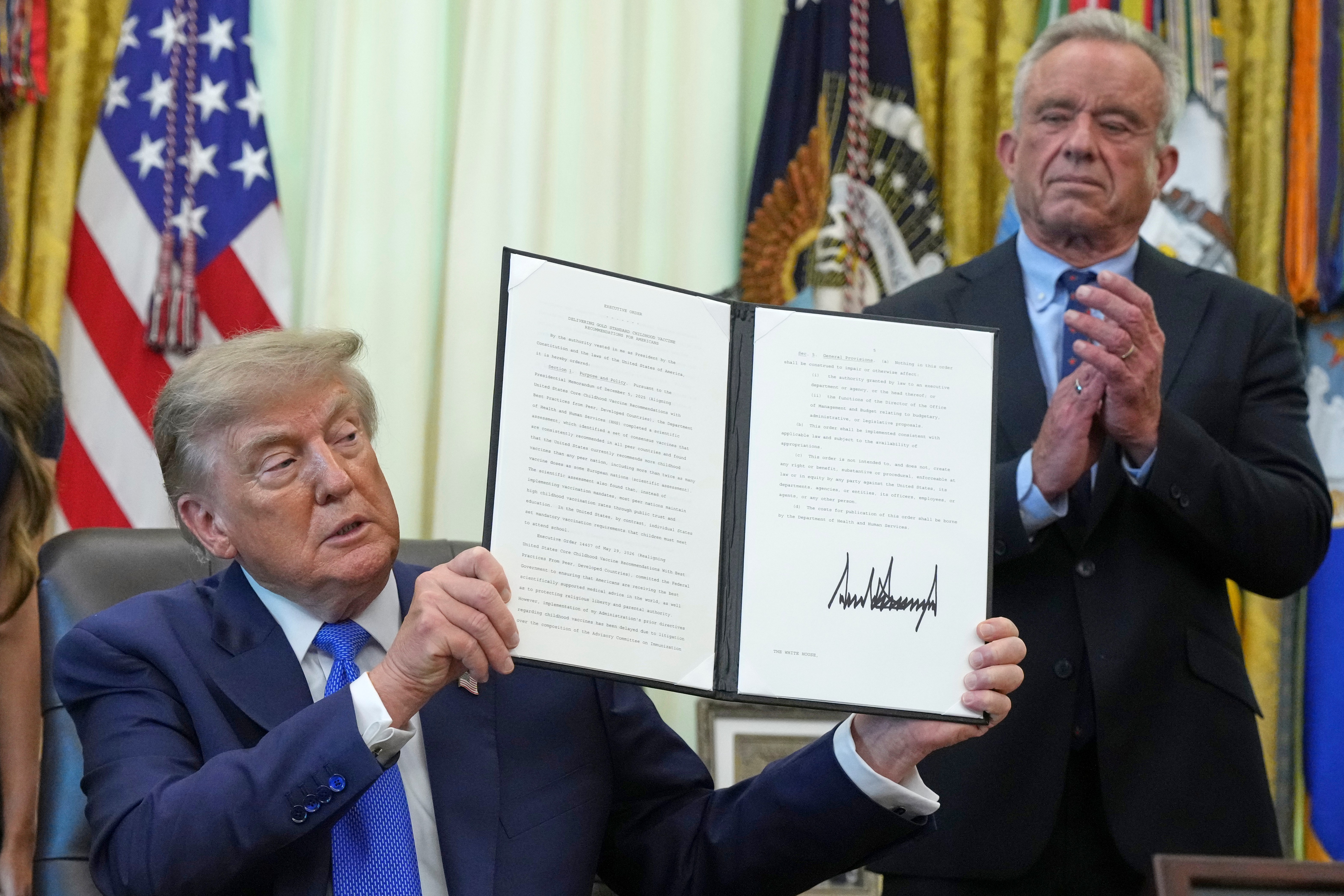
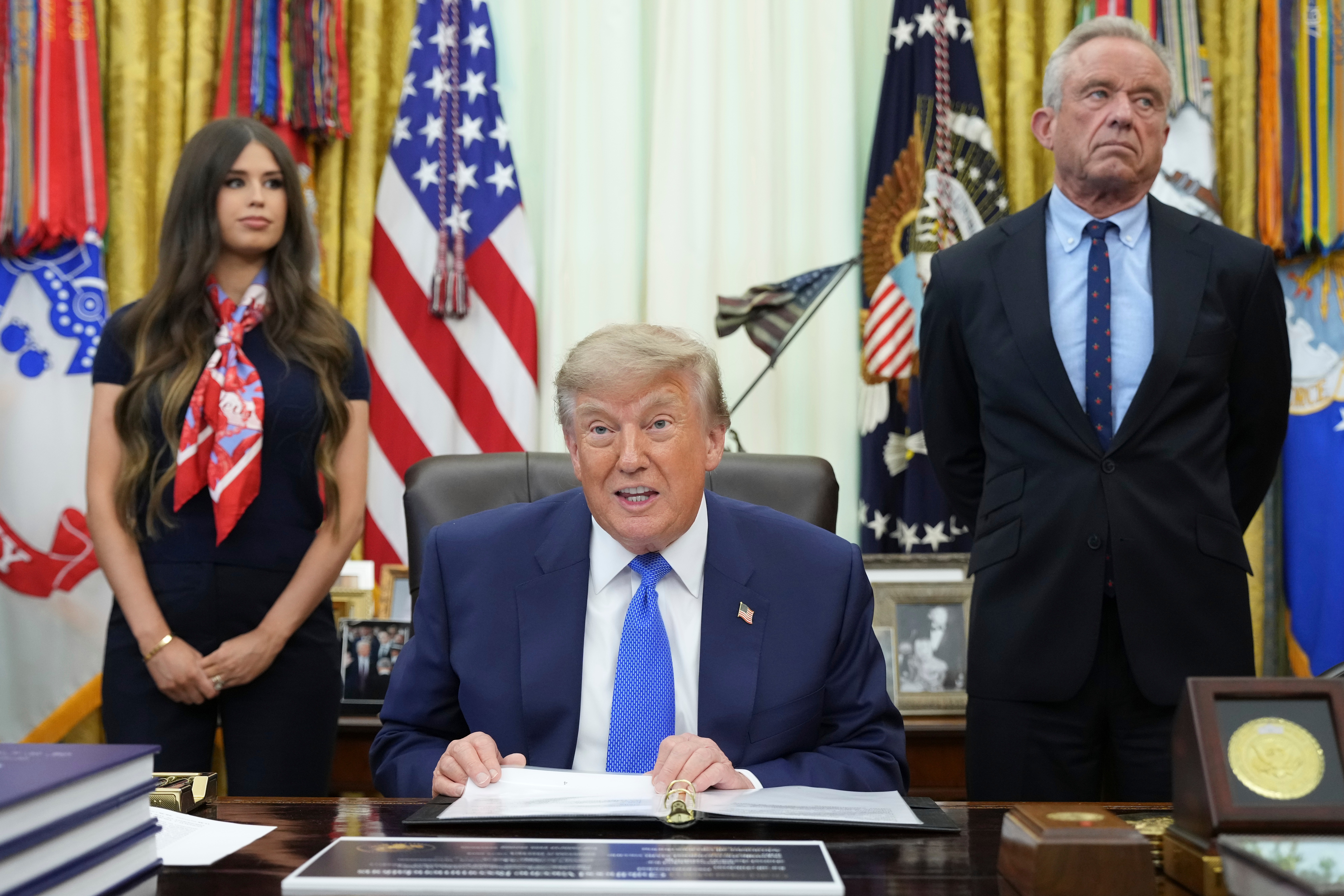
President Donald Trump holds a signed executive order about vaccines as Health and Human Services Secretary Robert F. Kennedy Jr. looks on Aug. 10 in the Oval Office of the White House. Jacquelyn Martin
What’s known about the Lancaster County deaths
Diamantoni said Friday that the baby died shortly after birth at a Lancaster County birthing center on Aug. 14.
Postmortem testing of the baby’s lung tissue showed that the baby had an active measles infection acquired before birth, he said.
He has not talked to the baby’s mother or the midwife who delivered the baby, and has not fully reviewed records from the birthing center where she gave birth, he said in interviews.
He told the Pittsburgh Tribune-Review that measles was listed on the baby’s death certificate, in a section of the certificate that reports other ”conditions contributing to death but not resulting in the underlying cause.”
He told the outlet that measles was included on the death certificate “to offer a broader view of the general health of the child.”
Babies can become infected with measles in utero if the mother is infected with measles and develops a rash within 10 days of giving birth, Offit said.
Diamantoni said a forensic pathologist in his office concluded the baby died of a ruptured spleen and cited trauma to the baby’s torso. He said he was unsure what had caused the trauma, and added that the baby’s spleen did not appear enlarged or infected.
Offit said that measles can cause an enlarged spleen that is then more likely to rupture — including during birth — and that it’s often difficult to tell whether a spleen has become enlarged once it ruptures.
A spleen also doesn’t have to become “massively” enlarged to rupture, he said: Measles can cause the spleen to become fragile, which also heightens the risk of rupture.
In conversations with state health officials, Offit said he learned that the patients who died in Pennsylvania would not have died were they not infected with measles.
He said the coroner should explain why the spleen ruptured, if it was not damaged from measles. Diamantoni said the office is still investigating the cause.
The state has released no additional information on the second death, and Diamantoni said his office was not handling it. He said his chief deputy spoke to the department prior to Shapiro’s news conference Tuesday.
“At no point was the Pennsylvania Department of Health told that this was not a measles-associated death,” a state spokesperson said on Friday. “The Shapiro Administration stands firmly by their comments on Tuesday.”
Public health communications
Pennsylvania’s health department has cited a state law prohibiting public access to death records, saying they cannot release more information on the deaths. Another state law requires the state to keep records of diseases confidential, except when it’s necessary to inform the public of the risk of communicable disease, a department spokesperson said in a statement.
The department “works hard to build and maintain trust in communities all over the Commonwealth — which includes doing everything possible to keep people’s identities confidential,” the statement read.
The department didn’t share information that could be used to “personally identify individuals or their grieving families” because “the circumstances of these individuals’ deaths do not change the Commonwealth’s response: Measles is a serious, highly contagious and preventable disease, and our focus remains on protecting Pennsylvanians, getting people vaccinated, and stopping the spread of this outbreak,” the spokesperson said.
But the state could have been more transparent about how they characterize deaths in a measles outbreak, said Kathleen Hall Jamieson, director emerita of the Annenberg Public Policy Center at the University of Pennsylvania.
People who are not trained in medicine may not understand the term “measles-associated,” for example, or how it differs from a cause of death, and state officials should have taken time at the news conference to explain what they meant by that term.
“You have an obligation to make sure that people don’t mishear on something as fraught as this topic,” she said.
Jamieson added that the political clashes around the deaths could overshadow a crucial point: A highly contagious disease is spreading in an under-vaccinated community, exposing children — including newborns unable to be vaccinated — to a serious illness.
“If we miss that moment, then the public health community has failed,” she said.
A newborn baby from Lancaster County was among the two unvaccinated residents whose deaths were associated with measles, Pennsylvania health officials said Wednesday.
As vaccination rates decline in the state, an outbreak that began in April this year has sickened more than 400 people in 29 counties — with the epicenter in Lancaster County, where nearly 200 individuals have tested positive for the viral disease. Local physicians and health officials say the true case count is likely much higher.
The state initially declined to share any information about the deaths, citing privacy concerns, and no information has been released about the second Lancaster resident who died.
The Pennsylvania Department of Health confirmed information about the newborn’s death on Wednesday only after the Lancaster County coroner publicly stated his office was investigating a newborn who had tested positive for measles and died from a ruptured spleen.
Lancaster County Coroner Stephen Diamantoni, a physician, said the cause of death was not the measles. The newborn died shortly after birth from a laceration of the spleen. A postmortem test on the baby’s lung tissue showed that the child had a measles infection that was acquired before birth, he said in an interview.
His description of the death, shared with reporters and a local county commissioner, contributed to a growing uproar on social media over the nature of the deaths and the state’s release of information.
President Donald Trump’s secretary of health and human services, Robert F. Kennedy Jr., traded attacks with Gov. Josh Shapiro, a Democrat, on X over the deaths and the safety of the measles vaccine.
Late Wednesday, Kennedy went further in another X post. He accused Shapiro’s administration of potentially having “fabricated” the deaths, after saying in an interview on C-Span that “they cannot find any measles deaths in Lancaster County.”
He said that Shapiro was not cooperating with the Centers for Disease Control and Prevention or the county in giving information on the deaths.
Shapiro administration staff said the department has been in regular contact with the agency during the outbreak.Pennsylvania Health Secretary Debra Bogen said in a statement late Wednesday that she “sadly can confirm” two measles-associated deaths in Lancaster County.
Measles deaths are rare. Most patients recover after mild illness, but the virus can cause pneumonia and brain swelling and kills about one to three patients in 1,000. The disease is so contagious that it can infect nine in 10 unvaccinated people.
The Pennsylvania Department of Health explained thatit reports deaths where measles are present as “measles-associated,” and it “may not be assessed by the medical examiner or coroner to be the immediate cause of death.”
In Lancaster, the coroner’s officedetermined that the baby’s primary cause of death was a laceration of the spleen, Diamantoni said.
Despite the baby’s positive measles test, the forensic pathologist who conducted the autopsy “did not feel it was related to measles,” Diamantoni added.
His office is seeking to learn whether the baby’s mother had measles at the time of the baby’s birth.
He said state health officials had not contacted him personally as of Wednesday about the two Lancaster County measles-associated deaths, but his chief deputy spoke to the department prior to Shapiro’s news conference Tuesday.
Paul Offit, a national vaccine safety expert and physician at Children’s Hospital of Philadelphia, said news of the coroner’s investigation “doesn’t really give us more information” on the death.
Children can acquire the disease after birth, or can be born with measles if their mother is infected and develops a rash within 10 days of giving birth, he said.
Measles can cause an enlarged spleen, and birth can cause it to rupture, he said. After a spleen ruptures, Offit said, it is difficult to tell whether it had been enlarged, and he added that the coroner should provide an alternate explanation for the rupture if it had not been caused by measles.
Diamantoni said the doctor who performed the baby’s autopsy did not note that the spleen was enlarged, and the office is still investigating the cause of the rupture.
To prevent speculation, the state could release information about the patients’ age, vaccination status, and cause of death while still protecting their privacy, Offit said.
In conversations with state health officials, he said, he learned that “these patients would not have died were it not for measles.”
Anti-vaccination advocates “try and completely misdirect and say it really wasn’t measles. They try to do everything they can to distance themselves from it,” he said. “You’re making it a lot easier for them when you don’t give more information.”
In her statement, Bogen said the department reported the deaths to the CDC on Tuesday morning and met with CDC staff on Wednesday afternoon to discuss the cases.
“DOH’s Epidemiology team thoroughly investigated and verified both individuals tested positive for measles. The information was not reported to the public until the results of the epidemiological investigations were confirmed,” she said.
She noted that state health officials are prohibited from releasing death certificate information except under limited circumstances that do not apply to this case.
A county commissioner questions measles-associated deaths
The clash over the deaths began within hours of Shapiro’s Tuesday news conference.
Lancaster County Commissioner Josh Parsons, a Republican, shared the coroner’s account on Facebook, suggesting the state was spreading incorrect information on the deaths.
In several posts, Parsons questioned whether the patients had died “OF measles or WITH measles” and suggested the state was spreading incorrect information on the deaths.
“We have ZERO information that corroborates the idea that there were two measles deaths in Lancaster County,” he wrote in a post several hours before the state’s announcement. Later, he shared Kennedy’s remarks on C-Span.
Parsons has not responded to several requests for comment from The Inquirer about the outbreak over the last several months.
Yoder, who attended the Tuesday news conference, said at a Lancaster commissioners meeting Wednesday that she had no additional information on the recent deaths.
The consequences, he said, were apparent in the deaths reported in Pennsylvania. He said he had told Kennedy as much in a recent phone call.
Later that night, on X, Kennedy said that Shapiro had falsely accused him of spreading misinformation and that drops in the state’s high vaccination rates occurred mostly during President Joe Biden’s administration.
Replying to Kennedy on X, Shapiro said that he asked the secretary to help him encourage people to get vaccinated and “stop spreading misinformation.”
The governor joined a lawsuit earlier this year against Kennedy’s department’s decision to scale back federal vaccine recommendations for children.
Shapiro noted that Kennedy had visited Lancaster in 2021, during the Biden administration, and told a crowd there that measles could be cured by “chicken soup and vitamin A.”
Measles has no specific treatments, and although vitamin A is sometimes given to severely ill patients, it cannot prevent the disease and is not a cure.
Shapiro added that measles cases have increased in the United States and Pennsylvania under Kennedy’s watch.
Editor’s note: This story has been updated to clarify that the newborn who died had a measles infection acquired before birth.
Two years ago, every child in the kindergarten class at Eleanor Emlen Elementary in Mount Airy had vaccine protection against measles.
A year later, the school’s kindergarten immunization rate had dropped to just 80%, putting students and the surrounding community at risk of an outbreak of the highly contagious disease.
Emlen is among more than two dozen Philadelphia-area schools that saw double-digit declines in kindergarten immunization rates last school year — in many cases because parents are increasingly refusing vaccines.
The affected schools span a diverse range of communities, from city neighborhoods like Mount Airy to the outlying suburbs. In Chester County, for example, a small private school in Downingtown saw its vaccination rates plunge by 20%.
Even as countywide immunization levels remain relatively high, some 40% of kindergarten classrooms across the region became vulnerable to an outbreak during the 2025-26 school year, up from 33% the year prior, an Inquirer analysis of newly released state data found.
(function(){function e(){window.addEventListener(`message`,function(e){if(e.data[`datawrapper-height`]!==void 0){var t=document.querySelectorAll(`iframe`);for(var n in e.data[`datawrapper-height`])for(var r=0,i;i=t[r];r++)if(i.contentWindow===e.source){var a=e.data[`datawrapper-height`][n]+`px`;i.style.height=a}}})}e()})();
That means that at least 249 schools had vaccination rates below 95%, the level at which scientists say a population must be vaccinated to prevent the spread of measles, one of the most contagious diseases.
Of these, 98 Philadelphia-area schools reported measles vaccination rates below 90%, presenting an even greater risk to students.
A sharp increase in parents opting out of vaccination for religious or philosophical reasons continued to drive down vaccination rates; exemptions in this category rose by 15% in the latest two years for which data are available.
(function(){function e(){window.addEventListener(`message`,function(e){if(e.data[`datawrapper-height`]!==void 0){var t=document.querySelectorAll(`iframe`);for(var n in e.data[`datawrapper-height`])for(var r=0,i;i=t[r];r++)if(i.contentWindow===e.source){var a=e.data[`datawrapper-height`][n]+`px`;i.style.height=a}}})}e()})();
Pennsylvania is among a handful of states that allows parents to opt out of vaccine requirements for philosophical or religious reasons, often by simply signing a form.
The health department published more granular, school-level vaccination data this summer for the first time, after reporting by The Inquirer and the Pittsburgh Post Gazette made this information public for the prior school year, exposing pockets of vulnerability within counties with overall high vaccination.
The new data show the growing public health threat to the region from Pennsylvania’s growing measles outbreak, in which two people in Lancaster County have died, state officials reported Tuesday. They were the state’s first measles-related deaths in three decades.
(function(){function e(){window.addEventListener(`message`,function(e){if(e.data[`datawrapper-height`]!==void 0){var t=document.querySelectorAll(`iframe`);for(var n in e.data[`datawrapper-height`])for(var r=0,i;i=t[r];r++)if(i.contentWindow===e.source){var a=e.data[`datawrapper-height`][n]+`px`;i.style.height=a}}})}e()})();
So far, nearly 400 cases have been diagnosed, with nearly half in Lancaster County. The rapidly spreading outbreak is edging closer to densely populated Philadelphia. Chester County, just west of the city, has reported the second-highest number of cases in the state.
At a news conference on the measles deaths Tuesday, Gov. Josh Shapiro stressed his concern about the rise in Pennsylvania parents opting out of vaccinations over the last 10 years.
“It has dramatically reduced community immunity in different areas of our Commonwealth,” he said. “Today, we see the consequences of a lack of immunization.”
The new school-level data on vaccines, he said, allow “everyone to see their school’s vaccination coverage and make informed decisions.” Lawmakers have also said they hope that having more access to data about their children’s schools will make families more aware of risks within their communities and encourage them to vaccinate their children.
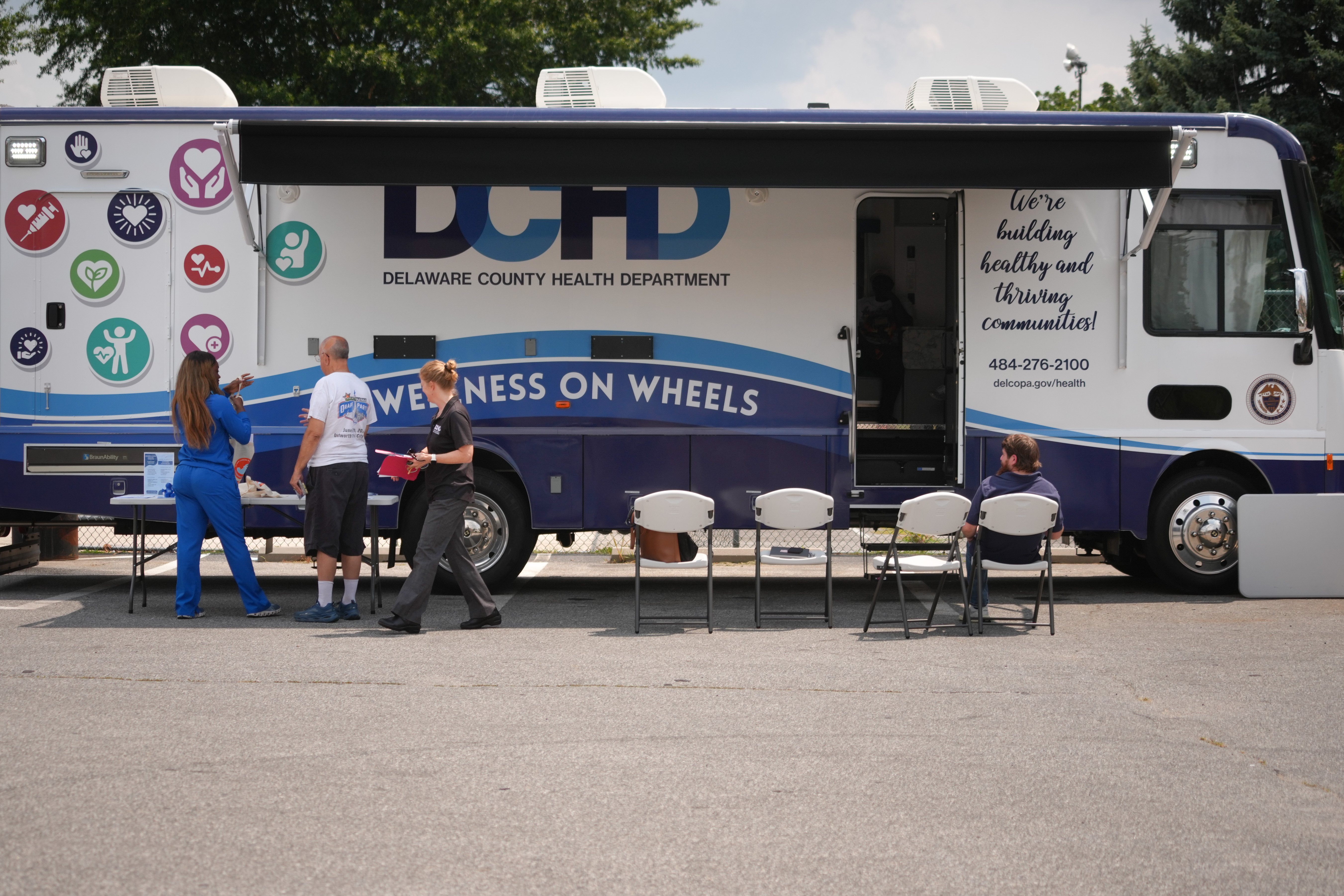
Amid rising measles case counts and declining immunization rates, Delaware County’s health department launched an immunization campaign over the summer to encourage families to vaccinate.Jessica Griffin / Staff Photographer
Emlen, which saw one of the steepest drops in protection, was one of 40 schools in the five-county region that reported 100% measles vaccination rates two years ago, only to drop below the 95% herd immunity threshold last year.
Philadelphia school officials say the changes at Emlen likely reflect increasing hesitancy among parents to immunize their children against measles, mumps, and rubella (MMR) and other diseases. State records show that most unvaccinated kindergarteners at Emlen have philosophical or religious exemptions.
Some fluctuations in kindergarten vaccination rates are typical from year to year, but the rise of anti-vaccine rhetoric in federal leadership appears to be exacerbating fears around vaccination, said Kendra McDow, a pediatrician who serves as the Philadelphia school district’s medical director.
“What we’re seeing is reflective of what I believe are local and national trends,” McDow said. “Families are confused, and they want to do right by their children.”
In the latest federal vaccine maneuver — opposed by the medical establishment, prominent Democrats, and Republican Sen. Bill Cassidy, a physician — President Donald Trump signed an executive order this month asking states to “consider updating” laws to require fewer vaccinations for schoolchildren without any medical justification. He also advocated for splitting the MMR vaccine into three separate shots — even though no separate measles, mumps, or rubella vaccines are licensed in the United States.
The order came after a chaotic year in which Health and Human Services Secretary Robert F. Kennedy fired federal vaccination advisers and pushed to upend the federal vaccine schedule. Kennedy, a longtime anti-vaccine activist, has promoted false concerns that vaccinations can lead to autism.
Families are faced with a barrage of misinformation about vaccines. Jessica Griffin / Staff Photographer
With Pennsylvania now experiencing its largest measles outbreak in three decades, Kevin Ressler, a healthcare nonprofit leader in suburban Philadelphia who was raised in Lancaster County, worries that declining vaccine rates reflect increasing political polarization.
“You don’t have to be a scientist to recognize that’s a problem,” said Ressler, the CEO of Alliance for Health Equity, a Coatesville nonprofit that works to improve access to health services. “A lot of this is rooted in whether we are able to hold trusted relationships.”
Philly-area counties all at risk
Philadelphia and its suburban counties overall remain well protected against measles, state officials say. The declines seen in the latest school year amount to less than 1% of all kindergarteners in each of the five counties in the area, an improvement from the drops that followed the COVID-19 pandemic.
But even small drops can be significant given the contagiousness of measles, which can linger in the air for hours and infect nine in 10 unvaccinated people who come into contact with it.
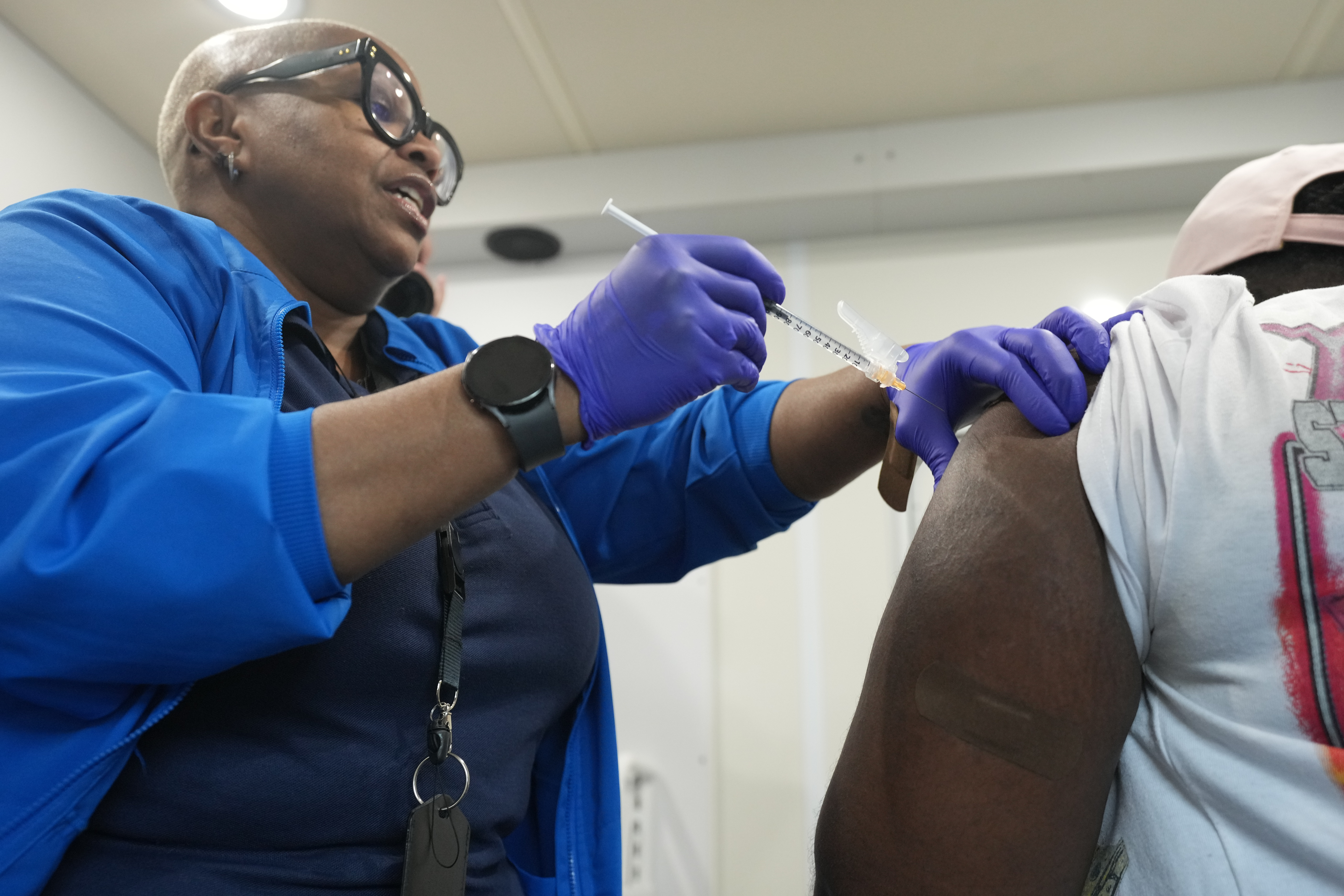
Mia Williams, a registered nurse, vaccinates a client at Delaware County’s mobile clinic in Upper Darby in July. Jessica Griffin / Staff Photographer
“The risk has definitely gone up because of lower vaccination numbers,” said Rene Najera, the director of public health at the College of Physicians of Philadelphia.
Najera says slipping vaccination rates especially endanger vulnerable students and community members beyond the schools, like pregnant women, cancer patients, or babies too young to be vaccinated. Parents of high-risk children should speak with their pediatricians about the risks of attending a school with lower vaccination rates, he said.
Last year marked the first time in more than 10 years that no Philadelphia-area county had reported measles vaccination rates above herd immunity.
Bucks County had the lowest MMR vaccination rate for kindergartners, at 93.7%, down by more than a half a percentage point from the year before.
Montgomery County, the only county in the Philadelphia region with kindergarten vaccination rates at herd immunity two years ago, slipped just below the threshold in 2025, to 94.8% vaccinated.
About 94% of Delaware County and Philadelphia kindergarteners were vaccinated last school year.
In Chester County, the only Philadelphia-area county to report cases in the current outbreak, vaccination rates for kindergartners have held steady at 94.5% for the last two school years. Some schools in the county reported steep drops in MMR coverage ahead of the current outbreak, which has seen 40 cases confirmed since June.
At Windsor Christian Academy in Downingtown, only one in four kindergarteners were vaccinated last year at a school that exceeded the herd immunity threshold the year prior. About 14% of the class had religious exemptions for vaccination. School officials did not return a request for comment.
Caln Elementary School in Thorndale saw measles vaccination rates drop from 100% to 74% in a year. Officials at the school declined to comment. (Caln closed at the end of last school year, and most of its students are transferring to the newly built Doe Run Elementary this year.)
Jeanne Franklin, Chester County’s health director, said she is “moderately” concerned about the current measles outbreak, given that many of the county’s most populous public schools still have high vaccination rates.
The school-level data improve the county’s ability to identify schools with lower vaccination rates.
Chester County health officials talk to school nurses, principals, and other administrators before the start of every school year to remind them of what to do if they identify a case of measles.
Under county policy, a single measles case in a school will mean all unvaccinated students and staff must stay home for 21 days.
This year, conversations that are usually hypothetical have taken on more urgency.
The health department has urged schools to take stock of who within their school is unvaccinated and develop a plan for how they will teach unvaccinated students who are sent home and staff classrooms of absent teachers.
“You don’t own getting them vaccinated,” Franklin said she tells administrators. “But you have to think through these things.”
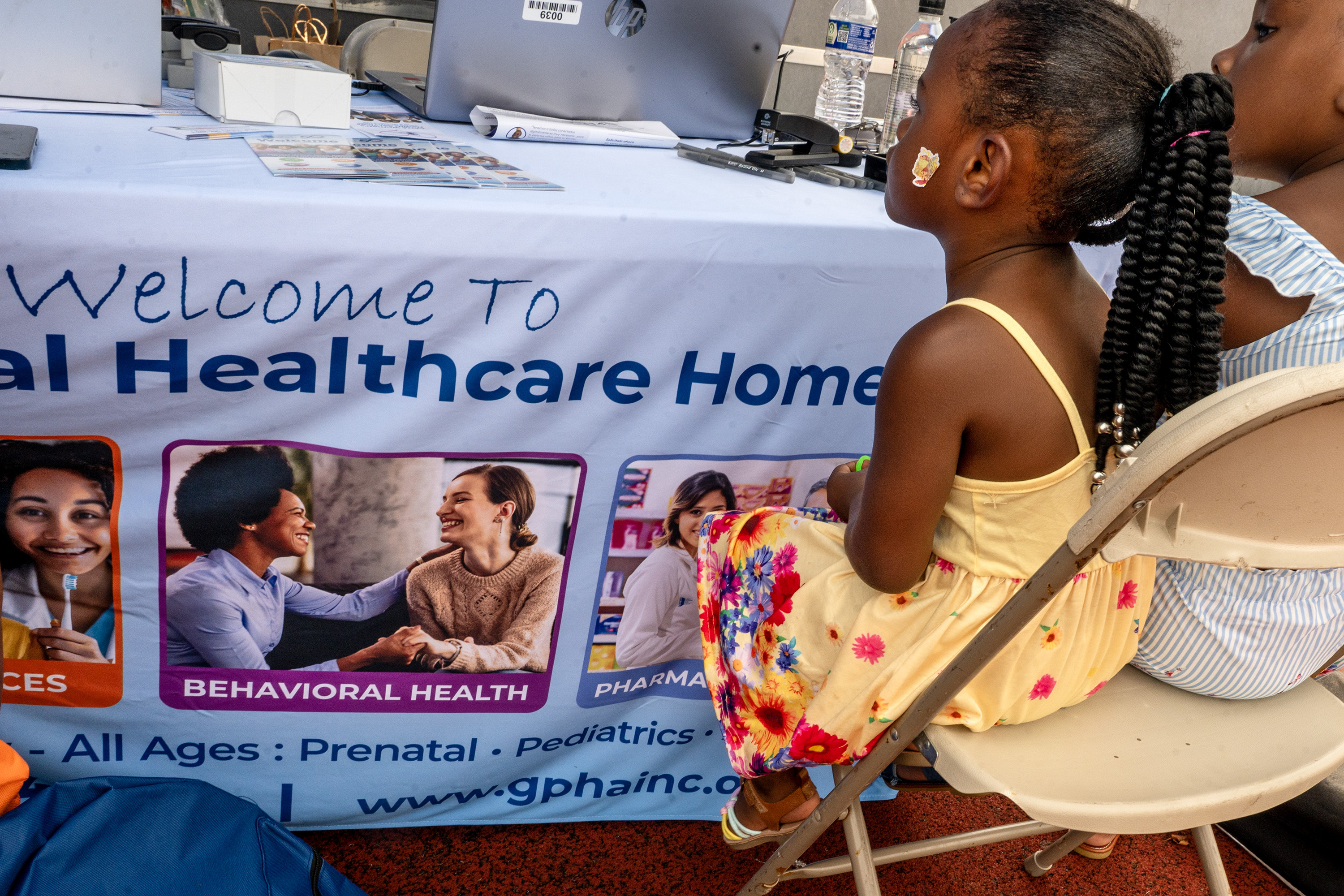
Sisters A’zuri, 3, and A’Sara, 6, wait while their mother, Shania’ Jason, checks in at a vaccination clinic during the School District of Philadelphia’s sixth annual Back-To-School Bus Tour stop this month at Marcus Foster Memorial Stadium. Tom Gralish / Staff Photographer
Philly schools on alert
As the school district’s lead health officer, McDow worries about the threat of measles so close by, but believes concerted efforts in the city have kept vaccination rates “as high as they can be in this current climate.”
She’s also monitoring Philadelphia schools where the state data show declining vaccination coverage. (The publicly available school-level data does not include classes with fewer than 20 students, for privacy reasons, or schools that did not report to the state. About 90% of schools statewide reported data in 2025.)
In some cases, what looks like a decline can be explained by delays in data reporting due to administrative issues or staff absences. School vaccination records are reported to the state during the month of December.
For example, Mantua’s Morton McMichael School reported a 50% drop in MMR vaccination coverage, initially going from nearly nine in 10 kindergarteners vaccinated to just over a third.
But by the end of the 2025-2026 school year, records show 93% of McMichael kindergarteners were fully vaccinated against measles, district officials said, though the state data does not show the improvement.
McDow worries about drops at other schools, from Mount Airy’s Emlen Elementary to North Philadelphia’s James Logan Elementary’s 18.5% decrease in vaccination rates, which are likely related to parents increasingly refusing vaccines.
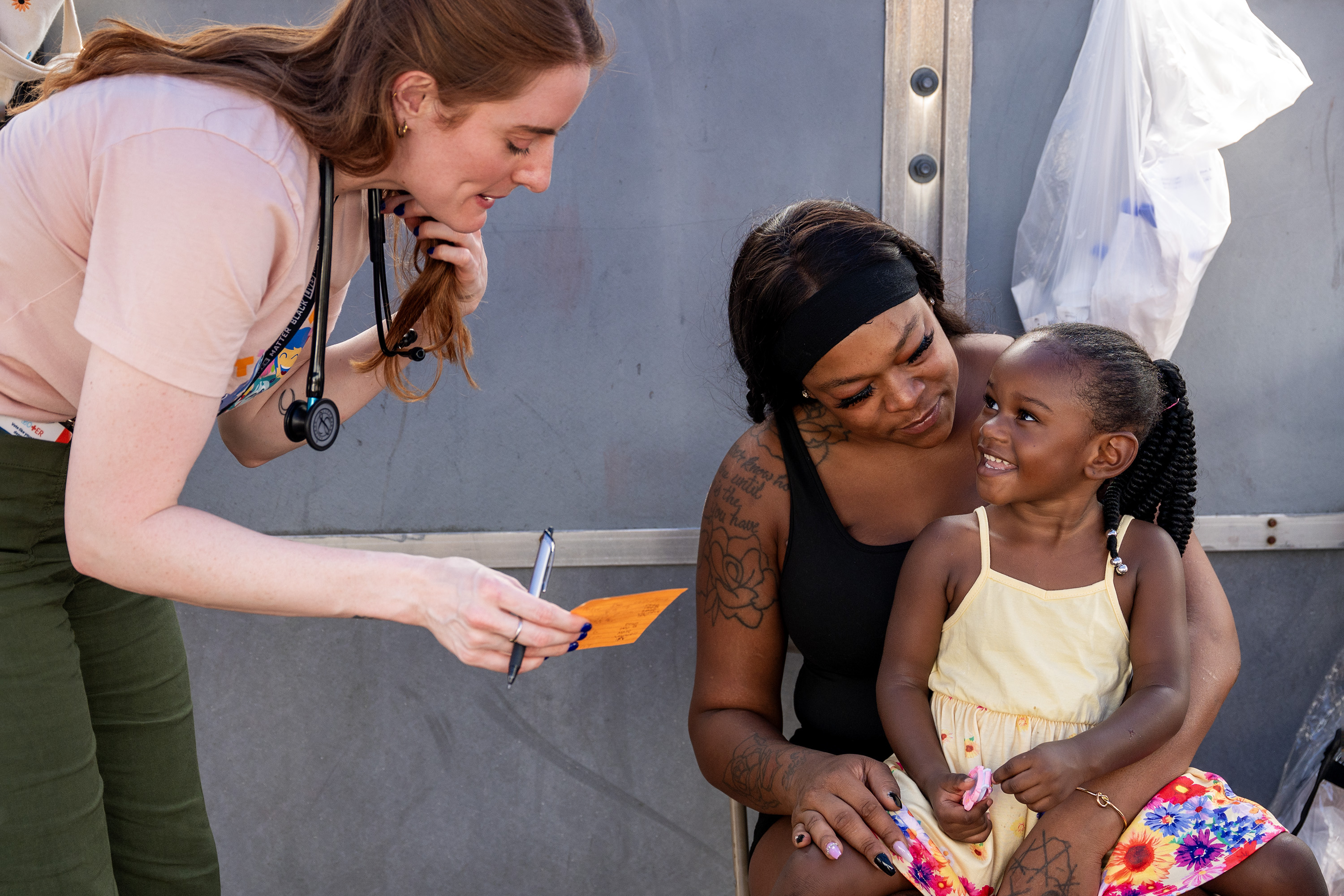
Pediatrician Amanda Bernard (left) talks with Shania’ Jason and her daughter A’zuri, 3, at a vaccination clinic hosted by the Philadelphia School District this month at Marcus Foster Memorial Stadium.Tom Gralish / Staff Photographer
The school district hosts vaccination clinics over the summer and during the school year, working with the city health department to target families with unvaccinated children and schools with low vaccination rates.
The district also works to ensure vaccination clinics are accessible to working parents, organizing some on weekends or evenings.
“We need to be talking to families and answering questions in transparent ways,” McDow said. “But we also need to be providing the opportunities for vaccination.”
Some families line up for immunizations
On a recent sweltering August afternoon, families lined up at a tent pitched on the football field at Marcus Foster Memorial Stadium in Olney, part of a back-to-school fair sponsored by the Philadelphia School District.
“IMMUNIZATIONS,” read a flag waving in the breeze. Business was brisk all day.
Some families who visited the tent were recent immigrants, getting caught up on vaccinations before their children started at their new schools.
“We’re vaccinated, my husband and I, because our parents vaccinated us. And I’ll do the same for my children,” said Betty Bachene, who moved to Philadelphia from Paris this summer. Speaking in French, she said she’s never been afraid of vaccinating her children, but does fear the diseases vaccines prevent.
Anaiya Burnham, a nurse, said she’d opted against getting COVID or flu shots for her two children, one of whom is entering kindergarten this year. But vaccinating them against measles was never a question.
“I would really be curious to know why anyone would opt out of the MMR, given the research,” she said.
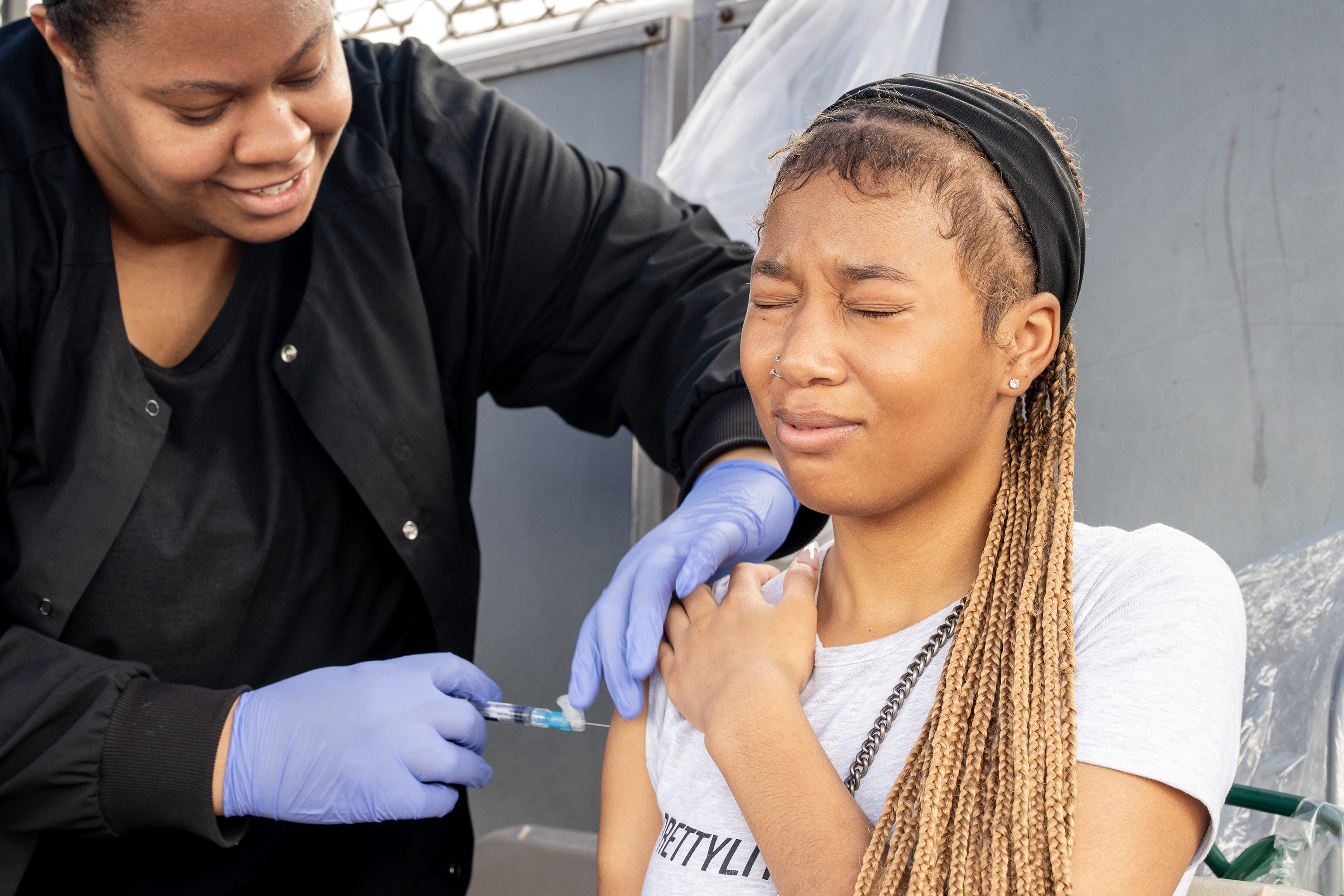
Cianey Brown, 16, reacts and turns to her family after getting an immunization at a Philadelphia school district vaccination clinic this month at Marcus Foster Memorial Stadium. Tom Gralish / Staff Photographer
Philadelphia parents face a number of different barriers that keep them from vaccinating children — and not all of them are related to vaccine hesitancy, said Amanda Bernard, a pediatrician with Greater Philadelphia Health Action, the clinic offering vaccinations at the event.
Some lack transportation to get to a health center outside their neighborhood, or don’t speak English well enough to navigate the healthcare system, she noted.
“I think that these sorts of events are really a way that we could combat that,” said Bernard, who has heightened her advocacy around vaccination as Pennsylvania’s measles outbreak has spread.
“There’s almost a desperation in my education. I sometimes feel like I’m almost begging [families] to get it.”
Editor’s note: This story has been updated to correct the name of James Logan Elementary in Philadelphia.
(function(){function e(){window.addEventListener(`message`,function(e){if(e.data[`datawrapper-height`]!==void 0){var t=document.querySelectorAll(`iframe`);for(var n in e.data[`datawrapper-height`])for(var r=0,i;i=t[r];r++)if(i.contentWindow===e.source){var a=e.data[`datawrapper-height`][n]+`px`;i.style.height=a}}})}e()})();
State officials confirmed two deaths associated with measles Tuesday, marking the first fatalities involving the highly contagious disease in the state in 35 years and the only measles-related deaths reported nationally so far this year.
Both were unvaccinated residents of Lancaster County, the center of a major measles outbreak that has sickened nearly 400 people this year. Officials did not release their ages or information about underlying health conditions. State officials define a “measles-associated death” as when “laboratory or epidemiologic evidence of measles is present, but the official cause of death is under investigation.”
Gov. Josh Shapiro said the deaths reflected “the consequences of a lack of immunization” during a news conference at Lancaster General Health’s Women and Babies Hospital.
“We hope, and we pray, that those deaths will be the last,” he said. He added: “This illness and death from measles is completely preventable.”
He urged Pennsylvanians to get vaccinated against the disease, which can linger in the air for up to two hours and infect nine in 10 unvaccinated people exposed to it.
State officials would not provide additional details about the two people or their families to protect their privacy.
Most cases resolve after mild illness and a telltale rash, but measles can cause serious complications that include pneumonia and brain swelling. Lancaster physicians have treated patients with these symptoms in recent months.
Nearly one in five of the people diagnosed with measles this year in Pennsylvania has been hospitalized. Deaths are rare, occurring in about one to three people in every 1,000 cases. Three people died of measles nationwide in 2025.
Pennsylvania has reported the third-highest number of measles cases in the country for 2026, behind Utah and South Carolina, according to the Centers for Disease Control and Prevention’s latest data. The CDC’s website had recorded no other measles deaths this year as of last week.
Shapiro said he had talked to U.S. Health and Human Services Secretary Robert F. Kennedy Jr., a prominent anti-vaccine activist, about the deaths.
Shapiro, a Democrat who has opposed Kennedy’s efforts to upend federal vaccine policy, said federal officials were contributing to the spread of misinformation about measles vaccine safety that “in some cases isn’t driven by facts and by science.”
“I was very, very blunt with him, and I made very clear that his actions and the rhetoric that’s coming from this administration are having a negative impact on communities across America, particularly right here in Pennsylvania,” he said.
“There’s real-life consequences to spreading misinformation,” Shapiro said. “There’s real-life consequences to scaring people.”
The state health department is working with CDC staff as they report testing and confirm measles cases, Shapiro administration representatives said.
Kennedy had checked in Tuesday, asking if the state needed additional help, the governor’s representatives said. Shapiro told him the state “has what we need at this time,” they said.
In a statement, HHS officials offered condolences to families and communities affected by the deaths and said they will “continue to follow Pennsylvania’s lead” with “resources to support the state’s response.”
“The MMR vaccine provides the most effective protection against measles and helps prevent its spread,” a spokesperson said.
In Pennsylvania, children made up about one-third of the 393 patients diagnosed with measles in two separate outbreaks so far this year, state officials say. None of the patients diagnosed with measles this year have been fully vaccinated.
Just under 88% of kindergarteners in Lancaster were vaccinated against measles in the 2025-2026 school year.
The spreading outbreak may have some parents reevaluating. Shapiro said healthcare providers across the state have given out 35,000 doses of MMR vaccines in the last month; typically, they give out 25,000 in a month.
A registered nurse vaccinates a client at a mobile clinic in Upper Darby in July as part of a campaign to encourage vaccination amid rising measles case counts and declining immunization rates.Jessica Griffin / Staff Photographer
In the decades since, robust vaccination efforts effectively eradicated the disease in the United States. In recent years, Pennsylvania has seen only sporadic cases, and many physicians here have never treated measles cases before.
Nearly half of the cases reported in Pennsylvania this year were diagnosed in Lancaster County residents, followed by Chester County with 41 cases as of Monday.
And health officials have said they believe there are far more cases circulating than have been officially reported in a state that recorded a total of 16 measles cases all year in 2025.
Delaware has reported 22 cases this year, the first time in a decade that measles has been diagnosed in state residents. New Jersey has confirmed just one case.
So far, the bulk of Pennsylvania’s cases this year have been diagnosed in the summer months. With students now returning to classrooms, many physicians and health officials are concerned about increasing risks for spread.
Overall, Pennsylvania reports high vaccination rates among school-age children, with about 93% of kindergarteners immunized against measles.
Philadelphia-area counties, despite slight drops in vaccination rates in 2025, generally hover close to the 95% “herd immunity” threshold, the rate at which a population must be vaccinated to prevent the spread of the disease.
At Tuesday’s news conference, state Secretary of Health Debra Bogen said the deaths will not change the department’s focus on increasing vaccination efforts and informing health providers and schools about the threat of measles.
All schools received letters from the health department ahead of the school year informing administrators about how to spot measles and report cases.
“We are in contact with school nurses across the state, so the schools are prepared and have all the tools they need. We will support them if there’s a case,” Bogen said.
State officials said that the outbreak is not limited to religious communities in Lancaster County, home to a high population of Amish and Mennonite residents. Some members of the Christian denominations avoid vaccination, but attitudes vary.
“Measles has now been traced to 28 different counties, counties that have really different makeups, both from a religious perspective and from a broader community perspective,” Shapiro said. “It would not be fair for anyone here to conclude that this is just a problem in a particular community.”
Lancaster doctors and leaders have called on residents to get vaccinated to protect themselves and others, saying that helping neighbors is in keeping with the area’s spirit.
“We show up for one another in times of need. We deliver meals. We support each other during times of illness. Vaccinations are another way we care for each other,” said Jeffrey Martin, the chair of Lancaster General Hospital’s Department of Community and Family Medicine.
Martin also urged Lancaster residents who suspect that they have measles to call ahead to hospitals or urgent cares before seeking help there, so staff can prepare to isolate them from other patients.
“This simple step can significantly reduce the risk of spread,” he said.
Pennsylvania health officials confirmed 89 new measles cases in the state in the last seven days, an escalation of a rapidly growing measles outbreak now impacting more than two dozen counties.
As of Thursday, Pennsylvania had reported the third-highest number of measles cases in the country for 2026, behind Utah and South Carolina, according to data from the Centers for Disease Control and Prevention.
Delaware has reported 22 cases this year, the first time in a decade that the highly contagious disease has been diagnosed in state residents. New Jersey has confirmed just one case.
In Pennsylvania, children made up about one-third of the 379 patients diagnosed with measles in two separate outbreaks so far this year, state officials say. None of the patients diagnosed with measles this year has been fully vaccinated.
In all of 2025, the state reported just 16 measles cases.
Lancaster County, with some of the lowest measles vaccination rates in the state, has been at the center of both Pennsylvania outbreaks this year. As of Friday, the county has tallied 181 cases.
State officials warned earlier this week that the public may have been exposed to the disease on Aug. 4 and 5 at a soccer camp at Millersville University and on Aug. 12 at a Whole Foods in Lancaster.
Chester County has the second-highest number of cases in the state, at 41; it is the only Philadelphia-area county to report cases in the current outbreak, which began in April.
And cases are climbing in central Pennsylvania, with Centre County reporting 13 cases and neighboring Mifflin County reporting 25.
State health officials said that 70 people, including 22 children, have been hospitalized with measles this year. That’s about 18% of the total cases reported.
In August alone, state officials have confirmed nearly 200 new cases in Pennsylvania.
The true number of cases is likely much higher, physicians and health officials in Lancaster and Chester Counties say.
In Chester County, some residents have refused to cooperate with health workers looking to trace their contacts to understand how measles is spreading in the county, officials there have said.
Local officials also worry about the spreading outbreak as many children return to school next week. Overall, about 93% of kindergarteners in Pennsylvania were vaccinated against measles, mumps, and rubella (MMR) in the 2025-26 school year.
That’s just below the 95% “herd immunity” threshold, the level at which scientists say a given population must be immunized to prevent the spread of measles, which can infect nine in 10 unvaccinated people exposed to it.
Analyses earlier this year by The Inquirer and the Pittsburgh Post-Gazette show pockets of vulnerability across the state, with hundreds of kindergarten classes reporting vaccination rates below herd immunity, putting students and communities at risk for an outbreak.
Still, most Pennsylvania students are fully vaccinated and schools “benefit from robust community immunity that serves as a powerful barrier against the virus,” state health officials said in a statement.
The state hosted medical briefings for nearly 1,000 school nurses over the summer to provide guidance on preventing measles as they prepare for the upcoming school year, officials said.
Most measles cases resolve in weeks with mild-to-moderate flulike symptoms, but the disease is particularly risky for young children and can result in severe complications, including death.
This year, Pennsylvania hospitals have treated adults with brain swelling and pneumonia, and children with dehydration or damaged organs from measles.
State officials have stepped up vaccination campaigns in response to the outbreak, with health department staff dispensing more than 4,000 vaccinations in the state this year — and more than 1,800 in August alone.
The department has held 85 pop-up clinics in affected counties since April and has scheduled “dozens” of additional clinics for the coming weeks and months.
The state has also hosted briefings for healthcare providers on how to recognize and treat measles, and is recommending that doctors offer early vaccinations for children as young as six months old in affected areas.
Pennsylvania will not change its immunization guidelines in response to President Donald Trump’s executive order this week calling for states to reduce the number of recommended childhood vaccinations and separate a combination shot protecting against measles, mumps, and rubella (MMR).
Gov. Josh Shapiro, a Democrat, said his administration will “continue to give Pennsylvanians clear public health guidance based on science and facts.”
“President Donald Trump and [Health and Human Services Secretary Robert F. Kennedy, Jr.] are screwing around with the childhood vaccine schedule — ignoring decades of science, sowing chaos and confusion, and spreading dangerous misinformation that put kids and families at risk,” Shapiro said.
States set vaccination mandates for schoolchildren, not the federal government.
And it gives Kennedy, a longtime anti-vaccine activist, 90 days to present Trump with a plan for a number of vaccine policy changes. Changes could include splitting the MMR vaccine into separate shots for each disease. There are currently no individual vaccines for measles, mumps, or rubella licensed in the United States.
“Splitting up combination immunizations, like the MMR vaccine, creates unnecessary hurdles for parents, needlessly extends the window of risk for our youngest residents, and doesn’t follow the results of the many studies that went into developing the previous vaccine schedules,” Pennsylvania Secretary of Health Debra Bogen said in a statement.
White House spokesperson Kush Desai did not comment directly on Pennsylvania officials’ decision to keep its original vaccine recommendations.
He said in a statement that Trump has pledged to reduce the vaccines recommended for all children, and the “administration is committed to delivering with Gold Standard Science and every lever of executive authority.”
“The countless parents whose questions and concerns about America’s vaccine schedule have been ignored if not mocked finally have a true champion in President Trump,” he said.
Vaccine politics under Trump
The new executive order is not binding, experts say, and states are free to ignore it.
Several states, including Pennsylvania, have already balked at Trump’s repeated attempts to upend longstanding childhood vaccination schedules.
And last year, when the Trump administration did not approve COVID-19 vaccinations for certain groups, Pennsylvania changed state policy to allow pharmacists to dispense vaccines based on recommendations from a number of professional medical organizations, including the American Academy of Pediatrics and the American Academy of Family Physicians.
Previously, pharmacists were asked to dispense vaccinations based solely on recommendations from a Centers for Disease Control and Prevention committee. Kennedy fired the entire committee and replaced them with hand-picked appointees last year, some of whom included vaccination skeptics. That action is also the subject of a court battle.
“The way to handle this is to ignore it,” said Paul Offit, the director of the Vaccine Education Center at the Children’s Hospital of Philadelphia and a prominent Kennedy critic.
“It’s not science based, it doesn’t make vaccines safer or more effective,” he said. “All it does is put children in harm’s way.”
He noted that despite longstanding concerns by anti-vaccination activists that children receive too many vaccinations, breaking up combination vaccinations like MMR would result in children getting more shots. “Kids would need six shots instead of two,” he said.
Logistics uncertain
Changing the kinds of vaccines available in the United States would take years, said Ana Santos Rutschman, a professor specializing in health law at Villanova University.
Trump could ask the Food and Drug Administration to approve separate measles, mumps, and rubella vaccinations, which would require extensive clinical trials and a long approval process, she said. And vaccine manufacturers may not attempt to develop new shots if Republicans lose control of the White House in 2028, she added.
“Right now, it’s unlikely anyone will reshift their operations,” she said. “It’s feasible — it’s just expensive, and the payoff is very small.”
The FDA could revoke licensing for the current combination MMR vaccines, but that would likely invite court challenges, Santos Rutschman added.
In the short term, she’s concerned that Trump’s repeated attempts to change longstanding vaccine policy will only confuse parents and providers who have relied on consistent recommendations from the federal government.
“Suddenly, you have our top regulators saying there’s a reason to hop to a different set of products. This is inherently confusing,” she said.
Federal officials this week assured Americans they can safely eat fresh produce, saying they’ve issued new safety guidelines for producers and pulled all lettuce associated with an outbreak of cyclosporiasis from the market.
The intestinal parasite Cyclospora cayetanensis, which causes “explosive” diarrhea,had contaminated lettuce sold in 15 states, including Pennsylvania.
Philadelphia health officials said Monday that the city has confirmed 22 cases of the gastrointestinal illness in 2026. Reported cases have been higher elsewhere in the state.
Statewide, officials had recorded 214 confirmed cyclosporiasis cases as of Tuesday and an additional six probable cases. Pennsylvania confirmed 40 cases of cyclosporiasis in 2025 and 87 in 2024, officials said.
Federal health officials have confirmed more than 13,000 cases across 47 states this spring and summer.
The CDC has linked more than 6,000 cases of cyclosporiasis, 278 hospitalizations, and two deaths to iceberg lettuce sold by Taylor Farms. (Taylor Farms had also recalled jalapenos separately linked to a salmonella outbreak in 26 states. The jalapenos were not sold in Pennsylvania.)
Pennsylvania has reported far fewer cyclosporiasis cases than states like Michigan and Ohio, where thousands have been sickened. Still, because confirmed cases have increased in Pennsylvania in recent weeks, it’s too soon to predict case counts for the year, said Akhil Vaidya, a distinguished professor in the Department of Microbiology and Immunology at Drexel University College of Medicine.
“Generally, it is between May and August that you see Cyclospora. We don’t know how it will go for the rest of the year,” he said. “I hope we dodged a bullet.”
Cyclospora was only discovered by scientists in the mid-1990s, and more research on the parasite remains needed, Vaidya said. Most research is conducted outside the U.S., where cyclosporiasis is more common, and the parasite cannot be grown in a lab, which often makes it difficult to track the source of foodborne outbreaks, he said.
State and federal health officials must carefully monitor when and where illnesses emerge to understand why so many cases have been reported this year, Vaidya said.
State health officials urged Pennsylvanians to take these steps to protect themselves from cyclosporiasis: washing their hands with soap and water before and after handling raw fruits and vegetables; rinsing produce under hot water, scrubbing firm produce like melons with a clean brush; cutting away damaged parts of produce; and refrigerating cut, peeled, or cooked fruits and vegetables as soon as possible.