Author: Elizabeth Wellington

  • The first Jewish American to serve the government was a Philadelphian. A letter he carried to Paris for Thomas Jefferson just sold for $108,000.

    The first Jewish American to serve the government was a Philadelphian. A letter he carried to Paris for Thomas Jefferson just sold for $108,000.

    In the early 1780s, Revolutionary War era Jewish patriot and Philadelphian Lt. Col. David S. Franks had a desperate work situation in hand.

    He had served as one of Benedict Arnold’s high-ranking personal assistants, and after Continental militiamen discovered Arnold’s intentions to sell America out to the British in 1780, it became nearly impossible for Franks to find a job with the United States government.

    Franks was cleared of wrongdoing. But working with Arnold made the Founders wary of employing Franks.

    But not Thomas Jefferson, who hired Franks as his secretary. By the time the Treaty of Paris ending the Revolution was ratified in January 1784 in Annapolis, Md., then America’s capital, Franks had been Jefferson’s secretary for almost a year.

    It was Franks who carried at least one official copy of the finalized treaty to Benjamin Franklin — who was in Paris at the time — and other officials in Britain and France.
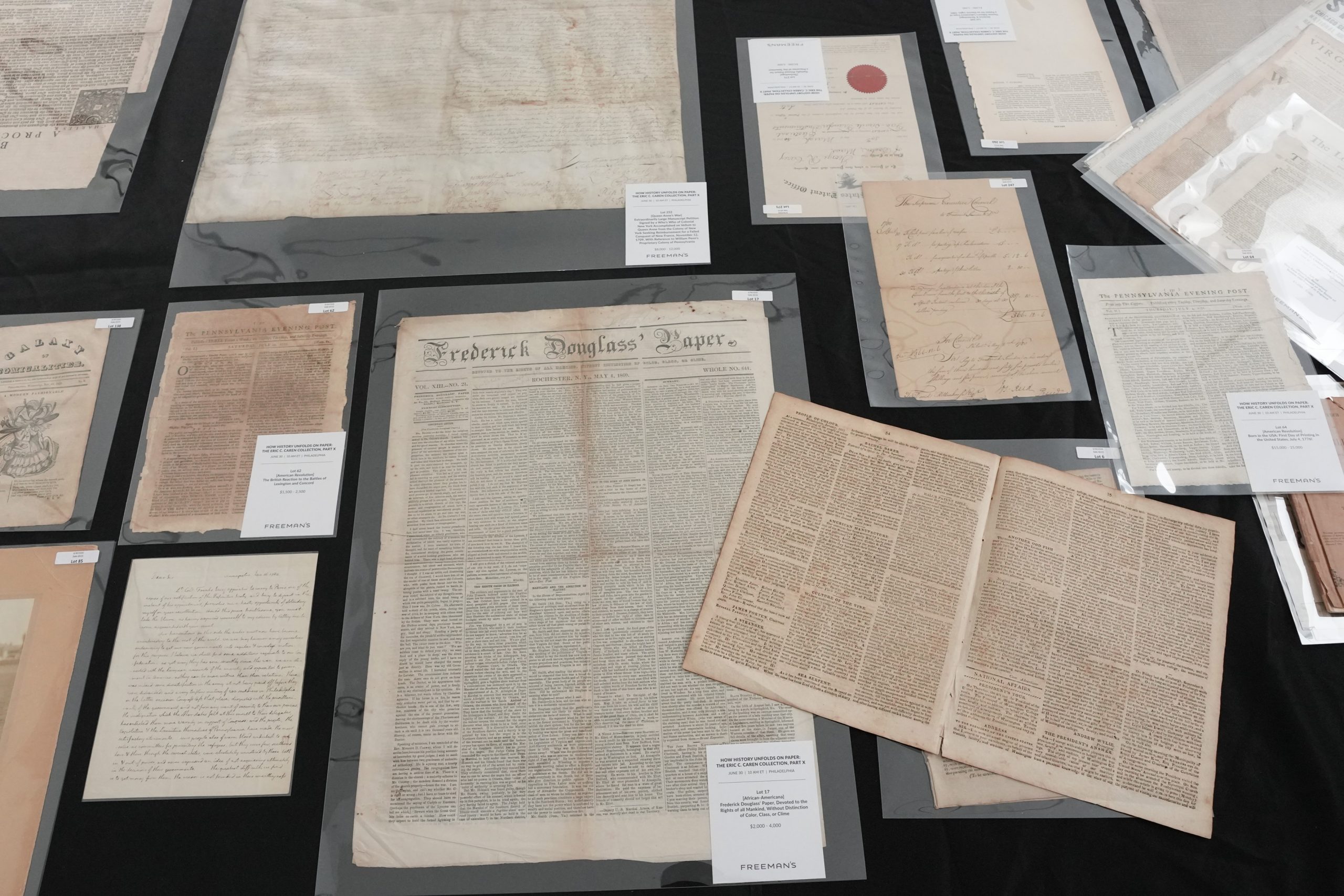
    Frederick Douglass’ Paper (front center) and other documents, part of the collection “How History Unfolds on Paper: Important Americana from the Eric C. Caren Collection,” which boasts more than 320 rare newspapers, books, pamphlets, and ephemera tracing the development of printing and publishing in America, an enterprise that started in Philadelphia in1690 with the first paper mill.Jessica Griffin / Staff Photographer

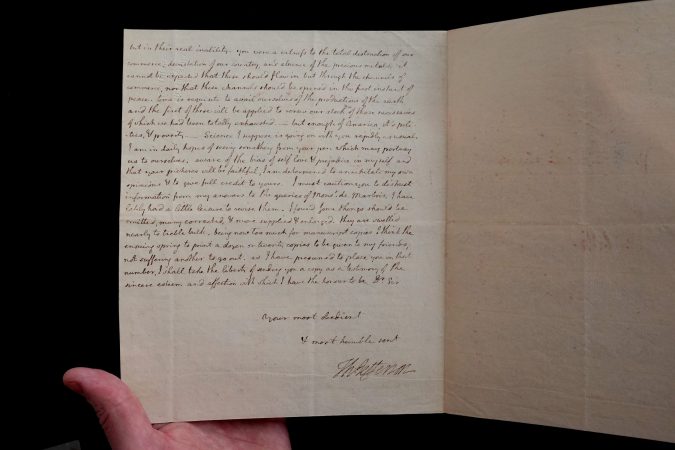
    Franks also carried a two-page letter written in Jefferson’s customary neat hand for Francois Jean de Beauvoir, Chevalier de Chastellux. It was a friendly message between the longtime acquaintances, in which Jefferson wrote to the French noble about how America was progressing as a sovereign nation and about his forthcoming book Notes on The State of Virginia.

    That letter sold for $108,000 Tuesday as part of an online and in-person auction presented by Philadelphia’s Freeman’s auction house.

    “How History Unfolds on Paper: Important Americana from the Eric C. Caren Collection, Part X” boasted more than 320 rare newspapers, books, pamphlets, and ephemera tracing the development of printing and publishing in America, an enterprise that started in Philadelphia in 1690 with the first paper mill.
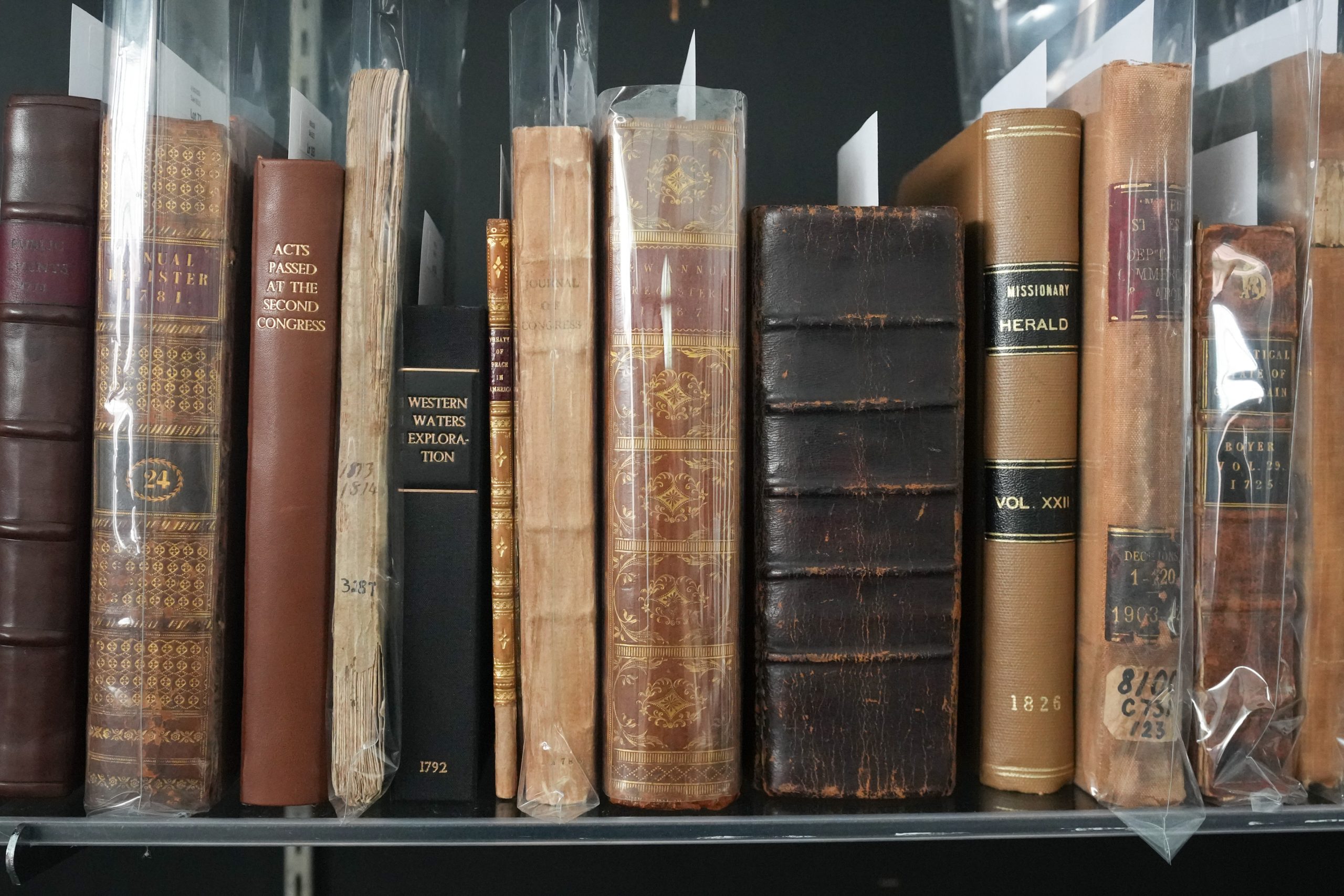
    Books from the collection “How History Unfolds on Paper: Important Americana from the Eric C. Caren Collection,” which boasts more than 320 rare newspapers, books, pamphlets, and ephemera tracing the development of printing and publishing in America.Jessica Griffin / Staff Photographer

    “Caren goes where the history leads him. His collection reflects that,” said Darren Winston, Freeman’s senior vice president and head of the books and manuscripts department. “When he asked us to host a sale in honor of the 250th, we immediately said yes.”

    18th century news treasures

    The vast sepia-hued collection of aged newspapers and bound volumes was heaven sent for primary-source junkies who can afford to plop down a few hundred or several thousand dollars for the kinds of historical gems usually found only on microfilm. It’s also a gold mine for those who think hundred-year-old newspapers in near mint condition are frame-worthy.

    One such memento was a four-page Pennsylvania Evening Post printed on July 4, 1776, believed to be the first daily newspaper printed on North American soil just declared free of the monarchy.
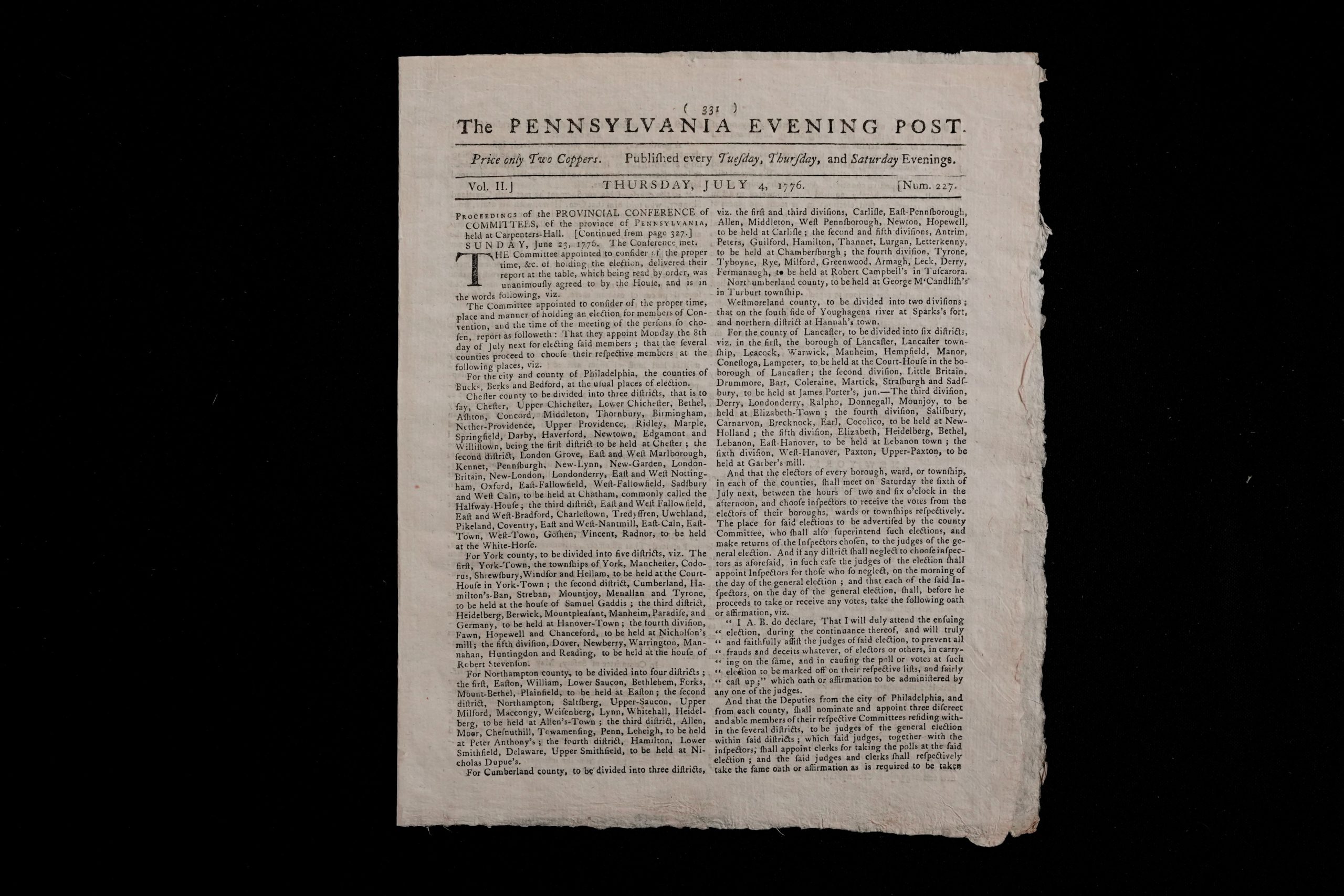
    A four-page Pennsylvania Evening Post printed on July 4, 1776, believed to be the first daily newspaper printed on North American soil just declared free of the monarchy.Jessica Griffin / Staff Photographer

    The Evening Post, founded by printer Benjamin Towne in 1775, was published just a few blocks from the Pennsylvania State House on Tuesday, Thursday, and Saturday evenings.

    The July 4 edition contains a short mention that the Continental Congress declared the United Colonies free and Independent States earlier in the day. And “the day before, we had a King in charge,” Winston said.“How History Unfolds on Paper” included five 18th century newspaper editions, including one printed in Scotland, that published the Declaration of Independence in full.

    Other archival gems included a copy of the Frederick Douglass Paper from 1860; copies of the Emancipation Proclamation as they appeared in the Daily Globe, the New York Tribune, the Evening Journal Almanac, and The Philadelphia Inquirer; Abraham Lincoln’s second inaugural address as printed in the New York Times in 1865; and more than 70 issues of Civil War-era Philadelphia Inquirers.
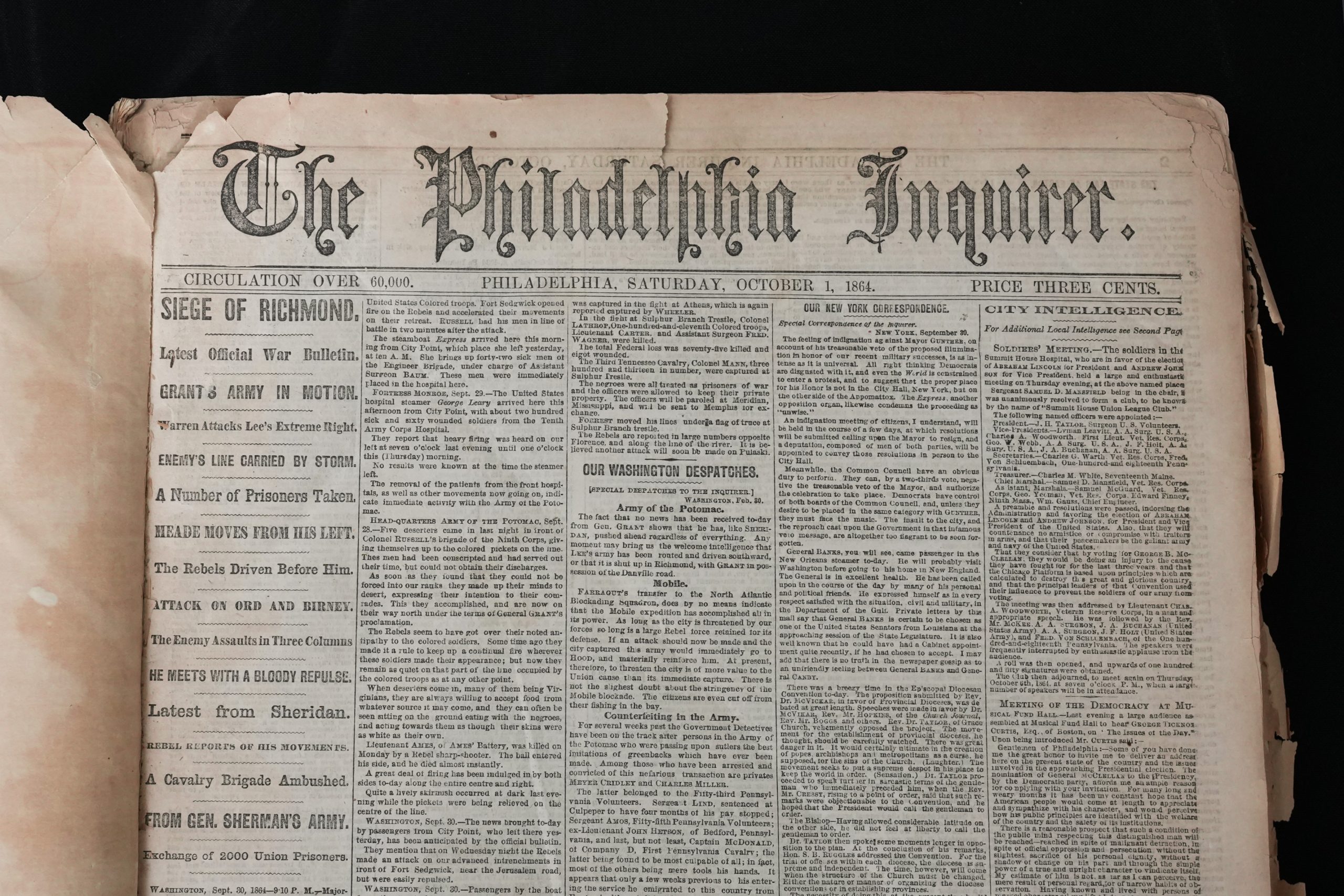
    A copy of the Philadelphia Inquirer, part of the collection “How History Unfolds on Paper: Important Americana from the Eric C. Caren Collection,” which boasts more than 320 rare newspapers, books, pamphlets, and ephemera tracing the development of printing and publishing in America, an enterprise that started in Philadelphia in 1690 with the first paper mill.Jessica Griffin / Staff Photographer

    But Caren’s collection is more than weathered newspapers.

    The auctioned collection bubbled with relics, collectibles, and keepsakes that speak to the economy, such as a note signed by first director of the U.S. Mint, David Rittenhouse — for whom Rittenhouse Square is named — ordering payment of 350 pounds to a doorkeeper employed at the Pennsylvania State House. (That’s about $107,000 in today’s money.)

    An 1874 advertisement for Levi Strauss & Co. that appeared in a Montana newspaper was among the cool finds, as was a 1905 Phillies Athletics score card. An 1869 letter signed by Susan B. Anthony and a 1772 volume of poetry including works from Phillis Wheatley are priceless, but their bidding started at $900 and $400 respectively.

    “Freeman’s is America’s oldest auction house, and Philadelphia is the birthplace of the United States,” Caren said. “So for the 250th anniversary [of America], I thought this sale would be quite fitting.”
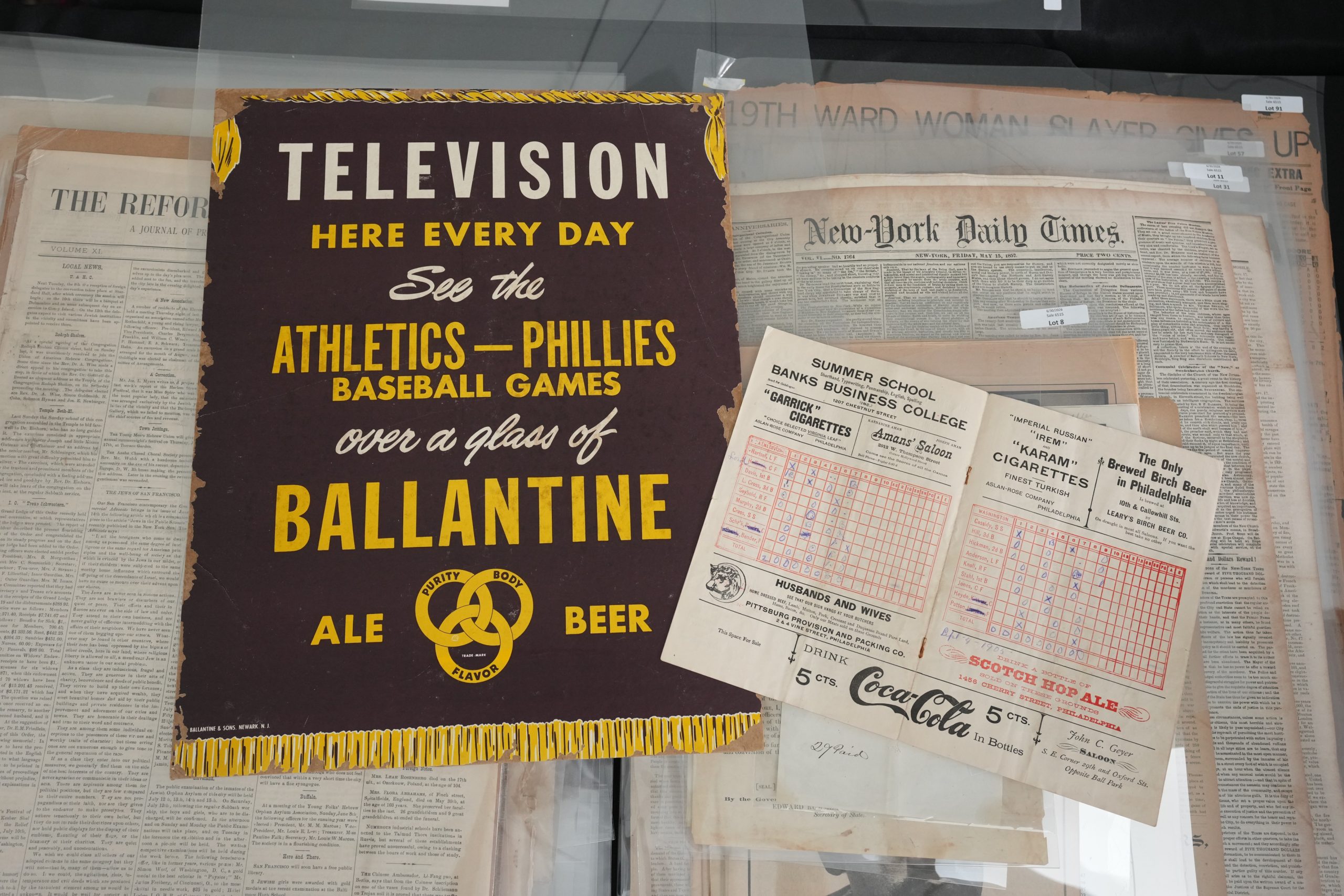
    Some of the sports memorabilia featured in “How History Unfolds on Paper: Important Americana from the Eric C. Caren Collection” Jessica Griffin / Staff Photographer

    50 years of collecting

    Caren, 66, is a New Yorker and said he came out of his mother’s womb collecting — starting with comic books, stamps, coins, and baseball cards.

    In 1970, he learned that a few of his friends were going rummaging through an abandoned house in Rockland County and that they had found newspapers from the turn of the 20th century.

    “I asked them to try and find me a sports page with Babe Ruth, and they brought me one from 1913 and I was mesmerized,” Caren said.

    After some cajoling, Caren convinced his friends to reveal their secret treasure trove. There, he discovered periodicals going back to the 1890s and was hooked.

    Caren spent the next 50-plus years collecting the printed and written word. He has traveled the world to estate sales, garage sales, rare book shops, and antique shows. He’s one of the founders of the Ephemera Society of America and a member of the American Antiquarian Society and the Grolier Club.

    He owns hundreds of thousands of paper items, and pieces of his collection have been sold at the auction houses Christie’s and Sotheby’s. “How History Unfolds on Paper” was his 10th auction and first in Philadelphia.

    “If ever there was a Philadelphia item, this is it”

    In his travels, Caren has come across many of Jefferson’s letters. The one written to Chastellux, he says, is particularly noteworthy because Jefferson wrote it himself, as opposed to dictating it to a secretary, like Franks.
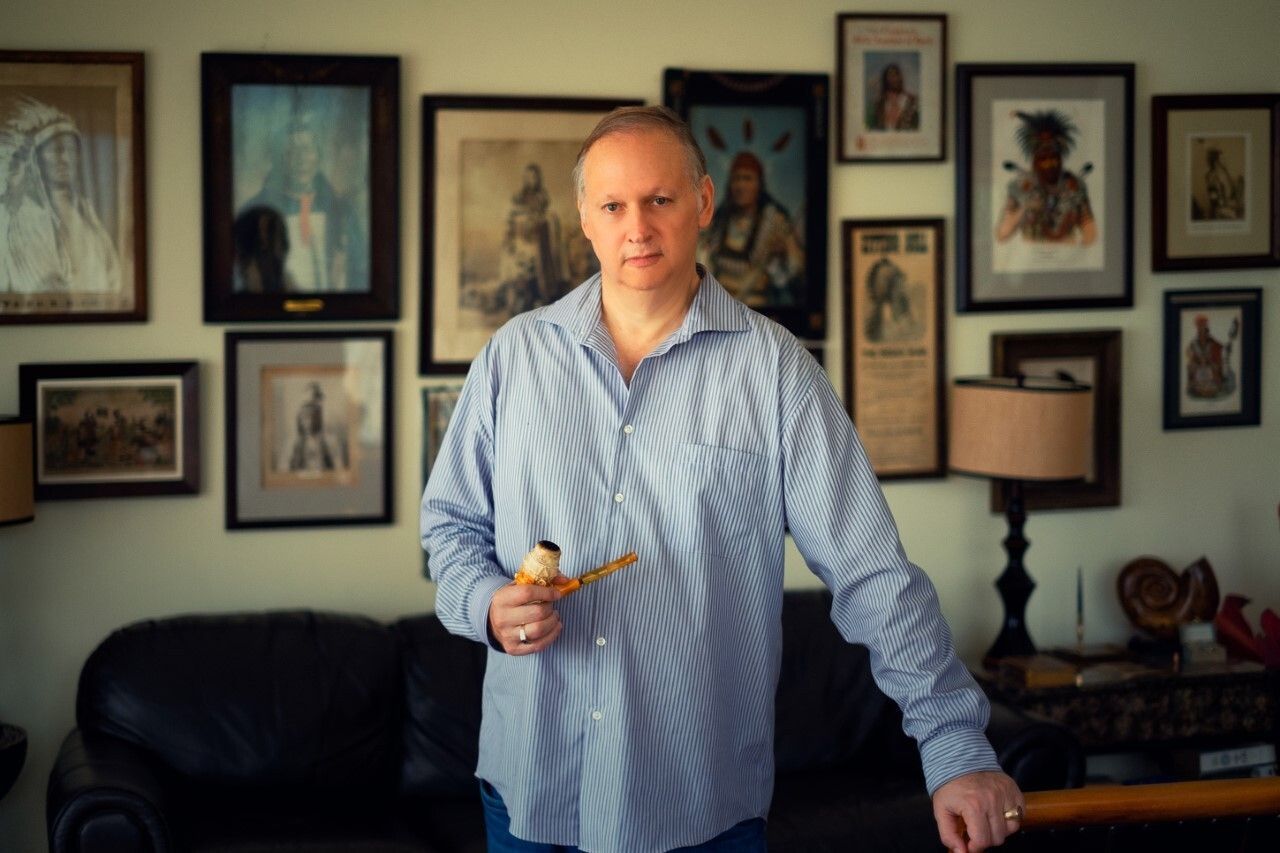
    Long-time ephemera collector Eric C. Caren, his collection “How History Unfolds on Paper: Important Americana from the Eric C. Caren Collection, Part X” went to auction at Freeman’s in Philadelphia.courtesy of Freeman Auction House

    The letter had been in the Chastellux family for centuries before landing at an auction a few years ago. Caren passed it over a few times before recognizing Frank’s name in the first paragraph.

    “It was a great example of how even great things can slip by,” Caren said.

    The Treaty of Paris was signed in September 1783. The following January, legislators ratified it in Annapolis.

    Dated Jan. 16, 1784, Jefferson’s letter reads like a chatty blog of late 18th century American happenings. In the five months since the war’s end, news traveled to Europe that Americans were behaving badly. One of the reasons Jefferson penned this missive, Caren said, was to “dispel [this] fake news.”

    “There was indeed some dissatisfaction in the army at not being paid off before they were disbanded and a very trifling mutiny of 200 souldiers in Philadelphia,” Jefferson wrote, playing down the Pennsylvania Mutiny of 1783, during which a few Continental Army soldiers rioted in Philadelphia streets when they weren’t paid.
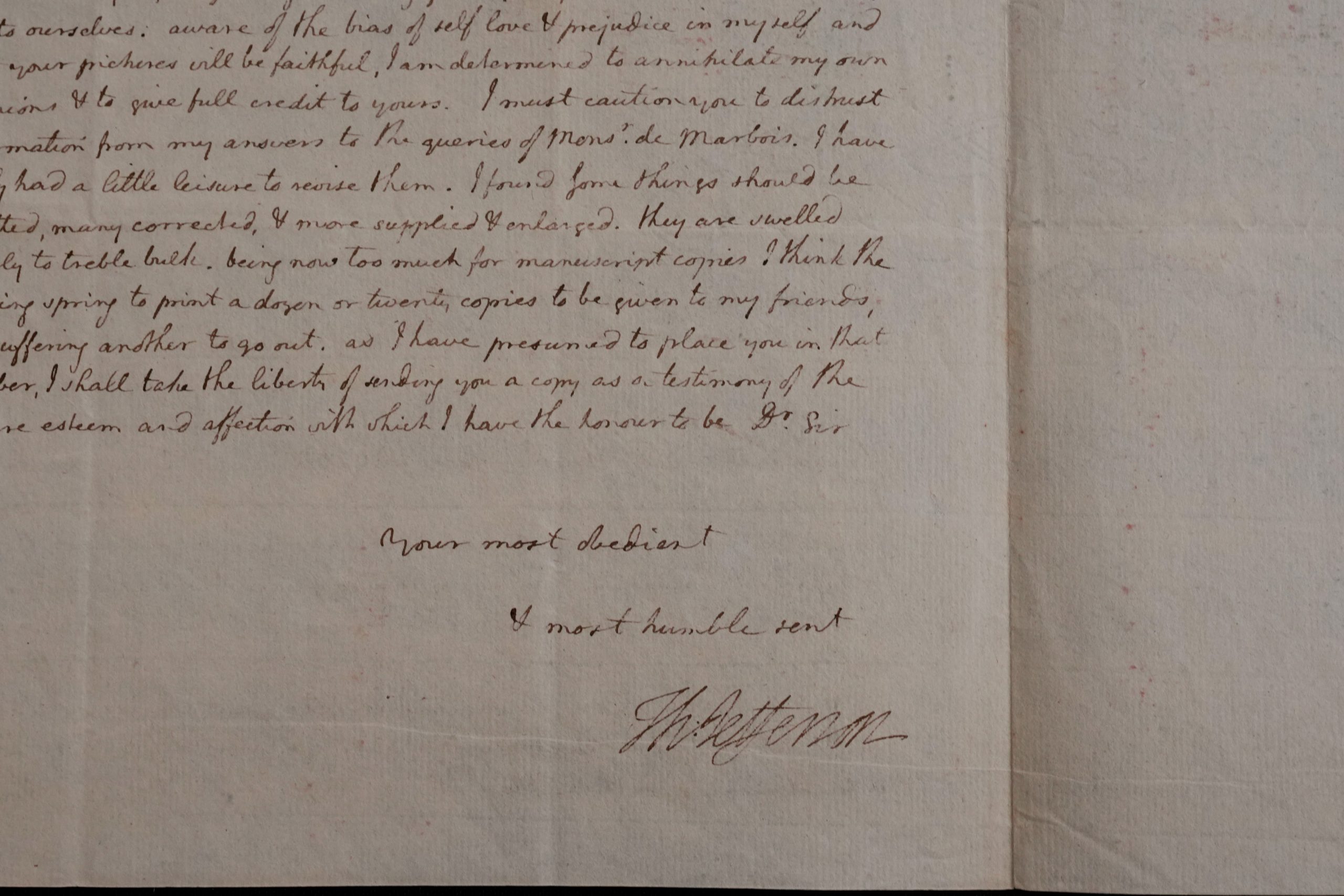
    Thomas Jefferson’s signature on a letter to Francois Jean de Beauvoir, Chevalier de Chastellux, a part of the auction at Freeman’s.Jessica Griffin / Staff Photographer

    He also mentions his yet-to-be published book Notes on The State of Virginia and encouraged Chastellux to write one of his own. He did.

    Voyages de M. le Marquis de Chastellux dans l’Amerique septentrionale, published at the turn of the 20th century, is what rare book dealer Wright Howes described as “the first trustworthy record of life in the United States.”

    Franks, the first Jewish American to serve in the early American diplomatic corps, did not fare as well as Jefferson or Chastellux. Lingering rumors from his association with Arnold continued to follow him, and in 1786, he was fired from the government.

    He spent years trying to restore his name. During his first term, President George Washington helped Franks secure a job as an assistant cashier at the Bank of the United States of America, but Franks was no longer accepted in the Founding Father’s circle.

    He died in 1793 during Philadelphia’s yellow fever epidemic.

    “If ever there was a Philadelphia item, this is it,” Caren said. “This letter is the intersection between the history of Philadelphia and the history of our nation.”

    The headline and article have been updated to include the winning bid at the auction on Tuesday morning.
  • A Philadelphia high schoolers’ production of ‘1776’ is former Gov. Ed Rendell’s dream come true

    A Philadelphia high schoolers’ production of ‘1776’ is former Gov. Ed Rendell’s dream come true

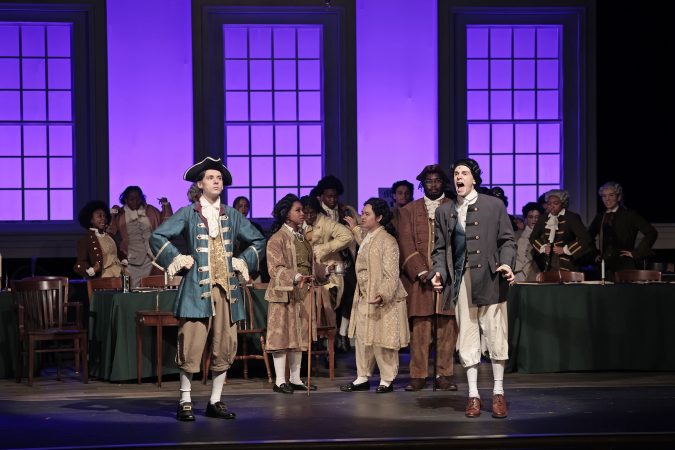
    In tricorn hats and tail coats, their locs, microbraids, and wavy tresses gathered into 18th-century low ponytails, 27 Philadelphia-area high school students transformed into America’s Founding Fathers on Wednesday evening at the Philadelphia High School for Creative and Performing Arts.

    The young thespians debated and deliberated the benefits of forming a sovereign nation. Their well-practiced Southern accents and New England inflections echoed in the full auditorium.

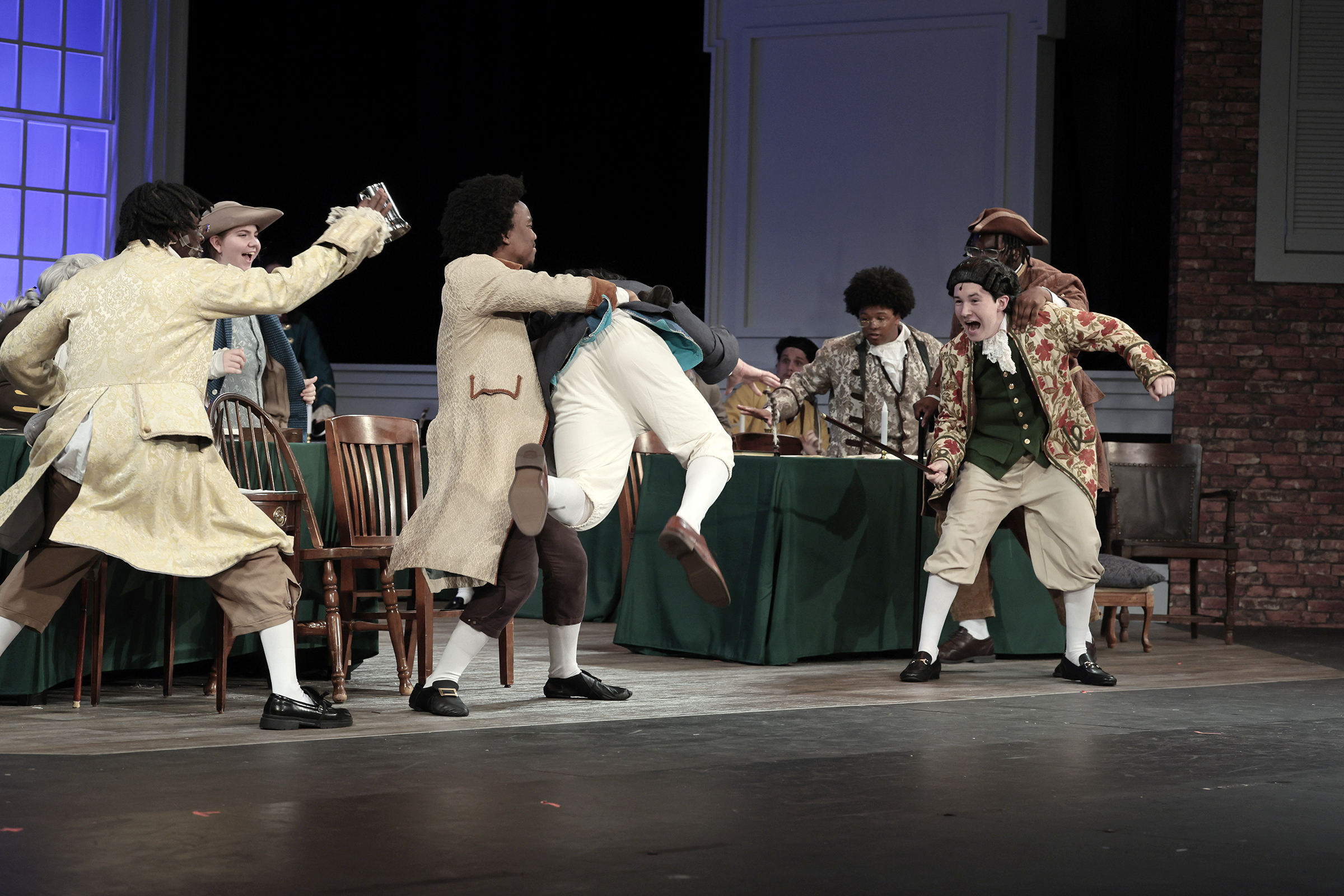
    In 2½ hours, Massachusetts congressman John Adams (played by Jackson Preisser), Ben Franklin (Jayden Duvene), and Thomas Jefferson (Maxwell Henderson) made the case for liberty, overcoming the petty aristocratic concerns of Pennsylvania delegate John Dickinson (Greg Rist).

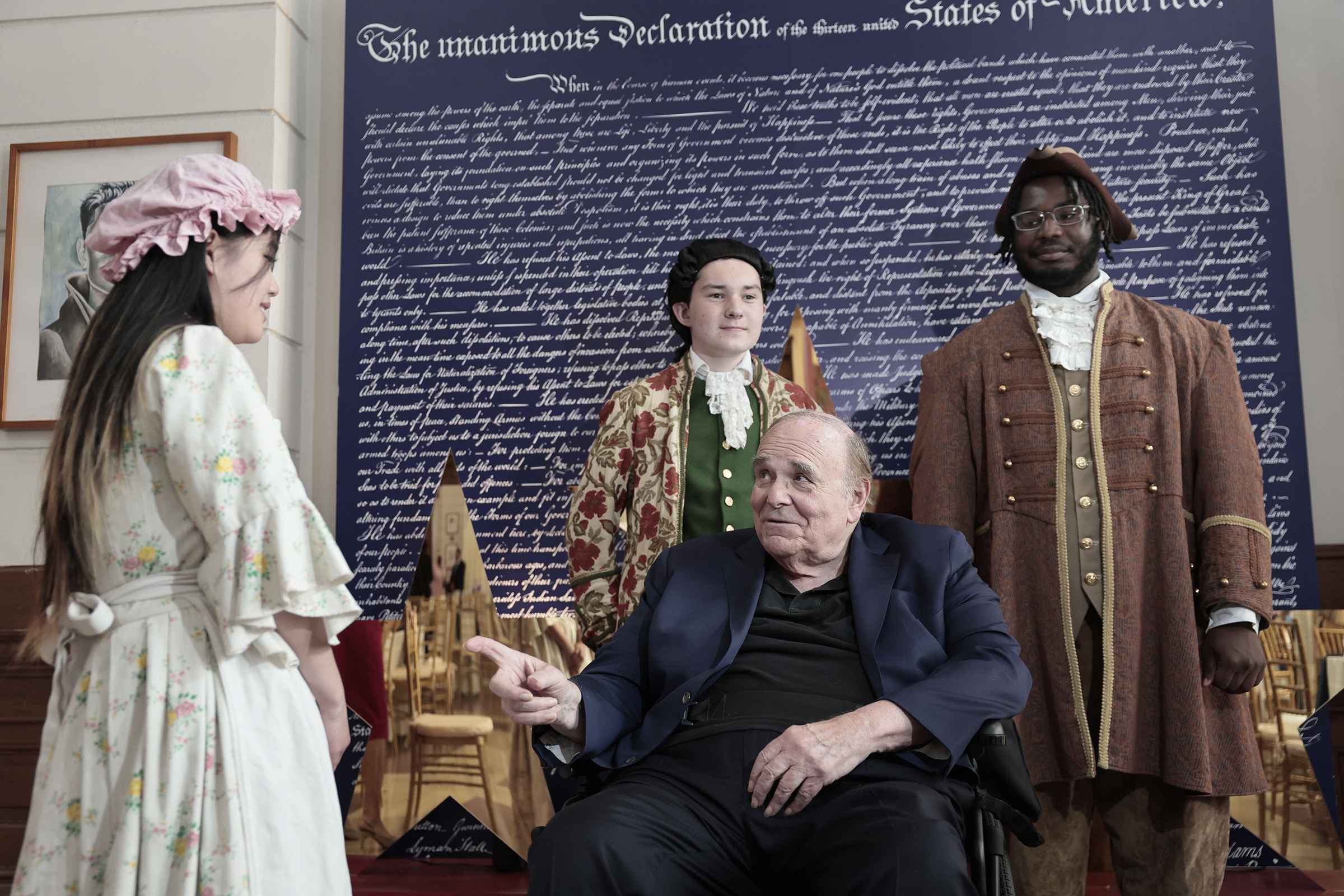
    Former Mayor Ed Rendell meets cast members (L-R) Abigail Adams (played by Chloe Chau), John Dickinson (played by Greg Rist) and Ben Franklin (played by Jayden Duvene) during opening night of 1776: The Musical at the Philadelphia High School for Creative and Performing Arts on Wednesday, June 24, 2026.Elizabeth Robertson / Staff Photographer

    On a set that looked remarkably like Independence Hall, the students staged the Tony Award-winning 1969 Broadway musical 1776 and argued for and against liberty with witty songs and sophisticated dialogue.

    The reenactment of the signing of the Declaration of Independence was everything Ed Rendell, the elder statesman and the brain behind the production, wanted it to be.

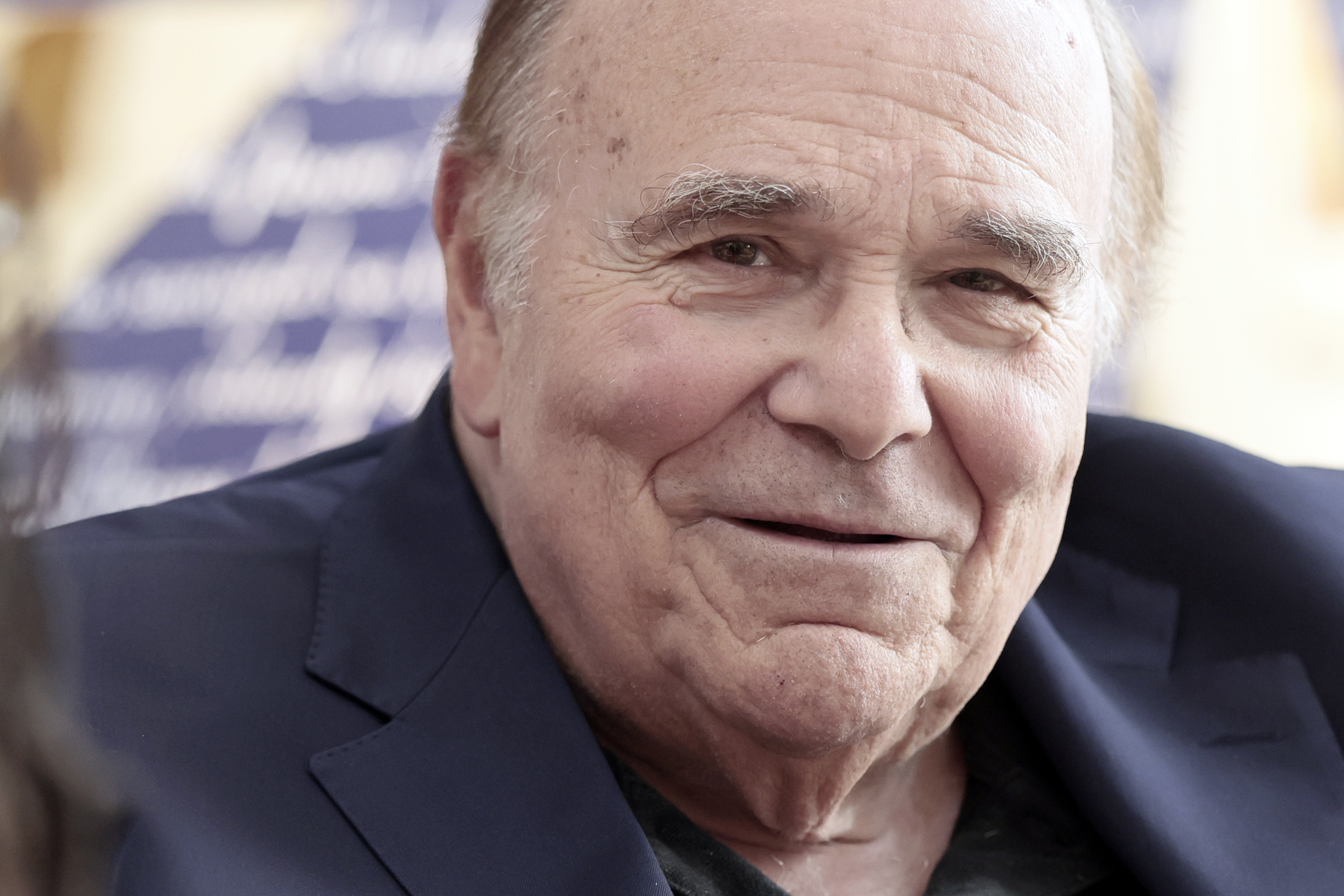
    “It’s been my dream for quite some time to see this production happen,” Rendell said to The Inquirer, his voice a raspy whisper, worn and weary from Parkinson’s disease. Sitting in his wheelchair at the red, white, and blue step and repeat, Rendell smiled as CAPA’s lobby was turned into a dining room for dignitaries hours before the play began.

    “In honor of America’s 250th birthday, we wanted to use 1776 to teach high school students the sacrifices and compromises it took to form this great nation,” he said.

    Rendell’s love for 1776 is rooted to the night in 1969 when he watched the colonial drama unfold on Broadway, starring William Daniels as John Adams, Ken Howard as Thomas Jefferson, and Howard da Silva as Benjamin Franklin. Daniels, Howard, and da Silva starred in the 1971 Oscar-nominated film of the same name.

    “I loved it,” Rendell said, whose favorite ballads from the play are Franklin, Adams, and Jefferson’s quirky performance of “The Egg,” in which the forefathers humorously choose the bald eagle as America’s national bird. (That didn’t really happen during the Second Continental Congress, but it’s a nice touch.)

    Another of Rendell’s favorite songs is “Is Anybody There?,” a melancholy number during which Adams asks himself if his dedication to the cause of independence is worth it.

    “It struck the right chord, giving all the facts about how we came to our freedom, our independence,” Rendell said. “When I became mayor, I went back and studied it and began to think of it as an important civics lesson. There were so many things I didn’t even know.”

    A former president, a mayor, a speaker walk into a play

    The 1776 opening night saw the attendance of a who’s who in Philadelphia politics, business, and civics.

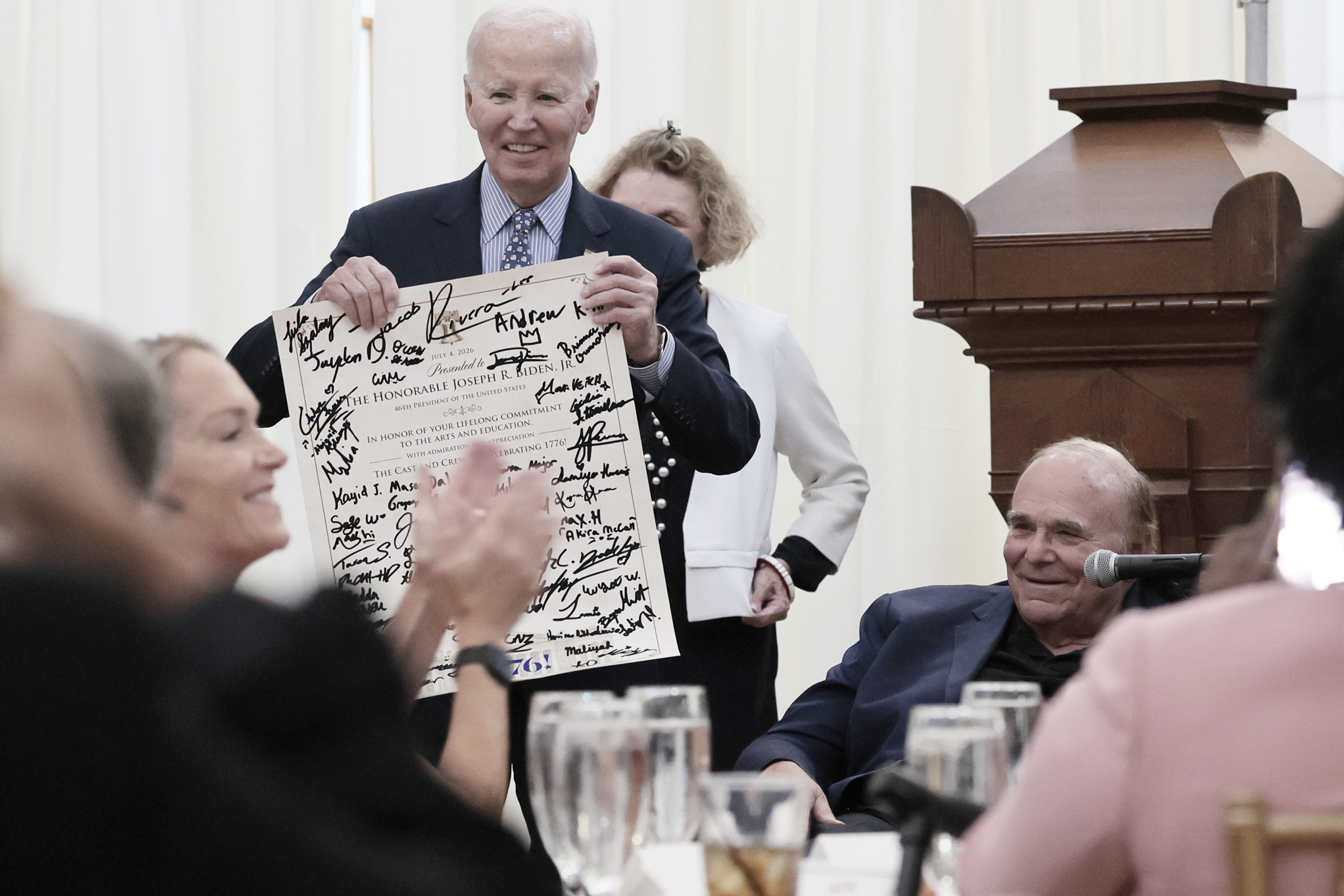
    Former President Joe Biden was in the house on the opening night of Rendell’s theatrical milestone. After he was presented with a copy of the declaration signed by the cast, the former president delivered a nine-minute speech about the importance of teaching American history in present-day America, although he did not mention President Donald Trump by name.

    “What I can tell you is that from the moment the Founding Fathers signed the Declaration of Independence, we have been in a consistent battle for the soul of the nation,” Biden said as guests prepared to dig into barbecued chicken, brisket, and ribs, Rendell’s favorite.

    Former President Joe Biden displays a signed poster from the cast as former Mayor Ed Rendell looks on during the opening night celebration of 1776: The Musical at the Philadelphia High School for Creative and Performing Arts on Wednesday, June 24, 2026.Elizabeth Robertson / Staff Photographer

    “Even when there is darkness,” Biden said, “we’ve summoned our angels and crawled back from the brink. We are trying to do that now.”

    Mayor Cherelle L. Parker, Pennsylvania House Speaker Joanna McClinton (D., Philadelphia), and State Rep. Joe Ciresi (D., Montgomery) were also in attendance. Philadelphia School Superintendent Tony B. Watlington Sr.; Temple University president John Fry; and David L. Cohen, the former senior executive vice president to Comcast and U.S. ambassador to Canada, were on hand, too.

    “When Mr. Rendell calls, people come out,” said Adrian R. King, a partner at Philadelphia-based law firm Ballard Spahr and a former Rendell staffer.

    Their attendance reflected their respect for Rendell, a former governor of Pennsylvania and mayor of Philadelphia who, in his political heyday in the 1990s, led the efforts to reimagine South Broad Street as the now-bustling Avenue of the Arts. CAPA’s 1997 opening was a part of that plan.

    John Adams (played by Jackson Preisser, middle) and John Dickinson (played by Greg Rist, right) are seperated during a scene from the opening night of 1776: The Musical at the Philadelphia High School for Creative and Performing Arts on Wednesday, June 24, 2026.Elizabeth Robertson / Staff Photographer

    Rendell’s baby

    Rendell has dreamed of this production for years. He began working on it in earnest last year, bringing on veteran Philadelphia arts administrator Karen Corbin to executive produce. Phillip Sean Brown, director of theater at Bryn Mawr’s Shipley School, was roped in to direct.

    “The governor had very specific ideas of what he wanted,” Brown said. “He wanted to show the history of our country, show the drama of the birth of a nation, and have the students learn everything they could about the craft of theater.”

    The first order of business was securing the rights to the late composer Sherman Edwards’ script and music. That will cost about $45,000 by the end of the run, Corbin said.

    Casting began in February and auditions began in March. Forty actors from eight area high schools were picked for the multicultural, gender-fluid rotating cast, giving the revival of the 57-year-old production Hamilton vibes.

    In addition, Brown said, more than 30 students were hired as musicians and production crew.

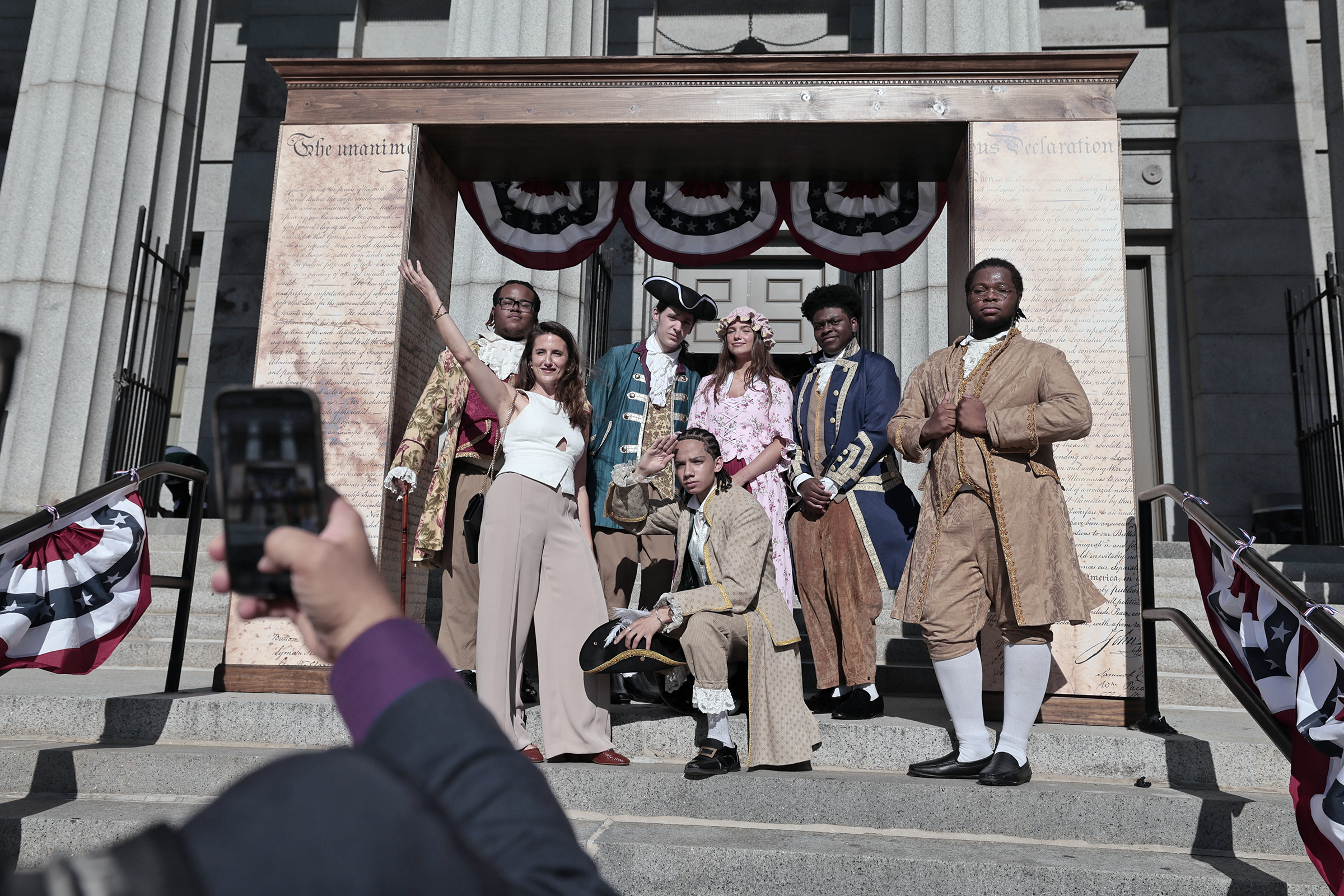
    Cast members posed with guests before opening night of 1776: The Musical at the Philadelphia High School for Creative and Performing Arts on Wednesday, June 24, 2026.Elizabeth Robertson / Staff Photographer

    “They worked with professionals in theater lighting, costume, sound, and props,” Brown said.

    Students were paid $150 a week during rehearsal weeks, and will make $300 a week through the eight-week performance. The entire production cost $850,000 including a $150,000 grant from the state.

    There will be 50 shows through Aug. 15 at CAPA. Actors will also perform vignettes of the musical throughout Philadelphia’s historic district, including Carpenters Hall.

    ‘All good things take compromise’

    Students’ exposure to the arts and history has been priceless.

    “This experience represents striving forward — as an actor with my cast,“ said Mason Daly, a CAPA graduating senior whose biting Southern accent for South Carolina congressman and segregationist Edward Rutledge was chilling.

    Daly’s role as Rutledge is particularly eye-opening. 1776 tells us that Jefferson’s original draft of the declaration included a clause abolishing slavery in America. Rutledge, however, would support America only if that part of the declaration were struck.
    Jefferson laments to Franklin, saying, “Mark me, Franklin … if we give in on this issue, posterity will never forgive us.” But he does give in.

    “Playing him, I learned to value the nuances of the perspectives of even those we disagree with,” Daly said.

    “It’s about his personal compromises to get to the yea vote that allowed independence to go forward. That dialogue, that discussion, that back-and-forth between him and the various colonial representatives is the basis of our democracy and government.”

    Former Mayor Ed Rendell during opening night of 1776: The Musical at the Philadelphia High School for Creative and Performing Arts on Wednesday, June 24, 2026.Elizabeth Robertson / Staff Photographer

    The actors’ parents bubbled with excitement.

    “My child is really being taken seriously as an actor in this production,” said Justina Barrett, chief learning and engagement officer at the Historical Society of Pennsylvania, and mother to Sage Wentz, who played Col. Thomas McKean of Delaware. “This whole play is about the messy business of making the United States. It was hard. These guys weren’t nice. It wasn’t pretty. In many ways, we are divided then as we are now.”

    Although difficult, this idea of forming a new nation through compromise is what Rendell hopes is the ultimate lesson for all involved.

    “We can’t get anything done without compromise,” Rendell said. “We have to get back to a government that is working toward the good of the government. The Civil Rights Act took compromise. Women’s rights took compromise. All good things take compromise.”

    “1776″ will be performed at CAPA, 901 S. Broad St., through Aug. 15. Tickets start at $11. For more information, go to the Celebrating 1776! website.

  • Parts of Fairmount Park were not only the site of America’s first paper mill, but also the country’s first company town

    Parts of Fairmount Park were not only the site of America’s first paper mill, but also the country’s first company town

    We take paper for granted now. But in the late 1600s, when Pennsylvania’s founder William Penn recruited German papermaker and preacher William Rittenhouse to manufacture the writing parchment in the New World, paper was a luxury.

    England’s King William III made it difficult for his subjects — at home and in the Americas — to have it. Like many monarchs of his day, he believed it was the Crown’s duty to record history.

    The English imported paper from other European countries. So, to make matters worse, colonists who managed to appeal to the king for paper were double and triple taxed. They got fed up and went about securing their own paper to document the goings on in the government, inform citizens, record history, and ultimately plan a revolution.

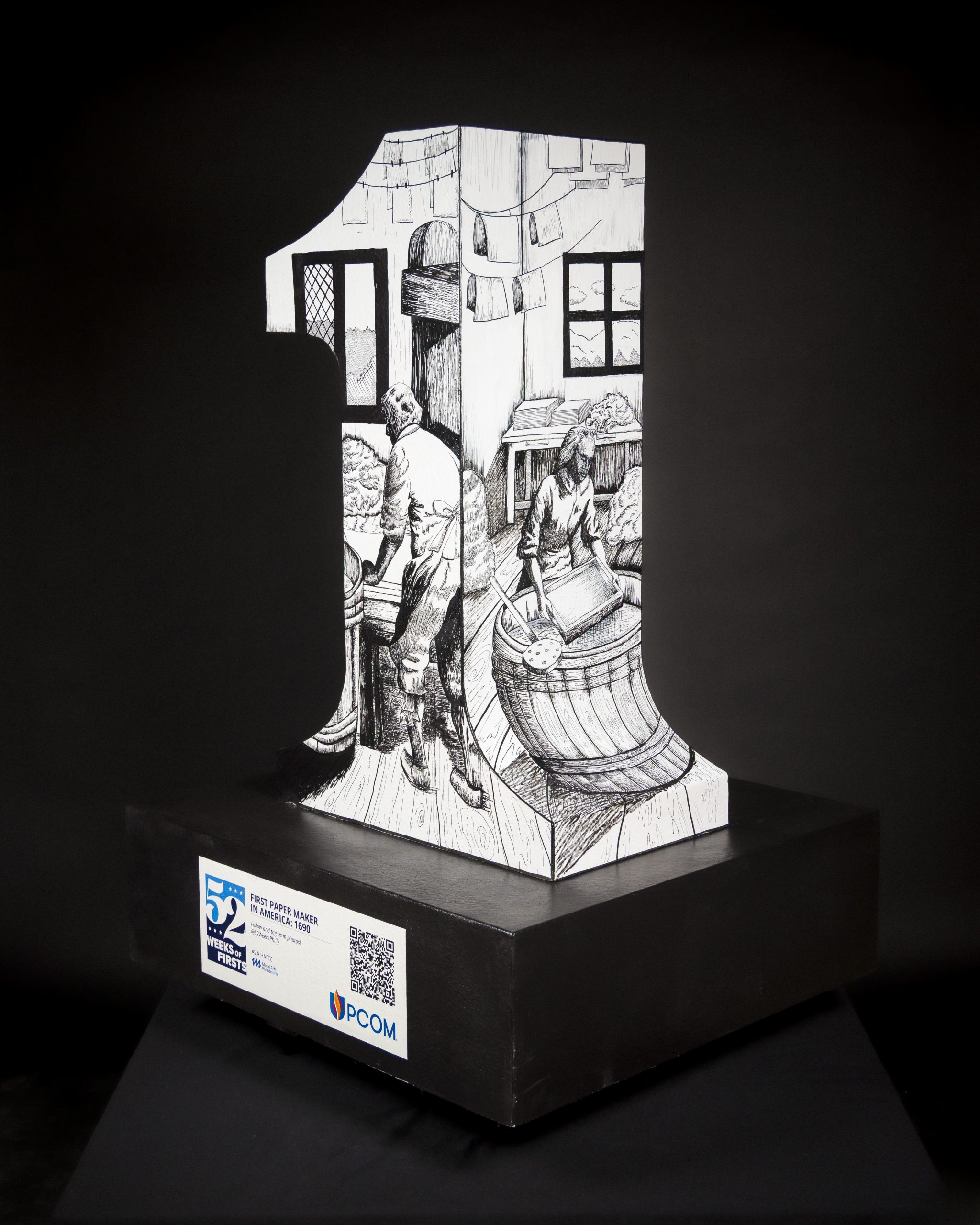
    Artist Ava Haitz’s No. 1 honors the country’s first paper mill, celebrating the invention and craftsmanship that made widespread written communication possible.Ava Haitz for Colibri Workshop

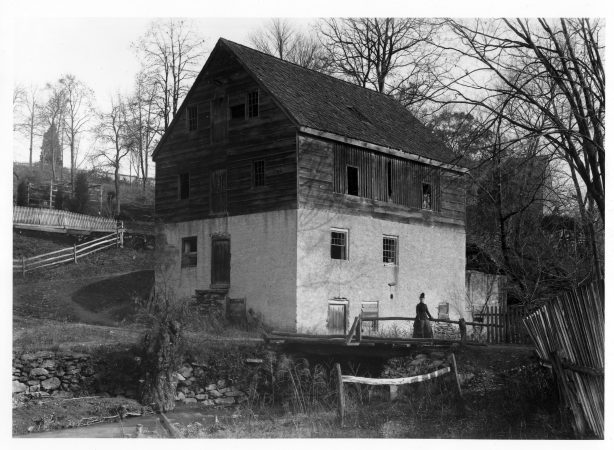
    In 1690, Rittenhouse partnered with Philadelphia’s first printer, William Bradford, to build America’s first paper mill, situated in northwest Philadelphia and powered by the Monoshone Creek, a tributary of the Schuylkill.

    The paper mill will be celebrated this Saturday at Historic RittenhouseTown, part of a series of weekly “Firstival” celebrations. Firstivals are the Philadelphia Historic District’s yearlong birthday nod to places and events with Philadelphia roots. The day parties are a hallmark of this year’s Semiquincentennial fetes.

    At the Rittenhouse mill, paper was made from linen rags fashioned from flax grown in Germantown, that were broken down and shaped into sheets. The mill grew quickly as Rittenhouse, America’s first Mennonite bishop, provided paper for Bibles and Quaker and Mennonite texts in German.

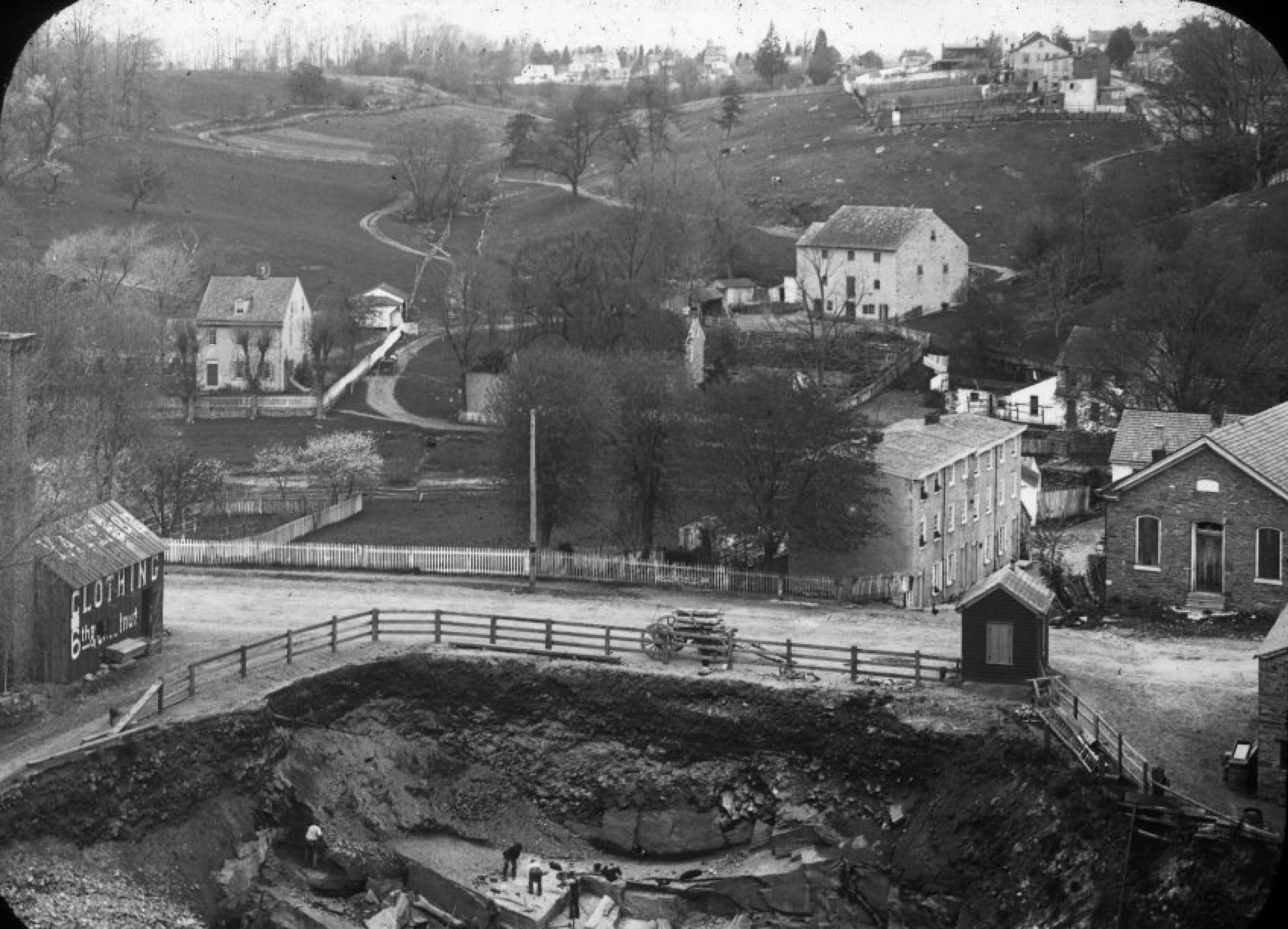
    An aerial view of RittenhouseTown circa 1840-1860. The site eventually grew to more than 200 acres.Historic Rittenhouse Town

    Rittenhouse’s first paper mill was destroyed by a flood, said Alexander Jones, preservation and education manager at Historic RittenhouseTown.

    Then “Rittenhouse rebuilds and he buys out his partner,” Jones said. “The paper mill becomes his sole enterprise. Instead of hiring workers, he recruits his family and it becomes a giant company town. There is a church, a blacksmith, stone houses, a bake house, and more than 40 buildings with five or six of them under what is now Lincoln Drive.”

    RittenhouseTown’s paper mill was the only source of paper in America for more than 40 years, Jones said. It would grow to more than 200 acres.

    David Rittenhouse — Rittenhouse’s great-grandson and the astrologer, clockmaker, and first director of the U.S. Mint after whom Rittenhouse Square is named — was born in his family’s RittenhouseTown homestead in 1732.

    The town thrived for more than a century.

    By the mid-1800s, the paper mill began to slow down as dyes from textile and carpet manufacturers and chemicals from blacksmithing started to pollute the Schuylkill. The filthy water made it nearly impossible to produce good quality paper at the mill.

    The Fairmount Park Commission began acquiring parts of RittenhouseTown through a series of purchases and donations from 1890 to 1917. The city demolished many of the town’s buildings, including a barn that, Jones said, was razed and rebuilt within a year.

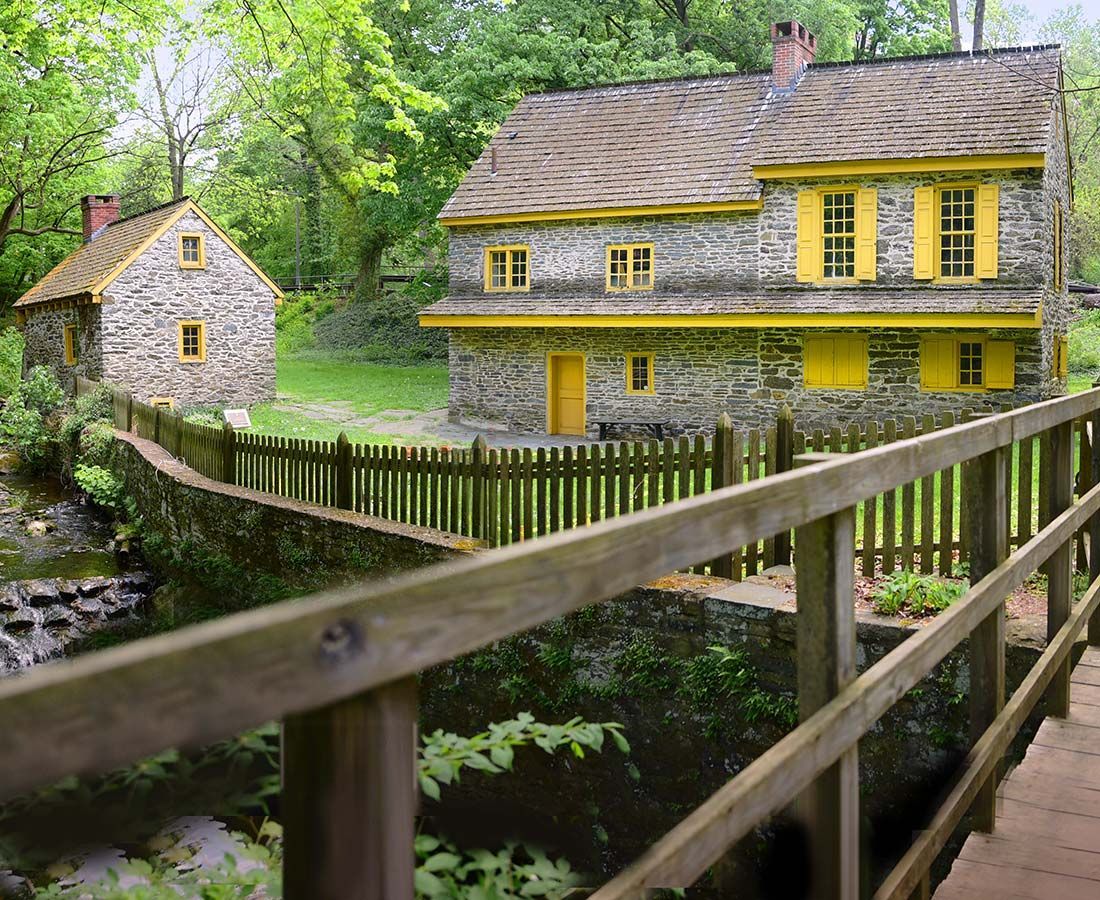
    RittenhouseTown’s homestead and bakehouse. The first permanent home for the Rittenhouse family and birthplace of David Rittenhouse, great-grandson of William Rittenhouse for whom Center City’s Rittenhouse Square is named.Al Cassidy for Historic Rittenhouse Town

    By that time, however, the Rittenhouse family had spread throughout the Philadelphia region from Center City to Blue Bell, Jones said.

    Today, RittenhouseTown spans 20 acres nestled in Fairmount Park right behind Lincoln Drive. Six of the original buildings remain, serving as a reminder that RittenhouseTown was the first building block of American industry.

    “The paper mill really got the ball rolling for Philadelphia,” Jones said. “And from that first came so many other American firsts in Philadelphia: the first Mennonite bishop, the first company town, and America’s first director of the U.S. Mint.”

    This week’s Firstival is Saturday, June 27, 11 a.m.-1 p.m., at Historic RittenhouseTown, 208 Lincoln Drive.

    The Inquirer is highlighting a “first” from the Philadelphia Historic District’s 52 Weeks of Firsts program each week. A “52 Weeks of Firsts” podcast, produced by All That’s Good Productions, drops every Tuesday.

  • Meek Mill joins the July 4 ‘One Philly: Unity Concert for America’ lineup

    Meek Mill joins the July 4 ‘One Philly: Unity Concert for America’ lineup

    The event billed as the nation’s largest free concert and biggest celebration of America’s 250th anniversary just got bigger.

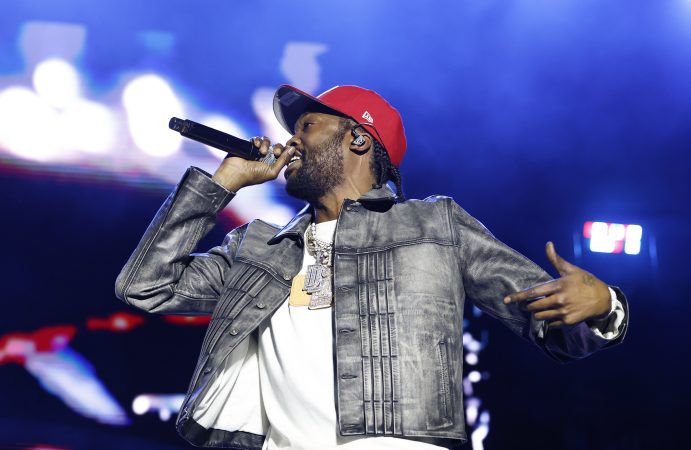
    Meek Mill will join headliners Christina Aguilera, Jill Scott, and The Roots to perform at the “One Philly: Unity Concert for America” on July 4 on the Benjamin Franklin Parkway.

    ESM Productions and Live Nation Urban announced the addition of the Dreams and Nightmares rapper to the Parkway bill on Tuesday morning, hot off his Saturday night performance at “Lit in AC,” a hip-hop festival featuring early 2000s bling-era rappers T.I., Eve, Shyne, Havoc, and Ms. Jade.

    Will Smith & DJ Jazzy Jeff; Kathy Sledge, lead singer of ’70s R&B girl group Sister Sledge; and State Property, the Philly hip-hop collective that includes Beanie Sigel, Freeway, Peedi Crakk, and Chris and Neef, are also scheduled to perform.

    While the bill includes mostly Philadelphia-area musicians — Aguilera grew up outside Pittsburgh — performers also include Seal, the Brit whose hit “Kiss From a Rose” still stops music fans in their tracks; Infinity Song, the Detroit-born soft rock and soul family; and Jordan Davis, the Louisiana-born country music singer.

    Comedian and part-time Media resident Wanda Sykes is hosting. Gillie da Kid and Wallo267 are also slated to make an appearance.
    The nearly seven-hour show will start at 5 p.m. and end just before midnight, with a fireworks finale to follow. Admission to the concert starts at 3 p.m.

    The “One Philly: Unity Concert for America” is presented by the City of Philadelphia and produced by Center City-based ESM Productions with executive producers Scott Mirkin, Shawn Gee (The Roots’ manager and head of Live Nation Urban), and Roots frontman Ahmir “Questlove” Thompson.

    Wawa is a sponsor of the concert, but the show is not part of Wawa Welcome America, the series of events leading up to the July 4 holiday, which this year will include concerts with Queen Latifah, Eve, Idina Menzel, and Pink Sweat$, among others.

    The “One Philly: Unity Concert for America,” according to the news release announcing the event, is “designed as a non-partisan celebration of unity, diversity, and democracy” that brings together “voices, perspectives, and performances that reflect the richness of the American experience across generations and genres.”

  • Tears for Fears, rotary phones, flares: Philly’s Bicentennial babies are turning 50 as America turns 250

    Tears for Fears, rotary phones, flares: Philly’s Bicentennial babies are turning 50 as America turns 250

    Gen Xers watched dial-up phones shrink to pocket size, typewriters turn into touch screens, and appointment TV give way to streaming binges.

    But Bicentennial babies are a special group of Xers. Born in 1976, they are celebrating a milestone birthday this year right along with the country. As America turns 250, they are turning 50. And on the cusp of the Semiquincentennial, Philadelphia’s Bicentennial babies are feeling reflective.

    1976 was just three years after Roe v. Wade, the landmark Supreme Court ruling giving a woman the constitutional right to end a pregnancy. It came 11 years after the Voting Rights Act of 1965 made it illegal to try to stop Black Americans from voting, and 12 years after the Civil Rights Act of 1964 ended legal segregation.

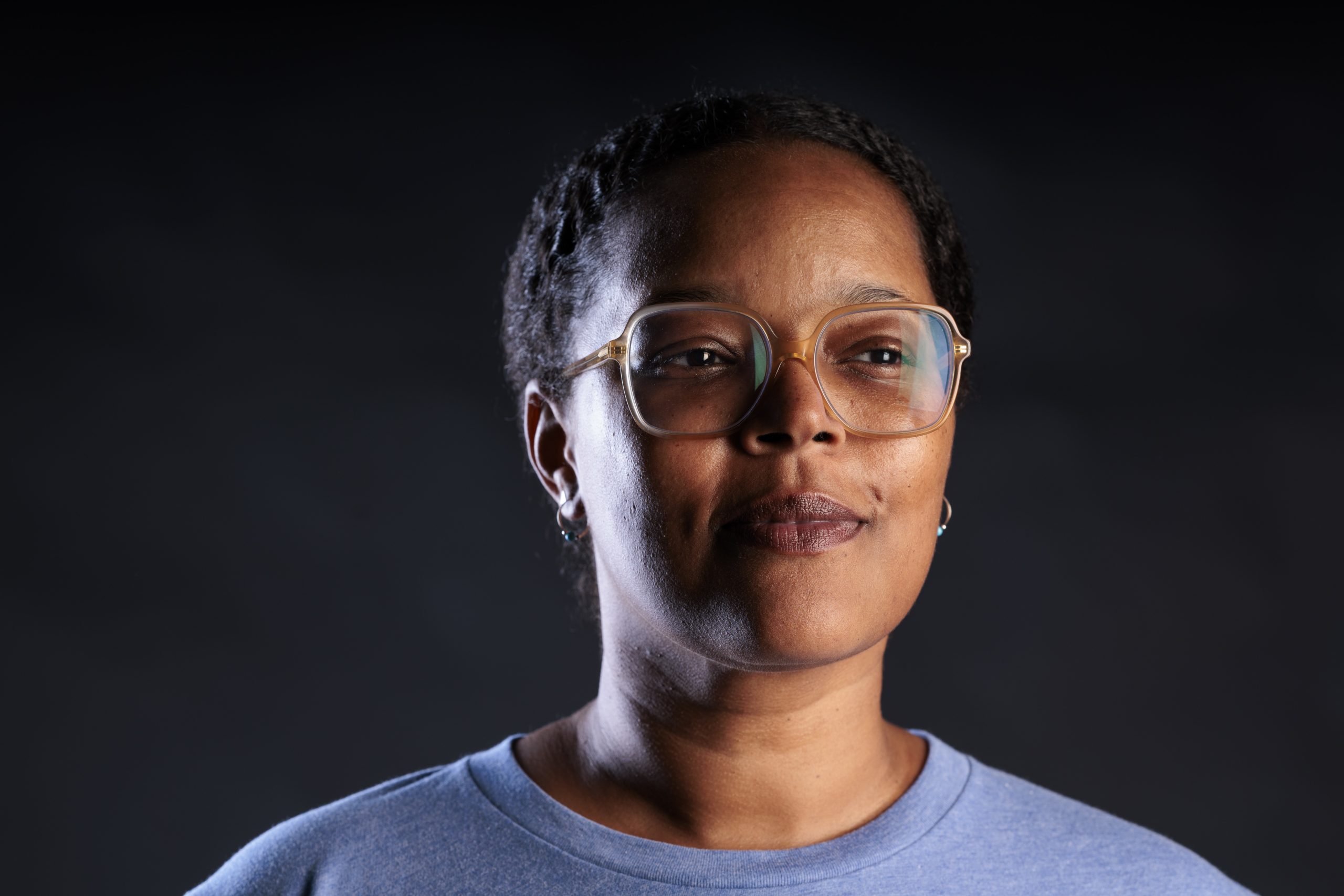
    Yolanda Wisher, producer of the “Bicentennial Baby” podcast, photographed in the Philadelphia Inquirer studio on May 28.Monica Herndon / Staff Photographer

    These changes to the American landscape gave Bicentennial babies a level of personal freedom and agency when they were coming of age during the turn of the 21st century that their parents and grandparents did not have. But in the last decade, they’ve seen the Supreme Court reverse Roe and weaken civil rights laws to the point that Bicentennial babies’ babies now don’t have the same privileges their parents did.

    “I had been thinking about 2026 and being a Bicentennial baby,” said Yolanda Wisher, Philadelphia’s third poet laureate and host of the Bicentennial Baby podcast, a part of Art Philly’s “What Now: 2026″ festival.

    “I felt like this opportunity was the best way to study this major moment in American history from a personal angle and revisit what it means to be a Bicentennial baby from a Philadelphia perspective,” Wisher said.

    Each of the 10- to 15-minute Bicentennial Baby episodes bubbles with late ’80s and early ’90s nostalgia from the cassette tape centered in the podcast’s logo, to the funky theme music lending to its WDAS Quiet Storm vibe, to references to banana clips and acid-washed jeans.

    At its core, however, Bicentennial Baby is unapologetically Philly.

    Today’s 50-year-olds were in the first grade when Thriller was released, but they also remember 1982 as the year Constance Clayton became the first Black person to serve as the superintendent of Philadelphia public schools. They watched the Flyers on PRISM and music videos on MTV.

    Some of them were born in the Booth Maternity Center.

    Earlier this year, Wisher put a call out on social media asking Philadelphians turning 50 in 2026 to join her in conversation about their unique perspective as they enter middle age.

    “I was interested in finding the diversity of the Bicentennial babies’ experience,” Wisher said. “What does it mean to be a 50-year-old born and raised here? Or to be that person, who wasn’t born here, fell in love with the city, and decided to make it home?”

    A dozen applied. Wisher chose six.

    They are Laurie Allen, a librarian who lives in South Philly; Maleka Fruean, a community journalist who lives in Germantown and is a mom of four; Kenny Guy, who lives in Mount Airy and is a father of six; Michiko Hunt, a development associate at Greene Street Friends School, who lives in Germantown, and is a mom of two; and Stewart Varner, a manager of the University of Pennsylvania’s Digital Humanities Lab who lives in West Philly.

    Naila Mattison was selected to participate in the “Bicentennial Baby” podcast. Mattison died in late February, shortly after the podcast was taped.Bicentennial Baby

    Naila Mattison, a poet, artist, and mom from West Philly, was the guest on the podcast’s first episode, which aired in late May. She died in February of cancer.

    “She came to us with such a sense of urgency,” Wisher said. “She wanted to share her story. I’m so glad we made space for her.”

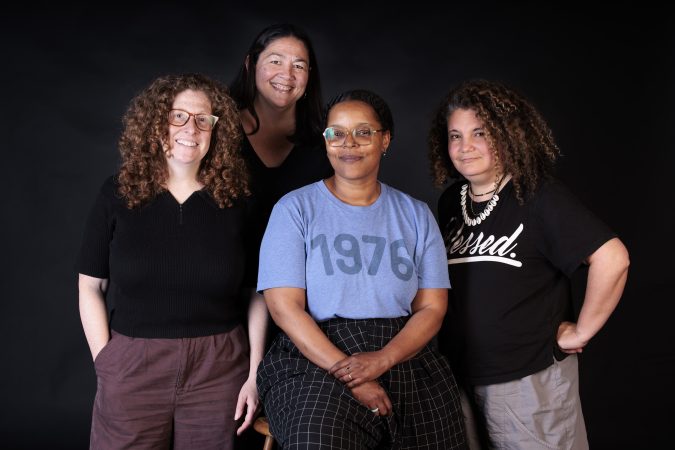
    The Inquirer invited the Bicentennial babies to our studios earlier this month for a photo shoot. Allen, Fruean, Hunt, and Wisher — in her blazing blue 1976 T-shirt — came in and shared how being born during the Bicentennial impacted their outlook, is shaping their present, and is setting them up to be cool elders.

    The interviews have been edited for clarity.

    On Gen X culture

    Michiko: In Philly, I was always conscious of being a part of this microgeneration because there were literally less of us. In the 1980s, all the entertainment we watched was focused on our parents, L.A. Law, Hill Street Blues, even The Cosby Show. My parents bought Thriller and Bruce Springsteen. But then when I was in my 20s, everything was teen-focused. I mean, Britney Spears? I was too old for that. There were all these kids who were born in 1982 who loved her. And I just missed it.

    Michiko Hunt photographed in the Philadelphia Inquirer studio on May 28. Hunt is featured in the “Bicentennial Baby” podcast, produced by Yolanda Wisher.Monica Herndon / Staff Photographer

    On technology

    Michiko: I went to my father’s office at 19th and Cherry Streets and typed my college applications on his electric typewriter. It was fancy. You could delete mistakes with correction tape.

    Yolanda: My grandmother had a rotary phone. We had a push button phone. I had a pager.

    Maleka: And right around our senior year in high school, that’s when cell phones started to come in.

    Yolanda: And they were huge, like the New Jack City phone … They were crazy expensive like video recorders. Like, if you had one of those …

    Michiko: You were rich!

    On fashion

    Michiko: It’s true: What’s old is new again. What we called flare, my mother calls bell-bottom, and my daughter calls wide-legged. We had a distinct style though. Fashion bubbled up from specific subcultures like goth or hip-hop. Now everything comes from the internet. It’s really flattened style.

    Maleka: And analog is a style now. Analog, as in not digital. It’s a fashion category. Like what people carry in their analog basket is a thing: a pencil and a notebook? That’s just what I put in my backpack.

    Maleka Fruean photographed in the Philadelphia Inquirer studio on May 28. Fruean is featured in the “Bicentennial Baby” podcast, produced by Yolanda Wisher.Monica Herndon / Staff Photographer

    On music

    Michiko: Our music was the best. I still have ticket stubs when I went to see the Roots. We all listened to hip-hop but we also listened to other kinds of music, too.

    Yolanda: Tears for Fears!

    Maleka: The Eurythmics!

    Michiko: MTV!

    Laurie: I remember when the radio was the only thing that mattered. Then we went to tapes, then to CDS, MP3s streaming. Each time I was like, I’m not going to do it. Yet every time I made the switch. Every. Single. Time. But I think it’s going full-circle. I miss playing guilty pleasure music without a digital trail of what I listened to.
    On working

    Yolanda: I watched my mom work hard everyday. When she retired from her job at Merck, all she got was a watch. That said something to me. I watched my mom struggle as a single mom, work her way up, put my siblings and I through college. That job was in the background of our lives our whole life.

    Maleka: My children understand [better than I do]. They are not going to break their backs for a pittance. I’ve worked so hard my whole life. Still, I have no idea what my retirement is going to look like.

    On learning from elders and turning 50

    Yolanda: Womenfolk in my grandmother’s generation were more matronly. My grandmother had a whole closet full of church hats. She kept her house a certain kind of way. She had a routine. She was very straitlaced, at least in public. She had a secret life we didn’t ordinarily see.

    Michiko: We have a blessing of choices. My dad’s mom was Japanese American. She was born in California, a first generation immigrant. She was a teenager during the Depression. Her family worked in a packaged frozen food factory. Today she would have been an artist. She made all of our Cabbage Patch Dolls and all of those beautiful doilies. She had the soul of an artist.

    Maleka: We have access to so much more information. And because of that we have wonder.

    Laurie Allen photographed in the Philadelphia Inquirer studio on May 28. Allen is featured in the “Bicentennial Baby” podcast, produced by Yolanda Wisher.Monica Herndon / Staff Photographer

    On becoming an elder

    Laurie: My body does not look like it does when I was 20, 30, or even 40. And I assumed when I got this age I would want to go back in time. But I don’t. Instead, I’m grateful for the wisdom for knowing who I am. I don’t want to go back to those uncertain times. I may have looked better, but I felt worse.

    On being American

    Maleka: When I was growing up, I had mixed feelings because I saw so many vulnerable people who needed to be protected. I didn’t have the language to define institutionalized or systemic racism. Now that I do, I want America to do better. But I’m still proud to be an American.

    Yolanda: The Semiquincentennial isn’t a one-sided story, but one that celebrates the complicated history of America. The racial, cultural, and social point of view of the people who are running isn’t the only perspective. We should be able to hold all of these voices at the same time and move forward.

    “Bicentennial Baby“ is available on Apple, Spotify, and Amazon Music.

  • 1969’s Stonewall Riots became a watershed moment in the fight for queer rights. Four years earlier, LGBTQ activists gathered at Independence Hall for the first Remembrance March.

    1969’s Stonewall Riots became a watershed moment in the fight for queer rights. Four years earlier, LGBTQ activists gathered at Independence Hall for the first Remembrance March.

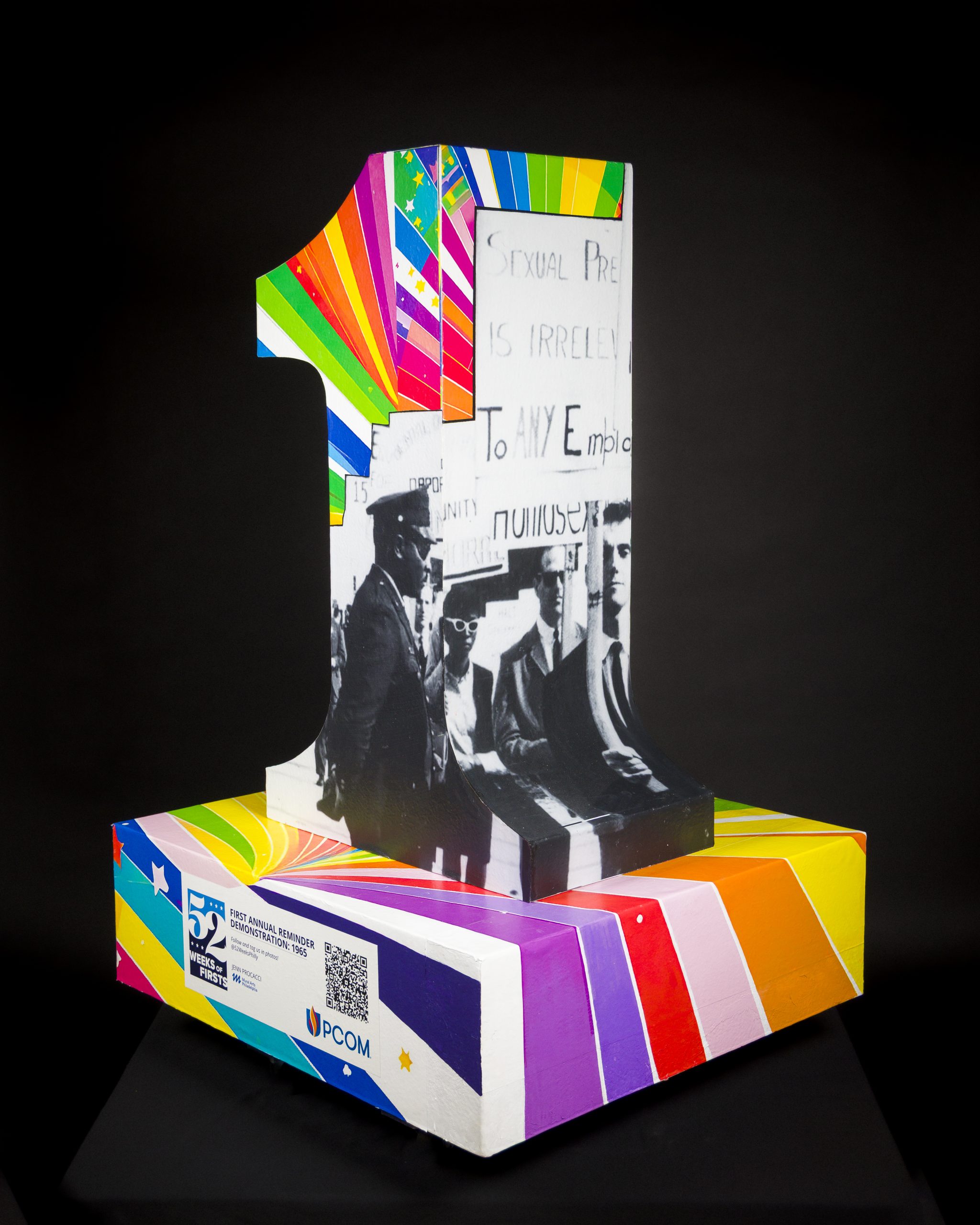
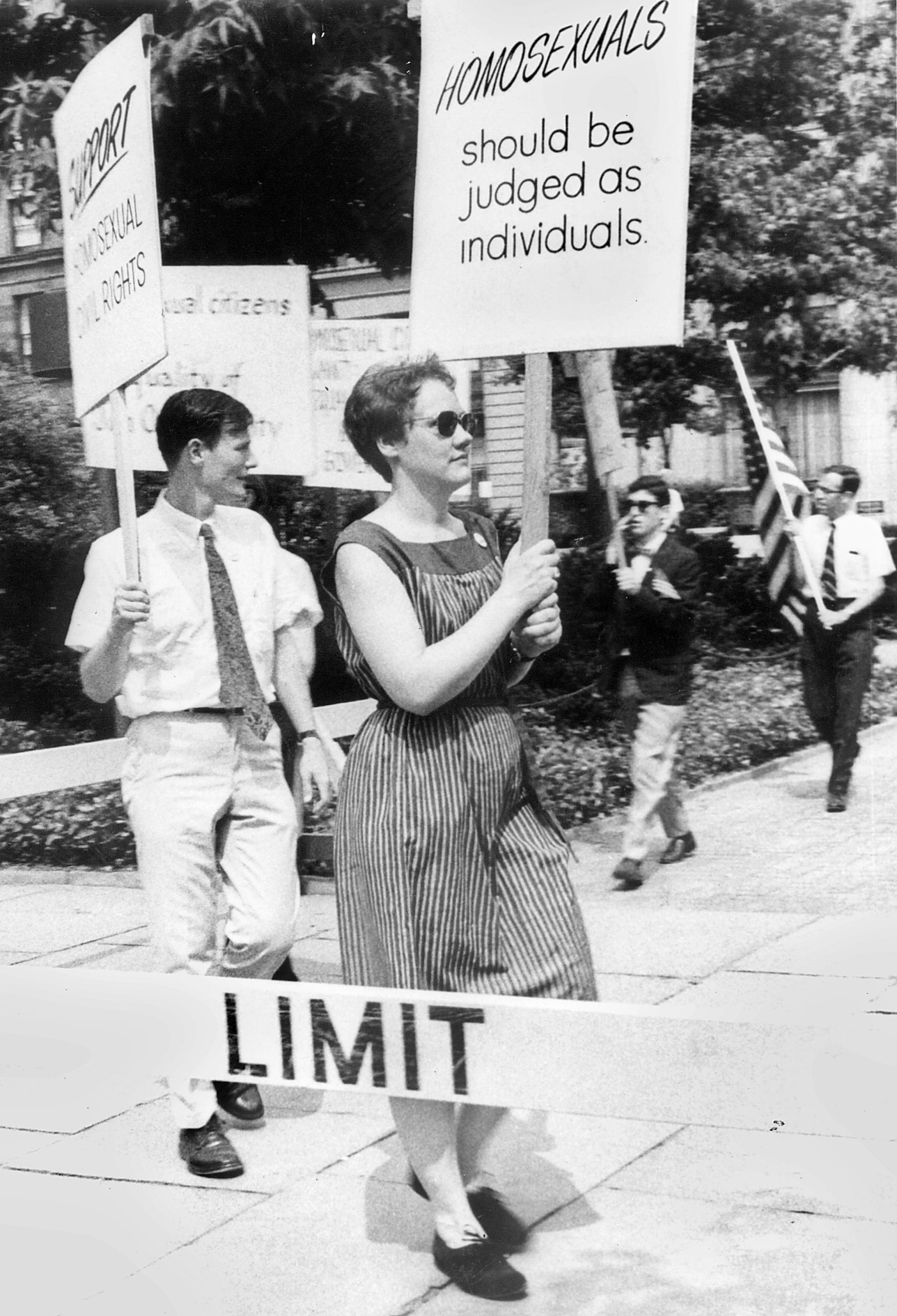
    On July 4, 1965, gay activists Frank Kameny of Washington, D.C., Craig Rodwell of New York, and Barbara Gittings of Philadelphia gathered 40 of their LGBTQ brethren in front of Independence Hall to demand equality.

    Dressed in three-piece suits, dresses, pumps, and spit-shined tie-ups, the marchers protested discriminatory policies that allowed gay people to be fired from government jobs and to be denied entry into military service.

    Their slogan: “We don’t dodge the draft … the draft dodges us.”

    Artist Jen Proacci’s sculpture features . historic photographs of a Remberance Day event rendered as a high-resolution print, paired with a vibrant rainbow sky that symbolizes the LGBTQ+ community’s ongoing pursuit of equality, protection and freedom.Jenn Proacci

    Held four years before the Stonewall Uprising in 1969, the march made history as the country’s first gay rights demonstration. That 1965 march became an annual protest, now known as the Remembrance March.

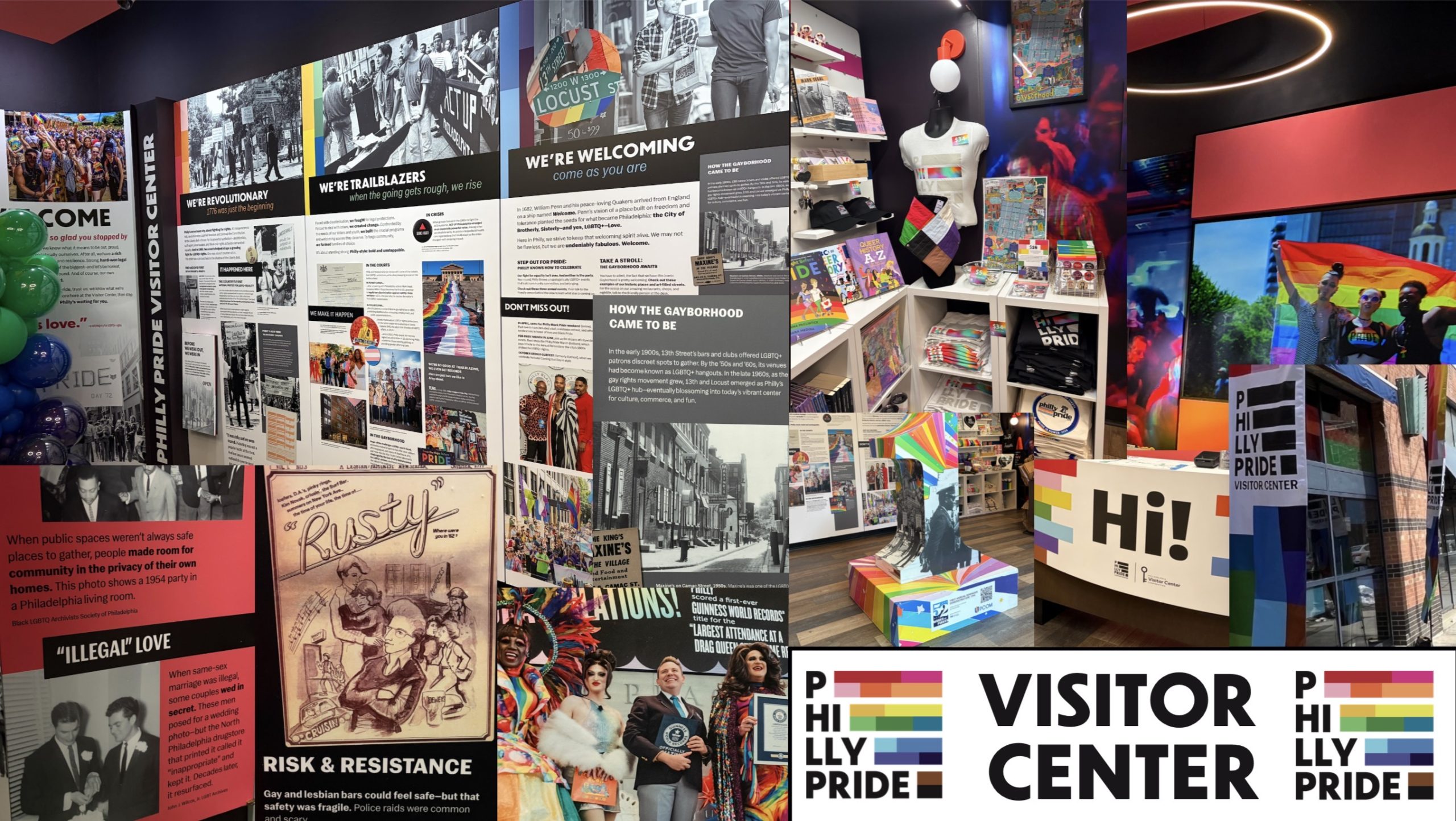
    The first gathering in 1965 will be celebrated at Philly Pride Visitor Center on Saturday, one of Philadelphia Historic District’s weekly firstival celebrations. Each week in 2026, the Historic District is throwing a day party honoring important events that happened in Philadelphia before anywhere else in the nation and often the world.

    “They were the only 40 to 100 people willing to get on the picket line for gay rights for those five years for the entire nation,” said Mark Segal, editor of the Philadelphia Gay News, who was a teenager in 1965.

    Picket at Independence Hall, Philadelphia. July 4, 1965. Randy Wicker (L), Barbara Gittings (R)Inquirer archives, photo by Kay Tobin Lahusen

    “It was the one and only march of its kind, and it was national,” he said. “People came from Chicago, Los Angeles, San Francisco. If you were someone involved in getting equality for homosexuals at the time, then you were there.”

    Remembrance Marches predated Stonewall but they didn’t lead to Stonewall, Segal added.

    The Philadelphia demonstrators in the late 1960s were out of the closet but were still very conservative.

    “We were fighting for federal employment,” Kay Tobin Lahusen, the first openly gay American photojournalist, and Gittings’ partner, told The Inquirer in 2007 after Gittings’ death. “We wanted to look employable.”

    That conservative energy largely excluded young people at that time, including Segal.

    “I wasn’t allowed to march in the Remembrance Marches because I was too young. I didn’t want to wear a suit and tie. I wanted to protest in my jeans and my T-shirts. As a Philadelphian, I loved my city. I appreciated the marches and respect these brave people. But we were ready to smash invisibility.”
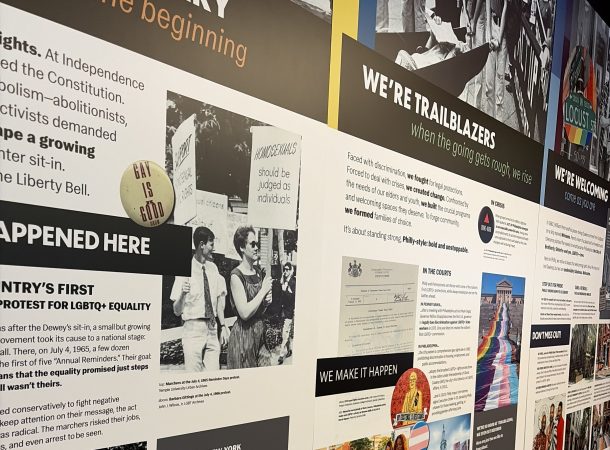
    Early photos of Philadelphia-based Gay Pride marches part of a collage in the Philly Pride Visitor Center.Kristopher Lawrence/Philly Pride Visitor Center

    That sentiment bubbled across the nation.

    Early in the morning of June 28, 1969, LGBTQ protesters led a series of demonstrations against police raids at the now historic gay bar, Stonewall Inn, in New York City’s Greenwich Village.

    As a contrast to the more conservative Remembrance Marches, the Stonewall Riots, which Rodwell also participated in, were more disruptive and intersectional. Trans women of color, like Sylvia Rivera and Marsha P. Johnson, would eventually go on to become key figures in the uprisings.

    Philadelphia’s last Remembrance March took place the following week.

    The following June, East Coast Regional Conference of Homophile Organizations, also known as ERCHO, adopted a resolution in Philadelphia ending Remembrance March.

    That same month, on June 28, 1970, America’s first Gay Pride Liberation March in Greenwich Village was held in commemoration of the Stonewall Uprising.

    “We went from 40 to 100 people in Philadelphia to more than 15,000 in New York,” Segal said.

    “The Remembrance Days are important,” echoed Kristopher Lawrence, Philly Pride Visitor Center’s supervisor. “We were all trying to get to the same place, but we had different views on how we thought it should be done.”

    This week’s Firstival is Saturday, June 20, 11 a.m.-1 p.m., at the Philly Pride Visitor Center, 1139 Locust St.

    The Inquirer is highlighting a “first” from the Philadelphia Historic District’s 52 Weeks of Firsts program each week. A “52 Weeks of Firsts” podcast, produced by All That’s Good Productions, drops every Tuesday.

  • Danny Simmons, founder of Rush Arts and passionate supporter of Black artists, has died at 72

    Danny Simmons, founder of Rush Arts and passionate supporter of Black artists, has died at 72

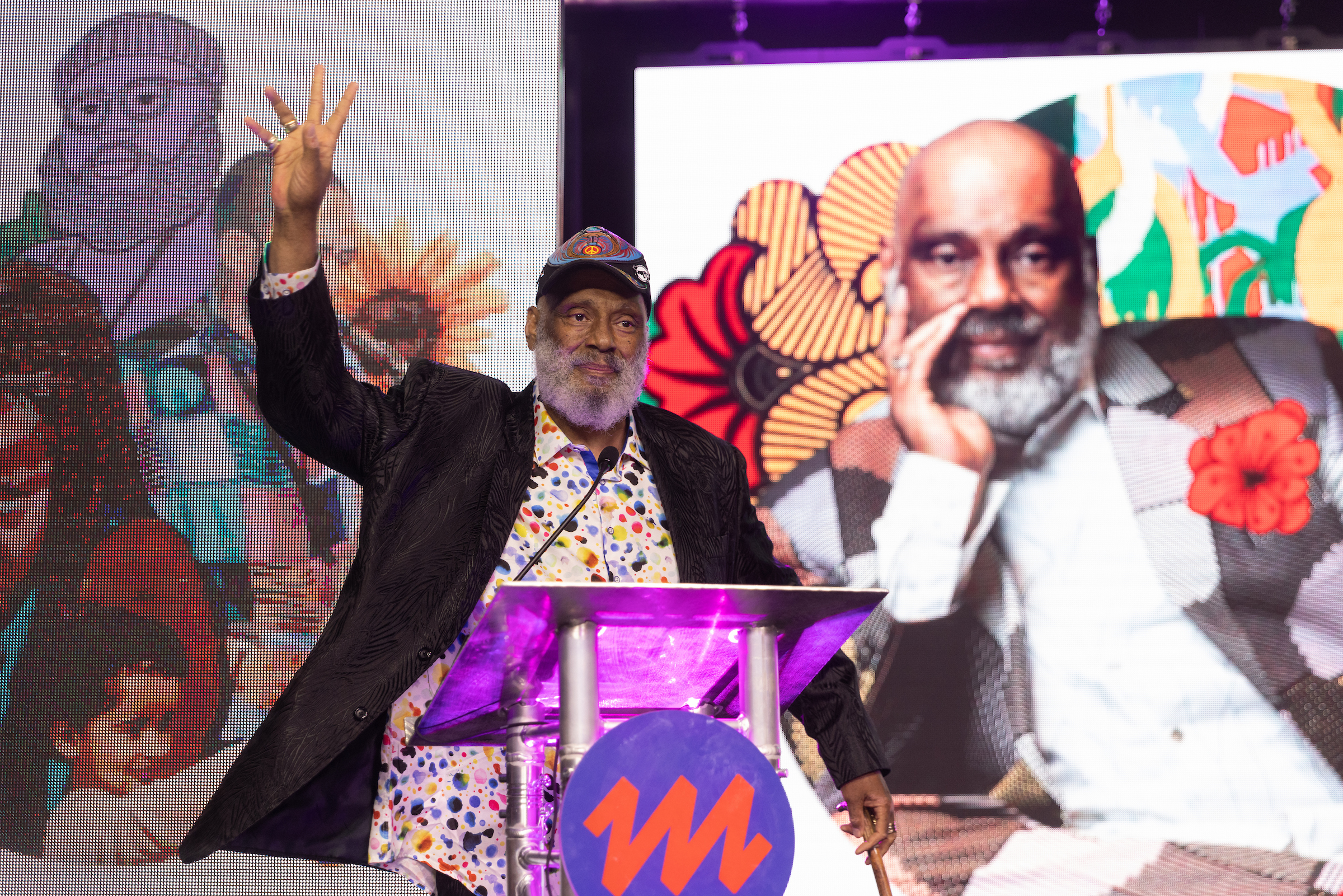
    Danny Simmons, founder of Rush Arts Philadelphia, an arts community that provided space and motivation for local artists to be discovered and show their work, has died at 72. The cause of death was not announced.

    Mr. Simmons was the older brother to hip-hop mogul and Def Jam Recordings cofounder Russell Simmons and Rev. Joseph “Run” Simmons, one-half of the classic rap group Run-DMC.

    Mr. Simmons’ death was announced Monday by his brother Russell on Instagram.

    “It is with a profound sense of loss that we honor and celebrate the life of Danny Simmons Jr., a beacon of love and creativity,” Russell Simmons wrote on the social media post.

    “He was not just a brother, father, uncle, grandfather, and loving husband; he was a vibrant artist, dedicated supporter of creatives and a cherished friend. Though he has transitioned from this world, his legacy of kindness, generosity, and artistic brilliance will forever shine brightly in our hearts.”

    Daniel Simmons Jr. was born on Aug. 17, 1953, in Hollis, Queens. His father, Daniel Simmons Sr., was a truant officer and Black history professor who also wrote poetry. His mother, Evelyn Simmons, was a teacher who painted as a hobby.

    Both of his parents encouraged Mr. Simmons’ art but also pushed him to work a stable job with a pension. After receiving his degree in social work from NYU, he worked at the New York Bureau of Child Support through the 1980s.

    “He was the true artist in the family,” Russell Simmons said in a subsequent social media post. “Joey and I went into music … but Danny was the one who created from the deepest place. His poetry, art, and ideas shaped how we think and gave us freedom to dream beyond limits.”

    In 2003, Simon & Schuster published Mr. Simmons’ Three Days as the Crow Flies, a novel about a drug-addict hustler named Crow Shade, who poses as an artist in New York’s drug and arts scene.

    Three Days as the Crow Flies is fictional, but by the 1990s, Mr. Simmons had kicked a 20-year heroin addiction, given up his 9-to-5, and leaned into abstract painting.

    “I quit my job, started painting, and it started taking off,” he told The Inquirer in 2016. “But I couldn’t find a whole lot of outlets for my work. There were very few galleries dedicated to emerging Black artists. I figured if I was in that position, there had to be other artists in that position.”

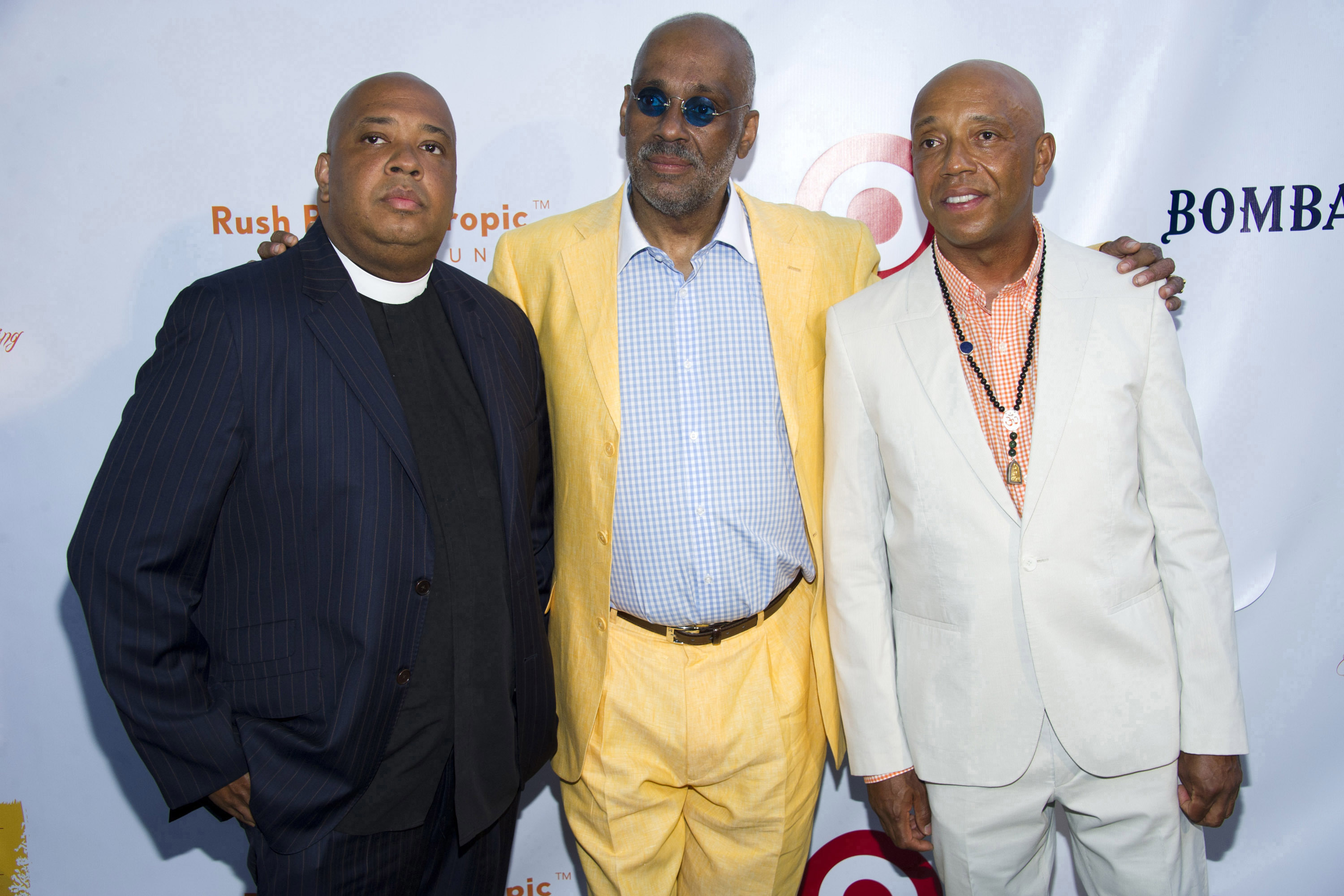
    Joseph “Rev. Run” Simmons (left), Danny Simmons (center), and Russell Simmons attend the 12th annual Art For Life Benefit Gala at Russell Simmons’ estate in East Hampton, N.Y., on Saturday, July 30, 2011.

    (Charles Sykes / AP Images for Rush Philanthropic)AP IMAGES FOR RUSH PHILANTHROPIC

    Mr. Simmons became an avid collector of Black art, opened two galleries in downtown Manhattan, and founded Rush Philanthropic Arts Organization, supporting Black artists around the world.

    “Danny’s impact has been global,” said Vashti DuBois, executive director of the Colored Girls Museum in Philadelphia. “His investments in and support of Black artists and Black institutions have fundamentally transformed the landscape of the Black art scene.”

    In the early 2000s, Mr. Simmons convinced his brother Russell to produce HBO’s Def Poetry Jam. The show, a spinoff of HBO’s Def Comedy Jam, ran from 2002 to 2007 and breathed new life into spoken word poetry, first popularized by the 1970s Black Arts movement.

    A prototype of Def Poetry Jam, that often showcased Philly artists Sonia Sánchez and Ursula Rucker, was filmed at the African American Museum in Philadelphia.

    Mr. Simmons won a Tony for the stage adaption in 2003.

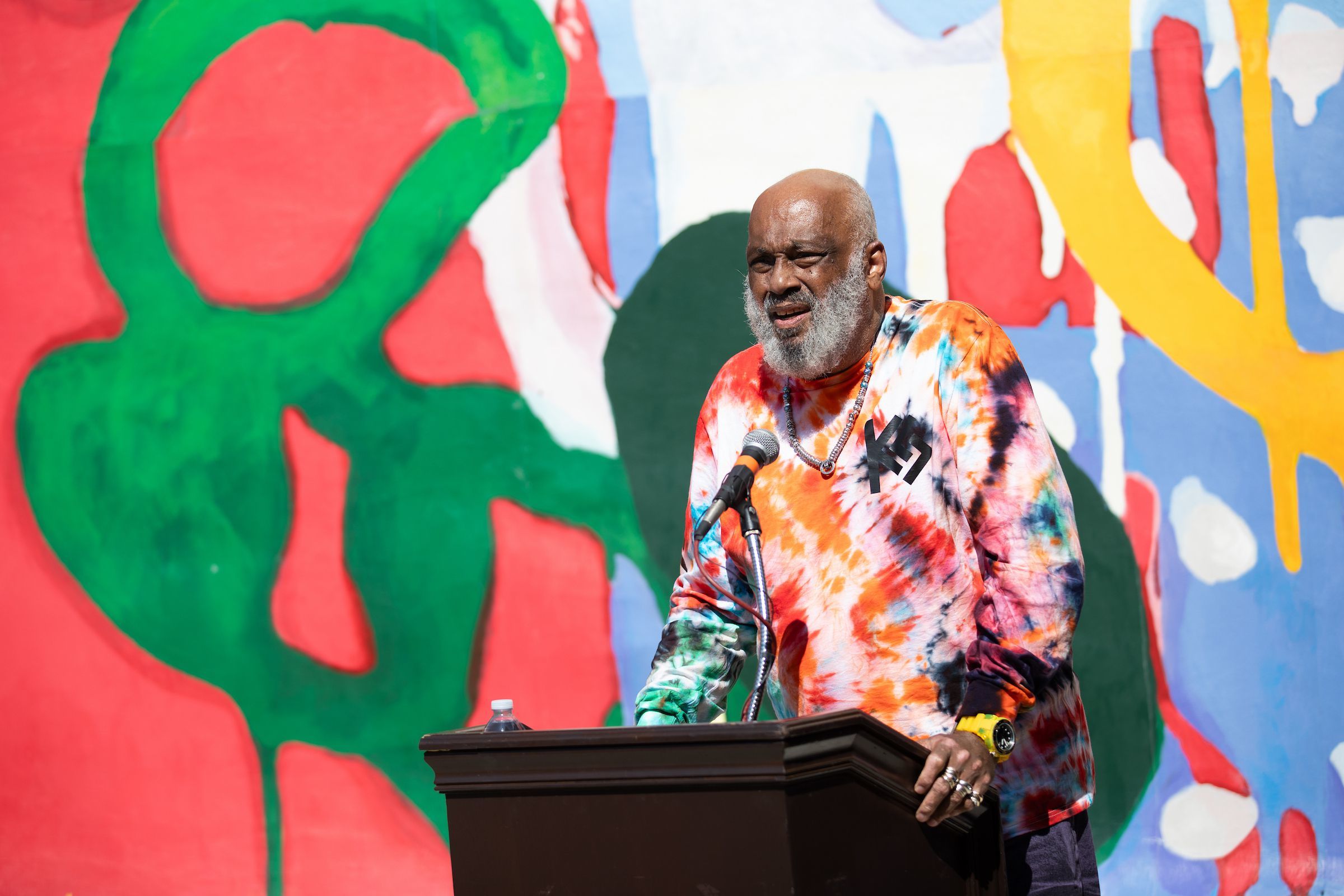
    Danny Simmons speaking at a Mural Arts Philadelphia event to unveil the 2023 mural, “My Crazy Red Rooster.”Mural Arts

    In 2015, the African American Museum hosted his solo show, “Badass Art, Man!” a colorful collection of paintings, collages, and statues he described as “neo-African abstract expressionist.”

    Later that year, he moved to Northern Liberties, because it reminded him of parts of Brooklyn, into a place with a backyard large enough to store his immense collections.

    He purchased an old bank building in the Logan section of Philadelphia on Old York Road and made it a home for Rush Arts Philadelphia, a community center and gallery. Until last month, the center supported the work of Philadelphia artists through a series of shows, exhibitions, and receptions.

    “Mr. Simmons had a remarkable ability to bring people together through art, inspiring others to see the world through a more vibrant lens,” said Ashley Jordan, president and CEO of the African American Museum in Philadelphia. “His presence was as memorable as the masterpieces he created and championed.”

    Mr. Simmons served on the Mural Arts board from 2022-25 and was the lead artist on four mural projects in Germantown and North Philadelphia.

    His work resides in the Woodmere Art Museum and the Pennsylvania Academy of Fine Arts. In 2019, he was appointed to the Philadelphia Museum of Art’s African American Collections Committee.

    “Danny was an extraordinary artist and human being,” said Jane Golden, founder and executive director of Mural Arts. “Danny was one of a kind, and he leaves very big shoes to fill in our city and our world.”

    Apart from his brothers, Mr. Simmons is survived by his wife, Keia Simmons; son, Jamel Simmons; and other family members and friends.

    Memorial services and celebrations have not been announced by the family.

  • See it, hear it, feel it: All the Philly art we loved this week

    See it, hear it, feel it: All the Philly art we loved this week

    Ringing freedom

    My dream of ringing the Liberty Bell has (sort of) been achieved.

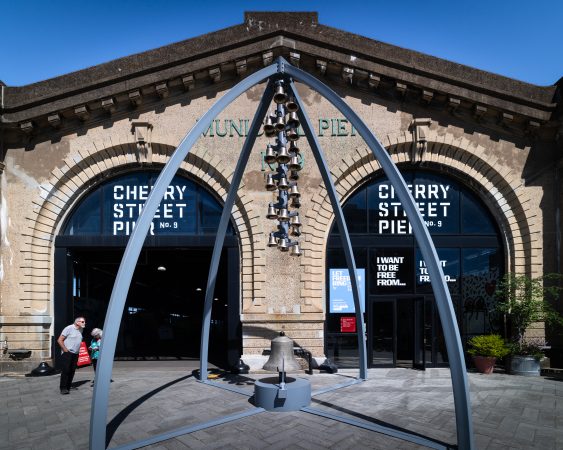
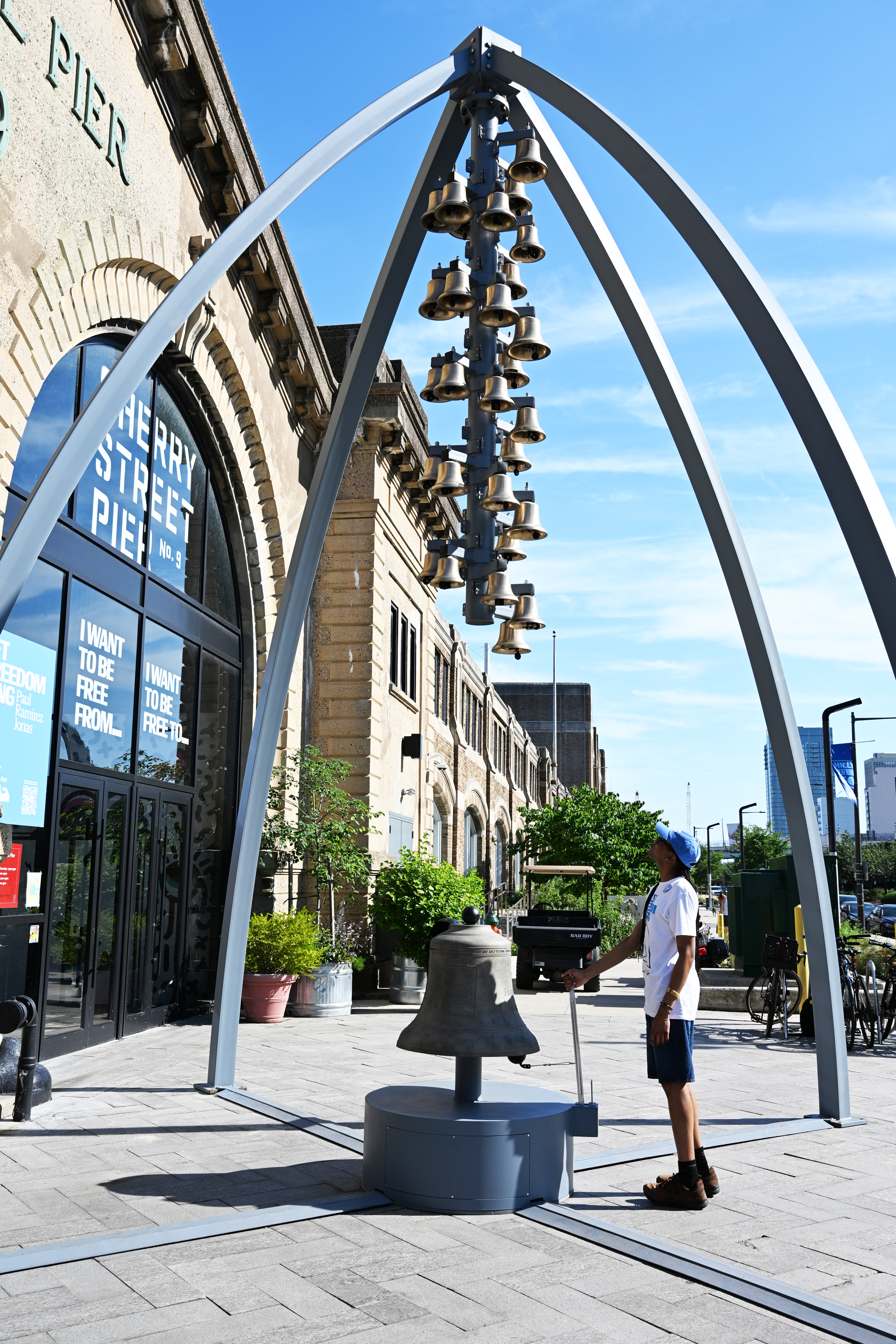
    Just in time for America’s 250th anniversary, a 600-pound Liberty Bell look-alike has popped up on Cherry Street Pier. The exhibit titled “Let Freedom Ring” by artist Paul Ramírez Jonas features a lever in front of the bell that allows passersby to ring it, resounding a bright gong sound.

    That’s not all; a spiral of 32 smaller bells hang overhead. Together, in tings and gongs, they play “My Country ‘Tis of Thee” every 15 minutes on the hour but the very last note is left out. This final note is meant to be rung from the bigger bell using the lever by onlookers, allowing them to be a part of the exhibit.

    The display allows participants to ring the bell and finish the rendition of “My Country ‘Tis of Thee.”Julia Perciasepe

    The most moving part for me were the inscriptions on the big bell itself. Engraved on either side of the bell, one says “I want to be free from …” and the other “I want to be free to …” These simple open-ended statements invite Philadelphians to question what freedom means to them in today’s American society.

    It got me thinking about this country, where freedom is meant to be a founding principle. How much freedom do we really have, especially across diverse identities?

    Let Freedom Ring runs through Sept. 27 at Cherry Street Pier, 121 N. Christopher Columbus Blvd. associationforpublicart.org

    — Morgan Ritter

    Philly anti-folk hero Adam Brodsky’s new album is “American Epitaph.”S. Elfie

    The return of a Philly anti-folk hero

    “I believe what Woody sang: ‘All you fascists bound to lose,’” Adam Brodsky sings on American Epitaph, his first album in over two decades. “But he didn’t give a time, and man that’s sure something we could use.”

    Recorded at Retro City Studios in Philadelphia with producer Matt Muir, American Epitaph is a protest album divided into stripped-down tracks with Brodsky on guitar and Butch Ross on organ, and a full band presentation with backing by guitarist Jesse Lundy, drummer Alec Meltzer, and Chris Bixler on bass.

    Songs like “Achy Breaky America” and “New World Order” are unapologetically confrontational in their politics, aiming to inspire a fighting spirit. A need to speak to the moment led Brodsky to return to recording and performing after a long layoff.

    “Though long thought to be retired or eaten by a bear,” Brodsky writes in the liner notes, “truth is, Adam has been pried off the couch by the disappointing reemergence of fascism.”

    And while Brodsky is the first to admit that his songs might not have the power to effect political change, on American Epitaph he aims to keep standing firmly in resistance to injustice and keeping faith in himself. “Singin’ songs and marching may not change my country,” he sings. “But I still do it every day, so my country don’t change me.”

    — Dan DeLuca

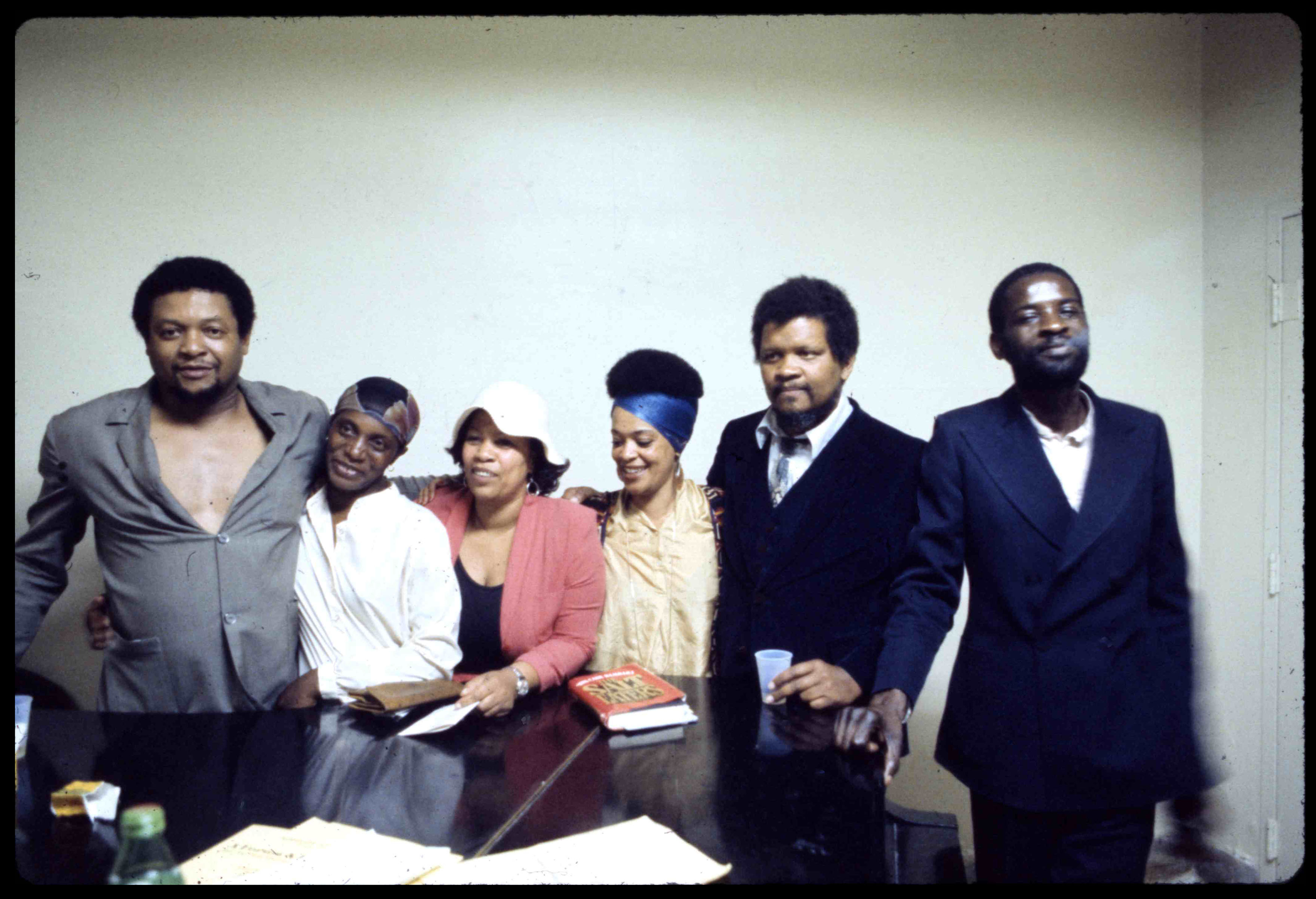
    Portrait of, from left, American poet Quincy Troupe, literary executor and writer Gloria Karefa-Smart (sister of author James Baldwin), authors Toni Morrison and Toni Cade Bambara (1939 – 1995), poet Ishmael Reed, and Nigerian critic and journalist Chinweizu Ibekwe at an unspecified event, 1972.Anthony Barboza / Getty Images

    A Philly legend on film

    Toni Cade Bambara was a legend. But more importantly, she was a Philly legend.

    Born and raised in Harlem, having studied theater in Florence and Paris, she taught in Atlanta before moving to the city in 1986. The Black Woman, an anthology she edited, published in 1970. That collection of writing is largely credited for introducing readers to the likes of Alice Walker, Audre Lorde, and Nikki Giovanni. Bambara was a filmmaker, academic, and activist but she was also a world builder; she built worlds with her ideas and then invited people to partake and wander in them. Wander and wonder.

    After reading her 1980 novel Salt Eaters in college, I wrote out her words “All cocoons are temporary and disappear” on a piece of paper that I stuck above my writing desk.

    In Philadelphia, Bambara made friends with another Philly legend: Louis Massiah, the founder of West Philly’s Scribe Video Center. Together, Massiah and Bambara made the 1986 documentary, The Bombing of Osage Avenue, about the MOVE bombing, and then 1996’s W.E.B. Du Bois: A Biography in Four Voices.

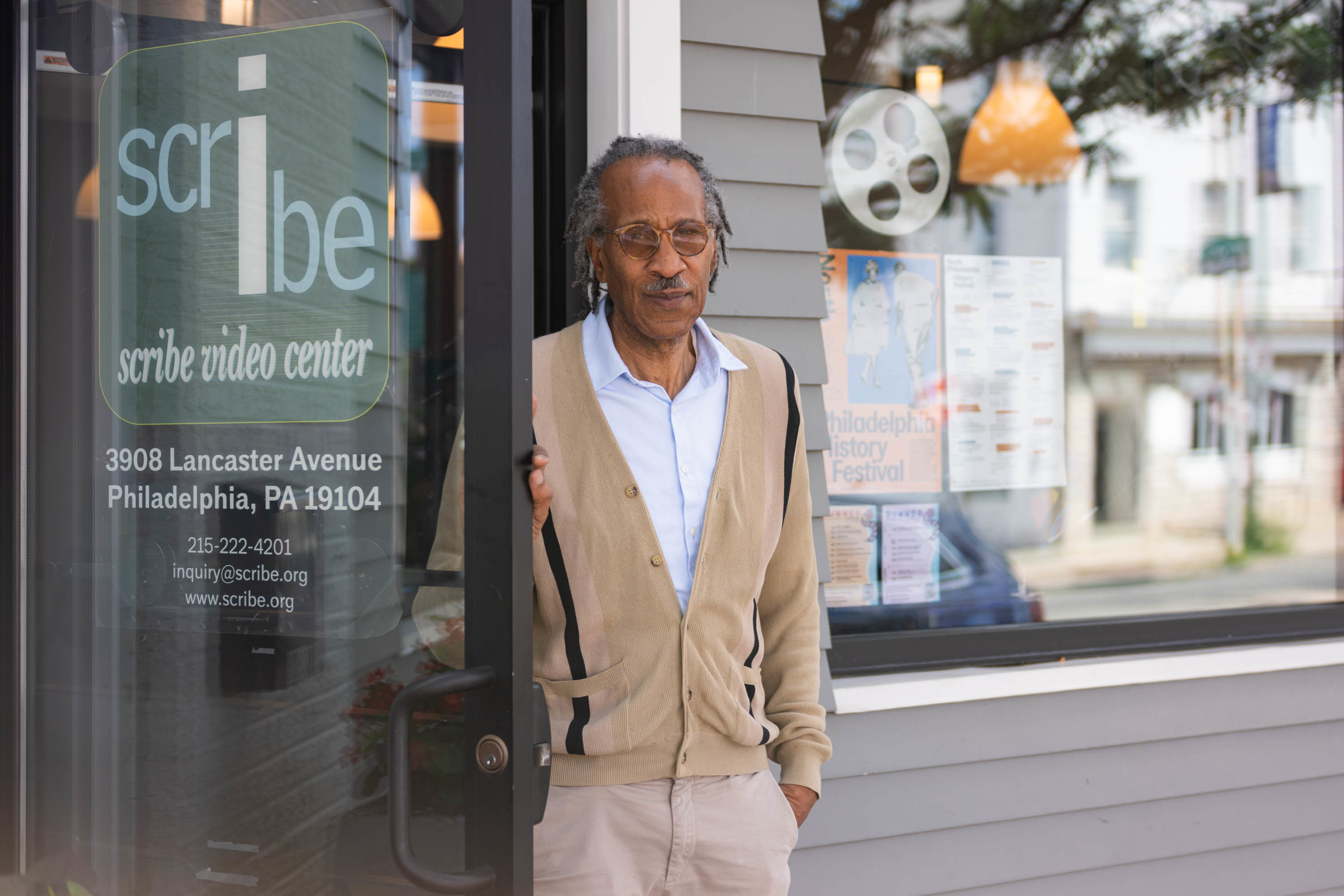
    Documentary filmmaker and principal organizer of the North Philadelphia History Festival Louis Massiah poses for a portrait at Scribe Video Center in West Philadelphia on Wednesday, July 23, 2025.Kaiden J. Yu / Staff Photographer

    Thirty years after Bambara’s death in 1995, Massiah’s film TCB — The Toni Cade Bambara School of Organizing premiered at the BlackStar Festival. The documentary is structured like a syllabus and is a lesson in organizing, creating, and living from Bambara herself. It chronicles her life, tells us what she can still teach us today, and brings together the galaxy of legends she called friends: Toni Morrison, Nikki Finney, Sonia Sánchez.

    TCB plays as part of cinéSPEAK’s Under the Stars Film Festival on June 19 under the open night sky in Clark Park, not too far from Scribe, where Bambara and Massiah together wrote stories that continue to teach us about the many fault lines running through our world and lives.

    “TCB — The Toni Cade Bambara School of Organizing” plays June 19, 9 p.m., at Clark Park, 4300-4398 Baltimore Ave., cinespeak.eventive.org

    — Bedatri D. Choudhury

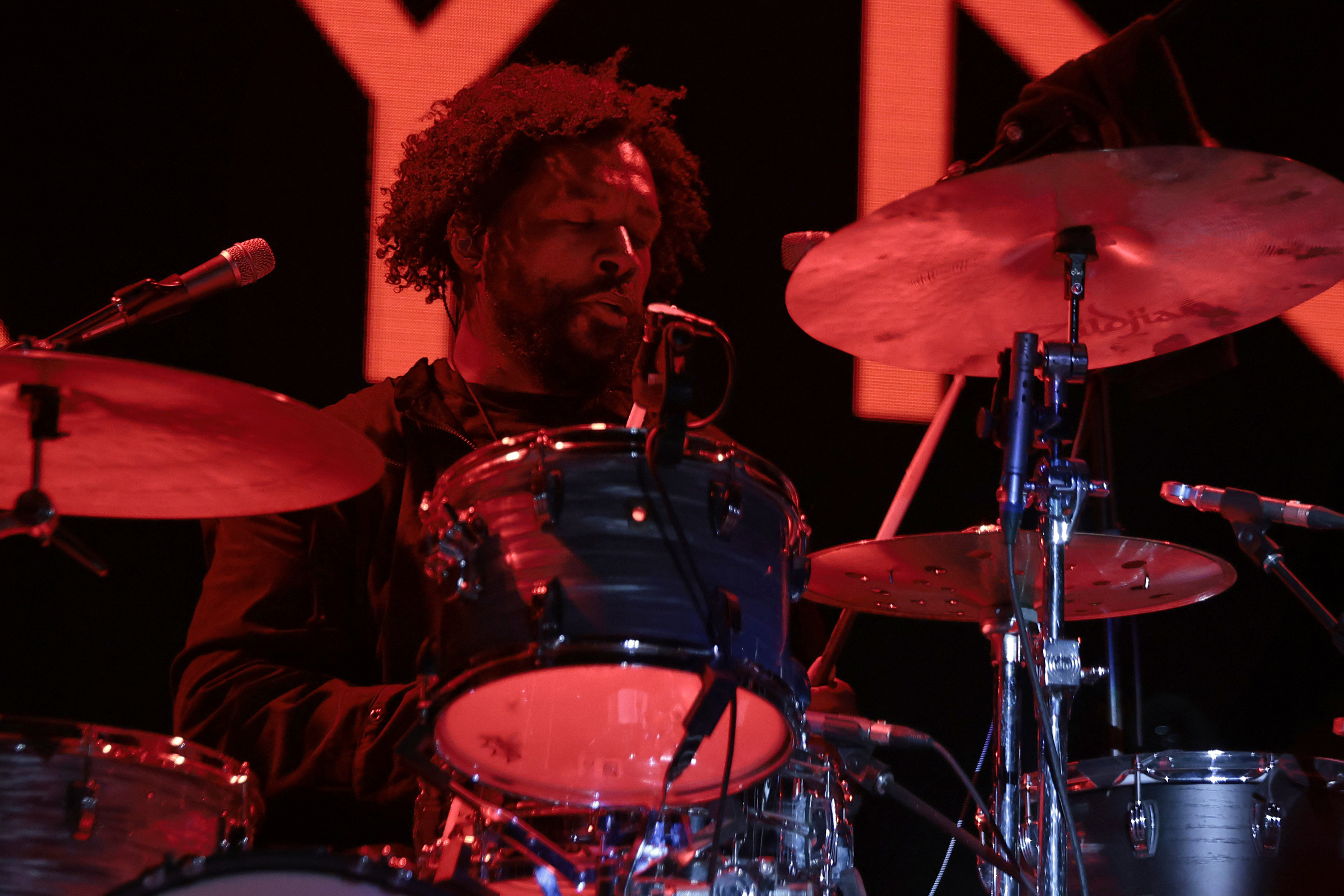
    Ahmir “Questlove” Thompson plays the drums during The Roots Picnic at the Mann in Fairmount Park on Sunday, June 2, 2024.Elizabeth Robertson / Staff Photographer

    Questlove gives Earth, Wind & Fire its flowers

    I learned how to do the two-step to Earth, Wind & Fire’s hits like “September,” “Groove Tonight,” and “Shining Star.” In Afro-puffs and bell-bottoms trimmed in 1970s rickrack, my dance moves were clumsy. In my family’s white tiled kitchen, I practiced as the familiar voices of lead singers Philip Bailey and Maurice White crooned from my mom’s AM radio. Earth, Wind & Fire was like McDonald’s French fries and Sesame Street. I loved them.

    So when Ahmir “Questlove” Thompson’s trippy documentary on the R&B group that I fondly call “the elements” aired on HBO recently, I tuned in.

    I was pleased with what I saw. The two-hour Earth, Wind & Fire (To Be Celestial vs That’s the Weight of the World) was more than a nostalgic look back; it was an insightful look at the life of founder Maurice White. White was anything but transparent to the world, except when he was making music. That is where he put his emotion. That is why the band’s music spoke to us.

    White meditated. He had faith and mantras. He poured what he learned into the making of iconic tunes.

    Through interviews with living bandmates, Thompson, who directed the film, gives us a peek into White’s childhood. We see White fall, get up, and fall again, and spend way too much money on the group’s spacey costumes. White was fearless and Earth, Wind & Fire, iconic. And my feet moved — and still do — with syncopated joy.

    “Earth, Wind & Fire (To Be Celestial vs That’s the Weight of the World)” is streaming on HBO.

    — Elizabeth Wellington

  • Philadelphia is the birthplace of the nation. It’s also where the U.S. Army was founded.

    Philadelphia is the birthplace of the nation. It’s also where the U.S. Army was founded.

    The first shots of the Revolutionary War were fired in April of 1775 during the Battles of Lexington and Concord. And the colonists were victorious.

    The Second Continental Congress convened at Independence Hall the following month to ignite the pioneers’ fighting spirit and in June, they authorized the formation of the Continental Army, the first branch of the American military.

    “The Continental Army was established to wage war against Great Britain and to fight for the rights and liberties of Americans who still considered themselves a part of the British Empire,” explained Matthew Skic, director of collections and exhibitions at the Museum of the American Revolution.

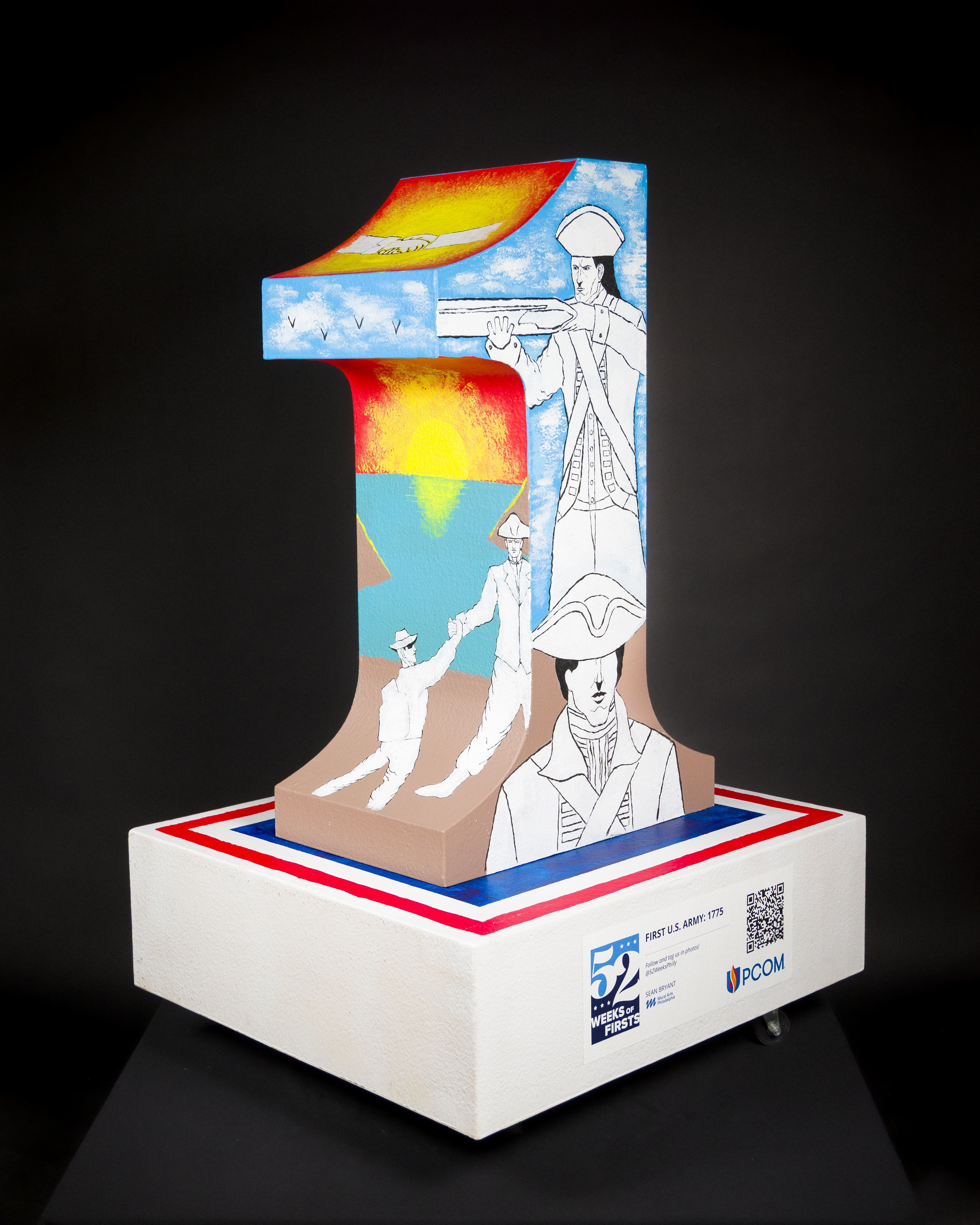
    Artist Sean Bryant’s No. 1 design reflects discipline, service, and commitment, honoring the Army’s foundational role in the nation’s history and its enduring presence as a symbol of strength and perseverance.Sean Bryant and Colibrí Workshop

    “George Washington was appointed commander-in-chief. Nobody knows at this point the war [was] going to last eight years,” Skic said.

    The Philadelphia Historic District will honor the creation of the U.S. Army this Saturday at the Museum of the American Revolution. This weekend’s fete is the latest “Firstival,” a yearlong series of weekly day parties celebrating American events, places, and things with Philadelphia roots.

    The Revolutionary War escalated quickly, Skic said, and by early 1776, the Founding Fathers were debating sovereignty. In July, the colonists declared their independence. Three months later, Congress issued an official order renaming our young country from the United Colonies to the United States.

    “Now, the Continental Army isn’t fighting to restore the rights and liberties of British Americans,” Skic said. “It is now fighting to secure the independence of a new nation.”

    The Continental Army was originally made up of troops from New York, New Hampshire, and Rhode Island. Pennsylvania, Maryland, and Delaware men quickly joined the fray, marching north and strengthening the Army’s force.

    Some soldiers from Pennsylvania had previously served in the volunteer militia, the Philadelphia Associators, founded by Ben Franklin in 1747 to defend the city against foreign invasion. The seasoned vets would go on to become leaders in the Continental Army.

    The Redcoats tried to capture Philadelphia in 1776, but Pennsylvania army men, led by Washington, held them off.

    The next year, Pennsylvania troops fiercely defended Philadelphia during the Battle of Brandywine in Chadds Ford but lost. The British occupied Philadelphia for nine months, through June of 1778, when they evacuated and reassigned troops to New York. Earlier that year, France formed an alliance with the United States and the British military decided to use its resources to protect New York.

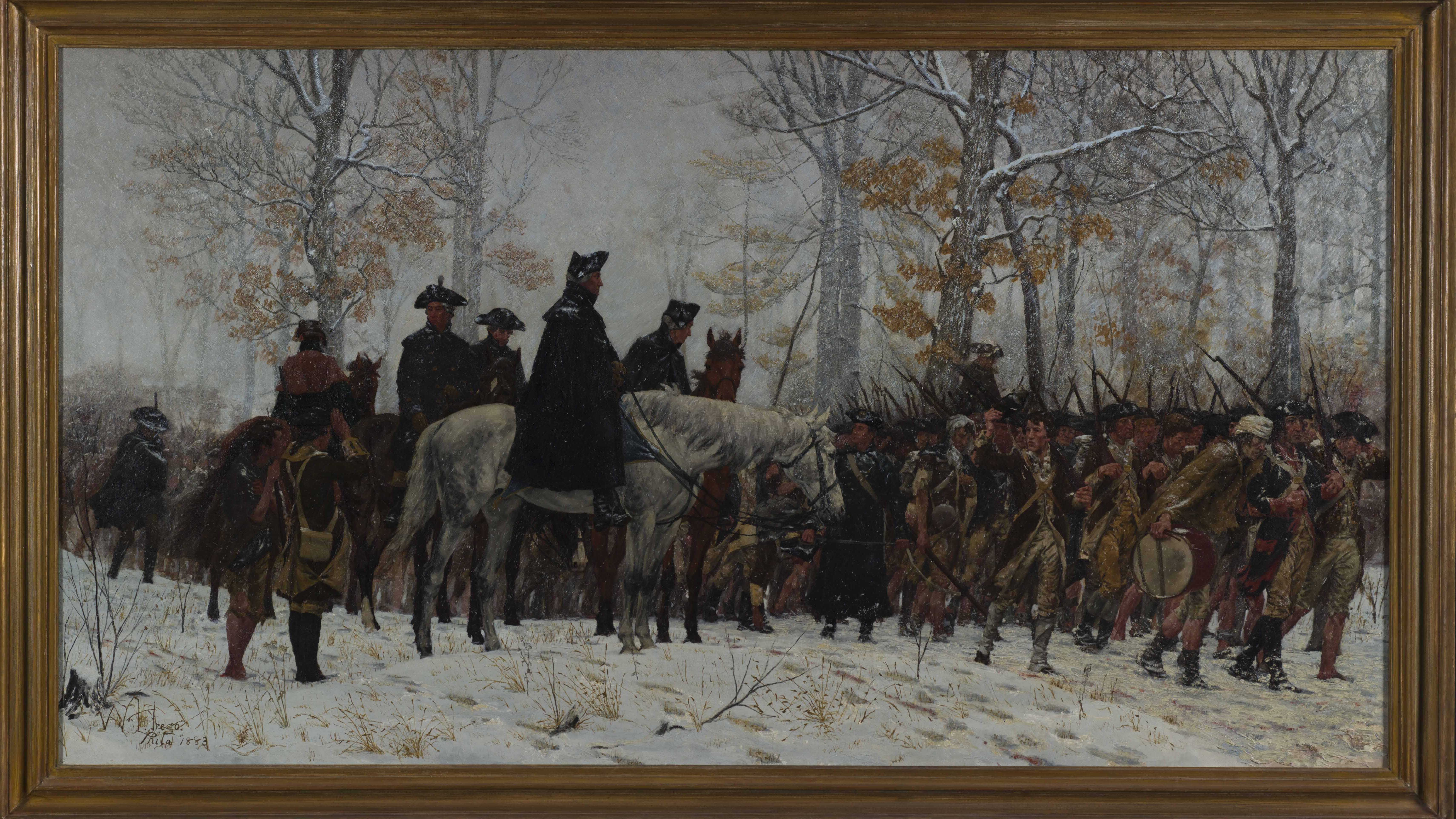
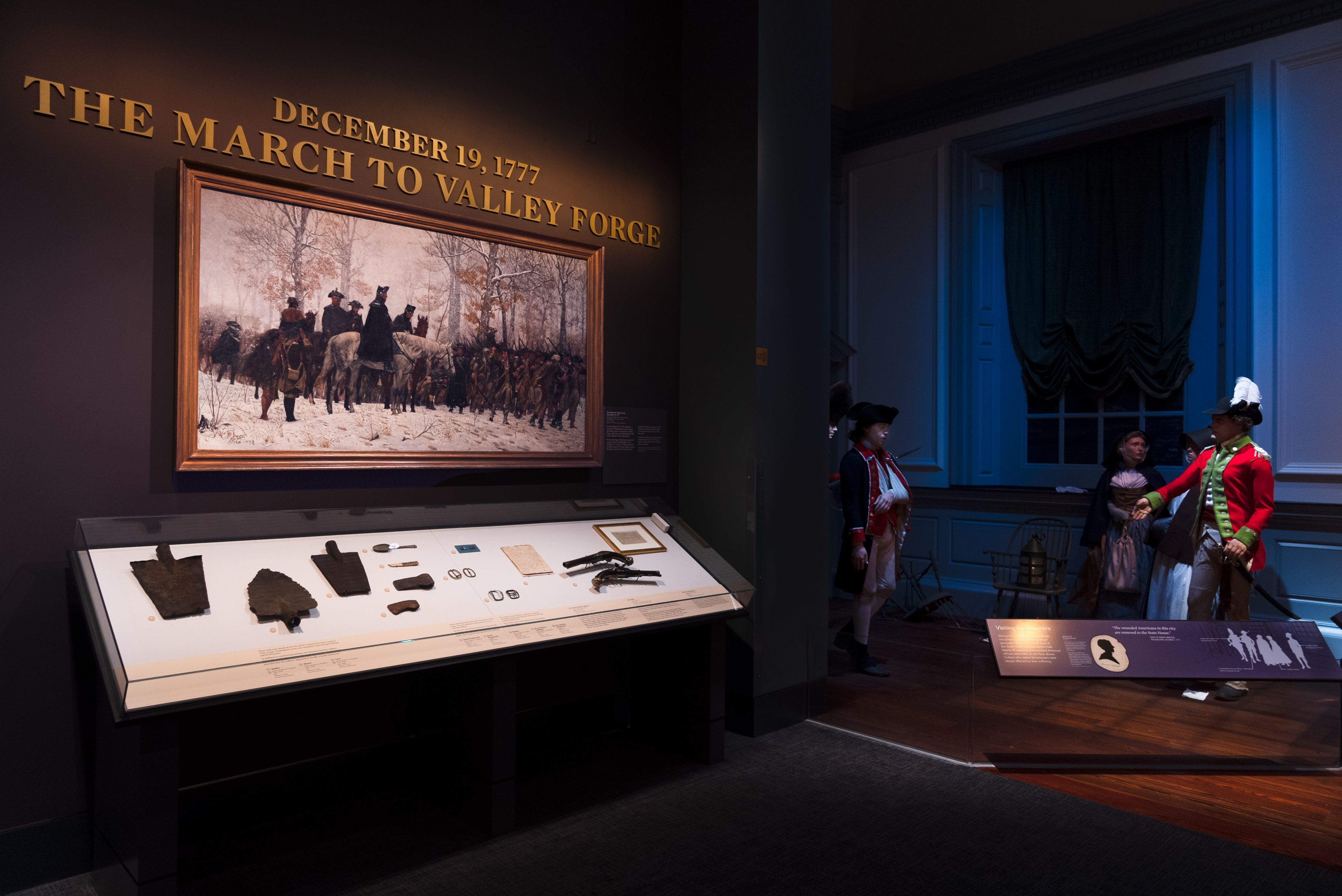
    “The March to Valley Forge” December 19, 1777. The oil on canvas work was painted by William Brooke Thomas Trego in Philadelphia in 1883. It is conserved with funds provided by the Society of the Descendants of Washington’s Army at Valley Forge.Museum of the American Revolution

    “The British leave Philadelphia and they don’t come back,” Skic explained. “The Continental Congress moves back in [to Independence Hall] and Philly becomes the capital of the revolution again.”

    In the winter of 1778, the Continental Army retreated to Valley Forge and under the command of Prussian military officer Baron von Steuben, the Continental Army became a lean, mean fighting machine.

    Realizing that the Union’s alliance with France, combined with its improved military prowess, would likely mean they would lose the war, Britain began to retreat. On Sept. 3, 1783, officials signed the Treaty of Paris, formally recognizing the United States as an independent sovereign nation.

    The American Army fought valiantly during the Revolution, Skic said. Still, it’s important to note the conflict just didn’t impact America, a lesson our military would apply to subsequent wars.

    The American Army was strong, Skic said. “But the global element of the war had an important impact on securing the independence of the United States,” he said.

    This week’s Firstival is Saturday, June 13, 11 a.m.-1 p.m. at the Museum of the American Revolution, 101 S. Third St.

    The Inquirer is highlighting a “first” from the Philadelphia Historic District’s 52 Weeks of Firsts program each week. A “52 Weeks of Firsts” podcast, produced by All That’s Good Productions, drops every Tuesday.

  • How to have a perfect Philly day, according to author Jennifer Weiner

    How to have a perfect Philly day, according to author Jennifer Weiner

    In the 25 years since Jennifer Weiner’s first book Good in Bed debuted, much has changed.

    Considered the first chick lit novel centering women with imperfect bodies — basically all of us — Good in Bed is a fictional story about Connie Shapiro, a plus-size Philadelphia journalist, coming to terms with her body image.

    Good in Bed spent almost a year on the New York Times Best Seller list and was part of the early aughts’ pop-culture body positivity arsenal that gave curvy girls the courage to demand to be seen on the red carpet and in shopping haunts.

    Cover of Jennifer Weiner’s first book “Good in Bed.”Simon & Schuster Books

    Then came Ozempic and the rash of weight loss drugs.

    “It’s kind of inevitable there would be a pendulum swing back,” Weiner said. “It’s always one step forward, two steps back. But I’m glad I wrote that first book and have written many books since that give women a chance to see themselves.”

    Weiner, who was single when she wrote Good in Bed, has gone through her fair share of life changes. She married, had two daughters — Lucy and Phoebe — and divorced, married again, this time to her “second and final husband.”

    Lucy graduated from college. Phoebe is on her way to college.

    Weiner, who grew up in Connecticut and moved to Philadelphia in 1994 for a job at The Inquirer, has written 20 adult novels, a collection of essays, and three novels for middle grade students.

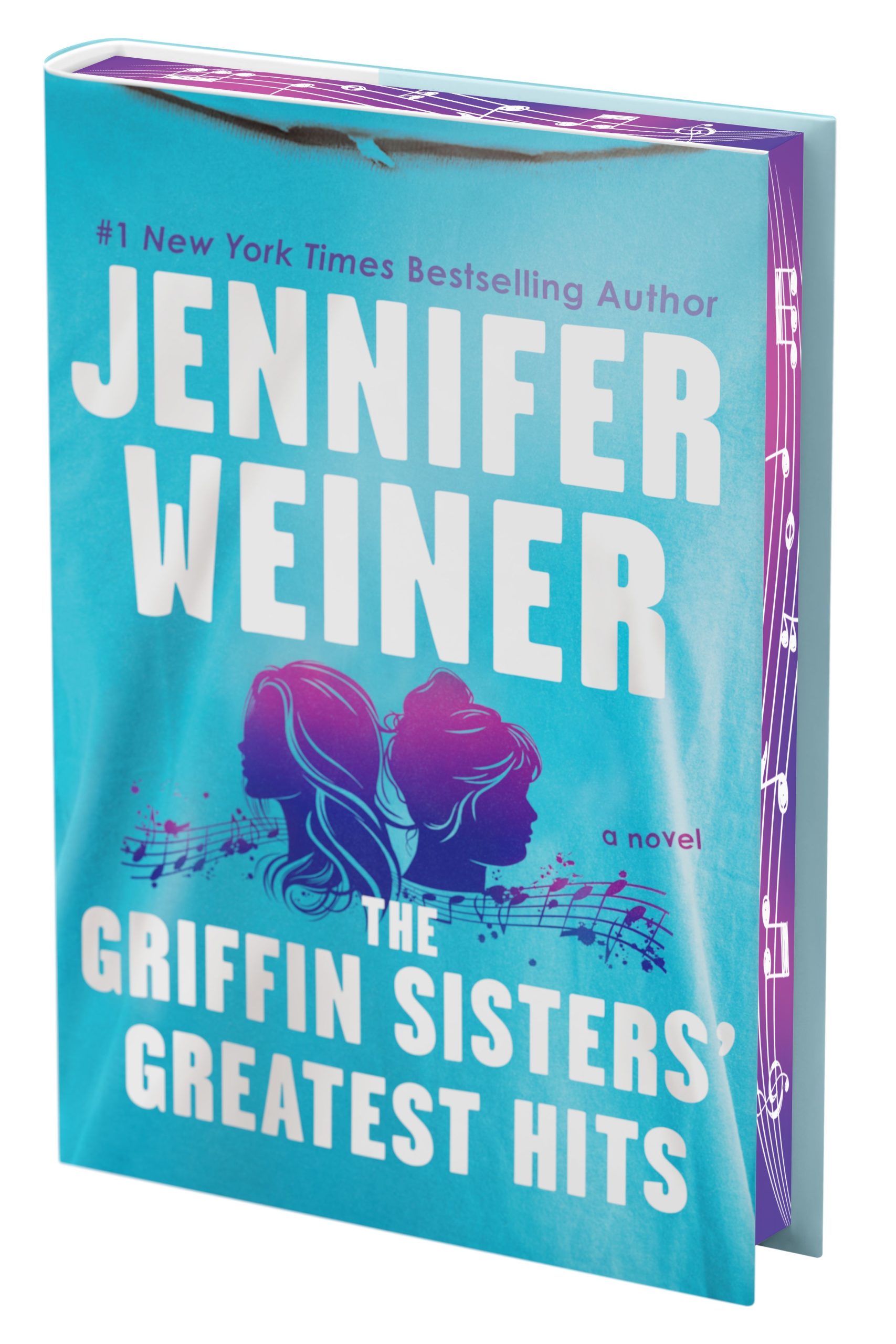
    Jennifer Weiner’s “The Griffin Sisters’ Greatest Hits” was optioned by Universal Pictures in 2026. Amy Sherman-Palladino will write and direct.HarperCollins

    Her second novel, In Her Shoes, was turned into a 2005 movie starring Cameron Diaz. Earlier this year, Universal Pictures optioned the rights to develop her 2025 book The Griffin Sisters’ Greatest Hits. Amy Sherman-Palladino will write and direct.

    The Queen Village resident has gone from telling stories about 20-something Gen X women seeking relationships and falling in love with their authentic selves, to telling stories about 50-something Gen X women seeking relationships and falling in love with their authentic selves.

    “I feel really, really lucky that I’ve gotten to do this for this long,” Weiner said on a recent video call. She was sitting at her desk, sipping iced coffee from a mason jar that her Instagram feed influenced her to buy.

    “My readers stayed with me, I’ve picked up new readers. I feel really fortunate the characters I created along the way, and the questions I have asked them, have resonated.”

    Here is Weiner’s idea of a perfect Philly day.

    The conversation has been edited for clarity and brevity.

    8 a.m.

    I wake up. My husband and I do [the New York Times’] Wordle, Connections, and the Spelling Bee together. We usually win, but when we don’t, we know it’s going to be a bad day.

    We take our dog Levon, third in our series of terriers, out for a walk at Mario Lanza Park in our Queen Village neighborhood.

    Mario Lanza Park, in a photo from October 2022.Michelle Myers

    Now, I would go to Fiore Fine Foods in Queen Village. Because it’s my perfect Philly Day, they have not moved [to Kensington] from our neighborhood. I’d order an iced coffee and the Saltie, a breakfast sandwich with scrambled eggs and ricotta cheese. It’s just the perfect breakfast sandwich.

    10 a.m.

    Next, I’m going to get some exercise. You know I’m a middle-aged woman. I try to sweat every day because it’s helpful when you are sitting at a desk all of the time. I lift weights at G-Strength. It’s funny, the same women who were doing step aerobics in the 1990s and aughts, and transitioned to yoga and Pilates, are now lifting weights. It’s like we all read the same health articles.

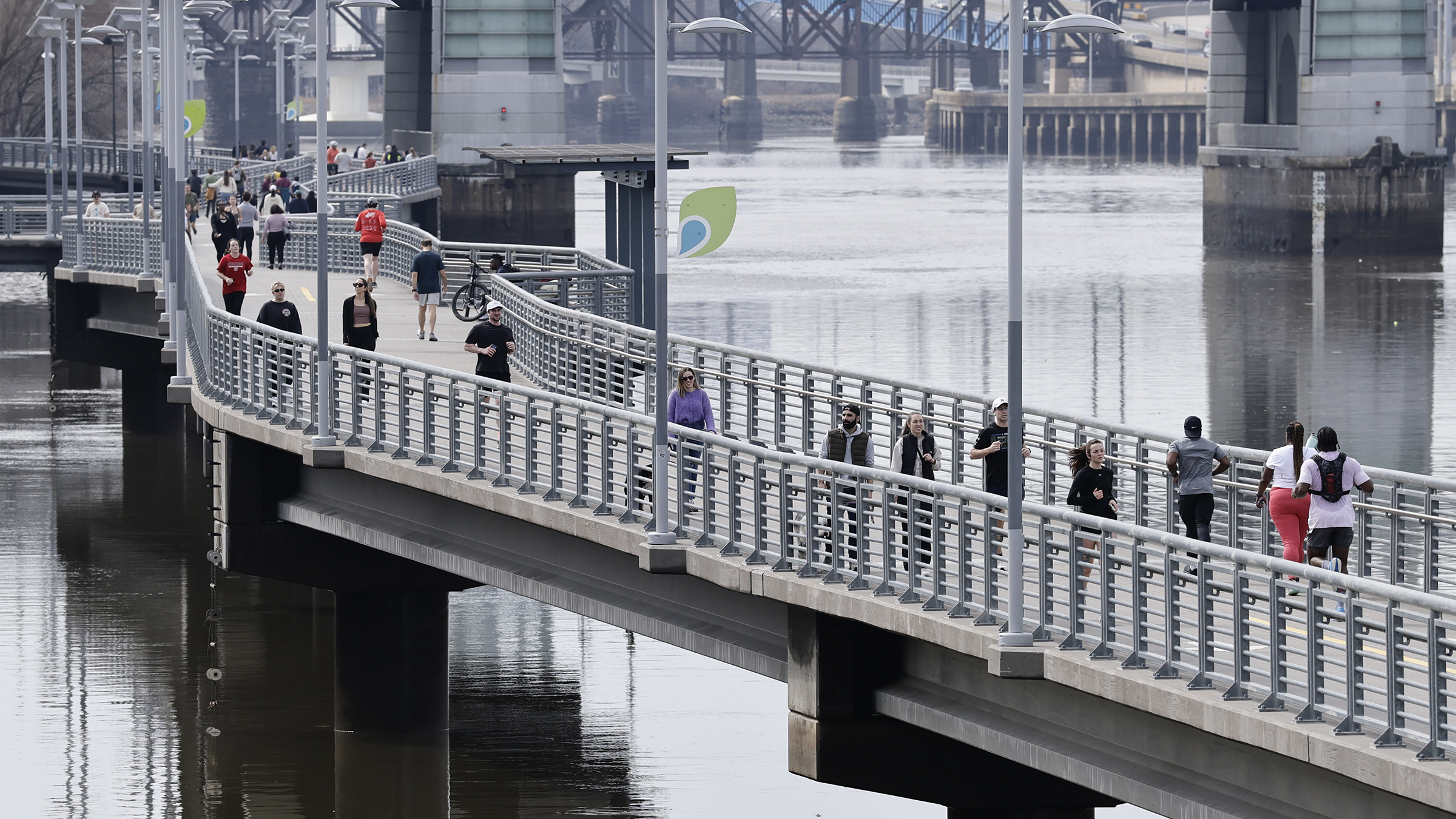
    Joggers and walkers move along the Schuylkill Banks Boardwalk on March 8.Yong Kim / Staff Photographer

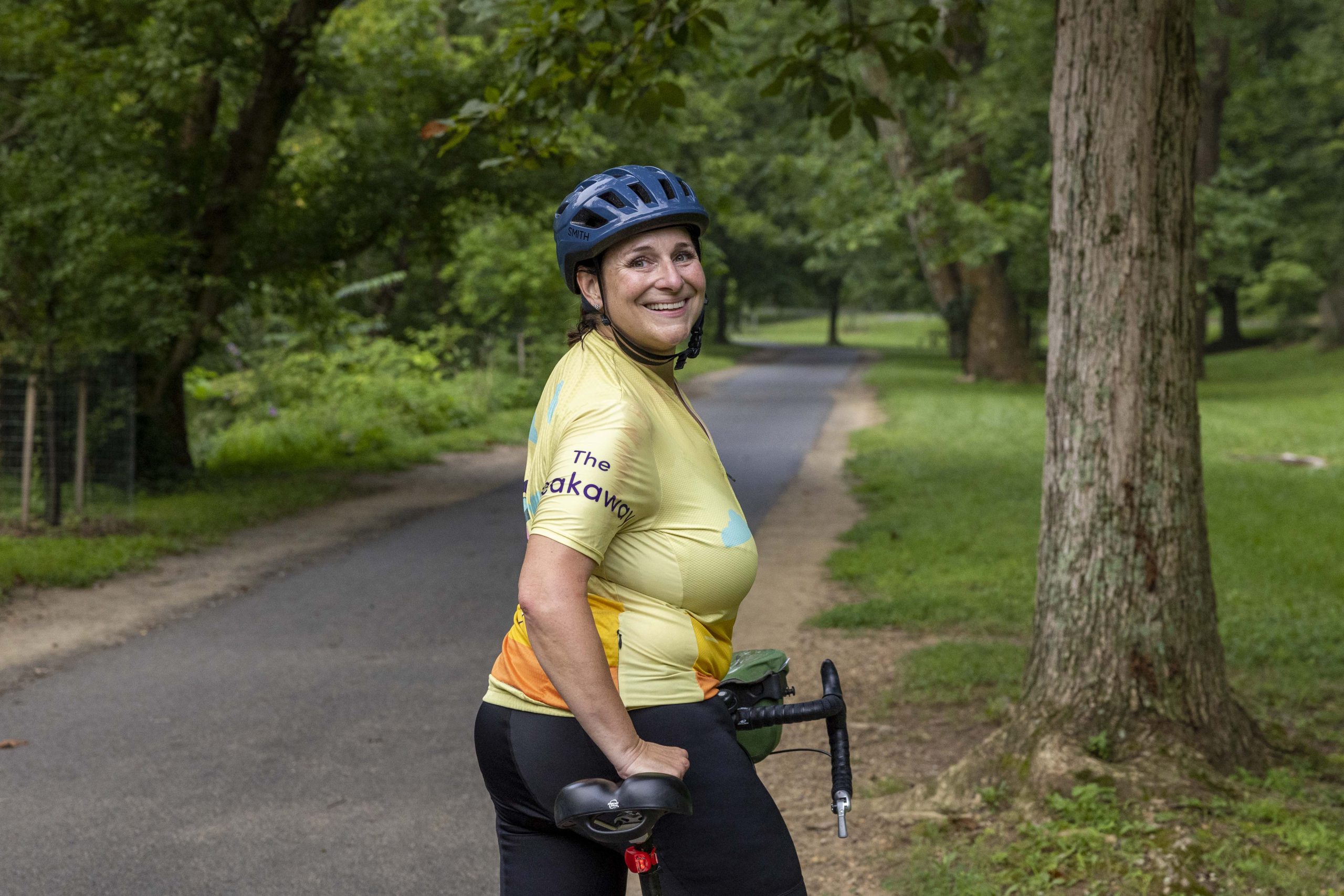
    And because I have so much energy, I’d then ride with the Bicycle Club of Philadelphia. Since it’s a perfect day, the weather is great, there aren’t any cars parked in the bike lane, and people go around me without honking. I’d make my way up 26th Street, along the Schuylkill Banks, and meet at the Philadelphia Museum of Art or Cosmic Cafe and ride through Manayunk up to Narberth. We’d stop at GET Café and Little Blue Owl Baking Company. The joke at the bike club is we are riding for coffee and a croissant.

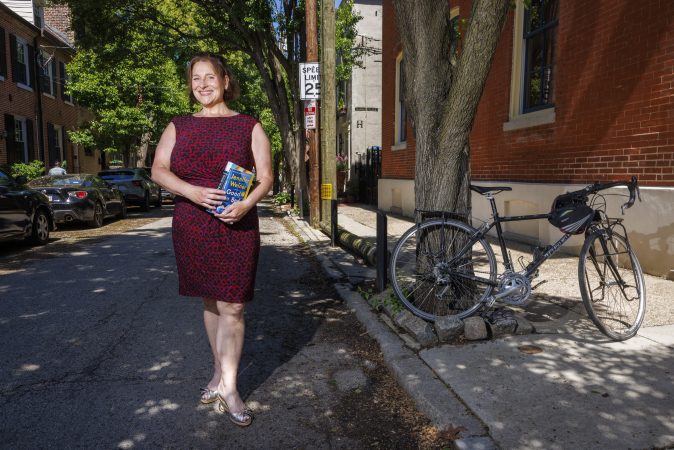
    Jennifer Weiner with her bike in Rock Creek Park in August 2023. Amanda Andrade-Rhoades

    2 p.m.

    When I get home, my daughter Phoebe would be there and we’d go to Forîn Cafe on South Street for a matcha. That’s my daughter’s thing, she loves matcha.

    We love thrifting, so we might wander over to ACE Coffee Outpost, a vintage clothing shop and cafe, and B-Bop, a shop that sells plus-size clothes. There is a chance I’ll go to Merrygold Shop and Wall Flower Paper & Party where they have cute baby things, presents, and beautiful cards.

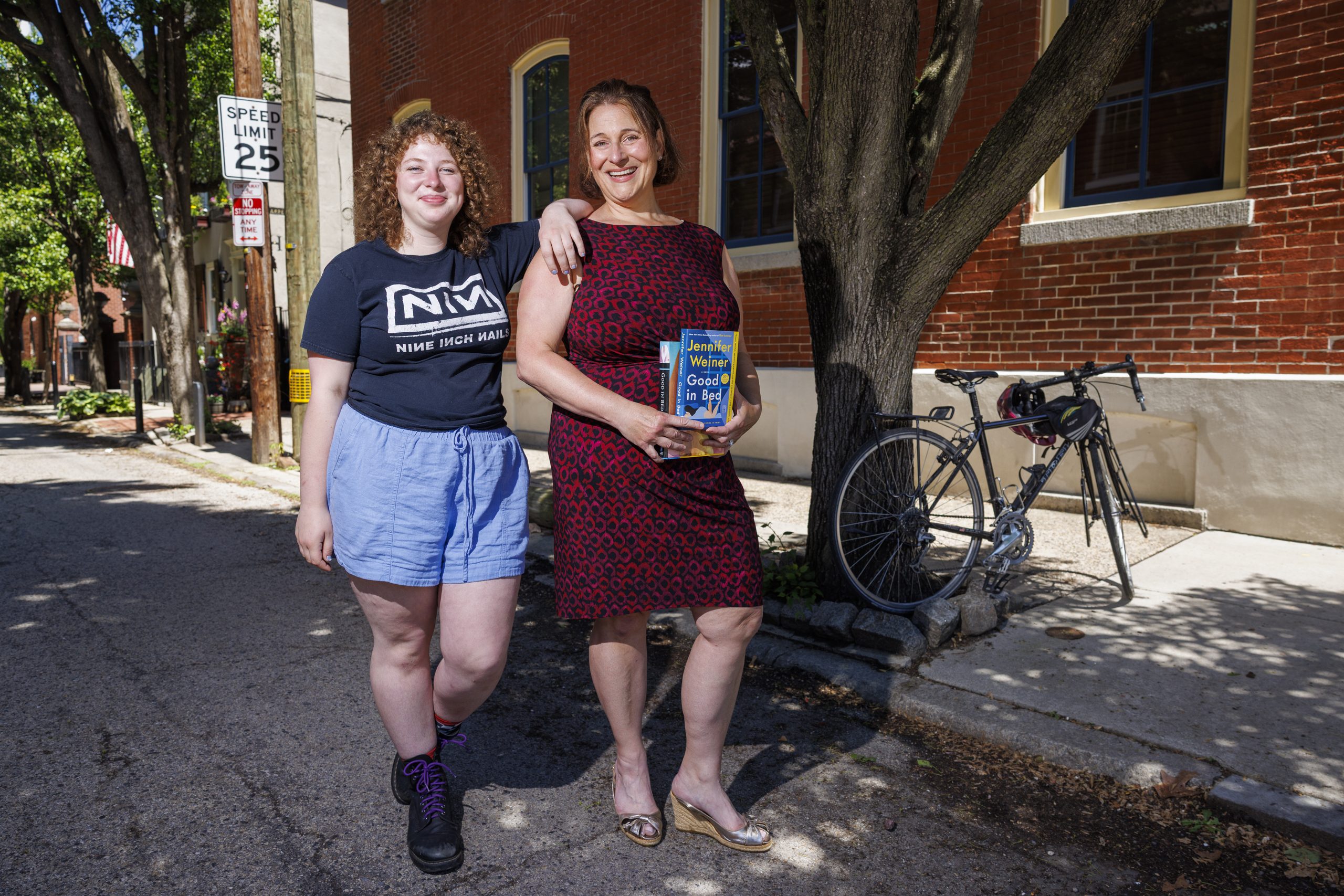
    Philadelphia author Jennifer Weiner at her home in Queen Village on April 27. Going on the 25th anniversary of her book “Good in Bed,” Weiner is seen here with her daughter Phoebe Bonin, 18.Alejandro A. Alvarez / Staff Photographer

    3:30 p.m.

    Then I’ll take a shower and a nap. And I’ll write till about 6.

    6 p.m.

    Because it’s the perfect Philly day, I have the opportunity to bend the rules of time and space. So, now it’s 10 a.m. again and my husband and I are walking to places that would still be open at this time of day like the Mighty Bread Company or Machine Shop Boulangerie in the Bok. Then we’d walk to Superétte on Passyunk.

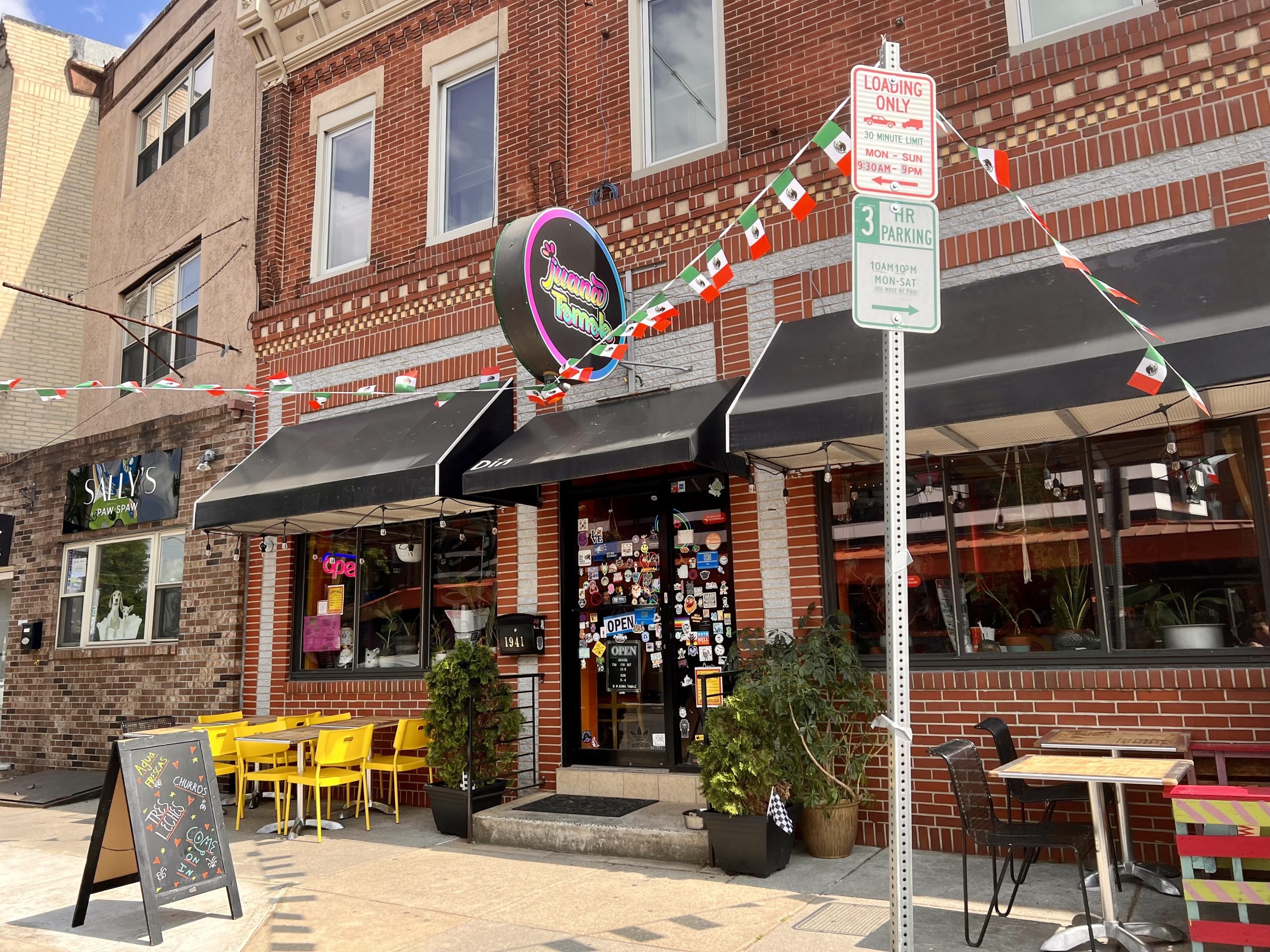
    Now since I’m on Passyunk, I’d fast forward to evening and have dinner at Juana Tamale. My favorite is the birria quesadilla.

    Juana Tamale, 1941 E. Passyunk Ave., on May 18, 2023.Michael Klein / Staff

    8 p.m.

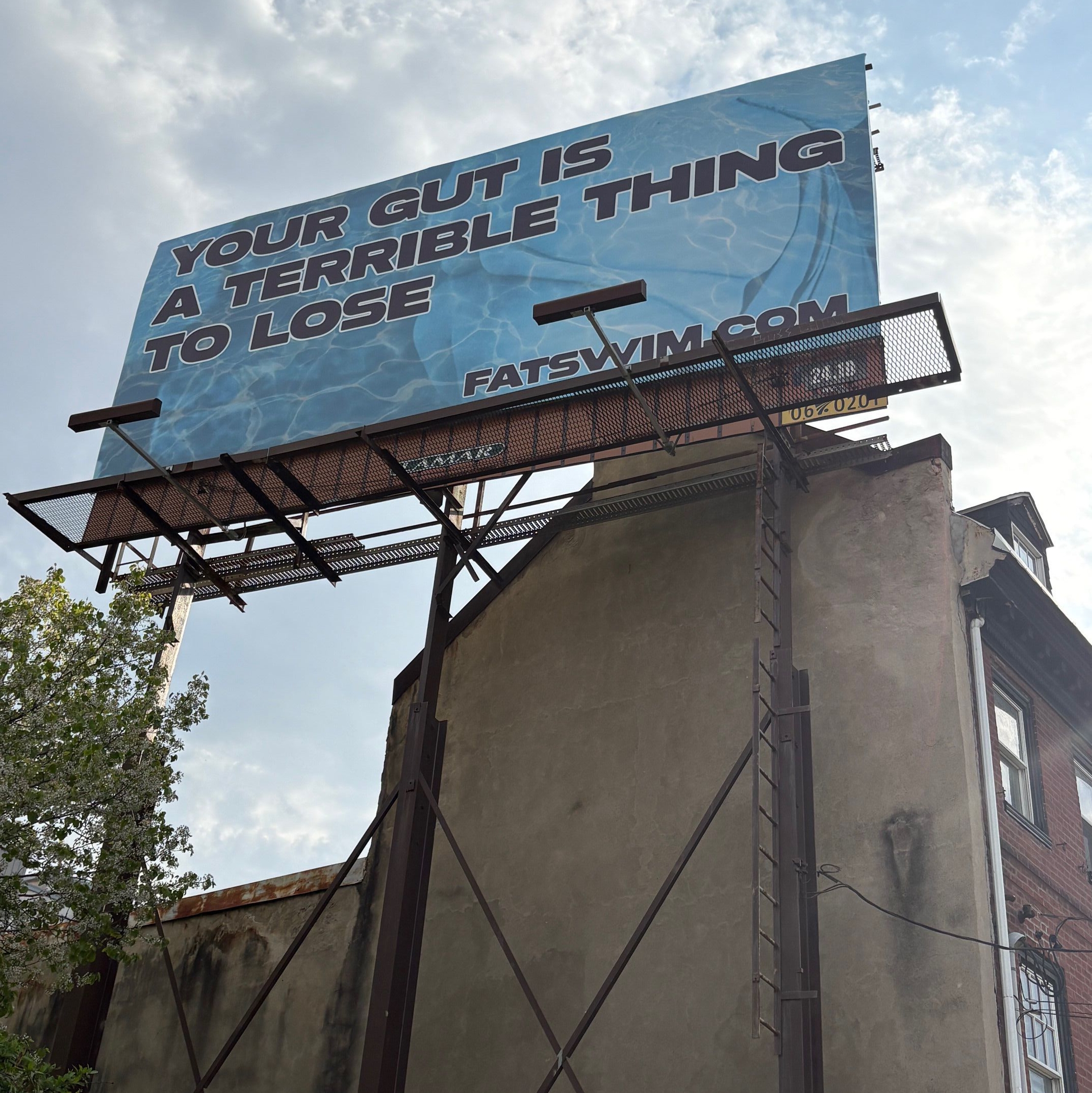
    I’d end my perfect Philly day with a reading at a local bookstore, like Head House Books to support Philadelphia authors like Emma Copley Eisenberg, who might be reading from her new book, Fat Swim. I went to see the billboard the first day it was up. I work with her at Blue Stoop.

    It’s important I end my Philly day trying to help the next generation of writers.

    Emma Copley Eisenberg’s billboard touting the website that announces her newest collection of short stories, “Fat Swim.” The billboard is visible from I-95 right before you get to the Girard Avenue exit.Elizabeth Wellington

    Weiner is celebrating the 25th anniversary of her debut novel “Good in Bed” all year. She is currently working on her next novel.